
.svg)



A creativity-building app for kids
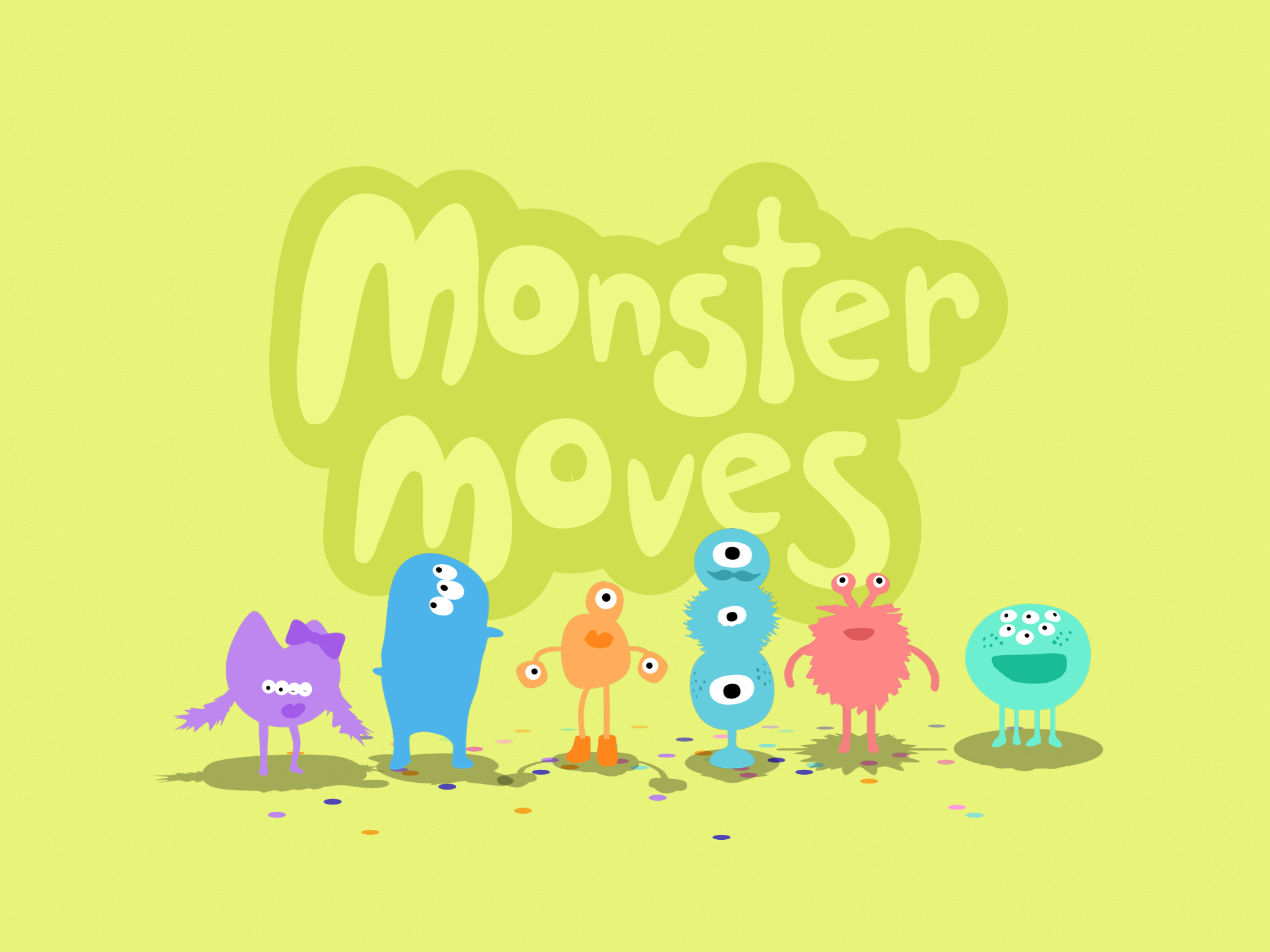
Monster Moves teaches young kids dance choreography.
Monster Moves is an app that gives kids the ability to create their very own monster dance party. Kid-approved by a rambunctious team of tiny beta testers, the app encourages children 5 and younger to exercise their creativity as they choreograph dance moves for a troupe of monsters. Kids develop an awareness of their creative control by sequencing illustrated tiles that correspond to each monster’s unique set of dance moves.
Whether it’s a twirl, flap, swing, or sway, the app enables kids to cultivate decision-making skills by drawing connections between their choices and the monsters’ dance steps. Each monster has a full repertoire of dance moves and accompanying musical beats, so kids can compose an original soundtrack and dance along. To encourage kids around the world to create and design, the app is available in English, Simplified Chinese, Japanese, Korean, Spanish, Italian, French, and German.
Monster Moves—available on the App Store—joins a collection of apps, including Balloonimals and Balloonimal Babies, created by IDEO’s Play Lab, made up of a team of educators, designers and toy experts who foster kids’ curiosity, play, imagination, and creative confidence.

A drug-free alternative to chronic pain relief
Designing a revolutionary wearable device.
Chronic pain changes everything. Symptoms associated with chronic conditions can make activities that were a normal part of life—getting regular exercise or even a good night’s sleep—difficult to bear.
NeuroMetrix, an innovative health-care company based in Waltham, Massachusetts, developed Quell® to help treat chronic pain in people suffering from nerve, arthritic, back, leg, and foot conditions. Using a revolutionary technology called wearable intensive nerve stimulation (WINS), this device triggers widespread relief and, in a clinical study, reduced chronic pain and use of medication in thousands of users.
NeuroMetrix came to IDEO to help create the industrial design, interaction design, and mechanical engineering to bring Quell to the consumer market. Quell is a device that is placed in a sports band with a lightweight, slim design that fits comfortably on the upper calf and delivers therapy for chronic pain in the body. Its patented OptiTherapy™ technology is customized and automatically adjusts the therapy dose for optimal relief. An accompanying app, developed by Atomic Object, allows users to track treatment sessions, measure and understand the quality of their sleep as it relates to their pain, and personalize device settings.
IDEO’s work with Quell went beyond creating the product to something bigger—reframing chronic pain. For people who are in a constant state of suffering, the ability to take some measure of control allows them to feel more like active participants in their treatment plan, and to regain confidence.
A better scanning experience for patients and technicians
Creating a more streamlined user interface for CT scanners to maximize image quality, and minimize radiation.
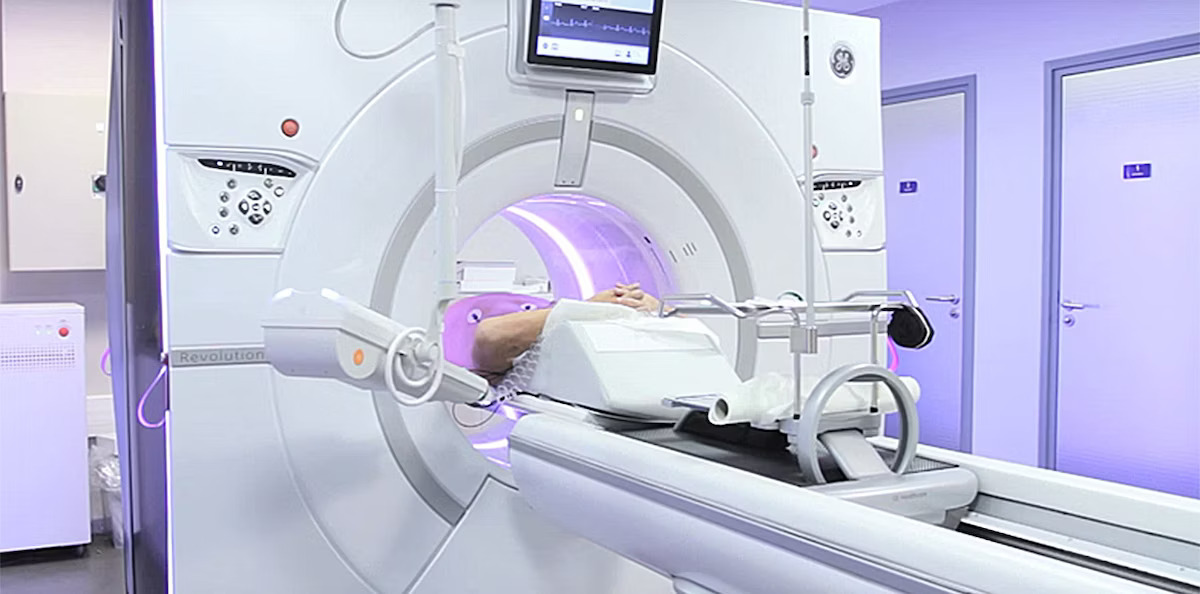
Operating a CT scanner is a delicate balancing act: The tech has to get a clear image for accurate diagnosis while reducing the patient’s overall radiation exposure. There are a lot of variables, and every second counts.
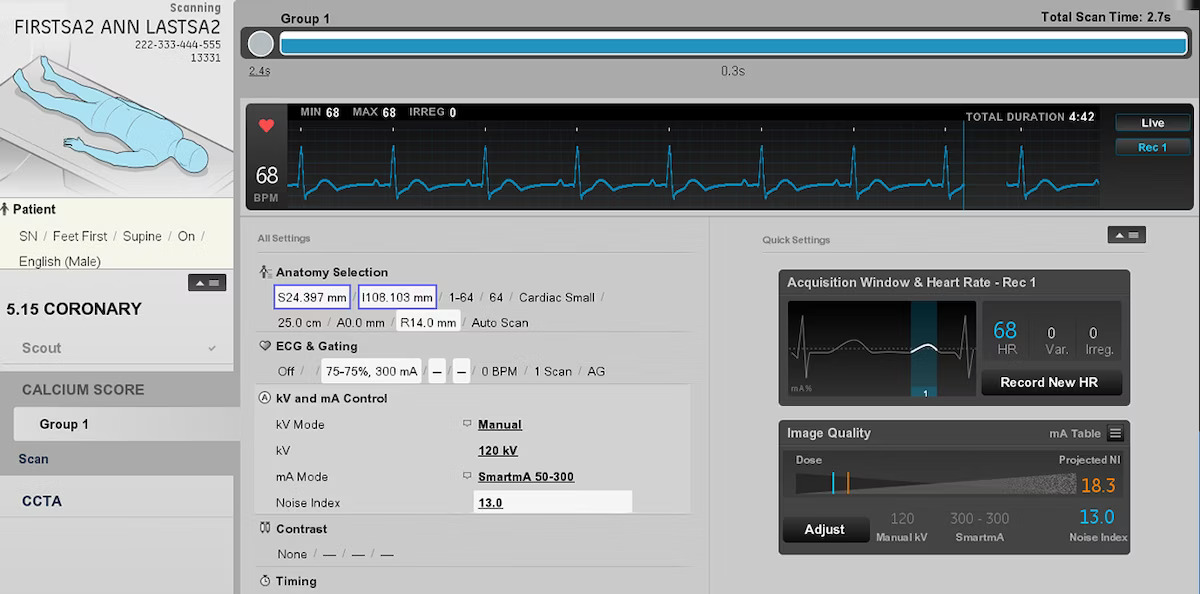
GE Healthcare, one of the country’s largest manufacturers of CT scanners, hired IDEO to redesign the console user interface to optimize the tech’s workflow, the patient experience, and the image quality. The key challenge was accommodating both junior and senior tech experience when designing a single interface, balancing support, flexibility and control. The final design allows techs to see their entire workflow up front, is optimized for “glanceability,” and draws technicians’ attention to important information. Threshold limits ensure the radiation dose never exceeds the determined amount. Ultimately, the streamlined design enables the tech to feel confident and focus on the patient’s physical and emotional well-being.
With several new hospitals using the new GE CT scanner, the impact has been evident. Within 24 hours, techs are up and running on the machines. The vision for the future looks bright and clear.
A blueprint for next-generation telecom
Helping a legacy telecom company stay relevant in the 21st century.
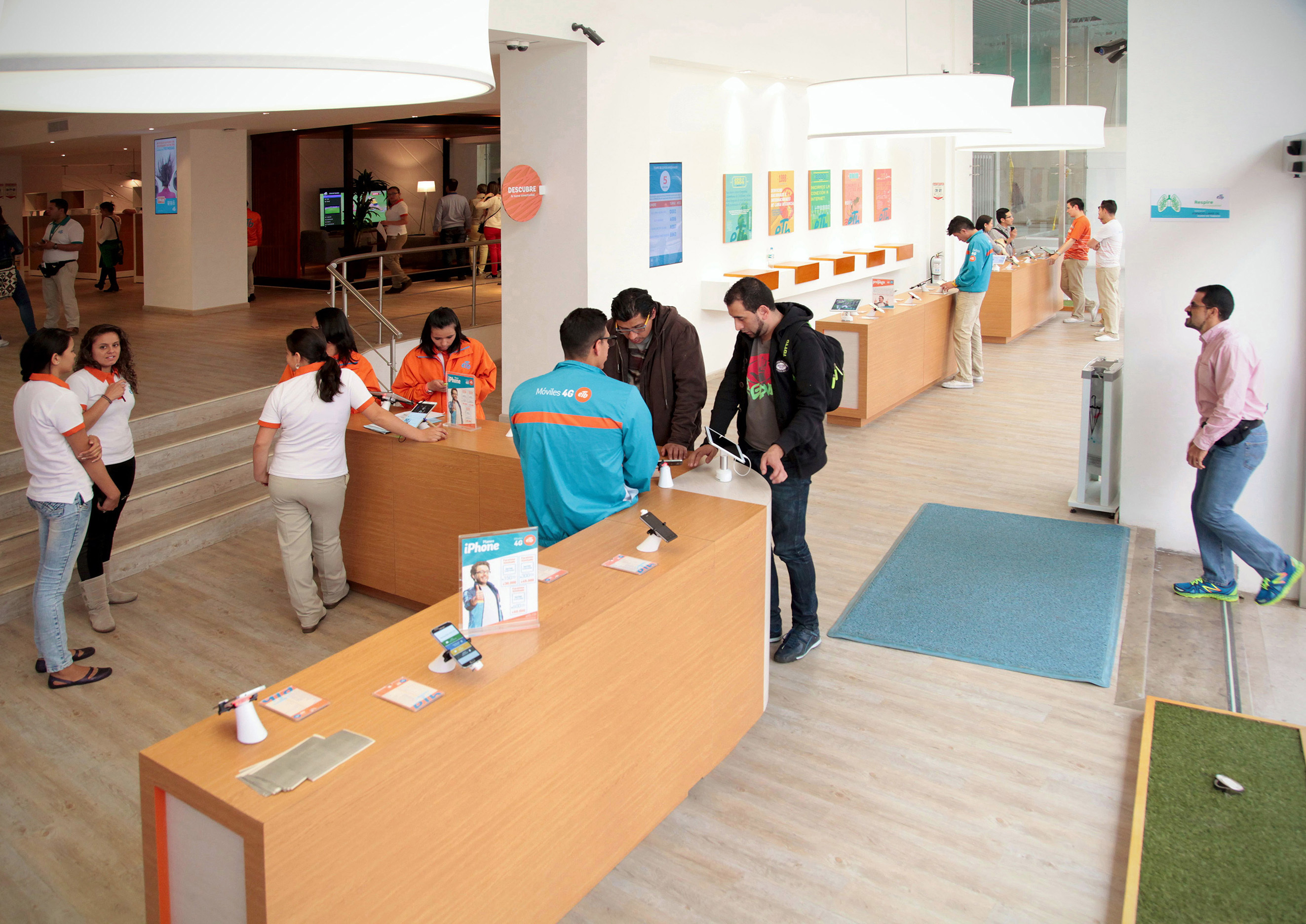
How does a 130-year-old telecom company in Bogotá appeal to a tech-savvy generation without alienating its most loyal customers? Faced with growing competition, ETB, Colombia’s oldest telecom business, wanted to modernize its entire retail shopping experience and update its branding.
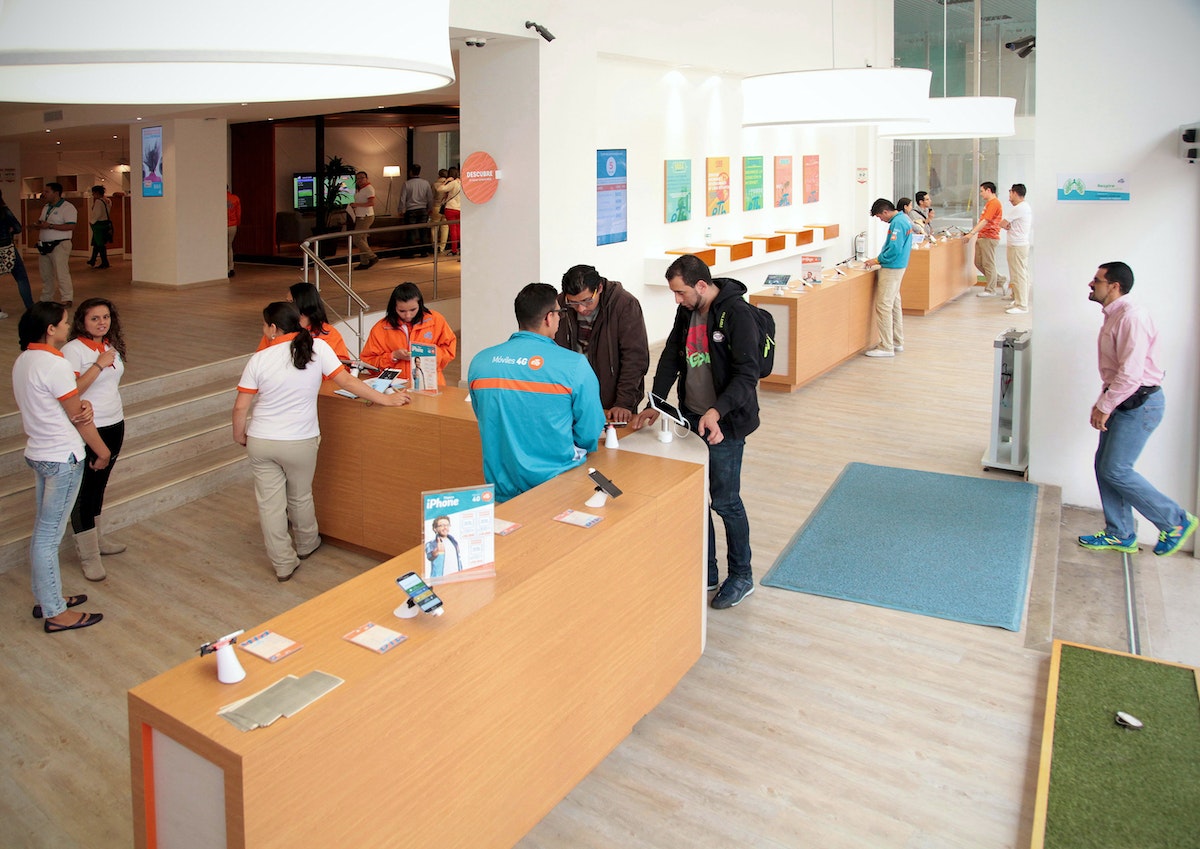
The company enlisted IDEO’s help in leveraging its already highly regarded brand. IDEO created a complete blueprint for the next generation of retail centers, including in-store spaces, digital services, and new personnel role descriptions. ETB’s new retail stores are warm and bright, and self-service kiosks eliminate the need for waiting in line. The company’s brand also got a face-lift with a new color palette and brand manual.
"Working closely with IDEO, we accomplished all of our goals,” said Vice President Carlos Alberto Gómez García, “from creating organizational change to reimagining interactions with our customers to evolving the brand identity of ETB."
The Best Managers Understand Their Employees’ Emotions—And Their Own
5 tips for building a positive emotional culture at work
We've studied the effects of emotions in the workplace, and the research shows that managers can make or break an office. In one poll, 50% of people said they’ve quit a job to remove themselves from a bad manager. (In another survey, 65% of folks said they’d take a new boss over a pay raise. Ouch.)
Managers often set the tone of the workplace. But that doesn’t mean managing has to be stoic, emotionless work. In fact, we think it should be the opposite.
There’s no set formula for becoming a perfect boss, but we have a few tips for building a positive emotional culture in the office and supporting the needs of the people that work for you.
Manage individually
After surveying almost 80,000 people, researcher Marcus Buckingham came up with the insight that “average managers play checkers, while great managers play chess.” In checkers, every piece is the same: they’re interchangeable. But winning a game of chess requires you to understand each piece’s strengths and weaknesses, and you can’t effectively play unless you understand why each piece is unique.
One of Mollie’s favorite examples of this individualized approach is IDEO’s new employee survey, which includes hardball questions like, “What’s your favorite office snack?” and “What kind of flowers do you like?” The answers give teams an understanding of their new colleagues right off the bat, and help managers address a newbie’s individual interests—even if it’s just a preference for vanilla vs. chocolate.
Address your feelings without becoming “emotionally leaky”
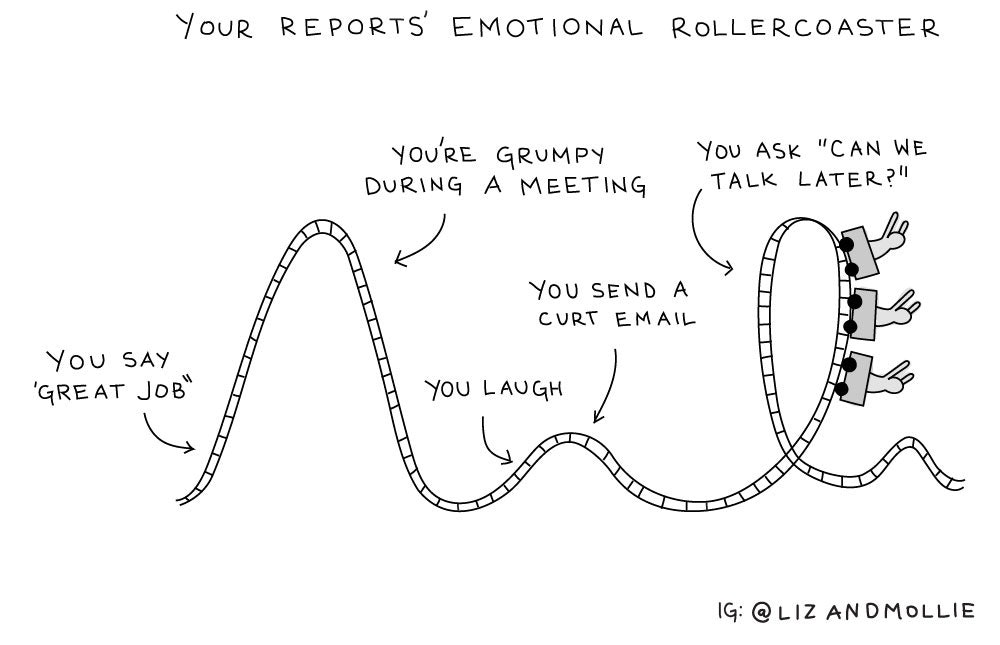
In her book Radical Candor, Kim Scott recalls a morning when a report told her, “I know what kind of day I’m going to have by the kind of mood you’re in when you walk in the door.” Managing your feelings is as important as managing your team; what you consider a throwaway comment or a momentary bad mood can ruin someone’s day. Reactive, hot-tempered managers are hurtful and demoralizing.
But don’t pretend that you’re not allowed to have feelings (you’re human. Accept it!). “The idea that you’re never going to have a bad day as a boss is bullshit,” Kim says. “The best thing to do is to cop to it. Say to your team, ‘I’m having a bad day, and I’m trying my best not to take it out on you. But if it seems like I’m having a bad day, it’s because I am.’”
You don’t necessarily have to go into great detail (oversharing is another complicated topic), but acknowledging that there’s something going on can help those around you avoid unnecessary anxiety.
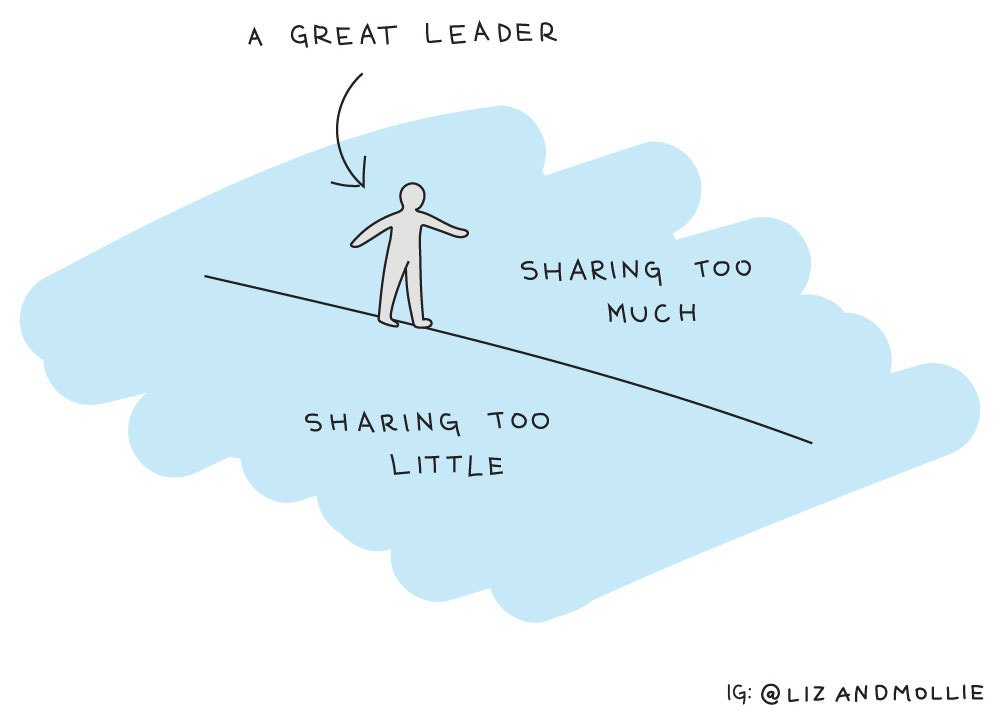
Figure yourself out first
Like we said: You’re human. That means you have your own emotional responses to unpack before you’re fully equipped to help others do the same. The best leaders are able to hit the pause button when they become emotional, sit with their feelings, and understand where they’re coming from. Instead of taking action immediately, they ask themselves, “What’s behind this emotion?”
A great manager will realize, for example, that anxiety about meeting a deadline can be mitigated by building structure to help a team get work done on time, or that a tough design review means that next time, more prototypes might be necessary. Tapping into your emotional toolkit will help you arm others for the emotional demands of the office.
Listen
It sounds basic, but it bears repeating. One of the questions Wharton Professor Adam Grant fields most often is, how do you have your suggestions heard when you’re not in charge? "These are not questions asked by leaders," Grant notes. Hearing people out is an extremely important part of letting them know you appreciate their work.
Listening is also the only way leaders can understand the source of problems or strong emotions. As a manager, ask questions instead of immediately trying to problem solve. You’ll never understand another person’s perspective unless you listen and show compassion.
Find time to prioritize yourself
Managing means cooking something on every burner without burning anything. You also have to time every step perfectly to make sure the meal comes together. If the simple thought of that balancing act exhausts you, try taking a "Shultz hour." When he was in office, former Secretary of State George Shultz protected one hour each week for solitary reflection with paper and pen. No one was allowed to interrupt him (except the president or his wife, which we understand).
If solo time feels a little too isolating, seek support. Try connecting with peers and folks who have a similar role with whom you feel safe talking openly about personal and professional issues. As Liz Koenig, who managed Teach for America teachers, told us, “You can’t pour out of an empty cup.”
Acknowledging emotions in the workplace is one thing; harnessing their power to become a better manager is another. It’s not impossible, but it does take work. We’d recommend not putting on a brave face, but instead getting a little vulnerable with the people that work for you. Here’s one last reminder: You’re human.
Like playing the flute or choosing the right sized Tupperware for your leftovers, being a good manager is a skill. You’re not born knowing how to play scales or eyeball specific volumes of pasta—it’s something learned and practiced. And when it comes to building your managerial muscles and shepherding others through a career journey, there are a lot of emotional skills that can really boost your toolkit.
The 3 Mindsets of Great Interaction Designers
These tools are just as important as a good portfolio or the ability to code
Not necessarily, says Chris Nyffeler, IDEO Executive Design Director and a faculty member in the undergraduate and graduate programs in Interaction Design at the California College of the Arts. Those vocational skills are important, but they can come later. A foundation in design—whether built through education or early career experience—comes from understanding the process and building up the soft skills that all designers, but especially interaction designers, need to master.
Chris would often see his students hung up on mastering tools first. But according to him, great interaction designers have three things at their core—empathy for users, storytelling chops, and the instinct to prototype.
1. Empathy for users
The role of a designer is to be the voice of and advocate for the end user. This is especially true when you're working in-house alongside engineering and product teams that might feel disconnected from the customer.
Empathy starts with an awareness of others and an ability to detect their emotions and understand their perspective. What does it actually feel like to live with a problem, and how would a potential solution actually fix it? “The more that you can build that muscle of empathy,” Chris says, “the better you're going to be as a designer.”
And for more seasoned in-house designers, the more you can help your counterparts across the organization develop their empathy muscles, the more successful it will make you and your UX team in delivering great products to market.
2. The desire to tell a story
Chris describes storytelling as effectively envisioning ideas and putting them into a more strategic framework. That frame could be user insights (how the work is right for the user), a business context (how the work builds on business goals), or organizational context (how the team is well equipped to deliver on the work).

“Storytelling is an under-appreciated soft skill,” Chris says. Storytelling doesn’t just come in handy for presenting your ideas—it helps build consensus with cross-functional teams. Being able to share your ideas and bring others on board helps designers be strong advocates for their own work.
3. The instinct to prototype
At IDEO, we talk about prototyping as a central step in the design process, but it's also a mindset that should be fundamental to the way an interaction designer thinks.
“As they have an idea, great designers put pen to paper, or pixels on screen, or just start building something as a way of working out their process,” Chris says.
Designers should be skilled at prototyping at various levels of fidelity, but most importantly, their gut instinct should push them to test ideas early and often.
“I love seeing that, especially from designers who are just discovering prototyping as a tool in their tool belt,” Chris says. “Seeing them realize that there’s more than one way of doing things, and that their first assumption of how they should present an experience could be right or wrong.”
Putting unfinished, scrappy ideas out into the world can make a designer feel uncomfortable, but Chris says the best prototypes leave room for users to co-design parts of the experience. “If they show you something that’s not working,” Chris says, “quickly change it. Move a button, rewrite copy, replace an image. Users can also take you down unexpected, delightful paths that can lead you to a powerful new idea."
Connecting more deeply with that end user—the person you’re designing for—is key to developing all three of these skills.
Want to learn more about interaction design? Dive deeper with IDEO U’s on-demand class, Prototyping for Digital Experiences.
How do you identify the makings of a great interaction designer? Is it coding expertise? Mastery of digital tools? A beautiful portfolio of visual design work?

Amp Up Your Next Sprint With These 6 Tips
Start with small questions, tight deadlines, and lots of listening
Turns out it's really hard to get people to think about why they'd use technology they don’t understand for a problem they don’t know exists. And that's exactly the challenge we've taken on at the CoLab, IDEO’s collaborative innovation lab—to determine what humans will need in the connected future.
How does that affect our quarterly design sprints? The goal isn't faster execution—as it would be with a typical work sprint—but rather surfacing and validating new opportunities.
Here's how it works: At the start of the sprint, each multidisciplinary team (a motley crew of designers, technologists, and businesspeople who range from students to entrepreneurs to corporate representatives) is given a design brief that specifies a technology to use, like blockchain or machine learning. Teams are charged with quickly getting their heads around the emerging technology, creating their first prototype, gathering feedback, iterating, synthesizing, and sharing their design.
Over the past four years, we’ve created well over 200 prototypes and learned a ton.
Here are our best tips for how to run a highly productive design sprint:
1. Big questions need small starting points
When you’re asking a huge, provocative question, you could spend months coming up with answers. So, before the sprint, we make sure we take time to craft specific briefs to work on—design challenges that are bite-sized enough that we can (in)validate them during the course of a week, but broad enough that we can sink our teeth into them.
We might start with a question like: “How might decentralized technologies change the ways communities reduce risk?” and include a suggested prototype like: “Build a peer to peer insurance product for travel using blockchain technology.” This level of specificity can feel stifling at first—but it helps teams get moving fast toward a prototype.
2. Timebox everything
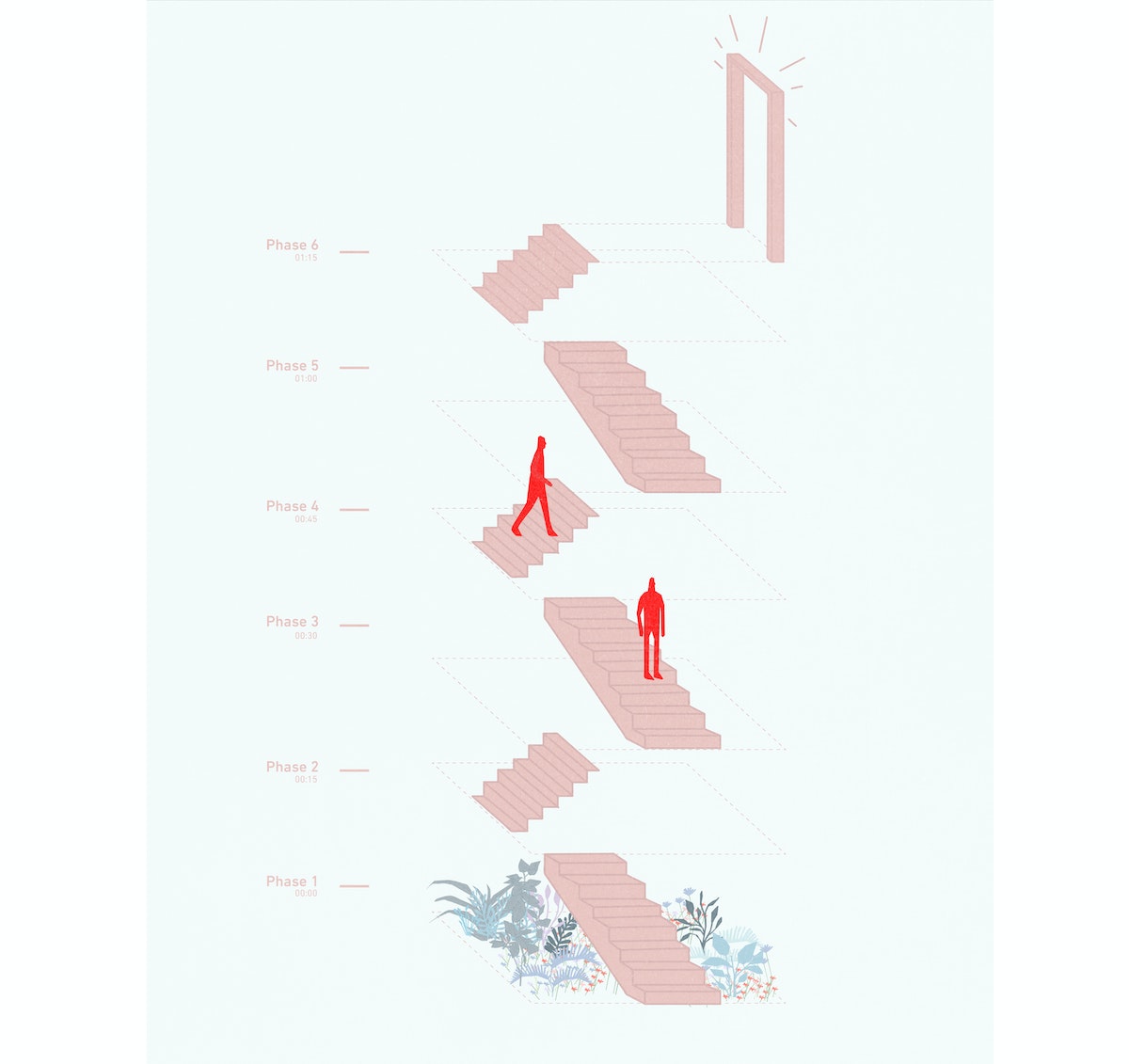
An exploratory sprint can feel directionless at first—you’re trying to make something new with a brand new tool, which means you could do almost anything. The best way to not devolve into endless spiraling is by scheduling every phase of design down to the minute. When you know your team needs to make a decision between A and B in the next seven minutes, well, you put on your big kid pants and decide. By giving yourself a series of minideadlines, you can accomplish more iterations and ultimately, a better prototype at the end of your sprint.
3. Show up with a prototype
When you’re working with a revolutionary technology and trying to explain your idea to a potential user, their eyes glaze over. Showing up to user testing sessions with a prototype—even if it’s far from final—makes the future tangible and accessible. You’re not talking about faster horses anymore, you’ve got people imagining cars.
4. Strong ideas weakly held
Making something takes confidence, and nothing builds confidence like concrete evidence that you’re headed in the right direction. But evidence is hard to come by in the world of emerging tech. Try prototyping as if you’re right—and then listening as if you’re wrong. This means putting your prototype in front of people and learning from all the ways it didn’t work for them—giving you both evidence and direction on what to build.
5. Find the right questions, not perfect solutions
Exploration is about charting unfamiliar territory. Sometimes that means you get it all wrong and end up at a dead-end. But that doesn’t mean the sprint was a failure! As we said, the goal of an exploratory sprint is not to execute a million dollar idea in record time, but to surface new opportunities.
At the end of the sprint, when it’s time to present your prototype, focus the conversation on what you learned: What would you build next time to make an even better, more human-centered solution? What advice would you give to others designing with these technologies?
6. Science fair, not pitch deck
Rather than jazz hands, Powerpoints, and promises of what your prototype could do, we always end our sprints in a science fair format: multiple hands-on demos happening alongside one another, with lots of room for discussion.
This lets people experience prototypes individually and then come back together to reflect on how the ideas worked for them (or didn’t). It’s another round of user feedback that furthers our learning and participants walk away with real insights that might apply to their work beyond the sprint.
It’s not always easy to run a sprint. It means breaking out of your regular work routine and collaborating with a team to do something intense and exhausting that you aren’t always sure is going to work. It means building with tools you don’t know how to use (yet).
But when we follow these rules, our sprints offer up reams of new ideas, insights, opportunities, and next steps that send us galloping toward a more human-centered future.
Know that timeworn Henry Ford quote, “If I had asked people what they wanted, they would have said faster horses”? Turns out Ford probably never said that. But as designers who are trying to imagine and build the future, we’ve found it to be a very useful notion.
3 Things to Obsess Over in London
People, spaces, startups, and stuff that will get your creative neurons firing
1. THE DIXON MULTIPLEX
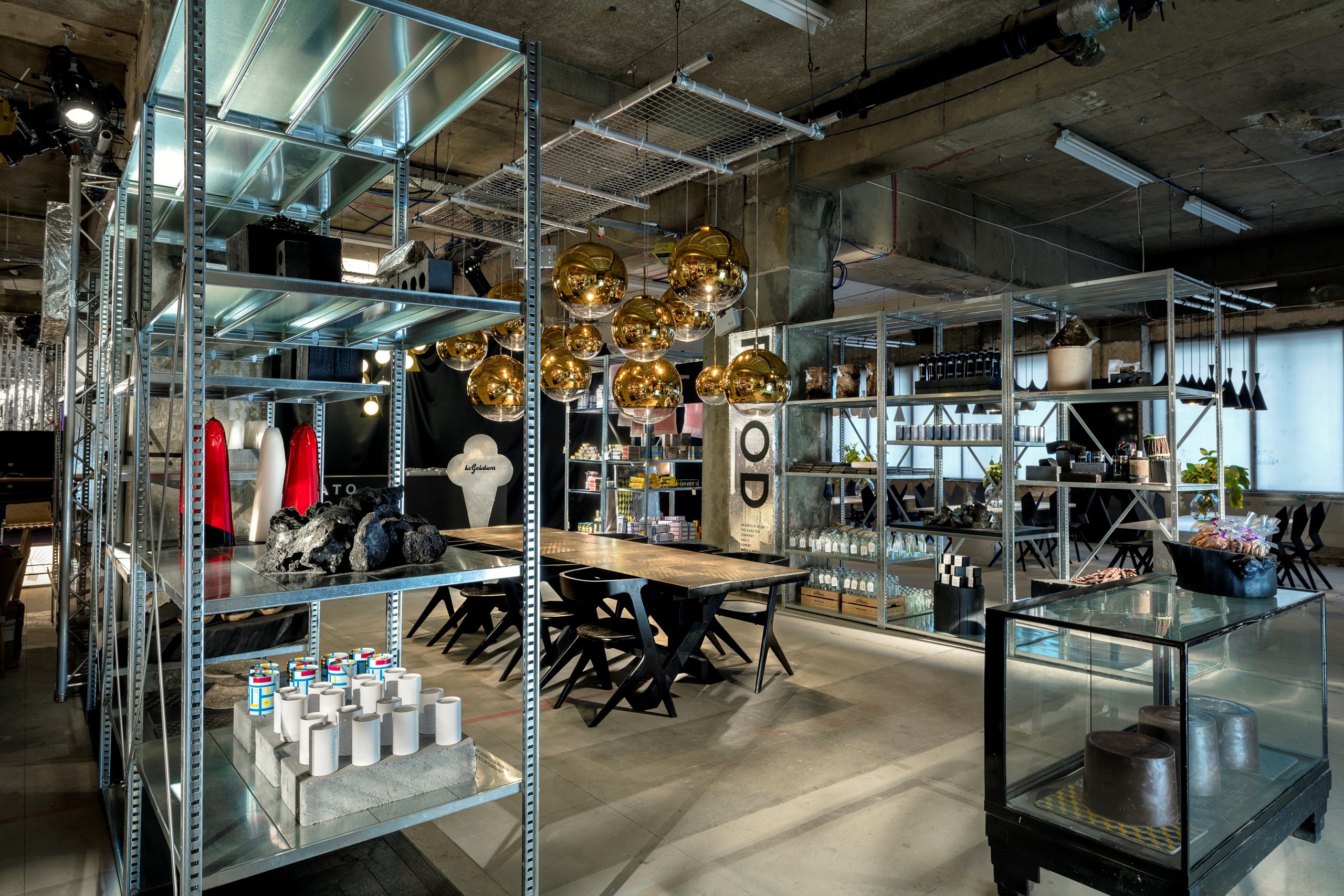
Multiplex is a pop-up "department store of tomorrow" trading for a month as part of the London Design Festival. It features contributions from a wide range of brands curated by legendary product designer Tom Dixon and Wallpaper magazine.
Billed as immersive and multi-sensory, I was super curious to see the designer's vision of an multi-brand store that is fighting for the attention of tomorrow's customers by offering experiences, not just products. That included British botanicals brand Haeckels’ mist spa (like walking into an aromatic greenhouse), to booking in for a fashion shoot or even a vitamin injection.
2. MINDBLOWER
Mindblower is a new 'idea to product' platform showcased at Multiplex, which invites you to pitch ideas for physical products you would like to create, to help bridge the gap between the amazing ideas we dream up and our ability to tangibly own them.
A blend of TV show Dragon’s Den and Kickstarter, its inclusion within a prototype store of tomorrow was interesting, blurred the boundaries between consumer, inventor, and entrepreneur. It's still super early days, but interesting to see someone responding to the citizen maker-economy without assuming that everyone is well-versed in design, 3D printing or engineering.
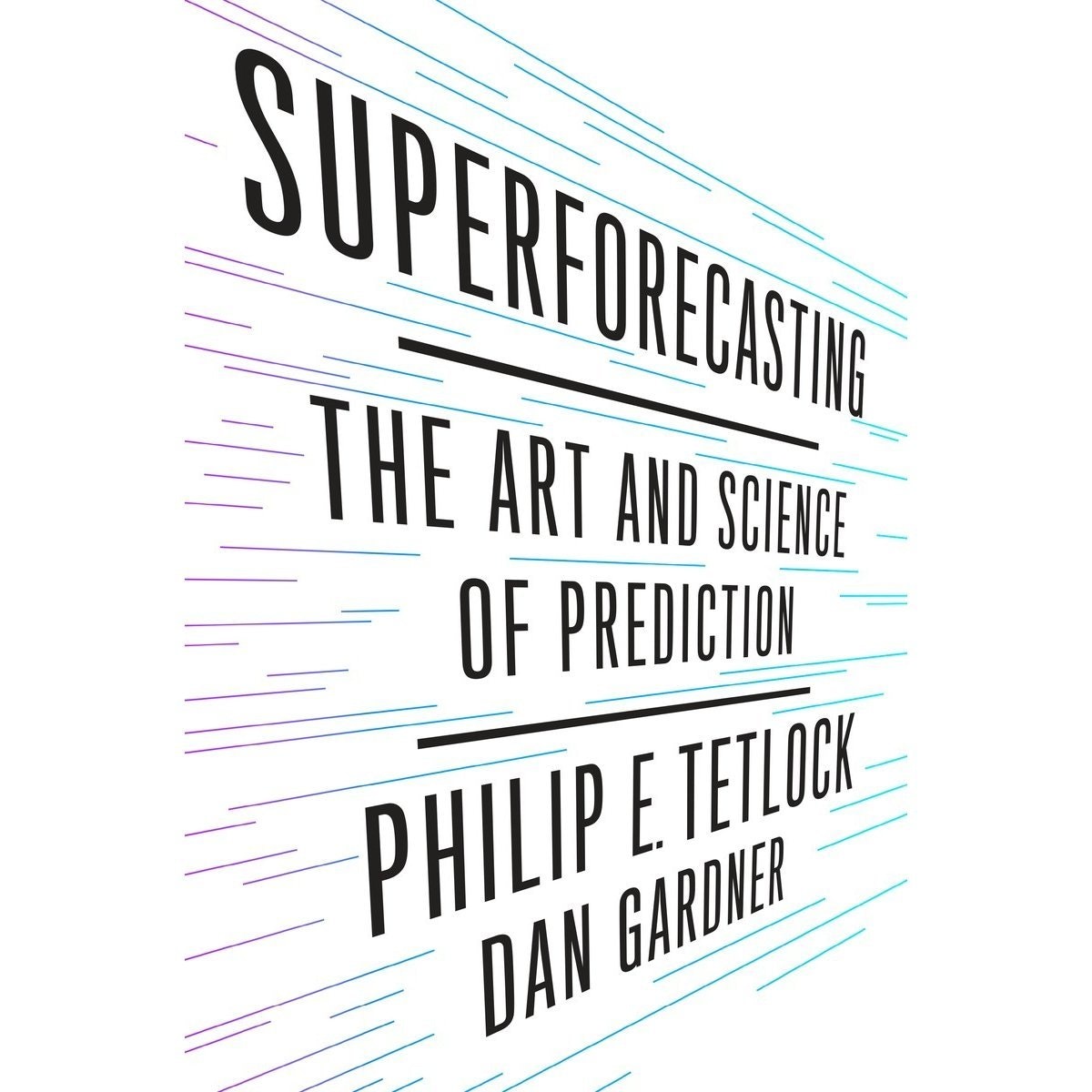
3. THE GOOD JUDGMENT PROJECT, AND SUPERFORECASTING
The Good Judgement Project is an experiment to explore how well the 'wisdom of the crowd' is able to predict future world events (e.g. will a nation's government collapse in the next six months). It's headline-grabbing finding is that within the thousands of people taking part, there is a small group of ordinary citizens dubbed 'superforecasters' whose predictions are 30% better than intelligence professionals armed with confidential data and subject expertise.
Philip Tetlock's new book - Superforecasting - looks at what sets these superforecasters apart. It's not just about raw intelligence (Superforecasters are clever but not off the charts) they demonstrate a 'growth mindset'; an openness to consider information from many different origins, to change their predictions, and to look back at their predictions and learn from their mistakes. Forecasting is something we could all potentially become better at, and Tetlock has now described how.
Every Monday morning, the London studio shares a coffee and some inspiration. This week, design researcher Kate Wakely talks through an immersive, pop-up retail experience from famed product designer Tom Dixon, a Dragon’s Den meets Quirky-style product development platform, and a book on the emerging art of super forecasting.

Lindsey Turner
I’m passionate about building brands, products, and experiences that help organizations show up with meaning and momentum.
I help organizations cut through complexity by shaping how they show up, through brand strategy, identity, and storytelling.
Working at the intersection of brand and business, I bring an editorial eye and a bias toward making—turning ideas into tangible experiences that people can understand, trust, and believe in.
My work spans government, healthcare, financial services, media, and consumer goods, from launching Gen Z-focused ventures to building innovation labs and reimagining legacy brands. I relish moments of ambiguity and enjoy translating across teams, perspectives, and priorities to move ideas forward.
I started my career in editorial and digital design, shaping cross-platform experiences and identity systems in publishing and agency environments. That foundation still shapes how I work today: I’m detail-oriented, collaborative, and overreliant on the Oxford comma. I hold a BFA in Visual Communication from the School of the Art Institute of Chicago.

Rachel Young
My work helps organizations see who their products aren't working for—and build the will and the tools to do something about it
For 25 years, I've asked the same question: Who does this design exclude—and what are we going to do about it?
My work spans human-centered strategy, inclusive design, and qualitative research, with clients ranging from Microsoft, Google, and Verizon to the National Science Foundation, and San Francisco Unified School District.
Before IDEO, I taught elementary school in East Palo Alto and spent a decade doing design work with social service organizations—where I learned firsthand what it costs people when systems are built without them in mind.
I am currently writing User Error, a nonfiction book about digital access and the design decisions behind it. I live in Oakland, California.

Brian Pelsoh
I lead with craft, ensuring our work is creatively excellent: rooted in deep human insight and imagination, while also grounded in the realities of business and technology.
My expertise spans brand, communication, and product design across tech, education, the arts, and social impact.
I believe great work demands both high-level vision and obsessive attention to detail, and only happens through collaboration.
I bring an inclusive, hands-on approach and a deep understanding of business, which enables me to consistently deliver excellence while always asking why.
Before joining IDEO, I worked at the brand firms Pentagram and VSA Partners. I began my career as a designer, leading teams at the School of the Art Institute of Chicago and the Milwaukee Art Museum. I hold an MFA in graphic design from Maryland Institute College of Art and a BFA in communication design from the Milwaukee Institute of Art & Design, and have taught at some of the best design schools in the US.

Tony Wong
I am responsible for IDEO’s long-term success in China and working with clients to use design as a tool to enable growth.
I am responsible for IDEO’s long-term success in China and working with clients to use design as a tool to enable growth. Specifically, I have helped Chinese companies design holistic brand solutions through the development of their products, communication, services, and innovation teams, and I have helped multinationals expand their presence and influence in China.
I advise global leaders on developing China-led innovation and capabilities.
In over 15 years in IDEO Shanghai, I have worked on projects that use design to elevate the quality of the experience of healthcare products and services, streamline processes that increase productivity, create spaces and programs that promote and enable inclusive communities, and build next generation mobility solutions that are planet-positive.
Before joining IDEO, I worked at Philips Electronics and the Electrolux Group in Italy, the Netherlands, and Singapore on a number of breakthrough commercial products. I am a member of the Young President Organization in Shanghai.

Building a personal AI for the messiness of life: Sida Li
Most AI products today are built for work—a space with clear problems and established systems. One founder noticed a gap: personal life is messier, harder to systematize, and mostly left behind by the AI boom. So she built Cue, a personal AI that lives inside iMessage and group chats, to go where the other tools haven't.
In this episode, Becca Carroll, IDEO's Chief Strategy Officer, talks with Sida Li, co-founder and CEO of Shared Context Lab, about staying anchored to a human need while the technology around her keeps changing shape, why she treats her business model with the same rigor she'd bring to a product, and what it feels like to build a company at this particular, disorienting moment in AI.
The conversation also gets into how Sida makes design decisions: the language Cue uses to describe itself, the tradeoffs behind building inside iMessage instead of a new app, and a real story about a business idea that didn’t pan out.
This is the second in a two-part series profiling founders from IDEO's Startups-in-Residence program. The first conversation is with Johannes Seemann, founder of Sooner, on designing GenAI for the emotional side of money.

Designing GenAI for the emotional side of money: Johannes Seemann
Most personal financial tools are built to run the numbers and optimize towards a budget. While that works for some, most people experience money as a lived relationship that does not neatly fit into a spreadsheet. Johannes Seemann and Becca Carroll discuss why money is emotional before it is mathematical, and what a human-centered approach to building a generative AI financial product looks like in practice.

The curious leader's edge in uncertainty: Scott Shigeoka
Mina Seetharaman talks with Scott Shigeoka, author of Seek and Head of Curiosity Cultivation at the Eames Institute, about what distinguishes genuinely curious leadership from performative curiosity, how power dynamics shape curiosity, and why practicing curiosity can restore energy rather than drain it.

How constraints make us more creative: David Epstein
Mina Seetharaman talks with David Epstein, author of Inside the Box and Range, about why total freedom often produces average work, how leaders can design useful limits on purpose, and what organizations such as General Magic and Pixar reveal about the relationship between boundaries and creativity.
Looks like you might be in search of something very specific?
Or reset the filters above and try another angle.
Here’s some random inspiration

Podcasts about creative leadership

Articles about the power of prototyping
