
.svg)




A return to simplicity with a bottled tea brand
Bringing the grounding and authenticity of tea culture into the rhythm of modern life.
Master Kong (known internationally as Tingyi Holding Corporation) is number one in market share in both instant noodles and ready-to-drink teas, with over $10 billion USD in annual revenue. While China has a rich tea culture, most sugar-free bottled tea on store shelves markets itself as “healthy” and “tasty.” Wanting to set itself apart from the competition by uncovering new consumer needs, Master Kong reached out to IDEO. Together, Master Kong and IDEO immersed themselves in modern Chinese tea culture and built a new, premium, sugar-free bottled tea brand that resonates deeply with contemporary tea drinkers.
During research, the combined IDEO/Master Kong team took a two-pronged approach to uncovering new opportunities: industry exploration and consumer research. The team visited various tea-related businesses, from traditional tea houses to modern beverage shops, as well as “third place” tea spaces outside of home or work. They also conducted in-depth, in-home interviews with consumers with various levels of interest in tea, delving deeply into their daily routines to better understand their lifestyles and any emotional or functional needs related to tea.
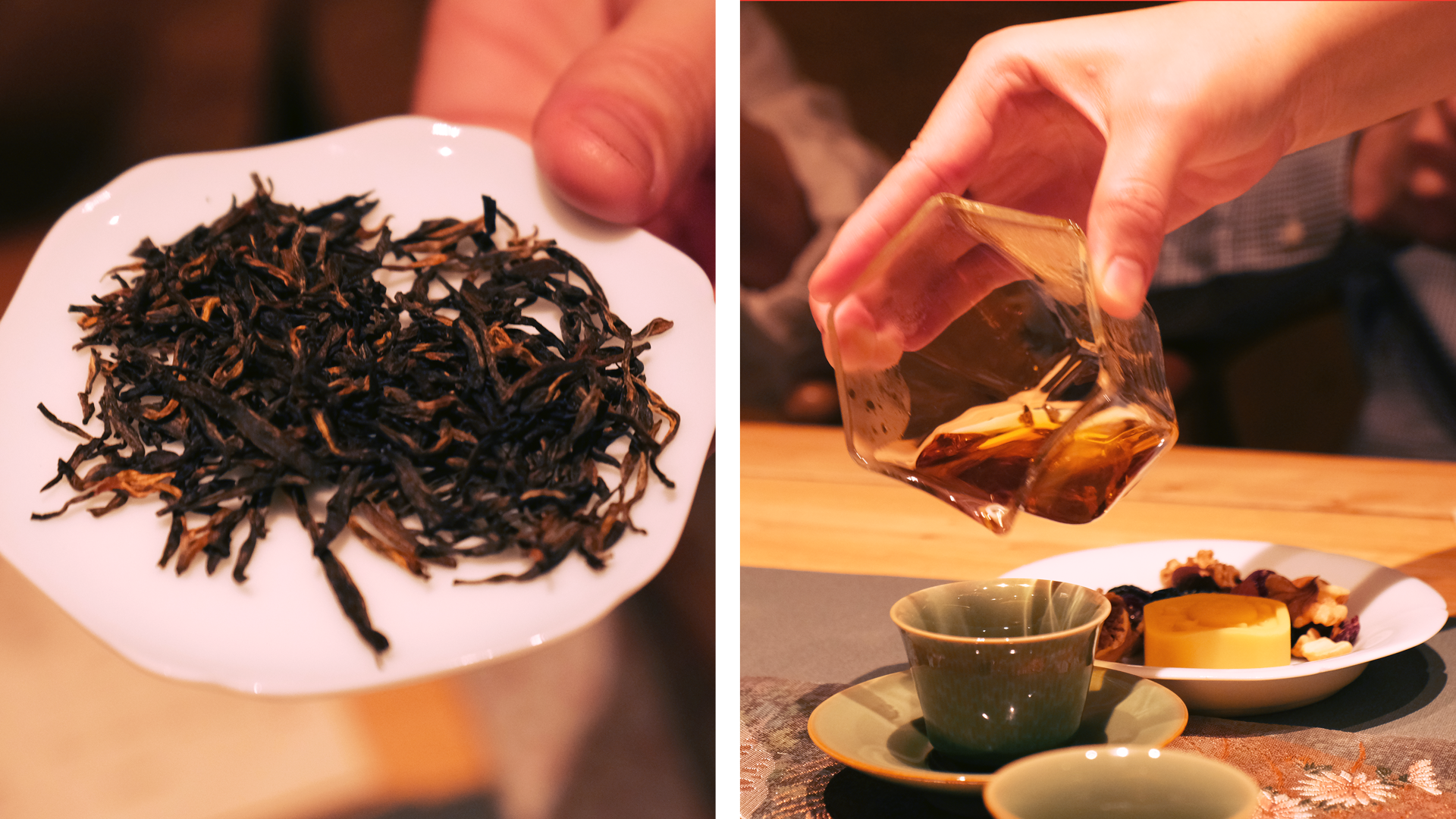
The team discovered that the essence of Chinese tea culture resonated with contemporary consumers’ longing for authenticity, simplicity, and physical rejuvenation in their fast-paced lives. This insight presented a unique opportunity for Master Kong. Instead of positioning its new sugar-free tea brand as merely a “healthy alternative” to other beverages, it could spark a meaningful connection to tea culture, seamlessly integrating into various moments of modern life.
Armed with this insight, IDEO designers and dozens of Master Kong beverage team members participated in a series of immersive, hands-on tea innovation workshops. Teams of experts from R&D, marketing, supply chain, and other company departments temporarily set aside their job titles to explore, iterate, and refine dozens of new tea concepts that were commercially viable, feasible for mass production, and aligned with consumer needs. The cross-departmental collaboration allowed for a broad mix of perspectives, experiences, and expertise, enriching the innovation process.

The co-creation sessions led to a new sugar-free tea product and flagship brand called Cha De Chuan Ren (“Descendants of the Tea”), which celebrates fine, origin-sourced tea and the passion and dedication of tea farmers. The novel concept resonated strongly with consumers and was validated during subsequent rounds of quantitative market testing, ensuring its relevance and market potential.
Cha De Chuan Ren launched with two signature flavors: Tieguanyin (green tea) from Fujian and Pu’er (black tea) from Yunnan. The unique mottled bottle design pays tribute to traditional handcrafted glass containers and the handiwork of tea farmers. The tactile paper label, which features Jia Ma-inspired woodblock illustrations of local tea fields and tea farmers’ hands, nods to the artisanal craft of tea making and the source of the tea inside.
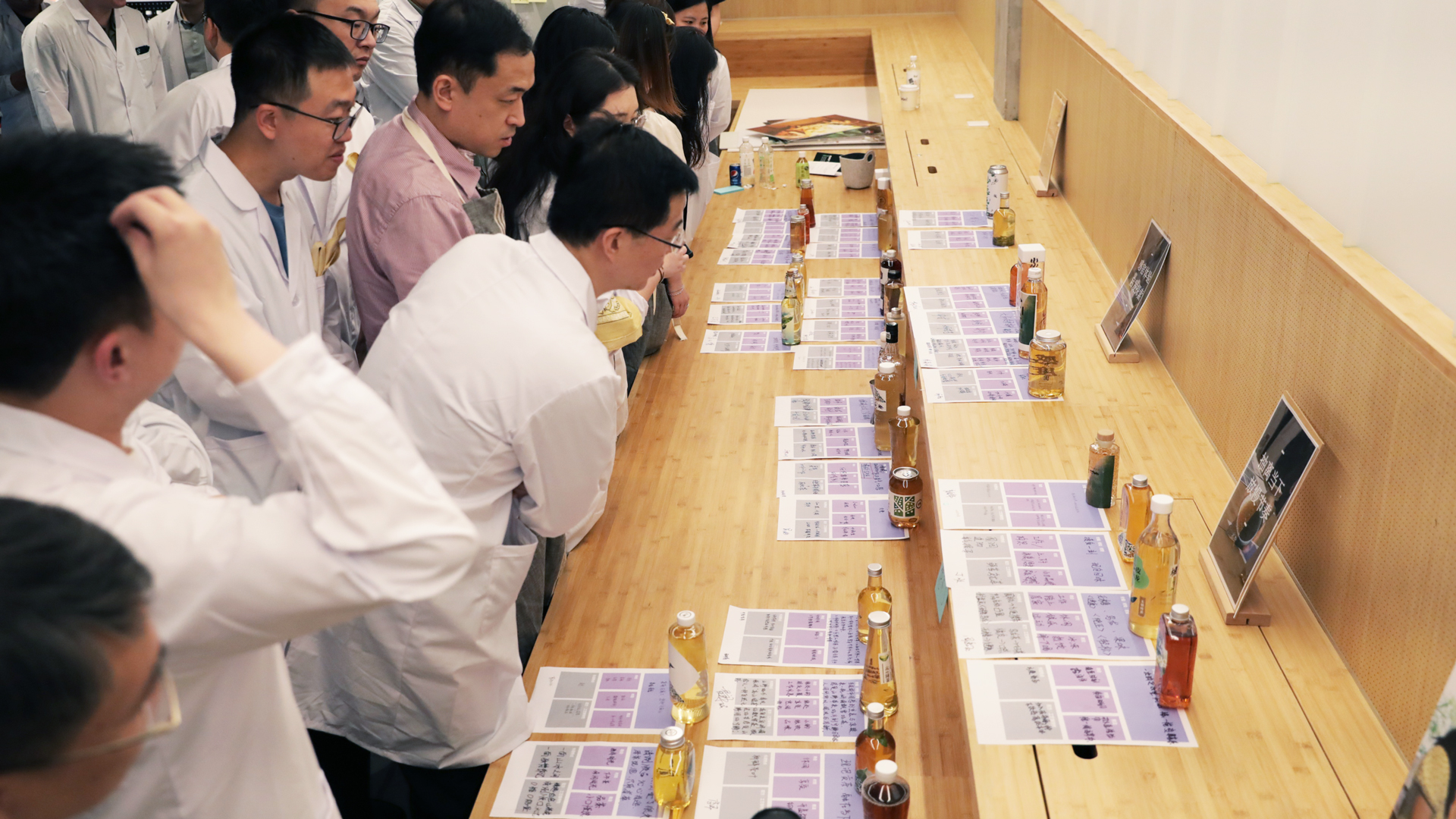
“Descendants of the Tea” debuted on Tmall in April 2024. It claimed the top spot on the commerce site’s Tea Beverage V-List in August and September. Offline, it launched in FamilyMart convenience stores in May and has since expanded nationwide. The new brand received a 2024 Red Dot Award for “Brands & Communication Design.”
“We are honored to collaborate with IDEO, a global leader in innovation, as our strategic partner. ‘Descendants of the Tea’ is not just an exceptional product but also a tribute to the rich heritage of tea culture. Only by continuously integrating culinary traditions with innovation can we sustainably meet consumers’ true needs.”
Richard Chen
CEO, Master Kong (Tingyi Holding Corporation)
“Innovation is incredibly fragile. If even one leader is unsupportive or hesitant, the culture of innovation can collapse. I always encourage my team to take risks, as long as they’re not high stakes. After all, what’s the worst that can happen? At the very least, we’ll have a fair chance at creating something new.”
Wei Hong-Chen
Chairman of Master Kong Beverage Holdings Co., Ltd.
Sugary bottled teas were once very popular in China. Today, rising consumer demand for healthier beverage options has expanded the market for sugar-free tea.
#1
on Tmall’s Tea Beverage V-List, August- September 2024
2024 Red Dot Award Winner
for Brands & Communication Design
A luxury water bottle takes precision engineering to the extreme
Elevating the everyday with next-level design.
Twenty years ago, carrying a single-use plastic water bottle was a status symbol—no more. Growing awareness of the negative environmental impact of plastic pollution, combined with the adoption of healthier lifestyles and social media influencer trends, has made reusable water bottles “it” accessories for on-the-go consumers. While brands such as Stanley, Yeti, S’well, and Hydro Flask own the under-$100 market, fashion brands such as Louis Vuitton, Chanel, Dior, and Prada have etched out a new and growing market for high-end bottles that appeal to discerning, trend-conscious young people looking to perfect their hydration habits.
Spotting an opportunity to disrupt the predominantly utilitarian water bottle market, Steinmann partnered closely with IDEO, tasking the team with developing an industrial design that perfected the tactile and sensory user experience, from drinking and carrying to disassembling and cleaning thoroughly. The collaboration deepened over time, with Steinmann and IDEO working together to develop the high-level engineering concept, the OKAPA logo mark, and packaging ideas.
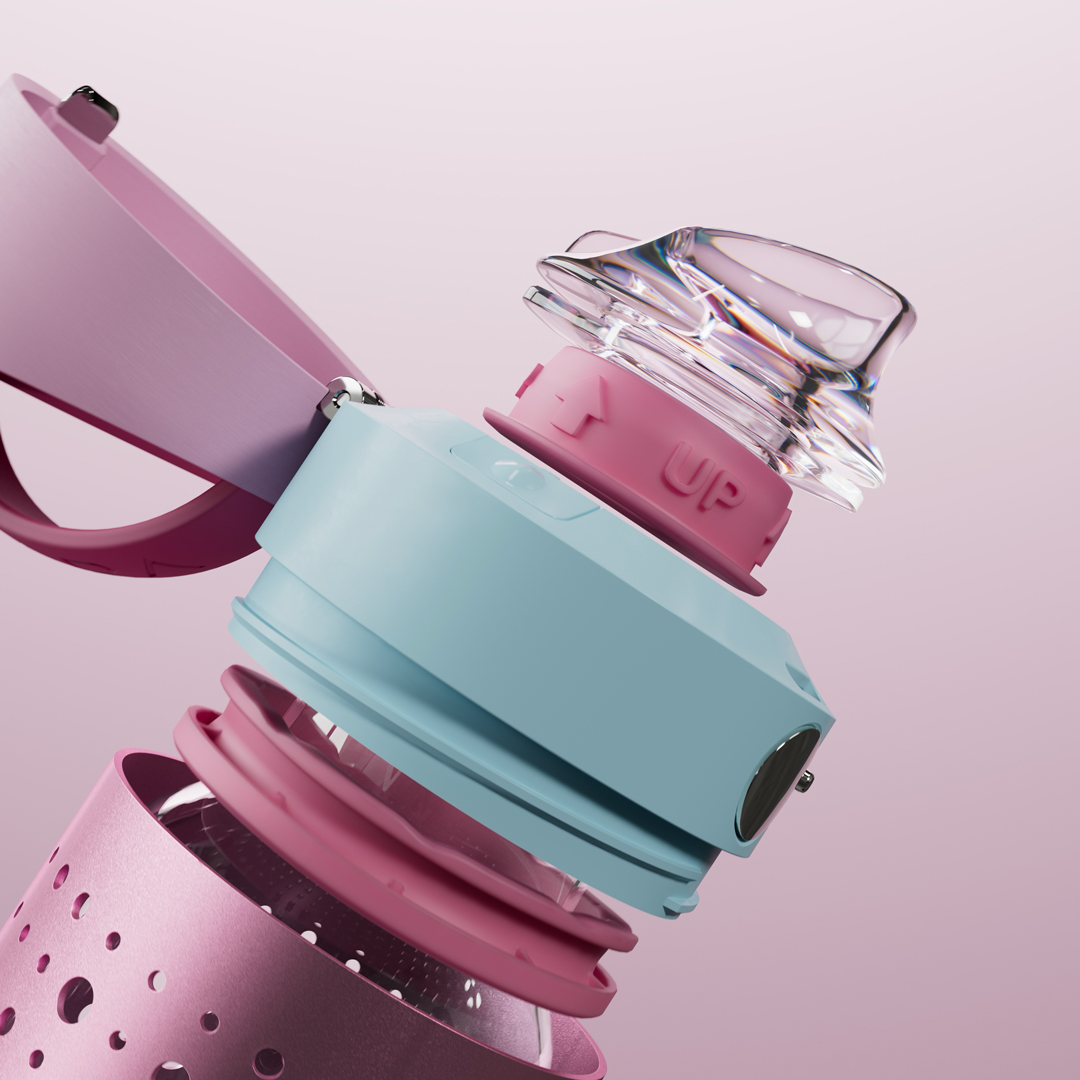
Key user-centered features of the OKAPA bottle include a medical-grade German borosilicate glass interior for superior taste of hot or cold beverages with no lingering odors; a Swiss-engineered thermoplastic lockable and leak-proof tilt cap that can be easily operated with one hand when driving or doing other activities; and an ergonomically shaped mouthpiece for a pleasurable drinking experience. Precision-engineered for maximum longevity, the inner glass bottle is suspended via a shock-absorbing system inside a bead-blasted, extruded, and anodized aluminum outer shell. Eight modular parts come apart easily for either a quick or thorough cleaning.
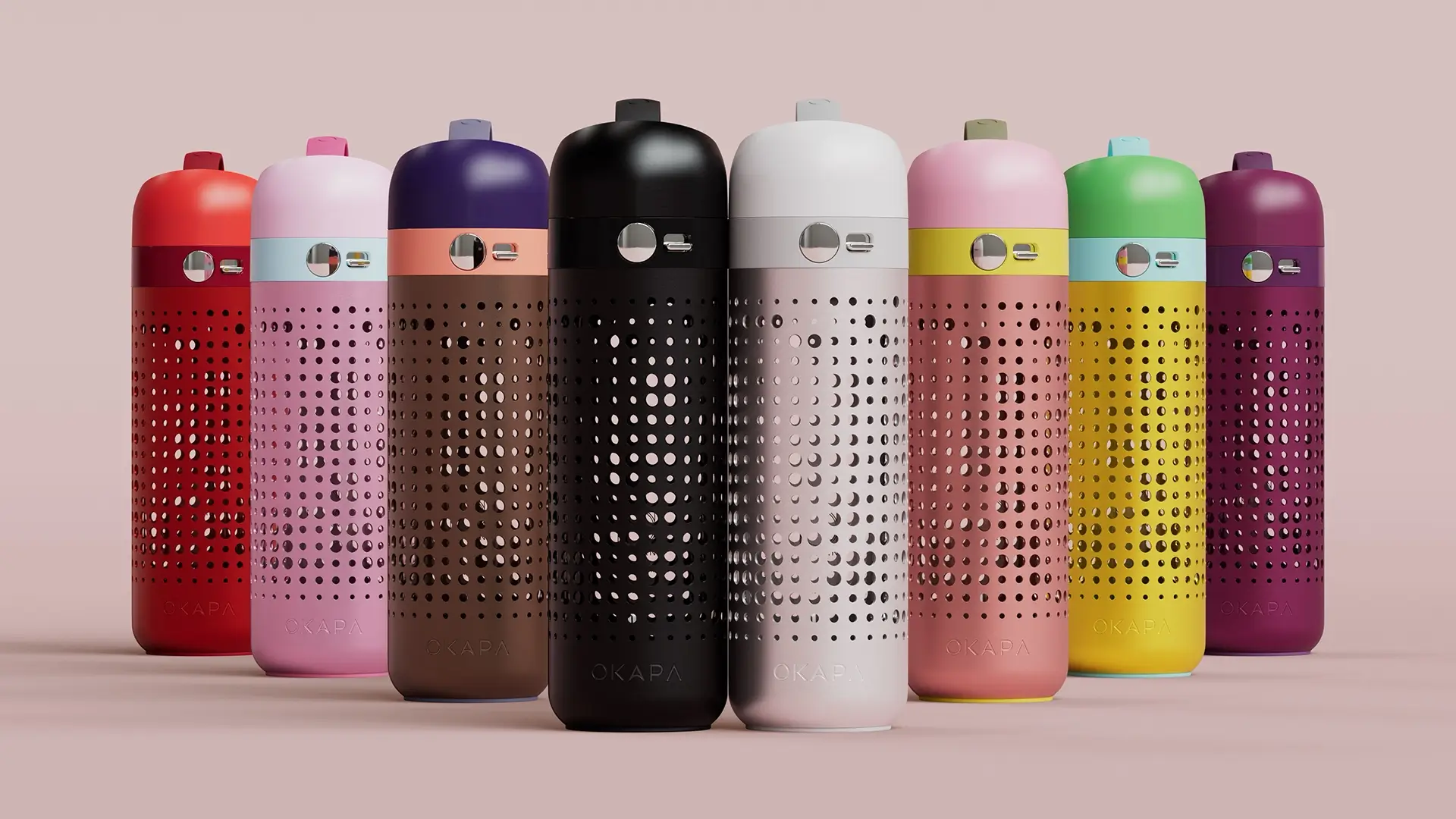
At its core, the OKAPA bottle elevates an everyday ritual through meticulous design and uncompromising engineering. Launched in January 2025, the new bottles are available in eight contemporary colorways curated by renowned color and materials specialist Beatrice Santiccioli (BSD), including Misti Pinku, Goldie Samba, and Fetishe Noir, among others.
In the US, the reusable water bottle market is estimated to increase from $10.2B in 2024 to $14.1B by 2031, with 69 percent of Gen Zers owning at least one. Customization trends, such as personalized design and branding, are anticipated to boost the market, ripe territory for disruptive startups such as OKAPA. (Persistence Market Research)
Once a practical accessory for hikers and outdoor enthusiasts, reusable water bottles have gone mainstream. Yet none check all the boxes in terms of purity of taste, hygiene, durability, functionality, and beauty.
8
modular pieces ensure hygienic cleaning is quick and easy
100%
recyclable materials in each bottle
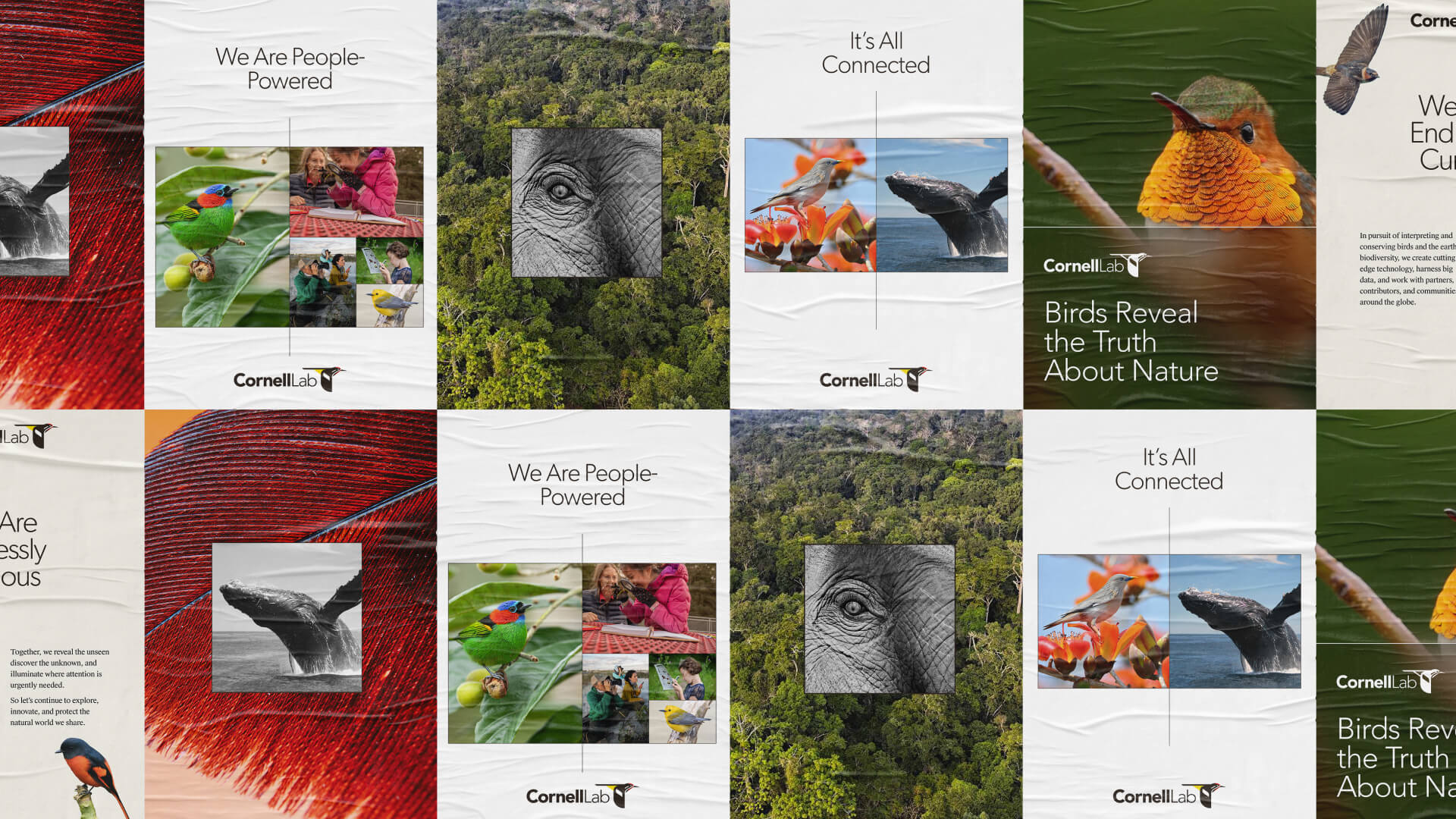
Brand as a conservation strategy
The Cornell Lab of Ornithology unites as “One Lab,” galvanizing a conservation movement.
The Cornell Lab of Ornithology’s mission is to interpret and conserve the earth’s biological diversity through research, education, and citizen science. Over its 110-plus-year history, its offerings grew to include everything from a quarterly magazine, popular websites and apps with millions of users (Merlin, eBird), partnerships with outside organizations, and the world’s largest database of photographs and audio recordings of birds. This abundance is a testament to the passionate enthusiasm of its employees. Still, it confused potential members and led to siloed internal efforts, preventing the Lab from advancing its urgent collective vision. “Birds and biodiversity are in peril,” said Executive Director Dr. Ian Owens. “We must take radical action with a coherent vision, united voice, and purpose.”
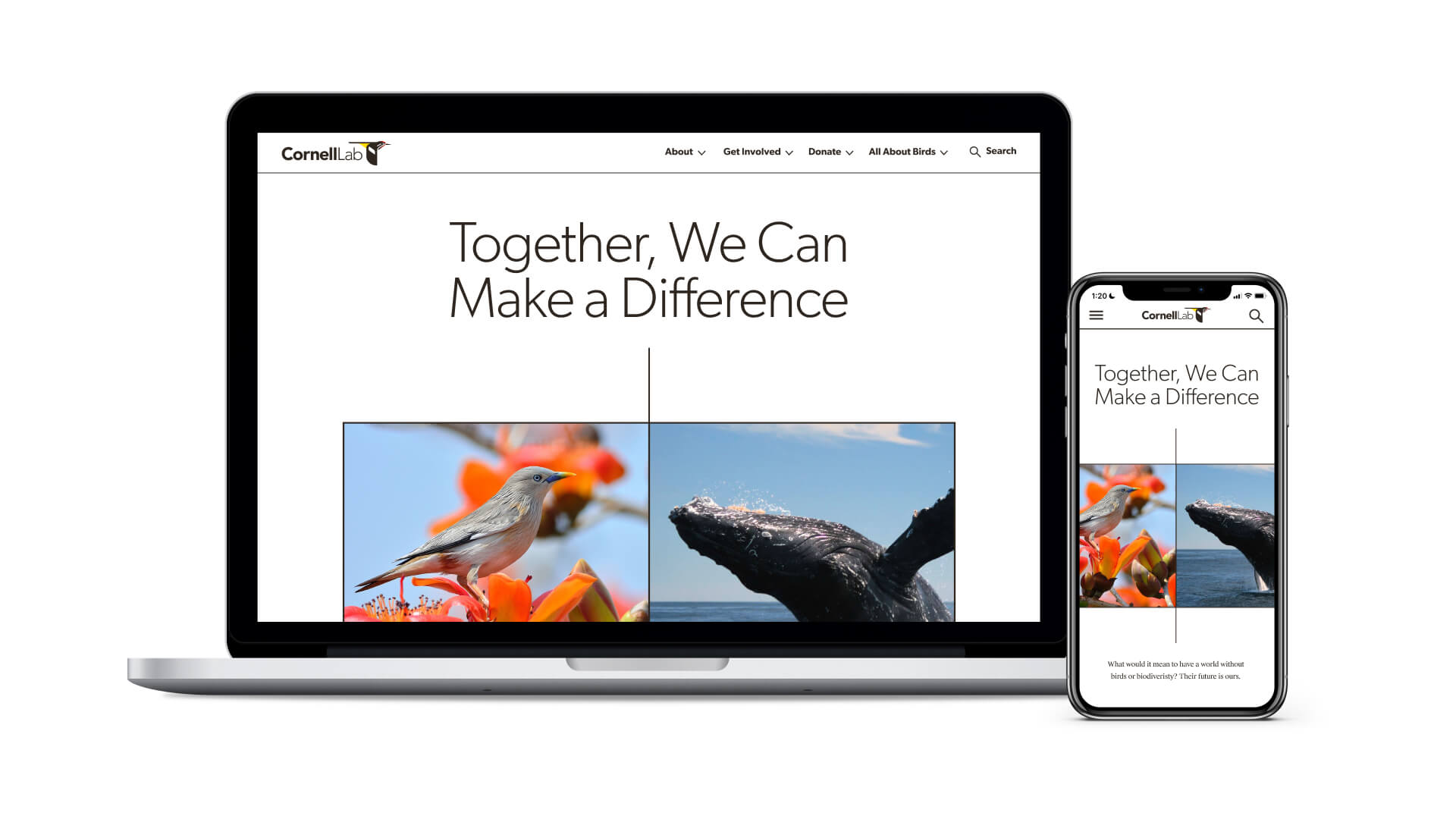
IDEO began by helping the Lab better define its audience. While primarily composed of people passionate about birds, IDEO discovered its larger audience was nature lovers interested in biodiversity, bioacoustics, conservation, and science. From there, IDEO created a brand strategy and architecture focused on helping the Lab streamline its efforts under the “One Lab” brand. The brand architecture visually articulated the relationship between Cornell University, the Cornell Lab of Ornithology, and the Lab’s many products and offerings. IDEO designed a comprehensive brand identity system to work across mediums, including a simplified logo system, new colors, type, graphic language, voice and tone, and key messaging.
When the Lab’s design team began implementing the new branding elements across its website and many digital products, it became clear that the organization also needed IDEO’s help in creating tools to facilitate cross-department collaboration. To better understand the day-to-day nuances of the organization, IDEO designers worked out of the Lab, co-creating a brand activation playbook. The playbook, launched in 2023, contains recommendations for new cross-functional working groups (partnerships, visual identity, and brand voice), as well as exercises and interactive tools designed to build trusting relationships, gain alignment, foster collaboration, and manage change at scale.
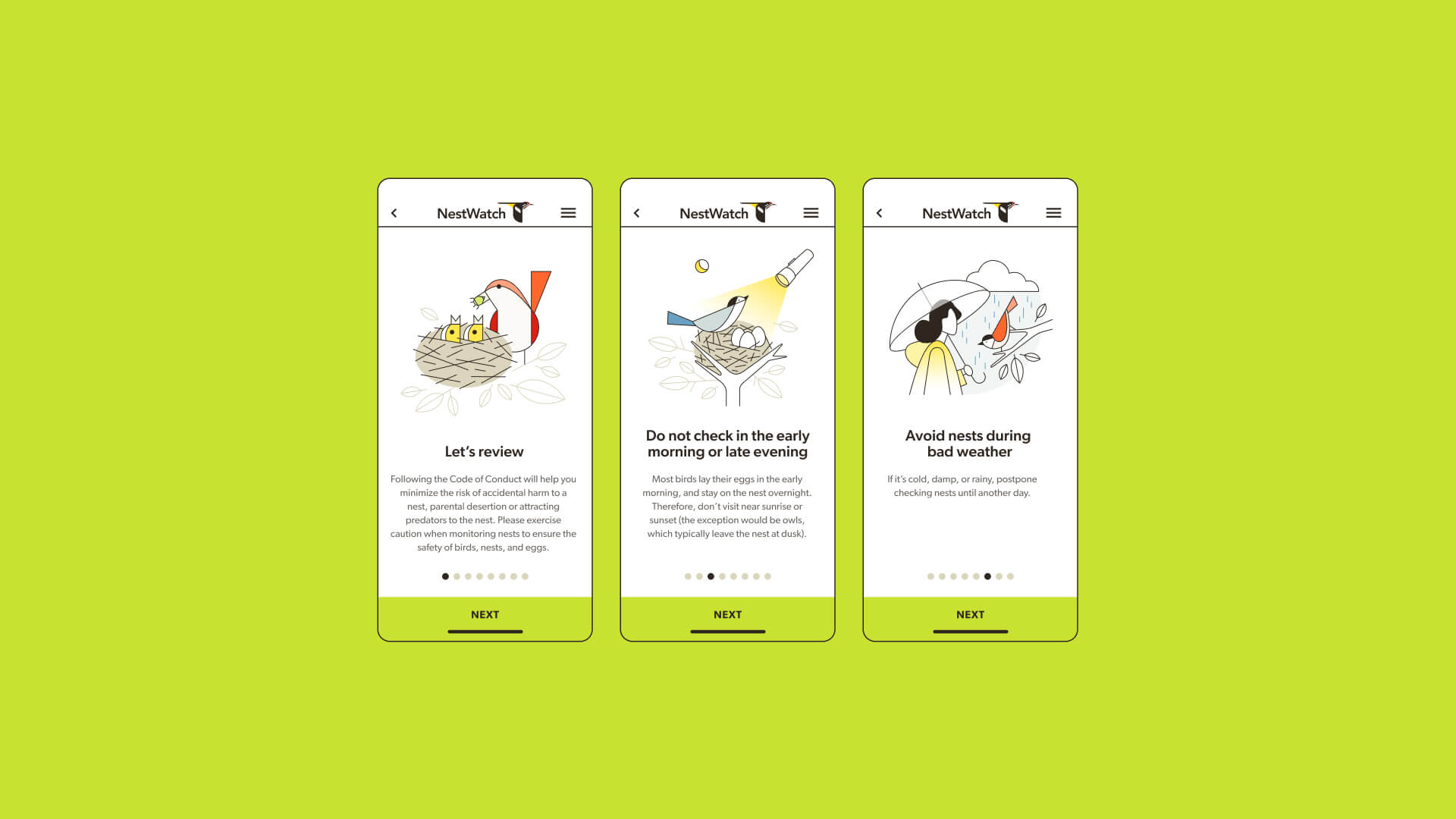
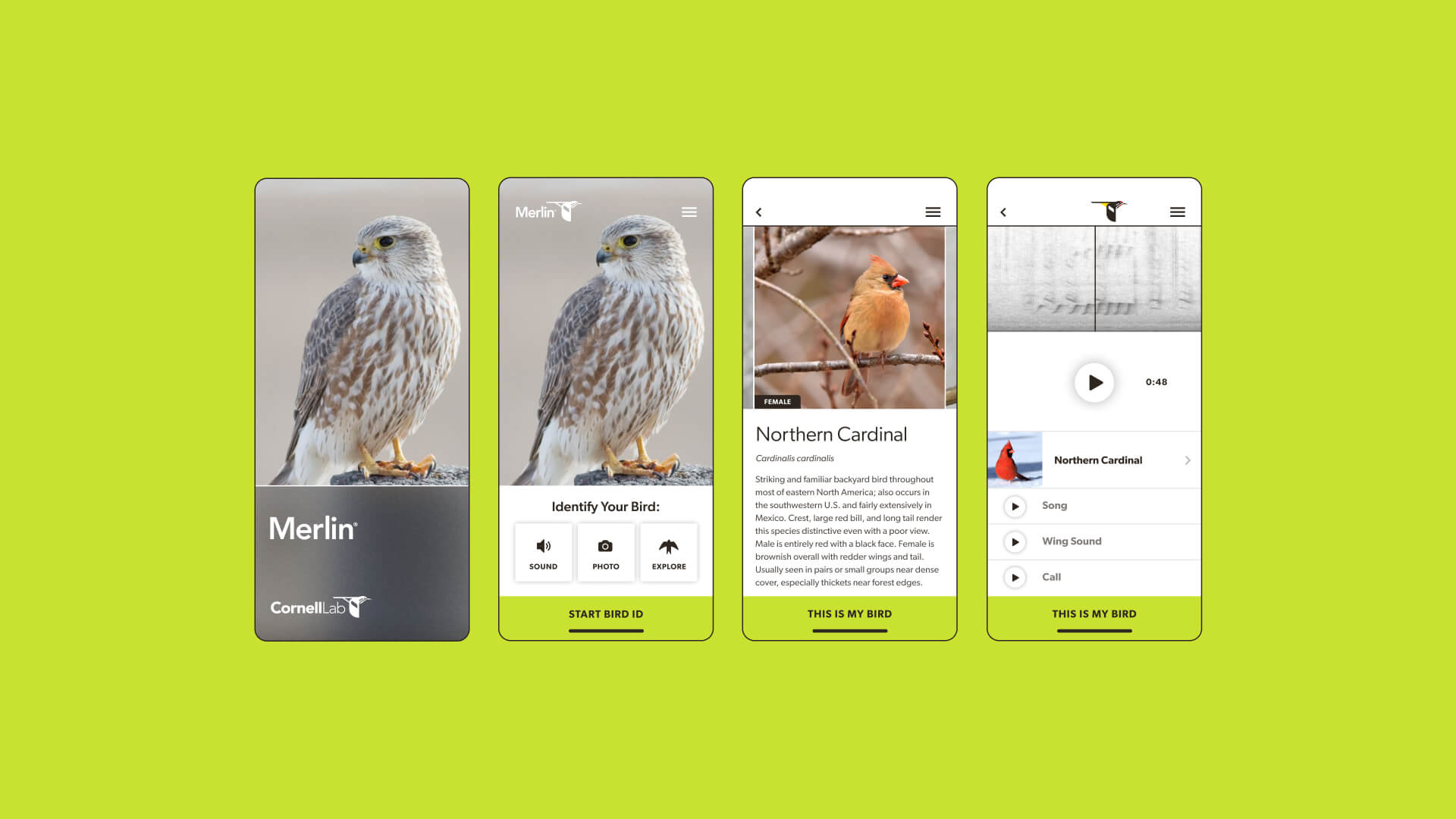
Post-collaboration, the Lab has applied the new brand across its website, apps including Merlin and eBird, Living Bird magazine, email and newsletter templates, and its line of merchandise. A new internal brand guidelines site has become central to employee onboarding, while new working groups are helping to bring down barriers between teams and spur collective action. Like a flock of birds, the Lab now sings one collective song.
The Cornell Lab’s 300+ scientists, professors, staff, and students were passionately dedicated to their individual team’s unique conservation projects, but segmented internal systems could stymie their collective impact.
1 brand
unifying 300+ employees and 8 departments

Charting a bold educational future
Ascend Public Charter Schools designs a “grown-up” vision for its young educational network.
Founded in 2008, Ascend Public Charter Network prides itself on providing “rich, joyful learning experiences that unlock lives of boundless choice” for its students, 93 percent of whom identify as Black or Latinx. The organization is also proud of being Black-led: 78 percent of staff and 80 percent of the executive team are people of color. Using co-design and joy, IDEO held a mirror up to Ascend’s core optimistic spirit during a moment of anxiety and change, helping its new CEO, staff, students, and parents reflect a dynamic, collectively imagined vision.
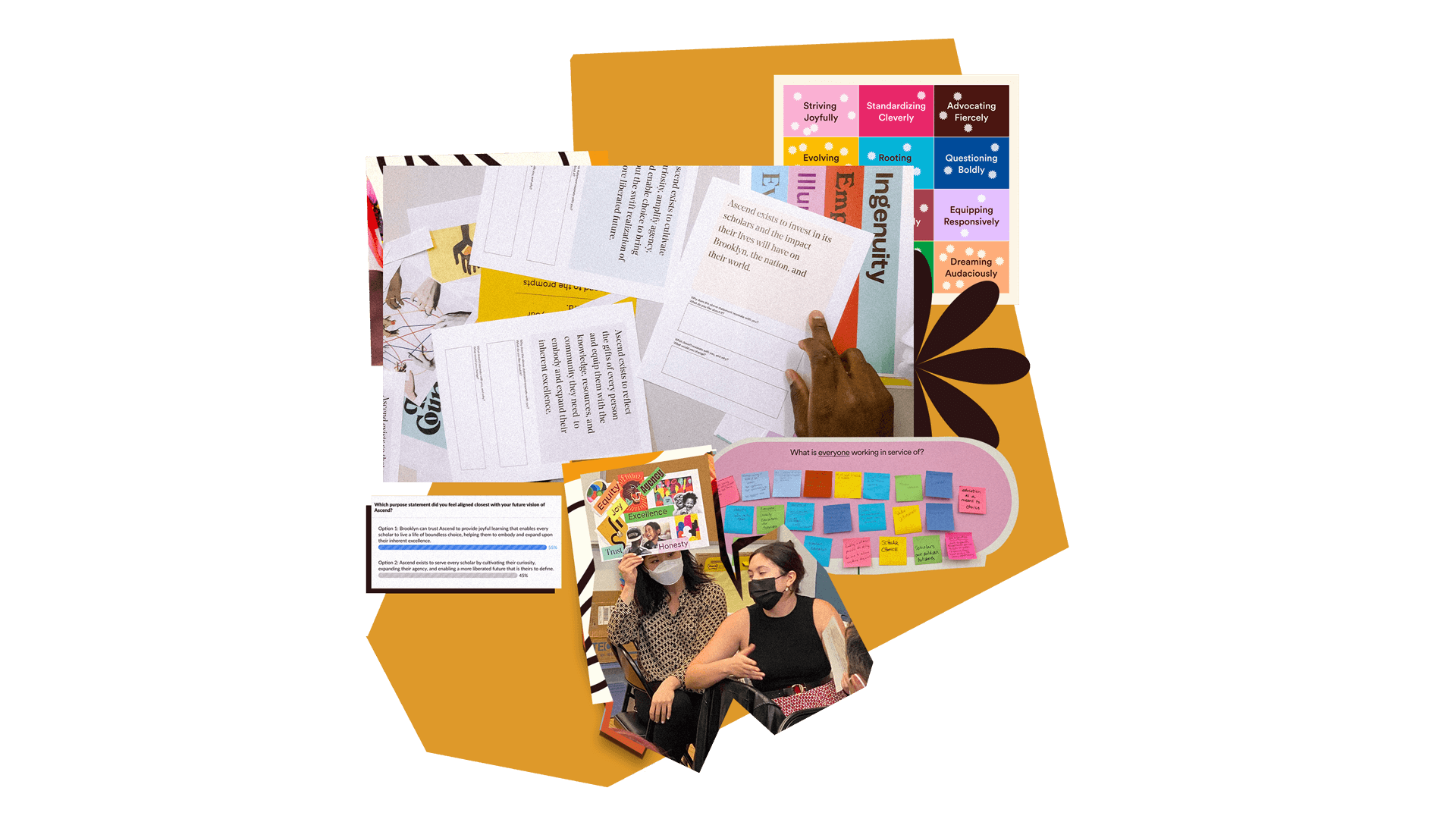
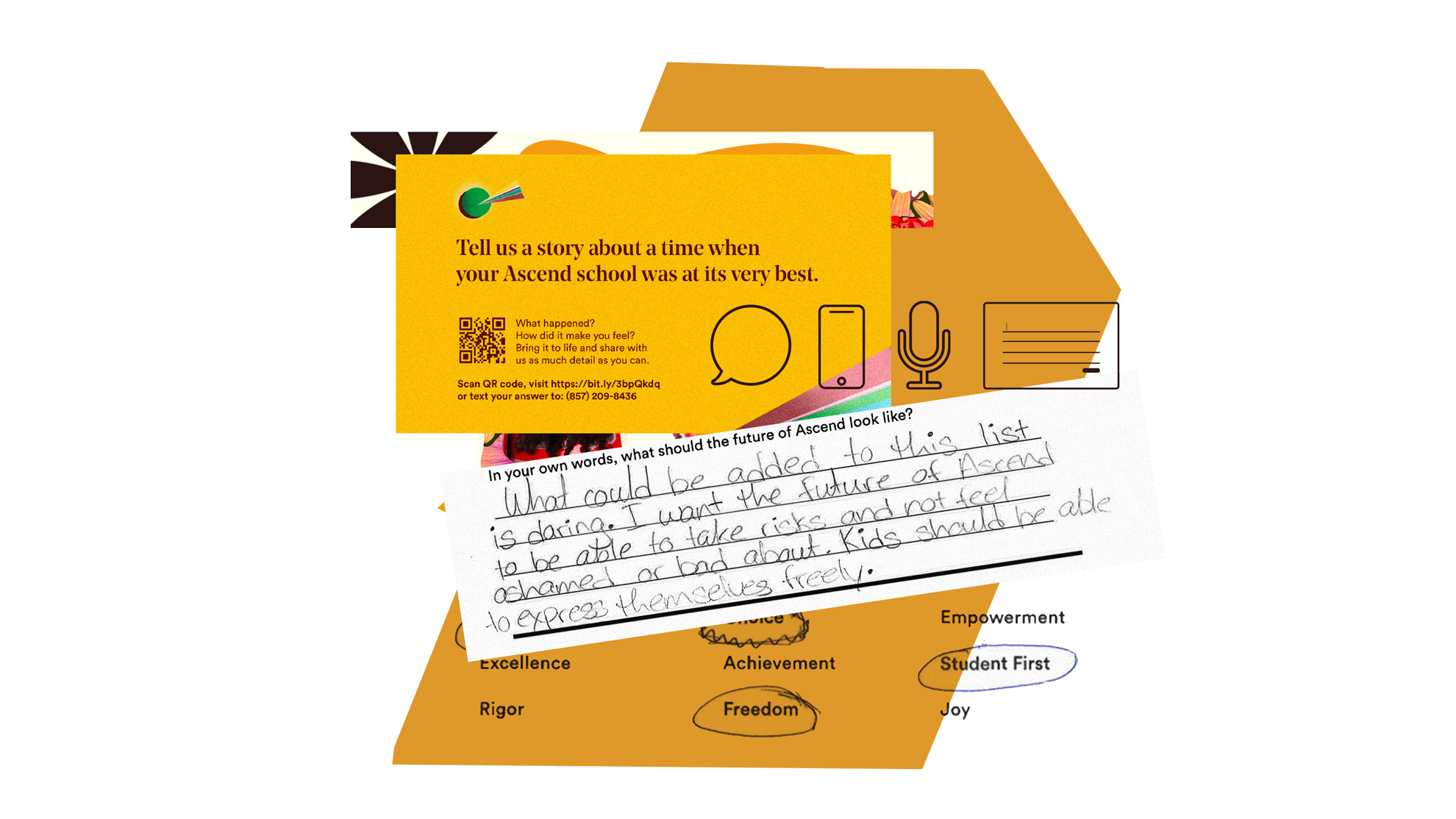
While the project’s goal was serious, the combined team centered the collaboration on bringing back fun, beauty, and imagination to those who could use it most: educators. Through engaging interactive activities, the IDEO team invited principals, PTA members, student council representatives, and board members to join “organizationally sanctioned play” moments like creating collaged vision boards and writing poems about Ascend’s impact. These interventions helped burned-out educators escape the day-to-day tasks of running schools and dream expansively about Ascend’s future. The team also solicited written, visual, and audio stories, asking community members to describe Ascend at its very best.

Stitching together submissions from 551 students, 75 parents, and 16 staff members, the co-design sessions resulted in a powerful new purpose, mission, and values, as well as a vibrant visual language and activation tools to bring Ascend’s vision of a “dope,” “unapologetically Brooklyn” charter network to life. The joyful, eye-catching visuals are embedded throughout its 17 Brooklyn schools, staff recruiting and training materials, and digital presence.
Shortly after the collaboration with IDEO, Ascend received an unsolicited $11 million donation from MacKenzie Scott's foundation, Yield Giving, the most significant gift the then-14-year-old institution had ever received. The pivotal funding will allow the organization, with its bold new “grown-up” vision, to focus on becoming the school of choice in Brooklyn by 2027.
In the summer of 2021, one in four K-12 teachers was ready to quit. Pandemic stressors and increased curriculum scrutiny were to blame, according to a 2021 Rand Survey.
In 2022, 44% of K-12 workers reported burnout, the most of any US professions the time, according to a Gallup Poll.
Pandemic exhaustion and leadership turnover left Ascend’s new CEO eager to align staff around an exciting new vision.
$11M grant
Ascend received an $11M grant from the MacKenzie Scott Foundation a few months after the collaboration
1 collective vision
to guide a network of 17 schools
Can an Interaction Designer Survive Without a Smartphone?
What I learned during a month unplugged
First came the jolt of panic, followed by furious digging through my bag, and slapping my pockets, the whole time chanting, “Please say I didn’t forget my phone!” There I was, standing just past the airport security checkpoint on my way to catch my connecting flight home from Japan, totally empty-handed. Bye, phone.
Once I stopped hyperventilating, I had a few hours strapped to an airplane seat to consider the following: What would it feel like to live without a smartphone?
Since I was already stuck without one, I decided to turn my predicament into a personal experiment: one month, no smart devices of any kind. Here’s what those 30 days taught me—and how the experiment made me rethink the way I approach design.
Less might be more
My first observation was that I was suddenly fully engaged with everything—my surroundings, the people around me, even that TV show that I thought I liked, but really just glanced at between text messages. I was pleased to find that conversations suddenly became much more meaningful. When I had my phone in hand, I was always subconsciously waiting for a buzz, and partially disengaged from the people in front of me. And when the buzz happened, I stopped listening to them completely. Without the added distraction, interactions became much more fulfilling.
As an interaction designer, I spend a lot of time creating user-friendly interfaces, but this experience made me wonder exactly how accessible things should be. Now I ask myself, are there elements that are competing with instead of enhancing an experience? Would a user benefit from something just a little less sticky?
Lose the escape hatch
Some of you may remember a time when you couldn’t just text your friend to say that you’re running late or *cough*cough* aren’t feeling well and can’t make it. We’re all guilty of it. The beauty of not having a phone was that it forced me and my flaky friends and family to pre-plan and be on time*. By removing the option to be late or back out, there’s much less to think about besides showing up and enjoying each other’s company.
When we’re designing technology, do we always need a back or undo button? How does that affect outcome and behavior, and can we use it to our advantage? For instance, with questionnaires, how do answers vary if there’s no way to change them?
*side note: Do look up where you are going ahead of time, because no phone = no maps.

It really, truly can wait
At the beginning of the experiment, I had a few phantom limb moments where I went to grab my phone to check tomorrow’s weather, or look up the definition of apocryphal, or text that random gif to a friend. In most situations, my first instinct was to whip out my phone. Not having access to everything forced me to slow my pace, and made my world feel a whole lot smaller, and, in some ways, less overwhelming.
In an era where you can shop for a pair of pants online and have it delivered to you within the hour, are there moments that can be enhanced by building in pause? What can a little friendly friction do to help slow things down to enhance and experience?
Automation isn't always rewarding
There’s no question that the smartphone affords us many conveniences—I’ve undoubtedly plundered every mobile subscription, delivery, and transaction possible. But streamlining every aspect of my life left me longing for those small moments of accomplishment that I used to get from figuring it out on my own. For instance, without access to ridesharing services, I found myself walking or taking public transit everywhere. Great for my lungs, the environment, and my wallet. The same goes for social sharing: Much of the reason we share online, is for the reactions we get in return. And by moving from an asynchronous share to a synchronous share, you’re rewarded by actually seeing someone laugh instead of an emoji reply posted 34 minutes later. Mic drop.
Just because we can automate, doesn’t always mean we should. The unpredictability of human behaviors is what makes the mundane more interesting, after all. How can we integrate these real life moments into the designs we create?
Since the big experiment, I’ve rejoined the flock and am now wielding a shiny, new phone with a notch in it. But I haven’t forgotten the lessons I learned—or how important it is for designers to get out of their comfort zone. And next time I need a little inspiration, I may just leave it at home.
As an interaction designer, I have a love-hate relationship with my phone. On one hand, my job requires instant access to apps, prototypes, Slack... the list goes on. On the other, tech addiction is real. Even if I might try to ignore the invisible handcuffs that tie me to my phone, I was always reaching for it.
Until, of course, I lost it.

Thoughtless Acts: Driving in Style
Thoughtless Acts: Driving in Style. The intuitive ways we adapt and react to things in our environments
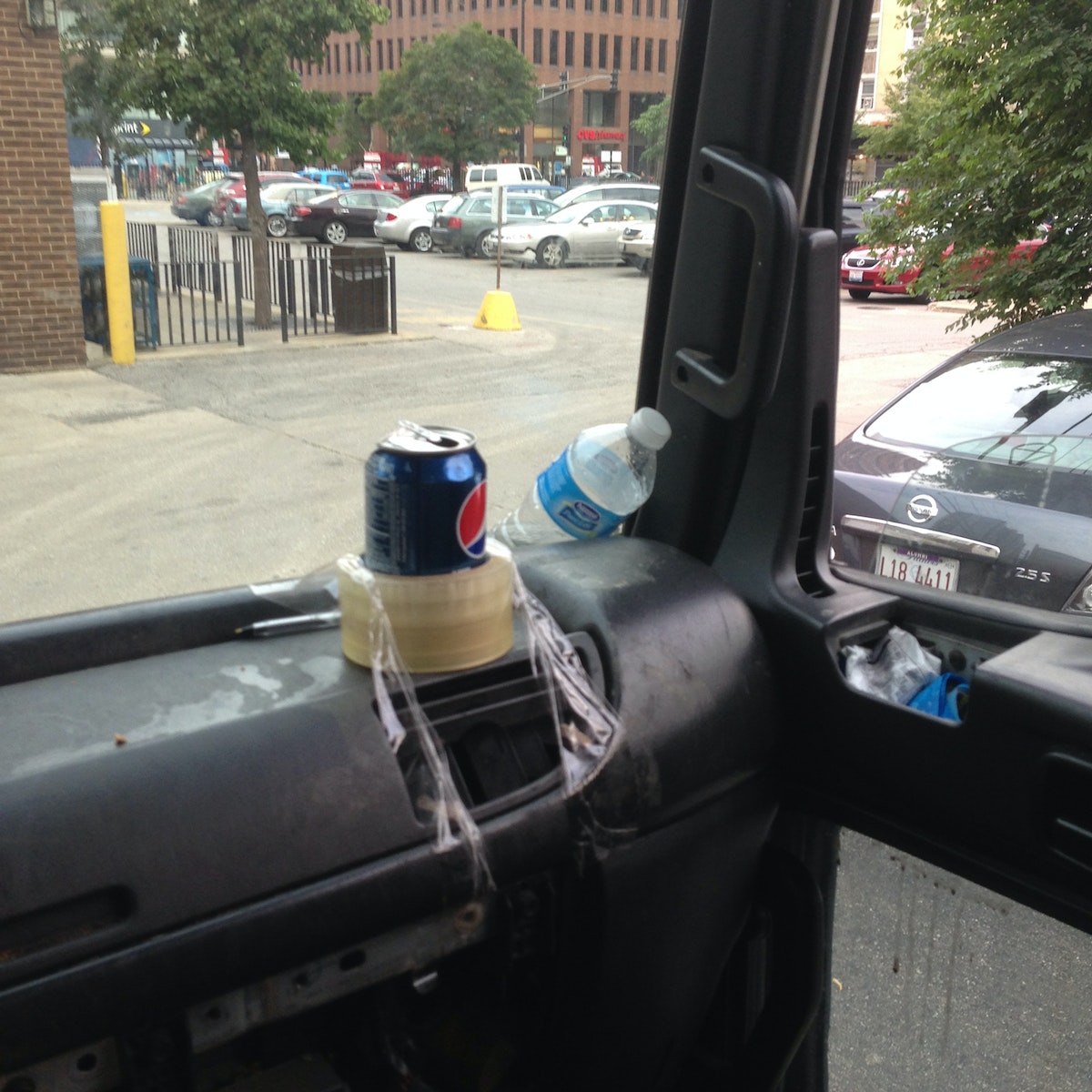
Moving trucks aren’t always built for convenience. After all, they’re meant for hauling cargo, not a luxurious drive. But they are chock full of packing tape. When I hopped in the front of our mover’s truck to pick up some furniture at the storage unit, I smiled to see this ingenious workaround. A cup holder for your soda pop using a roll of packing tape, secured with—what else—packing tape.
Human-centered design requires us to observe human behavior with beginner's eyes, so that we can spot the innate ways people interact with the world around them. We call these intuitive and unconscious reactions Thoughtless Acts, and IDEO designers collect photos of them to inspire their work.

Why I’m Building a TV For My Baby
I am making a TV for my future son. It’s nearly finished, though I’m still working out a few kinks in the scheduling API, and I need to solder the hardware channel switcher. It’s a side project that’s been simmering for several months now that I plan to release soon—not unlike my baby.
The idea came to me on a Saturday in June, before I had told anyone I was pregnant. I was flopped out on a sandy couch with my niece and nephew after a day at the beach, their level of post-sun exhaustion matching my first trimester fatigue. Their mom, my sister-in-law, recognized an opportunity to steal away for a shower, and put on an early 80s episode of Mr. Rogers’ Neighborhood. Both of these kids have been raised mostly screen-free, and their mom was just starting to let them watch what she called “slow TV”: mostly nature documentaries, the occasional Aquanauts episode, and of course, Mr. Rogers.
This particular episode began with Fred Rogers trying to fix a leaky faucet with a new rubber washer. But he didn’t have the right size washer, so he goes to visit a local handyman. Rogers asks some questions about a shovel the handyman is fixing, and then is shown a wide selection of washers, and takes his time picking out one of the correct size. This takes place over the course of roughly 10 minutes, in real time. It’s a prime example of “slow.”
My niece and nephew were transfixed, mouths open. Seeing Mr. Rogers select a piece of kitchen hardware appeared to be the most incredible thing they had ever witnessed.
I want the same thing for my son.
I’m a software designer with a background in web development and computer science. I grew up loving computers and the internet. We had an Apple IIE for as long as I can remember, and my engineer dad taught me BASIC as soon as I could read. My first introduction to the internet was when our family got a CompuServe subscription in 1994. I couldn’t do a whole lot on it, but I’d jump into chat rooms and talk about the X-Files and Monty Python. Technology was always a part of my life.
But when I look back on all this, I realize how lucky it was that I got to grow up in this particular moment of technological disruption. I wasn’t plopped into a world governed by technology—the internet’s control over the world grew right along with my own.
Now, though, I keep reading articles about the ways the internet is changing our brains. Social networking is making us more isolated and risk-averse. The current generation of teens growing up, digital natives all, are the safest and the most depressed yet. And I worry about what it will mean for my child, born into a world moving at the speed of Twitter. This anxiety has become more real and intense every week of the 39 I’ve been pregnant. I assume it will let up sometime in the next three or four decades.
Lately, I’ve been thinking a lot about calm technology—a term coined by Mark Weiser and John Seely Brown of Xerox PARC in a 1995 white paper, researched further and developed into a book by Amber Case. Here are the Cliffs Notes: Calm technology should require the smallest amount of attention possible from the user; it stays at the periphery rather than being center stage; and it should “amplify the best of technology and the best of humanity.” It’s that last one that stuck with me.
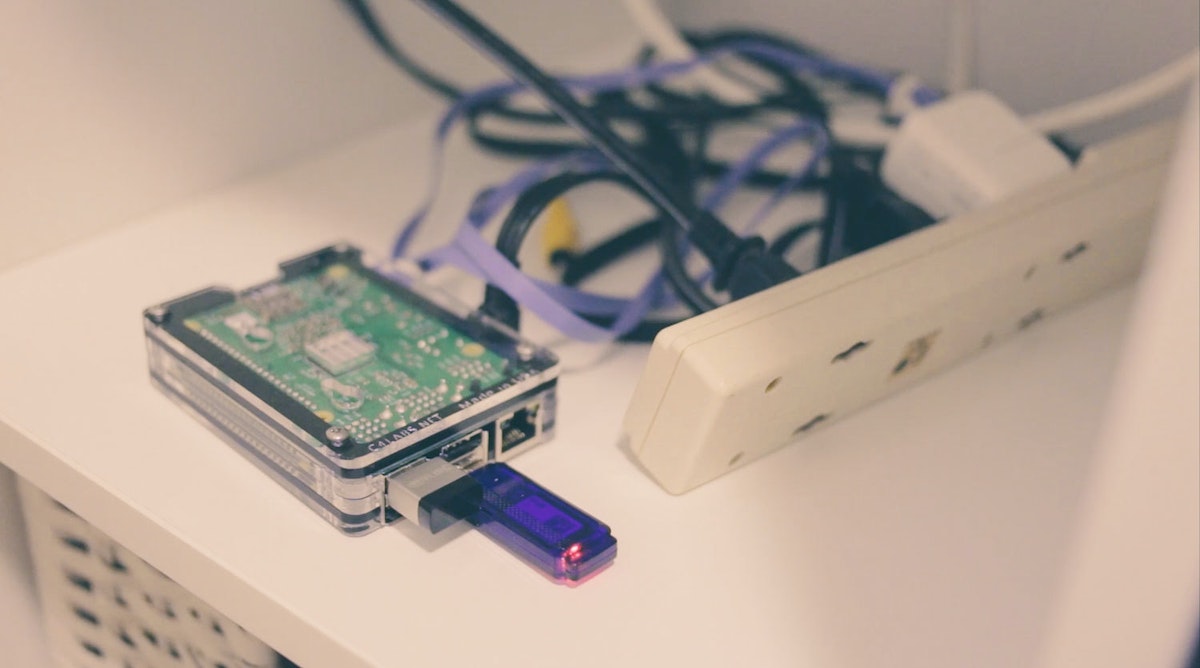
I don’t have to be a luddite to protect my child—I can use my skills as a technologist, including basic hardware hacking, to moderate the world I want my child to live in. By creating this TV, I can give him the calm environment I was lucky to grow up in. While he’s small, his TV will be a 30-pound, wood-paneled monster that I found the on the street, with a dial and 12 channels he can flip between—no more, no less—all programmed by me. So far, none of the content goes above a PG-rating, and one channel is all Mr. Rogers, pleasantly chatting with his handyman neighbor, carefully choosing just the right washer.
Eventually, my son will know about Netflix and binge-watching. He will know about YouTube and those bizarre AI-generated children’s shows. He will know about games that have been designed by the best minds of our generation to be more addictive than the cigarettes I hope he’ll avoid when he’s older. He will know about so much more that I can’t begin to predict. But for a while, he’ll be blissfully unaware, able to grow and think and develop at a child’s pace.
I am making a TV for my future son. It’s nearly finished, though I’m still working out a few kinks in the scheduling API, and I need to solder the hardware channel switcher. It’s a side project that’s been simmering for several months now that I plan to release soon—not unlike my baby.
Tools and Insights for Enhancing the Lives of Older Adults
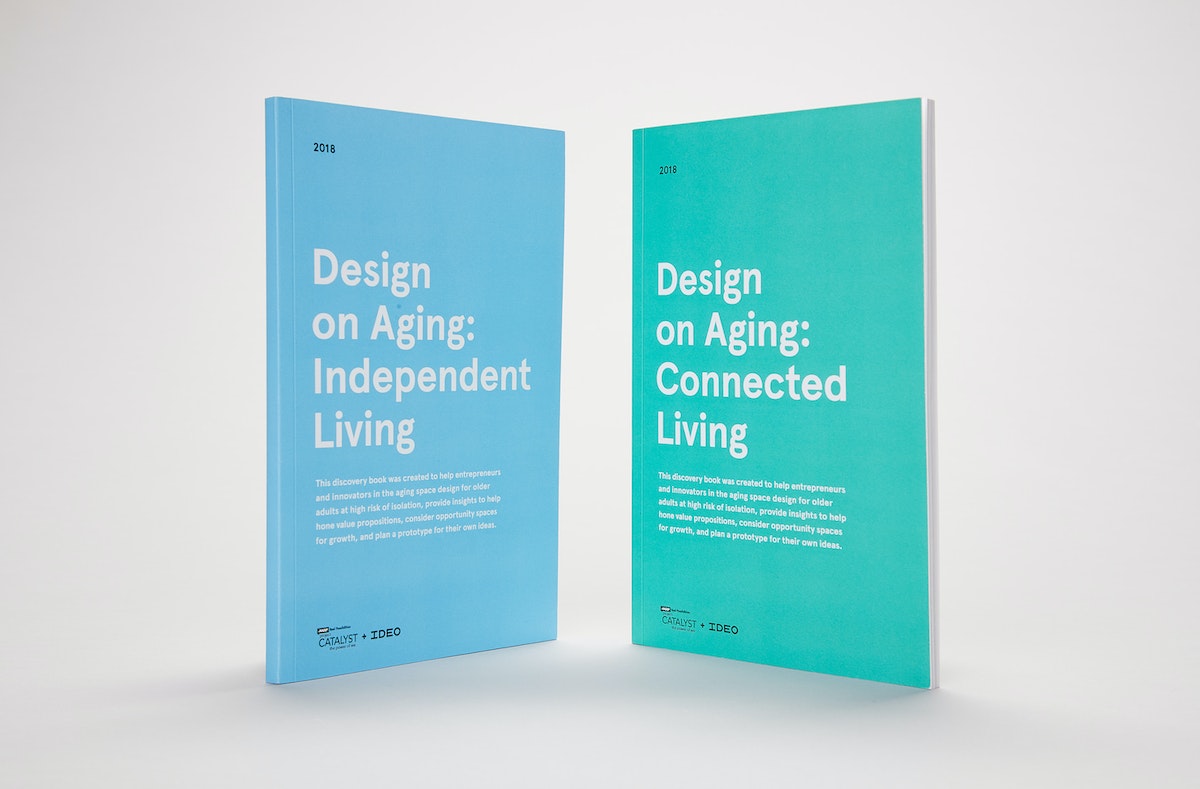
The Design on Aging booklets give entrepreneurs and organizations tools for designing human-centered products and services for older adults.
The Design on Aging booklets give entrepreneurs and organizations tools for designing human-centered products and services for older adults. The two publications, Connected Living and Independent Living, explore how design can help older adults stay socially connected and physically mobile as they age. Presented alongside 4 distinct profiles representing the behaviors and mindsets of people over 50 years old at high risk of isolation, the booklets provide practical frameworks and design exercises to help organizations generate impactful solutions.
IDEO developed the Design on Aging booklets with Project Catalyst—a pioneering research collaboration between AARP, UnitedHealthcare, Pfizer, and MedStar Health.
Download the books on Independent Living and Connected Living.

Lindsey Turner
I’m passionate about building brands, products, and experiences that help organizations show up with meaning and momentum.
I help organizations cut through complexity by shaping how they show up, through brand strategy, identity, and storytelling.
Working at the intersection of brand and business, I bring an editorial eye and a bias toward making—turning ideas into tangible experiences that people can understand, trust, and believe in.
My work spans government, healthcare, financial services, media, and consumer goods, from launching Gen Z-focused ventures to building innovation labs and reimagining legacy brands. I relish moments of ambiguity and enjoy translating across teams, perspectives, and priorities to move ideas forward.
I started my career in editorial and digital design, shaping cross-platform experiences and identity systems in publishing and agency environments. That foundation still shapes how I work today: I’m detail-oriented, collaborative, and overreliant on the Oxford comma. I hold a BFA in Visual Communication from the School of the Art Institute of Chicago.

Rachel Young
My work helps organizations see who their products aren't working for—and build the will and the tools to do something about it
For 25 years, I've asked the same question: Who does this design exclude—and what are we going to do about it?
My work spans human-centered strategy, inclusive design, and qualitative research, with clients ranging from Microsoft, Google, and Verizon to the National Science Foundation, and San Francisco Unified School District.
Before IDEO, I taught elementary school in East Palo Alto and spent a decade doing design work with social service organizations—where I learned firsthand what it costs people when systems are built without them in mind.
I am currently writing User Error, a nonfiction book about digital access and the design decisions behind it. I live in Oakland, California.

Brian Pelsoh
I lead with craft, ensuring our work is creatively excellent: rooted in deep human insight and imagination, while also grounded in the realities of business and technology.
My expertise spans brand, communication, and product design across tech, education, the arts, and social impact.
I believe great work demands both high-level vision and obsessive attention to detail, and only happens through collaboration.
I bring an inclusive, hands-on approach and a deep understanding of business, which enables me to consistently deliver excellence while always asking why.
Before joining IDEO, I worked at the brand firms Pentagram and VSA Partners. I began my career as a designer, leading teams at the School of the Art Institute of Chicago and the Milwaukee Art Museum. I hold an MFA in graphic design from Maryland Institute College of Art and a BFA in communication design from the Milwaukee Institute of Art & Design, and have taught at some of the best design schools in the US.

Tony Wong
I am responsible for IDEO’s long-term success in China and working with clients to use design as a tool to enable growth.
I am responsible for IDEO’s long-term success in China and working with clients to use design as a tool to enable growth. Specifically, I have helped Chinese companies design holistic brand solutions through the development of their products, communication, services, and innovation teams, and I have helped multinationals expand their presence and influence in China.
I advise global leaders on developing China-led innovation and capabilities.
In over 15 years in IDEO Shanghai, I have worked on projects that use design to elevate the quality of the experience of healthcare products and services, streamline processes that increase productivity, create spaces and programs that promote and enable inclusive communities, and build next generation mobility solutions that are planet-positive.
Before joining IDEO, I worked at Philips Electronics and the Electrolux Group in Italy, the Netherlands, and Singapore on a number of breakthrough commercial products. I am a member of the Young President Organization in Shanghai.

Building a personal AI for the messiness of life: Sida Li
Most AI products today are built for work—a space with clear problems and established systems. One founder noticed a gap: personal life is messier, harder to systematize, and mostly left behind by the AI boom. So she built Cue, a personal AI that lives inside iMessage and group chats, to go where the other tools haven't.
In this episode, Becca Carroll, IDEO's Chief Strategy Officer, talks with Sida Li, co-founder and CEO of Shared Context Lab, about staying anchored to a human need while the technology around her keeps changing shape, why she treats her business model with the same rigor she'd bring to a product, and what it feels like to build a company at this particular, disorienting moment in AI.
The conversation also gets into how Sida makes design decisions: the language Cue uses to describe itself, the tradeoffs behind building inside iMessage instead of a new app, and a real story about a business idea that didn’t pan out.
This is the second in a two-part series profiling founders from IDEO's Startups-in-Residence program. The first conversation is with Johannes Seemann, founder of Sooner, on designing GenAI for the emotional side of money.

Designing GenAI for the emotional side of money: Johannes Seemann
Most personal financial tools are built to run the numbers and optimize towards a budget. While that works for some, most people experience money as a lived relationship that does not neatly fit into a spreadsheet. Johannes Seemann and Becca Carroll discuss why money is emotional before it is mathematical, and what a human-centered approach to building a generative AI financial product looks like in practice.

The curious leader's edge in uncertainty: Scott Shigeoka
Mina Seetharaman talks with Scott Shigeoka, author of Seek and Head of Curiosity Cultivation at the Eames Institute, about what distinguishes genuinely curious leadership from performative curiosity, how power dynamics shape curiosity, and why practicing curiosity can restore energy rather than drain it.

How constraints make us more creative: David Epstein
Mina Seetharaman talks with David Epstein, author of Inside the Box and Range, about why total freedom often produces average work, how leaders can design useful limits on purpose, and what organizations such as General Magic and Pixar reveal about the relationship between boundaries and creativity.
Looks like you might be in search of something very specific?
Or reset the filters above and try another angle.
Here’s some random inspiration

Podcasts about creative leadership

Articles about the power of prototyping
