
.svg)




A return to simplicity with a bottled tea brand
Bringing the grounding and authenticity of tea culture into the rhythm of modern life.
Master Kong (known internationally as Tingyi Holding Corporation) is number one in market share in both instant noodles and ready-to-drink teas, with over $10 billion USD in annual revenue. While China has a rich tea culture, most sugar-free bottled tea on store shelves markets itself as “healthy” and “tasty.” Wanting to set itself apart from the competition by uncovering new consumer needs, Master Kong reached out to IDEO. Together, Master Kong and IDEO immersed themselves in modern Chinese tea culture and built a new, premium, sugar-free bottled tea brand that resonates deeply with contemporary tea drinkers.
During research, the combined IDEO/Master Kong team took a two-pronged approach to uncovering new opportunities: industry exploration and consumer research. The team visited various tea-related businesses, from traditional tea houses to modern beverage shops, as well as “third place” tea spaces outside of home or work. They also conducted in-depth, in-home interviews with consumers with various levels of interest in tea, delving deeply into their daily routines to better understand their lifestyles and any emotional or functional needs related to tea.
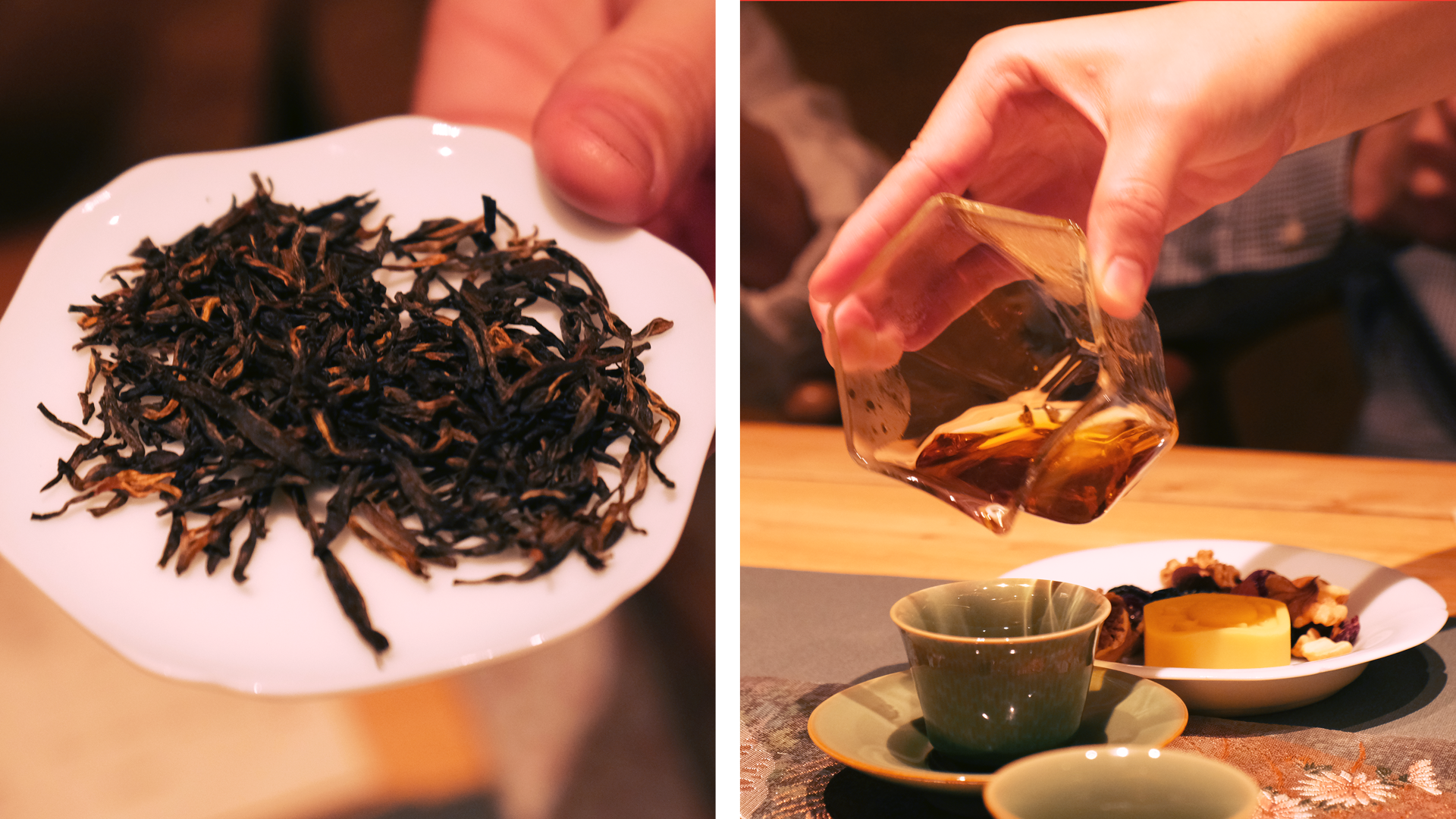
The team discovered that the essence of Chinese tea culture resonated with contemporary consumers’ longing for authenticity, simplicity, and physical rejuvenation in their fast-paced lives. This insight presented a unique opportunity for Master Kong. Instead of positioning its new sugar-free tea brand as merely a “healthy alternative” to other beverages, it could spark a meaningful connection to tea culture, seamlessly integrating into various moments of modern life.
Armed with this insight, IDEO designers and dozens of Master Kong beverage team members participated in a series of immersive, hands-on tea innovation workshops. Teams of experts from R&D, marketing, supply chain, and other company departments temporarily set aside their job titles to explore, iterate, and refine dozens of new tea concepts that were commercially viable, feasible for mass production, and aligned with consumer needs. The cross-departmental collaboration allowed for a broad mix of perspectives, experiences, and expertise, enriching the innovation process.

The co-creation sessions led to a new sugar-free tea product and flagship brand called Cha De Chuan Ren (“Descendants of the Tea”), which celebrates fine, origin-sourced tea and the passion and dedication of tea farmers. The novel concept resonated strongly with consumers and was validated during subsequent rounds of quantitative market testing, ensuring its relevance and market potential.
Cha De Chuan Ren launched with two signature flavors: Tieguanyin (green tea) from Fujian and Pu’er (black tea) from Yunnan. The unique mottled bottle design pays tribute to traditional handcrafted glass containers and the handiwork of tea farmers. The tactile paper label, which features Jia Ma-inspired woodblock illustrations of local tea fields and tea farmers’ hands, nods to the artisanal craft of tea making and the source of the tea inside.
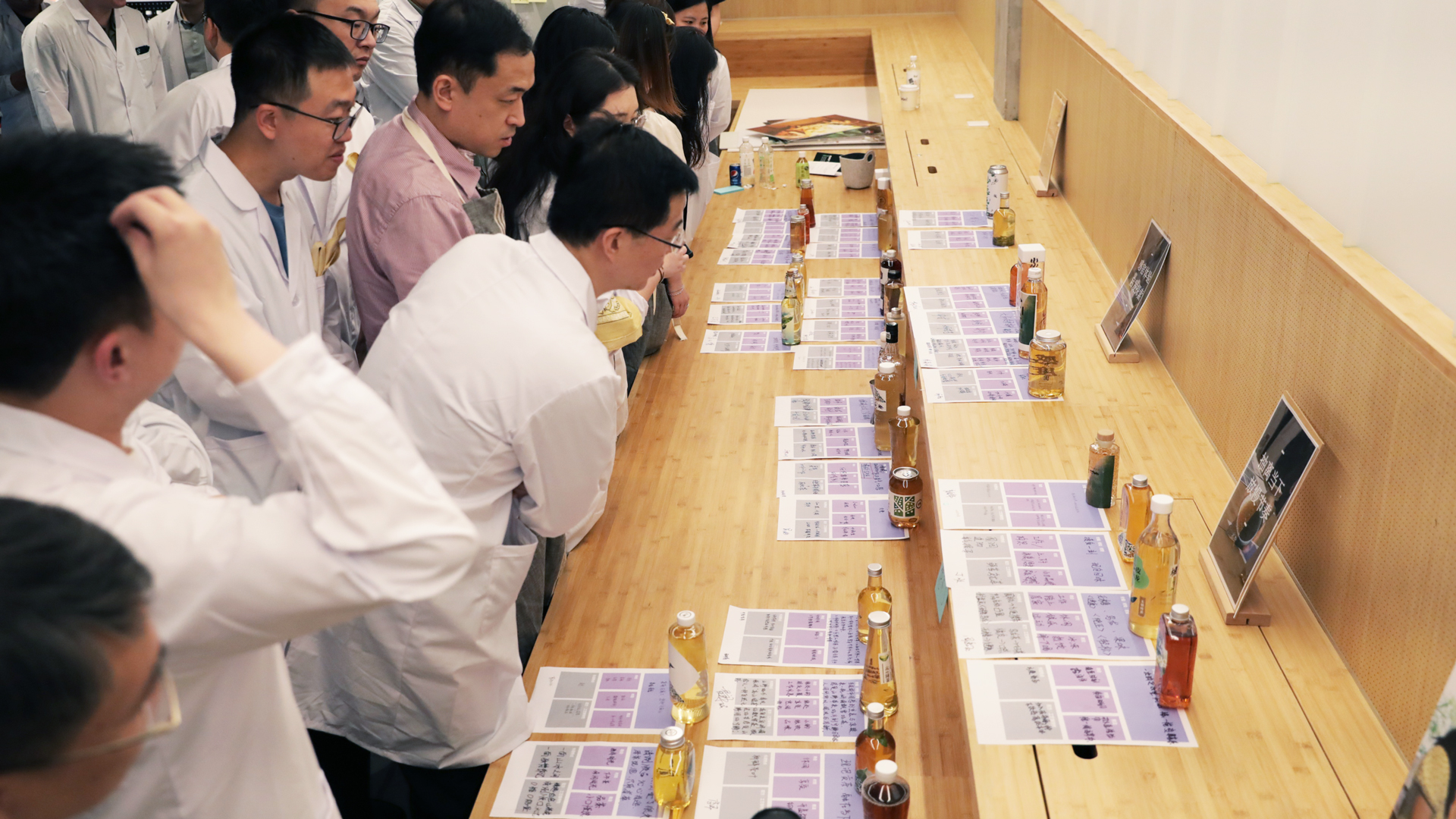
“Descendants of the Tea” debuted on Tmall in April 2024. It claimed the top spot on the commerce site’s Tea Beverage V-List in August and September. Offline, it launched in FamilyMart convenience stores in May and has since expanded nationwide. The new brand received a 2024 Red Dot Award for “Brands & Communication Design.”
“We are honored to collaborate with IDEO, a global leader in innovation, as our strategic partner. ‘Descendants of the Tea’ is not just an exceptional product but also a tribute to the rich heritage of tea culture. Only by continuously integrating culinary traditions with innovation can we sustainably meet consumers’ true needs.”
Richard Chen
CEO, Master Kong (Tingyi Holding Corporation)
“Innovation is incredibly fragile. If even one leader is unsupportive or hesitant, the culture of innovation can collapse. I always encourage my team to take risks, as long as they’re not high stakes. After all, what’s the worst that can happen? At the very least, we’ll have a fair chance at creating something new.”
Wei Hong-Chen
Chairman of Master Kong Beverage Holdings Co., Ltd.
Sugary bottled teas were once very popular in China. Today, rising consumer demand for healthier beverage options has expanded the market for sugar-free tea.
#1
on Tmall’s Tea Beverage V-List, August- September 2024
2024 Red Dot Award Winner
for Brands & Communication Design
A luxury water bottle takes precision engineering to the extreme
Elevating the everyday with next-level design.
Twenty years ago, carrying a single-use plastic water bottle was a status symbol—no more. Growing awareness of the negative environmental impact of plastic pollution, combined with the adoption of healthier lifestyles and social media influencer trends, has made reusable water bottles “it” accessories for on-the-go consumers. While brands such as Stanley, Yeti, S’well, and Hydro Flask own the under-$100 market, fashion brands such as Louis Vuitton, Chanel, Dior, and Prada have etched out a new and growing market for high-end bottles that appeal to discerning, trend-conscious young people looking to perfect their hydration habits.
Spotting an opportunity to disrupt the predominantly utilitarian water bottle market, Steinmann partnered closely with IDEO, tasking the team with developing an industrial design that perfected the tactile and sensory user experience, from drinking and carrying to disassembling and cleaning thoroughly. The collaboration deepened over time, with Steinmann and IDEO working together to develop the high-level engineering concept, the OKAPA logo mark, and packaging ideas.
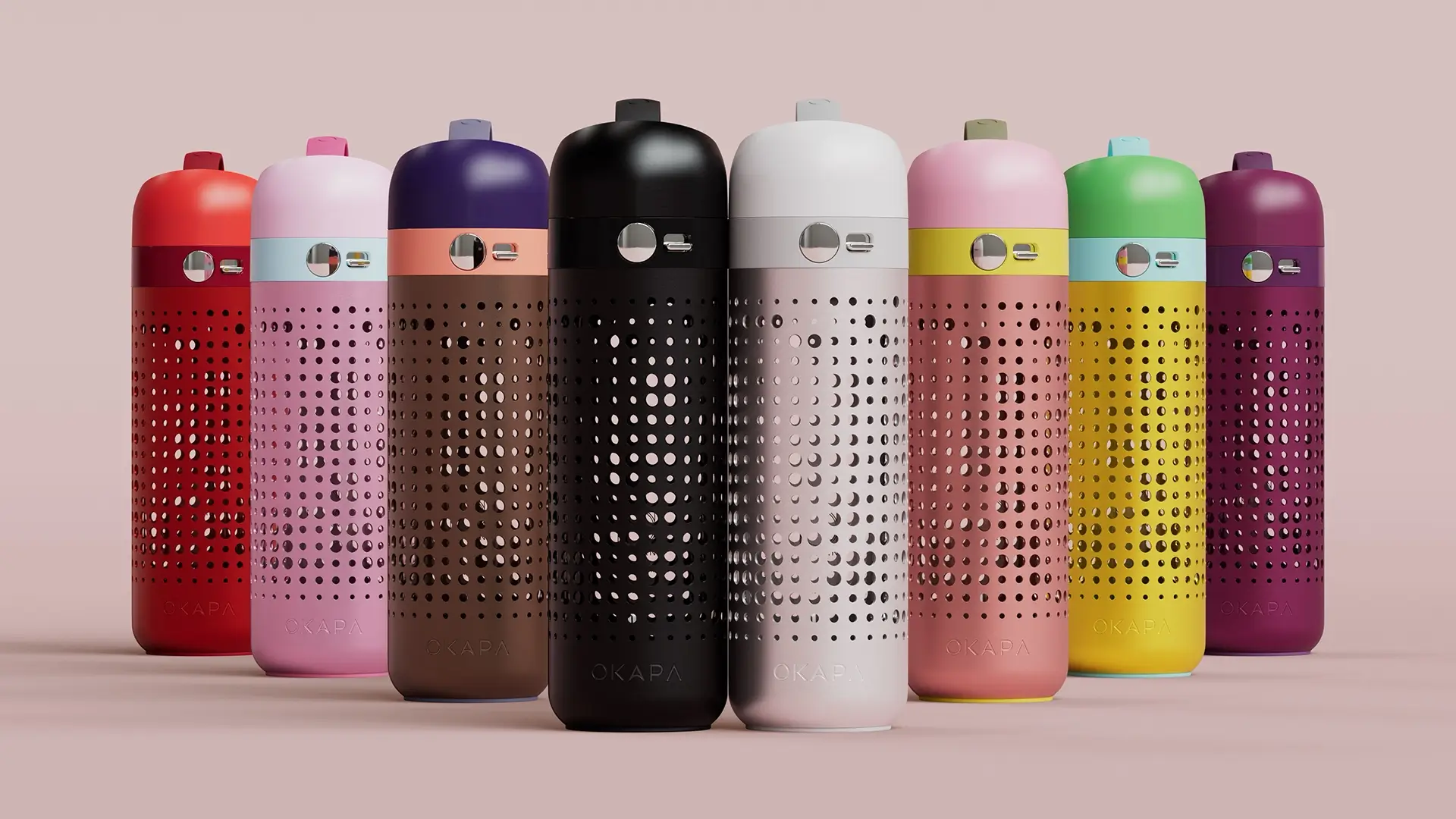
Key user-centered features of the OKAPA bottle include a medical-grade German borosilicate glass interior for superior taste of hot or cold beverages with no lingering odors; a Swiss-engineered thermoplastic lockable and leak-proof tilt cap that can be easily operated with one hand when driving or doing other activities; and an ergonomically shaped mouthpiece for a pleasurable drinking experience. Precision-engineered for maximum longevity, the inner glass bottle is suspended via a shock-absorbing system inside a bead-blasted, extruded, and anodized aluminum outer shell. Eight modular parts come apart easily for either a quick or thorough cleaning.
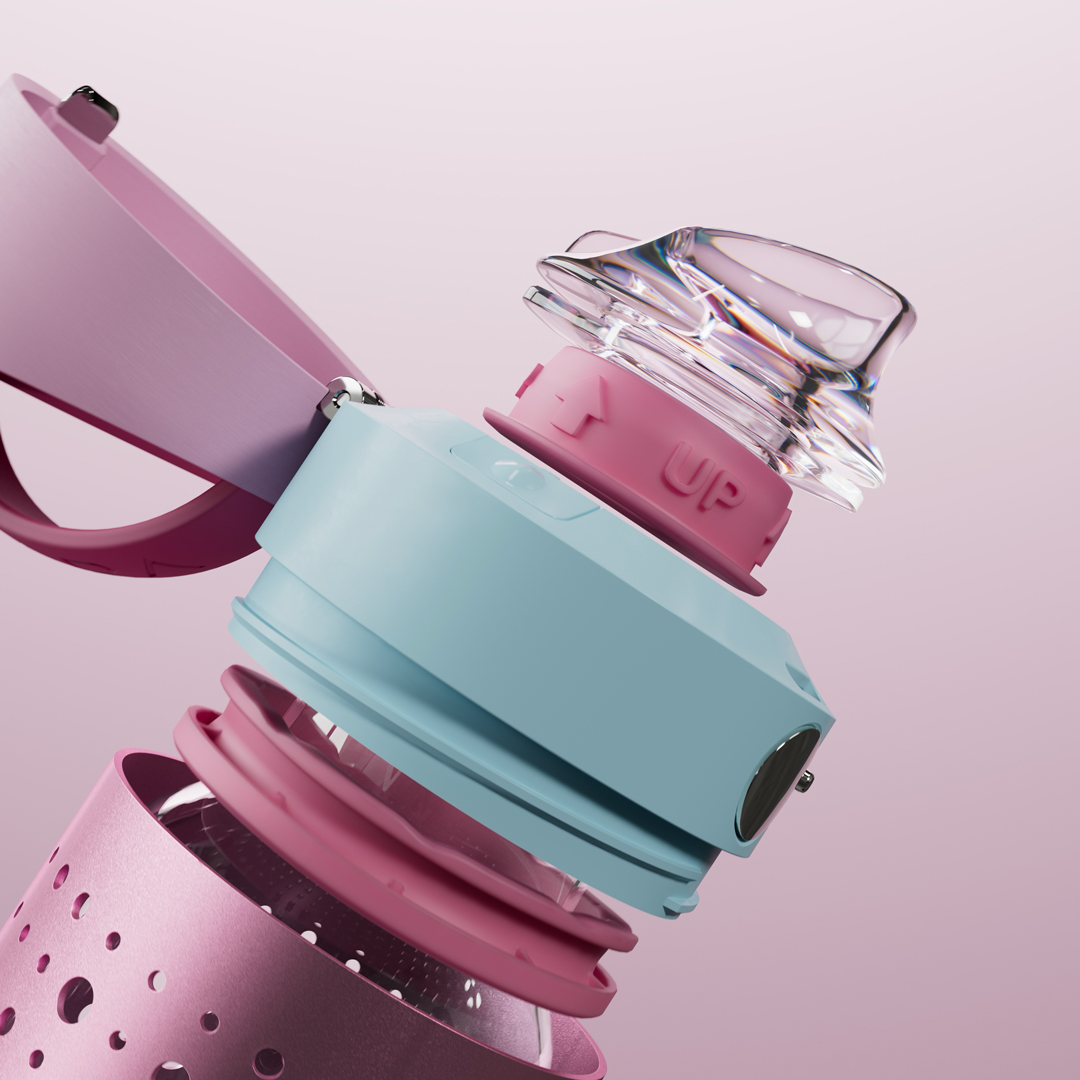
At its core, the OKAPA bottle elevates an everyday ritual through meticulous design and uncompromising engineering. Launched in January 2025, the new bottles are available in eight contemporary colorways curated by renowned color and materials specialist Beatrice Santiccioli (BSD), including Misti Pinku, Goldie Samba, and Fetishe Noir, among others.
In the US, the reusable water bottle market is estimated to increase from $10.2B in 2024 to $14.1B by 2031, with 69 percent of Gen Zers owning at least one. Customization trends, such as personalized design and branding, are anticipated to boost the market, ripe territory for disruptive startups such as OKAPA. (Persistence Market Research)
Once a practical accessory for hikers and outdoor enthusiasts, reusable water bottles have gone mainstream. Yet none check all the boxes in terms of purity of taste, hygiene, durability, functionality, and beauty.
8
modular pieces ensure hygienic cleaning is quick and easy
100%
recyclable materials in each bottle
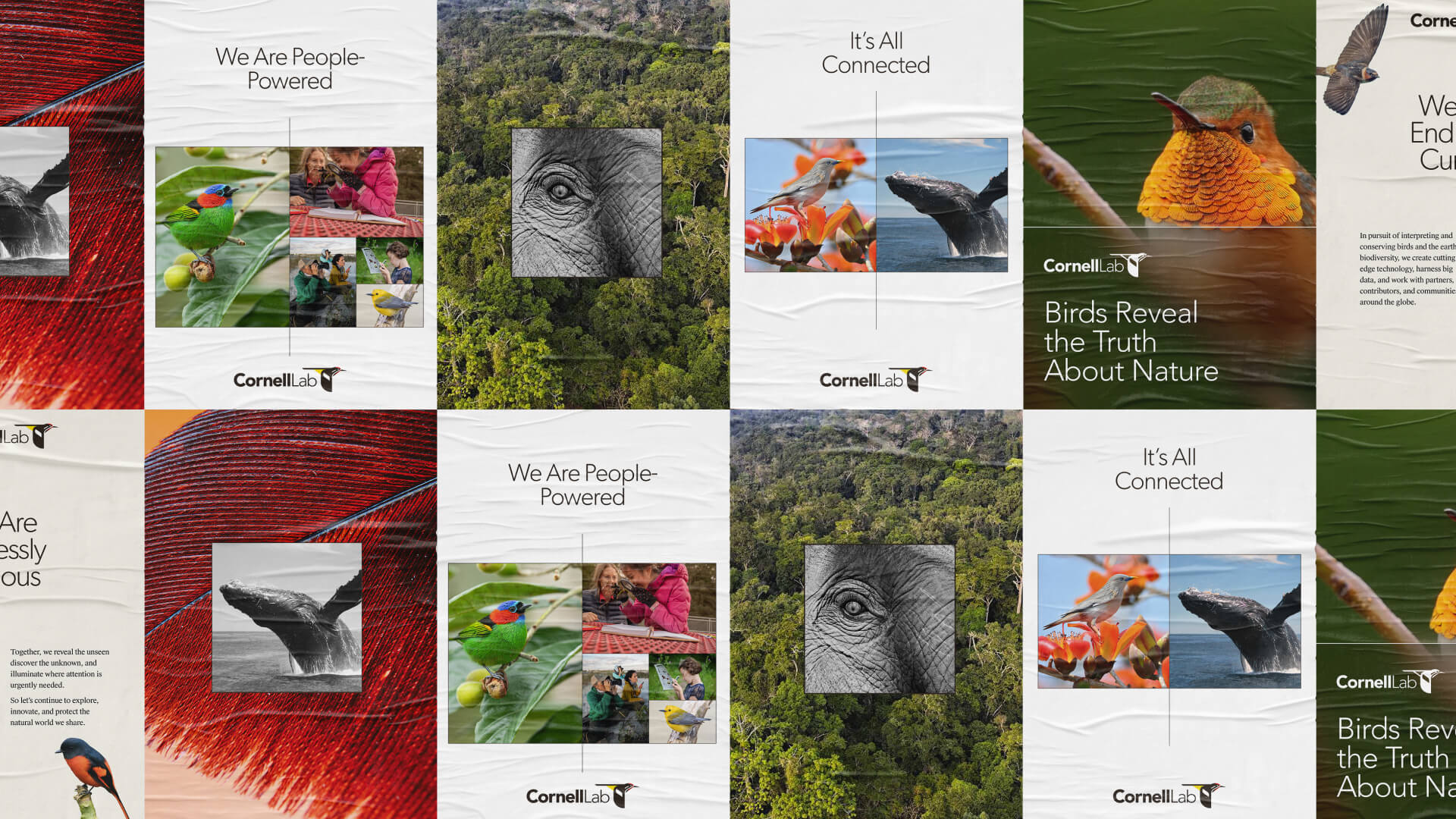
Brand as a conservation strategy
The Cornell Lab of Ornithology unites as “One Lab,” galvanizing a conservation movement.
The Cornell Lab of Ornithology’s mission is to interpret and conserve the earth’s biological diversity through research, education, and citizen science. Over its 110-plus-year history, its offerings grew to include everything from a quarterly magazine, popular websites and apps with millions of users (Merlin, eBird), partnerships with outside organizations, and the world’s largest database of photographs and audio recordings of birds. This abundance is a testament to the passionate enthusiasm of its employees. Still, it confused potential members and led to siloed internal efforts, preventing the Lab from advancing its urgent collective vision. “Birds and biodiversity are in peril,” said Executive Director Dr. Ian Owens. “We must take radical action with a coherent vision, united voice, and purpose.”
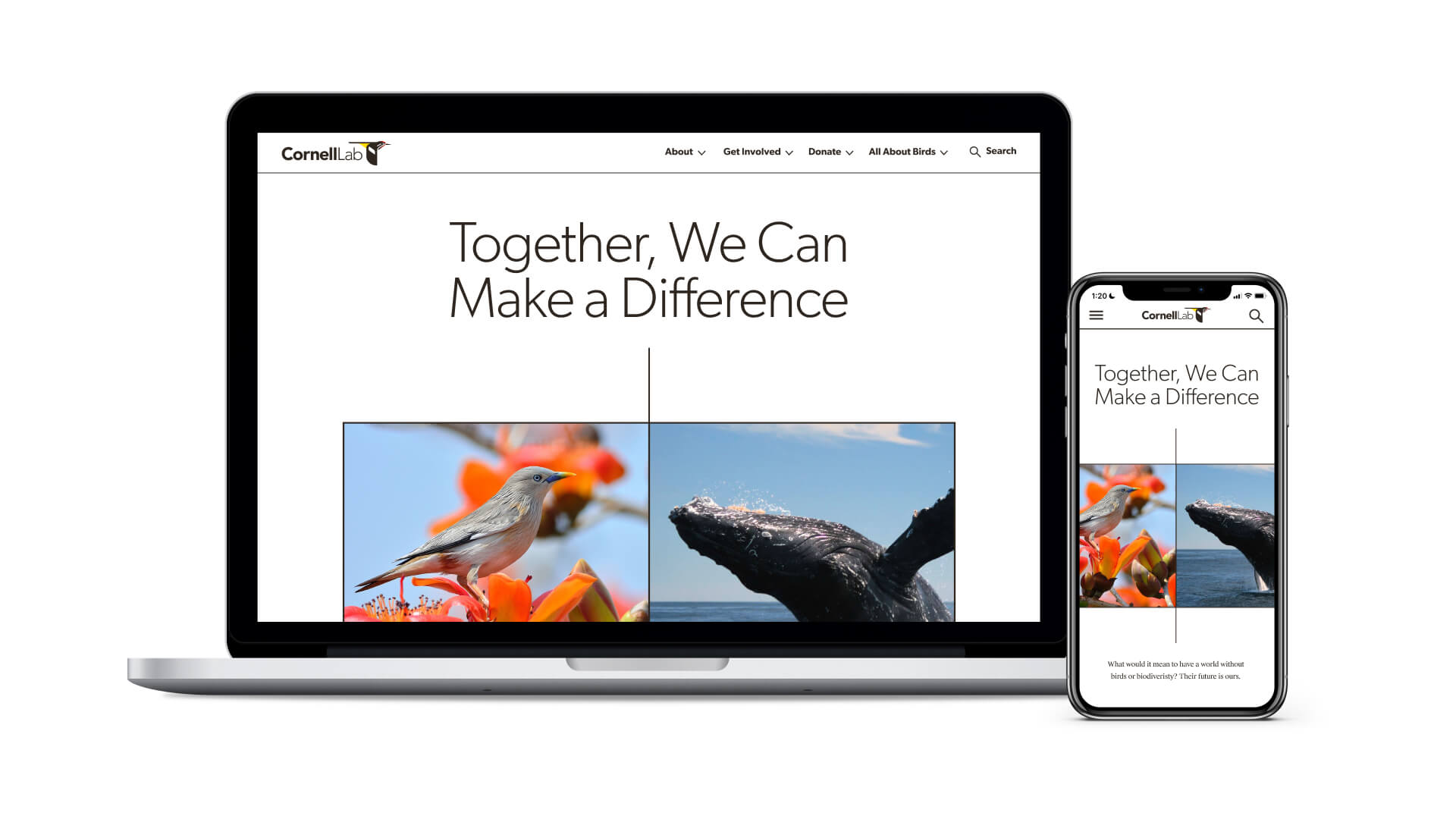
IDEO began by helping the Lab better define its audience. While primarily composed of people passionate about birds, IDEO discovered its larger audience was nature lovers interested in biodiversity, bioacoustics, conservation, and science. From there, IDEO created a brand strategy and architecture focused on helping the Lab streamline its efforts under the “One Lab” brand. The brand architecture visually articulated the relationship between Cornell University, the Cornell Lab of Ornithology, and the Lab’s many products and offerings. IDEO designed a comprehensive brand identity system to work across mediums, including a simplified logo system, new colors, type, graphic language, voice and tone, and key messaging.
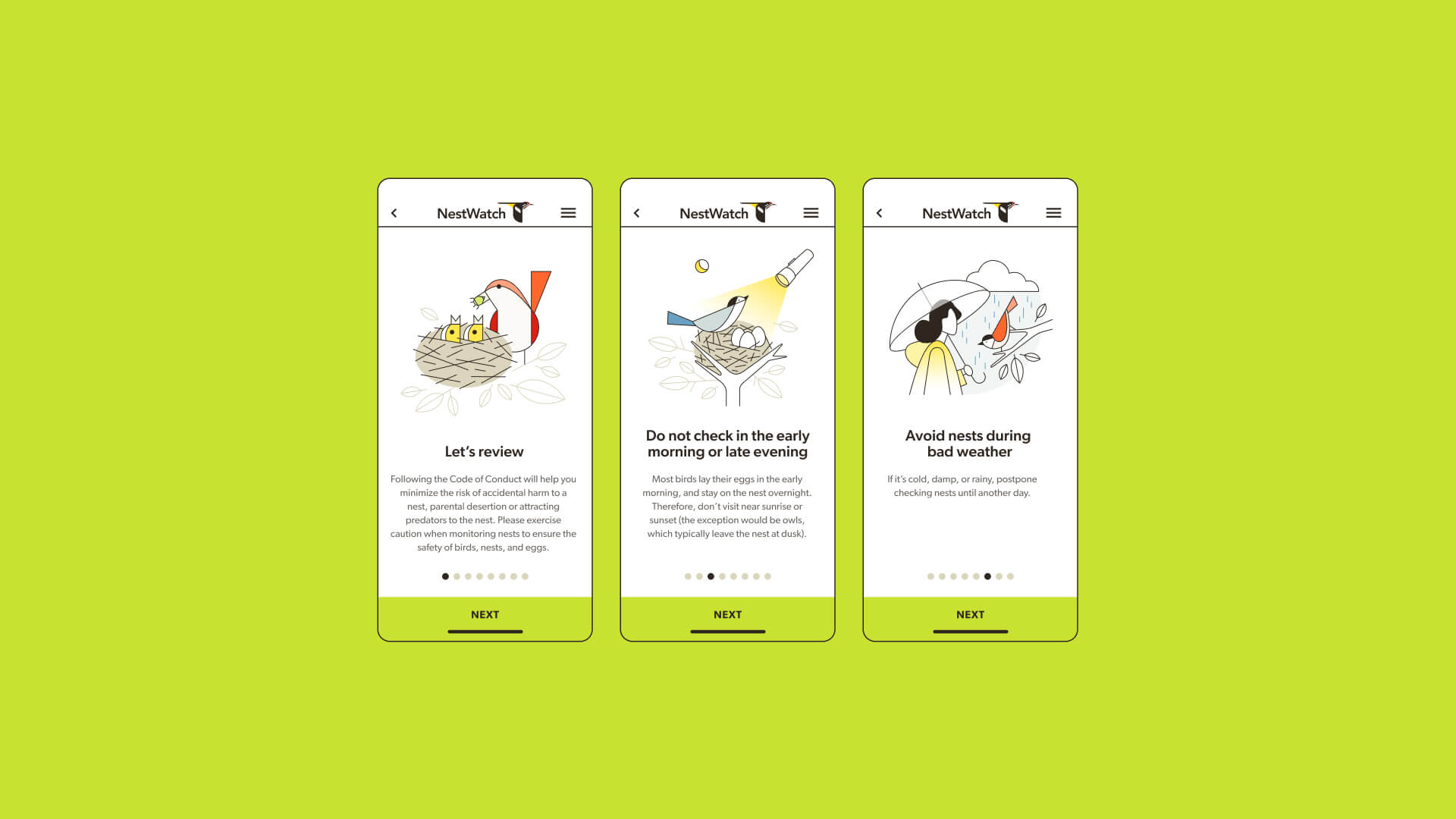
When the Lab’s design team began implementing the new branding elements across its website and many digital products, it became clear that the organization also needed IDEO’s help in creating tools to facilitate cross-department collaboration. To better understand the day-to-day nuances of the organization, IDEO designers worked out of the Lab, co-creating a brand activation playbook. The playbook, launched in 2023, contains recommendations for new cross-functional working groups (partnerships, visual identity, and brand voice), as well as exercises and interactive tools designed to build trusting relationships, gain alignment, foster collaboration, and manage change at scale.
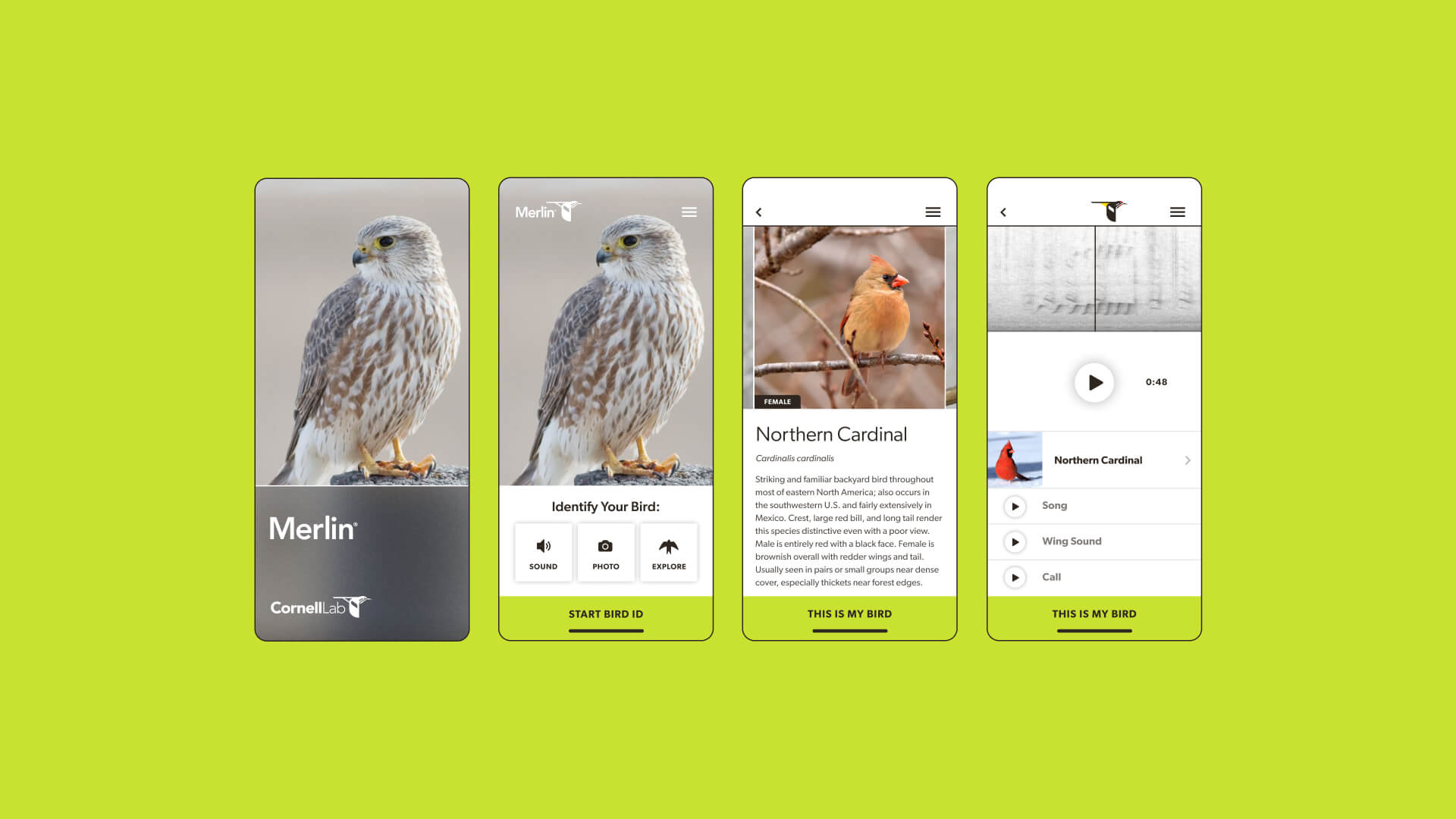
Post-collaboration, the Lab has applied the new brand across its website, apps including Merlin and eBird, Living Bird magazine, email and newsletter templates, and its line of merchandise. A new internal brand guidelines site has become central to employee onboarding, while new working groups are helping to bring down barriers between teams and spur collective action. Like a flock of birds, the Lab now sings one collective song.
The Cornell Lab’s 300+ scientists, professors, staff, and students were passionately dedicated to their individual team’s unique conservation projects, but segmented internal systems could stymie their collective impact.
1 brand
unifying 300+ employees and 8 departments
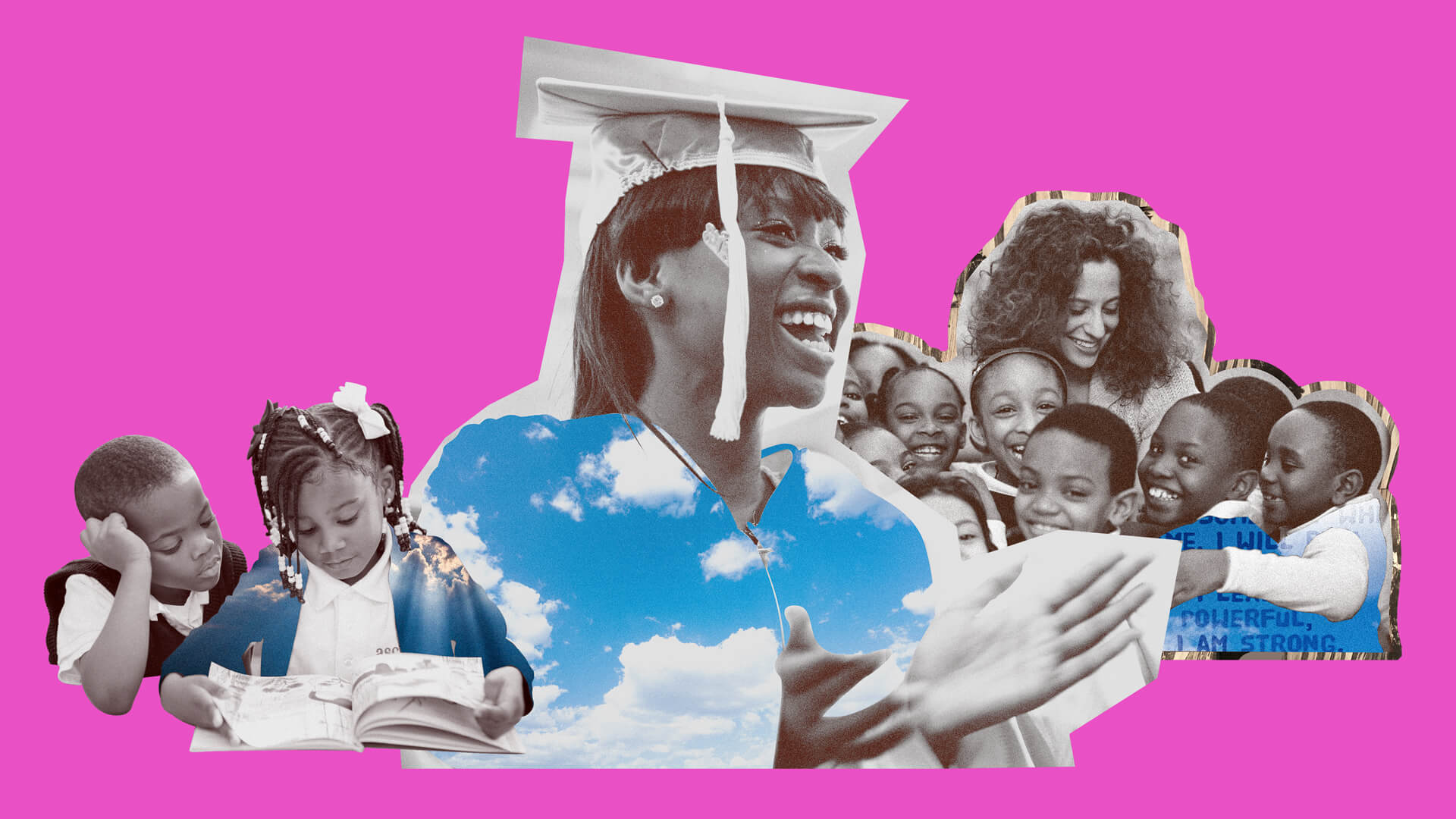
Charting a bold educational future
Ascend Public Charter Schools designs a “grown-up” vision for its young educational network.
Founded in 2008, Ascend Public Charter Network prides itself on providing “rich, joyful learning experiences that unlock lives of boundless choice” for its students, 93 percent of whom identify as Black or Latinx. The organization is also proud of being Black-led: 78 percent of staff and 80 percent of the executive team are people of color. Using co-design and joy, IDEO held a mirror up to Ascend’s core optimistic spirit during a moment of anxiety and change, helping its new CEO, staff, students, and parents reflect a dynamic, collectively imagined vision.
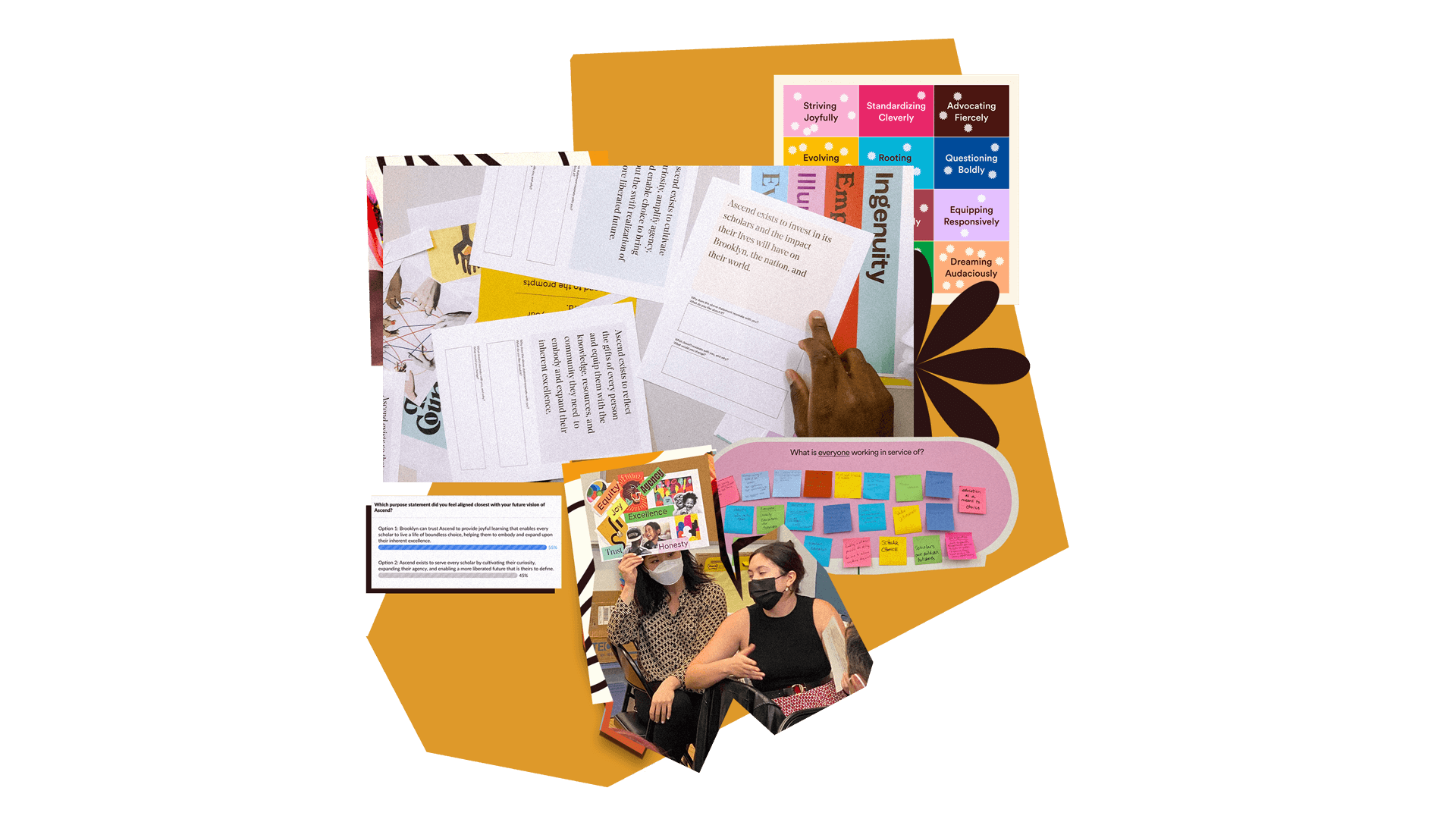
While the project’s goal was serious, the combined team centered the collaboration on bringing back fun, beauty, and imagination to those who could use it most: educators. Through engaging interactive activities, the IDEO team invited principals, PTA members, student council representatives, and board members to join “organizationally sanctioned play” moments like creating collaged vision boards and writing poems about Ascend’s impact. These interventions helped burned-out educators escape the day-to-day tasks of running schools and dream expansively about Ascend’s future. The team also solicited written, visual, and audio stories, asking community members to describe Ascend at its very best.
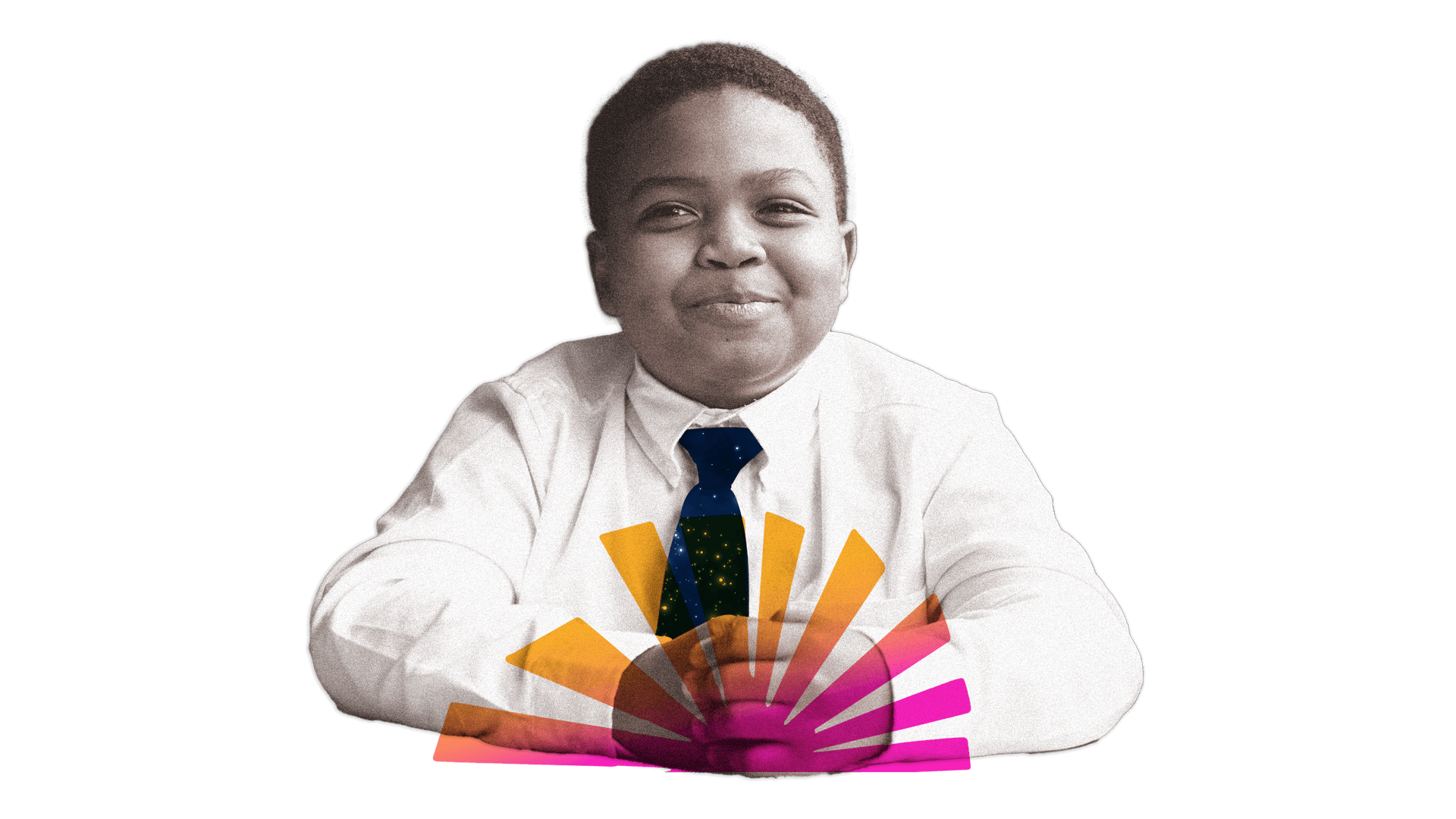
Stitching together submissions from 551 students, 75 parents, and 16 staff members, the co-design sessions resulted in a powerful new purpose, mission, and values, as well as a vibrant visual language and activation tools to bring Ascend’s vision of a “dope,” “unapologetically Brooklyn” charter network to life. The joyful, eye-catching visuals are embedded throughout its 17 Brooklyn schools, staff recruiting and training materials, and digital presence.
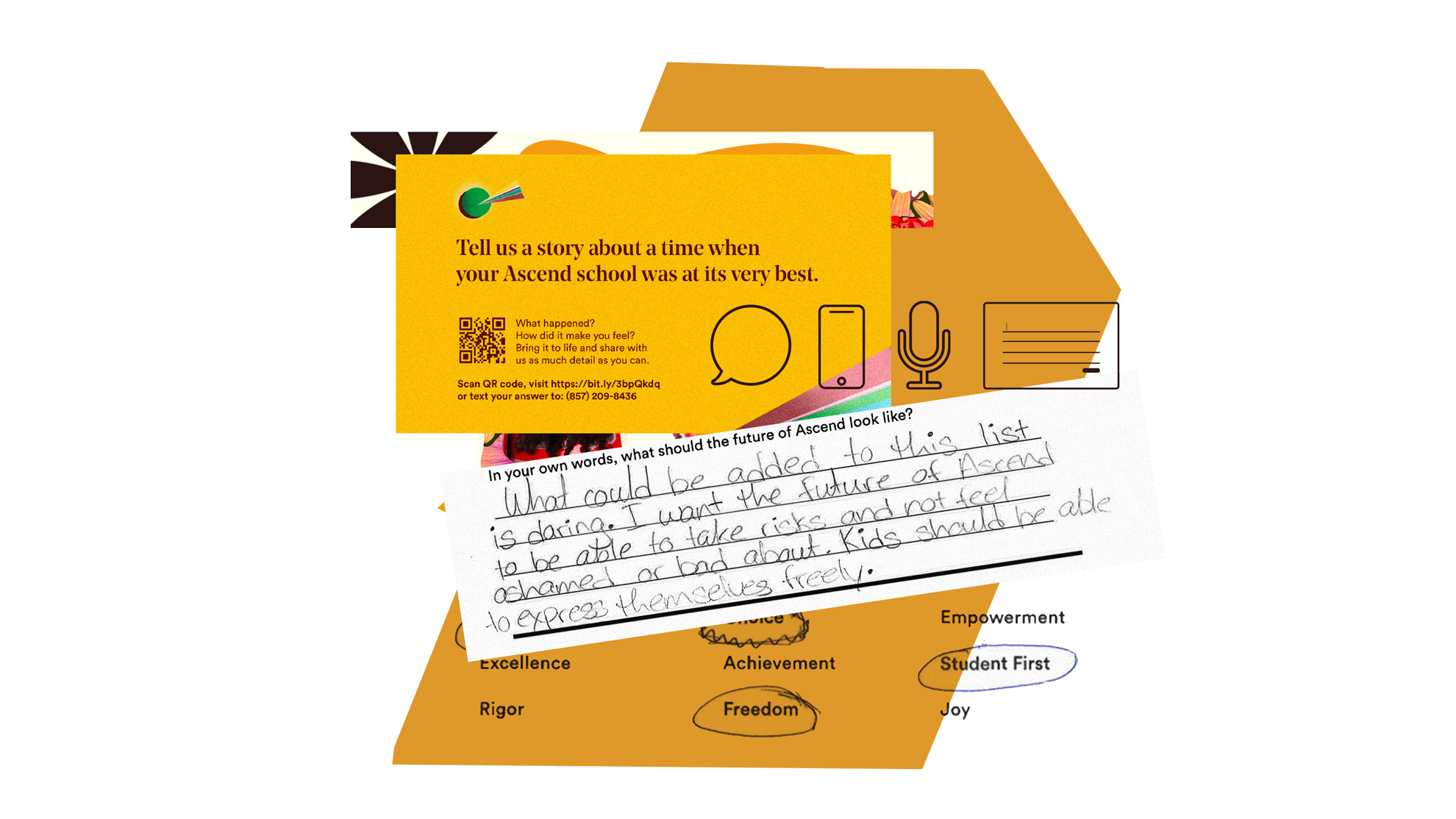
Shortly after the collaboration with IDEO, Ascend received an unsolicited $11 million donation from MacKenzie Scott's foundation, Yield Giving, the most significant gift the then-14-year-old institution had ever received. The pivotal funding will allow the organization, with its bold new “grown-up” vision, to focus on becoming the school of choice in Brooklyn by 2027.
In the summer of 2021, one in four K-12 teachers was ready to quit. Pandemic stressors and increased curriculum scrutiny were to blame, according to a 2021 Rand Survey.
In 2022, 44% of K-12 workers reported burnout, the most of any US professions the time, according to a Gallup Poll.
Pandemic exhaustion and leadership turnover left Ascend’s new CEO eager to align staff around an exciting new vision.
$11M grant
Ascend received an $11M grant from the MacKenzie Scott Foundation a few months after the collaboration
1 collective vision
to guide a network of 17 schools
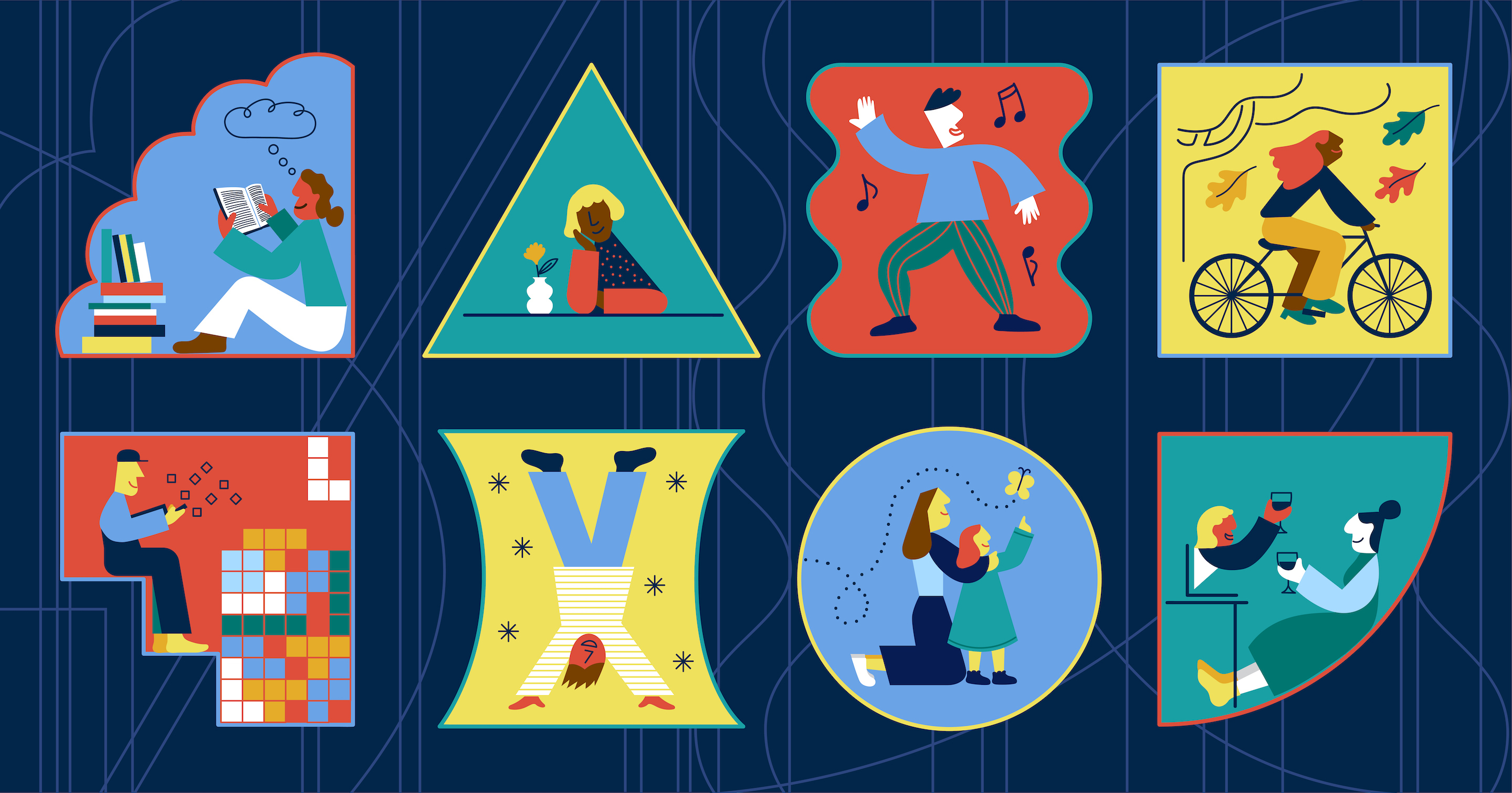
Why joy still matters and how to spark it (one year into the pandemic)
How IDEOers across the globe are finding ways to build joy into their days during the pandemic.
This month marks the one-year anniversary of the World Health Organization's designation of COVID-19 as a global pandemic. In the past year, we've changed our routines and behaviors, and many of us have established a new normal that's not terribly different from the old one. Except...with so much less entertainment, interaction, and spontaneity. With options narrowed, it helps to ask others what they're doing to keep things joyful. At this strange milestone, we asked IDEOers around the globe how they’re designing for more moments of joy these days. Here’s what they had to say.
Write down three good things each day
One thing that has personally helped me a lot is an exercise that was recommended to me by a friend and also recently mentioned in a TEDx talk by Lucy Hone as an important technique to become more resilient. It’s brutally simple: No matter how hard your day has been, you jot down three good things that have happened to you, that you learned, or that you are just grateful for. Nothing negative. It’s all about switching your attention to the good. It is a really powerful way to remind you there is always something to be thankful for.
—Pierre La Baume, Senior Interaction Design Lead, Munich
Find time to play
Something that really has helped me is shifting into a more playful mindset. Especially early on during shelter-in-place, when I felt like I was drowning in self-development recommendations for all my “free time,” I found peace in reverting to hobbies I enjoyed when I was younger that I hadn't gone back to in awhile. For me, this meant diving deep into the games I enjoy (such as SpyParty, Team Fortress 2, Into The Breach,Tetris 99, Raji, and Among Us) for months even, as opposed to playing many games “quickly” to learn more as a game designer. It meant spending more time, even an entire day, re-reading comforting books (such as Pride and Prejudice, Tuesdays With Morrie, Dune, Sapiens: A Brief History of Humankind, Shingeki No Kyojin, and more) without feeling guilty about it. It meant more doodling, daydreaming, and giving myself moments in the day that didn't make me feel like I had to be “productive” to make up for all the quiet, reflective commute time and socializing that was no longer happening regularly.
—Ridima Ramesh, Play Lab Game Designer, Palo Alto
See life through a child’s eyes
Observing how my three-year-old daughter sees the world has taught me a lot in these dark times. She always lives in the moment, and what she feels right now is not affected by the pandemic situation. Even after a rough day, she jumps up and down with a big smile for every little thing that happens around her, such as finding a butterfly or bumping into her friend on the street. For adults, although we may have a joyful moment, it’s often swallowed up by the overflowing information and chaos at the end of the day. We see more complexity in the world than children do, but my daughter has made me try to be more present, see the world with fresh eyes like she does, and embrace a moment of joy so I can stay positive.
—Kayoko Watanabe, Marketing, Tokyo
Be in your body
Exercise is helpful—especially dance! The brain is cool in that our limbic system is often more able to process emotions and stored energy via movement, than the prefrontal cortex (the thinking mind, which is in charge of executive functions). Moving your body is a consistent hack to shake off the heaviness of this moment in time. One silly (or serious!) dance party a day encourages me not to take myself too seriously.
—Alex Nana-Sinkam, OpenIDEO Community Lead, New York
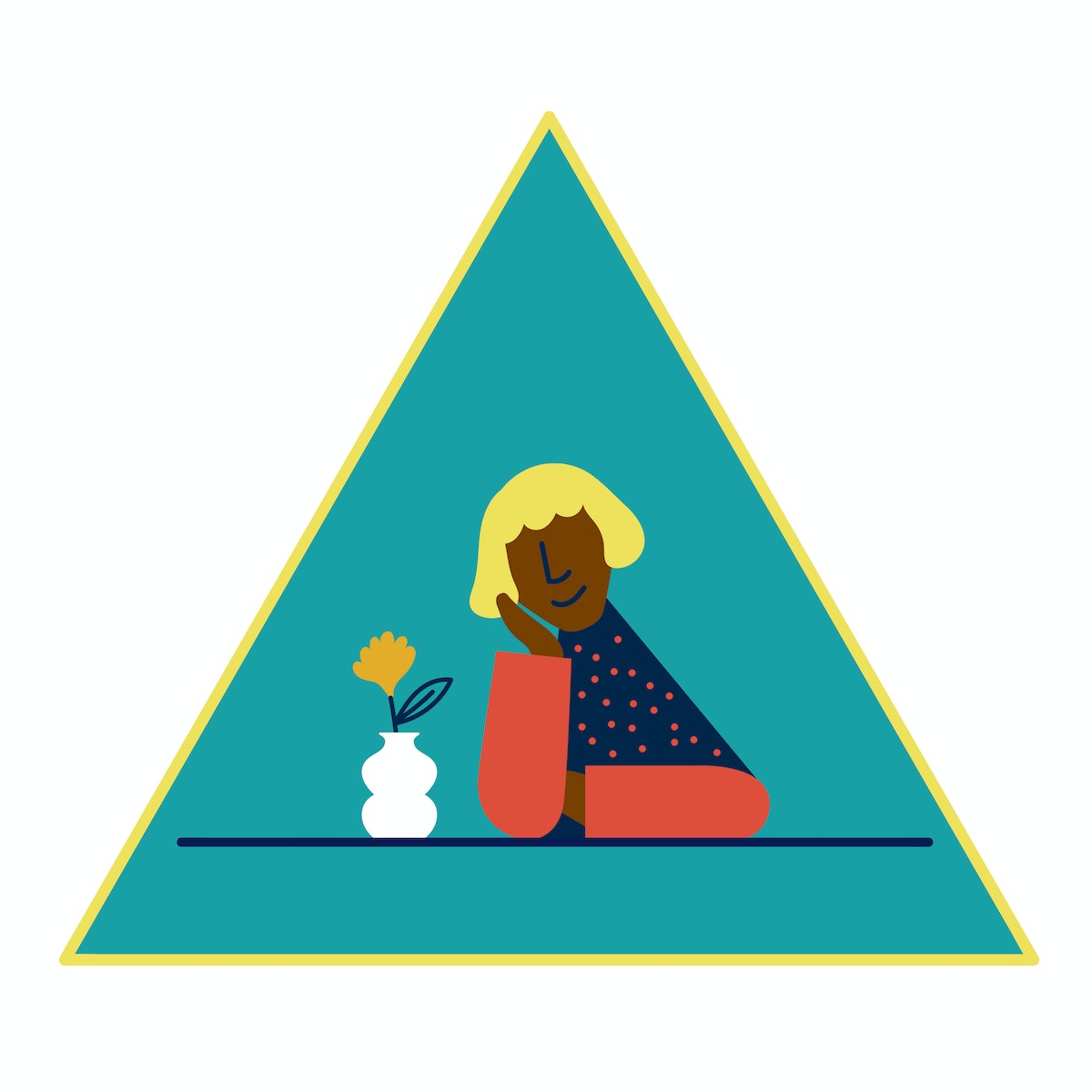
Invest in yourself
2020 has been an interesting year to say the least. First off, condolences to the lives lost from the past few months; it has not been easy. As the year has moved along, I’ve been running some checks and balances on my life: investing in myself by practicing my skin routine, working out, investing money, and learning new skills. I’m very focused on protecting my energy. I've found myself giving less and less energy to various media outlets; I'm tired of seeing this political battle, police brutality, and pandemic talk. Staying in touch with friends and family is major. I’ve been to more virtual parties than real parties this year!
—Preston Tilghman, Leadership Coordinator, San Francisco
Actively pursue work-life balance
I've started to look after my health more, and have actually started to turn the thought of “work-life balance” into action (though I'm still seesawing more than balancing right now!). I go to morning workouts as early as 6:45am to start the day on a positive note, and have started to incorporate more essential oils into my life: dribbles into my baths (also taking more baths!), dabs onto my wrists or temples, and mixed into my diffuser. I'm taking different routes on my bike rides to and from work to add variety into my days, and am especially enamored with biking under the shade of large leafy trees. I've begun going on day or overnight trips outside of Shanghai, turning weekends into adventures. I've also enrolled in an improv workshop for the month of November, and we will have our first showcase in December!
I think in general this year has forced me to think about how fleeting and fragile life can be, and has prompted me to be more courageous about trying new things. For me, the moments of peace have been rare, but joy hasn't.
—Kiko Zang, Business Operations Lead, Shanghai
Get inspired by other creative people
I wish I had a silver bullet for “feeling good” this year that reliably works not only for myself but for others as well. However, each thing I've held as foundational that I could trust to inject “good vibes” into my life has been challenged, and many haven't made it into 2020 unscathed. That said, there are a few things I've found myself doing that may not make me laugh so hard I need to throw myself out of frame during Zoom calls, but do bring much desired comfort and quiet when I most need it.
One of those things is Jon Bois. It seems strange to point to someone who you only know through their online output and say, “This dude's videos are what's gonna get me through this,” but it's a gamble I'm willing to take. Jon Bois is a video producer for SB Nation, a sports website I don't read, and he mostly makes videos about weird and niche stories that primarily center around sports I don't watch or know much about. He's a superb writer and a masterful filmmaker, though I'm only calling him those things because there isn't an accurate term to describe exactly what he's doing. He's in the middle of releasing a sequel to his defining work Football 17776 called Football 20020—a multimedia speculative fiction story that follows three extraterrestrial entities watching and commenting on people playing exaggerated football on a post-scarcity, post-death, post-war Earth, where humans are defined by play. It's joyous and there's truly nothing like it. I have an ongoing though incomplete watch guide for things made by Jon Bois for those interested.
—Zachary Clemente, Senior Tech Admin, Cambridge
Share vulnerability with co-workers
The ability to build trust with a team to a point where you can be vulnerable in front of each other has been very important on my projects—being able to slump onto the couch with the team for the twelfth hour of Zoom calls or pull out a pint of ice cream at 3pm when you just really need it. I think it’s also really valuable to leave space to talk about how we're feeling during stand-up or anytime during the workday. With major events surrounding racial injustice, scary wildfires, the political environment, challenging immigration issues with COVID, or generally just feeling low energy—it's not a normal time, and it’s not realistic for us to always “be optimistic” these days. The joy I find with my team is that I feel I'm not in this alone.
—Amanda Amyx, Design Lead, San Francisco
Get in costume
When the pandemic hit and suddenly I was separated from my colleagues by entire continents, we needed new rituals for remote working. As a creative warm-up, my teammate George Joseph suggested a theme and asked that we all dress up, grab a prop, or put on a virtual background relating to that theme for the next meeting. It was so much fun! We decided to do it every morning—and so the “Extras Daily Zoom Theme” came to be.
The night before the meeting, or even early that morning, someone from the team would come up with a new creative theme for us to explore. Most people would find a fun Zoom background, but since I had an old computer that wasn’t able to use virtual backgrounds, I had to come up with a prop or costume to go with the daily theme—often with only five minutes warning! As the themes became progressively challenging and abstract (from animals, fruits and colors, to adverbs) I got more and more into it. Some highlights: For the “recreate a piece of art” theme, I looped in my mom for help dressing as The Two Fridas, and for Halloween, I dressed up as a campfire with s’mores. Every morning my team members would watch for what new invention I would come up with. This was truly an injection of daily joy into my life, and one that brought joy to others, too.
—Arianne Orillac, Design Lead, IDEO.org
Design new rituals
Since April, I have had a new ritual on Friday nights. After my daughter goes to sleep, I pour a glass of wine and sit in front of my computer to virtually meet six of my college friends who call in from Tokyo, London, and Melbourne. Our weekly call has been set up as a recurring event with no end date. You feel no pressure to attend if you’re busy or tired because you know that there is always “next time.” At the same time, we’ve been able to use our meeting as an opportunity to check in with each other. The pandemic happened when many of us were already facing new challenges: becoming a mom, moving overseas, working from home with kids. We needed a place where we could be vulnerable, support each other, and laugh together to keep our sanity. I have never felt them so close despite the physical distance. 2020 has been hard indeed, but having this regular opportunity to stay connected with my friends brings so much joy and peace into my life.
—Kayoko Watanabe, Marketing, Tokyo
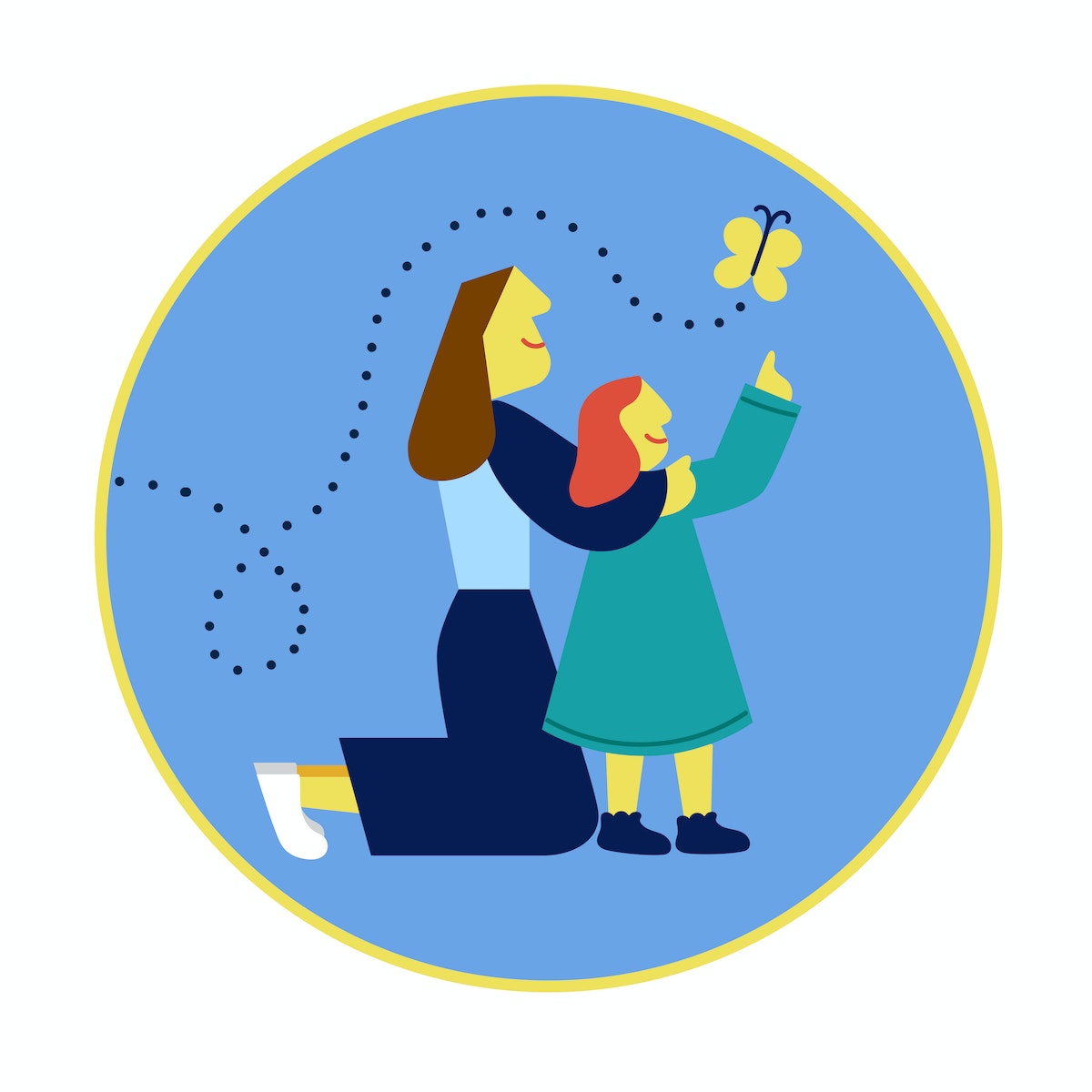
Notice the little, beautiful things
The pandemic sent me and my family into the lake-and woods-filled Poconos, Pennsylvania. Quickly settling into a new routine, each day, my two-year-old and I would walk up and down our yard and back and forth the stretch of our street. As my mind circled the themes of the day—the state of the world, the uncertainties of our plans, work—my son observed our surroundings: the sticks in the yard, a squirrel running up the tree, the plane flying far overhead, each passing and pausing bird. It took me weeks to pause myself. I suddenly wondered: How had I never noticed how beautiful birds are? The variety of colorful coats and the stunning range of voices. I soon found myself tracking a particular bright yellow-coated bird on the branches near the lake; each time I caught it perched for an extended moment I felt a simple joy.
Neither the beauty of nature nor the power of mindfulness is a new discovery, of course. But reaping their benefits requires a constant remembering. I am grateful for the presence of my toddler—both his remarkable ability to be present and his presence in my day to day. At two and a half, he is himself transforming and learning about the world at an astonishing pace, while also teaching me everything that I've forgotten.
—Alice Kogan, Business Design Lead, New York
Illustrations by Jenice Kim
Now that the answer to “How are you?” is “Pandemic-fine,” how do we answer the question, “What brings you joy?”
Op-eds from the future
Business school students predict tomorrow’s headlines.
The students not only explore the social and technological forces poised to reshape society, but proactively design business opportunities for that optimistic future.
Design fiction is one of the tools the students learn to prototype the future of business. Designers often use this strategy to help stakeholders envision divergent scenarios for their organization in the context of uncertainty.
We asked the students to consider the forces at play in today’s fast-changing society, such as artificial intelligence and decentralized governance models, and write a story about the future. Zooming out of this aspirational story, they mapped out what would have to be true from a technological and business standpoint to bring positive aspects of that future to fruition, while calling attention to factors or decisions that could negatively impact our world years from now. At its core, design fiction is a strategic exercise that connects the dots between vision and execution, transitioning teams from imagining the future to taking action.
Below are three of those design fiction stories, expressed as “op-eds from the future,” from a group of students who completed the course in May 2020. Their forecasts, marked by robotic workforces, new forms of currency, and egalitarian policies, can help us understand what actions we might take—or not take—to design a world where humans and technology harmoniously coexist.
"Time Banking Is the Currency of the Future"
By Alex D'Agostino, Cassandra Salcedo, and Alex Severin
It’s 2025, and the economy has somewhat “recovered.” A massive technology company finally opened their “alien dreadnoughts”—giant, gleaming factories producing every conceivable kind of high-quality, low-cost product. The factories essentially run themselves, with little human supervision. In many ways, the soul of humanity has been stripped before our very eyes under the guise of technological progress. As unemployment compounds and inequality continues to accelerate in the Post Pandemic Period (PPP), humans are growing increasingly keen to find alternative ways of leveraging their skills and resources.
Enter timebanking. Through timebanking, a person with one skill set can bank and trade hours of work for an equal number of hours of work in another skill set, instead of paying or being paid with traditional currency for services. For example:
Lucia is an 88-year old grandmother who lives alone. Ever since her children moved and her husband passed away, she’s felt engulfed by loneliness. But Lucia still bakes the best breakfast in town, and she’s always excited to watch the reaction of those lucky enough to taste it.
Carl is a high school senior with dreams of attending the University of California, Berkeley. Carl feels passionate about giving back to his community.
When Lucia needs someone to take out her trash, eager local students like Carl can offer to assist her, and in turn receive a “digital time token,” equivalent to the number of hours performed for the services. If Carl is ever overwhelmed with classwork or missing his family’s cooking, he can ask lonely local chefs like Lucia to prepare food for him and his roommates, while she enjoys their company over a meal. As Lucia and Carl acquire tokens in their digital wallets, they can choose to spend them on other services or save them.
Perhaps the biggest source of momentum behind the timebanking movement is a lesser-discussed pandemic: loneliness. In our PPP world, numerous countries have appointed their own “Ministers of Loneliness” in an effort to find creative solutions to the growing health crisis linked to many other physical illnesses as well as functional and cognitive decline.
We must rebuild the world as we wish to be in. A world in which Lucia, Robyn, and Carl’s contributions are valued and their needs met. Timebanking is a critical tool to strengthen our communities, fight loneliness, and revalue what it truly means to be a human.

"Remember the Forgotten Ones"
By Shaibya Dalal and Kair Duisenov
My wife, Shobha, just got off our monthly portal call with our daughter, Priya, who lives 3,000 miles away. We love these calls—they are our primary connection to Priya. They are also harsh reminders of the loneliness of old age because each call ends with Shobha begging an exhausted Priya to drop in more through the portal and organize more virtual reunions with the grandkids—anything to help us feel more connected.
And, connection matters more than ever before. COVID-19 was merely the first among a series of deadly pandemics that normalized social distancing and accelerated society’s reliance on technology. Working from home became living at work. (Priya, like nearly all of you, is accustomed to a 14-hour workday.) These compounding factors have left the elderly particularly burdened by isolation.
Like other retirees, our insurance company supplied us with mandatory basic robot helpers. From cooking to physical therapy, such helpers are increasingly supporting the elderly. They even provide companionship: Anne, our 70-year-old neighbor, does ballroom dancing and quilting with her helper!
However, the sad reality is that high-quality robot help comes with a steep price tag. Helpers can alleviate loneliness, but the needed capabilities require technological upgrades costing upwards of $1 million. Unlike Anne, Shobha and I will never be able to afford these upgrades.
The late physicist Stephen Hawking warned us in 2015 of technology’s potential to exacerbate inequity; it is doubtful even he could have imagined the full impact decades later. The “Asimov Law” was passed in 2040, requiring the three global insurance companies to provide basic robot helpers as part of mandatory retiree packages. Instead of being the great equalizer, this privatization of robot helpers and AI magnified the power of large corporations. Life has not been this unequal since 2020, and left unchecked, advances in robotic technology will continue to reinforce disparities.
To protect those who come after us, we must collectively organize to advance “Better Helper AI” (BHAI) policies for seniors. (“Bhai” means brother or friend in Hindi.) A growing coalition of aging adults, willing adult children, and social workers is advocating to set rigorous standards and improve the capabilities of the basic robot helper. Moreover, they are pushing to earmark 5 percent of the annual funds allocated through the Robot Helpers Reinvestment Act to develop open source protocols that raise the floor across robot manufacturers. BHAI can ensure that all, not just some, elderly people have access to quality companionship and connection.
I believe there is a brighter and happier future ahead. If we fight together, I know there is.
"The Demise of the Tweets"
By Fayzan Gowani, Stacey King, Evan Wright
Today, my life looks very different from how it looked back in 2020. Instead of driving around a city looking for clients to transport, I’m managing fleets of autonomous electric vehicles. COVID-19, now known as Pandemic I, was a precursor of what was to come. Things had to fall apart before today’s egalitarian society was given a chance to be real.
Even before Pandemic I, tech companies were collecting data on every Internet user, and consumer skepticism was growing. In Pandemic I’s aftermath, we were all too devastated by the effects to be upset about how they invaded our privacy. Instead, we spoke our grief through the polls: Our votes elected government leaders that implemented more social safety nets. For example, the government guaranteed a living wage to all workers, greatly increasing the net worth (and saving power) of each citizen.
But when Pandemic II—a truly airborne zoonotic disease—hit, big technology companies got greedy. They started using their arsenal of collected data on our lives to increase household spending on their apps, now that everyone had a living wage. Siri was helpful when I needed her to entertain the kids while I worked during the stay-at-home orders, but she started giving me unsolicited parenting advice. CEOs complained that Siri chimed in on their private business deals. Only when whistleblowers revealed the data abuse did the technology sector accept the loss of consumer trust they had precipitated.
Surprisingly, one of the big tech culprits helped create a revolution by working with data unions to enable the average consumer to manage and monetize the data it collected. The company and the government partnered to use centralized blockchain to retroactively compensate every individual for the data abuse, funnelling $134,000,000,000 of revenues and the government’s $693,000,000,000 annual defense budget to good use.
Though my job was soon replaced after Pandemic II by Uber’s self-driving car, the government’s emphasis on protecting its workers ensured that Uber trained me and hundreds of others for the future. That’s how I was promoted to fleet manager. Sometimes, I have nostalgia for the days when I would pick up clients in my Uber.
We’ve come a long way. I’m thriving in this egalitarian world. But we can’t forget the past. Take this next election seriously, and find ways to get your kids and grandkids to vote the way you and I did back then. Remind them—four decades of work can also be erased in the time it takes to send a tweet.
How to start using design fiction now
There’s much more to design fiction than sharing provocative stories. Leaders can apply design fiction to their businesses, no matter the industry, using this four-step exercise. Once you’ve written a story about the preferred future of your organization—whether that’s making insects into Americans’ new protein staple or introducing robots to combat loneliness among elders—the question becomes, how do we reverse engineer a path to get there? This unlocks strategies and tactics for the next five to 20 years—however far into the future you’d like to plan—that can help you and your team prototype your desired business reality.
For three semesters, we’ve had the opportunity to teach the “Designing the Future” course at the Haas School of Business at the University of California, Berkeley.
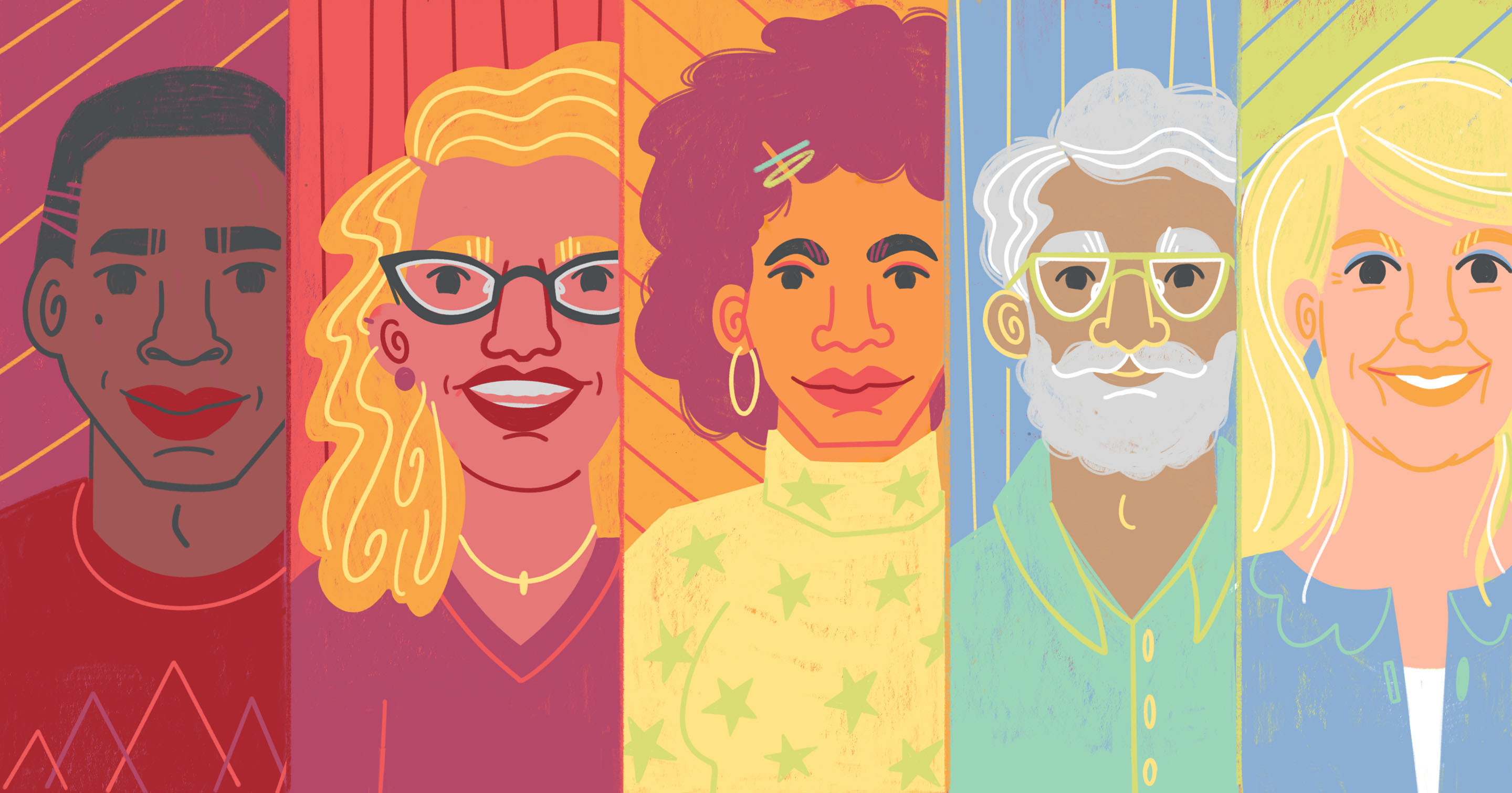
Queer designers share their visions for the future of design
IDEO designers discuss how they bring their LGBTQIA identities to their work.
As a writer, I’m particularly interested in getting to know IDEOers on a personal level. By seeing what makes us unique as individuals, I can tell better stories about the company as a whole—people from very different backgrounds and perspectives coming together to design for systems change around the world.
As a queer woman, I’m especially invested in seeing how that work drives equality and acceptance for all vulnerable communities—helping to make the world a place where we can all live as our full selves. To learn more, I reached out to IDEO’s queer employee resource group, PRIDEO, and interviewed the community. I asked about the ways in which they bring their LGBTQIA+ identities to work, the trends they’re starting to see emerge because of it, and the hopes they have for the future of queer design. Here’s what they had to say.
Access is the next wave of design
Historically, queers have had to fight for access. Access to freedom, to healthcare, job security, and a place in society as a normal human being. The fight is far from over, but that is something that all queers remember when they take on a design project, whatever it is. When I was designing brand strategy for a recent client website, I had to ask, “Why is there only one type of person in the room?” (White male.)
My queerness gives me the language and the “radar” to sniff inequalities out with a vengeance. Knowing we have to fight to “redesign” systems to accommodate and accept all types of queerness, it helps me see beyond the demographics listed in the brief, and to know that access is the next/current wave of design. There is a global reckoning for racial equity within design, for our entire process to change, for leadership to perhaps step down to make room for actual diversity at the top, and all of that is just so much more glaringly obvious when you are queer in this world—and in the design field.
—Stuart Getty, Design Lead and Writer, San Francisco
A focus on removing barriers
Being queer, I think a lot about how I might design to remove barriers. I have the opportunity to update outdated language and to create environments that celebrate the beauty of diversity. I can facilitate new cultural habits to bring in needed voices into a conversation. My role as a designer at IDEO is to listen and set aside my assumptions and my ego. There is always a need for collaboration. It takes many of us, with different lived experiences, to see a multitude of barriers to remove.
—Alan Ratliff, Senior Lead, Inclusion, Culture and Change, San Francisco

Choosing pride as an act of rebellion
Being a Black woman in today’s society is hard. Adding queer to the equation makes it even harder. However, I choose pride as an act of self-care. I choose pride as an act of rebellion. It’s extremely important for me to show up to every space, bringing my full self to every conversation, and a company like IDEO provides a space for me to do so. I am extremely grateful for the employee communities I’ve been able to join during my time here. Freely engaging with those who understand and support me is a gift that has helped me bring my full self to work.
—Emanie White-Heard, Coordinator, New York
Moving away from “the way things have always been done”
When you come out, you're recognizing your difference and you choose to express that difference openly. In coming out, you are born into bringing a diverse opinion either with your family, your friends, or society on the whole.
When I came out pre-gay marriage, it was still a quiet thing to be gay—very little representation in the media, The L Word wasn't even out yet. It was in this moment that I embraced my own voice and its ability to create reality.
In that way, I realized that I got to design what sexuality meant to me. It was like I had been given a blank canvas. I could choose what, if anything, I wanted to bring from mainstream interactions into my own perception of what relationship, gender and sex meant. I learned that nothing is 0 or 1, all male or all female, but rather it was a spectrum of choice that could be tweaked from moment to moment if I wanted to. In that effort, you realize that everyone will approach this balance differently for themselves as well. In work, I could hold my “design” as valid just as much as someone else's “design.” Two things, or more, could be true at the same time—none any more “right” than another.
As a designer, you have to be willing to put your ideas out there even if they differ from the status quo or the way things have always been done, you need to cultivate a willingness to question assumptions, even your own, and you have to be able to do all that in the context of others who will bring their own realities to the table as well—being gay helps me do that every day.
—Meg Rice, Lead Learning Architect, San Francisco
The importance of visibility
Queerness at work can have different levels of visibility—and for me, it’s important that I show up visibly queer at work. Growing up gay in Bolivia, I rarely crossed paths with openly queer people. The culture is conservative, and was even more conservative back then. I present as gender fluid, and it was difficult to believe I’d be able to express myself in an authentic way while still having a chance at success. However, feeling free in my expression is really important for my creativity. So, when I started working, I decided to not hold back—even in professional settings—in hopes that at least one queer kid would see visible queerness in the context of work and feel like it means they, too, can express themselves authentically—especially within my Latinx community.
—Bruno Olmedo Quiroga, Senior Design Researcher, Cambridge
Creating your own playbook
I came of age in the 1980s. My introduction to being “gay" occurred when I was an 11 year-old paperboy, made apparent through the headline: RARE CANCER SEEN IN 41 HOMOSEXUALS. Thus began my fraught sexual awakening: panic, self-loathing, and, most importantly, secrecy. The realization was significant and isolating, prompting me to turn inward, a years-long journey of self-reflection. Emerging from this, I saw everything differently, structurally: the world was wrong—not me.
When the world doesn't reflect you as you are, you have to manage the cognitive dissonance creatively, sometimes in bespoke and idiosyncratic ways. When no playbook exists, you create everything from scratch: norms, family, a sense of safety. You have to work hard to find your people. Coming up as a gay man was my test to pass—and it turned out to be a blessing.
On the iterative path to accepting my identity, I grew aware of the contradictions swarming around me, around all of us. I became comfortable with ambiguity. I learned how to compromise, to collaborate, to be flexible; how to celebrate small successes. I tuned into the inflections in people: what they say and what they do, and could see opportunities. I learned how to listen, to be pragmatic, to be resilient. This is design.
Nothing is ever perfect. And a lot of things are still very much lousy. But everything can be improved upon. Design guarantees this. And it's my life's work. I'm living the dream that my 11 year-old self could never have imagined, that many 11 year-olds can now see writ large: you can love who you want, you can be loved, you can do this without shame. I think of all my brothers and sisters who didn’t make it through their struggle unscathed. For them, pride and progress are things I’ll never take for granted. It's not perfect, but perfecting. Somebody pinch me. How could I not be optimistic?
—Mark Del Lima, Interaction Designer, San Francisco
Having greater empathy for others
Growing up gay in a small town in China has been a rather lonely/alienating experience. From being bullied at school because of my femininity, to being screamed at by parents because they found texts on my phone implying my crush to a boy in class, everything felt like it was denying my existence. Being in that environment, I experienced a lot of emotional pain and it made me into a very sensitive person. I’m now more able to recognize and empathize with someone who is going through emotional turmoil. It gives me the ability to be comfortable around someone who is expressing emotional pain. I’m able to handle the depth that a lot of people are uncomfortable with—meaning that I can better comfort that person, or turn emotion into action to drive change.
—Anonymous IDEOer, Chicago
Recognizing your own privilege
Once I was out with a friend when she had to go to the restroom. Then the police arrived: someone had called security on her. While I was shocked, my friend was not. As a trans woman of color, she was used to being policed for the smallest everyday action, like going to a public restroom and nearly being arrested for her gender identity.
This is an example of how being part of queer and trans communities taught me how systems have failed us. I quickly learned to have empathy for my friend who not only had a different experience than me but faced more barriers as a trans person. I realized how I take things for granted, like the simple act of moving freely or feeling safe as a cis gender person with male privilege. Being queer and a designer, it’s made me want to turn that empathy and realization into actions. I can see how we can redesign systems big and small—from supporting the overhaul of broken social systems to being mindful everyday in how I use gender pronouns to be more inclusive.
2020 marked the 50th anniversary of the first Pride protest following the Stonewall riots in response to police brutality. And since then we’ve had many months of protests against police murders of black people. As a queer person of color, I am deeply saddened by the persistence of anti-blackness and racism, as well as violence against Black trans folx and anti-trans Bathroom Bills that perpetuate harassment like my friend endured. And yet as I look back over the decades of movement building and the past months of action, being queer also gives me hope to envision that another world is possible.
—John Won, Last Mile Money Co-Lead, San Francisco
Illustrations by Cassandra Fountaine
One of my favorite things about IDEO is the people. There is a culture of creativity and openness here that encourages people to really see one another as whole humans, beyond their title or credentials.
Why poetry belongs in business
Using compact language to explore the many dimensions of love, hope, suffering, and belief.
Her poem, “The Hill We Climb,” concluded with a galvanizing call to Americans: “We will raise this wounded world into a wondrous one. There is always light, if only we're brave enough to see it. If only we're brave enough to be it.”
Gorman’s passionate delivery was a reminder of the power of poetry to captivate an entire nation, invite a collective pause, and inspire both reflection and action.
2020 was a year of reflection and action for business, too. Taking a moment to process it all, IDEO and SYPartners—two of the creative firms that make up the kyu Collective—hosted a virtual gathering called “Poetry Rx” for employees to share their original poetry, recite their favorite works, or simply soak in the pleasure of rhythm and verse.
To kick off Poetry Rx, Lisa Maulhardt of SYPartners said, "Poems are us singing to one another about our shared humanity. And poems are valuable in business because business is simply a context for a bunch of us humans to play out our shared humanity: Our bravery, ego, our ambition, our greed, and even our love, are ultimately what make business run. That's why poems belong in business.”
Here are three of the many beautiful poems shared during the session. We hope they lend some relief, rejuvenation, and inspiration.
divine flow, by Alysha English (IDEO)
flow is supreme truth
flow is intuition
flow is raw sugar
flow is honey
flow is manifestation
flow is freedom
flow is presence
flow is patience
flow is activism
flow is truth to power
flow is 'you are the power'
flow is divine
sometimes flow is an accident that finds us,
and when it does – flow is sitting with it, letting it stick
flow is play
flow is feeling it
flow is rhythm
flow is dance
flow is grace
flow is watching the pieces shatter and then
picking each piece up with love and trusting that every piece will land
exactly where it’s meant to be
a mosaic, a masterpiece
flow is art
flow is ritual
flow is an invisible pulse, a heartbeat
flow is that feeling when you lose track of time
and remember that you are divine
flow is a moment
flow is a breath
flow is me. flow is you. flow is us. flow is energy.
flow is me. flow is you. flow is us. flow is energy.
flow is me. flow is you. flow is us. flow is energy.
Infinite Definitions of Birthright, by Lauren Ito (IDEO)
Infinite definitions of birth right
Is it place
Or people
Or textures
Or graves
Or lullabies caressing cheek
Or…
afterthought
Or contorted masks in shapes we can’t bring ourselves to recognize anymore
I hitchhike towards mirages
Count mile markers in what grows beside the road
Who destroys it
How the invasive species are named
Where resilient blooms atop fault lines keep extinction at bay
And poetry becomes wills only some can inherit.
Tucking affirmations beneath toes at each bend
I ground prayers for cocooned comfort in given skin
As if we were destined to belong here
After all.
Originally published by the San Francisco Public Library
Crossing Brooklyn Ferry After Whitman, by Michael Juretic (Sid Lee)
1.
You are the patient laid out on the table.
Your eyes are peeled fruit,
brimming with low bruised sky.
The butcher ghosts are working.
No anesthetic, no disinfectant,
no intention of stitching up that hole.
Heart specialists. Their pinprick eyes,
their gore-knotted fists, the nylon swoosh
of bloodstained scrubs.
And deep in that bone white cage,
what is it?
Naked, lurching; what a terribly
obvious muscle.
You are laid out on the table.
The butcher ghosts are at work, and,
working, the butcher ghosts
change
2.
You know who you are
I wake up to thoughts of you.
I reach for you like skyscrapers reach
in the pink-bricked morning.
This map is the map of the universe
is the map of time.
It is your stars that dot
my molecule’s chart.
We are fish that swim
in the rivers of our blood.
We thrash, we sound and breach.
We jump or heaven, dripping blood,
we reach for the waters above.
If you'd like, take a few minutes to share your poetry with us on Instagram—we'd love to hear from you.
Amanda Gorman, the United States’ first National Youth Poet Laureate, left many of us awed during her reading at the 2021 presidential inauguration.

Lindsey Turner
I’m passionate about building brands, products, and experiences that help organizations show up with meaning and momentum.
I help organizations cut through complexity by shaping how they show up, through brand strategy, identity, and storytelling.
Working at the intersection of brand and business, I bring an editorial eye and a bias toward making—turning ideas into tangible experiences that people can understand, trust, and believe in.
My work spans government, healthcare, financial services, media, and consumer goods, from launching Gen Z-focused ventures to building innovation labs and reimagining legacy brands. I relish moments of ambiguity and enjoy translating across teams, perspectives, and priorities to move ideas forward.
I started my career in editorial and digital design, shaping cross-platform experiences and identity systems in publishing and agency environments. That foundation still shapes how I work today: I’m detail-oriented, collaborative, and overreliant on the Oxford comma. I hold a BFA in Visual Communication from the School of the Art Institute of Chicago.

Rachel Young
My work helps organizations see who their products aren't working for—and build the will and the tools to do something about it
For 25 years, I've asked the same question: Who does this design exclude—and what are we going to do about it?
My work spans human-centered strategy, inclusive design, and qualitative research, with clients ranging from Microsoft, Google, and Verizon to the National Science Foundation, and San Francisco Unified School District.
Before IDEO, I taught elementary school in East Palo Alto and spent a decade doing design work with social service organizations—where I learned firsthand what it costs people when systems are built without them in mind.
I am currently writing User Error, a nonfiction book about digital access and the design decisions behind it. I live in Oakland, California.

Brian Pelsoh
I lead with craft, ensuring our work is creatively excellent: rooted in deep human insight and imagination, while also grounded in the realities of business and technology.
My expertise spans brand, communication, and product design across tech, education, the arts, and social impact.
I believe great work demands both high-level vision and obsessive attention to detail, and only happens through collaboration.
I bring an inclusive, hands-on approach and a deep understanding of business, which enables me to consistently deliver excellence while always asking why.
Before joining IDEO, I worked at the brand firms Pentagram and VSA Partners. I began my career as a designer, leading teams at the School of the Art Institute of Chicago and the Milwaukee Art Museum. I hold an MFA in graphic design from Maryland Institute College of Art and a BFA in communication design from the Milwaukee Institute of Art & Design, and have taught at some of the best design schools in the US.

Tony Wong
I am responsible for IDEO’s long-term success in China and working with clients to use design as a tool to enable growth.
I am responsible for IDEO’s long-term success in China and working with clients to use design as a tool to enable growth. Specifically, I have helped Chinese companies design holistic brand solutions through the development of their products, communication, services, and innovation teams, and I have helped multinationals expand their presence and influence in China.
I advise global leaders on developing China-led innovation and capabilities.
In over 15 years in IDEO Shanghai, I have worked on projects that use design to elevate the quality of the experience of healthcare products and services, streamline processes that increase productivity, create spaces and programs that promote and enable inclusive communities, and build next generation mobility solutions that are planet-positive.
Before joining IDEO, I worked at Philips Electronics and the Electrolux Group in Italy, the Netherlands, and Singapore on a number of breakthrough commercial products. I am a member of the Young President Organization in Shanghai.

Building a personal AI for the messiness of life: Sida Li
Most AI products today are built for work—a space with clear problems and established systems. One founder noticed a gap: personal life is messier, harder to systematize, and mostly left behind by the AI boom. So she built Cue, a personal AI that lives inside iMessage and group chats, to go where the other tools haven't.
In this episode, Becca Carroll, IDEO's Chief Strategy Officer, talks with Sida Li, co-founder and CEO of Shared Context Lab, about staying anchored to a human need while the technology around her keeps changing shape, why she treats her business model with the same rigor she'd bring to a product, and what it feels like to build a company at this particular, disorienting moment in AI.
The conversation also gets into how Sida makes design decisions: the language Cue uses to describe itself, the tradeoffs behind building inside iMessage instead of a new app, and a real story about a business idea that didn’t pan out.
This is the second in a two-part series profiling founders from IDEO's Startups-in-Residence program. The first conversation is with Johannes Seemann, founder of Sooner, on designing GenAI for the emotional side of money.

Designing GenAI for the emotional side of money: Johannes Seemann
Most personal financial tools are built to run the numbers and optimize towards a budget. While that works for some, most people experience money as a lived relationship that does not neatly fit into a spreadsheet. Johannes Seemann and Becca Carroll discuss why money is emotional before it is mathematical, and what a human-centered approach to building a generative AI financial product looks like in practice.

The curious leader's edge in uncertainty: Scott Shigeoka
Mina Seetharaman talks with Scott Shigeoka, author of Seek and Head of Curiosity Cultivation at the Eames Institute, about what distinguishes genuinely curious leadership from performative curiosity, how power dynamics shape curiosity, and why practicing curiosity can restore energy rather than drain it.

How constraints make us more creative: David Epstein
Mina Seetharaman talks with David Epstein, author of Inside the Box and Range, about why total freedom often produces average work, how leaders can design useful limits on purpose, and what organizations such as General Magic and Pixar reveal about the relationship between boundaries and creativity.
Looks like you might be in search of something very specific?
Or reset the filters above and try another angle.
Here’s some random inspiration

Podcasts about creative leadership

Articles about the power of prototyping
