
.svg)


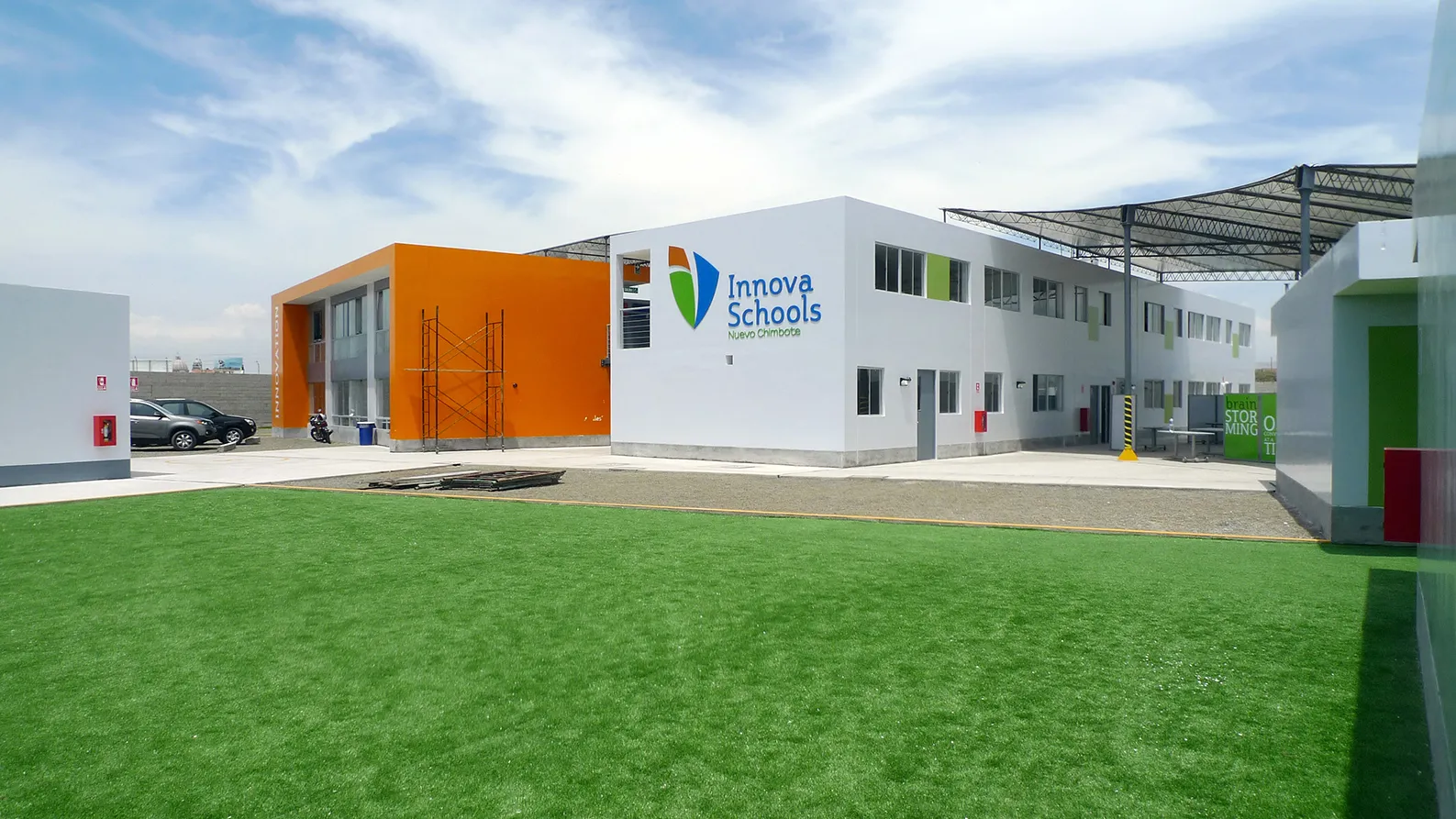

Designing a school system from the ground up
Scaling an entire network of schools for the growing Peruvian middle class.
How do you lift up the middle class in a developing country?
That was the challenge facing Peruvian entrepreneur Carlos Rodriguez-Pastor, who hired IDEO to build an entire network of schools powered by a progressive new learning model. IDEO’s mandate: to redesign Innova’s entire K–12 learning experience, from the curriculum to the teacher training to the school buildings, with an eye toward expansion and a goal to provide international-quality education at an affordable price—about $100 a month.
Innova Schools is a part of Intercorp, a family of 35 businesses that span everything from banks to retail stores and added schools to its portfolio. In 2010, the company had five existing schools but realized that its existing model could not grow. The shortage of well-trained, high-quality teachers in Peru, combined with rising land costs, meant the schools would need to radically change course to succeed.
To learn about scalable school models around the world, IDEO researchers visited inspirational schools and learning programs, and looked to analogous systems like retail, hospitality, and health care to understand their approaches to scale. Throughout the project, they collaborated with teachers, students, and the Innova Schools team in co-designing the work itself.
Together, Innova Schools and IDEO developed the curriculum, teaching strategies, buildings, operational plans, and underlying financial model to run the network of schools.
"I was blown away by Innova Schools," said Salman Khan, founder of Khan Academy. "It's inspiring to see such an affordable school deliver a quality of education that would rival schools in the richest countries."
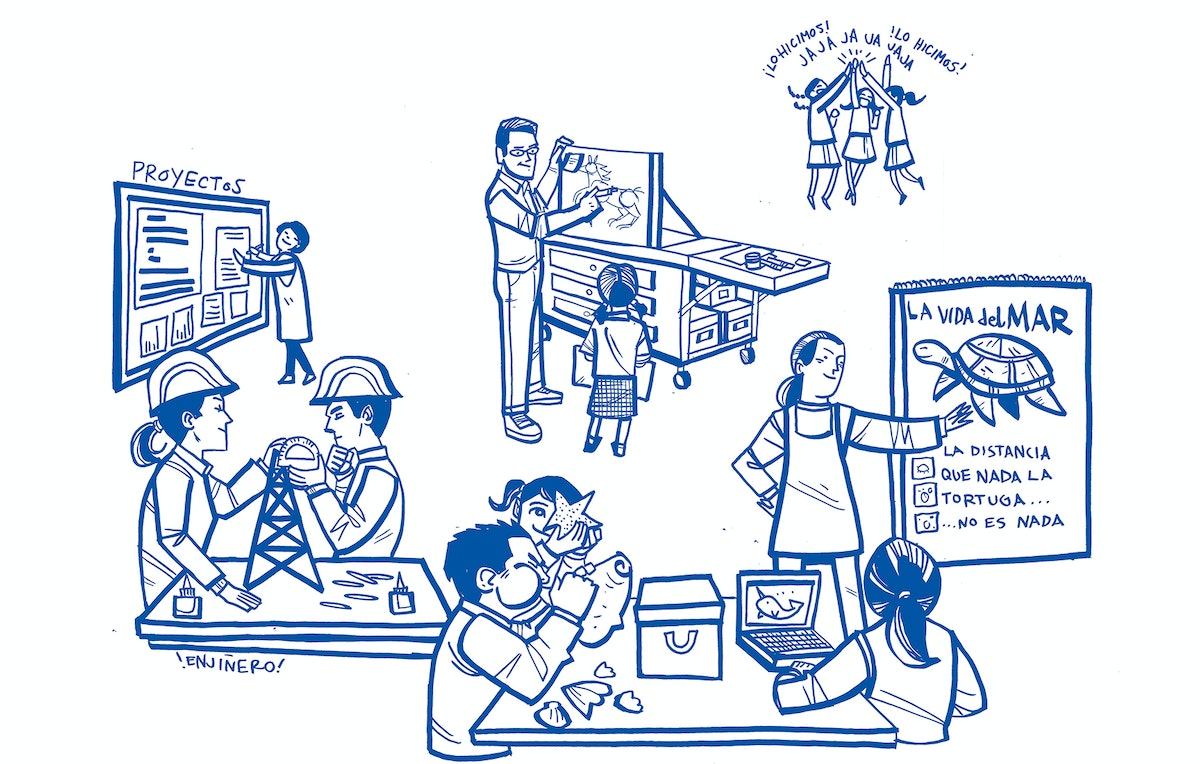
The new Innova Schools combine teacher-led, project-based learning in small groups with self-directed time using digital learning tools. Teachers monitor students’ work online and offer personalized guidance. Parents can view their children’s progress online as well.
Dynamic learning environments include community spaces, media labs, rooftop study areas, amphitheaters, and cafés that are optimized for flexibility: furniture on wheels, movable walls, and efficient uses of space to allow for different modes of learning.
An online Teacher Resource Center includes a database of more than 18,000 custom lesson plans based on a progressive new teaching approach. The center helps teachers learn their craft and gives them a chance to connect across the network.
The business model of Innova Schools was developed at the same time as the school experience. Designers leveraged the economies of scale that come from building a network of schools and centralized tools, such as data systems that allow all the schools to learn together.
The project has allowed Innova to open more schools at an affordable cost to families, ultimately giving more of Peru’s youth the chance to compete in the global economy. This comprehensive approach to system design ranks as one of Latin America’s most ambitious privately funded educational projects, and is on track to become the largest private school network in the region. To date, Innova has opened 63 schools in Peru that are serving more than 50,000 students.

A good system design doesn’t end with strategy. The work on Innova Schools also had a huge influence on the company, according to Rodriguez-Pastor. Through the creation of new roles and an aligned set of values, Innova’s central office has become a much more nimble and creative organization. They’re constantly scanning the world for inspiration in how to best educate their students, while building out the new innovations. They realize that design thinking can become an integrated part of their daily management of this growing network of schools.
Designing a top-selling hard drive
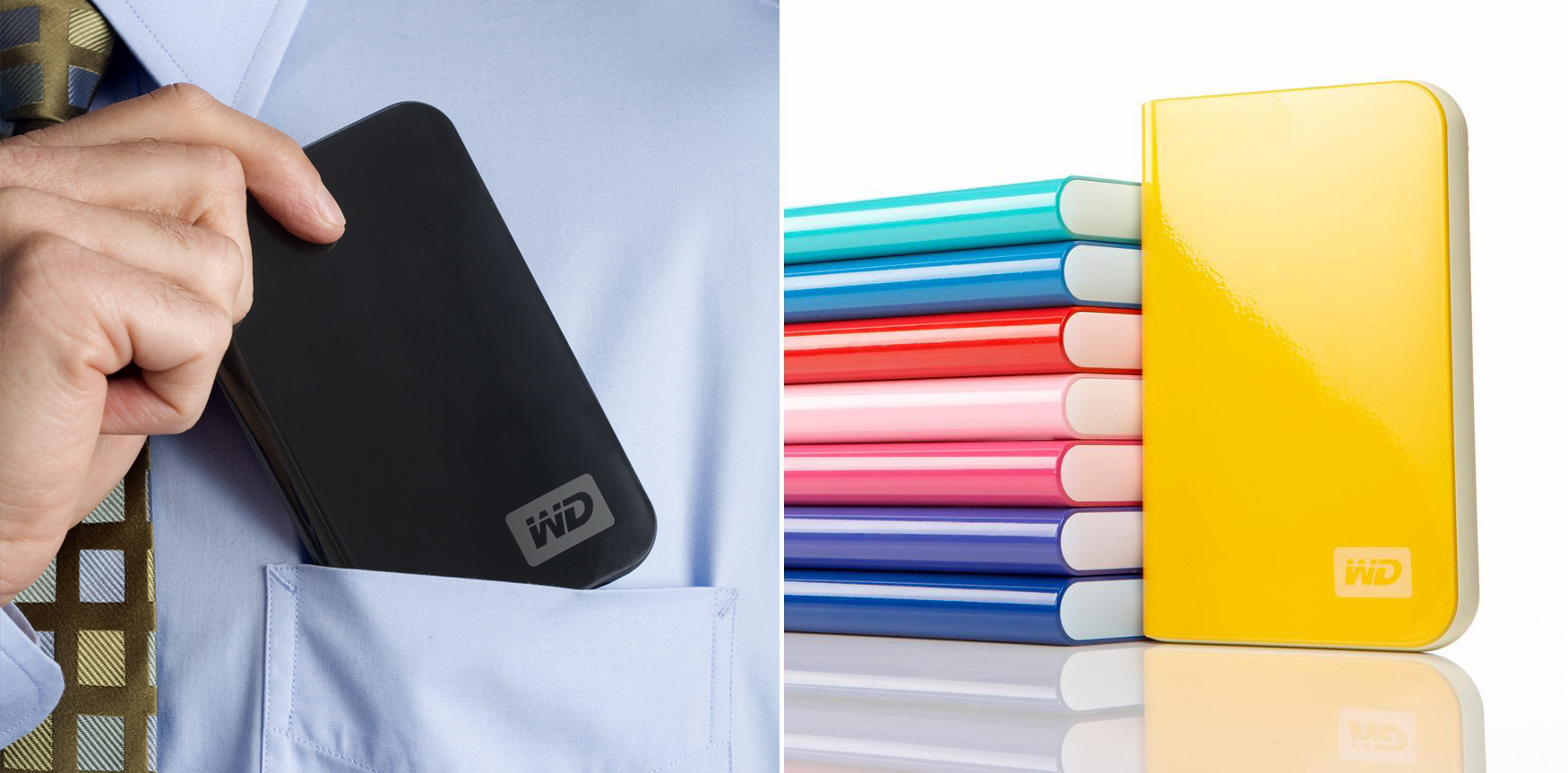
Through a long-term collaboration, Western Digital and IDEO have created one of the world’s best-selling hard drives.
Western Digital, the leading provider of external digital-storage solutions and a pioneer in the field, and IDEO collaborated on a number of products that produced reliable, secure, high-performance hard drives for personal and professional use and have won numerous design awards.
The projects include:
- MyBook external hard drive: IDEO and Western collaborated to find a new design language for their external hard drive MyBook. In just six months, MyBook became the number-one hard drive in the Americas, and grew US market share by more than 50 percent.
- MyBook II: Looking to regain MyBook’s original number-one position in the hard drive market, IDEO and Western came together again to refresh the original design, finding ways to further differentiate the product and the brand, and winning a 2008 Spark Bronze Award.
- MyPassport: Western and IDEO designed the 320GB, ultra-portable USB-powered hard drive that appeals to the mobile user, which won both the 2008 IDEA Bronze Award from IDSA and BusinessWeek, and the 2009 iF Award.
- MyBook and MyPassport 3.0: Again, IDEO and Western collaborated on bringing the popular MyBook external hard drive to the next level in the hardware, the software, and the packaging. IDEO also created in-store merchandising, the graphics and information featured on product packaging (and the “out-of-box experience”).

Designing a city emergency plan
Helping cities prepare for emergencies with a resourceful toolkit.
The city of San Francisco wanted to help its people become better prepared in case of emergency. While no one feels totally prepared for a natural disaster, people who are most connected within a local network fare better in an emergency.
So the San Francisco Department of Emergency Management (SF DEM) and IDEO teamed up to create SF72, a revolutionary platform that helps to reach people where they are. In times of emergency, the city will need citizens to be self-supporting for 72 hours (or longer) before local services or outside help kicks in. With that in mind, IDEO developed an accessible platform to help people prepare for those 72 hours in simple ways that fit into their daily lives.
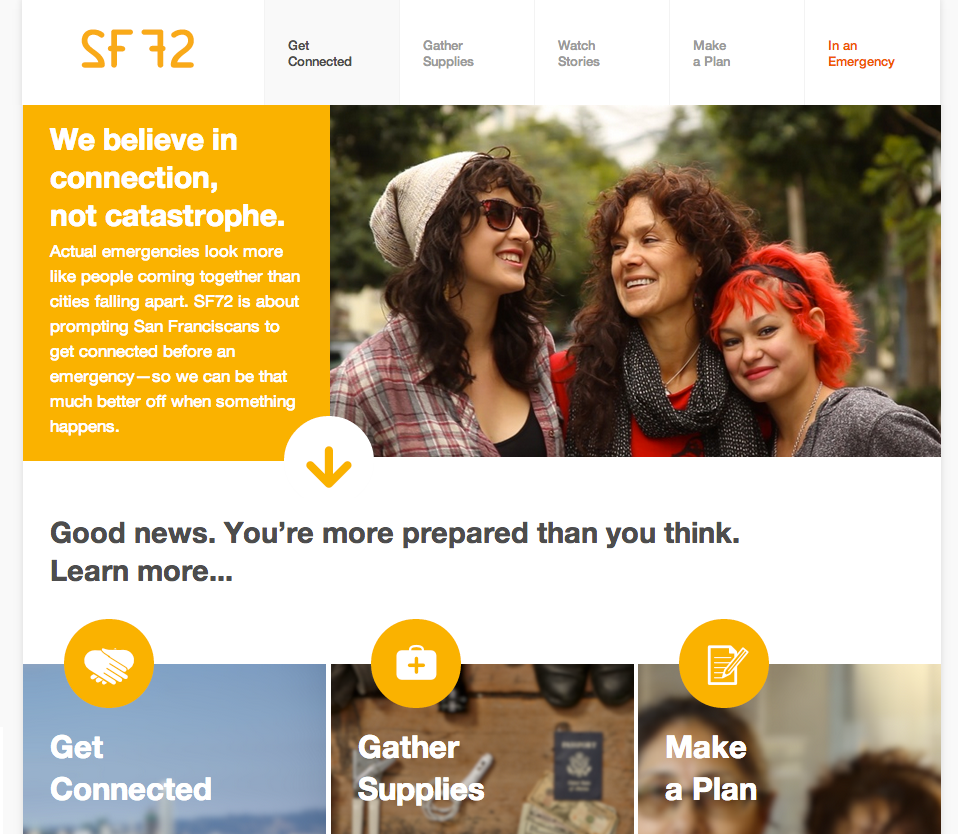
The SF72 website helps people with five important tasks: Get connected, gather supplies, watch stories, make a plan, and have access to an updated Google map. SF72’s content is hyperlocal, but IDEO and SF DEM also created an open-source toolkit for cities worldwide. From San Jose to Denver, other locales are using the simple toolkit to create a City72 platform of their own. Most recently, the city of Oakland collaborated with Code for America to develop its own platform. The City72 Toolkit enables SF72’s ethos of social connection for resilience to scale and grow—city by city.

Designing a global plan for disaster response
Creating a network that connects veterans across continents.
Team Rubicon, formed in 2010 as a response to the devastating earthquake in Haiti, is made up of former military veterans who swoop into help in times of disaster. The organization started with six vets in the US who were eager to transfer their battlefield readiness in to frontline relief efforts, and has grown to more than 28,000 volunteers across the world.
To explore its growing global effort and to shape the future of the organization’s venture, Team Rubicon approached IDEO for help. After an 11-week collaboration with government, military, and veteran groups, a vision for Team Rubicon Global emerged. Inspired by sources as diverse as TED and The Hell’s Angels, the three-tier model consisted of an anchor network to share best practices across the organization and two supporting platforms designed to help countries with varying capacity and needs.
Team Rubicon Global coordinated its first deployment in April 2015, when a quake struck Nepal, sending US and UK teams to double down on the rescue effort. According to Vince Moffit, Team Rubicon USA Incident Commander, that incident alone validated the network effect of IDEO’s work. “We couldn’t have done this without Team Rubicon UK,” he said.
And for the veterans who are part of Team Rubicon, the shared desire to serve—applying skills ideally suited for disaster response—creates a renewed sense of purpose, community, and leadership that helps reintegration to civilian life.
This deck of cards will change the way you work
Creating a common language for critique
In the design world, the practice of critique relies on a universal language learned in art school. Students routinely pin their work up on a wall, and offer feedback in the same way that was modeled for them. From industrial to graphic design, students learn a shared form of expression that allows them to engage with each others’ work and make suggestions for how it could be better.
Perhaps leaning back, stroking one’s chin, and groupthinking creative work is like dancing about architecture, but at least in art school, everyone knows the steps to the dance.
In the modern world of design work, that’s no longer the case. I joined IDEO more than 10 years ago. Since then, the number of disciplines we practice have mushroomed from around 10 to 33. Our backgrounds vary wildly, as do our outputs—from artifacts to interventions, micro to macro, processes to systems. And we’re not the only ones working this way. Multidisciplinary teams are more and more common across industries, and each discipline or practice brings its own jargon—and methods of critique.
In other words, the language barriers teams have to deal with are increasing.
So, how does a data designer critique a teammate’s copywriting? How does a graphic designer articulate her intuition about business design? How does a multidisciplinary team find a universal language to discuss the strengths and weaknesses of a proposed solution?
These questions sent me and a few coworkers off on a assignment. We set out to create a shared vocabulary for critique that would be broad enough to serve the challenges of today. We started by asking: What qualities do we most associate with creative excellence in our work? And, how might critique help ensure our solutions have the desired impact? We came up with an initial prototype, and tested it with teams in the wild.
That experiment illuminated a few things:
- Different disciplines do use different language for talking about their work
- What good looks like is about both process and outcome
- Designers are hungry for this conversation
So, we continued to test the vocabulary. The list diverged and converged until we landed on a set of seven key words, knowing that each is but a doorway into a world of meaning with many interpretations.
- Beauty
- Brains
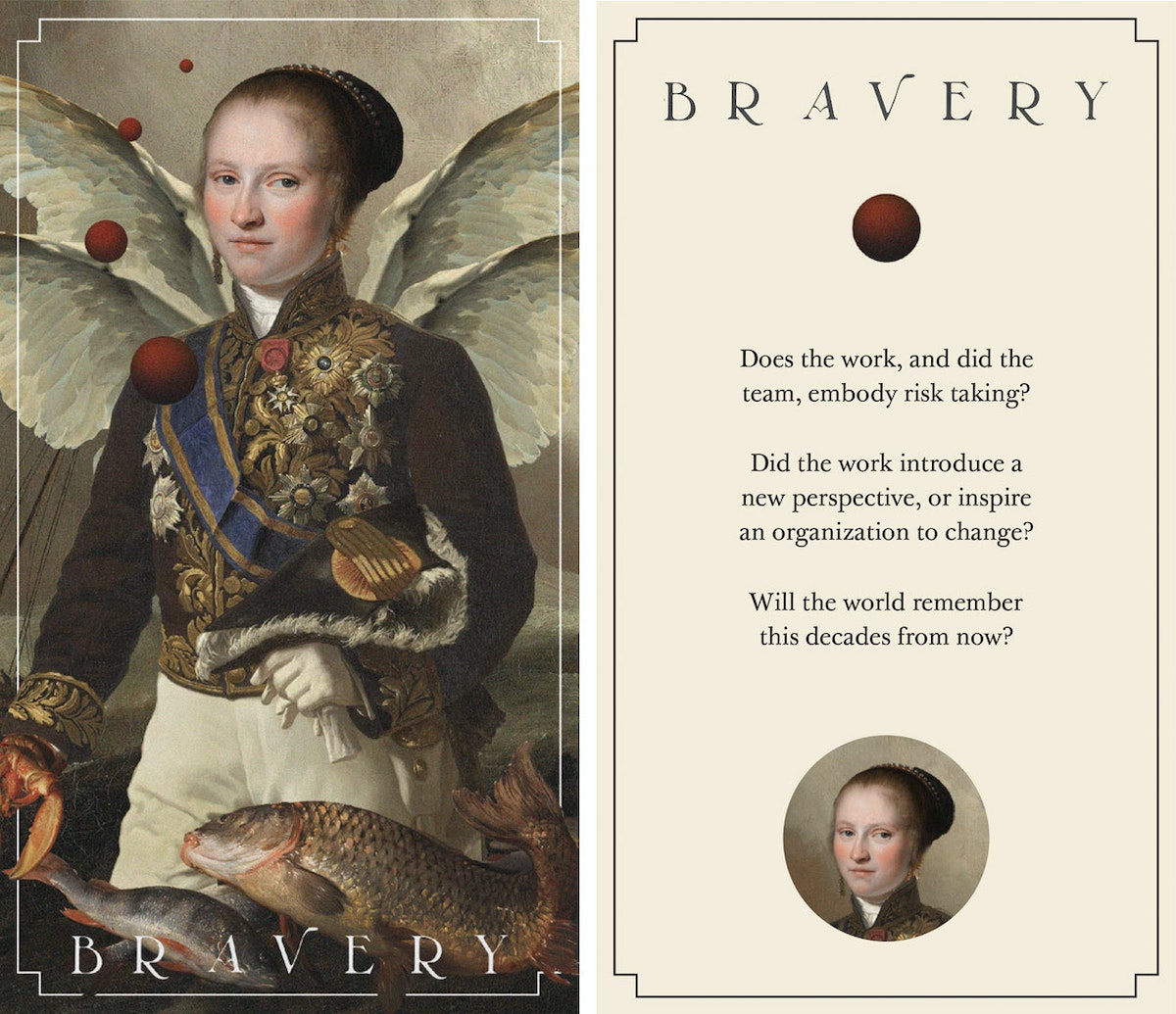
- Bravery
- Destiny
- Heart
- Magic
- Mastery
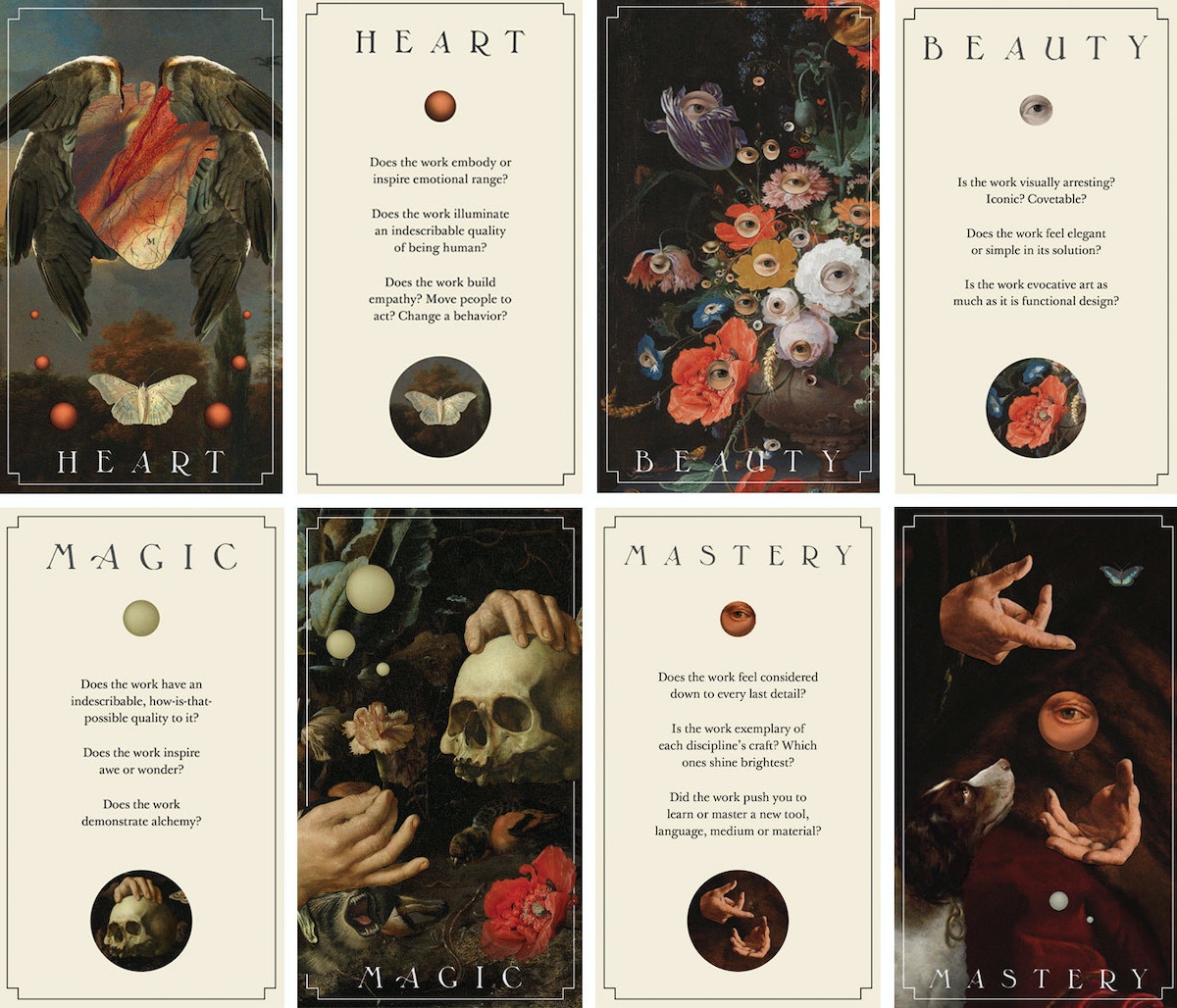
(You can download the cards here.)
The qualities are intentionally open-ended so that all designers (err, all humans) can relate, and so that they can be interpreted in ways that are appropriate in a given context.
The vocabulary was immediately valuable, helping designers move beyond binary sentiments of what is “working” and “not working,” to a more honest and nuanced discussion about the strengths and weaknesses of the work.
Imagine a critique that goes something like this:
Lauren (Software designer): How are you feeling about the content?
Jason (Writer): A little bored.
Lauren: Well, it’s a dry subject.
Jason: But people are people. If I’m bored writing it, they’ll be bored reading it.
Lauren: True. But if you’ve nailed the technical aspects maybe we can play a little...what do you think it needs?
Jason: Heart...maybe some Bravery...
Feels a little like dancing, right?
And that is just a snippet. The vocabulary provides an entry point into deep craft critiques that go well beyond aesthetics, or anything we can pin on a wall. As one coworker remarked to me, “We started thinking about beauty in relationship to an org chart—how it could be graceful and smart.”
The shared language is also useful outside of a design team.
Team member: We use this vocabulary to make sure our work is as bold, innovative, and effective as possible. How do you think your organization might respond to these prompts?
CMO: We are all about data...so that sounds like rigor. Teams are paralyzed until they have all the data. I don’t expect that will change over the course of this project, but I would love for you to help us see the value of beauty and bravery.
With a shared language, we are able to not only name our tendencies (as this CMO did), but identify strengths and weaknesses across the seven qualities, both specific to each discipline’s contribution, and as a whole. This builds empathy and understanding for individual efforts on a team, and creates agreements for how to further develop the work.
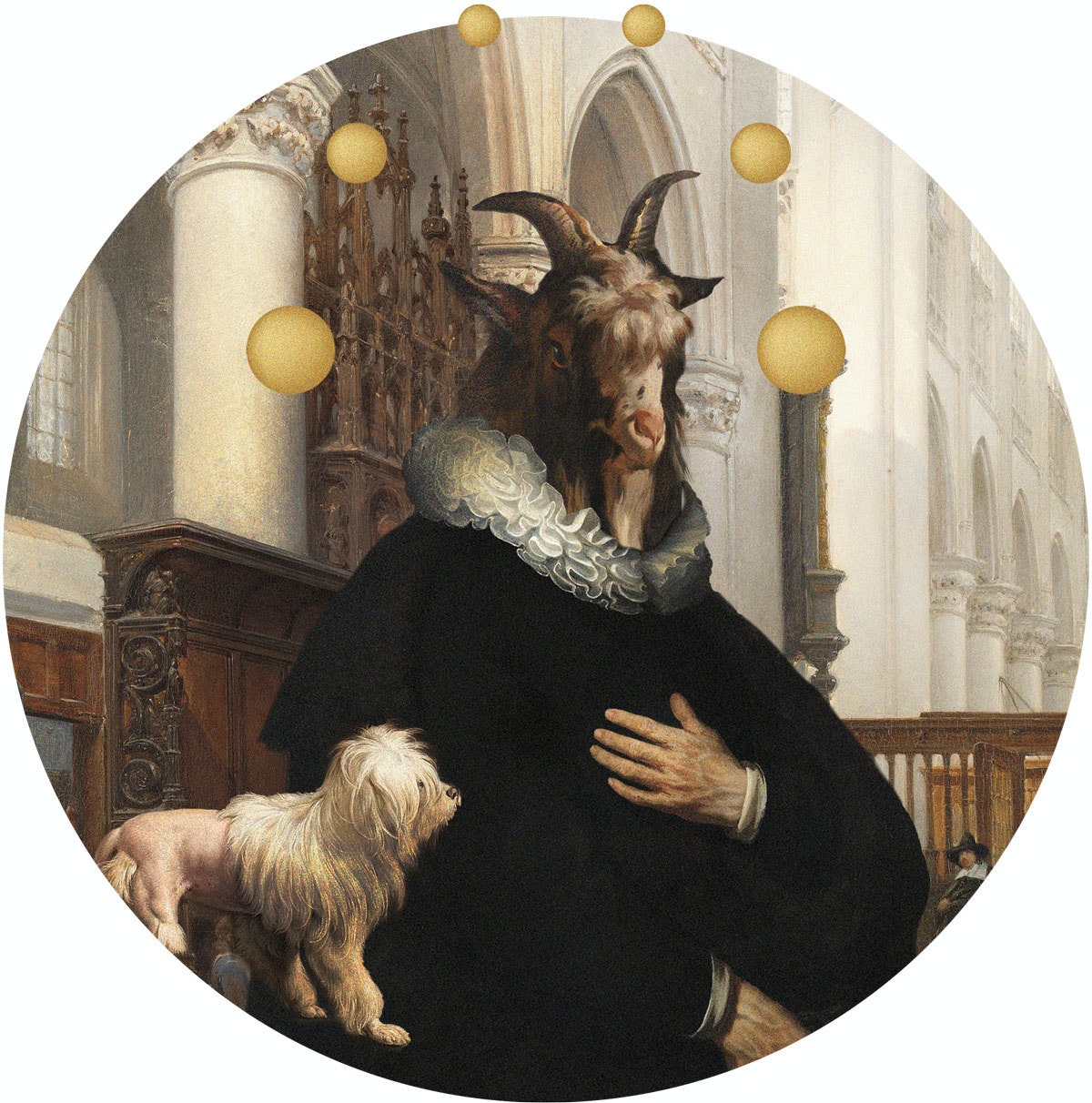
In our New York studio, we have been using the vocabulary as a way to reflect on our entire portfolio. As a community of intense New Yorkers, we had assumed that rigor and brains would surface. But as we critiqued our work from 2017, we realized that the work that embodied magic and heart in equal parts was what catalyzed clients and made us most proud.
Realizations like this brought up some compelling questions:
How do we embrace magic and heart in our business development process?
What does the resonance of magic and heart say about New York (and the world) today?
How do we want to stretch and grow in 2018?
In just over a year, the critique vocabulary has helped us reach a new level of discourse and awareness. It has pushed us in new ways, as individuals, teams, and a community. It has opened up new conversations with our clients, and given them language to more deeply engage in our work together.
And this is just the beginning.
Vocabulary is never fixed. It is a living organism that will evolve with time. We hope you will take this critique vocabulary and make it your own.
As we face increasingly complex design challenges, and creative, multidisciplinary teams are called upon to solve them, rigorous critique will be essential.
We can only hope it feels like dancing.
Shout out to IDEO Cambridge, Chicago, and New York for collaboration on these cards. Download the cards here.
Writing about music is like dancing about architecture. The adage has been used in countless ways since the early 1900s, and it’s still the best way I know to describe the challenge of critiquing creative work. What it means to me is, we’re using the wrong language, but it’s all we have.

How an art director at the New Yorker unwinds
When Rina Kushnir's not designing layouts, she can be found painting leaves

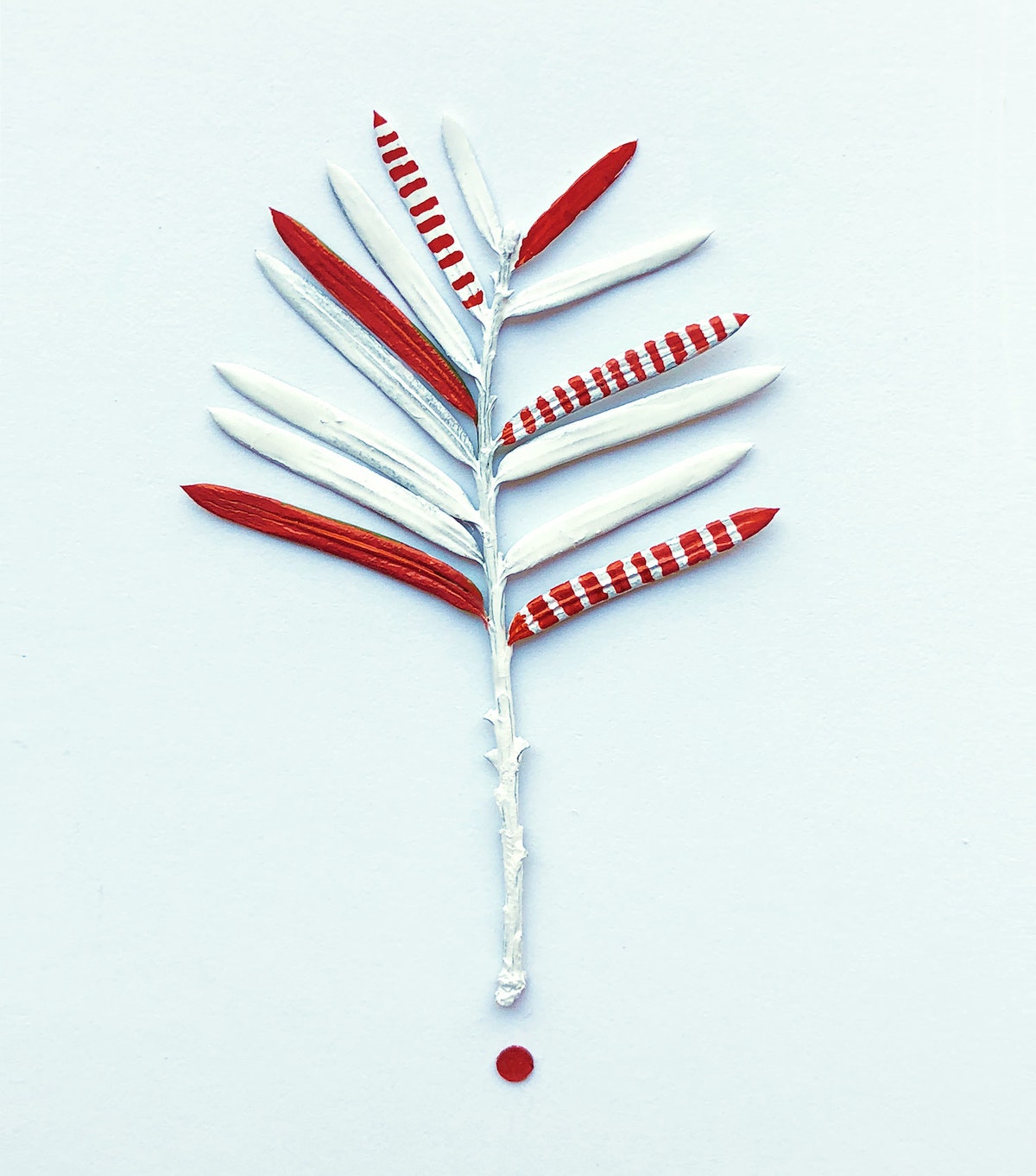
For Rina, these tiny pointillist masterpieces are about more than just a side project. “Because I have a fast-paced, collaborative job, I love having an environment that allows me to slow down and reflect,” she says.
Years after she and I worked together—back when she was an associate art director at Wired—a friend took me to see her show in a Brooklyn coffee shop. Though the concept was simple, the work was incredibly engaging. I caught up with Rina to learn more about her art, her process, and how “_leafiness_” (her handle on Instagram) helps her meditate and stay creative.
In one sentence, who are you?
An art director, artist, and nature lover.
What do you do? How did you learn it?
I was lucky to study at the School of Visual Arts in New York with amazing mentors and teachers.
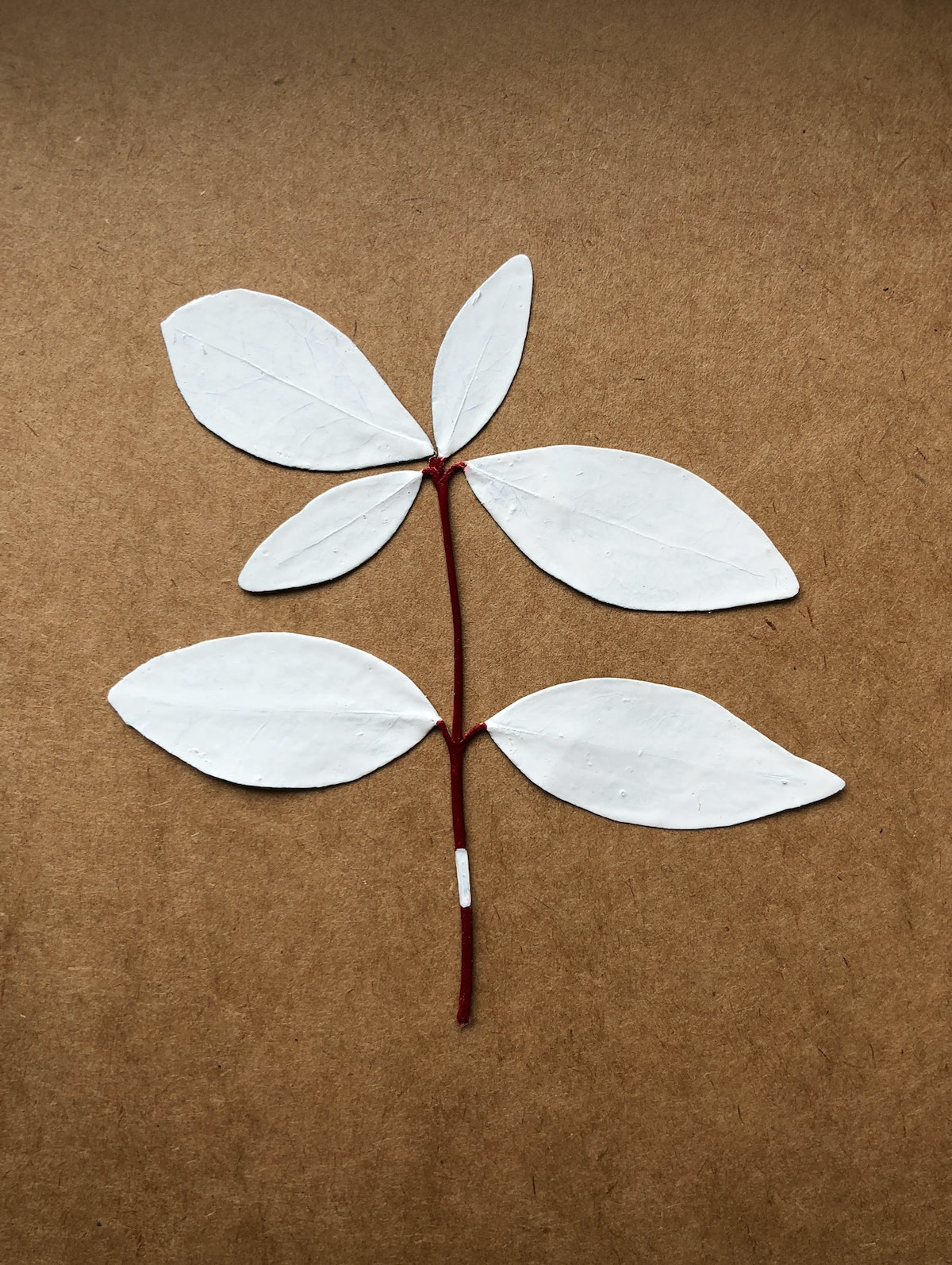
In my free time, I paint leaves, though that happened by accident. I live in Park Slope, where the leaves are really beautiful in the fall. I started picking them up on walks, and I happened to have some oil-based pens from a glass project I had done. I got inspired by the shapes of the leaves, and started using the pens—it just happened without me even thinking that much about it. I find it extremely soothing. Many people work together to figure out what goes on a magazine page. It requires a lot of communication, understanding, and clarity. But with this, there’s no one else to weigh in. It’s my yoga.
3 favorite possessions?
1. Black and white photographs of my family in Russia, where I was born. I moved here with them from Moscow when I was 18.
2. Jewelry from my grandma that I never wear but always keep.
3. A collection of handmade paper that I haven’t found a project for yet.

What does a typical work session look like?
I usually get the idea for what I want to do with a leaf in the morning, then do the repetitive work in the evening. Most of the time, I don’t listen to music, but if I do, I listen to meditation music. Otherwise, I end up analyzing the music instead of focusing on what I’m doing. It’s important to be fully in control of your process. It really teaches me to make decisions and be confident in them.
How do you get over creative block?
Fortunately with leaves, I haven't encountered creative blocks yet. It really puts me in a different state, and helps quiet my mind when I make decisions.
What was the last item on your to do list?
Go to the New York Botanical Garden Herbarium. I want to learn different techniques for collection and preservation.
How do you see the world in 2078?
I hope that technology will get better at allowing us to manage and do things faster and easier, but I also hope that in the process of getting there, we can maintain the environment that we need to live.

What’s your number one bucket list item?
I want to live in Italy and speak Italian. The language is so beautiful.
Who are you creative crushin’ on lately?
My crush right now is the artist Sheila Hicks. The thing I absolutely love about her is that she’s still inspired and creating art at the age of 83. No matter how small or large her work—big, sculptural balls of wool fiber, or something tiny—it has this amazing impact. She’s so fluid in expressing any possible emotion. It’s so important to have that in your life, especially over such a long period. To me, she is the luckiest person on earth.
By day, Rina Kushnir works with illustrators and designs layouts for the New Yorker. But on her own time, she paints leaves she collects in her Brooklyn neighborhood, meticulously studying their patterns and adding dots of oil paint, punched holes, and patterns.
How to use conspiracy theories for good
The human behavior behind sticky stories
I had some time to kill so I asked a few questions. He neatly tied his theory to aliens, a league of physicists, and a deal with China. Crazy, you might say, but research suggests that the majority of us believe in at least one conspiracy theory.
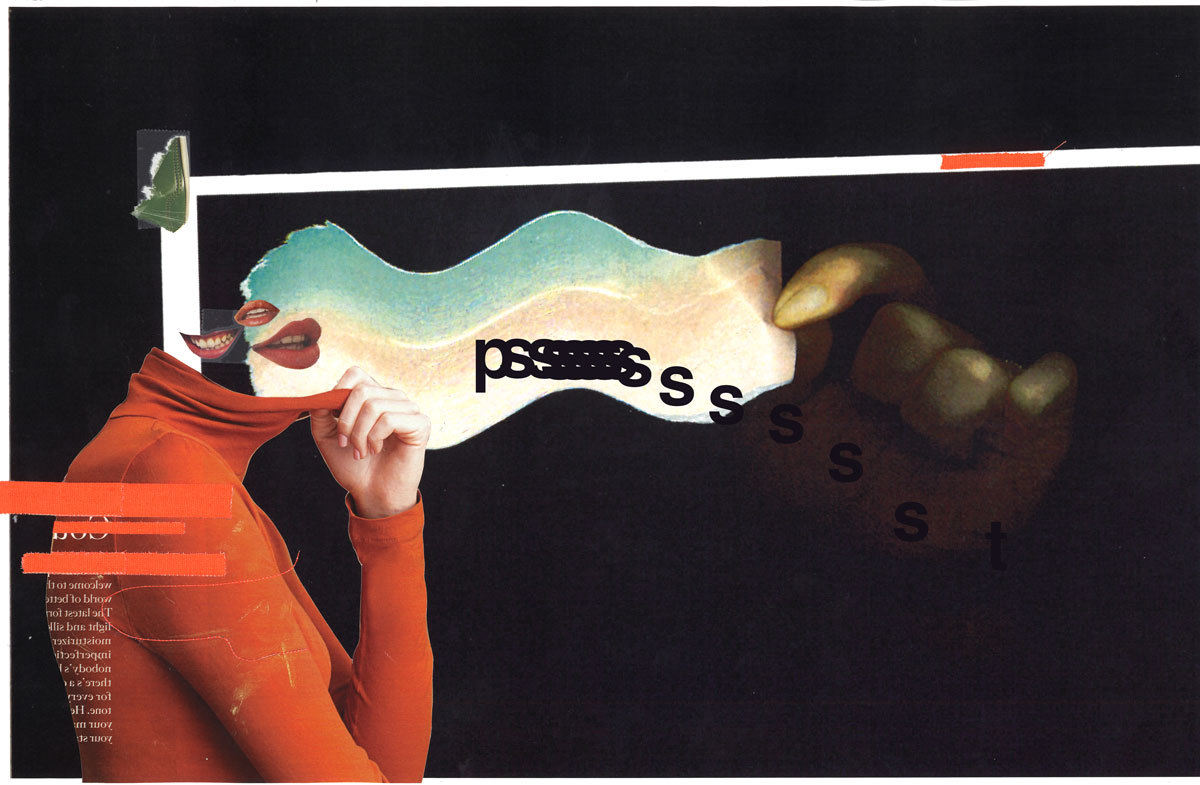
We’re living in a tornado of misinformation, conspiracies, and fake news. But instead of simply lamenting that fact as you continue scrolling through your feed, let’s learn from it.
As a designer who works to help school systems become more innovative, it’s my job to help spread good ideas. Why not borrow from the sticky, sharable methods behind conspiracy theories to get some good ideas out into the world?
After chatting with my friend at the auto shop, I took a long look at what makes conspiracy theories so compelling and came up with a list of five practices we can nab to spread good. (Know Rogers’ Attributes of Innovations that spread? Conspiracies fit right in!)
1. Start with something recognizable
Memorable conspiracies begin with something familiar—an entrenched belief or a curious phenomena.
The “chemtrails” conspiracy, for example, says that planes leave behind biological agents with lasting effects on the population. People saw white lines in the wake of airplanes in the sky and wondered about it. From this, a new belief was formed.
There’s a lesson here for getting new ideas to take off! Try introducing new concepts through existing beliefs, habits or built-in systems. When we talk about design thinking with educators, for example, we often note that prototyping is just like doing a lesson twice in the same day, but differently. This helps educators reconcile a new practice with an old one.
2. Address a common pain point
Most conspiracies offer up a scapegoat.
It’s common to blame Big Pharma, for example, for withholding cures to diseases for profit.
Blaming large groups of people for complex problems isn’t a good habit. But, when sharing good ideas, we can change the script on scapegoats by proposing a partner to help solve a problem. Leaders in the civil rights movement, for example, helped to spur a broader conversation about women’s liberation—both movements were helped by the other.
3. Let people dream
Some of my favorite conspiracies allow farfetched wishes to come true. Tupac and Elvis, they’re still alive! These conspiracies are rooted in desire. To help new ideas take off, connect them with people’s wildest dreams.

4. Create iconography to build identity
When we see alien iconography out in the world, it gives us a sense—true or not—of how widespread belief in alien life may be. In Roswell, New Mexico, you can pick up all kinds of little green man kitsch—T-shirts with slogans like ALIENS ARE ALIVE and bug-eyed masks at the International UFO Museum. We’re much more likely to believe something when we think lots of other people do, too.
5. Keep it simple
Lasting conspiracies are easily explained in a sentence or less.
The Moon landing hoax, for example, makes a clear and simple argument: Americans wanted to outpace the Russians in space exploration, so they faked the landing on the Moon. The details of how and why may be a wormhole, but the thesis is simple.
Likewise, when you want to share a new idea, make sure that its value is explained simply and unambiguously. The #neveragain movement managed to powerfully convey its message with a simple hashtag.
Conspiracy theories and fake news teach us a lot about how information spreads—and that can be useful as we try to spread good in the world. Here’s one last lesson: All of us believe in something that’s not entirely true. Our shared habit of believing things we want to be true—regardless of what they are—unites us.
On a road trip up the coast of California, I ended up stuck at an auto repair shop with a man who had some interesting ideas. “The government has a zero-point energy machine that could end our reliance on fossil fuels,” he told me.

3 ways to get comfortable with ambiguity
When not having all the answers is the answer
From a very young age, we’re praised for knowing the right answer—and on the quick! But as designers, that’s almost never possible. Our job is to help create a future that is, by definition, uncertain; so we're forced to face ambiguity on every project. There are always times when we don’t know where to go next, don’t have an answer, or get stuck. So how do we deal? What are ways to get more comfortable with being uncomfortable?
Here are three things I’ve learned to help me remain calm in the face of uncertainty.

1. Plan to not know
Imagine you’re in a meeting, surrounded by important clients, when someone hits you with an unexpected hardball question. All heads turn to you, awaiting a brilliant response. You freeze up, your mouth goes dry. You know you should have an answer, but your mind goes blank.
Rather than going into a silent state of paralysis, take a breath and remember that you have an answer prepared for this very moment: “I don’t know yet.”
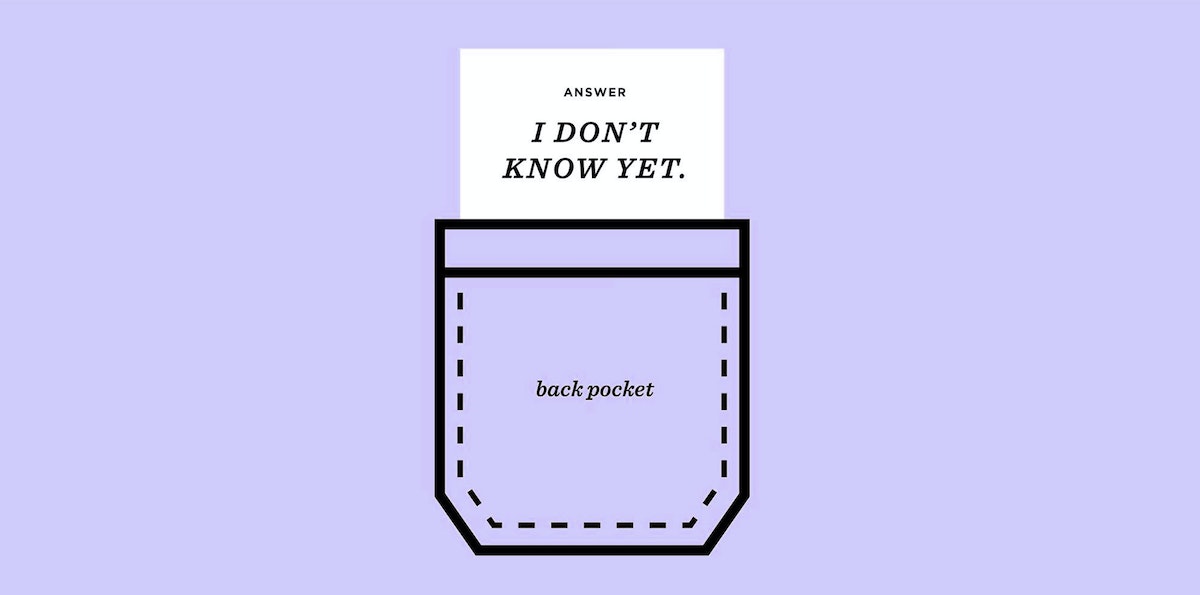
Obvious-sounding? Sure. Easy to own up to? Not so much.
I used to be afraid to say, “I don’t know yet,” because I thought I’d sound ill-equipped and uninformed. After all, our clients hire us to find answers, so to not have an answer when put on the spot can feel disconcerting.
But by allowing yourself to be vulnerable, you win trust. Owning the process makes you more credible as someone who’s calm and collected in the face of uncertainty. Because let’s be honest: No one has all the answers, not even the experts.
2. Shift from should to could
Let’s go back to the feeling in the meeting room when all eyes are on you and you feel like you should know what to do next (but don’t). You’re getting ready to go into panic mode.
Oh yes, I know the feeling well.
Ever since I was young, I felt the pressure to do things as they should be done. And that pressure has followed me through adulthood.
When I first started leading projects at IDEO, I often thought to myself:
“If I were smart enough, I should be able to impress the client with my answer.”
“If I were a great leader, I should know what to tell my team.”
“If I were talented enough, I should know exactly what to design next.”
Should, should, should. It’s the “shoulds” that block your way forward.
“Should” suggests that there is one way forward, which is a sure way to set yourself up for creative blackout — a high pressure situation where you must find the single, bright and shining solution. There is no one right answer.
So whenever I find myself questioning what should be, I remind myself to ask: what could be?
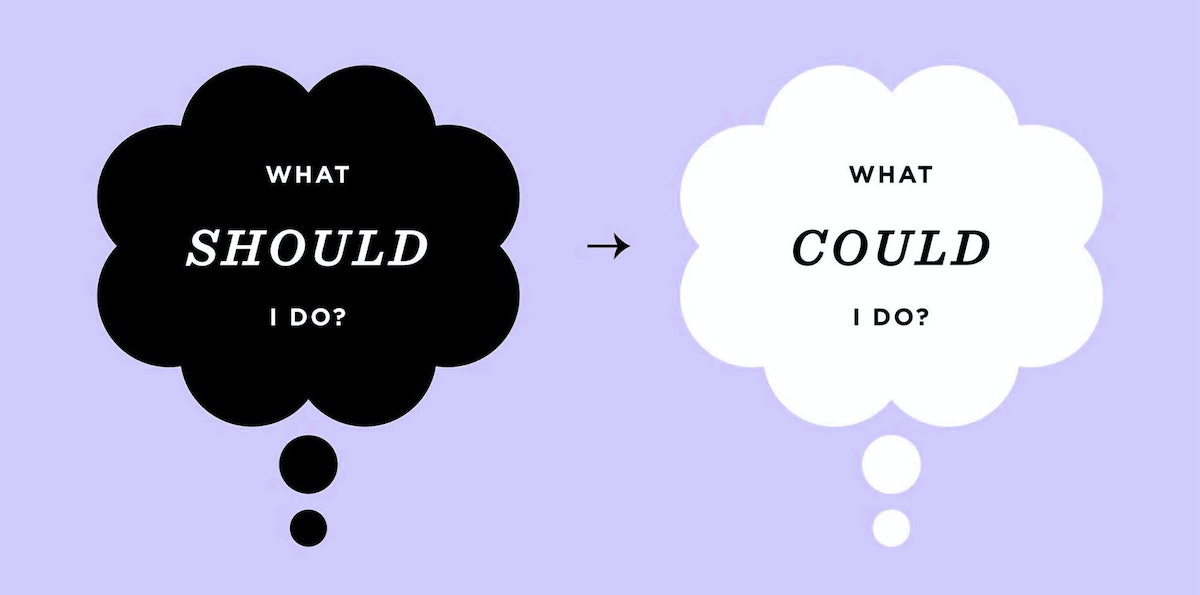
What could be is a springboard for generating new ideas, brainstorming options for what to do next. It takes me from a place of oppression to optimism.
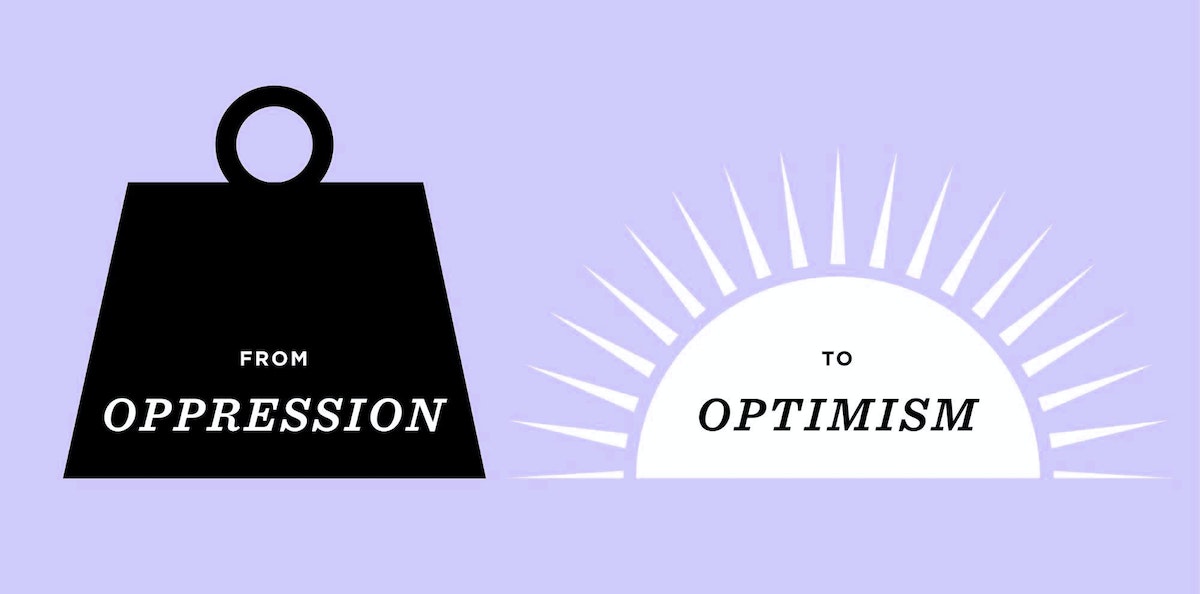
By shifting my mindset from should to could, I no longer have to come up with a single, right answer; instead, I have endless options for moving forward.
3. Change the context
Even when you are not under pressure, anxiety around not knowing the answer can find a way to creep in.
There are many times I’ve found myself glued to the screen, on the third cup of coffee, hardly stopping for a bite to eat. No matter how hard I try, it feels like I’m doing nothing more than pushing pixels around a screen.
How to get unstuck?
I have to force myself to remember that if I’m not getting anywhere (as hard as it may be to pry myself away from the screen), I need to stop, change my context, and gather new inputs.
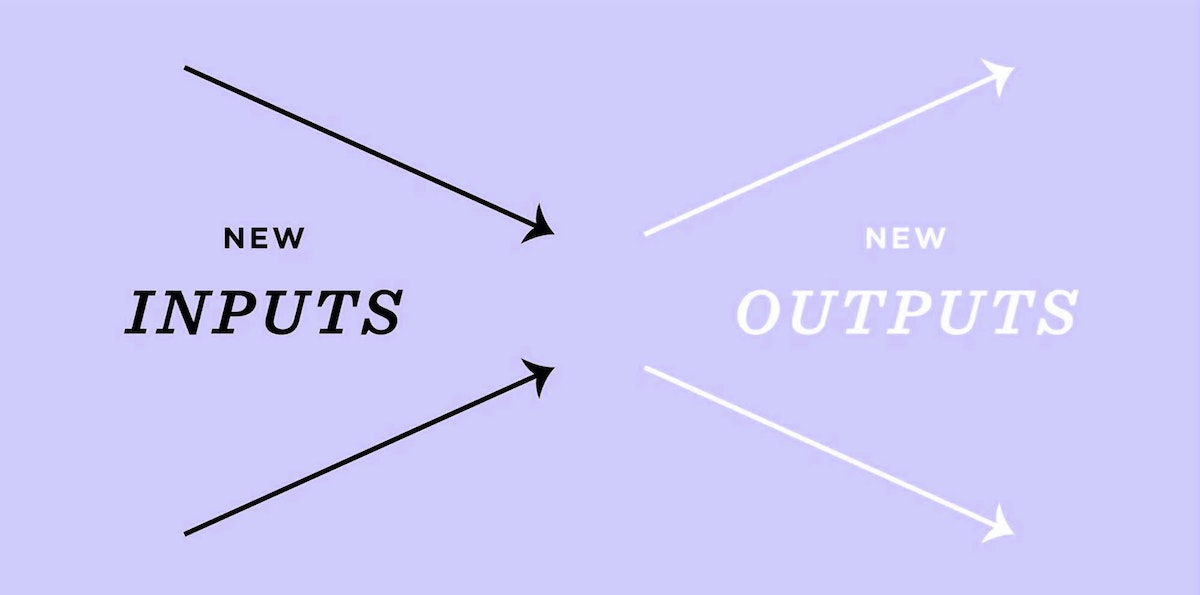
Stepping away from the screen and focusing on something else for a while can bring fresh perspective to the problem.
Go for a walk, tour an art gallery, seek out a new experience that takes you out of your comfort zone. Invite another designer to look at your work and offer feedback, revisit stories from your research. By stopping and taking a step back, you create more mental space for unexpected sparks of inspiration to slip through.
Sometimes the biggest barrier to finding a way through the darkness is the pressure we put on ourselves to have all the answers. To break through, make peace with the I don’t knows, the could bes, and take a step back in order to more confidently take a step forward.
“Embrace Ambiguity.” It's a value we take very seriously here at IDEO. The phrase invites designers to go with the flow in the face of the unknown. On paper, the freedom sounds liberating. But in practice, navigating ambiguity can be downright stress-inducing.

Lindsey Turner
I’m passionate about building brands, products, and experiences that help organizations show up with meaning and momentum.
I help organizations cut through complexity by shaping how they show up, through brand strategy, identity, and storytelling.
Working at the intersection of brand and business, I bring an editorial eye and a bias toward making—turning ideas into tangible experiences that people can understand, trust, and believe in.
My work spans government, healthcare, financial services, media, and consumer goods, from launching Gen Z-focused ventures to building innovation labs and reimagining legacy brands. I relish moments of ambiguity and enjoy translating across teams, perspectives, and priorities to move ideas forward.
I started my career in editorial and digital design, shaping cross-platform experiences and identity systems in publishing and agency environments. That foundation still shapes how I work today: I’m detail-oriented, collaborative, and overreliant on the Oxford comma. I hold a BFA in Visual Communication from the School of the Art Institute of Chicago.

Rachel Young
My work helps organizations see who their products aren't working for—and build the will and the tools to do something about it
For 25 years, I've asked the same question: Who does this design exclude—and what are we going to do about it?
My work spans human-centered strategy, inclusive design, and qualitative research, with clients ranging from Microsoft, Google, and Verizon to the National Science Foundation, and San Francisco Unified School District.
Before IDEO, I taught elementary school in East Palo Alto and spent a decade doing design work with social service organizations—where I learned firsthand what it costs people when systems are built without them in mind.
I am currently writing User Error, a nonfiction book about digital access and the design decisions behind it. I live in Oakland, California.

Brian Pelsoh
I lead with craft, ensuring our work is creatively excellent: rooted in deep human insight and imagination, while also grounded in the realities of business and technology.
My expertise spans brand, communication, and product design across tech, education, the arts, and social impact.
I believe great work demands both high-level vision and obsessive attention to detail, and only happens through collaboration.
I bring an inclusive, hands-on approach and a deep understanding of business, which enables me to consistently deliver excellence while always asking why.
Before joining IDEO, I worked at the brand firms Pentagram and VSA Partners. I began my career as a designer, leading teams at the School of the Art Institute of Chicago and the Milwaukee Art Museum. I hold an MFA in graphic design from Maryland Institute College of Art and a BFA in communication design from the Milwaukee Institute of Art & Design, and have taught at some of the best design schools in the US.

Tony Wong
I am responsible for IDEO’s long-term success in China and working with clients to use design as a tool to enable growth.
I am responsible for IDEO’s long-term success in China and working with clients to use design as a tool to enable growth. Specifically, I have helped Chinese companies design holistic brand solutions through the development of their products, communication, services, and innovation teams, and I have helped multinationals expand their presence and influence in China.
I advise global leaders on developing China-led innovation and capabilities.
In over 15 years in IDEO Shanghai, I have worked on projects that use design to elevate the quality of the experience of healthcare products and services, streamline processes that increase productivity, create spaces and programs that promote and enable inclusive communities, and build next generation mobility solutions that are planet-positive.
Before joining IDEO, I worked at Philips Electronics and the Electrolux Group in Italy, the Netherlands, and Singapore on a number of breakthrough commercial products. I am a member of the Young President Organization in Shanghai.

Building a personal AI for the messiness of life: Sida Li
Most AI products today are built for work—a space with clear problems and established systems. One founder noticed a gap: personal life is messier, harder to systematize, and mostly left behind by the AI boom. So she built Cue, a personal AI that lives inside iMessage and group chats, to go where the other tools haven't.
In this episode, Becca Carroll, IDEO's Chief Strategy Officer, talks with Sida Li, co-founder and CEO of Shared Context Lab, about staying anchored to a human need while the technology around her keeps changing shape, why she treats her business model with the same rigor she'd bring to a product, and what it feels like to build a company at this particular, disorienting moment in AI.
The conversation also gets into how Sida makes design decisions: the language Cue uses to describe itself, the tradeoffs behind building inside iMessage instead of a new app, and a real story about a business idea that didn’t pan out.
This is the second in a two-part series profiling founders from IDEO's Startups-in-Residence program. The first conversation is with Johannes Seemann, founder of Sooner, on designing GenAI for the emotional side of money.

Designing GenAI for the emotional side of money: Johannes Seemann
Most personal financial tools are built to run the numbers and optimize towards a budget. While that works for some, most people experience money as a lived relationship that does not neatly fit into a spreadsheet. Johannes Seemann and Becca Carroll discuss why money is emotional before it is mathematical, and what a human-centered approach to building a generative AI financial product looks like in practice.

The curious leader's edge in uncertainty: Scott Shigeoka
Mina Seetharaman talks with Scott Shigeoka, author of Seek and Head of Curiosity Cultivation at the Eames Institute, about what distinguishes genuinely curious leadership from performative curiosity, how power dynamics shape curiosity, and why practicing curiosity can restore energy rather than drain it.

How constraints make us more creative: David Epstein
Mina Seetharaman talks with David Epstein, author of Inside the Box and Range, about why total freedom often produces average work, how leaders can design useful limits on purpose, and what organizations such as General Magic and Pixar reveal about the relationship between boundaries and creativity.
Looks like you might be in search of something very specific?
Or reset the filters above and try another angle.
Here’s some random inspiration

Podcasts about creative leadership

Articles about the power of prototyping
