
.svg)




Helping young adults make smart money decisions
Society of Grownups offers financial advice to those who need it most.
When you’re under 40, buying a life insurance policy may seem about as practical as buying a Humvee. That makes insurance a tough sell for a 165-year-old company like MassMutual. To find a way to become relevant to this generation, MassMutual partnered with IDEO with a mission to get young people interested in their own spending habits.
Over the course of two years, the teams set out to learn about how people across the US spend and save their money, and they uncovered a simple theory: you either have a smart money mindset or you don’t. When it comes to being mature about financial issues—chipping away debt, saving to buy a car—it doesn’t always come naturally. If anything, many feel disconnected from money-related matters, even if it’s in their best interest to know more.
"I hate going to a bank and not really knowing what I am doing when it comes to money," said Simon Bowers, a 31-year-old who works in public relations, featured in an article in Fast Company about the MassMutual-IDEO collaboration. "They don’t seem to take into account that this might be scary for us."
So how to invite this wary demographic to the table? Design an accessible way to meet them wherever they are: online and on their phones. IDEO helped build the new venture from the ground up—designing a brand identity and experience focused on transparency, meeting users where they are, and helping people navigate complicated financial situations so they can live life on their own terms. It’s called Society of Grownups, and you can think of it as a sort of master’s program for adulthood. Each piece of the program builds on a common vision that continues to iterate every day.

After building and testing full-scale, live prototypes, the brick-and-mortar Boston location opened in 2014 and operated much like a supper club—a warm, inviting space where young people could hang out, feast on delicious meals, attend talks, and learn about things like 401Ks, living on a budget, and how to pick good, cheap wine. After two years of continued prototyping, MassMutual recognized that the digital channel has the most potential to grow and closed the brick-and-mortar location to focus their investment in building out the bespoke online financial tools to reach more people across the nation.


Helping a digital healthcare startup to scale up
A redesign, a rebrand, and a new focus.
From leeches to gene therapy, how we treat sickness has changed beyond recognition over the centuries. But one question asked by ancient healers and modern doctors alike remains the same: “How are you feeling?”
“We’ve had the ‘quantified self’ for a number of years—sensors that measure steps, weight, blood pressure,” said Bruce Hellman, cofounder of UK-based digital health startup uMotif. “But by only focusing on the quantitative, we miss the whole picture of a person.”
Hellman cofounded uMotif in 2012, inspired by the self-awareness he gained when tracking his sleep after his baby was born. uMotif gives people the tools to record and track their mood, sleep, and clinically relevant symptoms like dizziness or breathlessness on their mobile phone app, and share the resulting data with their doctor and care team to better inform appointments, and treatment plans.
Named as one of 50 UK "scale-ups" that could grow to over £100m in revenue by not-for-profit organization Silicon Valley Comes to the UK, uMotif’s software and apps have been deployed in dozens of hospitals, and profiled in The Guardian, The Daily Telegraph, and The London Times. With a view to scaling strategically, Hellman applied to IDEO Europe’s first Startup in Residence, a three-month-long program to accelerate companies through design thinking. “We brought the whole of uMotif to IDEO: product, organization, branding, approach, and business model,” said Hellman. “We were keen to re-consider just about everything.”
During the residency, the uMotif team embedded with IDEO’s London studio to work closely with an eclectic team of interaction, business, and communication designers, and design researchers, to explore every aspect of the business.
The team found that although uMotif’s organic growth had reflected the rapidly expanding digital health market, the offer was somewhat fragmented as a result. In response, uMotif decided to tighten its sales focus from 14 branches of medicine to just two: oncology and cardiology (with mental health as an R&D area).
In-depth interviews with patients, nurses, doctors, and executives revealed a clear opportunity: “simple symptom tracking for people going through an acute or serious period in their health, to activate and extend the patient-care team relationship,” Hellman says. The focus switched from the Quantified Self to the Qualified Self, coined by the team to reference uMotif’s unique approach to measuring how people feel.
Designers set about reconfiguring and prototyping aspects of the brand, product, business, and organizational model for delivery. Whereas the original uMotif product had been designed with a single clinician in mind, the team designed a new dashboard catering for the reality of modern healthcare—multiple caregivers.
Ultimately, uMotif’s offer is not just about helping patients understand their own health; it’s about providing meaningful insights that enable them to have richer conversations with their care teams—allowing them to work together to improve care plans and outcomes.
“We are a much more focused, confident, and clear organization, truly prepared to scale sales, delivery and clinical impact,” says Hellman, referring to the impact of their participation in the Startup in Residence program. Now back in its own headquarters, the team takes with it a toolkit of IDEO systems and processes with which to run their business and to apply to new projects, products, and services.
“Health systems around the world are quickly adopting digital channels,” he said. “We aim to be at the forefront of this inevitable shift, using design thinking to put people at the centre of their care, improving quality of life, treatment outcomes, and healthcare experience.”
WATCH: uMotif: Sam's Story.

Helping kids make healthy choices
Three design concepts that help kids make healthier choices around food and exercise.
IDEO designers wanted to take on a challenge: How might we help kids make better decisions around food and being active?
Designers moved forward with three concepts that addressed this challenge from three completely different directions:
- Top Chops, a hands-on cooking adventure that builds kids’ confidence in the kitchen by working toward becoming a Top Chop “master chef.”
- Daredevils, a wearable device that measures the intensity of energy exerted, but doesn’t prescribe the activity, which kids can use to dare each other to reach activity goals.
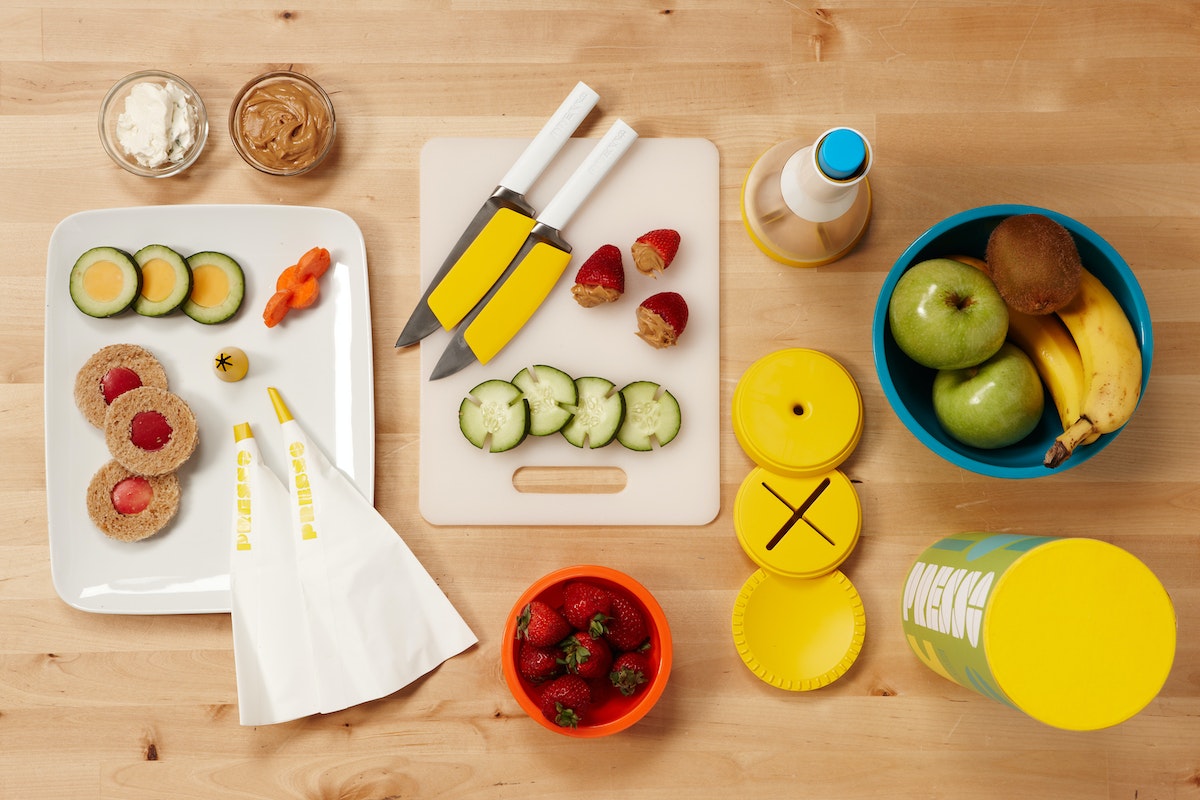
- Presso, a set of child-size kitchen tools that slice and dice fresh food in imaginative ways, making cooking fun and helping kids feel they have a role in making their own healthy food.
The design team behind this work was featured on 60 Minutes, and some of the resulting concepts were featured on CBS This Morning.


Handheld organizer becomes a sleek accessory
Redesigning a utilitarian tool to set it apart from imitators.
In updating the popular and industry-defining PalmPilot, Palm Computing wanted to reposition the next-generation Palm V as a high-design accessory to set it apart from its many imitators.
Together with IDEO, it crafted a sleek, elegant device, half the thickness of the original in an anodized aluminum housing. Incorporating an internal lithium-ion battery that recharges in the dock, the side rails act as an open architecture to provide attachment for a variety of styluses, cases, and other add-ons.
Practice Your Prototyping Skills With These 4 Resources
The more you test, the better your solution
That time you built a spreadsheet for collecting data from your team and adjusted it based on their feedback? That was prototyping. When you ran your big presentation with a couple colleagues and swapped out a few slides because someone said it didn’t quite flow? Also prototyping.
At its simplest, we'd argue that prototyping is the intentional testing of ideas. The key is to do it quickly and thoughtfully. Need a little help figuring out where to begin? Here are four resources to get you started.

1. When you're at the very, very beginning
Kicking things off can be the hardest part. If you’re still trying to figure out exactly how prototyping will fit into your or your team’s creative process, try pulling some ideas from this story of one IDEO team’s experiment with early-stage prototyping.
READ: Why You Should Start Prototyping—Right Now
2. When your next project isn’t designing a thing, but designing a service
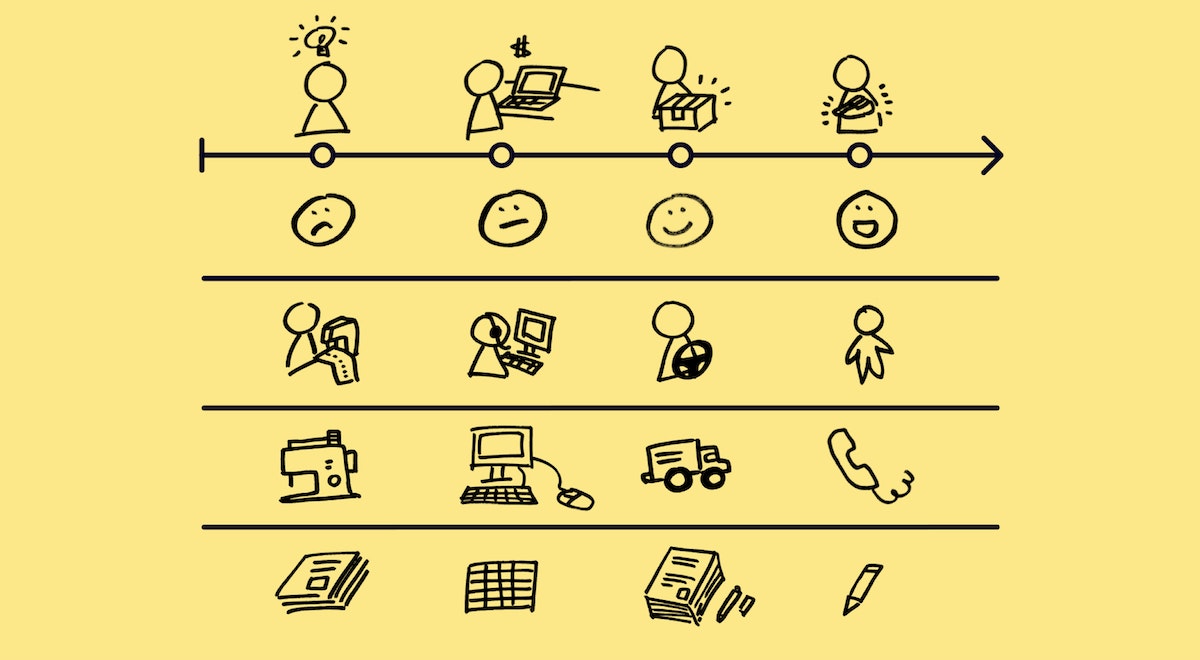
Many of our everyday transactions—everything from paying for coffee to selecting airline tickets—are highly designed processes. But where do you start when your project is creating a service, not an object? Dive in with these tips.
READ: 3 Tips to Help You Prototype A Service
3. When the constraints of your project feel like they’re testing you
Been there. If (and when) you’re feeling stuck, lean on the how might we questions in this piece about leveraging design constraints to get you moving.
READ: The Bright Side of Design Constraints: 3 Tips for Leveraging Limitations
4. When you need an example
Itching to see prototyping in action? Follow one of IDEO’s designers as he experiments with 360˚ video.
Say you're not necessarily a designer (raises hand), and you're a little intimidated by what you think of as the ultra-technical practice of prototyping (raises hand again). Here's the thing: You may not realize it, but you've prototyped before.

4 Exercises That Prove Listening Matters
Listening is a transformative act. Here's how you can do it better.
Listening effectively requires unlearning how we typically have a conversation. We have to reorient why we converse in the first place—away from the urge to validate ourselves and toward our curiosity about the other person. Krista Tippett, an entrepreneur who studies wisdom and compassion, calls this practice “generous listening.” To practice generous listening with others, Tippett says, is to release your assumptions about them, embrace ambiguity, and be willing to be surprised.
Sound radical? In this day and age, starting any dialogue assumption-free might feel like a challenge, but as designers, we often practice generous listening. Our process is powered by finding inspiration in people’s lived experience. In order to create something new, we have to be listening closely and openly enough to hear the unexpected.
We often see how transformative listening is for the people involved in our design research process. At the start of a project, we sit with people for hours, listening as they share their stories. It’s humbling when, on their doorstep later, they thank us. We know we’re grateful for the wealth of knowledge and ideas they have given us, but our presence as listeners must have been a gift too.
Whether it’s to aid one another’s understanding of ourselves or generate new ideas, these are my favorite exercises to practice, as Tippett calls it, generous listening.
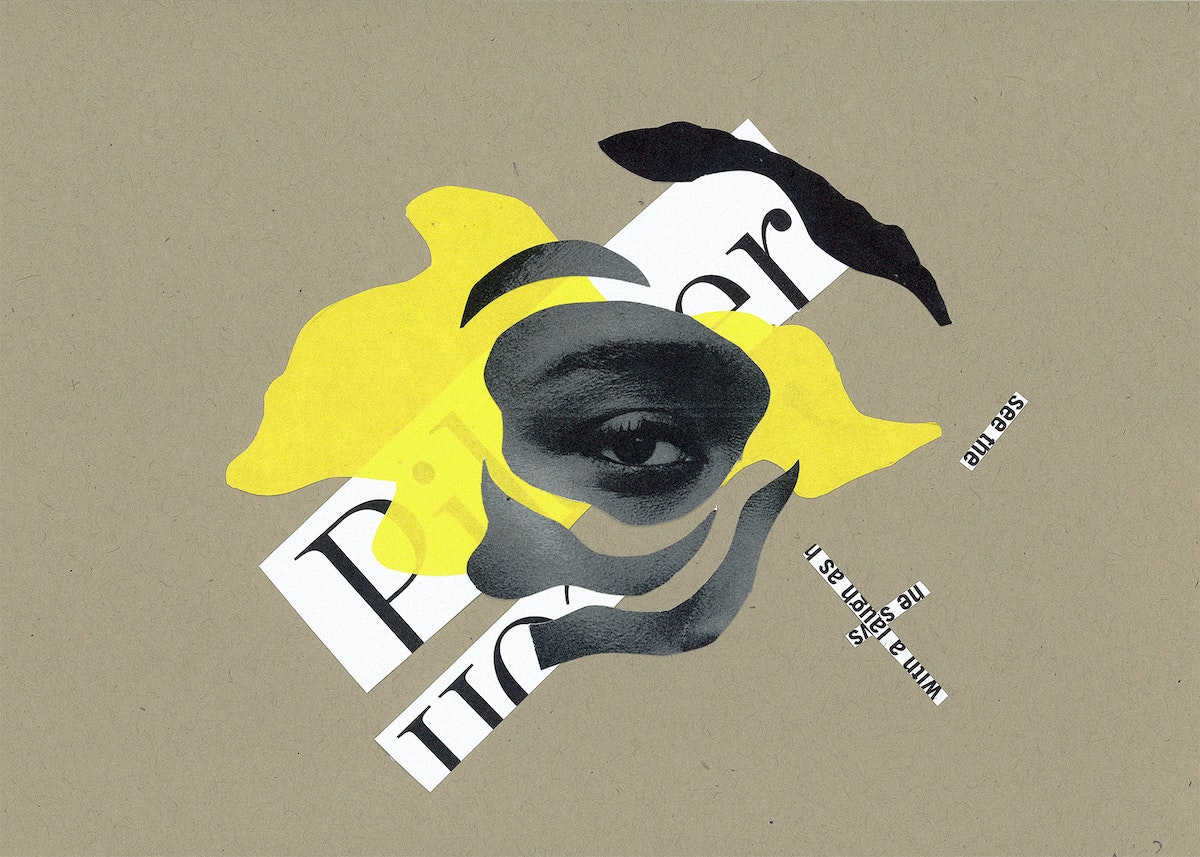
1. "What's holding your attention?"
We all carry the baggage of our messy, human lives to our jobs. Starting your team’s day by answering this check-in question can help alleviate the tension people carry into the workplace, whether it’s lingering anxiety about an argument with a spouse or worry over a child’s first day at school.
Give everyone a minute to reflect on the question. Ask each person to share for two minutes. When someone else is sharing, listen, and if it feels appropriate, think of a follow-up question to ask them later.
Listening is not about silently waiting your turn to speak, but about asking more curious questions. Once each person is done, thank them for sharing.
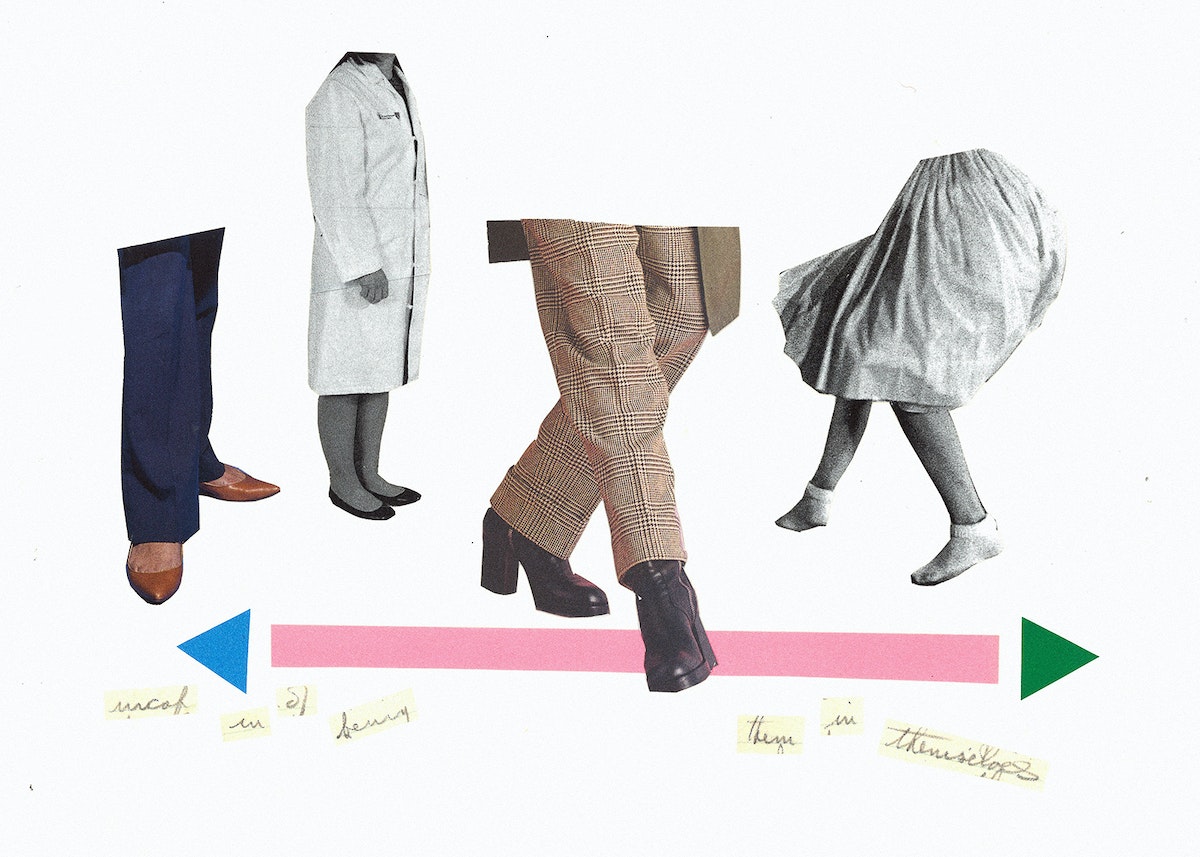
2. Creative Tensions
In this exercise, people reveal how they feel about a nuanced issue by where they stand in the room. You can create tension to probe everything from company culture to the value of social connection.
To begin, pose a tension—an open-ended statement with two opposing responses—to the group. A good tension has a spectrum of answers between the two poles. For example: Working on a deadline makes me feel: Energized ↔ stressed. When preparing tensions, ask yourself: Is this a balanced tension? Am I being generous to each side? Writing tensions, just like asking insightful questions, is a skill. Revise yours until it feels balanced.
Now comes the physical part. Ask everyone to distribute themselves from one end of a room to the other based on where they stand on the tension. In this example, those on the far left feel energized by deadlines; those on the far right feel intense stress. Folks in the middle are or a mix of the two.
Once people have arranged themselves, invite those on the far ends to share why they stood there. Invite others to move if something someone else says changes their point of view. Repeat this process for people standing in the middle—why are they toeing the line?
Creative Tensions is a tool developed by IDEO and the Sundance Institute Theatre Program. You can learn more about running Creative Tensions here.

3. Hopes and fears
This activity is an opportunity for a team to share the hopes and fears that underlie certain behaviors, but often go unsaid. It’s a useful exercise for alleviating anxiety and rallying a team around common goals.
In a small group, have everyone write 1 to 3 hopes and 1 to 3 fears about the start of a project, a new initiative, or another discrete topic. A volunteer shares a fear first. People with similar responses share next to surface common themes. Repeat this style of sharing for people’s hopes (to end on an optimistic note).
4. “Tell me more about that.”
This is every curious person’s favorite conversation starter. Did someone just get wide-eyed and describe their weekend as “odd?" Or sigh describing their first job as a server as “wild?"
“Tell me more about that” is an open-ended, fail-proof phrase that gives people permission to talk about what they’re holding behind an unusual word or cryptic statement. It’s a powerful gesture that signals you are ready to follow wherever someone’s inner monologue is taking them.
The fruit of these exercises hinges on your commitment to listen differently. For The Civil Conversations Project, an organization Tippett founded to create compassionate civic discourse, becoming a generous listener is part of the individual “human change that makes meaningful social change possible.” The project begs the question: If listening is at the root of collective progress, what then is the cost of not hearing each other?
“What’s holding your attention?” is an exercise created by Alexis Gonzalez Black. Special thanks to Tracee Worley, Simo Stolzoff, and Jayme Brown for their contributions.
Listening spurs personal transformation. You might’ve guessed that’s true for the listener—hearing new ideas can create sparks of inspiration or revelations about one’s own beliefs. But being listened to can also be transformative. Research has found being heard can shape a speaker’s emotions, help them grapple with complexity, and even temper extreme perspectives.

In Turbulent Times, Companies Can Look to Cities For Survival Strategies
3 urban innovations that can inspire businesses to adapt
But in organizations wired for efficiency, it can be difficult to quickly adapt—a potentially fatal shortcoming in a world where disruption and technological change are constant. We often see these organizations unravel and reassemble abruptly, resulting in jarring employee experiences and decreased productivity; or change course entirely, building something new that causes more damage than value. As a result, companies are dying more quickly than ever: Today, the average age of an S&P 500 company is less than 20 years old; in the 1950s, it was nearly 60.
Given all the factors threatening the vitality of companies, what factors can instead contribute to their longevity? One source of inspiration comes from cities—and the planning and development that underpin their resilience. While the best cities do seem to function like fine-tuned machines, their systems are in fact much more adaptable, flexible, and resilient—more like a living organism than a machine. In his book Scale, theoretical physicist Geoffrey West asks, “if cities are indeed some sort of superorganism, then why do almost none of them ever die?“
The reason is that they learn to evolve in response to changing conditions—a quality that is equally critical to companies. Every business leader stands to glean some adaptive tools by taking a page from urban leaders who’ve deployed adaptive responses to their local challenges.
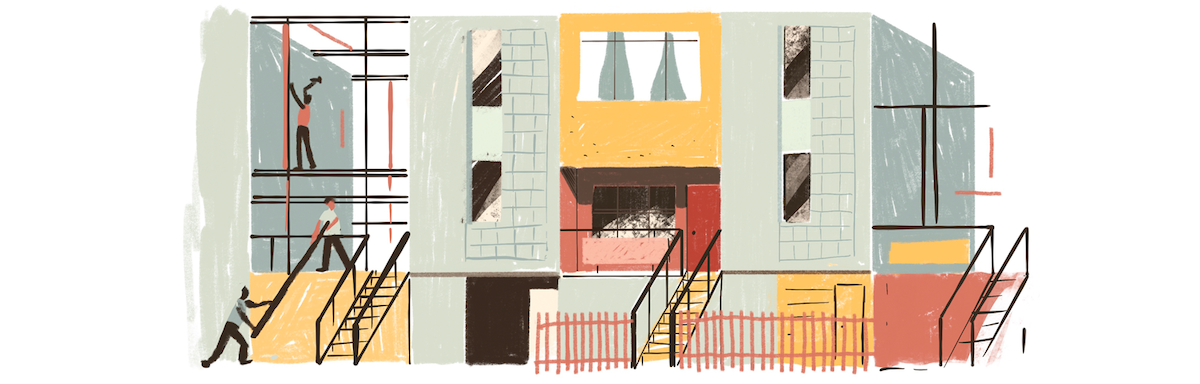
The “just enough” strategy
After the massive 2010 earthquake destroyed 80 percent of buildings in Iquique, Chile, architect Alejandro Aravena was tasked with developing a new city plan for Iquique. His solution was unexpected: he designed a replicable house that would be half-complete when handed over to the inhabitants. On one side, the home would be move-in ready, sufficient to meet the legal requirements for low-income housing; on the other side, a vacant frame would give residents agency in determining how their own home would ultimately be. Concrete foundations, plumbing, insulation, and electricity were all provided for inhabitants, who could expand on the basic design by taking workshops and buying building materials through the city. This design gave residents a starting point to design their future, rather than a mandate. In the end, they each owned their homes.
This kind of “just enough” strategy could help businesses adapt, too. In times of change, organizations tend to set new visions in multi-year timeframes — forecasting three, five, or even 10 years ahead. Leaders develop detailed road maps explaining how every part of the organization must change in order to reach these goals. But these macro-level and long-term mandates often don’t feel tangible or attainable to employees, especially when they’re asked to report on progress every three months. This results in a lack of momentum, support, and internal innovation.
Instead, organizations can think about creating a “minimum viable organization” (MVO)—the basic foundation and tools needed in order for talent to step in to help create and shape the company’s future innovation and growth.
Zalando, Europe’s largest fashion retailer, is one of the companies that has successfully employed this approach. To more quickly adapt to industry changes, and carry out their new vision to reimagine fashion for the good of all, IDEO designers and Zalando employees established a dedicated product innovation team and lab. Rather than devoting months to strategizing or establishing an entirely new innovation department, the lab offered the MVO conditions to yield faster, more tangible progress on a long-term vision that the company could internally rally around and take to the market. In the three years since its launch, the lab has built and sent to market multiple new products like Seen At, a mobile app that allows members to upload street-style photos; and Collabary, a digital tool that connects online fashion influencers with brands.
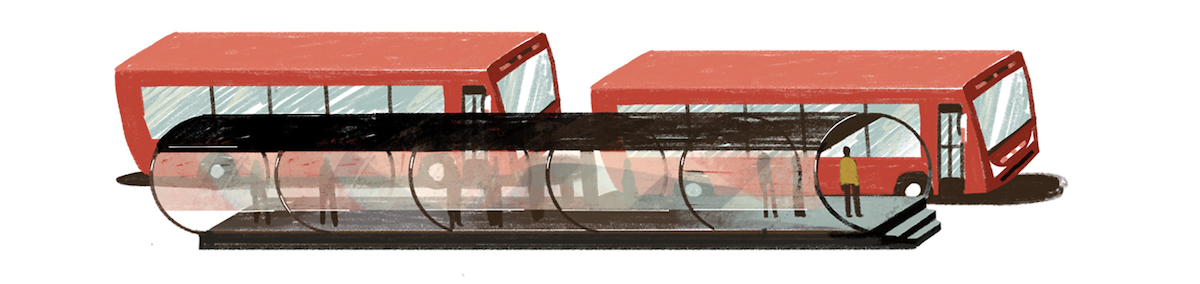
A nimble plan for scaling
Curitiba, Brazil, is considered one of the best examples of urban planning in the world. When the city’s population exploded in the 1960s, residents worried that overcrowding and traffic congestion would threaten the city’s history and character. To address the issue, architect Jaime Lerner rolled out the Curitiba Master Plan. The plan introduced a public bus system, and required all new development to be concentrated along the bus routes to maximize use. He also introduced the Trinary Road System, which features dedicated bus lanes at the center of the thoroughfare, with parallel streets on either side for private vehicle traffic.
Rather than primarily investing in new infrastructures, Lerner focused on innovating within existing conditions, focusing on roads, public spaces, and downtown areas. As a result, he designed a system that facilitated the city’s scale while still preserving its culture.
What can businesses learn from Lerner’s approach? When organizations scale, many companies rely on structural reorganization to address challenges with stakeholders, process, and other complexities. But while that approach adjusts the high-level org chart and shifts reporting lines, it does not change informal human dynamics, relationships, and emotions, which largely influence workplace culture, engagement, and productivity.
In his TED talk, designer Alastair Parvin tells the story of an architecture firm that was working with a school to help address narrow hallways in light of a growing student population. In between classes, the corridors became congested, resulting in difficulty monitoring student behavior and bullying. But rather than expanding the hallways or building a new space for the school, the firm redesigned the school bell system. “Instead of having one school bell that goes off once, have several smaller school bells that go off in different places at different times, and distribute the traffic through the corridors,” says Parvin. “It solves the same problem.”
Like Curitiba, organizations can shift the way they operate while maintaining existing structures, rather than creating entirely new ones, which often disrupt workplace culture.
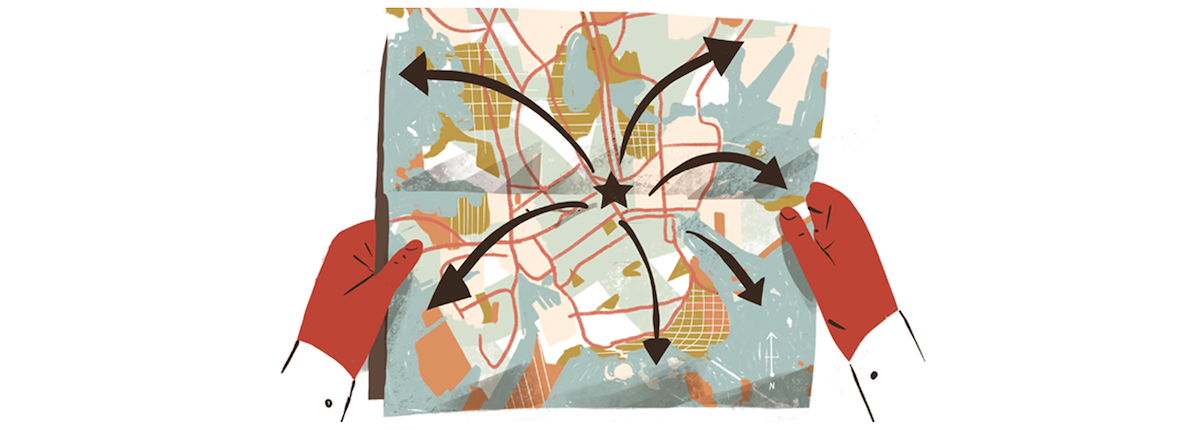
Taking a “regional” approach
Cities also offer guidance for how to work with partners—and even competitors—to achieve a big, important goal. As a part of the Helsinki City Planning Department’s 2009 Strategic Spatial Plan, the city decided to think about serving the needs of the whole region, rather than those only within the city’s boundaries. This meant that Helsinki had to redefine its existing economic, social, and environmental relationships, changing who it served. The city also formed new principles and policies for key issues like business activities, housing, and the city landscape, enabling development beyond Helsinki’s boundaries.
Most companies intentionally define clear boundaries and relationships between themselves and the outside world. To a certain extent, this is expected: Nearly every business school student is introduced to Porter’s Five Forces, a popular model used to inform corporate strategy. As part of the framework, future managers learn that by reducing the number of competitors in the market, a business can ensure long-term dominance. But as a result of adopting traditional business frameworks like Porter’s Five Forces, organizations naturally view their relationship to other industry players as competitive or transactional. This creates boundaries between a company and those outside its walls.
Like Helsinki, organizations are rethinking the boundaries of their responsibility by working to address big issues like climate change. Despite being considered industry competitors, leaders from Danone, Rabobank, Nature’s Path, McDonald’s, and Starbucks recently joined forces through CoLab, IDEO’s platform for collaborative impact. During a week-long design sprint, they worked side-by-side to develop solutions, emerging with one concept that helped food companies access better ingredients; and another that used a circular model to offer food delivery to apartment dwellers.
These companies recognize that there’s an opportunity to both stay ahead of the market and generate broader impact by looking beyond their organization’s own walls and intellectual property. This requires companies to form new collaborative relationships to push industries forward together.
While companies can still benefit from using Porter’s Five Forces—and even sometimes from structural reorgs—fresh, innovative thinking is required to address the complex challenges businesses face today. To that end, cities can serve as inspiration for organizations navigating change, helping them to rethink the efficiency-driven approaches that once enabled success, and orient instead toward nimble, flexible, human solutions.
Illustrations by Ryan Johnson
Organizations have long been engineered like fine-tuned machines: They allocate processes and resources (sometimes human) into specializations, each churning and passing their output to the next group. This efficiency has allowed companies to scale, prevent competitors from entering the market, and dominate their industries.
How to Design Your Way Through a Hacking Competition
As opposed to hacking your way through a design competition
In the hacking world, capture the flag (CTF) describes a competition that requires participants to complete challenges that vary in topic (hardware, software, social engineering, cryptography, etc.) and complexity to—you guessed it—capture digital flags. Not only does winning these competitions mean bragging rights and great prizes, it’s also a great way to learn and teach new skills while working with others in the community.
To prepare for the competition, we doubled down on the design thinking process we rely on in our work: We built a multidisciplinary team so we had a wealth of resources on our side, and we relied on rapid prototyping to create tools that helped us solve puzzles. Here are our best tips for getting through a challenge like this one, borrowed and modified from the best practices and processes of design thinking.
Assemble a dream team
CTF challenges are usually designed to push the bounds of competitors’ knowledge and abilities, and this one was no different. When we were preparing, we knew we’d need a team that could handle embedded systems and hardware as well as web and networking. Luckily, between the two of us, we have those covered, but we also teamed up with friends at the conference with specialties in cryptography, wireless hacking, and other skills to round out our abilities.
As we thought about the types of challenges we might face, we broke down the kinds of skills we'd need and assigned them among the team. Once the challenge kicked off, we huddled to share ideas and make sure that none of the teammates got stumped on their pieces of the challenge. Even though assigning roles to work efficiently is really important, you can’t get through a challenge without leaning on one another.
Adopt a beginner’s mindset
When you go into a challenge like this, you often face things you’ve never seen before, like long strings of garbled text that make absolutely no sense at first glance; hardware that is completely new to you; antiquated and obscure software that you need to exploit somehow.
It’s daunting, but it’s not so different from taking on a design challenge. When you rely on the methods and processes of design thinking to find an unknown solution to a complex problem, you don’t know what you’re trying to build until you figure it out. CTFs work much the same way. And to succeed at them, we rely on the same methods we use to create a new product or service, or solve an engineering problem: we adopt a beginner’s mindset. When we start a project, we take significant time researching the client, the industry, and of course, the users. When we sign up for a challenge, we start working to learn as much as we can in advance, thinking about the creators and what kind of challenge they might be looking to hand us. Having little to no idea about what we’ll encounter once the challenge starts, we do our best to prepare.
Build, test, fail… repeat!
Seldom do we participate in a CTF without having to develop custom tools on the fly, like software scripts for cracking cryptography or custom hardware for probing and manipulating physical challenges. Given our time constraints, we have to slap these tools together, focusing on scrappy versions that will last just long enough to help us solve the challenge and find the flag. CTFs tend to last only a couple of days, so time is a valuable resource. It usually doesn’t matter how well a tool is designed, as long as it can be made quickly and help get us closer to the flag.
It’s a strategy straight out of the design thinking playbook. When designers are coming up with a new solution to a problem, we don’t always have time to take one idea from concept to completion. We work on many solutions in tandem, figure out which ideas are going to fail fast, then advance the others forward (or come up with totally new concepts). The tools we develop during hacking CTFs are no different. It’s a cycle of quick development, testing, and processing the feedback in order to inch closer to a solution.
Get out of your head
These challenges are called challenges for a reason. At this point, the two of us have been around the CTF block before—and yet we still get stuck and fail spectacularly.
This time, for example, we ran into an issue with listening to an audio clip that played from our ID badges. We couldn’t make out what was coming out of the tiny speaker, so we started thinking about ways to rip the firmware off the badge and download the file it was playing. That was going to take hours (if not longer), but Rob suggested we just needed a better speaker. We were thinking way too technically—we didn’t need to rip the file, we just needed to hear it better.
By articulating the simplest problem and searching for the simplest solution, we were able to move forward much faster than if we had tried to solve the problem in a much more “correct” way. It’s about knowing when to take a step back and allowing yourself to be curious about other possibilities.
Just like with our other work, failure is part of the process. Sometimes your seemingly perfect solution fails in testing, or your prototype isn’t what a client wanted. You get sent back to sketch out new ideas and start again. After our momentary fiasco with the ID badge speaker, we got the message from the audio file, moved forward to the next challenge, on and on, until we won!
Enjoy sweet, sweet victory
By pulling from our IDEO skills, and with support from some new friends, we ended up winning our first hacking CTF at this competition. We’ve since gone on to compete in other hacking competitions around the country, including winning DarkNet at the notorious DEFCON, thanks to our experience in things like breaking out of handcuffs and having a basic proficiency in Vulcan. (Yes, knowing the fictional language from Stark Trek was an actual part of the competition). Part of the challenge even involved cracking codes to gain access to a secret party—super cool.
If you can’t tell, we’re huge fans of the way CTFs push us to think quickly, pivot fast, and challenge our expectations. And Rob is such a fan that he’ll be heading back to Thotcon this year as an organizer. That's handy for the rest of us, because even though he won’t be sharing any hints as to what’s coming, we already know the way he thinks. We're ready to hit step number two, thinking about the kinds of challenges he might be all too excited to throw at us.
You’ve infiltrated the other team’s base, found the hidden flag, and are anxiously navigating back to safety in order to score. For many people, this might bring back adolescent memories of playing capture the flag with their neighbors; for the two of us, this was what it felt like to compete in Thotcon, a two-day hacking conference. Instead of running around in someone's backyard, we were gunning for flags over wireless connections, hacking into devices, and deciphering puzzles.

Lindsey Turner
I’m passionate about building brands, products, and experiences that help organizations show up with meaning and momentum.
I help organizations cut through complexity by shaping how they show up, through brand strategy, identity, and storytelling.
Working at the intersection of brand and business, I bring an editorial eye and a bias toward making—turning ideas into tangible experiences that people can understand, trust, and believe in.
My work spans government, healthcare, financial services, media, and consumer goods, from launching Gen Z-focused ventures to building innovation labs and reimagining legacy brands. I relish moments of ambiguity and enjoy translating across teams, perspectives, and priorities to move ideas forward.
I started my career in editorial and digital design, shaping cross-platform experiences and identity systems in publishing and agency environments. That foundation still shapes how I work today: I’m detail-oriented, collaborative, and overreliant on the Oxford comma. I hold a BFA in Visual Communication from the School of the Art Institute of Chicago.

Rachel Young
My work helps organizations see who their products aren't working for—and build the will and the tools to do something about it
For 25 years, I've asked the same question: Who does this design exclude—and what are we going to do about it?
My work spans human-centered strategy, inclusive design, and qualitative research, with clients ranging from Microsoft, Google, and Verizon to the National Science Foundation, and San Francisco Unified School District.
Before IDEO, I taught elementary school in East Palo Alto and spent a decade doing design work with social service organizations—where I learned firsthand what it costs people when systems are built without them in mind.
I am currently writing User Error, a nonfiction book about digital access and the design decisions behind it. I live in Oakland, California.

Brian Pelsoh
I lead with craft, ensuring our work is creatively excellent: rooted in deep human insight and imagination, while also grounded in the realities of business and technology.
My expertise spans brand, communication, and product design across tech, education, the arts, and social impact.
I believe great work demands both high-level vision and obsessive attention to detail, and only happens through collaboration.
I bring an inclusive, hands-on approach and a deep understanding of business, which enables me to consistently deliver excellence while always asking why.
Before joining IDEO, I worked at the brand firms Pentagram and VSA Partners. I began my career as a designer, leading teams at the School of the Art Institute of Chicago and the Milwaukee Art Museum. I hold an MFA in graphic design from Maryland Institute College of Art and a BFA in communication design from the Milwaukee Institute of Art & Design, and have taught at some of the best design schools in the US.

Tony Wong
I am responsible for IDEO’s long-term success in China and working with clients to use design as a tool to enable growth.
I am responsible for IDEO’s long-term success in China and working with clients to use design as a tool to enable growth. Specifically, I have helped Chinese companies design holistic brand solutions through the development of their products, communication, services, and innovation teams, and I have helped multinationals expand their presence and influence in China.
I advise global leaders on developing China-led innovation and capabilities.
In over 15 years in IDEO Shanghai, I have worked on projects that use design to elevate the quality of the experience of healthcare products and services, streamline processes that increase productivity, create spaces and programs that promote and enable inclusive communities, and build next generation mobility solutions that are planet-positive.
Before joining IDEO, I worked at Philips Electronics and the Electrolux Group in Italy, the Netherlands, and Singapore on a number of breakthrough commercial products. I am a member of the Young President Organization in Shanghai.

Building a personal AI for the messiness of life: Sida Li
Most AI products today are built for work—a space with clear problems and established systems. One founder noticed a gap: personal life is messier, harder to systematize, and mostly left behind by the AI boom. So she built Cue, a personal AI that lives inside iMessage and group chats, to go where the other tools haven't.
In this episode, Becca Carroll, IDEO's Chief Strategy Officer, talks with Sida Li, co-founder and CEO of Shared Context Lab, about staying anchored to a human need while the technology around her keeps changing shape, why she treats her business model with the same rigor she'd bring to a product, and what it feels like to build a company at this particular, disorienting moment in AI.
The conversation also gets into how Sida makes design decisions: the language Cue uses to describe itself, the tradeoffs behind building inside iMessage instead of a new app, and a real story about a business idea that didn’t pan out.
This is the second in a two-part series profiling founders from IDEO's Startups-in-Residence program. The first conversation is with Johannes Seemann, founder of Sooner, on designing GenAI for the emotional side of money.

Designing GenAI for the emotional side of money: Johannes Seemann
Most personal financial tools are built to run the numbers and optimize towards a budget. While that works for some, most people experience money as a lived relationship that does not neatly fit into a spreadsheet. Johannes Seemann and Becca Carroll discuss why money is emotional before it is mathematical, and what a human-centered approach to building a generative AI financial product looks like in practice.

The curious leader's edge in uncertainty: Scott Shigeoka
Mina Seetharaman talks with Scott Shigeoka, author of Seek and Head of Curiosity Cultivation at the Eames Institute, about what distinguishes genuinely curious leadership from performative curiosity, how power dynamics shape curiosity, and why practicing curiosity can restore energy rather than drain it.

How constraints make us more creative: David Epstein
Mina Seetharaman talks with David Epstein, author of Inside the Box and Range, about why total freedom often produces average work, how leaders can design useful limits on purpose, and what organizations such as General Magic and Pixar reveal about the relationship between boundaries and creativity.
Looks like you might be in search of something very specific?
Or reset the filters above and try another angle.
Here’s some random inspiration

Podcasts about creative leadership

Articles about the power of prototyping
