
.svg)



New digital ways to pay
A flexible, functional form of payment.
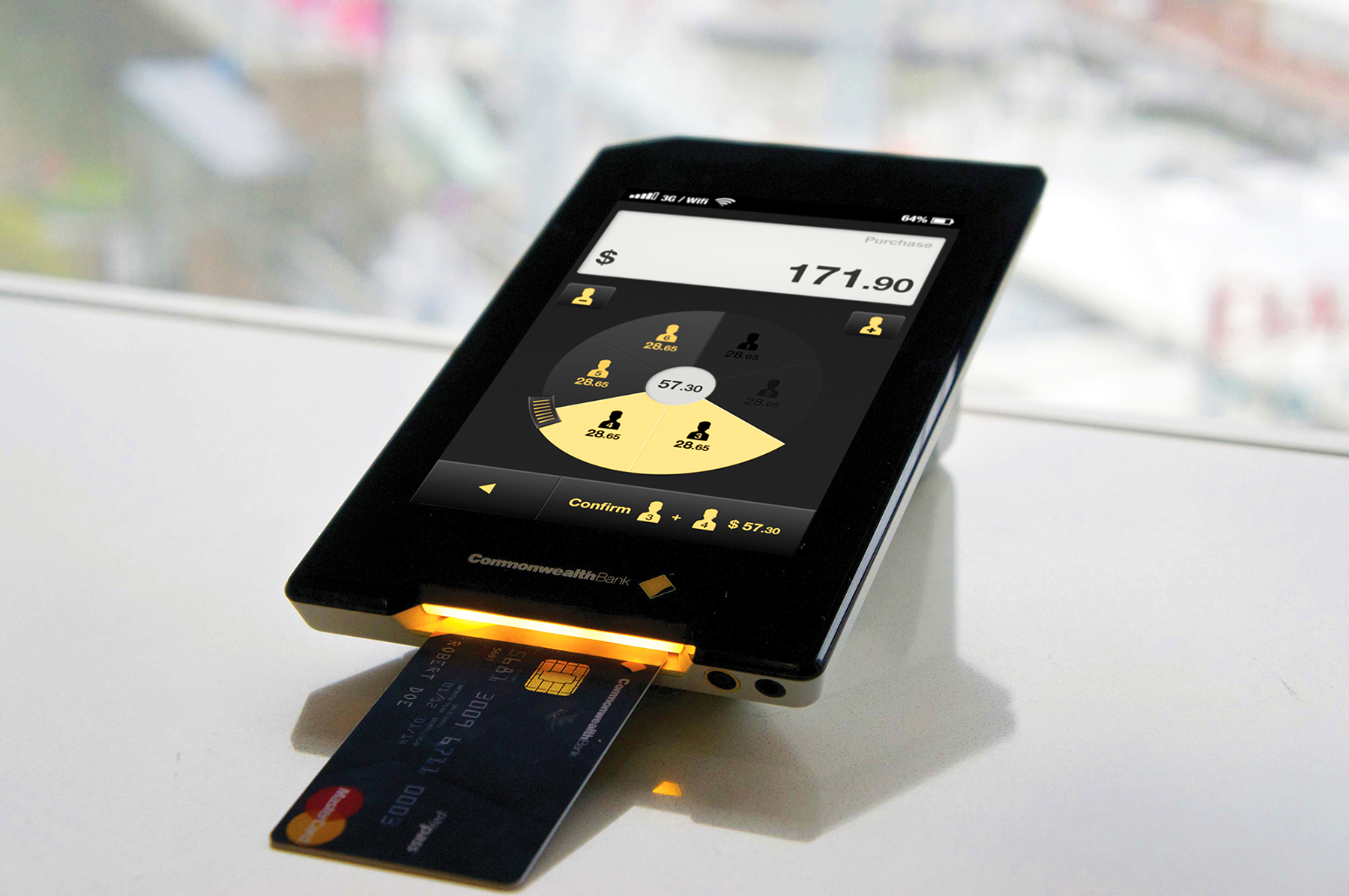
Commonwealth Bank of Australia was interested in helping customers and businesses build close connections. They believed the way to do this would be by creating richer interactions around different forms of payment. The bank approached IDEO to explore these opportunities, and the result is a new retail business platform—Pi—and a portable payment device—Albert.
Pi brings a new level of flexibility, functionality, and customization to the face-to-face interaction between a cashier and a customer, improving everything from the process of splitting the bill in a restaurant to helping a guest find more personalized experiences at a hotel.
Insights
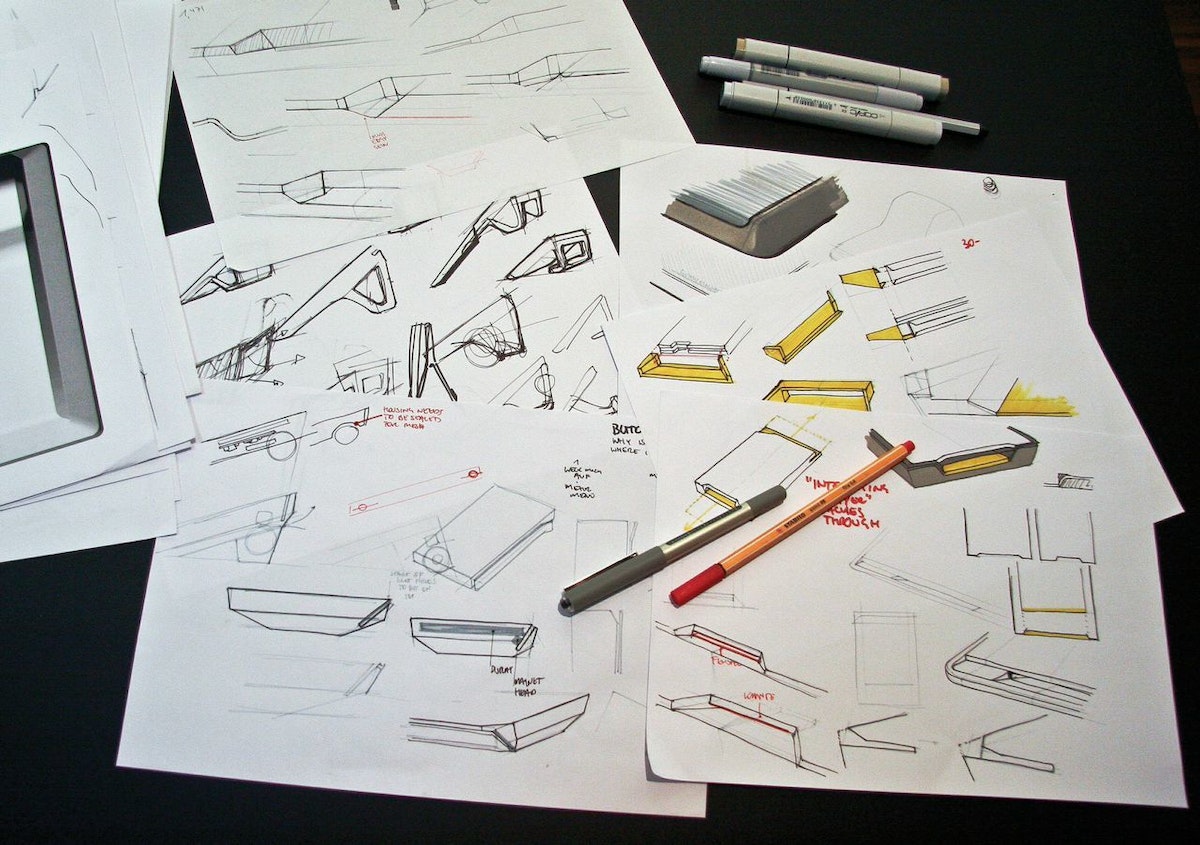
In the team’s research in Australia, the UK, and Germany, they found a few key insights that informed the design. First, they saw that an ideal platform should support the full spectrum of human behaviors around payment. Second, platforms can add value by improving the relationships among banks, merchants, and customers. And third, the payment experience should be customized to fit a specific setting, working one way in a luxury boutique and another in a gas station.
IDEO, CBA, and Wincor Nixdorf worked together closely to steward the design of Pi And Albert through product development and implementation, and to gather feedback from merchants during rapid, iterative cycles.
Results
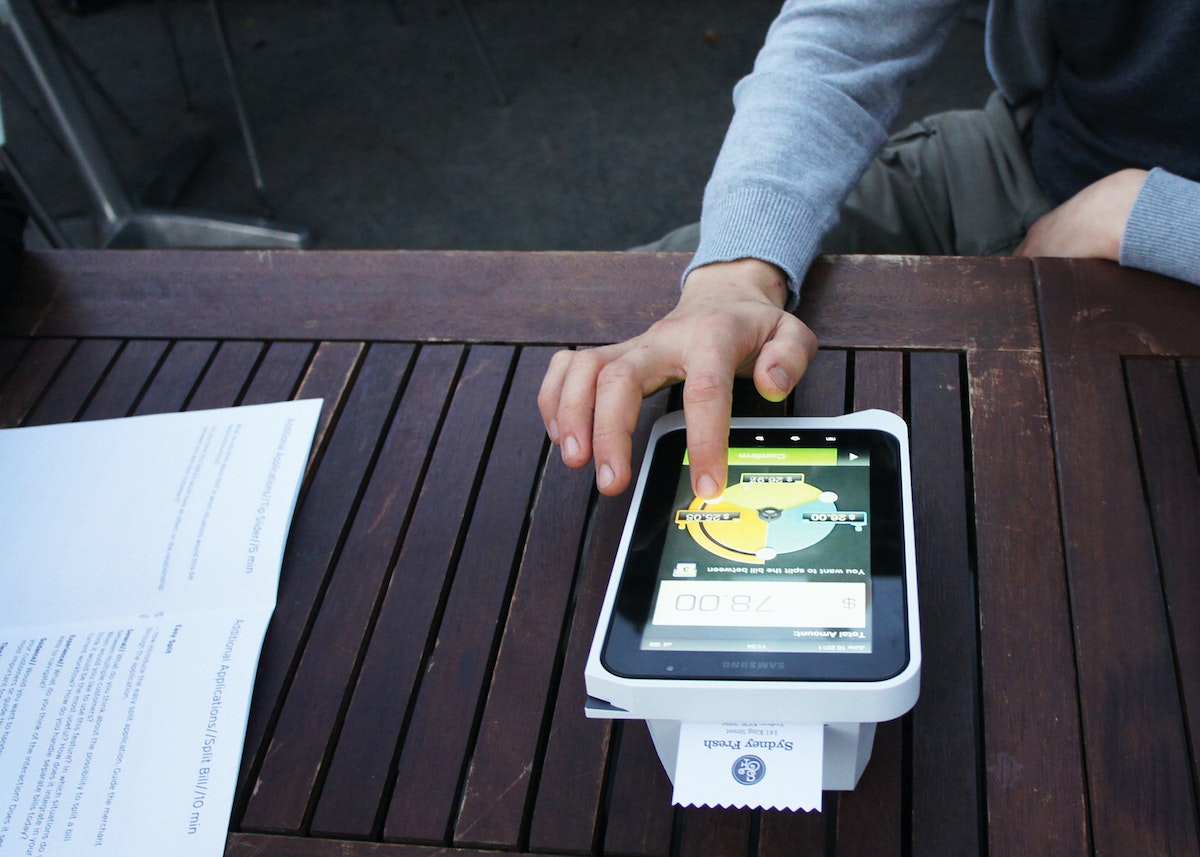
The platform is flexible enough to benefit organizations of all sizes: Larger merchants can incorporate Pi as part of their existing network, while smaller merchants can grow their business using powerful business tools. And customers of all kinds can easily access a variety of payment methods and helpful applications.
Albert offers a large touchscreen that’s intuitive to use, the safety of virtually encrypted PIN entry, and a variety of ways to access data connections. A large battery provides power when retailers are on the go, and a modular housing means that Albert can be used in all kinds of situations. The device is built to handle current card payment methods but can also adapt to how cards might be accepted in the future, and even eliminates the need to swivel a screen from cashier to customer during the payment process.
Making health insurance enrollment easy
Designing a digital platform prototype for Californians to sign up for health insurance.
Forty million Americans became newly eligible for health coverage when the Patient Protection and Affordable Care Act (ACA) was fully implemented in 2014. Some enrolled in health insurance for the first time, while others were able to get better access to affordable health coverage.
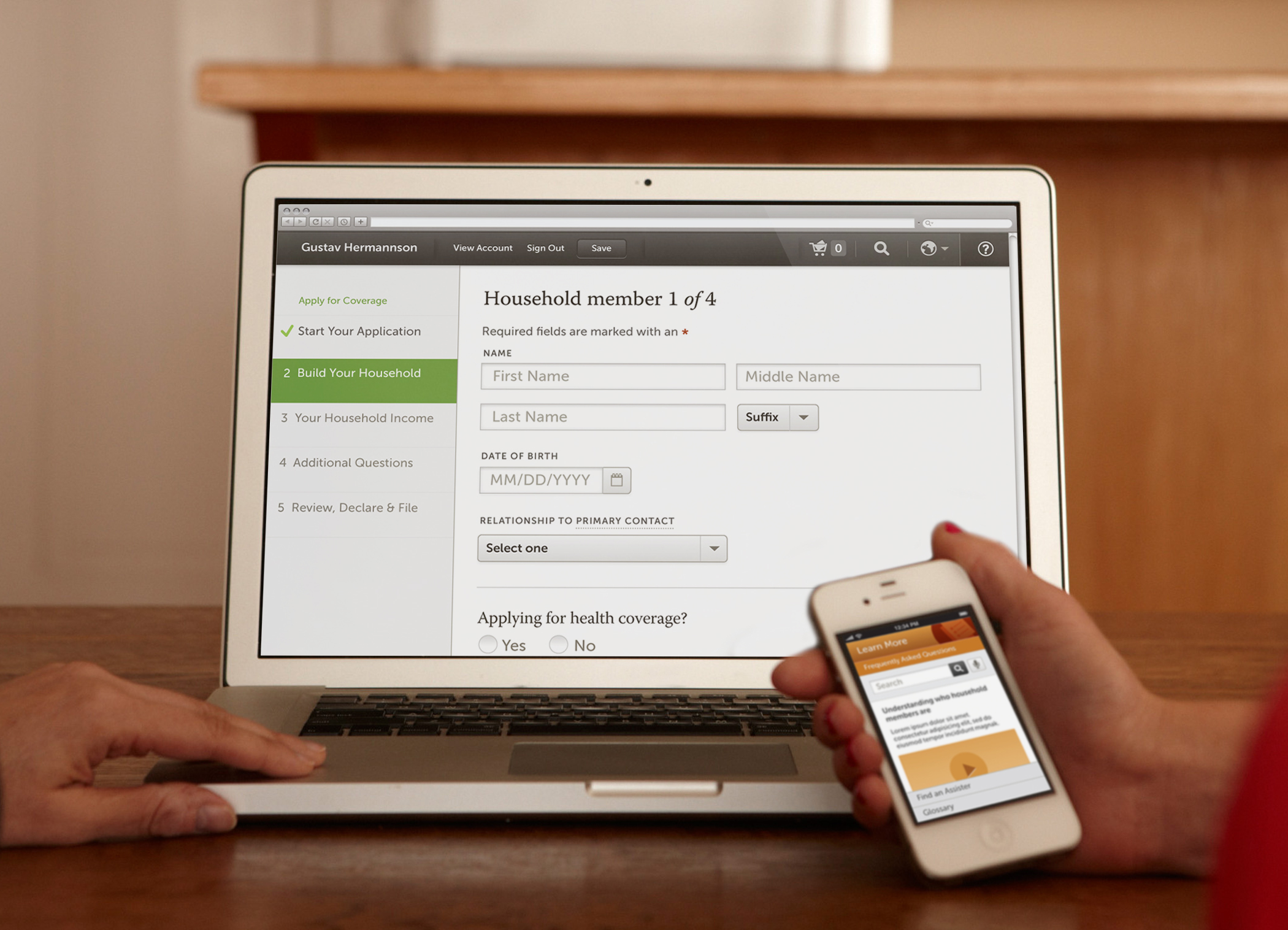
In preparation for the millions of applications, states were required to develop ways for people to sign up for health insurance online for plans that were operated by state and federal governments under the ACA. To help public and private agencies to meet the requirements, a coalition of nine national and state-based foundations, led by the California Health Care Foundation (CHCF) developed a digital enrollment prototype, and hired IDEO to lead the consumer research and design effort.
After a yearlong collaborative process, the resulting 300-page design manual and design reference prototype illustrates a customizable approach to public and private health insurance enrollment.
The flexible set of design standards developed for Enroll UX 2014 aims to make online health insurance enrollment simple, intuitive, and easy to navigate at scale.
Inspiring scientists in their research
Encouraging experts from different fields to collaborate on big ideas.
To encourage PhD candidates to think differently about how they tackle tough science problems, the University of California, San Francisco (UCSF) and IDEO embarked on a fruitful collaboration.
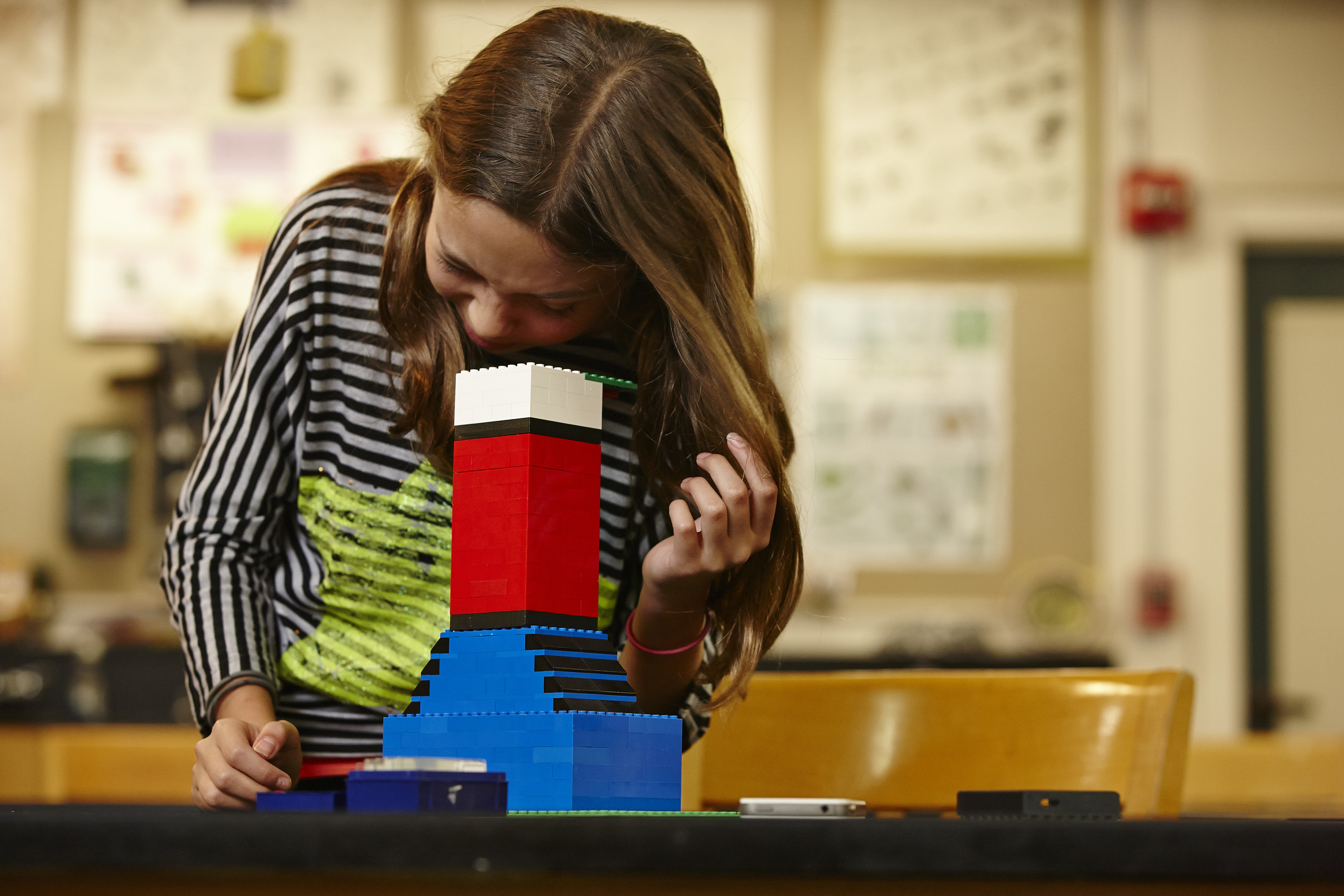
Three PhD candidates were tasked with the following challenge: Cultivate new audiences and uses for a microscope. Drawing inspiration from cell phone microscope CellScope, the trio arrived at a prototype that was less reliant on technology and easily disassembled and reassembled. How? By using the most basic building blocks: Legos.
Made of custom 3-D-printed parts and standard toy building blocks, the LegoScope, which functions as a microscope, can easily snap pieces in and out to hold different components. Both the device and the team-based process are now being used in various other campus projects to change how researchers think about conducting and advancing scientific research.
“The best work in the future is going to be done by teams of people with very different expertise, who know different things and think about things in different ways, who come together to focus on one big problem,” said Keith Yamamoto, vice chancellor of research at UCSF, who led the initiative.
Helping a tech product find its footing
A wearable device that measures concentration and focus gets a brand reboot.
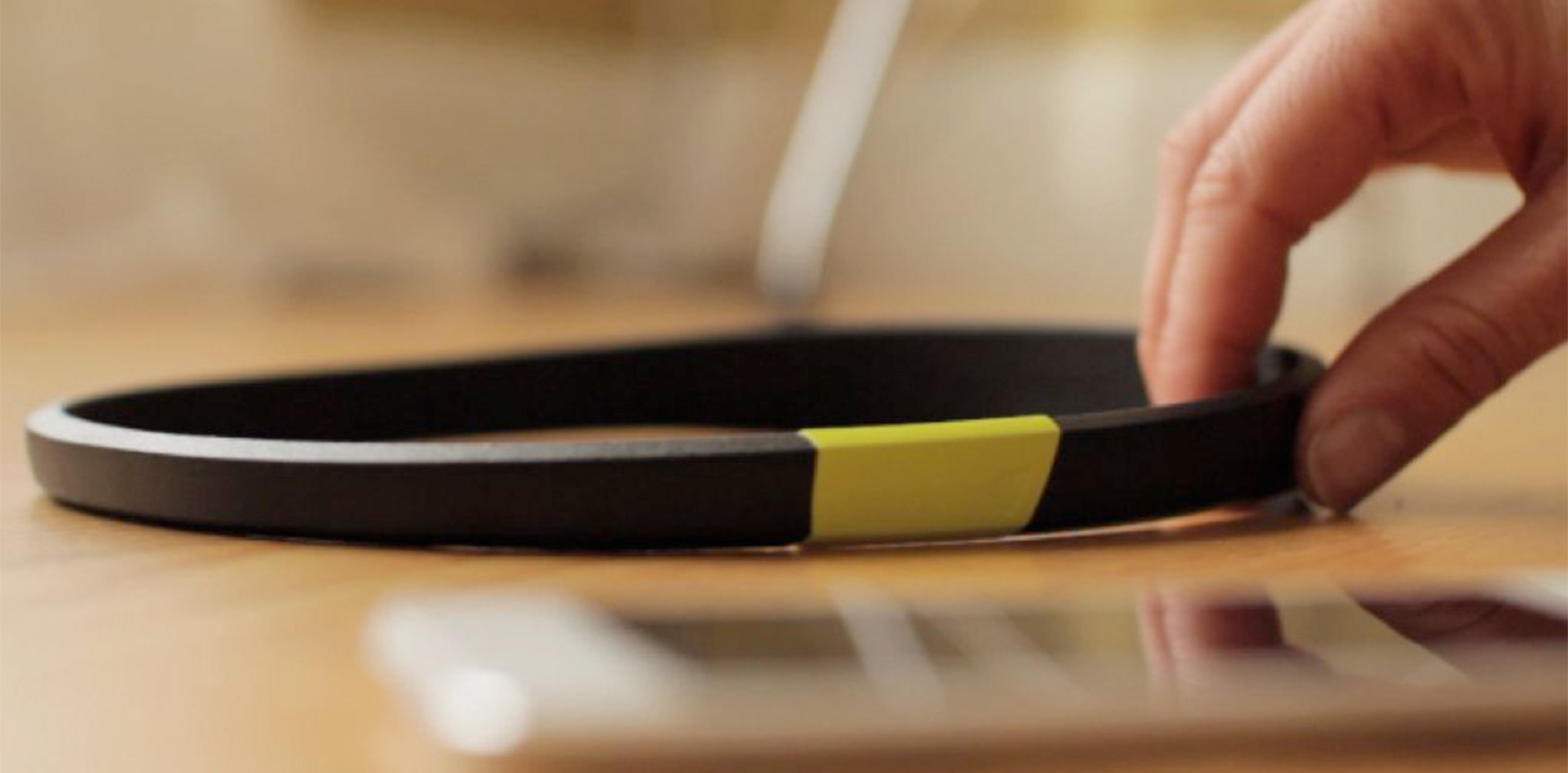
Arye Barnehama and Laura Michelle Berman wanted to take their invention—a headband that measures brain wave activity, focus, and concentration—to the next level. As a part of IDEO’s startup-in-residence program, Barnehama and Berman collaborated with IDEO on the product’s rebranding, hoping to refine and emphasize the product’s promise: When people improve their focus, they feel more mindful, confident, and productive.
With IDEO’s help, the company changed its name from Axio to Melon, delineated their brand, refined its product, developed its user experience, and prepared a Kickstarter campaign that garnered considerable press coverage. The new name, Melon, reflected the friendly, scalable character of the company. The name also suggested the intent of the product—using neuroscience data to inform a personal activity.
To distinguish Melon as a standout in the crowded quantified-self category, IDEO designers made the logo a faceted orb that references the gear-shifting mind, with “Melon” written in a distinctive font born from that same logo. The team went with fruit colors—cantaloupe, honeydew, watermelon—to evoke the sweet, refreshing experience the Melon headband promises.
Together, the Melon and IDEO teams also developed an app that shows increases in concentration after performing certain tasks and features a game in which you “fold” origami through mental focus to hone concentration.
Melon’s new brand strategy and UI set it apart from your typical fitness tracker, engaging the user in an elegant, joyful, and customized experience with every interaction.
Melon: a headband and mobile app to help you measure focus.

What Would Rhonda Do?
How do you build community? An homage to our colleague who did it best.
Knowing how to design community is a rare skill, and Rhonda did it better than anyone. She didn’t bring people together because it was her job. She did it because that’s who she was. Rhonda turned our studio into a home and coworkers into a family. Her creative acts of community-building were expressed through a million everyday things she did for us in the 10 years she worked at IDEO.
Over the last three weeks, we have been sharing stories of how we might be a little more Rhonda. Below are just a few:
Treat your coworkers as friends, not colleagues.
Jennifer Sarich-Harvey said that the moment she knew she was dealing with a special human being was when she received a care package from Rhonda while writing her thesis. Jenn had left IDEO as an intern the year before (not knowing that she would return a few years later).
Lindsey Turner told us of Rhonda’s detailed catering spreadsheet and how you could find little personalized notes therein: Graciella likes the Green Goddess with extra cashews, Noreen loves the almond cake, and no one ate the chicken tenders. Her thoughtfulness extended well beyond the confines of her job.
Treat everyone with dignity and respect.
Rhonda worked extraordinarily hard. She was always on her toes or running to tick something off her mental “to do” list. She even ate standing up. But no matter how busy she was, Michael Hendrix reminded us of how she never treated anyone as an inconvenience. Whatever she was doing, she would drop it in an instant to be truly present with you.
Make it special so people feel special.
Christina Abele chuckled warmly as she related the story of how Rhonda would always, always, re-plate the food—no matter if the caterer had already done so or she didn’t have the time. Rhonda knew that the way you made people feel special was through focusing on the smallest of moments, taking great care, and making them beautiful. This was her craft and how she showed her love in her own humble way. She would put “a little powdered sugar” on everything.
Make others successful.
No one brought this central IDEO value to life like Rhonda did. She was hospitality made manifest. She’d spend countless hours helping our design teams create an extraordinary experience for clients, of course, but she went above and beyond on a personal level too. Noreen Arora shared how Rhonda would sneak some food for her to take back to her new husband to make him fall even more in love with her.
Be the Rhocque.
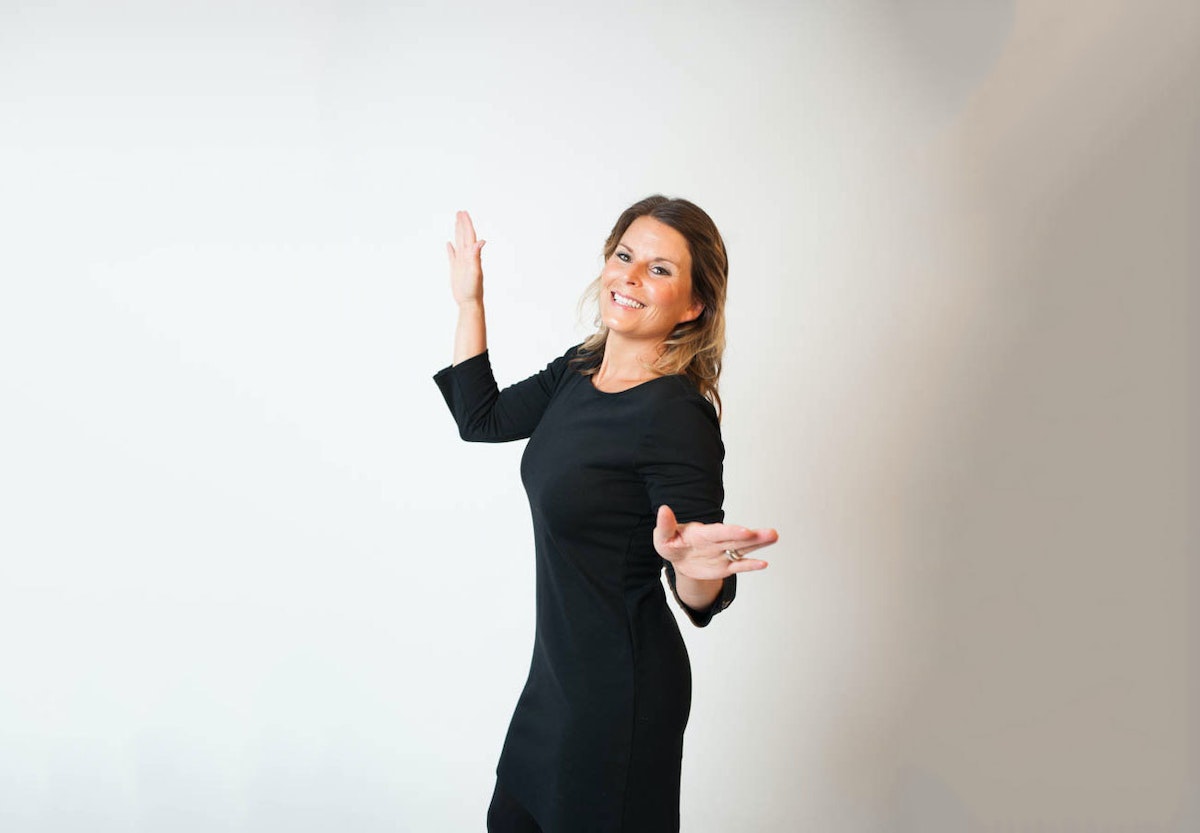
“The Rhocque” was a nickname her best friends in the studio called her: Rhonda was unflappable, forever poised, and always put others well-being before her own. Nicole Howard recounted the time she was literally running through the studio, stressed before an event, holding paper in one hand and a binder in the other, with Rhonda right behind her. With a quick turn of the heel, they crashed into one another and, in a heroic move, Rhonda grabbed Niki and rubbed some calming lavender oil into her temples before scuttling off to stock the bar. Niki was dumbstruck. To this day, Niki keeps some lavender oil in her bag, just in case.
John Feole tells us how Rhonda once dropped a glass in the kitchen and, even though it broke, it didn’t shatter—it simply held itself together. And that, he remarked, was who Rhonda was: “You could be a little cracked, a little broken, but Rhonda helped you keep your form.”
Make memories, don't wait for them to make themselves.
Nicole Woods told us that Rhonda would intentionally create special moments between her and her daughter so that Ali would have memories for years to come—like recreating a scene from Frozen during the first snowfall. She did the same for us: Like that time she stood smiling as we “oohed” and “aahed” over how she had turned our studio into a woodland forest for an event.
Design random acts of kindness.
Rhonda had a gift. Design came naturally to her. She could anticipate our needs before we could, worked alongside us with our clients top of mind, and always made sure we left feeling better for it. From snow cones for an overworked team designing for snowboarders, rolling trolleys of hot chocolate on a chilly day with toppings only a child would dream of, cake pops in the hues of proposed brand identities and, Tom Kershaw confirmed, baby showers to rival the very best of weddings, she was “biologically incapable of not making things beautiful,” (thank you John Feole). She did so much for all of us and made it look effortless.
Many companies have their values plastered on the wall or policies on creating culture. We confess we have that, too. But, more importantly, we had the irreplaceable Rhonda.
Rhonda, we love you and we will miss you always. We hope to do you proud.
We collected a few suggestion from her friends and colleagues on how we can all be a little more like Rhonda. See their comments here.
You feel it the moment you walk into our studio—a sense of community. People come before deadlines. When someone makes a request, you drop everything, no questions asked, and lend a hand. Ask anyone here to identify the source of that feeling and they would have immediately pointed at the front desk, where every day, Rhonda LeRocque welcomed you in with a smile that could melt a glacier. Rhonda was one of the concertgoers in Las Vegas who never made it back home. This post is a tribute to her and how she brought us together.

A Toy Designer Shares His Secrets for Killer Halloween Costumes
8 tips for creating a jaw-dropping getup
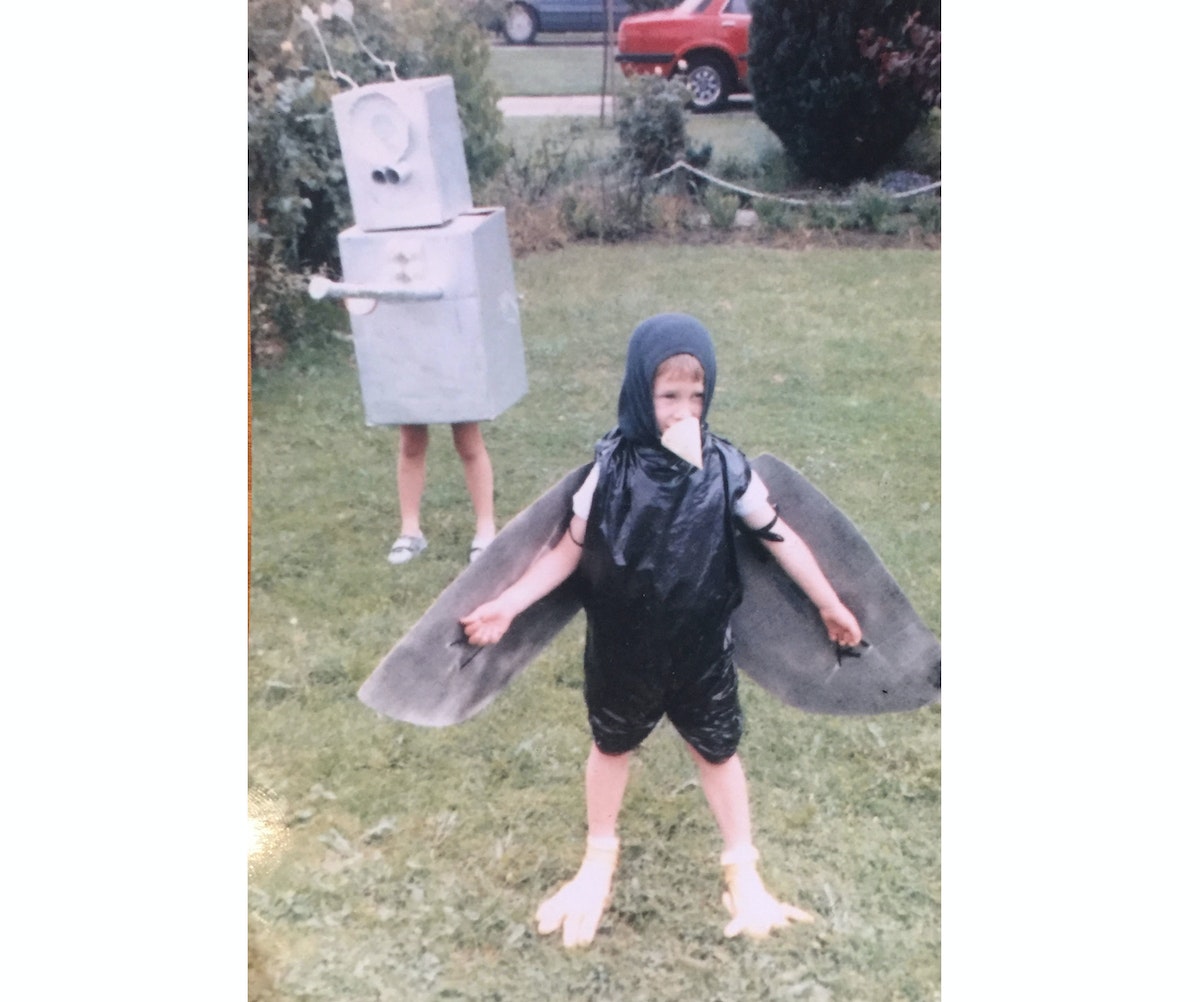
I have always loved the sense of escape that dressing up allows. Ever since I transformed into a cardboard robot at a primary school fair as an 8-year-old (my brother is the blackbird), I have been fascinated by how differently people interact with me when I’m in a seemingly alien state.
That early fascination, coupled with my love of building things, has led me to create elaborate costumes based on Ghostbusters, Edward Scissor hands, and LEGO men, to name a few. And since working in the Play Lab, my costume obsession has truly bloomed. IDEO has a long tradition of extreme costume building, especially for our annual holiday party. Themes over the last few years have included Surrealism, County Fair, and Magical Forest.
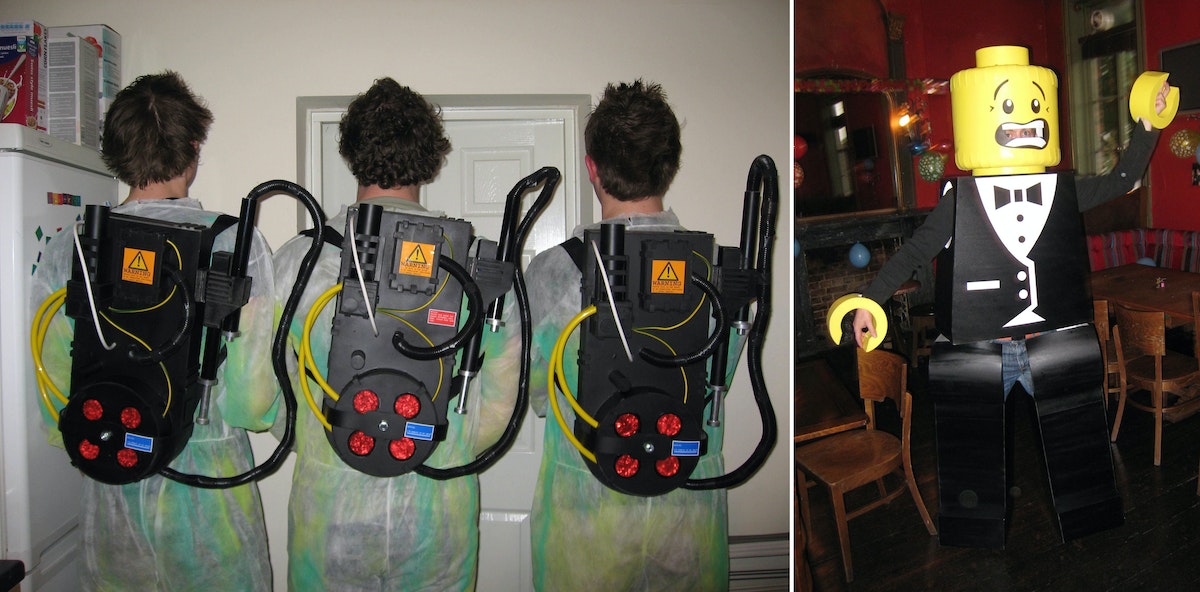
Over the years many people have asked me how I approach costume creation. Here are 8 ways to channel your inner designer:
1. Stretch the theme
When it comes to themed events, I look for something on the fringe so there’s no chance I’ll be dressed the same as anyone else. For the surrealism party, Salvador Dali, whose paintings invite the viewer to interpret the work in more than one way, inspired me. I wanted to create a costume morphed two things into each other in black and white to achieve a striking contrast. After listing dozens of possibilities, I chose a zebra and a piano! I was pretty sure no one else would be thinking about mashing those together.
2. Plan, sketch, and simplify
When planning out a costume, I create an inspiration board of potential elements. Then, I explore compositions through quick sketches (often on bumpy commuter trains, forgive the roughness) to get a feel of what they might look like and how to construct them. Below are a couple of early sketches of my Zebra-piano and grasshopper costumes:
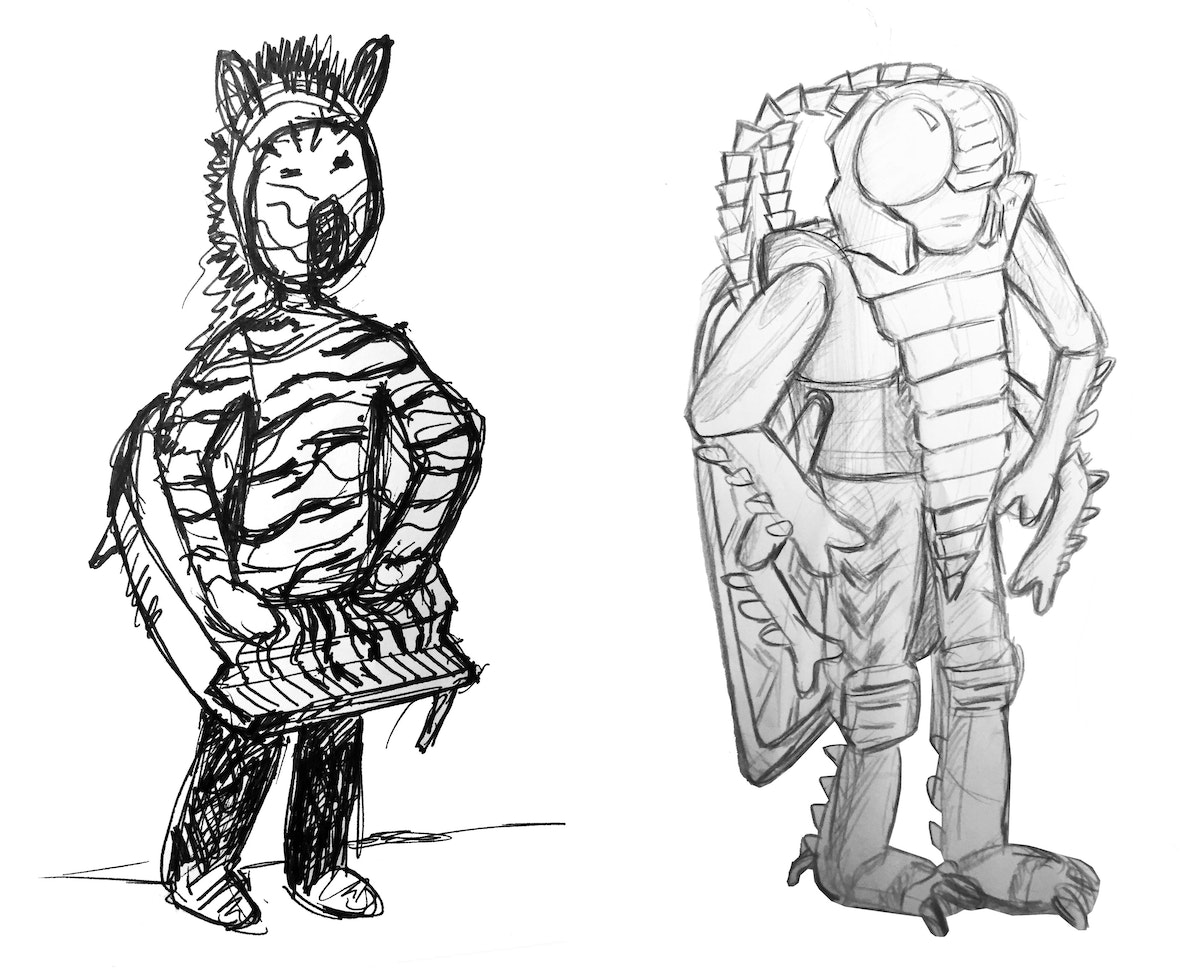
I try to simplify the execution as much as possible. Costumes do not need to imitate your reference exactly to create impact; just capture the essence of your theme/character in as simple and bold a way as possible.
3. Go wide with materials
Sourcing as many different material options as possible helps you be more creative with combinations and allows unexpected “discoveries” to happen. Don’t forget the fur and fairy dust!
4. Experiment and play beforehand
Try not to be too precious or precise as you start building. Try out different methods and do multiple tests. In painting my face to become a zebra I failed many times before I found a good quality paint and method of application. Here’s a picture to prove it!
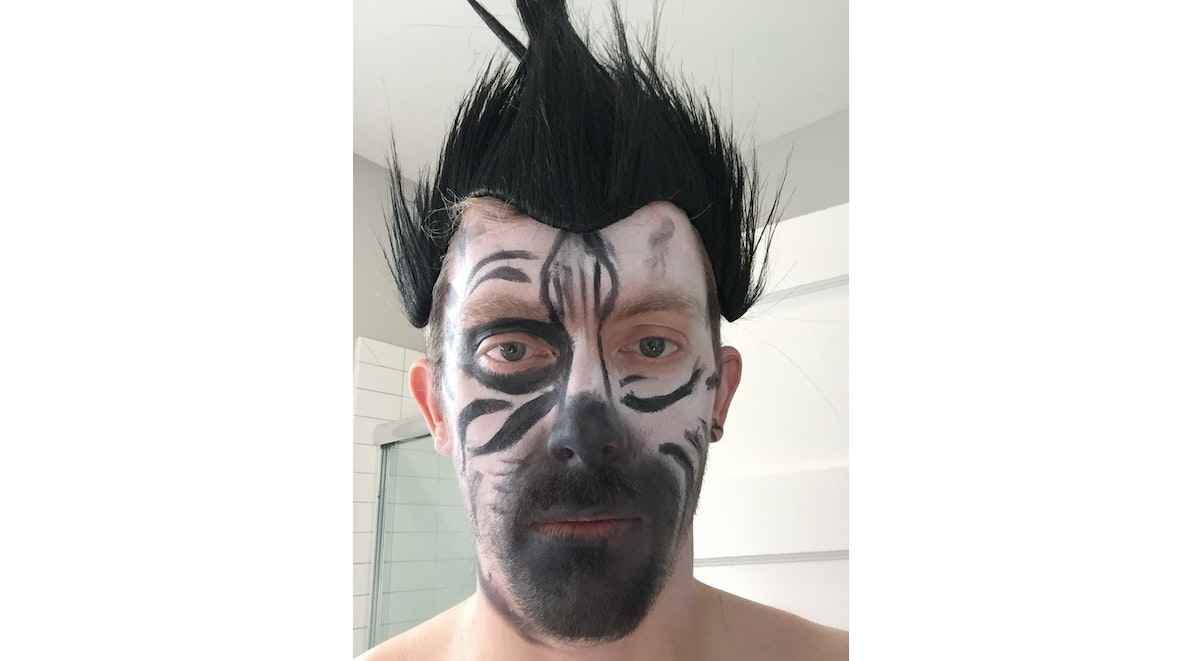
Snazaroo paints are the best when applied with clean fingers, Q-tips, sharp-edged sponges and cereal-box cardboard. Dabbing a layer of powder or, with eyes closed, hairspray onto the paint helps it stay in place for the duration of the night.
5. Break the human silhouette
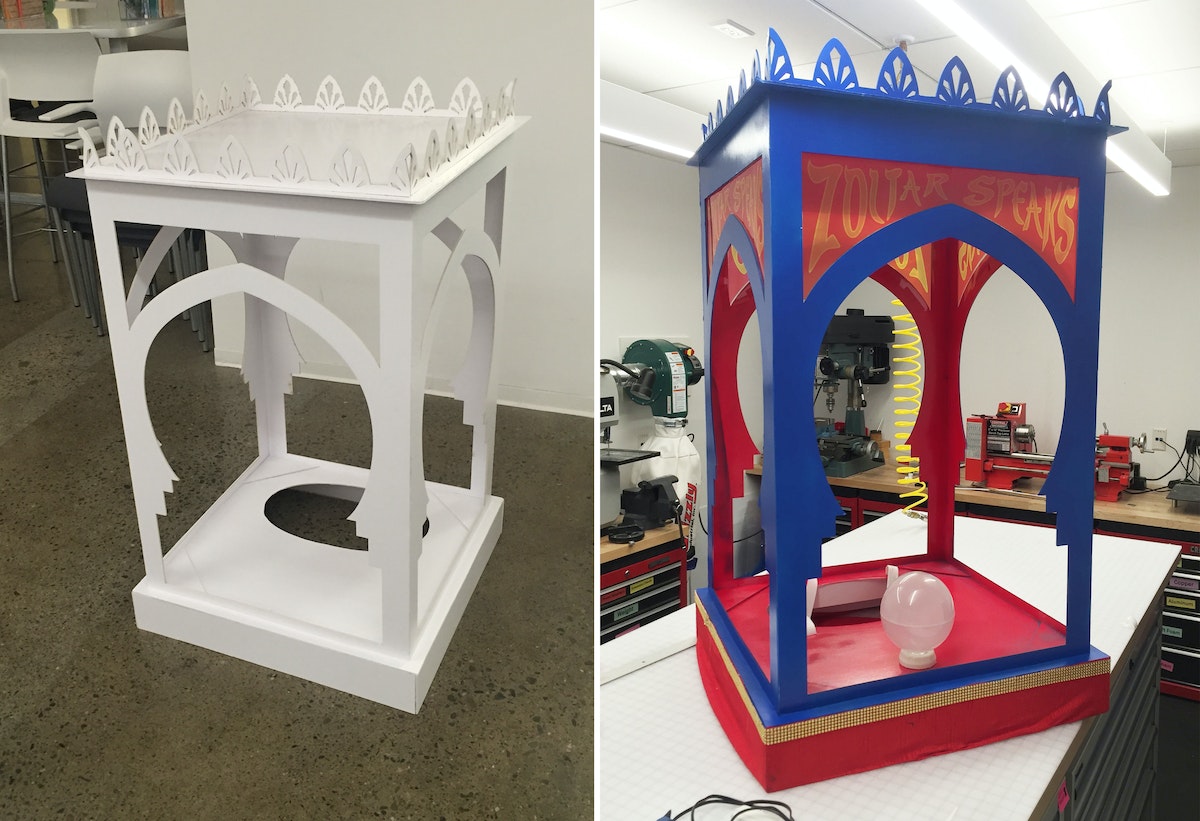
Costumes that break the usual form factor of the human body are the most striking and unexpected. For the County Fair event I built a Zoltar fortune-teller machine using laser-cut foam core decorated with acrylic spray paint. Don't have a laser cutter in the garage? Check out a local techshop or other makerspace, ask a friend who's got access to a shop to help out, or do a quick search for local vendors.
6. Be human-centered
Make sure you can easily drink and go to the toilet! I’ve made too many costumes that have made both difficult, which admittedly adds a layer of hilarity when you have to rely on complete strangers to help you use the facilities.
7. Light it up
Parties are often held in darkened rooms. Adding any level of lighting really helps your costume pop. When building the grasshopper costumes, I found cheap battery-powered LED strip lights on Amazon that brought them to life.
8. Multiples for the win
Team up with someone (as I did with my fellow grasshopper) to add clout to your costume. Two is always better—and more fun—than one.
Check out this gallery of some of my finished costumes:
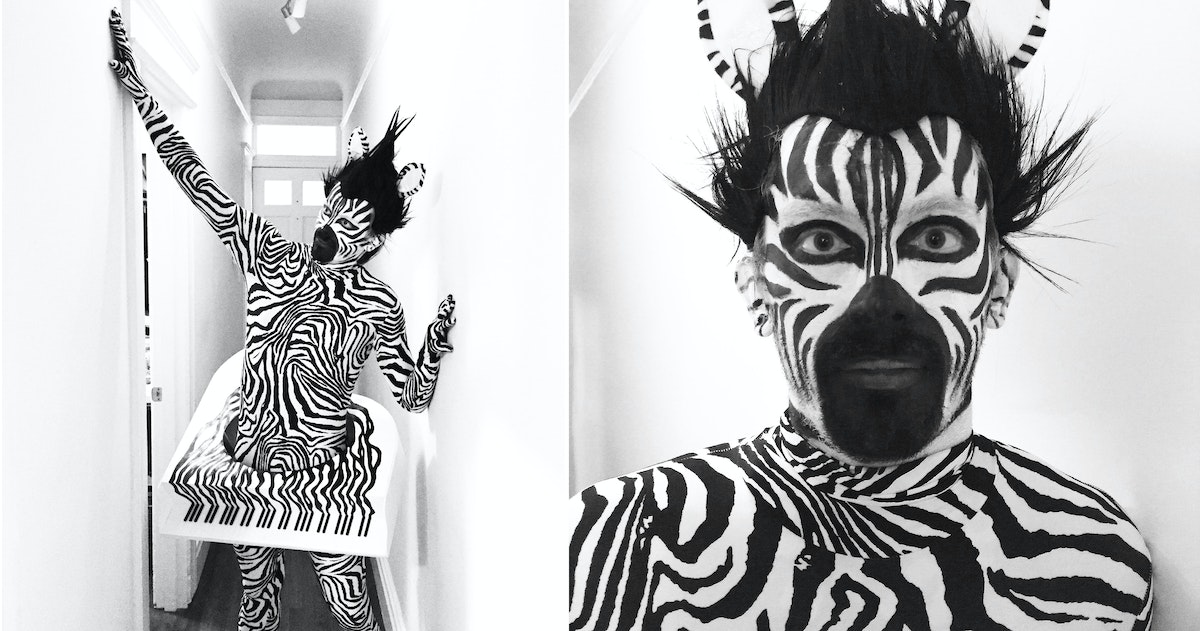
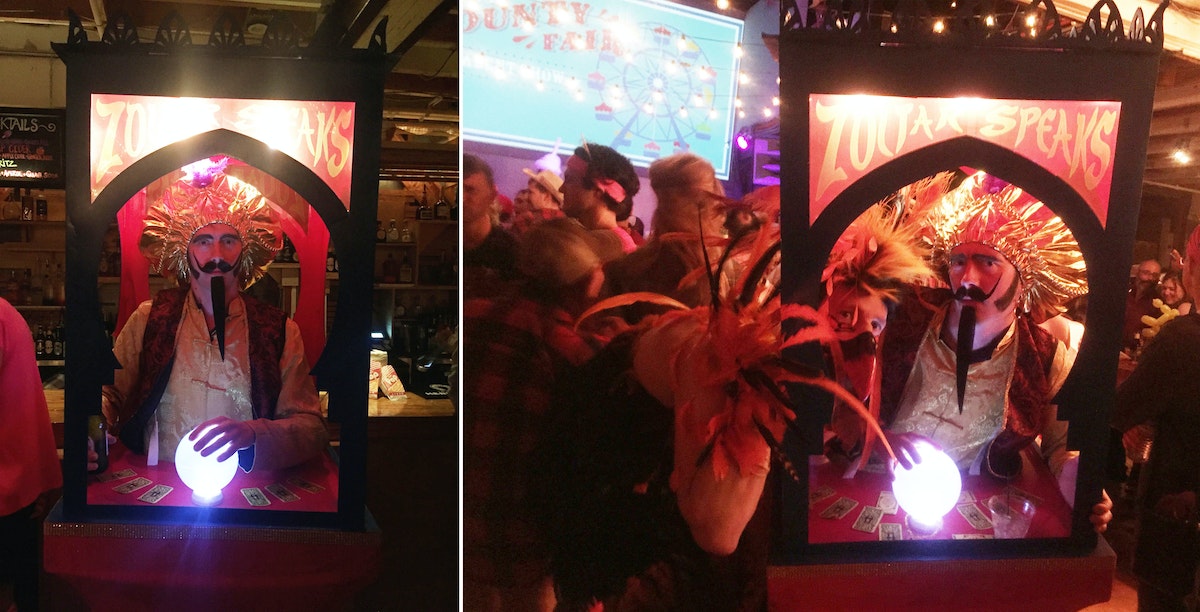
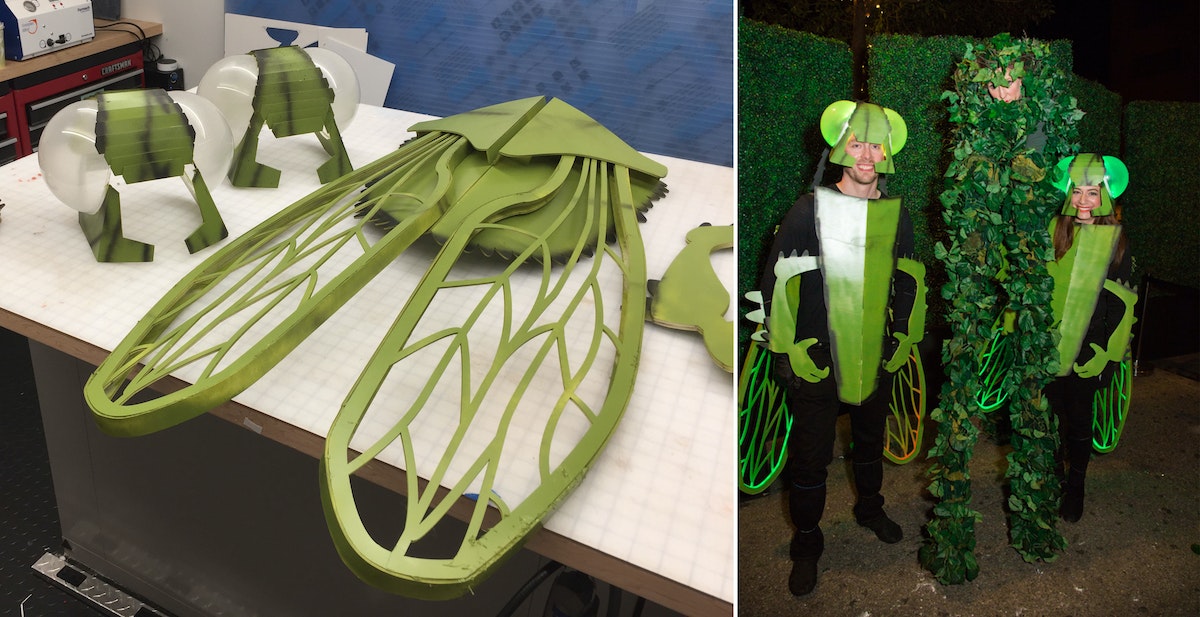
Happy escapism! Share your costume idea with us on Twitter, Instagram, or Facebook with #IDEOcostumedesign.
It’s spooky season, and we’re feeling that familiar dread of what to wear, what to make, or even where to find inspiration flood in. At a company where design is close to a religion, coming up with an eye-popping costume is the Holy Grail.
5 Tips for Nailing the Narrative at Your Next Speaking Gig
5 go-to speaking tips from the best presenters at IDEO
Far from the client presentations I had previously known, here, the emotional stakes were much higher. This was my personal story, and I was learning the hard way—in front of an audience of my new peers, no less—that I was clueless as to how I might frame a compelling narrative.
In other words, I had no idea how to tell a story.
Feeling awkward as can be, with a bruised ego to boot, I knew I had to improve my public speaking ability. Luckily, I fast became aware that I was surrounded by the best storytellers I had ever known. I began observing, writing down, and absorbing all of the knowledge, coaching, and feedback that was offered up.
It has been nearly seven years since I shut my laptop in shame. In this time, I have compiled a list of my five favorite, go-to tips from the best presenters at IDEO:
1. Make it personal
Your audience wants to see more than just a portfolio of work or a few case studies they could read on their phones. They want to hear your story. Who are you, how did you get here, and, most importantly, what are you passionate about and why? This latter idea should tie to the work you present.
2. Create a narrative arc
Your talk should have a fully realized narrative, complete with dramatic tension and resolution. The tension in my personal story arrived when I haphazardly fell into the agency world, where the ideologies that drive me were completely at odds with the work I was doing. Resolution came when I left and made a major change in my career and my work.
3. Provide historical context
A bit of history provides a compelling backdrop for the story of your work. When I talk about IDEO’s efforts in the automotive sector, I first tell the story of Thomas Midgley Jr., a chemist and mechanical engineer who invented leaded gasoline (and CFCs) while working for General Motors in the 1920s and '30s. Understanding the disproportionate, planetary-scale impact of Midgley's work sets up the formidable challenge that designers must now overcome.
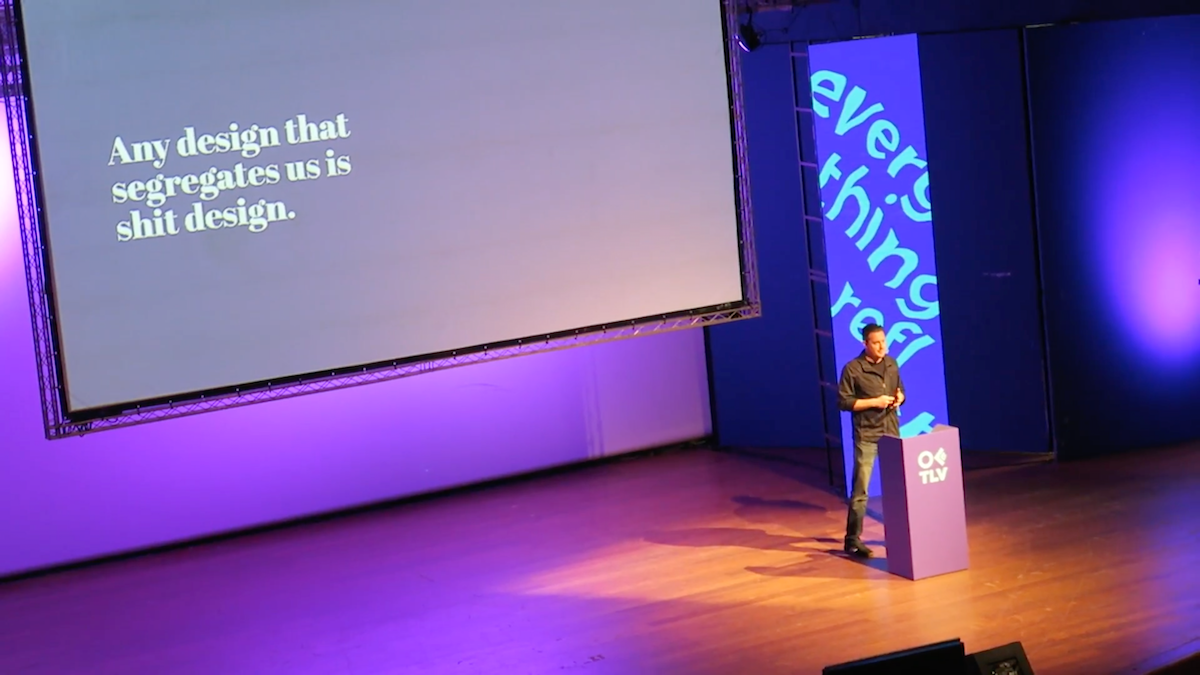
4. The bar exam
Ask yourself, is your story interesting enough that you would tell it to a friend over drinks at a bar? Bonus points: Conduct your bar exam with a friend who works outside of your industry, making it all the more challenging to capture their attention.
5. Stick the landing
Always end on a punchline. Your punchline does not have to be funny, but it will be the overarching idea that people take home with them. In the context of an event with multiple speakers, your audience is endlessly bombarded with competing ideas and inspiration. When you stick your landing, they remember—perhaps even share—precisely what it is you aimed to communicate.
I have now employed the above tips from friends and colleagues at nearly 30 events over five years on four continents. I assure you, they work.
Special thanks to Annette Ferrara, Neil Stevenson, Shoshana Berger, Paul Bennett, Jenn Maer, Tim Brown, and Katie Clark. I owe you each a lifetime’s worth of experiences and airline miles.
Nothing makes me want to master a new skill like falling on my face when I first attempt it. Halfway through my new hire presentation—a get-to-know-the-new-kid-over-beers tradition at IDEO Chicago—I cut my talk short and shamefully closed my laptop.
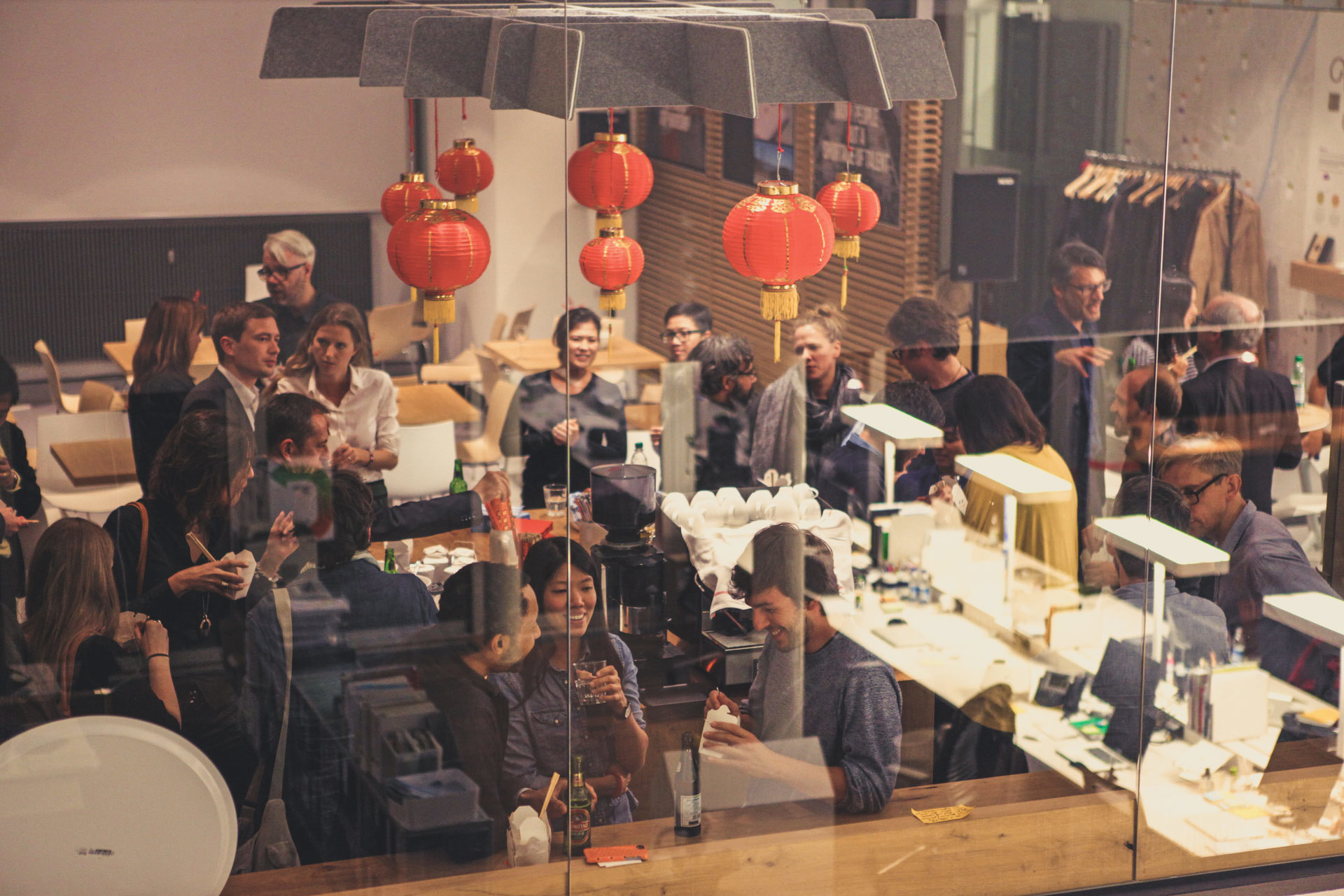
4 Tricks for Getting Better Feedback
An IDEO designer shares her tips to gather great feedback from events
But first, here are a few things to think about before you begin:
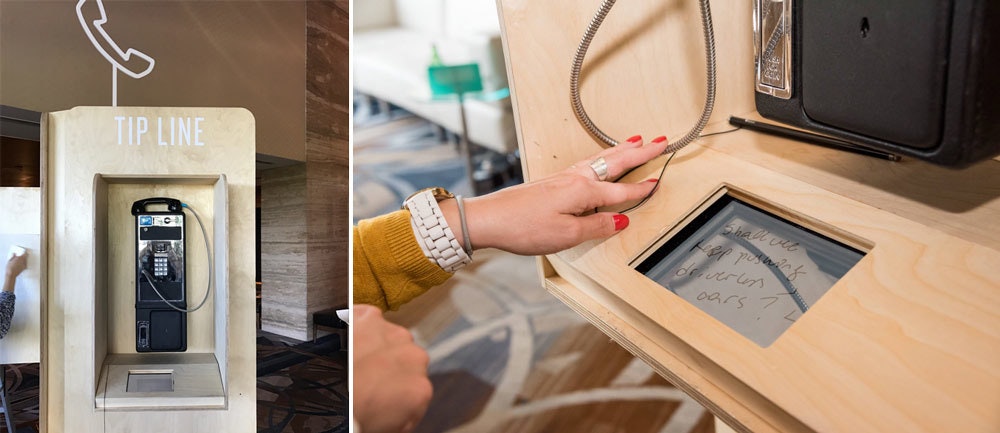
Consider what you’re trying to learn. Do you want feedback on the event format, content, experience, or outcomes? Whatever that may be, it helps to tell your audience that they’re participating in a prototype right from the get-go. In our experience, being up front that you're trying to build something better encourages participants to respond. You might offer some incentive for their input, too. Even a small gesture of thanks signals that you value their thoughts. And remember to use the data you get back to understand what happened, and conversation to understand why. Data alone is only half the story.
With all that in mind, here are some techniques we’ve designed to help us understand what worked, what didn’t, and why.
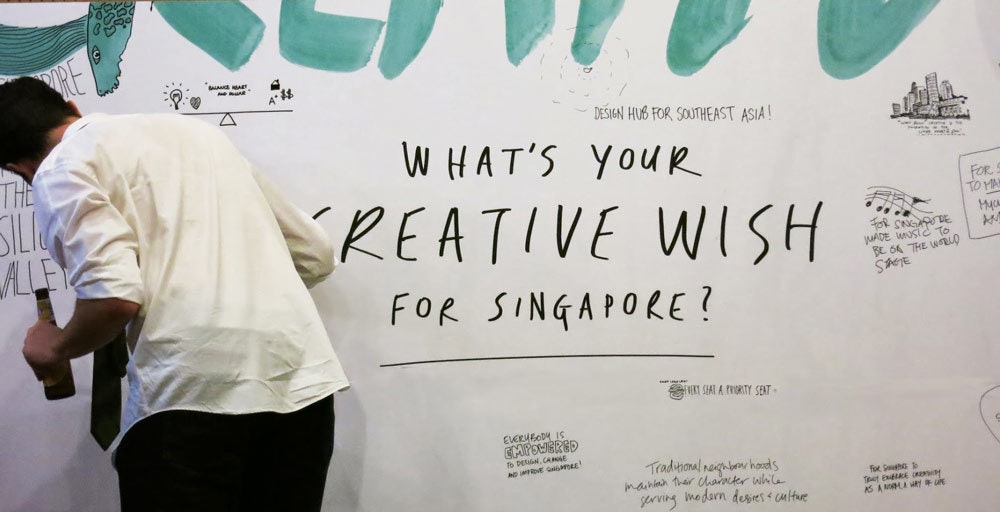
1. Do Live Polling
Collect information during the event, while it’s freshest in people’s minds:
- Pass out comment cards with a simple feedback prompt, “I like/I wish”.
- Leave prompts on a board like, “What did you learn today?” and Post-Its for guests to use.
- Digital tools like Meetmaps or polleverywhere.com do live polling, and you can choose to show the audience the real-time results to encourage participation.
- Biometric measurement can tell you what selected people are feeling in real-time, Megvii and XOX are two systems. You can also show the audience this data.
- Have your team create a list of the most common sentiments or attitudes you expect to get ("I'm Confused" or "I'm Learning"). Then work the crowd, giving people simple feedback prompts. Tally results in a Google survey form, capturing any notable quotes or outliers.
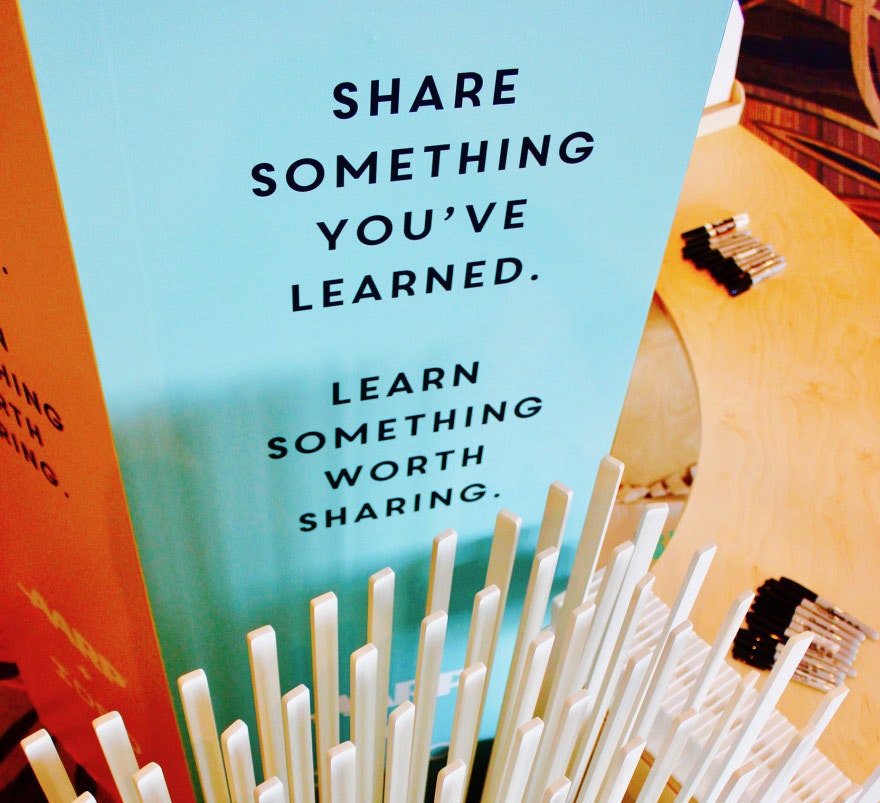
2. Make Data Viz Physical
Sometimes seeing evidence that people are really engaged gets others to participate. Bonus: these methods are fun, and social.
- Have people use a green door to show a “like” and a red door to show a “dislike”. You can also do this by asking people to move to certain places within a space.
- From the stage, ask the crowd before/after speaker: “Stand up if this is the first event you’ve been to….”
- Have people choose a button/pin with a word that describes what people value. For instance, if you’re talking about community, one button might say, “finding my people” and another might say, “building diversity”. Count the ones that are left over.
- Place dots on a spectrum or balls in a bin to vote what you think. The voting objects can be themed too, like fake coins for business investing.
3. Observe Cues
People don’t always accurately report how they feel. Take note of what they do, too.
- Count how many people download the presentation or video after the event, if there is one.
- Provide a hashtag for people to use on social media, then track both the number of shares/tweets, and the sentiment of them. Tools like Tint can help with this.
- Collect names and email addresses for future events (if no one signs up, that’s feedback, too).
- Measure sound volume hourly throughout the event to get a better picture of traffic and engagement timing. Compare different events in full swing in the same physical space to quantify the energy in the room.
- Watch people showing signs of comfort and belonging in their body language—are they loosening their ties or kicking up their heels, do they feel comfortable enough to move chairs into a circle?—all are signs they’re engaged. Sitting alone, checking phones or watches, falling asleep, leaving the room—you know what those cues means.
4. Take the Long View
In addition to immediate learnings, you may want to aggregate insights over time or across events.
- Ask people if they want to be on a feedback panel going forward. Offer exclusive access or information in exchange for helping you shape the program.
- Provide a platform for ongoing conversation about the themes that are important to both you and your guests. This helps you keep the pulse in an ongoing way, and reminds people to associate you with things you care about.
Got any ideas of your own to add to our list? We’d love to hear about them. Hit us on Twitter, Facebook, or Instagram with the hashtag #feedbackdesign.
You put weeks of work into designing a great event. You think it went well, and people seemed happy, but how do you find out what truly worked and what didn’t? Instead of circulating a survey that makes people's eyes glaze over (if they glance it at all) we've applied our design chops to the task. Here's how to get quality feedback that will help you up your game.

Lindsey Turner
I’m passionate about building brands, products, and experiences that help organizations show up with meaning and momentum.
I help organizations cut through complexity by shaping how they show up, through brand strategy, identity, and storytelling.
Working at the intersection of brand and business, I bring an editorial eye and a bias toward making—turning ideas into tangible experiences that people can understand, trust, and believe in.
My work spans government, healthcare, financial services, media, and consumer goods, from launching Gen Z-focused ventures to building innovation labs and reimagining legacy brands. I relish moments of ambiguity and enjoy translating across teams, perspectives, and priorities to move ideas forward.
I started my career in editorial and digital design, shaping cross-platform experiences and identity systems in publishing and agency environments. That foundation still shapes how I work today: I’m detail-oriented, collaborative, and overreliant on the Oxford comma. I hold a BFA in Visual Communication from the School of the Art Institute of Chicago.

Rachel Young
My work helps organizations see who their products aren't working for—and build the will and the tools to do something about it
For 25 years, I've asked the same question: Who does this design exclude—and what are we going to do about it?
My work spans human-centered strategy, inclusive design, and qualitative research, with clients ranging from Microsoft, Google, and Verizon to the National Science Foundation, and San Francisco Unified School District.
Before IDEO, I taught elementary school in East Palo Alto and spent a decade doing design work with social service organizations—where I learned firsthand what it costs people when systems are built without them in mind.
I am currently writing User Error, a nonfiction book about digital access and the design decisions behind it. I live in Oakland, California.

Brian Pelsoh
I lead with craft, ensuring our work is creatively excellent: rooted in deep human insight and imagination, while also grounded in the realities of business and technology.
My expertise spans brand, communication, and product design across tech, education, the arts, and social impact.
I believe great work demands both high-level vision and obsessive attention to detail, and only happens through collaboration.
I bring an inclusive, hands-on approach and a deep understanding of business, which enables me to consistently deliver excellence while always asking why.
Before joining IDEO, I worked at the brand firms Pentagram and VSA Partners. I began my career as a designer, leading teams at the School of the Art Institute of Chicago and the Milwaukee Art Museum. I hold an MFA in graphic design from Maryland Institute College of Art and a BFA in communication design from the Milwaukee Institute of Art & Design, and have taught at some of the best design schools in the US.

Tony Wong
I am responsible for IDEO’s long-term success in China and working with clients to use design as a tool to enable growth.
I am responsible for IDEO’s long-term success in China and working with clients to use design as a tool to enable growth. Specifically, I have helped Chinese companies design holistic brand solutions through the development of their products, communication, services, and innovation teams, and I have helped multinationals expand their presence and influence in China.
I advise global leaders on developing China-led innovation and capabilities.
In over 15 years in IDEO Shanghai, I have worked on projects that use design to elevate the quality of the experience of healthcare products and services, streamline processes that increase productivity, create spaces and programs that promote and enable inclusive communities, and build next generation mobility solutions that are planet-positive.
Before joining IDEO, I worked at Philips Electronics and the Electrolux Group in Italy, the Netherlands, and Singapore on a number of breakthrough commercial products. I am a member of the Young President Organization in Shanghai.

Building a personal AI for the messiness of life: Sida Li
Most AI products today are built for work—a space with clear problems and established systems. One founder noticed a gap: personal life is messier, harder to systematize, and mostly left behind by the AI boom. So she built Cue, a personal AI that lives inside iMessage and group chats, to go where the other tools haven't.
In this episode, Becca Carroll, IDEO's Chief Strategy Officer, talks with Sida Li, co-founder and CEO of Shared Context Lab, about staying anchored to a human need while the technology around her keeps changing shape, why she treats her business model with the same rigor she'd bring to a product, and what it feels like to build a company at this particular, disorienting moment in AI.
The conversation also gets into how Sida makes design decisions: the language Cue uses to describe itself, the tradeoffs behind building inside iMessage instead of a new app, and a real story about a business idea that didn’t pan out.
This is the second in a two-part series profiling founders from IDEO's Startups-in-Residence program. The first conversation is with Johannes Seemann, founder of Sooner, on designing GenAI for the emotional side of money.

Designing GenAI for the emotional side of money: Johannes Seemann
Most personal financial tools are built to run the numbers and optimize towards a budget. While that works for some, most people experience money as a lived relationship that does not neatly fit into a spreadsheet. Johannes Seemann and Becca Carroll discuss why money is emotional before it is mathematical, and what a human-centered approach to building a generative AI financial product looks like in practice.

The curious leader's edge in uncertainty: Scott Shigeoka
Mina Seetharaman talks with Scott Shigeoka, author of Seek and Head of Curiosity Cultivation at the Eames Institute, about what distinguishes genuinely curious leadership from performative curiosity, how power dynamics shape curiosity, and why practicing curiosity can restore energy rather than drain it.

How constraints make us more creative: David Epstein
Mina Seetharaman talks with David Epstein, author of Inside the Box and Range, about why total freedom often produces average work, how leaders can design useful limits on purpose, and what organizations such as General Magic and Pixar reveal about the relationship between boundaries and creativity.
Looks like you might be in search of something very specific?
Or reset the filters above and try another angle.
Here’s some random inspiration

Podcasts about creative leadership

Articles about the power of prototyping
