
.svg)



Reintroducing The Lawrence Hall of Science
A lively new brand reenergizes a STEM learning institution.
Named after Ernest O. Lawrence, UC Berkeley’s first Nobel Laureate, The Lawrence Hall of Science’s wide-ranging products, services, and tools developed organically over half a century. To begin to make sense of the breadth and depth of its offerings, IDEO asked leadership and staff to surface the myriad activities, audiences, and relationships with external partners, enabling the group to visualize—and make sense of—the totality of The Lawrence brand.
During in-depth research with parents and kids, educators, and experts, IDEO discovered that each of these audiences had distinct mindsets. Parents and kids engaged with The Lawrence to explore, have fun, and dive deeper into a specific topic. Educators utilized it for professional learning opportunities and to discover new, exciting classroom tools. While experts, including UC Berkeley faculty, STEM educators across the US, and funders, viewed the center as a resource for best-in-class STEM education research. The mindsets highlighted The Lawrence’s unique capabilities, but the complexity also created some opportunity areas, including ways to use storytelling to create emotional resonance around The Lawrence’s core values and how to design a unified narrative to connect the dots across audiences and offers.
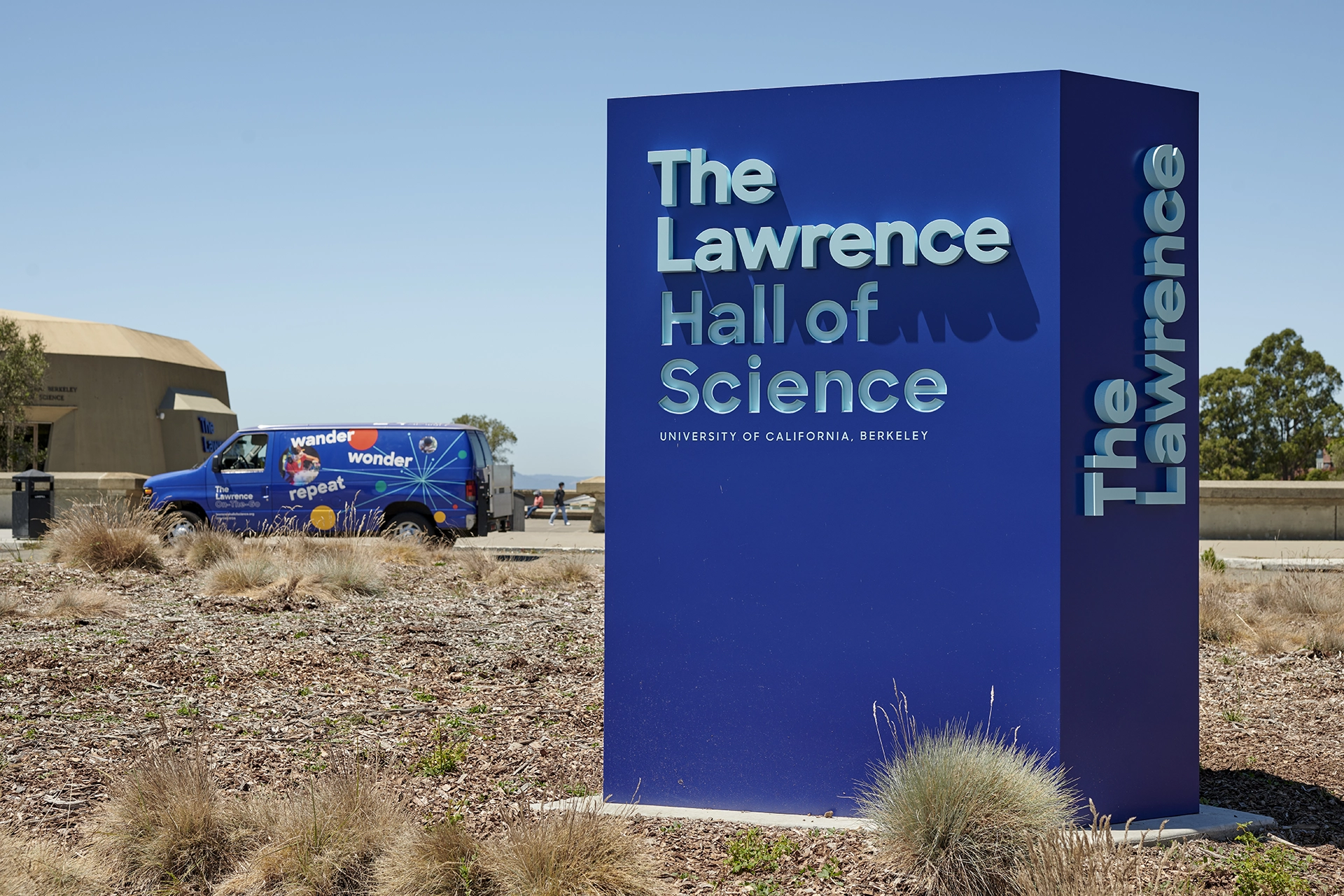
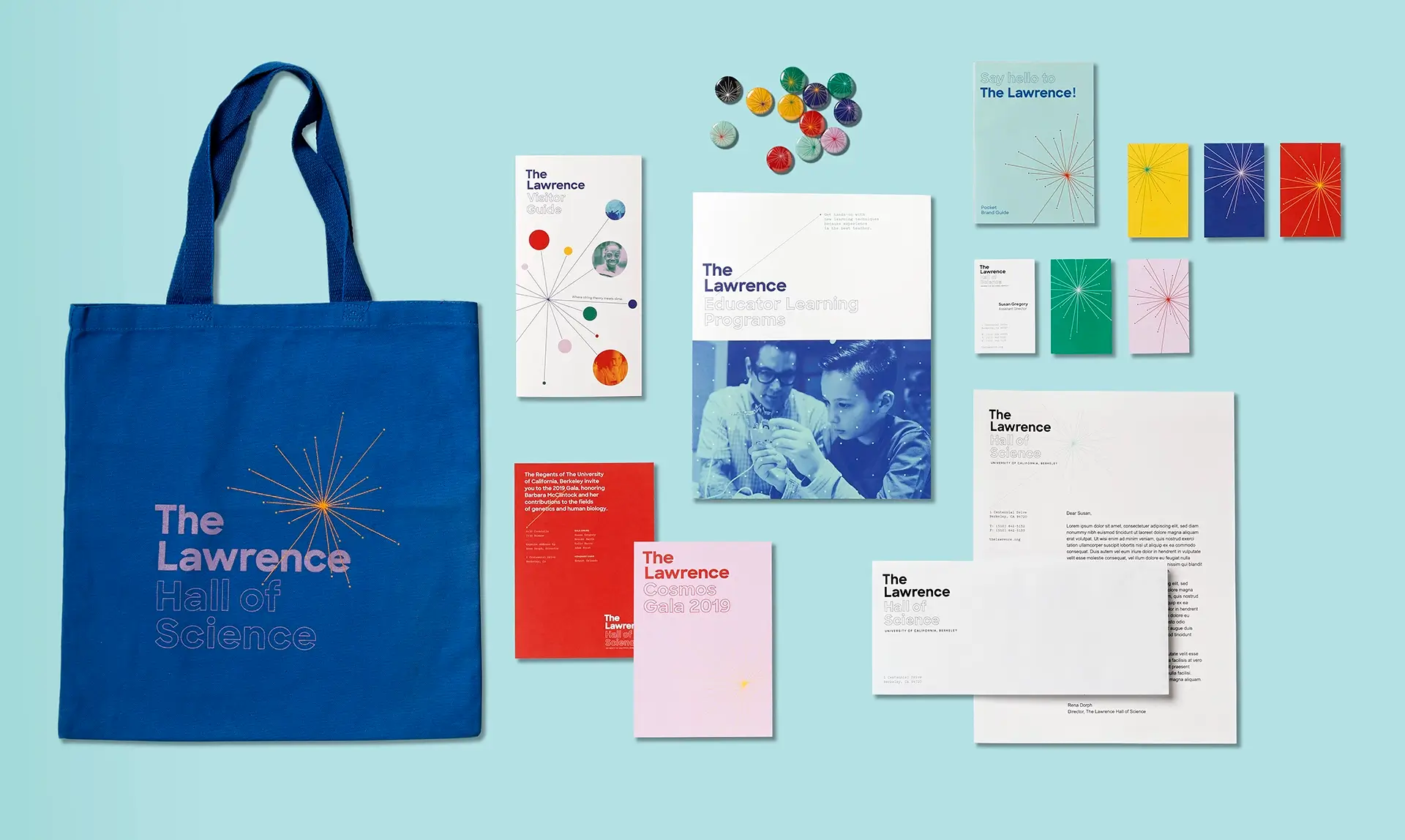
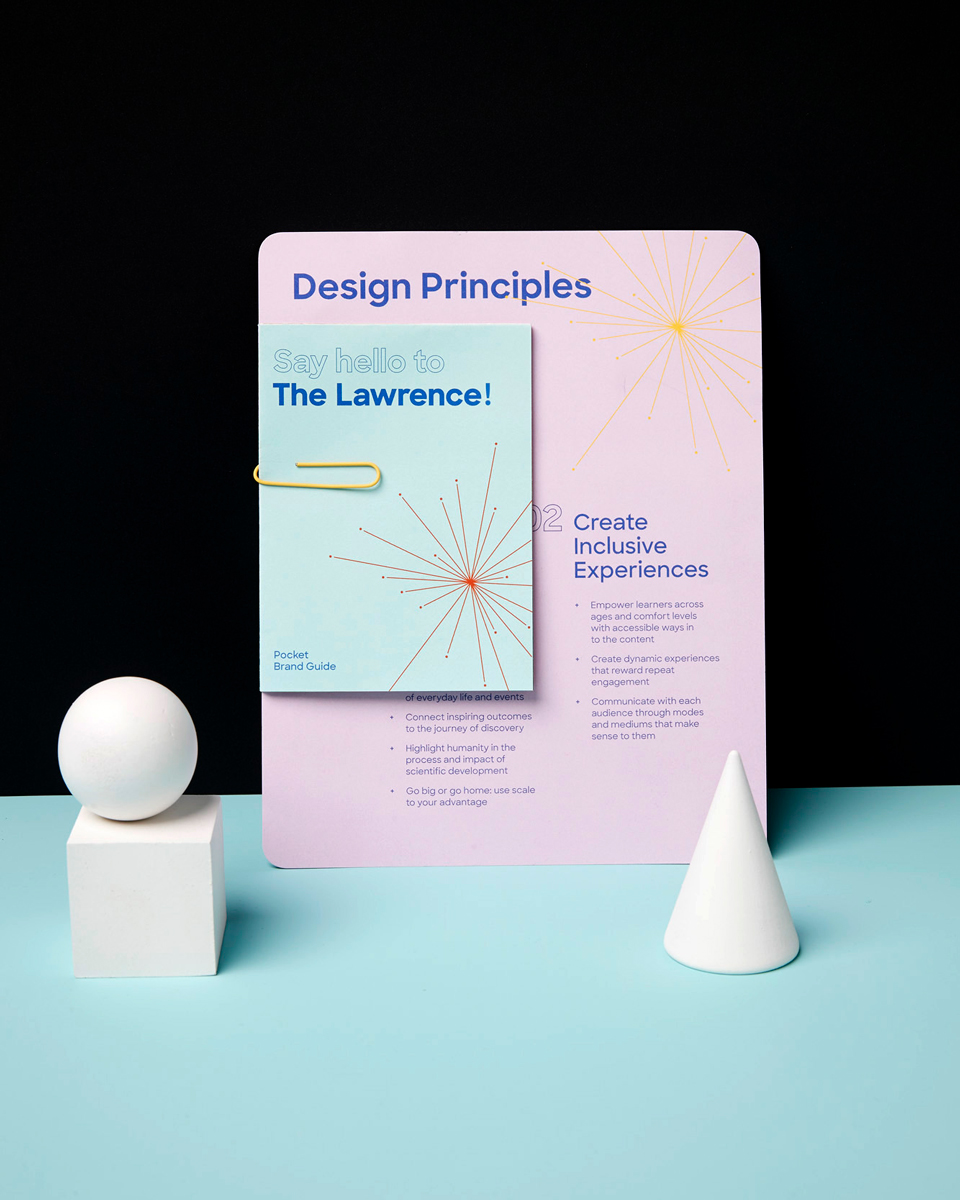
Building on its strengths as an institution and the identified opportunity areas, IDEO created a modern, vibrant, and flexible brand that strategically and visually unites all of The Lawrence’s offerings, working across digital and physical media. Grounded by a grid system, the updated brand identity is simultaneously rigorous and fun, featuring a bright color palette and signature retro-cool super-nova mark. Different offerings are bundled together based on different audience needs, preventing confusion and easing navigation. Even the name of the science museum, The Lawrence Hall of Science, was updated to a more contemporary and approachable, The Lawrence, inspired by The Met.
The Lawrence unveiled its new brand with much fanfare in late 2018 as part of its year-long 50th anniversary celebrations. Visitors can see the updated identity across all public-facing elements, including The Lawrence’s website, curriculum and educator materials, letterhead, collateral, and exhibition and wayfinding signage. The redesigned brand has been credited with bolstering the popularity of the science center among families and schools and causing ticket sales to return to—and exceed—pre-pandemic levels. Internally, the rebranding effort has helped generate excitement and energy across departments, helping solidify a collective future strategy and vision for its next 50 years.

The Lawrence Hall of Science’s diverse offerings had grown extensively over the decades, creating a confusing and disjointed experience for its various audiences. On the eve of its 50th anniversary, Lawrence leadership sought a brand refresh to better connect with its target audiences and differentiate itself in the STEM education ecosystem.
Over $6M in new funding
raised to transform and modernize The Lawrence, thanks to IDEO's rebranding effort
Reinventing classic British pubs and inns
Greene King’s upscale Everly Hotels Collection combines modern comfort with local impact.
When Greene King approached IDEO in early 2022, it was (and still is) one of the UK’s leading hospitality brands, with over 2,600 pubs, restaurants, and hotels. At that time, consumers in the UK and other parts of the world were beginning to rediscover the joys of travel after years of pandemic lockdowns. Greene King’s newly formed Venture Hotels Team wanted to understand how guest expectations had shifted during Covid-19 and how a new customer-centric hotel brand and signature service experience might meet—or exceed—their expectations.
To get inspired, the IDEO team interviewed a range of travelers of different ages and backgrounds, met with hospitality and luxury experts, and conducted immersion visits, including visiting high-end hotels. The research revealed modern travelers want unique hotel experiences that cater to their curiosity, support local communities, and are environmentally sustainable. Luxury, which once meant “exclusive,” was now about enabling one-of-a-kind cultural experiences. Today’s travelers value inclusivity, accessibility, and well-being; they want to feel welcome, do things at their own pace and have thoughtfully curated options to choose from. They also expect hospitality practices to be ethical and sustainable, contributing to the welfare of local communities and the planet.
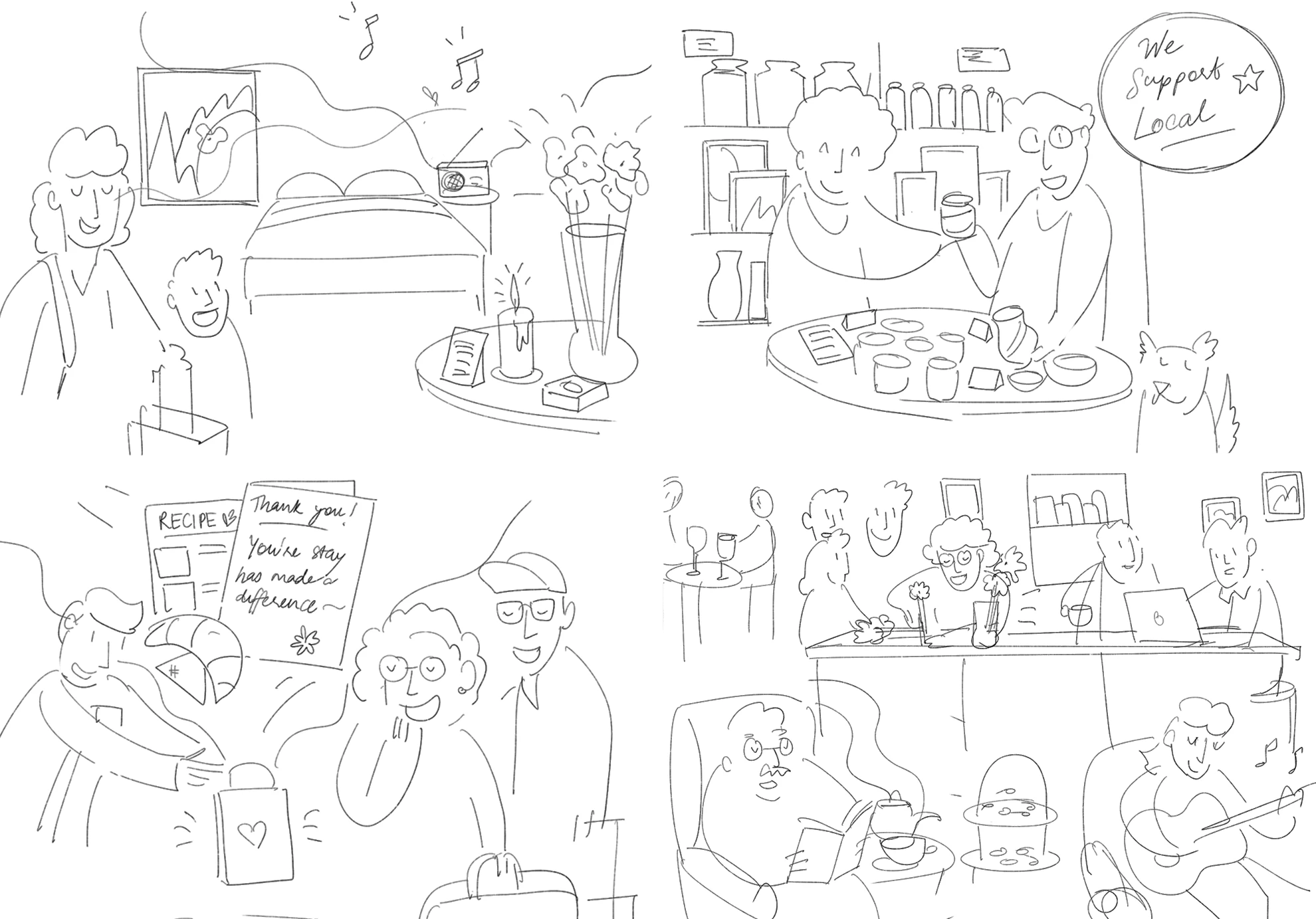
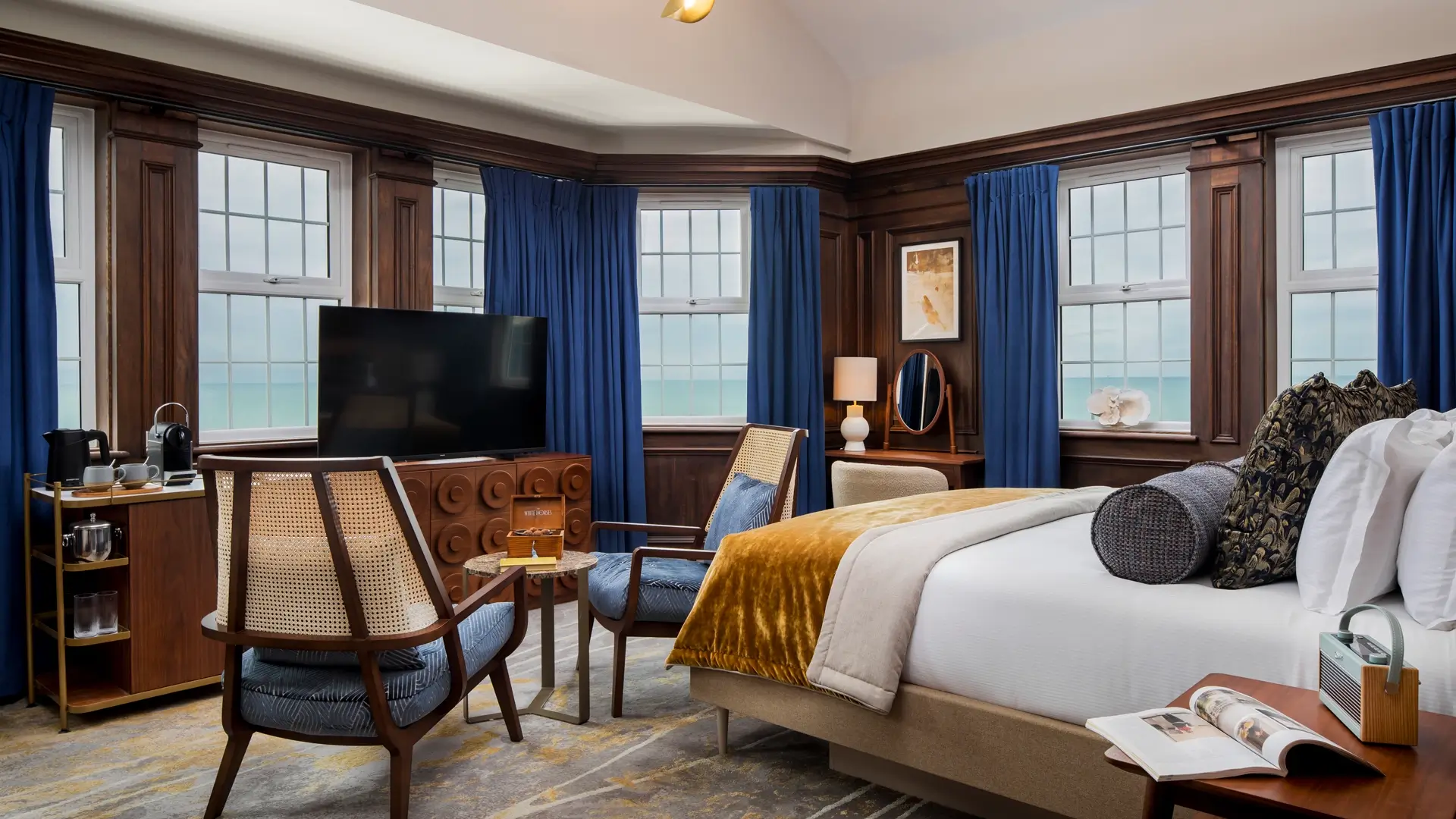
Building off this research, IDEO crafted a new entry proposition for Greene King’s new Everly Hotels Collection called “The Discover Collection,” which leverages the best parts of a classic British pub and inn—bespoke historic locations full of character, culture, and stories—while offering guests a modern experience from pre-arrival to departure, all grounded in supporting the communities they are in.
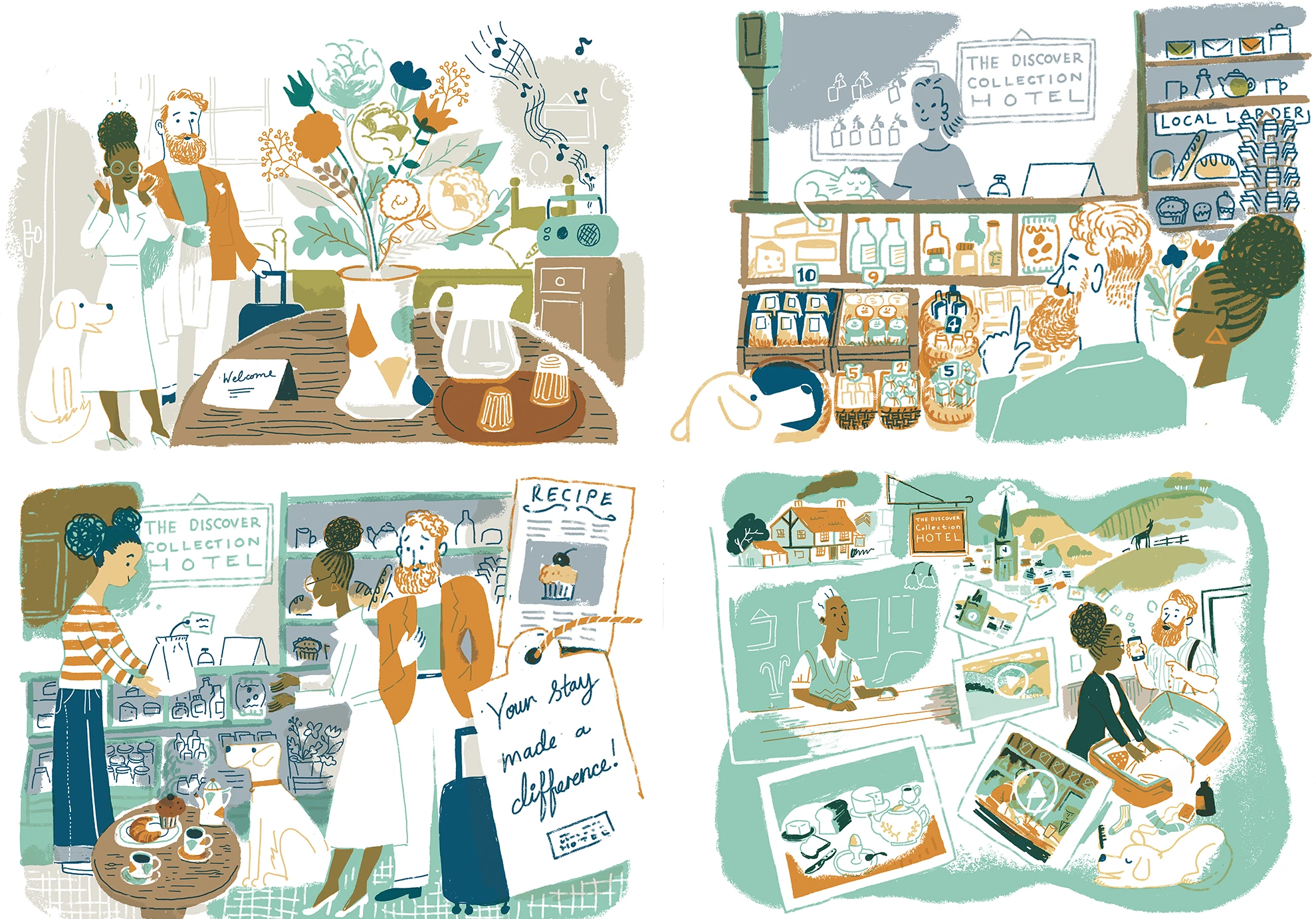
Signature moments include a warm welcome during check-in, as well as staff recommendations and local maps highlighting neighborhood gems. During their stay, guests enjoy expansive seasonal food menus, as well as a beverage menu that includes a wide variety of locally brewed, distilled, and crafted drinks by local suppliers. Rooms feature a smuggler's treasure chest with a surprise treat. Art and books from local talent are on display throughout the hotel, and local experts lead activities and events. Guests tangibly experience Greene King’s commitment to sustainability through its use of local materials, produce, talent, and partnerships, all designed to support the surrounding community. Upon departure, guests receive a personalized postcard.

In addition to the hotel experience moments, IDEO delivered branding recommendations for The Everly Hotels Collection, including visual identity and tone of voice that provide a cohesive look and feel for the collection of hotels while simultaneously showcasing each property's unique character. This was all packaged as an experience playbook, with design principles and briefs to help guide implementation decision-making across Greene King’s marketing, digital, interior design, and food and beverage teams.
A few months after the project ended, Greene King launched The Everly Hotels Collection. Its pilot hotel, The White Horses in Rottingdean, East Sussex, opened within the year. The new brand and guest experience strengthened bonds with Greene King’s loyal customers and first-time guests, ensuring the brand's relevance and appeal in a competitive market. More hotels are planned in the future in other scenic UK locations.
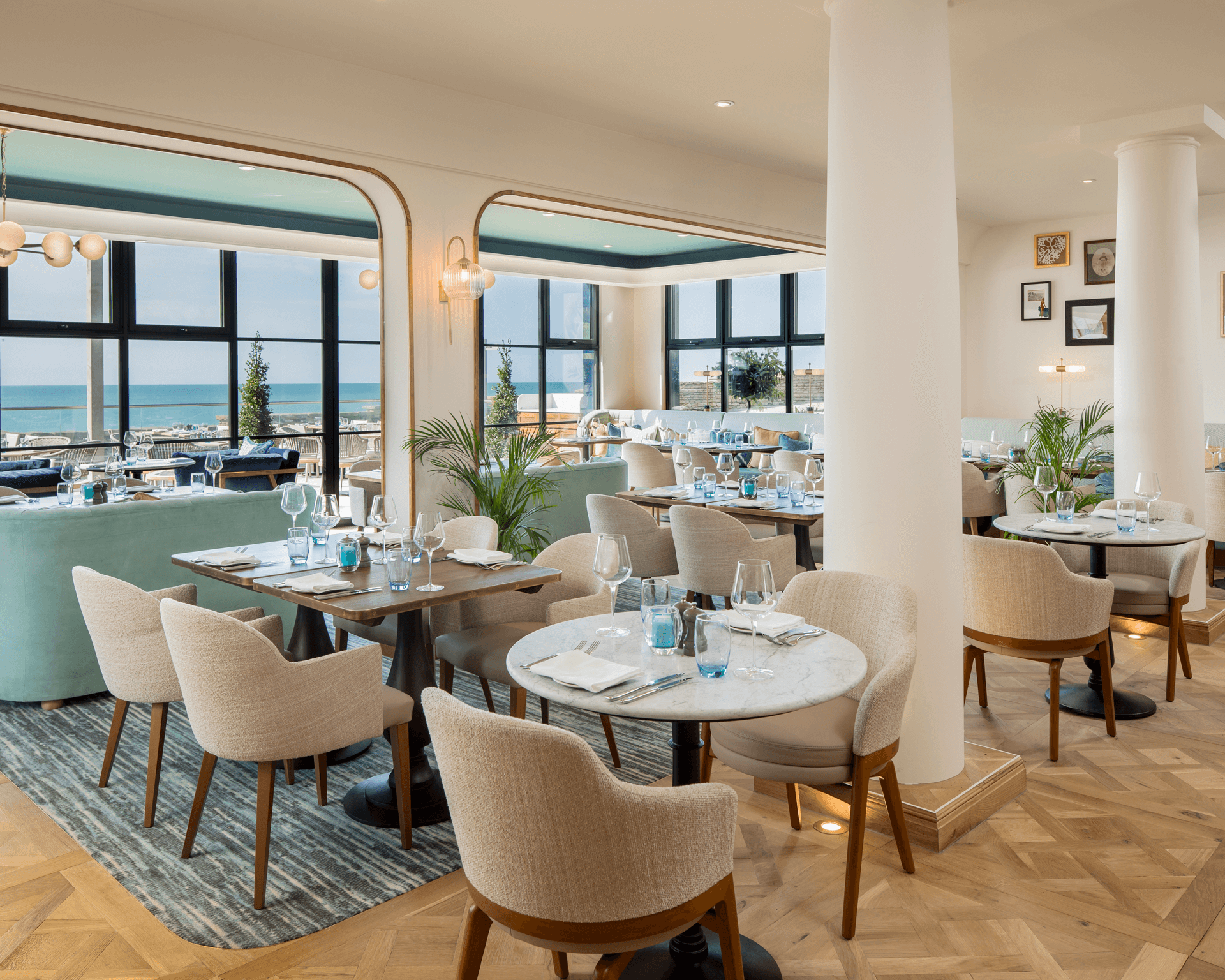
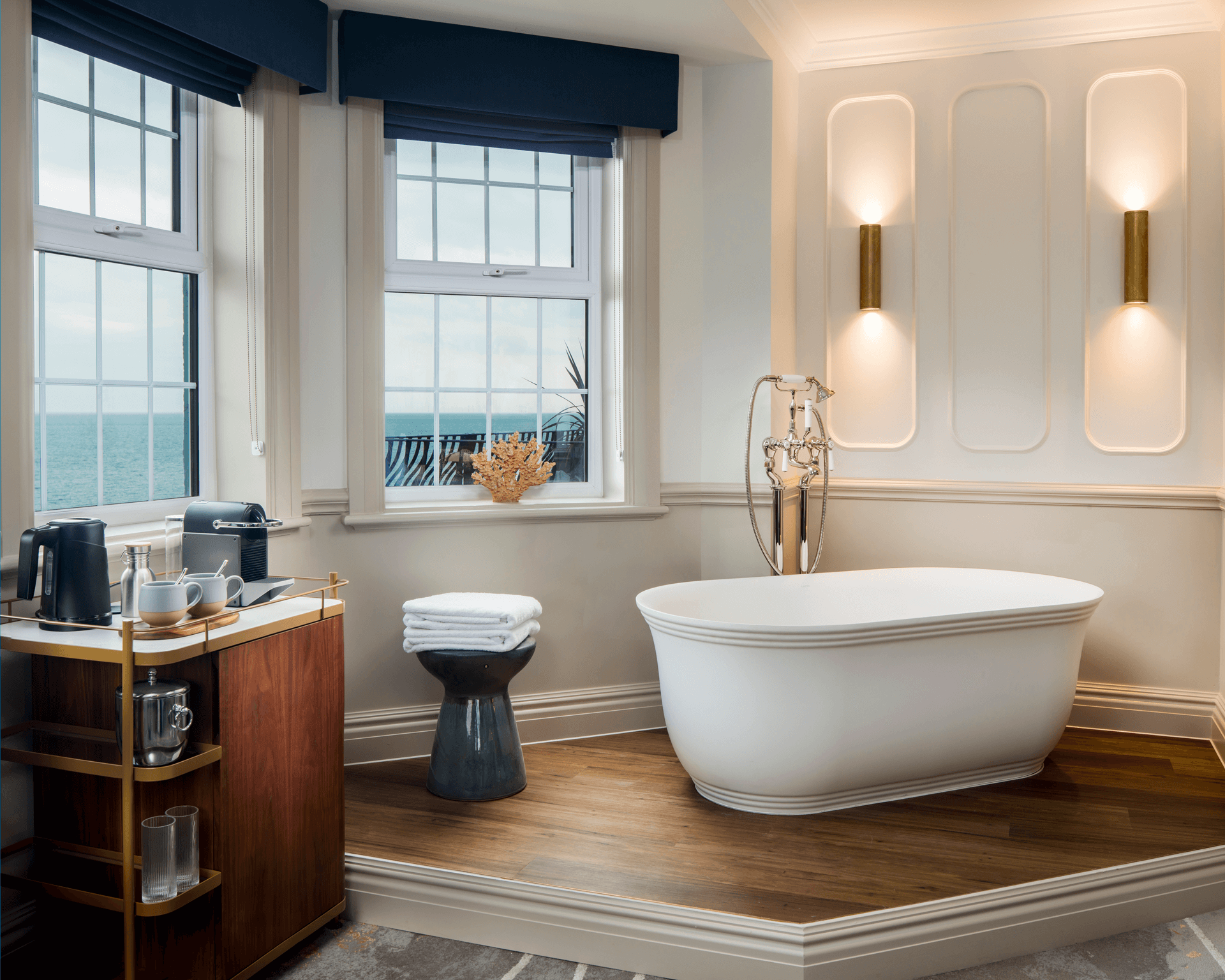
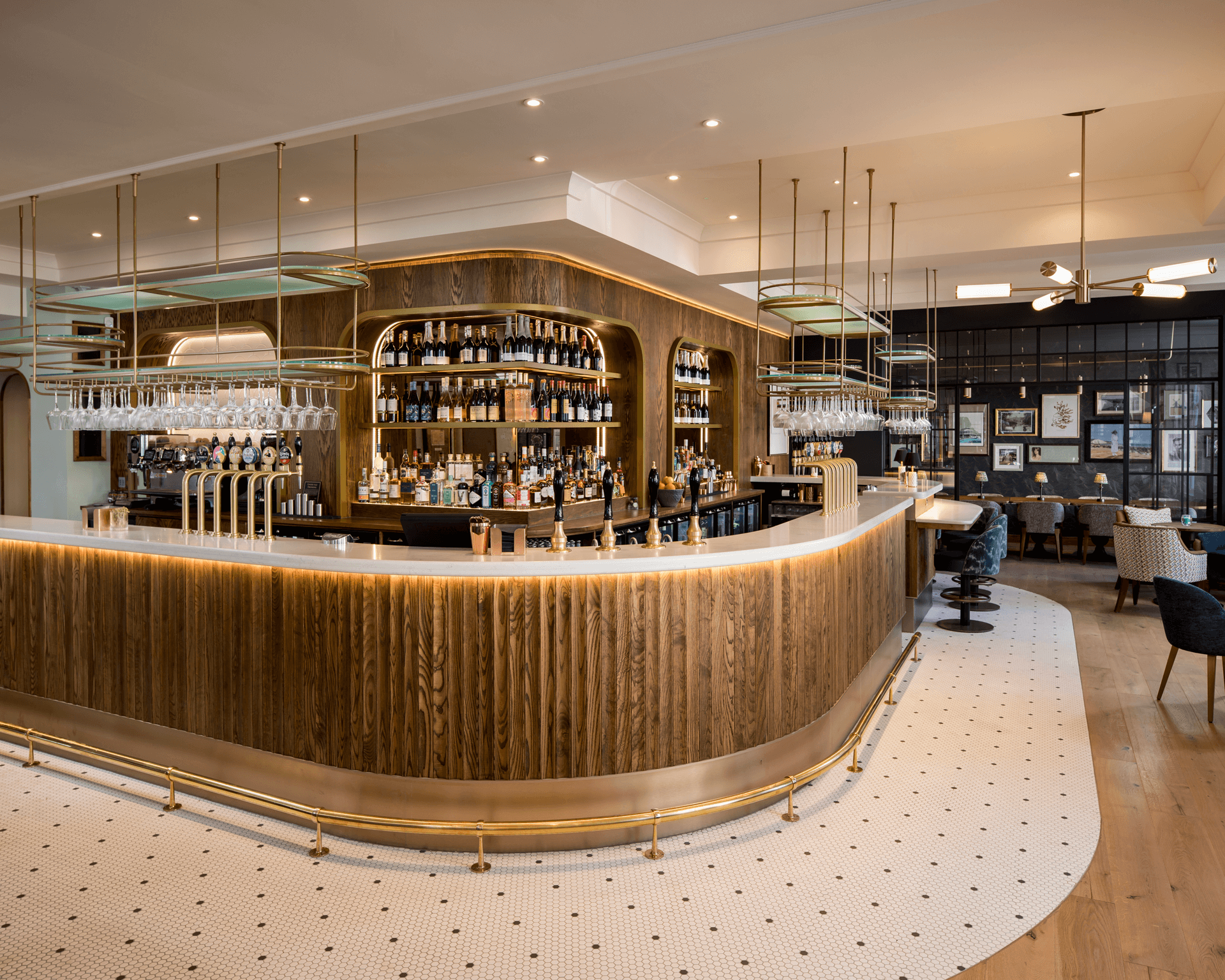
Greene King wanted guests to have a consistent brand experience while maintaining the storied charm that makes each property unique.
2 years
from concept to the launch of Greene King’s boutique Everly Hotels Collection
1 pilot hotel
The White Horses opened in Rottingdean in 2024
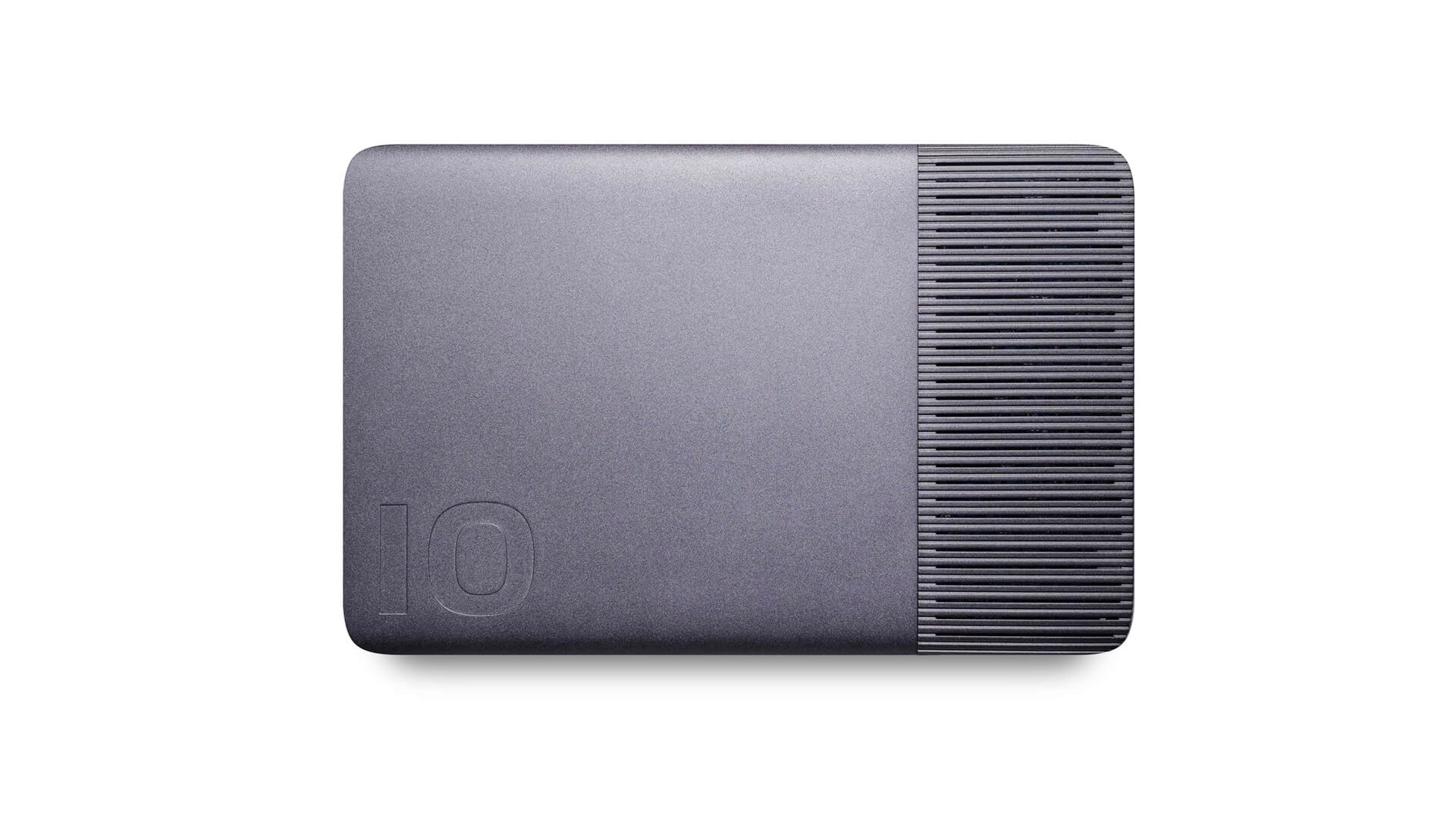
A new paradigm in data storage
Designing the iodyne Pro Data and Pro Mini hard drives.
The hard drive space is full of companies competing over technology and performance. But iodyne wanted to add another layer, focusing on user needs and product aesthetics to better position the company to meet the values of a broader audience and create compelling new entrants into this crowded market.
Together, IDEO and iodyne jumped into in-depth discovery research to learn more about the needs of their end users. The team sat down with photographers, videographers, and digital imaging technicians, asking questions about their file management systems, how they used hard drives in the field, and how they stored them for transport and at home. They also headed to the source, visiting studios and home office set-ups to understand the full range of potential use cases.
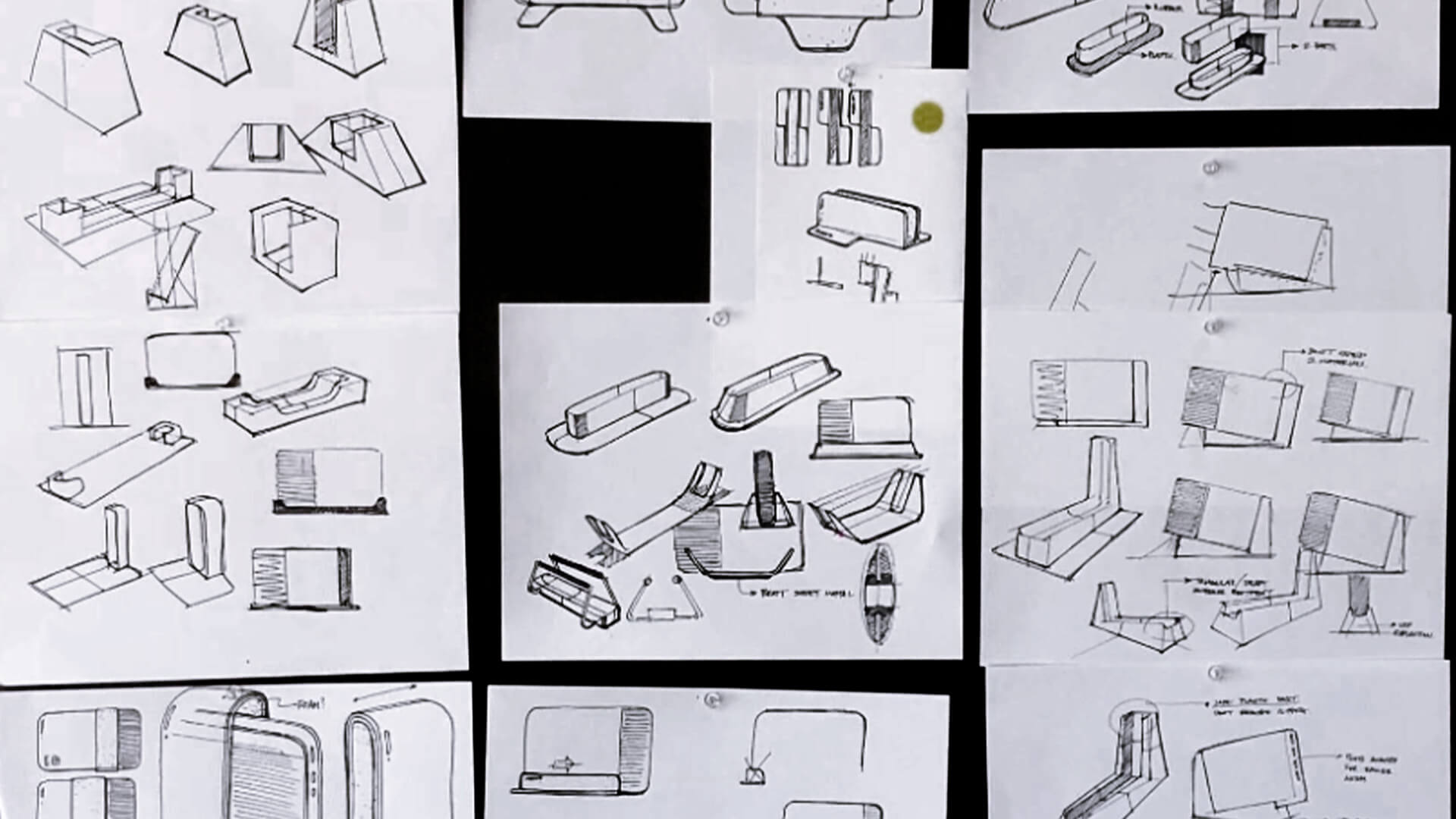
A few big discoveries leaped out. No one had a single storage solution to rely on. Users constantly transferred data from different hard drives designed for different purposes (in the field versus at home), accumulating hundreds of old hard drives over time. Traditional hard drives also don’t allow multiple users to work off them simultaneously or come with software systems that help keep projects and tasks organized, protected, and sharable. Meanwhile, the ever-shrinking size and weight of laptops—and people’s willingness to take them everywhere—set a new benchmark for portability, one that iodyne could lean into.
With these and other insights in hand, the team brought unrivaled performance and aesthetics together to create a far superior user experience. IDEO and iodyne developed Pro Data’s engineering architecture, collaborating on thermal performance analysis, material choice, inspection of sample parts, and even packaging design. By combining integrated venting, multiple laptop-quality fans, smart power management, and 20 thermal sensors, the team was able to minimize cooling fan loads and reduce noise and power consumption. A single, centralized, and consolidated storage space makes sharing data among teammates easy, too—up to four computers can connect to the Pro Data at the same time and access the same files. The redesigned Pro Data creates new value for consumers in a highly mobile, secure package that can go from desktop to backpack and back again.
The iodyne Pro Data hard drive launched in 2021 to overwhelmingly positive reviews. Storage Review wrote “Nothing else comes close to this level of performance in a package this size,” while Jemery Boros of StarGate Studios said “I don’t think I could have done the shoot without Pro Data. It was easy to use, fast, and kept all of our data safe on the other side of the world.” The drives have since been used in the making of major motion pictures from F1 to A Complete Unknown.
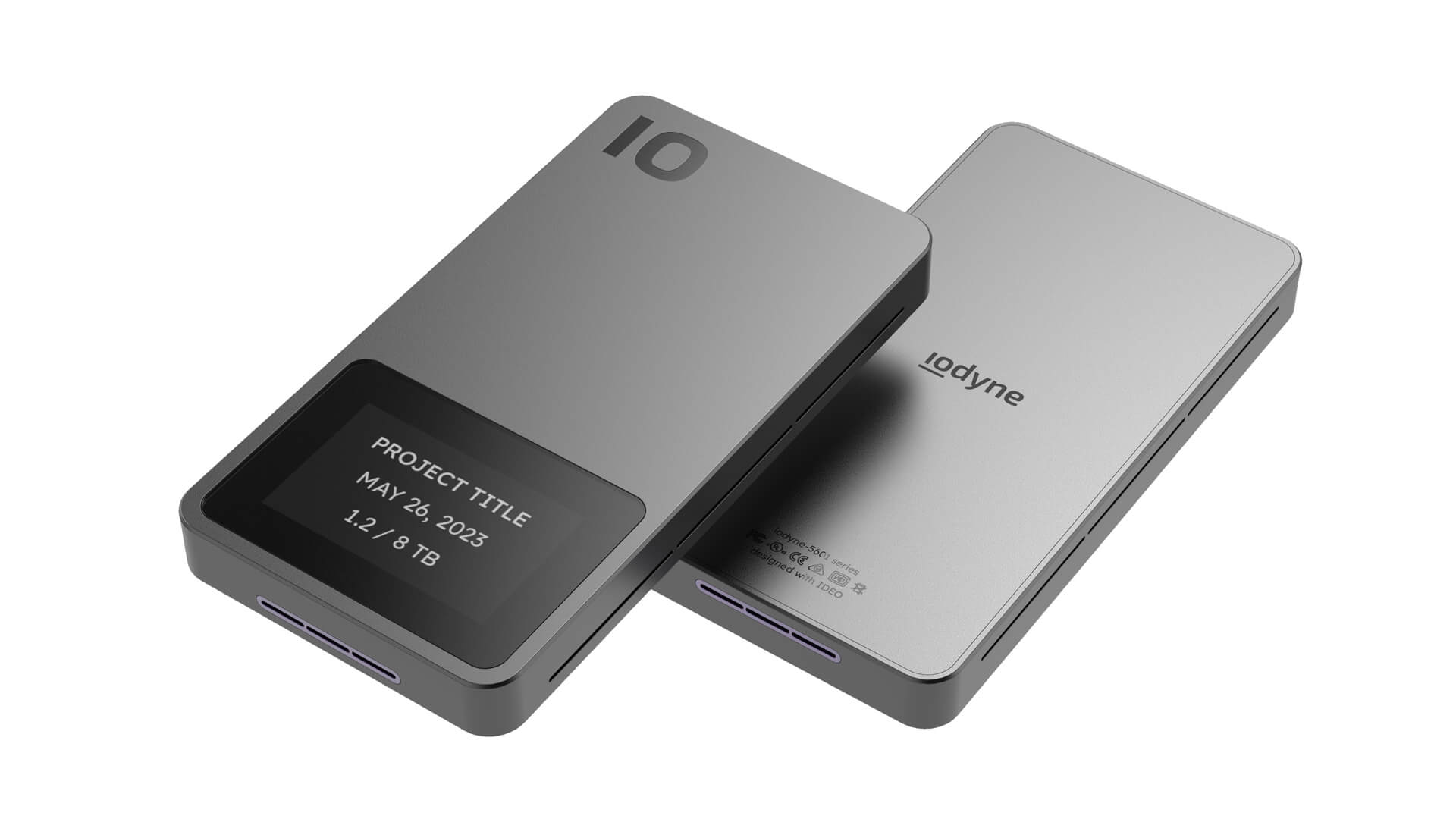
Spurred by Pro Data’s success, iodyne decided to create a second product with IDEO, a Pro Mini that could provide the same cutting-edge performance and sleek design but scaled down to fit the needs of customers who required less storage capacity in an even more portable package. Pairing Pro phone-quality industrial design with a unique internal solid-state cooling architecture that imposed key constraints on airflow was critical.
IDEO worked with iodyne to create the Pro Mini’s internal layout and collaborated with an emerging engineering company to incorporate novel solid-state cooling technology, positioning the vents to maximize airflow and optimizing how users physically interact with the device. The team also addressed users’ durability concerns, advising iodyne on part selection as samples came in from vendors. The new Pro Mini is set to ship in the second half of 2025.
Hard drives are essential tools of the trade for people with large troves of media to store and transfer, like photographers and videographers. But beyond rolls of masking tape and label makers, there isn’t an easy way to see what’s on each drive without literally going through them one by one.
Traditional hard drives generate a lot of heat and need fans to cool them, making them bulky, loud, and slowing transfer speeds.
Many external hard drives are treated like commodities. They’re designed for mass production rather than for durability and aesthetics.
2 cutting-edge hard drives
to market in 3 years
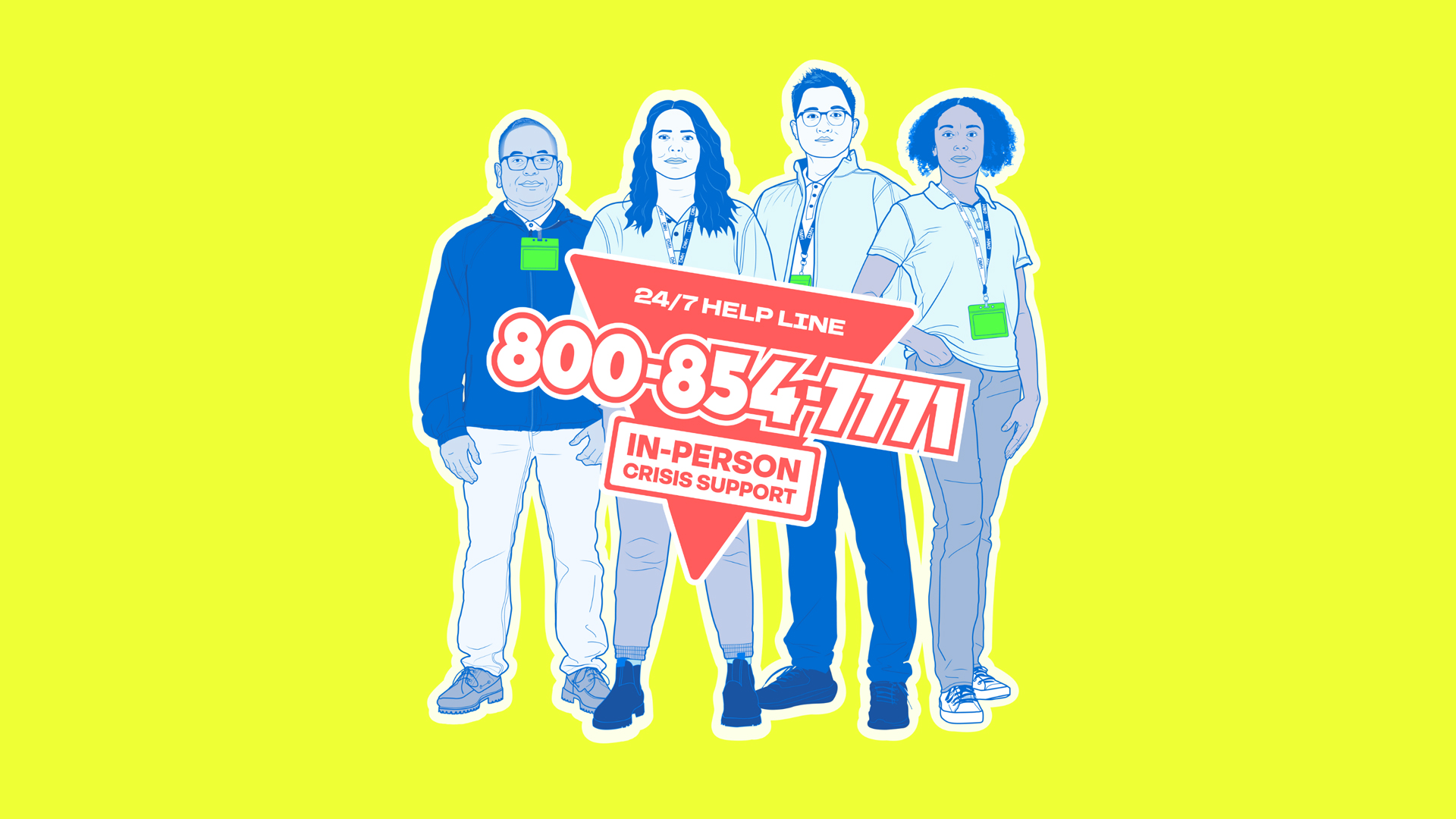
Introducing LA’s mental health crisis first responders
Helping a kinder, safer emergency support arrive first on the scene.
LACDMH is the nation’s largest public mental health department, serving over 10 million people. The agency provides critical support for the most vulnerable, including staffing a toll-free, 24/7 Help Line. Since late 2024, more than 70 Field Intervention Teams—comprised of mental health clinicians (social workers, psychologists, licensed psychiatric technicians, and registered nurses) and community health workers (trained peers or community members with lived experience)—have been dispatched around the county to help de-escalate mental health crises quickly, compassionately, and without force.
Because those experiencing a crisis are often too disoriented, confused, or otherwise unable to seek help for themselves, IDEO’s communication strategy targeted reaching “trusted messengers”—parents, spouses, siblings, and friends of people who have a mood or personality disorder like schizophrenia or bipolar disorder. The campaign aimed to define mental health crises, help people understand what to expect when they call, build trust in FITs, and divert mental health crisis calls away from 911.
To understand what drives these specially trained mental health professionals to do this type of work—and what sparks trusted messengers to call for help—IDEO met and interviewed former clients and loved ones who had reached out to the county for support during a mental health crisis. The team also interviewed multiple FIT staff to learn more about how they approach clients and families.
The research inspired the communication strategy’s central idea: position FIT members as real-life superheroes and first responders. By associating FITs with that term, the campaign changes the narrative and communicates their compassion and expertise to those in crisis. Custom illustrated portraits feature actual FIT staff in strong, action-figure-style poses, while a bright, eye-catching color palette and clear, direct language convey confidence and inspire trust.
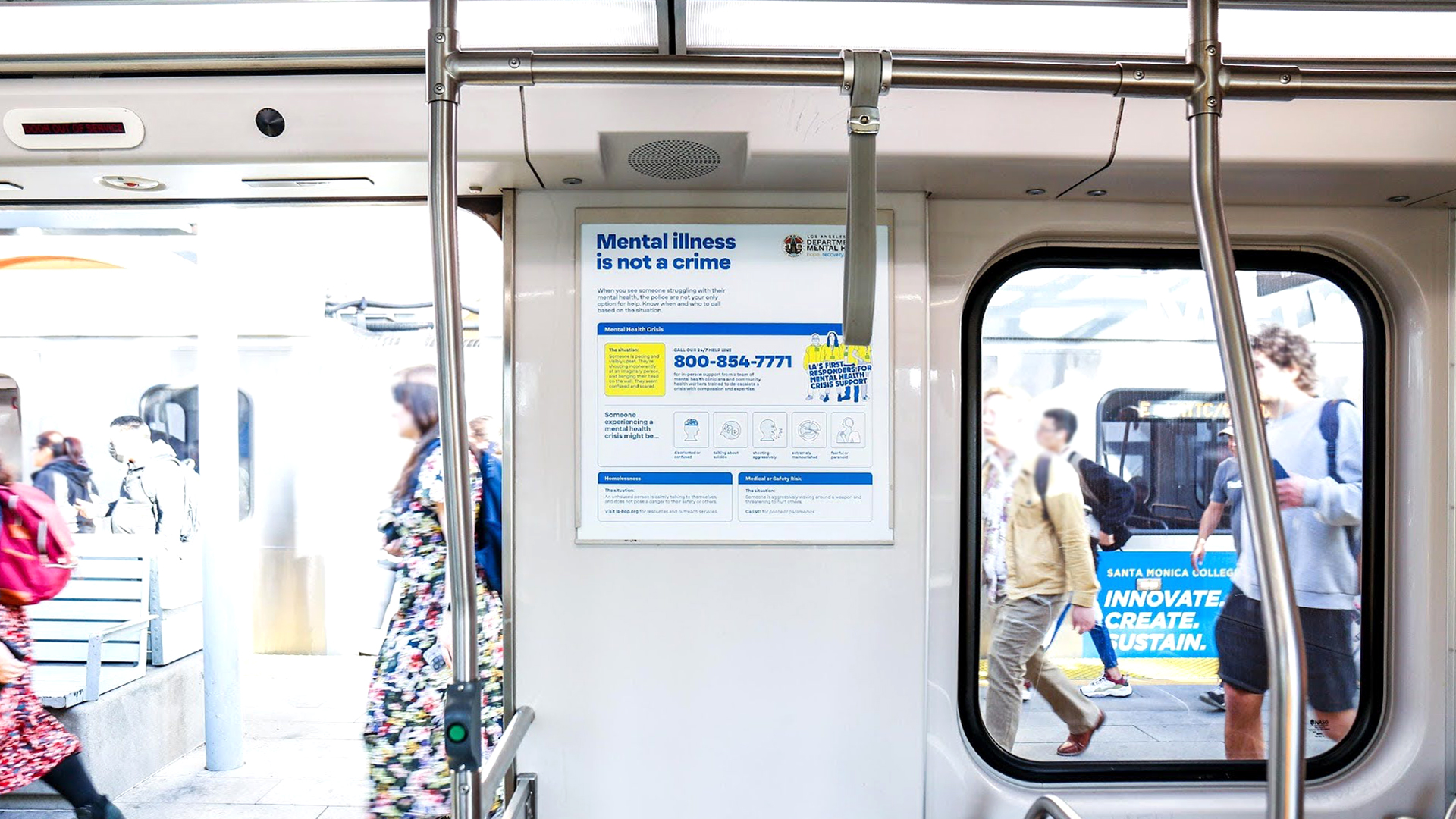
The team explored their initial design directions in a series of focus groups with LA residents, trusted messengers, and county and mental health workers to better understand the impact of the potential messaging and visuals. The research uncovered the importance of clarity, even in an inherently emotional situation. The IDEO team discovered that transparency—and real personal stories—would be the key to building public trust in ACR.
Between March and June of 2025, the robust awareness campaign will run across LA County in a number of languages on city buses, in Metro stations, on social media, streaming TV, radio, and more. An updated landing page on LACDMH’s website includes in-depth information and educational videos about mental health crises, as well as heartfelt testimonials from staff and former clients who have been helped by the service.
LA County Department of Mental Health created an innovative new program to provide urgent, compassionate care to Angelenos experiencing a mental health crisis but needed help driving awareness of its service across the region.
Calling 911 is an entrenched behavior in an emergency. However, dispatching police officers who are not trained in mental health can make a bad situation worse. In 2022, 39 percent of people shot by LA police officers were in the midst of a mental health crisis.
172 million impressions
delivered via digital and physical ads across LA
50% increase
in calls to the ACR helpline, year-over-year, attributed to IDEO’s awareness messaging
24%
of Angelenos now name LACDMH as the first to call in a mental health crisis, leapfrogging 911 or the police, which slipped 14.3 points
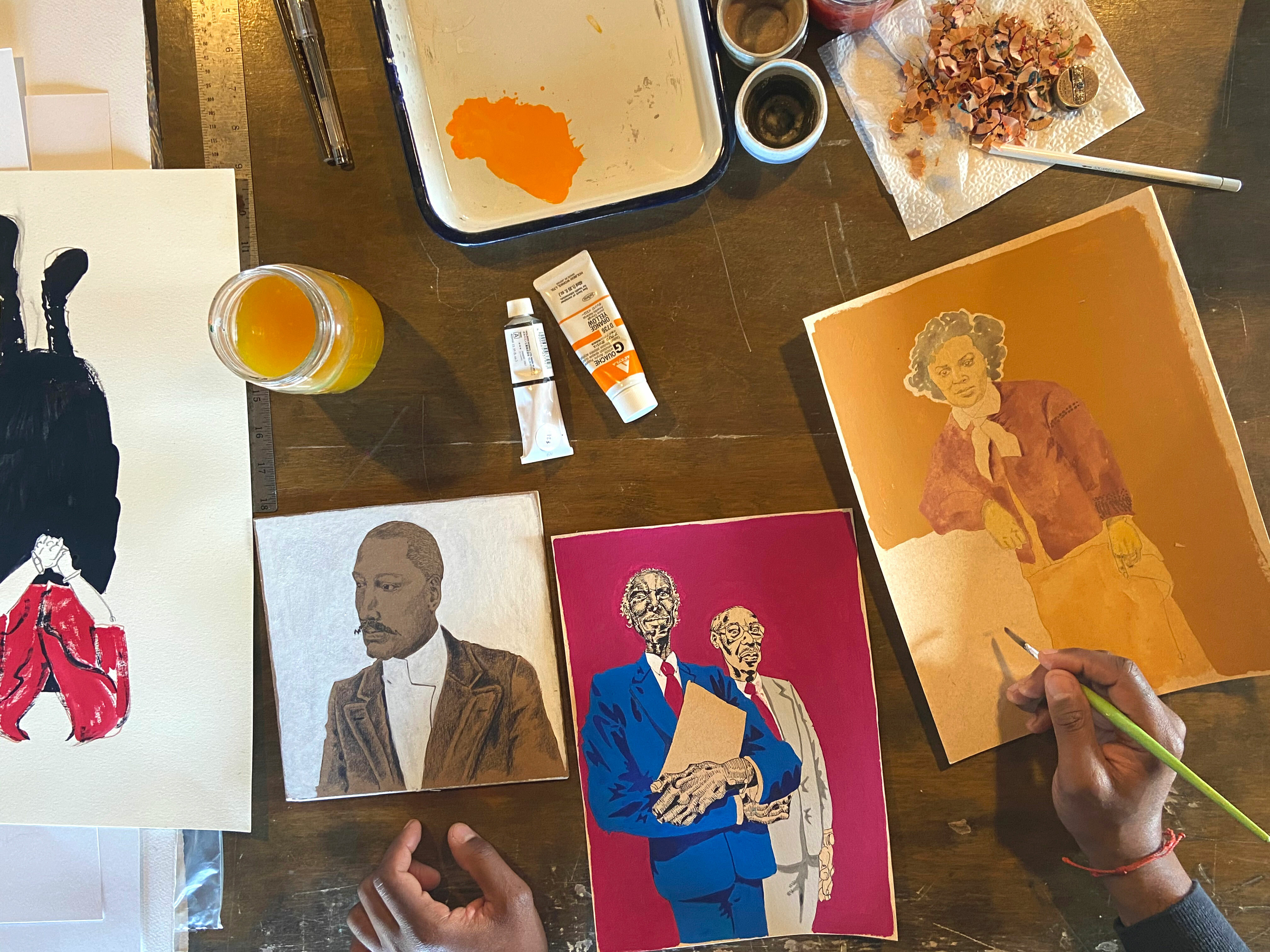
Artist George McCalman on Black history, creative blocks, and the luxury of hope
"It's a gift you can send to your slightly racist cousin, your Republican father, your apathetic aunt...and also those who don’t care about Black history."
I met him in 2005, when he became the art director of my crafty, grassroots Berkeley magazine, ReadyMade.
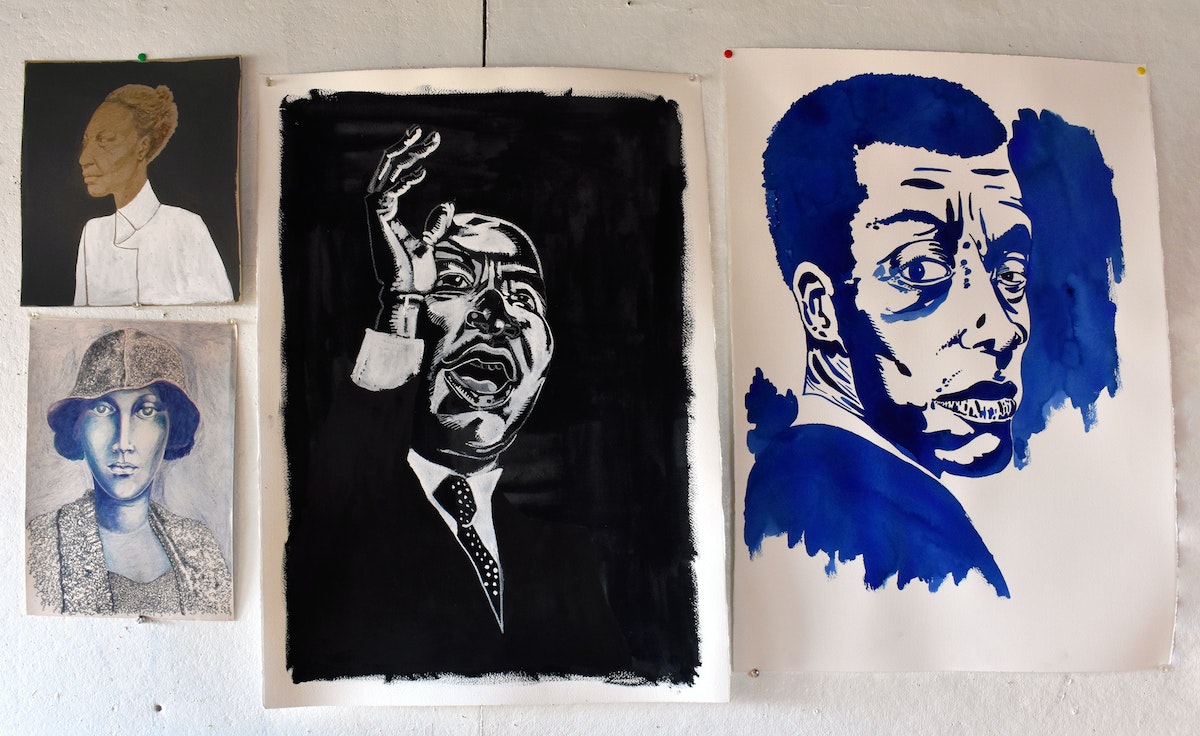
In the years that followed, we laughed and wept through one of the most fruitful creative collaborations of our lives. Then, in 2011, George strapped on a jetpack, waved goodbye to publishing, and lit out to start his own eponymous juggernaut, McCalmanCo. Aside from his fertility as a creative director, illustrator, and artist, 2020 was a year of honing “Observed,” his column for the San Francisco Chronicle, into a razor-sharp instrument of cultural commentary. One of his pieces shares the backstory behind his exhibition, “Tell Me Three Things I Can Do/Return To Sender,” a collection of bold, typographic renderings of messages he received from white acquaintances in the wake of George Floyd’s murder. I caught up with George in January, 2021, to hear more about an eagerly awaited new project: Illustrated Black History: Celebrating the Iconic and the Unseen, due out from Amistad/HarperCollins in October, 2021.
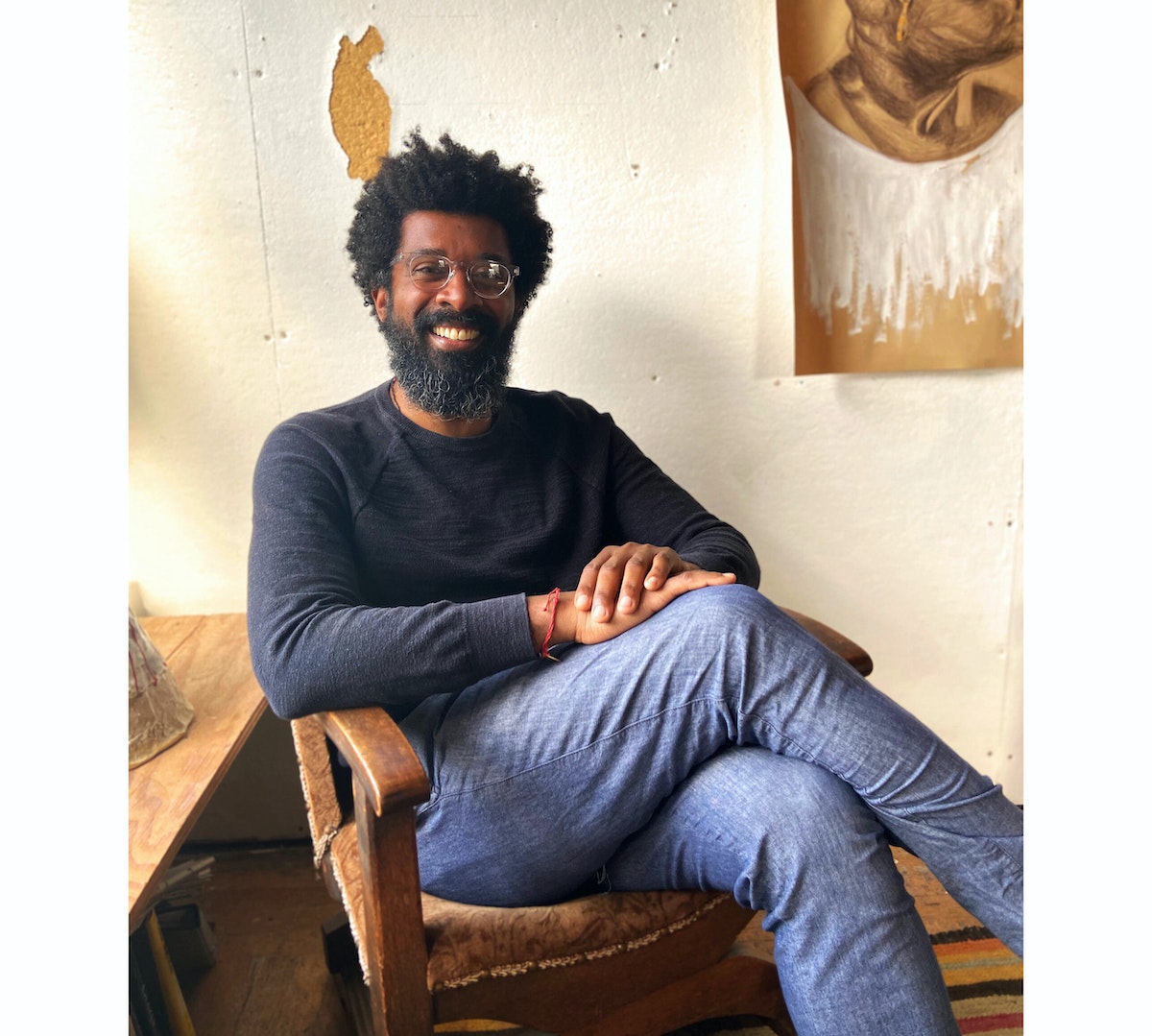
In one sentence, who are you?
A polymath trying to simplify his life.
What do you do? How did you learn it?
Too many things for this format! I’m a fine artist, illustrator, art director, cultural critic, editor, writer, and professor of graphic design. I also run McCalmanCo, a design studio that does branding for companies, books, and individuals. I learned all of those things through magazine military training. I started at the peak of magazine publishing in New York and left right at the sunset in San Francisco.
One story that sums up that experience was my very last day atEntertainment Weekly. I put in an all-nighter designing the cover story on Heather Locklear at Melrose Place. I had already cleared my desk, but I needed to be there to get it done. I came in at 8 a.m. and left at 8 a.m. the next morning. I said to myself, I never want to do that again. And I never did. San Francisco offered a version of that life without ever getting to that level of insanity.
What are your 3 favorite possessions?
My home is filled with art that my friends have created. This year represents the most time I’ve spent at home, and I realized I’ve constructed my home as an altar—a totem to both friends who have passed and those who are living. So, my entire home is my favorite possession. Also, my studio. And my friendships.
What does a typical work session look like?
Communication. A lot of communication. Because every day is atypical. What is consistent in how I approach anything I do is I try to make sure I have a perspective on what I’m doing first. Whether I’m starting an illustration, painting, doing a shoot for a book, if I don’t know what I’m doing, I stop. I’ve stopped meetings, conversations, illustrations, I’m always like, Wait what am I doing, who am I talking to? It makes everything I do better.
How do you get over creative block?
If I’m having difficulty it has to do with everything outside the creative process. It’s an emotional or somatic block. When I listen to my emotions or body, all the information is there. If my body is tired, I won’t draw for a week, rather than powering through. I am prolific because I’m tuned into the lessons I’m getting from my emotional or somatic state and I don’t challenge those things. But this is not something I knew when I was younger, only in the last 10 years. I think back and my body was sending me all those signals all along.
What was the last item on your to-do list?
I’m directing a photo shoot for Bryant Terry’s new book, so I’m currently organizing a zoom call with the team. The truth is that I’m never not working—I’ve fused my personal and professional life. I learned that from James Lord and Roderick Wyllie of the landscape architect firm Surfacedesign. They are a couple who are very different people, but inseparable. They move through life with no break between work and life—they will work through a glorious dinner and while traveling—but it’s not work that’s breaking them, it’s work that’s energizing them. That joyfulness in treating their work like it’s their choice rather than their burden inspires me.
How do you see the world in 2078?
I think the U.S. will still be a messy, unsatisfying experiment. The pandemic has transformed much of this world and it will be years before we see how that’s manifested. Two words thrown around a lot are hope and optimism. That’s a very American position. I don’t really think in those terms. Do I believe we are going to make progress? Yes. But we live in a country where people don’t want the progress, so we have to figure out how to live with those who don’t think treating people of other races equally is a good idea, or that paying for the health care for everyone is a good idea, or that letting people who enter this country become citizens is a good idea. How do we reconcile these polarities? It’s not optimism or pessimism, it’s just work. My white lady friends say “I’m so hopeful now,” and I think, how wonderful for you, what a luxury that you get to be hopeful.
What's your number one bucket list item?
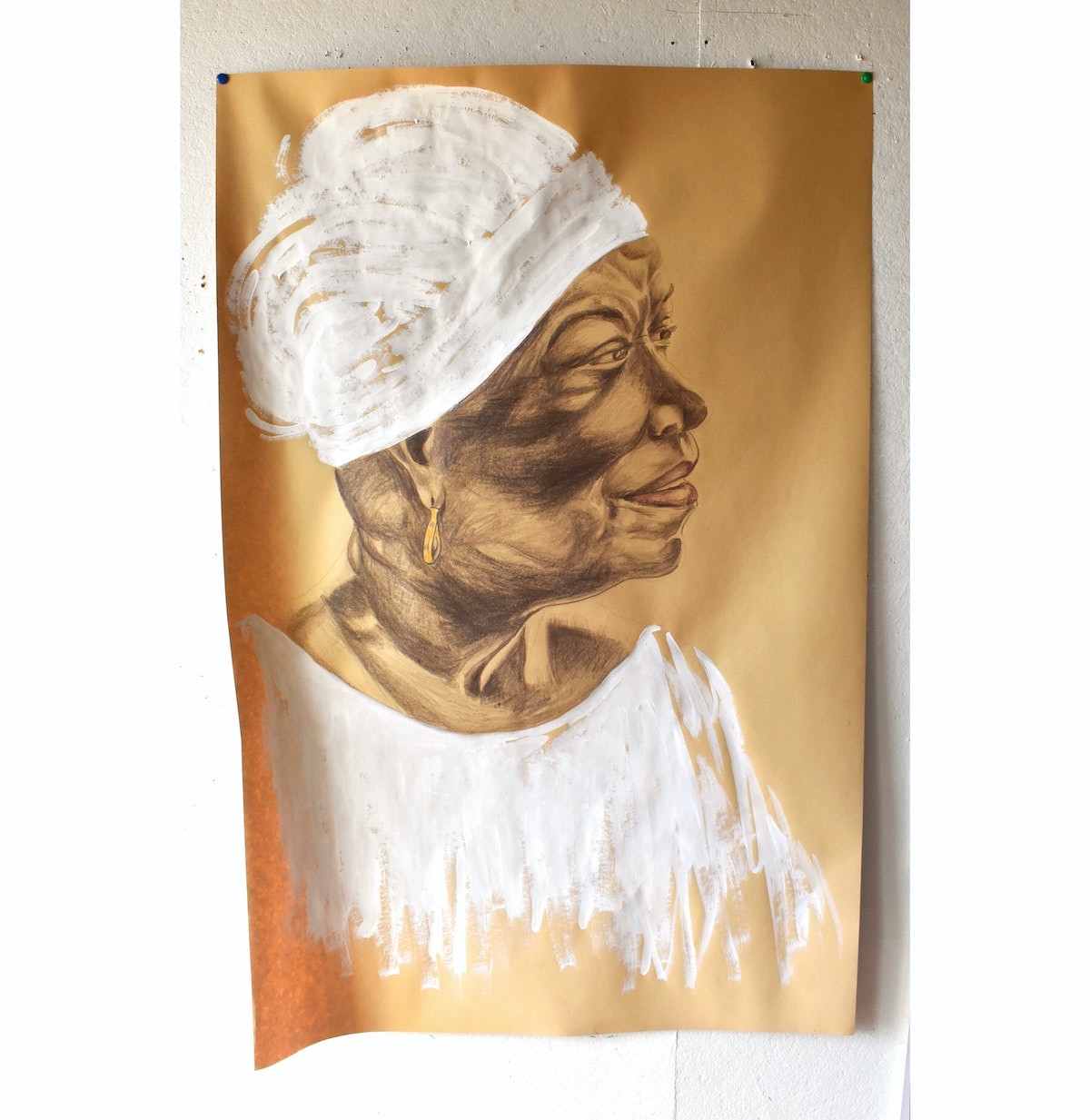
I’m doing it! To write and illustrate and design my own book. Much of Black history is reduced to 10 people, but the book I’m working on tells the story of 400 years of American history through the eyes of 150 Black pioneers. Their biographies are historical allegories in that you’ll see how the Black community, unlike the white community in this country, is very much a continuum of our ancestors passing down knowledge. It’s a contemporary telling, devoid of the dryness of historical writing. It’s celebratory of the sacrifices that some of these pioneers of business, film, art, writing and science made to enhance our ideas of democracy and justice. I’m treating them like they’re the Avengers. I hope everyone reads it. It’s a gift you can send to your slightly racist cousin, your republican father, and your apathetic aunt. I want it to be read by students and teenagers and 80-year-olds and also by those who don’t care about Black history.
Who are you creative crushin' on lately?
A short list of iconoclasts who are in their own lane:
- Bryan Stephensen of the Equal Justice Initiative
- The illustrator Lauren Tamaki
- New Yorker food writer Bryan Washington
George McCalman wasn’t always a multi-hyphenate. The art director-writer-illustrator started out as a traditional graphic designer, earning his stripes through the “military training” of New York magazines in the aughts.

Inside the design process to protect people’s health on public transit
What happens when unprecedented crisis is met with creative leadership.
To think back on how we “prepared”—as individuals, organizations, and communities—is a lesson in hindsight. Who could have imagined the new vocabulary, behaviors, and habits we’d all acquire in one short year?
In New York and New Jersey at that time, more than 280,000 people traveled each day on the Port Authority Trans-Hudson (PATH) train, one of the region’s most important public transit systems connecting New Jersey and New York. Squeezed into metal cars, commuters scrolled through headlines suggesting that an unremarkable trip across town might be unwise, if not dangerous. Transit agencies scrambled to establish new guidelines and produce communications to keep riders safe, but the virus was outpacing people’s capacity for behavior change at this scale and speed.
By April, the pandemic had gained a threatening grip on the New York City region, and PATH ridership had fallen off by nearly 95%. Stay-at-home orders took effect, and daily commuters hung up their office attire to the sound of sirens cutting through vacant streets. It wasn’t clear at the time how the disease spread, and how safe mass transit was. All the while, essential workers continued to pass through stations and trains each day, and their lives were on the line.
Transit operators have many contingency plans, but this unforeseen crisis required quick action: at PATH, leaders quickly implemented safety protocols such as overnight train cleaning, and posted signs and messages to let riders know what was being done to protect them, and what new behaviors they'd have to adopt to make sure those protocols actually worked. Everyone’s cooperation was essential, yet not all forms of communication are equally effective.
Try, try again
Inside The Port Authority of New York and New Jersey (PANYNJ), which operates PATH, one small department specializes in thinking about innovation within the institution and—critically—in how riders engage with the system. The Office of Continuous Improvement (OCI) had already been exploring and applying design thinking strategies when they decided to call IDEO to see how a more immersive, design-led approach could yield quick, effective solutions to the challenges COVID had delivered to the PANYNJ systems.
Lisa Dewey-Mattia, who heads the small OCI team, initially connected with IDEO Director Randy Plemel to develop a plan for an immersive, rapid collaboration that might yield some new ideas for communicating with PATH riders and facilitating behavior change. “It was a time when everyone in every industry was trying to figure out, how do we adapt?” Dewey-Mattia recalls, “We had this conundrum with regard to customer confidence and safety, and the physical design of our space. We were asking ourselves, how can we best meet the needs of the agency and our riders right now?” The small team worked remotely to workshop the highest-value, shortest-term problems identified across the whole Port Authority which could fit in a two-week sprint. Plemel remarked, “The OCI team has deep connections across the Port Authority’s different units. Designing for PATH riders and operators allowed us to focus on the most acute issue—confidence in using the system—and the learnings could be transferred to other Port Authority units like the airports and the Port Authority Bus Terminal.”
Large transit agencies aren't typically known for rapid innovation, but the only clear approach to such an unprecedented challenge was a willingness to experiment. When IDEO team members joined OCI and other subject matter experts from across the agency, the product they were working toward was not yet defined. What PATH leaders were looking for was an outcome: all riders wearing their masks properly, maintaining social distance, and heeding public messaging. How to get there wasn’t yet clear. “At that point in time, what we needed was to be able to simplify our communication to our customers. We didn’t need fancy or clever,” says Clarelle DeGraffe, the Director and General Manager of PATH, “But there’s also fear of backlash from customers that it’s too simple.”
With lockdowns and distancing preventing on-the-ground research, the team had to nix in-person interviews and spontaneous conversations, instead establishing remote communication that still yielded candid, comfortable interaction. “This was a very different project for Port Authority,” explains Morgan Keane, DeGraffe’s Chief of Staff. “So much was produced over two weeks’ time, and it was really driven by people being able to collaborate with each other, even remotely.” What became clear was that riders and workers needed to feel confident and safe on the train. Boosting confidence depended on communication strategy.
Over two weeks, IDEO and PATH staff immersed themselves in a design sprint to come up with nine concepts for solving their core challenges, from masking and safety information, to operational changes to the trains, to touchless payments. The large sprint team reviewed these concepts with a panel of advisors at PATH and the greater Port Authority, then pared them down into a series of three prototypes, which hinged on the critical behavioral mandates of COVID: 1.) Stay masked up; 2.) Maintain distance where possible, and; 3.) Practice compliance with stated guidelines.
Live prototyping in a high-stakes environment
PATH and OCI approached Port Authority leadership and asked for permission to use one of the smaller train stations as a place to test ideas. At Grove Street Station in Jersey City, signs went up alerting riders that they’d be seeing some changes around the station, and QR codes on the posters invited real-time feedback as riders passed through. “At every point our customers really understood that we were doing proof of concept,” says DeGraffe, “And that turned out to be positive. Our customers took it as a reassuring indicator that we were looking to pilot new things to keep them safe, and they appreciated us looking outside the box.”
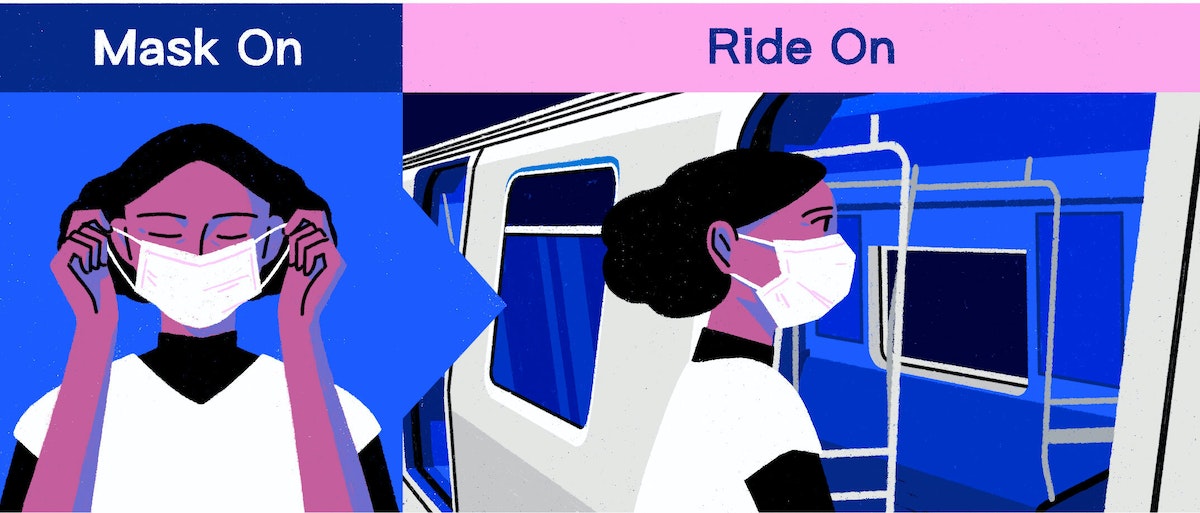
The most successful prototype was a “mask-up zone” at the station entrance, where riders could pause, outside the flow of travelers, to properly cover their faces before descending to the platform. People immediately adjusted their flow through the station to make use of this preparation area. IDEO Senior Design Lead Jeff Kessler, who led the PATH collaboration, points out that the most enduring concepts are the ones that can survive many rounds of doubt. “There’s a balance between protecting new ideas as they emerge and letting them take enough criticism to improve and work. Ultimately, the concepts that survive rounds of testing should improve the long-term operations of the system.”
Down on the platform, a concept designed to keep people apart didn’t prove as effective. Riders provided feedback that they didn’t want to comply with signs directing them where to stand while awaiting the train. Yet, many added, they were reassured to know that new safety measures were under consideration.
That insight led PATH to think beyond posters and signs, to what other means might be used to disseminate their messages. One team member, noting that there’s limited space for signs on trains, was inspired by the “I Voted” stickers people don on their shirts on election day. “Why not be a little cheeky and make stickers to hand out along with free masks? That way passengers themselves become communicators of the message.” The idea was relatively cheap to test out, and it was a sign to riders that the agency was thinking about their well-being.
Although the train is part of many people’s everyday lives, DeGraffe says it still comes as a surprise to some that train operators and leadership are truly listening to what they have to say about their experience. “Everyone thinks of it as their own little train,” says DeGraffe of PATH’s rider culture. “They post things to Twitter about their experience and we respond.” That personal, human outreach has the benefit of building trust and connection between riders and their transit system—a better way to foster adherence than by cracking down on non-compliant individuals. DeGraffe points to the increased tension around police interaction during this time. “We’d rather give out a mask than a summons.”
Lessons for the future
More than a year after COVID first rolled into New York and New Jersey, ridership on public transit hasn’t returned to pre-pandemic levels, but residents are slowly resuming routines and vaccination rates are raising a little hope into a shaken city. At PATH, the spirit of exploration and willingness to prototype have remained. In late January 2021, PATH announced a new diplomatic corps called the Mask Force Ambassadors, “a group of volunteers whose daily mission is to help keep riders masked, socially distant, and able to travel in the safest possible environment.” On those volunteers’ bright yellow t-shirts and in large lettering around the stations, riders see the simple message developed during the IDEO sprint: “Mask On. Ride On.”
PATH Chief of Staff Keane reflects on how similar adaptive responses have appeared in other areas of the city, and where she sees the impact of institutions that are slow to change and accommodate their communities. “During COVID, the streets are being taken over for outdoor eating, distanced interaction, bookstores with takeout windows. It’s interesting to think about new ways to do things,” says Keane, “And it’s important to test for the extremes: Say okay, can a really old person do this and a child do this? Can you get from an underground station to an outdoor plaza while pushing a stroller? The way to really bring this home for people is to have them walk through with a different perspective.”
That constructive empathy is exactly what Kessler hoped for from the PATH and IDEO collaboration. “This was a moment when if we got the nuances right it would keep people healthy and taking care of each other and giving each other respectful space on the train,” he says, noting how bravely PATH stepped into experimentation as a new route to safety. “It’s a good thing for design to be working on.”
Illustrations by Ran Zheng
In January 2020, news of COVID-19’s approach was building like a looming storm. That the pandemic was coming seemed clear, but when it would arrive, where it would appear, and how bad it would be, nobody could yet predict.
What disposable coffee cups can teach us about COVID-19 waste
We don’t have to sacrifice safety to meet our sustainability goals.
COVID-19 has fueled a whole new waste stream, putting additional plastics and other material into the environment and harming ecosystems, animals, and human communities as a result.
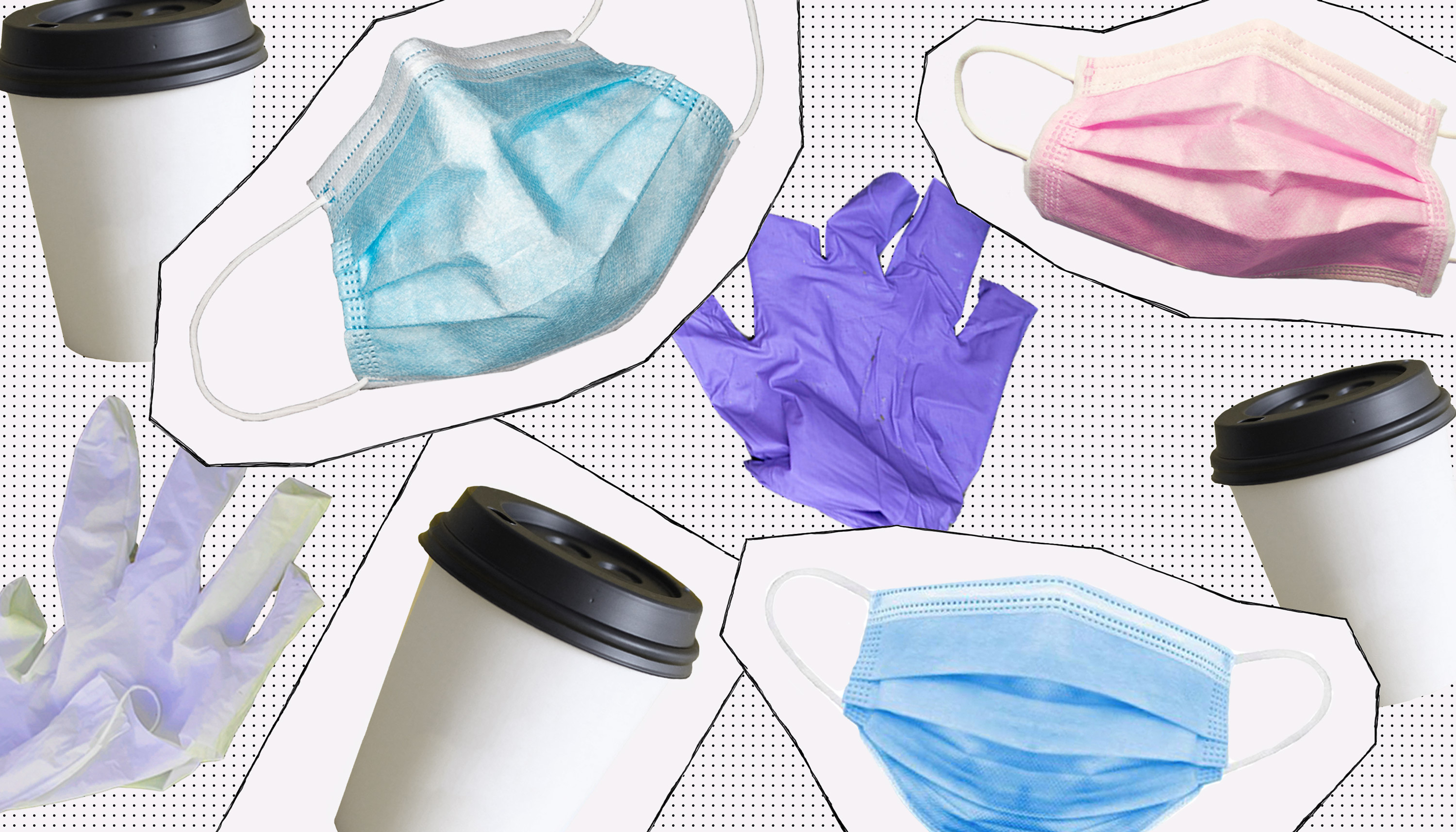
At the same time, those masks and gloves and other personal protective equipment (PPE) are critical to slowing the progression of the pandemic and keeping our front-line workers safe. They’re disposable, yet they’re indispensable—presenting us with a difficult tension between our immediate public health needs and the long-term repercussions of this massive waste problem. Gloves floating in the ocean like seaweed threaten already endangered marine species and pollute the world’s tap water, in time delivering new risks to human health.
But an apparent lose-lose situation like this can also become a rich opportunity area for human-centered design. How might we design PPE that is effective at keeping people safe without polluting the environment?
One source for models and inspiration lies in another realm entirely: coffee shops. By exploring other industries—a design tactic known as analogous research—leaders can get inspired by how others have addressed similar questions. Looking to analogs allows designers to move beyond their expertise to see issues with fresh eyes, building new levels of understanding to their present design challenge.
The to-go cup has a lot to teach about disposability, desirability, hygiene and convenience; and as a consumer product, it’s seen more sustainability-minded innovation than medical disposables. By looking at the ways the coffee cup has evolved, we can gain new insight for understanding what is possible in the heavily regulated, fast-paced, and high-pressure world of medical supplies, where safety and sustainability are both paramount.
Next-generation solutions for the humble to-go cup
As a product, the disposable cup has gone through several eras of change relative to design and behavior. Initially, to-go cups enabled convenience and efficiency. But nearly all of the to-go cups that exist today are made of a combination of materials that make them next to impossible to recycle or compost. They were designed without any thought to where they would end up after being used, aside from the landfill or incinerator.
Environmental concerns then sparked a movement encouraging consumers to bring their own reusable cup. Committed environmentalists were willing to do this, despite the personal compromise on convenience, but the trend failed to scale and meaningfully reduce waste. Some cups are now made of materials that can biodegrade or be composted, but both processes are difficult to achieve at a global scale due to cost and lack of access and infrastructure.
In 2018, OpenIDEO launched a design challenge to invite new ideas for material and processes that could lead us into a more sustainable era for to-go beverage containers. The NextGen Cup Challenge represented a new horizon for sustainability that goes beyond the product to offer a vision for a system and business model where circularity is the driving principle. Contrary to the linear “take-make-waste” model of manufacturing that has characterized industrial products for centuries, a circular economy designs waste and pollution out of the value chain, keeping products and materials in repeated use, and regenerating our natural systems.
The NextGen Cup Challenge asked the question: How might we design the next generation fiber cup to be recoverable on a global scale, while maintaining the performance standards we know and trust? The Challenge, managed by OpenIDEO, was part of the NextGen Consortium, a global initiative convened by Closed Loop Partners and founding partners Starbucks and McDonald’s. The 12 winning solutions—categorized into innovative cup liners, new materials, and reusable cup service models—have the potential to turn the 250 billion fiber to-go cups used annually from waste into a valuable material in the recovery system.
When we see masks and gloves in the gutter, we can imagine a similar trajectory for innovation. But there’s a different set of barriers—psychological, regulatory, supply chain, and safety—to contend with. The question becomes: How can we apply circular design principles in the healthcare industry to enable a more robust and resilient supply chain of PPE, which can be safely reused to become regenerative rather than wasteful? Based on the learnings from the NextGen Cup Challenge, we see two rich areas for design: redesigning PPE products to be sustainable and adopting a systems-level perspective.
Redesign or repurpose the product itself
The NextGen Cup Challenge sought manufacturing and material innovations and technologies that improved the existing to-go cup, making it more valuable at the end-of-life, whether through recycling, composting, or biodegrading. For consumers, baristas, and retailers, these new ideas would require little behavior change—they offered the same convenience of the single-use cup, just made of something new and more sustainable. SoluBlue, for example, is a winning NextGen Cup Challenge solution that produces plant-based, food-grade, and non-toxic materials that quickly biodegrade after use, and can replace some forms of single-use plastics.
The same concept is hopefully being applied to PPE: Recently, the Canadian government announced two business challenges for the private sector that offer funding for PPE that won’t end up in landfills. One calls for businesses to develop compostable surgical masks and respirators that can be mass-produced for healthcare workers. The second challenge seeks technologies for "efficient and cost-effective" PPE recycling, which can transform potentially contaminated PPE into "valuable materials that can further be used in manufactured products.”
If Solublue can make a cup that biodegrades after one use, why couldn't we do the same with a face mask or a pair of gloves? Furthermore, as we consider redesigning PPE to be safe and environmentally-friendly, there is not only an opportunity to redesign the product, but to extend its value to other products. Binish Desai, for example, is an entrepreneur and environmental activist based in New Delhi who is transforming used PPE into bricks for homes and factories. Desai installs bins outside of apartment buildings and retail shops to collect used masks and gloves, then leaves them untouched for 72 hours. The gear is then sanitized, shredded, and sanitized again. Lastly, the sanitized scraps are mixed with paper sludge and a binding agent to form various brick molds.
Good intentions must be coupled with systems thinking
Sometimes the product alone—or a byproduct of it—can’t solve the problem. We’ve had the technology to produce a compostable cup or mask since long before COVID-19. But as demand for PPE outstrips supply, it becomes critical to consider the system surrounding the product to enable recoverability and reusability. In neglecting to design for how a product fits into the larger ecosystem, we risk exacerbating the issue. When items are improperly disposed of (for example, when a compostable cup is recycled, which is common) it can contaminate the entire bin, dumpster, and truckload with byproducts that devalue the actual recyclable material. This sometimes results in full batches of recycled materials being removed from the recycling line and sent to landfills due to a single incompatible cup, as it has potentially contaminated the entire collection.
New solutions need to be designed in tandem with new infrastructure, or designed to work within the existing system. Muuse, a NextGen Cup Challenge winning idea, created a platform for reusable cups that works within restaurant networks with the goal of eliminating single-use waste. Before the pandemic, consumers could “borrow” a cup from one of Muuse’s cafe partners, such as Equator Cafe in San Francisco, by scanning the QR code on the cup. Within the designated time period, the customer returned it to any of Muuse’s 40 cafe partners in San Francisco. Muuse inspected and cleaned the cups, and collected late fees through tracking technology, seamlessly integrating into the way the restaurant system operates.
Muuse can offer inspiration for redesigning PPE to be both safe and regenerative. Most people know that doctors wear sterile gloves during surgery. But fewer realize that surgeons can be particular about the gloves they use (e.g. latex, non-latex, nitrile, vinyl). In design research, we’ve noticed that some physicians prefer specific layered combinations of gloves, such as latex over non-latex or vice versa. When we look at other trades, many professionals have their own pair of reusable, personalized gloves, like welders, chefs, and athletes, that are sustainable, help them excel in their craft, and keep them safe.
How might we enable this for doctors? What new innovations—in reusable design but also in the washing and sanitation procedures that already exist in hospitals for bedding or scrubs —might achieve safety and waste elimination, while also enhancing physician desirability and performance? To support frontline workers during the coronavirus pandemic, Ford pivoted to produce face masks, shields, and ventilators using the same air filtration technology the automaker uses to produce the ventilated car seats found in F-150 trucks, putting their existing materials towards an urgent global need. Taking a cue from Muuse, what if a new system was designed to enable frontline workers to return these masks to hospitals, and hospitals to then return them to Ford? This reusable system would be keeping key materials in use in both the auto and medical world.
A future that is designed for both sustainability and safety
Alarming photos of masks and gloves scattered on sidewalks and washed up on beaches are a reminder that COVID-19’s impact spreads far wider and deeper than we yet realize. The virus and its reverberations have touched every aspect of life on the planet. But human safety does not have to come at the expense of environmental damage and climate change.

Design encourages us to look to unlikely analogs, like the unassuming and ubiquitous to-go cup, to be inspired to create a world in which safety and sustainability can co-exist, offering protection to all.
The landscape of litter has shifted over the past year. The pandemic has made disposable masks and gloves as commonplace as plastic bottles and cigarette butts on city streets.
Our top 10 stories of 2020
The top stories you read and shared most this year.
In between refreshing our local COVID-19 dashboards and the U.S. election map, we’re proud to have produced another year’s worth of Octopus stories. Thank you for stopping by to read our design blog. Below are the 10 stories you loved the most in 2020. And here’s to a calmer, kinder 2021.
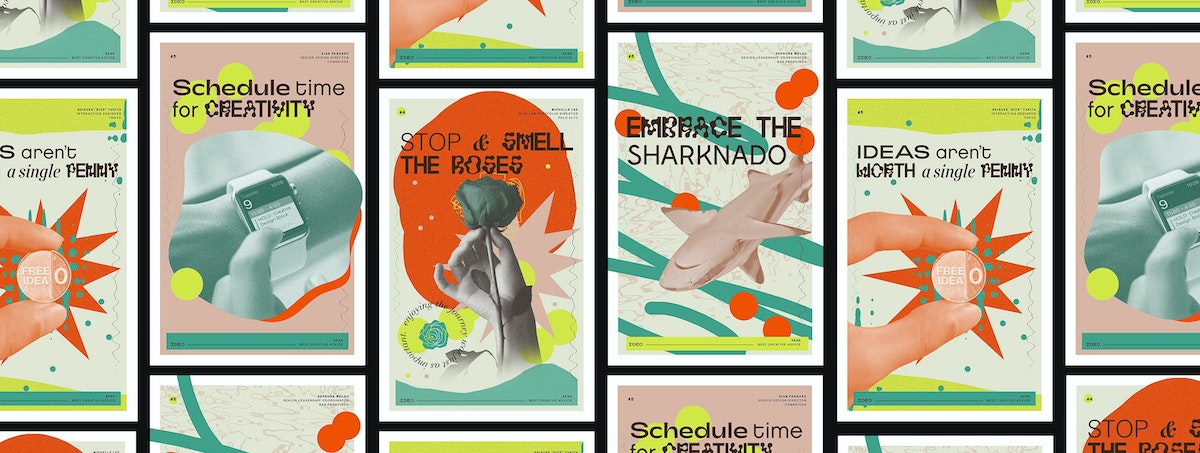
IDEO Designers Share the Best Creative Advice They've Ever Received
There’s no shortage of inspirational quotes, but meaningful, personal advice can change a career and a life. A preview of some of the creative advice IDEOers shared in this piece: “A bad movie is better than an unfinished movie,” and, "When you feel stuck, draw a card and do whatever it says."

4 Ways to Work Together When We Can’t Be Together
Sometimes while watching TV episodes filmed before the pandemic, I get pangs of fear when people shake hands or stand less than six feet apart. Everything has changed in the last 10 months or so. This story contains early ideas on how to navigate design work during a pandemic. A question we’re still asking from this piece: “As designers, how do we design our way through this?"
24 More Things We Want to Redesign
Applying for a job. The news. Hot dogs. IDEOers want to redesign those, plus 21 other things.

How a Kid's Perspective Improves Design Research
Whether your design research is happening in a boardroom or at an amusement park, author Ben Swire argues that adding a kid’s perspective can produce better design outcomes. Although this piece is about his daughter, he is not biased at all.
4 Reasons Warm-Ups Will Fundamentally Change Your Work
Olivia Vagelos is IDEO U’s resident warm-up expert. Not only does she have an entire database of exercises, but she also designs them on the spot. Her firm belief is that every meeting deserves a warm-up—read the piece to learn why.

How Would You Reimagine Learning? 5 Visions for Our Post-COVID Future
The coronavirus pandemic has pushed an estimated 1.6 billion students out of the classroom. As teachers adjust to this remote reality, OpenIDEO asked a question: “How might we adapt to remote learning while also using this moment to radically reimagine what we need our education systems to be?” This story shares five ideas to shape this future.
10 More Documentaries That Will Spark Your Creativity
Devin Peek is a visual connoisseur, so you can trust her documentary recommendations are well-vetted. (She even saw one of these at its premiere!) This post shares 10 more documentaries to spark creativity; her first post, from way back in 2016, is one of the Octopus’ most popular of all time.
4 Exercises That Prove Listening Matters
It’s noisy out there. Drawing from Krista Tippett’s work, author Allison Press designed and adapted four exercises that dive deep into the transformative power of listening.

How Quitting Plastic Got One Designer Thrown in Mall Jail
There are some surprising benefits to quitting plastic: IDEOer Shuya Gong saved money and produced less trash. On the flip side, she almost got thrown in mall jail, so take on the no-plastic challenge at your own risk.

5 Tools to Design for Digital Confidence
Every single day, one million people use the internet for the first time. IDEO’s Jason Fund and George Joseph share a set of tools, created alongside Google and the Bill & Melinda Gates Foundation, to help designers build digital services that work for everyone—even if your user is touching a smartphone for the first time.
In last year’s top 10 stories post, my colleague Saige wrote, “We can’t wait to see what 2020 has in store.” Upon reflection, I probably could’ve used more time to prepare for what the last 12 months delivered.

Lindsey Turner
I’m passionate about building brands, products, and experiences that help organizations show up with meaning and momentum.
I help organizations cut through complexity by shaping how they show up, through brand strategy, identity, and storytelling.
Working at the intersection of brand and business, I bring an editorial eye and a bias toward making—turning ideas into tangible experiences that people can understand, trust, and believe in.
My work spans government, healthcare, financial services, media, and consumer goods, from launching Gen Z-focused ventures to building innovation labs and reimagining legacy brands. I relish moments of ambiguity and enjoy translating across teams, perspectives, and priorities to move ideas forward.
I started my career in editorial and digital design, shaping cross-platform experiences and identity systems in publishing and agency environments. That foundation still shapes how I work today: I’m detail-oriented, collaborative, and overreliant on the Oxford comma. I hold a BFA in Visual Communication from the School of the Art Institute of Chicago.

Rachel Young
My work helps organizations see who their products aren't working for—and build the will and the tools to do something about it
For 25 years, I've asked the same question: Who does this design exclude—and what are we going to do about it?
My work spans human-centered strategy, inclusive design, and qualitative research, with clients ranging from Microsoft, Google, and Verizon to the National Science Foundation, and San Francisco Unified School District.
Before IDEO, I taught elementary school in East Palo Alto and spent a decade doing design work with social service organizations—where I learned firsthand what it costs people when systems are built without them in mind.
I am currently writing User Error, a nonfiction book about digital access and the design decisions behind it. I live in Oakland, California.

Brian Pelsoh
I lead with craft, ensuring our work is creatively excellent: rooted in deep human insight and imagination, while also grounded in the realities of business and technology.
My expertise spans brand, communication, and product design across tech, education, the arts, and social impact.
I believe great work demands both high-level vision and obsessive attention to detail, and only happens through collaboration.
I bring an inclusive, hands-on approach and a deep understanding of business, which enables me to consistently deliver excellence while always asking why.
Before joining IDEO, I worked at the brand firms Pentagram and VSA Partners. I began my career as a designer, leading teams at the School of the Art Institute of Chicago and the Milwaukee Art Museum. I hold an MFA in graphic design from Maryland Institute College of Art and a BFA in communication design from the Milwaukee Institute of Art & Design, and have taught at some of the best design schools in the US.

Tony Wong
I am responsible for IDEO’s long-term success in China and working with clients to use design as a tool to enable growth.
I am responsible for IDEO’s long-term success in China and working with clients to use design as a tool to enable growth. Specifically, I have helped Chinese companies design holistic brand solutions through the development of their products, communication, services, and innovation teams, and I have helped multinationals expand their presence and influence in China.
I advise global leaders on developing China-led innovation and capabilities.
In over 15 years in IDEO Shanghai, I have worked on projects that use design to elevate the quality of the experience of healthcare products and services, streamline processes that increase productivity, create spaces and programs that promote and enable inclusive communities, and build next generation mobility solutions that are planet-positive.
Before joining IDEO, I worked at Philips Electronics and the Electrolux Group in Italy, the Netherlands, and Singapore on a number of breakthrough commercial products. I am a member of the Young President Organization in Shanghai.

Building a personal AI for the messiness of life: Sida Li
Most AI products today are built for work—a space with clear problems and established systems. One founder noticed a gap: personal life is messier, harder to systematize, and mostly left behind by the AI boom. So she built Cue, a personal AI that lives inside iMessage and group chats, to go where the other tools haven't.
In this episode, Becca Carroll, IDEO's Chief Strategy Officer, talks with Sida Li, co-founder and CEO of Shared Context Lab, about staying anchored to a human need while the technology around her keeps changing shape, why she treats her business model with the same rigor she'd bring to a product, and what it feels like to build a company at this particular, disorienting moment in AI.
The conversation also gets into how Sida makes design decisions: the language Cue uses to describe itself, the tradeoffs behind building inside iMessage instead of a new app, and a real story about a business idea that didn’t pan out.
This is the second in a two-part series profiling founders from IDEO's Startups-in-Residence program. The first conversation is with Johannes Seemann, founder of Sooner, on designing GenAI for the emotional side of money.

Designing GenAI for the emotional side of money: Johannes Seemann
Most personal financial tools are built to run the numbers and optimize towards a budget. While that works for some, most people experience money as a lived relationship that does not neatly fit into a spreadsheet. Johannes Seemann and Becca Carroll discuss why money is emotional before it is mathematical, and what a human-centered approach to building a generative AI financial product looks like in practice.

The curious leader's edge in uncertainty: Scott Shigeoka
Mina Seetharaman talks with Scott Shigeoka, author of Seek and Head of Curiosity Cultivation at the Eames Institute, about what distinguishes genuinely curious leadership from performative curiosity, how power dynamics shape curiosity, and why practicing curiosity can restore energy rather than drain it.

How constraints make us more creative: David Epstein
Mina Seetharaman talks with David Epstein, author of Inside the Box and Range, about why total freedom often produces average work, how leaders can design useful limits on purpose, and what organizations such as General Magic and Pixar reveal about the relationship between boundaries and creativity.
Looks like you might be in search of something very specific?
Or reset the filters above and try another angle.
Here’s some random inspiration

Podcasts about creative leadership

Articles about the power of prototyping
