
.svg)



Reintroducing The Lawrence Hall of Science
A lively new brand reenergizes a STEM learning institution.
Named after Ernest O. Lawrence, UC Berkeley’s first Nobel Laureate, The Lawrence Hall of Science’s wide-ranging products, services, and tools developed organically over half a century. To begin to make sense of the breadth and depth of its offerings, IDEO asked leadership and staff to surface the myriad activities, audiences, and relationships with external partners, enabling the group to visualize—and make sense of—the totality of The Lawrence brand.
During in-depth research with parents and kids, educators, and experts, IDEO discovered that each of these audiences had distinct mindsets. Parents and kids engaged with The Lawrence to explore, have fun, and dive deeper into a specific topic. Educators utilized it for professional learning opportunities and to discover new, exciting classroom tools. While experts, including UC Berkeley faculty, STEM educators across the US, and funders, viewed the center as a resource for best-in-class STEM education research. The mindsets highlighted The Lawrence’s unique capabilities, but the complexity also created some opportunity areas, including ways to use storytelling to create emotional resonance around The Lawrence’s core values and how to design a unified narrative to connect the dots across audiences and offers.
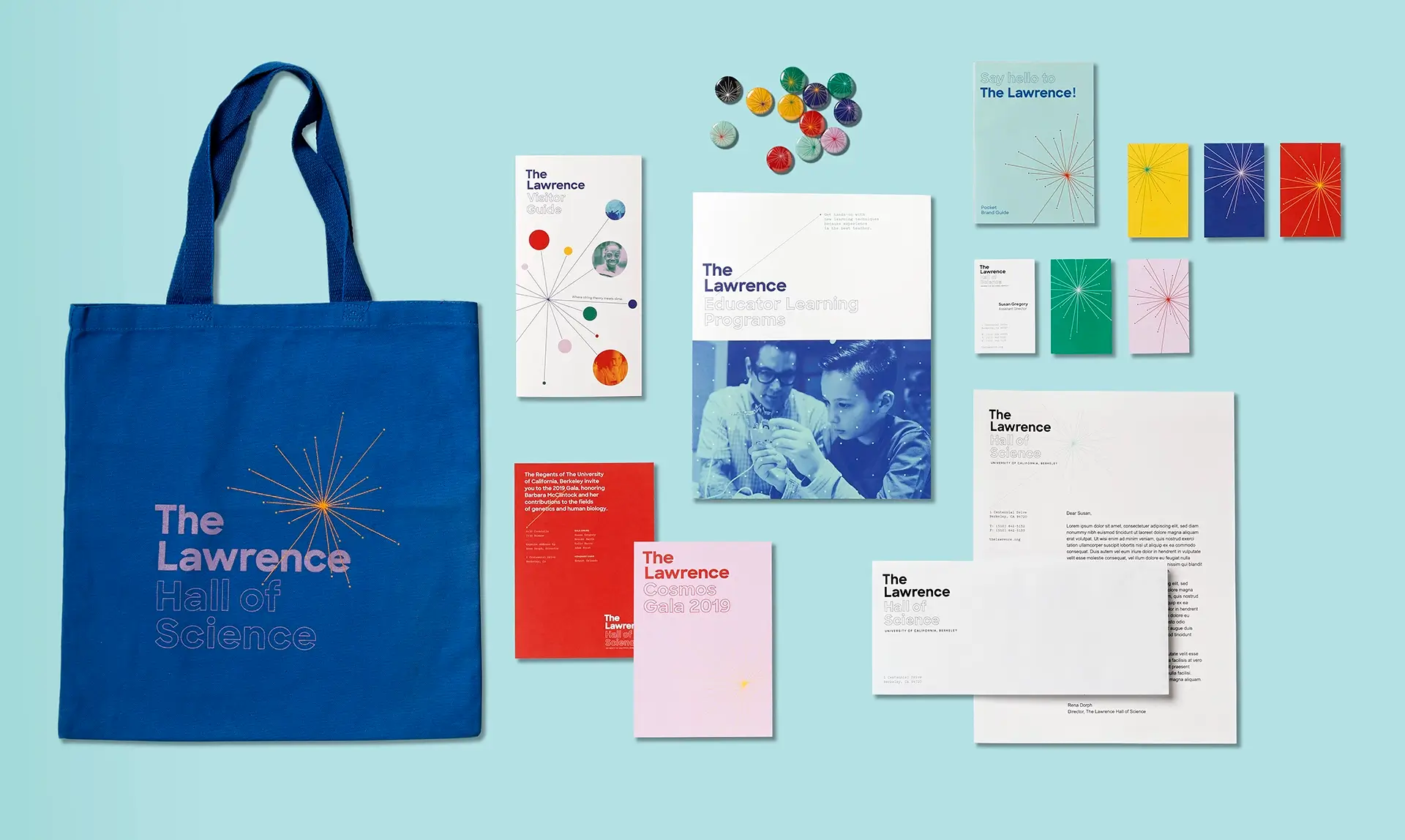
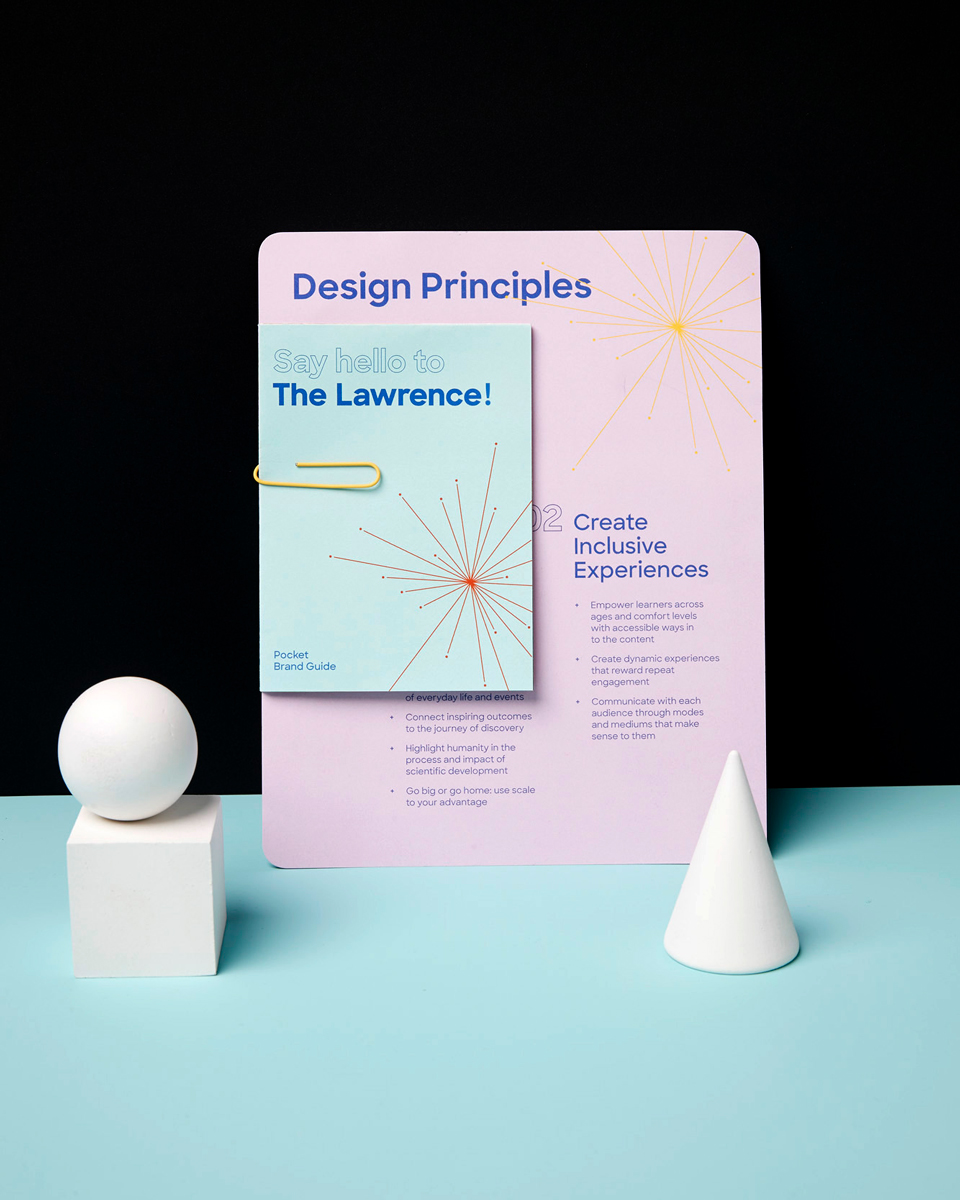
Building on its strengths as an institution and the identified opportunity areas, IDEO created a modern, vibrant, and flexible brand that strategically and visually unites all of The Lawrence’s offerings, working across digital and physical media. Grounded by a grid system, the updated brand identity is simultaneously rigorous and fun, featuring a bright color palette and signature retro-cool super-nova mark. Different offerings are bundled together based on different audience needs, preventing confusion and easing navigation. Even the name of the science museum, The Lawrence Hall of Science, was updated to a more contemporary and approachable, The Lawrence, inspired by The Met.
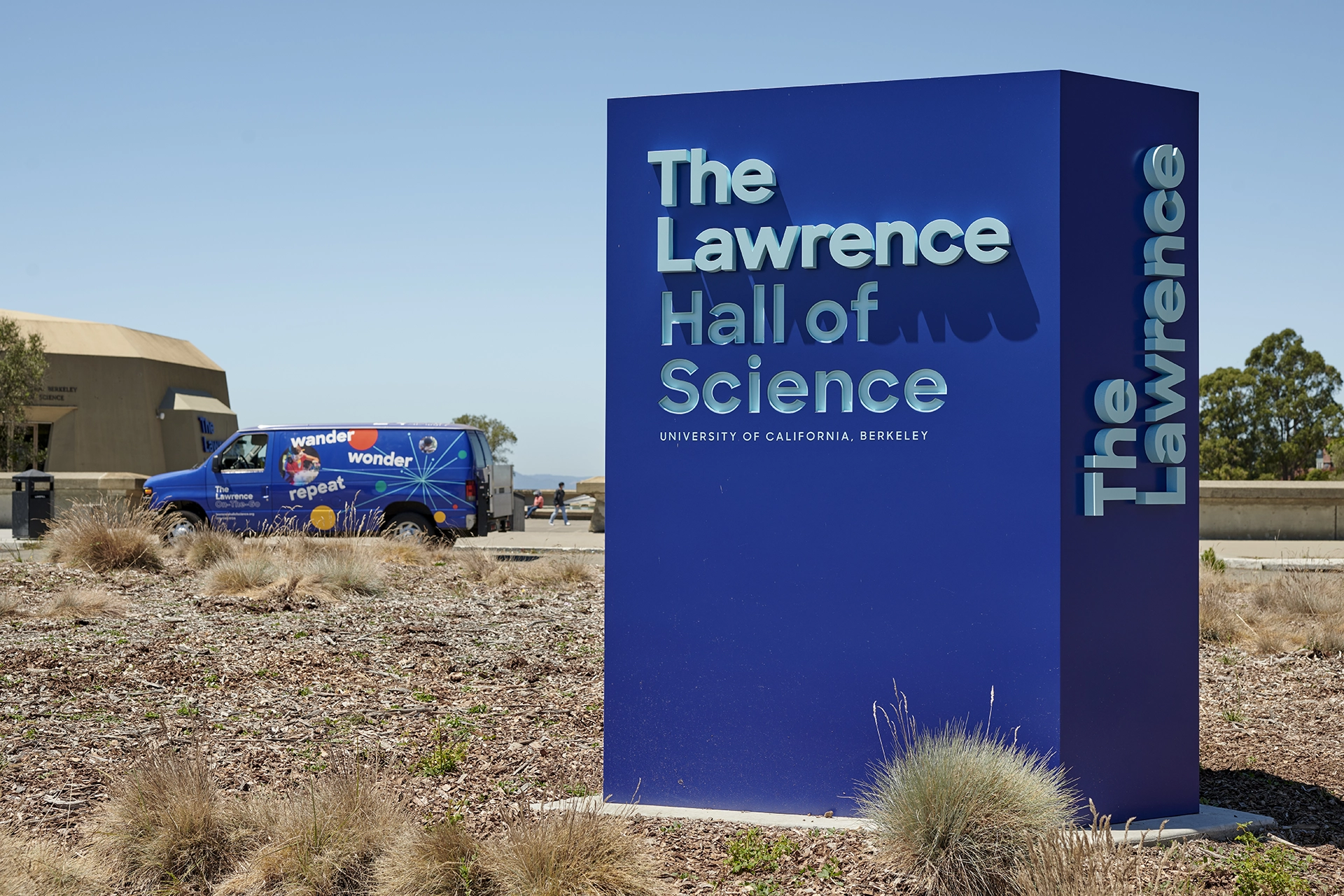
The Lawrence unveiled its new brand with much fanfare in late 2018 as part of its year-long 50th anniversary celebrations. Visitors can see the updated identity across all public-facing elements, including The Lawrence’s website, curriculum and educator materials, letterhead, collateral, and exhibition and wayfinding signage. The redesigned brand has been credited with bolstering the popularity of the science center among families and schools and causing ticket sales to return to—and exceed—pre-pandemic levels. Internally, the rebranding effort has helped generate excitement and energy across departments, helping solidify a collective future strategy and vision for its next 50 years.

The Lawrence Hall of Science’s diverse offerings had grown extensively over the decades, creating a confusing and disjointed experience for its various audiences. On the eve of its 50th anniversary, Lawrence leadership sought a brand refresh to better connect with its target audiences and differentiate itself in the STEM education ecosystem.
Over $6M in new funding
raised to transform and modernize The Lawrence, thanks to IDEO's rebranding effort

Reinventing classic British pubs and inns
Greene King’s upscale Everly Hotels Collection combines modern comfort with local impact.
When Greene King approached IDEO in early 2022, it was (and still is) one of the UK’s leading hospitality brands, with over 2,600 pubs, restaurants, and hotels. At that time, consumers in the UK and other parts of the world were beginning to rediscover the joys of travel after years of pandemic lockdowns. Greene King’s newly formed Venture Hotels Team wanted to understand how guest expectations had shifted during Covid-19 and how a new customer-centric hotel brand and signature service experience might meet—or exceed—their expectations.
To get inspired, the IDEO team interviewed a range of travelers of different ages and backgrounds, met with hospitality and luxury experts, and conducted immersion visits, including visiting high-end hotels. The research revealed modern travelers want unique hotel experiences that cater to their curiosity, support local communities, and are environmentally sustainable. Luxury, which once meant “exclusive,” was now about enabling one-of-a-kind cultural experiences. Today’s travelers value inclusivity, accessibility, and well-being; they want to feel welcome, do things at their own pace and have thoughtfully curated options to choose from. They also expect hospitality practices to be ethical and sustainable, contributing to the welfare of local communities and the planet.
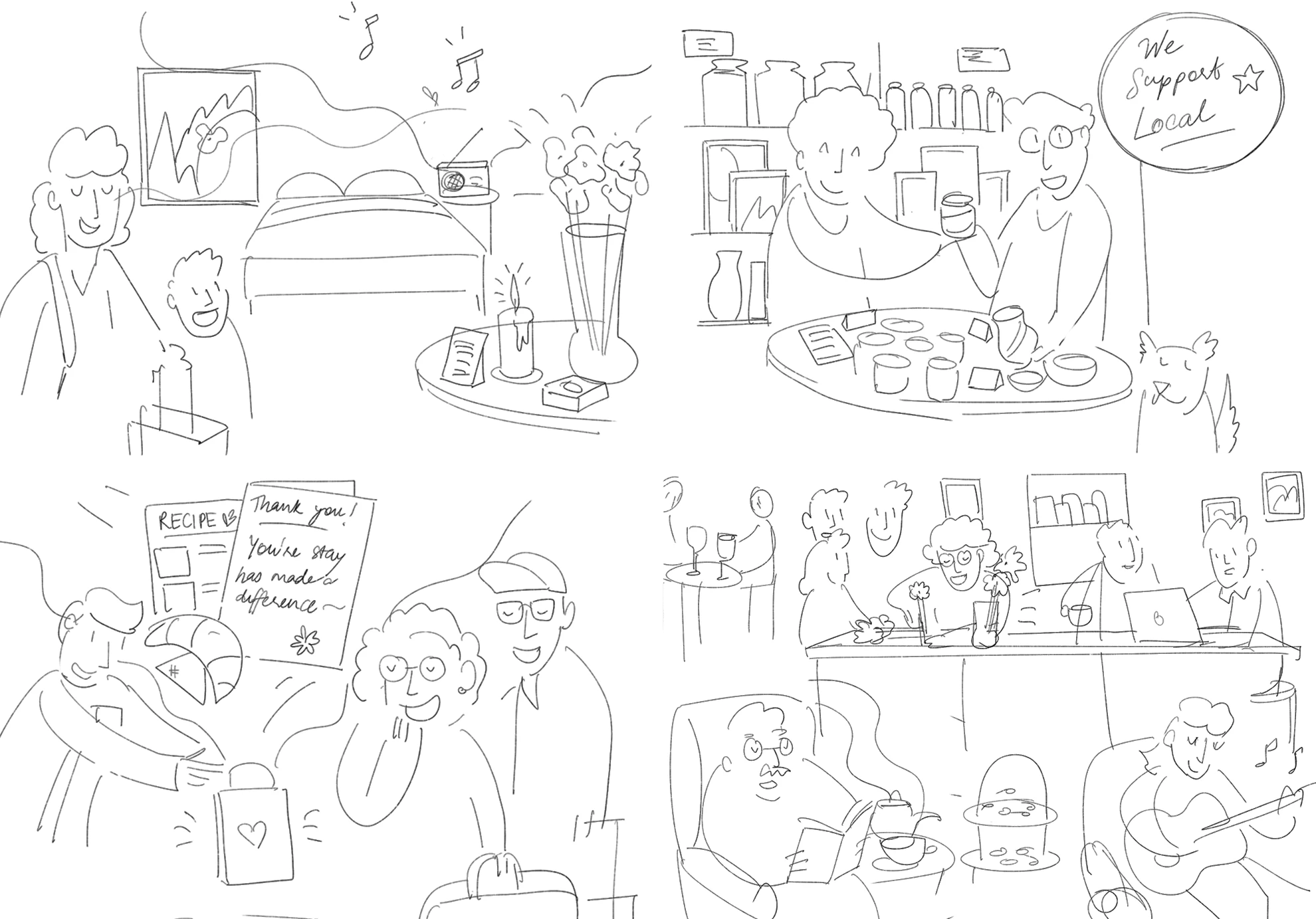
Building off this research, IDEO crafted a new entry proposition for Greene King’s new Everly Hotels Collection called “The Discover Collection,” which leverages the best parts of a classic British pub and inn—bespoke historic locations full of character, culture, and stories—while offering guests a modern experience from pre-arrival to departure, all grounded in supporting the communities they are in.
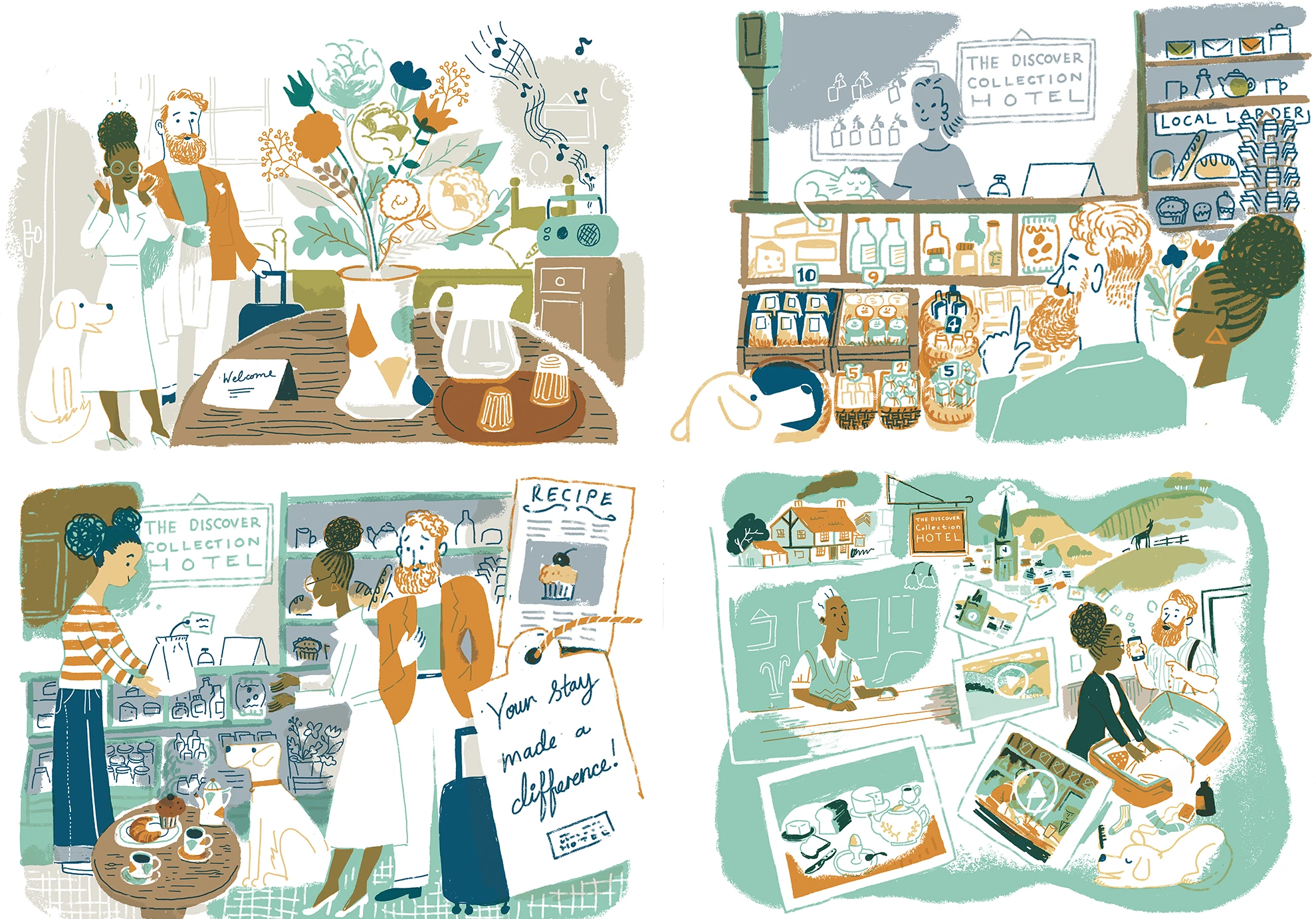
Signature moments include a warm welcome during check-in, as well as staff recommendations and local maps highlighting neighborhood gems. During their stay, guests enjoy expansive seasonal food menus, as well as a beverage menu that includes a wide variety of locally brewed, distilled, and crafted drinks by local suppliers. Rooms feature a smuggler's treasure chest with a surprise treat. Art and books from local talent are on display throughout the hotel, and local experts lead activities and events. Guests tangibly experience Greene King’s commitment to sustainability through its use of local materials, produce, talent, and partnerships, all designed to support the surrounding community. Upon departure, guests receive a personalized postcard.

In addition to the hotel experience moments, IDEO delivered branding recommendations for The Everly Hotels Collection, including visual identity and tone of voice that provide a cohesive look and feel for the collection of hotels while simultaneously showcasing each property's unique character. This was all packaged as an experience playbook, with design principles and briefs to help guide implementation decision-making across Greene King’s marketing, digital, interior design, and food and beverage teams.
A few months after the project ended, Greene King launched The Everly Hotels Collection. Its pilot hotel, The White Horses in Rottingdean, East Sussex, opened within the year. The new brand and guest experience strengthened bonds with Greene King’s loyal customers and first-time guests, ensuring the brand's relevance and appeal in a competitive market. More hotels are planned in the future in other scenic UK locations.
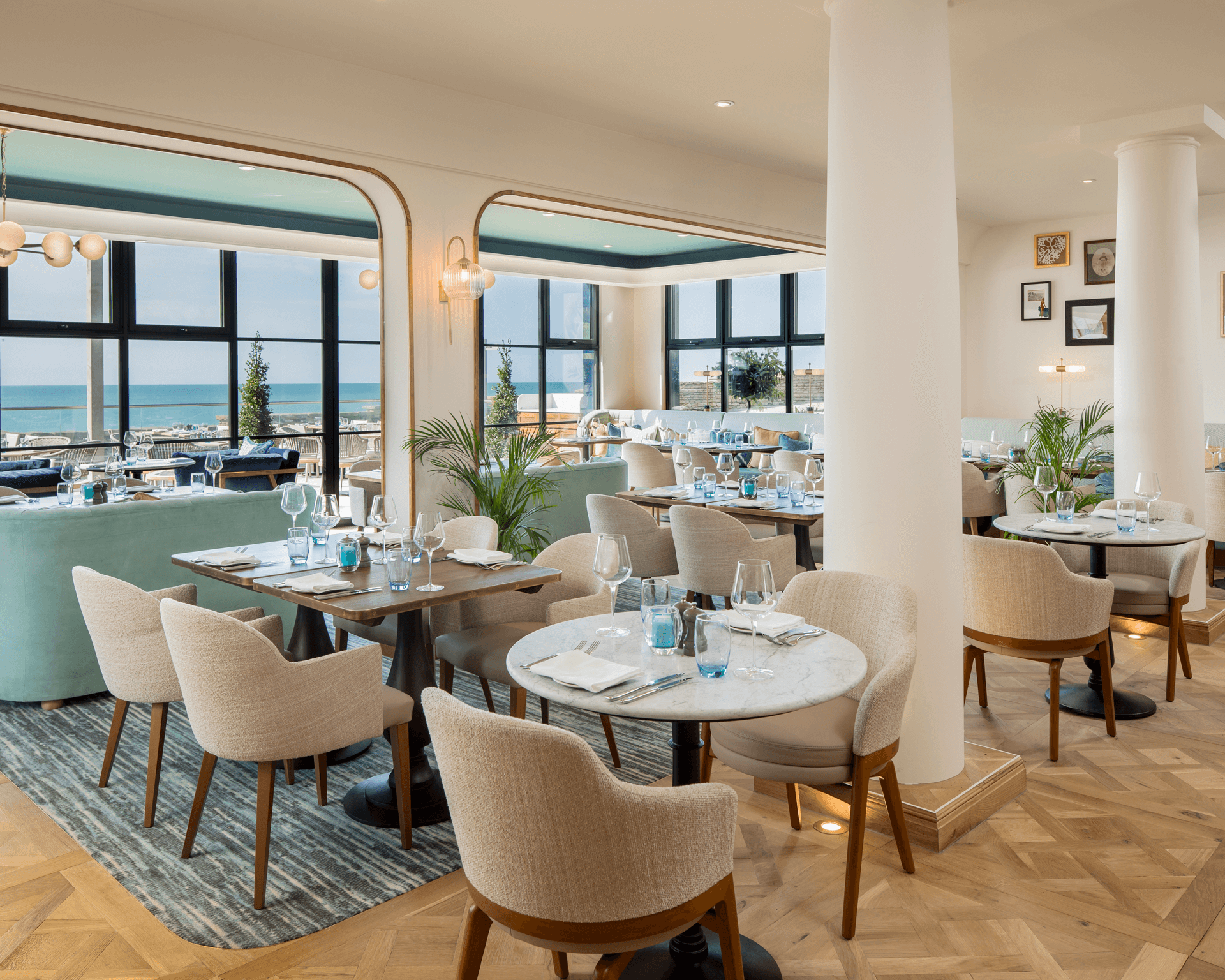

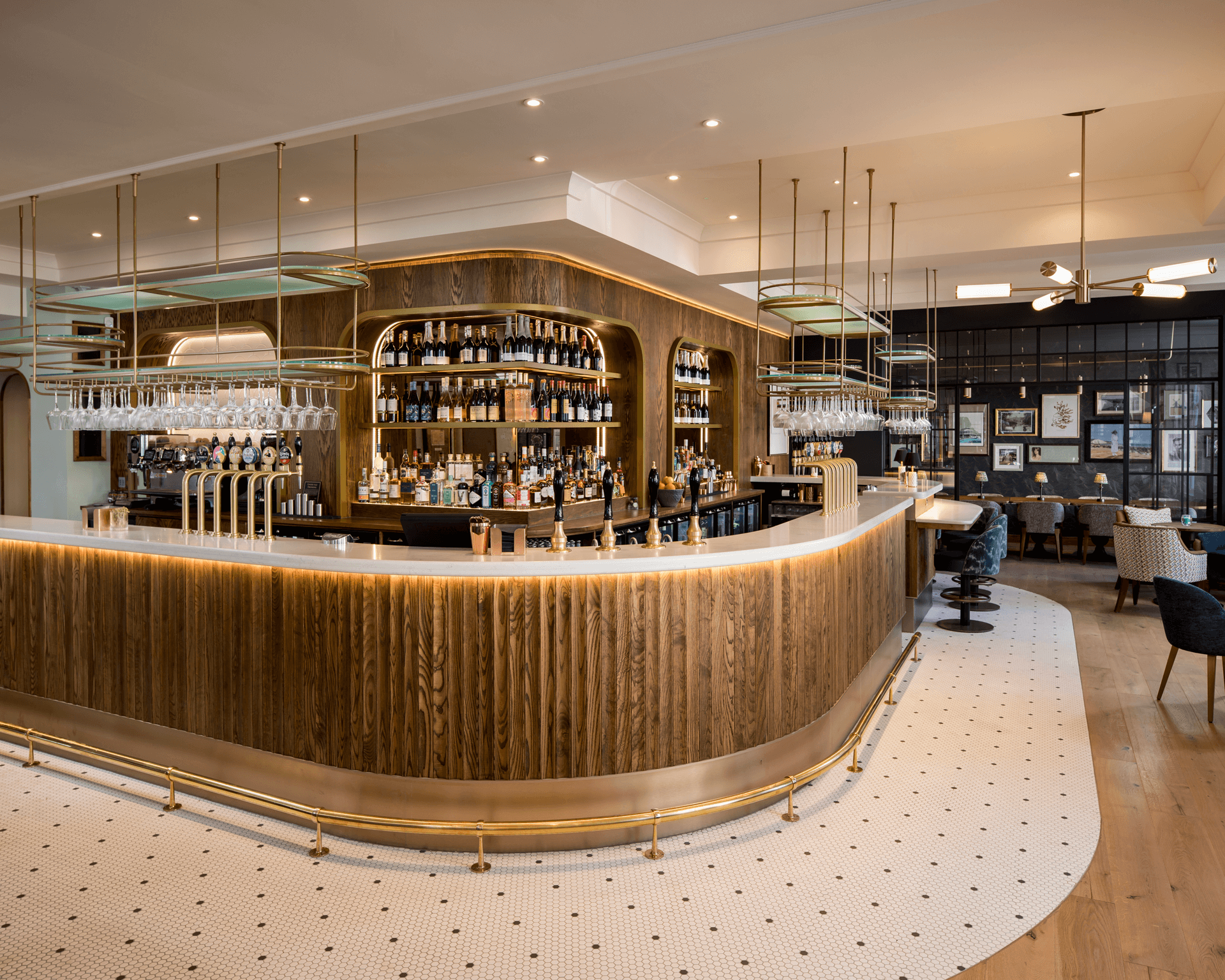
Greene King wanted guests to have a consistent brand experience while maintaining the storied charm that makes each property unique.
2 years
from concept to the launch of Greene King’s boutique Everly Hotels Collection
1 pilot hotel
The White Horses opened in Rottingdean in 2024

A new paradigm in data storage
Designing the iodyne Pro Data and Pro Mini hard drives.
The hard drive space is full of companies competing over technology and performance. But iodyne wanted to add another layer, focusing on user needs and product aesthetics to better position the company to meet the values of a broader audience and create compelling new entrants into this crowded market.
Together, IDEO and iodyne jumped into in-depth discovery research to learn more about the needs of their end users. The team sat down with photographers, videographers, and digital imaging technicians, asking questions about their file management systems, how they used hard drives in the field, and how they stored them for transport and at home. They also headed to the source, visiting studios and home office set-ups to understand the full range of potential use cases.
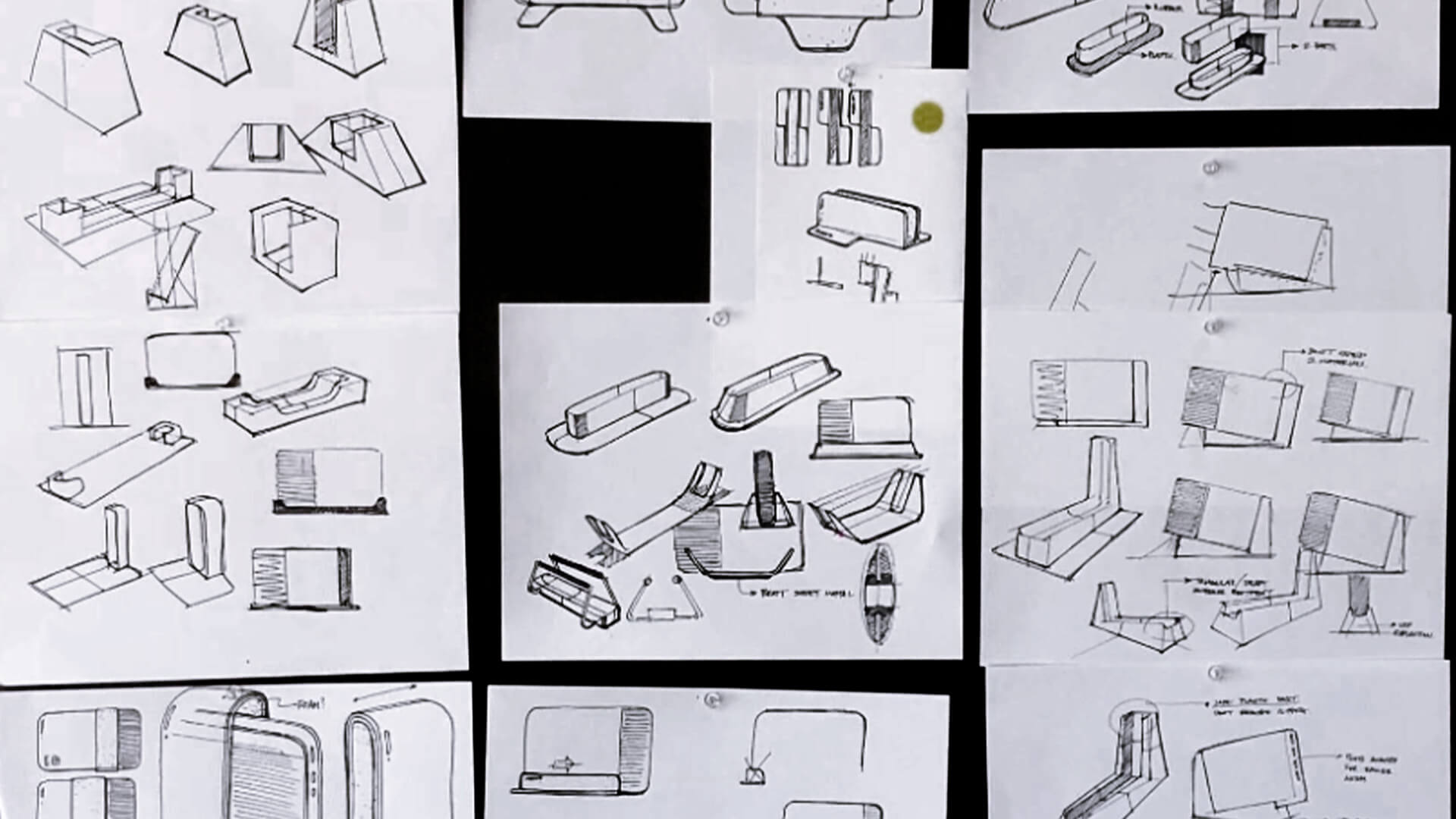
A few big discoveries leaped out. No one had a single storage solution to rely on. Users constantly transferred data from different hard drives designed for different purposes (in the field versus at home), accumulating hundreds of old hard drives over time. Traditional hard drives also don’t allow multiple users to work off them simultaneously or come with software systems that help keep projects and tasks organized, protected, and sharable. Meanwhile, the ever-shrinking size and weight of laptops—and people’s willingness to take them everywhere—set a new benchmark for portability, one that iodyne could lean into.
With these and other insights in hand, the team brought unrivaled performance and aesthetics together to create a far superior user experience. IDEO and iodyne developed Pro Data’s engineering architecture, collaborating on thermal performance analysis, material choice, inspection of sample parts, and even packaging design. By combining integrated venting, multiple laptop-quality fans, smart power management, and 20 thermal sensors, the team was able to minimize cooling fan loads and reduce noise and power consumption. A single, centralized, and consolidated storage space makes sharing data among teammates easy, too—up to four computers can connect to the Pro Data at the same time and access the same files. The redesigned Pro Data creates new value for consumers in a highly mobile, secure package that can go from desktop to backpack and back again.
The iodyne Pro Data hard drive launched in 2021 to overwhelmingly positive reviews. Storage Review wrote “Nothing else comes close to this level of performance in a package this size,” while Jemery Boros of StarGate Studios said “I don’t think I could have done the shoot without Pro Data. It was easy to use, fast, and kept all of our data safe on the other side of the world.” The drives have since been used in the making of major motion pictures from F1 to A Complete Unknown.
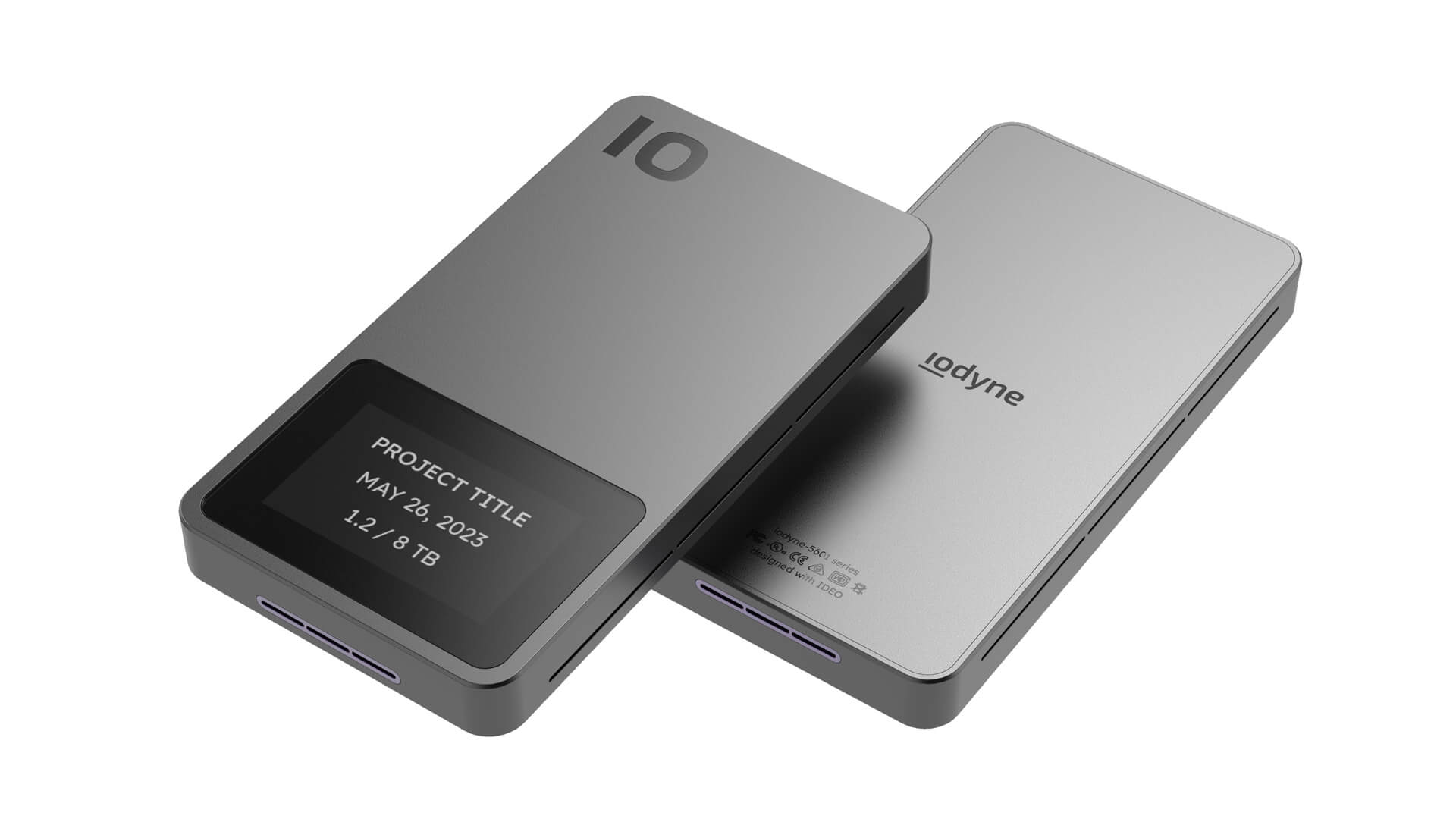
Spurred by Pro Data’s success, iodyne decided to create a second product with IDEO, a Pro Mini that could provide the same cutting-edge performance and sleek design but scaled down to fit the needs of customers who required less storage capacity in an even more portable package. Pairing Pro phone-quality industrial design with a unique internal solid-state cooling architecture that imposed key constraints on airflow was critical.
IDEO worked with iodyne to create the Pro Mini’s internal layout and collaborated with an emerging engineering company to incorporate novel solid-state cooling technology, positioning the vents to maximize airflow and optimizing how users physically interact with the device. The team also addressed users’ durability concerns, advising iodyne on part selection as samples came in from vendors. The new Pro Mini is set to ship in the second half of 2025.
Hard drives are essential tools of the trade for people with large troves of media to store and transfer, like photographers and videographers. But beyond rolls of masking tape and label makers, there isn’t an easy way to see what’s on each drive without literally going through them one by one.
Traditional hard drives generate a lot of heat and need fans to cool them, making them bulky, loud, and slowing transfer speeds.
Many external hard drives are treated like commodities. They’re designed for mass production rather than for durability and aesthetics.
2 cutting-edge hard drives
to market in 3 years
Introducing LA’s mental health crisis first responders
Helping a kinder, safer emergency support arrive first on the scene.
LACDMH is the nation’s largest public mental health department, serving over 10 million people. The agency provides critical support for the most vulnerable, including staffing a toll-free, 24/7 Help Line. Since late 2024, more than 70 Field Intervention Teams—comprised of mental health clinicians (social workers, psychologists, licensed psychiatric technicians, and registered nurses) and community health workers (trained peers or community members with lived experience)—have been dispatched around the county to help de-escalate mental health crises quickly, compassionately, and without force.
Because those experiencing a crisis are often too disoriented, confused, or otherwise unable to seek help for themselves, IDEO’s communication strategy targeted reaching “trusted messengers”—parents, spouses, siblings, and friends of people who have a mood or personality disorder like schizophrenia or bipolar disorder. The campaign aimed to define mental health crises, help people understand what to expect when they call, build trust in FITs, and divert mental health crisis calls away from 911.
To understand what drives these specially trained mental health professionals to do this type of work—and what sparks trusted messengers to call for help—IDEO met and interviewed former clients and loved ones who had reached out to the county for support during a mental health crisis. The team also interviewed multiple FIT staff to learn more about how they approach clients and families.
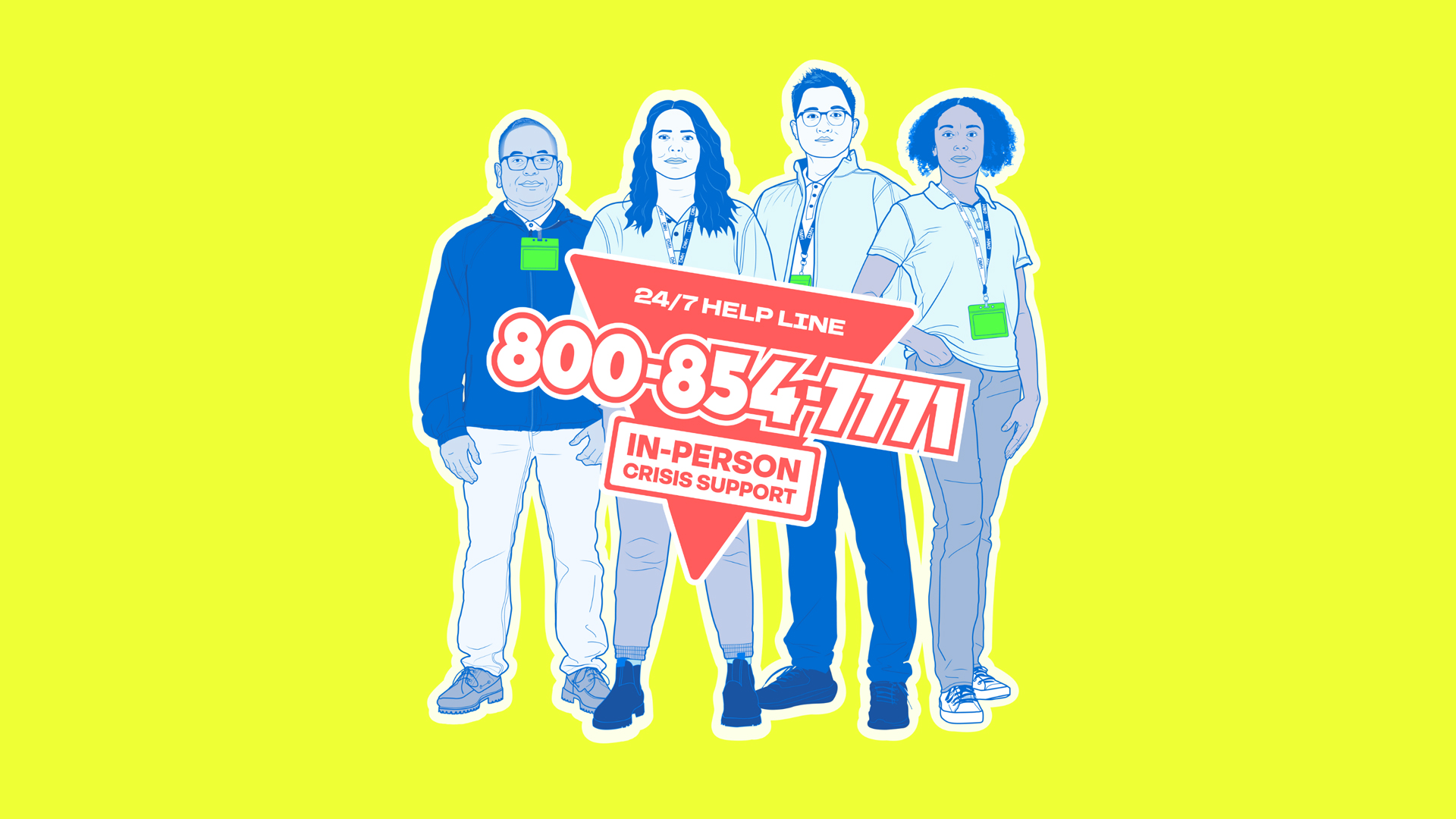
The research inspired the communication strategy’s central idea: position FIT members as real-life superheroes and first responders. By associating FITs with that term, the campaign changes the narrative and communicates their compassion and expertise to those in crisis. Custom illustrated portraits feature actual FIT staff in strong, action-figure-style poses, while a bright, eye-catching color palette and clear, direct language convey confidence and inspire trust.
The team explored their initial design directions in a series of focus groups with LA residents, trusted messengers, and county and mental health workers to better understand the impact of the potential messaging and visuals. The research uncovered the importance of clarity, even in an inherently emotional situation. The IDEO team discovered that transparency—and real personal stories—would be the key to building public trust in ACR.
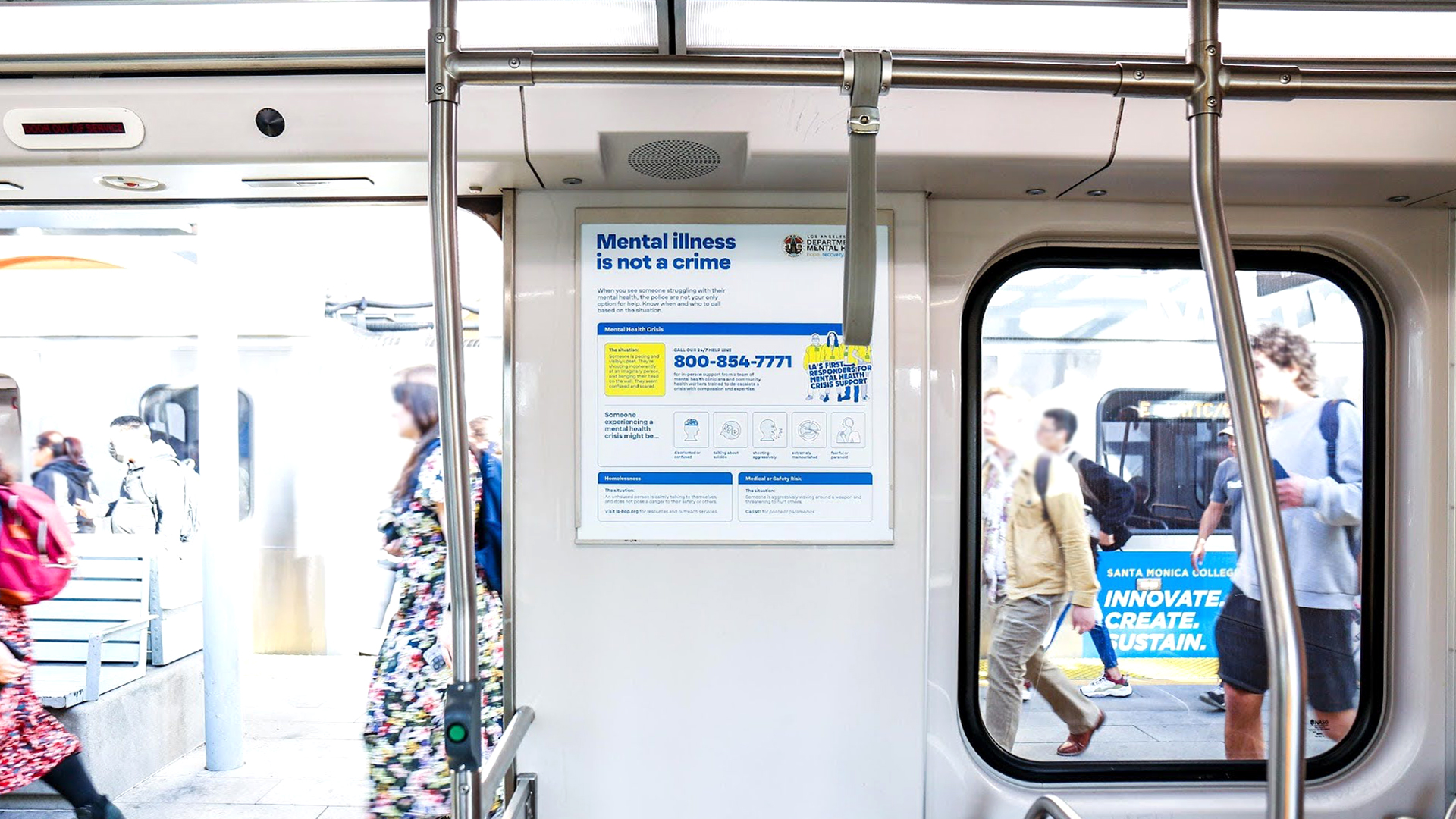
Between March and June of 2025, the robust awareness campaign will run across LA County in a number of languages on city buses, in Metro stations, on social media, streaming TV, radio, and more. An updated landing page on LACDMH’s website includes in-depth information and educational videos about mental health crises, as well as heartfelt testimonials from staff and former clients who have been helped by the service.
LA County Department of Mental Health created an innovative new program to provide urgent, compassionate care to Angelenos experiencing a mental health crisis but needed help driving awareness of its service across the region.
Calling 911 is an entrenched behavior in an emergency. However, dispatching police officers who are not trained in mental health can make a bad situation worse. In 2022, 39 percent of people shot by LA police officers were in the midst of a mental health crisis.
172 million impressions
delivered via digital and physical ads across LA
50% increase
in calls to the ACR helpline, year-over-year, attributed to IDEO’s awareness messaging
24%
of Angelenos now name LACDMH as the first to call in a mental health crisis, leapfrogging 911 or the police, which slipped 14.3 points

Lessons on innovation from teachers
When the pandemic hit, teachers were faced with an impossible challenge.
“You had to build serious cred with them for them to give a sh*t at all, because there’s no consequence,” she says.
Her solution: Making lessons less about the curriculum, and more about engaging kids in the scary, quickly-evolving events shaping our lives. “I’d show some slides and ask if anyone had heard about [the event] and what their questions were. We’d talk about the facts of the situation,” she shared. “I tried to get them excited about their knowledge of [current events].”
In 2020, America’s students and teachers experienced a full-blown disaster, and teachers were the front-line responders. As they and their students were reduced to rectangles on a screen, they had no choice but to lean into innovation, coming up with solutions like having students create hype videos about their favorite books to encourage classmates to read them, leveraging home kitchens to create lab lessons, and using data to evaluate how their students are doing with learning from afar. Under the worst possible circumstances, they came up with solutions that will improve education for the better, in this moment, and for the future.
IDEO and PowerSchool were so inspired by their work that we partnered to research the way teachers hacked, persisted, and made do to uncover clues to innovation. Last year, we interviewed teachers, administrators, teacher coaches, and education experts to get a close up look at how teachers innovated in 2020 and 2021, and how we as designers and makers might learn from their work.

Breaking down silos in the name of collaboration
When this crisis thrust even first graders out of their classrooms and stuck them in front of computers with varying degrees of Wifi—and supervision—teachers had to throw out the rule book. Both expert and mentor teachers alike were caught on their heels, and their only option was to innovate.
To meet this extraordinary demand for real-time innovation, they turned to one another—peers in their buildings as well as online learning communities. Teachers were no longer experts, they were almost “lead learners”—humbly fostering collaboration with one another and pushing forward to develop an entirely new way of working in real time. "The pandemic has enabled so much more collaboration than before,” explained Christine, an elementary school art teacher in Massachusetts. “I've seen techniques done in new ways, skills taught in ways I never would have thought to teach them. This is an opportunity to see how each other teaches!" What’s more, when even seasoned teachers were getting used to an entirely new context, mentor/mentee relationships began to shift, as everyone had ideas to share with each other. A new teacher manager in a district in California told us that “there were a number of examples where the mentor was certainly a more experienced educator, but not nearly as experienced or fast at learning technology, so there was an exchange of skills.”
Teachers were forced into this situation, but their reaction is one that makers and designers should learn from. You might ask yourself—who is it absolutely nuts that I don’t already work with? Who would you call for help if everything fell apart? It might be a person you think of as a friendly competitor. Or it could be someone whose work context just seemed too different—maybe they are more junior, or work in a non-profit setting. At this point, what humanity really needs is connection with one another. To create it, we must break down the silos we’re keeping up. It’s time to rethink the divisions we have between departments, companies, and even sectors to speed up our collective innovation.
Building tighter learning loops
One of the biggest challenges that teachers faced in experimenting with so many new tools was determining what was actually working. After all, rapid prototyping is only as useful as the learning you can apply to the next prototype. Teachers couldn’t afford to wait until grading periods to analyze how it was all working out.
The remote setting opened up the opportunity to work more closely with individual students one-on-one and to personalize learning experiences and methods to meet their needs. Technology also helped them better understand each student’s progress, enabling them to tailor their instruction the next day. More teachers began leveraging instant feedback tools, even as they faced more variability in student knowledge and skills.
Hannah, a secondary math teacher, dove into new apps and services she started using to track student progress to make instruction more personalized, explaining that rather than going on gut feel, “I can genuinely say I know which kids aren’t making the right progress.” When students and families could see educators iterate on lesson plans each week, and make feedback immediately actionable, everyone was able to take a collective breath and feel the progress. Even if the changes were relatively small, they knew that they were being listened to. Teachers built new processes and improved trust.
Maybe you already do rapid prototyping in your work and have formed tight learning loops. Consider how you might use them as a means of not just learning, but showing your users that you’re learning. Internally, we all could be using technology to do daily micro-check moments with our teams and collaborators, and get even more serious and actionable after receiving real time feedback. Imagine a working world where the last five minutes of every meeting or collaboration were dedicated to asking ourselves how did that go? What could we do better next time?
Maintaining a laser focus on what’s most relevant
In some ways, students had their own form of a “Great Resignation” in 2020. They had previously been held captive in school rooms that weren’t catering to them, and their new at-home context meant teachers had to rethink how they were reaching students. “We’re messing around with our schedule,” explained Evan, a middle school principal. “We’re trying to create more space for more things that we say we value.”
Teachers had been operating under a 180-day school year for decades and have optimized their content to fit standard school hours—maybe you’ve been doing the same with your five day work week. During distance learning, teachers had no idea how much time they would actually get with students on any given day, leading them to simplify their content and get strategic about making every minute count.
In an essay from 2003, Jim Collins, the author of Good to Great, stresses the importance of “subtracting.” “A great piece of art is composed not just of what is in the final piece, but equally important, what is not. It is the discipline to discard what does not fit.” It isn’t just about prioritizing what’s most important; it’s about not holding on to the parts that don’t serve us anymore, even if they have already cost us years of effort. We need to consider how to do more with less, and how to subtract what’s not serving us and those around us.
Be human first
Teachers have always been concerned about their students, but the pandemic brought that concern to a new level. (You, too, might have experienced more personal stories, tears, and vulnerability at work!) We saw teachers get creative about meeting students’ emotional needs—trying things like swapping out detention for meditation, or having a weekly “campfire” in class to circle up and share how everyone was doing. They extended deadlines, accepted late work, and allowed students to retake exams. Teachers brought more of themselves to school, showing up as humans first and foremost and prioritizing care before content.
As Jennie, a high school teacher in Ohio explained, “I just have more grace for everyone. Are you lying to me about homework? Maybe. Do you have a reason to be lying? Maybe. I think it’s made me a better teacher. I’m more compassionate. Life’s hard."
As innovators, we too need to build in flexibility for the fallibility that comes with being human, and find ways to bring more humanness to our leadership. We must find ways to prioritize the health and wellness of the people we work with above everything else.
—
At both of our organizations, and hopefully at yours, teachers are inspiring us to break down arbitrary siloes, cut the fluff, show we’re listening, and be more human. But they’re not the only innovators we should be watching right now. The heroic, hard-working, dynamic first responders of the pandemic—nurses, social workers, librarians, counselors—are also on the front lines of innovation. They are adapting, growing, testing, and changing at a rapid pace in a way that all business leaders could be taking lessons from.
Read the full Teaching in Flux report, authored by Jen Halls, Ridima Ramesh, and Brian Standeford.
When COVID-19 lockdowns were in full effect, Amanda, then a reading coach in a California school system, was faced with an impossible challenge: figuring out how to get kids, home alone, to log into Zoom for lessons, when no one would be there to make them do it.

The next chapter of IDEO’s climate commitments
There is still so much more to do—and time is of the essence.
In the first phase of our work, we tackled what some might consider “low hanging fruit” in the work toward Net Zero: we estimated our carbon footprint, offset our greenhouse gas emissions, switched to renewable energy, experimented with a modest carbon tax, and improved our responsible retirement investment options.
While these strides are significant, there is still so much more to do—and time is of the essence. There are countless ways forward, but we’re eager to share four next steps we have in mind.

1. Track and manage emissions (Part 2)
Building on our previous exploration, we’re ready to tackle phase two of emissions accounting. At the top of our priority list is identifying a comprehensive emissions accounting solution to track and manage down our Scope 3 emissions. It’s difficult to imagine how we will empower IDEOers to make sustainable decisions without giving them access to data about the environmental impact of those choices. Afterall, what’s the point of managing down your emissions if you don’t get credit for working with Clean Co. over Dirty Co.? Investing in an emissions accounting platform will help get us one step closer to estimating IDEO’s carbon footprint and identifying viable climate-friendly alternatives at scale. From there, we hope to experiment with things like internal carbon taxes or incentives for individuals and teams to manage their carbon footprint.

2. Embed sustainability throughout the project cycle
Despite the increase in climate-forward projects IDEO has taken on, we are still not fully set up to account for the downstream implications of our work. With that in mind, we’re exploring what it would look like to introduce sustainability at every touchpoint of the project lifecycle—from initial client conversations to final deliverables. In practice, this might look like sustainability design reviews with external experts or developing design principles and toolkits like The Circular Design Guide to support climate-conscious work. Ultimately, we hope to foster a culture where teams feel equipped to explore and develop best practices around sustainable work. Regardless of what form this takes, we need to develop a way to track the downstream impact of our projects and deliverables. Ideally, that system would plug into our emissions accounting platform—neither of which we have today.

3. Balance what’s impactful with what’s visible
In order to meaningfully reduce IDEO’s global emissions, we prioritized action that tends to be impactful for our carbon footprint, but invisible to everyday IDEOers and our clients. For example, while switching to renewable energy did not trigger obvious changes to the everyday experience at IDEO, it reduced our global carbon footprint by 4%. These changes can seem at odds with changes that are highly visible yet are often less impactful (e.g., eliminating single use plastics across IDEO). In order to ensure our everyday experience at IDEO does not undermine the climate commitments we have made, we need to balance what is impactful and what is highly visible. This might look like developing frameworks to help project teams weigh the tradeoffs between client travel and environmental impact, holding inter-studio competitions to switch to sustainable food vendors, or identifying a broad set of replacement suppliers for more sustainable goods throughout our studios.

4. Reset industry norms
Let’s face it. If a competitor is willing to get on a plane, we almost certainly will do the same and vice versa. To create the conditions for IDEO to thrive while meeting its climate commitments, we need to reset industry norms and work alongside other creative consulting firms to reimagine the ways of doing business in the 2020s and beyond. This may look like joining or starting a creative climate pledge for companies operating in a climate-forward way, or inviting direct competitors to join our kyu climate action learning group.
As we make progress toward IDEO’s climate commitments, we will continue to experiment, iterate, and learn. Most importantly, we’re eager to learn alongside you. Time is precious and we all need to collectively accelerate toward our respective commitments. In the spirit of co-creating a more sustainable future, we invite you to continue the conversation with us by contacting our team. We’re eager to learn about the steps you are taking, the lessons you’ve learned, and what’s next.
Over the past year, IDEO has been working toward meeting a series of wide-ranging climate commitments.

Three key interventions to reduce IDEO’s greenhouse gas emissions
Emission reduction efforts require change at every level.
The report outlined that over the next decade, we need to reduce global emissions by 7.6% annually, a daunting reality that has been reiterated in recent IPCC updates. That means reducing our emissions by over half in less than 8 years. This is one of the most critical challenges of our decade, if not century.
As part of IDEO’s Net Zero strategy, we knew we couldn’t just invest in carbon offsets, we also had to do our part in removing emissions from the atmosphere. In many ways, the pandemic accelerated us toward that path. From 2019 to 2020, our emissions were slashed from ~14,500 t CO2e to ~6,400 t CO2e respectively. But we knew we needed to do more, especially with IDEO’s shift to embracing hybrid working models and their unknown travel-based emissions implications.
In 2021, we implemented three interventions to further reduce our carbon footprint. We switched to renewable energy, incentivized reductions in project-based emissions, and made improvements to our responsible retirement portfolio. Some of these efforts were successful, others less so. We’re eager to share what worked and what didn’t.

Intervention 1: Switching to renewable energy
There are several options for switching to renewable energy, including purchasing rooftop solar grids, participating in community solar programs, purchasing renewable energy credits (RECs), and more.
In evaluating these approaches, we ran into a few setbacks. Since IDEO doesn’t own any of its buildings and each of our studios consume about as much electricity as a couple of big houses, we optimistically hoped that we might be able to sign up for community solar programs across the board. But we quickly learned that community solar wasn’t available for all of our locations. To make matters more complicated, many of our locations didn’t even have the ability to choose their electricity suppliers.
Our next best bet was to either purchase RECs for our global energy consumption, or opt for location-specific solutions. In pursuit of progress over perfection, we purchased 750 MWhr’s of RECs from Bonneville Environmental Foundation to cover energy consumption across all of IDEO’s locations. This not only reduced our carbon footprint by 360 t CO2e, but also meant that effective January 1, 2021, IDEO switched to renewable energy globally.
Looking ahead to 2022 and beyond, we will continue to evaluate and implement the best renewable energy solutions on a local level. To date, we have switched to renewable energy in two locations:
- Chicago: We switched our energy supplier from ComEd and enrolled in community solar through Solstice. Solstice also offers a renewable energy program for employees to mitigate energy impacts from working from home. For every employee that signs up for Solstice’s community solar program, Solstice donates $100 toward their nonprofit arm, Solstice Initiative, to make renewable energy accessible for underserved communities.
- Munich: We switched our energy supply from Stadtwerke München (SWM), Munich's municipal utilities company, to renewable hydropower from Polarstern, a Munich-based renewable energy pioneer and social business promoting the energy transformation in Germany and worldwide.
While it took more time and resources to explore local renewable energy solutions than to purchase RECs, we felt it was important to switch to local alternatives wherever possible.

Intervention 2: Incentivizing reductions in project-based emissions
“But what about the emissions from our project operations?”
In our journey to Net Zero, this question came up time after time. It turns out, over a third of IDEO’s non-wage-based expenses come from project-based expenses like flights, food, prototyping materials, and research incentives. When we estimated IDEO’s carbon footprint, we saw that a significant fraction of our emissions came from everyday decisions made by project teams.
After some digging, we saw that consulting firms similar to IDEO approach emission-reduction incentives differently. Some impose strict travel guidelines, while others set a steep internal price on carbon. The concept of a carbon tax as an incentive was appealing, but would clients go for it? We decided to find out.
Inspired by 1% for the Planet, we started a pilot that added new language about emissions reductions in all of our statements of work. In addition to our standard language about project-based expenses, we added:
Expense invoices will include an additional 1% of all billable expenses to offset greenhouse gas emissions arising from this work.
For a project with $100,000 in expenses, we would add a $1,000 fee to fund carbon offsets. From our preliminary estimates, this would sufficiently cover the emissions from our projects and allow us to purchase ever higher quality emissions over time.
While promising in theory, the execution has been difficult. Of the 33 statements of work signed over the past 6 months, only 4 of them included the 1% fee. In some cases, clients objected to paying for IDEO’s carbon offsets and the language was negotiated out of the contract. In other cases, the language was never included to begin with. Many IDEOers were apprehensive about broaching the topic with clients.
Despite the slow start, we are continuing this pilot so that we can gather more data and design an informed approach to reducing project-based emissions.

Intervention 3: Improving our responsible retirement portfolio
While IDEO will continue to vote with its dollars to reduce our emissions, many of those dollars have their own environmental and social implications. With ESG frameworks and ratings agencies scrambling to answer calls to action from BlackRock and beyond, there are a dizzying number of ways to evaluate responsible investments.
Our third intervention involved scrutinizing our existing 401(k) portfolio. Alongside Fossil Free Funds, a non-profit that grades investments using a variety of social and environmental considerations, we evaluated IDEO’s existing 401(k) and came up with a system—or score—for each of the available funds in our portfolio. We then supplemented this analysis with data from Morningstar Sustainability Rating to provide another perspective on how our investments were, or were not, meeting environmental, social, and governance challenges.
Perhaps not surprisingly, many funds in IDEO’s 401(k) were poorly rated. Our portfolio, like most, is dominated by index and mutual funds that track the market. Since the Fortune 500 account for over a quarter of global greenhouse gas emissions, and only 11% of these organizations are hitting their emissions goals, our portfolio wasn’t tracking in accordance with the climate commitments we’d set.
Our Talent team sprung into action. Together with our Empower Retirement administrators, they identified new funds that we could add to our investment mix. In addition to the Vanguard Social Index Fund that was already in our portfolio, we added two new funds: Calvert Balanced Fund (R6) and Calvert Short Duration Income Fund (R6).
A year later, about 1% of IDEO’s $140m 401(k) assets are in these ESG funds. While this is certainly a move in the right direction, we are continuing to explore how we can improve our responsible retirement portfolio even further.
---
More than anything, these three interventions have highlighted an intrinsic dilemma of reducing emissions at scale: distributed behavior change is challenging and incremental. We’re still grappling with questions like: Are we focused on the right things? How might we design better incentives that accelerate emission reduction? How might we incentivize our partners to change alongside us?
But this is a design challenge that cannot wait to be solved. We’d love to learn alongside others and hear how others are tackling behavior change within their firms. Please share your reflections, questions, and insights by getting in touch here!
This article is part of a series detailing IDEO’s journey to becoming Net Zero, the lessons we’ve learned, and our continued commitments to addressing climate change.
In 2019, the UN Environment Programme (UNEP) released an updated climate report reiterating how critical the 2020s will be in curbing wide-ranging and destructive climate impacts.

Removing IDEO’s emissions with voluntary carbon offsets
The tradeoffs of offsets.
That was the question that we woke up to from our colleague, EJ Baker, on IDEO’s #climate Slack channel in mid-September. For months, Anna Varnai, Jenny Gottstein, Mike Sakowski, and I had been evaluating potential providers and projects to offset IDEO’s carbon footprint in our journey to becoming Net Zero.
EJ’s inquiry brought us back to a question we had been debating for months: Is it better to invest in voluntary offsets or invest more deeply in reducing emissions? While there are legitimate arguments to be made for each path, we felt that emissions reductions weren’t enough. We urgently need to remove greenhouse gasses from the atmosphere. And since we are driven to design the world we want to live in, we chose to meet in the middle—both reduce our emissions and offset what we are unable to reduce. Despite its limitations, offsetting offers a way to strengthen our climate commitments as we ramp up our emissions reduction efforts.
In principle, voluntary carbon offsets appear simple; in reality, they become complicated very quickly. We reached out to offset providers and offset purchasers to learn about their approach and experiences, but instead of walking away with clarity, we realized that no one had really figured it out yet. Even the experts were still grappling with questions like what types of offsets should be used and when, or whether offsetting is even a credible means of achieving Net Zero.
In search of answers, we set out on a quest—diving into academic literature, researching industry best practices, and following countless startups in the space. We learned about the permanence, additionality, and vintage of an offset and how each relates to the quality of an offset project. We learned about the potential social benefits—from community employment to energy access—that come from different projects. We learned about the entities that verify and certify offset efforts. And, we learned that the more we uncovered, the more questions we had.
Should IDEO invest in high-quality and expensive carbon sequestration solutions aligned with our ambitions for the future? Or should we invest in readily available and affordable nature-based solutions? How much geographical representation should we have? How do we know that our investments won’t go up in smoke? How should we think about the intersection between our offsets, climate justice, and IDEO’s DE&I commitments?
The considerations for what to invest in went on, and the dilemma was paralyzing. On the one hand, we wanted to do it all. On the other hand, we had a finite budget and the clock was ticking. What was the right way to get started?
We contemplated having employees vote and help us pick offset projects. While this approach empowered employees to directly shape our company investments, in an area as complex and opaque as the voluntary carbon market, it would be hard for all participants to have an informed perspective in voting.
We contemplated creating a committee that would select projects based on a set of established needs and values. While simple in practice, we weren’t confident an internal team could navigate the magnitude of the task in a manner that fully represented IDEO, and the inevitable scrutiny that comes from decisions like this.
We contemplated seeking advice from third-party experts, but found that many of them sold offsets themselves, raising all kinds of questions about their motives and whether there was a conflict of interest (even though they were extremely generous with their perspective—thank you!).
We needed to get reasonably smart about this space to make informed decisions.
Enter the Oxford Offsetting Principles, a series of guidelines put together by Eli Mitchell-Larson et al., that outline how offsetting should be approached to achieve Net Zero. Informed by these principles, we were drawn to two start-up offset providers, Lune and Patch. These providers stood apart for several reasons. First, they allowed us to select a broad portfolio of high-quality carbon offset projects. Second, their projects had an international reach. From the get go, we knew we wanted our carbon offsetting efforts to reflect IDEO’s global presence, impact, and responsibility. Both Lune and Patch offered a way for us to do so.
From there, having estimated our carbon footprint at around 4,950 t CO2e for 2021, we intentionally over-offset our emissions by purchasing 5,500 t CO2e.
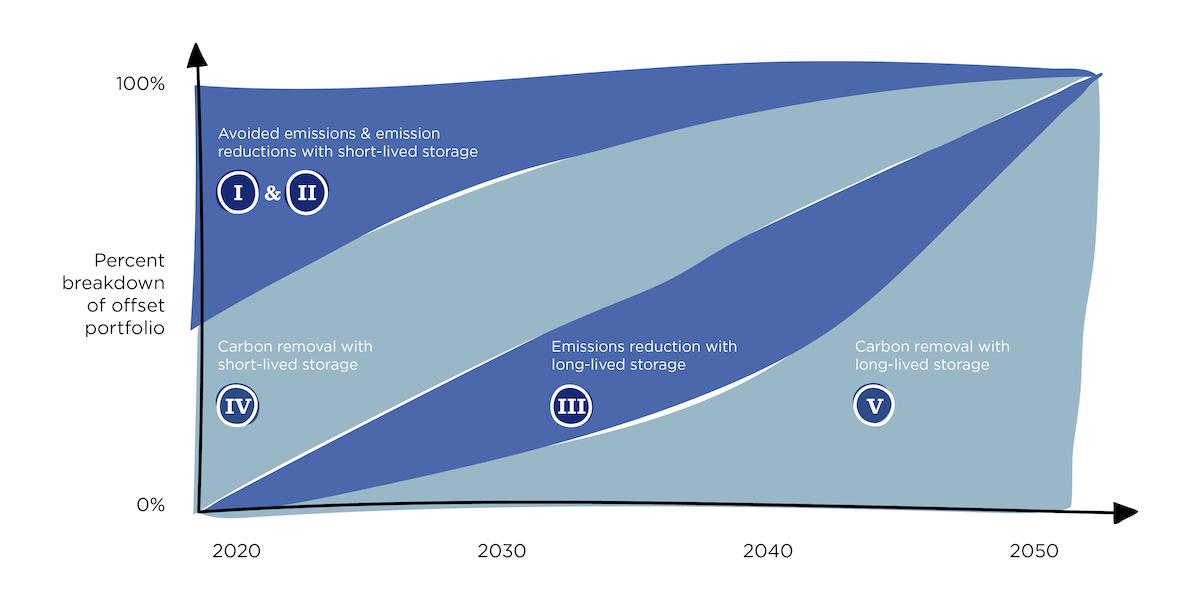
Based on the Oxford Offsetting Principles, we spread those offsets across:
- Global renewable energy projects for Type I (22.5%)
- Forestry protection projects in Asia and Latin America for Type II (22.5%)
- Methane capture at landfills in the United States for Type III (5%)
- Reforestation projects in Africa and North America and regenerative agriculture projects in the US for Type IV (45%)
- Enhanced weathering projects in Europe for Type V (5%)
Overall, we spent a little over $20 per tonne of CO2e with about 92% of those fees going toward the projects themselves. (You can see a visual breakdown of our project bundles with Lune, here.)
Are we confident that our offset strategy is the gold standard? Not quite. But we do feel confident in our approach, and as the voluntary carbon market matures, we will continue to iterate alongside it. We’ve learned that climate action, like design, requires us to get started with curiosity and humility. It demands a learning mindset that seeks progress over perfection.
To those who have purchased or are considering purchasing offsets of your own, we’d love to hear about your approach and what you’re learning.
This article is part of a series detailing IDEO’s journey to becoming Net Zero, the lessons we’ve learned, and our continued commitments to addressing climate change.
“Genuine question: are offsets a useful thing?”

Lindsey Turner
I’m passionate about building brands, products, and experiences that help organizations show up with meaning and momentum.
I help organizations cut through complexity by shaping how they show up, through brand strategy, identity, and storytelling.
Working at the intersection of brand and business, I bring an editorial eye and a bias toward making—turning ideas into tangible experiences that people can understand, trust, and believe in.
My work spans government, healthcare, financial services, media, and consumer goods, from launching Gen Z-focused ventures to building innovation labs and reimagining legacy brands. I relish moments of ambiguity and enjoy translating across teams, perspectives, and priorities to move ideas forward.
I started my career in editorial and digital design, shaping cross-platform experiences and identity systems in publishing and agency environments. That foundation still shapes how I work today: I’m detail-oriented, collaborative, and overreliant on the Oxford comma. I hold a BFA in Visual Communication from the School of the Art Institute of Chicago.

Rachel Young
My work helps organizations see who their products aren't working for—and build the will and the tools to do something about it
For 25 years, I've asked the same question: Who does this design exclude—and what are we going to do about it?
My work spans human-centered strategy, inclusive design, and qualitative research, with clients ranging from Microsoft, Google, and Verizon to the National Science Foundation, and San Francisco Unified School District.
Before IDEO, I taught elementary school in East Palo Alto and spent a decade doing design work with social service organizations—where I learned firsthand what it costs people when systems are built without them in mind.
I am currently writing User Error, a nonfiction book about digital access and the design decisions behind it. I live in Oakland, California.

Brian Pelsoh
I lead with craft, ensuring our work is creatively excellent: rooted in deep human insight and imagination, while also grounded in the realities of business and technology.
My expertise spans brand, communication, and product design across tech, education, the arts, and social impact.
I believe great work demands both high-level vision and obsessive attention to detail, and only happens through collaboration.
I bring an inclusive, hands-on approach and a deep understanding of business, which enables me to consistently deliver excellence while always asking why.
Before joining IDEO, I worked at the brand firms Pentagram and VSA Partners. I began my career as a designer, leading teams at the School of the Art Institute of Chicago and the Milwaukee Art Museum. I hold an MFA in graphic design from Maryland Institute College of Art and a BFA in communication design from the Milwaukee Institute of Art & Design, and have taught at some of the best design schools in the US.

Tony Wong
I am responsible for IDEO’s long-term success in China and working with clients to use design as a tool to enable growth.
I am responsible for IDEO’s long-term success in China and working with clients to use design as a tool to enable growth. Specifically, I have helped Chinese companies design holistic brand solutions through the development of their products, communication, services, and innovation teams, and I have helped multinationals expand their presence and influence in China.
I advise global leaders on developing China-led innovation and capabilities.
In over 15 years in IDEO Shanghai, I have worked on projects that use design to elevate the quality of the experience of healthcare products and services, streamline processes that increase productivity, create spaces and programs that promote and enable inclusive communities, and build next generation mobility solutions that are planet-positive.
Before joining IDEO, I worked at Philips Electronics and the Electrolux Group in Italy, the Netherlands, and Singapore on a number of breakthrough commercial products. I am a member of the Young President Organization in Shanghai.

Building a personal AI for the messiness of life: Sida Li
Most AI products today are built for work—a space with clear problems and established systems. One founder noticed a gap: personal life is messier, harder to systematize, and mostly left behind by the AI boom. So she built Cue, a personal AI that lives inside iMessage and group chats, to go where the other tools haven't.
In this episode, Becca Carroll, IDEO's Chief Strategy Officer, talks with Sida Li, co-founder and CEO of Shared Context Lab, about staying anchored to a human need while the technology around her keeps changing shape, why she treats her business model with the same rigor she'd bring to a product, and what it feels like to build a company at this particular, disorienting moment in AI.
The conversation also gets into how Sida makes design decisions: the language Cue uses to describe itself, the tradeoffs behind building inside iMessage instead of a new app, and a real story about a business idea that didn’t pan out.
This is the second in a two-part series profiling founders from IDEO's Startups-in-Residence program. The first conversation is with Johannes Seemann, founder of Sooner, on designing GenAI for the emotional side of money.

Designing GenAI for the emotional side of money: Johannes Seemann
Most personal financial tools are built to run the numbers and optimize towards a budget. While that works for some, most people experience money as a lived relationship that does not neatly fit into a spreadsheet. Johannes Seemann and Becca Carroll discuss why money is emotional before it is mathematical, and what a human-centered approach to building a generative AI financial product looks like in practice.

The curious leader's edge in uncertainty: Scott Shigeoka
Mina Seetharaman talks with Scott Shigeoka, author of Seek and Head of Curiosity Cultivation at the Eames Institute, about what distinguishes genuinely curious leadership from performative curiosity, how power dynamics shape curiosity, and why practicing curiosity can restore energy rather than drain it.

How constraints make us more creative: David Epstein
Mina Seetharaman talks with David Epstein, author of Inside the Box and Range, about why total freedom often produces average work, how leaders can design useful limits on purpose, and what organizations such as General Magic and Pixar reveal about the relationship between boundaries and creativity.
Looks like you might be in search of something very specific?
Or reset the filters above and try another angle.
Here’s some random inspiration

Podcasts about creative leadership

Articles about the power of prototyping
