
.svg)



Reintroducing The Lawrence Hall of Science
A lively new brand reenergizes a STEM learning institution.
Named after Ernest O. Lawrence, UC Berkeley’s first Nobel Laureate, The Lawrence Hall of Science’s wide-ranging products, services, and tools developed organically over half a century. To begin to make sense of the breadth and depth of its offerings, IDEO asked leadership and staff to surface the myriad activities, audiences, and relationships with external partners, enabling the group to visualize—and make sense of—the totality of The Lawrence brand.
During in-depth research with parents and kids, educators, and experts, IDEO discovered that each of these audiences had distinct mindsets. Parents and kids engaged with The Lawrence to explore, have fun, and dive deeper into a specific topic. Educators utilized it for professional learning opportunities and to discover new, exciting classroom tools. While experts, including UC Berkeley faculty, STEM educators across the US, and funders, viewed the center as a resource for best-in-class STEM education research. The mindsets highlighted The Lawrence’s unique capabilities, but the complexity also created some opportunity areas, including ways to use storytelling to create emotional resonance around The Lawrence’s core values and how to design a unified narrative to connect the dots across audiences and offers.
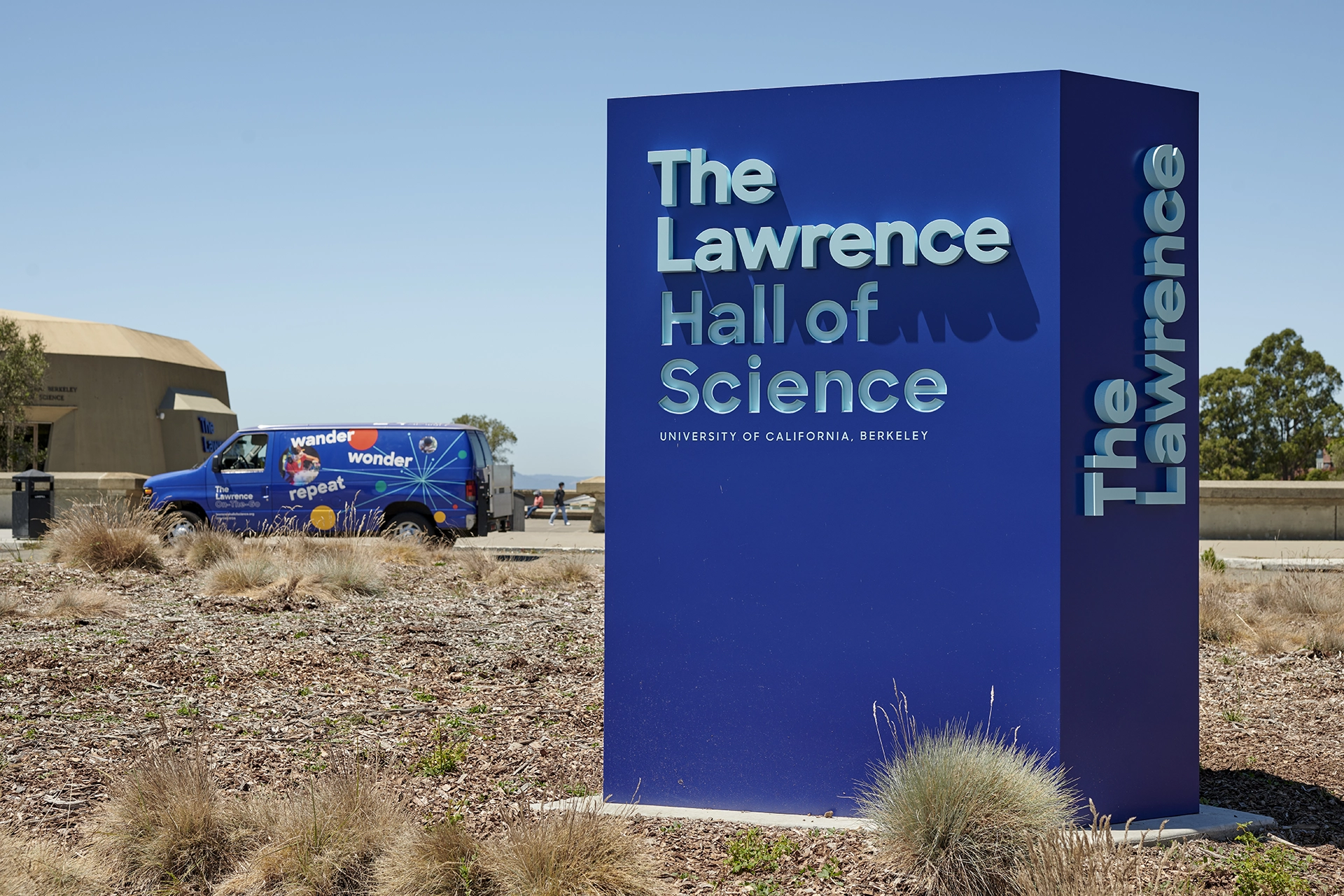
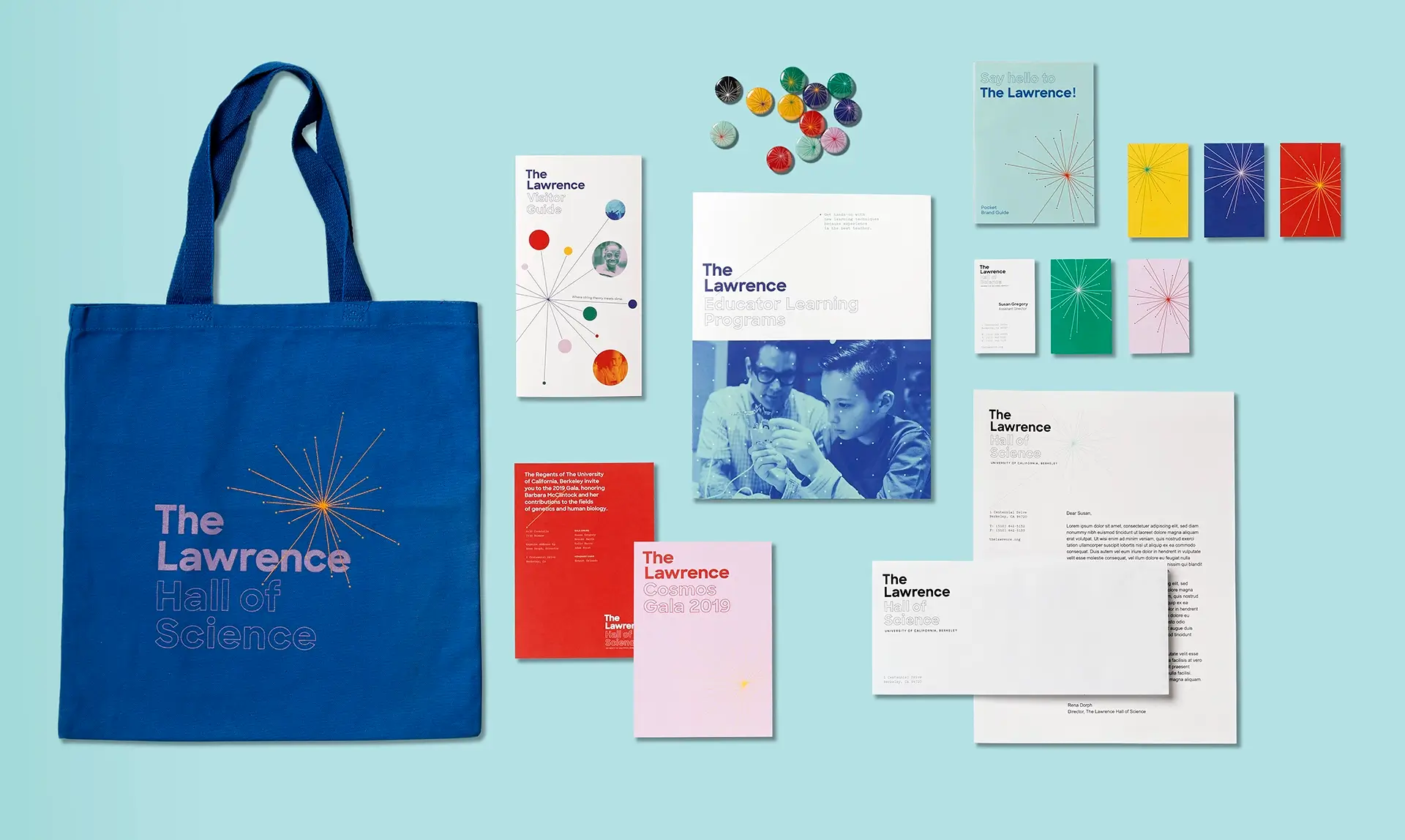
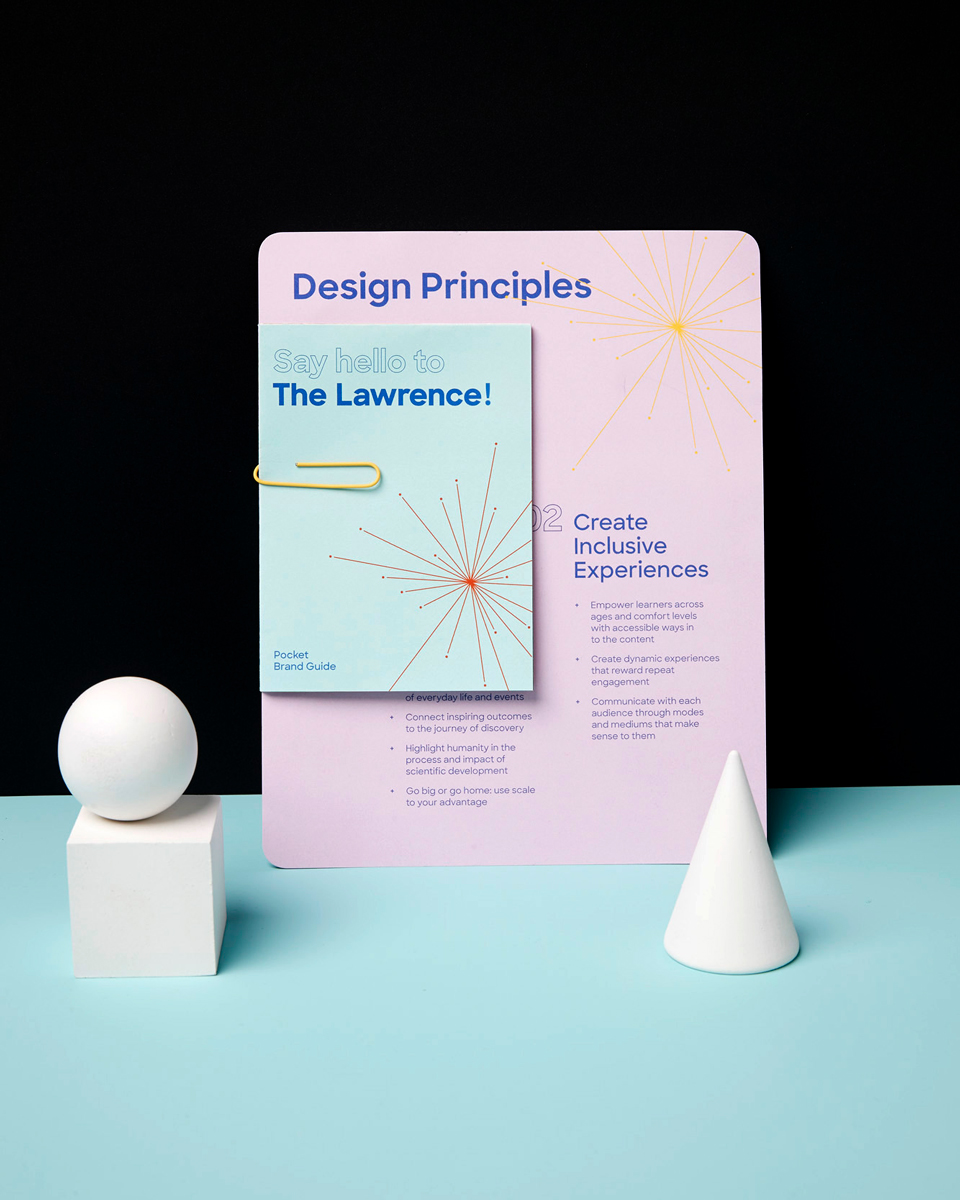
Building on its strengths as an institution and the identified opportunity areas, IDEO created a modern, vibrant, and flexible brand that strategically and visually unites all of The Lawrence’s offerings, working across digital and physical media. Grounded by a grid system, the updated brand identity is simultaneously rigorous and fun, featuring a bright color palette and signature retro-cool super-nova mark. Different offerings are bundled together based on different audience needs, preventing confusion and easing navigation. Even the name of the science museum, The Lawrence Hall of Science, was updated to a more contemporary and approachable, The Lawrence, inspired by The Met.
The Lawrence unveiled its new brand with much fanfare in late 2018 as part of its year-long 50th anniversary celebrations. Visitors can see the updated identity across all public-facing elements, including The Lawrence’s website, curriculum and educator materials, letterhead, collateral, and exhibition and wayfinding signage. The redesigned brand has been credited with bolstering the popularity of the science center among families and schools and causing ticket sales to return to—and exceed—pre-pandemic levels. Internally, the rebranding effort has helped generate excitement and energy across departments, helping solidify a collective future strategy and vision for its next 50 years.

The Lawrence Hall of Science’s diverse offerings had grown extensively over the decades, creating a confusing and disjointed experience for its various audiences. On the eve of its 50th anniversary, Lawrence leadership sought a brand refresh to better connect with its target audiences and differentiate itself in the STEM education ecosystem.
Over $6M in new funding
raised to transform and modernize The Lawrence, thanks to IDEO's rebranding effort
Reinventing classic British pubs and inns
Greene King’s upscale Everly Hotels Collection combines modern comfort with local impact.
When Greene King approached IDEO in early 2022, it was (and still is) one of the UK’s leading hospitality brands, with over 2,600 pubs, restaurants, and hotels. At that time, consumers in the UK and other parts of the world were beginning to rediscover the joys of travel after years of pandemic lockdowns. Greene King’s newly formed Venture Hotels Team wanted to understand how guest expectations had shifted during Covid-19 and how a new customer-centric hotel brand and signature service experience might meet—or exceed—their expectations.
To get inspired, the IDEO team interviewed a range of travelers of different ages and backgrounds, met with hospitality and luxury experts, and conducted immersion visits, including visiting high-end hotels. The research revealed modern travelers want unique hotel experiences that cater to their curiosity, support local communities, and are environmentally sustainable. Luxury, which once meant “exclusive,” was now about enabling one-of-a-kind cultural experiences. Today’s travelers value inclusivity, accessibility, and well-being; they want to feel welcome, do things at their own pace and have thoughtfully curated options to choose from. They also expect hospitality practices to be ethical and sustainable, contributing to the welfare of local communities and the planet.
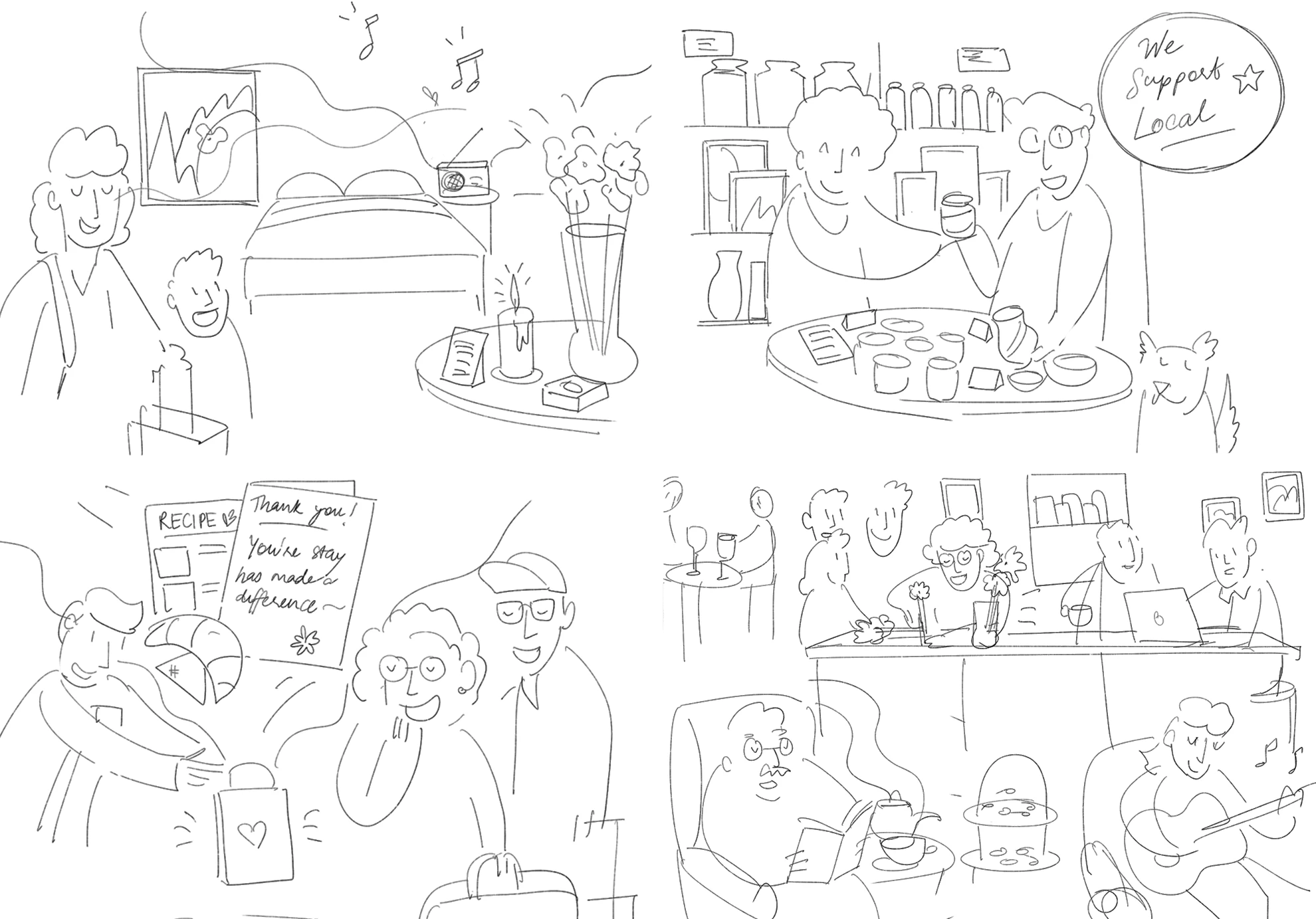
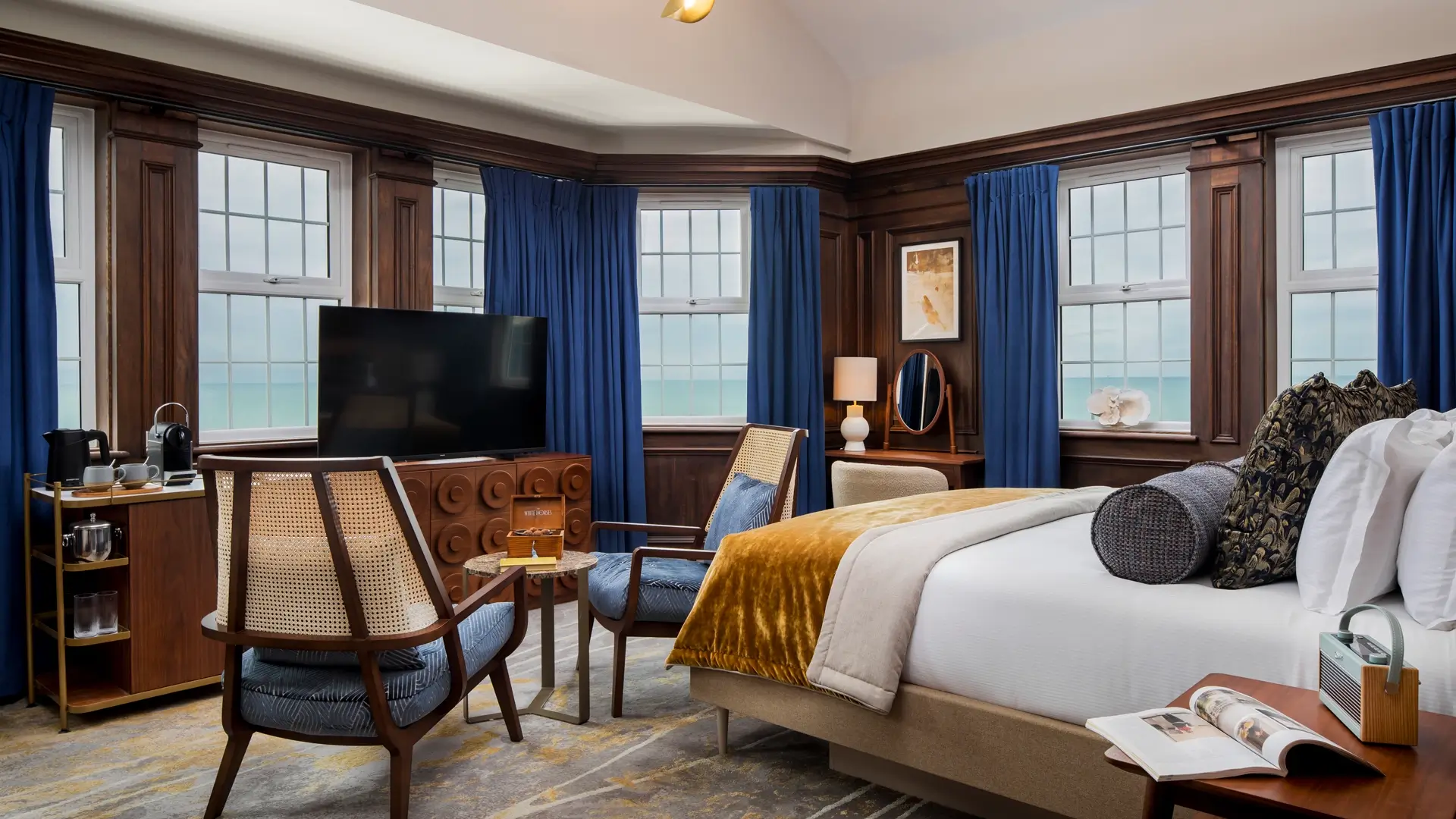
Building off this research, IDEO crafted a new entry proposition for Greene King’s new Everly Hotels Collection called “The Discover Collection,” which leverages the best parts of a classic British pub and inn—bespoke historic locations full of character, culture, and stories—while offering guests a modern experience from pre-arrival to departure, all grounded in supporting the communities they are in.
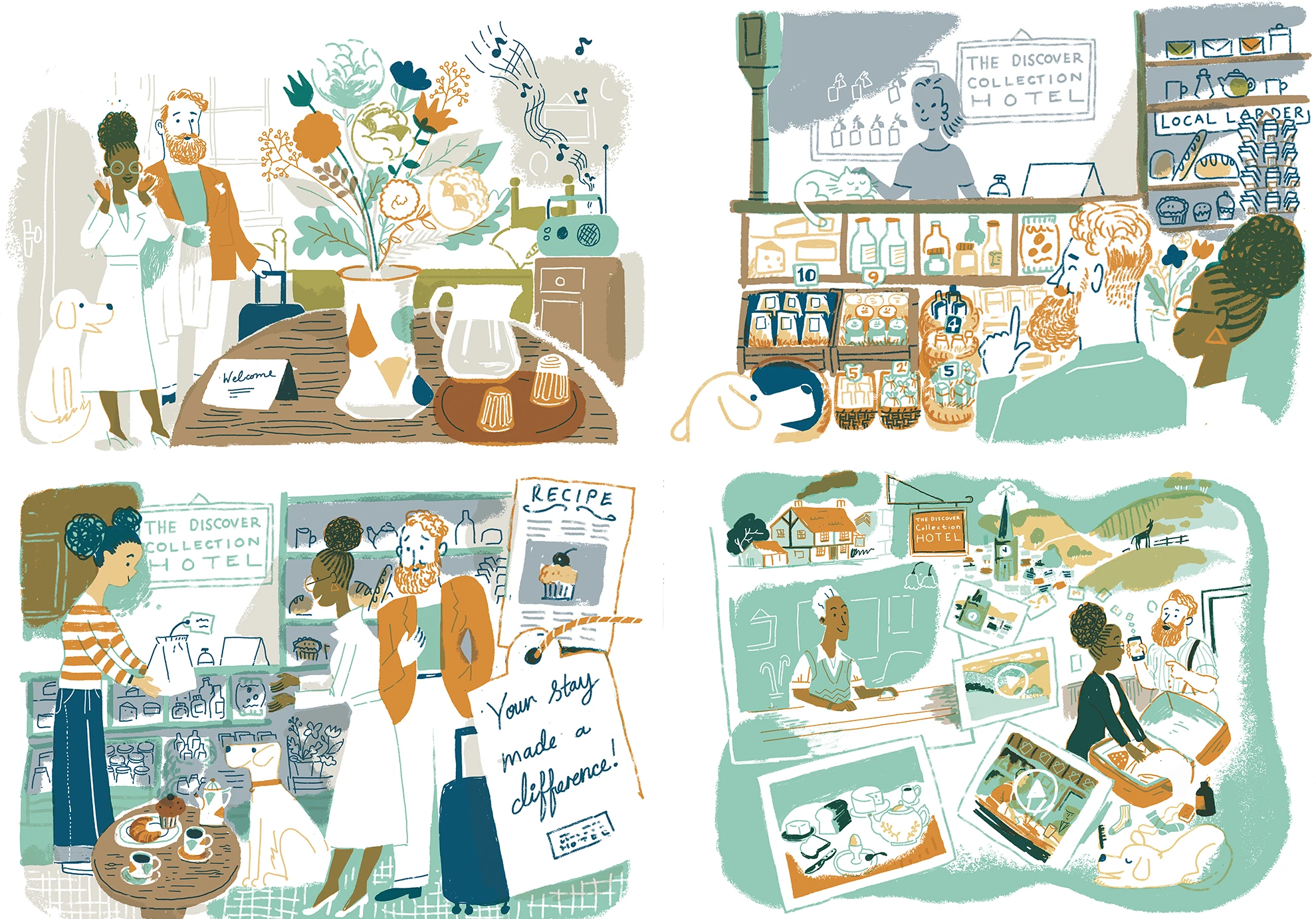
Signature moments include a warm welcome during check-in, as well as staff recommendations and local maps highlighting neighborhood gems. During their stay, guests enjoy expansive seasonal food menus, as well as a beverage menu that includes a wide variety of locally brewed, distilled, and crafted drinks by local suppliers. Rooms feature a smuggler's treasure chest with a surprise treat. Art and books from local talent are on display throughout the hotel, and local experts lead activities and events. Guests tangibly experience Greene King’s commitment to sustainability through its use of local materials, produce, talent, and partnerships, all designed to support the surrounding community. Upon departure, guests receive a personalized postcard.

In addition to the hotel experience moments, IDEO delivered branding recommendations for The Everly Hotels Collection, including visual identity and tone of voice that provide a cohesive look and feel for the collection of hotels while simultaneously showcasing each property's unique character. This was all packaged as an experience playbook, with design principles and briefs to help guide implementation decision-making across Greene King’s marketing, digital, interior design, and food and beverage teams.
A few months after the project ended, Greene King launched The Everly Hotels Collection. Its pilot hotel, The White Horses in Rottingdean, East Sussex, opened within the year. The new brand and guest experience strengthened bonds with Greene King’s loyal customers and first-time guests, ensuring the brand's relevance and appeal in a competitive market. More hotels are planned in the future in other scenic UK locations.
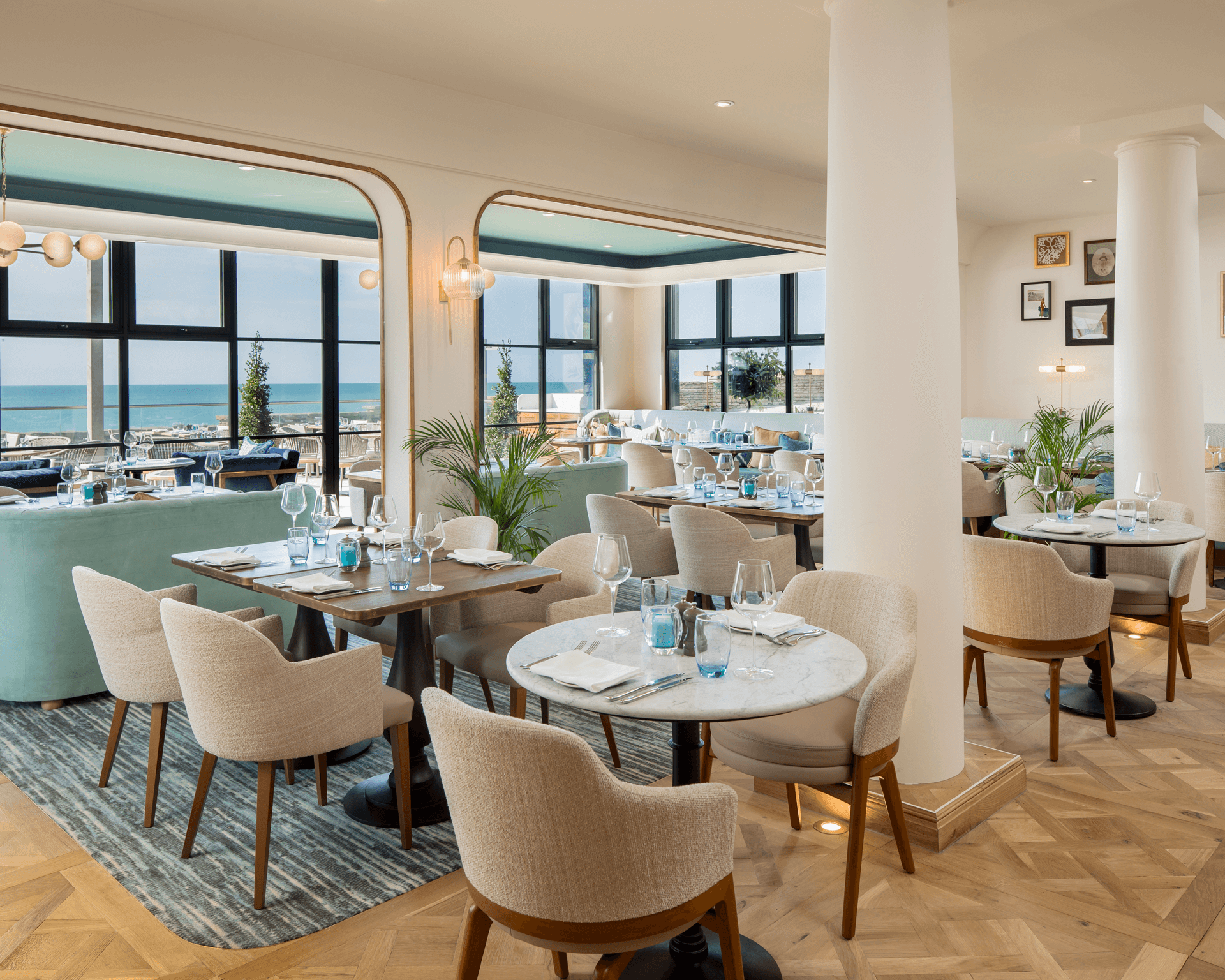
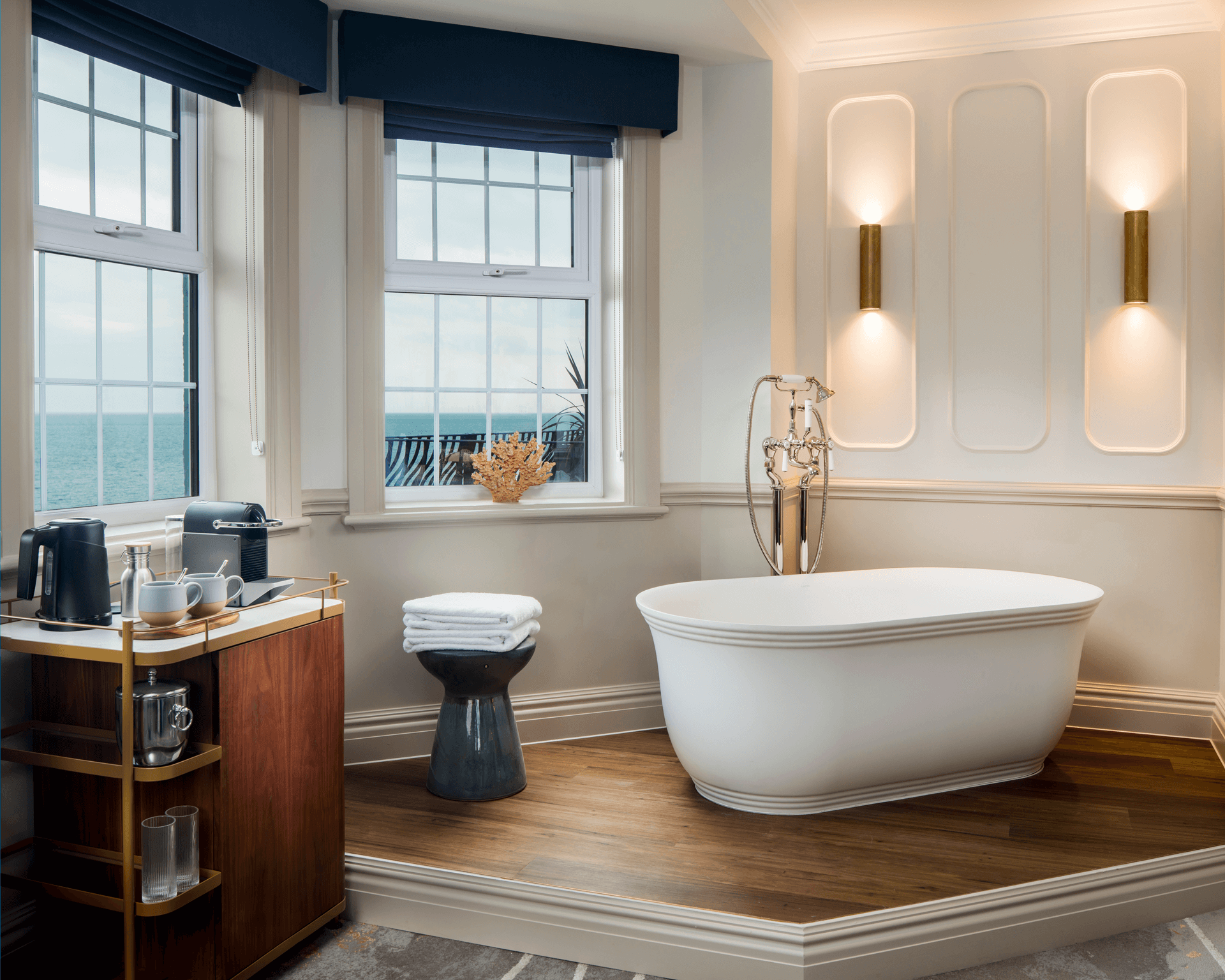
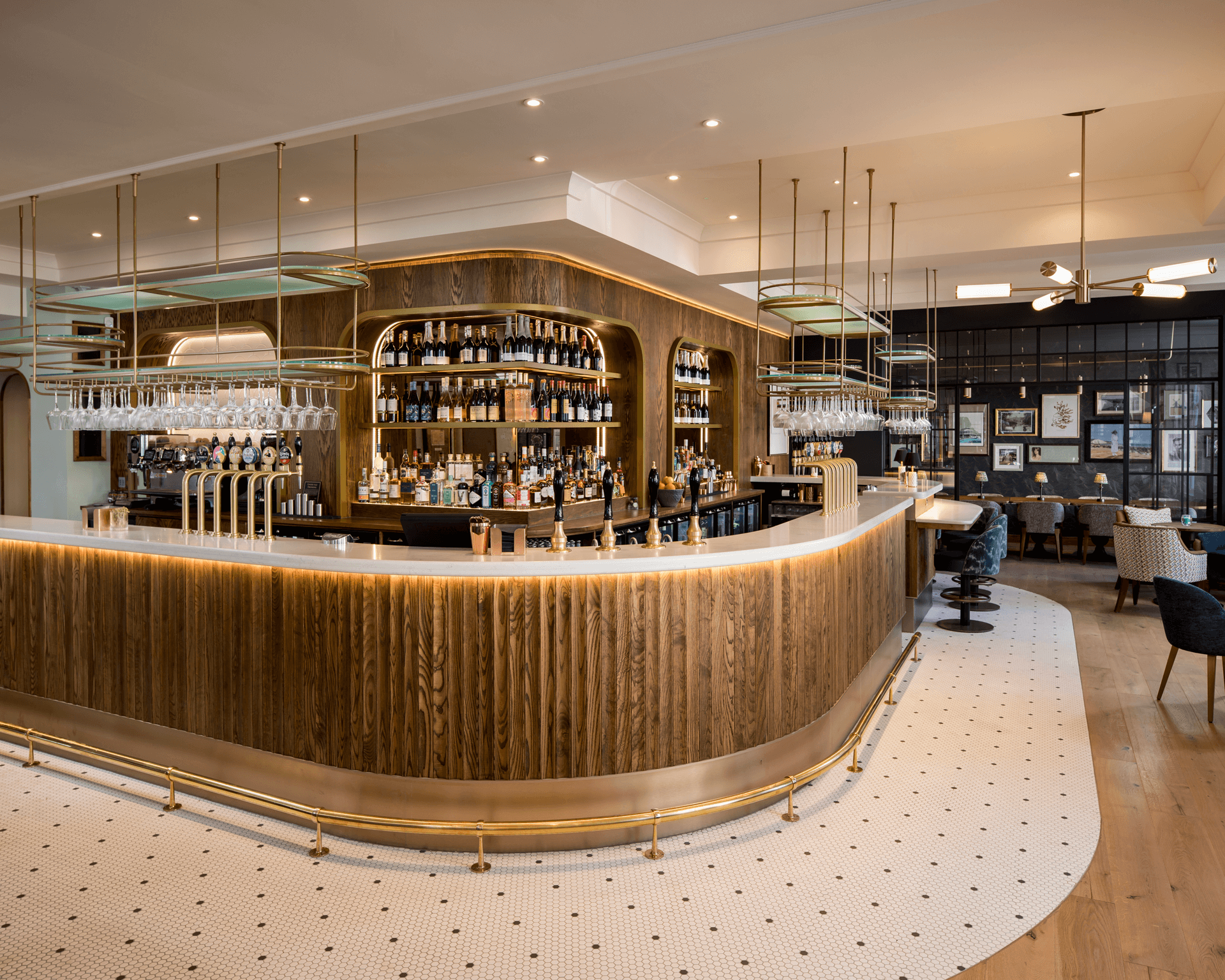
Greene King wanted guests to have a consistent brand experience while maintaining the storied charm that makes each property unique.
2 years
from concept to the launch of Greene King’s boutique Everly Hotels Collection
1 pilot hotel
The White Horses opened in Rottingdean in 2024
A new paradigm in data storage
Designing the iodyne Pro Data and Pro Mini hard drives.
The hard drive space is full of companies competing over technology and performance. But iodyne wanted to add another layer, focusing on user needs and product aesthetics to better position the company to meet the values of a broader audience and create compelling new entrants into this crowded market.
Together, IDEO and iodyne jumped into in-depth discovery research to learn more about the needs of their end users. The team sat down with photographers, videographers, and digital imaging technicians, asking questions about their file management systems, how they used hard drives in the field, and how they stored them for transport and at home. They also headed to the source, visiting studios and home office set-ups to understand the full range of potential use cases.
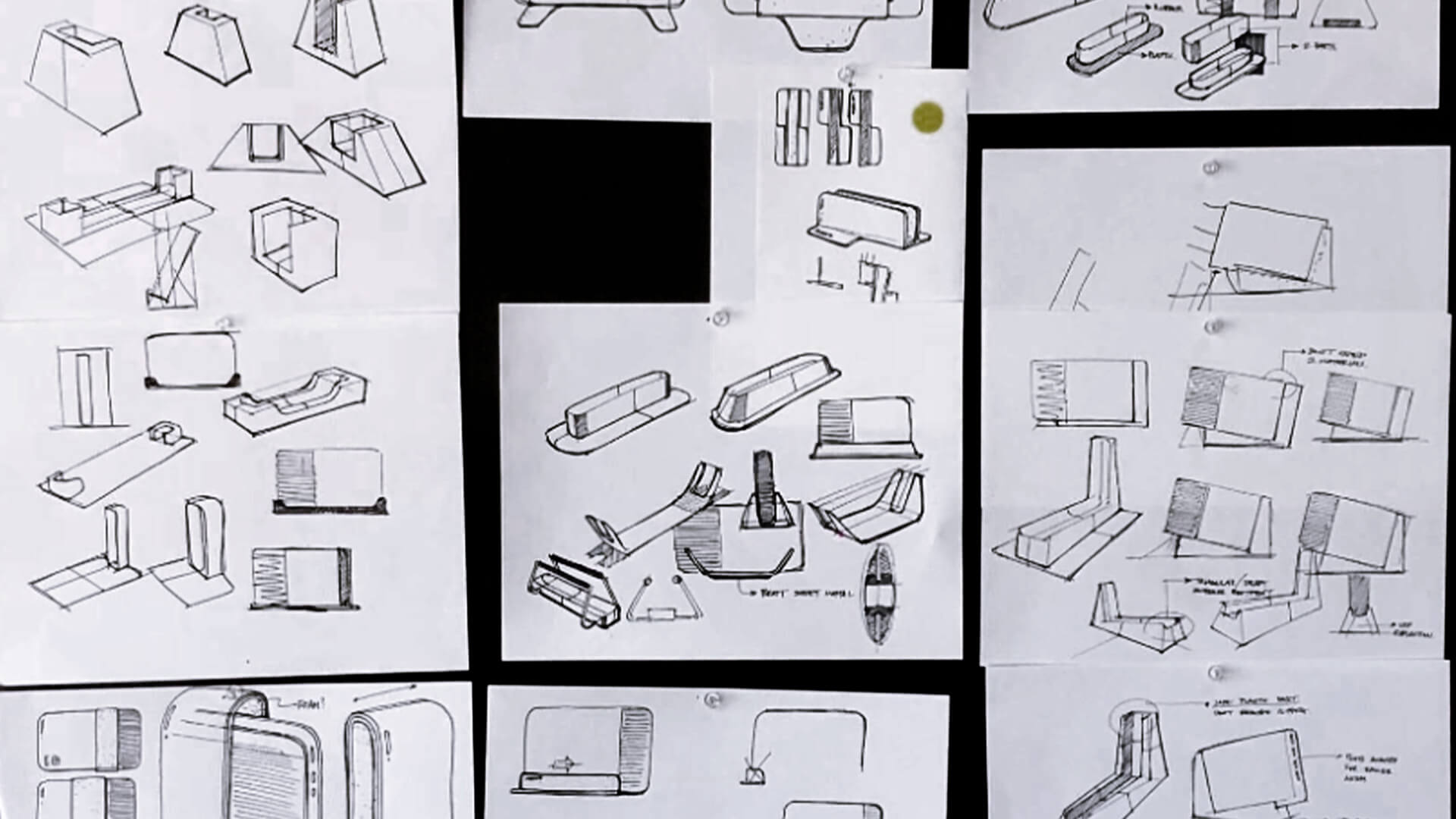
A few big discoveries leaped out. No one had a single storage solution to rely on. Users constantly transferred data from different hard drives designed for different purposes (in the field versus at home), accumulating hundreds of old hard drives over time. Traditional hard drives also don’t allow multiple users to work off them simultaneously or come with software systems that help keep projects and tasks organized, protected, and sharable. Meanwhile, the ever-shrinking size and weight of laptops—and people’s willingness to take them everywhere—set a new benchmark for portability, one that iodyne could lean into.
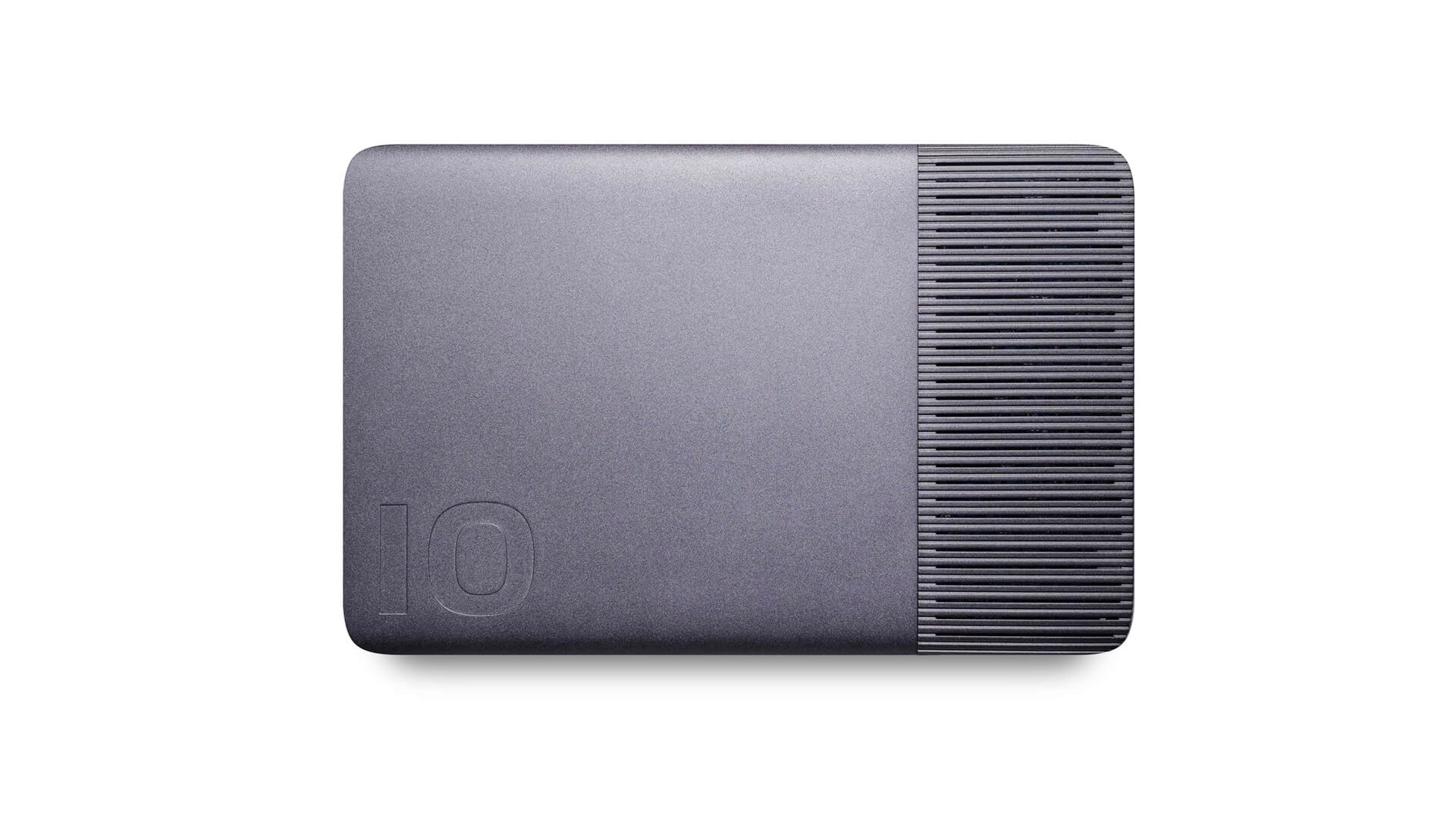
With these and other insights in hand, the team brought unrivaled performance and aesthetics together to create a far superior user experience. IDEO and iodyne developed Pro Data’s engineering architecture, collaborating on thermal performance analysis, material choice, inspection of sample parts, and even packaging design. By combining integrated venting, multiple laptop-quality fans, smart power management, and 20 thermal sensors, the team was able to minimize cooling fan loads and reduce noise and power consumption. A single, centralized, and consolidated storage space makes sharing data among teammates easy, too—up to four computers can connect to the Pro Data at the same time and access the same files. The redesigned Pro Data creates new value for consumers in a highly mobile, secure package that can go from desktop to backpack and back again.
The iodyne Pro Data hard drive launched in 2021 to overwhelmingly positive reviews. Storage Review wrote “Nothing else comes close to this level of performance in a package this size,” while Jemery Boros of StarGate Studios said “I don’t think I could have done the shoot without Pro Data. It was easy to use, fast, and kept all of our data safe on the other side of the world.” The drives have since been used in the making of major motion pictures from F1 to A Complete Unknown.
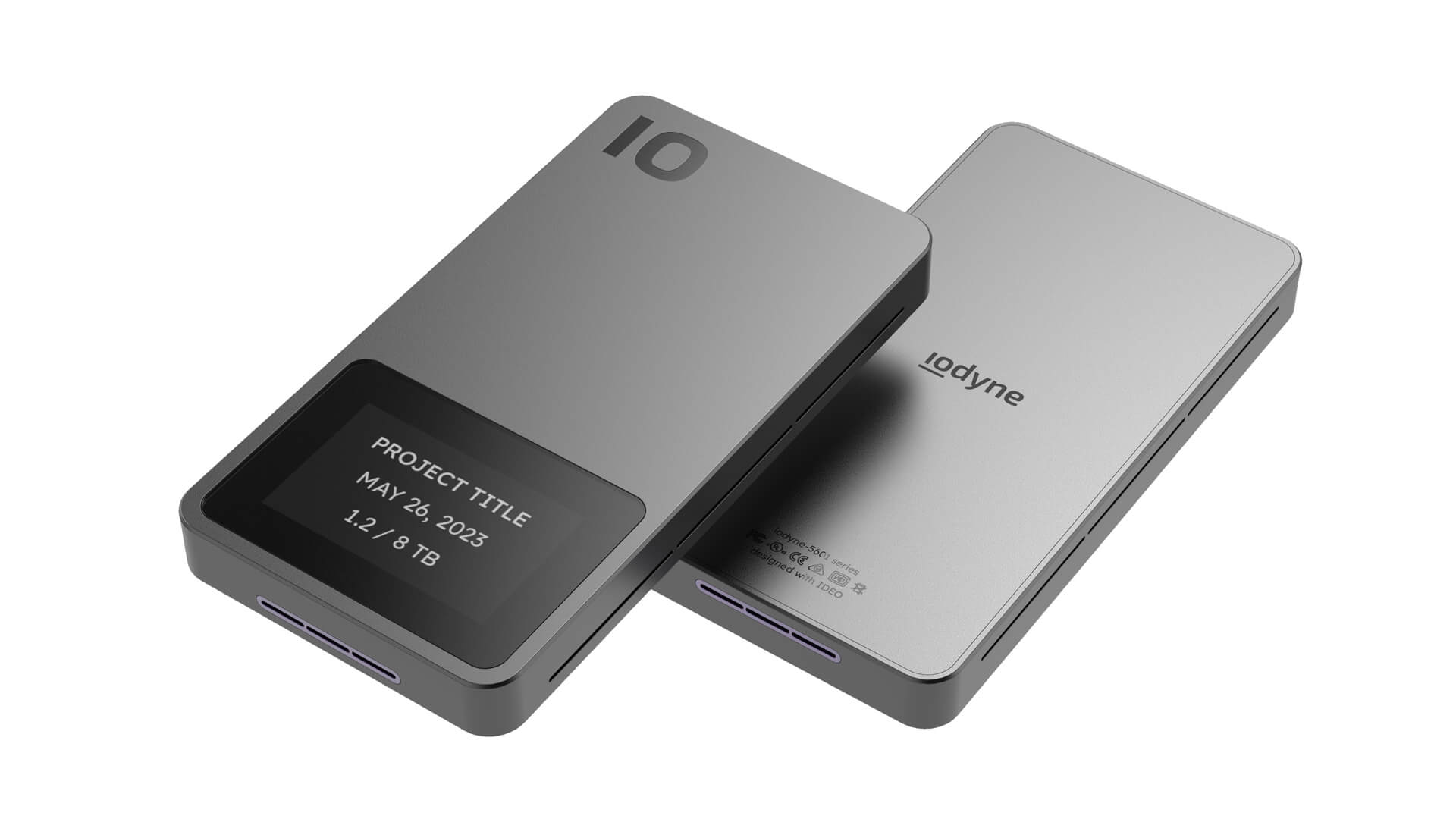
Spurred by Pro Data’s success, iodyne decided to create a second product with IDEO, a Pro Mini that could provide the same cutting-edge performance and sleek design but scaled down to fit the needs of customers who required less storage capacity in an even more portable package. Pairing Pro phone-quality industrial design with a unique internal solid-state cooling architecture that imposed key constraints on airflow was critical.
IDEO worked with iodyne to create the Pro Mini’s internal layout and collaborated with an emerging engineering company to incorporate novel solid-state cooling technology, positioning the vents to maximize airflow and optimizing how users physically interact with the device. The team also addressed users’ durability concerns, advising iodyne on part selection as samples came in from vendors. The new Pro Mini is set to ship in the second half of 2025.
Hard drives are essential tools of the trade for people with large troves of media to store and transfer, like photographers and videographers. But beyond rolls of masking tape and label makers, there isn’t an easy way to see what’s on each drive without literally going through them one by one.
Traditional hard drives generate a lot of heat and need fans to cool them, making them bulky, loud, and slowing transfer speeds.
Many external hard drives are treated like commodities. They’re designed for mass production rather than for durability and aesthetics.
2 cutting-edge hard drives
to market in 3 years
Introducing LA’s mental health crisis first responders
Helping a kinder, safer emergency support arrive first on the scene.
LACDMH is the nation’s largest public mental health department, serving over 10 million people. The agency provides critical support for the most vulnerable, including staffing a toll-free, 24/7 Help Line. Since late 2024, more than 70 Field Intervention Teams—comprised of mental health clinicians (social workers, psychologists, licensed psychiatric technicians, and registered nurses) and community health workers (trained peers or community members with lived experience)—have been dispatched around the county to help de-escalate mental health crises quickly, compassionately, and without force.
Because those experiencing a crisis are often too disoriented, confused, or otherwise unable to seek help for themselves, IDEO’s communication strategy targeted reaching “trusted messengers”—parents, spouses, siblings, and friends of people who have a mood or personality disorder like schizophrenia or bipolar disorder. The campaign aimed to define mental health crises, help people understand what to expect when they call, build trust in FITs, and divert mental health crisis calls away from 911.
To understand what drives these specially trained mental health professionals to do this type of work—and what sparks trusted messengers to call for help—IDEO met and interviewed former clients and loved ones who had reached out to the county for support during a mental health crisis. The team also interviewed multiple FIT staff to learn more about how they approach clients and families.
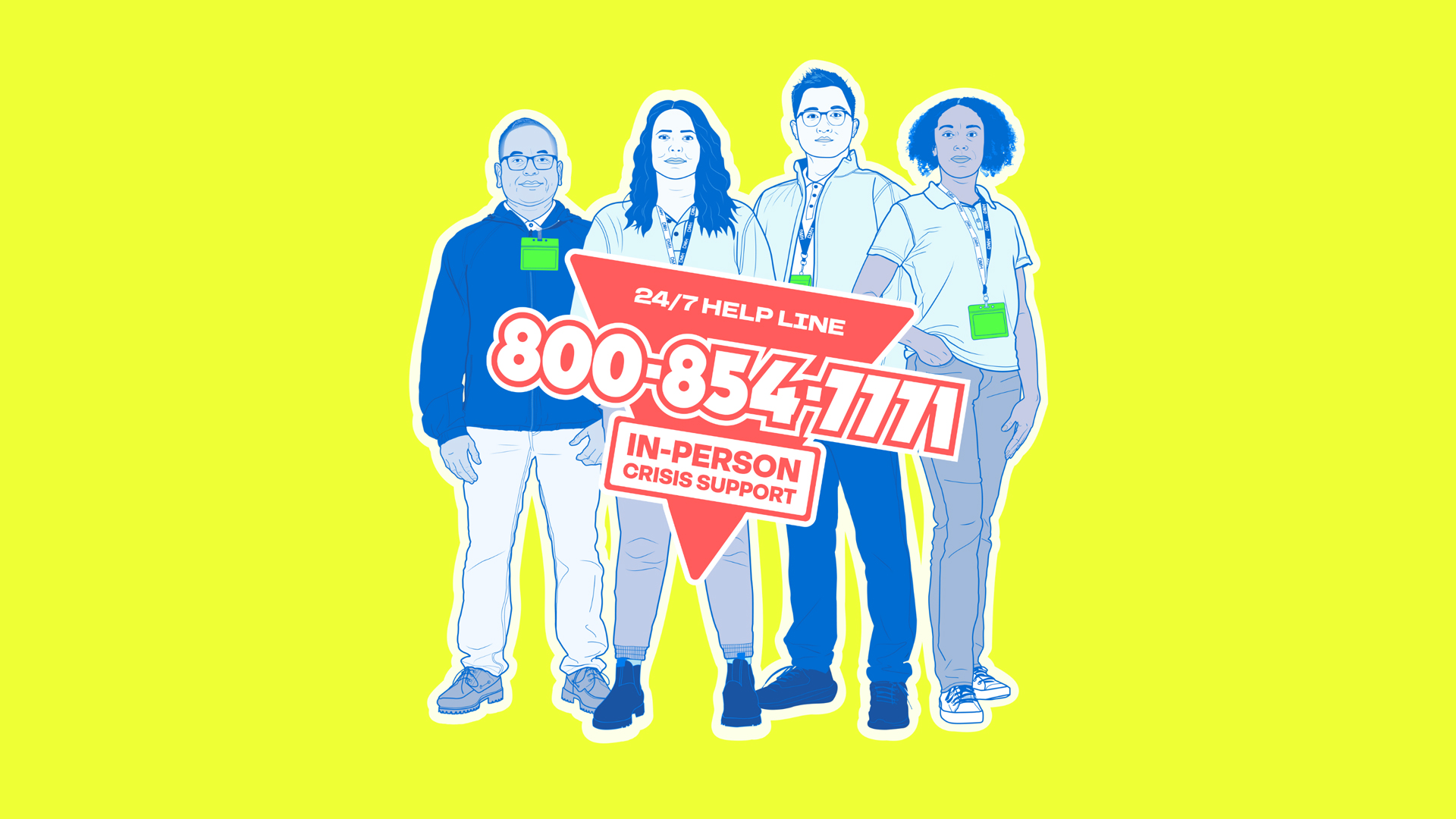
The research inspired the communication strategy’s central idea: position FIT members as real-life superheroes and first responders. By associating FITs with that term, the campaign changes the narrative and communicates their compassion and expertise to those in crisis. Custom illustrated portraits feature actual FIT staff in strong, action-figure-style poses, while a bright, eye-catching color palette and clear, direct language convey confidence and inspire trust.
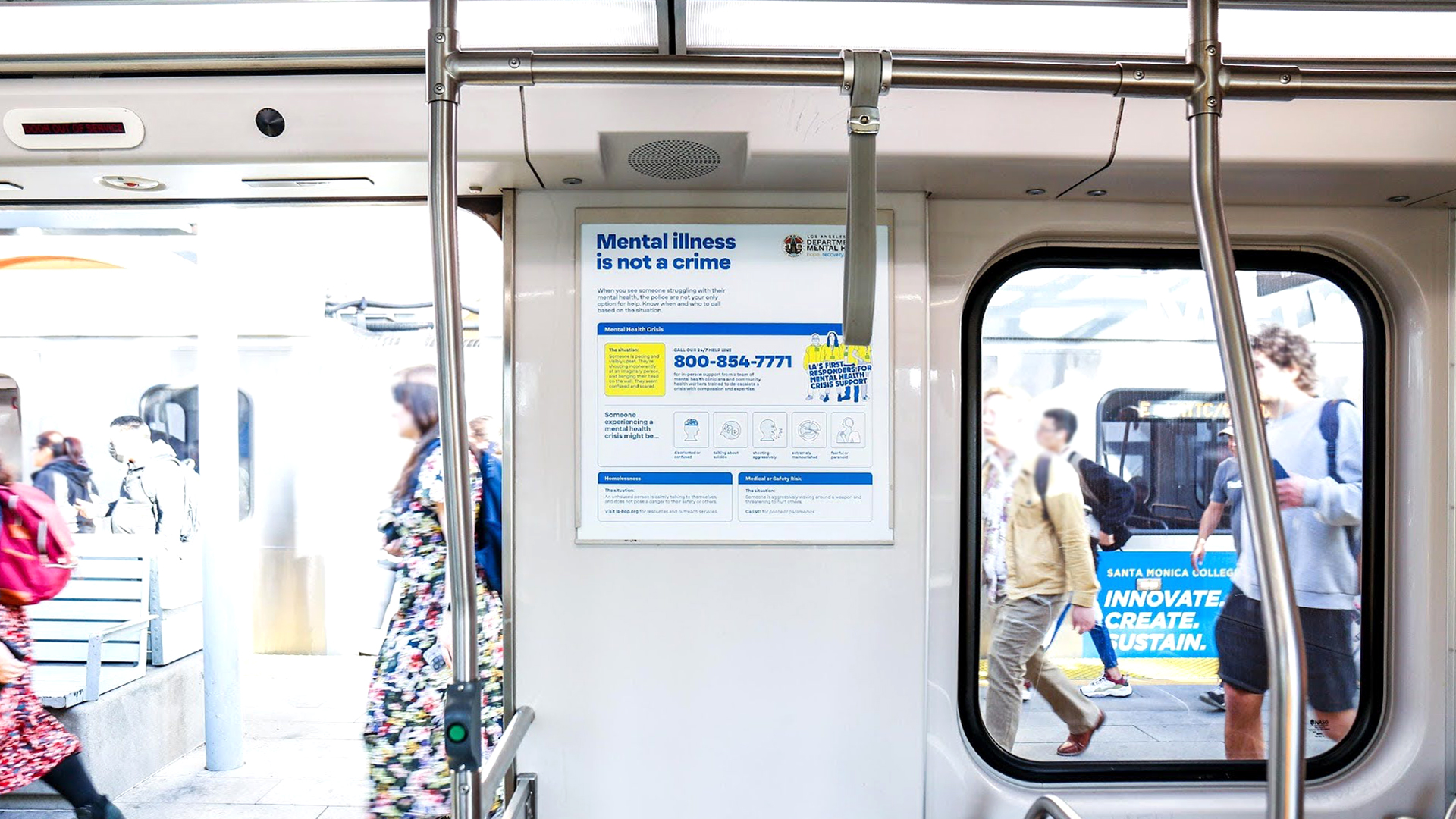
The team explored their initial design directions in a series of focus groups with LA residents, trusted messengers, and county and mental health workers to better understand the impact of the potential messaging and visuals. The research uncovered the importance of clarity, even in an inherently emotional situation. The IDEO team discovered that transparency—and real personal stories—would be the key to building public trust in ACR.
Between March and June of 2025, the robust awareness campaign will run across LA County in a number of languages on city buses, in Metro stations, on social media, streaming TV, radio, and more. An updated landing page on LACDMH’s website includes in-depth information and educational videos about mental health crises, as well as heartfelt testimonials from staff and former clients who have been helped by the service.
LA County Department of Mental Health created an innovative new program to provide urgent, compassionate care to Angelenos experiencing a mental health crisis but needed help driving awareness of its service across the region.
Calling 911 is an entrenched behavior in an emergency. However, dispatching police officers who are not trained in mental health can make a bad situation worse. In 2022, 39 percent of people shot by LA police officers were in the midst of a mental health crisis.
172 million impressions
delivered via digital and physical ads across LA
50% increase
in calls to the ACR helpline, year-over-year, attributed to IDEO’s awareness messaging
24%
of Angelenos now name LACDMH as the first to call in a mental health crisis, leapfrogging 911 or the police, which slipped 14.3 points

What’s in my Moleskine: Dave Russell
Dave Russell's doodles have a life of their own
IDEO: Tell us about your drawings
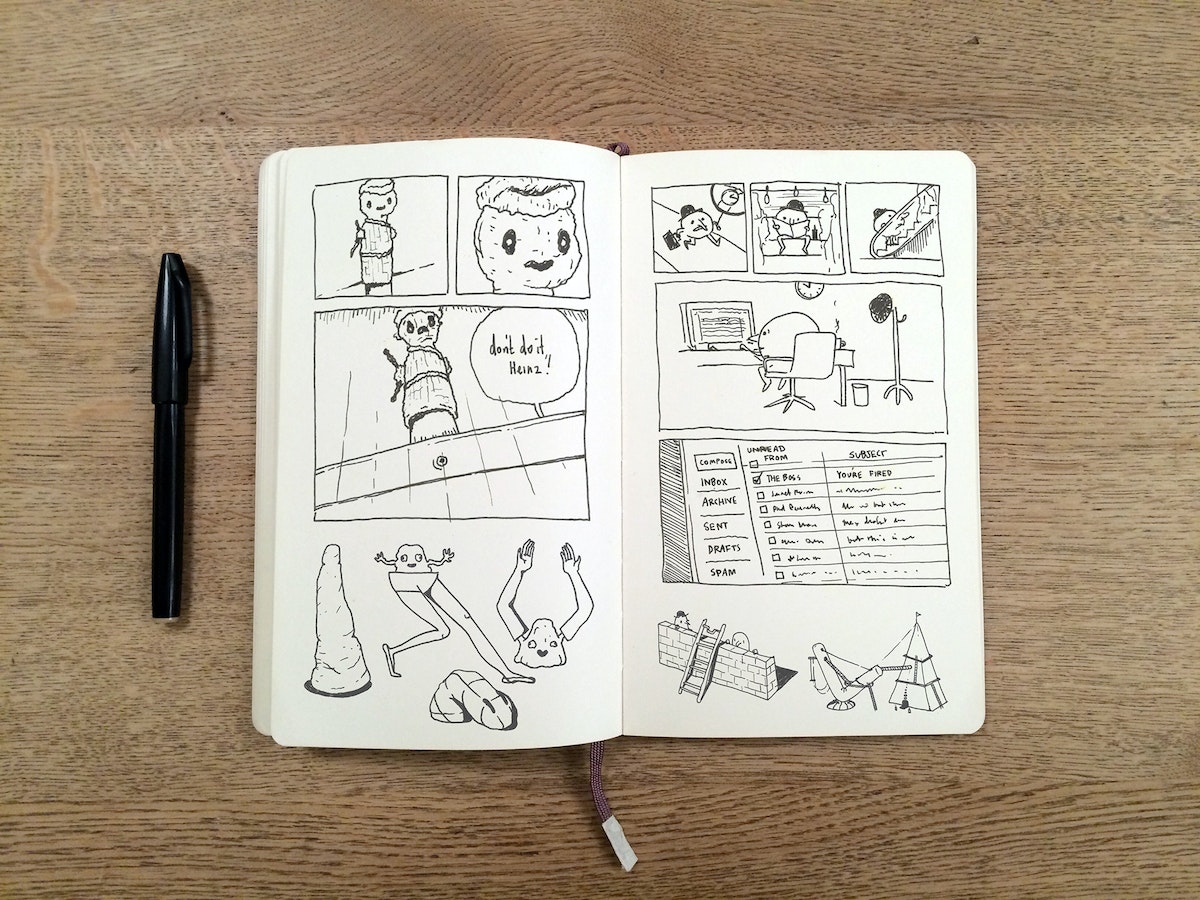
Dave Russell: A few months ago I committed myself to drawing a comic a day for one month. I’ve never consciously drawn comics before, but I’ve always admired the narrative skill of artists like Chris Ware and Adrian Tomine, so I thought it would be fun to experiment with the format. While both these artists employ a semi-realistic style to tell human stories, I’m equally inspired by the strange and absurd worlds created by the likes of David OReilly and Pendleton Ward.
When do you find the time?
For me, drawing can be a way of escaping the everyday and exploring imagined worlds. Doodling is like my meditation—it clears my mind and helps me to focus. I try to keep these scribblings to a minimum in face-to-face meetings, but when I’m on the phone my drawing hand has a mind of its own. I’m often surprised by what ends up on the page.
What are your favorite tools?
My go-to, everyday weapon is the Muji Gel Pen. It’s versatile—thin enough to write with and a great weight for small sketches. It’s got to be black and it’s got to be 0.5mm. No exceptions. I recently started using a Pentel Sign Pen to draw with, too. It’s super smooth and the nib feels quite dynamic. It also bleeds less than Sharpies, the ubiquitous IDEO design tool.
Welcome to the What's in My Moleskine series, a periodic peek inside the notebook of an IDEO designer. Fast Company recently did the same with IDEO's Joe Brown, who had a lot to say about the all-powerful Muji thread-bound A6 notebook.
In this installment we hear from Dave Russell, a communications designer based in our London studio.

Just Skeu It
Translating physical objects to the digital realm through skeuomorphism
I have to find out if I can pull off a successful translation.
I found my most recent skeuomorphic inspiration in Tokyo’s Nezu museum, one of the best traditional Japanese art museums in the country. Nezu was hosting an exhibit on sensu fans. Originally invented in China, sensu fans were popularized in Japan by artists and calligraphers, who used them as a medium for their work.
Taking in the fans, I immediately appreciated the fantastic woodblock artwork and beautiful brush strokes, but what really struck me was their construction and mechanics: the hand-held fans open with the flick of a wrist. I couldn’t get them out of my mind. How did they open and close so efficiently? How did the bamboo supports slide smoothly over one another? Did the creators consciously build them to open with a simple hand gesture? And what was the point of making them retractable in the first place?
I began to realize that the only way to satiate my curiosity was to make a digital re-creation of the sensu fan. Translating the fan’s physical systems to the digital world would test my skills as a designer and help me to understand its essential systems.
Observable systems
In any skeuomorphic project, the question I usually start with is: What elements capture the essence of the subject? Is it its purpose? Or is it characterized by its design, its construction, its movement, or its interaction? To find the answer, I need to look beyond the face of the object and break it down into the shapes, motions, and systems that define it.
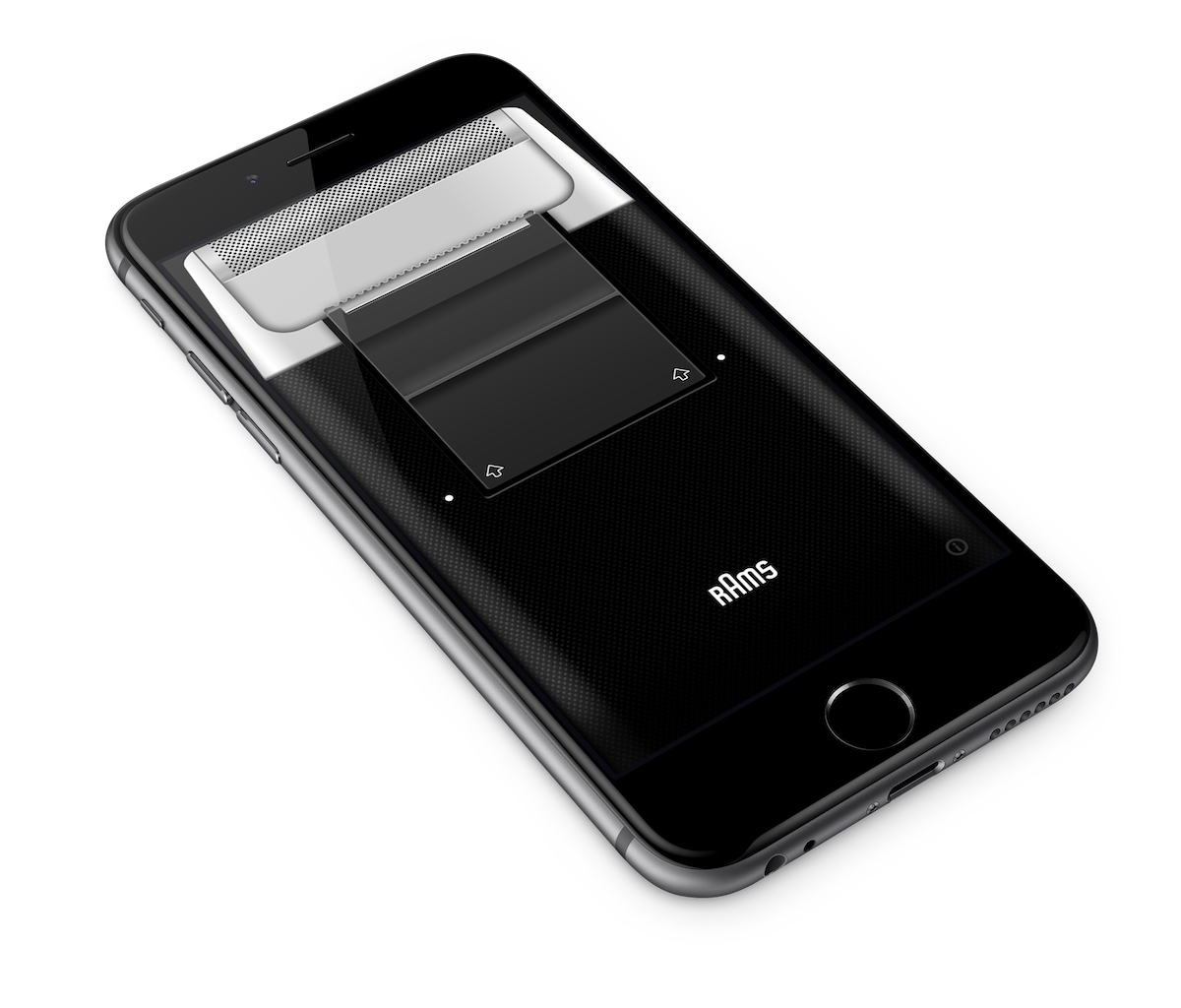
The first app I ever created was a tribute to an electric razor from the late 70s designed by Dieter Rams. I can remember watching my father run that razor over his face every morning. Though I didn't know it at the time, it was the first well-designed product I ever came in contact with. I can still hear the click of the slide-up power button and the sound of the vibration that it made as it glided over my dad’s stubble. When I built an app version of the razor, I realized that the sound and the micro-movements were the two key aspects of the design that I had to translate to make a satisfying digital interpretation.
I used a combination of animation, vibration, and sound (tilting the phone toward your face makes the phone play a beard-cutting sound) to bring the razor to life. The result was a super-tangible app that made the device feel so much like a real razor that you could almost forget it was a phone. Unfortunately, Apple didn’t quite get it—they claimed it was “too useless” for the app store—but for me, it was a ticket back to my childhood.
Considering design
Far from useless, skeumorphic explorations make me a better designer. The challenge of breaking down a real-world object into a set of Photoshop layer styles is my idea of time well spent. I strive for efficiency: Whether it’s lines of code or the number of layer effects, minimization is the key to honing my design skills.
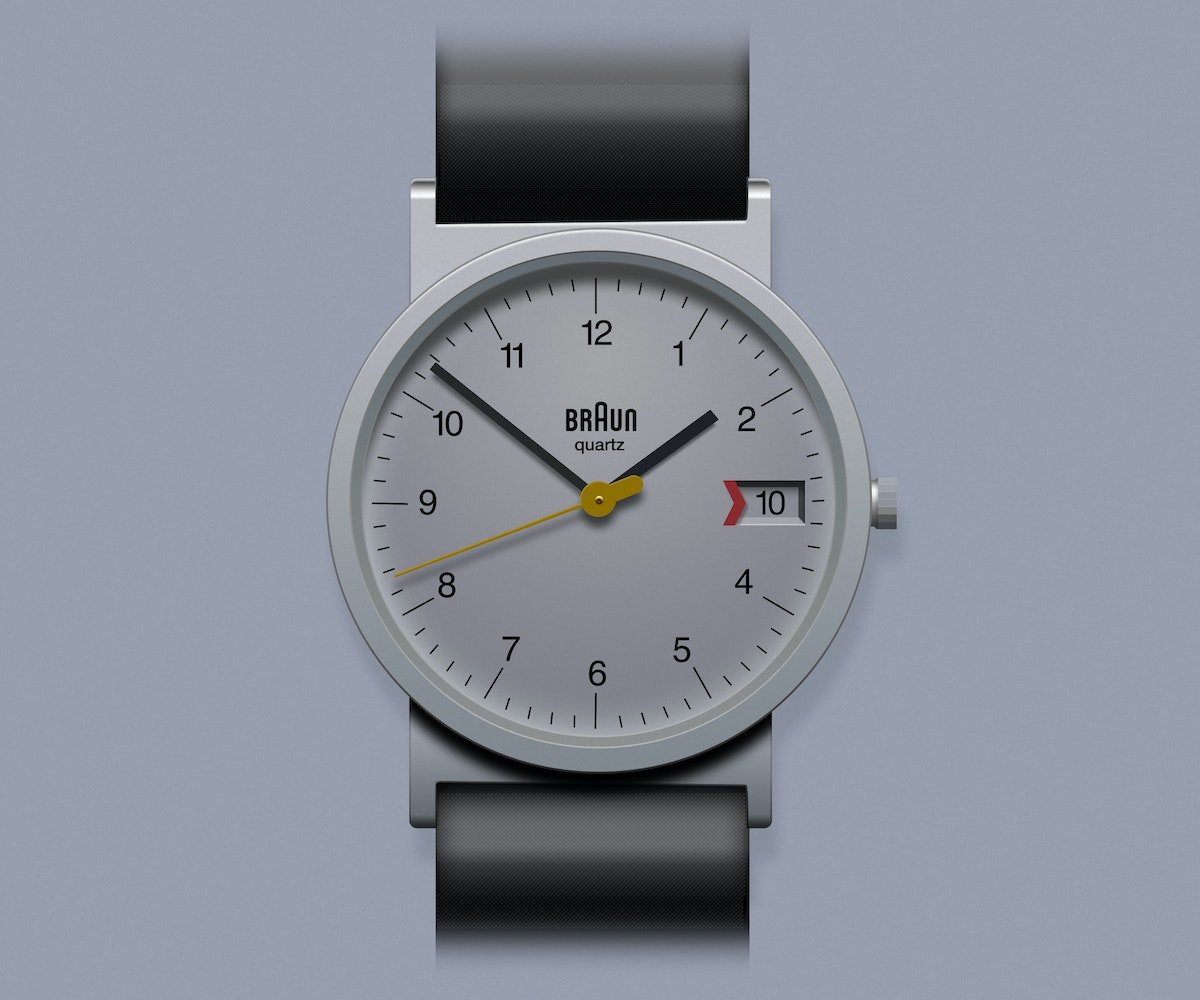
When I did a translation of my Braun AW-20 watch, I managed to perfectly capture the essence of the watch in 27 layers with one to three styles each. I plan on returning to it one day to bring it life in code.
Bringing it to life
When I began my skeumorphic translation of the sensu fan, I felt it was critical to capture the physics of the opening and closing motion. This meant that I wasn’t working with Photoshop layers, but with code. At IDEO, I tend to design with code as much as I do with Photoshop or Sketch. Having a good grasp on code allows me to think deeper about physical-to-digital translations, and real-world systems are better expressed and executed in certain programming languages than others. My first attempts at recreating the fan were standalone applications in openFrameworks—a set of C++ libraries packaged together for creative programming. I started playing with the Box2D add-on for openFrameworks, which was put together by my colleague Todd Vanderlin from our Cambridge office. While the add-on worked perfectly, the digital replication of the fan’s real-world physics just didn’t capture the magic of the construction and movement.
Because the stand-alone nature of openFrameworks limited the reach of the project, I moved on to exploring more accessible web technologies like CSS3 and JavaScript. I had to compromise slightly on the real-world look of the fan, but the final expression really embodies the movement and interaction that fascinated me when I encountered the Sensu fans at the museum. What’s more, users can manipulate jQuery parameters to change the fan's size, color, and decoration—a digital version of what traditional Japanese artists have done with the fans throughout history.
By creating these translations and exploring the life of the subject, I end up discovering something deeper about the object's design and meaning in the world. Likewise, by creating these challenges, I end up discovering something about myself and my skills as well.
A few times a year, I’ll come across something—maybe an object or system; maybe just an idea—and I’m overwhelmed with a burning urge to translate it into code and design. It’s a practice usually referred to as skeuomorphism, and once a project captures my imagination, there's no going back.
How We Did It: Buildings Tell Us Just How Green They Really Are
A revolutionary new LEED plaque makes sure structures live up to their green potential
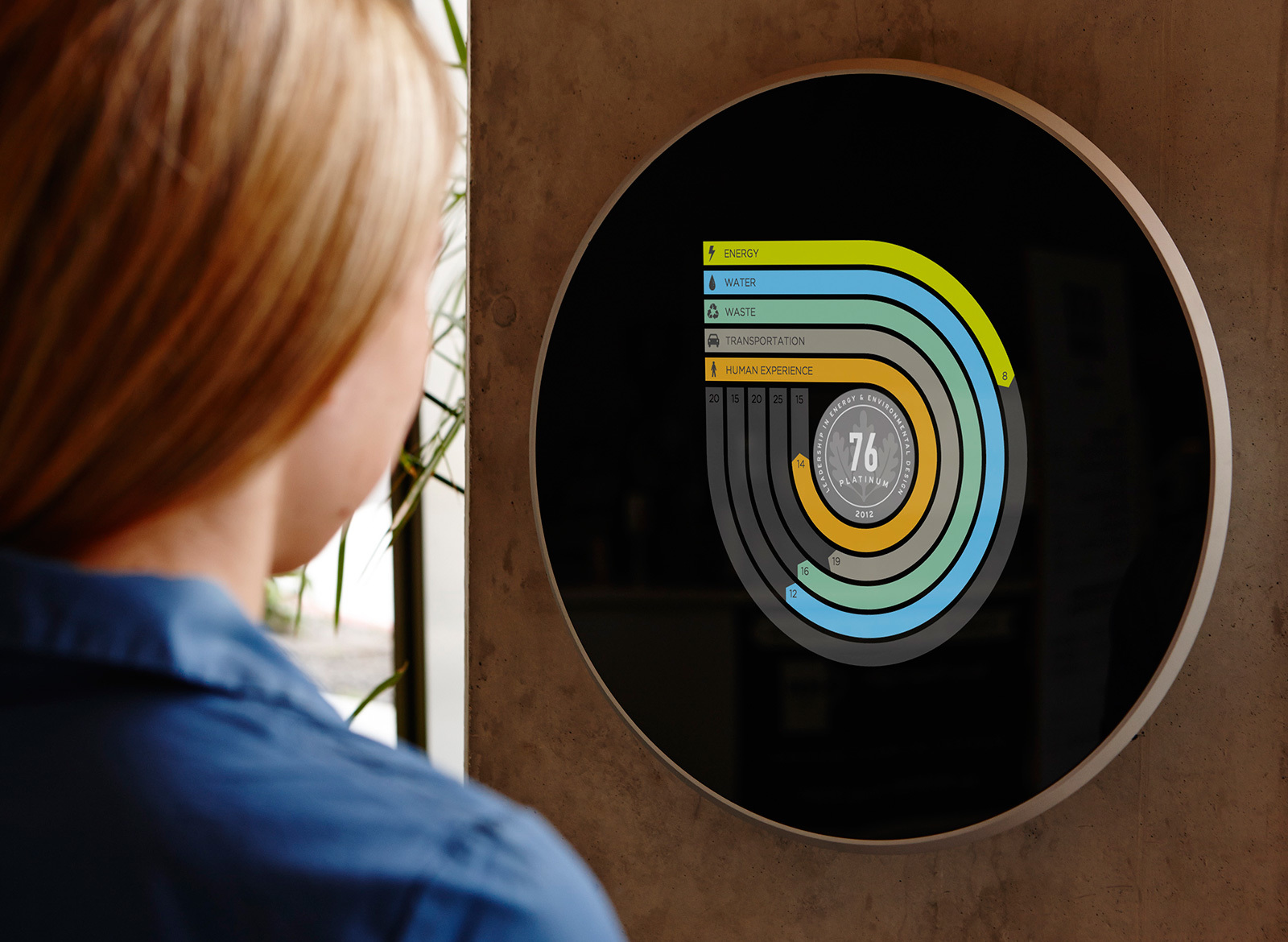
But when IDEO worked with the USGBC to come up with a new LEED certification plaque, it became clear that software design would be a fundamental part of LEED’s future: The idea was to replace the static plaque with a continually updated digital display. Initially, LEED only looked at a building’s performance at the time of certification. The USGBC has long been working on ways to evaluate what happens after certification, and a recertification program has been in place since 2004. The new plaque was conceived to go even further, monitoring a building’s sustainability in real time on a dynamic digital graph.
That sounds (and looks) pretty simple and intuitive, but to make it work, we had to bust down some interesting technical walls, in a way that nicely encompassed the breadth of IDEO's capabilities, from design research, business development, industrial design, shop building, and interaction design to the software I helped create with an incredible team.
I came on board after the actual visual design had been finished. A small IDEO team had already completed a concept video, unveiled at the 2013 Greenbuild conference, for a plaque that calculates a building’s ongoing performance in five categories: energy, waste, water, transportation, and human experience. For each of the five ratings, there is a curving pathway that gets longer as the score improves.
The team came up with this “racetrack” design to show real sustainability data in a way that encourages positive behavior change. Familiar graphics like charts and graphs tend to make people focus on the negative, whereas we wanted people to focus on progress. No matter how long the strip on the racetrack is, you can see that you’re on your way, even if you still have a ways to go. We weren’t sure we could achieve the requisite combination of elegance and functionality in the time allotted. But it was a good challenge, and that in itself was compelling.
The animation has a big purpose: Showing the building’s use of energy, waste, and water makes people more aware and more conscientious of their own use. I think that’s really positive. The plaque also shows how occupants travel to and from the building, as well as how comfortable and happy they feel when they’re inside, which are new ideas for what it means for a building to be “green.” I wouldn’t have thought, when LEED was introduced in 2000, that a software developer could have a meaningful impact on sustainable architecture, but the fact that I could really speaks to the opportunities that will be open to us in the future.
--
Many folks helped to contribute to this post. Huge thanks to Scot Horst, Gretchen Sweeney, Jennifer Easton, Kim Cullen, Gerry Harris, Steve Bishop, Beau Trincia, Mark Harrison, John Stoddard, Alastair Warren, and Building Robotics.
I've always had a layman's interest in architecture and in LEED, the U.S. Green Building Council’s certification program for sustainable buildings. I’m a software developer, so designing buildings is well outside my area of expertise.
Nature Cards
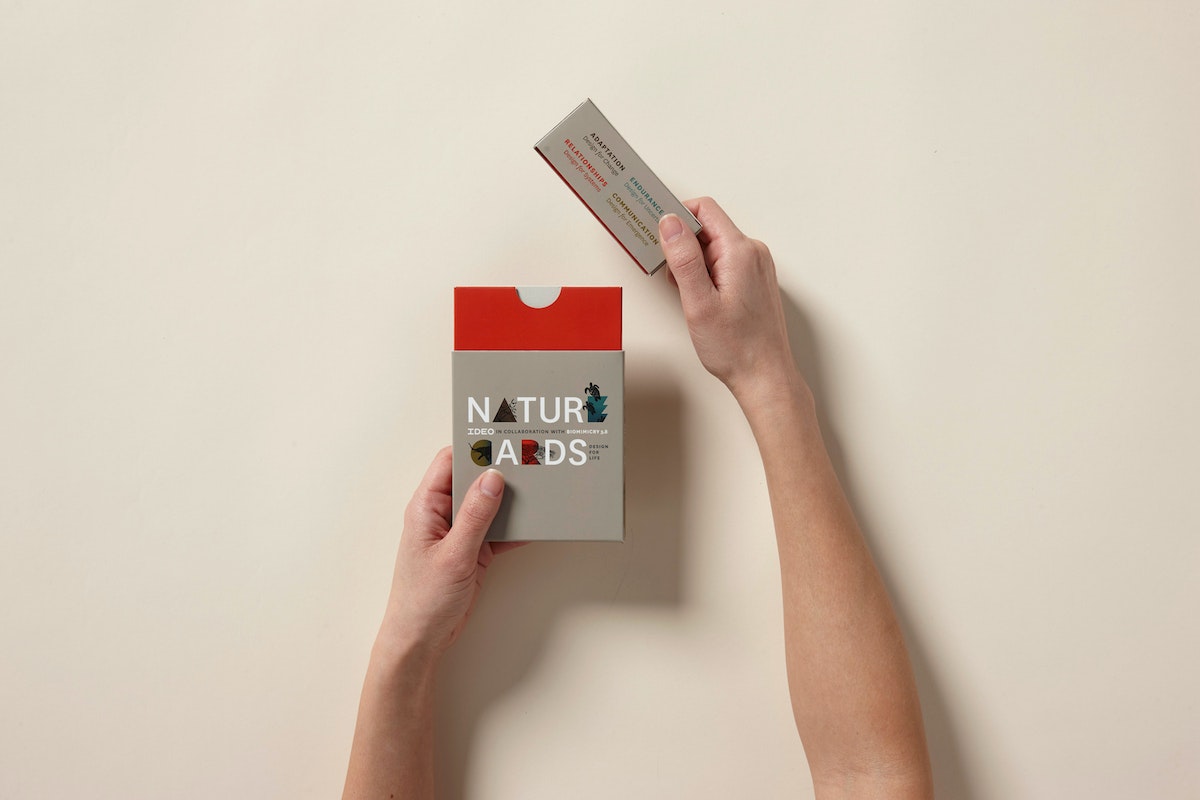
Nature Cards are a collection of cards featuring strategies from the natural world that inspire us with a new mindset as we approach design challenges.
Nature Cards are a collection of cards featuring strategies from the natural world that inspire us with a new mindset as we approach design challenges. Use them to frame your design challenge, evolve your business strategy, brainstorm, teach, or simply to think creatively and holistically with nature in mind.
As human-centered designers and innovators, our work has always been inspired by observing people’s natural behavior in its physical, social, and cultural context. As we address increasingly complex and systemic challenges, recently some of us at IDEO have been exploring how human-centered design might broaden its lens to include observation of the natural world in which humans are an integral part. With the help of experts in biology and the life sciences, we are learning about the principles of successful strategies in living systems. This knowledge is inspiring new thinking about how and what we can create for a thriving future.
Download the complete set of Nature Cards here.

Lindsey Turner
I’m passionate about building brands, products, and experiences that help organizations show up with meaning and momentum.
I help organizations cut through complexity by shaping how they show up, through brand strategy, identity, and storytelling.
Working at the intersection of brand and business, I bring an editorial eye and a bias toward making—turning ideas into tangible experiences that people can understand, trust, and believe in.
My work spans government, healthcare, financial services, media, and consumer goods, from launching Gen Z-focused ventures to building innovation labs and reimagining legacy brands. I relish moments of ambiguity and enjoy translating across teams, perspectives, and priorities to move ideas forward.
I started my career in editorial and digital design, shaping cross-platform experiences and identity systems in publishing and agency environments. That foundation still shapes how I work today: I’m detail-oriented, collaborative, and overreliant on the Oxford comma. I hold a BFA in Visual Communication from the School of the Art Institute of Chicago.

Rachel Young
My work helps organizations see who their products aren't working for—and build the will and the tools to do something about it
For 25 years, I've asked the same question: Who does this design exclude—and what are we going to do about it?
My work spans human-centered strategy, inclusive design, and qualitative research, with clients ranging from Microsoft, Google, and Verizon to the National Science Foundation, and San Francisco Unified School District.
Before IDEO, I taught elementary school in East Palo Alto and spent a decade doing design work with social service organizations—where I learned firsthand what it costs people when systems are built without them in mind.
I am currently writing User Error, a nonfiction book about digital access and the design decisions behind it. I live in Oakland, California.

Brian Pelsoh
I lead with craft, ensuring our work is creatively excellent: rooted in deep human insight and imagination, while also grounded in the realities of business and technology.
My expertise spans brand, communication, and product design across tech, education, the arts, and social impact.
I believe great work demands both high-level vision and obsessive attention to detail, and only happens through collaboration.
I bring an inclusive, hands-on approach and a deep understanding of business, which enables me to consistently deliver excellence while always asking why.
Before joining IDEO, I worked at the brand firms Pentagram and VSA Partners. I began my career as a designer, leading teams at the School of the Art Institute of Chicago and the Milwaukee Art Museum. I hold an MFA in graphic design from Maryland Institute College of Art and a BFA in communication design from the Milwaukee Institute of Art & Design, and have taught at some of the best design schools in the US.

Tony Wong
I am responsible for IDEO’s long-term success in China and working with clients to use design as a tool to enable growth.
I am responsible for IDEO’s long-term success in China and working with clients to use design as a tool to enable growth. Specifically, I have helped Chinese companies design holistic brand solutions through the development of their products, communication, services, and innovation teams, and I have helped multinationals expand their presence and influence in China.
I advise global leaders on developing China-led innovation and capabilities.
In over 15 years in IDEO Shanghai, I have worked on projects that use design to elevate the quality of the experience of healthcare products and services, streamline processes that increase productivity, create spaces and programs that promote and enable inclusive communities, and build next generation mobility solutions that are planet-positive.
Before joining IDEO, I worked at Philips Electronics and the Electrolux Group in Italy, the Netherlands, and Singapore on a number of breakthrough commercial products. I am a member of the Young President Organization in Shanghai.

Building a personal AI for the messiness of life: Sida Li
Most AI products today are built for work—a space with clear problems and established systems. One founder noticed a gap: personal life is messier, harder to systematize, and mostly left behind by the AI boom. So she built Cue, a personal AI that lives inside iMessage and group chats, to go where the other tools haven't.
In this episode, Becca Carroll, IDEO's Chief Strategy Officer, talks with Sida Li, co-founder and CEO of Shared Context Lab, about staying anchored to a human need while the technology around her keeps changing shape, why she treats her business model with the same rigor she'd bring to a product, and what it feels like to build a company at this particular, disorienting moment in AI.
The conversation also gets into how Sida makes design decisions: the language Cue uses to describe itself, the tradeoffs behind building inside iMessage instead of a new app, and a real story about a business idea that didn’t pan out.
This is the second in a two-part series profiling founders from IDEO's Startups-in-Residence program. The first conversation is with Johannes Seemann, founder of Sooner, on designing GenAI for the emotional side of money.

Designing GenAI for the emotional side of money: Johannes Seemann
Most personal financial tools are built to run the numbers and optimize towards a budget. While that works for some, most people experience money as a lived relationship that does not neatly fit into a spreadsheet. Johannes Seemann and Becca Carroll discuss why money is emotional before it is mathematical, and what a human-centered approach to building a generative AI financial product looks like in practice.

The curious leader's edge in uncertainty: Scott Shigeoka
Mina Seetharaman talks with Scott Shigeoka, author of Seek and Head of Curiosity Cultivation at the Eames Institute, about what distinguishes genuinely curious leadership from performative curiosity, how power dynamics shape curiosity, and why practicing curiosity can restore energy rather than drain it.

How constraints make us more creative: David Epstein
Mina Seetharaman talks with David Epstein, author of Inside the Box and Range, about why total freedom often produces average work, how leaders can design useful limits on purpose, and what organizations such as General Magic and Pixar reveal about the relationship between boundaries and creativity.
Looks like you might be in search of something very specific?
Or reset the filters above and try another angle.
Here’s some random inspiration

Podcasts about creative leadership

Articles about the power of prototyping
