
.svg)



Transforming sick days with play
Playhouse MD brings comfort, connection, and a little joy to pediatric care.
Fevers. Boogers. Yucky meds. IDEO Play Lab designers dove deeply into the challenges of sick days and doctors’ appointments through video diaries, online surveys, and in-person interviews with parents, healthcare providers, and small children in homes and pediatric offices across the US. They heard about the struggles of giving medicines, wonky thermometer readings, kids having “stethoscope scaries,” and, worst of all, what happens when kiddos hear the “s-word”—shot.
The research confirmed Sydney and Kaitlin’s initial hunches about playful healthcare products and provided the team with insights on how to move forward. The answer was a formula of sorts. To help reduce kids’ anxiety and keep them calm at the doctor, give them a choice in their care whenever possible. Build familiarity with doctor’s visits and medical devices through playful moments at home. Redirect their attention away from fear. Design for multisensory richness. And provide age-appropriate narratives about healthcare experiences.

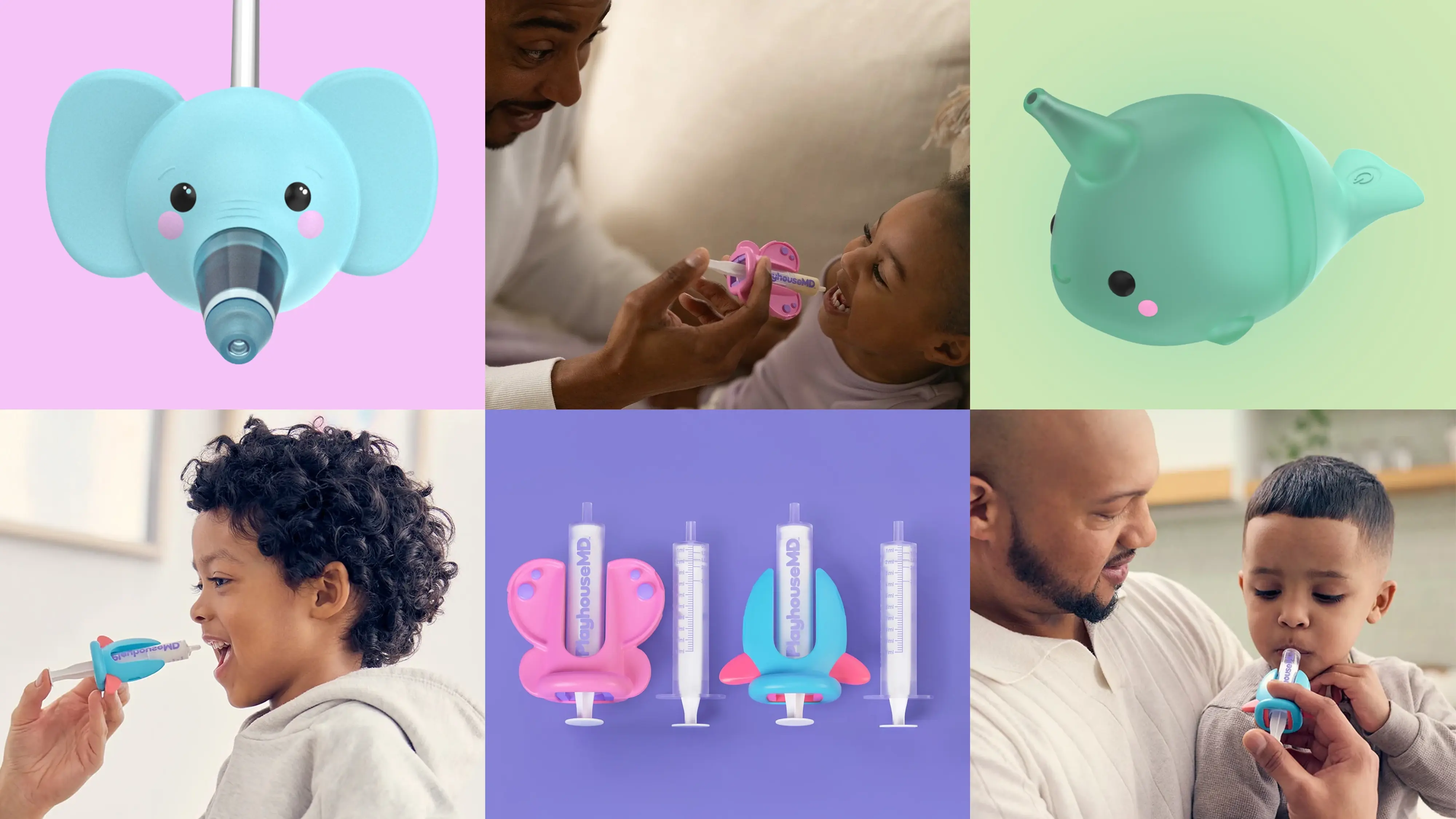
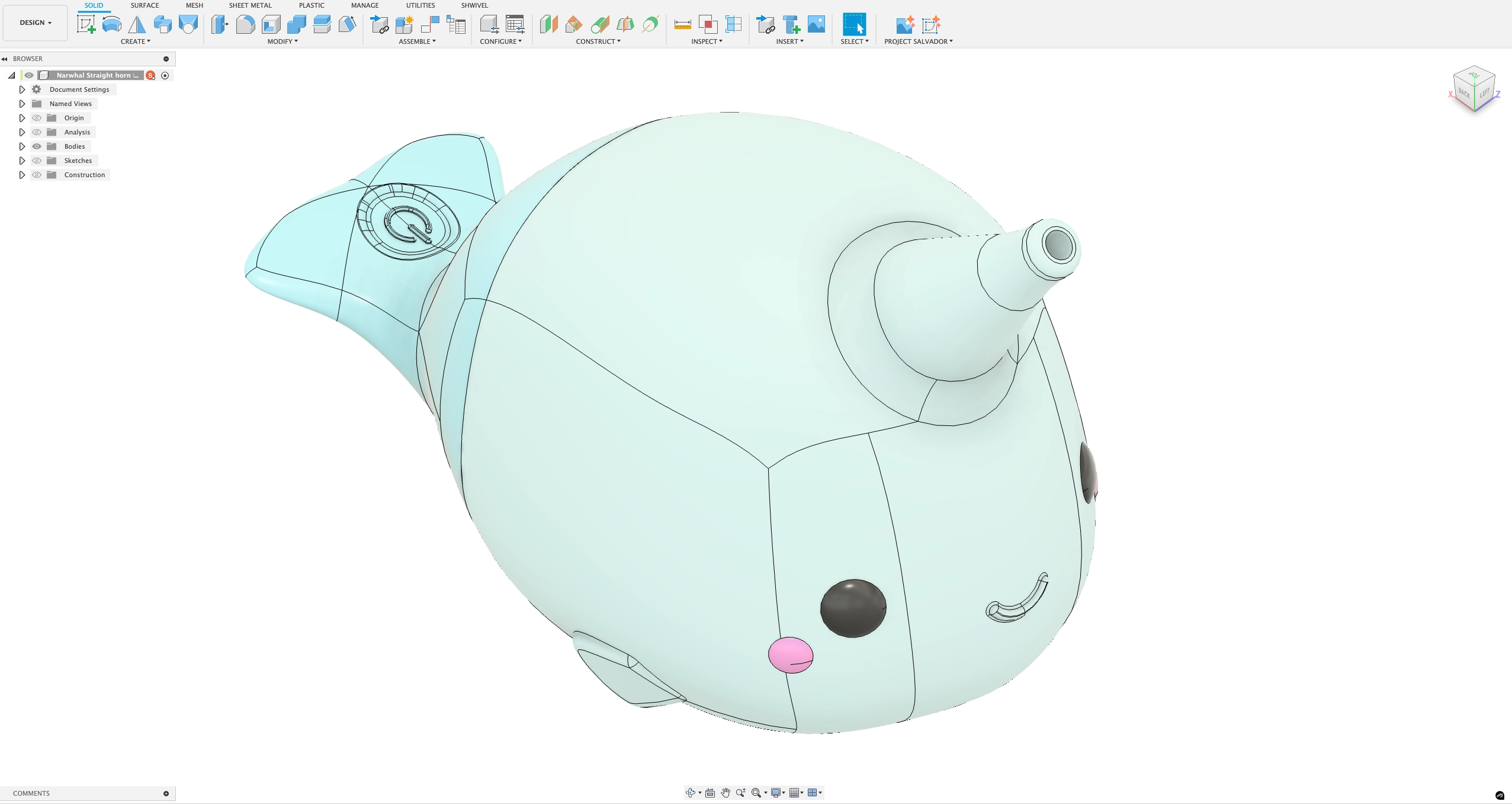
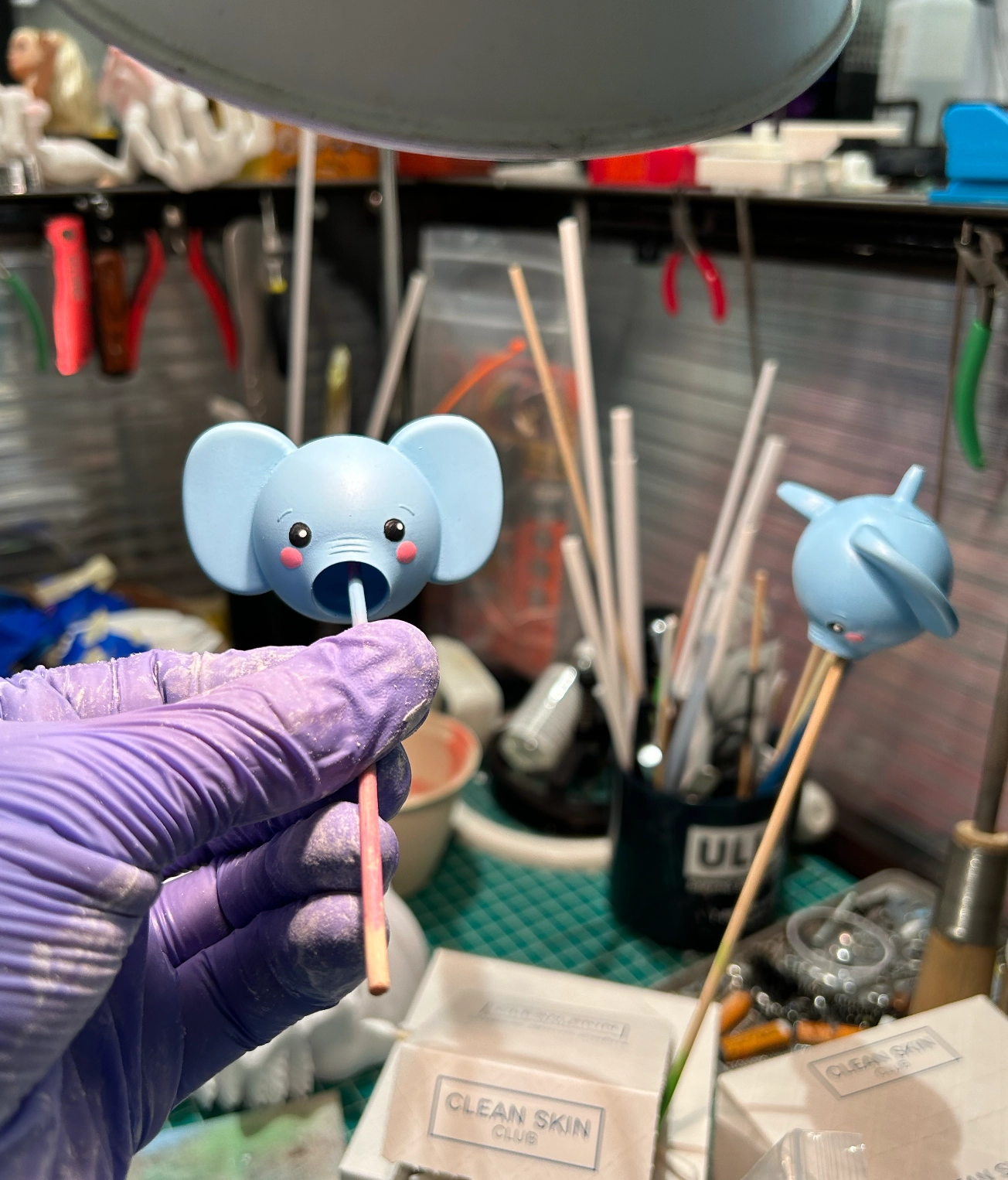
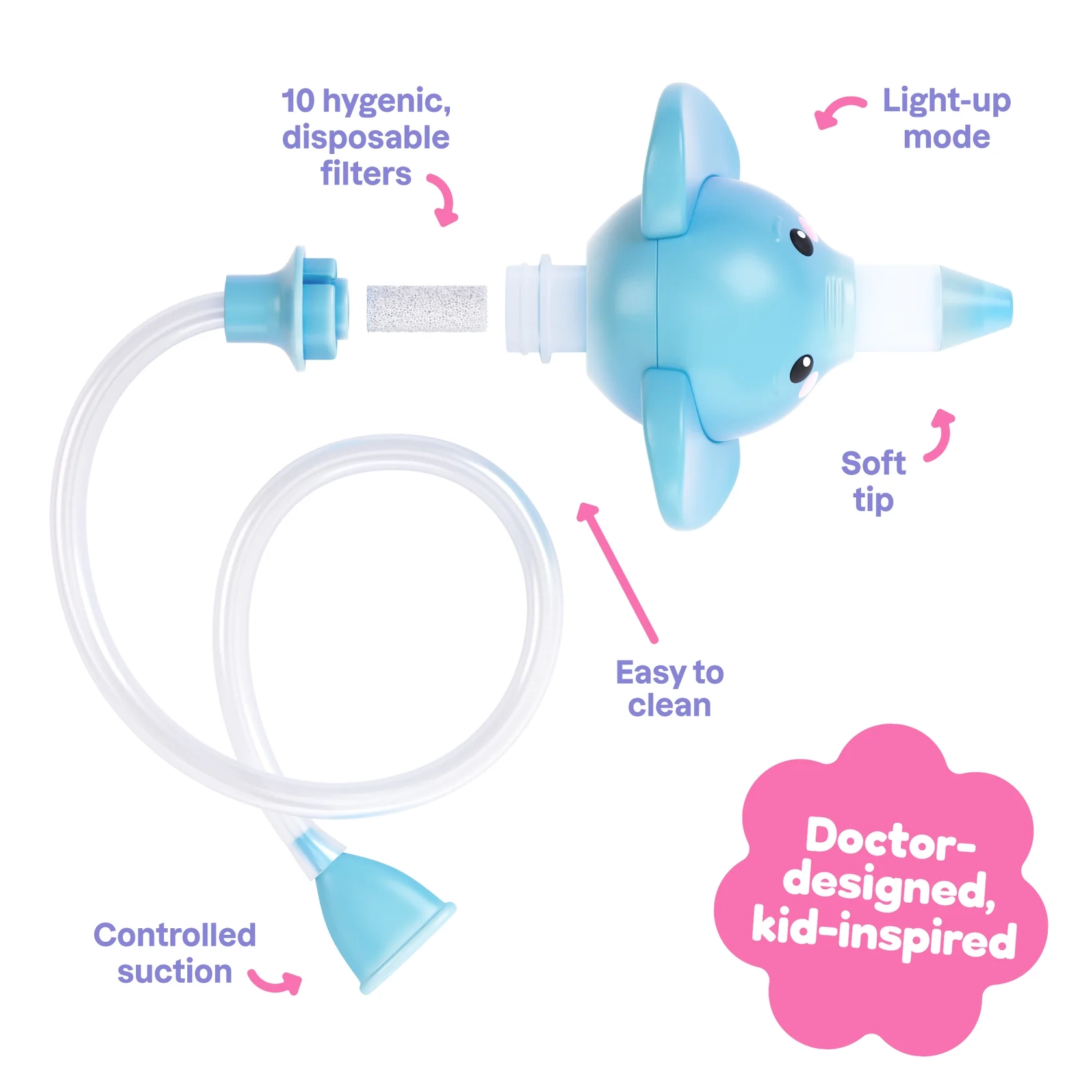
Inspired by this kid-centric formula, the IDEO Play Lab team worked closely with Sydney, Kaitlin, and their co-founder, Michael Kamins, to iterate on several designs, winnowing down more than 150 brainstorm ideas into a dozen tangible prototypes (or tinker models) that were shown to doctors, nurses, parents, and young kids for feedback. The designs—a rocket ship medicine dispenser, an elephant-shaped nose aspirator, and a narwhal nasal bulb, among others—were intended to evoke a sense of playfulness, comfort, and familiarity, with features designed for maximum cuteness. Some even lit up and played sounds, like popular toys.
While the designs passed the fun test with kids, they also needed to be functional for parents, trusted by doctors, easily manufactured, and affordable. Eventually, they would need to be approved by the FDA as regulated medical devices. Playhouse MD also requested patentable innovations to help protect their products from imitation.
With these constraints in mind, IDEO Play Lab delivered a collection of nine unique, high-fidelity prototypes that add a dose of fun to caretaking challenges in homes and doctors’ offices. The final designs were durable, medically sanitizable, and safe for testing with real kids, which helped the startup secure multiple rounds of funding and bring its first products to market in 18 months.
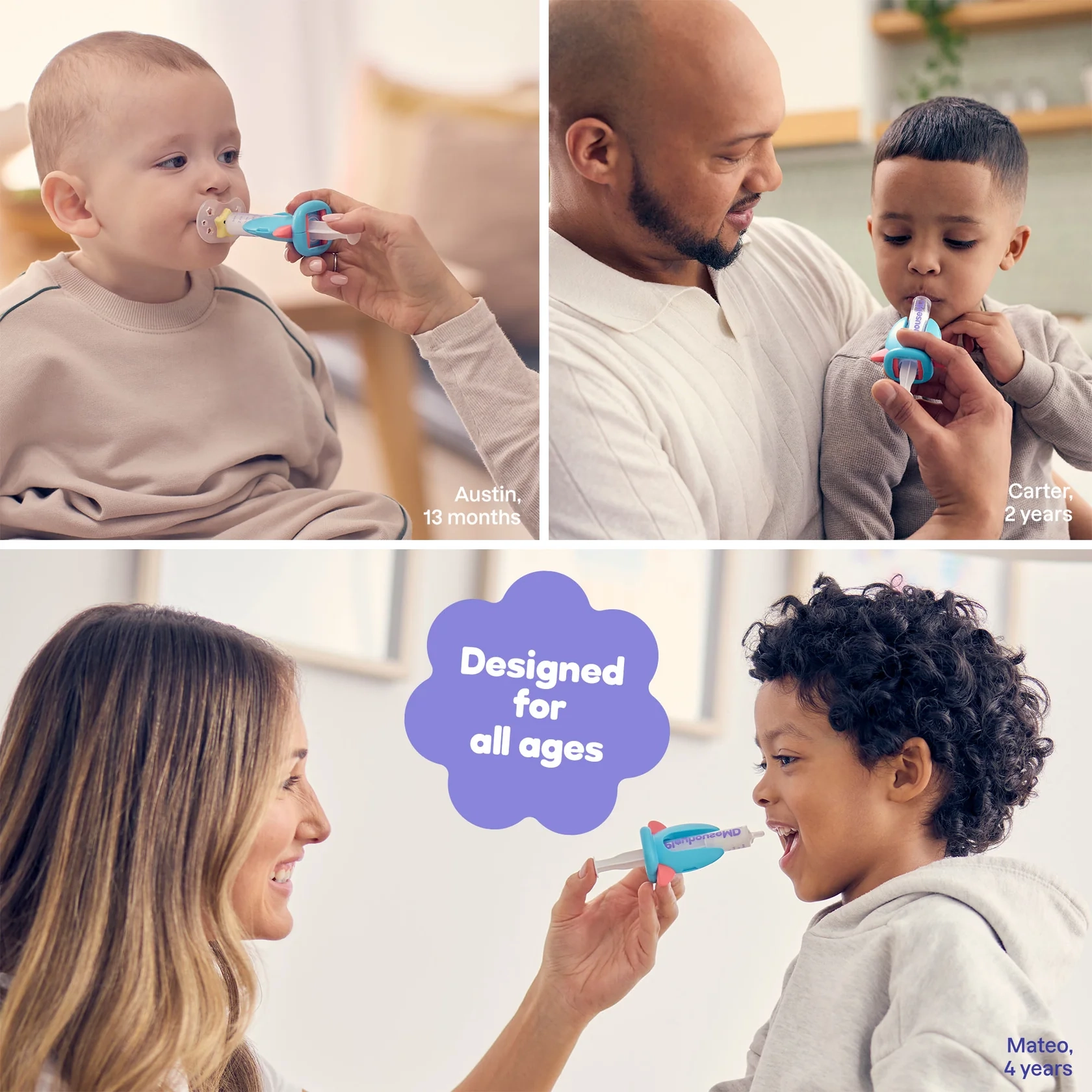
Playhouse MD began selling its first four direct-to-consumer products on its website in June 2025: two Medicine Buddies (medicine dispensers shaped like a rocket ship and a butterfly) and two Booger Buddies (a light-up nasal aspirator elephant called Luna and a light-up nasal bulb narwhal named Noa, which was named one of The Best Inventions of 2025 by TIME). The products are available at Target and Babylist stores, and on Amazon through leading medical distributor McKesson Medical-Surgical.
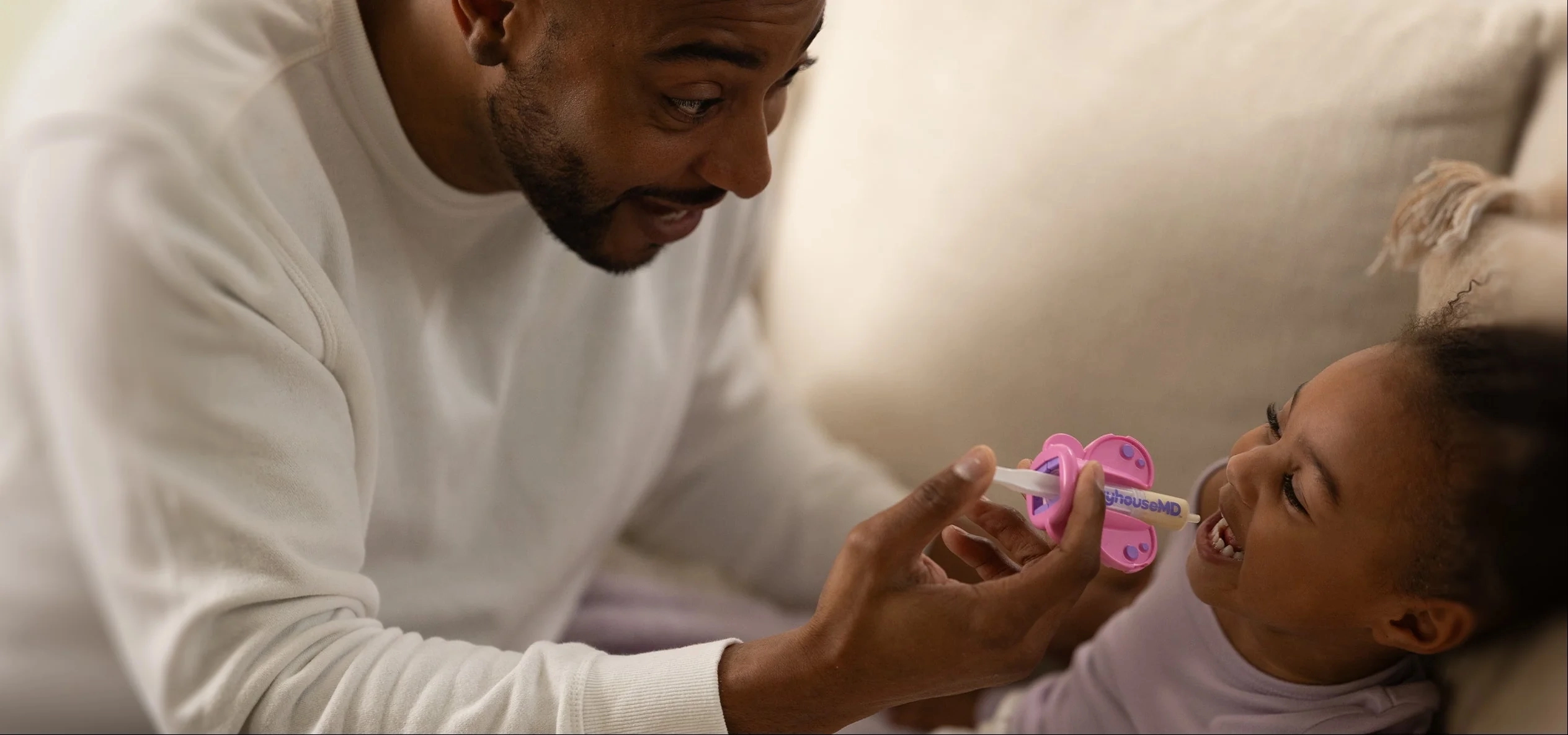
Most companies design child healthcare devices with parents’ or doctors’ tastes in mind; none, however, focus on what will make kids smile, too.
TIME Best Inventions of 2025
in the Parenting Category, Playhouse MD's Light-Up Nasal Bulb
1 ½ years
from initial brainstorms to in-market launch of 4 kid-centric medical products
Designing a next-gen airway visualization system
Improving patient outcomes with the GlideScope ClearFit Video Laryngoscope.
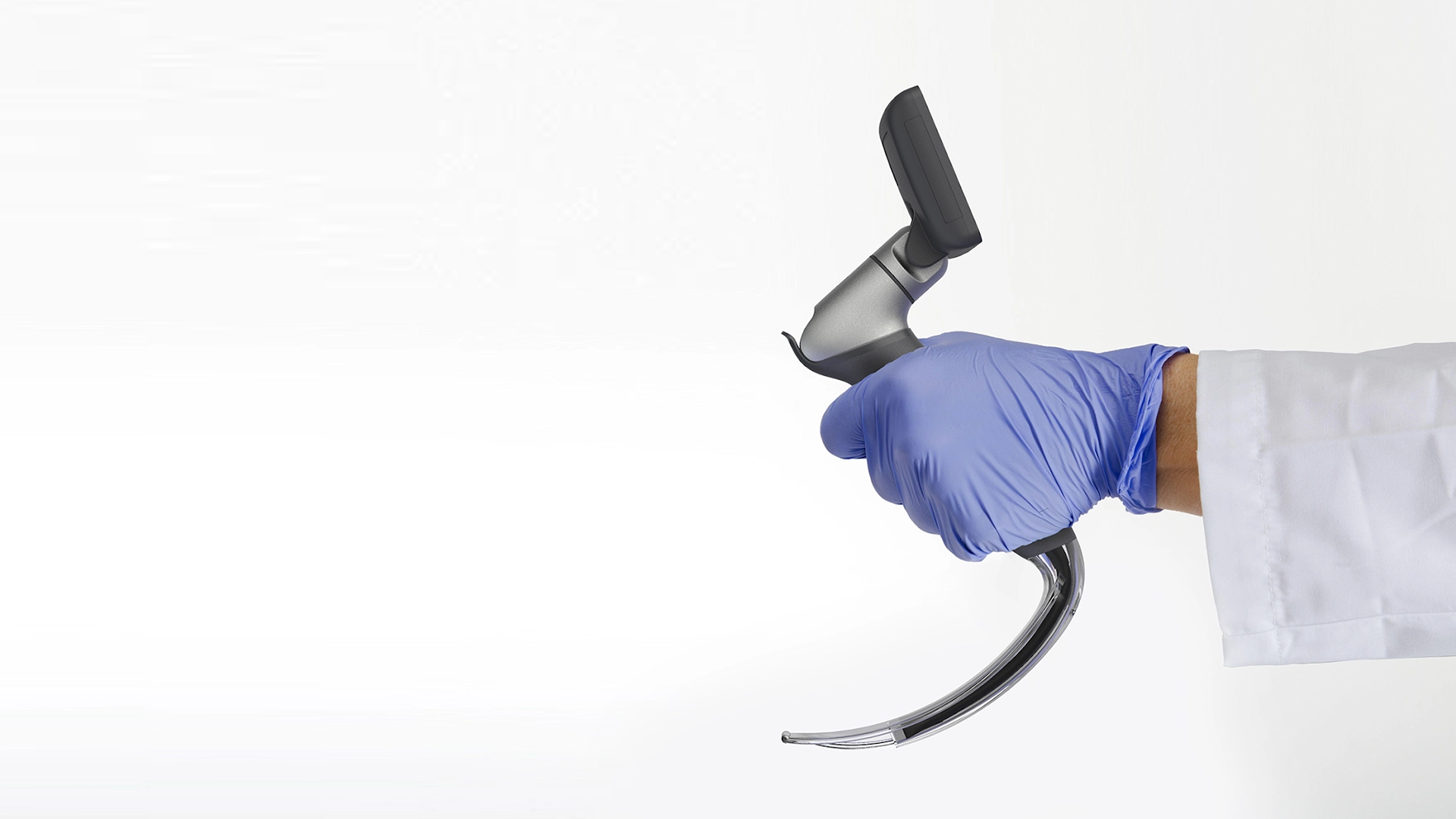
Verathon offers one of the broadest portfolios of video laryngoscopes on the market. While these life-saving devices increase the likelihood of successful first-time intubations, reducing trauma and speeding recovery times, they are more costly and can be more challenging to learn how to use than traditional mechanical ones, which rely on directly looking at the vocal cords. Wanting to make it easier for cost-conscious hospital administrators to transition from traditional laryngoscopes to Verathon’s video systems, the medical device manufacturer asked IDEO to technically and visually unite its next-gen reusable baton and stats, ensuring they worked together seamlessly, flexibly, and intuitively during the most routine and demanding healthcare moments.
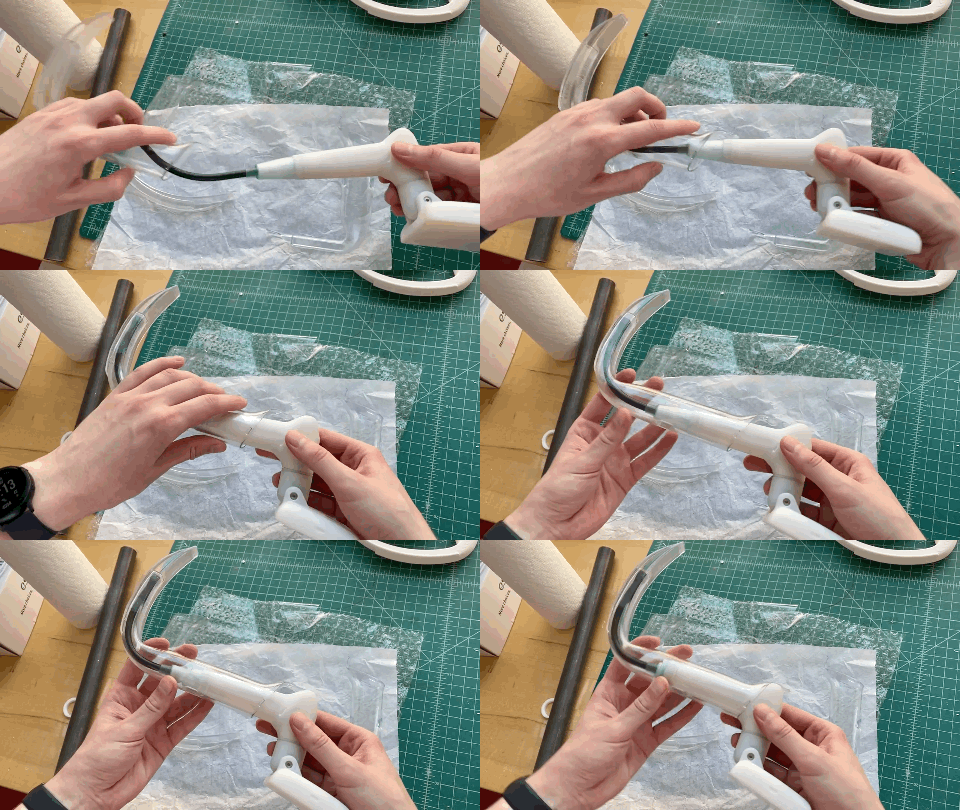
The IDEO and Verathon teams used a prototype-led approach to safely gain feedback from anesthesiologists and emergency physicians. Research participants were given various intubation models to simulate surgical use cases and understand ergonomic trade-offs between different design directions. Insights from the field led to design principles such as prioritizing device balance over weight reduction, providing flexibility to accommodate a variety of gripping positions, making connection points between various parts clear, intuitive, and secure, and ensuring the device was easy to clean.
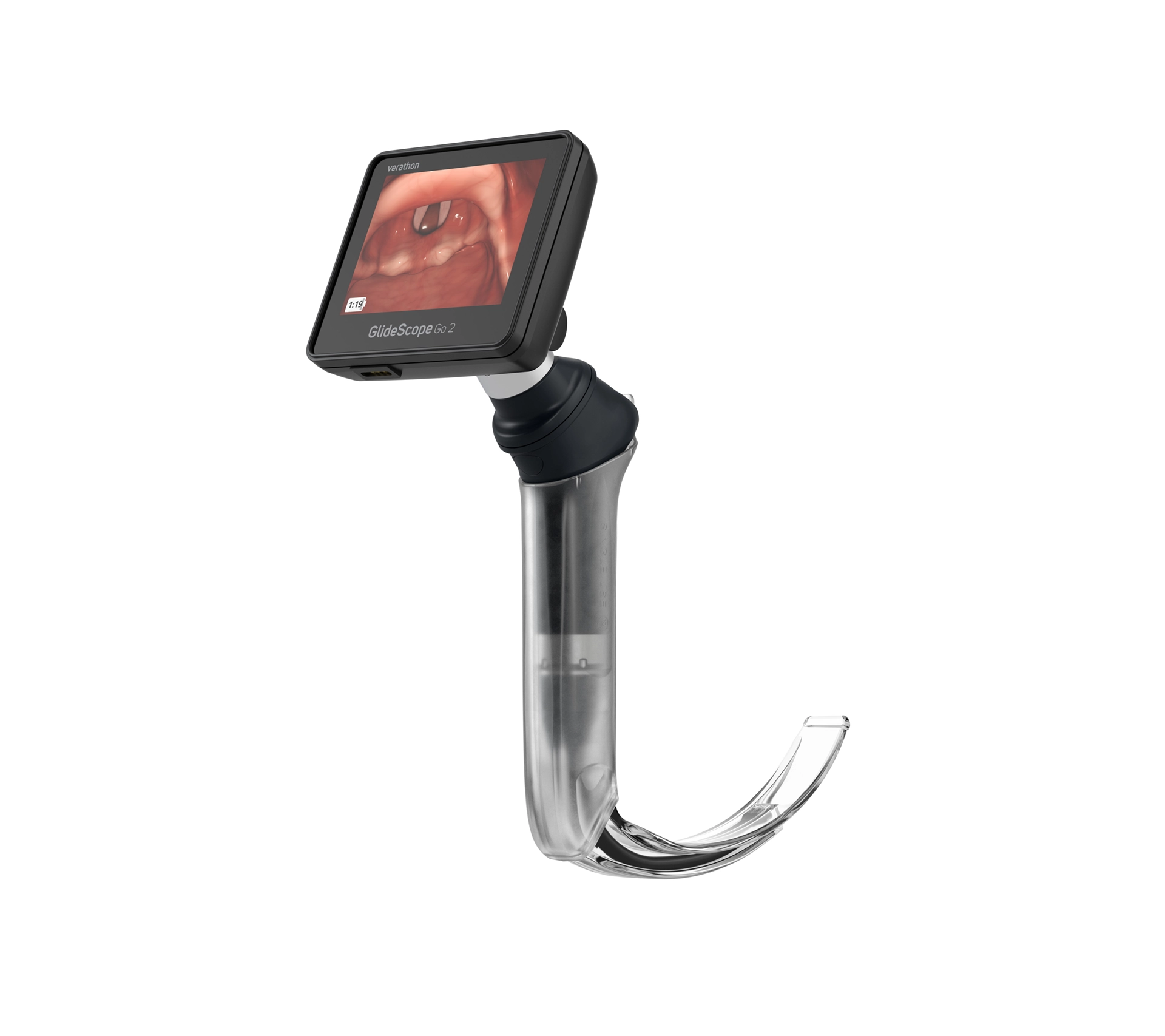
Inspired by physician feedback, the team designed an innovative video baton that felt both familiar and new, supported the ergonomics of diverse holding styles, and fit Verathon’s wide range of stat sizes (one of its competitive advantages). To prevent accidental disconnections, users receive clear tactile, visual, and sound feedback when the monitor and cover are correctly attached to the baton. IDEO chose color, materials, and finishes to help clinicians quickly distinguish between parts of the system and easily identify reusable components from single-use ones.
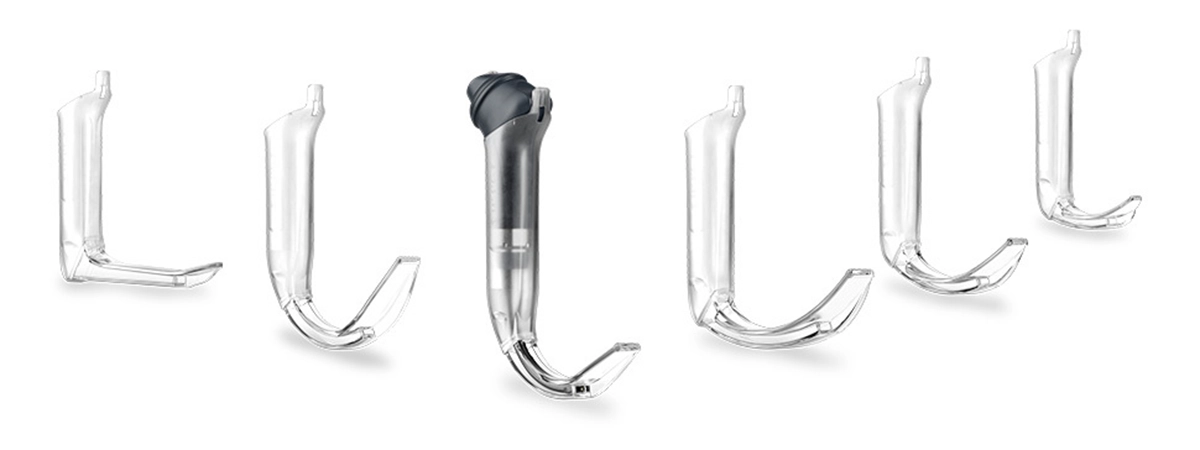
Verathon’s new GlideScope ClearFit stats-based video laryngoscope hit the market in August 2025. Combining one reusable baton with an industry-leading selection of six single-use stats, it’s compatible with both the GlideScope® Go™ 2 handheld and GlideScope® Core™ cart-based systems. Magnetic QuickConnect™ technology allows doctors to seamlessly switch between platforms, giving hospitals a standardized airway management solution that simplifies workflows, streamlines inventory, enhances medical education and training, and promotes cost-effective care.
Verathon invented video laryngoscopy technology. Twenty years later, the COVID-19 pandemic spurred more competitors to enter the market.
Cutting-edge technologies like video laryngoscopes are critical—and costly—devices. Hospital systems want to invest in the most comprehensive, flexible, adaptable, and affordable tools for quality patient care
6 shapes and sizes
of single-use covers fit one video baton, enabling health workers to quickly access different throat anatomies
Improving STEM education in the Philippines
GBF Class Builder supports teachers to advance learning for students.
Since its founding in 1992 by the Gokongwei family, which also operates one of the nation’s largest conglomerates, JG Summit Holdings, GBF has supported Philippine education through student scholarships, teacher training funds, and donations to top universities. Over its 30-plus-year history, GBF has reached more than 200,000 teachers and impacted over 1.5 million learners nationwide. When the foundation approached IDEO in 2021, it wanted to move the needle on STEM education in the country’s struggling public schools.
The IDEO and GBF teams interviewed more than 100 subject-matter experts across various government agencies, leading technology companies, and top national universities and educational institutions to build a comprehensive understanding of the current state of STEM in the Philippines. To experience classroom struggles firsthand, the team also shadowed STEM educators and principals. The research revealed that time-strapped teachers needed help mastering overall STEM content, preparing for their classes, and selecting the most suitable activities for their students. They also didn’t always feel supported in their own career development journeys. But the burden of daily responsibilities didn’t leave them any time for outside learning opportunities, either.
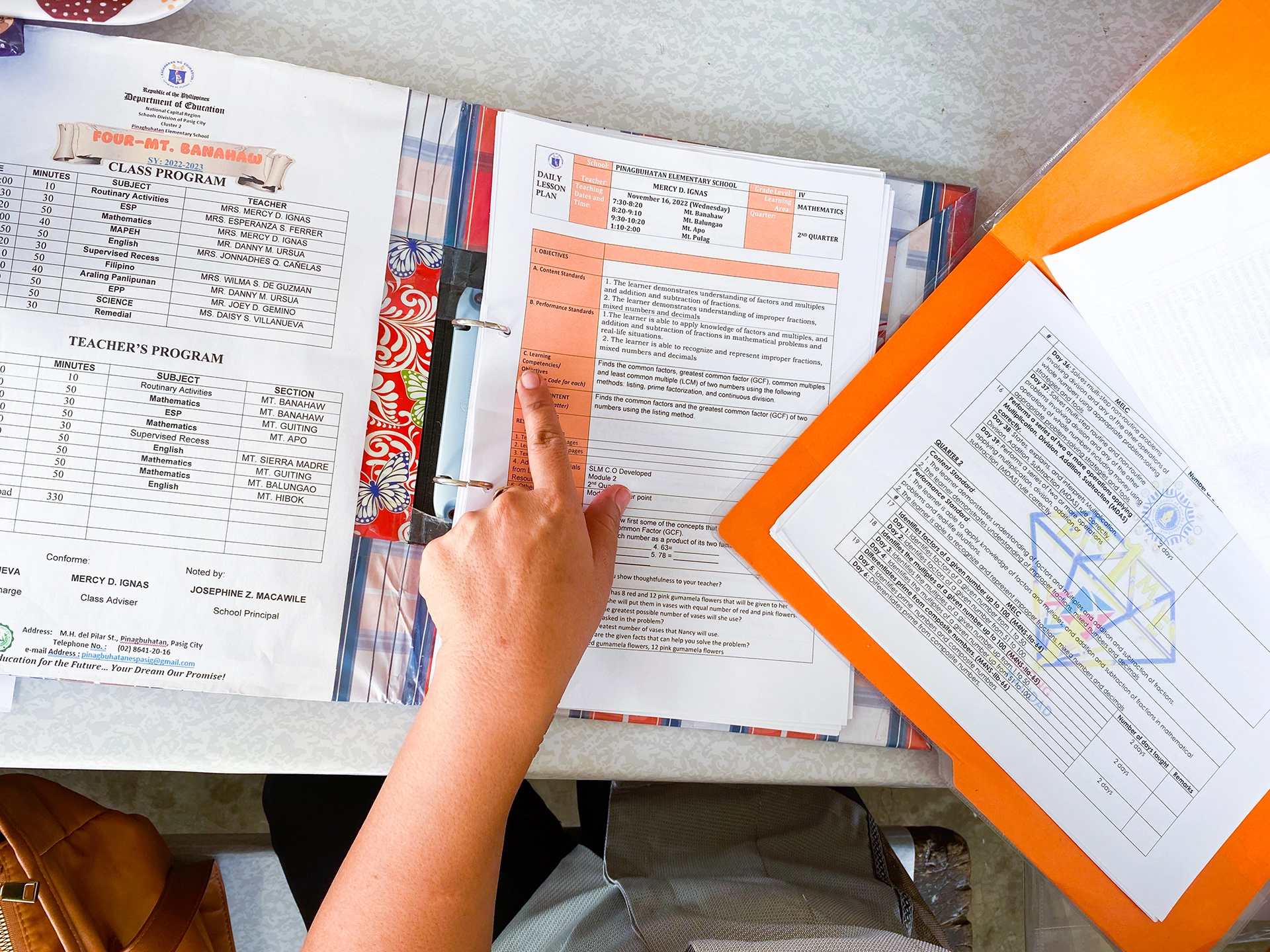
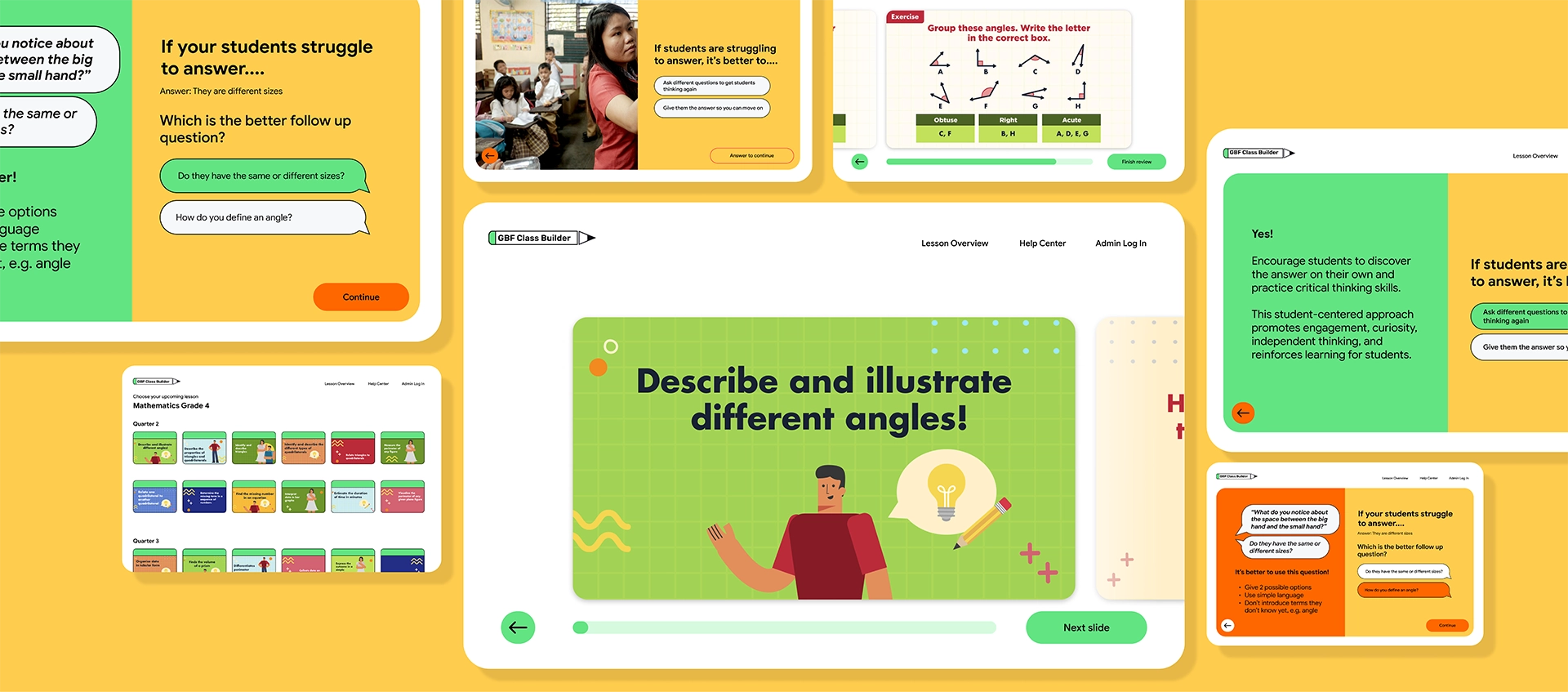
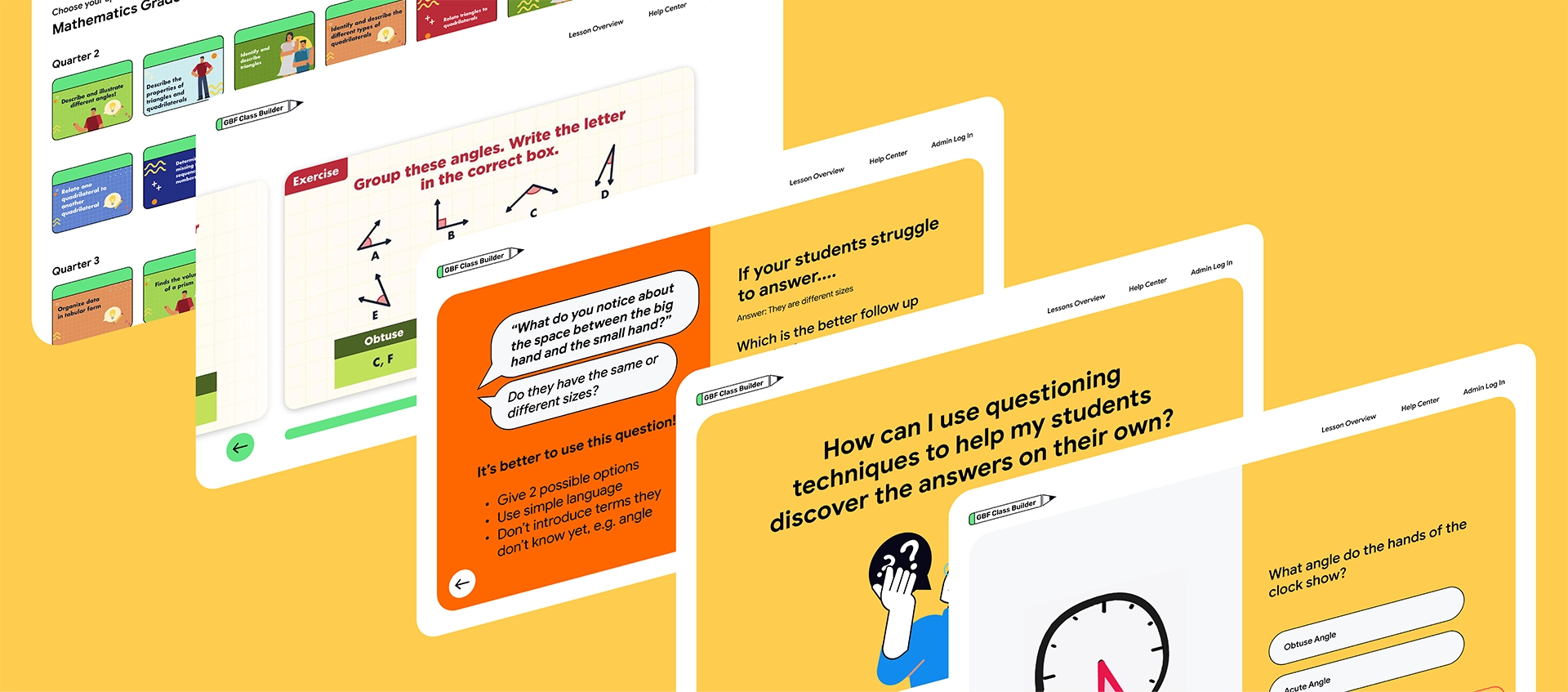
Recognizing that empowering teachers empowers students, the team created an innovative lesson prep tool, the GBF Class Builder, that's based on these insights. Using existing technology and course materials designed to align with school curricula, IDEO developed a working prototype of the Class Builder in under a week, with minimal investment. The team then systematically improved it over several “build-test-iterate” feedback cycles in real classrooms over the course of four months.
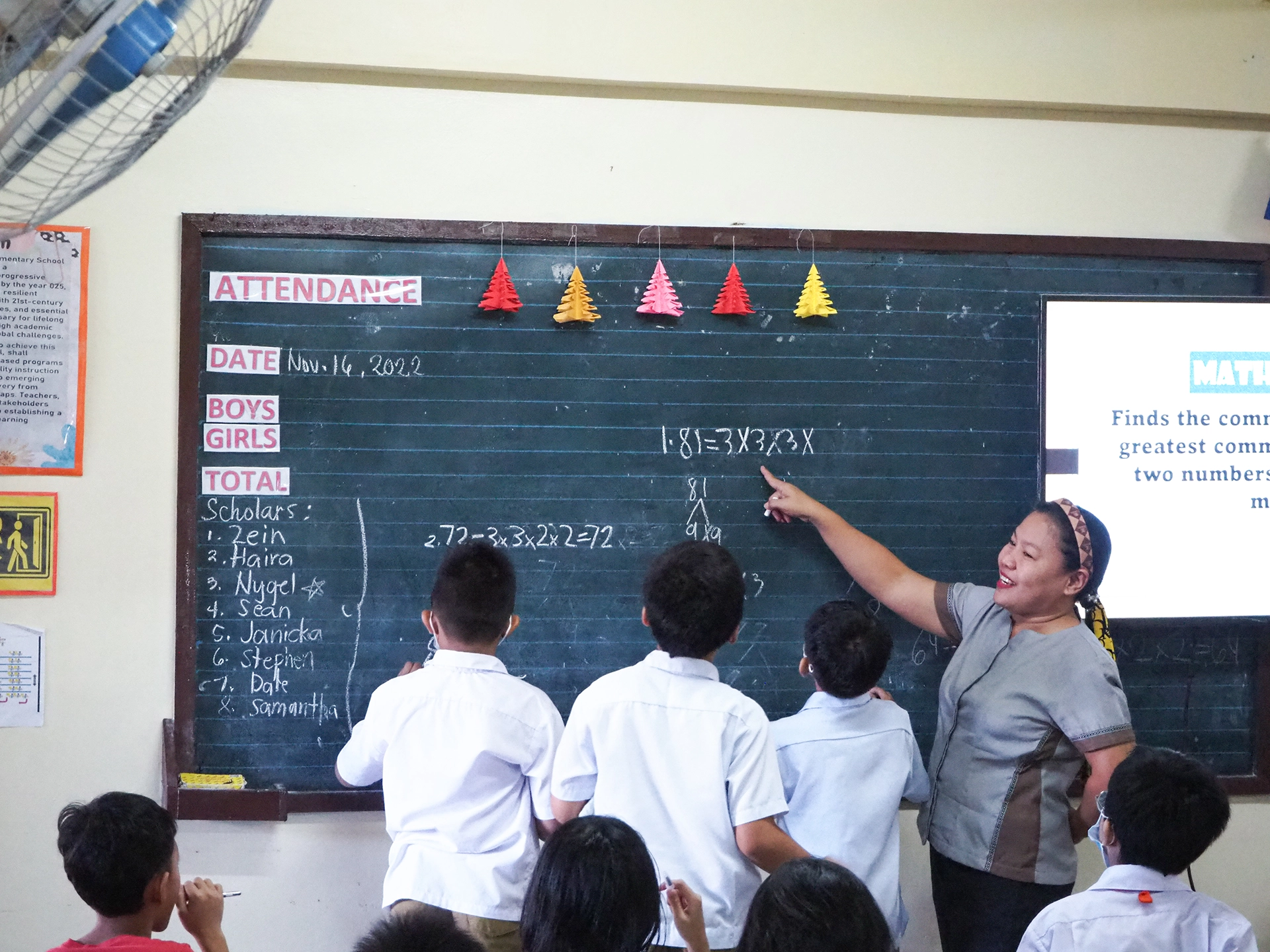
The final GBF Class Builder is a targeted program that helps STEM teachers deliver compelling lessons for their students, learn new teaching strategies, and build content mastery along the way. In addition to helping design the Class Builder, IDEO continues to advise GBF on key aspects of the program's piloting and rollout. This includes advising on how to implement the content development, think through the curriculum development process, support in designing feature iterations, define metrics for success, and decide which additional roles GBF will need to support the ambitious program going forward.
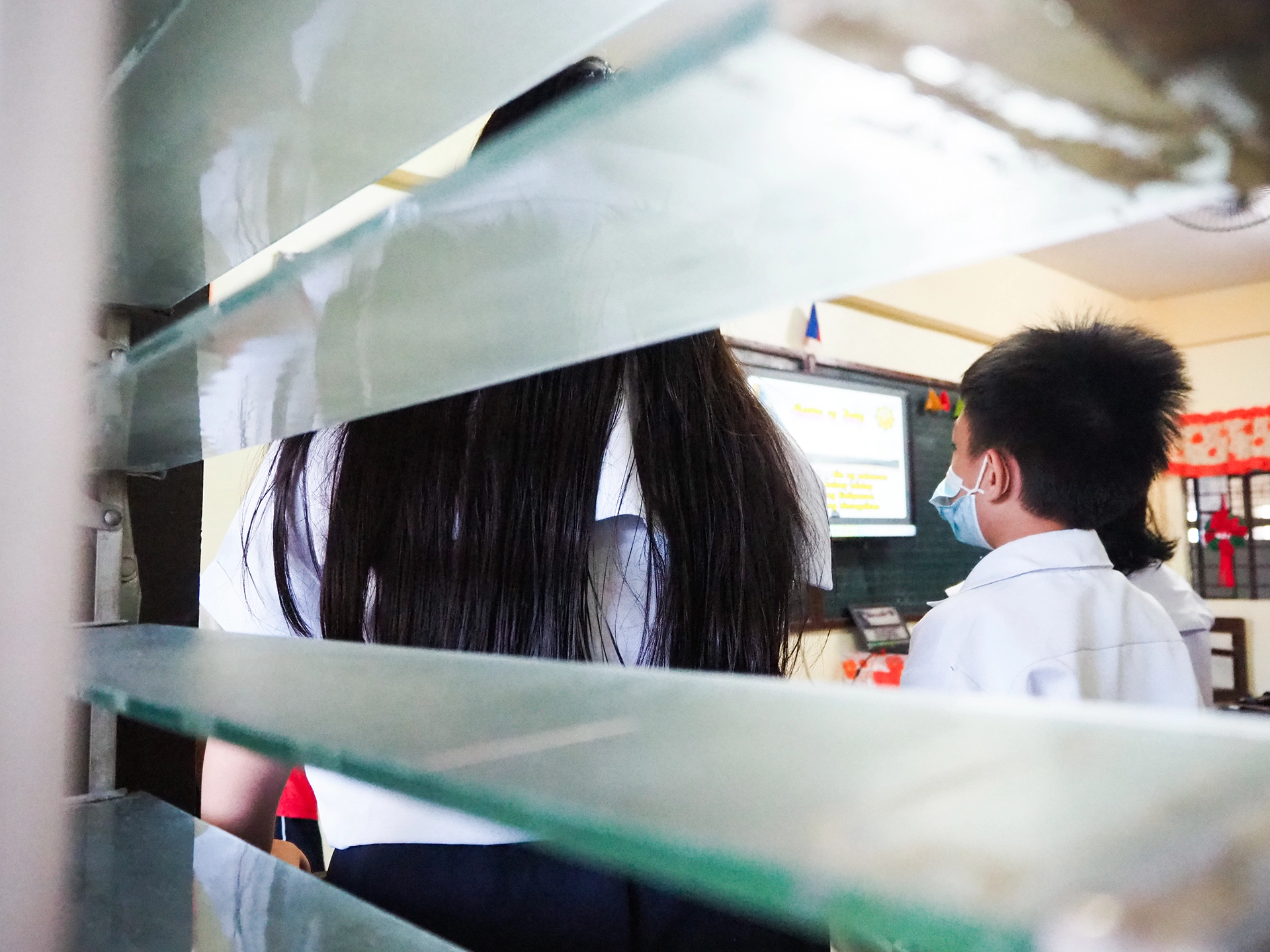
The foundation launched the GBF Class Builder at its 30th-anniversary celebration in 2023. Feedback from pilot 3,500 public schools and 15,000 teachers has been overwhelmingly positive. “Through the GBF Class Builder, we envision our teachers to be more confident and effective in class, more ready to face the challenges of the future, while enjoying every class—feeling proud to be a teacher, " says Grace Colet, Executive Director of GBF.
The ambitious program continues to scale and is on track to be rolled out in public schools nationwide by 2029.
90% of 10-year-olds in the Philippines can’t read a simple text, according to a Southeast Asia Primary Learning Metrics report. Eighty-three percent of Filipino 10-year-olds lack minimum proficiency in math.
More than 15,000 teachers in 3,500 public schools
are now using the innovative GBF Class Builder program
94%
of teachers report the GBF Class Builder has improved student engagement, while 89% say it saves them 1-2 hours in prep time per lesson

Making headroom in a new product category
Renowned cycling brand Fizik expands its offerings with a line of helmets.
Fizik came to IDEO with the aim of entering the helmet market with a range of high-end performance options fit for road racing, mountain biking, time trials/triathlons, and everyday cycling. Fizik planned to use its world-class production and engineering capabilities (the company is part of the Selle Royal Group, which has over 1,400 employees and manages five other cycling brands, including Crankbrothers and Brooks England). IDEO’s task was to develop an on-brand design language that would unify its new helmet line and integrate seamlessly with the sleek, modern aesthetics of the company’s other products.
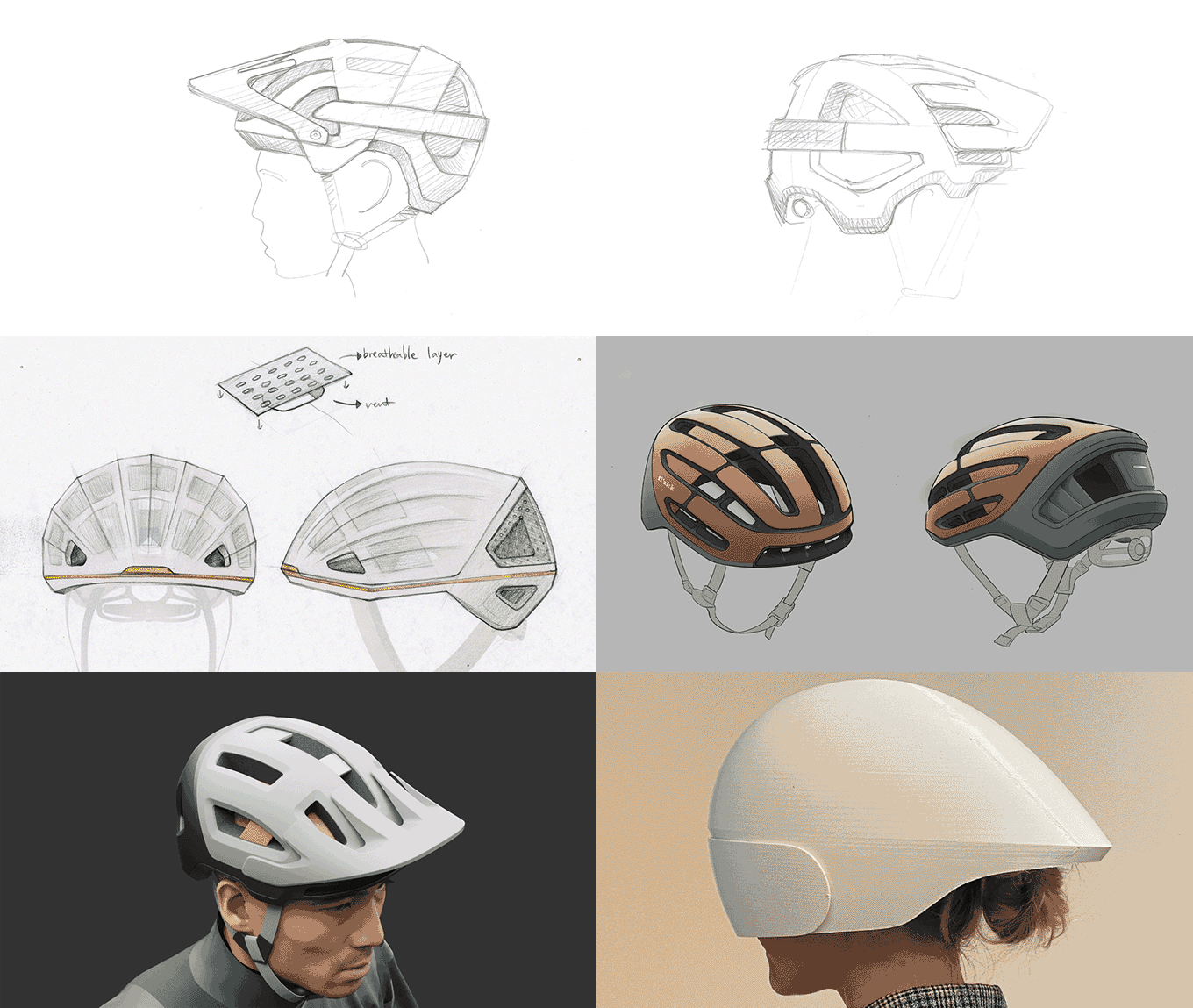
The design sprint began with in-context interviews with avid and professional cyclists to learn what they wanted—and didn’t—in a helmet. Unlike other accessories, such as shoes or shorts, riders viewed helmets as a necessity rather than an exciting or aspirational purchase. They also wanted a helmet that complemented their overall style, rather than standing out, and had a flattering silhouette. Avoiding making a cyclist look like a “mushroom” was key.
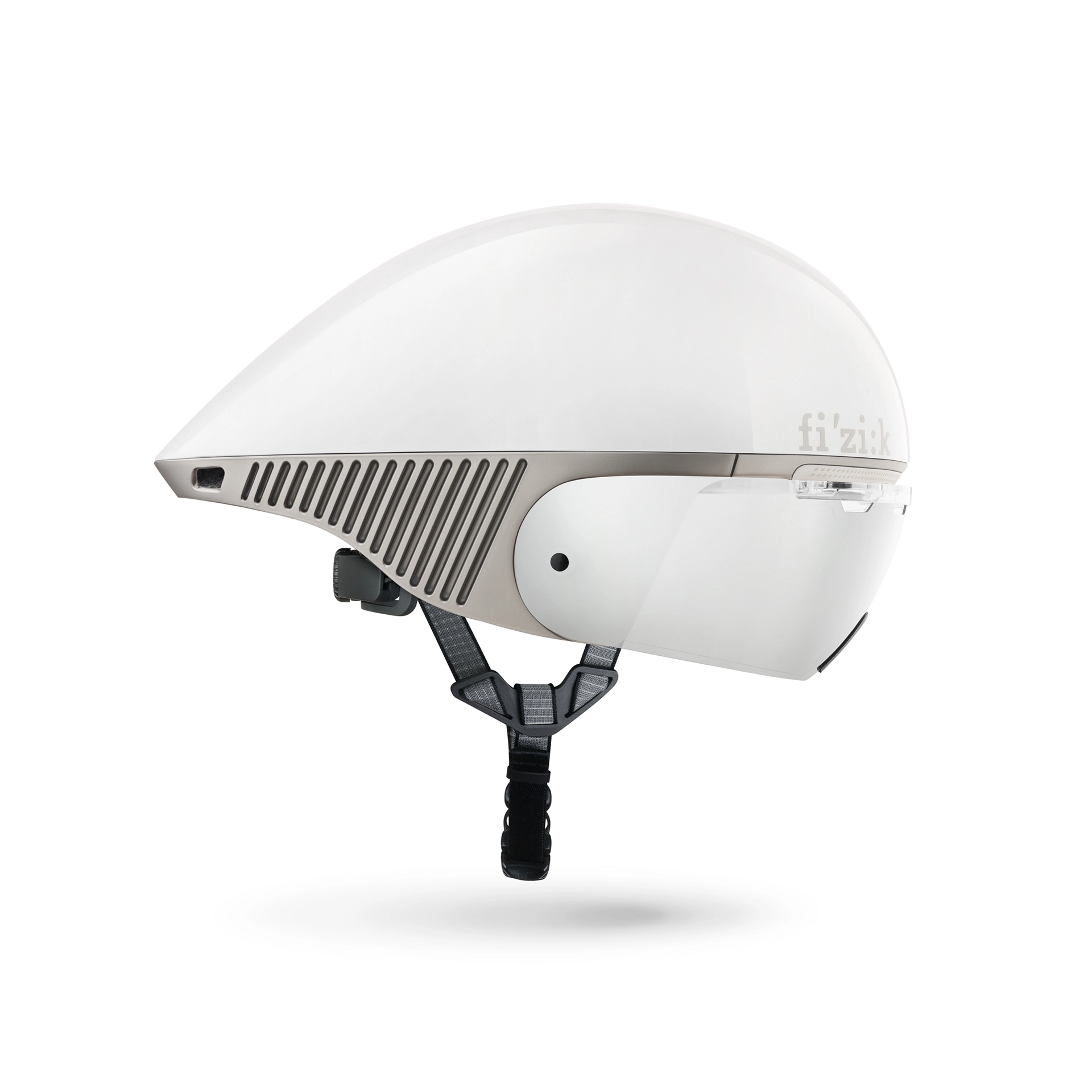
Different cycling styles involve varying riding postures, ranging from a dropped and horizontal position (time trial/triathlete) to an upright and vertical position (mountain biking). IDEO proposed a family of helmet designs that correspond accordingly. On the horizontal extreme, the time trial/triathlete helmet has the most fluid, organic, aerodynamic shape. A statement of refined simplicity and speed, it features minimal venting and a magnetic wrap-around visor to reduce drag that can be exchanged for the rider’s own cycling glasses.
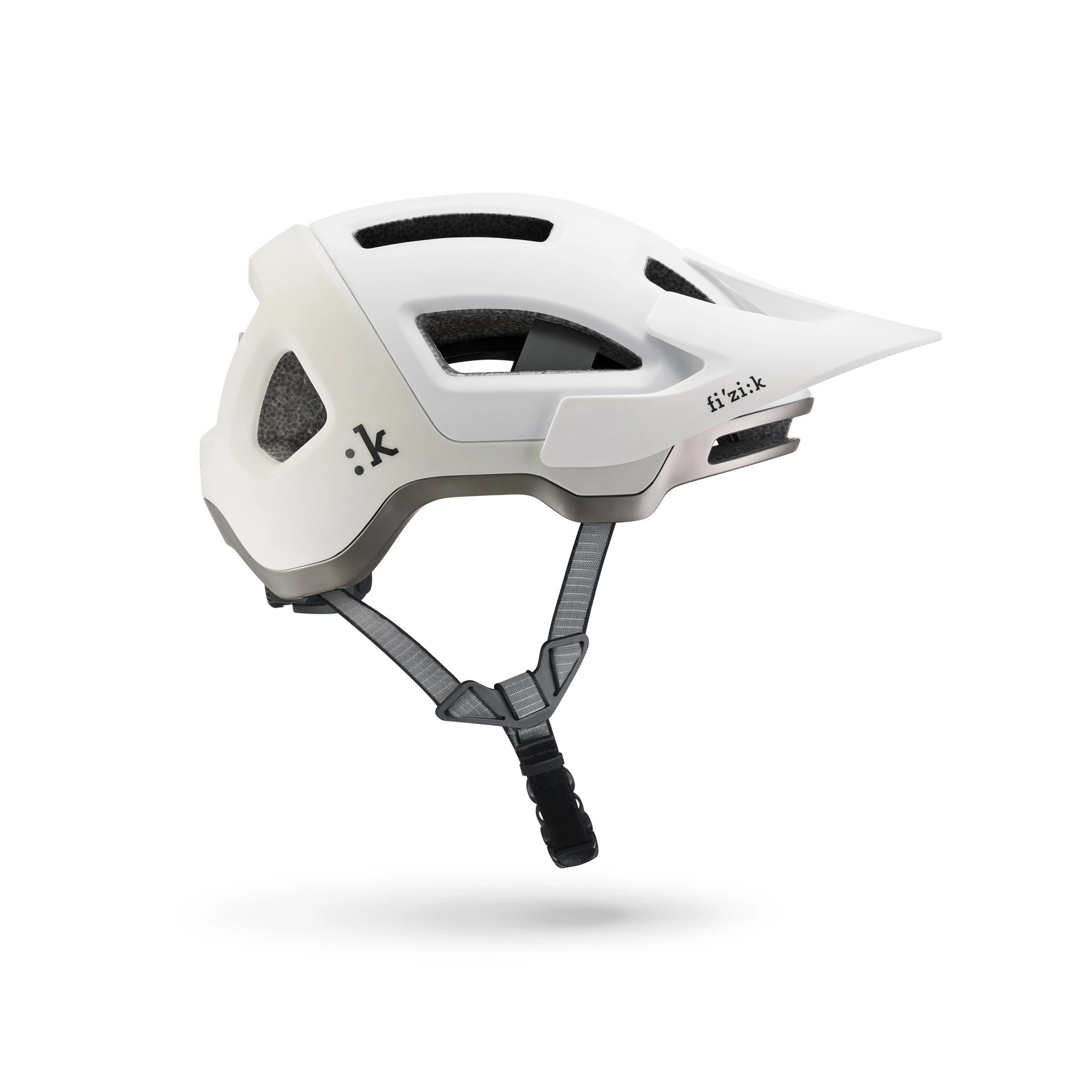
On the vertical extreme, the mountain biking helmet features a more rugged, angular form with an adjustable brim, rectangular venting, and boxier, back-of-the-head protection. It also offers affordances for goggles, sunglass storage, a GoPro mount, and an optional integrated rear light.
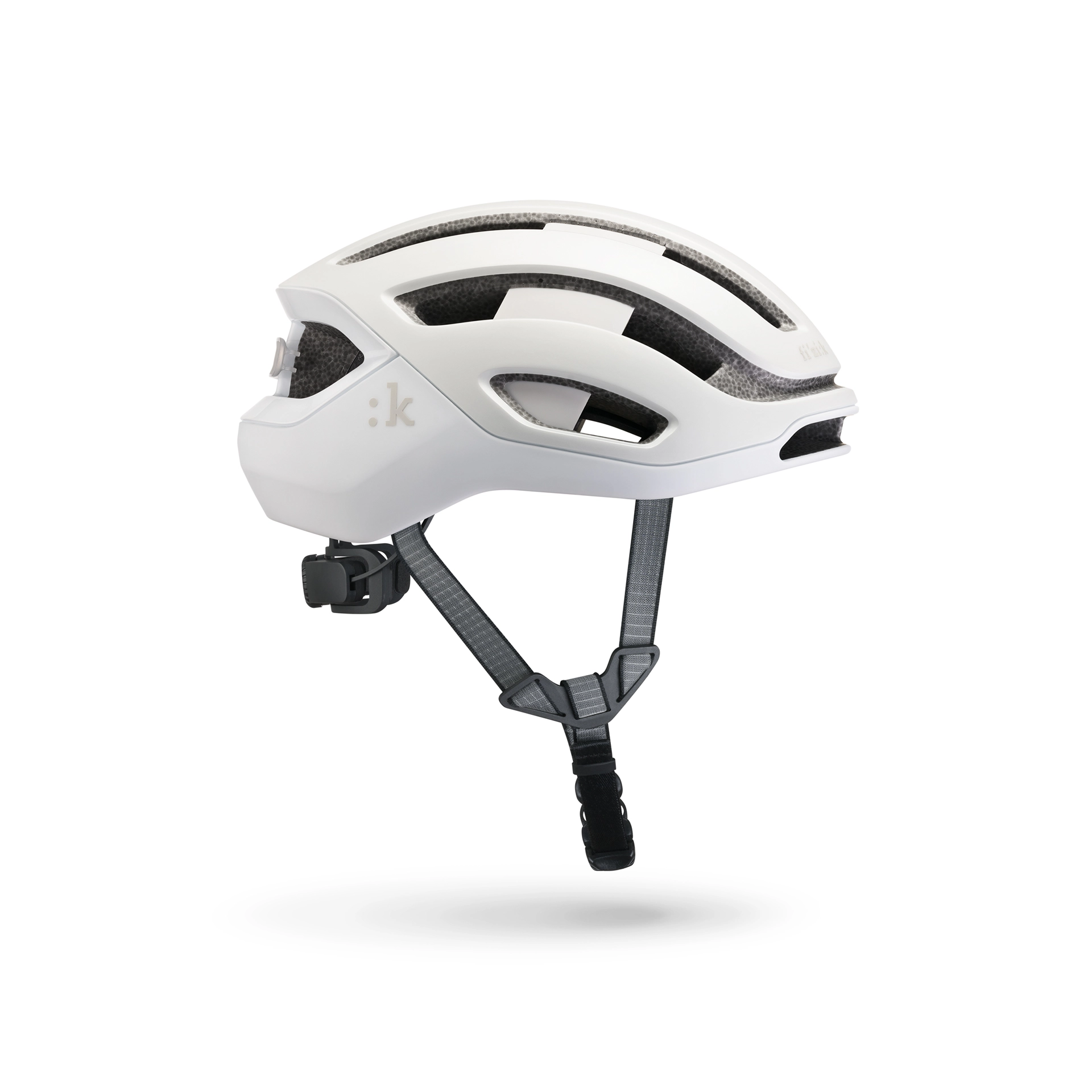
In between, a compact helmet for road racing features evolutionary variations on these design extremes, with more venting as well as a front glasses holder and integrated rear light. All four helmets strike a balance between lightness, comfort, safety, and performance, embodying Fizik’s signature modern style.
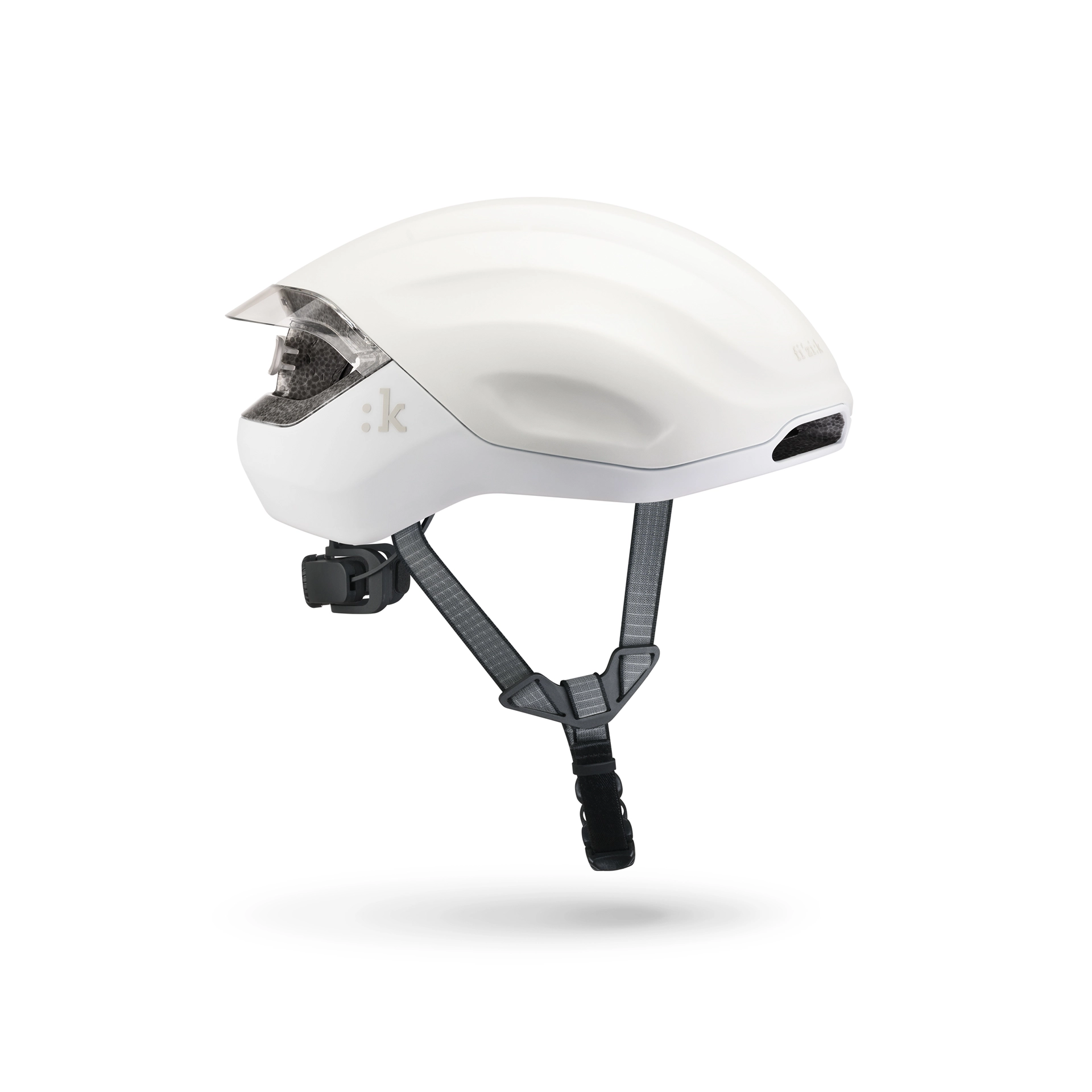
In April 2025, Fizik launched all four helmet models simultaneously: Kassis (mountain biking), Kunee (trial/triathlon), Kudo, and the more aerodynamic Kudo Aero for road and gravel. The helmets were greeted with critical acclaim from the cycling world, while Virginia Tech’s independent helmet-safety research lab gave them five-star performance ratings for their strength and durability.
Legendary cycling company Fizik was known for its high-performance bike seats and shoes, but wanted to be a fierce entrant in a challenging product category—helmets.
4
new helmet designs
1
new product category
.webp)
We’re drowning in health data
We need human-centered design to make it actionable.
It identifies patterns, nudges behavior, and interprets my health data in plain English. Meanwhile, my doctor toggles between screens, re-asks questions I just answered on paper, and tries to piece together my health story from systems that weren’t designed to communicate with each other—let alone with her.
This isn’t her fault. It’s the byproduct of a system designed and optimized for billing, not care. While consumer technology continues to evolve, clinical tools are stuck in another decade. And it shows.
The healthcare industry produces 30 percent of the world’s data. Yet, 97 percent of it goes unused. Physicians spend more time clicking through dashboards than connecting with patients. People receive data with no explanation, then Google their way to answers through fear and confusion.
Imagine a healthcare experience where technology takes a backseat—and human connection takes center stage. It’s possible, if we design it that way. And not only will it save lives—it will offer incredible healthcare cost savings, too.

The hidden opportunity in EHRs
Electronic Health Records (EHRs) offer extraordinary promise—in theory. In actuality, they’re a rabbit’s warren of seemingly disconnected information. EHRs weren’t designed to incorporate the constant, streaming flow of data from wearables, continuous glucose monitors (CGMs), and other connected health devices. They were built in a different era, for a different kind of healthcare. My doctor's EHR requires her to navigate through multiple screens just to piece together my complete health picture—information that should be seamlessly connected but is trapped in separate sections.
In contrast, my Apple Health app, which is free and came pre-installed on my iPhone, automatically syncs data from dozens of other apps and devices, surfaces trends, and offers up easy-to-understand insights without me asking. Apple Health was designed for humans; EHRs for billing departments and regulatory compliance.
Connecting the data in EHRs is technically possible, but is often thwarted by a combination of bureaucratic hurdles, proprietary systems, and a risk-averse regulatory environment. The missing ingredient is human-centered design. We need to treat the EHRs as raw materials, not finished products.

Meeting patients where they are
Across our healthcare work, we hear one thing over and over: patients don’t want more data. They want actionable insights.
For a person with type 2 diabetes, a glucose reading of 130mg/dL is just a number. But “Your levels stayed stable after switching to whole grain bread” provides insight. It’s actionable. It sticks. On a recent project, we interviewed a person with type 2 diabetes who asked us, “Why does my doctor get to see this data—but I don’t?” It was a great point. That question prompted us to design a way to turn numbers only doctors would see and understand into plain-spoken, personal insights for patients.
Lead with what matters most. A simple visual cue—trending positive, stable, or concerning—invites deeper exploration. Show the big picture, then let people drill down when they want to.

Making quality care easier for clinicians
“We get 15 minutes per patient,” one doctor told us. “That barely gives us time to talk about labs.” Imagine if patient-generated data appeared automatically where and when it’s needed.
A doctor typically doesn’t need 47 glucose readings. They need to know that “levels are trending down since the patient started taking evening walks, but spike on weekends.” Give them insight, not overwhelm.
Another patient we interviewed with type 2 diabetes also used a CGM but was unsure about what to make of the numbers. We had her test a new prototype that drew inspiration from a traffic light: red numbers required immediate action, yellow signaled borderline readings with clear guidance on how to curb highs and lows, and green indicated that her blood sugar was within a healthy range. “I like this,” she told us. “It’s plain, telling me what I should do.”
Imagine a world where, before a visit, both patient and provider receive contextual insights:
- “Heart failure trending positive—activity up 15 percent this month. Consider reducing dosage.”
- “Your walking routine is working—heart rate variability improved 12 percent since last visit."
- “Medication adherence improving—blood pressure responding well to timing changes, but you’re missing weekend doses.”
Instead of parsing dashboards or reliving symptoms from memory, conversations could focus on decisions, adjustments, and next steps. It would save time during appointments and improve and clarify doctors’ visits for both parties—not to mention patient outcomes.

The economics are begging for better design
Designing for better use of health data isn’t just compassionate; it’s also cost-effective.
By applying human-centered design principles, healthcare systems can streamline processes and improve patient engagement. For example, when a hospital in Oslo, Norway, redesigned its breast cancer diagnosis process using design thinking, it reduced the patient waiting time by 90 percent, thereby decreasing operational costs. At a major New York hospital, redesigning the surgical rounding process helped doctors submit discharge orders nearly an hour earlier and improved on-time surgical case starts by over 20 percentage points. And according to one study, patients treated in hospitals with advanced EHRs cost an average of 9.66 percent (or $731) less than patients in hospitals without them. The ROI is there for everyone paying the price of avoidable care—not to mention the benefit of better outcomes. However, real change runs into real barriers: siloed data, regulatory red tape, and business models that haven’t kept pace.
We need to design for what’s real: the 15-minute appointment, the overburdened clinician, the caregiver toggling between apps, and the patient staring at a number they don’t understand.
That’s the kind of healthcare system people deserve. One where clinicians practice their craft—instead of decoding numbers, asking to see your app, or clicking through broken systems—and patients feel seen, supported, and part of the process.
We’re not there yet. But we know how to design our way there if we remember that providing oceans of health data to drown in is not the end goal. It’s surfacing actionable insights to help patients and providers ride the waves toward greater health and well-being.
My phone’s Apple Health app gives me more meaningful insights than the test results from my doctor’s office.
Your futuring questions, answered
IDEO’s design futures expert tackles Creative Confidence listener queries.
I spent years facilitating process improvement and lean management, work that was effective at driving efficiency but rarely got into deeper questions. It lacked the rigorous patient focus I wanted to see in the efforts I took on for health systems. That frustration drew me into human-centered design (HCD). HCD opened up entirely new ways of seeing people and problems, and I was inspired to create solutions that were far more meaningful and human. Still, something was missing; I hadn’t yet found a way to connect the immediacy of design to the larger, longer-term forces shaping the world around us.
Around this time, I met futurist Bob Johansen. Listening to him describe how leaders could anticipate multiple plausible futures truly unlocked something for me. I could see how process improvement, human-centered design, and futuring could come together: the rigor of operational change strengthened by the empathy of design and the expansiveness of foresight. That moment was transformative; I had found a way to unlock real transformation. So I became a futurist.
Fast-forward 15 years. I recently joined the Creative Confidence podcast to share lessons in strategic foresight and better decision-making.
During the course of the conversation, so many people wrote in with questions that we couldn’t answer them all. But I didn’t want to leave these insightful thoughts floating in the ether. Here are answers to some of the most intriguing.
What do you see as the biggest misconception about futures thinking?
It is about making predictions. Futuring does not predict; instead, the focus is on imagining multiple plausible futures. It enables individuals, governments, and organizations to anticipate the various ways tomorrow can unfold so that they can either capture opportunities (going on offense) or prepare for risk (going on defense). What people often overlook is that futuring is primarily about building the capacity to live with uncertainty. The true value of futuring lies in cultivating adaptability and creativity in the face of change.

Can you tell a story of a time when futuring helped unlock an innovative solution?
In 2024, IDEO partnered with KQED to reimagine the role of public media in a future shaped by rapidly evolving technologies and changing cultural habits. By combining human-centered design, strategy, and futuring, we helped KQED’s leadership surface tensions between their legacy of trusted journalism and the demands of an increasingly fragmented and personalized media landscape. By crafting narratives and artifacts from the future, participants envisioned a more participatory, interactive, and community-embedded role for KQED, as a dynamic presence across platforms and generations. The work evolved from future visioning into a strategy-building process that engaged voices across the organization, creating a bold new roadmap and a deeper sense of shared ownership, along with a nimble resiliency in shaping the future of public media.
What are some simple ways to facilitate a futuring session with non-designers or skeptics?
Success comes from making the future tangible and human. Instead of starting with abstract scenarios or long trend decks, begin with something familiar. I like to ask participants to imagine their birthday in 2040 or to write a headline about something that will happen in their community far into the future. These provocations lower the barrier to entry for futures thinking and spark imagination grounded in the familiar.
The key is to give people something they can react to. Prototypes, such as speculative artifacts or visual storyboards, help shift conversations from the theoretical to something people can actually experience. Futurists need to help people practice balancing multiple possibilities simultaneously, which is actually quite a difficult task. When people can see, touch, or even laugh about the future, they start to take ownership of the ideas, making futuring far more actionable.

How do you actually start a signal scanning practice? How do you bring it into your weekly routine or regular process? (Where do you look? How often? How do you track what you find?)
Starting a signal-scanning practice doesn’t need to be overwhelming—it just requires leaning into your own curiosity. Think of it as building a habit of paying attention to the edges of culture, technology, and behavior. Signals appear in unexpected places that feel a little unconventional or out of step with the mainstream, such as an experimental product launch, an emerging subculture, or a policy change in a small town that hints at something larger.
I often recommend weaving it into a weekly ritual. When I started futuring, I set aside 30 minutes every Friday to scan a handful of sources: news sites, academic journals, niche blogs, and social media. The point is not just to look at the usual suspects, but to stretch into places that spark your imagination. I find myself asking, What’s weird here? What’s new? What’s showing up that feels different? Who is benefiting from this? Now I tend to capture signals endlessly, but I still carve out time each Friday to explore them, look for patterns, and so on. In the past week alone, I have gathered signals in areas as broad as agentic AI payment protocols, outsourced “moms,” lab-grown spinal cord nerves, and virtual relationships-only AI dating apps.
Tracking is key for adding structure. Many teams use a tool like Figma to quickly capture what they’re seeing and gather signals together. The tricky part is that over time, signals become stale and need to be refreshed regularly, especially in areas where change occurs rapidly, like in technology and media. Having signals in a format that allows them to be easily viewed and moved around to combine with other signals is critical. It allows patterns to emerge across the collection, sparking insights and stories of possible futures.
What kind of mindset shift do you need to become a future-ready organization?
A future-ready mindset embraces uncertainty as a resource to be explored rather than a threat to be minimized. You have to shift from a posture of certainty and control to one of curiosity, adaptability—and above all—organizational flexibility. Instead of anchoring on a single, short-term vision, leaders must help their organizations map out multiple plausible futures at once, building the nimbleness to pivot quickly, experiment with new pathways, and respond creatively across a range of possible scenarios.
How can teams move from being risk-averse to welcoming it?
They need to value experimentation as much as execution, and treat prototyping and testing as essential tools to become more proactive, flexible, and anticipatory.
How do you measure the ROI of futuring work—especially when outcomes are years away?
When people ask about the ROI of futuring, my instinct is to turn the question around. It's difficult to calculate ROI on something that hasn’t happened yet, but the cost of failing to anticipate change can be enormous. Kodak is the best example. The company actually invented the first digital camera in 1975, but failed to see how quickly digital photography would upend film. By clinging to its film-based business model, Kodak lost market dominance and became a cautionary tale.
Traditional ROI frameworks struggle here because strategic foresight isn’t about the yield of one project; it’s about building the organizational muscle to spot signals early, test ideas, and avoid expensive missteps. You measure it by looking at the risks you didn’t take, the dead ends you avoided, or the resilience you gained by having already prototyped tomorrow. Futuring pays for itself when leaders say, “We saw that coming, and we were able to pivot.”

What’s a future trend or shift you’re excited—or concerned—about today?
One of the shifts I find most fascinating right now is around aging, specifically, what happens to work and purpose as people move into what we’ve traditionally thought of as “retirement.” Futurists are seeing a wealth of signals about how people in their “golden” years are reimagining later life: seeking out new forms of community, finding ways to stay mentally active, and extending their financial participation.
The trends and drivers round out the plausibility. Global fertility rates are dropping, life expectancies are increasing, and economies will need older workers to remain in the workforce. These factors raise provocative questions: How do we design systems of lifelong learning? What does work look like if “retirement” is no longer a given? And what shifts in behavior and policy should we be making now if this is the direction our futures are headed? These are just some of the plausible futures I’m excited to continue exploring.

How have you been using AI in your futuring process, and any cautionary notes?
AI can be a powerful amplifier in futuring. It can help scan vast amounts of content, pulling together trends from across industries and geographies that might otherwise go unnoticed. It can rapidly outline starter scenarios, artifact ideas, or speculative narratives that expand a creative range of what’s possible. When it is used alongside human-centered design, it can iterate on a futurist’s speculative images, prototypes, or interactive experiences that stakeholders can react to. AI is also well-suited to helping teams stress-test assumptions and edge cases. AI is frequently my research assistant, helping me organize and then chase down areas to explore.
However, there are significant limitations and risks associated with the use of AI in this space. AI reflects the bias of the data it’s trained on, which means it will always reproduce “used futures,” or outdated ideas about the future that resonated in the past but are no longer relevant. That data is the sum of its experience, so AI can also magnify well-documented content and underrepresent marginalized, edgy, or more local viewpoints. As a designer and futurist, it’s important not to outsource your imagination or creativity to AI, or treat the output of AI work as anything more than a prompt or starting point for human creativity and discussion. Futuring is ultimately about culture and values as much as it is about trends and technologies, so relying on AI risks stripping away the deeply human context that makes foresight meaningful.
If you’re curious to learn more about futuring and missed the Creative Confidence episode, you can find it here. If you’d like to work with us on a futuring project of your own, get in touch.
About 15 years ago, I stepped into the role of Managing Director for Innovation and Strategy at Kaiser Permanente. My remit was broad: performance improvement, innovation, and leadership and culture development.
Preparing students for the careers of the future
Salesforce’s Dr. Ron C. Smith on closing the AI education gap.
At IDEO’s Play Lab, Dreamforce serves as a reminder of how quickly technology evolves and shapes the world our kids are living in. It prompts us to consider what’s next for people, especially young learners growing up in an AI-shaped world, and how play can serve as a powerful tool for tackling complex, often intimidating challenges with curiosity and creativity.
So, when I learned that IDEO was partnering with Salesforce on a student-focused event ahead of this year’s Dreamforce, I jumped at the chance to speak with Dr. Ron C. Smith, Vice President of Philanthropy at Salesforce. The lifelong educator and Bay Area native leads Salesforce’s global education philanthropy team, directing millions of dollars in strategic philanthropic investments to build AI literacy through public school education around the US. While some worry that AI will replace jobs, Smith is an optimist; he sees AI’s potential to unlock new interests and career opportunities. His team’s role? Preparing today’s young people to be educated and ethical AI consumers and creators so they can step into their still-being-imagined future careers—and training the adults who teach them along the way. I spoke with Dr. Smith about how to help young people thrive in a future that’s still taking shape, and why optimism, access, and play will matter more than ever.
Keren Ruth Wong: You were a former Network Superintendent at Oakland Unified School District and a classroom teacher, and now you’re leading philanthropic giving at one of the world’s largest tech companies. With your background, I imagine you have an interesting perspective on what a valuable partnership with public schools looks like.
Dr. Ron C. Smith: For 20 years, I worked as a teacher, then principal, and then led schools and managed school transformations. Then, eight years ago, I joined Salesforce. At the heart of everything we do at Salesforce are the young people we serve, ages 13 to 22, and the teachers, counselors, principals, and superintendents who work with them.
Technologically speaking, the world we live in has changed so much. And I know it continues to change. We used to have a sense of what tech jobs are out there, but that’s all changing so quickly. I know some students feel discouraged because I often hear, “There aren’t any jobs,” but that’s actually not true. A lot of new and diverse industries are seeking tech talent, including gaming and medical and education technology, among others. On top of that, there’s what AI can offer. These types of jobs are perfect for the young people we work with. They’re not afraid of technology. They understand the concept of working across different learning modalities. People tell kids, “Oh, you have to be a doctor or lawyer,” which are great professions, but there are other paths; they’re just not recognized as careers yet.
For far too long, there has been a strange disconnect. There’s been education on one side, and the workforce on the other. But actually, there’s a through-line from education to training and skill development to a career. When you think about it like that, you can ask how to get the right resources to support that continuum. Our goal at Salesforce is to identify and support nonprofits and educational institutions that serve young people who are furthest from success, empower them, provide career counseling and mentoring, and enable them to navigate society’s uncertainties. Salesforce is not going to solve every problem, but by working with great partners like IDEO and Formula One, among others, who engage and inspire students, we can be stepping stones to change and be part of the overall solution.
Keren Ruth Wong: Salesforce made a very specific choice to focus on AI education grants and AI fluency. What was behind that decision?
Dr. Ron C. Smith: AI has been around for a while, but it has only become a mainstream topic in the last two years. At that time, my team and I took a step back and embarked on a listening tour with our nonprofits and partners. We asked them, “Where do you see your work intersecting with AI now and in the future? What are your needs, and where can we support?” We discovered three things.
One: The nonprofits that focus on work and skills training said, “We need to start training young people earlier.” Two: Our partners in the education system said, “We need more support, more training, and more access for educators helping our young people dream about their future careers.” And three: everyone is preparing our young people for unknown careers. Because at the time—and even now—no one says, “I got an AI job!” What is an AI job, anyway? They’re still being created. So, we were intentional about considering partners that focus on AI literacy and fluency, specifically. That means knowing how to use AI safely and ethically, as well as being able to be an AI creator. Having that concrete baseline gives everyone a fairer starting point.
What we also knew was that we couldn’t wait. Now’s the time to invest, especially for the young people we serve, because if we waited until everybody’s ready and felt great about AI, we’d already be behind the eight ball. The education system works notoriously slowly. It just is what it is. We’re saying: let’s take a chance. What we don’t want is for our partners to wait and stay stagnant, potentially pushing those young people who are already behind further behind as they prepare for their futures. We cannot afford to miss this opportunity to engage, invest, and partner with school systems, nonprofits, and all stakeholders involved in public education.
Keren Ruth Wong: It sounds like co-creation between you, the nonprofits, and the students. You’re deciding and preparing together for whatever the jobs might be, five, 10, or 15 years from now.
Dr. Ron C. Smith: One hundred percent. It’s also about working with school leadership. During our listening tour, we invited superintendents from our partner districts, Oakland and San Francisco, as well as superintendents, CEOs, chancellors, and executive directors from across the country, to share their initial thoughts on the role they saw AI playing in their school systems. Our goal was twofold. We wanted to learn what types of training and skills they needed, so we could find partners that could provide that. Then, we wanted to know how they, as leaders, were building AI into their overall infrastructure. Because it’s one thing for leaders to say they want to do something. It’s another if they make AI part of their overall goal, mission, and strategic plan.

Keren Ruth Wong: As a former teacher, you were in the classroom when laptops, smart boards, and other technologies were introduced. What makes AI feel different—if it does—than any other wave of classroom technology?
Dr. Ron C. Smith: I mean, I started in the classroom with chalk. There are young people who’ve never touched chalk!
Computers, the internet, interactive smart boards: they’re all tools. They’re about accessing information. The thing that’s different about AI is that it’s interactive and personalized. You can ask deep questions, have a conversation, and get information about something that’s specifically for you, not just “What’s the capital of Montana?” When you’re talking to Claude, Perplexity, or Gemini, it’s as if you’re talking to a friend. It feels more personal and intimate—less like a tool and more like a partner or assistant. And it’s just getting stronger and wiser because it has more information. The better the questions asked of it, the more meaningful the partnership that can be developed between the AI and the human, which is key. I keep hearing this phrase, “It’s not AI leading humans to an answer, it’s humans leading AI to an answer.” We need to help young people develop the skills to ask better, deeper questions.
Keren Ruth Wong: What role does critical thinking play in helping students have intelligible, meaningful conversations with AI?
Dr. Ron C. Smith: When you think about reading and writing, you’re using critical skills like inference, drawing conclusions, and summarizing. Those same skills are needed when working with AI. Asking AI a simple question can get you basic information. That’s level one. What you can get by Googling. If you want to go to level three, four, or five—really go deep—you have to be able to summarize, draw an inference from the answer, rephrase, and ask it to try it another way.
I recall writing my dissertation. My editor said, “Ron, remember, it goes: good, crap, good, crap, good, crap. The second you realize every other sentence or thought is not good, you’re going to get better.” It’s the same with asking AI questions. The more you engage, the better questions you learn to ask, and the more you start to process what your own ideas are. The young people in the future who can ask the right questions will get ahead faster, and likely stay ahead of those who simply tell AI, “Find me the best restaurant.”
Keren Ruth Wong: Tech is moving so quickly. It feels like the conversation is more technology-led and technology-driven, rather than human-centered. What keeps you optimistic these days?
Dr. Ron C. Smith: For me, it’s humans and technology working together. It’s not a war game! It’s the next evolution of a technology that’s been around for a while. We can’t be afraid of change.
At the same time—and this is the part we must take to heart—if those who are furthest from success don’t have access to the same tools of change, the gaps that already exist will become chasms. These kids will be left behind and never catch up. And that’s something that we, as a society, should not let happen. We should be pushing everyone forward.
Keren Ruth Wong: It’s heartening to hear that the conversations you’re having with different stakeholders in the education system are informing where Salesforce grant dollars go, eventually impacting what jobs are created and what the future looks like.
Dr. Ron C. Smith: Look, my team is amazing. We all come to our work with deep knowledge and experience. Despite this, we believe we should never tell those who are part of the education system what to do. They should tell us what they want, and then we need to agree on how to support that. If we go in with an idea, saying, “This is what’s gonna work,” most nonprofits or education systems that are starving for resources will say yes to the money, then change the idea to meet their needs. A better, more effective path is to say, “Let’s partner. Come up with an idea that aligns with both our strategies and goals.” Now, you’re building together.
Keren Ruth Wong: Are there any programs or grantees that you’re particularly excited about?
Dr. Ron C. Smith: Yes! aiEDU will be leading one of the AI sessions for the students we’ll be hosting at IDEO. They’re an amazing group. Not only do they offer AI literacy training for young people, but they also train and empower educators and school leaders to use AI tools. They understand that having a strong pedagogy to dive deep into the tools is different than using them. Having that back and forth is awesome.
Another group that will be part of our IDEO event is the Hidden Genius Project, based in Oakland. What we like about them is that they engage in a lot of hands-on learning with computers, 3D printing, and other technologies. They’re trying to infuse AI into all of their work.
Those are just two of our high-quality partners. There are so many more.
Keren Ruth Wong: It’s been such a pleasure speaking with you. Any final thoughts?
Dr. Ron C. Smith: This sounds like the start of a Star Trek episode, but we cannot be afraid of the future. Let’s play together, work together, and figure out how to drive change for those who are in greatest need.
Looking to use AI to shape the future of work and learning? Get in touch. We'd love to help.
If you live in San Francisco, like I do, October is synonymous with Dreamforce, Salesforce’s annual mega conference that gathers hundreds of thousands of technology professionals—both in-person and online—to hear about the latest advances in AI.
.webp)
Inside Hydefy’s microbe-based future of fashion
A conversation on sustainable luxury, desirable circularity, and designing for scale.
By creating microbe and bio-based materials that are both durable and beautiful, it’s proving that circularity and innovation can go hand in hand, and that the future of materials can be one of abundance and delight.
Hydefy’s model is in line with IDEO’s thinking—that we can make a far bigger impact on climate if our products are sustainable, yes, but more importantly, more desirable. I’m inspired by the way Hydefy is reshaping what’s possible, not just in fashion but in how we think about the everyday things we touch and use.
Recently, I sat down with Rachel Lee, Hydefy’s General Manager, to hear more of the story behind the work. From her career spanning BCG and the Gates Foundation, to her leadership guiding Hydefy from scrappy experiments to a Paris runway debut with Stella McCartney, Lee has unlocked a method for building breakthrough solutions.
We chatted just before Climate Week NYC 2025, where Stella McCartney was honored with a “Fashion Steward” award at the first-ever NAT Gala for her pioneering role in fashion sustainability, including the use of more eco-friendly materials such as Hydefy in her collections.
Keren Ruth Wong: I’ve admired your work for a long time, both as someone who also works in the innovation space and as a dear friend, so this is a really cool opportunity. Would you mind starting by telling us a little more about Hydefy, and how it’s different?
Rachel Lee: At Hydefy, we create high-performing, planet-friendly biomaterials. We utilize nature-derived inputs to produce textiles and leather alternatives that minimize our reliance on animals and fossil fuels. The materials we are initially commercializing—the ones featured this year in Stella McCartney’s Paris Fashion Show Spring/Summer collection—use fermentation of sugarcane inputs and a microbe from Yellowstone National Park. That’s the connective tissue to Nature’s Fynd, the parent company that utilizes the same microbe, called “Fy,” to create alternative meat and dairy protein products. Both Hydefy and Nature’s Fynd are part of the Fynder Group. We’re both interested in creating new solutions for consumers that have a lower environmental footprint.
.webp)
Keren Ruth Wong: So there’s this microbe-based alternative material. And now you’re looking at many different applications, whether it’s across both food and consumer products, is that right?
Rachel Lee: Yes. We started with Nature’s Fynd, where we created meat and dairy alternatives that we commercialized nationwide, mostly through Whole Foods Market. Those initial offerings truly represent the ethos of what we’re working on: delicious and nutritious products with lower environmental footprints. I joined the company to work specifically on biomaterials because there was a rising interest on the retail side around these new types of sustainable innovations and textiles. There were no other commercial options available, actually, when we started working on it.
Keren Ruth Wong: When we look at other products or materials on the market that are alternatives to leather, what are those typically made of? How are they different from the material you’re working on and the material that ended up being used in the Stella McCartney bag?
Rachel Lee: Most of the vegan leathers that you see in the market are made from polyurethane or polyvinyl chloride, so they’re essentially plastic, which means, in addition to using fossil fuel resources, there are also potential health implications, depending on what type of inputs went into it. We’re trying to give consumers a third category of options that don’t rely on animals or petroleum.
Keren Ruth Wong: Let’s go back to you and your rich career journey. You didn’t start out focused on sustainable products. You’ve gone from BCG to Gates to biotech entrepreneurship with Hydefy and Nature’s Fynd. What’s the throughline that connects these experiences for you?
Rachel Lee: The connecting theme throughout has always been the mission of the organization, or a particular passion or problem that I want to contribute to. This has served as my North Star, particularly in relation to natural resources and equity.
I became interested in the innovation and biomaterial space, in particular, because while my work at the Gates Foundation allocating resources was extremely important, I also wanted to be a part of creating new solutions. I believe that’s what’s needed for meaningful change for the next generation. So my desire to create more options for consumers led me to Nature’s Fynd and Hydefy. I definitely do not have a formal materials science background, but I think it shows that sheer enthusiasm and passion can really go a long way!
.webp)
Keren Ruth Wong: Can you tell me a bit about what’s gone on behind the scenes at Hydefy? What were some unexpected changes in direction or pivots that ended up being really interesting or beneficial for the company?
Rachel Lee: The sustainability landscape is constantly changing. Initially, we responded to brand requests because we wanted to make our customers happy. Eventually, we decided that we can’t just be swayed by whatever the new flavor of sustainability is that year. We needed to be intentional, take a stand based on our principles, do something that we feel good about, and build a business around that.
One big decision: we fundamentally changed the process and formulation halfway through. We started with a more traditional, tanning-like process, similar to the one used for animal hides. We would grow these sheets of microbe and bio-based materials and use different chemistries to achieve what tanning traditionally does: making the raw material stable, durable, and giving it a nice hand feel, among other benefits. However, we realized we were trying to play the game that a traditional industry is based on. Ultimately, we needed to leapfrog that.
To truly have an impact, we also needed to be able to handle volume. So when we took a step back and thought about what would enable that, and also play to our competitive advantage and strength of being based in the US (a lot of the best tanneries and equipment are in Europe), we decided to redesign the whole process so it actually doesn’t look anything like leather processing. Thanks to the brilliant scientists on our team, who have cross-functional backgrounds in other industries, we now utilize plastics industry equipment used to produce materials such as flooring and laminates.
So, that was the big pivot. There were trade-offs because some properties that high-end luxury companies valued were more feasible with the older process. It was an intentional decision to adopt a more scalable process that would enable us to serve a broader audience and, ultimately, relocate anywhere, as the equipment we use is widely used globally in manufacturing.
Keren Ruth Wong: I would love to hear more about the early days at Hydefy. What it was like just to lead your team through trying to produce a breakthrough, both in terms of product and process. I’m sure there were a few moments of scrappiness.
Rachel Lee: “Scrappy” is the greatest compliment. With any early-stage startup, it’s critical to prototype quickly, de-risk at each stage in an iterative manner, generate proof of concepts that will convince investors to provide additional funding, and be able to hire talented people. In hindsight, scrappiness went beyond extending our runway and increasing ROI. I think the biggest lesson we took away from those early, scrappy days was the importance of team culture and mindset. The positive, compounding effect of a “can-do” spirit has propelled us forward, even as the stakes and our lab continue to grow and become more professional. To this day, it’s our greatest asset.
Another effective practice at Hydefy was creating a flat hierarchy. We have a culture that encourages every person to contribute—and contribute beyond what their role might traditionally allow. Because when you’re navigating new scientific breakthroughs, you can’t just follow an existing playbook and have a former fermentation engineer and a former F35 fighter jet scientist do the same things they did at their last jobs. Everyone has to think a little out of the box. I don’t think traditional manager-led team meetings and processes would have gotten us there.
People often discuss team culture, but I think the reason it’s been a superpower is beyond making it fun to go to work every day, which is special in a hybrid work world. It’s also a smart business decision. A solid team culture means you have good retention, low to minimal turnover, and very few HR issues. Because, at the end of the day, every company issue is essentially a people issue.
.webp)
Keren Ruth Wong: I want to get a little bit more into the product itself, particularly because it made such a big splash earlier this year on the Paris runway. Can you tell us, in a few sentences, about the bag you created in collaboration with Stella McCartney?
Rachel Lee: The crossbody bag is part of Stella McCartney’s newest Ryder collection. She unveiled it at her Spring/Summer 2025 runway show in Paris. Stella McCartney is a vegan brand, so they already use a lot of vegan materials—predominantly polyurethane leathers. We’re one of their few suppliers of next-gen materials. The brand has been an innovative leader, consistently showcasing as many natural and sustainable materials as possible. We created a custom color for them: silver metallic. It was a very interesting collaboration—a new design, featuring a new material, in a new color.
Keren Ruth Wong: I want to do some myth-busting here. I think that we often view vegan leathers as being somewhat inferior to luxury animal leathers. To me, as an outsider, it’s remarkable that you were able to collaborate with such a renowned fashion and luxury brand as Stella McCartney. Yes, it’s a vegan brand, but how did you convince them that a mushroom-based material could be aspirational, desirable, and luxurious?
Rachel Lee: Our strategy of working with luxury partners and brands is very attractive for a number of reasons. It creates a feeling that these materials are aspirational, rather than inferior. In this case, there was synergy because many European luxury brands have incentives to adopt these types of materials due to the upcoming 2030 emissions targets. From a business perspective, it makes sense. Luxury brands also have the highest standards, because their items are expected to last much longer than typical fast-fashion purchases. This means the development timeline may actually be longer if innovators were to target the luxury brands, which is a bit of a risk.
When Hydefy got started, there were maybe three other companies tackling alternative leather. Now, there are over 70. Novelty will only get you so far. For a product to endure, it needs to have a unique feature, value, performance, or something that goes beyond. In our case, we anchored on performance attributes and durability. With other products in our pipeline, we offer not only performance and durability but also customized aesthetics and optical effects, providing designers with something new. When the economy is strong, sustainability may be of interest on its own. When the economy’s not doing well, some of the first things to go are R&D, sustainability, or other nice-to-haves that don’t directly contribute to the company’s P&L and performance in the short term. It becomes even more important to have product features that go beyond traditional options.
Environmental regulation is really interesting because it changes the baseline. At a certain point, the base materials that manufacturers work with may no longer be viable, in which case they might have to scramble to find other options sooner rather than later. Personally, I would not build a whole business that relies on a specific regulation being passed within a certain time frame, because we have seen how unpredictable that can be. However, if new innovators are considering which materials to pursue within the biomaterial space, regulation is worth examining, as it can completely alter the rules of the business overnight.
.webp)
Keren Ruth Wong: Ultimately, the breakthrough product isn’t just going to last because it’s shiny and new. It has to be attractive enough to sustain a business.
Rachel Lee: Totally. And it needs to align with the metrics that your customers care about. In our case, there are multiple “nested” customers. There are designers who value a material’s novelty, aesthetics, performance, and so on. Then, there are the strategy and sustainability teams, which focus on risk mitigation and carbon emissions. A material needs to be able to compete on all the factors. It’s a complex ecosystem of decisions.
Keren Ruth Wong: So, Climate Week NYC is underway, and Stella McCartney is being honored for her sustainability leadership. What does it mean to you to see a brand you work with be recognized this way?
Rachel Lee: Stella McCartney is not only at the forefront of publicly advocating for more sustainable practices and influencing key decision-makers, but also acts on her words by collaborating with numerous companies, such as Hydefy, as well as with some of our peers, who are working on equally exciting, bio-based, next-generation materials. It underscores the crucial importance of partnerships among like-minded individuals and groups in driving change forward.
Keren Ruth Wong: Looking ahead, what does success look like for Hydefy, whether it’s in fashion or any other categories? Where might Hydefy be making headlines next?
Rachel Lee: There’s, of course, the typical business success around other collaborations we’re working on, which, hopefully, we can talk about soon. And then there’s thinking about our next wave of products. We’re continually striving to enhance our materials, making them stronger, softer, and more sustainable.
But success is not just about our bottom line. For me, success would be if we encourage new innovators to enter this space. Or, if more brands adopt some of these materials. Or, more importantly, if we can shift traditional companies, such as large tanneries or chemical companies that produce plastic to develop more sustainable products. If some of the major manufacturers adopt greener chemistry, that will truly have an impact. Hopefully, Hydefy and other innovators in this space will demonstrate that there’s demand for creating more nature-friendly alternatives to the mostly petroleum-based ones, and move everyone forward.
Keren Ruth Wong: If you could wave a magic wand and change how the world thinks about materials, what would you wish for?
Rachel Lee: First and foremost, I would want us to think about materials more. Whether it’s the laptop that we’re working on or the clothes we’re wearing, where are these materials coming from, and where are they going in their afterlife? Once we start thinking through these questions, I want us to evolve in how we think about the cost and value of these materials. The true value of a material should encompass its lifetime value, durability, circularity, carbon footprint, and impact on human well-being throughout the supply chain. My hope is that we can start moving away from a system that views materials as commodities and begin to appreciate them for their true value, which I believe is the precursor to any meaningful change.
Looking to create desirable sustainable products or businesses? Get in touch. We’d love to help.
In a world where buying “sustainable” products can often feel like a compromise (too expensive, not well designed, not the right aesthetic), the Chicago-based materials company Hydefy is taking a radically different approach.

Lindsey Turner
I’m passionate about building brands, products, and experiences that help organizations show up with meaning and momentum.
I help organizations cut through complexity by shaping how they show up, through brand strategy, identity, and storytelling.
Working at the intersection of brand and business, I bring an editorial eye and a bias toward making—turning ideas into tangible experiences that people can understand, trust, and believe in.
My work spans government, healthcare, financial services, media, and consumer goods, from launching Gen Z-focused ventures to building innovation labs and reimagining legacy brands. I relish moments of ambiguity and enjoy translating across teams, perspectives, and priorities to move ideas forward.
I started my career in editorial and digital design, shaping cross-platform experiences and identity systems in publishing and agency environments. That foundation still shapes how I work today: I’m detail-oriented, collaborative, and overreliant on the Oxford comma. I hold a BFA in Visual Communication from the School of the Art Institute of Chicago.

Rachel Young
My work helps organizations see who their products aren't working for—and build the will and the tools to do something about it
For 25 years, I've asked the same question: Who does this design exclude—and what are we going to do about it?
My work spans human-centered strategy, inclusive design, and qualitative research, with clients ranging from Microsoft, Google, and Verizon to the National Science Foundation, and San Francisco Unified School District.
Before IDEO, I taught elementary school in East Palo Alto and spent a decade doing design work with social service organizations—where I learned firsthand what it costs people when systems are built without them in mind.
I am currently writing User Error, a nonfiction book about digital access and the design decisions behind it. I live in Oakland, California.

Brian Pelsoh
I lead with craft, ensuring our work is creatively excellent: rooted in deep human insight and imagination, while also grounded in the realities of business and technology.
My expertise spans brand, communication, and product design across tech, education, the arts, and social impact.
I believe great work demands both high-level vision and obsessive attention to detail, and only happens through collaboration.
I bring an inclusive, hands-on approach and a deep understanding of business, which enables me to consistently deliver excellence while always asking why.
Before joining IDEO, I worked at the brand firms Pentagram and VSA Partners. I began my career as a designer, leading teams at the School of the Art Institute of Chicago and the Milwaukee Art Museum. I hold an MFA in graphic design from Maryland Institute College of Art and a BFA in communication design from the Milwaukee Institute of Art & Design, and have taught at some of the best design schools in the US.

Tony Wong
I am responsible for IDEO’s long-term success in China and working with clients to use design as a tool to enable growth.
I am responsible for IDEO’s long-term success in China and working with clients to use design as a tool to enable growth. Specifically, I have helped Chinese companies design holistic brand solutions through the development of their products, communication, services, and innovation teams, and I have helped multinationals expand their presence and influence in China.
I advise global leaders on developing China-led innovation and capabilities.
In over 15 years in IDEO Shanghai, I have worked on projects that use design to elevate the quality of the experience of healthcare products and services, streamline processes that increase productivity, create spaces and programs that promote and enable inclusive communities, and build next generation mobility solutions that are planet-positive.
Before joining IDEO, I worked at Philips Electronics and the Electrolux Group in Italy, the Netherlands, and Singapore on a number of breakthrough commercial products. I am a member of the Young President Organization in Shanghai.

Building a personal AI for the messiness of life: Sida Li
Most AI products today are built for work—a space with clear problems and established systems. One founder noticed a gap: personal life is messier, harder to systematize, and mostly left behind by the AI boom. So she built Cue, a personal AI that lives inside iMessage and group chats, to go where the other tools haven't.
In this episode, Becca Carroll, IDEO's Chief Strategy Officer, talks with Sida Li, co-founder and CEO of Shared Context Lab, about staying anchored to a human need while the technology around her keeps changing shape, why she treats her business model with the same rigor she'd bring to a product, and what it feels like to build a company at this particular, disorienting moment in AI.
The conversation also gets into how Sida makes design decisions: the language Cue uses to describe itself, the tradeoffs behind building inside iMessage instead of a new app, and a real story about a business idea that didn’t pan out.
This is the second in a two-part series profiling founders from IDEO's Startups-in-Residence program. The first conversation is with Johannes Seemann, founder of Sooner, on designing GenAI for the emotional side of money.

Designing GenAI for the emotional side of money: Johannes Seemann
Most personal financial tools are built to run the numbers and optimize towards a budget. While that works for some, most people experience money as a lived relationship that does not neatly fit into a spreadsheet. Johannes Seemann and Becca Carroll discuss why money is emotional before it is mathematical, and what a human-centered approach to building a generative AI financial product looks like in practice.

The curious leader's edge in uncertainty: Scott Shigeoka
Mina Seetharaman talks with Scott Shigeoka, author of Seek and Head of Curiosity Cultivation at the Eames Institute, about what distinguishes genuinely curious leadership from performative curiosity, how power dynamics shape curiosity, and why practicing curiosity can restore energy rather than drain it.

How constraints make us more creative: David Epstein
Mina Seetharaman talks with David Epstein, author of Inside the Box and Range, about why total freedom often produces average work, how leaders can design useful limits on purpose, and what organizations such as General Magic and Pixar reveal about the relationship between boundaries and creativity.
Looks like you might be in search of something very specific?
Or reset the filters above and try another angle.
Here’s some random inspiration

Podcasts about creative leadership

Articles about the power of prototyping
