
.svg)




Helping a startup design video games to build kids’ emotional strength
A one-month sprint to develop new products—and a new way of working.
For 6-year-old Dave Jr., a long line at Disneyland triggered a massive meltdown. His parents were concerned and a little embarrassed, but not surprised; Dave Jr. struggled to keep his emotions in check.
Hoping to help, Dave Jr.'s uncle, entrepreneur Craig Lund, joined forces with researchers at Harvard Medical School and Boston Children’s Hospital, along with a video game designer who had worked on Quick Hit and NBA 2K. Together, they set out to design something that could teach coping skills to kids like Dave Jr. who need to manage “big emotions,” as well as children suffering from anxiety, ADHD, and other behavior issues, which are on the rise.
Their collaboration resulted in a video game called Mightier and a startup called Neuromotion Labs—a 10-person team of psychologists, game designers, and engineers who embedded at IDEO Cambridge for a one-month sprint to improve the game and get ready for launch.
To play Neuromotion's game, kids are first taught simple, calming breathing exercises. During gameplay, kids wear heart-rate monitors on a wrist or arm that detect spikes caused by stress or anger; as their heart rates go up, the game's difficulty increases. Kids have opportunities to pause and try deep breathing to counter the ramped up challenge. As it turns out, "gamifying" restraint builds strong incentives for kids to take charge of their emotions—they have to if they want to win.
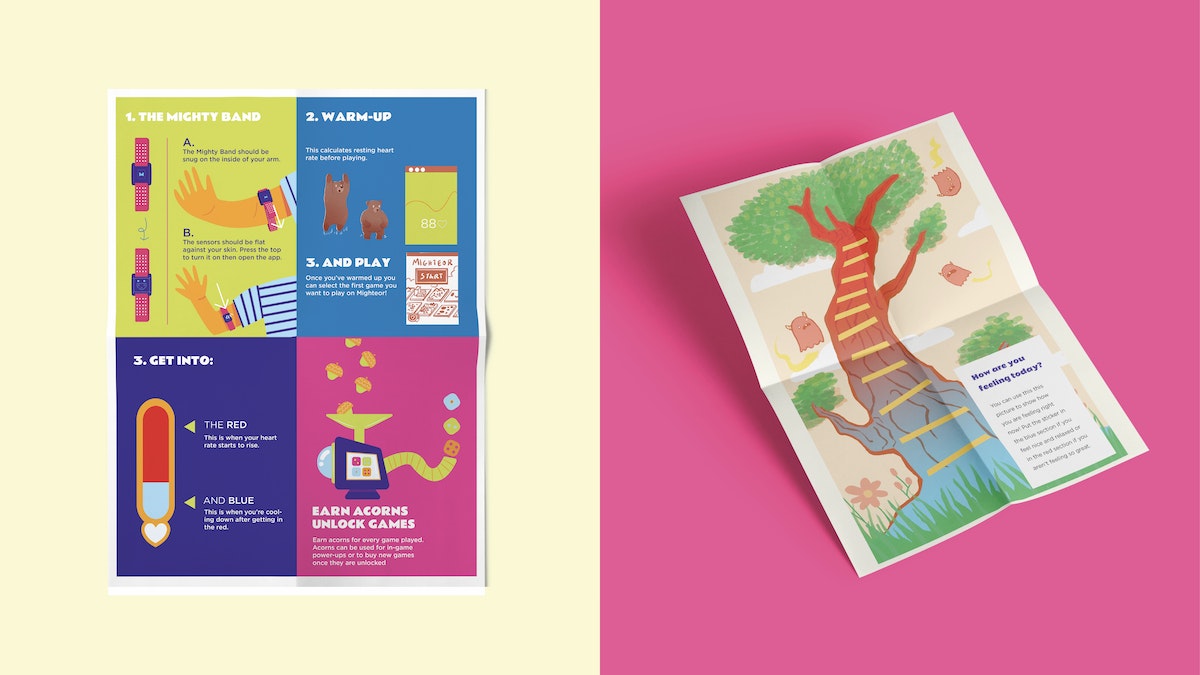
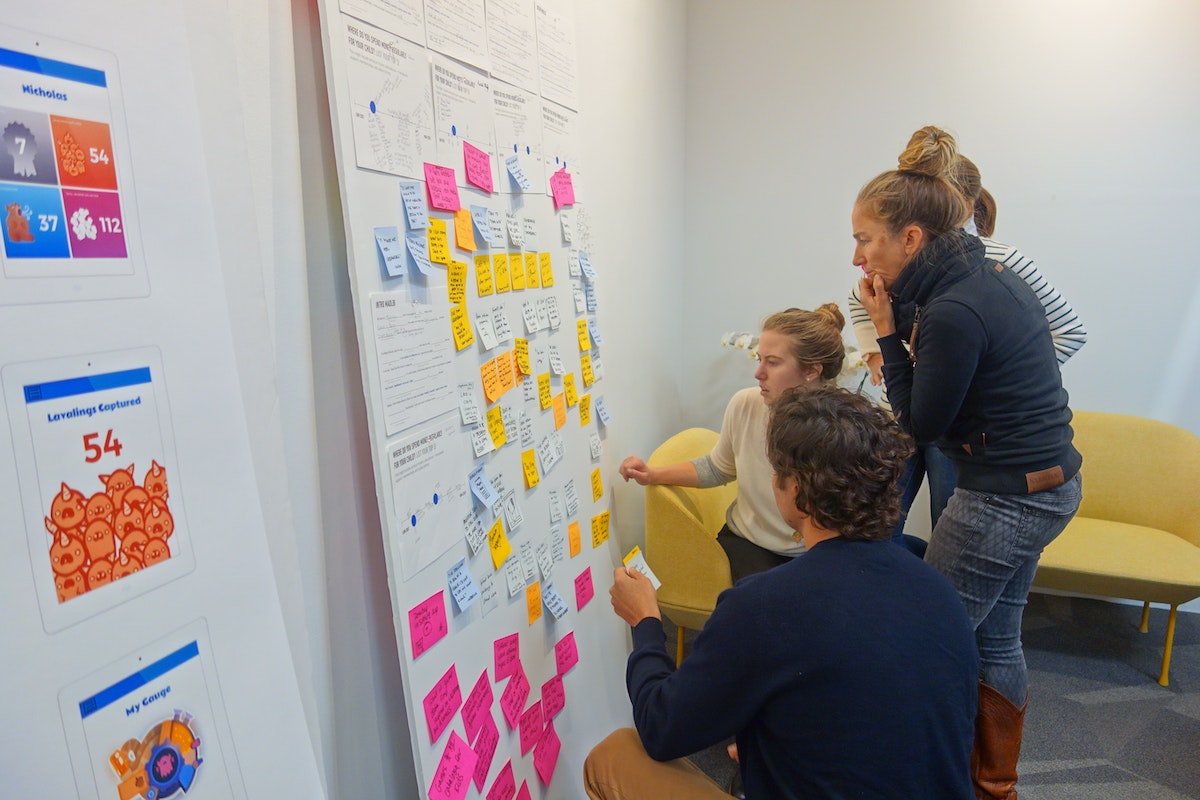
Already activated around boosting mental and emotional health, IDEO's design team worked side-by-side with Neuromotion to study how parents and children experience Mightier. From home visits to group interviews to a summer camp-style design session with kid players, live feedback fueled the next iteration of the gaming platform and better product-market fit.
IDEO helped Neuromotion hone the visual design and mechanics of Mightier and expand it's suite of games. The team observed that the Mightier program was more successful the more involved parents of players became, which revealed a need for additional resources for adults. So they created new supports, including a more detailed orientation and a personalized coaching service for parents staffed by trained therapists.
But can a video game actually help kids cope? Early peer-reviewed studies showed that playing Mightier reduced outbursts by 62 percent, oppositional behaviors by 40 percent, and parental stress by 19 percent. After 12 weeks of using Mightier, a survey of kids and parents showed that 96 percent of parents saw positive behavior changes in their children, while 92 percent of kids learned new coping skills.
Shortly after the design sprint, Neuromotion secured its next round of funding and officially launched Mightier’s array of “bioresponsive games.” The games have already been played more than a million times, and Neuromotion has measured more than a 100 million heartbeats. Mightier games are helping kids and families across the country.
What about Dave Jr.? Recently, his sister told Lund she "accidentally" bumped Dave Jr.’s bike off a pier and into the ocean. She was expecting an outburst of anger, but after eight months of playing Mightier, Dave Jr. stayed cool. His uncle couldn’t be prouder.
Designing waste out of the food system
IDEO partnered with hotels, food banks, foundations, and entrepreneurs to combat food waste.
Many of us have let vegetables wither in the crisper drawer, or thrown out a child’s half-eaten restaurant meal, but the sheer scale of food waste around the globe is hard to grasp. According to the United Nations, about a third of the food the world produces every year—1.3 billion tons—is lost during production or tossed by consumers, with North Americans throwing out the most food per capita. The average American wastes enough food each month to feed another person for 19 days.
IDEO received a series of grants from The Rockefeller Foundation to find solutions, given the power of IDEO’s human-centered design approach to address systemic challenges. Through a number of projects with The Rockefeller Foundation and other organizations, IDEO designers from across the U.S. devised novel ways to tackle food waste.
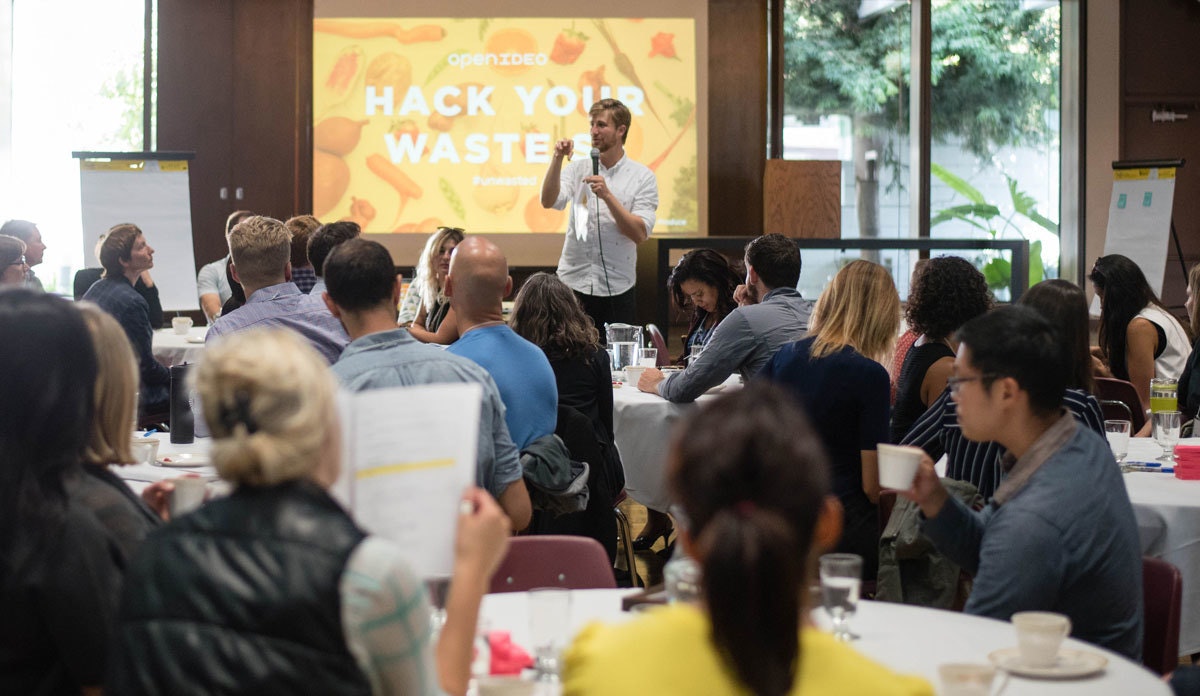
For IDEO’s first initiative, designers tapped into the enthusiasm of the broader creative community, in partnership with The Rockefeller Foundation, the City of San Francisco’s Department of Environment, the Closed Loop Foundation, ReFED, and other groups. In the summer of 2016, OpenIDEO—IDEO’s open innovation practice—launched the Food Waste Challenge, asking how people might curtail waste by rethinking our relationship with food. Between June and October, more than 20,000 people from 113 countries took part in the challenge, tracking their personal waste and brainstorming solutions.

Challenge participants submitted more than 450 ideas. A team of food industry experts helped select the 12 top proposals, which included software to help people buy food collectively from wholesalers and a service that delivers extra meals from corporate events to those in need. Ultimately, the Closed Loop Foundation chose to award Full Cycle Bioplastics a $50,000 grant to scale up its idea to convert inedible food and paper waste into a fully compostable alternative to oil-based plastic.
At the conclusion of the Food Waste Challenge, OpenIDEO launched the Food Waste Alliance, a platform for participants and experts to stay engaged with the most promising ideas and innovators. The alliance helped entrepreneurs share resources, prototype new concepts, secure funding, hire staff, and form partnerships. OpenIDEO invited hundreds to join the alliance, and 92 percent of members told IDEO they made progress in their work as a result. One member company, RISE, received funding from another participant who discovered RISE through the alliance. This investment let RISE prototype its concept for milling spent grain from beer brewing into flour for baked goods and ultimately join the prestigious Food-X accelerator.
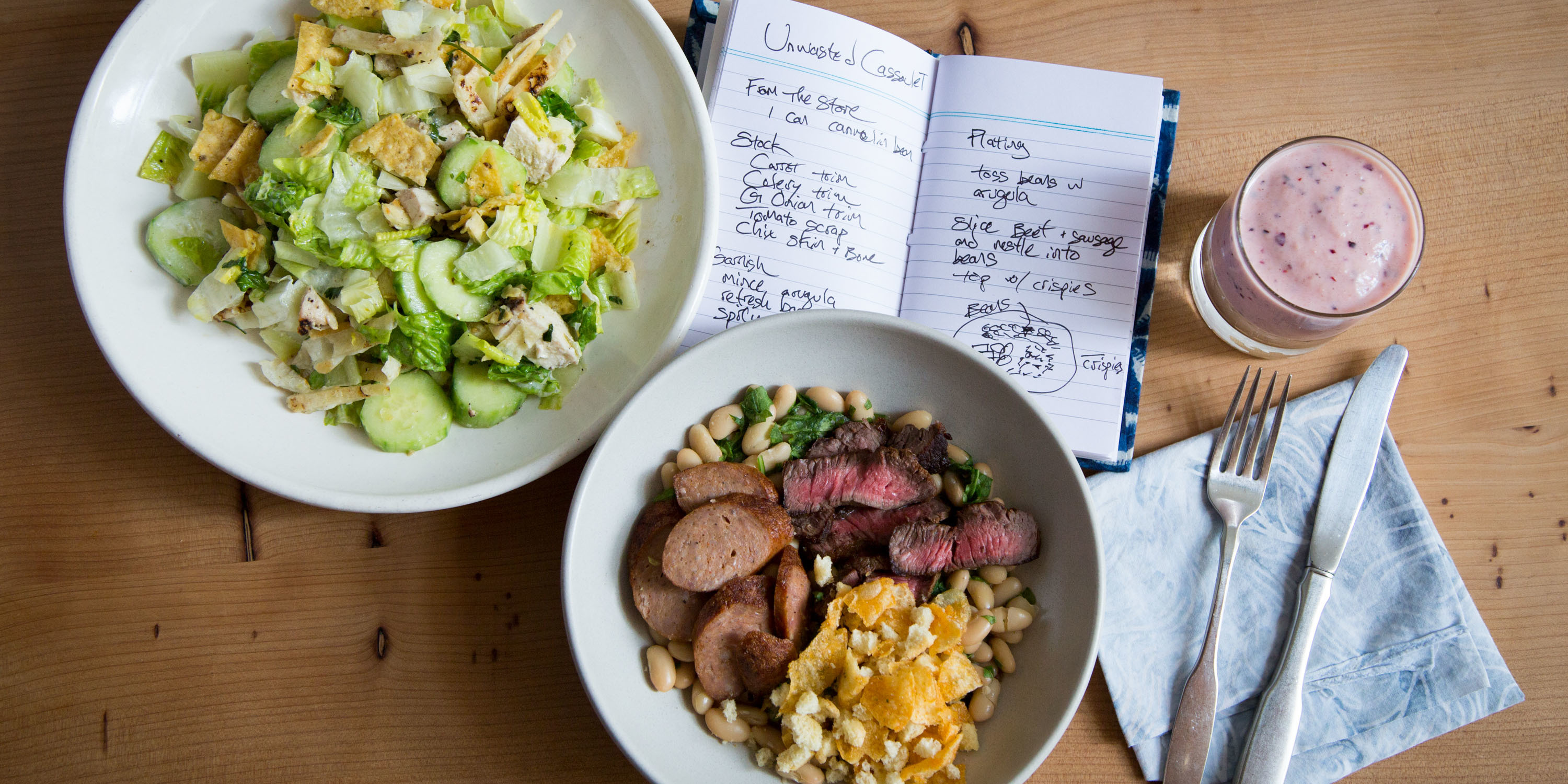
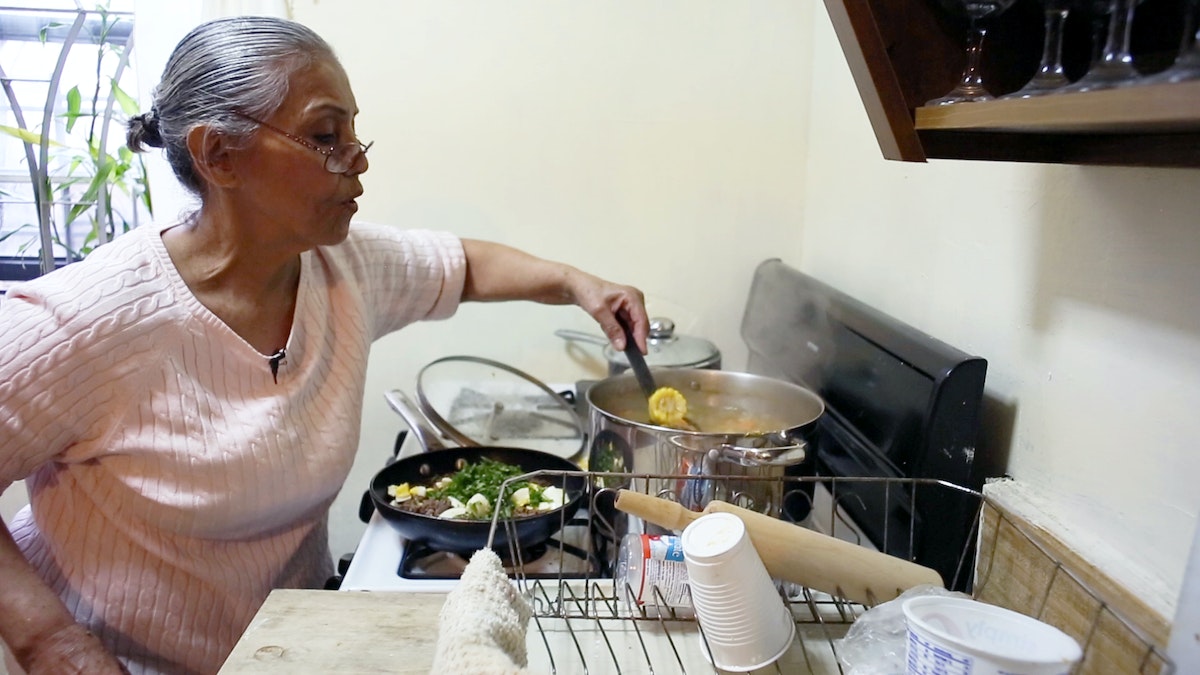
The Rockefeller Foundation also supported IDEO’s work with City Harvest, a New York organization that collects 160,000 pounds of unused food each day and delivers it to soup kitchens and food pantries. City Harvest wanted to understand the habits of local families who visit food banks in an effort to ensure all the food the group distributes gets eaten. To get a peek into these families’ kitchens, in January 2017, IDEO researchers conducted observations and interviews across New York City’s five boroughs. Pantry customers cooked for the researchers, giving them an inside look at how the families engaged with the food they had available and what food meant to each of them: tradition, stability, even adventure. Based on insights from pantry visitors, IDEO made recommendations for City Harvest, including community-run cooking classes and a way for families to request specific foods or reserve pick-up times by text message. IDEO also created three video vignettes to help build even greater empathy between City Harvest and the people it serves.
In spring 2017, capping IDEO’s work with The Rockefeller Foundation, the organizations teamed up with World Wildlife Fund and Hyatt hotels in Florida, New York, and New Jersey to rethink all-you-can-eat buffets. IDEO studied diners and staff at Hyatt buffets and found that employees—from event planners to kitchen staff—each add a cushion of extra food to cover their bases, while guests overfill their plates to avoid missing out. In the end, diners eat just half the food organizers serve, while the rest goes to waste. This and other data-driven insights gleaned about diners’ habits led to subtle substitutions, including smaller plates of meats and cheeses that can be ordered from servers and individual pastries rather than whole cakes. These alternatives have not only built on Hyatt’s existing food waste management strategies, but have also helped reduce buffet costs at Hyatt Regency Orlando and continued to receive support from guests.
The problem of food waste is too enormous to ignore. Wasted food means squandered resources, lost money, and ultimately, hungry people—more than 15 million in the United States alone. Designers and innovators from coast to coast have helped find solutions to the crisis that fulfill a variety of needs, from preserving produce sent to food pantries to keeping plastic packaging out of the oceans. The Rockefeller Foundation and other IDEO partners are leveraging powerful design techniques to pave the way for a waste-free future.
Launching a bootcamp for data scientists
Designing a rigorous program that prepares students for a career in the data-driven economy.
In 2017, IDEO acquired longtime partner Datascope and integrated the company’s data scientists and engineers. Datascope team members aren’t just passionate data scientists; they’re human-centered designers who happen to work with data, as illustrated by successful collaborations like this one:
In today’s job market, there’s no such thing as being "done" with your education. This is particularly true in the fields of data science, machine learning, and AI, where significant advances are made on a monthly basis. To meet this need for more in-depth training, Metis—part of Kaplan—wanted to create a comprehensive data science program for students from all backgrounds. Metis asked Datascope to design the curriculum from scratch, drawing on the company’s deep expertise in the field.
Datascope spoke with practitioners across industries to identify the key skill sets that make them successful: a grasp of design; fluency with data management, coding, and algorithms; and effective communication with coworkers and the wider world. The team crafted a 12-week bootcamp that develops these specific abilities.
In order to prepare students for the work world, the bootcamp is structured less like a class and more like a company, where students are “hired” as data scientists—with projects to complete—starting on day one.
Students collaborate on group projects and presentations in a way that mirrors real workflows, and practice pair programming to learn from one another. Using techniques drawn from design, students are invited to refine their project briefs and continually reevaluate their approach.
Instead of a final exam, at the end of the course, students tackle five real-world, open-ended data science projects inspired by Datascope’s client work. One project involves using data from subway turnstiles to detect patterns in the volume of street traffic; another asks students to use data they scrape from the web to predict a movie’s box office profits using regression analysis.
After students complete the bootcamp, they receive an additional three months of career support, from mock interviews to site visits with potential employers. In addition to designing the curriculum, Datascope taught the first three student cohorts and helped Metis build its teaching team as it expanded the program from New York to San Francisco, Chicago, and Seattle. Metis now offers online courses, evening classes, and corporate trainings in data science.
If you’re going to take a data science bootcamp, it’s best to take one designed by data scientists.

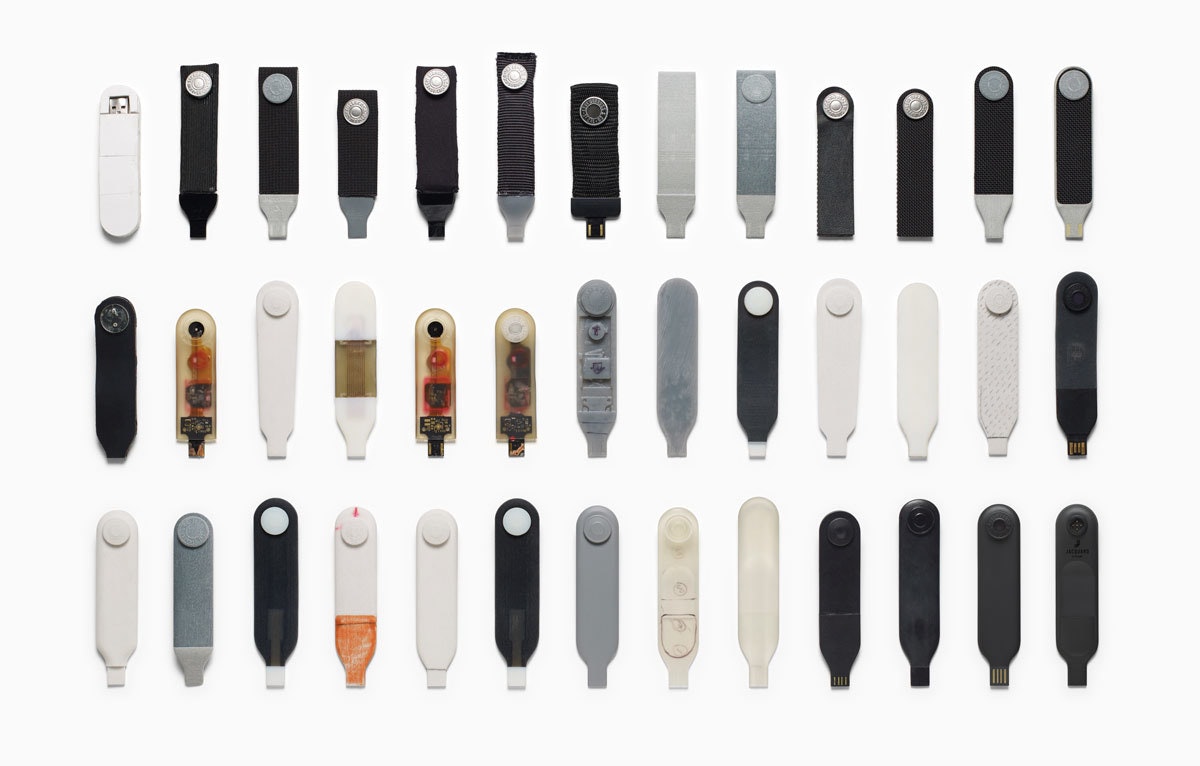
Designing the Levi’s Commuter Trucker Jacket with Jacquard by Google
When Google teamed up with Levi’s to craft a jacket with technology woven in, the company turned to IDEO to help make the experience of wearing the garment feel seamless, intuitive, and familiar.
You’re whizzing along on your bike, en route to a new restaurant for a client meeting. You reach an unfamiliar intersection; which way to go now?
Instead of dismounting and digging for a phone, you brush your hand along your jacket sleeve for directions, then double-tap the denim to re-start your music. Without taking your eyes off the road, you’ve taken care of the problem.
This intuitive interface for connected apparel began with Levi's, makers of durable workwear for 140 years, and Google, creators of forward-looking technology, which joined forces to fashion the first item of clothing with touch-sensitive, copper-core threads woven directly into the fabric. Once it was established that the first connected garment from the partnership would be a jacket within Levi’s Commuter line, with interaction on the sleeve, Google worked with IDEO, leaders in designing for human needs, to develop the gesture language of the jacket and industrial design of the technology within.
This is the first connected garment that helps us break free from devices. It seamlessly incorporates Jacquard by Google technology to perform digital tasks, such as navigation, communication, and music playing with a few swipes or taps on the sleeve.
Jacquard by Google—a platform that makes it possible to integrate touch and gesture interactivity into fabrics using conductive yarn and standard, industrial looms—was inspired by a curious twist of history. The Jacquard loom, invented in France in 1804, used punch cards to automate the process of weaving complex patterns into fabric. In the 1940s and ’50s, engineers employed a similar punch-card technique to program the first computers.
IDEO spent time on the project early on, collaborating with Google engineers and Levi’s clothiers on the jacket’s development, helping craft an experience that would make the intelligent threads intuitive to wearers.
Working alongside Google and Levi’s, IDEO’s work included:
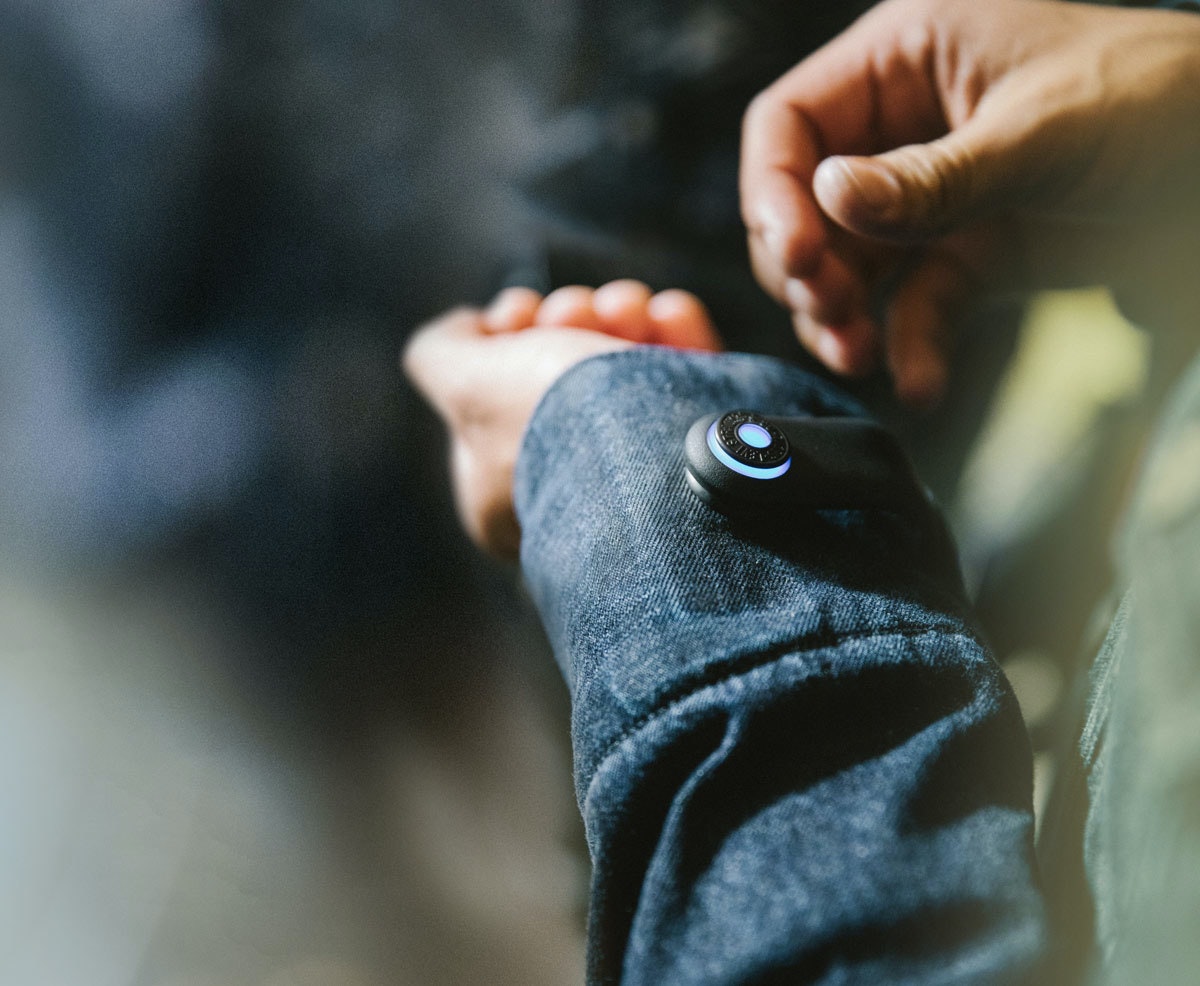
- The industrial design of the electronics integrated into the snap tag and connector (the tag snaps onto the jacket’s cuff and connects to your phone via Bluetooth)
- A vocabulary of gestures on the cuff of the jacket that lets you interact with the jacket’s technology
- Early exploration of the basic design philosophy and conceptual design for the interaction model of a corresponding smartphone app that ties it all together (works with both iOS and Android phones)

The IDEO team’s first task was to validate what commuters of all stripes wanted from the garment, in addition to the work Levi’s did in researching with its consumers. In interviews, group exercises, and wear tests with urban cyclists and other workers on the go, the team learned that cyclists needed a way to stay connected, while still living in the moment. That meant being able to answer calls, hear text messages, get the next direction, and control their music without using a screen.
Levi’s, Google, and IDEO developed a language of movement for Jacquard-enabled fabric that feels familiar and human and builds on the ways people would naturally interact with a garment (a whole-hand brush along the sleeve, as opposed to a one-finger tap on a touch screen, for instance).
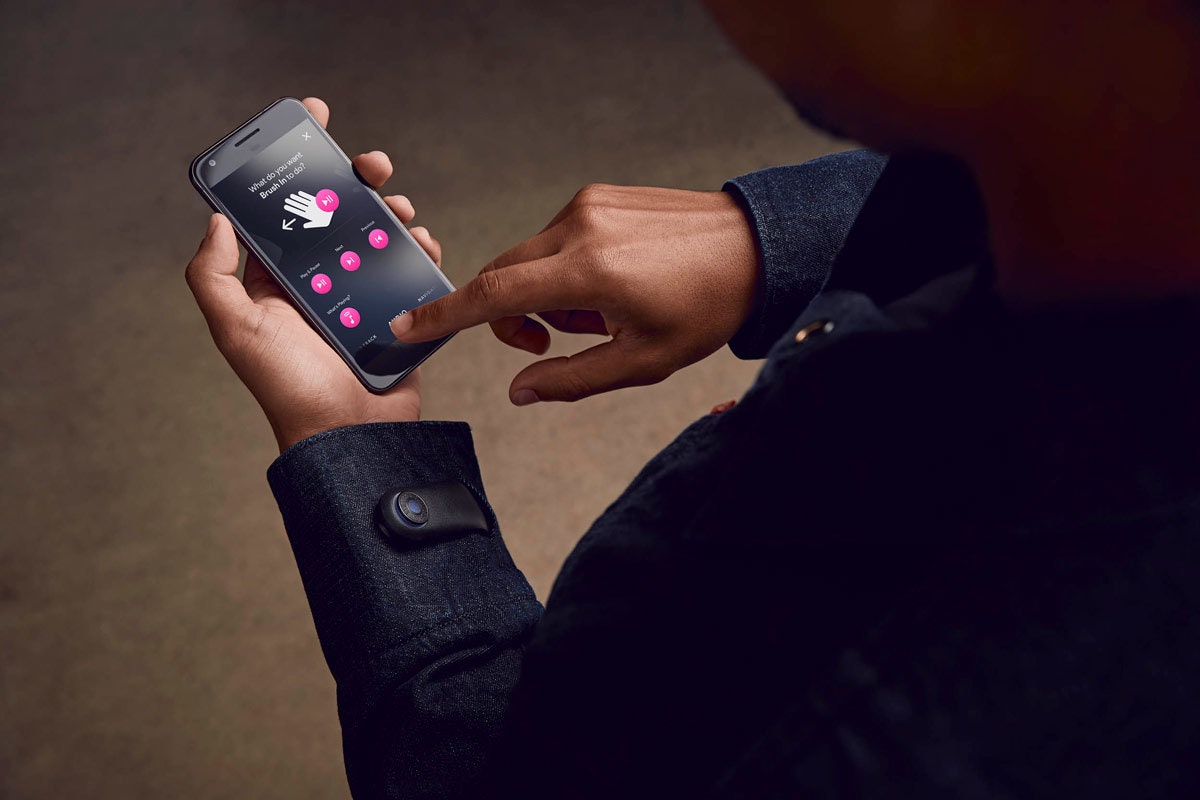
Then came the design and engineering of the snap tag on the jacket’s cuff, which gently notifies you of calls, texts, and other jacket interactions with light and vibration feedback. The flexible, lightweight strap incorporates the look and feel of a Levi’s jean button, while housing advanced electronics that capture touch data. The tag is removable, charges via USB connection, and works in conjunction with a mobile app that lets you configure settings for the garment, set notifications, and customize gestures and interactions.
The Levi’s Commuter Jacket with Jacquard by Google changes the game because it’s simply that—a jacket—with technology that adds new utility and value, allowing us to wear our everyday interactions on our sleeves.
The Levi’s Commuter Trucker Jacket with Jacquard by Google hit stores in October 2017.
IDEO and Google have a long history of collaboration. Learn more about our work on Google Bloks here.

Thoughtless Acts: Mobile hat rack
Thoughtless Acts: Mobile Hat Rack. The intuitive ways we adapt and react to things in our environments
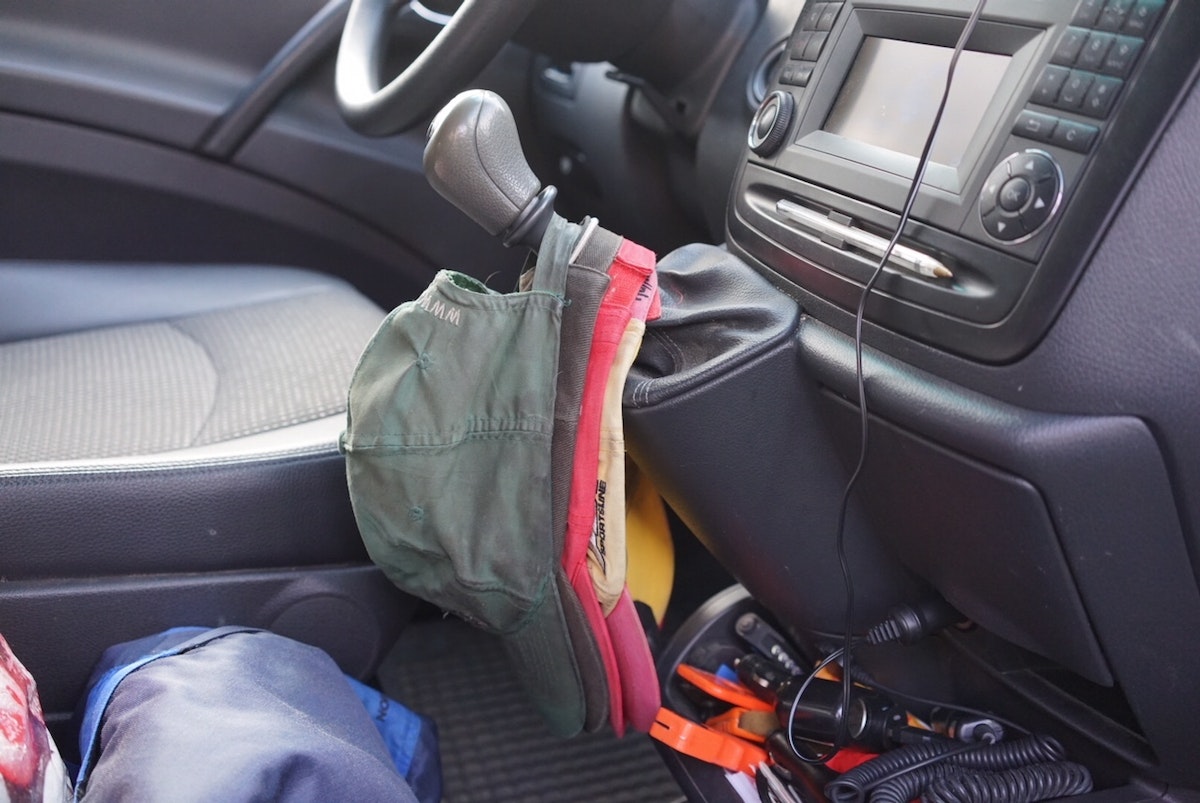
We met a beer and sausage vendor in Germany who keeps an array of hats stored on his gearshift, a humorous-looking makeshift hat hook. When we asked him more about it he explained that he often sells his wares at football games, so it’s important that he wear the right football club’s hat. “One time, when I wore the wrong one by accident, they called me an ass and tipped the van over,” he said. “You always have to howl with the wolves.”
Human-centered design requires us to observe human behavior with beginner's eyes, so that we can spot the innate ways people interact with the world around them. We call these intuitive and unconscious reactions Thoughtless Acts, and IDEO designers collect photos of them to inspire their work.
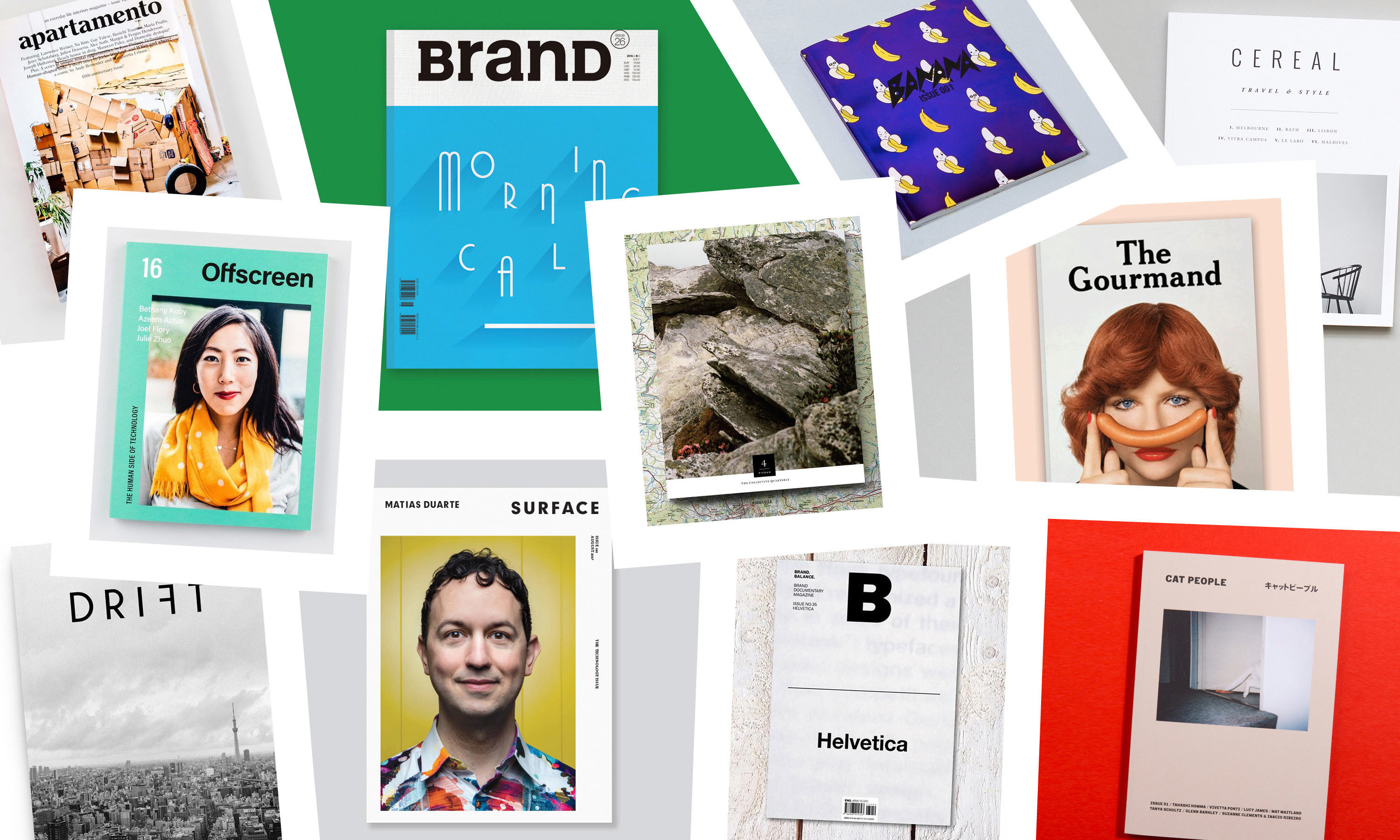
11 magazines that keep us inspired
Learn which glossies inspire IDEO designers all month, every month
You can’t beat the smell of fresh ink, the texture and weight of high-quality paper, and the sound as you flip through the pages. When holding a magazine, I’m not simply reading it—I’m immersed in it.
I asked my fellow designers which publications they find the most exciting, and I’ve included a few of my favorites, too:
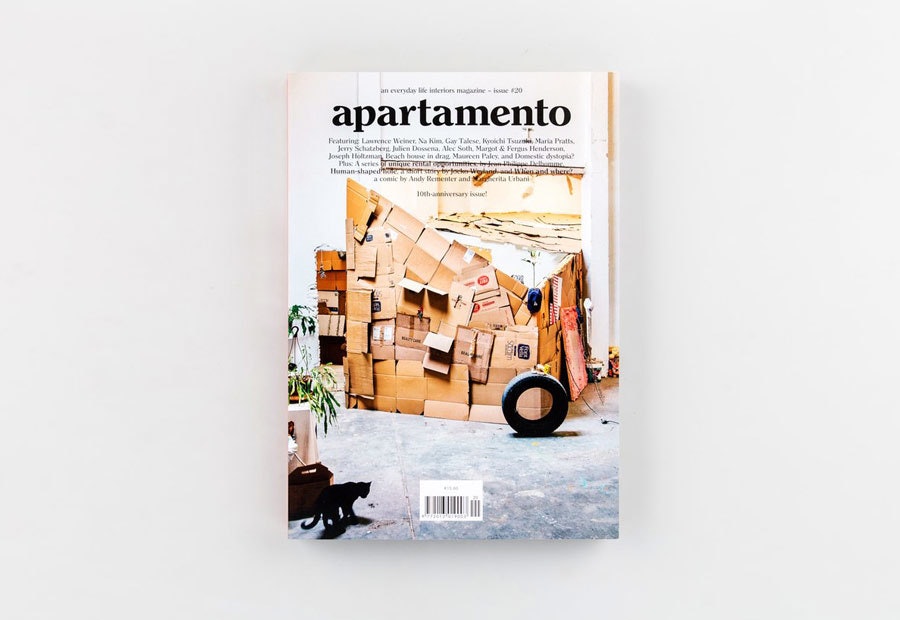
1. Apartamento
Yes, I suppose it’s an interior design magazine, but instead of focusing on beautiful, minimalist, multi-million-dollar houses (not that there's anything wrong with that), Apartamento covers real, lived-in homes and the creative people who occupy them. Raw portrait photography, cluttered spaces, and intimate interviews show how people really choose to live. Based in Barcelona, Spain, it’s survived through subscription revenue and a higher newsstand price, and has bucked the trend of featuring numerous ads or sponsored content. Plus, its perfect novel size, centered layout, patterned spine, and chunky typography are delightfully raw and unfussy. —Lindsey Turner, IDEO Cambridge
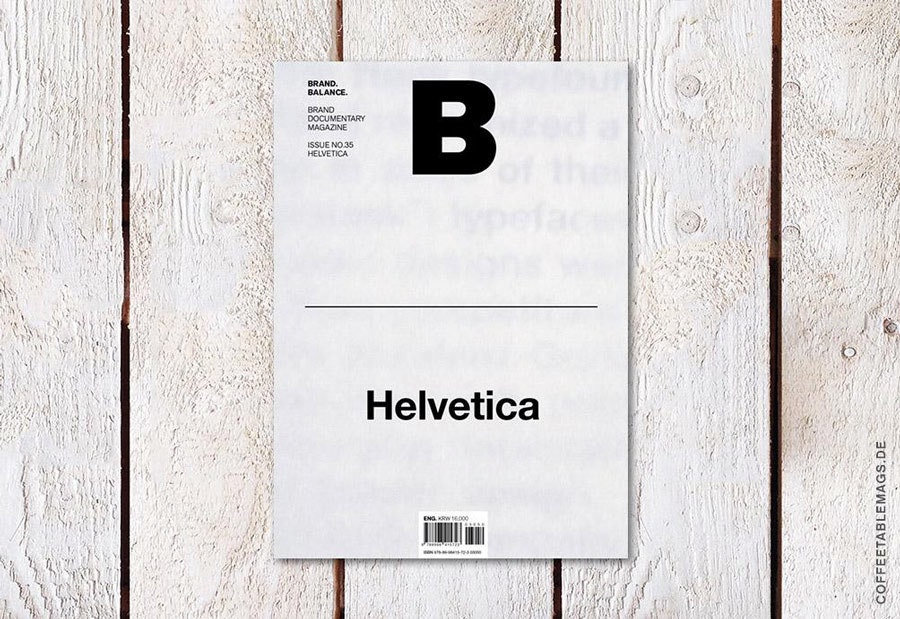
2. B
B magazine is published in South Korea. Every issue, it takes an advertisement-free, documentary approach to a single iconic brand. It’s covered many amazing brands, from the luxury to the mundane, including LEGO, Ray-Ban, and Bic. Each issue goes deep into the people, history, evolution, products, experiences, and philosophies of the brand it covers. Fans and collectors are also often included. I recommend it to anyone who likes branding and brand strategy, or just loves products and design. The many ways it looks at a brand and all its expressions goes far beyond simple identity and logo. —Clark Scheffy, IDEO San Francisco
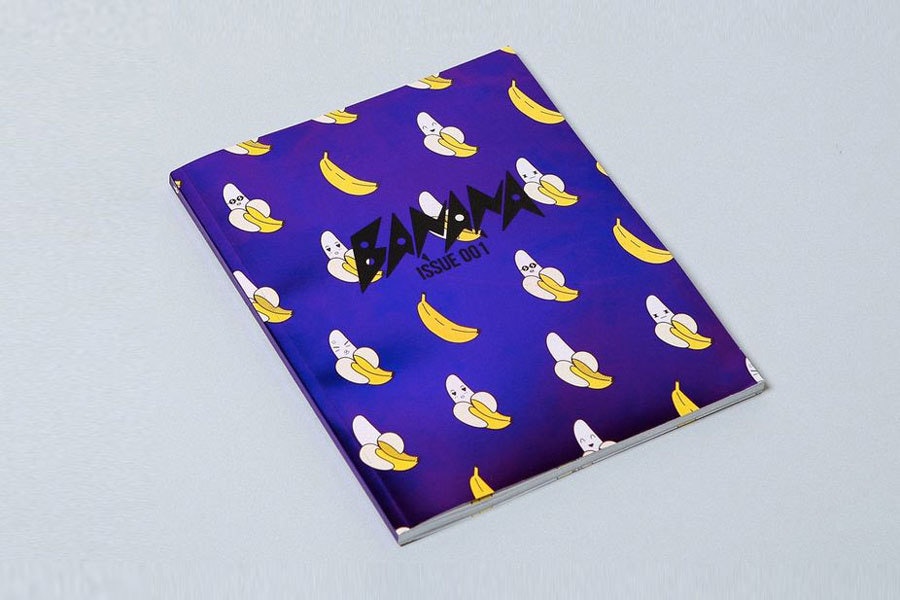
3. Banana
In 2014, first generation Asian-Americans Vicky Ho and Kathleen Tso launched Banana magazine, a lifestyle magazine dedicated to exploring the intersection of Eastern and Western cultures. Ho and Tso are not claiming to be experts in Asian culture, but rather are discovering it right alongside their readers. Their goal is to understand what this third identity—neither Asian nor American, but Asian-American—means. As a designer, I think it’s fascinating to understand how cultures can blend together. With the growing influence of Asian countries on design trends, this magazine is relevant, vibrant, and bold, and offers great graphic design inspiration. —Coline Prevost, IDEO Palo Alto
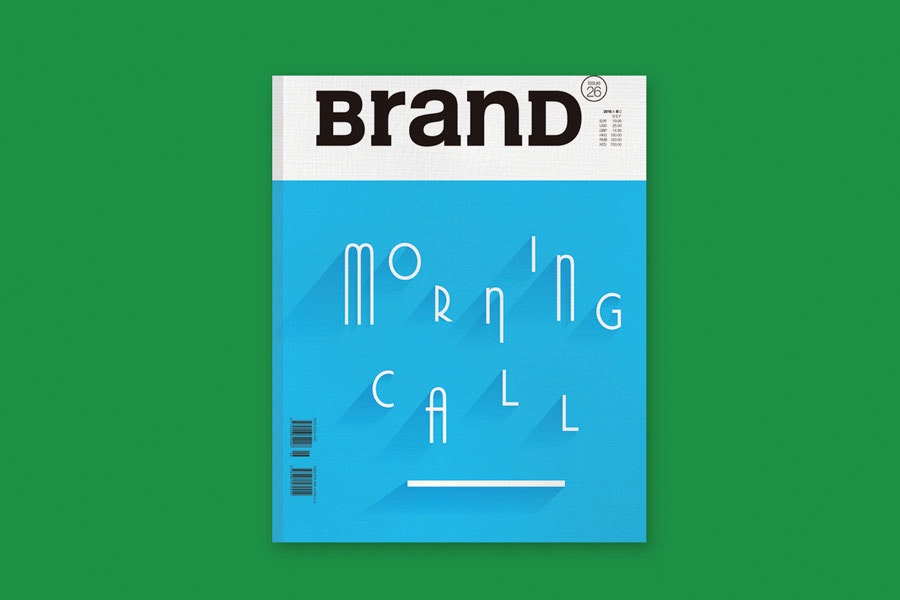
4. [BranD]
[BranD] is a Hong Kong-based magazine that explores communication design in visual art, advertising, products, graphic design, and architecture. It brings together designers, artists, art directors, marketing specialists, and business-minded people of all stripes to share new ways to express ideas and brands visually. I'm an avid reader of [BranD] for inspiration in my craft; it's a great vehicle to stay connected to the ways other designers are stretching their own skills and building their crafts in a discipline—comms design—that is always evolving. —Joshua Lavra, IDEO San Francisco
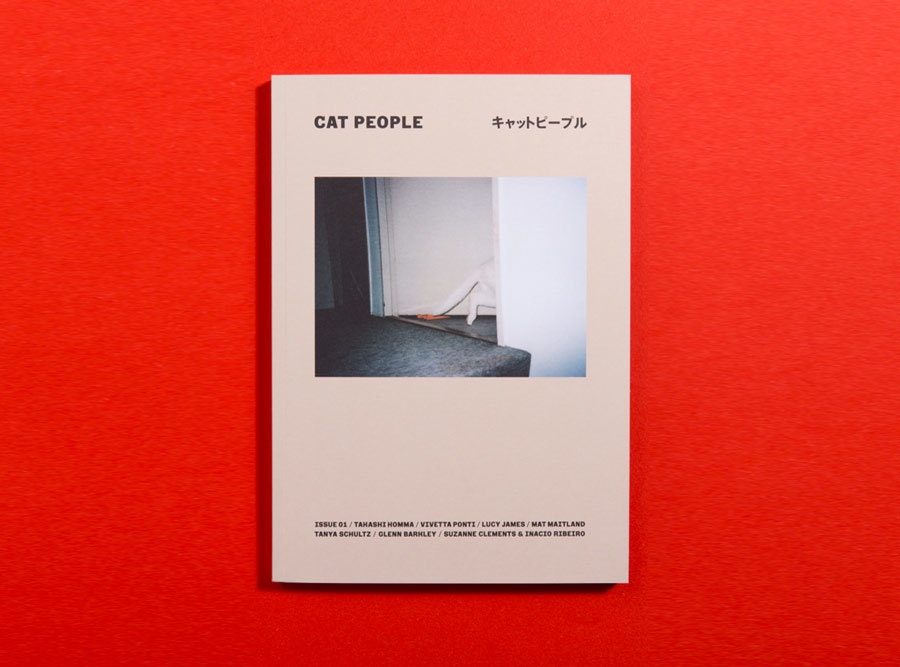
5. Cat People
Cat People is an English-Japanese bilingual magazine featuring interviews and works by cat-obsessed artists, designers, photographers, and writers. It’s only in its first issue, but it’s already sold out. I’m very excited for future editions because this magazine promises magnificent inspiration for design and feline die-hards (like me). —Camden Foley, IDEO Palo Alto
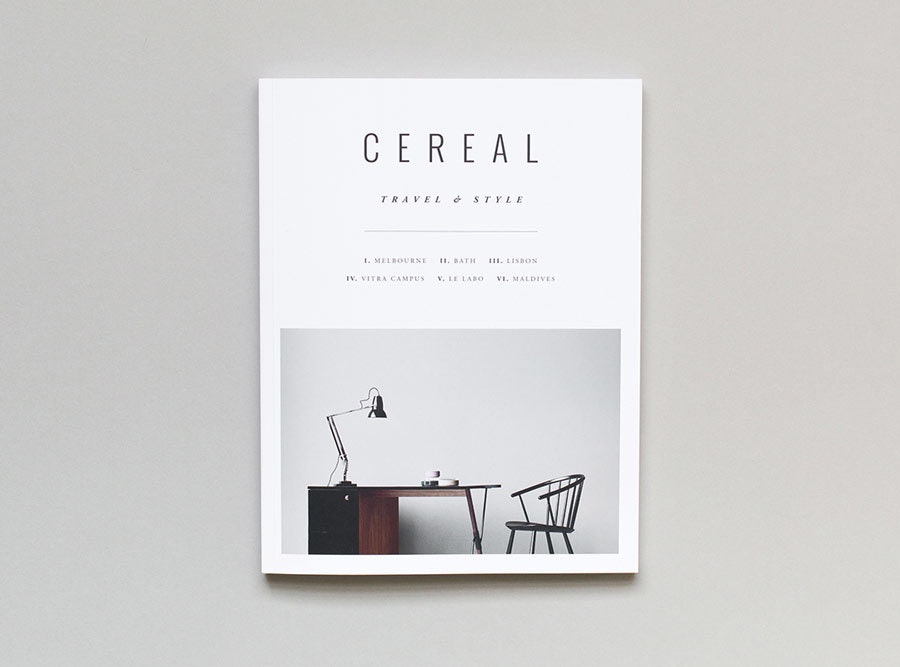
6. Cereal
Cereal is a biannual travel and style magazine based in the United Kingdom. Each issue highlights engaging interviews and stories about unique design, art, and fashion on a specific theme, such as sustainability or desire. I’ve followed this magazine since its inception in 2016 and have every issue to date. Cereal’s publisher offers beautiful magazines, city guides, art prints, and even a children’s book—all with some of the best photography and design I’ve ever seen. —Camden Foley, IDEO Palo Alto
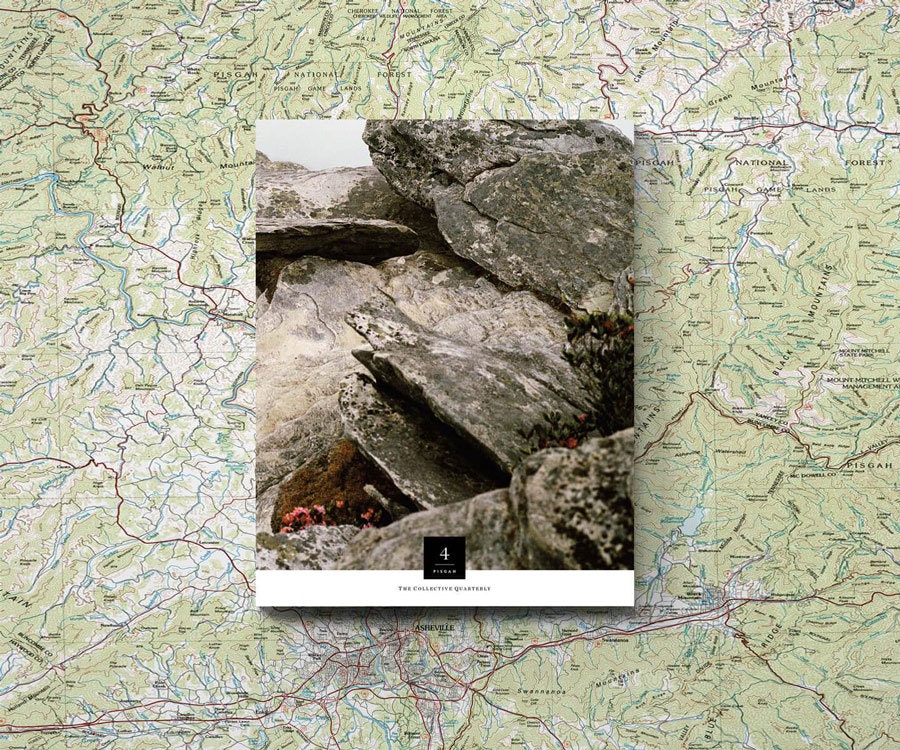
7. The Collective Quarterly
The Collective Quarterly is a magazine about travel and creativity across the U.S. The magazine staff—a rotating team of writers, photographers, illustrators, and other creatives—visits small towns or regions around the country to interview artists, creators, and other cornerstones of local life. As a photographer, the exceptional photography caught my eye, particularly that of one of the co-founders, who still shoots film photos like I do. It’s inspired me to get out with my camera more often. I recommend the magazine to anyone who seeks a deeper appreciation of creativity in intimate communities, hopes to explore non-urban corners of the country, or wants to bask in the magic of film photos. —Tara Safaie, IDEO San Francisco
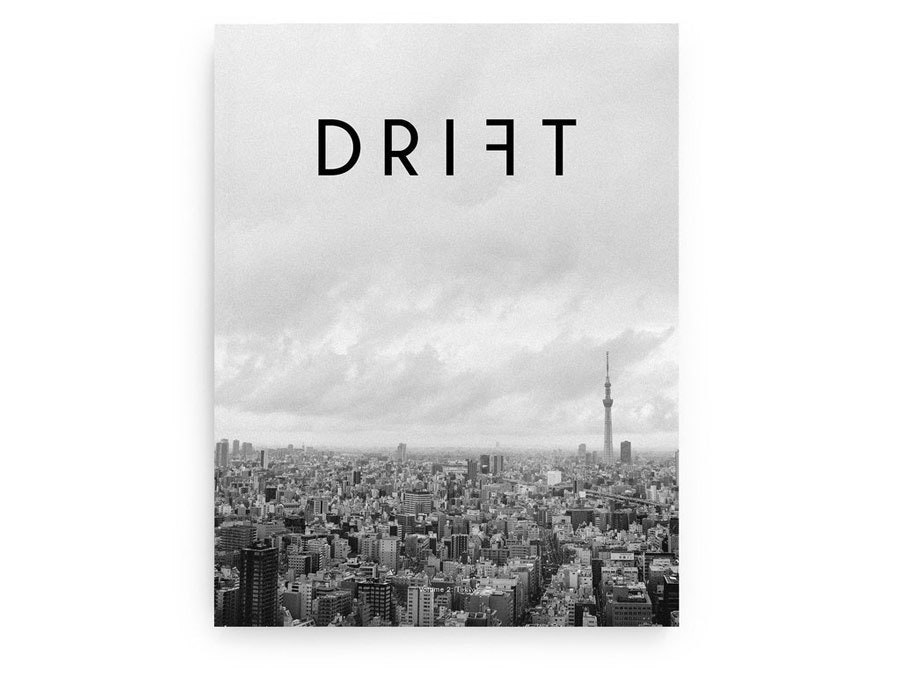
8. Drift
Back when I was a barista, my mornings were spent adjusting the espresso machine's grind and my tamp to each bean's age and provenance. I learned that coffee is ubiquitous, yet highly circumstantial; you can find it in virtually any city, and yet each urban environment and its inhabitants have radically different rituals, cultures, and methods of consumption for this most essential drink. Drift transports its readers to different cities and their respective coffee cultures, allowing readers to intimately engage with new adventures in new places through a common cup of joe. —Adam Cristobal, IDEO Palo Alto
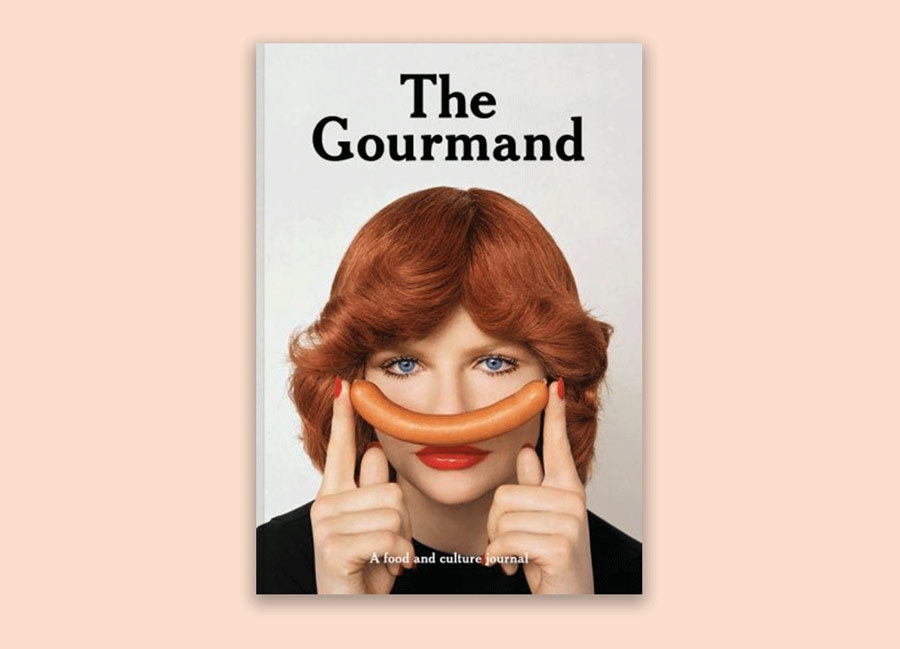
9. The Gourmand
As we reach the peak of our food media zeitgeist, The Gourmand has emerged as one of the leading alternative voices in the space, covering everything from new ways of visualizing food emoji to Georgia O'Keeffe's strict diet. Boasting both witty writing and distinct art direction, the magazine offers a unique perspective and inspirational fodder to foodies, designers, and creatives of all stripes as we look for more visually appetizing ways to engage with the world. —Adam Cristobal, IDEO Palo Alto
10. Offscreen
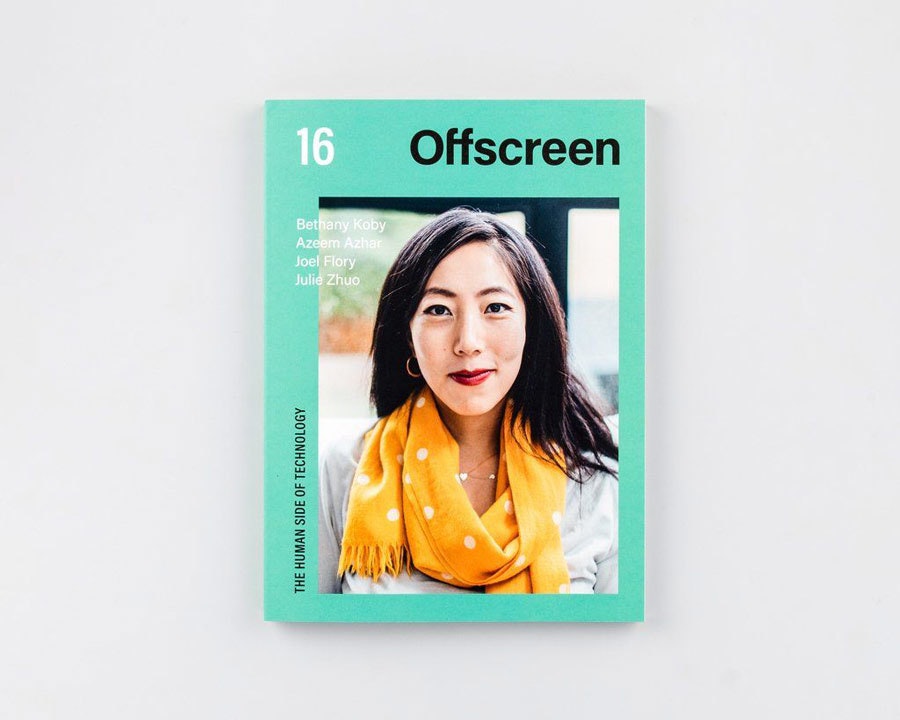
Offscreen is a print magazine published three times a year, as well as a weekly newsletter, that takes a thoughtful, human-centred approach to technology. It’s is a slow counterbalance to the fast pace of popular media, exploring creativity and design through introspective writing and thoughtful human stories. Offscreen is a proponent of the “slow web,” celebrating the idea that not all that is instant and convenient is necessarily good for us. —Nathan Paterson, IDEO Tokyo
11. Surface
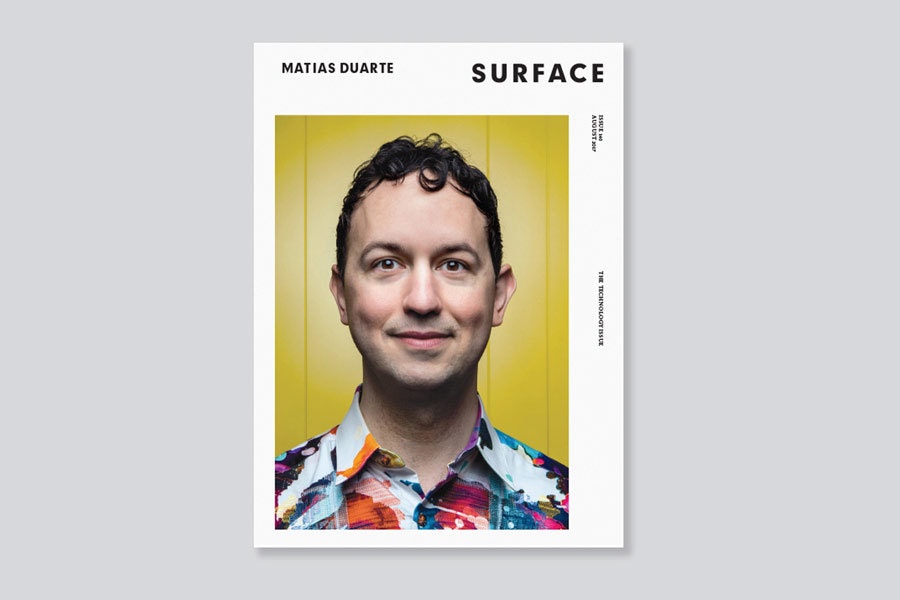
Surface is a New York magazine that covers a little of everything—design, architecture, fashion, culture, and travel. I picked it up because I judge magazines by their covers. Each cover features a great close-up portrait of a creative person—an architect, musician, industrial designer, etc. The portrait is paired with restrained, Swiss-style black typography and a grid well versed in white space. The magazine examines culture through the lens of design and has a whiff of one of my favorite blogs, Sight Unseen. It's conspicuous consumption for sure, but sometimes that's what magazines are for. —Lindsey Turner, IDEO Cambridge
Next time you want to explore cutting-edge design—or just enjoy a little eye candy—crack the cover of one of these magazines for an inspiring read.
Thanks to the digital revolution, fewer and fewer of us are getting our hands on paper copies of books, magazines, or newspapers these days. Online subscriptions and digital versions can fill the void, but sometimes, picking up a glossy magazine is simply the best way to absorb inspiration.
Why your office needs a laugh detector
How one data scientist set out to track the volume of laughter as a measure of success
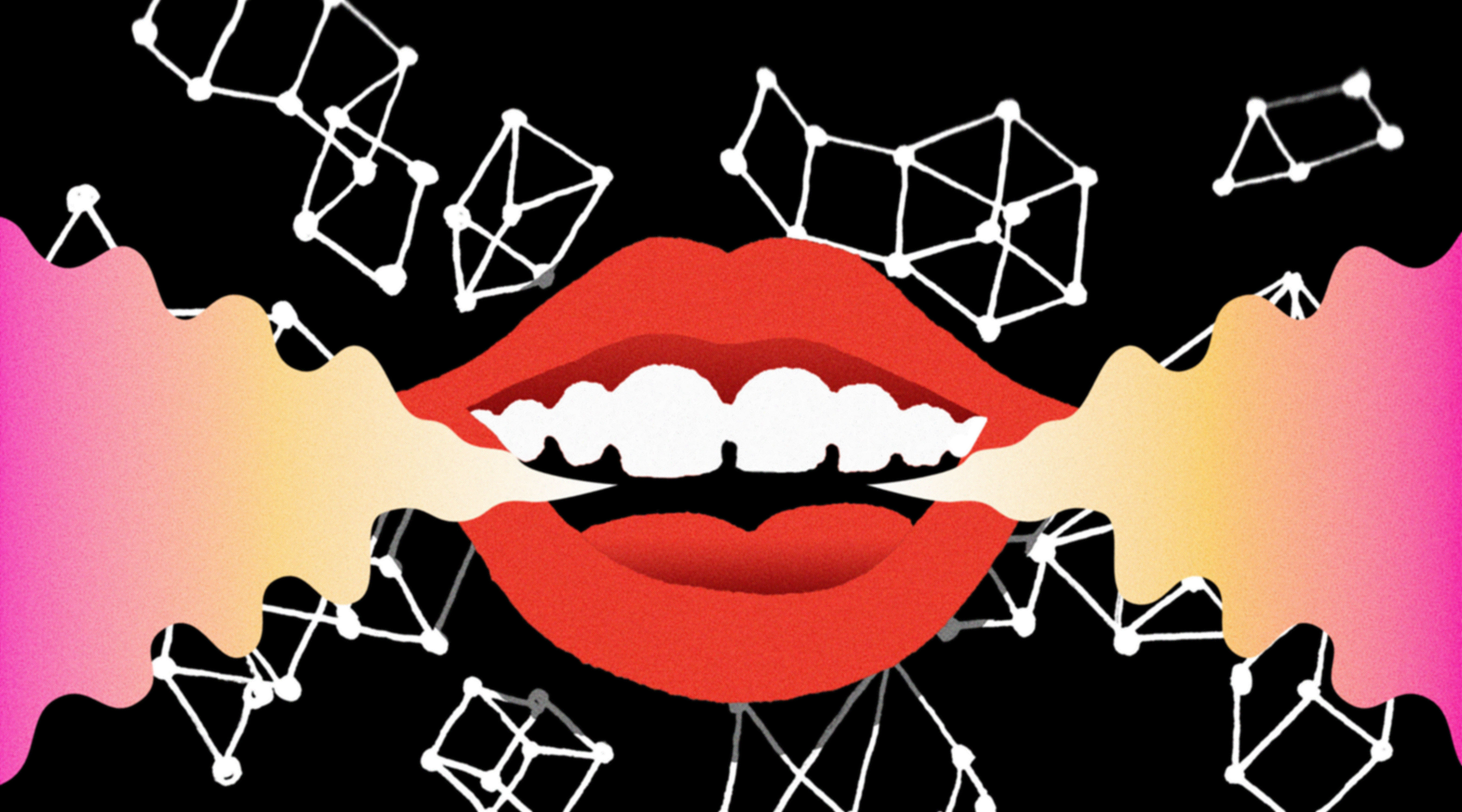
As a data scientist, this idea got my gears turning: What if I could use machine learning to build a laugh-detecting algorithm?
Prototyping is a great way to explore how emerging technologies will play a role in our connected future. But instead of focusing on how we will teach our machines to sense human behavior, I’m interested in designing what we will do with the information our devices are learning. In a world filled with machines that learn and interact with us, it’s important that they are able to respond to all parts of our humanity—including the things that make us laugh.
I wanted to see what kind of laugh detection prototype I could build in a few weeks. Here’s how I did it:
1. Building the algorithm
To build the laugh-detecting algorithm, I knew that I wanted to use deep learning, so I turned to Keras, a programming library which makes creating neural networks fast and simple. To train the laugh detector, I needed to use sequences of audio as the input and predict whether or not laughter would result as the output. Fortunately, I found Audioset, a collection of over two million 10-second audio clips with labels from over 6,000 categories. Using a subset of the Audioset collection that is half laughter and half speech, I was able to get a laughter detection model running with 87 percent accuracy within a few days.

After creating a training dataset, I got started on the machine learning challenge. The Audioset data does not contain the extracted raw audio, only a 128-length feature vector for each second of input, which is created using a convolutional network operating on the raw audio spectrogram. These feature vectors will be the input for the machine learning algorithm, and the output will be a binary label of whether the input contained laughter. Since I am working with a relatively large dataset, I wanted to use some deep learning methods, so I turned to keras, an API that makes creating and training neural networks extremely simple, while still leveraging the computational efficiency of optimized tensor computation libraries like TensorFlow and Theano.
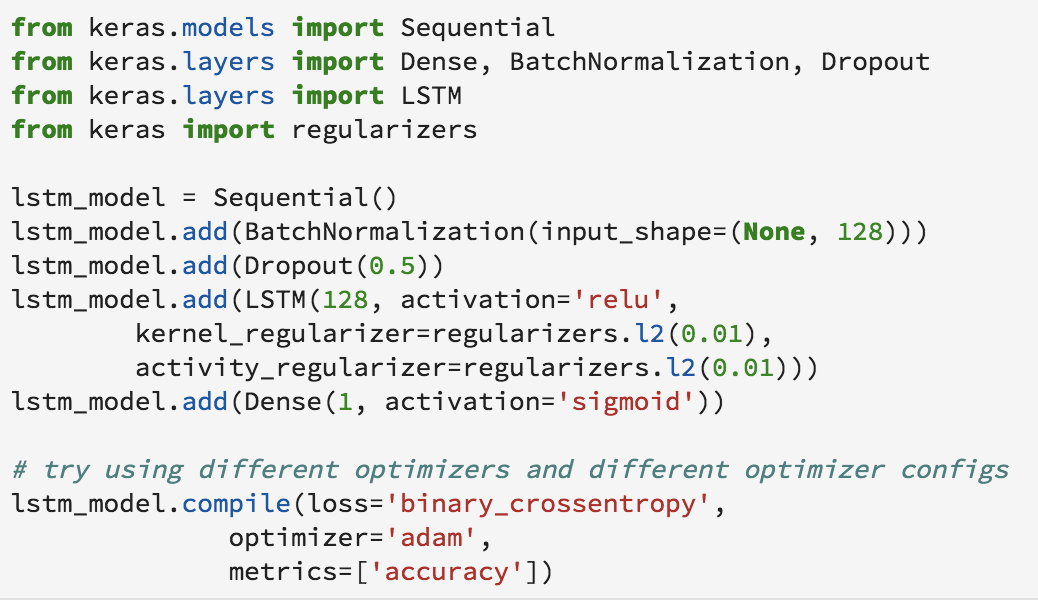
Since the model input is sequential, I wanted to try a recurrent neural network first. I started with a single layer LSTM model that quickly converged to 87% accuracy. Learning from the code in a very similar project, I found that applying batch normalization to the LSTM input was very important for getting the model to converge. One of the headaches of deep learning is that seemingly trivial details like this can have a large impact on convergence. I was happy with the performance of my first LSTM model, but I decided to try out a couple more options before moving on. I tried a 3-layer LSTM (because if one layer is good, three must be better), then I tried a simple logistic regression model to see if the fancy RNN architecture made a difference. The models performed with 88% and 86% accuracy, respectively, which showed me that, in this case, more layers did not equate to more power.
Ultimately, I ended up choosing the single layer LSTM, even though it was larger than the logistic regression model, because it was able to handle variable length input. The training data was all sequences that were 10 seconds long, but I wanted the laughter detector to be able to respond quicker than that. While the logistic regression could only operate on input that was the same length as the training data, the LSTM model can still operate on any input length, as long as it is split into one-second chunks.
To take the trained model and run it as a live laugh detector, I put together a python script that pulled together a few different steps. First, the audio is captured from the microphone using pyaudio and chunked into three-second clips. (The length of these clips is an adjustable parameter.) The raw audio is then fed into the pre-trained vggish network and converted to a sequence of feature vectors with the same parameters I used for creating the Audioset training data. The sequence is then fed into the trained LSTM model, and the laughter prediction score is returned and written to a timestamped .csv file. By default, the raw audio is then discarded, and only the score is saved. That way, there are no concerns about storing or transmitting anyone’s private conversations. By running the audio capture and processing in separate threads, I was able to run this continuously without any lag on my laptop.
2. Designing the experience
Once I had the ability to measure laughter, I had to tackle the real design challenge: How do we implement the laugh detector in project spaces without making it seem obnoxious or creepy?
I enlisted the help of a few smart colleagues to approach the challenge from multiple angles: a software designer experienced in designing for play, an environments designer to explore how the detector would show up in a project space, and a communication designer who’s written on the science of laughter.
We had a brainstorm around what we might be able to do with a laughter detector, and the ideas poured in. Perhaps we could use laughter as a weekly indicator of morale (similar to Bhutan’s gross national happiness), or host a competition between project teams for who laughed the most? If we could determine when people are laughing, maybe we could figure out why they are laughing, too. We could determine when laughter is genuine or just polite, which jokes are the funniest, or even measure who is laughed at the most.
Some of the more wild ideas included a gif of an IDEO Chicago director Jon Wettersten (below) who laughs along with us, or an alert that would play videos of clowns if we went too long without laughing.
Ultimately, we wanted to select ideas that would give teams insight into their laughter, but not be too intrusive or prescriptive.
Information systems shouldn’t overwhelm users—particularly when that information concerns people’s moods. There are times when it’s appropriate to not be laughing; you don’t want your smartwatch telling you to laugh more during your grandma’s funeral. And if we were to build a device that listens for laughter, we'd need to make sure that we communicate and maintain people’s expectations of privacy.
With all this in mind, we narrowed it down to two concepts that we would take forward into the prototyping phase.
3. Hatching prototypes
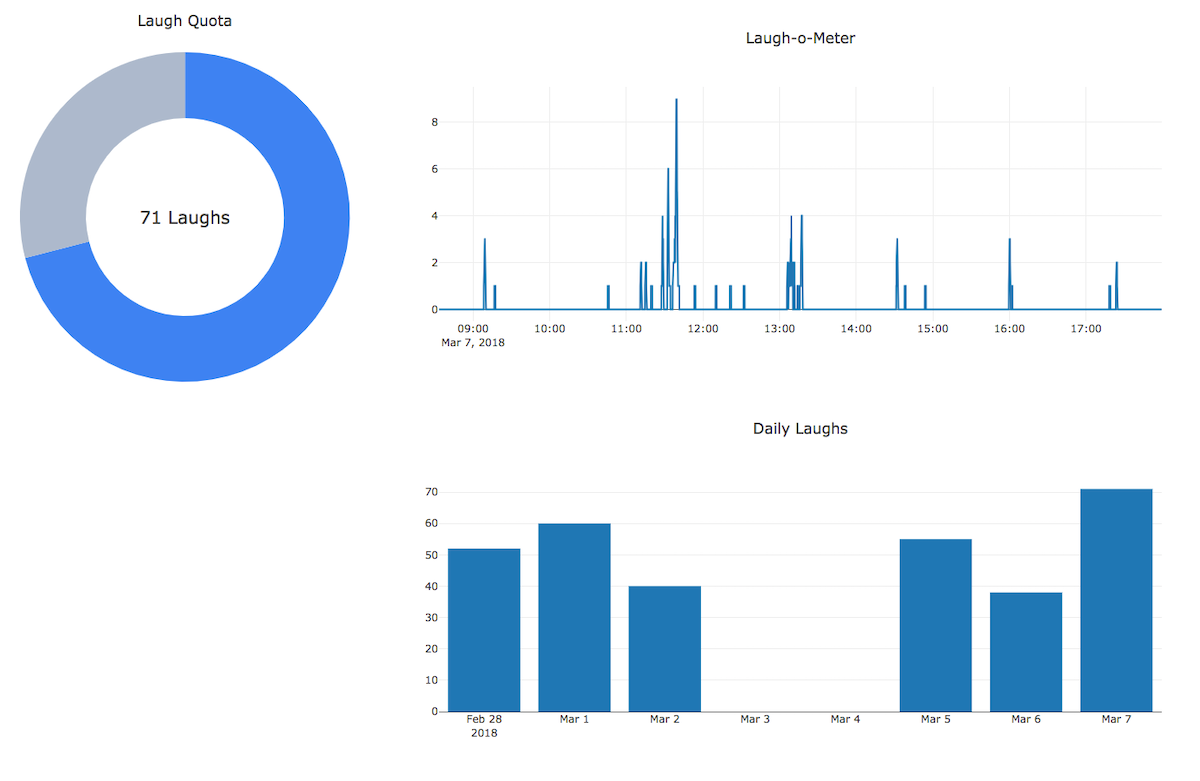
The first thing we made was a simple information dashboard built in Dash. We referred to this design as a “FitBit for laughter,” as it was meant to help teams set goals and measure their progress towards those goals.
This raised the the question, what if you could track your emotional health in the same way that you tracked your physical health? What kind of goals would you set? What would your “laughter workout” look like?
To start, we measured laughs by time of day over a period of 24 hours, laughs per day over the past week, and how close teams are to achieving a daily “laugh quota.”
The second prototype used the output of the laugh detector to control the color and intensity of a Hue lightbulb. When there is a lot of laughter in a room, the light glows a bright yellow to mirror the warmth that laughter brings to a space. When there is less laughter, it transitions to a dim blue to help teams stay calm and focused. In this way, the environment responds to the activities and emotion of its inhabitants.
What if the smart systems we create could react not only to a user’s presence or interaction, but adapt to the user’s mood? How might we design smart systems or spaces that are emotionally responsive?
4. User testing
We wanted to see how people would react to the laugh-bulb, so we got a few colleagues to sit down and test it out. The original plan was to play funny videos to stimulate laughter, but as soon as people sat down, they started joking so much, the videos were unnecessary.
Laughter is a reinforcing behavior; when you laugh, the people around you laugh too, creating a virtuous cycle that can leave you laughing until you’re sore. Seeing the light grow brighter as the room fills with laughter adds energy to that cycle. The group that came in to test the laugh-bulb ended up laughing so much that you could hear them throughout the studio.
WATCH: Testing the laugh-bulb prototype.
Next up, I’d love to put these prototypes in front of more people to see whether quantifying laughter can affect their mood. And I'm left wondering, which emotional or mental health signals could be measured and recorded next?
As more aspects of our lives are recorded, we are going to be able to quantify and improve our lives in ways we can’t yet imagine. Let’s design these systems not just to make us smarter, but to make us more joyful, too.

Play goes hand in hand with innovation. I learned this from Brendan Boyle, director of IDEO's Play Lab, who says that if you measure the amount of laughter in a project space, the teams who chuckle most are also the most successful.

How to motivate a team to pull off the impossible
These life-size origami installations are built by creative leaders at IDEO
As soon as the rain stopped, we got on our bikes to survey the damage. We saw the flowers on the horizon: droopy and sad-looking. Then, suddenly, they started illuminating, one after the other—opening up, blooming. To this day, we still don’t know how they came to life. But the sight was exactly what we had envisioned. Better even.

That was 2014: the official start of FoldHaus Art Collective. Since then, our art installations have become bigger and more audacious. Shrumen Lumen, five massive, origami mushrooms, followed in 2016 (they’re now on exhibit at the Smithsonian American Art Museum), and we most recently built a five-story tall, geodesic sphere covered with 42 origami shells called RadiaLumia.
Each project takes months to design, prototype, and build. Which means I often get asked: Why do you spend your nights and weekends doing this when you have a fulfilling day job as a creative leader?
For me, it means that I get to work with a bunch of other creative types who pitch in to build something beautiful that’s bigger than what any one of us could do on our own. I get to work with my hands in a way that’s rare in my day job, and every project stretches my own sense of what’s possible.
And because FoldHaus projects are always a group effort, we need to broaden the question: Why do any of us—between five and 30 volunteers contribute to our projects on any given weekend—give up sleeping in to solder? Or skip the beach to code LED patterns? As one of the leaders of the group, I have learned a few things about what it takes to build a strong community and take a bold vision from a Post-it to the Playa.
Here are the 5 principles that have helped this team pull off increasingly ambitious projects:

1. Set an audacious—and contagious—vision
Drawing in a team requires not only that you love your idea, but that others do, too. After all, if you’re asking them to volunteer their time, they’ve got to be pulled in week after week, when they could easily be at the taco truck.
Blumen Lumen was a hit because everybody loves flowers. With the Shrumen Lumen, it took some convincing—many worried about associations with 'shrooms at Burning Man. This year, I made sure to test out the RadiaLumia concept with a few key members of the team, so I knew I had broad support. The buy-in worked, and has yielded our biggest team of volunteers by far.
The bottom line: Pressure-test your idea early—before you get too attached to it—so others will want to join up and help you realize the vision.
2. Stand on your own shoulders
Leading people to a grand vision is impressive only if you can actually pull it off. Ladder up from where you (and your team) actually are to where you want to go. And, acknowledge that it may not all happen at once.
Even before our Blumen Lumen, we built three shade structures for Burning Man. One was a disaster, but we learned from it. Now, we ensure that we are leveraging all we mastered the previous year to create the next installation. People are drawn to us because of our bold vision, but they stay with us because they know we have what it takes to make it happen.
The bottom line: Learn from previous outings that you can get over the mountain, so you can ask people to stretch and meet a new challenge.
Folding the origami pieces looks easier than it is.
3. Make it accessible
Part of the fun of leading a creative team is building camaraderie and community. But that can be constrained if a project requires too much specialized knowledge. Ensuring that part of the project is achievable by those without technical or unique skills is key to drawing a crowd when you need it.
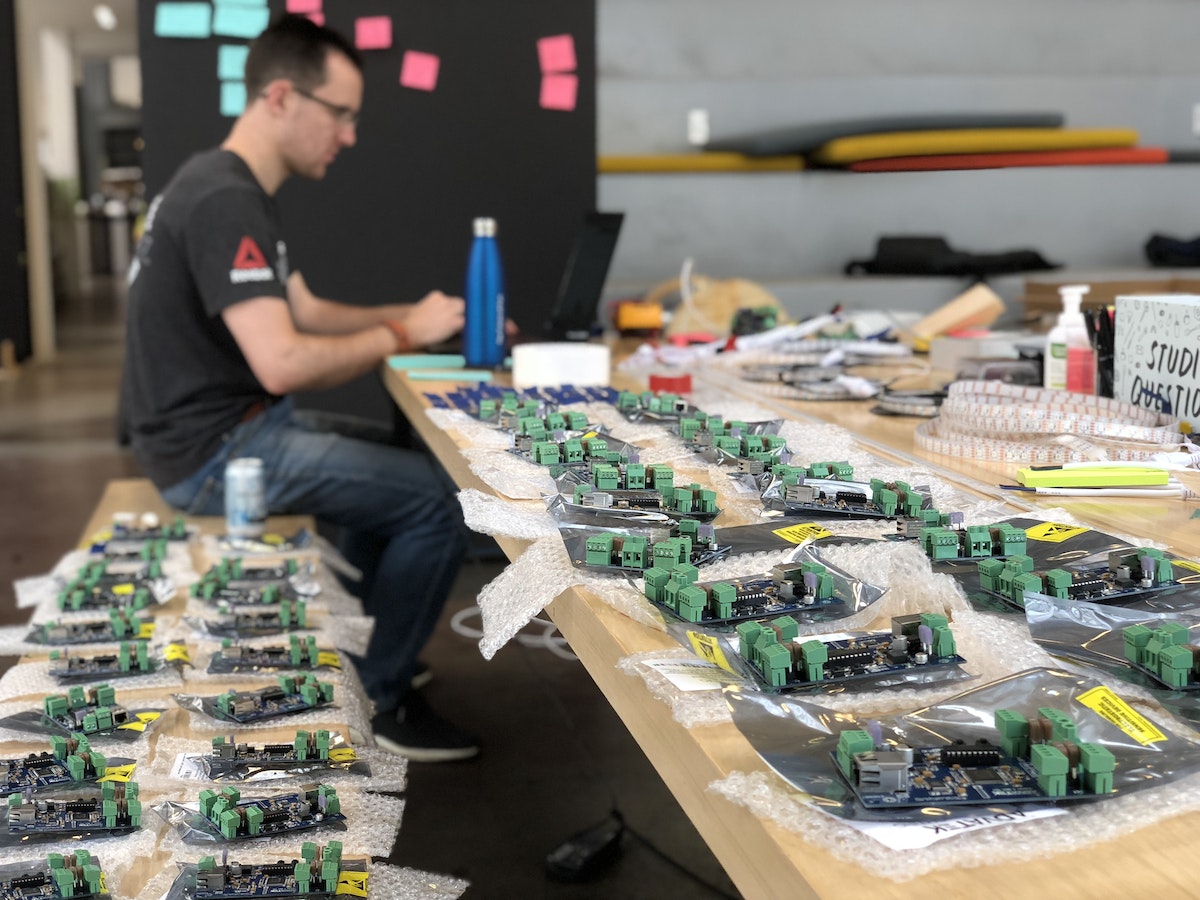
On all of our projects, a big part of the effort is folding the plastic origami pieces. That requires pure manual labor, and anyone can be trained to do it, so we hosted all-hands-on-deck build parties every weekend leading up to Burning Man.
The bottom line: If you want to draw a crowd, create easy ways for people to participate without specialized expertise.
4. Leave room for individual passions
When people are motivated to do something, get out of their way and let them go for it. Given the freedom, teammates will create something together that’s more amazing than what a single creative leader could pull off. Set the vision, then let people self-select into groups to get it done.
With RadiaLumia, no one person knows everything that’s going on at every given moment, which is kind of scary but also amazing, because it’s coming together despite—or because—of that!
When we shared the vision at the kickoff meeting in February, there were a bunch of people who’d only just met. Within minutes, they were already troubleshooting light placement. By the end of the afternoon, they’d demonstrated a cool light show—on day one! We now have several self-directed teams that are loosely connected, but working independently.
The bottom line: If you create a compelling enough vision and rough guardrails, you’ll create the conditions for people to self-organize in a way that will surprise you.

5. Embrace ambiguity
The beauty of large-scale creative endeavors is in all of the unknowns. Try to remain flexible about who realizes the vision (and how).
Each year there are moments of extreme uncertainty. Weeks before installing the Shrumen Lumen at Burning Man, the origami kept getting stuck when we tried to pull the stems over the steel substructure that would anchor them to the ground. This was completely unexpected and took two weekends to debug. (Spoiler alert: We fixed it, but not without panic!). Troubleshooting is part of the process.
The bottom line: Expect the unexpected, and look for the beauty and lessons in it rather than the difficulty.
One of the most rewarding parts of FoldHaus is that while I may set the vision, once we pull off a communal project, the whole team feels immense ownership and pride. Being able to share both the process and the result is what makes the late nights and desert rainstorms worth it.
See RadiaLumia come to life at Burning Man 2018.
Also: We’d love to hear about your ambitious team efforts, at Burning Man or elsewhere, using the hashtag #MakerArt.
Special thanks to Amy Bonsall for her massive help crafting this story.
We’d been working 16-hour shifts to install our art piece, a series of 10 larger-than-life, undulating, mechanical origami flowers. It was our first big build at Burning Man, and it took way longer than we expected to set up. After days, the flowers still weren’t working. Then came a torrential rainstorm.

Lindsey Turner
I’m passionate about building brands, products, and experiences that help organizations show up with meaning and momentum.
I help organizations cut through complexity by shaping how they show up, through brand strategy, identity, and storytelling.
Working at the intersection of brand and business, I bring an editorial eye and a bias toward making—turning ideas into tangible experiences that people can understand, trust, and believe in.
My work spans government, healthcare, financial services, media, and consumer goods, from launching Gen Z-focused ventures to building innovation labs and reimagining legacy brands. I relish moments of ambiguity and enjoy translating across teams, perspectives, and priorities to move ideas forward.
I started my career in editorial and digital design, shaping cross-platform experiences and identity systems in publishing and agency environments. That foundation still shapes how I work today: I’m detail-oriented, collaborative, and overreliant on the Oxford comma. I hold a BFA in Visual Communication from the School of the Art Institute of Chicago.

Rachel Young
My work helps organizations see who their products aren't working for—and build the will and the tools to do something about it
For 25 years, I've asked the same question: Who does this design exclude—and what are we going to do about it?
My work spans human-centered strategy, inclusive design, and qualitative research, with clients ranging from Microsoft, Google, and Verizon to the National Science Foundation, and San Francisco Unified School District.
Before IDEO, I taught elementary school in East Palo Alto and spent a decade doing design work with social service organizations—where I learned firsthand what it costs people when systems are built without them in mind.
I am currently writing User Error, a nonfiction book about digital access and the design decisions behind it. I live in Oakland, California.

Brian Pelsoh
I lead with craft, ensuring our work is creatively excellent: rooted in deep human insight and imagination, while also grounded in the realities of business and technology.
My expertise spans brand, communication, and product design across tech, education, the arts, and social impact.
I believe great work demands both high-level vision and obsessive attention to detail, and only happens through collaboration.
I bring an inclusive, hands-on approach and a deep understanding of business, which enables me to consistently deliver excellence while always asking why.
Before joining IDEO, I worked at the brand firms Pentagram and VSA Partners. I began my career as a designer, leading teams at the School of the Art Institute of Chicago and the Milwaukee Art Museum. I hold an MFA in graphic design from Maryland Institute College of Art and a BFA in communication design from the Milwaukee Institute of Art & Design, and have taught at some of the best design schools in the US.

Tony Wong
I am responsible for IDEO’s long-term success in China and working with clients to use design as a tool to enable growth.
I am responsible for IDEO’s long-term success in China and working with clients to use design as a tool to enable growth. Specifically, I have helped Chinese companies design holistic brand solutions through the development of their products, communication, services, and innovation teams, and I have helped multinationals expand their presence and influence in China.
I advise global leaders on developing China-led innovation and capabilities.
In over 15 years in IDEO Shanghai, I have worked on projects that use design to elevate the quality of the experience of healthcare products and services, streamline processes that increase productivity, create spaces and programs that promote and enable inclusive communities, and build next generation mobility solutions that are planet-positive.
Before joining IDEO, I worked at Philips Electronics and the Electrolux Group in Italy, the Netherlands, and Singapore on a number of breakthrough commercial products. I am a member of the Young President Organization in Shanghai.

Building a personal AI for the messiness of life: Sida Li
Most AI products today are built for work—a space with clear problems and established systems. One founder noticed a gap: personal life is messier, harder to systematize, and mostly left behind by the AI boom. So she built Cue, a personal AI that lives inside iMessage and group chats, to go where the other tools haven't.
In this episode, Becca Carroll, IDEO's Chief Strategy Officer, talks with Sida Li, co-founder and CEO of Shared Context Lab, about staying anchored to a human need while the technology around her keeps changing shape, why she treats her business model with the same rigor she'd bring to a product, and what it feels like to build a company at this particular, disorienting moment in AI.
The conversation also gets into how Sida makes design decisions: the language Cue uses to describe itself, the tradeoffs behind building inside iMessage instead of a new app, and a real story about a business idea that didn’t pan out.
This is the second in a two-part series profiling founders from IDEO's Startups-in-Residence program. The first conversation is with Johannes Seemann, founder of Sooner, on designing GenAI for the emotional side of money.

Designing GenAI for the emotional side of money: Johannes Seemann
Most personal financial tools are built to run the numbers and optimize towards a budget. While that works for some, most people experience money as a lived relationship that does not neatly fit into a spreadsheet. Johannes Seemann and Becca Carroll discuss why money is emotional before it is mathematical, and what a human-centered approach to building a generative AI financial product looks like in practice.

The curious leader's edge in uncertainty: Scott Shigeoka
Mina Seetharaman talks with Scott Shigeoka, author of Seek and Head of Curiosity Cultivation at the Eames Institute, about what distinguishes genuinely curious leadership from performative curiosity, how power dynamics shape curiosity, and why practicing curiosity can restore energy rather than drain it.

How constraints make us more creative: David Epstein
Mina Seetharaman talks with David Epstein, author of Inside the Box and Range, about why total freedom often produces average work, how leaders can design useful limits on purpose, and what organizations such as General Magic and Pixar reveal about the relationship between boundaries and creativity.
Looks like you might be in search of something very specific?
Or reset the filters above and try another angle.
Here’s some random inspiration

Podcasts about creative leadership

Articles about the power of prototyping
