
.svg)




Helping a startup design video games to build kids’ emotional strength
A one-month sprint to develop new products—and a new way of working.
For 6-year-old Dave Jr., a long line at Disneyland triggered a massive meltdown. His parents were concerned and a little embarrassed, but not surprised; Dave Jr. struggled to keep his emotions in check.
Hoping to help, Dave Jr.'s uncle, entrepreneur Craig Lund, joined forces with researchers at Harvard Medical School and Boston Children’s Hospital, along with a video game designer who had worked on Quick Hit and NBA 2K. Together, they set out to design something that could teach coping skills to kids like Dave Jr. who need to manage “big emotions,” as well as children suffering from anxiety, ADHD, and other behavior issues, which are on the rise.
Their collaboration resulted in a video game called Mightier and a startup called Neuromotion Labs—a 10-person team of psychologists, game designers, and engineers who embedded at IDEO Cambridge for a one-month sprint to improve the game and get ready for launch.
To play Neuromotion's game, kids are first taught simple, calming breathing exercises. During gameplay, kids wear heart-rate monitors on a wrist or arm that detect spikes caused by stress or anger; as their heart rates go up, the game's difficulty increases. Kids have opportunities to pause and try deep breathing to counter the ramped up challenge. As it turns out, "gamifying" restraint builds strong incentives for kids to take charge of their emotions—they have to if they want to win.
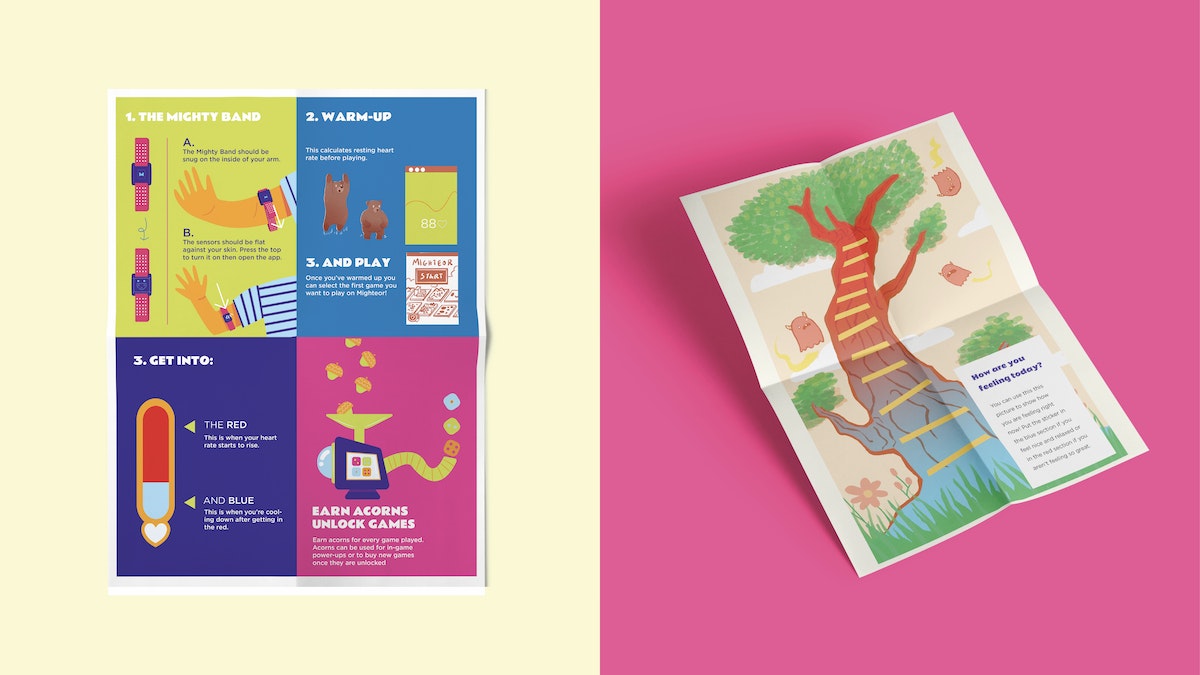
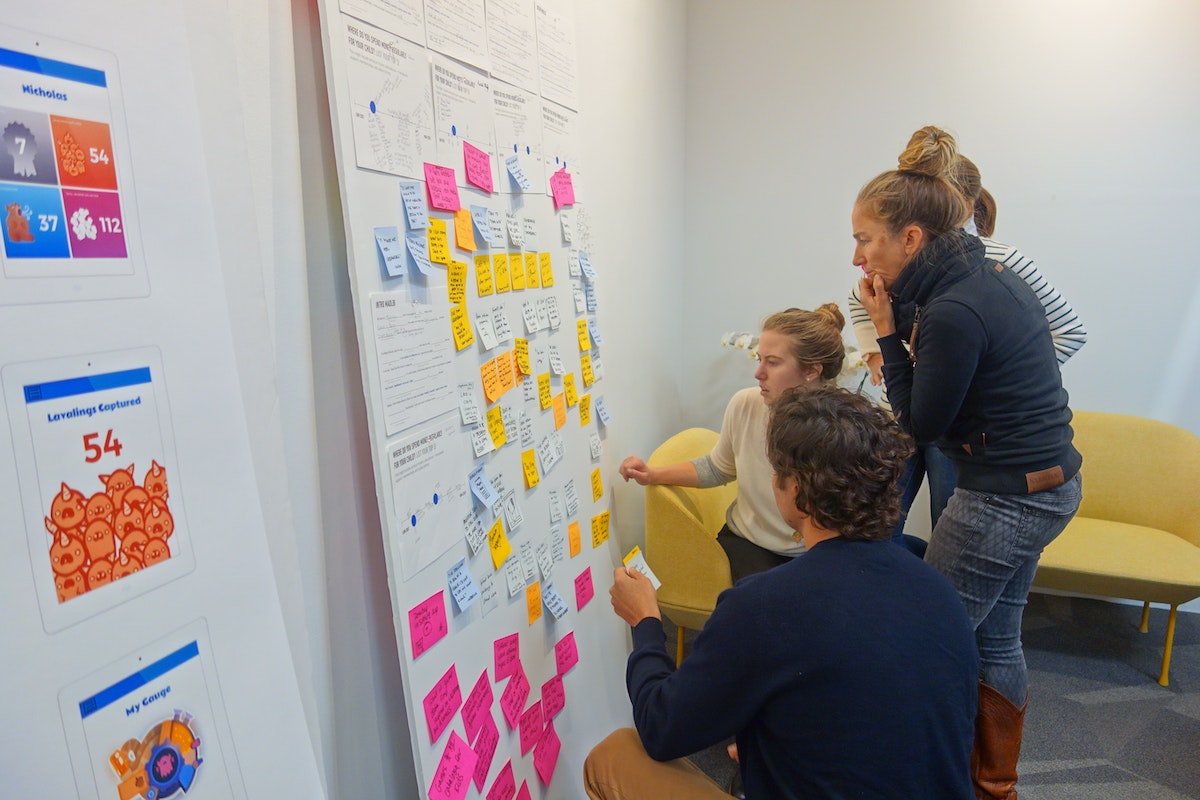
Already activated around boosting mental and emotional health, IDEO's design team worked side-by-side with Neuromotion to study how parents and children experience Mightier. From home visits to group interviews to a summer camp-style design session with kid players, live feedback fueled the next iteration of the gaming platform and better product-market fit.
IDEO helped Neuromotion hone the visual design and mechanics of Mightier and expand it's suite of games. The team observed that the Mightier program was more successful the more involved parents of players became, which revealed a need for additional resources for adults. So they created new supports, including a more detailed orientation and a personalized coaching service for parents staffed by trained therapists.
But can a video game actually help kids cope? Early peer-reviewed studies showed that playing Mightier reduced outbursts by 62 percent, oppositional behaviors by 40 percent, and parental stress by 19 percent. After 12 weeks of using Mightier, a survey of kids and parents showed that 96 percent of parents saw positive behavior changes in their children, while 92 percent of kids learned new coping skills.
Shortly after the design sprint, Neuromotion secured its next round of funding and officially launched Mightier’s array of “bioresponsive games.” The games have already been played more than a million times, and Neuromotion has measured more than a 100 million heartbeats. Mightier games are helping kids and families across the country.
What about Dave Jr.? Recently, his sister told Lund she "accidentally" bumped Dave Jr.’s bike off a pier and into the ocean. She was expecting an outburst of anger, but after eight months of playing Mightier, Dave Jr. stayed cool. His uncle couldn’t be prouder.
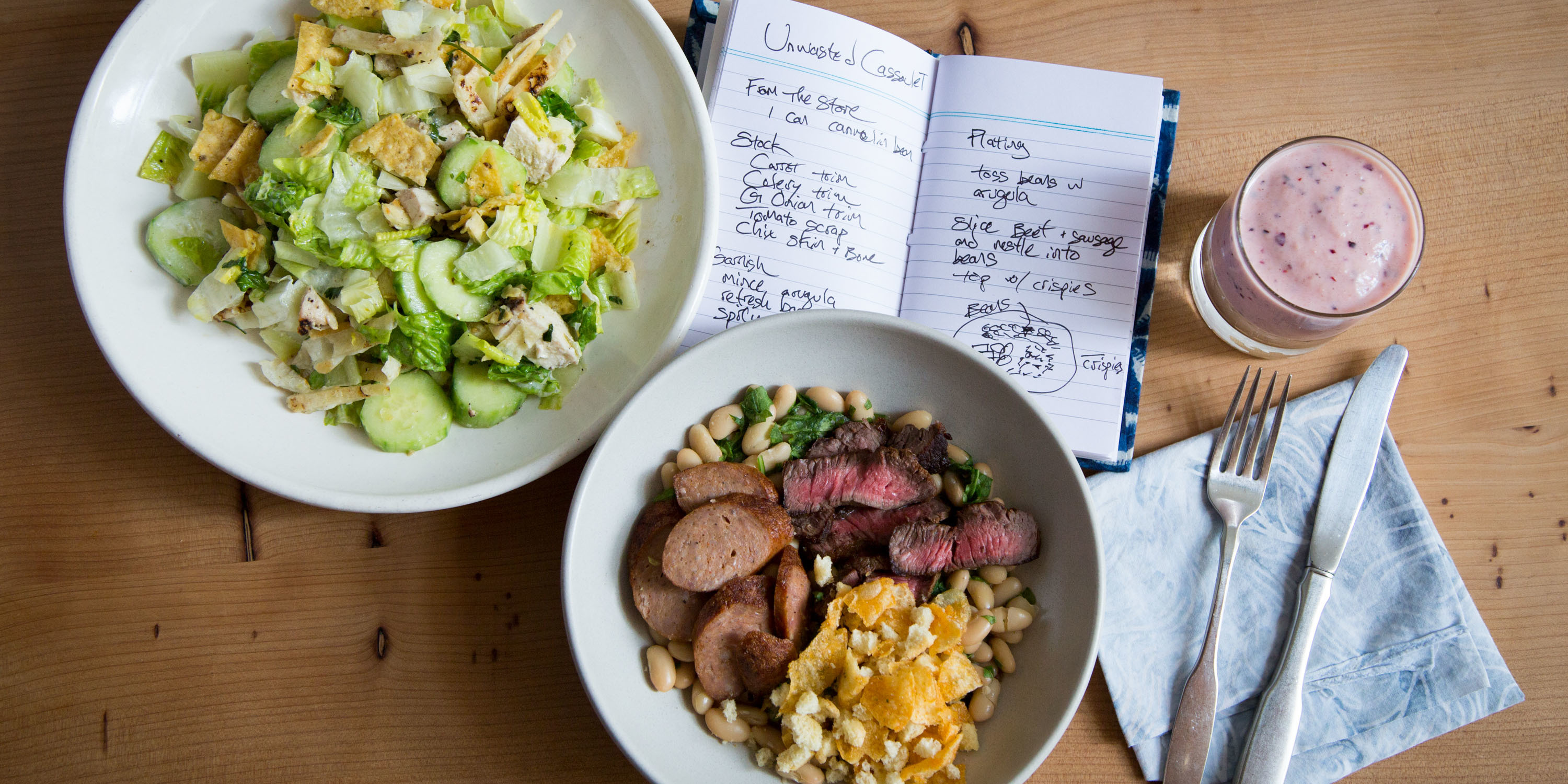
Designing waste out of the food system
IDEO partnered with hotels, food banks, foundations, and entrepreneurs to combat food waste.
Many of us have let vegetables wither in the crisper drawer, or thrown out a child’s half-eaten restaurant meal, but the sheer scale of food waste around the globe is hard to grasp. According to the United Nations, about a third of the food the world produces every year—1.3 billion tons—is lost during production or tossed by consumers, with North Americans throwing out the most food per capita. The average American wastes enough food each month to feed another person for 19 days.
IDEO received a series of grants from The Rockefeller Foundation to find solutions, given the power of IDEO’s human-centered design approach to address systemic challenges. Through a number of projects with The Rockefeller Foundation and other organizations, IDEO designers from across the U.S. devised novel ways to tackle food waste.
For IDEO’s first initiative, designers tapped into the enthusiasm of the broader creative community, in partnership with The Rockefeller Foundation, the City of San Francisco’s Department of Environment, the Closed Loop Foundation, ReFED, and other groups. In the summer of 2016, OpenIDEO—IDEO’s open innovation practice—launched the Food Waste Challenge, asking how people might curtail waste by rethinking our relationship with food. Between June and October, more than 20,000 people from 113 countries took part in the challenge, tracking their personal waste and brainstorming solutions.
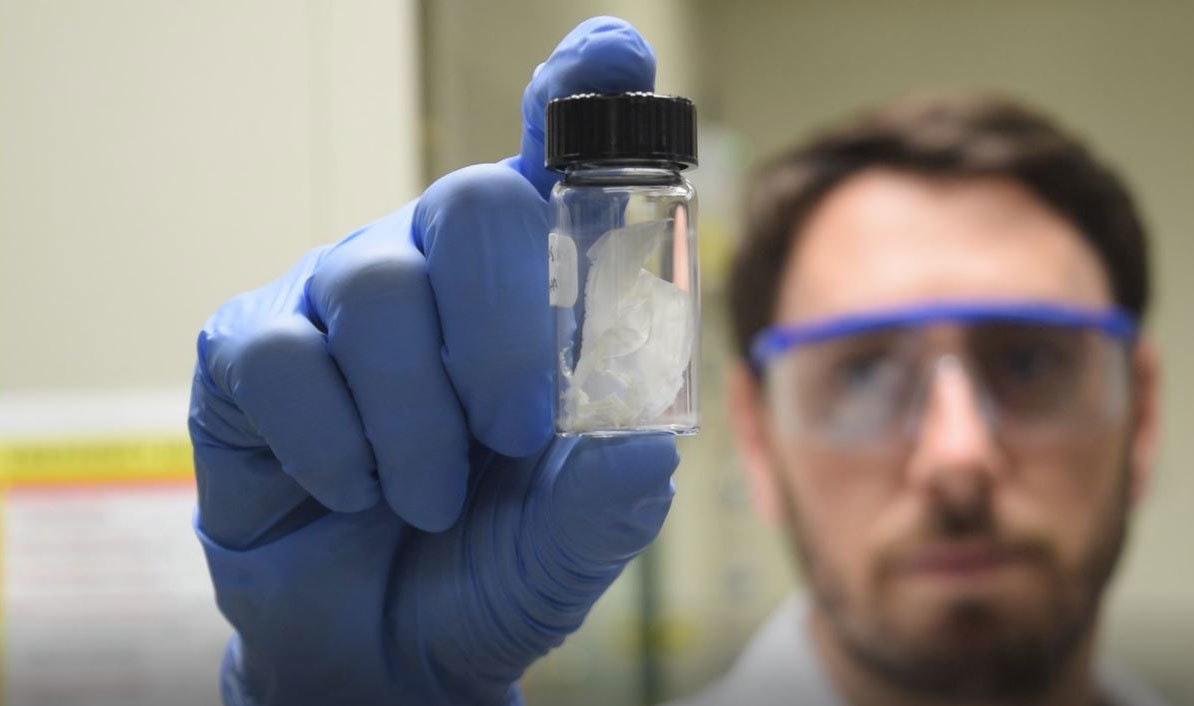
Challenge participants submitted more than 450 ideas. A team of food industry experts helped select the 12 top proposals, which included software to help people buy food collectively from wholesalers and a service that delivers extra meals from corporate events to those in need. Ultimately, the Closed Loop Foundation chose to award Full Cycle Bioplastics a $50,000 grant to scale up its idea to convert inedible food and paper waste into a fully compostable alternative to oil-based plastic.
At the conclusion of the Food Waste Challenge, OpenIDEO launched the Food Waste Alliance, a platform for participants and experts to stay engaged with the most promising ideas and innovators. The alliance helped entrepreneurs share resources, prototype new concepts, secure funding, hire staff, and form partnerships. OpenIDEO invited hundreds to join the alliance, and 92 percent of members told IDEO they made progress in their work as a result. One member company, RISE, received funding from another participant who discovered RISE through the alliance. This investment let RISE prototype its concept for milling spent grain from beer brewing into flour for baked goods and ultimately join the prestigious Food-X accelerator.
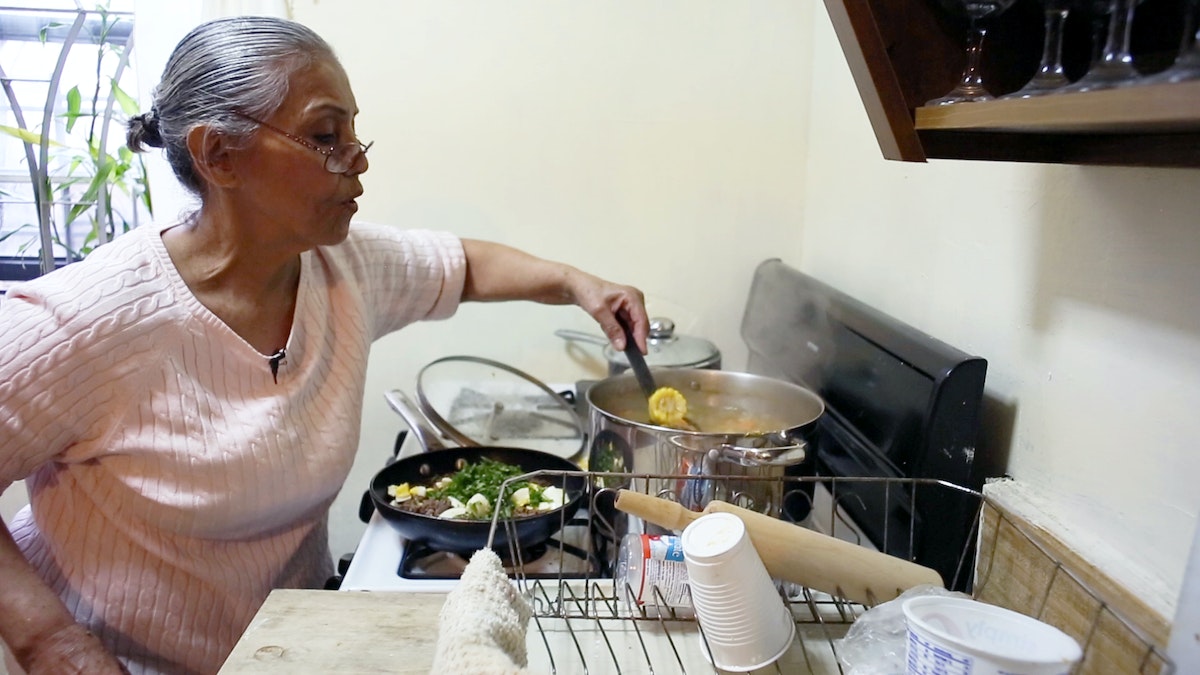
The Rockefeller Foundation also supported IDEO’s work with City Harvest, a New York organization that collects 160,000 pounds of unused food each day and delivers it to soup kitchens and food pantries. City Harvest wanted to understand the habits of local families who visit food banks in an effort to ensure all the food the group distributes gets eaten. To get a peek into these families’ kitchens, in January 2017, IDEO researchers conducted observations and interviews across New York City’s five boroughs. Pantry customers cooked for the researchers, giving them an inside look at how the families engaged with the food they had available and what food meant to each of them: tradition, stability, even adventure. Based on insights from pantry visitors, IDEO made recommendations for City Harvest, including community-run cooking classes and a way for families to request specific foods or reserve pick-up times by text message. IDEO also created three video vignettes to help build even greater empathy between City Harvest and the people it serves.
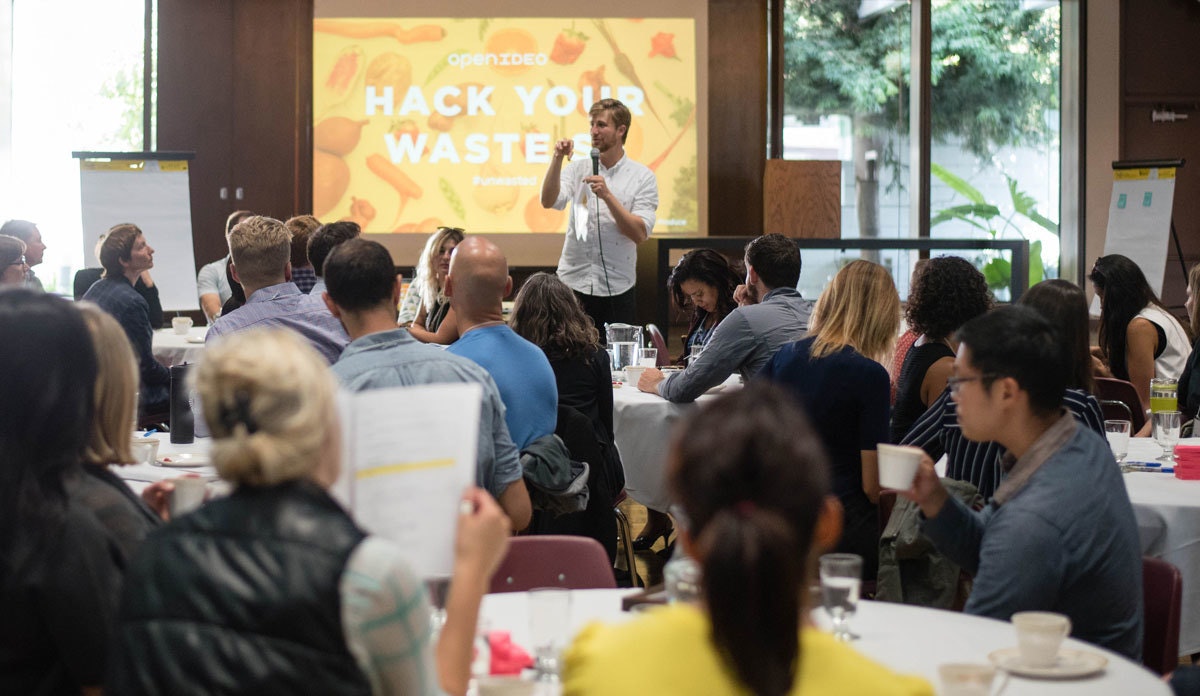
In spring 2017, capping IDEO’s work with The Rockefeller Foundation, the organizations teamed up with World Wildlife Fund and Hyatt hotels in Florida, New York, and New Jersey to rethink all-you-can-eat buffets. IDEO studied diners and staff at Hyatt buffets and found that employees—from event planners to kitchen staff—each add a cushion of extra food to cover their bases, while guests overfill their plates to avoid missing out. In the end, diners eat just half the food organizers serve, while the rest goes to waste. This and other data-driven insights gleaned about diners’ habits led to subtle substitutions, including smaller plates of meats and cheeses that can be ordered from servers and individual pastries rather than whole cakes. These alternatives have not only built on Hyatt’s existing food waste management strategies, but have also helped reduce buffet costs at Hyatt Regency Orlando and continued to receive support from guests.
The problem of food waste is too enormous to ignore. Wasted food means squandered resources, lost money, and ultimately, hungry people—more than 15 million in the United States alone. Designers and innovators from coast to coast have helped find solutions to the crisis that fulfill a variety of needs, from preserving produce sent to food pantries to keeping plastic packaging out of the oceans. The Rockefeller Foundation and other IDEO partners are leveraging powerful design techniques to pave the way for a waste-free future.
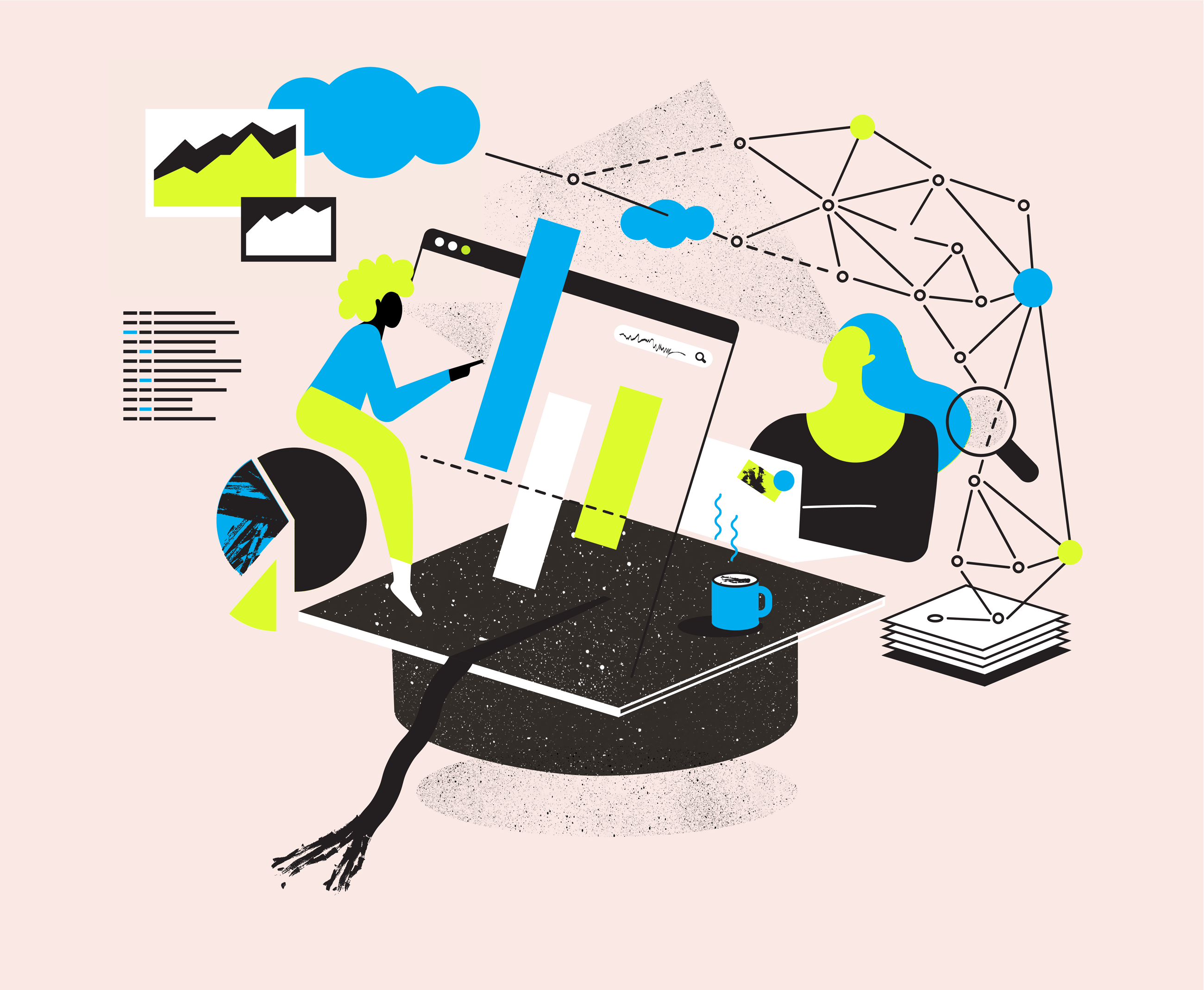
Launching a bootcamp for data scientists
Designing a rigorous program that prepares students for a career in the data-driven economy.
In 2017, IDEO acquired longtime partner Datascope and integrated the company’s data scientists and engineers. Datascope team members aren’t just passionate data scientists; they’re human-centered designers who happen to work with data, as illustrated by successful collaborations like this one:
In today’s job market, there’s no such thing as being "done" with your education. This is particularly true in the fields of data science, machine learning, and AI, where significant advances are made on a monthly basis. To meet this need for more in-depth training, Metis—part of Kaplan—wanted to create a comprehensive data science program for students from all backgrounds. Metis asked Datascope to design the curriculum from scratch, drawing on the company’s deep expertise in the field.
Datascope spoke with practitioners across industries to identify the key skill sets that make them successful: a grasp of design; fluency with data management, coding, and algorithms; and effective communication with coworkers and the wider world. The team crafted a 12-week bootcamp that develops these specific abilities.
In order to prepare students for the work world, the bootcamp is structured less like a class and more like a company, where students are “hired” as data scientists—with projects to complete—starting on day one.
Students collaborate on group projects and presentations in a way that mirrors real workflows, and practice pair programming to learn from one another. Using techniques drawn from design, students are invited to refine their project briefs and continually reevaluate their approach.
Instead of a final exam, at the end of the course, students tackle five real-world, open-ended data science projects inspired by Datascope’s client work. One project involves using data from subway turnstiles to detect patterns in the volume of street traffic; another asks students to use data they scrape from the web to predict a movie’s box office profits using regression analysis.
After students complete the bootcamp, they receive an additional three months of career support, from mock interviews to site visits with potential employers. In addition to designing the curriculum, Datascope taught the first three student cohorts and helped Metis build its teaching team as it expanded the program from New York to San Francisco, Chicago, and Seattle. Metis now offers online courses, evening classes, and corporate trainings in data science.
If you’re going to take a data science bootcamp, it’s best to take one designed by data scientists.
Designing the Levi’s Commuter Trucker Jacket with Jacquard by Google
When Google teamed up with Levi’s to craft a jacket with technology woven in, the company turned to IDEO to help make the experience of wearing the garment feel seamless, intuitive, and familiar.
You’re whizzing along on your bike, en route to a new restaurant for a client meeting. You reach an unfamiliar intersection; which way to go now?
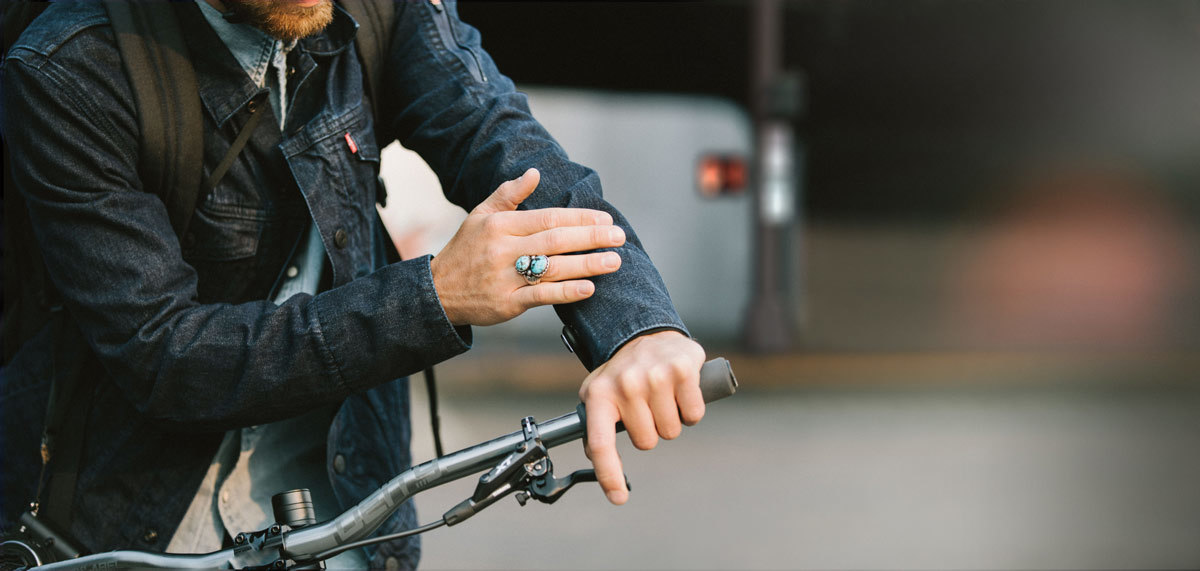
Instead of dismounting and digging for a phone, you brush your hand along your jacket sleeve for directions, then double-tap the denim to re-start your music. Without taking your eyes off the road, you’ve taken care of the problem.
This intuitive interface for connected apparel began with Levi's, makers of durable workwear for 140 years, and Google, creators of forward-looking technology, which joined forces to fashion the first item of clothing with touch-sensitive, copper-core threads woven directly into the fabric. Once it was established that the first connected garment from the partnership would be a jacket within Levi’s Commuter line, with interaction on the sleeve, Google worked with IDEO, leaders in designing for human needs, to develop the gesture language of the jacket and industrial design of the technology within.
This is the first connected garment that helps us break free from devices. It seamlessly incorporates Jacquard by Google technology to perform digital tasks, such as navigation, communication, and music playing with a few swipes or taps on the sleeve.
Jacquard by Google—a platform that makes it possible to integrate touch and gesture interactivity into fabrics using conductive yarn and standard, industrial looms—was inspired by a curious twist of history. The Jacquard loom, invented in France in 1804, used punch cards to automate the process of weaving complex patterns into fabric. In the 1940s and ’50s, engineers employed a similar punch-card technique to program the first computers.
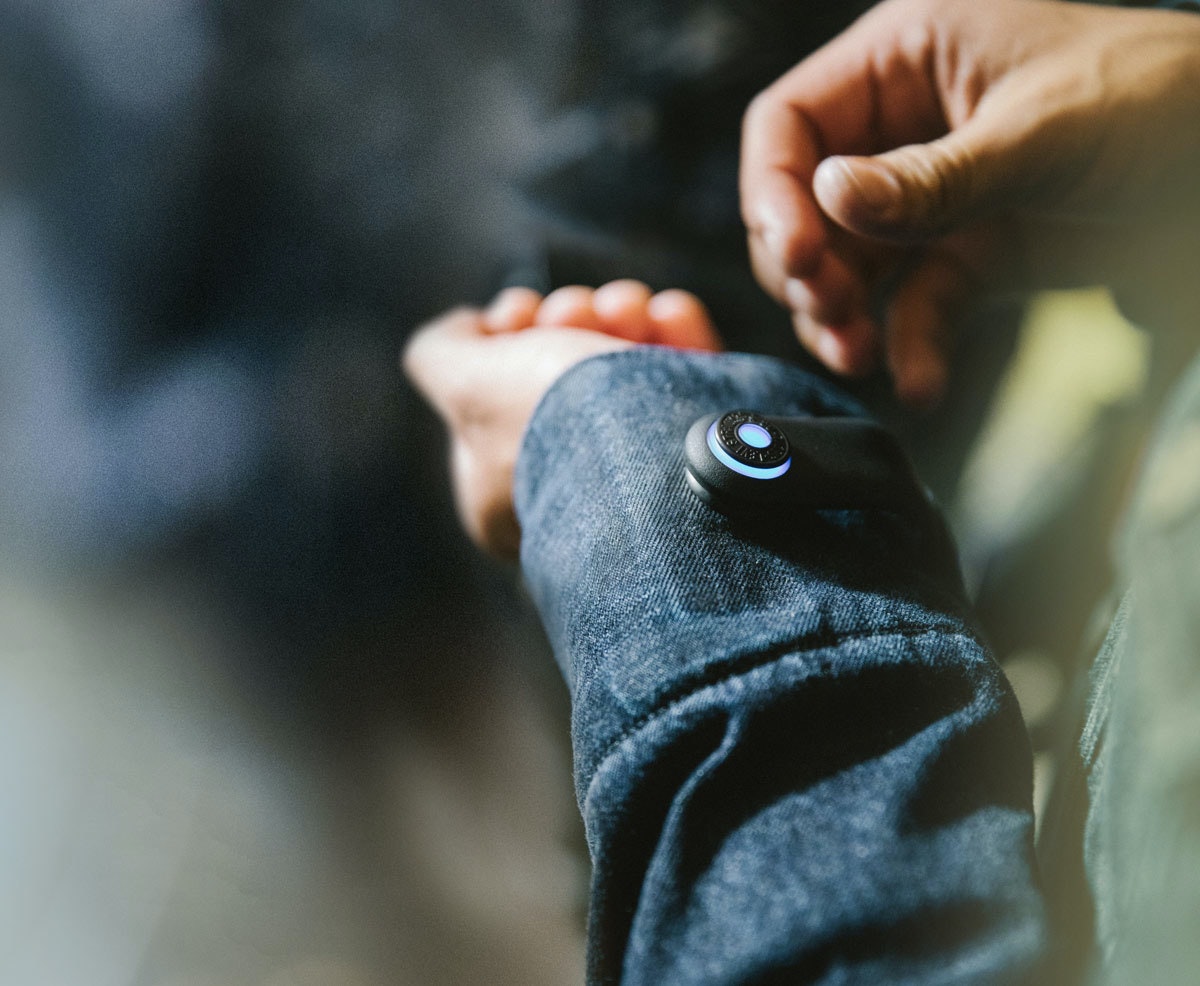
IDEO spent time on the project early on, collaborating with Google engineers and Levi’s clothiers on the jacket’s development, helping craft an experience that would make the intelligent threads intuitive to wearers.
Working alongside Google and Levi’s, IDEO’s work included:
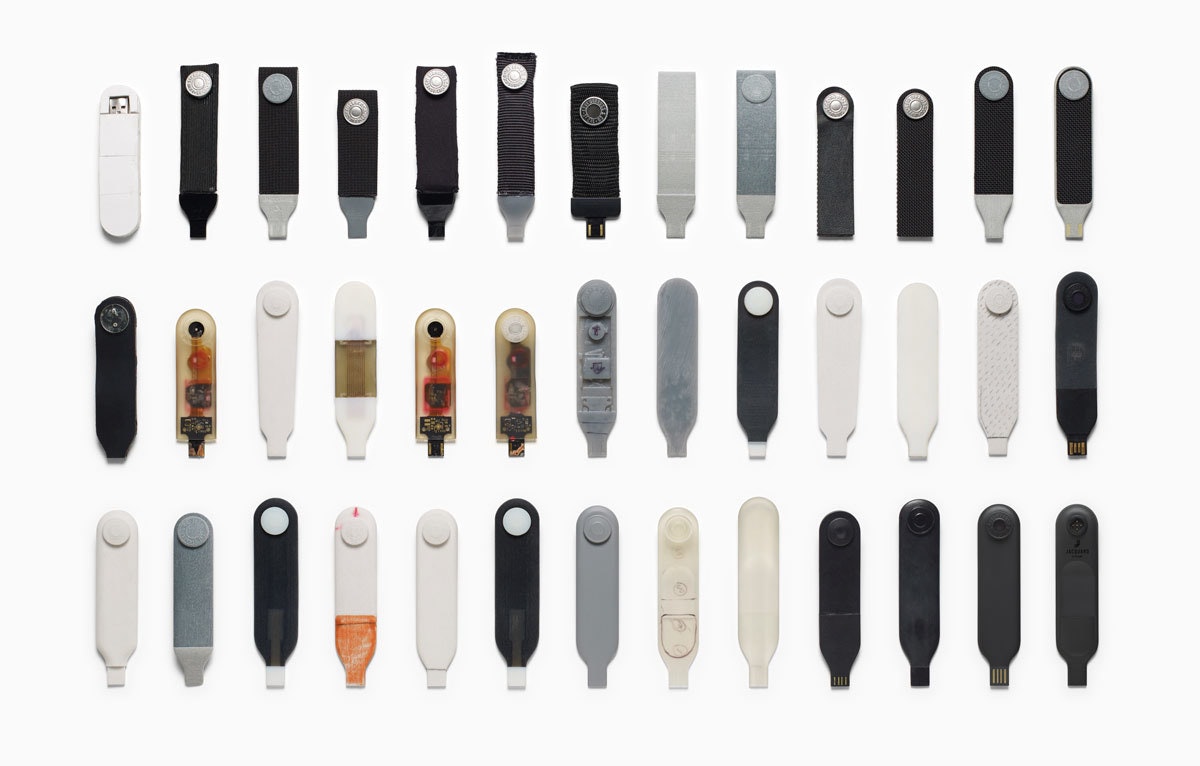
- The industrial design of the electronics integrated into the snap tag and connector (the tag snaps onto the jacket’s cuff and connects to your phone via Bluetooth)
- A vocabulary of gestures on the cuff of the jacket that lets you interact with the jacket’s technology
- Early exploration of the basic design philosophy and conceptual design for the interaction model of a corresponding smartphone app that ties it all together (works with both iOS and Android phones)

The IDEO team’s first task was to validate what commuters of all stripes wanted from the garment, in addition to the work Levi’s did in researching with its consumers. In interviews, group exercises, and wear tests with urban cyclists and other workers on the go, the team learned that cyclists needed a way to stay connected, while still living in the moment. That meant being able to answer calls, hear text messages, get the next direction, and control their music without using a screen.
Levi’s, Google, and IDEO developed a language of movement for Jacquard-enabled fabric that feels familiar and human and builds on the ways people would naturally interact with a garment (a whole-hand brush along the sleeve, as opposed to a one-finger tap on a touch screen, for instance).
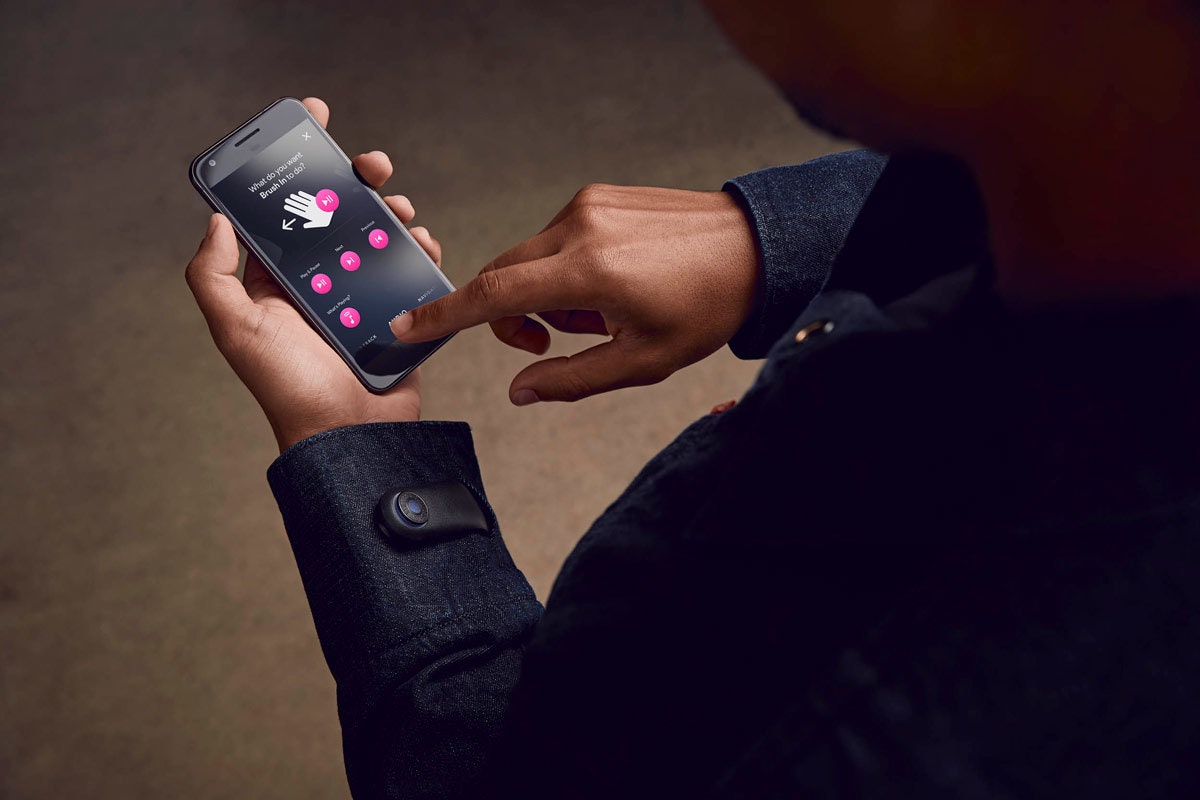
Then came the design and engineering of the snap tag on the jacket’s cuff, which gently notifies you of calls, texts, and other jacket interactions with light and vibration feedback. The flexible, lightweight strap incorporates the look and feel of a Levi’s jean button, while housing advanced electronics that capture touch data. The tag is removable, charges via USB connection, and works in conjunction with a mobile app that lets you configure settings for the garment, set notifications, and customize gestures and interactions.
The Levi’s Commuter Jacket with Jacquard by Google changes the game because it’s simply that—a jacket—with technology that adds new utility and value, allowing us to wear our everyday interactions on our sleeves.
The Levi’s Commuter Trucker Jacket with Jacquard by Google hit stores in October 2017.
IDEO and Google have a long history of collaboration. Learn more about our work on Google Bloks here.
Our Best Holiday Hacks
Making the holidays great again, one handmade sous vide at a time.
I grab things that remind me of a loved one at any point during the year, then stash them in a box. By the holidays, I'm usually in fairly good shape, and it's fun to see what I've collected. It is like a pre-Christmas, as I forget what's in there! Early in December, I take stock and make a shopping plan based on what I already have.
I decorate for Christmas before I go out of town for Thanksgiving. Sure, it's oogey to jump the gun, but I'm grateful to come home to a winter wonderland, and it diminishes the time crunch and stress during my favorite time of the year.
Our family tradition was always to take down decorations on the Feast of the Epiphany (1/6), so this gives me permission to enjoy the season into January. Before taking down decor, I take pictures, so the following year I can look at how I did it before. It helps me feel less overwhelmed: I can either try new things or reconstruct favorite arrangements from years past.
—Katie Gorman

Surprisingly, a ton of yoga places are open on Christmas day. Last year, I took a yoga class on Christmas day in the afternoon. It's actually so great and magical to be giving yourself that space when you are SUPPOSED to spend the whole day with family.
—MADELINE ARMSTRONG
Honey! And no, I'm not calling you a name. Honey is a Chrome extension that automatically looks for discount codes for you, then applies them during your online shopping checkout. Saving money is fun!
—Magen McAfee
We use Elfster to facilitate our secret santa within the family because we can't be together to draw paper names like we used to.
Whenever they have a promotion, I order free 4x6 prints from Shutterfly, then tape them to handmade construction paper cards to send out at Christmas. I buy things at extreme discount as early as October and leave the original price tag on for gifts.
—Anonymous
I usually use the holidays to have some great food with my parents. And this is what happens when a product designer is afraid to fail at cooking steaks—a quick prototype of an Arduino sous-vide cooker. Happened to me last Christmas…
—NICKI SCHAEFER
For my husband and I, our gift to each other is permission not to buy gifts for each other. Once a year, we buy a piece of "anniversary art" together, and we get all year to shop for it. Other than that, it's nice to opt out of the consumerism that can cast a shadow on the holiday season.
—Denise Burchell
This year, we've decided to just make donations instead of buying gifts for our immediate family. For our extended family, everyone draws names, so we each only have to give one gift.
—Mollie West Duffy
(And a few from me!) My son is three years old and needs nothing—he’s got more toys and books than he knows what to do with. Whenever anyone feels they must give him a gift, we point them to a link that allows them to give directly to his college savings account. What better gift than to give to his future education? Ugift529.com.
Also, the gift of dinner out is awesome, but dinner with babysitting is amaaaazzzzing. UrbanSitter—our go-to for our favorite sitters—offers gift cards for childcare. Add an Uber gift card to make the whole night complete!
—Katie Clark
I'm traveling to my partner's home city this Thanksgiving. Her parents are very traditional so we'll be in separate bedrooms for the holiday. I plan to purposefully forget to pack things like socks so that we have an excuse to go on shopping excursions together to reconnect.
—ANONYMOUS
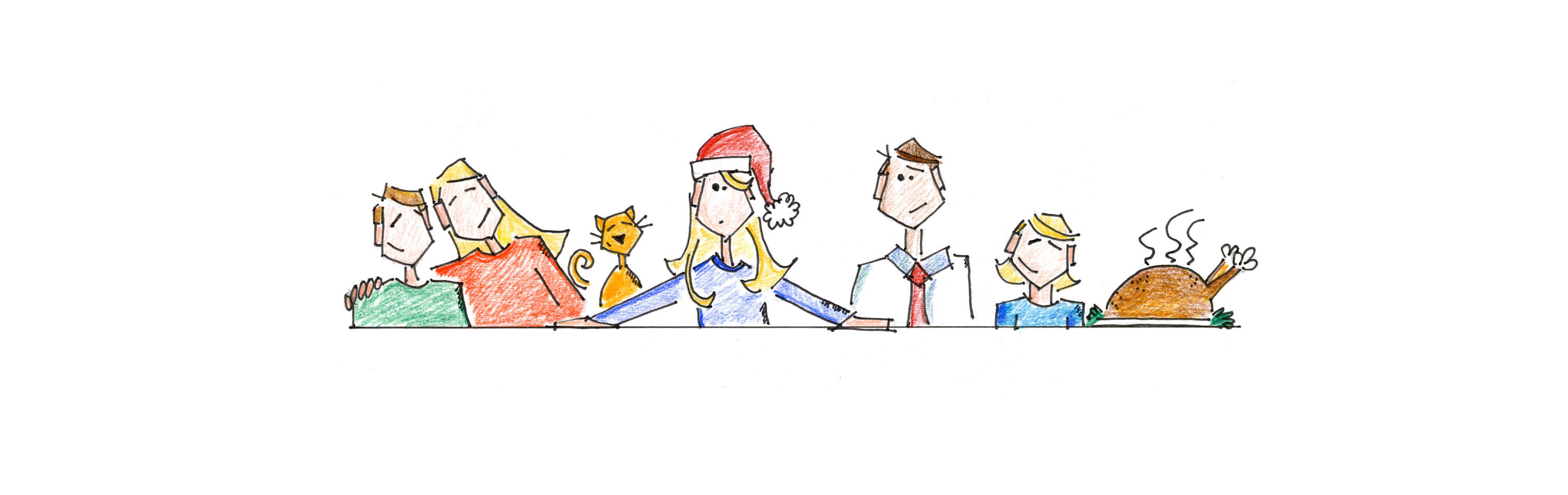
If you’re from a family that’s as opinionated and politically diverse as mine, the holidays can be an interesting time, to say the least. (I have been using this New York Times piece to prepare—wish me luck!) Even gift-giving can be fraught in these uncertain times, so I reached out to my fellow IDEOers for their favorite holiday hacks. From “forgotten socks” to Arduino-cooked steaks—they ginned up some gems.
Catching Ghosts
How we used sensors to unearth and capture real behavior for design research

What were you trying to accomplish in the redesigned space?
Jenny Winfield (JW): Business travelers are usually required to work their hardest when they travel—they need to win a pitch or clinch a deal. The stakes are high. So we came up with a concept we call “Ignition,” a new meeting and working space in the hotel lobby that makes it easy to work while on the road. It combines new spaces for group creative thinking or heads-down work, a work-friendly menu of healthy food options, a new staff member to handle business needs, and digital tools providing on-demand services.
Last January, we were ready to test our concept live. Per usual, we would be there in person for a few weeks to do interviews and gather observations, but we also thought we should measure how our new solution performed when we weren’t there. That’s where the sensors came in.
How did the sensors help you make your case?
JW: The pilot was split into two phases in each location. First, we gathered data for the baseline—testing the lobby in its initial form—then the redesigned space. We wanted to make sure we improved on all fronts—not just sales metrics, but also, traffic through the space, and the number of people using each type of space.
What kind of equipment did you use to build your sensor setup?
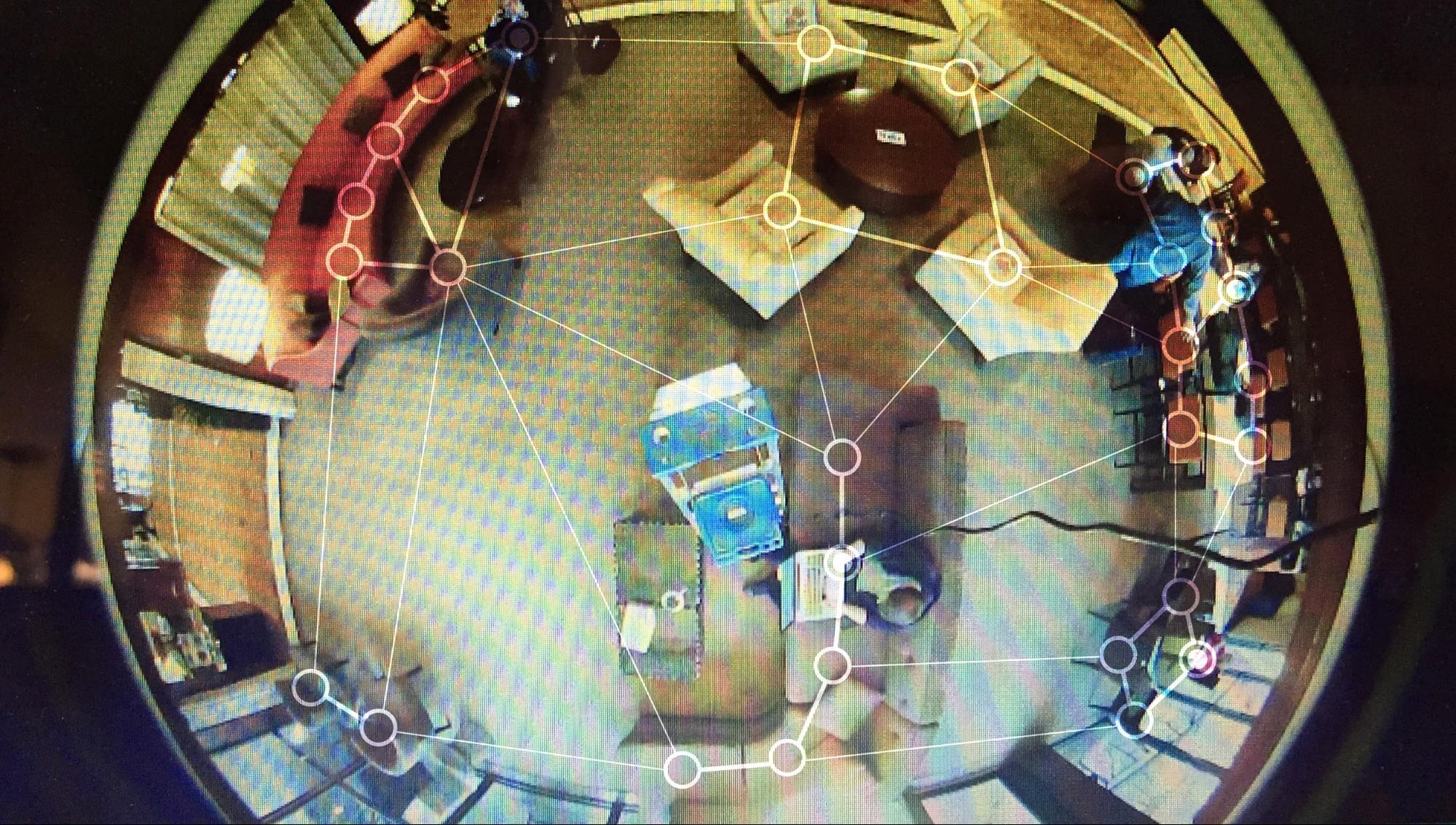
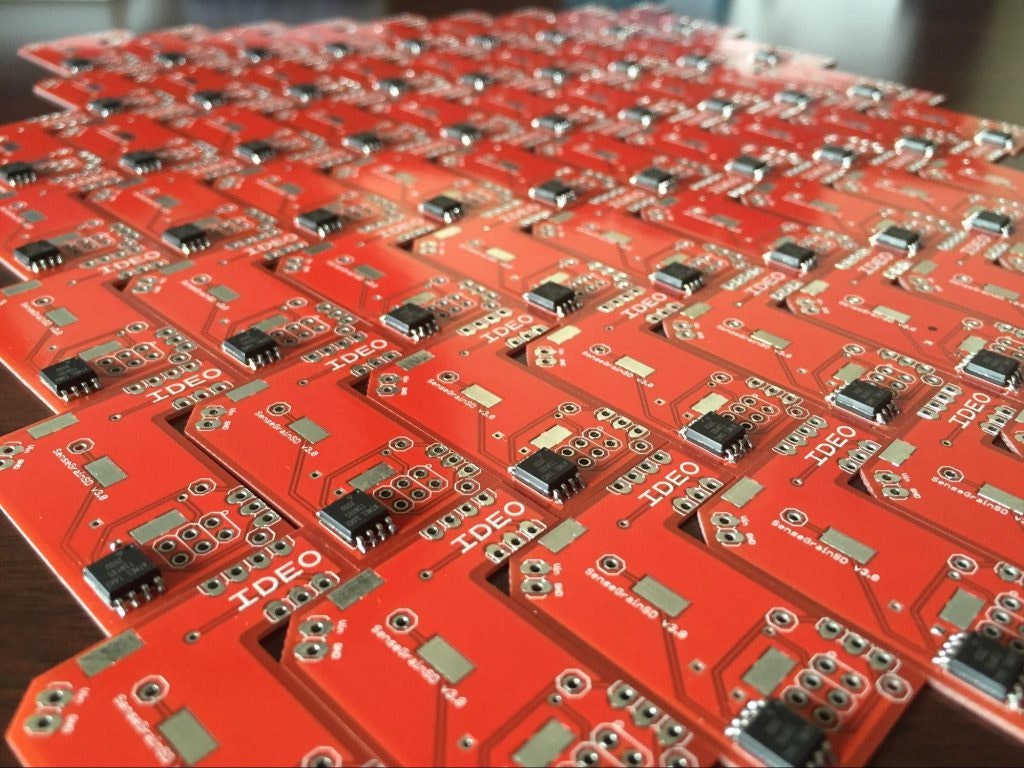
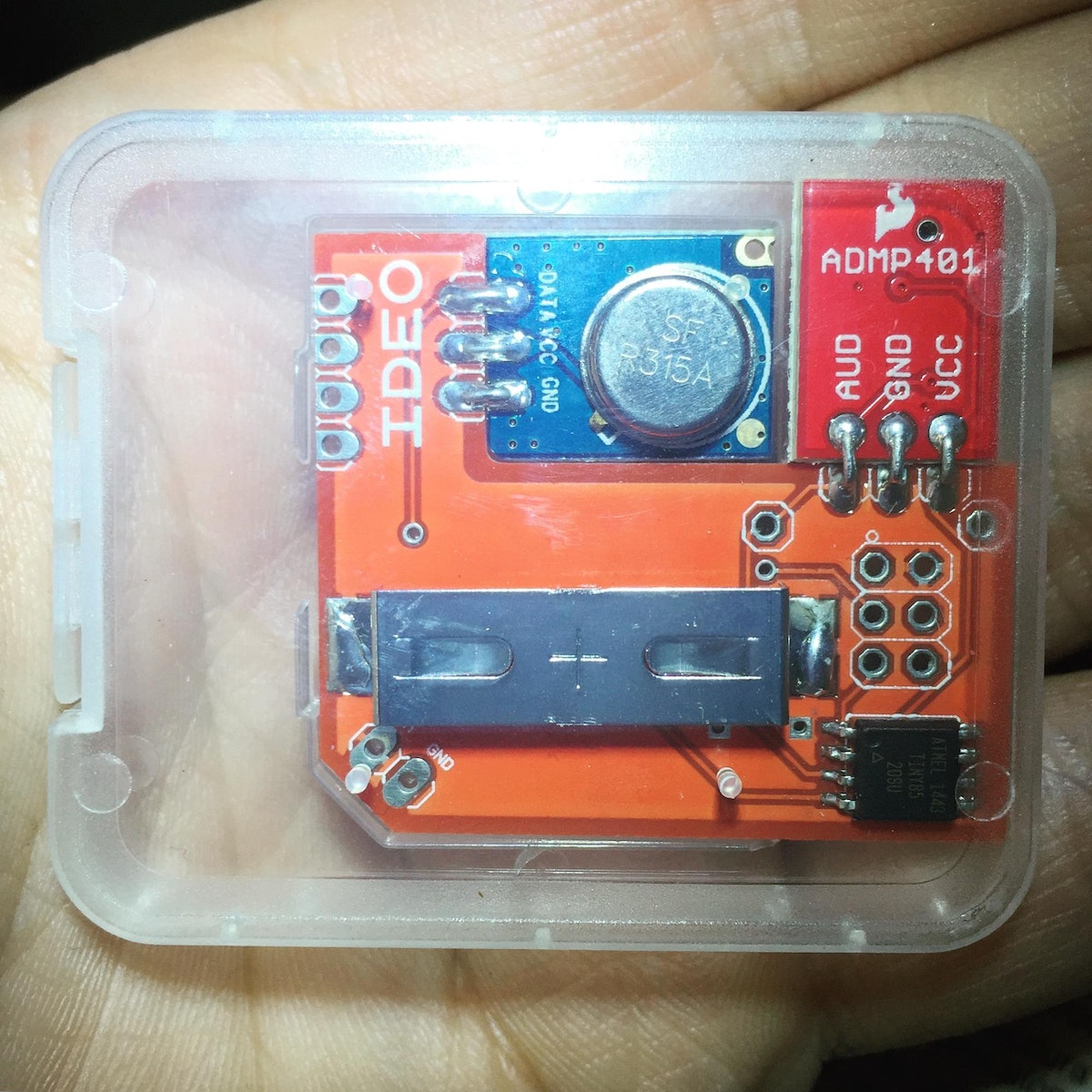
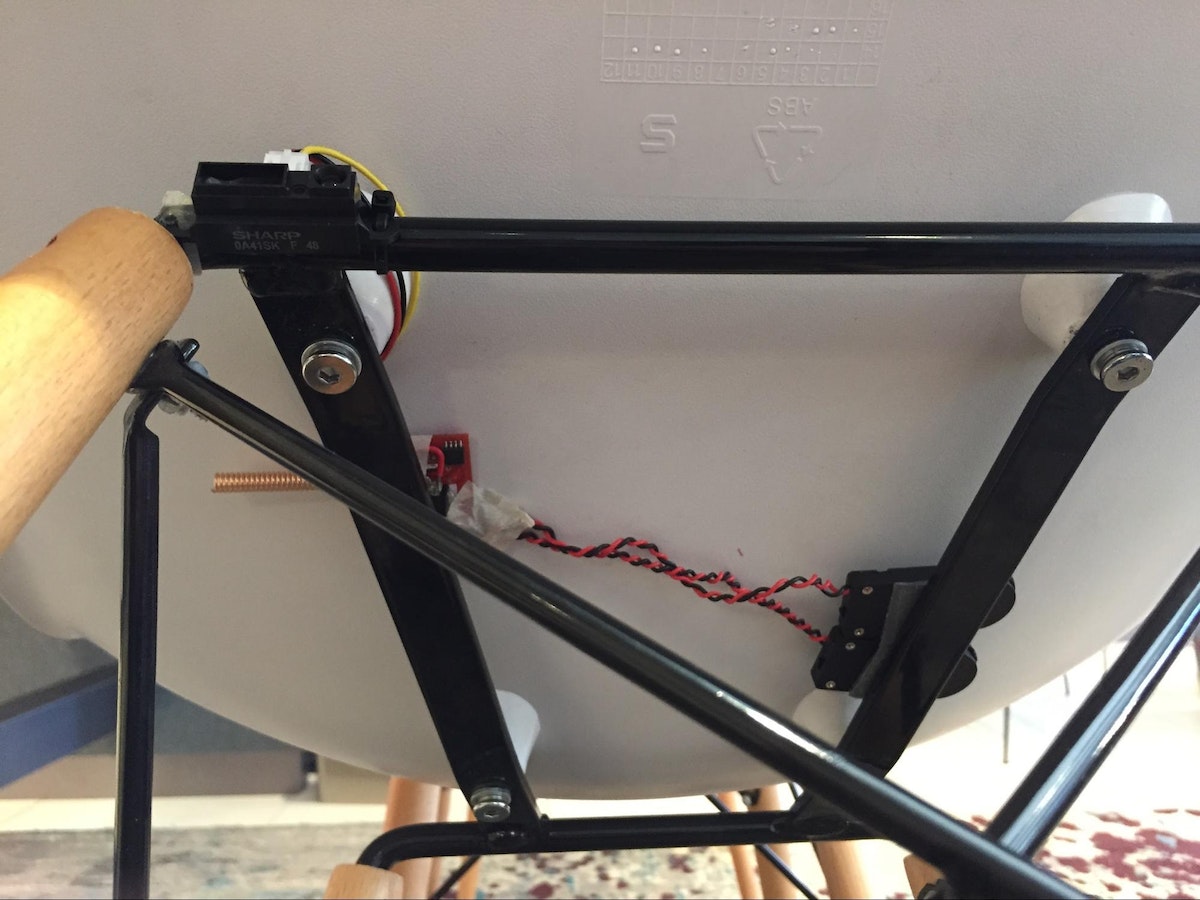
Miha Feus (MF): We used cameras to measure foot traffic and activity across different areas of the space, as well as sound sensors to gauge the volume level and infer the atmospheric buzz. And we also used seat and proximity sensors to measure occupancy and dwell time on different pieces of furniture. The actual sensing components (pressure and proximity sensors, and microphones) were off the shelf, but we built the brains for the sensors and the communication platform to gather the data from around the space wirelessly.
How did you rig up all the sensors, and what software did you use to record that data?
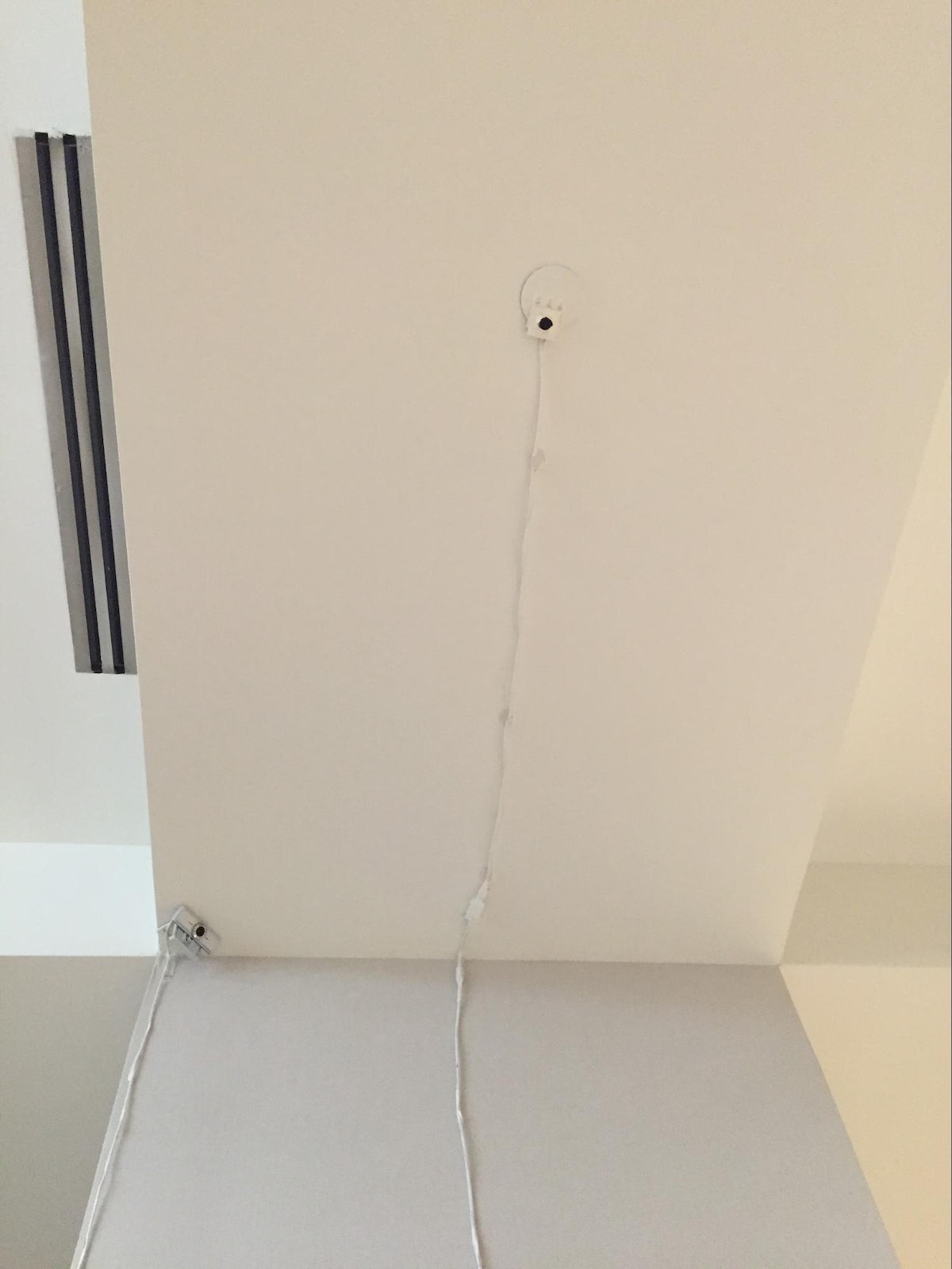
MF: Most of the sensors were held in place with double-sided tape. We taped cameras overhead and sound sensors on the ceiling, and placed seat sensors under seat cushions. All the data from the sensors was sent to an Arduino Yun, which served as a hub, routing the data via Wi-Fi to a Parse Database. The Arduino Yun also retained a local copy on an SD card, in case there were any Wifi issues.
To analyze data from the cameras, we used a software tool called Camlytics. It was able to capture the number of people passing through the space automatically, without the need to record visual data. This way, we didn’t infringe on people’s privacy.
The proprietary hardware we created around the sensors was also built with privacy in mind. All the sensors only had transmitters, which means they couldn’t be hacked remotely. But even if someone had gained access to them, the chips and transmitters we were using were unable to process and transmit sound data at a level where someone could listen in on a conversation. The seat sensors worked similarly. The data we were getting only told us whether they were occupied.
JW: Ethically, we are committed to protecting our participants, whether they are explicitly taking part in our research, or they happened to wander into it. In any case, our main goal was to capture overall usage levels, so there was no reason to map or track specific users.
What was the hardest part about making this sensor system work?
MF: The most challenging thing was to design something that can run unsupervised for weeks on the other side of the ocean, something we’ve never done before. But we also had trouble with our “huddle spots”—bespoke pieces of furniture we created for this project. Because they were hard plastic stools without cushions, we couldn’t use pressure sensors to measure their use. Instead, we had to rely on proximity sensors, which are power hungry, and not the most reliable.
What useful takeaways did you learn from the sensor data?
JW: The new concept was definitely popular. We had a 79% increase in people coming through the space in our first test site.
Okay, so more people walked through your space but did they stop?
JW: The number of people who sat down in the space went up by 80 percent, predominantly at times when those areas are usually very quiet (the early afternoon, for example). So not only did we increase use of the space, timestamps in our data showed that we did it at a time when it used to be empty. That, combined with data that showed food orders were being made at a time when the regular restaurant was closed, was a great selling point.
The sensors also showed us that the average dwell time in the huddle spots and nooks—spaces designed for four to six people work together—was 20-35 minutes, which confirmed our idea that these pieces should be used for quick perches and catch ups. It sounds simple, but it was huge. It not only meant that the design of the space itself was right, it also confirmed the importance of having drinks delivered within a 5-minute window, or having technology that empowers users to make an order in less than 1 minute. If visitors only hang around for 30 minutes, everything has to be really fast.
What’s the most exciting potential for sensors in future design research?
MF: As data collection methods and analytics tools become easier to use, we’ll use them as prototyping materials, much like we are using foamcore and hot glue at the moment.
JW: The ability for us to learn about user behavior remotely is most exciting to me, given that it’s something we haven’t been able to do before. With sensors, remote research can mean much more than learning how people are using a digital tool that we built. Being able to track patterns and see how people naturally interact with our prototypes (both physical and digital) when we’re not there is huge. Then it's about looking at the resulting data in creative ways and telling a more nuanced story about the type of impact we expect our ideas to have out in the world.
Recently, at IDEO London, we’ve started to think more creatively about how to collect and use data for research during the design process. It’s easy to track user behavior when we work on digital design projects; the tools are built in. But what if we had those capabilities outside the digital space? On a recent project, design researcher Jenny Winfield and interaction designer Miha Feus found a way to collect user data in a physical/digital prototype, by using sensors to evaluate a redesigned hotel workspace for Crowne Plaza hotels. Here’s a little bit about how they did it, and how approaches like this one could change the future of design research.

Thoughtless Acts: For a Rainy Day
Thoughtless Acts: For a Rainy Day. The intuitive ways we adapt and react to things in our environment

I took this picture during my morning ferry commute along the Thames. As you can see, it's raining. (It rains in London a lot.)
I'm standing where the passengers get off the boat. The ferry was designed with a drainpipe to funnel rainwater off of the boat, but the water lands on passengers as they disembark. I guess the designers were thinking more about the boat than the people on it.
Conveniently, there is also a Costa coffee shop on the boat. So someone removed the base of a paper coffee cup, and stuck the cup on the pipe. This small fix extended the drainpipe, keeping the passengers dry. Brilliant.
Human-centered design requires us to observe human behavior with beginner's eyes, so that we can spot the innate ways people interact with the world around them. We call these intuitive and unconscious reactions thoughtless acts, and IDEO designers collect photos of them to inspire the invention of new products, services, and experiences.
Can Cartoons Cure Cancer?
An interview with cartoonist and cancer killer Laura Park
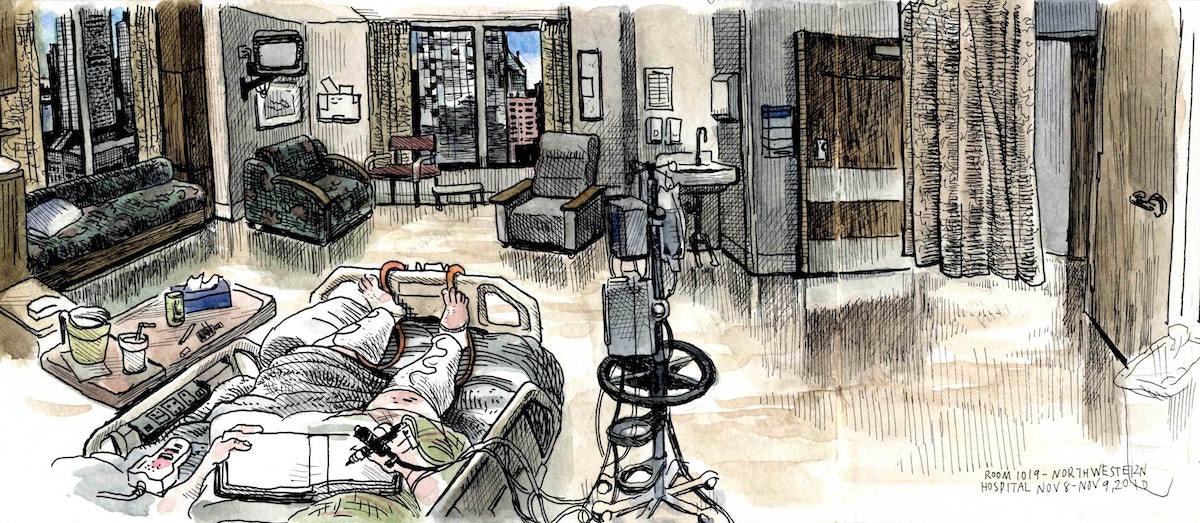
But this afternoon, we're not here to talk about all things Frenchie, we’re here to talk about the “c-word”—cancer—but, also, comics and catharsis. See, in a few weeks, Laura is having surgery to repair her tear ducts, collateral damage from aggressive thyroid cancer treatment four years ago, when she was in her early 30s. The cartoons she drew during that nerve-wracking time are just like her: quirky, brave, weirdly hilarious, and unapologetically honest. They’re the equivalent of indie-rock visual therapy.
Wearing her trademark black-and-white French sailor shirt and vintage cat-eye glasses, Laura takes a few quick, surreptitious puffs off her e-cigarette and we start chatting.
IDEO: What were you like as a child? Did you always make art?
Laura Park: My family moved around a lot as a child. My mom immigrated from Korea to Southern California and raised my brother and me by herself. I always drew as a kid. As the perpetual new kid, I wasn’t very popular, but the fact that I could draw meant I had some value. I’d sell kids greeting cards or drawings of their moms for Mother’s Day. I hung out at the food court at the mall where my mom worked and drew portraits of strangers. I’d go up to them, show them my drawing, and try to sell them to them. It was my side hustle. I was a very under-supervised, under-parented child. I had a lot of freedom. I eventually got a scholarship to the Art Institute of Chicago and fell into the illustration/comic book community here.
What was your first big break?
I was working as an illustrator for educational software company when I started doing drawings for indie record label Asthmatic Kitty Records on the side.
I also drew magazine ads for Sufjan Stevens’ 2005 Illinois record, plus did some t-shirts and posters for his record label and illustrated an issue of Vice magazine. My other big break was illustrating two big book series for author James Patterson—Middle School and I Funny. They were #1 New York Times Bestsellers. I illustrated two a year until last year. They gave me enough money to do other projects and gave my mom something to brag about.

You mainly do autobiographical comics, why is that?
They’re how I process information. They’re my second stomach, how I “Rumpelstiltskin” my depression and sickness. I draw about things that cause me both extreme stress and extreme joy because both are distortions of time. I’m either locked in an anxiety-ridden hellscape or I’m celebrating the awesomeness of my dog.

In high school, I loved the Riot Grrrl movement and made my own zines because I didn’t see myself reflected in other comics. It’s a very powerful thing to make your own media and not wait for others to validate your experience.
I love it when other weirdos say to me, “I recognize myself in your comics!” Everyone thinks they’re singular and alone. It’s comforting to know that’s not true.
Can you tell me what happened when you were diagnosed with cancer?
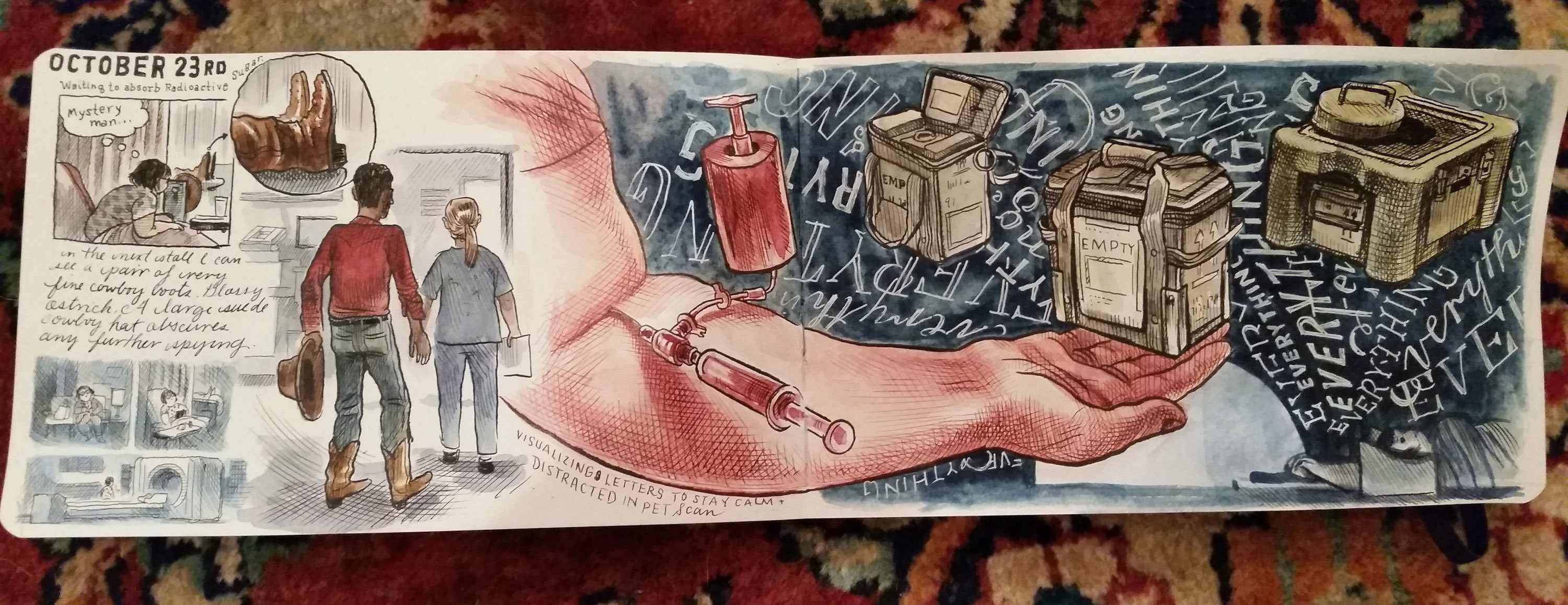
It was 2012 and I was 32 and uninsured at the time. I lived for six months with a big lump on my neck. I avoided it. I knew it was bad when my doctor didn’t make me wait after getting the results back. It was thyroid cancer and it had spread to lymph nodes in my neck. I had a nine-hour surgery to take everything out, but the tumor had grown around my vocal nerve. The next day in hospital room, I woke up with a paralyzed vocal nerve. I went from someone who was always very loud, to someone who didn’t have a voice. It was very weird. I had to drink radioactive iodine as part of my therapy, which is nasty and why I’m having surgery to repair my tear ducts.

Comics are how I process information. They’re my second stomach, how I 'Rumpelstiltskin' my depression and sickness.
I processed my cancer in terms of narrative. I asked, Who is my character? What is her arc? I did a better job of telling the story of my cancer in my comics than I did telling people in person. What really resonated with my fans was how expensive my medical bills are. They were hundreds of thousands of dollars and destroyed my savings.
Enough of this depressing cancer stuff! What are some things you’re excited about?
I just won an Emmy for some storyboarding work on the Cartoon Network miniseries Over the Garden Wall! I have the certificate on my fridge. I also just signed a contract to do a graphic novel adaptation of immigrant stories for StoryCorps and have a collection of early work and new stories for Drawn & Quarterly that's forthcoming. My biggest accomplishment, though, was figuring out a way to have Walt appear in as a cameo character in Over the Garden Wall. I’m pretty proud of that.
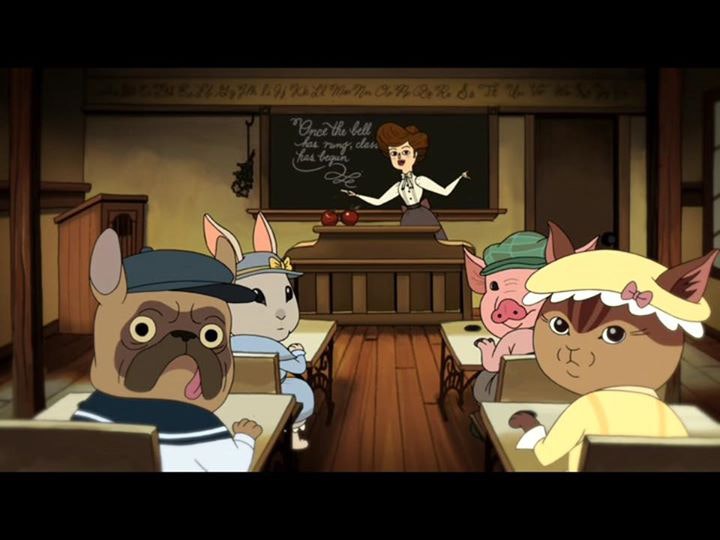
*Post script: A few weeks after our interview, Laura did, indeed, have surgery to repair her tear ducts. She’s recovering well and, of course, fearlessly documenting the entire process along the way.
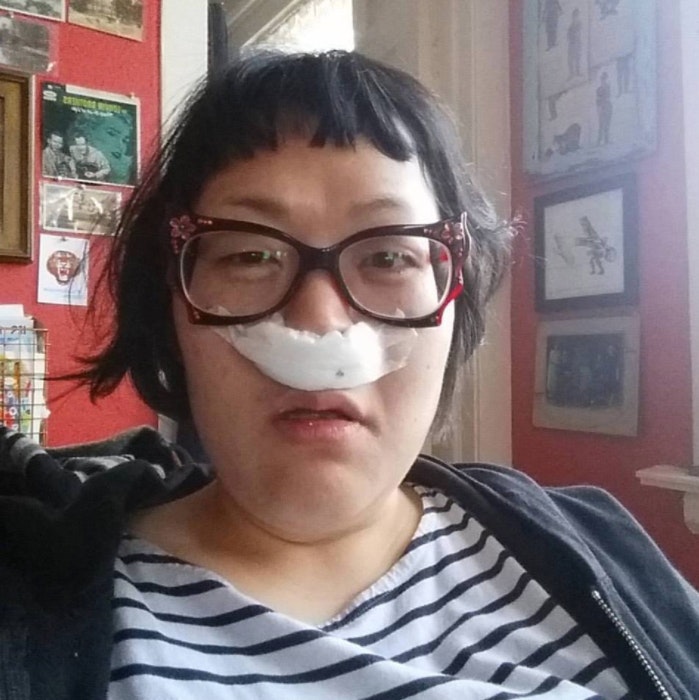
A ridiculously photogenic French bulldog is why I'm sitting across from Laura Park, a humbly prolific Chicago cartoonist, in a trendy Wicker Park cafe one grey November Sunday. I started stalking Walter Wallet on social media a couple years ago. Turns out, his owner was pretty cool, too. Laura's the author and main character of the darkly funny comic series, Do Not Disturb My Waking Dream, among many, many, many other noteworthy, cool things that she hates to talk about. Lucky for me, soon we—and our dogs—were friends in real life.

Lindsey Turner
I’m passionate about building brands, products, and experiences that help organizations show up with meaning and momentum.
I help organizations cut through complexity by shaping how they show up, through brand strategy, identity, and storytelling.
Working at the intersection of brand and business, I bring an editorial eye and a bias toward making—turning ideas into tangible experiences that people can understand, trust, and believe in.
My work spans government, healthcare, financial services, media, and consumer goods, from launching Gen Z-focused ventures to building innovation labs and reimagining legacy brands. I relish moments of ambiguity and enjoy translating across teams, perspectives, and priorities to move ideas forward.
I started my career in editorial and digital design, shaping cross-platform experiences and identity systems in publishing and agency environments. That foundation still shapes how I work today: I’m detail-oriented, collaborative, and overreliant on the Oxford comma. I hold a BFA in Visual Communication from the School of the Art Institute of Chicago.

Rachel Young
My work helps organizations see who their products aren't working for—and build the will and the tools to do something about it
For 25 years, I've asked the same question: Who does this design exclude—and what are we going to do about it?
My work spans human-centered strategy, inclusive design, and qualitative research, with clients ranging from Microsoft, Google, and Verizon to the National Science Foundation, and San Francisco Unified School District.
Before IDEO, I taught elementary school in East Palo Alto and spent a decade doing design work with social service organizations—where I learned firsthand what it costs people when systems are built without them in mind.
I am currently writing User Error, a nonfiction book about digital access and the design decisions behind it. I live in Oakland, California.

Brian Pelsoh
I lead with craft, ensuring our work is creatively excellent: rooted in deep human insight and imagination, while also grounded in the realities of business and technology.
My expertise spans brand, communication, and product design across tech, education, the arts, and social impact.
I believe great work demands both high-level vision and obsessive attention to detail, and only happens through collaboration.
I bring an inclusive, hands-on approach and a deep understanding of business, which enables me to consistently deliver excellence while always asking why.
Before joining IDEO, I worked at the brand firms Pentagram and VSA Partners. I began my career as a designer, leading teams at the School of the Art Institute of Chicago and the Milwaukee Art Museum. I hold an MFA in graphic design from Maryland Institute College of Art and a BFA in communication design from the Milwaukee Institute of Art & Design, and have taught at some of the best design schools in the US.

Tony Wong
I am responsible for IDEO’s long-term success in China and working with clients to use design as a tool to enable growth.
I am responsible for IDEO’s long-term success in China and working with clients to use design as a tool to enable growth. Specifically, I have helped Chinese companies design holistic brand solutions through the development of their products, communication, services, and innovation teams, and I have helped multinationals expand their presence and influence in China.
I advise global leaders on developing China-led innovation and capabilities.
In over 15 years in IDEO Shanghai, I have worked on projects that use design to elevate the quality of the experience of healthcare products and services, streamline processes that increase productivity, create spaces and programs that promote and enable inclusive communities, and build next generation mobility solutions that are planet-positive.
Before joining IDEO, I worked at Philips Electronics and the Electrolux Group in Italy, the Netherlands, and Singapore on a number of breakthrough commercial products. I am a member of the Young President Organization in Shanghai.

Building a personal AI for the messiness of life: Sida Li
Most AI products today are built for work—a space with clear problems and established systems. One founder noticed a gap: personal life is messier, harder to systematize, and mostly left behind by the AI boom. So she built Cue, a personal AI that lives inside iMessage and group chats, to go where the other tools haven't.
In this episode, Becca Carroll, IDEO's Chief Strategy Officer, talks with Sida Li, co-founder and CEO of Shared Context Lab, about staying anchored to a human need while the technology around her keeps changing shape, why she treats her business model with the same rigor she'd bring to a product, and what it feels like to build a company at this particular, disorienting moment in AI.
The conversation also gets into how Sida makes design decisions: the language Cue uses to describe itself, the tradeoffs behind building inside iMessage instead of a new app, and a real story about a business idea that didn’t pan out.
This is the second in a two-part series profiling founders from IDEO's Startups-in-Residence program. The first conversation is with Johannes Seemann, founder of Sooner, on designing GenAI for the emotional side of money.

Designing GenAI for the emotional side of money: Johannes Seemann
Most personal financial tools are built to run the numbers and optimize towards a budget. While that works for some, most people experience money as a lived relationship that does not neatly fit into a spreadsheet. Johannes Seemann and Becca Carroll discuss why money is emotional before it is mathematical, and what a human-centered approach to building a generative AI financial product looks like in practice.

The curious leader's edge in uncertainty: Scott Shigeoka
Mina Seetharaman talks with Scott Shigeoka, author of Seek and Head of Curiosity Cultivation at the Eames Institute, about what distinguishes genuinely curious leadership from performative curiosity, how power dynamics shape curiosity, and why practicing curiosity can restore energy rather than drain it.

How constraints make us more creative: David Epstein
Mina Seetharaman talks with David Epstein, author of Inside the Box and Range, about why total freedom often produces average work, how leaders can design useful limits on purpose, and what organizations such as General Magic and Pixar reveal about the relationship between boundaries and creativity.
Looks like you might be in search of something very specific?
Or reset the filters above and try another angle.
Here’s some random inspiration

Podcasts about creative leadership

Articles about the power of prototyping
