
.svg)



Designing the connected future of diabetes management
Expanding IDEO's partnership with Ascensia to develop an engaging, internet-enabled blood glucose monitoring system.
Keeping diabetes in check isn’t easy. Between checking blood sugar multiple times a day, keeping a detailed activity record, and logging food intake, staying healthy can be daunting.
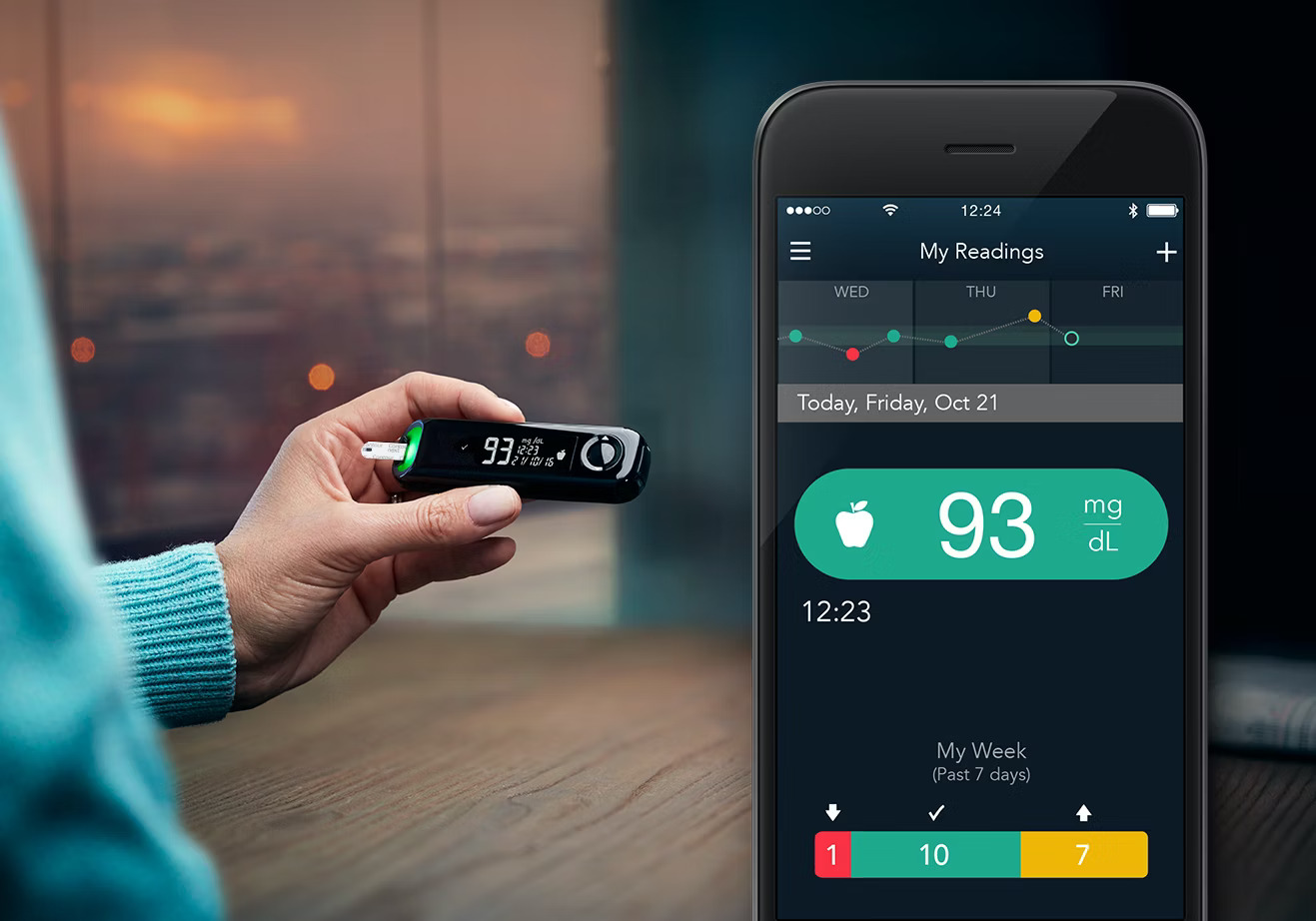
But a recent advance in smart diabetes management—Ascensia’s CONTOUR NEXT ONE blood glucose meter and the CONTOUR DIABETES app—can give patients more clarity and control.
The CONTOUR NEXT ONE is the latest product to spring from a multi-year collaboration between IDEO and Ascensia Diabetes Care (formerly Bayer Diabetes Care). In 2009, Ascensia and IDEO developed the award-winning CONTOUR USB blood glucose meter—the first meter to plug directly into a computer, providing patients and their doctors with instant access to blood sugar data and personal trend reports.
Buoyed by the success of the first collaboration, Ascensia asked IDEO to help design a next-generation diabetes management system (and the company’s first internet-connected device).
To help reduce the stigma of checking blood sugar in public, IDEO designed the CONTOUR NEXT ONE to look and behave like today’s modern tech devices. The highly simplified, seamless system allows patients to upload blood glucose readings automatically to the app, which helps guide informed, real-time decisions. The meter’s red, green, or yellow smartLIGHT feature gives instant feedback about whether blood sugar levels are below, within, or above the target range.
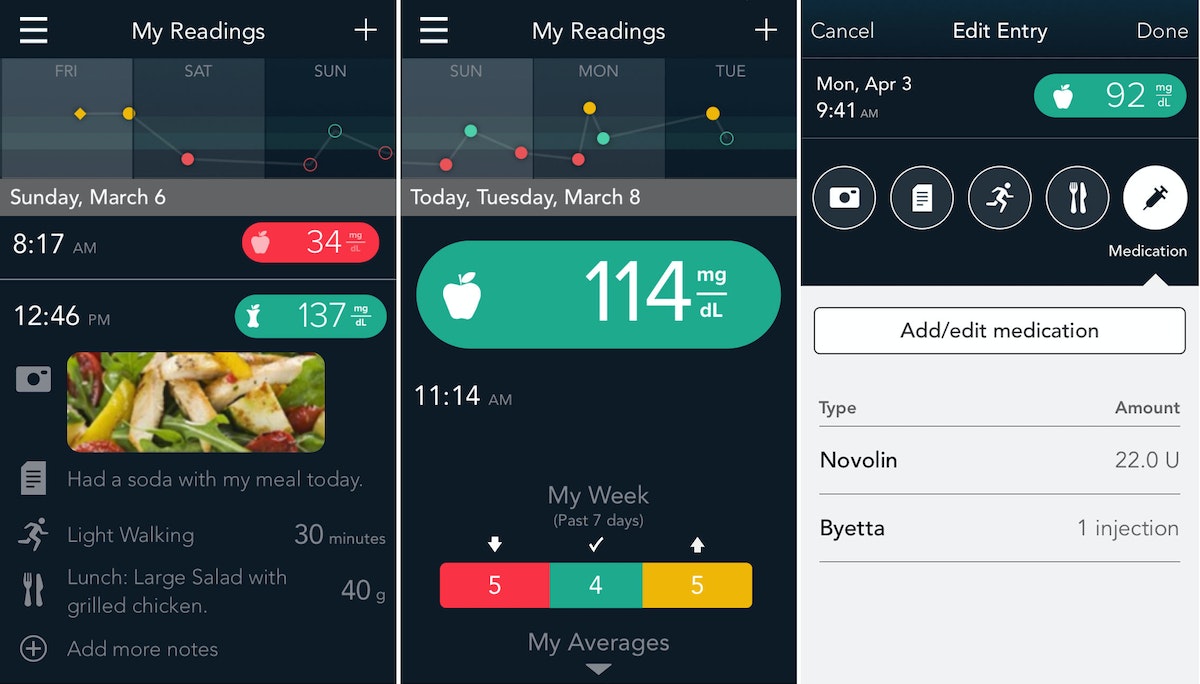
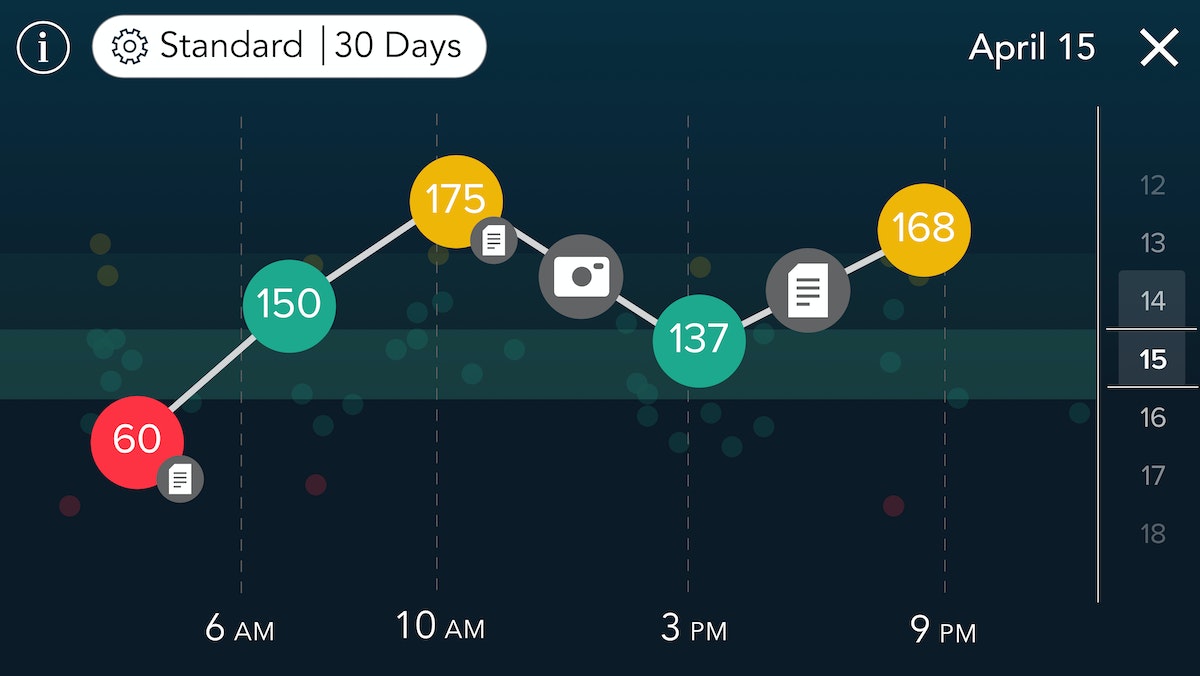
Seeing contextual data, which includes physical activity logs and photos of meals, paired with recent and historic blood sugar levels, nudges patients toward healthier lifestyle choices and better control of their condition.
For doctors, the accuracy and quantity of the data combined with the app’s easy-to-read pattern views invites more comprehensive, actionable conversations with patients.
The CONTOUR NEXT ONE hit shelves in Europe in 2016 and is now available in the U.S. Ascensia is poised to develop more products enabled by rich, personalized data to help people with diabetes live longer, healthier lives.
.jpeg)
Designing the city skies of tomorrow
Designing the city skies of tomorrow.
What if we could use the sky to provide alternative solutions to these problems, creating more space for living and transportation? What exciting future awaits us?
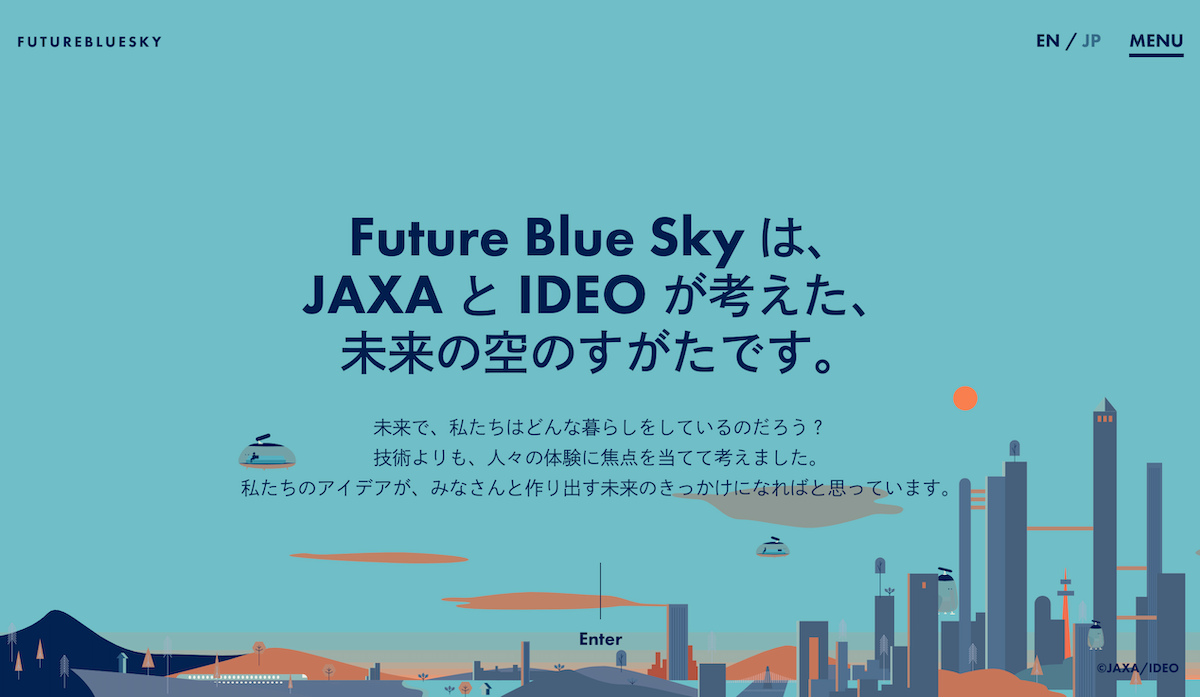
At JAXA’s Aeronautical Technology Directorate (ATD), researchers are conducting research and development on aviation science and technology for the future. They are working to affect positive impact through research like noise reduction of airframe and an integrated aircraft operation management system for disaster relief and crisis management.
Normally, JAXA begins their projects by examining the needs of the aircraft industry or comparing themselves against global technology standards. This approach often leads to ideas that are merely an extension of the current technology. JAXA needed a new approach in order to create radical ideas and real change.
The key question was: What solutions would emerge from prioritizing people’s needs over the most advanced technological possibility—taking a human-centered approach to tackling the most pressing societal challenges?
JAXA ATD voluntary partnered with IDEO to attempt to answer this question, identifying new research areas by envisioning people’s needs in the near future. Together, JAXA and IDEO developed four scenarios of future societies.
The scenarios do not necessarily focus on technologies. Rather, the focus is on telling stories that help readers put themselves in the shoes of the four personas. At the same time, the team worked with industrial designers to illustrate convincing demonstrations of the vehicles and machines of the future.
JAXA’s team embraces the belief that “technologies developed at JAXA should incorporate emotional aspects to blend seamlessly into people’s lives.” Driven by this philosophy, the visual design of the four scenarios used a friendly illustration style intended to be approachable and understandable for people of all ages.
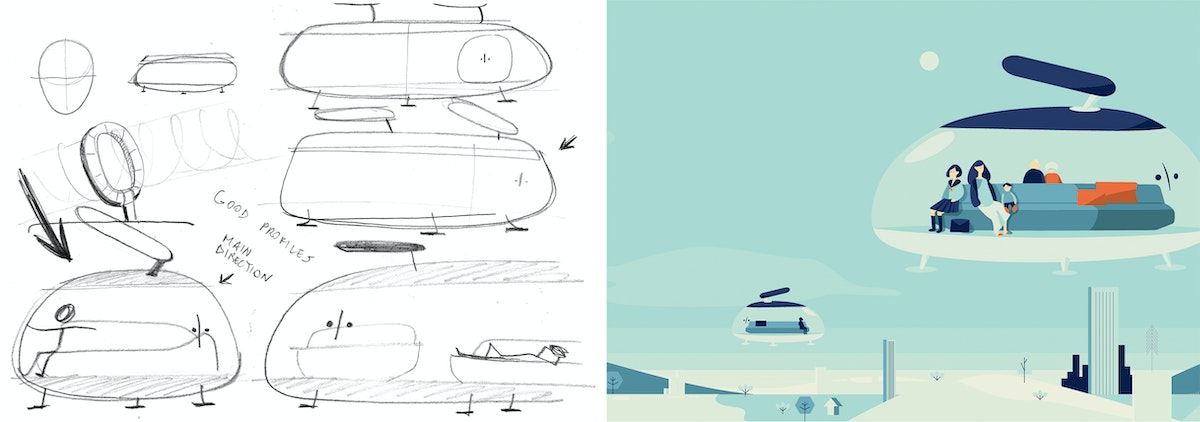
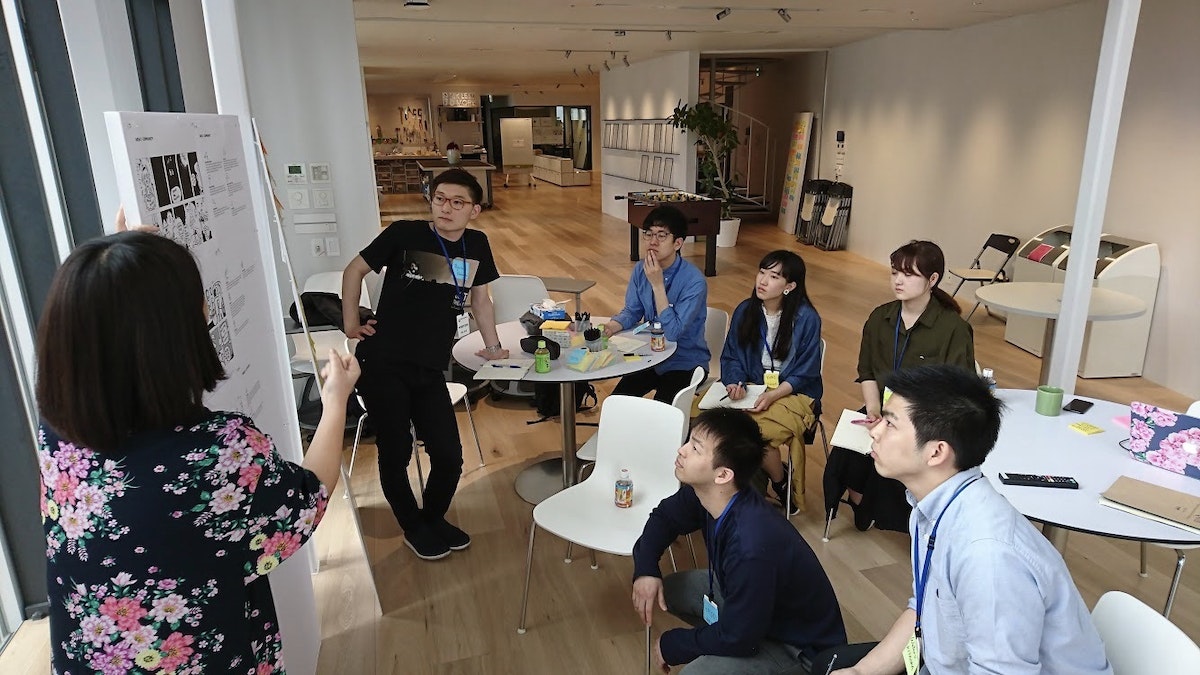
In order to develop human-centered concepts from scratch, the IDEO and JAXA team first undertook research and inspiration-gathering. They skydived, observed cities from above, brainstormed with students from the department of architecture at Waseda University. They interviewed airline employees, a former Judo world champion, skyscraper lovers, a business producer who focuses on new working styles. Throughout the research phase, the team explored the possibilities of the sky as a “living space,” not just a place for transportation.
The team was surprised and excited when they learned from a former fighter pilot that old cockpit designs were inspired by the Japanese tea room, highlighting a historic precedent for taking inspiration from real life to inform new technology designs.
The team synthesized their research and developed several concepts, each informed by a different social issue or pressing concern. Each issue was brought to life through a fictional personal narrative.

How might we relieve city congestion and pollution using the sky, while still keeping it clean and blue? Floating public lights, a skyway that regulates air traffic, camouflaged planes that keep the sky blue—concepts introduced in this scenario were the closest to the technologies already being researched at JAXA ATD. They show us how the sky could become an infrastructure that supports our daily lives. Meet Ayame, a girl from Gunma prefecture, ready to begin her college life in Osaka.
How might we make travel feel easy for people of all ages, no matter how far they need to go? While the researchers at JAXA ATD are working to improve the mobility of aircraft, like reducing air friction or increasing the engine efficiency of aircraft, this scenario explored how people could travel door-to-door through the sky with or without aircraft. A day-in-the-life of Naoto, a 72-year-old man who commutes twice a month from Tottori to Tokyo for medical checkups.
How might we leverage the sky as a resource for reusable energy and economic growth? One of the criteria of JAXA’s R&D activities is to improve the environment. While JAXA has been focusing on “protecting” the environment, this scenario focused on “creating” new environments. A day-in-the-life of Toshi, who runs a “sky-to-table” farming business.
How might we help people live with peace of mind, even during a disaster? JAXA’s disaster relief technologies have been extremely valuable in countries like Japan, which frequently suffers from natural disasters. In this scenario, we approached the problem from victims’ point of view while exploiting the potential of a network of aircrafts and other flying objects. Here's the story of Yuri, a victim of an earthquake in Tokyo who reunites with her family after evacuating to the sky.
The purpose of the project website is not to present answers, but to introduce new directions towards an exciting future. By presenting JAXA ATD’s vision through these four scenarios, the team invited people from all industries and of all ages to participate in co-creating the future.
Just like movies, cartoons, and novels from childhood stimulate the imagination, this project aims to spark new conversation and vision for a radically different, positive future.
By illustrating and communicating a more human-centered future to a wider audience, Japan’s top aeronautical technology development agency may already be changing the future of the sky for the better.
The speed and scale of change in our world are unprecedented. As more people relocate to cities, our lives are impacted by urbanization problems such as pollution, congestion, depopulation of rural areas, resource, and energy deficiencies.
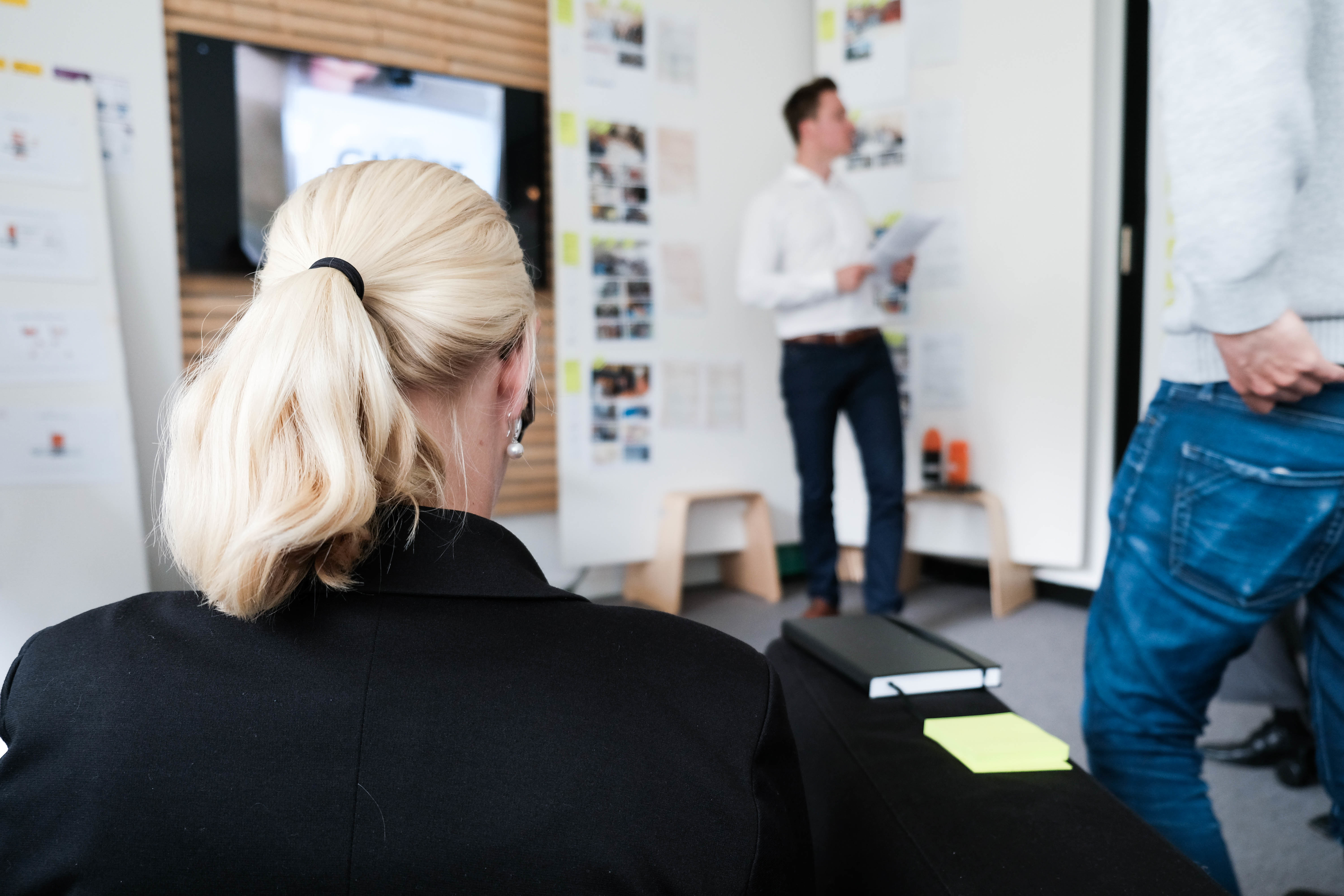
Preparing an industrial leader for the digital future
Changing the culture, mindset, and way of working at a global manufacturing firm.
For factory operators, a smart valve is a game-changer. It gathers data on how smoothly the system is running and feeds it to an app, making it easier to troubleshoot from anywhere. And when things get overheated, it can automatically shut down the machinery, avoiding a meltdown.
Georg Fischer (GF), the Swiss-based, B2B industrial manufacturer collaborated with IDEO to design that valve, along with a system that adds value for generations of engineers to come.
And there were some surprises along the way. When the team set out to interview customers, they learned a lot about their real needs. “We showed a customer a sacrificial concept of a smart valve and asked, what do you think about this?” says Laura Barrabia, GF’s Head of Corporate Design Thinking. “The customer answered, we don’t want your valve to be smart, we want to be smart. If GF is providing a smart valve, where is my value?”
For GF Piping Systems, these insights helped shape initial prototypes and guided the direction of the design to something that would tie parts together into smart systems and more efficient industrial facilities—a competitive advantage.
Yves Serra, GF’s CEO, recognized early on that his company needed to strengthen its customer-centricity and digital capacity, so he approached IDEO to begin shifting GF’s culture from engineering-led and procedural to customer-focused, multidisciplinary, collaborative, and flexible. That kicked off a decade-long relationship that would help GF take a design-based approach.
Learn what it means to move from being technology-driven to being truly customer-centric.
To help GF identify clients’ pain points and address them with new digital offers, IDEO proposed three “lighthouse” projects, one for each of GF’s divisions: Piping Systems, Casting Solutions, and Machining Solutions. Lighthouse projects (also called “Beacons”) are proofs of concept that light the way for an organization and help it shift its way of working.
For example, GF Machining Solutions built a prototype for an application that uses real-time data to help customers identify and fix problems in the machines, laying the foundation for truly predictive maintenance. Making data streams more transparent for customers also simplified life for the GF service engineers, who keep the machines running.
Learn how Georg Fischer is moving from hardware offerings to digital solutions.
For GF Piping Systems, the design team developed the GF Digital Line, a set of products, apps, dashboards, and other services that help customers plan, install, and maintain water and chemical piping systems. GF teams went back to customers to test several prototypes and gather feedback on the Digital Line and make sure it addressed current and future needs. They also built internal capabilities to support product development, laying the groundwork for future innovation.
Lastly, IDEO helped GF Casting Solutions escape the “commodity trap” of competing with foreign automotive suppliers. To better understand the pressures car manufacturers face, the design team explored the development cycles of two car manufacturers. They learned how challenging it is to implement solutions to reduce vehicle weight—essential for cutting fuel consumption. As an expert in aluminum die casting, GF was well positioned to help manufacturers meet that challenge, not just with quality parts, but also with digital engineering to deliver cutting-edge lightweight casting solutions, which are harder to replicate.
By the end of these lighthouse projects, GF had rolled out a global design thinking training program that had touched more than 1000 employees. After the training, employees throughout the organization adopted a new way of working and became passionate ambassadors. The enthusiasm spread from the R&D department to HR to finance and many other departments.
Today, GF has permanent design thinking and digital teams to continue this work. All three divisions aim to launch the first releases of their lighthouse projects by early 2019. And with every project, GF’s business—and solutions—get smarter about how to meet the needs of a fast changing world.
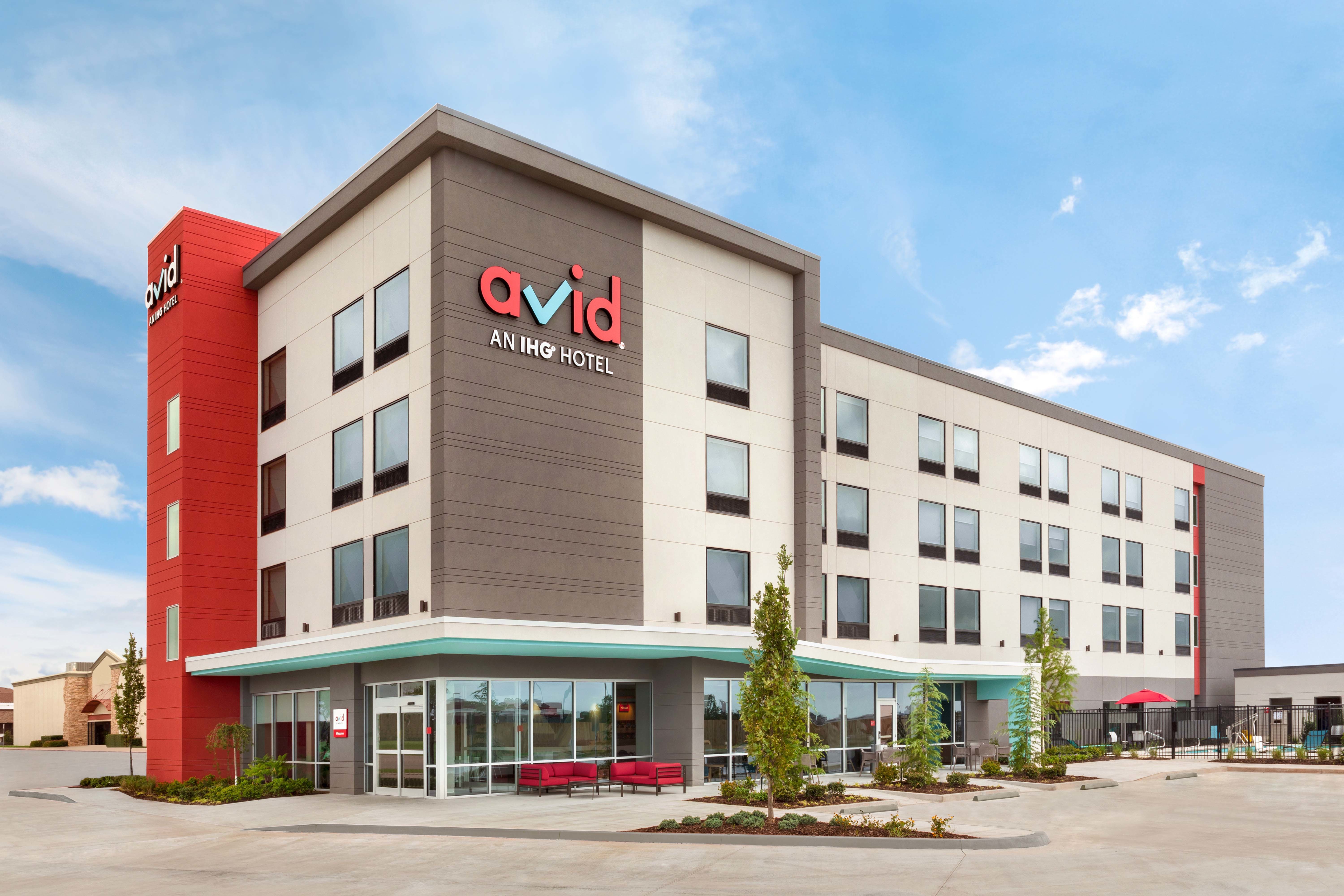
Reimagining everyday travel for America and beyond
Designing a new hotel experience that feels just right, every time.
IHG’s ambition is to grow in service of its guests around the world. IHG’s Atlanta-based team had identified a major opportunity for hotels in the midscale space—a market segment known for its inconsistency.
Alongside colleagues at London-based forpeople, IDEO was invited to help IHG shepherd that business opportunity into a human one, by asking how IHG might reimagine the everyday travel experience for people relying on this category of hotel. What kind of offer might resonate equally with guests and with the owner/operators who’d need to buy into a new brand and bring it to life?
IDEO began by talking to travelers to better understand their lives, values, and needs—travelers who spend one or two nights on the road a few times every year; travelers who regularly take short trips to small cities or away from city centers; and travelers who live on the road, moving from hotel to hotel. These included court stenographers, medical technicians, consultants, conference-goers, and more.
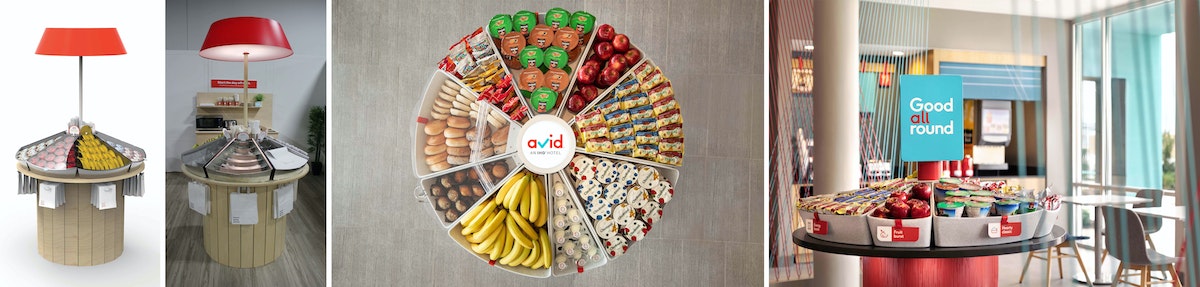
Early research insights evolved into two distinct concepts for a new hotel brand, which were built out into two full-scale physical prototypes at IHG’s design center in Atlanta. Over three weeks, IDEO and its IHG partners led potential guests and hotel owners through each model, gathering their feedback on new formats for breakfast offerings, service details, booking experiences, and overall tone.
The investment in prototyping paid off with surprising and actionable insights. Despite wide variation in occupation and income, these guests are sophisticated and self-reliant; they know what’s out there, and they know what’s reasonable to expect. In fact, many describe a syndrome IDEO dubbed “anticipation anxiety:” the sense of dread that comes from not knowing whether a lower-priced hotel is going to be clean or safe, or provide a bed that enables restful sleep. Many have so little confidence in the cleanliness of hotels in this price range that they travel with their own packs of wet wipes.
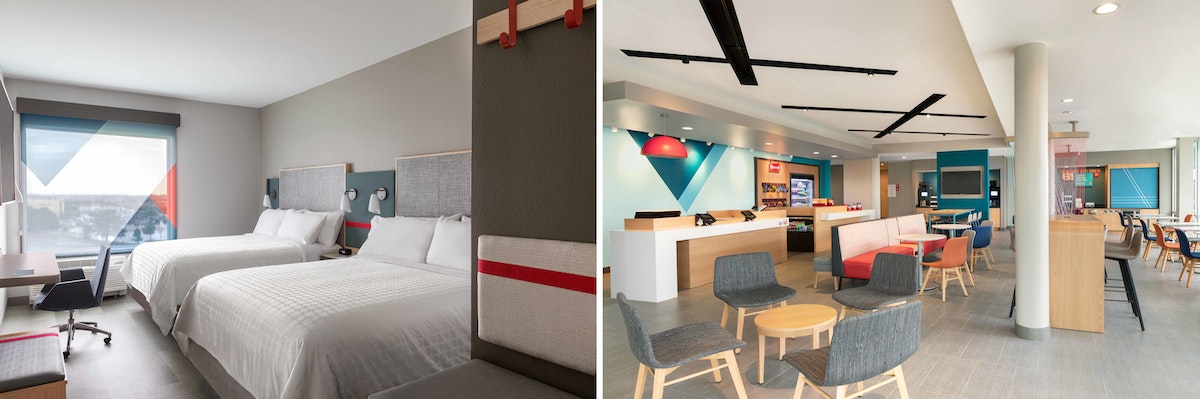
IDEO, along with the IHG team, recognized these behaviors as an unanswered cry in the market. The purpose of the new brand crystallized around extinguishing that anxiety and rewarding guests with something much better. avid hotels exceeds its competition by doubling down on quality in just a few select areas: an extraordinary mattress; rigorously high standards of cleanliness; a focused, high-quality, grab-and-go breakfast and coffee experience; and an overall tone of warmth and straightforwardness.
These guests made clear that for trips like this, they aren’t interested in bells and whistles, or communication that isn’t frank or to the point. That led to an insight that upends an industry truism: for these guests—and there are many of them—choosing a hotel is rarely only about the price of the room. avid guests can often afford to stay in a more expensive place for a honeymoon or a vacation or a trip with friends; they’ll spend more when they need more. But for functional stays of one or two nights, it just feels wasteful. It goes against their values and their principles.
IHG and IDEO heard a clear call for a sense of focus and affordability—but never at the expense of quality. Guests should be able to access a simple booking process, rooms designed for sound sleep, and a quality breakfast, all at a fair price. And hotel owners ought to be able to deliver that experience with confidence and consistency, at costs that build a compelling case for their own business.
That’s what avid hotels is designed to deliver, every single time. Early traveler reviews have been exceedingly positive and have noted specifically the unique differentiating offers avid brings to the market.
Within a year of partnering with IDEO, IHG had issued 150 avid hotels licenses to franchisees in the US, Mexico, and Canada, and announced a development deal for 15 avid hotel locations in Germany over the next five years—a scale of success that came at unprecedented speed for the industry. The collaborative, inclusive design process is now serving as a model for how to develop robust, guest-centered hospitality brands that deliver where it matters for people.
A Kiss from the Future and Other Biodesign That Will Blow Your Mind
A Q&A with Ani Liu, the MIT-trained artist whose boundary-pushing projects look more like science fiction
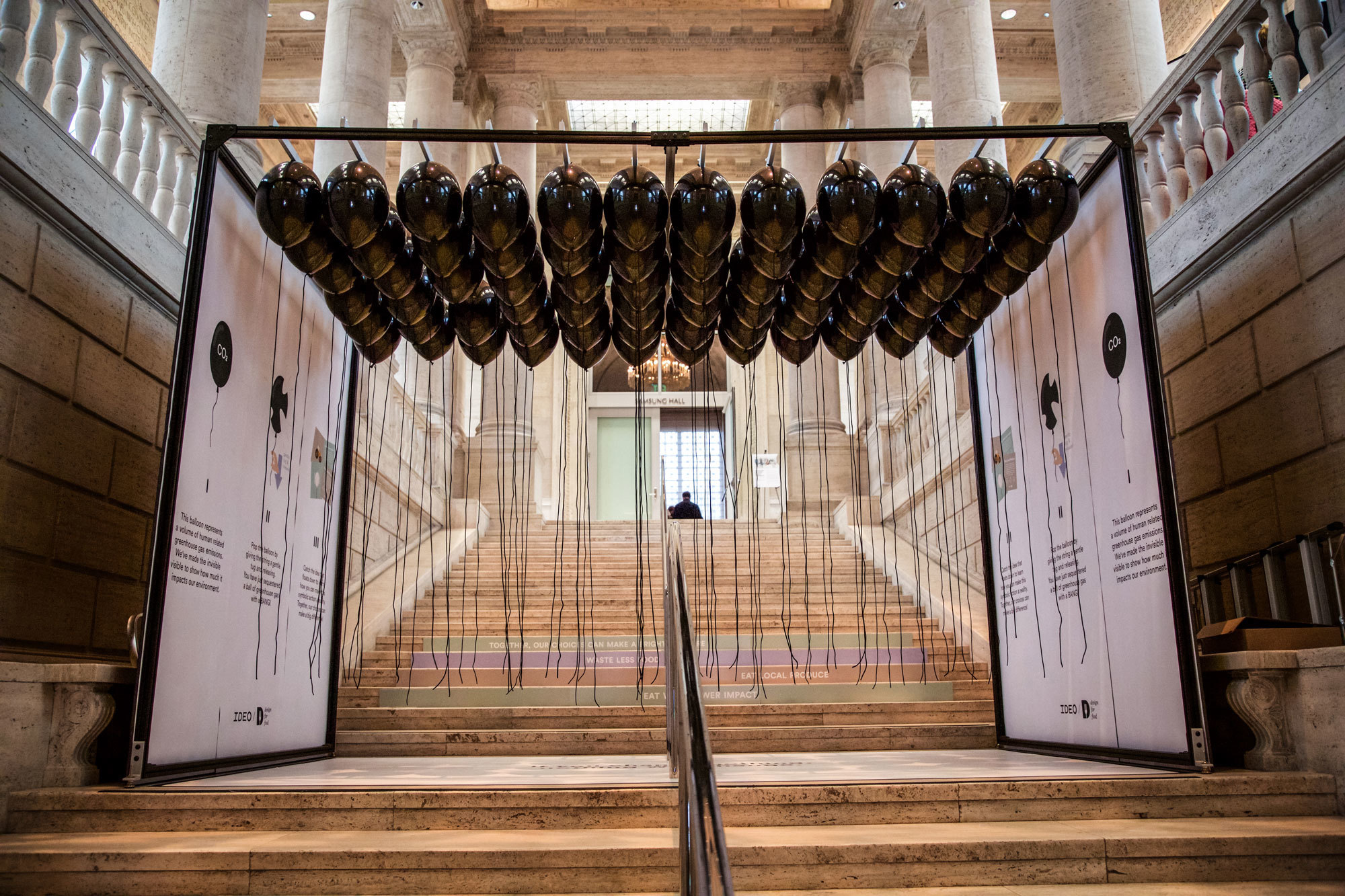
I was fortunate enough to work closely with Liu on an art installation about food's carbon footprint when she was a Researcher in Residence at IDEO's Design for Food Studio. The piece was exhibited at the Asian Art Museum in San Francisco in collaboration with the Perennial, a sustainability-focused restaurant. Thanks to that project, I became an expert in engineering ways to pop balloons, and also a major Liu fan. I caught up with her to hear more about what inspires her work.
In one sentence, who are you?
I am an artist, long-distance runner, sci-fi dreamer, and corgi-lover.
What do you do? How did you learn it?
I am incredibly lucky to have my dream job: thinking deeply about technology, and making the art to express it. I followed a meandering path. First, I learned how to express ideas visually and spatially by studying architecture at Harvard, and from there, I became a VR geek. Eventually, I ended up at MIT Media Lab, where I started making bioart.
The female body has long been a source of contention, where opposing ideologies in religion, politics, and cultural differences often play out. In this video, Ani explores what would happen if women could control something inherently male: Spermatozoa.
3 favorite possessions?
- My best friend's wisdom tooth
- My mother's family album
- A collection of smells I've bottled from those I love
What does a typical work session look like?
The beginning of my projects involve a lot of research. The process often starts with a large cup of coffee, a stack of papers, and my sketchbook in hand. In the next phase, I am often found visiting other scientists' labs to ask questions. I've sought advice on everything from how to use an EEG headset to read brainwaves properly to trying to score the right plant hormones to make flowers blossom on command.
The next phase is an enormous amount of exploring, prototyping, and failing. In the last phase, I hunker down and crank towards an impending deadline. It is often the most stressful part, but it's full of adrenaline, and my favorite.
How do you get over creative block?
I have the benefit of working across many disciplines, and I find that my love of one thing often inspires the next. If I am stuck debugging code, I'll draw, and the meditative act often untangles a logic block. When I am stuck on expressing an idea visually, I like to read physics textbooks (I know, this is unbearably geeky) to find inspiration in the way physicists express radically abstract concepts.
I also love looking for synaesthetic inspirations. I have a large collection of perfumes and scents, and sometimes breathing one in will trigger an unexpected thought or emotion, and my mind will spiral into new territories.
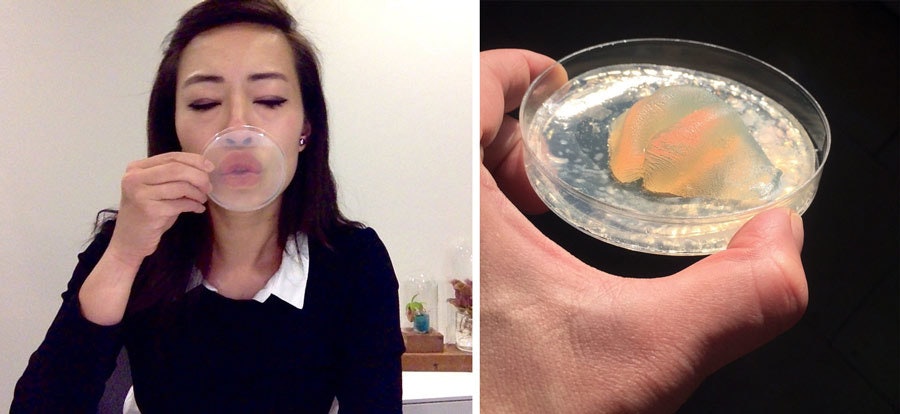
What was the last item on your to do list?
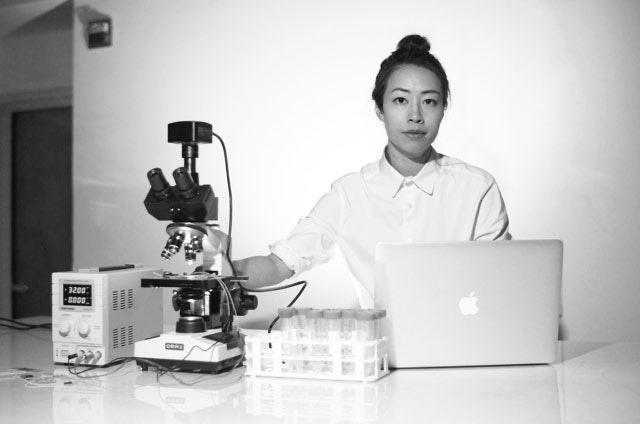
To plate and incubate fresh bacteria for a new art piece. I have been invited to participate in a group show on self portraits, and I am prototyping a living work of art based on my microbial signature.
How do you see the world in 2078?
I can't claim to predict the future, but I hope the approaching inevitability of continued automation and augmented intelligence will cause us to deeply question what it means to be human, and what is worth pursuing in our lifetimes.
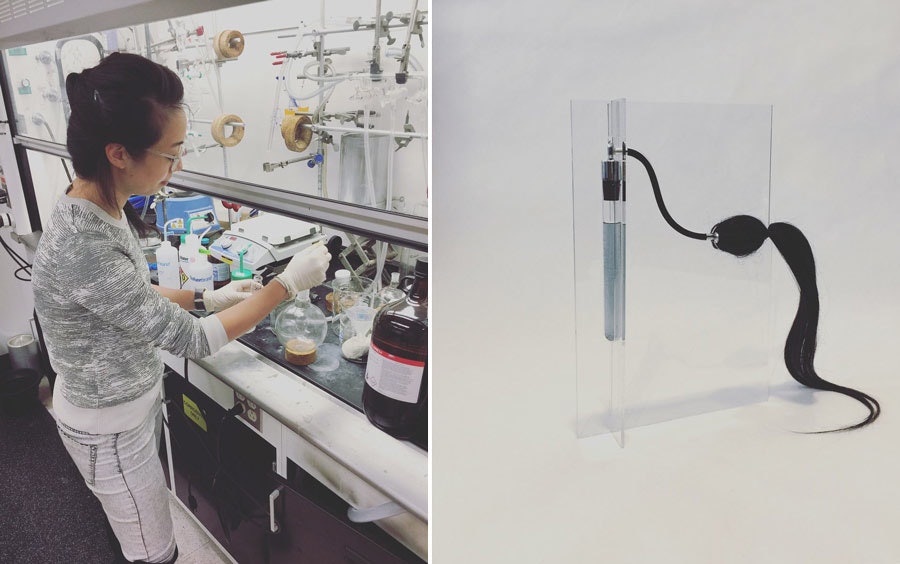
What’s your number one bucket list item?
To finally share my life with a corgi! The top contending names are Stardust and MOSFET. I would also love to write a science fiction novel in my lifetime.
Who are you creative crushin’ on lately?
Tania Bruguera is an amazing Cuban artist and political artist whose strength and solid dedication to expressing the truth and the narrative of marginalized populations inspires me every day. In every studio I stay in, I pin up a small image of her work because the images hit me at my emotional core, but also remind me that art and design can have a profound impact on the world.
"Art is how you can see and feel the future," says Ani Liu in her TED Talk, "Smelfies" (if you haven't seen it, go watch that now). Drawing on synthetic biology, AI, and the microbiome, Liu crafts multi-sensory art and experiences that are at once beautiful, poetic, and a total mind-bender.
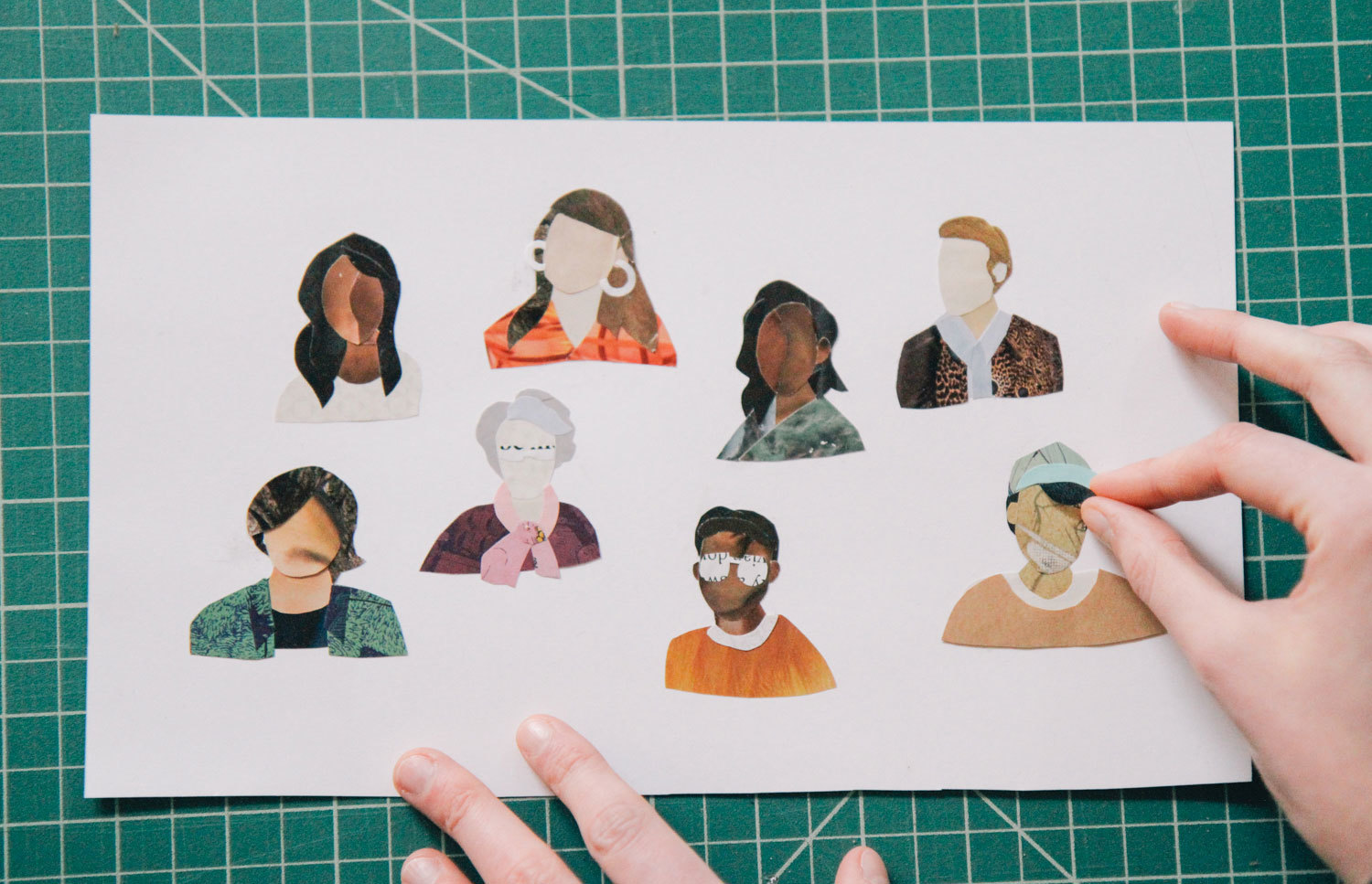
5 Brainstorming Exercises for Introverts
How to adapt group activities to make sure all voices are heard
After outing myself as the lone office introvert, I expected a look of horror to pass over my coworker’s face. Instead she gave a knowing nod and smile, and said she’s heard this sentiment so often here that she calls IDEO an “extroverted office full of introverts.”
I was stunned. The majority of my colleagues are introverts too? How did they manage our everyday activities, like brainstorms? The goal of a brainstorm is to uncover new opportunities by bringing in fresh perspectives, but as a group activity it can make introverts clam up.
Inspired by Susan Cain’s research on the power of introverts and how solitude, like collaboration, is a crucial ingredient to creativity, I asked my fellow designers what strategies they use to incorporate solitude into the most extroverted of activities.
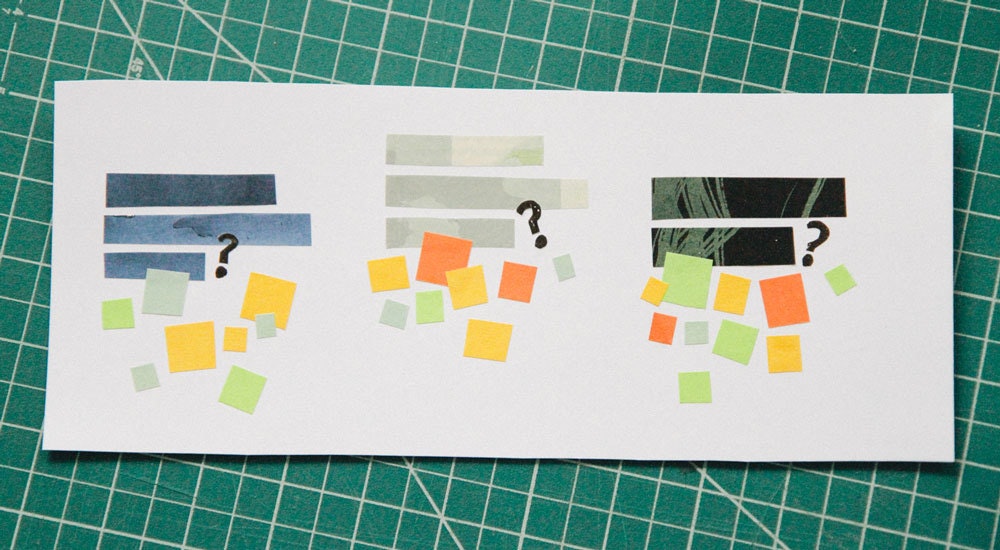
Here are five ways they've adapted the brainstorm for introverts:
1. The Silent Circuit
Ask each person to write a “how might we” question on a sticky note (IDEO’s standard brainstorm kickoff question) and post it around the room. For about 15 minutes, everyone walks around, silently adding as many ideas as they can to each prompt. When time’s up, everyone returns to their question and discovers a bounty of new ideas that their colleagues have given them. This approach works well for keeping large groups engaged, while providing quiet, focused time to those who want it.
2. Musical Chairs
Breaking up a big group helps encourage quieter voices. To limit the number of people in a brainstorm, split into groups of three or four and play musical chairs. Post a handful of "how might we" questions around the room, assign a group to each one, and start the music. When it stops, rotate to the next station with your team. That way, there are never too many voices to contend with, but a lot of ideas are shared. Leave time at the end for people to wander around the room and add any remaining ideas.
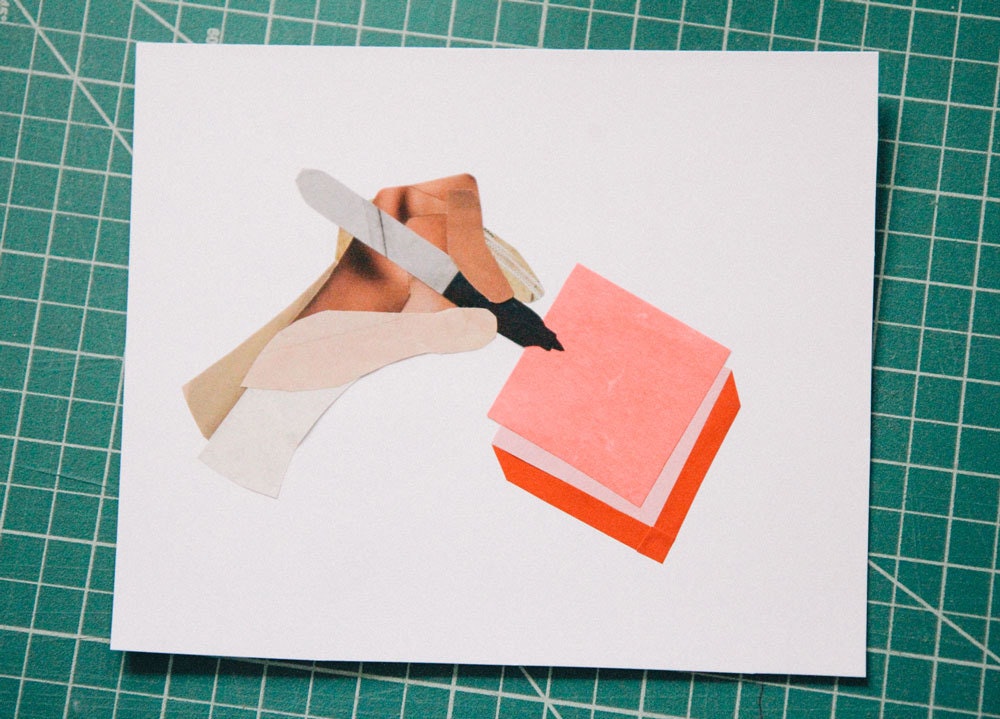
3. Get to the Bottom of the Stack
This is the most exhaustive brainstorming activity on this list—it can take up to two hours—but can also generate the most ideas. The goal: Each person fills an entire stack of Post-its with new ideas. (A “stack” can be a full Post-it stack divided into halves or thirds, depending on how much time you have.)
After the questions are introduced, everyone goes heads-down and captures ideas. It's a lot of silence, but it allows those who prefer to think and brainstorm silently the time and space to do it. When everyone has reached the bottom of their stack, one person volunteers to share first. As she presents, others add similar ideas or build on top of them to draw out themes.
The exercise can be a great empathy builder. For a project about helping high school students build purpose in their life, a team used the prompt, “What are your most awkward memories from high school?”
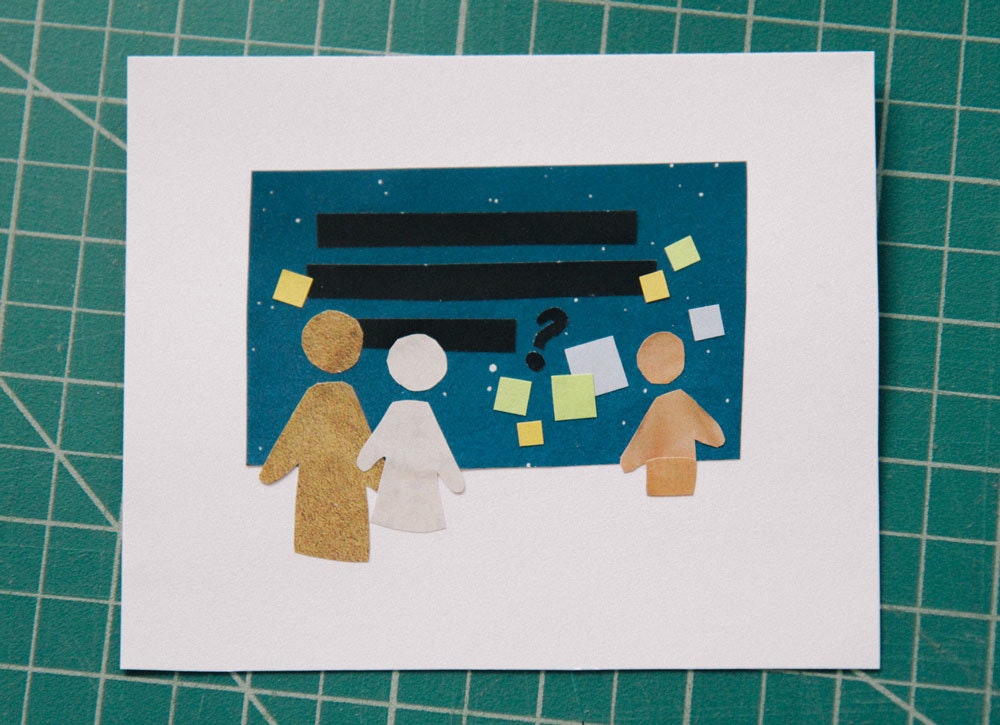
4. Office Hours
This one came from Fast Company: Instead of asking people to commit to a crowded, hour-long session, reserve a space and ask folks to stop by for 5-10 minutes to contribute ideas—in between meetings, on the way to lunch, etc. This gives people permission to come and go as they please, and limits the number of voices in the room at one time. To make participation even easier, introduce the questions a day in advance—over email or in a calendar invite—to give people time to think.
5. The Slow Build
Post a question in a shared space in the office—the kitchen, in the bathroom, by the bike rack—and allow people to add ideas over several days. At our San Francisco studio, we post monthly questions and prompts in one of the private, unisex bathrooms in our office. The questions often ask people to reflect: “I feel loved when…” and “I show my love by…” Or, “What’s something new you want to try this year?” As an introvert, it’s my porcelain palace.
How do you create the conditions that can help everyone feel welcome and heard at work? I’d love to hear your ideas.
Thanks to Charla Bear, Minnie Bredouw, Deirdre Cerminaro, Eileen Farrell, Peter Macdonald, and Heather Ross for their contributions and inspiration.
One day, I confided in a coworker: “I feel like an impostor in such an extroverted office.” The culture here is built on constant interaction—every question is an opportunity for collaboration, we work exclusively in teams, and our brainstorms encourage everyone to think out loud. It exhausts me.
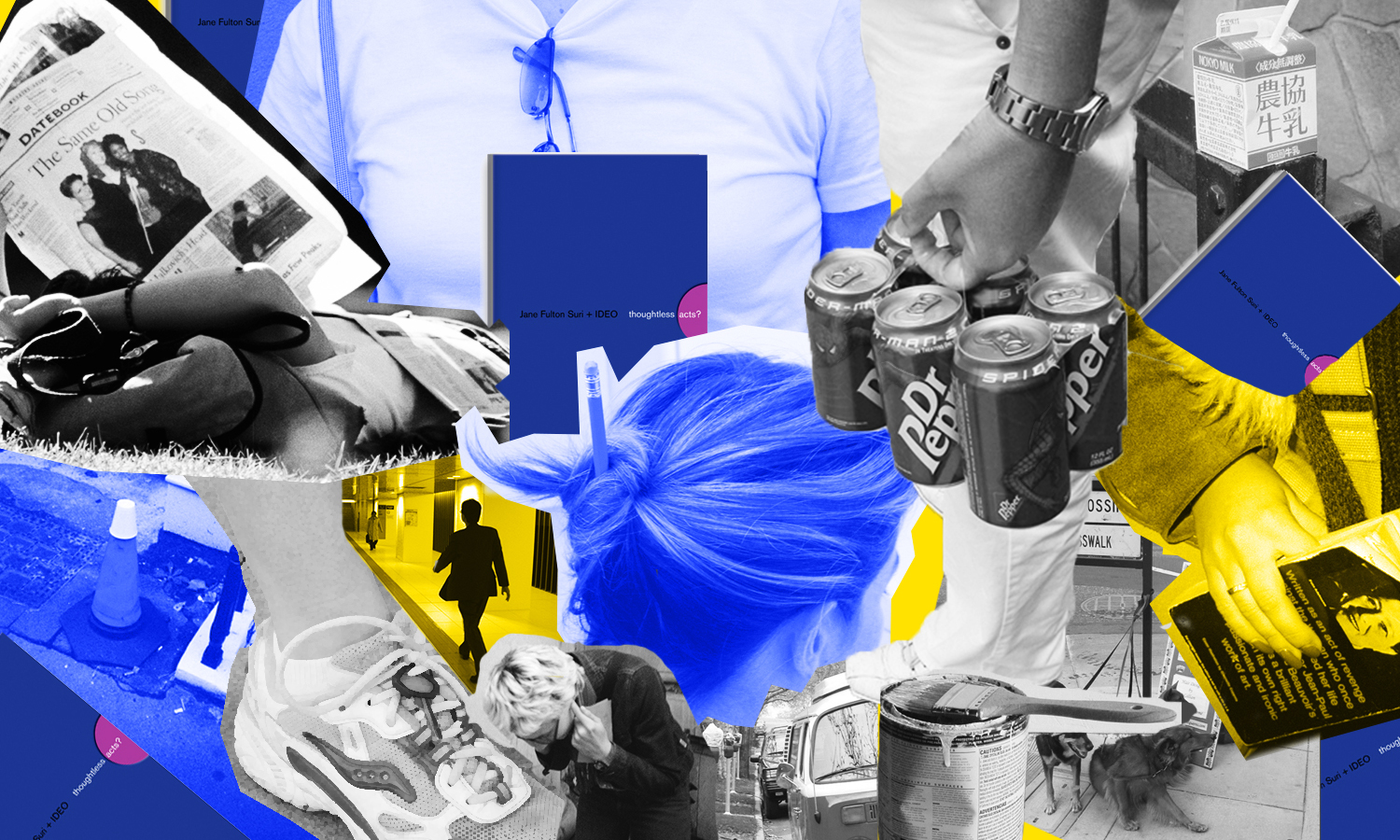
Thoughtless Acts: Design Your Breakfast
Thoughtless Acts: Design Your Breakfast. The intuitive ways we adapt and react to things in our environments
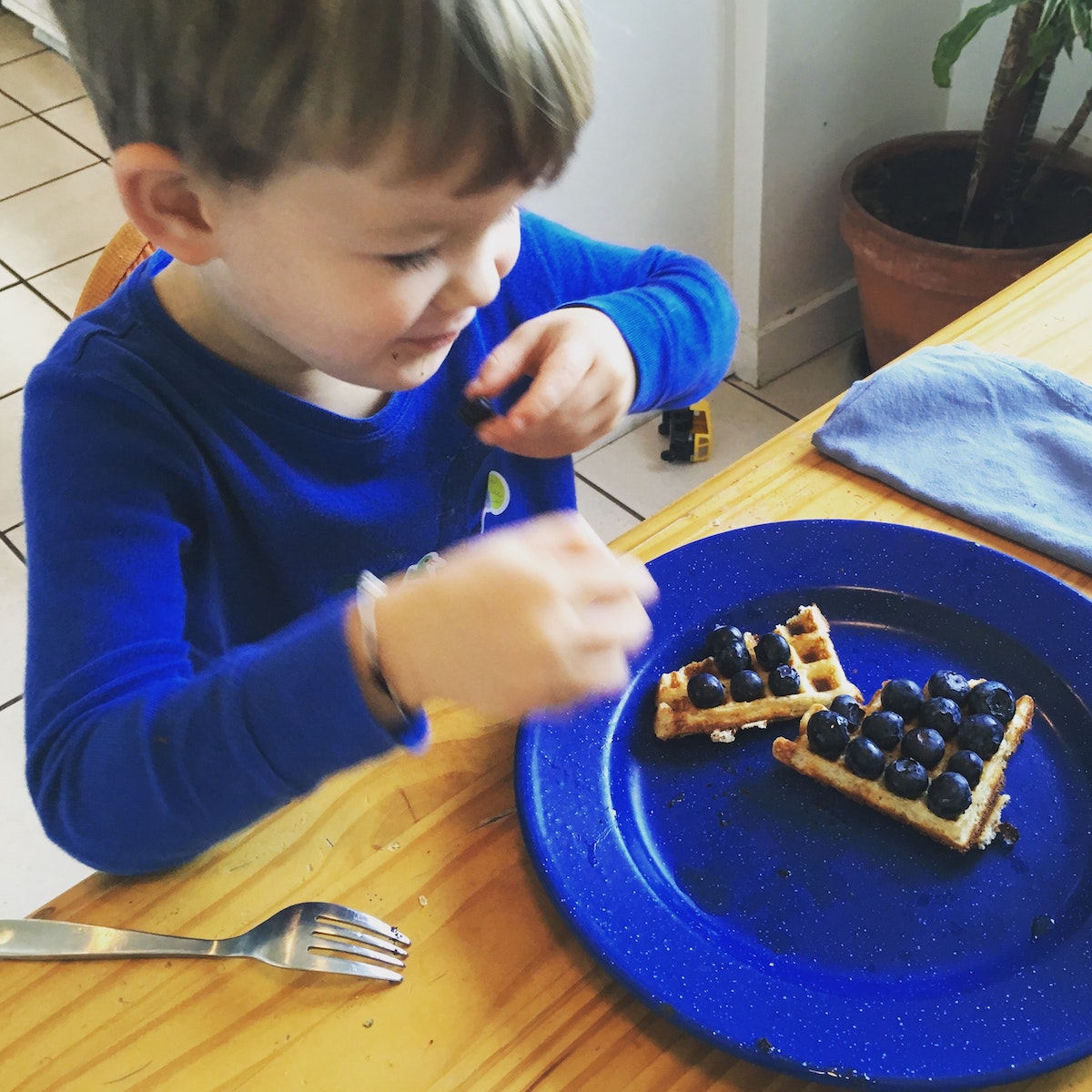
What could be more satisfying than a blueberry in every waffle hole? My son Tom took his time to arrange everything just perfectly before gobbling it down. Even if you are not meticulous enough to do it yourself, I'd be surprised if the same idea didn't cross your mind. It makes me think about all of the times that I've thoughtlessly (or thoughtfully) constructed my own bites—optimizing for flavor, making sure that there are goodies in every bite, until my plate is clean.
Human-centered design requires us to observe human behavior with beginner's eyes, so that we can spot the innate ways people interact with the world around them. We call these intuitive and unconscious reactions Thoughtless Acts, and IDEO designers collect photos of them to inspire their work.
Be the Leader You Wish You Had
Remember that people like to play
As a result, I spent most of my time finding problems, real or imagined, and adding them to a growing list of things I would solve to make my mark. My notebooks from those days suggest that I believed I would be a hero one day, but for now, was resigned to suffer through unrewarding and lonely work. I was an asshole. And you get what you give.
I had started a project with Quiksilver, and with that came a new relationship with a very successful creative director, Erik (now a good friend). Erik invested in inspiration for himself and everyone on his team. He made sure he was creatively nourished—maybe even selfishly so, if that can be said in a positive way—and emulating the kind of creative culture he wanted to instill. It was mutual and reciprocal among his team.
He inspired me, too. I wrote a simple note on a Post-It and stuck it to my computer:
“Be the leader you wish you had.”
I know. It’s all Gandhi and shit (apologies, Gandhi, for any disservice in my comparison). But it shifted my thinking radically. I made a commitment to own my happiness and creative experience.
That week, over regular tears-and-beers drinks with a colleague, we were laughing over an article in Vice called “Wear Dare” in which a couple of friends dressed one another for a day and described their embarrassing moments. We wondered what that would be like at work…
“Let’s do it,” I said. Following my new directive.
We goaded each other through nervous fear, laughter, and finally action… what if this goes wrong? Or worse, what if it goes right?
We invited everyone to put his or her name in a hat and drew at random…
Here’s what happened:
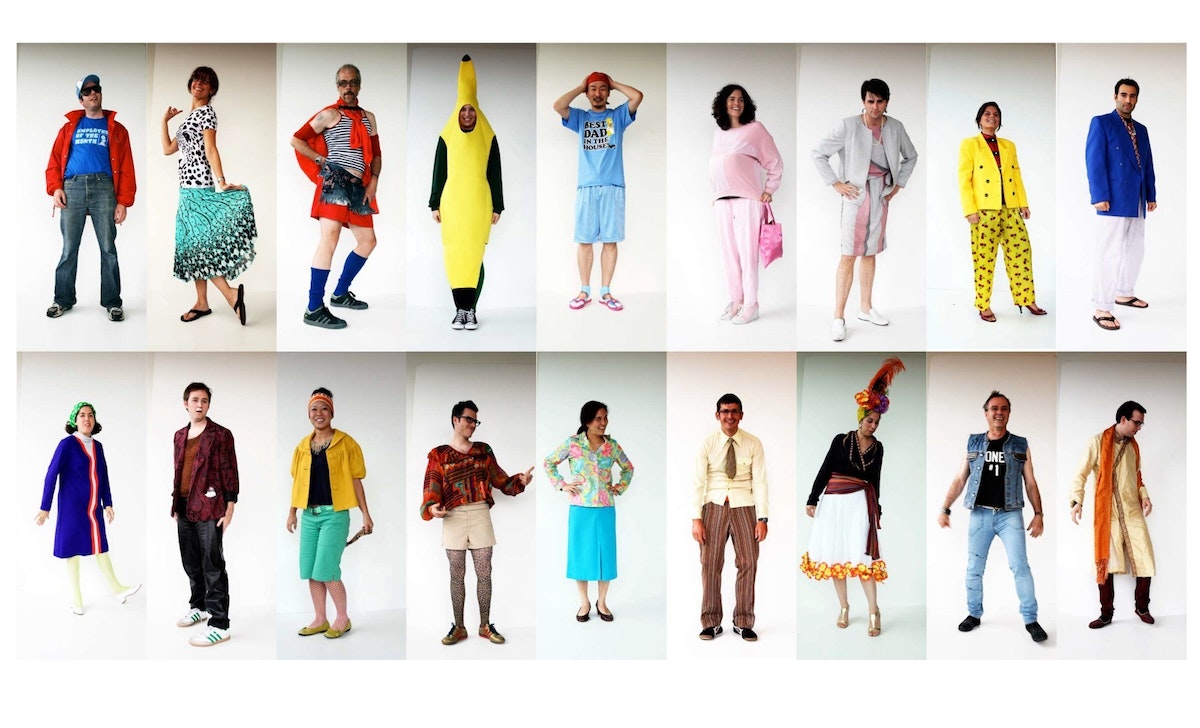
It was the
best
day
ever.
It was joyous and unserious. It wasn’t about fixing; it was about sparking something and letting go.
Only four people didn’t participate out of a studio of nearly 60. I am sure they regretted it! And looking back, I believe that day was a key moment in a process of transformation for myself, using my position for fun instead of misery. It was that raw creative act that broke the dam for me.
Around that time, the project leader for the Quiksilver work came to me with the idea of traveling the California coast in an RV—you know, “as research.” I knew he expected me to say no. And it would certainly lose us a bit of money, but I suppressed the leaderly should and followed my new directive and said yes.
My landlubber colleagues got to be surfers for a few weeks. I joined the team on the road and reconnected with my surf-teen years in San Diego. More importantly, surfing every day, sketching in the sunset over beer and pizza in roadside campgrounds with a bunch of other (mostly) dudes, trading ideas until we fell asleep in the RV, and fomenting the growing optimism and joy of building play into our workday led to the design of great concepts for the client—some of which went to market.
Other changes followed.
We hired some amazing people, who we never would have hired prior, as interviews shifted from picking people apart to finding and supporting possibility.
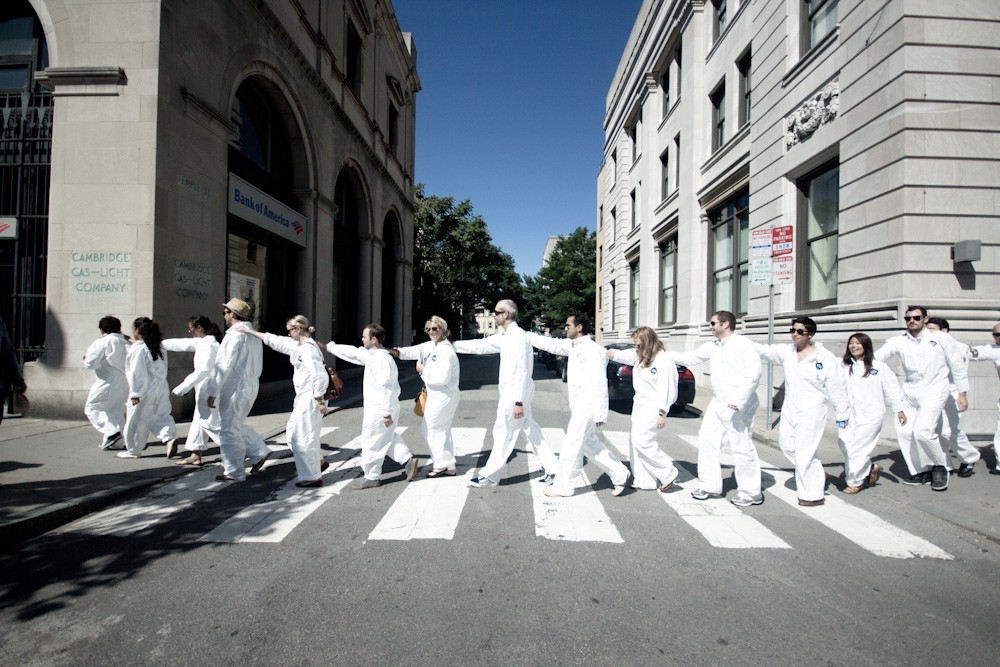
For a colleague’s wedding we dressed up in Tyvek suits and marched, single file, to the courthouse through Cambridge, MA. (That's what you see in the image up top).
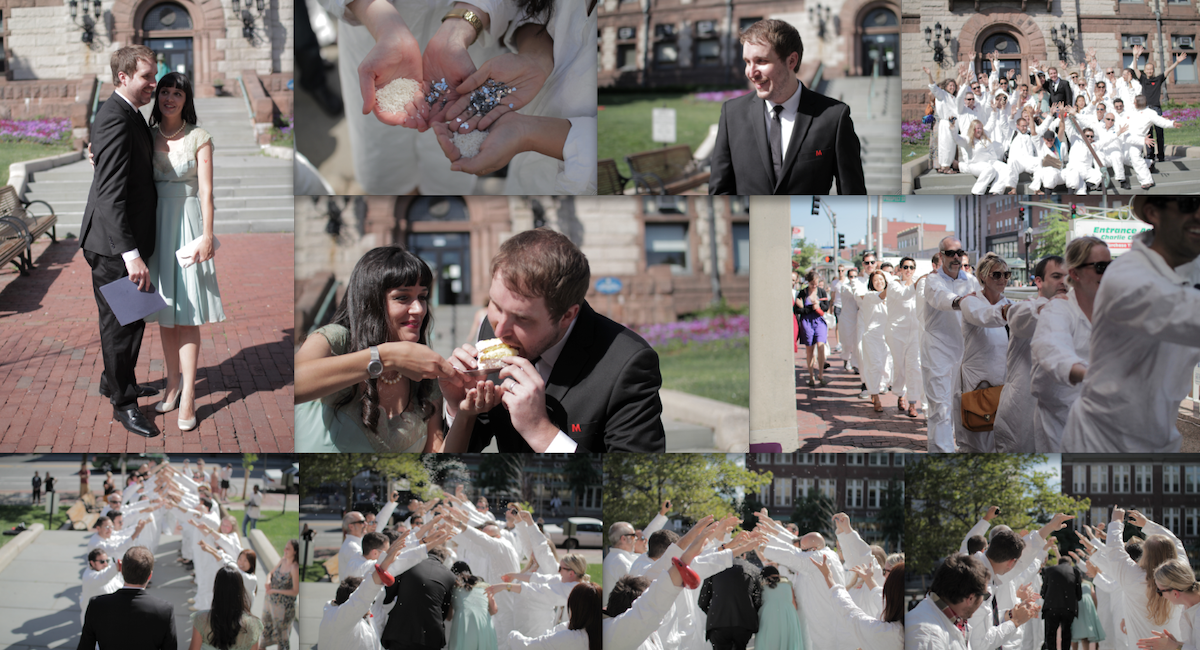
We did design fiction exercises over lunch. The culture began to be one that craved creative pokes to encourage the flow of great ideas.
The studio evolved from being a quiet participant in the business to a creatively rowdy collection of designers from Boston producing content that the rest of IDEO references.
How we were began to shape what we did.
So much had changed with that simple note to myself.
I’m not suggesting that dressing your colleagues in thrift store pantsuits will fix everything. Nor that you need to hit your nadir and be ready to quit before you can find the inspiration to lead from your creative self.
In fact, this is not really about you or me at all.
This is about what I learned the hard way: That great creative leadership is about letting go of that nagging mental image you have of what you are supposed to do. It’s about believing in others, and focusing on fanning the flames of creative, weird, exothermic people, rather than on fixing problems.
How you approach your day is how you will live your life.
If you see your role as a list of broken things that need to be fixed, life will deliver you nothing but. But if you actively seek creativity and fun, and enjoy a little embarrassing dress up now and again, you might just find yourself successfully in the middle of the vibrant culture you’d once wished for.
When I was a fresh, newly appointed lead in our Boston studio, I struggled to have much fun. I believed I was a fixer of broken things, thinking, and people. The story I told myself was that I was a martyr for the fun others were having while I dealt with the important leaderly stuff.

Lindsey Turner
I’m passionate about building brands, products, and experiences that help organizations show up with meaning and momentum.
I help organizations cut through complexity by shaping how they show up, through brand strategy, identity, and storytelling.
Working at the intersection of brand and business, I bring an editorial eye and a bias toward making—turning ideas into tangible experiences that people can understand, trust, and believe in.
My work spans government, healthcare, financial services, media, and consumer goods, from launching Gen Z-focused ventures to building innovation labs and reimagining legacy brands. I relish moments of ambiguity and enjoy translating across teams, perspectives, and priorities to move ideas forward.
I started my career in editorial and digital design, shaping cross-platform experiences and identity systems in publishing and agency environments. That foundation still shapes how I work today: I’m detail-oriented, collaborative, and overreliant on the Oxford comma. I hold a BFA in Visual Communication from the School of the Art Institute of Chicago.

Rachel Young
My work helps organizations see who their products aren't working for—and build the will and the tools to do something about it
For 25 years, I've asked the same question: Who does this design exclude—and what are we going to do about it?
My work spans human-centered strategy, inclusive design, and qualitative research, with clients ranging from Microsoft, Google, and Verizon to the National Science Foundation, and San Francisco Unified School District.
Before IDEO, I taught elementary school in East Palo Alto and spent a decade doing design work with social service organizations—where I learned firsthand what it costs people when systems are built without them in mind.
I am currently writing User Error, a nonfiction book about digital access and the design decisions behind it. I live in Oakland, California.

Brian Pelsoh
I lead with craft, ensuring our work is creatively excellent: rooted in deep human insight and imagination, while also grounded in the realities of business and technology.
My expertise spans brand, communication, and product design across tech, education, the arts, and social impact.
I believe great work demands both high-level vision and obsessive attention to detail, and only happens through collaboration.
I bring an inclusive, hands-on approach and a deep understanding of business, which enables me to consistently deliver excellence while always asking why.
Before joining IDEO, I worked at the brand firms Pentagram and VSA Partners. I began my career as a designer, leading teams at the School of the Art Institute of Chicago and the Milwaukee Art Museum. I hold an MFA in graphic design from Maryland Institute College of Art and a BFA in communication design from the Milwaukee Institute of Art & Design, and have taught at some of the best design schools in the US.

Tony Wong
I am responsible for IDEO’s long-term success in China and working with clients to use design as a tool to enable growth.
I am responsible for IDEO’s long-term success in China and working with clients to use design as a tool to enable growth. Specifically, I have helped Chinese companies design holistic brand solutions through the development of their products, communication, services, and innovation teams, and I have helped multinationals expand their presence and influence in China.
I advise global leaders on developing China-led innovation and capabilities.
In over 15 years in IDEO Shanghai, I have worked on projects that use design to elevate the quality of the experience of healthcare products and services, streamline processes that increase productivity, create spaces and programs that promote and enable inclusive communities, and build next generation mobility solutions that are planet-positive.
Before joining IDEO, I worked at Philips Electronics and the Electrolux Group in Italy, the Netherlands, and Singapore on a number of breakthrough commercial products. I am a member of the Young President Organization in Shanghai.

Building a personal AI for the messiness of life: Sida Li
Most AI products today are built for work—a space with clear problems and established systems. One founder noticed a gap: personal life is messier, harder to systematize, and mostly left behind by the AI boom. So she built Cue, a personal AI that lives inside iMessage and group chats, to go where the other tools haven't.
In this episode, Becca Carroll, IDEO's Chief Strategy Officer, talks with Sida Li, co-founder and CEO of Shared Context Lab, about staying anchored to a human need while the technology around her keeps changing shape, why she treats her business model with the same rigor she'd bring to a product, and what it feels like to build a company at this particular, disorienting moment in AI.
The conversation also gets into how Sida makes design decisions: the language Cue uses to describe itself, the tradeoffs behind building inside iMessage instead of a new app, and a real story about a business idea that didn’t pan out.
This is the second in a two-part series profiling founders from IDEO's Startups-in-Residence program. The first conversation is with Johannes Seemann, founder of Sooner, on designing GenAI for the emotional side of money.

Designing GenAI for the emotional side of money: Johannes Seemann
Most personal financial tools are built to run the numbers and optimize towards a budget. While that works for some, most people experience money as a lived relationship that does not neatly fit into a spreadsheet. Johannes Seemann and Becca Carroll discuss why money is emotional before it is mathematical, and what a human-centered approach to building a generative AI financial product looks like in practice.

The curious leader's edge in uncertainty: Scott Shigeoka
Mina Seetharaman talks with Scott Shigeoka, author of Seek and Head of Curiosity Cultivation at the Eames Institute, about what distinguishes genuinely curious leadership from performative curiosity, how power dynamics shape curiosity, and why practicing curiosity can restore energy rather than drain it.

How constraints make us more creative: David Epstein
Mina Seetharaman talks with David Epstein, author of Inside the Box and Range, about why total freedom often produces average work, how leaders can design useful limits on purpose, and what organizations such as General Magic and Pixar reveal about the relationship between boundaries and creativity.
Looks like you might be in search of something very specific?
Or reset the filters above and try another angle.
Here’s some random inspiration

Podcasts about creative leadership

Articles about the power of prototyping
