
.svg)



Building a brand for a new, more nutritious rice
RightRice makes one of the world’s favorite foods healthier and easier to prep.
When it comes to food, we often have to choose between health, convenience, and taste. Parents struggle to get their kids to eat veggies. The same daily salad can become boring or bland over time. Produce often withers in the crisper drawer.
Betterer Foods set out to make one of the world's favorite foods healthier. Rice is a beloved food across many cultures, but many people now avoid simple carbohydrates due to diet restrictions or health concerns. Innovations and alternative options have mostly been limited to products in the freezer section, like riced cauliflower.
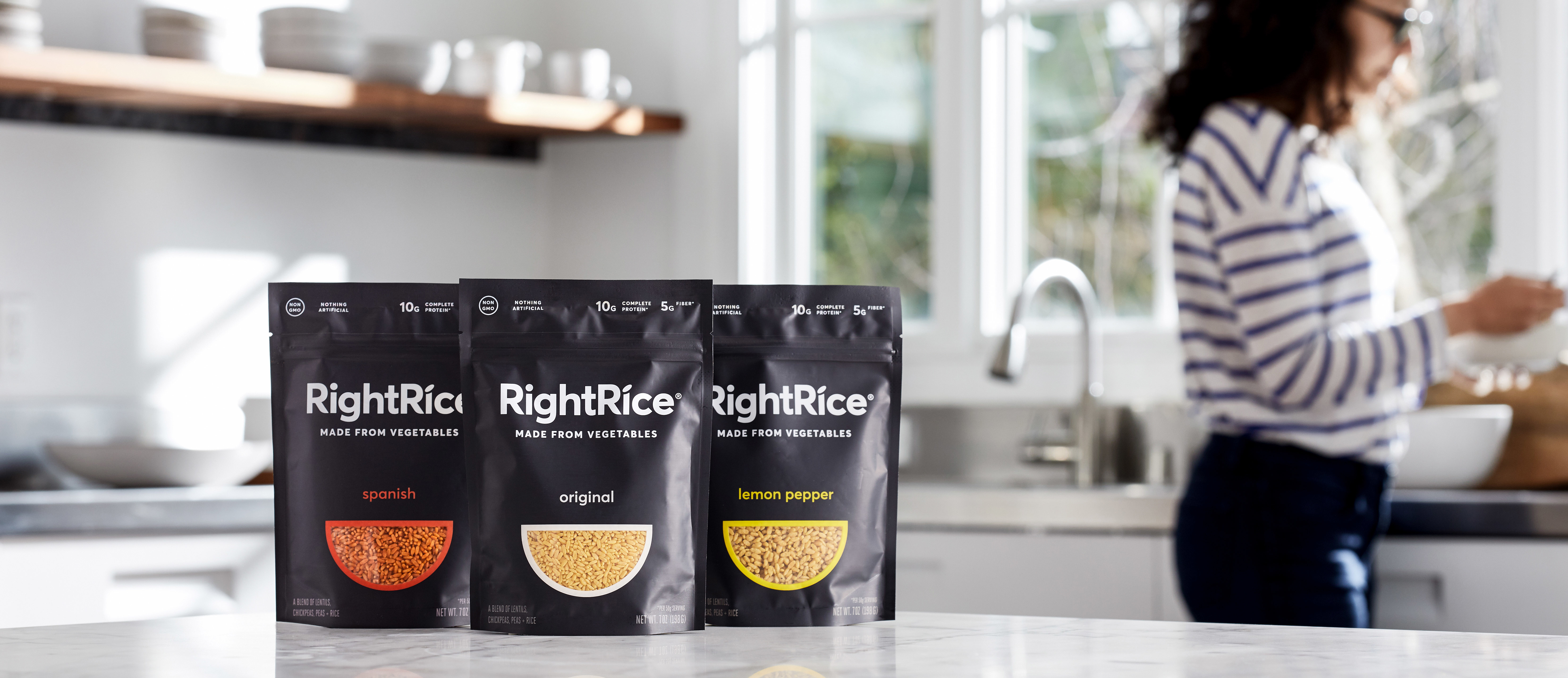
Betterer Foods created RightRice: a dry, shelf-stable grain made from rice and vegetables, including lentils, chickpeas, and green peas. RightRice has more than double the protein, five times the fiber, and 40 percent fewer net carbs than traditional rice. But the product still tastes and looks like rice, and is faster and easier to cook.
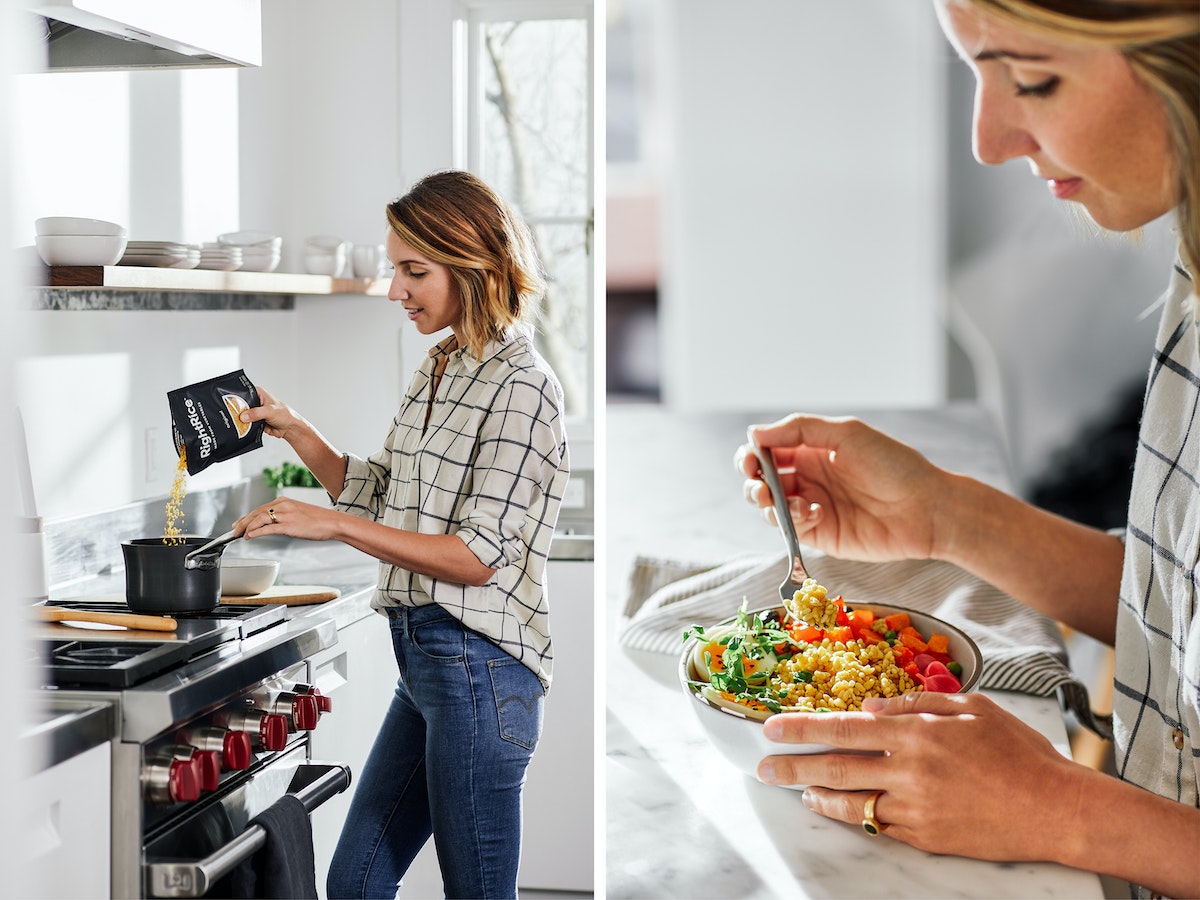
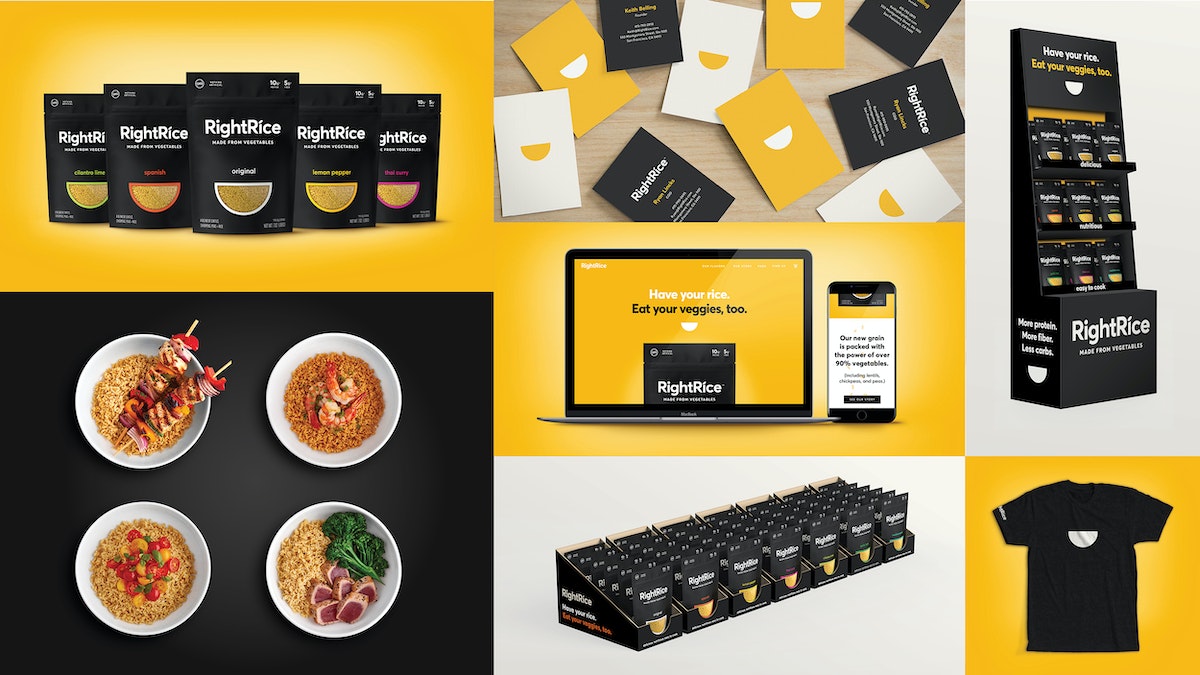
RightRice founder Keith Belling, the founder and former CEO of popchips, asked IDEO to design a brand that would communicate the product’s benefits. The start-up needed everything from a defined target consumer and brand story to a stand-out package design, website, and go-to-market materials.
The team listened to people's challenges with rice and eating healthfully: home cooks find it difficult to store fresh foods without them going bad, busy professionals are strapped for time when preparing balanced meals, and parents sneak vegetables into dishes like casseroles or mac and cheese. Some consumers say they avoid rice because it’s a carbohydrate, which is forbidden in so many of today’s diets. People describe themselves as “carb phobic” or say they consider rice a “guilty pleasure.” Others don’t eat rice because it makes them feel sluggish or bloated, or is too difficult or time-consuming to prepare. Overall, people wished rice could be healthier, simpler to cook, and still taste delicious.
IDEO translated these insights into a brand foundation that helped RightRice come to life on shelves, online, and in the world. The package messaging emphasizes the vegetable ingredients, and the cut-out window lets consumers see that the product looks like rice. The shape of the window simultaneously forms a bowl of rice and a smile.
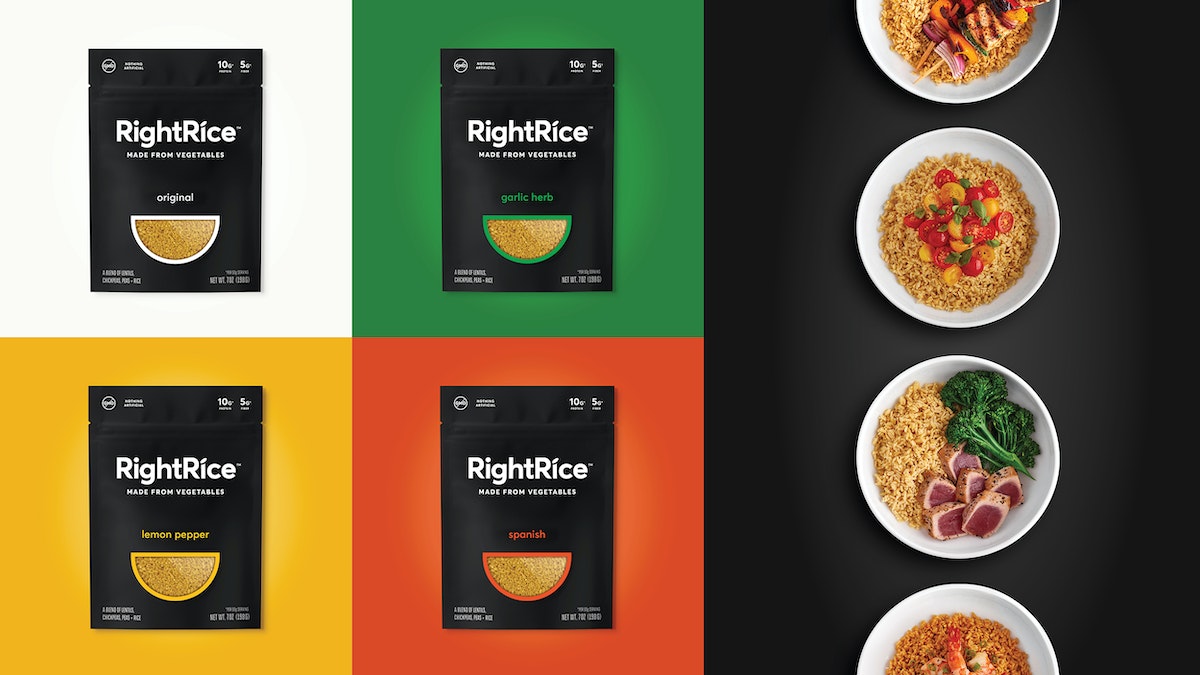
Rice is a household staple around the world. The RightRice brand makes it easier for consumers to have health, convenience, and good taste in one accessible product. RightRice launched nationwide in Whole Foods and Amazon in February 2019.
Since this launch, the company has expanded both its reach and product line. RightRice is now available in nearly 5,000 retailers nationwide in addition to Whole Foods and Amazon, including Sprouts, Wegmans, and approximately 1,800 Kroger stores. Over one million bags have been sold.
The company has received numerous awards and acclaim, including being named “Best Plant-Based” by People’s 2019 Food Awards. Building on the success of RightRice, Belling and his team launched RightRice Medley, a blend of RightRice, ancient grains, and vegetables, in 2020. This new product, which features the same branding the company created with IDEO, has doubled the company’s shelf presence at Whole Foods.
How creative leadership can transform companies and society
Joining hands with PBC School of Finance, Tsinghua University, and Tsinghua Academy of Fine Arts to create the first innovative leadership course with design thinking as the core in China.
After 40 years of rapid development, China's economic growth has reached a critical turning point.
However, looking at the world, today is also the most complex and uncertain era in human history. The traditional engine of economic development is slowing down, while innovation and other emerging ideas are helping the economy burst into dynamism. To ride this trend, China has already put in place comprehensive policies to ensure that the country can achieve this magnificent transformation—not only to maintain economic growth, but also to achieve high-quality development. To this end, what China needs most is a group of new business leaders with a sense of cooperation and innovation to lead and realize this change as a pioneering force.
People of insight can often see the situation clearly with a forward-looking eye. China's society and economy are undergoing transformation and upgrading, and market demands are constantly changing driven by technology. While seeking business development, many mature entrepreneurs with successful experience have realized that they need to explore some of the most essential issues inwardly, including: The original intention and mission of the enterprise and the role that enterprise leaders should play. However, without a systematic approach, transformation and upgrading, strategic decision-making, management mode and cultural construction cannot truly serve the enterprise
As a top institution of higher learning in China, Tsinghua University has always placed an important strategic position on cultivating innovative talents for China. IDEO is the world's leading design and innovation consulting firm. As a pioneer of design thinking, IDEO has always been committed to applying design and innovation capabilities to solve the world's most complex problems. After discovering the need for China's economic and social transformation and the need for innovative leadership by Chinese entrepreneurs, Tsinghua University and IDEO jointly launched the "Leading China" program in 2018. This program is aimed at senior management of Chinese enterprises, and aims to train entrepreneur trainees to use new perspectives and ideas through a one-year innovative leadership course to seek solutions for the systemic changes that need to be achieved in the process of social transformation in China.
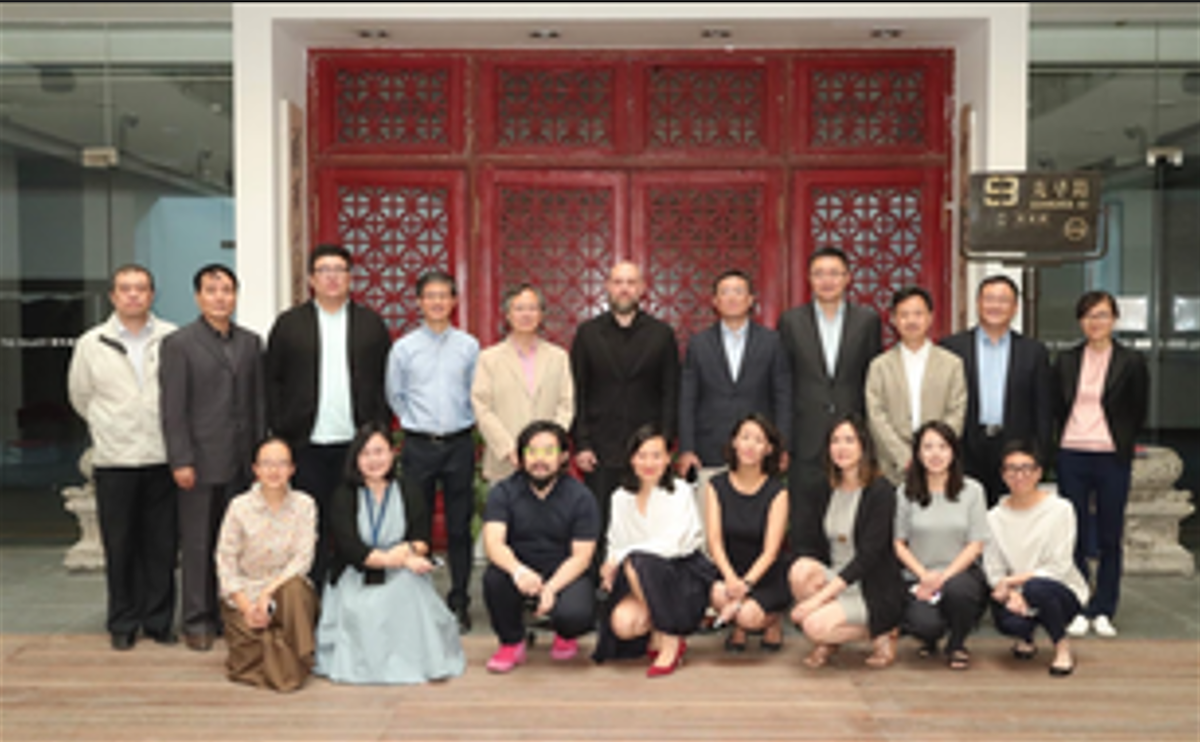
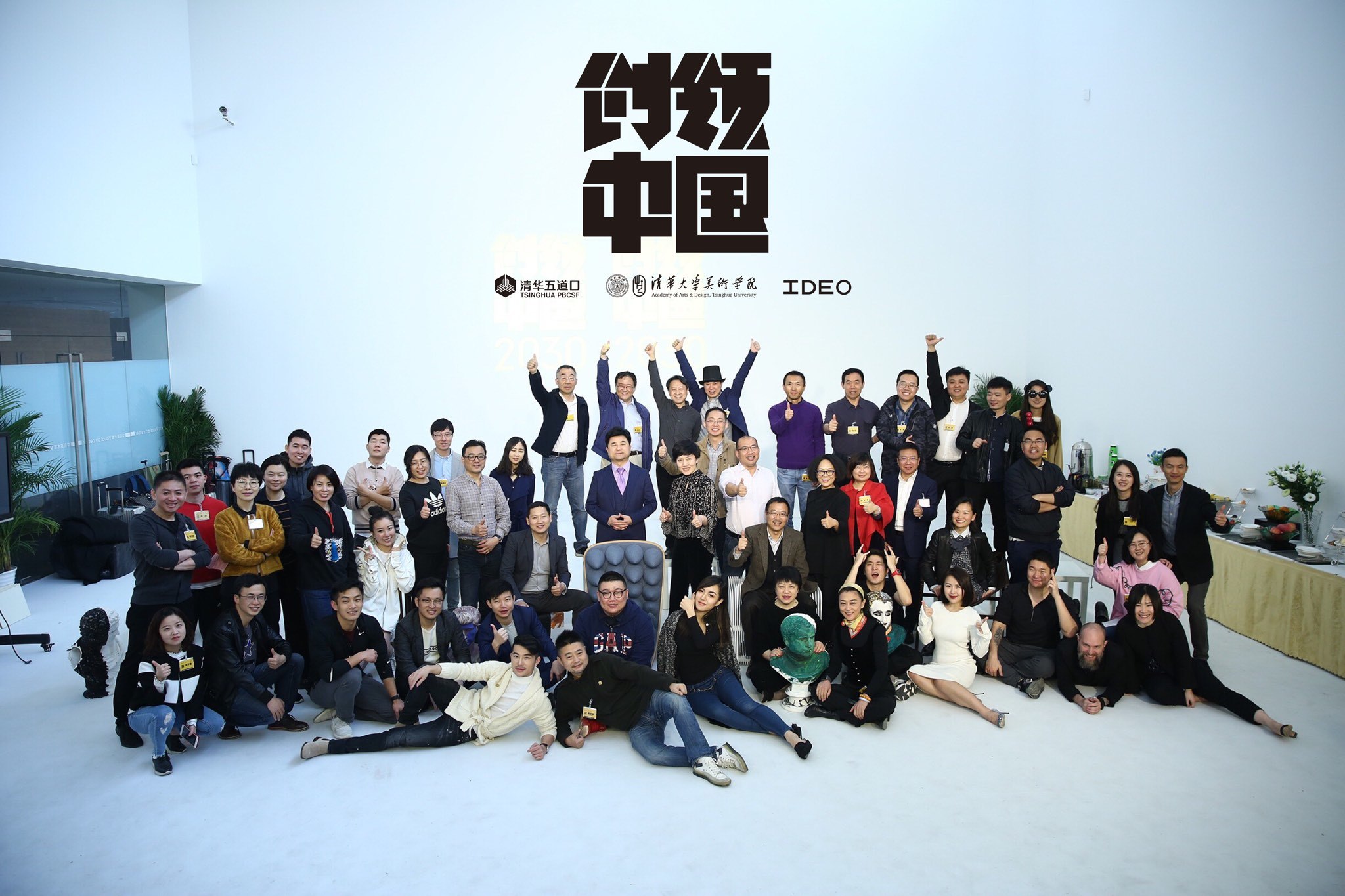
The students of the first "Leading China" program came from more than 30 entrepreneurs from 20 different industries. The teachers who participated in the lecture included 73 Chinese and foreign experts including Shan Jixiang, the former dean of the Forbidden City, Masahiro Kuroyama, the father of Japanese industrial design, and Jake Knapp, the inventor of "Design Sprint". As China's first innovative leadership course with design thinking as the core, the project is equipped with "design to open enterprise creativity", "reshape enterprise competitive advantage", "forge innovative business system", "innovate with the help of finance", "embracing Industrial Revolution 4.0" and "Win-win China Created 2030" six modules. The trainees traveled to nine cities in one year, and completed the courses in the interactive teaching of inspiration and the exchange and sharing of practical experience. Many students said that the course not only helped them find the direction and path of enterprise reform, but also improved their way of thinking, strategic planning and leadership models.
Liu Feng, the founder of Top Intelligence, gave an example of the inspiration brought by the six pillars of "vision-led" enterprise reform. Through "vision leadership", he not only sorted out the original intention and values of the company, but also launched a series of measures based on this starting point, which improved the company's various aspects from the telephone customer service process to the organization of the annual meeting, and mobilized the enthusiasm of employees. This greatly improves the company's efficiency and flexibility. Ting Zhihong, chairman of Hongtu Logistics Co., for example, said that the biggest change brought by the course is her awareness of the importance of empowering the team. The company has now built many platforms to give employees more room to play, to create markets, to put decision-making on the front line, and to let employees play the role of company operators. Her company doubled its profits in 2018. Hu Chao, founder and CEO of Leyou Pregnancy and Baby, introduced that what most executive courses learn is knowledge, and what this course learns is people-oriented values and ways of thinking.
The students of the first class of "Leading China" graduated in December 2018. Regarding the course of this year, Wang Jingwei, former assistant dean of the PBC School of Finance, Tsinghua University, commented: "Since the project was launched, we have not only witnessed the true value of design in a business context, but also experienced first-hand the use of people-oriented The difference between the designed executive courses is that the entrepreneurs who participated in the courses quickly entered a state of immersive learning, and many students quickly began to practice the methods they learned in the enterprise.”
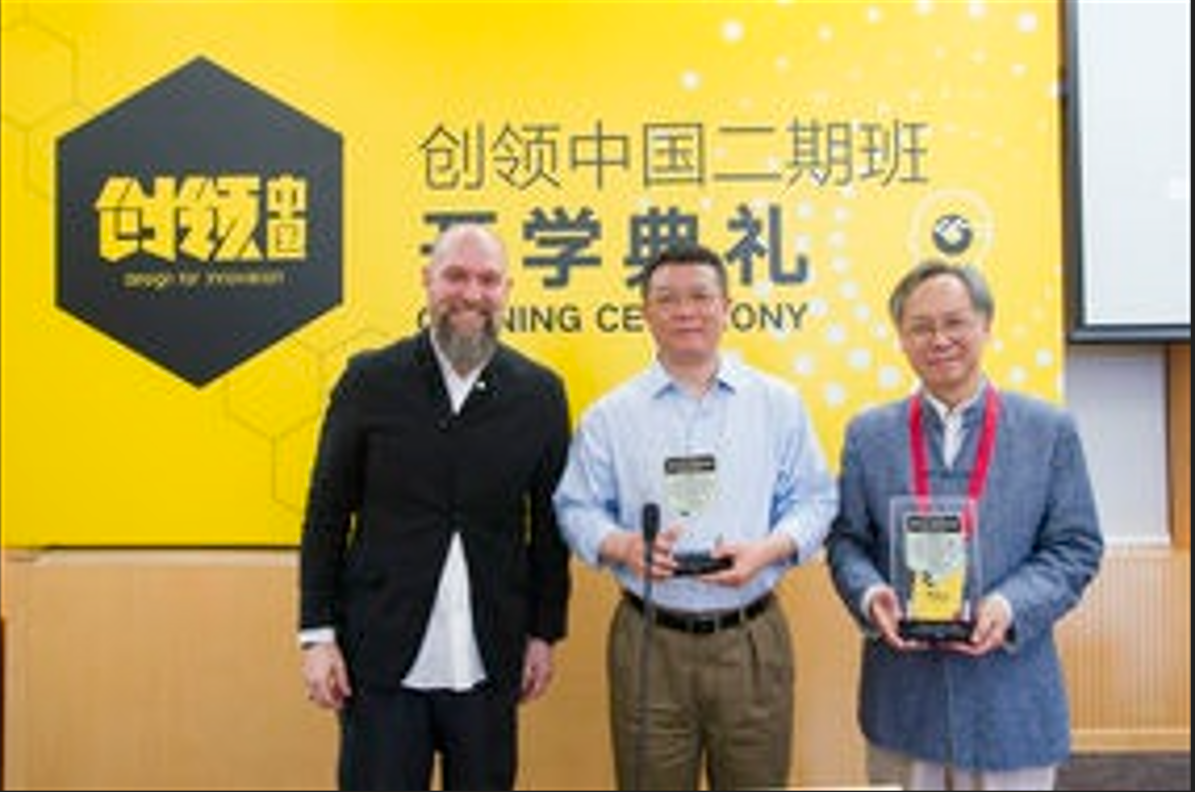
On April 8, 2019, the list of winners of the 3rd "Changing the World Innovation Award" was announced, and the "Leading China" project was shortlisted for case nomination, becoming the only Chinese innovation case in the education category. The "Change the World Innovation Award" was announced by Fast Company, one of the world's three major financial and business media organizations.
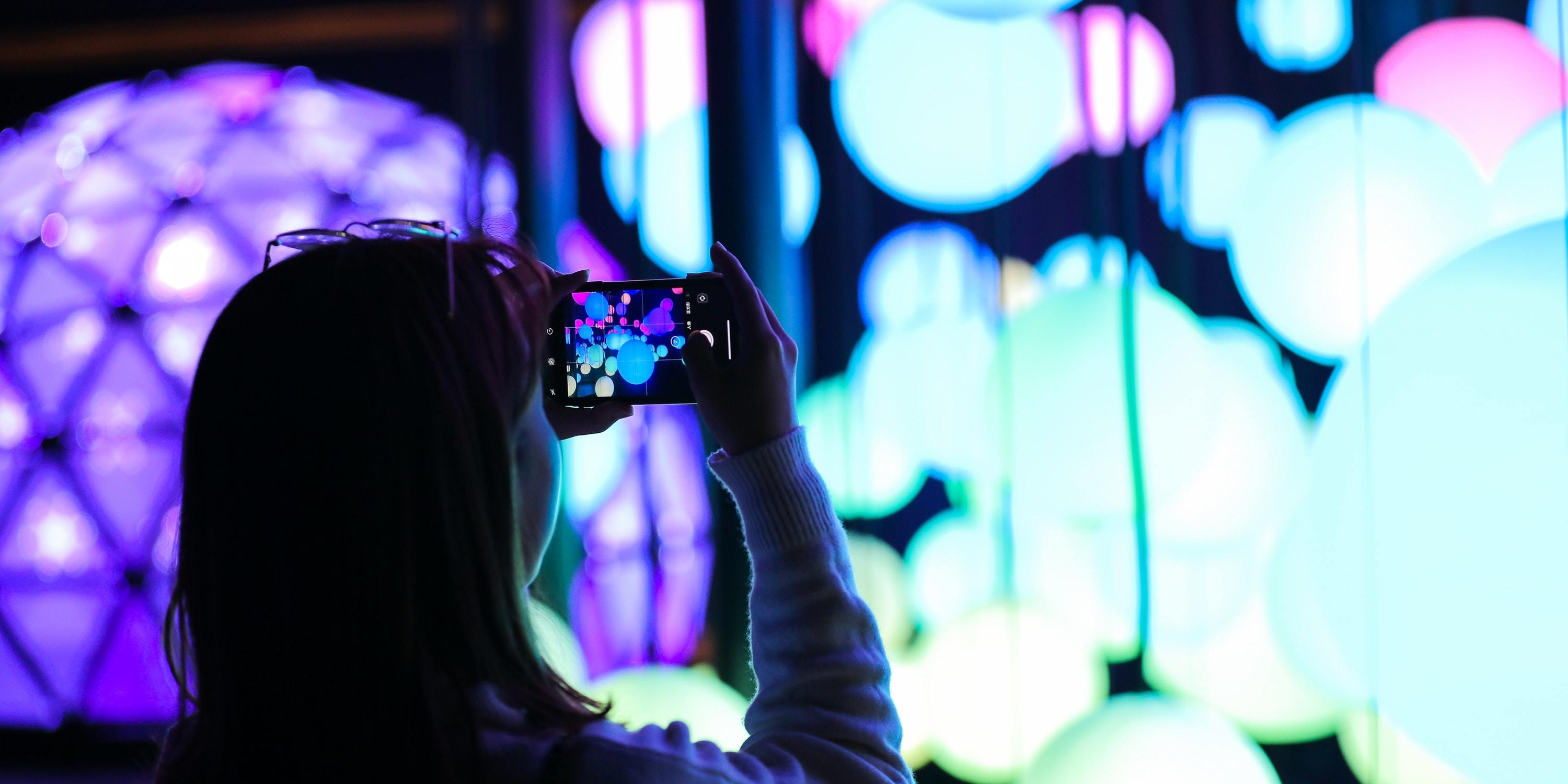
Helping a technology brand connect with China’s young consumer
Accelerating vivo's transformation journey from a smartphone manufacturer to a beloved technology brand.
As one of the world’s leading smartphone manufacturers, the Chinese brand vivo is widely known for its exceptional technological innovation and top-of-the-line photography and gaming hardware. But in an increasingly saturated phone market, vivo understood that it wasn’t enough to lead the pack based solely on technological excellence. To win the hearts of young Chinese consumers, they needed to become a beloved brand.
China consumes roughly 30 percent of the world’s smartphones, presenting a tremendous market opportunity to brands who wish to capture young consumers’ loyalty. In order to achieve that, vivo wanted to design a complete brand experience beyond the devices themselves—one that would express the joyful vivo brand spirit through services and retail experiences. One of their first key initiatives was to build its first concept store in an iconic building in Shenzhen, China.
Before building the concept store, vivo approached IDEO to explore what kind of in-store experience would resonate with young Chinese people. The concept store needed to convey joy in a meaningful, tangible way, while also setting the stage for vivo’s future brand systems. With this in mind, IDEO set out to explore how vivo’s young consumers experience fun.
After conducting research in four different cities, IDEO shared the stories of young Chinese consumers back with the vivo team. Their interviews revealed that young people value experiences that enrich their lives and create a feeling of positive personal transformation. They seek opportunities to expose themselves to new experiences, express themselves in different ways, expand and deepen their social connections, and build knowledge and skills.
Through this understanding of how young Chinese define “enjoyment,” IDEO helped vivo identify the value proposition of the concept store as expressing oneself in new and different ways. The store would allow every visitor to see something unique and find a fresh perspective. The vivo team took that value proposition into a design brief and later built out the space and interactive experiences.
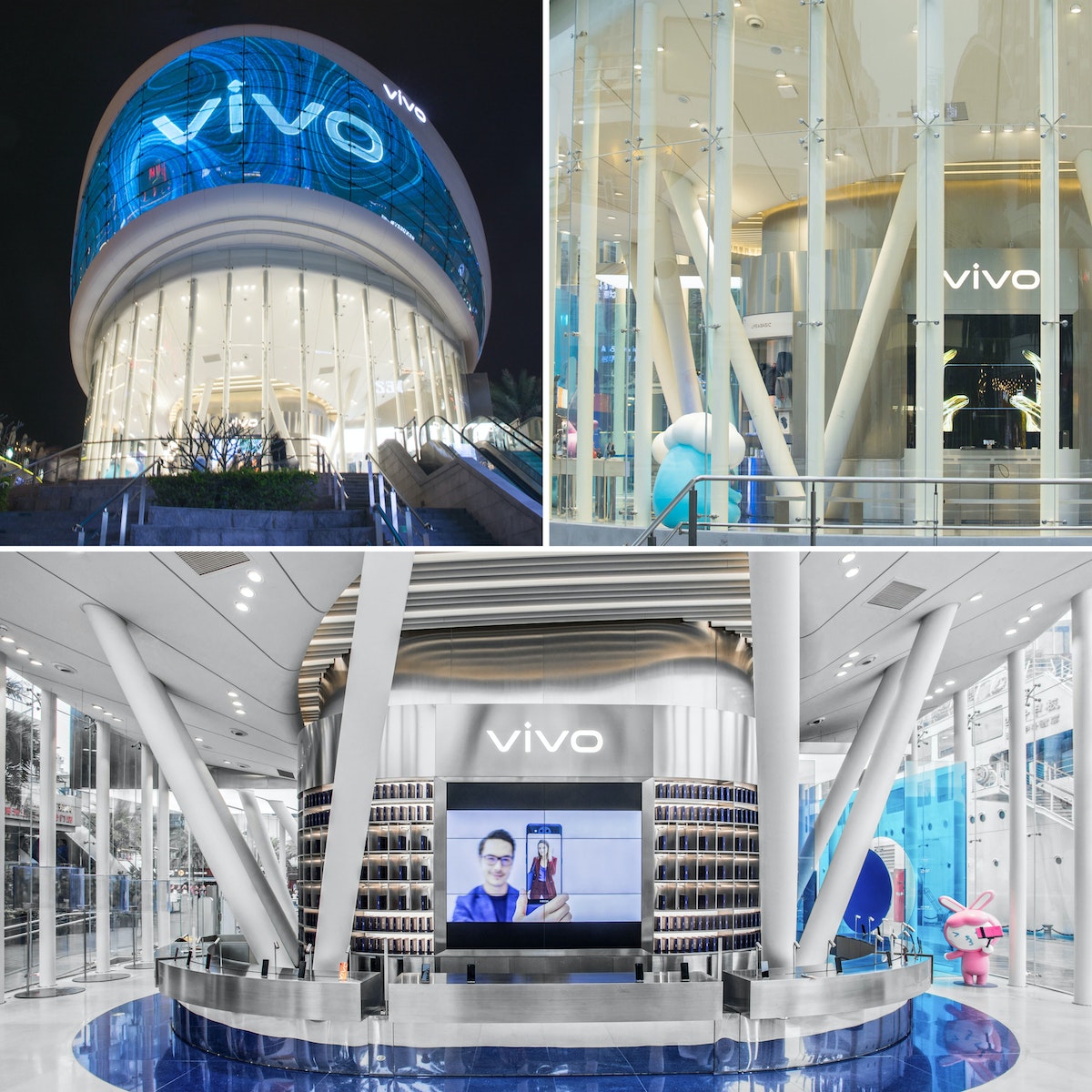
The concept store launched at Shenzhen on March 22, 2019, featuring an upper level dedicated entirely to interactive experiences with photo booths, sound recording, and lighting technology. The engaging, lively and positive atmosphere of the store represents a major milestone in vivo’s transformation from a smartphone maker to a consumer brand.
WATCH: Official launch video provided by vivo.
Equipping agricultural retailers to empower rural farmers in China
How Bayer Crop Science set out to scale its service to Chinese farmers in a highly fragmented market.
As China's agriculture moves towards scale and sustainability, helping farmers grow healthier food with resilience is a matter of national economic security and individual livelihoods.
Bayer Crop Science—with its mission to accelerate China's agricultural modernization and benefit Chinese farmers and consumers—has provided high-quality products for millions of growers in China over 18 years. Yet its service relies heavily on multi-layered distributors and retailers across the country. The last mile of Bayer’s product delivery spreads across tens of thousands of highly fragmented retail stores, making the quality of service difficult to monitor and control.
Together with IDEO, Bayer Crop Science aimed to uncover new ways to engage with local farmers and retailers, and develop design concepts for its diverse set of retailers—establishing local relevance as well as the potential to scale nationwide.
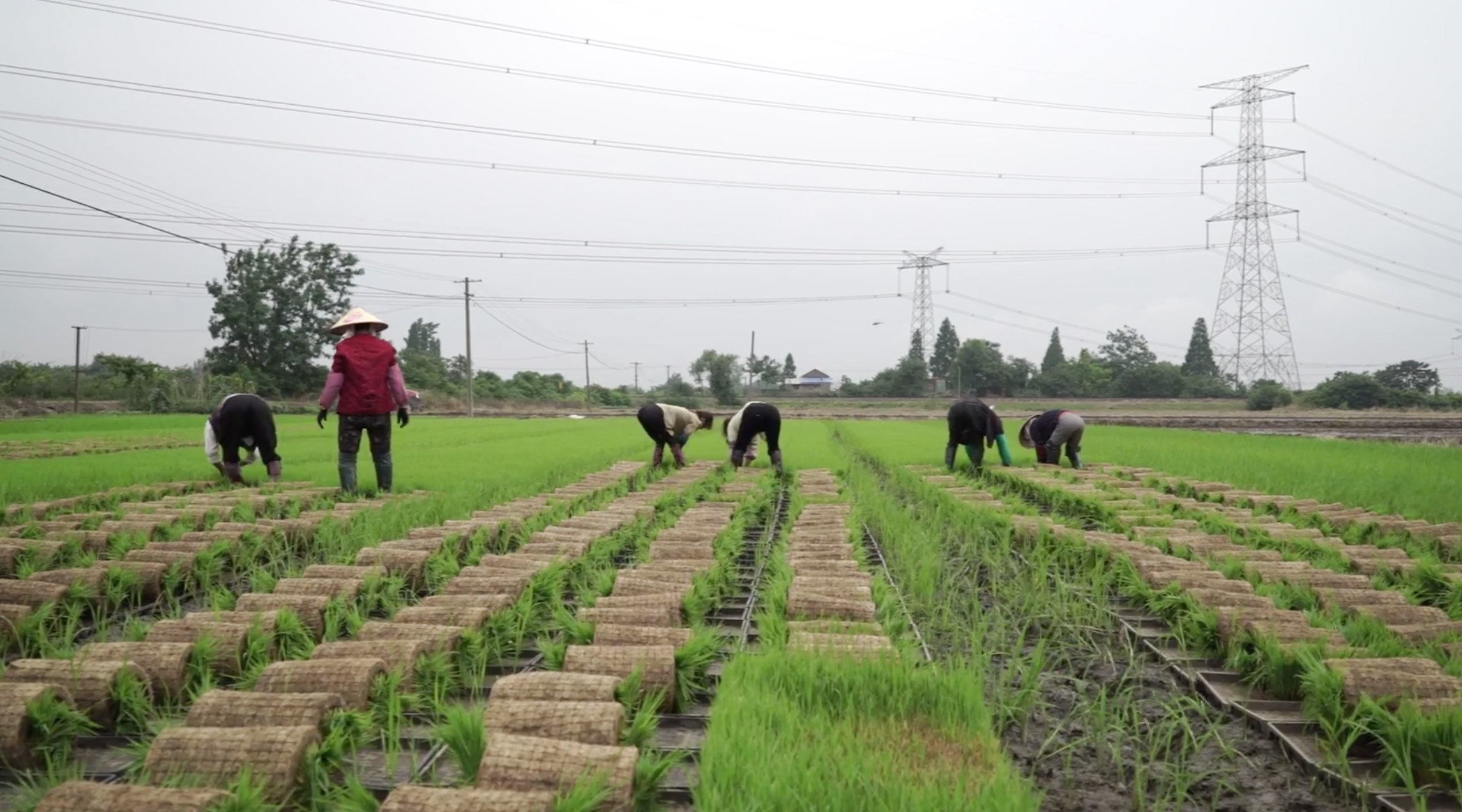
With this ambition in mind, a team formed by Bayer Crop Science and IDEO launched into a design sprint in the rice fields of China’s Anhui province. Field research uncovered multiple challenges facing Bayer Crop Science’s retailers. First, each store needed to serve more than one hundred farmers, many of whom rely solely on the store owner to understand how to use the products. Retailers struggled to meet a high daily demand for direct support in a way that provided a positive customer experience.
In turn, farmers felt they had insufficient access to expert advice. While many farmers shared similar needs, there was no system for aggregating requests or arranging group instruction. Given that many rice farmers are illiterate, pre-printed educational pamphlets had limited impact, and retailers lacked tools for providing targeted support. And because the retail stores were also used for storage, little space remained for educational or community programming.
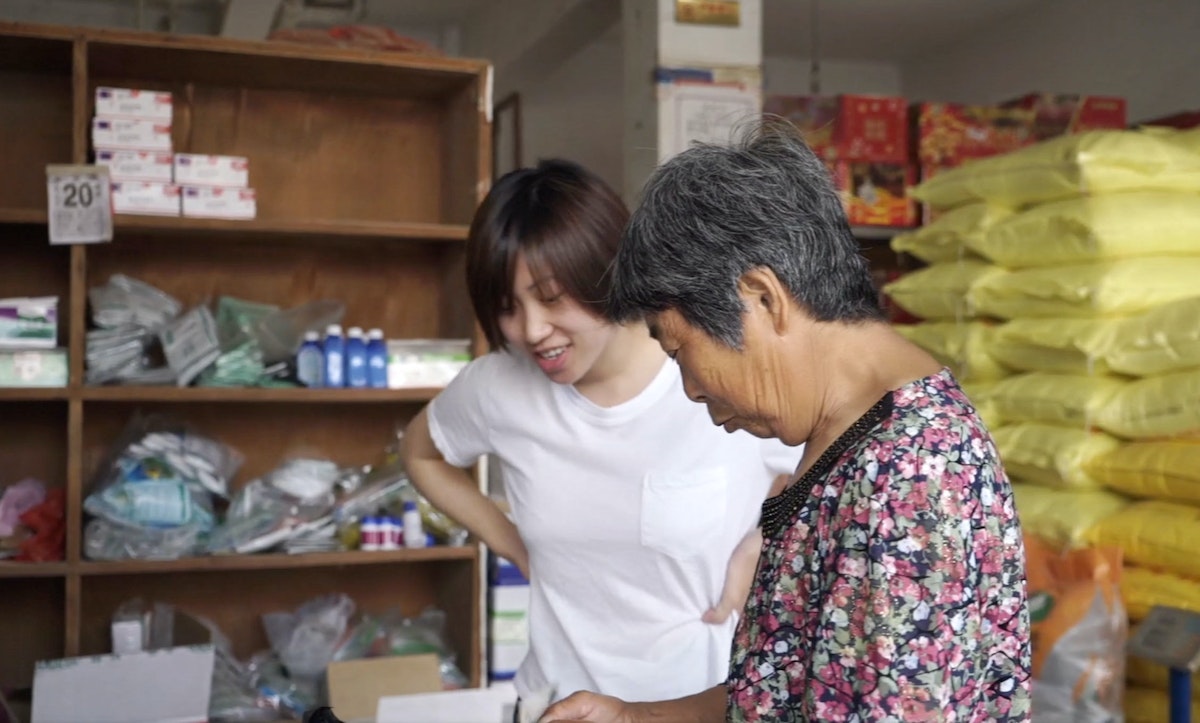
With these constraints in mind, the team needed to come up with ideas and design concepts that could be easily integrated into the daily lives of the retail store owners. The team brainstormed hundreds of concepts and quickly prototyped a select few. One retail store in Dangtu was transformed entirely into a live prototype set. Over three days, more than 50 farmers and retailers came through and provided feedback. From there, the team was able to make daily iterations of the concept, evolving the experience in real-time.
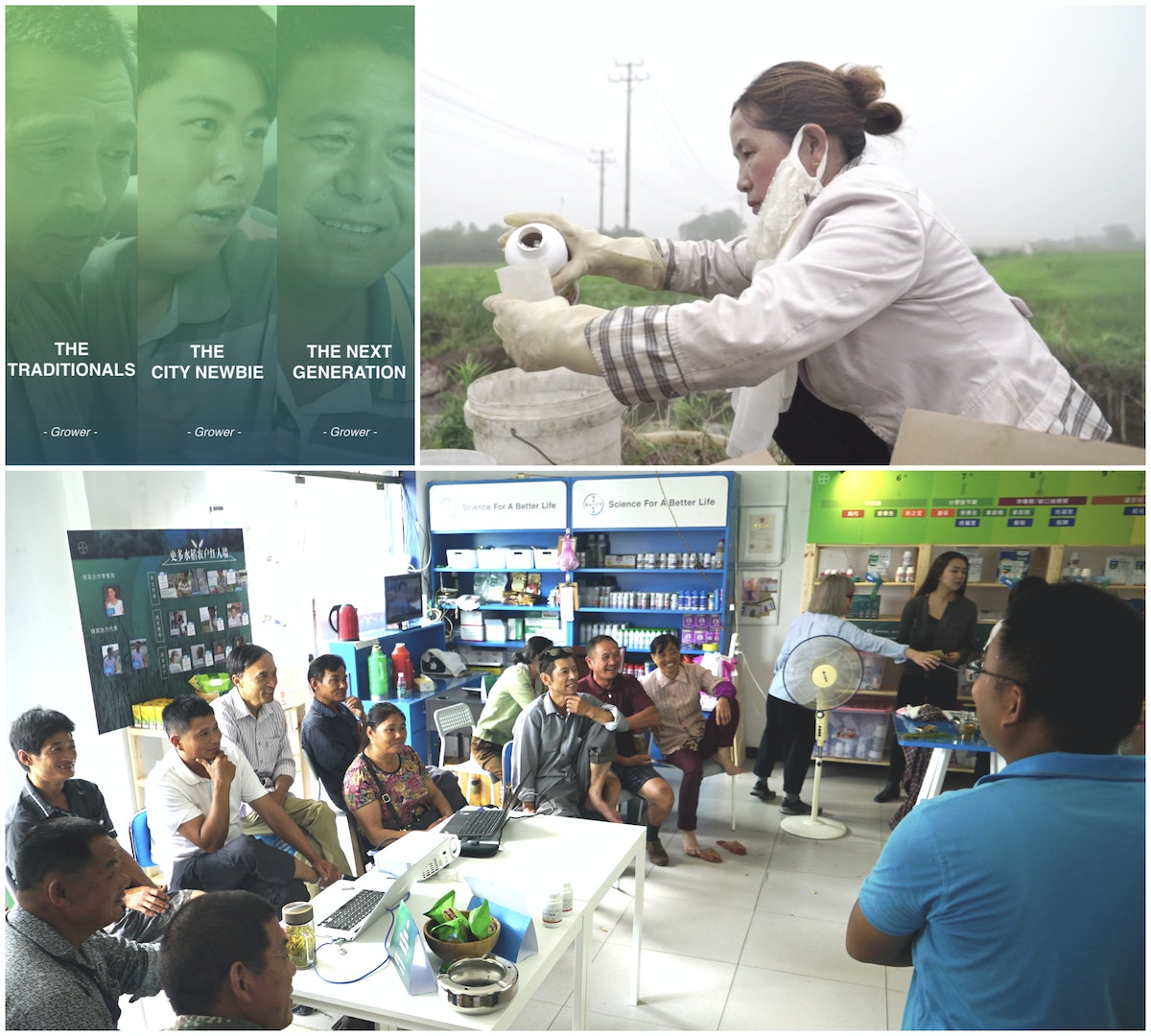
The Bayer team was energized by the potential of these prototypes to enable more customer-centered retail experiences. An exhibition of the concepts was set up during the National Annual Sales Conference of Bayer Crop Science in China, during which a much wider audience from Bayer experienced not only the concepts, but also the immediate feedback from farmers.
One year after the project’s completion, more than half of the design concepts have been included in Bayer's support kit for dealers. In 2019, these concepts will be rolled out in more than 1,000 flagship stores across China.
The work has also accelerated Bayer Crop Science’s efforts to build an ongoing engagement mechanism with its retailers and growers. Its online platform, Bayer Joy Grower, now has more than 10,000 retailers and will be expanded to growers soon.
日本酒のブランドデザインに込めた作り手の心
アメリカで学んだデザインで、日本らしさが持つ美しさを世界へ。
日本とアメリカの狭間で
私はそもそもお酒が好きです。東北の秋田県で生まれ育ったので、日本の米文化・酒文化は私の細胞の中に深く浸透しています。少し市街から外れると広がる田園風景と、季節毎に移り変わる田んぼの表情・匂いは私の大事な原体験のひとつです。祝いの席にはお酒が必ず出て、杯を交わしながら大人が賑やかに話しをしているのを見て、子供ながらに「お酒は楽しいもの」だと感じていました。また五穀豊穣を願う竿灯まつりは、東北を代表する夏の風物詩でもあり、稲穂を模した何千ともいう柔らかい提灯の灯りが夜の町に揺らぐ光景は、是非一度は見てもらいたい日本を代表する文化です。
現在私はIDEO Tokyoでコミュニケーション・デザイナーとして働いていますが、デザインの基礎はアメリカで学びました。在学中も、卒業後も、海外のデザイン会社で仕事をする機会に恵まれましたが、日々さまざまなグラフィックを作る中で感じたのは、同僚のデザイナーたちの作品に比べて、自分が表現するモノはどうしても日本的になることでした。海外のデザインに感化されながらも、水のような、空気のような、すっと入り込んでくるアジアのデザインに惹かれている自分がいました。日々違う表現に触れる中で、自分の中で消化して出てくるものは、自然と自分のルーツに近づいていく。日本社会に馴染めずに飛び出した私ですが、故郷である日本との強いつながりを感じました。
その一方で常に葛藤があったことも事実です。日本でデザインを勉強してきた人たちが表現する日本らしさに本能的に魅力を感じるものの、私には日本でデザインを学んだ経験がありません。原体験は日本ですが、デザインの手法は海外で身につけたため、どうしても日本的になり切らない。ある意味でどっち付かずの状態とも言えます。
IDEOで働くようになってからも、そんな葛藤を抱えていた中、日本酒応援団のリブランディングの話が舞い込んできました。何かデザイナーとしてのきっかけを掴めるかもしれない。ワクワクする気持ちがある一方で、「日本酒」という日本文化を代表するものを扱うことに、プレッシャーも感じていました。
「応援」したくなったきっかけ
今回のプロジェクトの依頼は、日本酒応援団のリブランドとそれに伴う商品パッケージの作成です。日本酒応援団は、全国各地の蔵とパートナーシップを結び、自社オリジナルの無濾過生原酒を醸造、提供しているブランドです。今後、海外のマーケットを目指す上で、世界に通用するようなブランドにしていきたいということで、お話をいただきました。
日本酒応援団は、それぞれの蔵・地域との結び付きが非常に強い会社で、酒造だけではなく、お米の生産者たちとの関係性も大事にしています。代表の古原忠直さんからビジョンやミッションを聞いたときに、「思い」と「ストーリー」がしっかりとあると感じました。ビジョンやミッションが形式化している中で、それが実際に実践できている会社はそこまで多くありません。
新たな名前には、お酒が作られる地域と、お酒作りに関わる人たちとの関係性を大事にするKinship(親しい関係・関連をもつ)、そして日本の美しい文化を表す”美”(み=Mi)
この二つを合わせて”KINMI”と名付けました。
リモートでも人々の想いに触れられた
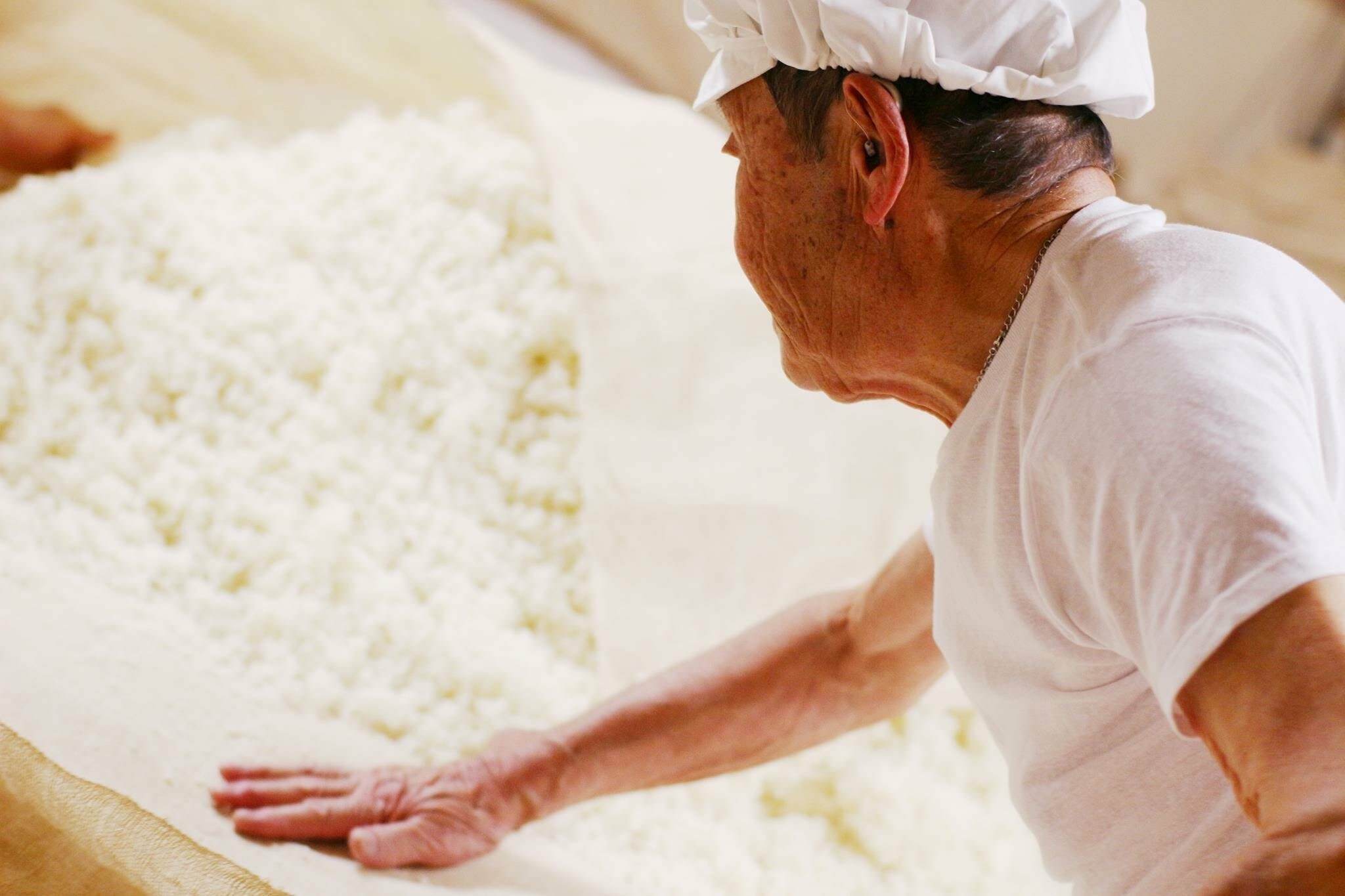
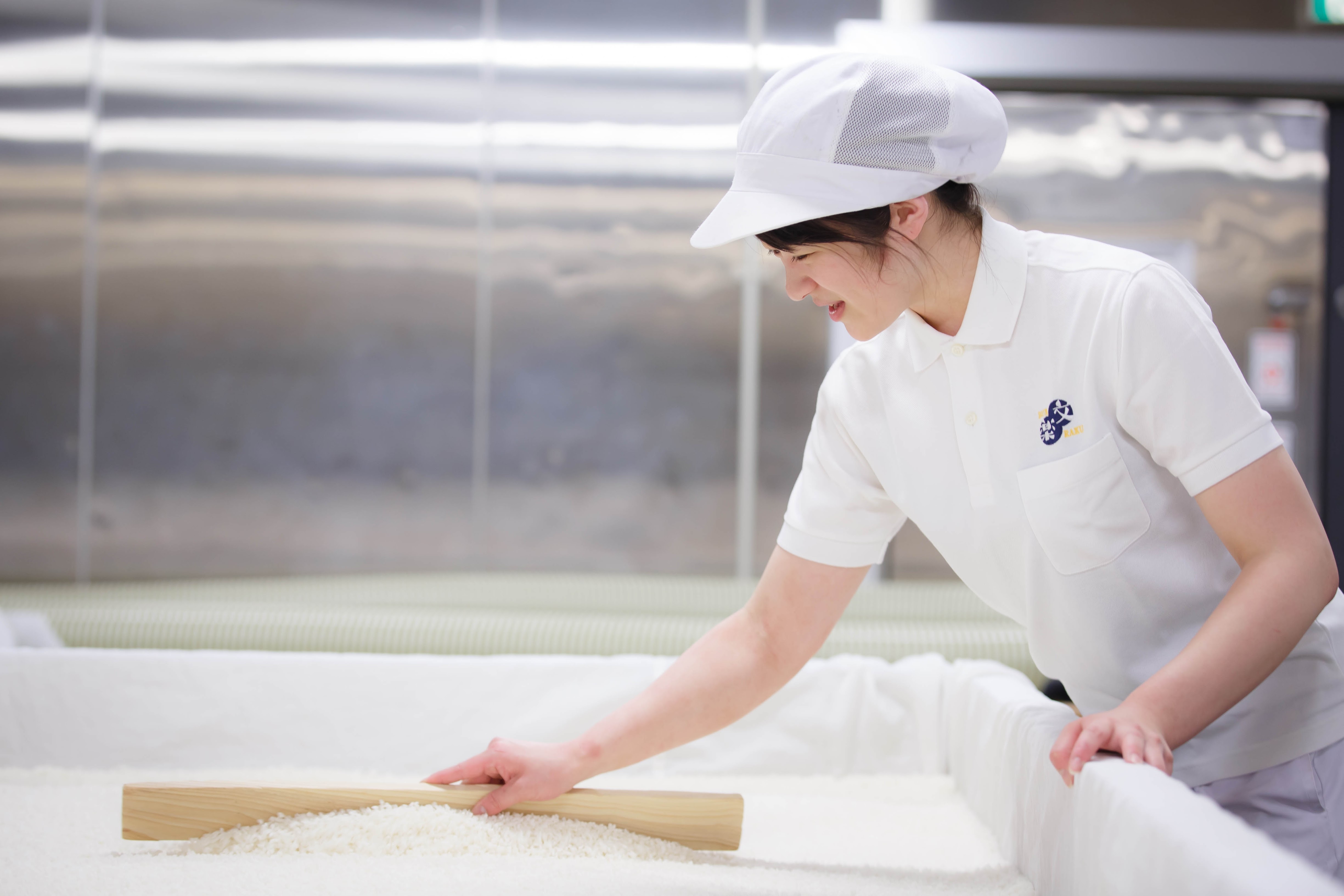
本来であれば実際の蔵に出向いて、酒造を囲む環境を観察したり、そこで働く人たちと話したり、蔵の中の様子を書き留める様なリサーチをしたかったのですが、コロナ禍だったためそれが叶いませんでした。そこで非常に助けになったのが、KINMI(旧名:日本酒応援団)のYoutubeチャンネルにあるオンライン酒蔵ツアーでした。酒作りのプロセスを丁寧に説明しながら、米作りに携わる方々や酒造で働く人々の思いも知ることができる。そんな優良コンテンツが満載のチャンネルです。
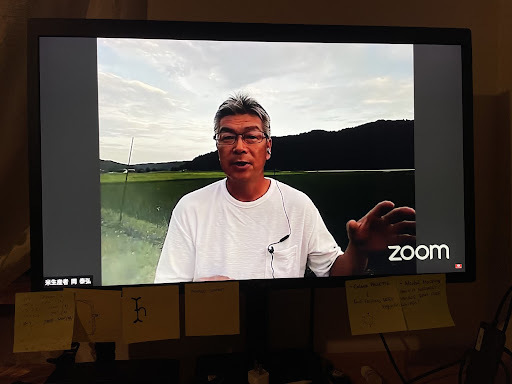
特に印象に残っているのが、国東の「萱島酒造」の元蔵人で、現在は米生産者として働かれている岡泰弘さんのエピソードです。岡さんが家業の農業を継ぐために萱島酒造を退職することになった際、萱島社長と交わした話が紹介されていました。地域を支えていくという大きな目標を持ち、米作りという新たな挑戦に挑む岡さんに対して、萱島社長は「お前が作る米は全部持ってこい、俺の所で買って作ってやる」と言ったそうで、この激励の言葉に心強さを感じたとおっしゃっていました。
この話だけでもお酒が一杯やれてしまいそうですが、お酒が作られている舞台裏ではこのような思いとストーリーが絡み合って、それが日本酒としてカタチになっている。それを、日本酒応援団という媒体を通して世界に発信していかなくてはいけないのだ、と感じました。
伝統に寄せず日本らしさをデザインする
日本らしさを担保しつつも、伝統に寄せすぎないデザインを作るのは終始課題としてありました。
様々なボトルを店頭で見ていると、競合他社のアプローチは大きく2つの流れに別れています。一つは、蔵の歴史を生かしてそれを前面に押し出し、直球的な日本の伝統スタイルを具現化するやり方。有名な書家の方たちに一筆お願いし、それをボトルのセンターに。日本酒応援団自体は歴史も深くなく、あくまでも地域を押し上げる媒体として機能すべきなので、最初から選択肢として外しました。
そしてもう一つは、一見するとナチュラルワインのようなラベルのデザイン。日本の人たちにとっては意外性があり面白いかもしれませんが、海外のマーケットに目を向けるとどうしても日本らしさが圧倒的に無くなってしまう。今回のリブランディングは海外マーケットへの進出が大きな目的の一つだったため、日本のお酒だと理解してもらうことは絶対的に外せない条件でした。
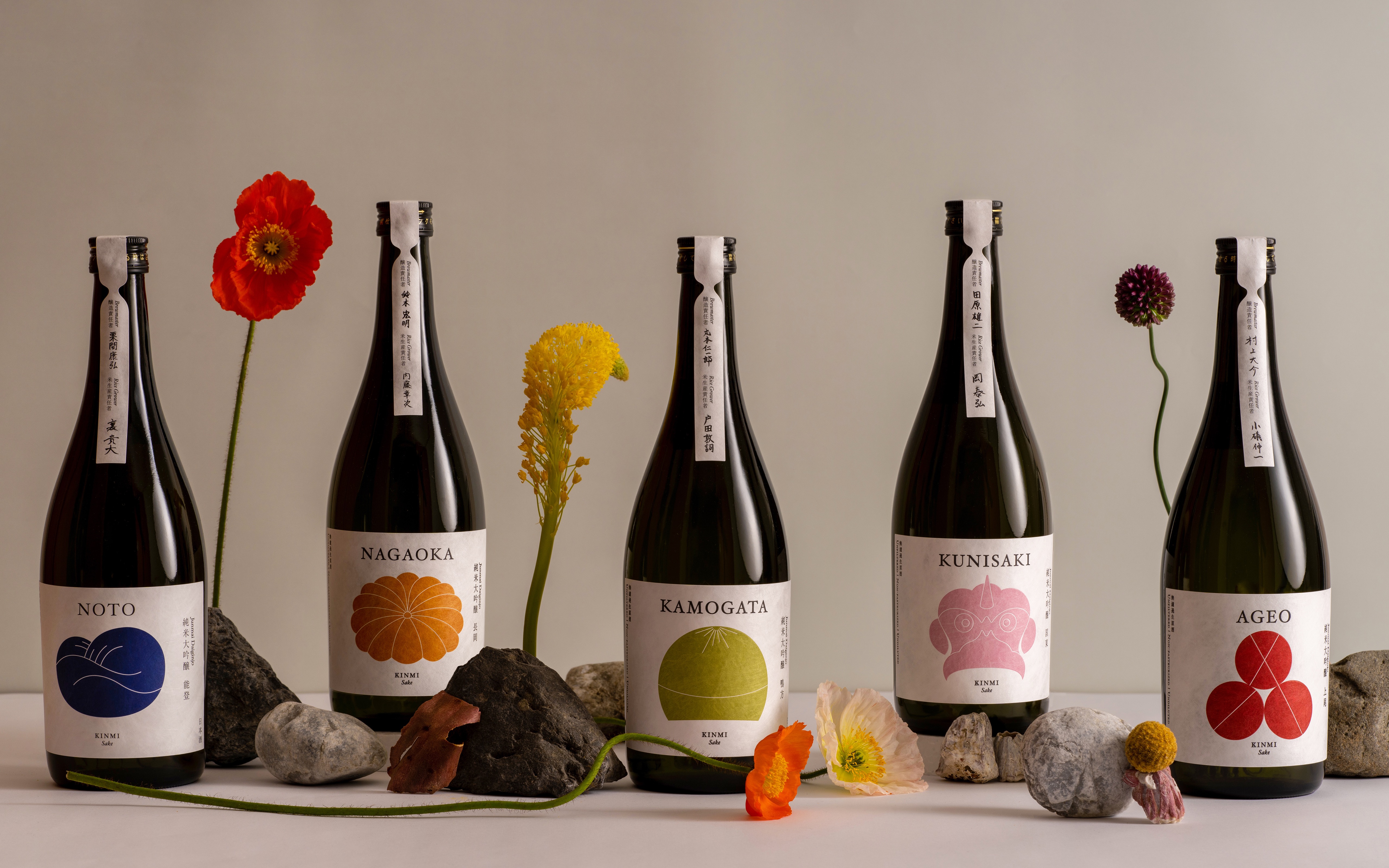
その上で、全国にある5つの蔵、それぞれの個性がしっかりと立つようにデザインをする事も、ブランドのビジョン・ミッションを体現する上で大事なポイントです。これは日本酒応援団が既に行っていたリサーチ、そして既存のラベルデザインの意匠からインスピレーションをもらいながら、アイコニックなものになるようにデザインを進めていきました。NOTOのラベルでは能登の豊かな里山里海の風景と、日本海の海の幸に合う味わいを表現。NAGAOKAは日本を代表する長岡花火を意識して、大きく夜空に輝く花をラベルに落とし込みました。
「新しさ」ということにあまりこだわらず、むしろ日本酒のもつ世界観は踏襲しつつ、幅広い層に共感してもらえることを意識しました。より親しみを感じてもらい、現代の生活にも馴染めるようなものに。それと同時に海外でも日本というオリジンを感じ取ってもらえるものになったと自負しています。
アメリカで学んだ自分が表現する日本らしさ
表層的に日本を表現したものがまだまだ溢れている海外のマーケットですが、国籍を問わず本当に良いものを見分ける力は潜在的に備わっていると感じています。だからこそ本当に良い日本らしさを伝統的なアプローチに寄せすぎず伝えたいという思いは強かったです。
当初は日本らしさを代表するものを扱うことにプレッシャーも感じていましたが、幼い頃から日本酒が身近にあり、海外でデザインを学んだ自分だからこそ、日本酒が持つ日本らしさというのを本質的に表現することができたと思っており、デザイナーとして今回のプロジェクトに関われたことをとてもありがたく思っています。
そして何より大切にしたかったのは、日本酒作りのプロセス、それに関わる人たちの心の美しさであり、それをデザインに宿らせることです。今回のプロジェクトを通じて表現できたものはその片鱗にすぎないのかもしれませんが、これからのKINMIの取り組みを通して、その美を世界に伝搬していくお手伝いができるのを楽しみにしています。
アメリカで学んだデザインで、日本らしさが持つ美しさを世界へ。
花をいかすこと、アイデアをいかすこと
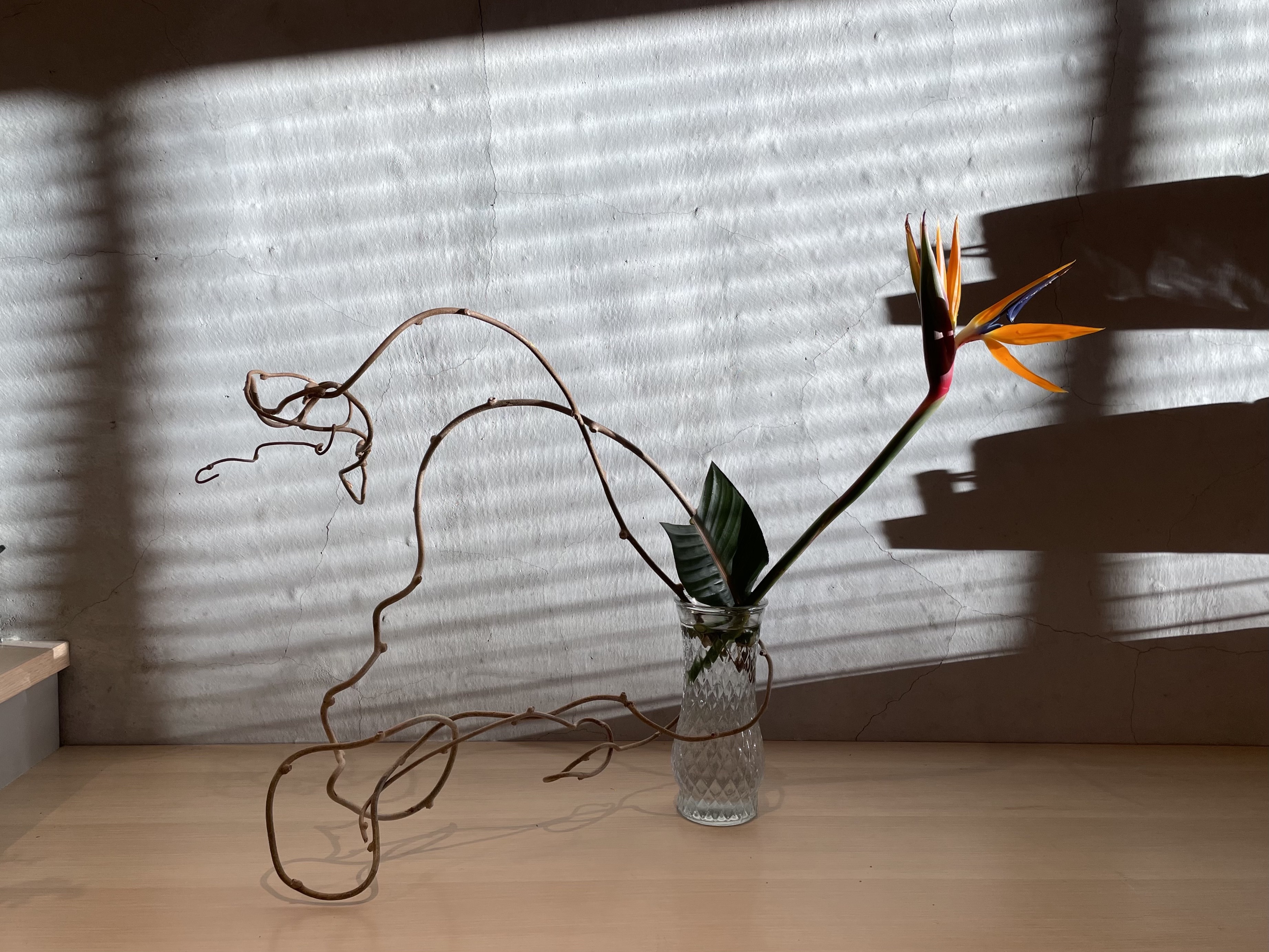
花をいけるとき、心が躍る瞬間が2回ある。1回目は蕾がきれいに開いたとき。2回目はその花がきれいに枯れたとき。
いけばなをはじめてみて
アメリカのビジネススクールに在学中、キャンパスから通える三味線・琴・いけばなの教室の中からいけばなを選んだのは、単純にやってて一番ワクワクしたからだ。教室でいけた花をそのまま持って帰ることはできないので、一度分解して、家でいけなおす。教室で感じたワクワクを家でまた感じることができ、それをルームメイトと共有できることも継続につながった。
いけばなでは、花をいける過程を大切にしている。花との向き合い方を自分なりに掴んでいくことが、花、そして自分を引き出すことにつながる。ビジネスデザイナーとしてIDEOで実践してきたデザイン思考も、アイデアを作り込む過程から学ぶことが多い。一つ一つの行為やその意図についても考える機会が増え、いけばなとデザイン思考に意外と共通点が多いことに気づいた。そしてどちらも、ビジネスの現場での私の視野を広げてくれている。
制約によって発展させる
いけばなを習い始めて一番驚いたのは、切ることが意外にも怖いということ。花の輪郭や枝の美しさ、「線」や「余白」を際立たせるために、小枝や葉を切り落とす。でも、一度切ったら後戻りができない。繊細さのなかに、結構、勇気と大胆さがいる。
「きれいだからもったいない」と思って切ることを躊躇していると、その迷いは作品に如実にあらわれる。いけばなはとても正直なのだ。逆に思い切って切ってみたはいいものの、短く切りすぎて失敗したと思うことも。でも、今度はその花材を活かすいけ方を探せばいい。花器を変えてみたり、あわせる花材を変えてみたり、やり方はいくらでもある。「切ってしまった」ことで自由度が減り、使いづらいと思うかもしれない。だが、逆にみえてくることもある。
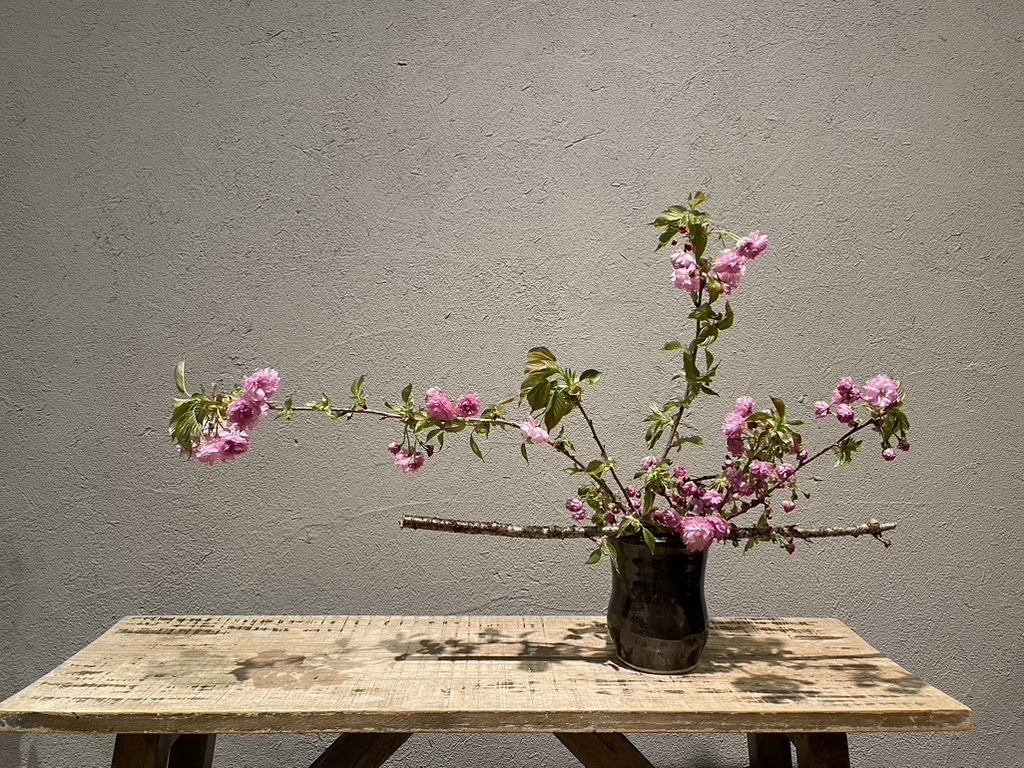
花材による制約はIDEOでいうCreative Constraint(クリエイティブ・コンストレイント:制約がクリエイティビティを高めるという考え方)だ。制約はクリエイティビティを阻むバリアと思われがちだが、クリエイティブ・コンストレイントは一歩、半歩踏み出すための方向性を示すディレクションであり、むしろ、試行錯誤を促し、とことん考えさせる動力だ。IDEOではあえてクリエイティブ・コンストレイントを使ってアイデアをブレストすることがある。例えば「明日から◯◯が消えたら」、「子供しかいない世界だったら」という制約を作ってアイデアをブレストする。
流派によっての違いはあるが、いけばなでは基本の「型」を学んだ後、「自由花」を実践していく。でも、いきなり自由と言われてもどこから手を付ければいいか分からない。だから、テーマを決める(線を極める、色を対比させる)。場所を考える(自宅の玄関、ホテルのロビー)。主役を決める(ひまわり、南天)。制約を課すことで表現の幅を思案する。
ビジネスデザイナーは、市場規模や予算など、ビジネス上の制約で外枠を作ってアイデアをフィルターしていく役割だと思われがちだが、IDEOでは制約を一つの支点として扱い、アイデアを発展させようとする。いまのアイデアのままではユーザーが限られ、市場規模が小さすぎる。だったら購入単価をあげる工夫はできないか、サービスの使用頻度を増やせないかなどの問いかけでアイデアの可能性をチームと巡る。言うは易しでなかなか上手くいかないことも多いが、制約とどう付き合うかが大事なのであり、自分にとって大きなマインドシフトだった。
作り手として責任、作り手としての主観を持つ
花は切り花になった瞬間からカウントダウンがはじまってしまう。だからこそ、その花が「いきる」姿を探すために、花の声に寄り添いたい。心を無にして花と対峙し、そこから見えてきたことを表現する。花との向き合いがいけばなの出発点だ。
花道家の上野雄次さんの花いけ教室に参加したとき、「いけばなはアート性が高い。それは作り手の主観が入るから」と話していたのが印象的だった。テーブルに飾って360度あらゆる方向から楽しめるフラワーアレンジメントに対して、床の間から発展したいけばなは見る人の目線が自然と限定される*。対峙する人に対して花の顔をどう設定するか。床の間という小さな舞台でどんな世界観を作るか。器に張った水や差し込む光でその世界観をどう演出するかを意識する分、作り手の意思が大事になるとのこと。
花材に、作り手の意思、主観が融合することで一つの作品ができる。だから、同じ花材を扱っていても、作り手の花の声の解釈によって表現は変わる。そこに個性がにじみ出て、自分らしさが「いきる」。

デザイン思考の基本は「人間中心」であること。いかにユーザーに寄り添い、核心を引き出す問いを立てられるかが大事になってくる。そこに聞き手の意思は入らないと思われがちだが、IDEOではあらゆる場面で個人の主観が求められる。ユーザーがなぜその言動をしたのかを想像したり、直感的に感じたことを持ち寄り、対話をすることで、多角的にユーザーの声を振り返る。同じインタビューを見聞きしてても人によって捉え方は違うし、大事だと思うポイントも人それぞれ。だから、同じテーマでも、チームによってインサイトやそこから生まれるアイデアが変わってくる。IDEOでいう「人間中心」とはユーザーに限ったことではない。ユーザーから得たインサイトに自らの意思をかけあわせてデザインしていく。
ビジネスの現場では客観性が重視されがちだ。具体性のあるロジックは多くの人に理解されやすい。でも、いけばなを習いはじめて、IDEOでの仕事をはじめて、その場その場で感じた直感や曖昧な主観をもっと大事にしたいと思うようになった。未発達で感覚的でもいいから、人に伝えることでそれが誰かの思考のヒントになるかもしれないし、言語化する過程で新しい気付きが得られるかもしれない。「なぜか」はわからないけど、「何か」を感じた自分の直感を大事にしたい。
*建築や生活様式の西洋化でいけばなも多方面から見られることを意識するようになっている。
ありかなしかなら、ありを選ぶ
桜は折ってもよい。これはれっきとした折り溜めという技法だ。ハランやニューサイランは水中に沈めてもよい。葉が丈夫なので数日水に浸かっていても雑菌が繁殖するリスクが少ない。ガラスの花器を使ってハランを水中にいけると鮮やかな緑が生える。
「これはありですか?」と先生に聞くと大抵力強い「あり!」が返ってくる。それでも花材の性質上、やらない方がいいことはあるし、まだ知らないこの世界の暗黙のルールがあるのではとつい考え込んでしまうときがある。そんなときは、ありの前提で、思うがままにいける。結果的になしだったとしても、それは学びになる。

「プロトタイプしよう」。IDEOではよく聞く言葉だ。プロジェクト中、これでもかというくらいたくさんのプロトタイプを作る。そして、それは商品・サービスに限ったことではない。仕事のやり方もよくプロトタイプする。Zoom疲れから、何か別の方法はないかとオンライン会議ツールのAroundやSlack Huddleを利用してチーム会議をしてみたり。クライアントに自己紹介アクティビティとしてTIKTOK動画を作らせたり。全社で年間のプロジェクト全ての振り返りをするポートフォリオレビューという会で夏フェスをテーマに「音」でそれぞれのプロジェクトを表現してみたり。好評で続くものもあれば「そんなこともやったね」とあっさり消えるものもある(大半が後者だ)。
「プロトタイプ」と言うと気が楽になる。完璧・完成ではない前提だから、気軽に試してみようと思える。最初から正解を弾き出そうとするとみえる世界が偏ったり、仕事の進め方も慣れた手法にデフォルトしがちだが、プロトタイプのマインドセットでいると柔軟になり、幅が広がる。上手くいかなかったら、すぐやめればいい。IDEOもありかなしかだったら、ありを選ぶ。

出典:『UN FIORE CON AMORE』ブルーノ・ムナーリ
変わり続けるから、学び続けられる
いけばなを習いはじめて、IDEOでの仕事をはじめて、物事への向き合い方が変わったように思う。花は、一度いけて終わりではない。次の日、そしてその次の日と、花の状態に合わせて、いけなおし、かたちを変えていく。アイデアも、商品やサービスとして市場に出て完成ではない。ユーザーの声を取り入れながら進化し続けなければ、いつか置いていかれる。
花もアイデアも「生きている」。変化するたびに学びがある。そして、さまざまな花とアイデアと対峙することで、私自身も変わっていく。デザイナーとして、人として、どのように変容していくのか、これからもその過程を楽しみたい。
花をいけるとき、心が躍る瞬間が2回ある。1回目は蕾がきれいに開いたとき。2回目はその花がきれいに枯れたとき。
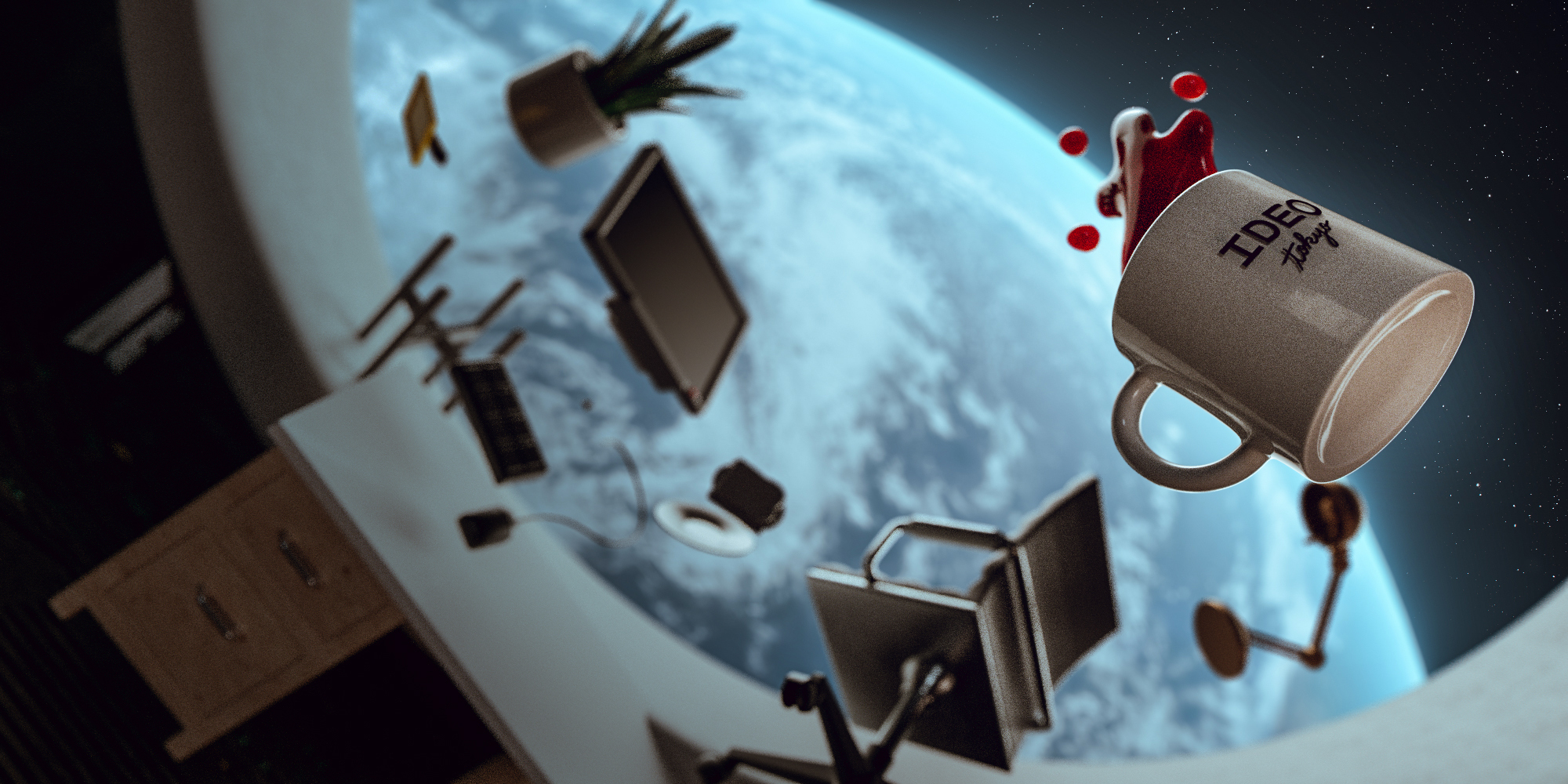
コーヒーカップが教えてくれた、宇宙旅行とデザインの未来
もちろん、これには理由がある。飲料がパックに入っていれば、液体が飛び散って宇宙船内の電子機器に付着することを防げるからだ。しかし、コーヒーを飲むという行為は単なる水分補給ではない。多くの人々にとって、朝のコーヒーは頭のスイッチを入れるための大切な儀式でもある。
この朝の習慣を宇宙でも再現したいと強く思ったのは、2008年に国際宇宙ステーション(ISS)に滞在したNASAの宇宙飛行士、ドン・ペティだ。ドンはISSで迎えたある朝、とうとうストローでコーヒーを飲むことに飽きてしまった。熱々のコーヒーの香りを楽しみ、啜って目を覚ます『体験』が恋しくなったのだ。
そこでドンは船内で見つけた透明フィルムを材料に、宇宙でも使えるカップの試作に取りかかった。無重力下での液体の動きを利用して、コーヒーが壁を登ってカップの縁に達するようにちょうど良い角度でフィルムを折り曲げた。そうして誕生したのが、涙型の「ゼログラビティ・カップ」だ。この発明によって、ISSに滞在するすべての宇宙飛行士は、コーヒーに限らずお好みのドリンクをカップに注ぎ、乾杯をし、地球を眺めながら味わえるようになった。
これまで各国の宇宙機関が重視してきたのは、宇宙飛行士の安全性を最大限に高め、コストを最小限に抑えることだった。その観点は今後も変わらず重要であり続けるが、この「おいしいコーヒーを飲みたい」というドンの素朴な願いは、これから宇宙旅行ビジネスが発展する上で考慮しなければならない数多くの欲求のひとつだ。一般人が宇宙に行くようになると、旅行者が宇宙でも人間らしく、より快適に過ごせるための体験をデザインすることが大切になる。
快適な宇宙旅行体験を目指して
ISSへの3日間の宇宙旅行のチケットが当たったと想像して欲しい。宇宙での生活なんてスターウォーズやスタートレックのようなハリウッド映画でしか観たことがないあなたは、抑えきれない不安とワクワクを胸に当日を迎えるだろう。
出発の日の朝、用意されたファッショナブルな宇宙服を身に纏い、宇宙船に乗り込む。そしてカウントダウンの合図とともに、地面が割れるような振動が全身を揺さぶり、体が座席に張り付く。すると数分後、急な静けさに包まれたと思ったら腕がふんわりと浮かびあがる。シートベルト解除のサインを確認したあなたは、他の乗客と一緒にフワフワと窓際に近寄り、自分の目前に浮かぶ地球の姿に思わず息を呑む。すぐに写真を撮り、インスタグラムに「#地球は本当に青かった」と投稿する。数時間後にISSに到着し、待望の3日間が始まるのだ。
しかし無重力環境になかなか慣れないあなたは、船内の電子機器やほかの旅行客にぶつかり、最初は笑い飛ばすが、徐々に気まずくなっていく。そしてポーチに入った食事を取り、チューブ型のトイレで用を足しながら残りの数日間を過ごす。初日の感動も時間とともに薄れ、最終日には人生最高の旅行がまるで試練のように思えるかもしれない。
このようなことが本当に起こると、せっかくの宇宙旅行が台無しになってしまう。そこで、ドンの遊び心に溢れた好奇心に感銘を受けたIDEOの有志が集まり、宇宙での滞在をより快適で楽しくする方法を模索し始めた。
1. 「遊び」で導く

無重力というと聞こえはいいが(そして科学的には微小重力なのだが)、私たち地球人にとっては身体的負荷が多い環境でもある。例えば、振り向くという単純な動作でも、今までとは全く違う身体の使い方が求められる。短い滞在期間を最大限に楽しむためには、できるだけ早く体の使い方を学び直す必要があるだろう。
ディズニーランドがテーマパークにおける「待ち時間」を「楽しい体験」に変えたように、身体的に辛くなりがちな無重力に慣れるための時間を、より楽しい旅のひとつの体験として再設計することは可能だ。遊びを通して、人々が無重力環境でより快適に過ごすための体の使い方を学ぶ手助けができるだろう。
私たちは幼い頃、好奇心と創造力に任せて日常の未知を探検し、視界に入るあらゆるものから刺激を受け、すべてを「遊び」に変えてきた。床をマグマに見立てて、椅子やクッションの上を飛び跳ねながらバランス力を鍛えたり。お互いの影を踏む遊びをしながら、時間と影の長さの関係について学んだり。この無邪気な世界の捉え方を、宇宙旅行にも応用できないだろうか?
2. 打ち上げから帰還までが宇宙旅行

宇宙旅行のクライマックスは、意外にも軌道上にたどり着いた最初の瞬間かもしれない。それは同時に、滞在中に徐々に興奮が冷めていく可能性も暗示している。
私たちは大人になるにつれて、場所から場所への最適な道のりを探すことに集中するあまり、道のりそのものを楽しむことを忘れがちだ。宇宙旅行も例外ではない。ISSに到着すれば、90分ごとに昇る日の出、宇宙から眺めるオーロラ、まるで電車からのぞく景色のように目の前を過ぎ去っていく大陸など、宇宙ならではの体験がたくさん待っている。さらに、地球の大気圏に再突入しながら窓の外が赤く光る光景、そして地上に着陸する瞬間の衝撃も貴重な体験の一部だ。その一つ一つの体験をつなぎ合わせて興奮のボルテージを徐々に上げて、テンションマックスの気分で旅の終わりを迎えられるような体験が望ましい。
どのようにすれば、打ち上げから帰還まで、宇宙ならではのユニークな瞬間が、グランドフィナーレまで続くような宇宙旅行プログラムをデザインできるだろうか?
3. 誰もが楽しめる体験デザイン
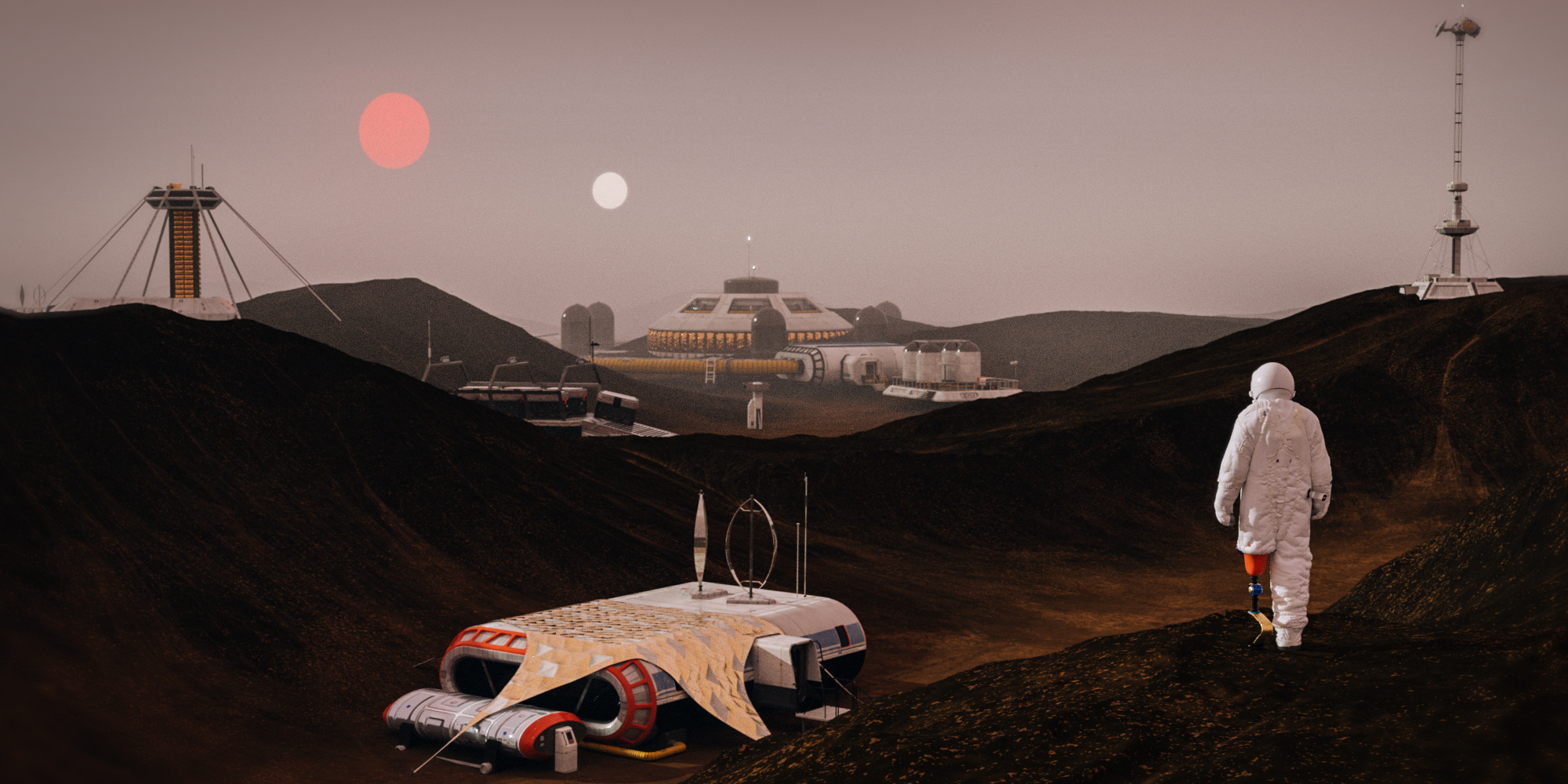
SpaceX社のクルー・ドラゴンによる世界初の民間宇宙飛行士ミッションには、骨肉腫サバイバーで、金属製のロッドを左足に入れているヘイリー・アルセノーが搭乗する。宇宙飛行士の選抜では身体面を含めた厳しい条件をクリアする必要があるが、民間宇宙飛行の基準は異なる。
ヘイリーの選抜は、宇宙に行ける人の定義が変わってきていることを象徴している。近い将来、さまざまな身体障がいを持つ人々が宇宙を訪れるようになるだろう。さらに、耳の聞こえない人は宇宙酔いに強い傾向があるなど、地上での不自由が宇宙では有利に働くケースもあることが証明されている。重力に縛られない世界では、障がいという概念さえも覆される。
地球上では健常者であっても、宇宙で生活すれば思わぬ事故は起きるだろうし、新たな障がいが出てくることも予想される。宇宙ジャーナリストのミリアム・クレイマーがAxiosに寄稿した記事で述べたように、「身体障がい者のために宇宙船を設計すれば、すべての宇宙飛行士の生活がより快適になる」のだ。
例えば、無重力環境は視力の低下を引き起こすことが知られている。そこで、視覚障がいを持つ人も宇宙旅行を楽しめるように、状況の変化を音や感触で伝えることはできないだろうか?五感を刺激する体験や船内構造をデザインすることで、誰にとっても快適で楽しい宇宙旅行を実現できるはずだ。
宇宙旅行の台頭は、人々の地球に対する意識を大きく変えるきっかけになるだろう。そのきっかけを最大限活かすためにも、最高に快適な旅行体験をデザインすることが重要になる。
もちろん、最初に宇宙に行けるのは裕福な人たちばかりだ。しかし、そのようなアーリーアダプターにとって最高の滞在を提供することが産業の発展を加速させる。やがて、より多くの人々が宇宙旅行を通して地球とより良い関係性を育むチャンスを与えてくれるだろう。
そして、無重力環境ではあらゆる常識が覆される。音楽バンドの「OK GO」の言葉を借りれば、「Gravity is just a habit (重力はただの癖)」だ。その体に染み付いた癖を一旦忘れることで、日常に隠れた人間らしさについて考え直し、あらゆるモノやコトを一からデザインできる。重力に縛られない世界では、誰もが子供のように未知と遊びながら日常を捉え直すことができるのだ。
次回はこれらの考え方を体現した、宇宙旅行をより快適で楽しくするコンセプトをいくつか紹介していく。それまで、みなさんのアイデアを是非聞かせてもらいたい。
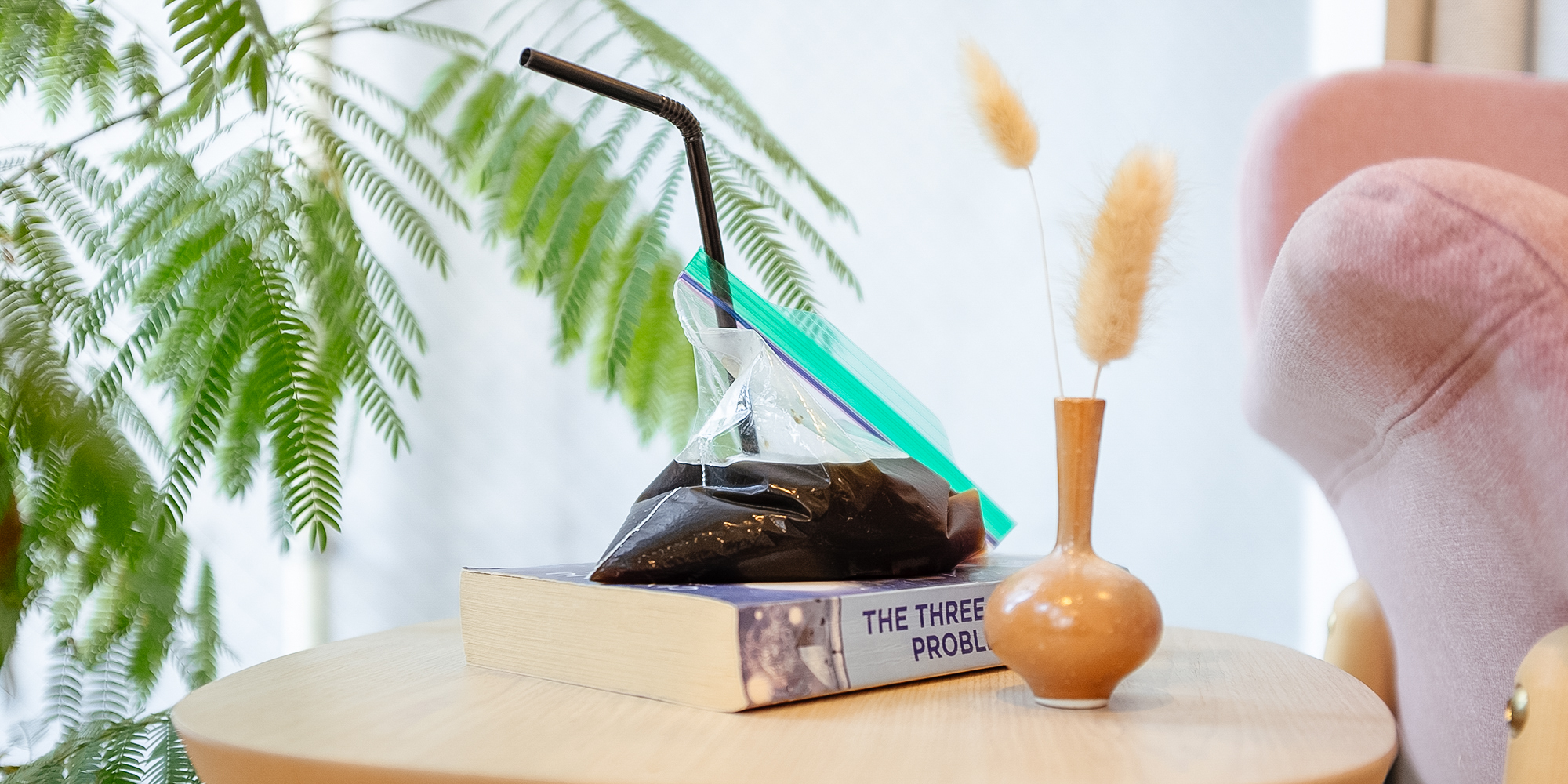
この記事を読む前に、まずコーヒーを淹れよう。とっておきのコーヒーができたら、ジップロックバッグの中に注ぎ込んで、ストローで飲んでもらいたい。これが宇宙での飲料の飲み方だ。お世辞にも美味しそうとは言えない。
English here
僕たちが中高生にデザインの力を本気で伝えたい理由
IDEOには、学校や企業向けの研修を積極的に行っていたり、創業者デイヴィッド・ケリーを始めとする多くのメンバーが教育機関で教鞭をとっていたりと、ド直球の教育的な取り組みも沢山ある。だが実は、そもそもIDEOが本業として行っているクライアントワーク自体がかなり教育的要素が強いのだ。
もちろん、どの案件も最終的にはデザイン会社として、プロダクトなりサービスなり空間設計なりのデザインに落とし込み納品するのだが、そのプロセス自体も同等な納品物として捉えており、我々が日々行っているデザイン思考をベースに制作の過程を少しでもクライアントチームに体験・理解してもらいたいという想いが非常に強い。
そのため、クライアントのコアチームにはなるべくデザイン・リサーチやブレストに参加してもらうし、エンジニアリングチームを持つクライアントであれば、プロトタイピングも僕達と一緒になって、まるで競い合うかのようにスピード感を持って作ることもある。結果そうした方が、プロジェクト終了後にクライアントチームがしっかりとそのプロジェクトを引き継げる、また組織内のプロジェクトへの理解が浸透しやすい、といったコンサルティングとしての意図も当然ある。だが、それにしてもやり過ぎなのでは、と思うくらい、クライアントチームを巻き込むことへの努力とコストを惜しまないのである。
特に我々東京スタジオにおいては、これが顕著である。つまり、デザインを納品することと、そのデザインに行き着く制作過程にどっぷり浸ってもらうことが、同等の価値を持つと考えられている。まるでモノ作りを行うデザイナーとしての自分と、デザイン思考を伝える教育者としての自分、その両者を常にどのプロジェクトでも求められているような感じだ。
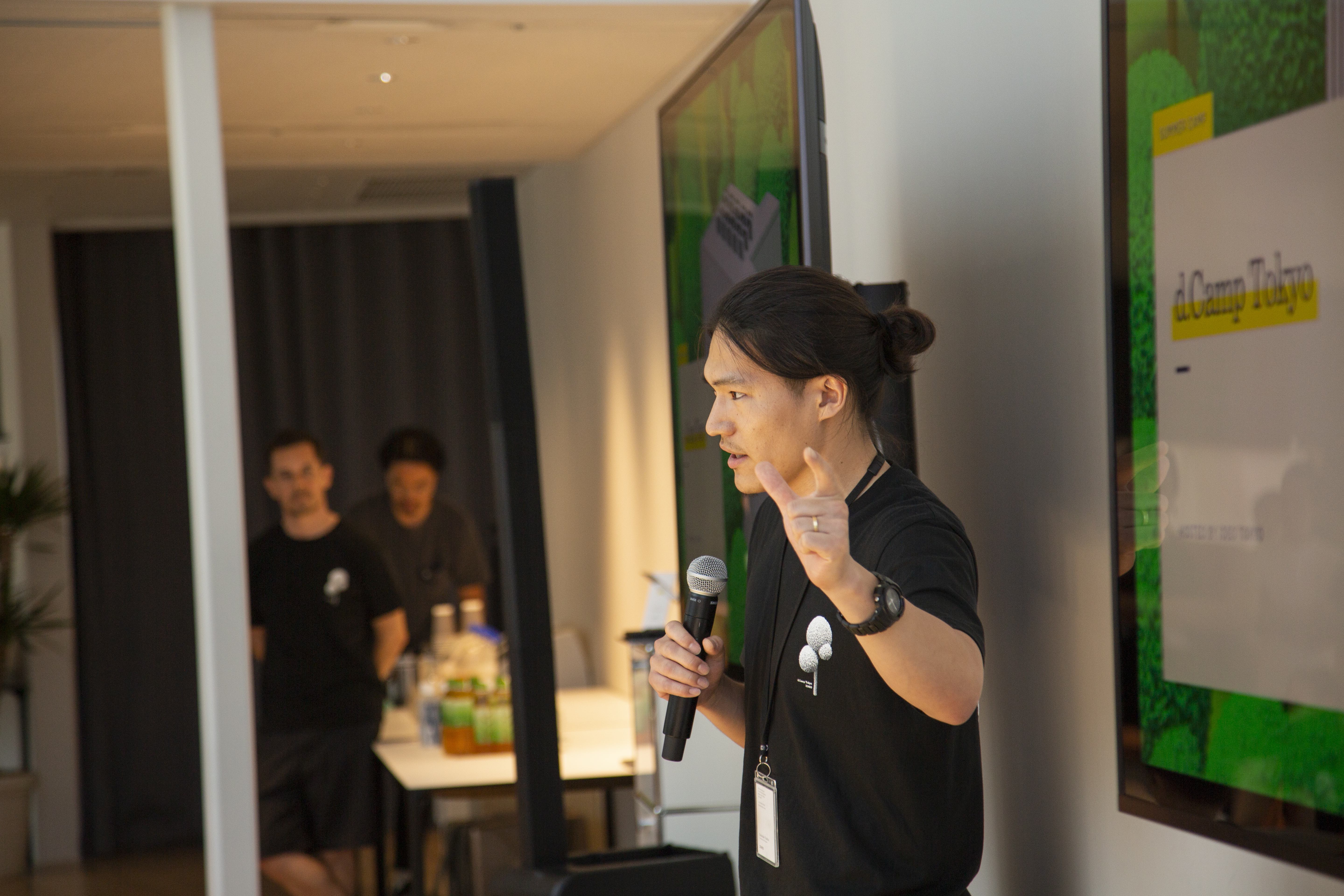
かくいう私も、何かを作ることと同じくらい(もしくはそれ以上に)、作る楽しさとその社会的意義を少しでも多くの人に広めたいという想いを持ってIDEOに転職してきたので、こうした文化が組織の隅々まで浸透していることを誇らしくなったことが何度もある。(そもそも、最終面接で最後に僕から「皆さんの理想のプロジェクトは?」と聞いた際に、同席していた3名のデザイナーがが口を揃えて「学校をつくりたい」と言っていたことが入社の決定打となったので、当たり前といえば当たり前なのかもしれないが。)そして、そんなIDEOのデザインと教育の両者への想いの交差点に鎮座しているのが、d.campである。
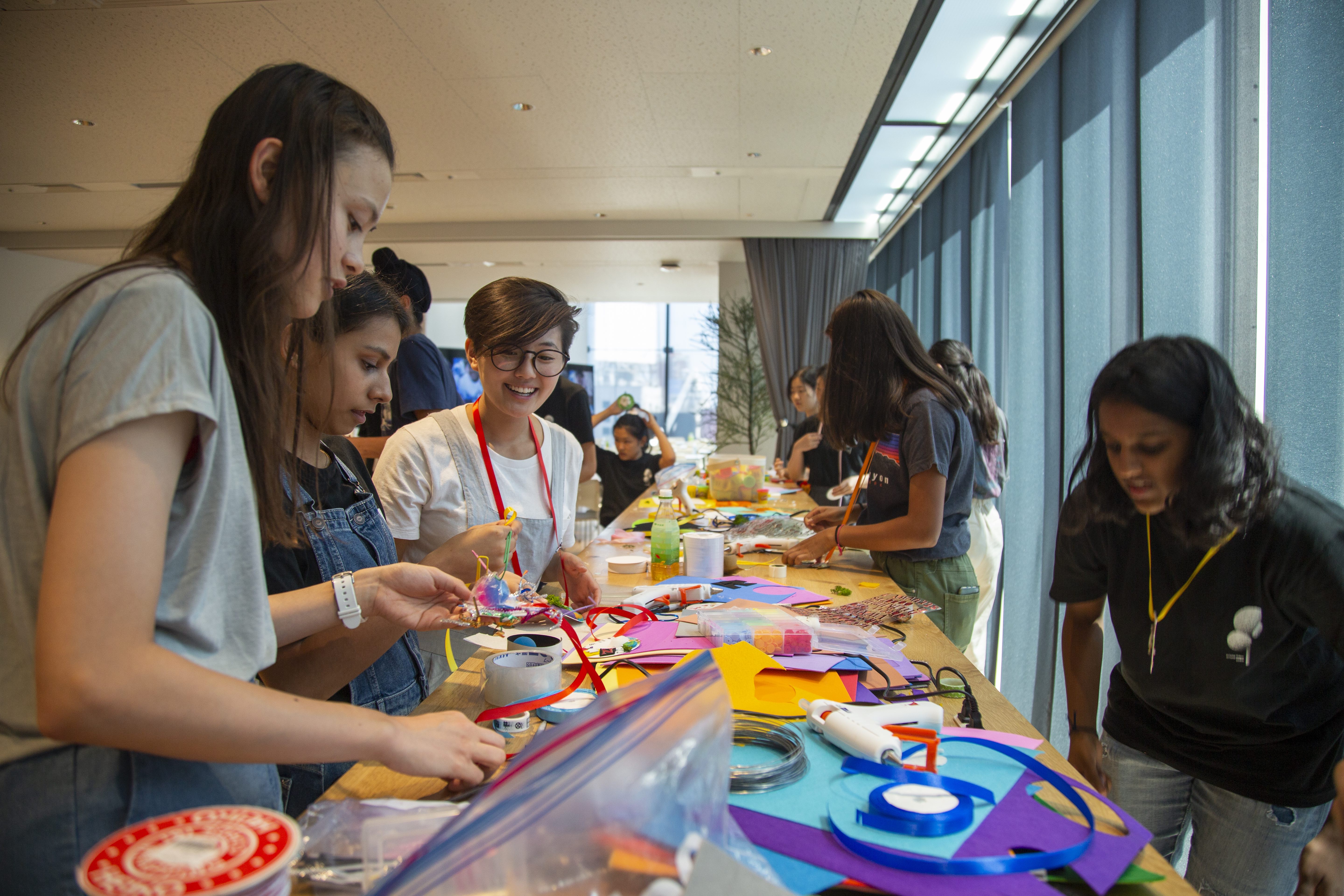
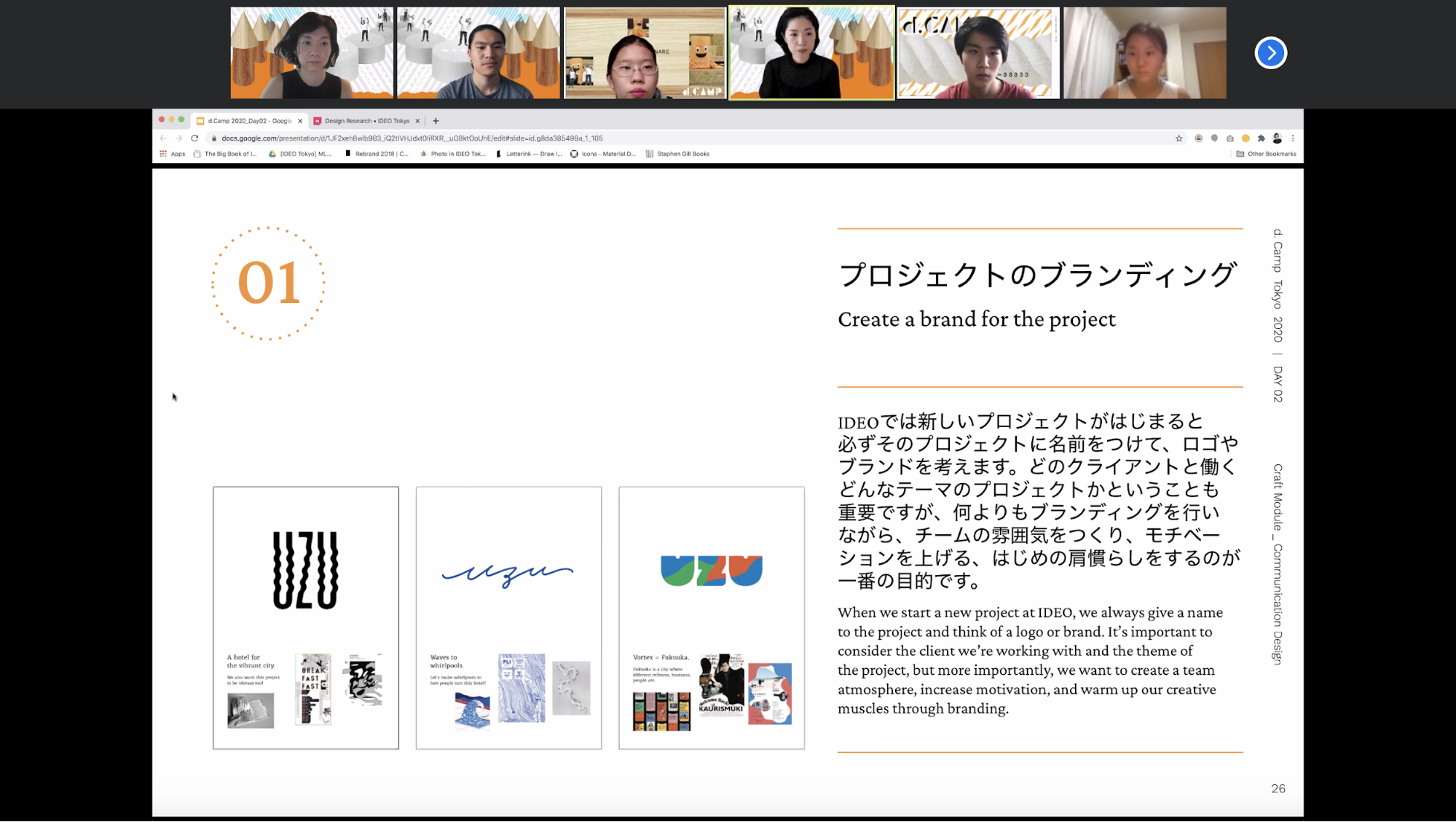
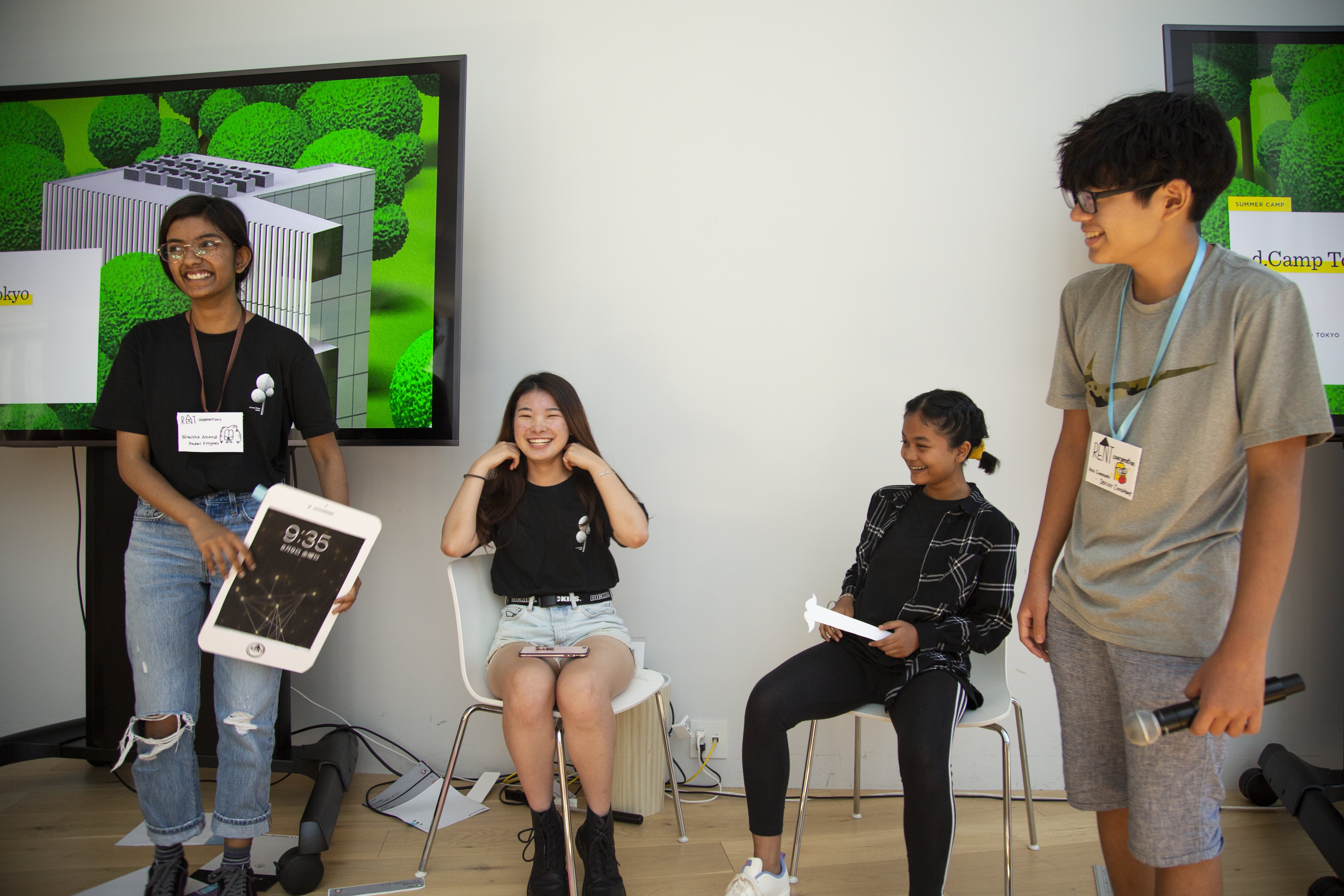
d.campとは、もともとシリコンバレーの創業スタジオで始まった取り組みで、中高生を相手にデザイン思考を体験してもらうサマーキャンプである。3年前から東京スタジオでも実施されるようになり、去年と今年はコロナウイルスの影響で完全オンラインで行った。スタジオによってオペレーションは異なり、有料で開催しているところもあれば、東京スタジオのように今の所無料で実施しているところもあるが、概ね5日間のサマーキャンプ形式である点は統一されている。
国内の中高でもデザイン思考が登場することは増えてきたが、微分積分やフレミングの法則と同じような感覚で「単元」として捉えられてる節がある。そうではなく、己の手で作り上げたもので周囲の誰かを少しでも幸せにする「体験」としてデザインを体感してもらうことが、より一層不確実性を増す今後の社会を生き抜く世代に不可欠なように思う。
デザイナーがデザインを教える
東京スタジオのd.campでは、毎朝ちょっと変わったエクササイズから始まる。即興演劇を行ったり、ひたすら落書きをしてみたり、といったいわゆるアイスブレイクのようなものから、実際に一片15cmの氷の立方体を「アイス・ブレイク」してみたり、Google Slideを使ってチームでZoom背景を共同で作ってみたり、といったクリエイティブなアクティビティもある。それが終わると、IDEOの数多のデザイナーが自分の専門分野についての簡単なワークショップを行う、「クラフト・モジュール」が行われる。午後は、5日間を通してデザイン思考を使って挑んでいく 、「デザイン・チャレンジ」を進める時間だ。リサーチ、シンセシス、問い立て、アイディア出し、プロトタイピング、ユーザーフィードバック、といったプロセスを、行ったり来たりしながら、チームで進めていく。その途中で、現役のIDEOのデザイナーたちと少人数でのコーヒーブレイクがあったり、共同経営者のトム・ケリーによる人生相談タイムがあったりもする。
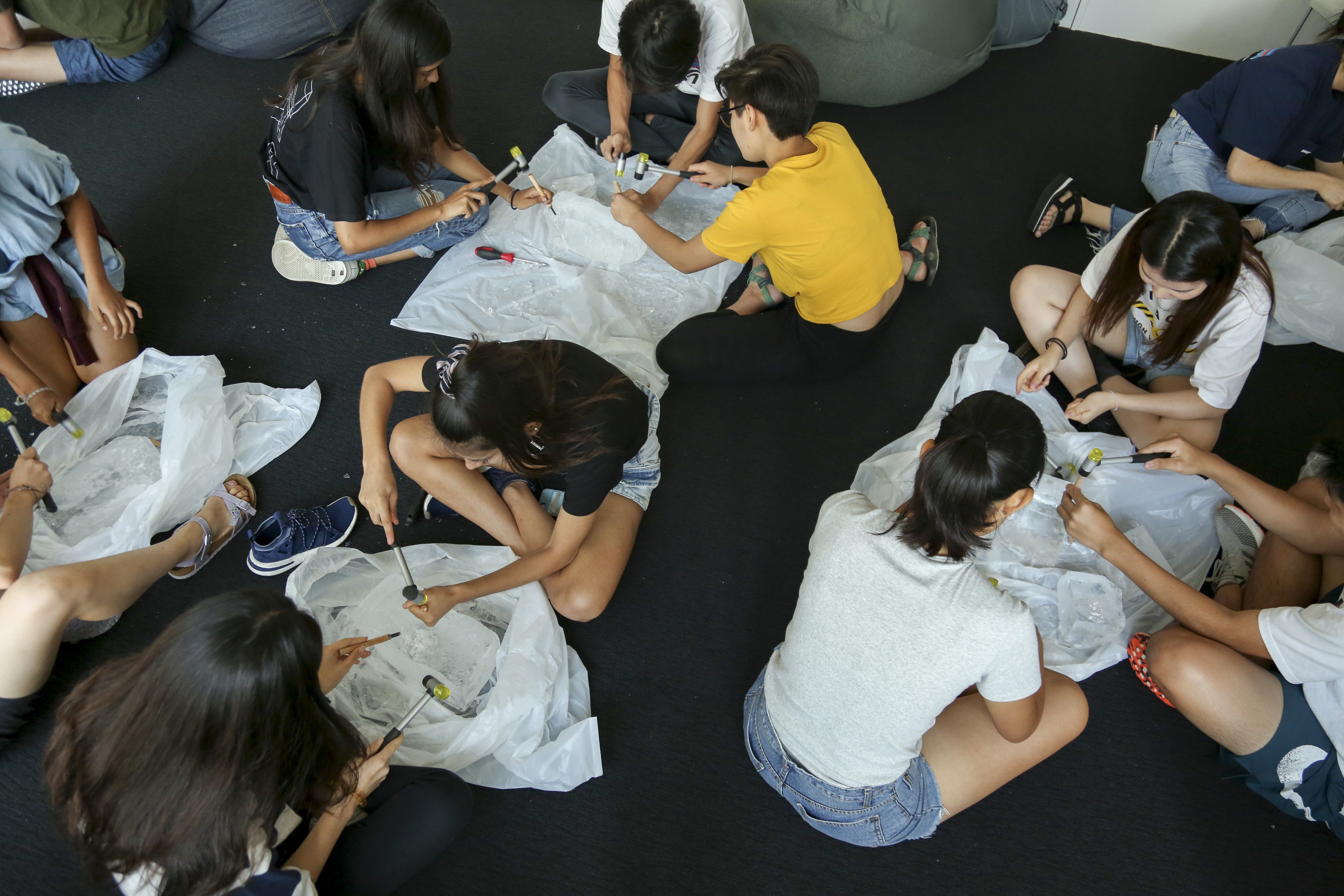
盛り沢山なコンテンツで、一日中頭をいろんな方向に切り替えるように設計してあるが、根底として絶対にブレないのは、デザイナーがデザインを教える、という構図である。当たり前なようで、意外と珍しいことでもあるのだが、各分野のプロがその分野について教えることが、d.campの大事な価値の一つだ。最近作っているものの紹介や、実際にプロジェクトで苦労したこと、それを乗り越えて出てきたプロトタイプ等、プロフェッショナルが試行錯誤した実例はとてつもなく贅沢であり、信ぴょう性がある。
更には、ビジュアル・コミュニケーション・デザイン担当のデザイナーが実はその年のd.camp自体のブランディングを行っていたり、それまでキャンプで使っていたツールが実はインタラクション・デザイン担当のデザイナーが自作したものであったことを知らされたりすることで、制作物と製作者の距離がぐっと近付く。
そして何よりも、「これなら自分でもできるかも」、と思ってもらえる。言うまでもなく、デザイナー一人ひとりも普通のいち人間であり、悩むこともあれば、つまずくこともある。そして、培ってきたスキルも、これまで経験してきたことの積み重ねにすぎない。そうしたIDEOメンバーの人間くさい思考や実験を知り、体験してもらうことで、「何かを作り出すという行為は、思っていたほど遠いものではないのかもしれない」と知ってもらいたい。そもそも、日常的に無自覚にデザインを行っている人たちは沢山いる。現CEOのサンディ・スパイカーは「既に自分達は日々デザインを行っていたのだと気付いてもらうことが大事だ」と言っているが、まさに自覚するだけで、自分のクリエイティビティに対する理解と自信が強化され、より自由に毎日が過ごせるようになる。
デザインする力は、スーパーパワーである
なぜそこまでデザインする力を身近に感じてもらいたいかというと、デザインする力は、スーパーパワーであるからだ。まず、何かを作れるようになると、その必然的な結果として、世界のあらゆるものごとに対して、「自分だったらこう作るのに」と考えるようになる。
そうした「目」で世界を見れるようになるだけで、いかに世の中が完璧からは程遠いかということに気付き、その改善案を常に頭の中で模索し続けるようになる。
どうしてこの家はここに段差を作ってしまったのだろうか、どうしてこの機械はこんなところにボタンを配置したのだろうか。
数あるスティーブ・ジョブスの名言の中でも、 ”Life can be much broader once you discover one simple fact. And that is: Everything around you that you call life was made up by people that were no smarter than you.” (とある事実に気付いた時、人生の可能性は更に開ける。その事実とは、あなたが世界と呼んでるものが、あなたより賢いわけではない同じような人々が作り上げたものである、ということだ。) という言葉があるが、まさにこの「目」(モノやコトは自分の手で変えられる、作れるという捉え方) についてのことだ。
少なくとも僕は、デザインを学び、自分でアイディアを考え、プロトタイプし、木工、鉄工、電子工作、プログラミング等をするようになってから、この事実にハッと気付くことができた。そしてそれに気付いてからは、”you’ll never be the same again (もう元には戻れない)”。
もう一つのデザインのスーパーパワーが、それを周りの大切な人たちへと還元できることである。IDEOのメンバーの多くは、何か新しいモノやツールが必要になったときに、まず最初に、自分でどう作れるだろう?と考える。
かくいう僕も、家にキッチンカウンターが必要だったので作ったし、コロナの手洗いがしんどくなってきたのでそれを楽しくするべくGoogle Assistant用の手洗いDJアプリ(手洗いをしている20秒間に当てはまる曲を自動で選曲してくれる)を作ったし、オンラインで行うワークショップにどうにかして手触り感を戻したく、遠隔ハイタッチシステムを作った。何かを作り出せるようになると、自分や、自分の大切な人たちの困りごとが、自分の手によって少しだけでも良い方向に変化を起こせるかもしれない、という希望に変わる。かくして、デザインという力を手に入れた人は、スーパーパワーを手に入れるのである。
総クリエイティブ・コンフィデンス時代を目指して
このスーパーパワーは、心理学の用語ではSelf Efficacy(自己効力感)であり、それをデイヴィッド&トム・ケリー 兄弟がIDEO流に翻訳した結果が、クリエイティブ・コンフィデンス(創造性に対する自信)である。おそらくIDEOに限らず、モノづくりに携わる全ての人たちが、このクリエイティブ・コンフィデンスを自覚した瞬間があるはずだ。そして、僕たち自身も、まだこのクリエイティブ・コンフィデンスを拡張していく長い旅路の真っ只中にあるように思う。
自分の周囲10mの範囲内の困りごとに対して何かポジティブな変化を起こせると気付いた人は、次に周囲100m、1km、100kmと、自分が変化を起こす範囲を少しずつ広げていくことができる。その過程で、一人でできることの限界を知り、今度は仲間と一緒に、より大きな課題へとぶつかっていくようになる。結果として、新しい電化製品、自転車、医療器具、学校、政策など、より規模の大きいデザインを行っていくことができる。
d.campにこれまで参加したキャンパーたちは、(知ってか知らずか)この果てしないクリエイティブ・コンフィデンスの旅路の一歩目を踏んでもらっているのである。
VUCAと呼ばれるこの時代、更にはパンデミックの先行きが未だに見えない中では、このクリエイティブ・コンフィデンスを華麗に使いこなし、主体的に動ける人たちが一人でも多く必要である。その一歩目を踏み出すことをサポートし、かつそれがいかに楽しくて素晴らしいことであるかを知ってもらうことが、d.campの目的であり、ひいてはIDEOという組織の隠れミッションであるように思う。
僕がIDEOに入って驚いたことは沢山ある。みんなが17時にはあっという間に帰宅してしまうことや、ワインを片手に作業することなど、いわゆる外資の洗礼みたいなことも多い中で、特に驚いたのが、IDEOという会社が教育にかける想いの強さである。

Lindsey Turner
I’m passionate about building brands, products, and experiences that help organizations show up with meaning and momentum.
I help organizations cut through complexity by shaping how they show up, through brand strategy, identity, and storytelling.
Working at the intersection of brand and business, I bring an editorial eye and a bias toward making—turning ideas into tangible experiences that people can understand, trust, and believe in.
My work spans government, healthcare, financial services, media, and consumer goods, from launching Gen Z-focused ventures to building innovation labs and reimagining legacy brands. I relish moments of ambiguity and enjoy translating across teams, perspectives, and priorities to move ideas forward.
I started my career in editorial and digital design, shaping cross-platform experiences and identity systems in publishing and agency environments. That foundation still shapes how I work today: I’m detail-oriented, collaborative, and overreliant on the Oxford comma. I hold a BFA in Visual Communication from the School of the Art Institute of Chicago.

Rachel Young
My work helps organizations see who their products aren't working for—and build the will and the tools to do something about it
For 25 years, I've asked the same question: Who does this design exclude—and what are we going to do about it?
My work spans human-centered strategy, inclusive design, and qualitative research, with clients ranging from Microsoft, Google, and Verizon to the National Science Foundation, and San Francisco Unified School District.
Before IDEO, I taught elementary school in East Palo Alto and spent a decade doing design work with social service organizations—where I learned firsthand what it costs people when systems are built without them in mind.
I am currently writing User Error, a nonfiction book about digital access and the design decisions behind it. I live in Oakland, California.

Brian Pelsoh
I lead with craft, ensuring our work is creatively excellent: rooted in deep human insight and imagination, while also grounded in the realities of business and technology.
My expertise spans brand, communication, and product design across tech, education, the arts, and social impact.
I believe great work demands both high-level vision and obsessive attention to detail, and only happens through collaboration.
I bring an inclusive, hands-on approach and a deep understanding of business, which enables me to consistently deliver excellence while always asking why.
Before joining IDEO, I worked at the brand firms Pentagram and VSA Partners. I began my career as a designer, leading teams at the School of the Art Institute of Chicago and the Milwaukee Art Museum. I hold an MFA in graphic design from Maryland Institute College of Art and a BFA in communication design from the Milwaukee Institute of Art & Design, and have taught at some of the best design schools in the US.

Tony Wong
I am responsible for IDEO’s long-term success in China and working with clients to use design as a tool to enable growth.
I am responsible for IDEO’s long-term success in China and working with clients to use design as a tool to enable growth. Specifically, I have helped Chinese companies design holistic brand solutions through the development of their products, communication, services, and innovation teams, and I have helped multinationals expand their presence and influence in China.
I advise global leaders on developing China-led innovation and capabilities.
In over 15 years in IDEO Shanghai, I have worked on projects that use design to elevate the quality of the experience of healthcare products and services, streamline processes that increase productivity, create spaces and programs that promote and enable inclusive communities, and build next generation mobility solutions that are planet-positive.
Before joining IDEO, I worked at Philips Electronics and the Electrolux Group in Italy, the Netherlands, and Singapore on a number of breakthrough commercial products. I am a member of the Young President Organization in Shanghai.

Building a personal AI for the messiness of life: Sida Li
Most AI products today are built for work—a space with clear problems and established systems. One founder noticed a gap: personal life is messier, harder to systematize, and mostly left behind by the AI boom. So she built Cue, a personal AI that lives inside iMessage and group chats, to go where the other tools haven't.
In this episode, Becca Carroll, IDEO's Chief Strategy Officer, talks with Sida Li, co-founder and CEO of Shared Context Lab, about staying anchored to a human need while the technology around her keeps changing shape, why she treats her business model with the same rigor she'd bring to a product, and what it feels like to build a company at this particular, disorienting moment in AI.
The conversation also gets into how Sida makes design decisions: the language Cue uses to describe itself, the tradeoffs behind building inside iMessage instead of a new app, and a real story about a business idea that didn’t pan out.
This is the second in a two-part series profiling founders from IDEO's Startups-in-Residence program. The first conversation is with Johannes Seemann, founder of Sooner, on designing GenAI for the emotional side of money.

Designing GenAI for the emotional side of money: Johannes Seemann
Most personal financial tools are built to run the numbers and optimize towards a budget. While that works for some, most people experience money as a lived relationship that does not neatly fit into a spreadsheet. Johannes Seemann and Becca Carroll discuss why money is emotional before it is mathematical, and what a human-centered approach to building a generative AI financial product looks like in practice.

The curious leader's edge in uncertainty: Scott Shigeoka
Mina Seetharaman talks with Scott Shigeoka, author of Seek and Head of Curiosity Cultivation at the Eames Institute, about what distinguishes genuinely curious leadership from performative curiosity, how power dynamics shape curiosity, and why practicing curiosity can restore energy rather than drain it.

How constraints make us more creative: David Epstein
Mina Seetharaman talks with David Epstein, author of Inside the Box and Range, about why total freedom often produces average work, how leaders can design useful limits on purpose, and what organizations such as General Magic and Pixar reveal about the relationship between boundaries and creativity.
Looks like you might be in search of something very specific?
Or reset the filters above and try another angle.
Here’s some random inspiration

Podcasts about creative leadership

Articles about the power of prototyping
