
.svg)



A leading food company’s human-centered transformation spurs rapid growth
How The J.M. Smucker Company embraced customer centricity to build a culture of innovation.
Over more than a century of leadership in the food and beverage industry, The J.M Smucker Company has expanded its range of products to maintain its relevance and address market demand. Today, the company leads numerous categories, with beloved products like Jif, Milk-Bone, and Folgers, which are the top choices of millions of Americans. By growing and diversifying their brands over the decades, Smucker has successfully weathered major shifts in consumer habits and technology. Today, though, CPG companies are experiencing unprecedented disruption, and leaders at Smucker understand that the escalating pace of change will require more than just new products.
Geoff Tanner, Senior Vice President, Growth & Consumer Engagement at The J.M. Smucker Company recognized the need to identify new market opportunities and establish practices that put innovation and growth at the heart of their business. And he saw the potential to bring those goals to life through his relationship with IDEO.
WATCH: Balancing innovation and efficiency through design has helped Geoff Tanner, Senior Vice President, Growth & Consumer Engagement at The J.M. Smucker Company, brave the unfamiliar, transform organizations, and ultimately bring game-changing ideas to market faster.
Geoff has stewarded a close partnership with IDEO for over a decade and throughout roles at numerous organizations. Together, Geoff and IDEO have worked on 25 projects, beginning while Geoff was VP of Marketing at Big Heart Pet Brands, and continuing on throughout his career at The J.M. Smucker Company. By working with IDEO to adopt a design thinking approach, Geoff has enabled collaboration across teams and empowered his organizations to find new ways of working that result in measurable business impact. For The J.M. Smucker Company, the partnership has brought creativity and human-centered design to the forefront of its operations, strengthening its ability to bring new products and brands to market and create a pipeline of growth.
WATCH: The J.M. Smucker Company has shifted to embrace growth and innovation as a mindset throughout the organization to bring more consistency to the innovation process.
Looking to the past to creatively connect with the future
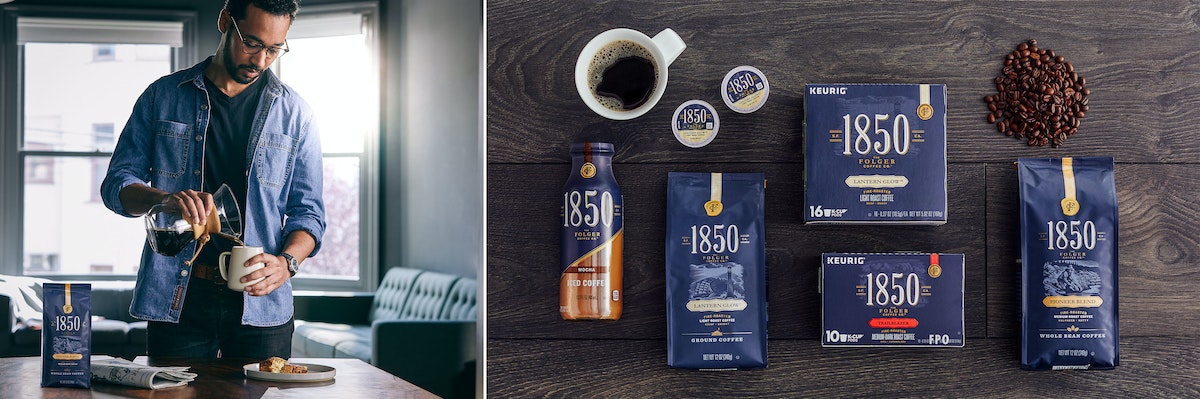
As an example of this, Geoff and The J.M. Smucker Company suggested to IDEO that they explore how Folgers, America’s leading at-home coffee brand, might resonate more deeply with a millennial audience. Design research revealed that the mindset of today’s millennial coffee drinkers aligned with Folgers entrepreneurial brand roots. The teams collaborated to create a new concept: a brand called 1850 and an end-to-end, go-to-market product experience, including packaging, retail, and merchandise. 1850 hit shelves in 2018 and has since been reported by IRI Advantage as the top launch in the Coffee Category for 2019.
Frankly, I don’t think innovation gets any easier. You just get a little more comfortable with the discomfort, and that’s when the work starts to get consistently better.
Geoff Tanner, Senior Vice President, Growth & Consumer Engagement, The J.M. Smucker Company
Creating an innovation pipeline that’s inspired by consumers’ needs
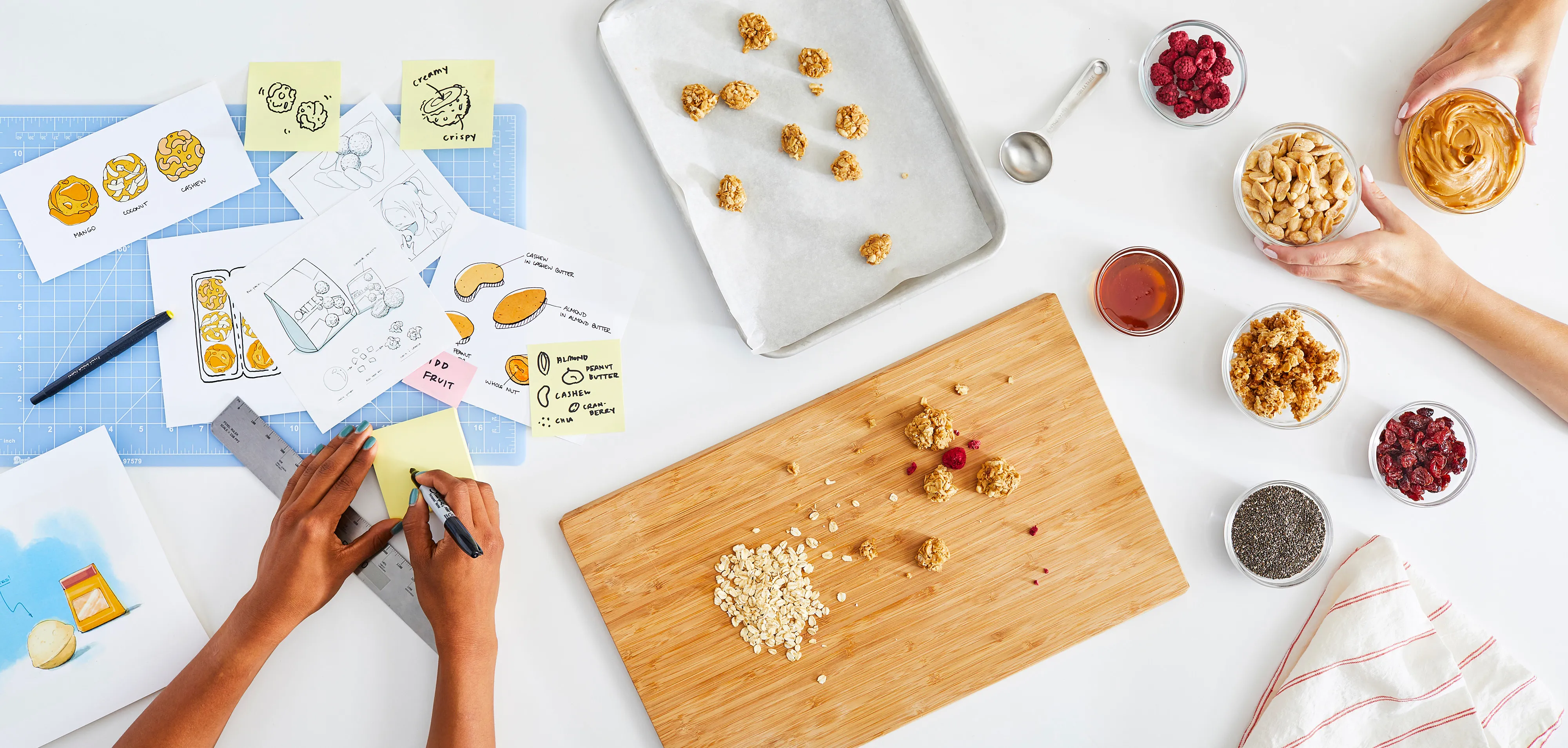
With 1850 underway, Geoff and The J.M. Smucker Company continued to invest in human-centered design to drive new offerings. The next collaboration with IDEO explored how Jif, the iconic peanut butter brand, could extend beyond the jar and become more readily accessible and appealing to busy parents who want to feel confident about the snacks they give their kids.
The design team was moved by the challenges that parents face: They want the best for their kids, but struggle to choose between what’s wholesome and what’s convenient on a daily basis. The ideal foods are filling, nutritious, and energizing, but often take more time to prepare and aren’t backpack or carpool-friendly. On the other hand, more convenient options tend to be full of empty carbs. Based on this insight, IDEO and Jif decided to tackle the snack-time parenting struggle. The IDEO and Jif teams worked side-by-side to prototype multiple product ideas and formats and tested them with on-the-go families to ultimately create Power Ups.
Available at over 200 retailers worldwide and online at Amazon, Jif Power Ups make wholesome, delicious grab-and-go snacking possible for kids and parents alike, across products ranging from Soft Baked Bars to Creamy Clusters, which are filled with peanut butter and rolled in whole grain oats. All are made with peanuts as the first ingredient and contain no high fructose corn syrup. Since going to market in 2018, Jif Power Ups has been named the top innovation launch in the Snack Bars category by IRI Market Advantage.

Design thinking underpins everything we do.
Geoff Tanner, Senior Vice President & Corporate Officer, Growth & Consumer Engagement, The J.M. Smucker Company
WATCH: The J.M. Smucker Company is on a transformational journey, committed to three pillars of growth: Lead in the best categories, build brands consumers love, and be everywhere.
The J.M. Smucker Company has experienced accelerated growth and speed to market by testing bold new ideas and evolving the role of innovation at the company. Design thinking and consumer empathy have permeated the organization’s new product development process, making it easier to uncover sharp, human-centered insights that lead to thoughtful and uniquely differentiated brands in a competitive, ever-shifting, and overcrowded industry. The work has fueled Geoff’s vision to inspire a culture of innovation at the company so that it can move at the speed of consumers and remain a best-in-class family of brands for future generations.
Creating a fresh, modern take on the Indian culinary experience
Designing a scalable restaurant, retail, and packaging experience that highlights the diversity of regional Indian foods.
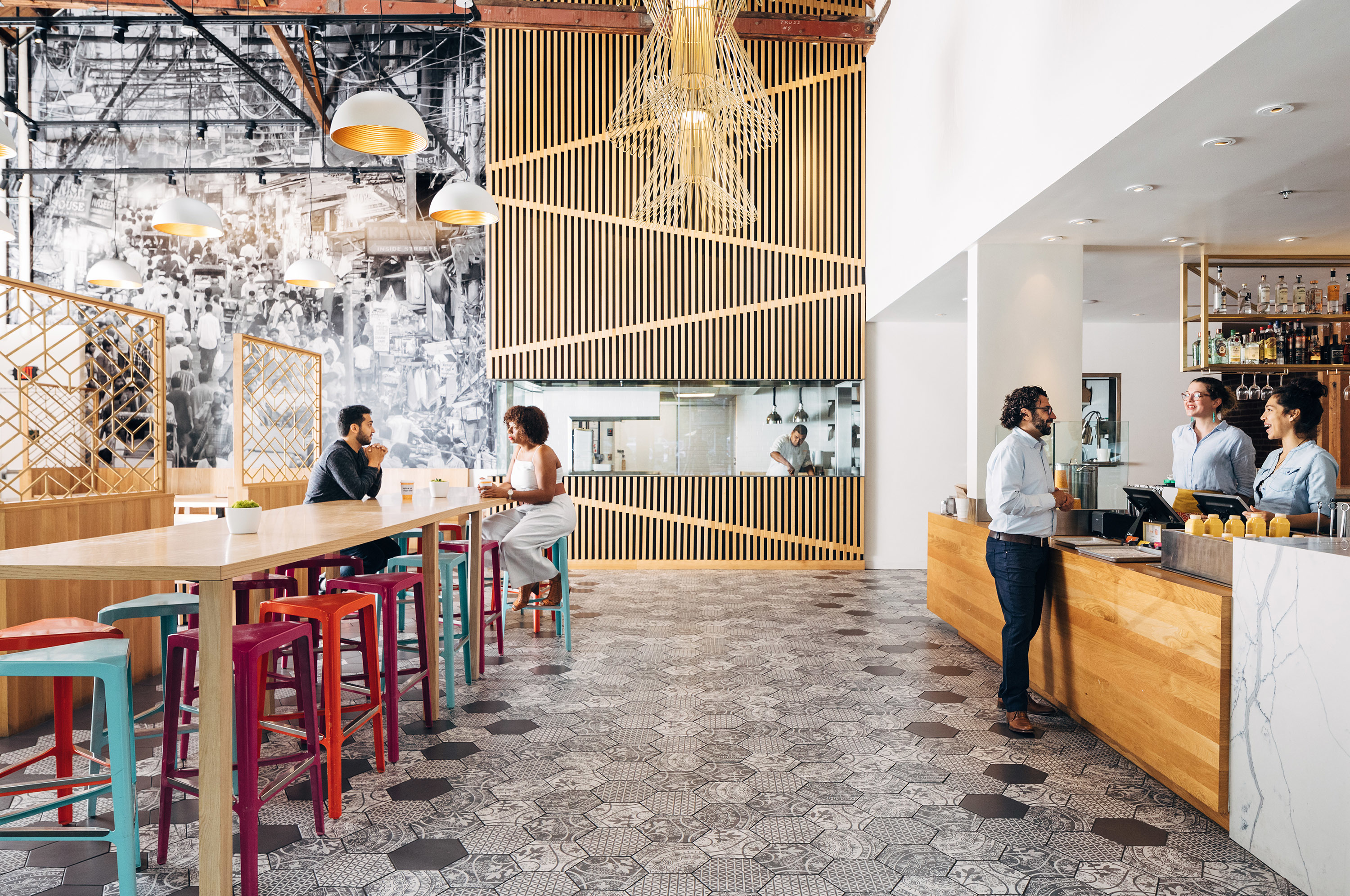
It’s a Thursday afternoon in Oakland, California. A line of lunchtime diners snakes out the door of dosa by DOSA. Upon entering, eaters are greeted by the smell of tangy dosa—a large paper-thin crepe made from a fermented batter of rice and lentils—and sweet, spicy chai. Turquoise chairs pop against a floor-to-ceiling mural by Oakland artist Namita Kapoor that transports diners to Chandni Chowk, one of the busiest markets in Old Delhi, as if enjoying their food at a local vendor.
In 2003, Emily and Anjan Mitra spent their honeymoon in India, savoring the street food of Anjan’s childhood in Mumbai (often still called Bombay). After returning to San Francisco, they found themselves longing for those distinctive flavors and dishes. Realizing that most Bay Area diners had never seen nor tasted these foods, Emily and Anjan founded DOSA, an upscale, full-service restaurant that introduced the Bay Area to Southern Indian cuisine. Locals came to try the unique, plant-forward dishes, and left with satisfied bellies and a broader understanding of Indian culture.
The entrepreneurs envisioned a brand extension of DOSA: a counter-service restaurant that could scale nationally. The hospitality venture, called dosa by DOSA, would offer healthful Indian street food made from local and seasonal ingredients. Emily and Anjan also set out to expand their existing product line-up—including cold lassi beverages, simmering sauces, and grab-and-go-meals—to national grocers and retailers and needed launch-ready packaging that was convenient, eye-catching, and environmentally-friendly. The new expression would enable consumers to experience dosa by DOSA and Southern India in a variety of forms and places. Emily and Anjan partnered with IDEO to establish a cohesive and consistent brand experience, from the restaurant and to-go meals to retail stores and mobile delivery.
In close partnership with the founders, their staff, Feldman Architecture and MPADA, IDEO set out to bring dosa by DOSA to life and help it scale through brand, environment, and experience design. This included creating everything from the logo and packaging to the menu and operations strategy, with each element tying back to the founders’ vision of sharing Indian heritage and traditions through cuisine.
The group began by seeking cultural inspiration for dosa by DOSA’s brand identity system—the logo, colors, values, fonts, and messaging—to guide future designs. They were inspired by Indian truck drivers who decorate their trucks with garlands, signs, or flags that engage other drivers or bring luck. The dosa by DOSA logo design and its wood-cut typeface are inspired by the dimensionality of this homespun art form, while the vibrant, eclectic colors reflect the streets and textures of urban Mumbai.
The goal of opening people’s minds to Indian cooking and culture extends to the packaging, which meets customers’ needs and playfully educates them. The food containers—made from recycled and compostable material—feature brightly patterned labels reminiscent of the trucks. Some have built-in compartments suited to multiple dipping chutneys, making it convenient to sample a variety of Indian flavors. Paper tray covers resembling Mumbai newspapers offer eating tips like “Be civilized. Eat with your hands,” encouraging diners to experience an Indian custom.
The vibrant brand comes to life across an array of packaging, including cold cups printed with the phrase “thanda thanda pani”—meaning “cold cold water”—which comes from a popular Indian parody of the Vanilla Ice song "Ice Ice Baby."
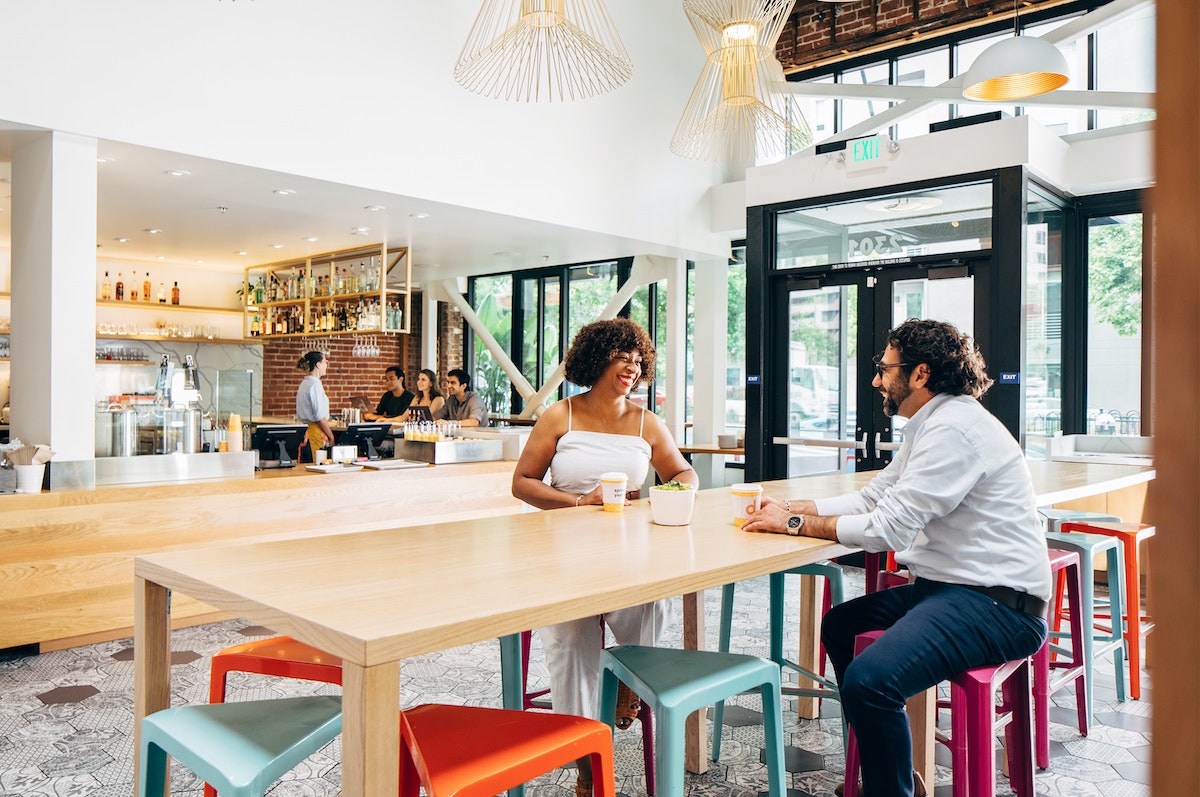
To design the diner experience and restaurant environment in a way that invites curiosity about the culture and cuisine, the team started with diners: They identified key moments in their experience like entering, waiting in line, and paying. The floor plan, furniture, lighting, signage, and menu were designed around these touchpoints. For example, while customers wait in line, they can watch dosa being prepared, as if they’re eager and hungry travelers awaiting street food.
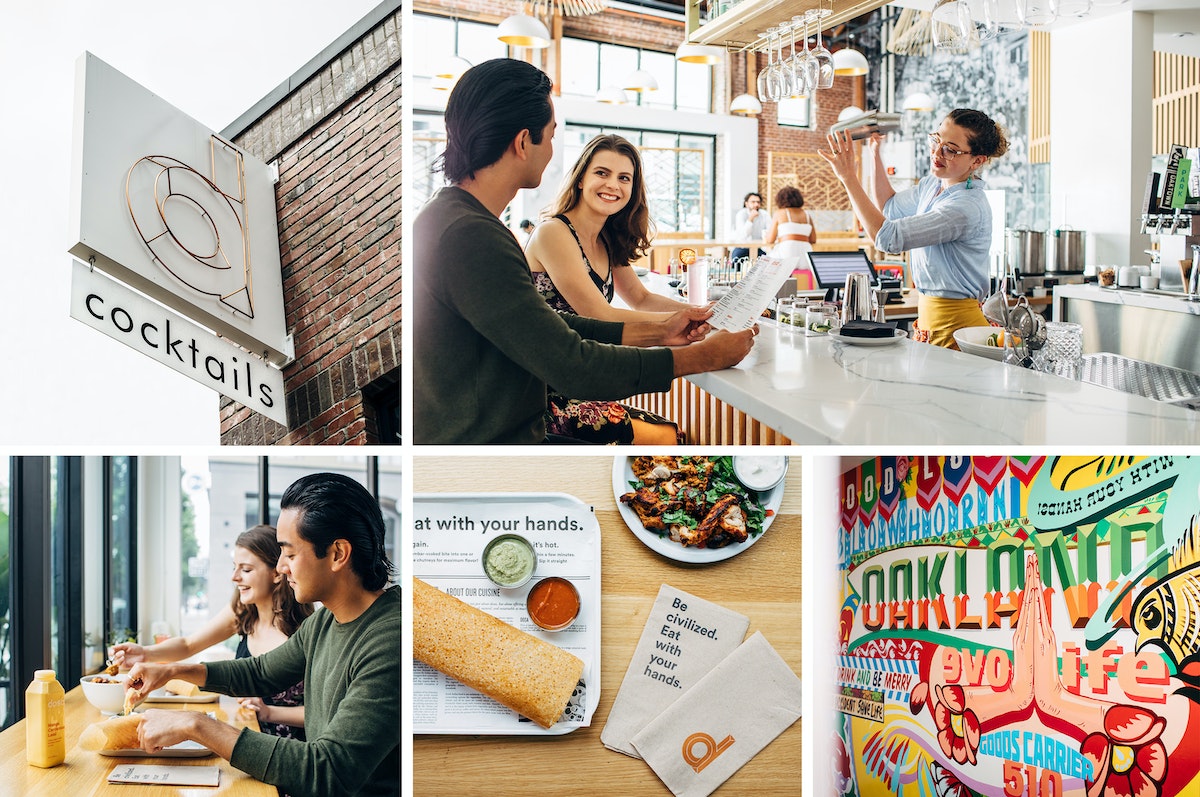
The dosa by DOSA menu includes distinctive items like coconut kale mung bean salad and hot masala chai made with caramelized milk—the way Anjan’s mother prepared it. To help the restaurant scale, the team created a preliminary furniture, fixtures, and equipment (FF&E) budget, 3D renderings of the space, and an operations strategy for the founders and their employees.
The dosa by DOSA flagship launched in January 2018 in Oakland, California. The IDEO brand guidelines have enabled the dosa by DOSA team to independently and easily shepherd new product lines to market, including salads, wraps, curry bowls, samosas, and simmer sauces. The brand’s packaged food launched in over 200 natural food stores in 24 months—including over 100 Whole Foods locations—as well as online retailers and delivery services like Good Eggs and Caviar. These items and the restaurant have helped Emily and Anjan realize their vision of bringing the flavor and spirit of Southern Indian cuisine to new communities around the world.
Revitalizing Japan’s food industry through design and software
Redefining the “middleman” role of produce wholesalers in Japan.
In recent years, due to shifts in Japan’s demographics, the food industry has faced challenges such as a decrease in market size and a shrinking number of producers. As a result, social impact opportunities abound in this field.
When Japanese software company NJC (Nippon Jimuki Co. Ltd.) approached IDEO seeking to identify new business opportunities that would build on the company’s core strengths, the food and agriculture industry rose up as a promising area of focus.
NJC is a well-established software company that has spent over 50 years helping to build backend business systems for small to medium enterprises. NJC works across healthcare, retail, and food and beverage, computerizing core processes to support and improve operations.
In partnership with IDEO, NJC explored its strengths and potential as an organization, as well as the ideas and visions of the employees, and emerged with the goal of using their capabilities to address large-scale issues facing regional farmers.
During research across Japan, local growers described challenges with multi-layered supply chains and analog systems, which led to “overwork for minimal profit,” as well as a gap between supply and demand. Because agricultural wholesalers lacked clear information in advance on the status of crops or the volume to be harvested, they struggled to negotiate with buyers, which led to wasted food On the other hand, the farmers who grow the crops are engaged in manual labor, and do not always have the energy to focus on business aspects such as efficiency or the pursuit of increased profitability, which leads to a diminished interest in farming among young people.
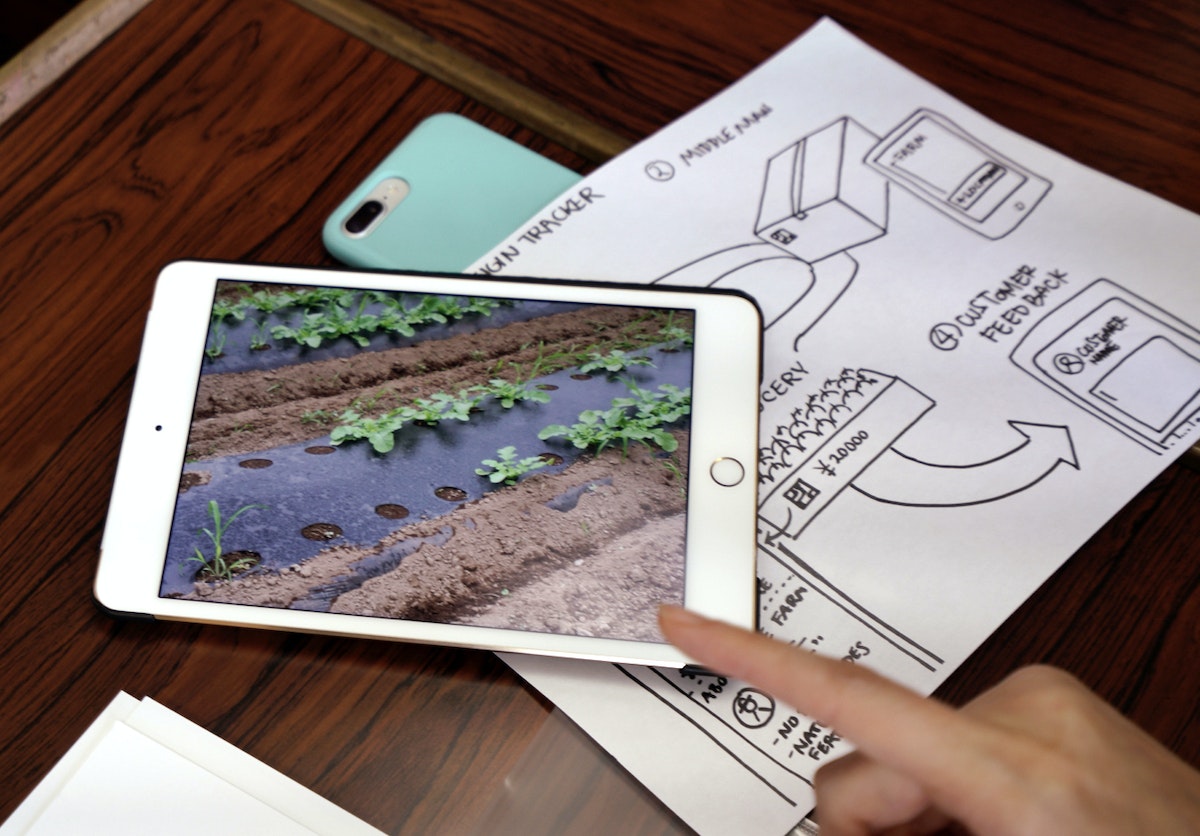
One question that emerged through research was why agricultural producers weren’t utilizing IT. This evolved into “How can profitability be improved for all stakeholders?” and, “How might we create a system that will provide useful data without creating a burden for either farmers or agricultural wholesalers?”
The result was fudoloop.
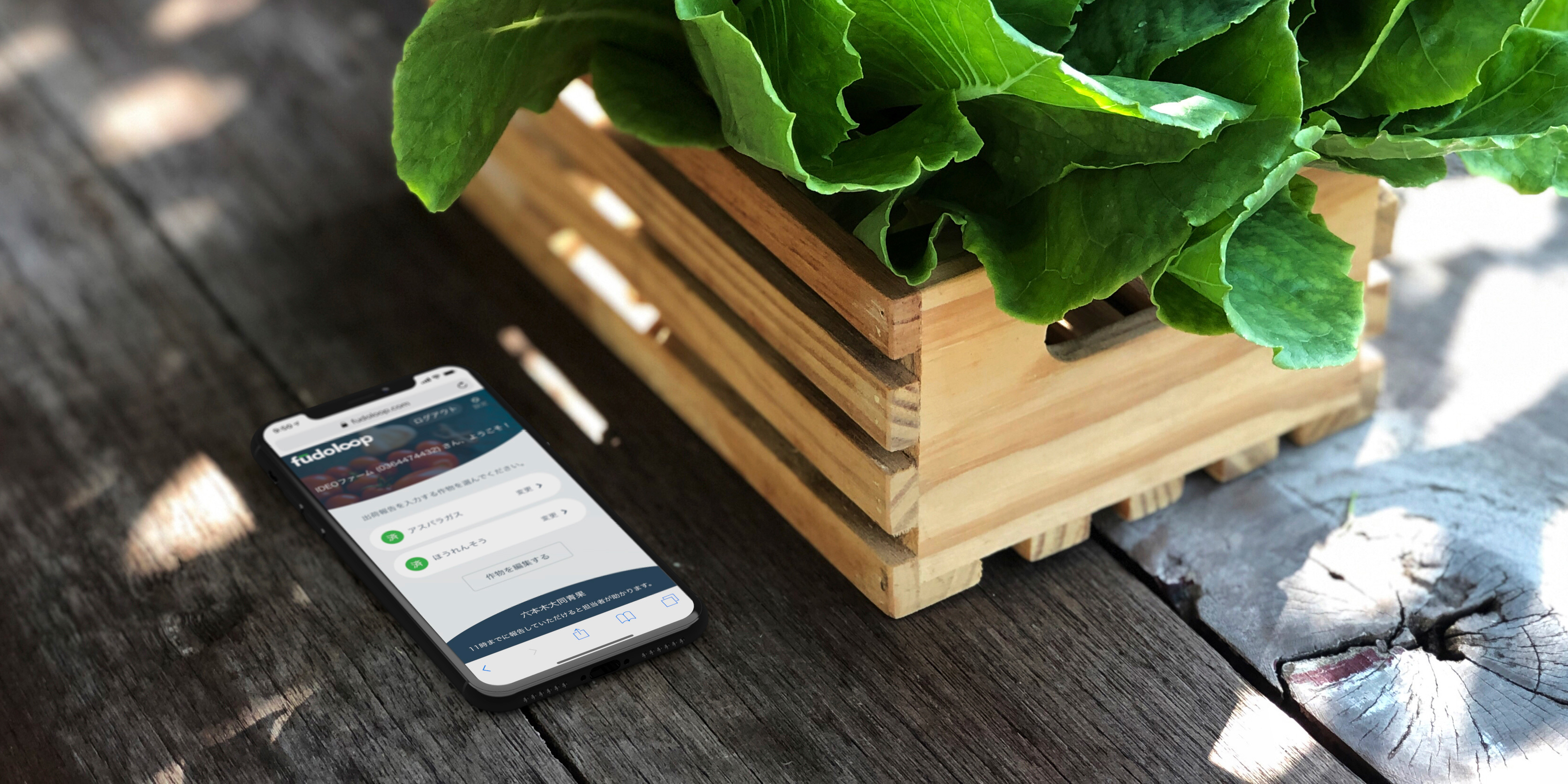
fudoloop is an app that enables farmers and wholesalers to conduct business more profitably by bringing transparency to the fluctuating produce market. Through fudoloop, wholesalers receive information from farmers a day in advance, and can coordinate the various requests of buyers, such as order size, production location and other special requests. As a result, wholesalers can function as “community managers,” doing business with both producers and buyers at a more appropriate price point.
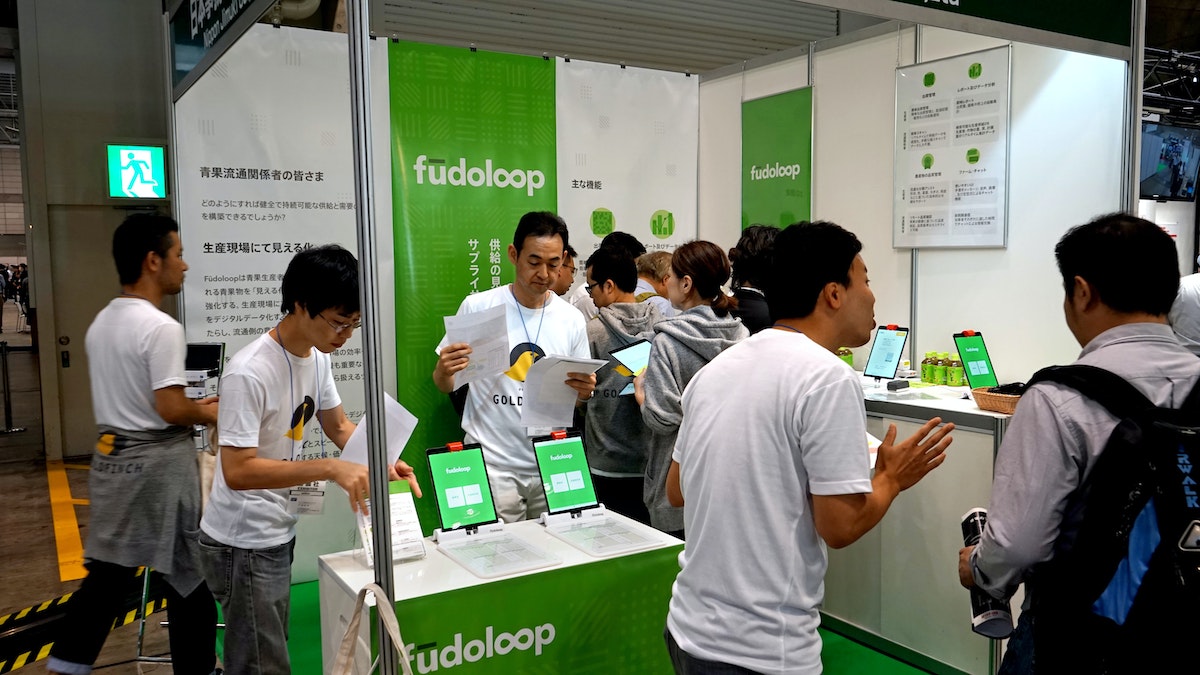
NJC aims for fudoloop to be the first step in a cycle that brings value to all stakeholders, from farmers to wholesalers, retailers and even customers, by redefining the “middleman” role of produce wholesalers.
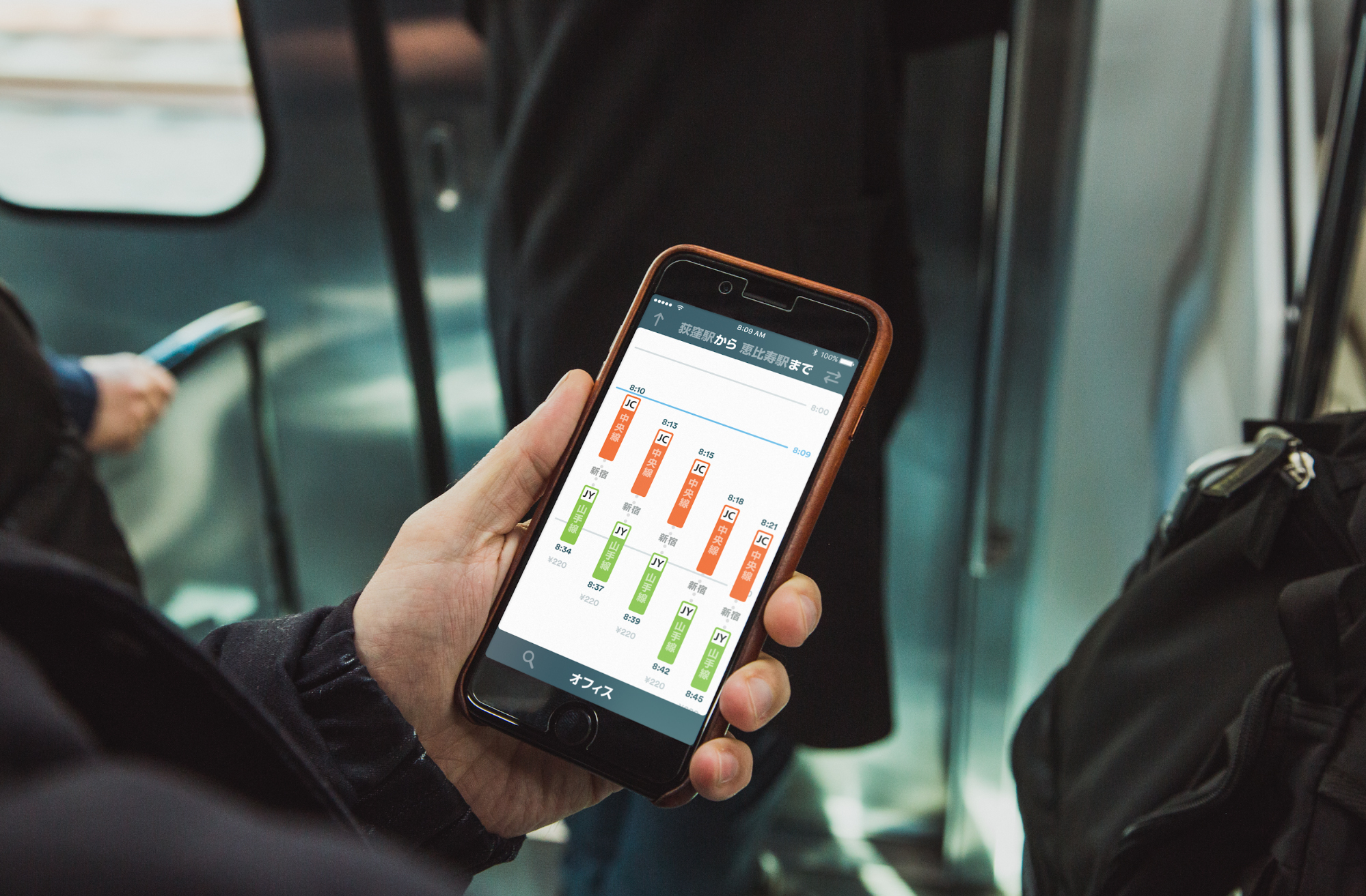
Designing a new digital experience for a world-renowned Japanese railway
A new, human-centered wayfinding app for one of Japan's biggest railways.
The population of Tokyo’s metropolitan area is twice as big as New York, and the daily influx of workers from the suburbs increases that number sixfold. Congestion on trains traveling through the center of Tokyo during commuting hours is said to reach somewhere close to 200 percent of the trains’ capacity.
East Japan Railway Company (known as JR East) is the world’s largest railway company by revenue, operating 12,000 trains daily and serving 6.4 billion passengers per year.
In March 2014, JR East leveraged their extensive operations and passenger data to publish a consumer app that provided train location information, congestion status, air conditioning temperature, and wayfinding tools.
The app was downloaded more than 3.8 million times; however, its features and usability proved unsatisfactory to users. In an attempt to be comprehensive in addressing passenger needs, the app was weighed down with data and worked sluggishly. Competitors’ apps were named above JR East in customer satisfaction surveys, highlighting the company’s need to address the tool’s usability.
JR East’s Technical Division approached IDEO to help design an attractive and consistent user-centered experience through its digital ecosystem. With a team of interaction designers, they launched a project to create a new version of their app.
During the research phase, the IDEO team observed passengers’ behaviors and decision-making processes and noticed that people were using several apps at once to get more personalized and complete information.
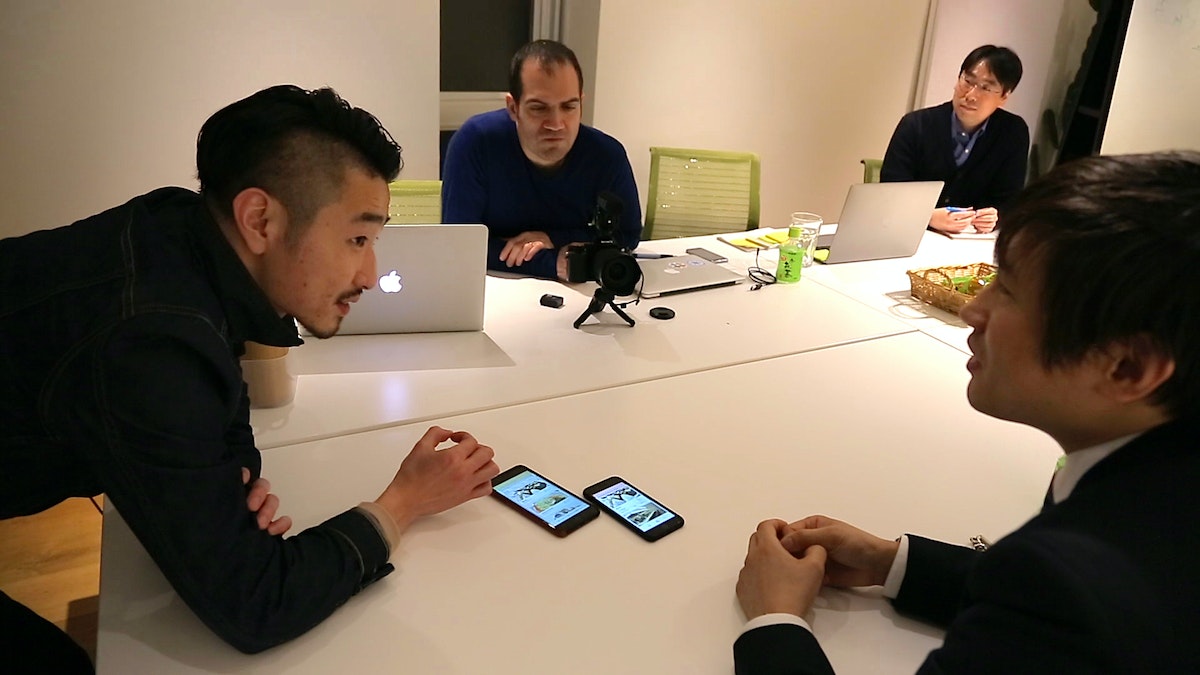
The team created a set of paper-based prototypes to test how users would react to various functionalities. Surprisingly, users ranked versions with limited functionalities higher than those with a broad range of features.
This insight informed a new prototype that enabled a customized user experience based on traveler needs. Wayfinding proved to be the most frequently selected feature, so the new app was designed around helping passenger navigate during their trips.
Although JR East had traditionally outsourced their app development, IDEO encouraged them to organize their own internal team. In cooperation with Pivotal—a frequent IDEO partner familiar with human-centered approaches—the internal team was trained in agile development and built the new app themselves. A prototype was released in November 2017 as “Go! by Train.” It was so successful in the market that the earlier JR East app was replaced entirely with the content of the new design.
JR East's internal development team was recognized by the company for their exceptional output, and will be integral to the company's human-centered digital transformation going forward.
The Big Green Button
Real life celebration in a digital world
Fast forward a few years and the big whiteboard has been replaced by a nimble digital tool that allows us to track and collect data about our projects, leads, and teams. Fantastic—except we lost the communal hoopla of physically erasing the board in front of our friends. Somehow clicking to archive didn’t have as much pizzazz.
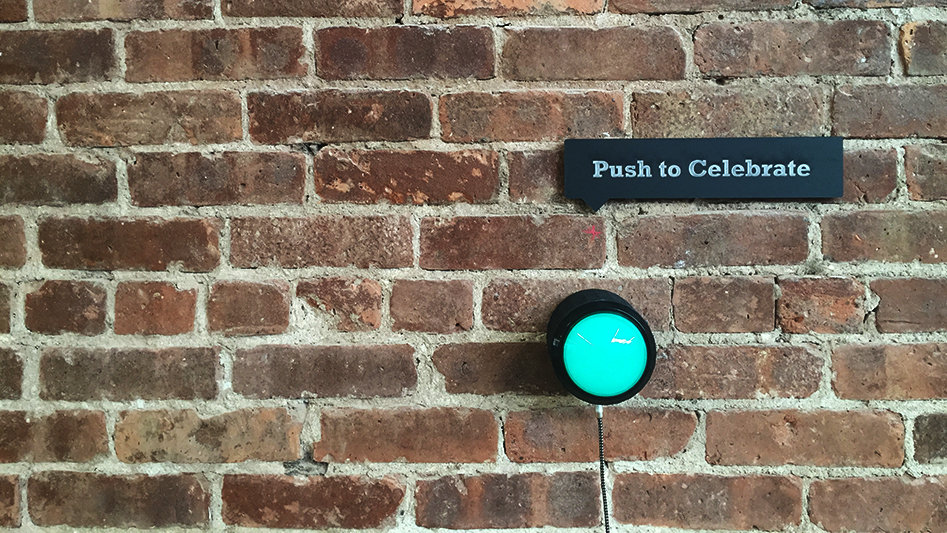
What could we create that would provide that same, satisfying sequence of tangible action and group celebration in our now purely digital reality? Enter the Big Green Button.
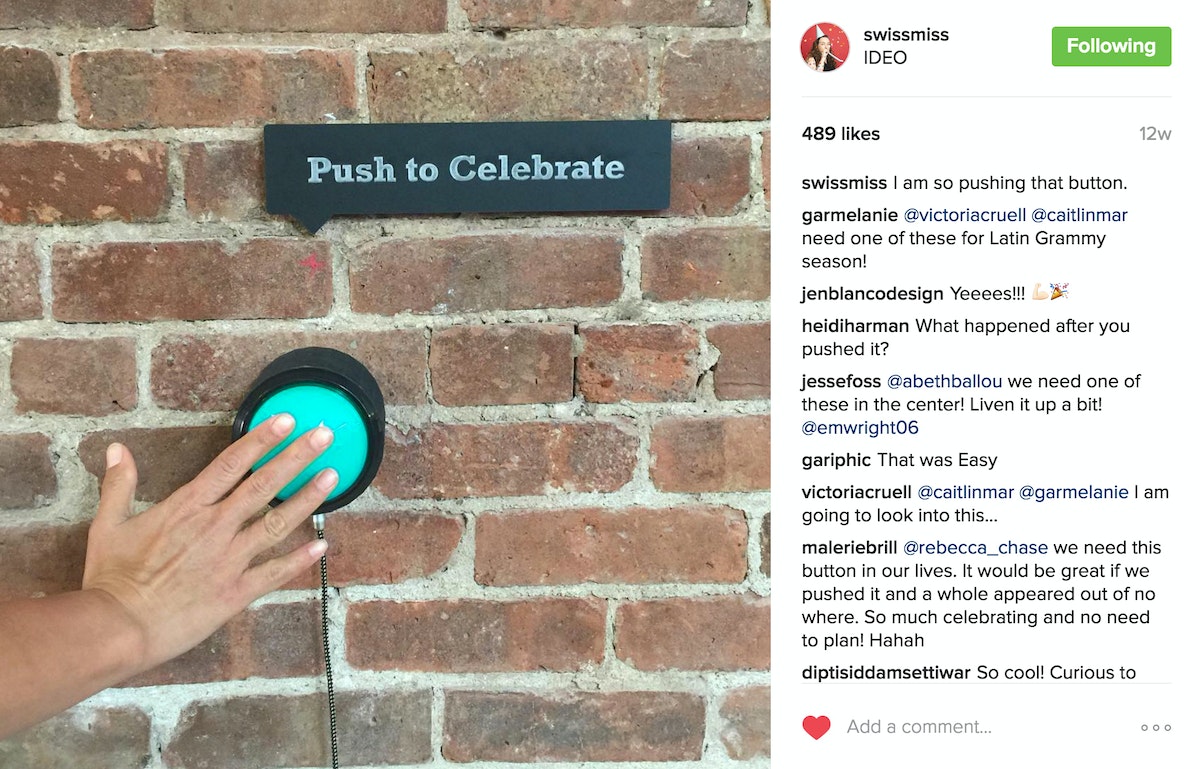
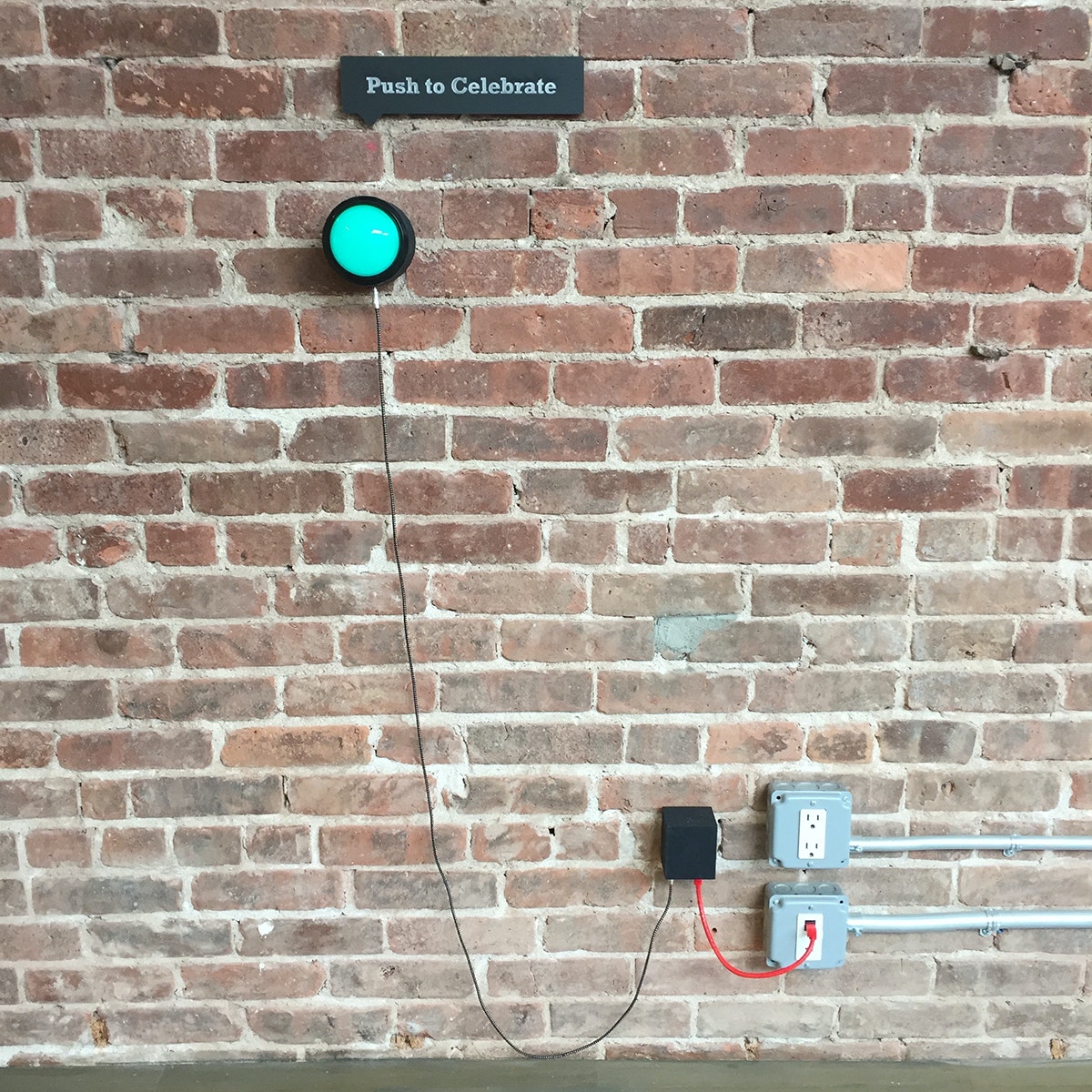
It’s exactly what it sounds like—a massive green button that says “Push to Celebrate,” affixed to the wall next to the large monitors that track our projects. When a project is complete, a team member hits the button and a ridiculous animated gif overtakes the displays while music from "The Price is Right" plays over the speakers. It’s not confetti cannons, but it's fun and triggers the same enthusiastic cheering we enjoyed at the whiteboard.
So how did we do it? Here's the step by step.
The button itself is from Adafruit, and it’s huge. (Think the size of a grapefruit). The housing for the button is a 3D printed cowling that encases the button and the wiring and connects via an aesthetically pleasing audio cable. The audio cable allows us to unplug the button easily—no complex wiring to worry about.
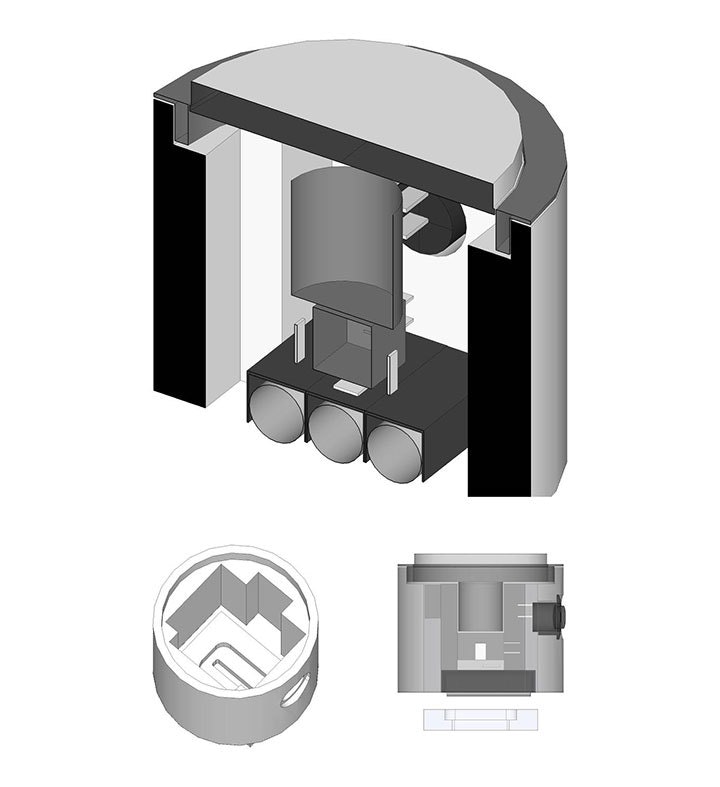
At the other end of the cable is the brains—an Arduino with Adafruit’s ethernet shield. It receives the signal from the button, then sends out a POST request to the website’s server, which runs on IDEO’s network. Because multiple people can view the website at any given time, the user must locally “arm” the button on the AngularJS website with an option box. The option box tells the website that this website will respond to button presses. The go server running the server can then route the incoming request to the large screen’s website only.
This whole setup uses only a few lines of code to add a physical layer and a heightened level of excitement to our project completion ceremony—and everyone loves it.

A button like this is just asking to be pushed, but we added the sign to give people an extra nudge, and a hint as to what it actually does.
Few things are more satisfying than wrapping a months-long project. Back when the New York office tracked its active projects on a whiteboard in our kitchen, we’d celebrate these completed projects at our weekly meetings. Each team would walk up to the front of the room and—as the rest of the studio clapped and cheered—triumphantly erase their project from the board. It was a small thing, but it was ours, and it was pretty satisfying.
Great Balls of Fun
IDEO's Beach Ball Synth goes to Moogfest
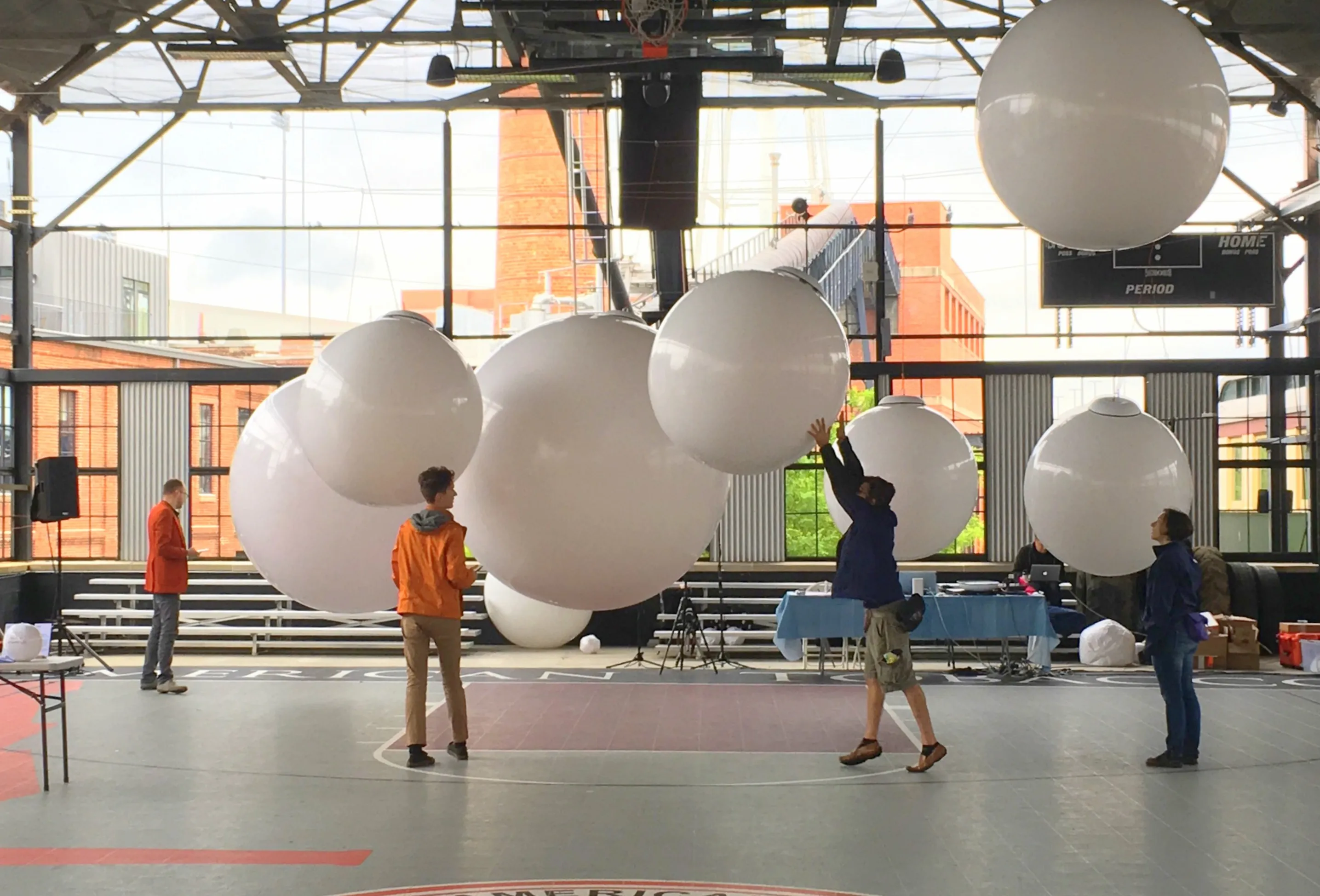
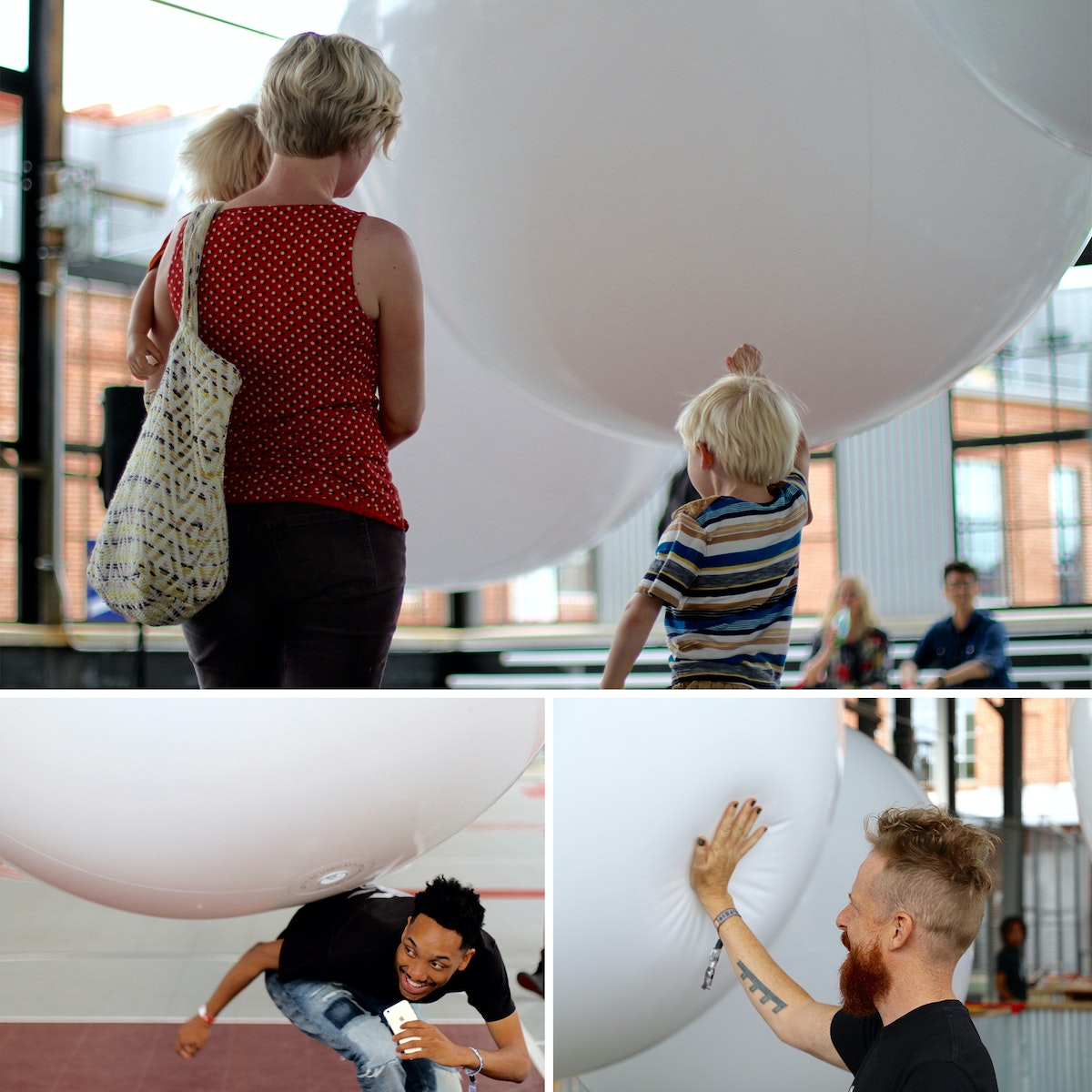
What was IDEO’s contribution? Giant beach balls. But not for the beach. More like magical floating orbs that made music when you touched them.
“We wanted to build an instrument with play as an interface,” said creative director Peter Hyer. “An interactive environment in which anyone can play music without giving it a thought.”
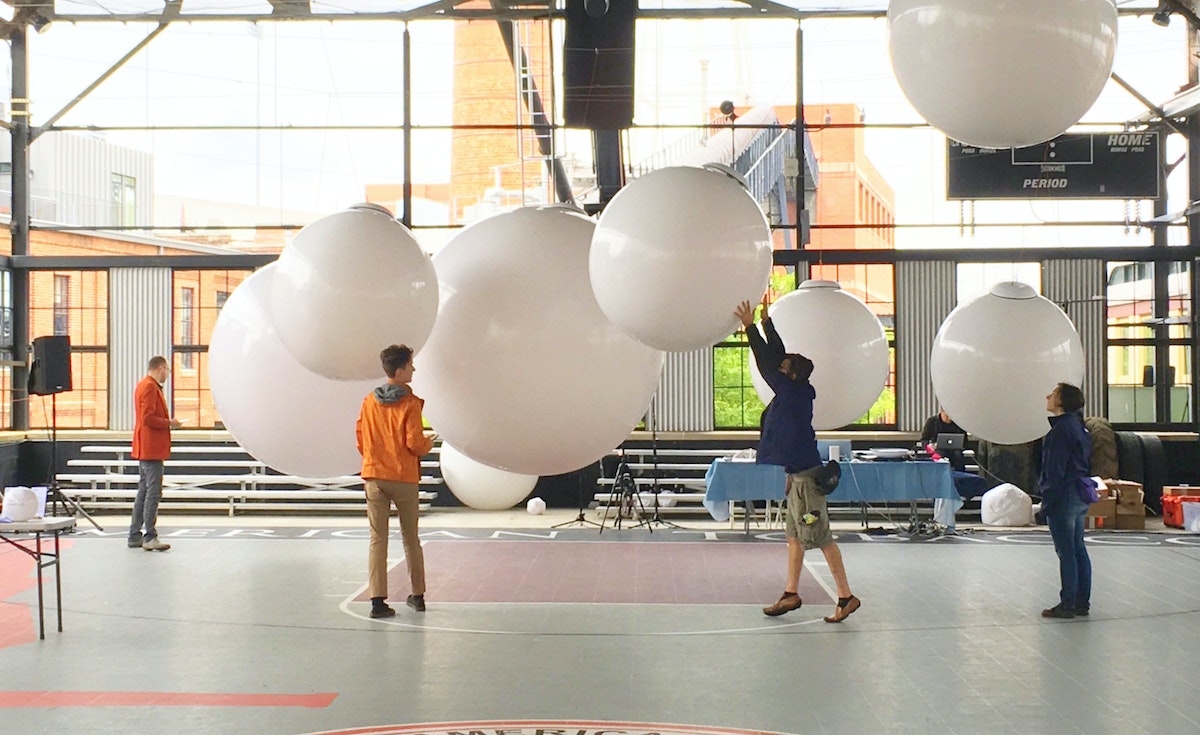
How do they work? Here's the layperson’s version: The team fitted the balls with sensors that mapped the force of the impact to notes. Those notes were then matched to an algorithmically-generated backing track.
For the more technical version, keep on reading.
The process
Ideation
We knew that we wanted to channel the spirit of Bob Moog in our installation, so we began with a brainstorming and prototyping phase where we focused on bridging music and technology with creativity. We really wanted to break the barrier that prevents people from expressing themselves musically, and we also wanted to capture something of the Moogfest zeitgeist. Two ideas emerged—one around music, and one around narrative and synthesis based on the statements of the people at the festival. We loved both and wanted them to coalesce, but we were concerned they might be oil and water.
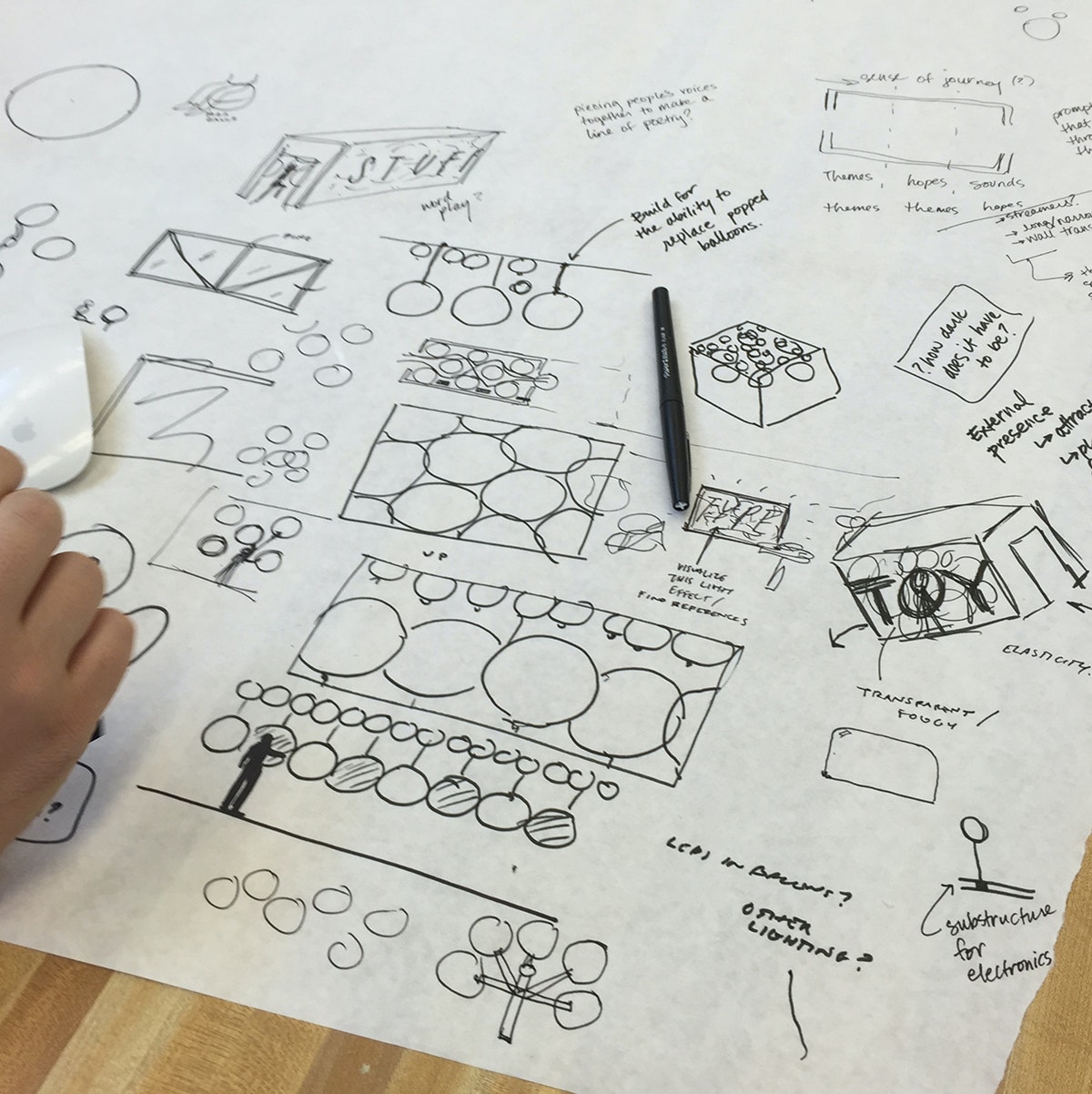
To find out, we began prototyping. We made a quadraphonic phase-music vocoder sampler in hopes of making spoken phrases musical; a computer-vision Post-it® Note step sequencer to bring musical life to an unintimidating object; and generative word games to try to tease out a crowd-sourced narrative arc of the festival. But nothing felt quite right, so we went back to the drawing board and asked ourselves, what is it that we want people to feel?
A Step Back
To get more perspective, we looked for reference points. We found inspiration in large scale installations from artists like Zimoun, where a simple idea like the sound of a cotton ball hitting a cardboard box took on new effect and meaning when scaled. It prompted us to wonder, what if we scaled the acoustic sound of balloons? What are the sounds the balloons should make, where should the sound come from, and how might that capture or express the narrative of the festival?
Iteration
Quickly and tragically, we discovered that combining a bunch of large balloons with an industrial fan was not quite as mind-blowing as we had expected. But, still, their innocuous beauty made balloons seem like a magical invitation to play.
We sought out people who had worked on similar projects, and who were not steeped in our brainstorming assumptions. We talked to Jack Gale from CCA, who had created an interactive balloon project, invited a group from San Francisco's Exploratorium to brainstorm and test out a rough prototype of balloon word games, and worked to find balloons that were big enough and robust enough for us to embed light elements and sensors in them.
Flexibility
Originally, we had based our design around an 8-foot by 16-foot box. Instead, we chose a covered outdoor basketball court. Huge! Central! Beautiful!
But the scale was drastically larger and the lights we had planned to embed couldn’t compete with daylight. To make it work, we scaled the beach ball diameter from 2.5 feet to 8 feet to better fit the space (we had already swapped the balloons for beach balls, since the materials are more robust), eliminated light elements, and put the emphasis on sound derived from beach ball interaction. Since we were at a music festival, it was poetic for sound to be the primary feedback mechanism.
Our friends at the Exploratorium invited us to do a trial install at their museum, which quickly brought the interaction questions to the forefront. You learn a lot quickly when the public kicks the tires. When people walked up to the beach balls, their first instinct was to hit them. But we didn’t want the beach balls to just work like a button—we wanted the installation to be more nuanced, and produce different sounds based on where and how each ball was hit. To do it, we used the nine degree of freedom inertial motion unit to map directional acceleration to pitch, which worked as though there was a keyboard wrapped around each beach ball.
How it works
The Beach Ball Sensor
Each beach ball has a sensor package in a custom made mechanical holder that is held captive by a carabiner. For sensing and communication, we used an Arduino with WiFi, a nine degree of freedom inertial motion sensor that detects acceleration in X, Y, and Z directions, rotation about X, Y, and Z directions, and magnetic field in X, Y, and Z directions. We also opted for an external antenna for added WiFi robustness.
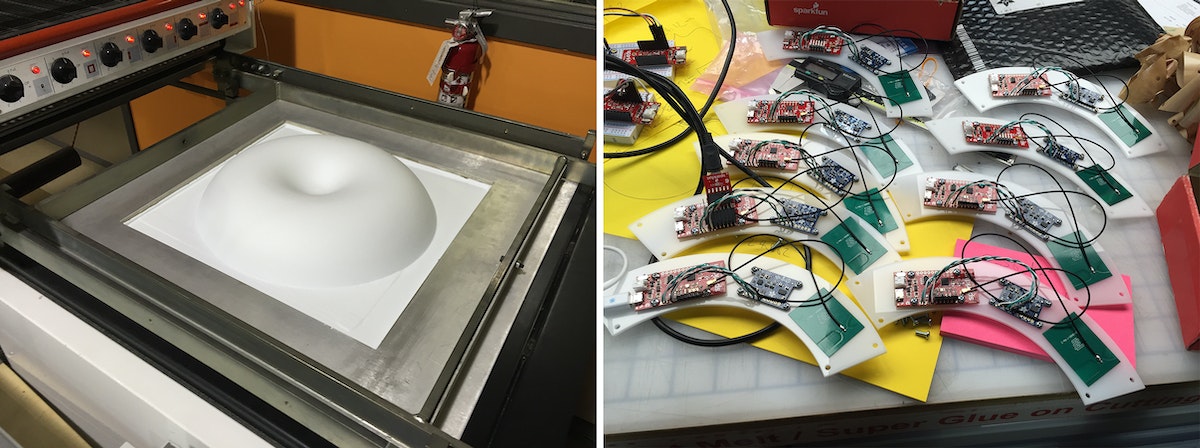
This package communicates raw sensor data via OSC messages over WiFi to a computer that processes the sensor data. A USB battery designed to recharge your smartphone on-the-go powers the hardware and provides enough energy to run each system for about 14 hours—more than enough for an entire day of uninterrupted play.
Signal Processing and Gesture Recognition
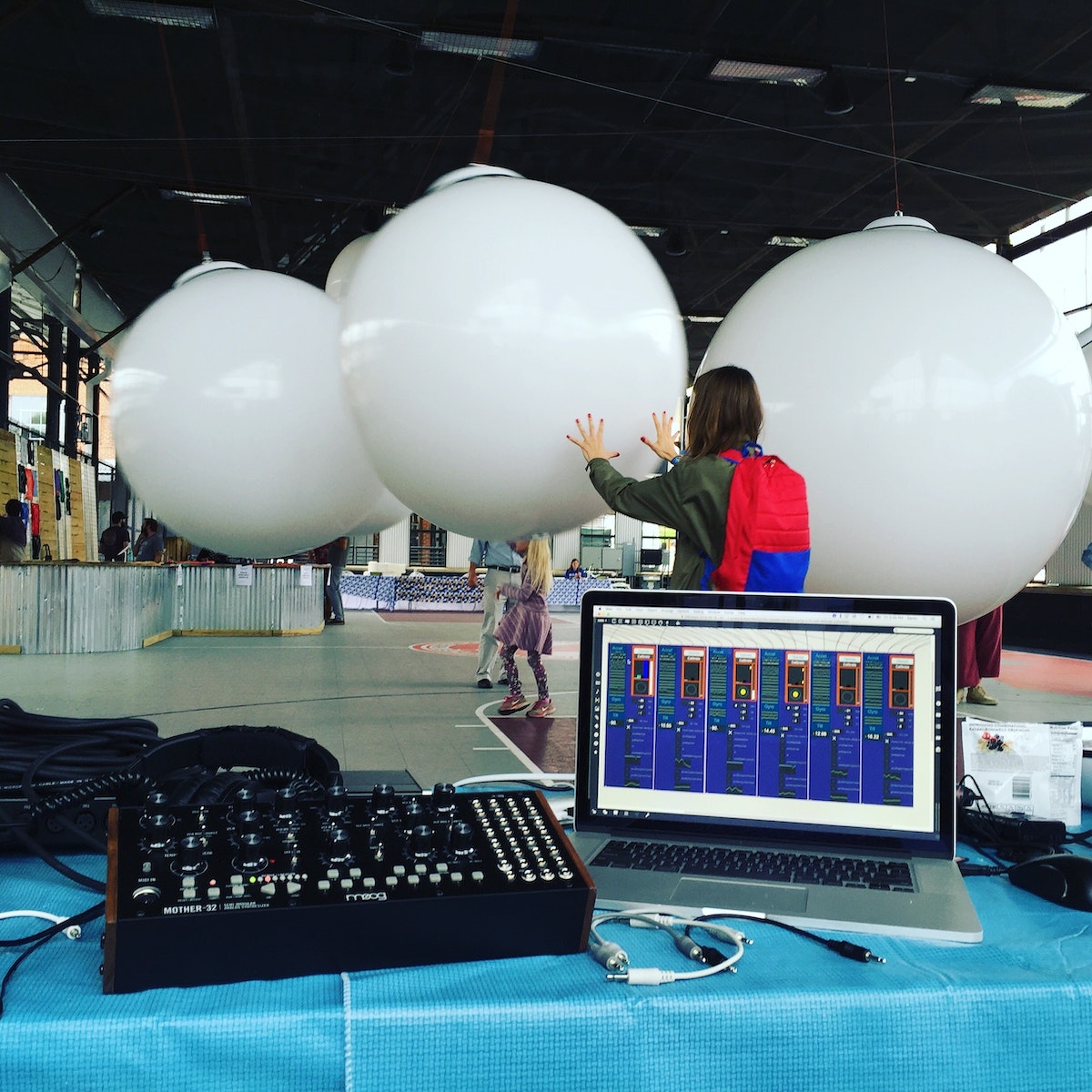
On the computer, Max processes the streaming sensor data, recognizes gestures, and outputs a MIDI note with velocity whenever it detects a beach ball impact gesture. Ableton Live takes the MIDI data from all the beach balls, filters the notes to work with the current harmony, and triggers instrument sound.
Feedback
We wanted to be certain that participants could hear how they were changing the music, so while the background music played evenly throughout the installation, each individual beach ball generated a sound in the speaker closest to it—kind of like stage monitors that bands use playing live. That feedback encouraged everyone to play more.
Collaborative Music Design
To set the stage for musical confidence, we wrote algorithmic music that acted as a backing track, so no one felt the pressure to play the first note. Depending on where a beach ball was hit, one of 15 possible chromatic notes was generated. So, we filtered the beach ball notes so that they always fit consonantly with the backing track—you couldn’t play a “wrong” note. Even still, six different instruments playing over background texture can be too dense. So we opted for a section approach—three sets of two instruments. A trio with backing felt like the right balance of individual voice without cacophony.
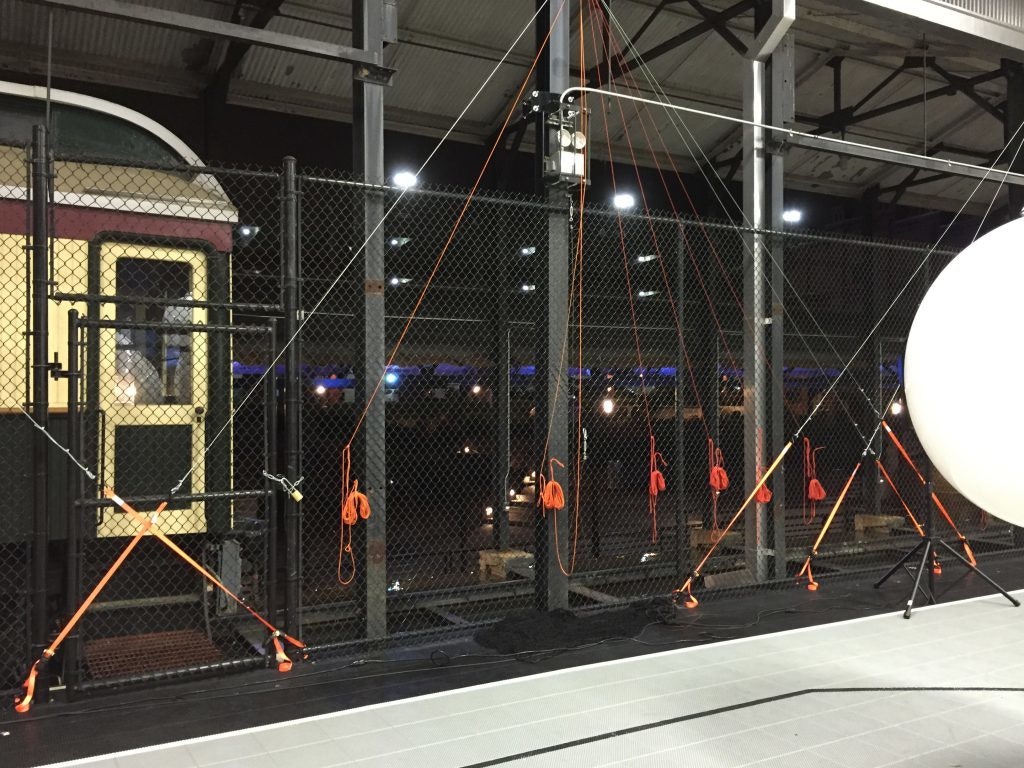
Rigging
When we got to the venue, we had to invent a rigging system to get the beach balls to hang at the right place and height. In a divine moment of MacGyver-like inspiration, Diem Ho devised a hierarchical beach ball wiring system that could be lowered and raised quickly with precise control. When we were swarmed with little kids, this system allowed us to raise the beach balls just enough so people could see little kids behind a beach ball and avoid hitting them; things became a lot safer.
Improvisation
The most important design practice throughout the entire process was to stay nimble and improvise. We repurposed problems into constraints that catalyzed our evolving platform. In a sea of unknowns, improvisation allows you to find generative ways to translate even the simplest knowns into a compass toward meaning, and have fun doing it.
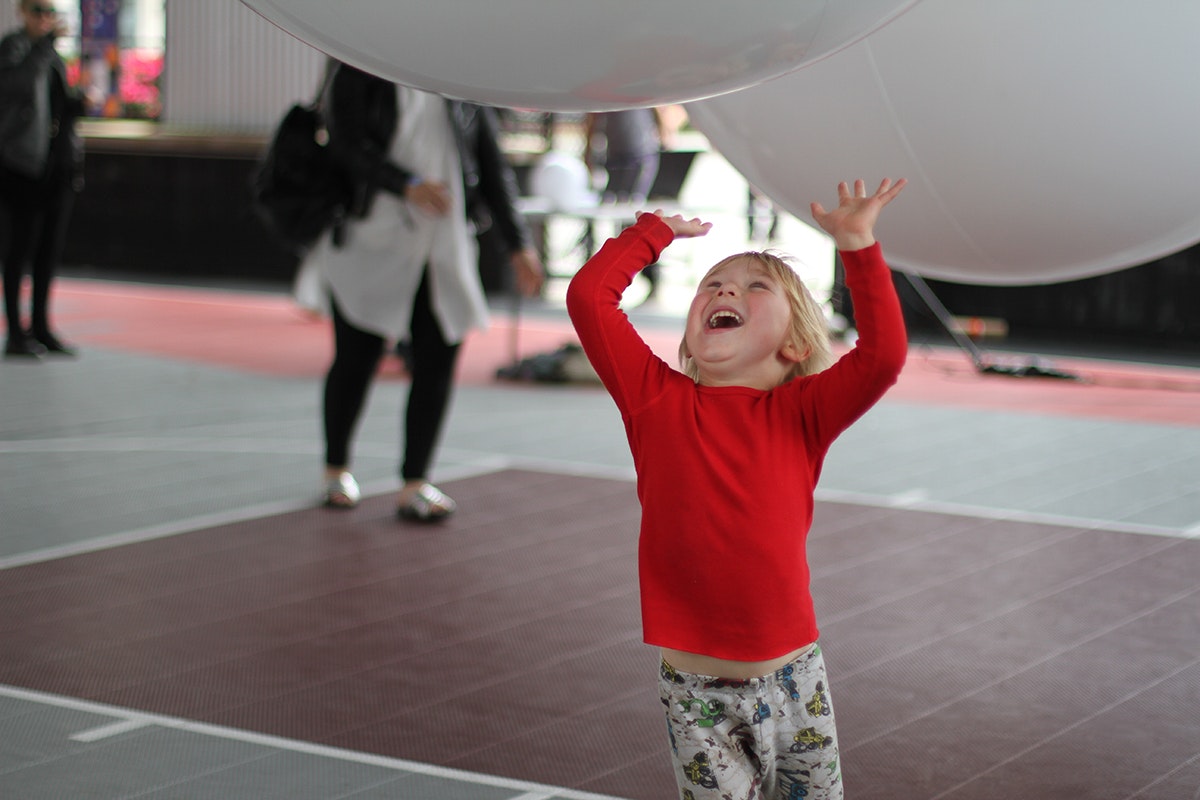
Lead engineer and composer Aaron Soloway couldn’t help but smile as he watched festival attendees interact with the balls. “Whether it was a huge bearded dude into modular synths, or a 5-year-old who just wanted to hit things, everyone was into it.”
For Hyer, that universal spirit of play was key. “It created an opportunity for people to connect with music that was unexpected and in the spirit of the festival,” he said. “Ultimately, it’s about celebrating the convergence of art and engineering. That’s what that Bob Moog was all about.”
Moog hit the big-time when his company started producing portable versions of his giant synthesizers (aka the Minimoog). For now however, the beach ball synth will remain enormous.
The name Moog conjures up images of retro-future machines and space-age sounds. In the mid-60s, Bob Moog created the synthesizers that unleashed an era of electronic experimental music. Today, as a tribute to Bob, we have Moogfest, a gathering of musicians, DJs, performance artists, and technologists. This year’s performers ranged from Gary Numan and Grimes to a classical guitarist having his toenails painted by a cybernetically-augmented accomplice, and an 8-hour DJ set during which the audience slept in provided beds.

Designing Kid-Centered Medicine
Recasting painful, awkward and embarrassing childhood experiences as rights of passage, spirit journeys and superpowers
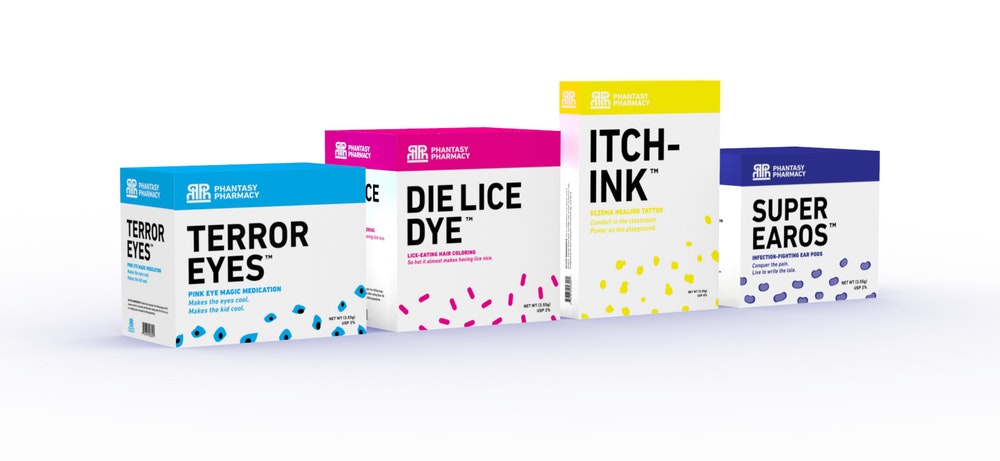
Each mythic tool/medicine could be used to combat common childhood ailments and illnesses in a way that celebrates each malady from beginning to end.
We are big fans of design fiction as a means to push our thinking and to explore what the future could look and feel like. For this design fiction exercise, we challenged ourselves with finding ways of turning kids into the heroes of their own young lives. We set out to create empathetic tools for childhood ailments and illnesses that recast painful, awkward and embarrassing experiences as rites of passage, spirit journeys and superpowers. To that end we asked ourselves a few questions to get started:
How might we turn embarrassing childhood moments into badges of honor?
How might we empower kids to celebrate the sometimes awkward illnesses of childhood?
How might we design for rites of passage, or inspire rituals that spark a contagious creativity?
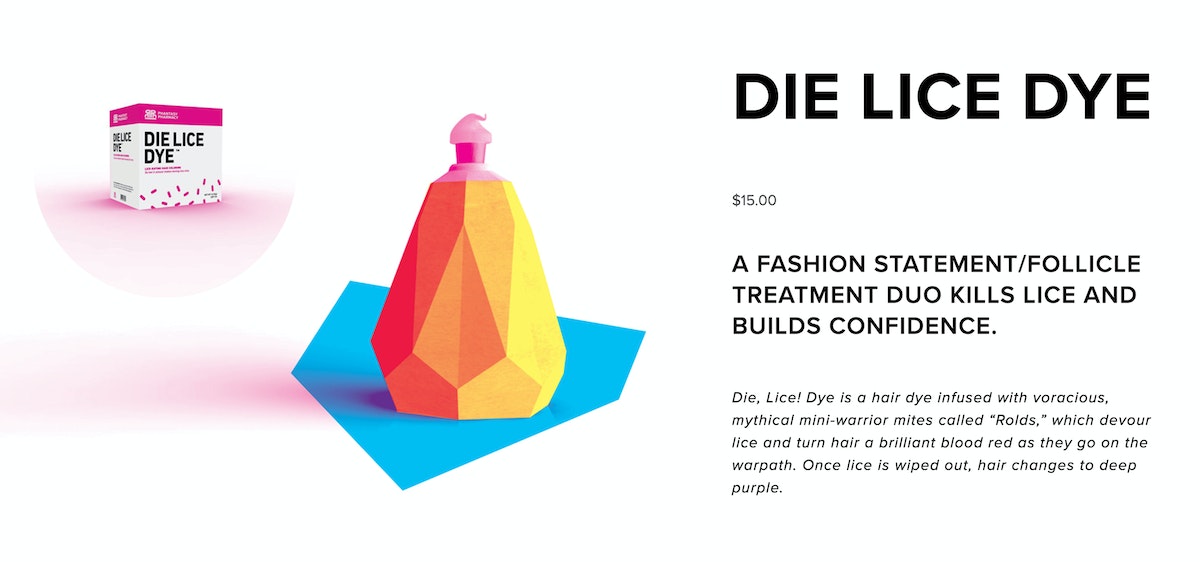
So, we let our imagination go into a world with monsters in the closet, serpents under the bed, and yellow eyes peering out of the darkness. And we asked ourselves how to take the trauma and the terror out of routine childhood experiences. One thing we knew for certain: solving problems technically and explaining them rationally wouldn’t get us very far. First, we had to address them on an emotional, even mystical plane.
Childhood can be full of play and promise, but also pain. What might seem like a temporary annoyance to grownups can be felt as an unending bout of humiliation and suffering for young hearts and minds. Pink eye, lice, ear infections, zits—the barrage of indignities can wreak havoc on even the most self-confident kid.
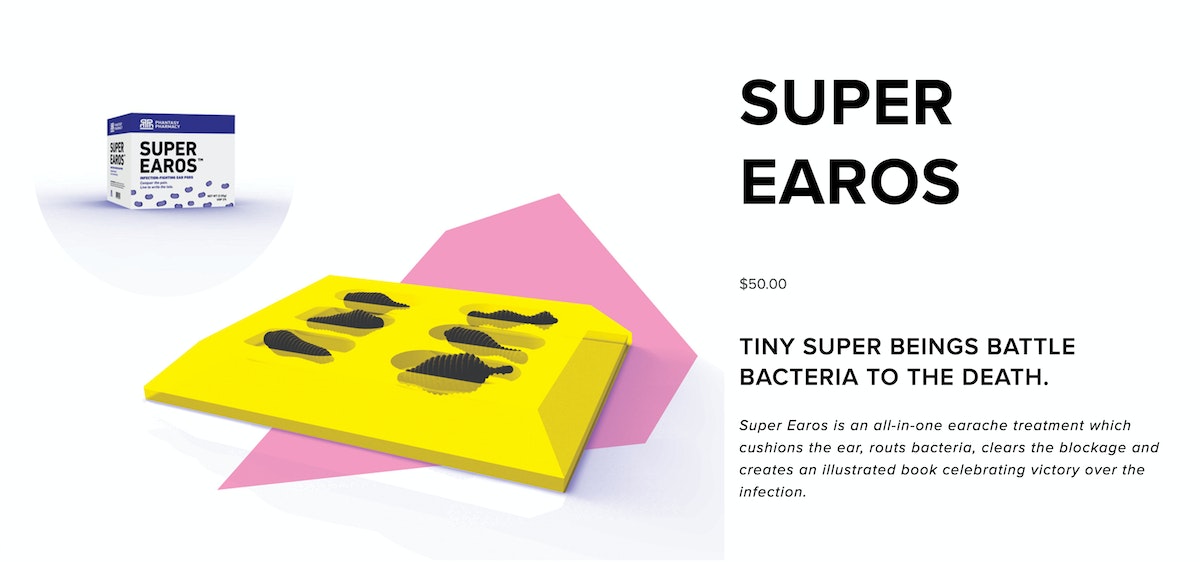
But what if these childhood ailments were recast as rites of passage and superpowers? What if the telltale itchy scalp or bloodshot eyes could be framed as something to embrace, even be proud of? That’s what Phantasy Pharmacy seeks to capture in its design fiction collection of mythic tools that could be used to combat common childhood ailments and illnesses in a way that celebrates each malady from beginning to end.
To get the full, unadulterated experience, check out phph.ideo.com.
Did you ever have lice as a kid? A bunch of us here at IDEO Cambridge did and we haven't forgotten how awful and embarrassing it felt. And when designers are faced with never-ending, wish-I-could-forget-you experiences, they start looking for ways to fix them. Recently, the studio banded together to create Phantasy Pharmacy, a bit of design fiction to help us stretch our imaginative limits and wrestle down unhappy childhood memories.
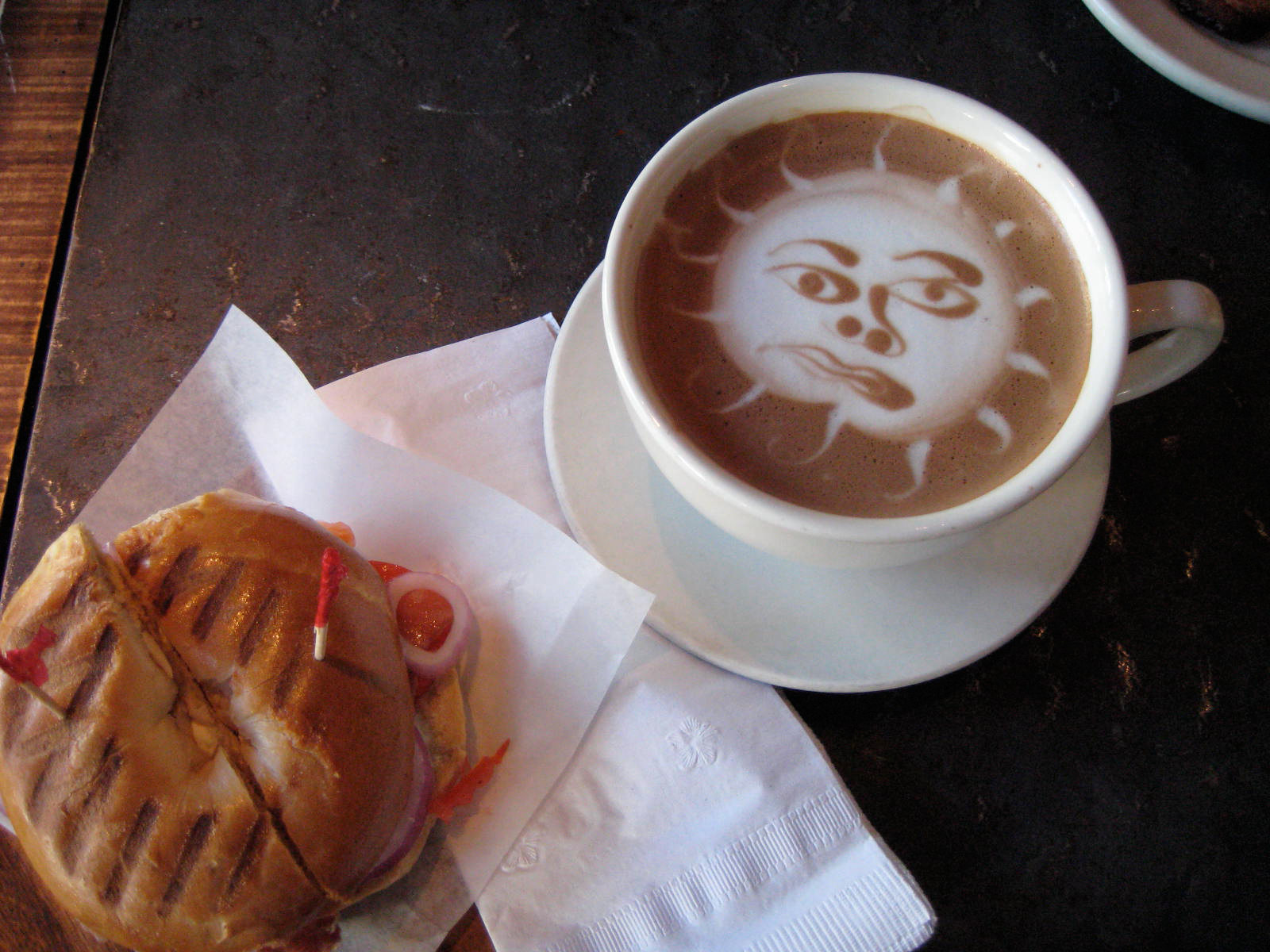
Creative Caffeine
Stories, people, spaces, startups and stuff getting our creative neurons firing
1. More than meets the eye
Tracking shots of winding country roads, and lingering peeks of sheet metal: car ads might seem as lifelike as it gets, but they’re often surprisingly realistic CGI, particularly for new cars that might not be public yet. To keep up that realism, post-production house The Mill’s neat solution has been to create a Transformers-like rig, with adjustable wheelbase, height, and driving style, to help its artists mimic pretty much any car, without costly shipping and availability worries. Take a closer look at the rig here.
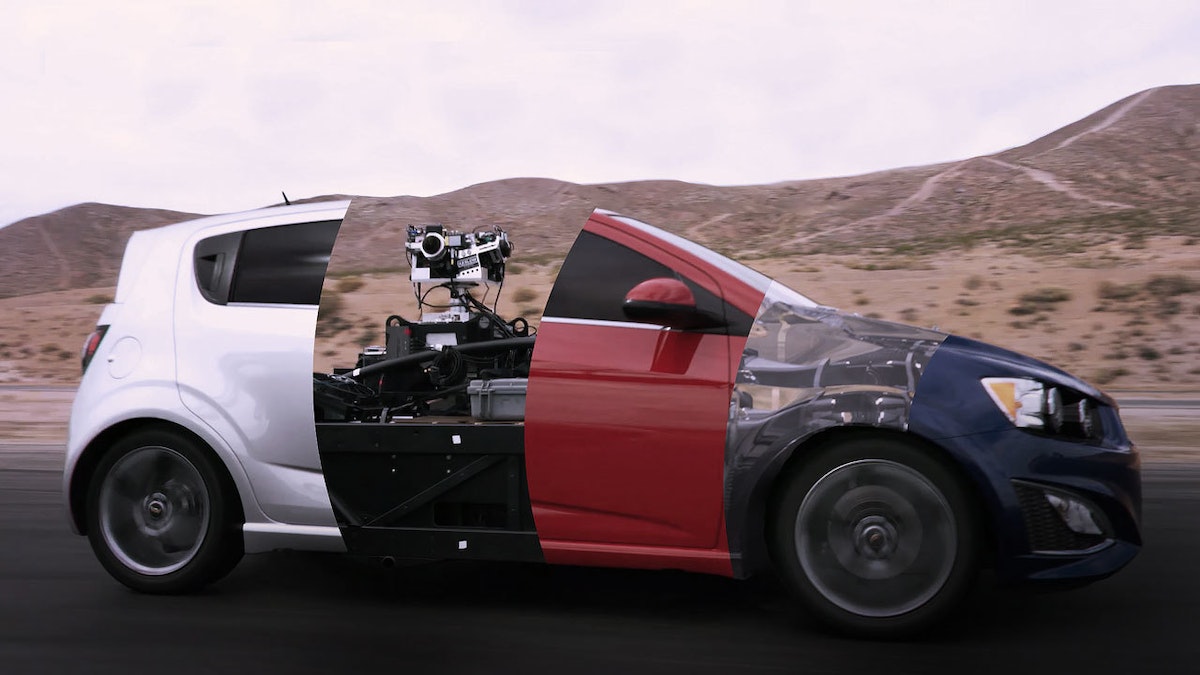
2. The weird satisfaction of a close shave
For the crafty and OCD-inclined people—like us—who find pleasure in perfectly cubed fruit, watching cans being crushed, or a Leica body being painstakingly filed, relax and enjoy these slightly hypnotic videos of master Japanese ceramicist Abe Haruya at work.
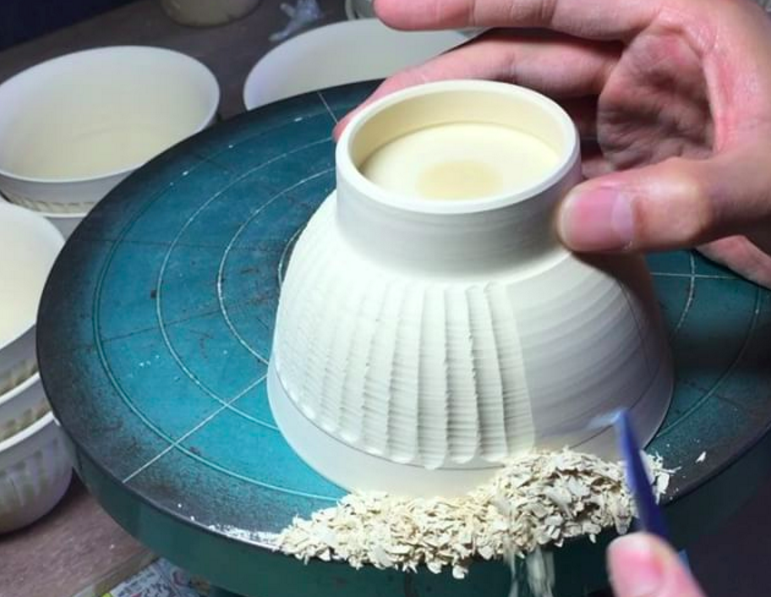
3. Welcome to our open house
Kitchen of the future exhibitions stretch back half a century, but Arduino founder Massimo Banzi and acclaimed sci-fi writer Bruce Sterling have gone one further: they created Casa Jasmina, an open-source apartment in an old factory in Turin, to test what a connected home might look like in the future. Furniture and fittings are modular and hackable, and artists and companies are invited to submit ideas for connected appliances. Eventually, you’ll be able to rent the space out on Airbnb, says Banzi.

4. Getting conversational with computers
When Google’s AlphaGo deep learning software beat Go champion Lee Sedol, the world saw, via the media, a firsthand view of the power of artificial intelligence. But we’re still a long way from solving real problems, in part because interacting with AI is stuck at the computer science level. But an intrepid gang of interaction designers are building clever new ways for humans to better interact with these systems, argues computer vision and machine learning expert Greg Borenstein on Medium. Read the article here.
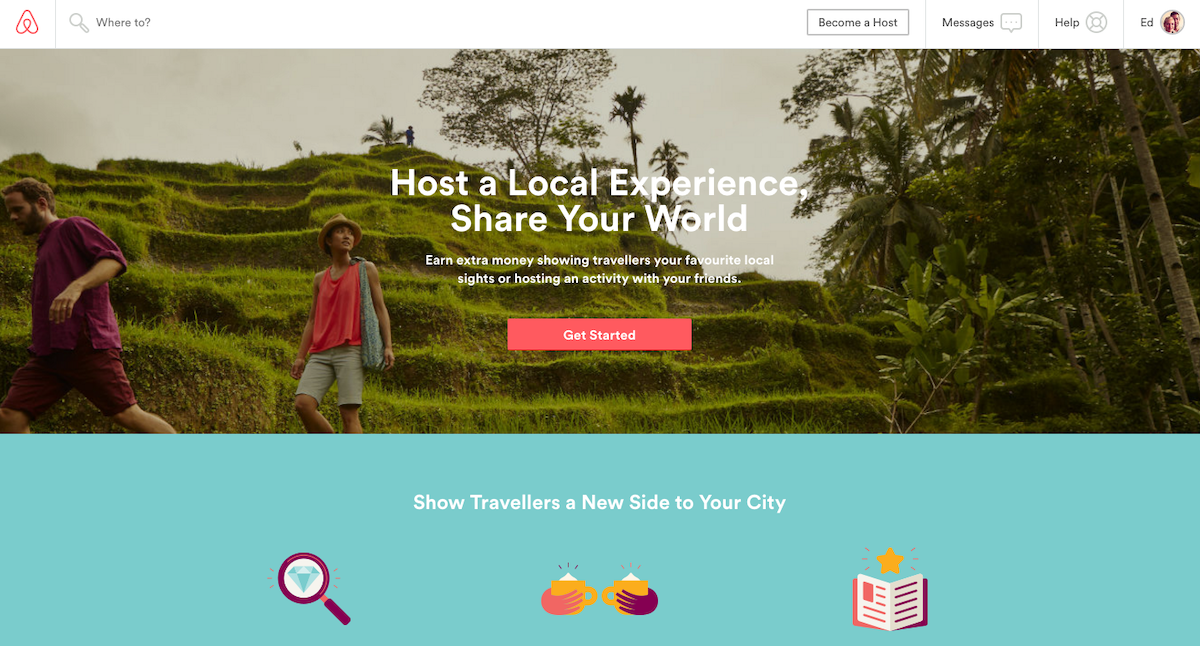
5. Go local with Airbnb
Fancy dining with a sumo wrestler, feeling frisky at a burlesque show, or getting your hands dirty with an urban farmer? Airbnb is helping travelers belong anywhere with a new product they’re testing. Called Experiences, it helps adventurous guests book escapades with local hosts. Check out Airbnb Experiences here.
In this week’s Creative Caffeine, IDEO London serves up a quintuple shot of inspiration: post-production house The Mill’s transformer car; the weird soothingness of shaving ceramics; a visit to Arduino’s open-source apartment; designing with artificial intelligence; and drinks with a sumo wrestler, courtesy of Airbnb.

Lindsey Turner
I’m passionate about building brands, products, and experiences that help organizations show up with meaning and momentum.
I help organizations cut through complexity by shaping how they show up, through brand strategy, identity, and storytelling.
Working at the intersection of brand and business, I bring an editorial eye and a bias toward making—turning ideas into tangible experiences that people can understand, trust, and believe in.
My work spans government, healthcare, financial services, media, and consumer goods, from launching Gen Z-focused ventures to building innovation labs and reimagining legacy brands. I relish moments of ambiguity and enjoy translating across teams, perspectives, and priorities to move ideas forward.
I started my career in editorial and digital design, shaping cross-platform experiences and identity systems in publishing and agency environments. That foundation still shapes how I work today: I’m detail-oriented, collaborative, and overreliant on the Oxford comma. I hold a BFA in Visual Communication from the School of the Art Institute of Chicago.

Rachel Young
My work helps organizations see who their products aren't working for—and build the will and the tools to do something about it
For 25 years, I've asked the same question: Who does this design exclude—and what are we going to do about it?
My work spans human-centered strategy, inclusive design, and qualitative research, with clients ranging from Microsoft, Google, and Verizon to the National Science Foundation, and San Francisco Unified School District.
Before IDEO, I taught elementary school in East Palo Alto and spent a decade doing design work with social service organizations—where I learned firsthand what it costs people when systems are built without them in mind.
I am currently writing User Error, a nonfiction book about digital access and the design decisions behind it. I live in Oakland, California.

Brian Pelsoh
I lead with craft, ensuring our work is creatively excellent: rooted in deep human insight and imagination, while also grounded in the realities of business and technology.
My expertise spans brand, communication, and product design across tech, education, the arts, and social impact.
I believe great work demands both high-level vision and obsessive attention to detail, and only happens through collaboration.
I bring an inclusive, hands-on approach and a deep understanding of business, which enables me to consistently deliver excellence while always asking why.
Before joining IDEO, I worked at the brand firms Pentagram and VSA Partners. I began my career as a designer, leading teams at the School of the Art Institute of Chicago and the Milwaukee Art Museum. I hold an MFA in graphic design from Maryland Institute College of Art and a BFA in communication design from the Milwaukee Institute of Art & Design, and have taught at some of the best design schools in the US.

Tony Wong
I am responsible for IDEO’s long-term success in China and working with clients to use design as a tool to enable growth.
I am responsible for IDEO’s long-term success in China and working with clients to use design as a tool to enable growth. Specifically, I have helped Chinese companies design holistic brand solutions through the development of their products, communication, services, and innovation teams, and I have helped multinationals expand their presence and influence in China.
I advise global leaders on developing China-led innovation and capabilities.
In over 15 years in IDEO Shanghai, I have worked on projects that use design to elevate the quality of the experience of healthcare products and services, streamline processes that increase productivity, create spaces and programs that promote and enable inclusive communities, and build next generation mobility solutions that are planet-positive.
Before joining IDEO, I worked at Philips Electronics and the Electrolux Group in Italy, the Netherlands, and Singapore on a number of breakthrough commercial products. I am a member of the Young President Organization in Shanghai.

Building a personal AI for the messiness of life: Sida Li
Most AI products today are built for work—a space with clear problems and established systems. One founder noticed a gap: personal life is messier, harder to systematize, and mostly left behind by the AI boom. So she built Cue, a personal AI that lives inside iMessage and group chats, to go where the other tools haven't.
In this episode, Becca Carroll, IDEO's Chief Strategy Officer, talks with Sida Li, co-founder and CEO of Shared Context Lab, about staying anchored to a human need while the technology around her keeps changing shape, why she treats her business model with the same rigor she'd bring to a product, and what it feels like to build a company at this particular, disorienting moment in AI.
The conversation also gets into how Sida makes design decisions: the language Cue uses to describe itself, the tradeoffs behind building inside iMessage instead of a new app, and a real story about a business idea that didn’t pan out.
This is the second in a two-part series profiling founders from IDEO's Startups-in-Residence program. The first conversation is with Johannes Seemann, founder of Sooner, on designing GenAI for the emotional side of money.

Designing GenAI for the emotional side of money: Johannes Seemann
Most personal financial tools are built to run the numbers and optimize towards a budget. While that works for some, most people experience money as a lived relationship that does not neatly fit into a spreadsheet. Johannes Seemann and Becca Carroll discuss why money is emotional before it is mathematical, and what a human-centered approach to building a generative AI financial product looks like in practice.

The curious leader's edge in uncertainty: Scott Shigeoka
Mina Seetharaman talks with Scott Shigeoka, author of Seek and Head of Curiosity Cultivation at the Eames Institute, about what distinguishes genuinely curious leadership from performative curiosity, how power dynamics shape curiosity, and why practicing curiosity can restore energy rather than drain it.

How constraints make us more creative: David Epstein
Mina Seetharaman talks with David Epstein, author of Inside the Box and Range, about why total freedom often produces average work, how leaders can design useful limits on purpose, and what organizations such as General Magic and Pixar reveal about the relationship between boundaries and creativity.
Looks like you might be in search of something very specific?
Or reset the filters above and try another angle.
Here’s some random inspiration

Podcasts about creative leadership

Articles about the power of prototyping
