
.svg)




Connecting the underserved to the digital economy
Designing inclusive digital financial services for the last mile.
Money works differently in communities traditionally excluded from formal banking, which makes designing products that really serve their needs a very different kind of challenge. People who live in the last mile often prefer cash because it’s physical. They can see it, touch it, and access it at any time.
While digital money offers many benefits, such as securely sending money over long distances and accessing new forms of credit, many don’t trust it because the places where they can access digital currency have often been too far away.

In 2017, over 500 million adults lived more than three miles from a financial access point in eight emerging markets studied by the Gates Foundation. This may not sound like much of a barrier, but for those living in the last mile, it means having to close their shops, lose a day of earnings, arrange family care, and pay for travel, which can be time-consuming and difficult, especially during rainy seasons. For low-income people, the inaccessibility of financial services has been a deal-breaker for adopting digital money. On the flip side, banks, telecoms, and other companies struggled to reach these customers because their products were not inclusively designed for them, and their distribution models failed to scale in rural areas.

Amid these myriad challenges, IDEO and the Gates Foundation saw an opportunity to introduce innovative ways to provide access to digital financial services even in the most remote areas of the world. And to make bold new bets: Could we design new digital experiences centered around the financial needs of people in the last mile? What would happen if we mobilized hundreds of actors to develop new ways to address financial access at the last mile? What if we took the most exciting financial innovations that worked in East Africa and piloted them in South Asia—and vice versa?
Working with more than 70 partners, including local startups, corporations, including Google, Unilever, Telenor, Standard Chartered, and BNI, as well as IDEO.org’s Women & Money program, LMM adopted a collaborative, ecosystem approach to drive and scale new digital financial products and systems.
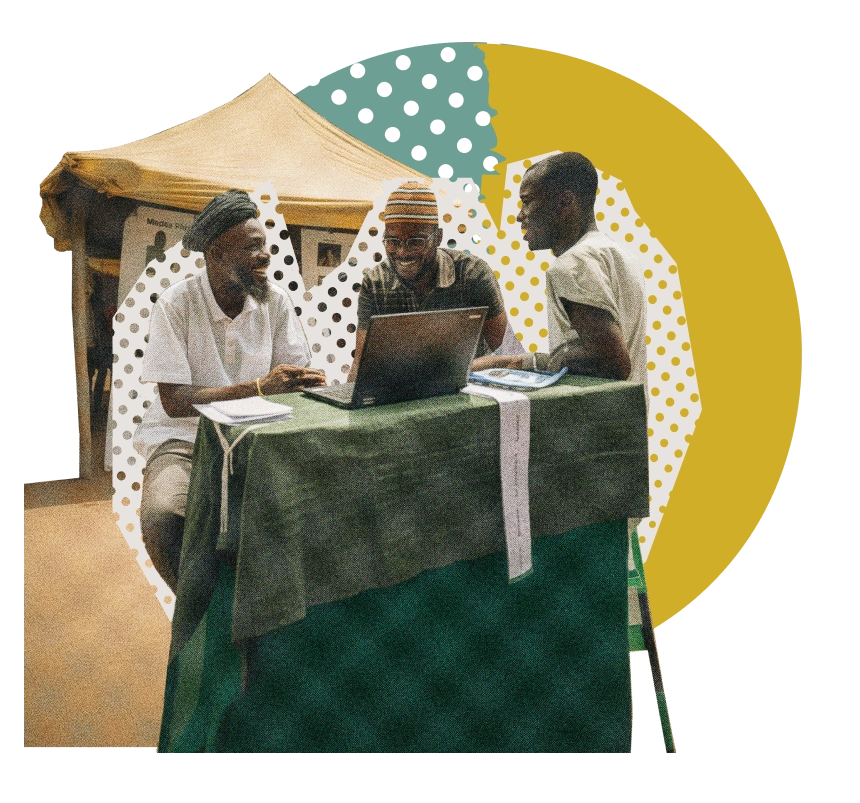
A few of the life-changing innovations launched by LMM and its partners include:
- Finja’s intuitive small-business app that helps micro-merchants in Pakistan access flexible, interest-avoiding Islamic credit to order products from fast-moving consumer goods companies like Unilever. Finja now serves 45,000 merchants and reaches 10.2 million customers.
- Accessing government benefits can be a challenge, especially when it’s through a mobile phone, so IDEO helped Indian startup Haqdarshak develop a robust digital experience for its 52,000 community agents to facilitate access for low-income people. The agent network—70 percent of whom are women—now serves more than 7.6 million families and has unlocked $2.2 billion in social benefits for those who need it most.
- Making micro-credit nearly instantaneous was a solution that startup Kuunda offered to financial agents in Tanzania. IDEO helped adapt the product to deliver working capital for merchants in Pakistan. Today, Kuunda continues to grow across markets in Africa, totaling 6.1 million active users and distributing $1.1 billion in loans globally.
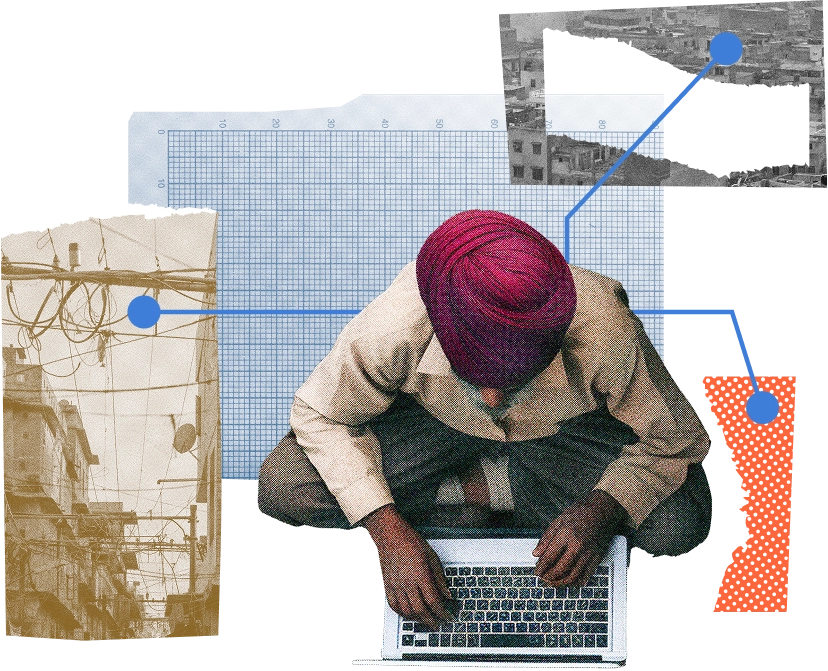
While the LMM program officially concluded in 2024, lessons, tools, and case studies from the program are accessible on IDEO’s Financial Futures website. Those looking to catalyze equity and inclusion in digital financial services for the last mile can consult LMM’s Financial Confidence Playbook, the open-source Digital Confidence Toolkit (created in collaboration with Google), or the Gender Evaluation Framework, among other helpful resources.

Over 1.3 billion people worldwide in poor and rural areas are excluded from formal financial services, including savings accounts, credit lines, and insurance, making it harder for them to move out of poverty.
34M
underserved users reached by 100+ new financial products, pilots, and prototypes
70+ LMM partners
including Google, Unilever, Grab, Standard Chartered, Cargill, Airtel, Celo Foundation, and BNI

Disrupting the beauty goliaths
How a new Peruvian brand overcame the odds—by design.
Multinational CPGs excel at creating popular, mass-market products for large countries. When they enter smaller countries like Peru, they often parachute their brands onto store shelves and skip consumer product testing altogether, largely relying on brand recognition to drive sales. This oversight presented Alicorp and IDEO with an opportunity: flip the script and invite young Peruvian women to work together with them to create a new hair care brand from scratch. Over the course of a four-year transformational journey, IDEO worked closely with Alicorp, adopting a “learn by doing” approach to foster a culture of innovation, launch a new brand, and drive growth for the company through consumer-centric design.
The collaboration began with an inspirational trip 10,000 miles away to Seoul, South Korea, the epicenter of global beauty trends. To expand their thinking, the Alicorp/IDEO team received K-Pop glow-ups and explored other cutting-edge beauty experiences. They were inspired by the Korean market’s unwavering focus on meeting the particular hair care and skin needs of Korean women.
Back in Peru, the team conducted multiple rounds of in-depth interviews with young women, teenagers, beauty influencers, and experts across the country. They learned about their beauty goals, personal care routines, and “mixto” hair texture. They heard about women’s struggles with regional weather—the Andean region’s extreme dryness versus Lima’s humidity and the city’s hard water. The research revealed that Peruvian women wanted natural products that worked hard, wouldn’t harm their hair, and celebrated what made them unique. They wanted a brand that spoke to them honestly and authentically. That represented and empowered them. That didn’t overpromise, underdeliver, or hold up European and American beauty ideals that didn't resonate with Latin American women like the multinationals did.
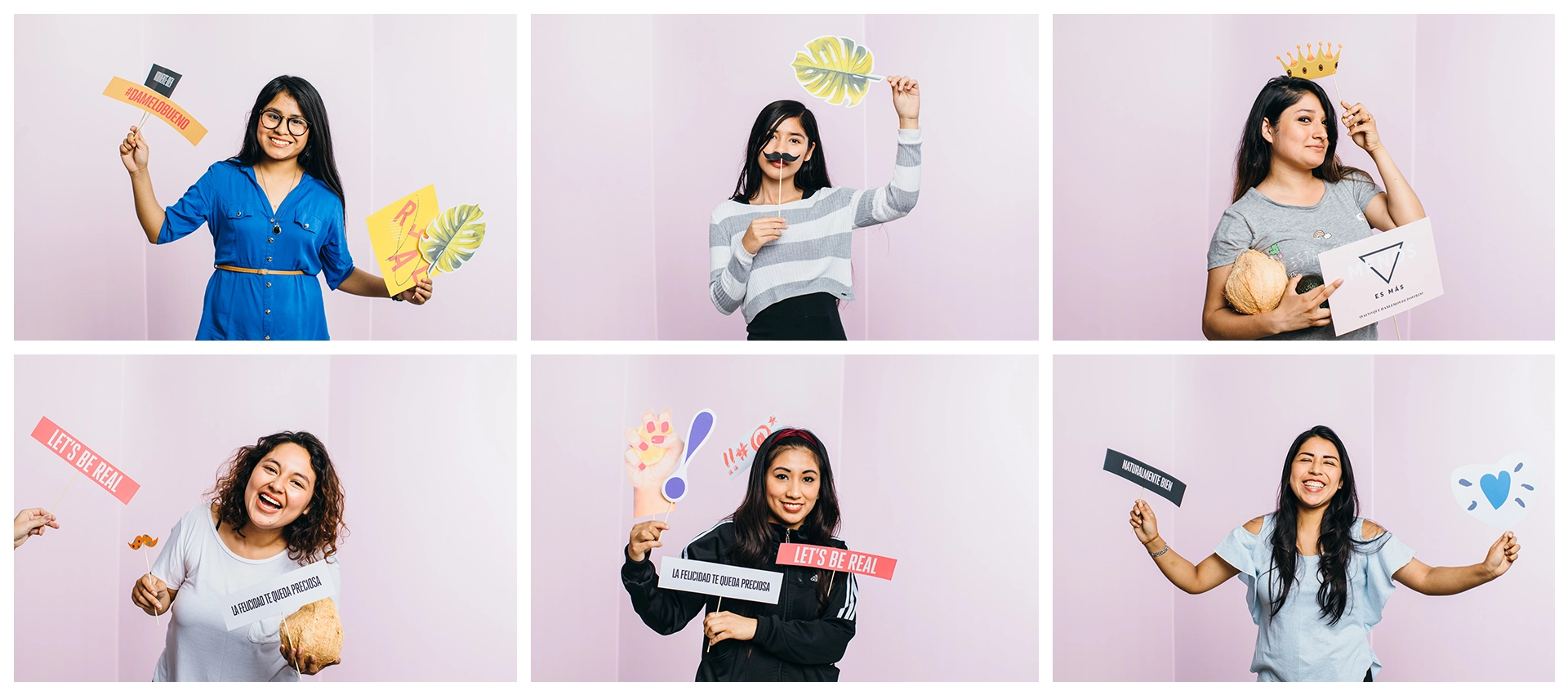
Armed with these insights, the Alicorp/IDEO team developed tangible brand prototypes for women to respond to during successive rounds of user research, including in a beauty pop-up store in Lima. The team shared various bottle types, ingredient mixtures, and brand positioning options. Should the new brand’s personality be an outspoken feminist or a gal pal? Au naturel or sophisticated? The iterative feedback cycles informed everything from brand strategy and ingredient recommendations to product line-up, brand and product naming, launch strategy, and digital activations.
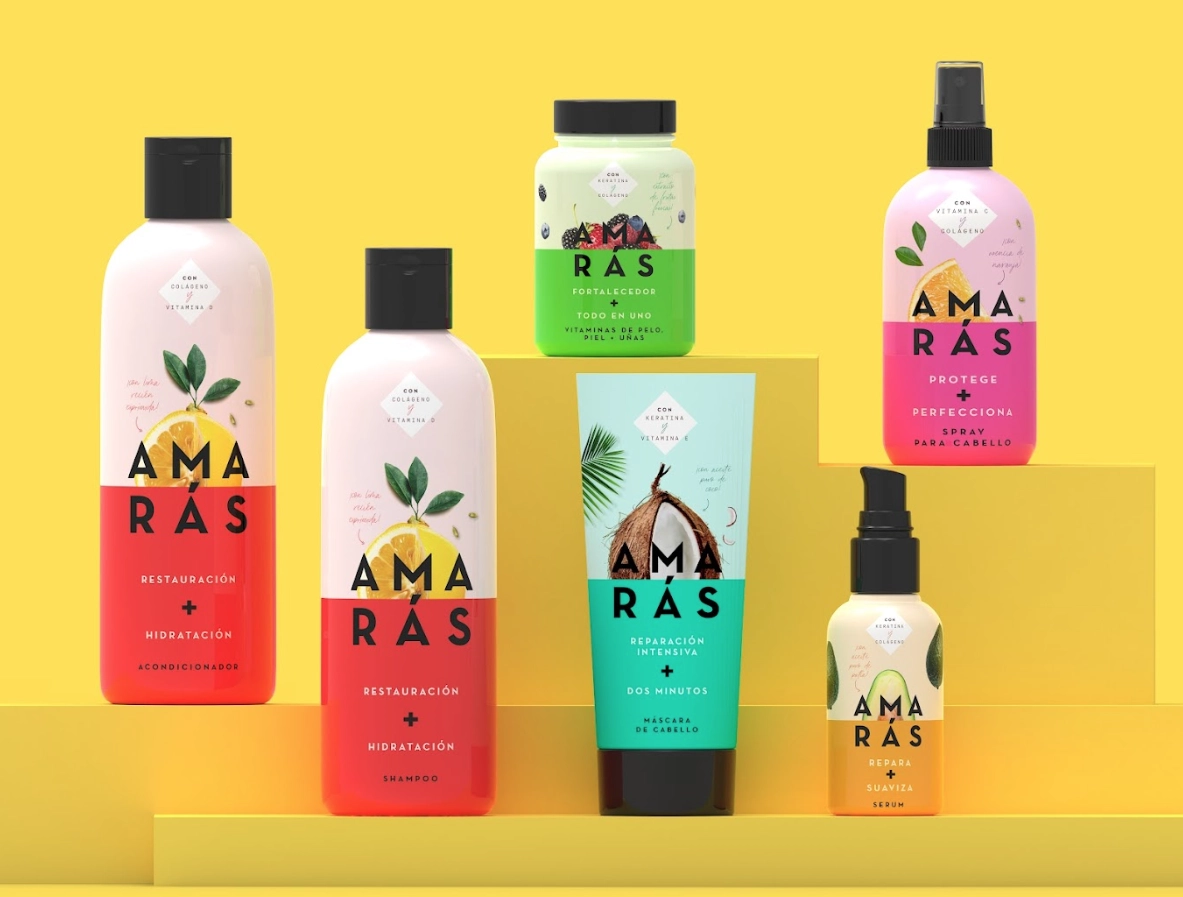
The final design, Amarás (“you will love”), is a personal care line that centers the needs and aspirations of Peruvian women. Hitting shelves in 2022, its shampoos and conditioners feature local, bio-diverse ingredients, including mangoes, macadamia nuts, and goldenberries, that help address the specific hair texture needs of women in LATAM and the climate realities of the Andean region. The brand’s launch campaign included TV and print ads featuring Peruvian models from every region as well as commissioned murals celebrating local beauty by artists across Peru. Most notably, the unapologetically authentic Peruvian hair care brand became a TikTok sensation, garnering over seven million organic views and more than 300 viral videos from enthusiastic new fans.
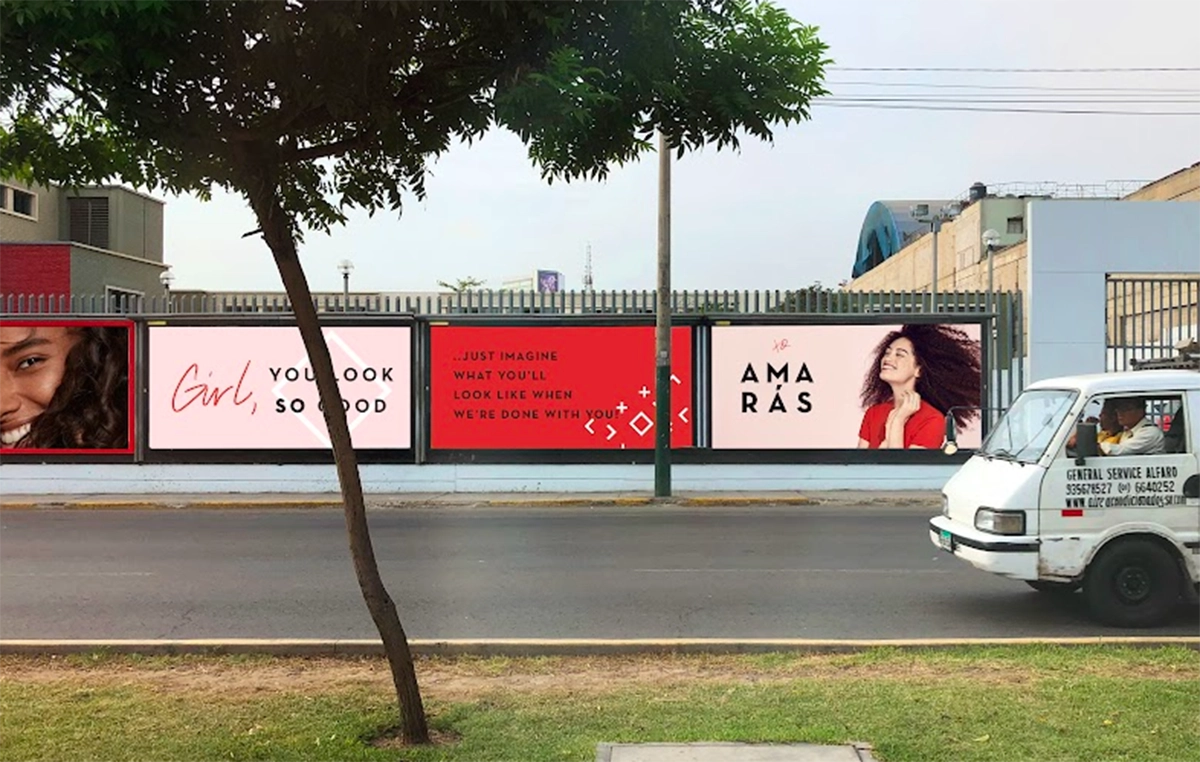
Three months after its launch, Amarás seized a 7.5 percent share of the personal care aisle—a remarkable goal it had set for year three.Since then, Alicorp has continued to expand its creative capabilities, designing personal care products tailored to the cultural and beauty needs of Latin American consumers.

Alicorp launched numerous successful brand extensions across its food and home care categories, but was unable to crack the $340M USD hair care product market in its home country of Peru.
7.5%
Amarás’ share of the Peruvian hair care market 3 months after launch—a goal Alicorp had set for year 3
7M+ organic views and 300+ organic fan videos
created on TikTok during Amarás’ launch campaign

Enhancing garment worker well-being with AI
Introducing Aitu, “Smart Machines, Uplifting People.”
Thirty years ago, China-based Jack Technology started as a home sewing machine manufacturer. A decade ago, the innovative global leader began investing in robotics and exploring AI, a decision that positioned it well to address today’s urgent need for smarter manufacturing solutions.

Believing that a new, strategically positioned sub-brand could draw in larger, more premium global manufacturing customers, Jack Technology and IDEO set out to understand their needs. IDEO began by visiting more than a dozen garment factories across China, Vietnam, and Bangladesh, conducting in-depth interviews with factory managers, industrial engineers, pattern-making leaders, and frontline workers. It soon became clear: the apparel manufacturing industry is at a critical juncture. The way apparel manufacturers navigate the promises of intelligent technology—while addressing deep-rooted structural issues like labor shortages and working conditions—will shape the industry's development for years to come.
For premium clothing brands, garment factory compliance and worker well-being are priorities when selecting production partners, so many owners proudly showcased their improvement efforts. They discussed investing in quieter machines and air conditioning, enhancing lighting, adding greenery, and implementing no-overtime policies. Amid rows of identical sewing stations, the IDEO team noticed small human gestures, such as a small vase of flowers. As one operator said, “I just want to uplift myself during work.”
The research helped IDEO identify a core opportunity for differentiation. Create human-centered products and services that further enhance working conditions in large apparel factories, strengthen their ability to attract and retain talent, and drive the industry toward a more sustainable future. Through multiple rounds of co-creation with the Jack Technology team and key apparel-sector stakeholders, a clear brand direction for Aitu began to take shape: “Smart Machines, Uplifting People.”
Guided by this human-centered ethos, IDEO helped build a comprehensive brand system for Aitu. The idea of “uplifting people” and showcasing garment workers’ professionalism and skill is expressed throughout all brand communications, the industrial design of its smart sewing machines, and the interaction and industrial design of a humanoid sewing robot.
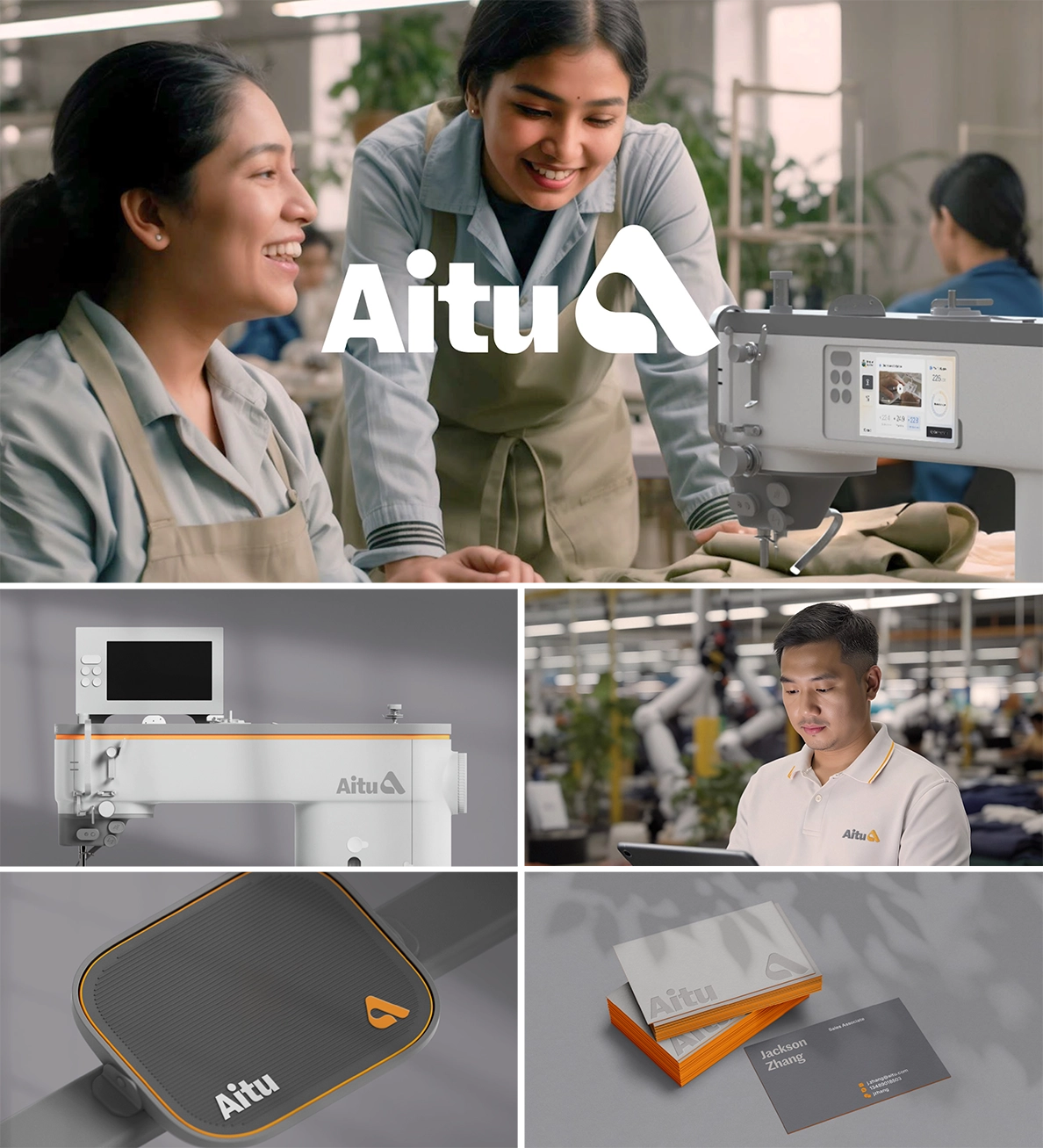
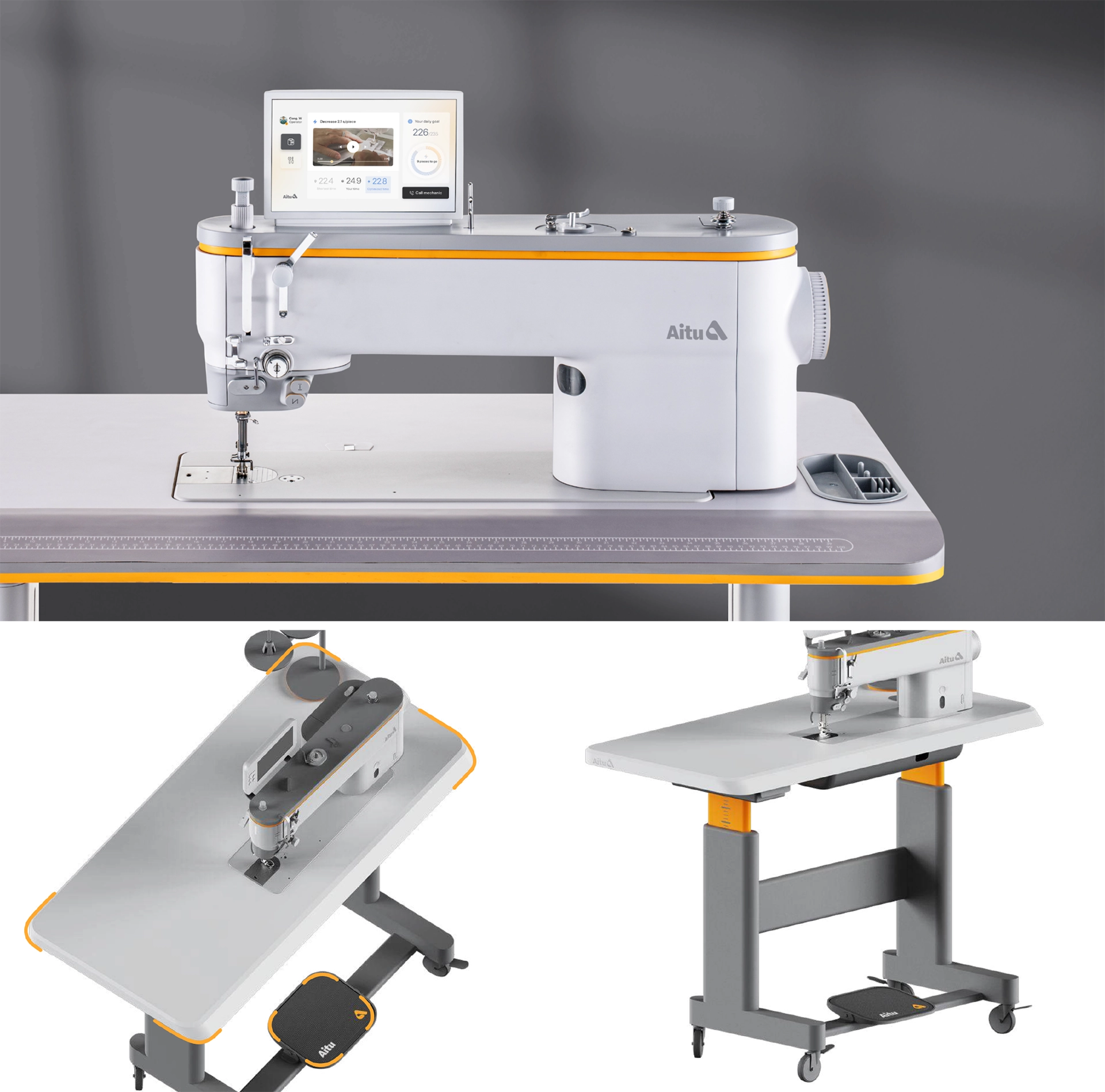
In the eyes of factory workers, this is the new work experience Aitu brings to life. Compared with traditional bulky industrial machinery, the clean lines and soft edges of Aitu’s new AI-powered sewing machines feel more like the professional office tools found in bright, organized workplaces. Concave surfaces and soft materials diffuse glare from overhead lighting, reducing eye strain, while clear interaction logic and icon-based visuals accommodate operators with varying levels of skill and education. AI technology, seamlessly embedded in the machine’s core functions, automatically adjusts parameters for different fabrics and tasks, allowing operators to achieve high-precision results with less effort. A soft halo-like light glows whenever the AI-assisted function is active, fostering users’ trust in both the technology and the AI-powered sewing machine as a whole. When hundreds or thousands of Aitu machines are arranged together in a factory, the overall effect is a modern, professional, and high-end work environment.
Working closely with Aitu’s robotics team, IDEO’s final design challenge was to bring a human-machine collaboration to life through a full-scale AI robot, AI10. The robot has an elegant, biomimetic silhouette. Its fabric-like outer finish features design elements commonly found in garment making, such as cutting and stitching lines, giving the robot the approachable look and the feel of a skilled tailor companion who can assist with simple, repetitive tasks. When AI10 is in operation, a circular light ring gently pulses at the sides of the robot’s ears as well as on the paired sewing machine’s display screen, clearly signaling the robot’s activity to its human co-workers.

In September 2025, Jack Technology debuted its new Aitu brand, along with its first AI sewing machine and a humanoid robot prototype, at a launch event at Shanghai Tower and at the China International Sewing Machine & Accessories Show. IFA Berlin, Europe’s largest trade show for consumer electronics, honored Aitu with a Gold Award for AI Product Innovation for seamlessly integrating AI technology and industrial design. Jack Technology’s humanoid robot is expected to go into full-scale production in 2026.
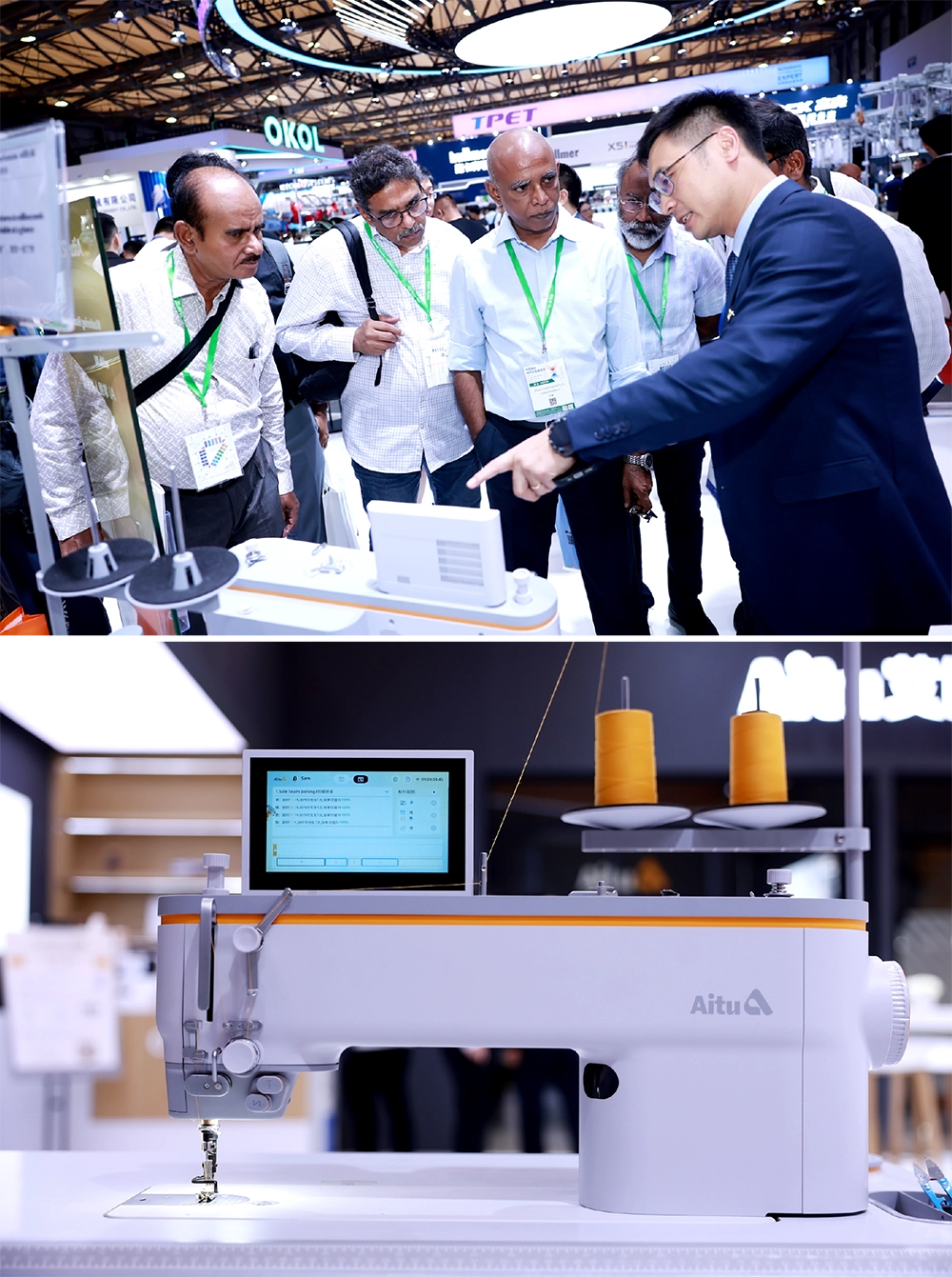
Before AI, the apparel manufacturing industry had experienced little fundamental change since the invention of the lockstitch sewing machine nearly two centuries ago.
2025 Gold Award for AI Product Innovation
from IFA, the world’s largest home and consumer tech event

Helping Peru’s top hot sauce find US success
Introducing Tari, a flavorful new kick for everyday American foods.
Alicorp has direct operations in Peru, Bolivia, Ecuador, and Chile, manages export operations in more than 30 countries, and oversees over 150 brands. While its AlaCena sauces are ubiquitous in South America, the brand’s North American market primarily consisted of purchases made via Amazon by Peruvians living abroad. To help the CPG giant expand meaningfully and sustainably onto US grocery shelves—and achieve its ambitious $50 million retail sales goal in five years—Alicorp and IDEO collaborated on multiple projects over a two-year period. The partnership began in early 2020 with consumer research and product strategy, ultimately leading to the development of initial product branding, positioning for launch, and an in-market pilot in late 2021.
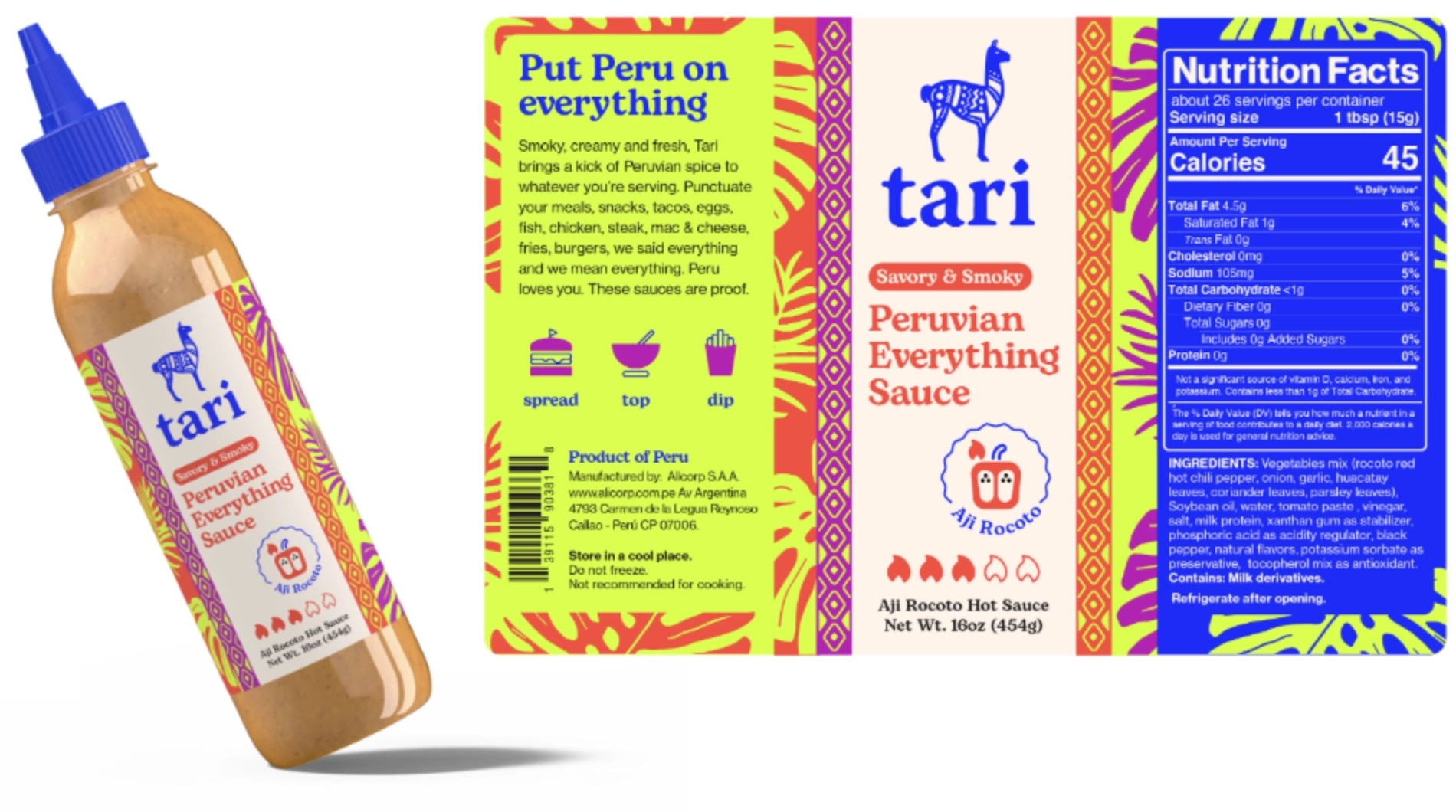
Through a combination of large-scale digital surveys and in-depth, in-person and remote research interviews, IDEO discovered that AlaCena’s Tari and Uchucuta’s hot sauce recipes resonated the most with US consumers. Made from native Aji Amarillo and Rocoto chili peppers ground using a traditional Andean “batán” technique, consumers appreciated their complex flavors and enjoyed how they enhanced, not overpowered, everyday foods like burgers and fries. The sauces’ authentic Peruvian culinary roots were also a key differentiator. In addition to consumers, IDEO consulted with industry experts—including executives from large-scale grocery chains and chief merchants of leading big-box stores—to explore retail and marketing trends and identify potential innovation partners for Alicorp in the US.
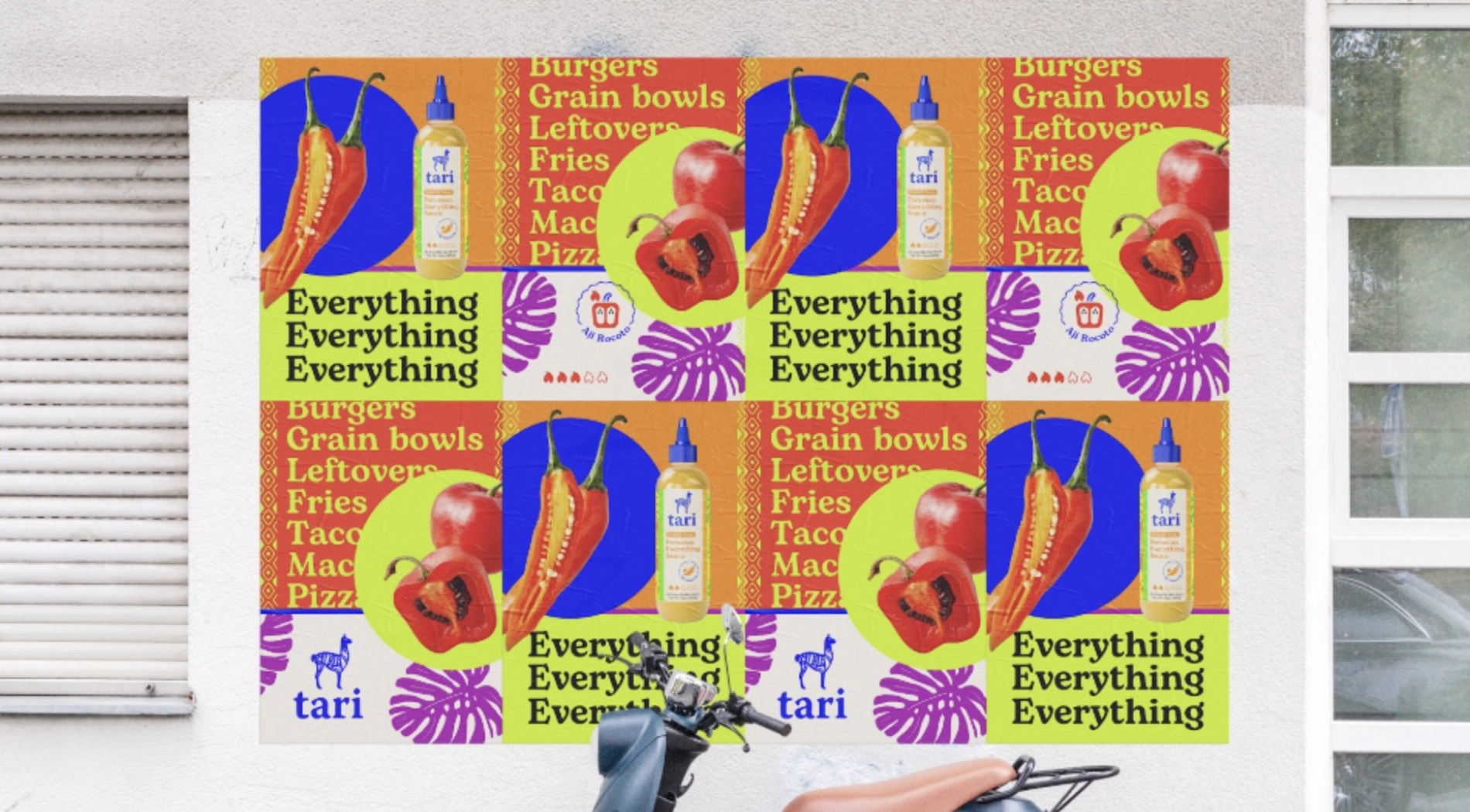
Based on the research, IDEO recommended a few changes to ensure a successful launch: Lead with the Tari brand, which was the most memorable and easiest to pronounce, and position it as an “everything sauce.” Change the packaging from a large plastic pouch to a smaller squeeze bottle to better align with consumers’ expectations and stand out on the inside of refrigerator doors. Adjust the product formulation to appeal to mainstream consumers looking for cleaner labels. And visually celebrate Tari’s Peruvian roots through bright colors, traditional textiles, and a llama, an animal closely associated with the Andes Mountains. In addition to these recommendations, IDEO provided a comprehensive go-to-market retail strategy that included potential US regions for launch, retail brokers, distributors, manufacturers, and R&D and pilot retail lab partners, as well as job descriptions for a new North American-based sales team.
While Alicorp worked on reformulation and packaging strategies, IDEO refined Tari’s initial branding strategy. Steeped in Peruvian aesthetics, the brand’s new look and feel featured a vibrant color palette, geometric patterns, and—of course—a friendly llama icon, which could also be found on all in-store point-of-sale items IDEO designed for Tari's pilot launch in late 2021.
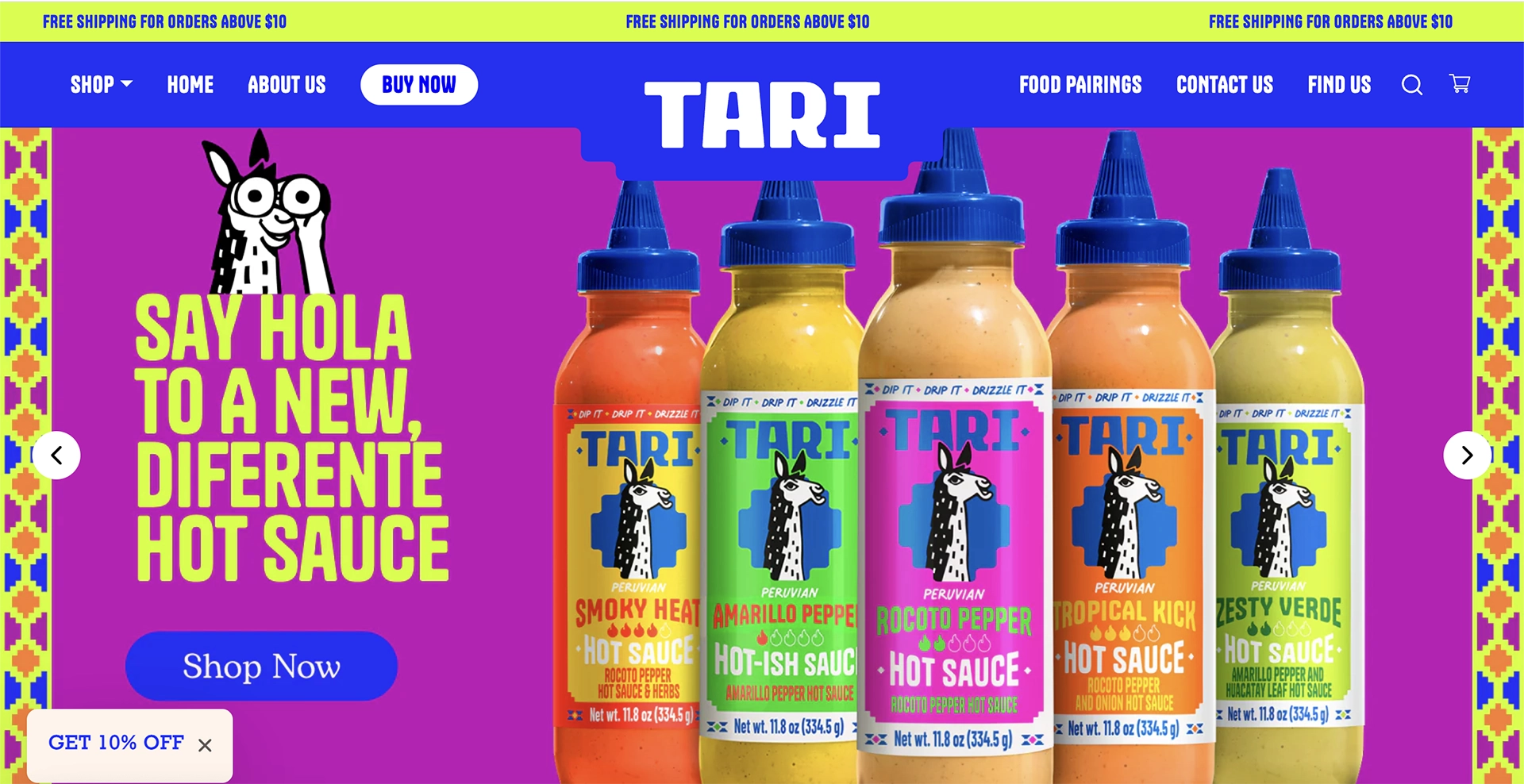
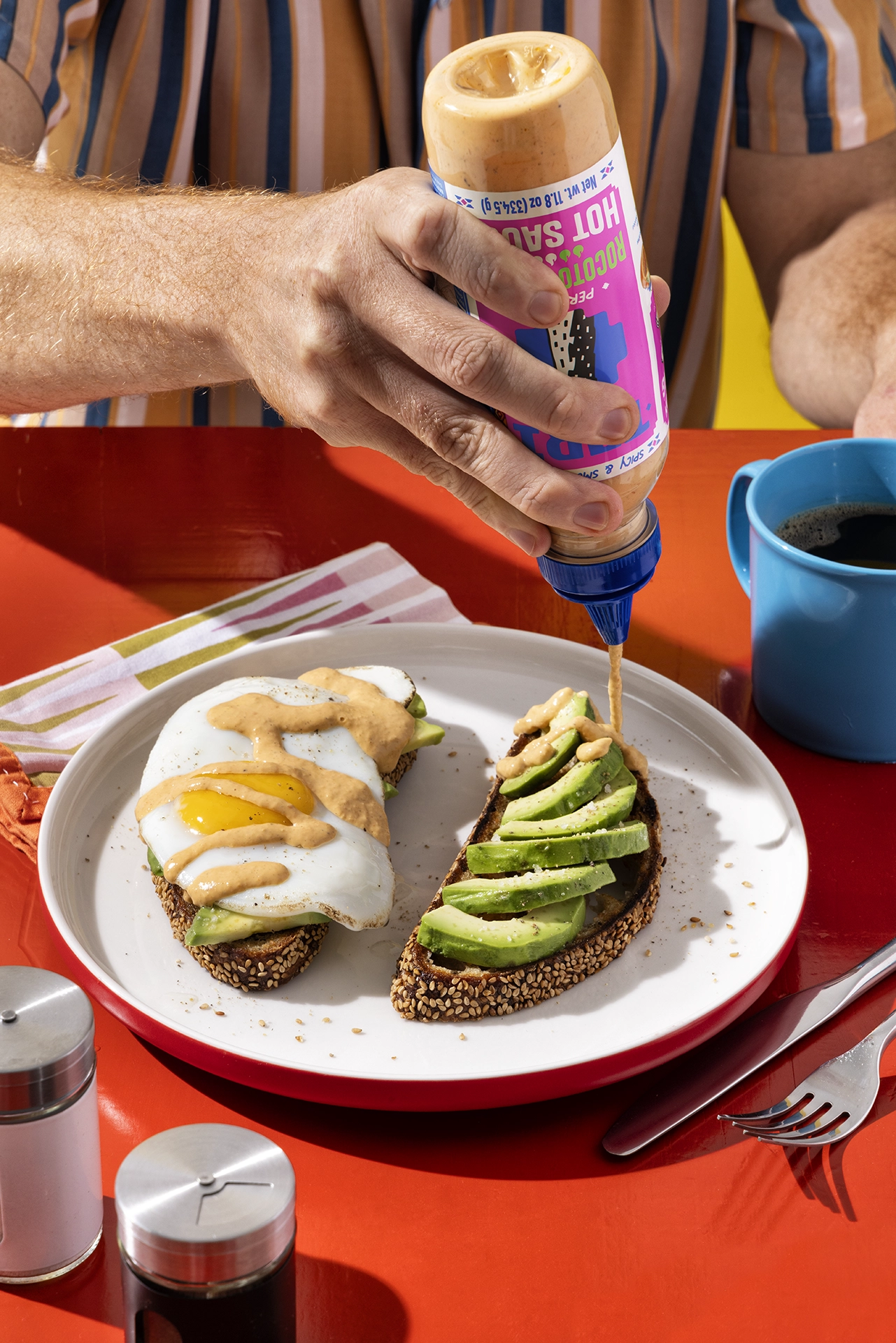
The successful 12-week in-market pilot in Tom Thumb grocery stores gave Alicorp the confidence to have its in-house design team make the brand even bolder and more eye catching, and to launch two flavors, Amarillo Pepper and Rocoto Pepper, on Amazon and in over 50 retail stores in late 2024.
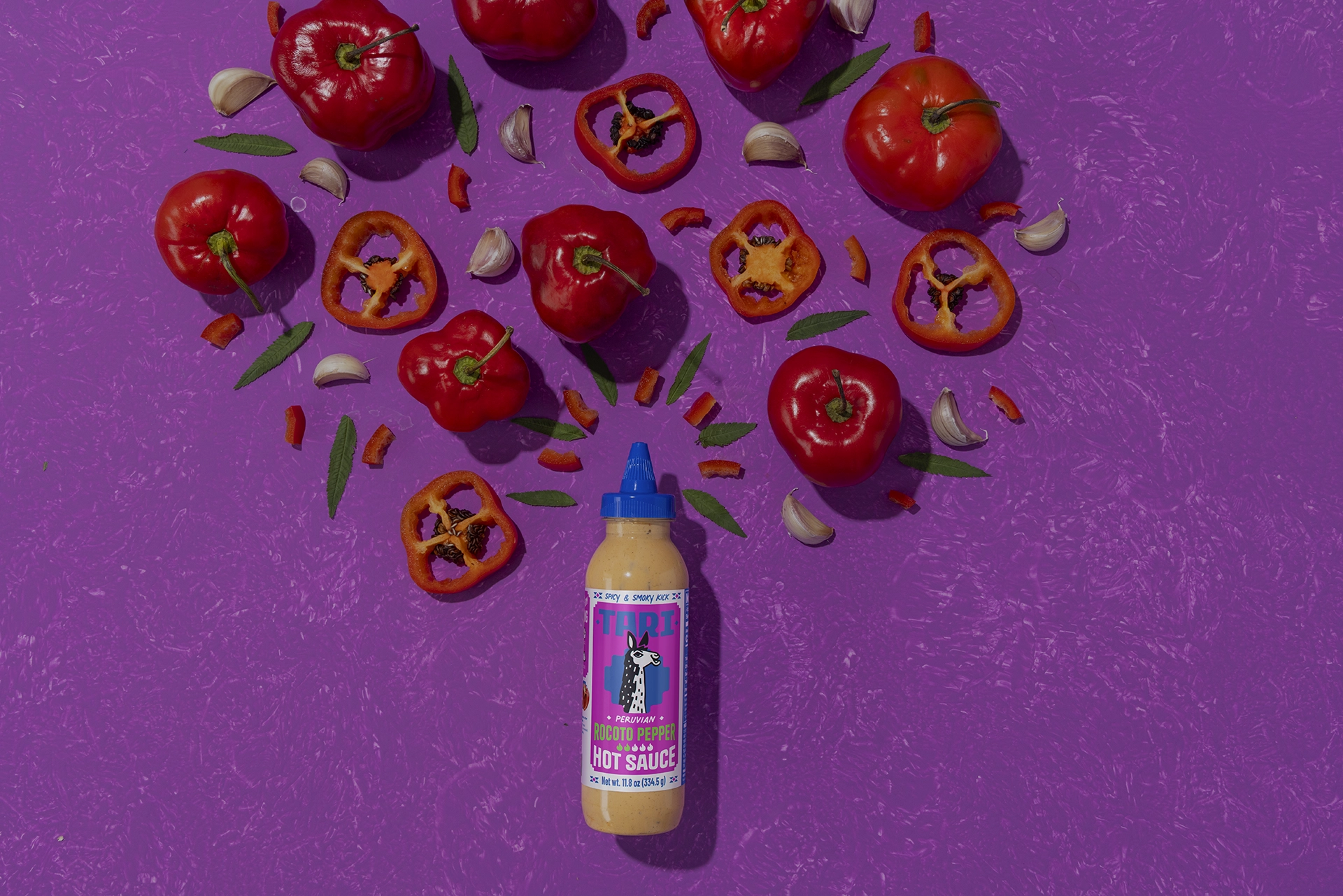
Since then, the popular sauces consistently rank among the top 50 percent of the fastest-selling products on US shelves, with 80 percent of sales revenue representing new business. In 2025, Tari expanded its offerings with three additional flavors: Zesty Verde, Tropical Kick, and Smoky Heat. Today, Tari is in transit to 3,000 major grocery stores, including Wegmans, Meijer, Central Market, and The Fresh Market, as well as available for purchase on Amazon.
Alicorp had a vision to expand its beloved and delicious hot sauces to the US market, but needed help fine-tuning the brand and product for an American audience.
3,000
major US grocers, including Wegmans and Meijer, have signed on to sell Tari hot sauces
80%
of Tari’s sales revenue represents new business, a significant expansion of the overall category
Ranked in the top 50%
of the fastest-selling products on US grocery shelves
IDEO’s New Podcast Asks Food World Visionaries About the Future They Want to See
Food by Design explores the future of our food systems by asking experts how we’ll design what we need for tomorrow...starting now
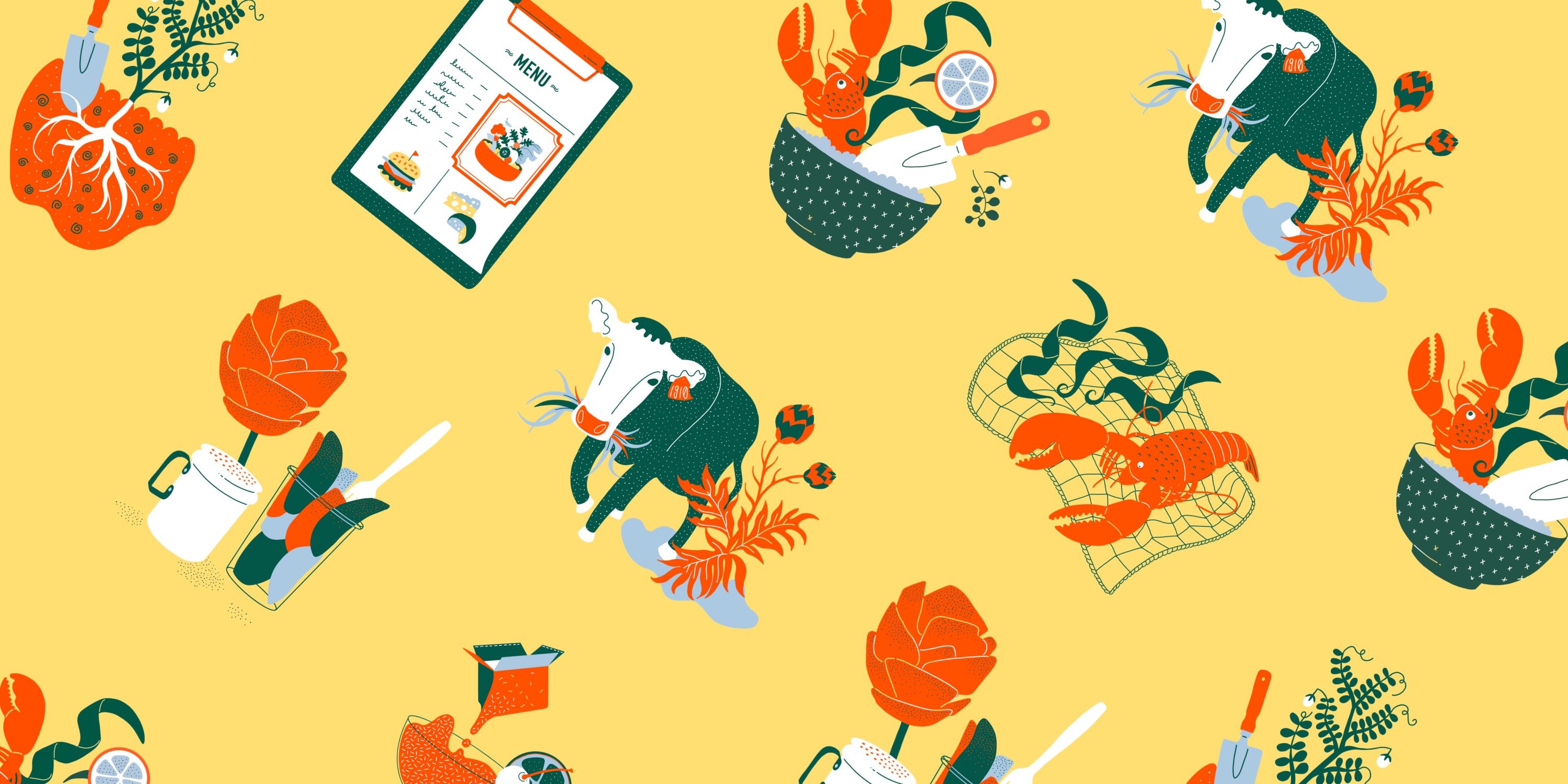
How’d we end up on this culinary carousel, from learning about kelp’s role in addressing climate change to understanding the significance of seeing kernza, an unusual perennial grain, in the cereal aisle by 2040? We spend our days working in the food world, hearing about its challenges: Hunger is rampant, but so is food waste, and the food system is responsible for 25 percent of global carbon emissions. This leads many to believe that the system is broken. But it’s not broken—it was designed this way. And if it was designed this way, then it’s time for a redesign. That’s what IDEO’s new narrative podcast, Food by Design, is all about.
The experts featured are living proof that we can create a system that’s nourishing for people and the planet. Below are some of the new ideas, staggering statistics, and inspiring stories they generously shared with us. Let’s dig in.

A human-centered approach that prioritizes equity is required
The food system is inherently about food, but without humans, the system doesn’t work. Improving a system that’s been ravaged by multilayered crises—health, racial injustice, climate, and economic—depends on how we value those doing the actual labor in it. The role and importance of human-centeredness and equity (and the current lack of both) can’t be ignored.
We spoke with Saru Jayaraman, a professor at the University of California Berkeley who leads the Food Labor Research Center and founder of the non-profit One Fair Wage. In episode seven, she explains how the legacy of slavery still impacts how much money restaurant and food service workers make today—sometimes as low as two dollars and thirteen cents an hour—despite the cruel irony that the industry is the largest and fastest growing in the U.S.
Dr. Ricardo Salvador, Director of the Food and Environment Program at the Union of Concerned Scientists, adds to Saru’s perspective in a later episode: “We've been creating people that are affluent and at the same time we've been creating people that are poor,” he says. “All of that is a direct consequence of the way that the agricultural system in the United States was born. The system of slavery did not completely disappear. It has been transformed.”

We need both individual and structural change—it’s not an either/or situation
We’ve been told that individual action is enough, but we’ve also been told that it isn’t—we need bigger changes. Eating red meat is often the subject of this debate, as animal agriculture is the second-worst contributor to greenhouse gases after fossil fuels. But here’s the thing: we need both individual and structural change to design a better food system.
While doing research for our second episode, we met Lisa and Loren Poncia of Stemple Creek Ranch, cattle ranchers who now consider themselves carbon farmers. Through practices like rotational grazing (which allows pastures to rest and regenerate), they actually sequester carbon into the soil, keeping it from being released into the atmosphere where it contributes to greenhouse gases that cause climate change. When we recorded the episode, Stemple Creek Ranch was sequestering enough carbon to offset 285 passenger vehicles per year, and that number is growing.
With additional incentives, like those baked into the Federal Farm Bill, even more ranchers like Lisa and Loren might adopt these practices. “I wish that the federal government would jump on board and subsidize carbon and carbon sequestration instead of corn and soy,” says Loren. “In a very short amount of time, we'd have a lot of carbon stored in our soil.” (That’s a good thing.) In our sixth episode, we talk about how producing red meat conventionally can create nearly 10x the emissions of vegetables. But if individuals buy regenerative red meat from carbon ranches like Stemple Creek Ranch, it could help shift the rest of the industry this way and lead to more structural policy changes, having a huge impact on the health of the entire system.
Another example of the need for both individual and structural efforts comes from Karen Leibowitz and her partner, who established a climate-minded restaurant in San Francisco. Every detail of the Perennial aimed to minimize carbon emissions, from using recycled appliances and napkins meant to be fed as compost to worms to hydroponically-grown vegetables.
But just one business can't change the system. Armed with this insight, Karen and her partner closed the Perennial to scale their ambition across many restaurants—creating a more effective way to fight climate change. Their nonprofit Zero Foodprint asks restaurants to add a one percent charge to their bills and use those funds to fight climate change.

Embrace mental “flips” and blank slates...or cardboard boxes
Again and again, the individuals we interviewed shared that in order to create a better food system for all people and the planet, we must build something entirely new—whether reimagining the restaurant business model, altering what we believe is edible, or redefining the meaning of sustainability.
We talked to chef and restaurateur Camilla Marcus in our seventh episode, who is rethinking the power dynamic that gave rise to the harassment and racial and gender inequities in the restaurant industry. Her restaurant west~bourne turned the “front-of-house, back-of-house” hierarchy—which Camilla describes as a caste system in disguise—on its head. During an intensive training program, every team member becomes fluent in all areas of the business, from dishwashing to wine tasting. “If you envision a world a different way, you have to start from the beginning and be willing to redesign how everything is done,” says Camilla. “You can't just hope for a different outcome and keep using the same process and system.”
Like Camilla, Mr. Lyan—a professional moniker for Ryan Chetiyawardana—is another food visionary. Mr. Lyan was crowned world’s best bartender in 2015, and his bar Dandelyan, now reopened as Lyaness, was named the world’s best bar in 2018. He’s known for experimenting with “closed loop cocktails”—any waste from the production of these drinks is used as ingredients for future drinks. For instance, he pressure-cooks leftover citrus and uses the resulting flavorful stock to create fruit jelly desserts. He doesn’t stop at fruit: Mr. Lyan even boils down cardboard delivery boxes with lemongrass, chamomile, sugar, and water, then strains it and turns it into a syrup. “People saw it as an affront,” he tells us. “So much of what we faced was this idea that the world that we were inhabiting—you know, luxury food and drink—was at odds with the idea of sustainability.” (Until, of course, a restaurant critic said that the drinks were the best he’d ever had in the city.)
Nearly a year before we found ourselves professing our love to baby kelps, we were carpooling home from IDEO’s San Francisco studio to our homes in Oakland. As our conversation quite naturally ping-ponged from an upcoming CSA delivery to methane-producing cow burps to Indigenous agriculture to aquafaba (a chickpea byproduct) to workers’ rights, a creative lightbulb went off. And the idea for Food by Design was born.
We wanted to connect the dots across all these topics and better understand the potential opportunities for design. So we set out to explore the question: How might we build a climate-positive food system that favors the many instead of the few? We hope the array of voices and stories shared on Food by Design not only demonstrate the breadth, interconnectedness, and gaps of the food system, but just how many people depend on it being sustainably and equitably redesigned, and can help us do this, together. Listen to some of their stories today on Apple Podcasts, Spotify, or wherever you tune into your podcasts.
On a chilly December morning, Bri Warner gave us a tour of her kelp facility in Saco, Maine. The room was filled with giant tanks of seawater containing thousands of baby kelps. “We change their tanks constantly,” said Bri. “We play them music. When nobody's looking, I'll lean over and be like, ‘Hi, babies.’” On another occasion, we spent an entire afternoon chatting up Larisa Jacobson of Soul Fire Farm, a BIPOC-centered community farm committed to ending racism and injustice in the food system.
Use These ‘Dummy Numbers’ When Prototyping With Data
Dummy text for when you need to build a prototype with better fake data
While the text is close to coherent if you can read Latin, it appears as legible nonsense to the rest of us. Lorem ipsum looks realistic but doesn’t convey any information to the reader that could otherwise color their interpretation of the mockup. This is great for text-based layouts, but when it comes to placeholder data, we don’t really have an equivalent. What if we had something like Lorem ipsum... but for numbers?
The numbers problem
This idea came from a real project: IDEO data scientist Chris Kucharczyk ran into a problem while prototyping a dashboard for a client. The dashboard was supposed to show sales data for business owners. He was using placeholder data in the mockup, but it just didn’t look right. At IDEO, we often use placeholder data in these mockups before we know what kind of real data we need. It allows us to prototype, then pivot quickly if and when we learn a different kind of data is needed.
By sharing a prototype, Chris was hoping it could help his team talk to the client and better understand what questions business owners would have when coming to the dashboard. More specifically, he and the team were wondering this: How do these business owners use data to help them run their business, and what would they change if they saw certain patterns in the data
The foreign language effect
We’ve learned that people often interrogate numbers more scrupulously than they do other parts of a design and are very sensitive to numbers looking “wrong.” Whether it's restaurant data or health data, a wrong number—even if it's a placeholder—causes the viewer to want to correct that "wrong-ness" rather than respond to the placement, color, or size of the numbers.
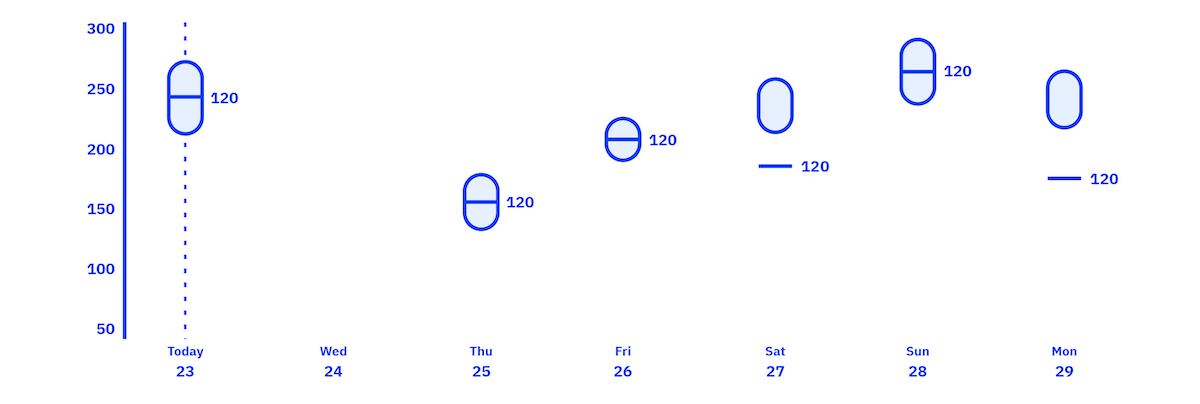
In fact, numbers that appear uninformed can derail a conversation even if the point of the conversation is to find out what kinds of numbers are needed. While mockups plainly look unfinished, numbers always look high-fidelity due to the “foreign language” effect.
For example, if you were to pick up a newspaper written in a language you didn't understand, your eyes physically look at that differently. But if that newspaper has charts or graphs, you'll be able to wonder what those are and what they mean because you can read and understand the numbers visually.
Back to the project. Chris had a few options. If he left the numbers at zero, the dashboard wouldn’t have anything to visualize. On the other hand, if he populated them randomly, it would look nonsensical. Any pattern chosen would need to be relevant to the larger context of the project. What he needed to do was come up with an alternative written language for numbers that mimicked the effect that using Latin has in copywriting and layout design.
Designing Norum Ipnum
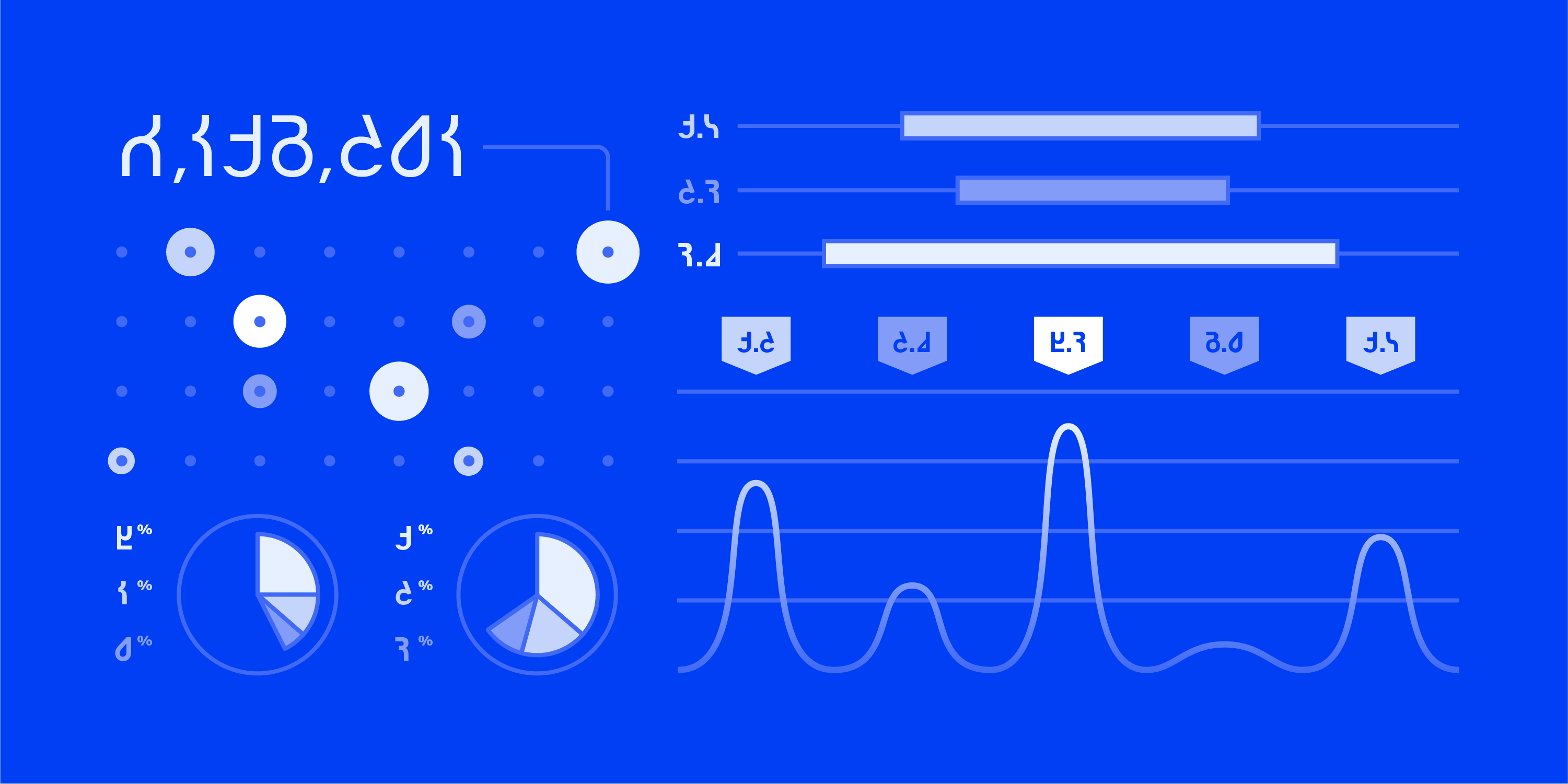
To respond to this problem, we went down a creative rabbit hole with software designer Ben Syverson to design a collection of font families called Norum Ipnum ("No" as a play off the typographic shorthand of the numero № and "num" substitution as in "number") that are alternatives to numeral letterforms. They act as visual placeholders without conveying data. (The font families can be downloaded for free here!)
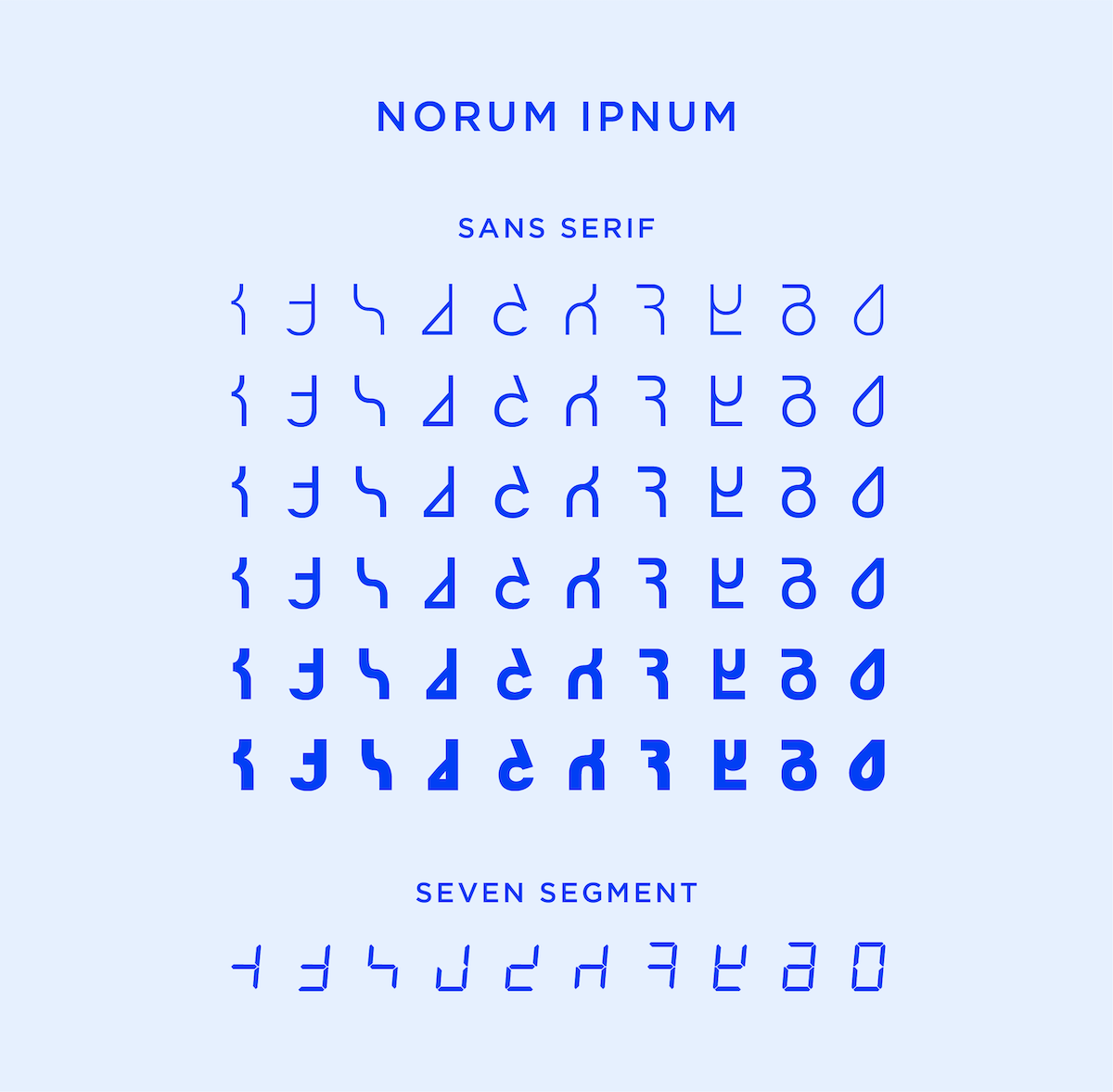
This is an example of how it might be used in a mockup:

Here’s how it all came together. In the IDEO Chicago studio, Chris and another data scientist, Joe Gambino, set up a foamcore board to capture ideas from the studio on Post-its.
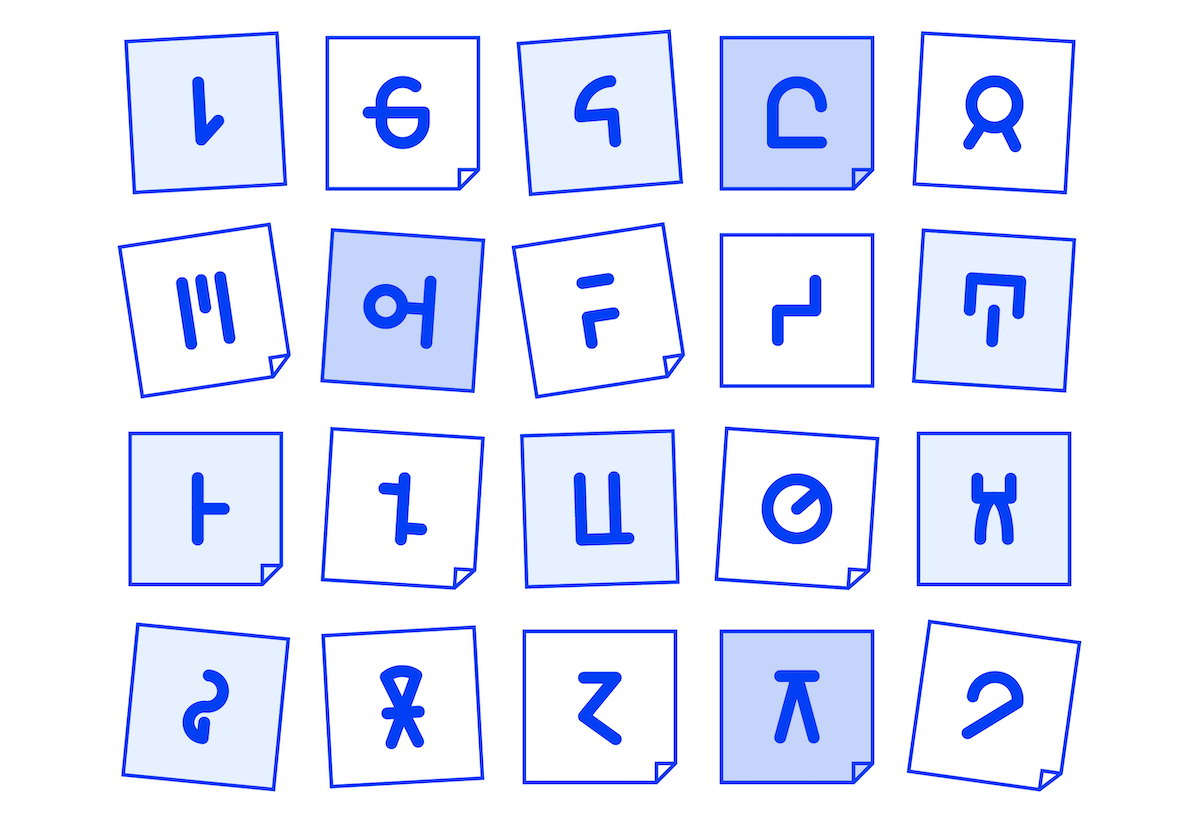
They asked for people to add a fake digit idea to the board as they passed by. We got a lot of ideas to work from, but one idea stood out as an interesting exploration.
What if we used the tried and true seven-segment display as inspiration for what these numbers could look like? You might be familiar with this type of display from a digital watch or a microwave. The reason these displays are used in electronics is because they can communicate all ten numerals by “lighting up” patterns of the seven simple lines they contain.
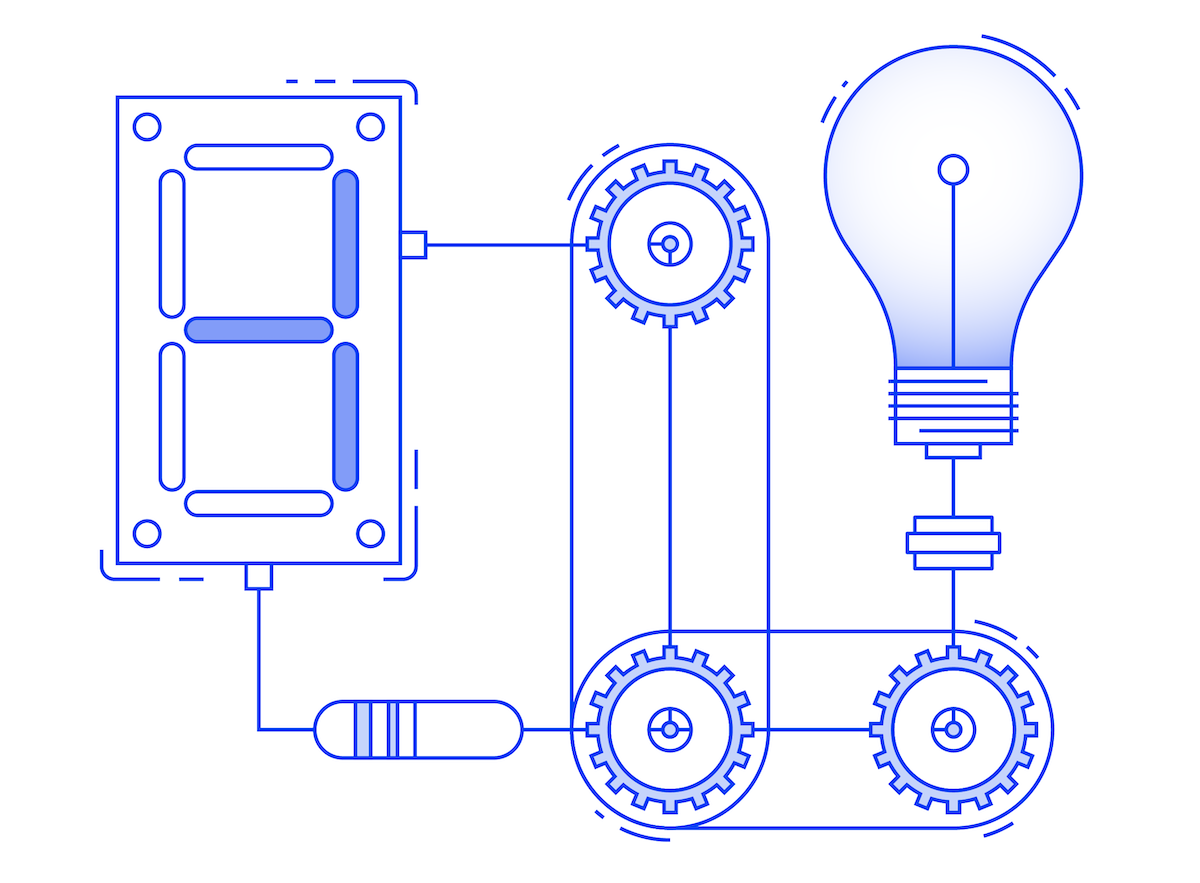
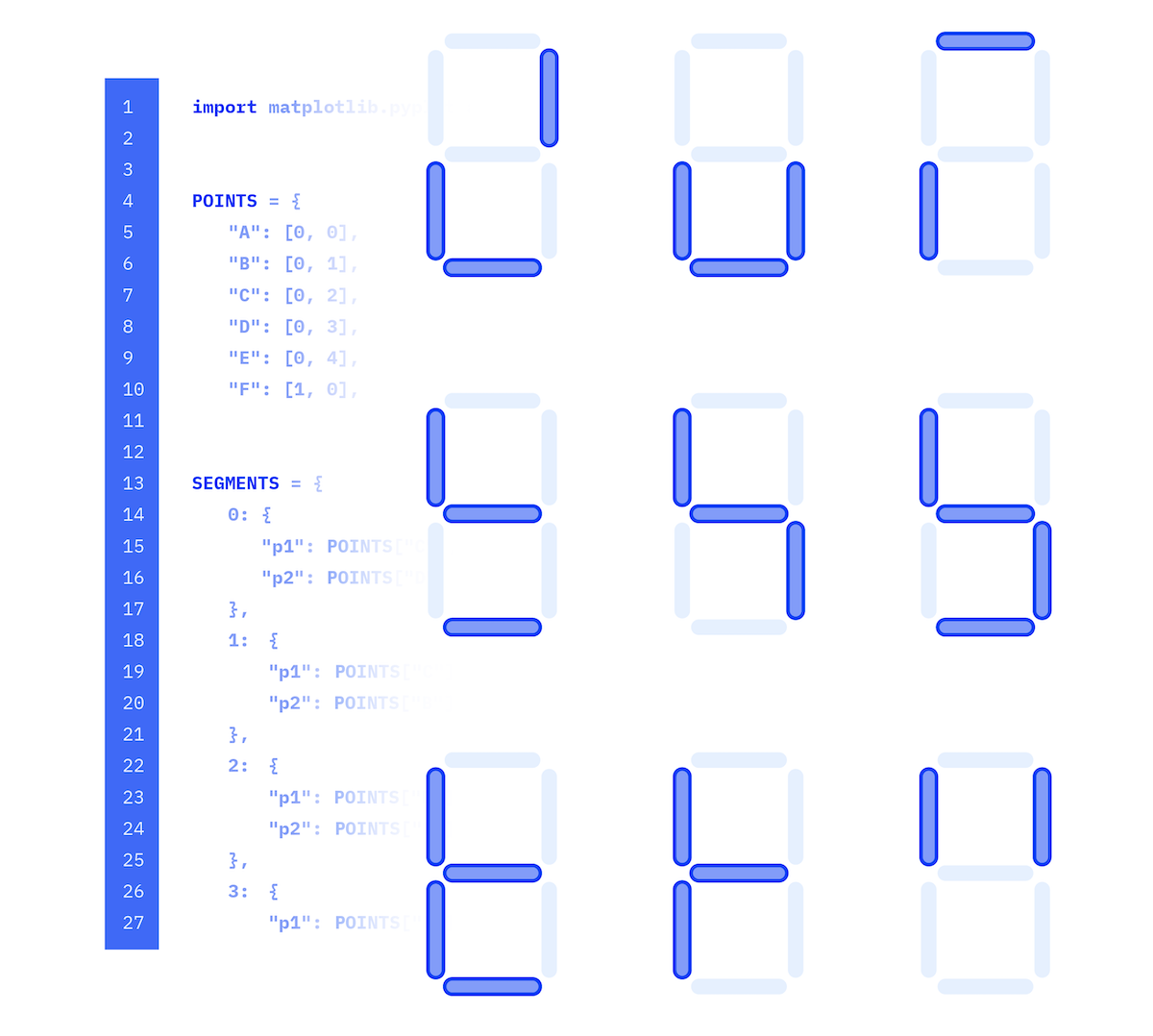
Using the seven-segment display as inspiration, Joe then wrote a Python script to draw out all of the different non-numeral permutations of what a seven-segment display could show. We then took that print-out and starred the different characters that looked different enough from letters and numbers to have a working set of ten numerals.
This was a great start to narrowing down a set of digits. Using this set of digits, we continued the process using the brief: If these digits were the abstracted form of an original numeral, what did those numerals look like?
After this initial exploration, it seemed like there was something here we could work with. At this point, Ben suggested we do a range of weights and typefaces of these numerals to help aid in layouts, and offered to work on a serif version. Ben recommended the fantastic tool, Glyphs, that we used to build these font families, and after a few revisions, we ended up with the collection presented here.
There are two font families in the set: sans and segment (with serif to hopefully come in the future). For sans, these have six different weights and italics. They are also selectable between tabular and proportional lining.
We hope these fonts are fun to play with and useful for your mockups. Please let us know if you find an interesting use for them! The families are Open Font licensed under the SIL-OFL, and we have provided the Glyph App source files, so feel free to make your own variants and add to the collection. The Github repository can be found here.
We hope you find some fun uses for it!
If you’re a designer, chances are you’ve heard of Lorem Ipsum—a block of text loosely based on Cicero's De finibus bonorum et malorum that's commonly used as placeholder copy in graphic layouts.

6 ways to design value into your membership model
Earning loyalty depends on delivering one of two types of value.
Some speculate that this rising tide might lift all boats, nudging every business to become a subscription business. But as the last six months have shown, the impact of COVID-19 has been unevenly distributed; winners and losers are determined by how favorable their offering is to the everything-from-home context. While all companies are working to make their products and services remote-friendly, this can obscure the fundamental question of how to design a compelling and intentional membership proposition, one that can endure and flex to exogenous shocks. In this article, we’ll explore six levers for designing membership and fostering loyalty right now and in the future.
A membership offering must accomplish either of these two things
There is no one formula for designing a compelling membership offering. But membership should be more than a basic loyalty program. It must offer either exceptional rational value or deep emotional value.
Rational value implies tangible benefits: customers know exactly what they’re getting from the offering, and it’s easy and straightforward to justify and explain their continued loyalty. Emotional value is intangible but at least equally powerful. While it may not be quantifiable, it creates genuine connection that generates sustained engagement and loyalty.
There are various levers—value drivers to design a membership offering around—that ladder up to and provide rational or emotional value. Cost, convenience, and incentives and rewards provide rational value; identity, community, and experience provide emotional value.

Designing for rational value: Cost, convenience, and incentives and rewards
LEVER 1: COST
One fundamental value proposition of a membership model is its ability to offer customers savings. By committing to a monthly or annual fee, subscription-based organizations can often afford to provide members with preferential pricing. This is the most basic element and value driver of a membership rooted in rational value.
One of the originators of the warehouse model, Costco offers members bulk quantities of goods at attractive prices. Costco prioritizes savings beyond other benefits, like high-touch customer service or an elevated store experience. And yet, Costco consistently receives top marks for customer satisfaction. They achieve this through an unwavering understanding and dedication to their key value proposition.
Costco has been able to sustain a successful business rooted in cost savings because of significant economies of scale, which help create barriers of entry for potential competitors. In many other industries, attempts to define and differentiate a value proposition on price and discounts will almost inevitably lead to brutal competition and eventual commoditization. Accordingly, companies considering cost as a membership lever must carefully think through the strategic and viability implications within their particular market.
Prompts for teams:
- Do your brand and mission align primarily with the idea of providing savings?
- Can you provide savings to customers while maintaining a sustainable business?
- What benefits will you not provide in order to deliver on cost savings?

LEVER 2: CONVENIENCE
As they say, time is money. As a source of rational value, convenience is as compelling as cost savings. In today’s convenience economy, technology is being leveraged to save time and effort in every market and pocket of daily life.
Amazon’s largest lever for rational value is the convenience it provides members. For an annual fee of $119, Amazon Prime members can get almost anything they could possibly need shipped to them in two days or (increasingly) less. This one benefit has allowed Amazon to forge a relationship with members that transcends loyalty to resemble something closer to dependence. This convenience proposition has become so powerful that it arguably provides members emotional value, too. Ask almost any new parent and they’ll probably rank Amazon somewhere between a utility and a member of the family. Providing rational value to such a degree that it also drives emotional value is a rare achievement, but demonstrates how impactful convenience can be.
Prompts for teams:
- How critical is convenience to the value proposition that you provide customers?
- What are the biggest challenges and bottlenecks your customers face in fulfilling their needs on a daily basis that your industry, market, or product area can help address?
- Can your company provide something to customers that they truly can’t live without?
LEVER 3: INCENTIVES & REWARDS
Incentives and rewards are often employed as part of membership programs to drive engagement and encourage specific behaviors such as sign-ups, spending, and referrals. They tend to be utilized in industries with limited differentiation, such as airlines and credit cards.
The credit card industry in particular has developed an incentives model that uses referrals, sign-up bonuses and points multipliers to drive customer acquisition and encourage early spending. This model has quickly become both the industry norm and customer expectation. In 2016, Chase made headlines by offering 100,000 points for its Sapphire Reserve card, the most extreme sign-up incentive the space had seen. Chase also won customer favor by simplifying the points to dollar value to 100:1, a calculation which many other credit cards obscure to make comparison more difficult.
There’s no denying the ability of financial incentives to drive behavior. But keep in mind, space for innovation is slim and an over-reliance on this lever runs the risk of creating a transactional relationship with the customer. Depending solely on financial incentives can also attract customers who are focused on “gaming” the system. Moreover, it creates an inevitable race to the bottom where eventually no player can viably compete. Balancing incentives and rewards with other rational or emotional value drivers can help mitigate these effects.
Prompts for teams:
- What is truly differentiating about the incentives and rewards that you can offer?
- How can you design your incentives and rewards to be less transactional and instead reinforce your core value proposition?
- How might you leverage incentives and rewards with other sources of value in your loyalty program?
Designing for emotional value: Identity, community, and experience
LEVER 4: IDENTITY
Some companies and brands are able to command loyalty through the strength of their identity, which is reflected in their brand, mission, or values. A membership rooted in identity is enabled when a company can rally customers around shared values and reinforce them through its offering, allowing members to see and express themselves through their participation.
One example is Ellevest, an investing platform for women that aims to educate, empower, and advance its customers in pursuit of their financial goals and to close the gender wealth gap. Ellevest differentiates itself from the many other investing options in the market through this dedicated focus, which is reflected in both its purpose and product—its algorithm recommends an investment plan that is designed to help address the gender investing gap.
In June 2020, Ellevest added a membership program to its core product that includes new features and services that strongly tie to their core mission. In addition to banking and debit products, the membership provides career workshops, coaches, and financial planners. While all of these benefits are designed to further members’ financial success, Ellevest is selling more than these services: they’re asking members to buy into their mission. An Ellevest member could receive similar products from any number of institutions. Being a part of the membership signals the salience of identity—both that it is key to the experience of managing money and an alignment of values.
Prompts for teams:
- What does your organization stand for and what are its most powerful, emotionally rich territories for design and differentiation?
- How can you tap into your organization’s mission or purpose as a way to create more emotionally resonant services and experiences?
- What would it look like to evolve the membership offering to reflect these values or enable members to express themselves?
LEVER 5: COMMUNITY
When community is a key value proposition of a membership, members not only feel connection with the brand, but also a sense of belonging and kinship with other members. From religious communities to career networks to social media, being part of a group creates powerful emotional currency.
WW, formerly known as Weight Watchers, is a company that has differentiated its membership offering through community. The organization’s promise is rooted in its origin story: a Queens mom who began inviting people into her home to discuss weight loss strategies. The concept quickly grew into a global organization that outlives various fad diets and health trends because of its core value: guiding people in their weight loss journeys through social and emotional support. Whereas before, every diet and nutritional program was designed to be undertaken alone, WW was designed to be interactive and communal through weekly group meetings. This structure provides people with support, inspiration, and accountability. The group convenes to share challenges and victories and provide each other with encouragement. The impact and effectiveness of this value proposition is reflected in WW's strong retention: many members continue attending meetings for years even after achieving their goal.
Prompts for teams:
- How authentic is the promise of community for your organization? Do members truly interact and benefit from other members?
- What is the role of exclusivity in your membership? Exclusivity is a powerful driver for people, but what does it say about your brand and what it stands for?
- How can you empower your community with roles, tools, rituals, and shared experiences?

LEVER 6: EXPERIENCE
Finally, there’s the element of experience, which can be a vague, squishy term that many companies claim to offer. People are drawn to memberships that provide unique, enriching, and inspiring experiences. An experience can be physical or digital, a product or service, communal or individual. While it can be delivered with pomp and circumstance, meaningful experiences can also be remarkably simple.
An example of an exceptional experience born out of a simple idea is SoulCycle. Interestingly, SoulCycle doesn’t technically offer membership; they sell individual drop-in classes or class packs. But with its cult-like following of diehard riders, SoulCycle certainly feels like a membership. The fitness start-up achieved this status through their distinct vision for what a spin class should be. The founders recognized that when exercising, people are looking not only for a physical release, but a mental one, as well. While most cycling classes focused on providing a great workout, SoulCycle designed an entirely different kind of ride: a collective, uplifting, and emotional experience that is as much a part of its value proposition as the sweat.
During COVID-19, SoulCycle has suffered, given its reliance on in-studio group sessions. By contrast, Peloton is soaring because it was designed to be experienced at home. As SoulCycle pivots to offer their own at-home bike, the way it evolves the experience to elevate its collective and emotional DNA will be crucial for success.
Prompts for teams:
- What are the needs that your experience is designed to serve?
- How can experience be a differentiating factor of your membership offering?
- What qualities define your experience, and how might you elevate or amplify the value they provide your customers?
The power of offering rational and emotional value
Cost, convenience, and incentives and rewards can be powerful sources of value in membership because they offer rational, straightforward value. However, because they provide limited dimensions for differentiation, they can lead to competition and be challenging to sustain. Designing around emotional tenets—identity, community, and experience—presents different starting points and opportunities for membership offerings.
But memberships that draw on more than one of these levers—particularly those that generate both rational and emotional value—will be especially effective. While Costco’s core value proposition is rooted in cost savings, its business provides emotional value, too, through its famous food court and food and beverage sampling experiences and additional services. This combination of rational and emotional value has proven incredibly compelling in both customer experience and membership proposition: Costco has some of the highest customer satisfaction scores and retention rates in the business.
Keep your purpose, mission, and value proposition top of mind
The six levers we discussed can individually, or more powerfully in combination, form the foundation of a differentiated, value-driving membership offering. But in any of these territories, companies must have (or earn) their customers’ permission to play.
At its core, membership demands an ongoing relationship and commitment from its customers. Designing membership for this level of loyalty boils down to both an organization’s value proposition and who they fundamentally are: What is the essence of what’s being provided through membership, and what does the company stand for? And critically, do these two things match—does the membership feel authentic to a company’s purpose?
By aligning purpose with a compelling rational or emotional value proposition, companies can cultivate reciprocally authentic and lasting customer loyalty.
Illustrations by Simon Heather
In the last decade, we’ve witnessed the explosion of subscription-based “membership,” from movies, music, and audiobooks to elite global communities, razor blades, and dog food. While this phenomenon has been fueled in part by the growth of digital channels, targeted marketing, and the rise of the sharing economy, what’s ultimately driving companies across industries to adopt a version of this business model is the irresistible promise of recurring revenue and sustained customer loyalty.
The Rules of Brainstorming Change When Artificial Intelligence Gets Involved. Here’s How.
Recent advances in machine learning have created a new catalyst for design
My “partner” that day was a technology called GPT-3 from OpenAI. You may have heard of it already; if not, you can think of GPT-3 as a really good autocomplete. Like, shockingly good. Once I shared some of the output of my brainstorm with others on Slack, there were plenty of 🤯reactions—and honestly, our minds are still blown. But clients and design teams will need to tread carefully and watch their ethical compass as they imagine inspiring, human-centered applications for this new tool. As with any new technology, there are new risks to account for. Here's how I started my experimentation.
How to run a virtual brainstorm
In order to work with a so-called “transformer model” such as GPT-3, you feed it a pre-written prompt, then the model uses everything it's seen before (in this case, a substantial portion of the internet) to guess what should come next.
I wrote some context: This is an IDEO brainstorm, which follows our 7 Rules of Brainstorming, including “encourage wild ideas.” I gave GPT-3 a real client challenge from a past project: The team is developing a new app for a bank to encourage millennials to better utilize savings accounts. Then I wrote a brainstorm prompt: How might we help young people turn saving money into a lifelong habit?—and fed it five example ideas.
As soon as I pressed submit, the model began churning out new ideas. Not all of them were gold, but many were perfectly good brainstorm concepts. After all, the rules also tell us to “defer judgment” and “go for quantity.” Without cherry-picking too much, here's a sample of some of the ideas it generated:
- Allow the user to share their saving goals with friends and have a community of people who will cheer them on or challenge them if necessary
- Reward the user with real money if they don't spend money at all in a month
- Allow the user to set up “fun budgets” (aka “triggers”) to save more money, e.g. whenever they go to Target, they'd get a pop-up asking if they'd like to put $5 towards savings
- Similar to the Future View idea, show how much more could be saved if the user decides to forgo a coffee every day or splurge on new sneakers instead of taking an extra vacation
In the last example, you can even see the model “build on the ideas of others”—another rule of brainstorming—by riffing on an idea called Future View that I had given in the prompt.
This stuff is on par or better than some of what I've seen from humans. Some [of it] is worse, too. But that anything is better is wild.
An IDEO Director on GPT-3's brainstorming output. Watch out, humans.
Another colleague suggested we tweak the prompt we gave GPT-3 to encourage it to use analogous inspiration, which primed the model to produce some truly wild ideas:
- Have “clowns” jump out of ATM's, making it less fun to withdraw money
- Create a virtual reality experience where users are in an arena full of savings monsters, and need to slay them by depositing money into savings
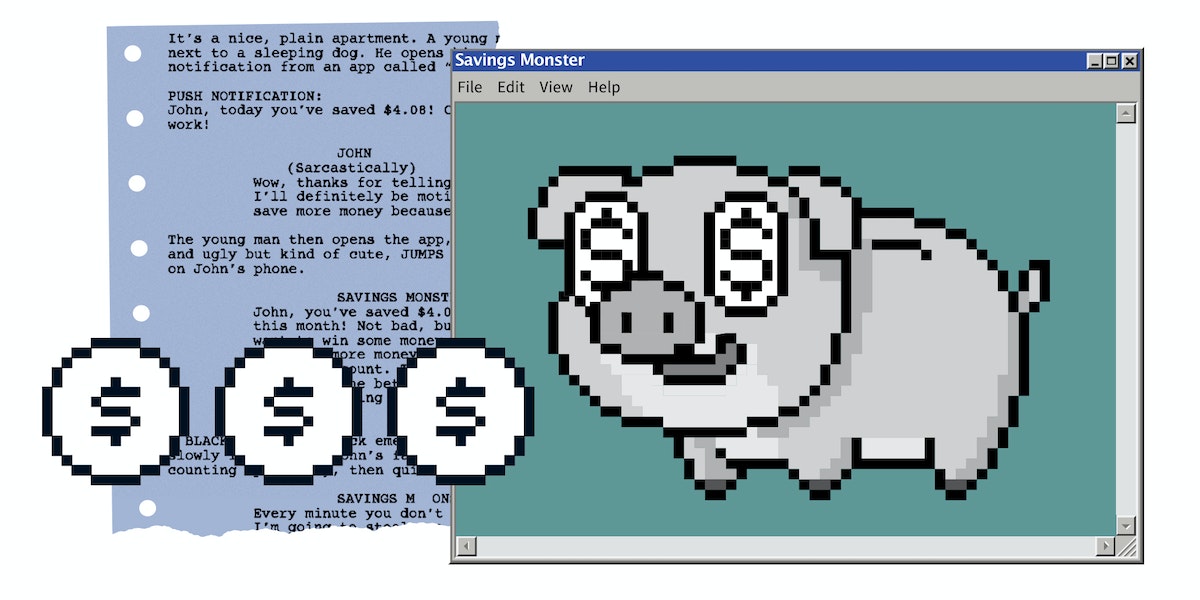
- Create a “Savings Monster” similar to those featured on Chinese lottery shows where viewers have to guess the amount saved in order to win money
“I'd love to know what a Savings Monster is,” I mused on Slack, and a colleague responded, “Why don't you ask it?” Of course! After the brainstorm, I started a Q&A session with the model (my prompt is in bold):
Q: Quick question: What exactly is a savings monster? You mentioned it twice.
A: I'm glad you asked! This was just an idea that emerged from the brainstorm. A savings monster is a physical manifestation of your savings goal. For example, let's say I want to save $500 by the end of next year. If I deposit $10 every day, that will get me pretty close to my goal at the end of the year, but what happens if one day I don't have $10? Now my savings monster is underfed, and he starts to throw a tantrum (eg. negative cash flow notification).
A: Yes, this is an idea inspired by Chinese lottery shows (and World War Z). We thought it might be fun for users to have a physical manifestation of their goals that they could feed (ie. save more money) when they meet their goals, and starve (ie. spend more money) when they fall short. In order for this idea to work however, the savings monster would have to be very cute, and a bit terrifying.
As it turns out, the model doesn't skip a beat when you change up the input’s format. So I decided to try my luck: In my next prompt, I asked GPT-3 to choose its favorite idea from the brainstorm and create a script for a promo video. Thankfully my virtual brainstorm partner selected the Savings Monster concept. The resulting script was so good that I found an animator to bring it to life.
So what is this good for?
As exciting as this technology is, GPT-3 is not Artificial General Intelligence, and it was interesting to find the edges of its abilities. For example, this model can easily summarize a news article, or turn it into a fairy tale. But it's surprisingly difficult to get it to remove references to a specific person, or change the subject of a certain paragraph.
To put this in human-centered design terms, these large transformers are an extremely valuable way to augment the team during divergent moments in a project, when we're creating choices. The tech struggles, however, in convergent moments, when we're making choices. Thankfully, humans are still required to synthesize massive amounts of information about human needs into concrete human-centered design decisions.


Gotchas
There are two other issues we have to confront when considering transformer models for our prototypes and design recommendations: toxicity and bias. These models are trained on big chunks of the internet, and optimized to produce output that looks like the input. The result is that the model can reproduce the language of a scientific paper just as easily as it can mimic an internet troll. You get the good with the bad.
My experiments sparked a conversation with Jess Freaner, an IDEO Data Scientist with a special interest in ethics and AI. “Though the rules governing how it all works might not be explicitly written on the wall,” Jess told me, “being a product of our world as it exists now and in our past (the internet is an excellent, incomplete archive) we need to consider what GPT-3 reinforces and when it can reveal what needs to be subverted about society.”
Problems with toxicity and bias are not unique to GPT-3. OpenAI is working on both—they have built-in tools to manually and automatically flag output as toxic. They’re also working on the issue of bias, but it’s a thornier problem. These models literally encode a snapshot in time, and are inherently biased to reproduce the status quo. Companies and designers will need to question and problematize the output of these models with the same rigor that we are learning to bring to our human interactions.
Future possibilities
Despite the challenges, it's clear that in the past 12 months, natural language models have crossed an invisible threshold of usefulness, in the same way that speech recognition was frustratingly terrible for decades—until one day it wasn't. Early proof of concept prototypes demonstrate how this type of model can transform a description of an interface into functional UI code. Talk about “declarative programming.” Imagine a future in which the job of a UI designer is to write a description of the interface rather than laying out each button and label by hand. The same description might result in totally different visual expressions or interactions depending on the individual user's needs, interests, or current context.
As transformer models improve, I'm inspired by a future where people are literally in conversation with their software. Users might be able to easily adapt the same app to become a widget in their AR glasses, a quirky voice assistant, or an animated character. Because who knows: for some people, the perfect solution just might be a Savings Monster.
Illustrations by Katie Kirk
Back in early August, I opened my laptop and kicked off a remote brainstorm. Immediately, my partner started generating a huge number of ideas—a perfect blend of wild, hilarious ideas and pragmatic solutions. That's not unusual at IDEO, but what made it remarkable is that my partner wasn't just remote—it wasn’t human at all.

Lindsey Turner
I’m passionate about building brands, products, and experiences that help organizations show up with meaning and momentum.
I help organizations cut through complexity by shaping how they show up, through brand strategy, identity, and storytelling.
Working at the intersection of brand and business, I bring an editorial eye and a bias toward making—turning ideas into tangible experiences that people can understand, trust, and believe in.
My work spans government, healthcare, financial services, media, and consumer goods, from launching Gen Z-focused ventures to building innovation labs and reimagining legacy brands. I relish moments of ambiguity and enjoy translating across teams, perspectives, and priorities to move ideas forward.
I started my career in editorial and digital design, shaping cross-platform experiences and identity systems in publishing and agency environments. That foundation still shapes how I work today: I’m detail-oriented, collaborative, and overreliant on the Oxford comma. I hold a BFA in Visual Communication from the School of the Art Institute of Chicago.

Rachel Young
My work helps organizations see who their products aren't working for—and build the will and the tools to do something about it
For 25 years, I've asked the same question: Who does this design exclude—and what are we going to do about it?
My work spans human-centered strategy, inclusive design, and qualitative research, with clients ranging from Microsoft, Google, and Verizon to the National Science Foundation, and San Francisco Unified School District.
Before IDEO, I taught elementary school in East Palo Alto and spent a decade doing design work with social service organizations—where I learned firsthand what it costs people when systems are built without them in mind.
I am currently writing User Error, a nonfiction book about digital access and the design decisions behind it. I live in Oakland, California.

Brian Pelsoh
I lead with craft, ensuring our work is creatively excellent: rooted in deep human insight and imagination, while also grounded in the realities of business and technology.
My expertise spans brand, communication, and product design across tech, education, the arts, and social impact.
I believe great work demands both high-level vision and obsessive attention to detail, and only happens through collaboration.
I bring an inclusive, hands-on approach and a deep understanding of business, which enables me to consistently deliver excellence while always asking why.
Before joining IDEO, I worked at the brand firms Pentagram and VSA Partners. I began my career as a designer, leading teams at the School of the Art Institute of Chicago and the Milwaukee Art Museum. I hold an MFA in graphic design from Maryland Institute College of Art and a BFA in communication design from the Milwaukee Institute of Art & Design, and have taught at some of the best design schools in the US.

Tony Wong
I am responsible for IDEO’s long-term success in China and working with clients to use design as a tool to enable growth.
I am responsible for IDEO’s long-term success in China and working with clients to use design as a tool to enable growth. Specifically, I have helped Chinese companies design holistic brand solutions through the development of their products, communication, services, and innovation teams, and I have helped multinationals expand their presence and influence in China.
I advise global leaders on developing China-led innovation and capabilities.
In over 15 years in IDEO Shanghai, I have worked on projects that use design to elevate the quality of the experience of healthcare products and services, streamline processes that increase productivity, create spaces and programs that promote and enable inclusive communities, and build next generation mobility solutions that are planet-positive.
Before joining IDEO, I worked at Philips Electronics and the Electrolux Group in Italy, the Netherlands, and Singapore on a number of breakthrough commercial products. I am a member of the Young President Organization in Shanghai.

Building a personal AI for the messiness of life: Sida Li
Most AI products today are built for work—a space with clear problems and established systems. One founder noticed a gap: personal life is messier, harder to systematize, and mostly left behind by the AI boom. So she built Cue, a personal AI that lives inside iMessage and group chats, to go where the other tools haven't.
In this episode, Becca Carroll, IDEO's Chief Strategy Officer, talks with Sida Li, co-founder and CEO of Shared Context Lab, about staying anchored to a human need while the technology around her keeps changing shape, why she treats her business model with the same rigor she'd bring to a product, and what it feels like to build a company at this particular, disorienting moment in AI.
The conversation also gets into how Sida makes design decisions: the language Cue uses to describe itself, the tradeoffs behind building inside iMessage instead of a new app, and a real story about a business idea that didn’t pan out.
This is the second in a two-part series profiling founders from IDEO's Startups-in-Residence program. The first conversation is with Johannes Seemann, founder of Sooner, on designing GenAI for the emotional side of money.

Designing GenAI for the emotional side of money: Johannes Seemann
Most personal financial tools are built to run the numbers and optimize towards a budget. While that works for some, most people experience money as a lived relationship that does not neatly fit into a spreadsheet. Johannes Seemann and Becca Carroll discuss why money is emotional before it is mathematical, and what a human-centered approach to building a generative AI financial product looks like in practice.

The curious leader's edge in uncertainty: Scott Shigeoka
Mina Seetharaman talks with Scott Shigeoka, author of Seek and Head of Curiosity Cultivation at the Eames Institute, about what distinguishes genuinely curious leadership from performative curiosity, how power dynamics shape curiosity, and why practicing curiosity can restore energy rather than drain it.

How constraints make us more creative: David Epstein
Mina Seetharaman talks with David Epstein, author of Inside the Box and Range, about why total freedom often produces average work, how leaders can design useful limits on purpose, and what organizations such as General Magic and Pixar reveal about the relationship between boundaries and creativity.
Looks like you might be in search of something very specific?
Or reset the filters above and try another angle.
Here’s some random inspiration

Podcasts about creative leadership

Articles about the power of prototyping
