
.svg)




Finding hidden talent
A social enterprise rewires America’s labor market through inclusive design.
American businesses are on notice: To be competitive in today’s market, you must diversify your workforce.
One way to widen the talent pool is to pay closer attention to people who have acquired their skills through alternative routes. Millions of Americans learn on the job, in community colleges, at boot camps, or through life experience. According to Opportunity@Work, more than 70 million Americans are overlooked because of degree requirements. Despite their abilities, these “STARs” (those who are skilled through alternative routes) find themselves stuck in jobs for which they’re overqualified and underpaid.
Opportunity@Work, an innovative social enterprise, reached out to IDEO to help collaborate with companies, talent developers, and STARs seeking career growth. To make this overlooked talent pool more visible, we created a campaign and video to rally companies. We also designed a data dashboard to help regional employer networks identify qualified talent and potential partnerships with skill-building programs. And to provide STARs with direct support, we scaffolded the job-seeking experience, focusing on key moments like the interview process.
It’s time for businesses searching for talent to open their eyes, look to the STARs, and see what they’re missing.
83% of HR professionals said they had difficulty finding suitable candidates in the past 12 months.
62% of Black people, 55% of Hispanic people, and 50% of non-Hispanic white people have become skilled through alternative routes, such as community college, workforce training, boot camps, certification programs, military service, or job experience.
Over the past 40 years, inflation-adjusted wages have increased 8% for college graduates with a bachelor’s degree while decreasing by 15% for people with only a high school degree.
Thousands
of state jobs in Maryland no longer require a four-year college degree
skills-based
The White House is adjusting educational requirements for I.T. professionals in favor of a skills-based approach
Experts on the front lines
Recognizing the power and creativity of essential workers.
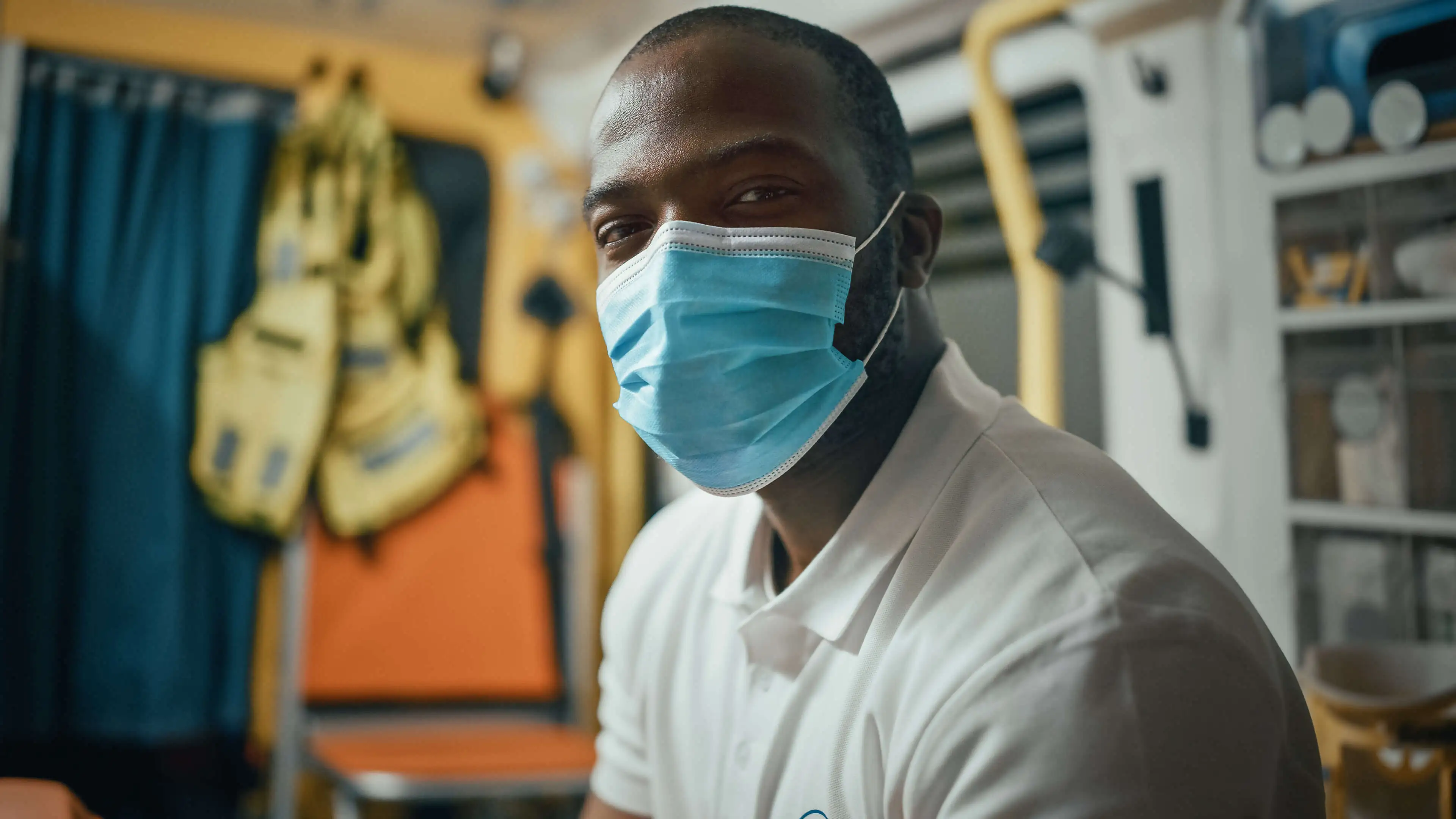
For many organizations, frontline workers like grocery store clerks, nurses, hospitality workers, and transit employees are an essential part of doing business.
So much so that they continued to show up at the office throughout the COVID-19 pandemic even as everyone else went remote. As the point of contact with customers and key systems, these workers often know exactly when, where, and why things don’t work, and they come up with powerful hacks and workarounds to make things better. Yet these insights and innovations rarely make it to the corporate office. And that’s a problem: large organizations often hire design and innovation consulting firms while not taking advantage of a latent source of deep, in-house expertise. It’s equally discouraging to workers who would gladly share their ideas if they were only asked. No surprise, then, that frontline workers are quitting their jobs in droves.
What could companies learn by listening?
IDEO partnered with the Ford Foundation to create the Worker Voice Design Lab, where leaders from a port authority, an airline, and a health care provider worked alongside frontline workers. That led to the planting of a seed of innovation in each organization, with interventions designed with and by workers implemented operationally at the core of the business. In one case, a group of workers zeroed in on specific problems with such clarity that they were quickly able to develop a digital prototype for testing. No one was less surprised than the workers themselves, who simply said: Well, nobody ever asked us before. Sometimes the most innovative idea a leader can have is to listen, learn, and act on their employee’s smart ideas.
A large portion of the job churn since March 2020 has been concentrated in frontline services such as accommodation, food services, and retail.
Lack of career growth is the number one reason people leave their jobs according to more than 18,000 frontline workers across 150 companies.
2 pilot initiatives
being led by frontline workers in 2022
Customer powered
How Ford transformed itself to take on the future of mobility.
The climate era demands new offers and new ways of working.
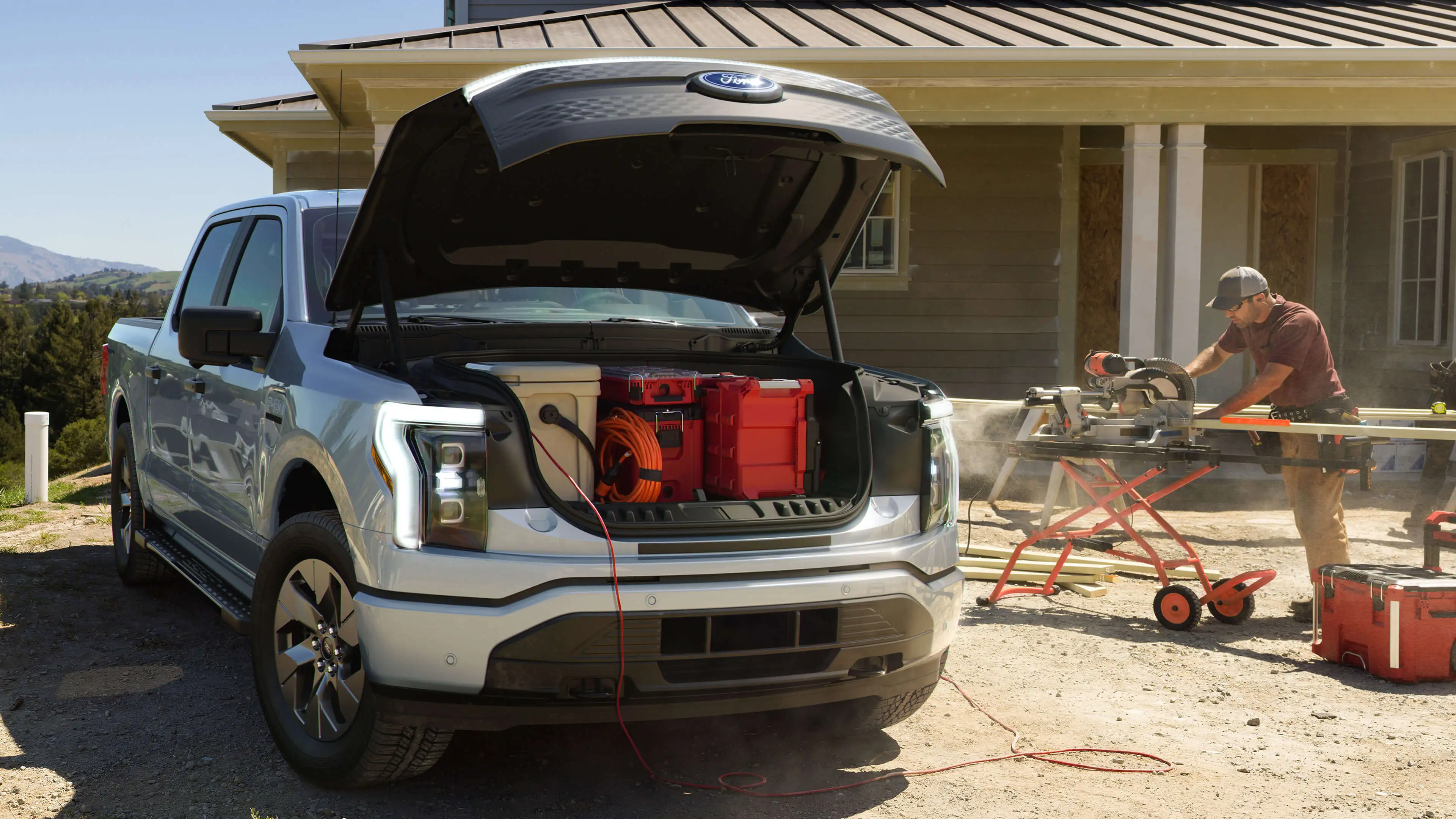
Would you like to be able to plug your jigsaw into your truck? How about taking a fully reclined snooze after a long day of fishing? Questions like these led to quick prototypes that ended up in Ford’s new, electrified F-150 truck, which has more outlets than the average apartment and can power your entire home. This was no small update. The way Ford reimagined the truck experience from powertrain to power nap is emblematic of how much customer-centricity is now embedded in Ford’s culture.
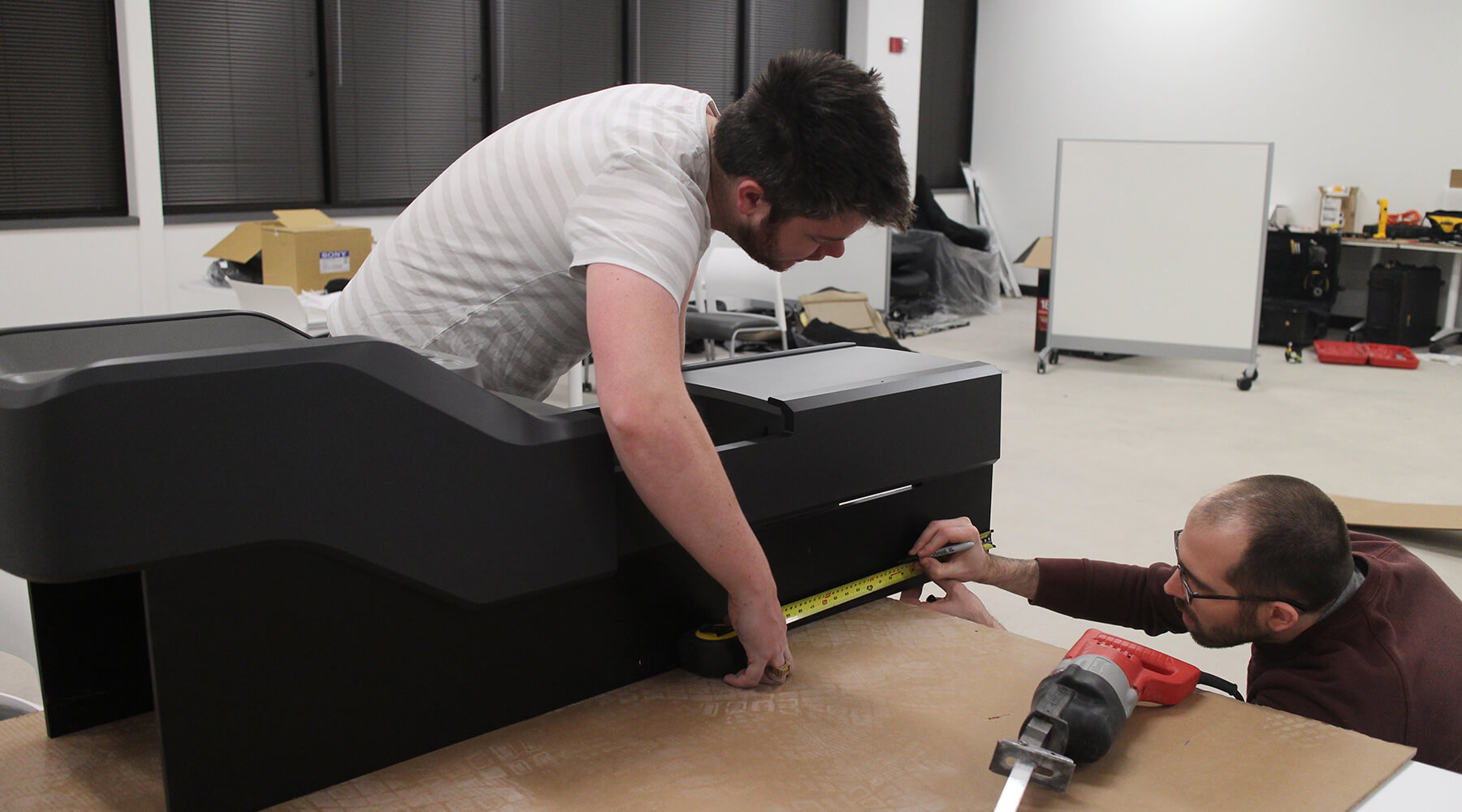
For well over a decade, we’ve partnered with Ford in the U.S., the EU, and China to help the organization bring to life a shared vision of the future of mobility. Together we scaled new capabilities throughout the company by running proof-of-concept “beacon” projects and, to embed this new customer-centric mindset, built a human-centered-design hub called D-Ford. This organization within the organization has become a magnet for talent and is spread across six global locations: London, Shanghai, Melbourne, São Paulo, Palo Alto, and Detroit. Ford’s commitment to serving the needs of people and the planet is what propelled the rethink of the F-150, the best-selling vehicle in the U.S. for over 40 years. It was a high-stakes move, and one that represents a major turning point for the automaker: For the first time, its primary profit source would be electric. The new Lightning is still built Ford tough, but also built for the future.
Passenger vehicles produced 41% of carbon dioxide emissions worldwide in 2020.
One in every 20 passenger vehicles sold in the United States is a Ford F-150.
Before going electric, the Ford F-150 emitted about 100 tons of CO2 over a 200,000-mile lifespan.
200,000
pre-orders of the electric F-150 truck, named one of Time's Best Inventions of 2021
Most Innovative Design Company of 2022
according to Fast Company
Beyond the bag
A coalition of retail leaders join forces to address single-use plastic-bag waste.
America’s leading retailers share a common goal—doing less harm to the planet.
The systemic challenges standing in the way require a bold new approach, and no single company can solve them alone. So Closed Loop Partners convened a group consisting of founding partners CVS Health, Target, and Walmart, along with 12 other leading retailers. As the innovation partner, IDEO helped launch a global search for breakthrough sustainable ideas that yielded more than 450 submissions from startups and entrepreneurs to reinvent the single-use plastic retail bag, with nine finalists entering a six-month accelerator.
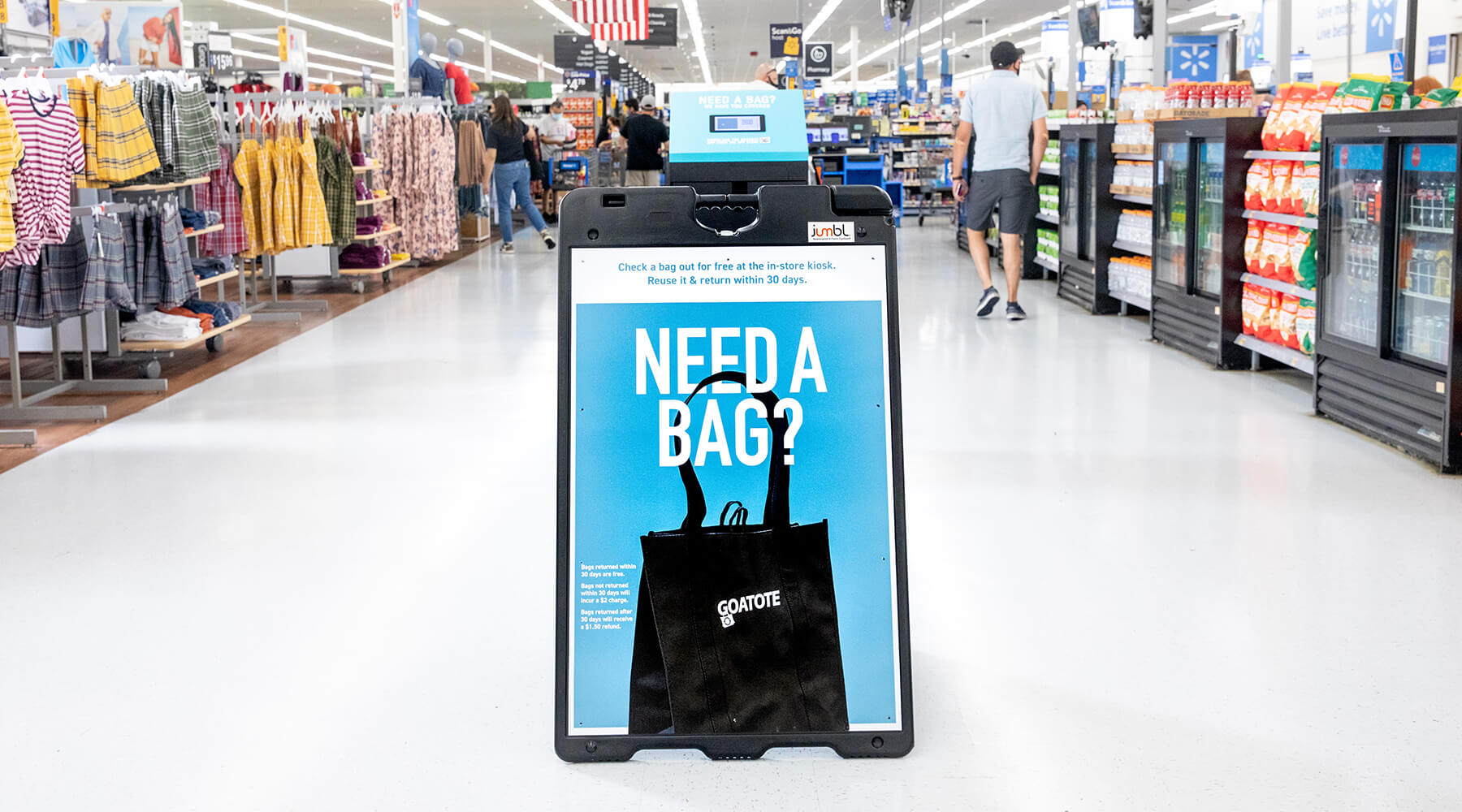
New alternatives ranged from biodegradable solutions to systems that kept reusable bags in rotation. IDEO teams not only facilitated collaboration between startups and sustainability leads from partner retailers, but also provided a boost of additional expertise from industrial, data, and business designers. In a matter of months, teams were able to launch prototypes in select CVS Health, Target, and Walmart stores in California and New Jersey.
Everyone involved in the consortium knew that replacing single-use plastic retail bags is a problem that won’t be solved quickly or easily. But the Beyond the Bag challenge helped them learn that designing for the policy and infrastructure of tomorrow requires tangible steps, taken together, today.
A hundred billion plastic bags are used in the US every year, and less than 10% of them are recycled.
Every year, plastic retail bags are among the top ten items found on beaches and waterways worldwide.
9
stores tested solutions across Northern California
Millions of dollars
raised by two startups
2
startups acknowledged by Fast Company's World Changing Ideas Awards
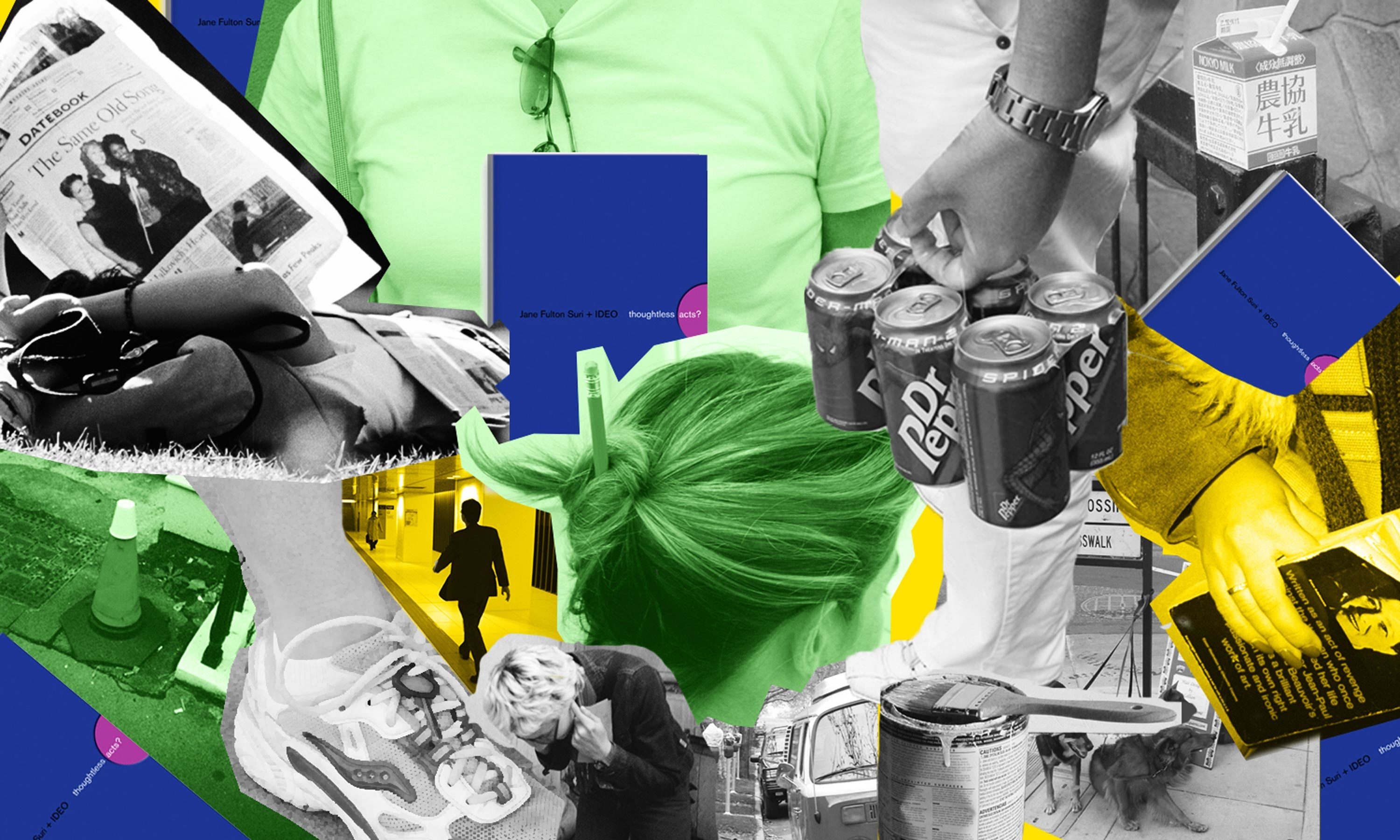
Thoughtless Acts: Save For Tomorrow
The intuitive ways we adapt and react to things in our environments
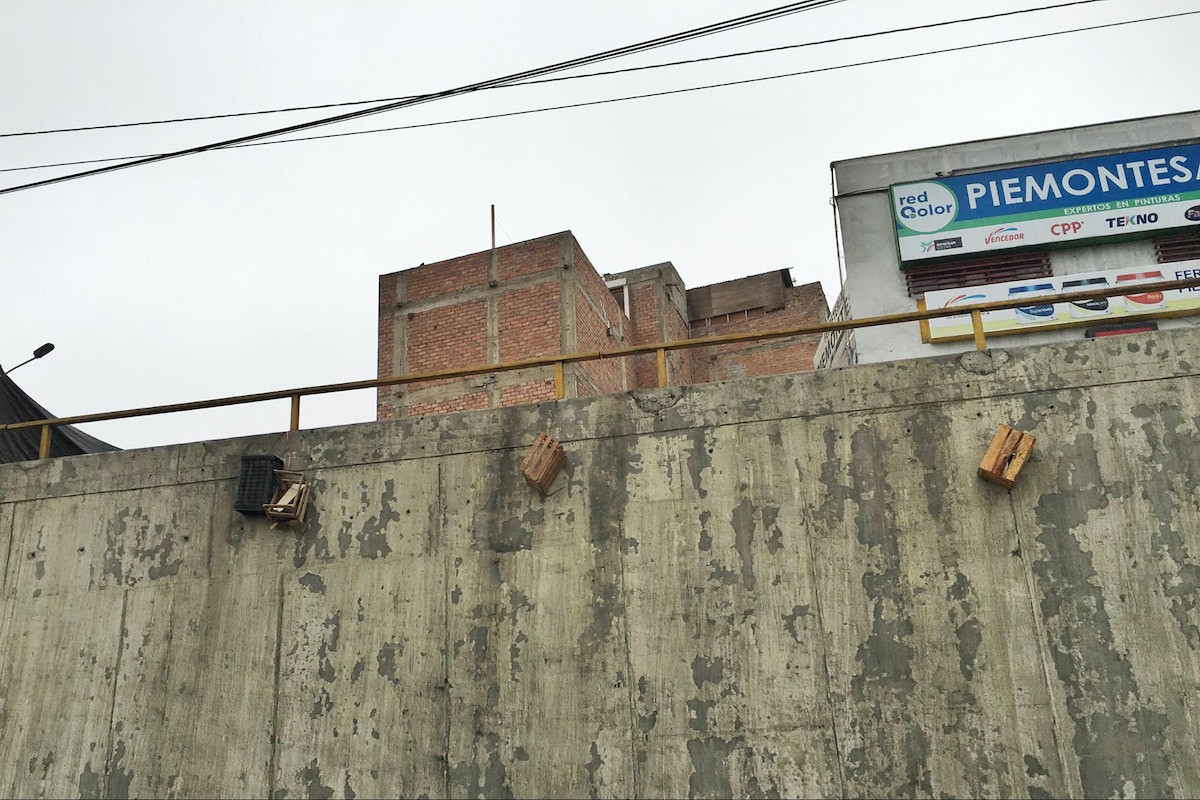
In Lima, Peru, people who give out free newspapers or sell water and snacks on the on-ramps to the highway use these little wooden crates to sit on or put products on. To avoid carrying the crates home every night, they tie a rope between the box and the railing, then drop it over the edge overnight. This keeps them from getting cleared or taken because they're virtually invisible from the other side. The crates aren't that valuable, but it's probably a hassle for vendors to carry them around or find new ones every day.
Human-centered design requires us to observe human behavior with beginner's eyes, so that we can spot the innate ways people interact with the world around them. We call these intuitive and unconscious reactions thoughtless acts, and IDEO designers collect photos of them to inspire the invention of new products, services, and experiences.
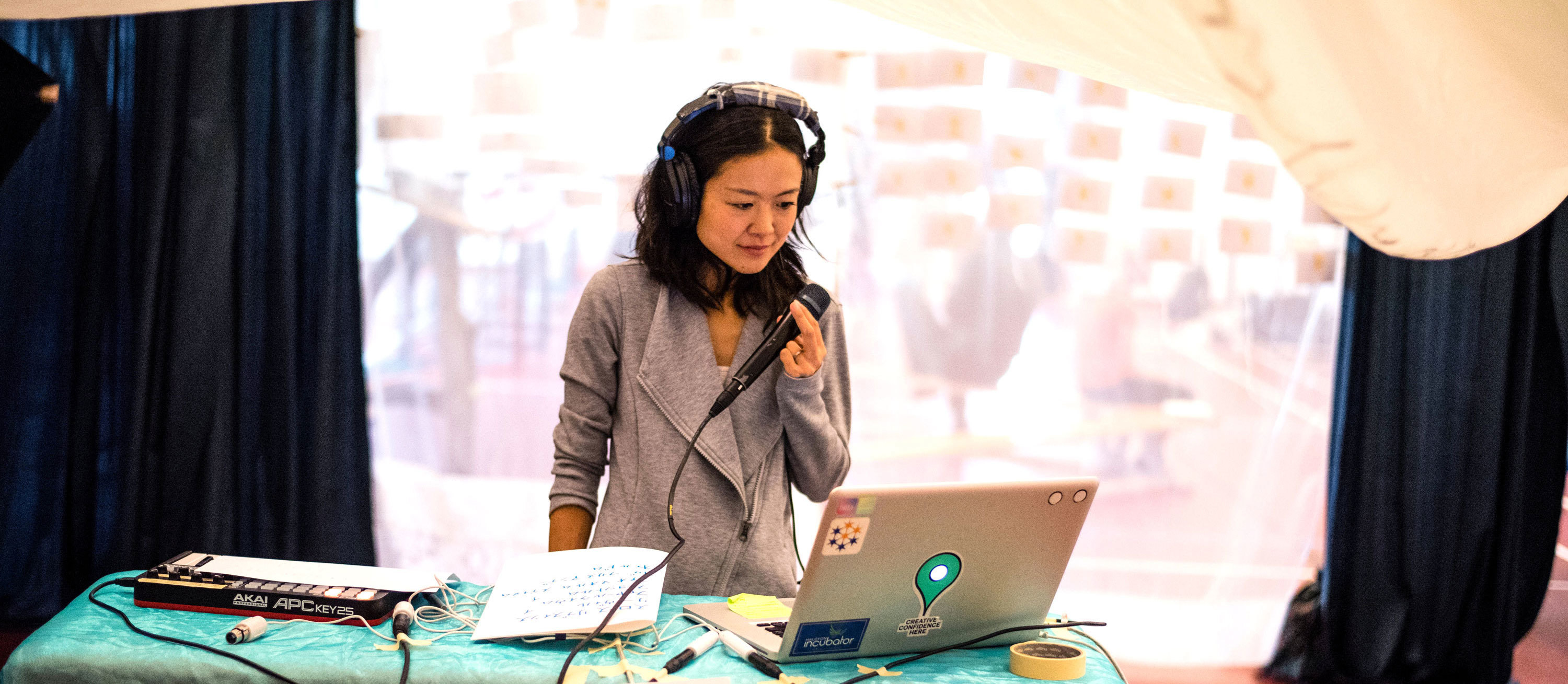
What's the Last Sound You'll Ever Hear?
Bringing new design to the way we die
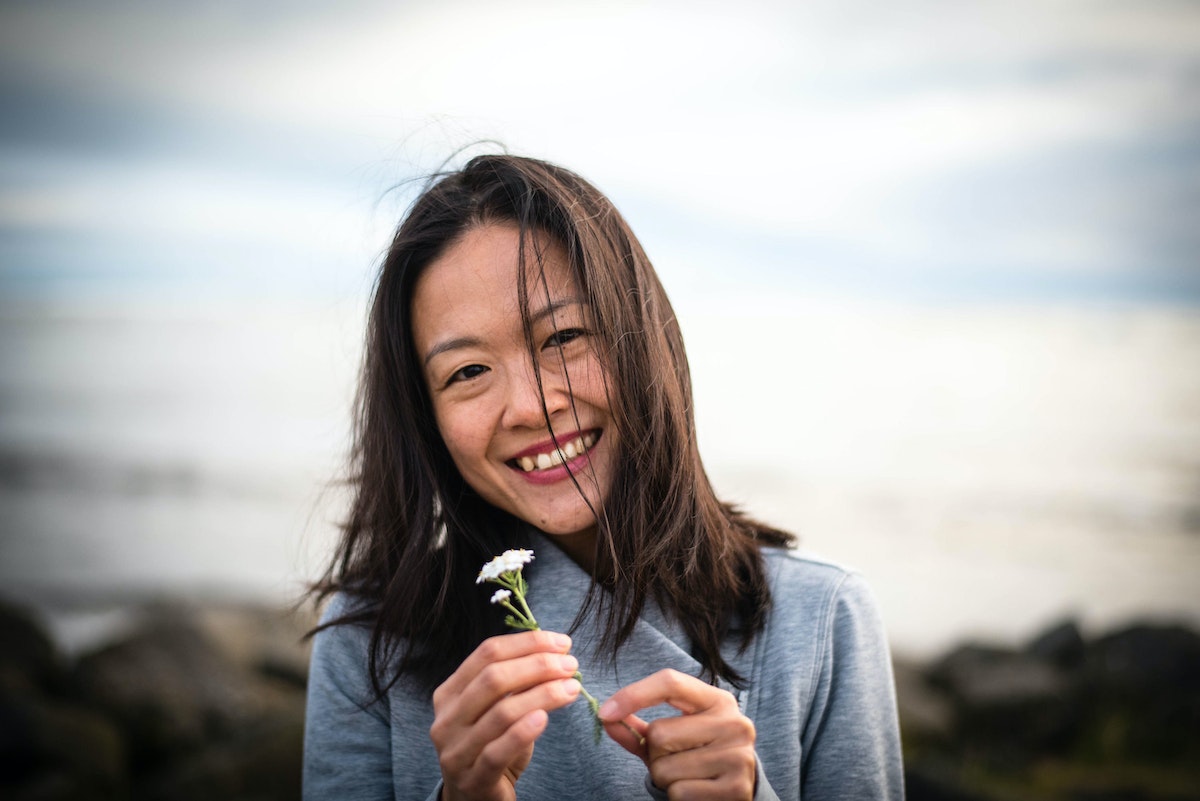
Bringing new design to the way we die—what we see, touch, feel, and hear—is an idea with a strong tailwind. Advocates like BJ Miller, who was profiled in the New York Times this week, are spreading the message that we can do better for people who are dying if we pay close attention to human needs.
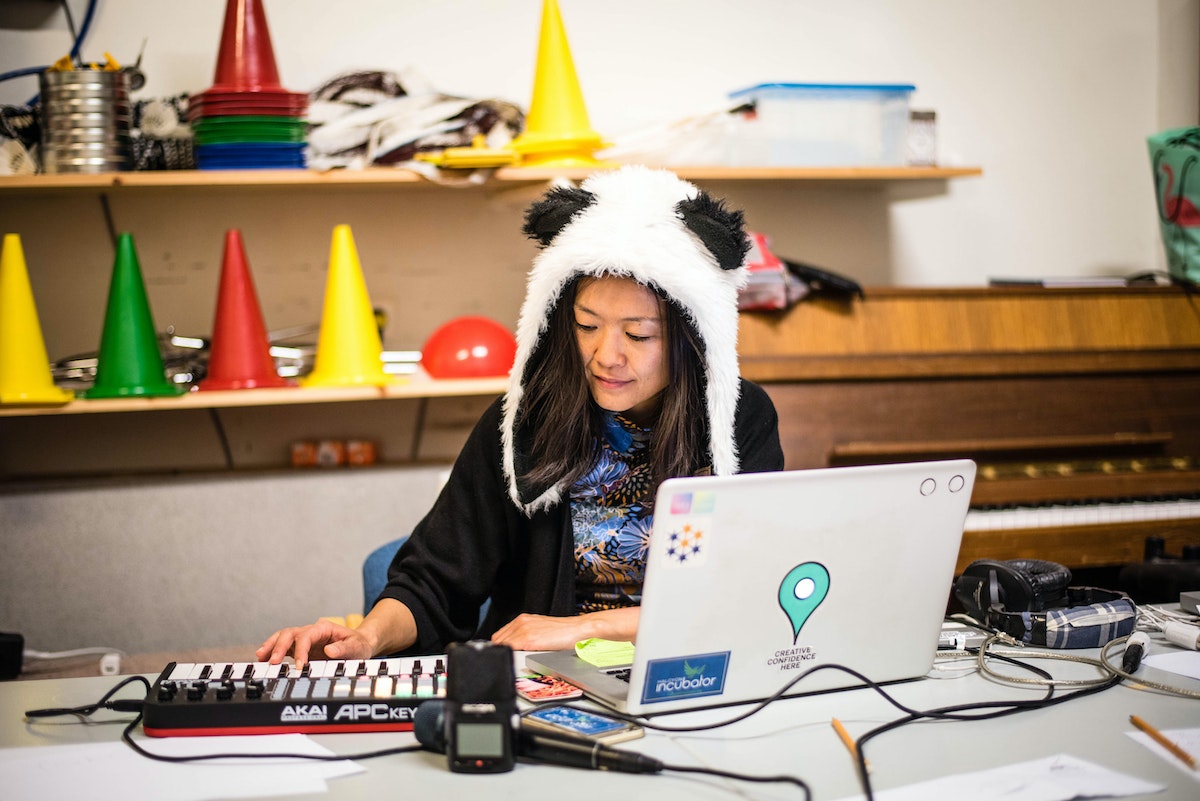
Sen, who gives Miller a nod in her video (see below), felt this firsthand when she was hospitalized for an illness. As a musician who started playing the piano when she was 3, Sen found the sounds of the emergency room traumatizing, and left committed to do something to save others from having the same experience.
We became instant fans of Sen’s work when she submitted it to our OpenIDEO challenge on end-of-life care, and gave a talk during Re: Imagine, a subsequent citywide conversation about death. We caught up with her in Washington D.C., where she’s a fellow at the Halcyon Incubator, a program that supports social entrepreneurs, and asked how she’s planning to bring beautiful sound to the people who need them most.
IDEO: WHY IS MUSIC SO IMPORTANT AT THE END OF LIFE?
I would say sound is important at the end of life, which includes, but is not limited to, music. For instance, a lot of people mention nature sounds as something they want to hear at the end of life; other examples are voices of loved ones, laughter, etc. You can hear people's responses here.
Sound is important because some people say hearing is the last sense to go when we die. I believe it has a profound effect on our sense of dignity, not just for the person dying, but also for those around them.
IDEO: HAVE YOU SEEN EXAMPLES OF THIS?
Morgan, a palliative care nurse in NY, got in touch with me after she saw the idea on OpenIDEO. She said that her team started to play a song moments before a patient's death to liberate them from the ventilator, with the expectation that they would die in the next few moments. The question inspired her to use her own iPhone to play music for the patients. One cancer patient she became very close with shared his favorite music, and she played that for him. People’s preferences are different, so it’s tough to find something that’s universal. It’s very awkward to say, “I’m assuming you’re going to die soon, what kind of music do you like?” I got the impression that it was helping her team and the family members as much as the patient. You can’t interview the patient after they’ve passed away—“how was your dying experience?”—but you can talk to the family and the nurses. I heard from cancer nurses at Sibley that when a cure is not possible, they are empowered to heal in other ways—do something seemingly simple that makes a big impact.
A couple of people mentioned that they played music when their grandparents passed away. “I had a sense that she could hear the music or my voice even though she couldn’t react to me,” or “I have faith that she could hear me.” It’s a story that we create for ourselves, but, as those who are left behind, feeling that we have made a positive impact gives us a sense of peace.
IDEO: ARE YOU PILOTING SEN SOUND IN HOSPITALS?
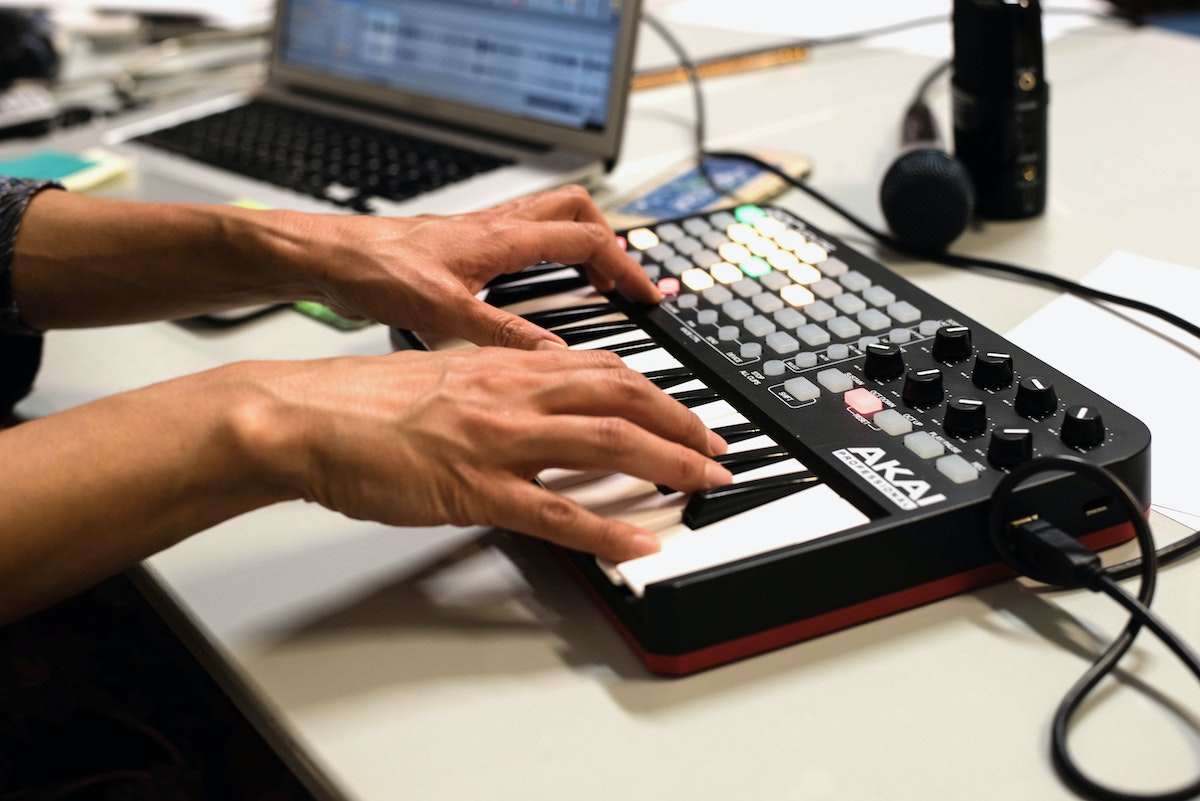
Yes, we are already working with Sibley Innovation Hub (part of Johns Hopkins Medicine)—though not necessarily focused on "end of life"—to test our ideas to transform the sound experience for patients.
As for the "end of life" sound—for now it's an art/conceptual project. I record the voices of people sharing stories of the sound they wish to hear at the end of life, to raise awareness on the importance of sound.
I also believe that it is a way to build resiliency in the community, by allowing us to approach the taboo subject with a somewhat light-hearted, playful way. It's dreadful to imagine death itself, but by imagining the sound, it's somewhat more approachable.
I would love to continue exploring ways to implement the idea with hospice and palliative care centers, and we are in conversation with a couple of facilities. I have done this as an artist and will always continue to do that, but I’m at the point where I’m transitioning to trying to inspire a team to do this.
It’s going to take time: Any medical conference you go to is about winning the fight [against death]. But this is a project to build resiliency in the community. There’s no wrong answer. If a young person says to me “I don’t like to think about how I’m going to die,” that’s okay. But I want to help people build a sense of community, to create music or sound or jam with the person with the same illness but not the same geographical location—connecting people who really need it through music and art.
For more about Yoko's work check out her piece in the OpenIDEO End of Life story collection.
Humans really like the sound of the ocean. We like it so much, the lapping of waves top the list of last sounds we wish to hear before we die. That’s one thing you’ll learn from Yoko K. Sen, an ambient electronic musician whose project, Sen Sound, aims to transform what we hear at the end of life, replacing shrill alarm bells and bleeping machines of the hospital with a soothingly oceanic sonic environment.
Creative New Year's Resolutions
After the ball drops and the champagne is gone, we have 365 days ahead of us to be more creative people
I have three. Instead of writing in a journal, I want to summarize each day in a creative drawing. I also plan to listen to more podcasts. And, whenever someone asks me, "How are you?", I will try to never to say "good," and instead use a more descriptive adjective.
—Katie Kirsch
I really want to work on being in the moment—which means putting down the phone, and being delighted by who and what is around me.
—Amy Bonsall
My creative resolution: Write, draw, or create more physical letters and postcards for friends and family (at least one per month!). And use more of the Airpost service that we helped design out of IDEO Tokyo!
—Mike Peng
I have two. One, to be more aware of what contexts and situations work in favor of my creativity. And two, to inspire others around me to be creative.
—Michaël Harboun
I plan to sew a new outfit and wear it, turn my photos into different series and make a portfolio website, and to read a Poem-A-Day.
—Rebecca Lee
I'm going to try to dedicate the first hour after waking up exclusively to creative pursuits, rather than looking at email, social media, or cat videos. This will require getting up early every day, so fingers crossed.
—Neil Stevenson
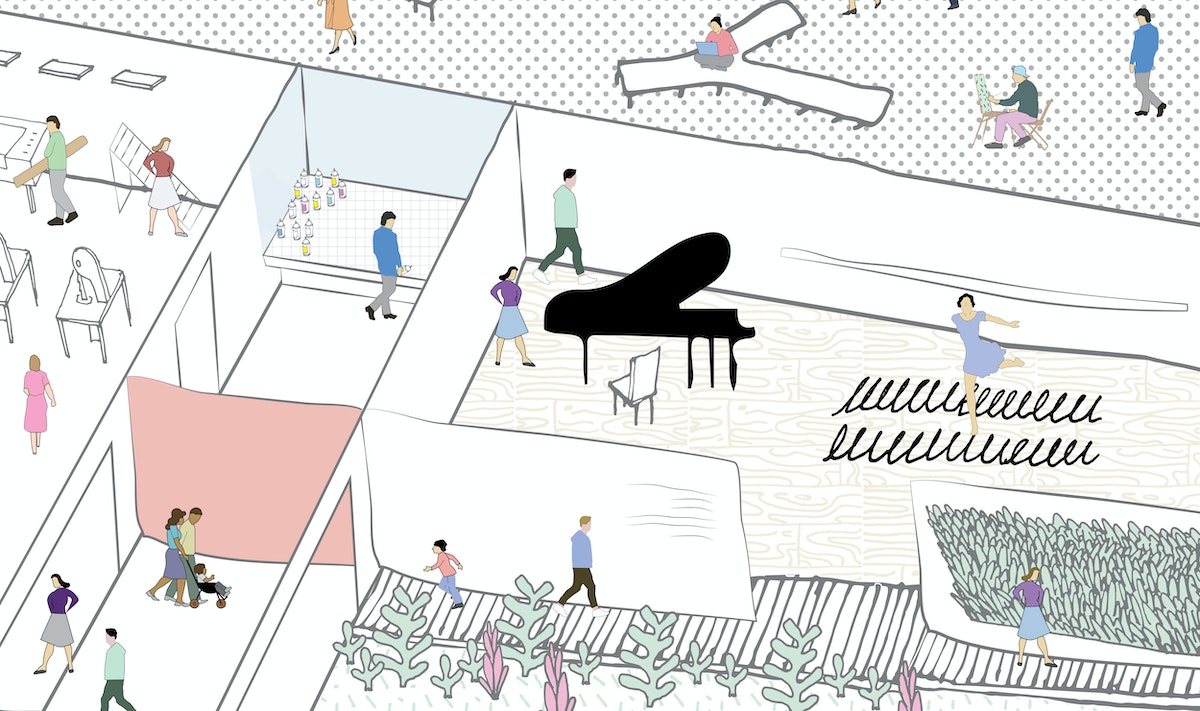
My resolution is inspired by Julia Cameron's morning pages. But since my practice is choreographic (I'm a dancer/choreographer outside of IDEO), I'm resolving to create a movement phrase everyday. I’m not sure yet what the dance equivalent to three pages of writing is, but I'll figure it out.
—Eileen Farrell
Slackline (or highline in this case) is both a new habit and skill. I find that balancing on a line is a powerful way of coming to terms with fear and a kind of forced meditation, counterintuitively creating fear and calm at the same time.
—Jonah Houston
I want to learn to lathe wooden baseball bats. I'm looking to make an art piece to show in a gallery.
—Samuel Bertain
I plan to find a living space that inspires me to do good work; to sign up for a class so I can make arts around other people and osmose creative energy (and hopefully give back too?); and to be more intentional about my passwords (I don't have a method to my madness, it's just madness).
—Momo Miyazaki
I am pushing my modern calligraphy for 2017. I did a class this year and for Christmas have ordered books and more pens. I am hoping to also try out brush lettering. I follow Seb Lester on Instagram and he makes it look so easy... even though it’s not.
—Bobbie Brightman
I will download and use the Headspace app.
—John Ravitch
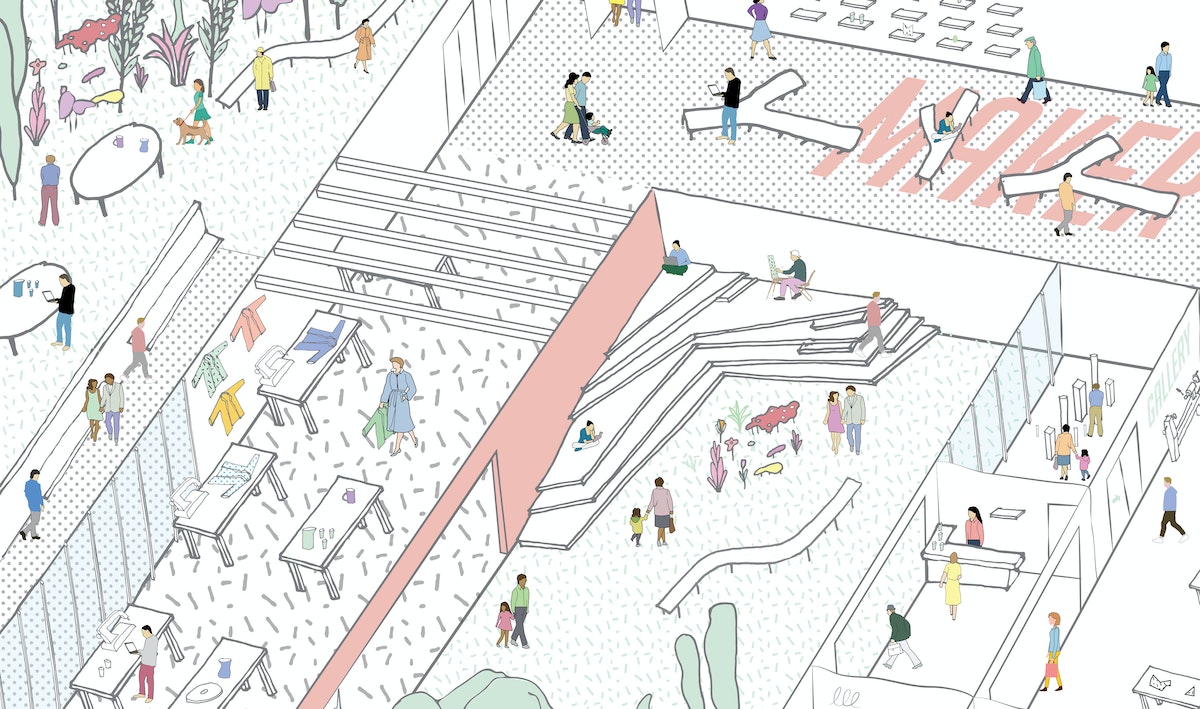
I want to channel Charlie Rose and learn how to host better video interviews on Creative Confidence. I also want to rock climb more.
—Suzanne Howard
In 2016, I did the 100 day project, which got me going on weaving and watercoloring. In 2017, I want to create my first large-scale tapestry. Who knows if it'll happen... we'll see!
—Emma Scripps
I want to to start writing again. I used to write a lot, both for fun and as a freelance advice columnist, but have gotten away from it in recent years. Doesn't matter to me if this manifests in jokes, stories, reflections, whatever—so long as pen meets paper and my brain is flexed regularly.
—Adam Moulter
I want to do at least one thing each week to celebrate the ubiquitous creativity in New York City. It can be a concert, a class, or just a walk around a new neighborhood to explore the graffiti and architecture. I moved here a year ago and have so much more to explore!
—Shauna Carey
I want to say "I don't know" more, so I learn something.
—David Good
Illustrations by Matt Avallone.
After the ball drops and the champagne is gone, we have 365 days ahead of us to be more creative people, with new and better habits, mindsets, and skills. Seeking inspiration? Here are some of IDEO designers’ resolutions for 2017.
12 Documentaries That Will Spark Your Creativity
IDEO designers nominate the documentaries they find most inspiring
1. Waste Land
“A social documentary framed around art. Brazilian artist Vik Muniz spent a couple of years at the world’s biggest landfill, and created art with the people whose job it was to pick through the garbage. This is an inspiring example of how you can take waste and transform it into something beautiful and meaningful.”
Waste Land Trailer
2. Iris
“Iris is a fearless and fiercely creative 95 year-old fashion icon and businesswoman. The film highlights her life, her creative pursuits, and her lust for a life drenched in accessories. She has inspired my take on interior design and fashion—there are no rules and if you love it, it works.”
Iris Trailer
3. Sky Ladder: The Art of Cai Guo-Qiang
“Famed for The Ninth Wave, an installation commenting on China’s environmental policies, Chinese artist Cai Guo-Qiang works with everything from taxidermy to fireworks. Sky Ladder documents Cai Guo-Qiang’s biggest dream yet: to build a ladder to connect the earth to the universe.”
Sky Ladder Trailer
4. Alive Inside
“Memory is inherently creative. Every time we reflect and look back, we use creativity to reimagine our past life experiences. But what happens when we lose our ability to remember? This film shows us the power of music, creativity, and imagination to bring back the memories of those who have been living without them.”
Alive Inside Trailer
5. Herb and Dorothy
“A charming look at a mailman and a librarian—Herb and Dorothy Vogel—in New York City who love (absolutely love) art. The Vogels live frugally, and over the years have filled their small, one-bedroom apartment with one of the most important collections of minimalist and conceptual art. Not only did they buy the art, they also built relationships—in many cases close friendships—with the artists. The documentary chronicles their lives as collectors—we see how they see, we see how they remember each work of art, and we hear from the many artists inspired by the Vogels' deep appreciation. You can't help but smile watching these two gallery hop or huddle in their tiny kitchen packed with art.”
Herb and Dorothy Trailer
6. Jiro Dreams of Sushi
“A lovely documentary about the spirit of the shokunin (craftsman) and the inscrutable Jiro. It’s inspiring to see the amount of time and effort that can go into the creation of great sushi. This movie is good for anyone who loves food, travel, and culture, and is also a great reminder of the power of craft.”
Jiro Dreams of Sushi Trailer

7. Eames, the Architect and the Painter
“The documentary illuminates how Ray and Charles Eames fused craft and thinking in their design process. It also chronicles the transformation of their work from furniture and products to ideas and communication, as they tackled larger and larger problems. There are many parallels with how IDEO's work has evolved over the years as we have honed our craft.”
Eames, the Architect and the Painter
8. American Movie
“Wisconsinite Mark Borchardt has dreams of making the ultimate psychological horror film on a micro budget. American Movie is an all-access look at his gritty and creative attempt to make his lofty dream a reality. It's a uniquely human documentary that's inspiring and entertaining for anyone who's ever been consumed by creative confidence.”
American Movie Trailer
9. Sans Soleil
“Sans Soleil is a genre-bending documentary about the limits of memory and how it affects history and current events. Chris Marker invites us into the scaffolding of his grand design, provoking us out of circumspect craft. “Frankly, have you ever heard of anything more stupid than to say to people…not to look at the camera?” Age has only increased its relevance.”
Sans Soleil Trailer
10. Bill Cunningham New York
“Way before Instagram, Bill Cunningham was the original street style photographer. This documentary paints a portrait of Bill and his quietly-obsessive creative pursuit that spanned half a century. Watch this this film to be inspired by this great human being's purity of passion and commitment to his craft.”
Bill Cunningham New York Trailer
11. Rivers and Tides: Andy Goldsworthy Working with Time
"This 2001 documentary follows Andy Goldsworthy as he makes art with nature, painstakingly assembling leaves, sticks, rocks, or blocks of ice to create beautiful, ephemeral sculptures. Not only is this the most calming movie you can imagine, it is also inspiring. It reminds me that there are opportunities all around us to create meaning and beauty, if we only have the vision and the persistence to make them real."
Rivers and Tides Trailer
12. A Ballerina's Tale
"Dance, to me, is a grossly under-appreciated art form. It takes a great deal of trying, failing, and perseverance. It's strikingly similar to the world of design in many ways. I love this documentary because it tells the story of Misty Copeland, a black ballerina. There's a lot of history there, as black dancers were often overlooked (and still are) for not having the "typical" ballet body. It makes her rise to the top of this extremely selective world that much more powerful and inspiring."
A Ballerina's Tale Trailer
Thanks to Sally Clark, Piper Loyd, Maura Cass, Chris Hill, Brett Brownell, and Mark Del Lima. Illustrations by Matt Avallone.
We all know that going out into the world and witnessing other peoples' lives is a powerful source of inspiration. But what about when you don't have time to get out in the field? Sometimes a documentary is the next best thing. We asked IDEO designers to nominate the documentaries that they find most inspiring.

Lindsey Turner
I’m passionate about building brands, products, and experiences that help organizations show up with meaning and momentum.
I help organizations cut through complexity by shaping how they show up, through brand strategy, identity, and storytelling.
Working at the intersection of brand and business, I bring an editorial eye and a bias toward making—turning ideas into tangible experiences that people can understand, trust, and believe in.
My work spans government, healthcare, financial services, media, and consumer goods, from launching Gen Z-focused ventures to building innovation labs and reimagining legacy brands. I relish moments of ambiguity and enjoy translating across teams, perspectives, and priorities to move ideas forward.
I started my career in editorial and digital design, shaping cross-platform experiences and identity systems in publishing and agency environments. That foundation still shapes how I work today: I’m detail-oriented, collaborative, and overreliant on the Oxford comma. I hold a BFA in Visual Communication from the School of the Art Institute of Chicago.

Rachel Young
My work helps organizations see who their products aren't working for—and build the will and the tools to do something about it
For 25 years, I've asked the same question: Who does this design exclude—and what are we going to do about it?
My work spans human-centered strategy, inclusive design, and qualitative research, with clients ranging from Microsoft, Google, and Verizon to the National Science Foundation, and San Francisco Unified School District.
Before IDEO, I taught elementary school in East Palo Alto and spent a decade doing design work with social service organizations—where I learned firsthand what it costs people when systems are built without them in mind.
I am currently writing User Error, a nonfiction book about digital access and the design decisions behind it. I live in Oakland, California.

Brian Pelsoh
I lead with craft, ensuring our work is creatively excellent: rooted in deep human insight and imagination, while also grounded in the realities of business and technology.
My expertise spans brand, communication, and product design across tech, education, the arts, and social impact.
I believe great work demands both high-level vision and obsessive attention to detail, and only happens through collaboration.
I bring an inclusive, hands-on approach and a deep understanding of business, which enables me to consistently deliver excellence while always asking why.
Before joining IDEO, I worked at the brand firms Pentagram and VSA Partners. I began my career as a designer, leading teams at the School of the Art Institute of Chicago and the Milwaukee Art Museum. I hold an MFA in graphic design from Maryland Institute College of Art and a BFA in communication design from the Milwaukee Institute of Art & Design, and have taught at some of the best design schools in the US.

Tony Wong
I am responsible for IDEO’s long-term success in China and working with clients to use design as a tool to enable growth.
I am responsible for IDEO’s long-term success in China and working with clients to use design as a tool to enable growth. Specifically, I have helped Chinese companies design holistic brand solutions through the development of their products, communication, services, and innovation teams, and I have helped multinationals expand their presence and influence in China.
I advise global leaders on developing China-led innovation and capabilities.
In over 15 years in IDEO Shanghai, I have worked on projects that use design to elevate the quality of the experience of healthcare products and services, streamline processes that increase productivity, create spaces and programs that promote and enable inclusive communities, and build next generation mobility solutions that are planet-positive.
Before joining IDEO, I worked at Philips Electronics and the Electrolux Group in Italy, the Netherlands, and Singapore on a number of breakthrough commercial products. I am a member of the Young President Organization in Shanghai.

Building a personal AI for the messiness of life: Sida Li
Most AI products today are built for work—a space with clear problems and established systems. One founder noticed a gap: personal life is messier, harder to systematize, and mostly left behind by the AI boom. So she built Cue, a personal AI that lives inside iMessage and group chats, to go where the other tools haven't.
In this episode, Becca Carroll, IDEO's Chief Strategy Officer, talks with Sida Li, co-founder and CEO of Shared Context Lab, about staying anchored to a human need while the technology around her keeps changing shape, why she treats her business model with the same rigor she'd bring to a product, and what it feels like to build a company at this particular, disorienting moment in AI.
The conversation also gets into how Sida makes design decisions: the language Cue uses to describe itself, the tradeoffs behind building inside iMessage instead of a new app, and a real story about a business idea that didn’t pan out.
This is the second in a two-part series profiling founders from IDEO's Startups-in-Residence program. The first conversation is with Johannes Seemann, founder of Sooner, on designing GenAI for the emotional side of money.

Designing GenAI for the emotional side of money: Johannes Seemann
Most personal financial tools are built to run the numbers and optimize towards a budget. While that works for some, most people experience money as a lived relationship that does not neatly fit into a spreadsheet. Johannes Seemann and Becca Carroll discuss why money is emotional before it is mathematical, and what a human-centered approach to building a generative AI financial product looks like in practice.

The curious leader's edge in uncertainty: Scott Shigeoka
Mina Seetharaman talks with Scott Shigeoka, author of Seek and Head of Curiosity Cultivation at the Eames Institute, about what distinguishes genuinely curious leadership from performative curiosity, how power dynamics shape curiosity, and why practicing curiosity can restore energy rather than drain it.

How constraints make us more creative: David Epstein
Mina Seetharaman talks with David Epstein, author of Inside the Box and Range, about why total freedom often produces average work, how leaders can design useful limits on purpose, and what organizations such as General Magic and Pixar reveal about the relationship between boundaries and creativity.
Looks like you might be in search of something very specific?
Or reset the filters above and try another angle.
Here’s some random inspiration

Podcasts about creative leadership

Articles about the power of prototyping
