
.svg)




Rethinking the food bank
A crucial resource reconsiders everything to design more dignity into its digital tools.
Giving food assistance is about more than handing over a box of groceries. It’s about allowing people to make their own choices.
But the pandemic only narrowed people’s choices. Undeterred, Northern Illinois Food Bank (NIFB) put people’s needs above everything else, leading to innovations that could improve food banks everywhere. IDEO recruited neighbors to co-design a new digital tool intended to improve people’s access to food. Local residents provided more than insights—they steered design decisions and helped transform the relationship between NIFB and the community.

Northern Illinois Food Bank’s My Pantry Express app allows people to browse and order groceries online and to choose a pickup time and location that works for their schedule. We designed the app to provide useful information on dietary preferences and to be inclusive of cultural differences. The result allows choice and flexibility, helps prevent food waste, and preserves the dignity of shoppers throughout the process by making My Pantry Express feel like any other grocery site.
Ultimately, Northern Illinois Food Bank and IDEO’s strategy for success relied on new metrics. In addition to measuring effectiveness in pounds of food distributed, we found new ways to measure shoppers’ satisfaction—a solution that works better for all parties involved because it was designed by all parties involved.
An estimated 1 in 8 Americans experience food insecurity.
The food insecurity rate is 2-3x higher for persons of color than for white households.
60% of food insecure households do not use food pantries.
1.9M
meals distributed through My Pantry Express in 2021
50%
increase in distribution from prior year
New skill city
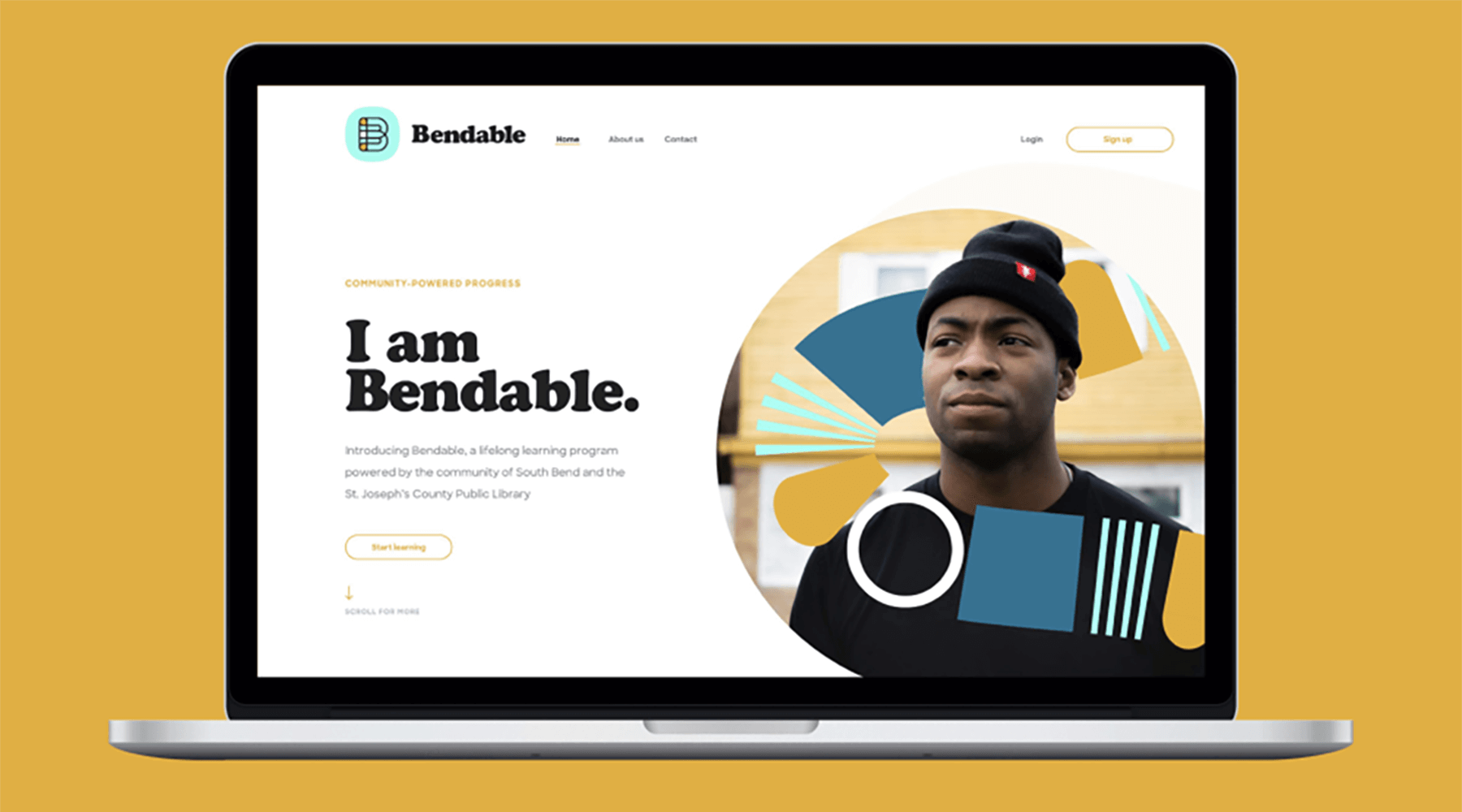
The people of South Bend, IN, have the power to design a lifelong learning platform for themselves.
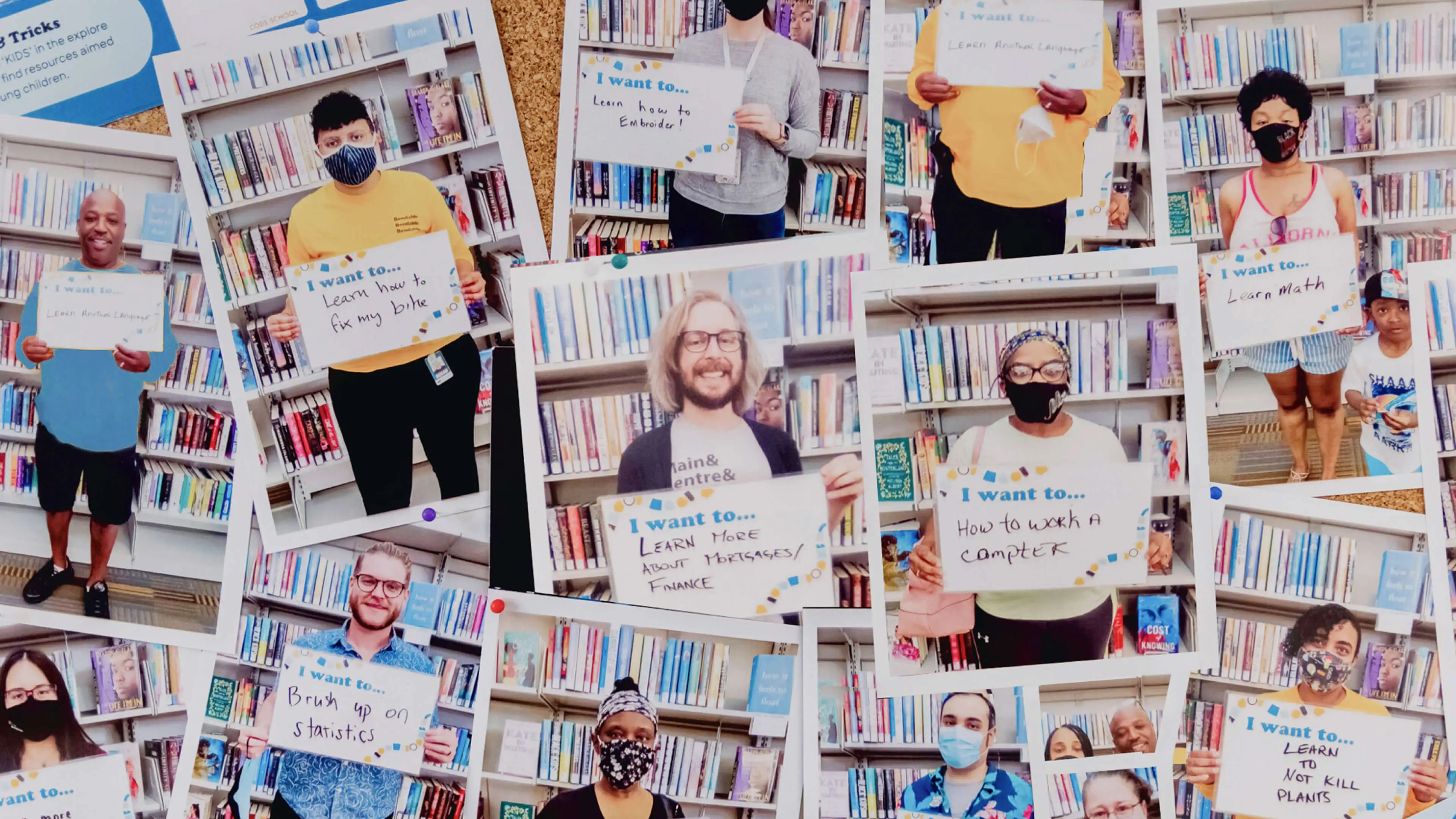
To create Bendable, IDEO worked alongside the people closest to the problem, so every important decision grew out of their experience.
IDEO and the Drucker Institute aligned with the library system and city leaders in South Bend, Indiana, on a single objective: build a learning platform that offered education opportunities to people affected by the decline of manufacturing in the region. But even the earliest phases of research revealed that there’s no common profile that matched the diversity of learners. There are innumerable reasons why people seek to learn and as many barriers holding them back.
Knowing this, South Bend residents were the acknowledged authority for this work, and a design consultancy all their own. This radically simplified crucial decisions. Negative associations around traditional education led people to seek knowledge from those they already trusted. And they often lacked awareness about or the ability to access the many free resources already available.
The residents of South Bend helped the entire consortium see that the city wasn’t under-resourced but under-connected. That insight, and the power the community and the library system held to rectify it, made Bendable into the people-driven, connection-based learning platform it is today.
By 2025, as many as 85 million jobs will be displaced by automation, yet 97 million new ones could emerge.
More than a third of adults pursuing postsecondary education before the COVID-19 pandemic were forced to abandon those plans.
25
programs and other resources offerings are now available to residents of South bend
4
states have begun to integrate Bendable into library systems
Making voting easier
The country’s largest jurisdiction creates a more accessible voting experience.
Protecting the right to vote means ensuring that all citizens can cast their ballots privately, independently, and easily.
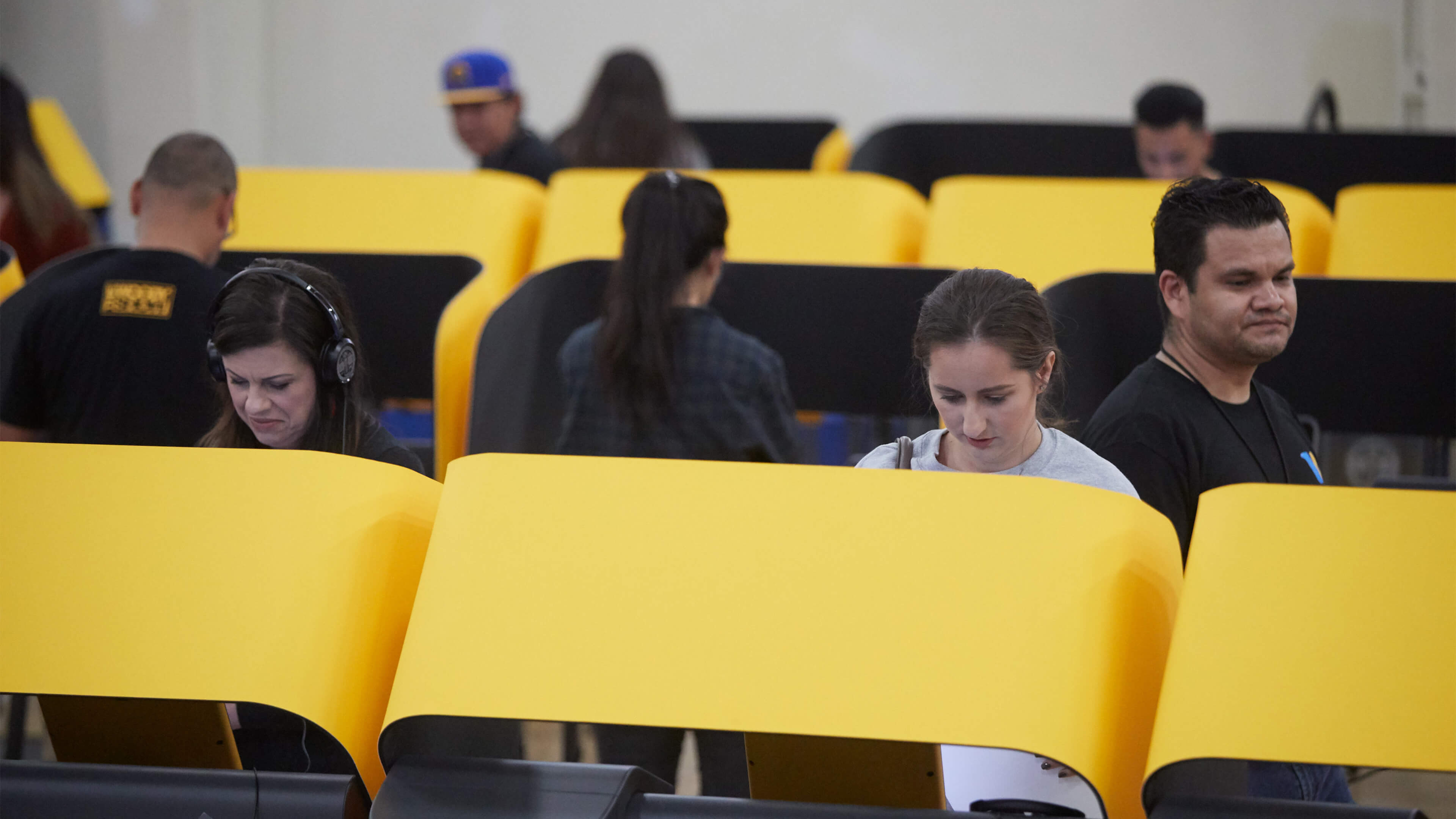
With that principle in mind, Los Angeles County sought out a design strategy firm to create a next-generation, customizable system that would meet the needs of its large and diverse voter population while satisfying myriad voting regulations. The result: an accessible, self-enclosed ballot-marking device with a touchscreen that allows any voter to easily navigate, mark, verify, and submit a paper ballot. We also worked to improve the entire voting experience, including vote-by-mail ballots, interactive sample ballots, and the tally process.
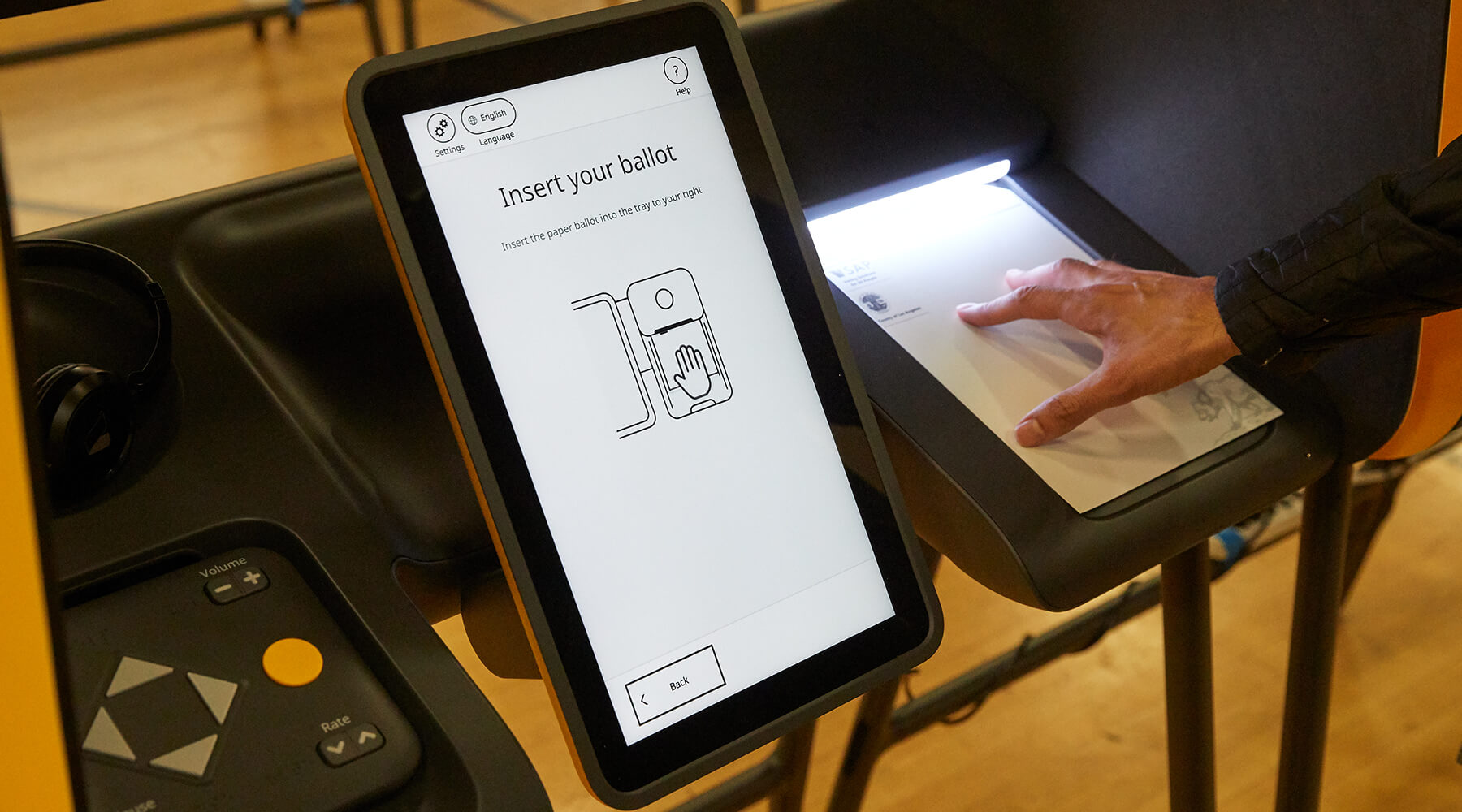
As with any inclusive design, details matter. Voters with vision impairment or reading disabilities can opt for audio and tactile experiences with the push of a few simple buttons. And for voters who prefer to read the ballot in their native language—Spanish, Chinese, Korean, or any one of the 11 others supported by the county—the device lets them select their preference.
After extensive research and testing with constituents, we designed a solution that makes voting easier for anyone. And knowing that the only constant is change, we made the system flexible enough to adapt to emerging needs and technologies, protecting voters’ rights now and in the future. Read the full case study here.
26% of American adults have some type of disability. In the 2020 election, 18% of disabled voters nationally reported difficulty voting, about twice as many as non-disabled voters.
In 2020, national voter turnout among disabled people was 7% lower than among non-disabled people in the same age group.
"Intuitive & secure"
was the sentiment most Los Angeles County voters expressed about the new voting system after the 2020 primary election
Human problems, human solutions
A conservation leader rewrites the role humans play in the narrative of climate change.
Conservation International is made up of conservation experts. To bolster its work, we bring a focus on scale, speed, and the human element to every project.
How does that look in the field? To restore the forest of Fiji, Conservation International paid a cash incentive to the community to buy, plant, and care for new trees and foliage. But once those cash incentives stopped flowing, the work ground to a halt. Taking a human-centered-design approach, one employee uncovered an insight: Fijians are more motivated to help in exchange for longer-term, noncash incentives like building infrastructure in villages. Small projects such as footpaths, repairs to communal trucks, beehives, or sports programs for youth continually reminded the community that the environment is a provider for their families, imparting a feeling of shared ownership in its conservation.
Stories like this, repeated around the globe, are how we hope to help Conservation International find sustainable outcomes. Our work together, including a six-month fellowship to help emerging leaders develop new capabilities, and a series of strategic, future-focused events for executives, has brought more tangibility and deeper collaboration to the organization.
Together we hope to create businesses, food solutions, and energy alternatives that conserve nature, and improve human health—because humans are a part of nature, too.
The scientific community overwhelmingly agrees that we have ten years to drastically cut greenhouse gas emissions or humanity will suffer devastating consequences.
We need to conserve one third of the global ocean using area-based measures and ensure at least 75% of seafood is harvested using socially responsible, environmentally sustainable methods by 2030.
75% of the world’s poor rely on agriculture for their livelihoods, which in turn depends on nature for pollination, irrigation, and soil replenishment.
20
leaders integrated human-centered design into annual goals, project pipelines, and fundraising efforts
20%
of the organization is now involved in design-thinking projects
Creating a Customized VR Experience
Our experiments with lights, heart rate sensors, and the uncanny
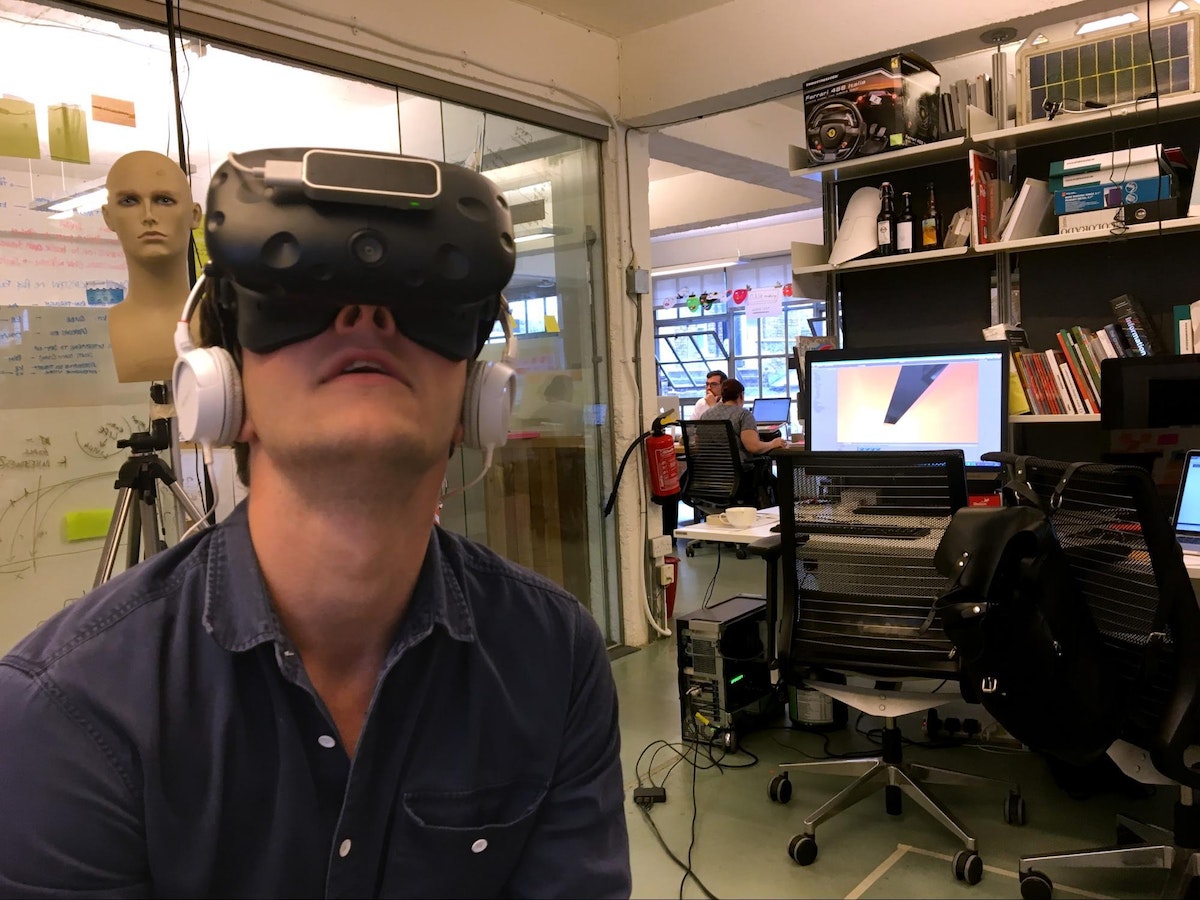
My main objective is to influence a user’s mood through automatic customization of virtual worlds—a tool that could, for example, help improve existing VR treatments for problems like phobias and anxiety disorders by automatizing the intensity of the experience. If the system were able to gauge an emotional reaction, it could ease participants into facing their fears. The same capability could be used to test different environments for mindfulness exercises, or even as a design tool, to help determine which designs elicit desired reactions.
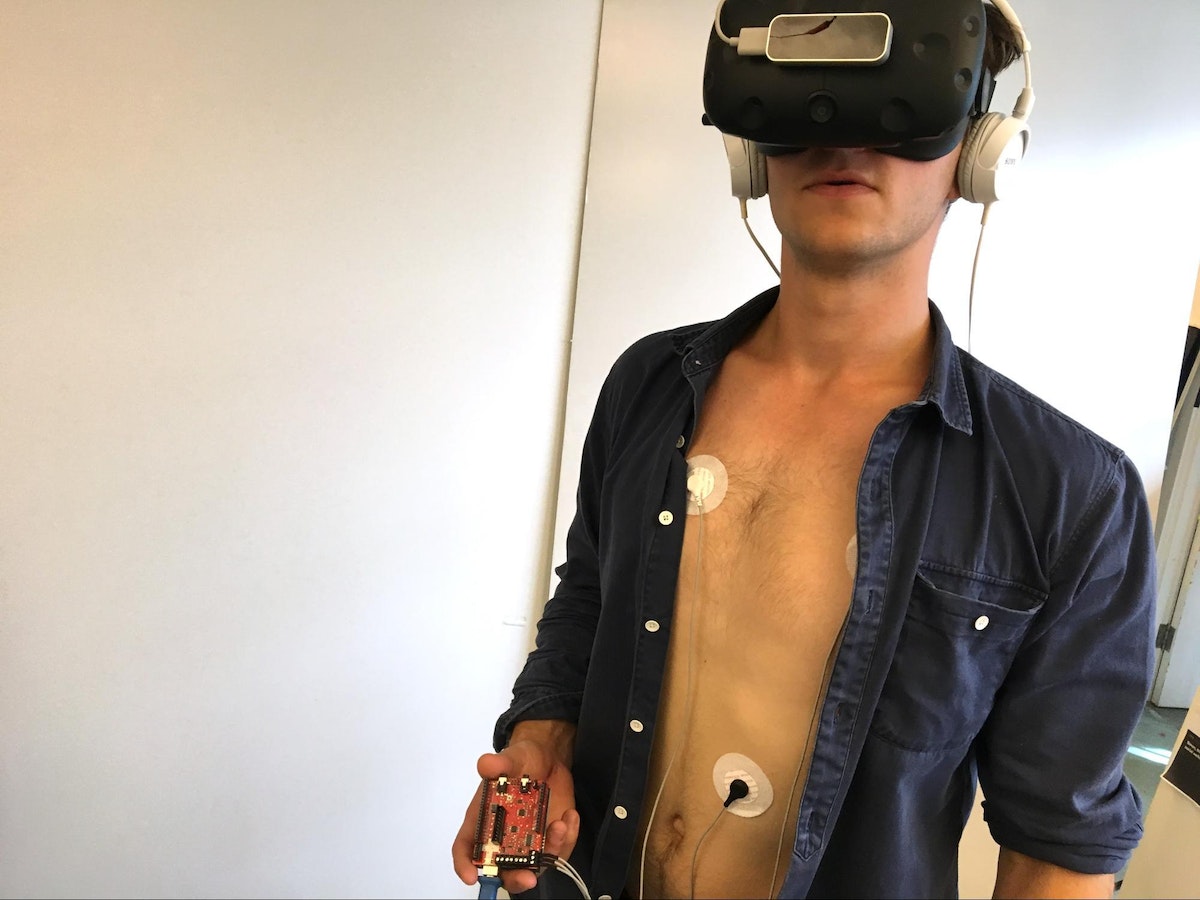
So far, most of the innovation we’ve seen in this space has come via proprietary systems like the HTC Vive controllers. But those kind of systems are very standardized and don’t allow users to experiment much with sensors. With that in mind, I built a platform with Unity and Arduino that would enable me to explore new interactions within VR environments, and allow other makers to test their ideas, too. I’m a big believer that as hardware and other tools become more accessible, makers will dig in and uncover even more immersive VR experiences.
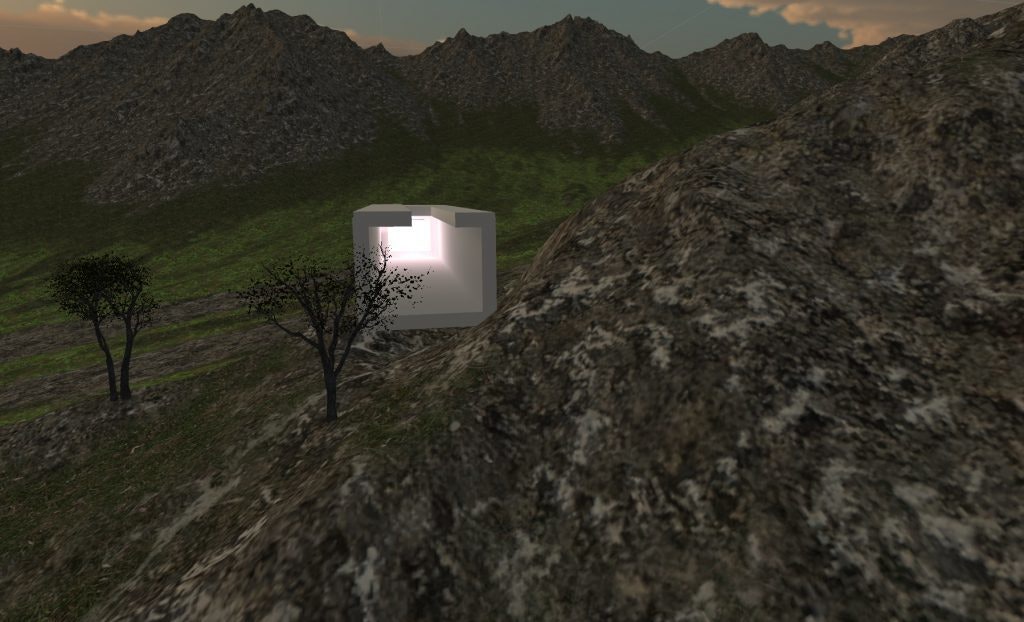
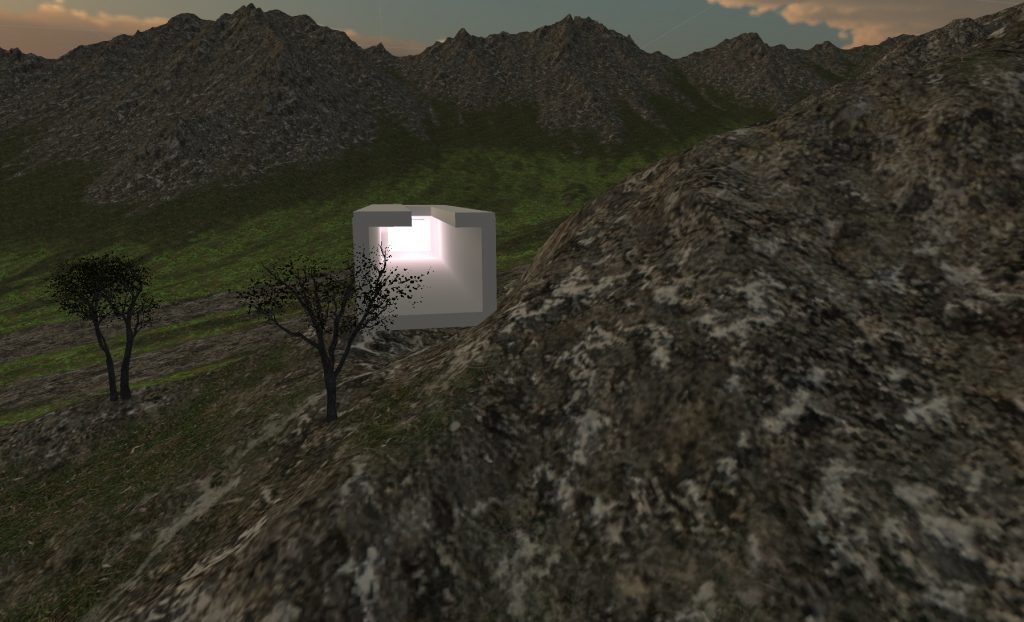
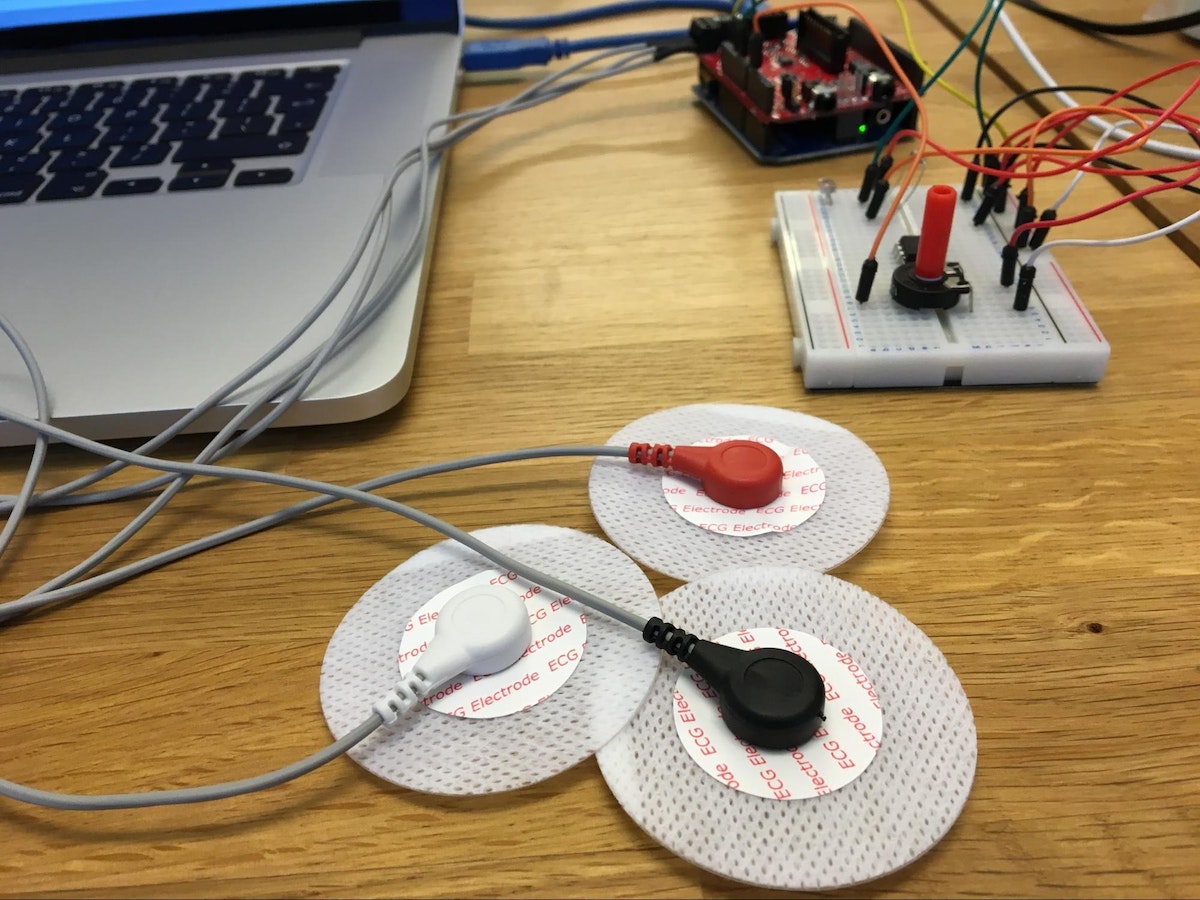
Using Unity and open source development hardware, I created an atmospheric space that can change depending on the user’s biosignals, as well as the amount of pressure they apply to sensors. To build it, I used Arduino and the eHealth platform, which can process the signal from a user’s heart rate, electrodermal activity, or breathing. In this case, I used the ECG sensor reader and developed a little piece of code that would translate the voltage signals into beats per minute, which were then sent directly to Unity via Serial. In Unity, I wrote a script based on Dyadica’s open code that constantly reads the input from the sensors and updates the scenario in each frame. For example, when the heartbeat goes up, the light in the virtual reality world changes to a more soothing blue; when it goes down, the illumination flashes and changes to red. The idea behind this particular interaction is to test whether changing color or lighting patterns will affect the user’s mood, either calming him down, or further agitating him.
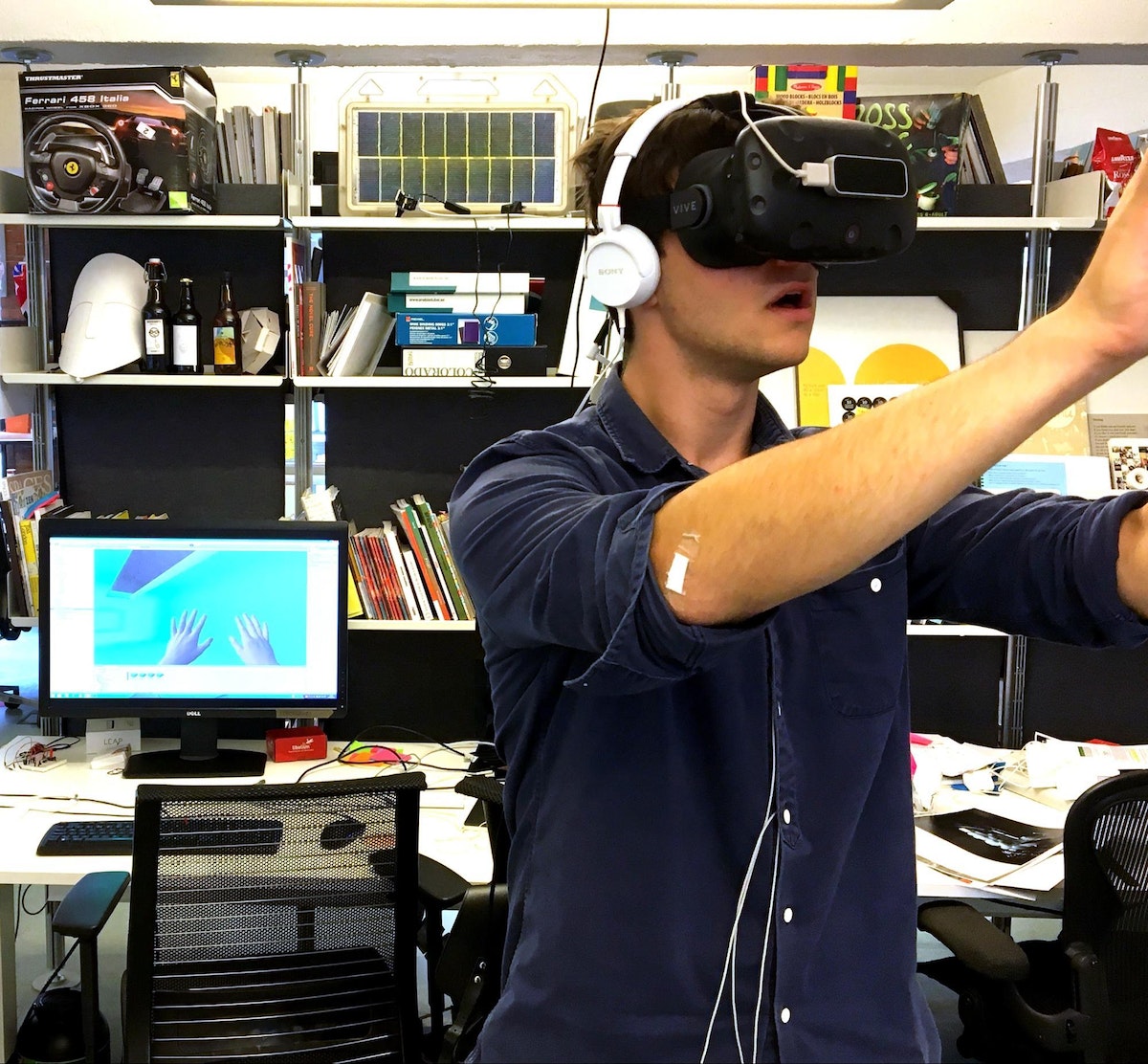
The results from these experiments were not completely satisfactory. Our users did acknowledge that changing the colors in the virtual world influenced their state of mind, but the changes in their biorhythms were small. One of the limitations of the system is the fact that heart rate is not an ideal indicator for mild changes in physiological activity. Electrodermal activity could provide a more accurate measure of comfort or distress, and we may turn to that in in future iterations.

In another set of experiments, we used light and pressure sensors to change environments. In one virtual environment set on the coast, the light changes based on the light detected by a sensor set in the real world. Meanwhile, the size of the virtual space changes depending on the amount of pressure a participant applies to a sensor that is set in the same place on a wall in both the real and virtual worlds. The harder the user presses the wall, the smaller and more claustrophobic the virtual space will become.
We’ve also been playing around with creating uncanny experiences. I started by 3D-scanning Rich Cahill, our newest interaction designer, then placed his 3D persona inside a virtual world. We then used a Leap Motion attached to the Vive headset to increase the immersive experience by allowing users to see their own hands in the virtual world. Then, we had Rich stand in the same place as his 3D model. When Rich raised his hand to touch his (virtual) face, he felt the warmth of his (real) skin under his fingers. Every single person who agreed to do the experiment found it unsettling. It was also really fun to make, and I learned a lot about how to replicate real objects and people in the virtual environment.
Right now, these enhanced interactions are just small steps towards a richer, and more immersive virtual experience. But I’m hoping this platform can be a template for other people to build their own interactive VR experiences. As more and more people dig into the technology, I'm sure we’ll see an explosion of creativity mixing the real and the virtual worlds—and maybe even creating new valuable hardware and platforms. Soon, instead of being passive characters in a prescribed world, we will be able to change our virtual environments to fit the state of mind that we would like to be in, and help ourselves relax, or even find inspiration. That’s when things will really start to become mind-blowing.
As a designer, I am fascinated by exploring new ways to interact with virtual reality. Technology is able to trick our senses like never before, and we’re starting to see VR hardware like HoloLens and the HTC Vive really push things forward by allowing meaningful interaction between the real and the virtual worlds. One possibility I’ve been experimenting with is how we can create environments that can adapt to our emotional and psychological state.

15 Podcasts that Inspire Creativity
We asked IDEO designers to nominate the podcasts that they find most inspiring

1. Myths & Legends
“This podcast tells original stories that have become myths, in cultures ranging from the Romans and Greeks through to Disney princesses. Understanding how common themes have turned up in stories through the ages helps me think about fundamental human needs and behaviors that stay unchanged over time.” Listen here.
2. On Being
“This podcast considers the ‘big questions of life’ through interviews with creatives like Yo-Yo Ma, Paulo Coelho, and Sarah Kay. It reminds me that our human condition is so much more vast than we could ever fathom, and that the answers to the secrets of our existence are mere approximations, at best.” Listen here.
3. a16z
“This is an in-house podcast from the venture capital firm Andreessen Horowitz, which is famous for the phrase ‘software is eating the world.’ It’s not a ‘creative’ podcast per se, but it covers bleeding edge technology and indicates emerging fields and mediums for creative expression, new experiences, and potential effects on society at large.” Listen here.

4. Meet the Composer
“I find this podcast incredibly inspiring because it asks the listener to really engage with contemporary classical music. It's both exploration and art criticism, a prompt to get out there and listen more deeply, and a glimpse into a small and vibrant world that really only exists in New York and LA.” Listen here.
5. The Moment with Brian Koppelman
“Koppelman talks to creative folks about their creative process, how they do what they do, and the ‘moment’ that changed things for them. He's able to be very vulnerable, so his guests open up as well. This podcast always makes me feel more sane. Or at least like I belong to some really awesome club of weirdos.” Listen here.
6. Radiolab
“I’m inspired by the fascinating science and the polished stories, but most of all by the sound design. The way the show experiments with sound to tell better stories inspires me to think about how to make the experiences I create more engaging.” Listen here.
7. The Allusionist
“Linguistic adventures with the very funny Helen Zaltzman. This show reminds me that language is so mutable and fungible. And that when we humans talk with each other, it is a miracle that we know what the other person is saying.” Listen here.
8. Death, Sex and Money
“This is a podcast about the big questions in life. It reminds me of how to talk to people about sensitive topics and get deep insights from individual stories that speak to both the commonality and the variety of the human experience.” Listen here.
9. Magic Lessons
“Elizabeth Gilbert's creativity podcast features her interviewing people about how they overcome the fears that are inherent in the creative process, and calling up famous creatives to get their input. I like the fact that she actually provides advice to her guests, and acknowledges the challenges we all face in being creative.” Listen here.

10. Song Exploder
“Musicians and artists break down a track and talk about their process. A lovely parallel to any designer’s process. We hosted the creator of the podcast at IDEO earlier this year and he talked about his background as a graphic designer and how that’s influenced his approach to the show.” Listen here.
11. Becoming SuperHuman
“This show interviews people who have achieved ‘superhuman’ performance in their field in order to understand their strategies. The podcast provides insights into the lives of people who live at extremes, which provides inspiration for designing ways to meet more conventional human needs.” Listen here.
12. Imaginary Worlds
“This a is podcast about science fiction and fantasy worlds, both about how they are created and why audiences are able to suspend their disbelief. Of all forms of creativity, I figure that creating a fictional universe is the most expansive, and get inspired by such a broad-brush imaginative exercise.” Listen here.
13. 99 Percent Invisible
“This podcast reminds me that pretty much everything in the world has been designed, and that there are so many opportunities to improve things. I also love to hear the backstories behind things that have been designed and are now part of our everyday existence. It reminds me that so many things could easily have turned out differently.” Listen here.
14. Sampler
“Like the name suggests, this show features samples of other podcasts. I love it because it introduces me to other podcasts that I would never have known about or thought to try. And it's the unexpected or different stuff that turns out to be most inspiring.” Listen here.
15. TED Radio Hour
“This podcast repackages TED Talks into an accessible radio format. The way the show focuses on shared human themes, such as ‘growing up’ and ‘becoming wise,’ helps me zoom out my perspective and realize how the things I look at in life and in my work can be connected.” Listen here.
Honorable mentions: Surprisingly Awesome, The Memory Palace, Invisibilia, The Moth, WTF, Theory Of Everything, Planet Money, This American Life.
Check out the Creative Confidence podcast by IDEO U, our school to empower creative problem solving, here.
Thanks to Chris, Magen, Andrea, Grace, Maggie, Geoff, Jayant, Deirdre, Piper and everyone else who suggested podcasts.
Header illustration by Jane Ha.
We're living in a golden age of audio. Whatever your interest, passion, or taste, there's a podcast out there that will cater to it, available free of charge. These podcasts don't just provide entertainment while commuting or walking the dog, they also provide fuel for creativity, by opening doors into unfamiliar cultures or scenarios. We asked IDEO designers to nominate the podcasts that they find most inspiring.
How To Tackle Obesity In Your Spare Time
What one Xbox-loving interaction designer did to lose weight
Alex was a self-described gaming addict in his college days, but hadn’t touched his console in years. He knew his old habit would be the strongest incentive for working out. At the same time, he recognized that a simple post-workout reward wasn't gonna cut it, not to mention the temptation to skip the workout altogether with a perfectly functioning Xbox so close at hand.
Time to wield his ninja hacking skills.
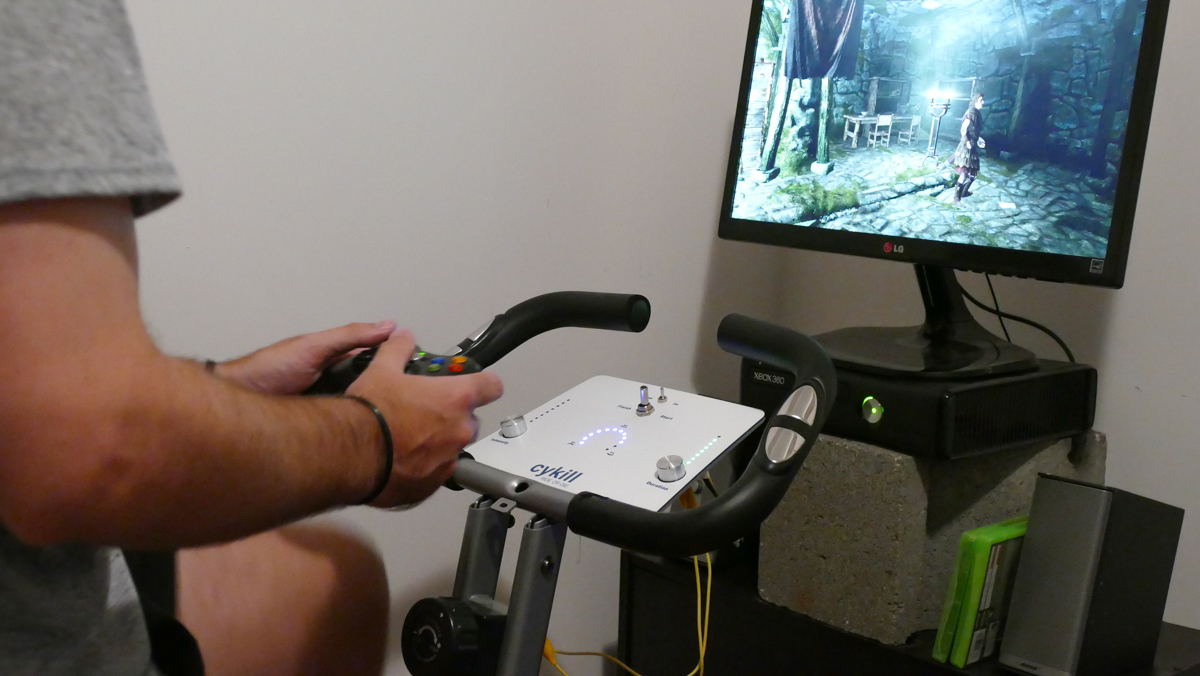
Alex adjusting duration and intensity on his new (addictive) weight-loss machine.
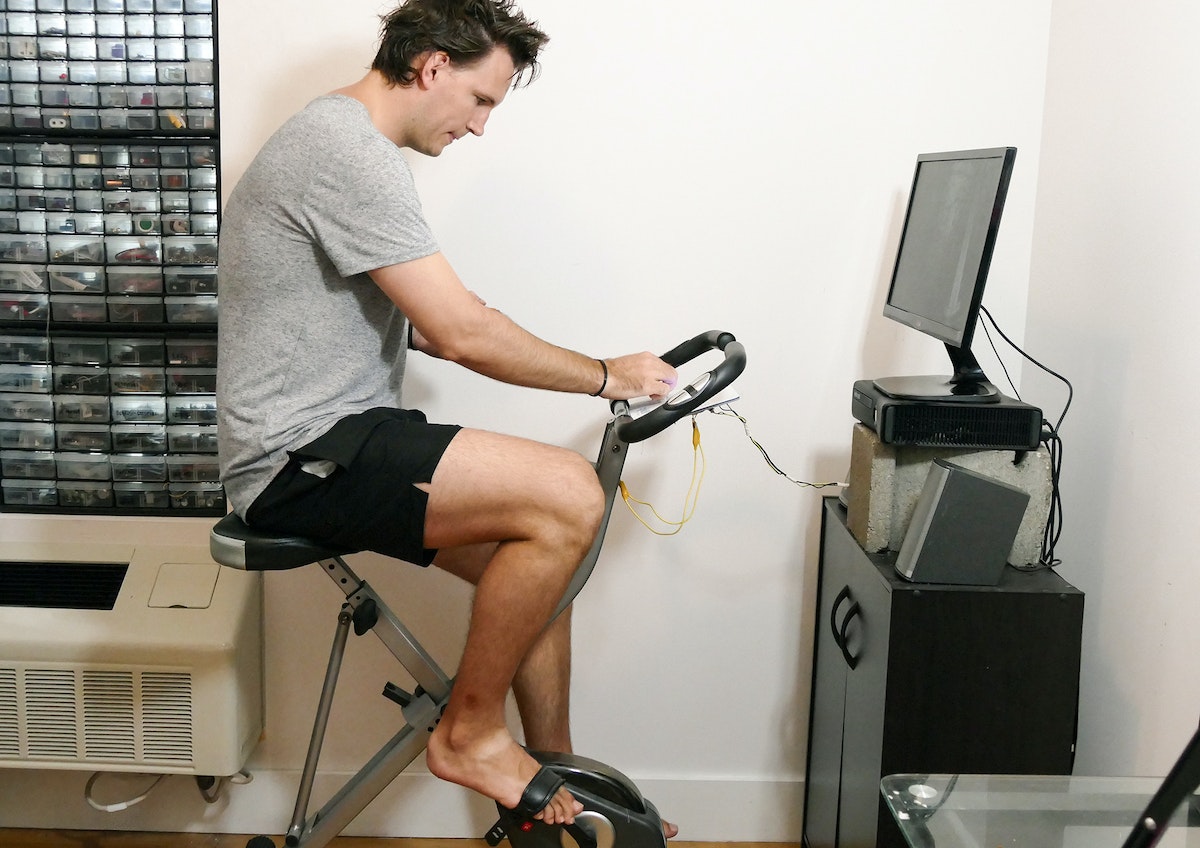
The result is Cykill, a simple tweak that connects your gaming console’s power source to an exercise bike. The only way to start the console is by riding the bike. Fail to pedal fast enough and Cykill will cut the power using a “kill switch”—a disaster for serious gamers—which not only erases game progress, but can also corrupt the console’s hard drive. “After a big scene in the game you will see the Cykill LED meter appear," he said. It gets dangerously close to power-off, which forces you to pedal like mad in order to stabilize it. "What a silly but effective invention this is!”
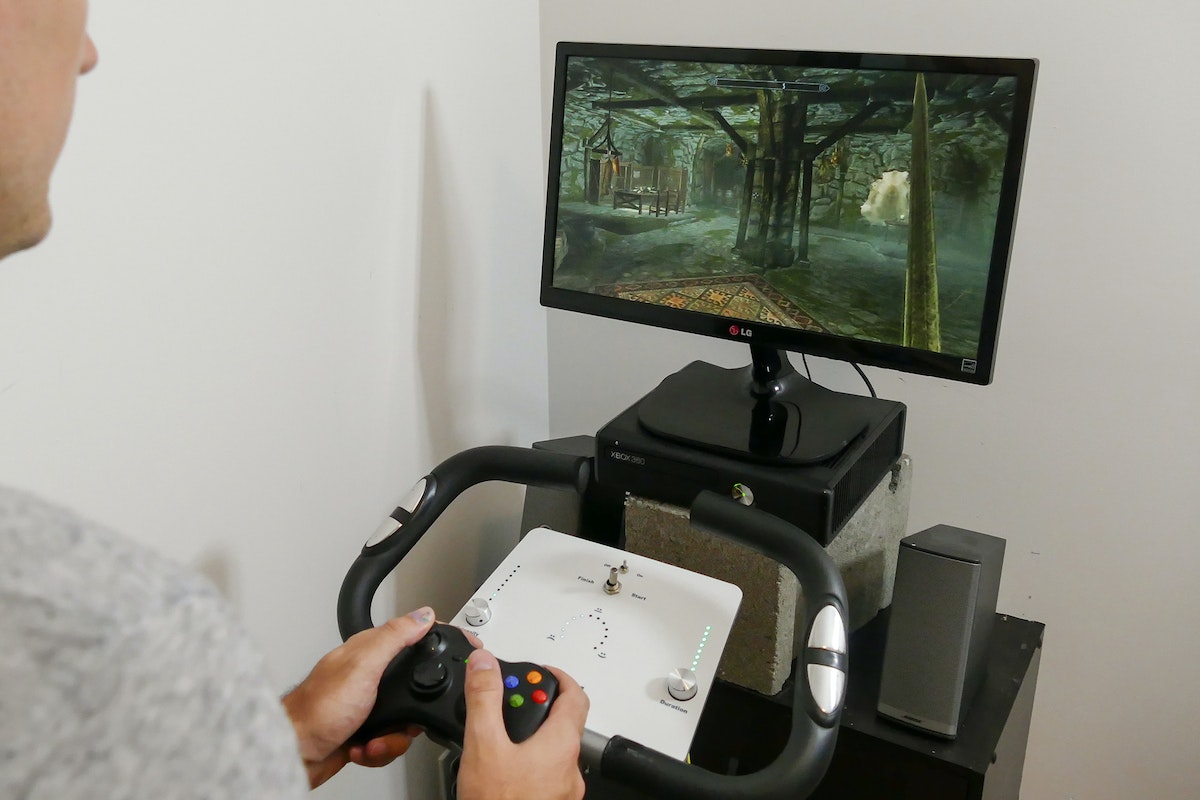
Alex on the Cykill, an exercise-bike-gaming-console that interrupts your game if you stop pedaling.
After using his invention for three months to impressive results, Alex was ready to share it with the world. He made the project open source and submitted it to Hackaday. “I never intended this to be shared online. But then I realized, there are millions of Americans who are challenged with excessive gaming and weight gain—many of them kids and teens." Is Cykill is the answer to obesity for game-obsessed kids of America? "I feel it is definitely worth a shot,” he said.
Learn more about how Alex made Cykill here, at his website Fuzzy Wobble, and on his project page at Hackaday.
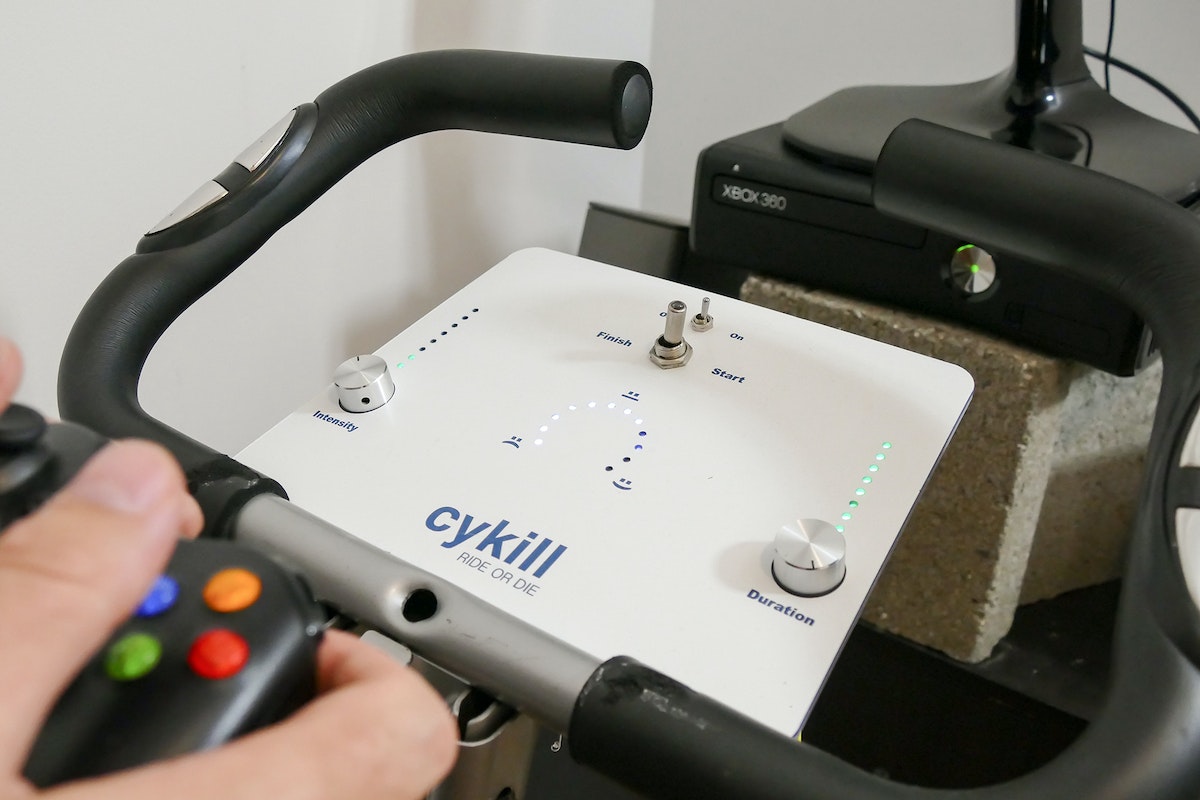
The Cykill dashboard.
When interaction designer Alex S. finally decided to get serious about exercise, he knew exactly what to do. He bought a cheap stationary bike on Amazon and dusted off his old Xbox.
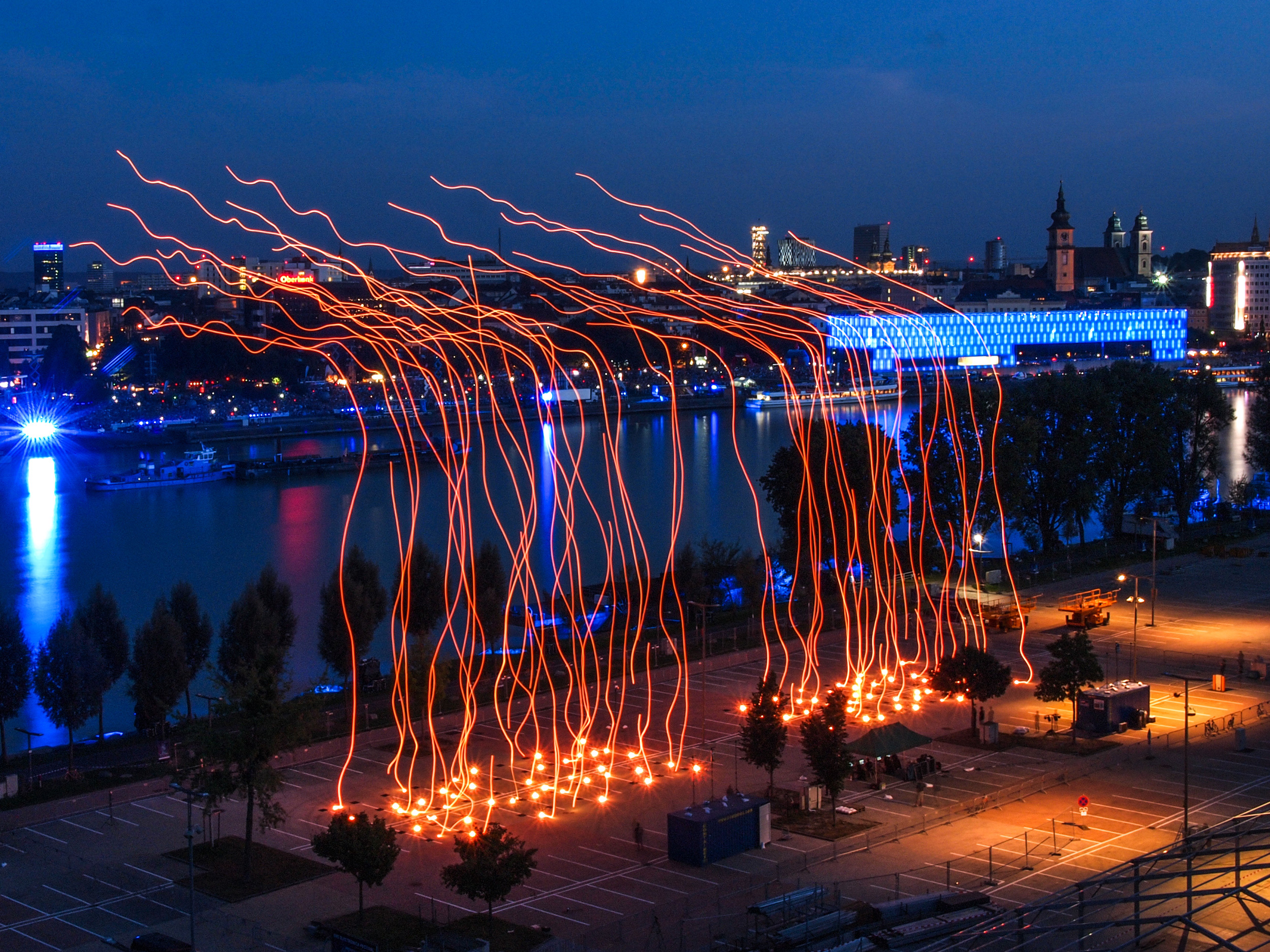
7 Mindblowing Things We Saw at Ars
We went to Ars Electronica, Linz's annual celebration of art and tech, and here’s what we saw

1. Inferno, by Louis-Philippe Demers, Bill Vorn
How does it feel to have an exoskeleton move your arms and make you dance? Pretty weird. Inferno, one of the single most talked-about pieces at Ars, offered visitors the curious sensation of being remote-controlled by a machine.

2. RoBoHoN, by Tomotaka Takahashi with Sharp
Half robot, half smartphone, RoBoHoN runs, dances, talks, takes pictures and projects them. Plus, it’s cute. Like a mini butler. We came away asking: Will future smart devices be gadgety, or sleek and designy a la Apple?
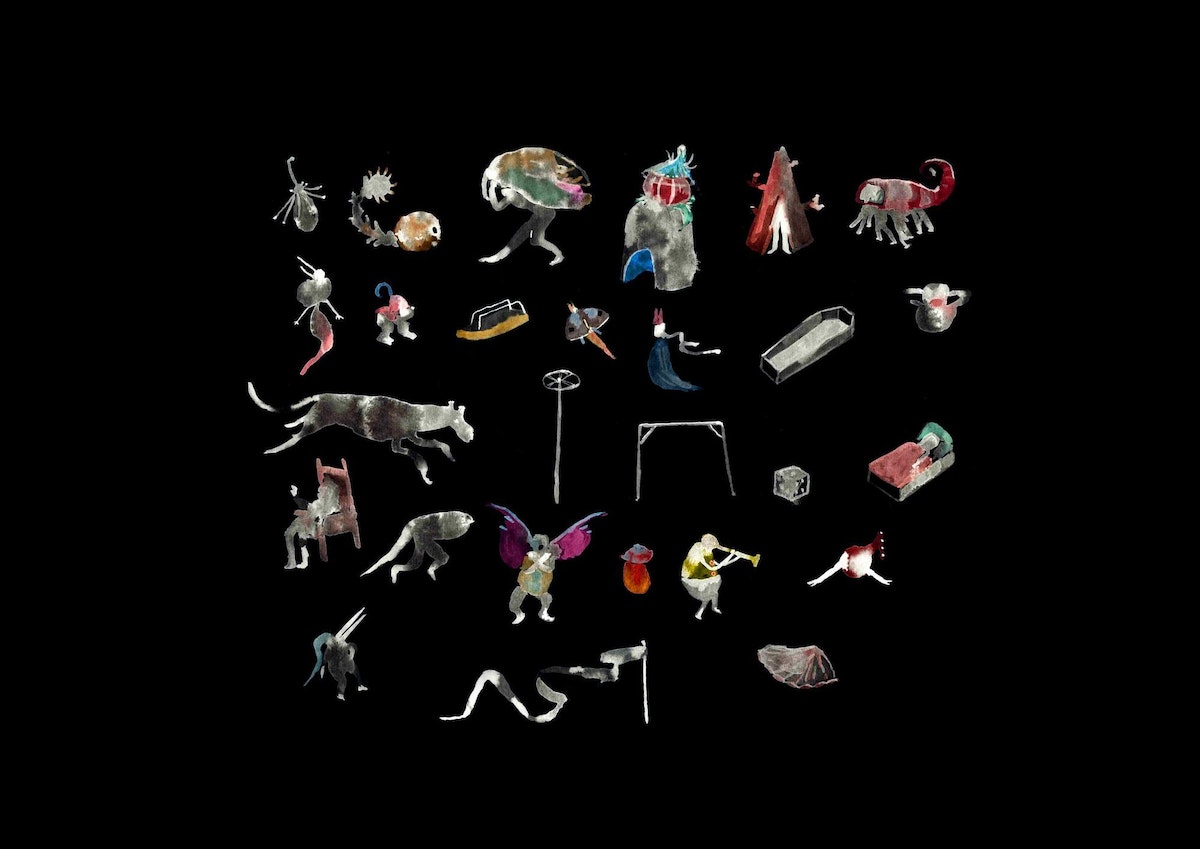
3. Rhizome Animation, by Boris Labbé
A hypnotising story about life on earth, and a good reminder of the power of mixing handdrawn images with computer-generated visuals. Designer Boris Labbé’s short film Rhizome is worth a watch.
4. Radical Atoms Exhibition
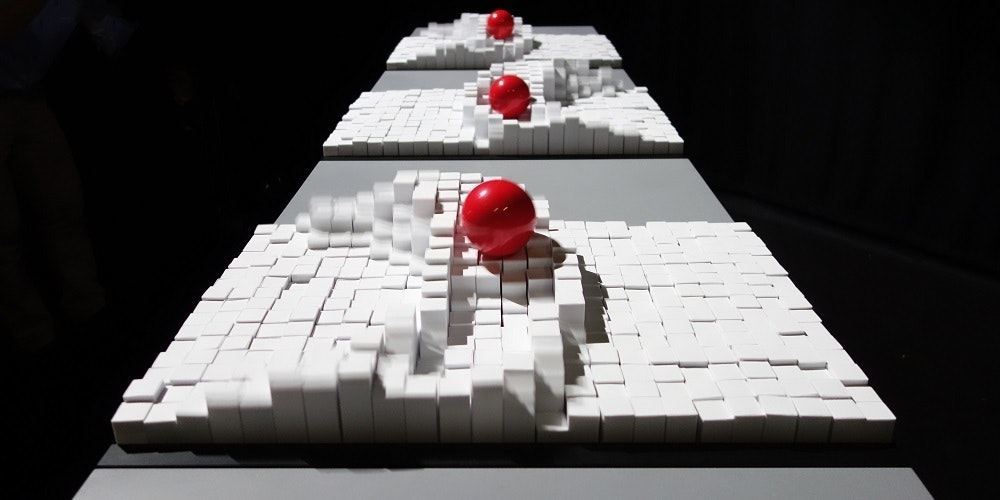
If the MIT Media Lab has its way, we’ll control the physical world of atoms in the same way that we control the digital world of pixels. This exhibit hewed closest to the theme of the Ars festival: “Radical Atoms: the alchemists of our time,” including provocations around biology as a responsive, “second skin” interface; a physical shape display that can be manipulated from near or far; and wearable miniature robots that rove around your body. Take a trip down the rabbit hole.
5. ASSISI, by Thomas Schmickl, Professor of Zoology at University of Graz
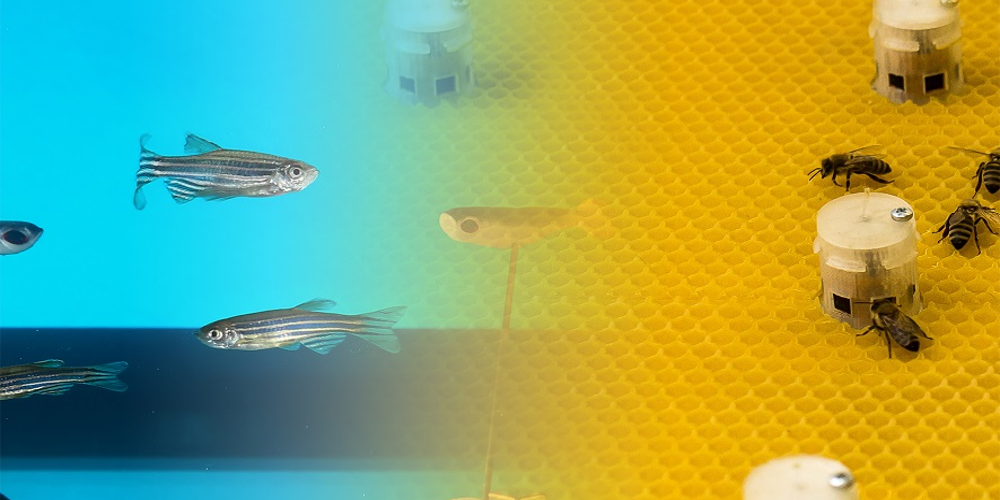
Tiny robots, placed among a society of fish and of bees, enabled the two to communicate and influence the actions of the other. Begged the question: how might we use robots to design and evolve swarm behavior in natural ecosystems?
6. Artificial Skins and Bones, by Weißensee Kunsthochschule Berlin
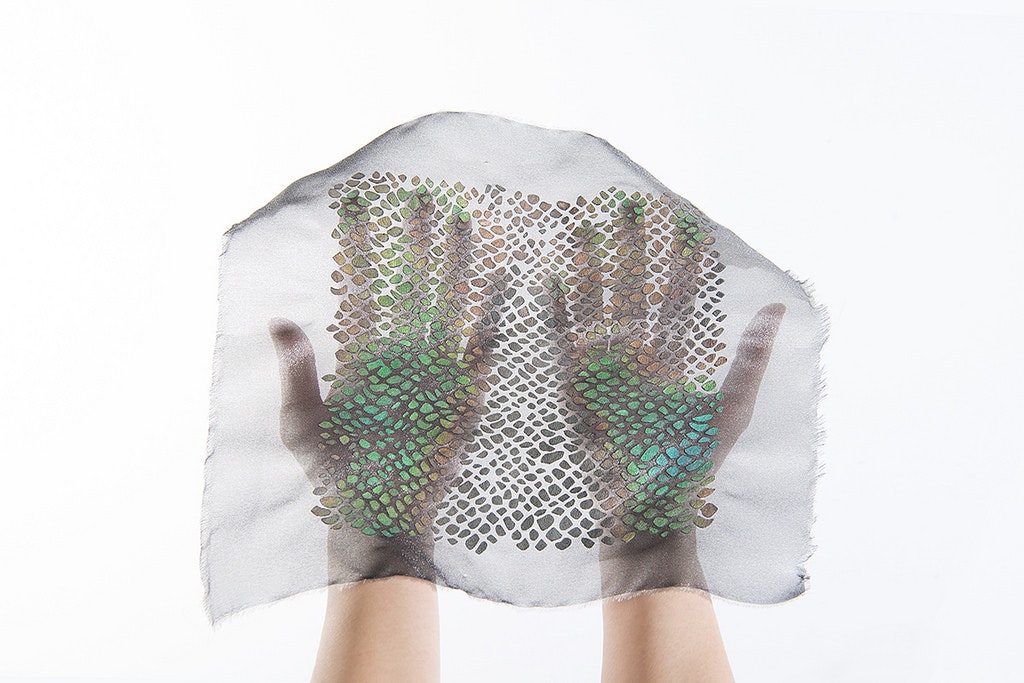
We loved the variety of thinking from this group of students, who are exploring the design of artificial bodies. Ideas included everything from regaining physical ability through smart prosthetics; to enhancing an experience through haptic feedback; to the inevitable evolution toward augmentation, like color- and pattern-changing skin (above), inspired by the octopus.
7. Innovation and Creativity on a Very Large Scale, by Ivan Poupyrev, Google ATAP
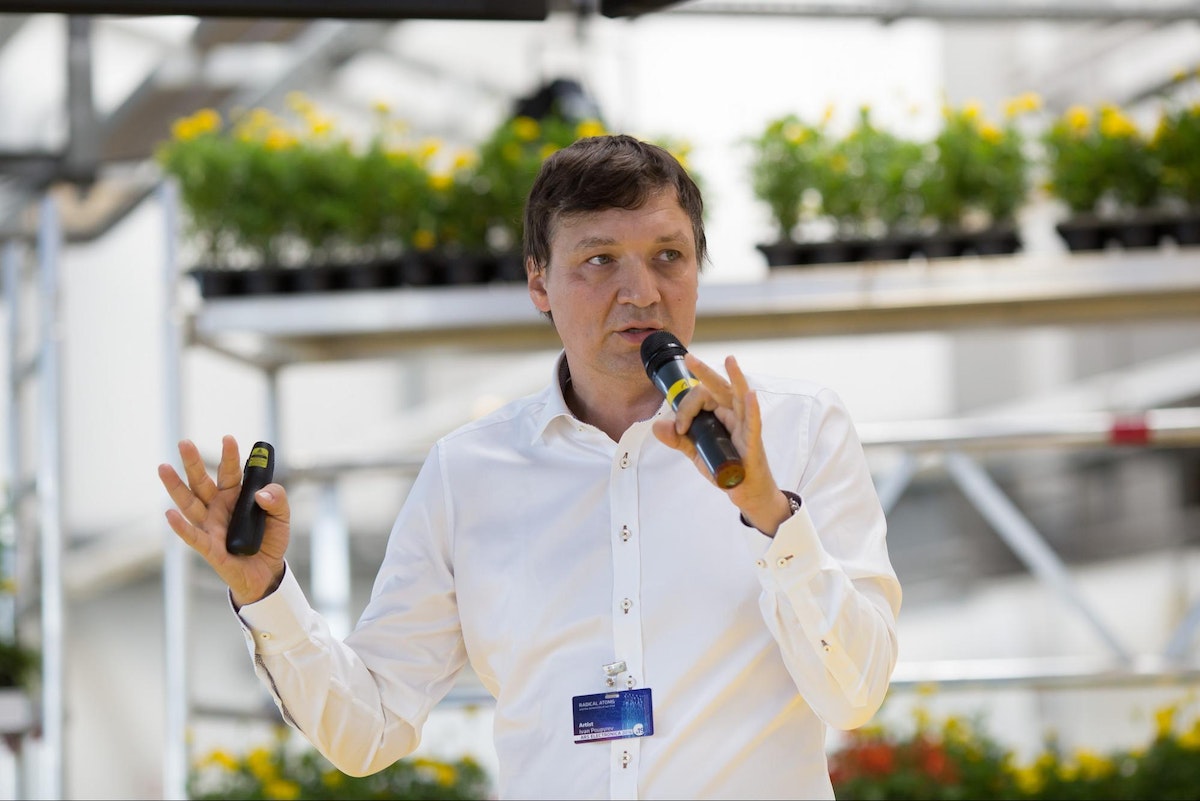
Poupyrev, head of Google’s Advanced Technology and Projects group, argued that constantly introducing new gadgets does not scale. What does scale is creating technologies enabling industries that manufacture basic goods, like jeans, to transform themselves. For Project Jacquard, ATAP invented a new type of conductive thread that can be woven into clothing (like a Levi’s jean jacket—the project was a collaboration between the two companies) giving it an invisible interface. These kinds of mutations are unpredictable, Poupyrev said, and driven by serendipity, emphasising the role of the artist in technological research.
For more about Ars Electronica, or to watch all the talks and presentations mentioned, check out their website: http://www.aec.at/
Header image by Martin Hieslmair. All images sourced from the official Ars Electronica Flickr.
We went to Ars Electronica, Linz's annual celebration of art and tech, and here’s what we saw: Exoskeletons. Dancing robots. Shape-shifting materials. Swarms of fish and bees. Skin. Just your average day in the surrealverse. Here are seven projects to watch:

Lindsey Turner
I’m passionate about building brands, products, and experiences that help organizations show up with meaning and momentum.
I help organizations cut through complexity by shaping how they show up, through brand strategy, identity, and storytelling.
Working at the intersection of brand and business, I bring an editorial eye and a bias toward making—turning ideas into tangible experiences that people can understand, trust, and believe in.
My work spans government, healthcare, financial services, media, and consumer goods, from launching Gen Z-focused ventures to building innovation labs and reimagining legacy brands. I relish moments of ambiguity and enjoy translating across teams, perspectives, and priorities to move ideas forward.
I started my career in editorial and digital design, shaping cross-platform experiences and identity systems in publishing and agency environments. That foundation still shapes how I work today: I’m detail-oriented, collaborative, and overreliant on the Oxford comma. I hold a BFA in Visual Communication from the School of the Art Institute of Chicago.

Rachel Young
My work helps organizations see who their products aren't working for—and build the will and the tools to do something about it
For 25 years, I've asked the same question: Who does this design exclude—and what are we going to do about it?
My work spans human-centered strategy, inclusive design, and qualitative research, with clients ranging from Microsoft, Google, and Verizon to the National Science Foundation, and San Francisco Unified School District.
Before IDEO, I taught elementary school in East Palo Alto and spent a decade doing design work with social service organizations—where I learned firsthand what it costs people when systems are built without them in mind.
I am currently writing User Error, a nonfiction book about digital access and the design decisions behind it. I live in Oakland, California.

Brian Pelsoh
I lead with craft, ensuring our work is creatively excellent: rooted in deep human insight and imagination, while also grounded in the realities of business and technology.
My expertise spans brand, communication, and product design across tech, education, the arts, and social impact.
I believe great work demands both high-level vision and obsessive attention to detail, and only happens through collaboration.
I bring an inclusive, hands-on approach and a deep understanding of business, which enables me to consistently deliver excellence while always asking why.
Before joining IDEO, I worked at the brand firms Pentagram and VSA Partners. I began my career as a designer, leading teams at the School of the Art Institute of Chicago and the Milwaukee Art Museum. I hold an MFA in graphic design from Maryland Institute College of Art and a BFA in communication design from the Milwaukee Institute of Art & Design, and have taught at some of the best design schools in the US.

Tony Wong
I am responsible for IDEO’s long-term success in China and working with clients to use design as a tool to enable growth.
I am responsible for IDEO’s long-term success in China and working with clients to use design as a tool to enable growth. Specifically, I have helped Chinese companies design holistic brand solutions through the development of their products, communication, services, and innovation teams, and I have helped multinationals expand their presence and influence in China.
I advise global leaders on developing China-led innovation and capabilities.
In over 15 years in IDEO Shanghai, I have worked on projects that use design to elevate the quality of the experience of healthcare products and services, streamline processes that increase productivity, create spaces and programs that promote and enable inclusive communities, and build next generation mobility solutions that are planet-positive.
Before joining IDEO, I worked at Philips Electronics and the Electrolux Group in Italy, the Netherlands, and Singapore on a number of breakthrough commercial products. I am a member of the Young President Organization in Shanghai.

Building a personal AI for the messiness of life: Sida Li
Most AI products today are built for work—a space with clear problems and established systems. One founder noticed a gap: personal life is messier, harder to systematize, and mostly left behind by the AI boom. So she built Cue, a personal AI that lives inside iMessage and group chats, to go where the other tools haven't.
In this episode, Becca Carroll, IDEO's Chief Strategy Officer, talks with Sida Li, co-founder and CEO of Shared Context Lab, about staying anchored to a human need while the technology around her keeps changing shape, why she treats her business model with the same rigor she'd bring to a product, and what it feels like to build a company at this particular, disorienting moment in AI.
The conversation also gets into how Sida makes design decisions: the language Cue uses to describe itself, the tradeoffs behind building inside iMessage instead of a new app, and a real story about a business idea that didn’t pan out.
This is the second in a two-part series profiling founders from IDEO's Startups-in-Residence program. The first conversation is with Johannes Seemann, founder of Sooner, on designing GenAI for the emotional side of money.

Designing GenAI for the emotional side of money: Johannes Seemann
Most personal financial tools are built to run the numbers and optimize towards a budget. While that works for some, most people experience money as a lived relationship that does not neatly fit into a spreadsheet. Johannes Seemann and Becca Carroll discuss why money is emotional before it is mathematical, and what a human-centered approach to building a generative AI financial product looks like in practice.

The curious leader's edge in uncertainty: Scott Shigeoka
Mina Seetharaman talks with Scott Shigeoka, author of Seek and Head of Curiosity Cultivation at the Eames Institute, about what distinguishes genuinely curious leadership from performative curiosity, how power dynamics shape curiosity, and why practicing curiosity can restore energy rather than drain it.

How constraints make us more creative: David Epstein
Mina Seetharaman talks with David Epstein, author of Inside the Box and Range, about why total freedom often produces average work, how leaders can design useful limits on purpose, and what organizations such as General Magic and Pixar reveal about the relationship between boundaries and creativity.
Looks like you might be in search of something very specific?
Or reset the filters above and try another angle.
Here’s some random inspiration

Podcasts about creative leadership

Articles about the power of prototyping
