
.svg)


Peripheral vision
A consumer electronics giant becomes a climate-era leader.
IDEO’s partnership with Logitech is a case study in bringing together the power of imagination and the rigor of business.
As much as we love to lead with creativity, it’s difficult to develop a business plan off ideas alone. So when Logitech asked the IDEO team to investigate a broad array of possible futures and report back, we brought our findings to life by inventing a board game. Instead of a dry presentation on circular solutions, our designers created a story about a mouse that turned into a webcam.
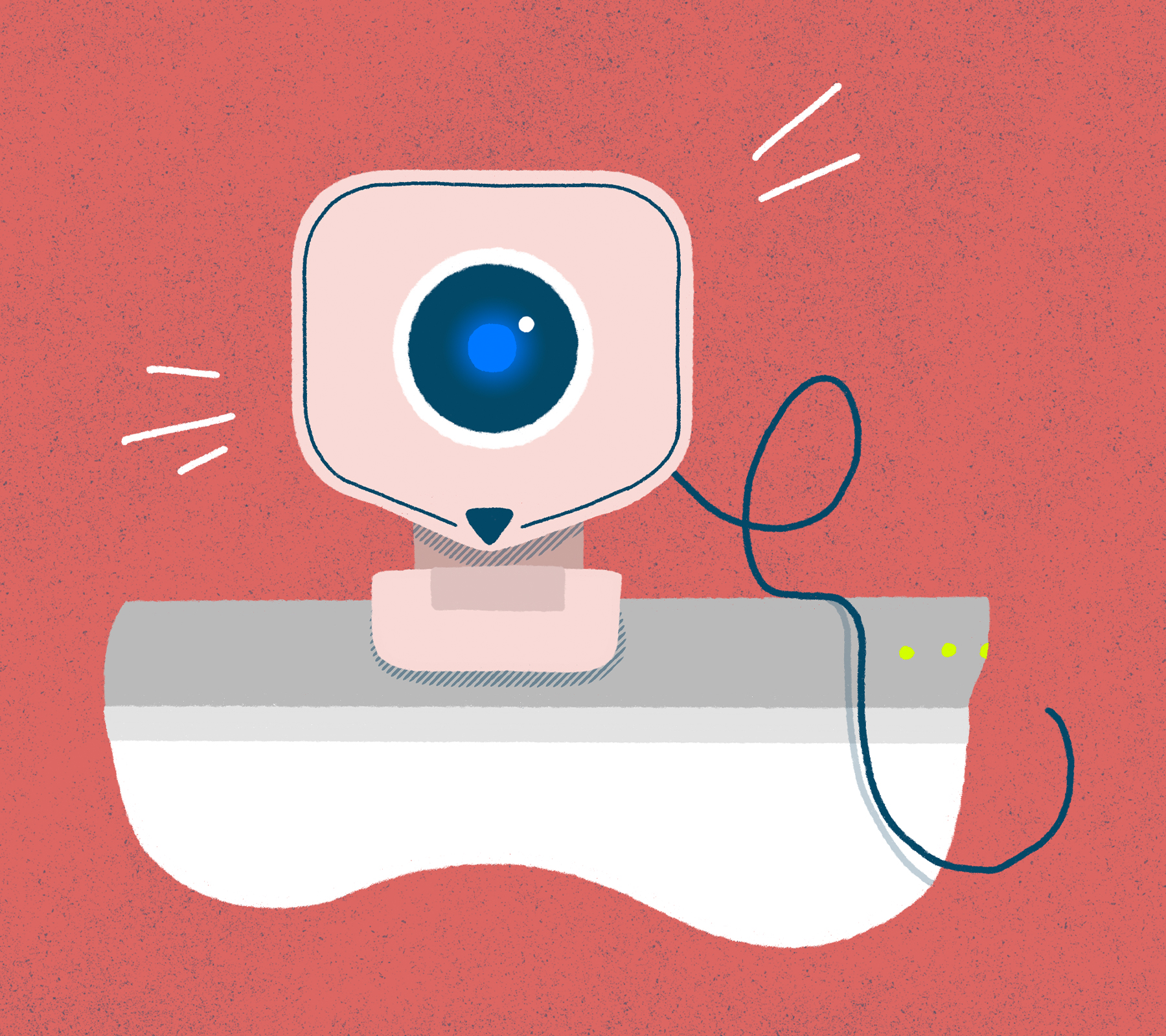
That imagination mattered. It fueled an exploration into expertise we collected from researching with people already living in futures destined to expand. And our rigor helped us hold more possibilities, and identify intersectionalities. Combined, they redefined what it means for ideas to be viable in business; they focused us on long-term sustainability; and they pushed us past immediate technical feasibility to ask if new ideas would be feasible for entire systems.
Our partnership with Logitech revealed that imaginative dreaming and business rigor aren’t opposing forces, but rather complementary tools in opening up new directions into a future demanding bold decisions.
As of 2019, e-waste was the fastest-growing waste stream globally, and only 20% of the 48.5+ million tonnes is disposed of properly.
Global emissions must be cut in half by 2030 to avert the worst impacts of climate change.
By 2030
Logitech has committed to becoming climate positive and removing more carbon than they create
The whole package
A global fashion brand pairs sustainability and growth.
Fast fashion keeps getting faster. But if the industry is to meet its climate commitments, its use of plastics has to slow down.
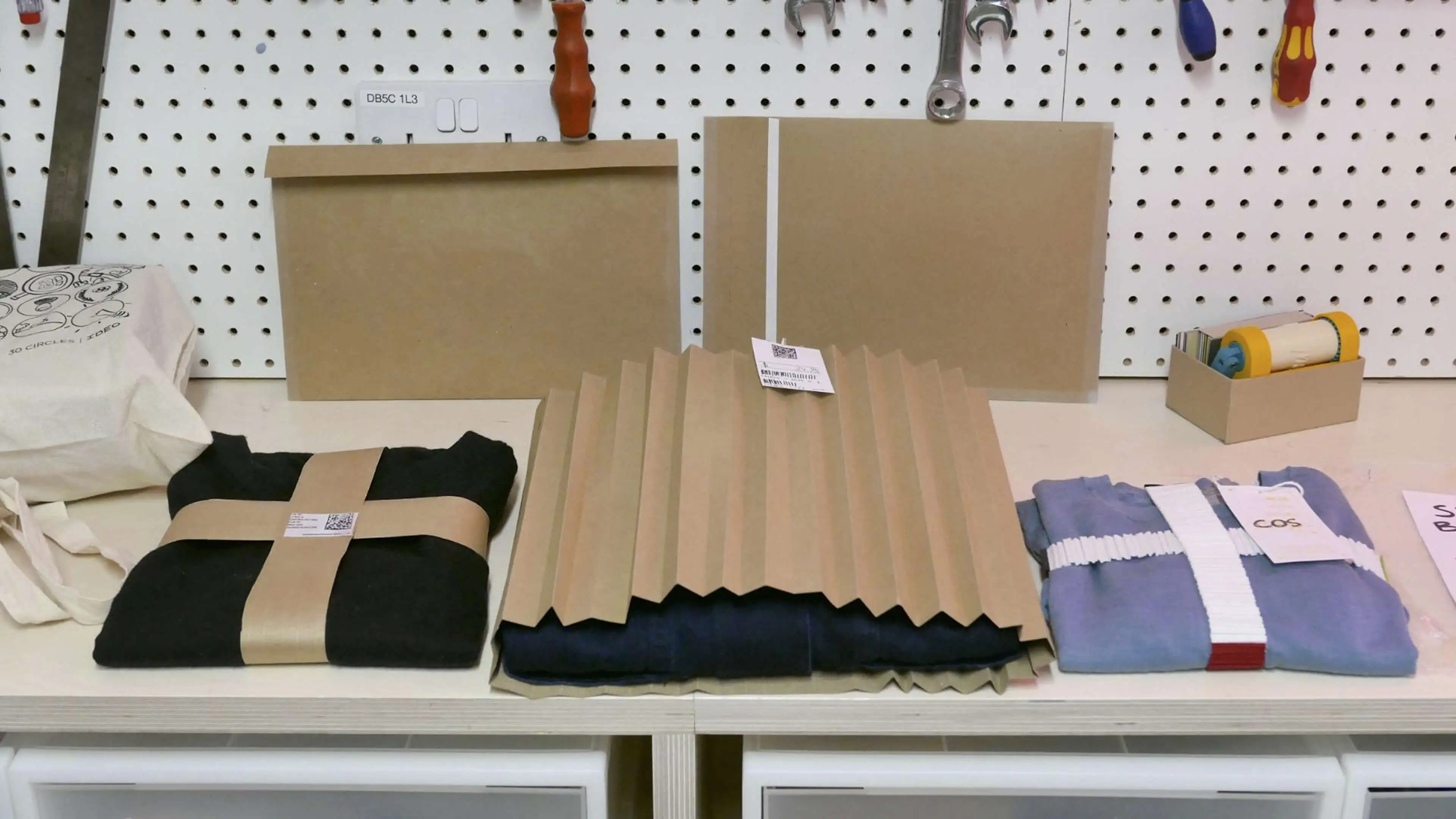
H&M chief executive Helena Helmersson set ambitious sustainability goals when she stepped into her role. She wanted to reduce the fashion giant’s impact on the environment and enable meaningful growth. But change is tough for any company, let alone one with eight brands operating across 74 markets. Together IDEO and the H&M Group created new plastic-free packaging, rallying around a more sustainable packaging solution that’s easily customizable.
By applying a design-led approach that went far beyond hiring a sustainability consultant, the H&M Group managed to reduce its use of plastic. But it didn’t stop there. A small team called Design Studio took what it learned and grew into an established strategic capability that pioneers new ways of working in the organization, tackling complex challenges in circularity, inclusion, supply chain, and customer experience. Sustainability isn’t a passing trend for H&M. It’s moving fashion forward.
Packaging accounts for 26% of plastics produced globally every year.
Fashion e-commerce is estimated to grow by 10% annually through 2024, requiring even more packaging.
100M
plastic-free packages shipped in 2022
2,000 tons
of plastic eliminated from H&M operations
The everywhere chair
In Japan, a mother works to build an inclusive child seat that closes the gap between children with and without disabilities.
For children with physical disabilities and their families, mobility is freedom. But in Japan, there are barriers to that freedom of movement.
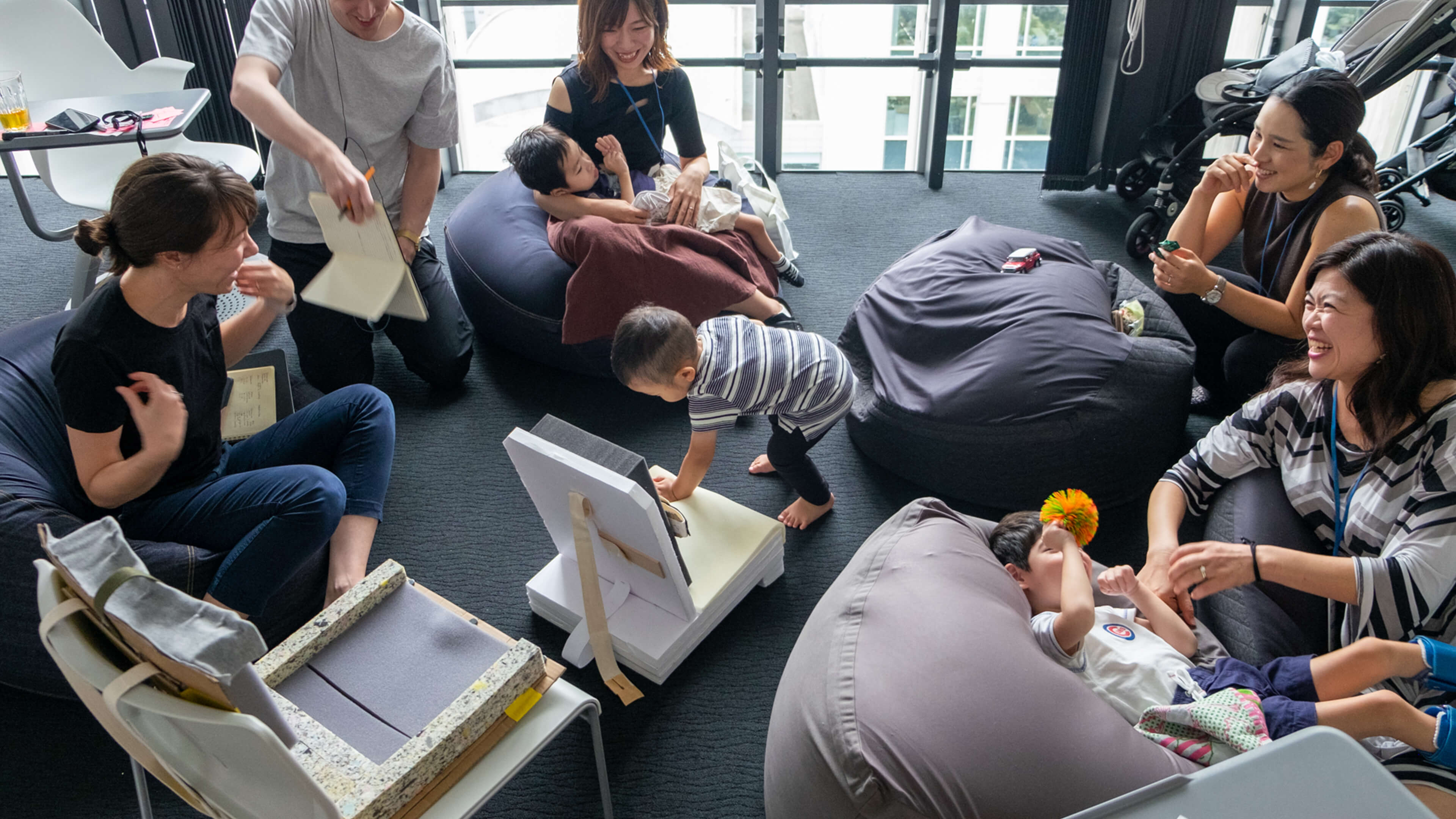
In raising a child with cerebral palsy, Yuri Matsumoto found that her son was separated from other kids during everyday activities. In Japan, children’s products are divided into two categories: those for children with disabilities and those for children without. Matsumoto aspired to close this gap with a product that would allow children of all abilities to use the same chair and be included in the same activities. To realize her idea, Matsumoto needed a strategic design company to refine the chair design, create a compelling visual identity, and arrive at a product road map to help set the business up for long-term success.
The result: a breakthrough product and supporting business that provides access for all kids, both for at-home activities like studying and eating, and also for family outings to restaurants, to the park, and to play with friends. Around the world, there are people like Matsumoto who see the need for better products in a very personal way. IDEO’s role is to help them realize their vision for a more inclusive future.
The Japanese health ministry categorizes 9.6 million people as disabled.
In Japan, children with disabilities are largely excluded from mainstream classrooms. Government subsidized support chairs are designed for posture and stability. Their bulk and rigidity make venturing out with them challenging.
Japanese children have fewer opportunities to learn about what it’s like to live with a disability than in the US.
Launched
officially in April 2022
5
restaurants and cafés in Tokyo are currently piloting the chair
Serving families first
One organization transforms health care, education, finance, retail, and itself to meet the expectations of the people it serves.
There can be no growth for business if peoples’ basic needs aren’t met.
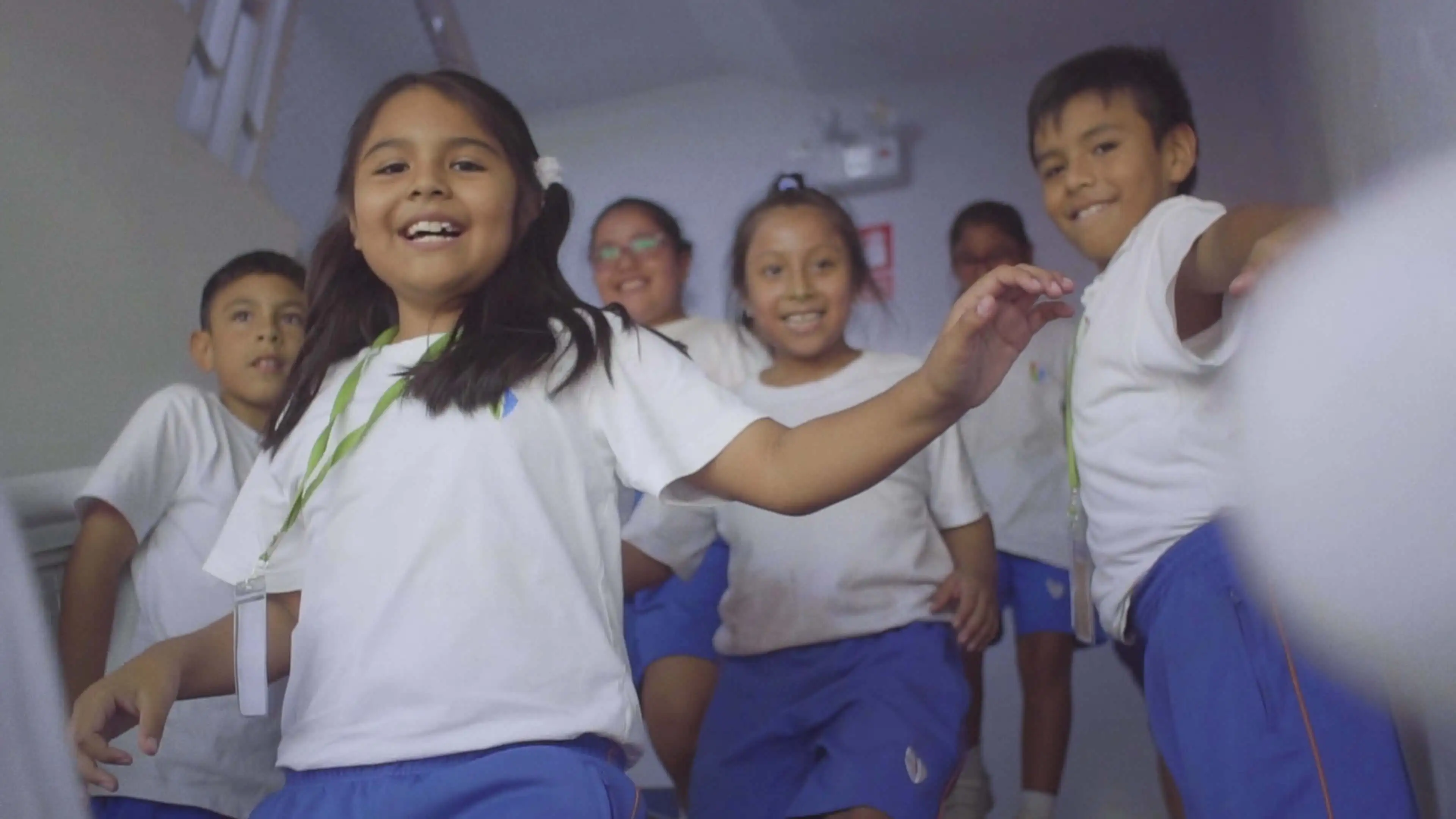
Carlos Rodríguez-Pastor, CEO of Intercorp, came to IDEO with an audacious goal: to address the most fundamental needs of his country’s people and grow his business at the same time. He’d been introduced to IDEO while attending business school in the U.S. and explained that he waited until he had a challenge that felt big enough to knock on our door. Together we built a high-quality school system that would cost just $100 per month—affordable for the middle class. That project convinced Rodríguez-Pastor and his colleagues of the power of human-centered design. Our blended teams launched an innovation hub to introduce new ways of working with the conglomerate’s 90,000 employees. And as we collaborated with Intercorp’s businesses in finance, retail, health care, and education, we learned more about how to serve the everyday needs of Peruvian families. Somewhere along the way, the ultimate design project became the organization itself.
And while Rodríguez-Pastor’s company has grown dramatically, he’s not one to rest on laurels. Instead, the company is becoming more ambitious: upskilling the country’s workforce through an online platform, and fulfilling its climate strategy by investing in Peru’s green economy. (The coastal nation is the world’s third most vulnerable to the effects of climate change.) While the pandemic dealt a blow to Peru’s economy, Intercorp remains steadfast in its commitment to supporting businesses that help the middle class thrive.
Peru’s PISA score of educational quality has grown by 10% in the past decade but still ranks in the bottom 10 worldwide.
In 2020, approximately 68% of the total employed population was in some form of informal employment—jobs that offered no protection and in which workers paid no taxes. Although that percentage decreased over the previous decade, Peru has one of the highest levels of informal employment in Latin America.
55,000
students enrolled across 68 locations in Peru, Mexico, and Colombia
2.5x
increase in revenue from $2.9 billion in 2011 to $8.5 billion in revenue in 2021
The 4 Books Tim Brown Can’t Put Down
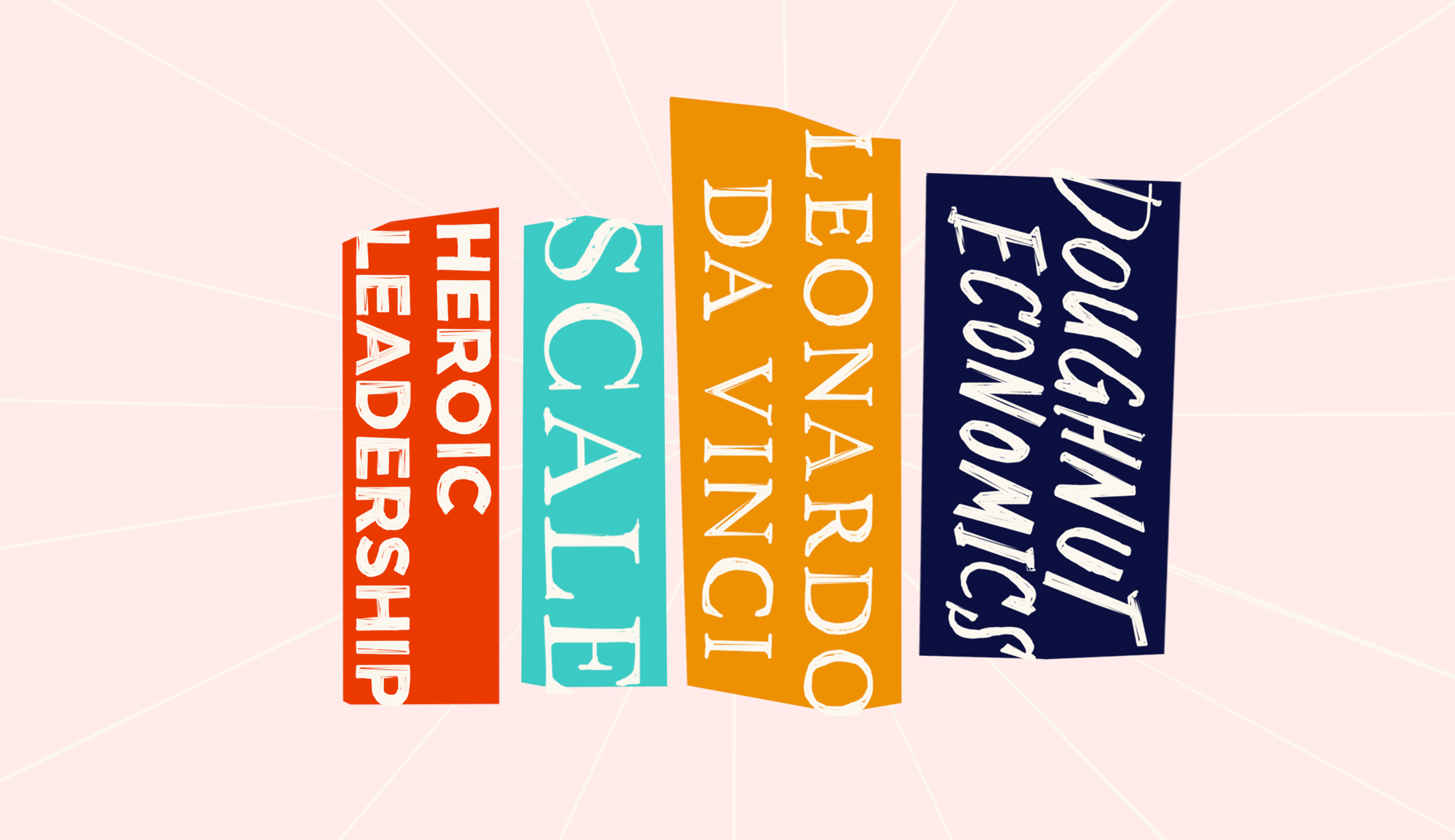
The top four books IDEO CEO Tim Brown read last year
Here are four titles on Tim’s list of highly recommended reading:
1. Leonardo da Vinci by Walter Isaacson
Walter Isaacson, the biographer behind Kissinger and Steve Jobs, turns his attention to the original Renaissance man, whom Brown describes as “perhaps the most curious person who ever lived.” Isaacson draws from 7,200 pages of the artist’s notebooks to trace his journey as inventor, painter, doctor, sculptor, and scientist. Da Vinci was both a procrastinator and a perfectionist, both exuberant and introspective—and his life holds valuable lessons for creatives today. Read the book.
2. Scale: The Universal Laws of Growth, Innovation, Sustainability and the Pace of Life in Organisms, Cities, Economies and Companies by Geoffrey West
Presenting something of a “theory of everything,” West says we can apply the same mathematical principles that govern growth in nature to complex political, corporate, and civic systems. What they all have in common is their response to a rapid increase in size. As cities, companies or human beings grow, they require more resources, which leads to innovations like higher wages and new products, but also negative consequences like waste and overcrowding. As he unpacks the physics of modern systems design, West cautions that growth must be matched by greater sustainability.
3. Heroic Leadership: Best Practices from a 450-Year-Old Company That Changed the World by Chris Lowney
Before he became an investment banker at JP Morgan, Chris Lowney spent seven years as a Jesuit priest. That background in the cloth helped him realize that the issues he faced in nurturing new leaders at JP Morgan were the same ones the Jesuit order had faced over its 450-year history. The Jesuits focus not on what leaders should do, but on who they are. They contend that leadership springs from within and involves a never-ending process of self-examination and learning. The four pillars of leadership that inform the Jesuits’ “corporate culture” are: self-awareness (understanding your strengths, weaknesses, and values), ingenuity (innovating and adapting to a changing world), love (engaging others with a loving attitude), and heroism (energizing yourself and others with heroic ambitions). Can you imagine if every corporate leader embraced these principles? Read the book.
4. Doughnut Economics: Seven Ways to Think Like a 21st-Century Economist by Kate Raworth
Doughnut analogies do a lot to sweeten economics. What, Raworth suggests, if we positioned society within a “doughnut” made of two rings: an inner ring that represents the minimum amount of food, shelter, and other necessities a person needs, and an outer ring that represents the point at which greater consumption begins to damage the Earth beyond repair? That question, along with the author’s case for a more compassionate, sustainable economic model, dovetails with our interest in advancing the circular economy. Tim calls it “a book about economics that makes sense to designers.” Read the book.
Want more? Here are 10 graphic novels we give a thumbs up. And here’s a list of more than 75 books we love, from East of Eden to Exit West.
When he’s not on the road, teaching, or tinkering in his garage, our CEO Tim Brown can often be found immersed in a good book. Histories, biographies, creative nonfiction—for someone who leads a company that approaches problems from multiple angles, it’s often books that have nothing to do with design that offer the most useful insights.
How to Do Design Research When Your User Lives Underwater
4 lessons on designing for large, underwater mammals
The exercise wrapped up a three-day workshop with The Nature Conservancy, focused on finding new ways to track entangled whales. Whales often get caught in fishing lines, and responders can’t always free them on the first try. The Conservancy was looking for an easier way to find the whales after they swam away, so that they could complete their rescues.
When designers take on a new challenge, we start by talking to people to gain empathy for their needs. But how do you do that when the user is a whale? Along the way, we found a few workarounds.
Here are our top four lessons on designing for non-humans:
1. Understand the entire ecosystem
We were designing for an unusual ecosystem—an underwater one—and we needed to understand it from all angles. So, we took a day-long field trip to Monterey Bay and Moss Landing, where we really focused on getting a sense of the marine environment. We went kayaking among wildlife, visited a whale disentanglement boat and checked out all of its knives, buoys, and equipment, and talked to several locals. We wanted to understand everything we could about a whale’s journey and behaviors—even if we couldn’t talk to the whales themselves.
Tip: When you can’t physically ask users about their environment, you have to get creative to put yourself in their shoes (or fins). Getting a first-hand look at the users’ surroundings helps you gain empathy for them and gets you into the right mindset.

2. Get visual
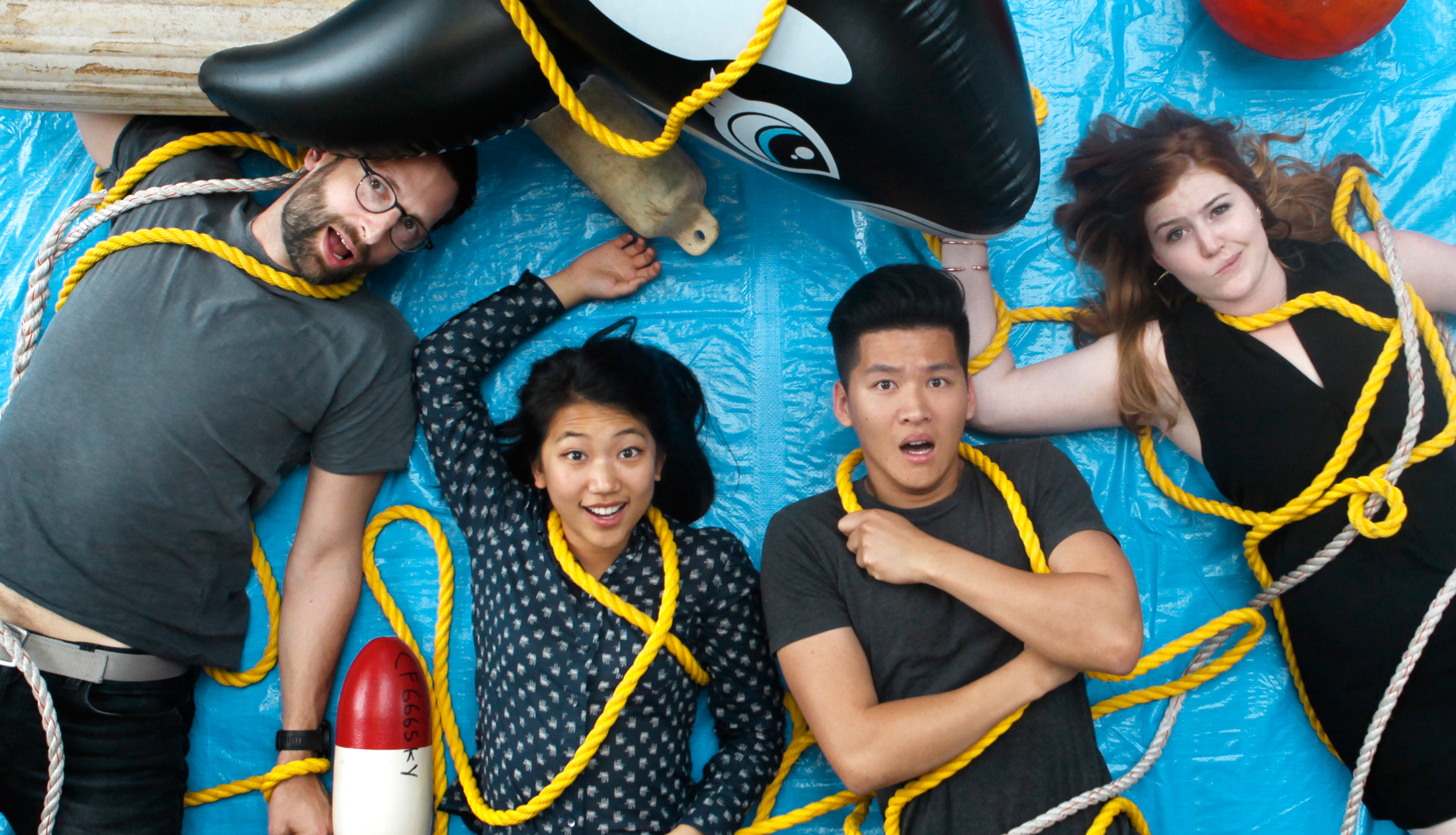
Knowing that we’d never be able to experience entanglement from a whale’s perspective, we had to find our own scrappy ways to understand how it happens. We watched whale rescue videos, got a collection of whale posters (illustrated by the man who did the special effects for Free Willy), and asked a rescuer to tie string around miniature whale models to help us visualize the entanglement process. We also bought crab fishing gear, rope, buoys, flippers, and lifejackets to decorate our project space. When our clients arrived for the workshop, we set up kiddie pools and inflatable orcas on our patio. This may sound excessive, but it was a really important part of the project; not only did the equipment set the right scene and mood for the workshop, but it also allowed us to quickly and easily test our ideas.
Tip: Keep your designers and clients immersed in the project with visual cues that represent the subject matter. It keeps morale high, and can even help you quickly iterate and test concepts—the kiddie pools at the workshop came in handy when it was time to try out prototypes.
3. Bring all the players to the table from day one
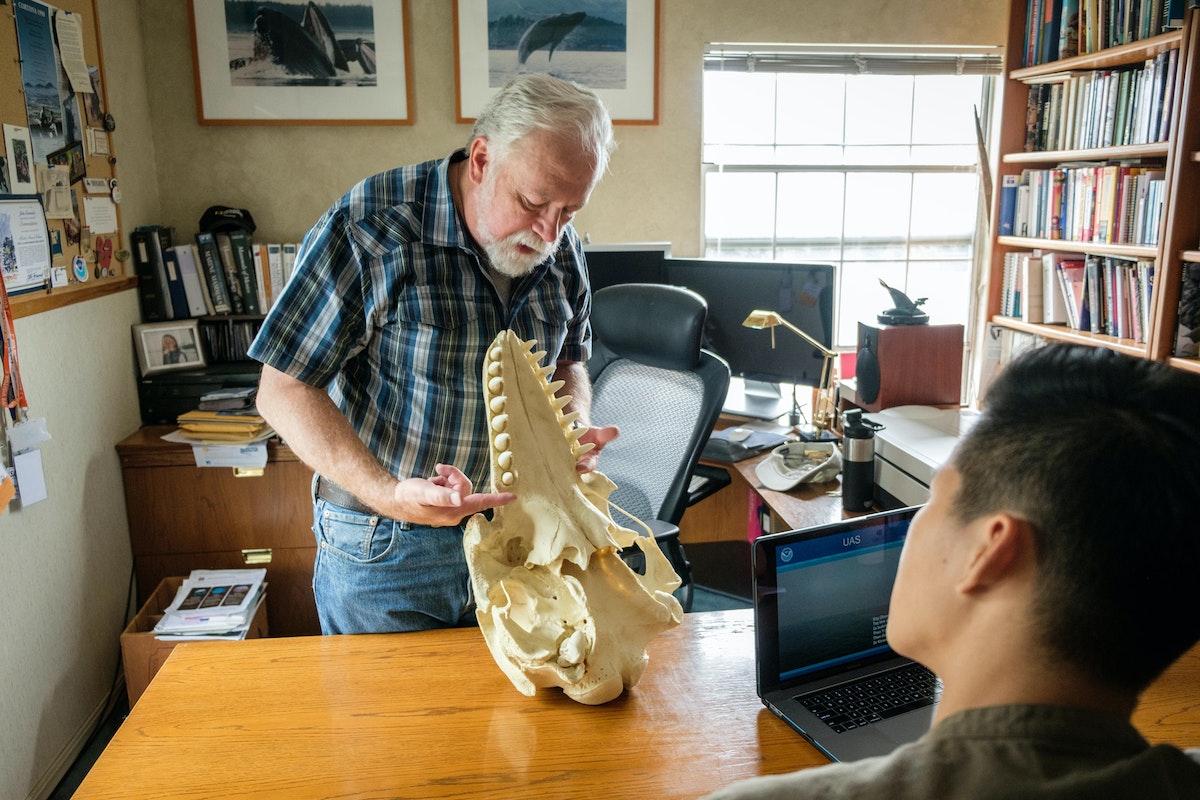
Since we couldn’t talk to any whales during the project, we conducted our design research with the people who knew them best—marine biologists, researchers, fishermen, and rescuers. We also brought in people with backgrounds in design, technology, government, and academia, and collectively discussed the problem and potential solutions. With the help of so many experts, we were able to fill in all of our gaps in knowledge, whether it was about whale anatomy or government funding.
Tip: When you’re designing for animals, you’re also designing for the people that work with those animals (similarly, if you’re designing for kids, you’re also designing for their parents). To make sure your solutions work for them, too, bring a wide range of voices into the room—even if they have to dial in.
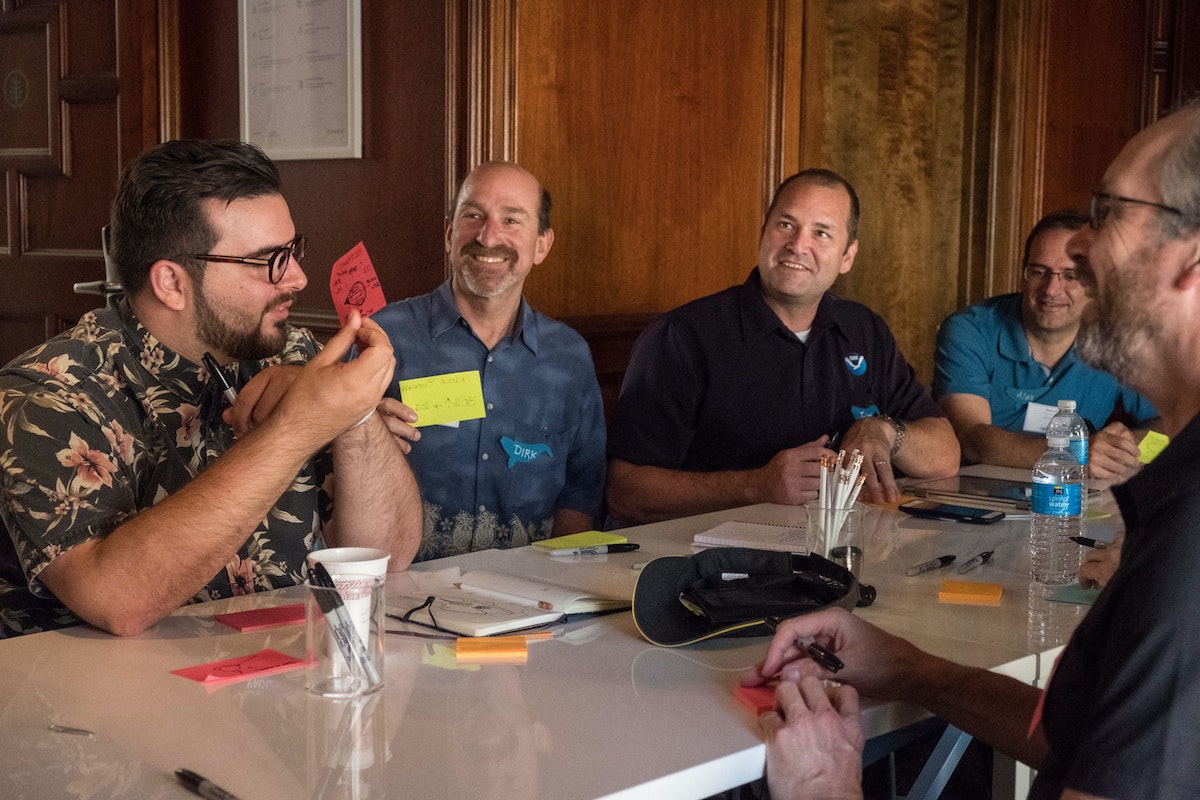
4. Test prototypes in context
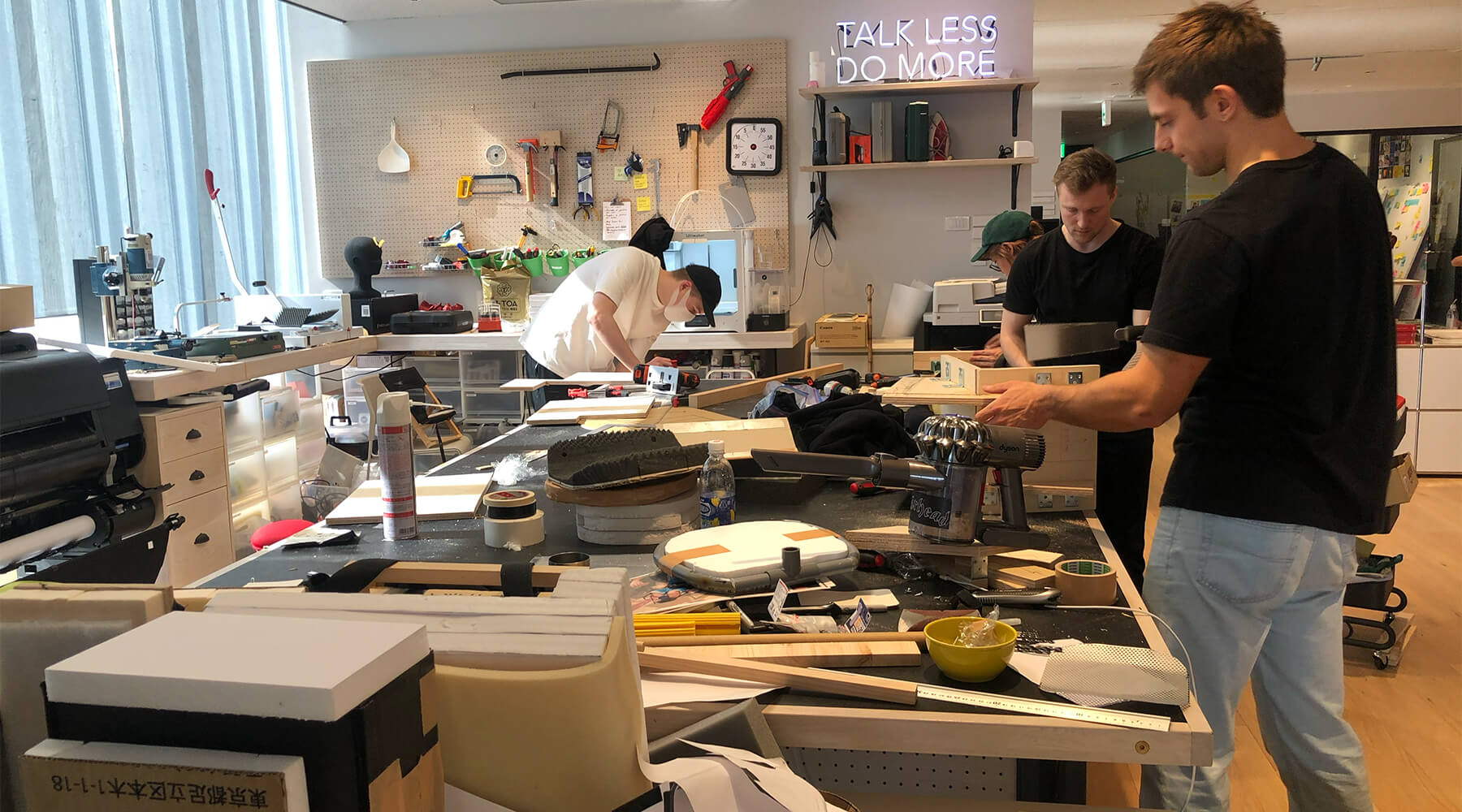
After brainstorming and sketching out early concepts, we headed to the IDEO Shop to create prototypes for the whale trackers. We couldn’t test the devices in the shallows of the kiddie pool, so we set up a rig in a neighbor’s swimming pool to see how they’d perform above and below water. This context helped us immensely in understanding what improvements could be made and how much each tracking device would burden the whale. We were able to measure how smoothly the devices moved through water (to minimize drag), and how well they stayed afloat. After each trial run, we were able to refine the prototypes on the spot, and continue testing.
Tip: Before you finalize any concepts, create a test environment that’s as close as possible to the user’s environment. This helps you understand how the concepts will work in context, and gives you the ability to record and measure what you've learned.

Next time we have to design for whales, though, we'll probably just channel our inner Dory.
Special thanks to Dali Yu for being a thought partner for this article, Rachel Tobias, Joerg Student, and Brooke Thyng for taking these photos, and the rest of the team for hosting an amazing workshop!
On a Thursday afternoon, I found myself with a team of whale biologists, product designers, mechanical engineers, and public policy directors, all standing by a gigantic pool, throwing handmade contraptions into the water. Above us, aerial drones were flying around capturing the scene. Below us, GoPros on selfie sticks moved back and forth under the water. Typical day in the office.
Meet the Woman Who Spots Great Design for a Living
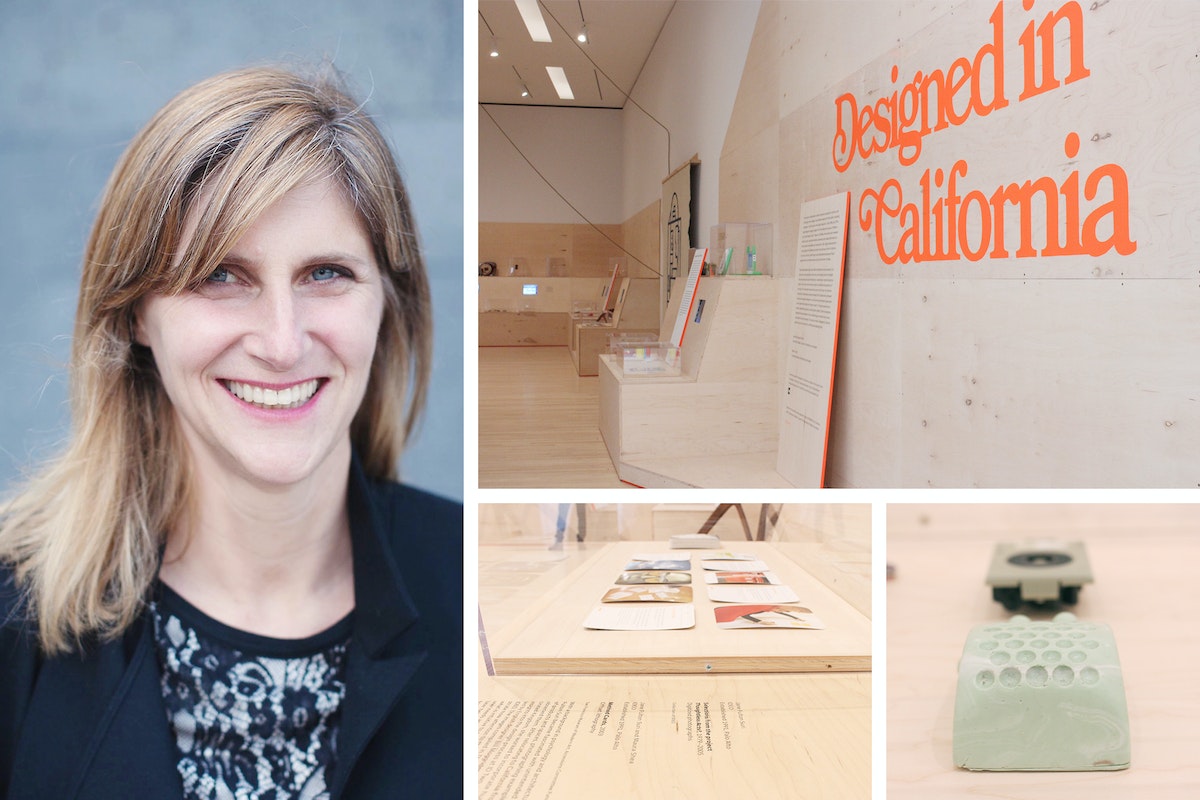
SF MOMA curator Jennifer Dunlop Fletcher puts the world of design on display
In one sentence, who are you?
A hard-headed idealist, who revels in the start and finish of every project, but curses throughout the process.
What do you do? How did you learn it?
I am a curator of architecture and design. I always wanted to work in a museum, and so I studied art, architecture and curatorial history, and then worked in several galleries and museums.
3 favorite possessions?
- A pour over coffee maker
- A pair of small ink drawings of imaginary landscapes
- Handwritten notes tucked into my suitcase from my sons and husband
What does a typical work session look like?
A typical work session includes too many people and little is accomplished, but a productive work session includes 1-2 colleagues, an inspiring setting, and a knotty idea.
How do you get over creative block?
Deadlines. My father always said to think of a deadline as an opportunity to submit a draft. If you are truly interested in going further you will or you may never return to a subject, but one shouldn’t think that you need to know everything at the time of a deadline. It is a moment that reflects what you do understand at that time.
How do you see the world in 2078?
More tax money is spent on public education and the arts than on the military. Society needs to value education and the arts. SFMOMA understands the value of arts in culture, in making sense of issues, as well as complicated issues. I am hopeful humanity will come to its senses on what to prioritize.
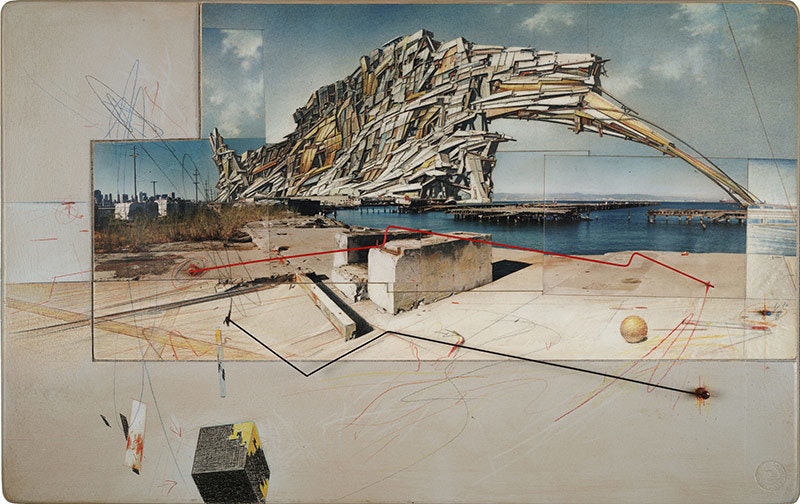
What is the biggest challenge in curating "design"?
I’m not sure there is a singular big challenge to curating design. There are smaller challenges, such as how to exhibit interactive software or ubiquitous commercial products or representations of buildings meant to be experienced in person, etc, but no one specific challenge. Challenges make work interesting, no?!
What’s your number one bucket list item?
I don’t have a bucket list, but I understand the concept and my interests are always shifting, but this week, I’d like to be sure to experience:
- Space travel
- De Maria’s Lightning Fields with my family, New Mexico
- Piamio Sanatorium, Finland
- I am too late since it is destroyed, but would have loved to have visited the Operations Room for Project Cybersyn, Chile

Who are you creative crushin’ on lately?
The ladies of today—Neri Oxman, Tatiana Bilbao, Nathalie du Pasquier, but especially ladies who paved the way, Esther McCoy, Lina Bo Bardi, Barbara Stauffacher Solomon, Susan Kare, Ruth Asawa, Anna Halprin, Clara Porset, and the list continues
Capturing the world of design is a tall order. It means constantly considering the now, questioning the promise of future technology, and looking across the historical register for patterns and mishaps. Jennifer Dunlop Fletcher does just that, and as the curator of Architecture and Design at SFMOMA, she goes one step further and puts it all on view. Her work asks tough questions for us and, in turn, to us. I took a moment to catch up, get a bit of background, and figure out what motivates her day to day.

The Human-Centered Heart of California Design
SFMOMA's "Designed in California" celebrates the legacy of the Left Coast
Smartly curated by Jennifer Dunlop Fletcher, the show features objects dating back to the late 1950s, from the Eames Office to the first iPod to a home CRISPR kit.
I've now seen the show twice. Here's what’s stuck with me:
So much of what comes out of Silicon Valley today has its roots in the DIY utopianism of the Whole Earth Catalog. Founded in the late 60s by Stewart Brand and a bunch of Stanford longhairs, the Catalog promised “access to tools" that would equip us to break free from our hidebound culture.
The title was inspired by Brand’s 1966 campaign to have NASA release a satellite photo of the Earth as seen from space—the first image we’d see of the "whole Earth." That picture, he believed, would unite humans in our belief in a shared destiny and encourage more peaceful, ecological, and holistic thinking.
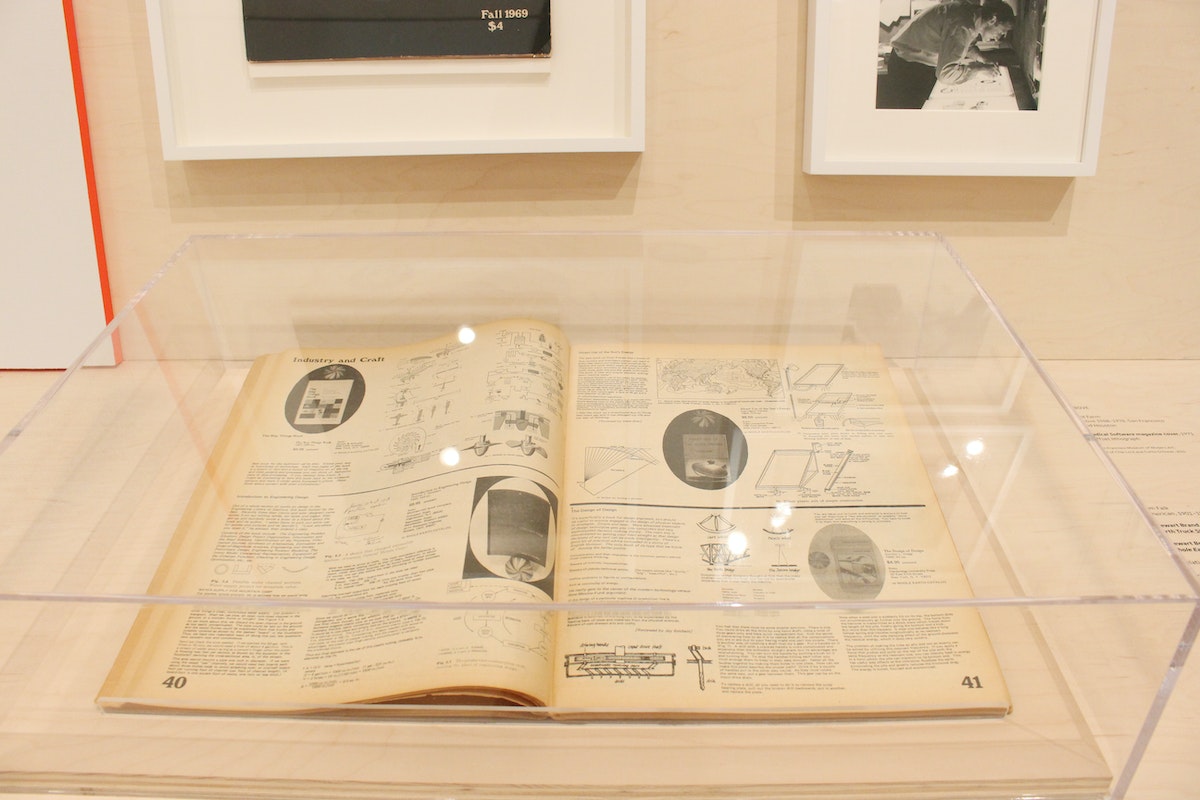
When I was in my 20s, the Whole Earth Catalog spurred me to start my own DIY design magazine, ReadyMade, in the back of a used furniture warehouse in Berkeley. Whole Earth made designing a life on one's own terms seem within reach.
That spirit shines through in another standout of the exhibit: the recreated office of Charles and Ray Eames, down to the posters on the wall, the kilim rug, and a looping projection of their film for the World’s Fair (a serenade to industry and systems design). Everything they laid their mid-century paws on exudes a kind of singing-nun joy. Two things I love most about them: their philosophy that “Eventually everything connects—people, ideas, objects,” and that they employed the people they were designing for—Los Angeles locals, war veterans, and housewives.
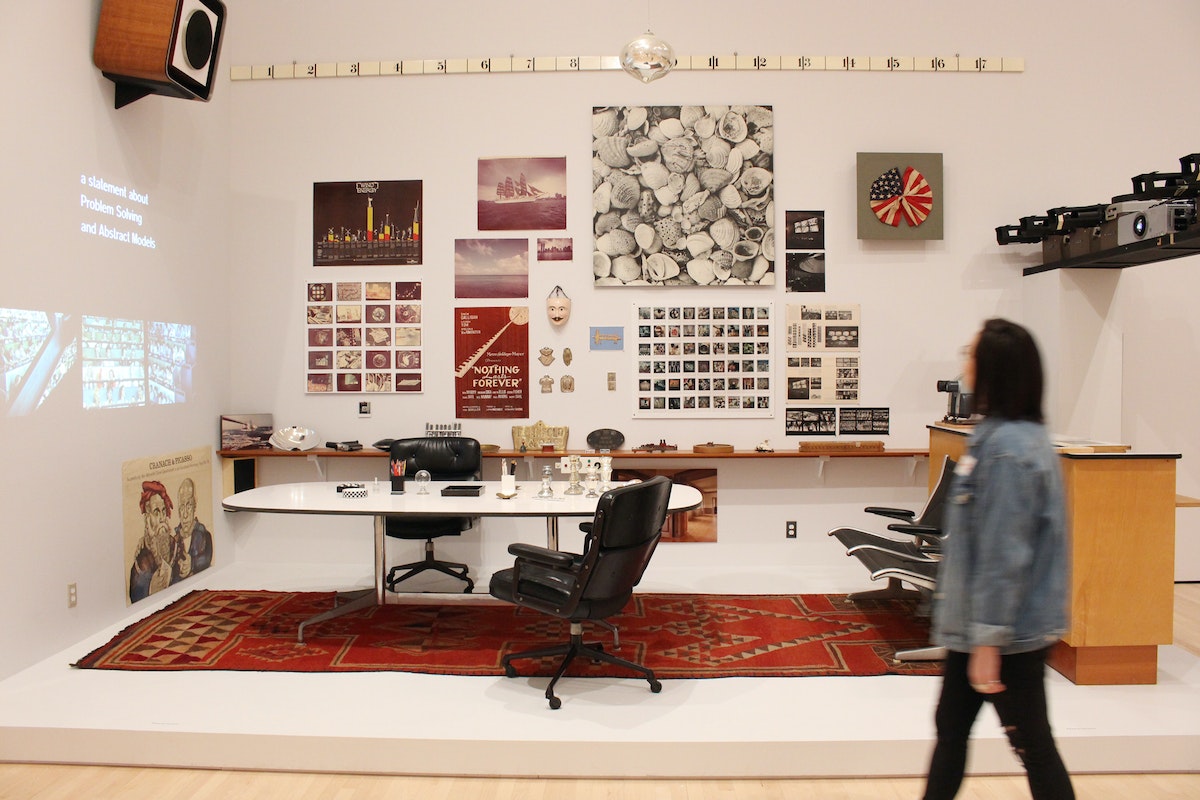
There’s also the agitprop hijinks of Ant Farm; the stained leather scrappiness and propaganda of Marin’s craft guilds; and Heath Ceramics—the tableware preferred by my avocado toast.
And for us outdoorsy types, the centerpiece of the exhibit is a Bucky Fuller-inspired North Face tent, pitched alongside radically new 1970s climbing equipment made by Yvon Chouinard, the founder of Patagonia.
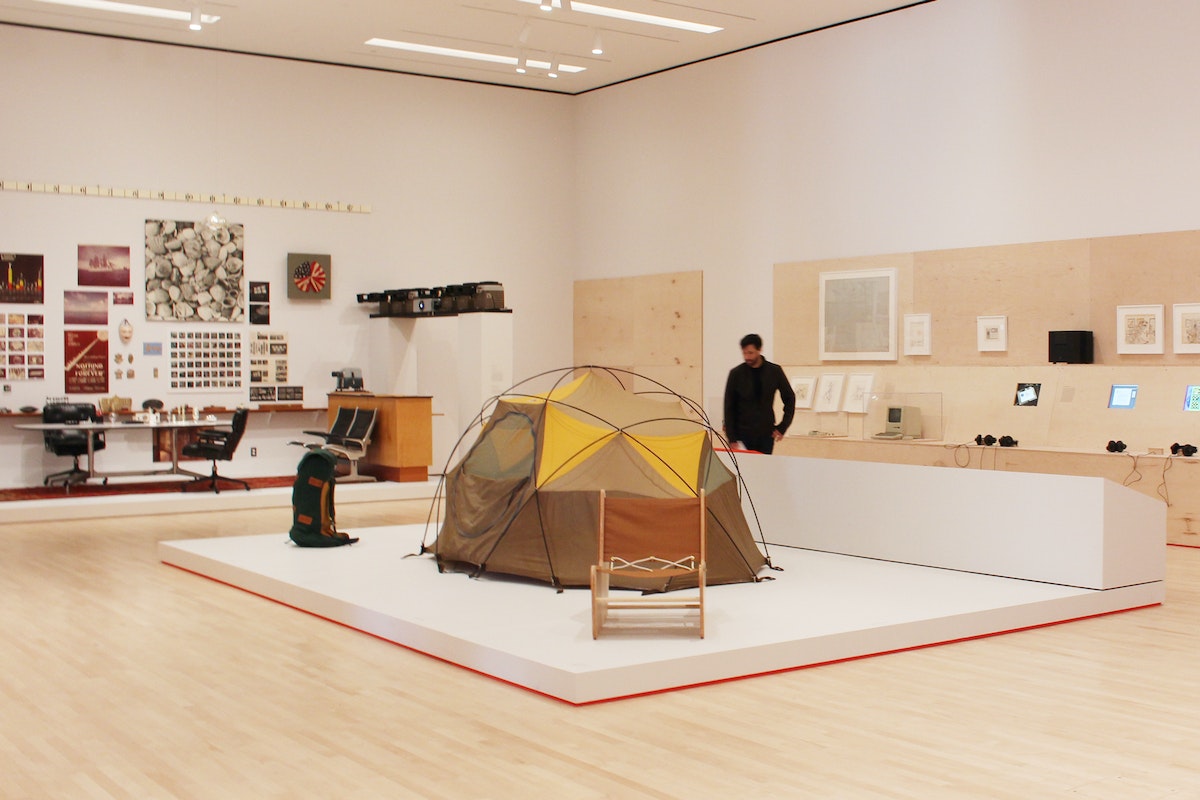
I had a feeling the iconic "one laptop per child" by fuseproject would be on hand (check!), and was excited to see my friend Eric's (of Stamen Design) dazzling data visualizations.
Having done a tour of duty at WIRED in its third year of publication (1995), it was great to see their eye-popping cyberpunk spreads on display, and I'm always happy to learn of companies like D-Rev that care enough about social impact to design an $80 high-performance knee (80 percent of the world's amputees have no access to modern prosthetics).
California design got swept up in the digital tsunami that WIRED was chronicling and all those "new tools" for connected living now look quaint. The first Apple desktop computer and Handspring Visor sitting under vitrines look like beige relics from a technocrypt.
IDEO’s Dennis Boyle, who led the Handspring Visor design team, told me that its eye module accessory is credited as being the first digital camera on a handheld electronic PDA. "It’s the precursor to today's cell phone cameras," he said.
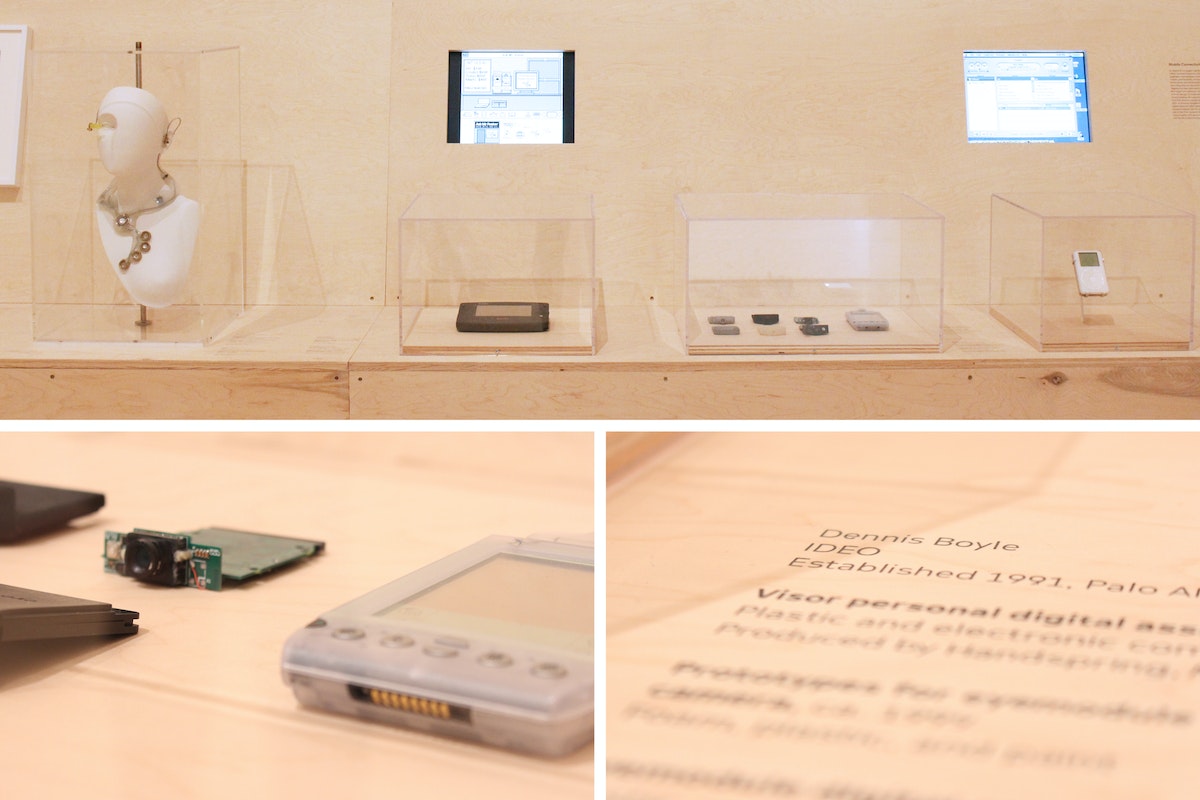
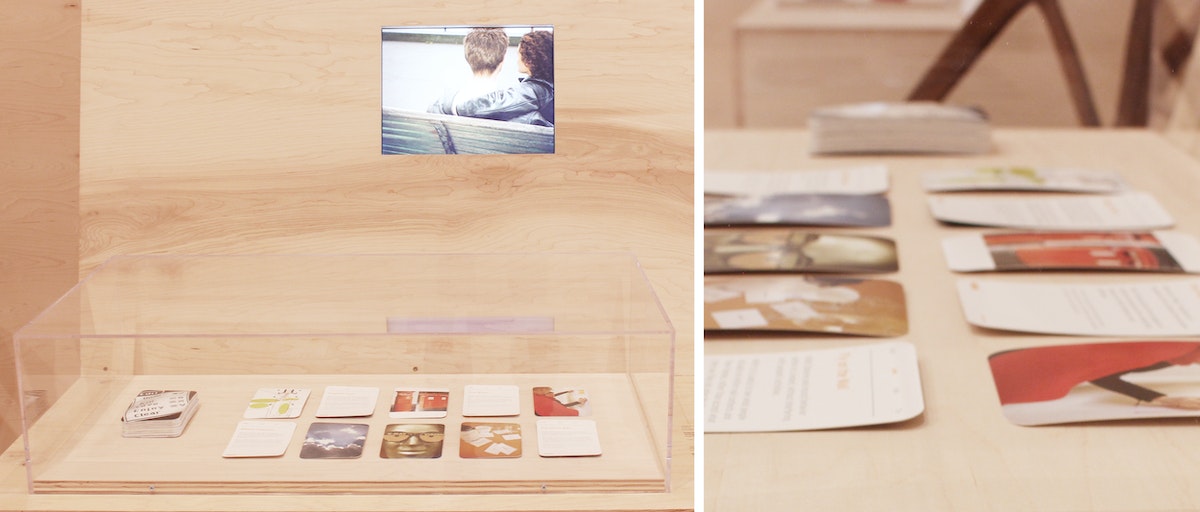
I'm drunk on Kool-Aid, no doubt, but I walked away from this show marveling at how IDEO appears to be the aortic valve of California design. There are no less than five examples of our work on display: The prototype for the first Apple mouse, Thoughtless Acts? and Method Cards, the Handspring Visor, and the prototype for the Q Concept workstation, designed by David Kelley and Jim Yurchenco, Jane Fulton Suri, Dennis Boyle, and Martin Bone, respectively.
Yurchenco, who repurposed a butter dish and a roll-on deodorant ball procured at a local Palo Alto drugstore to make the earliest mouse, is struck by the crude tools designers had at their disposal back in the day:
“It was done using old techniques: a pencil and paper on a drawing board instead of 3D solid CAD to design the parts; manually machined injection molding tools and pieced together check models instead of 3D printed models. Of course, everything designed at that time was done the same way.”
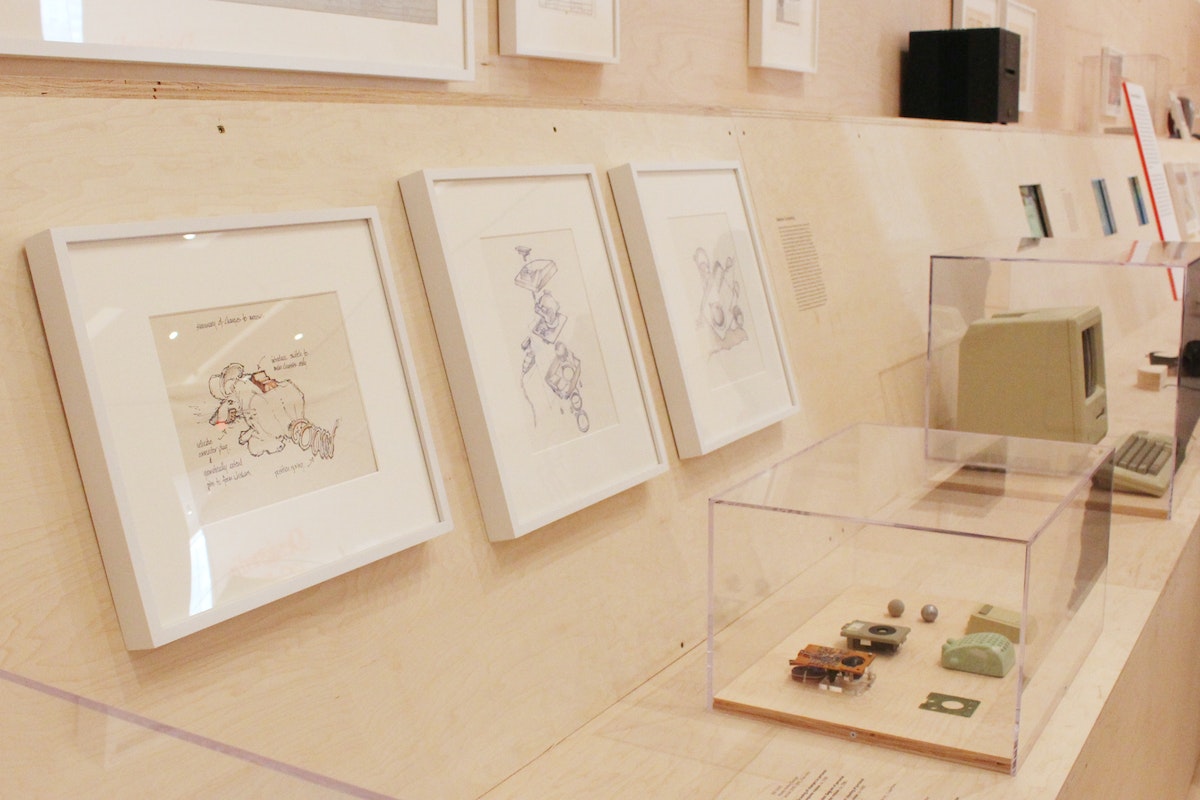
Though it seemed impossible to design a mouse for less than $10 when Steve Jobs first proposed it, IDEO founder David Kelley and Yurchenco alighted upon a crucial insight:
“The most surprising thing that happened during the process was we were able to make [the mouse] low-cost by realizing it didn't have to be as precise as we first thought," Kelley says. "Because the user's human brain would intuitively move the mouse to exactly the right spot."
Jane Fulton Suri still expresses surprise that a simple deck of cards (Method Cards), which were published in 2003, became the foundation for IDEO's design approach:
“At the time it wasn’t obvious that sharing information about our approach and sensibilities would be a powerful way for IDEO to lead the way. It's now core to IDEO's strategy to create design tools and empower others in the world at large.”
Three of the four designers quoted above still work at IDEO. And that reminds me of another thing I love about California designers:
They never stop trying to make things better by making better things.
Next up: Nick Pajerski interviews "Designed in California" curator Jennifer Dunlop Fletcher.
If my heart were a painting, it would be on permanent loan to California. I love its shaggy optimists who turn drained swimming pools into skate parks. Its fog and fearless politics. Its pioneers and garage inventors and beat poets who came in search of a Golden State. I'm a big believer in the design that was born here, too, which is on display at the SFMOMA’s "Designed in California" exhibit through May 27, 2018.

Lindsey Turner
I’m passionate about building brands, products, and experiences that help organizations show up with meaning and momentum.
I help organizations cut through complexity by shaping how they show up, through brand strategy, identity, and storytelling.
Working at the intersection of brand and business, I bring an editorial eye and a bias toward making—turning ideas into tangible experiences that people can understand, trust, and believe in.
My work spans government, healthcare, financial services, media, and consumer goods, from launching Gen Z-focused ventures to building innovation labs and reimagining legacy brands. I relish moments of ambiguity and enjoy translating across teams, perspectives, and priorities to move ideas forward.
I started my career in editorial and digital design, shaping cross-platform experiences and identity systems in publishing and agency environments. That foundation still shapes how I work today: I’m detail-oriented, collaborative, and overreliant on the Oxford comma. I hold a BFA in Visual Communication from the School of the Art Institute of Chicago.

Rachel Young
My work helps organizations see who their products aren't working for—and build the will and the tools to do something about it
For 25 years, I've asked the same question: Who does this design exclude—and what are we going to do about it?
My work spans human-centered strategy, inclusive design, and qualitative research, with clients ranging from Microsoft, Google, and Verizon to the National Science Foundation, and San Francisco Unified School District.
Before IDEO, I taught elementary school in East Palo Alto and spent a decade doing design work with social service organizations—where I learned firsthand what it costs people when systems are built without them in mind.
I am currently writing User Error, a nonfiction book about digital access and the design decisions behind it. I live in Oakland, California.

Brian Pelsoh
I lead with craft, ensuring our work is creatively excellent: rooted in deep human insight and imagination, while also grounded in the realities of business and technology.
My expertise spans brand, communication, and product design across tech, education, the arts, and social impact.
I believe great work demands both high-level vision and obsessive attention to detail, and only happens through collaboration.
I bring an inclusive, hands-on approach and a deep understanding of business, which enables me to consistently deliver excellence while always asking why.
Before joining IDEO, I worked at the brand firms Pentagram and VSA Partners. I began my career as a designer, leading teams at the School of the Art Institute of Chicago and the Milwaukee Art Museum. I hold an MFA in graphic design from Maryland Institute College of Art and a BFA in communication design from the Milwaukee Institute of Art & Design, and have taught at some of the best design schools in the US.

Tony Wong
I am responsible for IDEO’s long-term success in China and working with clients to use design as a tool to enable growth.
I am responsible for IDEO’s long-term success in China and working with clients to use design as a tool to enable growth. Specifically, I have helped Chinese companies design holistic brand solutions through the development of their products, communication, services, and innovation teams, and I have helped multinationals expand their presence and influence in China.
I advise global leaders on developing China-led innovation and capabilities.
In over 15 years in IDEO Shanghai, I have worked on projects that use design to elevate the quality of the experience of healthcare products and services, streamline processes that increase productivity, create spaces and programs that promote and enable inclusive communities, and build next generation mobility solutions that are planet-positive.
Before joining IDEO, I worked at Philips Electronics and the Electrolux Group in Italy, the Netherlands, and Singapore on a number of breakthrough commercial products. I am a member of the Young President Organization in Shanghai.

Building a personal AI for the messiness of life: Sida Li
Most AI products today are built for work—a space with clear problems and established systems. One founder noticed a gap: personal life is messier, harder to systematize, and mostly left behind by the AI boom. So she built Cue, a personal AI that lives inside iMessage and group chats, to go where the other tools haven't.
In this episode, Becca Carroll, IDEO's Chief Strategy Officer, talks with Sida Li, co-founder and CEO of Shared Context Lab, about staying anchored to a human need while the technology around her keeps changing shape, why she treats her business model with the same rigor she'd bring to a product, and what it feels like to build a company at this particular, disorienting moment in AI.
The conversation also gets into how Sida makes design decisions: the language Cue uses to describe itself, the tradeoffs behind building inside iMessage instead of a new app, and a real story about a business idea that didn’t pan out.
This is the second in a two-part series profiling founders from IDEO's Startups-in-Residence program. The first conversation is with Johannes Seemann, founder of Sooner, on designing GenAI for the emotional side of money.

Designing GenAI for the emotional side of money: Johannes Seemann
Most personal financial tools are built to run the numbers and optimize towards a budget. While that works for some, most people experience money as a lived relationship that does not neatly fit into a spreadsheet. Johannes Seemann and Becca Carroll discuss why money is emotional before it is mathematical, and what a human-centered approach to building a generative AI financial product looks like in practice.

The curious leader's edge in uncertainty: Scott Shigeoka
Mina Seetharaman talks with Scott Shigeoka, author of Seek and Head of Curiosity Cultivation at the Eames Institute, about what distinguishes genuinely curious leadership from performative curiosity, how power dynamics shape curiosity, and why practicing curiosity can restore energy rather than drain it.

How constraints make us more creative: David Epstein
Mina Seetharaman talks with David Epstein, author of Inside the Box and Range, about why total freedom often produces average work, how leaders can design useful limits on purpose, and what organizations such as General Magic and Pixar reveal about the relationship between boundaries and creativity.
Looks like you might be in search of something very specific?
Or reset the filters above and try another angle.
Here’s some random inspiration

Podcasts about creative leadership

Articles about the power of prototyping
