
.svg)


Peripheral vision
A consumer electronics giant becomes a climate-era leader.
IDEO’s partnership with Logitech is a case study in bringing together the power of imagination and the rigor of business.
As much as we love to lead with creativity, it’s difficult to develop a business plan off ideas alone. So when Logitech asked the IDEO team to investigate a broad array of possible futures and report back, we brought our findings to life by inventing a board game. Instead of a dry presentation on circular solutions, our designers created a story about a mouse that turned into a webcam.
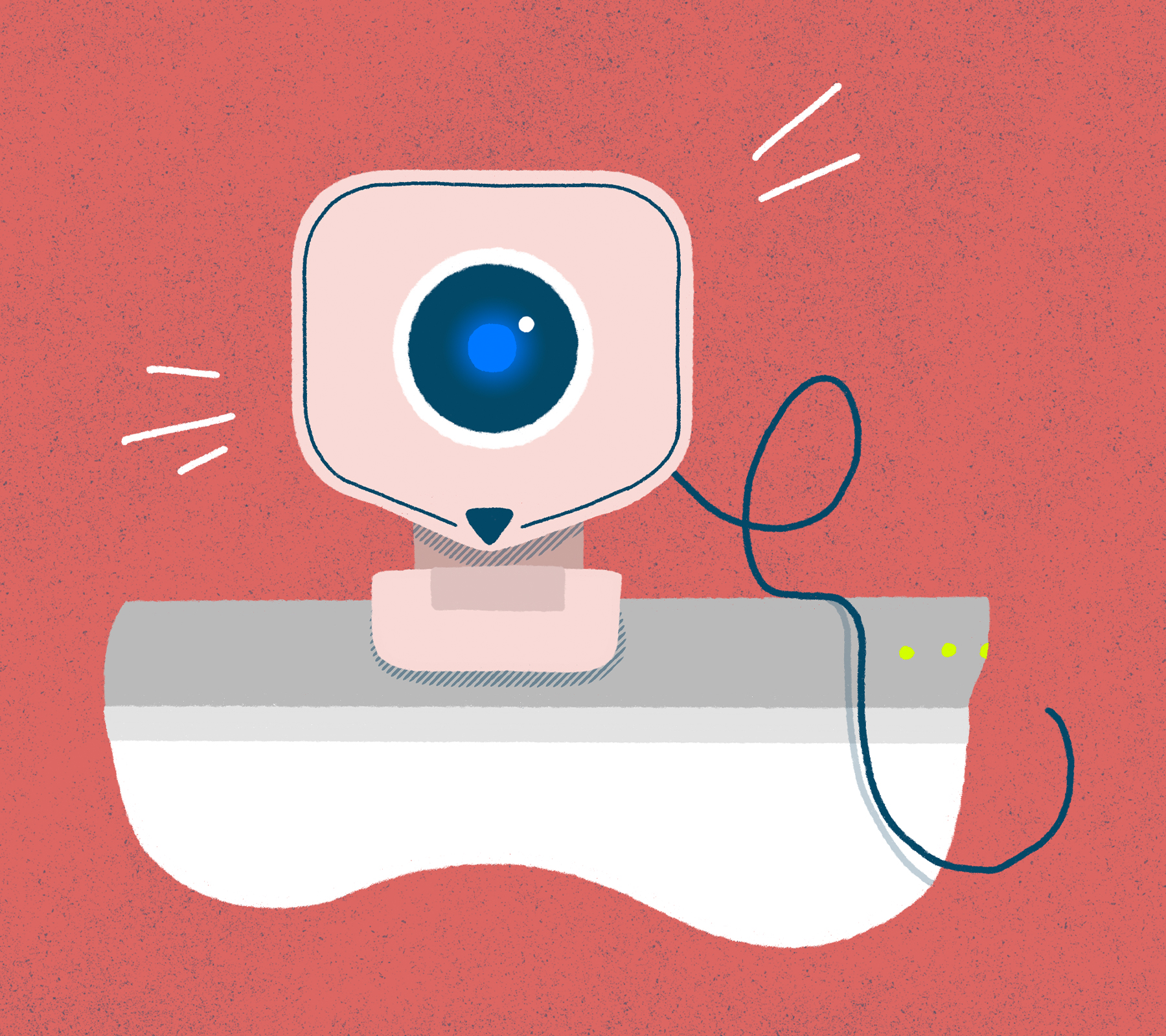
That imagination mattered. It fueled an exploration into expertise we collected from researching with people already living in futures destined to expand. And our rigor helped us hold more possibilities, and identify intersectionalities. Combined, they redefined what it means for ideas to be viable in business; they focused us on long-term sustainability; and they pushed us past immediate technical feasibility to ask if new ideas would be feasible for entire systems.
Our partnership with Logitech revealed that imaginative dreaming and business rigor aren’t opposing forces, but rather complementary tools in opening up new directions into a future demanding bold decisions.
As of 2019, e-waste was the fastest-growing waste stream globally, and only 20% of the 48.5+ million tonnes is disposed of properly.
Global emissions must be cut in half by 2030 to avert the worst impacts of climate change.
By 2030
Logitech has committed to becoming climate positive and removing more carbon than they create
The whole package
A global fashion brand pairs sustainability and growth.
Fast fashion keeps getting faster. But if the industry is to meet its climate commitments, its use of plastics has to slow down.
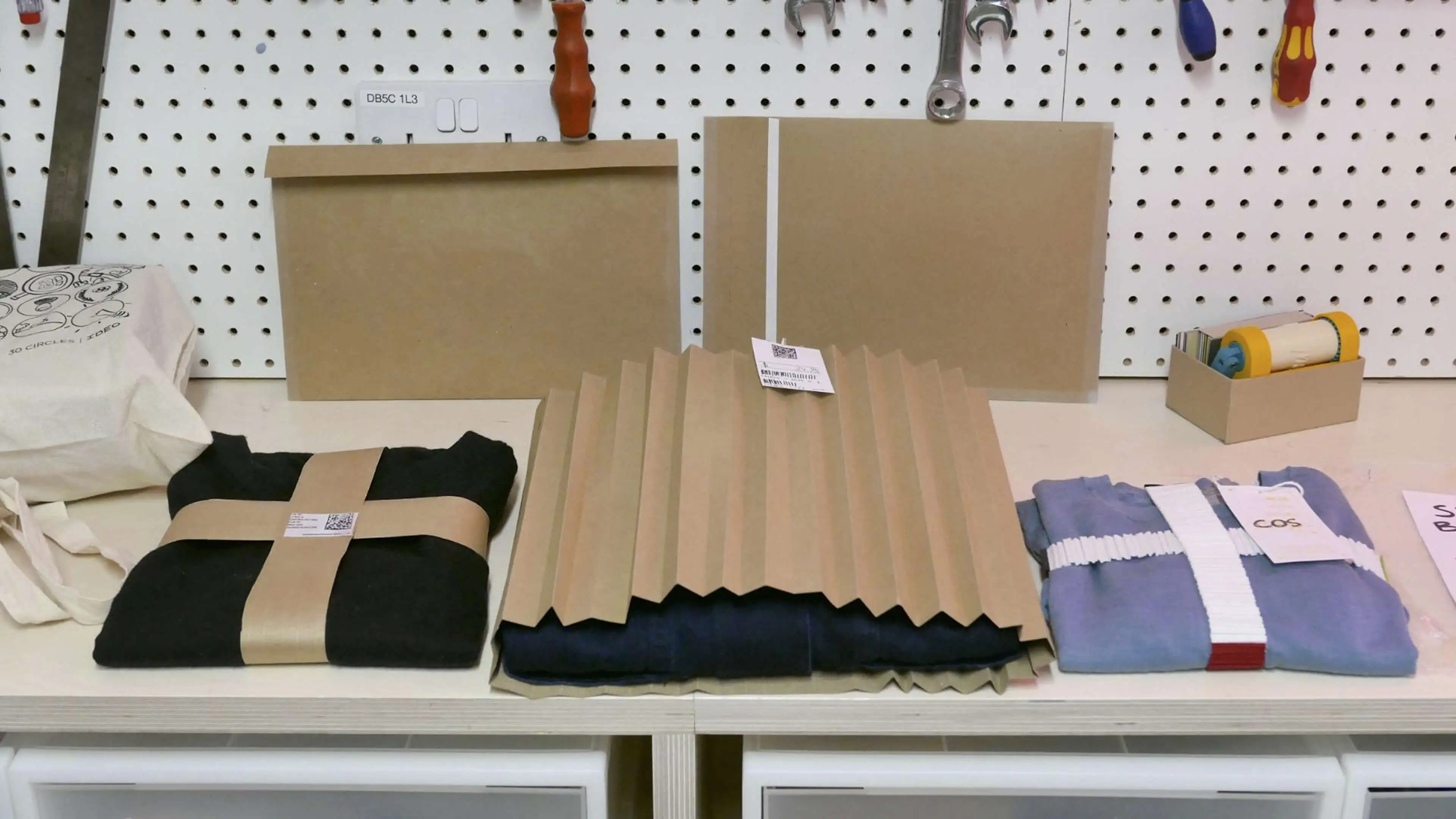
H&M chief executive Helena Helmersson set ambitious sustainability goals when she stepped into her role. She wanted to reduce the fashion giant’s impact on the environment and enable meaningful growth. But change is tough for any company, let alone one with eight brands operating across 74 markets. Together IDEO and the H&M Group created new plastic-free packaging, rallying around a more sustainable packaging solution that’s easily customizable.
By applying a design-led approach that went far beyond hiring a sustainability consultant, the H&M Group managed to reduce its use of plastic. But it didn’t stop there. A small team called Design Studio took what it learned and grew into an established strategic capability that pioneers new ways of working in the organization, tackling complex challenges in circularity, inclusion, supply chain, and customer experience. Sustainability isn’t a passing trend for H&M. It’s moving fashion forward.
Packaging accounts for 26% of plastics produced globally every year.
Fashion e-commerce is estimated to grow by 10% annually through 2024, requiring even more packaging.
100M
plastic-free packages shipped in 2022
2,000 tons
of plastic eliminated from H&M operations
The everywhere chair
In Japan, a mother works to build an inclusive child seat that closes the gap between children with and without disabilities.
For children with physical disabilities and their families, mobility is freedom. But in Japan, there are barriers to that freedom of movement.
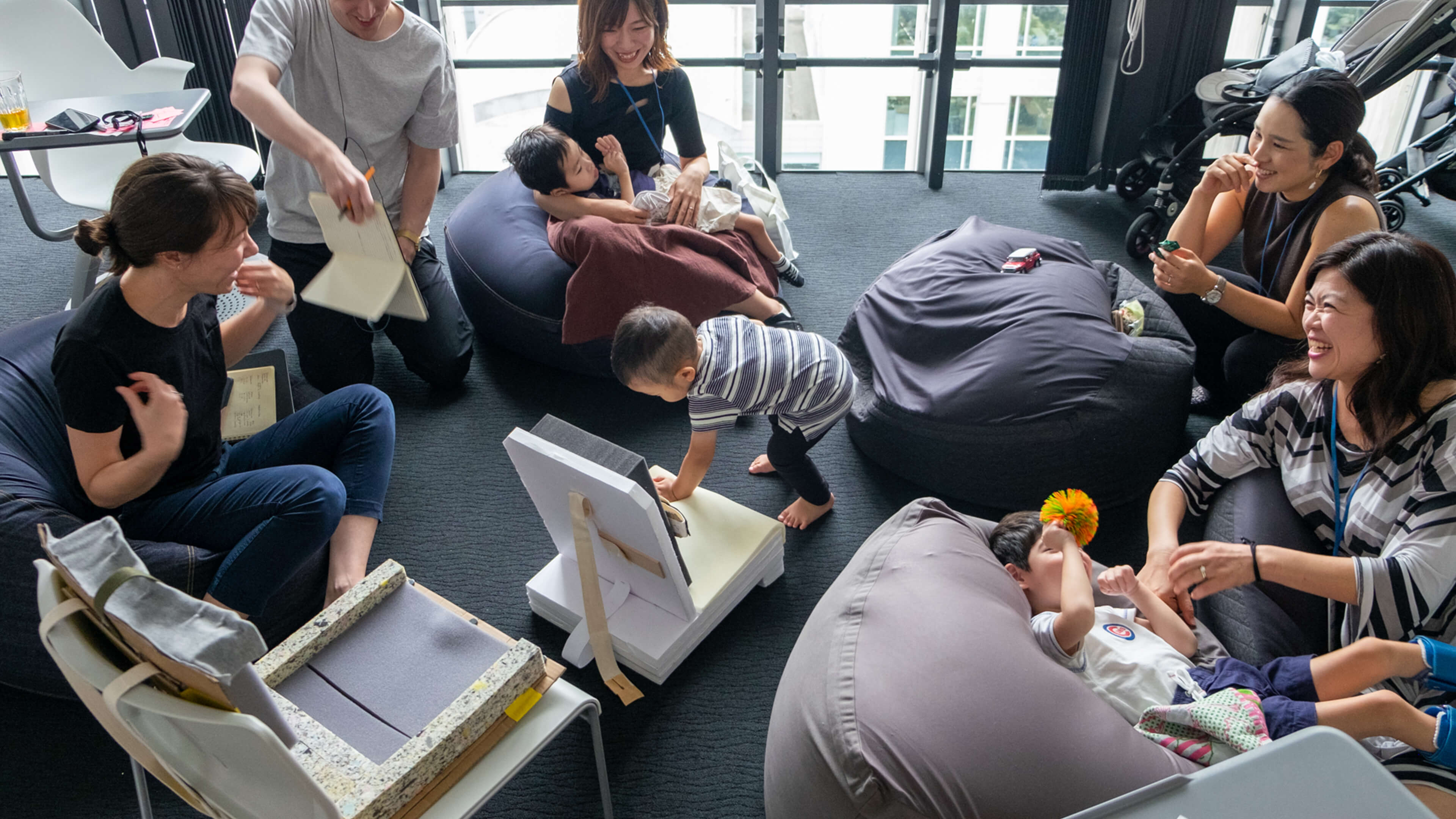
In raising a child with cerebral palsy, Yuri Matsumoto found that her son was separated from other kids during everyday activities. In Japan, children’s products are divided into two categories: those for children with disabilities and those for children without. Matsumoto aspired to close this gap with a product that would allow children of all abilities to use the same chair and be included in the same activities. To realize her idea, Matsumoto needed a strategic design company to refine the chair design, create a compelling visual identity, and arrive at a product road map to help set the business up for long-term success.
The result: a breakthrough product and supporting business that provides access for all kids, both for at-home activities like studying and eating, and also for family outings to restaurants, to the park, and to play with friends. Around the world, there are people like Matsumoto who see the need for better products in a very personal way. IDEO’s role is to help them realize their vision for a more inclusive future.
The Japanese health ministry categorizes 9.6 million people as disabled.
In Japan, children with disabilities are largely excluded from mainstream classrooms. Government subsidized support chairs are designed for posture and stability. Their bulk and rigidity make venturing out with them challenging.
Japanese children have fewer opportunities to learn about what it’s like to live with a disability than in the US.
Launched
officially in April 2022
5
restaurants and cafés in Tokyo are currently piloting the chair

Serving families first
One organization transforms health care, education, finance, retail, and itself to meet the expectations of the people it serves.
There can be no growth for business if peoples’ basic needs aren’t met.
Carlos Rodríguez-Pastor, CEO of Intercorp, came to IDEO with an audacious goal: to address the most fundamental needs of his country’s people and grow his business at the same time. He’d been introduced to IDEO while attending business school in the U.S. and explained that he waited until he had a challenge that felt big enough to knock on our door. Together we built a high-quality school system that would cost just $100 per month—affordable for the middle class. That project convinced Rodríguez-Pastor and his colleagues of the power of human-centered design. Our blended teams launched an innovation hub to introduce new ways of working with the conglomerate’s 90,000 employees. And as we collaborated with Intercorp’s businesses in finance, retail, health care, and education, we learned more about how to serve the everyday needs of Peruvian families. Somewhere along the way, the ultimate design project became the organization itself.
And while Rodríguez-Pastor’s company has grown dramatically, he’s not one to rest on laurels. Instead, the company is becoming more ambitious: upskilling the country’s workforce through an online platform, and fulfilling its climate strategy by investing in Peru’s green economy. (The coastal nation is the world’s third most vulnerable to the effects of climate change.) While the pandemic dealt a blow to Peru’s economy, Intercorp remains steadfast in its commitment to supporting businesses that help the middle class thrive.
Peru’s PISA score of educational quality has grown by 10% in the past decade but still ranks in the bottom 10 worldwide.
In 2020, approximately 68% of the total employed population was in some form of informal employment—jobs that offered no protection and in which workers paid no taxes. Although that percentage decreased over the previous decade, Peru has one of the highest levels of informal employment in Latin America.
55,000
students enrolled across 68 locations in Peru, Mexico, and Colombia
2.5x
increase in revenue from $2.9 billion in 2011 to $8.5 billion in revenue in 2021
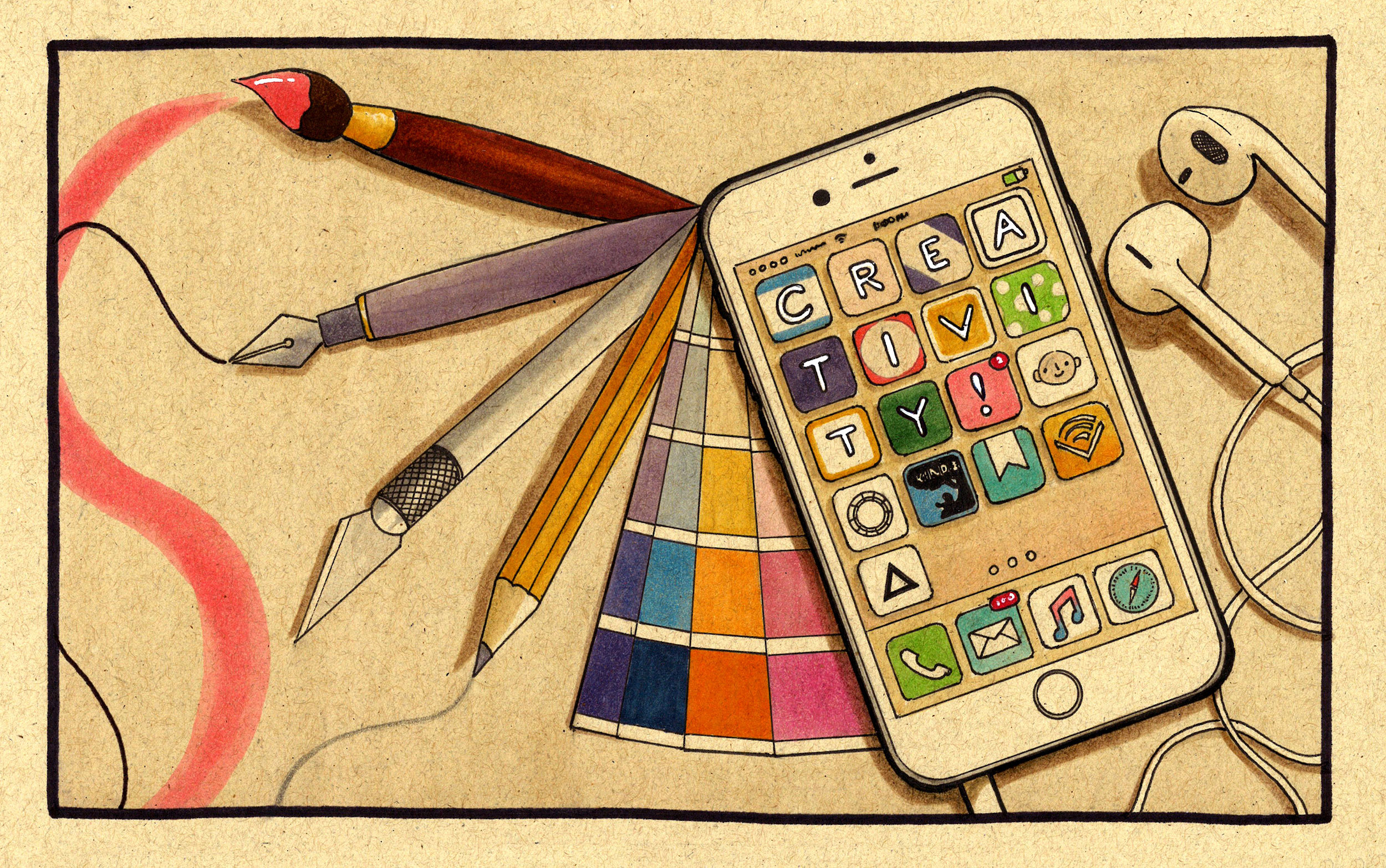
5 Ways to Supercharge Your iPhone for Creativity
Is the iPhone the greatest tool for creativity ever invented, or its worst enemy?
1. Choose your creativity apps wisely
Try as many as possible, then edit them down to the few you use regularly and that can fit on your home screen.
If you're a writer, there are many notes apps that offer distraction-free writing (IA Writer, Daedalus). Day One is a great choice for people who use journaling as a creative practice. For photographers, there are a wealth of tools (pro-quality editing apps like VSCO, exotic image-modifiers like Prisma). My personal favorite is Over, which allows you to add text your photos via a simple, fluid interface.
For those running brainstorms in the non-digital world, 3M's Post-It app is a surprisingly effective way to capture a wall full of notes, then reorganize and export them to others apps. For doodlers, Procreate is the gold standard. (You might prefer to use this app on an iPad, unless you have eerily-thin fingers).
2. Curate inspiration feeds
Aside from tools, you’ll want apps that supply a steady stream of inspiration. Some obvious ones: the Kindle app for reading, Audible for audiobooks, and a well-designed podcast player (we recommend Overcast). Other good sources of waiting room material are the various read-it-later apps, such as Instapaper or Pocket, and if you’re still reading this post, the Longform app. One note of caution here: don’t overwhelm yourself with a pile of material that feels like work to get through. Delete regularly.

3. Audit your distraction
Ok, time to get real. How are you really using your phone? Are there certain apps or websites that you check repeatedly every day? Do you have habits that are vaporizing your time (We're looking at you, Facebook, Snapchat, Instagram, YouTube, Reddit).
If so, engineer some limits on usage. One simple approach is to put all the apps that distract you on a separate screen, or even to hide them away inside a folder—putting a bit of friction between you and your addiction. Use that brief moment of additional swiping as a reminder to ask yourself whether you *really* want to go down the rabbit hole. Might there be something better to do with your time?
4. Support your focus
When you do decide to commit to a creative task, there are a number of apps that can help support you. Many swear by the Pomodoro technique, which involves a commitment to focus for 25min chunks, with 5min breaks in between. There are many Pomodoro timers in the app store, though Apple's stock clock app works just fine, too.
If you’re easily distracted, try a white noise app. Rain Rain provides a vast array of variations on the sound of raindrops falling from the sky, alongside airliner and washing machine soundscapes.
For a slightly less boring selection of background sounds, fire up Spotify and search “ambient playlists”. Brian Eno's Music For Airports is an excellent writing companion.
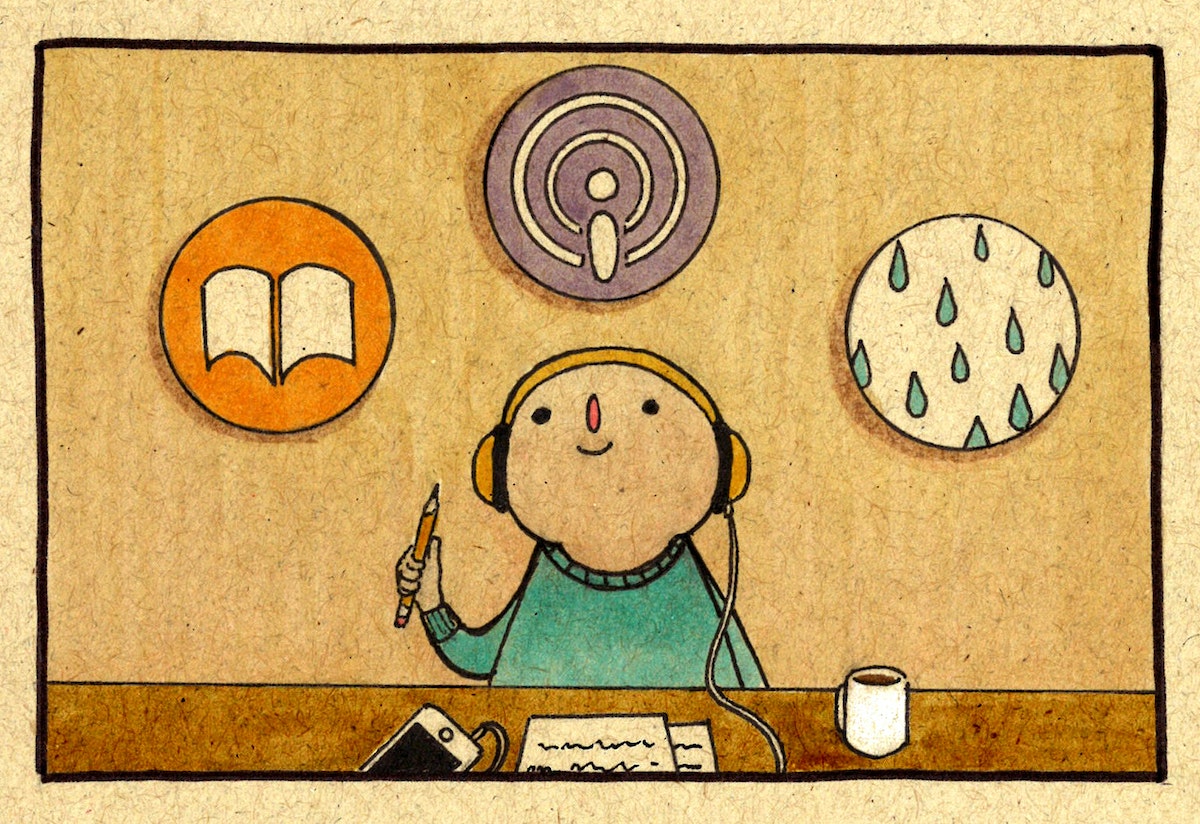
5. Change your morning ritual
With all your apps organized on your phone, you should be all set for a more creative relationship with your device. You only need one more thing: discipline. One trick is to think about your "first apps.” When you grab your phone in the morning or after getting on the bus, what are the first apps that you open? Do you have a set pattern? Are those really the apps that you want to be opening or are you a slave to habit? Try opening a creativity enhancer first and see how that changes your perspective for the day.
And sure, we know you're not going to write a novel while waiting in line for an ATM. But instead of losing yourself in a Facebook fugue state, maybe you could take a minute to construct a groove in Figure, or play around with a photo in Prisma. There. Didn't that feel good?
Illustrations by Felicia Chiao.
Is the iPhone the greatest tool for creativity ever invented, or its worst enemy? The answer is... both. On the one hand, the smartphone is the Swiss Army Knife of writing, research, photography, and planning tools. On the other, it is an attention-sucking black hole, consuming all of your free time in a gaming and social media vortex. Here are a few ways to make that computer in your pocket best serve your creative goals.

What We Talk About When We Talk About Death
A preview of the inaugural Let's Re:Imagine End of Life event
That's starting to change. With 76 million Baby Boomers gazing down that long, winding road, aid-in-dying laws gaining ground (California's passed in June of this year), and an epic list of recent bestselling books on the topic, many written by doctors, death is having a moment.
Which led us to ask: How can design play a role?
To find out, we teamed up with local hospital network Sutter Health, the Helix Centre in London, and the Ungerleider Palliative Care Education Fund to launch OpenIDEO’s End of Life Challenge. Thousands of people around the world participated, submitting ideas for tools, services, and platforms that might improve the way we prepare for and navigate the end of life.

Some incredible ideas came across the transom. Imagine the relief of a soundscape that cancels out the maddening noise of bleeping machines in hospitals, or a digital platform that provides respite vouchers for family caregivers who desperately need a break.
Struck by the volume of ideas the challenge generated, we wanted to make sure the momentum didn't end there. A team formed to send out a call to a loose network of healthcare professionals, designers, artists, storytellers, organizations, and individuals to see if it made sense to join forces and build a public event.

Re:Imagine End of Life kicks off Monday evening, October 24th, 2016, and runs through the week in San Francisco. With multiple events every night in San Francisco and the East Bay, there are plenty of opportunities to join the conversation.
Tonight (10/24), at Grace Cathedral, Dr. BJ Miller, Dana Cho, and I will lead a workshop on how design can play a role in the way we die. OpenIDEO Challenge participants Brad Wolfe, Ken Rosenfeld, and Yoko K will share the ideas they are developing.
Other highlights include:
- Death over Dinner at the Battery
- An immersive VR art experience
- How Doctors Die, with Dr. Ira Byock and Dr. Joon Yun
- An evening of stories and music with You're Going to Die
- Open conversations at Zen Hospice Project
Want to know more? The event's organizers can be reached at hello@letsreimagine.org.
No one knows when it will happen. Could be 30 years. Could be next week. What we do know is that we are all dying. And that how we die—perhaps the most important event human beings share—is something we never talk about.

What Designers Can Learn from the Dutch Masters
A conversation with Paul Bennett about Rijks: Masters of the Golden Age
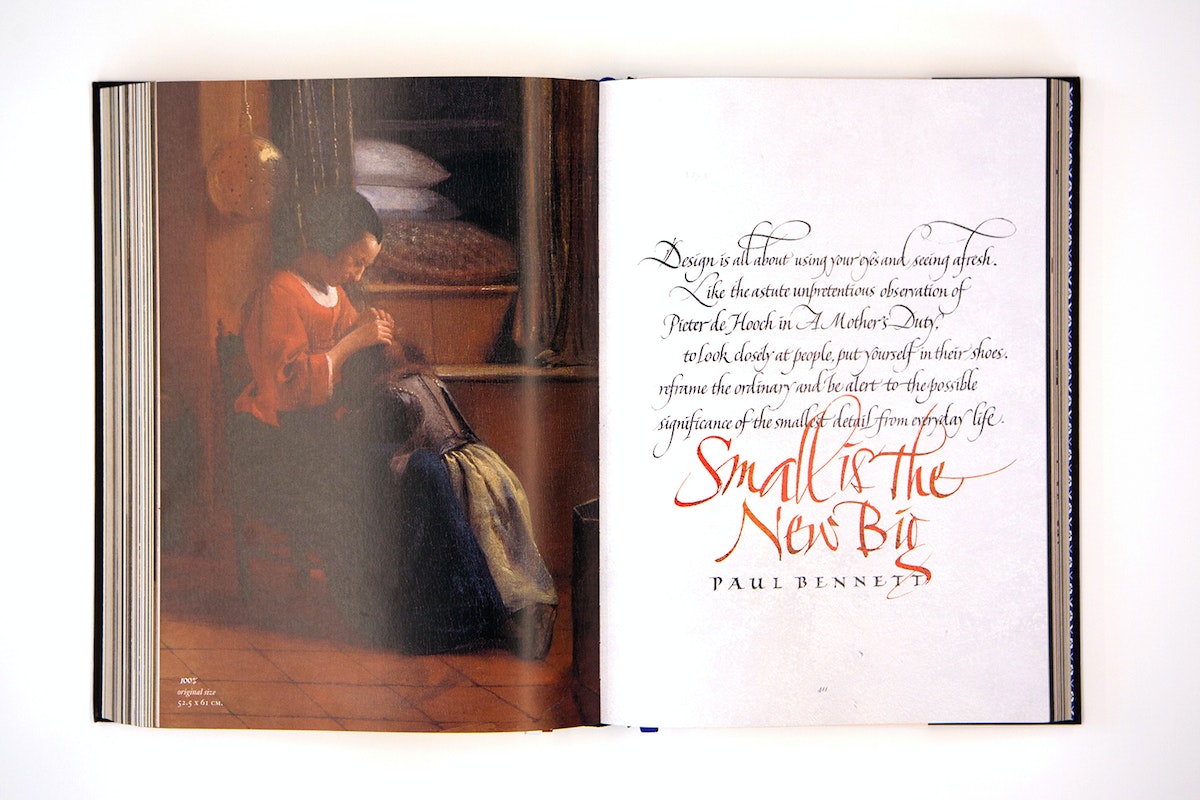
Featuring commentary from leading thinkers in art, philosophy, business, and design, the publication draws out the modern day relevance of the period’s most iconic paintings. Paul's essay reflects on Pieter de Hooch’s work, "A Mother Delousing Her Child’s Hair", also known as “A Mother’s Duty.” I asked him to tell us more about the book, and why it should be on every designer's wish list.

How did you get involved in the book?
Marcel was an artist-in-residence at our San Francisco office. He’s a world-class designer and we learned a lot from him. Later, his team approached me about this project. They sent me a list of paintings and asked if any of them sparked anything for me. The de Hooch was the first piece I saw and I picked it straight away. At IDEO, we often take shocking or not-beautiful things and make them poetic. So a girl having her head deloused immediately struck me as a great human truth. I love that de Hooch has made it beautiful and celebrated it and used all this classic technique around it.
You say design acts as a witness to our smallest moments of triumph and tragedy. How do we witness increasingly broad challenges, like poverty and citizenship?
Tackling a big problem doesn’t mean you have to look for the big solution. It’s always the tiniest thing that begins the catalytic chain that unlocks things. I firmly believe that looking for the tiniest moment at the center of the human experience is the place to start. So you toggle back and forth and try to look for things that are both human and universal, and personal and individual.
I was in Kansas City the other day talking about the plight of the citizen, and at the same time we were telling very specific stories of people that we knew or had met that day. We were able to talk about citizenship at one scale, and still refer back to individuals. Nobody reacts to a segmentation study or a bar chart or a number, everybody reacts to a story. You have to find the meta in the micro.
Art does this, too. De Hooch does a fantastic job of telling a story in which I can recognize myself. I remember sitting there and the feel of my mother’s hand in my hair. I think design is about asking people to feel it in their own skin, remember their own experience. Good art makes you see yourself in the frame, and that is our work these days, too—to help join together small and big and to help people see themselves inside the big system.
What was your first impression of the book?
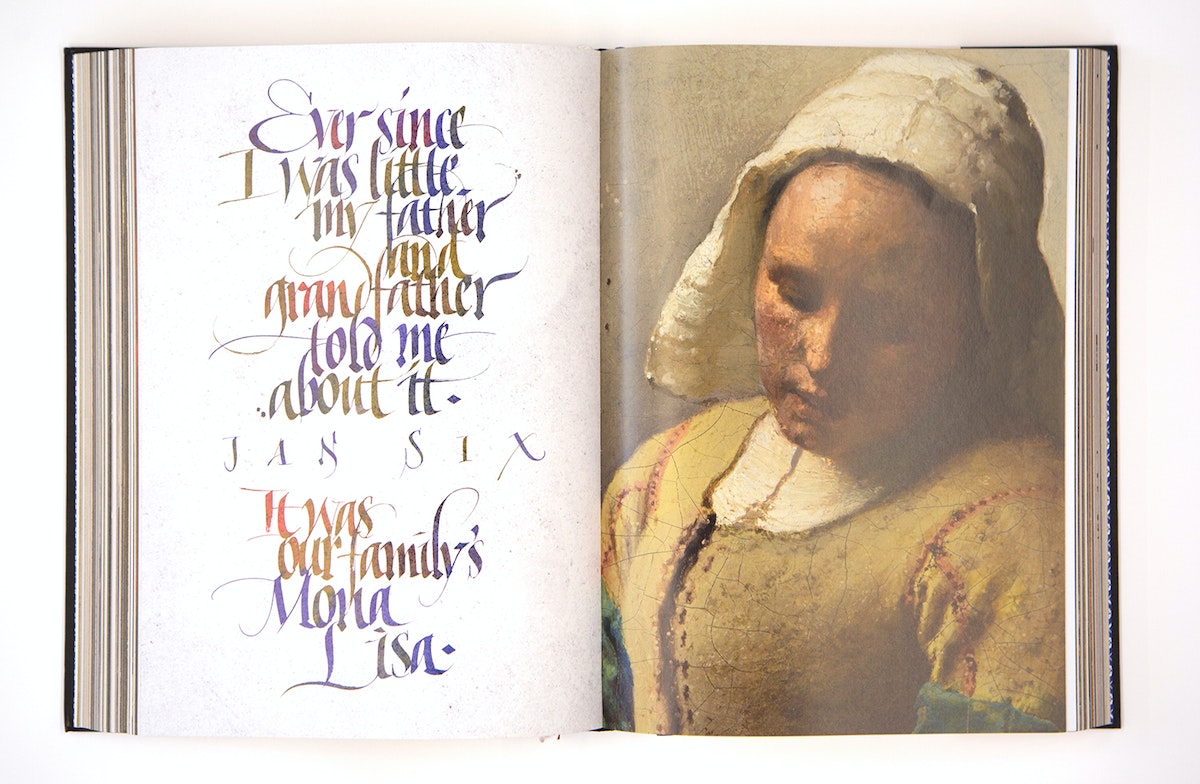
It’s beautiful. I think beauty is very important. Having beautiful things around you makes you feel alive. In the age of digital—which these days has become almost synonymous with disposable—it’s really nice to stop the train for a minute and put something in your hands that has heft, and is an extremely lavish, unapologetically gilded object. To me it’s like holding a piece of jewelry or going to the symphony. The sensorialist in me is awakened by this book and I’m very proud to have been included in it.
Paul Bennett has always had an appreciation of the Dutch Masters: “I love the craft of them, actually, the feeling of the pictures.” So, IDEO'S Chief Creative Officer jumped at the chance to contribute to designer Marcel Wanders' latest project, Rijks, Masters of the Golden Age, a lavishly gilded coffee table book that pays homage to the 17th-century masterpieces hanging in the Rijksmuseum’s Gallery of Honour.
6 Hard-Learned Lessons from an Aspiring Comic Artist
What Ina Xi learned while making graphic novels
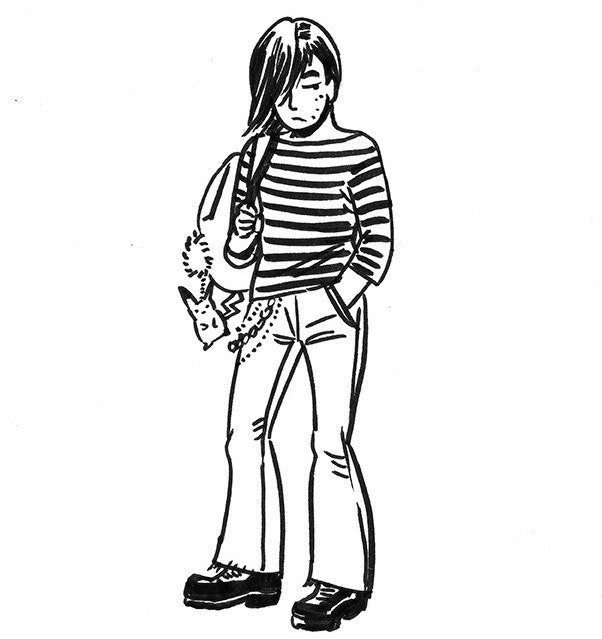
That was 10 years ago. I was in high school in China, where a comic dork looked like this:
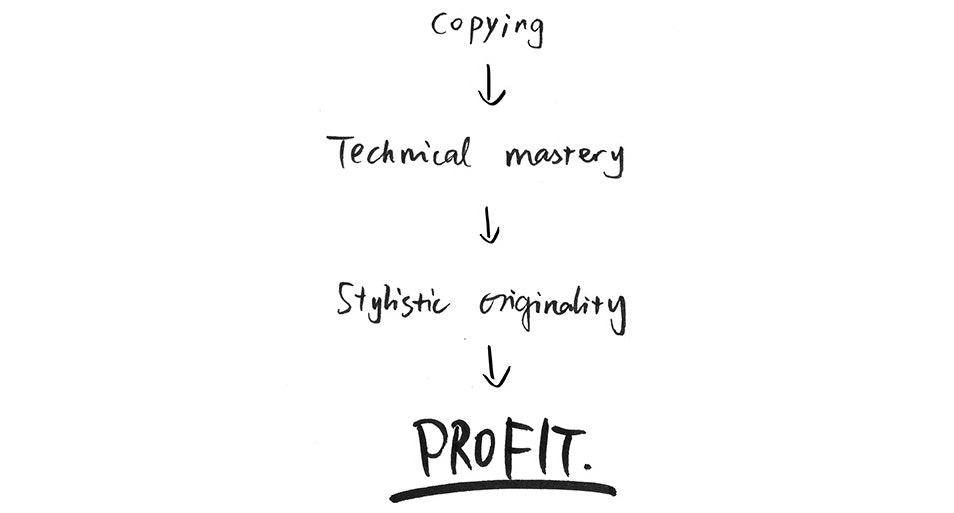
That ego-crushing was followed by a lot of self-loathing and Cheetos. But over time, the taste of Cheetos grew flat, and my hands started itching to doodle in physics class again. I decided to follow the method the editor suggested:
Before long, I was running my first monthly series in a halfway reputable magazine. That helped me edge up in the high school popularity rankings, and I got a few messages of encouragement from reader forums. Above all, though, the method helped me get into a state of comic flow; nothing else mattered when I was drawing. Even when I was failing in life and full of self-doubt, I could always fall back on my sketchbook.
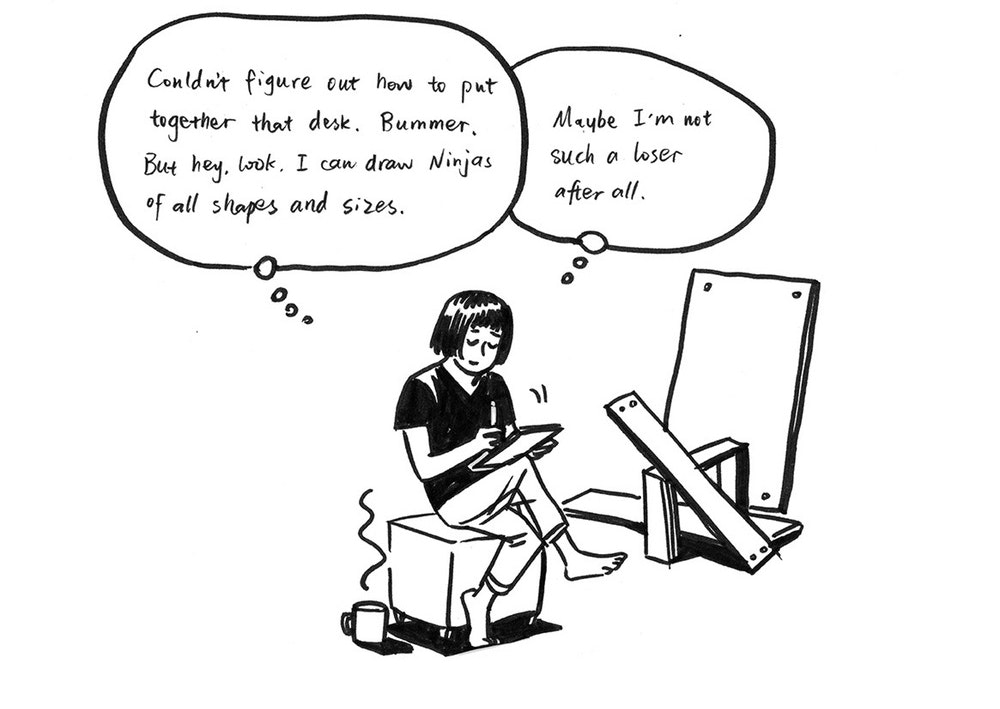
Which brings me to Lesson #1:

But even when you’re following a proven method and trusting the process, there are a few dangers to watch out for when embarking on graphic novel projects. The Pain/Gain index, for example:
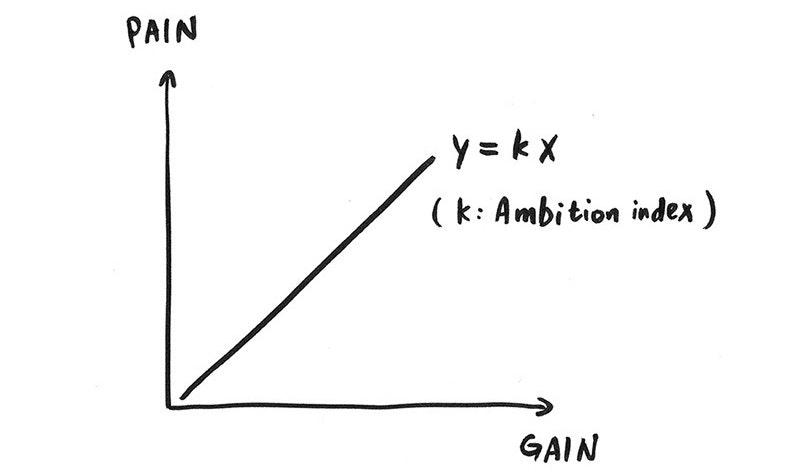
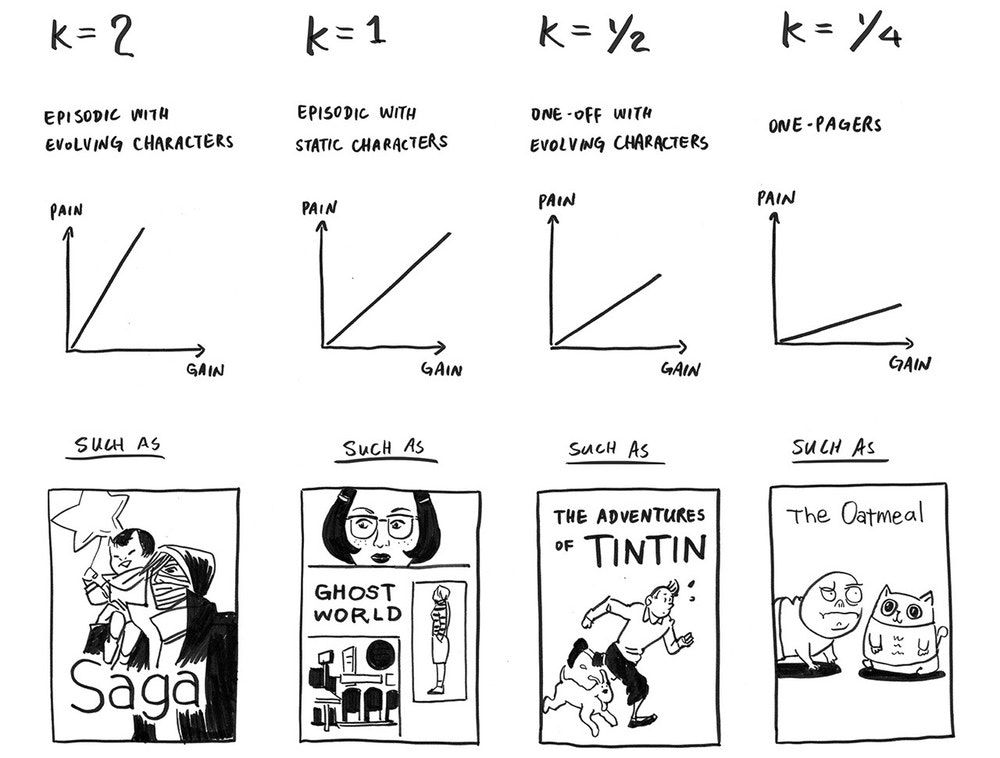
If the difficulty index K is too high, terminate! There are four levels of challenge in a graphic novel project:
Creating anything that requires more cognitive load than watching Game of Thrones after a full workday is challenging to begin with, which leads to Lesson #2:
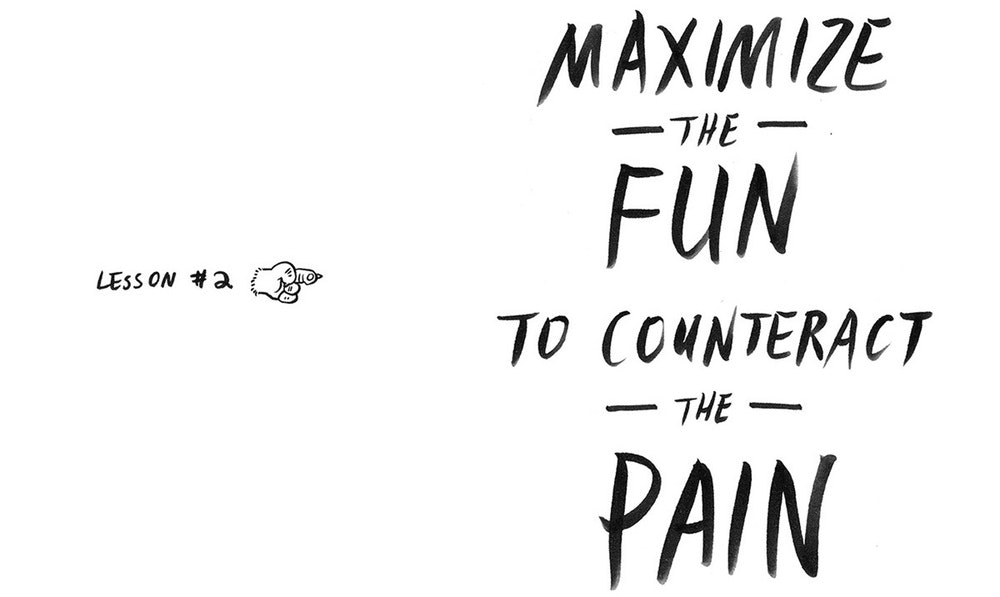
For me, it’s about rewarding myself with things I’m fond of drawing: intricate landscape, fashion, and action scenes. Since I suck at writing dialogue, I’ve kept it to a minimum, and substituted in symbols and visual cues.
Here are four other things I learned while making graphic novels, so you don’t have to go through the same pain:
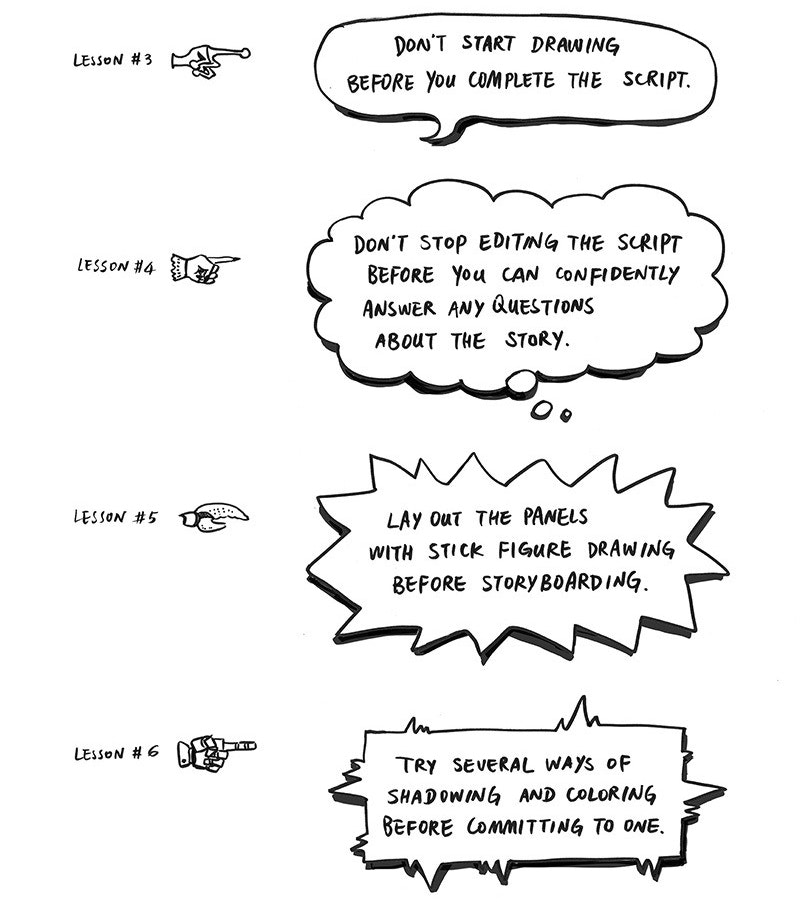
I’m at work on #6 at the moment, which is the most fun.

Coloring under progress
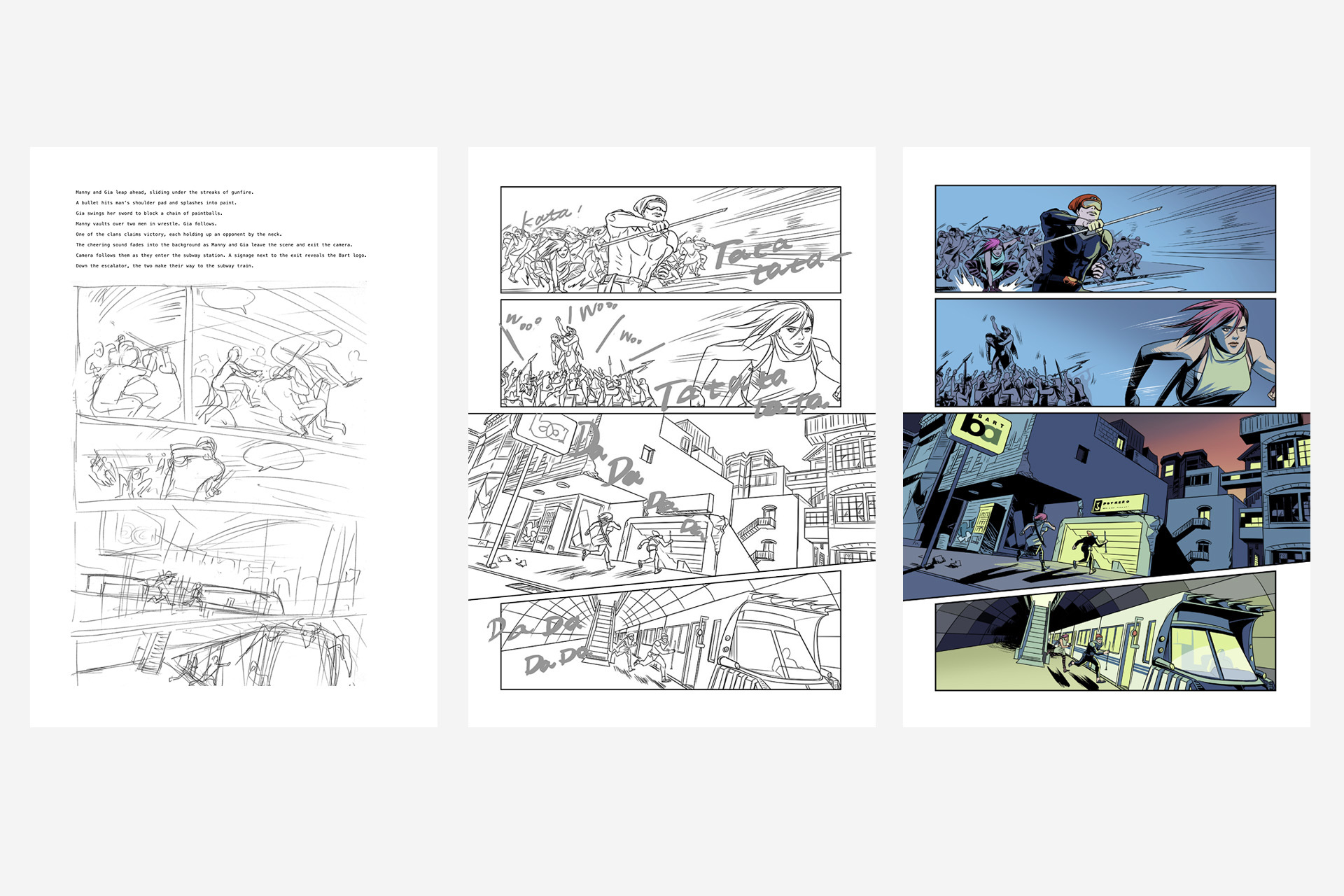
It’s the last step in a graphic novel I’ve been working on about living in a dystopian San Francisco of the future, where the scarcity of organic food leads its residents to fight to the death at grocery stores. The story is a dramatized observation of the on-going identity battles most San Franciscans face today. It’s a place where one feels simultaneously insider and outsider. You can be both a picky eater and burrito consumer, the root cause and the victim of jacked-up rental prices, and equal parts poseur and satirist of hipsterdom.
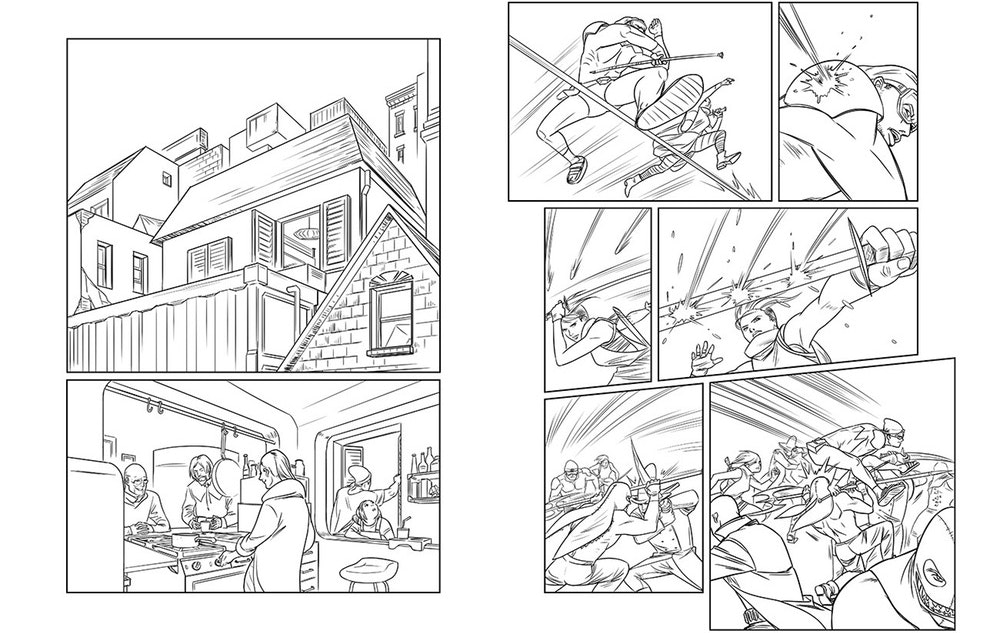
“San Franciscocoa” depicts a mundane but impossible feat of grocery shopping—buying a bag of cocoa powder that’s going into extinction.
“Sorry, but it’s simply not up to the publishable standard.”
The editor handed me back my work, which took hundreds of hours to create. There was a long pause.
“You should try more live sketching,” she said, lowering her voice to soften the blow. “Build a strong foundation before finding your personal style.”

Lindsey Turner
I’m passionate about building brands, products, and experiences that help organizations show up with meaning and momentum.
I help organizations cut through complexity by shaping how they show up, through brand strategy, identity, and storytelling.
Working at the intersection of brand and business, I bring an editorial eye and a bias toward making—turning ideas into tangible experiences that people can understand, trust, and believe in.
My work spans government, healthcare, financial services, media, and consumer goods, from launching Gen Z-focused ventures to building innovation labs and reimagining legacy brands. I relish moments of ambiguity and enjoy translating across teams, perspectives, and priorities to move ideas forward.
I started my career in editorial and digital design, shaping cross-platform experiences and identity systems in publishing and agency environments. That foundation still shapes how I work today: I’m detail-oriented, collaborative, and overreliant on the Oxford comma. I hold a BFA in Visual Communication from the School of the Art Institute of Chicago.

Rachel Young
My work helps organizations see who their products aren't working for—and build the will and the tools to do something about it
For 25 years, I've asked the same question: Who does this design exclude—and what are we going to do about it?
My work spans human-centered strategy, inclusive design, and qualitative research, with clients ranging from Microsoft, Google, and Verizon to the National Science Foundation, and San Francisco Unified School District.
Before IDEO, I taught elementary school in East Palo Alto and spent a decade doing design work with social service organizations—where I learned firsthand what it costs people when systems are built without them in mind.
I am currently writing User Error, a nonfiction book about digital access and the design decisions behind it. I live in Oakland, California.

Brian Pelsoh
I lead with craft, ensuring our work is creatively excellent: rooted in deep human insight and imagination, while also grounded in the realities of business and technology.
My expertise spans brand, communication, and product design across tech, education, the arts, and social impact.
I believe great work demands both high-level vision and obsessive attention to detail, and only happens through collaboration.
I bring an inclusive, hands-on approach and a deep understanding of business, which enables me to consistently deliver excellence while always asking why.
Before joining IDEO, I worked at the brand firms Pentagram and VSA Partners. I began my career as a designer, leading teams at the School of the Art Institute of Chicago and the Milwaukee Art Museum. I hold an MFA in graphic design from Maryland Institute College of Art and a BFA in communication design from the Milwaukee Institute of Art & Design, and have taught at some of the best design schools in the US.

Tony Wong
I am responsible for IDEO’s long-term success in China and working with clients to use design as a tool to enable growth.
I am responsible for IDEO’s long-term success in China and working with clients to use design as a tool to enable growth. Specifically, I have helped Chinese companies design holistic brand solutions through the development of their products, communication, services, and innovation teams, and I have helped multinationals expand their presence and influence in China.
I advise global leaders on developing China-led innovation and capabilities.
In over 15 years in IDEO Shanghai, I have worked on projects that use design to elevate the quality of the experience of healthcare products and services, streamline processes that increase productivity, create spaces and programs that promote and enable inclusive communities, and build next generation mobility solutions that are planet-positive.
Before joining IDEO, I worked at Philips Electronics and the Electrolux Group in Italy, the Netherlands, and Singapore on a number of breakthrough commercial products. I am a member of the Young President Organization in Shanghai.

Building a personal AI for the messiness of life: Sida Li
Most AI products today are built for work—a space with clear problems and established systems. One founder noticed a gap: personal life is messier, harder to systematize, and mostly left behind by the AI boom. So she built Cue, a personal AI that lives inside iMessage and group chats, to go where the other tools haven't.
In this episode, Becca Carroll, IDEO's Chief Strategy Officer, talks with Sida Li, co-founder and CEO of Shared Context Lab, about staying anchored to a human need while the technology around her keeps changing shape, why she treats her business model with the same rigor she'd bring to a product, and what it feels like to build a company at this particular, disorienting moment in AI.
The conversation also gets into how Sida makes design decisions: the language Cue uses to describe itself, the tradeoffs behind building inside iMessage instead of a new app, and a real story about a business idea that didn’t pan out.
This is the second in a two-part series profiling founders from IDEO's Startups-in-Residence program. The first conversation is with Johannes Seemann, founder of Sooner, on designing GenAI for the emotional side of money.

Designing GenAI for the emotional side of money: Johannes Seemann
Most personal financial tools are built to run the numbers and optimize towards a budget. While that works for some, most people experience money as a lived relationship that does not neatly fit into a spreadsheet. Johannes Seemann and Becca Carroll discuss why money is emotional before it is mathematical, and what a human-centered approach to building a generative AI financial product looks like in practice.

The curious leader's edge in uncertainty: Scott Shigeoka
Mina Seetharaman talks with Scott Shigeoka, author of Seek and Head of Curiosity Cultivation at the Eames Institute, about what distinguishes genuinely curious leadership from performative curiosity, how power dynamics shape curiosity, and why practicing curiosity can restore energy rather than drain it.

How constraints make us more creative: David Epstein
Mina Seetharaman talks with David Epstein, author of Inside the Box and Range, about why total freedom often produces average work, how leaders can design useful limits on purpose, and what organizations such as General Magic and Pixar reveal about the relationship between boundaries and creativity.
Looks like you might be in search of something very specific?
Or reset the filters above and try another angle.
Here’s some random inspiration

Podcasts about creative leadership

Articles about the power of prototyping
