
.svg)



Mental health, co-designed
Kooth partners with young people to create Soluna, a mental health resource for California youth.
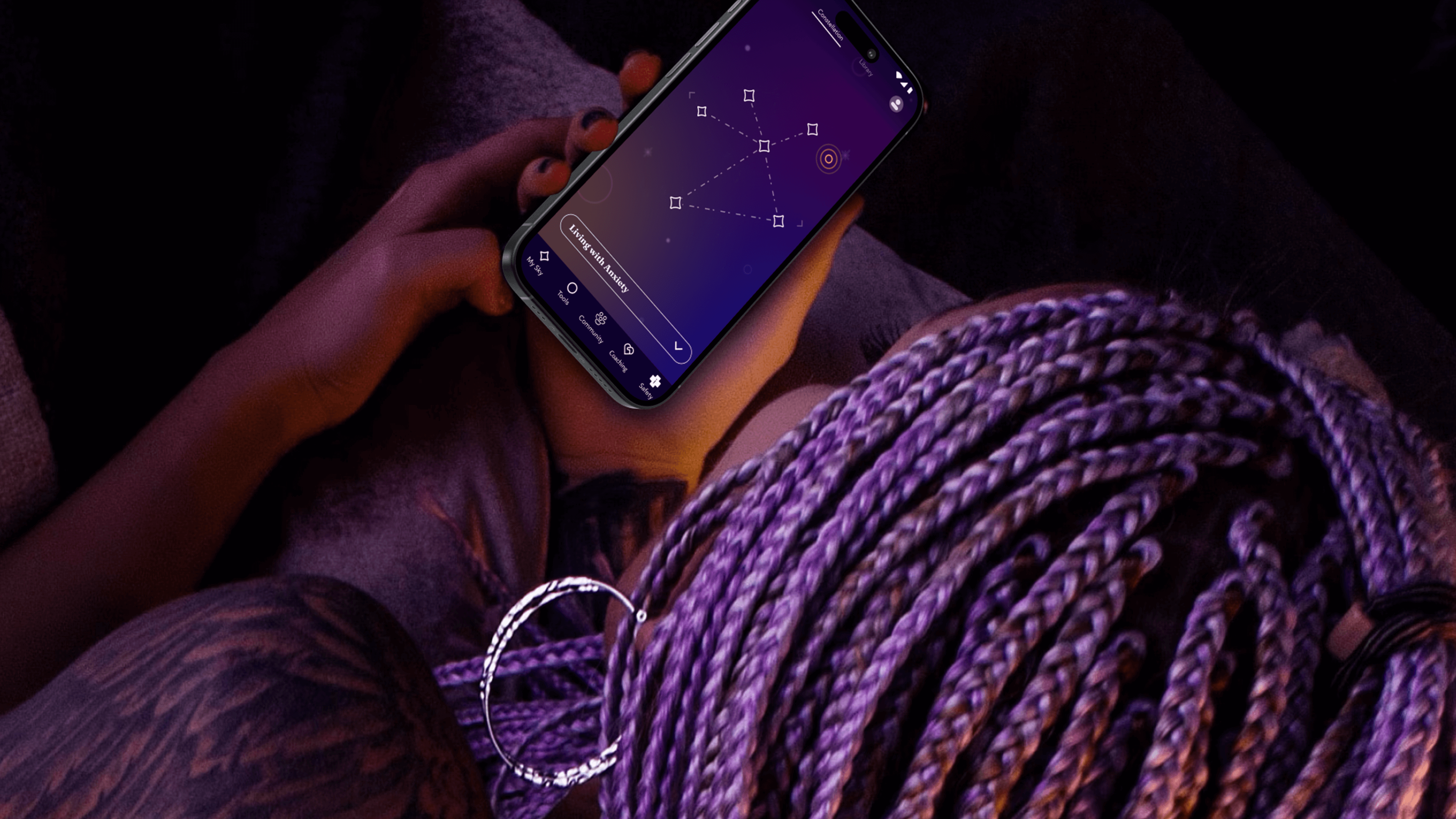
Increasingly, digital spaces are proving detrimental to youth mental health. By co-designing with youth, Kooth and IDEO set out to flip the script, creating a positive digital space for young people to safely explore their mental wellbeing.
When Kooth, IDEO, and Blackbird, IDEO’s longtime development partner, first started working on the project, the window of opportunity was narrow, and the stakes were high. The group was up against a nine-week deadline to create a working proof of concept app. Also on the line: a $188 million contract with the Department of Health Care Services (DHCS)—one that would open an entirely new line of business for Kooth.
The app needed to do more than demonstrate functionality—it needed to prove its value. To ensure that they were creating an asset that truly fit the needs of young people, the team turned to an initial cohort of 13-25 year-old co-designers who explored early features, created video diaries, and shared their questions about and experiences with mental health. These young people often gravitated toward self-service tools that helped them take action based on their feelings. With their feedback, the team created new expressions of clinically-validated behavioral health tools like journaling, breathwork and white noise—and built novel tools, such as Starboard, an expressive drawing tool and a nod to art therapy.
The team took inspiration from content the co-designers liked to consume, such as story-driven video games that enable freedom of exploration, deepened by a unifying mythology. That led them to a constellation theme, which made the experience more intriguing and playful. The co-designers also recommended a dark color palette, because they preferred exploring the app at night.
With these insights, the team refined the proof of concept, and then conducted a one-week pilot with another 50 young people across California. Their positive feedback gave the State the confidence to invest in a $188 million, four-year contract for Kooth to bring the app to a platform at scale.
Over the next year, the team engaged another 150 young people to help design, shape, and test the app. At the same time, Kooth and IDEO created a clinical oversight group, which included a pediatrician, therapists, and other clinical specialists. This group anchored the platform in the practices of Acceptance and Commitment Therapy (ACT), cultivating psychological flexibility—the mindful acceptance of positive and negative emotions. Young people are invited to complete short reflections and surveys throughout their journey with the app, which includes rigorous, science-backed measurements to assess the therapeutic benefits.
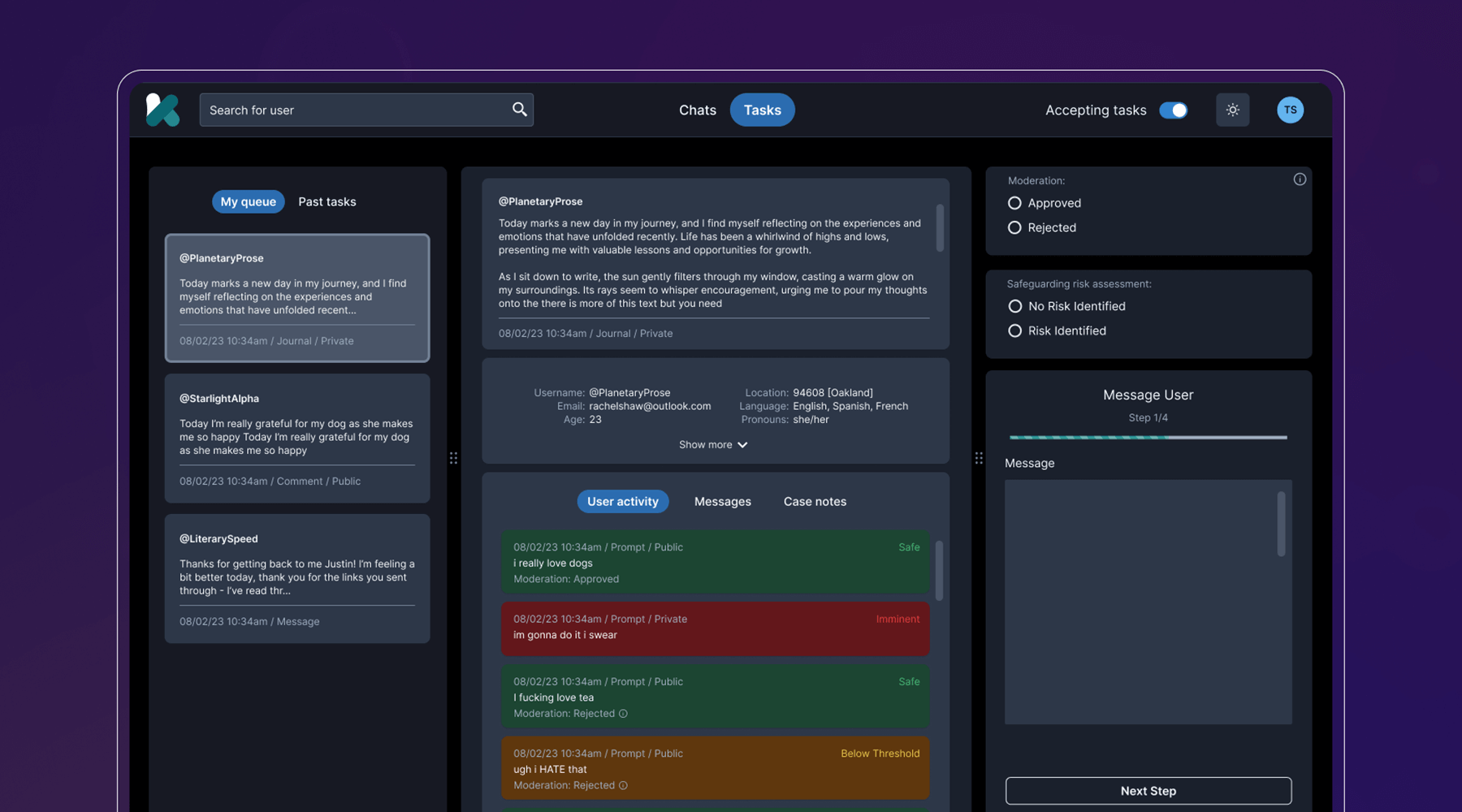
Behind the scenes, the team developed a clinical-facing service and digital platform that empowers Kooth’s peer specialists, social workers, community curators, and clinicians to support the youth experience, all while protecting privacy and confidentiality. They also navigated a complex landscape of state requirements and government legislation, ensuring that the platform could cover topics like substance abuse and gender identity, and that users could access coaching within 24 hours, and choose from a diverse set of experts.
The last step was to select a name that worked across multiple languages, trademarks, and competitor branding, and didn’t come off as a mental health service, something the youth co-designers believed was critical. IDEO and Kooth landed on Soluna, a name that alludes to the app’s presence in both the bright (“sol” for sun) and the dark times (“luna” for moon).
Now, Soluna is available for free to all youth in California, and the state has set ambitious targets for reaching all young people at scale. Soluna is a living platform that will continue to receive product and design updates for years to come, all deeply rooted in youth co-design.
The US Surgeon General named mental health “the defining public health crisis of our time,” and cited social media, online bullying, and the isolation exacerbated by the COVID-19 pandemic as major drivers that have significant negative outcomes for youth.
In California alone, more than 284,000 youth cope with major depression. 66% of kids with depression do not receive treatment. Between 2019-2020, the suicide rate for kids ages 10-18 increased by 20%.
In 2022, California Governor Gavin Newsom’s Master Plan for Kids’ Mental Health set aside $4.6 billion to increase access to mental health and substance abuse support, the largest commitment to youth mental health ever made by a state.
94%
of proof-of-concept app users would recommend the Soluna app to a friend, and believe that engaging with the app would be a positive addition to their daily/weekly routine
6 million
young people in California had access to Soluna at launch in January 2024
A more comfortable Pap smear
Teal Health creates a system for at-home cervical cancer screening.
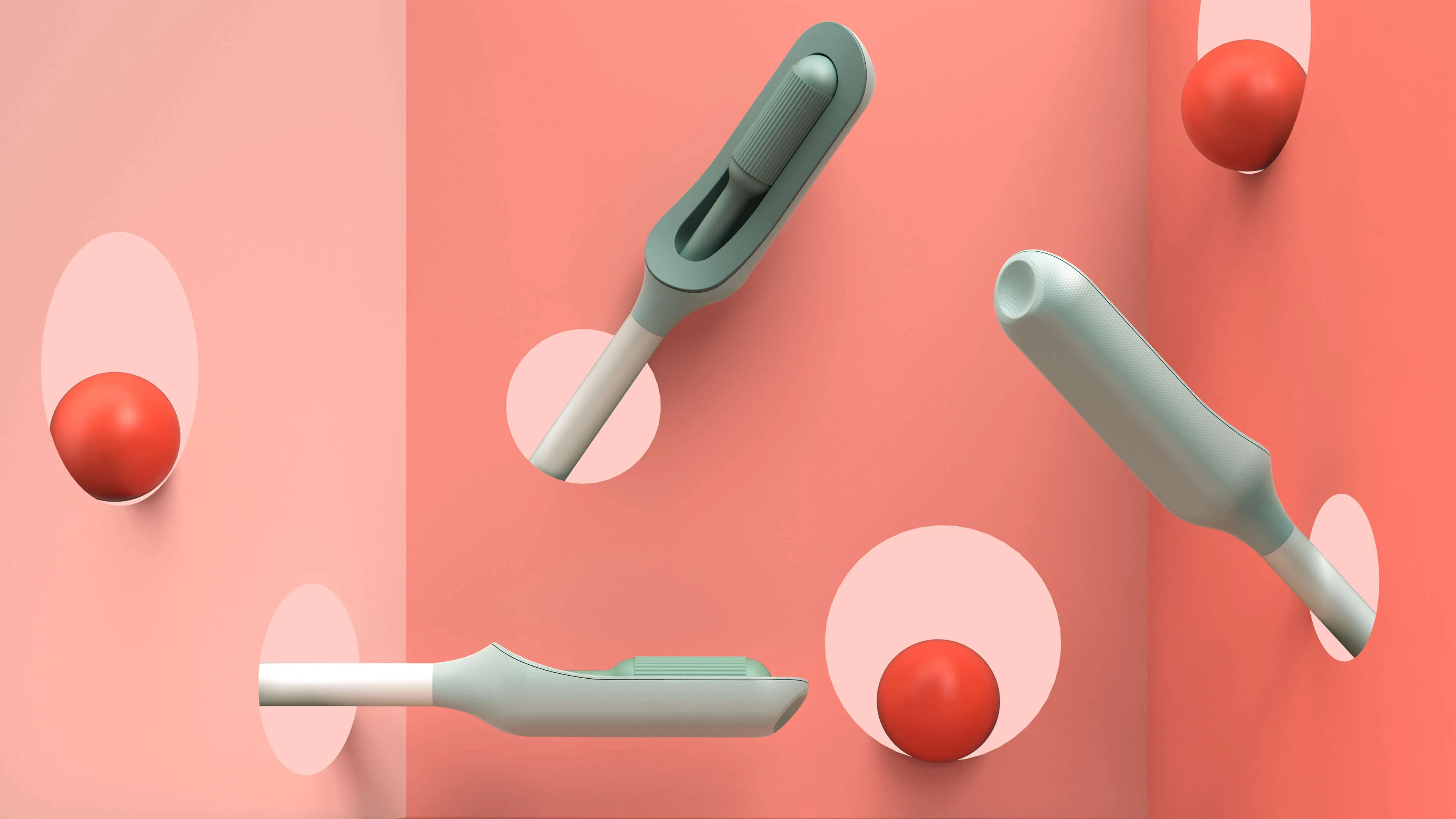
Creating a better cervical cancer screening experience is an important mission, but also a challenging one. Not only would Teal have to address the regulations that face healthcare device companies, it would also need to build a comprehensive telehealth platform and a physical product—a wand that could easily collect an adequate cell sample, even in the hands of an untrained person.
The first challenge was to create the wand. The device would need to do a lot: It’s impossible for a person to see their own cervix, so the user would have to be able to find the cervix blind, collect the sample themselves, and remove the wand from their bodies without contaminating it on other parts of their anatomy. Because this is something users are likely to do in their bathrooms, where there is no space to lie down, they would need to be able to use the device while standing—and with one hand. From the beginning, the IDEO team set out to design functional, testable prototypes to make sure the idea was viable, and incorporate diverse voices into the research process, including trans, minority, and disabled women.
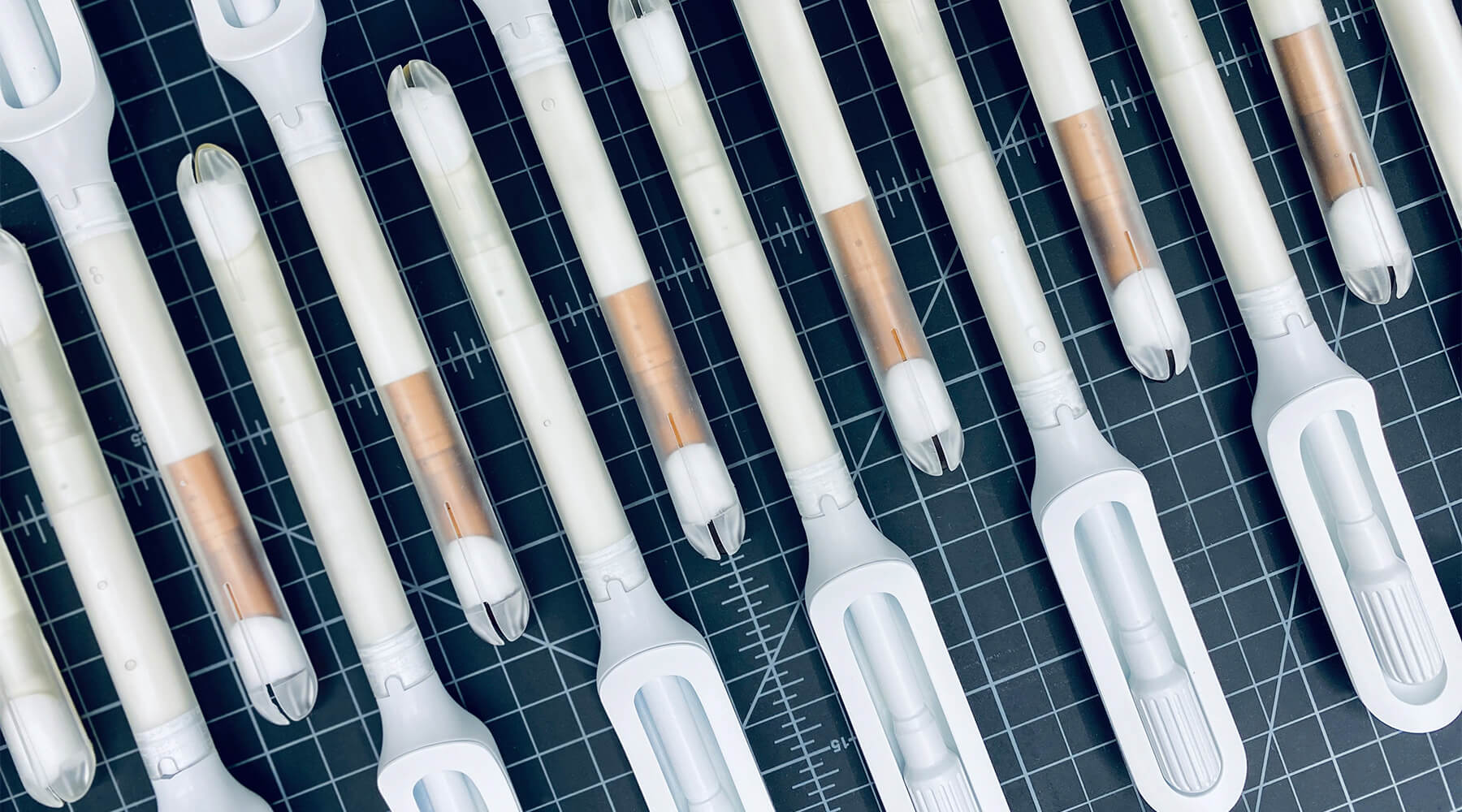
Because the product is meant for people who aren’t medical professionals, the team worked to design something as simple, intuitive, and unintimidating as possible. They used a 3-D printer to create multiples of every prototype, autoclaves to make sure that the designs they were creating were sterile, and leaned into shapes women are already used to, like the cylindrical shape of a tampon. The wand they created has that same basic form, but with a soft sponge that the user can deploy with the turn of a dial to collect the sample, then close to protect it from contamination on the way out of the body.
With working prototypes in hand, Teal set out to test their efficacy. In an initial study with 220 participants varying in age, race, socioeconomic status, and geography, Teal found that not only were participants able to successfully self-collect samples, they also preferred them over the speculum, the device doctors typically use during a screening. Some 92 percent said if they knew the results were equal they would prefer self-collection, while 87 percent reported they would stay current with screening if Teal Wand was an option. Self-collection took the vast majority under two minutes to complete, and 97% of study participants reported it was very easy or easy to use. The Teal Wand recently received a patent for its unique design.
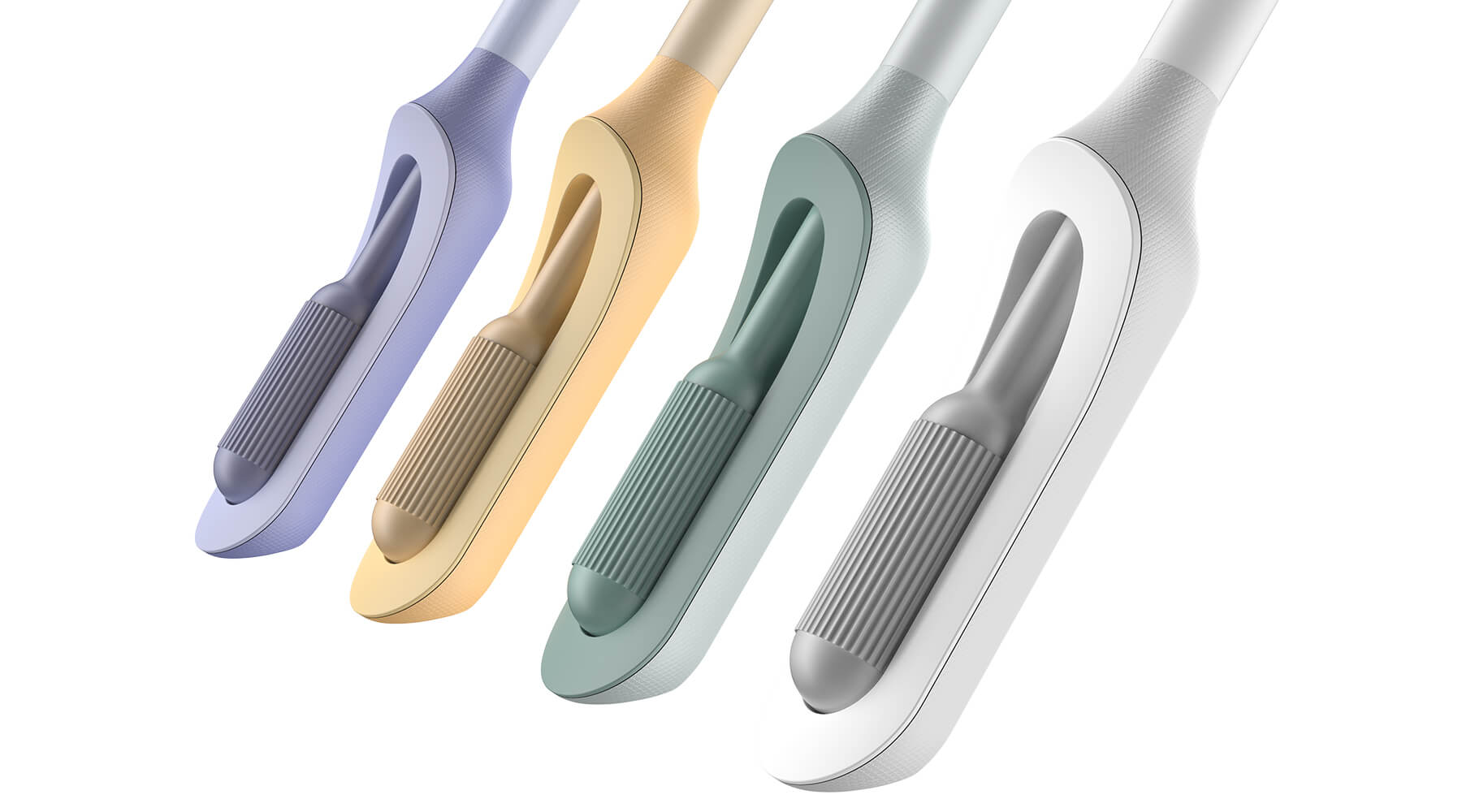
The IDEO team also worked on the packaging and unboxing experience, which plays an important role in supporting the user through the self-screening process. The team built in thoughtful design cues to give users reassurance that they are using the wand correctly, and to provide the same level of confidence they would have in the results of an in-clinic screening.
In January 2023, Teal raised $8.8 million in a seed funding round from Serena Ventures, Emerson Collective, and Metrodora. Later that year, the company launched a nationwide clinical trial with leading health organizations including Johns Hopkins University, Yale University, the University of Colorado, and Washington University, among others. In 2025, the Teal Wand became the first FDA-authorized device for at-home cervical cancer screening, with virtual medical provider support, and became available in all 50 states. Due to soaring consumer demand and increased insurance coverage starting in January 2027, Teal Health secured $22 million in Series A funding to expand access to the Teal Wand. It’s an enormous step toward the company’s North Star: catching cervical cancer earlier and saving lives.
Cervical cancer is nearly 100% preventable when it’s caught early, yet one in four women in the US are not up to date on their screenings.
More than 12,000 people in the US are being diagnosed with cervical cancer every year, and more than 4,000 people die of the disease, which disproportionately impacts Black, Asian, and Hispanic women.
More than half of cervical cancer cases are found in women that are not up-to-date on their screenings.
$22M
raised in a Series A round to expand access to the most accurate FDA-authorized at-home HPV cervical cancer screening
97%
of clinical study participants said the Teal Wand was very easy or easy to use.
87%
of participants said they would be more likely to stay current with screening guidelines if Teal Wand was an option.
94%
of participants said they would choose to collect their own sample from home rather than the current standard of care where a clinician collects it in-office.
Amplifying a movement
Cities United rebrands to create safe, healthy, hopeful communities for Black men and boys.
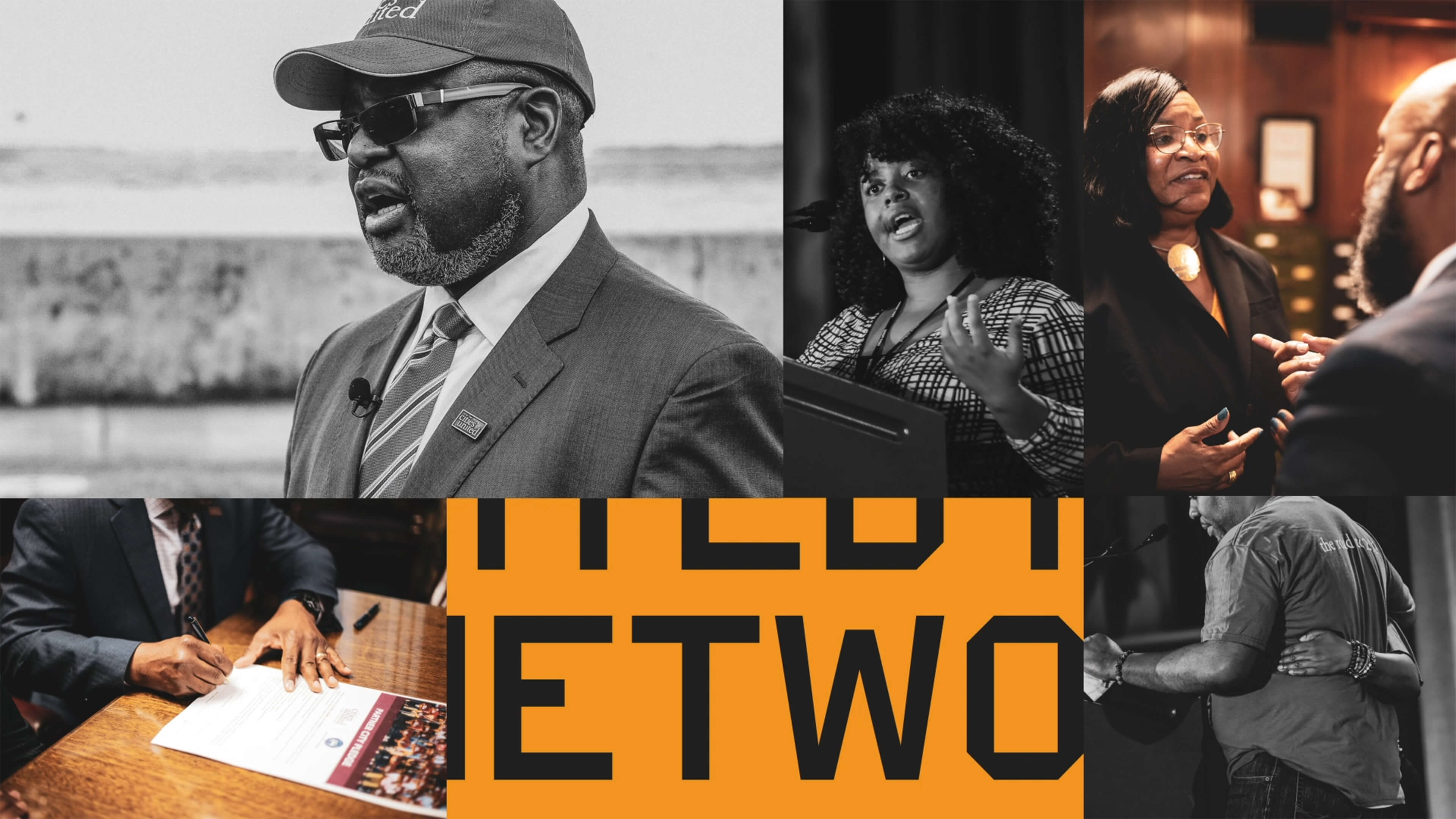
Cities United already had a strong foundation with its stated mission, vision, and values. IDEO brought those to life with a new visual and verbal brand identity system that celebrates Cities United’s inclusive approach to building relationships and reimagining public safety.
To help Cities United with its verbal identity, the IDEO team defined the organization's voice, tone, and key messages, making it easier to tell its story more consistently and clearly, a crucial step toward engaging stakeholders.
To define the new visual identity, the team created a new logo, a letter C composed of interwoven shapes that represent the three tenets of their vision—“safe, happy, and hopeful;” a new design language that references city grids; and a typographic system anchored by the typeface VTC DuBois, inspired by W.E.B. DuBois’s own custom lettering and designed by the Black-owned Vocal Type Co. The team also designed a color palette that embodies the textures of city life with hues reminiscent of asphalt, sunrise, and brick.
To amplify the refreshed branding, the team designed a new responsive website, citiesunited.org. The intuitive site shares the organization’s mission, resources, ongoing projects, and partner network, inviting stakeholders to join in their transformative work. IDEO also created a video to humanize Cities United’s mission and showcase its nationwide impact. It underscores the unity, resilience, and hope embodied by the organization through a chorus of voices.
This comprehensive rebranding widens Cities United’s reach and impact, helping the organization share its goal of creating safe, healthy, hopeful communities for young Black men, boys, and their families, and reintroduces the organization to a national audience.
The Cities United work was supported by IDEO’s Racial Justice Impact Fund, part of a commitment IDEO made in 2020 to address systemic racism and advance equity within our own organization, our client work, and beyond.
Cities United is committed to reducing the epidemic of homicides and shootings among young Black men and boys ages 14-to-24 by 50%.
Between 2009 and 2019, the number of Black children who “did not go to school at least one day in the past month because they felt unsafe at school or on their way to or from school” increased by 84%, according to Cities United.
Homicide is the leading cause of death for Black men and boys from birth to age 44, according to the Centers for Disease Control and Prevention.
2023 SF Design Week Award
In recognition of IDEO’s brand work with Citizens United

Balancing work and sleep
Somni’s personalized sleep program helps workers maintain their health.
Sleep is a critical resource for shift workers—and their employers, too. Together, IDEO and Somni worked directly with people with acute and chronic sleep challenges to create concepts that could support their sleep goals, and provide employers with the means to improve employee health.
When IDEO and Somni first partnered, the startup was an early-stage company, so the team started small, with focused sprints and workshops to redesign the core aspects of the company and product offerings. The team interviewed shift workers about their sleep patterns, which can vary quite a bit. Even when people keep to a specific schedule on work days, they often have to change their patterns on days off to spend time with family and friends, leading to a very disruptive sleep cycle. Research revealed that many third shift workers were dealing with sleep and health issues, but also a pervasive “machismo” culture, pressure to “tough it out,” and a reliance on energy drinks to deal with lack of sleep.
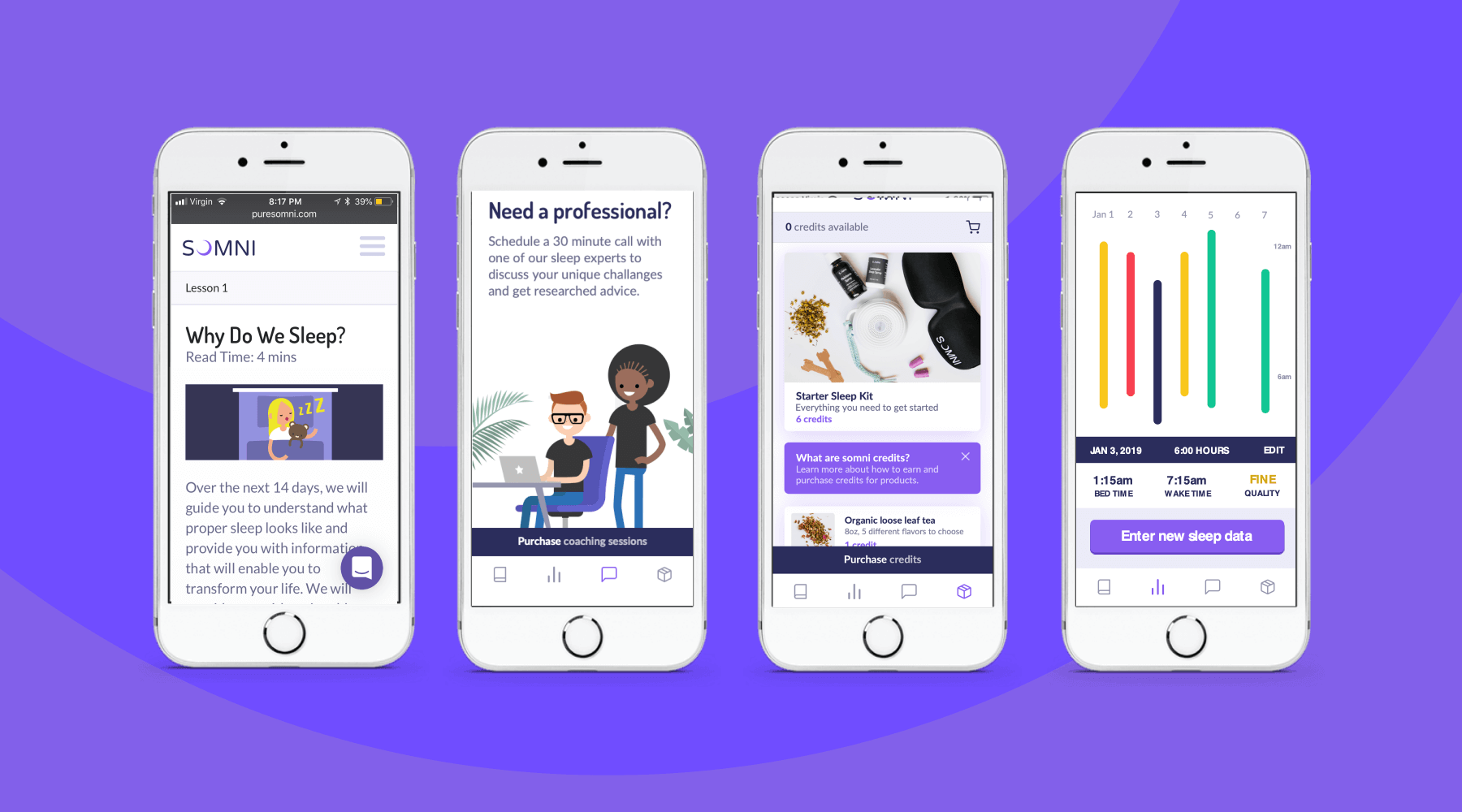
To address those issues, the team designed a digital experience for sleep cohorts, support groups where members could share their experiences and sleep strategies, and work with a coach and sponsor who already had been through the program. The platform analyzed workers’ data, and provided AI-enabled recommendations for improving their sleep. The big takeaway? Data by itself wasn’t necessarily helpful, and could be confusing for folks who were less digitally-fluent. Providing context, like a calendar that displayed sleep experiments at a glance, was crucial.
The IDEO team also created a new user experience for a genetic testing program that could uncover factors associated with sleep issues. Somni aims to use a saliva-based genetic test to monitor for DNA damage caused by circadian disruption, then leverage its sleep improvement program to prevent further damage. Because biomarker testing is a differentiating offer for Somni, it was extremely important that the team get it right, both to make sure that users could understand its utility, and for Somni to provide real value. The design challenge was unique—and not just because of data privacy concerns. Presenting data about DNA damage in a non-human-centered way could increase the anxiety workers had around their sleep.
At the end of the project, Somni leveraged the insights the IDEO team surfaced to improve products like its sleep coaching service, and to refine its biomarker testing offering. Based on this work, Somni has also created a pilot with a Fortune 100 company, which is currently in progress, as it works to mitigate the ill effects of disrupted sleep for employees and the companies they work for.
In the short-term, circadian rhythm disruption leads to an array of jet-lag-like symptoms, and in the long-run, it may contribute to weight gain, obesity, metabolic syndrome, type 2 diabetes, and cardiovascular disease.
It also impairs people’s ability to work, affecting productivity, creativity, and the overall work environment. Productivity loss can lead to employer baseline healthcare costs that are 26% higher, and over time, insomnia can result in an average cost of $4,267 more per employee per year.
In June 2019, the International Agency for Research on Cancer classified shift work as a probable carcinogen.
75%
user retention in Somni's sleep program
$2,450
savings per year per employee for users who complete the program
33%
improvement in sleep quality, and 41 more minutes per night

16 Artist Interpretations of Amabie, a Mythical Japanese Creature Said to Ward Off Disease
The sea spirit monster has become a symbol of hope, a public health mascot, and a meme
As COVID-19 spreads across the world, Amabie has gone viral, with interpretations shared by cartoonists, students, illustrators, craftsmen, even chefs.
Deeply inspired by this act of creative resilience, optimism, and solidarity, we asked IDEO designers across the globe to share their interpretations of the protective creature. If you feel the same, join us in creating your own interpretation of Amabie—and tag @IDEO on Instagram or Twitter.
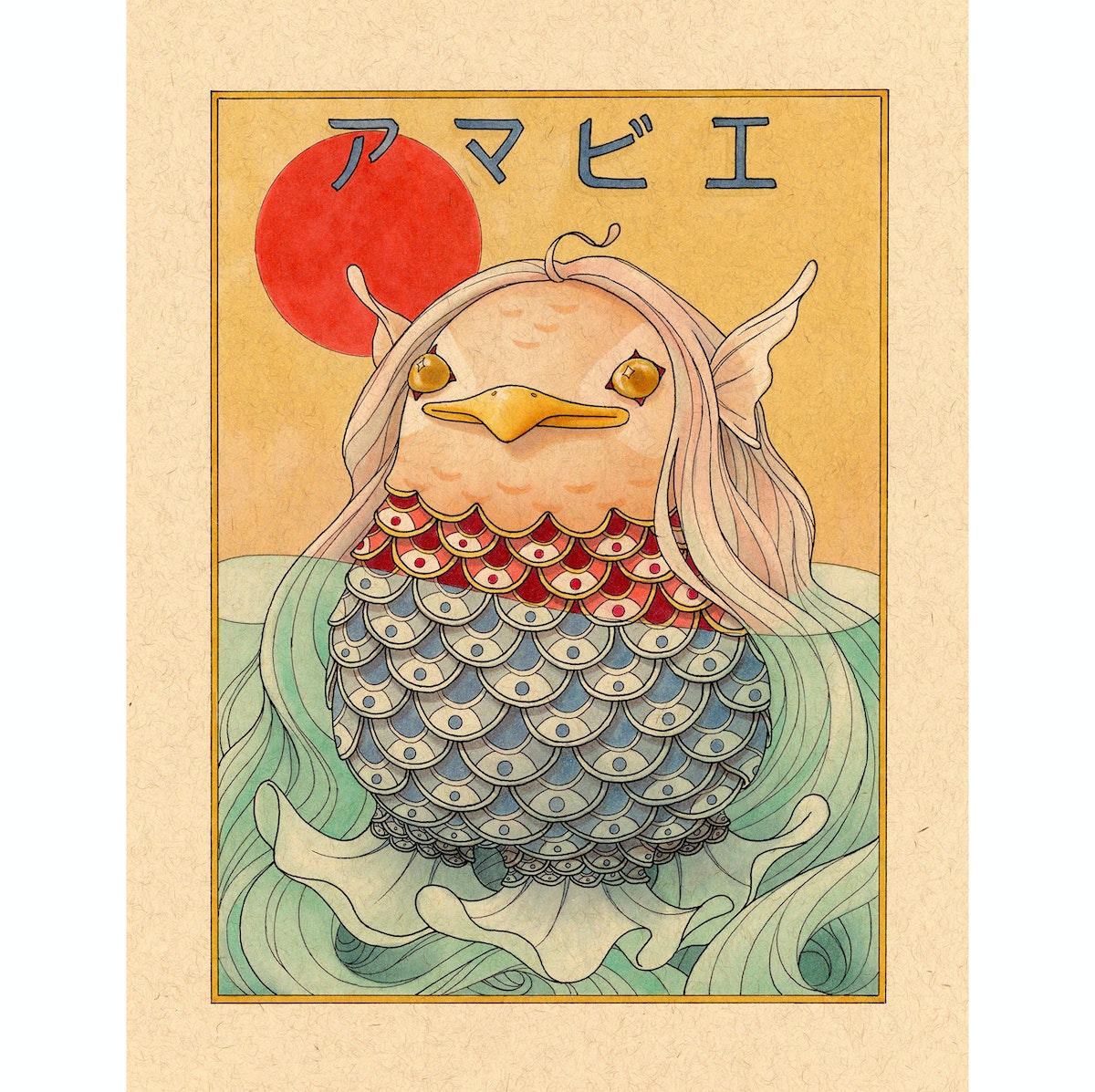
Felicia Chiao is a San Francisco-based industrial designer by day and illustrator by night.
"My Amabie was drawn traditionally on brown toned paper and colored with Copic Sketch Markers. It was such a strange creature to draw, I just tried not to think too hard about it and have some fun."
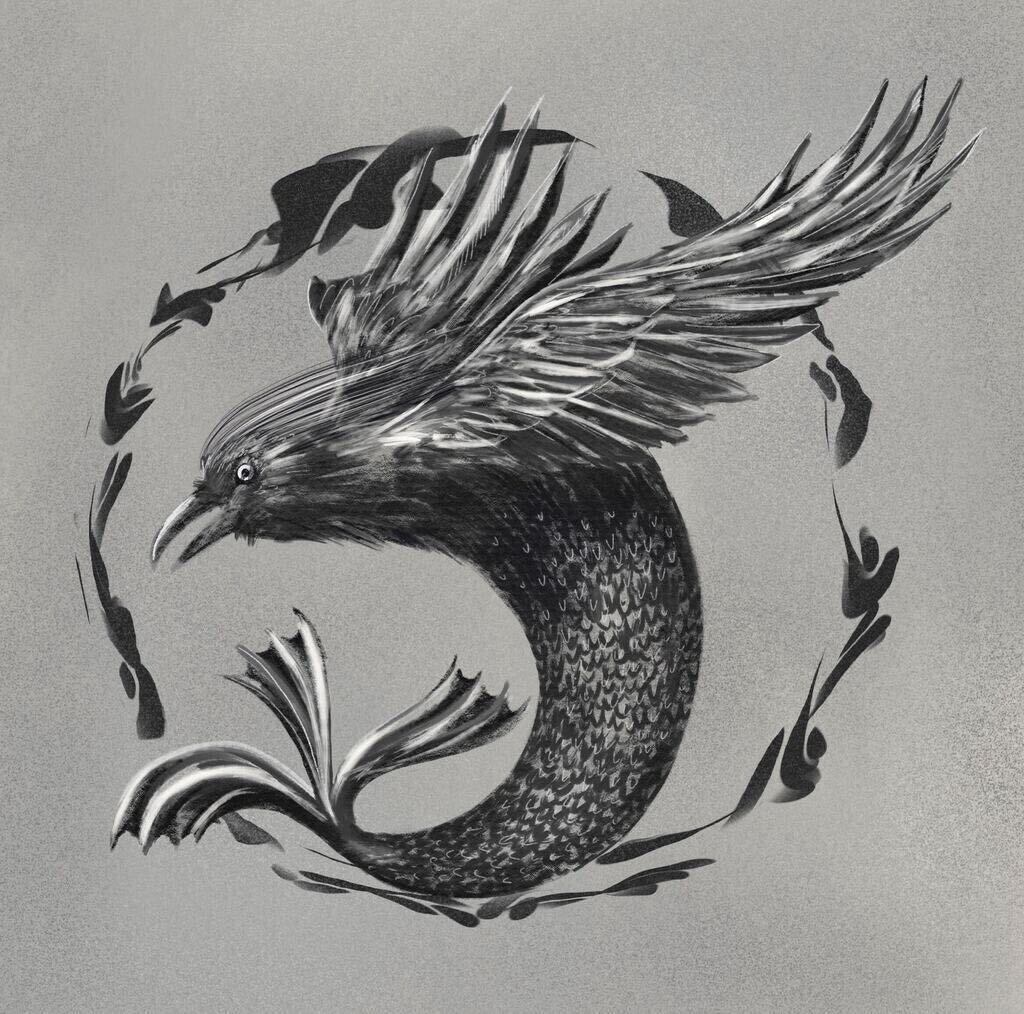
Gemma Lord (London, UK) is a designer and occasional color-inner. She really wants a dog.
"I wanted to capture a darker side of Amabie—a Borgesian-like creature, who for centuries lurked in the lesser-known crevices of folklore, and who has suddenly been recast into the uncomfortably bright light of our imaginations in the hope of warding off COVID-19."

Lauren Ito (San Francisco, CA) is a design researcher and community organizer. She can almost always be found by the sea.
"I was inspired by Amabie creating ripples of growth and resilience. As a plant enthusiast and forager, I made an altar collage of natural materials—including many plants propagating in my home as I shelter in place. I hope my amabie interpretation prompts a pause of reflection to honor our collective strength in the face of adversity."
May Kodama (San Francisco, CA) is a graphic designer who likes to doodle a lot.
"This is the self-care Amabie! I wanted to depict an Amabie who was taking good care of herself while sheltering in place, and hopefully encourage others to do the same. Drawn on Procreate and animated in Photoshop."
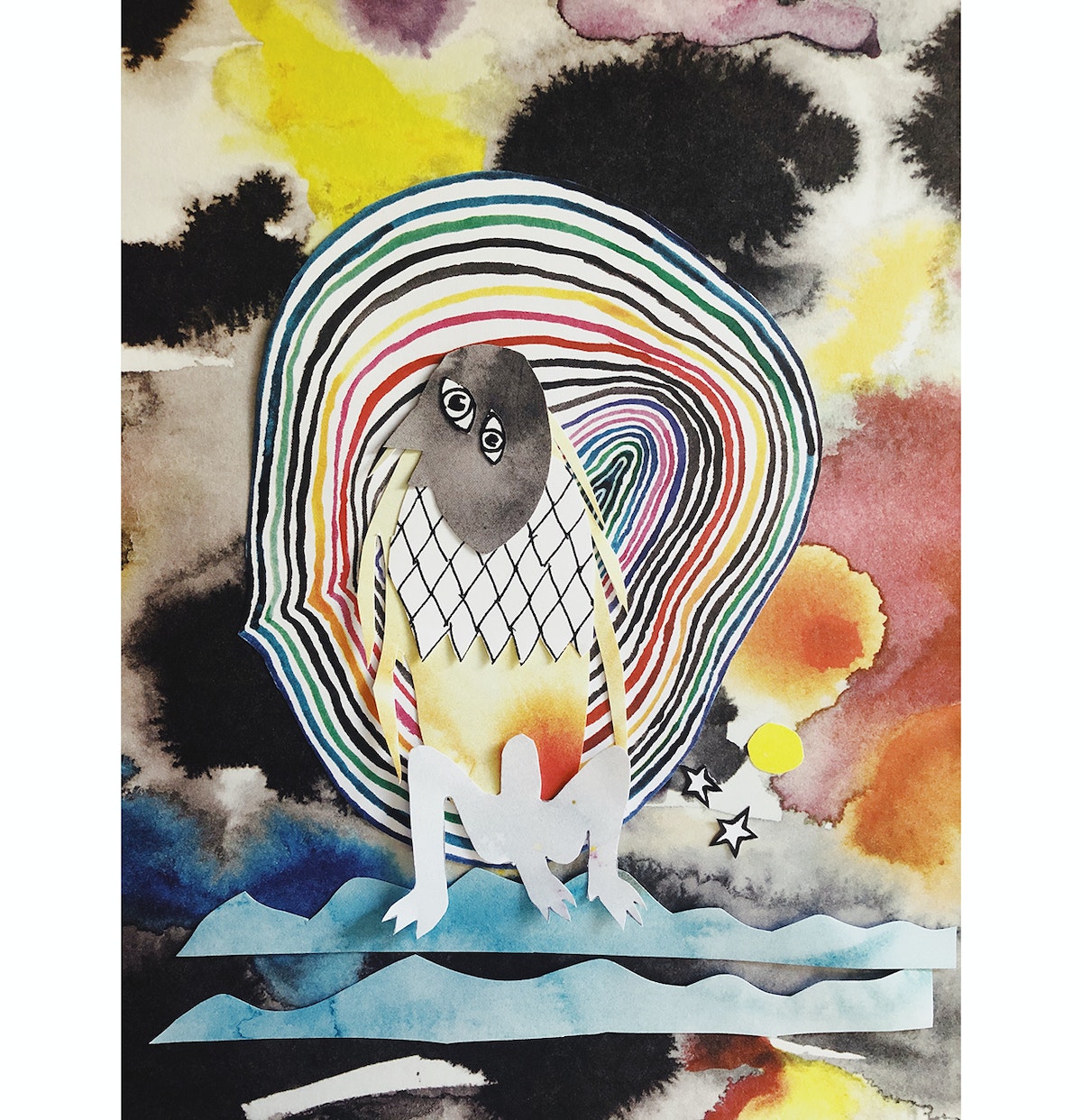
Tracee Worley (Oakland, CA) is a systems designer at IDEO San Francisco. She finds much design inspiration in ritual, spirituality, and mysticism.
"My Amabie appeared to me in a meditation and told me to visualize her in psychedelic splendor, emerging from a vat of molten gold floating upon the sea. She also told me to set this collage on my bedside table for five days and five nights, so that’s what I’m going to do!"
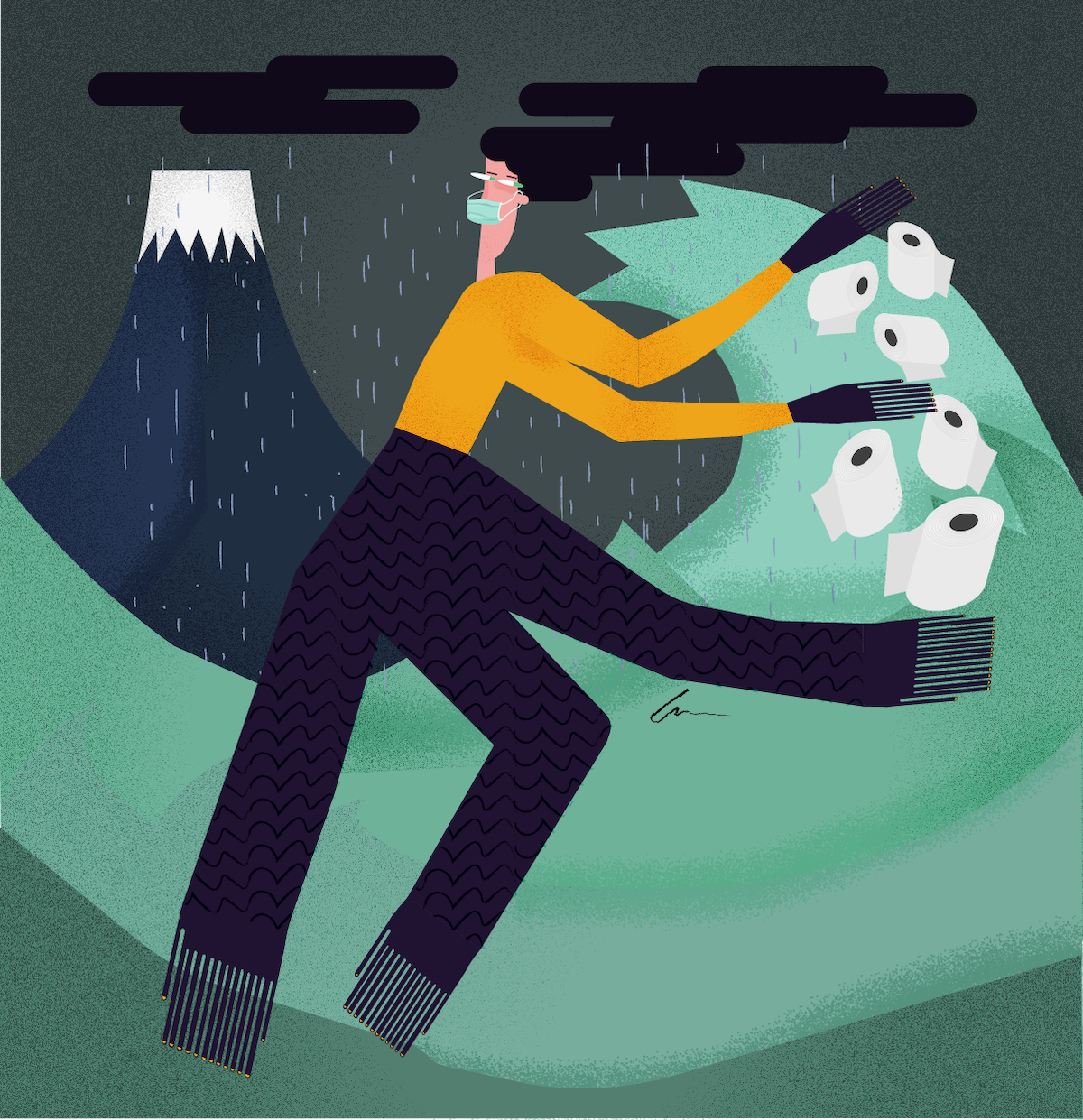
Luca Ponticelli (London, UK) is a commucation designer and serial doodler. On an average day, you'll find him dissecting the latest political news while sipping on a dark espresso.
"Mythology says she’s the entity announcing epidemics, so I wanted to compare the intensity of the crisis to the power of a sea storm, which she impersonates. The toilet rolls and the face masks, hiding her beak, are pinning this image down to our present day, making it undeniably 2020."

Meagan Durlak (Brooklyn, NY) is a designer director who believes that making is not just about thinking, but about exploring.
"With a symmetrical body, a neutral yet whimsical expression, and textural strokes throughout her bulbous hair, I hoped to capture the essence of the Amabie as a welcoming and warm creature who symbolizes the hope we all need during these uncertain times. She is an imaginary being whose spirit allows us to pin our future dreams and desires onto her elusive existence."
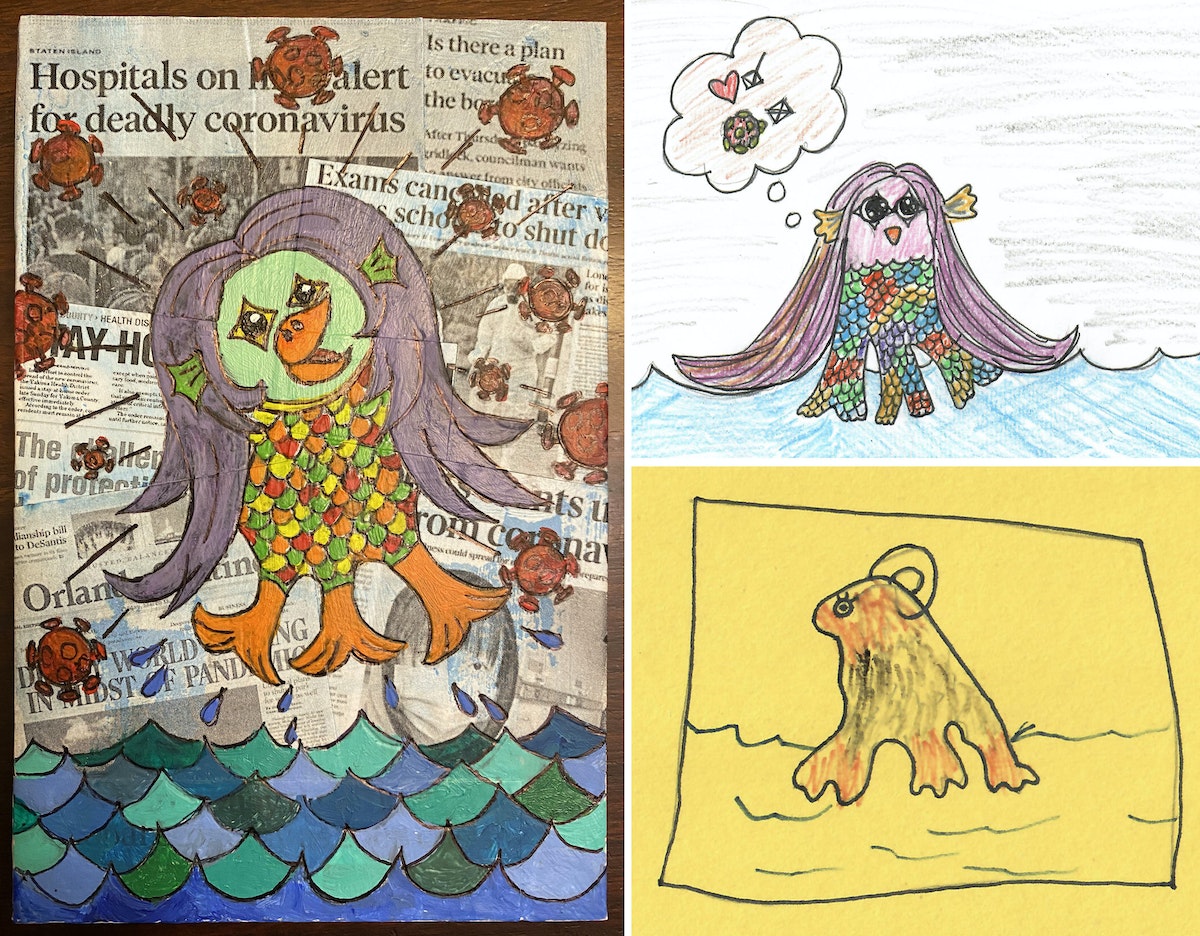
Michelle Lee (San Francisco, CA) leads IDEO’s Design for Play team and is proud mom to 2 budding artists—Neve, who has a full-time gig as a 3rd grader/soccer star, and Ren, who makes his living as a 1st grader/skateboarder.
Michelle’s Amabie (left) embraces her superhero powers, screeching away the coronavirus through acrylic paint and ink atop a collage of today’s newspaper headlines. Neve’s (top right) is a cerebral Amabie, choosing love over sickness, and is conceived through colored pencil and black ink. Ren (bottom right) opts for Amabie’s hairier cousin, bringing him to life with markers on construction paper.
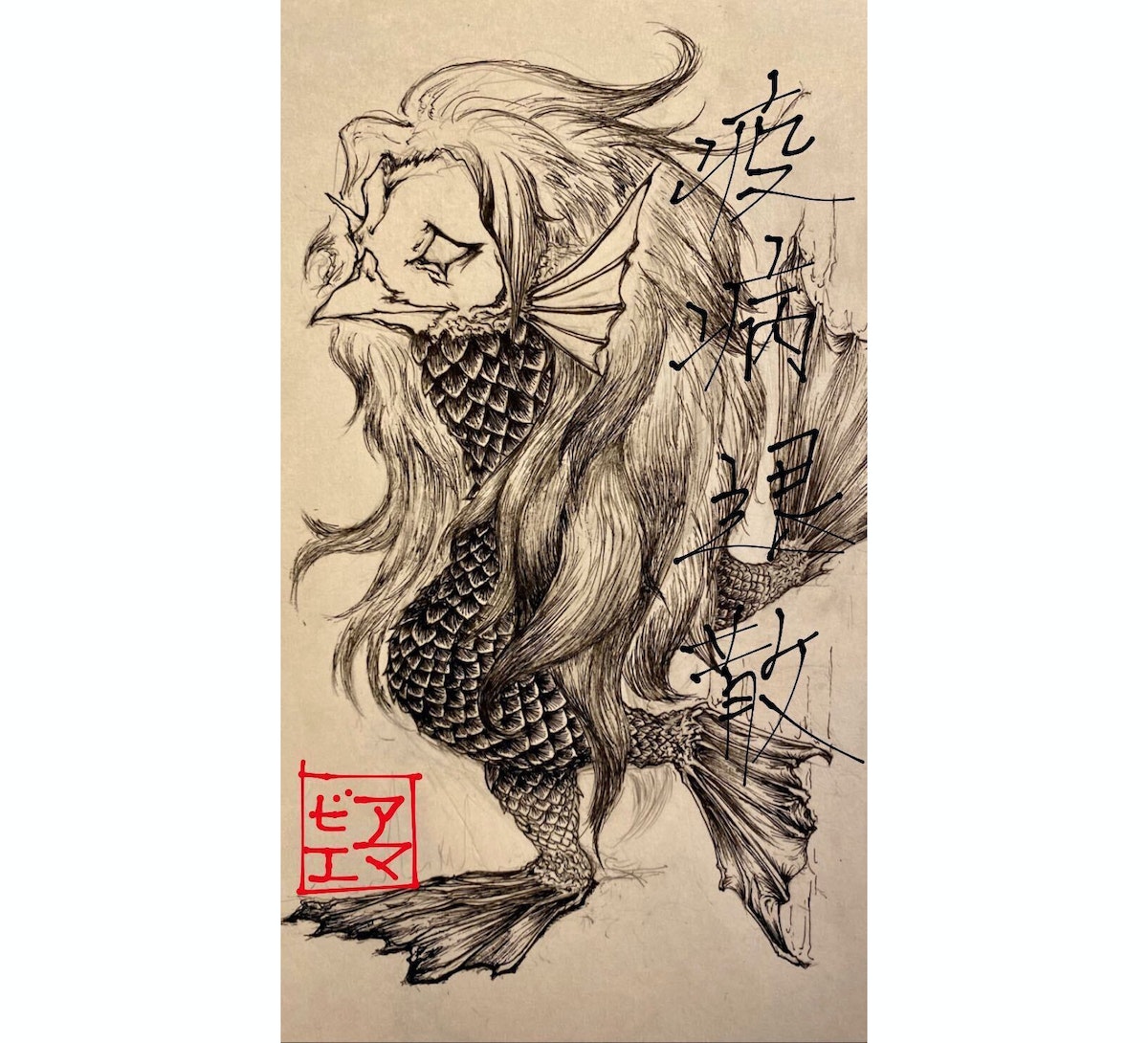
Koko Takatori (Tokyo, Japan) is a design researcher at IDEO Tokyo. She is also a certified scientific illustrator and a cat lover.
"The Amabie illustration from the Edo period depicts it having three fin-like legs. “Three-legged” seems to be a common motif for divine creatures in Japan (like Yatagarasu), so I wanted to emphasize the legs and express its divinity through pen and ink strokes. I also wondered and researched how Amabie could’ve walked with its fin-like legs, resulting in legs that resemble those of pinnipeds. The four Kanji characters mean “warding off disease” and the little red seal says Amabie."
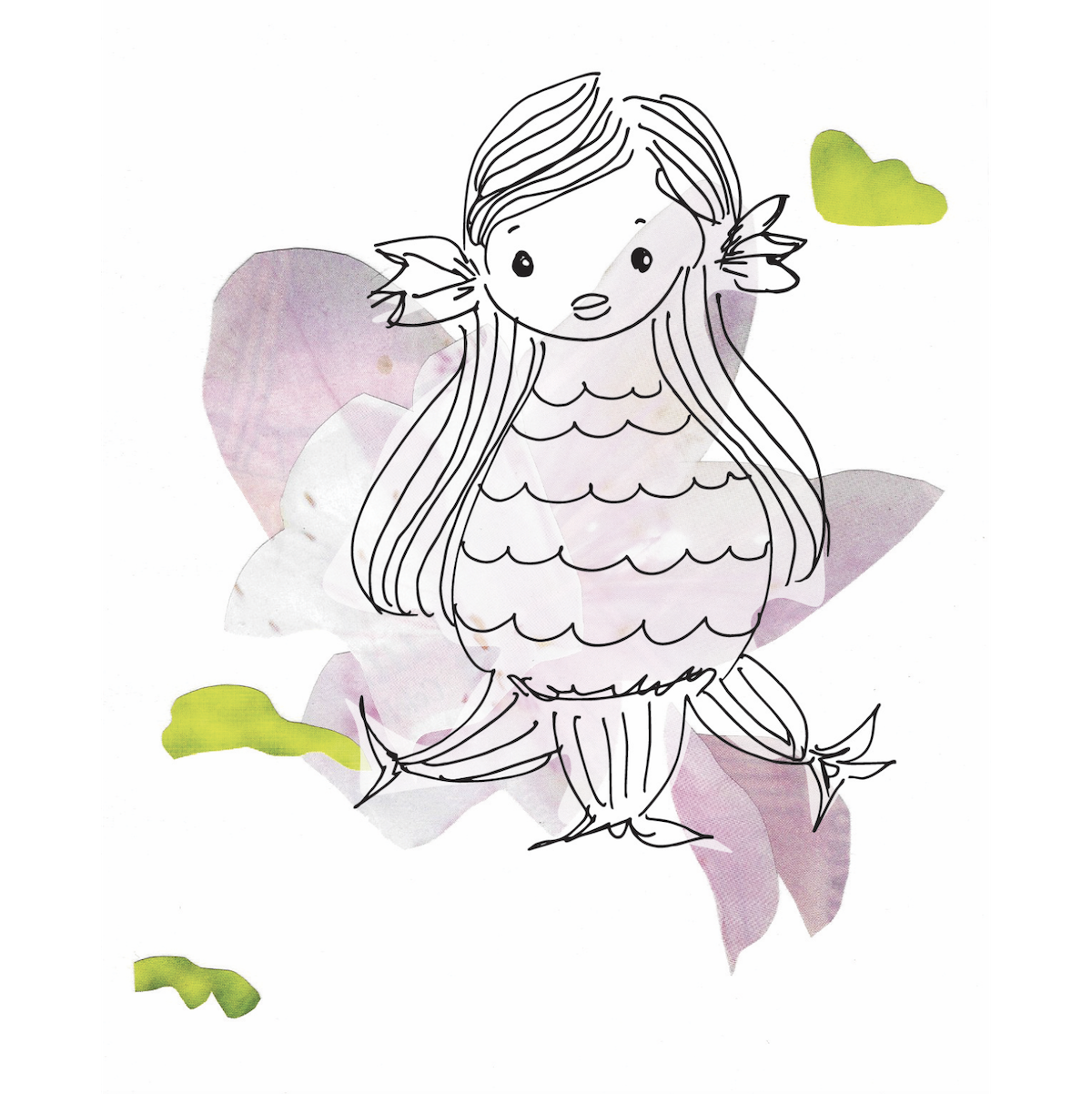
Tiffany Chen and Allison Press (San Francisco, CA and Pittsboro, NC respectively)
Tiffany loves to draw. Allison loves to collage. They combined their favorite artistic flavors into a yummy swirl. Allison collaged a flowery nest, then Tiffany drew an Amabie newly hatched into the scene.
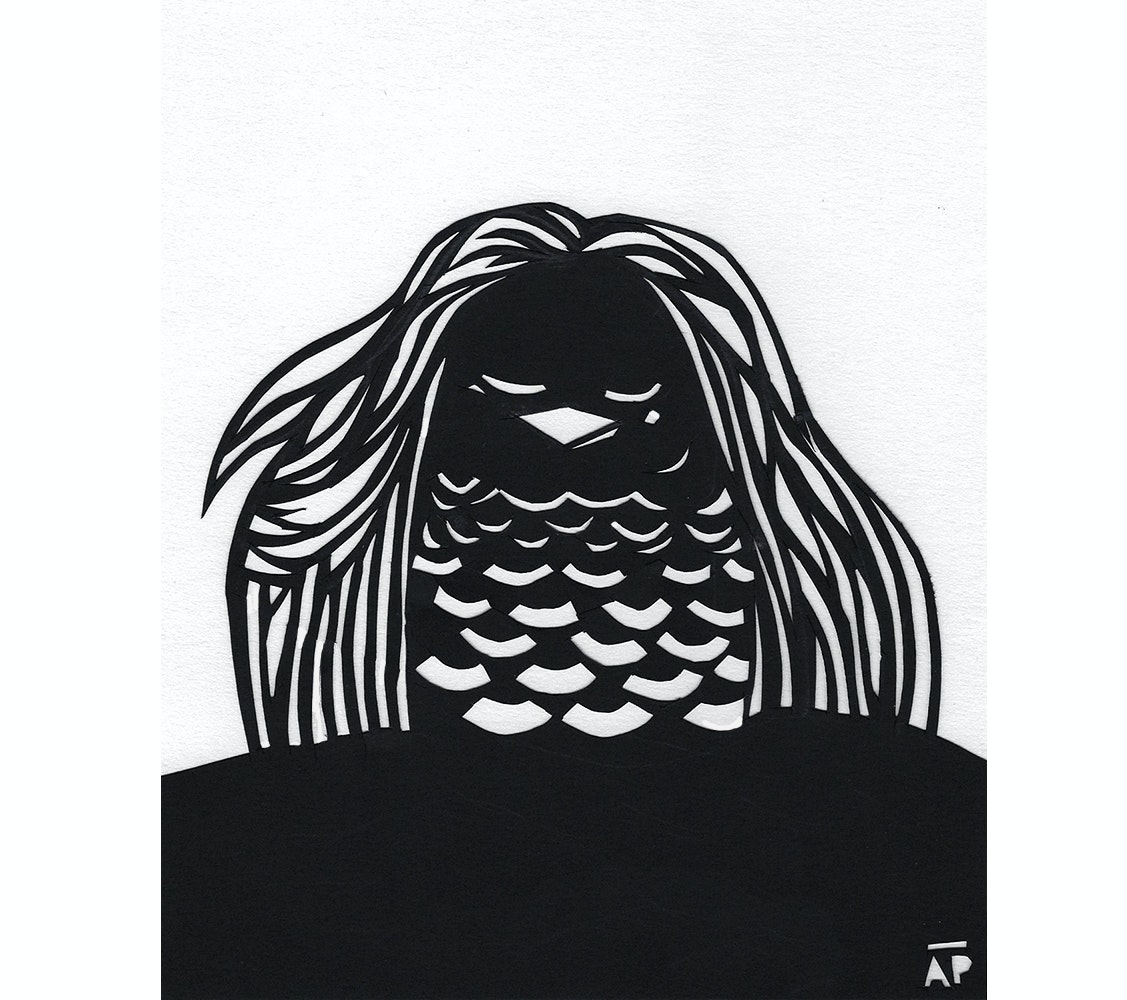
Allison Press (Pittsboro, NC) is a former theater kid pursuing design-powered public service.
"I was inspired by Kirie, the Japanese art of papercutting. I love paper cut art because of its mystery. It creates a scene using only light and shadow. A viewer’s imagination fills in the rest. It felt like a ripe medium to depict a mythical, centuries-old creature like Amabie."

AJ Mapes (Oakland, CA) is a designer in IDEO's learning studio.
"I'm interested in exploring contrasts, so for my interpretation I wanted to see what Amabie might look like if drawn with clean geometry and organic textures."

Mark Dingo Francisco (Tokyo, Japan) is a visual communication designer at IDEO Tokyo. With a background in illustration, graphic design, branding and identity, Dingo aims to provide clear, effective, and emotive storytelling.
"My interpretation of Amabie aims to convey the surrealness of the COVID-19 situation along with the phenomenon of drawing Amabie’s portrait as a ripple effect, while maintaining an aquatic vibe to harken back to its yokai roots."
In the fight against COVID-19, a sea spirit monster called Amabie (Ah-mah-bee-yay) has emerged from 19th-century Japanese folklore as a symbol of hope, a public health mascot, and an internet meme. According to legend, Amabie appeared to a government official in 1846, predicting six years of good harvests followed by a wave of diseases. In order to stave off disease, Amabie left instructions that people should draw its image and share it far and wide. The creature's common features include a beak, long hair, and fin-like legs. The rest is up to the artist.
5 Leaders Reflect on How the Pandemic Has Reshaped Their Thinking
Do perspectives from the past hold true in the current climate?
The goal of the Journal has always been to celebrate the powerful combination of design thinking and business acumen, and the resulting magic and positive impact of applying this duo to the world’s gnarliest problems. Nearly one year later, as we face what some are calling the biggest challenge of our time, this objective remains the same. In this spirit, we revisited five Journal stories from the past year, and asked the authors to reconsider their perspectives in light of the COVID-19 crisis: Has your opinion shifted? If so, how?
For some authors, much of their original thinking is now more relevant and valuable than ever. And for others, this question sparked new ideas and rich insights about design-led business that can help leaders face this moment with resilience, courage, and creativity. Here are their thoughts on what their original ideas mean in the context of the present moment.
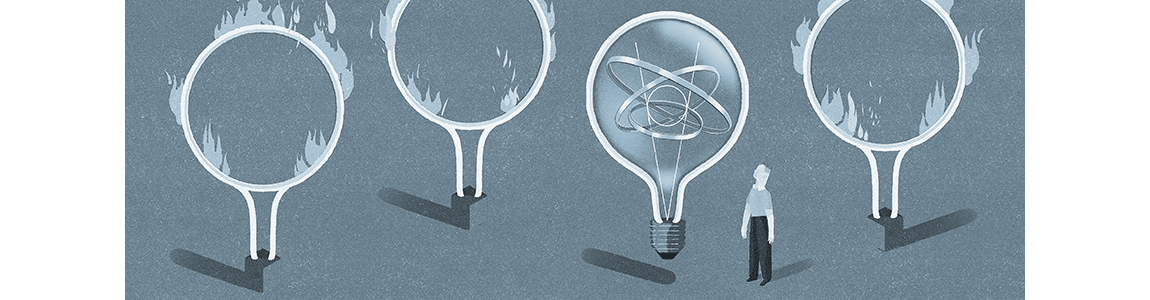
Don’t Throw Away Your Innovation Budget
In July 2019, IDEO Senior Portfolio Director Joe Brown shared the three most common traps companies fall into when investing in new innovation projects.
“It seems like everyone I talk to is looking to cut back on non-essential spending and nonsense innovation. It’s slash and burn time in budget town. It can feel scary to decide which innovation projects are most vital to keep or to kill.
Since the COVID-19 crisis started, I keep turning to the Outcome framework in this Journal article to help leaders decide which bets are important to keep right now. If you have to cut your spending, which efforts can you afford to cut? It can also be scary to feel like your work is falling under the knife. So, I’ve been turning to the Metrics framework to help teams threatened by cuts demonstrate the value of their projects—even if those projects haven’t yet generated profits. If you’re looking to strategically re-evaluate your innovation portfolio, this piece is worth another look.”
Joe Brown's recommendation for further reading: Roaring Out of Recession, Harvard Business Review

The Three Qualities Leaders Need in an Uncertain Future
Suzanne Gibbs Howard, IDEO Partner and IDEO U Dean and Founder, challenged the commonly-held belief that leaders must always have the right answer and that this high level of certainty is what leads to success.
“When I wrote this article last year, though I was thinking deeply about navigating uncertainty, I had no idea that by March 2020, I would be experiencing it directly and wondering how to lead through this crisis.
Many of the principles in this article hold up in answer to 2020’s big questions: What are the things I need to hold to in order to navigate uncertainty? How can I continue to convene people even when we can only do this remotely? How can I stay curious, even when I am exhausted from homeschooling and taking care of parents and other friends in need? And how can I retain fierce optimism in a time of crisis at home, at work, and across the globe?
This is a time for leaders to rework their pact with society. If I could add an additional quality to this article, it would be boldness. Today I’m wondering this: How do we rebuild our world post-COVID differently from the way we approached rebuilding in the wake of 9/11 and the 2008 recession? How do we go beyond small tweaks to the systems, and instead set up a more resilient, inclusive, and sustainable future? How do we not only survive uncertainty, but thrive? We must be bold.”
Suzanne Gibbs Howard's recommendation for further reading: COVID-19 Is a Chance for Business Leaders to Rework Their Pact With Society, Politico
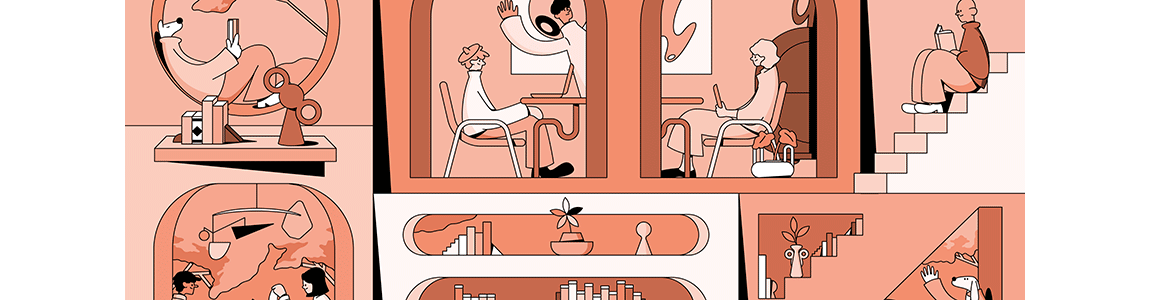
The Learning Program That Aims to Make Cities More Economically Resilient
In this piece, former IDEO Senior Portfolio Director Sarah Zaner and Rick Wartzman, Head of the Drucker Institute’s KH Moon Center for a Functioning Society, reflected on how they helped instill a culture of lifelong learning in South Bend, Indiana.
“With over 30 million people newly unemployed in the US, the need to reskill much of the nation’s workforce has reached a level of urgency not seen since the Great Depression. It’s tempting to meet the problem with technology that promises to scale massively and quickly. But before we design big, tech-centered solutions, we must remember that behind the statistics are struggling people. The challenge we’re facing as a society goes beyond the need to reskill millions. We also need to forge the resilience and unlock the agency needed for individuals and communities to create and take part in a hopeful future.
This Journal piece describes how The Drucker Institute, IDEO, the city of South Bend, Indiana, and the St. Joseph County Public Library created a system for lifelong learning. The goal of Bendable was always to help South Bend be more resilient in the face of a changing economy. And then, scale that model in a hyper-local way across the US. Now, in light of the COVID-19 crisis, it’s more important than ever that we collaborate across sectors and with communities to create cities of lifelong learning.”
Sarah Zaner's recommendation for further reading: COVID-19: A Time of Immense Uncertainty, Working Nation
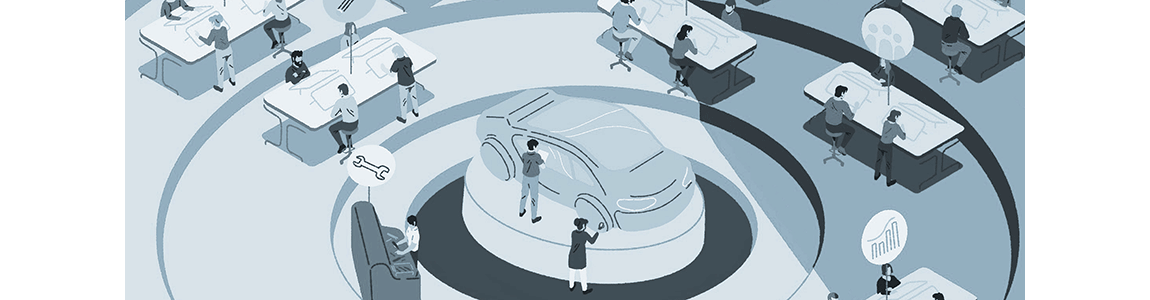
How Design is Driving Ford to Reimagine What a Car Company Can Be
In December 2019, IDEO Partner and Chief Operating Officer Iain Roberts discussed how design thinking is permeating Ford, transforming the century-old automaker’s corporate and cultural DNA.
“Earlier this year, I wrote about how design is changing the way Ford develops their vehicles for the better. In the present moment, the power and potential of this design movement could not be more apparent within Ford, or more relevant for other organizations.
Design thinking principles like human-centeredness, agility, and a bias toward building have helped Ford quickly pivot in response to the pandemic, creating medical equipment that meets the needs of those working tirelessly for us on the front-lines. Amongst many impressive efforts, one stands out for me: D.Ford employees designed a protective face shield in the span of a weekend, and now Ford has produced nearly 20 million units to meet the demand for personal protective equipment (PPE).
While design has been core to improving Ford’s fundamental business and ability to create new vehicles and products, CEO Jim Hackett and I are also seeing it play out in unexpected ways and spread to other parts of the business. Human resources, legal, and manufacturing teams are closely collaborating and focusing on people as they approach challenging questions like, “How can we reopen our factories in a way that ensures our workers are protected and safe?”
For Ford, it’s not just about producing cars or medical equipment—it’s about people, their safety, and their needs. The way that Ford has responded to the crisis not only proves that human-centered design is there to stick, but points to its ability to support and guide companies through ever-changing circumstances.”
Iain Roberts' recommendation for further reading: Ford’s Swift Pivot to PPE Showcases the Automaker’s Competitive Edge in Design, Fortune

Prototype the Future of Your Business With This 4-Step Design Exercise
Joe Gerber, Managing Director of IDEO CoLab, explained how design fiction can help leaders break free of present-day realities and envision a genuinely novel future for their businesses.
“I recently finished teaching Design the Future at UC Berkeley’s Haas School of Business with my IDEO colleagues Joanne Cheung and Sandeep Pahuja. The class started right as the country began to shut down, and classes at Berkeley were either cancelled or shifted online.
That was about three months ago, which simultaneously feels like a lifetime ago and yesterday. This is still a time of tremendous uncertainty, but one thing has become quite clear: getting back to “normal” is not possible, because the fundamentals have changed. By staying home, we’ve been forced to see things that we can’t unsee: Many of us don’t need to work in an office, our health system is broken, and much more.
Very real disruptions aside, this was the perfect time to teach Design the Future online. Design fiction and other futuring techniques are created for these moments of uncertainty. They often come across as fantastical and unrealistic, but if used correctly, they offer a rigorous strategic framework for leaders to proactively build toward preferred futures.
By definition, strategy is about making choices to guide the future. As we continue to venture into the fog, we can all think like futurists. Design fiction creates space for imagining the unimaginable, but can also anchor us in the choices we have in the present to rebuild the future.”
Joe Gerber's recommendation for further reading: Nassim Taleb: A Definition of Antifragile and Its Implications, Farnam Street
Header illustration by Devin Peek
In May 2019, we launched The IDEO Journal, a digital publication that shares stories at the intersection of business and design. For the past year, in partnership with readers and IDEO leaders, teams, and clients, we’ve explored topics like social innovation, creative leadership, organizational purpose, scaling startups, and much more.

10 More Documentaries That Will Spark Your Creativity
Stay inspired while you're inside
I kind of wish this really happened, but at the same time, I’m definitely glad it didn’t. The towering jellyfish was part of my imagination—sort of. It was in the 1994 IMAX film Into The Deep. This moment kicked off my life-long obsession with documentary films, and IMAX holds a nostalgic place in my heart. As a designer, I find immense curiosity peering into other experiences and worlds. Whether it’s spending an hour and a half shopping with a ninety-year-old fashion icon or exploring the complex, magical world of mushrooms, documentaries have the incredible power to make you see the world differently.
With the reality of COVID-19 and shelter-in-place orders across the globe, now more than ever, we need to stay inspired by people, places, and things—even if they are on screens. In 2016, we shared 12 documentaries that sparked our creativity, and now feels like an appropriate time to update that list.
Similar to our original post, this is a curated list of recommendations from IDEO designers. It’s a collection of classics and newbies. Some will make you laugh, others will make you cry—and we hope all will reignite that creative spark.
1. Between the Folds
“I grew up in Asia and origami was something I loved to do but I had no idea that this humble paper art form had both such artistic and scientific depths. This documentary blew me away with its beauty and passion, the scope and depth of its inquiry and its empathic glimpse into what for many people is a lifelong obsession. As my colleague Devin said: ‘Holy shit, I can't believe that is all paper.’” —Paul Bennett
2. Bellingcat: Truth in a Post-Truth World
“This documentary highlights the work of Bellingcat, a group of citizen-journalists that use social media to fact-check events and actually uncover the real parties involved. Their claim to fame: They identified the party that shot down Malaysian Airlines Flight 17, which killed 298 people back in July 2014.
“It’s a film that highlights our new reality, where the truth isn't always simple and straightforward. This particular documentary also serves as inspiration for those of us that do design research. It hints at the research that can be done using social signals, buzz analytics, diary studies, data science, etc., where we get insight directly from people. It highlights how researchers often solve puzzles by exploring the extremes and see things through the eyes of the people who experience them.” —Marcelle van Beusekom
3. Learning to Skateboard in a Warzone (If You're a Girl)
"This film follows a group of young girls as they build confidence in the classroom and within the walls of a skatepark in Kabul, Afghanistan. Part of their education on their skateboards is building resilience—to get back up and try again after you fall. During the uncertainty that surrounds them, the school and the skatepark become a place of refuge. You can see them transform throughout the film, finding their voices and their courage.
"In the work that we do with IDEO.org, we aim to create gender-transformative solutions—those which push the boundaries that are in place within the environment and systems to increase equity and opportunity for everyone. This film reminded me that transformation has to happen personally, for each individual, in order for change to be possible on a larger scale. During a recent project focusing on women's economic empowerment in rural Bangladesh, I kept asking myself, what's the skateboard for these women? How might we unlock the courage to imagine a prosperous future?" —Anna Zylicz
4. Jodorowsky's Dune
“We always say 'design loves constraints,' but Jodorowsky's Dune is a reminder that imagination (and ego) could care less about the restrictions of budgets, timelines, or even reality. It's a film about a movie that never got made, but the creators' dreams were so big they managed to change cinema forever without shooting a single frame. Some ambitious dreams fly too close to the creative sun. The cast of characters in this movie wanted to drill to the center of the sun and blow the whole thing up. How can you not love that?” —Brian Janosch
5. Still Bill
“The world recently lost Bill Withers, one of the greatest songwriters and musicians of the 20th century (“Ain’t No Sunshine,” “Lean on Me,” “Lovely Day,” “Grandma’s Hands”). This biopic is incredibly touching for many reasons, but I find inspiration in how Withers approached his own creative process. He was 34 when his first record came out (late bloomers are also a personal inspiration) and his career ended by the mid-1980s. He wrote these timeless, tender songs about life and connection and then when he wasn’t able to work the way he wanted, he walked away from the industry completely. He talks about being honest with himself and true to his own principles rather than being focused on impressing other people. Sometimes I feel that snag in my own creative process—I start thinking about an imagined audience, which distracts and dissuades me. This was a reminder to create just for myself.” —Meredith Adams
6. Advanced Style
“Advanced Style, the documentary based on photographer Ari Seth Cohen's blog of the same name, highlights the signature fashion styles of New York women ranging from 62 to 95 years old. As someone who fully embraces the notion that clothes are an outward expression of the creative inner self, my own fashion sense has been deeply influenced by these ladies. The hats, the sunglasses, the furs, the florals, the feathers are just...all next level. But more than their impeccable fashion sense, they are living examples that women can be stylish and fabulous at any age.” —Tracee Worley
7. Shirkers
“I love the movie Shirkers. It's an exploration of memory, following filmmaker Sandi Tan as she tracks down a film she made with her friends in Singapore in the early 90s, learning that their mentor wasn't really the person she thought he was. Everything about the film, from the vintage footage to the slow revealing of the story, is enigmatic and dreamy, reminding me that we don't have to escape reality to find ourselves in a fairytale. As the director starts to understand her past, the present becomes even less clear—and there's just something really beautiful about how this film shows that process.” —Ali Cottong
8. Fantastic Fungi
“The movie and its subject matter—the healing and potentially planet-saving abilities of the fungus beneath our feet—walks the line between science and spirituality. It's a refreshing, joyful, and thought-provoking take on what we might learn by better listening to the unseen world around us.
“I'm also reading Michael Pollan's How to Change Your Mind: What the New Science of Psychedelics Teaches Us About Consciousness, Dying, Addiction, Depression, and Transcendence, so it was fun to see one of the key players in that book (Paul Stamets) come to life on the screen.” —Sally Sosa
9. MATANGI / MAYA / MIA
“An unapologetic, energetic, and wonderfully unpolished look at the life and career of musician Mathangi “Maya” Arulpragasam, also known as M.I.A. I was lucky to see the premiere of this film at Sundance. I walked into the theater expecting to see a profile of a ‘controversial’ pop star, but instead witnessed a portrait of an immigrant, an activist, a mother, and a groundbreaking artist with human vulnerabilities and flaws that makes M.I.A. even more compelling to me.” —Devin Peek
10. Beauty is Embarrassing
“What drew me into Beauty Is Embarrassing is, well, puppets. Specifically, the bizarre, crude, and comedic puppets of Pee Wee's Playhouse. That show was more formative than I ever realized as a kid, but I recognize now that that my creative happy place is right there in the hazy, hilarious middle ground between being "too adult for kids" and "too childish for adults." This documentary revealed that Wayne White, the artist at the center of it, has built his entire career on that middle ground. His creative spirit, to me, is exactly what he says in the film: "so beautiful it hurts my feelings.” —Brian Janosch
I vividly remember the first time I met a 50-foot, translucent jellyfish. The free-floating creature fell toward me as I gazed, locked in a state of paralysis. Its tentacles were hypnotizing.
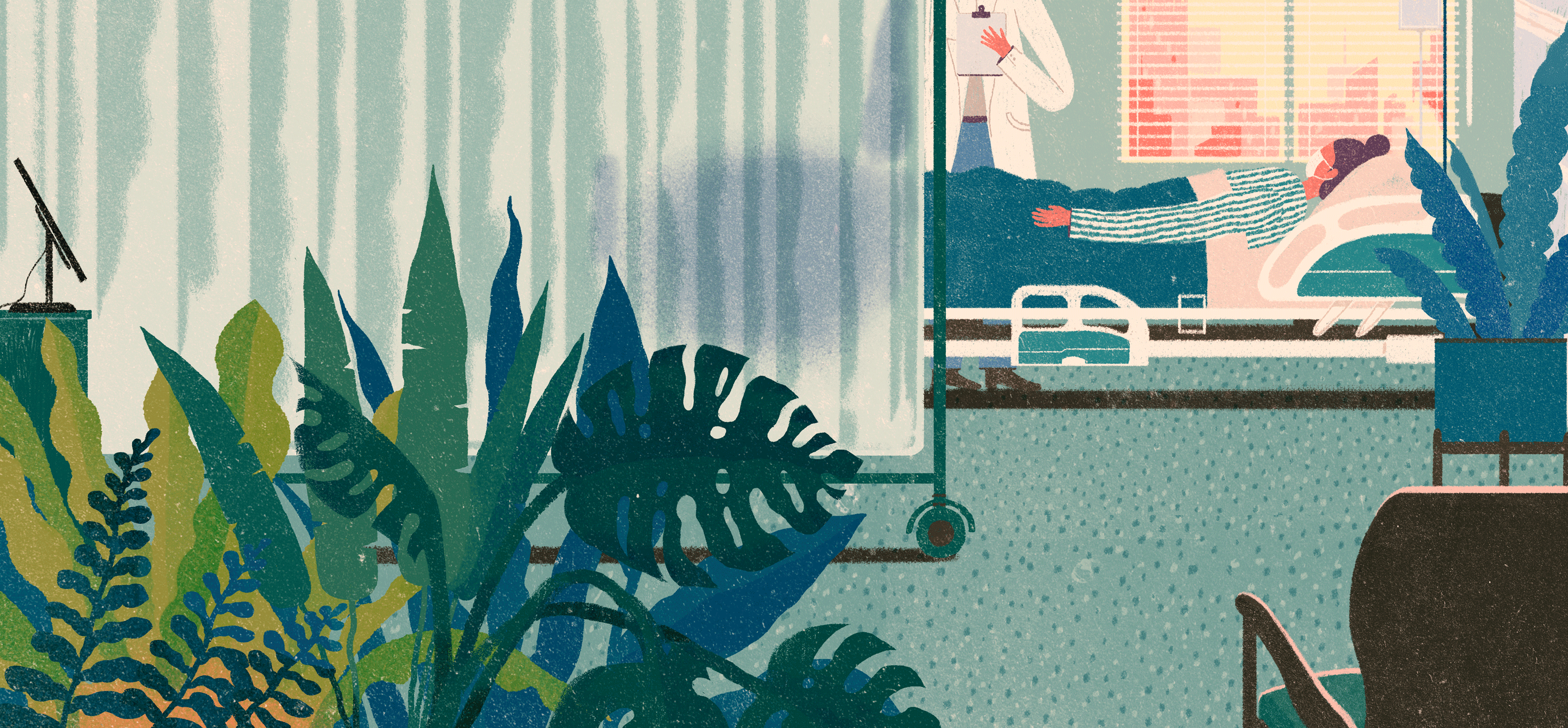
Busting the Myth That Regulations Impede Innovation
How to bring creativity, experimentation, and risk into high-stakes industries
Tight regulations have often stymied innovation, but one of the bright spots of this moment is realizing that regulations aren’t the real problem—they are more often a perceived roadblock that shuts down innovative thinking before it grows into real-world solutions. The fact is, regulations should set the baseline for what must be considered, rather than restrict the height of what can be achieved.
Right now, regulations in healthcare are seeing rapid, radical shifts. Processes that have historically taken years—like launching telemedicine platforms and adapting insurance coverage—are now taking weeks or days. Scientists are working to develop vaccines in record time. Companies outside of healthcare are jumping in, too: Manufacturers whose only products included car parts are now making ventilators. 3-D printers are being thrown into service to create PPE. As one client told me, “Every rule that can be broken is being broken. Every regulation that can be waived is being waived.” The world doesn’t have time to wait.
In this moment of crisis, failing systems are confirming what we already knew: The healthcare system is brittle, and it wasn’t built to handle a global pandemic. How leaders move now will dictate the kind of progress we can make, in the short- and long-term.
Here is a guide to innovating within regulations—no matter the industry—at a time when we need it most.
Take a wider view
Healthcare professionals spend so much time putting out the fires immediately in front of them that they have little time or mental space to widen their lens and focus on long-term priorities. Leaders need that time to create a vision of their future—even in times of crisis.
When Dr. Michael R. Jaff, former president of Newton-Wellesley Hospital, a community hospital in the Boston area, started his tenure, he spent the first six months listening to staff all across the organization. “There's a lot of time that has to be spent to really dig through where you are, what challenges you face as an organization, where you want to get to,” he says. “That's got to be clear.” His listening tour informed what would become the vision for his term as president: to compete and win against competitors by delivering the best patient experience. To get there, he had to usher in a new era of innovation at the hospital, and empower those around him to go after radical solutions to entrenched problems.
Related video: How listening to patient voices inspired Newton-Wellesley Hospital to redesign their culture.
Offer pathways & permission to do things differently
In a typical day at a hospital, healthcare workers don’t have the time or mental space to think creatively about new approaches to care delivery. If hospitals want their workforce to embrace and embody the spirit of innovation, employees need not only the permission to think differently, but also the structures and roadmaps that make action possible.
Dr. Jaff understood clearly that for employees who’ve been acculturated to a certain way of working, it’s not sufficient to simply say they can approach things differently, or that the organization wants to move in a new direction. “You have to design what it is that you're trying to do,” says Jaff, “You have to empower people to believe that in fact, it's a key goal of the organization. You have to permit them to try and fail and try again all within boundaries.”
Jaff and his leadership team worked with IDEO to set up multiple nodes for learning and prototyping. The program they created focused on delivering a better patient experience. It began with a pilot project in the Women’s Imaging Center and then a deeper engagement with the Outpatient Surgery Center. As part of an executive education program, another set of internal teams learned to identify user needs, like an improved discharge experience; and to develop prototypes to help address those needs. Ultimately, staff were empowered by taking their ideas from concept to real-world testing and implementation.
Jaff also made his commitment to innovation clear with a designated lab space in the hospital’s old coffee shop, a much-coveted location along the main hallway. Dubbed the Department of Tomorrow, it offered a standing invitation to all employees to stop by and learn more about all the work happening across the hospital. The stories from this work became a kind of currency: Leadership shared big and small examples of change in meetings, at events, and in conversation, as evidence of Newton-Wellesley’s evolution.
No one’s clinical or administrative workloads were decreased to make this work possible. Managers scheduled shifts and breaks differently to allow teams time for focused collaboration. Everyone taking part knew that failure—something that usually has dire consequences in healthcare—was a form of learning in this context. They were driven by the chance to make change.

Seek new perspectives
In healthcare, where expertise is celebrated, seeing the medical experience through a patient’s eyes can be hard.
Long before teaming up with IDEO, the imaging department at Newton-Wellesley had a reputation for being patient-centered and achieving consistently-high industry survey scores. It would have been easy to assume that everyone on the team really understood what patients go through when they get mammograms—the fear, the discomfort, the worry over getting a life-altering cancer diagnosis. But it wasn’t always clear. To deepen empathy for the patient experience, the IDEO team designed an exercise for the care providers that evoked anxiety and uncertainty. They brought in a tarot card reader and, like patients awaiting news in a waiting room, members of the imaging team had their fortunes read, many for the first time. They felt the discomfort, uncertainty and vulnerability of receiving a verdict on their lives from a person they didn’t know well. Though it was a staged experience that doesn’t directly compare to the patient experience, it generated a deeper understanding of the dynamics at play and how they could be improved.
To help the Newton-Wellesley Hospital day surgery team see their work from a new angle, the IDEO team led them on an expedition to the JetBlue terminal of Boston Logan Airport. Similar to a surgical team, where diverse team members all connect with patients asynchronously, the staff of an airline provide continuous customer service for passengers, from ticket purchase to check-in to security to boarding to flight. This sequence of interactions comprises the overall experience of the traveler. In both circumstances, a human is at the center. By viewing the analogous process in a different industry, it was possible to return to thinking about healthcare delivery with fresh eyes.
Allow discomfort to be part of the process
No matter the industry, it can be highly uncomfortable to do things differently, even when everyone is aligned on the ultimate goal of innovating and creating change. So much of healthcare is about following protocol. Billing. Process improvement. Hierarchy in healthcare adds to that discomfort. Often, there are big divides between roles and status, and people are more often judged on their mistakes, rather than their successes. Can department chiefs and front desk receptionists work as peers on a team? Can we prototype a new service experience with real patients going in for surgery?
Leaders who want to affect change need to explicitly acknowledge and address that discomfort. An example from another industry: Three years ago, Bowdoin College teamed up with IDEO to rethink its admissions process. Much like healthcare, college admissions abide by certain regulations as well as administrative policies. How colleges read and assess applications may be unique to each institution, but they are driven by stringent protocols and standards. Bowdoin admissions officers conducted very thorough and thoughtful readings of each application. But that thoroughness led to redundancy and sometimes delayed final decisions. At the same time, the idea of changing the process made the admissions officers fear they would compromise what they valued most: giving each hopeful applicant full consideration they deserve. To interrogate different methods, the team implemented highly-structured A/B testing of different ways of reading applications. The result? The team discovered that they could make decisions earlier in the process and still come up with the same results. The testing gave the team confidence, and ultimately changed their long-held beliefs of how applications “should” be read.
Given that A/B testing proved that some variables had little effect on the team’s final admissions decisions, IDEO redesigned the reading process and included a system called “magic sort,” which helps parse groups of applications based on a new set of counselor assessments to route each to its next round of reviews more efficiently.
In healthcare, as in many tightly regulated industries, expertise is held sacred, which means nobody wants to feel like—or appear as if—they don’t know how to arrive at a solution. But the purpose of using design to solve problems is to allow uncertainty and open questions to drive new thinking. The point is to explore possibilities through prototyping and learning.

Use regulations as a springboard for innovation
Working in highly-regulated environments can put a damper on creative thinking. However, regulatory change, especially in healthcare, is providing new opportunities for innovation. Revised reimbursement policies are enabling telemedicine to grow. The reduction of certain HIPAA guidelines temporarily offers some flexibility in care delivery. And permitting doctors to practice medicine beyond the state where they are licensed enables more care in disease hotspots.
Still, these regulatory shifts alone don’t create innovation. They are a starting point, often enforced through compliance or penalty. Innovation is about delivering beyond this baseline and aiming for what is aspirational. Changes in healthcare delivery, for instance, enable us to ask the question of how best to deliver patient-centered care through video chat.
Even in the business of regulation itself, there is room for innovation. When the US Congress set up the Consumer Financial Protection Bureau (CFPB) in the wake of the 2008 financial crisis, they established a system for taking complaints from consumers who had been scammed and were seeking resolution. The CFPB also took on a financial education mission: to make people smarter about their finances. But rather than structure the agency in a traditional way, by siloing complaints, financial education, and industry regulation, the CFPB’s collaboration with IDEO pointed in another direction: that these three domains can work together in useful harmony. By thinking of them holistically, the agency could be more effective than its predecessors in serving the public. For instance, by pairing financial education and regulation, the agency was able to create new loan disclosure requirements that make the terms more clear and understandable. The CFPB’s complaint data helped the agency prioritize areas to investigate; a spike in the number of people complaining about improperly-opened accounts at Wells Fargo Bank led to a discovery of widespread fraudulent practices. The agency eventually ended up blowing the whistle on the bank, leading to the largest fine in the history of financial services.
When it comes to innovation, having the right mindset is more important than the process: the mindset is what leads to new ideas, resilient responses, and openness to trying things differently, even at the risk of failure. People drive change. For Newton-Wellesley Hospital, according to their Chief Quality & Experience Officer, Dr. Jodi Larson, it was this change that helped employees go “from being idea generators to being change-makers. That was a big deal for us.”
And this has translated in their response to COVID: Within 24 hours, testing tents were procured and set up; workflows were designed and integrated into their electronic medical record system; PPE protocols were established. “Everyone jumped in with great ideas," says Larson. "The valets, nurses, docs, food services. It’s created a new bond and trust among colleagues. People are working in areas they’ve never worked in, and working in parts of the hospital they never had before. Different minds are coming together.” COVID has accelerated the change that was already underway. “We are making decisions and making things work that we never had the courage to attempt before. This is who we are now.”
Illustrations by Lisk Feng
While COVID-19 has caused worldwide devastation, it has also revealed broken aspects of many critical systems, and raised the urgency of fixing them. In healthcare in particular, we are seeing that entrenched ways of delivering care have left us ill-prepared to respond to a crisis of this magnitude.

Lindsey Turner
I’m passionate about building brands, products, and experiences that help organizations show up with meaning and momentum.
I help organizations cut through complexity by shaping how they show up, through brand strategy, identity, and storytelling.
Working at the intersection of brand and business, I bring an editorial eye and a bias toward making—turning ideas into tangible experiences that people can understand, trust, and believe in.
My work spans government, healthcare, financial services, media, and consumer goods, from launching Gen Z-focused ventures to building innovation labs and reimagining legacy brands. I relish moments of ambiguity and enjoy translating across teams, perspectives, and priorities to move ideas forward.
I started my career in editorial and digital design, shaping cross-platform experiences and identity systems in publishing and agency environments. That foundation still shapes how I work today: I’m detail-oriented, collaborative, and overreliant on the Oxford comma. I hold a BFA in Visual Communication from the School of the Art Institute of Chicago.

Rachel Young
My work helps organizations see who their products aren't working for—and build the will and the tools to do something about it
For 25 years, I've asked the same question: Who does this design exclude—and what are we going to do about it?
My work spans human-centered strategy, inclusive design, and qualitative research, with clients ranging from Microsoft, Google, and Verizon to the National Science Foundation, and San Francisco Unified School District.
Before IDEO, I taught elementary school in East Palo Alto and spent a decade doing design work with social service organizations—where I learned firsthand what it costs people when systems are built without them in mind.
I am currently writing User Error, a nonfiction book about digital access and the design decisions behind it. I live in Oakland, California.

Brian Pelsoh
I lead with craft, ensuring our work is creatively excellent: rooted in deep human insight and imagination, while also grounded in the realities of business and technology.
My expertise spans brand, communication, and product design across tech, education, the arts, and social impact.
I believe great work demands both high-level vision and obsessive attention to detail, and only happens through collaboration.
I bring an inclusive, hands-on approach and a deep understanding of business, which enables me to consistently deliver excellence while always asking why.
Before joining IDEO, I worked at the brand firms Pentagram and VSA Partners. I began my career as a designer, leading teams at the School of the Art Institute of Chicago and the Milwaukee Art Museum. I hold an MFA in graphic design from Maryland Institute College of Art and a BFA in communication design from the Milwaukee Institute of Art & Design, and have taught at some of the best design schools in the US.

Tony Wong
I am responsible for IDEO’s long-term success in China and working with clients to use design as a tool to enable growth.
I am responsible for IDEO’s long-term success in China and working with clients to use design as a tool to enable growth. Specifically, I have helped Chinese companies design holistic brand solutions through the development of their products, communication, services, and innovation teams, and I have helped multinationals expand their presence and influence in China.
I advise global leaders on developing China-led innovation and capabilities.
In over 15 years in IDEO Shanghai, I have worked on projects that use design to elevate the quality of the experience of healthcare products and services, streamline processes that increase productivity, create spaces and programs that promote and enable inclusive communities, and build next generation mobility solutions that are planet-positive.
Before joining IDEO, I worked at Philips Electronics and the Electrolux Group in Italy, the Netherlands, and Singapore on a number of breakthrough commercial products. I am a member of the Young President Organization in Shanghai.

How to use AI as an editor, not a writer
Ed White shares how he uses AI as an editor—not a writer—to sharpen storytelling, rehearse ideas, and preserve the productive friction that makes creative work better.
Ed White has a rule he's tested on his own writing: hold yourself as the writer, and let AI be your editor. Ed is a Senior Design Director at IDEO's London studio, where he co-leads the firm's AI portfolio across Europe. Before IDEO, he spent 12 years as a writer and editor at the Financial Times, Wired, and Contagious. So when he talks about when to use AI for storytelling and when not to, it comes from two decades of crafting his storytelling skills.
In this episode, Mina Seetharaman talks with Ed about two specific tools he uses to keep AI in an editor's seat: a "roasting agent" prompted to critique his drafts without any sugarcoating, and a simulated audience he rehearses pitches on before the real thing. They also get into what Ed is hearing from design leaders at Anthropic, Lovable, Shopify, and Google Creative Lab about how creative work is changing, and why he thinks the friction of writing something yourself is worth protecting rather than automating away.

Building a personal AI for the messiness of life: Sida Li
Becca Carroll talks with Cue co-founder Sida Li about designing a personal AI for the messiness of everyday life—not just work. They explore how Sida stays anchored to human needs while navigating fast-changing technology, product tradeoffs, business-model experimentation, and the realities of building an AI company today.
Most AI products today are built for work—a space with clear problems and established systems. One founder noticed a gap: personal life is messier, harder to systematize, and mostly left behind by the AI boom. So she built Cue, a personal AI that lives inside iMessage and group chats, to go where the other tools haven't.
In this episode, Becca Carroll, IDEO's Chief Strategy Officer, talks with Sida Li, co-founder and CEO of Shared Context Lab, about staying anchored to a human need while the technology around her keeps changing shape, why she treats her business model with the same rigor she'd bring to a product, and what it feels like to build a company at this particular, disorienting moment in AI.
The conversation also gets into how Sida makes design decisions: the language Cue uses to describe itself, the tradeoffs behind building inside iMessage instead of a new app, and a real story about a business idea that didn’t pan out.
This is the second in a two-part series profiling founders from IDEO's Startups-in-Residence program. The first conversation is with Johannes Seemann, founder of Sooner, on designing GenAI for the emotional side of money.

Designing GenAI for the emotional side of money: Johannes Seemann
Designing financial tools around the feelings that shape money decisions.
Most personal financial tools are built to run the numbers and optimize towards a budget. While that works for some, most people experience money as a lived relationship that does not neatly fit into a spreadsheet. Johannes Seemann and Becca Carroll discuss why money is emotional before it is mathematical, and what a human-centered approach to building a generative AI financial product looks like in practice.

The curious leader's edge in uncertainty: Scott Shigeoka
How genuine curiosity helps leaders navigate uncertainty with greater confidence.
Mina Seetharaman talks with Scott Shigeoka, author of Seek and Head of Curiosity Cultivation at the Eames Institute, about what distinguishes genuinely curious leadership from performative curiosity, how power dynamics shape curiosity, and why practicing curiosity can restore energy rather than drain it.
Looks like you might be in search of something very specific?
Or reset the filters above and try another angle.
Here’s some random inspiration

Podcasts about creative leadership

Articles about the power of prototyping
