
.svg)




A blueprint for transforming pediatric obesity care
Charting a healthy path for children and families on Medicaid.
Obesity exists at the complex intersection of a clinical condition and a cultural force. Clinically, it comes with a diagnosis and treatment plan. Culturally, it is influenced by beliefs, identity, and self-worth, making it deeply personal and often taboo. Families, healthcare providers, and experts tend to avoid the fraught “o-word,” opting for euphemisms instead. For families on Medicaid, these challenges are even more pronounced. Award-winning health-tech startup Clarity Pediatrics, together with designers from IDEO, IDEO.org, and with support from Rise Together Ventures, sought to uncover the obstacles to healthier lifestyles and create a free report for US pediatricians who want to bend the curve on the childhood obesity epidemic.
Research with kids and parents on Medicaid in Dallas, Texas, and California’s Bay Area, along with interviews with healthcare providers and experts across the country, uncovered stories of stigma and frustration. Parents spoke of the daily challenges of balancing multiple jobs, sourcing affordable healthy food, and finding time to make necessary lifestyle changes. They described rushed pediatric visits that left them with unclear next steps and feelings of blame. Provider conversations echoed these struggles, noting time constraints and limited follow-up options.
Ultimately, food had become a daily torment for these families. Eating was unavoidable and also one of the few affordable indulgences low-income parents were able to provide. Once kids left their own homes, they were surrounded by unhealthy temptations, making it feel impossible for parents to maintain control. The popularity of costly new weight-loss medications and surgical procedures added another layer of complexity for families who had been underserved by—and therefore distrustful of—America’s healthcare system. With so much of the responsibility placed on parents to self-direct care, inequities deepened, adding to the burden of families already at a breaking point.
To design a path forward, IDEO and IDEO.org mapped a family’s needs before, during, and after pediatric visits. This work revealed critical parts of the journey where families needed more support: recognizing early signs of obesity, navigating provider conversations, and sustaining healthier habits at home.
These insights informed a theory of change framework that provides actionable guidance for stakeholders involved in obesity care. Grounded in three opportunity areas along the patient journey—building awareness, confidence, and capacity—the framework highlights how trust, dignity, and systemic support can lead to lasting outcomes.
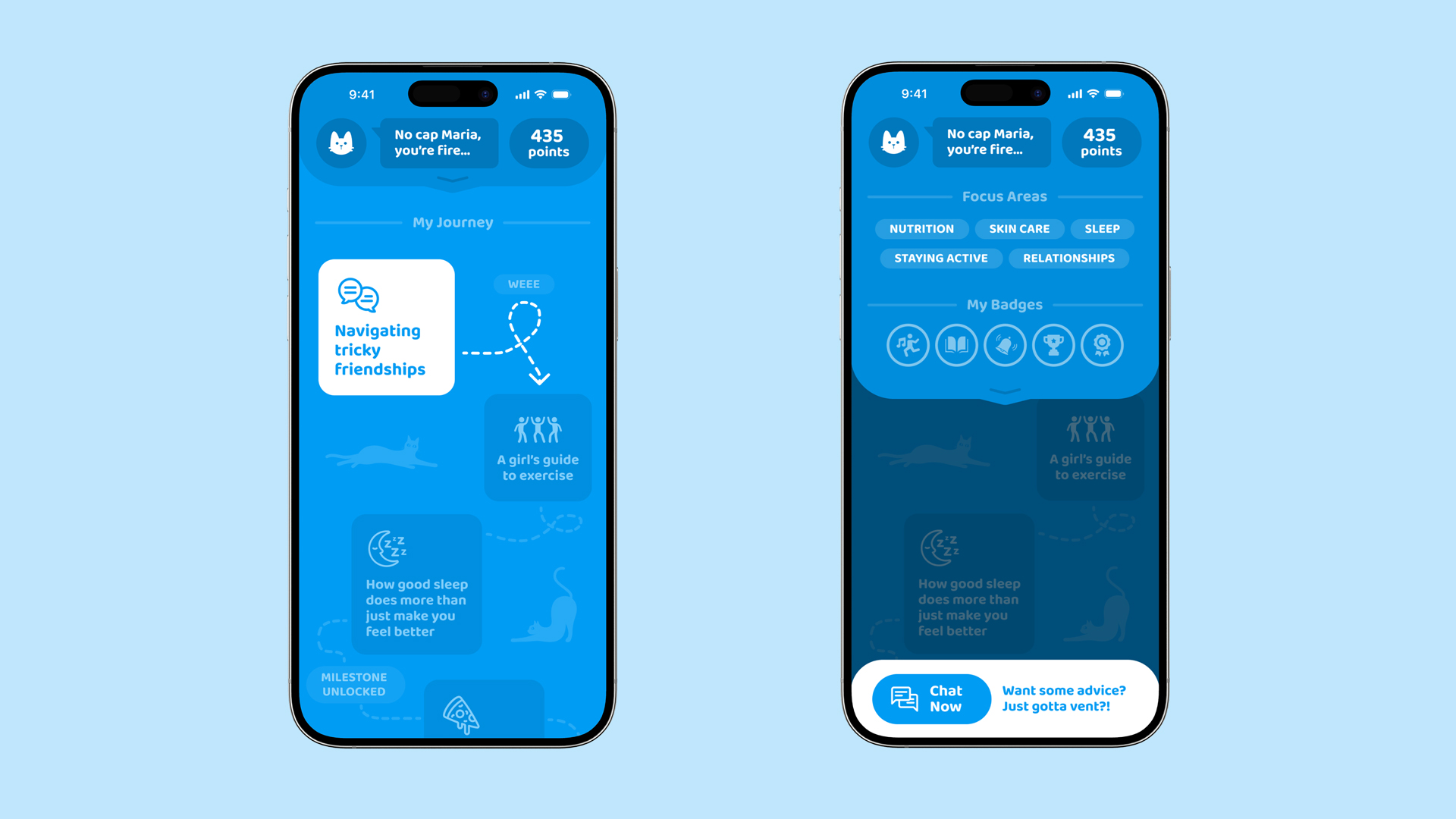
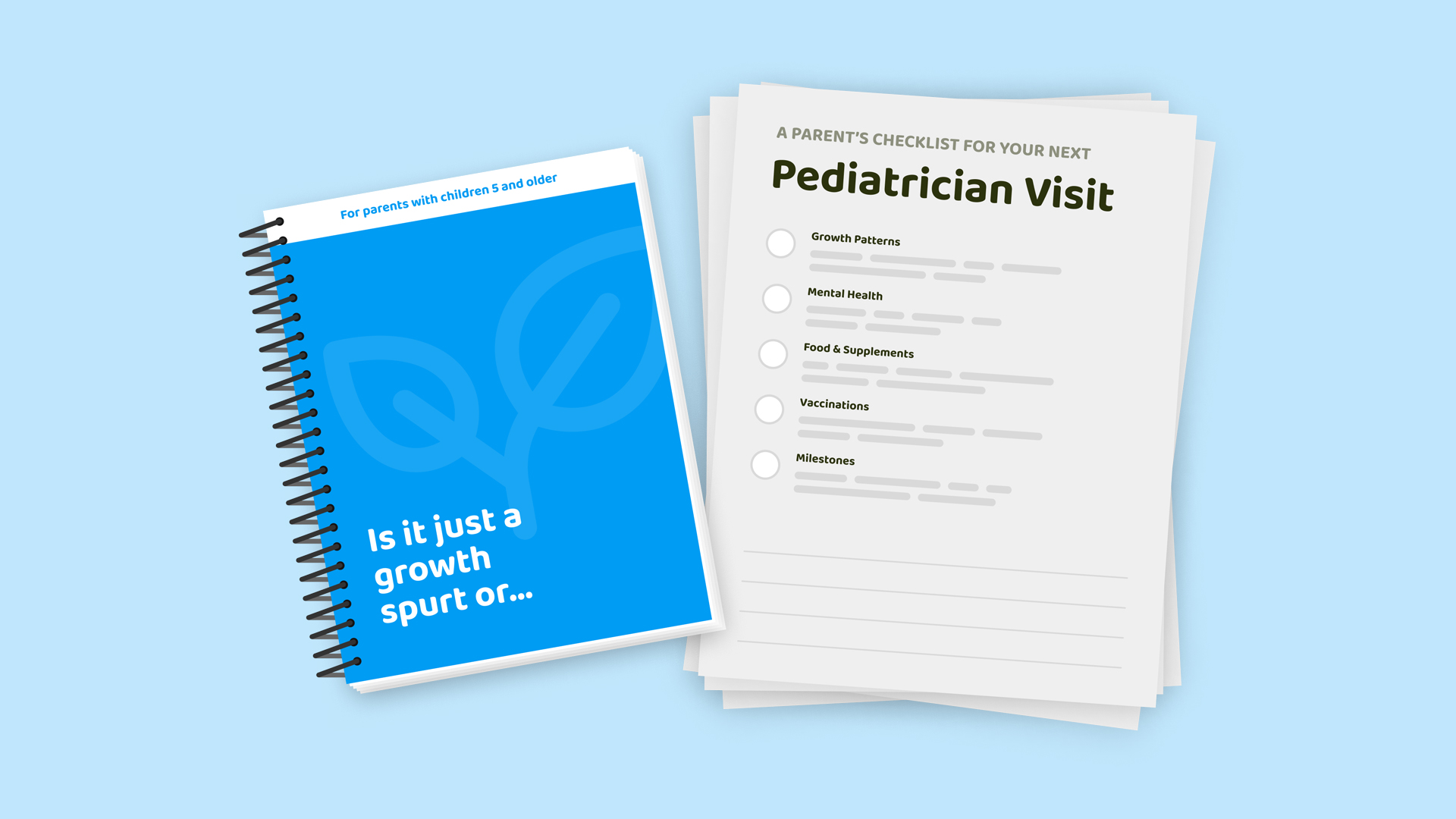
IDEO and IDEO.org also developed 10 user-centered concepts spanning digital, physical, and service offerings to reduce stigma and empower families to sustain healthier lives. These ideas address dignified diagnoses and structural inequities, among other pressing issues. Complementing these concepts, IDEO created a short documentary of a mother discussing her family’s experience navigating childhood obesity to help pediatric providers—many of whom have had very different lived experiences from the families and patients they serve—better understand the realities of the daily struggles of many families on Medicaid.
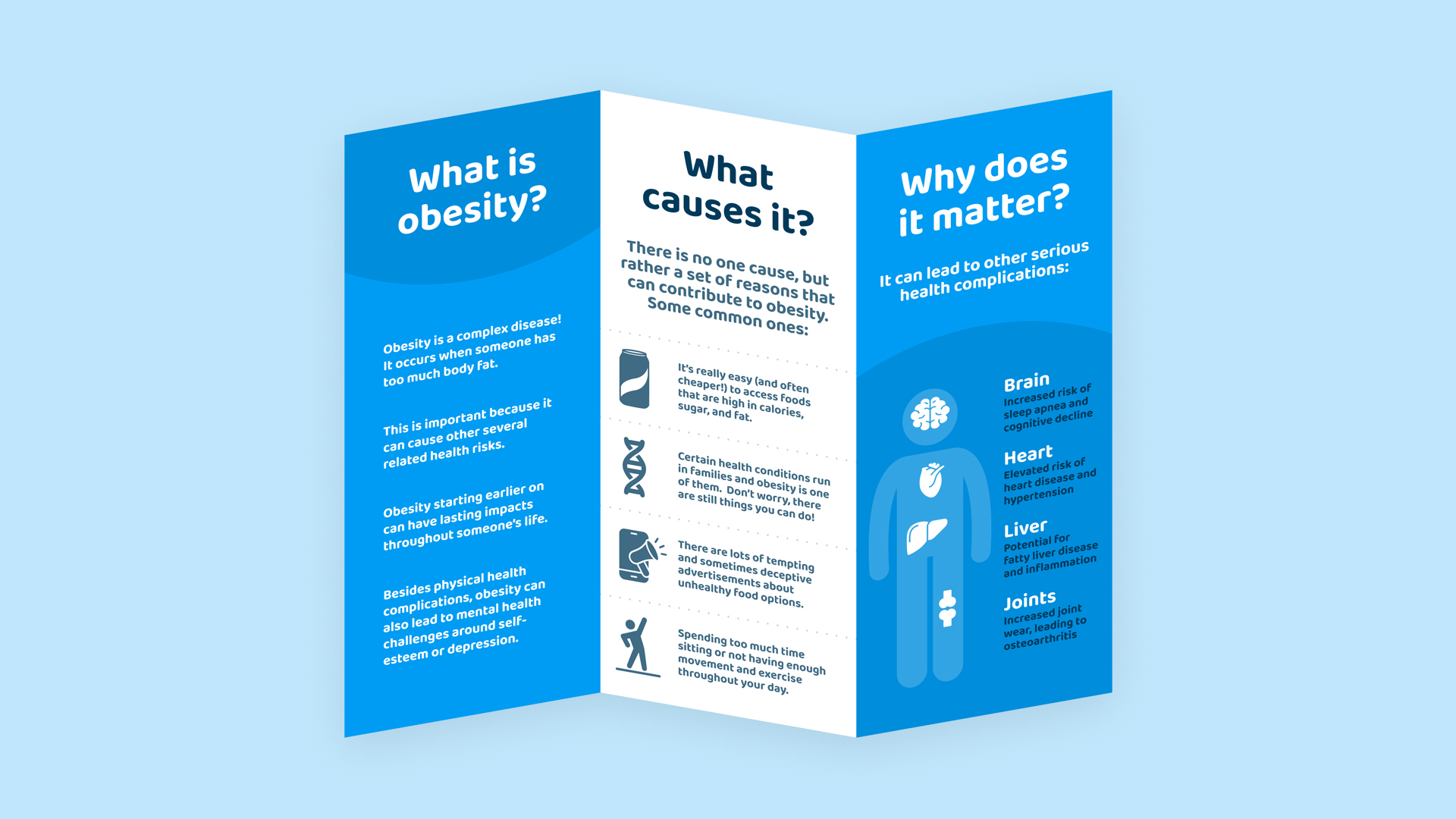
Designed for the public good, the interactive website and free downloadable report, Reimagining Childhood Obesity, contain research findings, design recommendations, and a theory of change framework. The goal: provide practical, actionable guidelines for pediatricians, educators, healthcare organizations, and innovators to meet families and kids where they are and support them as they move toward a healthier future.
21% of US children are obese. 40% of Latino youth are either overweight or obese.
26% of kids on Medicaid experience childhood obesity, compared with 11% on private insurance.
525,600 minutes: Total time per year parents spend caring for their children. 17 minutes: Average time a pediatrician spends with a child during their annual exam, a small window to address a complex chronic condition such as obesity.
10
user-centered ideas to help pediatricians reduce the stigma of childhood obesity in an accessible report
3
opportunity areas for building trust with young patients and providing family support
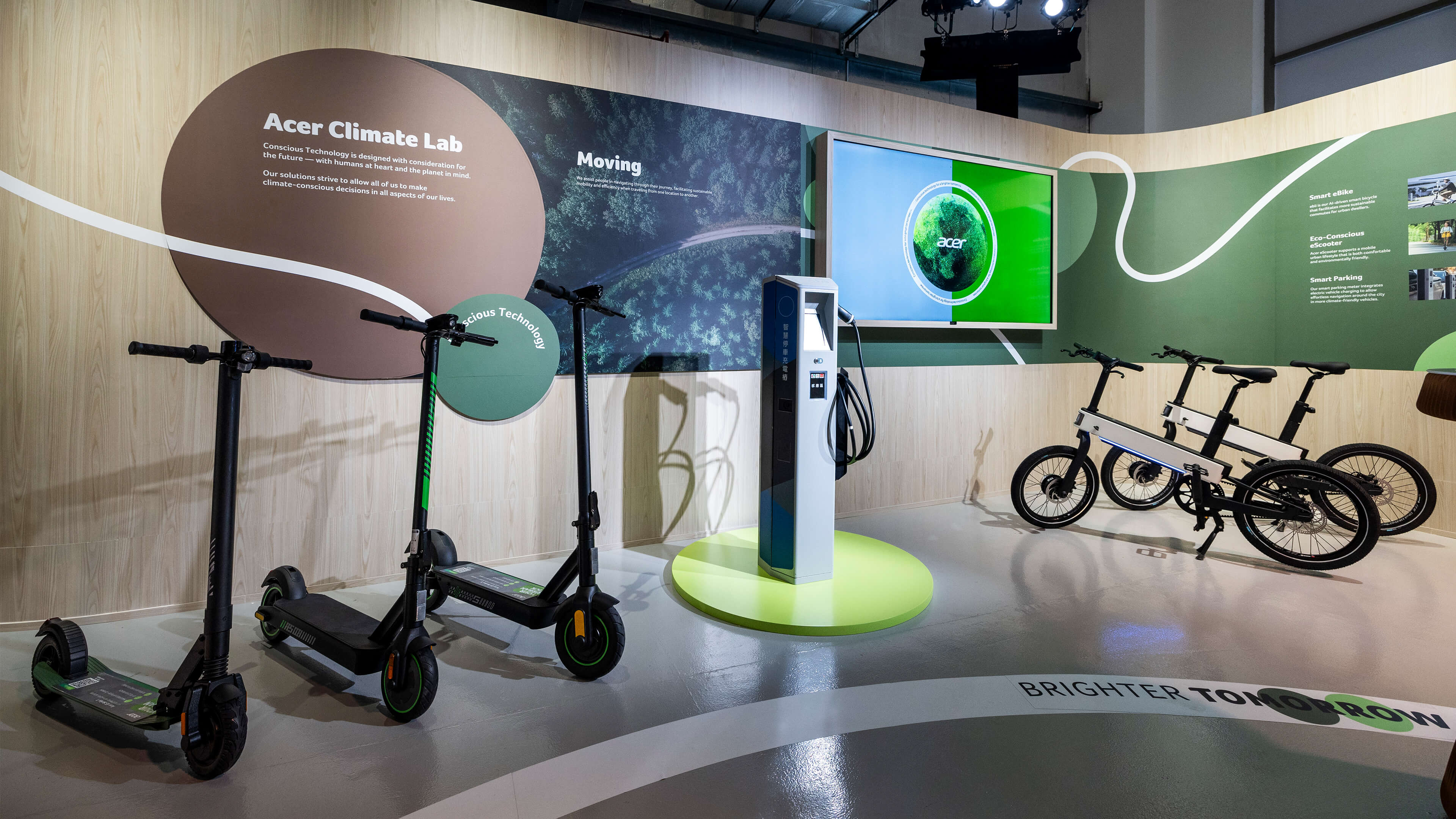
Building Acer’s Climate Lab
How a consumer electronics giant is turning sustainability into an engine for growth.
With its reach, Acer saw an opportunity to power positive choices in the billions.
But new products and services won’t succeed if consumers don’t want them, no matter how sustainable they are. A few years go, the Harvard Business Review’s report, "The Elusive Green Consumer," found that about two-thirds of those surveyed said they wanted to buy brands that advocated sustainability. But only a quarter actually did.
Meanwhile, the market for climate era products is only growing: In 2022, Forbes found that nearly 90 percent of the Gen X consumers they surveyed said they’d be willing to spend more on sustainable products, compared to just over a third two years before. The desire was only higher among Millennials and Gen Z; they just didn’t like what was on offer.
To drive sales and growth, and meet its sustainability commitments, Acer needed to capitalize on desirability, deepening the connection between Acer’s sustainable options and consumer needs, lowering the barrier to purchase. To that end, Acer and IDEO created the Acer Climate Lab, a cross-organizational team and initiative, to launch the company on a transformative journey to deepen the connection between Acer's conscious technology and the realities of people's lives and needs across four strategic areas.
Together, the combined team conducted extensive research to better understand consumer attitudes and behaviors toward sustainable products, and identified everyday areas where Acer’s conscious technology might be able to have the most significant impact: living, working, moving, and learning.
- Living: Envisions homes as hubs of energy efficiency and climate resilience, leveraging technology to optimize energy use, enhance air quality, and enable proactive climate management. These concepts include technologies like smart energy systems, adaptive air solutions, and integrated home management platforms explore how technology can support sustainable daily living.
- Working: Reimagines the workplace with flexible, sustainable technology solutions that prioritize resource optimization and circular practices. Concepts such as Acer Loop could provide a subscription-based model that ensures access to the latest technology, supports remote work, and reduces electronic waste through effective recycling and rehoming practices.
- Moving: Focuses on the transformation of urban mobility by integrating technology into systems that promote sustainable transportation. Concepts could include e-mobility hubs that highlight how urban spaces could offer seamless access to shared, low-emission travel options, reducing reliance on traditional carbon-heavy methods.
- Learning: Explores pathways to sustainable education by imagining environments where technology supports circularity and accessibility. This includes ideas like refurbished devices for students, repair and reuse programs, and educational spaces designed with climate-positive principles, nurturing eco-conscious habits in future generations.
Together with Red Peak and Sid Lee, the team launched the culmination of the work at COP28, the United Nations Climate Change Conference in Dubai, positioning Acer as a pioneer in climate positive technology. The exhibit included immersive experiences and interactive displays demonstrating how Acer's sustainable solutions seamlessly integrate into everyday life. Visitors could engage with scenarios depicting sustainable living, working, moving, and learning, emphasizing the practical benefits of Acer’s innovations.
Acer's journey through the Climate Lab project underscores a commitment to sustainability that goes beyond mere compliance. With this new cross-business team tackling the real-world barriers faced by consumers, Acer is paving the way for a more inclusive, sustainable future. This initiative not only aligns with global climate goals, but also sets a precedent for the tech industry, demonstrating that with the right approach, sustainability and innovation can go hand in hand.
In a survey, 65% of respondents said they want to buy brands that advocate sustainability, yet only about 26% actually do.
Nearly one in two consumers say they either don’t know what information to trust, or that nothing can influence how much they trust a business’s commitment to sustainability.
1 cohesive strategy
for climate era products across 6 different fields

A better way to teach writing, with AI
Ethiqly empowers time-strapped teachers to provide feedback at scale.
With the introduction of generative AI, Ethiqly and IDEO saw a unique opportunity to help teachers, by cutting down the time it takes to provide each student with feedback on their writing assignments. But to get there, they had to learn from the experts themselves. To kick off the project, the team headed into the classroom to co-design with students and teachers.
One of the first problems they discovered? Traditional methods of grading essays are laborious and inefficient for high school teachers, who are already notoriously busy and overworked. What teachers really wanted was to spend time giving each student the personalized feedback that helps them grow. Meanwhile, students really struggled to get started on their writing assignments, overwhelmed by looking at a blank page.
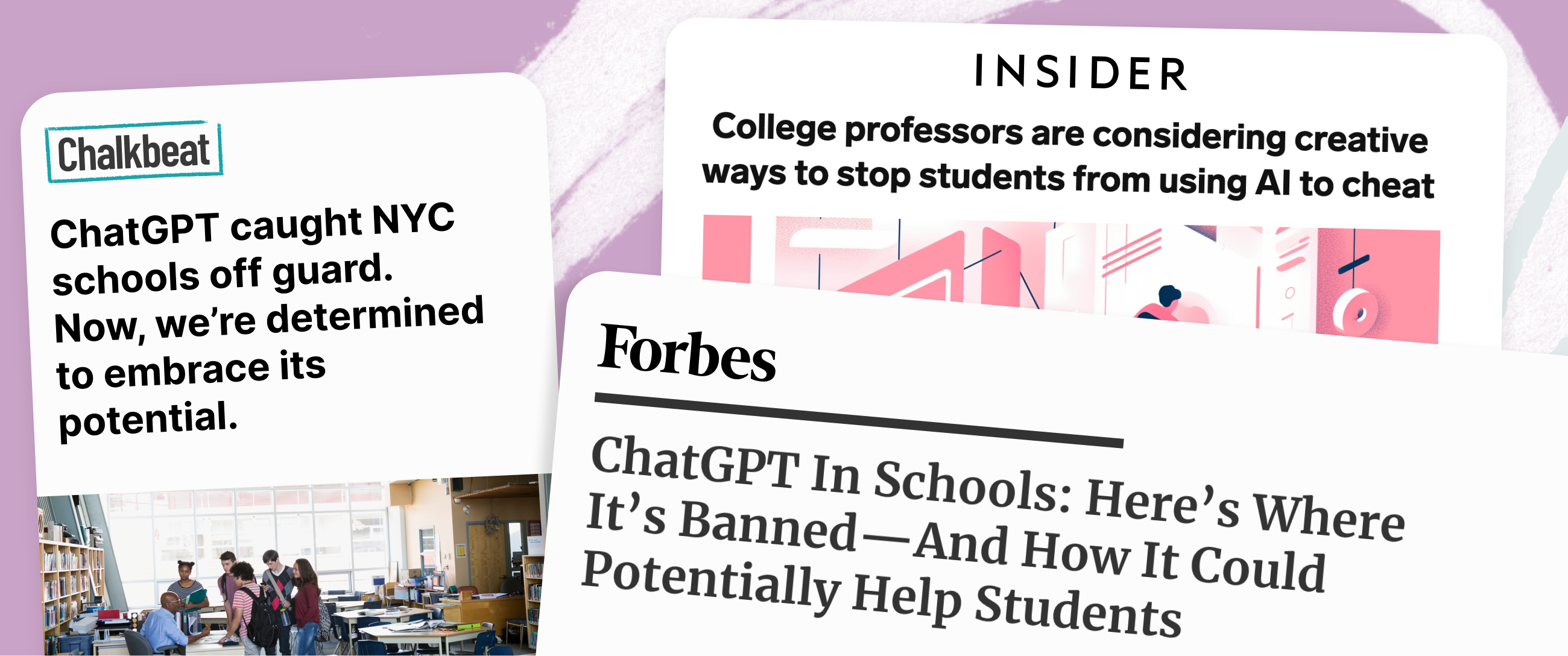
Together, the team started to think about how it could harness AI to make personalized instruction more accessible for all students, helping teachers provide better feedback at scale, and giving students the support they need to not only get started on their writing assignments, but improve their work.
With insights directly from students and teachers, the IDEO team built working prototypes, allowing them to beta test the product in schools, and demonstrate value to investors. They also developed a brand identity and style guide for launch, which came to life in a pitch deck, landing page, and other brand expressions.
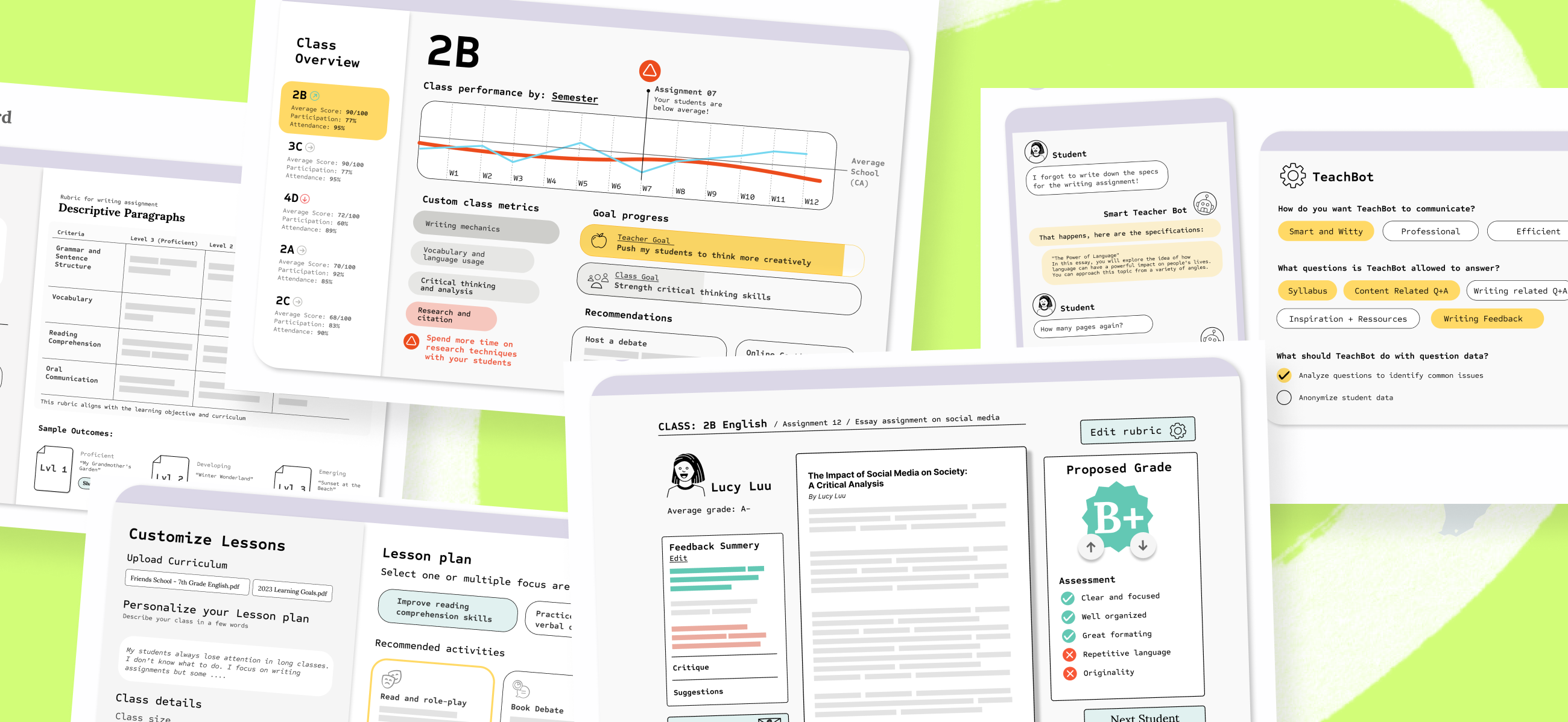
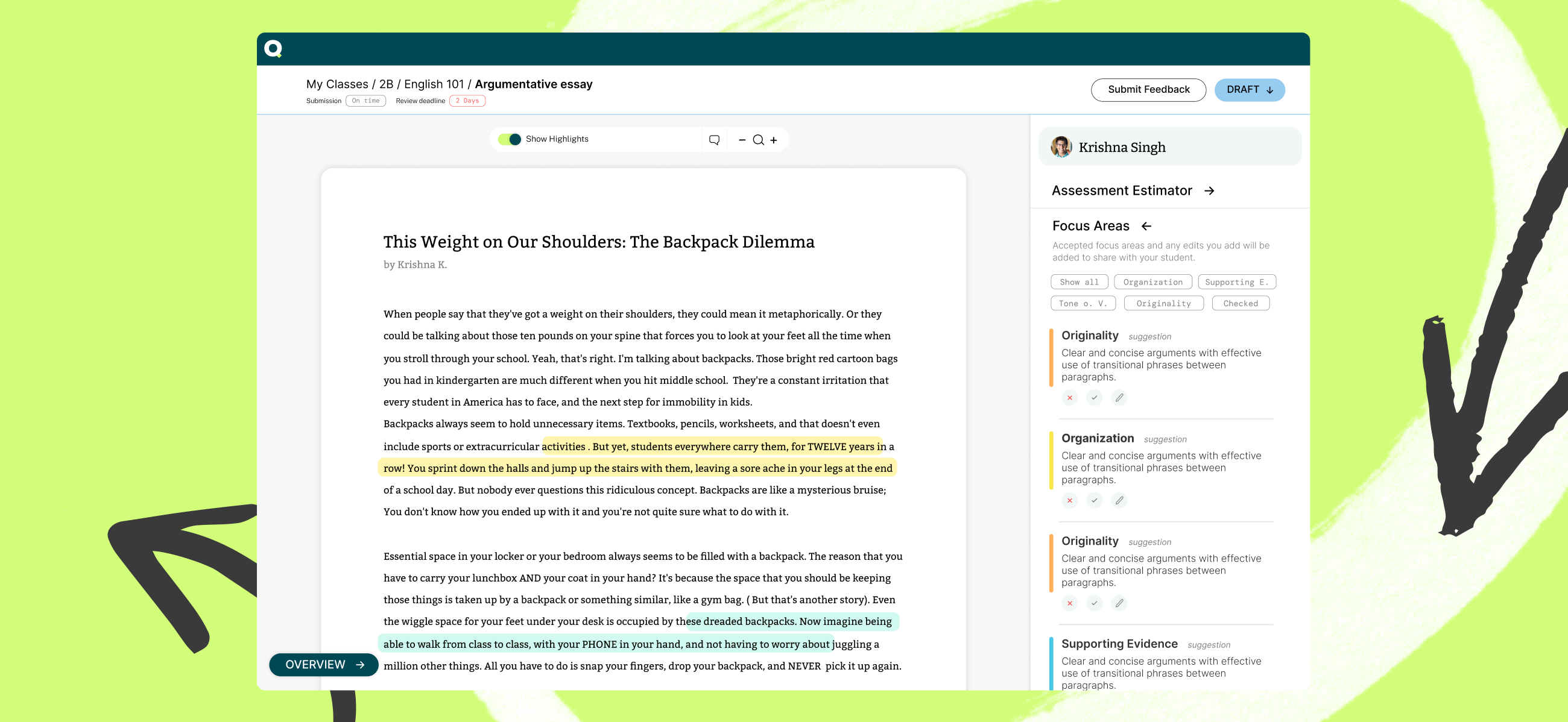
The resulting product is a sophisticated blend of AI technology and user-friendly interfaces that empower teachers and inspire students. The goal isn’t just to get to a finished essay, but to assist students in developing critical thinking skills. Ethiqly's tools help students organize their thoughts and get writing by providing contextual prompts and suggestions—without doing the work for them. And the AI assistant supports teachers by suggesting comments based on evaluation criteria they have set, and teachers choose which feedback is relevant for their individual students. Students never see it without teacher approval.
As one teacher told the team, “With leveraging AI more in education, there’s this fear that it’s deprofessionalizing the field or it’s a direct replacement of a teacher in a classroom. I think it gives us meaningful data, so that we can actually teach the way that we want to in order to support our students.” Now, Ethiqly is in use in classrooms in 25 countries, positively impacting students across the globe. In 2026, Carnegie Learning, a K-12 education company dedicated to helping teachers teach and students learn, acquired Ethiqly.
Teachers know 1:1 interaction is key to student success, but an EdWeek survey found only 46% of teachers’ time is spent teaching, while 25 hours/week goes to other tasks like grading and making lesson plans.
25 countries…and growing
Ethiqly’s reach in classrooms around the world
4 years
from launch to acquisition
Designing a park for generations to come
Frisco, Texas, imagines an ambitious city park for an evolving community.
Designing a piece of a city, like a park, doesn’t start with a blank slate. There are always traces of the past and the present, and the lived history of its residents.
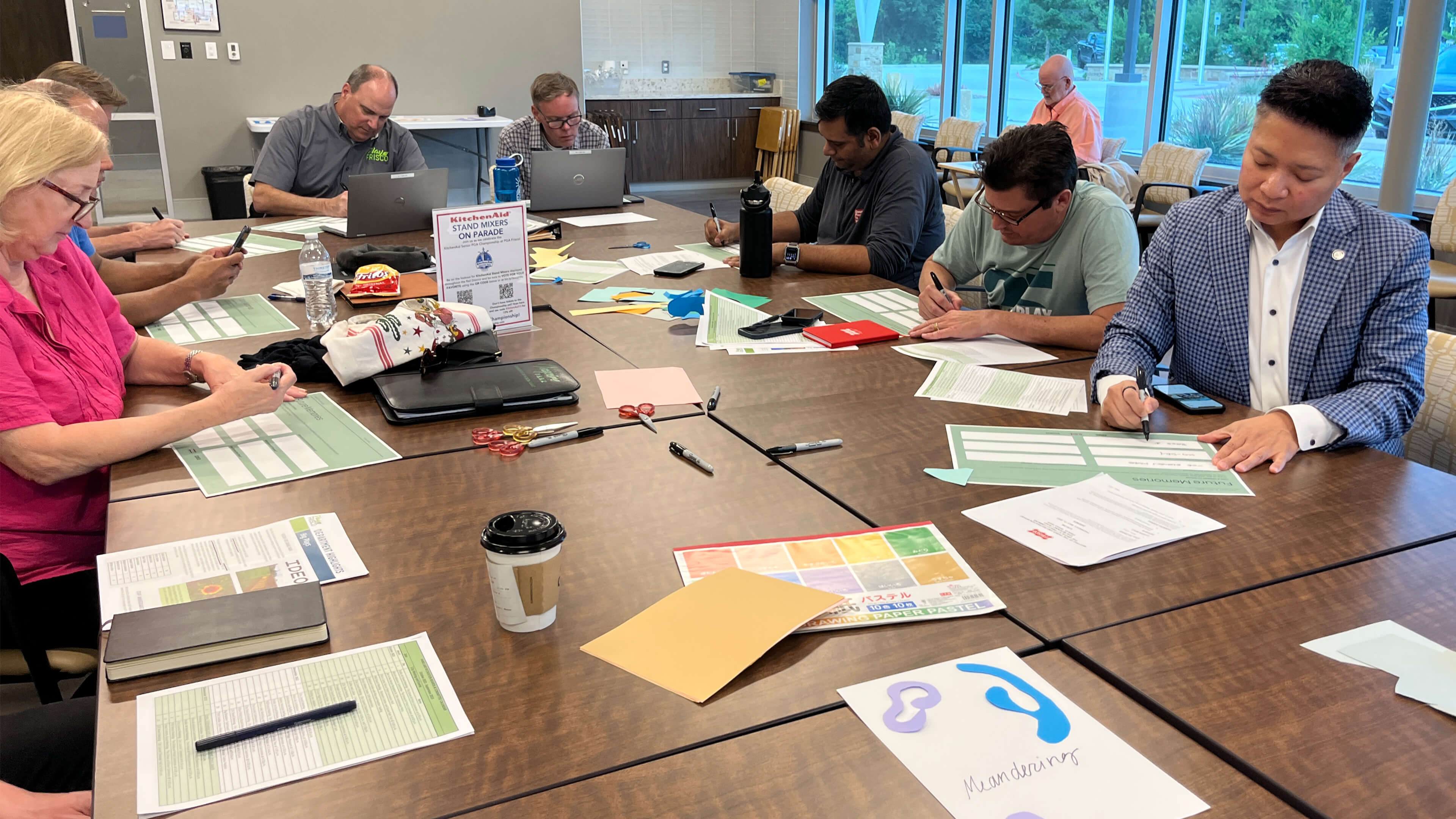
To create a full picture of that story, the IDEO team built workshops for the community centered around questions about the unique experiences of living in Frisco. They invited them to reflect on the communities they grew up in, the city of today, and the public spaces that have played formative roles for them.
From their answers, a common value emerged: heritage. Frisco is a rapidly growing city, with residents whose families have lived there for centuries living side-by-side with more recent neighbors from diverse cultures and ethnic groups. Participants shared a vision of Grand Park as a unifying, shared space, a backdrop where many families can form foundational memories in Frisco.
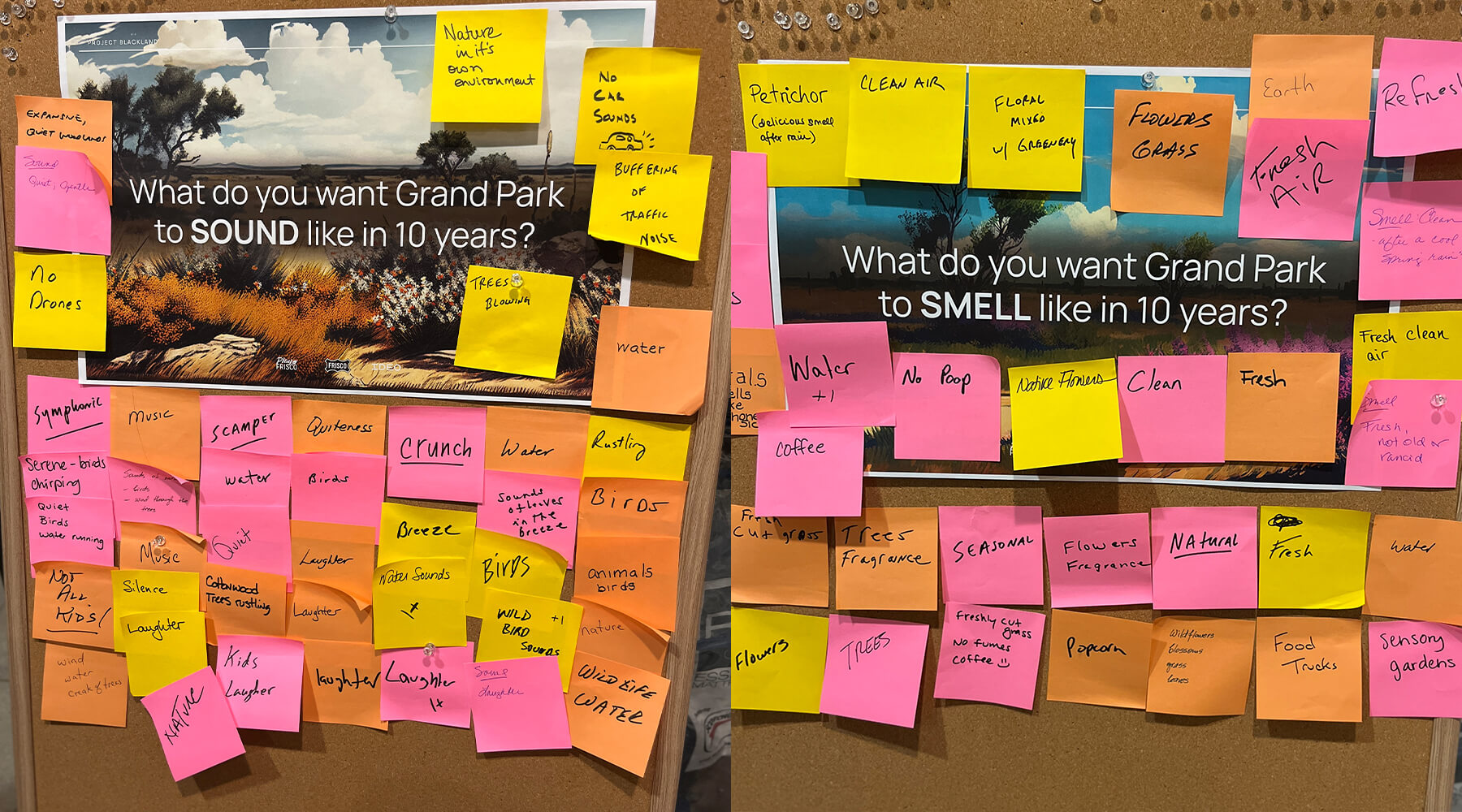
Next, IDEO brought in multisensory design prompts to help participants further conceptualize the park. How did they want it to feel, sound, and smell? In the built-up, suburban city of Frisco, residents imagined a space that was less planned, enabling guided wandering and exploration. They also hoped that the park would inspire loved ones and descendants to feel a sense of curiosity and wonder.
At the end of workshops and sessions with community groups, the IDEO team took Polaroids of participants, asking, “What’s one word you want to describe Grand Park in the future?” Those words informed the collective vision that IDEO delivered to the city of Frisco, which included spatial concepts, user journeys, and branding for the park, all designed to showcase its unique landscapes. In January 2024, Frisco City Council approved the vision statement, and officials expect to break ground in the second half of 2025.
The population of Frisco is growing rapidly; its population is up 516% since the year 2000.
At more than 1,000 acres, Grand Park in Frisco is even larger than Central Park in New York City.
Less than 1% of Blackland Prairie soil remains in the region, and some of it is in Grand Park.
94
Frisco residents were engaged in the process, from City Council members to high school students
200+
respondents shared anonymous feedback on what they imagined the park should be
Is it time to reimagine the C-suite?
The current structure for leading companies may no longer be sustainable.
Reprinted from the SHRM Executive Network’s People + Strategy journal.
Derek Robson, our CEO, and Tim Brown, our Chair, believe that the fundamental role of leadership teams has changed.
The fundamental role of the C-suite has changed. In the past, the leadership team's job was to keep the existing machine humming, optimizing for efficiency and profitability. But now the challenge goes beyond delivering business results to driving transformation—in effect, building a new machine that will thrive in the future and, ideally, the present.
And the demands placed on most senior leaders of organizations have grown exponentially. Not only are they required to be constantly reinventing the company, but they must also navigate the growing expectations of employees, investors, and other stakeholders who believe that corporations and their leaders should play a larger role addressing broader issues in society that historically fell outside the purview of business. And the demands these leaders face will only increase given that relentless disruption and uncertainty are now facts of life.
Who can live up to this superhuman job description? It's time to start contemplating a mindset shift and possible reimagining of how the C-suite operates. We see four fundamental shifts that can help executives teams evolve.
How might we shift from answers to questions?
It used to be that chief executives were expected to have all the answers to any question, as if they were Athena, the goddess of wisdom. But in our conversations with CEOs over the last few years, many share the opinion that the primary role of chief executives has to shift to being constantly curious rather than all-knowing.
In a sense, the CEO needs to move from being chief executive officer to chief inquiry officer. The ability to ask the right questions is arguably more important for the CEO than having the right answers. That's because questions provide long-term focus for companies, whereas the right answer in one context can quickly become the wrong answer amid shifting contexts.
That then raises the question of whether one person can realistically be expected to be able to have all the knowledge, expertise, and insight required to explore new territory and create those questions. The answer to that is almost certainly no, and that creates a bit of a dilemma for the CEO.
Where do they get the help to be constantly curious? It may be too much to expect that support from their direct reports, given that their primary responsibility is to execute the strategies that emerge from those questions. The board may not be much help, either. Boards, for the most part, are not expert enough. They have an important role to play, and maybe some board members can play that role. But it's not something that boards are generally set up to do. They are governance mechanisms more than knowledge-seeking mechanisms.
One possible solution for providing more support to CEOs is for them to have a small set of peer advisors around them to help them figure out what the right questions are. For this to work, the CEO would need to be able to treat that group as true peers. And they not be on the payroll of the organization, so that the CEO doesn't have to also worry about the motivations of employees who might be looking to be promoted.
In most of their day-to-day interactions, CEOs have to be concerned about side agendas and ulterior motives. And for this advisory group to work, it would have to have a singular goal of helping the CEO think through challenges and questions, in the same way that U.S. presidents have assembled "brain trusts" to offer guidance on issues. The goal for the group would be to provide a series of perspectives on a problem, rather than trying to provide the answer, and help the CEO build their confidence and courage for navigating uncertainty.

How might we create more fluidity in executive roles?
This question underscores a fundamental tension in the role of the CEO and other members of the C-suite. At a time when people expect more of their CEO and their leaders—authenticity, humanity, inclusivity, greater visibility, constant communication—these senior executives also need more time away from the office to simply think, to calm the noise and figure out what questions they should be asking but aren't. And there's no way to do that other than being either intensely disciplined about it or by sharing the load. That thinking time is crucial, even if it is just to step back and ask yourself whether you are making progress on the big goals that you've articulated for the organization.
In theory, the responsibilities of leadership in organizations should be shared and spread across the other executives. One challenge there, as we mentioned earlier, is that the C-suite is primarily focused on executing the strategy, rather than contemplating new strategies.
In addition, those roles themselves are facing their own existential crisis. Not only are the responsibilities of each traditional role expanding rapidly with the complexity of the world, but we are seeing more C-suite leaders wearing multiple "chief" hats.
For example, many chief human resources officers are now also responsible for real estate, given that the future-of-work policies they are devising have enormous implications for their requirements for office space. As if that weren't enough, they are also taking on responsibility for communications—both internal and external—since it makes sense for them to be aligning corporate messaging with efforts to recruit and retain employees.
As new issues come up, responsibility for handling them will likely fall on the shoulders of the existing leadership team. But this model isn't set in stone, and it should be revisited.
We can look for lessons on fluidity from outside the world of business. Some years ago, we worked with the government of Dubai to create new ministries—including establishing the Ministry of Possibilities—and merge existing ones to address the evolving challenges and issues that society faces. Should businesses start to think the same way? Should we start to imagine C-suite leadership roles that are more agile and can be continuously restructured to deal with the challenges of the moment while also considering the future?
What's the strategy? Does the organizational structure match it? In many cases, it doesn't. You kind of drift away one degree every year, and suddenly you're a long, long way away from delivering against what you've set out for your shareholders and for the company itself.
How might we balance performance with regeneration?
As we contemplate the future of C-suite roles, another question arises: Can we structure the jobs so they aren't so reliant on people who have a tremendous amount of stamina and energy, or those who have the capacity to work constantly?
It's almost as if a requirement for the job now is to be able to score well in the equivalent of an NFL "combine," where potential draft picks are tested in various speed, skill, and agility drills. To sign up for these C-suite jobs requires a certain amount of internal drive but also pure physical endurance.
Is it possible to imagine doing this job without requiring that level of relentless physical and mental effort? Sports are often used in useful ways as a metaphor for business, but there is a key difference between the two. In sports, you don't spend all your time just playing the game. You spend a lot of time training. And the same is true for other pursuits like dance and music—you are practicing most of the time and performing for a relatively small amount of time. But in the workplace, we don't have that concept, and so we assume that leaders can both practice and perform at the same time all the time. And if you really want elite performers, that may not be humanly possible.
We may be expecting simply too much out of human beings to have them be practicing and performing to extremely high levels for thousands of hours a year. So, what can be done about that?
Organizations have to spread the load so leaders can regenerate some of the time and perform some of the time. But businesspeople are not very intentional about how we regenerate today. We are quite intentional about it in the world of sports, where there is a whole science around what it takes for an athlete to regenerate both physically and mentally. Could we be intentional in the same way in the world of business, rather than having leaders run so hard all the time that they're not giving themselves time to recover?
There are no easy answers to these questions, but they need to be asked now, before the C-suite becomes unsustainable. Rather than worshipping at the altar of the CEO, organizations need a more collaborative approach as we look to the future. Ultimately, the goal would be to create more of a collective leadership body, rather than relying on one person, the CEO, or their direct reports.
Reprinted with permission from SHRM, ©2023. All rights reserved.
Given the growing demands on leadership teams, particularly the CEO, the current structure for leading companies may no longer be sustainable.
Reimagining space travel: The magic in the mundane
Once, Frederik Pohl, famed science fiction author, left us pondering a nugget of wisdom: A good science fiction story should be able to predict not the automobile but the traffic jam.
When we're dreaming up futures, we often overlook the very human challenges that such futures might present. But we need to remember, it's us people living there, muddling through the everyday problems that future tech will inevitably toss our way.
This holds true even when our future is projected into outer space.
In October 2021, a rocket engineer from the Japan Aerospace Exploration Agency (JAXA) joined IDEO Tokyo for a month-long "cross-border study program”. This resulted in exploring the intriguing intersection of human-centered design and space exploration. The question at hand: what would space travel feel like when it's no longer just for astronauts but for the rest of us?
This posed a unique challenge: to reimagine space travel with a human touch, crafting an enjoyable experience for everyone, regardless of their physical abilities or cultural backgrounds.
Crafting the Future User Journey
At IDEO, we value creating new experiences by empathizing with users. But with space travel, we're dealing with a unique situation—the user may still be beyond our reach.
To envision the future of space travel in the most comprehensive manner, we leaned into expert interviews. These dialogues with specialists in various fields provided invaluable insights for designing future experiences and services.
We discovered from spacecraft engineers the mental and physical challenges astronauts face. An Experience Designer from IDEO's PlayLab further provided tips on how to craft experiences that preemptively mitigate discomfort.
What dawned on us was that space travel isn't just about the Overview Effect. It starts way before hitting the 'Book Now' button and lasts way after you're back on Mother Earth.
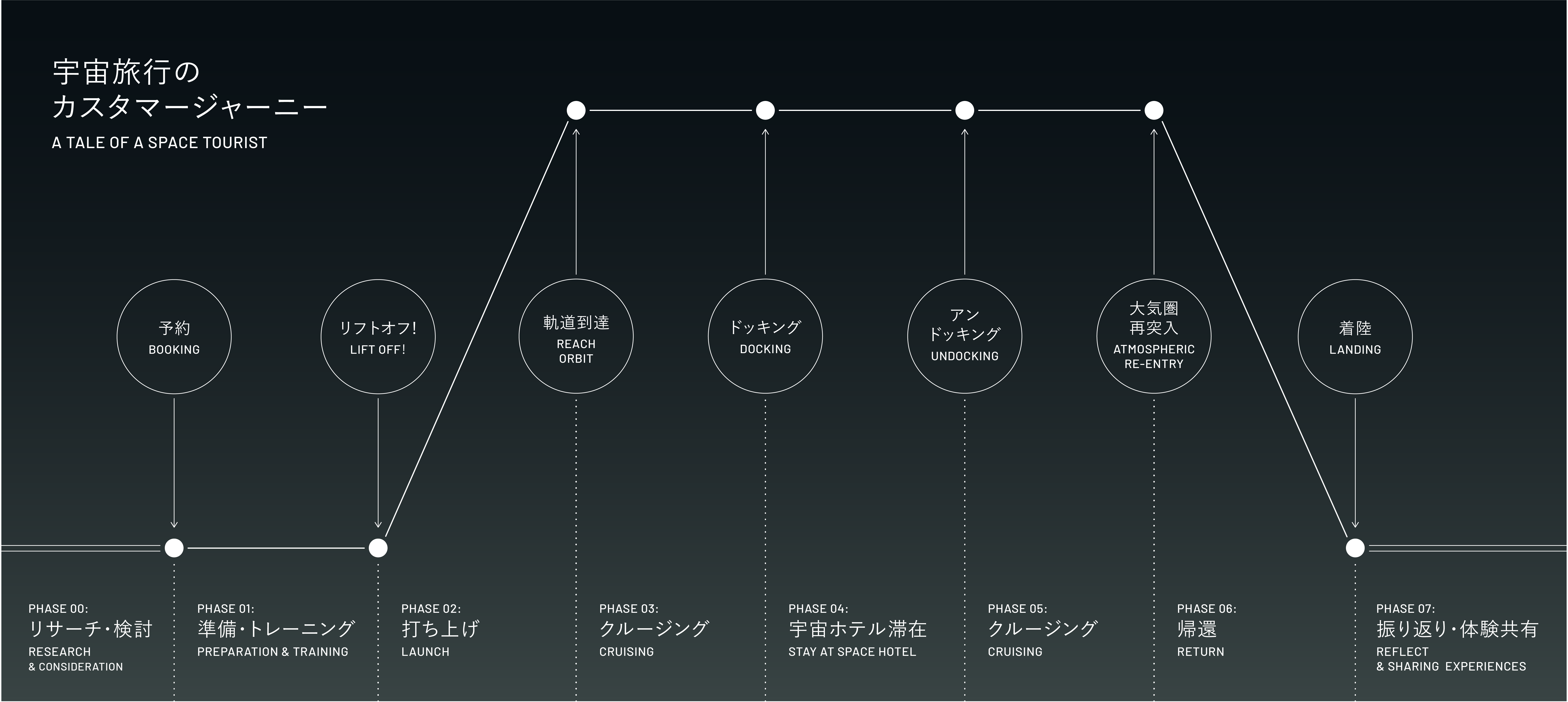
Experiencing the Future
In our quest to enhance empathy, we devised a method to immerse ourselves in the user's world, to get under their skin and understand their experiences more intuitively. At IDEO, we call this the Empathy Exercise. As Bill Moggridge, one of the founders of IDEO and a product designer, succinctly put it, "The only way to experience an experience is to experience it." So, we thought, why not bring a taste of space right here on Earth? Thus, our makeshift 'space camp' was born, where we mimicked the space traveler's journey under as-real-as-it-gets conditions.
Our space camp menu? Only freeze-dried food to be rehydrated with hot water, akin to space cuisine. We rationed water, limiting each participant to 3.5L per day for cooking, drinking, and freshening up—just like on the International Space Station.
We even simulated the trials of toilet use in space. You see, in a spaceship, you've got to don diapers or use a wall-mounted toilet while other passengers are just a step away. During the camp, we used portable toilets for urination. For the other, ahem, business, we had a two-person arrangement in a private room: one person turns a blind eye while the other does their thing.


While it may sound like a game at first, spending a whole day under these restrictions opened our eyes to various insights. For instance, the novelty of freeze-dried meals wore off after the first few bites. Eating straight from the package or ziplock bag was not only visually uninspiring but also cumbersome. So, we started getting creative with the packaging from the second meal onwards to make the food more palatable.
The bathroom experience was another big takeaway. In our daily grind, the loo is a private space, a welcome escape from the hustle and bustle. But in a cramped spaceship with no privacy, it's quite the stress-fest to hurry up to spare the waiting person and to keep any, well, olfactory offenses at bay.
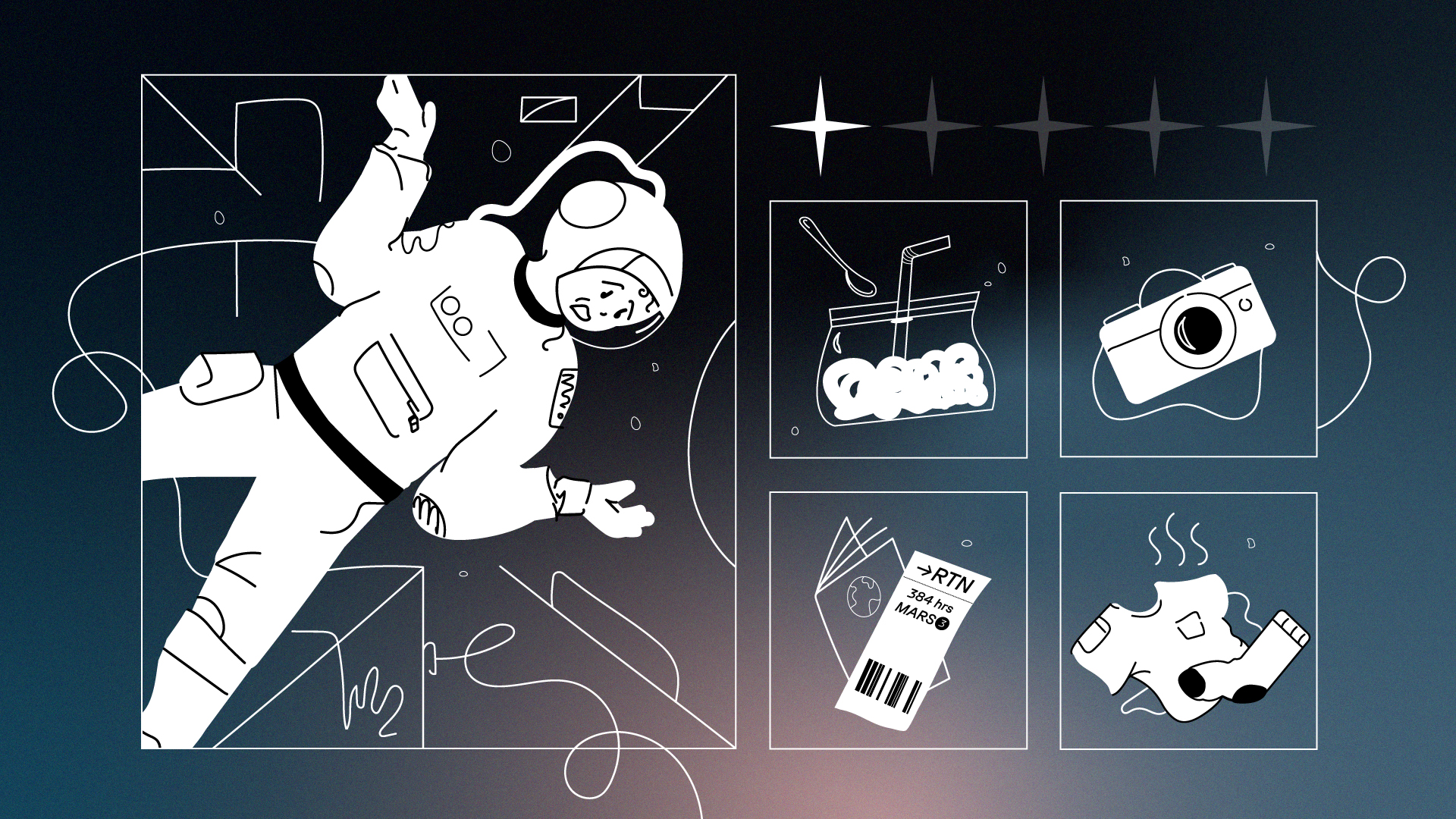
Writing a 'One-Star Review' for Future Experiences
Our research revealed a number of human-centric problems hidden in space travel. To share these findings, we created a fictional news program from the future, featuring 'one-star reviews' penned by space travelers.
These fictional viral tweets aren't just complaints, but a launchpad for designing more enticing space travel experiences. By forecasting the everyday snags of a future where space travel is as common as a trip to Hawaii, we're one step closer to engineering a genuinely otherworldly experience.
Creating the Design Principles for the Future
Once challenges were identified, the impulse to dive straight into problem-solving was strong. However, at IDEO, we use 'Design Principles' to maintain our focus on the user's perspective.
For instance, our experience designer highlighted the need for psychological safety within a spaceship. Building trustful relationships is crucial for everyone to fully engage in the experience during space travel, where varied groups share a confined space.
We also learned from former astronaut Naoko Yamazaki about the value of fostering creativity. Space, free from gravity and conventional rules, allows for the redesign of norms. Rather than preparing all experiences in advance, we found that leaving room for travelers to create their own unique enjoyment might lead to more memorable journeys.
Ultimately, we crafted five core design principles, each considering various perspectives from physical fitness preparations for the journey to designing an inclusive spacecraft interior. As we begin to design concrete concepts, these principles serve as our compass, enabling us to continually envision a future of space travel that is fundamentally human-centric.
In these uncertain times, we must remember the people are always at the heart of our evolving narrative. As we dream, our focus should extend beyond technology to include the everyday challenges it brings along.
With a touch of creativity and a playful mindset, let's 'experience' this future together. The secret to a brighter tomorrow might well be hidden in the most mundane problems.
Learn more about the project at spacetravel.ideo.com. (Japanese Only)
Once, Frederik Pohl, famed science fiction author, left us pondering a nugget of wisdom: A good science fiction story should be able to predict not the automobile but the traffic jam.
Will AI interfere with relationships?
Gen Z thinks so.
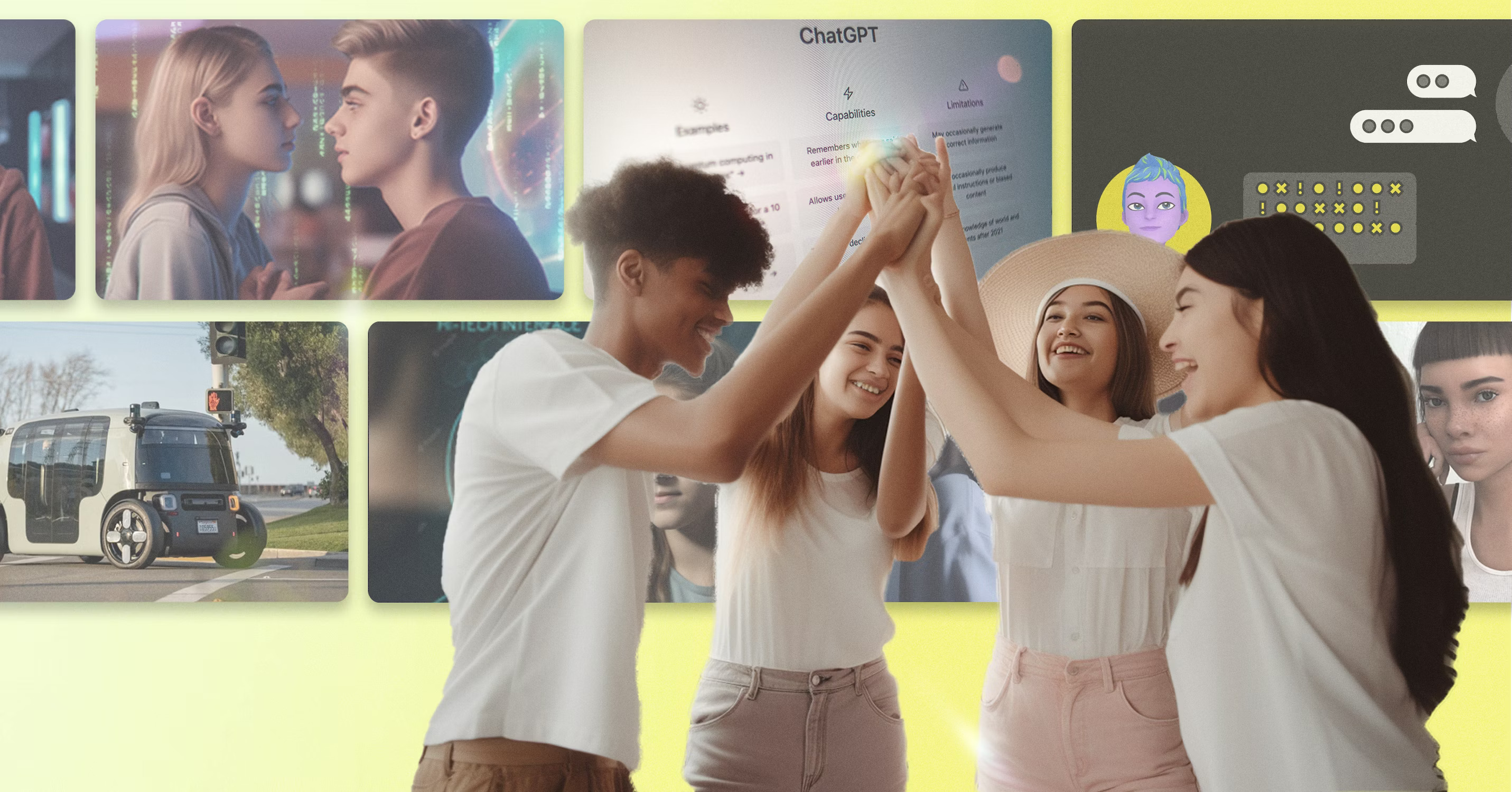
Earlier this year, Snapchat introduced My AI, a relentlessly cheerful chatbot powered by OpenAI’s GPT technology. The avatar, pinned to the top of your chat feed, was ready to respond to every passing thought, be your 24/7 rant buddy, or even…your new best friend.
You might imagine that Gen Z, cradled by the arms of technology from their earliest friendships found on Club Penguin or Minecraft, would welcome My AI. After all, this is a generation for whom dating starts with the subtle “like” of a post or in the DMs of a swiped-up Instagram story.
But in a surprising twist, Snap’s chatbot was an instant flop, resulting in a spike of 1-star reviews.
That tracks with the responses of the 13- to 21-year-olds we spoke to, all of whom voiced a resounding “no” to the idea of AI infringing upon their relationships. Rather than forming attachments to the programmed responses of AI, they are interested in cultivating genuine bonds with others that don’t require an algorithmic intermediary.
“How does this change our expectations of real life people?” asked one 19-year-old. “I feel like that could be super problematic for friendships because you're like, oh, I just want this person to be different. Why can't they talk like this? Why do they laugh like this? Why can't they understand this? Why don't they know everything about me? Why can't they read my mind?”
Young people already feel the damage social media has had on their relationships and mental health. And they're wary that AI will interfere with the relationships they’re just learning to foster.
Meanwhile, brands are in an arms race to create AI companions and AI clones that can be integrated into products and services. But when our team put a series of hypothetical Gen AI-powered relationship products in front of a group of young people, they balked and even expressed discomfort. They want technology that augments human relationships, not bots that replace them.
These insights led to three principles that we’re using as guideposts as we design this space.

1️⃣ Skip the engineered reality; reflect authenticity
Perfect, personalized AI bots might breed dissatisfaction with flawed human friends. Plus, they’re just plain spooky. Gen Zs told us they would prefer tools designed to help them embrace the imperfections of relationships and help them navigate. “I don't like the idea of being able to mold someone,” one respondent told us. “One of the teachings that I feel is super valuable in my life is acceptance and being able to go, okay, this is where I can meet this person.” Wary of social peacocking, face filters, and all the doctored images of social media, they feel AI friends would only further the fakery they’re actively trying to undo.

2️⃣ Elevate human intuition and empathy
There is a real concern that an over-reliance on AI could cause people to lose touch with their intuition. Gen Zers know that awkward moments with others—conflicts with friends, job interviews, even a bad vacation—are part of the human handshake. “Relationships are about you learning as you go,” another respondent said. “You're not going to learn how to resolve conflict by yourself, you're not going to learn how it feels to be lonely and push yourself to go meet people.” At the same time, they’d gladly accept help with maintaining friendships. A personal coach that could suggest activities or check calendars for times when you’re both free? Sure. Relationship advice? Bring it on. Perfectly streamlined interactions? No thanks.

3️⃣ Build in transparency to gain trust
The people we chatted with were concerned about AI accessing their conversations. “There's a lot of personal things that my friends and I talk about. And I wouldn't just want a third party listener all up in the mix or storing photos or information. I wouldn't want to feel like it knows my whole life.” They want to know how much listening AI is doing, and how their data will be used by the companies that create it. They’re concerned about the racism that has surfaced, and how a system that reflects human bias might shape their perceptions of their own identity and the world. The concern is well-founded, and presents an opportunity for companies to be transparent about the information they collect and use to improve AI models, and mitigate unintended consequences.
Snapchat's My AI and the host of potential AI-powered relationship products may seem attractive, promising the allure of companionship and understanding. Yet, this generation, while tech savvy, recognizes the value of genuine, organic human connections. The charm of flawlessly crafted bots pales against the nuanced, idiosyncratic, tender core of human interactions.
The next generation has opinions about what we build, and their message is clear: AI is welcome to augment, enhance, and support, but when it comes to forging meaningful relationships, humans must remain at the helm. It’s a potent reminder that while technology shapes our world in novel ways and companies vie to be first to market, the essence of humanity—the value of mutual understanding, the beauty of our imperfection, and the need for companionship without a whiff of profit motive—should never be sidelined.
As we step into a future where AI is integrated into every experience, let’s remember that the best guides are our own instincts, not a bot trained on reading the internet. The collective wisdom of Gen Z might just be the compass we need.
Is your organization interested in designing more human-centered AI experiences? Let’s talk.
Gen Z to AI: don’t kill my creative vibe
3 principles to design AI creative tools Gen Zs will actually want to use.
AI helped you with your final paper and made your workout plan—why not have it help resolve a conflict between you and your friends, or help you pick your career?
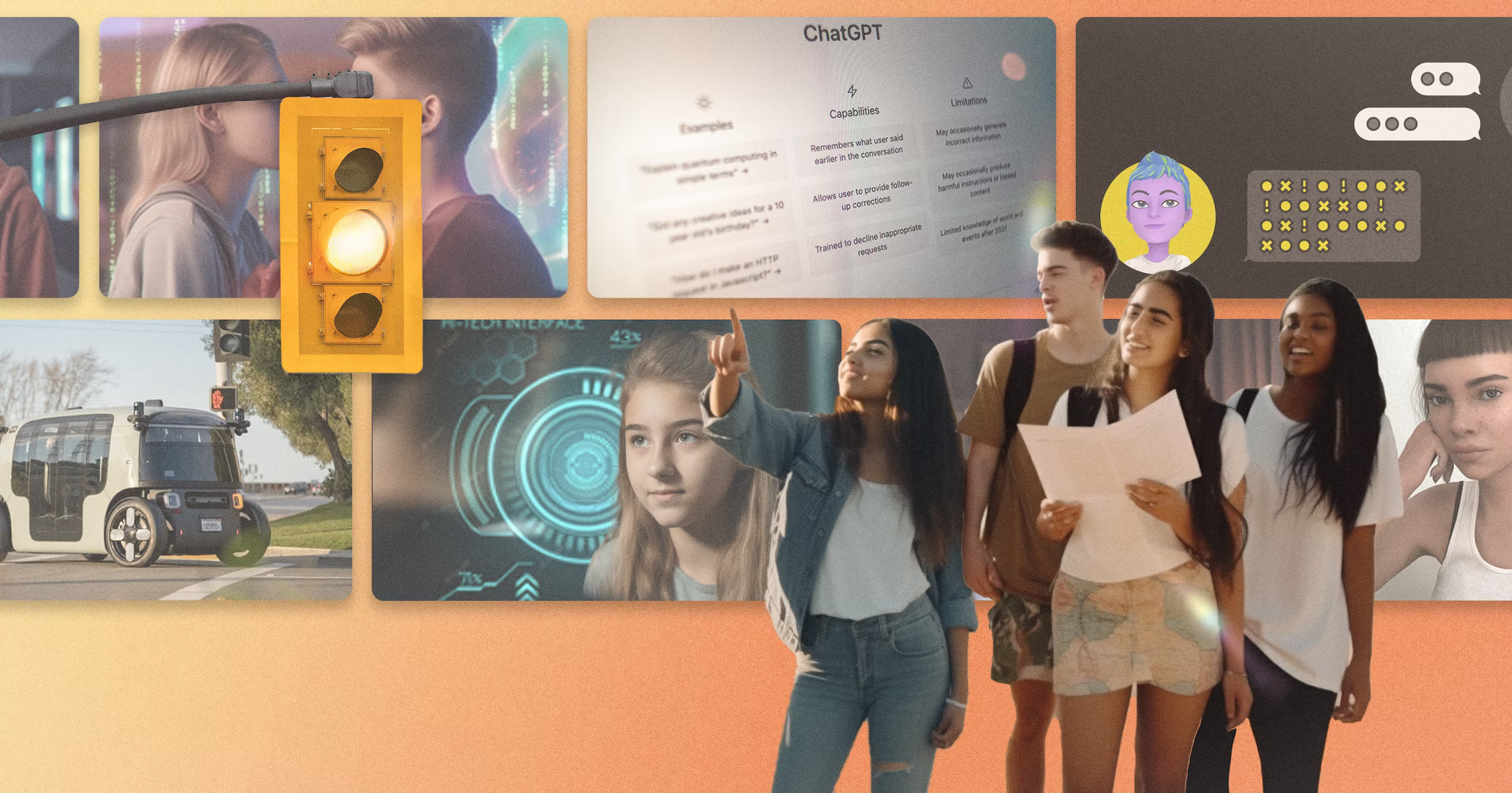
Because that’s where artificial intelligence crosses the line from innocuous to intrusive—at least for the group of 13- to 21-year-olds with whom we spoke. To better understand how the next generation will respond to a new wave of AI products, services, and experiences coming online, we prototyped hypothetical apps to elicit feedback. “AI Passion Coach” for one, is a guide that identifies your skills and makes suggestions for how and where to apply them. That didn’t go over so well. “I’m all for AI helping me find the most optimal way to learn once I know what my passion is,” a college freshman told us, “but finding a passion for me? Not so much.”
After sharing six concepts, we came away with some strong hunches about how this cohort wants to show up in the world—both in person and digitally. They’re not looking for products that can be creative for them, they want tools that help them be creative themselves—a subtle but important difference.
Just as digital maps have ruined our collective sense of direction, Gen Z fears that the generative AI’s shortcuts and automations may diminish their ability to form their own identity.
As one 19 year-old explained, “It's so much more valuable when you experience and learn something yourself versus being told it.”
Several feedback sessions on AI Passion Coach, along with two other hypothetical concepts: AI Venture Accelerator, a creative co-founder that helps you bring your idea to life, and AI Muse, an idea generator that accelerates your creative pursuits, yielded insights from which we drew three design principles for creating products and services that are more aligned with what young people want. If your business is integrating generative AI, consider these guidelines:
1️⃣ Use AI to Scaffold the Creative Process
The Gen Zs we talked to don’t want to be handed the answer. They want to develop the capabilities to create something of their own. “I think there's a line where AI can provide the groundwork and help be a resource, but then we get to choose what we do with it from there,” one 19-year-old said. Exploration, experimentation, and reflection are important parts of the creative process that young people don’t want to see stripped away.
To align with that desire, companies can create AI services that help users discover and learn why and how something is created. Those aged 12 to 25 told us over and over again that being able to adjust their level of input, and add their own vibe was very important to expressing who they are.
2️⃣ Lower the Barriers to Entry
This cohort recognizes that there are tactical skill sets that they and others may not have access to. They welcome AI opening up opportunities for those who may have great ideas, but lack the knowhow to execute them. “I’ve been working on developing an app for sustainability. I can't code, and I don't know how to make an app, but I had the idea and wanted to make it real,” a college freshman shared with us. Instead of removing humans from the equation, companies could leverage AI to help users jumpstart their ideas and offer access to the resources and knowledge necessary to turn those ideas into reality.
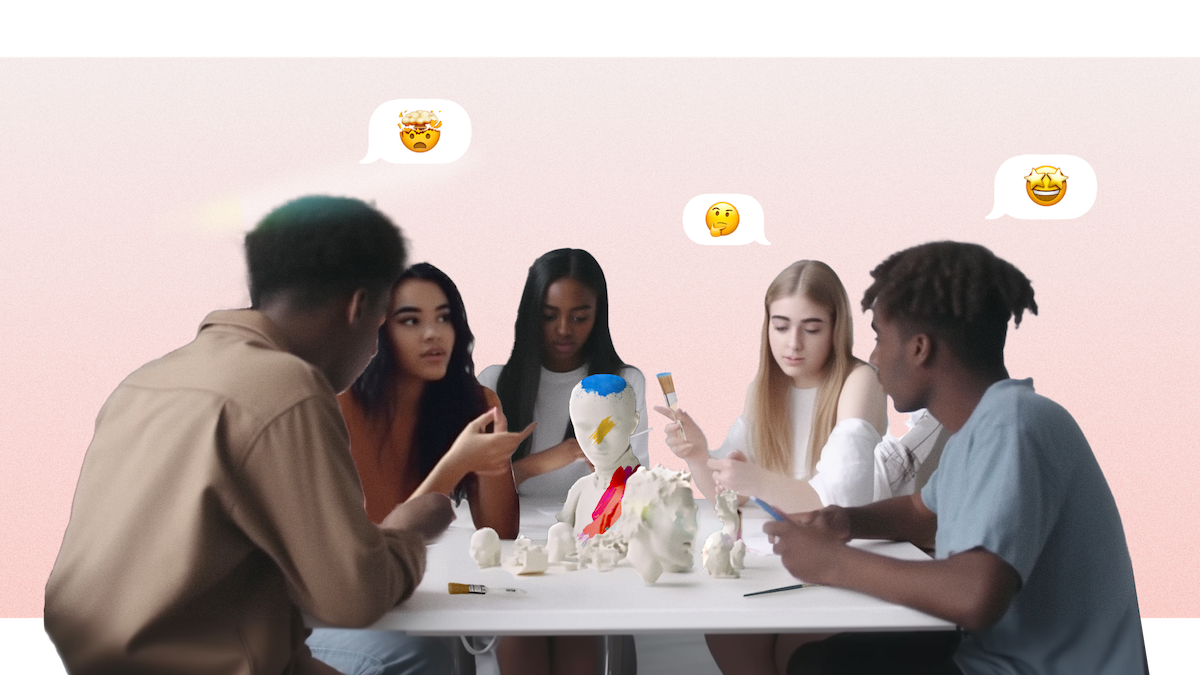
3️⃣ Connect Creative Communities
Gen Zs find a sense of belonging and community through creative pursuits and look for those who share similar interests. “I feel like the beauty in creating things is definitely the insights I'm getting from other people,” said a 19-year-old entrepreneur. Just as mobile phones consume our attention, they suspect that other emergent technologies will isolate people and put optimization and productivity above the slower process of sharing ideas. “You achieve things more quickly,” said a 20-year-old student, “but you're lacking the relationships that you build over time when trying to achieve those things together.” For companies looking to augment human creativity, this presents an opportunity. Instead of being a generator of machine-made solutions, AI can be a facilitator of human collaboration, allowing people to share tips, learn from diverse experiences, and build community.
As generative AI upends the way humans work, there’s a lesson to glean from this research. Generative AI’s omniscience and ability to generate staggering creative output almost instantaneously is undeniably seductive. But the fundamental values that we cherish—our creative agency, our ability to actualize new ideas, and our need to bond with others through collaborative work—are all key to the successful adoption of the AI products and services of the future.
These principles are a good starting point for how to innovate wisely with human needs in mind. In Part III of this series, we will dive into how AI might impact the next generation’s relationships and mental wellbeing.
Missed Part One of our Gen Z + Gen AI series? Head here.

Lindsey Turner
I’m passionate about building brands, products, and experiences that help organizations show up with meaning and momentum.
I help organizations cut through complexity by shaping how they show up, through brand strategy, identity, and storytelling.
Working at the intersection of brand and business, I bring an editorial eye and a bias toward making—turning ideas into tangible experiences that people can understand, trust, and believe in.
My work spans government, healthcare, financial services, media, and consumer goods, from launching Gen Z-focused ventures to building innovation labs and reimagining legacy brands. I relish moments of ambiguity and enjoy translating across teams, perspectives, and priorities to move ideas forward.
I started my career in editorial and digital design, shaping cross-platform experiences and identity systems in publishing and agency environments. That foundation still shapes how I work today: I’m detail-oriented, collaborative, and overreliant on the Oxford comma. I hold a BFA in Visual Communication from the School of the Art Institute of Chicago.

Rachel Young
My work helps organizations see who their products aren't working for—and build the will and the tools to do something about it
For 25 years, I've asked the same question: Who does this design exclude—and what are we going to do about it?
My work spans human-centered strategy, inclusive design, and qualitative research, with clients ranging from Microsoft, Google, and Verizon to the National Science Foundation, and San Francisco Unified School District.
Before IDEO, I taught elementary school in East Palo Alto and spent a decade doing design work with social service organizations—where I learned firsthand what it costs people when systems are built without them in mind.
I am currently writing User Error, a nonfiction book about digital access and the design decisions behind it. I live in Oakland, California.

Brian Pelsoh
I lead with craft, ensuring our work is creatively excellent: rooted in deep human insight and imagination, while also grounded in the realities of business and technology.
My expertise spans brand, communication, and product design across tech, education, the arts, and social impact.
I believe great work demands both high-level vision and obsessive attention to detail, and only happens through collaboration.
I bring an inclusive, hands-on approach and a deep understanding of business, which enables me to consistently deliver excellence while always asking why.
Before joining IDEO, I worked at the brand firms Pentagram and VSA Partners. I began my career as a designer, leading teams at the School of the Art Institute of Chicago and the Milwaukee Art Museum. I hold an MFA in graphic design from Maryland Institute College of Art and a BFA in communication design from the Milwaukee Institute of Art & Design, and have taught at some of the best design schools in the US.

Tony Wong
I am responsible for IDEO’s long-term success in China and working with clients to use design as a tool to enable growth.
I am responsible for IDEO’s long-term success in China and working with clients to use design as a tool to enable growth. Specifically, I have helped Chinese companies design holistic brand solutions through the development of their products, communication, services, and innovation teams, and I have helped multinationals expand their presence and influence in China.
I advise global leaders on developing China-led innovation and capabilities.
In over 15 years in IDEO Shanghai, I have worked on projects that use design to elevate the quality of the experience of healthcare products and services, streamline processes that increase productivity, create spaces and programs that promote and enable inclusive communities, and build next generation mobility solutions that are planet-positive.
Before joining IDEO, I worked at Philips Electronics and the Electrolux Group in Italy, the Netherlands, and Singapore on a number of breakthrough commercial products. I am a member of the Young President Organization in Shanghai.

How to use AI as an editor, not a writer
Ed White shares how he uses AI as an editor—not a writer—to sharpen storytelling, rehearse ideas, and preserve the productive friction that makes creative work better.
Ed White has a rule he's tested on his own writing: hold yourself as the writer, and let AI be your editor. Ed is a Senior Design Director at IDEO's London studio, where he co-leads the firm's AI portfolio across Europe. Before IDEO, he spent 12 years as a writer and editor at the Financial Times, Wired, and Contagious. So when he talks about when to use AI for storytelling and when not to, it comes from two decades of crafting his storytelling skills.
In this episode, Mina Seetharaman talks with Ed about two specific tools he uses to keep AI in an editor's seat: a "roasting agent" prompted to critique his drafts without any sugarcoating, and a simulated audience he rehearses pitches on before the real thing. They also get into what Ed is hearing from design leaders at Anthropic, Lovable, Shopify, and Google Creative Lab about how creative work is changing, and why he thinks the friction of writing something yourself is worth protecting rather than automating away.

Building a personal AI for the messiness of life: Sida Li
Becca Carroll talks with Cue co-founder Sida Li about designing a personal AI for the messiness of everyday life—not just work. They explore how Sida stays anchored to human needs while navigating fast-changing technology, product tradeoffs, business-model experimentation, and the realities of building an AI company today.
Most AI products today are built for work—a space with clear problems and established systems. One founder noticed a gap: personal life is messier, harder to systematize, and mostly left behind by the AI boom. So she built Cue, a personal AI that lives inside iMessage and group chats, to go where the other tools haven't.
In this episode, Becca Carroll, IDEO's Chief Strategy Officer, talks with Sida Li, co-founder and CEO of Shared Context Lab, about staying anchored to a human need while the technology around her keeps changing shape, why she treats her business model with the same rigor she'd bring to a product, and what it feels like to build a company at this particular, disorienting moment in AI.
The conversation also gets into how Sida makes design decisions: the language Cue uses to describe itself, the tradeoffs behind building inside iMessage instead of a new app, and a real story about a business idea that didn’t pan out.
This is the second in a two-part series profiling founders from IDEO's Startups-in-Residence program. The first conversation is with Johannes Seemann, founder of Sooner, on designing GenAI for the emotional side of money.

Designing GenAI for the emotional side of money: Johannes Seemann
Designing financial tools around the feelings that shape money decisions.
Most personal financial tools are built to run the numbers and optimize towards a budget. While that works for some, most people experience money as a lived relationship that does not neatly fit into a spreadsheet. Johannes Seemann and Becca Carroll discuss why money is emotional before it is mathematical, and what a human-centered approach to building a generative AI financial product looks like in practice.

The curious leader's edge in uncertainty: Scott Shigeoka
How genuine curiosity helps leaders navigate uncertainty with greater confidence.
Mina Seetharaman talks with Scott Shigeoka, author of Seek and Head of Curiosity Cultivation at the Eames Institute, about what distinguishes genuinely curious leadership from performative curiosity, how power dynamics shape curiosity, and why practicing curiosity can restore energy rather than drain it.
Looks like you might be in search of something very specific?
Or reset the filters above and try another angle.
Here’s some random inspiration

Podcasts about creative leadership

Articles about the power of prototyping
