.svg)



A creativity-building app for kids
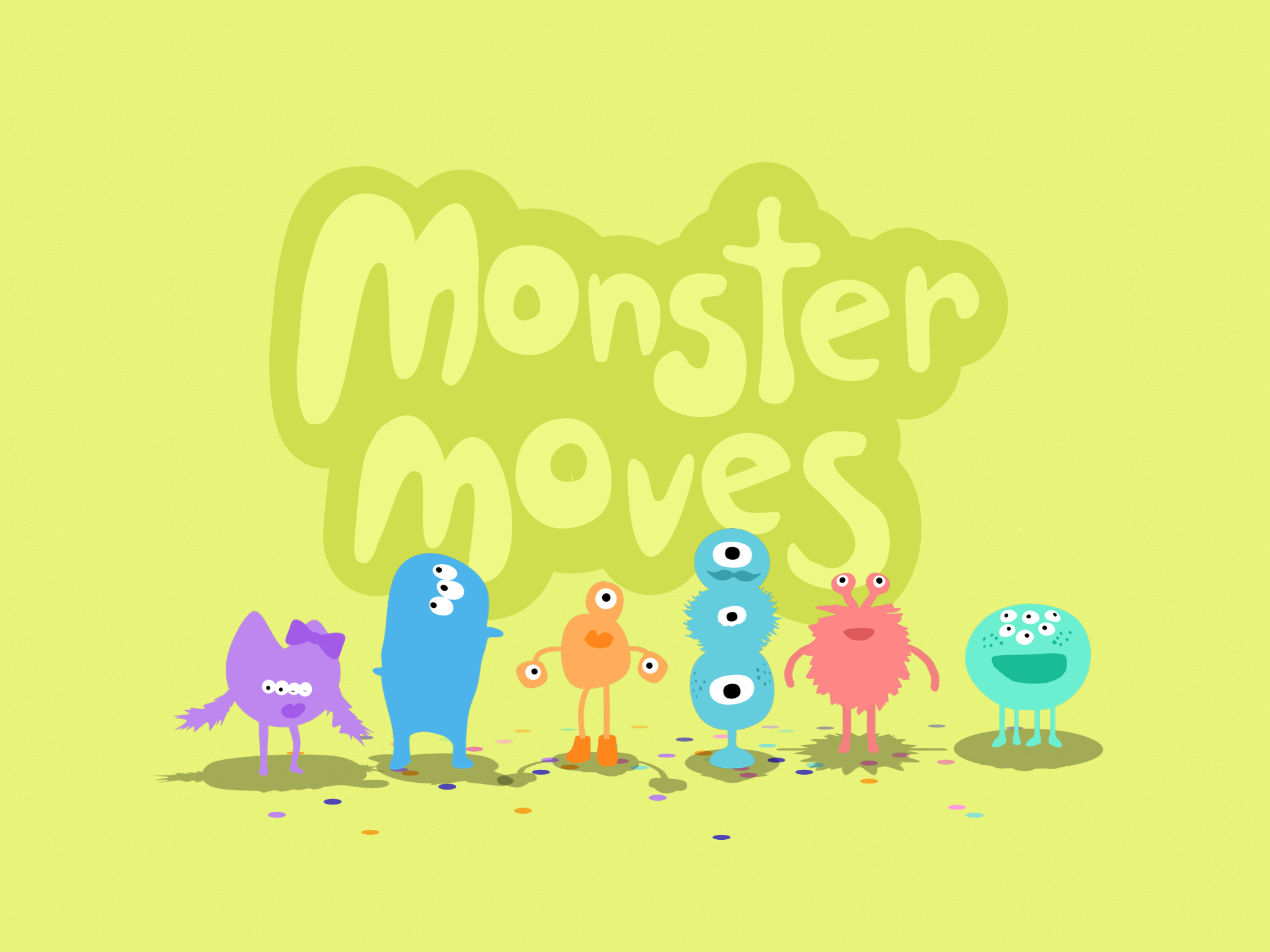
Monster Moves teaches young kids dance choreography.
Monster Moves is an app that gives kids the ability to create their very own monster dance party. Kid-approved by a rambunctious team of tiny beta testers, the app encourages children 5 and younger to exercise their creativity as they choreograph dance moves for a troupe of monsters. Kids develop an awareness of their creative control by sequencing illustrated tiles that correspond to each monster’s unique set of dance moves.
Whether it’s a twirl, flap, swing, or sway, the app enables kids to cultivate decision-making skills by drawing connections between their choices and the monsters’ dance steps. Each monster has a full repertoire of dance moves and accompanying musical beats, so kids can compose an original soundtrack and dance along. To encourage kids around the world to create and design, the app is available in English, Simplified Chinese, Japanese, Korean, Spanish, Italian, French, and German.
Monster Moves—available on the App Store—joins a collection of apps, including Balloonimals and Balloonimal Babies, created by IDEO’s Play Lab, made up of a team of educators, designers and toy experts who foster kids’ curiosity, play, imagination, and creative confidence.
A drug-free alternative to chronic pain relief
Designing a revolutionary wearable device.
Chronic pain changes everything. Symptoms associated with chronic conditions can make activities that were a normal part of life—getting regular exercise or even a good night’s sleep—difficult to bear.
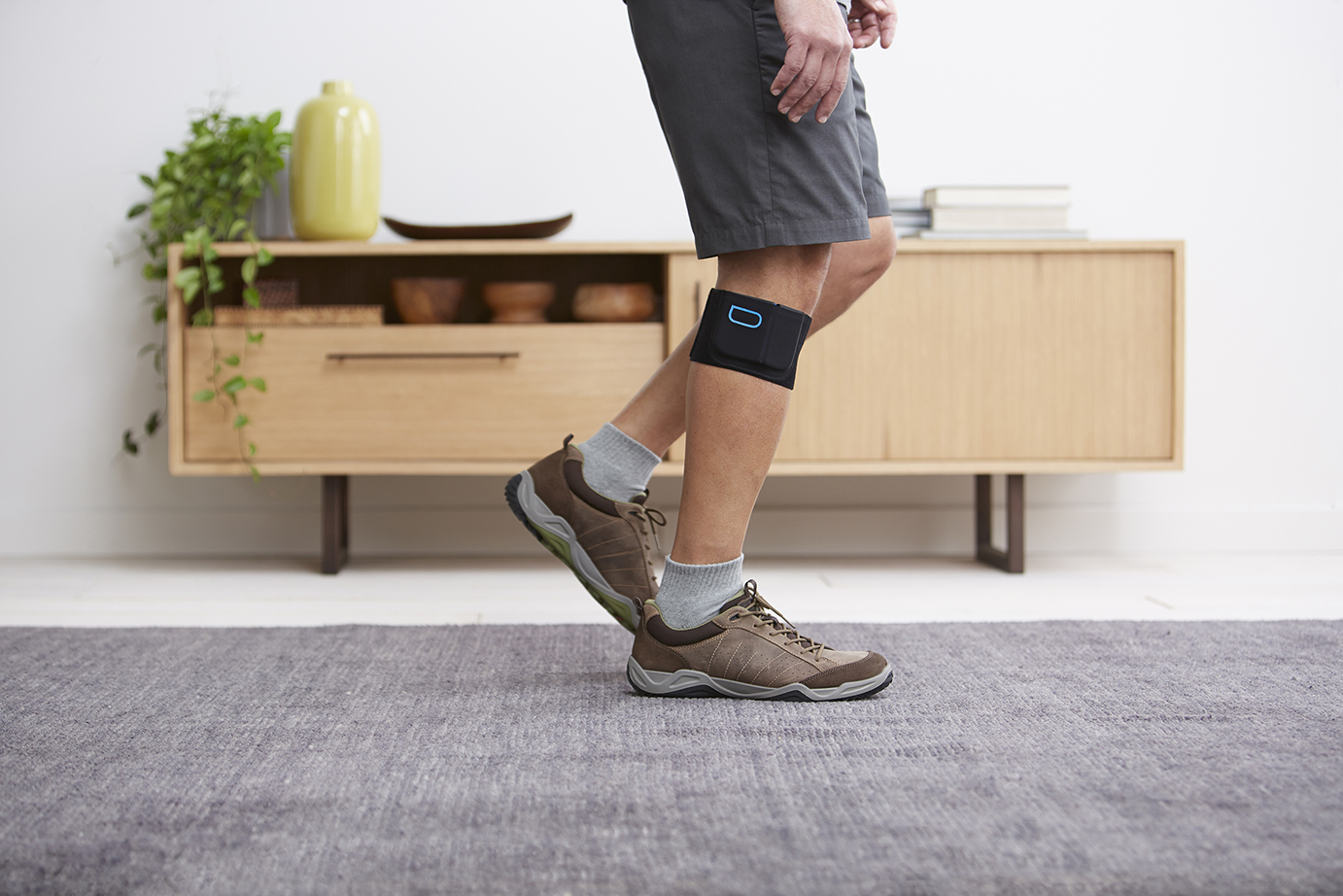
NeuroMetrix, an innovative health-care company based in Waltham, Massachusetts, developed Quell® to help treat chronic pain in people suffering from nerve, arthritic, back, leg, and foot conditions. Using a revolutionary technology called wearable intensive nerve stimulation (WINS), this device triggers widespread relief and, in a clinical study, reduced chronic pain and use of medication in thousands of users.
NeuroMetrix came to IDEO to help create the industrial design, interaction design, and mechanical engineering to bring Quell to the consumer market. Quell is a device that is placed in a sports band with a lightweight, slim design that fits comfortably on the upper calf and delivers therapy for chronic pain in the body. Its patented OptiTherapy™ technology is customized and automatically adjusts the therapy dose for optimal relief. An accompanying app, developed by Atomic Object, allows users to track treatment sessions, measure and understand the quality of their sleep as it relates to their pain, and personalize device settings.
IDEO’s work with Quell went beyond creating the product to something bigger—reframing chronic pain. For people who are in a constant state of suffering, the ability to take some measure of control allows them to feel more like active participants in their treatment plan, and to regain confidence.
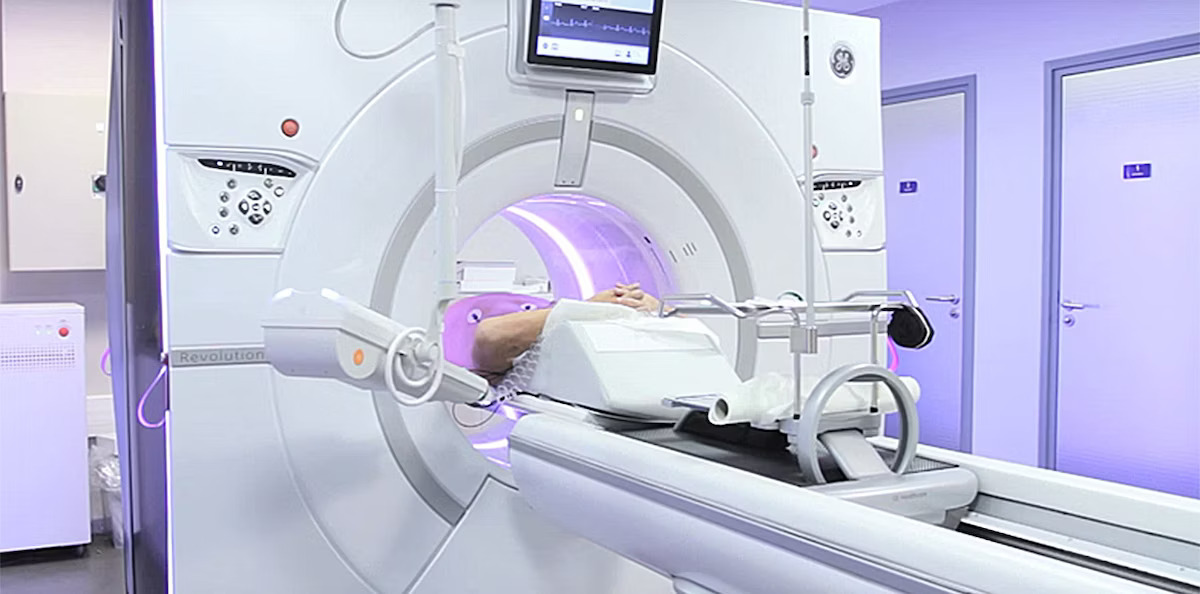
A better scanning experience for patients and technicians
Creating a more streamlined user interface for CT scanners to maximize image quality, and minimize radiation.
Operating a CT scanner is a delicate balancing act: The tech has to get a clear image for accurate diagnosis while reducing the patient’s overall radiation exposure. There are a lot of variables, and every second counts.
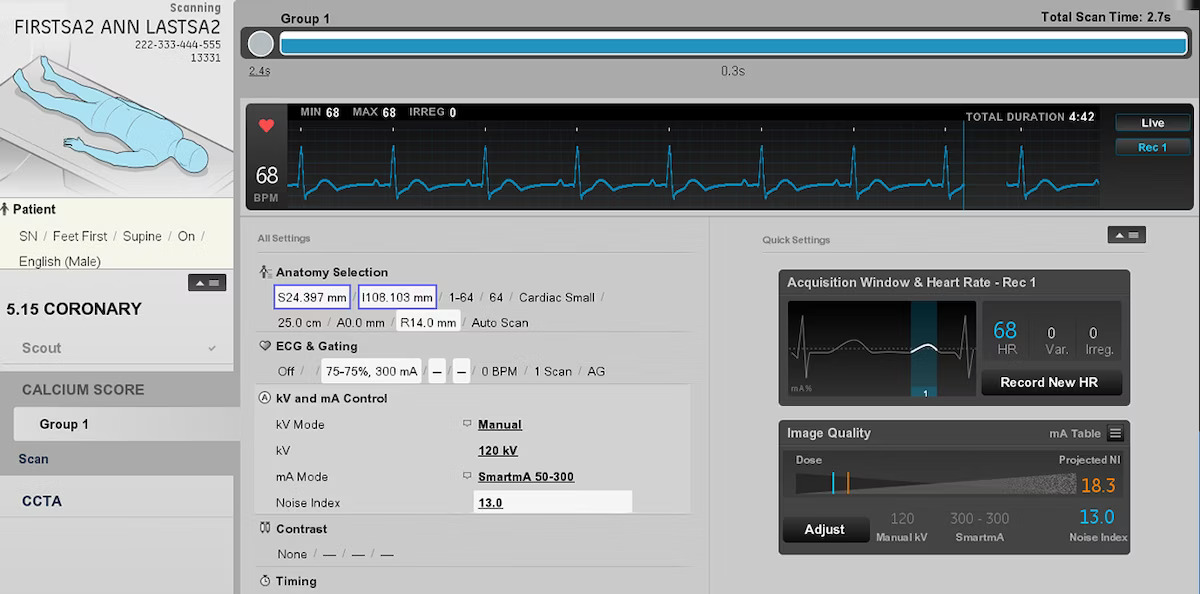
GE Healthcare, one of the country’s largest manufacturers of CT scanners, hired IDEO to redesign the console user interface to optimize the tech’s workflow, the patient experience, and the image quality. The key challenge was accommodating both junior and senior tech experience when designing a single interface, balancing support, flexibility and control. The final design allows techs to see their entire workflow up front, is optimized for “glanceability,” and draws technicians’ attention to important information. Threshold limits ensure the radiation dose never exceeds the determined amount. Ultimately, the streamlined design enables the tech to feel confident and focus on the patient’s physical and emotional well-being.
With several new hospitals using the new GE CT scanner, the impact has been evident. Within 24 hours, techs are up and running on the machines. The vision for the future looks bright and clear.
A blueprint for next-generation telecom
Helping a legacy telecom company stay relevant in the 21st century.
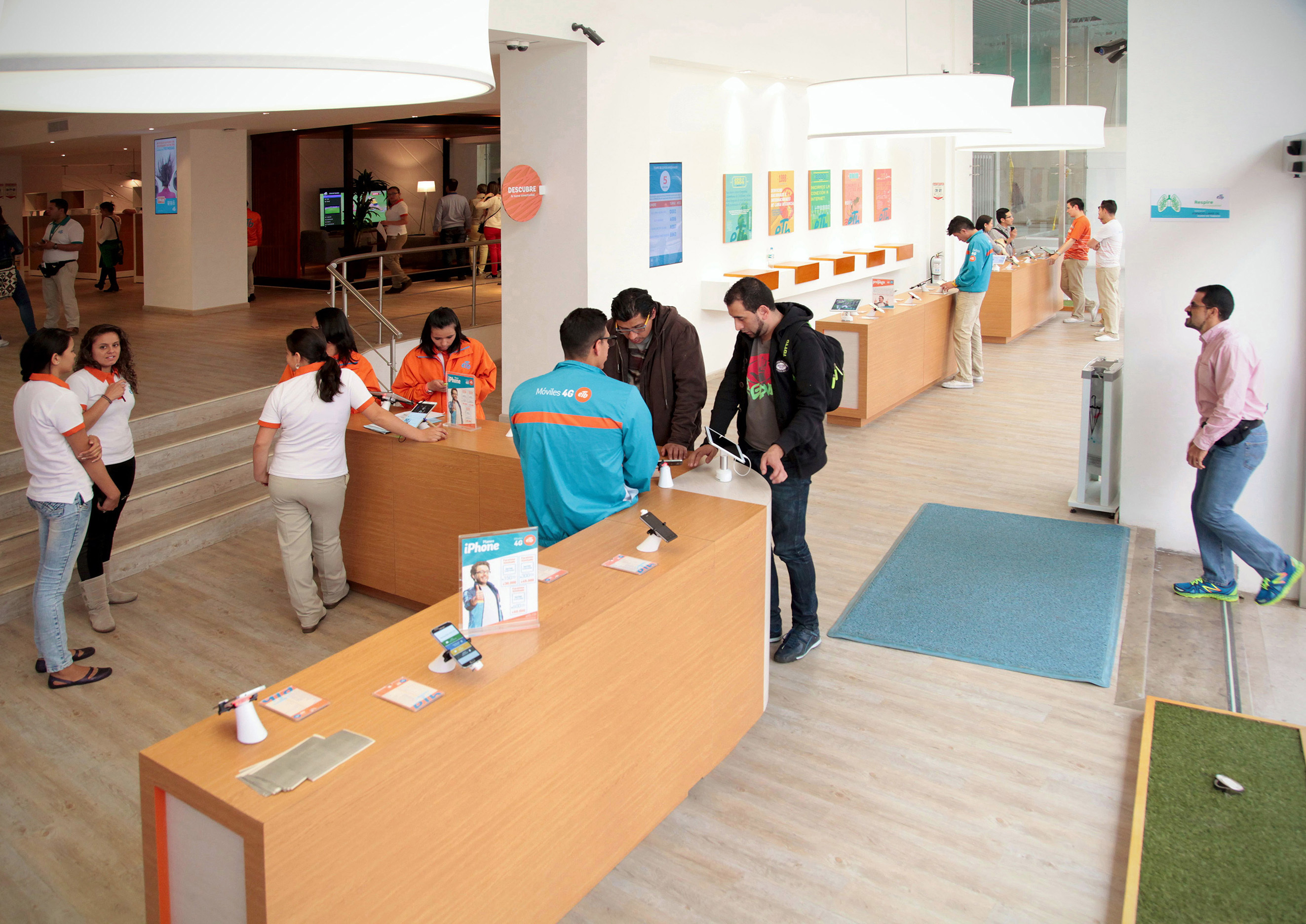
How does a 130-year-old telecom company in Bogotá appeal to a tech-savvy generation without alienating its most loyal customers? Faced with growing competition, ETB, Colombia’s oldest telecom business, wanted to modernize its entire retail shopping experience and update its branding.
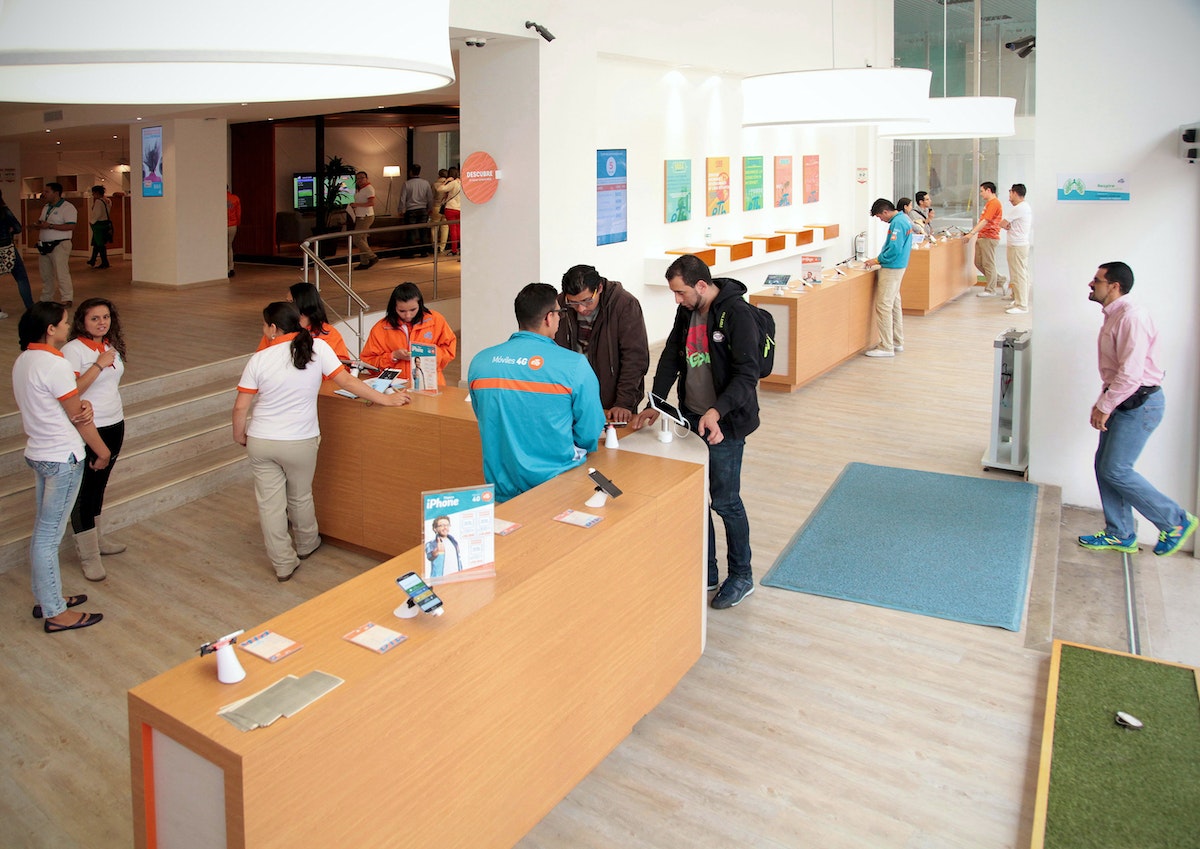
The company enlisted IDEO’s help in leveraging its already highly regarded brand. IDEO created a complete blueprint for the next generation of retail centers, including in-store spaces, digital services, and new personnel role descriptions. ETB’s new retail stores are warm and bright, and self-service kiosks eliminate the need for waiting in line. The company’s brand also got a face-lift with a new color palette and brand manual.
"Working closely with IDEO, we accomplished all of our goals,” said Vice President Carlos Alberto Gómez García, “from creating organizational change to reimagining interactions with our customers to evolving the brand identity of ETB."

Reimagining the Shopping Cart
Designing a better shopping cart to illuminate IDEO's design process.
To demonstrate our process for innovation for a 1999 episode of ABC’s late-night news show Nightline, IDEO created a new shopping cart concept, considering issues such as maneuverability, shopping behavior, child safety, and maintenance cost. The show concentrated on IDEO’s design process, recording as a multidisciplinary team brainstormed, researched, prototyped, and gathered user feedback on a design that went from idea to a working appearance model in four days.
The nestable steel frame lacks sides and a bottom to deter theft, and holds removable plastic baskets to increase shopper flexibility, help protect goods and provide a method to promote brand awareness. A dual child seat uses a swing-up tray for a play surface, and a hole provides a secure spot for a cup of coffee or a bunch of carnations. One of the unique — and potentially patentable — features of the cart is the design of its steerable back wheels. Normally fixed straight for stability and familiarity, an easy sideways effort allows the wheels to turn left or right. Pushing the cart forward puts the wheels straight again.
Note: The footage of the Nightline episode featuring the shopping cart is owned by ABC. They've made it available for purchase to stream, or as a DVD, here.

Lindsey Turner
I’m passionate about building brands, products, and experiences that help organizations show up with meaning and momentum.
I help organizations cut through complexity by shaping how they show up, through brand strategy, identity, and storytelling.
Working at the intersection of brand and business, I bring an editorial eye and a bias toward making—turning ideas into tangible experiences that people can understand, trust, and believe in.
My work spans government, healthcare, financial services, media, and consumer goods, from launching Gen Z-focused ventures to building innovation labs and reimagining legacy brands. I relish moments of ambiguity and enjoy translating across teams, perspectives, and priorities to move ideas forward.
I started my career in editorial and digital design, shaping cross-platform experiences and identity systems in publishing and agency environments. That foundation still shapes how I work today: I’m detail-oriented, collaborative, and overreliant on the Oxford comma. I hold a BFA in Visual Communication from the School of the Art Institute of Chicago.

Rachel Young
My work helps organizations see who their products aren't working for—and build the will and the tools to do something about it
For 25 years, I've asked the same question: Who does this design exclude—and what are we going to do about it?
My work spans human-centered strategy, inclusive design, and qualitative research, with clients ranging from Microsoft, Google, and Verizon to the National Science Foundation, and San Francisco Unified School District.
Before IDEO, I taught elementary school in East Palo Alto and spent a decade doing design work with social service organizations—where I learned firsthand what it costs people when systems are built without them in mind.
I am currently writing User Error, a nonfiction book about digital access and the design decisions behind it. I live in Oakland, California.

Brian Pelsoh
I lead with craft, ensuring our work is creatively excellent: rooted in deep human insight and imagination, while also grounded in the realities of business and technology.
My expertise spans brand, communication, and product design across tech, education, the arts, and social impact.
I believe great work demands both high-level vision and obsessive attention to detail, and only happens through collaboration.
I bring an inclusive, hands-on approach and a deep understanding of business, which enables me to consistently deliver excellence while always asking why.
Before joining IDEO, I worked at the brand firms Pentagram and VSA Partners. I began my career as a designer, leading teams at the School of the Art Institute of Chicago and the Milwaukee Art Museum. I hold an MFA in graphic design from Maryland Institute College of Art and a BFA in communication design from the Milwaukee Institute of Art & Design, and have taught at some of the best design schools in the US.

Tony Wong
I am responsible for IDEO’s long-term success in China and working with clients to use design as a tool to enable growth.
I am responsible for IDEO’s long-term success in China and working with clients to use design as a tool to enable growth. Specifically, I have helped Chinese companies design holistic brand solutions through the development of their products, communication, services, and innovation teams, and I have helped multinationals expand their presence and influence in China.
I advise global leaders on developing China-led innovation and capabilities.
In over 15 years in IDEO Shanghai, I have worked on projects that use design to elevate the quality of the experience of healthcare products and services, streamline processes that increase productivity, create spaces and programs that promote and enable inclusive communities, and build next generation mobility solutions that are planet-positive.
Before joining IDEO, I worked at Philips Electronics and the Electrolux Group in Italy, the Netherlands, and Singapore on a number of breakthrough commercial products. I am a member of the Young President Organization in Shanghai.

How to use AI as an editor, not a writer
Ed White shares how he uses AI as an editor—not a writer—to sharpen storytelling, rehearse ideas, and preserve the productive friction that makes creative work better.
Ed White has a rule he's tested on his own writing: hold yourself as the writer, and let AI be your editor. Ed is a Senior Design Director at IDEO's London studio, where he co-leads the firm's AI portfolio across Europe. Before IDEO, he spent 12 years as a writer and editor at the Financial Times, Wired, and Contagious. So when he talks about when to use AI for storytelling and when not to, it comes from two decades of crafting his storytelling skills.
In this episode, Mina Seetharaman talks with Ed about two specific tools he uses to keep AI in an editor's seat: a "roasting agent" prompted to critique his drafts without any sugarcoating, and a simulated audience he rehearses pitches on before the real thing. They also get into what Ed is hearing from design leaders at Anthropic, Lovable, Shopify, and Google Creative Lab about how creative work is changing, and why he thinks the friction of writing something yourself is worth protecting rather than automating away.

Building a personal AI for the messiness of life: Sida Li
Becca Carroll talks with Cue co-founder Sida Li about designing a personal AI for the messiness of everyday life—not just work. They explore how Sida stays anchored to human needs while navigating fast-changing technology, product tradeoffs, business-model experimentation, and the realities of building an AI company today.
Most AI products today are built for work—a space with clear problems and established systems. One founder noticed a gap: personal life is messier, harder to systematize, and mostly left behind by the AI boom. So she built Cue, a personal AI that lives inside iMessage and group chats, to go where the other tools haven't.
In this episode, Becca Carroll, IDEO's Chief Strategy Officer, talks with Sida Li, co-founder and CEO of Shared Context Lab, about staying anchored to a human need while the technology around her keeps changing shape, why she treats her business model with the same rigor she'd bring to a product, and what it feels like to build a company at this particular, disorienting moment in AI.
The conversation also gets into how Sida makes design decisions: the language Cue uses to describe itself, the tradeoffs behind building inside iMessage instead of a new app, and a real story about a business idea that didn’t pan out.
This is the second in a two-part series profiling founders from IDEO's Startups-in-Residence program. The first conversation is with Johannes Seemann, founder of Sooner, on designing GenAI for the emotional side of money.

Designing GenAI for the emotional side of money: Johannes Seemann
Designing financial tools around the feelings that shape money decisions.
Most personal financial tools are built to run the numbers and optimize towards a budget. While that works for some, most people experience money as a lived relationship that does not neatly fit into a spreadsheet. Johannes Seemann and Becca Carroll discuss why money is emotional before it is mathematical, and what a human-centered approach to building a generative AI financial product looks like in practice.

The curious leader's edge in uncertainty: Scott Shigeoka
How genuine curiosity helps leaders navigate uncertainty with greater confidence.
Mina Seetharaman talks with Scott Shigeoka, author of Seek and Head of Curiosity Cultivation at the Eames Institute, about what distinguishes genuinely curious leadership from performative curiosity, how power dynamics shape curiosity, and why practicing curiosity can restore energy rather than drain it.
Looks like you might be in search of something very specific?
Or reset the filters above and try another angle.
Here’s some random inspiration

Podcasts about creative leadership

Articles about the power of prototyping