
.svg)




A return to simplicity with a bottled tea brand
Bringing the grounding and authenticity of tea culture into the rhythm of modern life.
Master Kong (known internationally as Tingyi Holding Corporation) is number one in market share in both instant noodles and ready-to-drink teas, with over $10 billion USD in annual revenue. While China has a rich tea culture, most sugar-free bottled tea on store shelves markets itself as “healthy” and “tasty.” Wanting to set itself apart from the competition by uncovering new consumer needs, Master Kong reached out to IDEO. Together, Master Kong and IDEO immersed themselves in modern Chinese tea culture and built a new, premium, sugar-free bottled tea brand that resonates deeply with contemporary tea drinkers.
During research, the combined IDEO/Master Kong team took a two-pronged approach to uncovering new opportunities: industry exploration and consumer research. The team visited various tea-related businesses, from traditional tea houses to modern beverage shops, as well as “third place” tea spaces outside of home or work. They also conducted in-depth, in-home interviews with consumers with various levels of interest in tea, delving deeply into their daily routines to better understand their lifestyles and any emotional or functional needs related to tea.
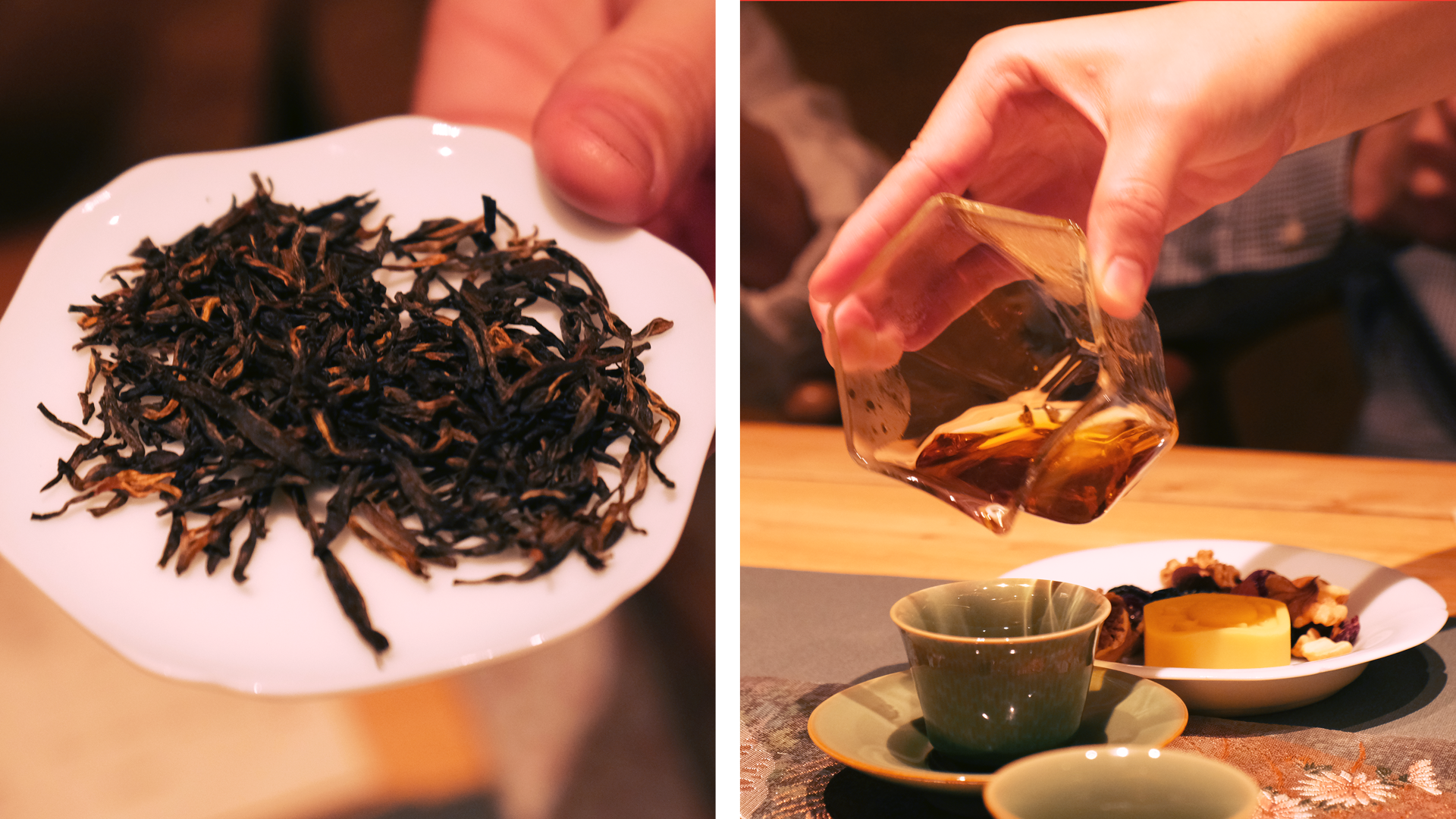
The team discovered that the essence of Chinese tea culture resonated with contemporary consumers’ longing for authenticity, simplicity, and physical rejuvenation in their fast-paced lives. This insight presented a unique opportunity for Master Kong. Instead of positioning its new sugar-free tea brand as merely a “healthy alternative” to other beverages, it could spark a meaningful connection to tea culture, seamlessly integrating into various moments of modern life.
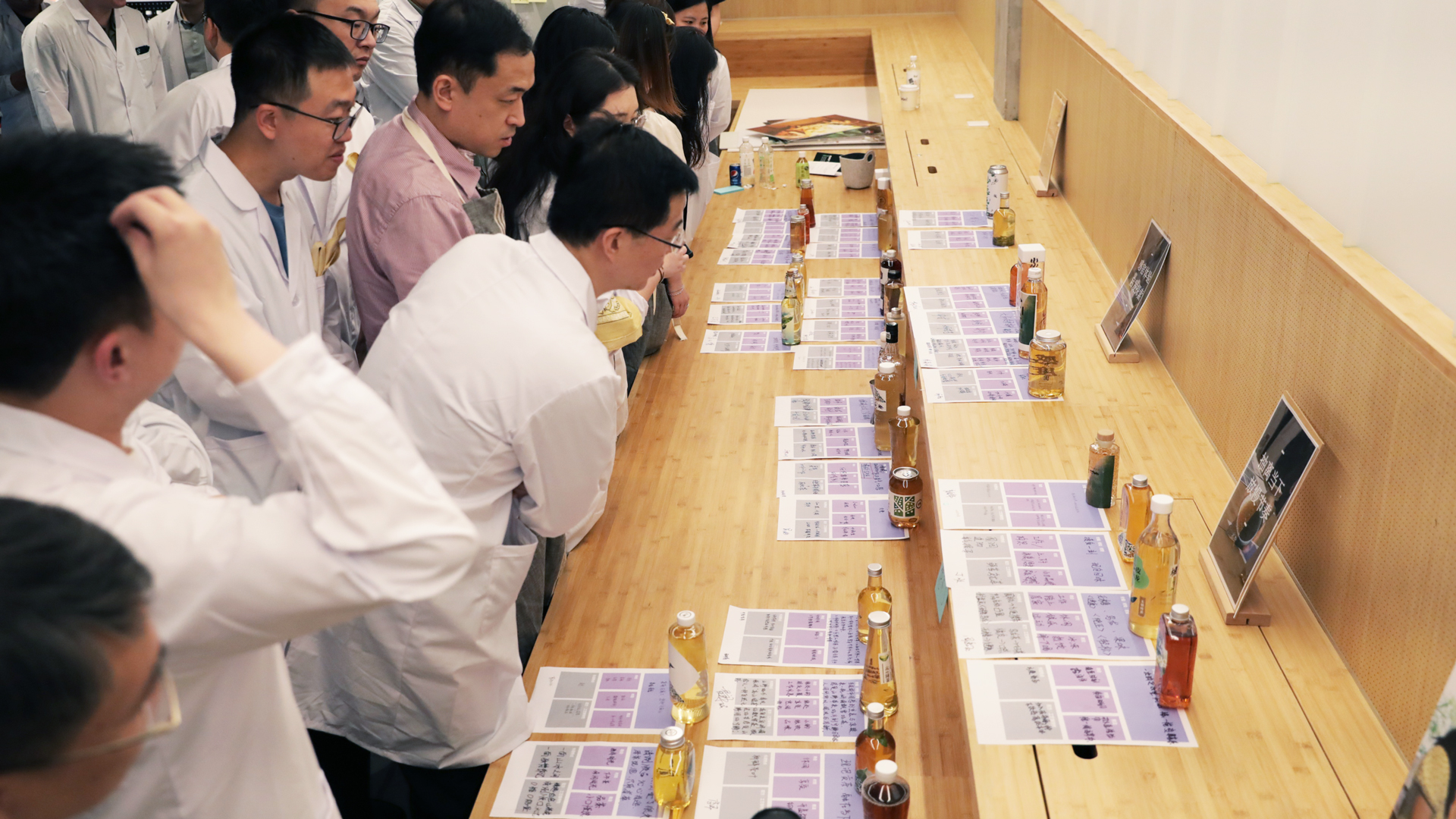
Armed with this insight, IDEO designers and dozens of Master Kong beverage team members participated in a series of immersive, hands-on tea innovation workshops. Teams of experts from R&D, marketing, supply chain, and other company departments temporarily set aside their job titles to explore, iterate, and refine dozens of new tea concepts that were commercially viable, feasible for mass production, and aligned with consumer needs. The cross-departmental collaboration allowed for a broad mix of perspectives, experiences, and expertise, enriching the innovation process.

The co-creation sessions led to a new sugar-free tea product and flagship brand called Cha De Chuan Ren (“Descendants of the Tea”), which celebrates fine, origin-sourced tea and the passion and dedication of tea farmers. The novel concept resonated strongly with consumers and was validated during subsequent rounds of quantitative market testing, ensuring its relevance and market potential.
Cha De Chuan Ren launched with two signature flavors: Tieguanyin (green tea) from Fujian and Pu’er (black tea) from Yunnan. The unique mottled bottle design pays tribute to traditional handcrafted glass containers and the handiwork of tea farmers. The tactile paper label, which features Jia Ma-inspired woodblock illustrations of local tea fields and tea farmers’ hands, nods to the artisanal craft of tea making and the source of the tea inside.
“Descendants of the Tea” debuted on Tmall in April 2024. It claimed the top spot on the commerce site’s Tea Beverage V-List in August and September. Offline, it launched in FamilyMart convenience stores in May and has since expanded nationwide. The new brand received a 2024 Red Dot Award for “Brands & Communication Design.”
“We are honored to collaborate with IDEO, a global leader in innovation, as our strategic partner. ‘Descendants of the Tea’ is not just an exceptional product but also a tribute to the rich heritage of tea culture. Only by continuously integrating culinary traditions with innovation can we sustainably meet consumers’ true needs.”
Richard Chen
CEO, Master Kong (Tingyi Holding Corporation)
“Innovation is incredibly fragile. If even one leader is unsupportive or hesitant, the culture of innovation can collapse. I always encourage my team to take risks, as long as they’re not high stakes. After all, what’s the worst that can happen? At the very least, we’ll have a fair chance at creating something new.”
Wei Hong-Chen
Chairman of Master Kong Beverage Holdings Co., Ltd.
Sugary bottled teas were once very popular in China. Today, rising consumer demand for healthier beverage options has expanded the market for sugar-free tea.
#1
on Tmall’s Tea Beverage V-List, August- September 2024
2024 Red Dot Award Winner
for Brands & Communication Design
A luxury water bottle takes precision engineering to the extreme
Elevating the everyday with next-level design.
Twenty years ago, carrying a single-use plastic water bottle was a status symbol—no more. Growing awareness of the negative environmental impact of plastic pollution, combined with the adoption of healthier lifestyles and social media influencer trends, has made reusable water bottles “it” accessories for on-the-go consumers. While brands such as Stanley, Yeti, S’well, and Hydro Flask own the under-$100 market, fashion brands such as Louis Vuitton, Chanel, Dior, and Prada have etched out a new and growing market for high-end bottles that appeal to discerning, trend-conscious young people looking to perfect their hydration habits.
Spotting an opportunity to disrupt the predominantly utilitarian water bottle market, Steinmann partnered closely with IDEO, tasking the team with developing an industrial design that perfected the tactile and sensory user experience, from drinking and carrying to disassembling and cleaning thoroughly. The collaboration deepened over time, with Steinmann and IDEO working together to develop the high-level engineering concept, the OKAPA logo mark, and packaging ideas.
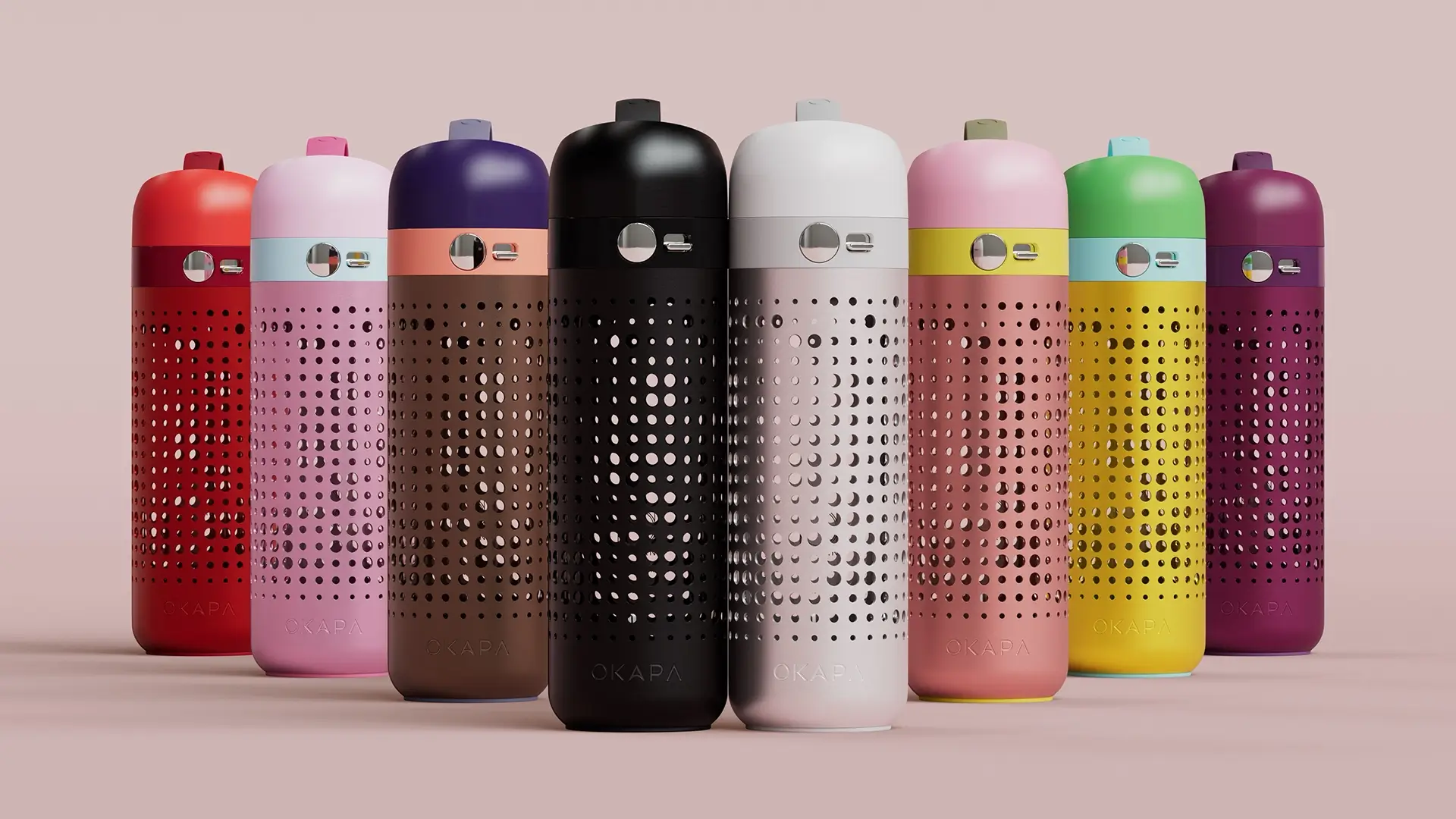
Key user-centered features of the OKAPA bottle include a medical-grade German borosilicate glass interior for superior taste of hot or cold beverages with no lingering odors; a Swiss-engineered thermoplastic lockable and leak-proof tilt cap that can be easily operated with one hand when driving or doing other activities; and an ergonomically shaped mouthpiece for a pleasurable drinking experience. Precision-engineered for maximum longevity, the inner glass bottle is suspended via a shock-absorbing system inside a bead-blasted, extruded, and anodized aluminum outer shell. Eight modular parts come apart easily for either a quick or thorough cleaning.

At its core, the OKAPA bottle elevates an everyday ritual through meticulous design and uncompromising engineering. Launched in January 2025, the new bottles are available in eight contemporary colorways curated by renowned color and materials specialist Beatrice Santiccioli (BSD), including Misti Pinku, Goldie Samba, and Fetishe Noir, among others.
In the US, the reusable water bottle market is estimated to increase from $10.2B in 2024 to $14.1B by 2031, with 69 percent of Gen Zers owning at least one. Customization trends, such as personalized design and branding, are anticipated to boost the market, ripe territory for disruptive startups such as OKAPA. (Persistence Market Research)
Once a practical accessory for hikers and outdoor enthusiasts, reusable water bottles have gone mainstream. Yet none check all the boxes in terms of purity of taste, hygiene, durability, functionality, and beauty.
8
modular pieces ensure hygienic cleaning is quick and easy
100%
recyclable materials in each bottle
Brand as a conservation strategy
The Cornell Lab of Ornithology unites as “One Lab,” galvanizing a conservation movement.
The Cornell Lab of Ornithology’s mission is to interpret and conserve the earth’s biological diversity through research, education, and citizen science. Over its 110-plus-year history, its offerings grew to include everything from a quarterly magazine, popular websites and apps with millions of users (Merlin, eBird), partnerships with outside organizations, and the world’s largest database of photographs and audio recordings of birds. This abundance is a testament to the passionate enthusiasm of its employees. Still, it confused potential members and led to siloed internal efforts, preventing the Lab from advancing its urgent collective vision. “Birds and biodiversity are in peril,” said Executive Director Dr. Ian Owens. “We must take radical action with a coherent vision, united voice, and purpose.”
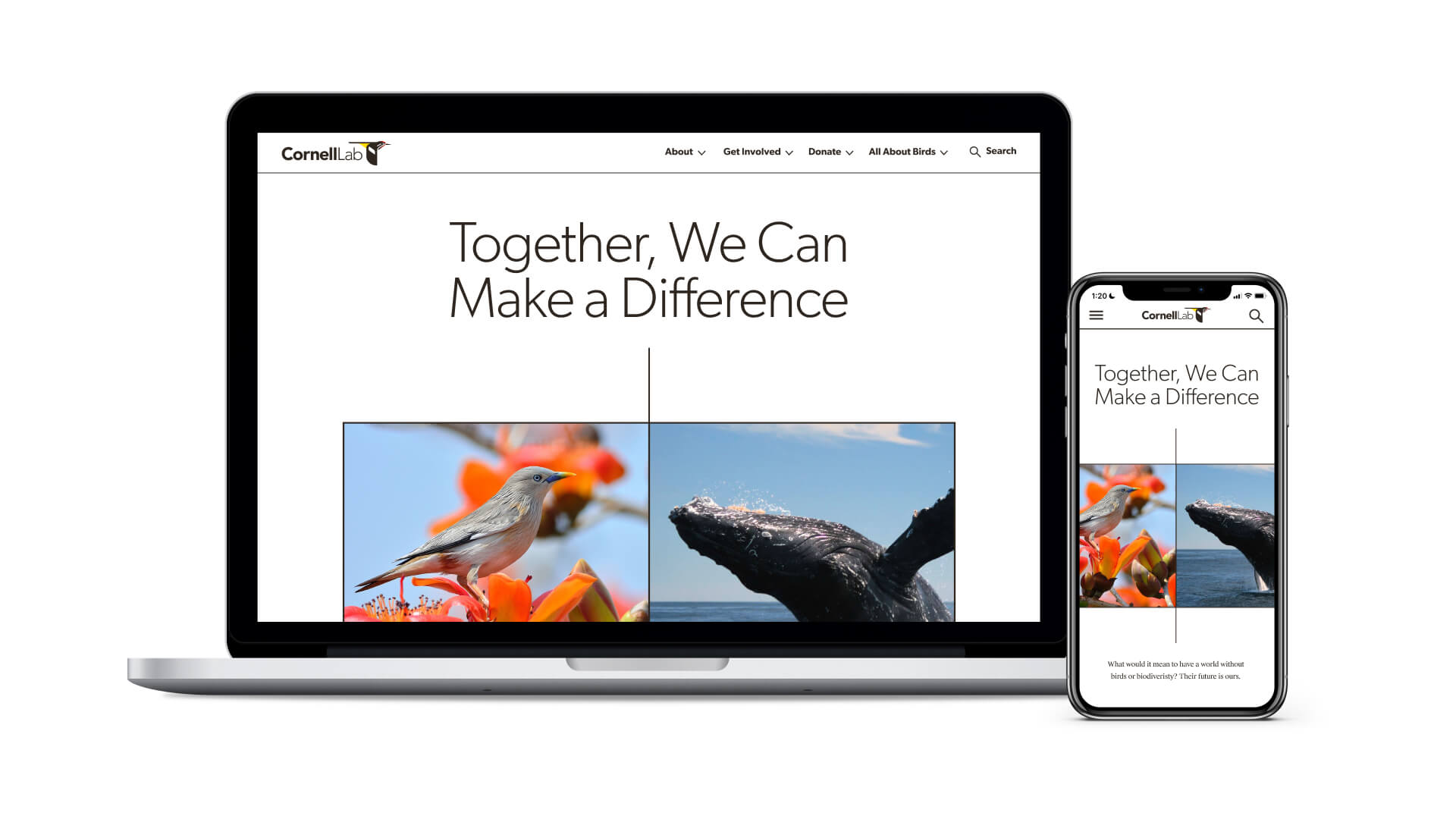
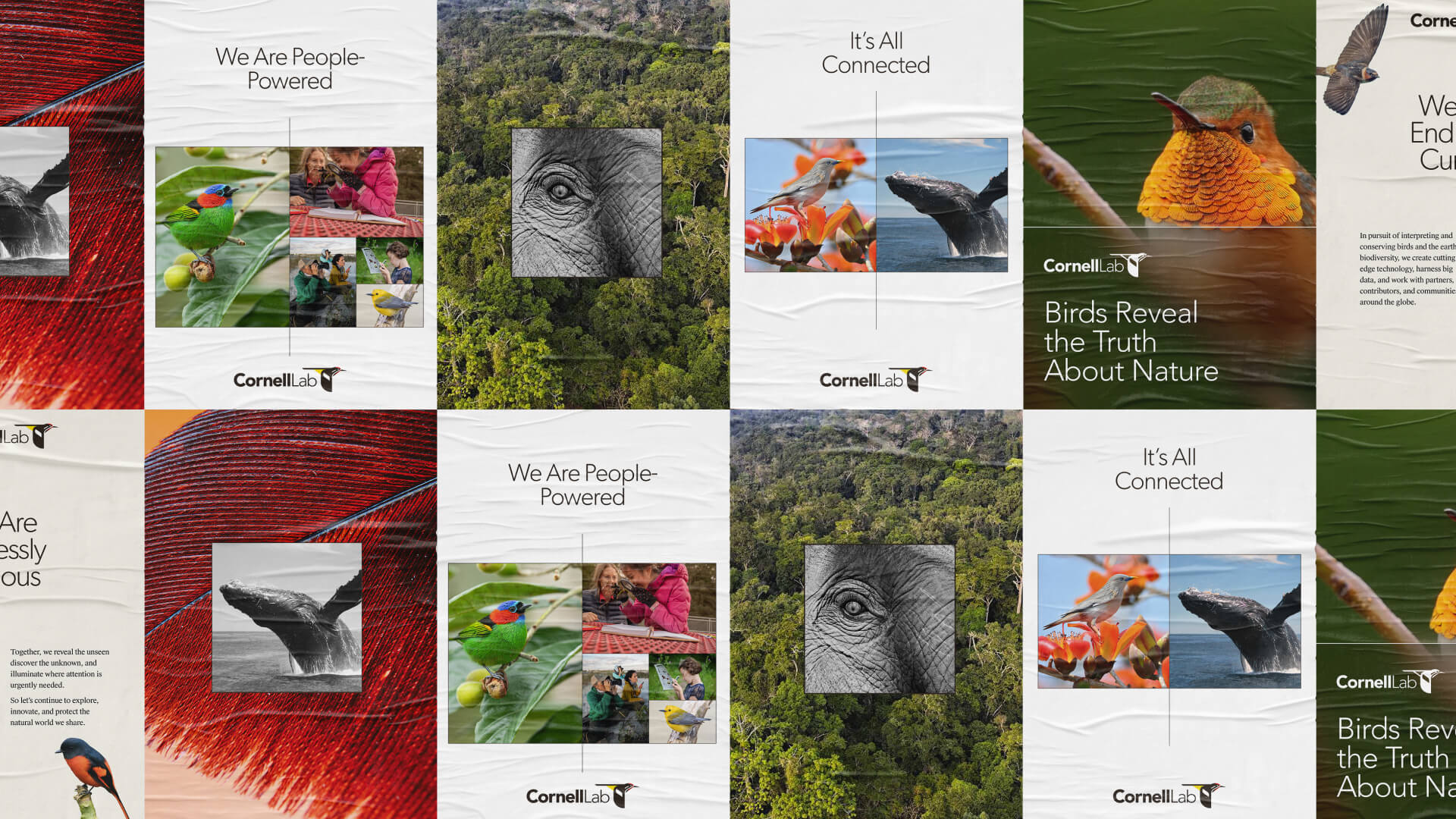
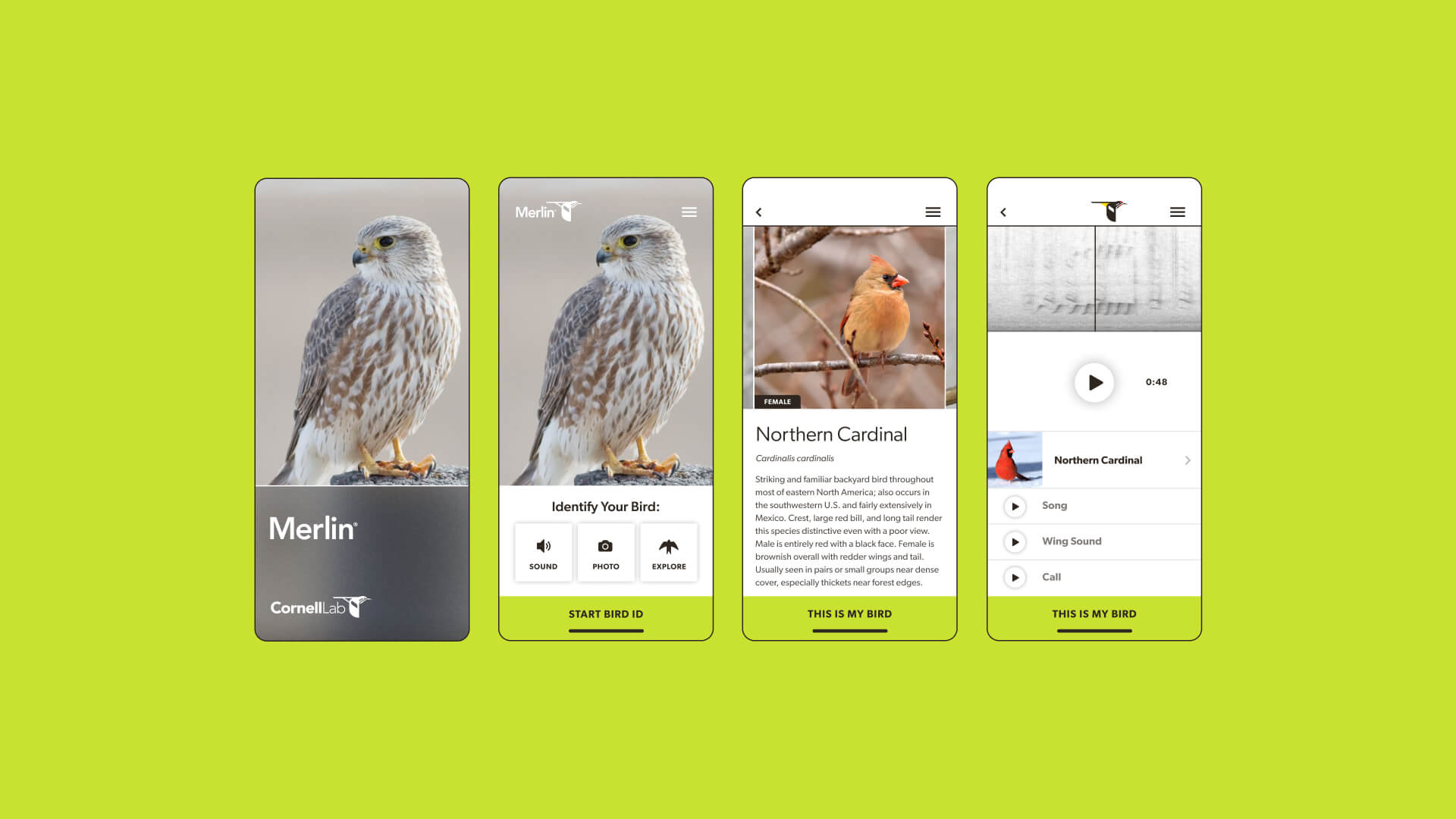
IDEO began by helping the Lab better define its audience. While primarily composed of people passionate about birds, IDEO discovered its larger audience was nature lovers interested in biodiversity, bioacoustics, conservation, and science. From there, IDEO created a brand strategy and architecture focused on helping the Lab streamline its efforts under the “One Lab” brand. The brand architecture visually articulated the relationship between Cornell University, the Cornell Lab of Ornithology, and the Lab’s many products and offerings. IDEO designed a comprehensive brand identity system to work across mediums, including a simplified logo system, new colors, type, graphic language, voice and tone, and key messaging.
When the Lab’s design team began implementing the new branding elements across its website and many digital products, it became clear that the organization also needed IDEO’s help in creating tools to facilitate cross-department collaboration. To better understand the day-to-day nuances of the organization, IDEO designers worked out of the Lab, co-creating a brand activation playbook. The playbook, launched in 2023, contains recommendations for new cross-functional working groups (partnerships, visual identity, and brand voice), as well as exercises and interactive tools designed to build trusting relationships, gain alignment, foster collaboration, and manage change at scale.
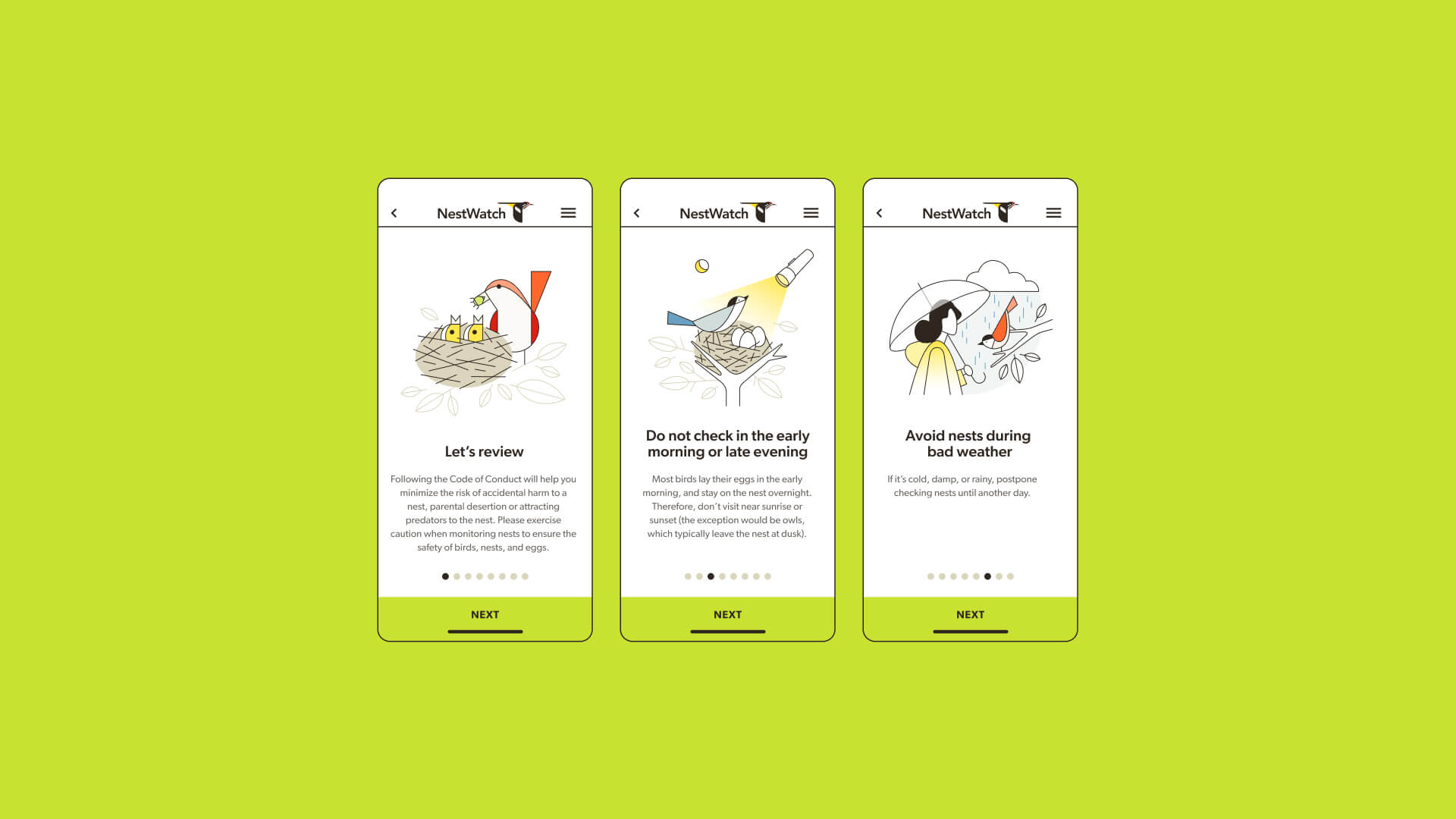
Post-collaboration, the Lab has applied the new brand across its website, apps including Merlin and eBird, Living Bird magazine, email and newsletter templates, and its line of merchandise. A new internal brand guidelines site has become central to employee onboarding, while new working groups are helping to bring down barriers between teams and spur collective action. Like a flock of birds, the Lab now sings one collective song.
The Cornell Lab’s 300+ scientists, professors, staff, and students were passionately dedicated to their individual team’s unique conservation projects, but segmented internal systems could stymie their collective impact.
1 brand
unifying 300+ employees and 8 departments

Charting a bold educational future
Ascend Public Charter Schools designs a “grown-up” vision for its young educational network.
Founded in 2008, Ascend Public Charter Network prides itself on providing “rich, joyful learning experiences that unlock lives of boundless choice” for its students, 93 percent of whom identify as Black or Latinx. The organization is also proud of being Black-led: 78 percent of staff and 80 percent of the executive team are people of color. Using co-design and joy, IDEO held a mirror up to Ascend’s core optimistic spirit during a moment of anxiety and change, helping its new CEO, staff, students, and parents reflect a dynamic, collectively imagined vision.
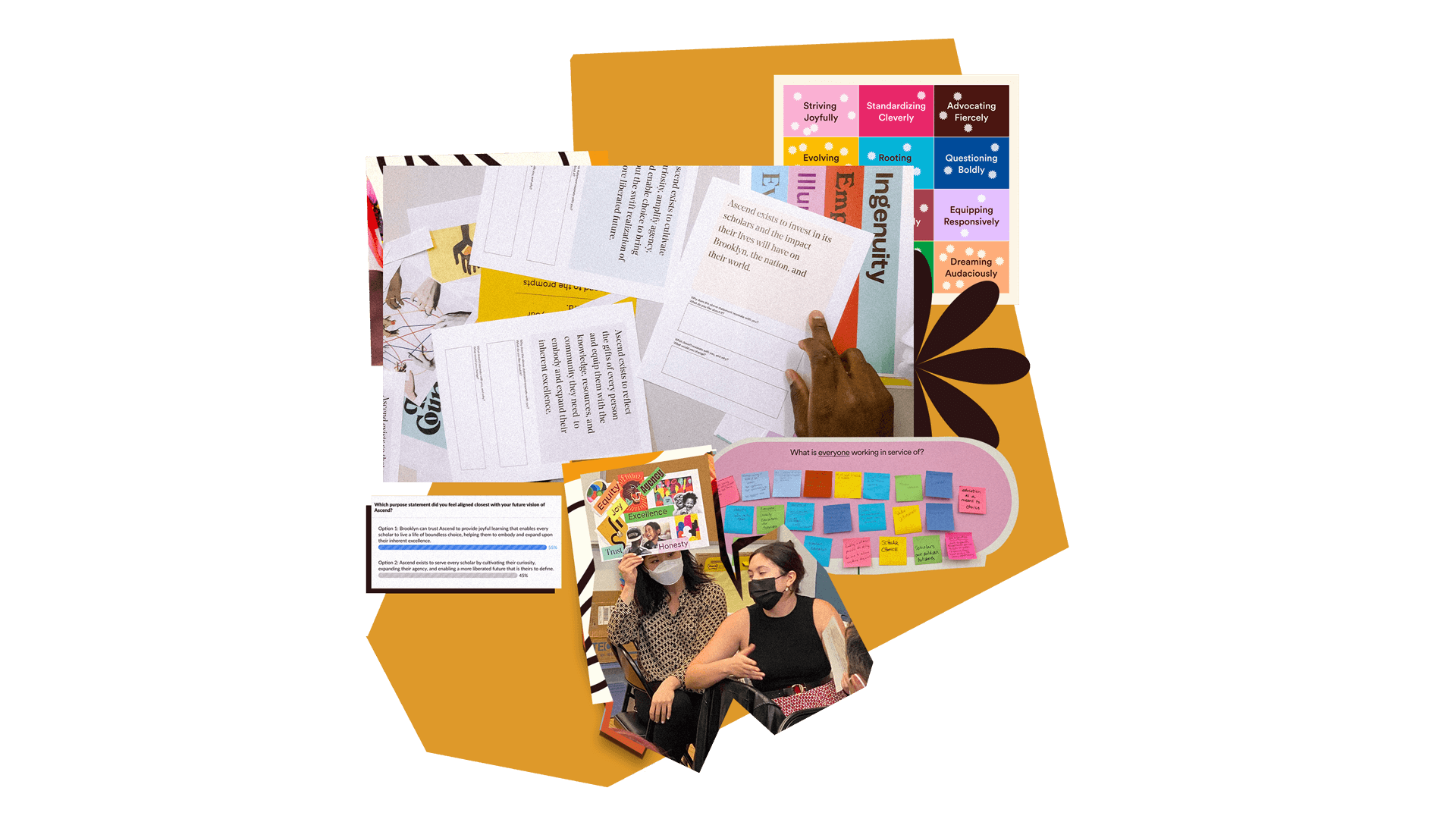
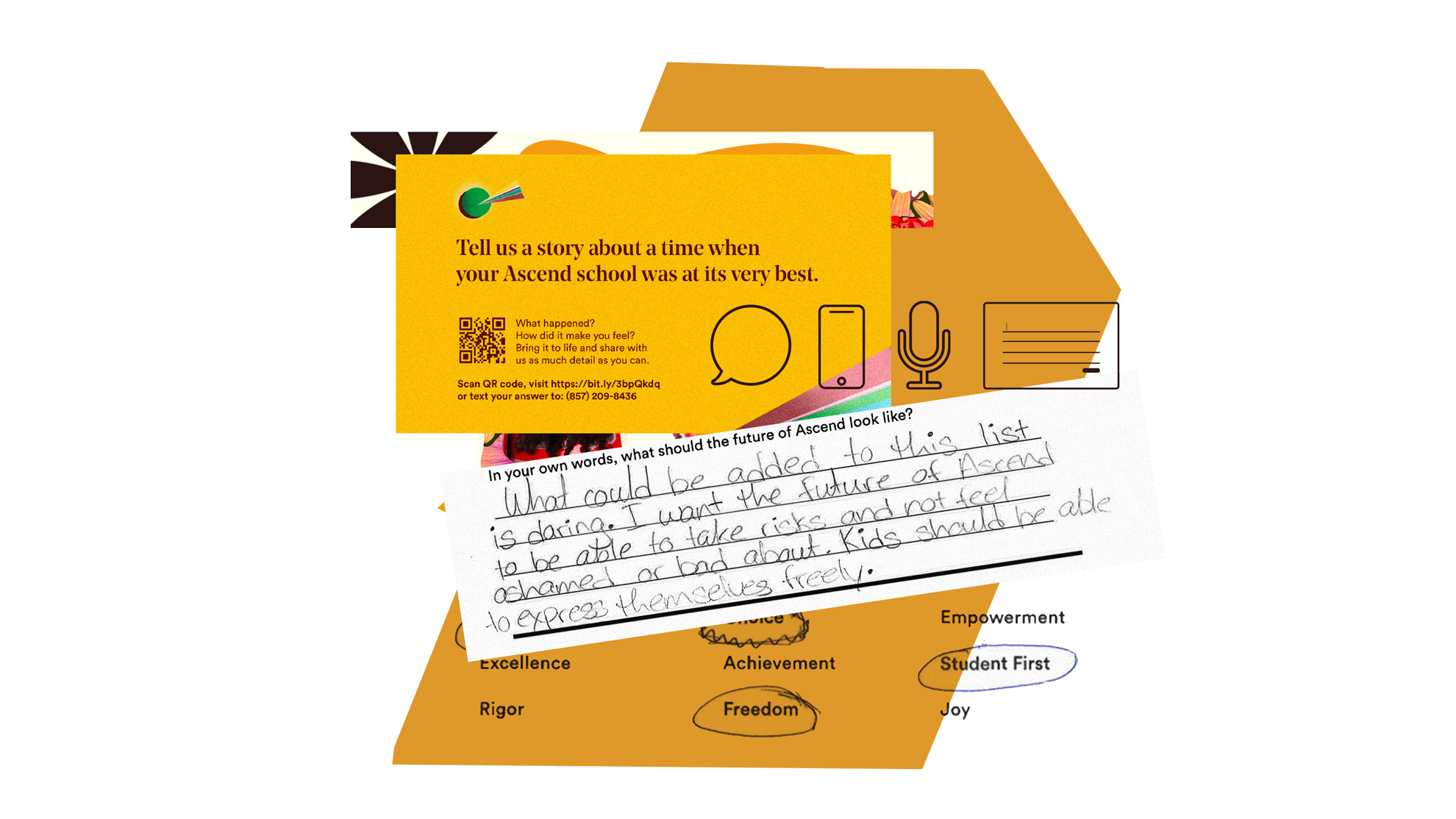
While the project’s goal was serious, the combined team centered the collaboration on bringing back fun, beauty, and imagination to those who could use it most: educators. Through engaging interactive activities, the IDEO team invited principals, PTA members, student council representatives, and board members to join “organizationally sanctioned play” moments like creating collaged vision boards and writing poems about Ascend’s impact. These interventions helped burned-out educators escape the day-to-day tasks of running schools and dream expansively about Ascend’s future. The team also solicited written, visual, and audio stories, asking community members to describe Ascend at its very best.
Stitching together submissions from 551 students, 75 parents, and 16 staff members, the co-design sessions resulted in a powerful new purpose, mission, and values, as well as a vibrant visual language and activation tools to bring Ascend’s vision of a “dope,” “unapologetically Brooklyn” charter network to life. The joyful, eye-catching visuals are embedded throughout its 17 Brooklyn schools, staff recruiting and training materials, and digital presence.
Shortly after the collaboration with IDEO, Ascend received an unsolicited $11 million donation from MacKenzie Scott's foundation, Yield Giving, the most significant gift the then-14-year-old institution had ever received. The pivotal funding will allow the organization, with its bold new “grown-up” vision, to focus on becoming the school of choice in Brooklyn by 2027.
In the summer of 2021, one in four K-12 teachers was ready to quit. Pandemic stressors and increased curriculum scrutiny were to blame, according to a 2021 Rand Survey.
In 2022, 44% of K-12 workers reported burnout, the most of any US professions the time, according to a Gallup Poll.
Pandemic exhaustion and leadership turnover left Ascend’s new CEO eager to align staff around an exciting new vision.
$11M grant
Ascend received an $11M grant from the MacKenzie Scott Foundation a few months after the collaboration
1 collective vision
to guide a network of 17 schools
A Cartography Nerd's Guide to Custom Map-Making
How to one designer used public data to create an interactive map of San Francisco tennis courts
Sure the game is fun (although neither of us is very good), but what interested us more were the distributed locations of the courts around the city. Spread out across the city like sprinkles on a hipster cupcake, these tennis courts would be a great new way to explore San Francisco. And it would keep us busy for at least the next couple of years of Saturdays.
There was only one problem. I couldn’t find a decent tennis map of San Francisco. I wanted a map that was useful, of course, but also one that was well designed. So I decided to make one myself and give it to my wife as a birthday gift, with the goal of making it attractive enough that she would agree to hang it on our wall, but also useful enough that we would actually make it a centerpiece of our new Saturday hobby. And lastly, I wanted to visualize the MUNI bus routes to each court (since—oddly—riding the bus is another avocation that my wife enjoys).
My starting point was the only map I could find—a fantastically unattractive google map that shows the tennis courts of San Francisco in 2003 graphic design glory.
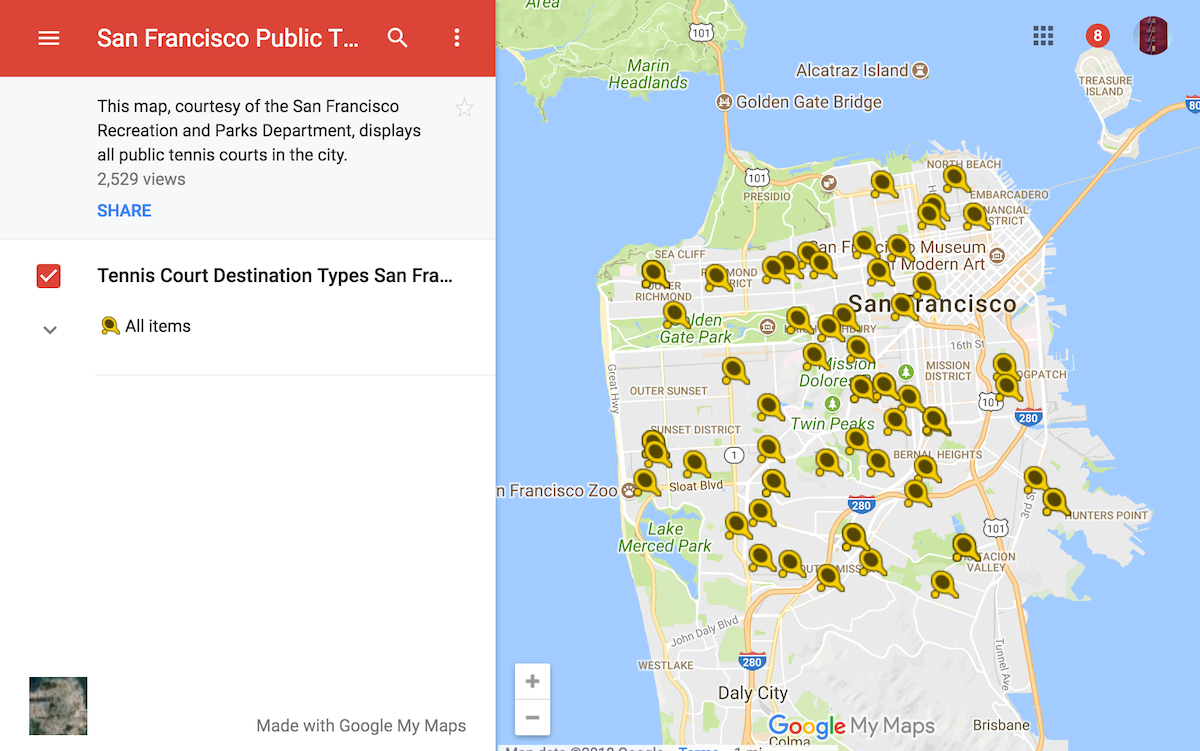
A tennis map of San Francisco in all its 2003 graphic design glory.
But this was a start! I downloaded it as a KML file. What’s a KML file? It stands for “Keyhole Markup Language” (I have no idea what this means), but what it does is important. With a KML file of the tennis courts, I could manipulate the data file in ArcGIS or QGIS, two enormously powerful pieces of cartography software. For anyone looking to get into amateur cartography, I strongly recommend GQIS. It works on a Mac (which ArcGIS doesn’t) and its cost (zero dollars!) outweighs its bugginess.
My next stop was DataSF.org, which has lots of great open source data, including maps of the city. What I was looking for here was something called a Shapefile, a geospatial data format that nerdy geographers use. I found one corresponding to San Francisco neighborhoods and another for San Francisco parks. Lastly, I found one for the MUNI bus routes of San Francisco.
Next it was off to QGIS to combine my various datasets into a single map.
First there were neighborhoods, then tennis courts, then parks, then bus lines.
With a couple of tweaks, I was able to label the tennis courts and isolate the MUNI bus lines according to route number, so that it looked less like a giant red spider web.
There are many a professional cartographer out there who would have kept playing in QGIS to make their map a bit prettier. But I’m a designer, and the sooner I’m able to get out out of QGIS and into the Adobe Creative Suite, the happier I feel (and the higher likelihood that the final design of the map will be something that someone is willing to hang on a wall). Luckily, QGIS has an option to export a file as an SVG file (a vector format that can be opened by Illustrator).
Post-export, the file looked like this.
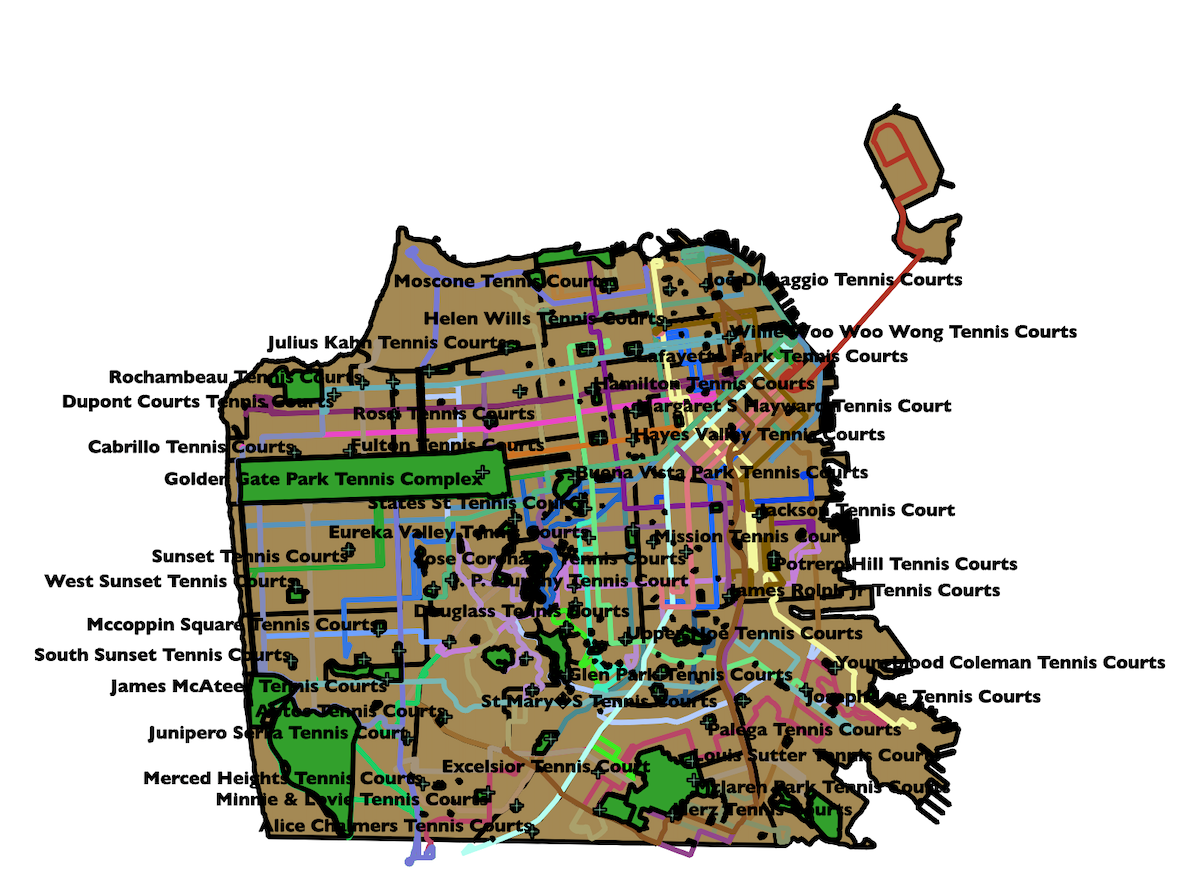
You wouldn't hang this baby on the wall?
Wait, what? Why does it look worse? Totally natural and easily fixable. I isolated each layer (parks, tennis courts, MUNI Lines, neighborhoods) and then got to work playing around with colors and stroke weight and other good stuff, all of it so much easier because I was working with a piece of software most designers are familiar with.
At some point during this process, my day job at IDEO led me to Amsterdam. While there, I was inspired by the fantastically-designed Dutch train maps and a pro tip from my graphic designer colleague (Anthony Stimola) that the Dutch font of choice is DIN. Back in front of my computer, I created a look and feel for the map inspired by my travels.
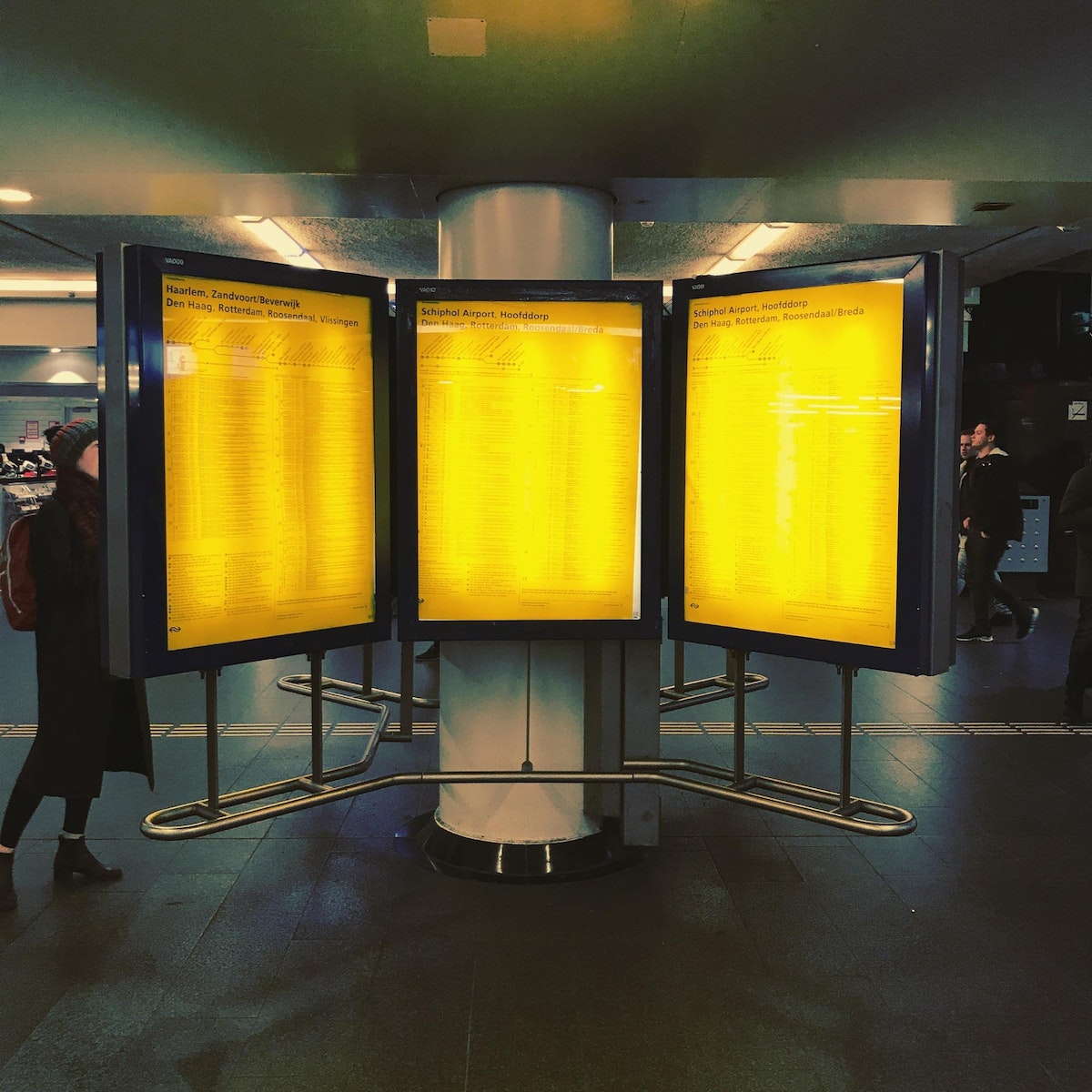
A trip to Amsterdam inspired the look and feel for the finished map.
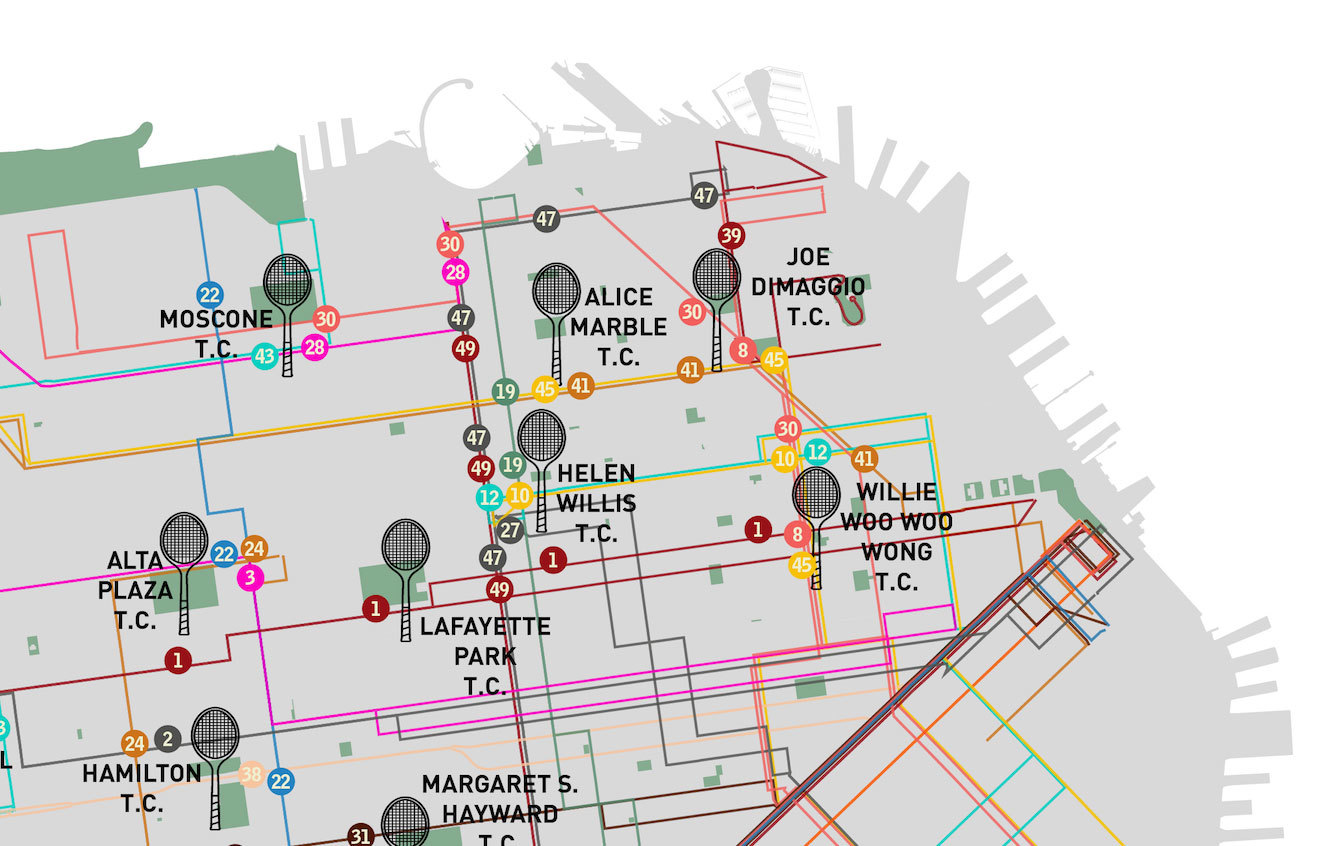
Next up was the laborious process of determining which bus lines one could actually take to each tennis court. My approach was 100% analog, starting from the top of the alphabetical list of tennis courts (Alamo Square) and marching straight through to the end (Youngblood Coleman), noting all of the bus lines that had a stop within reasonable walking distance to a court. I discovered that Helen Wills court in North Beach takes the prize as most MUNI-accessible tennis court (it's served by nine bus lines!), while five tennis courts around the city are served only by a single bus line.
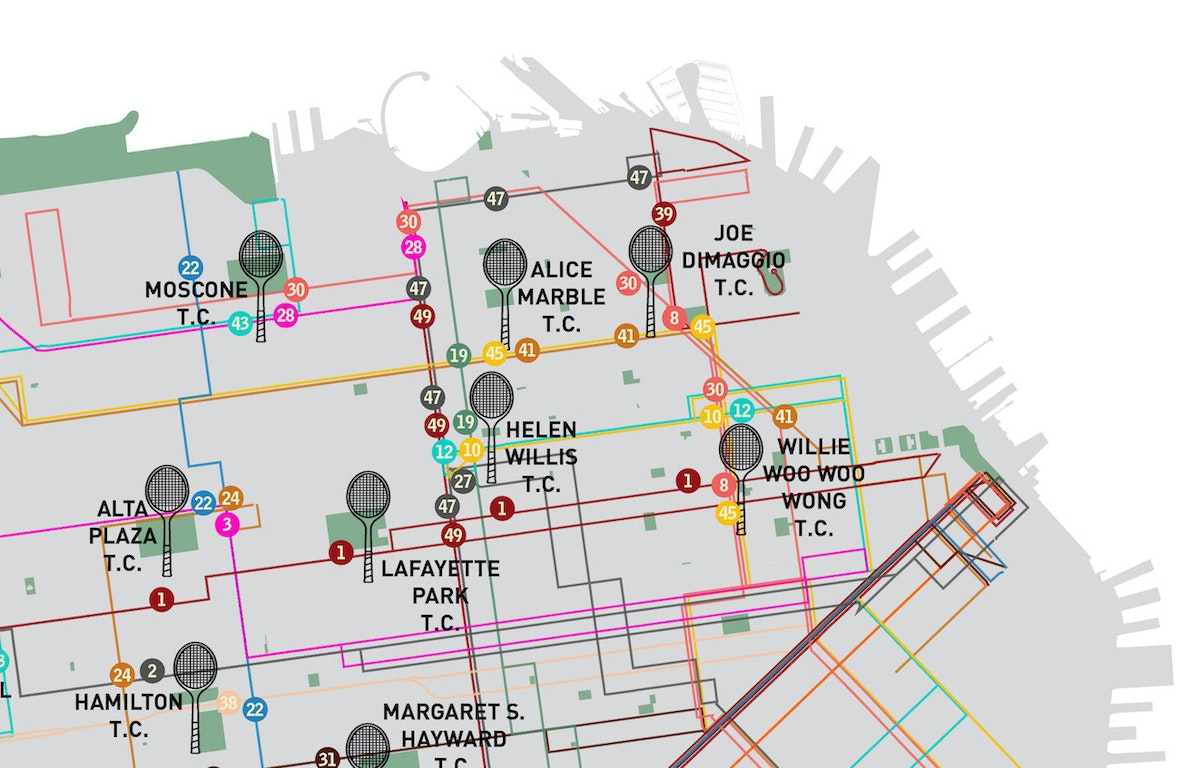
The painstaking work of manually matching tennis courts to nearby bus lines.
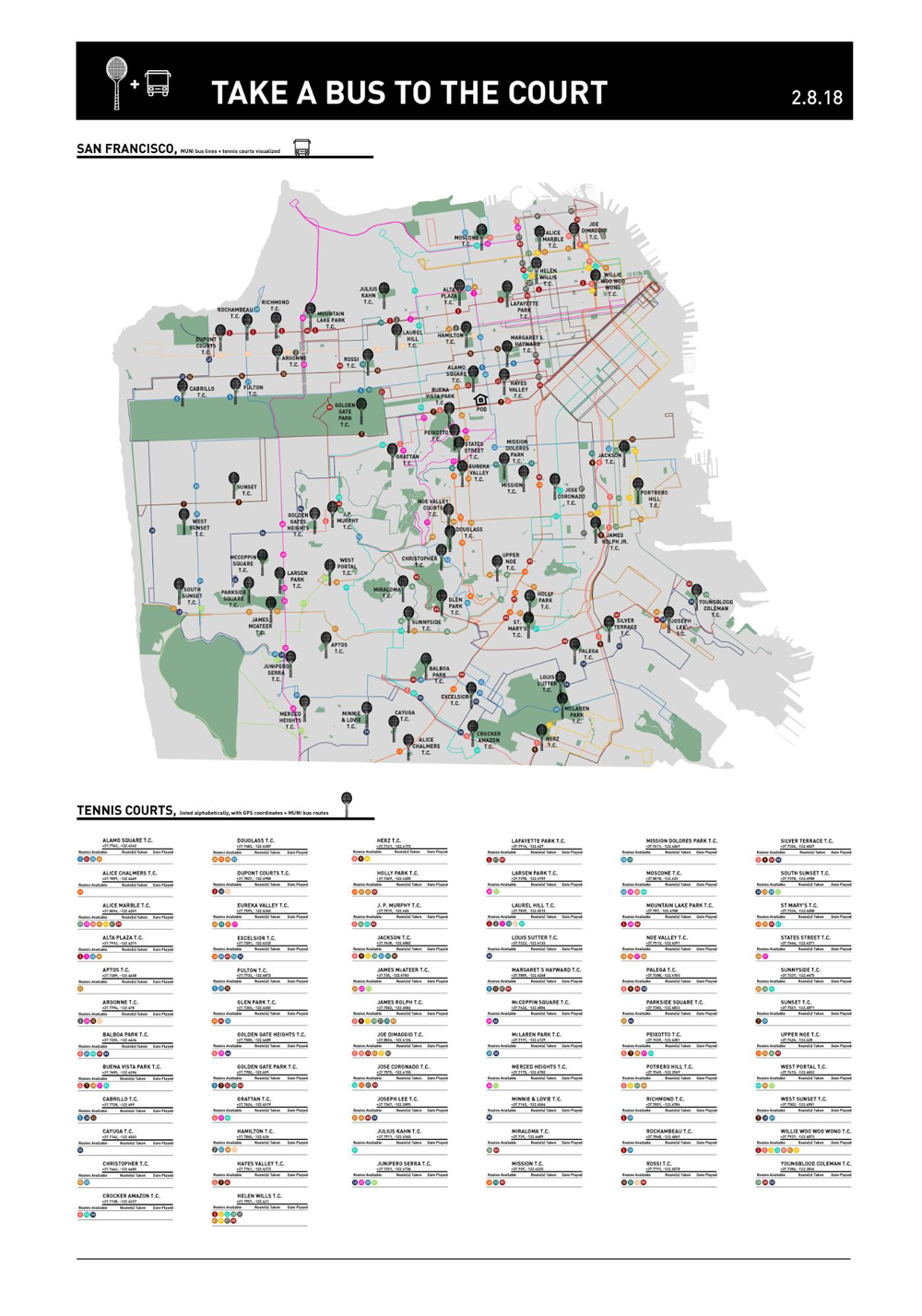
Lastly, I considered how this map would be used. Of course I was hoping that my wife (and others) would find it attractive enough to hang on a wall in full analog glory. But this is 2018, and in order to be useful, the map also needed some connection back to the digital world. I added GPS coordinates and a clickable URL link to a Google Maps location for each tennis court.

A detailed view of the court's location and the corresponding bus routes
That’s it! My wife was happy with her birthday gift, and agreed to hang it on our wall. This past weekend, we used our new map to find the McCoppin Square court in the Sunset neighborhood. A few minutes after we started playing, two women arrived. Unfortunately, they would need to wait until our 30 minute time limit had elapsed. Eager to play, they asked us if we knew of any other tennis courts in the area. In fact, we did. I texted her a PDF of my new map and off they went to a nearby court. Hooray for the power of a good map!
My wife and I are city people, and our only family car is a Vespa that is much too slow to cross any bridges. So most weekends, if it’s nice out, we’ll chart an urban hike through San Francisco, targeting a different neighborhood and a different park. This has kept us occupied for the last few years. But they don’t call it the 7x7 for nothing—San Francisco is actually a small city. So my wife and I have started to play tennis.
A Day in the Life of a Graphic Designer
Follow an IDEO designer through a day of research, prototyping, and inspiration
7:10 AM: A Reluctant Jog
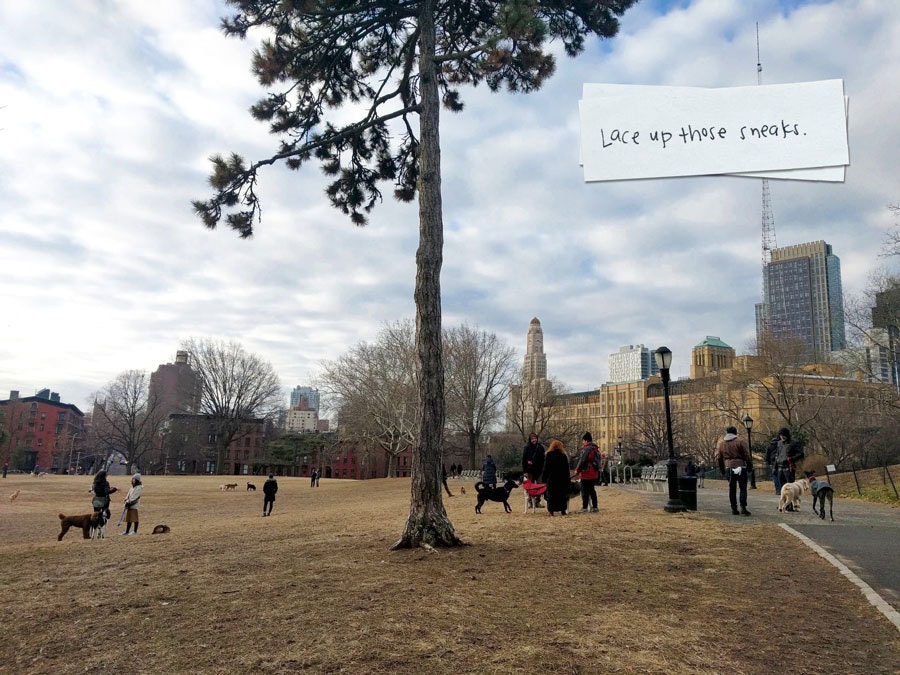
I run to Fort Greene Park, where I’m rewarded with a Seurat-like tableau of what seems like all the dogs in Brooklyn. I’m not a jogger, but I’m doing a six-week food-and-fitness challenge with coworkers. I'm grateful for the peer pressure, because it may be the only thing keeping me going.
7:45 AM: A Bristling Problem
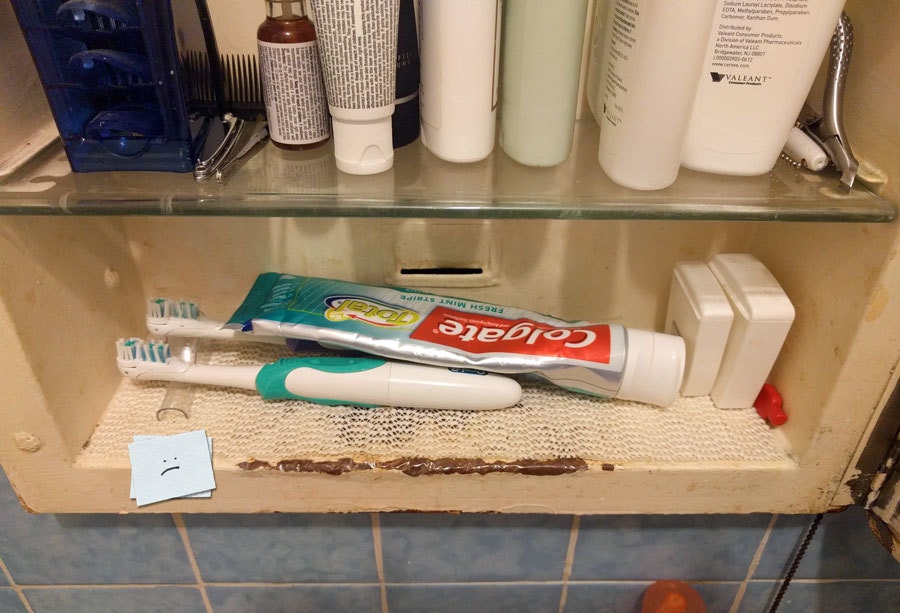
As I brush my teeth and stare into my rusty medicine cabinet, I decide it’s time do something about the crowding in there. Since the space is so small, I probably can’t find an off-the-shelf fix, but maybe I can come up with a bespoke solution.
8:35 AM: Swift Passage
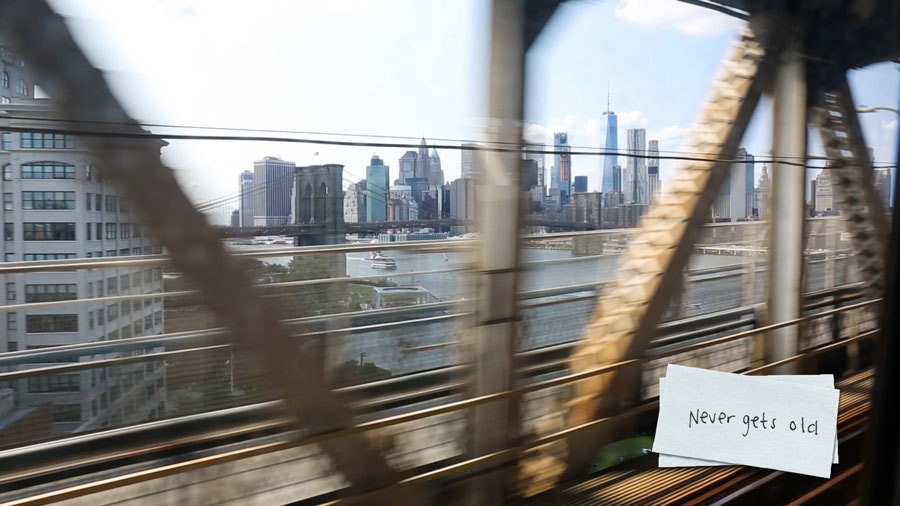
This sweeping view across the East River and the Manhattan skyline is my favorite part of the morning commute. It reminds me of the hope and excitement I felt when I first moved here 12 years ago. On the way, I steal some winter fashion ideas from my fellow commuters, noodle through a crossword on my phone, and listen to a podcast about the perils of multitasking.
9:10 AM: I Loaf This Place
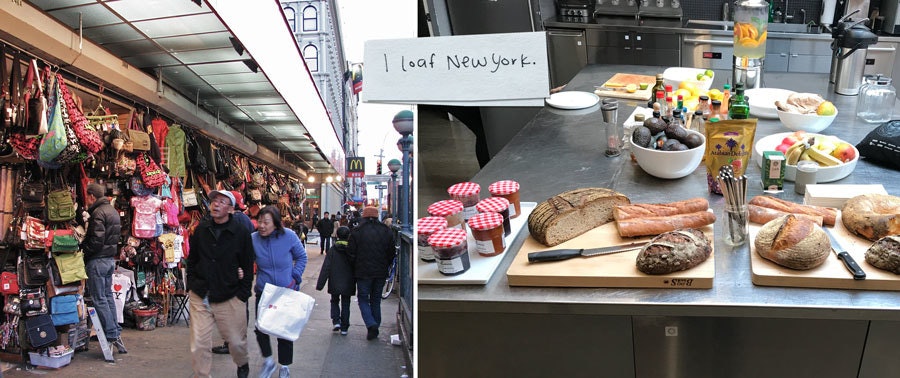
IDEO New York sits on an invigorating corner of the city where tourists, tchotchkes, and street food collide with colorful chaos. Upstairs in the studio, the best part of the week awaits: A selection of delicious, crusty bread and a variety of spreads. It’s Loaf Day! Bonus: Someone has scrawled on the kitchen chalkboard: “Might as well face it, you’re addicted to loaf.”
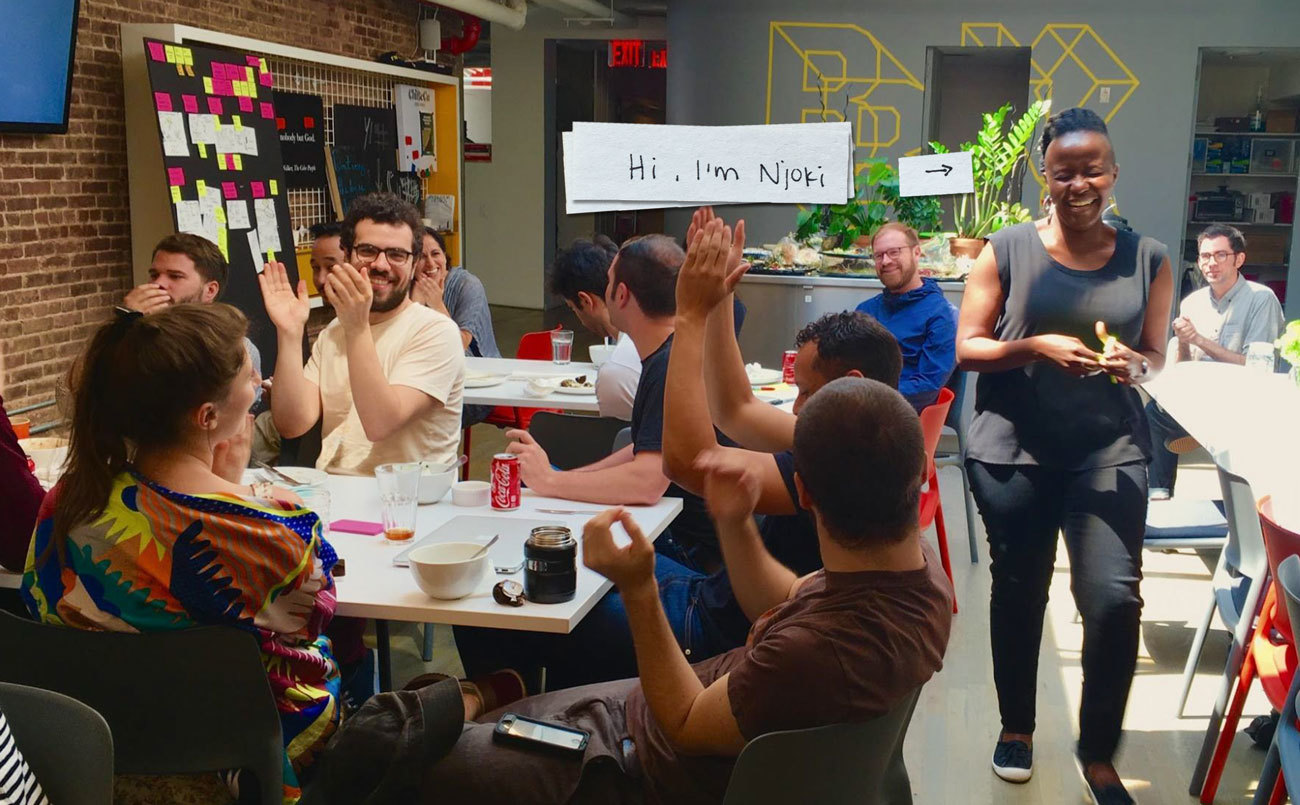
10:00 AM: Team Standup
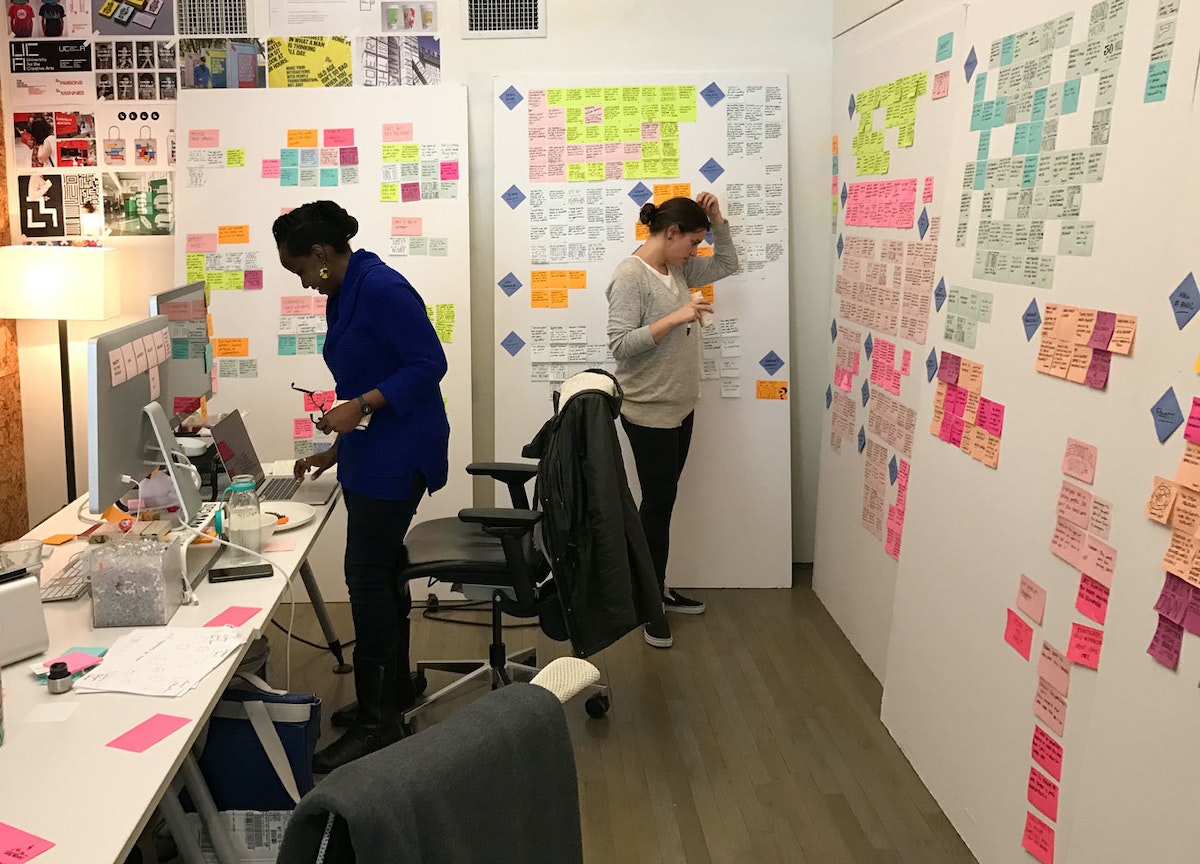
Our project is about investigating how cities and workplaces can support human potential and resilience. Today we’ve got a lot to do, including hosting some research participants in the afternoon. Deliberately coming together at the start of each day helps our team align and stay on track. In our project space, we take turns sharing our energy level on a scale of 1 to 10 and write a long punch list for the day.
10:30 AM: Download & Synthesis
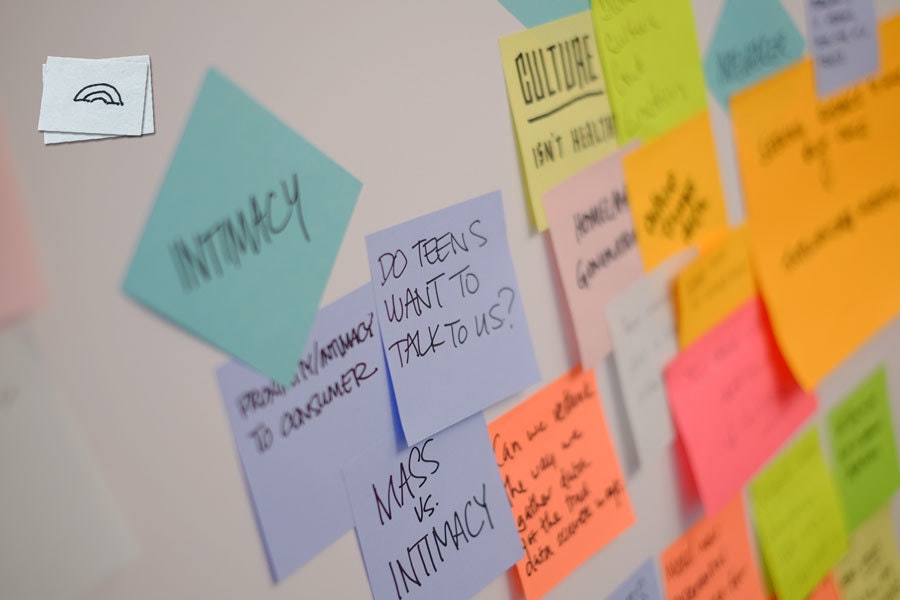
We’ve spent the last few days traveling for research and speaking to lots of people in the field. We transcribe the important things we’ve learned, filling Post-it notes and boards with quotes and observations. We start move things around into clusters, looking for patterns that will lead us to insights. One theme we're seeing is how hiring systems often overlook valuable skills that are hard to quantify, kicking qualified applicants out of the process early. “So much of the hiring process is gaming to get past the system,” reads one quote.
11:30 AM: Scrappy Prototyping
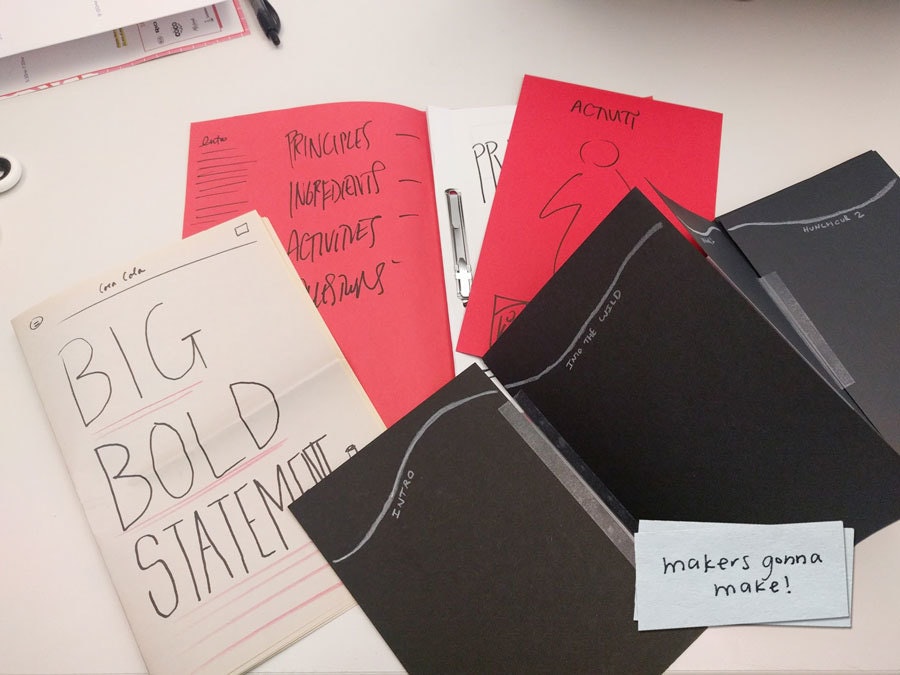
We take a break and head to the office makespace. We think we might want to make something printed, so we grab some construction paper and markers and each create some prototypes. Should we make a gallery walk of posters? A tabloid-size newspaper printed on pulp? Maybe a giant book with an accordion fold!
12:30 PM: Fun With Lasers
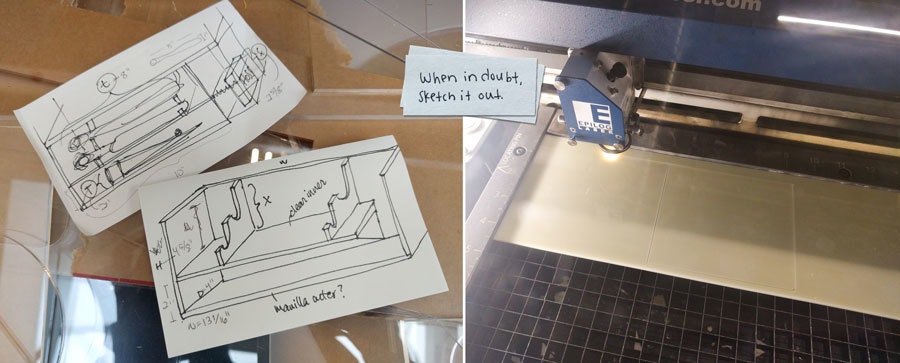
It's lunchtime and I can’t stop thinking about the toothbrush situation. I make some quick sketches of a slot-in shelf that would allow the toothbrushes and toothpaste to sit above the floor of the cabinet, still be easily accessible in the short vertical space, and cover up the unsightly rust. I transfer the specs to Adobe Illustrator, grab some spare acrylic, and fire up the laser cutter. A few minutes and a little glue later, I’ve got a prototype of a tiny shelf that I can take home and try out.
3:00 PM: Learning from Users
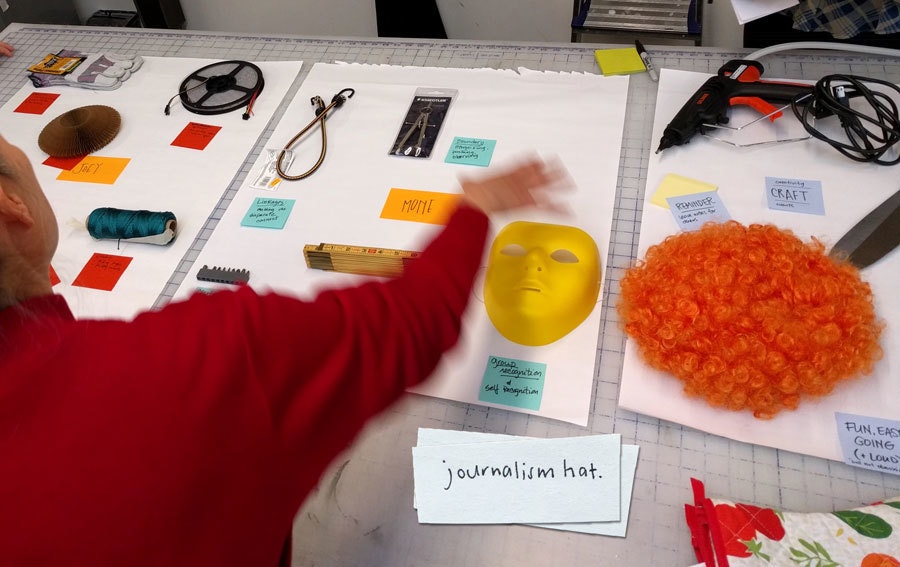
As part of our research, we’ve invited a few people into the studio to share how they think about themselves in relation to their jobs. We take them through a hands-on exercise, asking them to pick objects that represent the key attributes and skills they value in themselves. As they describe their collections, we begin to see a rich picture of their work-life experiences and connections.
4:30 PM: Moodmaking
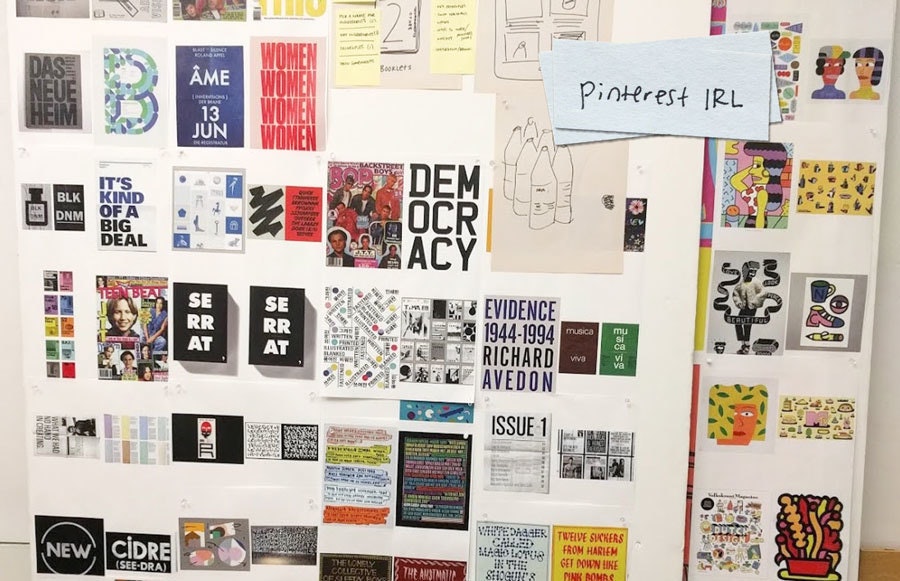
I gather visual inspiration for our deliverable. I troll design sites, look through books, and research brands and designers that have been on my radar recently. As I pin up images, I think about how the various elements of typography, color, photography, illustration, and scale could come together to create a unique look and feel for everything we’ll design for our client and the people they serve.
6:30 PM: A Melodic Exit
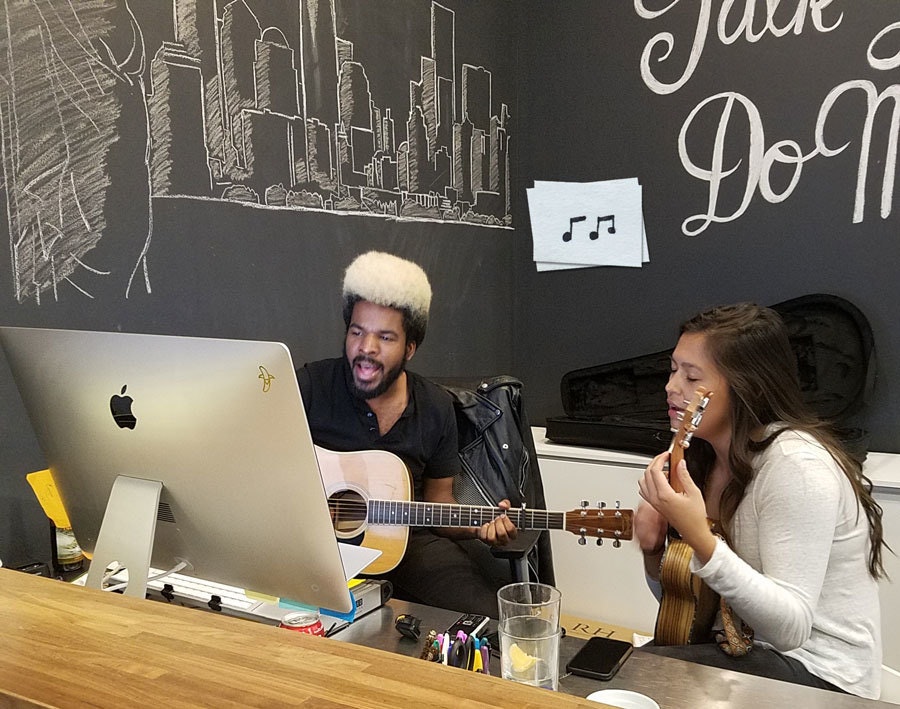
Time to head home. As he often does at the end of the day, Jared, our experience lead and sometime maestro, is slaying with some live guitar and singing. Today he’s accompanied by Kati on ukulele, and together they send us off down the elevator to the strains of "Wild Horses."
7:20 PM: Installation
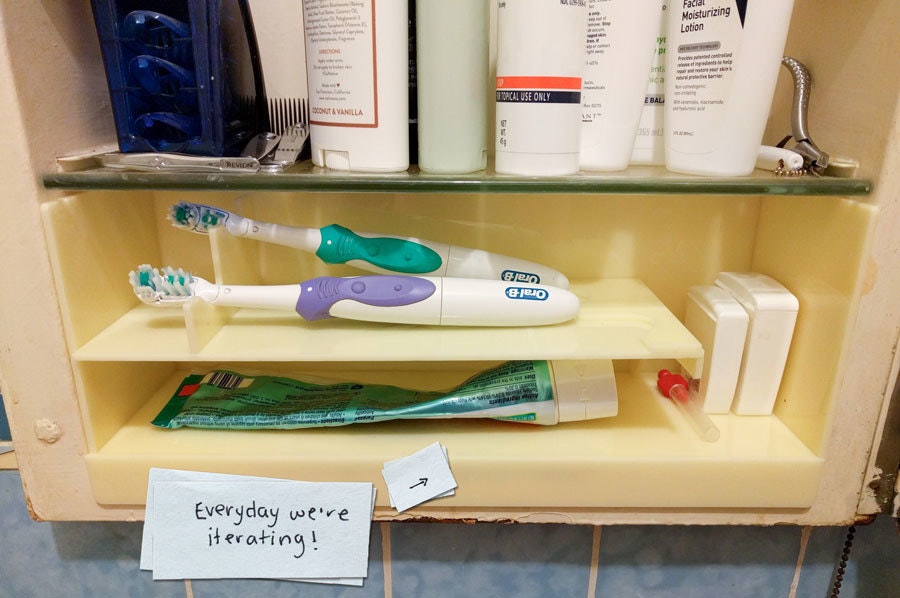
It’s in! The tiny shelf is a big improvement, but in practice it’s still a bit tough to reach the toothbrush in the back. Next iteration needs more simplicity and maybe some better color matching. It’s back to the sketchpad for tomorrow’s prototype.
When people ask me what I do for a living, what I really want to do is just show them. For me, graphic design is about finding the best way to bring ideas to life: posters, film, installation, animation, or even objects. So, a day at IDEO is following ideas wherever they may lead and getting distracted (I mean, inspired) along the way.
3 Ways Boredom Can Unlock Your Creativity
Ideas come to the prepared mind
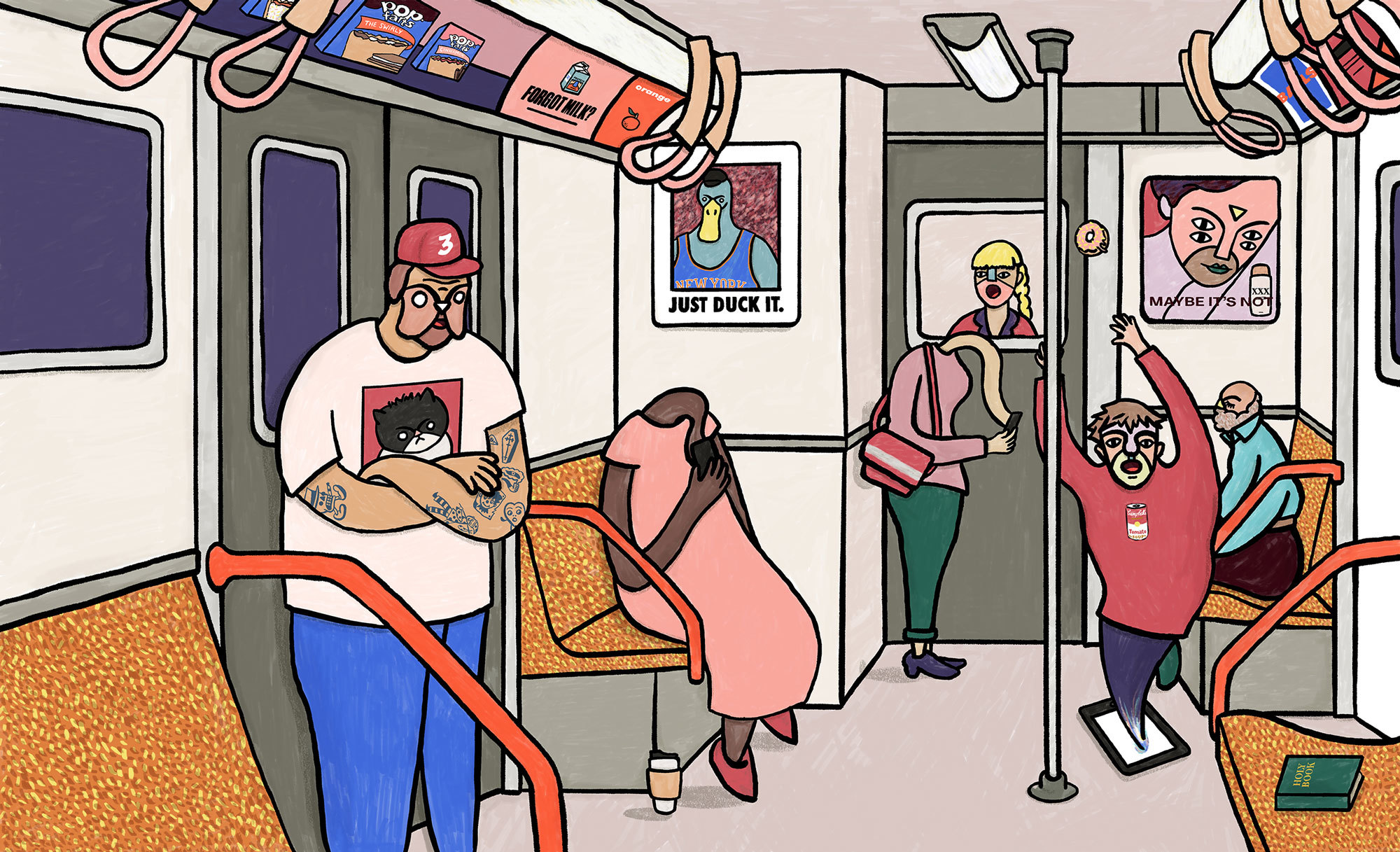
I recently tested myself and found I was averaging four hours per day on my phone, with most of that time lost to Instagram and Facebook. This mindless scrolling was primarily happening in the day’s in-between moments—while waiting in line for a coffee, sitting on the train, and even in the bathroom.
A recent talk by Manoush Zomorodi got me thinking: When was the last time I put away my devices and chose to do nothing instead? When was the last time we all let ourselves experience pure, unadulterated boredom? And is it possible that replacing time sitting around checking email with time just sitting could help us be more creative in both the short- and long-term?
I dug into some research and found that moments of boredom often allow us to take our biggest imaginative leaps. Here are three ways to get yourself there:
1. Schedule time to let your mind wander
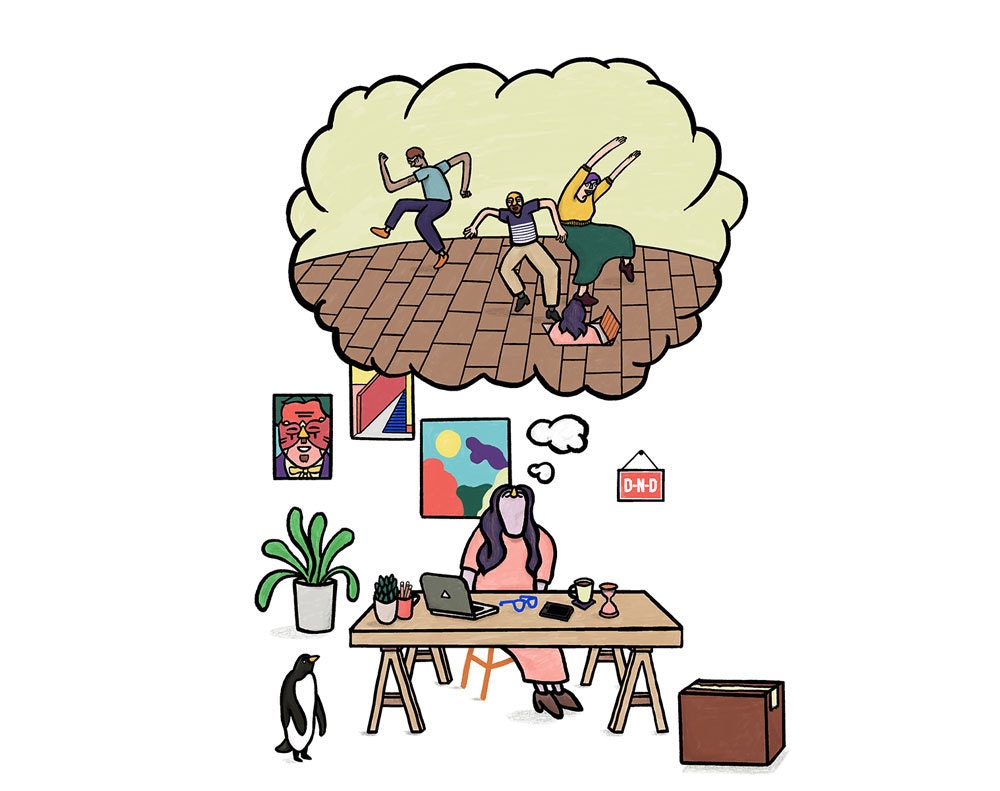
Research shows that daydreaming ignites a collection of brain regions known as the default mode network. According to psychologist Dr. Sandi Mann, as our minds wander, our thinking stretches beyond the conscious and dips into the subconscious. It’s in this zone that we’re often able to connect disparate ideas, solve some of our most nagging problems, and do autobiographical planning—reflecting on our lives and setting goals. It’s no wonder that so many of us come up with our best ideas in the shower.
Where and when do you daydream? Allow time in your calendar to stretch those moments out. Skip the express for a slower train. Try designing new routines into your day, like walking around the block during lunch, to help spark new thoughts.
2. Do something mind-numbing before your next brainstorm
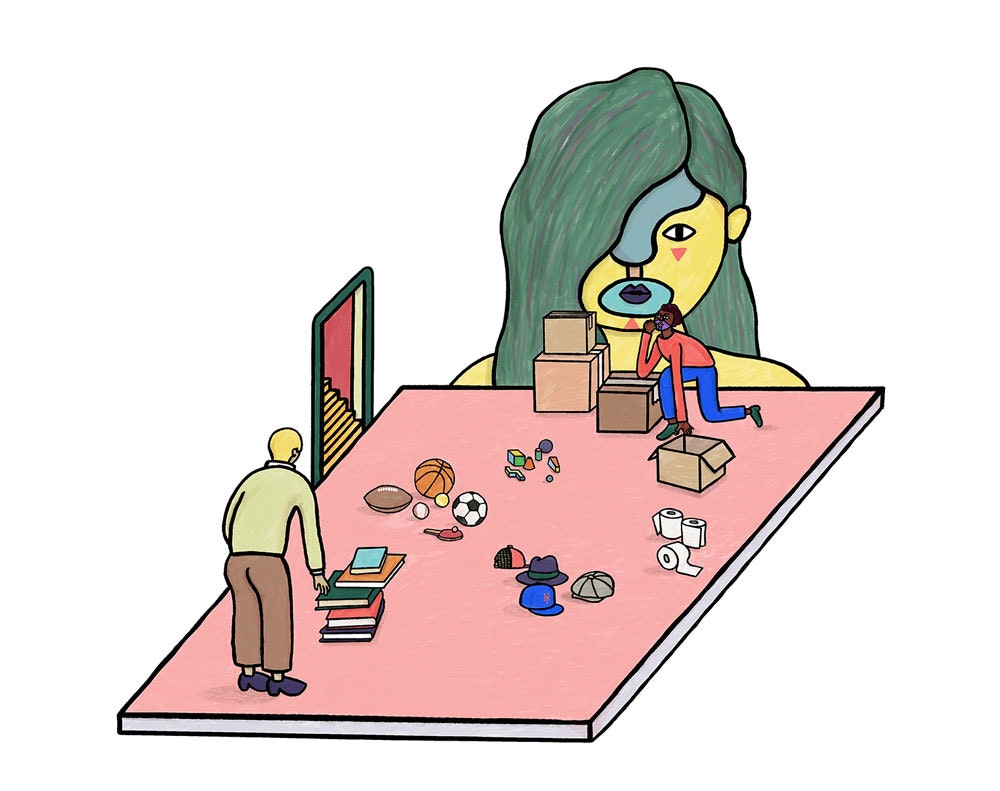
To test the creative-boosting powers of boredom, a group of researchers from the University of Central Lancashire conducted a study where half of the 80 participants were instructed to copy numbers from a phone book (experimental group), and the other half were not (control group). They were then asked to brainstorm as many uses as they could for a pair of plastic cups. The phone book group came up with significantly more ideas.
The researchers ran the same test again, but added a third group tasked with something even duller—reading the phone book. These participants came up with even more ideas.
Before your next creative meeting, try tackling those boring-but-necessary tasks that clog up your to-do list. You just might unlock your next big idea.
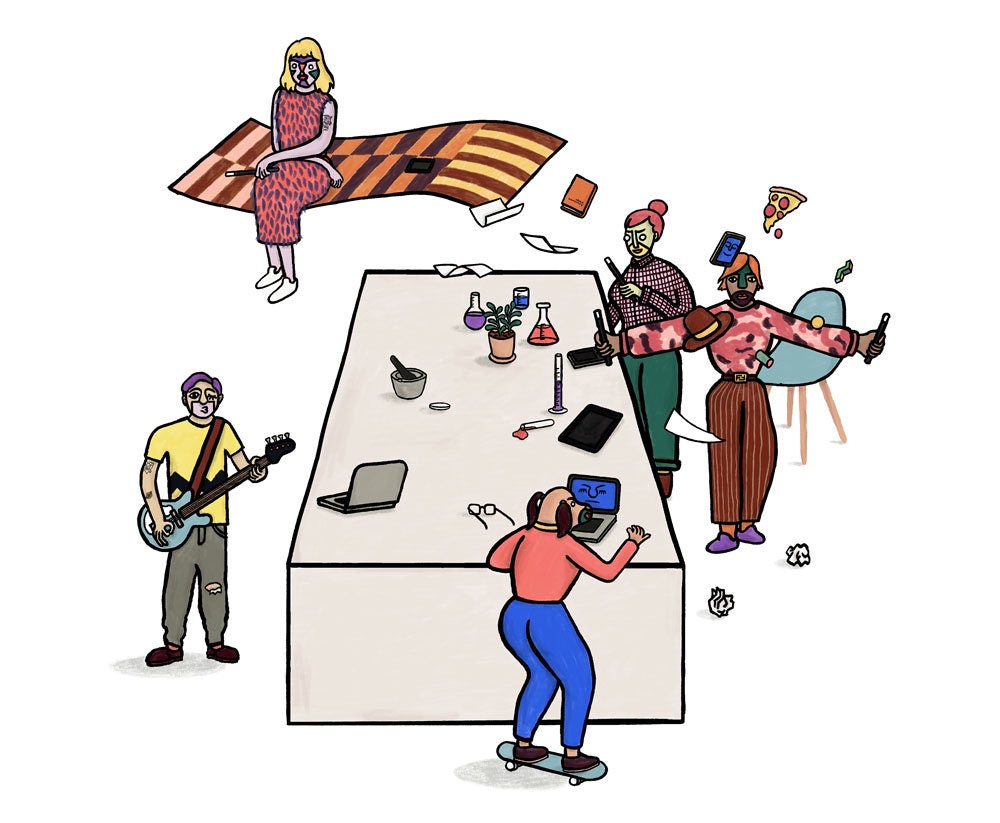
3. Tap into your childhood self
According to psychoanalyst Adam Phillips, the capacity to be bored can actually be a developmental achievement for children. Unstructured time motivates kids to invent their own entertainment from scratch, and gives them the freedom to explore what truly interests them.
When I was younger, I would pretend to teach a Harry Potter-style “Intro to Spells,” complete with paper wands. Today, teaching design classes at Stanford and leadership workshops for girls brings me the same joy and inspiration. And when I get bored, my mind still races around new design curriculum.
Need a reminder of the things that used to inspire you? Call your parents, siblings, or old friends to help playback stories from times past.
There will always be another something to check, update, or scroll through on our devices, but if we let our minds run free instead, who knows what brilliance our boredom might lead to?
In our always-connected world, it’s easy to fill every spare moment with another feed to scroll through, notification to check, or calendar to update. Each activity may feel productive in the moment, but at the end of the day we have nothing to show for it.
Why This Illustrator Makes Her Own Tools
An interview with picture book author and illustrator Cindy Derby
In one sentence, who are you?
Cindy [sin-dee]: a quirky, creatively neurotic, unapologetic creature who has paintbrushes for fingers and toes—with a laugh that rumbles the ground.
What do you do? How did you get into it?
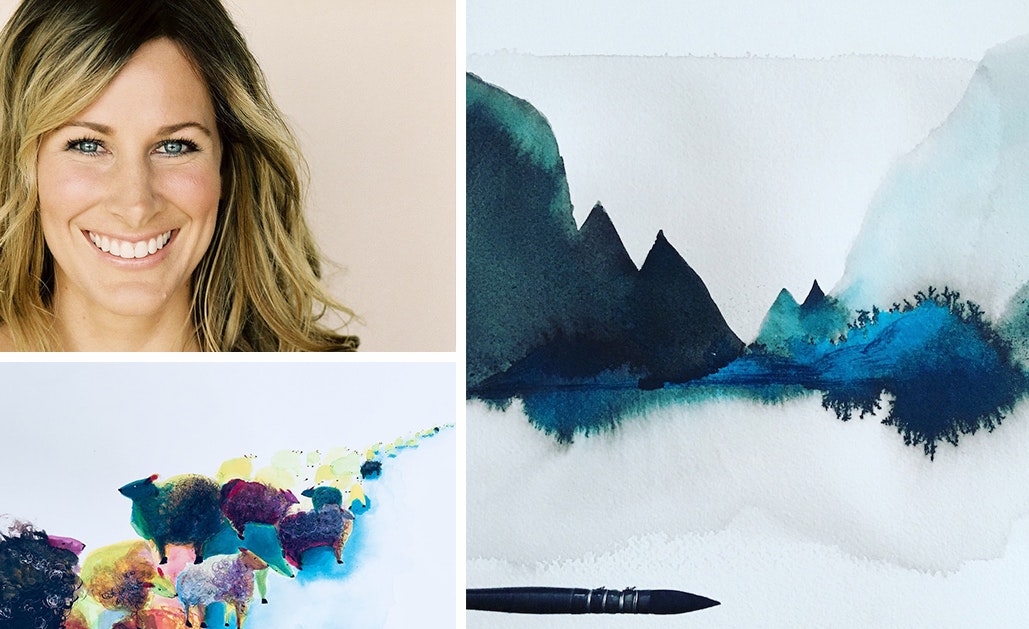
I am a picture book author and illustrator. Ever since I was a little, I had narratives running through my head for just about anything. My path as a teenager led me to theater and The Royal Conservatoire of Scotland, where I got involved in puppetry—building puppets and touring my own one-woman shows. In the back of my mind was a dream I couldn’t let go of: I wanted to write and illustrate children’s picture books.
After I moved back to California, I began painting with acrylic on gigantic canvases, but eventually transitioned to working a bit smaller. That’s when I discovered the unpredictable beauty of using watercolor and ink. From there, I spent years diligently working on my illustration skills and developing characters, and I have been working on my craft of storytelling ever since.
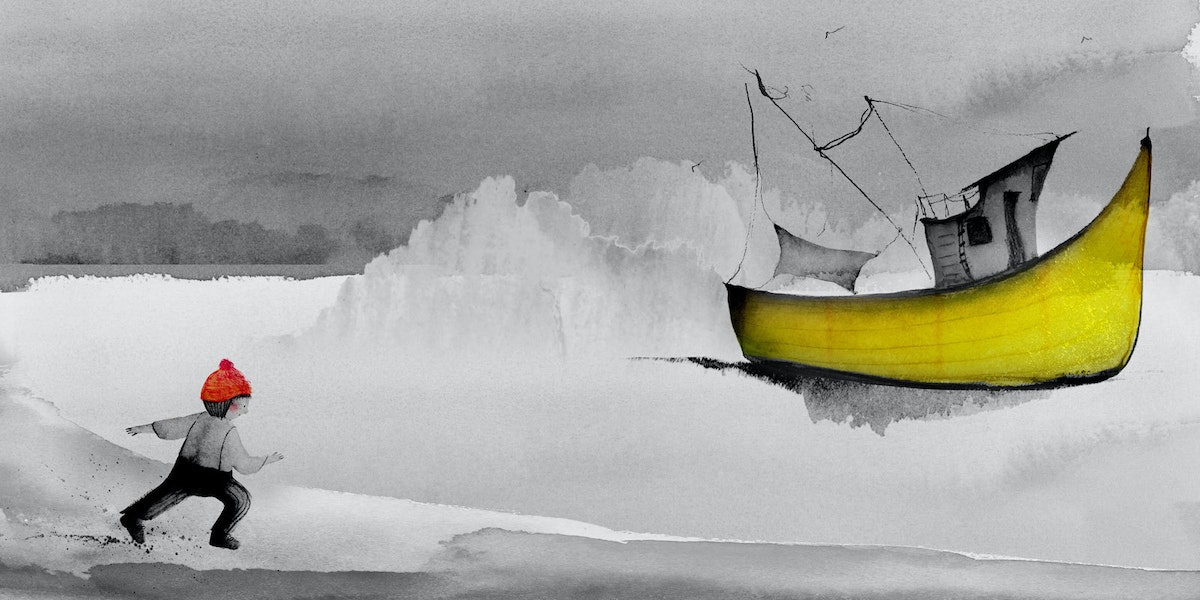
As an adult, picture books are a way to collaborate with my little self. And together, we create weird books for weird kids. My debut book as an author and illustrator is How to Walk an Ant (Roaring Brook Press, 2019).
What are your three most beloved possessions?
1) A tiny armadillo sculpture with a broken tail
2) A collection of letters from my grandmother
3) An embarrassing diary from my middle school years—with creepy drawings of all my crushes
What are your favorite tools of the trade?
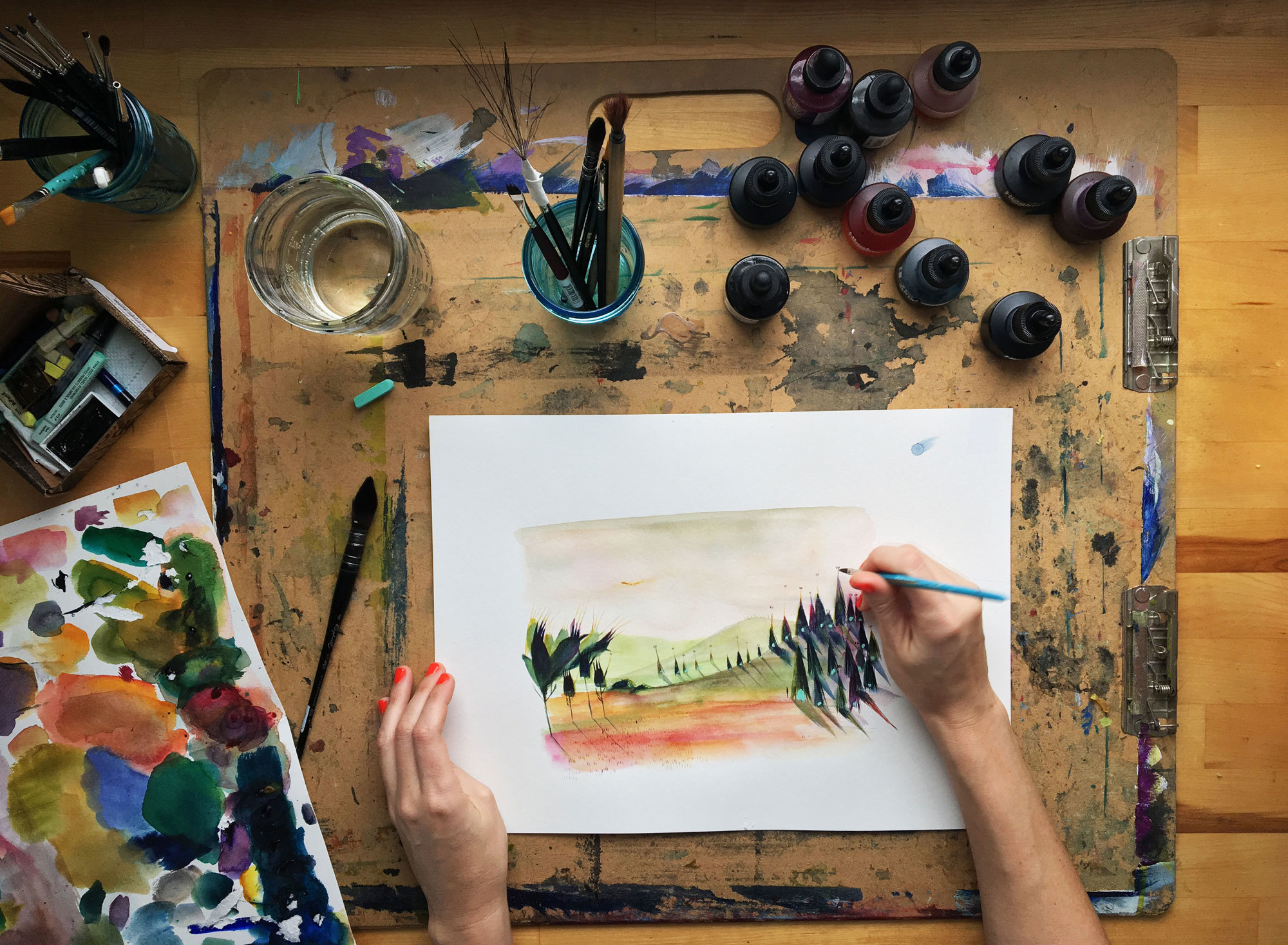
I make my own paint brushes. I pluck the hairs out of old, scraggly brushes and bind them together to create new brushes. I also use sticks, wires, and clay shapers when I paint. They make imperfect, expressive lines. And I like that.
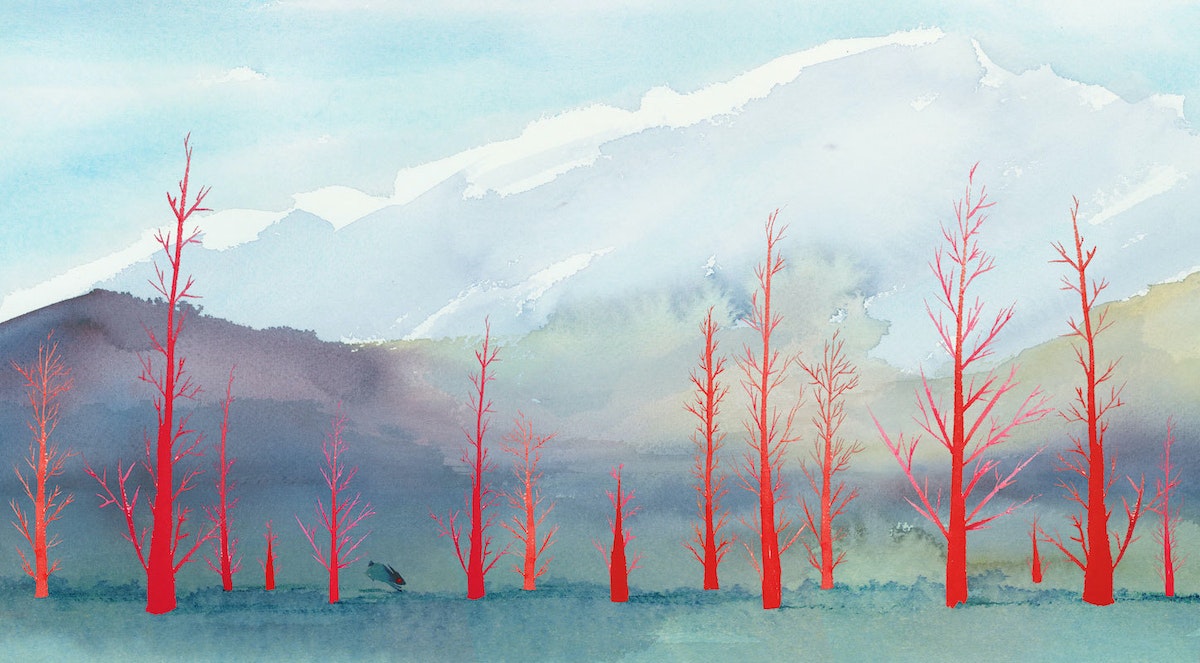
What does a typical work session look like?
Before I begin any work, I obsessively wipe down all surfaces, organize my materials, and even make my bed. This helps my mind become a blank canvas. This also helps me rediscover things in my studio I may have forgotten about—like that piece of Styrofoam pool noodle I cut out into shapes to make stamps, or that tiny drawing of a bug with a coy expression.
When I finally sit down at my art table, I start by making some spots on paper. The result is not supposed to be good, nor do I want it to look like anything. This is just a way to warm up my hand. It also helps to whisper: “Good morning, hand...Good morning, brush...Good morning, inkblot!”
After a healthy session of experimenting, I transition into working on one of my current picture book projects, which involves a happy balance of planning and spontaneity.
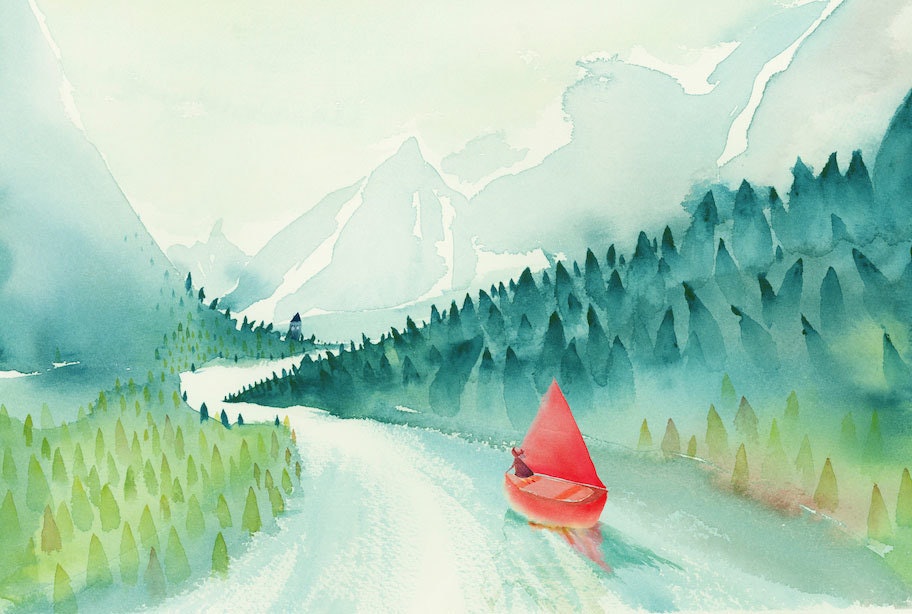
How do you get over creative block?
I intentionally make very ugly art for a few days. That means putting wrong colors together until they are muddied, ripping up paper to make monsters, and pouring a whole bottle of black ink on top of a pretty landscape. Afterwards, I eat too much chocolate and melt into the floor. If I can make myself laugh—really, truly have a good ol’ laugh at myself—that block will get smaller.
How do you see the world in 2078?
If a drone can deliver a rainbow sprinkled donut to me while I’m lying on my death bed...I’m happy.
What’s your number one bucket list item?
I would like to retrace the steps that my late grandmother Marian Mountain took on her journey while creating her book The Zen Environment: The Impact of Zen Meditation. She had a fascinating life. She was a student of Shunryū Suzuki for many years, and helped record and transcribe all his lectures.
She traveled around in a RV with her typewriter most of her life. And she used to be a puppeteer! Before she died, she was working on a follow-up book titled Snail Zen. I’d like to help complete that book.
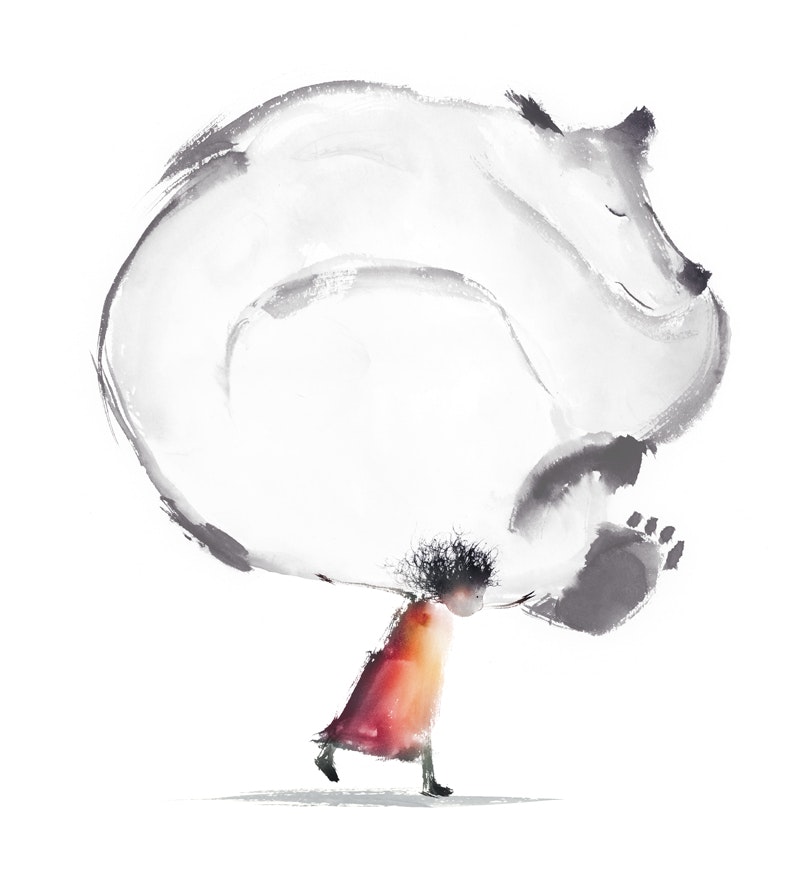
Who are you creative crushin’ on lately?
Leonard Baskin. I recently discovered his work while doing research at The Letterform Archive in San Francisco. His lines are haunting, expressive, and honest.
I have been stalking illustrator Cindy Derby’s work on Instagram for longer than I care to admit. She creates worlds for children’s books, but her unique characters and experimental style capture the imagination of adults just as easily. For this installment of our Creative Crush series, I set out to learn more about Derby and her process.

Lindsey Turner
I’m passionate about building brands, products, and experiences that help organizations show up with meaning and momentum.
I help organizations cut through complexity by shaping how they show up, through brand strategy, identity, and storytelling.
Working at the intersection of brand and business, I bring an editorial eye and a bias toward making—turning ideas into tangible experiences that people can understand, trust, and believe in.
My work spans government, healthcare, financial services, media, and consumer goods, from launching Gen Z-focused ventures to building innovation labs and reimagining legacy brands. I relish moments of ambiguity and enjoy translating across teams, perspectives, and priorities to move ideas forward.
I started my career in editorial and digital design, shaping cross-platform experiences and identity systems in publishing and agency environments. That foundation still shapes how I work today: I’m detail-oriented, collaborative, and overreliant on the Oxford comma. I hold a BFA in Visual Communication from the School of the Art Institute of Chicago.

Rachel Young
My work helps organizations see who their products aren't working for—and build the will and the tools to do something about it
For 25 years, I've asked the same question: Who does this design exclude—and what are we going to do about it?
My work spans human-centered strategy, inclusive design, and qualitative research, with clients ranging from Microsoft, Google, and Verizon to the National Science Foundation, and San Francisco Unified School District.
Before IDEO, I taught elementary school in East Palo Alto and spent a decade doing design work with social service organizations—where I learned firsthand what it costs people when systems are built without them in mind.
I am currently writing User Error, a nonfiction book about digital access and the design decisions behind it. I live in Oakland, California.

Brian Pelsoh
I lead with craft, ensuring our work is creatively excellent: rooted in deep human insight and imagination, while also grounded in the realities of business and technology.
My expertise spans brand, communication, and product design across tech, education, the arts, and social impact.
I believe great work demands both high-level vision and obsessive attention to detail, and only happens through collaboration.
I bring an inclusive, hands-on approach and a deep understanding of business, which enables me to consistently deliver excellence while always asking why.
Before joining IDEO, I worked at the brand firms Pentagram and VSA Partners. I began my career as a designer, leading teams at the School of the Art Institute of Chicago and the Milwaukee Art Museum. I hold an MFA in graphic design from Maryland Institute College of Art and a BFA in communication design from the Milwaukee Institute of Art & Design, and have taught at some of the best design schools in the US.

Tony Wong
I am responsible for IDEO’s long-term success in China and working with clients to use design as a tool to enable growth.
I am responsible for IDEO’s long-term success in China and working with clients to use design as a tool to enable growth. Specifically, I have helped Chinese companies design holistic brand solutions through the development of their products, communication, services, and innovation teams, and I have helped multinationals expand their presence and influence in China.
I advise global leaders on developing China-led innovation and capabilities.
In over 15 years in IDEO Shanghai, I have worked on projects that use design to elevate the quality of the experience of healthcare products and services, streamline processes that increase productivity, create spaces and programs that promote and enable inclusive communities, and build next generation mobility solutions that are planet-positive.
Before joining IDEO, I worked at Philips Electronics and the Electrolux Group in Italy, the Netherlands, and Singapore on a number of breakthrough commercial products. I am a member of the Young President Organization in Shanghai.

How to use AI as an editor, not a writer
Ed White shares how he uses AI as an editor—not a writer—to sharpen storytelling, rehearse ideas, and preserve the productive friction that makes creative work better.
Ed White has a rule he's tested on his own writing: hold yourself as the writer, and let AI be your editor. Ed is a Senior Design Director at IDEO's London studio, where he co-leads the firm's AI portfolio across Europe. Before IDEO, he spent 12 years as a writer and editor at the Financial Times, Wired, and Contagious. So when he talks about when to use AI for storytelling and when not to, it comes from two decades of crafting his storytelling skills.
In this episode, Mina Seetharaman talks with Ed about two specific tools he uses to keep AI in an editor's seat: a "roasting agent" prompted to critique his drafts without any sugarcoating, and a simulated audience he rehearses pitches on before the real thing. They also get into what Ed is hearing from design leaders at Anthropic, Lovable, Shopify, and Google Creative Lab about how creative work is changing, and why he thinks the friction of writing something yourself is worth protecting rather than automating away.

Building a personal AI for the messiness of life: Sida Li
Becca Carroll talks with Cue co-founder Sida Li about designing a personal AI for the messiness of everyday life—not just work. They explore how Sida stays anchored to human needs while navigating fast-changing technology, product tradeoffs, business-model experimentation, and the realities of building an AI company today.
Most AI products today are built for work—a space with clear problems and established systems. One founder noticed a gap: personal life is messier, harder to systematize, and mostly left behind by the AI boom. So she built Cue, a personal AI that lives inside iMessage and group chats, to go where the other tools haven't.
In this episode, Becca Carroll, IDEO's Chief Strategy Officer, talks with Sida Li, co-founder and CEO of Shared Context Lab, about staying anchored to a human need while the technology around her keeps changing shape, why she treats her business model with the same rigor she'd bring to a product, and what it feels like to build a company at this particular, disorienting moment in AI.
The conversation also gets into how Sida makes design decisions: the language Cue uses to describe itself, the tradeoffs behind building inside iMessage instead of a new app, and a real story about a business idea that didn’t pan out.
This is the second in a two-part series profiling founders from IDEO's Startups-in-Residence program. The first conversation is with Johannes Seemann, founder of Sooner, on designing GenAI for the emotional side of money.

Designing GenAI for the emotional side of money: Johannes Seemann
Designing financial tools around the feelings that shape money decisions.
Most personal financial tools are built to run the numbers and optimize towards a budget. While that works for some, most people experience money as a lived relationship that does not neatly fit into a spreadsheet. Johannes Seemann and Becca Carroll discuss why money is emotional before it is mathematical, and what a human-centered approach to building a generative AI financial product looks like in practice.

The curious leader's edge in uncertainty: Scott Shigeoka
How genuine curiosity helps leaders navigate uncertainty with greater confidence.
Mina Seetharaman talks with Scott Shigeoka, author of Seek and Head of Curiosity Cultivation at the Eames Institute, about what distinguishes genuinely curious leadership from performative curiosity, how power dynamics shape curiosity, and why practicing curiosity can restore energy rather than drain it.
Looks like you might be in search of something very specific?
Or reset the filters above and try another angle.
Here’s some random inspiration

Podcasts about creative leadership

Articles about the power of prototyping
