
.svg)


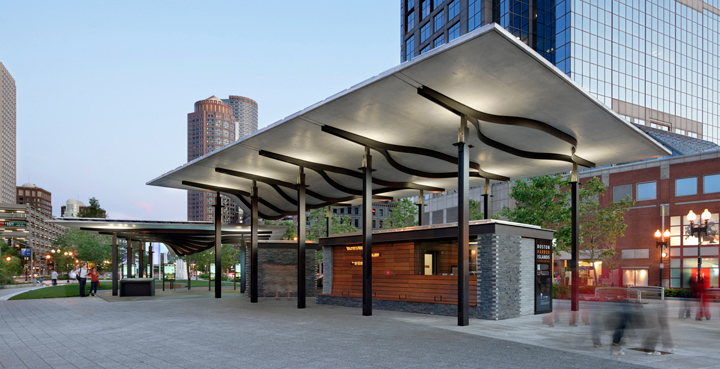

Bringing tourists to a hidden coastal gem
An open-air pavilion to entice visitors to one of Boston’s best-kept recreational secrets.
Once considered one of Boston’s best-kept secrets, Boston Harbor Islands National Park was looking to increase visibility and entice visitors to its network of 34 islands, a Civil War–era fort, historic lighthouses, and more than 50 square miles of bays, harbors, and rivers within the Boston Harbor basin.
Together with the National Park Service, Boston Harbor Alliance, architecture firm Utile, and landscape architecture firm Reed Hilderbrand, IDEO and the National Park Service came up with a plan to design a pavilion on the Rose F. Kennedy Greenway, which reconnects the city’s historic waterfront to the downtown area. The team believed a successful pavilion would sell boat tickets, attract passers-by, and enable a positive encounter with the islands. Today, the structure serves as the primary gateway linking Boston to the Harbor Islands, equipping the city with an experiential anchor to better connect visitors with Boston’s coastal gems.
The Boston Harbor Islands Pavilion was officially unveiled on June 2, 2011, and honored with an Honor Award for Design Excellence from the Boston Society of Architects, the 2011 Grand Honor Award from the Associated General Contractors of New England, and a Silver Award from the 2012 ACEC/MA Engineering Excellence Awards.
The Boston Harbor Island Alliance, which acts as a steward for the 34 islands, anticipates that the pavilion will positively impact the number of visitors this year.
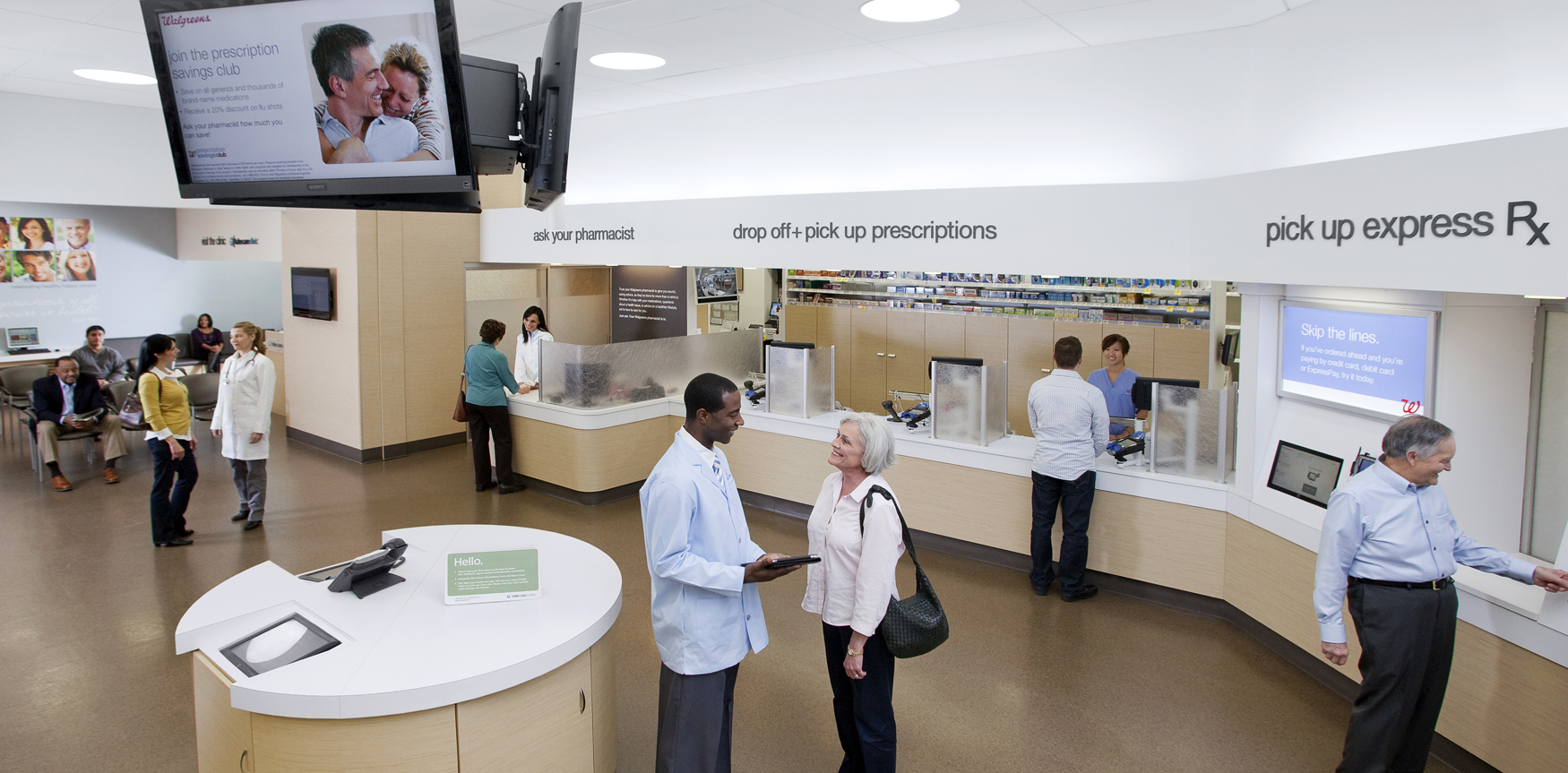
Bringing back the neighborhood pharmacy
Helping a retail chain build healthier relationships with customers.
In 1901, Charles R. Walgreen, Sr., opened up a small neighborhood pharmacy on Chicago’s South Side. Today, Walgreens is the largest drug retail chain in the US with more than 8,200 locations in all 50 states. As healthcare reform has become top of mind in the US and patient-centered care increasingly the norm, Walgreens sees its scale as an opportunity to rethink the role of the community pharmacy in the 21st century. The company collaborated with IDEO to redesign its pharmacy experience in order to foster rich, trust-based relationships between customers and the most highly trained medical professionals on staff—pharmacists.
Most Americans—75 percent—live within five miles of a Walgreens. With the Affordable Care Act bringing millions more Americans into the healthcare system, Walgreens’ proximity and reach provided a big opportunity to become a convenient and trusted touchpoint for patients outside of hospitals and doctors’ offices, especially those suffering from chronic conditions such as diabetes and heart disease. The challenge: Use design to shift customer perception of Walgreens from just another convenience store to a local place at “the corner of happy and healthy,” where customers could receive everyday health and wellness advice. In other words, bring Charles R. Walgreen’s vision of a community pharmacy to unprecedented scale.
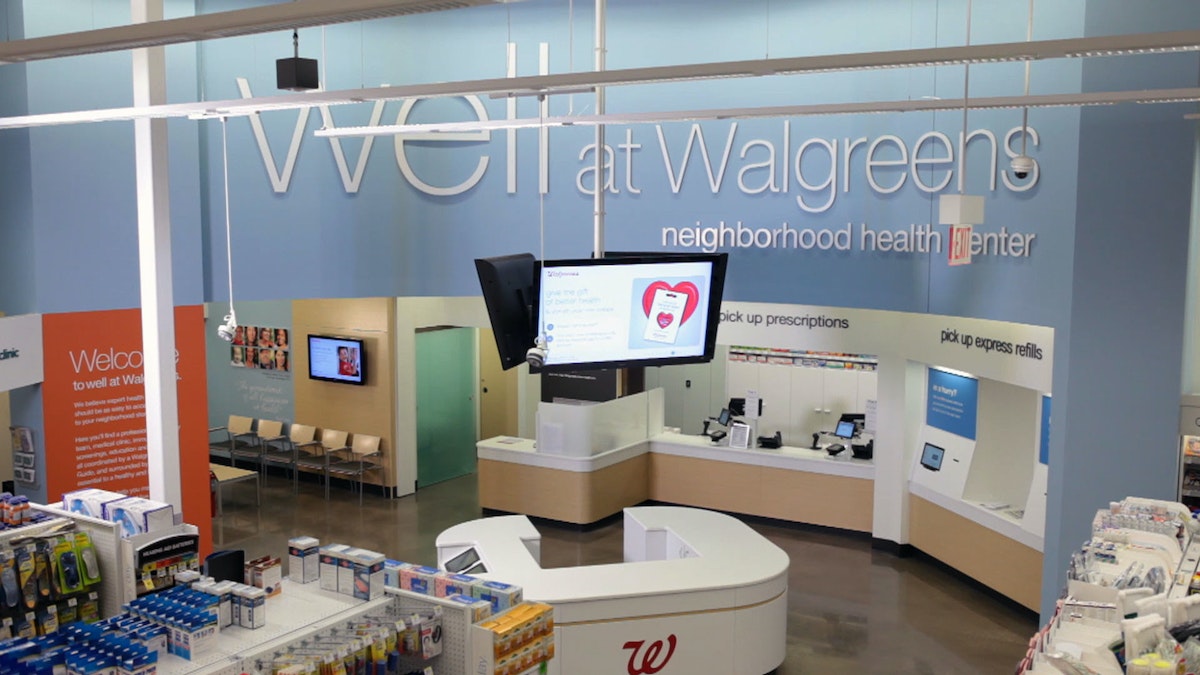
IDEO built out two full-size prototypes of a reimagined Walgreens pharmacy designed to cultivate better relationships between customers and pharmacists. Key to building good relationships were private consultation rooms that allowed for close conversations, and friendly health guides that helped customers browse over-the-counter medications or schedule “take care” appointments. Pharmacists, usually barricaded behind their high counter at the rear of the store, were now positioned out on the pharmacy floor, ready to listen and—most important—ensure continuity of care.
"Patients are engaging with pharmacists even more often to ask about everything—including their medication, health conditions, and prescription regimens," said Nimest Jhaveri, Divisional Vice President, Pharmacy Transformation.
The new Well Experience format was launched in two pilot locations in Chicago just a few months after the prototypes were built. Combining IDEO’s pharmacy work with Walgreens’ new approaches to beauty products, fresh food, and online shopping, 750 Well Experience locations have opened in the US and Puerto Rico—including 14 flagship stores in major cities—and an additional 1,000 are planned for the coming years.
Walgreens is also expanding the scope of its Take Care Clinics, which are usually staffed by nurses or physician’s assistants, to include the diagnosis, treatment, and monitoring of chronic diseases such as diabetes that are typically handled by doctors. The company considers its Well Experience pharmacies a work in progress and plans to keep evolving the design based on customer feedback.
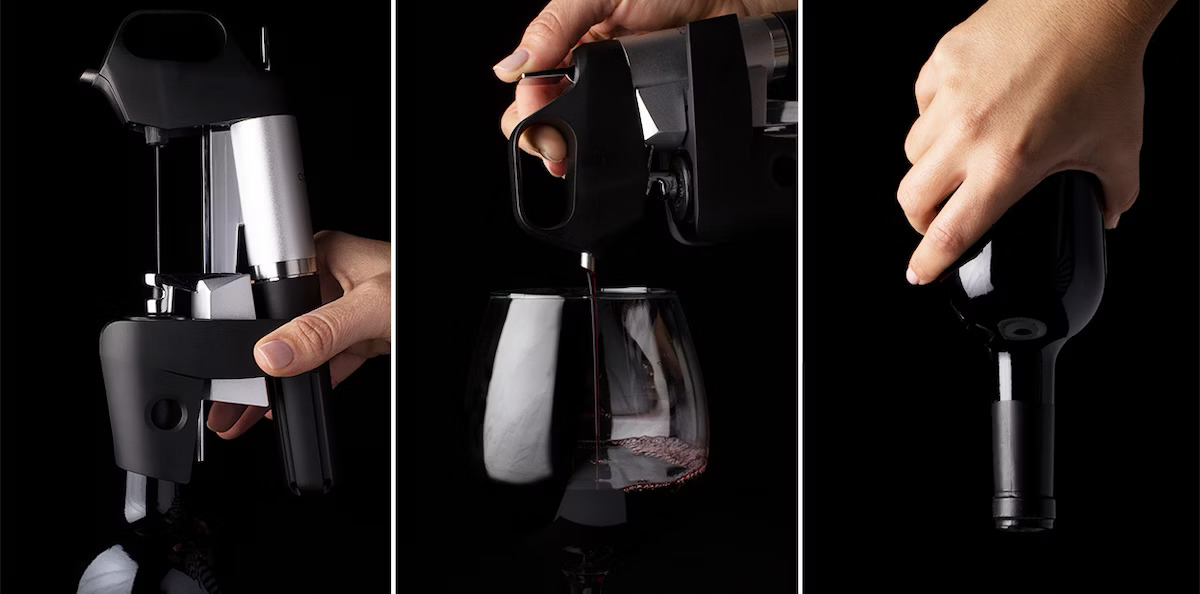
An ingenious way to preserve wine
A double-duty bottle opener that's an industry game-changer.
Opening a bottle of wine is typically a moment of no return, because what remains after the first pour almost immediately begins to oxidize.
But Greg Lambrecht knew there was a better way. He came up with an idea to pour the wine without opening the bottle. With a new device, a slender needle is inserted into the cork, and argon, an inert gas, pressurizes the bottle to pour a single glass. Remove the needle, and the tiny puncture in the cork naturally reseals, maintaining the integrity of the wine in the bottle.
Working with Lambrecht, IDEO refined the look, feel, and user experience of his device, designing and building a prototype that captured the expression of his eureka moment. Using this prototype, Lambrecht raised significant seed funding for his startup, and launched the Coravin System in July 2013. The company continues to grow year after year.
Lambrecht introduced the only product of its kind sold in the global market, and preliminary sales have far exceeded expectations. What’s more, for wine lovers everywhere, there’s finally a solution to savor and preserve every last drop.
An ATM designed for you
Making customer interactions fast and easy—without requiring any new hardware.
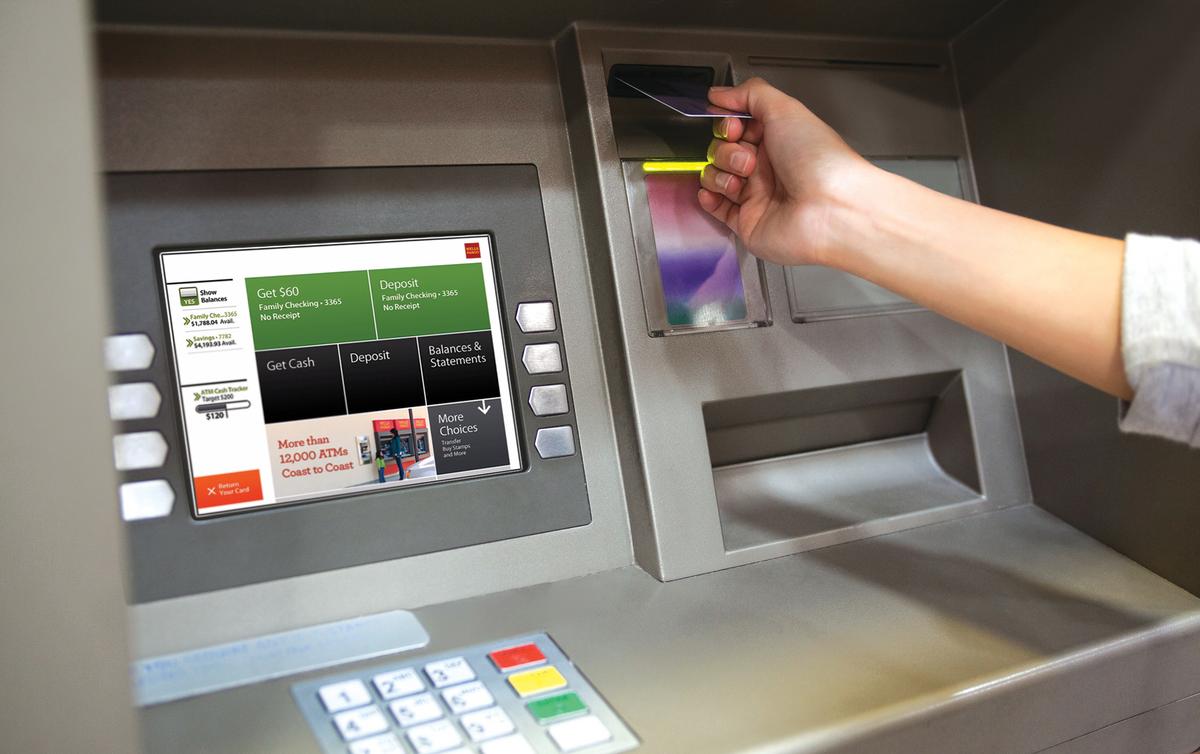
Wells Fargo, one of the United States’ largest banks, wanted to enable customers get to the ATM functions they wanted faster. The updated interface needed to be different enough to have a tangible impact, and had to appeal to an extremely broad audience. What’s more, any changes made to the interface had to be compatible with the existing hardware of all of the ATMs in operation nationwide.
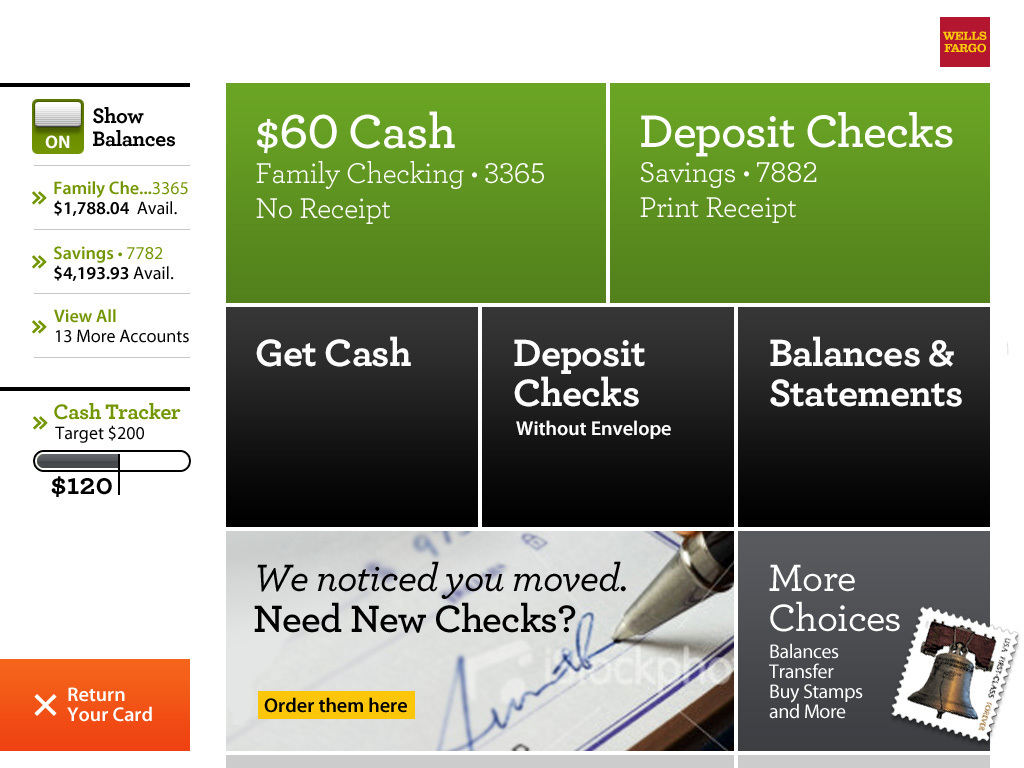
Wells Fargo and IDEO worked to enhance and customize the ATM user experience by making it innovative, fast, and easy—without requiring any new hardware. The interface’s entire layout is personalized, based on what a user does most at the ATM. It gives users an immediate glance at their account balances (which they can also hide) and highlights the touch screen 'buttons' that they use most (by putting them at the top of the screen in green). New data hierarchy also facilitates skimming for fast decision-making and provides messages and notifications based on a customer’s priorities. “[The design] shows an intense attention to detail,” noted American Banker.
PHOTO ILLUSTRATION BY MAGGIE LYNN, IMAGE COURTESY OF BIZJOURNALS.COM
Designer’s Playlist #8
A few things IDEO SF's Katie Clark is digging right now
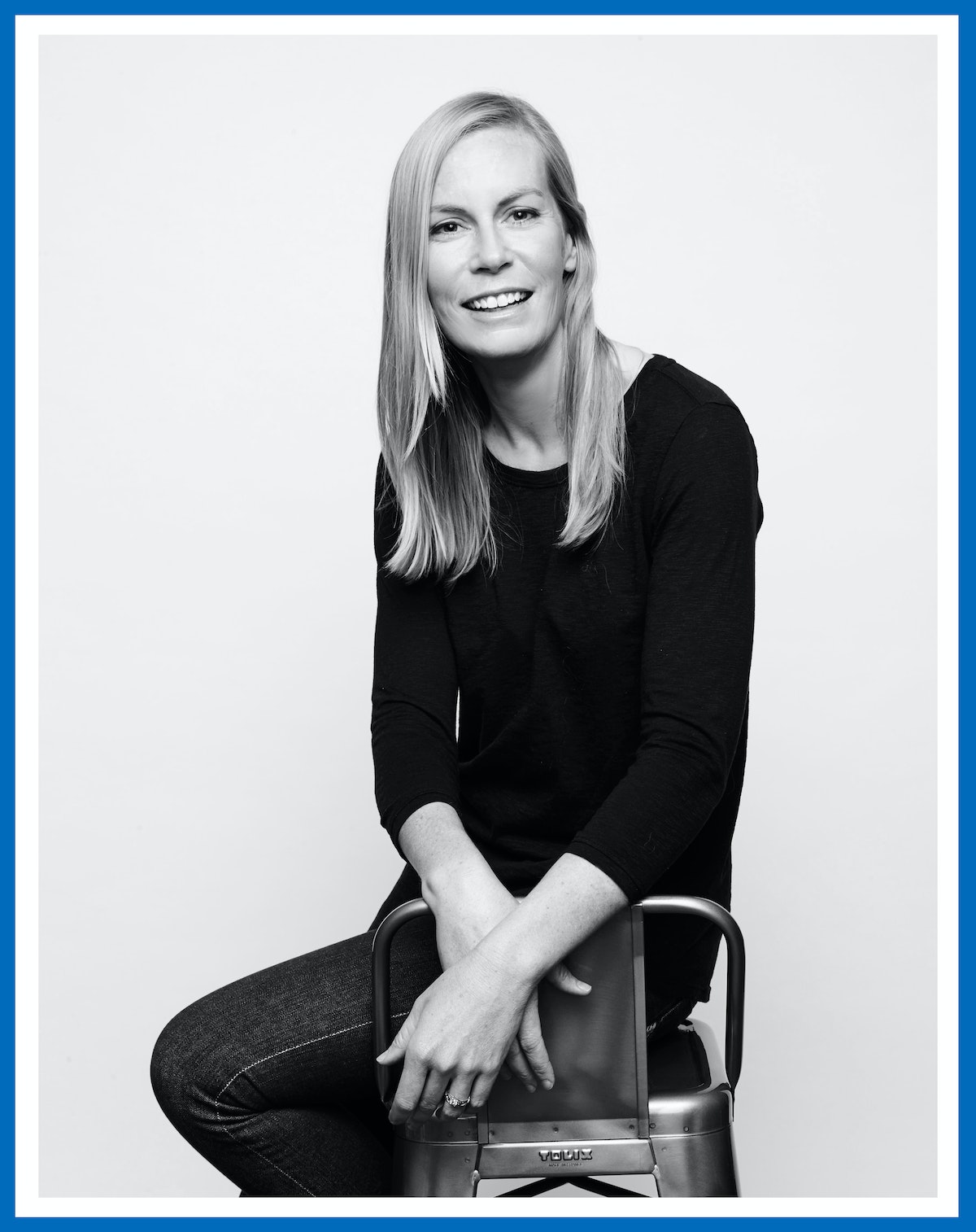
Name: Katie Clark
Location: San Francisco
Role at IDEO: Digital Marketing Director
Joined IDEO: 2003
Twitter: @katieclark
Instagram: @katieclark
Titillating Fact: I once ran a marathon on what turned out to be half a functioning heart. I had heart surgery one month later—good as new!
1. NASA Social
I grew up in Central Florida watching more space shuttle and satellite launches from Kennedy Space Center than I can count. We had astronauts and astrophysicists as neighbors, and I had some pretty great show-and-tells in my day. I can still remember watching the Challenger explode and knowing instantly, even at age 6, that something was wrong.
Needless to say, I’ve had a lifelong obsession with NASA and became involved with NASA Social events a few years ago. The event series is NASA’s way of emboldening and educating social media-savvy citizens around events, launches, and the incredible work NASA does. The ripple effect means more and more networks learn about the variety of things happening throughout the space nerd universe.
Here’s how it works: You apply for specific events and, if approved, you receive press-equivalent access—a.k.a. “social media credentials”—to briefings, tours, NASA personnel, etc. I even got to meet Charles Bolden at the last one I attended in Lompoc, California!
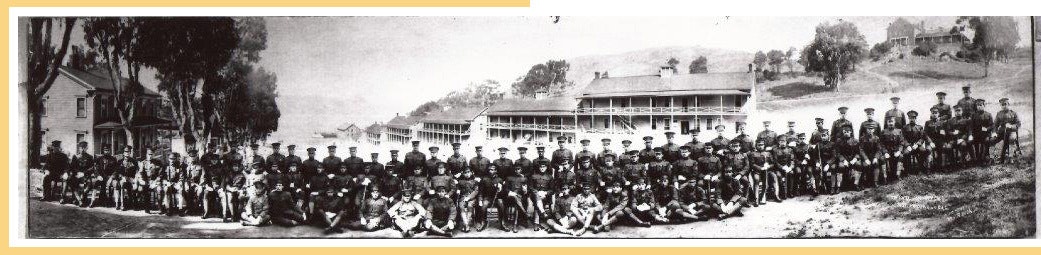
2. Angel Island
Growing up in the U.S., kids are steeped in the history of Ellis Island, but Angel Island seems to be its unknown little sister. This is one of my favorite places to visit in the San Francisco Bay Area for a number of reasons, and yet, many Bay Areans have never even heard of it, even though it’s right next to Alcatraz. I recently became an Angel Island Conservancy board member, so I like to evangelize its awesomeness every chance I get.
The history of this island is incredibly fascinating (and at times fraught), from its time as an Immigration Station carved with Chinese poetry to its service as the Cold War-era Nike Missile launch site. Angel Island even has an endemic mole, found nowhere else in the world, aptly named the Angel Island Mole. You can camp there overnight or just come for a day and finish your hike with a beer, a cheese plate, and live music at the Angel Island Cafe. Get on the boat!
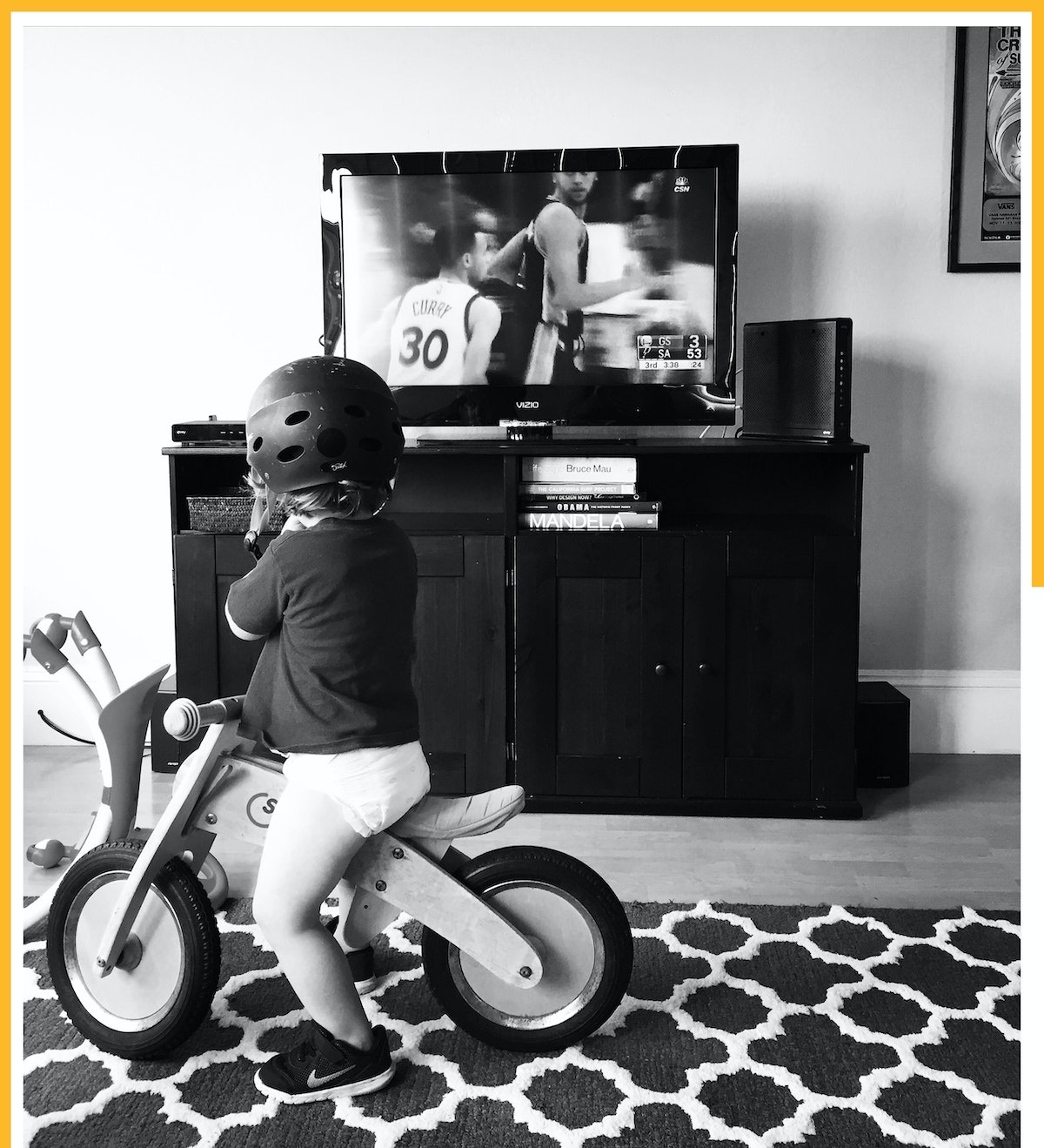
3. Dub Nation
If you've heard of the NBA, you’ve heard of the Golden State Warriors. I know that loving the Warriors doesn't make me special, but my husband and I have been fans since long before they were considered a good team. (Read: we could actually afford tickets back then). Here are a few things that make this team inspiring:
- Head Coach Steve Kerr. This man has been through some of the most earth-shattering events anyone can imagine, and is still one of the most inspiring leaders in professional sports. To boot, he and his family are active in several sport-related nonprofits including Peace Players International. As I write this, he’s suffering from major post-surgical complications and his team’s response has been nothing short of tear-jerking.
- Point Guard Stephen Curry. If calm and collected had a name, it would be Steph Curry. His pregame tunnel shots alone are worthy of a few paragraphs, but I’ll just let you watch this (he does this before every game). You can catch a young Steph and his former-NBA dad in these clairvoyant 1990's Burger King commercials.
- Dub Nation. I'm a former college athlete who grew up in the football-crazed American south, so I thought I knew something about intense sports fans. Nope. Warriors fans (we call ourselves “Dub Nation”) are among the coolest humans I’ve ever met. I still love this 2013 article about jumping on the Warriors bandwagon. Some of it is still applicable today, particularly Steph Curry’s mouthpiece chewing, so it's not too late to jump on yourself.
Header image by Clem Onojeghuo.
In this series, we ask IDEO designers to share the stuff they're digging right now—tools, books, music, sites, people, places—so you, too, can drink from the fount of inspiration bubbling up here. This week's guest star: Katie Clark.

Thoughtless Acts: Urban Summer
Thoughtless Acts: Urban Summer. The intuitive ways we adapt and react to things in our environments
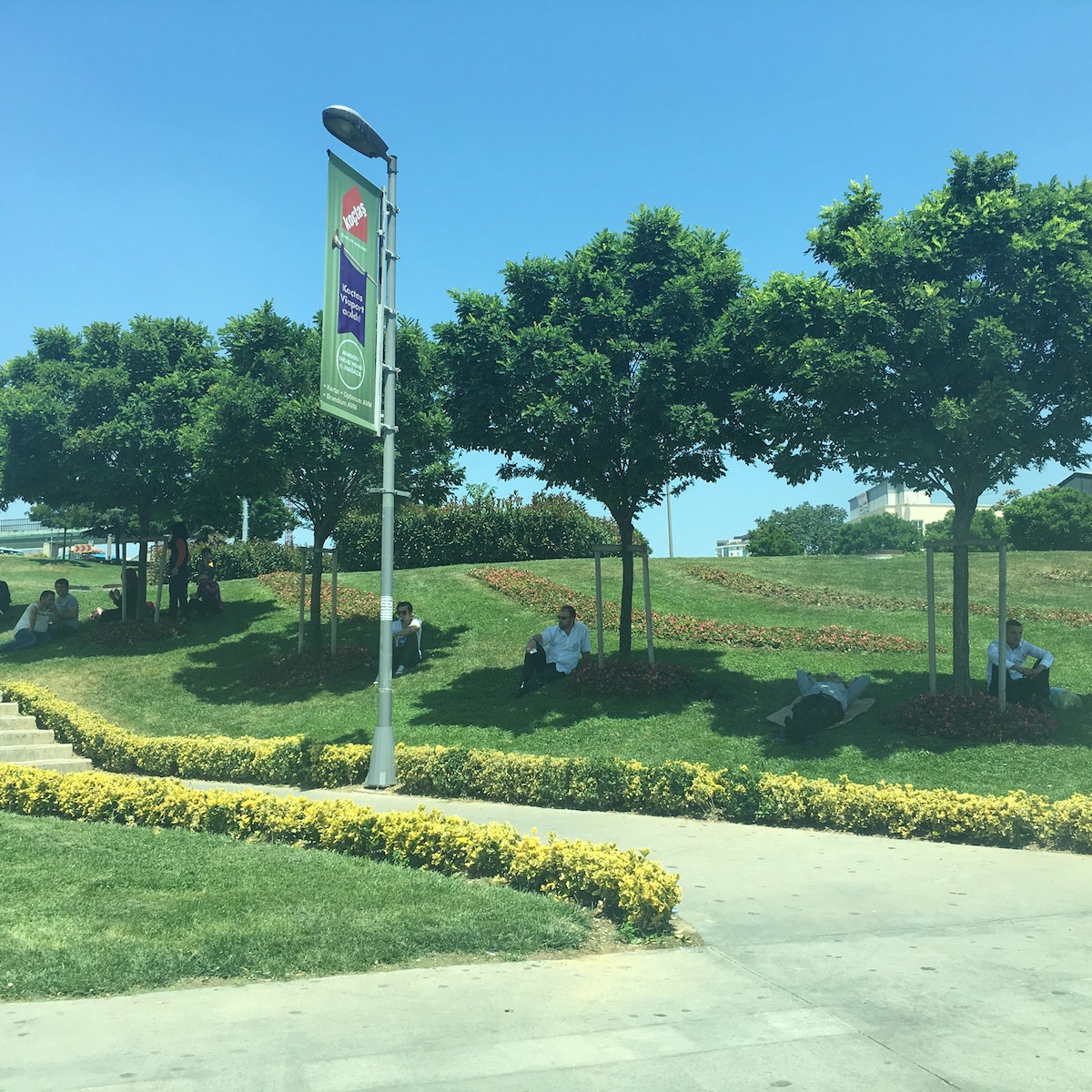
I took this picture last summer while I was back home in Istanbul. Summer in Istanbul is very, very hot. Sometimes the mercury in the city gets up to 113F. It’s pretty unbearable.
On toasty afternoon, I took this picture of a bunch of people capitalizing on the shade in a park to avoid the sun. At that time of day and year, the shadows defined the usable space within the park.
From a design researcher’s perspective, this picture says so much about how the sun and shade affect how we interact with cities and spaces. Sometimes design is all about constraints.
It’s a great reminder of all the factors to consider when we design for urban environments. Or a great reminder that nature is a designer, too.
Human-centered design requires us to observe human behavior with beginner's eyes, so that we can spot the innate ways people interact with the world around them. We call these intuitive and unconscious reactions thoughtless acts, and IDEO designers collect photos of them to inspire the invention of new products, services, and experiences.
.jpeg)
Why Being Obsessively Organized Makes You More Creative
In 2015, I spent a month in an Airbnb that doubled as an art studio. Upstairs, there was an airy drawing room where my host taught scientific watercolor classes. In the garage, a multimedia artist named Diego had built his own 3D printer and spent his time creating furiously—everything from ink paintings to cardboard sculptures to warped digital imagery.
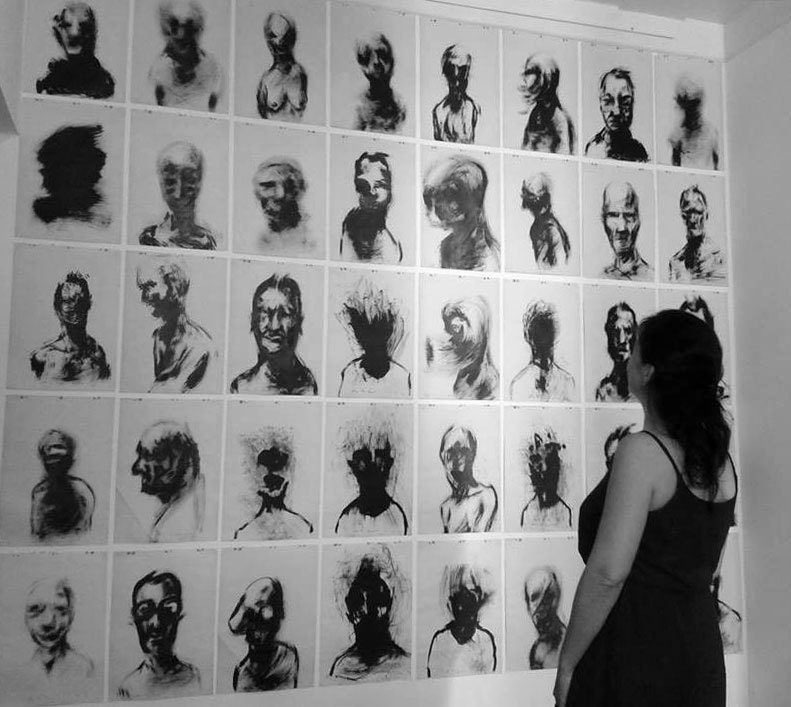
In 2015, I spent a month in an Airbnb that doubled as an art studio. Upstairs, there was an airy drawing room where my host taught scientific watercolor classes. In the garage, a multimedia artist named Diego had built his own 3D printer and spent his time creating furiously—everything from ink paintings to cardboard sculptures to warped digital imagery. I started spending my afternoons in the garage, watching him work and quietly editing travel photos, hoping to soak up some of the creative juices.
One day, after over-contemplating whether the photo of three chairs I had just edited was art, I worked up the courage to ask, “What do you do with all of the stuff you make? When does it become art? What does it even mean to be an artist?”
First, he laughed.
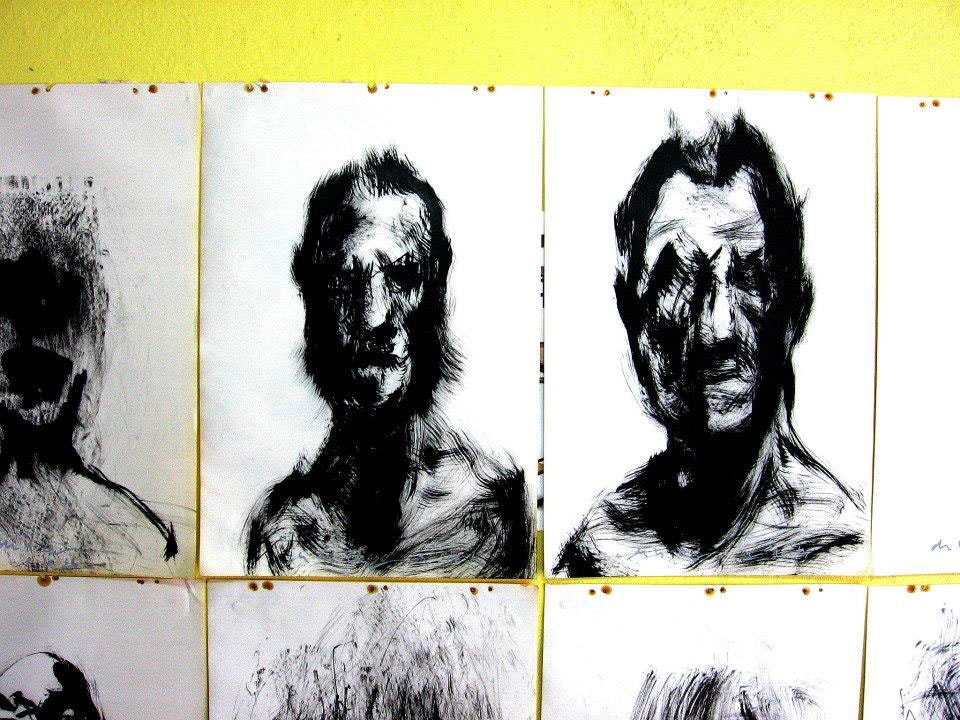
Then, Diego opened up his laptop and plugged in his external hard drive. A few clicks later and we were deep inside his folders, files, and spreadsheets. "This," he said, "is what I do with all of the stuff I make." He showed me how he edited and selected images in Photoshop, created cohesive photo series, added titles and captions, wrote artist statements, meticulously noted the date/medium/size of each piece and how they should be displayed, exported PDFs, and organized the files by theme. He showed me his spreadsheet of deadlines and requirements and contact information for calls for entries, residencies, conferences, and shows.
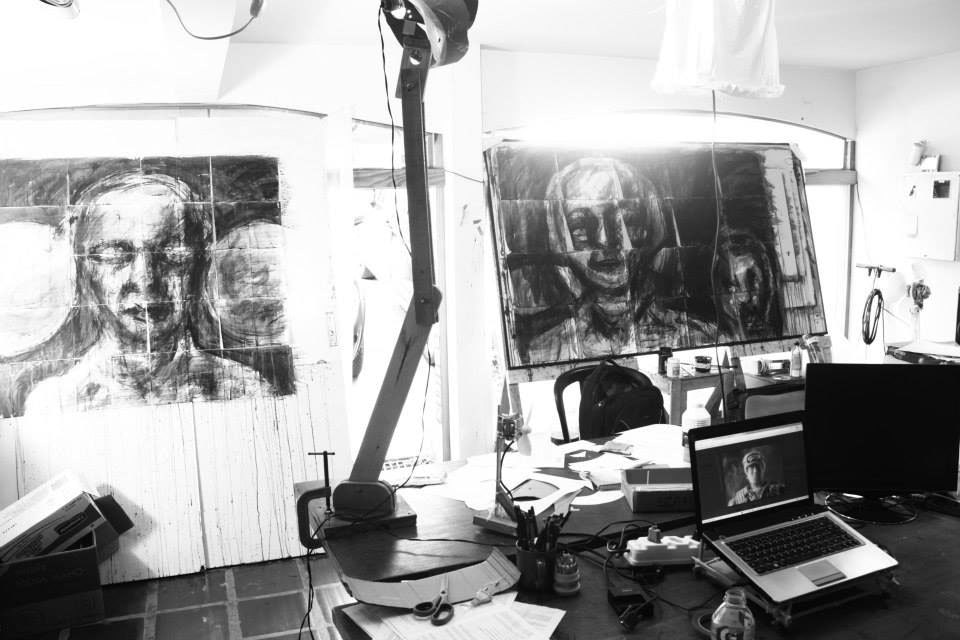
I felt like I had just pulled back the curtain on the Wizard of Oz. The image I had in my head of the artist as natural born creator was just the front end, hiding the logistics of what it takes to really make it work as an artist. Creativity as an effortless, inherited talent was a myth.
I found comfort and familiarity in Diego’s near-obsessive organization and realized that my love of structure and systems isn’t actually at odds with artistry. In fact, formal processes can unlock new ways of thinking and doing. Structure can reduce the mental and digital clutter that often blocks people from actually making things. If categorizing and list-making and data visualization gives me creative confidence, then so be it. Knowing I have an entry point into the world of creativity has made it much easier to dive in.
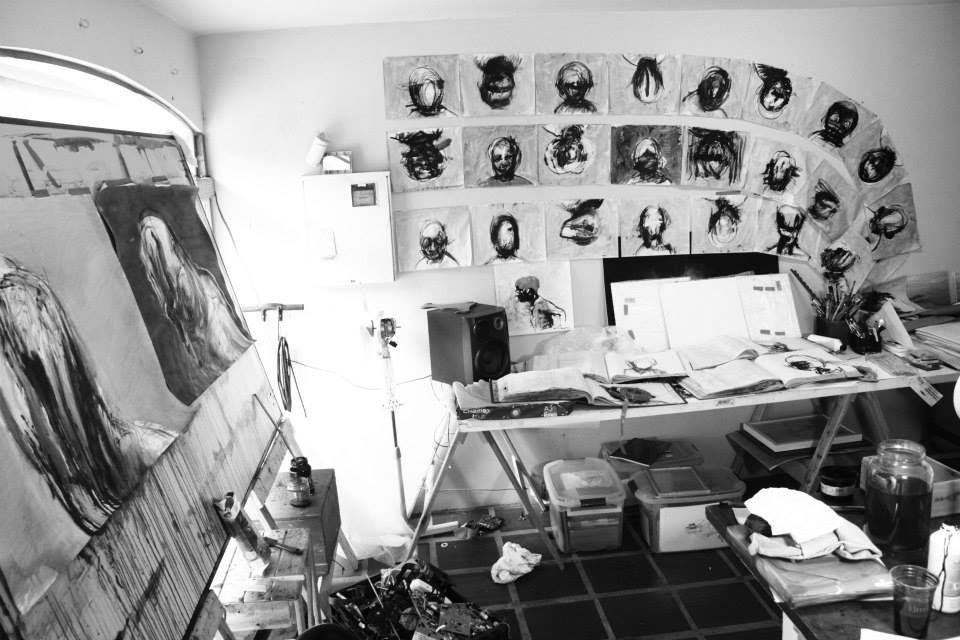
Today, as a business development associate at IDEO, I sit at the intersection of creativity and strategy, art and operations, design and business. Though I am in near-constant awe of the making and creating that seems to flow from the fingertips of my deeply talented colleagues, I know that design doesn’t just happen. Behind the curtain of creativity, there are layers and layers of order, process, painstaking detail, and hard work. These days, I find just as much beauty (and madness) in the back end.
Diego de los Campos is a multimedia artist from Uruguay who currently resides in Florianópolis, Brazil. His work can be found at diegodeloscampos.wordpress.com
I’ve never considered myself an artist. My handwriting is too neat, I enjoy coloring between the lines, and I don’t always get poetry. I imagine artists as forces of raw, unbridled creativity—messy, like mad scientists, but with more color, magic flowing out of their fingertips like a scene from Fantasia. I, on the other hand, live and die by my Google Calendar.
Designer’s Playlist #7
A few things IDEO Tokyo's Evin Dempsey can't stop thinking about
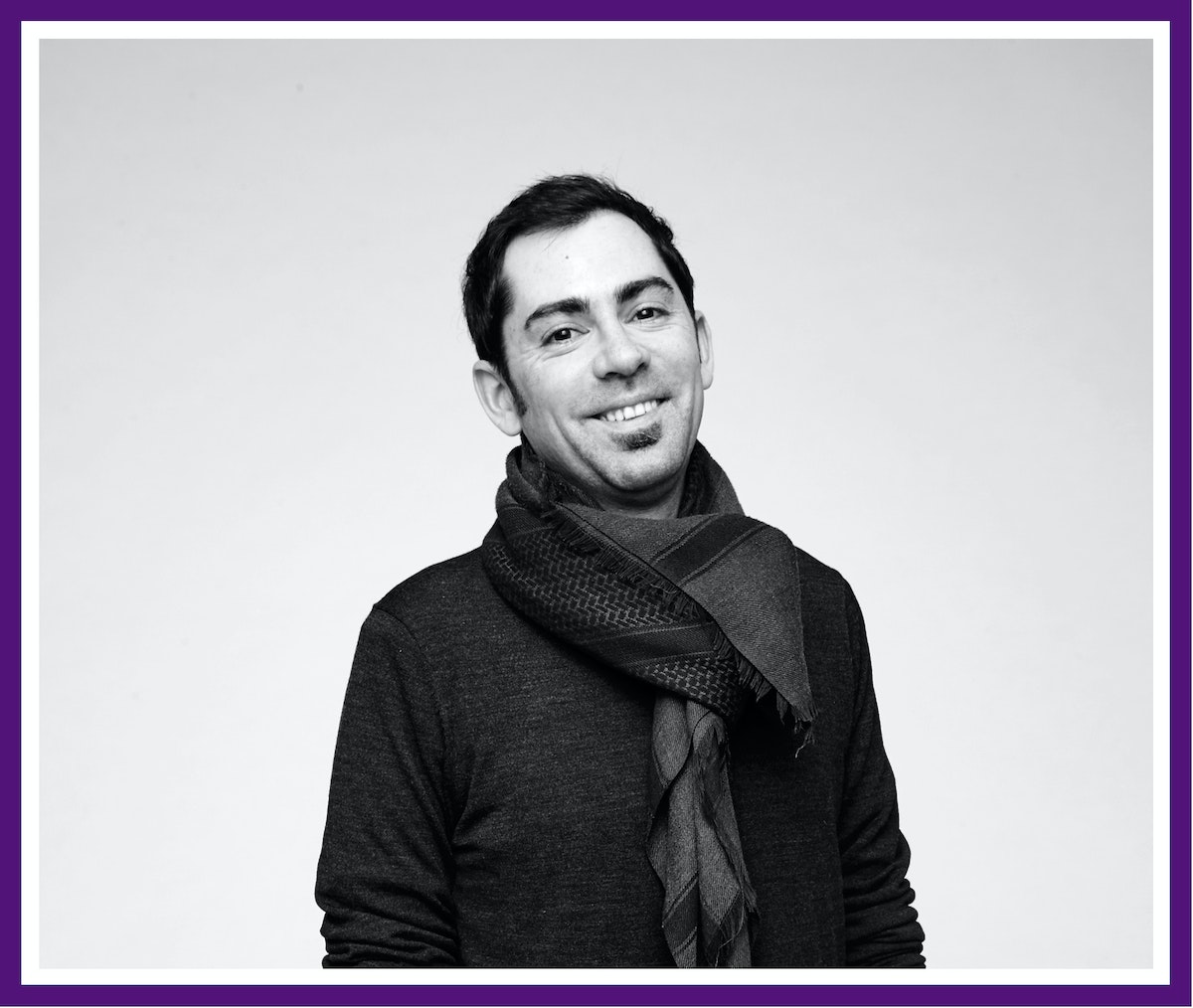
Name: Evin Dempsey
Location: Tokyo
Role at IDEO: Communications Design Lead
Joined IDEO: Freelanced from 2010 to 2012 in IDEO Shanghai; joined IDEO Tokyo in 2013
Social Media: I abstain. Better for the heart and soul :)
Titillating Fact: At the age of 10, I had about 46 hamsters in my garage in cages that I made myself from scrap pieces of timber. I used to breed them and sell them back to the petshop for a quid each.
1. Inside
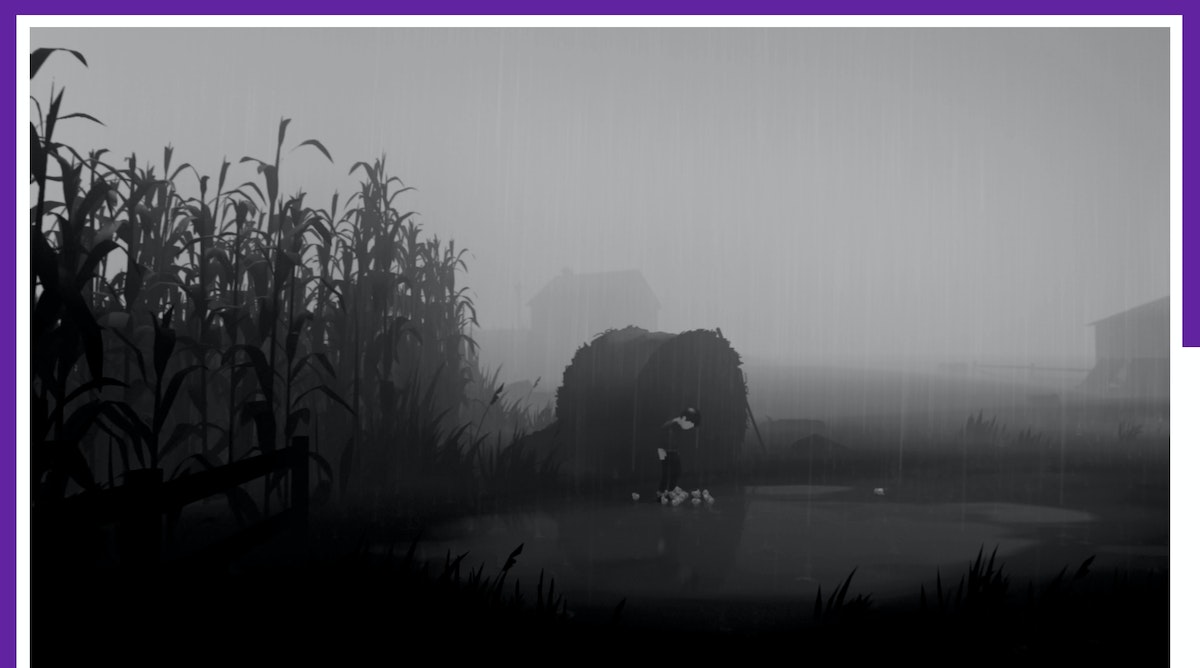
Inside is a puzzle platform game from Playdead, a small, independent game studio in Denmark. It’s an absolute masterpiece of storytelling, art direction, animation, sound design, and even camera work. Each frame of this game is meticulously designed, from the bubbles in the water to the flicker of the torch. It’s the culmination of a very talented team of designers, programmers, and storytellers. The plot follows a young boy as he attempts to escape from a forest. Along the way, he encounters various puzzles and obstacles that help to reveal more details about his predicament. It's quite possibly the best game I've ever played.
2. Nozawa Onsen
Though it’s not very well known outside of Japan, Nozawa Onsen is a mecca for Japanese snowboarders. Located in the northeast of Nagano prefecture in western Japan, it is home to waist-deep powder as well as several onsens, or natural hot springs. It’s a winter sports enthusiast’s dream come true. The hot springs scattered all over town are also free for anyone to enjoy. I try to go at least twice a season. If you like powder, or japow as we foreigners like to call it, then you'll love Nozawa.
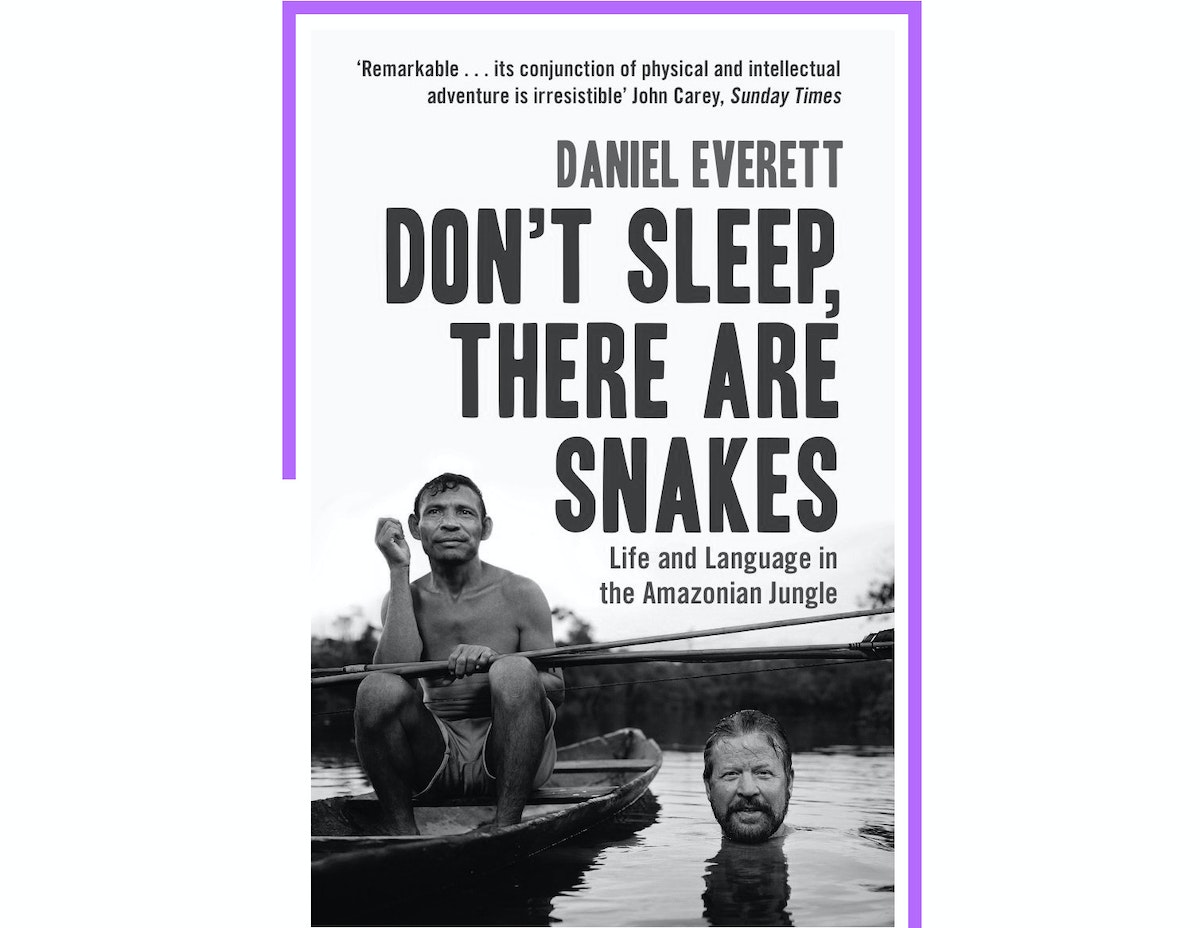
3. Don't Sleep, There Are Snakes by Daniel Everett
A man moves to a country he knows absolutely nothing about, learns a language, changes his outlook on life, and loses his faith. Having spent my life split between eight different countries, and having a special affection for nearly all of them, this tale rings true to me. It’s an amazing account of one man's evolution as he makes his home in the Amazon rainforest. The story is universal, but the book is of special interest to people who are intrigued by linguistics and language. I couldn't put it down.
Header image by Mark Solarski.
In this series, we ask IDEO designers to share the stuff they're digging right now—tools, books, music, sites, people, places—so you, too, can drink from the fount of inspiration bubbling up here. This week's guest star: Evin Dempsey.

Lindsey Turner
I’m passionate about building brands, products, and experiences that help organizations show up with meaning and momentum.
I help organizations cut through complexity by shaping how they show up, through brand strategy, identity, and storytelling.
Working at the intersection of brand and business, I bring an editorial eye and a bias toward making—turning ideas into tangible experiences that people can understand, trust, and believe in.
My work spans government, healthcare, financial services, media, and consumer goods, from launching Gen Z-focused ventures to building innovation labs and reimagining legacy brands. I relish moments of ambiguity and enjoy translating across teams, perspectives, and priorities to move ideas forward.
I started my career in editorial and digital design, shaping cross-platform experiences and identity systems in publishing and agency environments. That foundation still shapes how I work today: I’m detail-oriented, collaborative, and overreliant on the Oxford comma. I hold a BFA in Visual Communication from the School of the Art Institute of Chicago.

Rachel Young
My work helps organizations see who their products aren't working for—and build the will and the tools to do something about it
For 25 years, I've asked the same question: Who does this design exclude—and what are we going to do about it?
My work spans human-centered strategy, inclusive design, and qualitative research, with clients ranging from Microsoft, Google, and Verizon to the National Science Foundation, and San Francisco Unified School District.
Before IDEO, I taught elementary school in East Palo Alto and spent a decade doing design work with social service organizations—where I learned firsthand what it costs people when systems are built without them in mind.
I am currently writing User Error, a nonfiction book about digital access and the design decisions behind it. I live in Oakland, California.

Brian Pelsoh
I lead with craft, ensuring our work is creatively excellent: rooted in deep human insight and imagination, while also grounded in the realities of business and technology.
My expertise spans brand, communication, and product design across tech, education, the arts, and social impact.
I believe great work demands both high-level vision and obsessive attention to detail, and only happens through collaboration.
I bring an inclusive, hands-on approach and a deep understanding of business, which enables me to consistently deliver excellence while always asking why.
Before joining IDEO, I worked at the brand firms Pentagram and VSA Partners. I began my career as a designer, leading teams at the School of the Art Institute of Chicago and the Milwaukee Art Museum. I hold an MFA in graphic design from Maryland Institute College of Art and a BFA in communication design from the Milwaukee Institute of Art & Design, and have taught at some of the best design schools in the US.

Tony Wong
I am responsible for IDEO’s long-term success in China and working with clients to use design as a tool to enable growth.
I am responsible for IDEO’s long-term success in China and working with clients to use design as a tool to enable growth. Specifically, I have helped Chinese companies design holistic brand solutions through the development of their products, communication, services, and innovation teams, and I have helped multinationals expand their presence and influence in China.
I advise global leaders on developing China-led innovation and capabilities.
In over 15 years in IDEO Shanghai, I have worked on projects that use design to elevate the quality of the experience of healthcare products and services, streamline processes that increase productivity, create spaces and programs that promote and enable inclusive communities, and build next generation mobility solutions that are planet-positive.
Before joining IDEO, I worked at Philips Electronics and the Electrolux Group in Italy, the Netherlands, and Singapore on a number of breakthrough commercial products. I am a member of the Young President Organization in Shanghai.

How to use AI as an editor, not a writer
Ed White shares how he uses AI as an editor—not a writer—to sharpen storytelling, rehearse ideas, and preserve the productive friction that makes creative work better.
Ed White has a rule he's tested on his own writing: hold yourself as the writer, and let AI be your editor. Ed is a Senior Design Director at IDEO's London studio, where he co-leads the firm's AI portfolio across Europe. Before IDEO, he spent 12 years as a writer and editor at the Financial Times, Wired, and Contagious. So when he talks about when to use AI for storytelling and when not to, it comes from two decades of crafting his storytelling skills.
In this episode, Mina Seetharaman talks with Ed about two specific tools he uses to keep AI in an editor's seat: a "roasting agent" prompted to critique his drafts without any sugarcoating, and a simulated audience he rehearses pitches on before the real thing. They also get into what Ed is hearing from design leaders at Anthropic, Lovable, Shopify, and Google Creative Lab about how creative work is changing, and why he thinks the friction of writing something yourself is worth protecting rather than automating away.

Building a personal AI for the messiness of life: Sida Li
Becca Carroll talks with Cue co-founder Sida Li about designing a personal AI for the messiness of everyday life—not just work. They explore how Sida stays anchored to human needs while navigating fast-changing technology, product tradeoffs, business-model experimentation, and the realities of building an AI company today.
Most AI products today are built for work—a space with clear problems and established systems. One founder noticed a gap: personal life is messier, harder to systematize, and mostly left behind by the AI boom. So she built Cue, a personal AI that lives inside iMessage and group chats, to go where the other tools haven't.
In this episode, Becca Carroll, IDEO's Chief Strategy Officer, talks with Sida Li, co-founder and CEO of Shared Context Lab, about staying anchored to a human need while the technology around her keeps changing shape, why she treats her business model with the same rigor she'd bring to a product, and what it feels like to build a company at this particular, disorienting moment in AI.
The conversation also gets into how Sida makes design decisions: the language Cue uses to describe itself, the tradeoffs behind building inside iMessage instead of a new app, and a real story about a business idea that didn’t pan out.
This is the second in a two-part series profiling founders from IDEO's Startups-in-Residence program. The first conversation is with Johannes Seemann, founder of Sooner, on designing GenAI for the emotional side of money.

Designing GenAI for the emotional side of money: Johannes Seemann
Designing financial tools around the feelings that shape money decisions.
Most personal financial tools are built to run the numbers and optimize towards a budget. While that works for some, most people experience money as a lived relationship that does not neatly fit into a spreadsheet. Johannes Seemann and Becca Carroll discuss why money is emotional before it is mathematical, and what a human-centered approach to building a generative AI financial product looks like in practice.

The curious leader's edge in uncertainty: Scott Shigeoka
How genuine curiosity helps leaders navigate uncertainty with greater confidence.
Mina Seetharaman talks with Scott Shigeoka, author of Seek and Head of Curiosity Cultivation at the Eames Institute, about what distinguishes genuinely curious leadership from performative curiosity, how power dynamics shape curiosity, and why practicing curiosity can restore energy rather than drain it.
Looks like you might be in search of something very specific?
Or reset the filters above and try another angle.
Here’s some random inspiration

Podcasts about creative leadership

Articles about the power of prototyping
