
.svg)




Changing the way biotech innovates
Building a culture of user-centered innovation in the name of science.
Life Technologies, a global biotech company that supplies scientists with products and services, needed to grow big, from a $4 billion to a $10 billion enterprise. So it hired IDEO to help seed innovation across the company.
"When we started out, it was an R&D thing for driving innovation in new products. Now it’s not just R&D; user-centered innovation is a central part of our culture. It’s what we do throughout the organization," said Amy Cuneo, Associate Director, Customer Insights.
Over a three-year engagement, IDEO helped transform Life Technologies’ corporate culture through the introduction of User-Centered Innovation (UCI), an optimistic, experiential approach to problem-solving. Far outperforming its ambitious goal, Life Technologies is now a $13.6 billion company and uses UCI to inspire innovation throughout the 10,000-person organization.
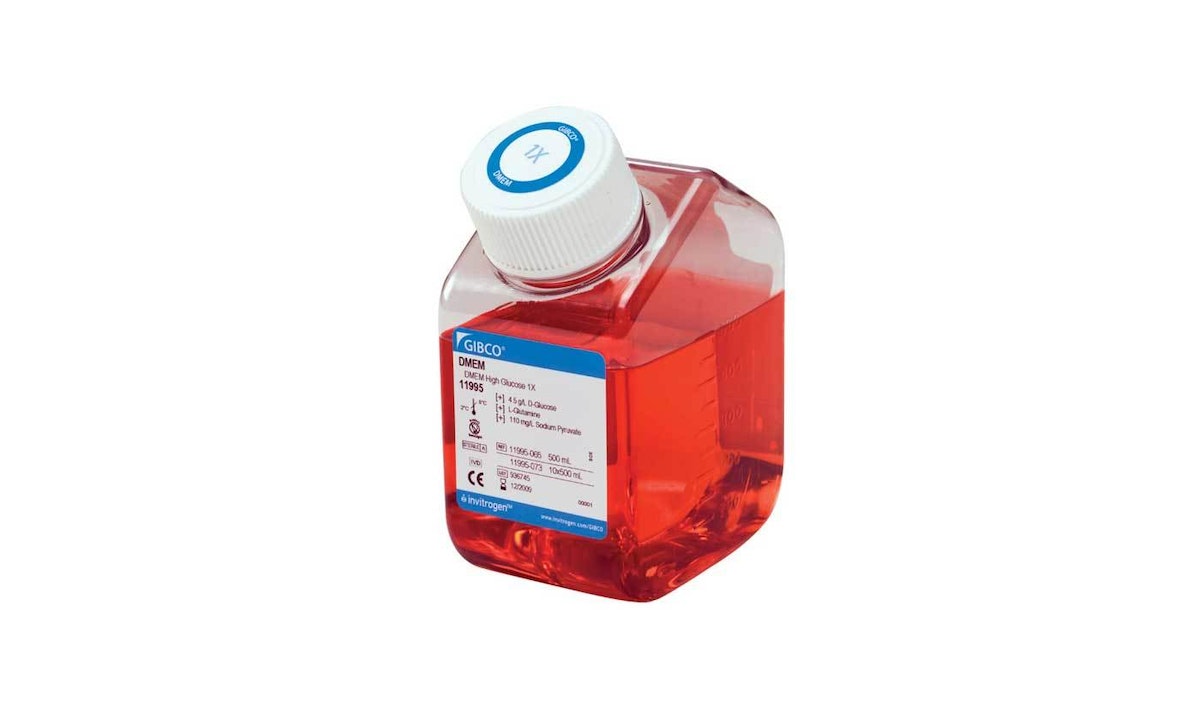
After working with Life Technologies, IDEO designers came up with three products that have gone to market, including, a new bottle that showcases superior handling and storage, easier identification, and additional room for supplements. And Life Technologies has transformed from a company that aspires to focus on customers to one that truly does.
Building a birth control support network for women
A multimedia public service campaign as a vehicle to encourage smart choices.
Unplanned pregnancies are a big problem in the US, especially among unmarried 18- to 29-year-olds. Seven in 10 pregnancies in this demographic are unplanned, a statistic that applies to women of all ethnicities and socioeconomic levels. Complicating matters are the social tension between abstinence-only and contraception-inclusive education, and the difficulty and expense associated with obtaining prescription birth control.
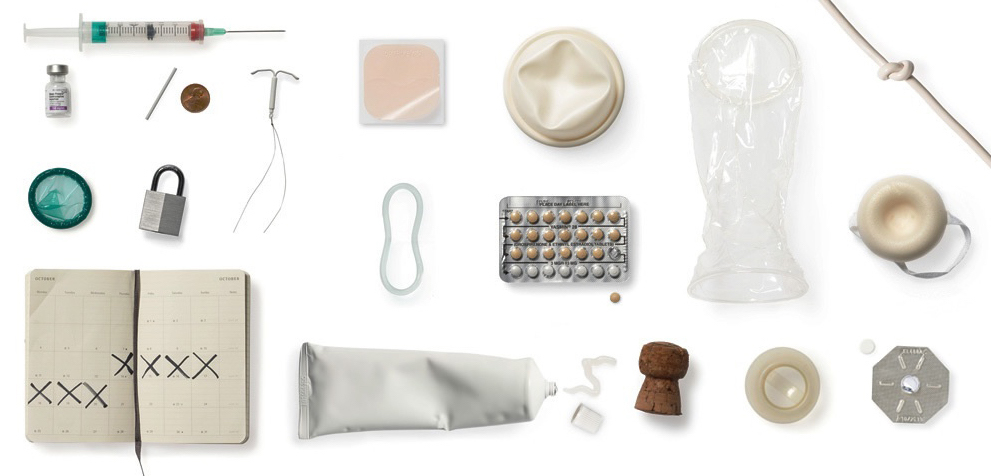
Since 2009, IDEO has worked closely with the National Campaign to Prevent Teen and Unplanned Pregnancy, a nonprofit NGO, to address this pressing social challenge. One of the first insights on the project was identifying the need for comprehensive birth control support. Designers looked at ways to transform birth control from a prescription (a piece of paper that is handed to you by a doctor) into a subscription (a program that ensures you start using birth control, use it correctly, and migrate to more effective methods).
Given the complex and potentially overwhelming subject matter, the IDEO team interviewed women in the target demographic; talked with doctors, counselors, and other experts with varying opinions about birth control; and hosted roundtable discussions. They developed several concepts and scenarios that allowed members of the National Campaign to see sex and pregnancy through the eyes of the young women they’re working to reach.
Research and prototyping efforts led to the design of Bedsider, a multi-touchpoint birth control support system with a carefully crafted sex-positive brand, which is uncommon for the healthcare industry. Bedsider focuses on five key areas (awareness, motivational drivers, digital offerings, services, and loyalty) and acts as a vehicle for behavioral change that’s flexible, with room to grow into a much larger movement.
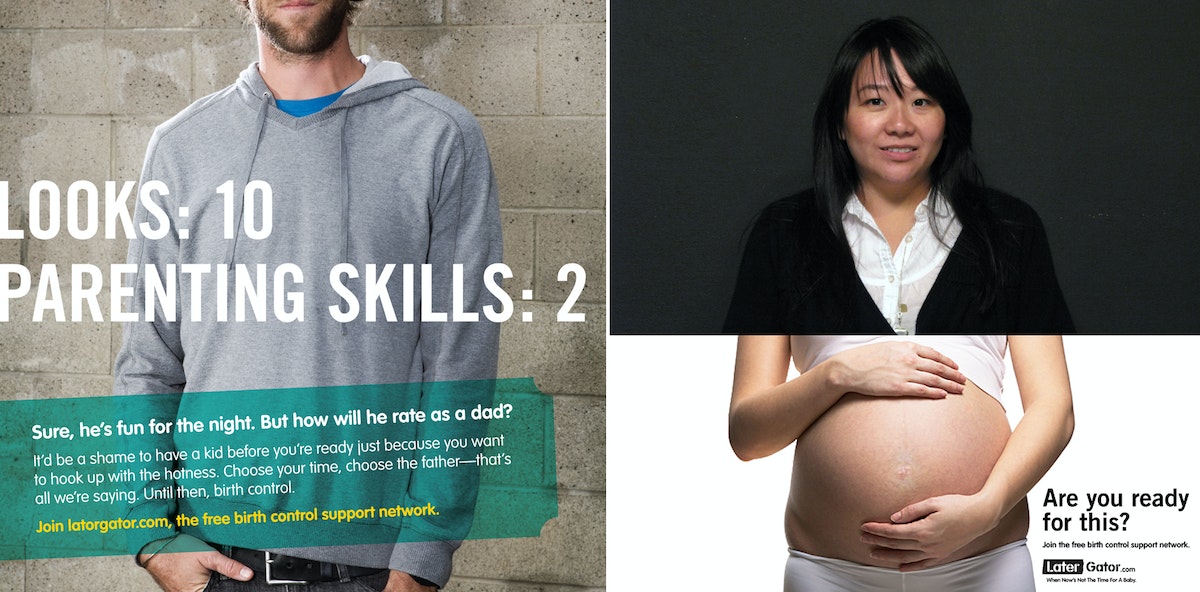
The Ad Council and the National Campaign debuted a multiyear, multimedia public service campaign in November 2011. The Bedsider website offers comprehensive education about existing birth control methods. This includes opt-in reminder services, personal stories from women across the country on why they chose a particular method, a phone service that provides information in both English and Spanish, features such as “Fact or Fiction” (hilarious animated clips debunking popular myths), a “Frisky Friday” newsletter, and more.
Bedsider has launched nationally with the help of an Ad Council campaign that drives sexually active women ages 18–24 to Bedsider.org. The multimedia Public Service Announcement effort includes television, radio, print, web, and nontraditional advertising, as well as an integrated social media program.
“We hope that Bedsider will be a useful tool for women to learn about their birth control options, better manage their birth control, and in the process avoid getting pregnant until they’re ready,” said Planned Parenthood of South Florida and the Treasure Coast in its monthly newsletter. Planned Parenthood and Philliber Research Associates joined forces with the National Campaign to Prevent Teen and Unplanned Pregnancy to help test and evaluate Bedsider.
Through a social media campaign called #ThxBirthControl, people are voicing their thoughts about what birth control has made possible for women, men, families, and society. It’s all part of Thanks, Birth Control Day, launched in November 2013 as part of a continuing initiative to encourage positive conversations and more consistent use of birth control by the National Campaign to Prevent Teen and Unplanned Pregnancy. To celebrate the movement, IDEO wrote, scored, and performed an animated musical featuring condoms and pill packs dancing the cancan.
According to an independent evaluation of the program, Bedsider is the first digital intervention in reproductive health in the U.S.—with adults as an audience—that has shown to prevent unplanned pregnancy. Turns out that when women and men have the ability to plan, prevent, or space pregnancies, they’re more likely to finish school, achieve their goals, and ultimately have healthier families, according to the nonprofit organization.
Bringing bikes to the streets of Chicago
Using the joy and freedom of cycling to brand Chicago’s bike-sharing initiative.
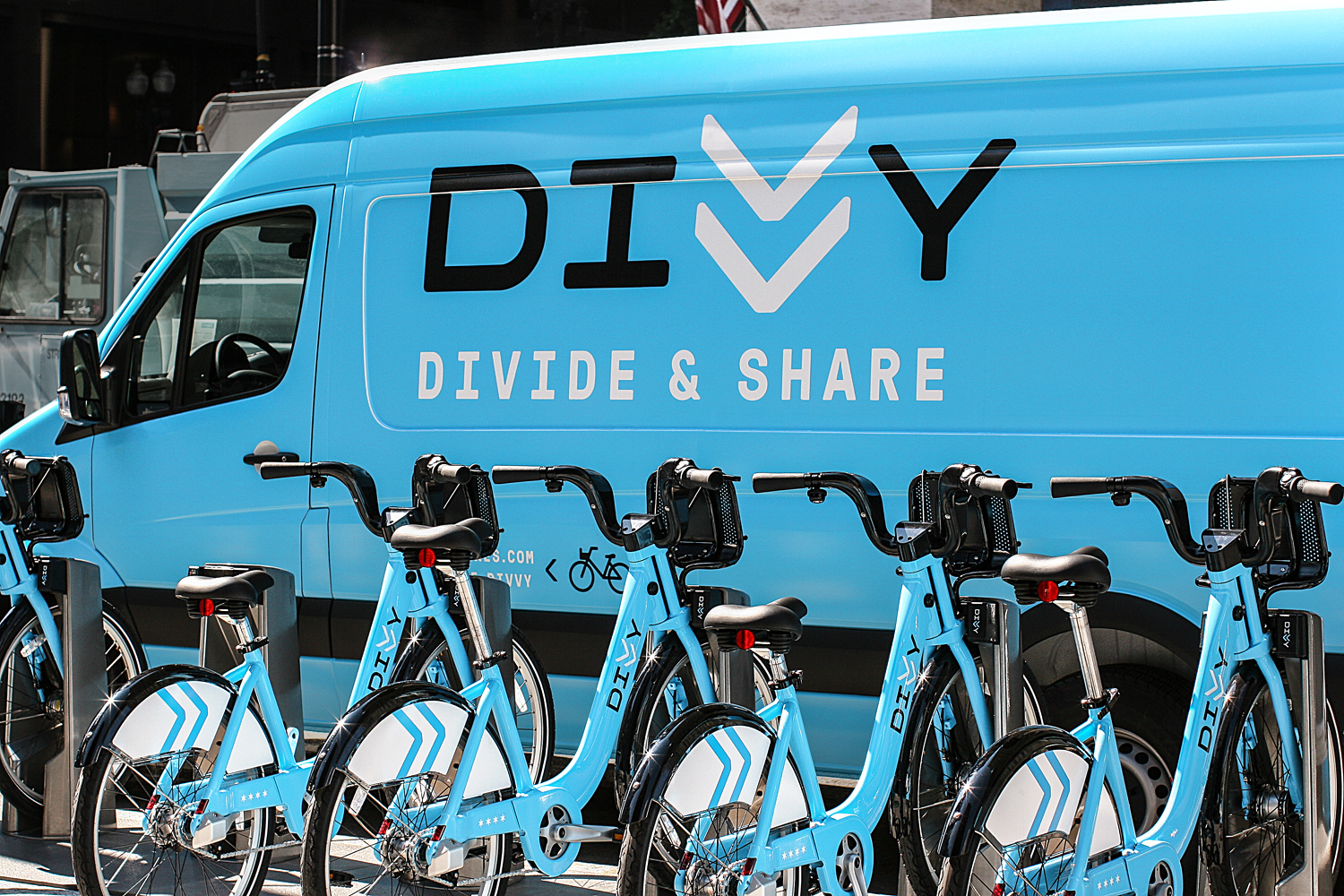
Chicago’s federally funded, citywide bike-sharing service, called Divvy, makes a fleet of bicycles available to commuters and tourists 24 hours a day. Alta Bicycle Share (which runs bike-sharing systems in Boston, the Bay Area, DC, and New York City) collaborated with IDEO to spread Divvy’s message, “Divide and Share!” to the cyclists and would-be cyclists of Chicago through the brand.
The new brand would appear on its bikes, stations, company vans, member fobs, and website—and it needed to be ready to hit the streets in just six months. IDEO partnered with local brand strategy studio Firebelly Design to collaborate on a solution. IDEO led the early research, conceptual brand development, and naming phase of the project; the Firebelly team led the visual design and developed the brand guidelines.
The brand has become a functional and fun part of Chicago’s transportation landscape and has been embraced by Chicago commuters. Just three weeks after it launched, the City of Chicago called the Divvy Bikes program the busiest bike-sharing system in the world. Six months into the service, enthusiastic cyclists have racked up over 780,000 trips and 1.7 million-plus miles, and over 12,000 Chicagoans have become members.
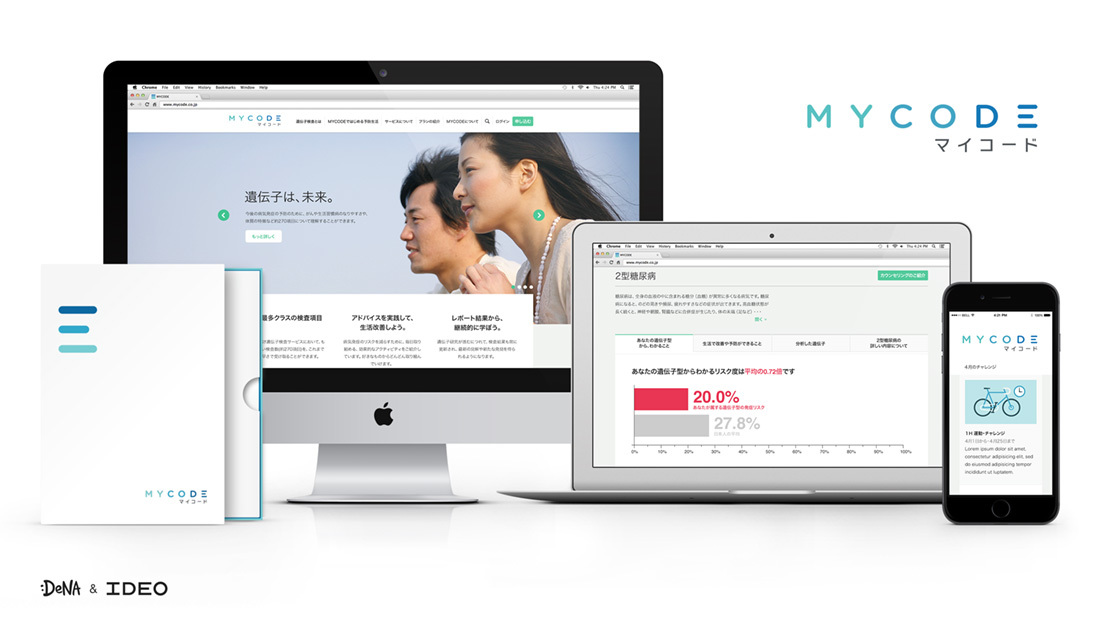
Bringing mass-market genetic testing to Japan
A Japanese mobile internet company quickly builds a genetic testing business.
After watching her husband suffer from cancer, Tomoko Namba, founder of Japan’s leading mobile internet company, DeNA, wanted to empower people with better health information to aid them in making medical decisions. DeNA partnered with IDEO to help with the design of a genetic test that had mass-market appeal.
Together, IDEO and DeNA designed all the consumer touchpoints from the ground up for the expanding new business, called MYCODE. The aim was not only to create a functioning, usable product, but also to introduce the notion of genetic testing in a privacy-sensitive country that for the most part, hadn’t yet considered it an option. What would make MYCODE resonate with mass-market Japan? How could genetic testing results be shared in a way that was accurate but also actionable and motivating?
The team worked with doctors, nutritionists, medical governing bodies, and more, setting up fast, iterative cycles, and conceptualizing and prototyping almost every aspect of MYCODE in just 16 weeks. Data design, home testing experience, purchase flow, and how the service would be used over the long-term were all considered, along with traditional branding elements, like name, logo, and visual identity.
The result is a product that puts reliable genetic information into the hands of Japanese consumers, helping them to make more informed healthcare decisions. MYCODE went to market in August 2014, just nine months after the engagement with IDEO began. Not only did MYCODE fulfill Namba’s mission, it helped the company find new ways to grow: Upon announcement of the new service, DeNA’s share price jumped 6.7 percent.
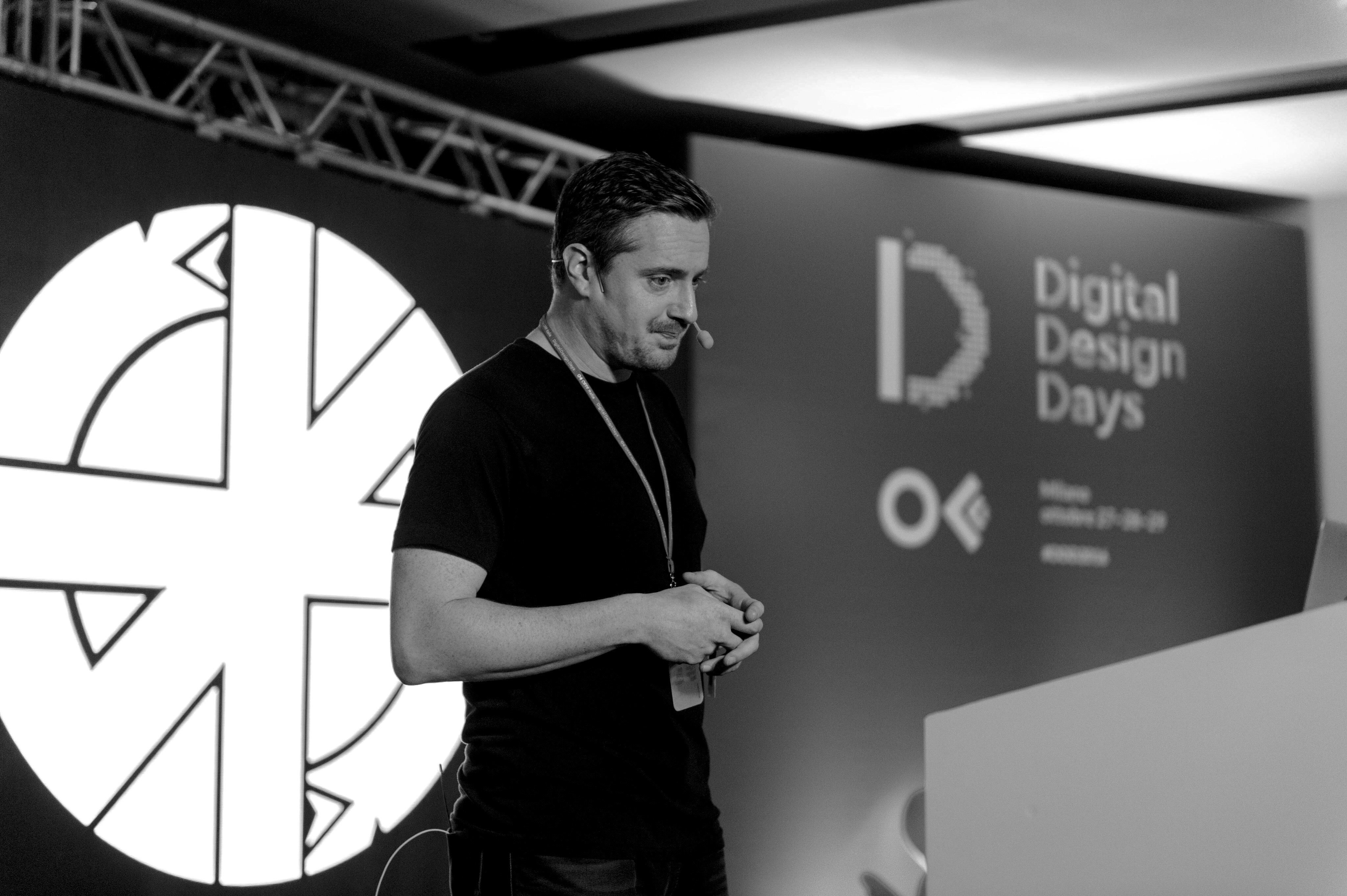
5 Tips for Nailing the Narrative at Your Next Speaking Gig
5 go-to speaking tips from the best presenters at IDEO
Far from the client presentations I had previously known, here, the emotional stakes were much higher. This was my personal story, and I was learning the hard way—in front of an audience of my new peers, no less—that I was clueless as to how I might frame a compelling narrative.
In other words, I had no idea how to tell a story.
Feeling awkward as can be, with a bruised ego to boot, I knew I had to improve my public speaking ability. Luckily, I fast became aware that I was surrounded by the best storytellers I had ever known. I began observing, writing down, and absorbing all of the knowledge, coaching, and feedback that was offered up.
It has been nearly seven years since I shut my laptop in shame. In this time, I have compiled a list of my five favorite, go-to tips from the best presenters at IDEO:
1. Make it personal
Your audience wants to see more than just a portfolio of work or a few case studies they could read on their phones. They want to hear your story. Who are you, how did you get here, and, most importantly, what are you passionate about and why? This latter idea should tie to the work you present.
2. Create a narrative arc
Your talk should have a fully realized narrative, complete with dramatic tension and resolution. The tension in my personal story arrived when I haphazardly fell into the agency world, where the ideologies that drive me were completely at odds with the work I was doing. Resolution came when I left and made a major change in my career and my work.
3. Provide historical context
A bit of history provides a compelling backdrop for the story of your work. When I talk about IDEO’s efforts in the automotive sector, I first tell the story of Thomas Midgley Jr., a chemist and mechanical engineer who invented leaded gasoline (and CFCs) while working for General Motors in the 1920s and '30s. Understanding the disproportionate, planetary-scale impact of Midgley's work sets up the formidable challenge that designers must now overcome.
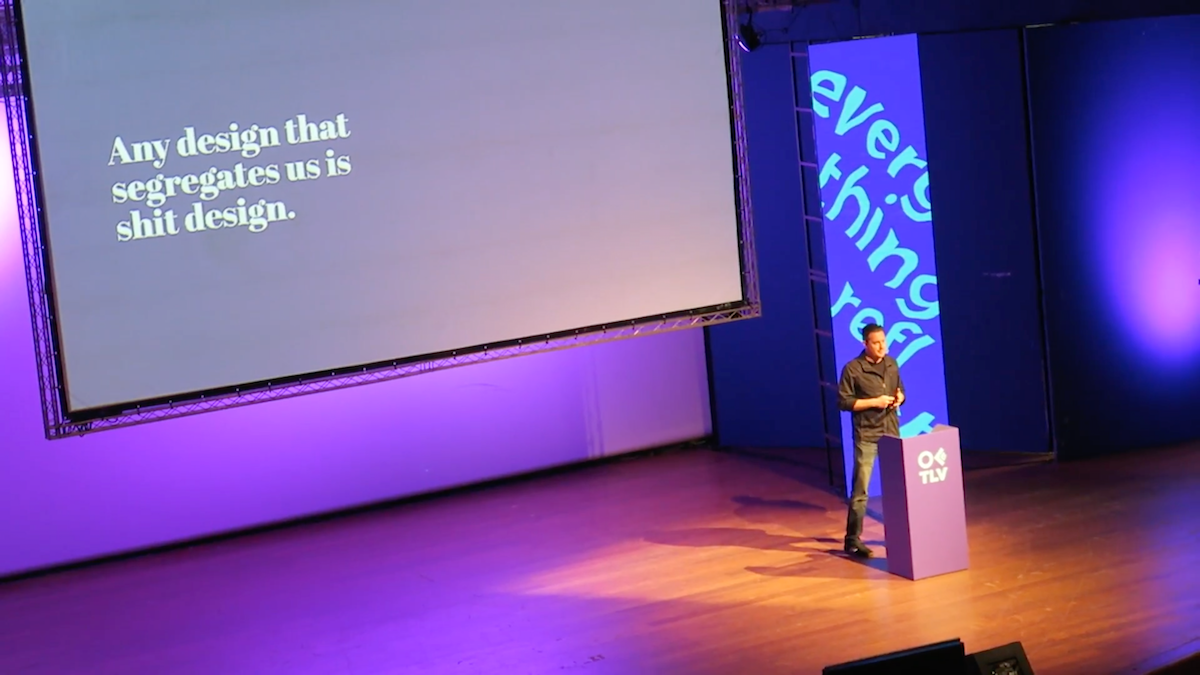
4. The bar exam
Ask yourself, is your story interesting enough that you would tell it to a friend over drinks at a bar? Bonus points: Conduct your bar exam with a friend who works outside of your industry, making it all the more challenging to capture their attention.
5. Stick the landing
Always end on a punchline. Your punchline does not have to be funny, but it will be the overarching idea that people take home with them. In the context of an event with multiple speakers, your audience is endlessly bombarded with competing ideas and inspiration. When you stick your landing, they remember—perhaps even share—precisely what it is you aimed to communicate.
I have now employed the above tips from friends and colleagues at nearly 30 events over five years on four continents. I assure you, they work.
Special thanks to Annette Ferrara, Neil Stevenson, Shoshana Berger, Paul Bennett, Jenn Maer, Tim Brown, and Katie Clark. I owe you each a lifetime’s worth of experiences and airline miles.
Nothing makes me want to master a new skill like falling on my face when I first attempt it. Halfway through my new hire presentation—a get-to-know-the-new-kid-over-beers tradition at IDEO Chicago—I cut my talk short and shamefully closed my laptop.
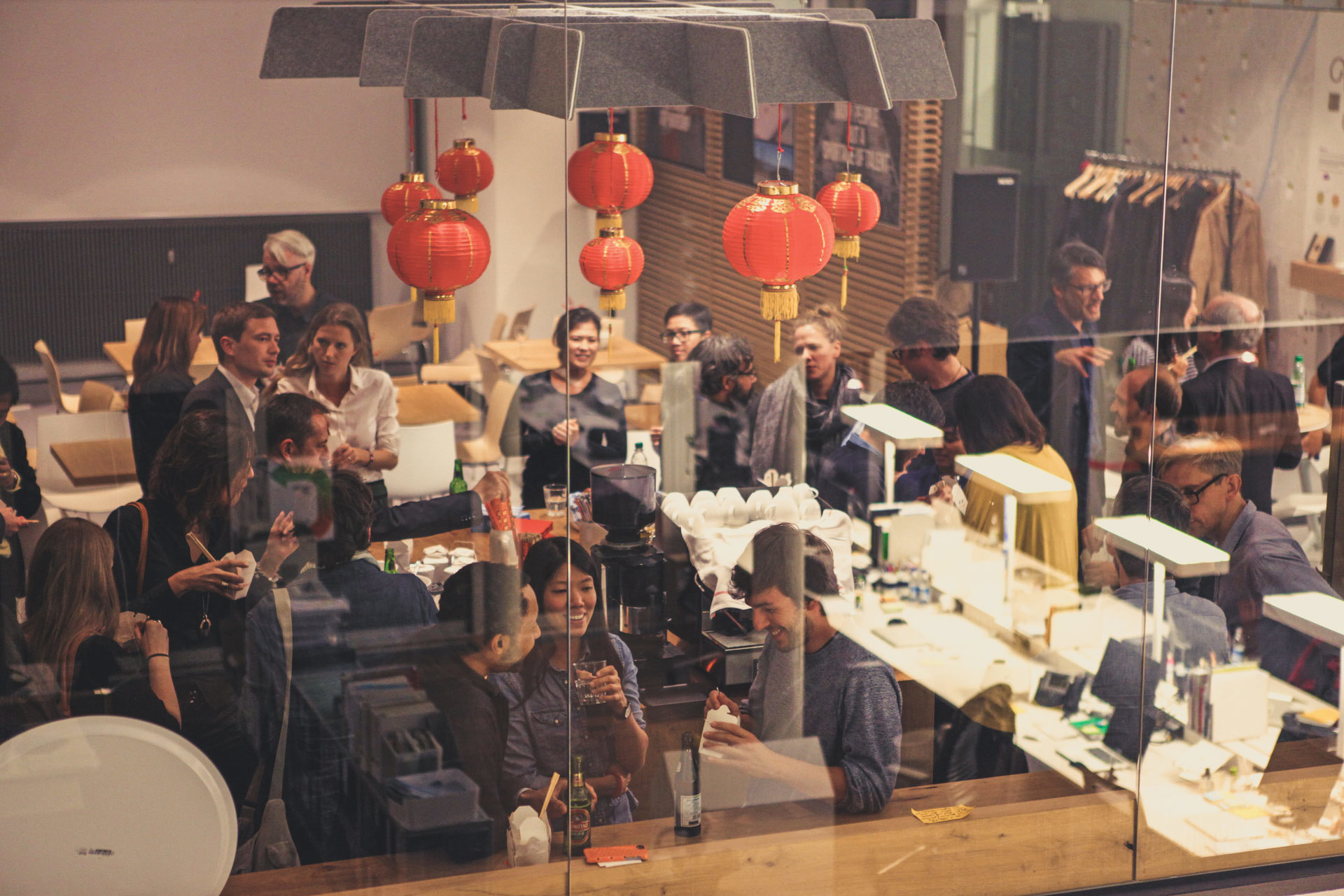
4 Tricks for Getting Better Feedback
An IDEO designer shares her tips to gather great feedback from events
But first, here are a few things to think about before you begin:
Consider what you’re trying to learn. Do you want feedback on the event format, content, experience, or outcomes? Whatever that may be, it helps to tell your audience that they’re participating in a prototype right from the get-go. In our experience, being up front that you're trying to build something better encourages participants to respond. You might offer some incentive for their input, too. Even a small gesture of thanks signals that you value their thoughts. And remember to use the data you get back to understand what happened, and conversation to understand why. Data alone is only half the story.
With all that in mind, here are some techniques we’ve designed to help us understand what worked, what didn’t, and why.
1. Do Live Polling
Collect information during the event, while it’s freshest in people’s minds:
- Pass out comment cards with a simple feedback prompt, “I like/I wish”.
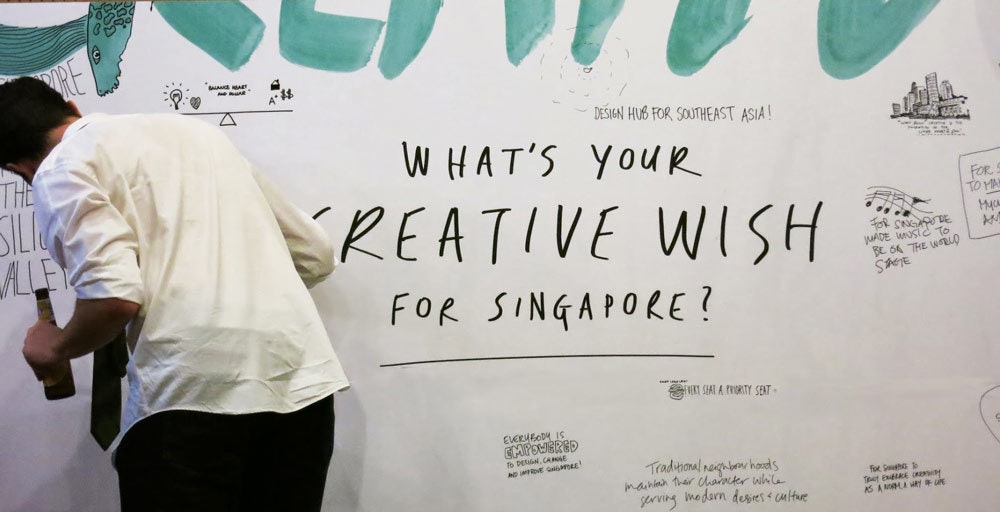
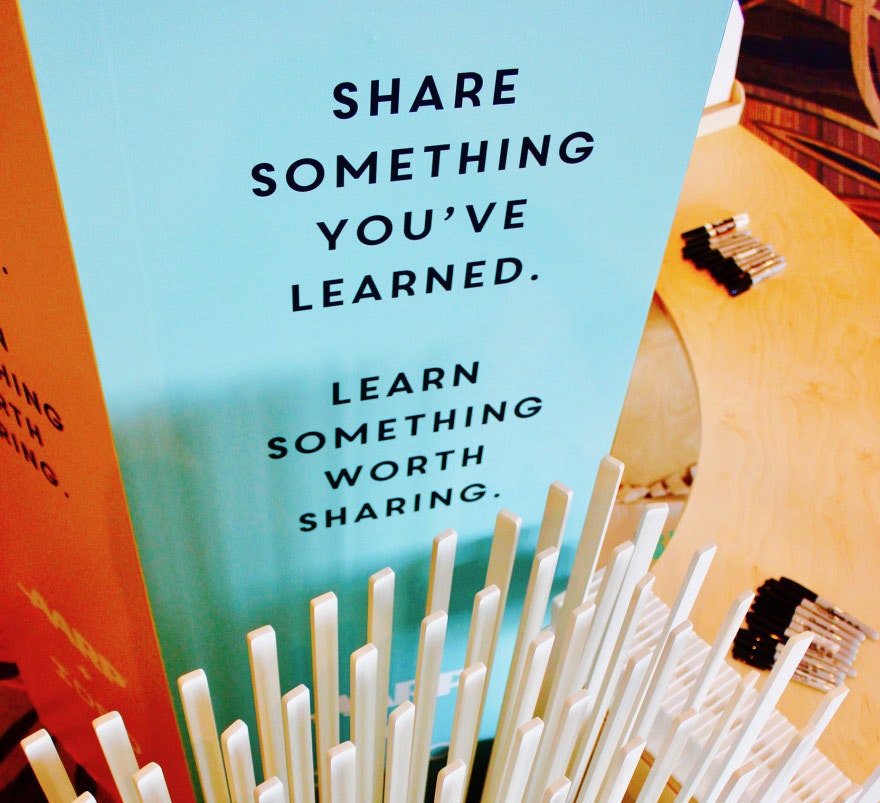
- Leave prompts on a board like, “What did you learn today?” and Post-Its for guests to use.
- Digital tools like Meetmaps or polleverywhere.com do live polling, and you can choose to show the audience the real-time results to encourage participation.
- Biometric measurement can tell you what selected people are feeling in real-time, Megvii and XOX are two systems. You can also show the audience this data.
- Have your team create a list of the most common sentiments or attitudes you expect to get ("I'm Confused" or "I'm Learning"). Then work the crowd, giving people simple feedback prompts. Tally results in a Google survey form, capturing any notable quotes or outliers.
2. Make Data Viz Physical
Sometimes seeing evidence that people are really engaged gets others to participate. Bonus: these methods are fun, and social.
- Have people use a green door to show a “like” and a red door to show a “dislike”. You can also do this by asking people to move to certain places within a space.
- From the stage, ask the crowd before/after speaker: “Stand up if this is the first event you’ve been to….”
- Have people choose a button/pin with a word that describes what people value. For instance, if you’re talking about community, one button might say, “finding my people” and another might say, “building diversity”. Count the ones that are left over.
- Place dots on a spectrum or balls in a bin to vote what you think. The voting objects can be themed too, like fake coins for business investing.
3. Observe Cues
People don’t always accurately report how they feel. Take note of what they do, too.
- Count how many people download the presentation or video after the event, if there is one.
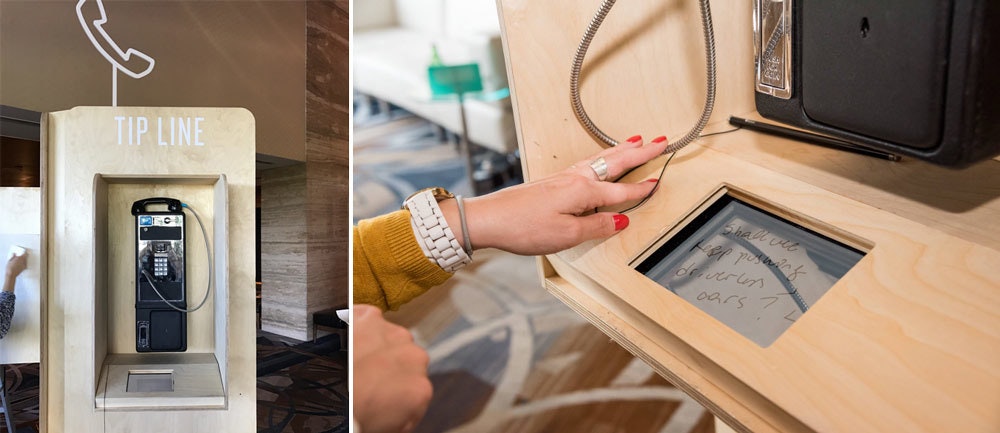
- Provide a hashtag for people to use on social media, then track both the number of shares/tweets, and the sentiment of them. Tools like Tint can help with this.
- Collect names and email addresses for future events (if no one signs up, that’s feedback, too).
- Measure sound volume hourly throughout the event to get a better picture of traffic and engagement timing. Compare different events in full swing in the same physical space to quantify the energy in the room.
- Watch people showing signs of comfort and belonging in their body language—are they loosening their ties or kicking up their heels, do they feel comfortable enough to move chairs into a circle?—all are signs they’re engaged. Sitting alone, checking phones or watches, falling asleep, leaving the room—you know what those cues means.
4. Take the Long View
In addition to immediate learnings, you may want to aggregate insights over time or across events.
- Ask people if they want to be on a feedback panel going forward. Offer exclusive access or information in exchange for helping you shape the program.
- Provide a platform for ongoing conversation about the themes that are important to both you and your guests. This helps you keep the pulse in an ongoing way, and reminds people to associate you with things you care about.
Got any ideas of your own to add to our list? We’d love to hear about them. Hit us on Twitter, Facebook, or Instagram with the hashtag #feedbackdesign.
You put weeks of work into designing a great event. You think it went well, and people seemed happy, but how do you find out what truly worked and what didn’t? Instead of circulating a survey that makes people's eyes glaze over (if they glance it at all) we've applied our design chops to the task. Here's how to get quality feedback that will help you up your game.

How Design Taught Me to Be a Human-Centered Lawyer
IDEO's general counsel on the importance of empathy in legal processes
During the project shareback, one of the designers held up a piece of paper with this quote:
“Interacting with legal was one of the worst experiences of my life.”
Full stop.
Maybe the commenter was talking about me. Maybe she was talking about another lawyer. Maybe she was commenting on the legal process generally. It didn’t matter. For the first time in my career, I thought about the impact I have on the people I interact with in my role as a lawyer, and how that impact might be quite negative.
We never discussed anything like this in law school. Instead, we focused on “making cases,” “winning arguments,” and “clerking for the right judge.” Later, as Biglaw associates, we talked about “billing hours,” “closing deals,” and “working with the right partner.” But I don’t recall ever being asked, “How did your client feel about how you handled that matter?” or, “How did the lawyer on the other side of that call feel about the interaction?” Or, for that matter, “Are you providing a colleague or client with one of the worst experiences of his life?” We talk about these issues all the time at IDEO when it comes to our clients and their customers, but they aren’t things I ever talked about with fellow attorneys.
In that moment, I made a decision: There was no reason I couldn’t do my job — and do it well — and care about the experience of the people I was affecting.
Fast forward to 2014. I took my mother to see a neurologist at Stanford University. He confirmed our family’s worst fears: My mother had Alzheimer’s, and it was advancing. Rapidly. This was devastating, hard to hear news. And yet, in the car on the way home, I felt strangely positive. Why? Because the doctor took the time to translate the complexity of her disease into language we could understand as non-medical professionals. He walked us through very difficult territory with honesty and compassion. He was respectful of her even as she repeatedly asked him the same questions. And he highlighted the factors we could control. We couldn’t change her disease, but we could approach it proactively and honestly, while giving her as much dignity and comfort as possible.
What if the experience of working with a lawyer felt more like this?
Even though law and legal processes are designed by humans for humans, the reality is that most interactions with legal professionals don’t feel very good.Interactions are often harsh, transactional, and bereft of transparency, emotion, or humanity. Touch points are filled with frustration, confusion, and disempowerment. Lawyers may resort to aggressive tactics as a way to navigate conflict or out of fear they will be taken advantage of in a given situation. Worse, many lawyers I talk to seem to accept this status quo. That’s just the way law is practiced. That’s just the way it is.
But it doesn’t have to be this way.
Instead, we can practice what my colleague, IDEO partner Chris Domina, in 2011 termed “human-centered” lawyering (when he asked me if I knew “any human-centered lawyers outside of IDEO?”). Human-centered lawyers are those who can treat legal problems as human problems, translate legal complexity into relatable frameworks, and navigate tension and conflict with skill, patience, and respect for all stakeholders involved.
In working toward becoming more human-centered, I’ve come to understand the value of making emotional connections with individuals I’m interacting with and not treating legal matters and the people connected to them as purely transactional. Empathy, the key to human-centered design, is the same key that opens the door to human-centered lawyering.
For example, instead of being frustrated that opposing attorneys are “rejecting” my proposals or “not seeing it my way,” I’ve learned to try to put myself in their shoes. If I were representing their client or working for their in-house legal team, what would I be most concerned about? What problems are they trying to head off, and what problems have they had in the past in these types of situations? Are they frustrated because this is just one of too many things they have to deal with today? From this very human place, I can be a collaborative problem solver, rather than someone engaging in an argument to win a point or “push back” because that’s what lawyers are “supposed to do.”
In being human-centered, am I any less firm when it comes to working through difficult legal challenges? No; my colleagues generally refer to me as “strong” and “confident.” Do I “just give” on issues during a challenging negotiation? Not at all. IDEO doesn’t compromise its people or its business, no matter how big the deal or how aggressive the opposition. But neither do we compromise our compassion.
Most legal professionals I know have had interactions with other lawyers who use anger, hostility, power tactics, aggression, and rude or belittling behavior to try to navigate legal situations (and most of us have also been guilty of the same at times). In addition to harming the relationships their clients are trying to build, those behaviors leave their mark on people. They leave people fearful or resentful of lawyers, and of course they tarnish the profession’s reputation. That’s not the kind of impact I want myself or my team to have on the world.
Is the legal team at IDEO perfect? Do we succeed in making every legal interaction with people inside and outside of IDEO positive? Of course not. But as a team, we have a clear purpose: to provide human-centered legal support and solutions to the IDEO community and to the broader legal industry.
Stay tuned—and stay human—lawyers.
This story was originally published on Medium. For more on the subject of human-centered lawyering, read this story by legal designer Sean Hewens and this interview with IDEO's general counsel Rochael Adranly.
Not long after I began working with IDEO, I had the privilege of taking part in a project to design how its new internal legal group would operate. For those unfamiliar with IDEO’s process, each project begins with a “looking in” phase in which the design team interviews project stakeholders and shares their feedback.
Using Code and Wood to Make Data Tangible
How an industrial designer built a digital/physical interface, without knowing how to code
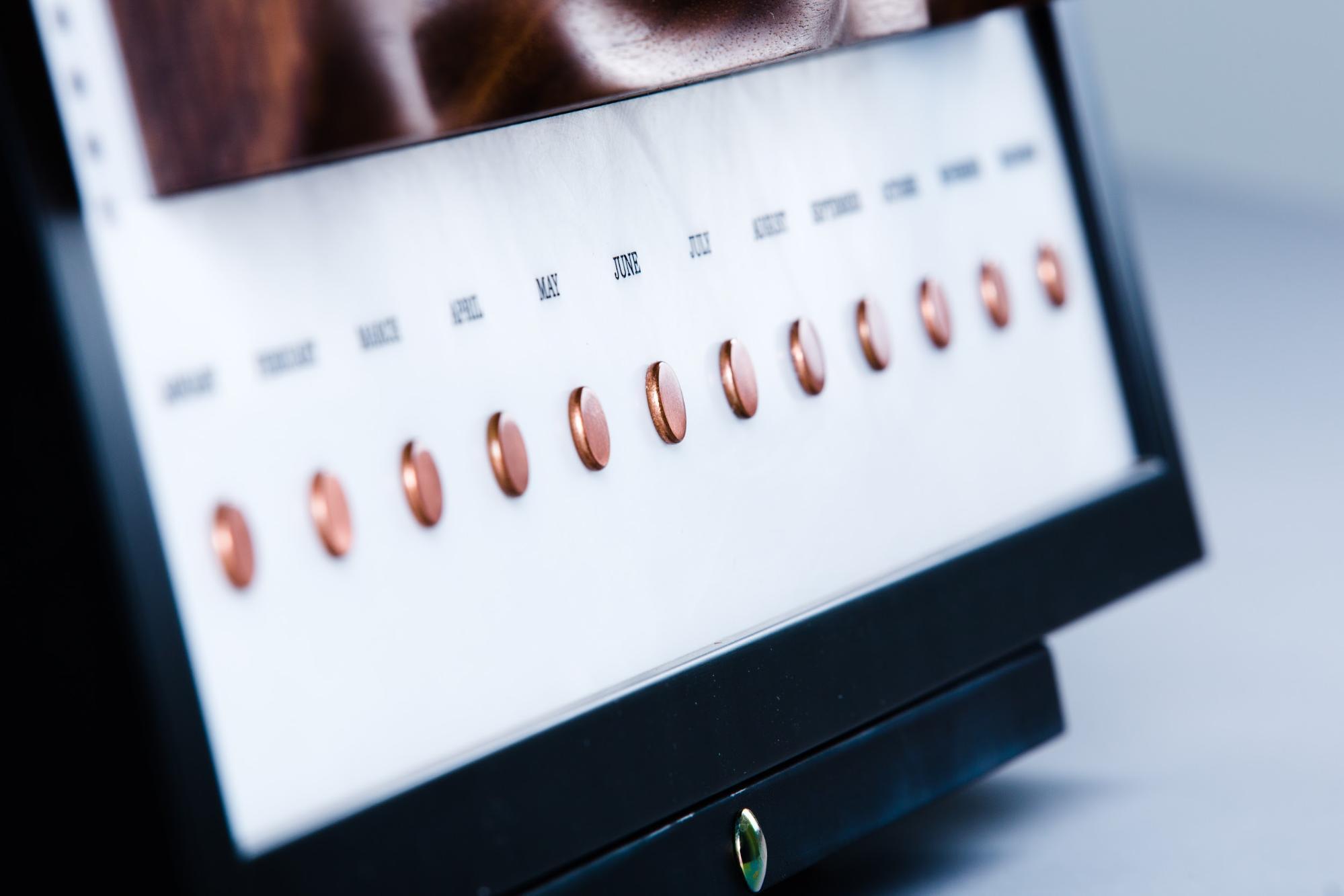
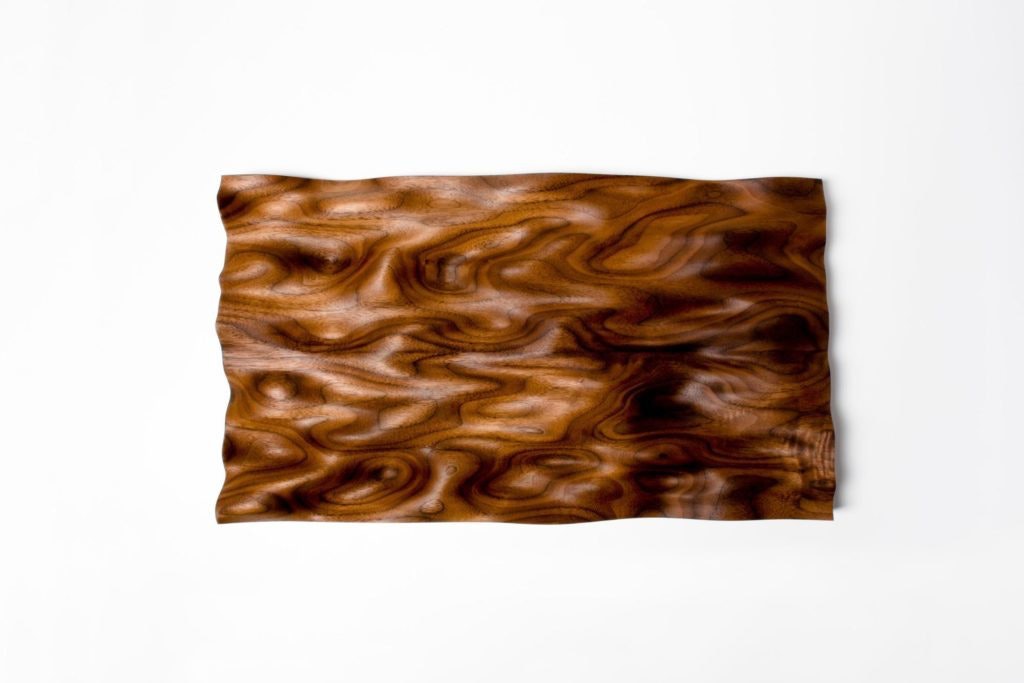
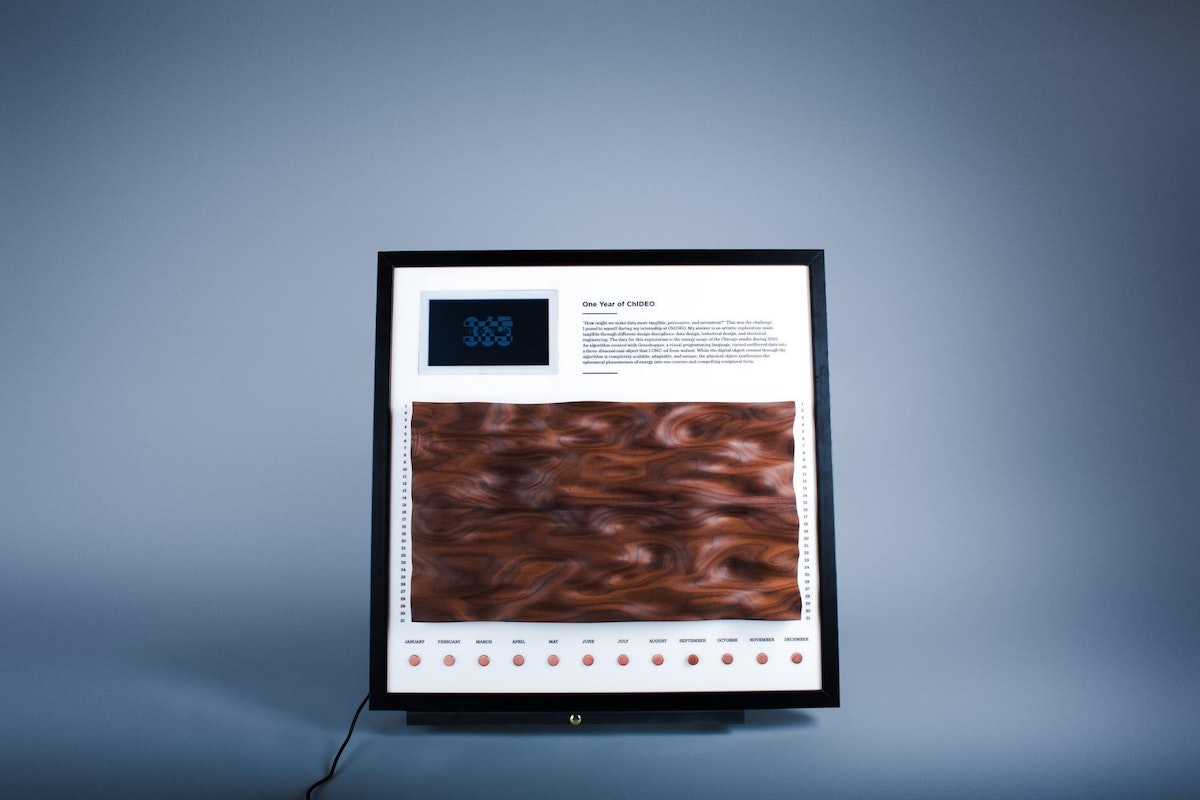
Because usage is tied to a period of time, a digital calendar with interactive feedback seemed like the perfect way to represent a year in the life of the Chicago studio. There would be three elements to it: a milled piece of wood whose undulating shape would represent changes in energy usage over time; an interactive display that would show usage in more detail; and a set of buttons that would let users call up specific data on the display.
The Code
This is a tricky project for someone who doesn’t know anything about coding let alone a programming language. I had to figure out how to manipulate the usage data using tools from my life as an industrial designer. I started with Grasshopper, a visual programming language and a plugin for the 3-D modeling software Rhinoceros that I learned how to use as an undergrad. Instead of writing code, you connect boxes of different abilities to each other. By connecting the boxes with each other, I was able to pull in the data from my Excel spreadsheet and convert it into 3-D shape; then it was ready to work within Rhinoceros. Because Grasshopper is a plugin for Rhinoceros, you can see what you’re doing as you go. After some long nights, I figured out how to display the data in a 3-D shape.


Prototyping
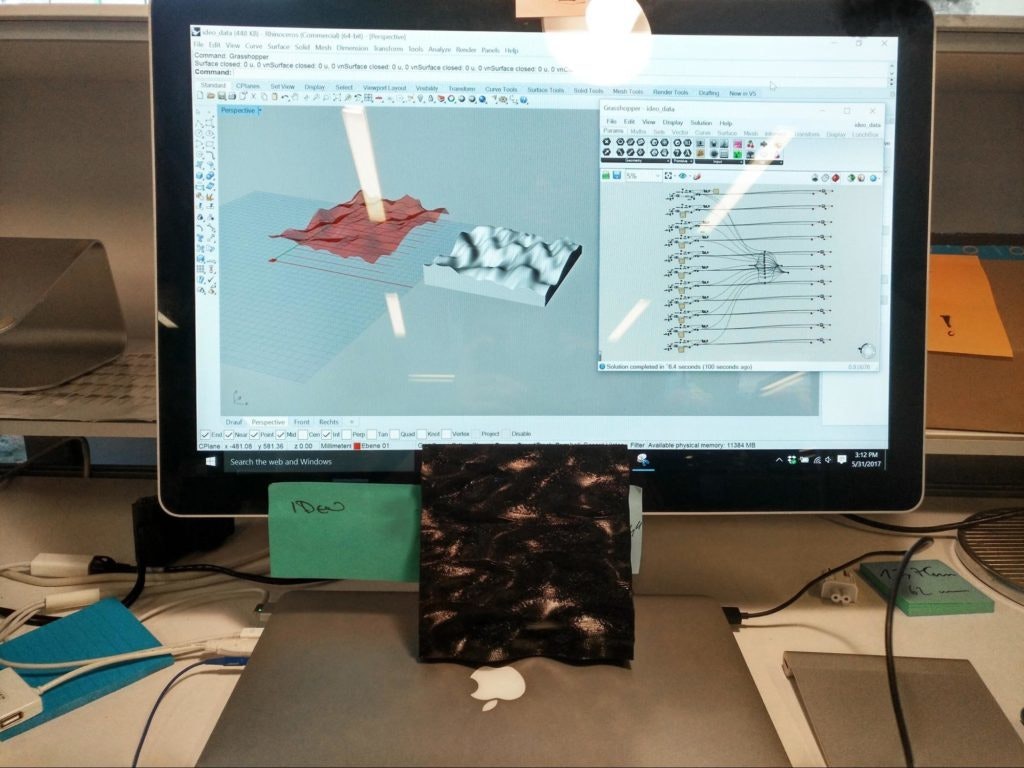
With the code all set, I moved on to creating the touchable surface. I made some quick 3-D prints of the data I created in Rhinoceros, then made a low-fidelity video prototype to display how the installation would look and work. The idea was to let the user feel the changing data via a touchable surface, and give him/her a visual representation of the data on the screen.
Build Phase
Step 1: Milling the wood
The touchable interface was the main piece of my installation, so it was crucial to get it right.
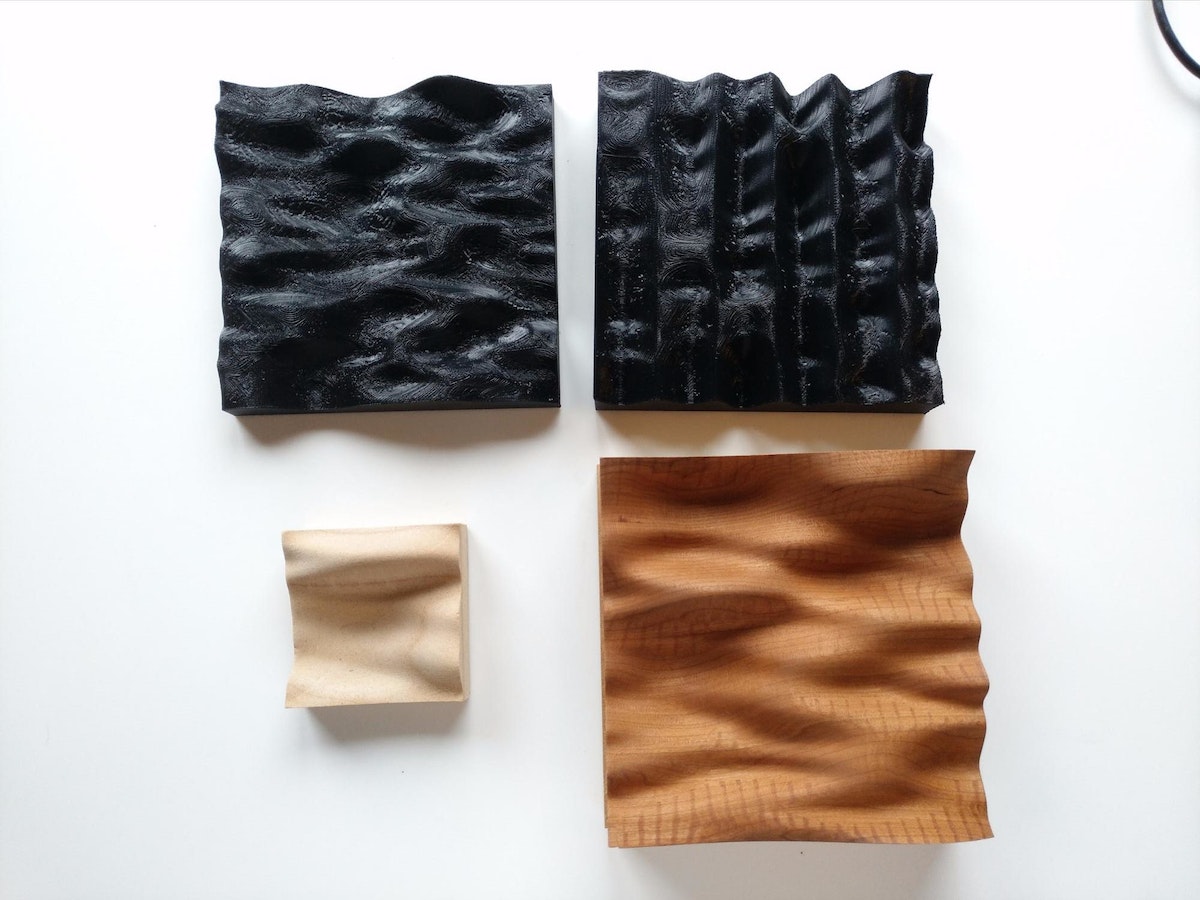
I bought one long piece of walnut and used the table saw to cut it to the length I needed, then glued the resulting pieces together. I created the undulating surface with a CNC table mill, which took roughly 10 hours. It was loud and dusty, but worth it. To get the perfect finish, I had to sand it — a lot. I probably could have stopped earlier, but I wanted to have a perfect piece. Then, I rubbed it with Danish oil to protect the surface and bring out the wood grain.

Step 2: The visual feedback
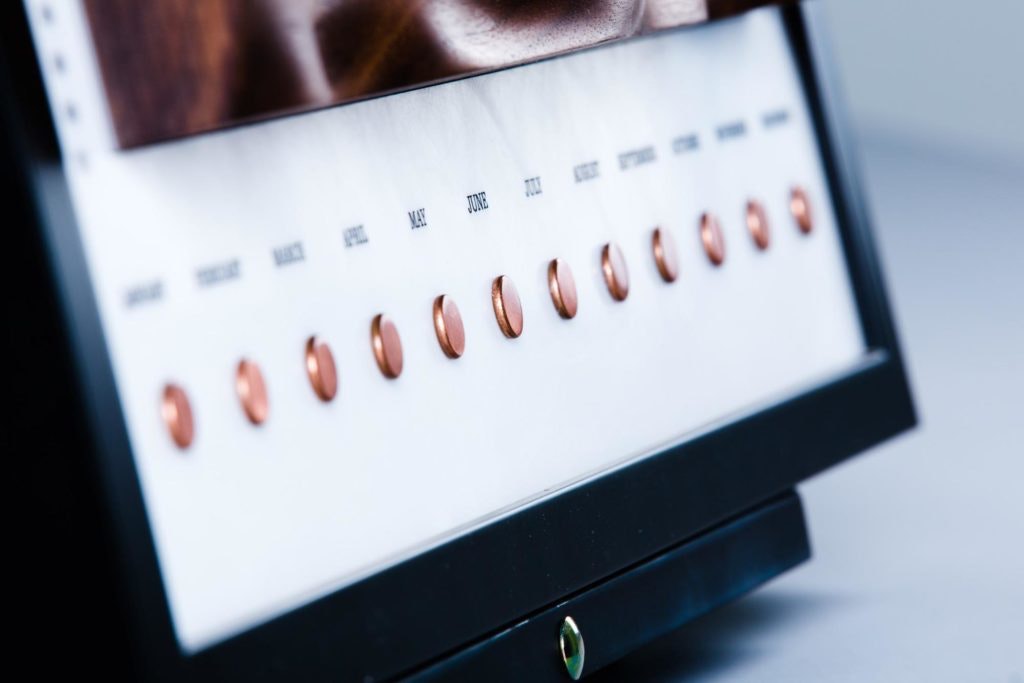
To create the visual feedback, I used a Raspberry Pi, a capacitive touch board (MPR121), a 7” HDMI screen, wires, and some copper rivets. With no experience with Raspberry Pi or electrical engineering, I had to catch up quickly. To display the data on the screen, I used a handy piece of code I found on the internet called PiPresents. For input, I used capacitive touch buttons, which I linked to specific images that display the data.
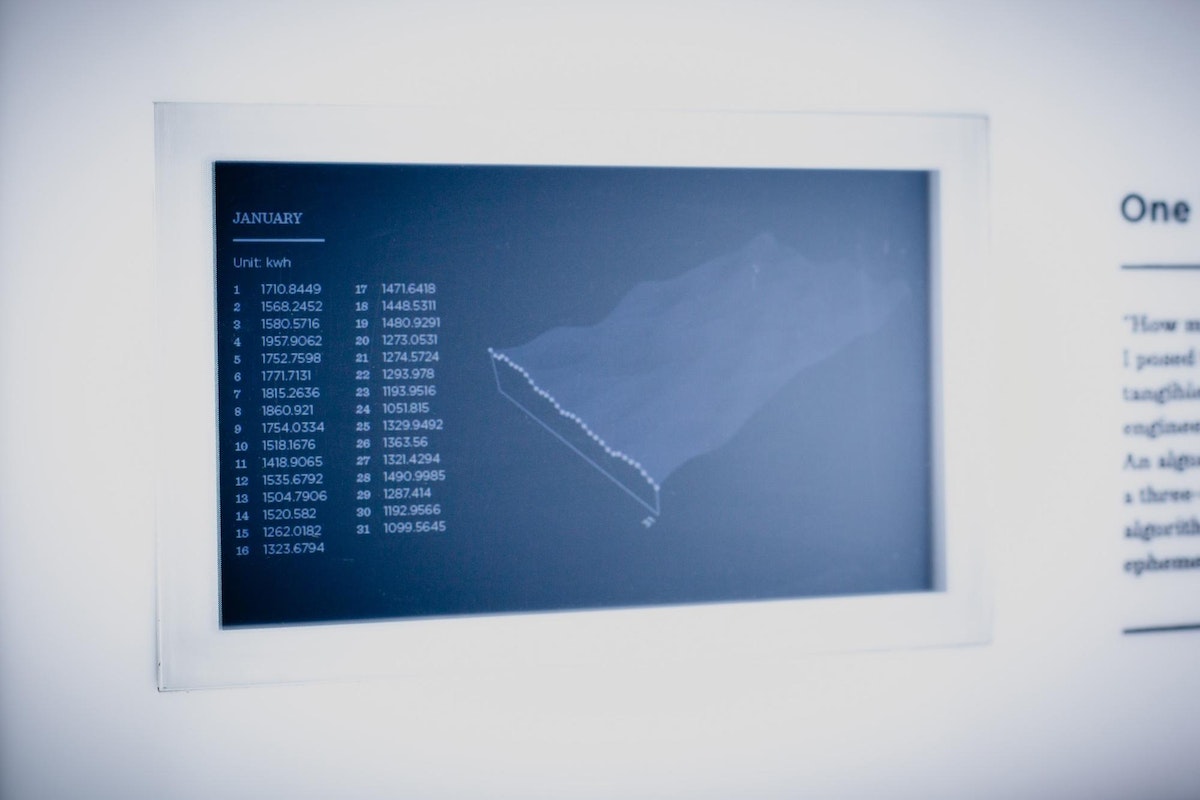
Step 3: Panel assembly
This step was one of the harder parts. I had to bring all the different pieces together and create the framed panel. I started with a cheap frame from an art supply store, then created an acrylic, laser-etched back panel, spray painted it black, and sanded it to make it matte. Next, I attached the wooden panel to the screen, and connected the 12 capacitive touch buttons, one for each month, arranged along the long axis of the wooden surface. Once everything was in place, users could feel the wood to get a sense of our changing energy usage, then touch the buttons to see a drilled down explanation of the data by month. About a month and a half after I first came up with the idea, it was finally ready to present to the studio.
A big thank you to the whole studio, especially to Chris Gold for helping me during the milling process, Rob Rehrig for giving me a Raspberry Pi 101, and Sophie Feng for taking awesome final pictures and video. Want to recreate the project? Check out the code on Github.
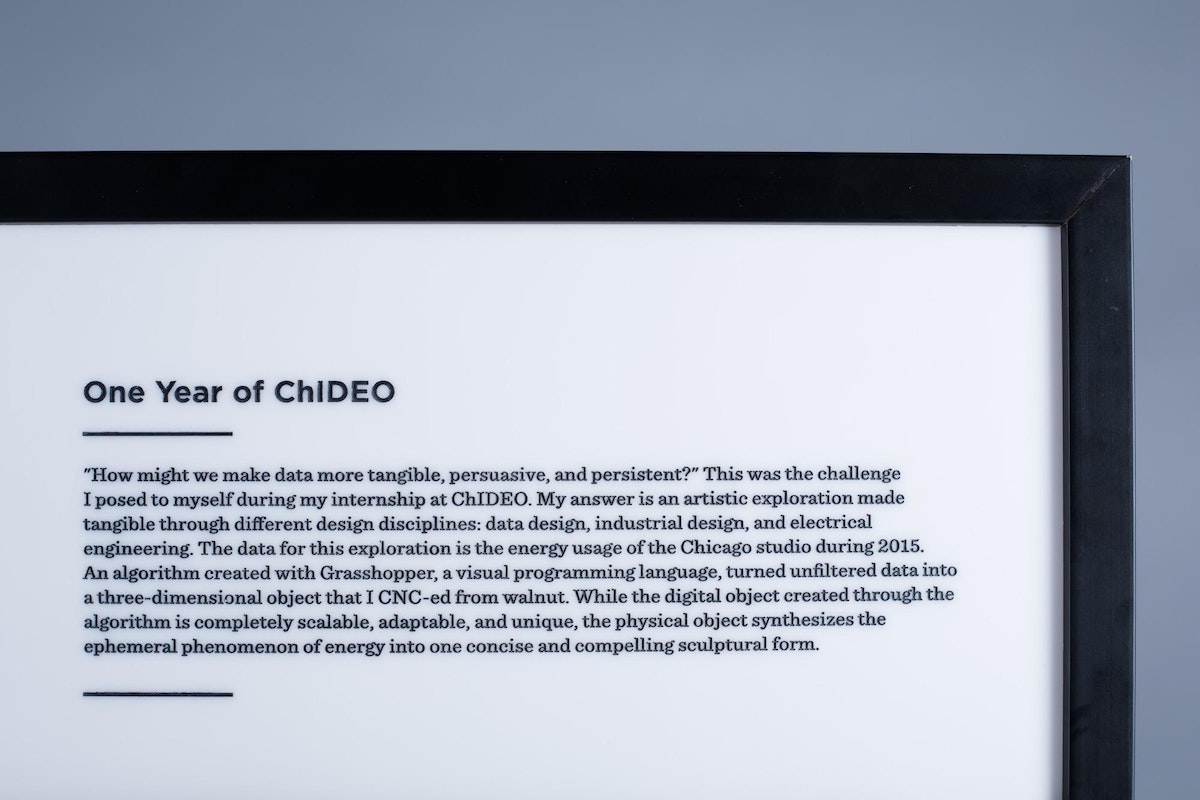
As an industrial designer, I’m always eager to bring together the digital and the physical. So when I discovered that the Chicago studio was collecting data about their energy usage, I decided to create a project that would make that information feel real, teach me more about other disciplines, and serve as a gift to the studio that had hosted me as an intern for half a year.

Lindsey Turner
I’m passionate about building brands, products, and experiences that help organizations show up with meaning and momentum.
I help organizations cut through complexity by shaping how they show up, through brand strategy, identity, and storytelling.
Working at the intersection of brand and business, I bring an editorial eye and a bias toward making—turning ideas into tangible experiences that people can understand, trust, and believe in.
My work spans government, healthcare, financial services, media, and consumer goods, from launching Gen Z-focused ventures to building innovation labs and reimagining legacy brands. I relish moments of ambiguity and enjoy translating across teams, perspectives, and priorities to move ideas forward.
I started my career in editorial and digital design, shaping cross-platform experiences and identity systems in publishing and agency environments. That foundation still shapes how I work today: I’m detail-oriented, collaborative, and overreliant on the Oxford comma. I hold a BFA in Visual Communication from the School of the Art Institute of Chicago.

Rachel Young
My work helps organizations see who their products aren't working for—and build the will and the tools to do something about it
For 25 years, I've asked the same question: Who does this design exclude—and what are we going to do about it?
My work spans human-centered strategy, inclusive design, and qualitative research, with clients ranging from Microsoft, Google, and Verizon to the National Science Foundation, and San Francisco Unified School District.
Before IDEO, I taught elementary school in East Palo Alto and spent a decade doing design work with social service organizations—where I learned firsthand what it costs people when systems are built without them in mind.
I am currently writing User Error, a nonfiction book about digital access and the design decisions behind it. I live in Oakland, California.

Brian Pelsoh
I lead with craft, ensuring our work is creatively excellent: rooted in deep human insight and imagination, while also grounded in the realities of business and technology.
My expertise spans brand, communication, and product design across tech, education, the arts, and social impact.
I believe great work demands both high-level vision and obsessive attention to detail, and only happens through collaboration.
I bring an inclusive, hands-on approach and a deep understanding of business, which enables me to consistently deliver excellence while always asking why.
Before joining IDEO, I worked at the brand firms Pentagram and VSA Partners. I began my career as a designer, leading teams at the School of the Art Institute of Chicago and the Milwaukee Art Museum. I hold an MFA in graphic design from Maryland Institute College of Art and a BFA in communication design from the Milwaukee Institute of Art & Design, and have taught at some of the best design schools in the US.

Tony Wong
I am responsible for IDEO’s long-term success in China and working with clients to use design as a tool to enable growth.
I am responsible for IDEO’s long-term success in China and working with clients to use design as a tool to enable growth. Specifically, I have helped Chinese companies design holistic brand solutions through the development of their products, communication, services, and innovation teams, and I have helped multinationals expand their presence and influence in China.
I advise global leaders on developing China-led innovation and capabilities.
In over 15 years in IDEO Shanghai, I have worked on projects that use design to elevate the quality of the experience of healthcare products and services, streamline processes that increase productivity, create spaces and programs that promote and enable inclusive communities, and build next generation mobility solutions that are planet-positive.
Before joining IDEO, I worked at Philips Electronics and the Electrolux Group in Italy, the Netherlands, and Singapore on a number of breakthrough commercial products. I am a member of the Young President Organization in Shanghai.

How to use AI as an editor, not a writer
Ed White shares how he uses AI as an editor—not a writer—to sharpen storytelling, rehearse ideas, and preserve the productive friction that makes creative work better.
Ed White has a rule he's tested on his own writing: hold yourself as the writer, and let AI be your editor. Ed is a Senior Design Director at IDEO's London studio, where he co-leads the firm's AI portfolio across Europe. Before IDEO, he spent 12 years as a writer and editor at the Financial Times, Wired, and Contagious. So when he talks about when to use AI for storytelling and when not to, it comes from two decades of crafting his storytelling skills.
In this episode, Mina Seetharaman talks with Ed about two specific tools he uses to keep AI in an editor's seat: a "roasting agent" prompted to critique his drafts without any sugarcoating, and a simulated audience he rehearses pitches on before the real thing. They also get into what Ed is hearing from design leaders at Anthropic, Lovable, Shopify, and Google Creative Lab about how creative work is changing, and why he thinks the friction of writing something yourself is worth protecting rather than automating away.

Building a personal AI for the messiness of life: Sida Li
Becca Carroll talks with Cue co-founder Sida Li about designing a personal AI for the messiness of everyday life—not just work. They explore how Sida stays anchored to human needs while navigating fast-changing technology, product tradeoffs, business-model experimentation, and the realities of building an AI company today.
Most AI products today are built for work—a space with clear problems and established systems. One founder noticed a gap: personal life is messier, harder to systematize, and mostly left behind by the AI boom. So she built Cue, a personal AI that lives inside iMessage and group chats, to go where the other tools haven't.
In this episode, Becca Carroll, IDEO's Chief Strategy Officer, talks with Sida Li, co-founder and CEO of Shared Context Lab, about staying anchored to a human need while the technology around her keeps changing shape, why she treats her business model with the same rigor she'd bring to a product, and what it feels like to build a company at this particular, disorienting moment in AI.
The conversation also gets into how Sida makes design decisions: the language Cue uses to describe itself, the tradeoffs behind building inside iMessage instead of a new app, and a real story about a business idea that didn’t pan out.
This is the second in a two-part series profiling founders from IDEO's Startups-in-Residence program. The first conversation is with Johannes Seemann, founder of Sooner, on designing GenAI for the emotional side of money.

Designing GenAI for the emotional side of money: Johannes Seemann
Designing financial tools around the feelings that shape money decisions.
Most personal financial tools are built to run the numbers and optimize towards a budget. While that works for some, most people experience money as a lived relationship that does not neatly fit into a spreadsheet. Johannes Seemann and Becca Carroll discuss why money is emotional before it is mathematical, and what a human-centered approach to building a generative AI financial product looks like in practice.

The curious leader's edge in uncertainty: Scott Shigeoka
How genuine curiosity helps leaders navigate uncertainty with greater confidence.
Mina Seetharaman talks with Scott Shigeoka, author of Seek and Head of Curiosity Cultivation at the Eames Institute, about what distinguishes genuinely curious leadership from performative curiosity, how power dynamics shape curiosity, and why practicing curiosity can restore energy rather than drain it.
Looks like you might be in search of something very specific?
Or reset the filters above and try another angle.
Here’s some random inspiration

Podcasts about creative leadership

Articles about the power of prototyping
