
.svg)


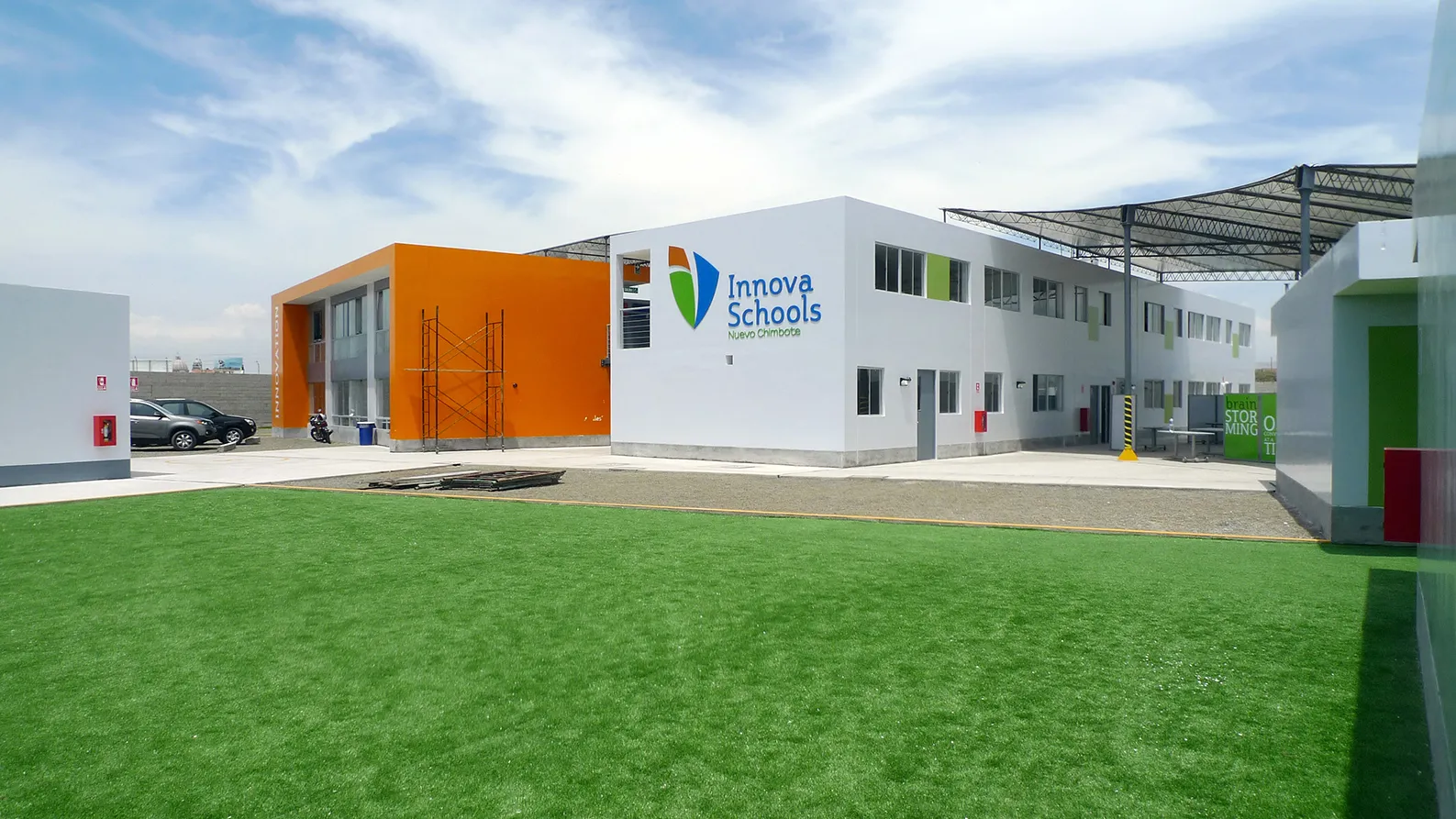

Designing a school system from the ground up
Scaling an entire network of schools for the growing Peruvian middle class.
How do you lift up the middle class in a developing country?
That was the challenge facing Peruvian entrepreneur Carlos Rodriguez-Pastor, who hired IDEO to build an entire network of schools powered by a progressive new learning model. IDEO’s mandate: to redesign Innova’s entire K–12 learning experience, from the curriculum to the teacher training to the school buildings, with an eye toward expansion and a goal to provide international-quality education at an affordable price—about $100 a month.
Innova Schools is a part of Intercorp, a family of 35 businesses that span everything from banks to retail stores and added schools to its portfolio. In 2010, the company had five existing schools but realized that its existing model could not grow. The shortage of well-trained, high-quality teachers in Peru, combined with rising land costs, meant the schools would need to radically change course to succeed.
To learn about scalable school models around the world, IDEO researchers visited inspirational schools and learning programs, and looked to analogous systems like retail, hospitality, and health care to understand their approaches to scale. Throughout the project, they collaborated with teachers, students, and the Innova Schools team in co-designing the work itself.
Together, Innova Schools and IDEO developed the curriculum, teaching strategies, buildings, operational plans, and underlying financial model to run the network of schools.
"I was blown away by Innova Schools," said Salman Khan, founder of Khan Academy. "It's inspiring to see such an affordable school deliver a quality of education that would rival schools in the richest countries."
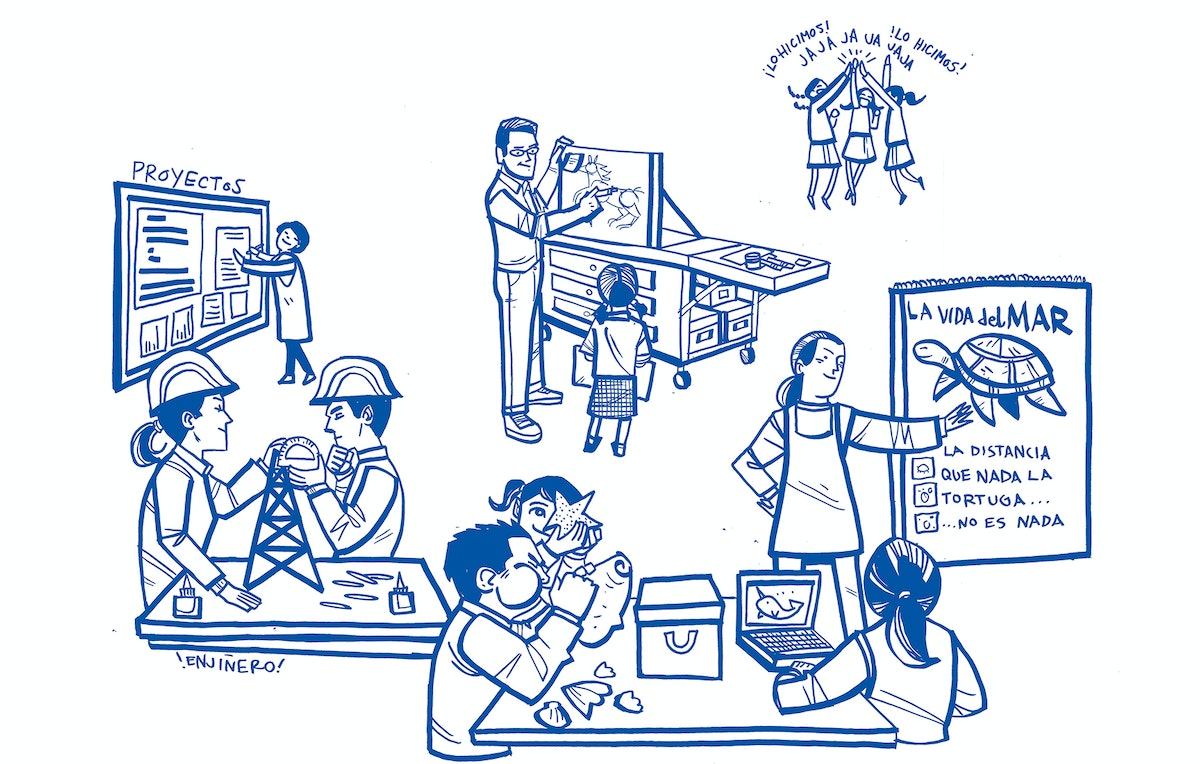
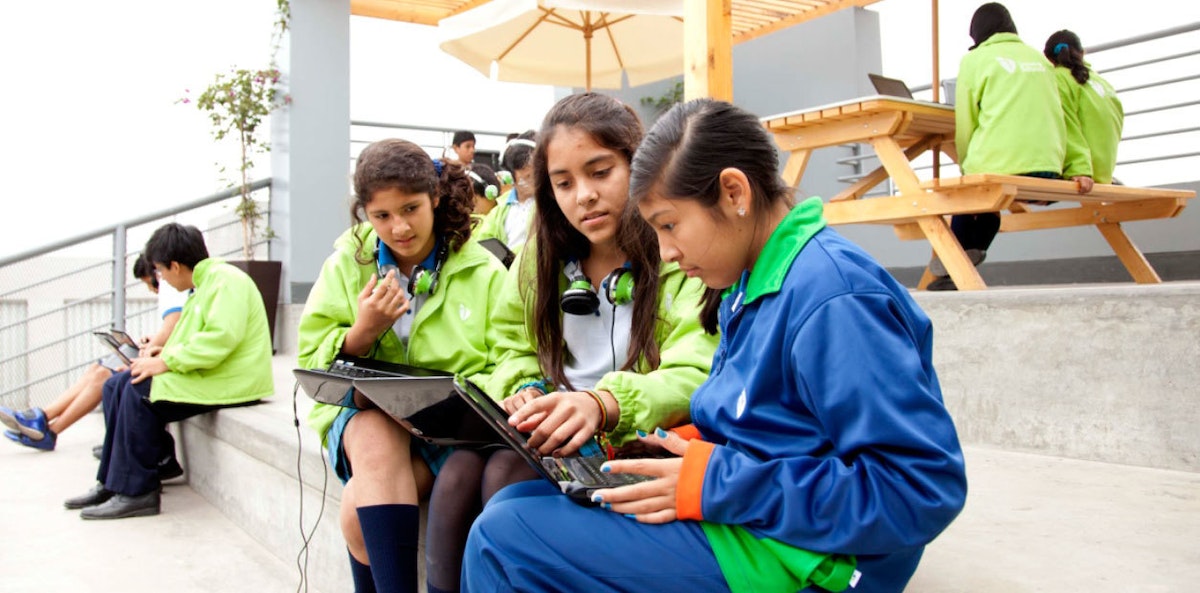
The new Innova Schools combine teacher-led, project-based learning in small groups with self-directed time using digital learning tools. Teachers monitor students’ work online and offer personalized guidance. Parents can view their children’s progress online as well.
Dynamic learning environments include community spaces, media labs, rooftop study areas, amphitheaters, and cafés that are optimized for flexibility: furniture on wheels, movable walls, and efficient uses of space to allow for different modes of learning.
An online Teacher Resource Center includes a database of more than 18,000 custom lesson plans based on a progressive new teaching approach. The center helps teachers learn their craft and gives them a chance to connect across the network.
The business model of Innova Schools was developed at the same time as the school experience. Designers leveraged the economies of scale that come from building a network of schools and centralized tools, such as data systems that allow all the schools to learn together.
The project has allowed Innova to open more schools at an affordable cost to families, ultimately giving more of Peru’s youth the chance to compete in the global economy. This comprehensive approach to system design ranks as one of Latin America’s most ambitious privately funded educational projects, and is on track to become the largest private school network in the region. To date, Innova has opened 63 schools in Peru that are serving more than 50,000 students.
A good system design doesn’t end with strategy. The work on Innova Schools also had a huge influence on the company, according to Rodriguez-Pastor. Through the creation of new roles and an aligned set of values, Innova’s central office has become a much more nimble and creative organization. They’re constantly scanning the world for inspiration in how to best educate their students, while building out the new innovations. They realize that design thinking can become an integrated part of their daily management of this growing network of schools.
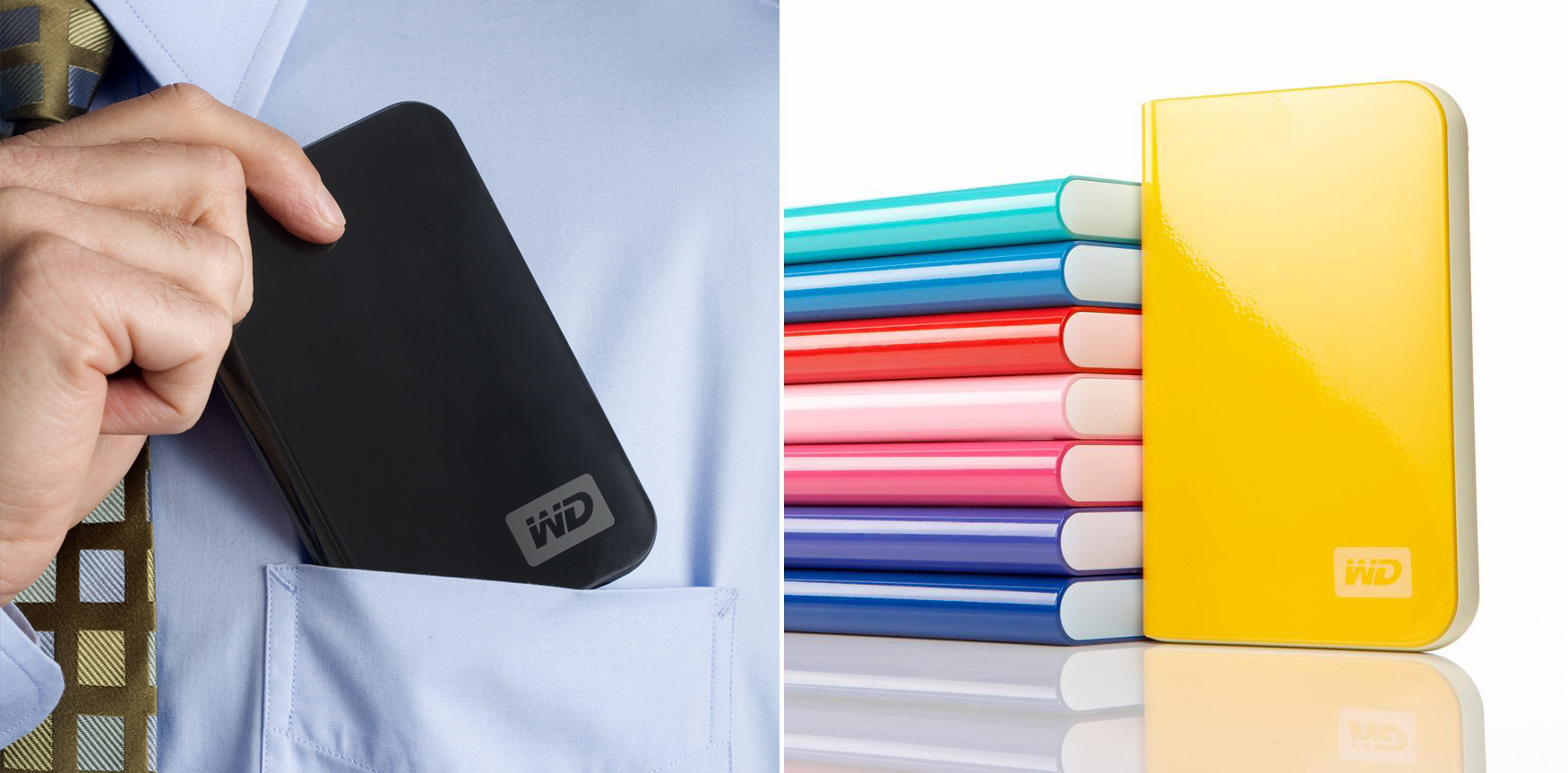
Designing a top-selling hard drive
Through a long-term collaboration, Western Digital and IDEO have created one of the world’s best-selling hard drives.
Western Digital, the leading provider of external digital-storage solutions and a pioneer in the field, and IDEO collaborated on a number of products that produced reliable, secure, high-performance hard drives for personal and professional use and have won numerous design awards.
The projects include:
- MyBook external hard drive: IDEO and Western collaborated to find a new design language for their external hard drive MyBook. In just six months, MyBook became the number-one hard drive in the Americas, and grew US market share by more than 50 percent.
- MyBook II: Looking to regain MyBook’s original number-one position in the hard drive market, IDEO and Western came together again to refresh the original design, finding ways to further differentiate the product and the brand, and winning a 2008 Spark Bronze Award.
- MyPassport: Western and IDEO designed the 320GB, ultra-portable USB-powered hard drive that appeals to the mobile user, which won both the 2008 IDEA Bronze Award from IDSA and BusinessWeek, and the 2009 iF Award.
- MyBook and MyPassport 3.0: Again, IDEO and Western collaborated on bringing the popular MyBook external hard drive to the next level in the hardware, the software, and the packaging. IDEO also created in-store merchandising, the graphics and information featured on product packaging (and the “out-of-box experience”).

Designing a city emergency plan
Helping cities prepare for emergencies with a resourceful toolkit.
The city of San Francisco wanted to help its people become better prepared in case of emergency. While no one feels totally prepared for a natural disaster, people who are most connected within a local network fare better in an emergency.
So the San Francisco Department of Emergency Management (SF DEM) and IDEO teamed up to create SF72, a revolutionary platform that helps to reach people where they are. In times of emergency, the city will need citizens to be self-supporting for 72 hours (or longer) before local services or outside help kicks in. With that in mind, IDEO developed an accessible platform to help people prepare for those 72 hours in simple ways that fit into their daily lives.
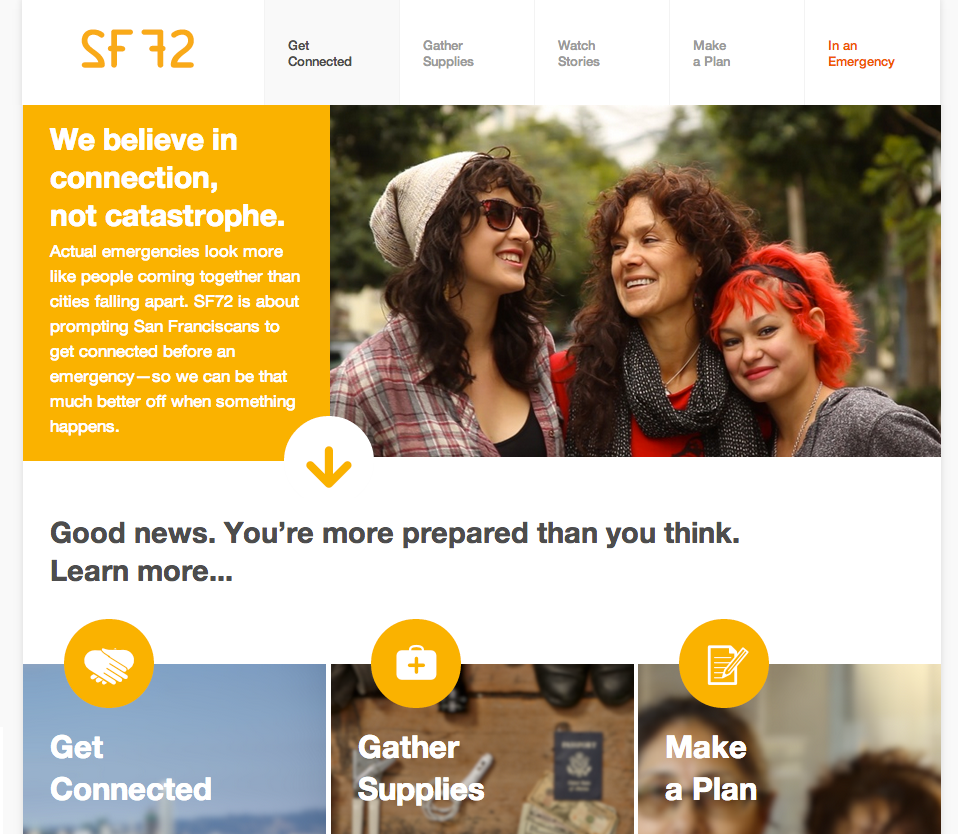
The SF72 website helps people with five important tasks: Get connected, gather supplies, watch stories, make a plan, and have access to an updated Google map. SF72’s content is hyperlocal, but IDEO and SF DEM also created an open-source toolkit for cities worldwide. From San Jose to Denver, other locales are using the simple toolkit to create a City72 platform of their own. Most recently, the city of Oakland collaborated with Code for America to develop its own platform. The City72 Toolkit enables SF72’s ethos of social connection for resilience to scale and grow—city by city.

Designing a global plan for disaster response
Creating a network that connects veterans across continents.
Team Rubicon, formed in 2010 as a response to the devastating earthquake in Haiti, is made up of former military veterans who swoop into help in times of disaster. The organization started with six vets in the US who were eager to transfer their battlefield readiness in to frontline relief efforts, and has grown to more than 28,000 volunteers across the world.
To explore its growing global effort and to shape the future of the organization’s venture, Team Rubicon approached IDEO for help. After an 11-week collaboration with government, military, and veteran groups, a vision for Team Rubicon Global emerged. Inspired by sources as diverse as TED and The Hell’s Angels, the three-tier model consisted of an anchor network to share best practices across the organization and two supporting platforms designed to help countries with varying capacity and needs.
Team Rubicon Global coordinated its first deployment in April 2015, when a quake struck Nepal, sending US and UK teams to double down on the rescue effort. According to Vince Moffit, Team Rubicon USA Incident Commander, that incident alone validated the network effect of IDEO’s work. “We couldn’t have done this without Team Rubicon UK,” he said.
And for the veterans who are part of Team Rubicon, the shared desire to serve—applying skills ideally suited for disaster response—creates a renewed sense of purpose, community, and leadership that helps reintegration to civilian life.
6 ways we want to redesign cities
Visions for a more human-centered city
In our practice, we believe that cities are catalysts for innovation—every citizen and developer shares responsibility for the city in which they live, and equally shares the potential to bring positive change to that place. Here are six things we can’t stop thinking about redesigning, from the humble sidewalk, to the decentralized workplace, to the way we build our neighborhoods.
Bridging Physical and Digital
My smartphone upstaged my city. I no longer need to walk to the bank, stand in lines, wander through stores—I can do it all faster online. The majority of physical spaces we used to rely on have lost their initial purpose, become underutilized, abandoned and some—like the mall and big box stores—out of business. What should be located in these spaces? How should banks represent themselves in a physical world? What is the future of the service-based businesses?
I’d like to discover a way to reconnect physical and digital innovations, and make these obsolete spaces useful again with shared ownership models and disruptive technologies. I’d love to see more sustainable and flexible business models around “micro-leases,” square footage-based ownership, and so on. The digital era has opened a fantastic opportunity to reshape our relationship with physical spaces, collaborate more, and integrate the architectural world into the discourse around innovation.
— Kateryna Romanova
The Way We Create Buildings
The more cities I visit, the more I realize how similar most of them are—and not in a good way. As an architect, I always find the lack of variety disappointing. The problem begins with the way we construct buildings. Automation has been taking over the construction process, and although there are positive features of this new approach, it leaves out the nuance of human input, which is key to diversity and uniqueness in the built environment. As construction technology marches ahead, I would love to find a way to amplify the voices of the people who will eventually use those buildings, documenting their opinions and needs during the design process. If we can connect the two, then the resulting buildings will be as varied as the people they house.
— Matt Avallone

Sidewalks
Sidewalks are our doorstep to the city. They are a meeting ground for the public—they provide space for eating, exercise, and rest; they house wildlife, foliage, and even micro-businesses. As our cities evolve to be less car-centric and more people-oriented, I would like to envision a continually active role for this diverse strip of land we call the “sidewalk.” In the face of climate change, sidewalks could become permeable strips of land that enable more resilient flood response. They could become extensions of our cultural institutions and art museums, drawing them out of their building envelopes. Sidewalks turned into green belts could convert concrete jungles into urban oases and productive farms. Sidewalks are two-dimensional strips of democracy, and because of their scale, they can serve as a key variable in how we prototype our urban life.
— Nicholas Pajerski
Bringing the Future Forward
Despite the emergence of fast-moving technology that constantly challenges and changes the way we live in our environment, we still mostly design and build in the same old ways. We can dream up all the amazing spaces and experiences in the world, but if we don’t evolve how they truly come to life, we are bound to fail, and our designs will always be stuck in the “future.” If we could find a better way to close the gap between the conceptual ideas of designers and the reality of the user, we’d have a better chance of transforming the lived experience of urban environments.
— Haemi Chang
More Playful Cities and Streets
Play! In the last year, I have started chasing and capturing playful moments in the streets— from graffiti, to a group of kids playing in the water from a broken pipe, to lovers dancing on a street corner. This journey of capturing playfulness in the streets made me more aware and even obsessed with the idea of how we can design the right conditions for playfulness in the city. Why playfulness? Because playing means engaging, engagement brings care. If we are more caring and careful about the streets of the cities we live in, we might build stronger connections for healthier communities. Being playful on the streets requires courage, builds trust, allows for discovery, create communities. Playfulness is fundamental to our social nature, so it’s a useful framework for thinking through how we can build stronger cities and communities.
— Nazlican Goksu
The Car-Centric City
Cities are becoming denser than ever, yet while density forms the perfect conditions for alternative transport, cities are still designed primarily with automobiles as the top consideration. If we were to design first for walkability and safer cycling experiences, we could inspire and incentivize individuals to choose car-free options for getting around.
Designing walkable cities is not limited to creating more sidewalks—a paradigm that still puts drivers first. Walkability requires a serious reconsideration of an entire transportation and urban infrastructure, putting people first and cars second. We need to consider infrastructural changes at multiple scales and from multiple perspectives: creating denser, more mixed-use walkable neighborhoods; optimizing for green public spaces for gathering over sprawling parking lots; better integrating bike storage and building protected bicycle lanes; dispersing art and street lighting throughout major walkways to encourage people to walk more; and lowering speed limits in pedestrian-dense areas to ensure safer, more enjoyable walking and cycling experiences.
— Courtney Song
Members of the environments design team at IDEO are constantly thinking about the ways we shape cities, and the ways cities shape us. Innovating around established and out-of-date spaces, new forms of retail, the future of living, and mobility is part of our daily lives—and something we don’t turn off when we head home for the day, or even when we go on vacation.
Get inspired by these designers’ side gigs
Passion projects help us stay inspired, push our edges, and bring new ways of thinking to our day jobs
For one, creating keeps you inspired, giving you something to cling onto during those moments when the daily grind gets you down. It also forces you to push your edges—creatively, mentally, maybe even physically. By exploring your own creativity on your own terms, you’re bound to uncover new ways of thinking and working that will serve you in more ways than one.
Not sure where to start? Soak up some inspiration from IDEO designers whose side projects keep them sharp and creatively engaged.
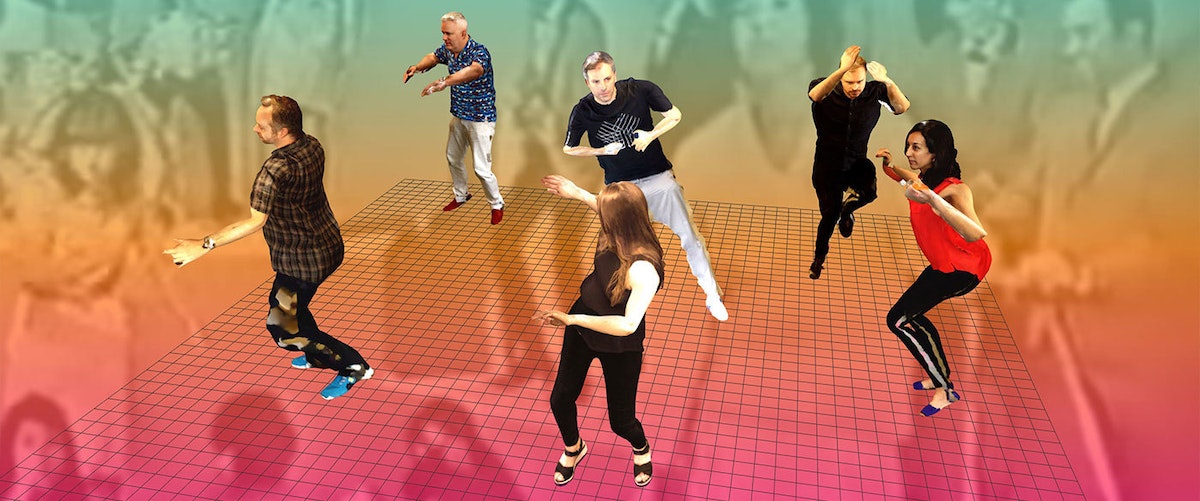
1. If you want to learn a new skill...
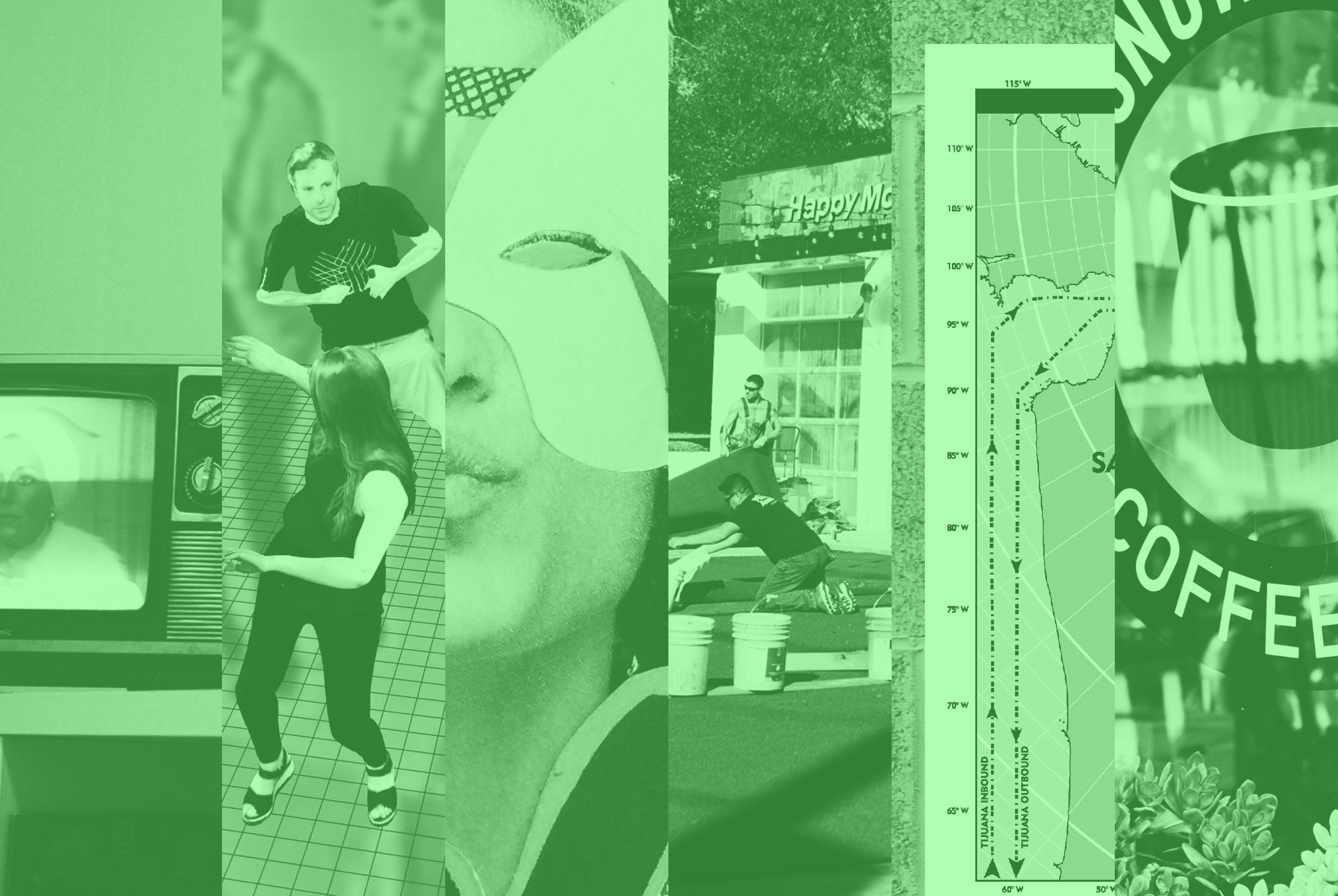
IDEO New York’s Alex S. calls himself a “digital alchemist”—in other words, he loves making weird stuff on his computer. When he decided to teach himself 3D coding, he embarked on a slightly unsettling but majorly entertaining side project to create an online, 3D dance floor for his virtual colleagues to get jiggy with it.
READ: How I Taught Myself to Code in 3D
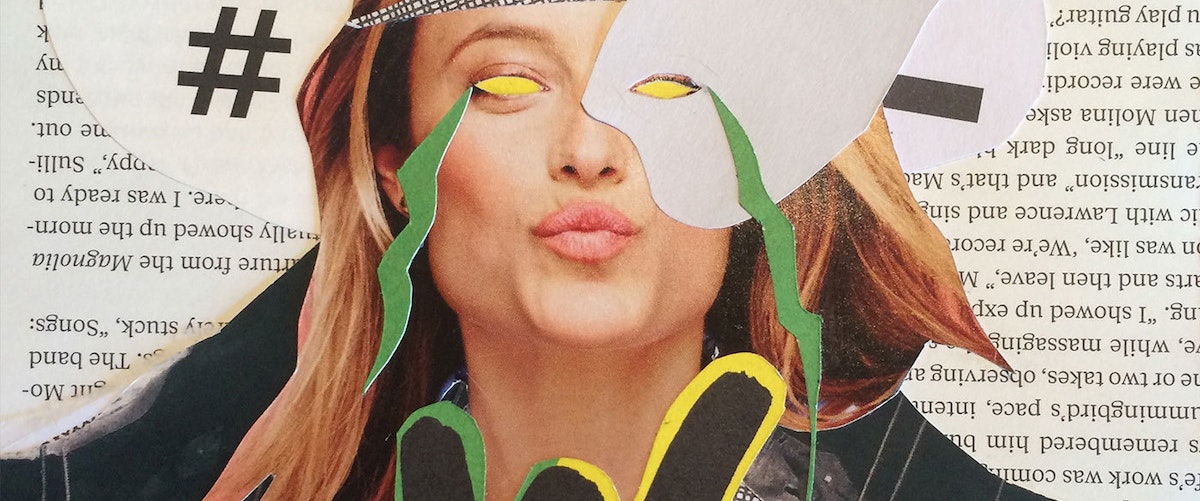
2. If you’re ready to roll up your sleeves and make something…
In his role as a design director at IDEO Cambridge, Michael Hendrix spends his days thinking big (and staring at screens). To keep his fingers nimble and his mind open, he started a simple yet satisfying side project: Making a paper collage every morning.
READ: I Chop Up Faces Every Morning and So Should You
3. If you’re looking to start a business on the side…
Kim Powers spends her days designing the experience of working at IDEO San Francisco. Two years ago, Kim and her husband purchased an abandoned dry cleaners and transformed it into a coffee shop—and the journey turned out to be directly relevant to her work.
READ: Thinking About Starting a Side Business? Read This.
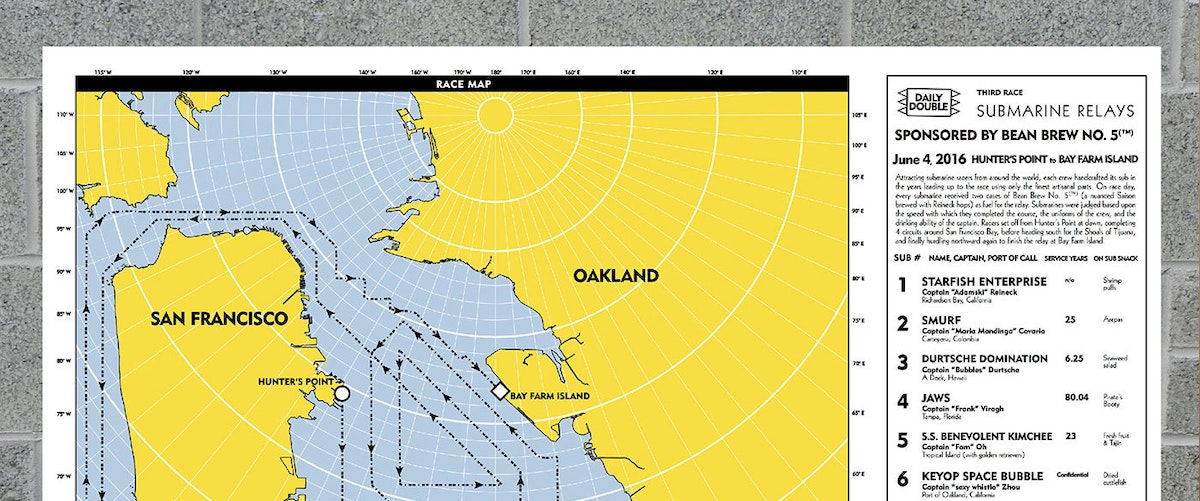
4. If you want to find a way to mash up your passions…
Legal designer Sean Hewens has a taste for the absurd. On one hand, he’s a fictional mapmaker, and on the other, he brews his own beer. Sean’s side project manages to combine those seemingly unrelated hobbies into what he calls “the ultimate beer drinking experience.”
READ: What Brewing Beer Taught Me About Design
5. If you'd like to build your kids something special…
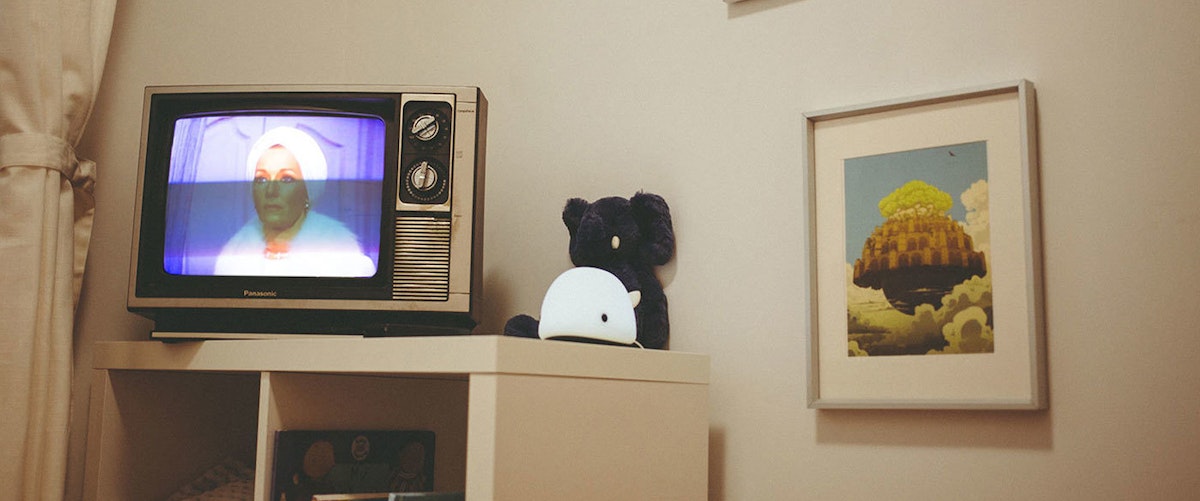
When she’s not designing software at IDEO Cambridge, Ashley Holtgraver is busy raising her newborn son. To help him grow up healthy and unscathed by the pressures of today’s digital world, she used her programming skills to build her son a “Slow TV.”
READ: Why I'm Building a TV For My Baby
6. If you want to get involved in your community…
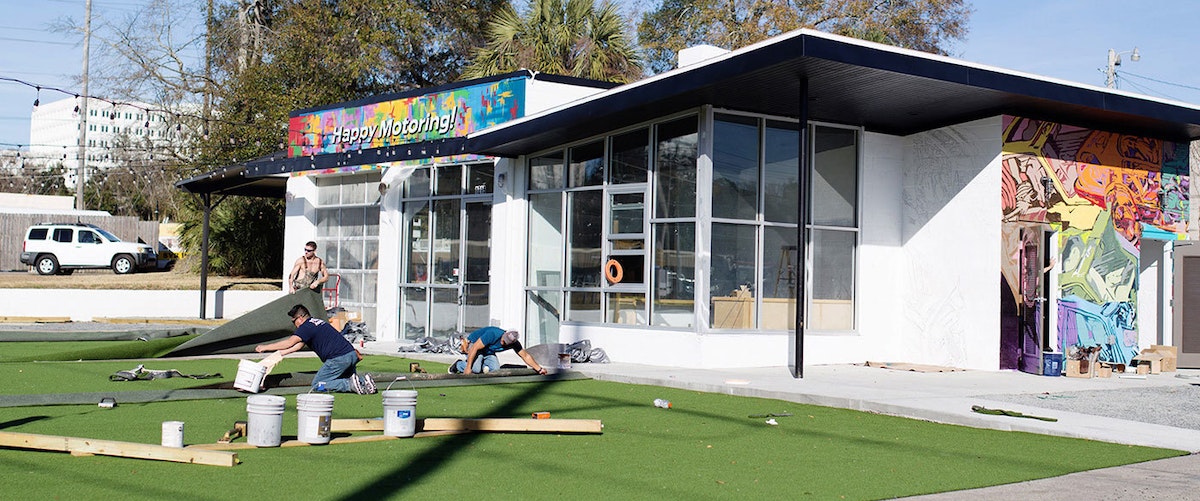
Jacob Waites spends his days designing for emerging tech with IDEO CoLab, but on the side, he’s a founding member of Foremost, a creative collective intent on bringing culture to small town Florida. Together, the collective gutted an old gas station and transformed it into a community art center.
READ: How We Turned an Old Gas Station into a Community Hot Spot
At IDEO, we’re passionate about our jobs—and everything else. Our writers, designers, and researchers spend their spare time going after everything from beer making to starting their own businesses, making toys to writing stories. Why? Because big, small, physical, digital, experimental—no matter what we create, we know it’s valuable.
The bright side of design constraints: 3 tips for leveraging limitations
Three insights for turning design constraints into better client relationships and more effective prototypes
Some of the best lessons I learned on the topic come from my time working at IDEO.org, our non-profit arm, which focuses on improving the lives of people living in poverty.
Here are some key lessons that can strengthen your approach, no matter where you’re designing.
1. Lead with empathy
While at IDEO.org, I worked on Health XO–a team focused on designing better access to birth control. Translation? We went into urban and rural communities throughout East Africa and talked to teens about their sex lives. These conversations are very personal for anyone, but for many of the teens we spoke to, having a sex life before marriage is stigmatized and risky. In this situation, having empathy meant considering all aspects of the topic: the individual experience, cultural taboos, and the larger community.
Because the stakes were high, I found myself paying particular attention to how I conducted research. Was the setting private enough for the young women to feel safe? Was a group interview among friends a better way to structure it? Would the girl feel more comfortable if we met a few times before launching into the more personal topics?
This experience made me realize how important it is to take a moment before every interview to make sure my attitude is collaborative, not extractive—even in for-profit design work. This makes all the difference in protecting and honoring the people you’re researching.
Ask yourself: What can I do to make this experience beneficial for my research subject? How might I approach their situation with empathy, and without the end-game in mind?
2. Find out what happens when no one is watching
Maybe you’re designing something you know a bit about. Or maybe you just have an idea about what would be cool to make, and prototyping seems like a waste of time. When we’re designing in our own backyards, it’s easy to ignore prototyping. But as I began designing in less and less familiar contexts, I found the value of prototyping increased significantly. The prototypes had to speak for themselves.
When our team worked with a local organization in the Kibera neighborhood of Nairobi, we were tasked with finding more effective ways to engage men and boys in reporting instances of gender-based violence. In order to understand the contexts where people felt most comfortable making reports, we worked with local metalworkers to build boxes where anyone could anonymously drop a written report about incidents. We installed them throughout the neighborhood: in bars, public toilets, on the street, and in barbershops. Within a few days, we began to see patterns in where reports were—or weren’t—submitted. This informed our strategy going forward.
Prototyping is especially important if you want to observe behaviors that can be difficult to suss out through interviews alone.
Ask yourself: How might we build a stand-alone prototype that more effectively gauges how people might behave when nobody’s watching?
3. Help your clients build their own design skills
Deliverables matter. But without client ownership, even the most thoughtful design can gather dust. This is true no matter who your client is. But when you factor in a separation of 9,586 miles between you and your client, skill-building suddenly feels much more important.
One of the largest scale projects I worked on with IDEO.org was with Marie Stopes International. Our goal was to design avenues for teen access to birth control information and services, across all of Kenya. We worked side-by-side with the health workers who go from town to town as traveling medics. Not only were we learning from them, but we were also able to share how they could use design thinking methods to improve their current model.
Making sure that all team members have the tools they need starts with understanding the value that you—and your clients—bring. Our partners on the ground offered incredible expertise in the local landscape, regulations, and healthcare needs. We offered tools and a way of thinking that enabled these healthcare providers to try new ways of working, based on human-centered insights and a shared vision.
Ask yourself: What are the superpowers that my client has? How can I harness this knowledge in our designs, and include them in the creative process?
See what I mean about constraints? The next time you’re approaching a design project, take a moment to consider how you approach your work. Chances are, a step back from your day-to-day perspective will help improve your process, and your output.
Constraints are a designer’s best friend. When you have a small budget or a tight timeframe, constraints help you focus, force tough decisions, and require you to take a very exact approach. The more I design, the more I have come to value constraints. When you’re working on low budgets in emerging economies, with a language barrier, or in rural conditions, embracing the design process is key.

Why I made a GIF every day (and you should, too!)
How tiny projects can make you a better designer
So last summer, in search of some sort of spark, I decided to take on a personal project: I would make one animated GIF per day, every day, until I felt like stopping.
It may sound silly. GIFs often are. But it turns out, making GIFs is a great design exercise.
For one thing, they’re extraordinarily simple by design. Steve Wilhite, a computer scientist working at Compuserve, the first big online service company in the U.S., created the GIF in 1987. He had been asked to make a simple graphics format that works on all kinds of computers and could display sharp images even over slow internet connections. (Yes, in the late 80s the image quality of a GIF was considered “sharp.”) One of the first animated GIFs is this famous airplane.
What he wasn't asked to do was create a platform for animation. In fact, the spec sheet for the then-new file format clearly states that though GIFs could be used for very limited animation, that isn’t what they were made for.
But that’s largely what we use them for these days, which means we end up working under a lot of constraints. And creativity thrives under constraints! You have to experiment to leverage limitations and quirks and make them work to your advantage. When you make a GIF, you’re working with a limited color palette (less than 256 colors). Your animation has to be very short and simple or else your file size will be so big that the GIF is no longer easy to share / quick to load. The small file size might frustrate you, but it also might force you to think more abstractly about the most concise way to communicate something complicated.
Another defining constraint: GIFs generally loop. And since those loops are short, you’ll usually see this a GIF in its entirety a couple of times. The best GIFs take advantage of this constraint and make it a central component of their design.
One last incredible thing about animated GIFs: They’re not precious. People aren’t afraid to mess with them. So many animated GIFs are the result of people adding to or altering or juxtaposing existing media, which is sort of like a weird form of collaboration if you look at it from the right angle.
With all those things in mind, I started the challenge.
Since each of these were so small and self-contained (I worked on them once for a limited amount of time and then never returned to them), I felt free to make some that were purely formal or technological explorations, which is not typically my jam. I played around with the tools and applications to see the unexpected things I could do with them. Stakes were low, possibilities endless.
This project revived my passion for making things. Because of the medium’s limitations and my self-imposed one-GIF-per-day requirement, I couldn’t let what I made get too complex. The GIFs were quick, self-contained, and ultimately really joyful to create. I had to to embrace experimentation and overcome the fear of sharing "bad" design that plagues so many designers. If you force yourself to make and share something new every single day, guess what? Some of that stuff probably isn't going to be your best work, and that's all right. This is an attitude and approach that I've carried with me since starting my GIF project, and I think it's made me a much bolder and better designer.
Eventually, a cross-country move and a new job meant I was both more regularly inspired through my work and a whole lot busier, so I stopped making daily GIFs. But I have decided to keep up with weekly GIFs—and a lot of my colleagues in Chicago are now doing it with me. It sounds like a small project, but for us, it has made it easier to share half-baked ideas, inspire each other, and keep on making.
Need a little help getting started? I learned by converting from video to GIF with Photoshop, and this guide can explain how. And for those who are less technologically inclined or don’t have access to Photoshop, Giphy’s GIF Maker is a great tool.
In a previous job, I was really struggling to feel inspired or challenged. That’s not ideal when your job is to be creative and make things, so I was a bit desperate to find something that could help me rediscover the joy in making—after all, that was what had drawn me to becoming a designer in the first place.

Lindsey Turner
I’m passionate about building brands, products, and experiences that help organizations show up with meaning and momentum.
I help organizations cut through complexity by shaping how they show up, through brand strategy, identity, and storytelling.
Working at the intersection of brand and business, I bring an editorial eye and a bias toward making—turning ideas into tangible experiences that people can understand, trust, and believe in.
My work spans government, healthcare, financial services, media, and consumer goods, from launching Gen Z-focused ventures to building innovation labs and reimagining legacy brands. I relish moments of ambiguity and enjoy translating across teams, perspectives, and priorities to move ideas forward.
I started my career in editorial and digital design, shaping cross-platform experiences and identity systems in publishing and agency environments. That foundation still shapes how I work today: I’m detail-oriented, collaborative, and overreliant on the Oxford comma. I hold a BFA in Visual Communication from the School of the Art Institute of Chicago.

Rachel Young
My work helps organizations see who their products aren't working for—and build the will and the tools to do something about it
For 25 years, I've asked the same question: Who does this design exclude—and what are we going to do about it?
My work spans human-centered strategy, inclusive design, and qualitative research, with clients ranging from Microsoft, Google, and Verizon to the National Science Foundation, and San Francisco Unified School District.
Before IDEO, I taught elementary school in East Palo Alto and spent a decade doing design work with social service organizations—where I learned firsthand what it costs people when systems are built without them in mind.
I am currently writing User Error, a nonfiction book about digital access and the design decisions behind it. I live in Oakland, California.

Brian Pelsoh
I lead with craft, ensuring our work is creatively excellent: rooted in deep human insight and imagination, while also grounded in the realities of business and technology.
My expertise spans brand, communication, and product design across tech, education, the arts, and social impact.
I believe great work demands both high-level vision and obsessive attention to detail, and only happens through collaboration.
I bring an inclusive, hands-on approach and a deep understanding of business, which enables me to consistently deliver excellence while always asking why.
Before joining IDEO, I worked at the brand firms Pentagram and VSA Partners. I began my career as a designer, leading teams at the School of the Art Institute of Chicago and the Milwaukee Art Museum. I hold an MFA in graphic design from Maryland Institute College of Art and a BFA in communication design from the Milwaukee Institute of Art & Design, and have taught at some of the best design schools in the US.

Tony Wong
I am responsible for IDEO’s long-term success in China and working with clients to use design as a tool to enable growth.
I am responsible for IDEO’s long-term success in China and working with clients to use design as a tool to enable growth. Specifically, I have helped Chinese companies design holistic brand solutions through the development of their products, communication, services, and innovation teams, and I have helped multinationals expand their presence and influence in China.
I advise global leaders on developing China-led innovation and capabilities.
In over 15 years in IDEO Shanghai, I have worked on projects that use design to elevate the quality of the experience of healthcare products and services, streamline processes that increase productivity, create spaces and programs that promote and enable inclusive communities, and build next generation mobility solutions that are planet-positive.
Before joining IDEO, I worked at Philips Electronics and the Electrolux Group in Italy, the Netherlands, and Singapore on a number of breakthrough commercial products. I am a member of the Young President Organization in Shanghai.

How to use AI as an editor, not a writer
Ed White shares how he uses AI as an editor—not a writer—to sharpen storytelling, rehearse ideas, and preserve the productive friction that makes creative work better.
Ed White has a rule he's tested on his own writing: hold yourself as the writer, and let AI be your editor. Ed is a Senior Design Director at IDEO's London studio, where he co-leads the firm's AI portfolio across Europe. Before IDEO, he spent 12 years as a writer and editor at the Financial Times, Wired, and Contagious. So when he talks about when to use AI for storytelling and when not to, it comes from two decades of crafting his storytelling skills.
In this episode, Mina Seetharaman talks with Ed about two specific tools he uses to keep AI in an editor's seat: a "roasting agent" prompted to critique his drafts without any sugarcoating, and a simulated audience he rehearses pitches on before the real thing. They also get into what Ed is hearing from design leaders at Anthropic, Lovable, Shopify, and Google Creative Lab about how creative work is changing, and why he thinks the friction of writing something yourself is worth protecting rather than automating away.

Building a personal AI for the messiness of life: Sida Li
Becca Carroll talks with Cue co-founder Sida Li about designing a personal AI for the messiness of everyday life—not just work. They explore how Sida stays anchored to human needs while navigating fast-changing technology, product tradeoffs, business-model experimentation, and the realities of building an AI company today.
Most AI products today are built for work—a space with clear problems and established systems. One founder noticed a gap: personal life is messier, harder to systematize, and mostly left behind by the AI boom. So she built Cue, a personal AI that lives inside iMessage and group chats, to go where the other tools haven't.
In this episode, Becca Carroll, IDEO's Chief Strategy Officer, talks with Sida Li, co-founder and CEO of Shared Context Lab, about staying anchored to a human need while the technology around her keeps changing shape, why she treats her business model with the same rigor she'd bring to a product, and what it feels like to build a company at this particular, disorienting moment in AI.
The conversation also gets into how Sida makes design decisions: the language Cue uses to describe itself, the tradeoffs behind building inside iMessage instead of a new app, and a real story about a business idea that didn’t pan out.
This is the second in a two-part series profiling founders from IDEO's Startups-in-Residence program. The first conversation is with Johannes Seemann, founder of Sooner, on designing GenAI for the emotional side of money.

Designing GenAI for the emotional side of money: Johannes Seemann
Designing financial tools around the feelings that shape money decisions.
Most personal financial tools are built to run the numbers and optimize towards a budget. While that works for some, most people experience money as a lived relationship that does not neatly fit into a spreadsheet. Johannes Seemann and Becca Carroll discuss why money is emotional before it is mathematical, and what a human-centered approach to building a generative AI financial product looks like in practice.

The curious leader's edge in uncertainty: Scott Shigeoka
How genuine curiosity helps leaders navigate uncertainty with greater confidence.
Mina Seetharaman talks with Scott Shigeoka, author of Seek and Head of Curiosity Cultivation at the Eames Institute, about what distinguishes genuinely curious leadership from performative curiosity, how power dynamics shape curiosity, and why practicing curiosity can restore energy rather than drain it.
Looks like you might be in search of something very specific?
Or reset the filters above and try another angle.
Here’s some random inspiration

Podcasts about creative leadership

Articles about the power of prototyping
