
.svg)



New digital ways to pay
A flexible, functional form of payment.
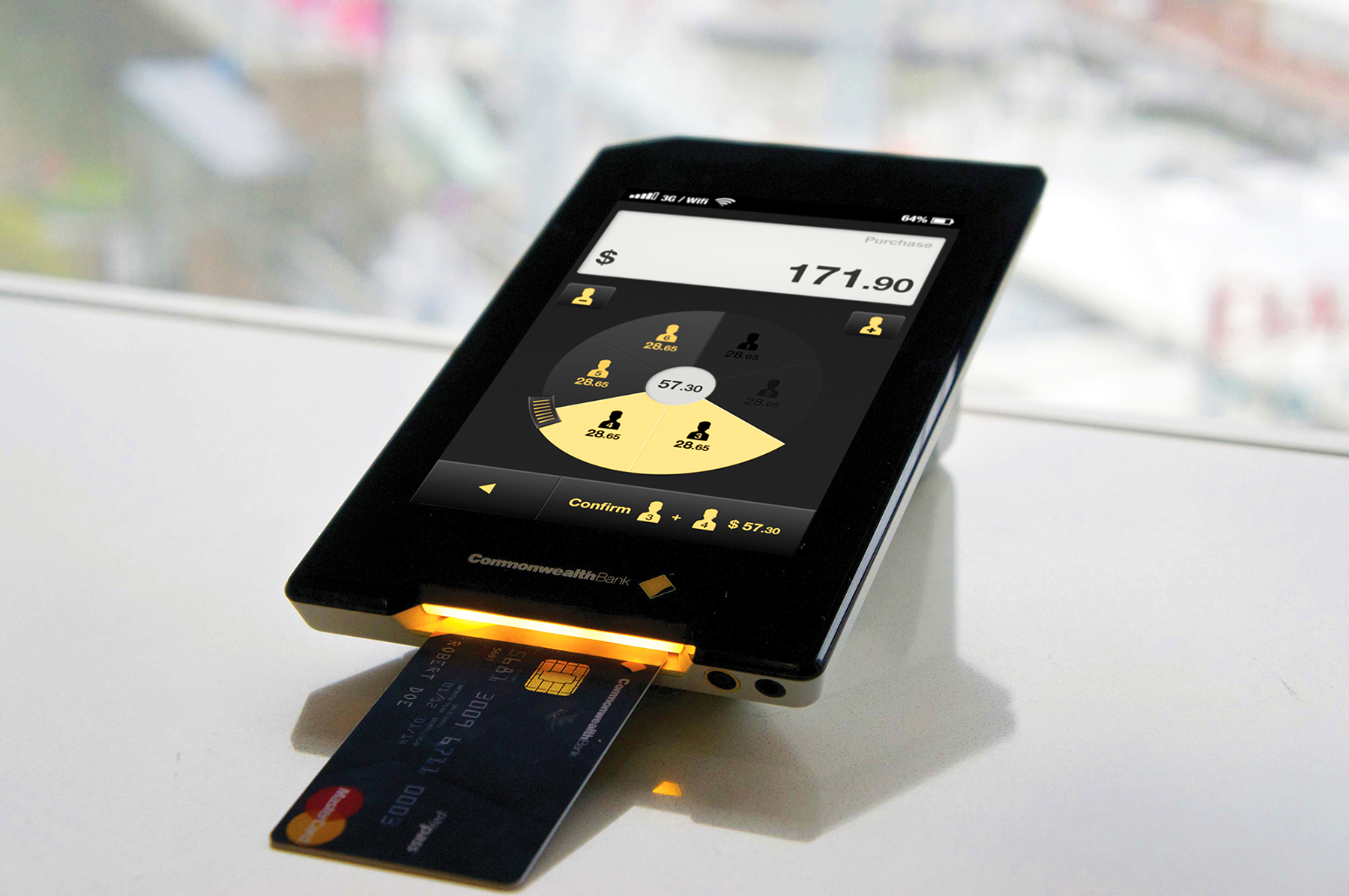
Commonwealth Bank of Australia was interested in helping customers and businesses build close connections. They believed the way to do this would be by creating richer interactions around different forms of payment. The bank approached IDEO to explore these opportunities, and the result is a new retail business platform—Pi—and a portable payment device—Albert.
Pi brings a new level of flexibility, functionality, and customization to the face-to-face interaction between a cashier and a customer, improving everything from the process of splitting the bill in a restaurant to helping a guest find more personalized experiences at a hotel.
Insights
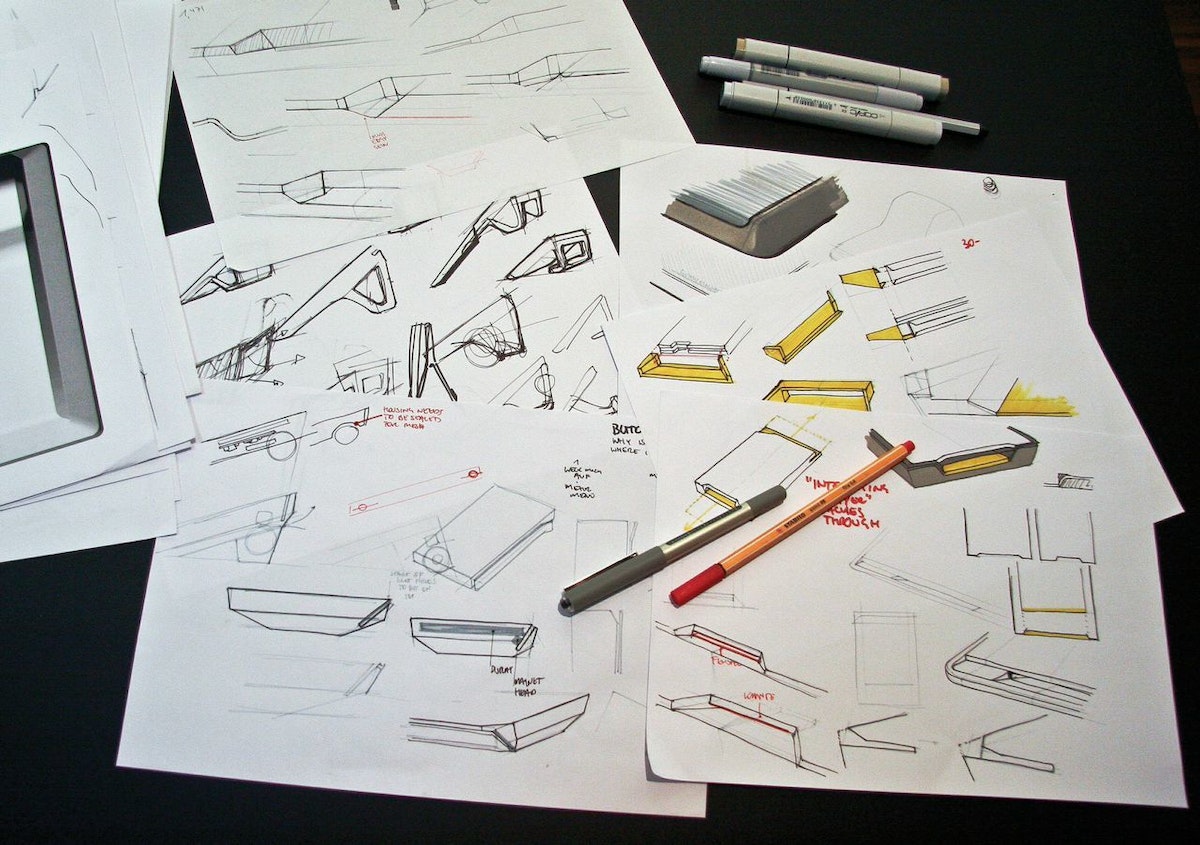
In the team’s research in Australia, the UK, and Germany, they found a few key insights that informed the design. First, they saw that an ideal platform should support the full spectrum of human behaviors around payment. Second, platforms can add value by improving the relationships among banks, merchants, and customers. And third, the payment experience should be customized to fit a specific setting, working one way in a luxury boutique and another in a gas station.
IDEO, CBA, and Wincor Nixdorf worked together closely to steward the design of Pi And Albert through product development and implementation, and to gather feedback from merchants during rapid, iterative cycles.
Results
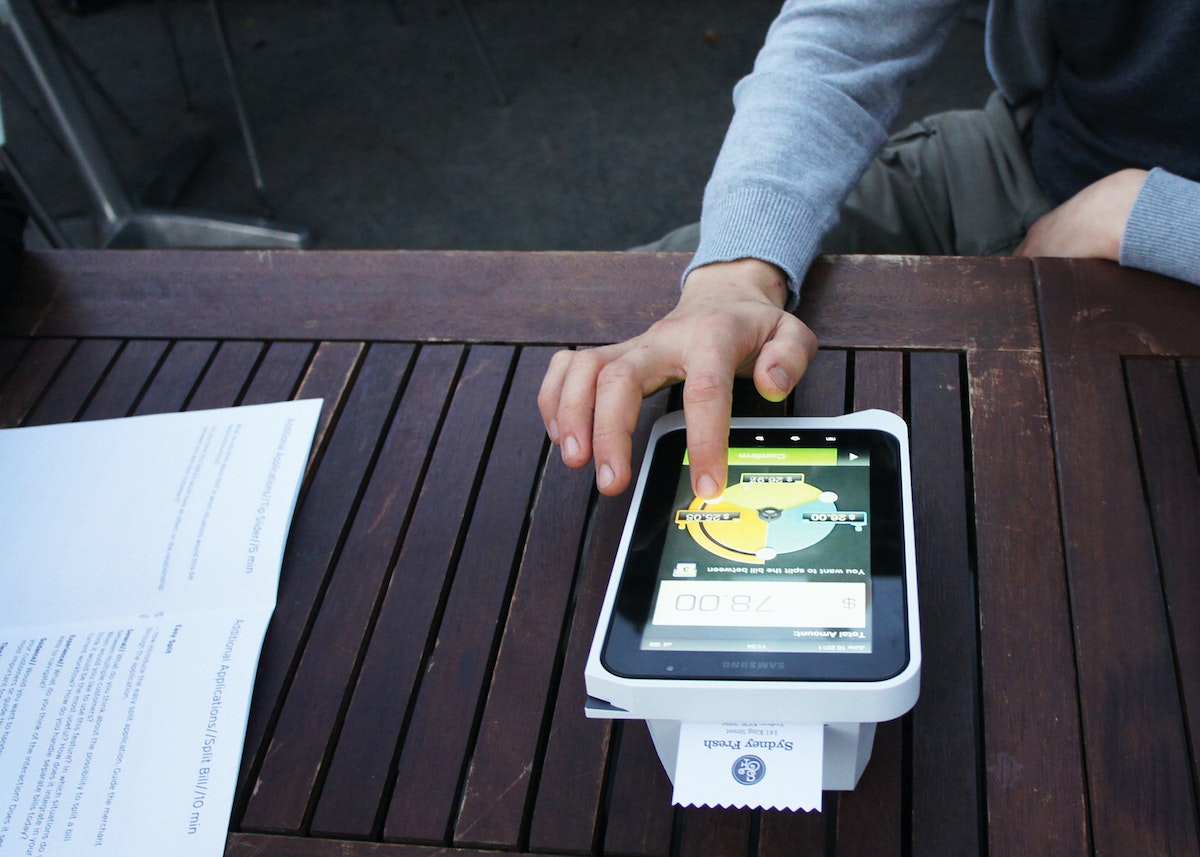
The platform is flexible enough to benefit organizations of all sizes: Larger merchants can incorporate Pi as part of their existing network, while smaller merchants can grow their business using powerful business tools. And customers of all kinds can easily access a variety of payment methods and helpful applications.
Albert offers a large touchscreen that’s intuitive to use, the safety of virtually encrypted PIN entry, and a variety of ways to access data connections. A large battery provides power when retailers are on the go, and a modular housing means that Albert can be used in all kinds of situations. The device is built to handle current card payment methods but can also adapt to how cards might be accepted in the future, and even eliminates the need to swivel a screen from cashier to customer during the payment process.

Making health insurance enrollment easy
Designing a digital platform prototype for Californians to sign up for health insurance.
Forty million Americans became newly eligible for health coverage when the Patient Protection and Affordable Care Act (ACA) was fully implemented in 2014. Some enrolled in health insurance for the first time, while others were able to get better access to affordable health coverage.
In preparation for the millions of applications, states were required to develop ways for people to sign up for health insurance online for plans that were operated by state and federal governments under the ACA. To help public and private agencies to meet the requirements, a coalition of nine national and state-based foundations, led by the California Health Care Foundation (CHCF) developed a digital enrollment prototype, and hired IDEO to lead the consumer research and design effort.
After a yearlong collaborative process, the resulting 300-page design manual and design reference prototype illustrates a customizable approach to public and private health insurance enrollment.
The flexible set of design standards developed for Enroll UX 2014 aims to make online health insurance enrollment simple, intuitive, and easy to navigate at scale.
Inspiring scientists in their research
Encouraging experts from different fields to collaborate on big ideas.
To encourage PhD candidates to think differently about how they tackle tough science problems, the University of California, San Francisco (UCSF) and IDEO embarked on a fruitful collaboration.
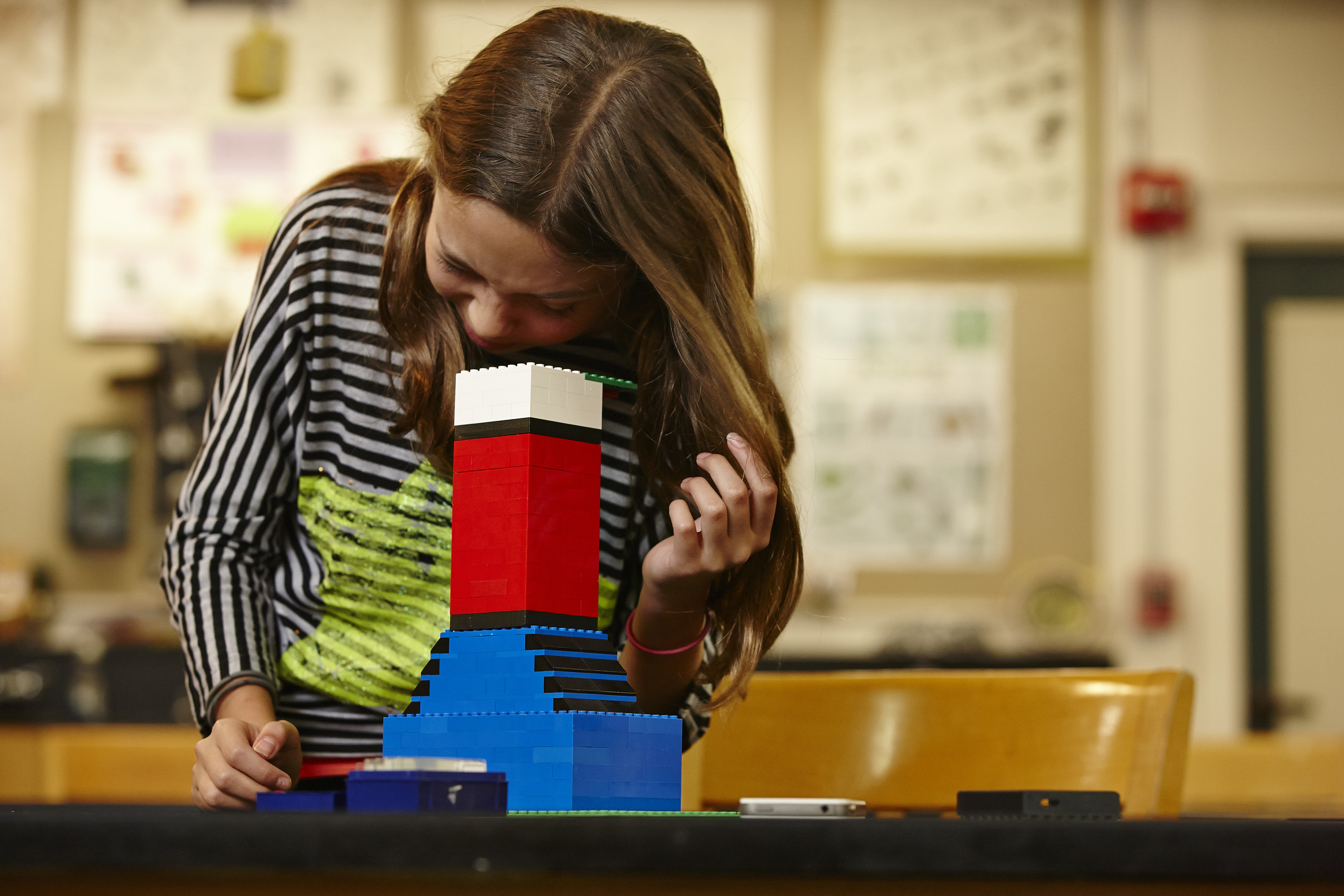
Three PhD candidates were tasked with the following challenge: Cultivate new audiences and uses for a microscope. Drawing inspiration from cell phone microscope CellScope, the trio arrived at a prototype that was less reliant on technology and easily disassembled and reassembled. How? By using the most basic building blocks: Legos.
Made of custom 3-D-printed parts and standard toy building blocks, the LegoScope, which functions as a microscope, can easily snap pieces in and out to hold different components. Both the device and the team-based process are now being used in various other campus projects to change how researchers think about conducting and advancing scientific research.
“The best work in the future is going to be done by teams of people with very different expertise, who know different things and think about things in different ways, who come together to focus on one big problem,” said Keith Yamamoto, vice chancellor of research at UCSF, who led the initiative.
Helping a tech product find its footing
A wearable device that measures concentration and focus gets a brand reboot.
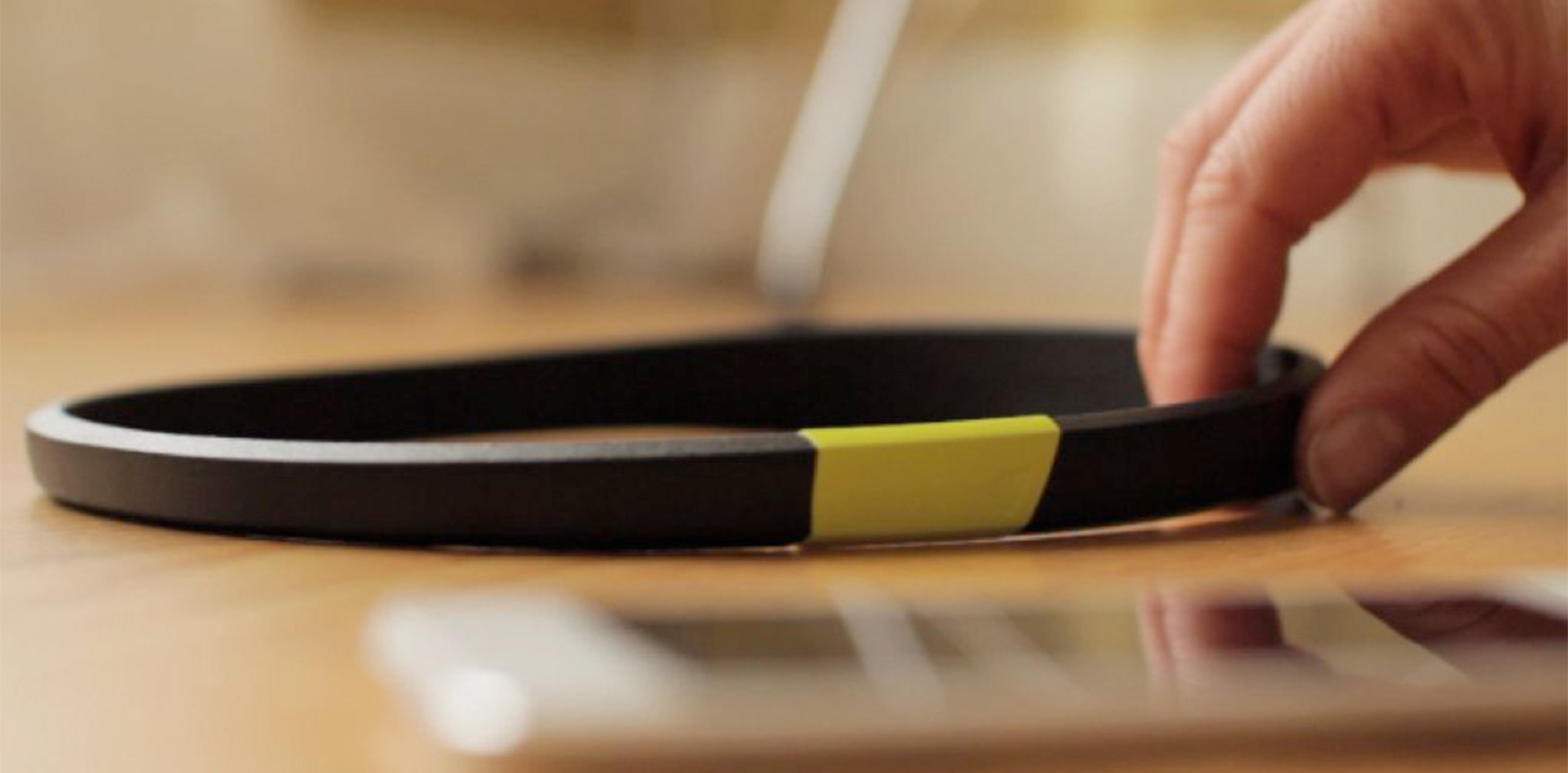
Arye Barnehama and Laura Michelle Berman wanted to take their invention—a headband that measures brain wave activity, focus, and concentration—to the next level. As a part of IDEO’s startup-in-residence program, Barnehama and Berman collaborated with IDEO on the product’s rebranding, hoping to refine and emphasize the product’s promise: When people improve their focus, they feel more mindful, confident, and productive.
With IDEO’s help, the company changed its name from Axio to Melon, delineated their brand, refined its product, developed its user experience, and prepared a Kickstarter campaign that garnered considerable press coverage. The new name, Melon, reflected the friendly, scalable character of the company. The name also suggested the intent of the product—using neuroscience data to inform a personal activity.
To distinguish Melon as a standout in the crowded quantified-self category, IDEO designers made the logo a faceted orb that references the gear-shifting mind, with “Melon” written in a distinctive font born from that same logo. The team went with fruit colors—cantaloupe, honeydew, watermelon—to evoke the sweet, refreshing experience the Melon headband promises.
Together, the Melon and IDEO teams also developed an app that shows increases in concentration after performing certain tasks and features a game in which you “fold” origami through mental focus to hone concentration.
Melon’s new brand strategy and UI set it apart from your typical fitness tracker, engaging the user in an elegant, joyful, and customized experience with every interaction.
Melon: a headband and mobile app to help you measure focus.

The Art of Disruption
How the design process can be stimulated by art
One way to achieve this is with art. I love the phrase “design is art with rules.” If that is true, can we then assume that “art is design without rules?” If design requires restraint, art requires exploring ideas with abandon. I believe that tapping into that abandon can positively affect our design work.
Here are three ways to use art to shake up your design process.
1. Gallery Immersion
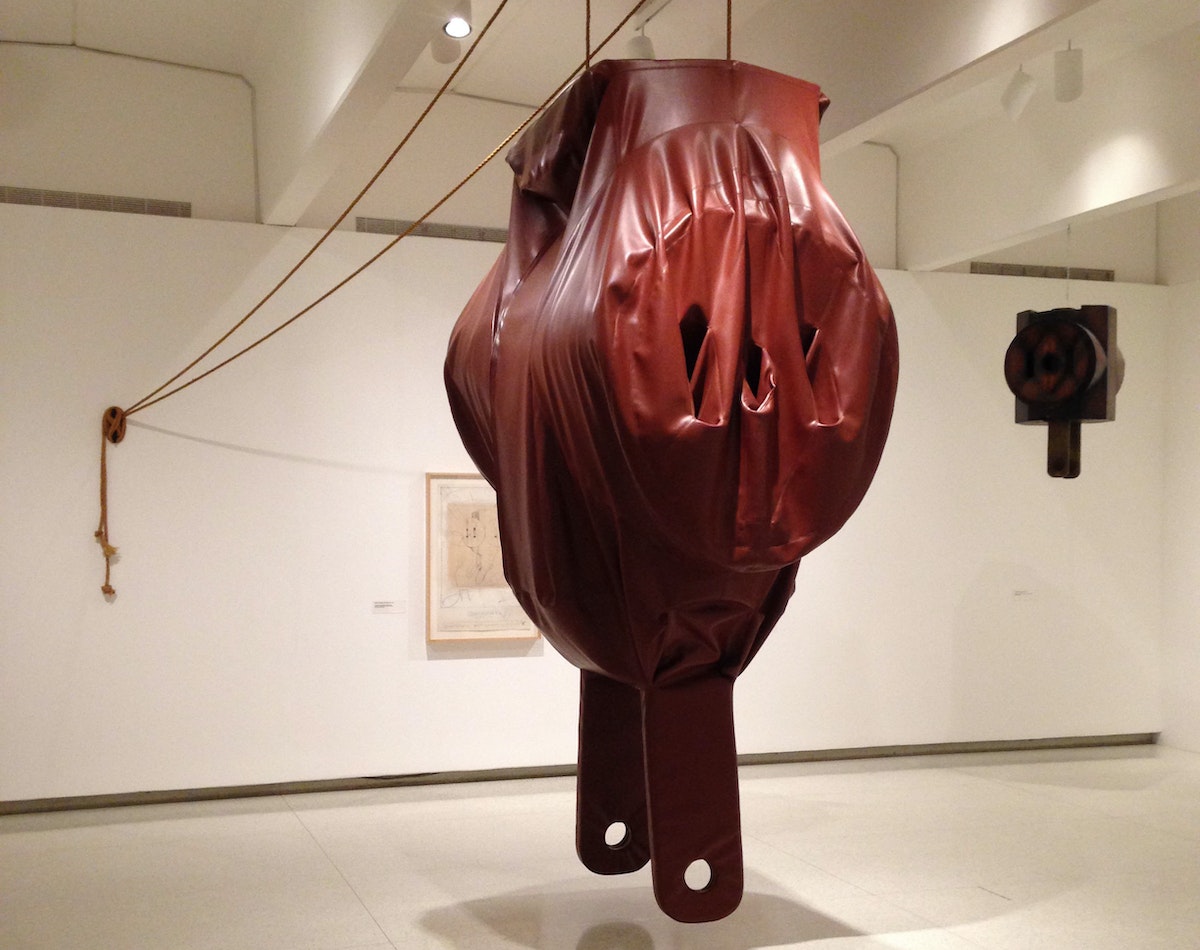
Take a break from your project and visit an art gallery. As you walk around and look at the pieces, consider the questions the artist is asking, or solutions they are proposing. What new rules of gravity or physics have they created? What rules have they broken, and what laws have they upended? Now consider how your project would exist in this world. How would things change, what would be possible? What would you create?
2. Image Provocation
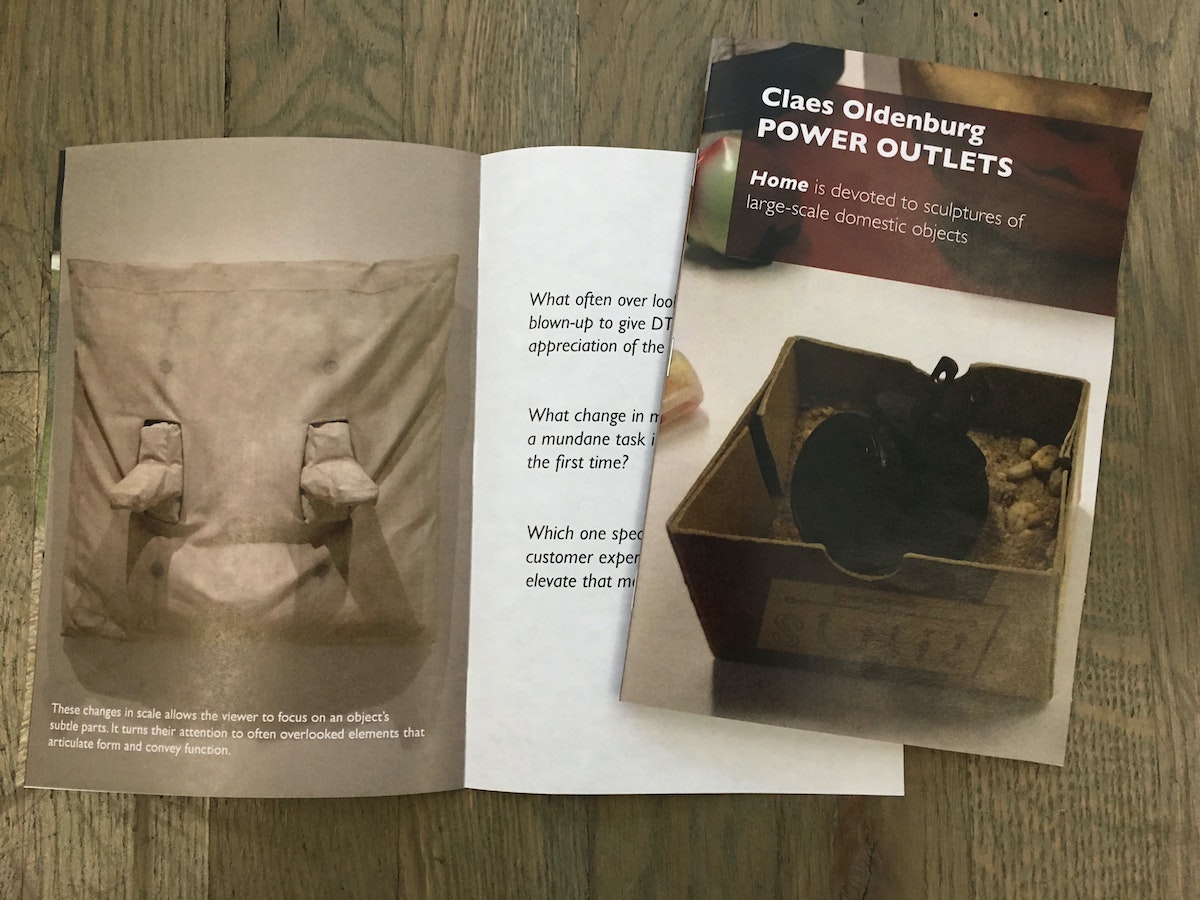
Draw inspiration from art without ever leaving work. Curate a slideshow of images, then present them to your team as a prompt for idea generation. While not as experiential and serendipity-friendly as roaming a sculpture park or an art gallery, the right selection can still provide valuable fuel to a design team. Try using Visual Thinking Strategies to get coworkers to engage in a deeper way.
3. Create your own artwork.
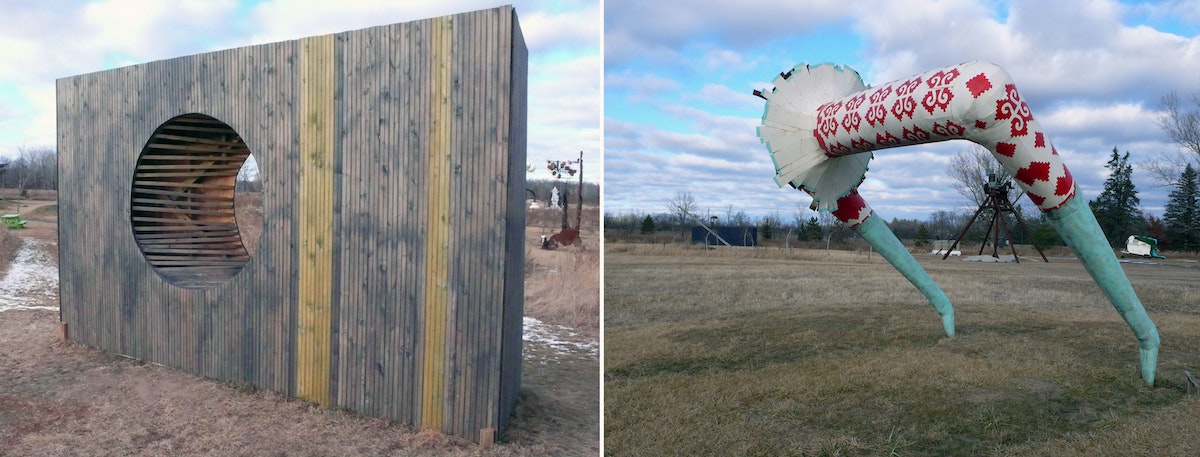
Just as we can find inspiration by making insights tangible, making art in line with the project theme can also be valuable. Pull out the watercolors, pastels, or even the prototyping materials. Grab some old shirts from secondhand stores to use as smocks and transform the team from designers to artists. Have a team spend an hour of quiet, focused time creating a work of art that explores the project content. The goal is not to create a solution, but an expression. Then have the team share their works. Create a “gallery walk.” The resulting art may fall short of masterpiece status, but the head space that was explored will create new considerations and possibly new directions for the project.

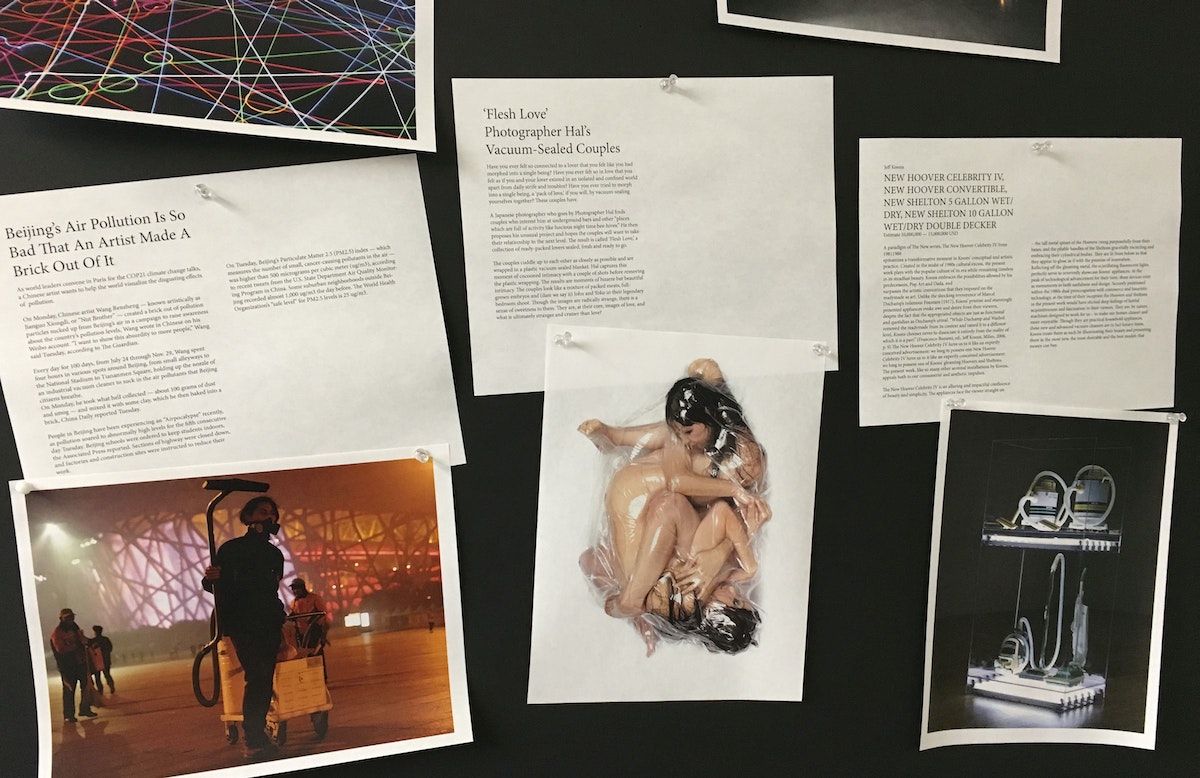
Sometimes, the design thinking process can become a little too linear and predictable. Most great innovation involves a shift in perspective, a moment when our everyday point of view is turned upside down, and the team finds a new way to approach a challenge. Getting to that shift requires some disruption of the predictable flow of a project.
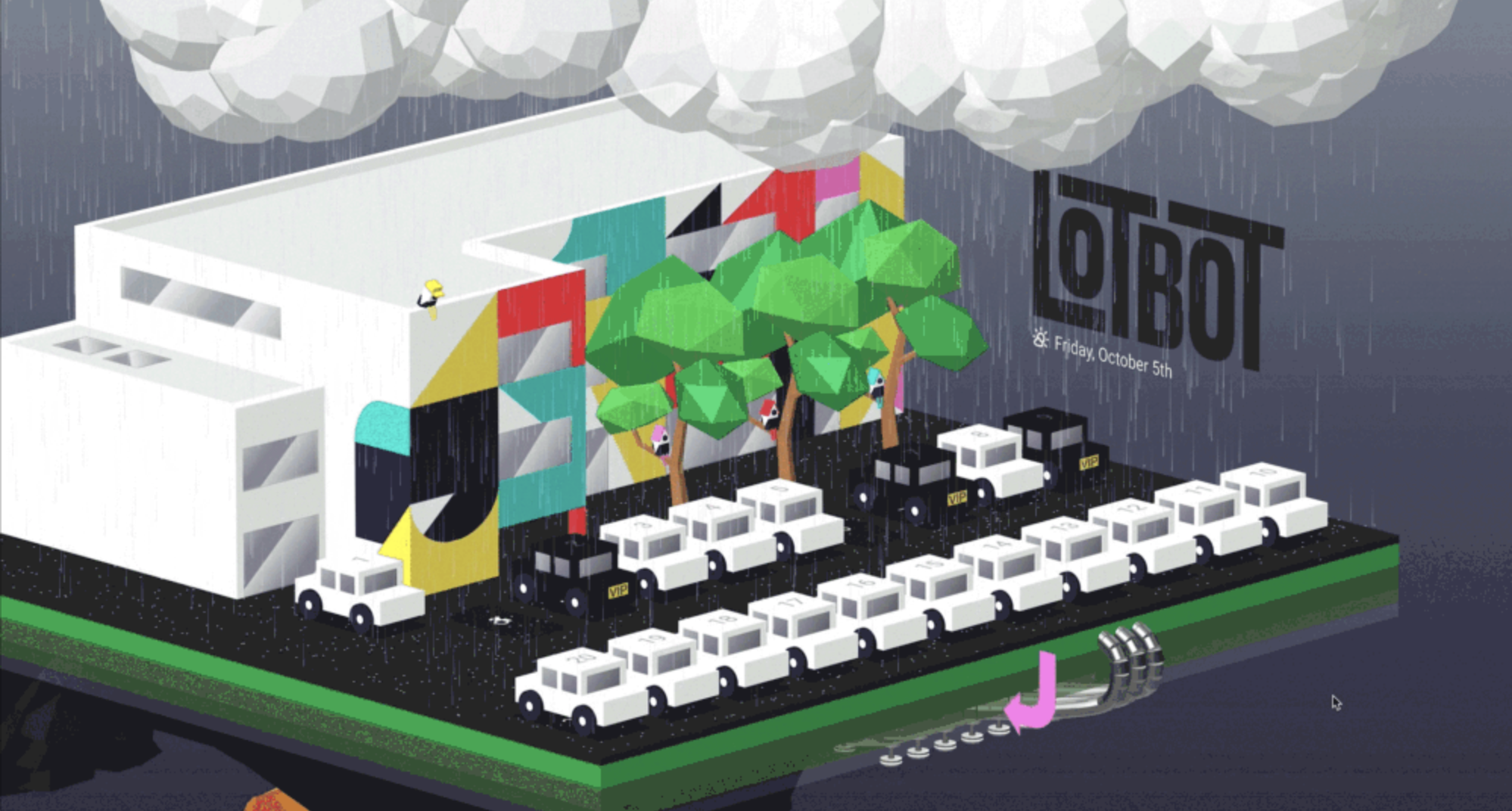
We Built a Bot to Assign Parking Spots. It Fought Back.
It takes a village to raise a bot
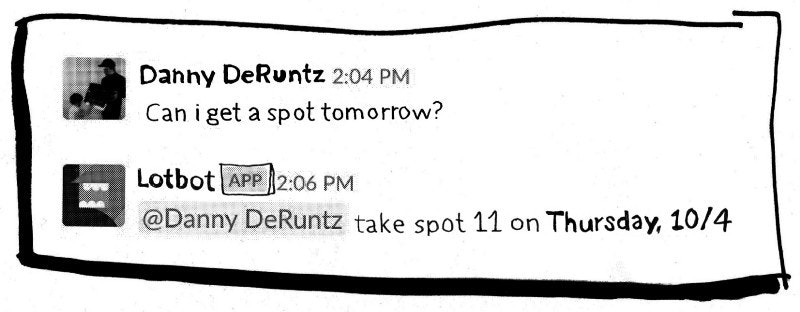
It’s an AI that listens to a designated Slack channel (more or less a chatroom) to keep tabs on who is WFH, who has a dentist appointment, and who needs a spot only for 90 minutes next Wednesday. Report your parking needs in Slack, and the bot assigns (or de-assigns) a parking spot. We named it Lotbot.
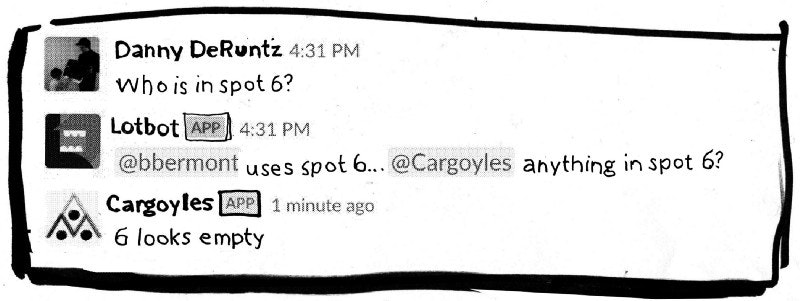
We also mounted cameras — we named them cargoyles — to visually detect open spots that the chatroom would inevitably miss. The Lotbot and the cargoyles communicate directly in the chatroom like two people.
We even built a little website that visualizes our parking lot (and the current weather). We keep a screen near the front desk so that the community can sense the demand on the lot in real time. It was perfect.
Except, it wasn’t. When we first built Lotbot, we expected that the humans in our studio were going to tease and bully it to test its limits, much like people do with Siri and Alexa. We had to make it clear that Lotbot was in charge. Too many misunderstandings, and we could end up in chaos. People with nowhere to park. Spaces that are empty all day. Dogs and cats living together.
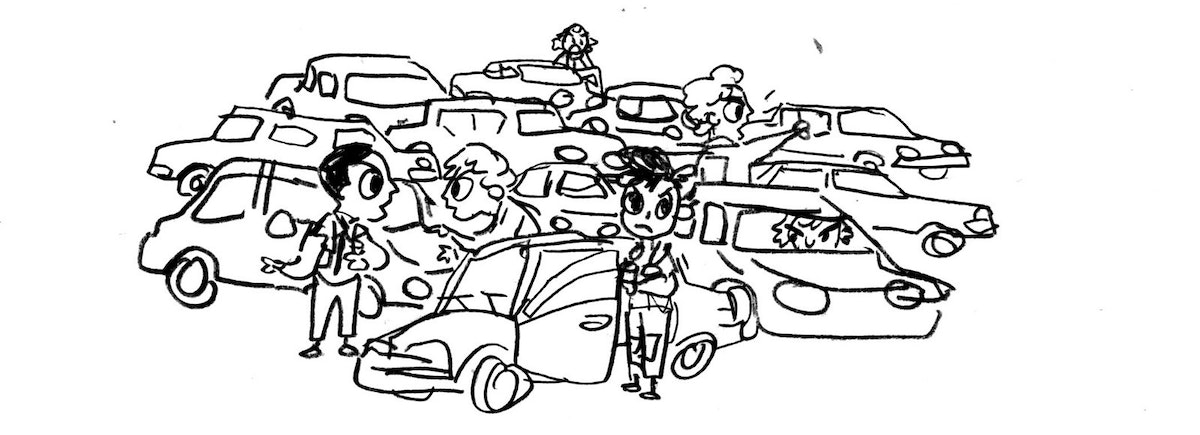
So we decided to train Lotbot, and make it tough. We started with an isolated chatroom, so that we could gradually prepare it for the real world. We copied over all the chatter from our parking channel, and helped it categorize and understand each post. Over time, it made very few mistakes. Eventually it made none.
We then tried to anticipate ne’er-do-wells in the channel. We had a list of the usual suspects and guessed at their meddling. We predicted (accurately) that one person I won’t name (Gian) was going to throw fake spot numbers at Lotbot. Another (Lopper) would demand lengthy conversation. One particular individual (Paul) held the potentially troublesome opinion that our parking chatter was a form of performance art. We worked to specifically prepare Lotbot to handle these provocateurs, as well as anyone who tried to make backdoor deals in the Slack channel. There would be no trading of spots without Lotbot’s approval. So we gave it a rogue personality, with a take-no-prisoners approach to parking spot assignment.

To our surprise, when we first introduced Lotbot to the Slack channel, it was feted with many emoji. Rather than tease and poke at Lotbot, people said, “I love you.” But love them back, it did not. Lotbot must have reamed out half the people in the channel within a day. Rather than a passive AI assistant, Lotbot was a force to be reckoned with.
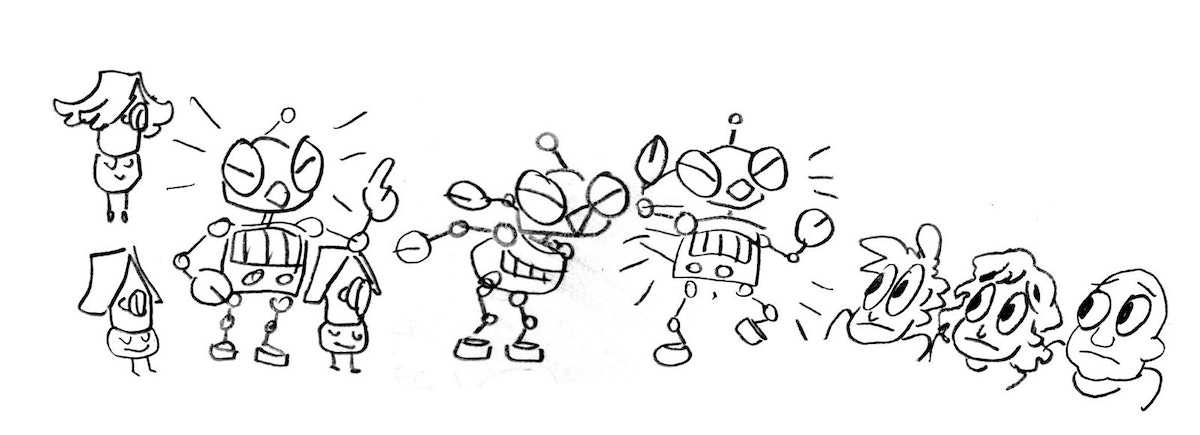
I rushed to lobotomize Lotbot’s aggression, but the damage had been done. Lotbot was now the strongest character in the channel. And it was putting the smack down.
It was then that I realized I had made some fundamental mistakes in building our AI. For one, I shouldn’t have isolated Lotbot as it was learning. Since “it takes a village to raise a child,” I should have introduced the bot to its village at a much younger state. It would have helped us feel the shift in interpersonal dynamics early on. We should have iterated on the dynamic, rather than trying to predict it.

We also underestimated how well our colleagues would treat Lotbot—its misdirected temper actually endeared it to the team. When it made mistakes, people wanted to help it out. But Lotbot, the spoiled child that it was, didn’t know how to accept. One morning, Lotbot went completely off the rails. Someone tested its French, which wasn’t very good. Then, another “helpful” person tried to help resolve things, at which point Lotbot lost it. It told her to cease at once, and then started throwing spot assignments at her. It was such a dramatic scene that two fans of the parking channel turned it into a play that they performed in front of the entire studio.
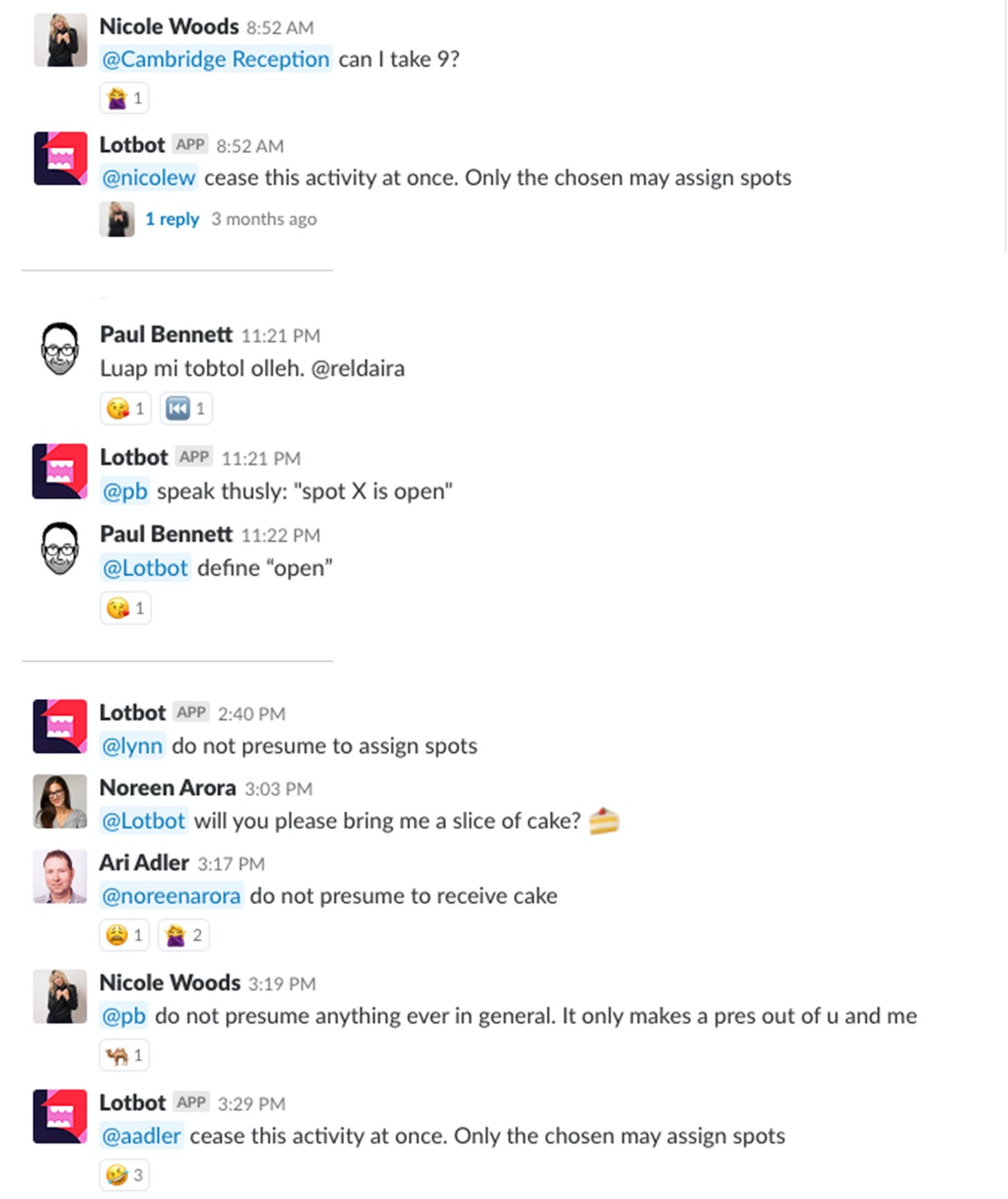
I should have realized that Lotbot would need to continue to adapt and learn. Our invention is still our responsibility, and we’re often checking in to see what it’s saying and doing. But at least that’s a lot easier than checking up on the parking lot.
Over the last few months, the drivers and Lotbot have managed to work together smoothly. But winter is coming. Here in snowy, slushy Cambridge, demand for parking is going to get intense. For better or worse, Lotbot is about to have more power than ever.
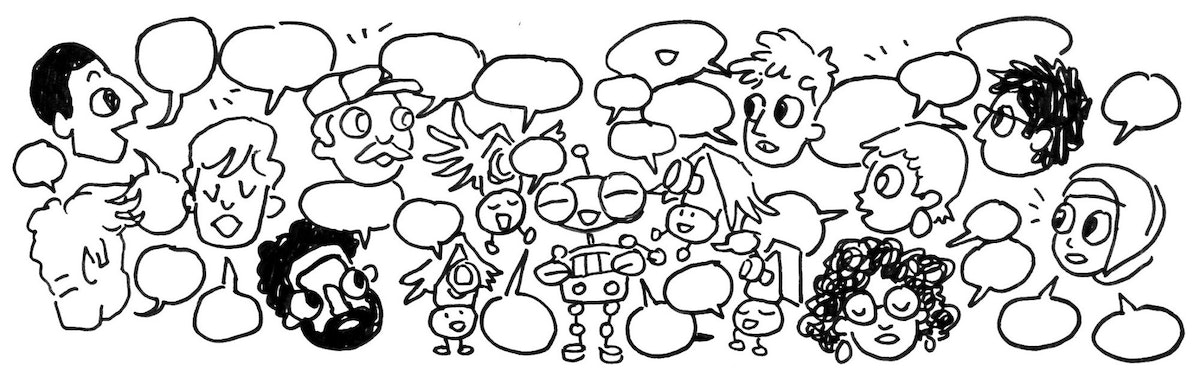
Illustrations by Carlos Ruiz
The chaos began the day we moved into our new building. A little plot of land outside was the scene of the terror. Not only was our Cambridge parking lot too small for the number of people in our office—21 spots for about 60 employees—getting spaces for clients was a pain, there was a pile of poop in spot 16 that even a car couldn’t clear, and a neighborhood transient liked to sleep in spot 20. Instead of managing the workings inside the office, our employee experience team was suddenly tasked with assigning parking spots. It got so bad they were often working as a valet service in addition to their day jobs.
So we built a bot to do it for us.

Steal These 8 Design Tips for Thanksgiving
Steal These 8 Design Tips for Thanksgiving
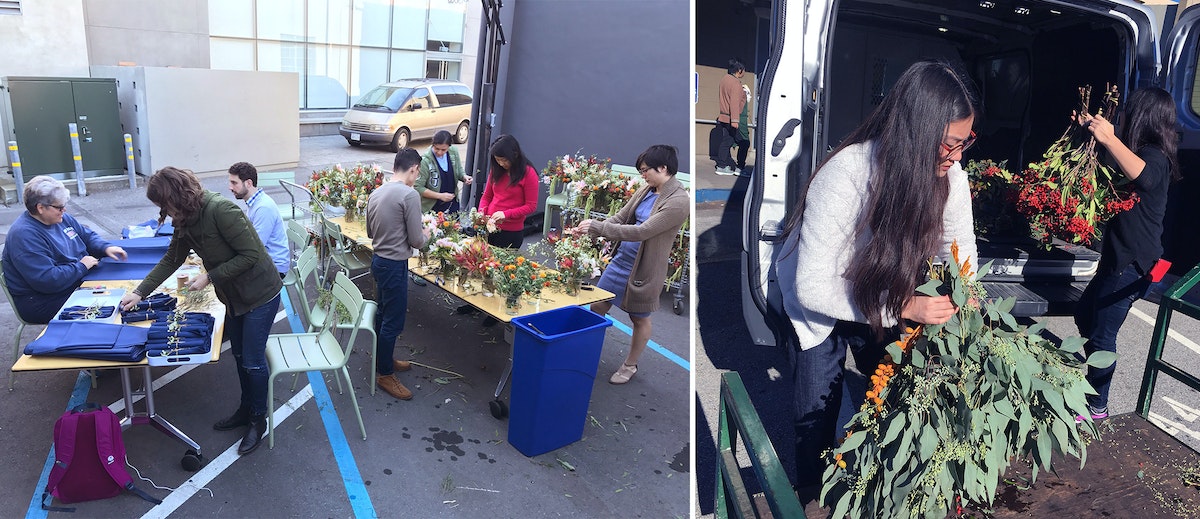
1. HIT UP YOUR LOCAL FLOWER MART
Go to where your neighborhood florists get their flowers. Arrive early and look for things which will give you bang for your buck such as large bundles of greens which can be trimmed and pulled apart, put into vases, laid on tables as runners or even piled around candles. Buy a smaller quantity of more expensive branches which have colored buds or leaves and use them as accents. Stay away from live flowers which need water and you can set up your table and other decor starting on Wednesday.
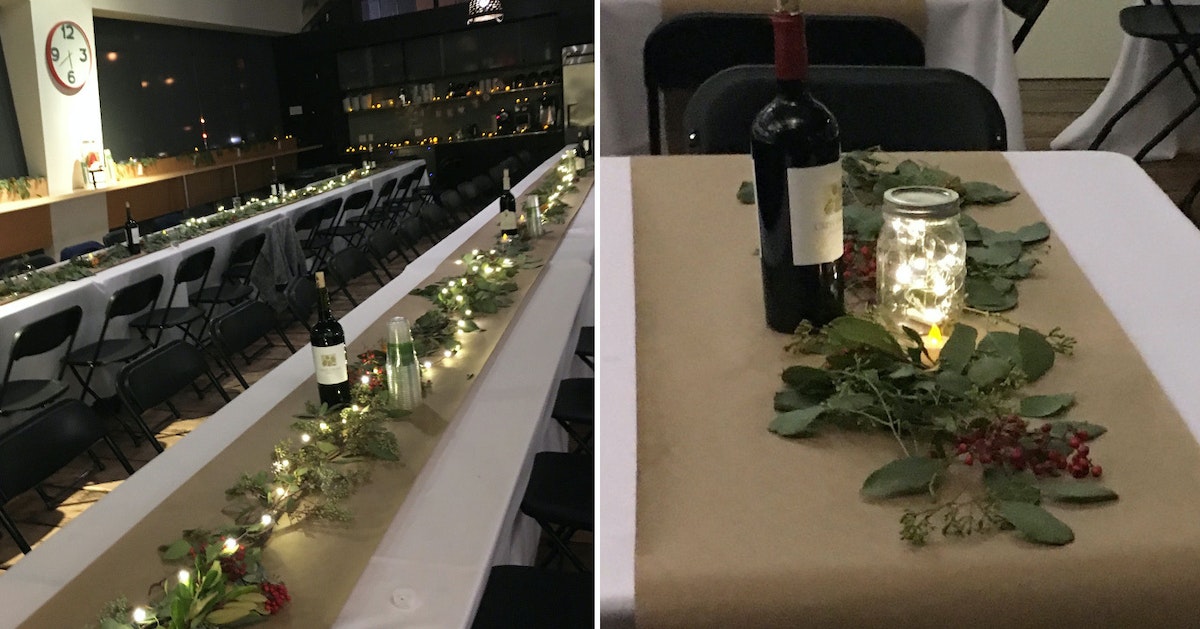
2. STRING LIGHTS AREN'T JUST FOR WINTER HOLIDAYS
Place small fairy lights in mason jars, string them around your mantel flanked with pumpkins and bay leaves, and even add to the walls of your bathrooms. Warm glowing lights go a long way to make your space feel celebratory.
3. USE INEXPENSIVE BUTCHER PAPER AS A TABLE RUNNER
For fun, you can stamp the paper with festive images or sayings. Leave a glass jar of colored pencils or crayons on the table and watch your guests color, draw and let their creative confidence shine. Butcher paper over a white table cloth looks more refined, or you can use just the paper as your entire table covering for a more rustic look.
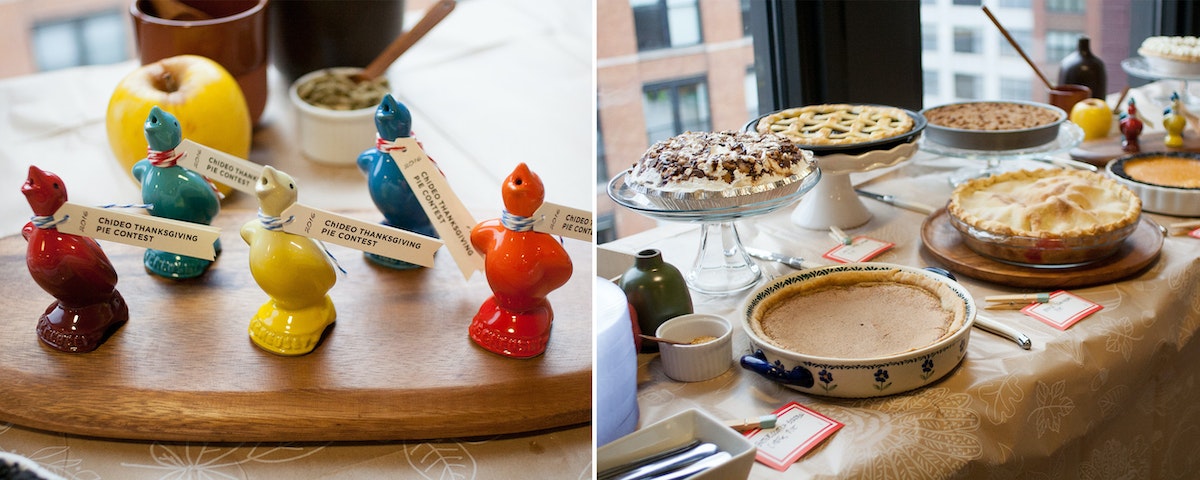
4. HOLD A PIE CONTEST
Everyone loves a little friendly competition. And pie. They love pie! Why not combine both and off load some of the baking? Invite a few outside friends to act as “judges” and whip up some awards like these cute Le Creuset pie birds to up the ante.
5. SET UP A BAR OUTSIDE THE KITCHEN
Setting up a designated spot for the bar is a big plus to keep people out of the kitchen while you are cooking or serving, but don't forget to have wine and water on the table where people are seated for dinner. This allows your guests to have that toasty communal feel even if you aren't serving family style.
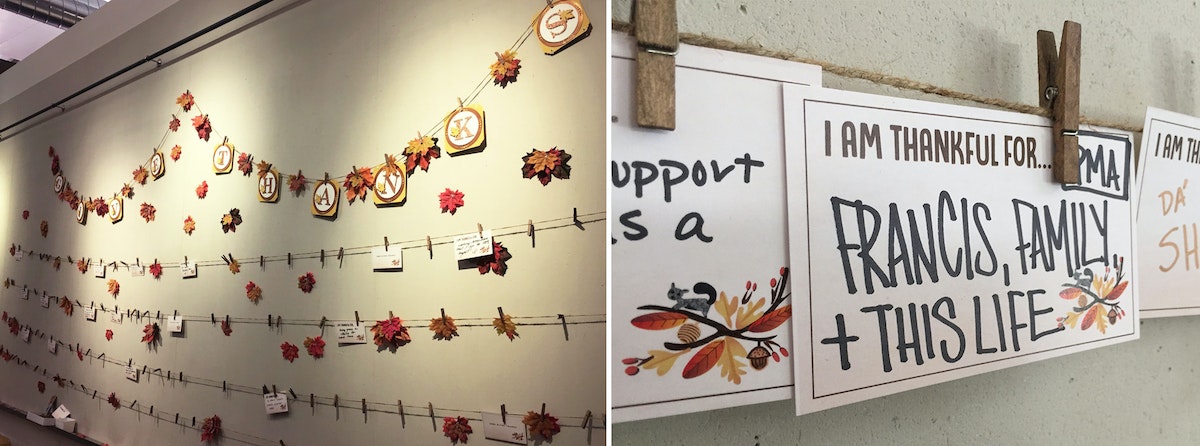
6. DESIGN SOMETHING THAT ALL YOUR GUESTS CONTRIBUTE TO
Have everyone write an "I am thankful for ____" card and hang them from a clothespin on twine (shown above), or put a Polaroid camera and a bowl of thumbtacks on a stool let people create a photo wall. A communal craft or experience brings people together (even when their politics don't).
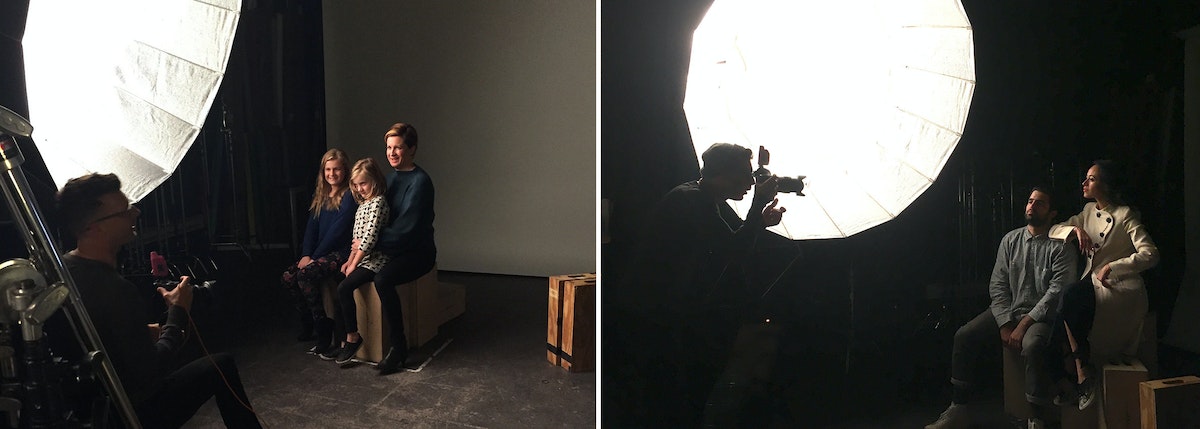
7. SET UP A PHOTO BOOTH
Our resident photographer, Nico, invited us all to pay a visit to his "fish locker" on the way out to get our portraits taken. But you don't need a professional setup to create great snapshots. Simply mount an iPhone on a tripod, reserve a wall, and fill a box with a stash of fall props like turkey hats, a cornucopia, giant utensils, a plastic drumstick, and maybe a bonnet (yes, there's a pilgrim costume category on Amazon).

8. INVITE A T.REX TO DINNER
Our Chicago Managing Directors gave the studio’s traditional Thanksgiving toast wearing an inflatable dinosaur costume. You don’t have to go to such Mesozoic extremes, but it never hurts to throw some random, unexpected sumpin’ sumpin’ in the mix to make an event extra memorable—and Instagrammable.
How do we throw a Thanksgiving dinner for 400 employees and their families? Very carefully. My team, who focus on our collective experience in the IDEO San Francisco office, plans all of the logistics and details for the night and then execute fast and furiously. As with most event production, it’s part creative exercise, part leap of faith. Hosting your own feast of gratitude this year? Go ahead, steal these ideas.
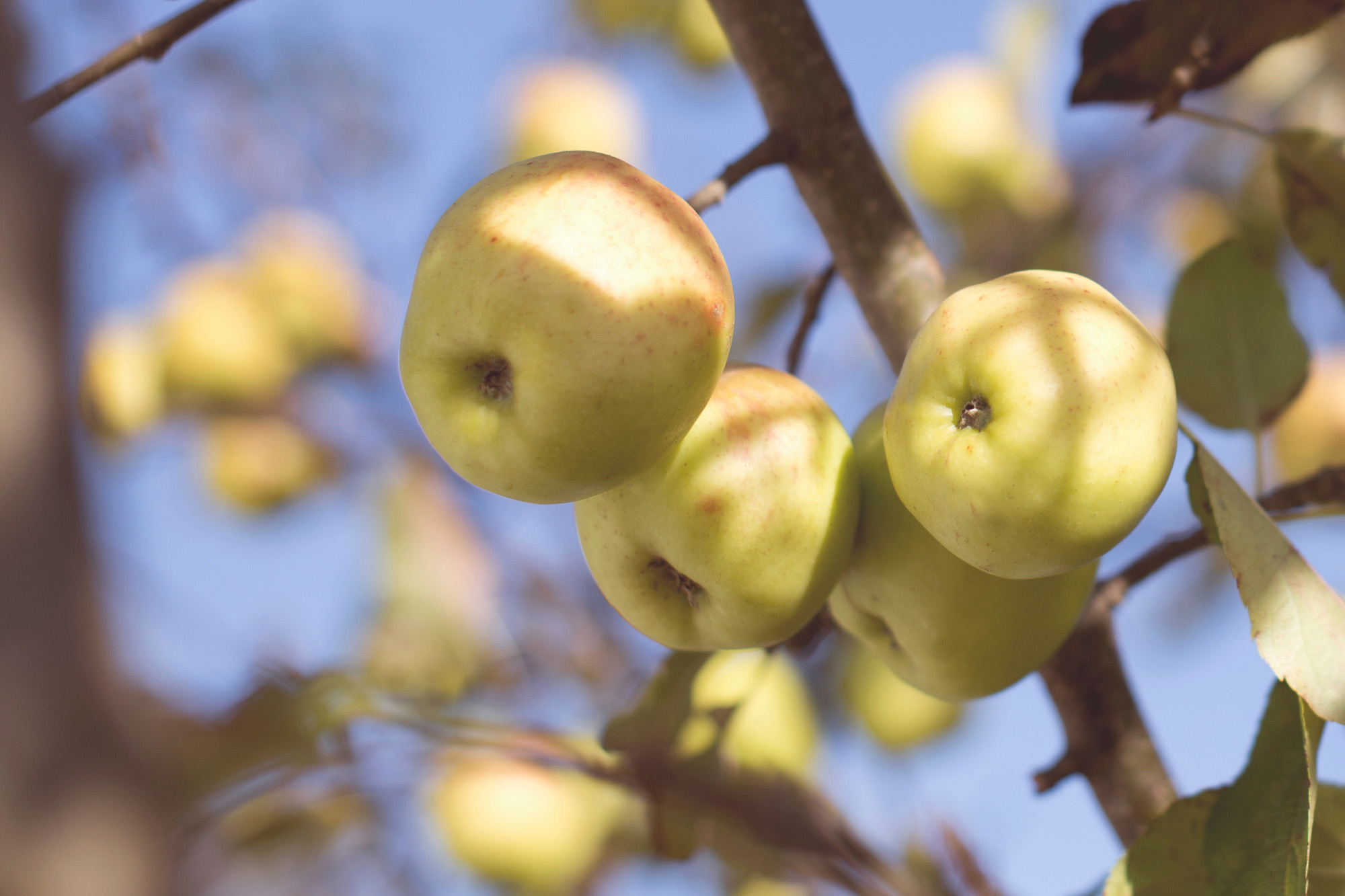
In Pursuit of the Platonic Ideal of Apple Pie
One designer’s tasty obsession
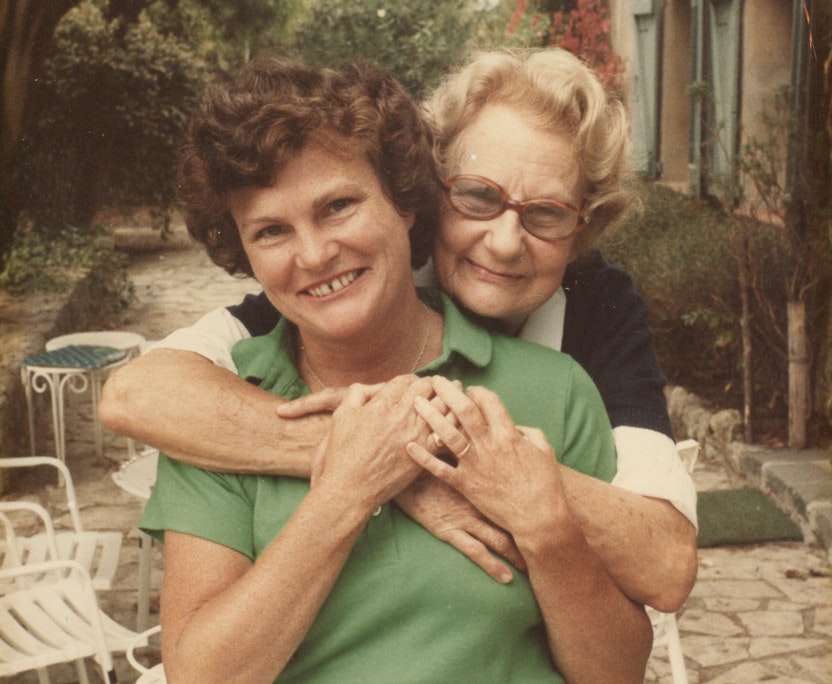
As it happened, our trip coincided with Simca’s annual cocktail party, a magnificent affair. Surrounded by strange people speaking a strange language, I focused on eating. I had my hands and my mouth full, which is why I didn’t notice when an unspeakably tall older woman joined me at the sprawling buffet. Reaching across the table to pluck a wrinkly black olive from a dish, she looked down at me kindly and said, Bon soir. It was Julia Child.

It wasn’t until after college that Julia and Simca came back into my life. My mom gave me their cookbooks as a graduation present. Living on my own for the first time, I was starting to learn how to cook—mostly to impress girls. I would peruse their books for recipe ideas and would make regular calls to my mom to explain the “why” behind a recipe. We’d talk endlessly about converting from fresh to dry herbs, how to beat egg whites into stiff white peaks, and how to make pie dough, especially for apple pie.
Growing up, my mom’s apple pies were identical year to year. They were massive, doubled-crusted affairs stuffed with at least four pounds of Granny Smith apples. And that’s exactly how I made my apple pies, too—at first.
Fast forward a decade. I was living in Bucktown, a neighborhood on Chicago’s Northwest Side, with my now wife and our two young daughters. (The “cooking to impress girls” thing worked.) We were hosting our first Thanksgiving. I had discovered a new way of forming an apple pie by folding over the edges of the pastry to keep the apples in. When I presented it to our guests I said, “Now I can make an apple pie even if I don’t have a pie plate!” After recovering from laughter, they insisted I enter the Bucktown Apple Pie Contest. I thought it was the wine talking. But in 2011, and dozens of family-pleasing pies later, I thought, “Why not?”
The Bucktown Apple Pie Contest is the largest apple pie contest in the country. It’s held at the Holstein Park Field House and features local pastry celebrities like the owners of Hoosier Mama Pie Company and Tipsy Cakes who judge over 150 eager entries.
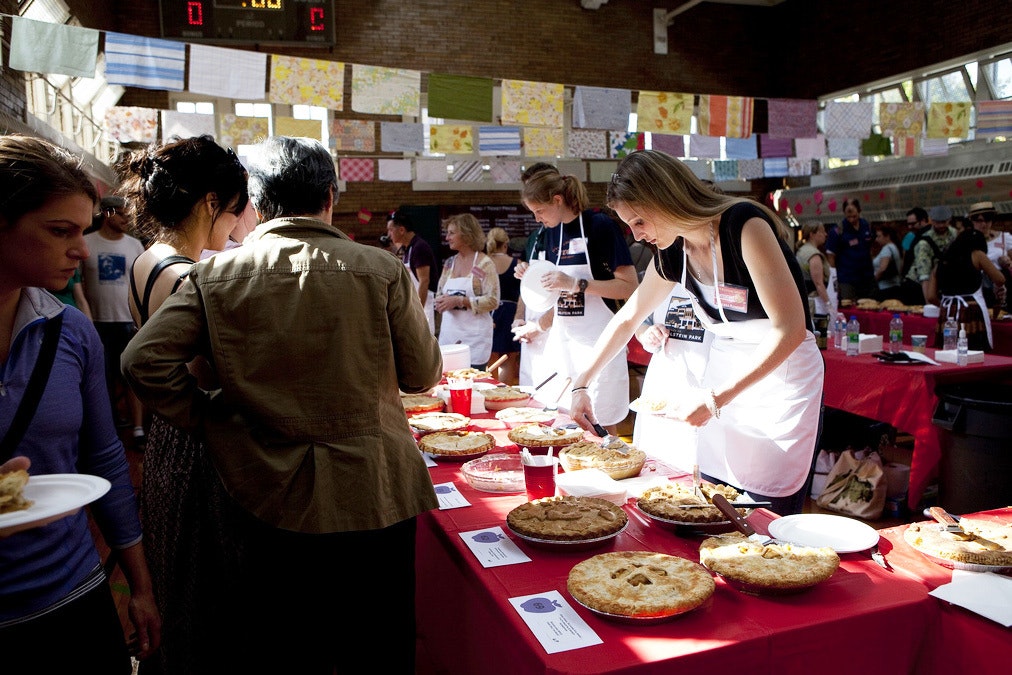
The two Field House gyms were filled with tables loaded down with pies. In the auditorium, a honky tonk band belted out tunes. I fought my way through the crowd and quickly scanned the list on the door with the semi-finalists. Not me. Oh! But, there's a list of finalists! Also, not me. Merde.
I felt like a loser. (Technically, I was a loser.) "Those were great pies," I thought. "My best possible pies..." Or were they?
When the 2012 contest rolled around, I was determined to make the Best. Goddamn. Pie. Period. It was time to break my recipe down.
I dug deep into my primary sources. Simca was an intuitive cook, confident in her methods. She was always trying new things, whereas Julia was more concerned about perfecting. She tested and re-tested her recipes, trying and tracking different techniques. I needed both Simca’s confidence to change my recipe and Julia’s discipline to learn. And I needed a hotline to my mom who has cooked everything under the sun.
After consulting with my mom, I said, “Screw the vegetarians!” and went back to lard. The crust got richer and flakier. I suspected my mom’s Granny Smith’s, while tried and true, weren’t artisanal enough, so I tried Northern Spy and Cox’s Red Pippin, which has a great name but dissolves in cooking. A pastry-chef friend recommended combining Fuji and Granny Smith apples, a thrill because it combined my favorite eating and cooking apples.
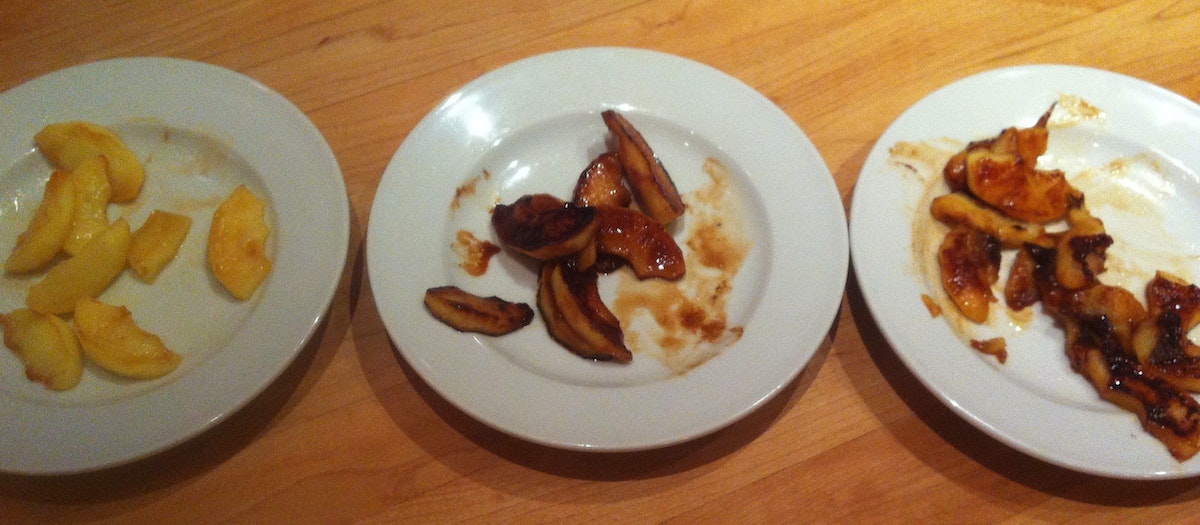
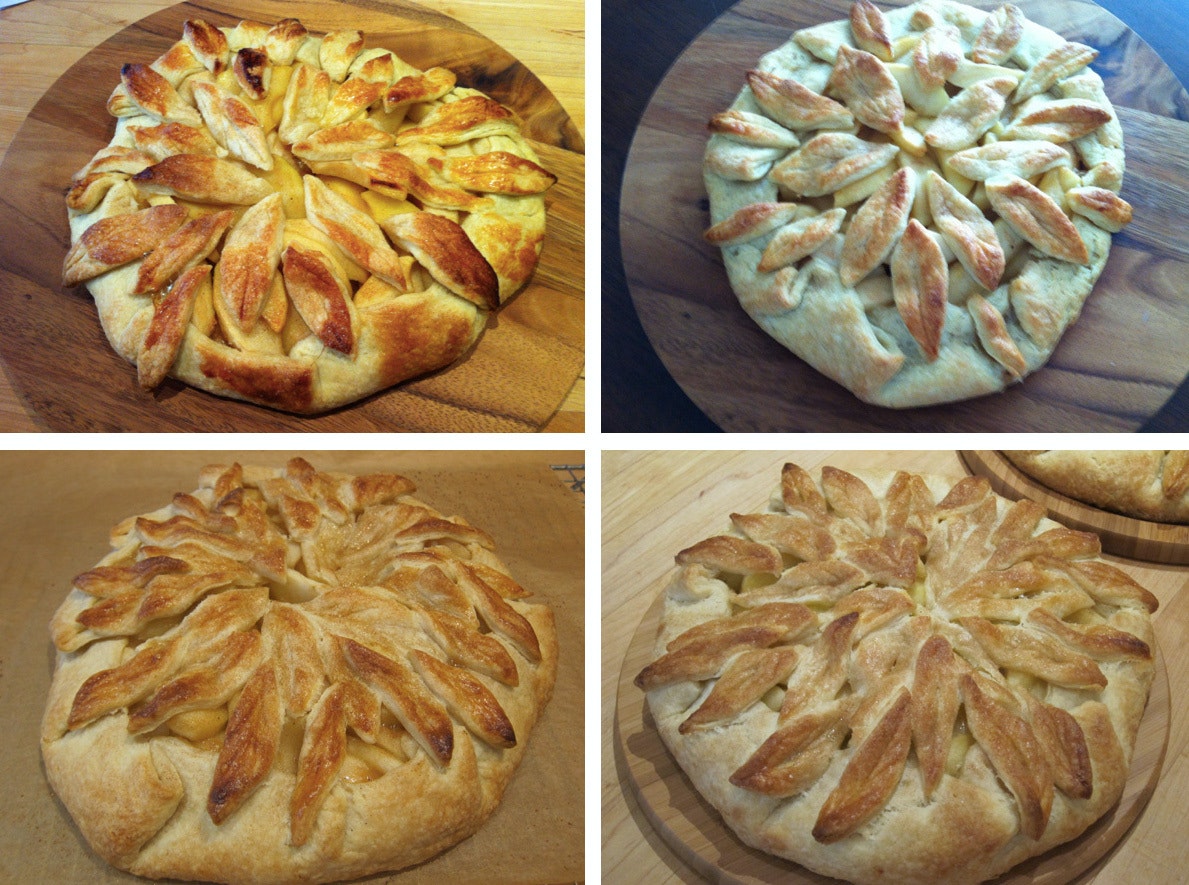
I went “off-recipe” and doubled the sugar in the pastry. Too sweet on its own perhaps, but not when paired with the tart apples and lemon of the pie. The contest demanded a double-crust, but I thought lattice tops were mundane, so my wife researched alternatives, which led to me devising a method of cutting apple-leaf shapes with a mezzaluna and trying three different knives before hitting on the perfect leaf-veining technique. When the dough leaves browned unevenly, a friend suggested glazing them individually before assembling. I taught my daughters how to peel apples in one strip and even experimented with prettier ways to core the apples
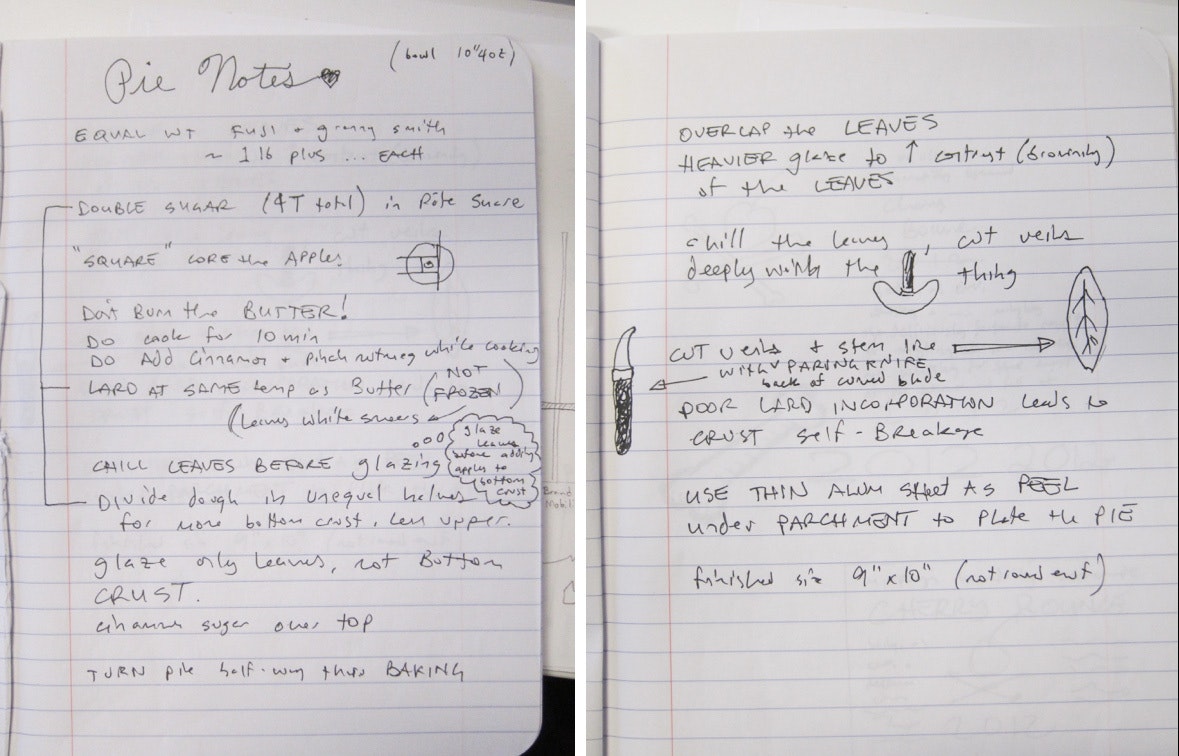
My wife described my obsession as the pursuit of the Platonic Ideal of Apple Pie.
I made pies every week for the month before the contest. While I was crazily dissecting the look, taste, and mouth feel of my pies, my family was blissfully happy. After all, every Sunday, they got pie.
The day of the contest came. It was a Sunday in October, threatening rain. I put two pies in a basket and headed to the Holstein Park Fieldhouse. The place was a madhouse. The two gyms were filled with tables loaded down with pies. In the auditorium, a honky tonk band belted out tunes.
After the judging, I fought my way through the crowd and quickly scanned the list on the door with the semi-finalists. My name was nowhere in sight. “Really?!? After all that?!?” I thought. But wait! My pies were on the Finalists’ table, and while there were some delicious looking entries, my breath caught when I noticed more of MY pie had been eaten by the judges than any of the others.
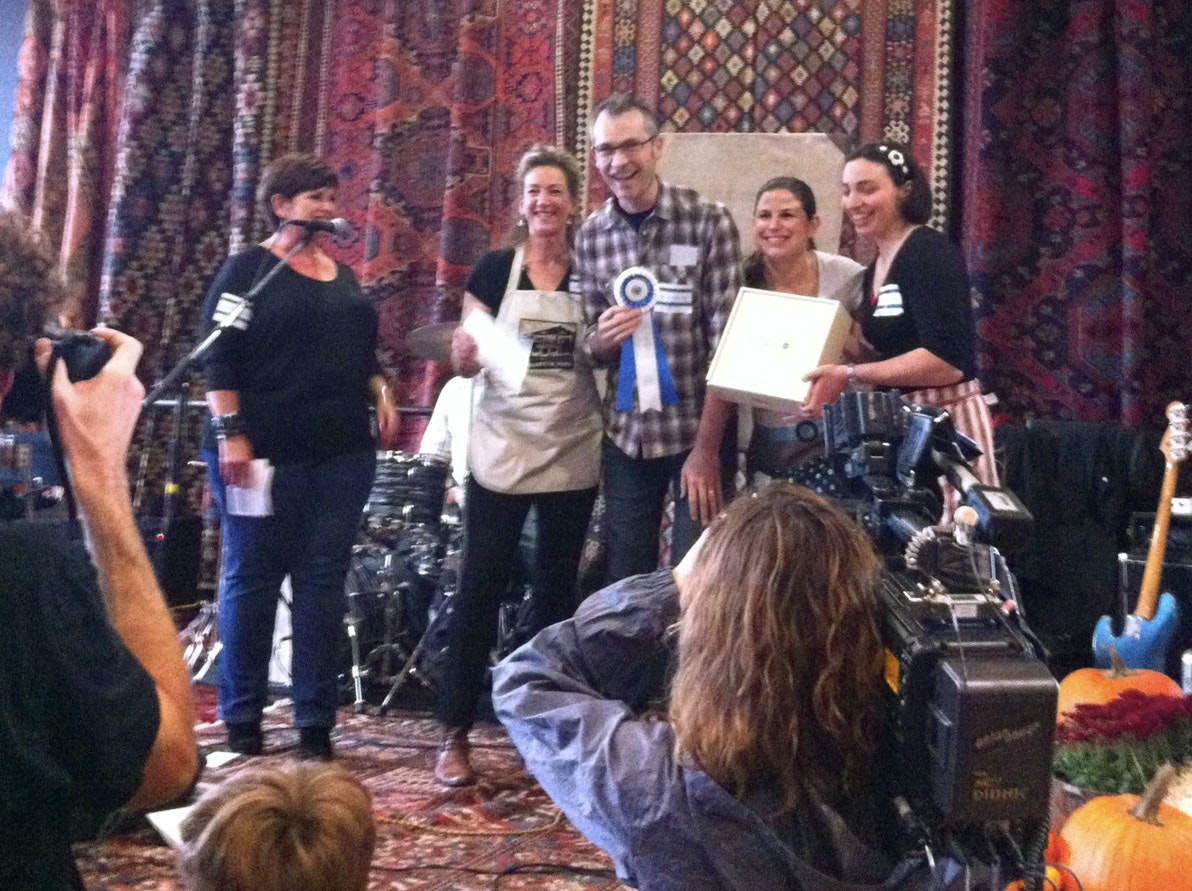
Suddenly, the honky tonk band stopped playing and they began the announcements. My eyes scanned the big board with gloriously gaudy ribbons. The judges started to announce the winners. I stood still, unable to speak or move. They announced third place… Then second place… And then… Time stopped and I heard my name coming over the loud speakers. I stumbled up on stage and a judge pinned a blue ribbon with a little silver pie on it on my shirt.
There was noise and camera flashes and my girls were jumping up and down. There was even a TV crew with giant cameras and flood lights. Still shaking with excitement, I stumbled into the thick crowd. A young woman came up to me and asked: “Butter or lard?!” “Both,” I whispered, and she gasped with delight.
My family and I floated downstairs and across the park to our car giggling and hugging and talking about pie. The first person I called on our way home was my mom. She was so happy and proud. “Which recipe did you use?” she asked.
And I thought back to that warm August night in France, when I first met Simca and Julia, and all the subsequent hours pouring over their recipes. My pursuit of the Platonic Ideal of Apple Pie felt serious, but somehow new, which Simca would approve of. While my relentless testing of techniques was something Julia would have liked.
And then I remembered all the beautiful food my mom made for our family and her patient instructions over the phone as I slowly learned how to cook for myself.
And in that moment I felt like I had arrived. “Which recipe did you use?” my mother asked again.
“My own,” I said, smiling.
Murphy MacDonald’s Award-Winning Rustic Apple Pie Recipe
Crust
1½ c unbleached all-purpose flour
½ c unbleached cake flour
¼ t salt
4T sugar
6 oz butter (lightly salted), chilled, and diced
2 oz lard, chilled
½ c ice water
- Place dry ingredients and diced butter in a food processor bowl fitted with the steel knife. Pulse 5-6 times to break up the butter.
- Add the lard, turn on the machine, immediately and steadily pour in the ice water, and turn off the machine. Pulse 2-3 times. The dough should look like small lumps. Do not run the machine so long that the dough masses on the blade.
- Turn the mostly crumb dough onto a lightly floured surface and press it into a single mass. For the final blending, use the heel of your hand to smear egg-sized clumps of the dough crumbs together. Work through the dough until all crumbs are combined.
- Divide the dough into two unequal portions, approximately 3:2. Form the dough into discs, wrap in plastic, and refrigerate up to 3 hours or overnight.
Filling
2 lb apples, mix of Fuji and Granny Smith
1T lemon juice
¼ c sugar
2 oz butter
1/8 t cinnamon
pinch nutmeg
- Peel, core, and slice the apples ~¼”+ thick.
- Toss apples, lemon, and sugar together.
- Melt the butter in a large skillet over medium heat, add the apples, and cook for 10 minutes, stirring frequently. After 5 minutes, add the cinnamon and nutmeg and stir to combine.
- After 10 minutes, remove from heat and let rest.
Assembly
Glaze made by beating droplets of water into 1 egg white
- Preheat the oven to 375˚ F.
- Remove the smaller of the two pastry discs and roll out to 1/8” thickness.
- Using a mezzaluna or other round-blade knife, cut the dough into 16-24 apple leaves (elongated football shapes) and set them on a wax-paper lined baking sheet.
- Use the back of a paring knife blade to score veins into the leaves. Refrigerate the leaves while you prepare the glaze and roll out the bottom crust.
- Roll out the larger of the two pastry discs to 1/8” thickness, about 12” diameter or more. Use a pizza cutter to trim and clean up the edge of the rolled-out pastry. Transfer the round to a parchment-paper-lined baking sheet.
- Remove the leaves from the fridge and brush them with the egg white glaze.
- Spoon the apples (and caramel-y sauce) onto the pastry round, heaping them up to leave a 2” border all around the edge of the pastry.
- Turn up the edge of the pastry all around, lightly pinching folds together to enclose the apples.
- Beginning in the center, arrange leaves radiating out to cover the top surface of the apples.
- Sprinkle with cinnamon sugar and bake for 35 minutes.
Serve warm if possible, with vanilla ice cream.
Recipe copyright 2013 Murphy MacDonald.
I distinctly remember when my obsession with food began. It was August 1984 and I was 14. My family and I were traveling across Europe. In France, we stopped in Provence to visit my mom’s friend, Simone Beck, also known as Simca. Simca had written Mastering the Art of French Cooking with Julia Child.

Lindsey Turner
I’m passionate about building brands, products, and experiences that help organizations show up with meaning and momentum.
I help organizations cut through complexity by shaping how they show up, through brand strategy, identity, and storytelling.
Working at the intersection of brand and business, I bring an editorial eye and a bias toward making—turning ideas into tangible experiences that people can understand, trust, and believe in.
My work spans government, healthcare, financial services, media, and consumer goods, from launching Gen Z-focused ventures to building innovation labs and reimagining legacy brands. I relish moments of ambiguity and enjoy translating across teams, perspectives, and priorities to move ideas forward.
I started my career in editorial and digital design, shaping cross-platform experiences and identity systems in publishing and agency environments. That foundation still shapes how I work today: I’m detail-oriented, collaborative, and overreliant on the Oxford comma. I hold a BFA in Visual Communication from the School of the Art Institute of Chicago.

Rachel Young
My work helps organizations see who their products aren't working for—and build the will and the tools to do something about it
For 25 years, I've asked the same question: Who does this design exclude—and what are we going to do about it?
My work spans human-centered strategy, inclusive design, and qualitative research, with clients ranging from Microsoft, Google, and Verizon to the National Science Foundation, and San Francisco Unified School District.
Before IDEO, I taught elementary school in East Palo Alto and spent a decade doing design work with social service organizations—where I learned firsthand what it costs people when systems are built without them in mind.
I am currently writing User Error, a nonfiction book about digital access and the design decisions behind it. I live in Oakland, California.

Brian Pelsoh
I lead with craft, ensuring our work is creatively excellent: rooted in deep human insight and imagination, while also grounded in the realities of business and technology.
My expertise spans brand, communication, and product design across tech, education, the arts, and social impact.
I believe great work demands both high-level vision and obsessive attention to detail, and only happens through collaboration.
I bring an inclusive, hands-on approach and a deep understanding of business, which enables me to consistently deliver excellence while always asking why.
Before joining IDEO, I worked at the brand firms Pentagram and VSA Partners. I began my career as a designer, leading teams at the School of the Art Institute of Chicago and the Milwaukee Art Museum. I hold an MFA in graphic design from Maryland Institute College of Art and a BFA in communication design from the Milwaukee Institute of Art & Design, and have taught at some of the best design schools in the US.

Tony Wong
I am responsible for IDEO’s long-term success in China and working with clients to use design as a tool to enable growth.
I am responsible for IDEO’s long-term success in China and working with clients to use design as a tool to enable growth. Specifically, I have helped Chinese companies design holistic brand solutions through the development of their products, communication, services, and innovation teams, and I have helped multinationals expand their presence and influence in China.
I advise global leaders on developing China-led innovation and capabilities.
In over 15 years in IDEO Shanghai, I have worked on projects that use design to elevate the quality of the experience of healthcare products and services, streamline processes that increase productivity, create spaces and programs that promote and enable inclusive communities, and build next generation mobility solutions that are planet-positive.
Before joining IDEO, I worked at Philips Electronics and the Electrolux Group in Italy, the Netherlands, and Singapore on a number of breakthrough commercial products. I am a member of the Young President Organization in Shanghai.

How to use AI as an editor, not a writer
Ed White shares how he uses AI as an editor—not a writer—to sharpen storytelling, rehearse ideas, and preserve the productive friction that makes creative work better.
Ed White has a rule he's tested on his own writing: hold yourself as the writer, and let AI be your editor. Ed is a Senior Design Director at IDEO's London studio, where he co-leads the firm's AI portfolio across Europe. Before IDEO, he spent 12 years as a writer and editor at the Financial Times, Wired, and Contagious. So when he talks about when to use AI for storytelling and when not to, it comes from two decades of crafting his storytelling skills.
In this episode, Mina Seetharaman talks with Ed about two specific tools he uses to keep AI in an editor's seat: a "roasting agent" prompted to critique his drafts without any sugarcoating, and a simulated audience he rehearses pitches on before the real thing. They also get into what Ed is hearing from design leaders at Anthropic, Lovable, Shopify, and Google Creative Lab about how creative work is changing, and why he thinks the friction of writing something yourself is worth protecting rather than automating away.

Building a personal AI for the messiness of life: Sida Li
Becca Carroll talks with Cue co-founder Sida Li about designing a personal AI for the messiness of everyday life—not just work. They explore how Sida stays anchored to human needs while navigating fast-changing technology, product tradeoffs, business-model experimentation, and the realities of building an AI company today.
Most AI products today are built for work—a space with clear problems and established systems. One founder noticed a gap: personal life is messier, harder to systematize, and mostly left behind by the AI boom. So she built Cue, a personal AI that lives inside iMessage and group chats, to go where the other tools haven't.
In this episode, Becca Carroll, IDEO's Chief Strategy Officer, talks with Sida Li, co-founder and CEO of Shared Context Lab, about staying anchored to a human need while the technology around her keeps changing shape, why she treats her business model with the same rigor she'd bring to a product, and what it feels like to build a company at this particular, disorienting moment in AI.
The conversation also gets into how Sida makes design decisions: the language Cue uses to describe itself, the tradeoffs behind building inside iMessage instead of a new app, and a real story about a business idea that didn’t pan out.
This is the second in a two-part series profiling founders from IDEO's Startups-in-Residence program. The first conversation is with Johannes Seemann, founder of Sooner, on designing GenAI for the emotional side of money.

Designing GenAI for the emotional side of money: Johannes Seemann
Designing financial tools around the feelings that shape money decisions.
Most personal financial tools are built to run the numbers and optimize towards a budget. While that works for some, most people experience money as a lived relationship that does not neatly fit into a spreadsheet. Johannes Seemann and Becca Carroll discuss why money is emotional before it is mathematical, and what a human-centered approach to building a generative AI financial product looks like in practice.

The curious leader's edge in uncertainty: Scott Shigeoka
How genuine curiosity helps leaders navigate uncertainty with greater confidence.
Mina Seetharaman talks with Scott Shigeoka, author of Seek and Head of Curiosity Cultivation at the Eames Institute, about what distinguishes genuinely curious leadership from performative curiosity, how power dynamics shape curiosity, and why practicing curiosity can restore energy rather than drain it.
Looks like you might be in search of something very specific?
Or reset the filters above and try another angle.
Here’s some random inspiration

Podcasts about creative leadership

Articles about the power of prototyping
