
.svg)



A design partnership that changed electronics
An influential and award-winning long-term collaboration between Samsung and IDEO.
Since the early 1990s, Samsung and IDEO have shared a history of influential and award-winning collaboration. Together, the two companies have worked on more than 50 projects, the offerings created by this partnership spanning a broad spectrum, from a series of conceptual multimedia devices to industry-changing monitors, TVs, laptops, mobile phones and interfaces, computer peripherals, and mobile platform strategies. But beyond the design of products brought to their global market, the Samsung/IDEO partnership used the human-centered design approach to produce the innovation that ended up transforming the electronics giant’s entire business.
After years of being an industry fast-follower, Samsung approached IDEO with the idea of an immersive cultural exchange. Samsung designers, marketers, and strategists came to Palo Alto and set up a studio near IDEO to learn everything they could from the US consumer market and IDEO’s design approach. Together, the teams began to design groundbreaking electronics products, while using design thinking to look at the entire business through a new lens. By putting users at the center of the process, and beginning to understand their needs and emerging behaviors, Samsung found it could not only satisfy existing customers, but also begin to anticipate market shifts. This tipping point led Samsung to evolve into a market leader.
Samsung and IDEO created a design powerhouse, following a journey from designing products to services to experiences, interactions, and innovation that moved Samsung away from consumer electronics toward an even bigger market of back-end services and interactive and systems-based services.
Culturally, the partnership with IDEO has helped Samsung adopt new ways to integrate internal teams, a human-centered design approach and iterative prototyping, and the methodologies to merge technology and design to create a leading-edge consumer line and brand. As evidence of Samsung’s rise to being one of the world’s largest design-driven companies, the company has more than doubled its internal design teams since 2000, according to the article “Samsung Design” in BusinessWeek Online.
Some of the projects include:
LCD Computer monitors
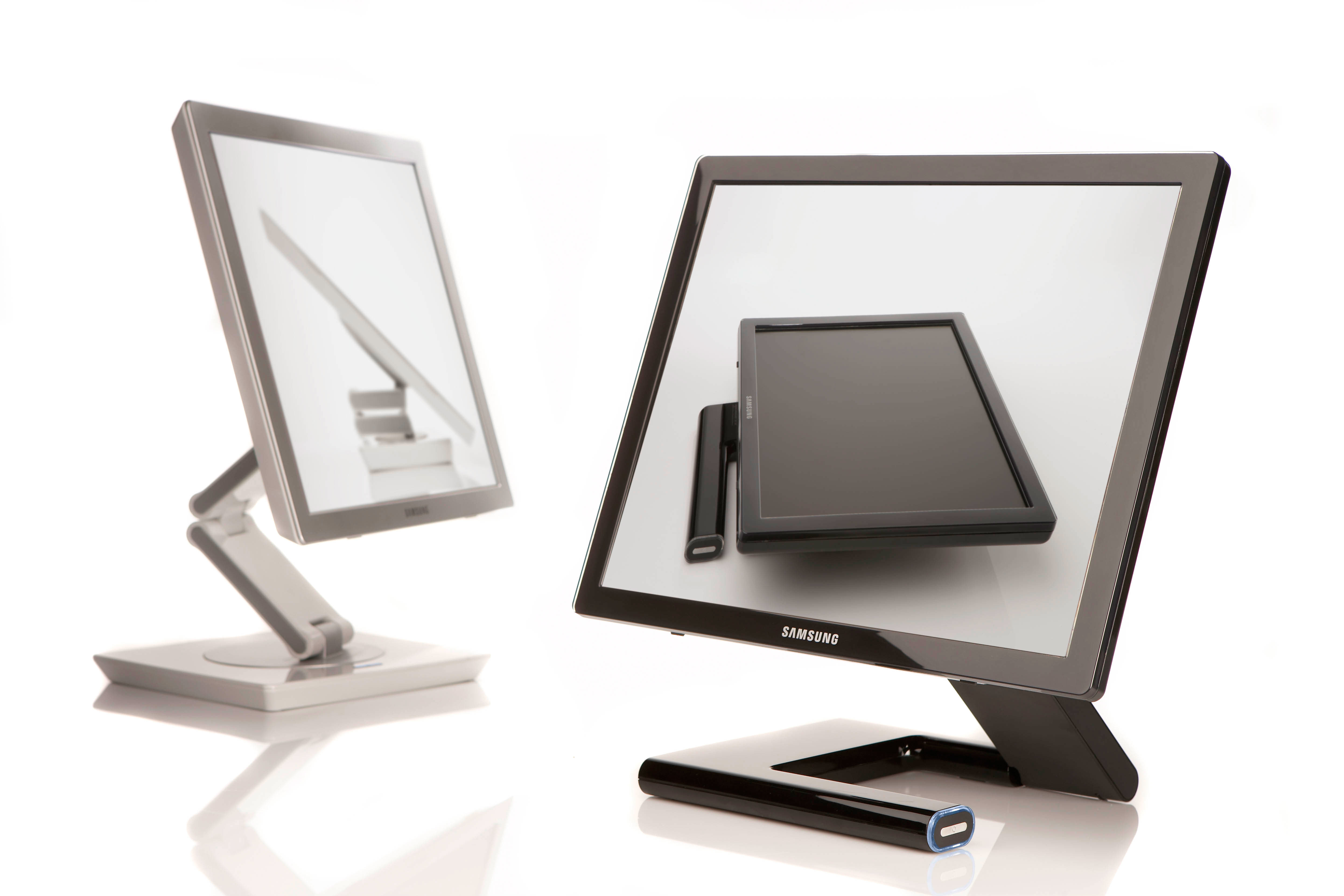
Samsung and IDEO created the industry-standard 970P and 971P monitors, featuring clean surfaces, contrasting textures, and a simple design for a premium look and feel. Designed with IDEO founder Mike Nuttall, they won both the 2009 iF Award and a 2007 IDEA Gold award.
Brand awareness for Samsung Memory
Wanting to raise awareness about Samsung Memory’s products that enhance the performance of electronic devices, IDEO and Samsung designed a humorous campaign that highlighted consumers’ need for Samsung Memory.
SimpleMedia and TotalMedia home entertainment concepts
IDEO and Samsung designed two concepts: SimpleMedia combined a computer, television, DVD, fax, and telephone; TotalMedia featured an adjustable screen and LCD projector combination. Although neither was ever produced, they were honored with design awards from ID Magazine and BusinessWeek, respectively.
SyncMaster 400TFT Flat Panel Display
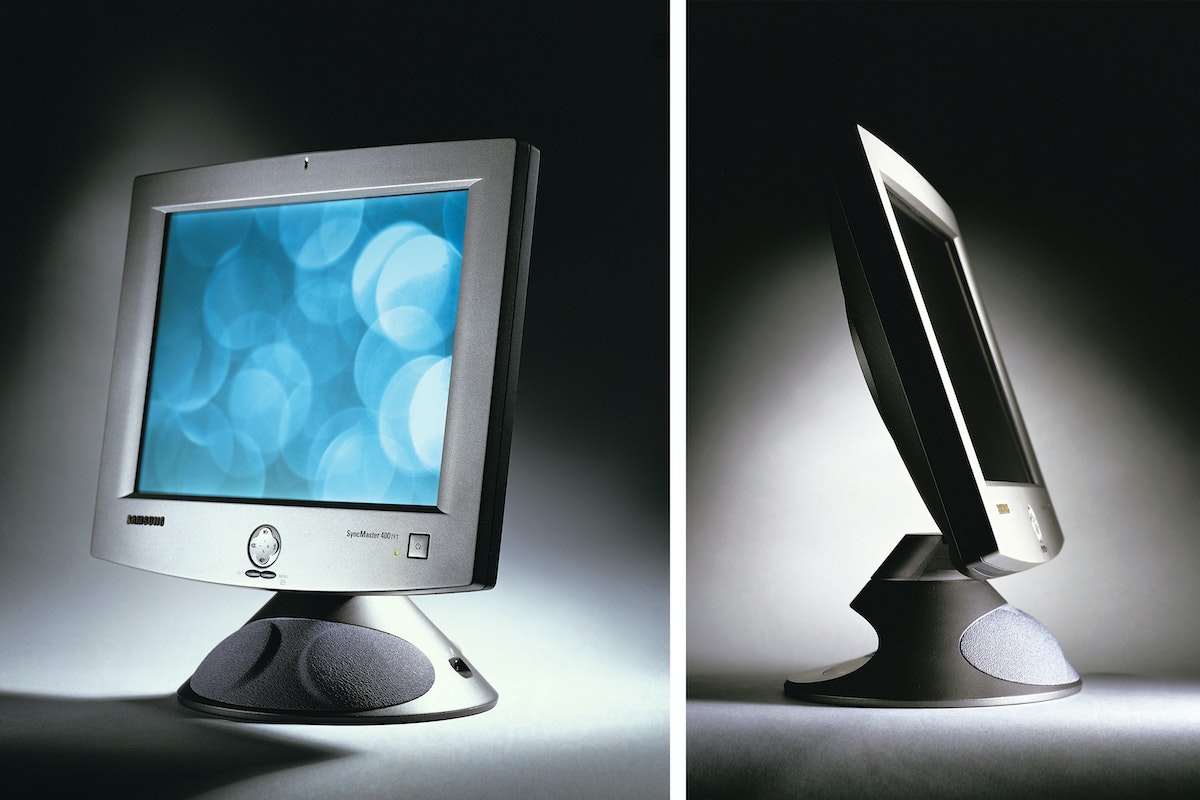
Samsung and IDEO designed the SyncMaster LCD flatscreen multimedia monitor to be thin and elegant, and it garnered several design awards in Korea, Germany, and the U.S. The British magazine T3 called it “the sexiest monitor we’ve ever seen.”

Designing a brand to scale big
A small, handmade line of granola lands on tables across the country.
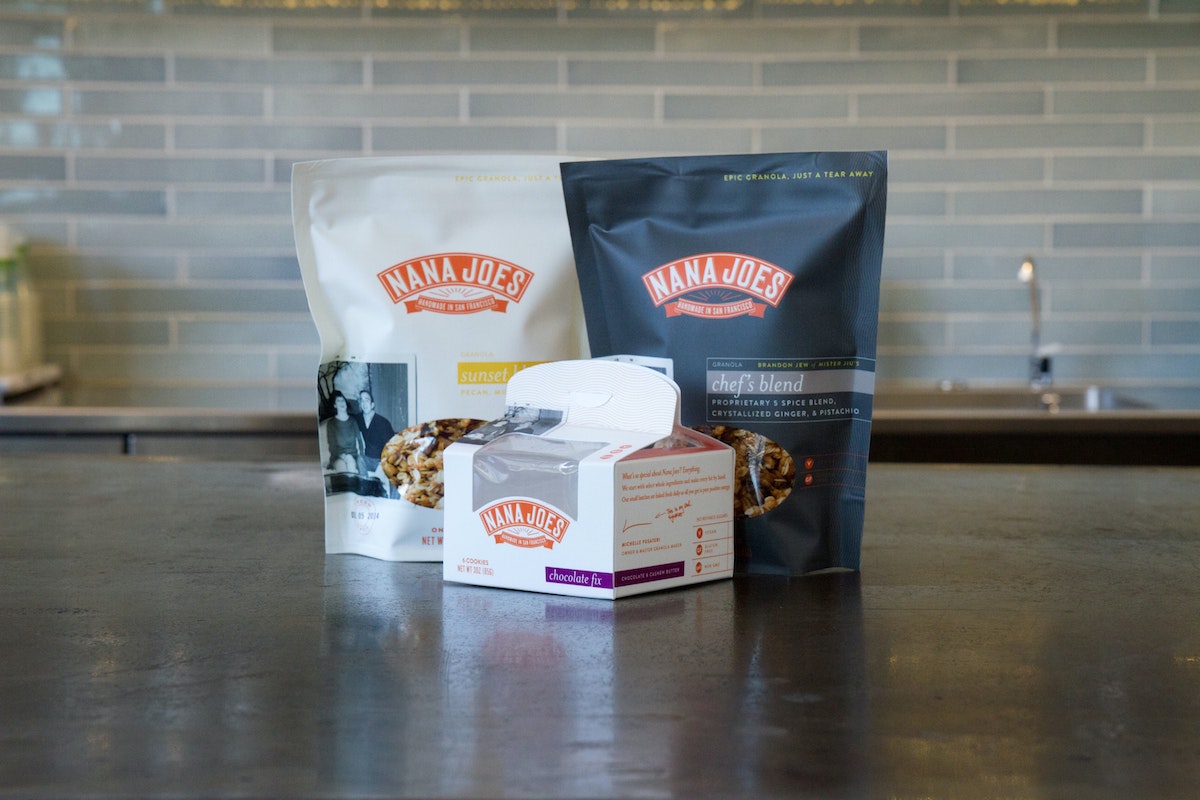
Nana Joes, a beloved San Francisco granola company, was born from an avid surfer’s desire to bring healthy breakfast back to the kitchen table. Embracing the philosophy that good food is about wholesome ingredients prepared with care, the startup took pride in carefully scraping each vanilla bean by hand and soon gained a devoted following at farmers markets around the Bay Area.
As Nana Joes’ reputation grew beyond the hills of San Francisco, the company asked IDEO to explore how to take a small company and scale the brand for national distribution, while keeping its heart and handcrafted ethos at its core.

A team of IDEO designers set out to position Nana Joes for growth by developing a brand identity and packaging system that would resonate with customers and reduce operational complexity. The entire team went on factory tours and met with packaging suppliers to identify solutions that would be easily manufactured en masse, but still retain the familiar handcrafted feel. With mock-up packaging in hand, they hit local farmers markets to conduct live in-market prototyping with both loyal and new customers and met with retail buyers to get their real-time reactions to how the brand and packaging stood out on shelves.
The final deliverables included new branding and packaging for the entire line of granola, granola bars, and cookie products, as well as a guide for Nana Joes to operationalize the rollout by 2016.
How a legacy phone book company reinvented itself
An Australian directories company transitioned from makers of the first phone book to digital services and beyond.
The legacy company that produced the first phone book in Australia more than 130 years ago—and the disruptive change it represented—became directories company Sensis. As Sensis made the transition from a print directory to a digital service in recent years, the company came to IDEO to foster a startup mindset.
Together, Sensis and IDEO identified four ways for Sensis to become more agile: Focus on the company’s core skills, revitalize the product development process, develop insights about Sensis’ global competitors, and strengthen connections to current and potential customers.
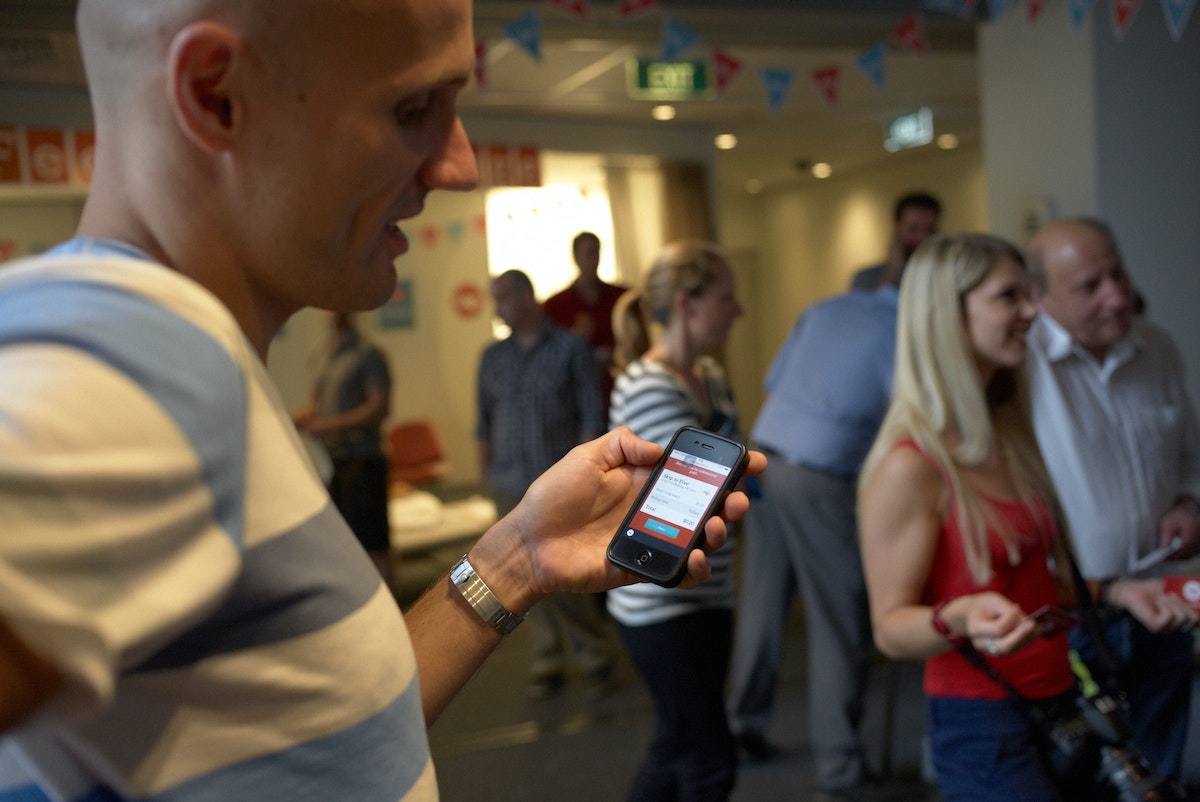
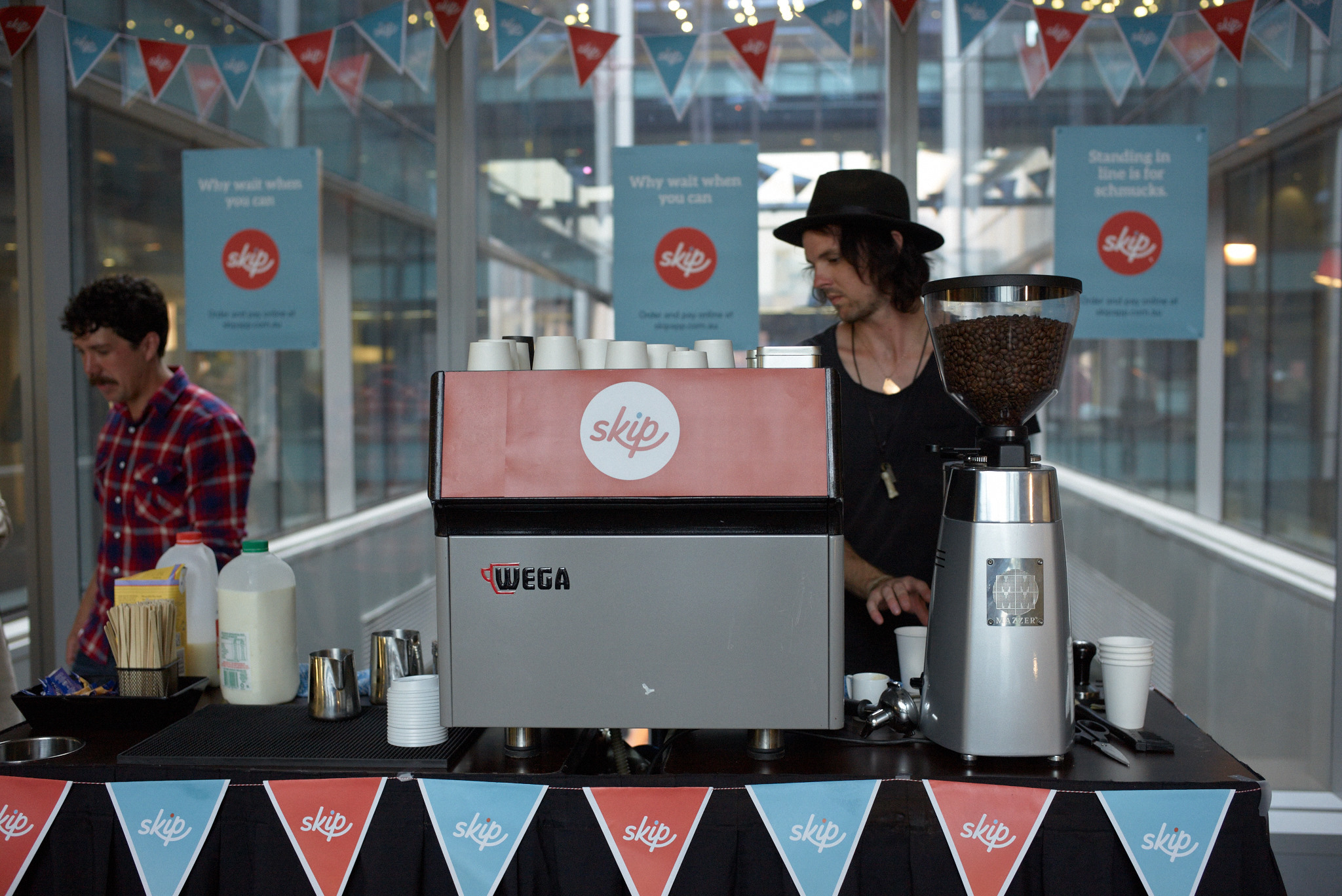
After prototyping more than 65 ideas, the team decided on an app, Skip, with which a customer connects remotely to her favorite café right from her phone, sends her order, and schedules a time to pick it up. Then she breezes past the line when she arrives at the café.
To understand how this app might work in the real world, the team fanned out across Melbourne, talked directly with café owners and their customers, gathering data, and watching behavior, then launched the live app just 10 weeks after developing the first prototype.
Watch: Team members from Sensis and IDEO share their experiences.
A real-time data service for food industry workers
Using design thinking to pivot from food-discovery app to food-data provider.
Fueled by a mission to “help everyone love what they eat,” the Chicago-based food-tech startup Food Genius created a consumer-facing mobile app that used a complex algorithm to track more than 16 million restaurant menu items and classify consumers’ dining-out behaviors.
After the year-old startup became part of IDEO’s Startup in Residence program in Chicago, the company changed its focus from consumers to the food industry.
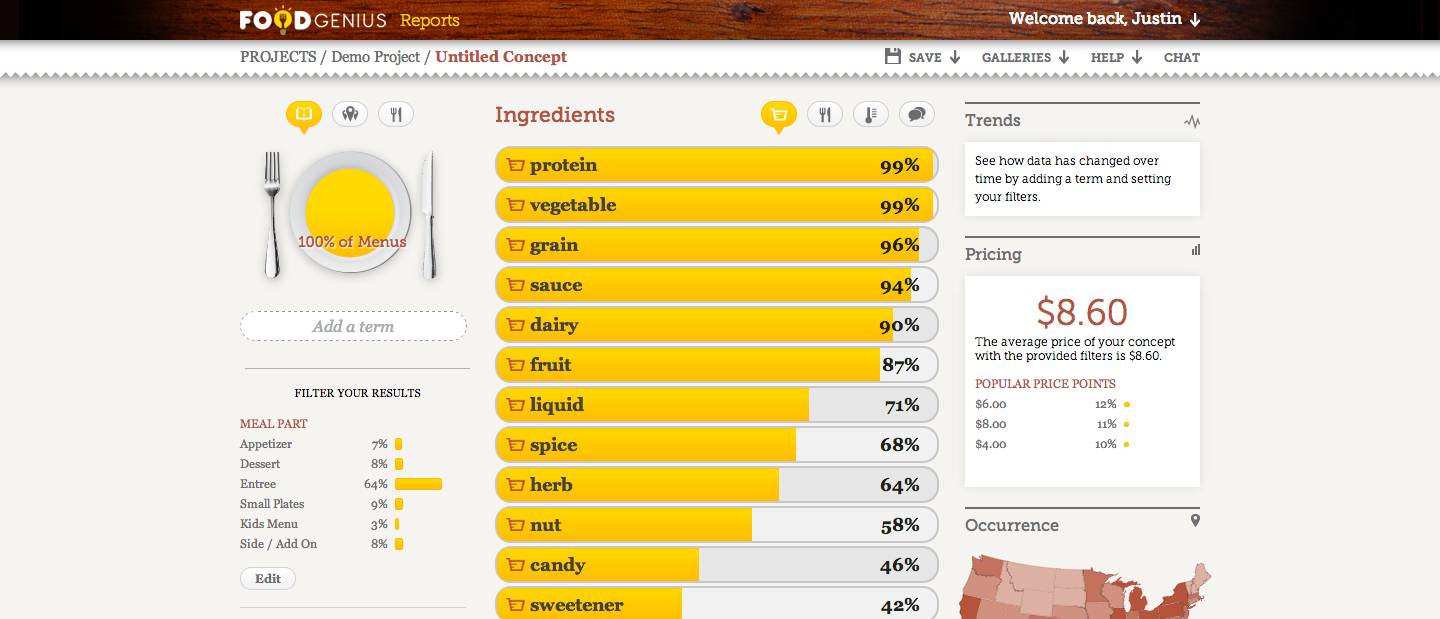
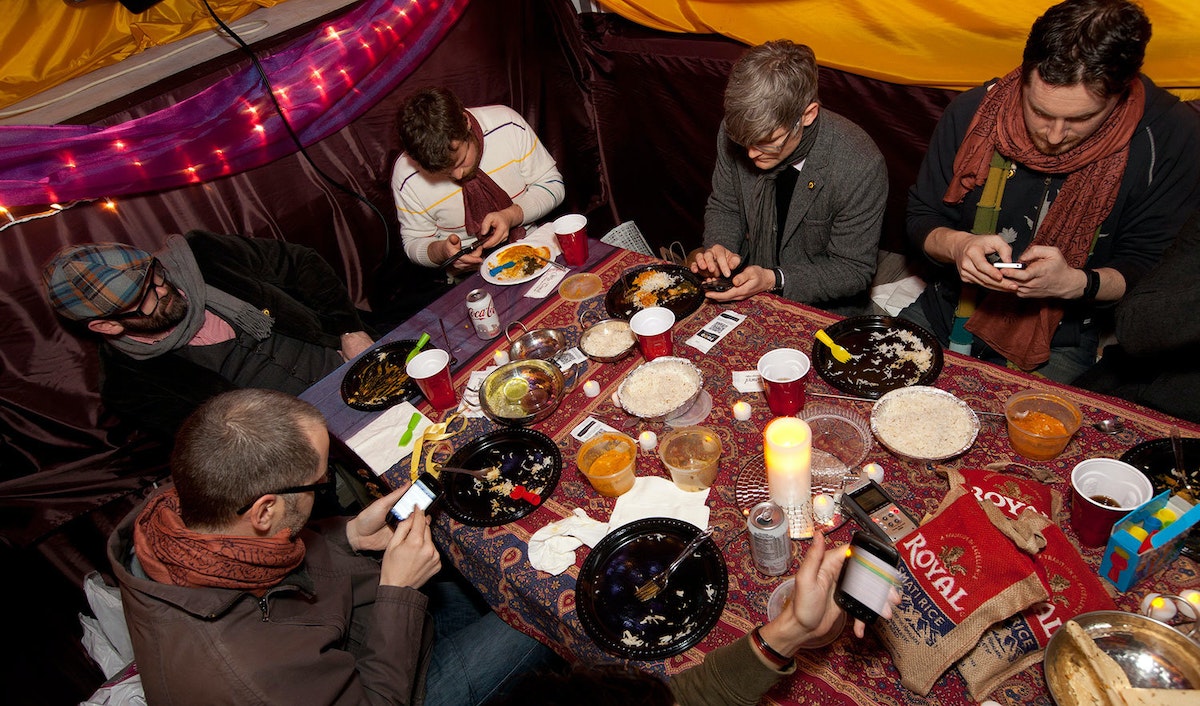
To build their food industry-focused platform, the designers collaborated on a number of business and technological development strategies, product road-mapping, and a prototype viral marketing experience called Curry Crawl to test the usability of the new API.
In April 2016, Food Genius was acquired by US Foods. "What was really striking about US Foods is that they take a very analytics-driven approach to their business," said Justin Massa, founder and former CEO of Food Genius. "They bought the technology knowing it's going to be able to do great stuff."
Thoughtless Acts: Monsoon Season
Thoughtless Acts: Monsoon Season. The intuitive ways we adapt and react to things in our environments

It's my first few hours in Bangkok, and by looking around the train, I can tell it's rainy season. Thin raincoats cover suits, and young mothers juggle both sunglasses and umbrellas.
As I exit the train, I look up, count to three and speed through a very thick rainstorm toward my Airbnb. After a much-needed nap, I open my eyes to a completely different climate. I peek through the shutters of my room and see an indigo sky, birds flying, and I am feeling the heat.
I pick up my fanny pack and leave the Airbnb immediately to explore the neighborhood. On a quiet side road, beside the fence of a wood craftsman shop, a thick black piece of tarp covers a corrugated fence. It’s held in place by a clever set of weights—filled plastic water bottles.
It strikes me that such an old trick can be found everywhere across the world. I start to wonder how can these four small bottles make it through such heavy, rainy days.
I stop to stare at a man approaching me. The woodchips on his shirt make it seem like he must be heading out from the shop nearby. He whispers something, unties a couple of bottles, and brings them to the shop's outdoor sink. These short bursts of sunlight heat must dry the water in them pretty quickly, I thought to myself. Regardless of the one million square meters of water falling over Bangkok each September, nothing beats the strength of a tropical sun, and the dedication of an old craftsman to keep his work tools dry.
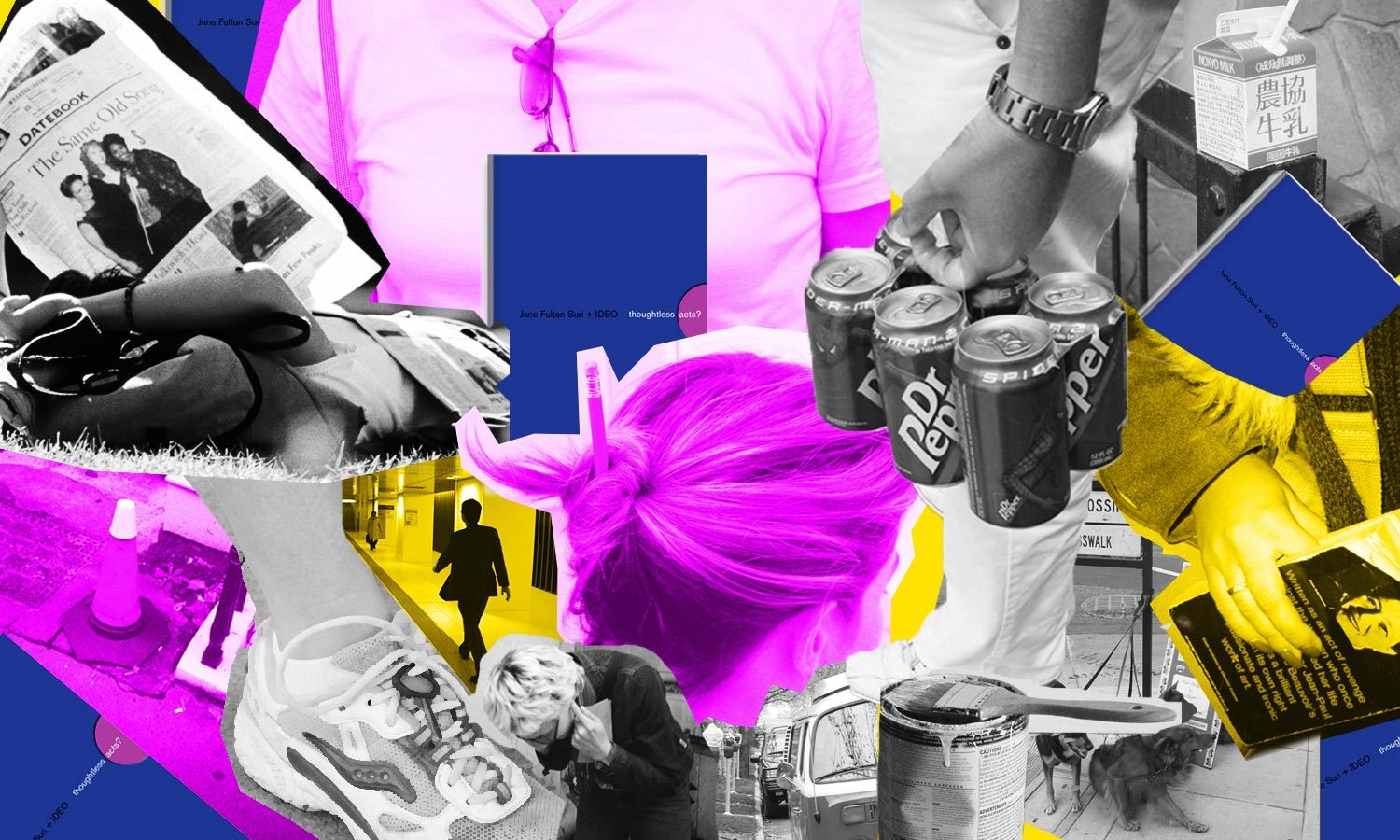
Human-centered design requires us to observe human behavior with beginner's eyes, so that we can spot the innate ways people interact with the world around them. We call these intuitive and unconscious reactions Thoughtless Acts, and IDEO designers collect photos of them to inspire their work.

This Woodworker Puts a Modern Twist on an Age-Old Trade
Katie Gong's art is full of loops, curves, and elegant bends
After steaming smooth, straight pieces of wood, Katie sculpts them into loose knots, braids, and squiggles, inherently fluid shapes that defy the medium’s natural rigidity.
To me, Katie’s work represents open-mindedness, possibility, and the means to evolve beyond appearance, expectation, or past. Her sculpture that sits in our living room—a wooden braid that bends upwards in an elegant arc, like a ballerina’s arm extending over the bar—reminds me to be unafraid to challenge the seemingly accepted, even when it comes to myself.
Katie sat down with me to share more about her craft, plus her fondness for classic 80s movies and finding freedom in chaos.
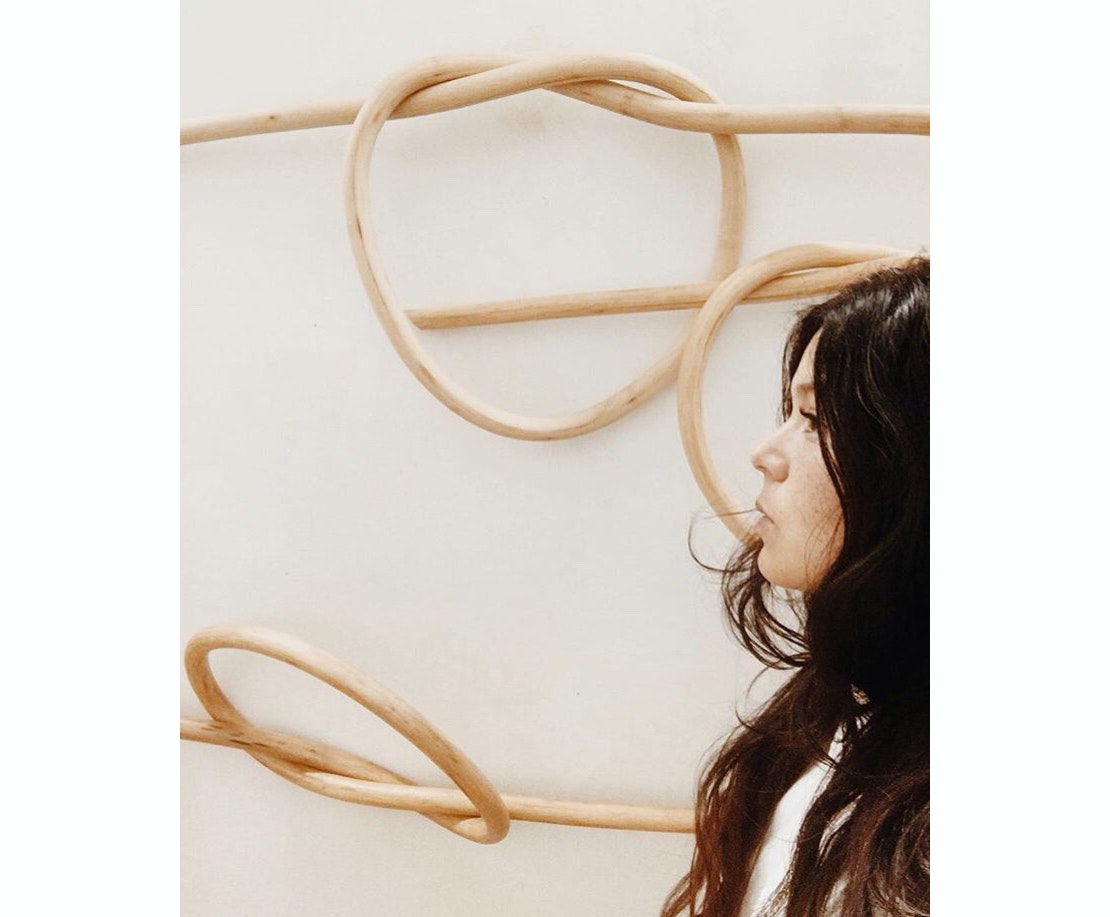
In one sentence, who are you?
I am many things: an artist, mother, wife, designer, and powerhouse.
What do you do? How did you learn it?
I’m an artist specializing in wood. I bend wood by steaming it, which is a unique and pioneering technique that challenges classic woodworking practices. I learned the craft from a young age. Growing up, my grandfather and father were both carpenters and taught me how to work with wood.
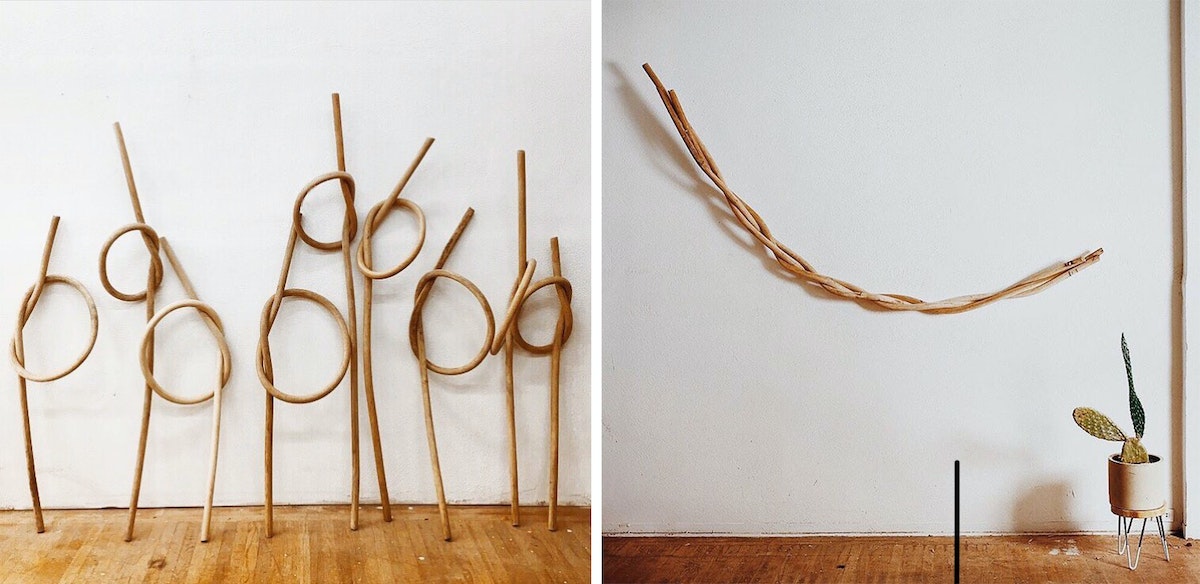
3 favorite possessions?
1. My father's Old Timer pocket knife. 2. My wedding rings and grandmother’s jewelry. 3. My adventure hat.
What does a typical work session look like?
I like to have a lot of projects going at once, so there are typically a couple things in the works at any one time. I tend to work a bit on each project all at once. Sometimes it can be a bit hectic, but there’s something in this chaos that allows me to move freely from project to project.
How do you get over creative block?
I try to take a step back. I change my surroundings and not think about the project. I find that once I zoom out, I find the solution I was searching for.
What was the last item on your to do list?
Getting a pedicure. Sometimes making time for myself can be tricky.
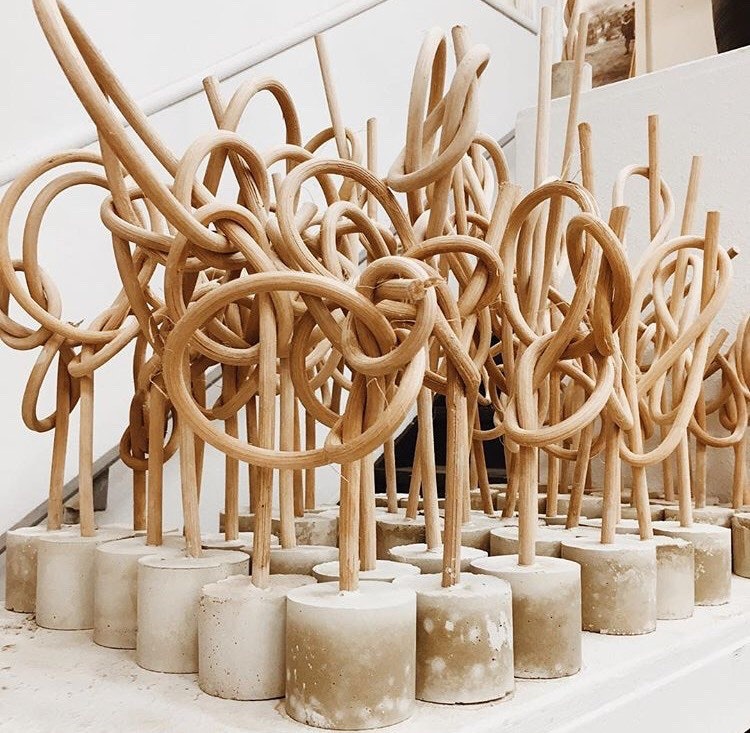
How do you see the world in 2078?
Hopefully I'll still be around then. Let’s see... I hope to be telling my grandchildren about growing up in the 80s, and blowing their minds by showing them ET and The Goonies. I hope that the world still holds on to the classics, like going for road trips, camping in cars, or reading books snuggled under a blanket while its raining outside. I hope that the world is similar to today and yesterday. Mostly, I just hope it’s not uninhabitable because of global warming or something crazy like a nuclear explosion.
What’s your number one bucket list item?
I’d like to have a solo exhibition in Japan.
Who are you creative crushin’ on lately?
My number one creative crush is always Aleksandra Zee. She's my creative sister. Windy Chein’s ombre knots are killing me, and Meryl Pataky is truly pushing the boundaries of neon art.
With a dose of hot moisture and a little imagination, San Francisco-based woodworker Katie Gong makes the seemingly stiff become supple. Kind of like my attitude after a bath.
Why You Should Get to Know Your Creative Alter Ego
How one designer's aha! moment helped him discover his bold signature style
Having already used acrylics, oil paints, graphite, and finally moving on to digital art, there was not much left to experiment with to broaden my artistic arsenal.
Or so I thought.
It was 25th of September, 2016, when my artistic alter ego was born. During that period of my life, I was searching for a way forward, having just returned from university without a job. I spent most of my time ideating and planning my next move.
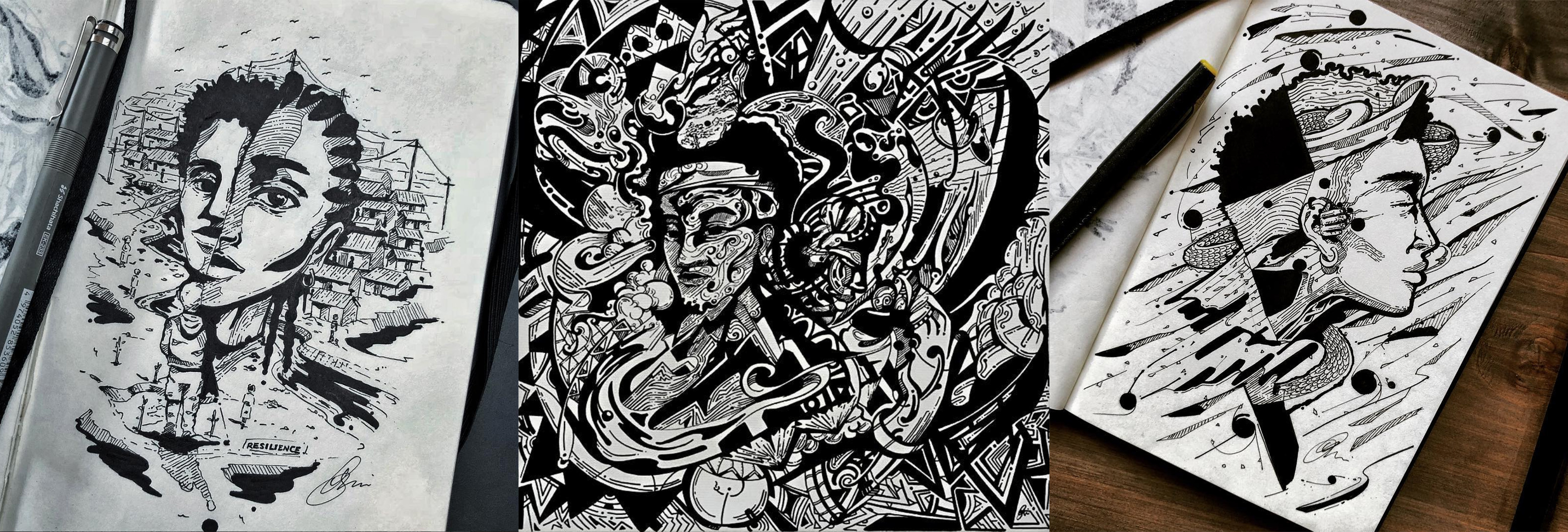
That afternoon, I sat down to take a break and illustrate my state of mind. I started what was meant to be a 20-minute drawing session with a 0.5mm fine liner. That pen, plus an old notebook that I had used back in university, became my weapon of creativity.
When I was done, I had a character that I named “the relentless dreamer”—a tiny figure with a peculiar helmet that shielded his wandering heart from reality as he knew it, granting him the ability to see far beyond the clutches of a life he deemed to be limited. This tiny figure reminds me that it is crucial to be idealistic, ambitious, and forever creative.
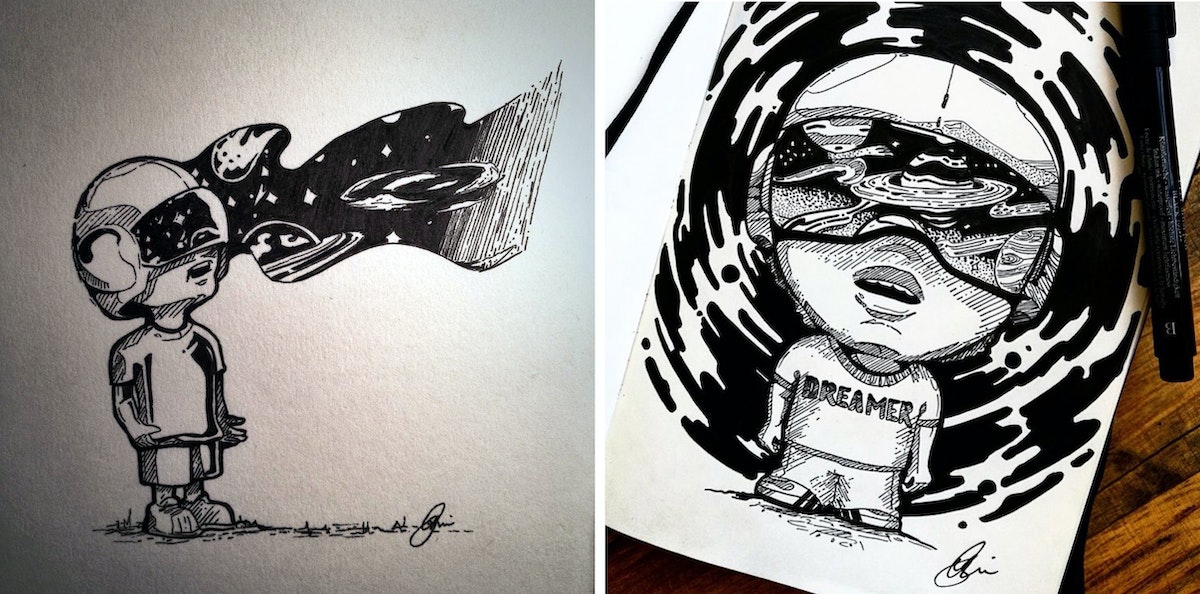
Drawing this character gave me an emotional release unlike anything I had experienced before through art. Though I was often plagued with a sense of anxiety around what my drawings would mean or stand for, this time, I felt weightless.
I began focusing on these black and white ink drawings, and the experience was cathartic. Each one entwined with the stories that brought them to life. Even though most of the figures I drew were imaginary, I was taking my life and experiences and expressing them through my illustration. I would envision part of the figure in my mind and let the rest appear.
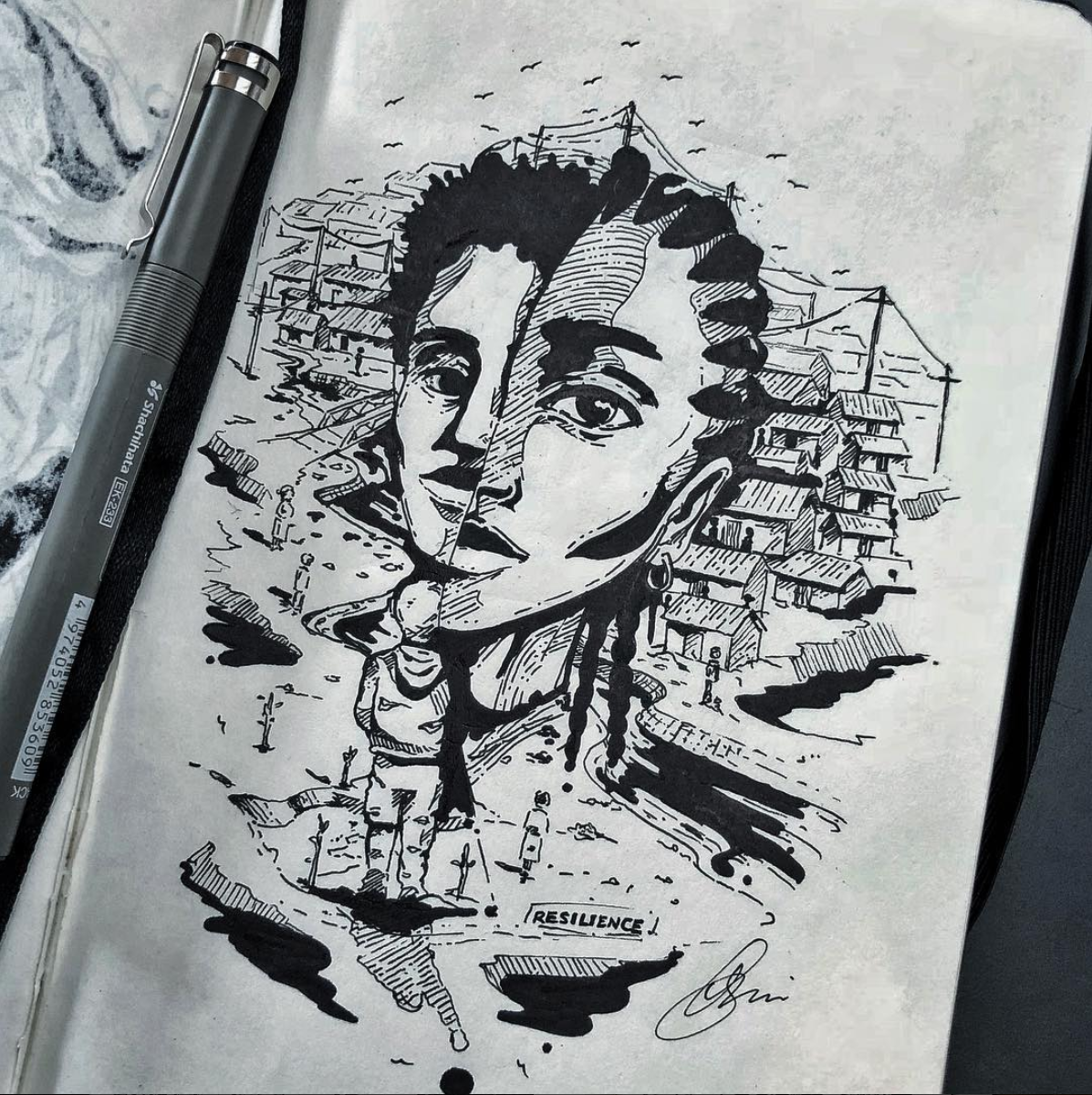
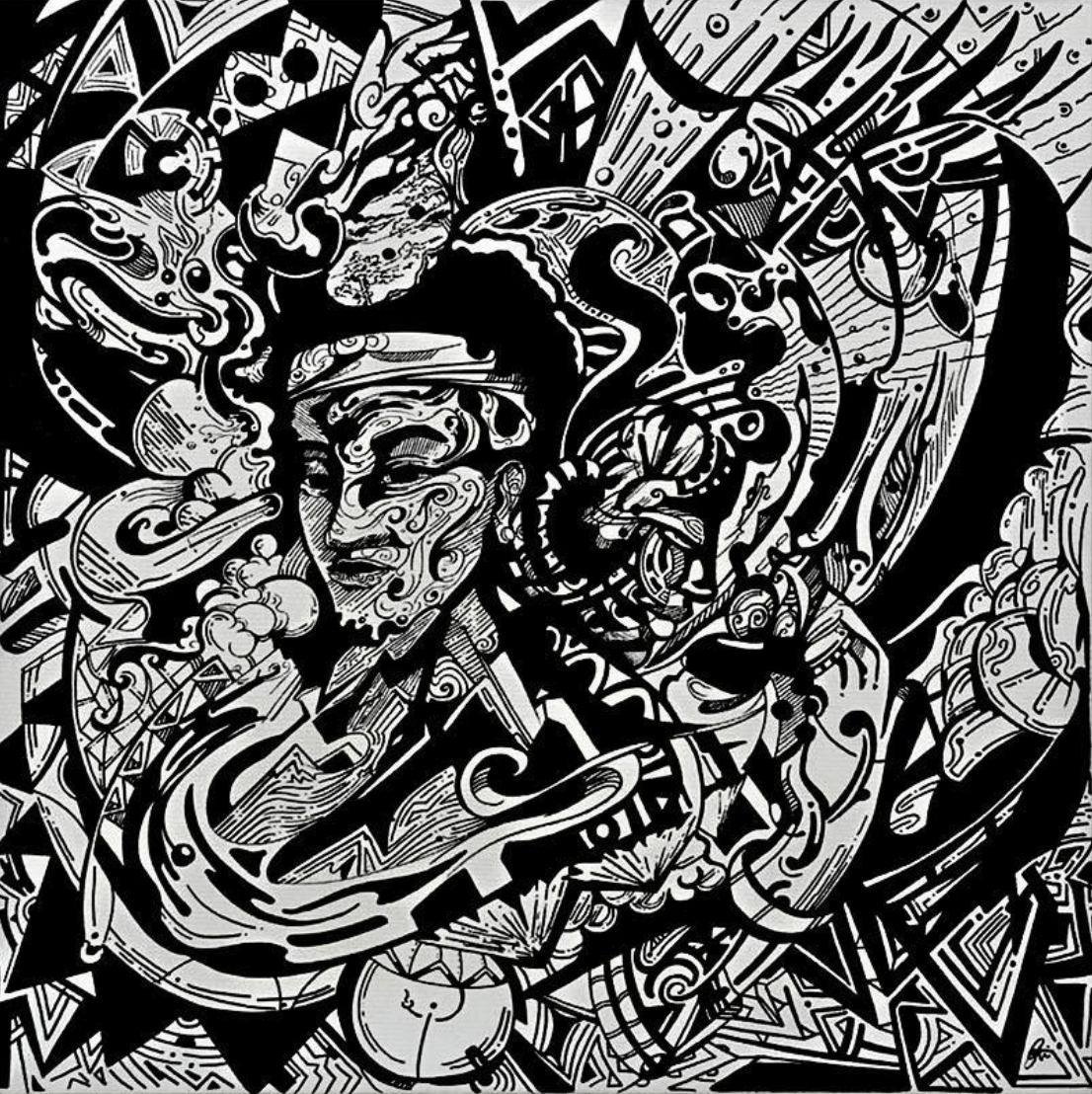
My intention was for viewers to move their eyes constantly as they looked for meaning in the drawing or simply made out the shapes.
Some of my work is dark, some full of mystery—a mystery I hoped that others would try solve as they navigate the intricacies of the line work.
Amidst all the visual chaos, there was one constant: A human element. The figures would serve as my connection to the pieces, and I hoped they would resonate with the audience, too.
These days, you will probably find me seated in the corner of a cafe with a fine liner pen. To many, I am just an artist, ardently sketching away. But what I’m actually doing is getting a little dose of sanity, as I move the images in my mind onto the pages of my book.
And in that very moment, I am dreaming… relentlessly.
Want to see what other IDEOers are drawing and doodling? Take a peek inside more designers' notebooks.
Two years ago, after spending most of my life mimicking artwork that appealed to me, I assumed that I had reached my artistic peak. I had been drawing since 1999. I still enjoyed working on portraits and surrealist compositions, but creatively, I felt stuck. After starting university, my product design work proved to be quite fulfilling, but my personal work was feeling uninspired.
Build Your Creative Confidence: Speed Dating
Creativity thrives amidst free-flowing social discourse. To get a roomful of strangers to innovate, you may want to begin by breaking down some social barriers.
Creativity Challenge # 6: Warm up a group
Creativity thrives amidst free-flowing social discourse. To get a roomful of strangers to innovate, you may want to begin by breaking down some social barriers. When this exercise is done right, the room will be abuzz with chatter and laughter, and participants will be more open to what comes next.
Tool: Speed Dating
Participants: Pairs in groups of any size
Time: 15-20 minutes total, 3 minutes per round
Supplies: Paper printed with a set of questions for each participant. Several different sets of questions will be needed to accommodate the entire group.
Instructions
Step 1: Give each person a list of open-ended questions. Several different sets of questions should be spread throughout tables in the room so that people aren’t continually being asked the same questions.
Examples of possible questions:
- How would your closest family members describe you?
- If you had a million Euros to spend in a way that benefits humanity, what would you do?
- What do you wish your parents had told you?
- What was a live performance or show you really loved, and why?
Step 2: Ask each person in the room to pair up with someone they don’t know very well or have never met. This may involve getting up and moving seats.
Step 3: Have one person in each pair ask a question from the list. Allow three minutes for the other person to answer.
Step 4: Have each pair switch roles and repeat, asking a different question on the list
Step 5: Tell everyone to find a new partner and repeat the process for a couple more rounds.
Tips from the field
You want to keep people moving to create a well-orchestrated round-robin. Be proactive about timekeeping. Assign someone to be a facilitator or timekeeper. To add a little fun, use a buzzer or gong to announce that time is up.
Depending on the nature of the working session that will follow the Speed Dating exercise, you can tailor some of the open-ended questions to be inspirational and loosely related to your topic. For example, if the objective of the meeting is to discuss the future of workspace for the organization, one of the prompts may be, “Describe an inspiring space you have worked in.”
Give a little thought to the type of questions you use. Meaning-of-life questions and superlative questions (the most, the best, the worst) can cause people to stall out or draw a blank. The whole purpose is interaction. So if your question stumps your partner for even a handful of seconds, it’s not quite right. Try the questions out on someone before you use them in a group setting.
If your group might be uncomfortable with an activity that includes the word “dating” in the title, call it Speed Meeting—which we have found works with Nobel laureates.
This post was taken from Chapter 7 of Creative Confidence. Purchase the book for more on how to use creativity to solve problems, or view more from this series of creative exercises on the IDEO blog.
Everyone is creative. This belief runs through everything we do at IDEO, and in 2013, it led my brother David and me to write a book that would help others—even those who don’t think of themselves as “creative types”—to unleash their creative potential. Creative Confidence has inspired thousands of people to adopt a creative mindset and apply it to the diverse real-world challenges they face. In this series, we’ll share some exercises from the book that can help you approach your challenges from a new perspective.

Lindsey Turner
I’m passionate about building brands, products, and experiences that help organizations show up with meaning and momentum.
I help organizations cut through complexity by shaping how they show up, through brand strategy, identity, and storytelling.
Working at the intersection of brand and business, I bring an editorial eye and a bias toward making—turning ideas into tangible experiences that people can understand, trust, and believe in.
My work spans government, healthcare, financial services, media, and consumer goods, from launching Gen Z-focused ventures to building innovation labs and reimagining legacy brands. I relish moments of ambiguity and enjoy translating across teams, perspectives, and priorities to move ideas forward.
I started my career in editorial and digital design, shaping cross-platform experiences and identity systems in publishing and agency environments. That foundation still shapes how I work today: I’m detail-oriented, collaborative, and overreliant on the Oxford comma. I hold a BFA in Visual Communication from the School of the Art Institute of Chicago.

Rachel Young
My work helps organizations see who their products aren't working for—and build the will and the tools to do something about it
For 25 years, I've asked the same question: Who does this design exclude—and what are we going to do about it?
My work spans human-centered strategy, inclusive design, and qualitative research, with clients ranging from Microsoft, Google, and Verizon to the National Science Foundation, and San Francisco Unified School District.
Before IDEO, I taught elementary school in East Palo Alto and spent a decade doing design work with social service organizations—where I learned firsthand what it costs people when systems are built without them in mind.
I am currently writing User Error, a nonfiction book about digital access and the design decisions behind it. I live in Oakland, California.

Brian Pelsoh
I lead with craft, ensuring our work is creatively excellent: rooted in deep human insight and imagination, while also grounded in the realities of business and technology.
My expertise spans brand, communication, and product design across tech, education, the arts, and social impact.
I believe great work demands both high-level vision and obsessive attention to detail, and only happens through collaboration.
I bring an inclusive, hands-on approach and a deep understanding of business, which enables me to consistently deliver excellence while always asking why.
Before joining IDEO, I worked at the brand firms Pentagram and VSA Partners. I began my career as a designer, leading teams at the School of the Art Institute of Chicago and the Milwaukee Art Museum. I hold an MFA in graphic design from Maryland Institute College of Art and a BFA in communication design from the Milwaukee Institute of Art & Design, and have taught at some of the best design schools in the US.

Tony Wong
I am responsible for IDEO’s long-term success in China and working with clients to use design as a tool to enable growth.
I am responsible for IDEO’s long-term success in China and working with clients to use design as a tool to enable growth. Specifically, I have helped Chinese companies design holistic brand solutions through the development of their products, communication, services, and innovation teams, and I have helped multinationals expand their presence and influence in China.
I advise global leaders on developing China-led innovation and capabilities.
In over 15 years in IDEO Shanghai, I have worked on projects that use design to elevate the quality of the experience of healthcare products and services, streamline processes that increase productivity, create spaces and programs that promote and enable inclusive communities, and build next generation mobility solutions that are planet-positive.
Before joining IDEO, I worked at Philips Electronics and the Electrolux Group in Italy, the Netherlands, and Singapore on a number of breakthrough commercial products. I am a member of the Young President Organization in Shanghai.

How to use AI as an editor, not a writer
Ed White shares how he uses AI as an editor—not a writer—to sharpen storytelling, rehearse ideas, and preserve the productive friction that makes creative work better.
Ed White has a rule he's tested on his own writing: hold yourself as the writer, and let AI be your editor. Ed is a Senior Design Director at IDEO's London studio, where he co-leads the firm's AI portfolio across Europe. Before IDEO, he spent 12 years as a writer and editor at the Financial Times, Wired, and Contagious. So when he talks about when to use AI for storytelling and when not to, it comes from two decades of crafting his storytelling skills.
In this episode, Mina Seetharaman talks with Ed about two specific tools he uses to keep AI in an editor's seat: a "roasting agent" prompted to critique his drafts without any sugarcoating, and a simulated audience he rehearses pitches on before the real thing. They also get into what Ed is hearing from design leaders at Anthropic, Lovable, Shopify, and Google Creative Lab about how creative work is changing, and why he thinks the friction of writing something yourself is worth protecting rather than automating away.

Building a personal AI for the messiness of life: Sida Li
Becca Carroll talks with Cue co-founder Sida Li about designing a personal AI for the messiness of everyday life—not just work. They explore how Sida stays anchored to human needs while navigating fast-changing technology, product tradeoffs, business-model experimentation, and the realities of building an AI company today.
Most AI products today are built for work—a space with clear problems and established systems. One founder noticed a gap: personal life is messier, harder to systematize, and mostly left behind by the AI boom. So she built Cue, a personal AI that lives inside iMessage and group chats, to go where the other tools haven't.
In this episode, Becca Carroll, IDEO's Chief Strategy Officer, talks with Sida Li, co-founder and CEO of Shared Context Lab, about staying anchored to a human need while the technology around her keeps changing shape, why she treats her business model with the same rigor she'd bring to a product, and what it feels like to build a company at this particular, disorienting moment in AI.
The conversation also gets into how Sida makes design decisions: the language Cue uses to describe itself, the tradeoffs behind building inside iMessage instead of a new app, and a real story about a business idea that didn’t pan out.
This is the second in a two-part series profiling founders from IDEO's Startups-in-Residence program. The first conversation is with Johannes Seemann, founder of Sooner, on designing GenAI for the emotional side of money.

Designing GenAI for the emotional side of money: Johannes Seemann
Designing financial tools around the feelings that shape money decisions.
Most personal financial tools are built to run the numbers and optimize towards a budget. While that works for some, most people experience money as a lived relationship that does not neatly fit into a spreadsheet. Johannes Seemann and Becca Carroll discuss why money is emotional before it is mathematical, and what a human-centered approach to building a generative AI financial product looks like in practice.

The curious leader's edge in uncertainty: Scott Shigeoka
How genuine curiosity helps leaders navigate uncertainty with greater confidence.
Mina Seetharaman talks with Scott Shigeoka, author of Seek and Head of Curiosity Cultivation at the Eames Institute, about what distinguishes genuinely curious leadership from performative curiosity, how power dynamics shape curiosity, and why practicing curiosity can restore energy rather than drain it.
Looks like you might be in search of something very specific?
Or reset the filters above and try another angle.
Here’s some random inspiration

Podcasts about creative leadership

Articles about the power of prototyping
