
.svg)


The future guest experience
Designing new guest and employee journeys that deliver on the promise of an iconic brand.
kate spade new york has been an iconic fashion brand since the early 90s, when its handbags first stormed the Manhattan fashion scene. Since then, the company has expanded and evolved into a global lifestyle brand.
With e-commerce reshaping the retail landscape and redefining the role of brick and mortar stores in recent years, kate spade new york leadership asked: How can we make the kate spade new york specialty store experience, well, more special?
kate spade new york already held the key to a new way of thinking about a multichannel customer experience: a brand promise “to inspire her to lead an interesting life.” Hoping to bring that promise to life in store, they engaged IDEO to help make it happen. The solution was for kate spade new york to take the brand message from words to action in the form of a customized guest journey. The team created more than 100 design concepts and strategies for building a retail experience that rewards curiosity and sparks artistic and literary exploration.
“In partnership with IDEO, we spoke extensively with our customers and associates to better understand how we can provide the most engaging and fulfilling in-store experience,” said Mary Beech, Executive Vice President and Chief Marketing Officer at Kate Spade & Company. “The new store elements that we introduced speak to our customer’s personality and appetite for adventure while aiming to enhance engagement with new and existing customers.”
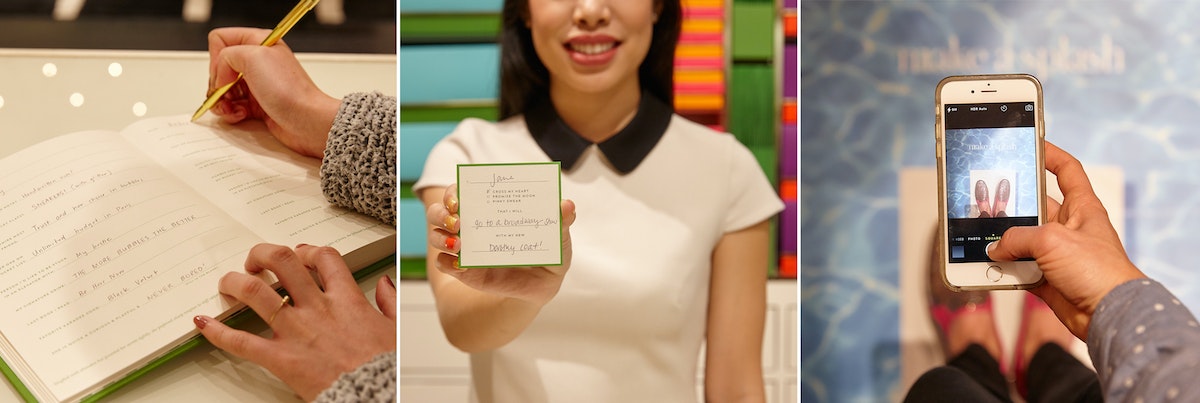
The team knew that striking the right balance of digital tools in in-store interactions was pivotal in allowing two people to have a more rich and collaborative face-to-face connection. The concepts include things like “pack a purse” to test drive how many everyday items can fit in different style handbags, cheeky “dare cards” that challenge customers to go on an exciting adventure with their new purchase, and digital moments like the “shoe selfie” platform that would allow a guest to share “I’m thinking about them” heels or just-purchased flats with her social network. IDEO live-prototyped a selection of concepts in stores around the country and saw a high correlation between customers’ positive reactions and their subsequent purchasing decisions.
“At kate spade new york, our brand promise is to inspire women to live a more interesting life,” said Jenica Myszkowski, Vice President of Stores at Kate Spade & Company. “Our new and improved guest journey experience puts our customers at the center, allowing us to more fully deliver on our brand promise in our retail stores with a stronger vision and purpose for our stores and our store teams.”
To deliver the newly envisioned guest service experience, the role of the sales associates needed to be redesigned, as well. The kate spade new york and IDEO team created a new role: the Muse, whose job is to live the brand promise of an interesting life and to inspire customers to do the same. The reimagined role ultimately shifted the focus in specialty stores from selling to inspiring and building long-lasting relationships with guests.

Two kinds of athletes, one strong brand
Designing a brand that served both elite athletes and everyday fitness enthusiasts.
Athletes’ Performance and its subsidiary, Core Performance, were both founded on a single mission: to enhance human performance through a holistic approach to mindset, nutrition, movement, and recovery. Athletes’ Performance focused on elite professional athletes, and Core Performance provided corporate fitness programs and workouts for employees hoping to lead more healthful lives, and both found a footing in the competitive health and fitness market.
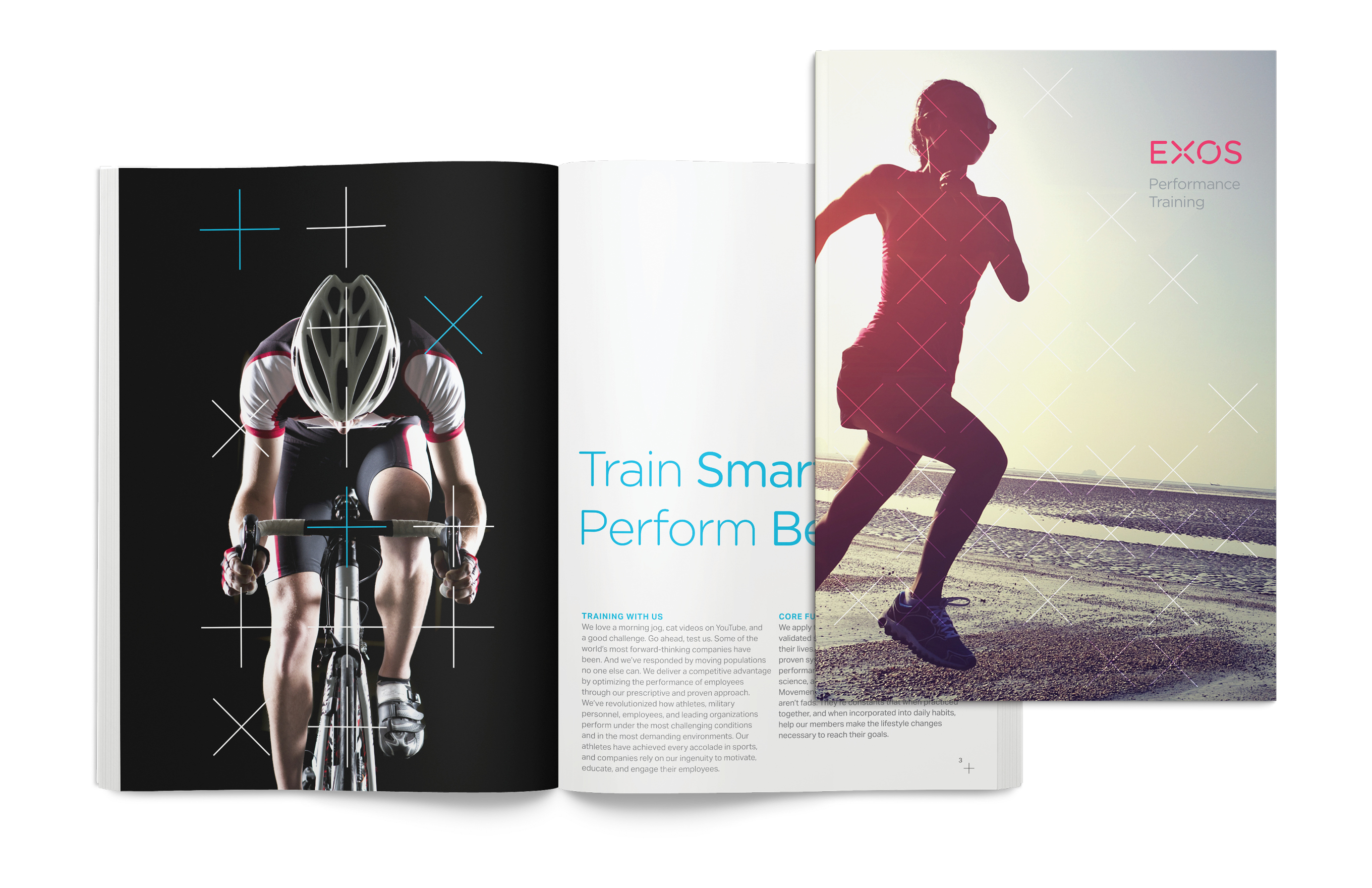
Faced with a challenge to redefine the brands, IDEO designers collaborated with the founder and integrated marketing team to unite Athletes’ Performance and Core Performance under one name that would cut across the health, fitness, and wellness markets to reach a full breadth of audiences and partners. Under a new name, EXOS, the teams created a brand identity system unified by its founding mission and focus on human performance.
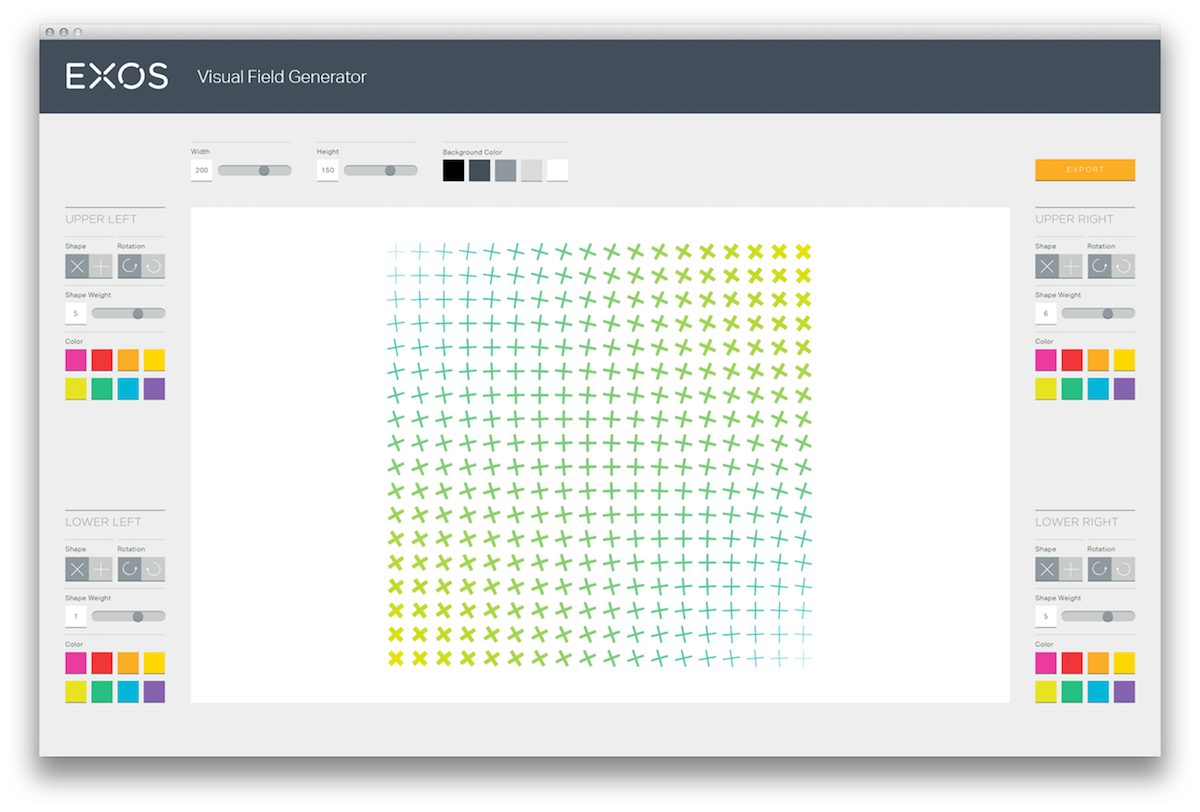
For the new EXOS brand, IDEO designers created a visual language using “x” and “+” to highlight the progress from goals to achievement, as well as a system of interaction for athletes of all performance levels. The team also created a bespoke digital tool, outfitted with custom software, which gave designers both guidance within the brand guidelines and creativity to explore new products and contexts.
Making sure a bank stays great as it grows
Designing digital tools and brand concepts for Umpqua Bank.
Imagine this: Your company has just gone through a $2 billion merger. You show up at work to find an invitation from the CEO asking you to help shape the bank’s future. This is what happened when Umpqua acquired Sterling Financial Corporation in 2014, doubling its size and resulting in the creation of the West Coast’s largest community bank overnight. With a mission to be “the world’s greatest bank,” CEO Ray Davis seized the moment to reinvest in design across the organization.
Umpqua asked IDEO to help examine the brand they had and take it to a new level. They wanted to find out: how can we leverage our strength and reputation by activating the brand in new ways to deepen employee and customer engagement and foster continued growth?
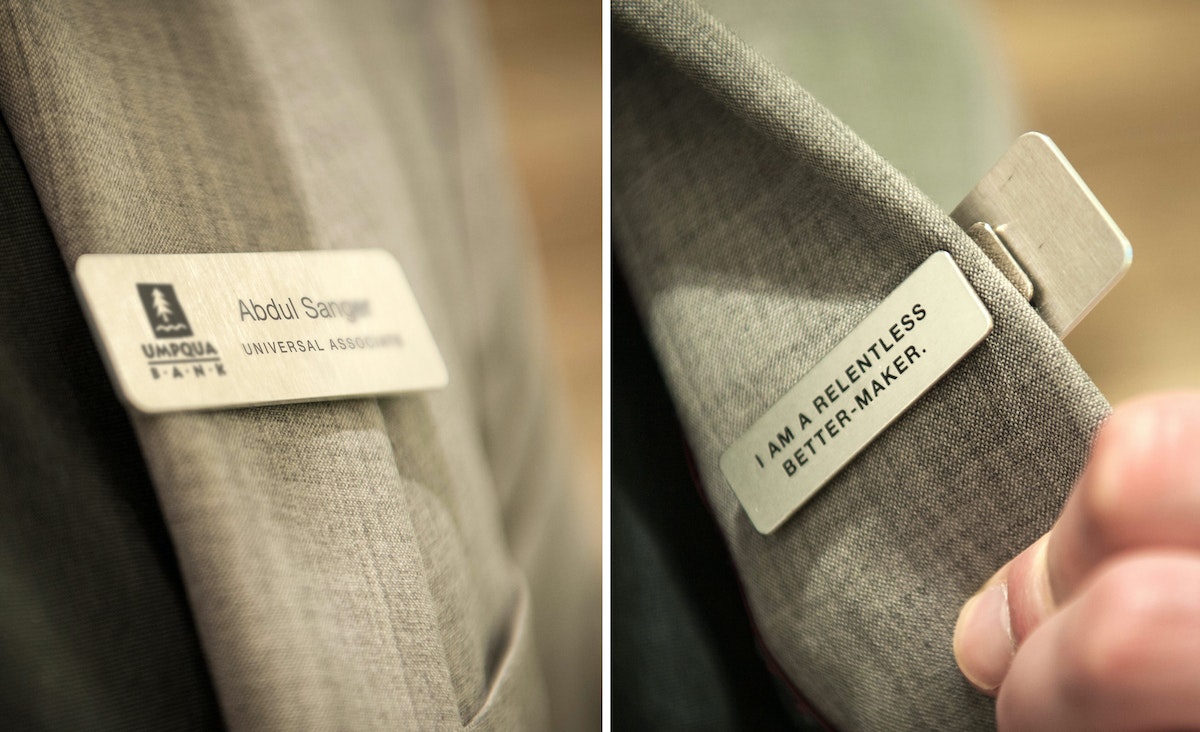
IDEO identified three core brand opportunities and a newly articulated purpose statement that became a launch pad for more than 15 different concepts to express the brand internally and externally.
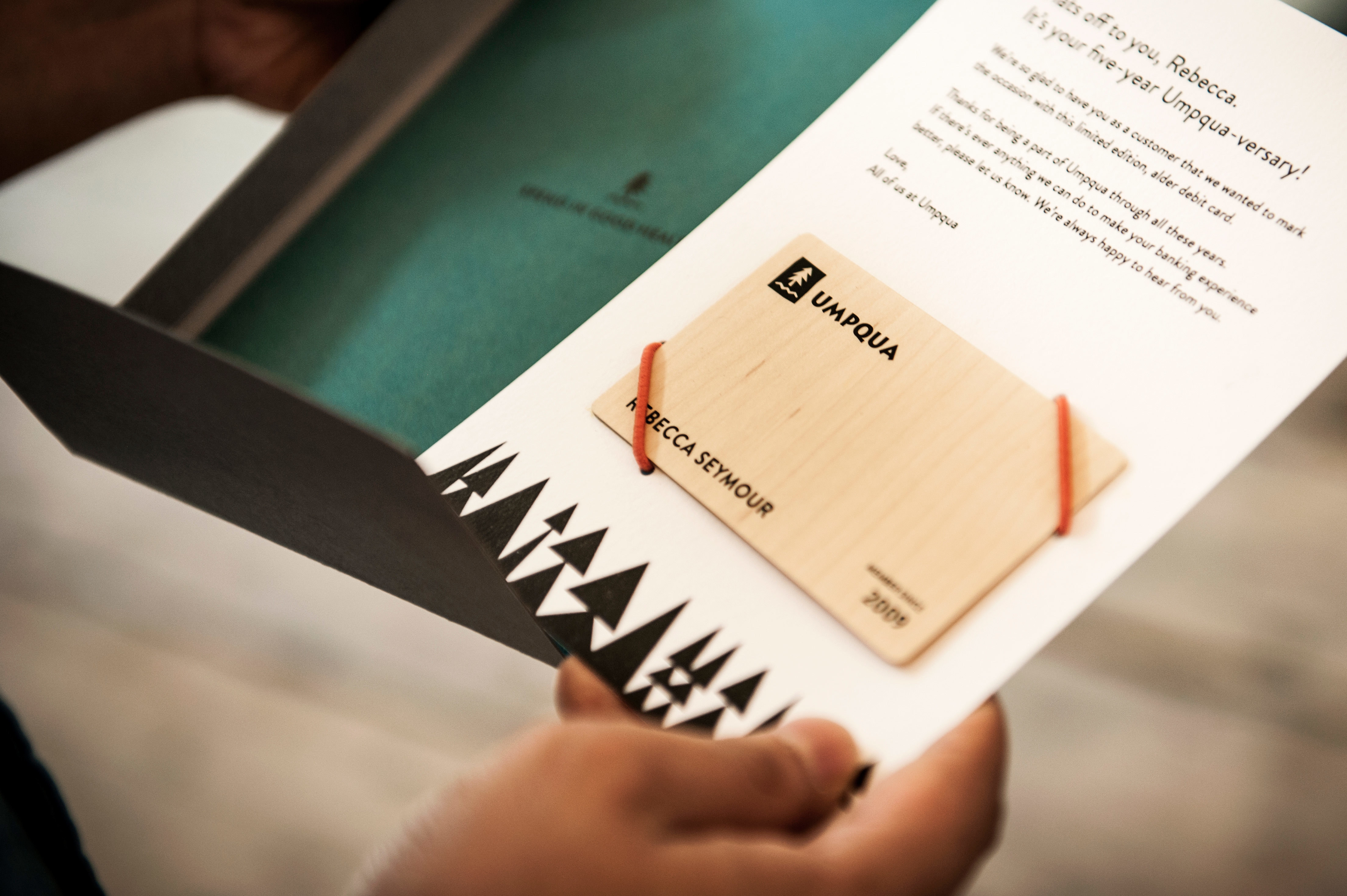
Inside Umpqua, company evangelists handed out notebooks with tips on “how to be better-makers,” and associates now participate in collaborative design challenges through an internal tool built on IDEO’s OI Engine, software that fosters open innovation. The design challenges are drawing unprecedented participation of 84 percent among employees and are having a real impact on the organization. Of the five they’ve run in two years, the company has implemented three winning ideas including a buddy program for new hires or transferees that upwards of 1,000 associates could experience over the next year.
WATCH: Umpqua Bank on using the OI Engine platform
IDEO also worked with Umpqua’s team to conceive digital products including a new digital app called Raindrop that lets people bank in the way that they think about saving and spending, not the way a bank does. It’s due for release in 2016.
To introduce all of this work, IDEO set up an immersive exhibition at Umpqua’s headquarters in Portland. Teams large and small, including the executive and associates from across the company, walked through the exhibit and witnessed how the brand impacts every aspect of their business, from employee engagement to product development. It was signed on the spot by Davis, who invited employees to sign their names, too.

Jade-infused jeans for sweltering summers
Repositioning Lee's brand through the launch of a breakthrough denim product.
The sweltering summers in China can be insufferable—especially for people who like to wear jeans.
Lee Jeans, in its quest to boost its brand differentiation among an expanding market of apparel brands that also use fabric performance as their unique selling point, like Uniqlo and Levi’s, developed denim that’s cooler to wear during hot weather. It found a novel solution in an ancient material: jade. When woven into denim, crushed jade particles maintain the coolest temperature and, alongside other technological enhancements made to the fabric, pull sweat away from the body. The fabric dries quickly, creating a refreshing cooling sensation.
The immense popularity of jade in China makes the denim a natural fit for Lee’s Asian market, and although Lee’s jade-infused fabric was entirely unique, the company needed to differentiate its inventive new product from a rapidly expanding market of high-tech fabric alternatives made specifically for hot weather.
Lee and its parent company, VF Corporation, saw an opportunity to create a new product that helps position the company not just as a premium brand, but one that leads with innovation. Lee came to IDEO to help design the go-to-market and launch strategy for the new line of jade-infused fabric. Looking for insight, designers conducted research in multiple cities in China and India, seeking out those who were committed to wearing jeans despite the most extreme circumstances—the denim-clad bicyclists pedaling through sweltry city streets, the basketball players on the court, commuters who stripped to their underwear while driving and wriggled back into their jeans upon arrival. The common thread: They were all steadfast in their preference for thick, heavy denim, no matter how hot it got.
The resulting strategy for product launch: positioning jade—a traditional material that has strong cultural and spiritual meaning—as a high-tech solution for the contemporary lifestyle of young people. IDEO helped Lee name the new line JadeFusion and created a system of messaging to communicate that these aren’t just jeans—they’re jeans with a fascinating narrative woven within; a hierarchy of messaging that blends jade’s exotic premium significance with a very modern technical story. Lee salespeople learned how to share the story with customers, encouraging them to talk about jade-cooling technology at work, on the streets, and even on the basketball court.
The JadeFusion line sold out within seven weeks of its debut. The launch, which was originally limited to mainland China and Hong Kong, was expanded to India, Malaysia, and Thailand, and sales orders doubled for the following year. Along the way, Lee developed a new understanding of how to incorporate customers’ input and be open to discovery and inspiration from the very start of planning a product launch.

Thoughtless Acts: Design Your Breakfast
Thoughtless Acts: Design Your Breakfast. The intuitive ways we adapt and react to things in our environments
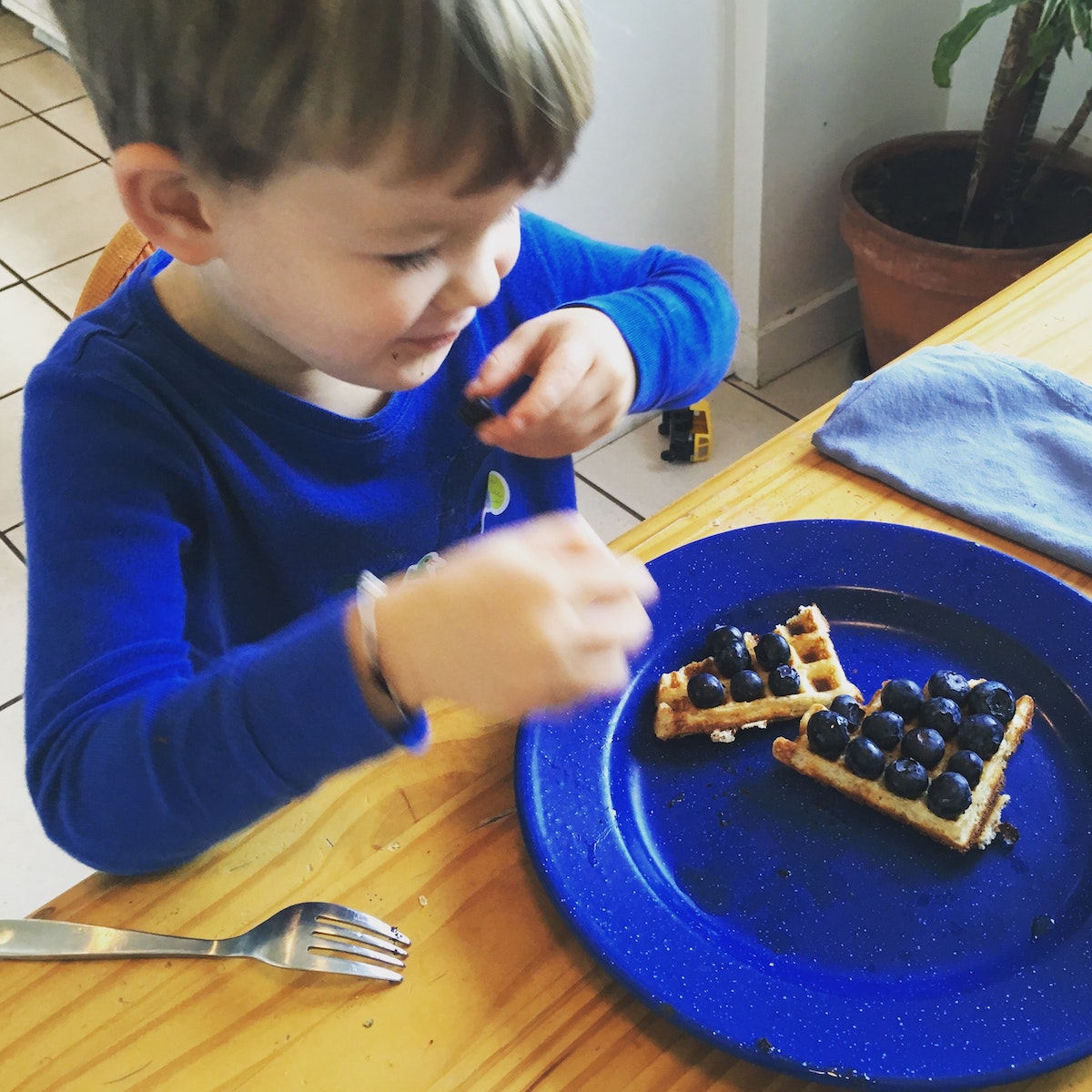
What could be more satisfying than a blueberry in every waffle hole? My son Tom took his time to arrange everything just perfectly before gobbling it down. Even if you are not meticulous enough to do it yourself, I'd be surprised if the same idea didn't cross your mind. It makes me think about all of the times that I've thoughtlessly (or thoughtfully) constructed my own bites—optimizing for flavor, making sure that there are goodies in every bite, until my plate is clean.
Human-centered design requires us to observe human behavior with beginner's eyes, so that we can spot the innate ways people interact with the world around them. We call these intuitive and unconscious reactions Thoughtless Acts, and IDEO designers collect photos of them to inspire their work.
Be the Leader You Wish You Had
Remember that people like to play
As a result, I spent most of my time finding problems, real or imagined, and adding them to a growing list of things I would solve to make my mark. My notebooks from those days suggest that I believed I would be a hero one day, but for now, was resigned to suffer through unrewarding and lonely work. I was an asshole. And you get what you give.
I had started a project with Quiksilver, and with that came a new relationship with a very successful creative director, Erik (now a good friend). Erik invested in inspiration for himself and everyone on his team. He made sure he was creatively nourished—maybe even selfishly so, if that can be said in a positive way—and emulating the kind of creative culture he wanted to instill. It was mutual and reciprocal among his team.
He inspired me, too. I wrote a simple note on a Post-It and stuck it to my computer:
“Be the leader you wish you had.”
I know. It’s all Gandhi and shit (apologies, Gandhi, for any disservice in my comparison). But it shifted my thinking radically. I made a commitment to own my happiness and creative experience.
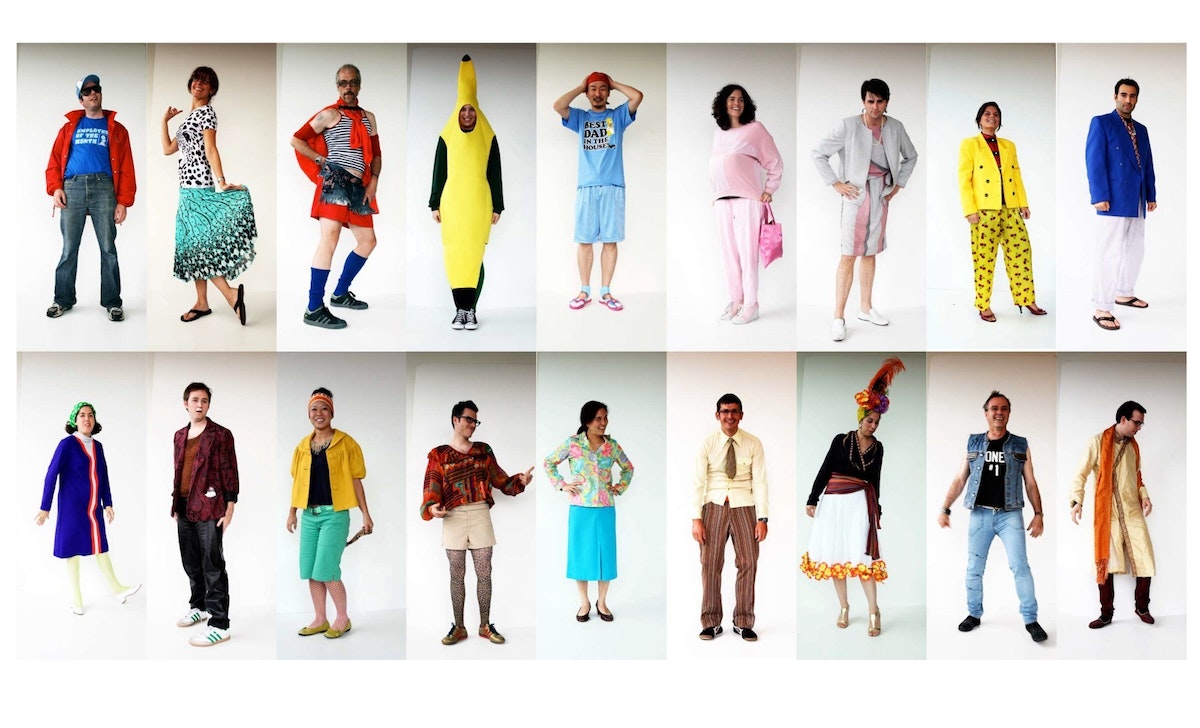
That week, over regular tears-and-beers drinks with a colleague, we were laughing over an article in Vice called “Wear Dare” in which a couple of friends dressed one another for a day and described their embarrassing moments. We wondered what that would be like at work…
“Let’s do it,” I said. Following my new directive.
We goaded each other through nervous fear, laughter, and finally action… what if this goes wrong? Or worse, what if it goes right?
We invited everyone to put his or her name in a hat and drew at random…
Here’s what happened:
It was the
best
day
ever.
It was joyous and unserious. It wasn’t about fixing; it was about sparking something and letting go.
Only four people didn’t participate out of a studio of nearly 60. I am sure they regretted it! And looking back, I believe that day was a key moment in a process of transformation for myself, using my position for fun instead of misery. It was that raw creative act that broke the dam for me.
Around that time, the project leader for the Quiksilver work came to me with the idea of traveling the California coast in an RV—you know, “as research.” I knew he expected me to say no. And it would certainly lose us a bit of money, but I suppressed the leaderly should and followed my new directive and said yes.
My landlubber colleagues got to be surfers for a few weeks. I joined the team on the road and reconnected with my surf-teen years in San Diego. More importantly, surfing every day, sketching in the sunset over beer and pizza in roadside campgrounds with a bunch of other (mostly) dudes, trading ideas until we fell asleep in the RV, and fomenting the growing optimism and joy of building play into our workday led to the design of great concepts for the client—some of which went to market.
Other changes followed.
We hired some amazing people, who we never would have hired prior, as interviews shifted from picking people apart to finding and supporting possibility.
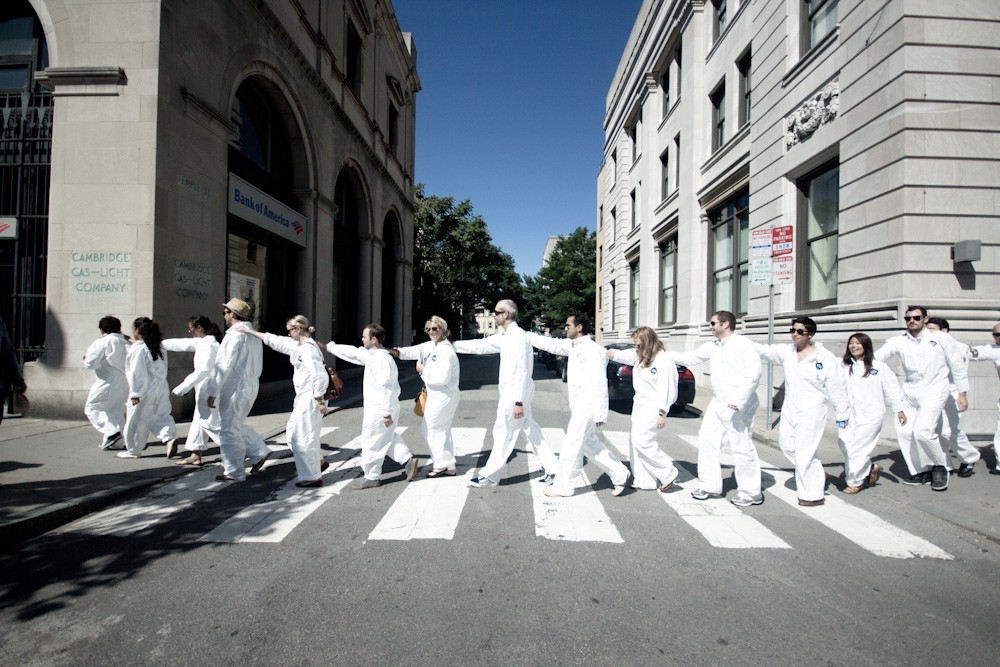
For a colleague’s wedding we dressed up in Tyvek suits and marched, single file, to the courthouse through Cambridge, MA. (That's what you see in the image up top).
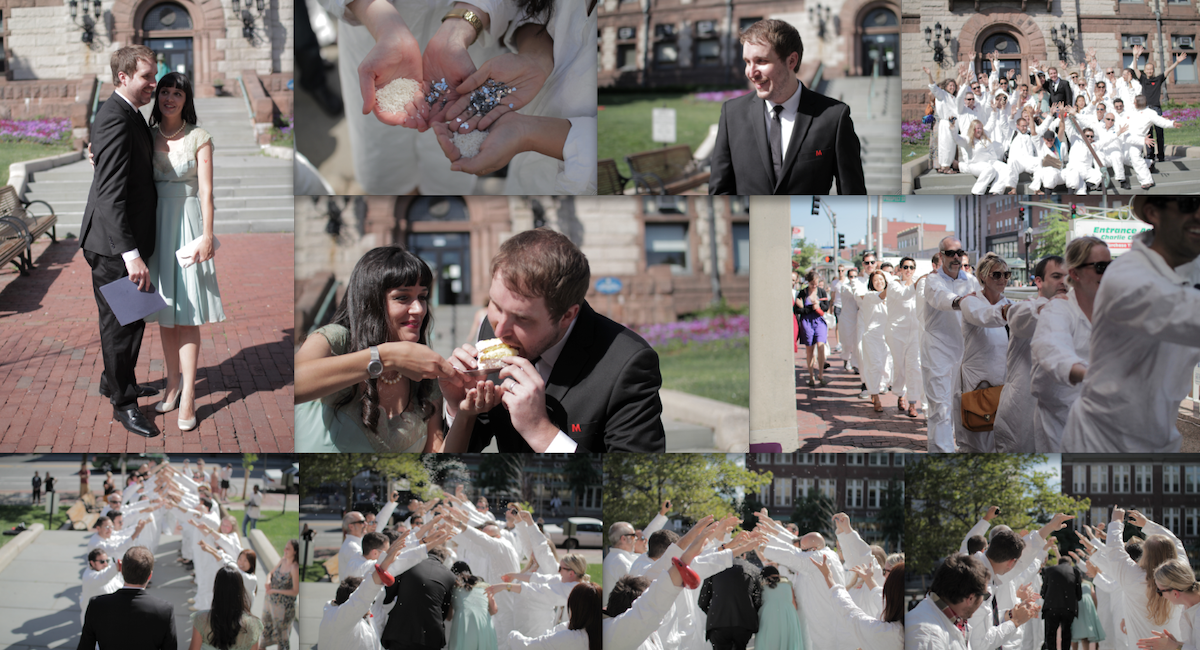
We did design fiction exercises over lunch. The culture began to be one that craved creative pokes to encourage the flow of great ideas.
The studio evolved from being a quiet participant in the business to a creatively rowdy collection of designers from Boston producing content that the rest of IDEO references.
How we were began to shape what we did.
So much had changed with that simple note to myself.
I’m not suggesting that dressing your colleagues in thrift store pantsuits will fix everything. Nor that you need to hit your nadir and be ready to quit before you can find the inspiration to lead from your creative self.
In fact, this is not really about you or me at all.
This is about what I learned the hard way: That great creative leadership is about letting go of that nagging mental image you have of what you are supposed to do. It’s about believing in others, and focusing on fanning the flames of creative, weird, exothermic people, rather than on fixing problems.
How you approach your day is how you will live your life.
If you see your role as a list of broken things that need to be fixed, life will deliver you nothing but. But if you actively seek creativity and fun, and enjoy a little embarrassing dress up now and again, you might just find yourself successfully in the middle of the vibrant culture you’d once wished for.
When I was a fresh, newly appointed lead in our Boston studio, I struggled to have much fun. I believed I was a fixer of broken things, thinking, and people. The story I told myself was that I was a martyr for the fun others were having while I dealt with the important leaderly stuff.
The Kitchen Designer Who Helped Women Get Out of the Kitchen
Ever heard of Margarete Schütte-Lihotzky? Her Frankfurt Kitchen changed women's work
Designers often have the biggest impact when they reimagine the relationship we have with everyday utilities, like those in the kitchen. Decisions as straightforward as the height of a stool can change the fabric of everyday life.
One great example is Austrian designer Margarete Schütte-Lihotzky, the woman who arguably had more impact on modern kitchen design than anyone in history. In celebration of International Women's Day and as an homage to my own grandmother, I wanted to tell her story.
The “fitted” kitchen
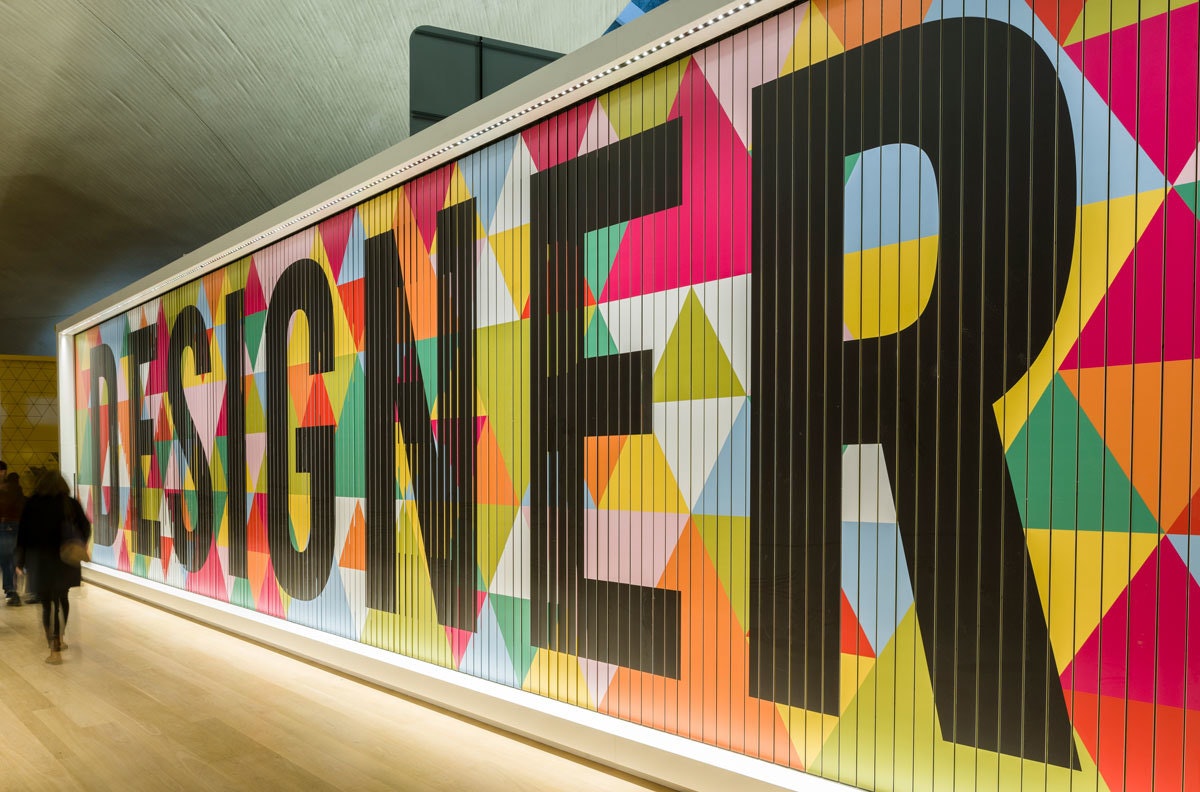
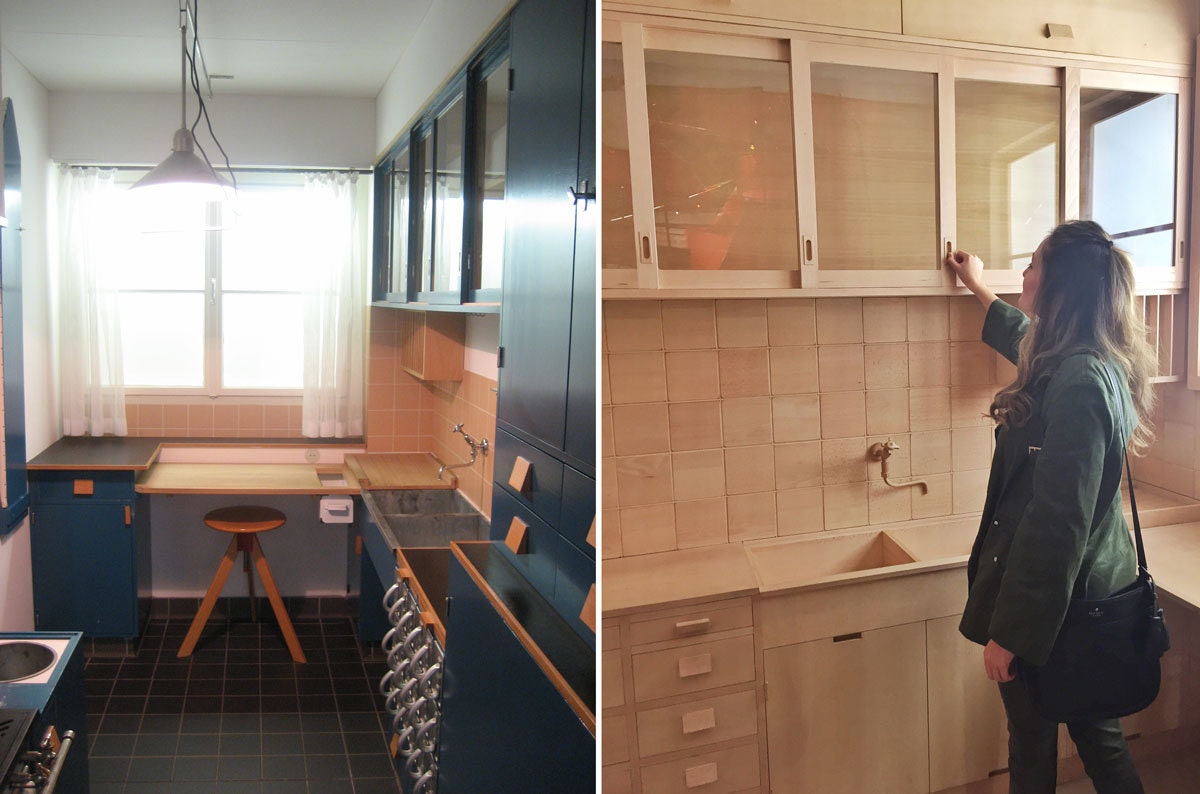
I discovered Schütte-Lihotzky on a recent visit to The Design Museum London, when I went to see the “Designer Maker User” exhibit. I'd never heard of her before, but she is credited with creating the first modern, efficient, "fitted" kitchen in 1926. A "fitted" space means that units are attached to a wall rather than free-floating. It was the first time someone thought to design for cooks instead of home builders.
Schütte-Lihotzky worked in the Municipal Building Department in Vienna, which controlled all aspects of housing, but as a newly-graduated architect, she had little experience with cooking. Instead of letting that naiveté hold her back, she embraced her beginner’s mindset and embarked on an early form of design research, interviewing and observing women in their homes and using film to conduct time-motion studies.
She found that women were spending their entire day preparing, cooking, and cleaning. This endurance activity started with trips to the local store, as fridges and storage units were not the norm and food would spoil within a day or so.
To add to the challenge, the stove, sink, and pantry were installed without any consideration for food prep workflow or the relationship between tasks, and work surfaces were installed at varying heights, putting strain on women’s bodies.
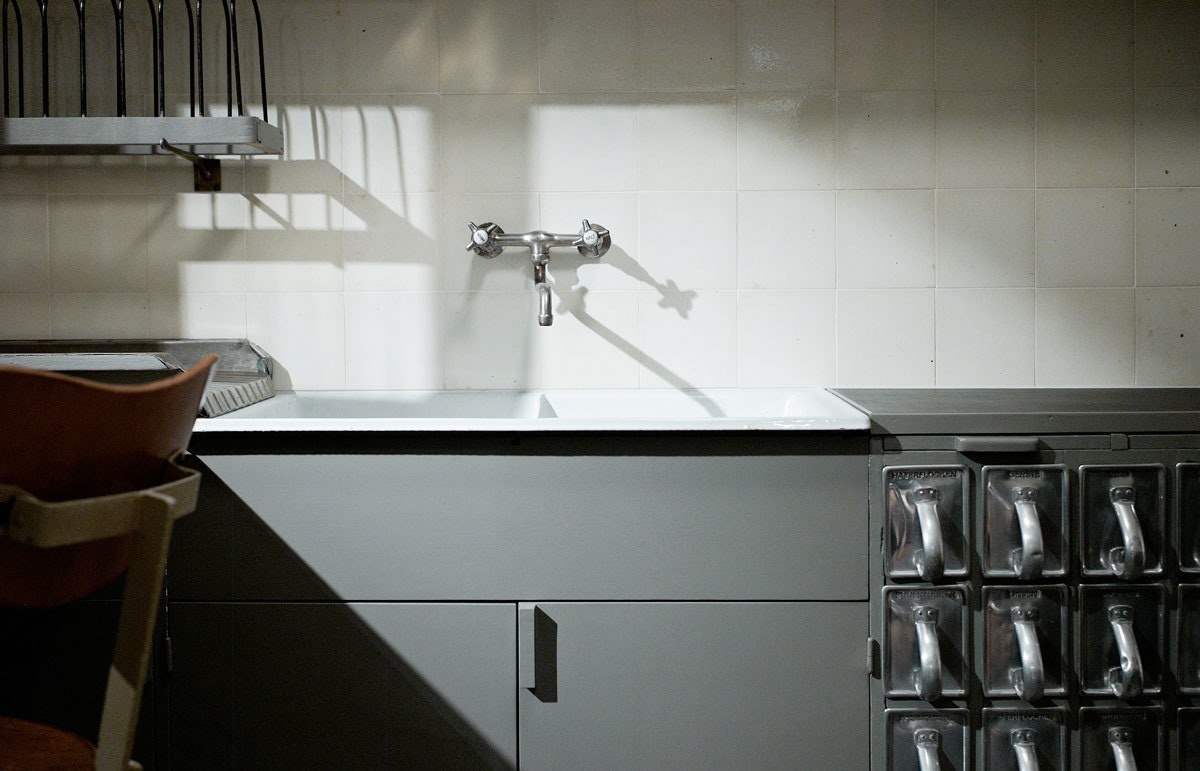
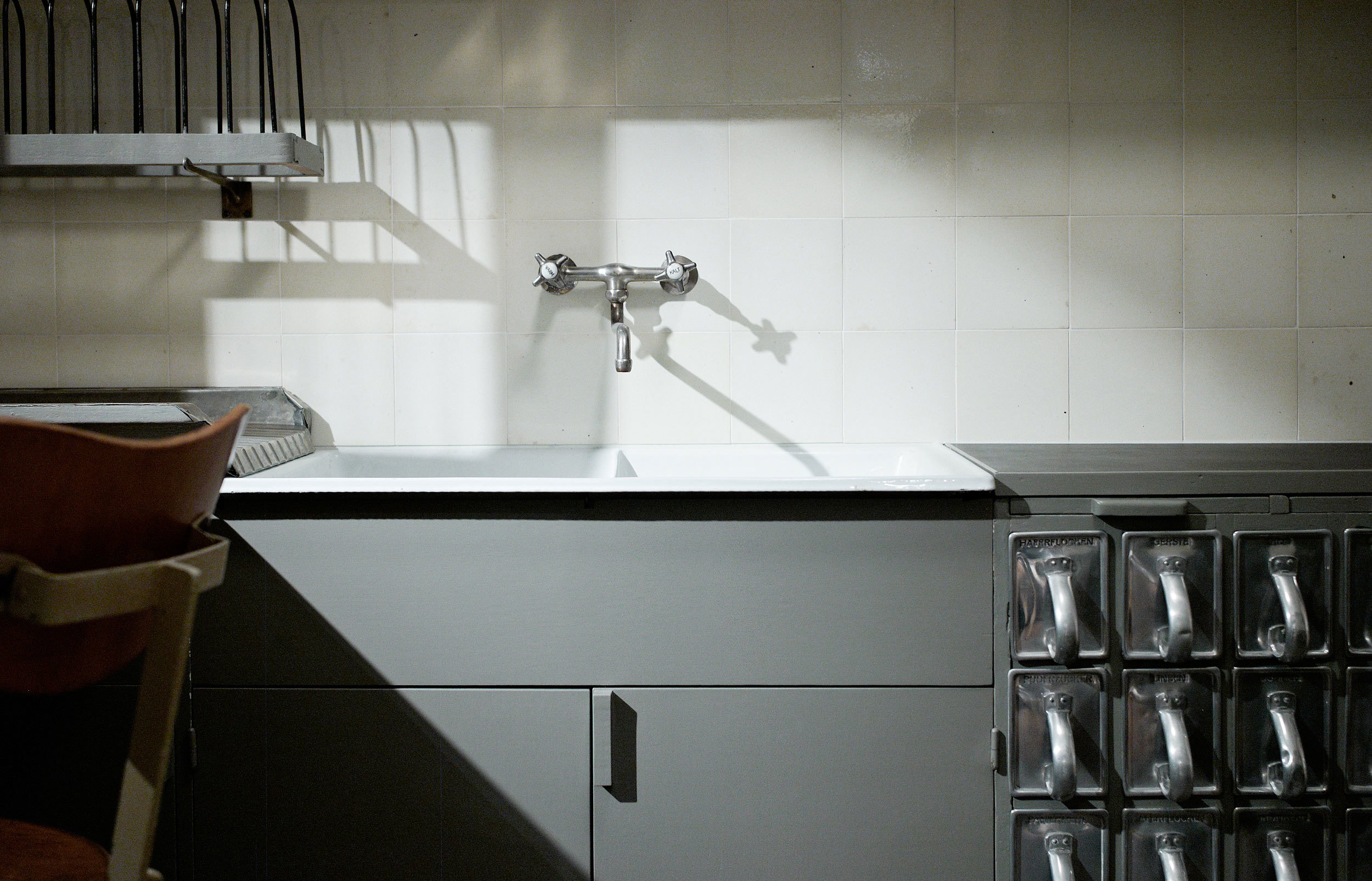
From her interactions with everyday cooks and the application of factory-line principles popularized by Henry Ford, Schütte-Lihotzky introduced her replicable, affordable, space-saving, and egalitarian “Frankfurt Kitchen,” named after the New Frankfurt initiative to address the city's shortage of public housing in the 1920s.
Each kitchen came with a swivel stool, a gas stove, built-in storage, a garbage drawer, and an ironing board. Schütte-Lihotzky used resilient materials like oak to repel critters from getting into perishables and installed aluminum storage bins for staples like sugar and flour. The main objective was to free up hours each day for women to devote to other pursuits.
Within a few years, 10,000 of Schütte-Lihotzky’s units were installed in apartment buildings across Frankfurt, and her design became the model for all subsequent Western kitchens. Her work reframed women’s relationship with cooking and set in motion a radical wave of change.
My grandmother, Ruth Kandel, who was born in Frankfurt just as Schütte-Lihotzky's work started getting acclaim, would often tell me about her upbringing—that her purpose in life was defined by “Kirche, Küche, Kinder” (church, kitchen, children.)
While she loved her husband and children dearly, she also dreamed of becoming a lawyer or a social worker and contributing to the world beyond her kitchen. I feel extremely blessed to have had women like Schütte-Lihotzky blaze the trail through design, freeing up my time so that I’m able to embody my grandmother’s desire to go forth and create.
Can the design of today’s food liberate us further?
Now that I’m at IDEO, I have the opportunity to carry Schütte-Lihotzky’s work forward. We partnered with IKEA to think about the future kitchen—how we might design it to be more efficient and use less energy while making it easier for home cooks to feel confident about preparing healthy food.
We also worked with a startup called INFARM to design modular, stackable units that use far less soil, water, and space to grow food at an optimal light and temperature. Because of the compact size of the units, you could install one in your own home kitchen, or stack them up to feed thousands of employees a day during winter months when produce typically has to be shipped in from far away. Good for cooks and good for the planet.
People used to say that a woman’s place was in the kitchen. Today, thanks to pioneers like Schütte-Lihotzky, a woman’s place is anywhere she wants to work.
As a designer who loves to cook, I’m intrigued by the way kitchen design has enabled me—and generations of women who came before me—to spend less time preparing and more time enjoying the food we make, so we can move on to other things.
How We Turned an Old Gas Station into a Community Hot Spot
Great design doesn't just happen in big cities
Small cities provide the character that comes from not having the world’s largest corporations on their hips. Communities are close-knit and form at a slower, more intimate pace. And cultural spaces in those locales are stronger for being able to bring people from diverse backgrounds together to have a dialogue that goes beyond a town hall meeting.
Designing a design community
After graduating from Florida State University and working professionally in Tallahassee, I started to realize that there were a lot of talented folks who were brought up in the community only to eventually light out for a larger zip code—taking their skills and passion with them. At the same time, I saw the community starting to rally around Domi Station, its growing co-working space and tech incubator,.
Wanting to pull those threads together, I quit my job at the large ad agency where I worked to form a creative collective called Foremost, which does international design work and supports local startups and events to help grow Tallahassee’s design community.
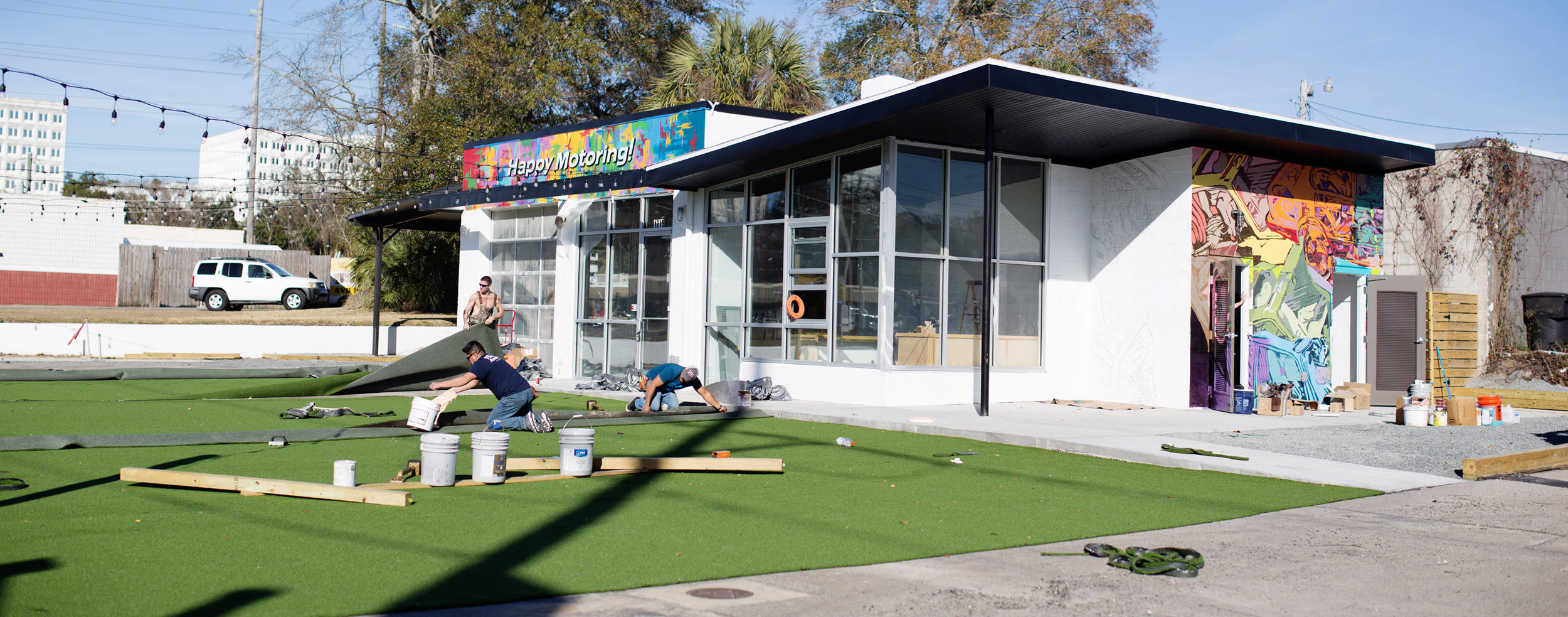
Today, when I’m not busy with my day job designing emerging technology at IDEO’s CoLab, I volunteer with Foremost. Our latest project, led locally by my business partners Jake Kiker, Lucas Lindsey, and Micah Widen, is a physical space created for the local community. We call it Happy Motoring.
Finding our station
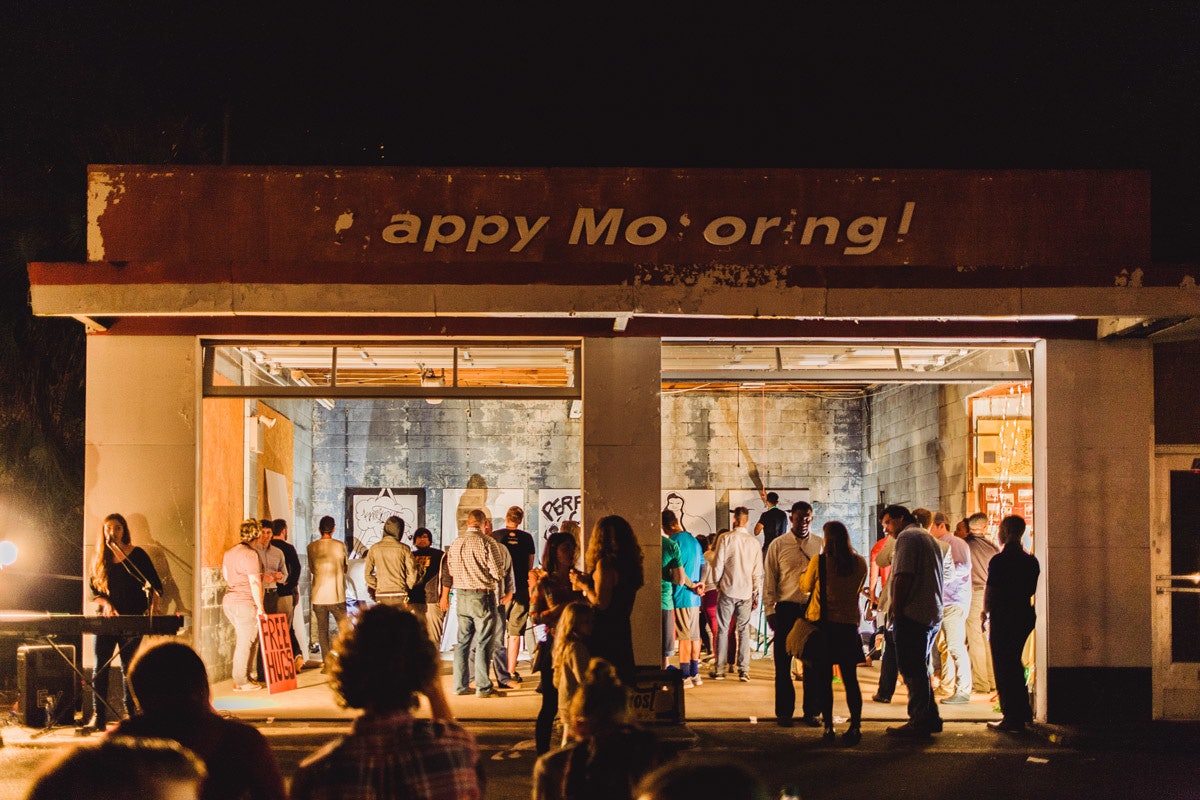
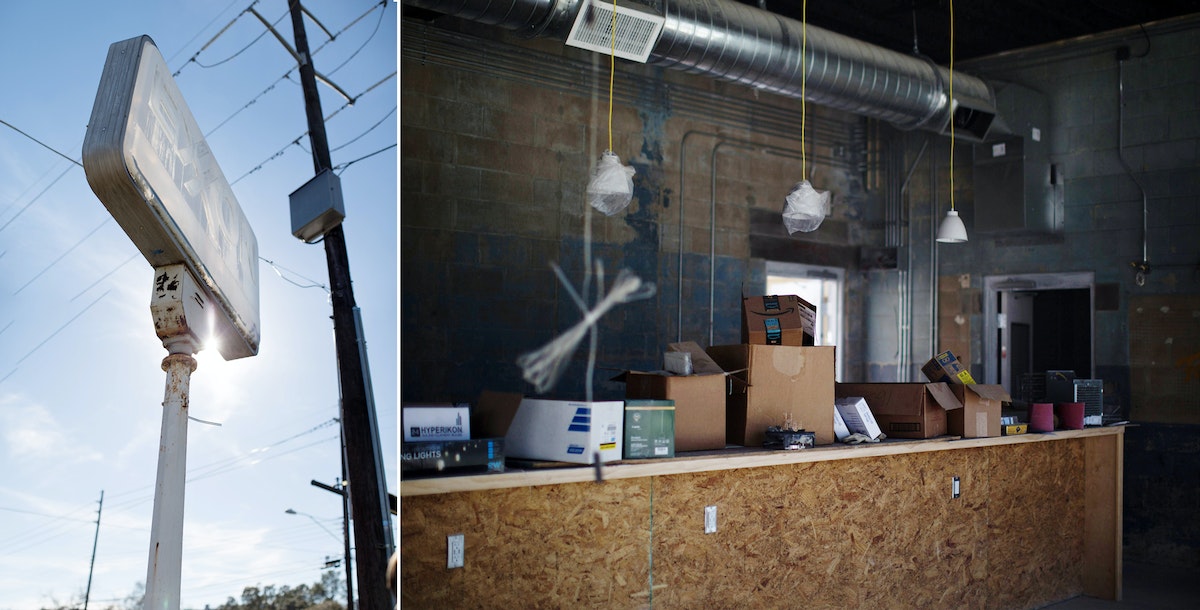
It all started with an abandoned Esso gas station on the Southside of Tallahassee. I was ecstatic when Foremost bought it in 2015 to create a community space. The mid-century design of the building was (and is) beautiful, something to be preserved, and we knew that creating something locals would get excited about meant bringing them in as co-creators.
So we organized an event where Southside inhabitants could tell us what they wanted, inviting our friends at Street Art Tallahassee to put together a pop-up gallery and Juniors Roasted Coffee to host a campfire that would bring people together.
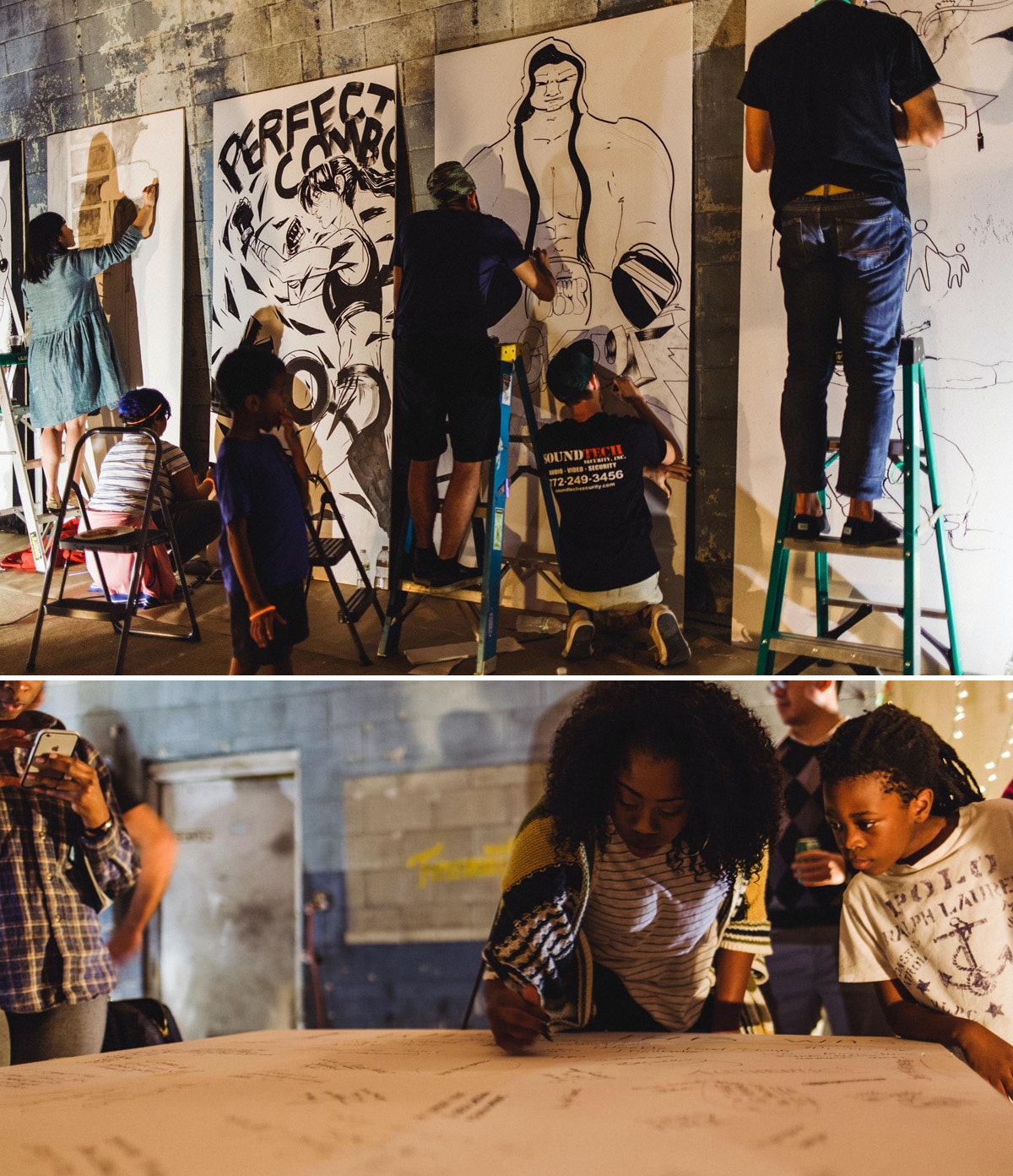
A shared vision
Part of what I wanted to do in creating Foremost was to show the city how many talented creatives live here. So, for the community event, I rallied five of the best young artists I knew in the illustration scene to battle it out in a Battle of the Boards (based on Ink Wars, an awesome event series put on every year in Georgia at Creative South.) The illustrators were each given an inspirational word and an hour and a half to fill an eight-foot board. The theme was "knockout."
We reserved two of the boards for the Southside community to write down their ideas—big, small, impossible, and plausible—about what the space might become.
Video by Conner Hill.
Building community comes from listening to diverse voices. Too often, we divide ourselves into bite-size neighborhoods or groups that lack a space for hearing each other out. We hope Happy Motoring will become that space—by giving everyone a chance to contribute, we’ll have all of the pieces we need to start building something local and real.
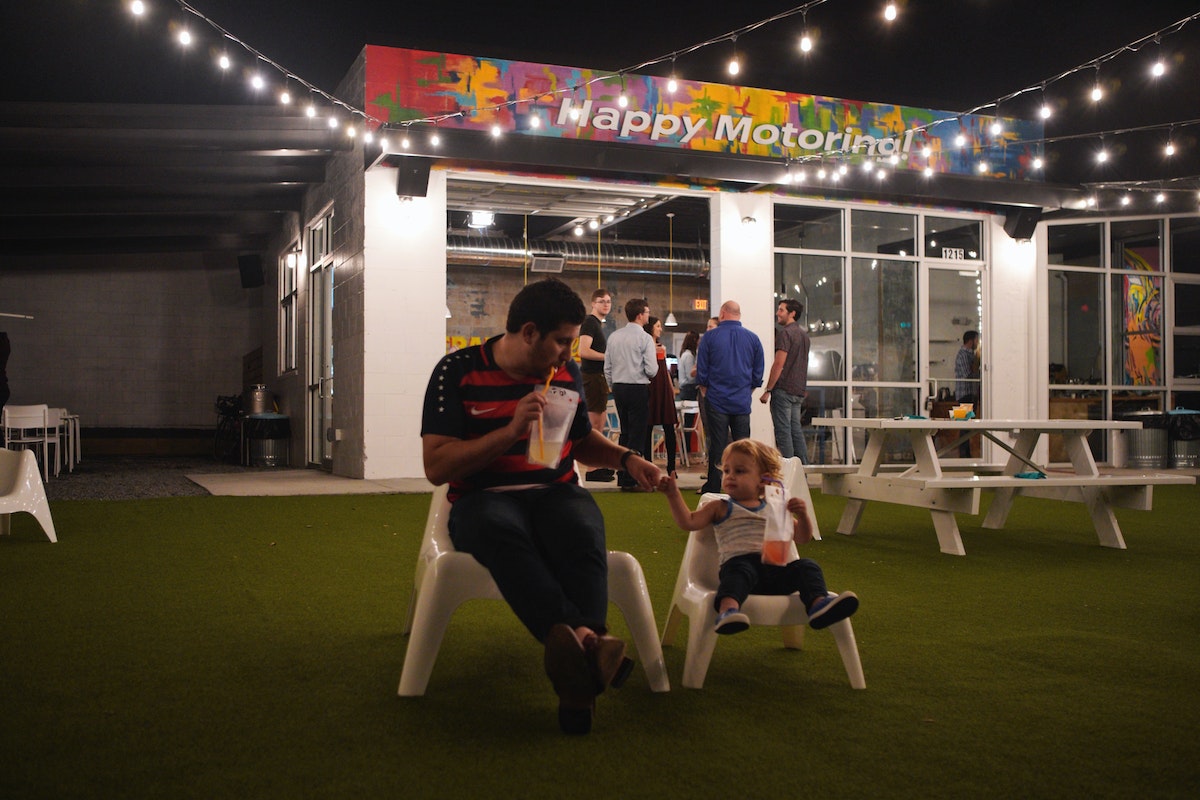
Want to do the same in your hood? It might be easier than you think. Organizations like the Knight Foundation fund grassroots urban innovation in cities. You can start small—create a meetup group, find someone with an empty lot and start a weekend market, or invite some food trucks and organize pop up events. Plant a community garden. Hold group bike rides. Whatever feels right to gain trust and start a dialogue in your hometown.
And if you’re interested in joining the next event in Tallahassee, be sure to follow our updates and join us for Happy Motoring Station’s official launch on March 8, 2018!
When you hear about “design hubs,” your mind may not instantly jump to Tallahassee. But small communities have just as much passion for design as larger metropolises—they just lack the resources to attract the same attention. Though I live in a big city now (Boston), I learned a lot about the importance of community from working and growing up in small towns in Florida.

Lindsey Turner
I’m passionate about building brands, products, and experiences that help organizations show up with meaning and momentum.
I help organizations cut through complexity by shaping how they show up, through brand strategy, identity, and storytelling.
Working at the intersection of brand and business, I bring an editorial eye and a bias toward making—turning ideas into tangible experiences that people can understand, trust, and believe in.
My work spans government, healthcare, financial services, media, and consumer goods, from launching Gen Z-focused ventures to building innovation labs and reimagining legacy brands. I relish moments of ambiguity and enjoy translating across teams, perspectives, and priorities to move ideas forward.
I started my career in editorial and digital design, shaping cross-platform experiences and identity systems in publishing and agency environments. That foundation still shapes how I work today: I’m detail-oriented, collaborative, and overreliant on the Oxford comma. I hold a BFA in Visual Communication from the School of the Art Institute of Chicago.

Rachel Young
My work helps organizations see who their products aren't working for—and build the will and the tools to do something about it
For 25 years, I've asked the same question: Who does this design exclude—and what are we going to do about it?
My work spans human-centered strategy, inclusive design, and qualitative research, with clients ranging from Microsoft, Google, and Verizon to the National Science Foundation, and San Francisco Unified School District.
Before IDEO, I taught elementary school in East Palo Alto and spent a decade doing design work with social service organizations—where I learned firsthand what it costs people when systems are built without them in mind.
I am currently writing User Error, a nonfiction book about digital access and the design decisions behind it. I live in Oakland, California.

Brian Pelsoh
I lead with craft, ensuring our work is creatively excellent: rooted in deep human insight and imagination, while also grounded in the realities of business and technology.
My expertise spans brand, communication, and product design across tech, education, the arts, and social impact.
I believe great work demands both high-level vision and obsessive attention to detail, and only happens through collaboration.
I bring an inclusive, hands-on approach and a deep understanding of business, which enables me to consistently deliver excellence while always asking why.
Before joining IDEO, I worked at the brand firms Pentagram and VSA Partners. I began my career as a designer, leading teams at the School of the Art Institute of Chicago and the Milwaukee Art Museum. I hold an MFA in graphic design from Maryland Institute College of Art and a BFA in communication design from the Milwaukee Institute of Art & Design, and have taught at some of the best design schools in the US.

Tony Wong
I am responsible for IDEO’s long-term success in China and working with clients to use design as a tool to enable growth.
I am responsible for IDEO’s long-term success in China and working with clients to use design as a tool to enable growth. Specifically, I have helped Chinese companies design holistic brand solutions through the development of their products, communication, services, and innovation teams, and I have helped multinationals expand their presence and influence in China.
I advise global leaders on developing China-led innovation and capabilities.
In over 15 years in IDEO Shanghai, I have worked on projects that use design to elevate the quality of the experience of healthcare products and services, streamline processes that increase productivity, create spaces and programs that promote and enable inclusive communities, and build next generation mobility solutions that are planet-positive.
Before joining IDEO, I worked at Philips Electronics and the Electrolux Group in Italy, the Netherlands, and Singapore on a number of breakthrough commercial products. I am a member of the Young President Organization in Shanghai.

How to use AI as an editor, not a writer
Ed White shares how he uses AI as an editor—not a writer—to sharpen storytelling, rehearse ideas, and preserve the productive friction that makes creative work better.
Ed White has a rule he's tested on his own writing: hold yourself as the writer, and let AI be your editor. Ed is a Senior Design Director at IDEO's London studio, where he co-leads the firm's AI portfolio across Europe. Before IDEO, he spent 12 years as a writer and editor at the Financial Times, Wired, and Contagious. So when he talks about when to use AI for storytelling and when not to, it comes from two decades of crafting his storytelling skills.
In this episode, Mina Seetharaman talks with Ed about two specific tools he uses to keep AI in an editor's seat: a "roasting agent" prompted to critique his drafts without any sugarcoating, and a simulated audience he rehearses pitches on before the real thing. They also get into what Ed is hearing from design leaders at Anthropic, Lovable, Shopify, and Google Creative Lab about how creative work is changing, and why he thinks the friction of writing something yourself is worth protecting rather than automating away.

Building a personal AI for the messiness of life: Sida Li
Becca Carroll talks with Cue co-founder Sida Li about designing a personal AI for the messiness of everyday life—not just work. They explore how Sida stays anchored to human needs while navigating fast-changing technology, product tradeoffs, business-model experimentation, and the realities of building an AI company today.
Most AI products today are built for work—a space with clear problems and established systems. One founder noticed a gap: personal life is messier, harder to systematize, and mostly left behind by the AI boom. So she built Cue, a personal AI that lives inside iMessage and group chats, to go where the other tools haven't.
In this episode, Becca Carroll, IDEO's Chief Strategy Officer, talks with Sida Li, co-founder and CEO of Shared Context Lab, about staying anchored to a human need while the technology around her keeps changing shape, why she treats her business model with the same rigor she'd bring to a product, and what it feels like to build a company at this particular, disorienting moment in AI.
The conversation also gets into how Sida makes design decisions: the language Cue uses to describe itself, the tradeoffs behind building inside iMessage instead of a new app, and a real story about a business idea that didn’t pan out.
This is the second in a two-part series profiling founders from IDEO's Startups-in-Residence program. The first conversation is with Johannes Seemann, founder of Sooner, on designing GenAI for the emotional side of money.

Designing GenAI for the emotional side of money: Johannes Seemann
Designing financial tools around the feelings that shape money decisions.
Most personal financial tools are built to run the numbers and optimize towards a budget. While that works for some, most people experience money as a lived relationship that does not neatly fit into a spreadsheet. Johannes Seemann and Becca Carroll discuss why money is emotional before it is mathematical, and what a human-centered approach to building a generative AI financial product looks like in practice.

The curious leader's edge in uncertainty: Scott Shigeoka
How genuine curiosity helps leaders navigate uncertainty with greater confidence.
Mina Seetharaman talks with Scott Shigeoka, author of Seek and Head of Curiosity Cultivation at the Eames Institute, about what distinguishes genuinely curious leadership from performative curiosity, how power dynamics shape curiosity, and why practicing curiosity can restore energy rather than drain it.
Looks like you might be in search of something very specific?
Or reset the filters above and try another angle.
Here’s some random inspiration

Podcasts about creative leadership

Articles about the power of prototyping
