
.svg)


The future guest experience
Designing new guest and employee journeys that deliver on the promise of an iconic brand.
kate spade new york has been an iconic fashion brand since the early 90s, when its handbags first stormed the Manhattan fashion scene. Since then, the company has expanded and evolved into a global lifestyle brand.
With e-commerce reshaping the retail landscape and redefining the role of brick and mortar stores in recent years, kate spade new york leadership asked: How can we make the kate spade new york specialty store experience, well, more special?
kate spade new york already held the key to a new way of thinking about a multichannel customer experience: a brand promise “to inspire her to lead an interesting life.” Hoping to bring that promise to life in store, they engaged IDEO to help make it happen. The solution was for kate spade new york to take the brand message from words to action in the form of a customized guest journey. The team created more than 100 design concepts and strategies for building a retail experience that rewards curiosity and sparks artistic and literary exploration.
“In partnership with IDEO, we spoke extensively with our customers and associates to better understand how we can provide the most engaging and fulfilling in-store experience,” said Mary Beech, Executive Vice President and Chief Marketing Officer at Kate Spade & Company. “The new store elements that we introduced speak to our customer’s personality and appetite for adventure while aiming to enhance engagement with new and existing customers.”
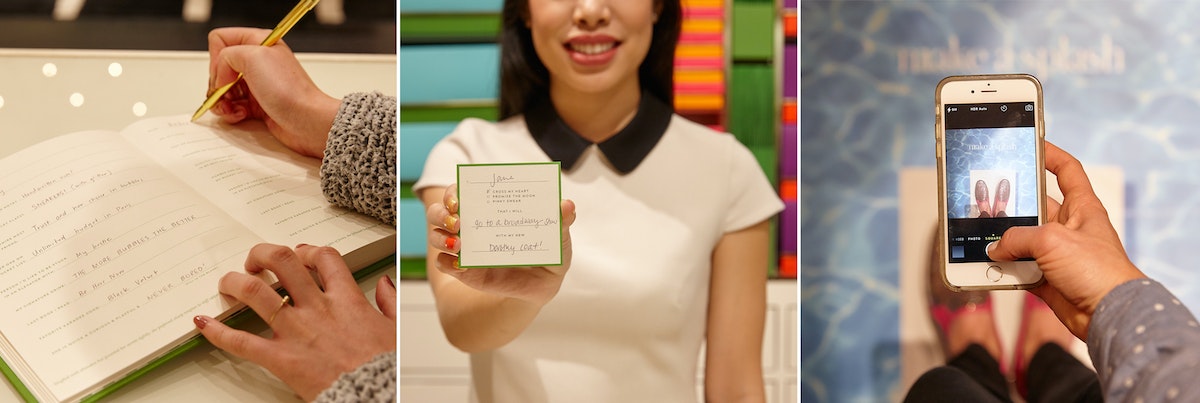
The team knew that striking the right balance of digital tools in in-store interactions was pivotal in allowing two people to have a more rich and collaborative face-to-face connection. The concepts include things like “pack a purse” to test drive how many everyday items can fit in different style handbags, cheeky “dare cards” that challenge customers to go on an exciting adventure with their new purchase, and digital moments like the “shoe selfie” platform that would allow a guest to share “I’m thinking about them” heels or just-purchased flats with her social network. IDEO live-prototyped a selection of concepts in stores around the country and saw a high correlation between customers’ positive reactions and their subsequent purchasing decisions.
“At kate spade new york, our brand promise is to inspire women to live a more interesting life,” said Jenica Myszkowski, Vice President of Stores at Kate Spade & Company. “Our new and improved guest journey experience puts our customers at the center, allowing us to more fully deliver on our brand promise in our retail stores with a stronger vision and purpose for our stores and our store teams.”
To deliver the newly envisioned guest service experience, the role of the sales associates needed to be redesigned, as well. The kate spade new york and IDEO team created a new role: the Muse, whose job is to live the brand promise of an interesting life and to inspire customers to do the same. The reimagined role ultimately shifted the focus in specialty stores from selling to inspiring and building long-lasting relationships with guests.

Two kinds of athletes, one strong brand
Designing a brand that served both elite athletes and everyday fitness enthusiasts.
Athletes’ Performance and its subsidiary, Core Performance, were both founded on a single mission: to enhance human performance through a holistic approach to mindset, nutrition, movement, and recovery. Athletes’ Performance focused on elite professional athletes, and Core Performance provided corporate fitness programs and workouts for employees hoping to lead more healthful lives, and both found a footing in the competitive health and fitness market.
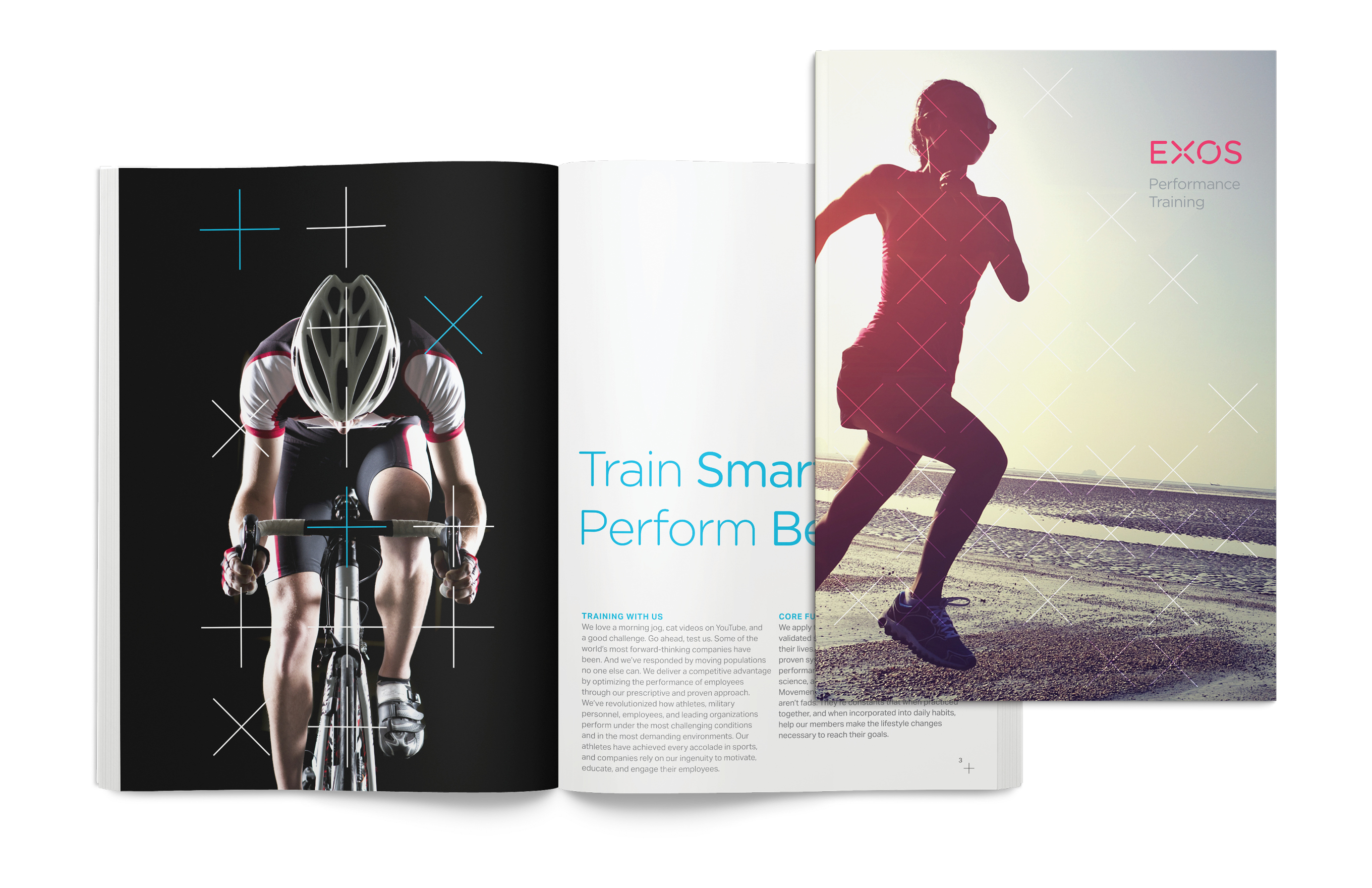
Faced with a challenge to redefine the brands, IDEO designers collaborated with the founder and integrated marketing team to unite Athletes’ Performance and Core Performance under one name that would cut across the health, fitness, and wellness markets to reach a full breadth of audiences and partners. Under a new name, EXOS, the teams created a brand identity system unified by its founding mission and focus on human performance.
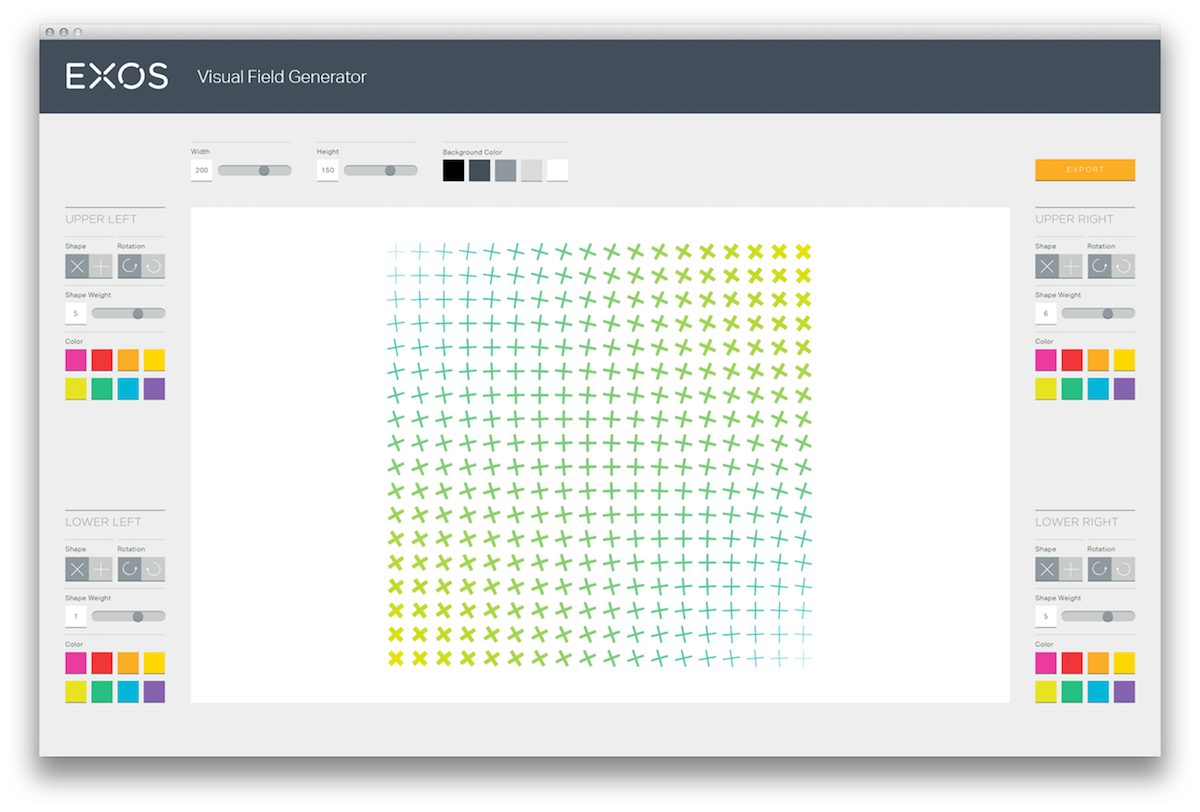
For the new EXOS brand, IDEO designers created a visual language using “x” and “+” to highlight the progress from goals to achievement, as well as a system of interaction for athletes of all performance levels. The team also created a bespoke digital tool, outfitted with custom software, which gave designers both guidance within the brand guidelines and creativity to explore new products and contexts.
Making sure a bank stays great as it grows
Designing digital tools and brand concepts for Umpqua Bank.
Imagine this: Your company has just gone through a $2 billion merger. You show up at work to find an invitation from the CEO asking you to help shape the bank’s future. This is what happened when Umpqua acquired Sterling Financial Corporation in 2014, doubling its size and resulting in the creation of the West Coast’s largest community bank overnight. With a mission to be “the world’s greatest bank,” CEO Ray Davis seized the moment to reinvest in design across the organization.
Umpqua asked IDEO to help examine the brand they had and take it to a new level. They wanted to find out: how can we leverage our strength and reputation by activating the brand in new ways to deepen employee and customer engagement and foster continued growth?
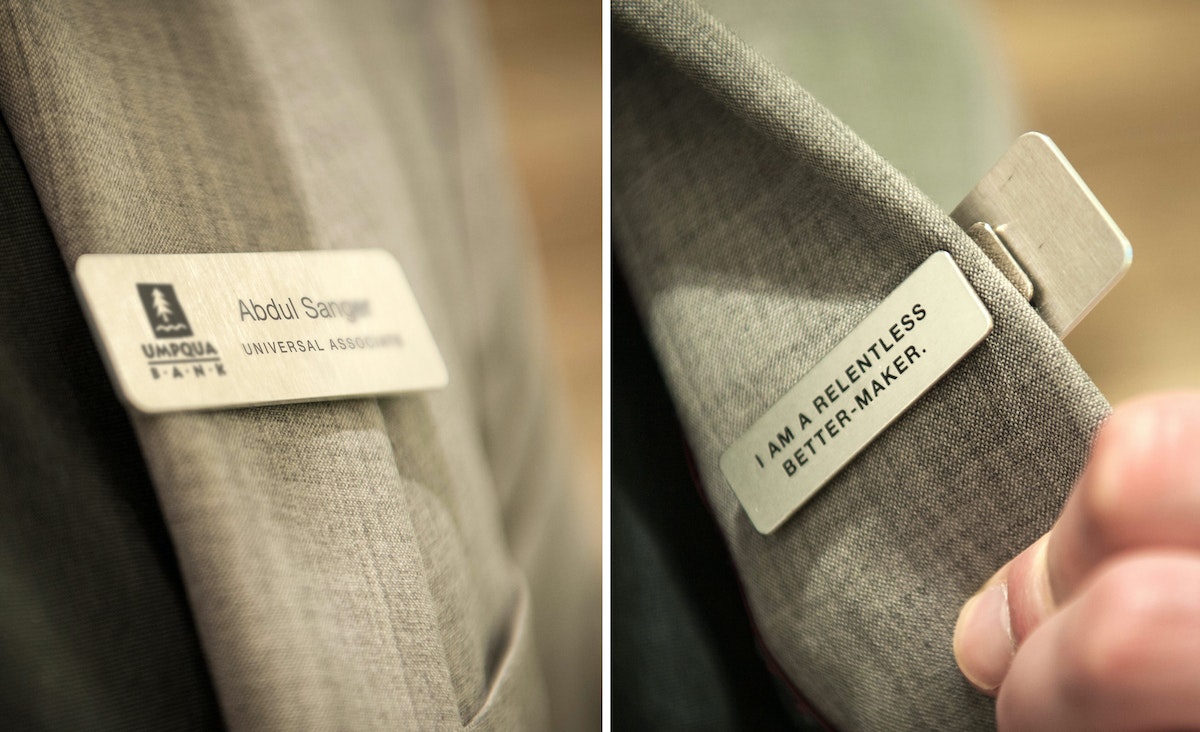
IDEO identified three core brand opportunities and a newly articulated purpose statement that became a launch pad for more than 15 different concepts to express the brand internally and externally.
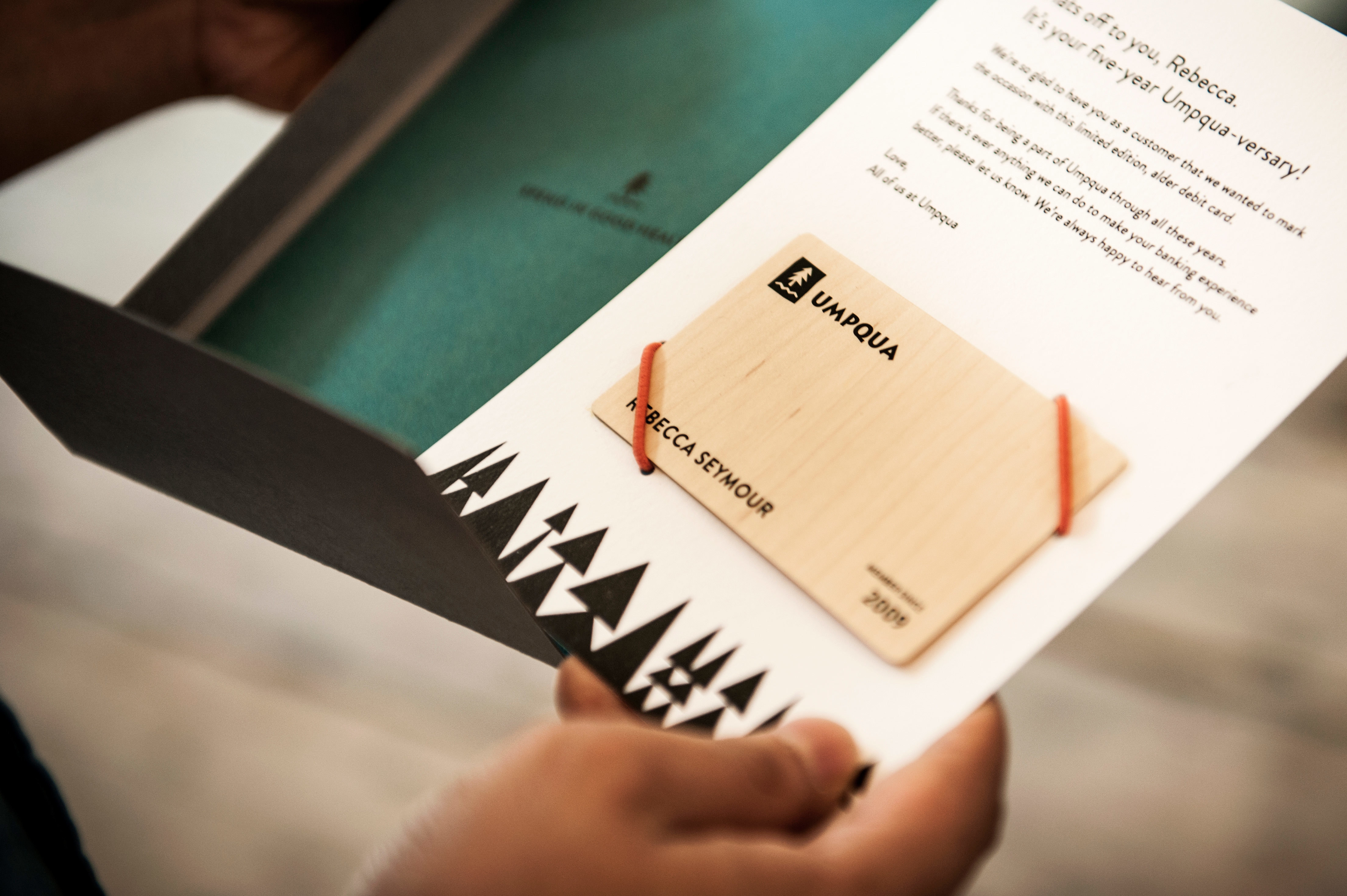
Inside Umpqua, company evangelists handed out notebooks with tips on “how to be better-makers,” and associates now participate in collaborative design challenges through an internal tool built on IDEO’s OI Engine, software that fosters open innovation. The design challenges are drawing unprecedented participation of 84 percent among employees and are having a real impact on the organization. Of the five they’ve run in two years, the company has implemented three winning ideas including a buddy program for new hires or transferees that upwards of 1,000 associates could experience over the next year.
WATCH: Umpqua Bank on using the OI Engine platform
IDEO also worked with Umpqua’s team to conceive digital products including a new digital app called Raindrop that lets people bank in the way that they think about saving and spending, not the way a bank does. It’s due for release in 2016.
To introduce all of this work, IDEO set up an immersive exhibition at Umpqua’s headquarters in Portland. Teams large and small, including the executive and associates from across the company, walked through the exhibit and witnessed how the brand impacts every aspect of their business, from employee engagement to product development. It was signed on the spot by Davis, who invited employees to sign their names, too.

Jade-infused jeans for sweltering summers
Repositioning Lee's brand through the launch of a breakthrough denim product.
The sweltering summers in China can be insufferable—especially for people who like to wear jeans.
Lee Jeans, in its quest to boost its brand differentiation among an expanding market of apparel brands that also use fabric performance as their unique selling point, like Uniqlo and Levi’s, developed denim that’s cooler to wear during hot weather. It found a novel solution in an ancient material: jade. When woven into denim, crushed jade particles maintain the coolest temperature and, alongside other technological enhancements made to the fabric, pull sweat away from the body. The fabric dries quickly, creating a refreshing cooling sensation.
The immense popularity of jade in China makes the denim a natural fit for Lee’s Asian market, and although Lee’s jade-infused fabric was entirely unique, the company needed to differentiate its inventive new product from a rapidly expanding market of high-tech fabric alternatives made specifically for hot weather.
Lee and its parent company, VF Corporation, saw an opportunity to create a new product that helps position the company not just as a premium brand, but one that leads with innovation. Lee came to IDEO to help design the go-to-market and launch strategy for the new line of jade-infused fabric. Looking for insight, designers conducted research in multiple cities in China and India, seeking out those who were committed to wearing jeans despite the most extreme circumstances—the denim-clad bicyclists pedaling through sweltry city streets, the basketball players on the court, commuters who stripped to their underwear while driving and wriggled back into their jeans upon arrival. The common thread: They were all steadfast in their preference for thick, heavy denim, no matter how hot it got.
The resulting strategy for product launch: positioning jade—a traditional material that has strong cultural and spiritual meaning—as a high-tech solution for the contemporary lifestyle of young people. IDEO helped Lee name the new line JadeFusion and created a system of messaging to communicate that these aren’t just jeans—they’re jeans with a fascinating narrative woven within; a hierarchy of messaging that blends jade’s exotic premium significance with a very modern technical story. Lee salespeople learned how to share the story with customers, encouraging them to talk about jade-cooling technology at work, on the streets, and even on the basketball court.
The JadeFusion line sold out within seven weeks of its debut. The launch, which was originally limited to mainland China and Hong Kong, was expanded to India, Malaysia, and Thailand, and sales orders doubled for the following year. Along the way, Lee developed a new understanding of how to incorporate customers’ input and be open to discovery and inspiration from the very start of planning a product launch.

To Become a Better Designer, Make Time for Make Believe
Silly as it sounds, it’ll make you better at your day job
Every other week, I host a creative playdate for our studio called MakeBelieveTime (MBT). We always come up with something different. Maybe we’ll combine magnets and mirrors to invent our own games. Maybe we’ll use a needle and thread to learn the basics of computer coding, or fold our hopes and fears into paper airplanes. MBT has become one of the tentpoles in our community’s calendar—a ritual that brings our bodies out of project spaces and our minds out of design mode. It’s playtime for adults.
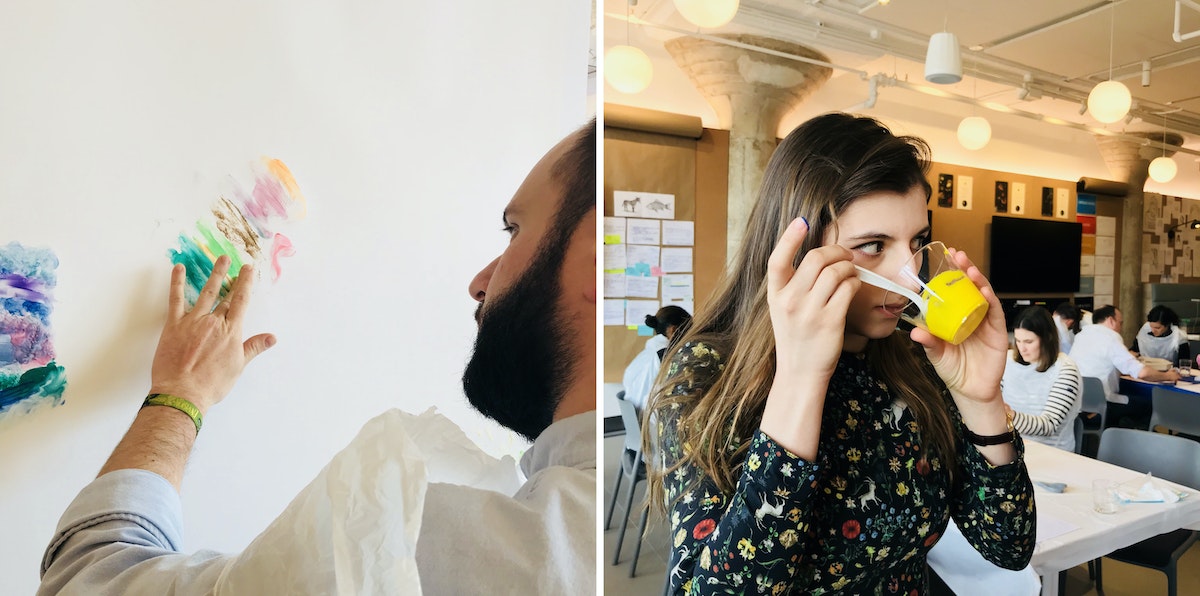
The value of these exercises has become clear to us, but when visitors happen to be around for MBT, all the natural questions bubble up. Sounds fun, but you do this during work hours? (Yes.) Are these exercises used with clients later? (Sometimes, but not always.) How does this apply to paid project work? (It doesn’t.) So what’s the point?
That is the point. MakeBelieveTime is actually most valuable when it does not directly relate to project work in a typical, measurable way. It’s play for the sake of play, and that’s okay—in fact, it’s essential. Here’s why.
It’s about process, not product
I once had an art teacher who would sketch all over my work to show me different techniques. At first, I was frustrated because my brilliant piece was being scribbled on. But then I recognized his assumption—that an artist will do it again and again and again. That learning a new technique meant focusing on the hand, not the paper.
In our design work, we rely on our own experiences and intuition, so it’s essential that we become fluent in exploring our memories and feelings. MakeBelieveTime gives us a chance to practice that with new and unfamiliar tools. That’s why, whether it’s colored sand or temporary tattoos, the real materials of MakeBelieveTime are our personal joys, hopes, and fears.
It preps the mind for design
When I was a kid, my grandfather told me about Louis Pasteur’s belief that “Chance favors the prepared mind.” Show up and do the work, Grampa explained, so that when the magic happens you’ll be sharp enough to recognize it. Making space for “sensorial, analog, hands-on radness”—that’s how one colleague described MakeBelieveTime—gives designers a much needed mental reset.
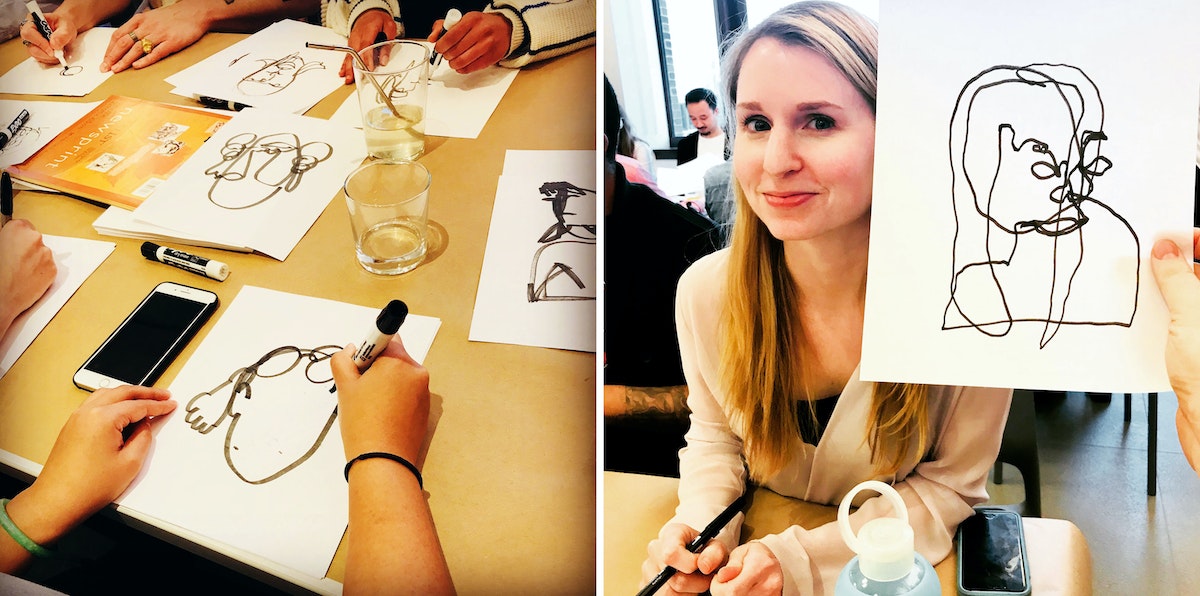
Plus, MBT actually has made an impact on client work. A handful of insights and concepts that originally came out of MakeBelieveTime actually made it into an experience we designed for a major NYC landmark.
But that’s not really the point. It’s about helping our designers spread their nets as wide as possible, and to lighten things up with a moment of pure, playful joy, so that when inspiration comes they’re ready to grab it.
It broadcasts both values and value
Most designers will sing the praises of play. It opens you up and makes you braver, more optimistic, and more creative. We pepper client meetings with pipe-cleaner sculptures or a little improv to get the blood and imagination flowing. We put a lot of thought and energy into those activities, thinking about our clients’ needs and the best way to get them comfortable with being uncomfortable.
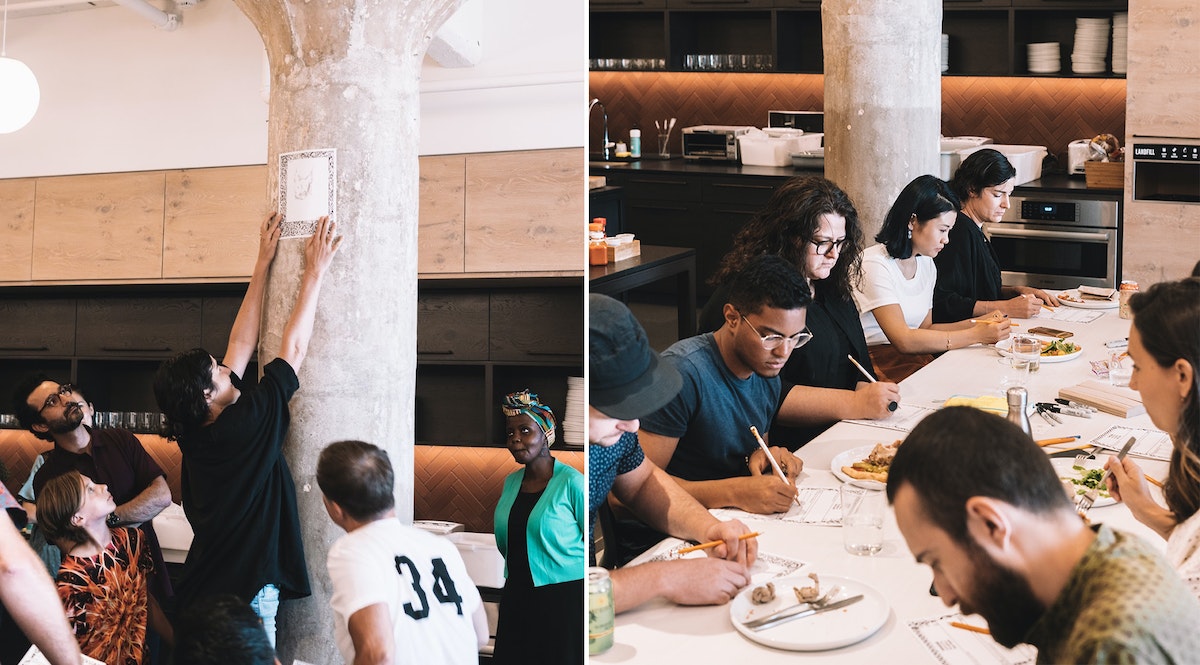
Most designers will also admit that when deadlines loom, proposals beckon, or clients push back, play is not always top-of-mind. That’s a problem. An organization’s beliefs come through in their actions. To show that play is worth the time, you have to make time for it.
How to build your own MakeBelieveTime
We want MBT to be much more than a free-for-all with glue sticks and googly eyes, so we use three key design principles to guide the activities:
- Make the familiar unfamiliar. To think about senses we take for granted, we infused finger paints with essential oils and asked everyone to visually illustrate the experience of smelling that scent.
- Explore safe danger. Blind contour drawing is a great example. We all sit and draw the person across from us—without lifting the pen or looking down at the drawing. It’s always a mess, which guarantees a joyful, public fail, but also allows us to look deeply at each other and practice seeing and being seen.
- Dig deep. We used Halloween as a prompt to create a mask that evokes a moment we were horrified by our own behavior. This allowed us to acknowledge the full spectrum of our feelings, exorcise that shadow, and leave it to the past.
The first, despairing thought that hit one of my colleagues when he first saw MBT in action was, “IDEO’s gone soft.” And, quite frankly, that's not an unfair concern when you see a room full of world-class designers finger painting.
But MBT serves as an opportunity to nourish a perspective rather than achieve an objective. It’s less about the scented fingerpaints, and more about exploring new ways of understanding and sharing an experience. It’s also about laughing together. It’s about exposing our soft side so that we can trust each other more when we take those lessons back to our project spaces and have a hunch about trying something untested but exciting.
That’s why we believe that designing a cocktail that tells the story of your first kiss doesn’t cost you your edge. It’s how you keep it.
Think back to your first kiss. Remember the place, the smells, the nerves, the lips. If you had to create a cocktail to tell the story of that experience, how would you do it? Would you make Jolly Rancher–infused vodka to conjure the candy-loving kid next door? Would a popcorn garnish nod to the movie you barely watched? Answering these questions is how the designers of IDEO New York spent a Valentine’s Day afternoon.

The Three Qualities Leaders Need in an Uncertain Future
The next era of business demands collaboration, optimism, and a willingness to walk toward the unknown
It’s time to challenge that notion. The ability to navigate ambiguity—and to guide people and organizations without knowing what’s ahead—will be one of the key leadership qualities of our time. Because, in today’s world, almost nothing is certain. Technological change is drastic and rapid; volatility grips politics, the economy, and the climate; the future of healthcare and education are in question. And much as it would be a relief to land on a quick fix for any number of these challenges, the reality is that solutions are a moving target, and no one leader possesses a silver bullet.
But creativity can help. According to the World Economic Forum, creativity is among the top three skills needed to thrive in 2020, along with other capabilities infused with the human touch: complex problem solving and critical thinking. In a world where thorny challenges have no magic solution, leaders must get comfortable with not having an answer—leaning into the unknown and establishing a leadership style that incorporates many perspectives, sustains optimism, and perseveres through ambiguity.
We call this approach creative leadership. The term has made the rounds in academic circles for decades, but in practice, it’s only now gaining recognition as an effective approach in today’s turbulent times. Creative leadership takes conditions that are anxiety-provoking for many, and turns them into opportunities. In certain industries, where frequent change is inherent, it’s not unusual to find leaders who fit the bill. But now we are seeing that creative leaders can spark change in any industry or on any team, from manufacturing to marketing to finance to food.
So what are those qualities that equip leaders to leverage ambiguity and drive progress? How do they show up in their day-to-day role and move their companies forward? There are three key tactics that creative leaders employ: building diverse, multidisciplinary teams to maximize perspectives; navigating ambiguity with bold ideas; and maintaining forward momentum by sharing optimism, empathy and inspiration.
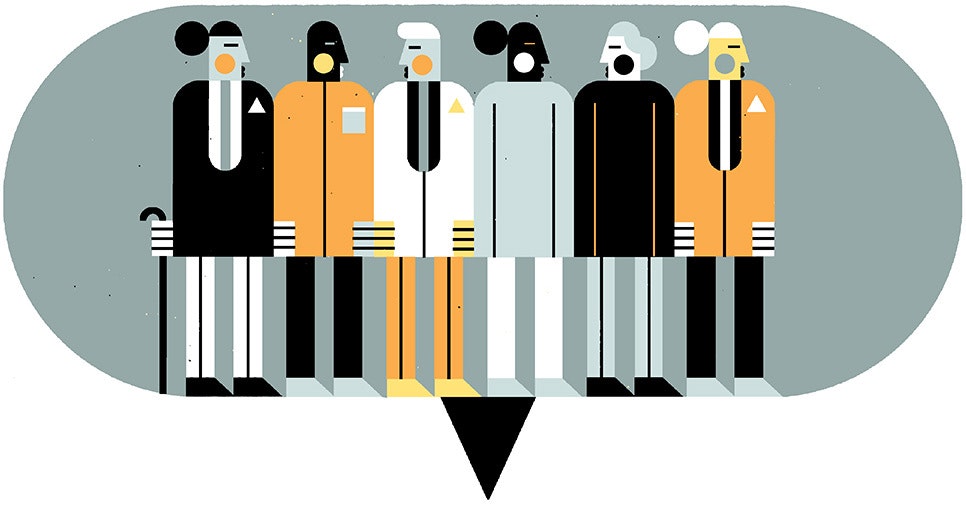
1. Creative leaders convene diverse groups and rally them around tangible goals.
Among many industries facing uncertainty and change today, healthcare stands near the top. In 2015, Northern California-based Sutter Health hired its first Chief Innovation Officer to help guide its enterprise innovation strategy across their integrated healthcare system, which serves three million people in one of the most diverse regions in the country. Sutter tapped Chris Waugh, then the vice president of design at a young, innovative primary care provider called One Medical Group, to partner with them in transforming the healthcare experience to make it more simple, engaging and human.
As Sutter’s first chief innovation officer, Waugh admits he battled impostor syndrome. He’d worked in the health space for much of his career, but often on the design side (including a decade at IDEO), rather than embedded within a large healthcare organization. “Who was I to tell a surgeon what to do? These people do transplants and save lives. Why would they listen to me?”
His first step was to build a diverse, cross-functional team to pool knowledge and ideas. Every executive—from legal to human resources to operations to medicine—appointed an open-minded, collaborative senior staff member. Next, Waugh and his design and innovation team articulated an optimistic purpose: They would “touch one million lives by 2022,” providing better healthcare and services to patients and their families. Then with this lofty goal top of mind, Waugh identified the right places to start small and set constructive conditions under which they could start making a difference.
They began innovating in non-clinical areas, such as using car sharing services to help transport patients to appointments. The pilots aimed for achievable targets, impacting a small number of people in the first few months, setting the right conditions, then progressing to larger scale. “Starting small with constraints keeps you from thinking you have all of the answers at the beginning. You can be more experimental, test for consequences, increase creative confidence, and discover over time when you’re ready to go full scale.”

2. Creative leaders navigate ambiguity by leading with curiosity.
Through it all, Waugh navigated his way toward solutions even though he couldn’t know the answers at the outset. He assembled the right people to converge on decisions at critical moments. And he shared lessons and stories of progress as a way to continually motivate people across the system.
Waugh asked bold questions, such as how might we reimagine the end of life experience for ourselves and our loved ones? His teams created a simple toolkit for talking about death with loved ones, which led to dozens of events around the globe where people turned an often taboo subject into open conversations called #LetsTalkAboutDeath. They also devised a platform that connects people with physical limitations to people who can vicariously fulfill their wishes, then share those experiences with them virtually. Wins like these kept Waugh’s team inspired, increasing their creativity and confidence as they positively impacted people’s lives.
Over the years, Waugh and his design and innovation team have continued their work and expanded the range of challenges they’ve tackled, as well as the number of lives they’ve touched. Now they are moving toward more clinical experiences, such as leveraging telemedicine to support patients in rural areas. “From the beginning, we knew that medical experts needed more creative problem-solving to better serve patients and their families. Across Sutter Health, we have a culture of innovation and we try new ways of working and thinking. With each success, my confidence and the confidence of teams across Sutter grows.”

3. Creative leaders stay fiercely optimistic to maintain momentum.
In 2015, Valentina Freile, an experienced industrial designer, was hired to join an elite team of technical experts at an Ecuadorian software development company called Bayteq. Her first project focused on advancing mobile services for a large local bank. She was excited to develop digital tools to help Ecuador keep pace with global change.
But Freile’s enthusiasm quickly turned to concern when she saw the initial product concepts. The team was proud to have incorporated cutting-edge technology on par with other international banks, but they’d overlooked a major consideration: how that new tech would add value to real people—the bank’s customers. Freile felt like an outsider on the team. She was the only one ready to admit they didn’t know how to move forward. But she knew she had to intervene before they wasted precious resources.
Freile brought the team together, and didn’t shy away from asking tough questions about how the technology would support customer needs. “After many uncomfortable conversations, the team realized we had not considered our users and had overestimated the need for new technologies.” The features did not support the Ecuadorian customers’ unique needs and behaviors, and it became clear that cutting-edge technology wouldn’t bring value if it was not suited to the people it was meant to serve.
While the developers on Freile’s team realized they would have to rethink their usual approach, they were unsure how to proceed. Meanwhile, the pressure was on—senior stakeholders were asking for updates and sweating the competition.
Amidst this pressure, Freile optimistically motivated the team. She suggested they try a different route to understand local Ecuadorian banking customers. They observed customers—in bank branches, banking from home, and on the go. The team learned quickly about specific local behaviors. “Ecuadorian people move small amounts of money daily between accounts and need to make payments as easily as possible. The population prefers asking relatives for loans rather than resorting to the bank. In our Latin culture, family plays a huge role in how we handle money.” Banks were last resorts.
The team took these insights and hosted collaborative work sessions with all of the stakeholders. In the end, they did not include any technically advanced features—rather, they focused innovations on designing banking processes and behaviors that suited the people they’d serve. “We created an entirely new mobile experience, adjusted to Ecuadorian people’s needs and behaviors. We added the ability to save money among numerous family members and easier ways to transfer money to relatives.”
The results exceeded all expectations. This was a clear instance of creativity elevating the output of the company. On a team of technical experts, it was Freile whose creativity unlocked a new way forward.
A future-fit leader is a creative leader.
Creative leadership is not about avoiding change. It’s about turning vulnerability and complexity into assets, and even leveraging them as tools for speed. While it can be unsettling to dive headfirst into the unknown, modern leaders must build the creative confidence needed to navigate uncertainty with and for their teams. Their agility and positive outlook generates a feedback loop that keeps everyone moving forward with a sense of possibility about what’s to come and how they can shape it. With creative leaders, an ambiguous juncture becomes navigable, and what awaits on the other side could change the game, helping the organization take the lead.
Illustrations by Raymond Biesinger
If you ask executives today whether it’s their job to have the right answer, most would say yes. In fact, most would say that producing answers to critical challenges facing their organization is how they reached their high-level position. Who gets ahead by not knowing?

Nervous About What You Don't Know? Grab Your Friends and Plan a Workshop
How two designers gathered their colleagues to learn the ins and outs of machine learning
When doubt creeps in, it's easy to continue with the process or the tool that we know best. But as designers, we have an opportunity to be a part of the conversation around how these new technologies will shape the world around us—and in order to do that, we have to know how they work.
IDEO designers often learn best by getting our hands dirty and making things, so we decided to invite the IDEO interaction design community to a two-day machine learning workshop to get our bearings. Our key question in building out the workshop was simple: How might we create a safe space to prototype, play with, and test new machine learning technologies?
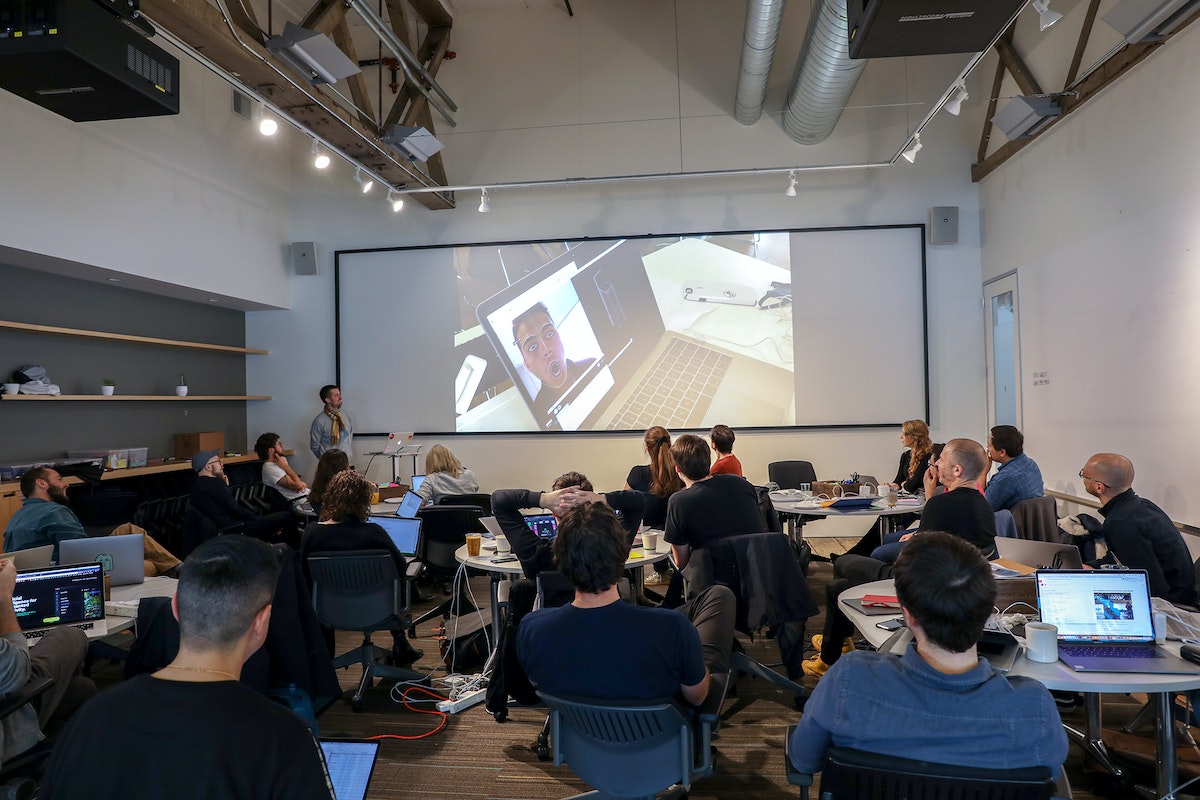
The first day focused on inspiration, explanation, and experimentation. On the second day, we divided everyone up into teams and took a crack at using our new tools to get building. We discovered the value of bringing designers together to learn something new (and a little scary), but we also learned a lot about planning a workshop. Here are some principles that could help you next time you want to bring people together to dive into the unknown.
Have experts in the room
We invited Andreas Refsgaard and Gene Kogan, two artists and creative coders, who work specifically with machine learning. Gene even wrote a book that helps artists and designers start playing with the tools of the trade.
Andreas and Gene have been leading machine learning workshops for the past four years. They're experts at explaining complex tools to people of all technical backgrounds, and they were there to answer any questions that came up along the way.
Including experts makes people feel that the workshop is legit and ensures everyone gets the support they need to learn and build. If you're trying something brand new (like we were), reach out to an expert to get some tips and tricks to ensure your learning experience is successful. Without Andreas and Gene, our workshop couldn't have happened.
Be persistent
Once Andreas and Gene helped us put together our workshop content, we faced our biggest challenge: How do we convince a bunch of people to drop everything they're doing and attend a two-day workshop? 50+ emails and many rounds of confirmations later, we finally had more than 20 of our colleagues agree to make time for our session.
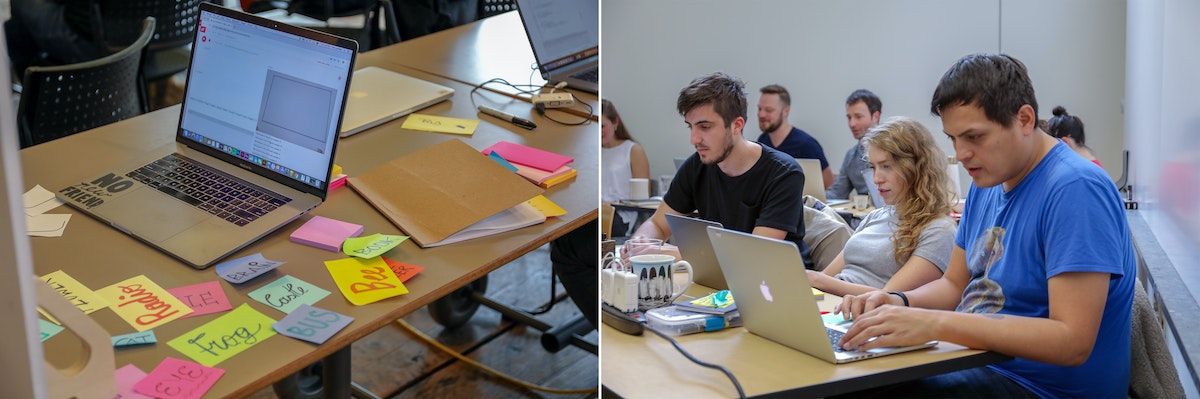
By the end of the day, the benefits of gathering in this way were clear: people had created full-on prototypes that could recognize disco moves or the difference between two friends. Setting aside the time to actually build, fail, and repeat was invaluable. We all have busy workdays, but making room for this kind of experimentation gave everyone a zing of new energy.
Turns out, if you bug people, they'll actually set aside the time and come to your workshop—and they'll probably have a good time, too. Use whatever communication channels you have to remind people: Slack, email, carrier pigeon, skywriting. When possible, share the agenda ahead of time. If folks know what they're going to get out of their time, they're more likely to RSVP yes.
Harness the power of collaborating within your community
The second day, we dove right back into building and quickly broke into our teams. As interaction designers, we’re often siloed—we’re usually the one interaction designer on a multidisciplinary team. But working on a team of other interaction designers has great benefits: You have a similar way of thinking and can bounce ideas off each other in unique ways.
There’s also something powerful about working on a creative project just for the sake of creating and learning. At IDEO, we often work on projects that have the potential to really impact people’s lives—in the worlds of healthcare, mobility, financial services. On the flipside, this workshop gave us the chance to make something truly weird and to not be afraid to fail in doing so.
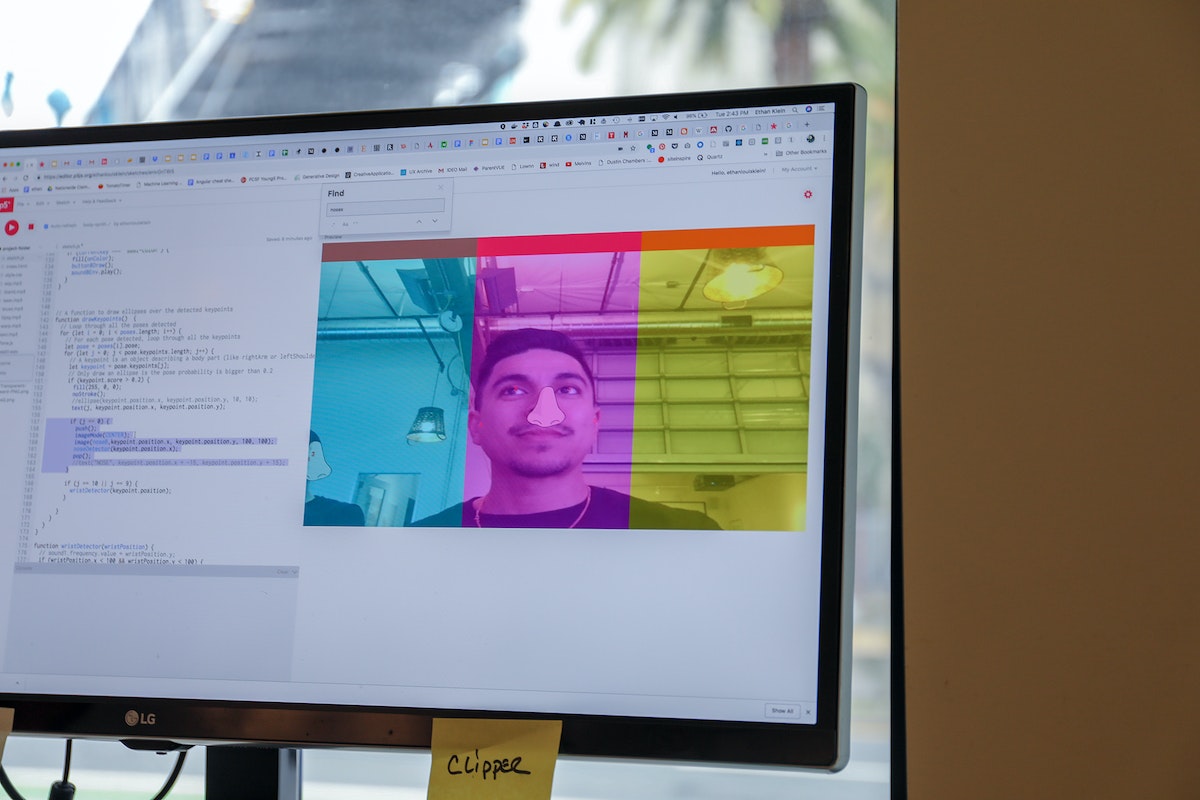
Almost every project was full of funny glitches and nearly all of them were ridiculous—like a tug-of-war game where people had to meow and bark, and a game of ping pong controlled with your nose. Revolutionary stuff. This workshop gave us a break from our day jobs to work together and flex our craft-muscles in a way we don’t always get to.
The workshop structure sets the conditions for learning
By the end of the day, the eight teams created machine learning prototypes—but just a few days prior, many thought machine learning was totally out of their league. Without a thorough introduction to the topic and built-in time to get prototyping, it would have been hard to see these new skills come to fruition.
One participant said, “I had to step out of my current mind-box to realize that there are new possibilities I previously was not brainstorming.” Another said, “There were some really funny concepts that showed the power of simple programming combined with great ideas.”
There’s no way of sugarcoating it: Setting up a workshop is actually really hard, and a lot harder than we first thought. But once we got over our initial trepidation, we were able to give ourselves and our peers a unique chance to understand and play with a seemingly intimidating tool. Workshops are a framework that let us all show up as beginners. There’s comfort and power in this: We can ask questions, learn, and become stronger designers together.
In our day-to-day work as designers, we stumble upon a lot of buzzwords: deep learning. Convolutional neural networks. Artificial intelligence. Staying up to date with new technologies is one thing, but understanding how to apply them is another. And personally, it's something the two of us are a little intimidated to tackle on our own.
5 Tips for Running a Successful Design Sprint
To kickstart a marathon design project, it helps to start with a sprint. Here are 5 pro tips for building solutions in rapid intervals.
When our team set out to build the first version of the social impact investment product Swell Investing, we decided to hack the Sprint process, IDEO style.
The Sprint method allowed the team to start prototyping quickly, collect immediate user feedback, and make small mistakes early. We conducted multiple design sprints in quick loops—folding the learning from week one into the structure of week two, and so on. We learned a lot in the process. Here are a few quick tips we picked up for running successful and energizing design sprints.
1. Anchor your sprint in a big question
Identify critical hypotheses to test. First, decide on the big question you want to answer. (Hint: This is the one that, when answered, will allow you to make the most progress.) For instance, during the Swell project, we asked: When it comes to social impact investing, are users more interested in returns or social impact?
Once you’ve got your big question, brainstorm and sketch different solutions, and then select two or three good ideas to prototype. Prototypes are something people can touch, test, or play around with. Putting different approaches in front of users in a single sitting is a great way to gauge interest in different product directions.
Tip: Limit the number of variables in your prototype, so you receive specific feedback on your big question. Designing a digital product? Start by designing landing pages that express each product offering, rather than the entire user flow. Testing two feature sets? Keep the branding the same and test different product features against one another.
2. Bridge the say-do gap
Use tricks that force users to make real—not hypothetical—decisions. The goal of any new product is to create something that people find valuable and are willing to pay for over other options in the market. But as designers, we know that often what consumers say they like is different from what they actually buy in the wild. One way we bridged this gap was by testing demand with potential Swell consumers: We gave them fake cash they could “invest” in one product or another. It was a great way to gauge whether the service had real value in the market.
Tip: Use the same currency exercise for all of your sprint prototypes, so that you can see how attitudes evolve with your design tweaks. For example, give each user $500 Monopoly dollars and see where they would invest their money. Designing a new shoe brand? Ask them which ones they’d buy, or if they’d prefer to spend the money on their tried-and-true Nikes. This exercise is about the conversation it provokes more than the payments themselves, so get curious!
3. Focus your features
Design for a light-touch, full-product experience. Ask yourself: What’s the smallest set of features you can design that will still solve users’ problems? Start with the simplest version of your product, get user feedback, and then add features. As your sprint loops continue, you can move from simple prototypes to robust product directions. With Swell, we focused on creating a hero page for each key interaction (landing page, sign up, and invest). This meant we were testing the functionality of the full product experience, just in a light-touch way.
Tip: Prioritize high-impact pages that people visit a lot, like the home page or sign-up flow. This way you’re getting the most detailed feedback on sticking points, without spending a ton of money building them.
4. Be scrappy: Build just enough to learn
Choose the format that best expresses the idea. It’s impressive to build a digital prototype in a week, but remember: You can learn a lot from paper prototypes! Make a conscious decision about the areas that you design in high fidelity (like screens) and places where a paper prototype will do the trick. Being scrappy will pay off in the end. We created a combination of digital and paper prototypes for Swell. Digital prototypes were reserved for value proposition and user flow testing, whereas paper prototypes were a great way to test new and emergent thinking.
Tip: Imagine that you’re designing a mobile-first experience. Designing for a phone instead of a computer will force the team to simplify messaging and features to their most minimal expression. This is something you can develop by putting a post-it sketch on top of your smartphone.
5. Keep the team energized
Use the Tabata training method of product design. Tabata training is a workout method that focuses on 20 seconds of intense work followed by 10 seconds of rest. This is a great metaphor for sprint prototyping: It’s intense, and that means that rest is just as important as the creative bursts. Make a point of managing team energy by having intentional down days. With Swell, we made sure to keep our energy up by working in cafes, getting breather spaces when we needed to focus, and even hitting up museums or exercise classes to stay healthy and inspired.
Tip: When you need a boost, take the project on the road. Try a day of cafe hopping where the team commits to sketching one feature at each stop. Sketching in new contexts and in focused bursts means you’ll have fun and be productive.
Special thanks to Kim Cullen for her contribution to the sprint prototyping process, and to the team at Swell Investing for going on this journey with us.
Here at IDEO, it’s not uncommon to see dog-eared copies of Jake Knapp’s Sprint, a book that outlines the five-day process that Google Ventures uses to solve tough design problems. The books are stacked on desks, passed from designer to designer, and referenced in research planning discussions. Why? Because the Sprint process pushes you to think outside of the box, even at a creative place like IDEO. It helps you shift away from following your gut instinct and opinions; instead, it encourages you to let users guide your decision making. And it pushes you to move fast.

Lindsey Turner
I’m passionate about building brands, products, and experiences that help organizations show up with meaning and momentum.
I help organizations cut through complexity by shaping how they show up, through brand strategy, identity, and storytelling.
Working at the intersection of brand and business, I bring an editorial eye and a bias toward making—turning ideas into tangible experiences that people can understand, trust, and believe in.
My work spans government, healthcare, financial services, media, and consumer goods, from launching Gen Z-focused ventures to building innovation labs and reimagining legacy brands. I relish moments of ambiguity and enjoy translating across teams, perspectives, and priorities to move ideas forward.
I started my career in editorial and digital design, shaping cross-platform experiences and identity systems in publishing and agency environments. That foundation still shapes how I work today: I’m detail-oriented, collaborative, and overreliant on the Oxford comma. I hold a BFA in Visual Communication from the School of the Art Institute of Chicago.

Rachel Young
My work helps organizations see who their products aren't working for—and build the will and the tools to do something about it
For 25 years, I've asked the same question: Who does this design exclude—and what are we going to do about it?
My work spans human-centered strategy, inclusive design, and qualitative research, with clients ranging from Microsoft, Google, and Verizon to the National Science Foundation, and San Francisco Unified School District.
Before IDEO, I taught elementary school in East Palo Alto and spent a decade doing design work with social service organizations—where I learned firsthand what it costs people when systems are built without them in mind.
I am currently writing User Error, a nonfiction book about digital access and the design decisions behind it. I live in Oakland, California.

Brian Pelsoh
I lead with craft, ensuring our work is creatively excellent: rooted in deep human insight and imagination, while also grounded in the realities of business and technology.
My expertise spans brand, communication, and product design across tech, education, the arts, and social impact.
I believe great work demands both high-level vision and obsessive attention to detail, and only happens through collaboration.
I bring an inclusive, hands-on approach and a deep understanding of business, which enables me to consistently deliver excellence while always asking why.
Before joining IDEO, I worked at the brand firms Pentagram and VSA Partners. I began my career as a designer, leading teams at the School of the Art Institute of Chicago and the Milwaukee Art Museum. I hold an MFA in graphic design from Maryland Institute College of Art and a BFA in communication design from the Milwaukee Institute of Art & Design, and have taught at some of the best design schools in the US.

Tony Wong
I am responsible for IDEO’s long-term success in China and working with clients to use design as a tool to enable growth.
I am responsible for IDEO’s long-term success in China and working with clients to use design as a tool to enable growth. Specifically, I have helped Chinese companies design holistic brand solutions through the development of their products, communication, services, and innovation teams, and I have helped multinationals expand their presence and influence in China.
I advise global leaders on developing China-led innovation and capabilities.
In over 15 years in IDEO Shanghai, I have worked on projects that use design to elevate the quality of the experience of healthcare products and services, streamline processes that increase productivity, create spaces and programs that promote and enable inclusive communities, and build next generation mobility solutions that are planet-positive.
Before joining IDEO, I worked at Philips Electronics and the Electrolux Group in Italy, the Netherlands, and Singapore on a number of breakthrough commercial products. I am a member of the Young President Organization in Shanghai.

How to use AI as an editor, not a writer
Ed White shares how he uses AI as an editor—not a writer—to sharpen storytelling, rehearse ideas, and preserve the productive friction that makes creative work better.
Ed White has a rule he's tested on his own writing: hold yourself as the writer, and let AI be your editor. Ed is a Senior Design Director at IDEO's London studio, where he co-leads the firm's AI portfolio across Europe. Before IDEO, he spent 12 years as a writer and editor at the Financial Times, Wired, and Contagious. So when he talks about when to use AI for storytelling and when not to, it comes from two decades of crafting his storytelling skills.
In this episode, Mina Seetharaman talks with Ed about two specific tools he uses to keep AI in an editor's seat: a "roasting agent" prompted to critique his drafts without any sugarcoating, and a simulated audience he rehearses pitches on before the real thing. They also get into what Ed is hearing from design leaders at Anthropic, Lovable, Shopify, and Google Creative Lab about how creative work is changing, and why he thinks the friction of writing something yourself is worth protecting rather than automating away.

Building a personal AI for the messiness of life: Sida Li
Becca Carroll talks with Cue co-founder Sida Li about designing a personal AI for the messiness of everyday life—not just work. They explore how Sida stays anchored to human needs while navigating fast-changing technology, product tradeoffs, business-model experimentation, and the realities of building an AI company today.
Most AI products today are built for work—a space with clear problems and established systems. One founder noticed a gap: personal life is messier, harder to systematize, and mostly left behind by the AI boom. So she built Cue, a personal AI that lives inside iMessage and group chats, to go where the other tools haven't.
In this episode, Becca Carroll, IDEO's Chief Strategy Officer, talks with Sida Li, co-founder and CEO of Shared Context Lab, about staying anchored to a human need while the technology around her keeps changing shape, why she treats her business model with the same rigor she'd bring to a product, and what it feels like to build a company at this particular, disorienting moment in AI.
The conversation also gets into how Sida makes design decisions: the language Cue uses to describe itself, the tradeoffs behind building inside iMessage instead of a new app, and a real story about a business idea that didn’t pan out.
This is the second in a two-part series profiling founders from IDEO's Startups-in-Residence program. The first conversation is with Johannes Seemann, founder of Sooner, on designing GenAI for the emotional side of money.

Designing GenAI for the emotional side of money: Johannes Seemann
Designing financial tools around the feelings that shape money decisions.
Most personal financial tools are built to run the numbers and optimize towards a budget. While that works for some, most people experience money as a lived relationship that does not neatly fit into a spreadsheet. Johannes Seemann and Becca Carroll discuss why money is emotional before it is mathematical, and what a human-centered approach to building a generative AI financial product looks like in practice.

The curious leader's edge in uncertainty: Scott Shigeoka
How genuine curiosity helps leaders navigate uncertainty with greater confidence.
Mina Seetharaman talks with Scott Shigeoka, author of Seek and Head of Curiosity Cultivation at the Eames Institute, about what distinguishes genuinely curious leadership from performative curiosity, how power dynamics shape curiosity, and why practicing curiosity can restore energy rather than drain it.
Looks like you might be in search of something very specific?
Or reset the filters above and try another angle.
Here’s some random inspiration

Podcasts about creative leadership

Articles about the power of prototyping
