
.svg)


The future guest experience
Designing new guest and employee journeys that deliver on the promise of an iconic brand.
kate spade new york has been an iconic fashion brand since the early 90s, when its handbags first stormed the Manhattan fashion scene. Since then, the company has expanded and evolved into a global lifestyle brand.
With e-commerce reshaping the retail landscape and redefining the role of brick and mortar stores in recent years, kate spade new york leadership asked: How can we make the kate spade new york specialty store experience, well, more special?
kate spade new york already held the key to a new way of thinking about a multichannel customer experience: a brand promise “to inspire her to lead an interesting life.” Hoping to bring that promise to life in store, they engaged IDEO to help make it happen. The solution was for kate spade new york to take the brand message from words to action in the form of a customized guest journey. The team created more than 100 design concepts and strategies for building a retail experience that rewards curiosity and sparks artistic and literary exploration.
“In partnership with IDEO, we spoke extensively with our customers and associates to better understand how we can provide the most engaging and fulfilling in-store experience,” said Mary Beech, Executive Vice President and Chief Marketing Officer at Kate Spade & Company. “The new store elements that we introduced speak to our customer’s personality and appetite for adventure while aiming to enhance engagement with new and existing customers.”
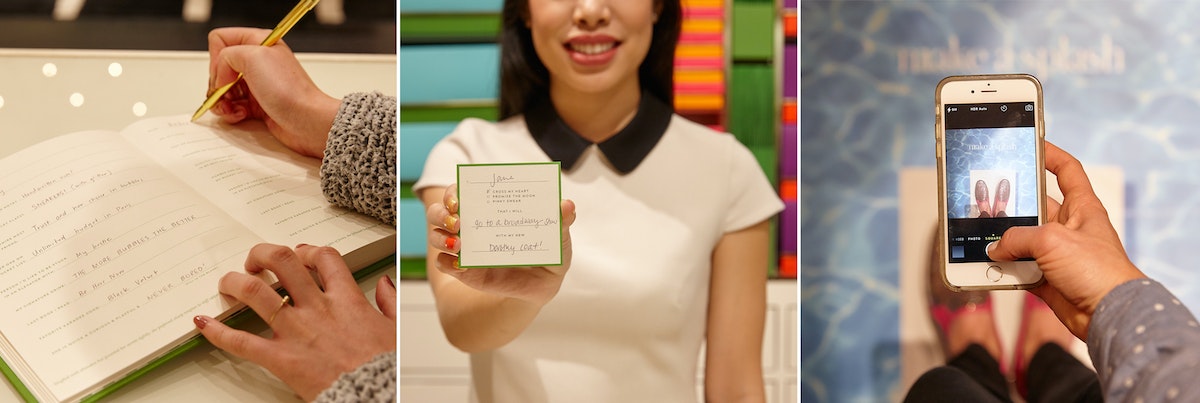
The team knew that striking the right balance of digital tools in in-store interactions was pivotal in allowing two people to have a more rich and collaborative face-to-face connection. The concepts include things like “pack a purse” to test drive how many everyday items can fit in different style handbags, cheeky “dare cards” that challenge customers to go on an exciting adventure with their new purchase, and digital moments like the “shoe selfie” platform that would allow a guest to share “I’m thinking about them” heels or just-purchased flats with her social network. IDEO live-prototyped a selection of concepts in stores around the country and saw a high correlation between customers’ positive reactions and their subsequent purchasing decisions.
“At kate spade new york, our brand promise is to inspire women to live a more interesting life,” said Jenica Myszkowski, Vice President of Stores at Kate Spade & Company. “Our new and improved guest journey experience puts our customers at the center, allowing us to more fully deliver on our brand promise in our retail stores with a stronger vision and purpose for our stores and our store teams.”
To deliver the newly envisioned guest service experience, the role of the sales associates needed to be redesigned, as well. The kate spade new york and IDEO team created a new role: the Muse, whose job is to live the brand promise of an interesting life and to inspire customers to do the same. The reimagined role ultimately shifted the focus in specialty stores from selling to inspiring and building long-lasting relationships with guests.

Two kinds of athletes, one strong brand
Designing a brand that served both elite athletes and everyday fitness enthusiasts.
Athletes’ Performance and its subsidiary, Core Performance, were both founded on a single mission: to enhance human performance through a holistic approach to mindset, nutrition, movement, and recovery. Athletes’ Performance focused on elite professional athletes, and Core Performance provided corporate fitness programs and workouts for employees hoping to lead more healthful lives, and both found a footing in the competitive health and fitness market.
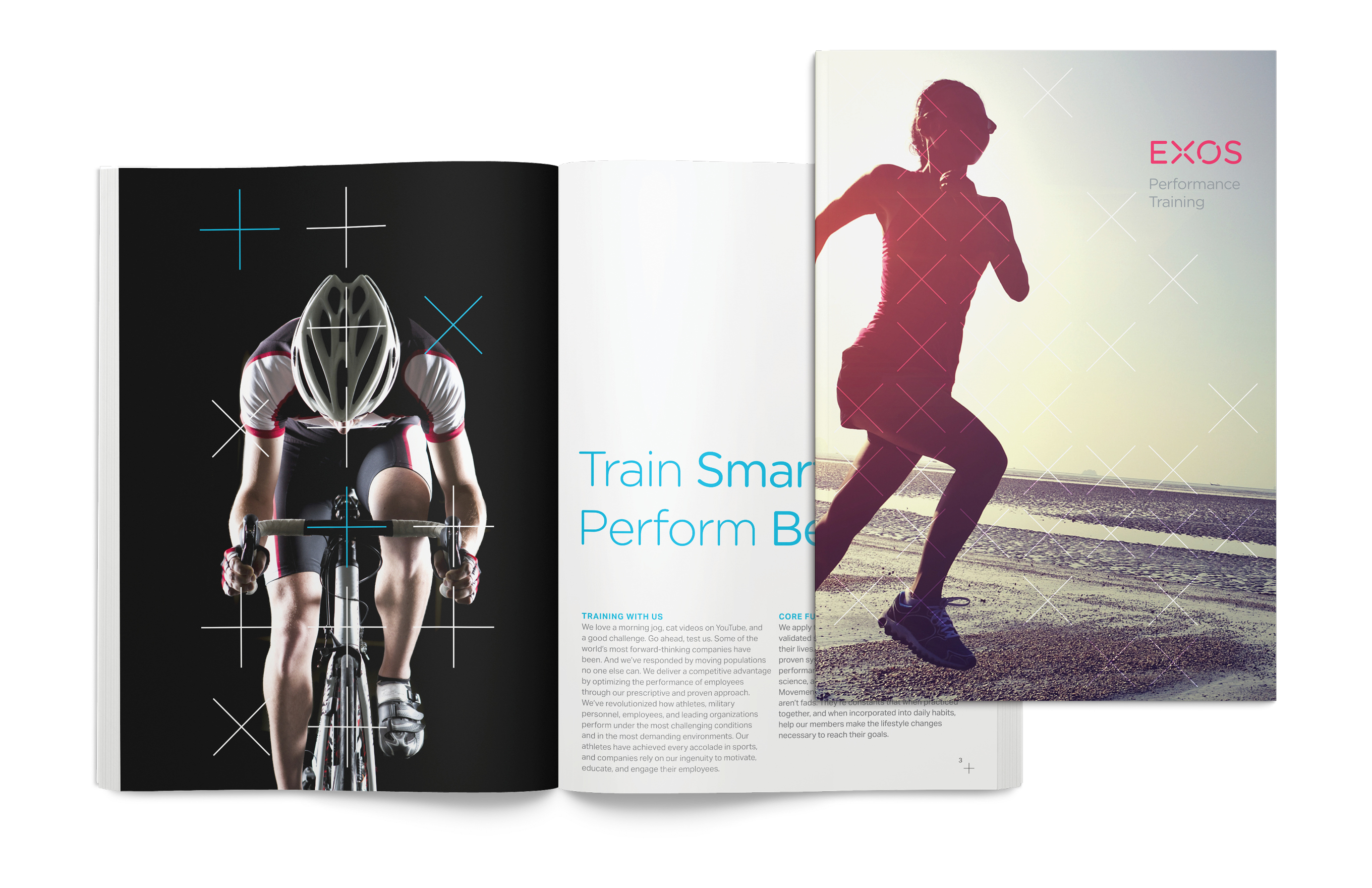
Faced with a challenge to redefine the brands, IDEO designers collaborated with the founder and integrated marketing team to unite Athletes’ Performance and Core Performance under one name that would cut across the health, fitness, and wellness markets to reach a full breadth of audiences and partners. Under a new name, EXOS, the teams created a brand identity system unified by its founding mission and focus on human performance.
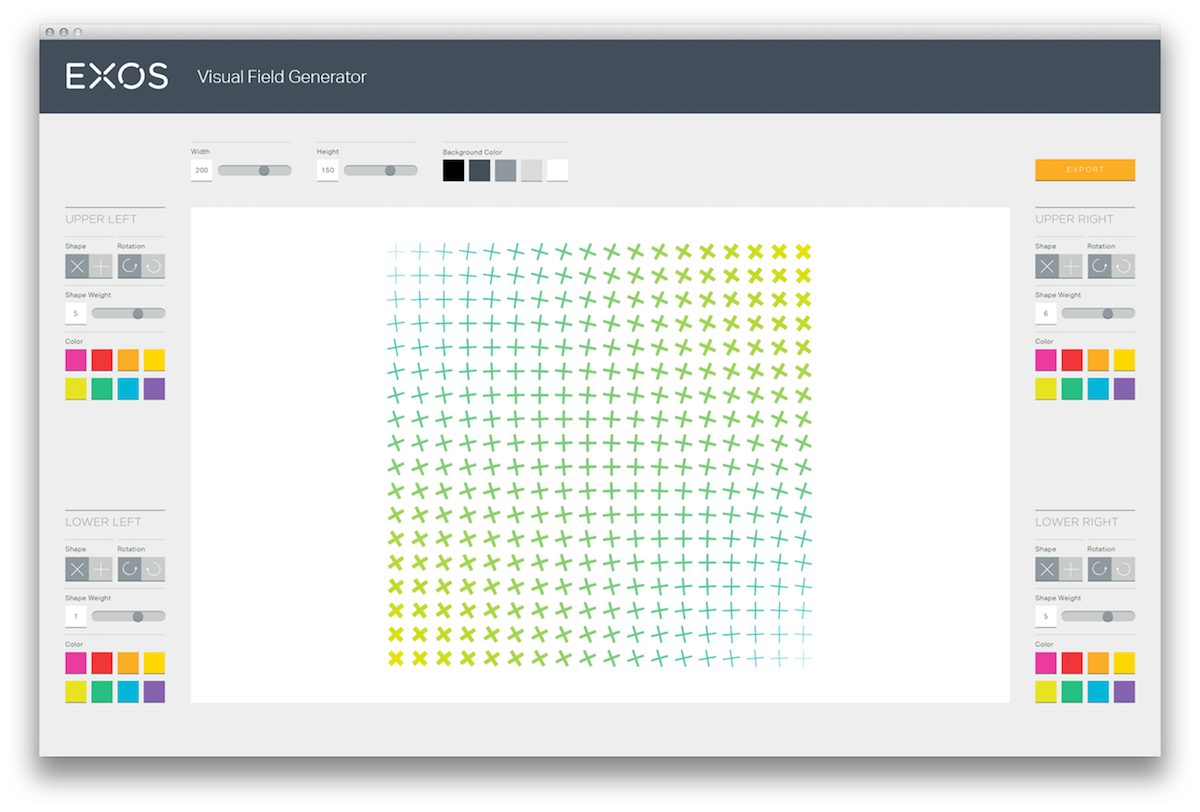
For the new EXOS brand, IDEO designers created a visual language using “x” and “+” to highlight the progress from goals to achievement, as well as a system of interaction for athletes of all performance levels. The team also created a bespoke digital tool, outfitted with custom software, which gave designers both guidance within the brand guidelines and creativity to explore new products and contexts.
Making sure a bank stays great as it grows
Designing digital tools and brand concepts for Umpqua Bank.
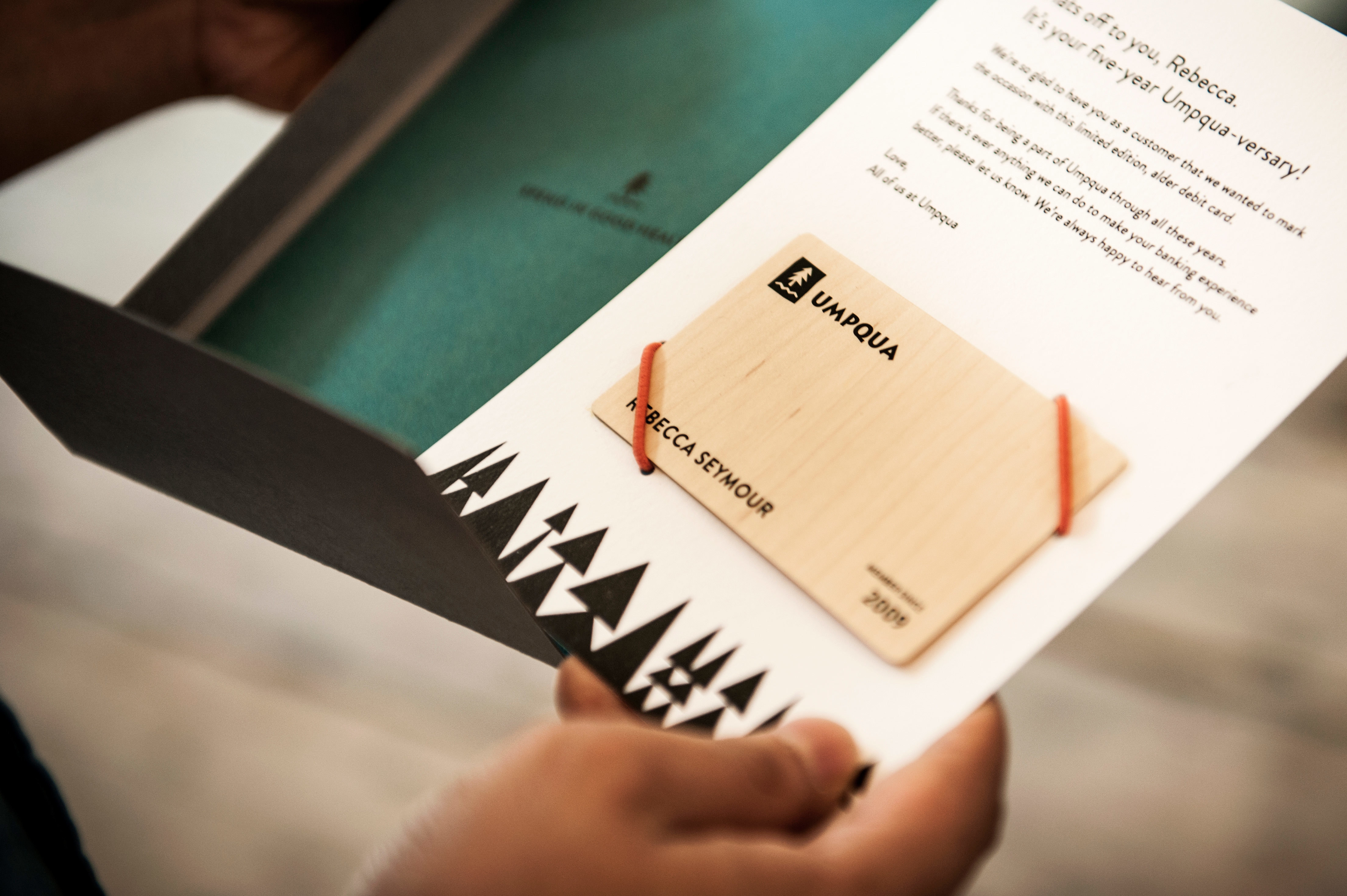
Imagine this: Your company has just gone through a $2 billion merger. You show up at work to find an invitation from the CEO asking you to help shape the bank’s future. This is what happened when Umpqua acquired Sterling Financial Corporation in 2014, doubling its size and resulting in the creation of the West Coast’s largest community bank overnight. With a mission to be “the world’s greatest bank,” CEO Ray Davis seized the moment to reinvest in design across the organization.
Umpqua asked IDEO to help examine the brand they had and take it to a new level. They wanted to find out: how can we leverage our strength and reputation by activating the brand in new ways to deepen employee and customer engagement and foster continued growth?
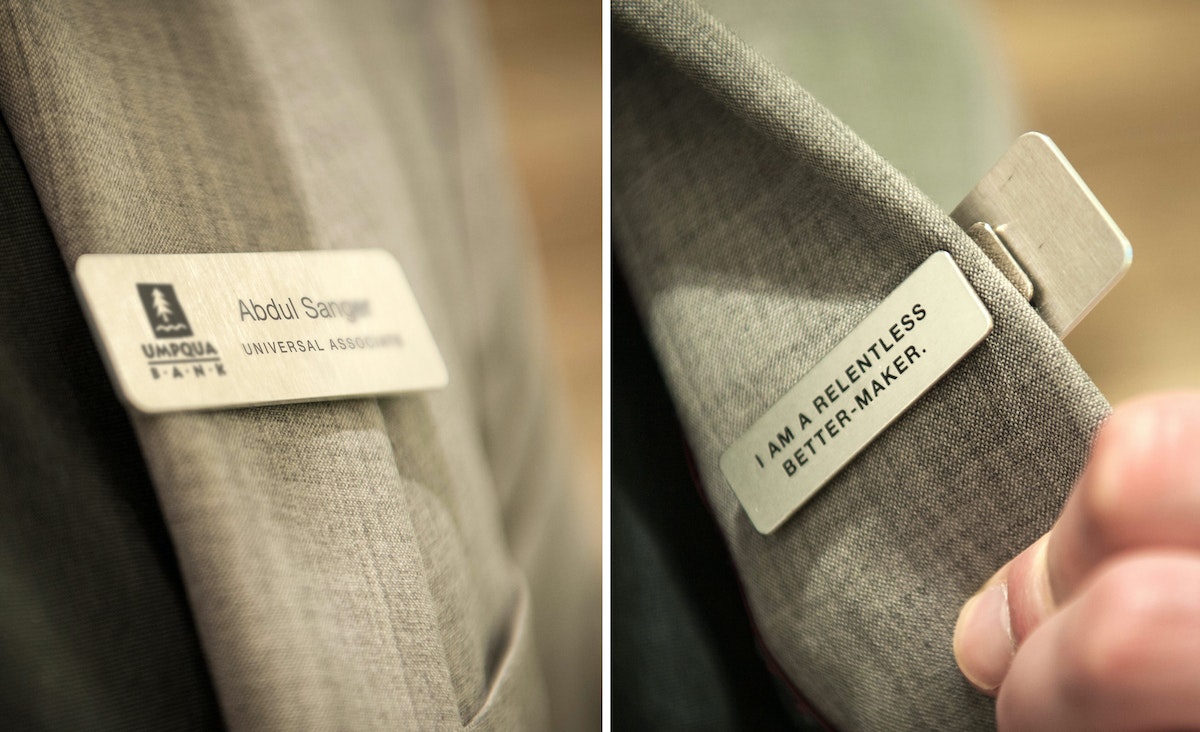
IDEO identified three core brand opportunities and a newly articulated purpose statement that became a launch pad for more than 15 different concepts to express the brand internally and externally.
Inside Umpqua, company evangelists handed out notebooks with tips on “how to be better-makers,” and associates now participate in collaborative design challenges through an internal tool built on IDEO’s OI Engine, software that fosters open innovation. The design challenges are drawing unprecedented participation of 84 percent among employees and are having a real impact on the organization. Of the five they’ve run in two years, the company has implemented three winning ideas including a buddy program for new hires or transferees that upwards of 1,000 associates could experience over the next year.
WATCH: Umpqua Bank on using the OI Engine platform
IDEO also worked with Umpqua’s team to conceive digital products including a new digital app called Raindrop that lets people bank in the way that they think about saving and spending, not the way a bank does. It’s due for release in 2016.
To introduce all of this work, IDEO set up an immersive exhibition at Umpqua’s headquarters in Portland. Teams large and small, including the executive and associates from across the company, walked through the exhibit and witnessed how the brand impacts every aspect of their business, from employee engagement to product development. It was signed on the spot by Davis, who invited employees to sign their names, too.

Jade-infused jeans for sweltering summers
Repositioning Lee's brand through the launch of a breakthrough denim product.
The sweltering summers in China can be insufferable—especially for people who like to wear jeans.
Lee Jeans, in its quest to boost its brand differentiation among an expanding market of apparel brands that also use fabric performance as their unique selling point, like Uniqlo and Levi’s, developed denim that’s cooler to wear during hot weather. It found a novel solution in an ancient material: jade. When woven into denim, crushed jade particles maintain the coolest temperature and, alongside other technological enhancements made to the fabric, pull sweat away from the body. The fabric dries quickly, creating a refreshing cooling sensation.
The immense popularity of jade in China makes the denim a natural fit for Lee’s Asian market, and although Lee’s jade-infused fabric was entirely unique, the company needed to differentiate its inventive new product from a rapidly expanding market of high-tech fabric alternatives made specifically for hot weather.
Lee and its parent company, VF Corporation, saw an opportunity to create a new product that helps position the company not just as a premium brand, but one that leads with innovation. Lee came to IDEO to help design the go-to-market and launch strategy for the new line of jade-infused fabric. Looking for insight, designers conducted research in multiple cities in China and India, seeking out those who were committed to wearing jeans despite the most extreme circumstances—the denim-clad bicyclists pedaling through sweltry city streets, the basketball players on the court, commuters who stripped to their underwear while driving and wriggled back into their jeans upon arrival. The common thread: They were all steadfast in their preference for thick, heavy denim, no matter how hot it got.
The resulting strategy for product launch: positioning jade—a traditional material that has strong cultural and spiritual meaning—as a high-tech solution for the contemporary lifestyle of young people. IDEO helped Lee name the new line JadeFusion and created a system of messaging to communicate that these aren’t just jeans—they’re jeans with a fascinating narrative woven within; a hierarchy of messaging that blends jade’s exotic premium significance with a very modern technical story. Lee salespeople learned how to share the story with customers, encouraging them to talk about jade-cooling technology at work, on the streets, and even on the basketball court.
The JadeFusion line sold out within seven weeks of its debut. The launch, which was originally limited to mainland China and Hong Kong, was expanded to India, Malaysia, and Thailand, and sales orders doubled for the following year. Along the way, Lee developed a new understanding of how to incorporate customers’ input and be open to discovery and inspiration from the very start of planning a product launch.
Designer’s Playlist #6
A few things IDEO Palo Alto's Farzad Azimpour can't stop thinking about

Name: Farzad Azimpour, MD
Location: Palo Alto
Role at IDEO: Director of Health (biodesigner and cardiologist). I develop new medical technologies with a specialized team in the Design for Health group. We cover everything from biometrics and robotic surgical devices to future healthcare delivery systems, and anything else that hinges on human interaction and decision-making.
Joined IDEO: 2015
Instagram: @farzad.azimpour
Titillating Fact: I do a lot of “mode-switching,” flipping between totally different roles and mindsets. It's my way of cognitive interval training. One day I’m in the emergency room performing cardiopulmonary resuscitation (CPR) on someone with a drug overdose-induced cardiac arrest, and the next day I’m with an IDEO team interviewing someone struggling with addiction—in their home as the police bang on the door.
1. Hot Thoughts
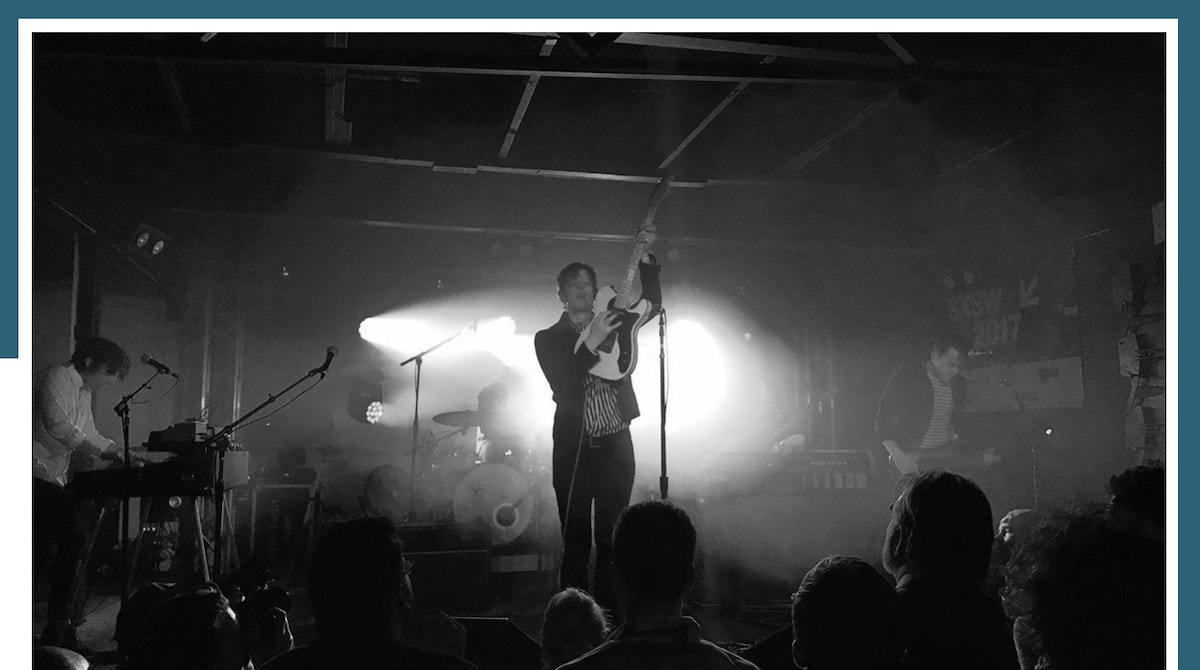
Austin-based indie-rock band Spoon, aka “rock stars for the thinking person,” is releasing a new album called Hot Thoughts, previewed at an intimate set of performances this week at SXSW. I’ve been listening to them since medical school and find some of my best work comes from a late night tapping my pen and feet to their sonic genius.

2. The Current
Listener-supported Minnesota Public Radio (MPR) produces one of the coolest, most progressive radio services you’ll find anywhere, and they stream it live. This is where I discover new music to get me through the coldest winter months on the road.

3. The American Association for the Advancement of Science (AAAS)
This is one of my favorite resources for the wide landscape of scientific research. It’s where you’ll learn of new micro mechanisms to explain macro systems. Their peer-reviewed specialty journals span everything from cell-signaling and translational medicine to robotics, environment, and space. Out-nerd anyone at the next party.
In this series, we ask IDEO designers to share the stuff they're digging right now—tools, books, music, sites, people, places—so you, too, can drink from the fount of inspiration bubbling up here. This week's guest star: Farzad Azimpour, MD.
13 Ways to Make Your Workspace More Creative
How to supercharge your space for creativity
The short answer is not really. Though we agree that every office must be tailored to the specific needs of the people who work there and the kind of work being performed, we polled IDEO designers and found some universally winning environment designs that deliver a jolt of creativity. Here are 13 tips for how to supercharge your space:

1. Install a communal table or other gathering space
At General Assembly, there’s one giant table that can seat 30-plus right in the middle of the main space. Students, instructors, and staff gather round it to share ideas in an unstructured, organic way. Each campus around the world has their table made by community artisans with locally sourced materials, which helps remind people of the importance of place. —Danoosh Kapadia
At Disney Animation Studios, John Lasseter had the conference rooms in the center of the building torn down to make room for a coffee shop. The space served as a large space for folks to come together and collaborate. —Kat Chanover
2. Make things moveable
When people become glued to a particular place, their perspective stays glued, too. Put things on wheels, or having rotating desks allows people to meet new coworkers and invites collaboration. And don’t sit next to someone who does the same thing as you—if you’re an engineer, sit next to a designer. Physical silos are real. —Xin Xin
One of my favorite things about the d.school at Stanford is that the walls in most of the building can be moved and reconfigured. An open space can become a private project space in a matter of minutes (and vice-versa). —Katie Clark
3. Display your values
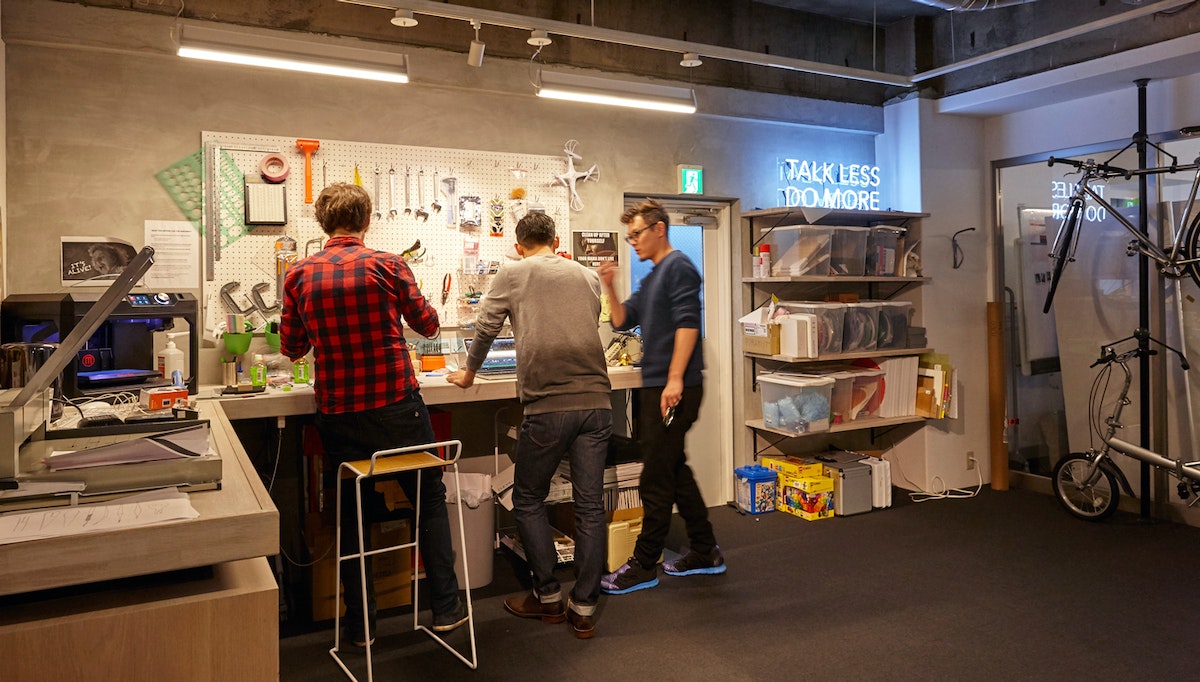
Placed all around the IDEO Tokyo office are key phrases projected in neon lights. Next to our Maker Space it’s "Talk Less, Do More"; in our lounge it’s "Make Others Successful"; next to the door before you exit it’s "Take Responsibility". Although these are just 3 of the 7 key IDEO values, the signs serve as a daily reminder of what we all believe in. —Mike Peng
4. Hide the clocks
OK, maybe not all the clocks. But consider introducing spaces where people can get a break from the cruel Master Time. Sometimes creativity needs constraints to flourish; sometimes it needs the freedom to take as long as it damn well pleases. —Lode Starstrom
5. Situate joy
In our project space, there is a drawer that only contains British chocolate of the most velvety quality. The team knows it's there. When that drawer opens... well, it's very exciting for everyone. Sometimes they even exclaim, "Milky Time!" Design your space to trigger moments of joy, or surprise, or ritual. —Alex Gallafent

6. Put creative tools in the way
When there are creative tools in the main space, more stuff gets made. Don’t silo the maker space. Out of sight, out of mind. In sight, in practice. —Clark Scheffy
7. Build a home-y kitchen
The kitchen should not feel corporate. It’s the nest where new ideas hatch! Pay attention to details: use real utensils and glasses, not plastic, have employees help wash dishes. And nothing signals a communal, homey feeling more than leaving the butter dish out! —Becky Bermont
8. Activate empathy
At Airbnb, the conference rooms are designed to be replicas of favorite rentals around the world. There’s a picture of the actual space at the entrance. That helps immerse you in the Airbnb customer experience, a great reminder that you’re there to make that experience better. —Kristin Kelly
9. Use nature to support well-being
At my former workplace, CookFox Architects, the firm incorporated the principles of biophilia into their office design. All 80 employees had a direct view to the outdoors, and natural light poured in from three sides of the office. Potted plants were placed in every possible place throughout the office, and there was a rooftop garden where they kept bees and plants that attracted butterflies and birds. Carpet, bathroom tiles, and paint were done in ocean-inspired colors, and decorative lighting structures mimicked patterns found in nature. Biophilic design is said to unburden our cognitive system, supporting it in collecting and recognizing information in the quickest and most efficient way, as well as generally supporting wellbeing. —Alisa Ahmadian
10. Cultivate permission
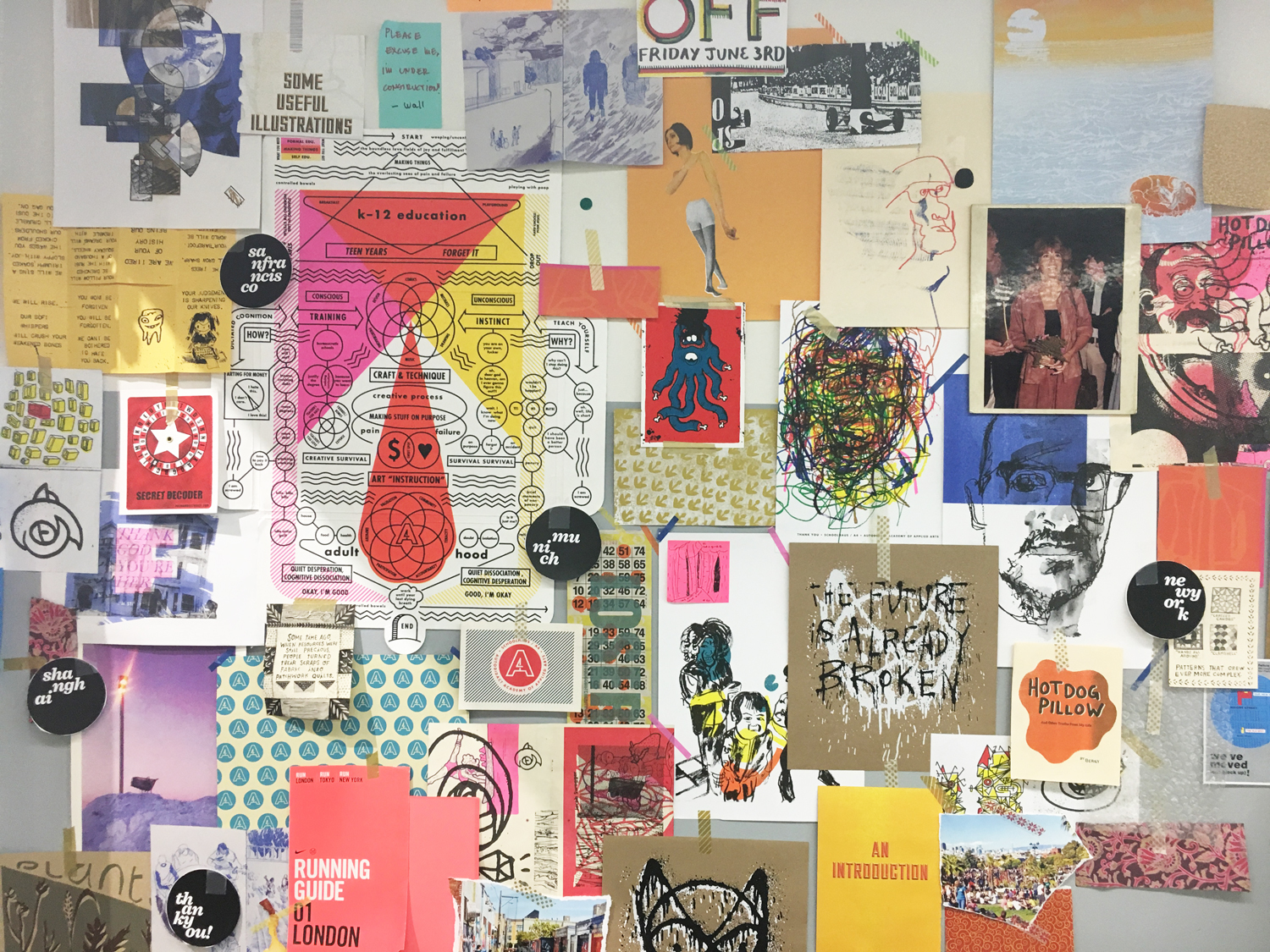
Allow employees to put stuff on the walls. It goes without saying: it's better to have things on the wall that you've created, versus expensive art you've paid someone else for. —Zach Hobbs
11. Provide spaces for projects
Clear space where workers can leave projects-in-progress without worrying about the mess. I wish every home and every workspace had this. In school maker labs (such as the Innovation Lab at Nueva School), I'm always pleased to notice big shelves for students' work-in-progress projects. —Sally Madsen
12. Introduce some play
Make C-level guys take themselves less seriously and more open to brainstorming by taking them slightly out of their comfort zone. I heard that in Jump Associates' meeting rooms, they have pilates balls instead of chairs. On the same theme, my father, who is an urban designer in Istanbul, installed swings in his studio to create an informal and playful space. He works with mayors on a daily basis, and you’ll see very traditional politicians swinging alongside young urban designers. —Nazlican Goksu
13. Think about a landscape of creative spaces
Create different spaces to match the task at hand. Three things are required to make this successful: abundant power sockets, quality wi-fi coverage, and agreements among employees of how to "use" the space. That way, no individual will attempt to claim a space long-term, and will instead facilitate everyone being in the exact right space at the exact right moment. —Lawrence Abrahamson
Many businesses are getting wise and ditching the one-size-fits-all flannel suit approach to the workplace. But do they have any clue what to replace it with? For a while, everyone wanted to make their office look like a children's playground. Today, the trend is to try to look like a coworking space or a coffee shop. But are those ideas future-proof? And do they actually create the conditions that creativity needs to thrive?
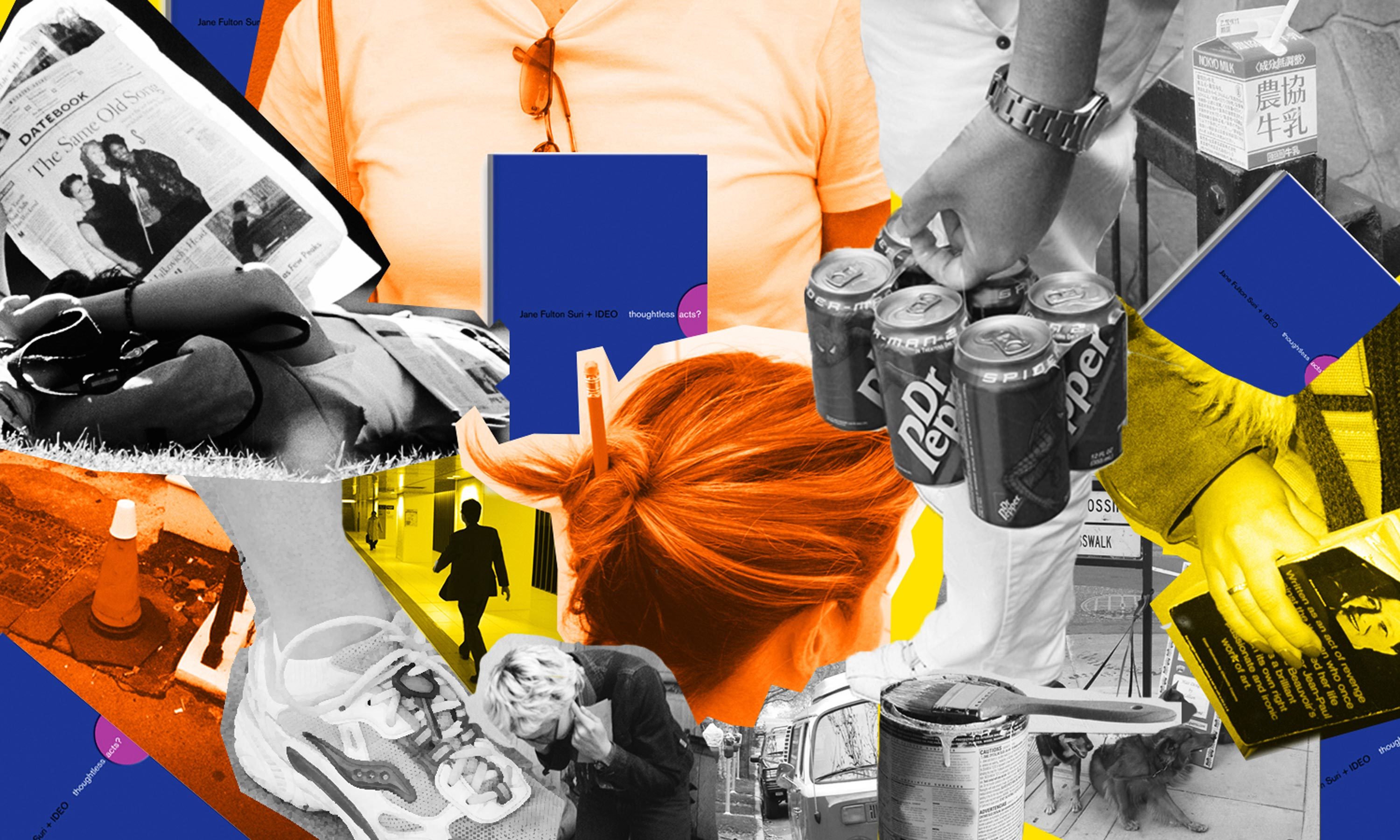
Thoughtless Acts: The Morning Paper
Making the airport feel like home
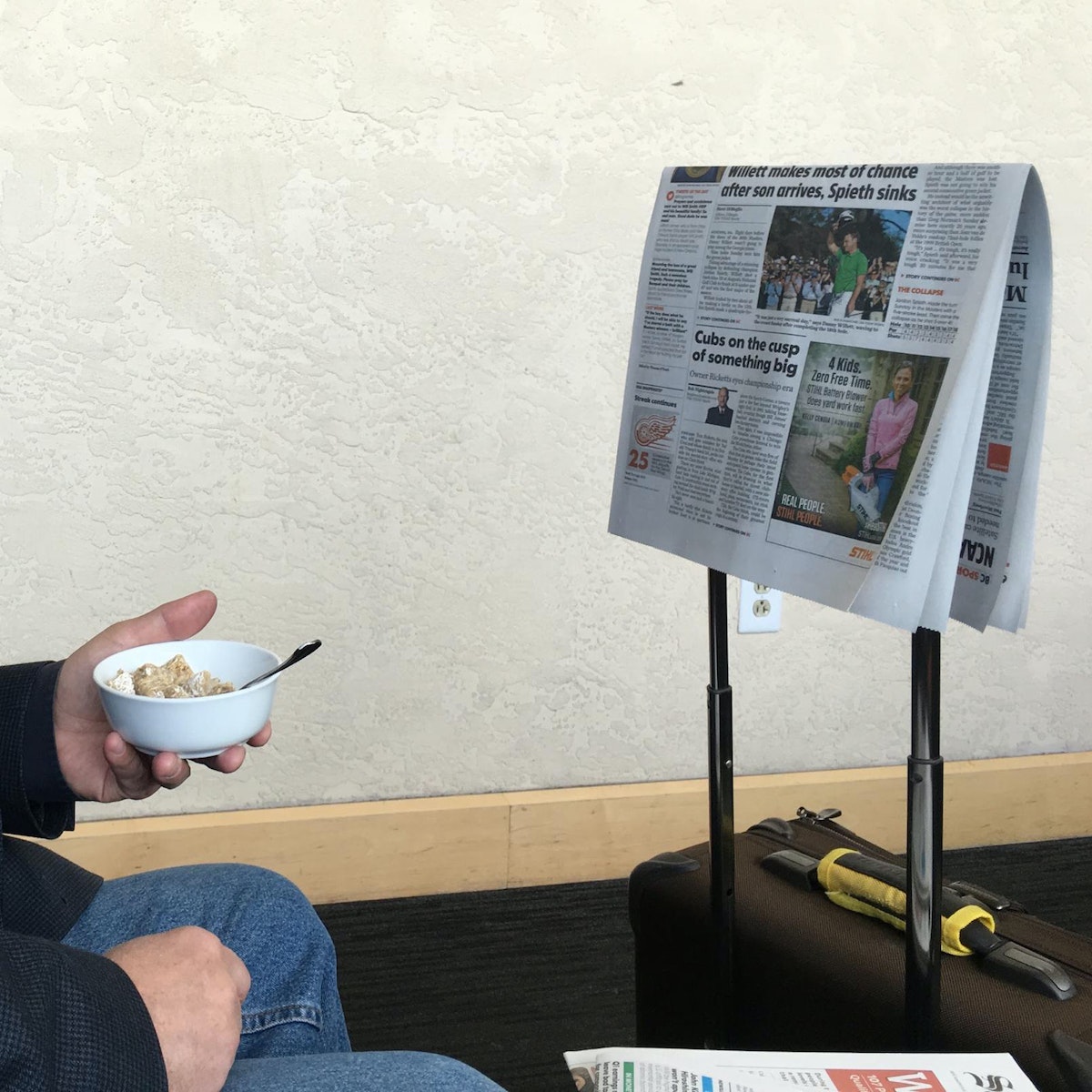
I took this picture in the San Francisco airport. Airport lounges are shared places where you're invited to make yourself at home temporarily. I love watching how individuals and groups position themselves to take personal ownership of space and make it work for them by creating boundaries and surfaces with whatever is on hand. This heads-up newspaper display system was a clever repurposing of roll-aboard luggage that I hadn't seen before. In one elegant move, this traveler has provided himself with an information screen (the bottom half of a page anyway), hands-free support to read in comfort while eating his cereal, and a clear delineation of personal space and visual privacy.
Thoughtless acts reveal just how natural it is for everyone to design, modify, and rearrange the world to make it work better for them. We draw on that capacity everyday in our quest to create useful products and services for others.

6 Ways to Kick Off Creative Meetings
Try these meeting warmups to spark creative ideas

1. Sketch Your Neighbor
Most people default to verbal/analytical mode, so getting people to use their hands and get involved with pen and paper can prove to be a very refreshing gear shift. As the name suggests, Sketch Your Neighbor requires everyone to draw the person next to them. Set a timer for a minute or two and let loose. For the majority of people who claim that they can't draw, this exercise involves a certain amount of vulnerability—and that's the point. If everyone is used to failing in front of each other, the group dynamic is going to be more open, generous, and positive.
2. The Name Game
When you're dealing with strangers, learning everyone's name can be a significant challenge. The improv legends at Second City use a game to get past this. Everyone stands in a circle and takes turns saying their name while making a gesture. Everyone else repeats the name, while copying the gesture. They go around the circle doing the same thing one more time, and then everyone has to do the whole thing from memory. The association of movement with the name is a shortcut to embedding it in long-term memory. That, plus that fact that everyone has made themselves look ridiculous, leads to an open and fun meeting.

3. The Stretch
Sitting hunched in a chair while someone drones on and on feels like going through a slow death. Getting people out of their chairs is a quick way to perk up energy levels and set the stage for collaboration. The Stretch is a very simple exercise: A facilitator asks everyone to stretch their arms up to the ceiling, tilt them to the left and the right, and then shake them out. It takes less than a minute, and allows the meeting leader to take control of the room and wakes people up.
4. Last Word, First Word
One problem with meetings is that we aren't great at listening to each other. This is even more of a problem if people are glued to their phones and laptops. We cribbed this game from Second City, too. Everyone pairs up and has a conversation. The rule is that the first word of your sentence must be the same as the last word of the sentence your partner just said. This requires listening to their entire sentence before beginning to frame your reply. Sadly, for most of us, this is an unusual behavior.

5. The Story Opener
One of the keys to a good creative meeting is to have everyone show up as their whole, human self, rather than their"work self." A quick way to get there to have everyone tell a quick personal story. For example, ask your colleagues to talk about a youthful hobby. If possible, connect the story topic to the purpose of the meeting. Talking about ways to motivate a team? Ask them to tell a story about the moment in their life when they felt most excited. The main benefit comes from having each person tell a story from the heart, which will bond everyone for the rest of the meeting.
6. Dance Lesson
If you're ready for an added level of risk, get people to do rhythmic movement in unison. This requires a charismatic (i.e. shameless) facilitator or a very willing group of participants—or, ideally, both. The facilitator takes the group through a set of dance moves, and then everyone performs them together to music. If you start a meeting like this, nothing that happens afterwards will faze anybody.
Illustrations by Steve Har.
In the age of Slack, Asana, and other tools for collaboration, in-person meetings are losing ground. It’s true that having a great meeting isn't easy, and too often we fall into dull routines. But it’s also true that real magic can happen when people are face-to-face in a room together. To get people to be fully present and spark creative ideas, try these meeting warmups.

Lindsey Turner
I’m passionate about building brands, products, and experiences that help organizations show up with meaning and momentum.
I help organizations cut through complexity by shaping how they show up, through brand strategy, identity, and storytelling.
Working at the intersection of brand and business, I bring an editorial eye and a bias toward making—turning ideas into tangible experiences that people can understand, trust, and believe in.
My work spans government, healthcare, financial services, media, and consumer goods, from launching Gen Z-focused ventures to building innovation labs and reimagining legacy brands. I relish moments of ambiguity and enjoy translating across teams, perspectives, and priorities to move ideas forward.
I started my career in editorial and digital design, shaping cross-platform experiences and identity systems in publishing and agency environments. That foundation still shapes how I work today: I’m detail-oriented, collaborative, and overreliant on the Oxford comma. I hold a BFA in Visual Communication from the School of the Art Institute of Chicago.

Rachel Young
My work helps organizations see who their products aren't working for—and build the will and the tools to do something about it
For 25 years, I've asked the same question: Who does this design exclude—and what are we going to do about it?
My work spans human-centered strategy, inclusive design, and qualitative research, with clients ranging from Microsoft, Google, and Verizon to the National Science Foundation, and San Francisco Unified School District.
Before IDEO, I taught elementary school in East Palo Alto and spent a decade doing design work with social service organizations—where I learned firsthand what it costs people when systems are built without them in mind.
I am currently writing User Error, a nonfiction book about digital access and the design decisions behind it. I live in Oakland, California.

Brian Pelsoh
I lead with craft, ensuring our work is creatively excellent: rooted in deep human insight and imagination, while also grounded in the realities of business and technology.
My expertise spans brand, communication, and product design across tech, education, the arts, and social impact.
I believe great work demands both high-level vision and obsessive attention to detail, and only happens through collaboration.
I bring an inclusive, hands-on approach and a deep understanding of business, which enables me to consistently deliver excellence while always asking why.
Before joining IDEO, I worked at the brand firms Pentagram and VSA Partners. I began my career as a designer, leading teams at the School of the Art Institute of Chicago and the Milwaukee Art Museum. I hold an MFA in graphic design from Maryland Institute College of Art and a BFA in communication design from the Milwaukee Institute of Art & Design, and have taught at some of the best design schools in the US.

Tony Wong
I am responsible for IDEO’s long-term success in China and working with clients to use design as a tool to enable growth.
I am responsible for IDEO’s long-term success in China and working with clients to use design as a tool to enable growth. Specifically, I have helped Chinese companies design holistic brand solutions through the development of their products, communication, services, and innovation teams, and I have helped multinationals expand their presence and influence in China.
I advise global leaders on developing China-led innovation and capabilities.
In over 15 years in IDEO Shanghai, I have worked on projects that use design to elevate the quality of the experience of healthcare products and services, streamline processes that increase productivity, create spaces and programs that promote and enable inclusive communities, and build next generation mobility solutions that are planet-positive.
Before joining IDEO, I worked at Philips Electronics and the Electrolux Group in Italy, the Netherlands, and Singapore on a number of breakthrough commercial products. I am a member of the Young President Organization in Shanghai.

How to use AI as an editor, not a writer
Ed White shares how he uses AI as an editor—not a writer—to sharpen storytelling, rehearse ideas, and preserve the productive friction that makes creative work better.
Ed White has a rule he's tested on his own writing: hold yourself as the writer, and let AI be your editor. Ed is a Senior Design Director at IDEO's London studio, where he co-leads the firm's AI portfolio across Europe. Before IDEO, he spent 12 years as a writer and editor at the Financial Times, Wired, and Contagious. So when he talks about when to use AI for storytelling and when not to, it comes from two decades of crafting his storytelling skills.
In this episode, Mina Seetharaman talks with Ed about two specific tools he uses to keep AI in an editor's seat: a "roasting agent" prompted to critique his drafts without any sugarcoating, and a simulated audience he rehearses pitches on before the real thing. They also get into what Ed is hearing from design leaders at Anthropic, Lovable, Shopify, and Google Creative Lab about how creative work is changing, and why he thinks the friction of writing something yourself is worth protecting rather than automating away.

Building a personal AI for the messiness of life: Sida Li
Becca Carroll talks with Cue co-founder Sida Li about designing a personal AI for the messiness of everyday life—not just work. They explore how Sida stays anchored to human needs while navigating fast-changing technology, product tradeoffs, business-model experimentation, and the realities of building an AI company today.
Most AI products today are built for work—a space with clear problems and established systems. One founder noticed a gap: personal life is messier, harder to systematize, and mostly left behind by the AI boom. So she built Cue, a personal AI that lives inside iMessage and group chats, to go where the other tools haven't.
In this episode, Becca Carroll, IDEO's Chief Strategy Officer, talks with Sida Li, co-founder and CEO of Shared Context Lab, about staying anchored to a human need while the technology around her keeps changing shape, why she treats her business model with the same rigor she'd bring to a product, and what it feels like to build a company at this particular, disorienting moment in AI.
The conversation also gets into how Sida makes design decisions: the language Cue uses to describe itself, the tradeoffs behind building inside iMessage instead of a new app, and a real story about a business idea that didn’t pan out.
This is the second in a two-part series profiling founders from IDEO's Startups-in-Residence program. The first conversation is with Johannes Seemann, founder of Sooner, on designing GenAI for the emotional side of money.

Designing GenAI for the emotional side of money: Johannes Seemann
Designing financial tools around the feelings that shape money decisions.
Most personal financial tools are built to run the numbers and optimize towards a budget. While that works for some, most people experience money as a lived relationship that does not neatly fit into a spreadsheet. Johannes Seemann and Becca Carroll discuss why money is emotional before it is mathematical, and what a human-centered approach to building a generative AI financial product looks like in practice.

The curious leader's edge in uncertainty: Scott Shigeoka
How genuine curiosity helps leaders navigate uncertainty with greater confidence.
Mina Seetharaman talks with Scott Shigeoka, author of Seek and Head of Curiosity Cultivation at the Eames Institute, about what distinguishes genuinely curious leadership from performative curiosity, how power dynamics shape curiosity, and why practicing curiosity can restore energy rather than drain it.
Looks like you might be in search of something very specific?
Or reset the filters above and try another angle.
Here’s some random inspiration

Podcasts about creative leadership

Articles about the power of prototyping
