
.svg)


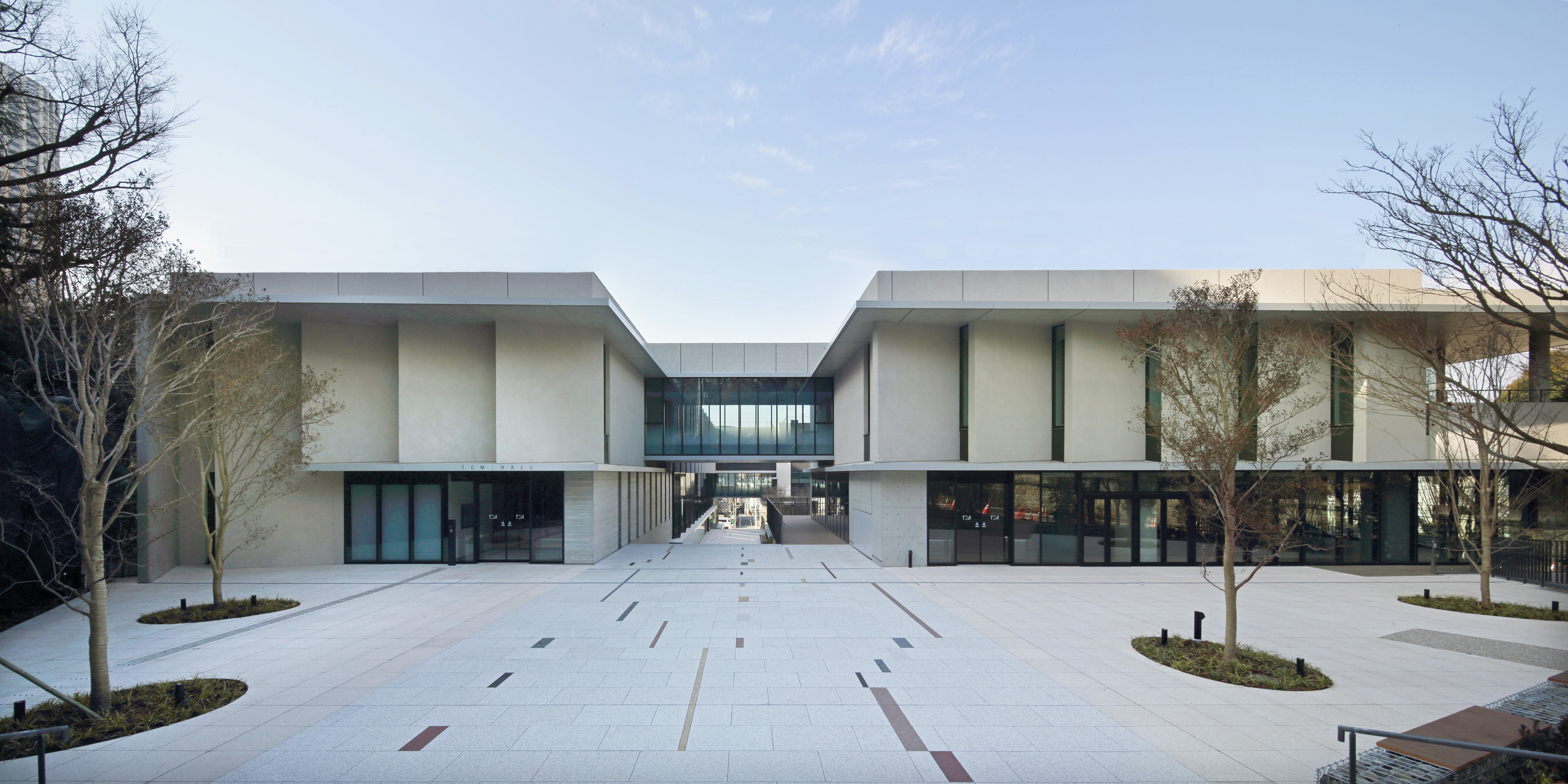

Transforming a historic music college into a collaborative learning platform
A new campus concept and student experience for Tokyo College of Music.
Since its founding over a century ago, Tokyo College of Music (TCM) has trained countless world-class musicians. Despite its well-established reputation, however, the school was feeling a pressing need to reconsider its role in order to remain relevant in a changing world.
The college had plans to build a second campus in Daikanyama, a prominent area of Tokyo known for being a hotbed for new global trends. Taking advantage of this opportunity, TCM leaders asked IDEO to help them develop a new concept for the school, and to redesign the learning experience while preserving a focus on classical music.
To kick off the research phases of the project, IDEO designers interviewed TCM students, and traveled to London, New York, and Boston visiting educational institutions, music schools, and arts facilities.
The team observed that students at music colleges outside of Japan were giving serious consideration to their career plans at an early stage in their studies, acquiring a variety of skills and mindsets through a well-rounded education. By contrast, TCM students were focused on learning and performing classical music, but tended not to have a clear image of future career opportunities.
IDEO proposed four specific directions for TCM’s new campus, based on an overarching theme of “culture, fields, and people collaborating across boundaries.” The first aim was to foster a business mindset and entrepreneurial spirit among the students that surpassed their classical music training. Next was to increase opportunities for actual performances, collaborations with professionals outside the school, and joint projects. The third aim was to position the college as a platform that would encourage the spontaneous creation of communities within and outside the school. The final aim was to develop students who were digitally savvy and fluent in new technologies, enabling them to continue evolving in response to developments in the real world. These goals are reflected in the various spaces of the school, as well as in the design of the experiences that occur in those spaces.
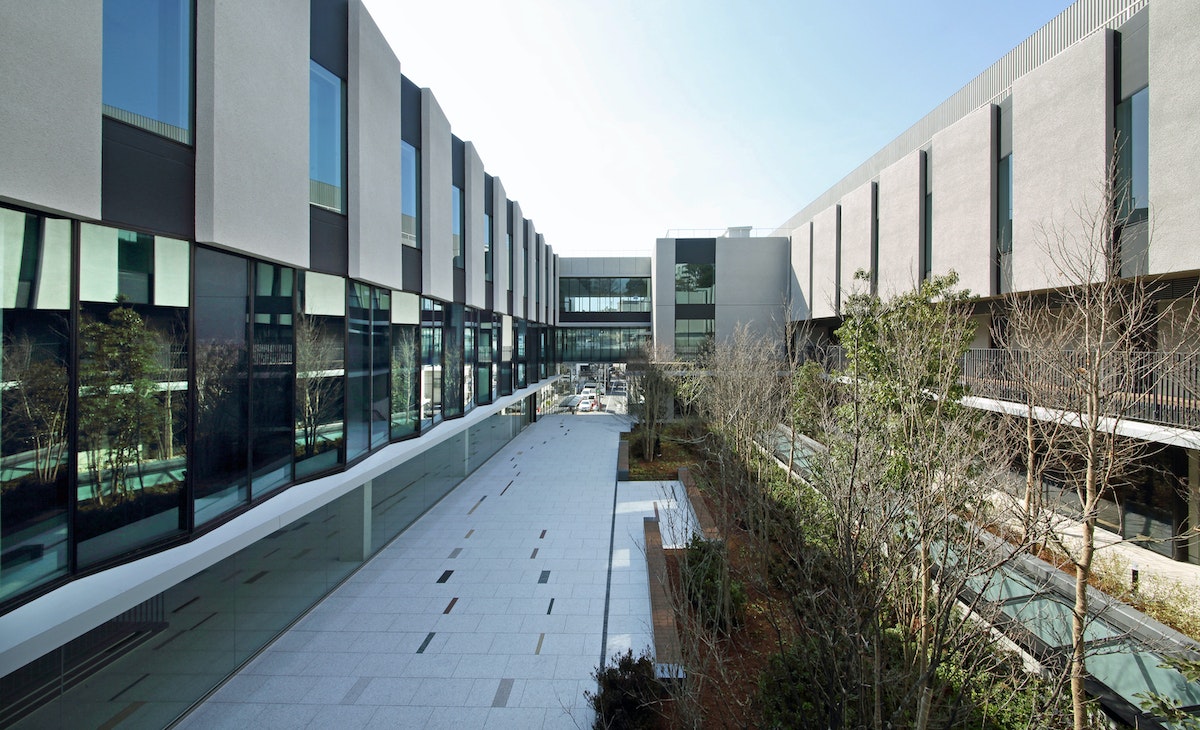
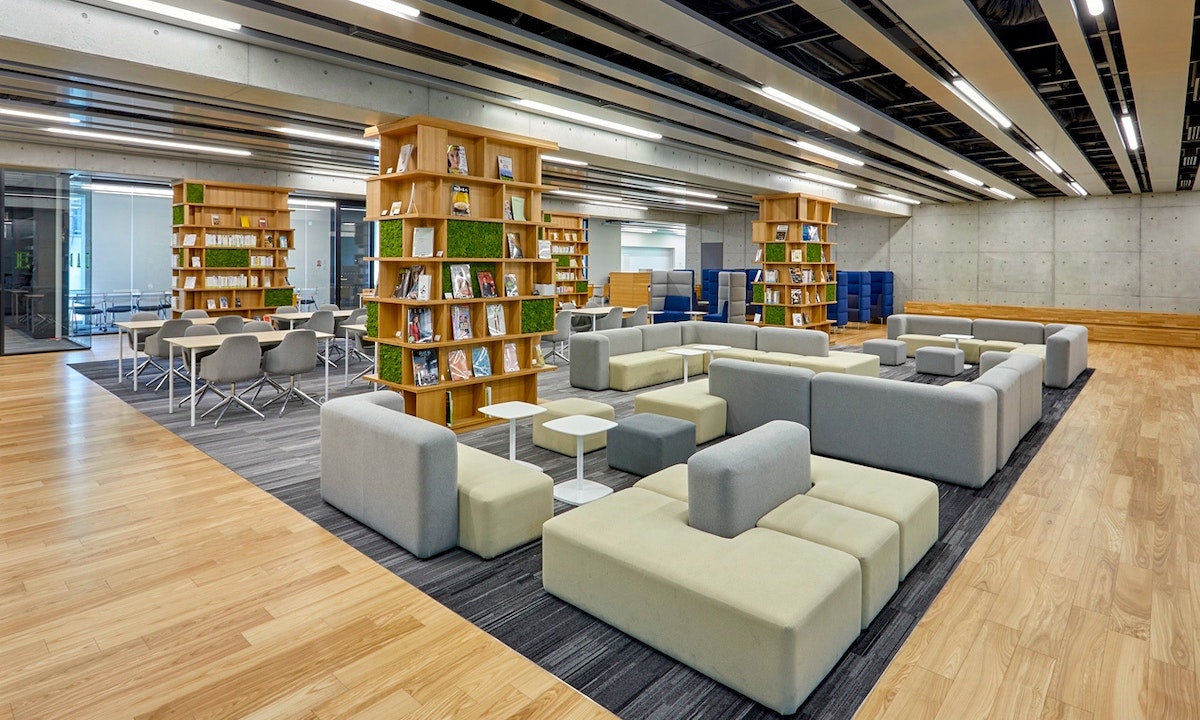
The most symbolic of these spaces is the Creative Lab. Originally intended as a library, the space now functions as a platform where people from within and outside the school community can collaborate and generate innovative ideas. The open layout, which encloses a cafeteria for students and faculty, can be altered depending on programming needs. The Creative Lab provides a venue not only for live performances in which the students can polish their improvisational skills, but for holding workshops and other events on topics such as cultural exchange, business, and new technologies.
New furniture and objects were carefully selected to inspire spontaneous encounters and conversation between students from different departments and staff, creating a flow of activity.
Even the landings on the staircases, which tend to be dead space, were designed with this concept in mind. One student commented that the space facilitates meeting new people and creates “opportunities for deeper interaction with students from other departments.” This intentional, open design has transformed the space into a hub within the school and the local community.
Through the new environment and educational opportunities at TCM's Daikanyama campus, students now have stronger opportunities to apply their creative talents in numerous fields worldwide, creating impact informed by the various perspectives, skills, and relationships they have developed at TCM.
Designing a modern digital platform for the constituents of Georgia
Building a more efficient, trustworthy service for Georgia's residents.
Georgia is among the most populous states in the American South. It’s a place with a storied past and promising future—on the rise economically, and continuing its powerful cultural impact on music, TV, cuisine, and tourism. Over 10.4 million people call Georgia home, and nearly all of these people will at some point navigate the state’s websites for securing everyday services. Ideally, this online platform would provide unifying and accessible government resources for everyone, whether they’re renewing their vehicle registration, seeking a fishing license, or looking up tax law updates.

Georgia’s Office of Digital Services (DSGA), part of the Georgia Technology Authority, was challenged with designing a platform to modernize the collective and individual online presence of 80+ state agencies, many of which used visually disconnected formats and color palettes that could leave the public feeling confused. DSGA recognized that they could provide more efficient and higher quality service to the public if they simplified the language, designed the site from the user's point of view, and created a more cohesive look and feel across agencies.
IDEO worked with the DSGA to identify the priorities of Georgia residents who use the various agency websites. On a road trip from Savannah to Atlanta, with stops in Macon and Dublin, the IDEO team immersed themselves in the rich culture of Georgia, connecting with social workers, low-income residents, state agency leadership and civic organizations to learn how Georgia’s digital properties could better address their disparate needs.
The design research underscored that there isn’t just one Georgia—it’s a tapestry of people, geographies and political orientations. Yet several common themes emerged, including:
Georgians want their government to “give it to them straight.” On the redesigned Georgia.gov platform, the people of Georgia can easily search popular topics to get the information they need. This includes learning how to apply for food stamps, renewing a business license, or simply finding out the location of a local office in their area. If a user has remaining questions, they can connect directly with a real human for further assistance, balancing direct information with warmth and a personal touch. User feedback on the site provides the opportunity for continuous design improvement.
Georgians want to take pride in the legacy and the future of their state. IDEO developed an entirely new design system with new navigational elements, fonts, and a color palette inspired by Georgia’s landscapes, all of which can be modified for individual agencies while remaining consistent with the state brand.
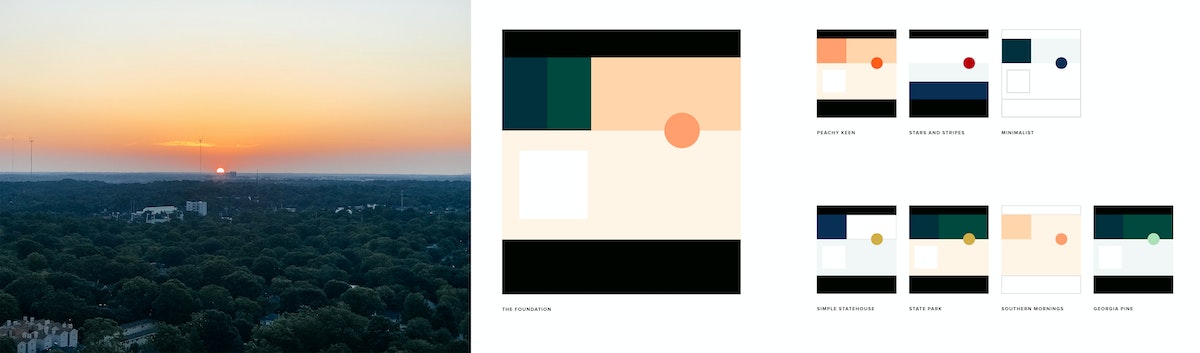
A distillation of the original Georgia seal adds authority, and new icons anchor the site’s menus and bring more clarity to the search function. The platform was designed to be Section 508 and WCAG 2.0 AA compliant, providing clear and accessible page content that adheres to federal laws and international web standards. To instill trust in Georgia’s online presence, each page also has a header that indicates it’s an official Georgia State website and outlines the uniform features constituents can use to identify this.

With improved navigation and easy-to-access prioritized content, Georgia.gov is a much more efficient platform for addressing requests from citizens. The site projects a happy-to-help, citizen-centered approach that aims to empower all Georgians so that they feel confident, informed, and prepared.
A holistic, human-centered approach to managing diabetes care
A digital-first diabetes management system that helped patients get the support they needed when they needed it.
According to the Centers for Disease Control and Prevention, nearly 30 million Americans have diabetes, almost 10% of the population. The vast majority of these diagnoses are type 2, which is commonly treated through a combination of medicine, diet, and exercise. Today, one of the major barriers to better outcomes is access to trusted information. As little as 15 percent of people with diabetes receive adequate education from their healthcare providers on managing their disease and making recommended lifestyle changes.
Ascensia Diabetes Care, a global healthcare company, has been a leader in diabetes treatment for over 70 years, known primarily for producing blood glucose meters. IDEO has worked with Ascensia for more than a decade, helping develop and design their CONTOUR NEXT ONE meter in 2016. In 2017, Ascensia engaged IDEO with a new goal of moving the company beyond physical devices. Ascensia envisioned a first-of-its-kind approach to educating and monitoring diabetes patients. In partnership with IDEO, they wanted to build a comprehensive solution—one that would not simply take glucose readings and document food intake, but would consider all factors that impact a person's health.
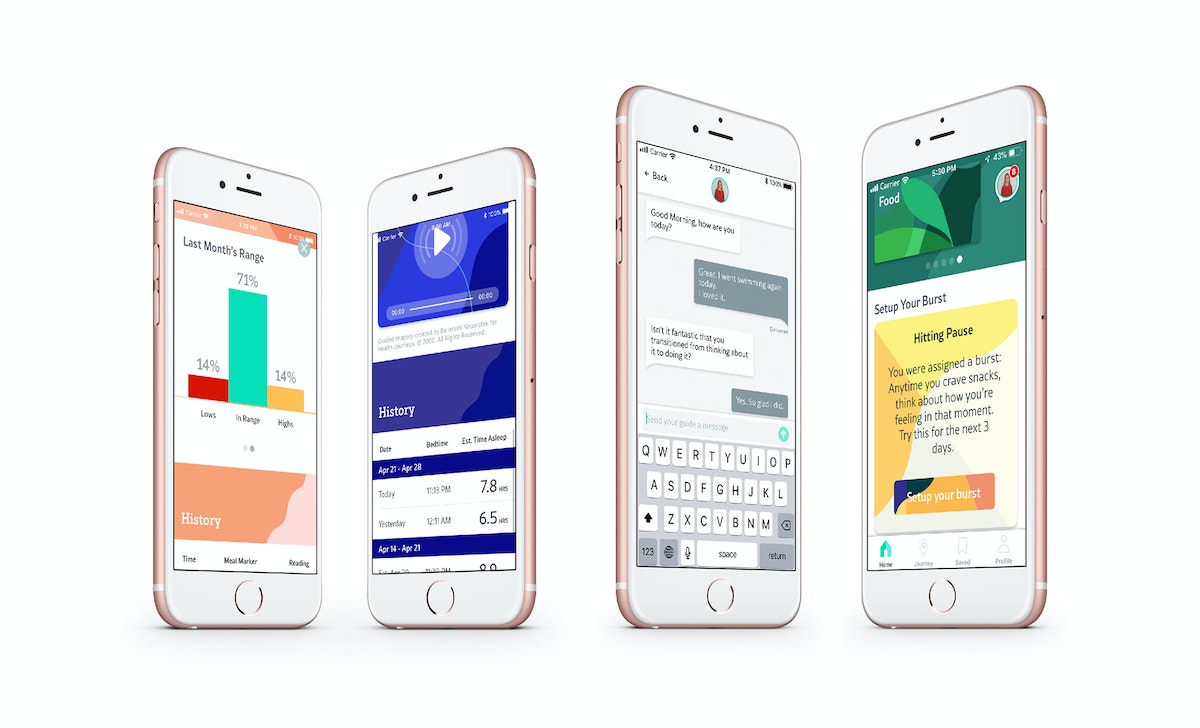
Through deep collaboration, Ascensia and IDEO built a powerful app-based service. The project began with a strategic vision for the experience and ended with the delivery of an all-encompassing health offering, including training of providers, packaging, app design, content creation, and visual design.
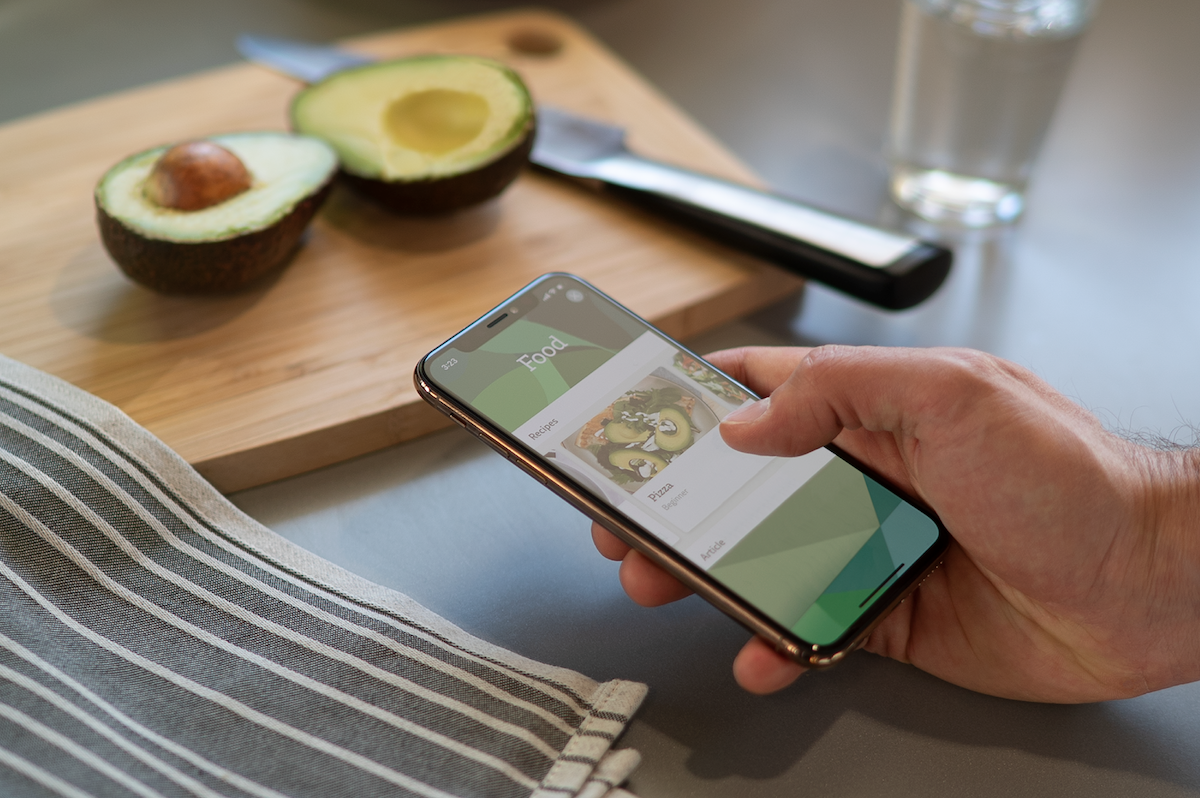
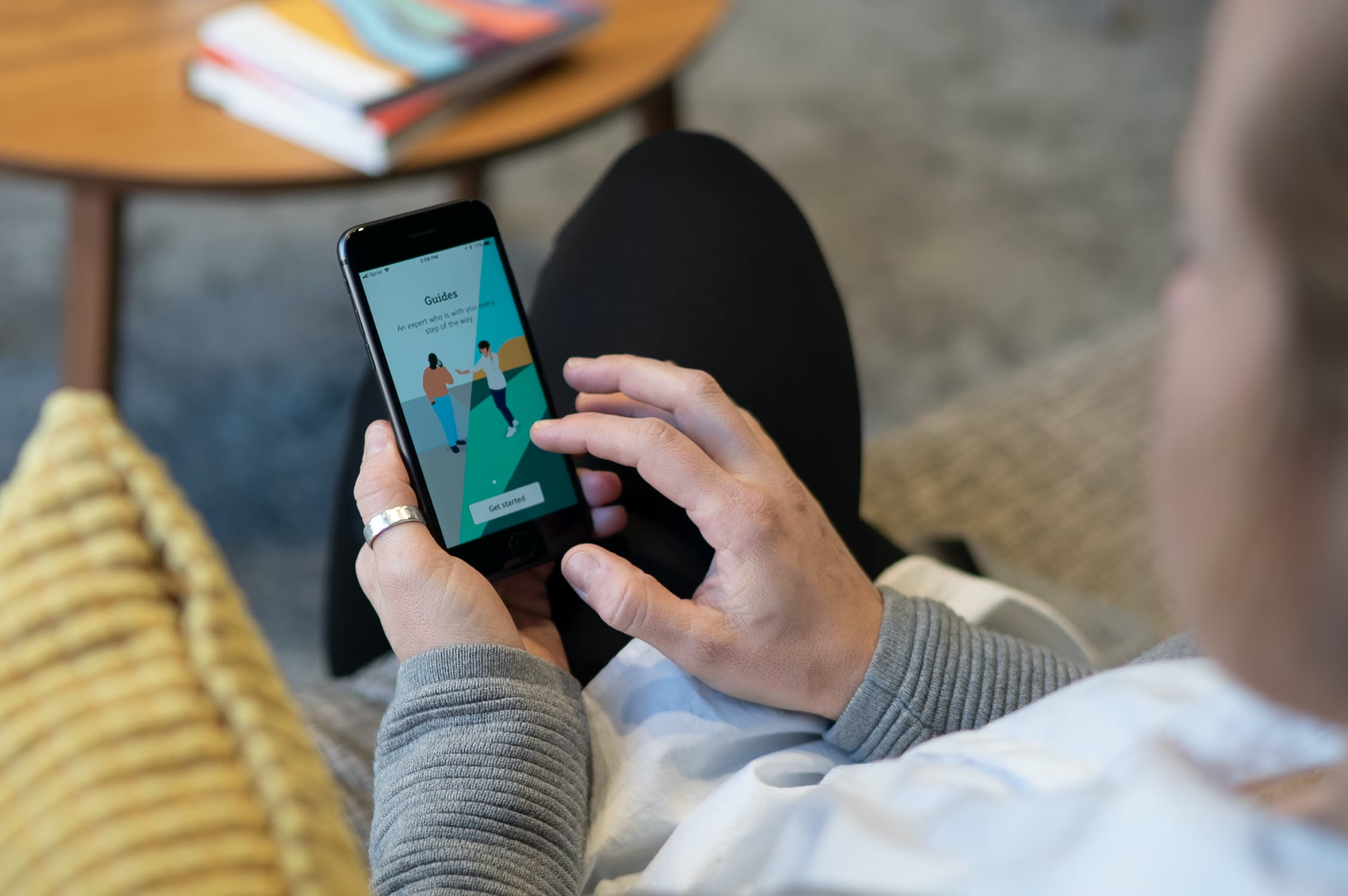
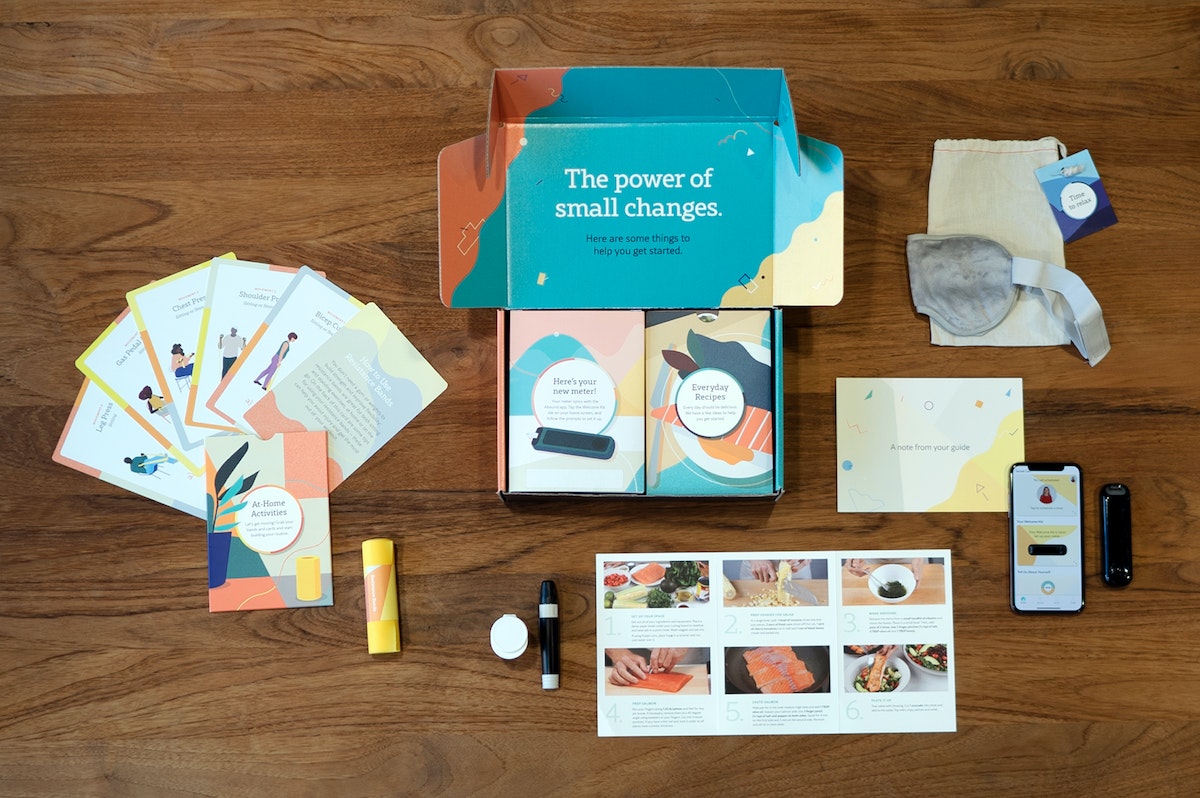
The patient experience married data and tracking, real-life mentorship, and personalized content. When a patient signed up, they were paired with a Certified Diabetes Educator (CDE) who created a tailored program based on their needs and linked them to relevant articles on topics like cooking, mental wellbeing, and sexual health. The IDEO team led the charge in hiring and training guides, crafting the educational content, and even designing the content management hub.
The data engine behind the app is another one of the program's stand-out qualities. The app pulled data from multiple data sources—exercise bands and glucose meters—to provide constant feedback, track progress, and continually refine the experience. To generate empathy, as well as build the app's initial data set, IDEO's data scientists tested the product on themselves. One designer wore a wrist full of exercise monitors around the office and tracked her blood sugar after every meal.
The app-based service was tested with 60 people and demonstrated remarkable early results. Only two participants failed to complete the study—a stunning success rate when adherence to therapy for chronic illnesses in developed countries averages around 50%. Additionally, participants reported drastic improvements in both physical and mental health. One recently widowed 70-year-old woman emerged from depression, returned to swimming, and started having regular blood sugar readings.
The project required Ascensia to embrace new ways of working internally, adopt a broader view of their offering, and ultimately expand the way they serve people with diabetes.

Creating an out-of-this-world STEM learning experience
Aboard the Verizon Explorer Lab, students can travel to Mars and learn engineering basics along the way.
When Mr. Gordon told his fifth grade students they were taking a field trip on a bus, many of them envisioned the city bus that they ride each day to school. But when they saw the Verizon Explorer Lab pull into the school parking lot, they realized a unique experience awaited them. Painted in bright colors, this bus promised something very different from their daily commute.
“Climb aboard, explorers!” says the Lead Explorer. The students walk through the bus’ sliding doors and inside, where instead of rows of seats, they find a sleek research lab. Suddenly, the lights dim. The bus makes a rumbling noise as though it’s about to lift off. And on a large screen, a vision of Earth from space appears. The students listen and point as the video narrator briefs them on NASA’s ongoing search for life in space.
Science education isn’t always this fun. Some kids have a chance to learn through interactive games, immersive experiences, or engaging field trips; but many lack access to rich educational experiences in science, technology, engineering, and math (STEM). As a result, they can be less likely to pursue careers in STEM, though many future jobs will demand mastery of these subjects. This not only impacts a student’s potential and future, but reduces the diversity and number of qualified STEM job applicants.
In under-resourced schools, students are often limited to the scarce tools available for STEM learning in their classrooms. Many kids rarely have a chance to leave their neighborhoods. For these kids, mobile learning experiences that come to their school offer unparalleled exposure to cutting-edge, technologically advanced, and—most importantly—inspiring gateways into these critical academic subjects.
As part of its focus on digital inclusion, Verizon partnered with IDEO to share the excitement of STEM learning with middle schoolers. To facilitate access and discovery of STEM, the team designed a learning experience that takes place on a coach bus and can be scaled to reach kids across the nation.
The team set out to transform the bus into the Verizon Explorer Lab: a futuristic research lab that transports kids to new environments, from outer space to under the sea. As part of the larger Verizon Innovative Learning program, the Verizon Explorer Lab offers delightful and rigorous content that meets national science standards.
A multidisciplinary team comprised of designers across interaction, communication, environments, games, and software partnered with Verizon to bring the Verizon Explorer Lab to life.
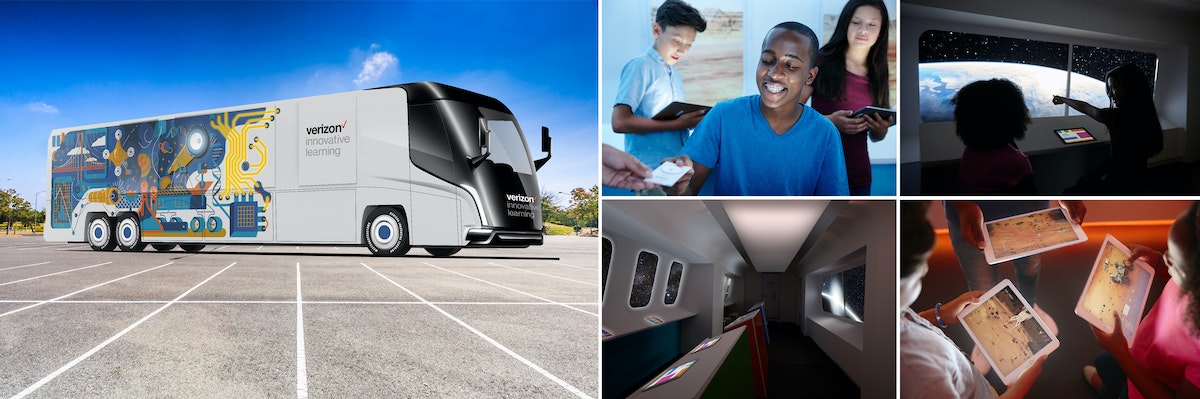
To keep the student at the center of the experience, the team designed alongside kids. Their gravitation toward play, interaction, and technology inspired the digital game that students play onboard the bus. When developing the game’s narrative, the designers turned to popular kids’ books and movies. What began as a card game prototype eventually became a 360-degree video and virtual reality expedition to Mars—complete with a custom musical score—that introduces middle schoolers to engineering basics.
After stepping through the bus doors and taking a tour of the solar system, Mr. Gordon’s students receive an emergency call from NASA: They must rescue the missing Curiosity rover, which is dedicated to collecting evidence of life on Mars. Eager to save Curiosity, the students become immersed in the adventure at hand. And through the adventure, they become immersed in science.
Students use tablets to design their own Mars rover. Each rover appears on a large screen and traverses the planet’s extreme terrain. The goal is to collect data that suggests life on Mars, including ice deposits, photos, and more. Students iterate on their rover’s design—wheels, power sources, and sensors—to test if it can stand up against dust storms and craters. The team consulted a NASA planetary scientist to ensure accuracy, as well as educators to establish cohesion with classroom curricula.
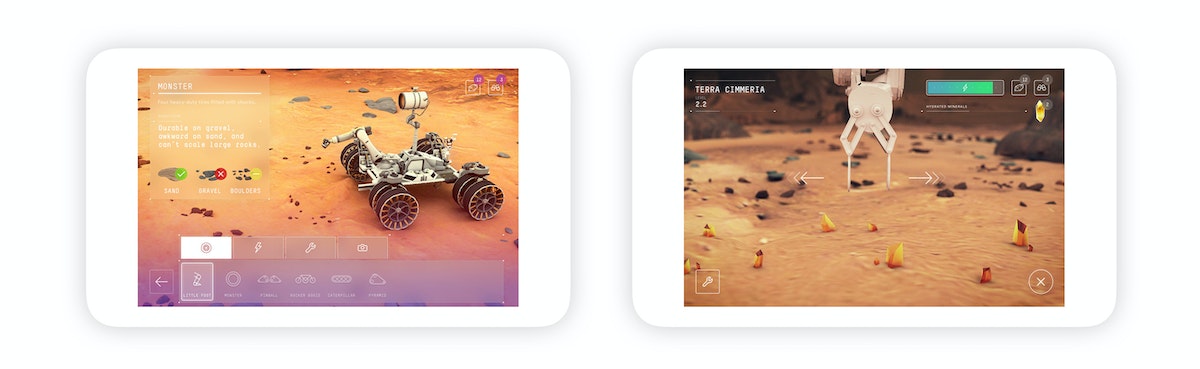
During the game, students are encouraged to compare designs and learn from each other: One rover may be able to travel long distances and take various photos, while another can carry large quantities of ice and sediment samples but can’t go far because of its size. At the end of the mission, the group finds Curiosity and sends all of the evidence they’ve collectively gathered back to NASA to aid the search for life beyond Earth. Before departing the bus, students watch an animated video that explains various jobs in STEM and encourages kids to pursue one of these careers.
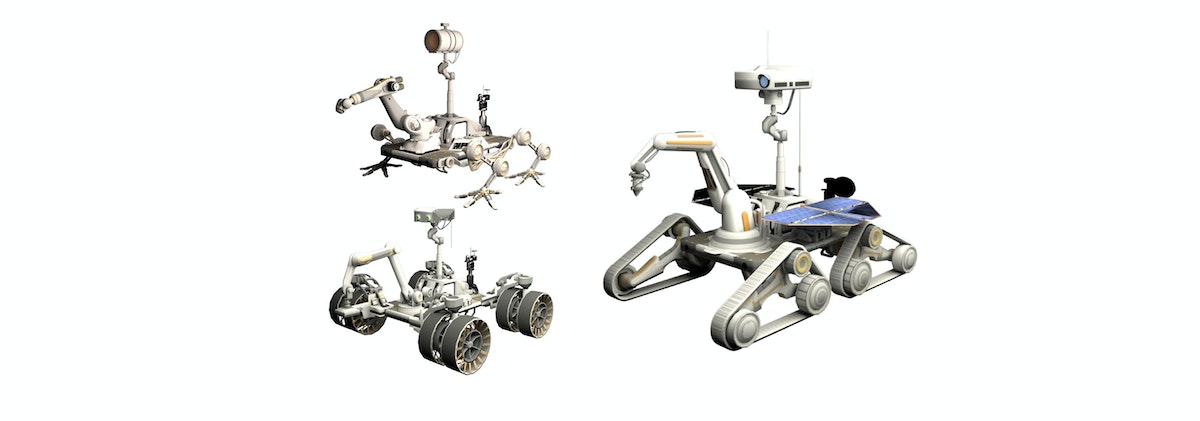
The Verizon Explorer Lab teaches students the engineering design loop, the value of collaboration and teamwork, and what a career in STEM might look like. The mission to Mars game is just one of many potential STEM learning opportunities for students and integrated, customizable learning modules for teachers.
Since launch, the Verizon Explorer Lab has traveled to various parts of the United States and reached thousands of kids. It continues to be managed by Learning Undefeated, Verizon’s nonprofit partner. By designing for and with students, it’s possible to create educational experiences that facilitate meaningful learning and genuine fun. The Verizon Explorer Lab represents progress towards a more inclusive future for employers and the STEM field.

Design lessons from the cultural exchange on Red Note
What the Chinese/American digital mash-up can teach us
Her home page had been crowded with English content and an attention-grabbing hashtag: #TikTokRefugee.
For years, Chinese and American netizens have largely lived in separate digital spheres, playing within their own ecosystems. But thanks to the change in TikTok’s legal status in the U.S., all of a sudden, we’re seeing a digital cultural exchange. On Red Note, people from the two countries are helping each other solve math problems and complete English assignments. They’re sharing photos of their pets, homes, food, and cities. They’re even fact-checking with each other about life on the “other side”—like what authentic Chinese food looks like beyond what’s offered at Panda Express.
We don’t know how long this migration of users will last, but it hints at what could be the beginning of a social experiment that could reshape norms, trends, and the way global internet cultures interact.
For us, two technologists, one currently living in Shanghai, working on a project on Chinese content creation and e-commerce platforms, this digital mingling kicked off a big conversation about what designers from different cultures can learn from each other. After all, firewalls have led to us building our tech ecosystems in totally different ways, with different design sensibilities and cultural use cases. And it’s really fun to see these two digital cultures coming together in one app.
Here’s what we’re learning from exploring this cultural exchange.
💫 The power of shared digital spaces to bring people together
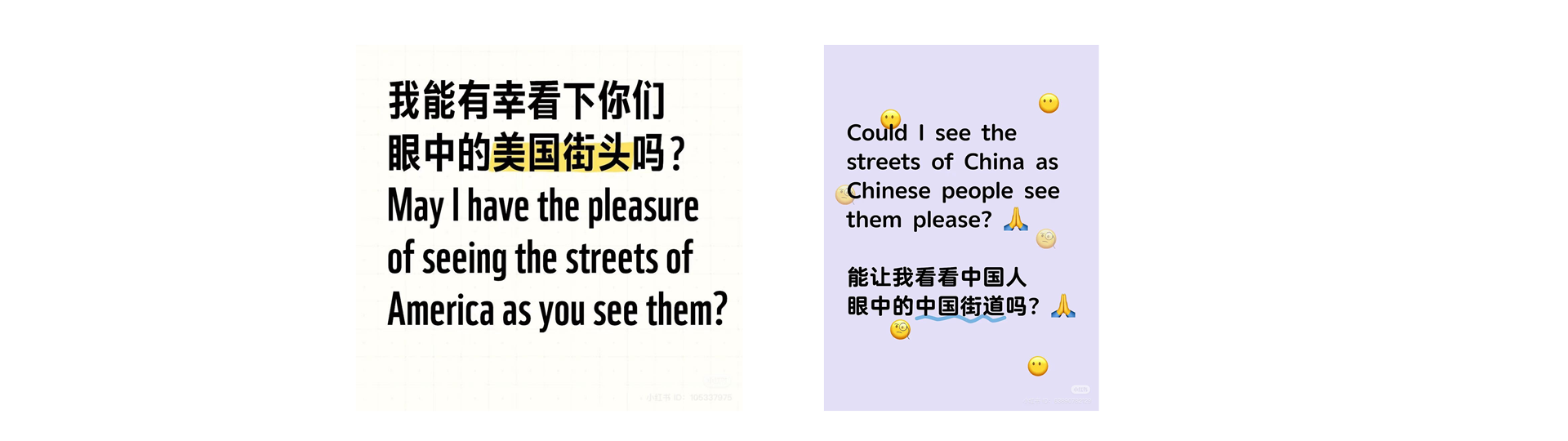
We’re always fascinated to see what happens when two people who are siloed connect with each other as human beings. On Red Note, people are finding ways to learn from each other, sharing photos of their pets and families, and asking authentic questions like, “May I have the pleasure of seeing the streets of America as you see them? ” Meanwhile, the folks who came from TikTok are trying to learn Chinese terms, and even taking quizzes. These spontaneous exchanges are more than casual interactions; they hold immense potential to create a powerful inspiration pool for intentionally designing spaces for connection and positive interaction. It’s an opportunity to uncover design hints and signals for commercial and social innovations, inspired by shared values, behaviors, and the nuanced differences between users.
🔮 Cultural cross-pollination
Behaviors that developed organically in one context are already getting adopted by the other. For example, the "😺 cat tax" concept from Reddit—a friendly requirement to share a photo of your cat to participate—has made its way into Chinese social platforms, blending humor and engagement strategies from Western online spaces with local norms. Slang from both sides is proliferating; American terms like LOL, AMA, JK, as well as Chinese ones: XSWL (laughing to die), NB (really really good). This cross-pollination feels like a preview of a future where internet cultures from the U.S. and China become even more intertwined.
📲Shifting data privacy norm
On a recent project on interaction design in content creation platforms, we found that some users from China, the U.S., and the EU were unfazed by the idea that the platforms are collecting and using their data. As one participant told us, “It’s okay to use my data for training if it gives me a better experience as the payoff.” Meanwhile, some American users on Red Note said they were knowingly trading data privacy for community (in slightly less polite terms).
While this sentiment doesn’t align with traditional data privacy ideals—prioritizing minimal data collection, strong user consent, and transparent usage practices—it highlights how people crave connection and great experiences, and are sometimes willing to pay for that with their data. It’s a nuanced area that presents both opportunities and challenges for designers and tech creators—and one where they need to tread carefully. Consent is extremely important, and experiences need to highlight choices to opt in, surfacing microexplanations for new users clarifying how their data will be used or implementing scenario-based toggles that help users understand data sharing.

😻Unique engagement strategies
While researching Chinese digital products, we noticed a fascinating norm: many apps cultivate unique ways for users to address each other. On Red Note, for instance, users don’t call each other "bro" or "buddy" but instead use "sister." This stems from Red Note’s design strategy, which intentionally engages female users by fostering a female-friendly community that feels safe, authentic, and supportive. It’s a small detail with a big impact, shaping how users interact and building trust through thoughtful, culturally-tailored design. It’s also a great lesson in intentionality.
👥A wider range of features and use cases
Many apps created in Western context have one function that they do really well. Think Pinterest, Uber, Zillow. But if you spend time using various apps in the Chinese tech market, you’ll discover there’s a lot more usability and depth to the products. For example, at face value, an app like Red Note could be seen as an Instagram-style app focused on real-life story sharing. But it also has a ton of deeper features: it’s heavily social, commenting with self-moderation on things like political speech, livestream, notes, and more. China’s UX designers have figured out how to distill the purpose of a product, and create deeper dimensionality in a way that aligns with user needs, and makes it easier to express yourself and accomplish goals on the platform..
🌎Protecting culture
The influx of new users and ideas is transforming platforms like Red Note into vibrant spaces for creativity, commerce, and cultural exchange. This evolution raises questions about how global norms and trends will influence—and be influenced by—local platforms, potentially reshaping the landscape for content creators and businesses.
As delighted as we are to watch and learn from these interactions, we’re very aware of the power of globalized social media to flatten cultures. Part of the fun and learning here is that they are so different. But that offers yet another design provocation: How can we balance connection and understanding and cat memes between people without flattening culture? That’s a question we’ll continue to explore.
Last Wednesday, when Zoey opened Xiaohongshu ( aka 小红书” or Red Note), her go-to Chinese social media app, to scroll through some of her favorite local food, fashion trends, and K-Pop content, she discovered something unexpected.

CES 2025: What we saw—and wish we had seen
Raising AI kids responsibly, an avalanche of smart glasses, and more.
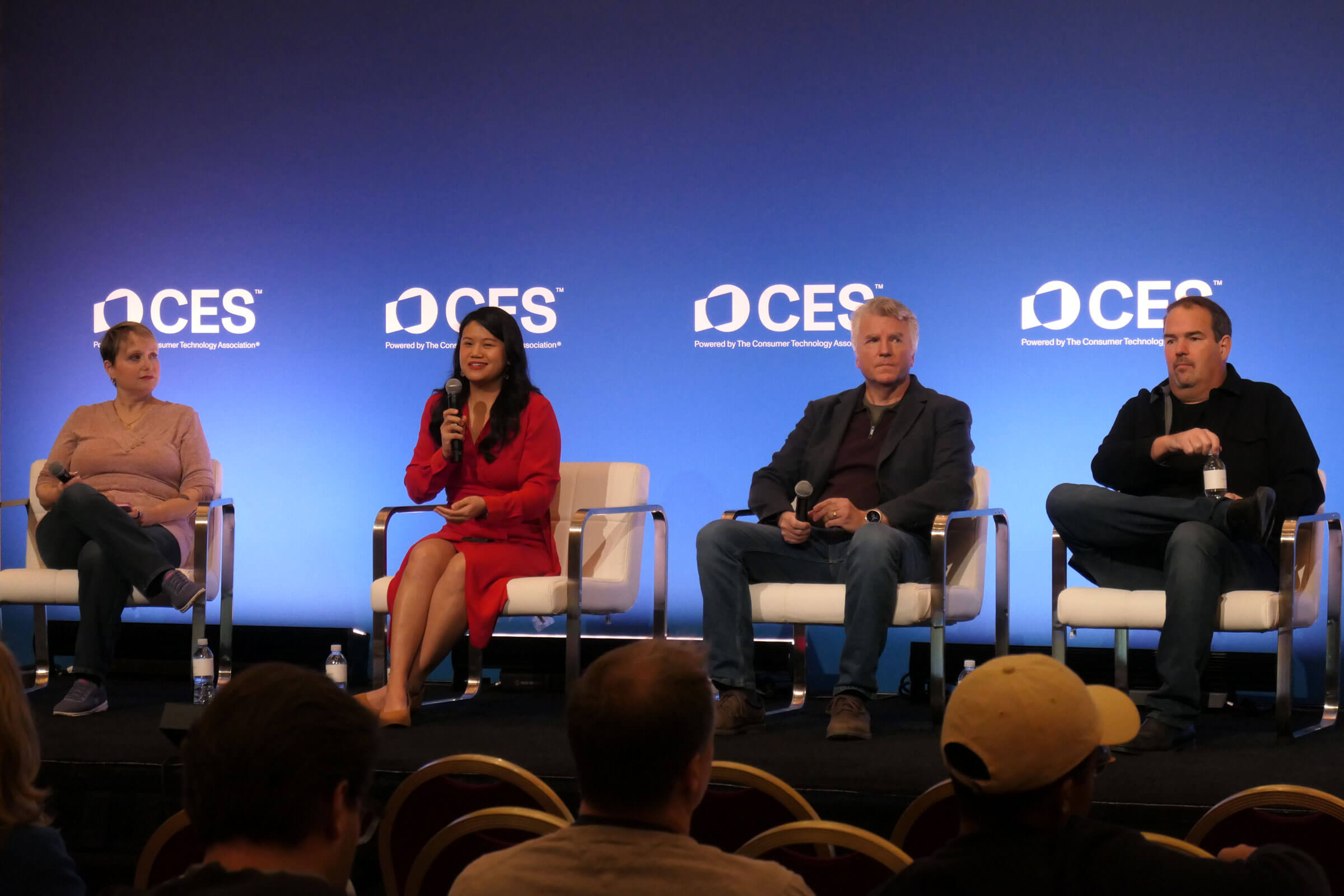
We headed there together—Keren to speak on a panel about raising AI kids responsibly, and Dan to meet with clients and partners and check out what’s coming in the world of media and technology.
What stood out most was the contrast between our panel discussion—where we focused on how AI can genuinely enhance kids’ lives in meaningful ways—and the exhibit halls, where much of the tech seemed designed to become the centerpiece of daily life. There were some promising ideas, like digital health assistants and travel concierges, but it was clear that many companies were betting on people reorganizing their lives around their products. That could be a tough sell for consumers, and one that leaves a big opportunity for companies to design technology that integrates into people’s lives, amplifying what they already value and care about.
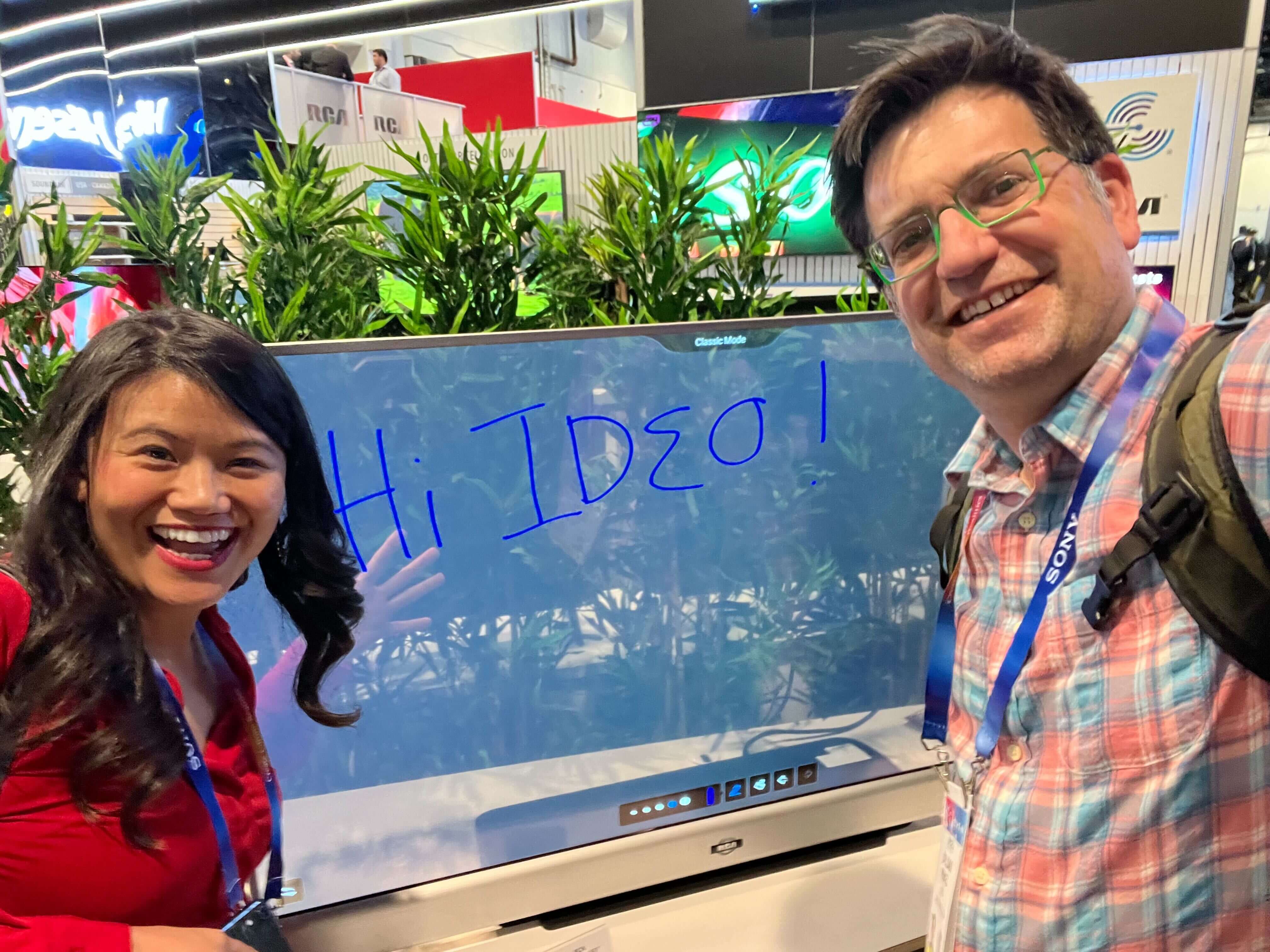
Here were the most interesting things we saw, heard—and wished we’d seen.
Things we heard
Kids aren’t impressed by AI alone: While adults can go ga-ga over everything AI, Keren’s co-panelist, Joshua Garrett, COO of Readyland, astutely pointed out that though adults might feel an experience is magical because of a novel tech interface or capability, kids aren’t wowed by the flash if the experience itself doesn’t deliver. At the IDEO Play Lab, we often see that adults will try to figure out how to make a product work because they're too embarrassed to admit they don’t get it. But kids will tell you right away if something isn’t intuitive. Youth have also told us directly: They want a chance to learn how to form relationships with real people, not a chatbot that might stunt their emotional growth during their formative years. While these insights were focused on designing for kids and youth, the idea of novelty wearing off applies to any audience. During our panel, there was consensus: Just because something can be automated or replaced, doesn’t mean it should be. There are the human moments we should hold on to and protect.
Things we saw
Smart glasses galore (or wearables that go anywhere but your wrist): On the way out of the CES showroom we were overwhelmed (well, almost) by just how many versions of smart glasses there were, not to mention all the people in line waiting to try them out. The Xreal/BMW partnership was particularly packed, and won a bunch of “Best of CES” awards. We were particularly intrigued by Rokid’s approach to the device, which included a separate controller and ability to take off your prescription glasses (a big win for Dan!) and adjust the image quality in the lens. For now, it seems like the smart glasses market is still in flux, and popularity will be determined by how well these companies pitch something that fits different social moments (e.g. being the passenger of a car, sitting on an airplane, hanging out in cafe, walking down the street, just saying hi to a friend, etc). One thing that still felt way underdesigned? The audio experience and the relationship between the glasses and the audio devices you might already have.
Creator tech ISO heart: As with most hype cycles, buzz around the creator economy has risen and fallen many times over the past few years. Are we on our third spring? We saw plenty of “pro creator” tools that can empower users to do everything from quickly capturing human motion (inertia-based motion capture and animation—no room sensors needed) to importing image assets with nothing more than a bluetooth connection and to software developer kits (SDKs) that enhance immersive experiences. Before, only professionals could access these powerful tools; now anyone (with the budget) can build an immersive game. Still, amid all this progress, it felt very refreshing to have dinner with execs in the creative space who emphasized the need for human stories and heart. The challenge isn’t just making creation faster; it’s ensuring the stories these tools help tell resonate on a deeper level, connecting with audiences in ways that transcend the tools themselves. After all, it’s the heart in the work that keeps audiences coming back.
IP content flywheel: Some of the longest lines we saw at this very techy tech convention were for the The Last of Us proof-of-concept immersive experience and the Demon Slayer photo opp at Sony. The uptick in location-based entertainment (aka, experiences that let people live out their fandom IRL) is a good reminder that characters and connections are the thing. The tech was in service of the experience. On the other end of the spectrum of the storytelling medium, at the Variety Summit, we heard about how webtoons and anime—long popular in the Asian market—are now finding incredible traction in other geographies. It was somewhat of a full circle moment for those of us who were coming of age during the era of LiveJournal and lo-fi sketches. There’s something nostalgic and comforting about the quick drawings and the 2D experience of absorbing a story in that way that appeals to users in the age of high-speed and seamless experiences. It’s a good reminder that some experiences benefit from slowing things down.
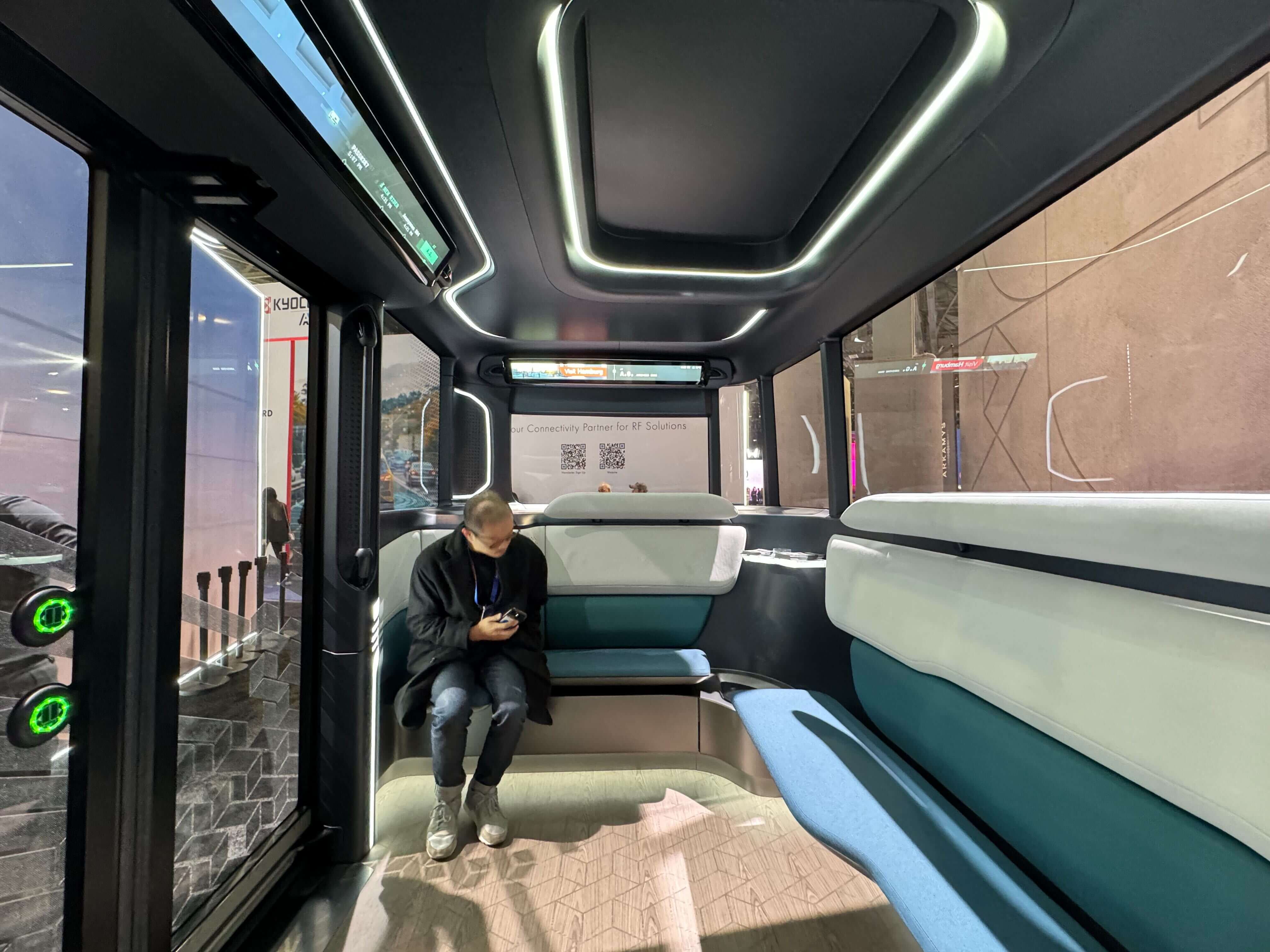
Things we wish we had seen
Solutions to big human problems: We were really hoping to see some innovative approaches to some of the looming problems we’re eager to get working on—like decades (centuries?!) of under-investment in women’s health. (And we’re not talking about period-tracking apps, either.) There is such a large opportunity area here.
We did really appreciate the AgeTech section, which was sponsored by AARP. Believe it or not, 2024 was actually known as “peak 65,” the year when the largest-ever number of Americans ever hit 65 at once. We need new solutions and interventions to support dignity and care in the aging process, improving not just the physical health experience, but mental and emotional health too. Some of the things we saw were cool and fun, like versions of classic games, tailored to audiences of different abilities, making it easier for families to connect. We’re hoping to see more solutions like this, that extend care beyond capturing health metrics, designing for delight and connection, which are important for longevity and joy.
Need help solving a problem in one of these opportunity areas? Get in touch. We’d love to hear from you.
This year’s Consumer Electronics Show (CES) was a whirlwind of AI—in your kitchen! In your car! In your bedroom!—smart glasses, “pro-creator tools,” and new media experiences (see-through tv screens, anyone?).

33 things we’d love to redesign in 2025
From crossing signals to patient portals and oh-so-much more.
As we move through the world in 2025, we have a long list of things we’d love to rethink, if only we had the chance. Here’s what’s risen to the top of our list this year.
PRODUCTS:
1. LED headlights make driving at night painful—and dangerous. Am I getting older and cranky? Yes! But that doesn’t change the fact that headlight brightness has doubled in the past 10 years, and the last time I checked, roads have not gotten darker. There are ways to keep ourselves safe on the road without blinding our fellow travelers.
—Will Notini, Chicago
2. Food storage lids and containers always seem to get separated, leaving mismatched pieces that feel impossible to pair. Containers rarely stack efficiently, taking up more space than they should, and any attempt at maintaining an organized and sustainable system seems destined to fail. How might we redesign everyday kitchen organization to turn common pain points into seamless experiences?
—Sindhura Sonnathi, San Francisco
3. Same. In addition to them getting separated and inefficient stacking, food containers never come out of the dishwasher completely dry. I’m constantly having to dry them with a towel and needing to get in those nooks and crannies to get all of the water out. The glass, ceramic, and metal dishes don’t do this. It’s just a nuisance. Let’s fix it!
—Shavon Gervasi, Cambridge
4. Assuming you’ve figured out what app the show you want to watch is in, you now get the joy of having to scroll through TV interfaces with long, flat horizontal “trays” down long flat horizontal pages. Sometimes there’s a bit of variation (Rectangles! Squares! Larger rectangles and squares!) but it’s easy to get lost, and hard to flip back and forth between things you’re interested in. I don’t miss my cable subscription, but I really do miss some of the things cable figured out how to do well.
—Dan Perkel, San Francisco
5. There must be a better solution than our current umbrellas. They're so inefficient and cumbersome to carry around. I always put off using one until I absolutely can't avoid it, and by that point, it often ends up breaking due to the wind anyway.
—Rita Nicolau, London
6. Many (most?) new cars have all of their radio functionality accessible only via touchscreen, which is 1) dangerous and 2) extremely inconvenient for your passenger DJ. Well-intentioned safety measures block smartphone syncing while the car is in motion (even when a passenger is doing the syncing instead of the driver), and many touchscreens require the user to navigate away from a map app in order to operate the music app or radio. Forcing all functionality to route through a screen is clunky and makes for a poor roadtrip experience.
—Meridith Halsey, Chicago

7. Compostable straws are better for the Earth than plastic straws! But, they get all mushy and disintegrate half-way through your drink. We can make something better.
—Nina Lampert, London
8. Why do white plastic fences exist? They’re a larger version of the white plastic bag. They are not good for the environment, they do not weather well, and you really can’t repair them like you can a wooden fence.
—Christina Abele, Cambridge
9. This might be more of a revival than a redesign, but I’d love to build a version of The Whole Earth Catalog (WEC) updated for 2025. First published in 1968, the original WEC was a compendium of product listings, how-to guides, and educational tools for those in the back-to-the-land movement, shaped by thinkers like Buckminster Fuller. We need a new version of that radical spirit. Whatever form it takes, a new WEC could offer practical resources, forward-thinking education, and hands-on toolkits with an eye toward sustainable living and ecological literacy.
—Beth Holzer, San Francisco
10. For so many people, financial decisions like planning, budgeting, etc., are group decisions—made with roommates, loved ones, spouses (former spouses!), parents, kids, and others. And yet due to a combination of regulations, conventions, and perhaps a bit of laziness, almost every financial product, service, or brand is oriented around a one-to-one relationship that people then have to hack or modify to truly use in a collaborative, group-first way. Does it really have to be this way?
—Dan Perkel, San Francisco
11. Streaming services don’t financially benefit most artists. How can we create more equitable, scalable systems for artists to make living wages?
—Ceci Gomez, San Francisco
12. When I was little we went to the store to buy a dishwasher and the display models all had glass fronts. I came BURSTING in the door to tell my mom that we were getting a dishwasher with a window. The disappointment I felt when it came with a metal front is an understatement. Why don’t they have clear glass doors?
—Molly Rolig, San Francisco
13. Flexible Spending Accounts (FSA) are tax-advantaged accounts that allow employees to set aside pre-tax money to pay for eligible medical expenses. And my bi-yearly dental cleaning is solidly within the eligibility guidelines. However, after every dental cleaning, my FSA provider tracks me down asking for an itemized receipt to “prove” that the visit was covered—even though there’s nothing at the dentist’s office that I can purchase that is outside of that coverage. This doesn’t happen with any other eligible medical expense I incur; how is it still the case that paying for dental care gets constantly flagged as potential fraud? It’s a friction point that makes me not want to deal with FSAs at all. If FSAs are meant to promote preventative care, they should be designed to promote as seamless an experience as possible for the employee.
—Meridith Halsey, Chicago
14. Shower curtains are hard to clean, the metal rusts, the little hooks fall off, they make noise, they are annoying to take down and put back up, and they aren’t easy to change out to suit your mood or time of day. Staying clean while keeping the rest of the bathroom dry could use some innovation.
—Dan Perkel, San Francisco

SYSTEMS:
15. Currently, the shareholder model of corporate governance requires the maximization of shareholder wealth, which has contributed to wage disparity, corporate greed, lowered local tax payments, lack of corporate social accountability, and inappropriate corporate influence on government legislation and policy. This could be redesigned so that, one, shareholder wealth is only a part of the corporate mandate; two, corporate “freedom of speech” is curtailed; three, corporations have less influence over government; and four, corporations contribute more to their local communities and economies.
—Jeremy Sallin, San Francisco
16. In Capitalism, we have a system that is rewarding greed and nonstop growth, while that growth is now killing our planet. Something’s gotta give, y’all.
—Stuart Getty, San Francisco
17. Why are pedestrians, who are the most vulnerable participants in traffic systems, often deprioritized by cities and our infrastructure? Especially here in the U.S. At times when traffic is light (at night, for example), pedestrian crossing signals are red by default, while the signal for main thoroughfare for cars is green. What if all pedestrian crossing had a default state of “cross” instead? Also why do pedestrians need to request the right to pass by pressing a button? I’d want our cities to shift from car-first systems, to people-first and would love traffic lights to lead the way.
—Juho Parviainen, San Francisco
18. Why do I need to install a new medical app on my phone, every time I go see a doctor? Why must every practice have their own portal, their own system, their own login info, and their own interface? Even my doctor sometimes struggles to pull all of the inputs into a single place where they can see everything and give an accurate assessment and advice. How might we streamline the use of patient data into a format that’s truly efficient for physicians and patients alike?
—Shannon Vossler, Chicago
19. As cities face more extreme and frequent heat waves, our built environment is failing to protect residents—especially vulnerable populations like the elderly, outdoor workers, and low-income communities who often lack access to cooling. Temporary cooling centers and emergency response plans are reactive band-aids that don't address systemic issues in heat resilience. Traditional infrastructure (dark pavement, lack of shade, heat-trapping buildings) actively makes the problem worse. The complex interplay between urban design, social equity, and climate science demands innovative thinking beyond just adding more AC units.
—Nazlican Goksu, San Francisco

EXPERIENCES:
20. Meetings are the backbone of how teams align, make decisions, and move work forward—but too often, they’re baaaaad. Unstructured, dominated by a few voices, or overly reliant on agendas that prioritize activities over outcomes. This leads to wasted time, drained energy, and frustrated participants. By applying a designer’s mindset—clarifying objectives, prototyping small changes, and making discussions tangible—meetings can become opportunities for collaboration, alignment, and momentum instead of sources of friction.
—Matt Cooper-Wright, London
21. The behavior we let people get away with under the guise of “the customer is always right” never ceases to shock me. We subject service workers, in-store employees, and more to the worst side of human behavior all because we decided—what?—that paying money at a store lets you say whatever you want to the people who work there? I am a customer of various places, and I am rarely ever right (although you don’t see me screaming about it)! I’d love to see our executive class stick their neck out for their employees, who are their most valuable asset, and set stricter public standards for customers’ treatment of their staff.
—Andy Reischling, Cambridge
22. People used to associate travel with wonder and adventure. Now, people grit their teeth and steel themselves when making their way to and through an airport. Airports should not be malls full of stuff that no one really wants. Instead of having overpriced corner shops, what if we had libraries for books and items? Instead of a mall food court, what if we had places to recharge, refresh, and have a free healthy snack?
—Dave Kim, San Francisco
23. Why is there so much beeping in hospitals? As a patient it is overwhelming. I am impressed that hospital employees can decipher all the beeps, emergency vs. non emergency.
—Christina Abele, Cambridge

24. Commercial flights have been around for about 110 years, and we still have to be there two hours in advance for a flight that is in the air for the same amount of time. The boarding process where you’re forced to stand in an even smaller space for 40 minutes before they open the plane doors deserves a human-centered takeover.
—Justine Syen, London
25. While people come to the emergency department for a whole range of reasons, they tend to have two things in common: they are nervous (for themselves or a loved one) and they have no idea how long they’ll be there. Instead of uncomfortable chairs, a single TV blaring the news on high volume, and a sad nearly-empty vending machine, there are so many opportunities to design an environment that better accommodates the feelings of stress and uncertainty in the air. A little privacy would be nice, too!
—Jen Halls, Cambridge
26. Can we all admit we made a mistake and just get rid of self-checkout? Where I live, in Watertown, MA, there are several stores that have gotten rid of most of their staff in favor of self-checkout machines and, simultaneously, put crucial items (like toothpaste) behind a locked door. Because the store is so understaffed, you might be waiting—and I timed this—15 minutes for someone to come unlock the toothpaste for you. And the machines themselves! We are all human here. We sometimes make mistakes with machinery that we are unfamiliar with. This just slows everything down and we end up calling for help in the end, anyway.
—Andy Reischling, Cambridge
27. Why does renting a car at an airport still feel like traveling back in time to the early ‘90s? Surely we can do better now. I want a better rental experience and 100 percent electric fleet.
—Juho Parviainen, San Francisco
28. There’s nothing like a good road trip. It’s an opportunity to get to know the U.S. and the people you’re traveling with in a new way. Improved ground transportation between cities is associated with greater employment opportunities for working professionals and economic growth for smaller towns. As autonomous and electric vehicle technologies improve, I’d love to design an intercity public transportation service run by electric, autonomous vehicles to promote travel between cities, towns, far-flung national parks, and more in a way that is fun and adventurous while also promoting stronger personal bonds and broader economic growth.
—Natasha Alani, Cambridge
29. With skyrocketing costs for labor and delivery as well as growing concerns around maternity mortality rates (particularly for people of color), it’s time to redesign the end-to-end experience for maternity care! I’d love to explore the rise of maternity care deserts especially in the shadow of recent changes in reproductive policy.
—Diana Tobey, Play Lab
30. There are so many reasons to redesign American elementary education, but ultimately kids need more movement and active learning. There are pockets of teachers that do this. But this doesn’t work for everyone and in my experience as a parent, I see and hear about kids who are not thriving in traditional classrooms. Certainly works for some, but not all, so let’s rethink it.
—Christina Abele, Cambridge
31. There’s so much anxiety, opaqueness, searching, follow-ups, making impossible decisions in the process of finding daycare for children. Why do parents get minimal notice (hours to days) on making day care acceptance decisions when providers can force families to commit thousands to secure spots and provide multiple months notice to leave? The equation doesn’t stack up fairly. How might we design transparent, fair, confidence-building methods to seek, select and find care for our children?
—Uvini Lokuge, San Francisco
32. Why does open enrollment have to be so confusing? I feel like I have to do advanced scenario analyses to compare healthcare plans and still honestly have no idea what my total health costs for the year will be. Can there be fewer options? Fewer acronyms? Some sort of feedback loop to tell you at the end of the year if you made the right enrollment decision?
—Jen Halls, Cambridge
33. I cannot praise our teachers and faculty enough for all they do—but the emails are hard to keep up with. The important information is often buried in the body of the emails, and because they’re often titled something like “week one” or “week two” they’re hard to search. Also—plot twist —some information comes home on a print out and isn’t mirrored in emails, so don’t throw anything away! How can we help redesign school communication so that our beloved teachers can easily share a window into our children's lives that we can keep track of?
—Kristin Boer, Chicago
Need help redesigning a product, system, or experience of your own? Get in touch.
When you spend your life designing products, experiences, and systems, everything you interact with is an invitation to wonder, “what if…”

Your AI questions, answered
The Emerging Tech Lab responds to some of the biggest queries from our Creative Confidence podcast.
Many of our listeners wrote to us sharing their own questions about AI and how it can shape the future, and we wanted to answer them. Jenna Fizel and Savannah Kunovsky, Managing Directors of IDEO’s Emerging Technology Lab, sat down to provide answers.
How can we design for the futures we want to build?
Savannah Kunovsky: The most important thing is to take a step back outside of the hustle of how we are currently creating technology and think about what it is that you really are trying to accomplish. Then, it’s crucial to work alongside people who will be influenced or impacted by it, so that what you’re making is truly beneficial to those people.
Jenna Fizel: The current crop of AI tools are truly about being able to ask the right question in the right way, and you have to be very specific about your intention. I wonder if that new habit that we are all going to have to cultivate might change how we think about the future and how we define our present.
Do you think generative AI will enhance our collaboration, or replace it?
JF: A great question. There's a lot of inherent tension in collaboration, particularly in the way knowledge workers connect today, remotely and across time zones. We're already being pressured to work asynchronously, and that can be really challenging. Sometimes, understanding how to move forward without the input of my colleagues can feel scary or impossible. AI tools do provide the possibility of creative companionship. They offer a way to move forward not just more quickly, but more deeply, if they can take on the perspectives and skill sets of your colleagues. Now, of course, that can also go super wrong. The lack of reliability in a lot of these tools could be catastrophic. But I'm interested in finding ways for these tools to keep us connected even in logistically challenging circumstances.
SK: I hear a lot of people saying, “AI will never replace us,” or “AI is definitely going to replace this thing.” But there's actually just a lot of gray area, including partial automation or augmentation and just an evolution of the work that we are doing. All of that gray area is where I think the majority of our work is going to lie. It’s a much more nuanced conversation.
For the most part, the changes to how we work are not going to happen overnight just because a new tool comes out. Often, the change is actually a lot more gradual. In our practice, it's been incredibly important that we stay on top of new tools and understand how we might use them for our workflows and collaboration.

Can you speak about the relationship between AI usage and the perception of human expression as a key source of value creation?
SK: The ultimate question is, what will there be demand for? Will there be demand for quick-hit creative experiences – i.e. fast food creativity? Will there be demand for hand-crafted, human-made creativity? In my opinion, there always has been and always will be a need for both.
We might see that some lower-barrier forms of creativity become more accessible to more people, and advanced use of AI tools become more of a craft, pulling together multiple types of emerging technologies. So far, that’s the way I’ve seen a lot of artists use emerging technologies, by incorporating them as a new creative and provocative element to what they do.
JF: To me, creativity becomes how you can use and push the tools. The very obvious analogy is the adoption of the camera and photography, which set the groundwork for Impressionism and future versions of less or non-representative art.
But there’s also the creativity of the toolmaker. One of the things that really excites me about very large machine learning models is the design and the math behind how they work—a hugely creative endeavor.
So the idea that creativity is no longer valuable because AI can draw a picture or write a sonnet really sells short the concept of what creativity really is. Creativity is what enabled any of the tools that made those things to come into being to begin with. The idea that you would not value that kind of creativity, and therefore potentially miss out on new forms of technology, seems quite short-sighted. That would be like 25 years ago saying, “Our phones are great. We never need to invest in making new cell phones ever again.” And then none of us would have these small computers that we carry around in our pockets every day.

What can leaders or teams do now to steer their organization towards the AI tools and integration that make sense to them?
JF: One of the key steps is figuring out, what does actually make sense? And trying to do that in a way that isn't motivated by existing processes and power structures. And that's really challenging, right? Because these technologies are seen by a lot of people as a threat to the way that they currently do things—and potentially the way that they make money. And that is not to be dismissed.
So, the question is less about getting people to adopt new processes and tools than, how do we get people to actually see the potential upsides of new processes and tools? It's important to spend quite a bit of time on that question, involving as much of your organization from as many different levels of seniority and technical or non-technical expertise as you can.
SK: Some of our client work has focused on setting really good foundations for experimentation and adoption of new tools. When ChatGPT came out, we saw a lot of business leaders say that because there are big legal and ethical unknowns with it, nobody inside of the organization should use it until we figure out what it is.
We approached it differently, applying our human-centered design process to our own organization. We went to a bunch of different colleagues and asked them how they wanted these tools to fit into their work and what their ethical questions were. And then we created our guidelines. We actually have a full scorecard to help explain, legally, which tools you can use in which part of the design process, and with which types of data to keep everything secure.
We also created ethical frameworks, broadly educated the company on how to use them, and gave people the option to not use AI if they don’t feel ethically aligned. All of this is important, because whether or not you as a leader are proactively supporting the use of these tools, your employees are most definitely using them. And so it's better for you to support the evolution of your business than for you to say no, and then find out that it's happening anyway.

How do you keep up with emerging technology? What sources do you lean on, and how do you discover new trends?
JF: There are a few creators at the lay person level that I really love and that I think are full of value no matter your level of technical expertise: AI for Humans, which is a quite entertaining podcast, and The Neuron. If you want to look a little further into the research end of things, I really like this YouTube channel called Two Minute Papers. It’s focused more on visuals and simulation. There's also the AI hub, newsletter roundup of academic publications. I think it's also really important to keep an eye more broadly on what's happening in science and technology. One of my favorite accessible sources is Sean Carroll's podcast, Mindscape. He has scientists and researchers that span physics, biology, sociology, and philosophy. He features a real diversity of voices that bring up really interesting ideas that are currently in research and may impact our daily lives in the near future.
SK: The one thing that I would add is the thing I’ll get pushback for saying: I would also pay attention to sources that are not experts. These technologies have such potential to have large scale-impact. Lay people also have good, important, valid opinions about where technology might take us and how we've seen things like this play out in the past. So keep paying attention to the trusted sources, but also look around to discover the ways non-experts are using them.
Trying to figure out how to adopt AI tools to create the future of your organization? Get in touch. We’d love to help.
Late last year, IDEO U’s Creative Confidence podcast took a deep dive into the role of human-centered leadership in the age of AI.

Lindsey Turner
I’m passionate about building brands, products, and experiences that help organizations show up with meaning and momentum.
I help organizations cut through complexity by shaping how they show up, through brand strategy, identity, and storytelling.
Working at the intersection of brand and business, I bring an editorial eye and a bias toward making—turning ideas into tangible experiences that people can understand, trust, and believe in.
My work spans government, healthcare, financial services, media, and consumer goods, from launching Gen Z-focused ventures to building innovation labs and reimagining legacy brands. I relish moments of ambiguity and enjoy translating across teams, perspectives, and priorities to move ideas forward.
I started my career in editorial and digital design, shaping cross-platform experiences and identity systems in publishing and agency environments. That foundation still shapes how I work today: I’m detail-oriented, collaborative, and overreliant on the Oxford comma. I hold a BFA in Visual Communication from the School of the Art Institute of Chicago.

Rachel Young
My work helps organizations see who their products aren't working for—and build the will and the tools to do something about it
For 25 years, I've asked the same question: Who does this design exclude—and what are we going to do about it?
My work spans human-centered strategy, inclusive design, and qualitative research, with clients ranging from Microsoft, Google, and Verizon to the National Science Foundation, and San Francisco Unified School District.
Before IDEO, I taught elementary school in East Palo Alto and spent a decade doing design work with social service organizations—where I learned firsthand what it costs people when systems are built without them in mind.
I am currently writing User Error, a nonfiction book about digital access and the design decisions behind it. I live in Oakland, California.

Brian Pelsoh
I lead with craft, ensuring our work is creatively excellent: rooted in deep human insight and imagination, while also grounded in the realities of business and technology.
My expertise spans brand, communication, and product design across tech, education, the arts, and social impact.
I believe great work demands both high-level vision and obsessive attention to detail, and only happens through collaboration.
I bring an inclusive, hands-on approach and a deep understanding of business, which enables me to consistently deliver excellence while always asking why.
Before joining IDEO, I worked at the brand firms Pentagram and VSA Partners. I began my career as a designer, leading teams at the School of the Art Institute of Chicago and the Milwaukee Art Museum. I hold an MFA in graphic design from Maryland Institute College of Art and a BFA in communication design from the Milwaukee Institute of Art & Design, and have taught at some of the best design schools in the US.

Tony Wong
I am responsible for IDEO’s long-term success in China and working with clients to use design as a tool to enable growth.
I am responsible for IDEO’s long-term success in China and working with clients to use design as a tool to enable growth. Specifically, I have helped Chinese companies design holistic brand solutions through the development of their products, communication, services, and innovation teams, and I have helped multinationals expand their presence and influence in China.
I advise global leaders on developing China-led innovation and capabilities.
In over 15 years in IDEO Shanghai, I have worked on projects that use design to elevate the quality of the experience of healthcare products and services, streamline processes that increase productivity, create spaces and programs that promote and enable inclusive communities, and build next generation mobility solutions that are planet-positive.
Before joining IDEO, I worked at Philips Electronics and the Electrolux Group in Italy, the Netherlands, and Singapore on a number of breakthrough commercial products. I am a member of the Young President Organization in Shanghai.

How to use AI as an editor, not a writer
Ed White shares how he uses AI as an editor—not a writer—to sharpen storytelling, rehearse ideas, and preserve the productive friction that makes creative work better.
Ed White has a rule he's tested on his own writing: hold yourself as the writer, and let AI be your editor. Ed is a Senior Design Director at IDEO's London studio, where he co-leads the firm's AI portfolio across Europe. Before IDEO, he spent 12 years as a writer and editor at the Financial Times, Wired, and Contagious. So when he talks about when to use AI for storytelling and when not to, it comes from two decades of crafting his storytelling skills.
In this episode, Mina Seetharaman talks with Ed about two specific tools he uses to keep AI in an editor's seat: a "roasting agent" prompted to critique his drafts without any sugarcoating, and a simulated audience he rehearses pitches on before the real thing. They also get into what Ed is hearing from design leaders at Anthropic, Lovable, Shopify, and Google Creative Lab about how creative work is changing, and why he thinks the friction of writing something yourself is worth protecting rather than automating away.

Building a personal AI for the messiness of life: Sida Li
Becca Carroll talks with Cue co-founder Sida Li about designing a personal AI for the messiness of everyday life—not just work. They explore how Sida stays anchored to human needs while navigating fast-changing technology, product tradeoffs, business-model experimentation, and the realities of building an AI company today.
Most AI products today are built for work—a space with clear problems and established systems. One founder noticed a gap: personal life is messier, harder to systematize, and mostly left behind by the AI boom. So she built Cue, a personal AI that lives inside iMessage and group chats, to go where the other tools haven't.
In this episode, Becca Carroll, IDEO's Chief Strategy Officer, talks with Sida Li, co-founder and CEO of Shared Context Lab, about staying anchored to a human need while the technology around her keeps changing shape, why she treats her business model with the same rigor she'd bring to a product, and what it feels like to build a company at this particular, disorienting moment in AI.
The conversation also gets into how Sida makes design decisions: the language Cue uses to describe itself, the tradeoffs behind building inside iMessage instead of a new app, and a real story about a business idea that didn’t pan out.
This is the second in a two-part series profiling founders from IDEO's Startups-in-Residence program. The first conversation is with Johannes Seemann, founder of Sooner, on designing GenAI for the emotional side of money.

Designing GenAI for the emotional side of money: Johannes Seemann
Designing financial tools around the feelings that shape money decisions.
Most personal financial tools are built to run the numbers and optimize towards a budget. While that works for some, most people experience money as a lived relationship that does not neatly fit into a spreadsheet. Johannes Seemann and Becca Carroll discuss why money is emotional before it is mathematical, and what a human-centered approach to building a generative AI financial product looks like in practice.

The curious leader's edge in uncertainty: Scott Shigeoka
How genuine curiosity helps leaders navigate uncertainty with greater confidence.
Mina Seetharaman talks with Scott Shigeoka, author of Seek and Head of Curiosity Cultivation at the Eames Institute, about what distinguishes genuinely curious leadership from performative curiosity, how power dynamics shape curiosity, and why practicing curiosity can restore energy rather than drain it.
Looks like you might be in search of something very specific?
Or reset the filters above and try another angle.
Here’s some random inspiration

Podcasts about creative leadership

Articles about the power of prototyping
