
.svg)



Designing a better onboarding experience for an AI symptom checker at clinics
Enabling doctors to spend less time on paperwork and more on patient care.
D4V is a Tokyo-based early stage Venture Capital in partnership with IDEO. Two years ago, D4V invested in healthcare startup Ubie, which develops a service called AI Monshin Ubie. The digital service was created with the goal of reducing the burden on healthcare professionals working long hours, under harsh conditions. AI Monshin Ubie automates a number of patient registration and documentation processes through digital tools, enabling doctors to spend less of their time on manual paperwork, and to dedicate their valuable skills and attention to the patients themselves. Currently, the service is installed in 200 medical institutions in 41 prefectures across Japan.
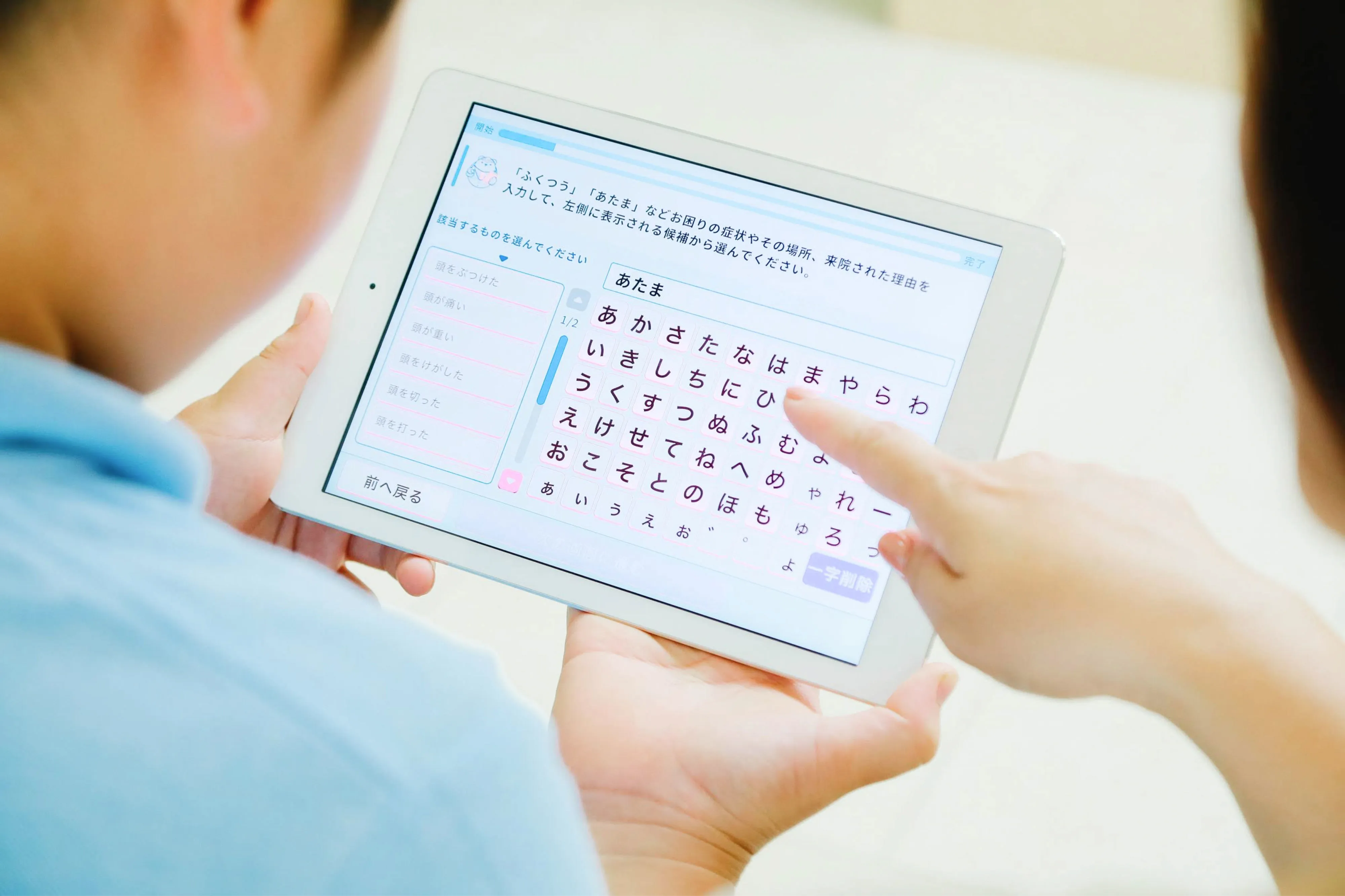
With AI Monshin Ubie, patients fill out preliminary forms on a tablet, rather than paper, entering information about their health history and current symptoms directly into their digital medical record. As patients fill out the questionnaire, the Ubie AI generates questions in real-time according to patients’ responses, which results in more appropriate and accurate data. The patient’s responses are automatically formatted for the doctor to review prior to and during the consultation. As a result, doctor consultation times and facility operation times are drastically reduced.
With the Coronavirus raising fears of a possible health system breakdown, Ubie has made improvements to anticipate and possibly prevent in-hospital infections. Until recently, Ubie’s services have been primarily used by large hospitals; but in light of the global health crisis, Ubie approached D4V—who partners with IDEO—to help rethink the onboarding experience and quickly facilitate the introduction of AI Monshin Ubie in regional clinics across Japan. D4V and IDEO have been working with Ubie for many years to collaborate in various areas, including UX, rebranding, international research, and more. Therefore, they had a foundation of knowledge from which to build these new features.
Typically, AI Monshin Ubie has been introduced to new hospital clients through direct, in-depth instructional visits from Ubie sales staff. This approach has worked well for rolling out the product to Japan’s 8,000 large hospitals; but for the 100,000 smaller clinics, Ubie needed a more efficient onboarding method to enable staff to get set up smoothly and independently.
During research, D4V and IDEO team members engaged with many different clinic staff members, including full-time doctors, part-time doctors, nurses and receptionists. The researchers found that staff tend to react skeptically to new tools and services, with a common preconception that they will add to their workload. One clinic director’s first impression of AI Monshin Ubie was, “It looks complicated.” But once he actually used the service, he realized that it was very user-friendly.
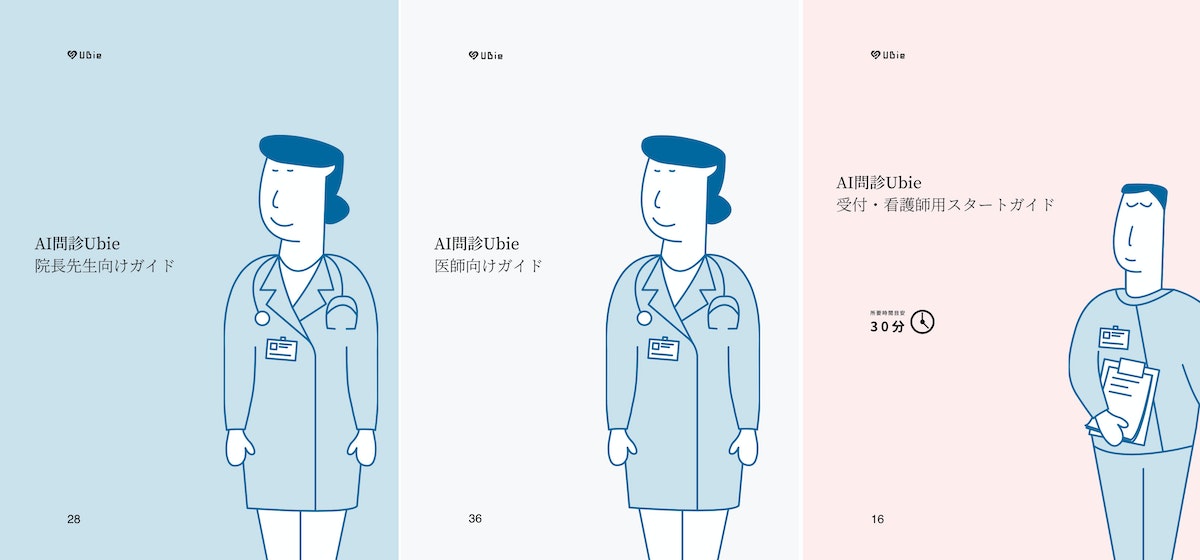
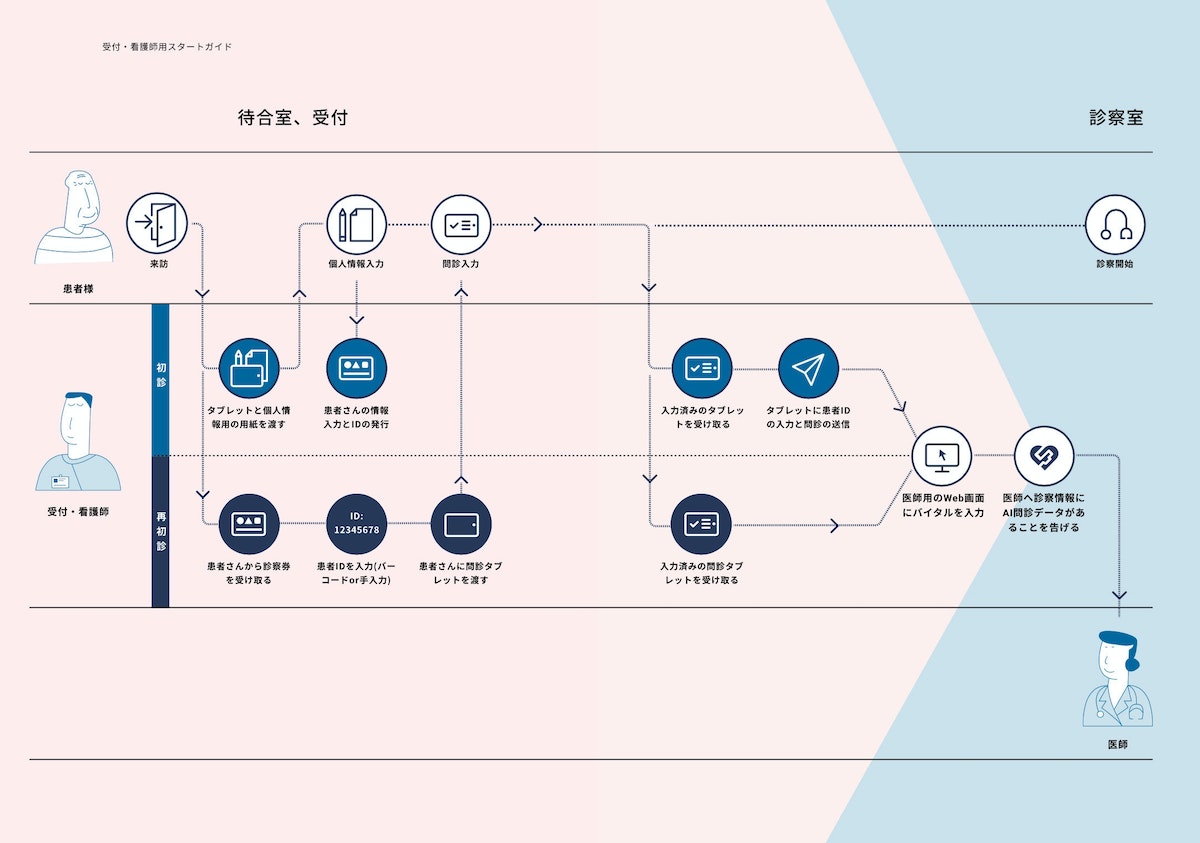
The team quickly understood that it was important to remove preconceptions by clearly communicating Ubie’s benefits and ease of use. They created a two-minute animation and designed three separate guidebooks. The animation adopted a friendly tone and expressed empathy for doctors, staff members and patients, highlighting how Ubie can bring benefits to each of them. The animation showed how Ubie fits into the existing workflow and explained complex systems in a straightforward and accessible way.
WATCH: A short video clip explains the benefit of their product and service to avoid the users’ concerns in advance.
The guidebook for doctors and directors explains how Ubie’s AI smooths the patient consultation experience and greatly improves the quality of medical care. It also introduces concrete how-tos around set-up, implementation, and ideal workflow. FAQs were also included, addressing concerns about whether or not elderly people would be able to use it.
Ubie business development leader Kenji Yamada says, “D4V and IDEO have a deep understanding not only of design, but of our entire business. They provide inspiration by bringing experience and knowledge that comes from working with other industries and clients outside of healthcare. We appreciate that they can share the knowledge that they’ve obtained with our business.”
Read the Japanese-language version of the Ubie case study here.
When You Feel Unwell, Ask Ubie: Check your symptoms for free
Learn more about Ubie: Global Company Website
An improved airway intubation system that helps physicians save more lives
The GlideScope Core offers elevated visibility and a seamless workflow for intubation, allowing doctors to better conduct routine procedures and respond to health crises.
In the emergency room, an intervention that’s administered too slowly could cost a patient their life. With COVID-19 fueling a surge in acute respiratory conditions, intubation—a procedure that involves inserting a tube through the mouth or nose and into the airway—is more common than ever. For patients struggling to breathe, the tube can be connected to a ventilator that pumps oxygen to the lungs, keeping them alive.
While a laser-focus on the present is critical for successful patient outcomes, hospitals and physicians often don’t have time to look ahead and anticipate the future of the operating room experience. As technology rapidly improves, there is a ripe opportunity and pressing need to evolve medical equipment to be more innovative and intuitive. Verathon Medical, a global medical device manufacturer, is supporting health care providers at the cutting-edge of care.
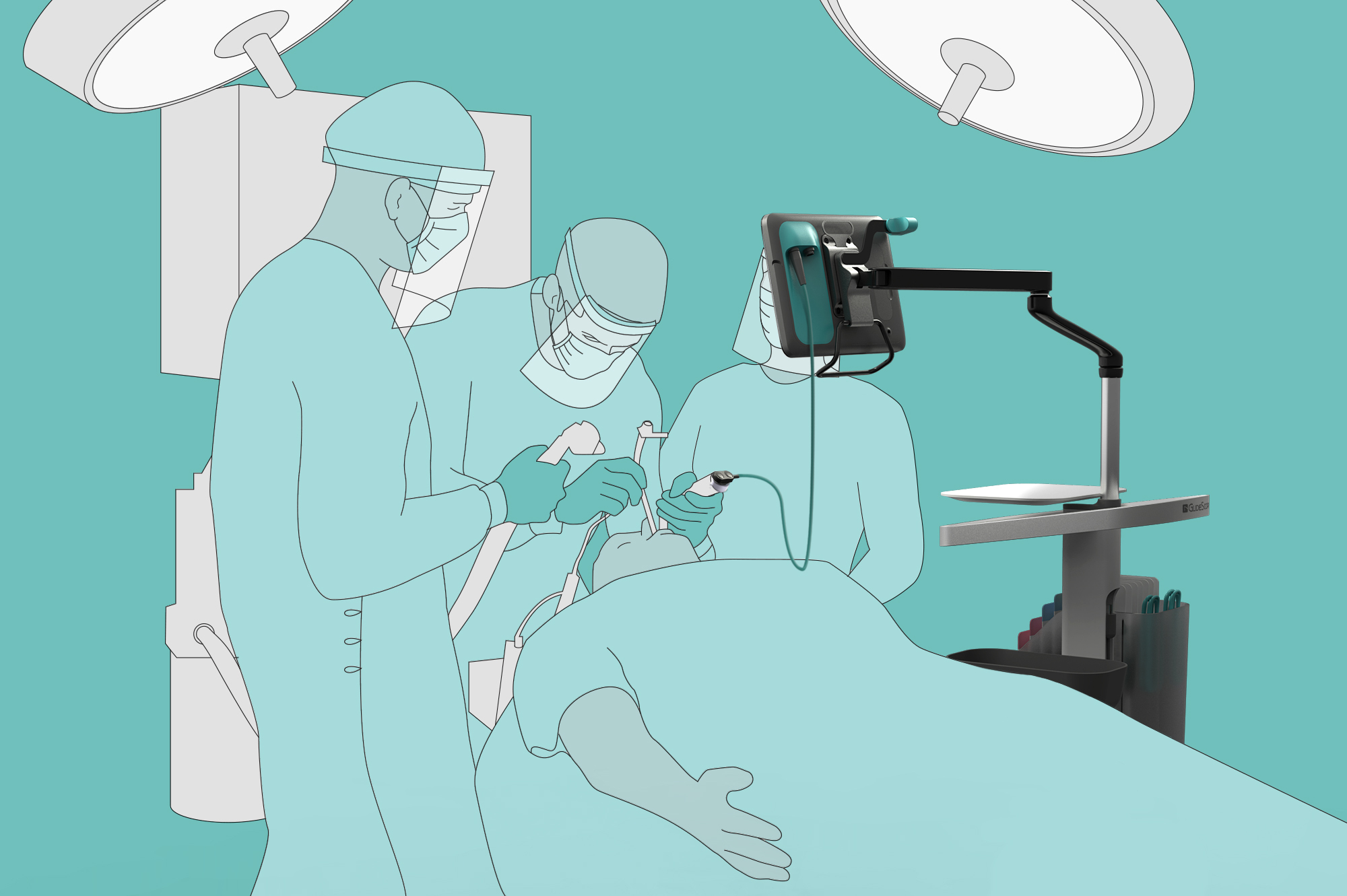
Verathon approached IDEO to redesign the existing product system for laryngoscopies and bronchoscopies—procedures that examine parts of the throat through intubation. During these examinations, a tube with a camera embedded in the tip is inserted through the patient’s nose or mouth. The doctor can then see inside the throat on a video monitor, and therefore more easily and quickly intubate and perform the exam.
To create a groundbreaking device, the team observed over a dozen laryngoscopies, bronchoscopies, and intubations. They noticed that many anesthesiologists relied on fixed equipment during the procedures. For example, some had grown accustomed to looking over their shoulder—away from the patient—to view the monitor.
During interviews, physicians and residents expressed difficulties with the current technology, sharing that the small screens aren’t conducive to team viewing or student instruction, and they must often use a separate computer to record patient notes. Others reported frustrating workflows, needing to constantly divert their attention and move their hands between the patient, prep tray, monitor, sterile bin, and disposal bin. These inconveniences and inefficiencies are not only cumbersome, but can increase the risk of infection and fatality.
The team relied on these insights to start designing a next-generation product. Through sketching, storyboarding, and building in real-time alongside doctors and clinic staff, designers quickly teased out additional findings and validated concepts.
This work led to the creation of the GlideScope Core: an all-in-one, portable product system that supports both video laryngoscopies and bronchoscopies. The base of the device—a wheeled cart—has built-in storage units for tools and a disposal bin, offering more mobility and accessibility for medical professionals.
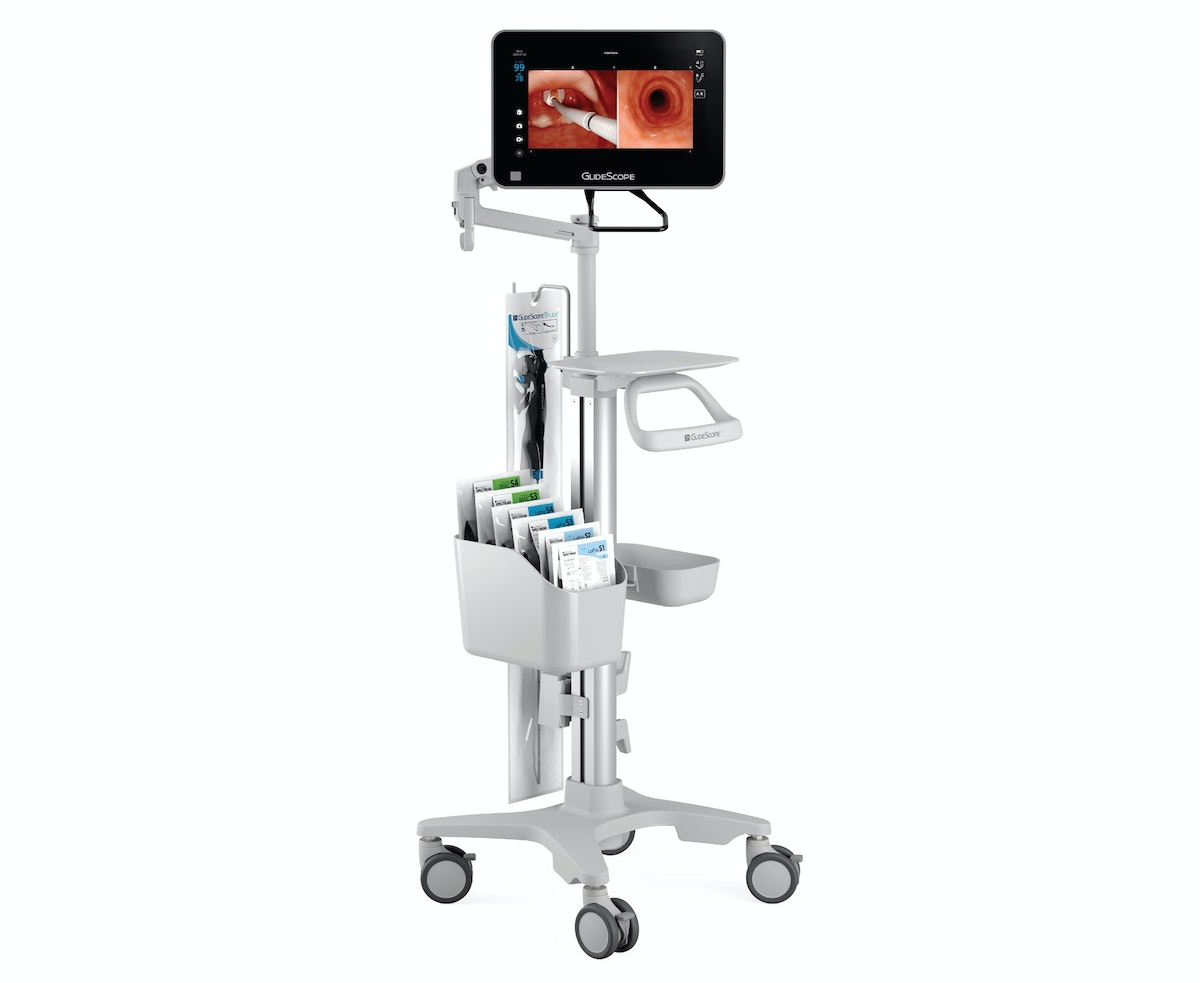
The product’s tagline, “see more, do more,” points to the improvements made to the video system, including a large 10- or 15-inch high-definition touch screen monitor. Displayed images can be enlarged and rotated 180 degrees for improved visualization, team viewing, resident training, and classroom demonstration. To help doctors keep both the patient and monitor in their line of sight, the detachable screen can be secured to an adjustable arm that can be positioned directly over the patient. Additionally, the monitor’s patient annotation feature gives staff access to more of what they need in one device.
The product has been especially valuable for providers and patients during the coronavirus pandemic, when it’s imperative for doctors to keep their distance from patients’ mouths and noses. The GlideScope Core’s movable, detachable, and large, high-definition monitor makes it easier to take this precaution and intubate more quickly. This usefulness is reflected in the 5-fold increase in cart-based device orders for Verathon. While most providers typically order anywhere from 1 to 20 devices for airway procedures, one hospital system requested 600 GlideScope Core systems to meet current intubation demands.
Through modern technology and a focus on human needs, the GlideScope Core supports improved patient outcomes and creates a more seamless operating experience for medical professionals. The product underlines the key but often overlooked fact that often, in order to ensure the healthcare industry is patient-centered, medical device manufacturers and hospitals must also focus on improving the experience of providers.
Transforming a community hospital from the inside out
Designing for caregivers to create world-class care for patients.
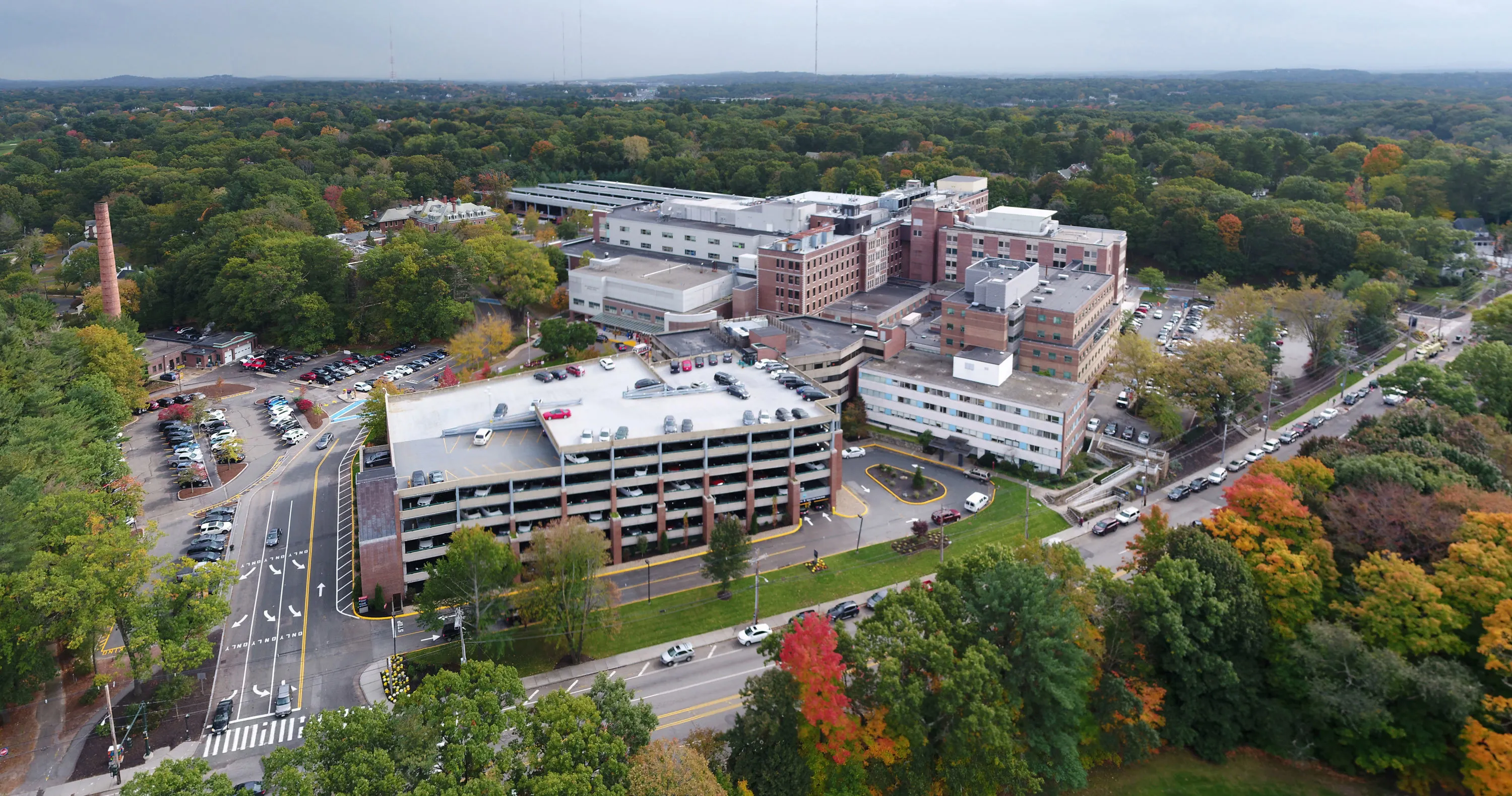
Healthcare is notoriously difficult to change. Rules and regulations present complex barriers; health practitioners and organizations often have entrenched ways of working; and lives are literally on the line. Despite these significant barriers, the leaders at Newton-Wellesley Hospital (NWH) boldly committed to improving patient care through a new approach.
NWH is a community teaching medical center in Newton, Massachusetts. Because of its proximity to Boston—a city known for world-class healthcare institutions—NWH needed to differentiate itself. The hospital's new president, Dr. Michael R. Jaff, reached out to IDEO for help: "I knew that providing an unparalleled patient experience would set us apart from our competitors." But, Dr. Jaff’s particular approach was unique. He and Dr. Jodi Larson, Chief Quality and Experience Offer (CQXO), saw an opportunity to drive better patient outcomes through cultural and organizational change.
"You cannot learn any more than when you get to listen to your potential patients say why they would never walk into your place." —Dr. Michael R. Jaff
IDEO partnered with NWH for a year of work together, kicked off by defining the vision for NWH and ramping up to in-hospital prototyping and the launch of several new initiatives. A pilot project with the Women's Imaging Center (WIC) focused on solving departmental and employee challenges to provide a better experience for women getting mammograms.
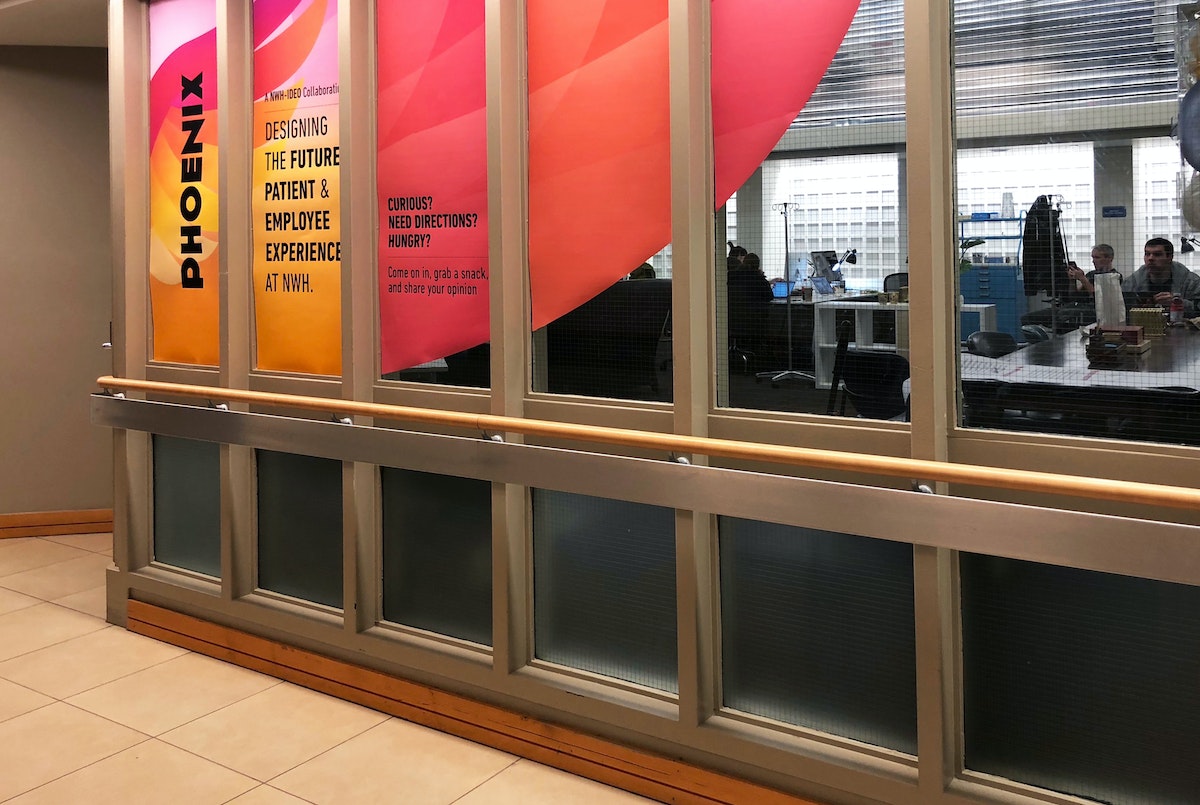
Fueled by this potential, the WIC team redesigned key work processes and created a set of experience principles that inspired new service prototypes. Guided by principles like "Express mutual gratitude" and "Honor every voice," the WIC team tested ways for patients to acknowledge outstanding caregivers and created tools to gather better feedback from patients and adjust quickly. The experience of designing better services inspired the WIC staff to become ambassadors for the power of design thinking across other departments inside NWH and they continue to build on the work through new prototypes and experiments.
Next, IDEO partnered with NWH’s ambulatory surgery group. They took an analogous research trip to Boston’s Logan airport to see with fresh eyes how other high-touch customer service organizations provide customer value in a complex setting. Insights from the trip were applied through live prototyping of several new experiences inside the hospital, including a pre-surgery visit summary and pre-operation care carts.
Analogous research helped us realize that we can learn from other industries and incorporate some (cool) best practices if we allow ourselves to get over the ‘that would never work in the hospital’ mentality. - Dr. Jodi Larson

One of the most impactful prototypes was Care Modes, a tool to empower the NWH care teams to tailor their approach and interaction with patients based on the patients’ unique needs, beyond simply their clinical requirements. Four distinct approaches were identified for engaging a patient before surgery—Explain, Partner, Embrace, and Encourage. The Care Mode is determined based on the provider's understanding of a patient's degree of self-advocacy and their confidence that surgery is the best solution to their issue.
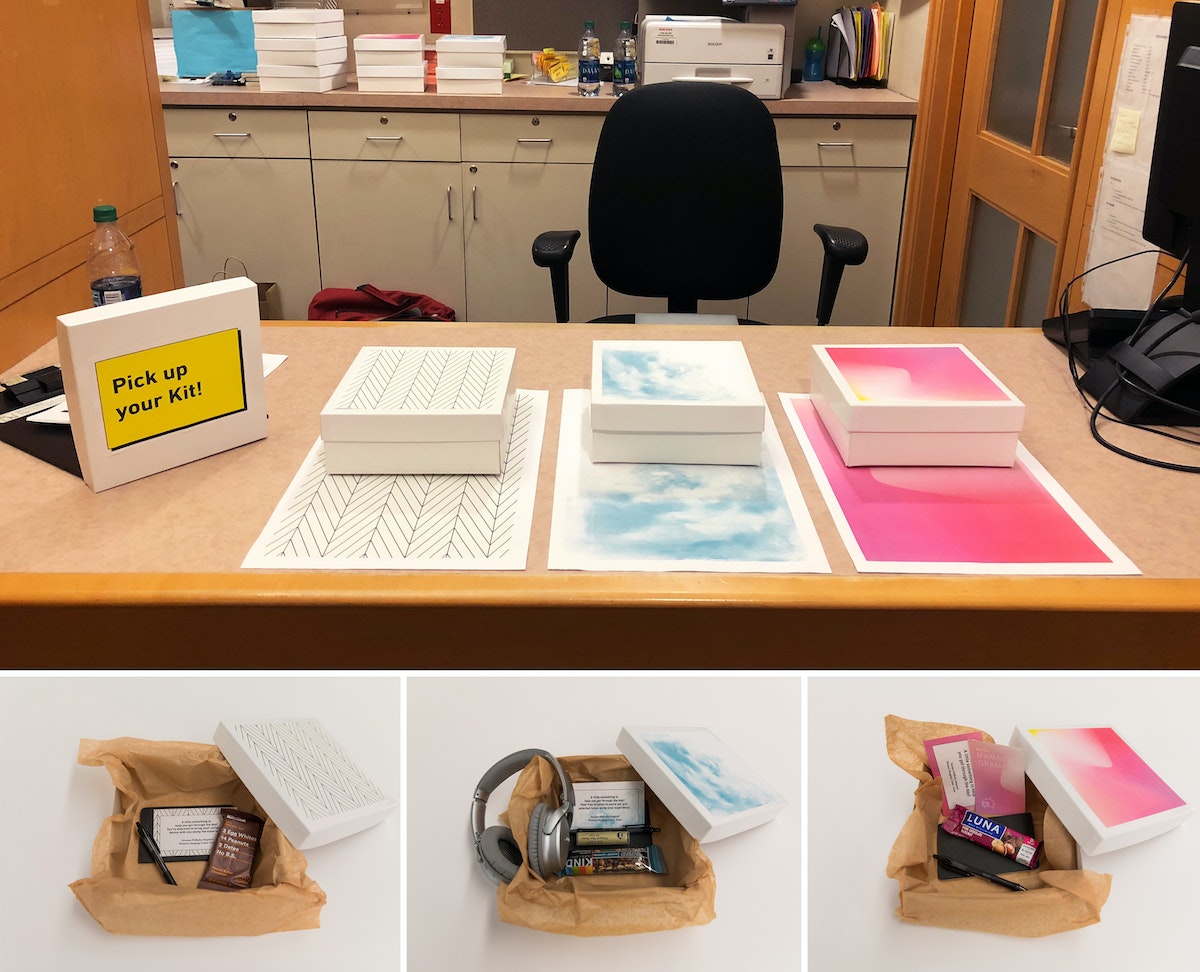
Historically, care providers have been trained to deliver consistent care above all else. However, Care Modes powerfully acknowledge that patients respond differently to different types of care. The Care Modes empower the team—from surgeon to nurse to anesthesiologist—with a clear framework for how to interact with and provide care for patients so they feel most comfortable. Based on the prototype's success with patients and impact on the staff culture, NWH has incorporated Care Modes into EPIC, the hospital's electronic medical record.
The importance of being patient-centered has been central to the healthcare conversation over the past thirty years; but new explorations reveal that there’s far more potential for innovation and improvement when the provider experience is considered in tandem with the patient’s. Each enables the other, and design for both together yields stronger solutions and better outcomes. IDEO's work with NWH demonstrates this vital shift in user-centered healthcare—one can't design services and experiences for patients without designing for their providers’ culture as well. When these go hand-in-hand, meaningful institutional change in healthcare is more than possible.

Helping a historic museum prepare for the future
Using design thinking to improve access, experience, and culture.
The mission of Chicago's Museum of Science and Industry (MSI) is to inspire children to achieve their full potential in the fields of science, technology, medicine, and engineering. Leaders at MSI realized they needed to drive day-to-day operations and maintain historic exhibits while focusing on where to go next. To prepare for its next decade, MSI worked with IDEO to create a new business focus to support the museum’s aspirations for the future. The plan would allow MSI to respond to the demands of the marketplace and raise the funds to get there.
At the beginning of the project, MSI laid out its priorities: improve equity of access, enhance the museum experience, and create a more innovative culture. To dive into each of these areas, IDEO conducted immersive research with families, teachers, donors, and staff.

IDEO brought together 60-plus donors, board members, and staff members to engage in a design thinking exercise to unpack and address the tensions that come with choosing a new strategic trajectory. Instead of having a standard ballot vote, the IDEO team encouraged participants to get up and vote with their feet, helping the group of stakeholders physically align on the museum’s new direction.
At the end of the research and prototyping phases, MSI and IDEO developed a vision called Provoking Minds, Inspiring Futures, creating six detailed design briefs to equip MSI teams to bring initiatives forward. The briefs laid out everything from recommending a new Department of Next, dedicated to ensuring that the future is at the heart of everything the MSI does, to MSI Runway, a place for experimental, small-scale, and limited-run exhibits. The ideas were brought to life with an interactive exhibit, built quickly with everyday materials like plywood and circuit boards, to demonstrate that creating an inspiring vision of the future doesn’t have to be an expensive endeavor.
The team also focused on insights that highlighted accessibility issues some families brought up early in the design process—travel across the city via public transportation can be lengthy, and the cost of admission to special exhibits could be prohibitive. To address these concerns, IDEO came up with the Mission Accessible brief: Inspired by casino buses, MSI bus stop signs would be posted in various low-income neighborhoods, signaling a way to take kids and families to the museum for free.

During the project, the IDEO team identified some low-hanging fruit, like rethinking ticketing and improving the student field trip experience, and helped the museum create cross-functional innovation teams to apply design thinking skills towards solving those challenges. They researched, brainstormed, and pushed forward new concepts, meeting weekly to share and build on ideas. At the end of the four week period, each team prototyped their ideas—new outdoor programming, software tools for visiting tour groups—and pitched them to each other.
In 2019, two years after the conclusion of the project, the collaboration paid off. With its new strategic plan and additional resources, the museum has renewed its commitment to serving youth, and MSI’s team, including donors, are aligned on a collective vision of the future. MSI raised more funds than in any previous year, including the single largest gift in its history—$125 million, nearly half of its $380 million fundraising goal—that will help ensure the years ahead.

Thoughtless Acts: Escape the Rain
Thoughtless Acts: Escape the Rain. The intuitive ways we adapt and react to things in our environments
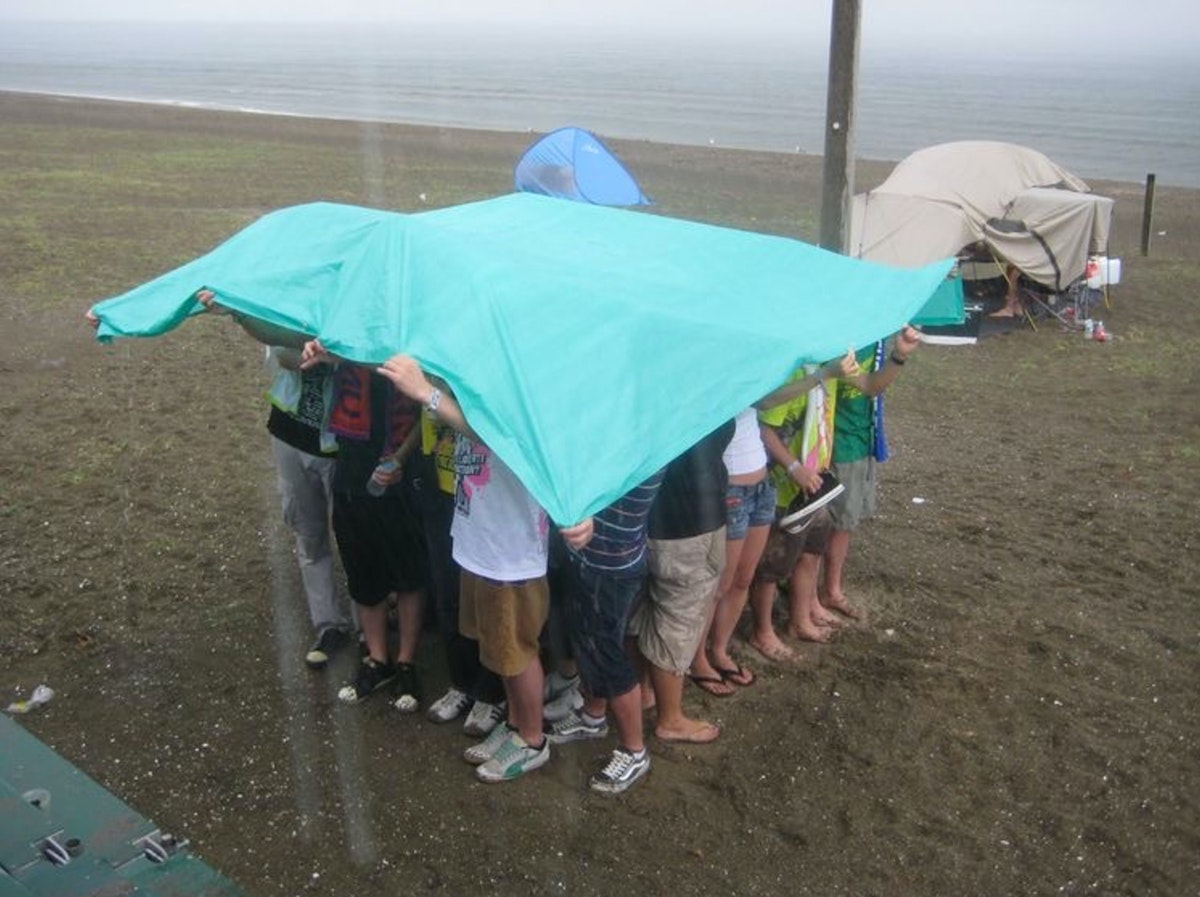
I took this picture at the beach festival in Chiba, Japan. Sudden rain is hard to avoid in the Japanese summer. When it started pouring at the beach, a man covered himself with the tarp he had been sitting on. After about five minutes, a bunch of people joined him under the tarp, which had been turned into an improvised umbrella. I loved that the man helped his fellow festival-goers escape the rain without a second thought.
Human-centered design requires us to observe human behavior with beginner's eyes, so that we can spot the innate ways people interact with the world around them. We call these intuitive and unconscious reactions Thoughtless Acts, and IDEO designers collect photos of them to inspire their work.
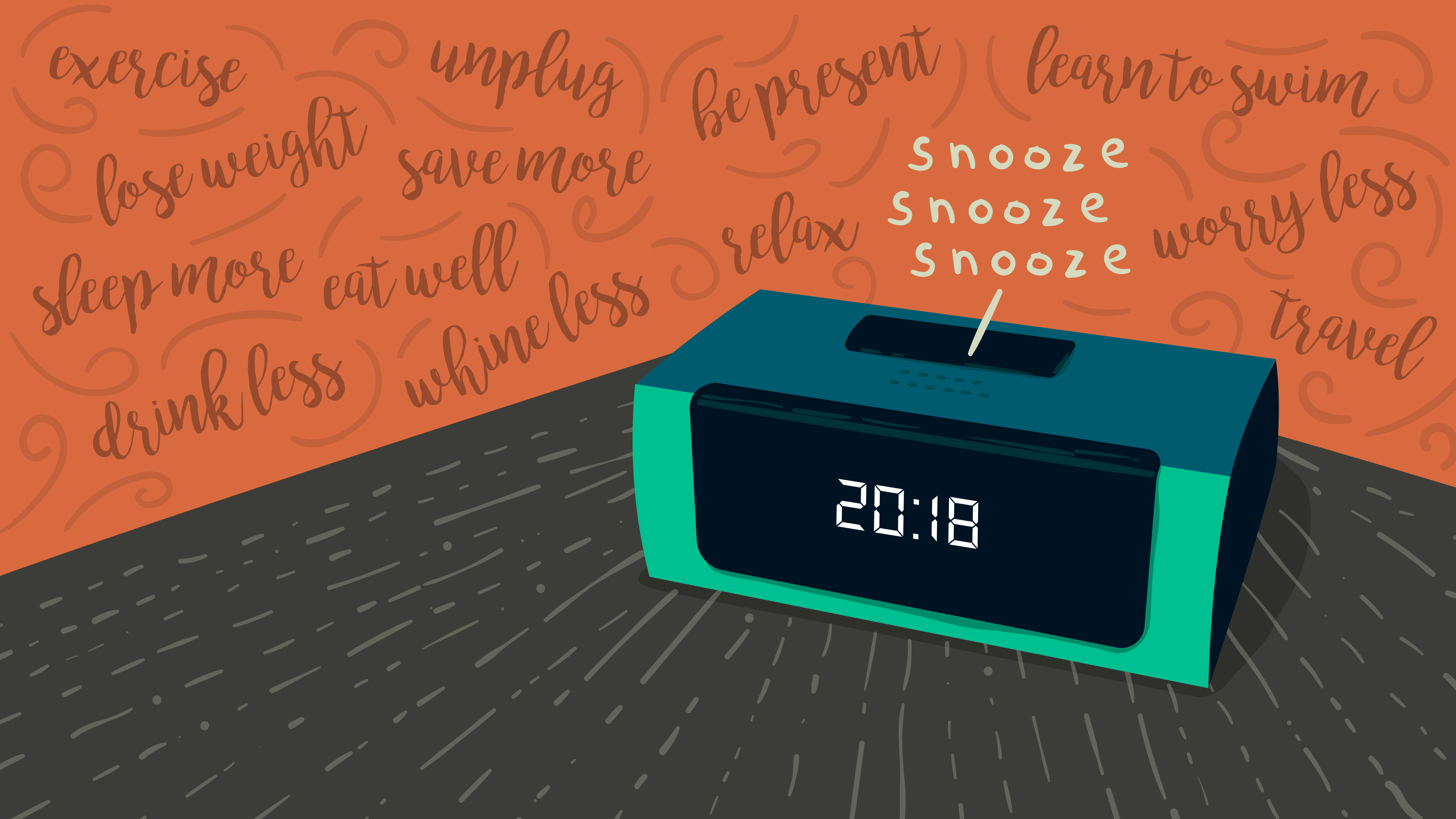
An Unscientific 5-Step Plan for Reaching Your Goals
Jake Knapp shares his slacker-friendly plan for sticking with resolutions
Then one year I read The Happiness Project by Gretchen Rubin, and was quite taken by this line: “What you do every day matters more than what you do once in a while.”
Huh, I thought.
The next January, I made a resolution to "Run every day." To exercise daily, I had to change my mindset. I couldn’t be too hard on myself — if there were only 10 minutes, then a 10 minute run had to be okay. In other words, I had to be a bit of a slacker.
It worked!
Building a small daily habit was way easier than a big sometimes habit. Don’t get me wrong, it wasn’t like magic. I fell off the wagon several times, but each time I managed to get back on. Since the goal was doable, if I missed a day or two, I didn’t have to break the ice when I resumed. It worked, and the habit stuck!
Next, I tried a New Year’s Resolution for writing. Previously, I’d only bothered writing if I had at least 90 minutes of uninterrupted time (which is pretty rare). Using my new slacker method, I resolved to "Write every day, even just 10 minutes."
Again, it was easier to stay in rhythm, and the habit stuck. (Although I had to get a little creative to stay focused.)
I even tried this approach with meditating, which always seemed like The Hardest Thing In The World. To make it a daily habit, I downgraded my expectations. I didn’t wake up early. I didn’t meditate for 60 minutes. I didn’t force myself to sit in silence on a zen pillow.
Instead (nerd alert!) I just used Headspace every day, on the bus or even while I was falling asleep. And I decided that even 10 minutes of meditation “counted.” The habit stuck.
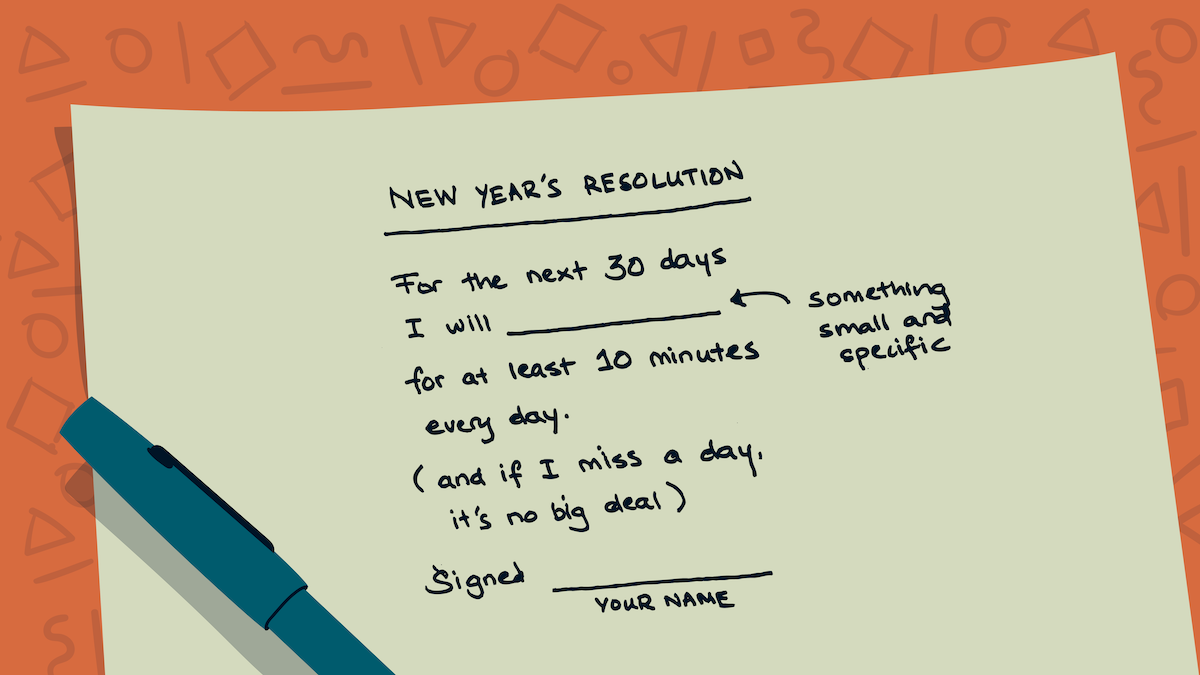
Sometimes the magic doesn’t work. Sometimes I’ll keep the same resolution two or three years in a row before it sticks. (This year I’ll finally stretch my hamstrings!) Still, for me, getting even 50% of my resolutions to stick is pretty good.
So take it for what it’s worth. But if you’ve been frustrated with resolutions in the past, consider applying my Unscientific 5-Step Recipe:
1. Dial it back
Don’t be too ambitious. Like, do you really want to run a marathon? I mean, you’ve seen people at the end of marathons, right? They look pretty tired.
Seriously though, we have a culture of intense expectations, and many of us are too hard on ourselves. It’s okay to dial back your goal and make it more doable. Resolving to read 500 books is admirable… but resolving to make (or maintain) a daily reading habit is also great.
2. Make it very specific
My “Exercise more” resolution is a prime example of way-too-vague. “Run every day” is better, “Run around the park in the morning” is better still. Best of all would be something like “Exercise every day, ideally running in the morning, but other forms of exercise and other times of day are also cool.” You get the idea.
3. Add the magic words "for at least 10 minutes every day"
If you decide 10 minutes a day is enough to count, you’ll find it way easier to do it every day. And if you do it every day, it’s way easier to keep the habit.
4. Do it every day for a month
Don't think about al 365 days at once. If you make it through January (or any 30 consecutive days), there's a pretty good chance the habit will stick for the year. If you don't believe me, ask Jerry Seinfeld.
5. Be nice to yourself if you miss a day or two
Just start again. In fact, if you miss a day or two but get right back on it, you don’t even have to count it as breaking your 30-day streak. I hereby grant you permission!
Who knows, your small habit might set the foundation for bigger things. But don’t worry about it in January. Be kind to yourself as you maintain the rhythm, and let the good things happen. They will.
Now go write yourself a nice doable resolution. Good luck, fellow slacker—you got this!
To learn more about Jake's methods subscribe to his newsletter here.
My New Year’s Resolutions used to fail every time.
For example, I set a resolution to “Exercise more.” I vaguely imagined running marathons and wearing headbands. Then in January, I took two or three long runs and forgot about the resolution. It was sorta like that every year.

10 Resolutions for a Creative, Inclusive New Year
We asked the design community—inside and outside IDEO—for their New Year’s resolutions
Here are just a few of our resolutions for 2018:
1. I want to start using my calendar to evaluate whether or not I’m spending my energy on my priorities. All too often, calendars get hijacked by old habits, process without purpose, and trying to please others. I want to start holding myself accountable. —Scott Belsky, founder of Behance
2. My resolutions this year are the same as they were last year: to use the complexity and swirl in the world as a source of inspiration, not just frustration. To look for light, joy, and optimism. To trust the inherent good in people. To be part of the renaissance that always follows the revolution. I’m keen for design to step up to the plate and take on topics such as inclusion, tolerance, equality, and masculinity. 2018 is a year of making change, not just wishing for it to happen. —Paul Bennett, Chief Creative Officer, IDEO
3. I plan to do more design with my kids. My four-year-old is a self-proclaimed artist who draws in every spare minute; my two-year-old is beginning to spend more than one minute on art at a time. I want get both of them involved in coming up with their own "design challenges" and to surround both of them with the materials and space to get inspired. —Sally Madsen, IDEO
4. One of my goals is to bring new technologies to the forefront of the social impact work we're doing at IDEO.org. With short design sprints, it’s hard to bring new, wild inspiration into the solutions we create, but I'm trying to adopt this perspective as much as possible. For example, I have an idea to use blockchain and mobile money to create a credit-rating system in countries where unbanked people struggle to apply for loans. —Angie Fu, IDEO.org
5. In 2018, I will continue doing "fewer things better." One way that shows up for me is reducing social media. I placed all my social apps in a folder titled "AM/PM" on the last screen of my phone. Unless it's work related, I stick to opening the folder only in the morning or evening. Additionally, I moved the iBooks app to the front screen, so whenever I get the itch to tap, I'll distract myself with a book instead of a blog. —Joe Gebbia, Co-Founder and CPO, Airbnb
6. My New Year’s resolution from four years ago was to post a sketch on my Tumblr for every day of the year, and it’s continued. It’s the only resolution I’ve ever kept. I’m doing it again this year, by hook or crook! —Lisa Brown, illustrator

7. I'm getting close to finishing my fifth sketchbook. I've done 57 full-page illustrations so far! I would love to make it into a coffee table art book through a Kickstarter next year. I also want to get back into 3D work in my free time (woodworking, sculpting, etc.). I find that making things in my free time fuels work in other areas of my life and helps boost and maintain my creative energy. —Felicia Chiao, IDEO
8. I'm working on allowing the entire design process to yield reward, joy, and satisfaction, rather than just the end result. This is necessary when working on major house projects with a finish line dangling from an impossibly long stick that seems too far away to reach. I can spend the next year (or three) wishing it were done, or enjoy the process as much as possible and suffer less. —Sally Sosa, IDEO
9. My New Year's resolution is to focus on women as users of design. The #MeToo movement has shown that women experience so many things in common, but don't have a voice or community of support during difficult professional moments. I care so much about advancing this cause, and yet I realize that in my work as a business designer I almost never think about users’ genders; instead, I think about their physical, emotional, and psychological needs.
I believe women are worthy of being addressed as a user group (with the understanding that there’s a ton of nuance within such a huge population). For 2018, let's look for all the ways women are not seen or heard and give them a better, more equal stage through design. —Kerry O’Connor, IDEO
10. I’ve been making a conscious effort to travel to at least three new cities or countries throughout the year. (This year’s cities: Malaga in Spain, Lisbon and Peniche in Portugal, and Trieste in Italy.) This resolution helps me step out of my comfort zone by removing any bearings I have and forcing me to look at simple things, such as getting around town, eating, and exercising, through the lens of the place I find myself in.
Just sitting in a cafe in the town square gives me interesting insights into a local culture and can easily trigger a new way of thinking about a problem I’m currently mulling over. Don’t just travel—explore. —Irene Novicelli, IDEO
The start of a new year offers us the chance to both reflect on the past and look ahead to a more fulfilling, generous, and hopeful future. What are your aspirations for the next trip around the Sun? We asked our designers and some of their creative friends, including the founders of Behance and Airbnb.

The Tool Every UX Designer Needs
Sometimes digital design is best done by hand
Why?
Modern UX design software is incredibly powerful. We can iterate and refine faster than ever, and conceivably go from wireframes to polish within hours. But it’s also a largely solo experience, and promotes iterative design rather than starting with a clean slate with each new artboard. I come from an industrial design background, where sketching is taught as a professional skill, and I’ve seen this skillset help move designs, teams, and clients forward countless times.
Most of the benefit is in group dynamics—if someone can put pen to paper and make an idea tangible in the moment, the group can have an informed opinion, react, and iterate on the fly. The alternative of hopping on a computer and coming back to the group in five or 20 minute often isn’t appropriate—it’s slower, and not everyone can contribute.
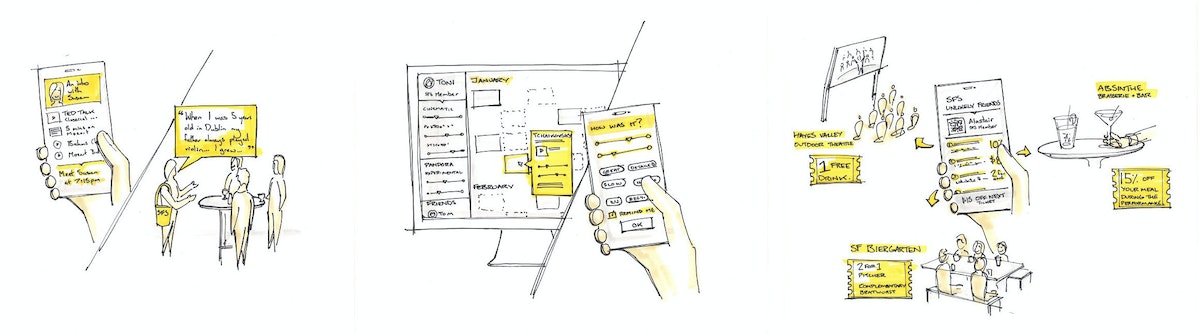
Here are five scenarios where you should skip Sketch in favor of felt-tip markers:
1. When there are too many cooks in the kitchen.
You’re in a group workshop talking through design decisions and the conversation is starting to go around in circles. The first thought that comes to my mind is, Can we create something, so that people can react to it and inform the discussion? That something could be acting out a scenario, or building something physical, but often it’s simply a set of sketches of various options. It’s also a low barrier to entry, so anyone can pitch in or respond.
2. When your users need more guidance.
You’re out in the field and talking to users. You’ve just shown them a prototype and it’s not working for the user. Sketch out another solution and gauge their reaction. (I’m a big believer in designing on-the-fly during research.)
3. When you need to simplify a complex idea.
Your client/team member/boss is explaining a point, and you’re not sure you understand. Sketch it and find out—it’s the visual version of, What I’m hearing you say is… It’s also the literal meaning of getting on the same page.
4. When the experience depends on the context.
If you’re working on an app, it may be used in very specific scenarios. Sketch out a prototype to help your team understand the social context, the surrounding environment, attention demands, and the journey a user might go on.
5. When you're feeling stuck in a rut.
Sometimes the move from screen to paper might be all you need to figure out a new angle or solution. For me the feel of the pen, the smell of the ink, and the looseness of the design helps. It’s fast, it’s free flowing, and it’s time away from the screen, where you can annotate and re-do sections at will. I find doing so together with a team member solves many hard problems.
As designers, it can tempting to reach for the brand-new, shiny, powerful tools. But, sometimes, lo-fi really is the best way to go.
I carry an unlikely tool for an interaction designer: a set of felt tip markers. We all know most UX design today is done in Sketch and a handful of other programs, perhaps with a few Post-It scribbles to kick things off. I’m an avid Sketch user myself. But I won’t be giving up my markers anytime soon—I wouldn’t be as good a designer without them.

Lindsey Turner
I’m passionate about building brands, products, and experiences that help organizations show up with meaning and momentum.
I help organizations cut through complexity by shaping how they show up, through brand strategy, identity, and storytelling.
Working at the intersection of brand and business, I bring an editorial eye and a bias toward making—turning ideas into tangible experiences that people can understand, trust, and believe in.
My work spans government, healthcare, financial services, media, and consumer goods, from launching Gen Z-focused ventures to building innovation labs and reimagining legacy brands. I relish moments of ambiguity and enjoy translating across teams, perspectives, and priorities to move ideas forward.
I started my career in editorial and digital design, shaping cross-platform experiences and identity systems in publishing and agency environments. That foundation still shapes how I work today: I’m detail-oriented, collaborative, and overreliant on the Oxford comma. I hold a BFA in Visual Communication from the School of the Art Institute of Chicago.

Rachel Young
My work helps organizations see who their products aren't working for—and build the will and the tools to do something about it
For 25 years, I've asked the same question: Who does this design exclude—and what are we going to do about it?
My work spans human-centered strategy, inclusive design, and qualitative research, with clients ranging from Microsoft, Google, and Verizon to the National Science Foundation, and San Francisco Unified School District.
Before IDEO, I taught elementary school in East Palo Alto and spent a decade doing design work with social service organizations—where I learned firsthand what it costs people when systems are built without them in mind.
I am currently writing User Error, a nonfiction book about digital access and the design decisions behind it. I live in Oakland, California.

Brian Pelsoh
I lead with craft, ensuring our work is creatively excellent: rooted in deep human insight and imagination, while also grounded in the realities of business and technology.
My expertise spans brand, communication, and product design across tech, education, the arts, and social impact.
I believe great work demands both high-level vision and obsessive attention to detail, and only happens through collaboration.
I bring an inclusive, hands-on approach and a deep understanding of business, which enables me to consistently deliver excellence while always asking why.
Before joining IDEO, I worked at the brand firms Pentagram and VSA Partners. I began my career as a designer, leading teams at the School of the Art Institute of Chicago and the Milwaukee Art Museum. I hold an MFA in graphic design from Maryland Institute College of Art and a BFA in communication design from the Milwaukee Institute of Art & Design, and have taught at some of the best design schools in the US.

Tony Wong
I am responsible for IDEO’s long-term success in China and working with clients to use design as a tool to enable growth.
I am responsible for IDEO’s long-term success in China and working with clients to use design as a tool to enable growth. Specifically, I have helped Chinese companies design holistic brand solutions through the development of their products, communication, services, and innovation teams, and I have helped multinationals expand their presence and influence in China.
I advise global leaders on developing China-led innovation and capabilities.
In over 15 years in IDEO Shanghai, I have worked on projects that use design to elevate the quality of the experience of healthcare products and services, streamline processes that increase productivity, create spaces and programs that promote and enable inclusive communities, and build next generation mobility solutions that are planet-positive.
Before joining IDEO, I worked at Philips Electronics and the Electrolux Group in Italy, the Netherlands, and Singapore on a number of breakthrough commercial products. I am a member of the Young President Organization in Shanghai.

How to use AI as an editor, not a writer
Ed White shares how he uses AI as an editor—not a writer—to sharpen storytelling, rehearse ideas, and preserve the productive friction that makes creative work better.
Ed White has a rule he's tested on his own writing: hold yourself as the writer, and let AI be your editor. Ed is a Senior Design Director at IDEO's London studio, where he co-leads the firm's AI portfolio across Europe. Before IDEO, he spent 12 years as a writer and editor at the Financial Times, Wired, and Contagious. So when he talks about when to use AI for storytelling and when not to, it comes from two decades of crafting his storytelling skills.
In this episode, Mina Seetharaman talks with Ed about two specific tools he uses to keep AI in an editor's seat: a "roasting agent" prompted to critique his drafts without any sugarcoating, and a simulated audience he rehearses pitches on before the real thing. They also get into what Ed is hearing from design leaders at Anthropic, Lovable, Shopify, and Google Creative Lab about how creative work is changing, and why he thinks the friction of writing something yourself is worth protecting rather than automating away.

Building a personal AI for the messiness of life: Sida Li
Becca Carroll talks with Cue co-founder Sida Li about designing a personal AI for the messiness of everyday life—not just work. They explore how Sida stays anchored to human needs while navigating fast-changing technology, product tradeoffs, business-model experimentation, and the realities of building an AI company today.
Most AI products today are built for work—a space with clear problems and established systems. One founder noticed a gap: personal life is messier, harder to systematize, and mostly left behind by the AI boom. So she built Cue, a personal AI that lives inside iMessage and group chats, to go where the other tools haven't.
In this episode, Becca Carroll, IDEO's Chief Strategy Officer, talks with Sida Li, co-founder and CEO of Shared Context Lab, about staying anchored to a human need while the technology around her keeps changing shape, why she treats her business model with the same rigor she'd bring to a product, and what it feels like to build a company at this particular, disorienting moment in AI.
The conversation also gets into how Sida makes design decisions: the language Cue uses to describe itself, the tradeoffs behind building inside iMessage instead of a new app, and a real story about a business idea that didn’t pan out.
This is the second in a two-part series profiling founders from IDEO's Startups-in-Residence program. The first conversation is with Johannes Seemann, founder of Sooner, on designing GenAI for the emotional side of money.

Designing GenAI for the emotional side of money: Johannes Seemann
Designing financial tools around the feelings that shape money decisions.
Most personal financial tools are built to run the numbers and optimize towards a budget. While that works for some, most people experience money as a lived relationship that does not neatly fit into a spreadsheet. Johannes Seemann and Becca Carroll discuss why money is emotional before it is mathematical, and what a human-centered approach to building a generative AI financial product looks like in practice.

The curious leader's edge in uncertainty: Scott Shigeoka
How genuine curiosity helps leaders navigate uncertainty with greater confidence.
Mina Seetharaman talks with Scott Shigeoka, author of Seek and Head of Curiosity Cultivation at the Eames Institute, about what distinguishes genuinely curious leadership from performative curiosity, how power dynamics shape curiosity, and why practicing curiosity can restore energy rather than drain it.
Looks like you might be in search of something very specific?
Or reset the filters above and try another angle.
Here’s some random inspiration

Podcasts about creative leadership

Articles about the power of prototyping
