
.svg)


Climate action for SMBs
Leveraging data to help SMBs reach net zero.
For more than 40 years, Sage has helped businesses of all sizes navigate complex business environments. While many of its larger customers have the means and the structure to support climate initiatives, many of its smaller customers do not.
Sage wanted to help its SMB customers get ahead of future climate regulations and meet consumer expectations. And building carbon-footprint evaluation and mitigation tools would also dovetail nicely with Sage’s own climate aspirations: cutting its own emissions in half by 2030. Together, Sage and IDEO investigated how the company could leverage the data in its platform to calculate its customers’ emissions, both direct and indirect, and how that information could spur action as they aim to hit net zero.
To get started, the design team went deep with customers running all kinds of businesses—from a taxi company to a champagne bar to a falconry center. Business owners shared that their focus often has to be on the day-to-day, a series of small decisions that, when added together, lead to business success. For many, tackling a problem as complex as climate change felt overwhelming. IDEO and Sage synthesized those insights and began working across verticals and products, bringing together experts from marketing, technology, sustainability, and operations to build out new concepts. With the help of two carbon accountants, the team worked to figure out how existing data could inform customers about both their direct and indirect emissions, which can be harder to track. Given how tight SMBs’ margins are, they focused on how that knowledge could fuel emissions-cutting changes that also save money, giving businesses extra incentive to take action. Together, the team created a roadmap of customer outcomes and experience guidelines to help shape future products.
Sage has taken that work forward, launching Sage Earth, a platform that aims to help businesses measure, manage, and mitigate emissions—even across supply chains. With carbon accounting now built directly into all Sage Accounting and Sage for Accountants products in the UK, Sage has made climate action practical and accessible for millions of SMBs. By automating emissions measurement and reporting, Sage Earth removes barriers of cost and complexity, empowering business owners and their accountants to stay competitive in supply chains where up to 95 percent of emissions occur.
From co-developing the UK Voluntary SME Carbon Reporting Standard to launching a Carbon Accounting API, which gives banks, fintechs, and other platforms access to Sage’s Carbon Engine, Sage is embedding sustainability into the systems people already trust—helping hundreds of thousands (and rapidly increasing) small businesses turn climate ambition into everyday action.
Small- and medium-sized businesses—companies with fewer than 500 employees—make up about 90% of the world’s businesses, according to U.N.-backed SME Climate Hub.
Two thirds of small businesses don’t know how they’re going to reach net zero, and lack the resources to do so, according to a recent survey by SME Climate Hub. Still, the majority reported they want to act on climate, recognizing it can help them become a more resilient business.
Large companies may be the biggest emitters of greenhouse gasses, but an estimated 80% of those emissions come from supply chains—often made up of smaller enterprises.
Scaling rapidly
in the three years since the launch of Sage Earth, which is now being used by hundreds of thousands of businesses
World's 1st
open-source hybrid emissions factors dataset, Carbon Commons, led by Sage, helps SMBs calculate carbon footprints using existing data

Reframing menopause
QVC works to change the narrative, while meeting customer needs.
Menopause is much more than a biological transition—it is a profound shift that often arrives just when people experiencing it start to feel invisible. Because it has long been shrouded in darkness as an unmentionable female affliction, those going through menopause often feel unprepared and alone.
Recognizing that its customer demographic makes QVC uniquely positioned to surface conversations and provide support to those dealing with menopause, the video commerce retailer partnered with IDEO to figure out how it could not only meet customer needs, but also flip the conversation on midlife. To learn more, a team of female design researchers held in-depth interviews with folks experiencing it firsthand. The people they spoke to had limited information about what was going on with their bodies, and in some cases, it took years before they understood that symptoms they were experiencing were related to menopause. Respondents also reported that midlife brought a change in social status and the feeling of being boxed in by stereotypes.
QVC and IDEO worked together to design an integrated suite of offerings that could give customers a safe space to discover and share more about menopause. That included an on-air programming series called “Menopause Your Way,” where QVC could support those going through menopause in the privacy of their own homes, a digital landing page with useful solutions, and social media campaigns to help women share and learn more about each others’ experiences. Because people experience menopause and choose to manage it in many different ways, the team wanted to create an integrated ecosystem of content that women could access according to their unique journeys. The new offering helped QVC reach its core audience with solutions and relevant products, and created a space where menopause is out in the open and part of an ongoing conversation. And in the process, QVC evolved to become a more customer-centric company, putting its audience and their needs at the heart of its offerings.
9/10 of British menopausal women say society and brands overlook them.
1 in 2 women in the UK admitted they didn’t know what was happening to them during perimenopause.
Nearly 40% of menopausal women are being prescribed antidepressants to help manage their symptoms, despite 4 out of 5 describing the treatment as “inappropriate.”
Season 2
a series focused on menopause is now in its second season

Healthy youth
Improving digital tools to help practitioners deliver critical mental health support to children and young people.
Healthcare is a complex web of institutions, interaction, relationships, and services. In England, the National Health Service consists of thousands of separate organizations spread across the country. This fragmented structure means that rolling out digital tools and using them to their full potential can be difficult.
NHSX approached IDEO and Public Digital, IDEO’s sister company, for help designing user-centered resources that would empower Children and Young People’s Mental Health (CYPMH) practitioners to use digital tools more effectively, shifting service design from a reactive to a proactive process, and allowing each regional organization to create the best digital services for their children and young people.

The team took a human-centered approach, tapping into the perspectives, challenges and needs of NHS practitioners and leaders across the system over months of research. They then designed a set of accessible, straightforward online resources, courses, and templates that would enable a practitioner to start their own local service transformations. These included everything from practical advice on improving users’ experiences of CYPMH, to teaching methods for service design, to content focused on achieving digital transformation at scale.
The resources were easy to implement and replicate, allowing mental health practitioners across the country to seamlessly integrate physical and digital, create firebreaks in the system, and better bridge the gap between seeking care and receiving it. They were designed to evolve over time, and the work is replicable across the NHS, with the potential to touch millions of lives.
By empowering practitioners to utilize these digital tools to ease the burden of care, NHSX plans to create a positive ripple effect across the entire NHS, its partner organizations, and the country at large.
In a study undertaken in July 2020, the first summer of the COVID pandemic, the NHS found that clinically significant mental health conditions amongst children had risen by 50% compared to three years earlier.
More options, more access
digital resources are helping children and young people access more options for their mental health care

The future of air travel
Reinventing supersonic flight with Boom.
It’s not easy to shift the paradigm for an entire industry. But when a company comes along that promises to reinvent air travel, it opens up a blue sky of opportunities. That’s the flight path for Boom Supersonic, which is thinking big about how passengers arrive at their destination not only faster, but also with a greater sense of wellbeing.
To really comprehend the experience of flying in the unique contoured profile of this ultrafast jet, and to help Boom make key decisions about the design of the plane, the IDEO team believed that you had to go beyond algorithms and schematics—you needed to actually board it.
Using a “build-first” approach, the team quickly constructed a full-scale mockup of the fuselage from plywood and foam core. That became a prototyping platform to test multiple seating configurations, galley and lavatory size and placement, luggage storage solutions, and other concepts that would differentiate and add value to the passenger experience. For the first time, the Boom team was able to set foot in its own aircraft and truly understand the experience from the perspective of its clientele. The exercise allowed the Boom team to confidently make decisions by comparing multiple cabin configurations and options in full-scale.

Throughout the project, Boom and IDEO invited future travelers aboard to interact with the prototype and offer feedback. That input culminated in a more refined model, with augmented windows, moonroof, in-flight entertainment screens, and sound design—all further augmented by a Virtual Reality component to allow our future travelers to fully immerse in this new experience.
Together, Boom and IDEO brought a sneak peak to the Farnborough International Airshow, a biannual exhibition for the aerospace, aviation, and defense industries. The event was an opportunity to give the industry and potential customers a preview of Boom’s innovative new jet. In collaboration with the client, an exhibition architect, and a digital production agency, the team created an immersive environment designed to make the Overture experience feel tangible, eliciting the wonder of this revolutionary plane.
Boom’s presence at Farnborough not only underscored the Overture’s progress but provided an inspiring glimpse into the future of air travel. During the air show the company announced the production Overture design, a market-expanding alliance with Northrop Grumman, and agreements with tier one suppliers Collins Aerospace, Safran, and Eaton. Not long after, Boom received its largest order to date, this one from American Airlines.
The prospect of getting to London in time for dinner just got a little closer.
Boom plans for Overture to get from New York to Frankfurt in just over four hours instead of the eight hours spent on a commercial jet today.
The Overture supersonic jet has a cruising speed of Mach 1.7, about twice as fast as today’s commercial planes. Overture is built to fly on 100% sustainable aviation fuels (SAF).
20 Overture deposits
made by American Airlines, joining current customers United Airlines and Japan Airlines
7 ways to design an unforgettable event
How to engage your guests beyond the panel
What do you do when a panel is truly the star of the show? Can you still design meaningful participation from your guests beyond the Q&A?
This was our challenge when IDEO CEO Tim Brown, pioneering social entrepreneur Jacqueline Novogratz (Founder of Acumen), and visionary CEO Carlos Rodriguez-Pastor (CEO of Intercorp and Founder of Innova Schools) sat down for a conversation about design and bravery in our New York office. We knew these three would inspire guests with heroic stories of using design to create change at scale and challenging orthodoxies. But could we keep the crowd inspired after the conversation ended?
Our best bet, we decided, was to design a series of activities that would send guests on a heroic journey of their own—from hearing the call to adventure to facing fears to celebrating triumph over adversity. The result? A happy swirl of exploration and discovery, with guests staying late to gather around the hands-on exhibits like family in the kitchen at the holidays.
Here are seven ways to leverage a panel discussion and design an event they’ll never forget.
1. A moment to unwind
Create a ritual to help guests wash away the baggage of the day and be present for all that follows. We invited guests to partake in a sonic shower, an immersion in music that stretches the ears and awakens the senses.
Try this: An aromatherapy bar for deep breaths of invigorating or relaxing scents.
2. Active imagining
Even the most thought-provoking panels amount to a type of passive contemplation for listeners. Follow a panel with a prompt to actively imagine. We asked guests to hear the call of service, by imagining they were a person they serve and writing in that person’s voice in response to questions like, “What would it take for you to feel confident about the future?”
Try this: A finish-the-doodle mural wall or a listening booth with a guided meditation.
3. Space to be vulnerable
Offer your guests the surprising jolt of inspiration that comes from being vulnerable and naming your fears. We designed an anonymous confessional, tricked out with blacklight and digital wizardry, where guests wrote their fears on a private screen, then watched their words magically appear on a monitor in type for party guests to see.
Try this: Pair strangers up using matching name tags and asking them to find each other and swap secrets.
We designed an anonymous confessional to help guests embrace vulnerability.
4. Fast-tracked inspiration
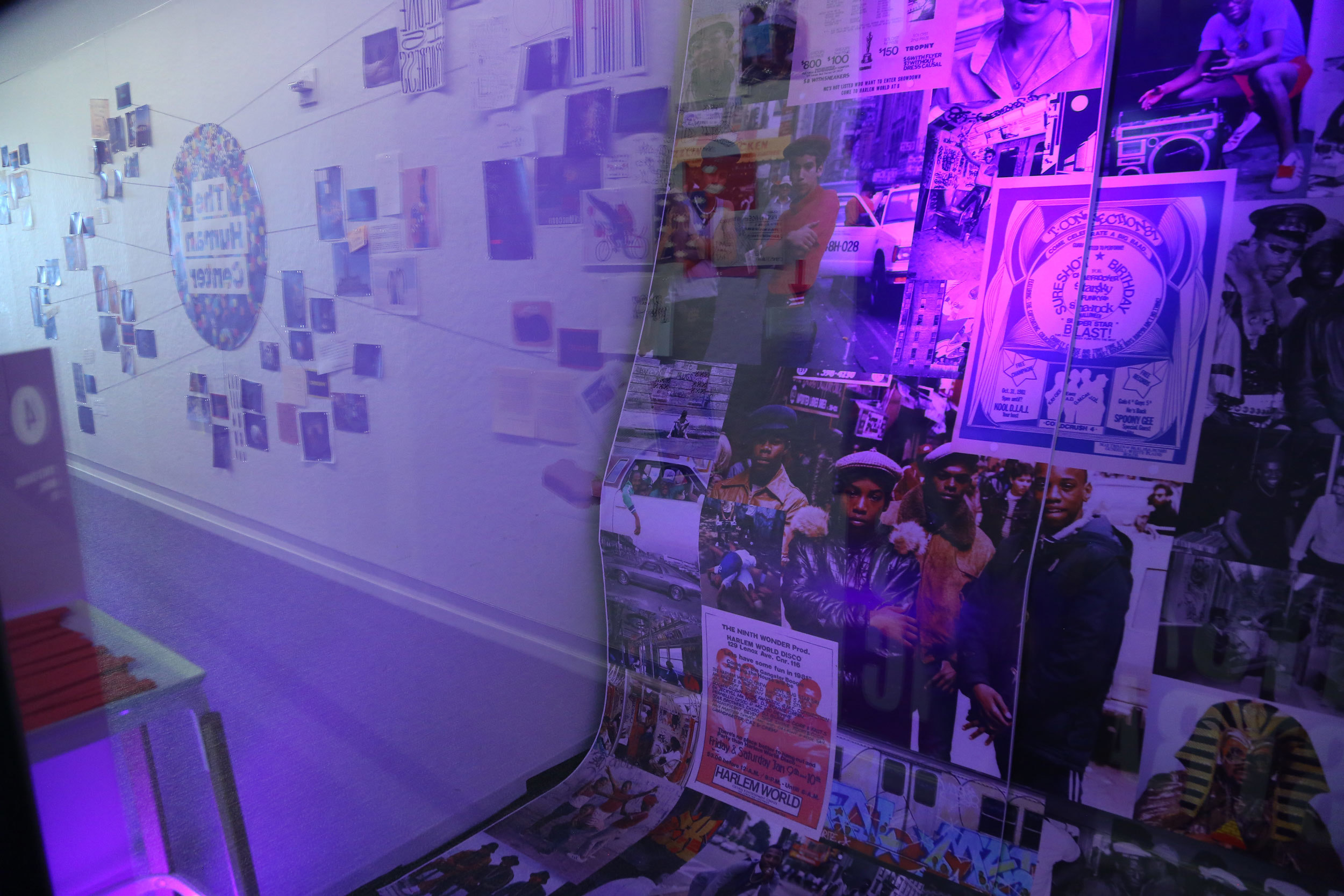
Inspiration can also be fast and light. We sent guests on a tour of themed rooms devoted to New York’s legendary cultural movements—Punk, BeBop, Hip Hop, the Beats, and the Harlem Renaissance. Each room was chock-a-block with images, sound, and strips of paper bearing anthemic words from the movement. It was a blast of culture felt through the senses.
Try this: Give guests a deck of cards created from your favorite inspirational Instagram memes.
Guests were invited to tour the most iconic cultural movements in New York history.
5. Skin in the game
Putting one’s body on the line—through movement, physical sensation, or embodied action—is the ultimate form of engagement. For our biggest test of bravery, we dared guests to stick their arm through a hole in a black screen to blindly receive a semi-permanent Jagua-ink tattoo from an artist on the other side. No requests or restrictions permitted.
Try this: Ask guests to enter a space through one of two thresholds marked by declarations of identity, like “I’m an artist” or “I’m an activist.”
The ultimate trust exercise—blindly allowing a stranger to draw on your skin with semi-permanent ink.
6. Making
Who doesn’t like to roll up their sleeves and craft something fun? Making gives your guests an outlet for any new, creative ideas your event has inspired. We handed guests shortbread cookies, pipette bags full of icing, and examples of exquisite cookie decoration to emulate.
Try this: A collage-making table with old magazines, construction paper, scissors, and glue sticks.
7. Silly celebration
Even the most buttoned-up among us appreciate the chance to let their hair down. We gave permission to get silly with an IDEO designer’s GIF Dance Party, accompanied by another designing spinning live music. Guests grooved in front of a camera for a few seconds, then watched their avatar populate a digital dance floor on monitors throughout the space.
Try this: A box of masks and capes and the promise of a free drink for anyone who orders as a superhero.
We asked guests to get jiggy with it, and they obliged.
To summarize: Get creative. Get physical. Get weird. Your guests will thank you for it.
Got an idea for an out-of-the-box event activity? Share it with us on Twitter using the hashtag #DisruptThePanel.
Ever attend a conference? Then it won’t surprise you to know that every event planner out there wants to disrupt the panel conversation. (We’ve been experimenting with the format for years and sometimes a panel is still the best choice.)
5 quick org design tips
Lessons in organization design (from a product designer!)
There was a lot to celebrate. We’d launched an innovation lab and piloted new products as part of a larger, multi-year collaboration to expand the organization’s human-centered design capabilities and enable culture change.
And our collaboration had revealed something crucial: In order for the product to be successful we also needed to support the underlying organization, which meant looking more holistically at strategy, process, tools, and incentives.
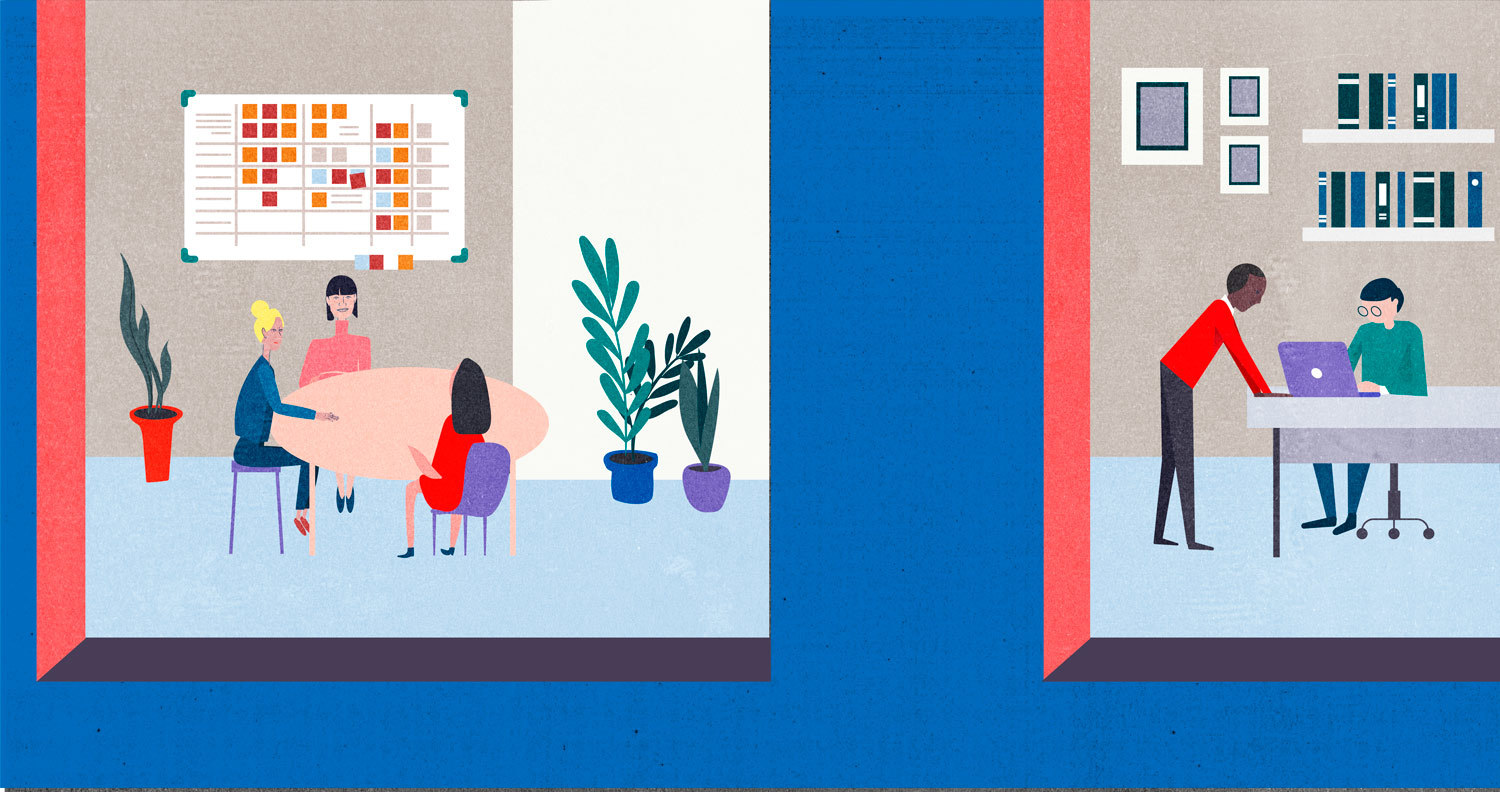
That became an opportunity for me, an interaction and product designer by training, to apply my trade through an organizational lens. It turned out that the prototyping methods that I had learned could also be applied to people and processes. By experimenting, responding to feedback, and iterating, we could help nudge behavior change within the organization.
Here are the five big lessons I took away:
1. Speak their language
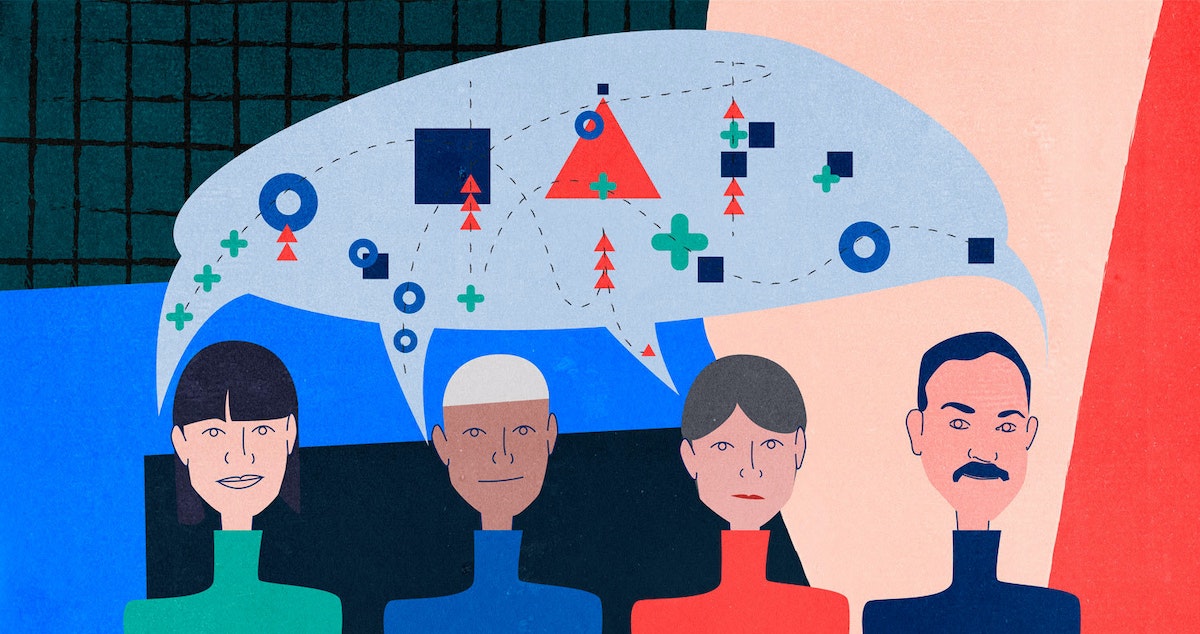
We were working with product managers, engineers, and designers, so instead of explaining what we planned to change with academic research and abstract frameworks, we used language they already understood. We were going to run scrappy experiments, learn quickly, and iterate. If the ideas didn’t work, we’d pivot and try something new. But instead of prototyping products, we were experimenting with people and processes.
Big insight: Meet people where they are. Ground organizational design in a familiar context, and make it tangible in order to build trust.

2. When facing big change, start small
Behavior change is hard. So, we started with small experiments. What was the least that we needed to design in order to learn—the minimum viable product (or MVP)—and to help nudge new behaviors? In one instance, to test our hypothesis on the need for a company-wide training program, we started by creating a workshop for one multi-disciplinary team of 10. Its success soon paved the way for a broader rollout.
Big insight: Organizational change doesn’t have to begin with big initiatives. Starting small with prototypes can lead to big learnings and start to shift behavior.
3. Measure impact in creative ways
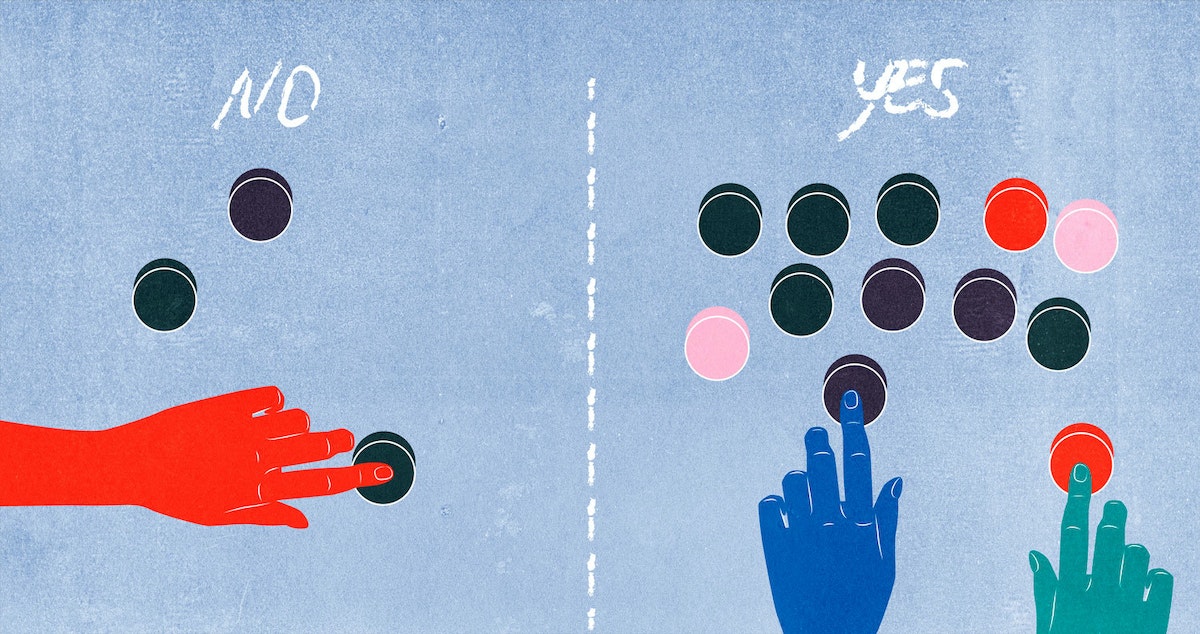
Email surveys are an obvious way to take the pulse and determine whether experiments are resonating with individuals, but they can easily fall to the bottom of a priority list. We tested more lightweight, in-the-moment feedback methods. After prototyping a beer and knowledge-sharing gathering, we asked attendees to place a magnet on a board to indicate their responses to a few questions, like: “Would you come again?” and “Did you learn something?” It was an easy and immediate way to figure out if the idea was worth evolving.
Big insight: Simple and in-the-moment measurement tools can be enough proof of concept to move forward quickly.
4. Find the right ambassadors
Early on, I was determined to get all of the senior executives involved in our prototypes. What was I thinking? Their understandably divided attention and packed calendars made that next to impossible. In the end, some young, energetic community managers were the ones who embraced our ideas and helped push them forward. Not only did they have the time and passion for the projects, but they were also trusted leaders within the company. Community managers helped us organize an informal gathering of product people to share methods over beers. (Yes, beer again. When in Germany!) We asked a VP to simply show up. When he saw the overwhelming attendance and impact on the community, he became one of our biggest advocates. Teams that had been working in silos started to meet regularly. The more we demonstrated quick wins, the more senior leaders got on board to encourage new behaviors throughout the organization.
Big insight: The best agents of change may not be the most senior folks. Look for individuals with passion and social capital.
5. Make it stick
There are two things that we did that helped ensure that our ideas lived on after we were gone. First, we found owners within the organization who would commit to moving our ideas forward. Second, we helped create an internal group dedicated to maintaining momentum. This group provides leadership training and coaches teams to ensure both a top-down and bottom-up approach to behavior change.
Big insight: Prototypes are just the beginning. Organizational transformation requires dedicated owners and a multi-layered strategy.
It all adds up to a set of behaviors: Get scrappy, get tangible, find your people, and learn by doing. It never hurts to do some reflection from a rooftop, too.
Not long ago, a coworker and I found ourselves contemplating the eclectic Berlin skyline. We were on the rooftop of our client’s office—a leading European brand in online retail—and thinking back on what we’d learned from embedding with them for a year.
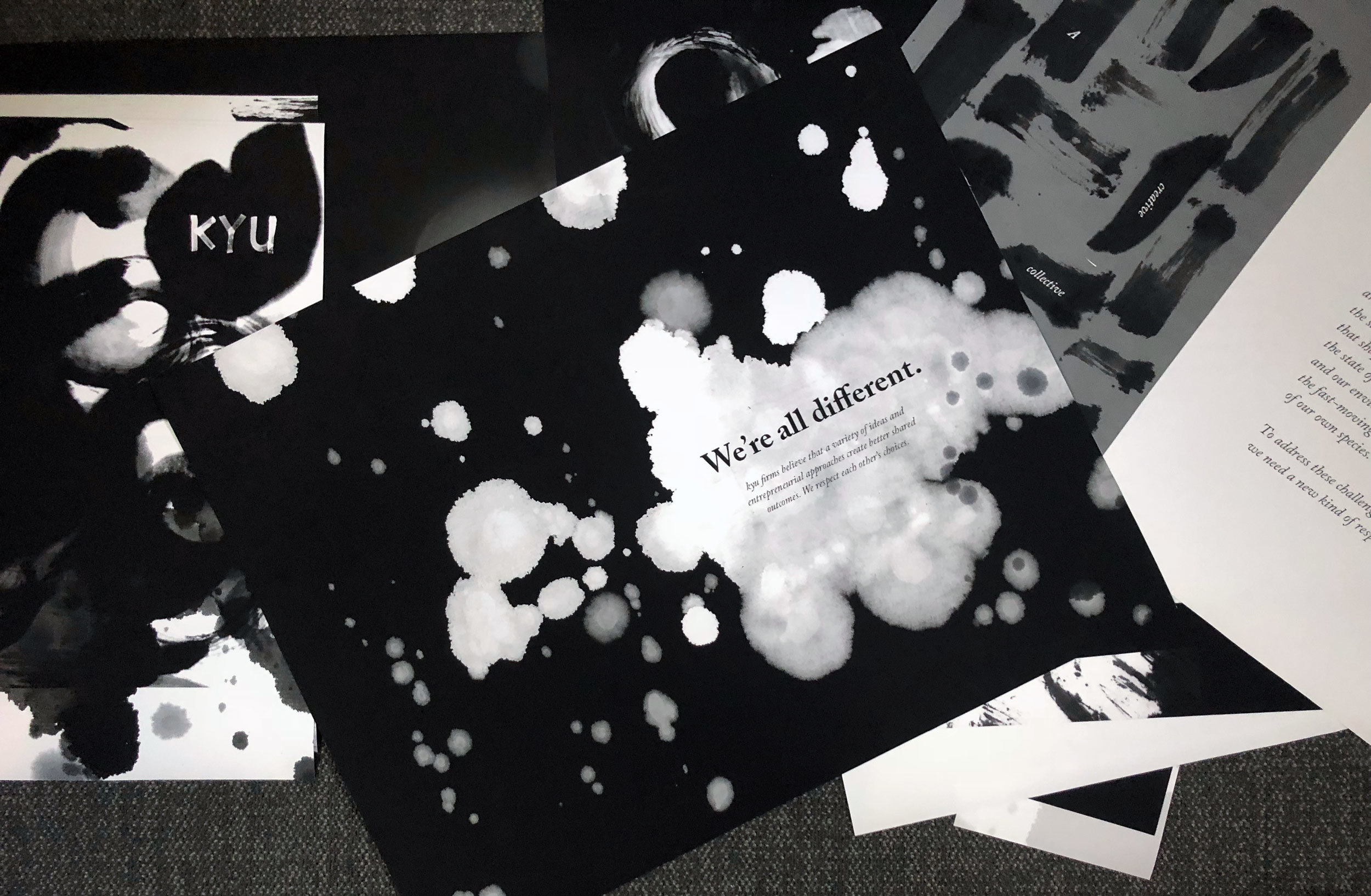
Design like you can hear the page
Tools of visual storytelling: Music and Calligraphy
I had been asked to create a newspaper for kyu, the design collective of which IDEO is a member, and I was ready to perform.
My desire to explore the world using rhythm and sound on one hand and ink and paper on the other started when I was young. I was very quiet as a child. Instead of playing with friends, I created my own playground in a sketchbook. I listened to stories on a cassette player as I drew.
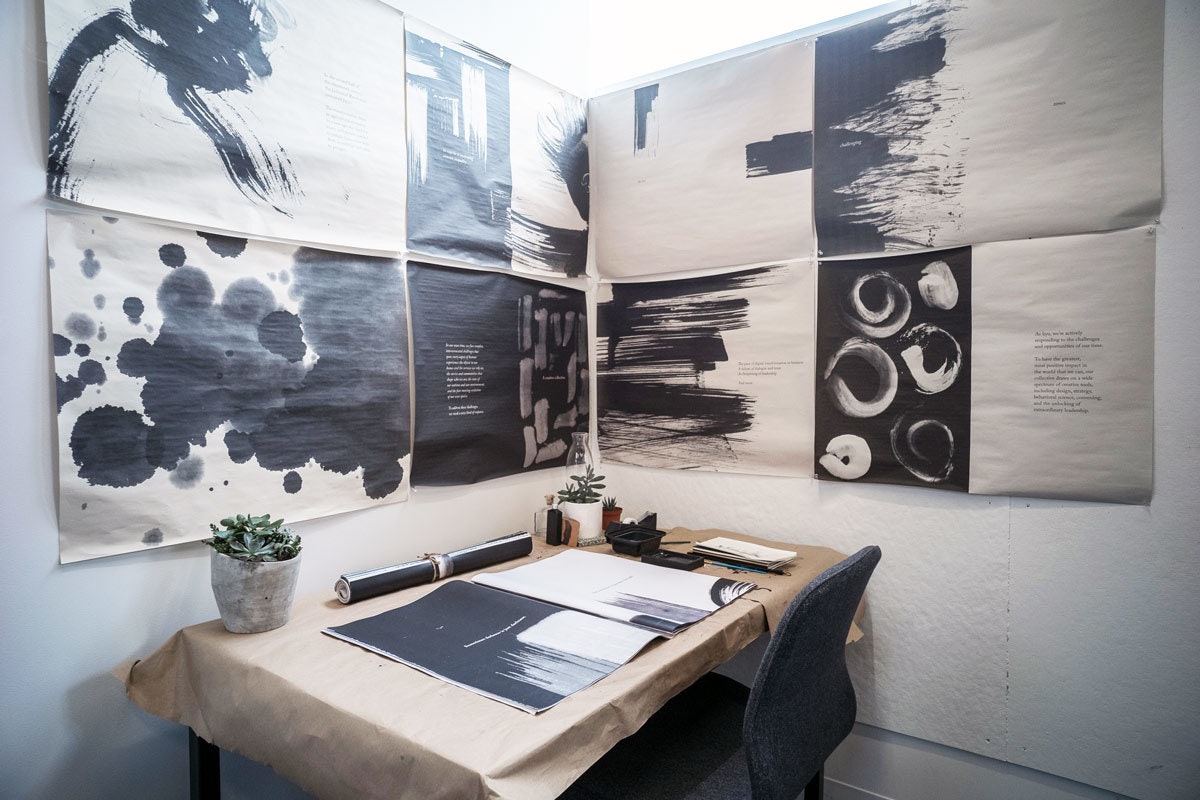
My mom, a violinist who played in an orchestra, taught me how each sound communicates a different feeling. Together, the instruments create a pleasing harmony.
I chose to play the cello, as its sounds comforted me. When I felt sad, I could play and the sadness was transformed into something beautiful. When I felt alone, the cello's mid-tones communicating with and supporting the other instruments made me feel less isolated.
I went to high school in New Zealand and focused on photography, art, and music. Playing in orchestra, string quartet, chamber orchestra, and musical show orchestra required rigorous practice, and I discovered that it was only with disciplined repetition that the ear could learn to hear the subtle distinctions between an almost perfect note and an imperfect one, between good enough harmonizing and exquisite music. Constant practice not only created perfect harmony, it also trained the soul.
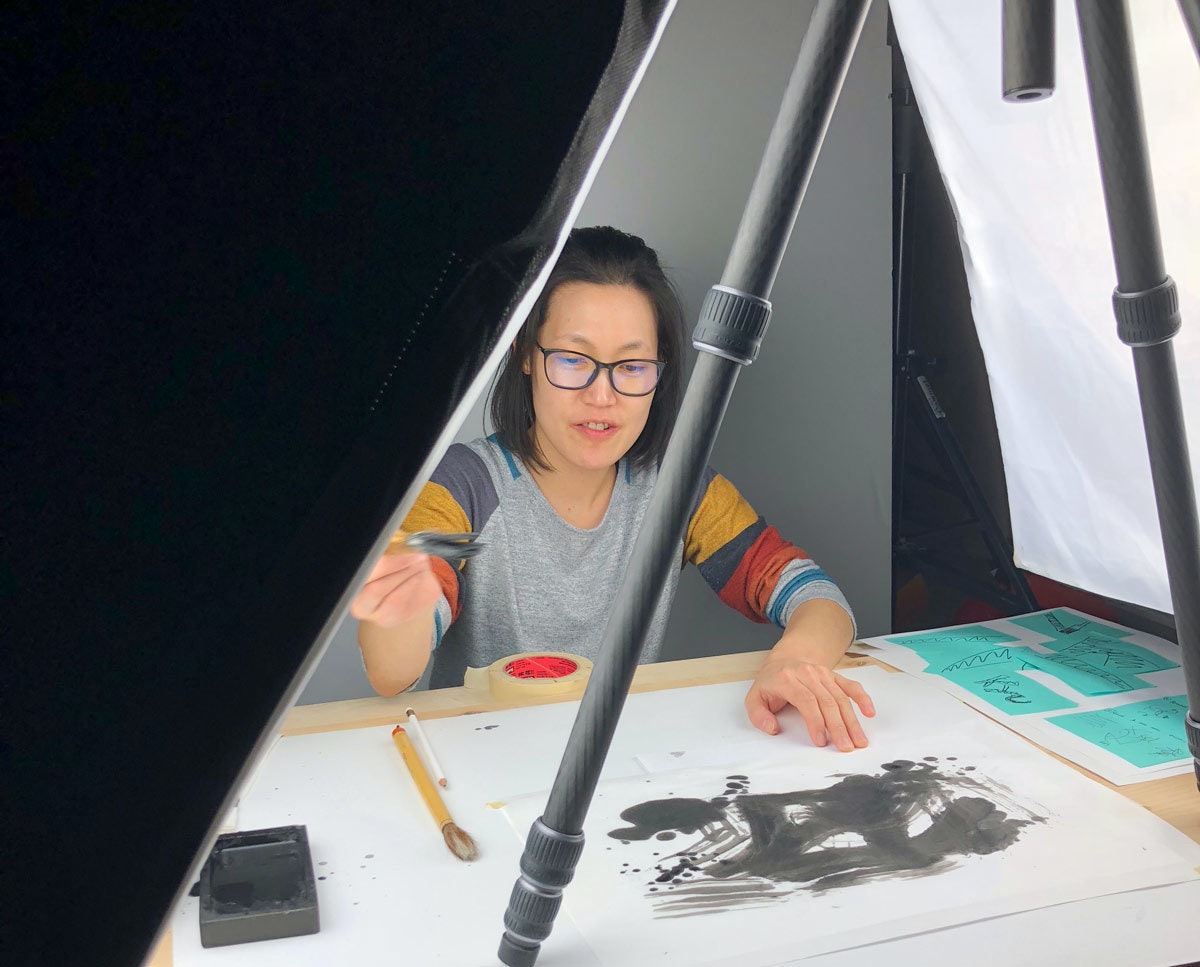
Like music, calligraphy embodies many feelings. That was my father’s gift to me. He guided my hand, drawing with me. At first, I stood in his shadow, but I gained confidence over time. The calligraphic technique I now use involves moving very fast, every stroke following right after the one before, never taking time to look back.
The companies that make up kyu share a belief that creative collaboration will yield new solutions. To visualize the collective, I drew the first dot directly with the brush and then started to draw circles. Dots and lines, the basis of musical notation, helped me orchestrate the story visually. Rough strokes conveyed complexity and sometimes chaos, while the diffusion of ink into paper illustrated the calm conclusion of a journey. When the magazine reached a crescendo, the dots began to jump around wildly. The combination of ink and water unified sense and sense, and the story of the newspaper came to its happy end.
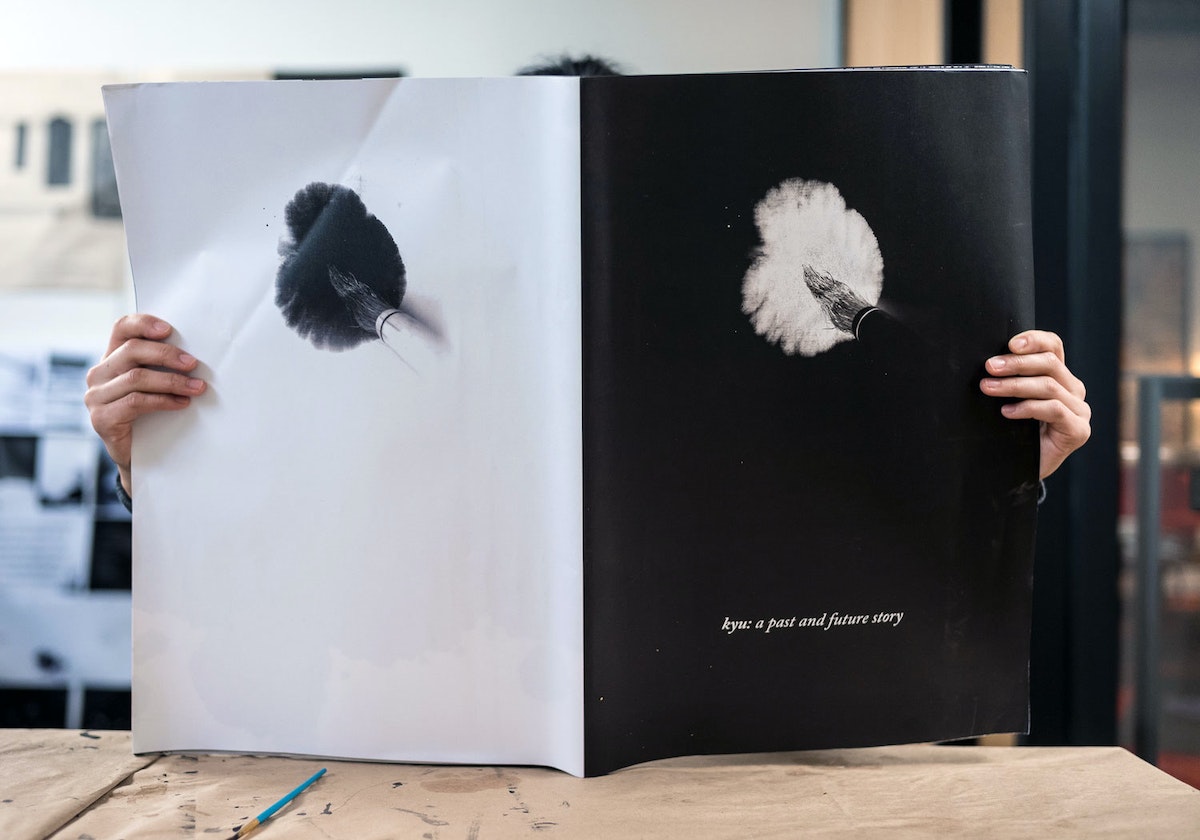
Just as each calligraphic mark and each musical instrument is unique, so too is each company in the kyu collective. Independent, but also located within the same “circle.” Sometimes the music of a page is the message.
“Music is the ultimate teacher.” ― Wassily Kandinsky
The day I got the assignment, I ran to the art store and bought brushes, ink, and a grindstone. I set the tools on my desk, which became the stage. I was the conductor, interpreting the text like a musical score.

How to make cinemagraphs with your iPhone
How to master the art of the moving image
The secret is in iOS 11 Live Photo Effects. To make your own, access this feature, take a live photo, then, in the photos app, swipe up to reveal the Live Photo Effects.
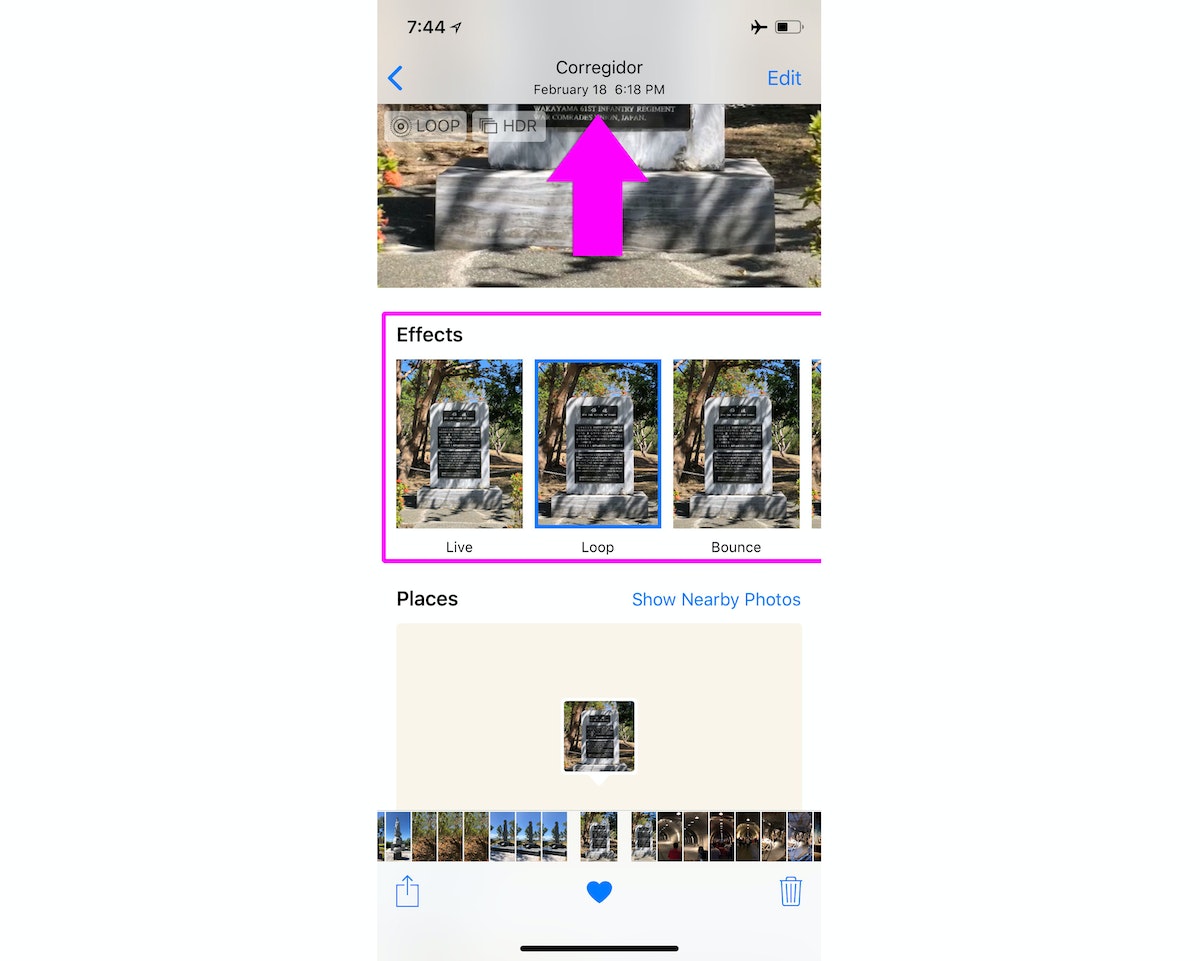
Easy, right? Yes and no.
Creating a live loop is easy, but creating a cinemagraph requires a bit more planning. The difference is in the framing—too much movement, and you’ll just get a live loop. Here are a few tips to ensure you nail the combination of still photo and limited motion:
- Find the shot: To create a beautiful cinemagraph, find a shot where most of the image will be still, and only a piece is in motion—perhaps a tree blowing in the wind, or raindrops on a puddle. If there’s too much movement in the frame, the shot will feel chaotic.
- Plan it out: While it’s possible to pull off a clean loop without a tripod, don’t just point and shoot. I like to turn on the grid in my photo settings—these lines help me see if I’m holding still or wobbling slightly (I always use the grid to help create a level horizon or position subjects, anyway). Try to lock your body by leaning on something, or even by putting the camera on a table to keep it as still as possible.
- Stage it: Don’t leave it to chance! When you can, control the shot. The pool shot below took a few tries, and it really helps that there were no other people wandering through.
Sharing the live loop
So you’ve perfected your technique and have a gorgeous loop to share! The problem is, iOS doesn’t exactly make it easy.
If you try to share natively to Instagram, it’ll tell you the loop needs to be three seconds or longer. And iOS doesn’t offer a lot of options to help—there’s no easy way to export your Live Loop into a format that’s shareable for Instagram. I found this out the hard way while I was traveling in the Philippines, and since I didn’t have my computer with me, I had to figure out a way to solve for this using only my phone.
One of my goals was to use only free apps—buying a bunch of apps I wasn’t sure were going to work didn’t sound very fun. After much Googling, trial, and error I created the workflow below. The first time through might take you a few minutes, but now that I’ve done it a few times, I can go from live loop to Instagram in less than two minutes.
Get the apps
First, download these three free apps:
- Lively: Exports your Live Loop as a video
- Splice: A free video editor that lets you extend the length of the loop to meet Instagram’s minimum requirements
- Video Crop: Removes any letterboxing (black bars) in the video export
1. Lively
Start by using Lively to open the loop you want to export. In the top of the export panel select “Movie” and then tap “Export”, then save the movie.
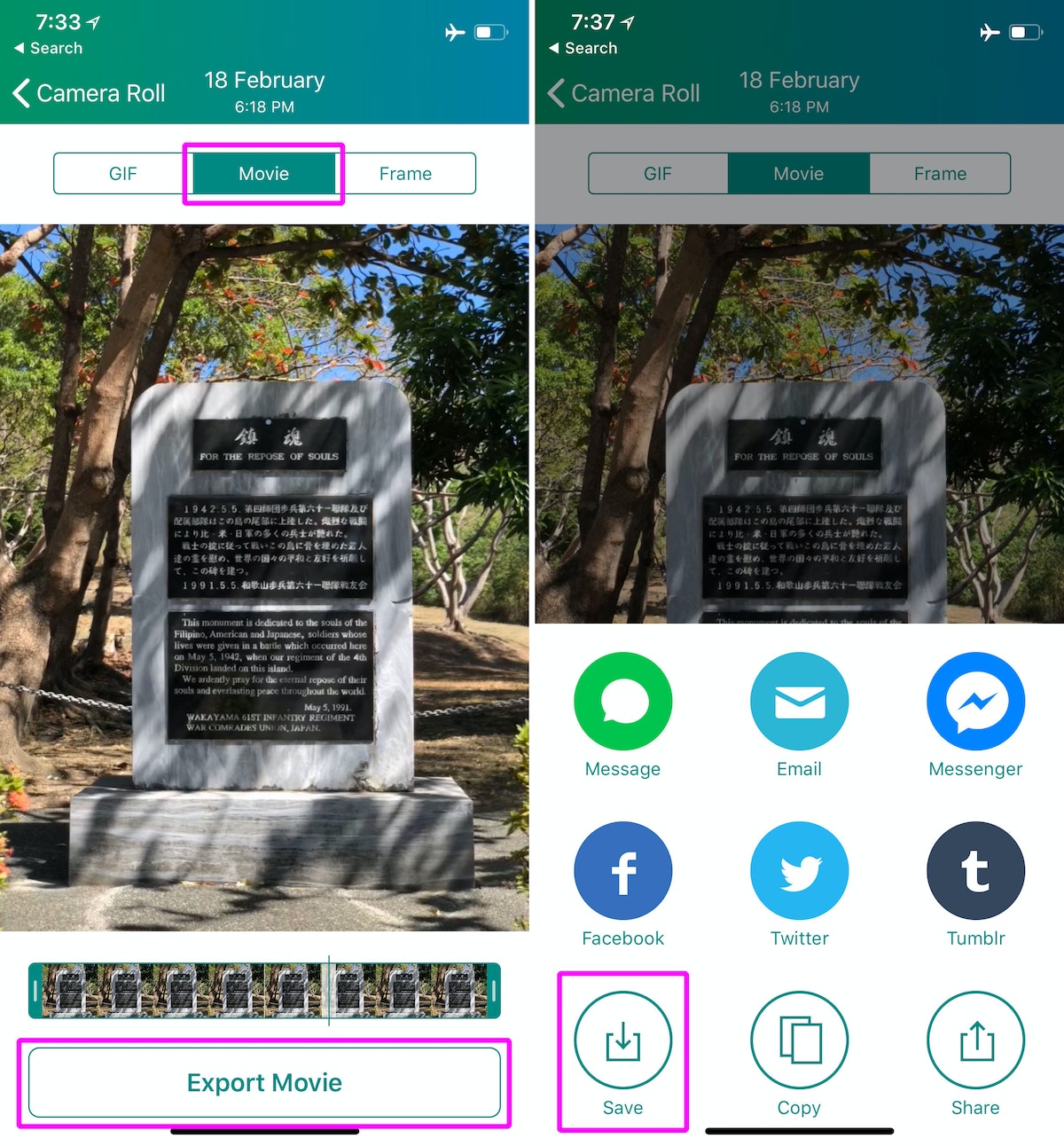
2. Splice
In Splice, tap the + icon on the top right to create a new project and select the video you exported from Lively. Click “Add (1)” on the top right to add it to your project.
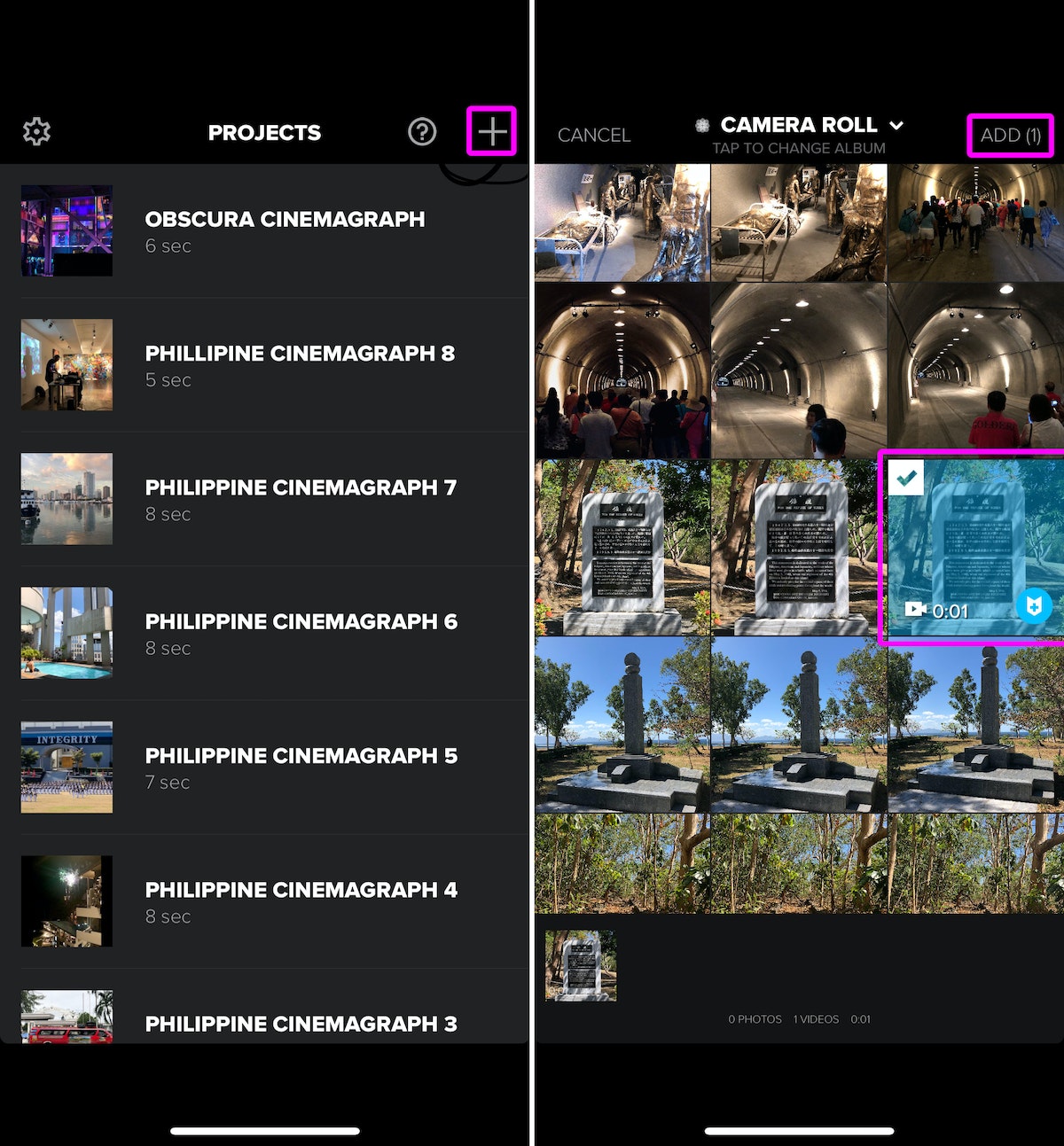
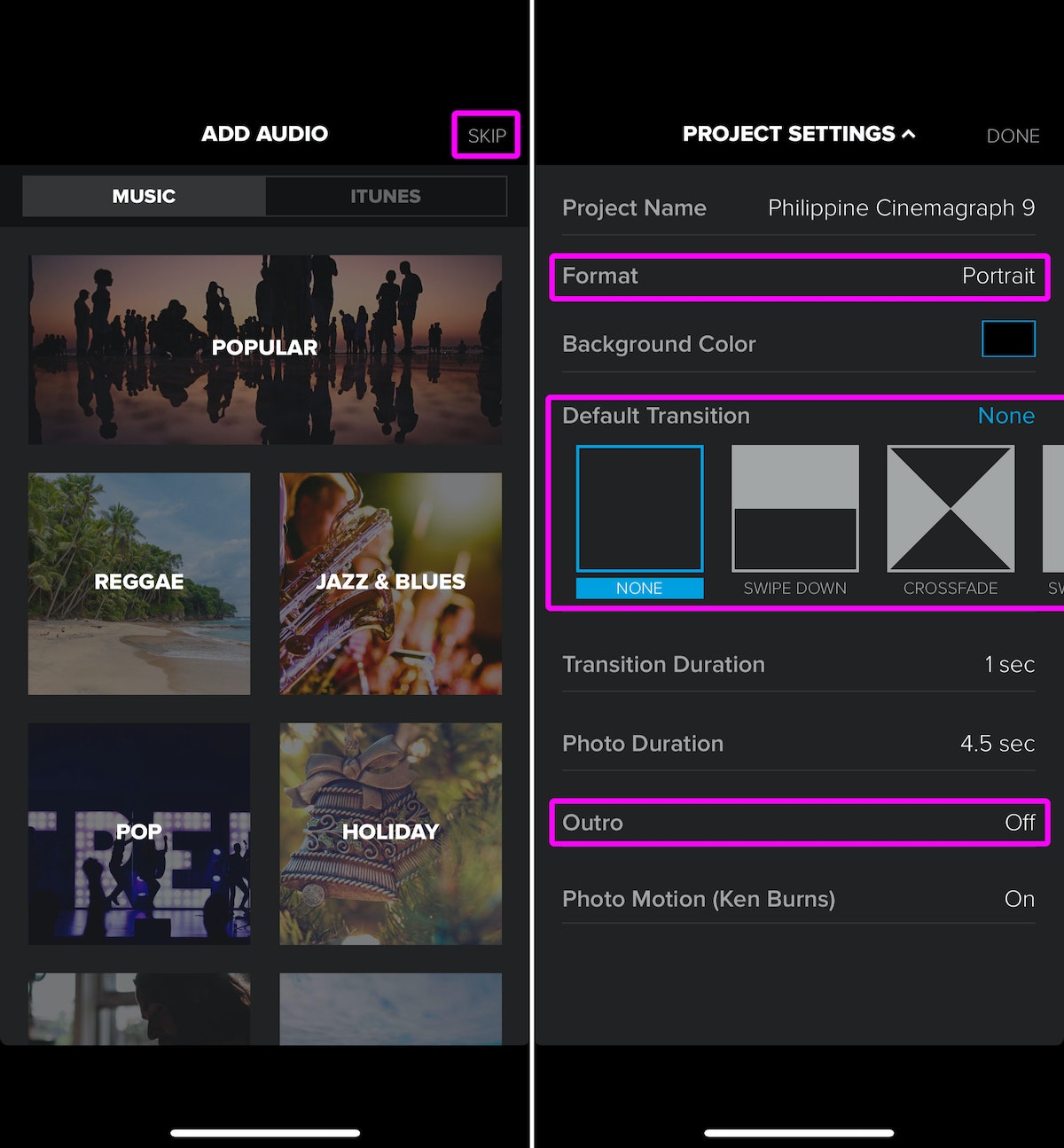
On the Add Audio screen, tap “Skip” on the top right.
Name it however you like, and use these settings:
- Format: Select Landscape for wide photos or Portrait for tall ones
- Default transition: set to “None”
- Outro: set to “Off”
Now you should be in the editing screen; all you have to do is tap your video and select “Duplicate.” Do this three or four times until your video duration is at least 0:05 or longer.
Lastly, tap the “Export” button on the top right and select “Save.” I always pick 1080p HD for the best quality.
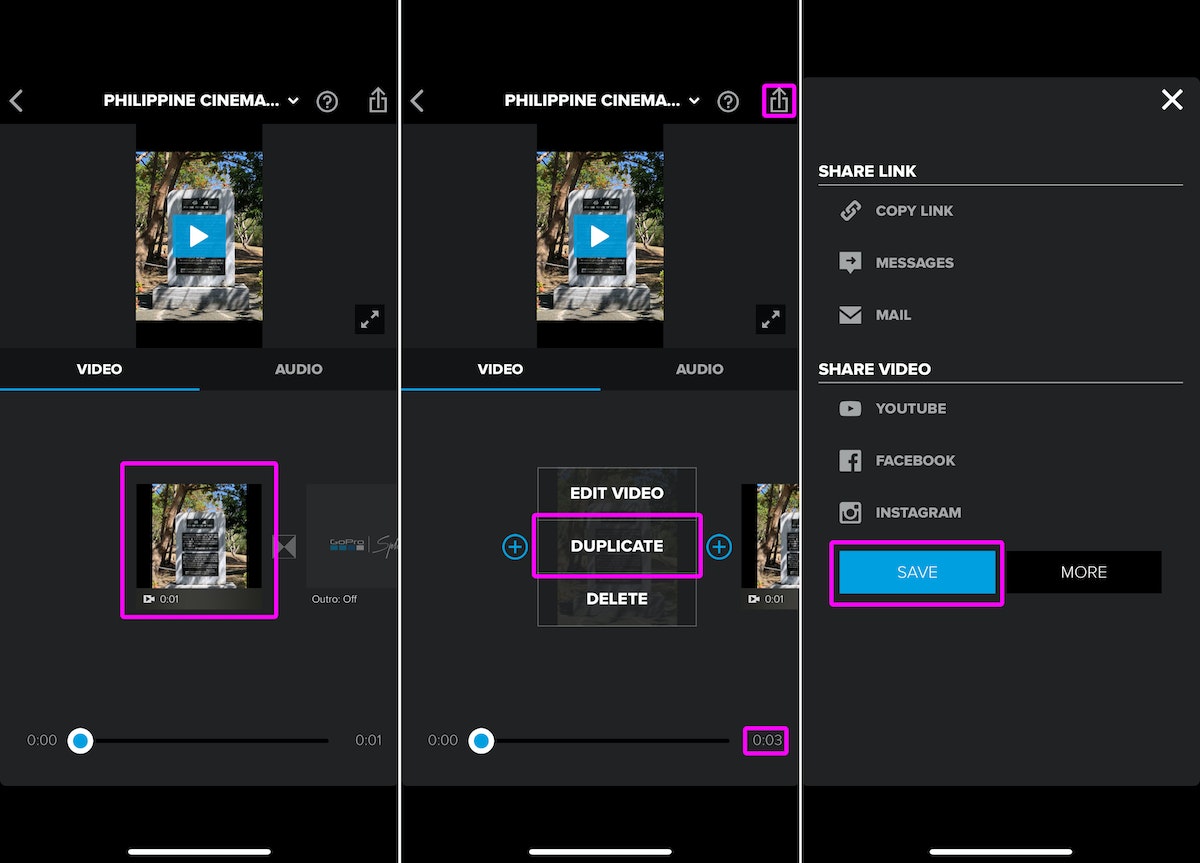
3. Video Crop
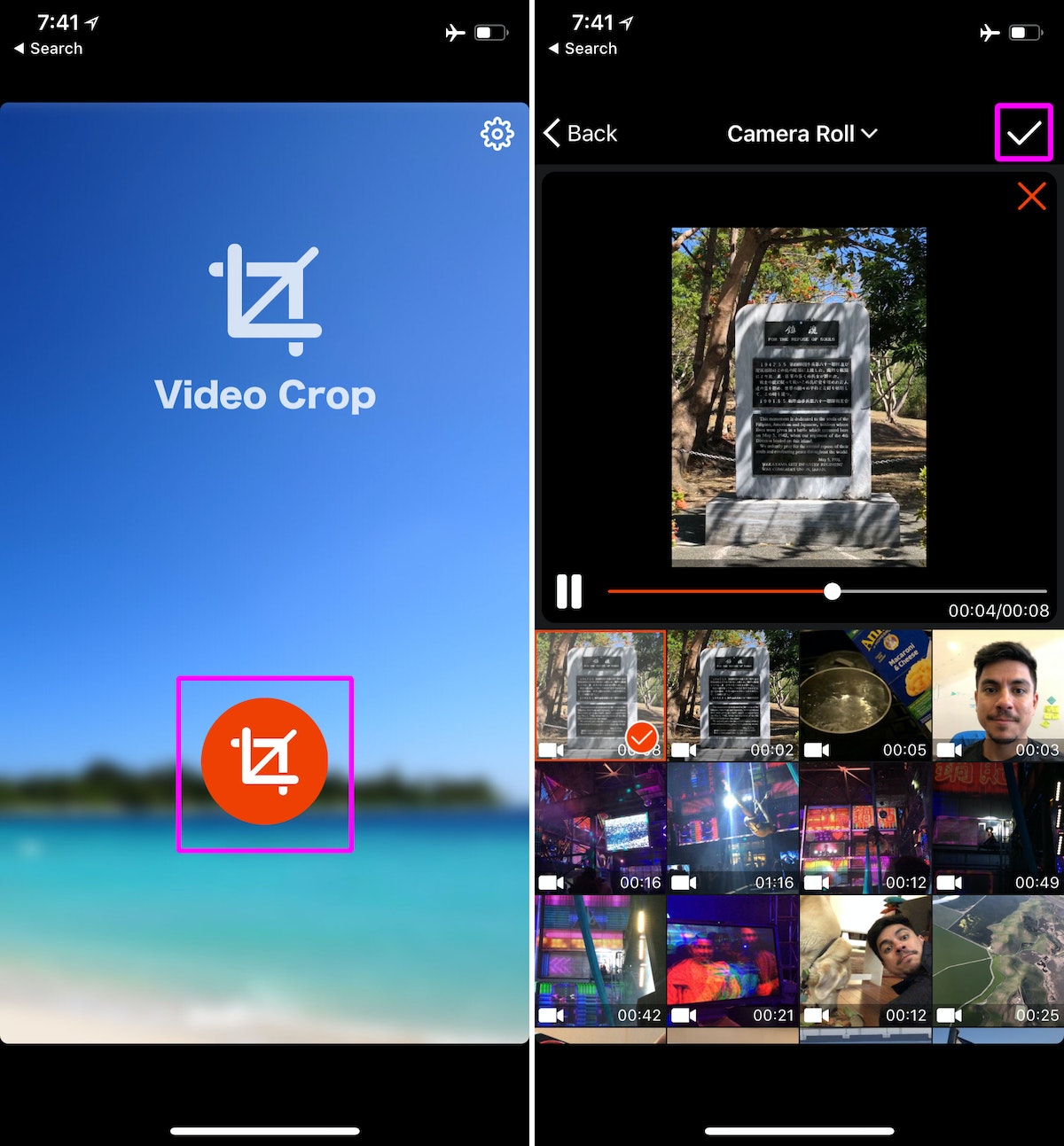
One last step: Remove the letterbox (those pesky black bars) on the side of the exported video. Open “Video Crop,” tap the big red button, select your video, and tap the check mark on the top right.
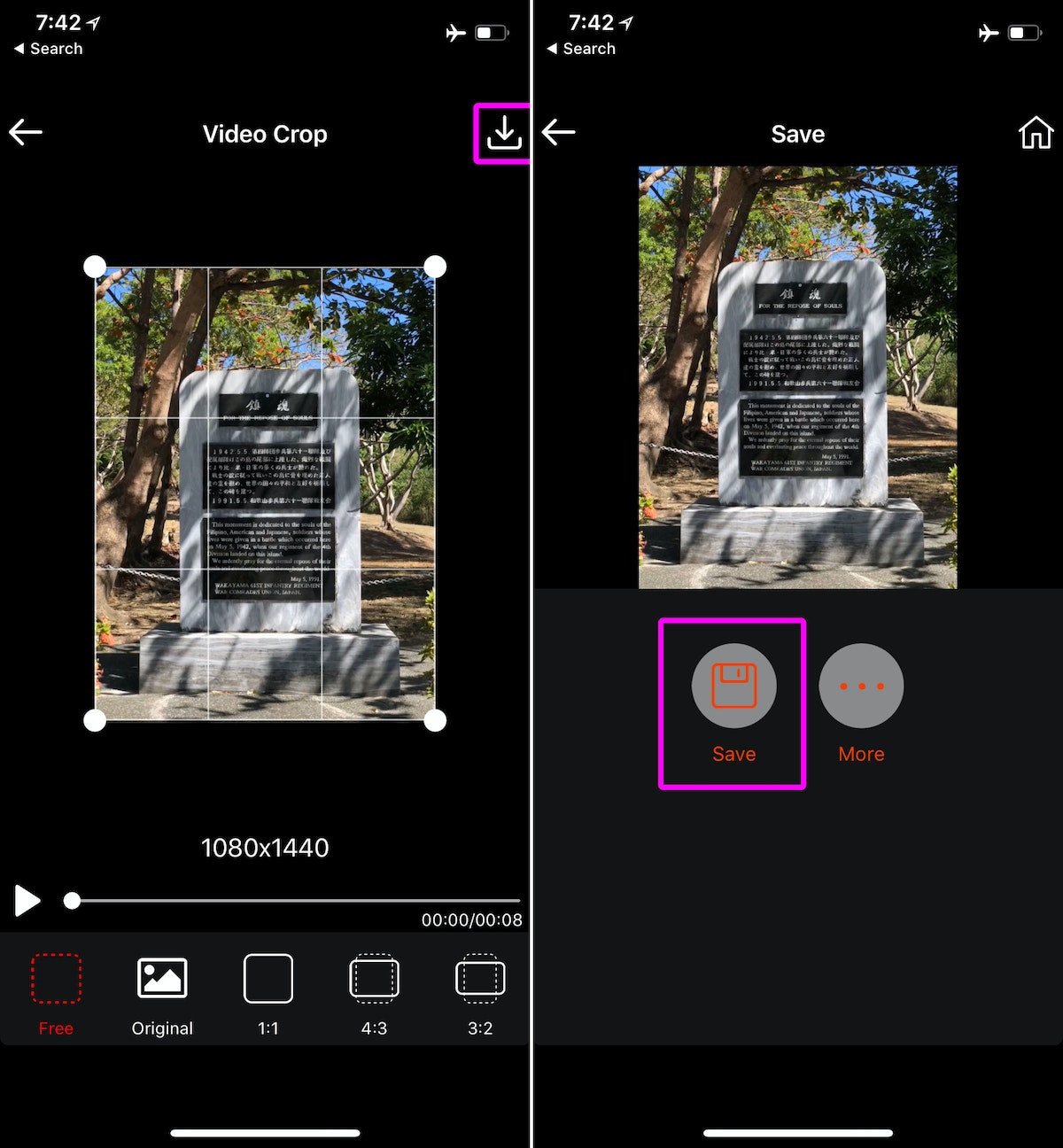
Now use the crop tool to trim off the black bars, then tap the export button on the top right. When it’s done processing, tap “Save.”
Very Instagrammable
Cinemagraph loops look amazing on Instagram or Facebook, and they give you a unique way to share your experiences (Let’s be real—we’ve all seen enough Boomerangs.)
It takes a few steps, but once you get the hang of it, the process is quick and easy. And when your friends ask how you did it, you can point them this way.
I’ve always loved cinemagraphs—those endless, hypnotizing loops where part of the frame is still while some areas are gently in motion. When I discovered that I could create these loops natively with iOS 11 (iPhone 6S or newer), I couldn’t wait to try it out.

Lindsey Turner
I’m passionate about building brands, products, and experiences that help organizations show up with meaning and momentum.
I help organizations cut through complexity by shaping how they show up, through brand strategy, identity, and storytelling.
Working at the intersection of brand and business, I bring an editorial eye and a bias toward making—turning ideas into tangible experiences that people can understand, trust, and believe in.
My work spans government, healthcare, financial services, media, and consumer goods, from launching Gen Z-focused ventures to building innovation labs and reimagining legacy brands. I relish moments of ambiguity and enjoy translating across teams, perspectives, and priorities to move ideas forward.
I started my career in editorial and digital design, shaping cross-platform experiences and identity systems in publishing and agency environments. That foundation still shapes how I work today: I’m detail-oriented, collaborative, and overreliant on the Oxford comma. I hold a BFA in Visual Communication from the School of the Art Institute of Chicago.

Rachel Young
My work helps organizations see who their products aren't working for—and build the will and the tools to do something about it
For 25 years, I've asked the same question: Who does this design exclude—and what are we going to do about it?
My work spans human-centered strategy, inclusive design, and qualitative research, with clients ranging from Microsoft, Google, and Verizon to the National Science Foundation, and San Francisco Unified School District.
Before IDEO, I taught elementary school in East Palo Alto and spent a decade doing design work with social service organizations—where I learned firsthand what it costs people when systems are built without them in mind.
I am currently writing User Error, a nonfiction book about digital access and the design decisions behind it. I live in Oakland, California.

Brian Pelsoh
I lead with craft, ensuring our work is creatively excellent: rooted in deep human insight and imagination, while also grounded in the realities of business and technology.
My expertise spans brand, communication, and product design across tech, education, the arts, and social impact.
I believe great work demands both high-level vision and obsessive attention to detail, and only happens through collaboration.
I bring an inclusive, hands-on approach and a deep understanding of business, which enables me to consistently deliver excellence while always asking why.
Before joining IDEO, I worked at the brand firms Pentagram and VSA Partners. I began my career as a designer, leading teams at the School of the Art Institute of Chicago and the Milwaukee Art Museum. I hold an MFA in graphic design from Maryland Institute College of Art and a BFA in communication design from the Milwaukee Institute of Art & Design, and have taught at some of the best design schools in the US.

Tony Wong
I am responsible for IDEO’s long-term success in China and working with clients to use design as a tool to enable growth.
I am responsible for IDEO’s long-term success in China and working with clients to use design as a tool to enable growth. Specifically, I have helped Chinese companies design holistic brand solutions through the development of their products, communication, services, and innovation teams, and I have helped multinationals expand their presence and influence in China.
I advise global leaders on developing China-led innovation and capabilities.
In over 15 years in IDEO Shanghai, I have worked on projects that use design to elevate the quality of the experience of healthcare products and services, streamline processes that increase productivity, create spaces and programs that promote and enable inclusive communities, and build next generation mobility solutions that are planet-positive.
Before joining IDEO, I worked at Philips Electronics and the Electrolux Group in Italy, the Netherlands, and Singapore on a number of breakthrough commercial products. I am a member of the Young President Organization in Shanghai.

How to use AI as an editor, not a writer
Ed White shares how he uses AI as an editor—not a writer—to sharpen storytelling, rehearse ideas, and preserve the productive friction that makes creative work better.
Ed White has a rule he's tested on his own writing: hold yourself as the writer, and let AI be your editor. Ed is a Senior Design Director at IDEO's London studio, where he co-leads the firm's AI portfolio across Europe. Before IDEO, he spent 12 years as a writer and editor at the Financial Times, Wired, and Contagious. So when he talks about when to use AI for storytelling and when not to, it comes from two decades of crafting his storytelling skills.
In this episode, Mina Seetharaman talks with Ed about two specific tools he uses to keep AI in an editor's seat: a "roasting agent" prompted to critique his drafts without any sugarcoating, and a simulated audience he rehearses pitches on before the real thing. They also get into what Ed is hearing from design leaders at Anthropic, Lovable, Shopify, and Google Creative Lab about how creative work is changing, and why he thinks the friction of writing something yourself is worth protecting rather than automating away.

Building a personal AI for the messiness of life: Sida Li
Becca Carroll talks with Cue co-founder Sida Li about designing a personal AI for the messiness of everyday life—not just work. They explore how Sida stays anchored to human needs while navigating fast-changing technology, product tradeoffs, business-model experimentation, and the realities of building an AI company today.
Most AI products today are built for work—a space with clear problems and established systems. One founder noticed a gap: personal life is messier, harder to systematize, and mostly left behind by the AI boom. So she built Cue, a personal AI that lives inside iMessage and group chats, to go where the other tools haven't.
In this episode, Becca Carroll, IDEO's Chief Strategy Officer, talks with Sida Li, co-founder and CEO of Shared Context Lab, about staying anchored to a human need while the technology around her keeps changing shape, why she treats her business model with the same rigor she'd bring to a product, and what it feels like to build a company at this particular, disorienting moment in AI.
The conversation also gets into how Sida makes design decisions: the language Cue uses to describe itself, the tradeoffs behind building inside iMessage instead of a new app, and a real story about a business idea that didn’t pan out.
This is the second in a two-part series profiling founders from IDEO's Startups-in-Residence program. The first conversation is with Johannes Seemann, founder of Sooner, on designing GenAI for the emotional side of money.

Designing GenAI for the emotional side of money: Johannes Seemann
Designing financial tools around the feelings that shape money decisions.
Most personal financial tools are built to run the numbers and optimize towards a budget. While that works for some, most people experience money as a lived relationship that does not neatly fit into a spreadsheet. Johannes Seemann and Becca Carroll discuss why money is emotional before it is mathematical, and what a human-centered approach to building a generative AI financial product looks like in practice.

The curious leader's edge in uncertainty: Scott Shigeoka
How genuine curiosity helps leaders navigate uncertainty with greater confidence.
Mina Seetharaman talks with Scott Shigeoka, author of Seek and Head of Curiosity Cultivation at the Eames Institute, about what distinguishes genuinely curious leadership from performative curiosity, how power dynamics shape curiosity, and why practicing curiosity can restore energy rather than drain it.
Looks like you might be in search of something very specific?
Or reset the filters above and try another angle.
Here’s some random inspiration

Podcasts about creative leadership

Articles about the power of prototyping
