
.svg)


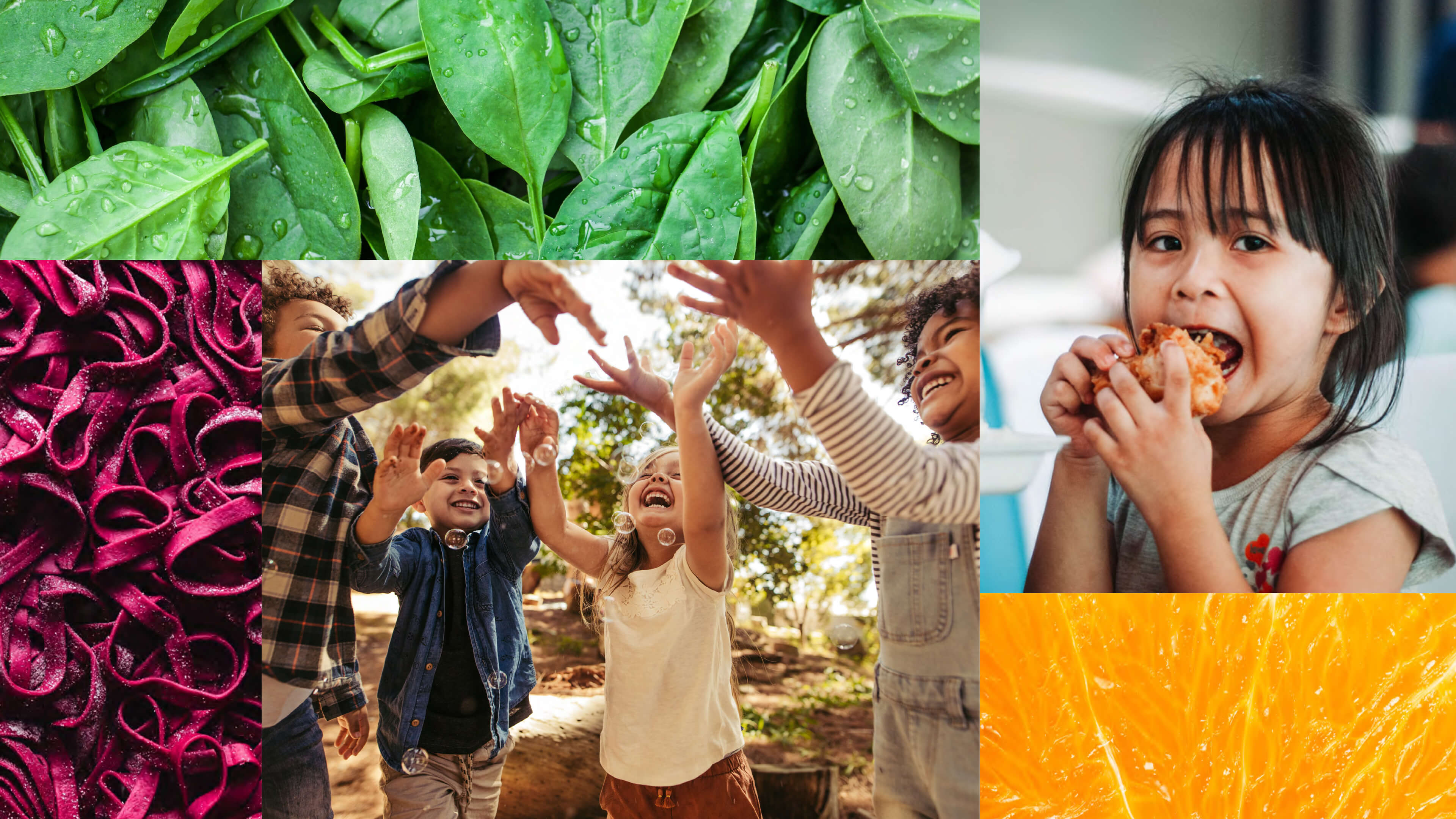

Nourishing the future
Eat Real helps redefine school lunch by advocating for nutritious, sustainable foods.
Before Eat Real can advocate for better school meals, it has to connect with school leaders—and donors. As the organization expanded its work beyond school certification, it needed an updated soup-to-nuts branding redesign that represents its purpose.
To get started on the five-week sprint, the IDEO team conducted a brand audit and interviews with Eat Real staff, board members, and donors. The team learned that Eat Real’s brand messaging and voice showed up inconsistently, and that board members wanted greater clarity around communication to prospective donors. Several people expressed a desire to change the original logo centered on a fork to a more culturally-inclusive symbol, and for the logo to be separated from the Eat Real Certified stamp, since the organization had evolved to do much more than just certification.
The IDEO team worked in close collaboration with Eat Real to deliver comprehensive brand guidelines, including Eat Real’s brand purpose and core values, positioning and personality, logo and wordmark, visual expression, verbal expression, and brand showcase. The brand’s new tagline, Nourish the Future, speaks directly to how real food access unleashes the possibility for a healthier society and a healthier planet. A new mark combines three elements that signify much more: a welcoming bowl (joy and ritual), the serving spoon (generosity and nourishment), and a sprouting leaf (a future where children and the planet flourish). The team also landed on an unapologetically vibrant color palette, to bring surprise and energy to the brand. From this foundation, Eat Real created a new website, completed a photo shoot with IDEO's art direction, and launched the brand with new messaging and collateral within a year. Now, Eat Real has the tools it needs to scale its operations and affect real change.
To scale its program and be at the center of sustainable food systems change, Eat Real needed branding and messaging to reach a new set of philanthropists.
Almost 30 million US kids depend on public school lunches for more than 50% of their daily calories. These meals are frequently made up of ultra-processed, unsustainable foods that contribute to type 2 diabetes and obesity.
2023 funding goals reached
with its new branding, beating its end-of-year fundraising goals, and putting the nonprofit on track to serve more schools in 2024
129M
meals served to 360,000 students every year at schools that have gone through the certification program
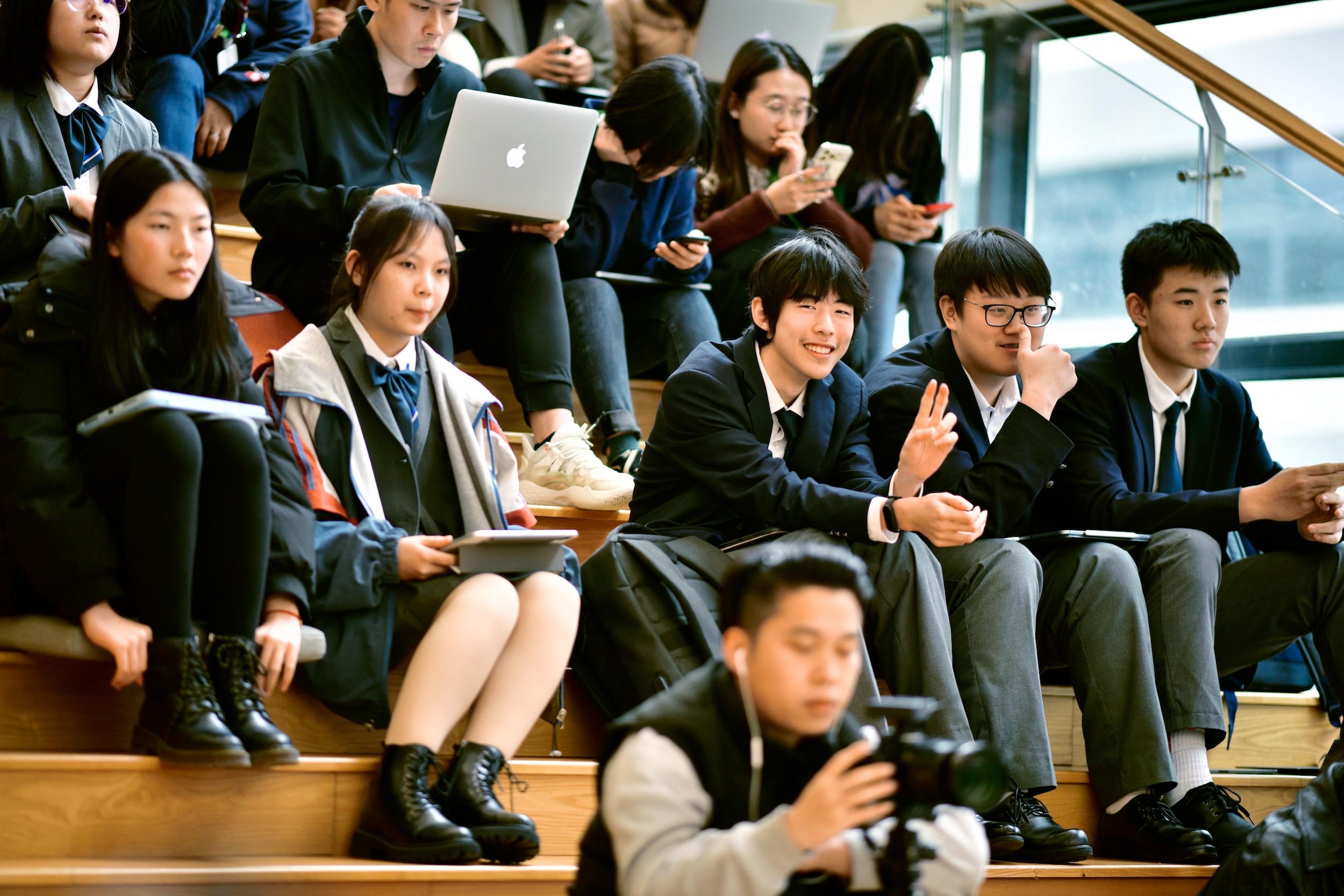
Preparing students to innovate
How Yungu School is building the next generation of changemakers.
Most end-of-high-school experiences, like the Chinese gaokao exam, the global IB Extended Essay, or the US-based AP Capstone program, are focused on testing and academic, classroom-based activities. Yungu School, a private K–12 school in Hangzhou, China, founded in 2017 by Jack Ma of Alibaba and funded by Alibaba partners, wanted to take a different approach. Yungu’s vision: combine the renowned Chinese National Curriculum with an international, competency-based learning mindset.
Designing a new capstone course that brought together the perspectives of Yungu School’s many stakeholders was a complex challenge. The solution? IDEO formed a “co-creation council” composed of eight Yungu School middle- and high-school educators who held different positions within the school, spanned tenures, and came from diverse educational and cultural backgrounds, including Chinese, European, and American. Bringing together educators from a range of backgrounds and points of view fostered alignment and sparked new ideas. In addition to the council, IDEO and Yungu educators gathered additional input from students and parents and crafted the objectives, design principles, and blueprint for the change-making 18-month capstone program.
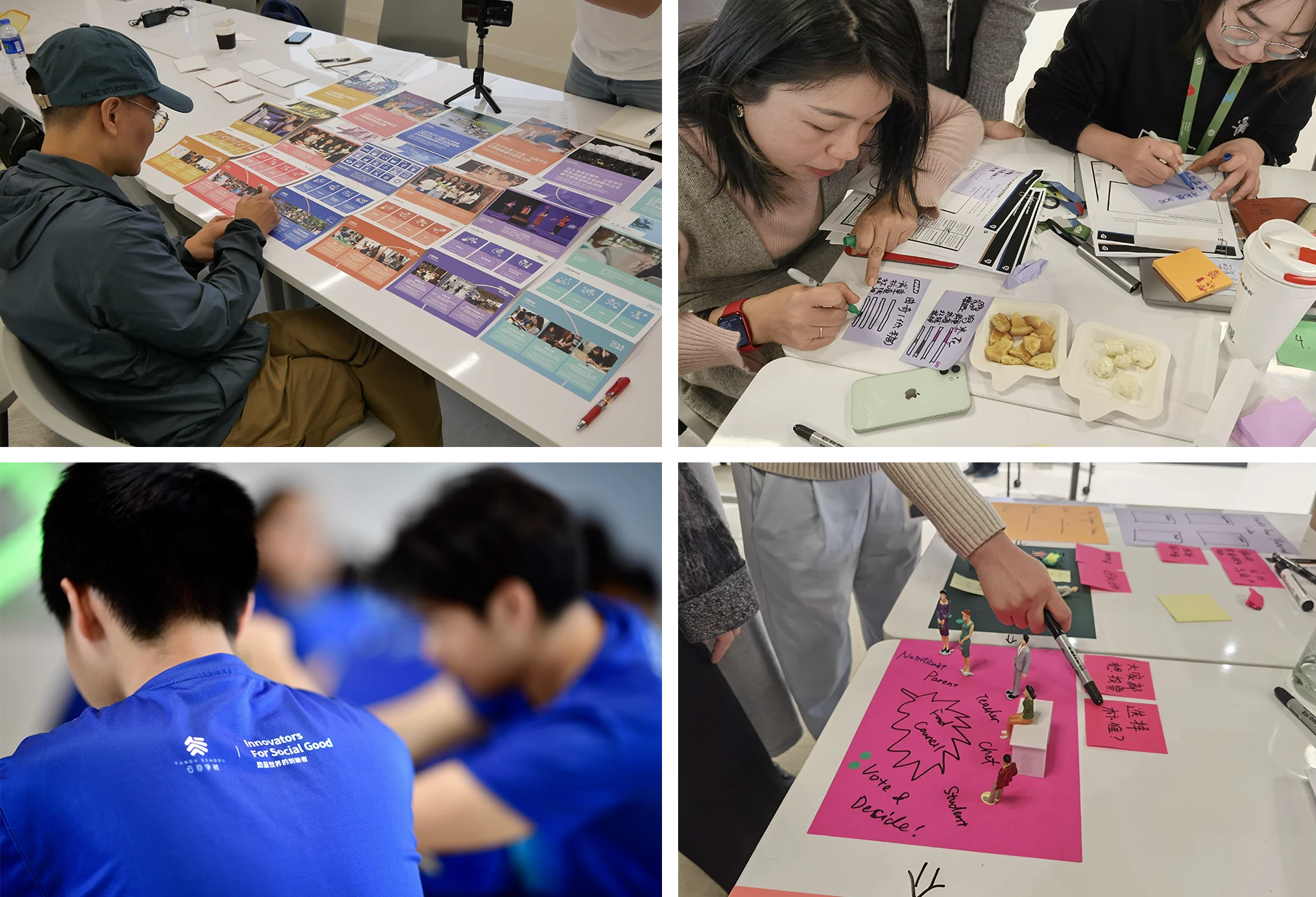
The collaboration resulted in a tailored, insight-driven capstone course that progressively builds learners’ confidence and agency via five modules: “Get Inspired,” “Find Yourself,” “Dive Deep,” “Go Big,” and “Give Back.” The learning cycles, which range from one week to half a year in length, teach students how to move from ideas to impact in topic areas they are passionate about and which have a bearing on pressing issues like climate change, digital privacy, and reducing food waste, among other global challenges. The goal of this iterative approach is twofold. Equip students for “global citizenship” by identifying personal ways to make a positive impact. And foster “entrepreneurship” by learning to be critical, creative, and optimistic systems thinkers who embrace a growth mindset.
To ensure a solid foundation for the new course, IDEO also created a week-long design-thinking training program for Yungu’s teachers. The professional development experience boosted their creative problem-solving and taught them how to move from being “expert instructors of curricula” to “encouraging guides” of capstone students who would need to demonstrate their proficiency through a final product, presentation, or performance rather than a final exam. The collaboration concluded with an immersive exhibition that allowed all stakeholders—educators, students, and parents—to experience the content modules and transformative course for themselves. Since launching its capstone program in 2022, Yungu High School has added lectures from social entrepreneurs and workshops that teach communication skills to the innovative course, garnering awards from media outlets like Fast Company. Most importantly, the signature program has enabled The Yungu School to embody its noble and audacious mission—empowering students to become future innovators for social good.

Today’s high-school seniors learn how to memorize academic content and pass tests but aren’t prepared to make a real-world impact after graduation.
196 college offers
and $1.442 million in scholarships received by over 40 graduates from Yungu High School’s class of 2023
2023 Finalist
Fast Company Innovation by Design Awards, Learning category
Lifelong health by design
Omada Health grows from an IDEO research project to a $1 billion company fighting chronic disease.
Design thinking was embedded in the creation of Omada Health from the earliest phases, and Omada has taken that forward as a strategy for success.
Over the past decade, the digital health company has grown from a couple of early career IDEOers testing concepts at the very frontier of digital health, to a company with nearly 2000 employers on its customer roster and more than one million users of its healthcare products.
Omada’s origin story began at IDEO in 2011, when its now CEO, Sean Duffy, an MD/MBA student at Harvard, joined IDEO as an intern, after a partner found his resume on the copy room floor. What was supposed to be a summer internship led to an exploration of the potential impact of digital tools on chronic health problems. IDEO partner Dennis Boyle gave Duffy and his co-founder and fellow IDEOer, Adrian James, the time and funding to do human factors research, meeting with people with prediabetes and metabolic disease in their homes to learn more about the care they were getting. What they heard was that no product or service was meeting the realities of their daily lives.
Five months after he landed his internship, and with the company’s blessing, Duffy and James spun Omada Health out of IDEO. Together, they raised a seed round, and continued to lean on design thinking methods, prototyping early versions of their product, then testing it with real patients. Duffy himself even served as the company’s first health coach. By sticking with the mindsets they had learned at IDEO, they avoided the pitfall of falling in love with the popular approaches to digital health of the era—like detailed food tracking or bluetooth enabled pill bottle tops. Instead, they stayed focused on creating what patients were asking for: a digital product that provided support, accountability, and evidence-based solutions.
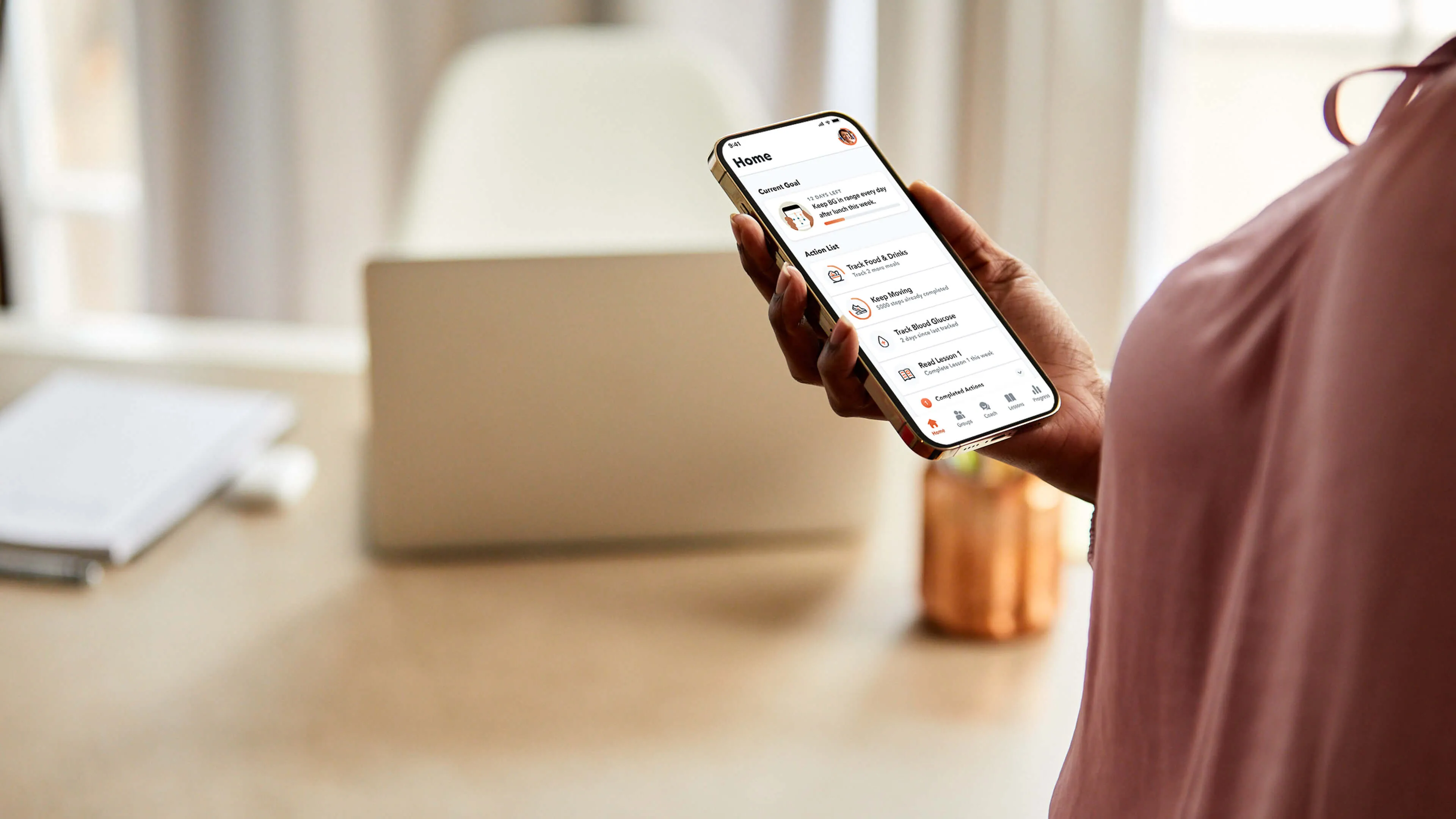
Today, Omada Health is a virtual-first, integrated care solution that provides patients with clinical care plans using digital tools and one-on-one, personalized coaching. It helps users manage chronic conditions including pre-diabetes, diabetes, hypertension, joint and muscle health, and behavioral health. More than a decade after its founding, it counts nearly 2000 employers as customers, has more than one million users of its products, and has published 24 peer-reviewed studies on its outcomes. Not to mention a $1.3 billion IPO in June of 2025. But it’s still going after its North Star: to bend the curve on preventable chronic diseases nationwide.
About 60% of adults in the US live with a chronic disease. According to the CDC, 90% of the nation’s $4.1 trillion annual healthcare expenditures are for people with chronic and mental health conditions.
Diabetes is the country’s seventh leading cause of death—and the most expensive. Diabetes accounts for $1 out of every $4 in US healthcare costs. In addition to the cost of care, diabetes costs employers $90 billion annually in lost productivity.
Nearly 2,000
employers now partner with Omada
1 in 10
commercially-insured Americans have access to Omada through their health plan or employer coverage
$1.3 billion
valuation at Omada's IPO
Store of the future
Sephora reinvents the in-store experience for digital-first shoppers.
Finding the right beauty product online isn’t easy, as shoppers are deluged with choices.
On top of information overload, our research unearthed varying emotional and functional needs when exploring beauty products. When looking for makeup, for example, shoppers are interested in self-expression and open to exploration. But when buying skincare products to fix an acne problem, say, people feel a bit more vulnerable. That insight led to rethinking the retail environment as a space that offers both free range exploration and trial spaces along with engagements that address the individualized needs of customers at different life stages.
Acknowledging that entering a new phase of life can make people feel insecure about their looks, we asked research participants, What does “beauty power” mean to you? Responses suggested a lack of trust in unbiased voices online about how to look and feel powerful. Digital shoppers are continuously bombarded by ads and influencers who are incentivized to push brands who hire them. Shoppers love Sephora for being a neutral space that showcases multiple brands, so we leaned into that strength, designing displays that offer product reviews and details that enable consumers to make informed decisions.
Those displays started as prototypes in a Sephora concept store that filled an entire floor of IDEO’s Shanghai office. In our bright, modern space, consumers of all demographics explored a self-led experience designed to delight. A “Play Table” allowed visitors to freely explore products, using digital platforms to access product details and reviews. Beauty consultants were close at hand to offer assistance. At another pitstop, the “Sephora Beauty School,” offered a spectrum of classes and community activities, providing hands-on guidance and enabling participants to test out beauty bloggers’ techniques. The “Care Table” addressed more personal skincare needs, providing a semi-private setting for individuals to remove makeup, try out products, and consult with experts. Here, digital tools helped consumers understand their skin type, facilitating personalized consultations akin to professional medical care. These innovative features aimed to create a unique, exploratory experience, blending digital convenience with concierge in-store service.
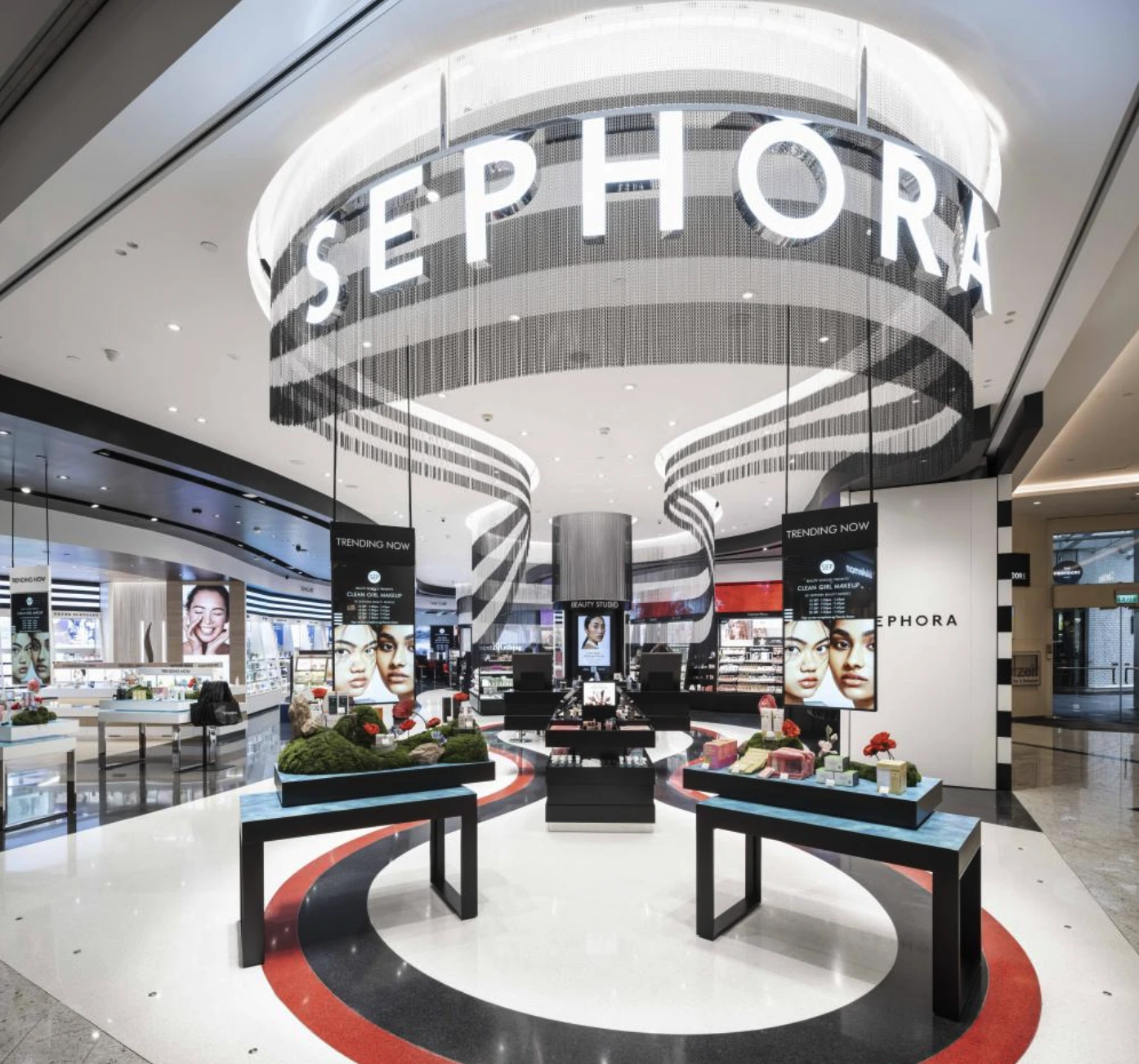
The feedback garnered from that prototype helped the team iterate quickly and gave Sephora the confidence to launch its first “Asia Store of the Future” in Singapore in 2022, followed by a second store in Shanghai in 2023. The Singapore store, situated in Raffles City, offered consumers a free-flowing, interactive beauty playground with a blend of digital and personal services, much like our early prototype.
The success of these two shops validated Sephora’s “Store of the Future” strategy. But experiences must evolve to stay fresh, so the team set up an “engagement indicator” tracking customers’ interaction with digital touchpoints to provide Sephora with valuable insights. Based on those insights, Sephora can continue to iterate its in-store experience and foster loyalty as its customers’ preferences shift.
As hoped, Sephora’s revitalized storefront blends digital and physical experiences in a way that gives every person who enters the store the feeling that they are stepping into their own “beauty power”. By getting close to its customers, building early prototypes, and learning as it goes, Sephora has redefined the in-store experience, ensuring its relevance and appeal in a rapidly transforming retail landscape.
E-commerce has created tremendous challenges to companies whose core business revolves around retail stores.
Online consumers struggle to make informed decisions with the deluge of choices online.
2
“Stores of the Future” launched
107%
traffic increase within four months of Shanghai store launch

Designer’s Playlist #2
A few things IDEO Munich's Shruti Ramiah can't stop thinking about
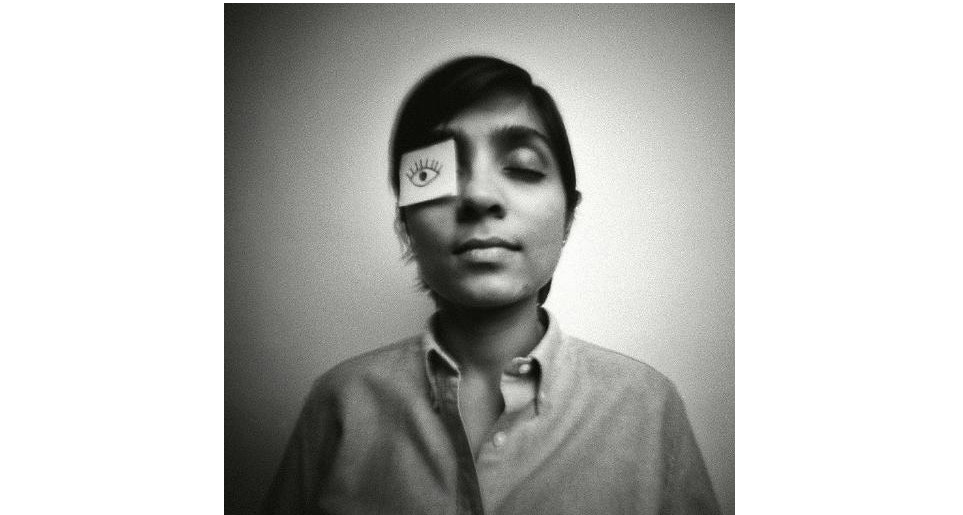
Name: Shruti Ramiah
Location: Munich
Role at IDEO: Design Research Lead
Joined IDEO: 2011
Website: www.shrutiramiah.com
Titillating Fact: I travel a lot for work, and one thing that helps me make every new place feel like home is the BBC World Service Radio (plus a healthy dose of BBC Radio 4). My grandfather used to tune into the World Service News every evening on Shortwave Radio. Now I have the digital radio on almost all the time, and I find the familiar voices very grounding. It’s also why so many of my conversations start with “So, I was listening to this show…”
1. Flash Forward
Flash Forward is a podcast about the future. Each episode starts with a little audio story playing out one potential future scenario—from the believable to the bizarre. I love the way Rose Eveleth brings intangible futures to life in these stories and then breaks them down to investigate the elements of the scenario.

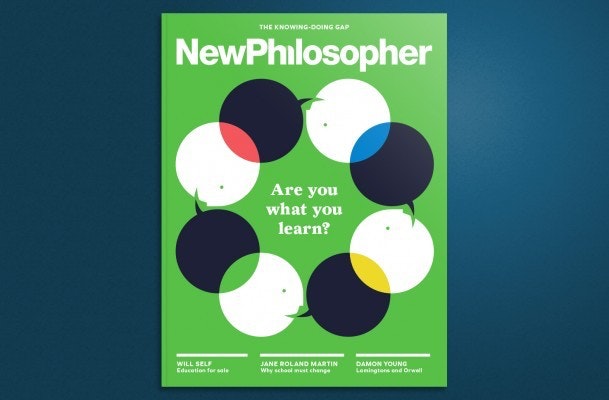
2. New Philosopher
I discovered this magazine in Sydney. It’s one of many great independent magazines coming out of Australia. Each issue focuses on one theme that is relevant to contemporary life, and explores it from a variety of perspectives. I am amazed at how they make philosophical questions accessible and understandable. Don’t be put off by the name.
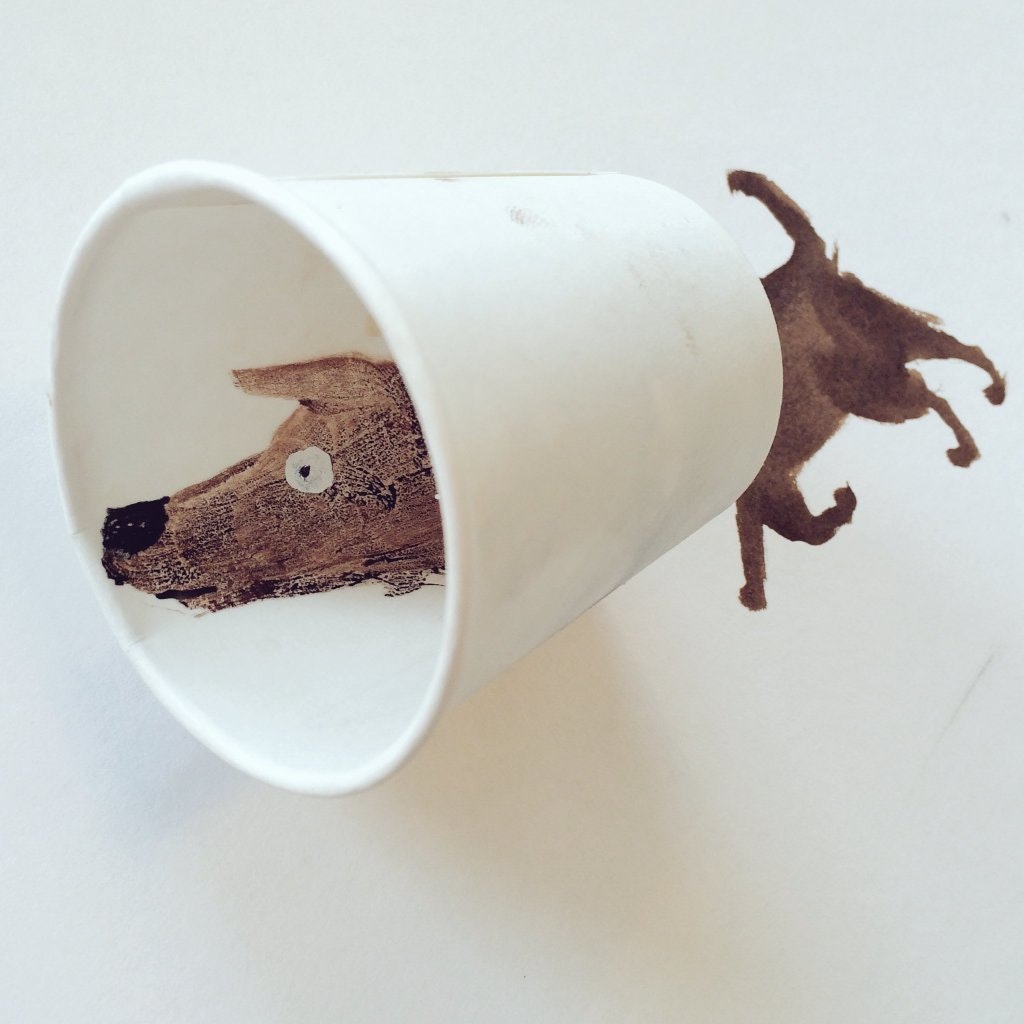
3. Jean Jullien
Jean Jullien is a wonderful graphic artist with a great light-hearted sense of humour in his work. Following him on Instagram ensures that there’s always a smile (or a smirk) waiting for me in my feed everyday. @jean_jullien
In this series, we ask IDEO designers to share the stuff they're digging right now—tools, books, music, sites, people, places—so you, too, can drink from the fount of inspiration bubbling up here. This week's guest star: Shruti Ramiah.
.jpeg)
Quick + Dirty Design Tips: InDesign
Bite-sized tool tutorials from the pros
OUR FIRST TIP COMES FORM NJOKI GITAHI, SENIOR COMMUNICATIONS DESIGNER AT IDEO, WHO RECENTLY LED INDESIGN NOVICES IN NEW YORK THROUGH AN EMAIL-BASED INTRO TO ADOBE'S POWERHOUSE PUBLISHING TOOL.
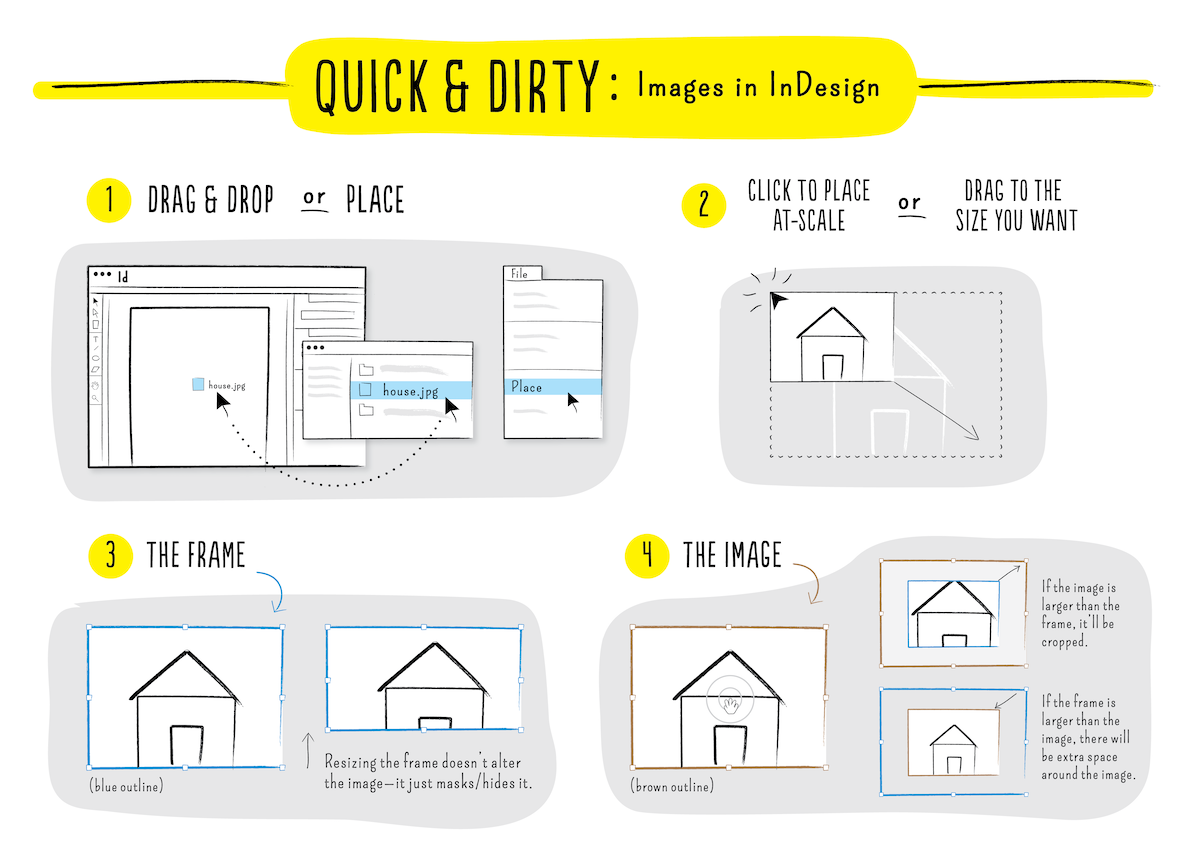
Sometimes you need to cut to the chase. If you're learning a tool outside your discipline, it's usually because a deadline is looming and your go-to experts can't help. There's no time to luxuriate in lessons. You need Quick + Dirty tips: bite-sized tool tutorials to beef up your skills, one morsel at a time.
When Physical Met Digital in the Fields of Myanmar
Prototyping agents for change
Working with hardware enables designers to create more meaningful, situation-specific interactions that might feel cumbersome or be impossible with software alone. Last year, I had the opportunity to work on a project with IDEO.org (a nonprofit design organization that launched out of IDEO with the mission to improve the lives of people in low-income communities through design) that tested my software and physical design skills. The brief: Apply low-cost sensor technology to precision agriculture for smallholder farmers in developing countries.
Informed intuition
Before heading to the field, our small team started by researching precision agriculture practices and technologies for farms and households. We found inspiration in devices like Parrot Flower Power. Even so, we really had no idea what a good precision agriculture device could be, or what challenges farmers faced. But at IDEO, we believe that you learn best by doing. So we quickly ginned up three devices to facilitate conversation with farmers: the Magic Stick, the Ambient Sensor, and the Rice Shoot.
The Magic Stick
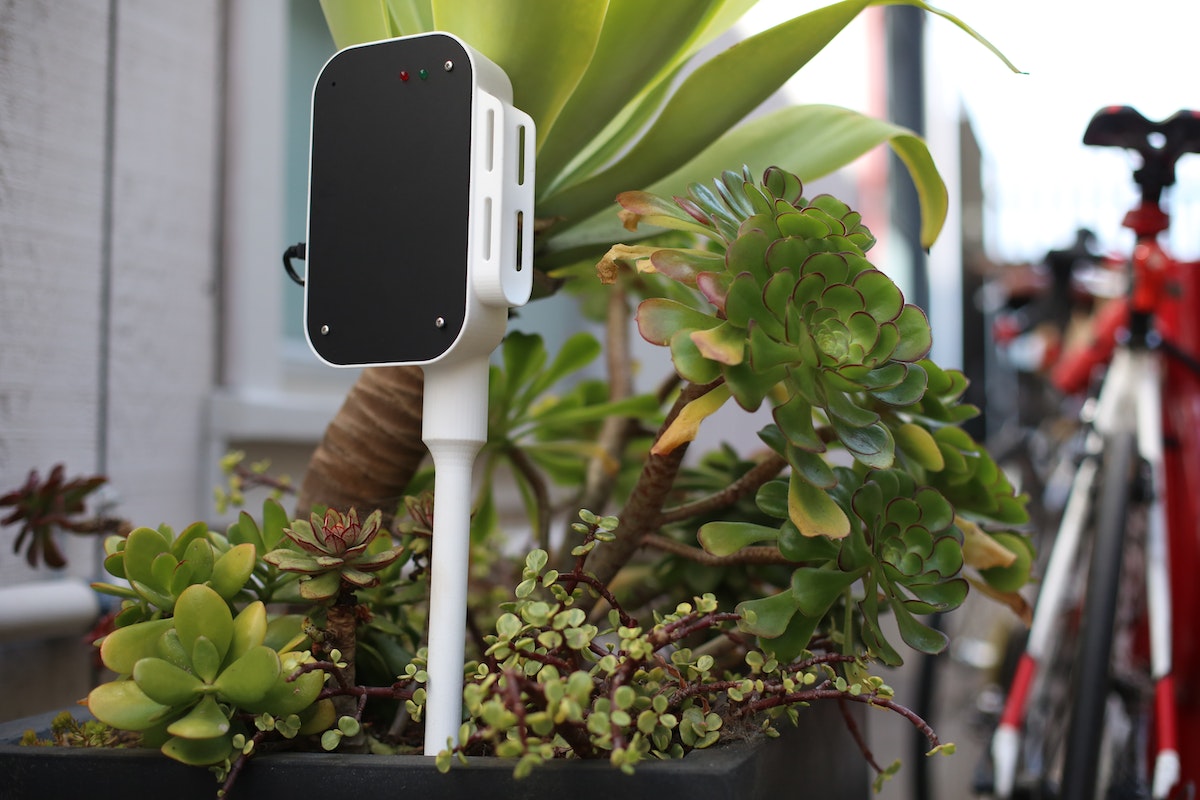
Physically, the Magic Stick was inspired by traditional farming tools like rakes and shovels. The tip of the stick was a temperature/humidity sensor that could be stuck into soil or crops that have been harvested and put in storage. Digitally, the Magic Stick created a data table that combined temperature and humidity with GPS location.
The Ambient Sensor

The goal of the Ambient Sensor was to help prevent the growth of a common toxin that spoils crops in storage in many parts of the world. The sensor tested the environment for the conditions that the toxin thrives in: high humidity and temperature. We designed the device to hang on a storage shed wall, and if high humidity and temperature conditions were detected, LED feedback would alert farmers and prompt them to ventilate the space.
The Rice Shoot

We designed the Rice Shoot to measure the water content of rice fields, making the process of rice paddy irrigation more resource efficient, and potentially increasing yields and reducing disease.

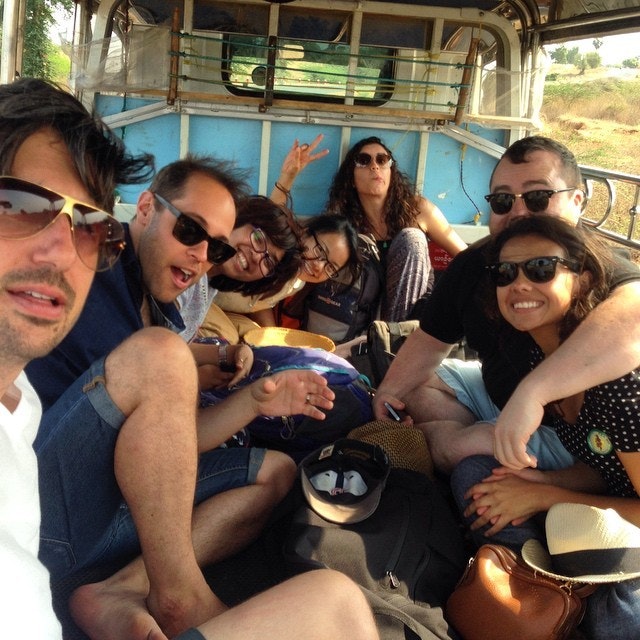
We brought our early prototypes to many farms in Kenya, Tanzania, and Myanmar—countries where IDEO.org had existing relationships. During our travels, we spent our days designing, wiring, and programming in the back of bouncing trucks, tidal river boats, and turbulence-prone airplanes. All the people we spoke with were smallholder farmers who need to farm in order to live. Together, we discussed the challenges of growing specific crops in specific regions, as well as any personal challenges they faced. In northern Myanmar's dry zone, we learned that there were no consistent optimal irrigation practices for betel nut, a cash crop that is a big part of the region's economy. Each farmer was watering at different times of day and for different lengths of time, with different yields.
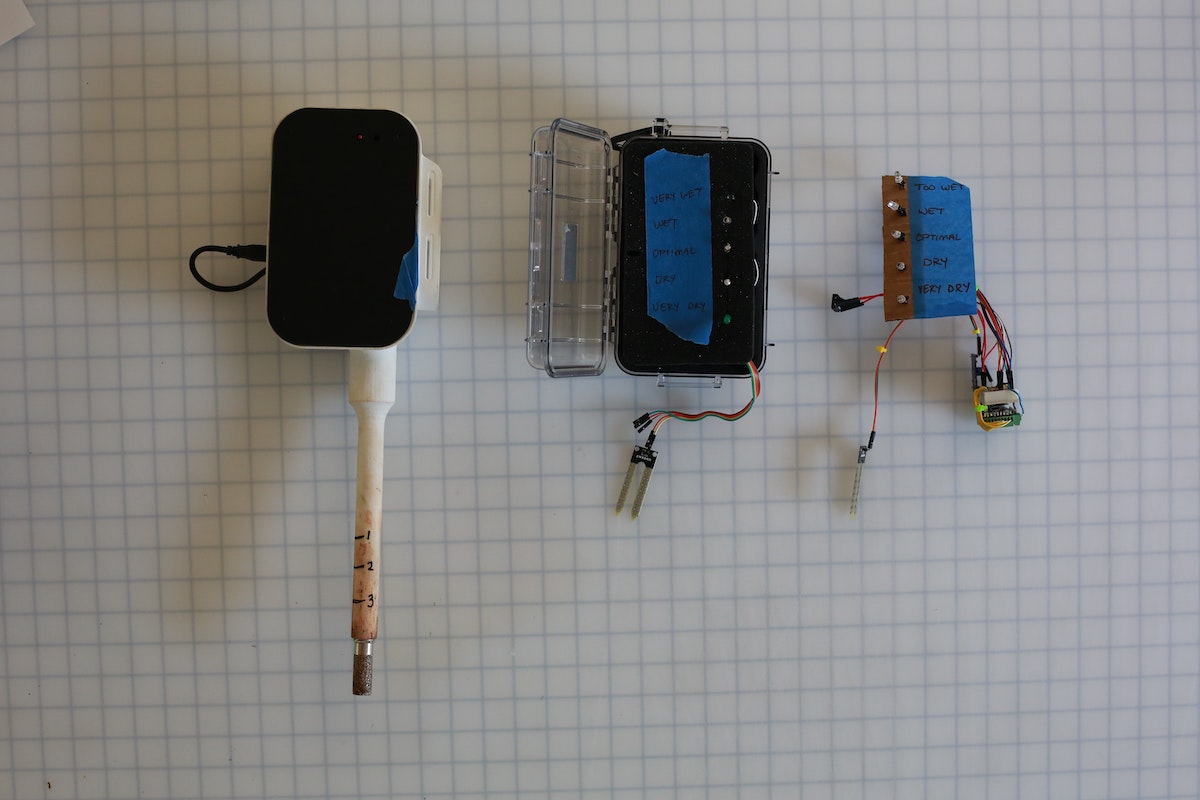
Introducing the Betel Meter
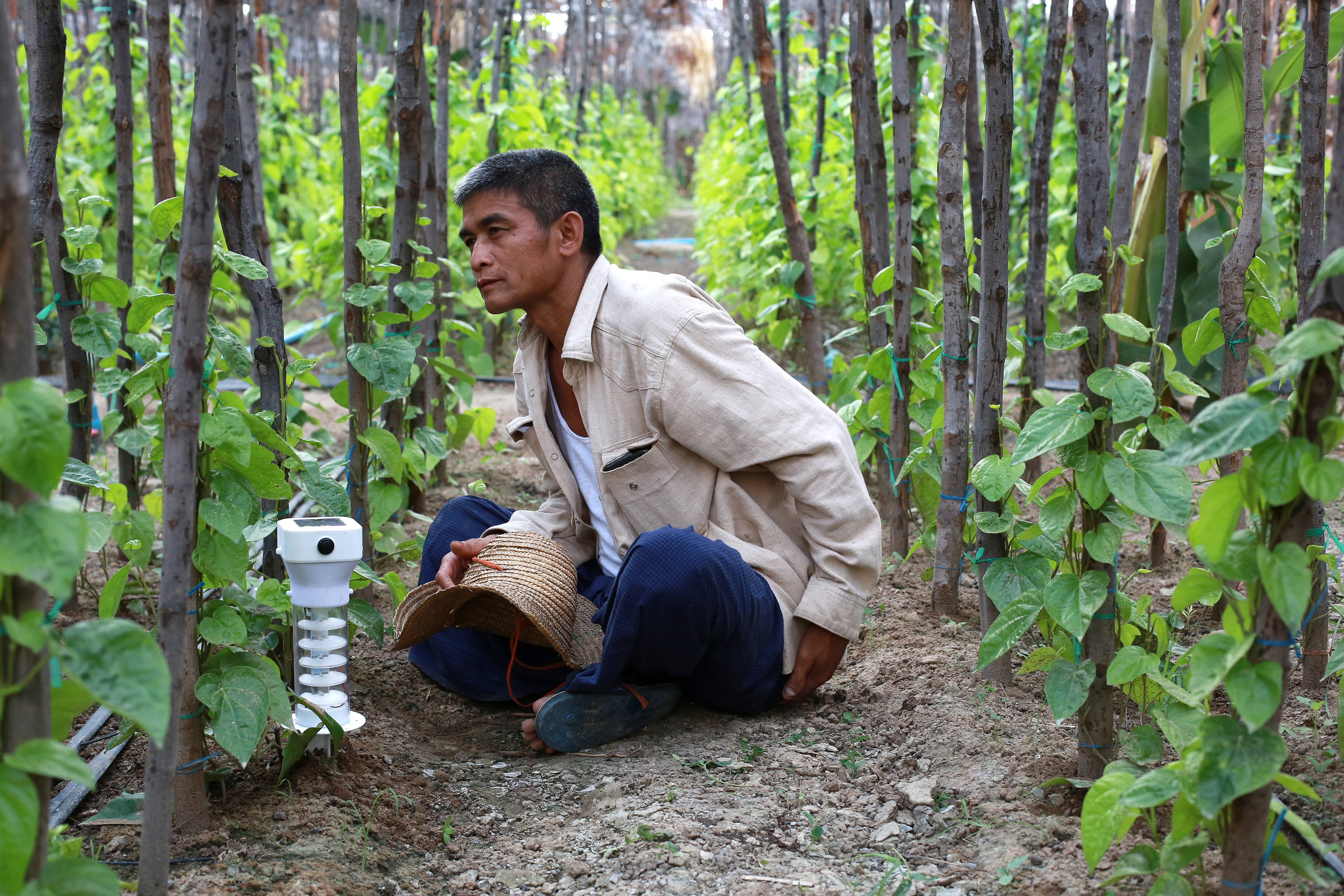
Our time researching with these farmers showed that what they really needed was an upgraded Magic Stick—something with a brain. So we created the Betel Meter, a device that helps farmers create optimal irrigation for betel nut.
The Betel Meter is planted in key positions in a field and takes moisture readings once an hour. Once a day, a farmer presses the meter’s button. A green LED signifies that soil has a healthy moisture level and the farmer can irrigate normally. Red LEDs signify that the soil has been too dry, and farmers should keep irrigation taps open for an additional five or ten minutes. Blue LEDs signify when soil conditions are too wet.
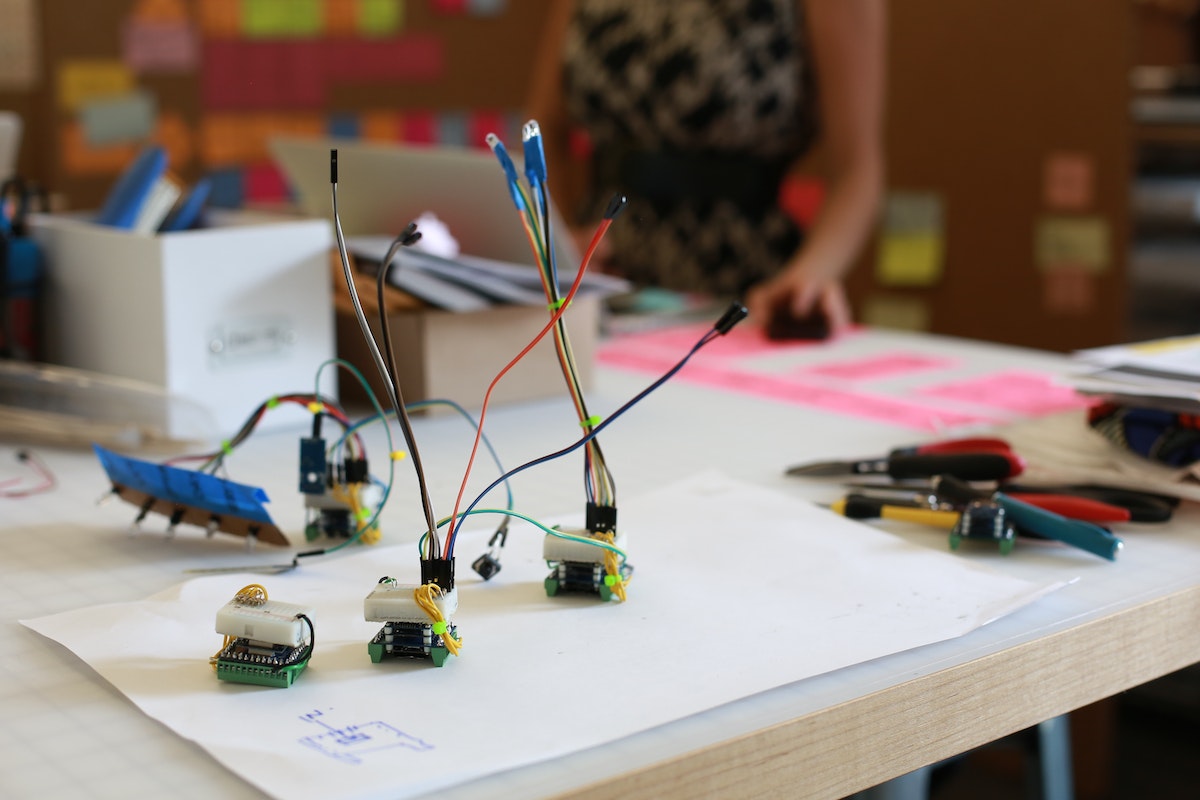
To build the Betel Meter's brain, we used a TinyDuino from TinyCircuits, an Arduino compatible micro-controller with the power of an UNO. The TinyDuino, which is about the size of a quarter, has a brilliant architecture that allows any additional functionalities beyond basic processing to stack on top of each other. This allowed us to keep the core device small, even though it has a real-time clock, a data SD logger, and GPS boards.
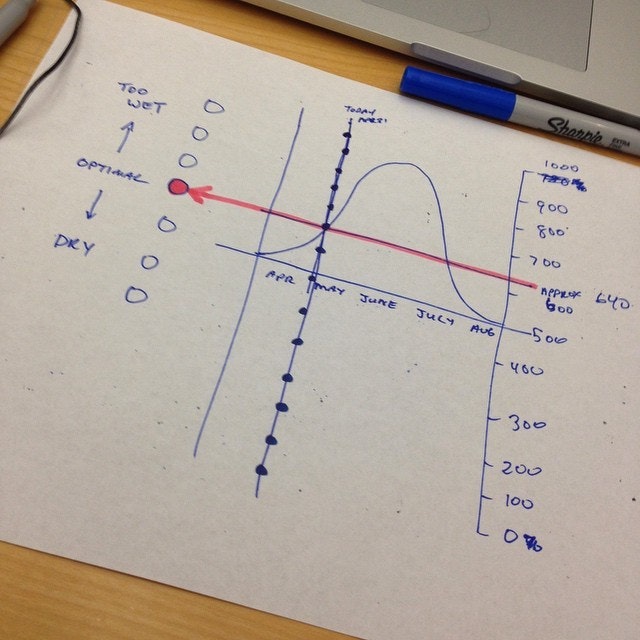
Creating the baseline data for the meter turned out to be one of the biggest challenges of the project. Because optimal irrigation for betel nut in an agricultural zone as specific as northern Myanmar is unknown, we had to rely on white-paper research and some intuition. We first researched ideal moisture conditions for all plant life. Then we normalized evaporation rates for water in sandy soil, and cross referenced it against average temperatures for each month in the region.
The physical
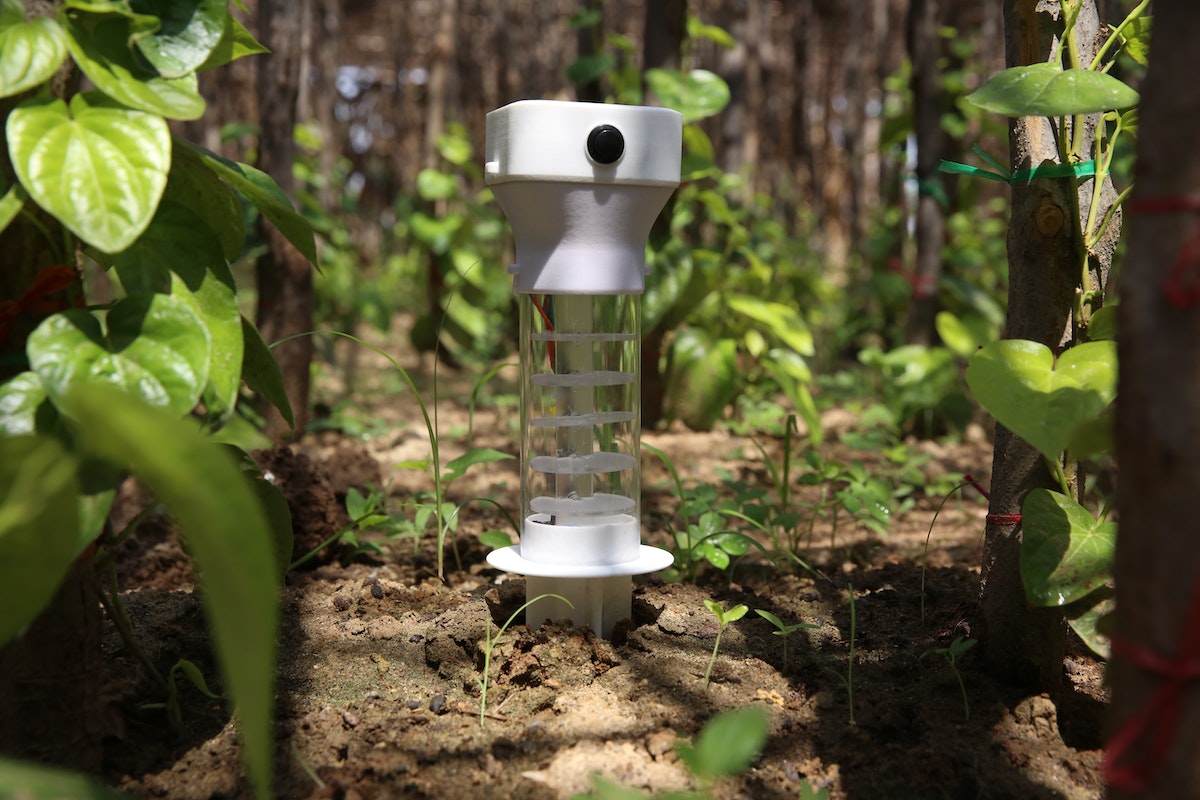
The physical design was equally tricky, since the meter needed to withstand extreme weather for long periods of time to protect the sensitive electronics inside. Luckily, we had IDEO.org's Design Director and Co-Lead of the San Francisco studio, Adam Reineck, on the team. He quickly designed a 3D model in Solidworks and printed the form in nylon, which stood up against heavy rain—and even a sandstorm.
Our early prototypes used USB power banks; however, we knew that the Betel Meter had to be an “always-on” device with a reliable and constant power source. We opted for solar power, something the team had experience with. We began by hacking panels out of old solar camping lights and adding a few resistors and extra batteries to the circuit. That way, we could ensure that the device would store enough energy to power the micro-controller and components through the night.
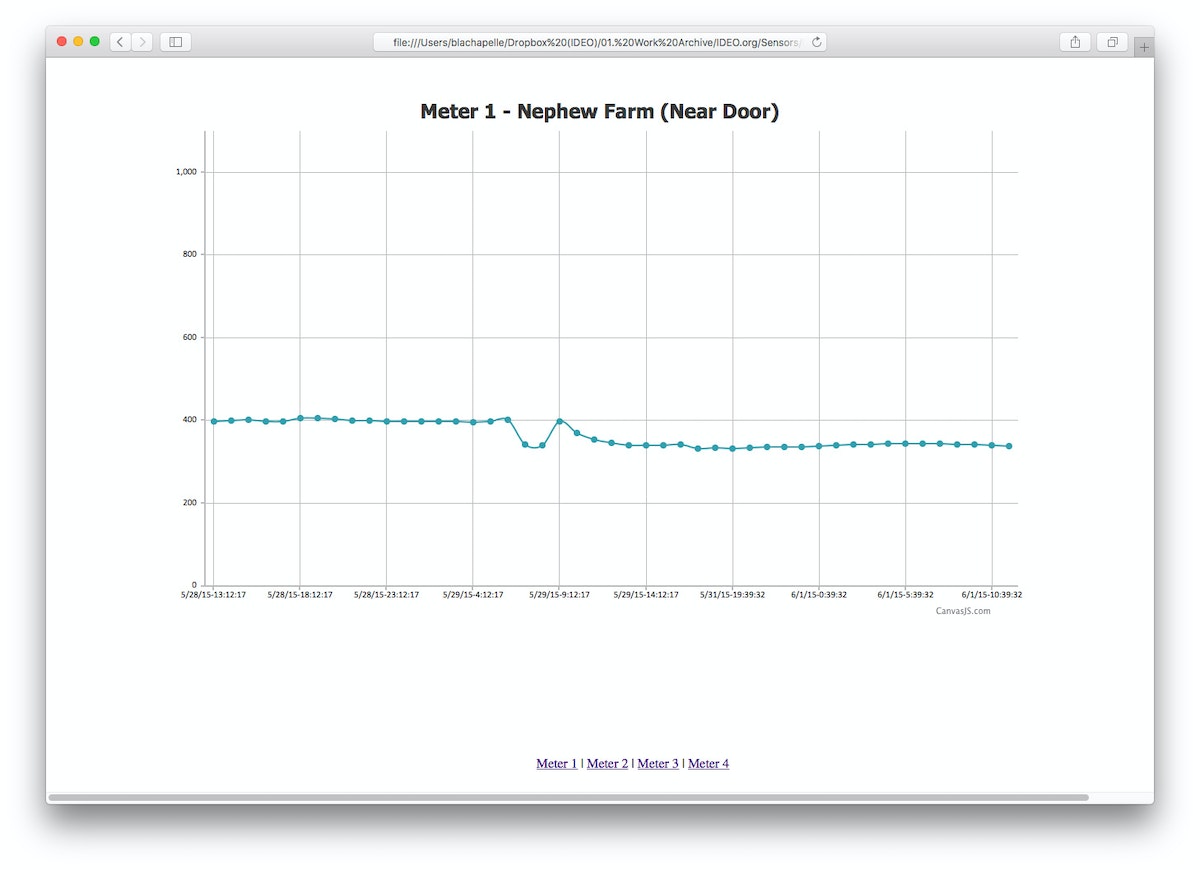
Once we had our prototype, we returned to Myanmar to field test the Betel Meter, planting four of the devices in two fields. Not only did the Betel Meter provide irrigation feedback, it also recorded and created what we believe to be the first-ever dataset around optimal soil moisture for betel nut. People from all over the region came to see and take photos of the meter, and we were continuously asked to come back with the final working product.
From here, our ideal next step is to add machine learning that allows the device's software to evolve from its own data.
Working on the Betel Meter changed my personal approach to design and how I attack problems. Now, on every project, I try to find opportunities to create products that reach deeper into people’s physical lives than pixels on a screen.
Working with such an amazing team, in such a great place and on a product that challenged me the way the Betel Meter did, changed my life. I will be joining the team full time at IDEO.org in New York City this fall, where, hopefully, I will be part of the next chapter of the Betel Meter.
Read more on Fast Company
In my last article, I wrote about a hobby of mine: translating physical objects into digital experiences as a way to test my skills. Like most interaction designers these days, I am fascinated by understanding how digital can connect to our physical reality.

How to Say Goodbye with 20,000 Dowels
As we prepare to move from our current Cambridge studio into a new space around the corner, we can’t help but think of it as a place where many of us began our IDEO journey—sneaking up to the roof for sunset cocktails and riding in the freight elevator to the pop-up gallery in the basement.
In a studio like ours, with a very distinctive creative culture, where people feel like they have ownership over their workspace, a massive, group art project would help us say goodbye together. Not only would it be one last hurrah for this studio, but it would also help reinforce the idea that our culture would be moving with us to the next space.
For years, our tradition at the Cambridge studio has been to reinvent our kitchen wall every six months or so. We’ve created everything from a hand-cut monster wall to a science fiction fine art series (think Yoda portraits in renaissance style). Knowing this mural would be the studio’s last, we wanted to create something that made people think and talk about design—reinforcing our values—and, of course, something big enough for everyone to be involved.
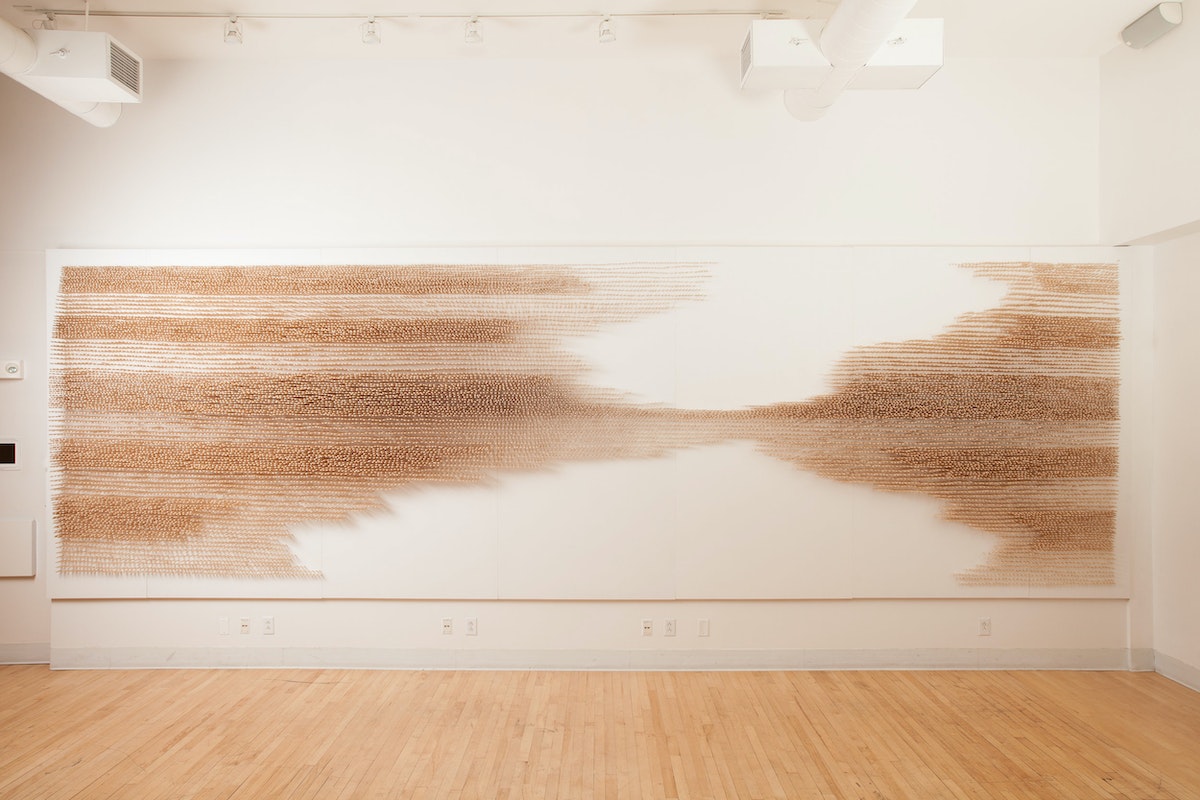
We also wanted to leverage our skillsets—Grace’s in drawing and painting, Greg’s in industrial design and fabrication—to pull together the project. At the time, Grace had been working on a series of dot drawings that caught Greg’s eye. They mimicked that phenomenon in nature when many tiny things form a greater whole. That seemed like a great metaphor for celebrating the multidisciplinary magic of the studio. So we decided to create a drawing as a base, and then scale it up into a wooden dowel installation.
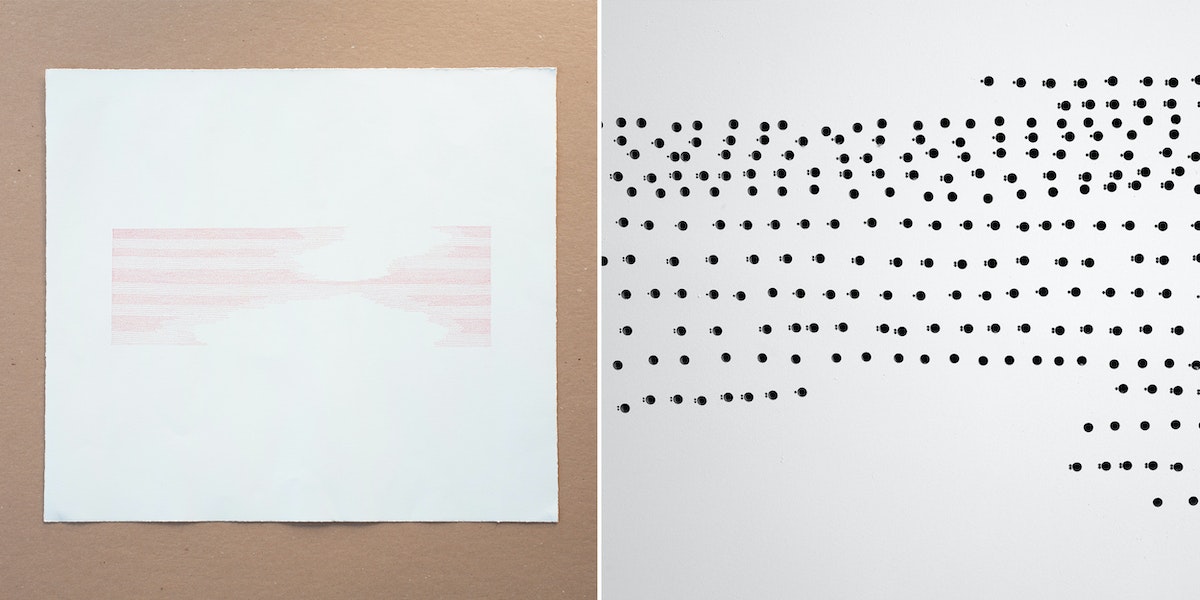
To get started, Grace created the dot drawing (below on the left) that served as a guide for the dowels. She makes these dot drawings (one of which the mural is based on) over several hours of repetitive stippling. First, she measures the margins of the paper using a ruler as a guide, then forms all of the dots by keeping her hand as straight as possible.
We then scanned the drawing and used a Processing script that located the coordinates of each dot. Next, we used a custom Grasshopper script to place a circle at each centroid and extrude it up to the 3d surface that we created in Rhino. From there, we just exported the lengths of the dowels in order of installation to a CSV file for Chop-Chop, our cutting machine.
If we could design a method to cut the dowels in order, and then get the installers to place them in that same order, we’d be in business. To do it, we needed some way of organizing the dots into rows for the installers to follow—even though they’re not a perfect grid, since they were drawn by hand. By using Grasshopper script, we were able to find logical rows within the hand-drawn pattern.
Since the rows’ zig-zag route only appears in the software, we needed some type of marker for our installers to follow. By using a dot, double-dot, or no-dot marking scheme, we made it easy for our teammates to to identify and stay in their row, even if it zig-zagged.
The panel production took us seven days. We used a ShopBot Alpha to mill each hole, then made a second pass to mark the hole with the appropriate dot pattern.
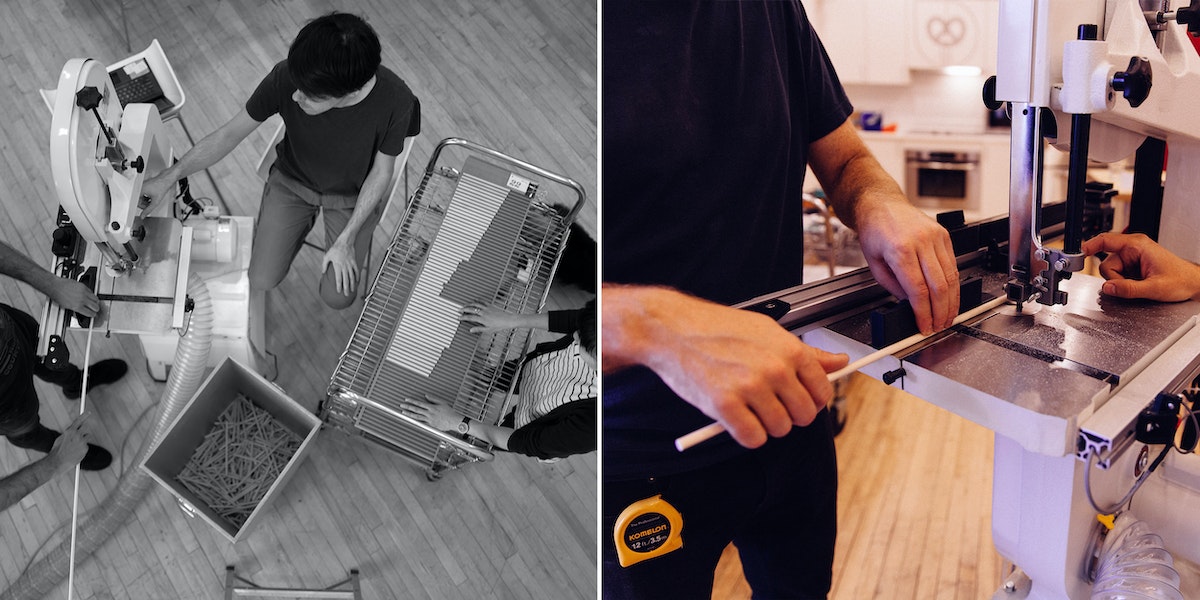
Each of the 20,000 dowels is a different length, so we built a CNC bandsaw to help us cut them all. After sketching a few concepts, we settled on a JET bandsaw augmented with a custom digital stop.
We created the digital stop using parts we designed and 3D printed, as well as stock parts from Adafruit, Misumi, McMaster-Carr, SparkFun, and Arduino. Arduino reads the length of each dowel from the SD card, then turns a stepper motor and timing belt, moving the stop to the correct length. Once the dowel is cut, the miter sled hits a switch and tells the stop to move to the next position. Once we were in a rhythm, the process was pretty smooth.
One of the goals of this mural was to maintain the feeling of human touch that’s so obvious in the original drawing once we scaled it up to the mural. So we decided to design a straightforward process for our installers, and then chalk up any misplacements to the artistry of human error. As we chopped the dowels, we slotted them into trays marked with row number, tray number (some rows had up to 6 trays), and the dot scheme, so the installer knew where to start.
Four months later, we were ready for the big install. We invited the entire studio to come in on a Saturday morning, and we were blown away by the number of people who trickled in. Before we knew it, close to 40 people were helping out. Some heroes even stayed until 2 a.m. There were people hammering in dowels, cutting on Chop-Chop, filling trays, documenting with photo and video, and making beer runs. The assembly lines were staggeringly efficient and fun. It was a robot love fest.
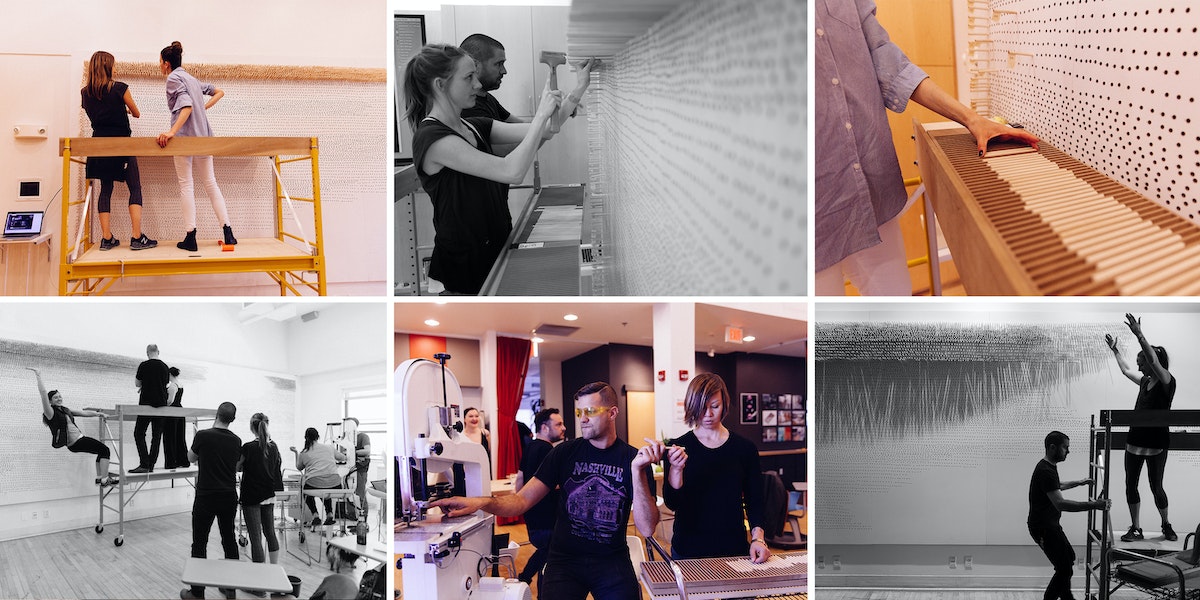
We had hoped that there may be some errors in the process and we were happy to see them. You can find these beauty marks where the surface of the dowels gets uneven—that kind of inconsistency is impossible to predict or design, and it completely enhanced the beauty of the piece. Working together with the studio on a piece defined by the installers was a true bonding experience. It was an inspiring weekend for all of us, and we know that we’ll carry that with us in our move around the corner.
Music by Dan Deruntz. Footage by Chris Wright, Tom Kershaw, Dirk Ahlgrim, and Greg Wolos.
Materials: 20,928 birch dowels, 5/16” diameter; 7 MDF Panels, painted white; jet bandsaw; custom linear slide; Arduino MEGA; Big Easy Stepper Driver; Adafruit LED display; stepper motor; timing belt and pulleys; limit switches; custom 3D printed parts
Software: Rhino, Grasshopper, Processing, Arduino
Suppliers: Adafruit, Misumi, McMaster-Carr, SparkFun, Jet Tools
As we prepare to move from our current Cambridge studio into a new space around the corner, we can’t help but think of it as a place where many of us began our IDEO journey—sneaking up to the roof for sunset cocktails and riding in the freight elevator to the pop-up gallery in the basement. We knew giving it a proper goodbye should mean involving everyone.

Lindsey Turner
I’m passionate about building brands, products, and experiences that help organizations show up with meaning and momentum.
I help organizations cut through complexity by shaping how they show up, through brand strategy, identity, and storytelling.
Working at the intersection of brand and business, I bring an editorial eye and a bias toward making—turning ideas into tangible experiences that people can understand, trust, and believe in.
My work spans government, healthcare, financial services, media, and consumer goods, from launching Gen Z-focused ventures to building innovation labs and reimagining legacy brands. I relish moments of ambiguity and enjoy translating across teams, perspectives, and priorities to move ideas forward.
I started my career in editorial and digital design, shaping cross-platform experiences and identity systems in publishing and agency environments. That foundation still shapes how I work today: I’m detail-oriented, collaborative, and overreliant on the Oxford comma. I hold a BFA in Visual Communication from the School of the Art Institute of Chicago.

Rachel Young
My work helps organizations see who their products aren't working for—and build the will and the tools to do something about it
For 25 years, I've asked the same question: Who does this design exclude—and what are we going to do about it?
My work spans human-centered strategy, inclusive design, and qualitative research, with clients ranging from Microsoft, Google, and Verizon to the National Science Foundation, and San Francisco Unified School District.
Before IDEO, I taught elementary school in East Palo Alto and spent a decade doing design work with social service organizations—where I learned firsthand what it costs people when systems are built without them in mind.
I am currently writing User Error, a nonfiction book about digital access and the design decisions behind it. I live in Oakland, California.

Brian Pelsoh
I lead with craft, ensuring our work is creatively excellent: rooted in deep human insight and imagination, while also grounded in the realities of business and technology.
My expertise spans brand, communication, and product design across tech, education, the arts, and social impact.
I believe great work demands both high-level vision and obsessive attention to detail, and only happens through collaboration.
I bring an inclusive, hands-on approach and a deep understanding of business, which enables me to consistently deliver excellence while always asking why.
Before joining IDEO, I worked at the brand firms Pentagram and VSA Partners. I began my career as a designer, leading teams at the School of the Art Institute of Chicago and the Milwaukee Art Museum. I hold an MFA in graphic design from Maryland Institute College of Art and a BFA in communication design from the Milwaukee Institute of Art & Design, and have taught at some of the best design schools in the US.

Tony Wong
I am responsible for IDEO’s long-term success in China and working with clients to use design as a tool to enable growth.
I am responsible for IDEO’s long-term success in China and working with clients to use design as a tool to enable growth. Specifically, I have helped Chinese companies design holistic brand solutions through the development of their products, communication, services, and innovation teams, and I have helped multinationals expand their presence and influence in China.
I advise global leaders on developing China-led innovation and capabilities.
In over 15 years in IDEO Shanghai, I have worked on projects that use design to elevate the quality of the experience of healthcare products and services, streamline processes that increase productivity, create spaces and programs that promote and enable inclusive communities, and build next generation mobility solutions that are planet-positive.
Before joining IDEO, I worked at Philips Electronics and the Electrolux Group in Italy, the Netherlands, and Singapore on a number of breakthrough commercial products. I am a member of the Young President Organization in Shanghai.

Building a personal AI for the messiness of life: Sida Li
Most AI products today are built for work—a space with clear problems and established systems. One founder noticed a gap: personal life is messier, harder to systematize, and mostly left behind by the AI boom. So she built Cue, a personal AI that lives inside iMessage and group chats, to go where the other tools haven't.
In this episode, Becca Carroll, IDEO's Chief Strategy Officer, talks with Sida Li, co-founder and CEO of Shared Context Lab, about staying anchored to a human need while the technology around her keeps changing shape, why she treats her business model with the same rigor she'd bring to a product, and what it feels like to build a company at this particular, disorienting moment in AI.
The conversation also gets into how Sida makes design decisions: the language Cue uses to describe itself, the tradeoffs behind building inside iMessage instead of a new app, and a real story about a business idea that didn’t pan out.
This is the second in a two-part series profiling founders from IDEO's Startups-in-Residence program. The first conversation is with Johannes Seemann, founder of Sooner, on designing GenAI for the emotional side of money.

Designing GenAI for the emotional side of money: Johannes Seemann
Most personal financial tools are built to run the numbers and optimize towards a budget. While that works for some, most people experience money as a lived relationship that does not neatly fit into a spreadsheet. Johannes Seemann and Becca Carroll discuss why money is emotional before it is mathematical, and what a human-centered approach to building a generative AI financial product looks like in practice.

The curious leader's edge in uncertainty: Scott Shigeoka
Mina Seetharaman talks with Scott Shigeoka, author of Seek and Head of Curiosity Cultivation at the Eames Institute, about what distinguishes genuinely curious leadership from performative curiosity, how power dynamics shape curiosity, and why practicing curiosity can restore energy rather than drain it.

How constraints make us more creative: David Epstein
Mina Seetharaman talks with David Epstein, author of Inside the Box and Range, about why total freedom often produces average work, how leaders can design useful limits on purpose, and what organizations such as General Magic and Pixar reveal about the relationship between boundaries and creativity.
Looks like you might be in search of something very specific?
Or reset the filters above and try another angle.
Here’s some random inspiration

Podcasts about creative leadership

Articles about the power of prototyping
