
.svg)




A blueprint for transforming pediatric obesity care
Charting a healthy path for children and families on Medicaid.
Obesity exists at the complex intersection of a clinical condition and a cultural force. Clinically, it comes with a diagnosis and treatment plan. Culturally, it is influenced by beliefs, identity, and self-worth, making it deeply personal and often taboo. Families, healthcare providers, and experts tend to avoid the fraught “o-word,” opting for euphemisms instead. For families on Medicaid, these challenges are even more pronounced. Award-winning health-tech startup Clarity Pediatrics, together with designers from IDEO, IDEO.org, and with support from Rise Together Ventures, sought to uncover the obstacles to healthier lifestyles and create a free report for US pediatricians who want to bend the curve on the childhood obesity epidemic.
Research with kids and parents on Medicaid in Dallas, Texas, and California’s Bay Area, along with interviews with healthcare providers and experts across the country, uncovered stories of stigma and frustration. Parents spoke of the daily challenges of balancing multiple jobs, sourcing affordable healthy food, and finding time to make necessary lifestyle changes. They described rushed pediatric visits that left them with unclear next steps and feelings of blame. Provider conversations echoed these struggles, noting time constraints and limited follow-up options.
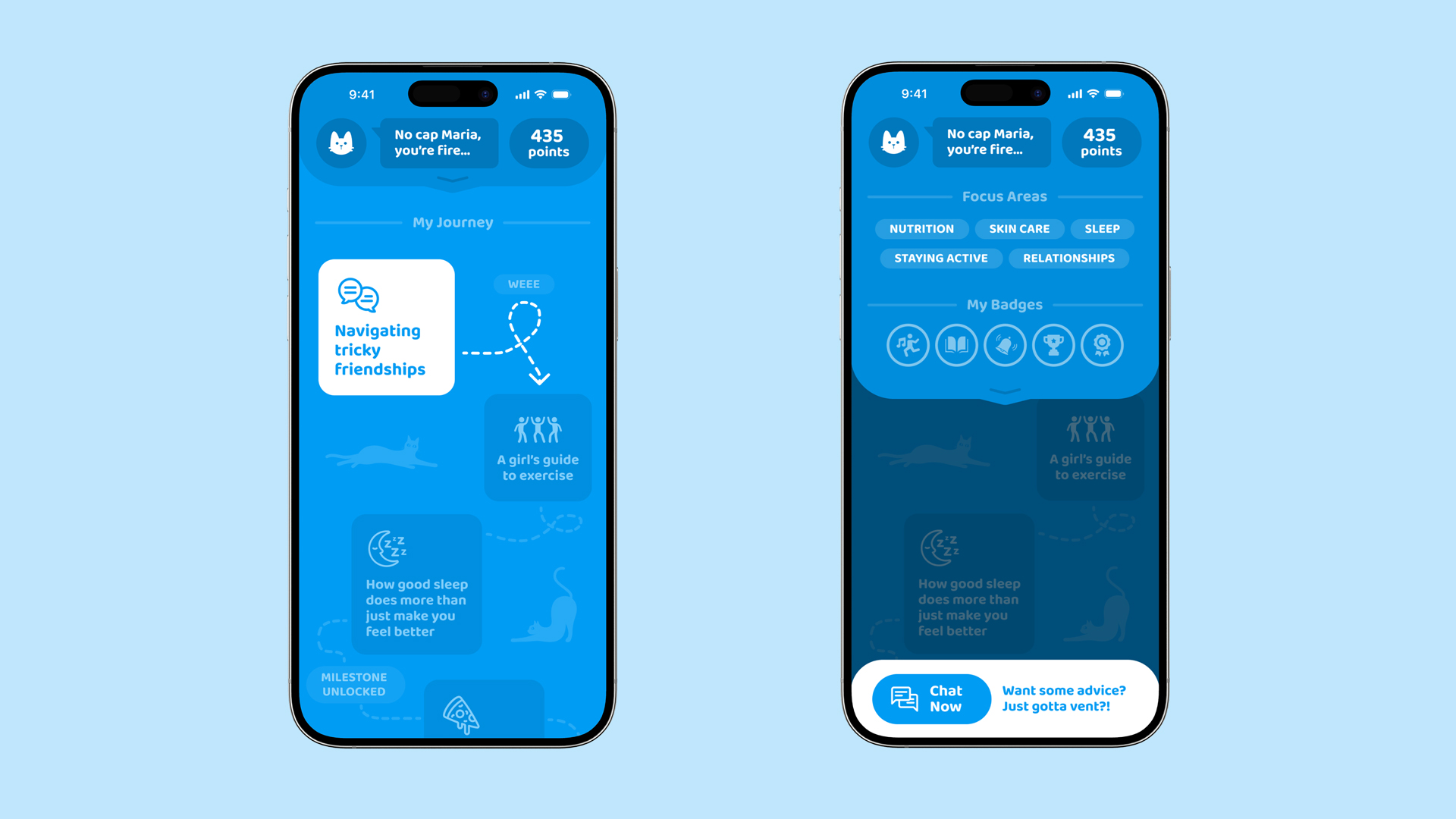
Ultimately, food had become a daily torment for these families. Eating was unavoidable and also one of the few affordable indulgences low-income parents were able to provide. Once kids left their own homes, they were surrounded by unhealthy temptations, making it feel impossible for parents to maintain control. The popularity of costly new weight-loss medications and surgical procedures added another layer of complexity for families who had been underserved by—and therefore distrustful of—America’s healthcare system. With so much of the responsibility placed on parents to self-direct care, inequities deepened, adding to the burden of families already at a breaking point.
To design a path forward, IDEO and IDEO.org mapped a family’s needs before, during, and after pediatric visits. This work revealed critical parts of the journey where families needed more support: recognizing early signs of obesity, navigating provider conversations, and sustaining healthier habits at home.
These insights informed a theory of change framework that provides actionable guidance for stakeholders involved in obesity care. Grounded in three opportunity areas along the patient journey—building awareness, confidence, and capacity—the framework highlights how trust, dignity, and systemic support can lead to lasting outcomes.
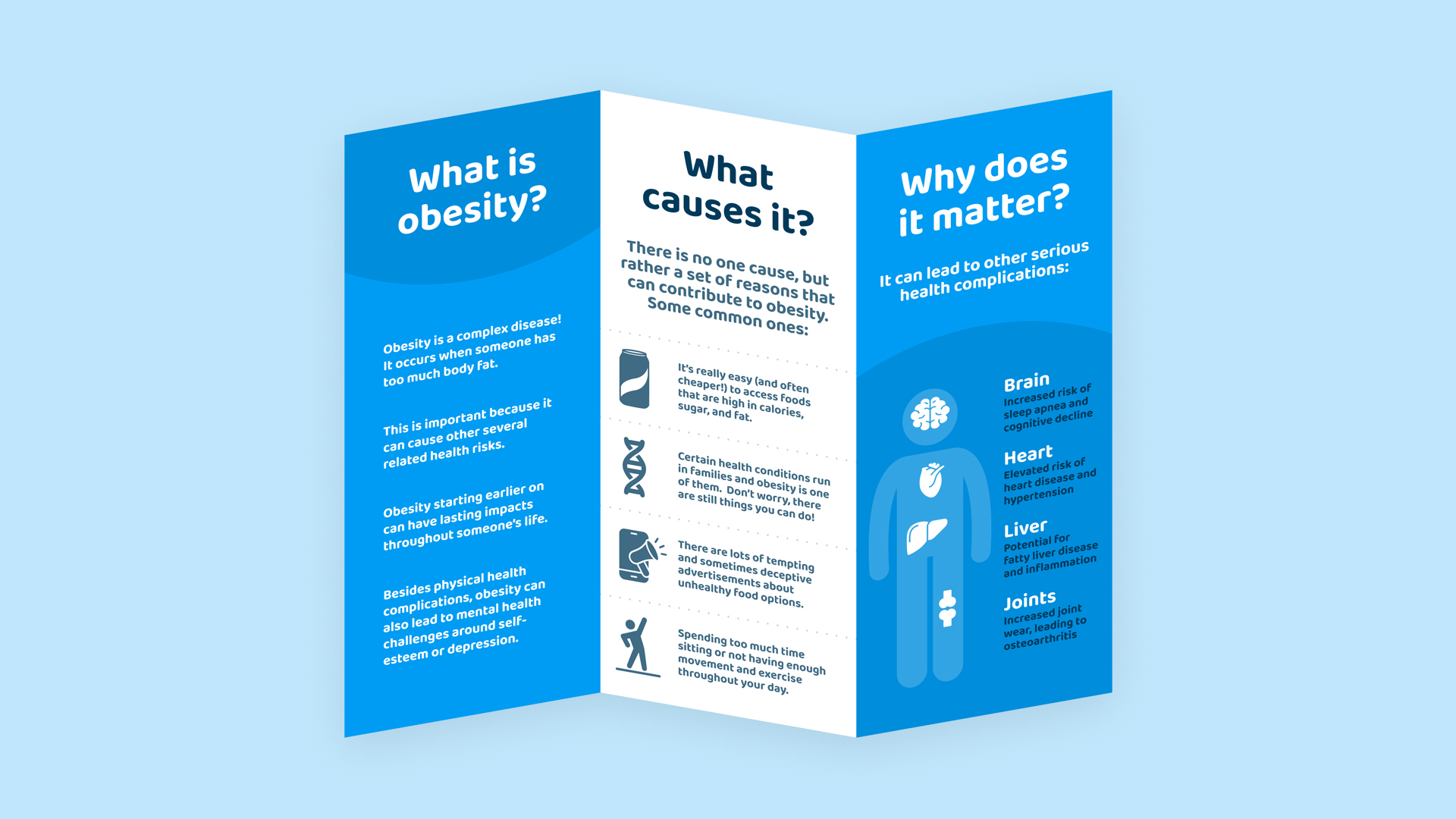
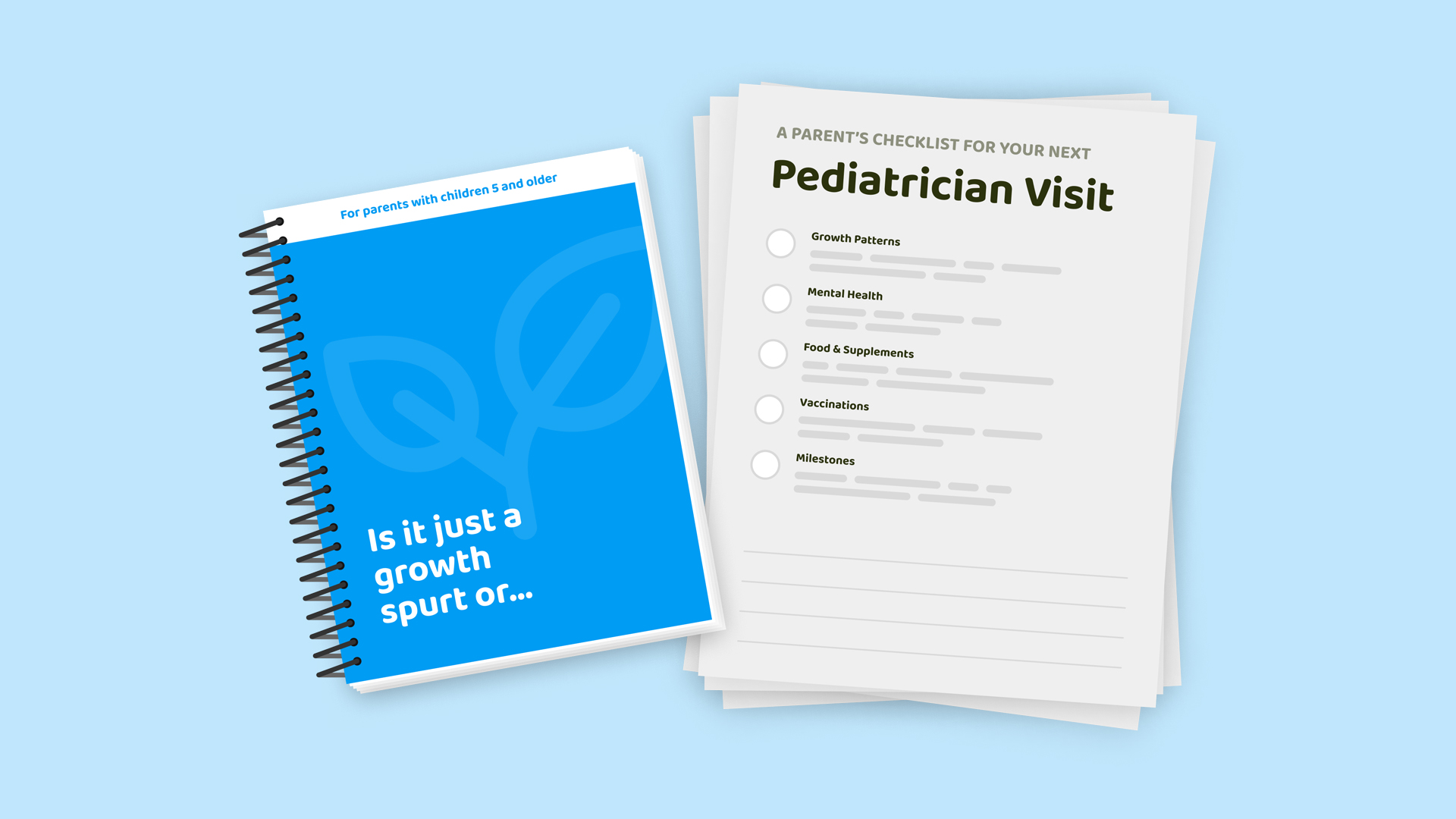
IDEO and IDEO.org also developed 10 user-centered concepts spanning digital, physical, and service offerings to reduce stigma and empower families to sustain healthier lives. These ideas address dignified diagnoses and structural inequities, among other pressing issues. Complementing these concepts, IDEO created a short documentary of a mother discussing her family’s experience navigating childhood obesity to help pediatric providers—many of whom have had very different lived experiences from the families and patients they serve—better understand the realities of the daily struggles of many families on Medicaid.
Designed for the public good, the interactive website and free downloadable report, Reimagining Childhood Obesity, contain research findings, design recommendations, and a theory of change framework. The goal: provide practical, actionable guidelines for pediatricians, educators, healthcare organizations, and innovators to meet families and kids where they are and support them as they move toward a healthier future.
21% of US children are obese. 40% of Latino youth are either overweight or obese.
26% of kids on Medicaid experience childhood obesity, compared with 11% on private insurance.
525,600 minutes: Total time per year parents spend caring for their children. 17 minutes: Average time a pediatrician spends with a child during their annual exam, a small window to address a complex chronic condition such as obesity.
10
user-centered ideas to help pediatricians reduce the stigma of childhood obesity in an accessible report
3
opportunity areas for building trust with young patients and providing family support
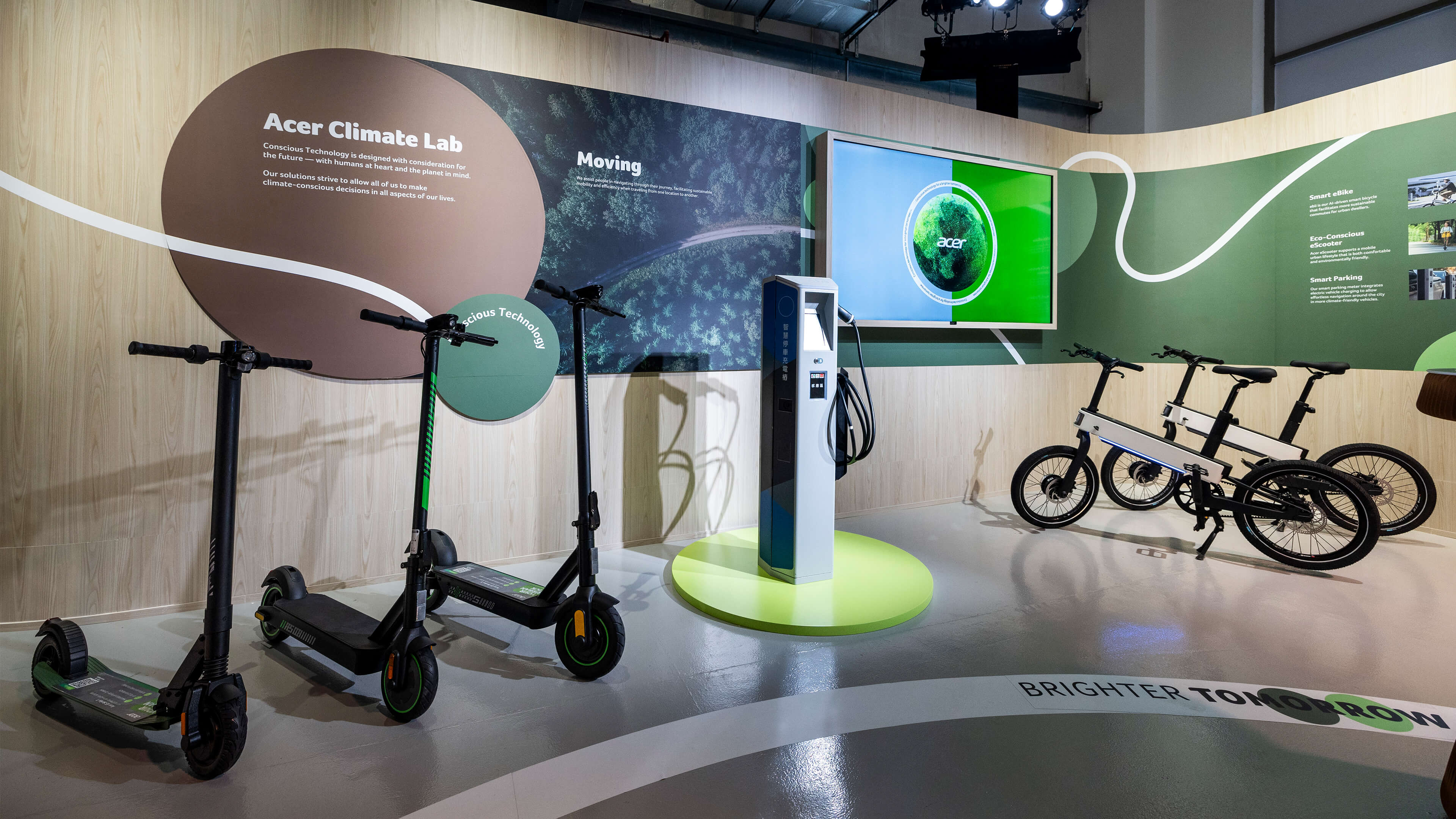
Building Acer’s Climate Lab
How a consumer electronics giant is turning sustainability into an engine for growth.
With its reach, Acer saw an opportunity to power positive choices in the billions.
But new products and services won’t succeed if consumers don’t want them, no matter how sustainable they are. A few years go, the Harvard Business Review’s report, "The Elusive Green Consumer," found that about two-thirds of those surveyed said they wanted to buy brands that advocated sustainability. But only a quarter actually did.
Meanwhile, the market for climate era products is only growing: In 2022, Forbes found that nearly 90 percent of the Gen X consumers they surveyed said they’d be willing to spend more on sustainable products, compared to just over a third two years before. The desire was only higher among Millennials and Gen Z; they just didn’t like what was on offer.
To drive sales and growth, and meet its sustainability commitments, Acer needed to capitalize on desirability, deepening the connection between Acer’s sustainable options and consumer needs, lowering the barrier to purchase. To that end, Acer and IDEO created the Acer Climate Lab, a cross-organizational team and initiative, to launch the company on a transformative journey to deepen the connection between Acer's conscious technology and the realities of people's lives and needs across four strategic areas.
Together, the combined team conducted extensive research to better understand consumer attitudes and behaviors toward sustainable products, and identified everyday areas where Acer’s conscious technology might be able to have the most significant impact: living, working, moving, and learning.
- Living: Envisions homes as hubs of energy efficiency and climate resilience, leveraging technology to optimize energy use, enhance air quality, and enable proactive climate management. These concepts include technologies like smart energy systems, adaptive air solutions, and integrated home management platforms explore how technology can support sustainable daily living.
- Working: Reimagines the workplace with flexible, sustainable technology solutions that prioritize resource optimization and circular practices. Concepts such as Acer Loop could provide a subscription-based model that ensures access to the latest technology, supports remote work, and reduces electronic waste through effective recycling and rehoming practices.
- Moving: Focuses on the transformation of urban mobility by integrating technology into systems that promote sustainable transportation. Concepts could include e-mobility hubs that highlight how urban spaces could offer seamless access to shared, low-emission travel options, reducing reliance on traditional carbon-heavy methods.
- Learning: Explores pathways to sustainable education by imagining environments where technology supports circularity and accessibility. This includes ideas like refurbished devices for students, repair and reuse programs, and educational spaces designed with climate-positive principles, nurturing eco-conscious habits in future generations.
Together with Red Peak and Sid Lee, the team launched the culmination of the work at COP28, the United Nations Climate Change Conference in Dubai, positioning Acer as a pioneer in climate positive technology. The exhibit included immersive experiences and interactive displays demonstrating how Acer's sustainable solutions seamlessly integrate into everyday life. Visitors could engage with scenarios depicting sustainable living, working, moving, and learning, emphasizing the practical benefits of Acer’s innovations.
Acer's journey through the Climate Lab project underscores a commitment to sustainability that goes beyond mere compliance. With this new cross-business team tackling the real-world barriers faced by consumers, Acer is paving the way for a more inclusive, sustainable future. This initiative not only aligns with global climate goals, but also sets a precedent for the tech industry, demonstrating that with the right approach, sustainability and innovation can go hand in hand.
In a survey, 65% of respondents said they want to buy brands that advocate sustainability, yet only about 26% actually do.
Nearly one in two consumers say they either don’t know what information to trust, or that nothing can influence how much they trust a business’s commitment to sustainability.
1 cohesive strategy
for climate era products across 6 different fields
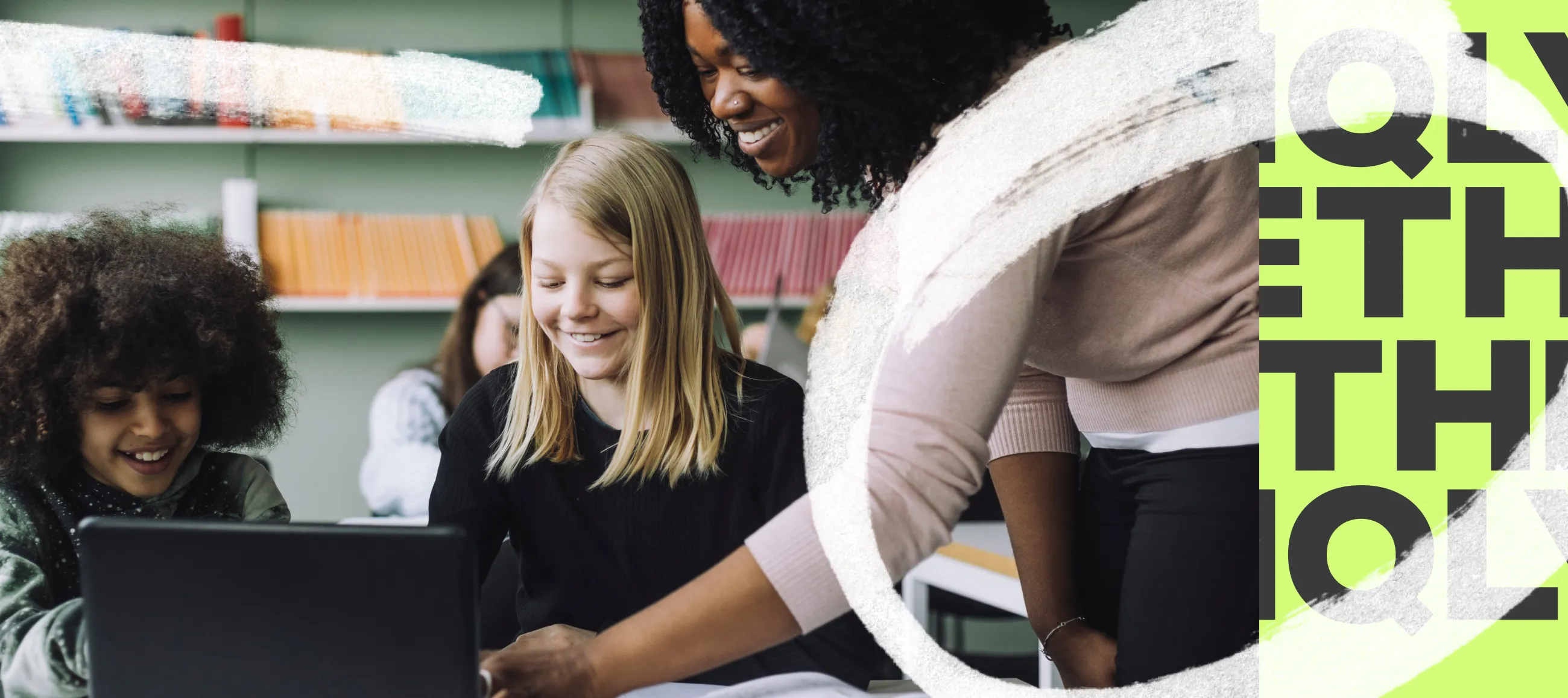
A better way to teach writing, with AI
Ethiqly empowers time-strapped teachers to provide feedback at scale.
With the introduction of generative AI, Ethiqly and IDEO saw a unique opportunity to help teachers, by cutting down the time it takes to provide each student with feedback on their writing assignments. But to get there, they had to learn from the experts themselves. To kick off the project, the team headed into the classroom to co-design with students and teachers.
One of the first problems they discovered? Traditional methods of grading essays are laborious and inefficient for high school teachers, who are already notoriously busy and overworked. What teachers really wanted was to spend time giving each student the personalized feedback that helps them grow. Meanwhile, students really struggled to get started on their writing assignments, overwhelmed by looking at a blank page.
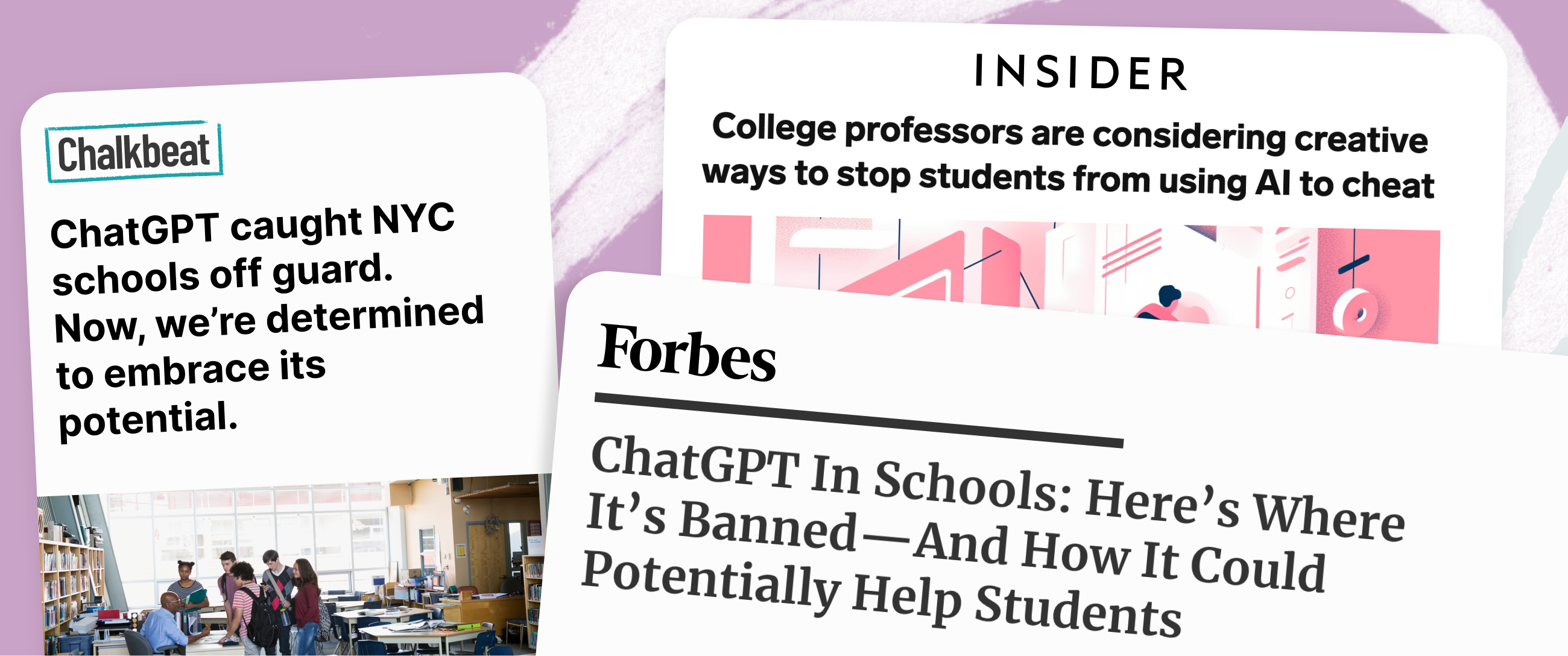
Together, the team started to think about how it could harness AI to make personalized instruction more accessible for all students, helping teachers provide better feedback at scale, and giving students the support they need to not only get started on their writing assignments, but improve their work.
With insights directly from students and teachers, the IDEO team built working prototypes, allowing them to beta test the product in schools, and demonstrate value to investors. They also developed a brand identity and style guide for launch, which came to life in a pitch deck, landing page, and other brand expressions.
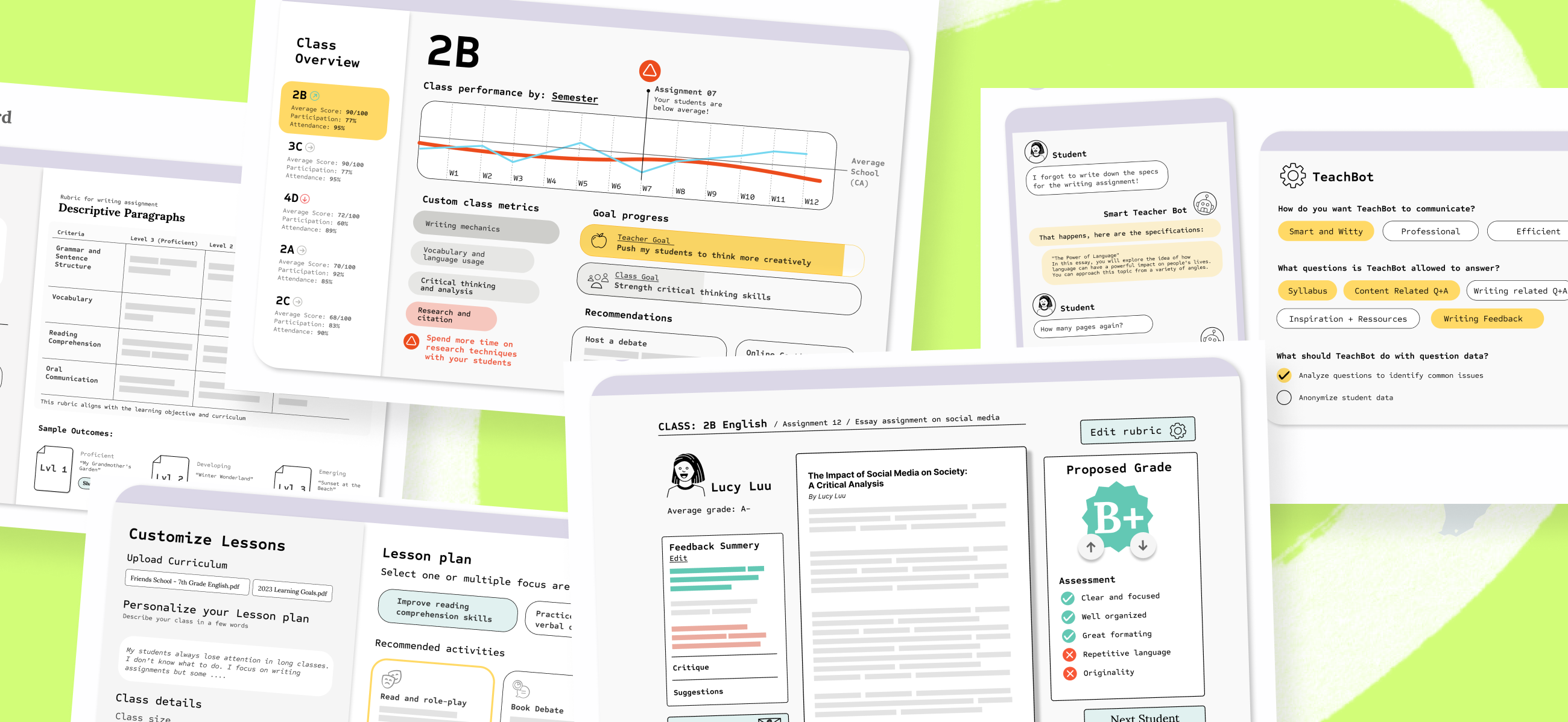
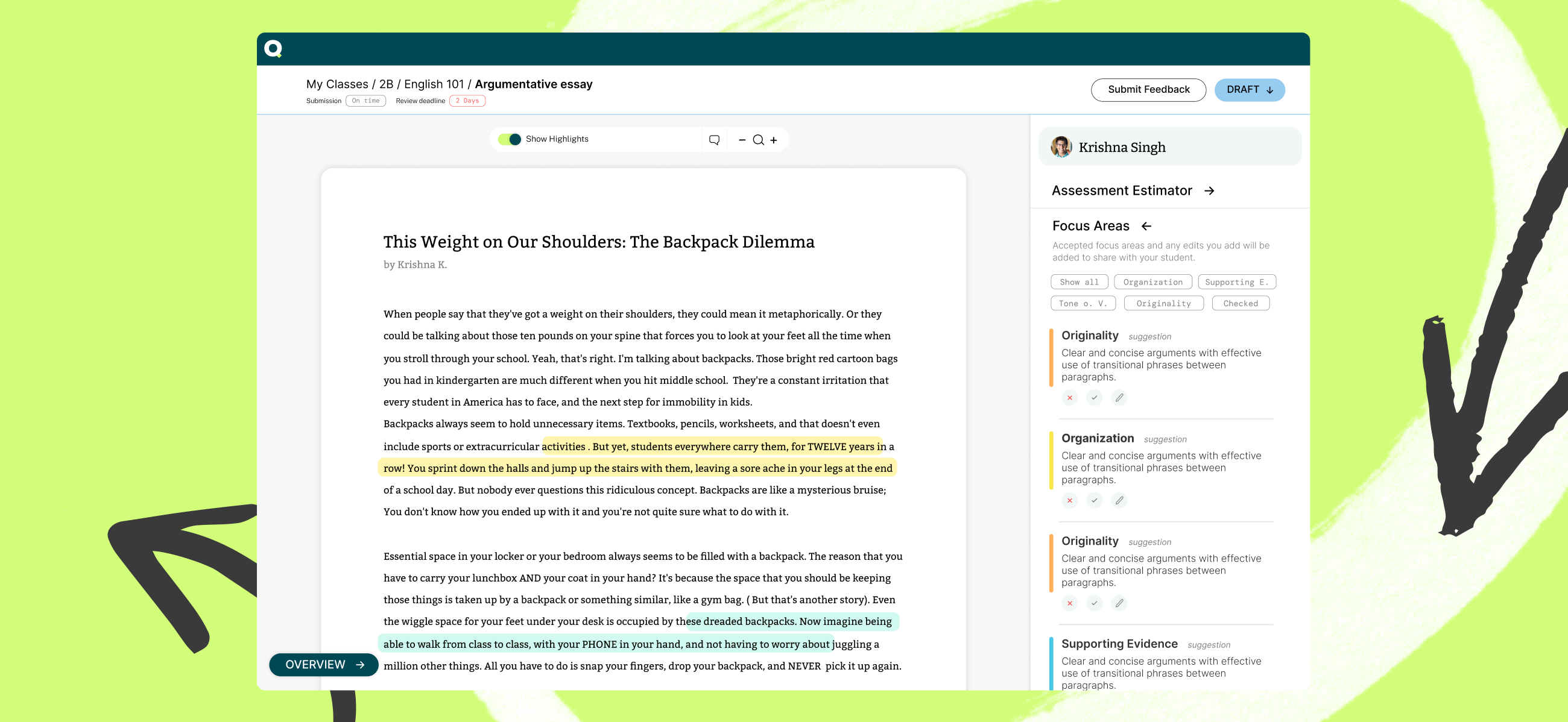
The resulting product is a sophisticated blend of AI technology and user-friendly interfaces that empower teachers and inspire students. The goal isn’t just to get to a finished essay, but to assist students in developing critical thinking skills. Ethiqly's tools help students organize their thoughts and get writing by providing contextual prompts and suggestions—without doing the work for them. And the AI assistant supports teachers by suggesting comments based on evaluation criteria they have set, and teachers choose which feedback is relevant for their individual students. Students never see it without teacher approval.
As one teacher told the team, “With leveraging AI more in education, there’s this fear that it’s deprofessionalizing the field or it’s a direct replacement of a teacher in a classroom. I think it gives us meaningful data, so that we can actually teach the way that we want to in order to support our students.” Now, Ethiqly is in use in classrooms in 25 countries, positively impacting students across the globe.
Teachers know 1:1 interaction is key to student success, but an EdWeek survey found only 46% of teachers’ time is spent teaching, while 25 hours/week goes to other tasks like grading and making lesson plans.
25 countries…and growing
Ethiqly’s reach in classrooms around the world
Designing a park for generations to come
Frisco, Texas, imagines an ambitious city park for an evolving community.
Designing a piece of a city, like a park, doesn’t start with a blank slate. There are always traces of the past and the present, and the lived history of its residents.
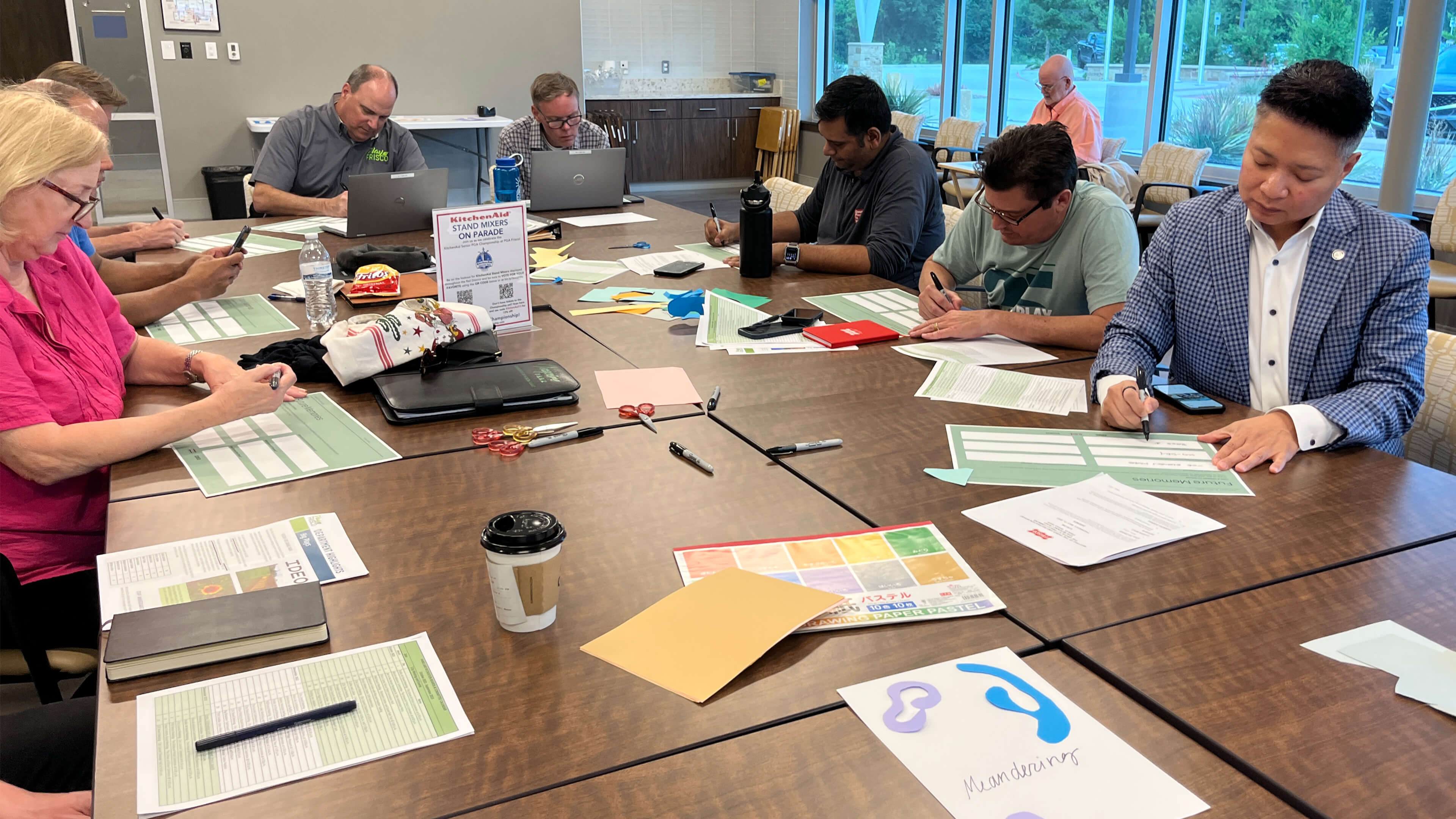
To create a full picture of that story, the IDEO team built workshops for the community centered around questions about the unique experiences of living in Frisco. They invited them to reflect on the communities they grew up in, the city of today, and the public spaces that have played formative roles for them.
From their answers, a common value emerged: heritage. Frisco is a rapidly growing city, with residents whose families have lived there for centuries living side-by-side with more recent neighbors from diverse cultures and ethnic groups. Participants shared a vision of Grand Park as a unifying, shared space, a backdrop where many families can form foundational memories in Frisco.
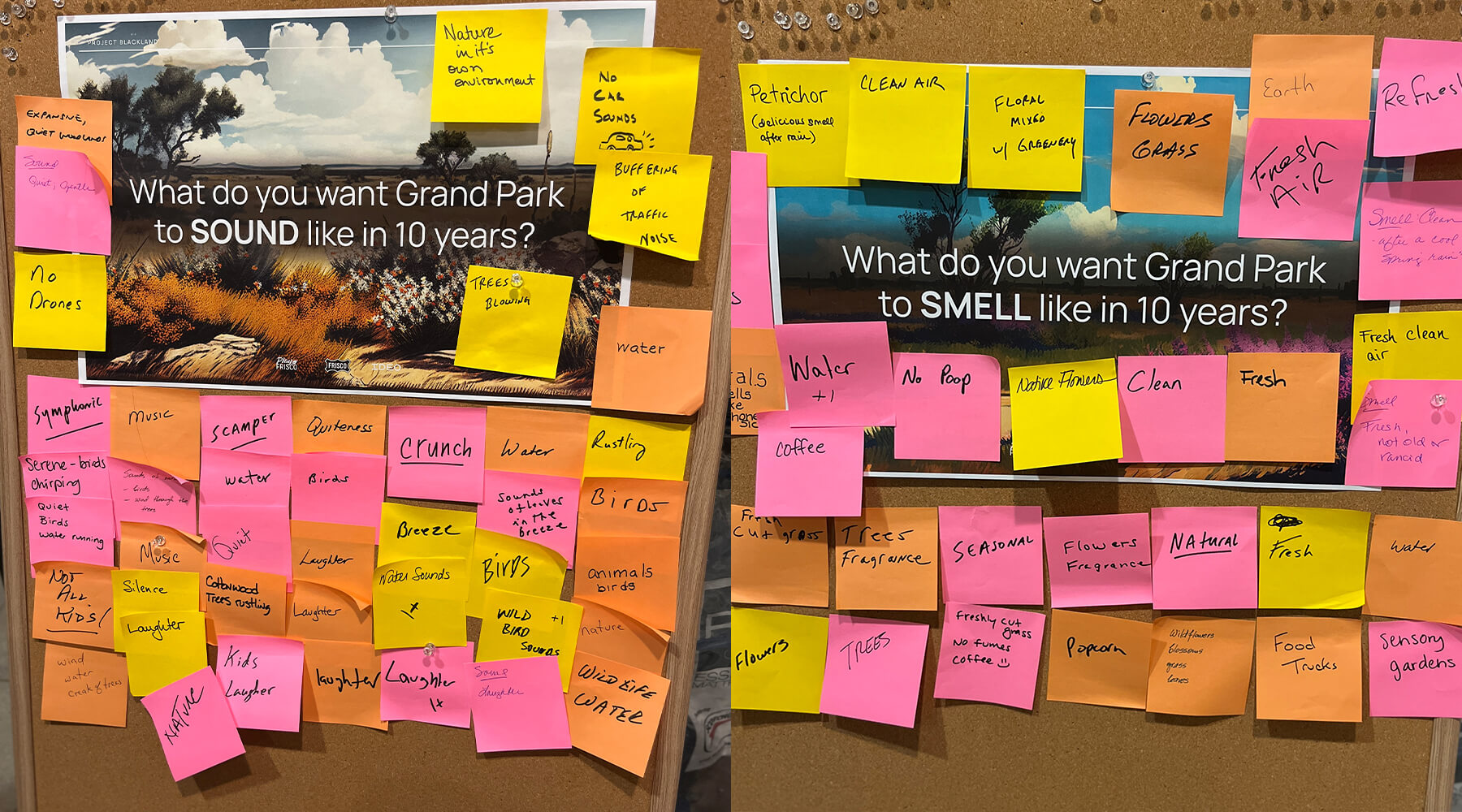
Next, IDEO brought in multisensory design prompts to help participants further conceptualize the park. How did they want it to feel, sound, and smell? In the built-up, suburban city of Frisco, residents imagined a space that was less planned, enabling guided wandering and exploration. They also hoped that the park would inspire loved ones and descendants to feel a sense of curiosity and wonder.
At the end of workshops and sessions with community groups, the IDEO team took Polaroids of participants, asking, “What’s one word you want to describe Grand Park in the future?” Those words informed the collective vision that IDEO delivered to the city of Frisco, which included spatial concepts, user journeys, and branding for the park, all designed to showcase its unique landscapes. In January 2024, Frisco City Council approved the vision statement, and officials expect to break ground in the second half of 2025.
The population of Frisco is growing rapidly; its population is up 516% since the year 2000.
At more than 1,000 acres, Grand Park in Frisco is even larger than Central Park in New York City.
Less than 1% of Blackland Prairie soil remains in the region, and some of it is in Grand Park.
94
Frisco residents were engaged in the process, from City Council members to high school students
200+
respondents shared anonymous feedback on what they imagined the park should be
The intimacy and complexity of shooting portraits during a pandemic
One designer has found virtual photoshoots just as meaningful as shooting IRL.
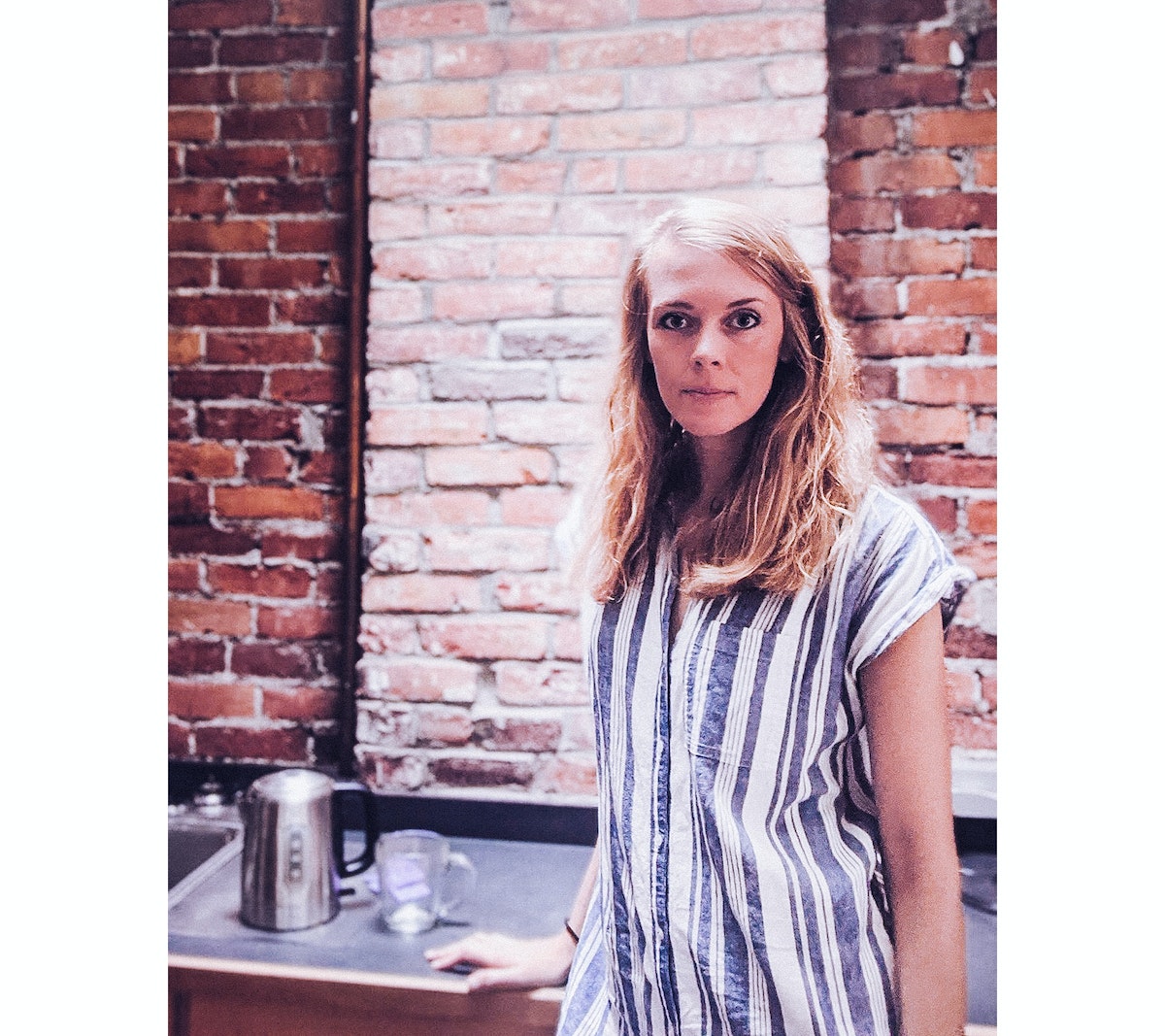
Her face, sitting in front of a beautiful brick wall, had been on my screen for weeks as we worked on our current project. Before COVID-19 sent us off to work from home, we used to work together on projects at the IDEO Cambridge studio. Now she was living in yet another window on my desktop.
I’m an interaction designer by trade, but I’m also a photographer. I’ve managed to bring those two passions together in my work at IDEO. Now, with all the available software, I can do the former from my house, but I had pressed pause on much of my photography work—and I missed it.
From my couch, I realized I wasn’t missing the weight of my camera or meticulously packing my camera bag—I missed people. Could I recapture the magic of an in-person portrait session from my living room? And could I make all these video calls feel less soul-sucking in the process?
Given the constraints of a global pandemic, I asked myself a how might we: How might we photograph people in a socially-distanced way while still preserving a sense of intimacy?
That’s where Tamara comes back in. I’d seen one or two photographers shoot “virtual portraits” online and I was inspired to give it a go. I was nervous, but experimenting with somebody I knew from “real life” prevented the process from feeling too daunting.
It went like this: During (yes, you guessed it) a video call, I asked Tamara to choose a few well-lit places in her home where she’d been spending a lot of time during lockdown. As she showed me her apartment through the laptop’s camera, it was like the world suddenly expanded.
We decided on a spot in the kitchen where she had been making a lot of tea. In order to frame the shot, Tamara created an improvised laptop stand using a chair. I asked her to open the camera on her phone and set it to selfie mode with a 10 second timer. She positioned the phone next to her laptop and we worked together to match the angle of the phone to what I was seeing on my screen as closely as possible.
Then Tamara pressed the button on her phone to begin taking photos and I gave direction on positioning and lighting. Waiting for the countdown on the timer was a little awkward, but not awful, especially since we knew each other well. Then I would review the photos as she sent them via text.
The final result was pretty good. Tamara looked relaxed, almost joyful. I was inspired to continue.
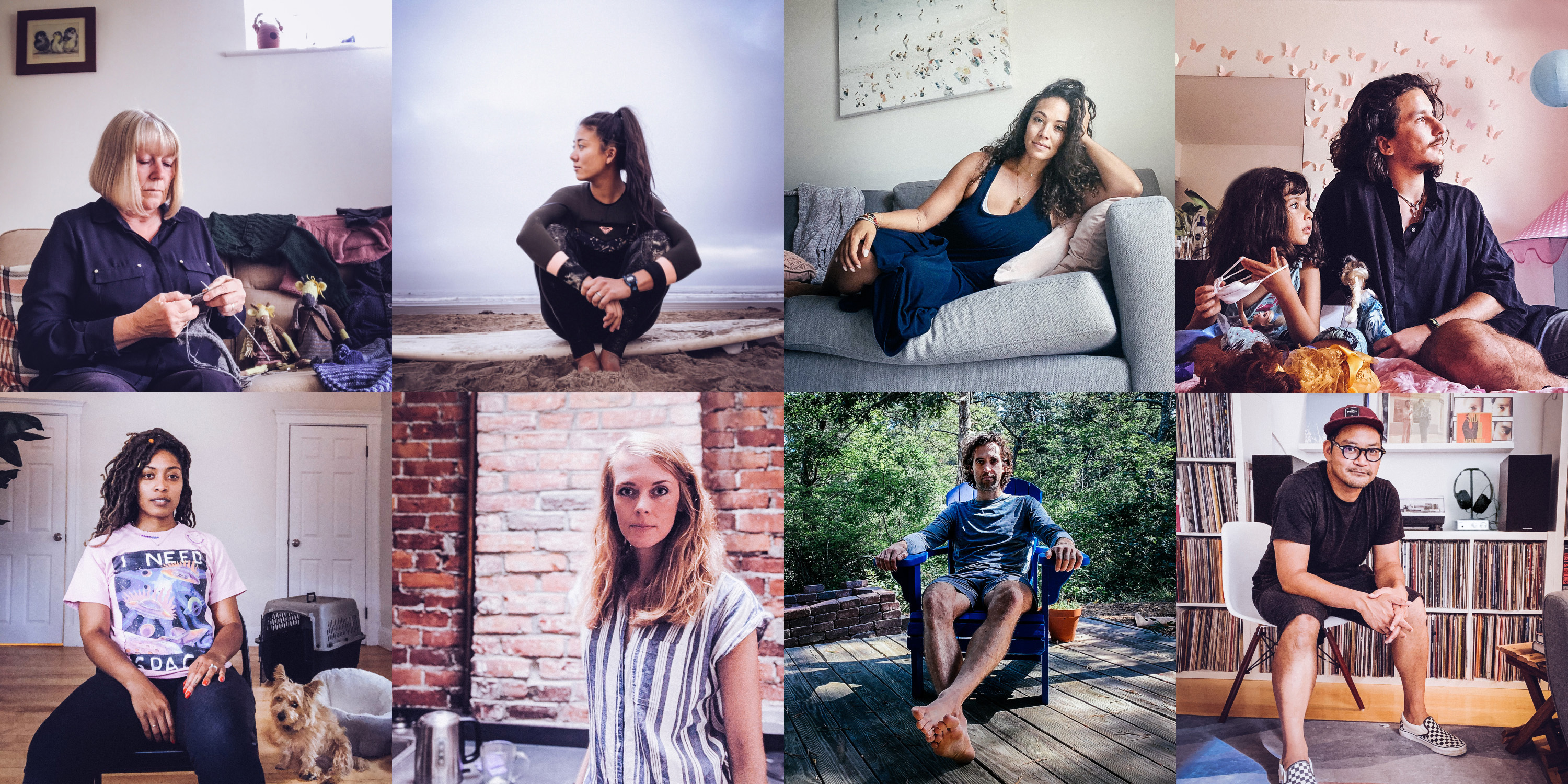
I reached out to a few more IDEOers and continued to refine the process. Next I shot Natalie. She’d recently (and begrudgingly) acquired an air conditioner to make working from home more comfortable. This had become a hot topic of conversation during our many calls. When I asked her to take me somewhere she’d been spending a lot of time during the pandemic, we naturally ended up in the coolest corner of the house: in front of the AC.
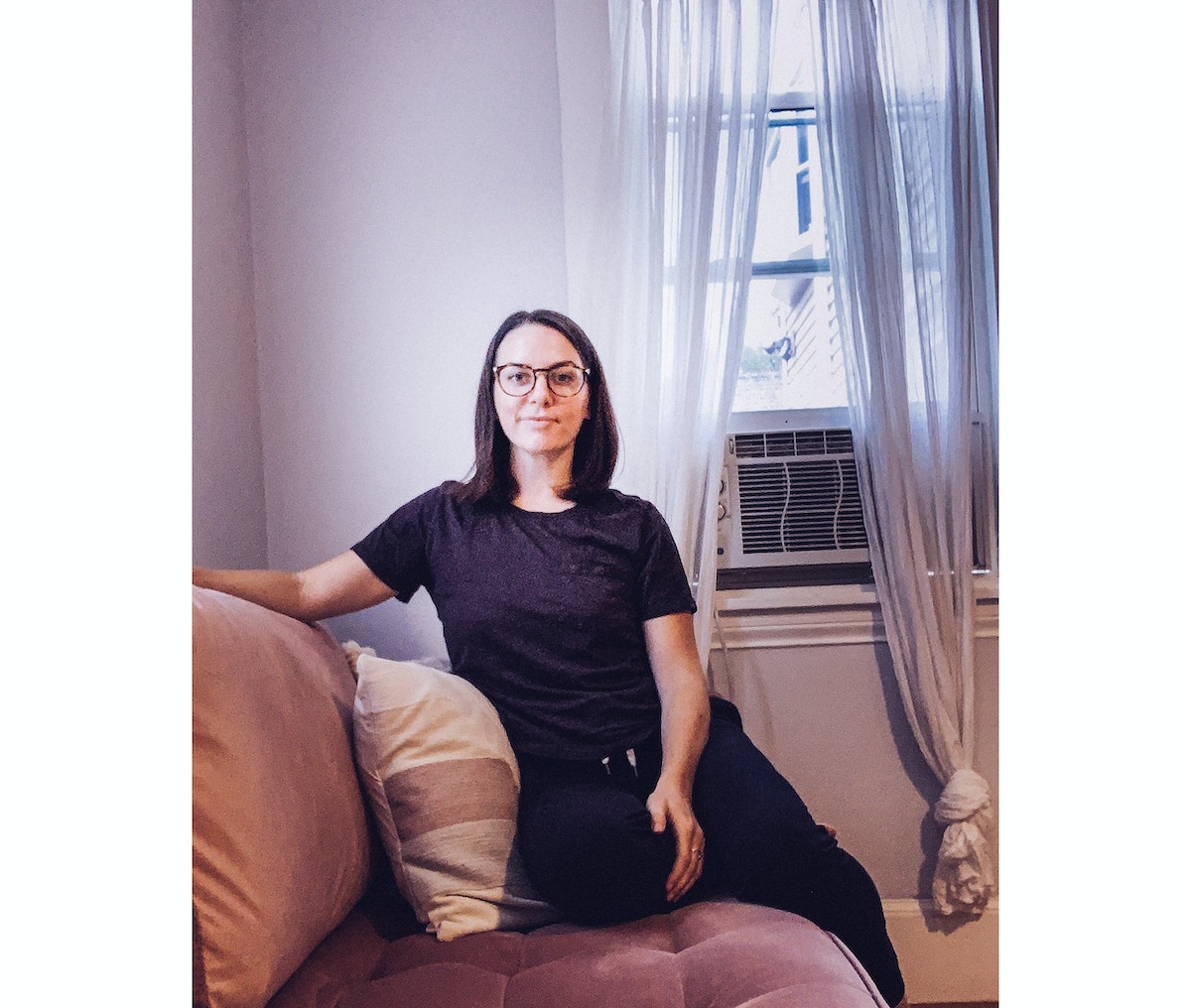
A few days later, Shavon showed me around her new apartment. We brought her dog Oliver’s bed into the frame to try to lure him into the background. We snapped a few shots when he showed up.
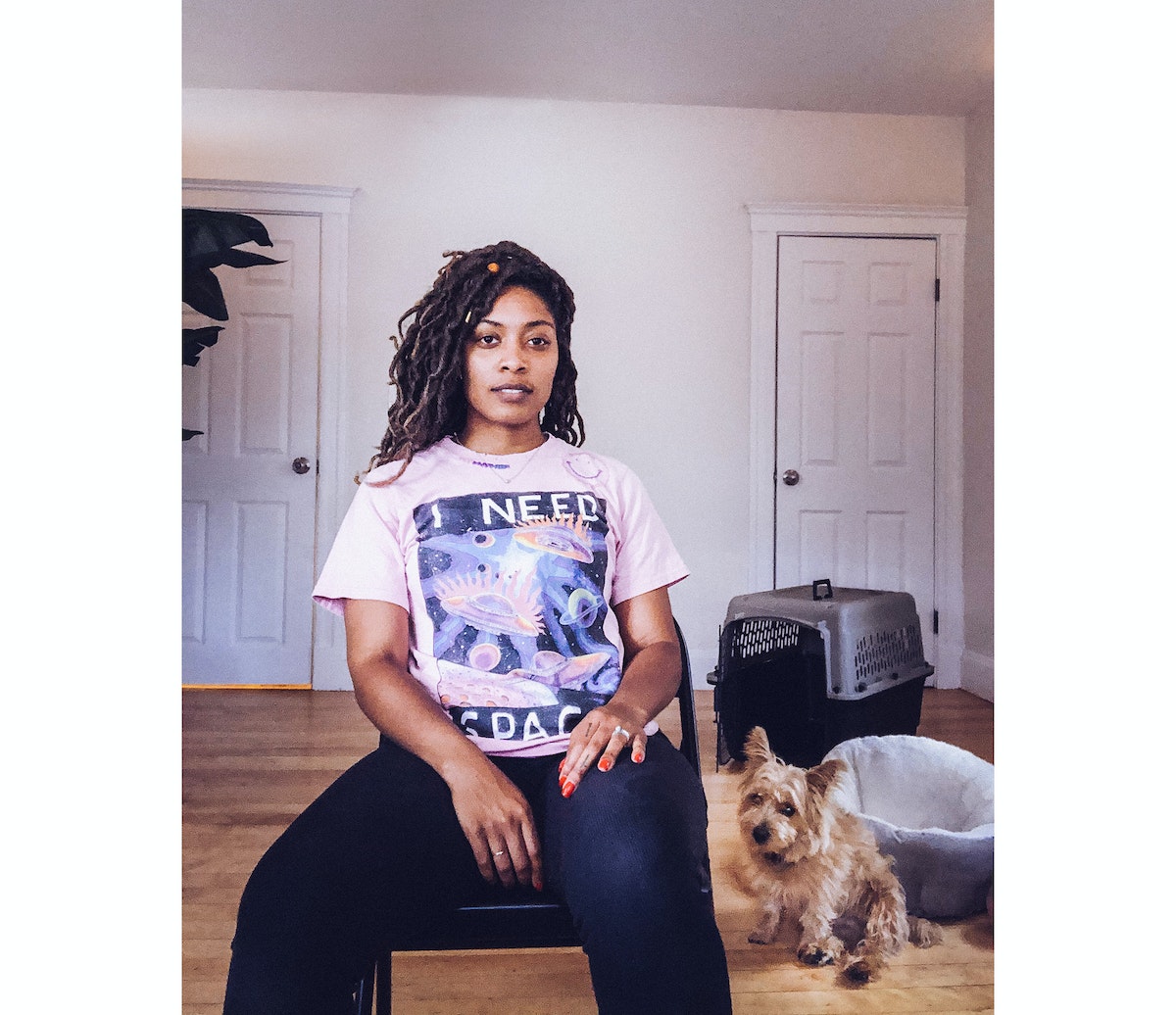
Todd also moved during the pandemic. When I dropped into his new home in Wellfleet, Massachusetts, he took me outside to his deck where he has coffee every morning. I love how the trees seem to absorb him into the picture.

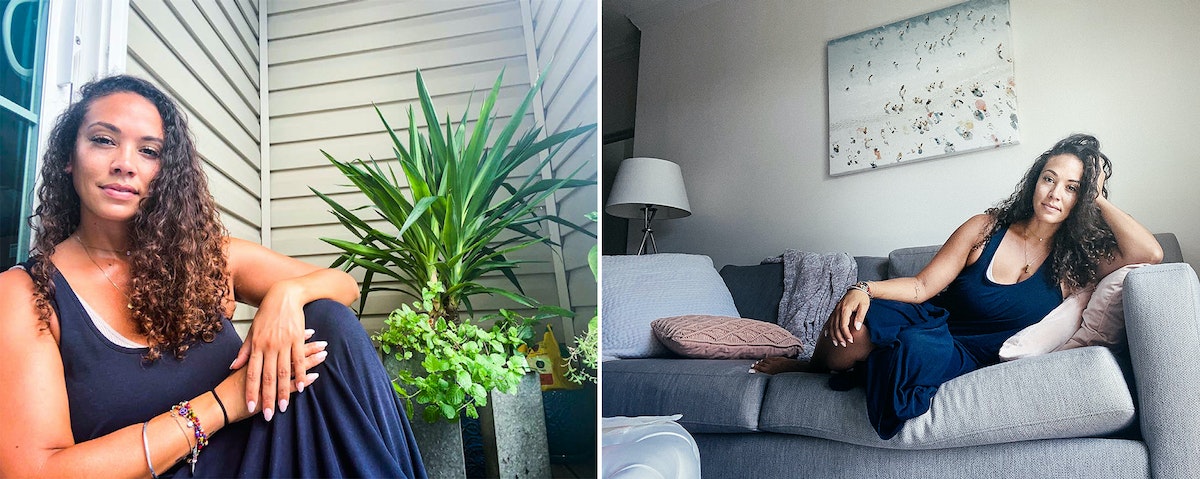
Next I "went" to Virginia to shoot my friend Favin. The first location we scouted was outside in the blazing summer heat. After sweating through a few shots that felt a little too staged (like the one on the left below), we moved inside. Favin picked a new, more comfortable spot: the couch she'd been spending time on during quarantine. We ended up with the shot on the right, which we both liked better.
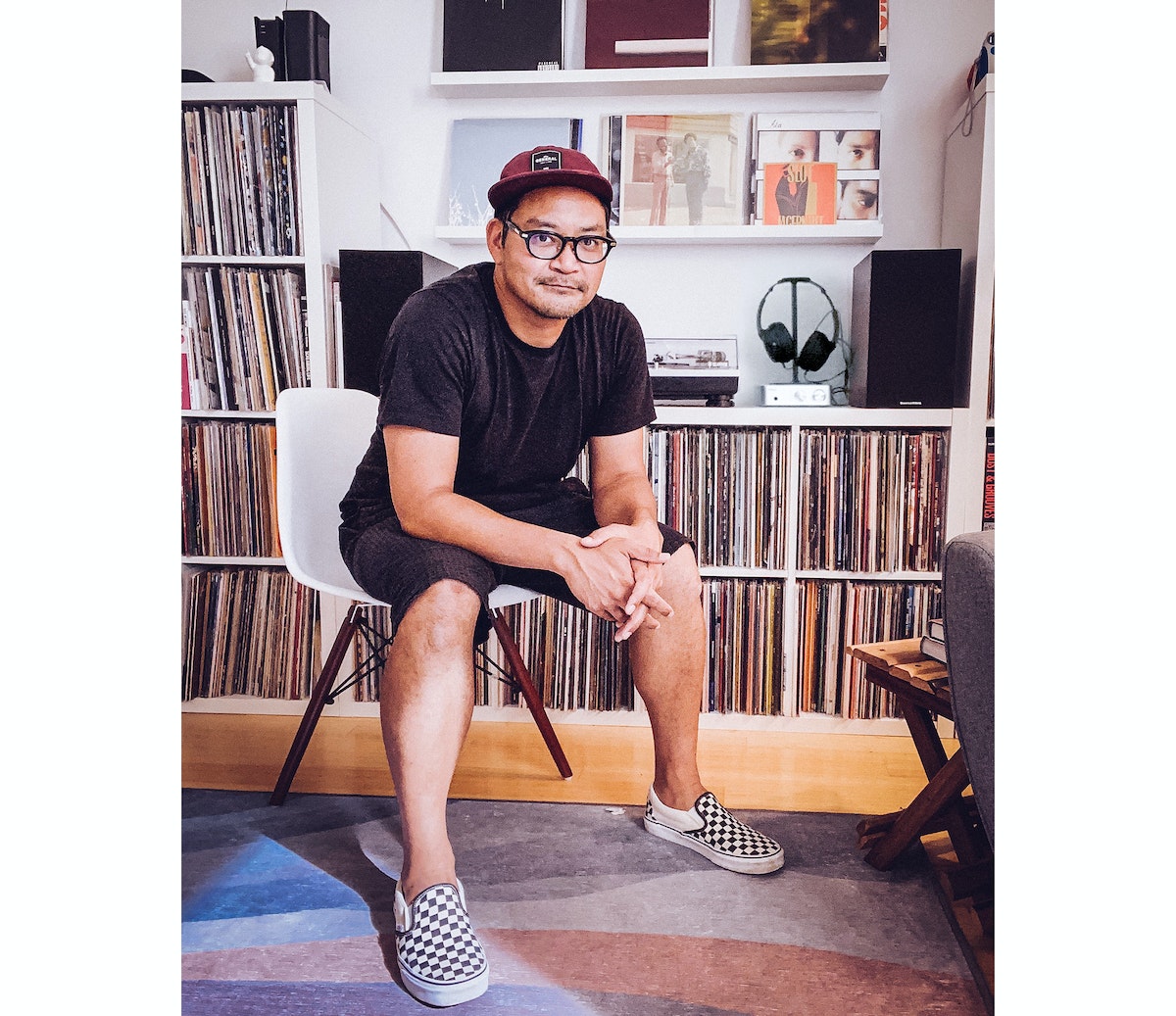
My colleague Greg uses his Instagram account to chronicle the records he listens to every Sunday. I asked if he might let me photograph him where the magic happens: in front of his record collection.
After we finished, he sent me this shot of Oscar, his three year old.
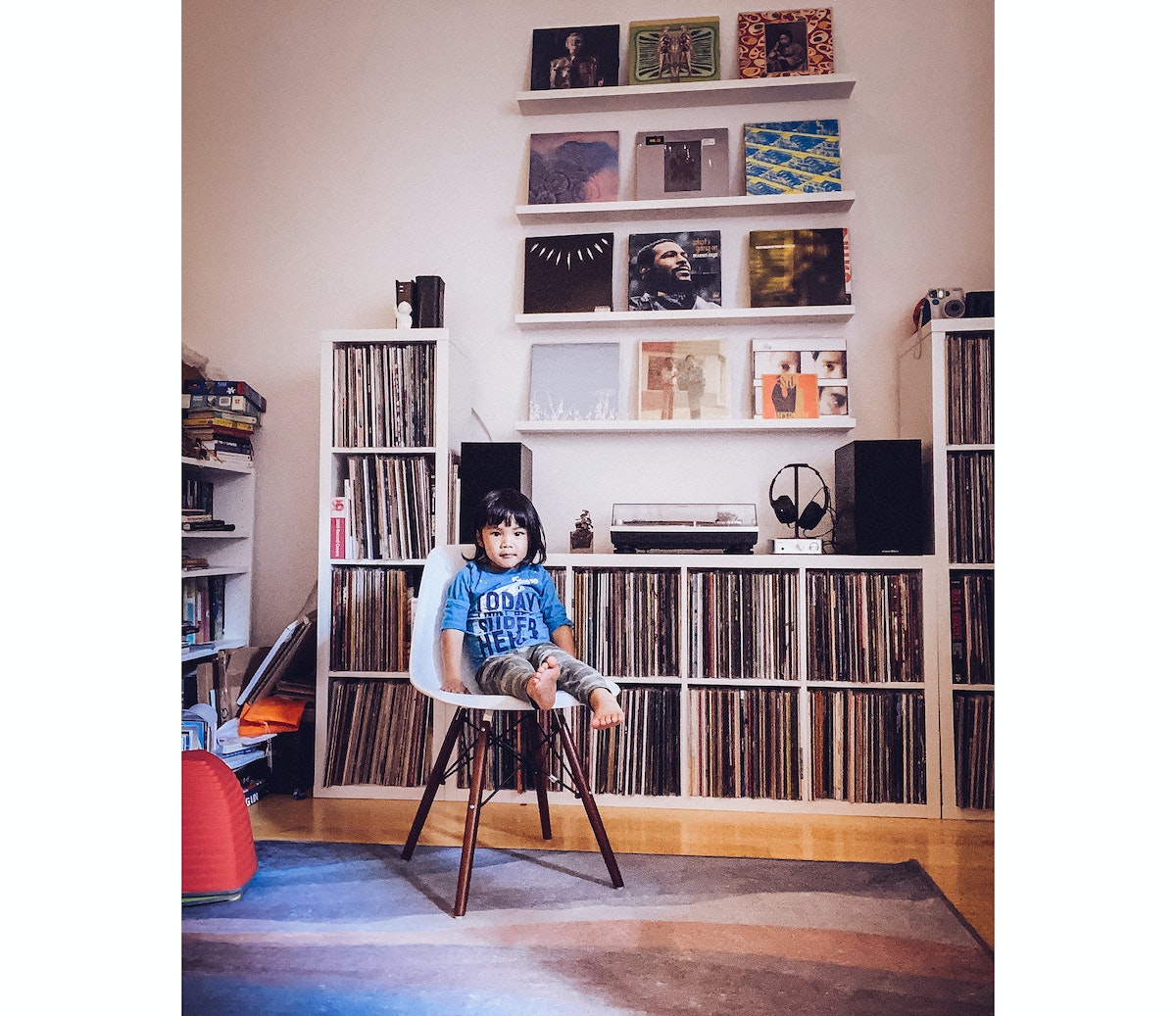
Seeing my colleagues and shooting photos again were both a relief. As far as new hobbies go, maybe this one was a bit strange, but it gave me back what I was missing: my community. Here are three things I learned by stepping outside my comfort zone and doing virtual portraits.
#1. Everything is different now, so we're all adapting
The unexpected constraints of a pandemic have revealed a completely new way of working. I no longer go on long walks to scout locations; instead I get walked around virtually. Photos are framed by leaning an iPhone up against a pile of books or a toaster, and everything shot is from a phone. And now I can time travel—I can shoot in the UK in the morning, Massachusetts in the afternoon, and California at night.
I wouldn’t have dreamed up these strategies in the past, but given the constraints, it works.
#2. These remote sessions are a collaboration between photographer and subject
In traditional photography, the person holding the camera is in control. Now that my hands are empty, who’s in charge?
I asked Alyson, a former IDEOer, if she’d take me to the beach where she surfs every morning. I had a shot in mind: Alyson from below, holding her board with the line of waves behind her.
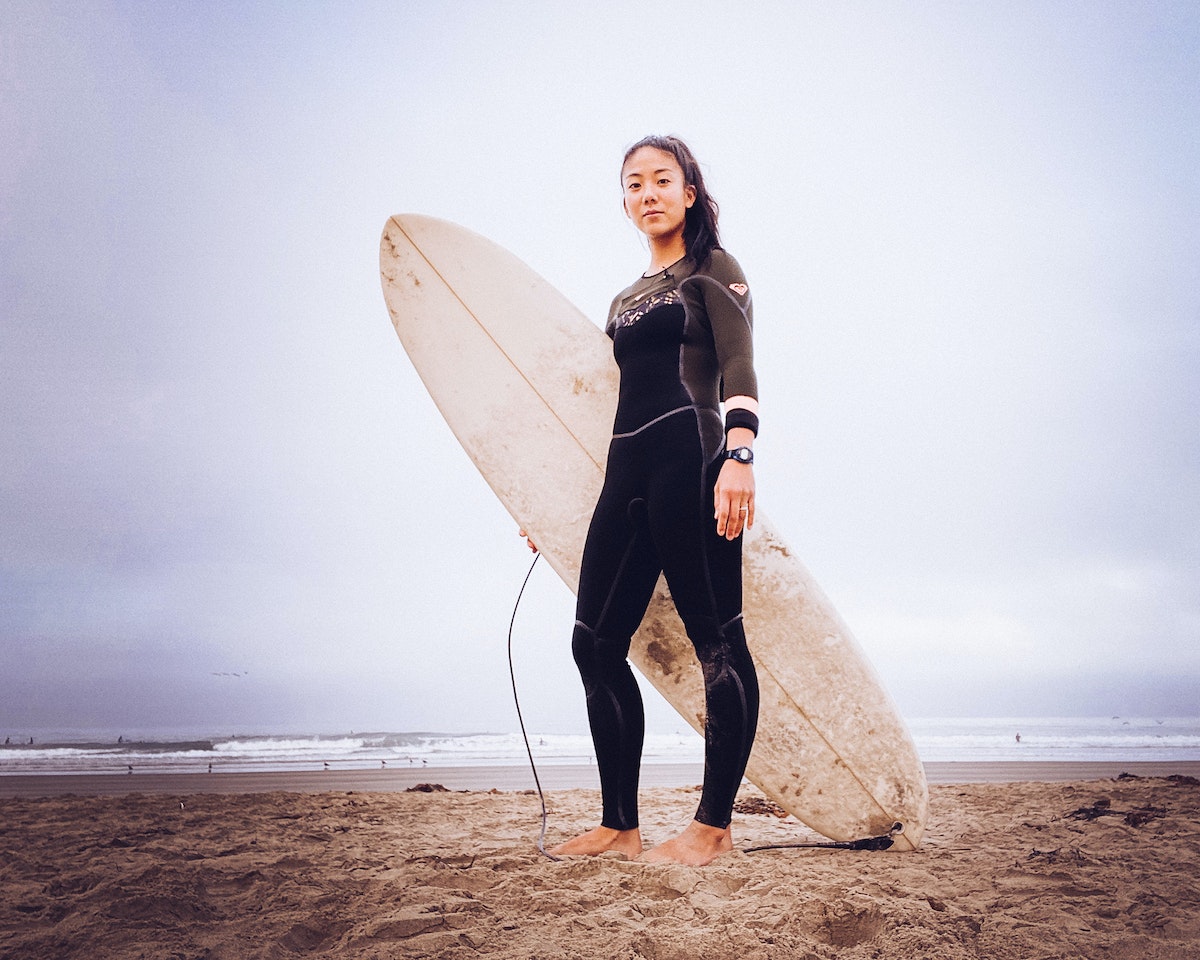
We nailed it. A few minutes later, a man walking by started talking to Alyson, asking her what she was doing with a tripod and two phones on the beach (understandable). We ended up taking this second shot mid-conversation. We both liked it better.
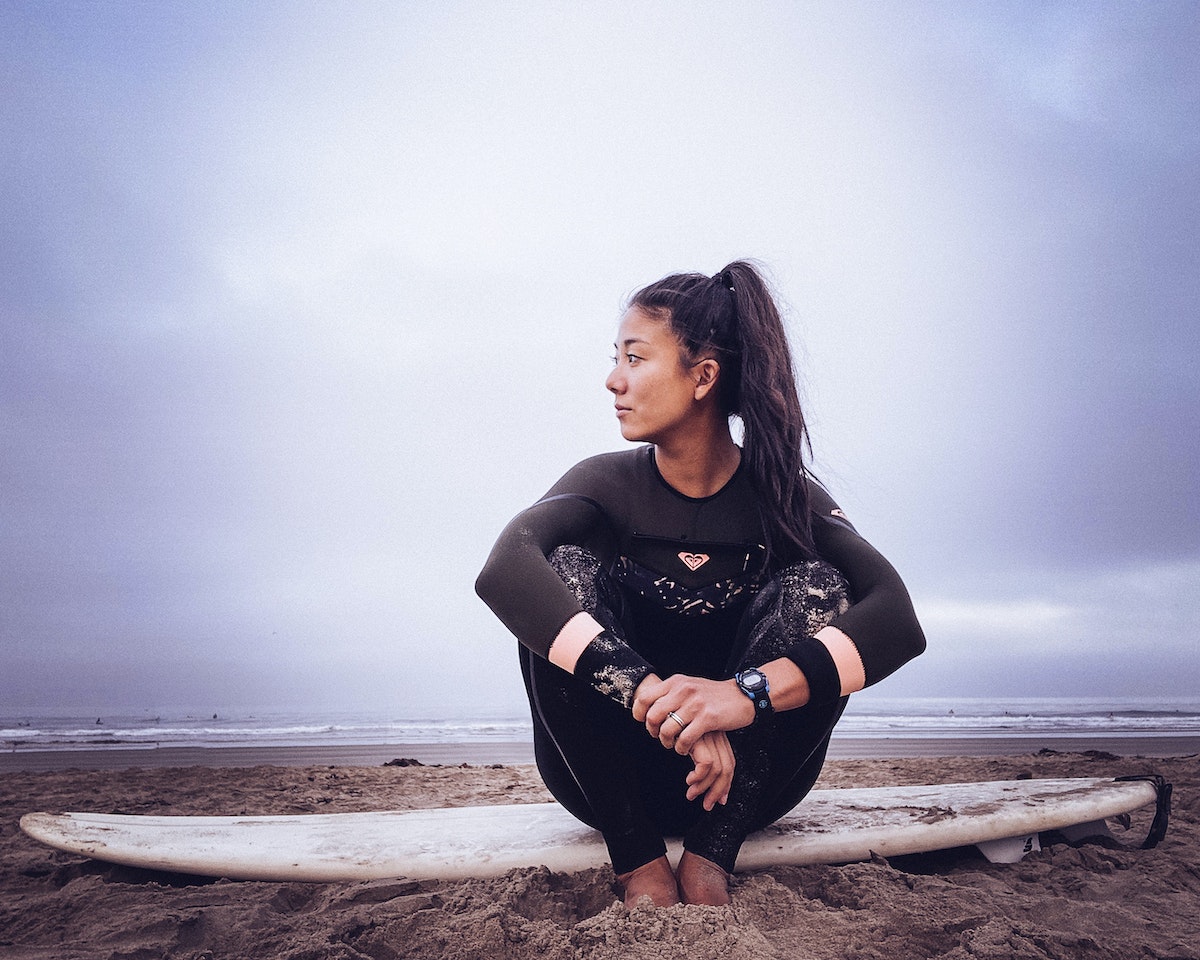
From behind my screen, I didn’t have the opportunity to adjust the angle of the board or tweak the lighting—I had very little control about what was actually happening and the portrait still came out great. Here’s how I see this remote photography experience compared to other modes:
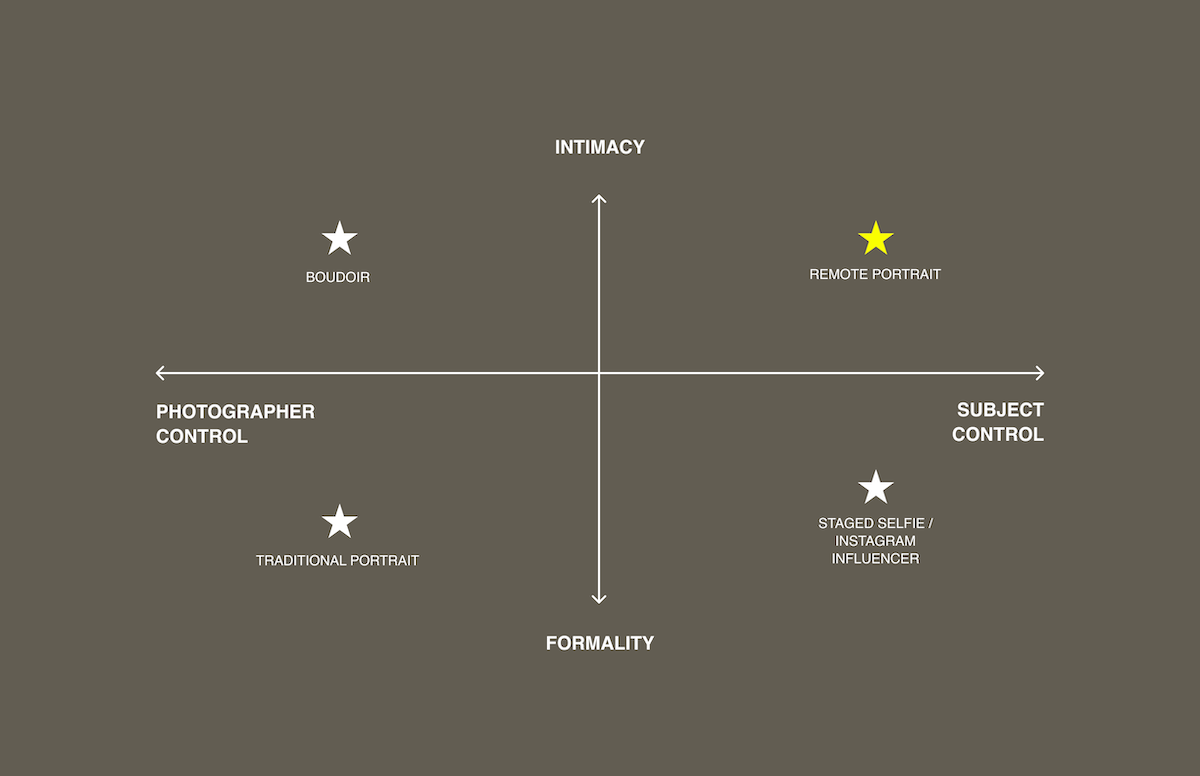
When I shared this project with Jane Fulton Suri, IDEO's first design researcher, she told me, “You are unlocking something in both yourself and the subject—it’s a negotiated process.” I can’t help but agree.
#3. Distance can feel intimate too
Today, video calls can be work meetings, birthday parties, therapy sessions, weddings, murder mystery games, and everything in between. It’s not necessarily intimate by nature, but during a pandemic, the definition of intimacy has changed.
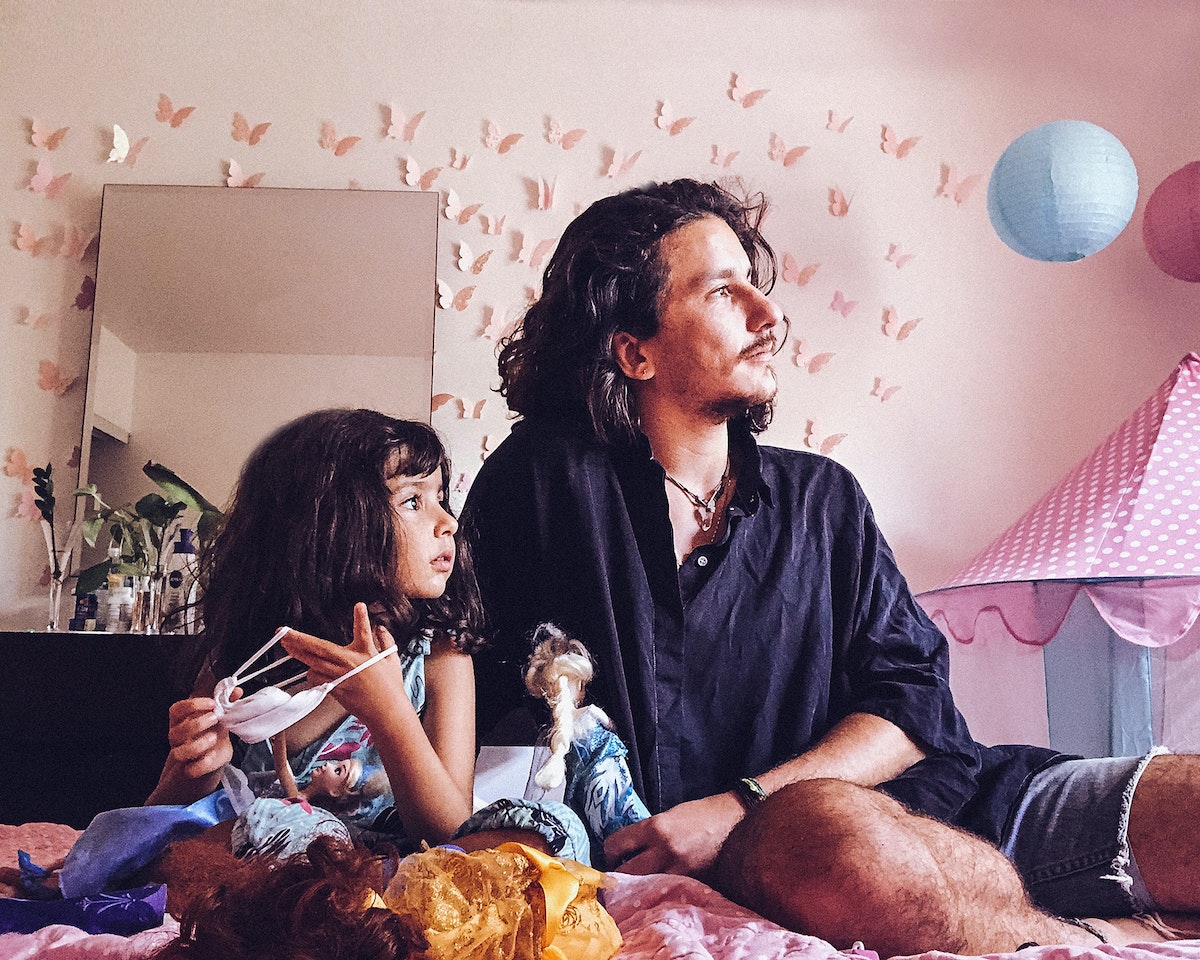
My dear colleague Bruno traveled to Miami to be with his family this past summer. During our portrait session, he told me he’d never lived at home with his little sister, Rafa, who’s four. The setting he chose for his photo was her room. At one point, they were both holding toys as they looked out the window. We captured a quiet, beautiful moment that may have never happened if it weren’t for the pandemic.
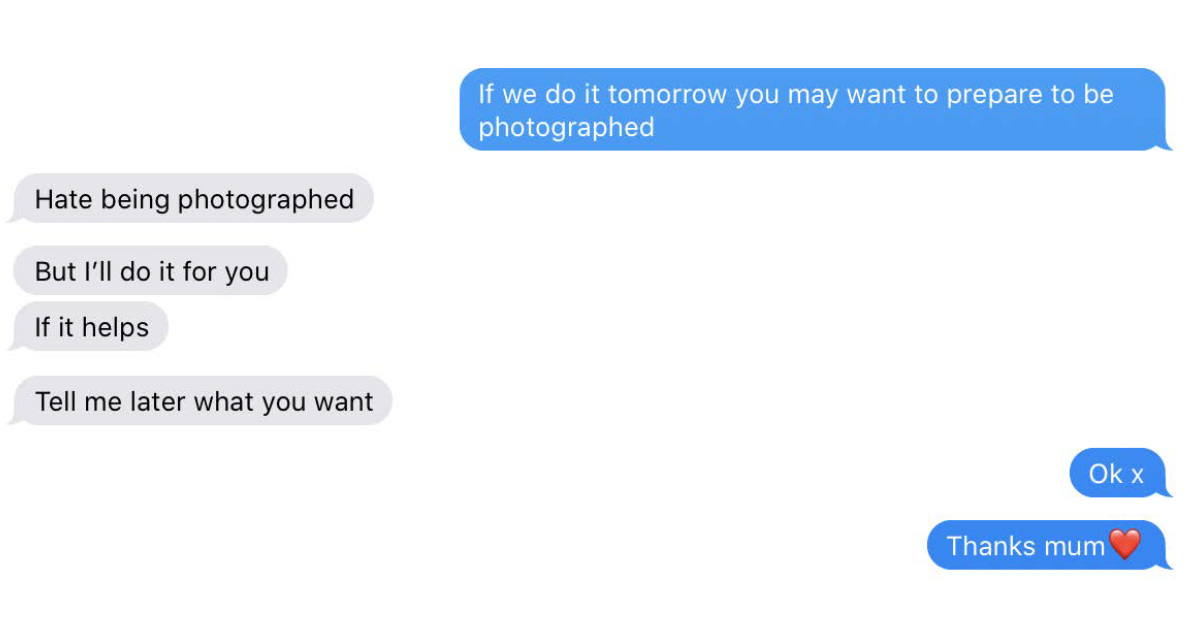
I also got my family in on the gig. When I texted my mum to ask her to participate in this project, she was less than enthusiastic.
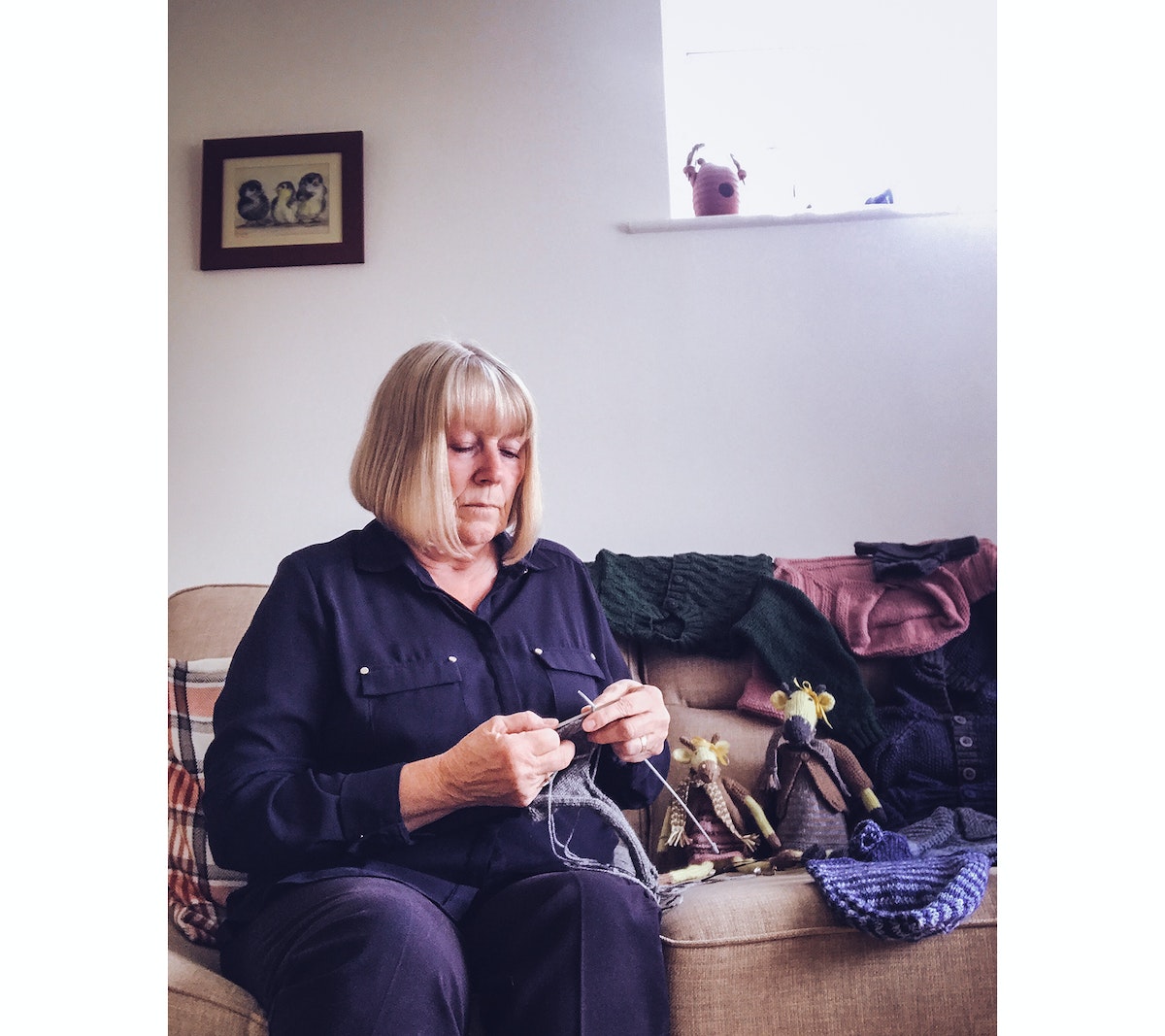
With her in northern England and me in Massachusetts, I hadn’t seen her in person since September 2019. She had been knitting up a storm—everything from cardigans to giraffes—for my daughter. I explained what I was hoping to do, and when I called, she and my dad had set everything up perfectly. I speak to my mum often, but this was the first time I involved her in a project.
This isn’t the 2020 I dreamed up; I’m sure that’s true for you too. But this experiment has re-inspired me as a photographer. I’ve come to realize that I don’t always need to be fully in control, or even physically present to get interesting, intimate results. In fact, I can be anywhere…even in my living room.
It was during my 800,000th video call of 2020 when I started to wonder about what the rest of my colleague Tamara’s apartment looked like.

How to co-design better schools
A new toolkit supports school communities in putting equity first.
What do we stand for in this moment when education is being disrupted, inequities are being exacerbated, and we feel more isolated than ever before?
Knowing we couldn’t answer those questions alone, we hosted listening circles earlier this year to learn how educators were navigating their personal and professional lives as the pandemic surged.
Those sessions surfaced questions like these:
- What can we do to increase students' and families' joy right now?
- Can we build safer and more inclusive spaces for school communities?
- How do we make sure we prioritize—not just accommodate—the needs of marginalized students?
- How might we be healers of a broken system?
These gnarly, complex issues can’t be addressed by any single person or organization, and making progress requires more than repurposed solutions delivered by outsiders. As we’ve learned through our work with teachers and principals, navigating these types of challenges depends on school communities being supported to co-design the future for themselves. As one teacher in Fremont, California told us: “Teaching and innovating have to go hand in hand right now.”
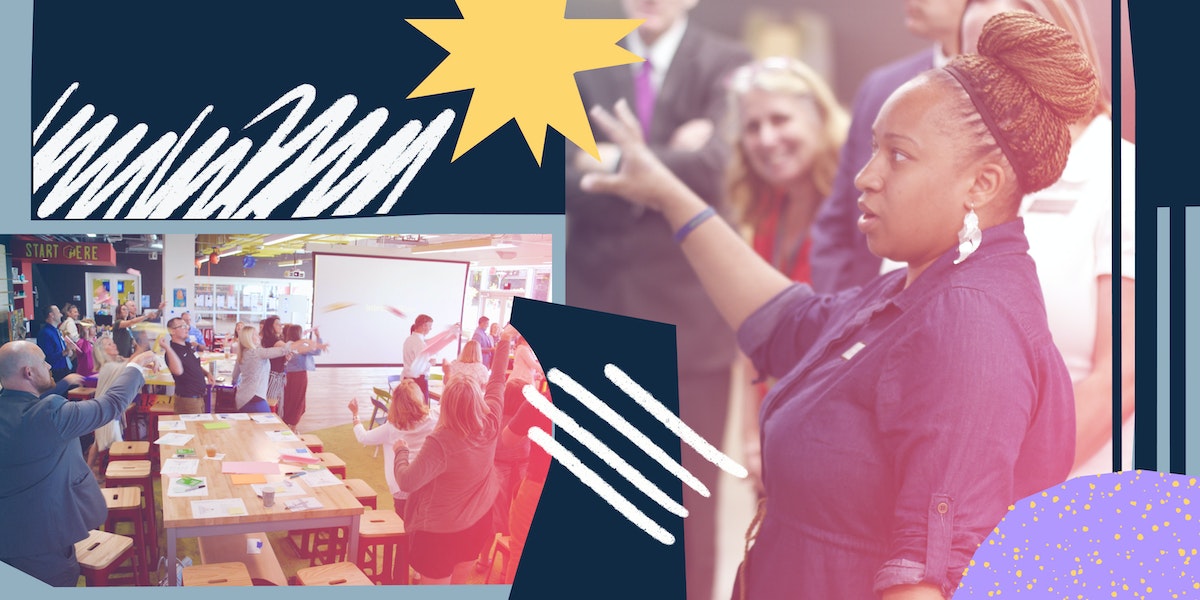
With that in mind, we developed a method for educators to take a co-design approach to driving better outcomes for their schools and the students and families they serve. The Co-Designing Schools Toolkit is a collection of 40 activities, frameworks, and research-based practices designed by The Teachers Guild and School Retool programs, supported by and in collaboration with Riverdale Country School, the Deeper Learning network, Liberatory Design, the Stanford d.school, and the input of educators, local collaborators, and coaches.
At its core, the toolkit is about designing for equity. It complements an approach we developed nearly 10 years ago, the Design Thinking for Educators Toolkit, encouraging educators to focus on equity issues in their schools as part of diverse design teams. The toolkit focuses on the needs and lives of students furthest from opportunity, helps teams explore their members’ personal identities, and guides educators in articulating equity goals for their schools. Taken together, these components aren’t just boxes to tick off, but a set of principles that guide the entire change process.
Designing with students, not for them
Myron Long, Principal of The Social Justice School in northeast Washington, DC, says the co-design process has pushed him to fundamentally rethink the role of his students. “We ask for their feedback,” Myron says, “but we actually have to listen to them and then act on it.” For example, rather than assuming his students are always eager to take on justice issues, he asks them, and recalls a student replying, “Can’t we just play dodgeball, too?” Myron urges his colleagues to regularly invite students to be co-designers, and to build in “time to pause, listen to, and design with our students, not just for them.”
Meet parents where they are
Another example of co-design comes from across the country in South County San Diego, where a team of Special Education leaders hosted co-design workshops. Inviting families in was crucial to the team’s efforts to bridge gaps in understanding between parents and the countless people who provide support for students with special needs.
But to ensure that caretakers of children with special needs would be able to show up as collaborators, they knew they’d have to offer some basic support, like hiring professional translators and lining up child care. “The parents felt so respected, valued, and part of the process,” said Olivia Rivera, a team member. Knowing their children would be taken care of during the workshops gave parents the time and space they needed to “share from their hearts.”
Meet 4 educators who are co-designing solutions for their school communities.
We know that no single strategy or process can solve all the complicated issues facing schools. But with roots in design, equity, and community, the Co-Designing Schools Toolkit can support schools and families as they navigate complexity and look ahead to building a collaborative environment in which all students thrive.
Learn more about co-designing a more equitable future for your community at www.codesigningschools.com.
Along with educators and families around the country, those of us at IDEO who work in education have been asking ourselves, “Where do we go from here?”

Zig, then zag
When to use design thinking vs. the lean startup approach.
Creating a new business is a little bit like being a sea turtle mom—you want to know your environment and create many versions of your offer to increase your odds of success.
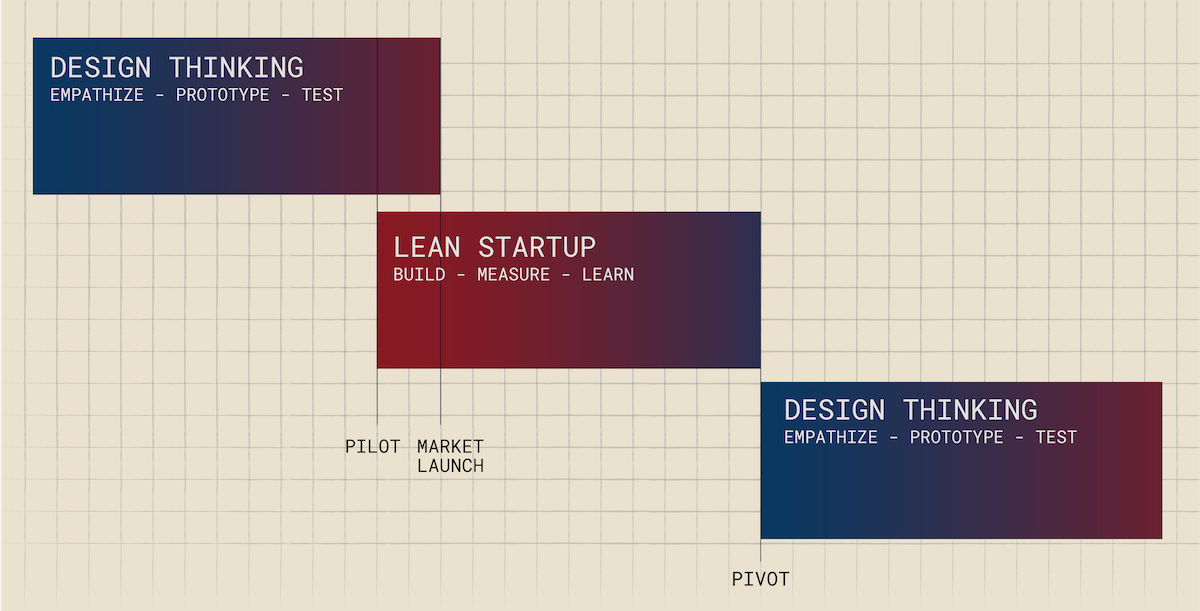
When it comes to making sure those sea turtle babies—I mean, uh, your business ideas—thrive, there are two methods that can help: Design thinking is the approach for discovering which of your eggs has the best chances of survival. Once that baby sea turtle has made it successfully into the ocean, the Lean Startup methodology can improve its chances of successfully reaching adulthood.
During a recent project, a client asked me about the difference between the two methods. While these techniques have been around for years now, it’s a question I hear a lot—many folks in the world of business think they should know the difference, but in all honesty, I don’t blame them for being confused. The methods are distinct, but they can (and should) be used in tandem. Businesses could benefit from them both.
Back to the client question—what’s the difference? I started by explaining the difference between the two methods more broadly, laying out what you see in the chart below.

Both approaches are about building new concepts and products, learning as much as possible from users, and from what’s happening in the market. And both methodologies employ an iterative approach that consistently seeks feedback and understanding from customers in the market.
Knowing the difference is one thing—knowing when to use one or the other is just as important.
Design thinking helps teams come up with many new ideas for new offers they then test before settling on the one that is most desirable, feasible, and viable. When applying design thinking, once we’ve uncovered user needs, we create a slew of options that might solve those needs. Each one is intentionally distinct from the others so we can learn what works best. In visualizing design thinking for our curious client, I sketched something like this:

On the other hand, the Lean Startup method helps teams drive toward a better version of an existing or new concept. It’s great if you have a product in-market that you want to tweak so it performs better. That end product may vary significantly from the original, but with the Lean Startup approach, you will be able to trace a path from Version A to Version Z. If I were to sketch it, it looks something like this:
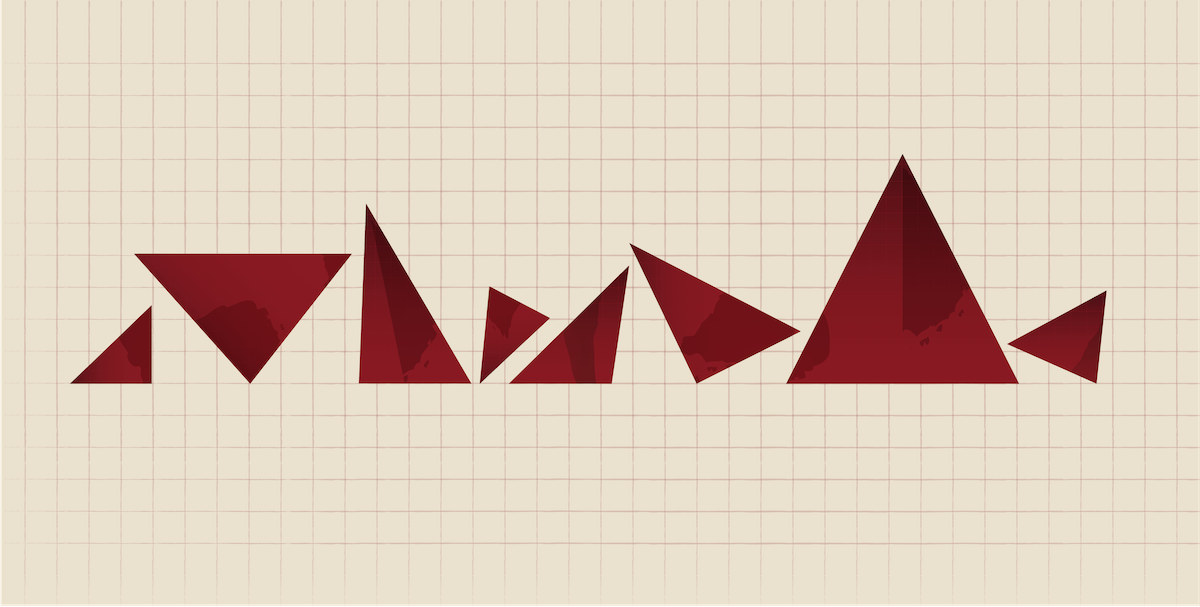
Now that we have the two distinct methods visualized, we can look at applying them. A hypothetical challenge: Let’s imagine we’ve been asked to create a new concept to upend the fact girls are called on less, given less teacher attention, and given fewer opportunities to speak in mixed-gender science classrooms.
As design thinkers, our first step would be to talk to girls, boys, and their science teachers. We would talk to psychologists and sociologists. We would explore the mixed-gender education experience in other cultures. After our research, we’d distill our findings into opportunities for improving the classroom experience. For example: How might we immediately reward girls for participating in class? How might we enable teachers to see the disparity?
Based on those prompts, we would brainstorm a slew of ideas. For example: What if classrooms had a voice monitor that recorded the amount of time that boys spoke versus girls spoke? What if there was an online instructor’s portal with exercises for how to draw out girls in every classroom session? What if there was an app that quizzed students who are girls daily to increase their familiarity and confidence with science material?
We would then take this array of ideas and create prototypes—rough, inexpensive, tangible expressions of the new concepts—and test them. Based on feedback, the next round of prototypes might look something like this:

Maybe the voice monitor didn’t affect teacher behavior, but it did sufficiently frustrate the girls in the classroom—so much so that the next prototype was a wall-mounted display to show a live tally of student input. Because of the diversity of ideas and prototypes that come from a design thinking approach, there’s no clear throughline from Version A to Version Z.
Based on knowing that we are now going to build a voice-activated wall display, we would also use design thinking to build and test the accompanying business model and the product’s visual language. We would think about, build, and test options for how the display will get in front of buyers (the distribution channel), who pays for them and how much (the revenue and pricing model), and which entities might help to expedite our success (partnerships). As we explore the most viable business model, we’re still refining the concept.
Once those designs have been sufficiently evolved, we can plan for a limited launch to test the assumptions behind the products. With a refined concept and business model in hand, we can begin in-market testing.
This is when you want to lay 100 eggs, because only a very few will meet the bars for user desirability, the company’s ability to implement it, and the crucial feature of being financially lucrative for the business. In general, using a design thinking approach for a limited launch of a new concept will reduce risk, while using the Lean Startup methodology during in-market refinement will improve the chances of success.
Sometimes, when a team launches a new product but skips the user-centered design process, they find it may be necessary to pivot. That’s a good time for a team to turn to design thinking to explore why the concept isn’t working, and to find new ways to make it meet user needs.
A sea turtle lays more than 100 eggs each nesting season, but only a handful will successfully hatch and survive the journey into the ocean.
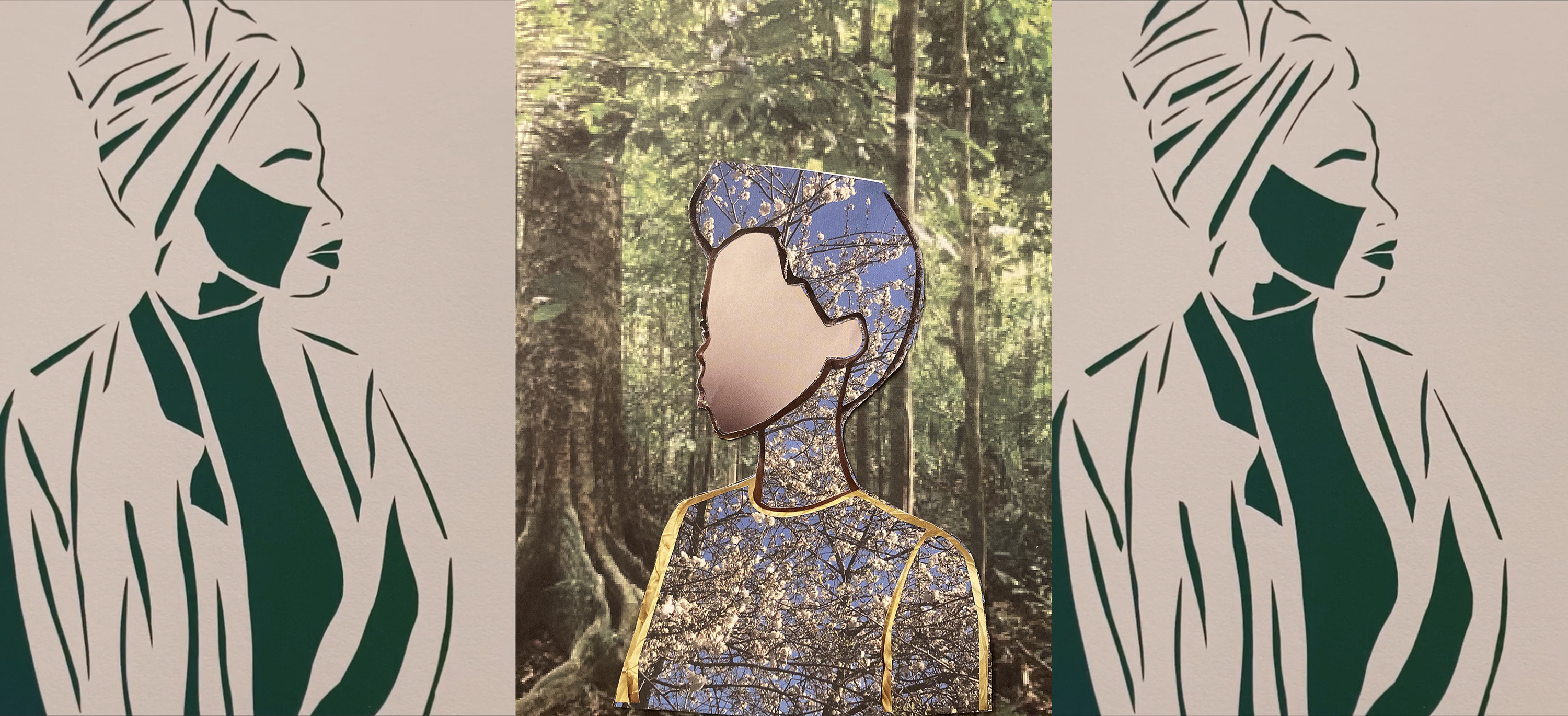
How this London artist explores and reclaims power through her art
Creativity, collage, and connection are at the core of Sharon Walters’ work.
I first saw Sharon during a workshop she delivered for Black Minds Matter. Sharon discussed the creative process as essential to mental health and considered the white dominance of the mainstream art world, all while making an original, delicate art piece with a scalpel and fine magazine paper. (I know—“multi-talented” doesn’t even cover it, right?)
In a session she later ran for IDEO, she created such a warm space while inviting us into the intimacy of her signature collaging process. She inspired us to see what it is when someone dictates the rules of their own art, career journey, how they define and are defined.
The pieces evolving from her “Seeing Ourselves” collection explore identity, representation, portraiture—when the ‘we’ and the ‘our’ are represented in art, education, media. Who is omitted from that narrative and how can art reclaim it?
Sharon is currently exhibiting at the Black Art Matters exhibition. She took a few minutes out of her day to answer some questions I had for her.
In one sentence, who are you?
I am an artist, currently creating work using handmade collage, and an educator who is passionate about changing predominant narratives of underrepresented, marginalized people.
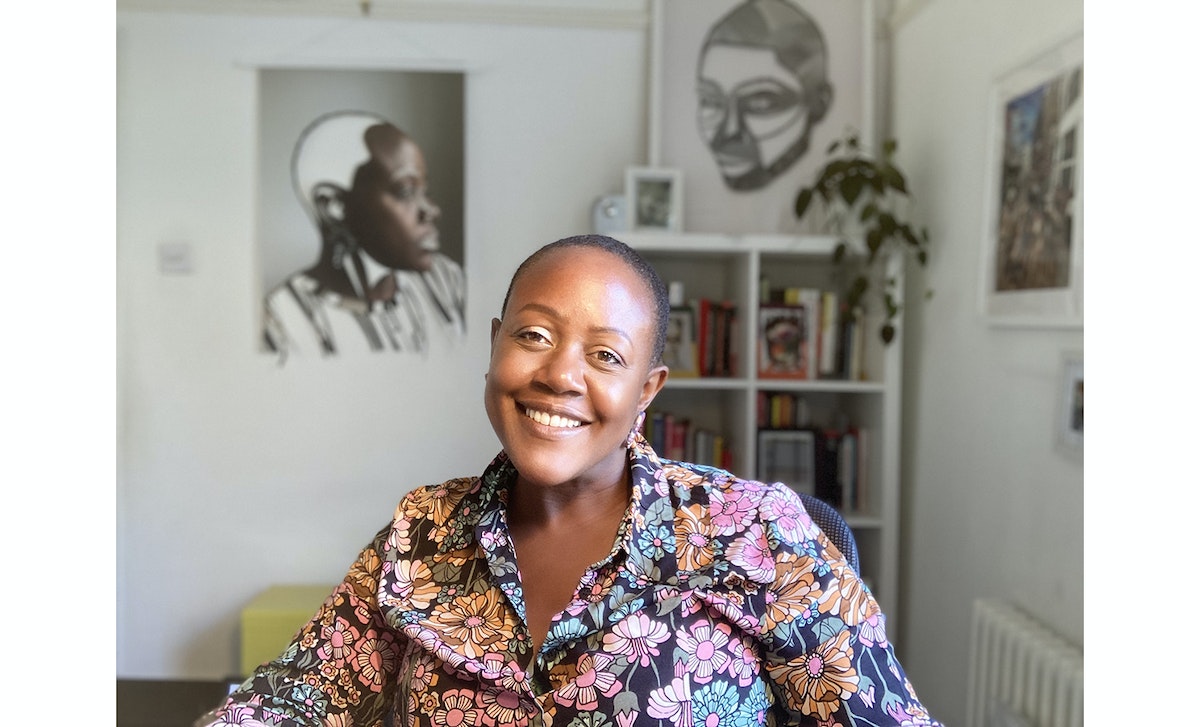
What does a typical work session look like?
I work from a new home studio which I set up a couple of days before lockdown in March 2020. I recently resigned from my part-time job of 4.5 years in a London museum to work as a full-time artist. I am working on several different projects and I find joy in the varied nature of my work.
My work varies greatly from one day to the next: I am currently working on a project with a national museum; I have been commissioned to create a few bespoke collages; I curate creative programs for organizations; and I deliver workshops and create hand-assembled collages. Creating the collages helps me to relax, and in parallel, explore identity and representation of Black womxn.
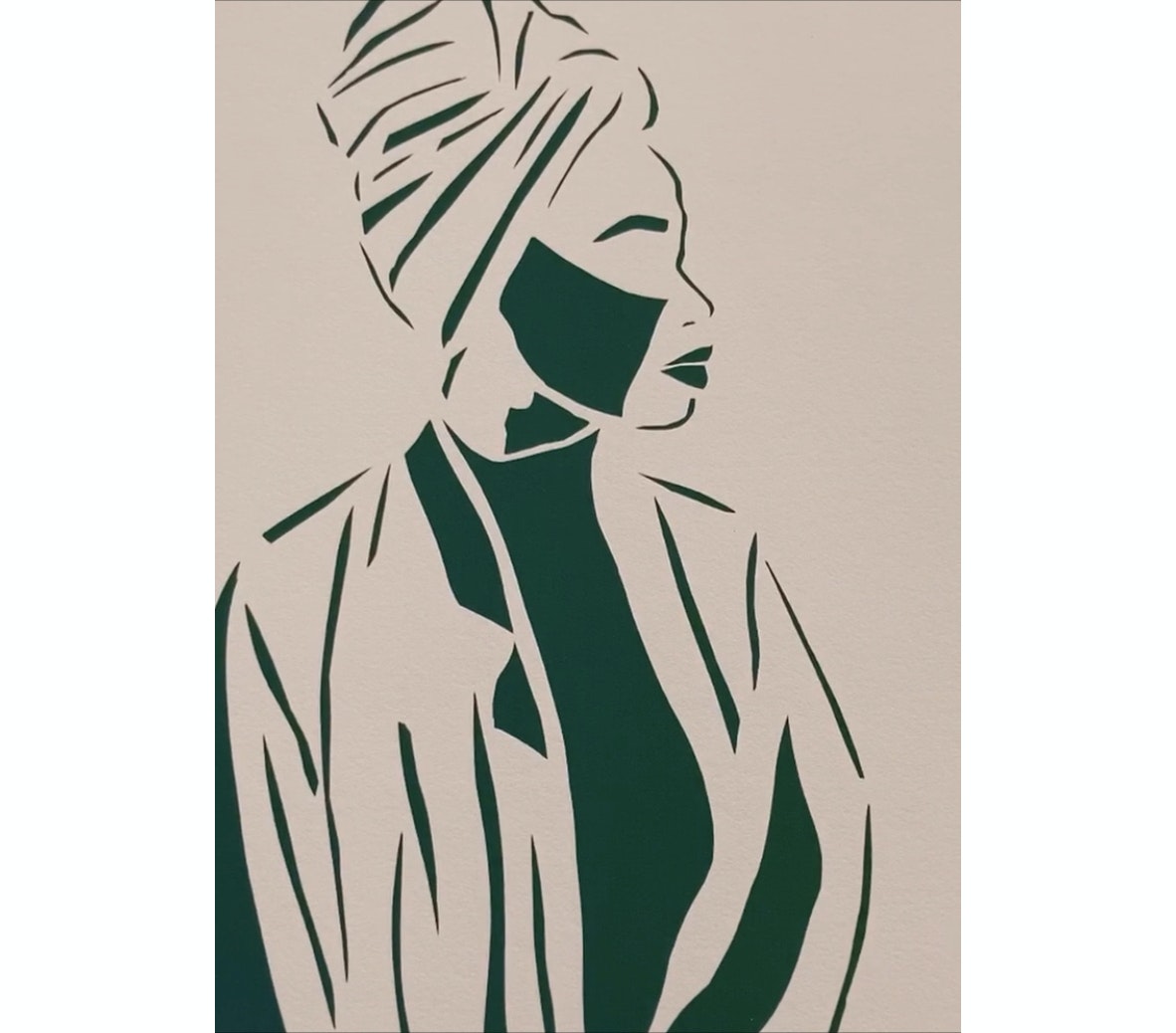
Does sharing your process while creating such personal work ever feel too intrusive or voyeuristic?
I absolutely love sharing the process of creating my very personal art. My background includes the delivery of teaching sessions in political literacy, also known as citizenship education. I have also taught art workshops and have delivered self-esteem, getting back into work and personal development workshops to women who have lost confidence after a period of unemployment. I have worked with people of all ages from children to the elderly. Sharing my process is a further extension of this highly invigorating work.
How has your work and career evolved?
My career has evolved organically; there hasn’t been a linear route towards my current working life.
My work has been varied, but today, I can now see how so many of these seemingly disparate strands connect to inform my present practice. Early on after my first degree, I worked in recruitment sales and was a headhunter. The skills I gained there have made me feel less awkward when selling my work; I am not afraid to speak to new people.
Training teachers and people of all ages has given me the confidence and skills to deliver creative workshops both online and in person; it is something I absolutely love doing! I am passionate about connecting and communicating with others.
For much of my life I worked with marginalized groups in a variety of settings, ranging from boys in young offender institutions and the elderly living in sheltered housing to underrepresented museum audiences. This work all feeds into my current series entitled “Seeing Ourselves” which focuses on the underrepresentation of Black women. My projects all encourage others to “take up space” in environments where they may be unseen and to use our voices to create positive change and impact.
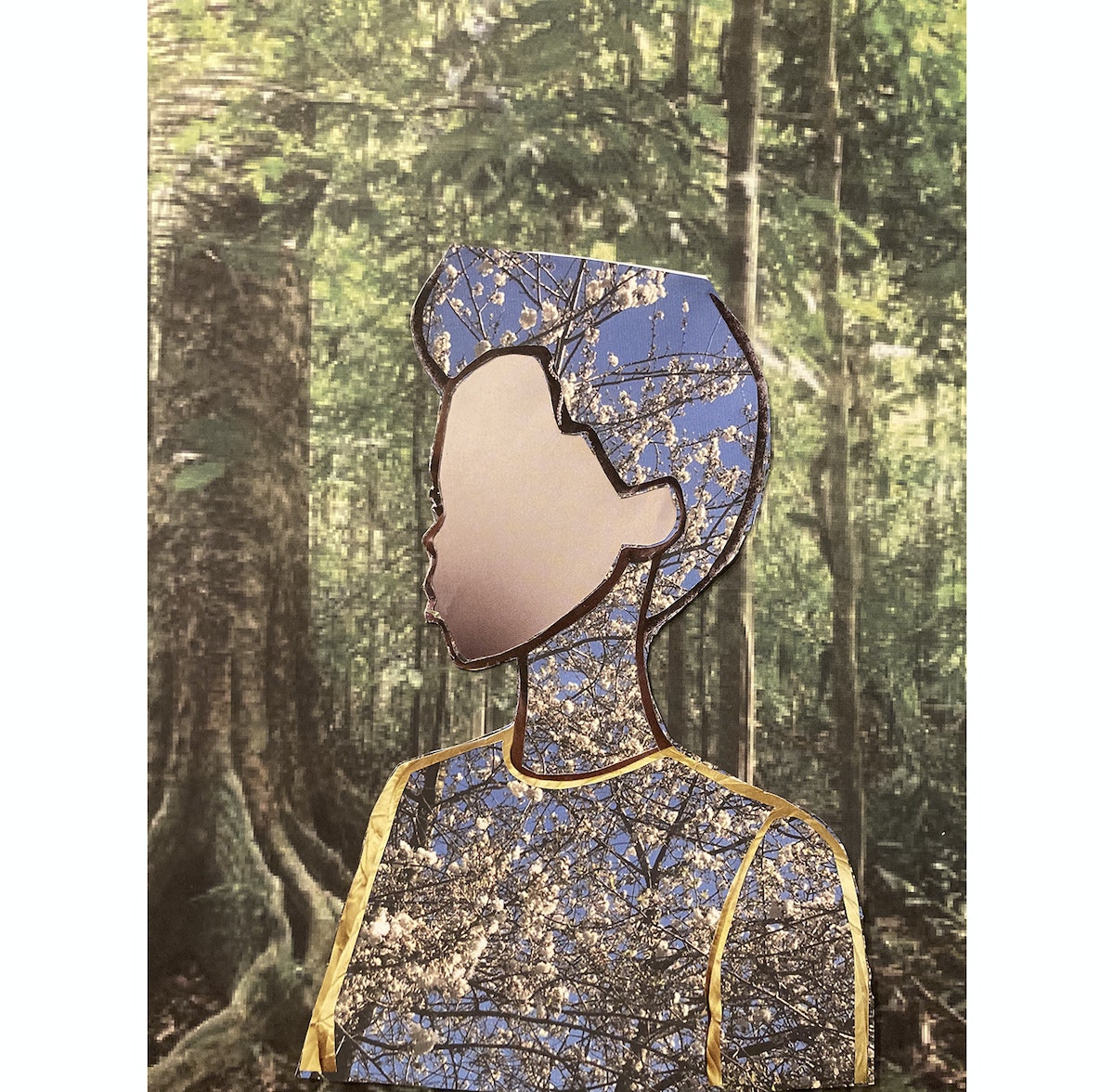
What does it mean to you to do what you love at this stage?
It feels so wonderful to be doing what I love at this stage! I have wanted to be an artist since I was a child. For many years it felt like I would not make it, but deep down, I did not give up hope.
Money wasn’t available for me to pursue my dreams in my teens, but as a mature student, I got a second degree in Fine Art. I took “the scenic route” and with hindsight I am glad I did. Things are happening exactly when they are supposed to.
What was the last item on your to-do list?
To contact a collector who has commissioned a bespoke, hand-cut collage.
How do you see the world in 2078?
Wow! This is a huge question, which immediately saddens me; in reality it’s unlikely I’ll still be around. It immediately makes me think about the world I would like my children to be living in. I would hope there would be less disparity of wealth and greater visibility and distribution of power across diverse groups.
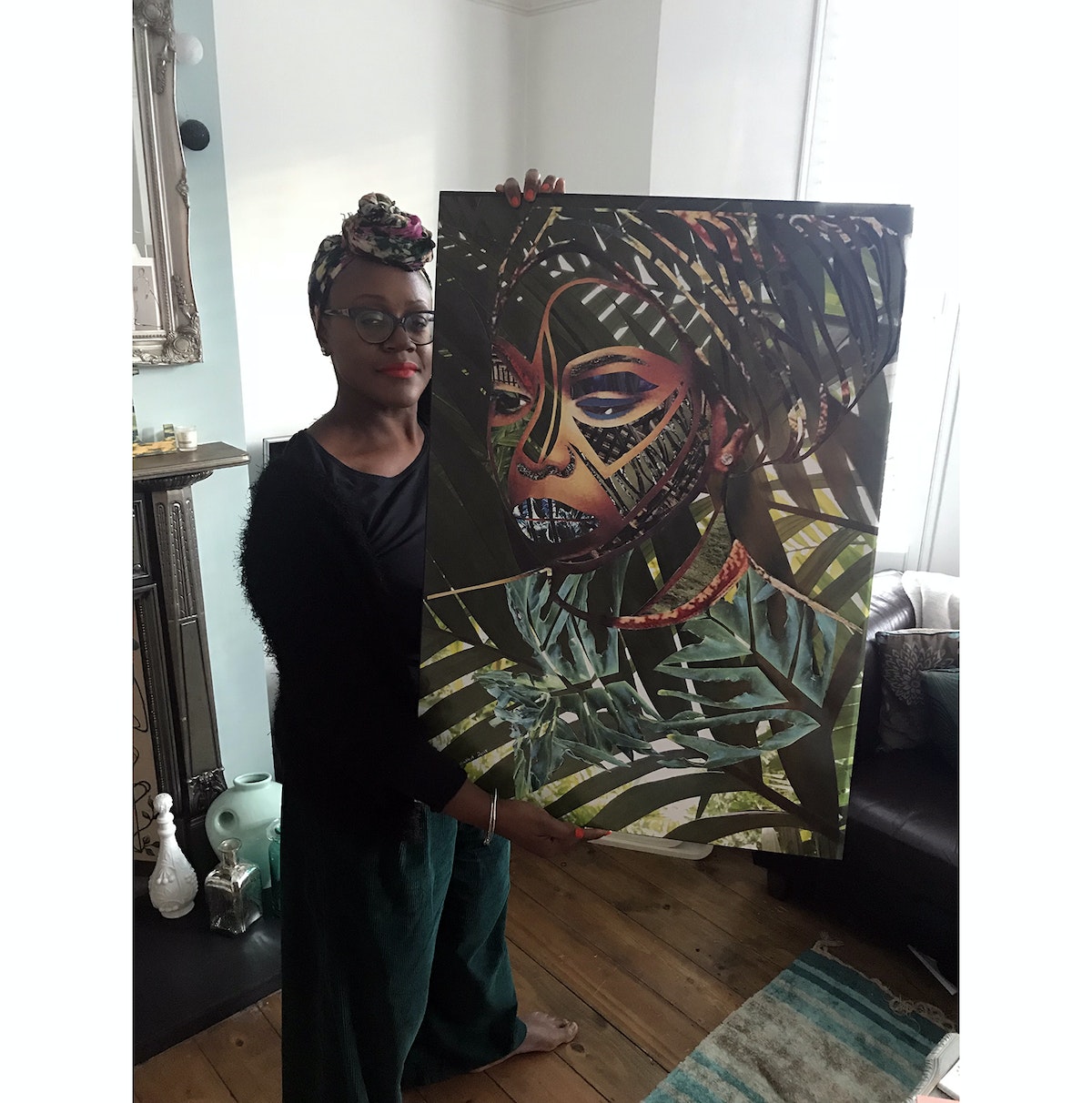
What’s your number one bucket list item?
To return to Barbados for a holiday someday soon; it is my mother’s country of birth and I have not visited it for 11 years. Despite being born in London, Barbados also feels like "home."
Who are you creative crushin’ on lately?
I am creative crushin’ on Sheena Rose who is a phenomenal, multidisciplinary, Barbadian artist. Her work spans drawings, hand-drawn animations, performance art, paintings, and new media. I am particularly inspired by Sheena’s vast creative works with powerful overarching themes.
When I first came across Sheena’s work on Instagram, she was creating amazing pieces from her bedroom which inspired me to return to creating after a long time. Through seeing Sheena working in this way, I began to believe it was possible for me to do the same without the luxury of a studio at the time.
Experiencing Sharon Walters’s work is like being given a comforting, personal gift.

Lindsey Turner
I’m passionate about building brands, products, and experiences that help organizations show up with meaning and momentum.
I help organizations cut through complexity by shaping how they show up, through brand strategy, identity, and storytelling.
Working at the intersection of brand and business, I bring an editorial eye and a bias toward making—turning ideas into tangible experiences that people can understand, trust, and believe in.
My work spans government, healthcare, financial services, media, and consumer goods, from launching Gen Z-focused ventures to building innovation labs and reimagining legacy brands. I relish moments of ambiguity and enjoy translating across teams, perspectives, and priorities to move ideas forward.
I started my career in editorial and digital design, shaping cross-platform experiences and identity systems in publishing and agency environments. That foundation still shapes how I work today: I’m detail-oriented, collaborative, and overreliant on the Oxford comma. I hold a BFA in Visual Communication from the School of the Art Institute of Chicago.

Rachel Young
My work helps organizations see who their products aren't working for—and build the will and the tools to do something about it
For 25 years, I've asked the same question: Who does this design exclude—and what are we going to do about it?
My work spans human-centered strategy, inclusive design, and qualitative research, with clients ranging from Microsoft, Google, and Verizon to the National Science Foundation, and San Francisco Unified School District.
Before IDEO, I taught elementary school in East Palo Alto and spent a decade doing design work with social service organizations—where I learned firsthand what it costs people when systems are built without them in mind.
I am currently writing User Error, a nonfiction book about digital access and the design decisions behind it. I live in Oakland, California.

Brian Pelsoh
I lead with craft, ensuring our work is creatively excellent: rooted in deep human insight and imagination, while also grounded in the realities of business and technology.
My expertise spans brand, communication, and product design across tech, education, the arts, and social impact.
I believe great work demands both high-level vision and obsessive attention to detail, and only happens through collaboration.
I bring an inclusive, hands-on approach and a deep understanding of business, which enables me to consistently deliver excellence while always asking why.
Before joining IDEO, I worked at the brand firms Pentagram and VSA Partners. I began my career as a designer, leading teams at the School of the Art Institute of Chicago and the Milwaukee Art Museum. I hold an MFA in graphic design from Maryland Institute College of Art and a BFA in communication design from the Milwaukee Institute of Art & Design, and have taught at some of the best design schools in the US.

Tony Wong
I am responsible for IDEO’s long-term success in China and working with clients to use design as a tool to enable growth.
I am responsible for IDEO’s long-term success in China and working with clients to use design as a tool to enable growth. Specifically, I have helped Chinese companies design holistic brand solutions through the development of their products, communication, services, and innovation teams, and I have helped multinationals expand their presence and influence in China.
I advise global leaders on developing China-led innovation and capabilities.
In over 15 years in IDEO Shanghai, I have worked on projects that use design to elevate the quality of the experience of healthcare products and services, streamline processes that increase productivity, create spaces and programs that promote and enable inclusive communities, and build next generation mobility solutions that are planet-positive.
Before joining IDEO, I worked at Philips Electronics and the Electrolux Group in Italy, the Netherlands, and Singapore on a number of breakthrough commercial products. I am a member of the Young President Organization in Shanghai.

Building a personal AI for the messiness of life: Sida Li
Most AI products today are built for work—a space with clear problems and established systems. One founder noticed a gap: personal life is messier, harder to systematize, and mostly left behind by the AI boom. So she built Cue, a personal AI that lives inside iMessage and group chats, to go where the other tools haven't.
In this episode, Becca Carroll, IDEO's Chief Strategy Officer, talks with Sida Li, co-founder and CEO of Shared Context Lab, about staying anchored to a human need while the technology around her keeps changing shape, why she treats her business model with the same rigor she'd bring to a product, and what it feels like to build a company at this particular, disorienting moment in AI.
The conversation also gets into how Sida makes design decisions: the language Cue uses to describe itself, the tradeoffs behind building inside iMessage instead of a new app, and a real story about a business idea that didn’t pan out.
This is the second in a two-part series profiling founders from IDEO's Startups-in-Residence program. The first conversation is with Johannes Seemann, founder of Sooner, on designing GenAI for the emotional side of money.

Designing GenAI for the emotional side of money: Johannes Seemann
Most personal financial tools are built to run the numbers and optimize towards a budget. While that works for some, most people experience money as a lived relationship that does not neatly fit into a spreadsheet. Johannes Seemann and Becca Carroll discuss why money is emotional before it is mathematical, and what a human-centered approach to building a generative AI financial product looks like in practice.

The curious leader's edge in uncertainty: Scott Shigeoka
Mina Seetharaman talks with Scott Shigeoka, author of Seek and Head of Curiosity Cultivation at the Eames Institute, about what distinguishes genuinely curious leadership from performative curiosity, how power dynamics shape curiosity, and why practicing curiosity can restore energy rather than drain it.

How constraints make us more creative: David Epstein
Mina Seetharaman talks with David Epstein, author of Inside the Box and Range, about why total freedom often produces average work, how leaders can design useful limits on purpose, and what organizations such as General Magic and Pixar reveal about the relationship between boundaries and creativity.
Looks like you might be in search of something very specific?
Or reset the filters above and try another angle.
Here’s some random inspiration

Podcasts about creative leadership

Articles about the power of prototyping
