
.svg)


Boston's new citizen-centered site
Designing a welcoming, intuitive platform for Bostonians.
More than 7 million people each year came to the Boston.gov site to tap into all sorts of city services: reporting a pothole, learning the assessed value of their property, paying a parking ticket, checking recycling schedules.
Boston wanted to create a beautiful platform that would make the process of finding and navigating information easy and intuitive, one that prioritized the needs of its people.
The Boston.gov site had outgrown its existing structure and needed an overhaul. The user experience was mired by the fact that Boston City Hall has nearly 50 different departments, each with its own microsite, navigation and content standards that feed into a centralized site.
So the City of Boston hired IDEO to design its new digital home, Boston.gov. IDEO designers worked with the major stakeholders—department heads, employees, and Boston residents, with a focus on those in underserved communities and those with varying levels of technical proficiency—to gather insights into what users needed.
The objective was to design something that would simplify how people navigate the site, to make it easier for residents to find answers to common questions, and, in the process, serve as a community facilitator—an up-to-date, reliable resource that makes life in the city more manageable.
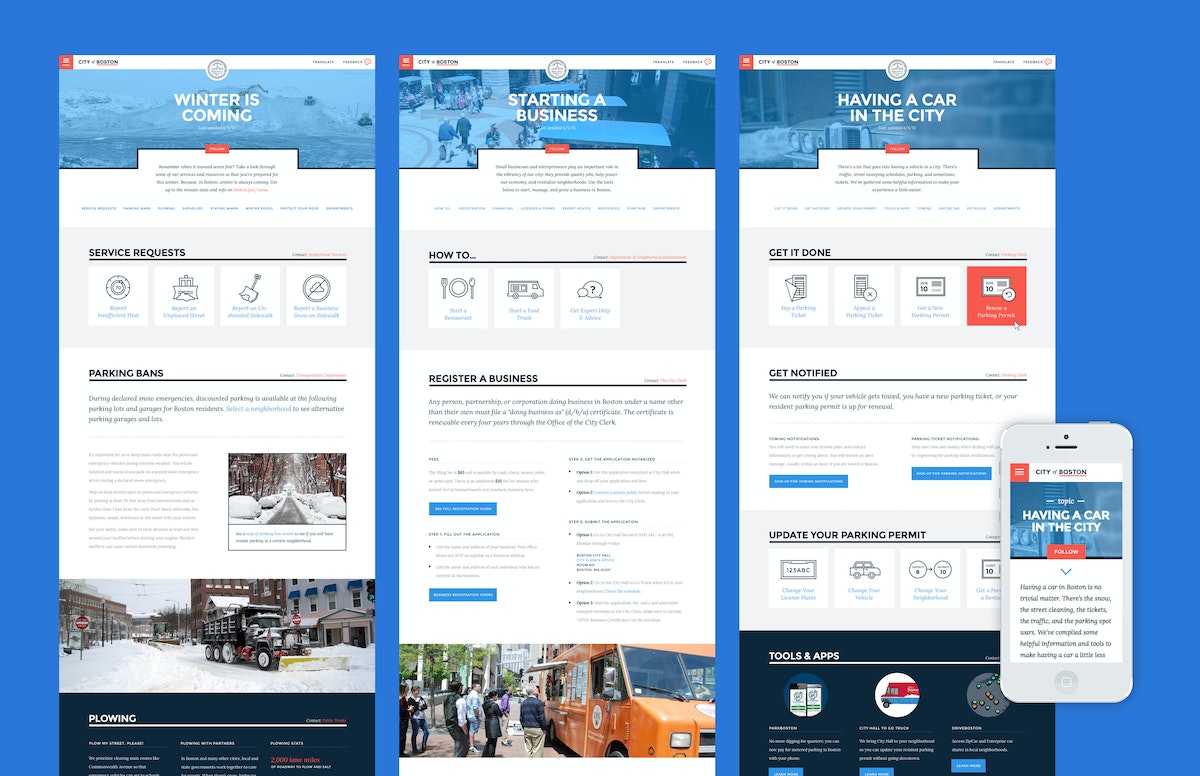
Rather than organize the site by the city’s departments, the design solution was rooted in illuminating relevant content by topics—people’s life moments—many of which overlapped through different branches of government. Owning a car in the city, for example, is closely related to preparing for winter, so bridging those common threads allowed for a more intuitive organizing principle.
In the process of the site redesign, IDEO also helped to create a visual identity system that underscores Boston’s strengths: the city’s confidence, humility, personality, and optimism.
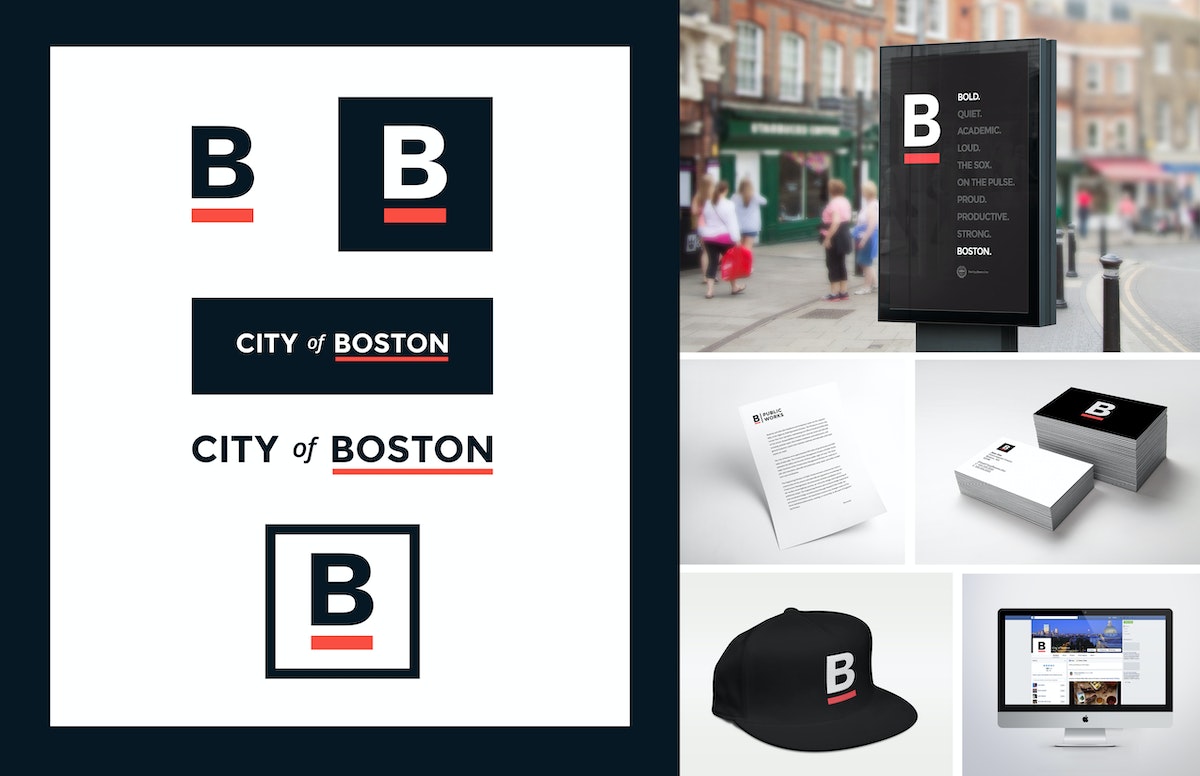
In addition to the web architecture and redesign, IDEO also produced a comprehensive style guide to help maintain design consistency, so departments can add content without compromising the overall integrity of the site, as well as a brand look that the city has decided to adopt across nearly all of its consumer-facing media. Now you’ll see the famous underlined B on T-shirts, banners, and even snow shovels.
Holding true to its mission to include Boston residents and all site users in its design process, the new Boston.gov site was piloted for six months, and the process document on the city’s blog (including the IDEO designed brand guide), before a full launch was rolled out in July 2016.
“The website should act like a helpful human. This is one of the big differences between the old site and the new site,” said Jascha Franklin-Hodge, the city’s chief of information technology in a Boston Globe article. “Oftentimes, when you looked at something on the old site, it would feel like you were interacting with some sort of lawyer-robot that was speaking to you in government-speak, using very formal language. We are trying to move away from that so your experience is akin to a person.”
The City of Boston was in need of a new digital home—one that emphasized a shift to a more welcoming tone and commitment to its citizens.

Growing an American brand in China
How an outdoor retail company found a new audience through digital and physical shops.
In the Western Hemisphere, The North Face brand has long represented an active, sporty lifestyle that’s filled with challenges and adventures. But appreciating “the great outdoors” in China is less about extreme sports and more about connecting with nature in a communal, spiritual way. This research-based insight led the team to identify new opportunities for The North Face to better target its messaging.
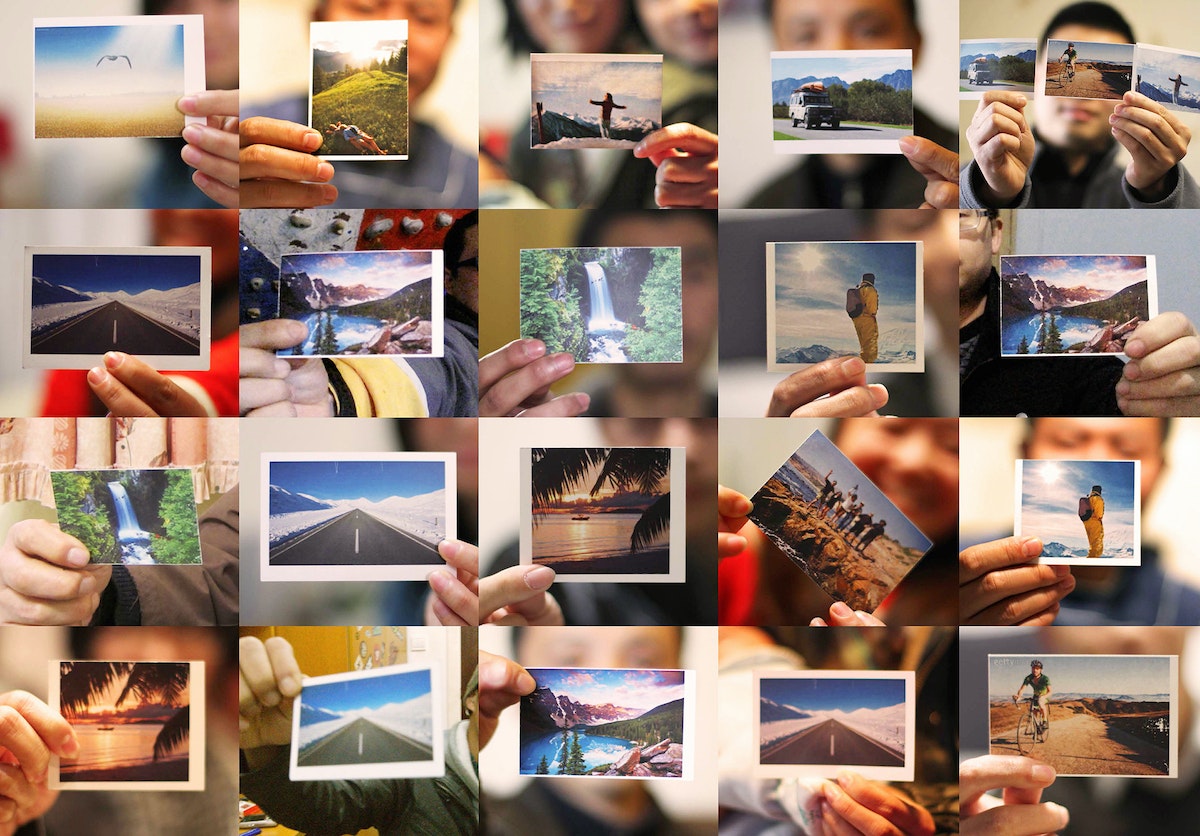
Designers found a key opportunity: Encourage Chinese consumers to escape the pressures of hectic city life by enjoying the freedom and renewal that comes with spending time outdoors.
Today, as people find less time to enjoy the benefits that lie just beyond China’s large cities, there’s a tangible desire to return to the outdoors to refresh, reassess, and renew oneself. The North Face aims to help consumers do exactly that.
To create a compelling new brand vision for The North Face in China, the team’s design research tapped into Chinese ways of spending time outdoors. IDEO’s insights and creative brief provided the essential brand story for The North Face in China and informed the tagline of the company’s current marketing campaign, “Go Wild” (去野). The North Face brand’s new messaging links “old nature” and “new outdoors” through a combination of digital, retail, and interactive community channels.
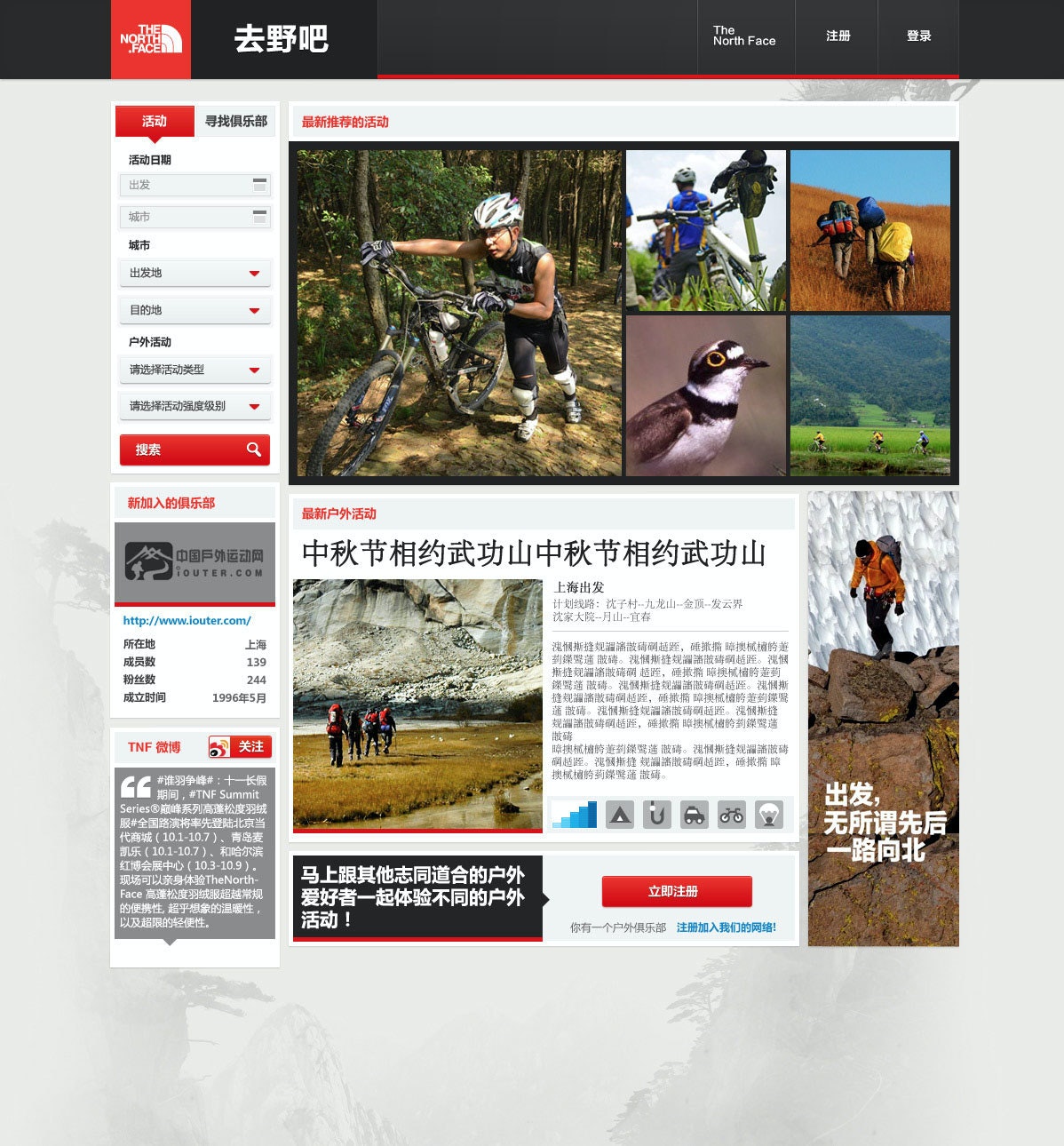
IDEO also collaborated with the company on designs and prototypes for a new digital platform and an updated store-within-a-store merchandising display. The digital community aims to attract newcomers and connect them with more experienced outdoors enthusiasts and clubs. As the platform evolves, it will help aspiring adventurers plan trips, learn skills, and share their experiences through photos.
The retail community space aims to integrate this digital community with in-store shoppers and an effort to turn the “buy-a-product moment” into a “join-the-outdoors moment.” Both will be integrated to provide a holistic brand experience in China centered on nature and community.
In the West, The North Face, with its decades-long history, has long symbolized an adventurous, active lifestyle. In China, however, the outdoor market only began accelerating in the early 21st century.
Success in this growing market depends on building strong and deep connections with Chinese consumers.
20% sales growth in China
from 2012 to 2013—the year the project was completed—propelling the brand from sixth place to a market-leading position
Nearly 40 years of designing pharmaceutical excellence
How a decades-long collaboration with Eli Lilly has transformed patients' lives and health outcomes.
Over the last 36 years, IDEO and Lilly, along with the pharmaceutical giant’s other design, development, and manufacturing partners, have collaborated on more than 250 projects. During this time, Lilly has not only honed its engineering-focused internal device-development team but also transformed into a human-centered organization with extensive, robust in-house innovation capabilities.
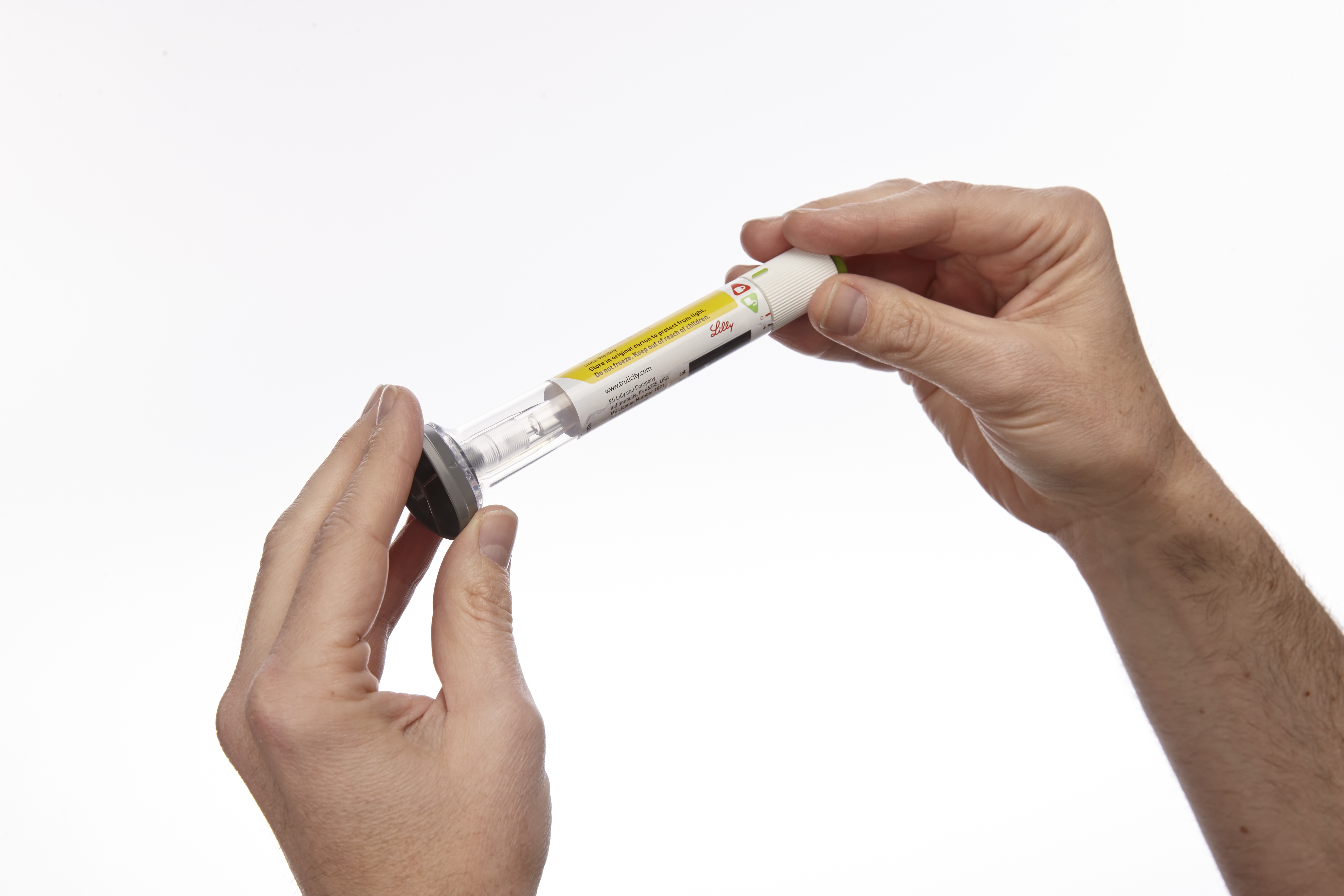
Early in the relationship, a team of IDEO designers and Eli Lilly leaders traveled the world to understand how people with diabetes live with the disease. Their findings led to the design of a series of award-winning insulin injection pens like SAVVIO. Portable, aesthetically pleasing, and discreet, the pens are suitable for use in both medical and personal settings. Combined with Lilly’s technical design prowess, this human-centered focus allows the devices to seamlessly integrate into patients’ lives and routines, making a challenging disease like diabetes feel more manageable.
Fast forward to today, Lilly’s innovative, easy-to-use auto-injectors are not only continuing to provide life-saving treatments to people with diabetes but also enabling the adoption of the popular GLP-1 weight-loss drugs Mounjaro and Zepbound, which together accounted for the majority of the company’s annual revenue in 2025. Perhaps most importantly, patients consistently rate the experience of using Lilly’s auto-injectors as relatively pain-free, easy to use, and preferable to competitors’ brands, improving adherence, satisfaction, and health outcomes.
This unwavering focus on driving innovation through a patient-first mindset is evident in some of the most impactful projects Lilly and IDEO collaborated on over the years:
GLP Auto-injectors
Convenient and cutting-edge, the first Trulicity injection device was originally designed to deliver the GLP-1 drug to treat type 2 diabetes. Today, it has been adapted for use with other GLP-1s, Mounjaro and Zepbound, which are increasingly popular weight-loss drugs and are also administered once weekly via fixed-dose injections. A wide base enables the pen to be held securely against the injection site, and the device automatically regulates the dose and needle depth.
Taltz Injectors
For most patients, living with severe plaque psoriasis means being your own medical technician—metering your drug dosage each time, and attaching and removing needles by hand. Taltz provides patients with clear visual and auditory feedback throughout the injection process through simple icons, bright colors, a translucent material, and clicking sounds. The devices are available in both autoinjector and prefilled-syringe formats and are adapted for Emgality, a preventive monthly migraine treatment, and Ebglyss, which helps treat eczema or atopic dermatitis.
HumaPen SAVVIO Injection Pen
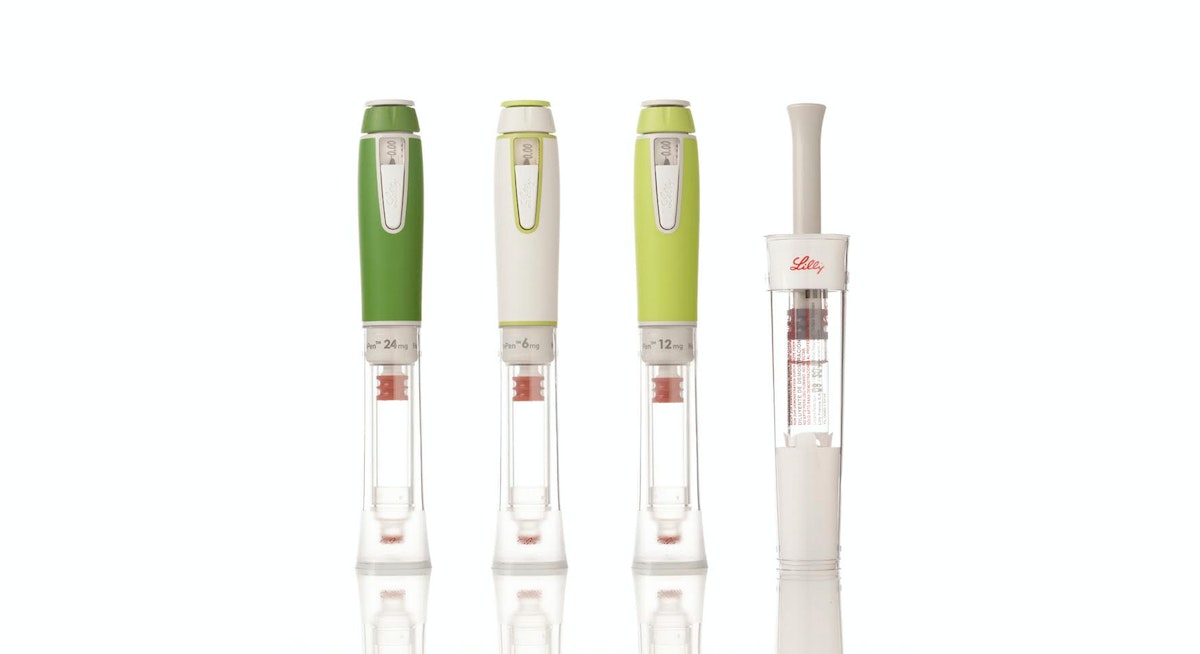
Key insights informed the design of SAVVIO, including patients’ preference for insulin pens that look less like medical devices and more like everyday objects you’d find in a backpack or purse. The sleek, colorful device was created to help patients feel comfortable and confident about fitting mealtime injections into their everyday lives.
Refillable Human Growth Hormone (HGH) Injector and Reconstitution Device
Designed to be kid-friendly, the Refillable HGH Injector leverages insights into pediatric treatment adherence to create a more integrated, systematic approach to treatment, while the Reconstitution Device makes mixing Lilly’s powder-and-liquid drug easier and less intimidating for parents and healthcare professionals alike.
KwikPen Insulin Pen
KwikPen is a next-generation, prefilled insulin injection pen that builds on the success of two previous designs, reducing its size to 5.7 inches and enhancing ease of use for patients.
HumaPen(R) Luxura™ Insulin Pen
HumaPen Luxura combines several innovations into a robust yet elegant pen that can be carried and used anywhere—an insulin pen solution that improves dosing accuracy, dose setting, and injection force.
In addition to designing products to meet the needs of people with diabetes, IDEO and Lilly have developed innovations in areas of oncology, autoimmunity, and men’s health. The results of this collaboration and expansion have won numerous design awards and produced one of the longest and most fruitful innovation relationships in IDEO’s history.
In the 1990s and early 2000s, Eli Lilly had a number of new, life-changing medications and two big challenges: Most of its drugs were self-injectables, not pills, so patients were hesitant to take them. And its drug-delivery device platform lagged behind its drug pipeline.
99%
of Trulicity users reported the auto-injector was “easy” to “very easy” to use in a JDST study
$36.5B
of Lilly’s $65.2B 2025 revenue came from sales of its auto-injectable GLP-1s, Mounjaro and Zepbound, a 45% increase from 2024

Reimagining San Quentin
Bringing together many voices for a report for the Governor of California.
“…the Advisory Council will recommend transformational programmatic, cultural, and physical change to San Quentin that can serve as a practical model that can be replicated and scaled to other institutions.”
Source: Office of Governor Gavin Newsom: Governor Newsom Names Leading Criminal Justice and Public Safety Experts to San Quentin Transformation Advisory Council, May 05, 2023 https://www.gov.ca.gov/2023/05/05/san-quentin-transformation-advisory-council/
The Advisory Council included the expertise of established criminal justice, public safety, healthcare, academic, reentry, and rehabilitation professionals, along with system-impacted/formerly incarcerated community leaders, and representatives of crime victims/survivors. The premise of IDEO’s involvement is to augment the Advisory Council Co-Chairs’ and members’ expertise in evidence-based best practices and lived experience living and working in prisons, with expertise in collaborative design, synthesis, visualization, storytelling and bringing visions to life.
Specifically, IDEO was brought in to facilitate input-gathering, and assist with incorporating the many viewpoints into a single, cohesive report of recommendations to the Governor. This included meeting the challenge of bringing together the viewpoints of 21 people on the Council (17 members, three Co-Chairs and an advisor to the Governor); incorporating the views of people who are most impacted (those incarcerated at San Quentin, San Quentin staff, community-based organizations, victim/survivor groups, among others); and formatting and designing the final report.

IDEO’s facilitation included workshops with the full Advisory Council, individual interviews and check-ins with Council members to gather their input to inform the recommendations. Each Advisory Council member was asked to speak with, and record feedback from, no fewer than five people at San Quentin or in affected communities and to share this feedback with IDEO. IDEO integrated this information and feedback into this report.
Research activities included visits to San Quentin to speak with and facilitate conversations with:
- San Quentin residents (100+) including the Citizens/Inmate Advisory Council, focus groups with Spanish-speaking residents, former gang members, ACT (LGBTQIA+), Voices Heal, People in Blue, San Quentin Citizens Advisory Council.
- San Quentin staff (100+) including interviews with numerous officers.
- San Quentin staff and residents together.
- Current participants and staff at Amistad (MCRP) and Beacon (former lifer) campuses (many who were previously incarcerated at San Quentin).
IDEO also organized listening, information sharing and feedback sessions, both at San Quentin and in the community, between Co-Chair representatives and various stakeholder groups, including victim/survivor groups, labor unions, and advocacy organizations. These perspectives were also brought into the report.
“Sprint” Author Jake Knapp Built You a New To-Do List
Jake Knapp's simple, paper-based system for focused to-dos
But to-do lists aren’t all bad. To-do lists let me capture things so I don’t stress out over having to hold it all in my brain. To-do lists let me see everything in one place. They’re a necessary evil.
So as much as I dislike to-do lists, I need to have one. There are a billion to-do list apps and methods out there, and I think I’ve tried 900 million of them. My favorite was David Allen’s paper-based Getting Things Done. But I constantly fell off the wagon. When I organized my tasks with GTD, I was damn organized—but every time the system fell apart, I not only lost sight of the big picture, I felt guilty, too.
So after a lot of ups and downs, I started doing my own simplified, imperfect thing. I’ve been using my system for a while now, and figured I might share it in case it’s useful to others. Yes, I know, another to-do list system! But you clicked on this story, so maybe you need one.
I call my system the “Burner List”
I’ll explain the name in a sec, but FYI, it has nothing to do with Burning Man. Basically it’s a simple-as-hell to-do list designed to force me to prioritize.
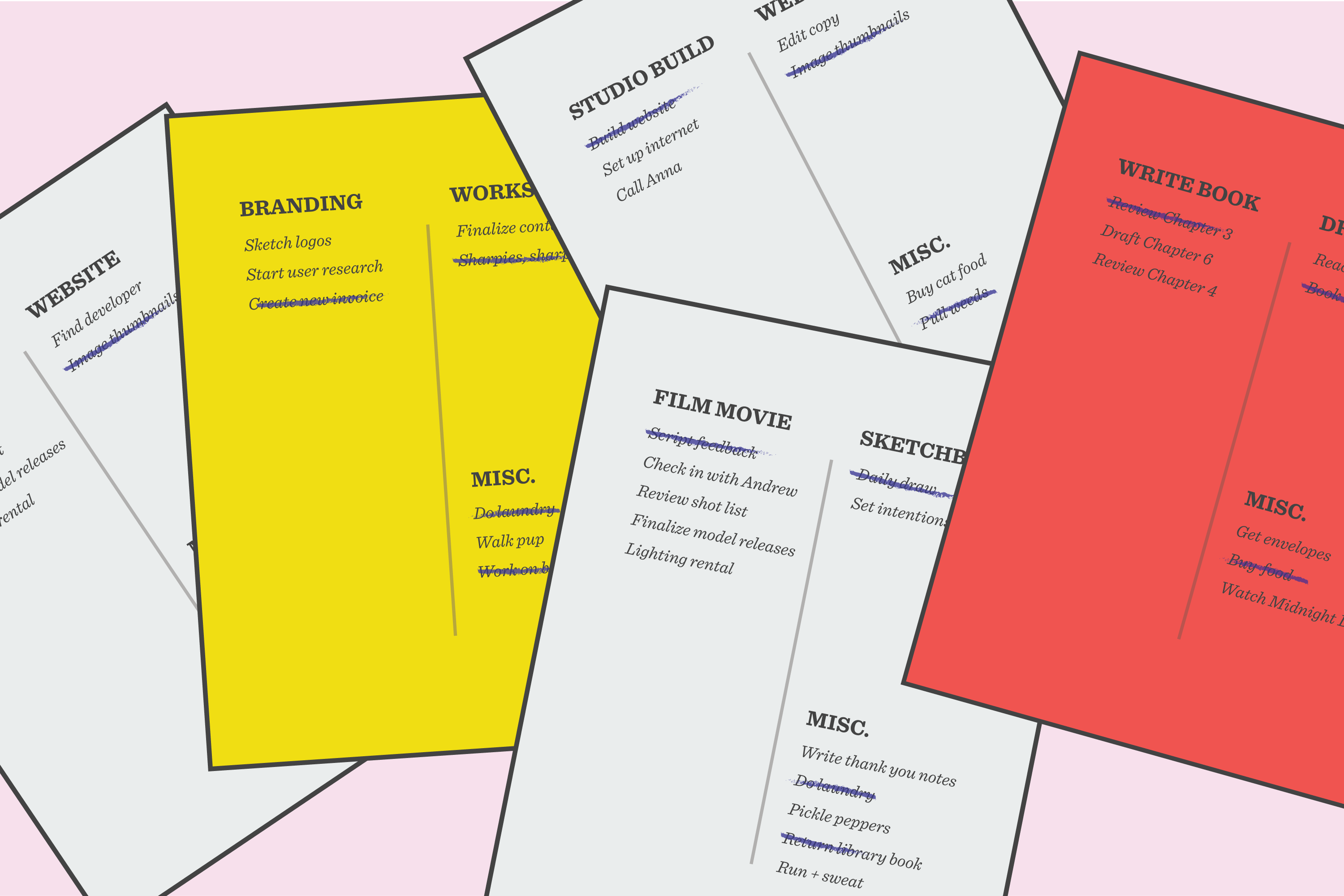
The Burner List is not perfect. It won’t keep track of every detail, or help you juggle a million projects. But that’s exactly the point. The Burner List is intentionally limited—and therefore focused. Here’s how to make one:

1. MAKE TWO TALL COLUMNS
You can fold the paper, draw a line down the middle, or just eyeball it. Precision is unimportant. What is important is the metaphor you’ve just created: Left = front burner. Right = back burner.
2. PUT YOUR MOST IMPORTANT PROJECT ON THE FRONT BURNER
You are allowed to have one and only one project on the front burner. Not two, not three — just one. In the top left-hand corner, write the name of your most important project and underline it. Then list the to-dos for your top project — any task you can do in the next few days to move it forward.
3. LEAVE SOME COUNTER SPACE
Leave the rest of the first column empty. The Burner List is not intended to make an efficient use of the damned paper surface area — it’s intended to make good use of your time and energy! The blank space gives you room to add more tasks for the top project, but, just as important, extra visual space makes it easier to focus on the important stuff.
4. PUT YOUR SECOND MOST IMPORTANT PROJECT ON THE BACK BURNER
In the top of the right-hand column, write the name of your second most important project and underline it, then write related to-dos underneath.
5. MAKE A KITCHEN SINK
Finally, about halfway down the right-hand column, list any miscellaneous tasks that you need to do but don’t fit with project 1 or project 2. It doesn’t matter if they’re part of project 3 or 4, they just get chucked into the kitchen sink with everything else. Yes, this goes counter to all organizational and productivity advice — but by constraining the space and attention you give to other stuff, you'll help yourself spend your time well.
Now get cooking
Imagine there was a chef standing to the left of your page. He’ll naturally focus most of his attention on the front burner. He’s aware of the back burner, and sometimes he stirs a pot or flips a pancake back there, but the front burner is where the action is.
The Burner List is intentionally limited. It won’t have room for everything. You’ll have to let go of things that aren’t as important.
The Burner List is also disposable. It gets stale fast as you cross off finished to-dos. I “burn” through my list every few days and then recreate it, over and over. This act of recreation is important, because I always discard some unfinished tasks that no longer matter, and I reconsider what belongs on the front burner right now. Sometimes it’ll be a work project, sometimes it’ll be a personal project—over time, I’ve realized that it’s okay and natural for the spotlight to shift. What’s important is there can only be one most important project a time.
To learn more about Jake's methods, subscribe to his newsletter here.
Man, I hate to-do lists. Checking off finished tasks feels good, but the glow of accomplishment masks an ugly truth: Most to-dos are just reactions to other people’s priorities, not mine. And no matter how many tasks I finish, I’m never done — more to-dos are always waiting to take their place. To-do lists just perpetuate the feeling of “unfinishedness” that dogs modern life.
6 Ways to Get Inspired on Your Commute
How to turn your commute from a time sink into a springboard
1. Embrace Randomness
On my 20-minute walk to work, I'll use chance to determine my route. "Don't walk" sign? Cross the other way. See a dog? Walk on that side of the street. Does the time of day end with an odd number? Make a right. I won't walk the wrong way, of course, but I'll use random cues to make myself choose different paths so I'm forced to notice new things along the way.
I also use my commute to connect with strangers in small but meaningful ways. I make sure to give a warm, real "hello" to bus drivers—no earbuds, please! Compliment well-dressed people on their style choices. Flirt with outgoing dogs to get their owners to smile. Thank people cleaning the streets for keeping things tidy for the rest of us. Little things like this make a city feel more like a small town. —Annette Ferrara, IDEO Chicago
2. Ride with Strangers
I'm new to the San Francisco Bay Area and I'm finding the "casual carpool" here a total novelty. It's essentially organized hitchhiking. You arrive at the designated carpool stop and wait your turn as two to three people at a time hop into strangers’ cars. The incentive for drivers is being able to use the HOV lane, which requires a minimum of three passengers and can shave 30 minutes off your commute.
There are very strict, unwritten rules for casual carpool: You don't make conversation unless the driver initiates, you don't eat or wear too much perfume, and you absolutely don’t take phone calls. The default radio station is NPR. You offer the driver a dollar at the end of the ride for gas.
At first, I thought it was so weird that people don’t talk, but now I like the quiet ride. Every now and then, I'll jump into a car and we’ll have conversation for 20 minutes as we cross the Bay Bridge. I like this too; connecting with strangers on my way to work is a great way to start the day.
If there isn’t a casual carpooling option in your city, look into organizing one for yourself. —Maria Scileppi, IDEO San Francisco
3. Spin with Your Inner DJ
One era of music that’s splendid fun is early ’90s—rave, jungle, techno, happy hardcore, etc. Much of this music was written using software called a "tracker." With trackers, you can enter notes using a standard computer keyboard.
Fast forward to modern times, and I find that a new tracker has been developed—RENOISE—that works the same way as trackers of old, but with modern-day functionality. Well, I had to have a go on that.
I installed it on my work laptop and now spend my journey home lost in the sounds of chopped Amen breaks, 808 and 909 hits, and rude-boy vocals. There's a lot to learn in terms of production techniques, sound design, and arrangements.
I start a new track each trip; these are my "train tracks." I find a great deal of enjoyment in seeing where they end up after the hour-long ride, but then I'm happy to abandon them. There's always tomorrow. —Iain Smyth, IDEO London
4. Unplug and Observe
I walk 10 minutes to the ferry building, take a 15-minute ferry ride across the river, and then walk 25 minutes to the office. I used to fill all that time listening to podcasts, checking email, surfing Facebook, or otherwise trying to get a head start on my day—which meant I'd developed a bad habit of looking at my phone while walking.
One day, I decided to end the habit for safety's sake. With my phone now tucked away during my commute, that time is spent letting my mind wander, observing my surroundings, and pondering the day ahead. The result is that I feel more prepared for my day mentally and energetically. I’m less frazzled and magically seem to have more down time. —Anna Silverstein, IDEO New York
5. Work Your Muscles, Free Your Mind
I bike to work because it's an easy way to build in regular exercise without having to carve out special time. It's a 30-minute ride each way.
I often have lightbulb moments and am able to connect the dots around things happening at work or in my personal life. There's something about the intense focus of weaving through traffic while letting thoughts percolate in the background that works for me.
For example, earlier this year, a large education company in India reached out to IDEO to talk about collaborating. On our call, it didn’t seem like a great opportunity for partnership, but then on my evening commute home, the dots connected.
I called the company back the next day to propose a program that would bring together the strengths of both our organizations (IDEO U's curriculum expertise and the partner company’s established marketing and distribution channels) to provide a great executive education experience for the Indian market. —Danoosh Kapadia, IDEO San Francisco
6. Get in the Right Headspace
I walk eight minutes to the 2nd Avenue subway and then take a 16-minute ride to Canal Street. I've been meditating every day for a few years, and this year I decided to listen to guided meditations on my commute.
I typically choose from a selection of meditations by Sarah Blondin on the Insight Timer app. Most are about 10 minutes long. She has a wonderful voice, and I select based on my mood. Usually, I choose something to pick up, reaffirm, or inspire me. Sometimes she nearly brings me to tears, but usually she just helps me be more present.
Listening to guided meditations while commuting has made me more mindful of my surroundings, more compassionate toward my fellow commuters, and generally calmer. —Caitlin Fitzmaurice, IDEO.org, New York
Next time you find yourself staring into space on the way to work, try one of these techniques to reboot your commute.
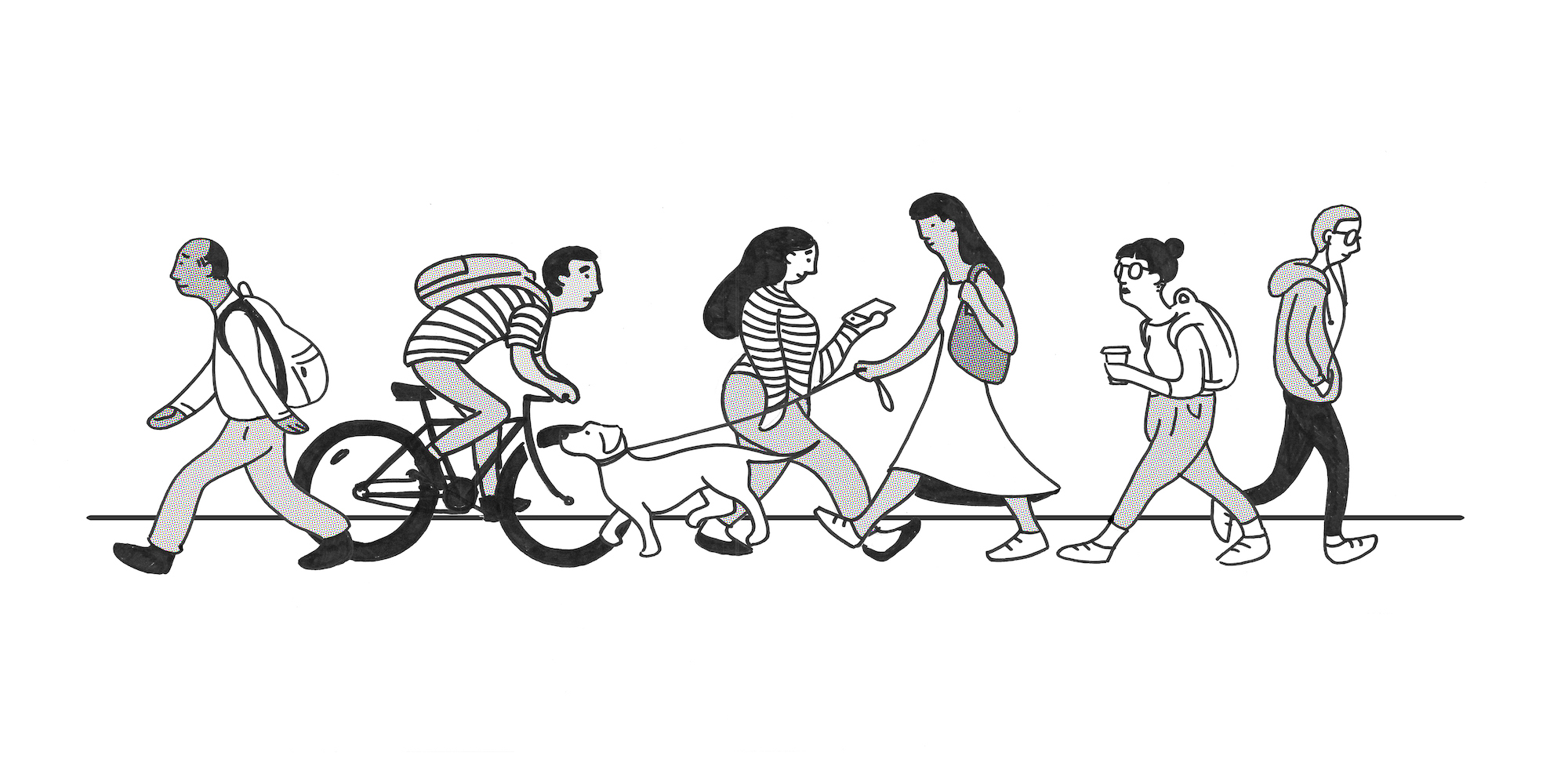
What were you doing at 8:30 this morning? If you’re like me, you were slogging through the least fun part of your day. The average employee spends nearly 53 minutes a day getting to and from work, but you don’t have to sit there feeling miserable. There are all sorts of creative ways to wring positivity out of your daily grind.
I asked IDEO designers and other creatives for their commuting best practices. Here are the top six:
Why You Should Start Prototyping—Right Now
How early prototypes can kickstart your project
With this in mind, we selected key interaction moments from our client's current product. Then we prototyped three distinct new directions—usability experiences we were excited to bring to their industry. These experiments, we hoped, would spark an early conversation that was less about “we need to do this” and more about “what if we do that?”
Kickoff day arrived and we shared the prototypes with the client.
Cue uncomfortable silence.
Then, finally, one of the executives exclaimed, “This is mind blowing! This could be the future of our product.” He was not applauding the user interface or visual style we used to illustrate our idea, but the essence of what the experience did for him. An excited conversation followed and he wanted to share his own design ideas.
It doesn't always go this way. Early prototyping entails plenty of risk, too. What if you've been blind to user needs? What if the client just doesn't see the magic?
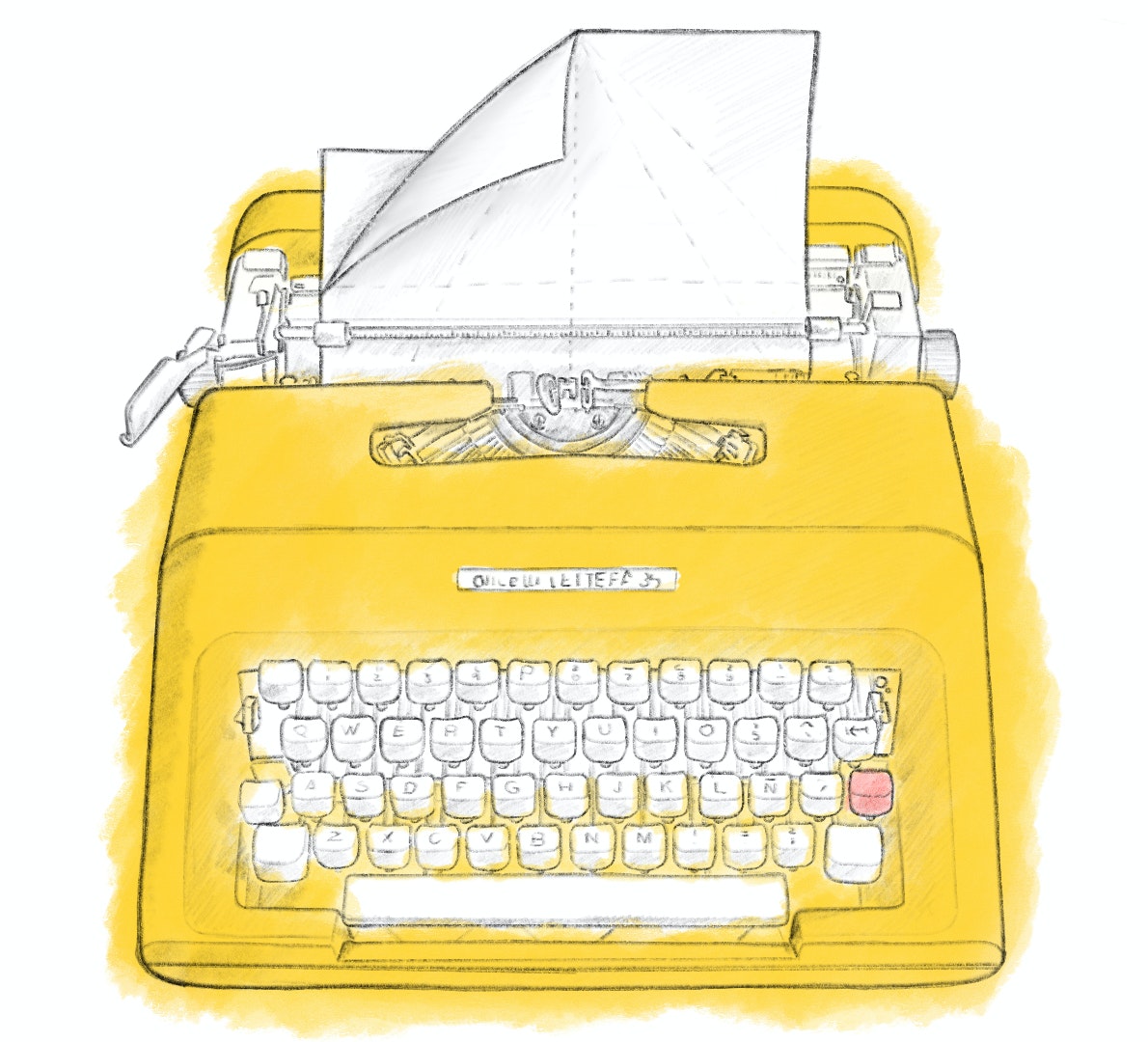
Here are 4 steps you should consider when creating early prototypes:
1. Take advantage of your fresh perspective
Before diving into industry or product constraints, take a step back and imagine if there were no limits to what you could design. What would that look like?
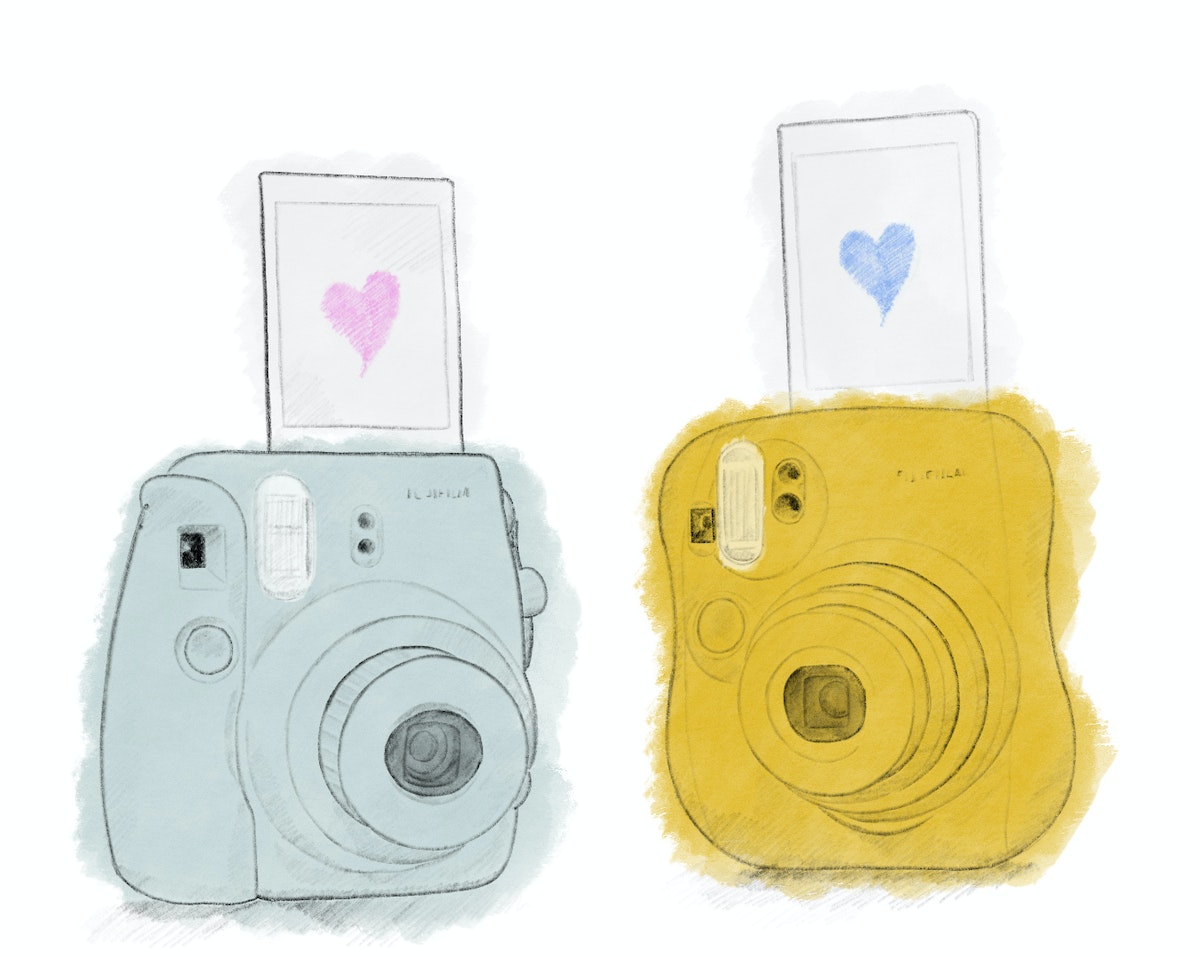
2. Identify what excites you and the team
What personally inspires you to be on this project and how can that be translated into the experience? Don't over think it. Take one key interaction from the current experience and add something unexpected to it. This is an opportunity to test initial assumptions with a beginner’s mind and generate radically new ideas.
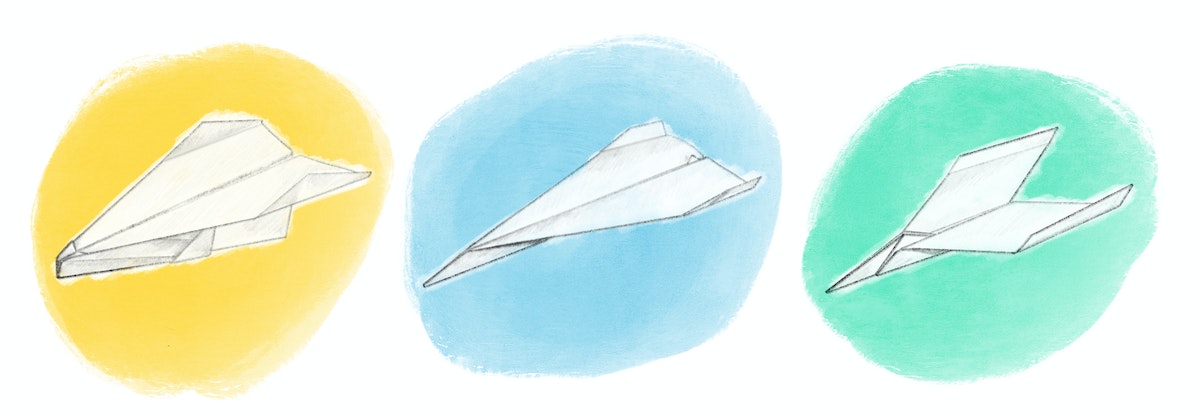
3. Translate your excitement into prototypes (with content your client understands)
Use your client's current product content as a starting point. Having something they can easily recognize and understand is a great way to bring them into a design conversation. Don't think about creating long flows at this early stage. Imagine your prototype as a teaser to a product that is about to come to life and focus on key interaction moments.
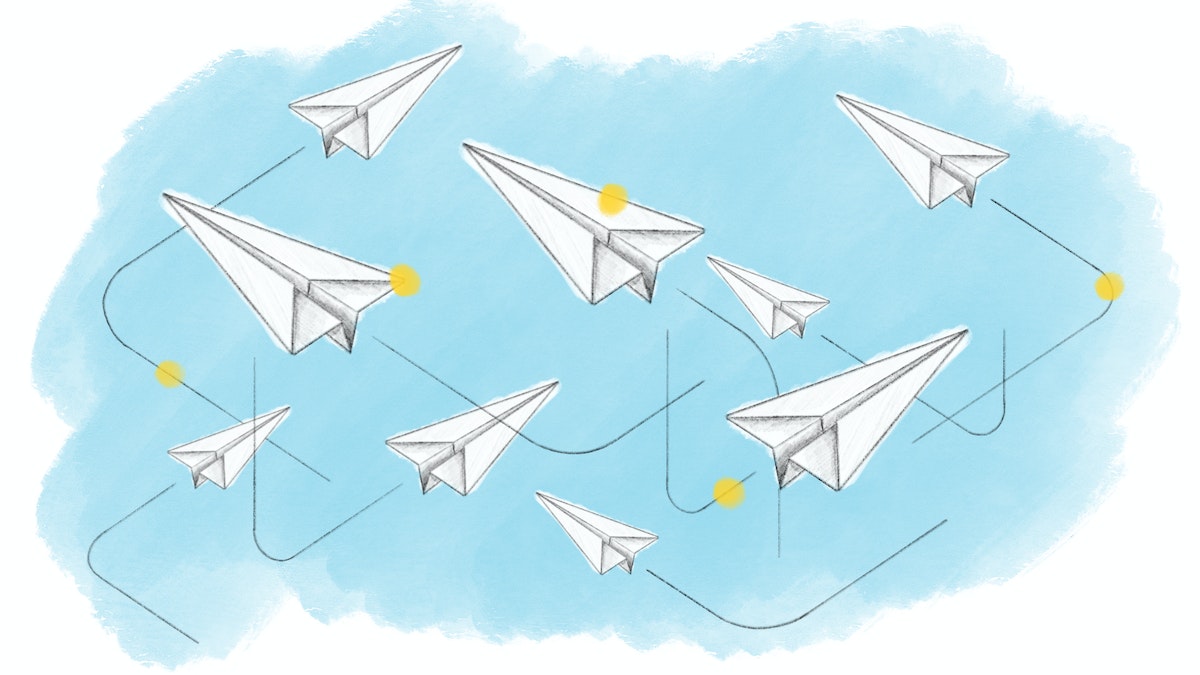
4. Highlight where your client sees design opportunities
Quick prototypes are a great way to tackle hopes and fears and learn, from a usability point of view, where your client sees design opportunities at a very early stage of the project—so you don't head off in the wrong direction.
And above all, remember: A sense of excitement and momentum shared by you and the client on the very first day gives your team an important confidence boost. It helps set expectations, and gets everyone inspired to push to a new level.
For a recent design project, we decided to try something new. We were tasked with rebuilding a product experience, but instead of starting with our usual process where we gather inspiration, we thought: What if we share a prototype we are really excited about with the client right away? Just jump in.
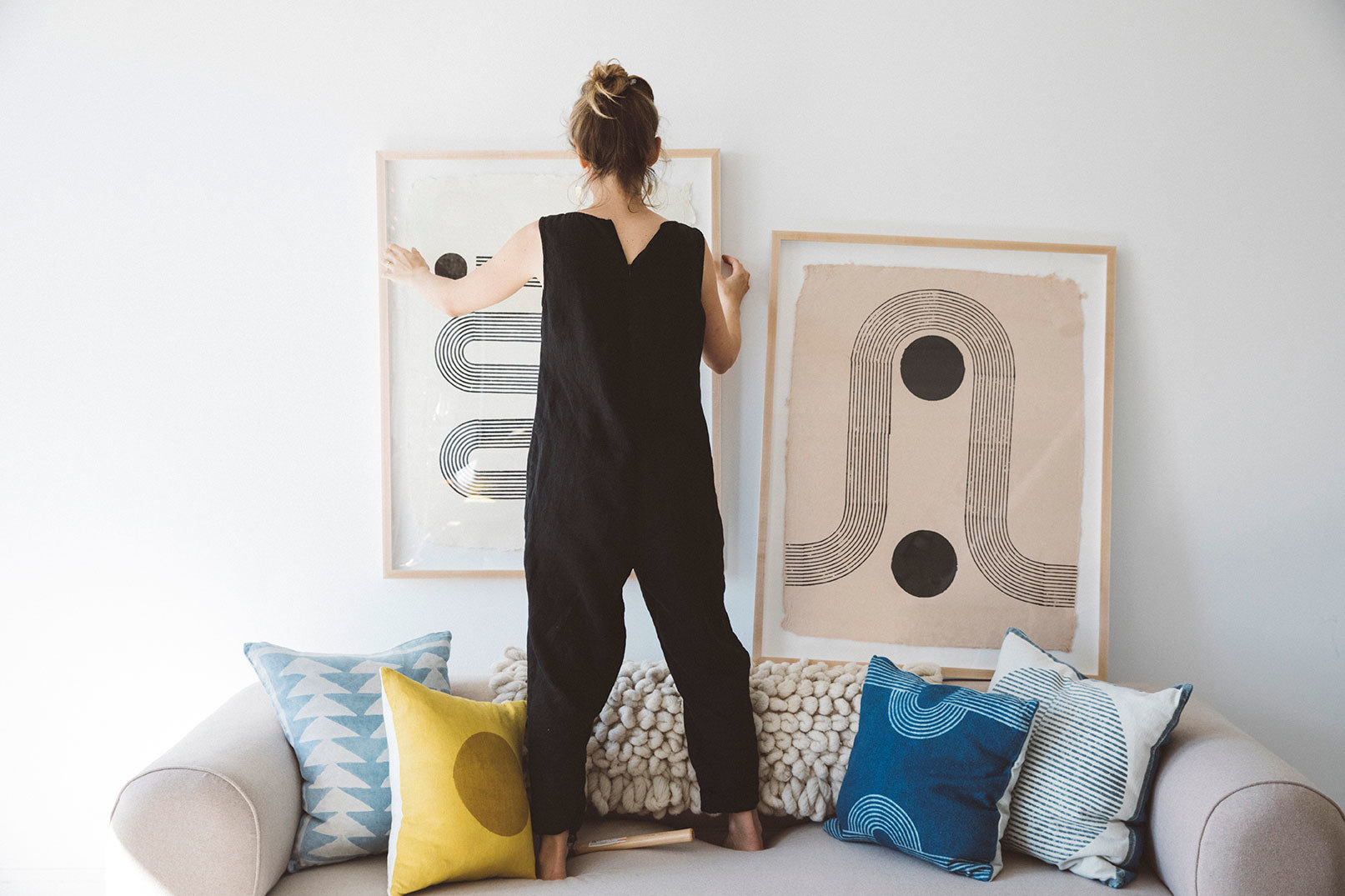
Meet the Sisters Behind Block Shop
There are creative crushes, and then there are girl crushes. This qualifies as both.
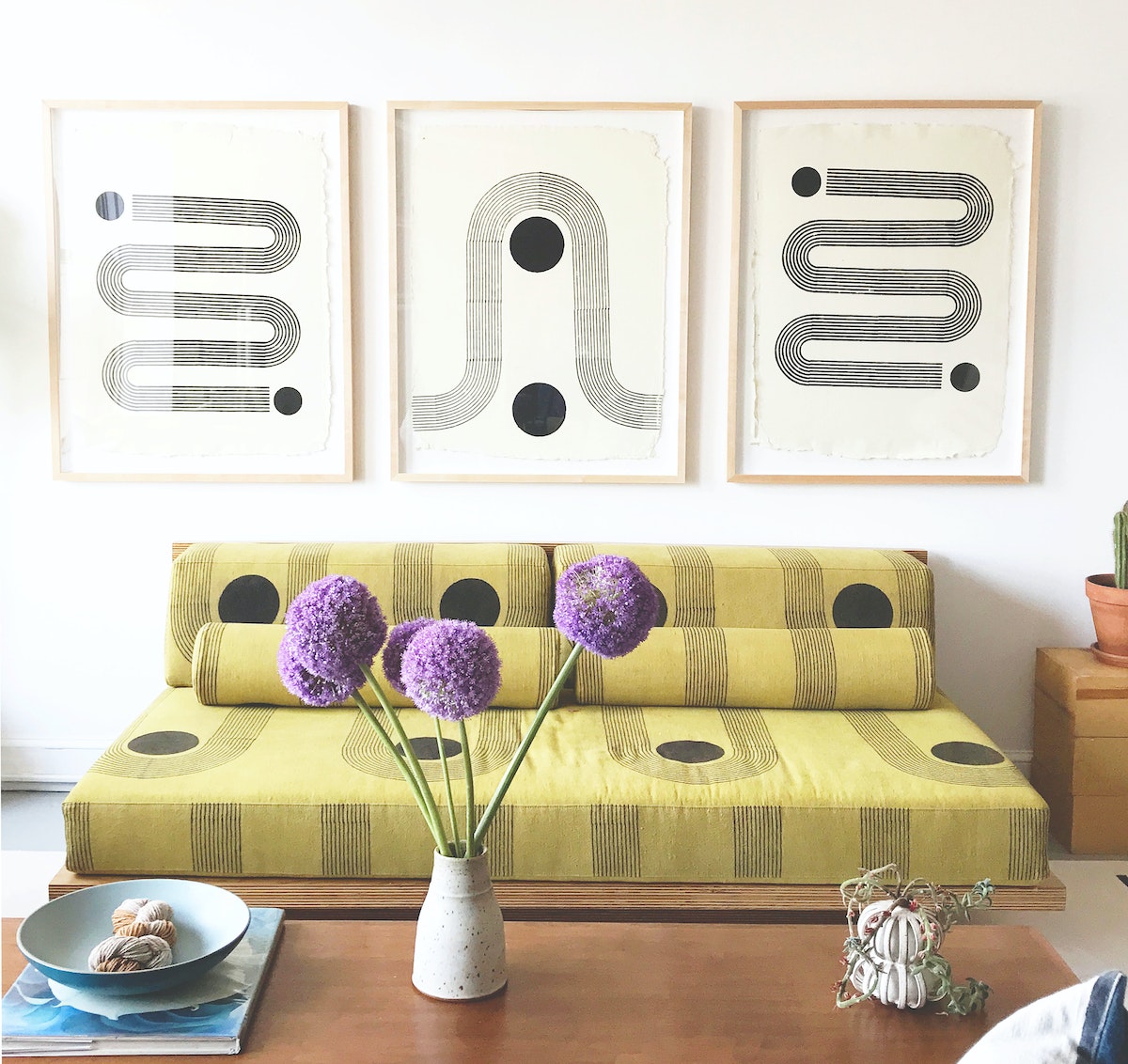
While beautiful textiles (and now prints!) are Block Shop’s most recognizable output, there’s a good deal more going on behind the scenes. The duo created Block Shop in partnership with a family of printers and dyers in Bagru, Rajasthan to keep the artistry and craft of Indian block printing alive. (They donate five percent of their profits each year to building and implementing community healthcare programs.) If their reverence for craft and respect for humanity isn’t enough to make you weak in the knees, this interview should do it.
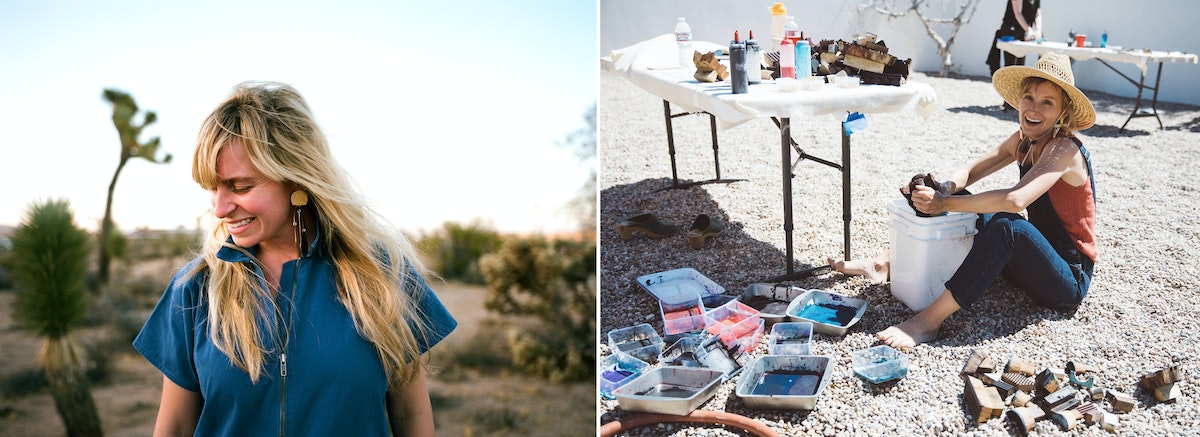
In one sentence, who are you?
Hopie Stockman: Josephine March with an MBA.
Lily Stockman: Gertrude Bell on a camel after too much coffee.
What do you do? How did you learn it?
HS: I run Block Shop—a textile and design studio—with my sister, Lily. In reality, I work seven days a week, but five of them take place in our 11th floor downtown Los Angeles studio. I design everything from rugs to public murals to business strategy and Grand Central Market lunch orders for Block Shop.
We both went to grad school; I went for for business and Lily for painting. Rather than dividing our work rigidly between business and creative, we’ve found that it works best when we share responsibilities.
A lot of our education happens in Jaipur, India. In 2010, Lily was living in there and apprenticing under master Indian miniature painter Ajay Sharma when she first met our printers. Since then, we've gone back to Jaipur twice to year to work with them on new designs and products. Everything we know about wood block printing we've learned on the ground while prototyping with our team, lending a hand in all aspects of the process, from dye-mixing to block registration on the fabric.
On the business side, the most valuable advice has all come from the (mostly) women running their own small and successful businesses here in LA. For example, our friend who runs a candle company helped us build our wholesale strategy. When we started out, we thought we wanted just a few huge department store-style accounts to streamline our operations and provide reliable cash flow. She helped us to understand the marketing power of wholesale: that smaller, well-aligned shops could be better storytellers and champions of our brand, and likely wouldn't discount as aggressively.
Another friend who has an independent furniture line shared invaluable advice on how to collaborate with large companies, emphasizing the importance of control over the design and fabrication process. Megaretailers actually need the cool factor of small, independent brands in order to be relevant. The question for small brands is whether the paycheck and promise of exposure is worth the potential chargebacks, brand dilution, and even customer alienation. For us, we've learned that it doesn't work unless we're making the products ourselves and have control over the storytelling.
What are your 3 favorite possessions?
HS:
- Otto, our bearded mutt.
- A painting of a rabbit that my great grandfather painted 60 years ago.
- The Kishore Kumar Bollywood poster that my now-husband and I bought together at the Chor Bazaar in Mumbai, when we had only been dating a few months. It sort of signified that leap into a shared life—jointly owning things.
LS:
- My baby Olympia.
- My dog, who I bought from the pound for $85.
- My gold bangle bracelets given to me by our surrogate grandmother, collected from her travels around the world.

What does a typical work session look like?
LS: On design days, we hide our laptops and put the screens away. No phones, no nothing! Out come the old art books on Anni Albers, Arp, Matisse, and Sheila Hicks. We put some Grateful Dead on, get the watercolors out, and swap sketches back and forth across the table. The result is so much better when we do it together. We’re always improving each other’s work. We try to design like this for two-to-three hours once a week, which is pitiful, but that’s the reality of running a small company; the actual drawing sessions take up only a small percentage of our time.
When it comes to our work, we have a simple design rule: Everything Block Shop touches must hold up as a holistic composition. That means it needs to have balance and a sense of quiet. My favorite painting teacher said, "You know a painting is done when it's quiet. Nothing on the canvas is yelling at you." And if it doesn’t look good hanging on the wall, then it doesn’t go into production.
How do you get over creative block?
HS: Take Otto for a walk past the old movie palaces in downtown L.A. to remember that inspiring design lives everywhere in architecture. On a recent prototyping trip to India, I started panicking that we’d exhausted all geometric patterns—THAT’S IT, WE’RE FINISHED! WE’VE USED EVERY ITERATION OF CIRCLES AND TRIANGLES! Then we went for a walk to get chai with our sketchbooks in hand, and boom! All sorts of ideas emerged from the marble latticework and archways in the old city. We simply needed to look.

What was the last item on your to-do list?
LS: Plan a Texas road trip starting in Marfa, where our friends run the El Cosmico.
How do you see the world in 2078?
HS: A degree or two warmer. Governed by data and manufactured by robots, with no boundaries between advertising, entertainment, and politics. Hopefully, I’ll be with the people who’ve returned to hands-on, empathy-based, slow living….off with my grandkids somewhere outside making pinch pots.
What's your number one bucket list item?
HS & LS: Design a boutique hotel.
Who are you creative crushin’ on lately?
HS: Katja Blichfeld, co-creator of High Maintenance. (If you’re out there, hey.)
There are creative crushes and then there are girl crushes. This qualifies as both—squared. Sisters Lily and Hopie Stockman are the founders of Block Shop, a textile company based in Los Angeles and Joshua Tree. I discovered Lily and Hopie a few years ago through an online web of women makers, and have been feverishly following their work ever since.

Lindsey Turner
I’m passionate about building brands, products, and experiences that help organizations show up with meaning and momentum.
I help organizations cut through complexity by shaping how they show up, through brand strategy, identity, and storytelling.
Working at the intersection of brand and business, I bring an editorial eye and a bias toward making—turning ideas into tangible experiences that people can understand, trust, and believe in.
My work spans government, healthcare, financial services, media, and consumer goods, from launching Gen Z-focused ventures to building innovation labs and reimagining legacy brands. I relish moments of ambiguity and enjoy translating across teams, perspectives, and priorities to move ideas forward.
I started my career in editorial and digital design, shaping cross-platform experiences and identity systems in publishing and agency environments. That foundation still shapes how I work today: I’m detail-oriented, collaborative, and overreliant on the Oxford comma. I hold a BFA in Visual Communication from the School of the Art Institute of Chicago.

Rachel Young
My work helps organizations see who their products aren't working for—and build the will and the tools to do something about it
For 25 years, I've asked the same question: Who does this design exclude—and what are we going to do about it?
My work spans human-centered strategy, inclusive design, and qualitative research, with clients ranging from Microsoft, Google, and Verizon to the National Science Foundation, and San Francisco Unified School District.
Before IDEO, I taught elementary school in East Palo Alto and spent a decade doing design work with social service organizations—where I learned firsthand what it costs people when systems are built without them in mind.
I am currently writing User Error, a nonfiction book about digital access and the design decisions behind it. I live in Oakland, California.

Brian Pelsoh
I lead with craft, ensuring our work is creatively excellent: rooted in deep human insight and imagination, while also grounded in the realities of business and technology.
My expertise spans brand, communication, and product design across tech, education, the arts, and social impact.
I believe great work demands both high-level vision and obsessive attention to detail, and only happens through collaboration.
I bring an inclusive, hands-on approach and a deep understanding of business, which enables me to consistently deliver excellence while always asking why.
Before joining IDEO, I worked at the brand firms Pentagram and VSA Partners. I began my career as a designer, leading teams at the School of the Art Institute of Chicago and the Milwaukee Art Museum. I hold an MFA in graphic design from Maryland Institute College of Art and a BFA in communication design from the Milwaukee Institute of Art & Design, and have taught at some of the best design schools in the US.

Tony Wong
I am responsible for IDEO’s long-term success in China and working with clients to use design as a tool to enable growth.
I am responsible for IDEO’s long-term success in China and working with clients to use design as a tool to enable growth. Specifically, I have helped Chinese companies design holistic brand solutions through the development of their products, communication, services, and innovation teams, and I have helped multinationals expand their presence and influence in China.
I advise global leaders on developing China-led innovation and capabilities.
In over 15 years in IDEO Shanghai, I have worked on projects that use design to elevate the quality of the experience of healthcare products and services, streamline processes that increase productivity, create spaces and programs that promote and enable inclusive communities, and build next generation mobility solutions that are planet-positive.
Before joining IDEO, I worked at Philips Electronics and the Electrolux Group in Italy, the Netherlands, and Singapore on a number of breakthrough commercial products. I am a member of the Young President Organization in Shanghai.

Building a personal AI for the messiness of life: Sida Li
Most AI products today are built for work—a space with clear problems and established systems. One founder noticed a gap: personal life is messier, harder to systematize, and mostly left behind by the AI boom. So she built Cue, a personal AI that lives inside iMessage and group chats, to go where the other tools haven't.
In this episode, Becca Carroll, IDEO's Chief Strategy Officer, talks with Sida Li, co-founder and CEO of Shared Context Lab, about staying anchored to a human need while the technology around her keeps changing shape, why she treats her business model with the same rigor she'd bring to a product, and what it feels like to build a company at this particular, disorienting moment in AI.
The conversation also gets into how Sida makes design decisions: the language Cue uses to describe itself, the tradeoffs behind building inside iMessage instead of a new app, and a real story about a business idea that didn’t pan out.
This is the second in a two-part series profiling founders from IDEO's Startups-in-Residence program. The first conversation is with Johannes Seemann, founder of Sooner, on designing GenAI for the emotional side of money.

Designing GenAI for the emotional side of money: Johannes Seemann
Most personal financial tools are built to run the numbers and optimize towards a budget. While that works for some, most people experience money as a lived relationship that does not neatly fit into a spreadsheet. Johannes Seemann and Becca Carroll discuss why money is emotional before it is mathematical, and what a human-centered approach to building a generative AI financial product looks like in practice.

The curious leader's edge in uncertainty: Scott Shigeoka
Mina Seetharaman talks with Scott Shigeoka, author of Seek and Head of Curiosity Cultivation at the Eames Institute, about what distinguishes genuinely curious leadership from performative curiosity, how power dynamics shape curiosity, and why practicing curiosity can restore energy rather than drain it.

How constraints make us more creative: David Epstein
Mina Seetharaman talks with David Epstein, author of Inside the Box and Range, about why total freedom often produces average work, how leaders can design useful limits on purpose, and what organizations such as General Magic and Pixar reveal about the relationship between boundaries and creativity.
Looks like you might be in search of something very specific?
Or reset the filters above and try another angle.
Here’s some random inspiration

Podcasts about creative leadership

Articles about the power of prototyping
