
.svg)




A return to simplicity with a bottled tea brand
Bringing the grounding and authenticity of tea culture into the rhythm of modern life.
Master Kong (known internationally as Tingyi Holding Corporation) is number one in market share in both instant noodles and ready-to-drink teas, with over $10 billion USD in annual revenue. While China has a rich tea culture, most sugar-free bottled tea on store shelves markets itself as “healthy” and “tasty.” Wanting to set itself apart from the competition by uncovering new consumer needs, Master Kong reached out to IDEO. Together, Master Kong and IDEO immersed themselves in modern Chinese tea culture and built a new, premium, sugar-free bottled tea brand that resonates deeply with contemporary tea drinkers.
During research, the combined IDEO/Master Kong team took a two-pronged approach to uncovering new opportunities: industry exploration and consumer research. The team visited various tea-related businesses, from traditional tea houses to modern beverage shops, as well as “third place” tea spaces outside of home or work. They also conducted in-depth, in-home interviews with consumers with various levels of interest in tea, delving deeply into their daily routines to better understand their lifestyles and any emotional or functional needs related to tea.
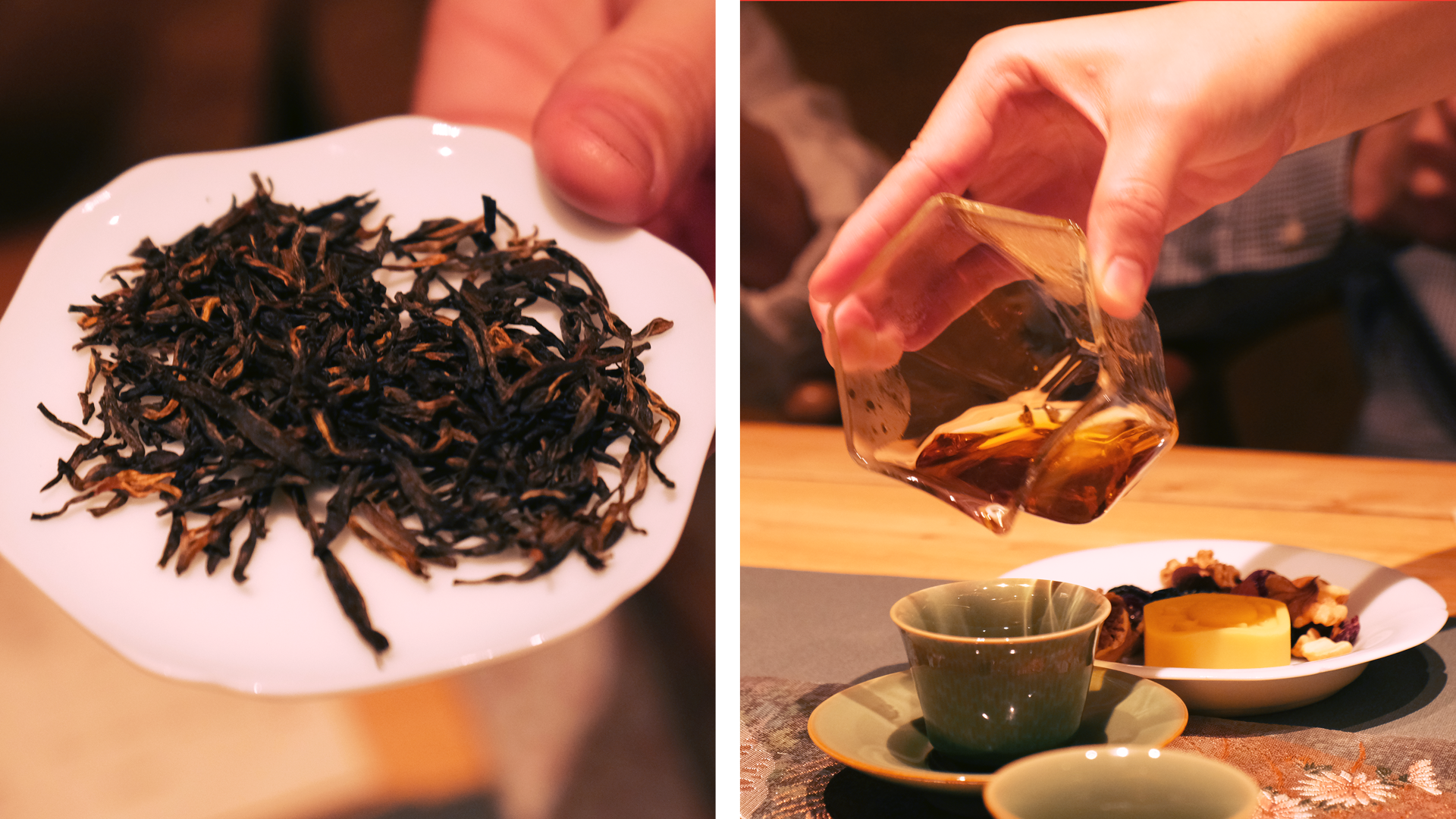
The team discovered that the essence of Chinese tea culture resonated with contemporary consumers’ longing for authenticity, simplicity, and physical rejuvenation in their fast-paced lives. This insight presented a unique opportunity for Master Kong. Instead of positioning its new sugar-free tea brand as merely a “healthy alternative” to other beverages, it could spark a meaningful connection to tea culture, seamlessly integrating into various moments of modern life.
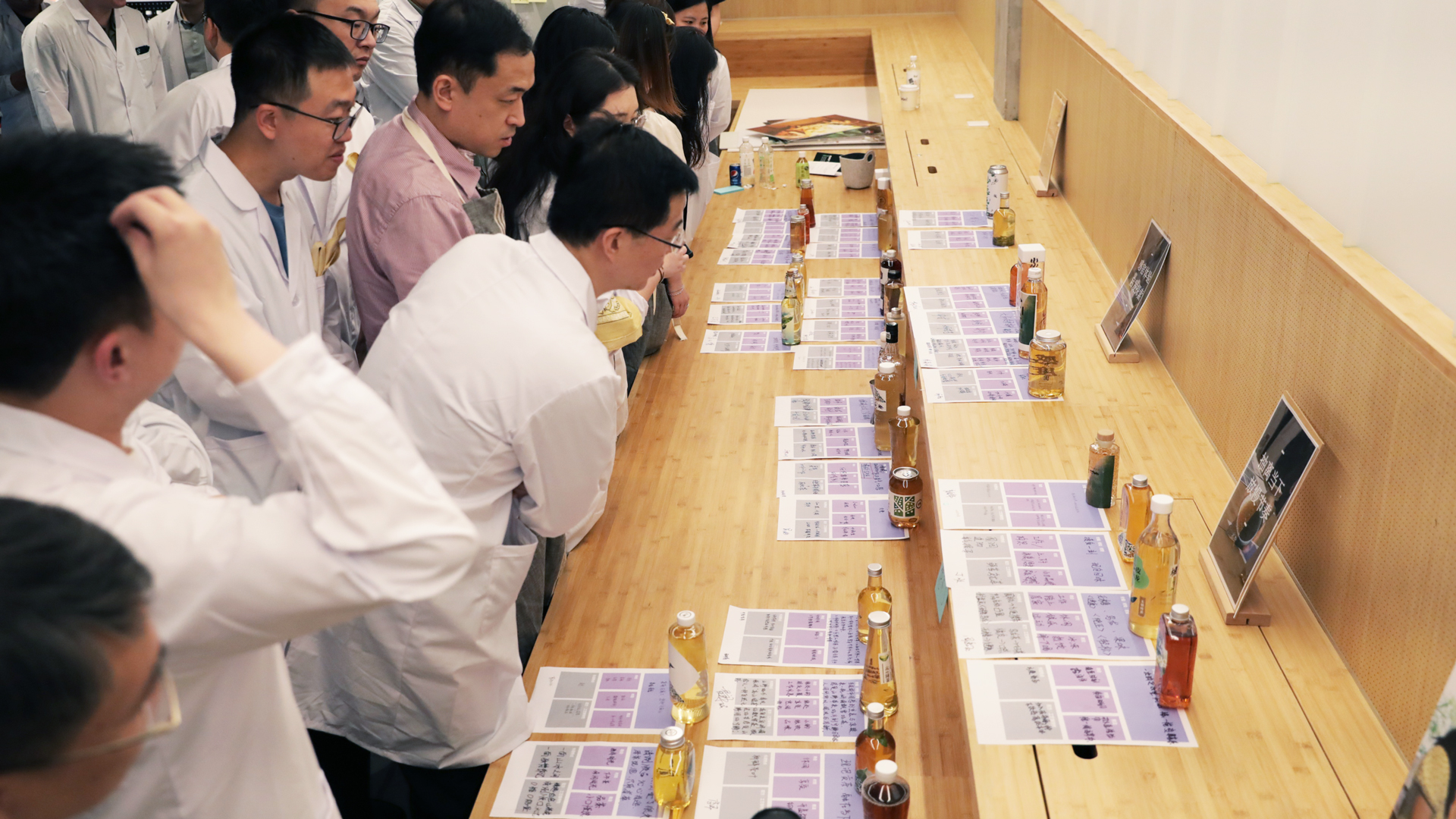
Armed with this insight, IDEO designers and dozens of Master Kong beverage team members participated in a series of immersive, hands-on tea innovation workshops. Teams of experts from R&D, marketing, supply chain, and other company departments temporarily set aside their job titles to explore, iterate, and refine dozens of new tea concepts that were commercially viable, feasible for mass production, and aligned with consumer needs. The cross-departmental collaboration allowed for a broad mix of perspectives, experiences, and expertise, enriching the innovation process.

The co-creation sessions led to a new sugar-free tea product and flagship brand called Cha De Chuan Ren (“Descendants of the Tea”), which celebrates fine, origin-sourced tea and the passion and dedication of tea farmers. The novel concept resonated strongly with consumers and was validated during subsequent rounds of quantitative market testing, ensuring its relevance and market potential.
Cha De Chuan Ren launched with two signature flavors: Tieguanyin (green tea) from Fujian and Pu’er (black tea) from Yunnan. The unique mottled bottle design pays tribute to traditional handcrafted glass containers and the handiwork of tea farmers. The tactile paper label, which features Jia Ma-inspired woodblock illustrations of local tea fields and tea farmers’ hands, nods to the artisanal craft of tea making and the source of the tea inside.
“Descendants of the Tea” debuted on Tmall in April 2024. It claimed the top spot on the commerce site’s Tea Beverage V-List in August and September. Offline, it launched in FamilyMart convenience stores in May and has since expanded nationwide. The new brand received a 2024 Red Dot Award for “Brands & Communication Design.”
“We are honored to collaborate with IDEO, a global leader in innovation, as our strategic partner. ‘Descendants of the Tea’ is not just an exceptional product but also a tribute to the rich heritage of tea culture. Only by continuously integrating culinary traditions with innovation can we sustainably meet consumers’ true needs.”
Richard Chen
CEO, Master Kong (Tingyi Holding Corporation)
“Innovation is incredibly fragile. If even one leader is unsupportive or hesitant, the culture of innovation can collapse. I always encourage my team to take risks, as long as they’re not high stakes. After all, what’s the worst that can happen? At the very least, we’ll have a fair chance at creating something new.”
Wei Hong-Chen
Chairman of Master Kong Beverage Holdings Co., Ltd.
Sugary bottled teas were once very popular in China. Today, rising consumer demand for healthier beverage options has expanded the market for sugar-free tea.
#1
on Tmall’s Tea Beverage V-List, August- September 2024
2024 Red Dot Award Winner
for Brands & Communication Design
A luxury water bottle takes precision engineering to the extreme
Elevating the everyday with next-level design.
Twenty years ago, carrying a single-use plastic water bottle was a status symbol—no more. Growing awareness of the negative environmental impact of plastic pollution, combined with the adoption of healthier lifestyles and social media influencer trends, has made reusable water bottles “it” accessories for on-the-go consumers. While brands such as Stanley, Yeti, S’well, and Hydro Flask own the under-$100 market, fashion brands such as Louis Vuitton, Chanel, Dior, and Prada have etched out a new and growing market for high-end bottles that appeal to discerning, trend-conscious young people looking to perfect their hydration habits.
Spotting an opportunity to disrupt the predominantly utilitarian water bottle market, Steinmann partnered closely with IDEO, tasking the team with developing an industrial design that perfected the tactile and sensory user experience, from drinking and carrying to disassembling and cleaning thoroughly. The collaboration deepened over time, with Steinmann and IDEO working together to develop the high-level engineering concept, the OKAPA logo mark, and packaging ideas.
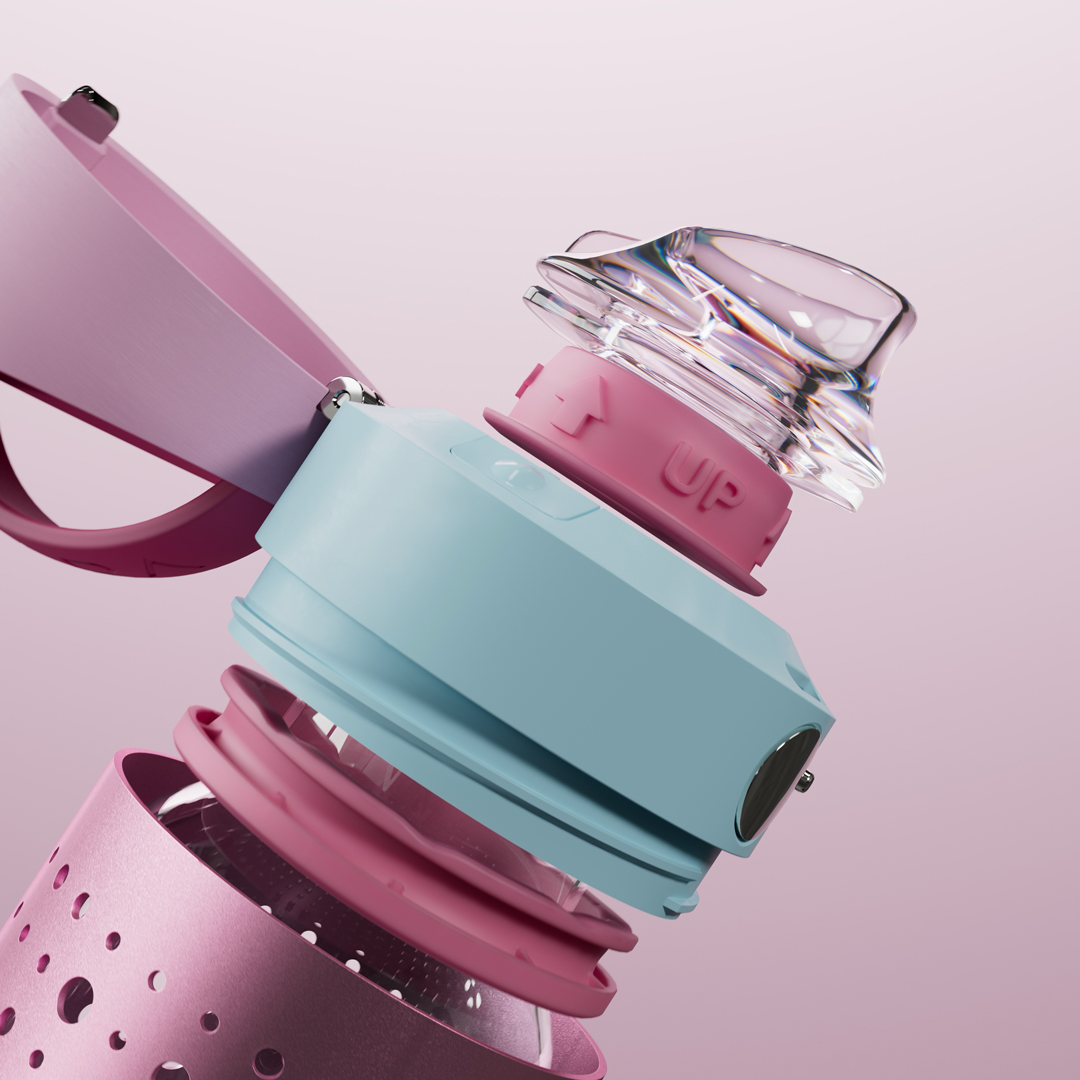
Key user-centered features of the OKAPA bottle include a medical-grade German borosilicate glass interior for superior taste of hot or cold beverages with no lingering odors; a Swiss-engineered thermoplastic lockable and leak-proof tilt cap that can be easily operated with one hand when driving or doing other activities; and an ergonomically shaped mouthpiece for a pleasurable drinking experience. Precision-engineered for maximum longevity, the inner glass bottle is suspended via a shock-absorbing system inside a bead-blasted, extruded, and anodized aluminum outer shell. Eight modular parts come apart easily for either a quick or thorough cleaning.
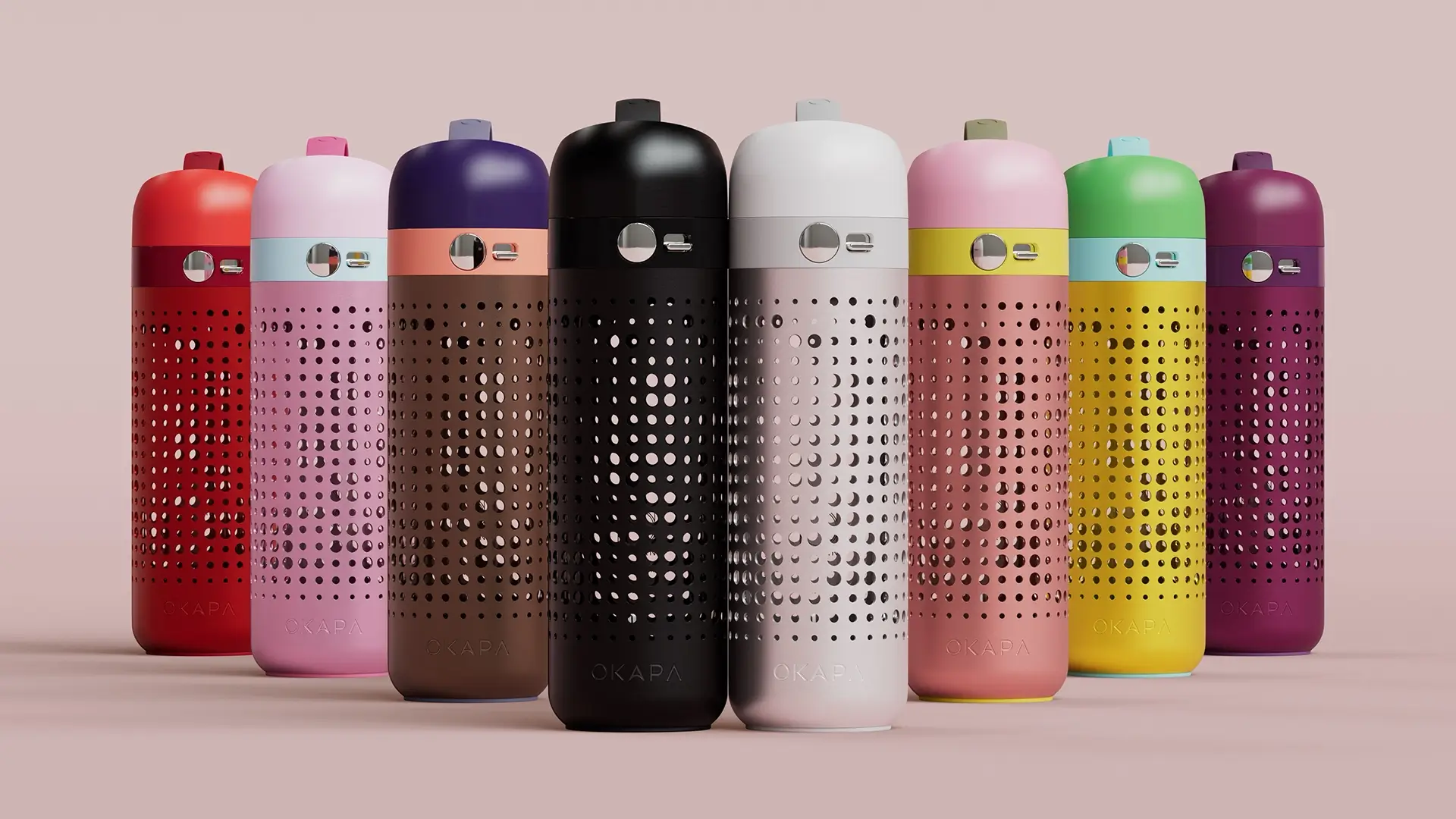
At its core, the OKAPA bottle elevates an everyday ritual through meticulous design and uncompromising engineering. Launched in January 2025, the new bottles are available in eight contemporary colorways curated by renowned color and materials specialist Beatrice Santiccioli (BSD), including Misti Pinku, Goldie Samba, and Fetishe Noir, among others.
In the US, the reusable water bottle market is estimated to increase from $10.2B in 2024 to $14.1B by 2031, with 69 percent of Gen Zers owning at least one. Customization trends, such as personalized design and branding, are anticipated to boost the market, ripe territory for disruptive startups such as OKAPA. (Persistence Market Research)
Once a practical accessory for hikers and outdoor enthusiasts, reusable water bottles have gone mainstream. Yet none check all the boxes in terms of purity of taste, hygiene, durability, functionality, and beauty.
8
modular pieces ensure hygienic cleaning is quick and easy
100%
recyclable materials in each bottle
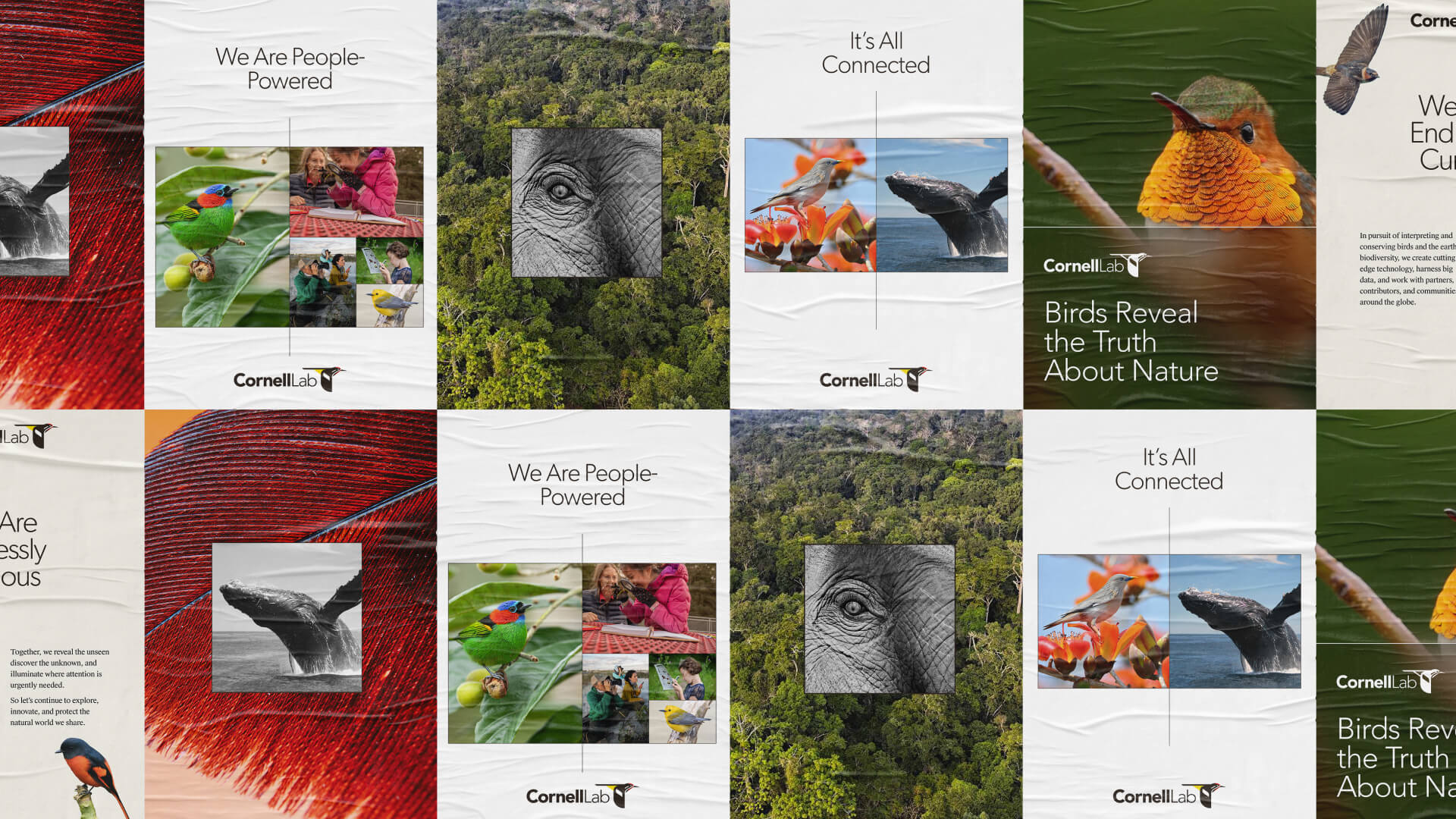
Brand as a conservation strategy
The Cornell Lab of Ornithology unites as “One Lab,” galvanizing a conservation movement.
The Cornell Lab of Ornithology’s mission is to interpret and conserve the earth’s biological diversity through research, education, and citizen science. Over its 110-plus-year history, its offerings grew to include everything from a quarterly magazine, popular websites and apps with millions of users (Merlin, eBird), partnerships with outside organizations, and the world’s largest database of photographs and audio recordings of birds. This abundance is a testament to the passionate enthusiasm of its employees. Still, it confused potential members and led to siloed internal efforts, preventing the Lab from advancing its urgent collective vision. “Birds and biodiversity are in peril,” said Executive Director Dr. Ian Owens. “We must take radical action with a coherent vision, united voice, and purpose.”
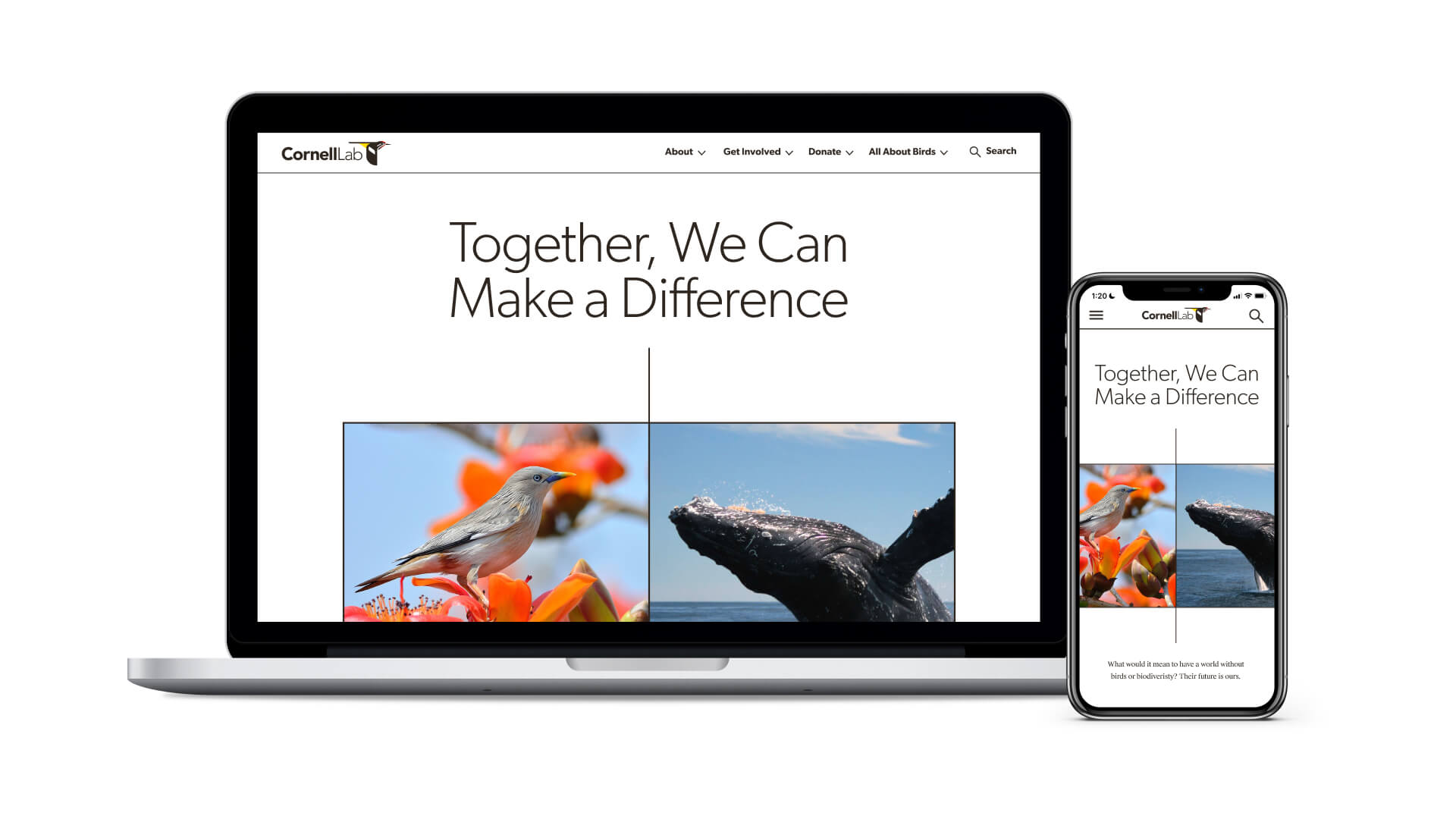
IDEO began by helping the Lab better define its audience. While primarily composed of people passionate about birds, IDEO discovered its larger audience was nature lovers interested in biodiversity, bioacoustics, conservation, and science. From there, IDEO created a brand strategy and architecture focused on helping the Lab streamline its efforts under the “One Lab” brand. The brand architecture visually articulated the relationship between Cornell University, the Cornell Lab of Ornithology, and the Lab’s many products and offerings. IDEO designed a comprehensive brand identity system to work across mediums, including a simplified logo system, new colors, type, graphic language, voice and tone, and key messaging.
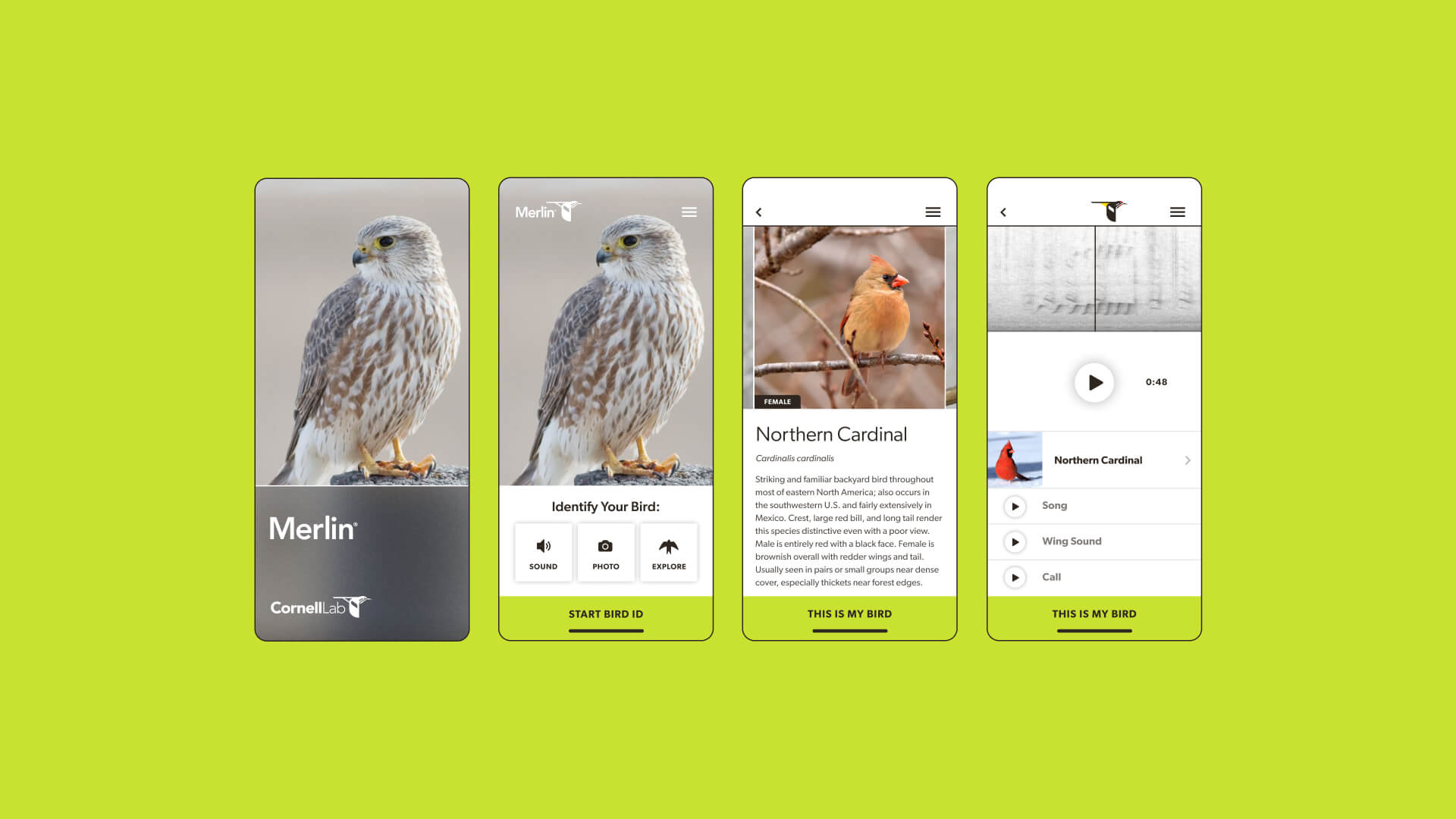
When the Lab’s design team began implementing the new branding elements across its website and many digital products, it became clear that the organization also needed IDEO’s help in creating tools to facilitate cross-department collaboration. To better understand the day-to-day nuances of the organization, IDEO designers worked out of the Lab, co-creating a brand activation playbook. The playbook, launched in 2023, contains recommendations for new cross-functional working groups (partnerships, visual identity, and brand voice), as well as exercises and interactive tools designed to build trusting relationships, gain alignment, foster collaboration, and manage change at scale.
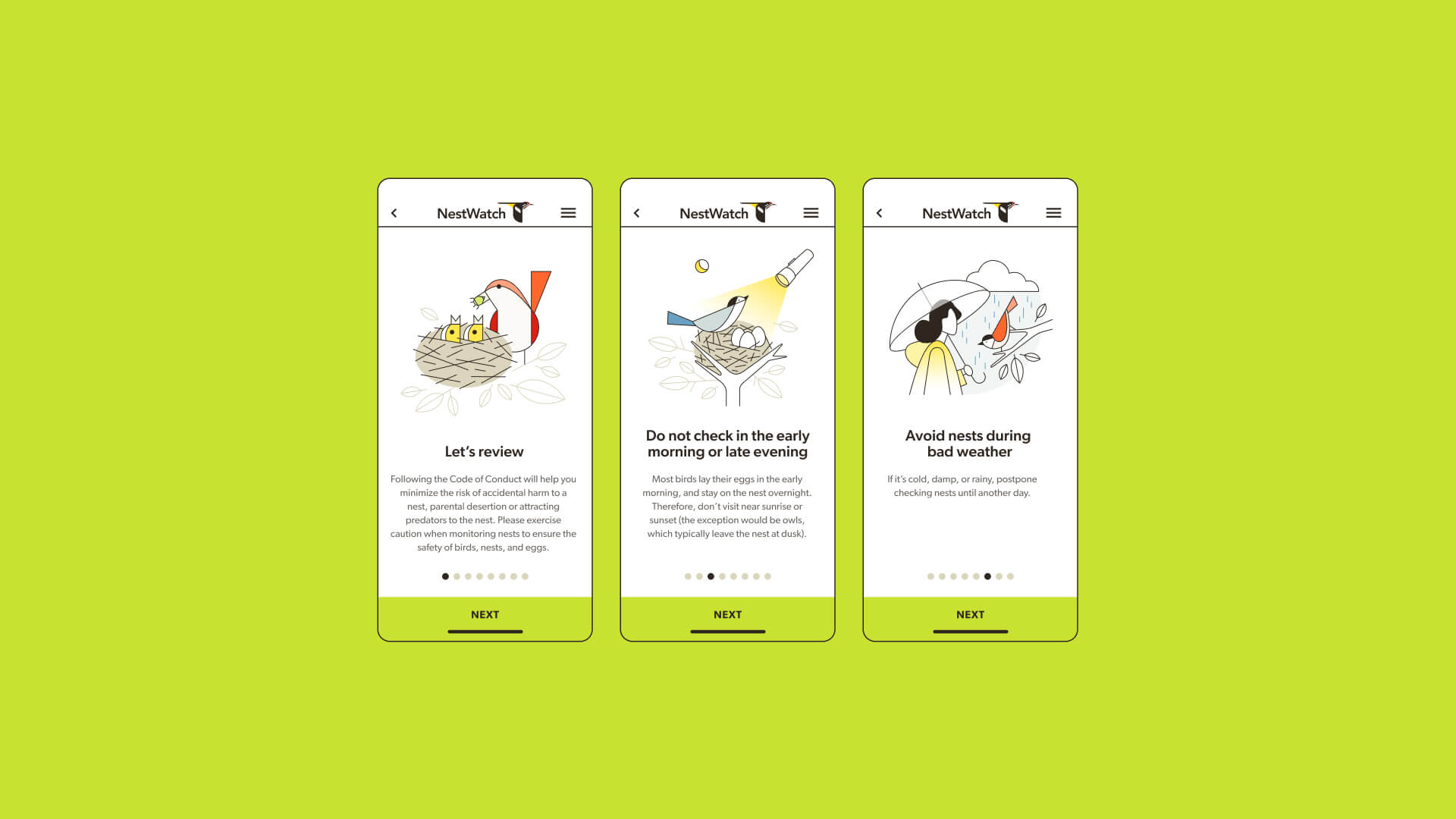
Post-collaboration, the Lab has applied the new brand across its website, apps including Merlin and eBird, Living Bird magazine, email and newsletter templates, and its line of merchandise. A new internal brand guidelines site has become central to employee onboarding, while new working groups are helping to bring down barriers between teams and spur collective action. Like a flock of birds, the Lab now sings one collective song.
The Cornell Lab’s 300+ scientists, professors, staff, and students were passionately dedicated to their individual team’s unique conservation projects, but segmented internal systems could stymie their collective impact.
1 brand
unifying 300+ employees and 8 departments

Charting a bold educational future
Ascend Public Charter Schools designs a “grown-up” vision for its young educational network.
Founded in 2008, Ascend Public Charter Network prides itself on providing “rich, joyful learning experiences that unlock lives of boundless choice” for its students, 93 percent of whom identify as Black or Latinx. The organization is also proud of being Black-led: 78 percent of staff and 80 percent of the executive team are people of color. Using co-design and joy, IDEO held a mirror up to Ascend’s core optimistic spirit during a moment of anxiety and change, helping its new CEO, staff, students, and parents reflect a dynamic, collectively imagined vision.
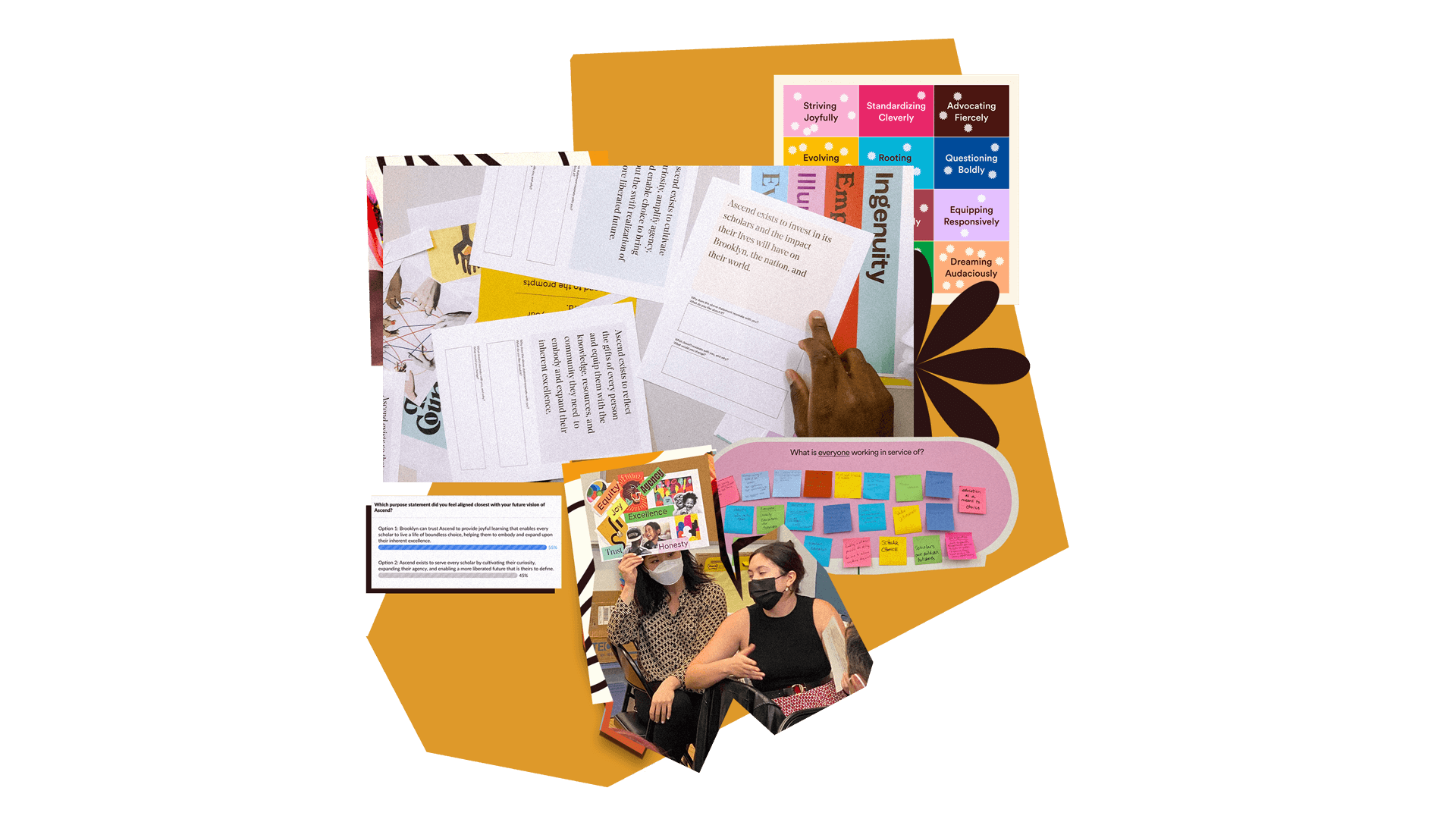
While the project’s goal was serious, the combined team centered the collaboration on bringing back fun, beauty, and imagination to those who could use it most: educators. Through engaging interactive activities, the IDEO team invited principals, PTA members, student council representatives, and board members to join “organizationally sanctioned play” moments like creating collaged vision boards and writing poems about Ascend’s impact. These interventions helped burned-out educators escape the day-to-day tasks of running schools and dream expansively about Ascend’s future. The team also solicited written, visual, and audio stories, asking community members to describe Ascend at its very best.
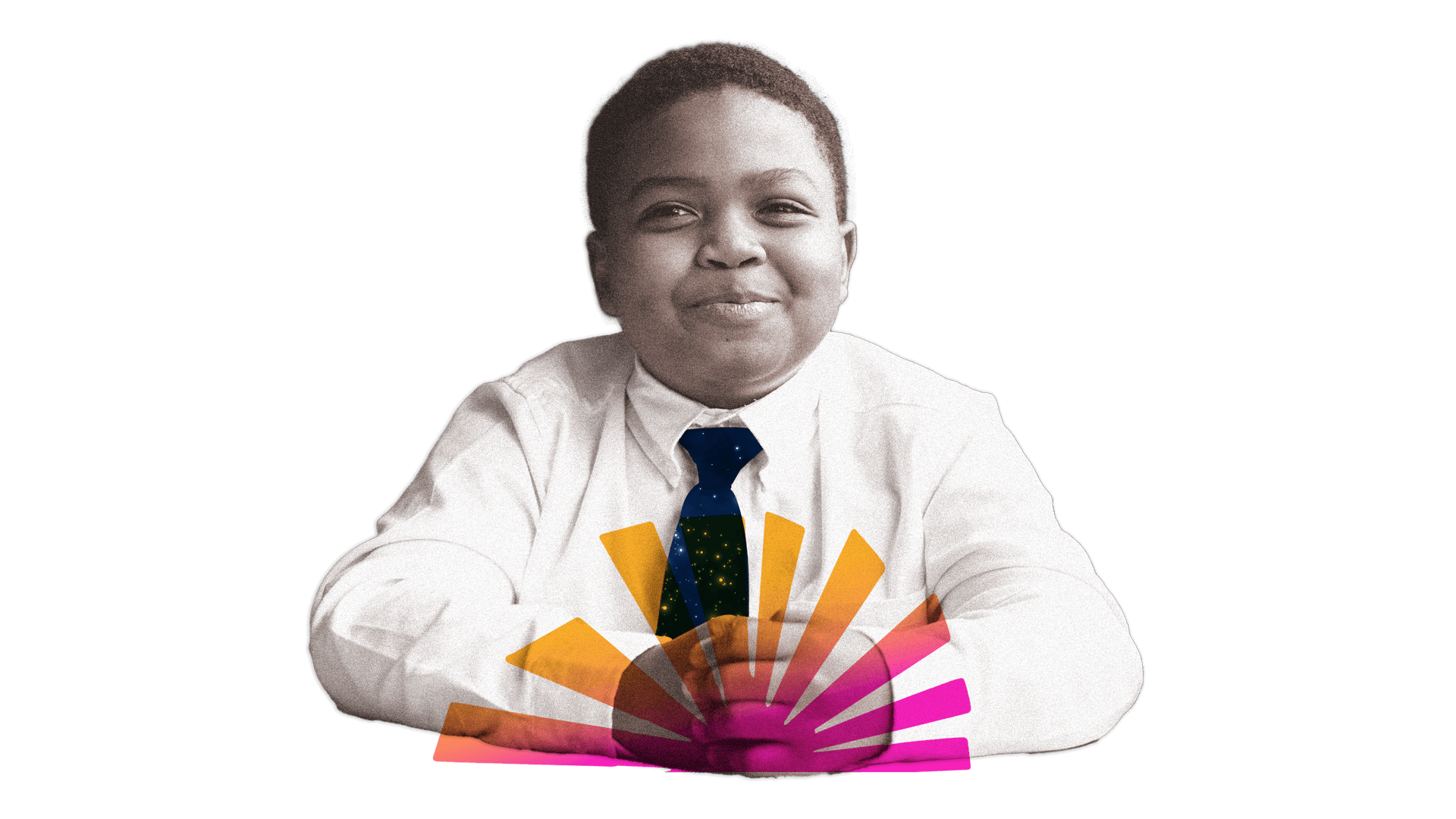
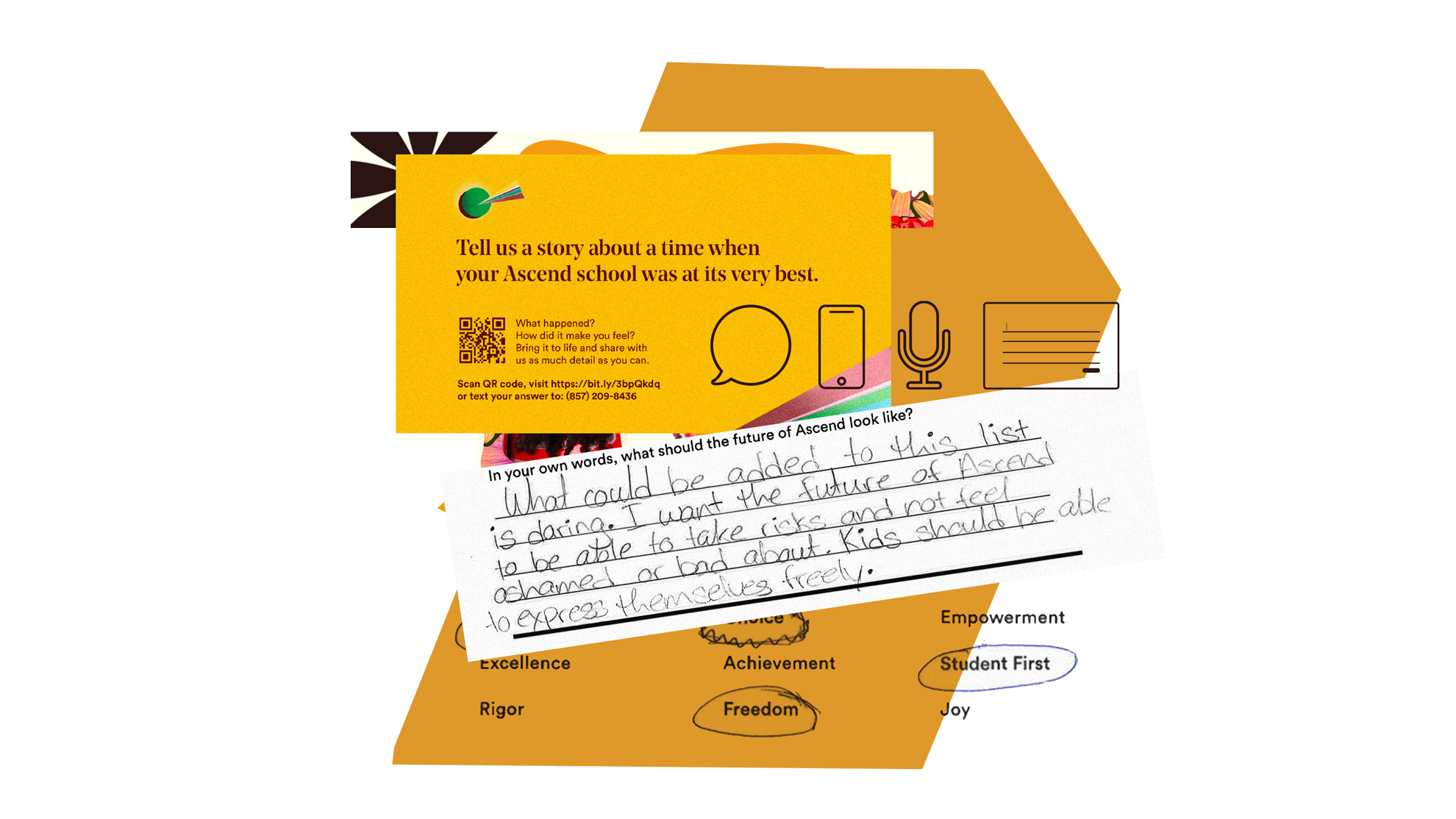
Stitching together submissions from 551 students, 75 parents, and 16 staff members, the co-design sessions resulted in a powerful new purpose, mission, and values, as well as a vibrant visual language and activation tools to bring Ascend’s vision of a “dope,” “unapologetically Brooklyn” charter network to life. The joyful, eye-catching visuals are embedded throughout its 17 Brooklyn schools, staff recruiting and training materials, and digital presence.
Shortly after the collaboration with IDEO, Ascend received an unsolicited $11 million donation from MacKenzie Scott's foundation, Yield Giving, the most significant gift the then-14-year-old institution had ever received. The pivotal funding will allow the organization, with its bold new “grown-up” vision, to focus on becoming the school of choice in Brooklyn by 2027.
In the summer of 2021, one in four K-12 teachers was ready to quit. Pandemic stressors and increased curriculum scrutiny were to blame, according to a 2021 Rand Survey.
In 2022, 44% of K-12 workers reported burnout, the most of any US professions the time, according to a Gallup Poll.
Pandemic exhaustion and leadership turnover left Ascend’s new CEO eager to align staff around an exciting new vision.
$11M grant
Ascend received an $11M grant from the MacKenzie Scott Foundation a few months after the collaboration
1 collective vision
to guide a network of 17 schools

Save the City, Stop the Muenster
To celebrate the discovery of the double-helix, IDEO & Genentech bring genetics to life with an iPad game inviting the curious to save SF from mutant cheese
Sixty years later, amidst technological advances that have spurred massive innovation and changed the face of science, we decided it was time to re-inspire today’s generation. James Musick, a digital communications lead at Genentech, came to us for help in creating an immersive iPad experience that would celebrate Watson and Crick’s seminal discovery, as well as engage the science-curious. But with three months to complete the project, we needed to hit the ground running.
Ralph and The Cheesy Mess
The idea of using a game or puzzle as a way to bring users into a world filled with genetics became an early favorite in the ideation stage. Puzzle-based gameplay was a great analogy to reflect the scientific process: from trial-and-error learning stages, to information synthesis, all the way through solving the puzzle and answering the question. A game hinging on a real-life genetic mechanic would be novel and stood to introduce the science to a new audience. If designed well, with engaging play and a compelling story, we would be able to integrate the science, narrative, and gameplay into a beautiful app.
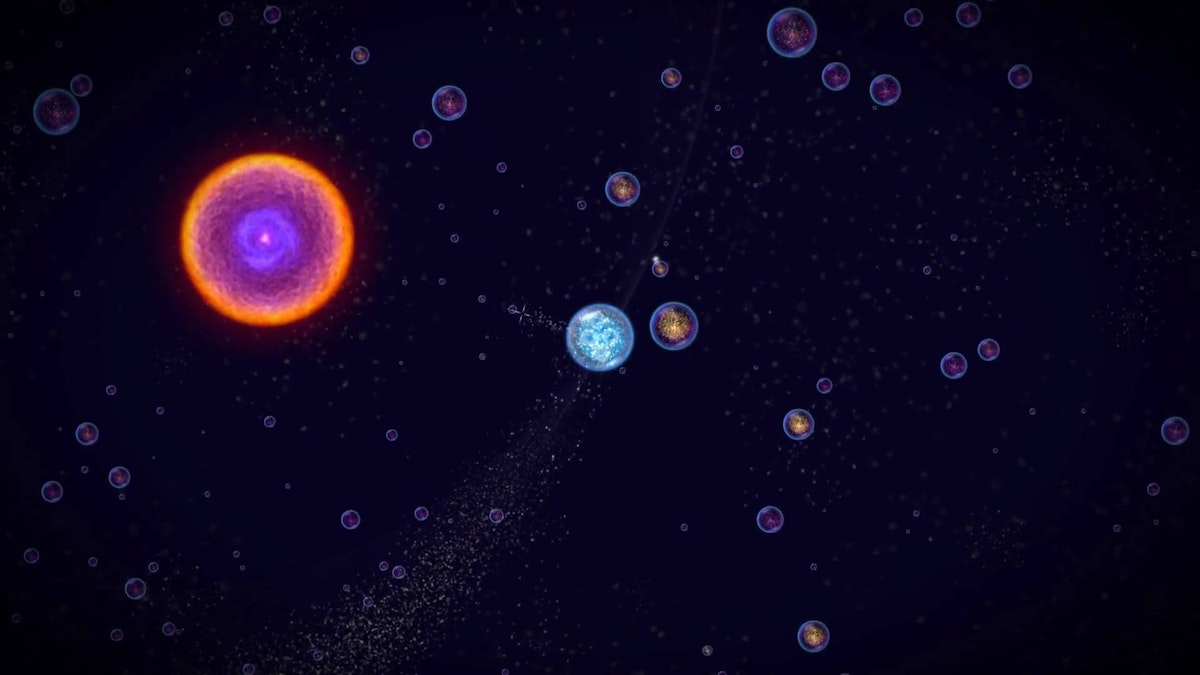
We started off diving deep into the world of video games. We indulged in playing some of our tried-and-true favorites, as well as newer games such as Osmos and Eufloria to understand how they bridged science and storytelling. At the same time, we were learning about cutting-edge research in genetics through conversations with Jason Long and other Genentech scientists, listening to podcasts, and a hefty amount of reading.
Throughout this inspiration phase, we kept coming back to a wildly intriguing area of research called epigenetics, which focuses on how environments affect genetic expression. In short, epigenetics is the area of genetics that, given a fixed DNA makeup, tells the DNA which parts of the code should express themselves and how they should express themselves as determined by external factors like weather, stress, diet, etc. So while we may have a fixed genetic makeup, the environment still plays a large modulating factor in our genetic expression.
Our fascination with the content—combined with a teamwide love of comic books and mutant-origin stories—evolved into an epigenetic-inspired noir-puzzle game based on Ralph, an artisanal cheese-maker, and his cheese company Ralph's Killer Muenster.
The mechanisms of genetics
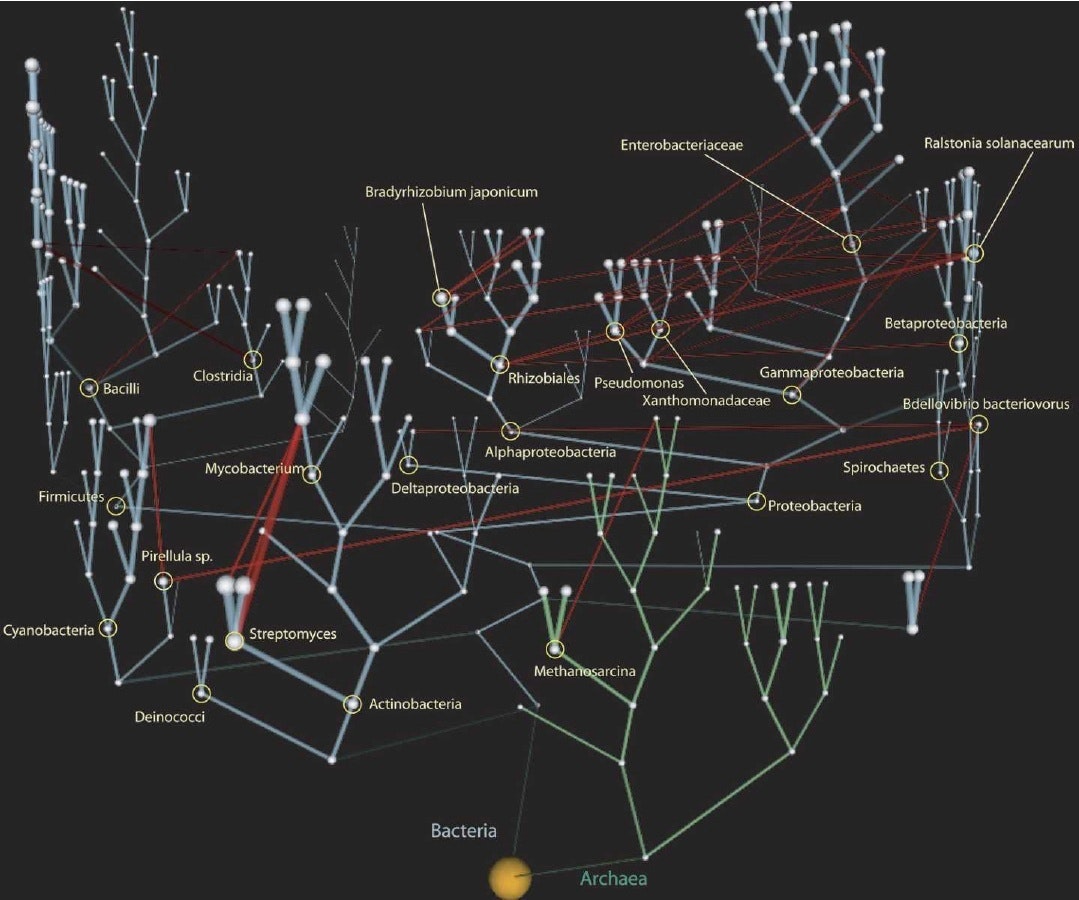
Early on in the ideation phase, Evan Shapiro, who would become a core team member and help prototype game logic, introduced us to phylogenetic trees and maximum parsimony theory. You’ve probably encountered phylogenetic trees in biology class, where they serve to illustrate evolutionary relationships among species. Maximum parsimony, on the other hand, is more obscure. It serves as a computational forensic tool to help us understand the evolution of genetic traits along the phylogenetic tree, as well as help us infer species evolution. With maximum parsimony, the “preferred phylogenetic tree is the tree that supposes the least evolutionary change to explain observed data.” After mulling that over for a bit, we decided creating and solving a phylogenetic puzzle by employing maximum parsimony as a scoring criteria was a great jumping-off point and a compelling challenge.
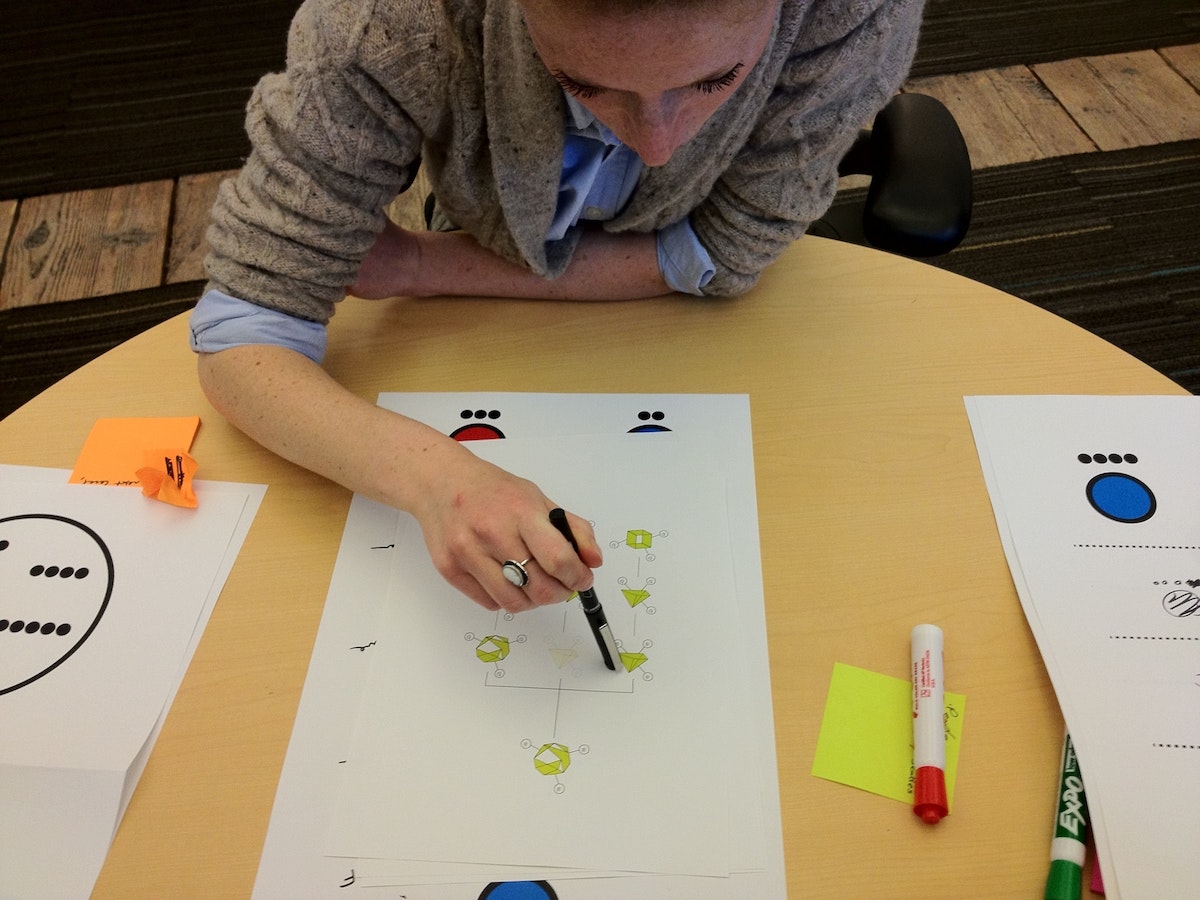
To test this, our first prototype was a paper prototype where we started with a sample origin genetic trait. We sketched out several generations by mutating one trait at a time, and created our own phylogenetic tree. Given the final generation of traits and no tree structure, the goal was to see if we could work backwards to recreate the tree structure and uncover the origin trait. Basically, reverse evolution. After a lot of finessing we came up with a rule set that actually reflected natural evolutionary rules and allowed us to solve the tree and find the origin species.

With this excitement, we spent a weekend programming a single prototype puzzle using mechanics that would become the main gameplay: players reverse engineer evolution by mutating a given set of species traits backwards to a common ancestor in the fewest moves possible. This was maximum parsimony made tangible. In order for the puzzles to be solvable, we had to use real evolutionary rules describing how the species’ traits can change. By the end of the weekend, we had puzzles and a game mechanic that were keeping us up late into the night trying to one-up each other’s scores, which, to us, meant we had hit the nail on the head.
From a design perspective, one of the significant balancing acts of the project involved weighing the desire to impart specific scientific knowledge against the value of experiential learning. When we used maximum parsimony it became clear that this was a perfect mechanic to give people an experiential interaction with real genetics.
Prototyping and puzzle design
From day one, Ralph’s Killer Muenster was an intensive prototyping project. The first bare-bones prototype of the puzzle was written in Qt because we wanted a framework in which we could rapidly prototype the GUI and could reuse game logic for the production app. Qt, although not extensively used, has great functionality and plays natively with Javascript and C++. It was a well-suited framework for prototyping the core puzzle experience, which included coding the evolutionary logic, adding and testing interactions, modifying visual communication, and testing informational displays.
Our daily workflow started with an early morning meeting so we could all share progress from the previous day. We spent the rest of the day implementing and testing new visuals and interactions on paper and integrating them into the Qt prototype architecture. Lastly, we tested them with people around IDEO to see how they reacted to specific design and gameplay decisions.
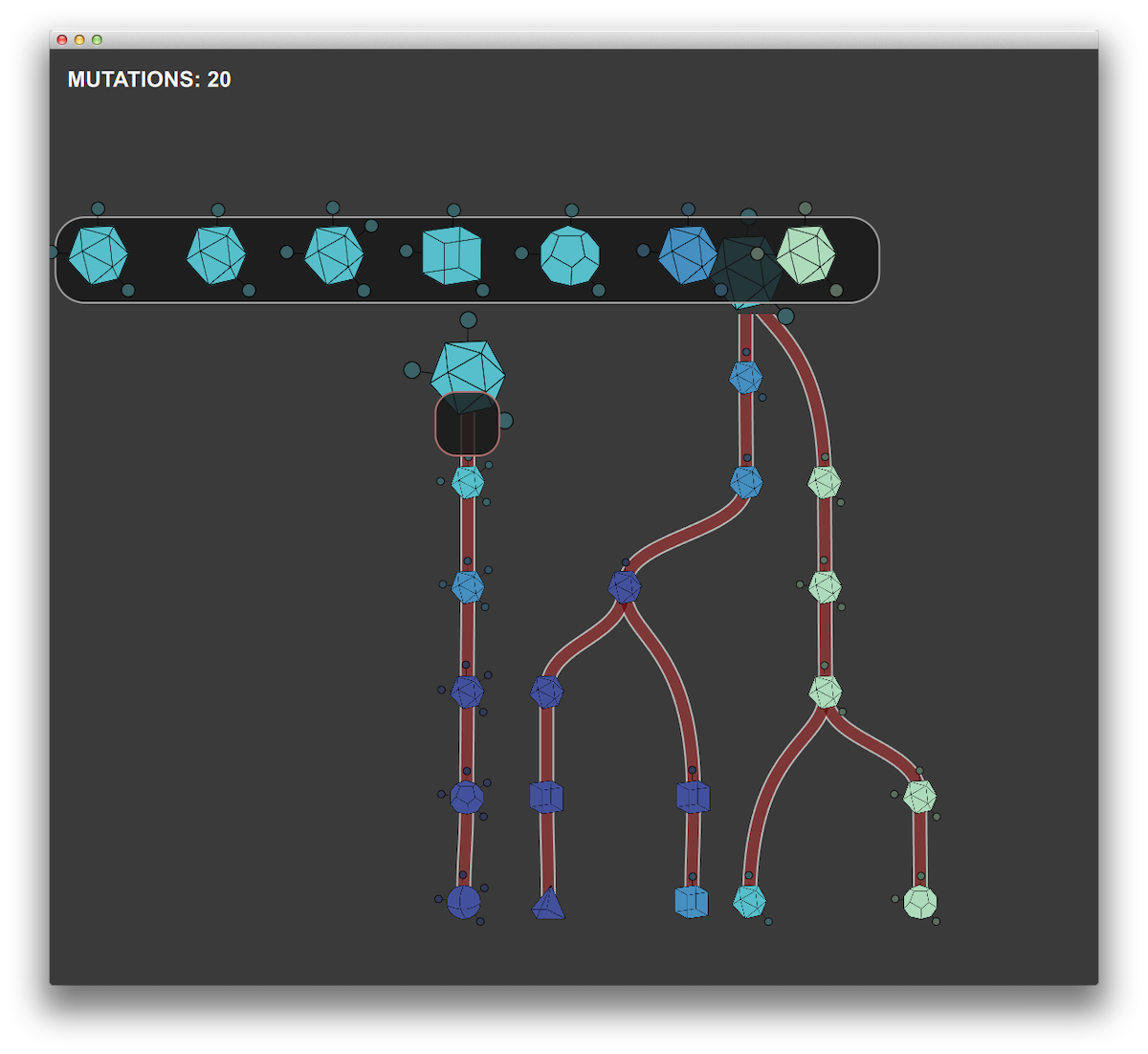
We used Unity for the production app in the development environment for many of the same reasons that we chose Qt. But Unity has the added benefit of working with native OpenGL, along with the capability to compile to iOS. As time-constrained as this project was, we still wanted to impart as much narrative and visual interest as possible, and Unity proved an excellent match for this challenge.
Nivi Ramesh, our interaction designer and art director, worked to create an amazing game landscape with analogies to microscopy and slide specimens. Working closely with developers at Substantial, we created layered and animated textures paired with OpenGL shaders to achieve the tone we wanted. We had parallel work streams throughout the prototyping phase, with one team working on developing the logic and overarching architecture of the production app while the prototyping team refined interaction elements, game mechanics, and informational displays in the prototype testbed.
What makes a good puzzle?
Before diving any further, we took a step back to make sure we got the puzzles right. Good puzzle games tend to adhere to some basic principles: They are purely cognitive challenges with a few simple rules, nearly infinite outcomes, difficulty that increases with mastery, and some clear goals. Plus, they're easy to learn.
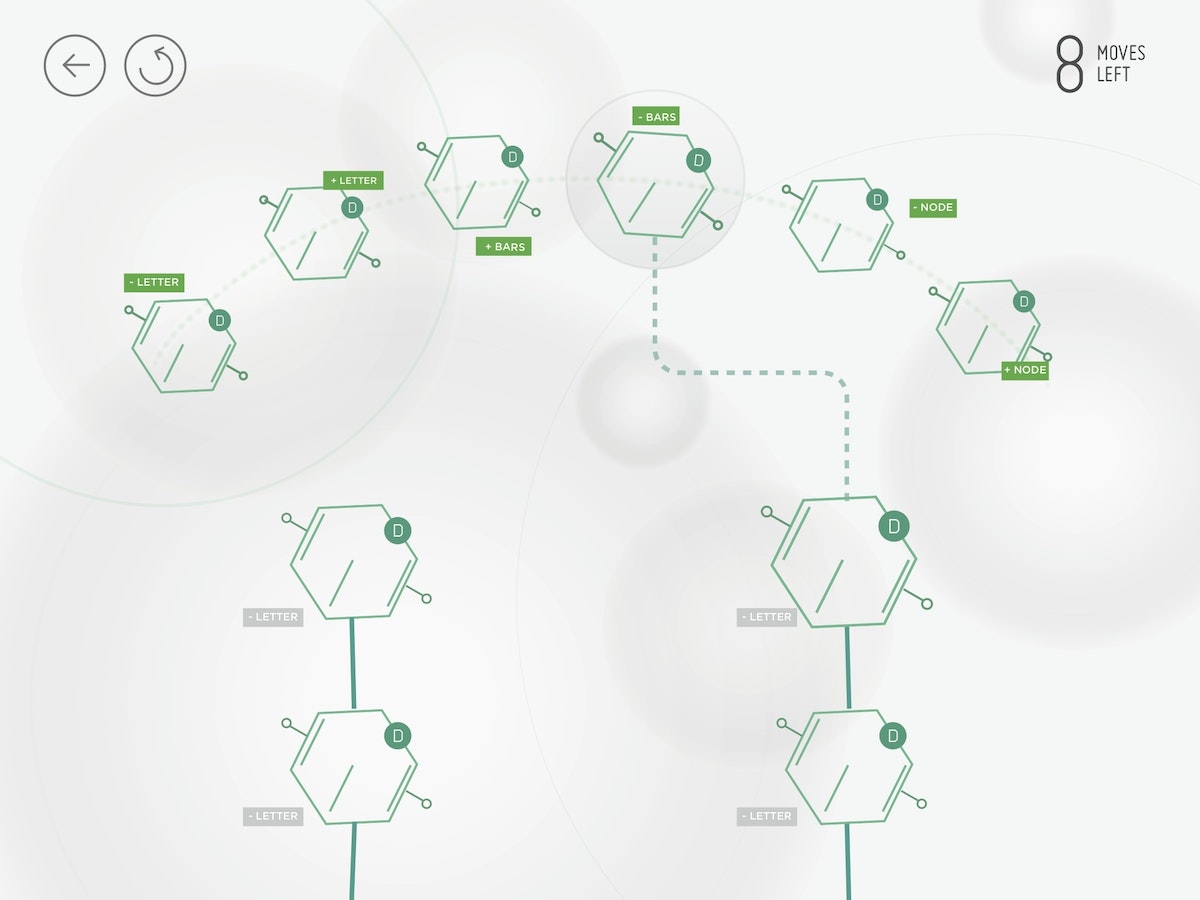
In building the game, one of our most critical challenges was creating visual representations of the genetic traits that people would be using to solve the puzzles. People had to quickly grasp how they could manipulate and evolve the traits given the genetic logic. If we couldn't get people to make this mental leap, the game wasn't going to succeed.

A real genetic trait is made up of a snippet of DNA and is a long, winding series of genetic code (or, a lot of AGTC). To make the game approachable, we chose to abstract and simplify the cheese trait representations as visual identifiers that had a bit of mystery and were themselves a puzzle to decode. We tested many different ways of visually representing the traits, the majority of which people could not directly connect to an increasing or decreasing series. The simplest visuals turned out to be the most effective: shapes, dots, and lines.
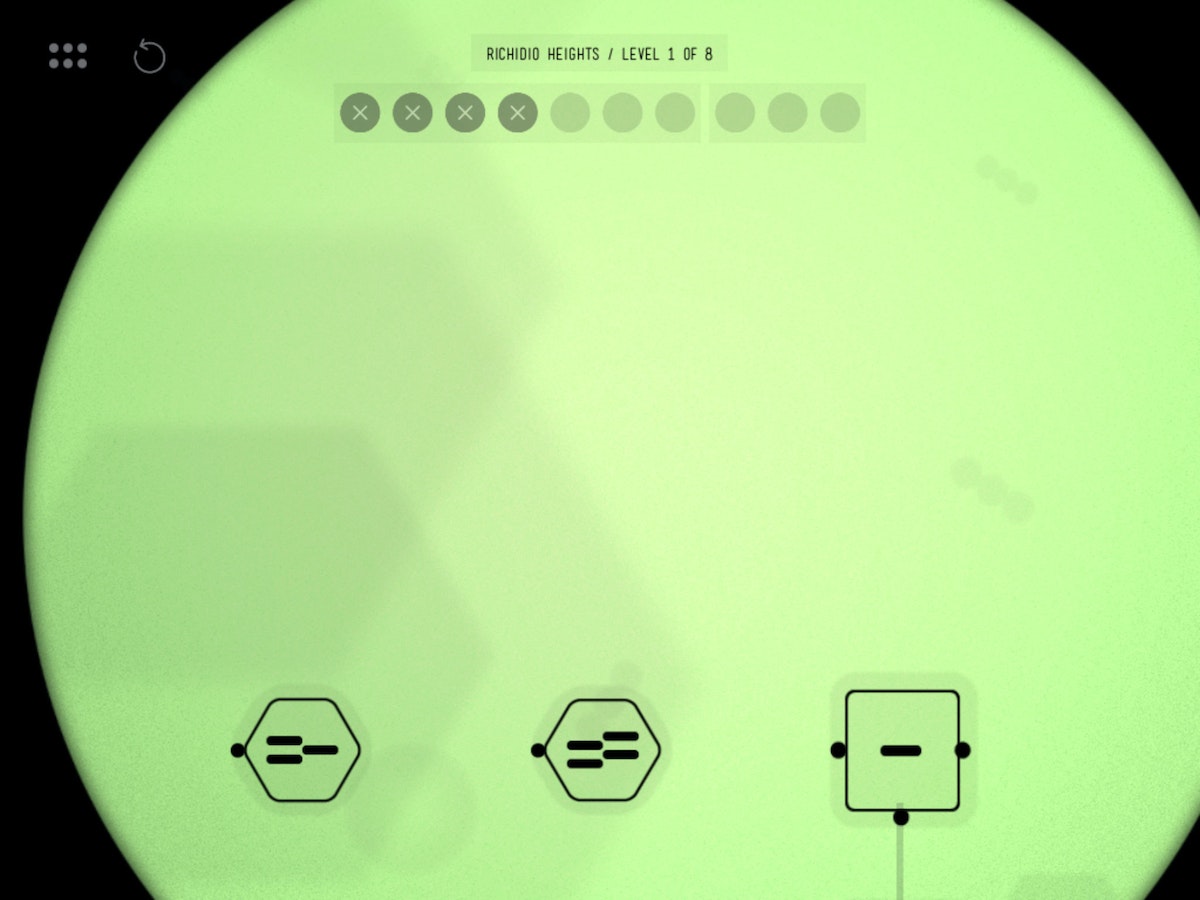
With simple geometric shapes, people could see that moving from a triangle to a square to a hexagon involved moving through a progression of increasing the numbers of sides. Similarly, lines and dots worked well for understanding how the traits could be mutated. They were easily accessible by players in planning a strategy for mutation.
Less is more
After the weekend of playing the prototype level, we needed a way to determine the optimal solution to these puzzles so that we could give user feedback and help players improve in the game. With Ralph's Killer Muenster, an optimal solution for any puzzle involves making the “most parsimonious” decisions, i.e. using the least number of moves or fewest mutations. We needed to find a way to reward people for doing less, contrary to typical game design where users are rewarded for doing more. Without a clear and appropriate qualitative feedback mechanism, we found that people were finishing puzzles without any sense for how much better they could perform.
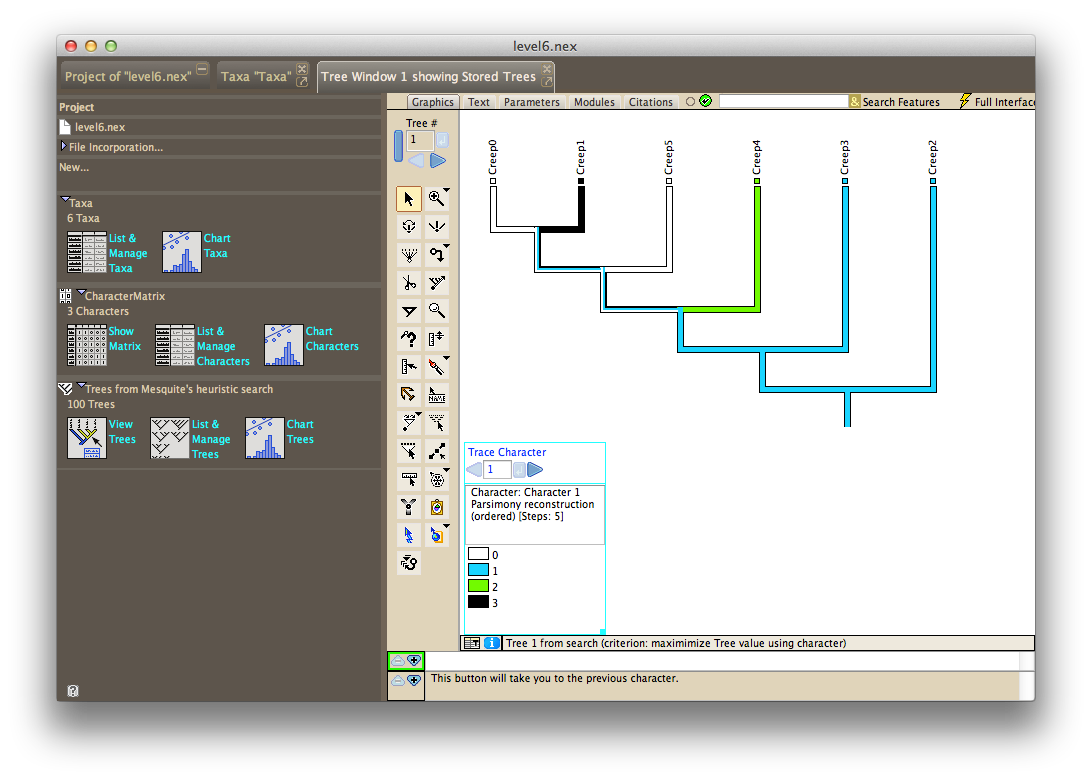
Scavenging the Internet for a tool to analyze phylogenetic trees uncovered Mesquite, a software package built specifically for computational biology and evolutionary analysis. After learning from tutorials produced by Harvard University, we could solve the initial species sets and puzzles we had created, and arrive at the most efficient tree structure and trait mutations.
We used the statistical language R to generate thousands of possible levels, export files for Mesquite to crunch, and output the moves required for each level into a custom level file that we could use to test in our prototype game.
Levels testing and design progressed in parallel with refining the scoring display and making hundreds of other visual and UX enhancements. With our trait visualizations, levels design and scoring mechanism solved, we felt we had achieved something that was both subtle and significant: People who grasped the underlying puzzle dynamics were quite literally using their brains in a way that mimics a core methodology of genetic science. This seemed to hit at the essence of experiential learning.
Muenster launches, Bill Nye approves
The Ralph's Killer Muenster iPad game launched at the 2013 GET (Genomics, Environments and Traits) conference, coinciding with the anniversary of Watson and Crick's seminal paper describing the structure of DNA. At the conference, Bill Nye the Science Guy, a long-time advocate of a science literate society, played the game, and loved it. This made our day. The app also caught Apple's attention, and was listed as a new and noteworthy Education app in the App Store.
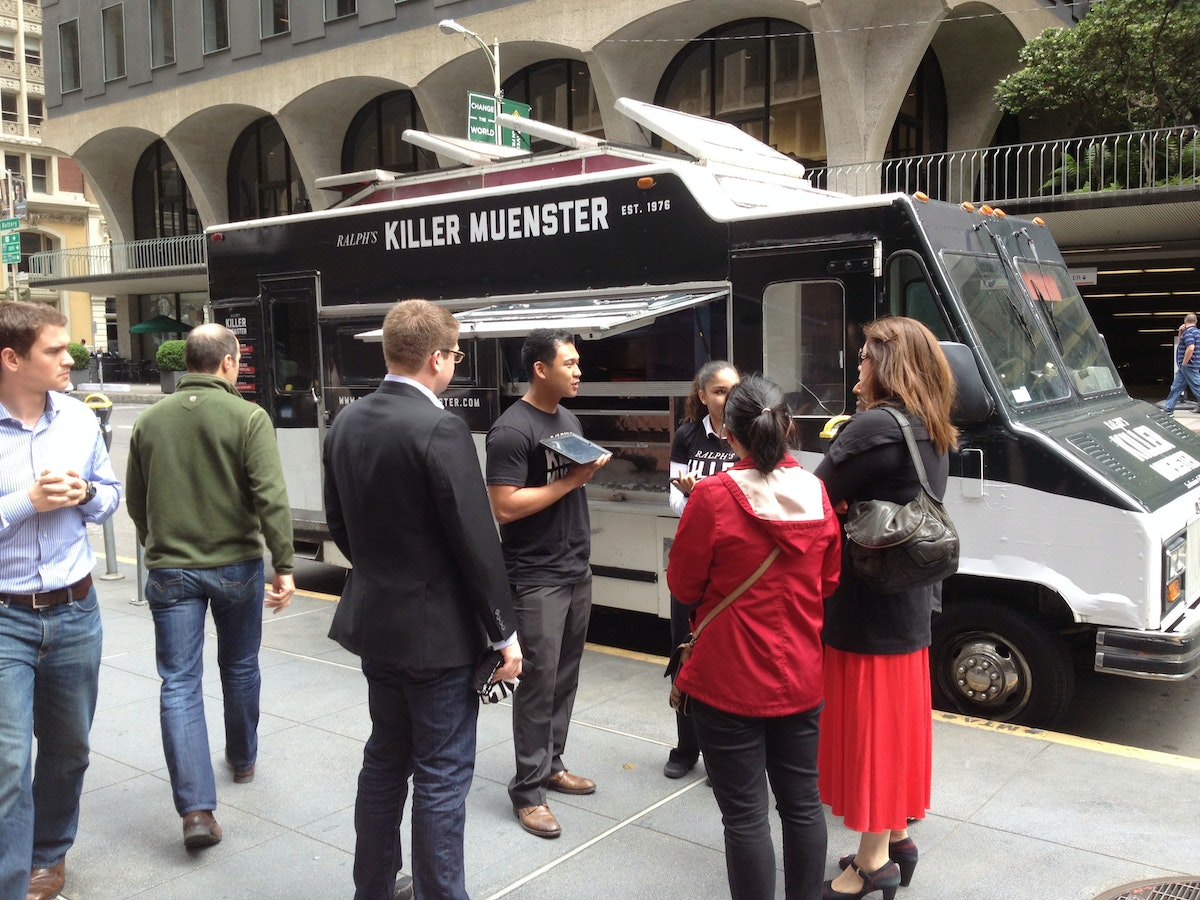
To further raise awareness around the game, we created a Ralph's Killer Muenster brand, including a visual identity, packaging, website, Twitter, game trailer, and food truck—all mobilized by Ralph to push the only tool that could save the city (and his reputation) and allow him to lift the health code violations that kept him from producing and distributing cheese. Ralph’s food truck, sent throughout San Francisco, distributed grilled muenster cheese sandwiches.
What we learned
After the launch festivities, our team took a step back to consider what we had learned. Here's the take-away:
- Set constraints to help make a hard problem more approachable. Our self-imposed constraint that the game needed to rely on a scientific mechanism helped us narrow in on phylogenetic trees and maximum parsimony as our core concepts.
- A good story goes a long way. We spent significant time concocting Ralph's story, and getting the tone and art direction down in order to engage people. We want them to stick around for the more mentally taxing interactions later down the line.
- Find the right tool for the right job. We used a variety of prototyping and user testing methods and environments, rather than trying to find or force an all-in-one. Each tool elicited learnings unique to them.
1953 was a good year for science and technology. The polio vaccine was developed, the first open heart surgery performed, and color TVs hit the store shelves. It was also the year Watson and Crick revealed one of the most important discoveries of the 20th century: the double-helix structure of DNA.
Creative Confidence
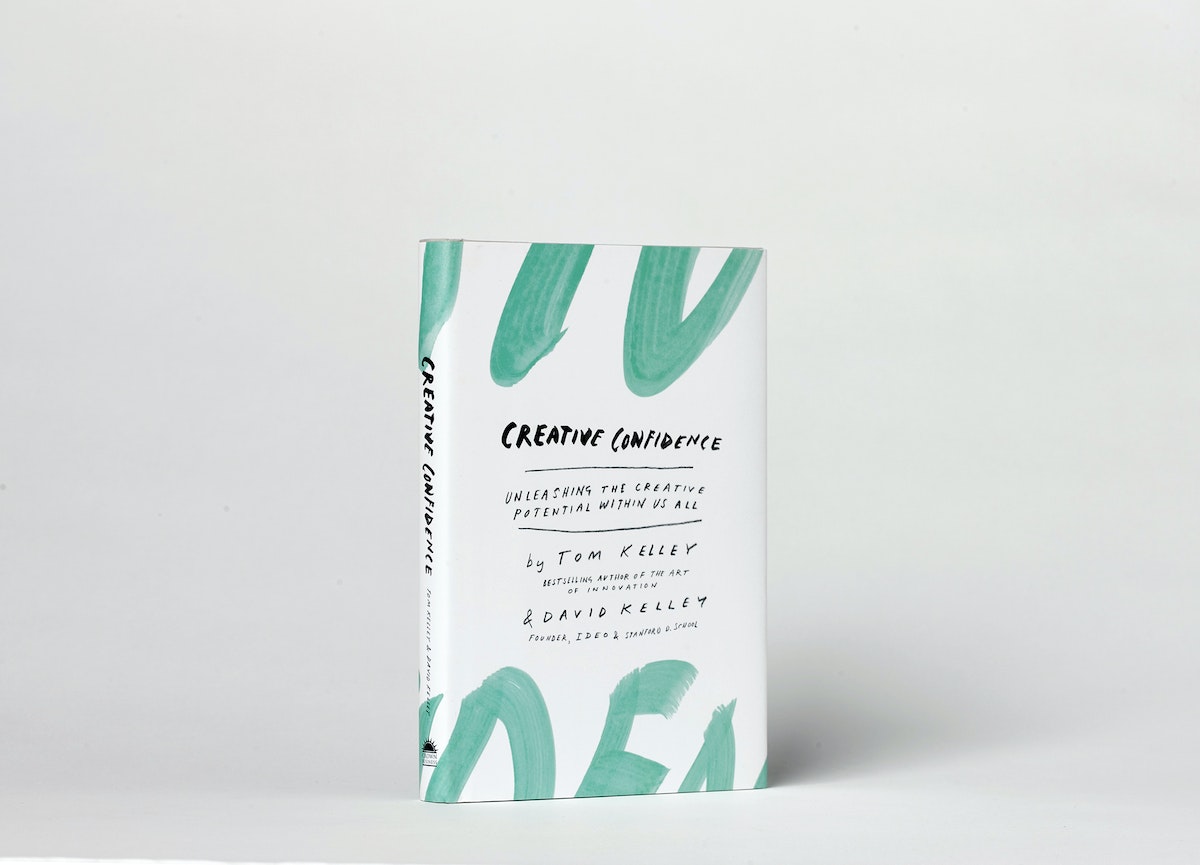
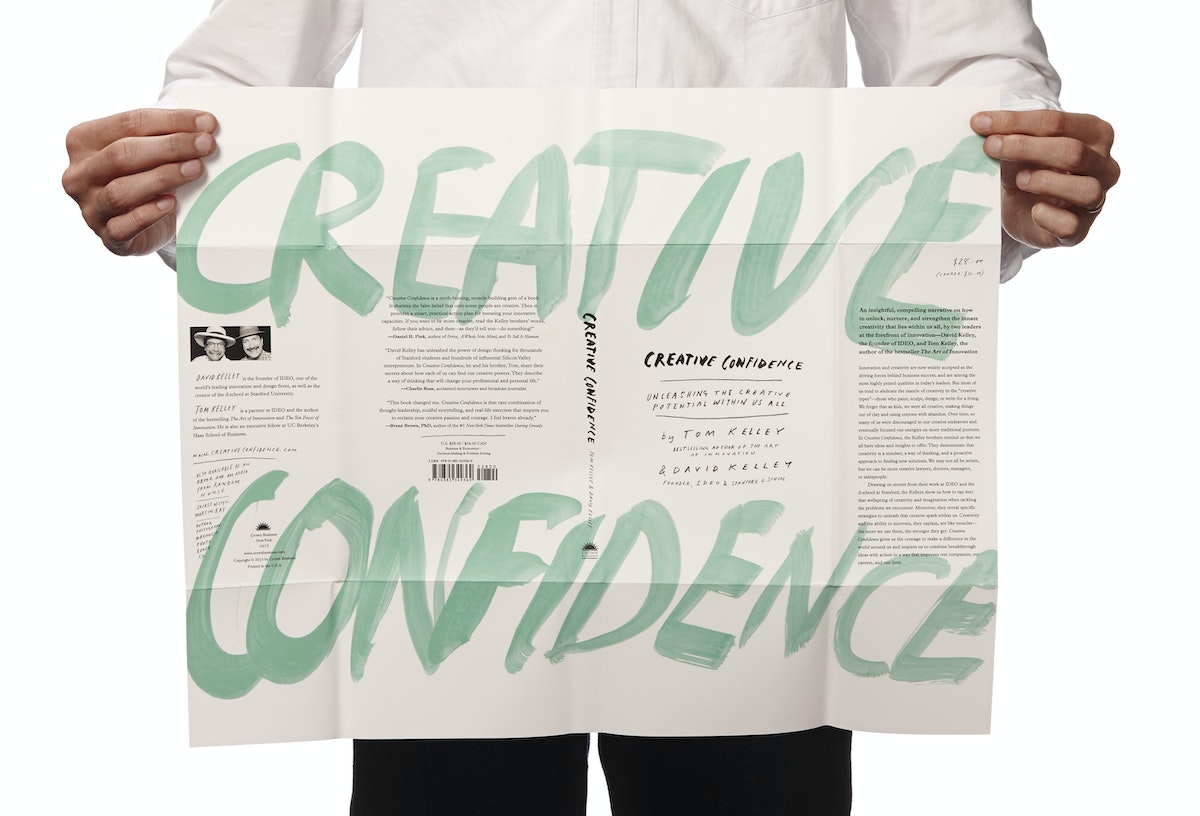
David Kelley, IDEO founder and Stanford d.school creator, and his brother Tom Kelley, IDEO partner and the author of the best-selling The Art of Innovation, have written a powerful and compelling book on unleashing the creativity that lies within each and every one of us.
David Kelley, IDEO founder and Stanford d.school creator, and his brother Tom Kelley, IDEO partner and the author of the best-selling The Art of Innovation, have written a powerful and compelling book on unleashing the creativity that lies within each and every one of us.
WATCH: David Kelley's TED Talk: How to build your creative confidence.
Too often, companies and individuals assume that creativity and innovation are the domain of the “creative types.” But two of the leading experts in innovation, design, and creativity on the planet, David and Tom Kelley, show us that everyone is creative.
In an incredibly entertaining and inspiring narrative that draws on countless stories from their work at IDEO and with many of the world’s top companies, David and Tom Kelley identify the principles and strategies that will allow us to tap into our creative potential in our work and personal lives, and innovatively approach and solve problems. It is a book that will help each of us be more productive and successful in our lives and in our careers.
Learn more at CreativeConfidence.com.
Purchase
Know someone who might love this book? Here are some options for purchasing Creative Confidence (Crown Business, 2013):
The Mix Master 2000: How to build an automated shandy machine
Creating the perfect beer-lemonade ratio—on your own terms.
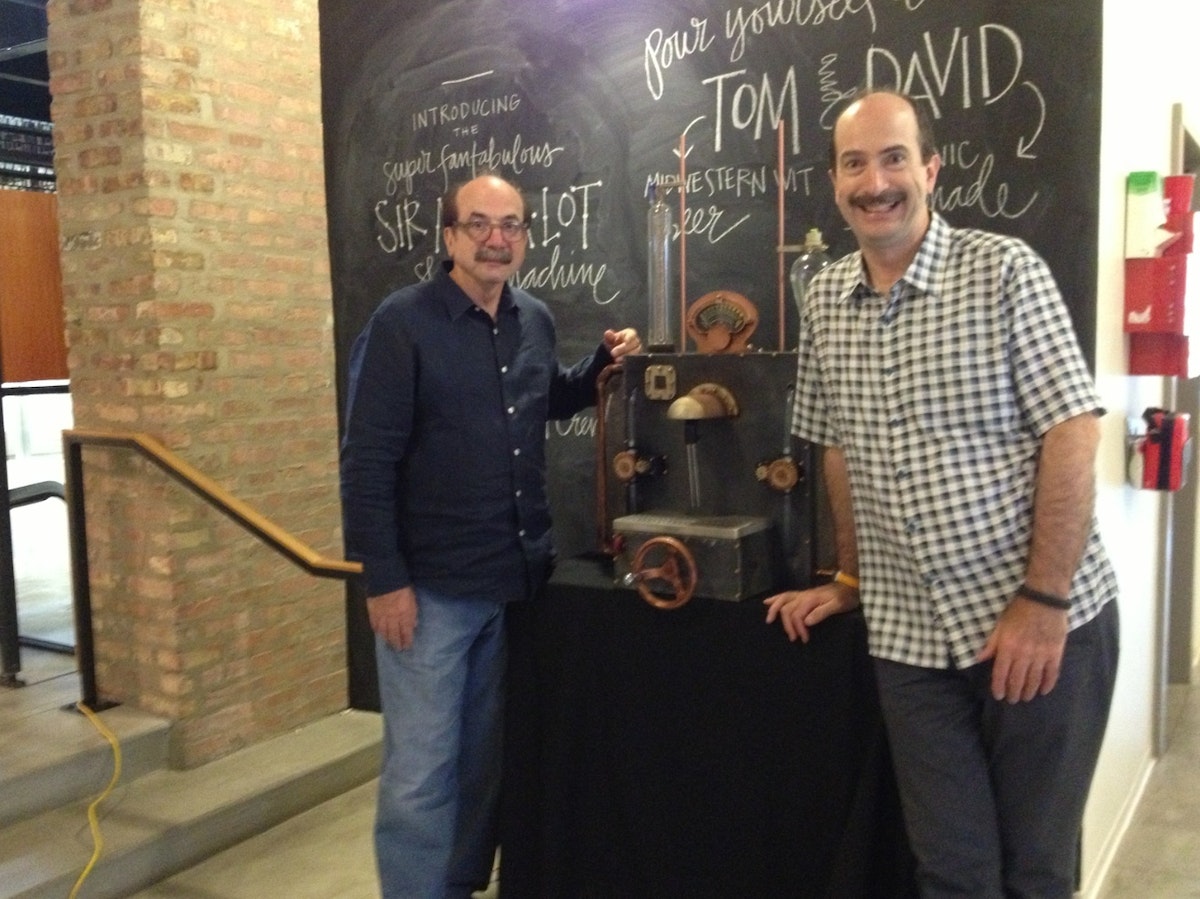
When we were asked to whip up a special brew this July for a big Creative Confidence book-preview event featuring David Kelley, one of IDEO’s founders, and his brother, best-selling author Tom Kelley, we knew we had to kick things up a notch.
Challenge #1: Two guests of honor called for not one brew, but two! We heard Tom enjoys light, Japanese-style beers and that David doesn’t really drink, so we decided to make a Belgian-style wit for Tom and sparkling organic lemonade for David and then mix them together to create a shandy, a refreshing summer drink.
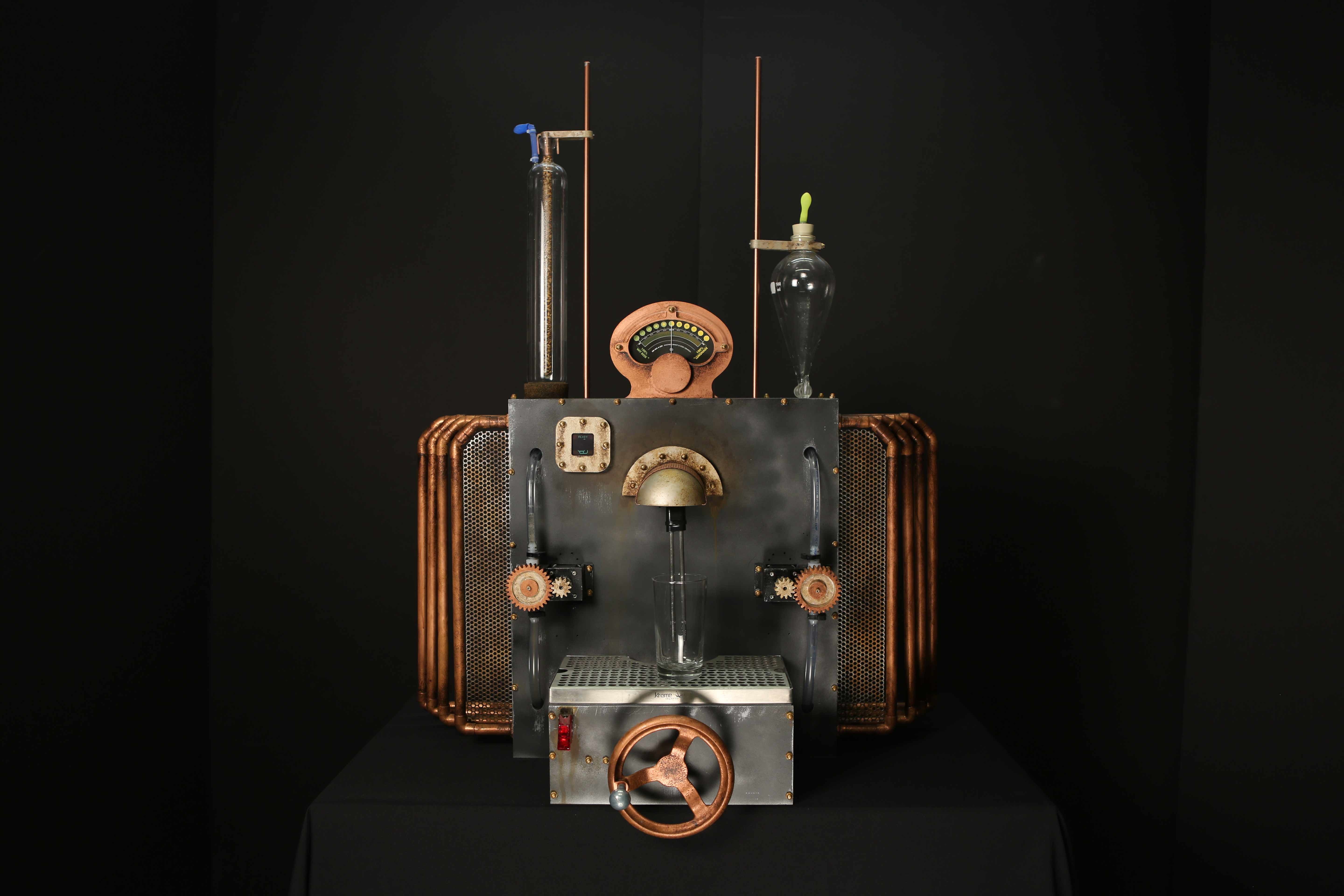
Challenge #2: Now that we had two beverages, we needed to come up with a unique way to dispense them. Luckily, we like tough build challenges with tight deadlines even more than we like beer. A few shop hours here and there between projects, and before we knew it, we said “cheers” to the Mix Master 2000 Shandy Machine!
Introducing the Mix Master 2000
How it works
The Mix Master 2000 Shandy Machine’s look was inspired by the retro-futuristic steampunk movement.
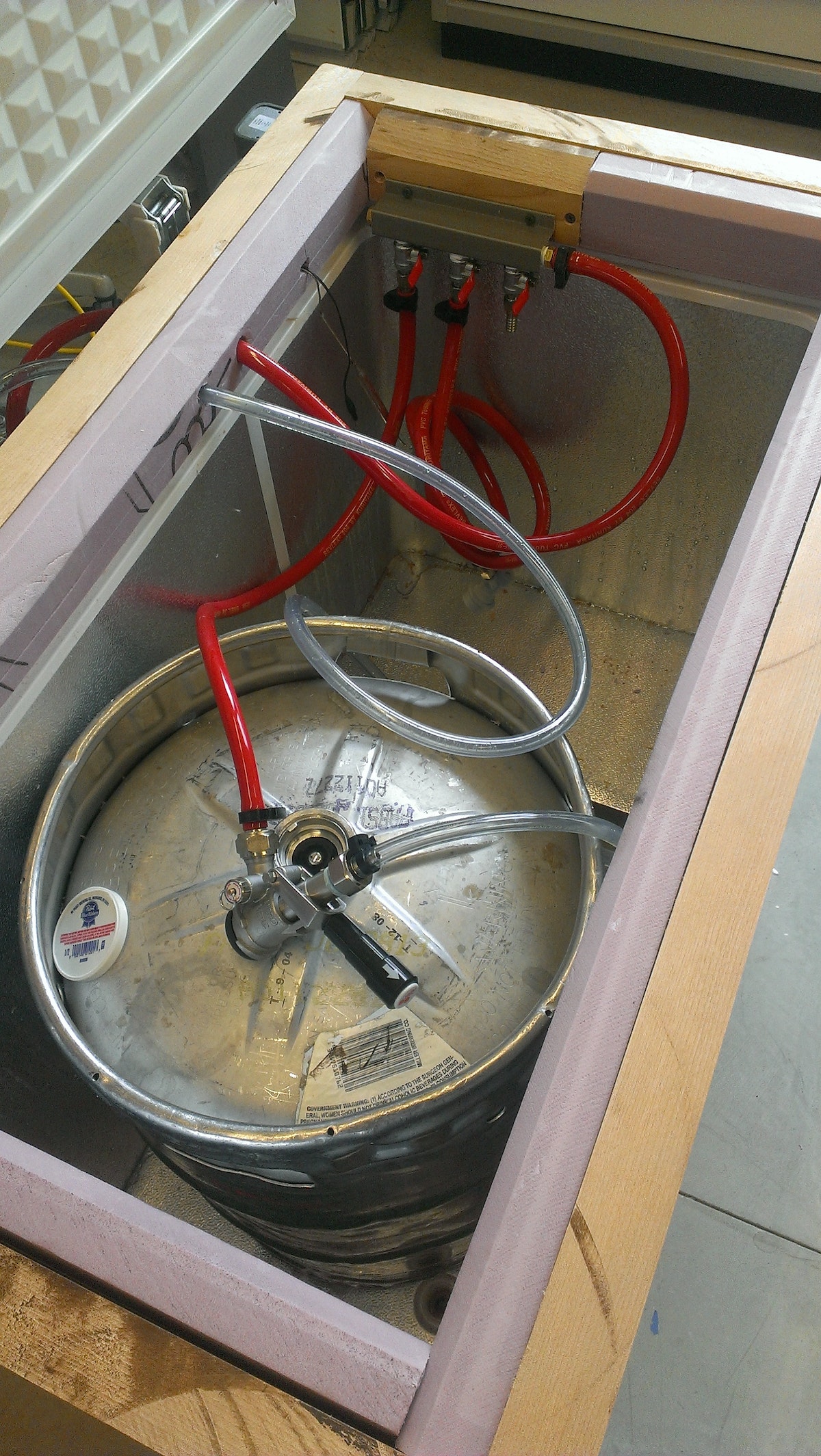
The machine sits on top of a standard, top-loading freezer replumbed to hold two kegs (one containing wit, the other sparkling organic lemonade).
Thirsty partygoers begin by turning the large hand crank on the front to select their preferred beer-to-lemonade ratio (from 0–100%). When the analog meter on top points to the desired proportions, they flip a missile switch to open the valves. The two glass vessels on either side of the machine fill with beer and lemonade, respectively, then send the home-brewed concoctions into their waiting pint via a dispensing tube.
Beer recipe
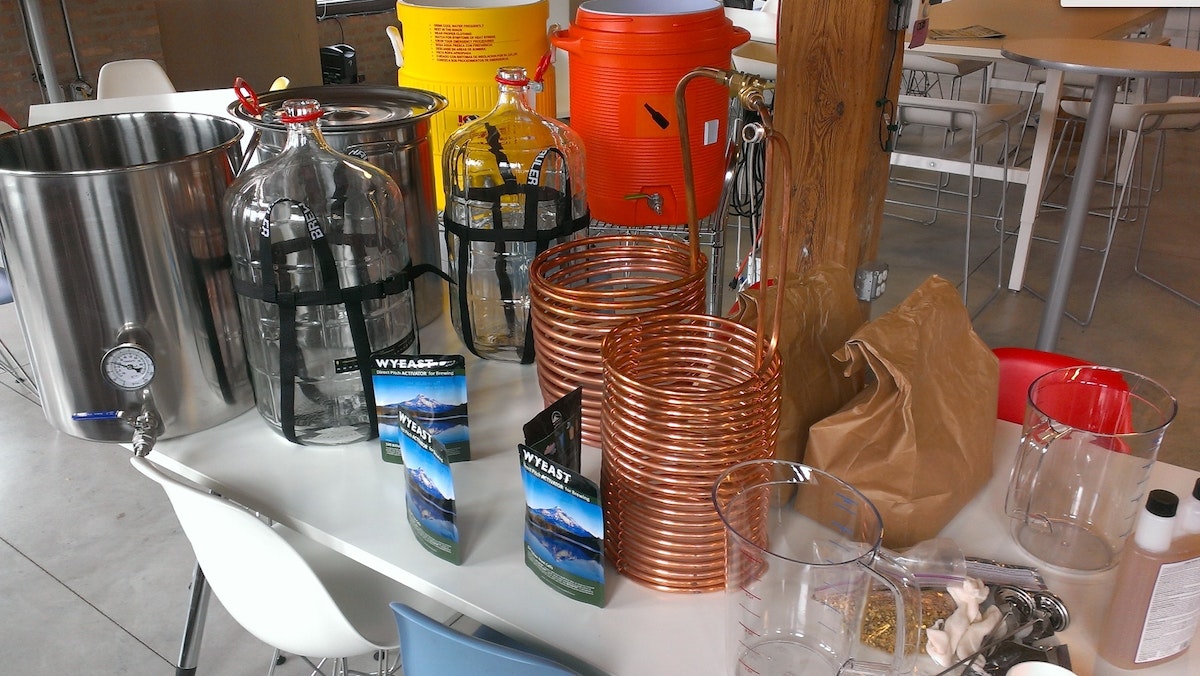
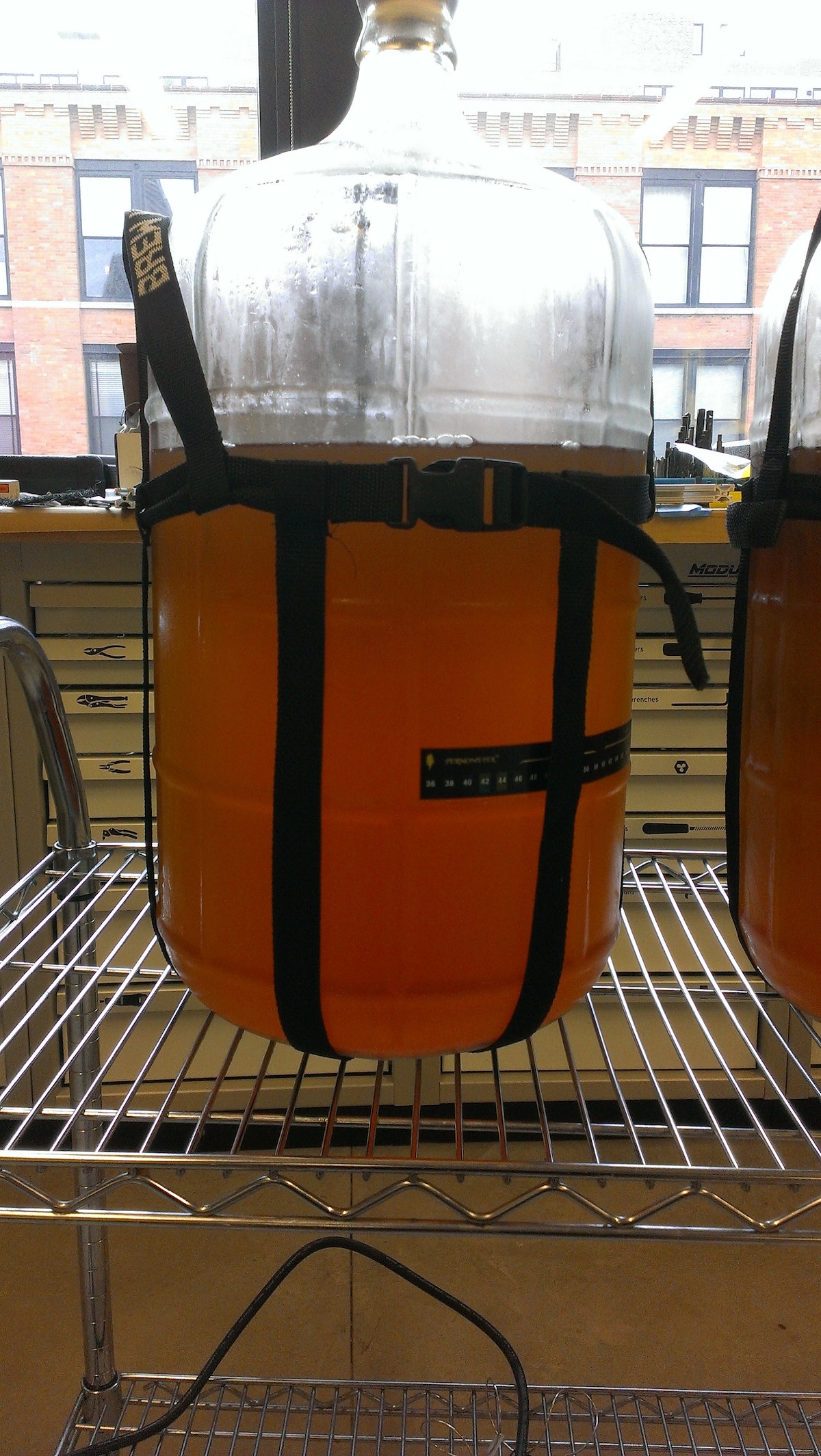
We wanted to brew a beer that would pair well with lemonade, so we decided on a nice, light, citrus-wheat ale. The goal: around 5% ABV, or alcohol by volume. We used 2-row pale as our main grain along with wheat and wheat malt with a bit of coriander, chamomile, and orange peel. You can find the complete recipe on Brewtoad.
Lemonade recipe
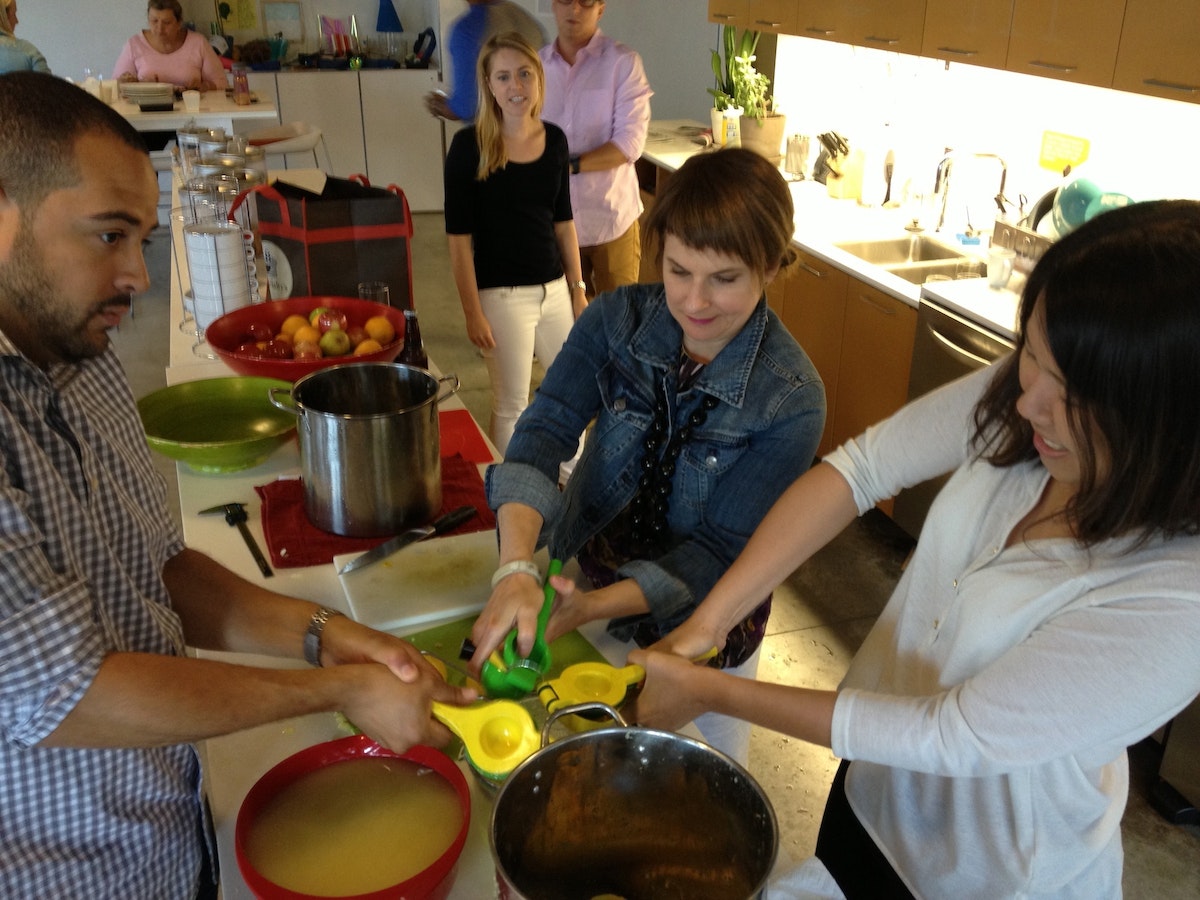
Making homemade lemonade is pretty straightforward. It only has three ingredients: lemon juice, sugar, and water. Batch-processing 10 gallons of the stuff, however, is a bit trickier, especially when you don’t have an electric juicer. In our case, we landed on a ratio of 1:1:8 (1 part lemon juice, 1 part sugar, 8 parts water), and ended up using 160 lemons, 2.5 gallons of simple syrup, and several man-hours of squeezing time. Yikes.
Early testing
After we figured out what we wanted our shandy machine to do, we found some glass vessels lying around the shop.
They looked straight out of a science lab, which was cool, but we thought we’d have some foaming issues because of their small openings. We hooked up a hose from the tap in our kegerator and tried filling them with beer. Sure enough, the beer started foaming immediately and it took several minutes to drain using gravity. Not good if you want a proper pour...
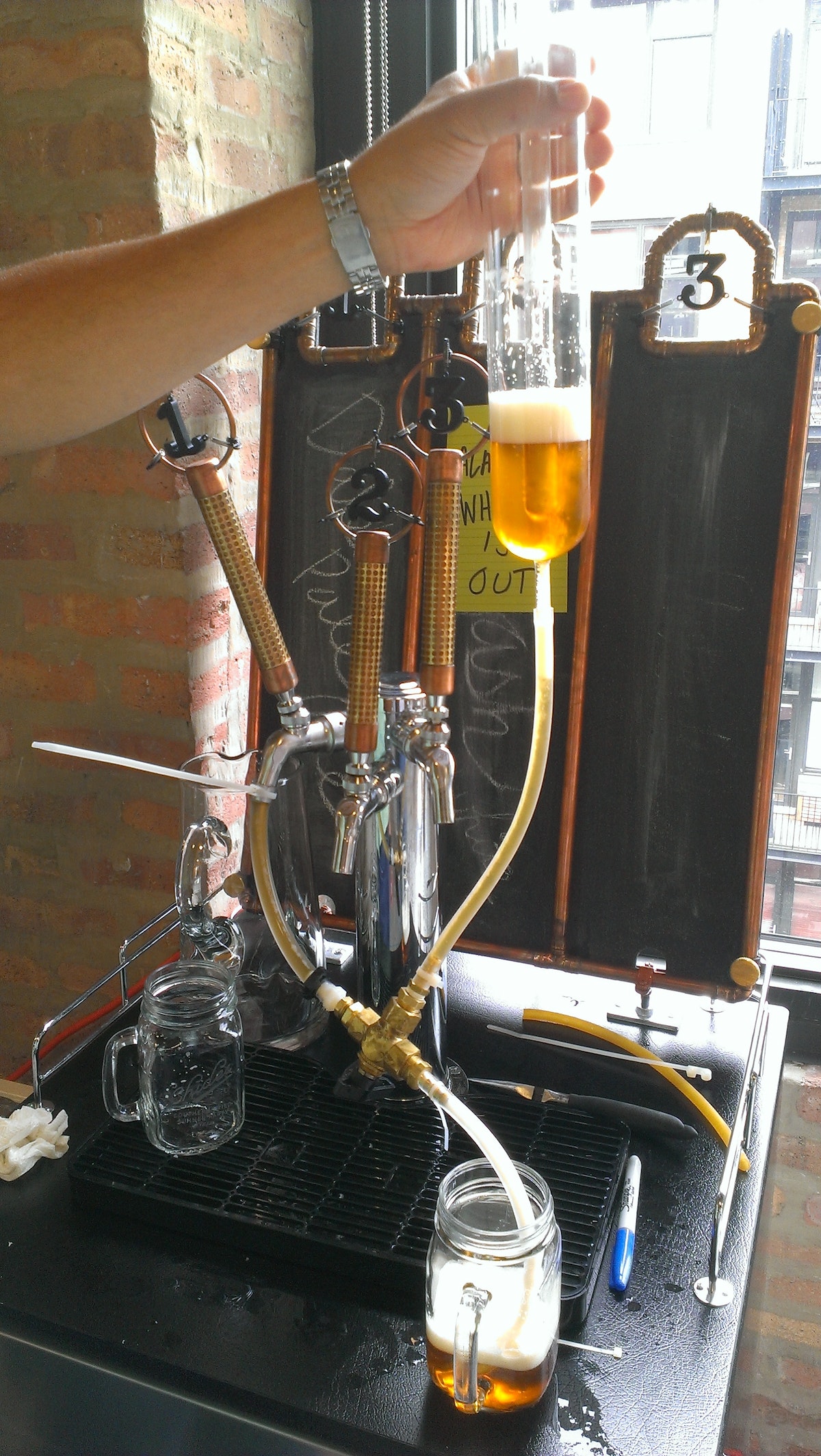
We needed to do something about the foaming issue in order to make this thing usable more than once. We did some experimenting and learned several things:
- There couldn’t be any kinks in the tubing.
- A colder vessel worked best.
- The first pour was really foamy, but subsequent pours were better.
- Filling the glass from the bottom via a tube prevented overflow and allowed any foam that did bubble up to dissipate quickly.
- Adding some back pressure to the vessel made the biggest difference in preventing foam. (To give you an idea of the really rough type of prototyping we love, we used the finger of a rubber glove to make a makeshift balloon on top of the vessel.)
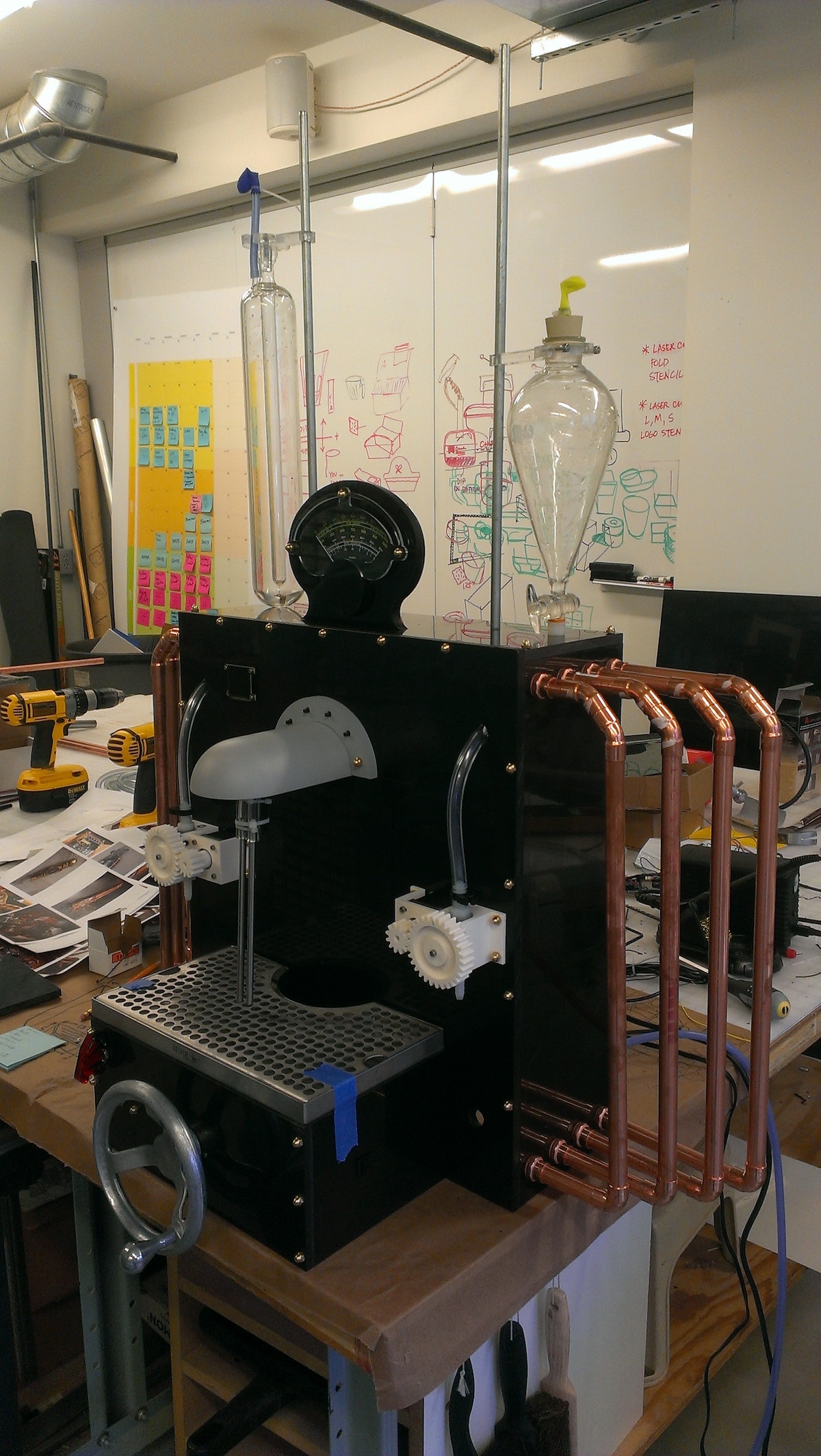
Architecture
The basic plumbing layout of the system is pretty simple. We have three-way ball valves that direct flow from the keg to the vessel, from the vessel to the dispenser tube, or block flow entirely.
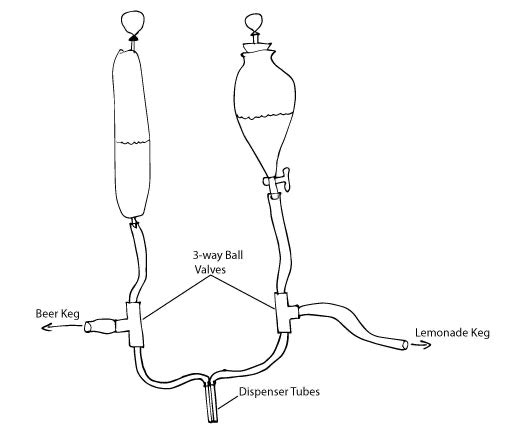
To control the valves, we 3D-printed some gears to fit onto the lever controls. To drive the valves, we fitted stepper motors with smaller, 3D-printed gears.
Inputs
For the main shandy mixture-control system, we settled on a large hand crank.
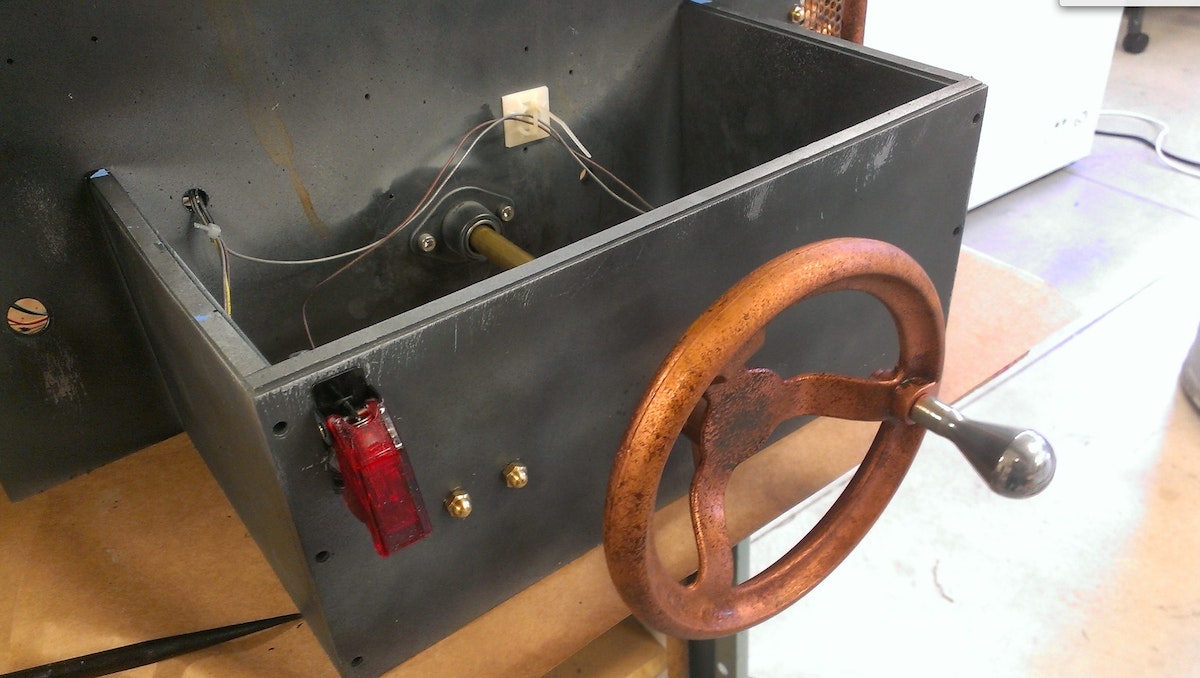
We machined a shaft and attached an encoder to the end. We added some detents to the wheel to make sure the crank had a nice hand-feel and gave solid feedback so people could precisely dial in their desired mixture ratio (the detent mechanism is equivalent to putting a baseball card in the spokes of a bike tire).
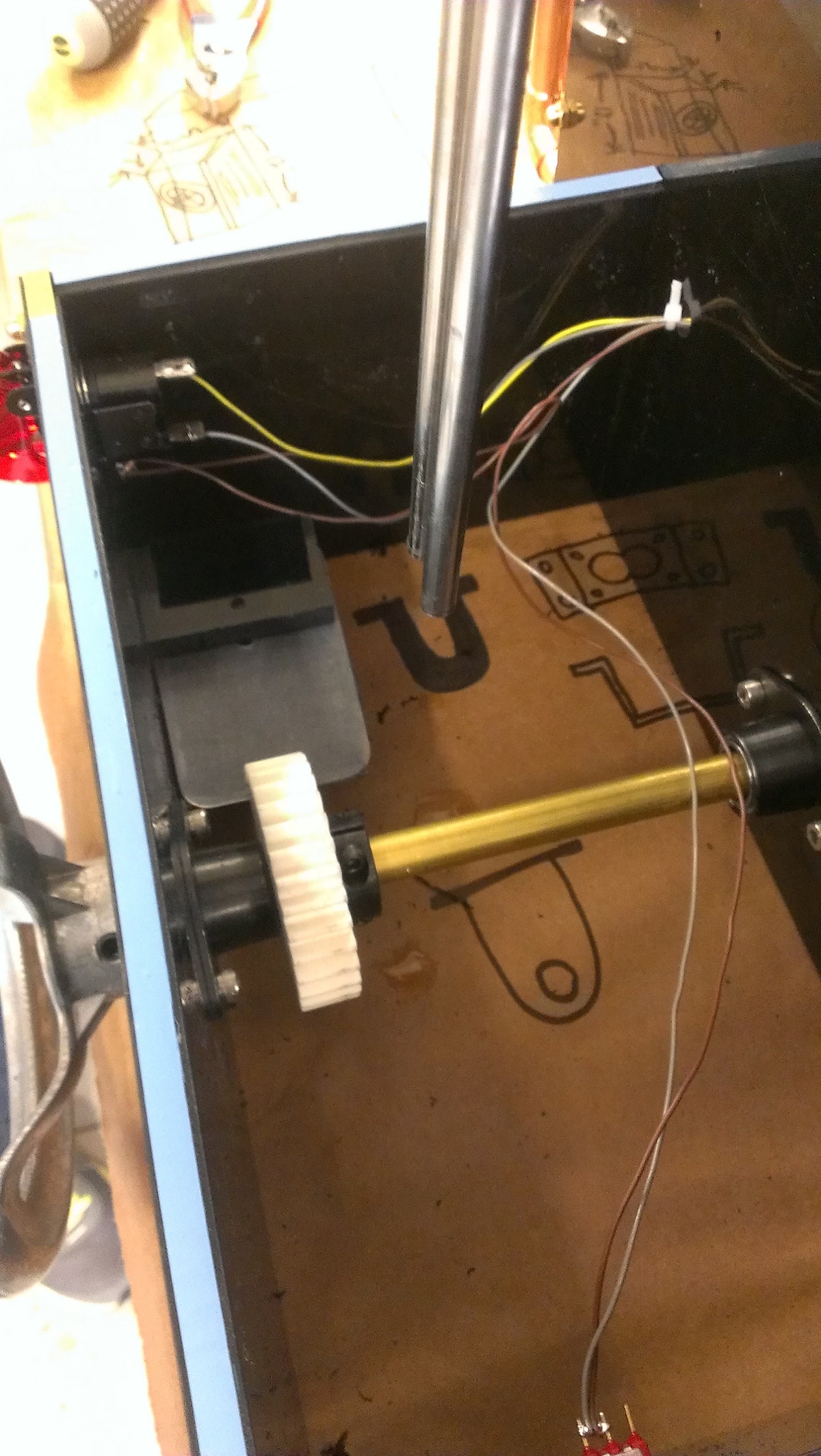
We used a 3D-printed gear and flexible plastic leaf to engage the gear. We had to play around with some adhesive foam in order to damp the vibrations and get just the right sound and feel we were looking for. We added a covered, mission control-style toggle switch to start the cycle and a cancel button to round out the inputs.
Feedback
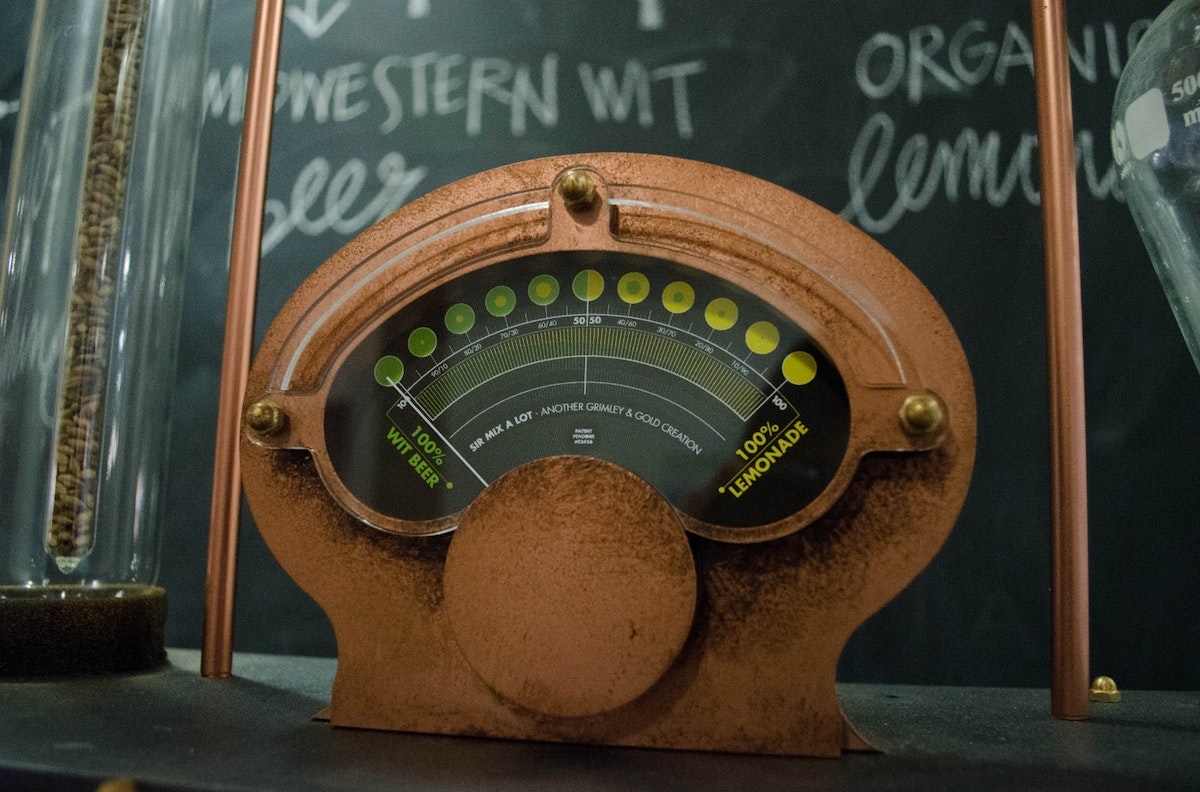
The main source of feedback on the machine is the large analog meter on the top of the machine. We searched online in vain for a large meter that would fit our steampunk style, have an appropriate measuring range, and could be controlled by Arduino. In the end, we found an old automotive meter that measured voltage from 0-16v.
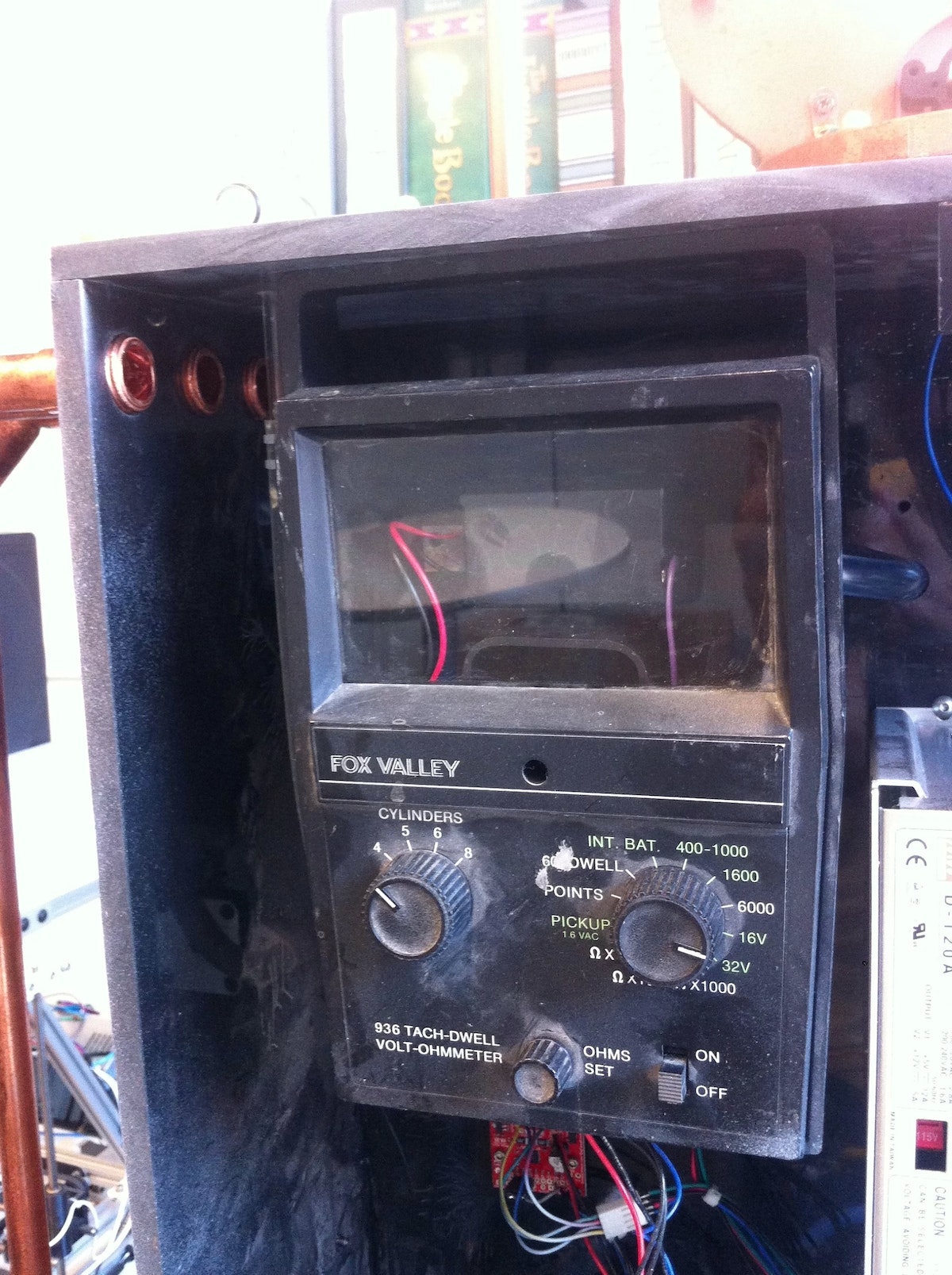
We replaced the scale with one designed by our colleague Joe Graceffa and added a custom housing around it.
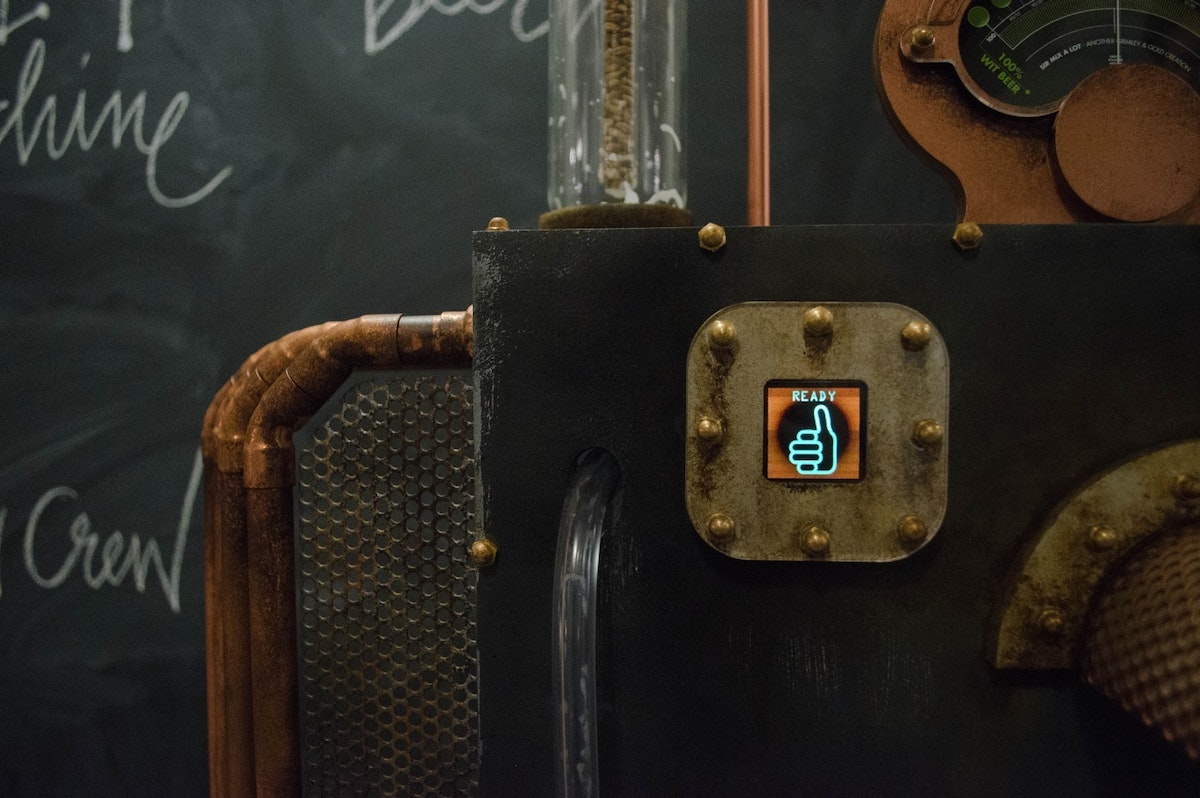
When we were testing the Mix Master 2000, we found ourselves staring at the Arduino serial output a lot to figure out where the machine was in its cycle. To make this easier, we added a small OLED display with an onboard SD card slot. Simple serial commands trigger bitmap images that signal Startup, Ready State, Beer Filling, Lemonade Filling, Pouring, and Error State.

Electrical layout
An Arduino Mega controls the shandy machine. This diagram shows how all of the components are connected:
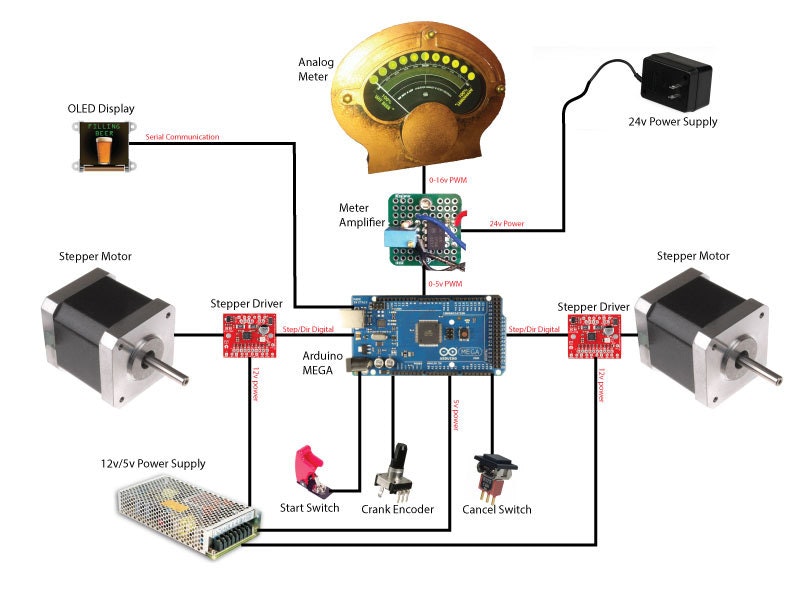
To drive the meter, we needed to boost the 0-5v PWM output of the Arduino Mega to 0-16v. We built a simple, non-inverting amplifier circuit to increase the voltage. A fine-adjustment potentiometer allowed us to fine-tune the maximum voltage and made the meter read full scale.
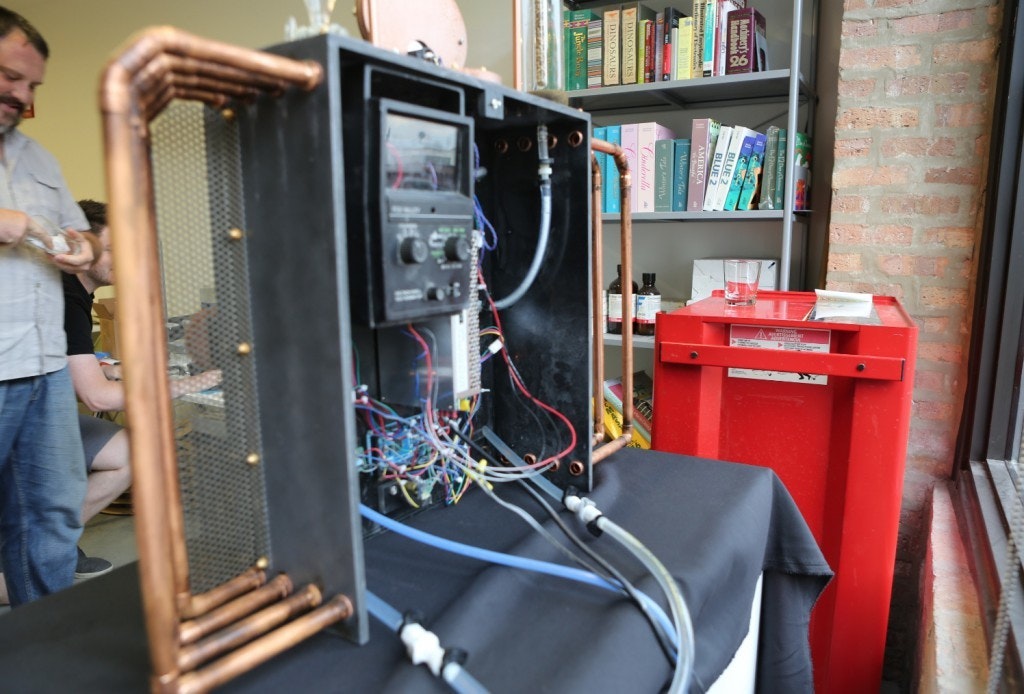
Code
When the Mix Master 2000 is first powered on, we can’t be sure that the valves are in the correct position. Each motor is stalled against the valve hard stop to establish a home position (the valve hard stop is in the dispense position so there’s no risk of keg leakage). Once the machine’s ready, the crank encoder state is polled and the meter PWM is updated to reflect changes in the shandy-mixture percentage. As soon as the start switch is thrown, the pour cycle begins. During our early testing, we figured out how long it would take to fill a glass with each liquid (the times turned out to be different because of varying carbonation levels). The parameters for beer and lemonade fill times are used to calculate the on times for both valves using the selected shandy ratio.
The cycle sequence starts by opening the beer valve and filling the beer vessel for a predetermined amount of time. When the beer valve closes, the lemonade valve opens for a predetermined amount of time. Finally, both valves move to the dispense position to allow liquid to flow from the two vessels and into the person’s glass. A built-in wait time prevents the start of another cycle, ensuring all the liquid is dispensed.
If necessary, a cancel button throws an interrupt, immediately moving both valves to the safe home position and halting program execution until the Arduino reset button is pressed.
The final touches: steampunking & aging
We’re big fans of steampunk, so from the beginning, we knew we wanted the Mix Master 2000 to look quasi-Victorian. First, we used as much copper and brass as possible, then, drawing on John’s background as a Hollywood set designer, we “antiqued” it using various scenic techniques.
We started by stripping everything off the main body of the machine and painting it all silver. After that dried, we sprayed it again with black paint. While that was drying, we took Scotchbrite pads and scratched the corners, edges, and anywhere else we thought needed a little character. After the black paint layer dried completely, we started to reattach all the other pieces. We painted them copper or brass and scratched them up here and there to add wear and tear.
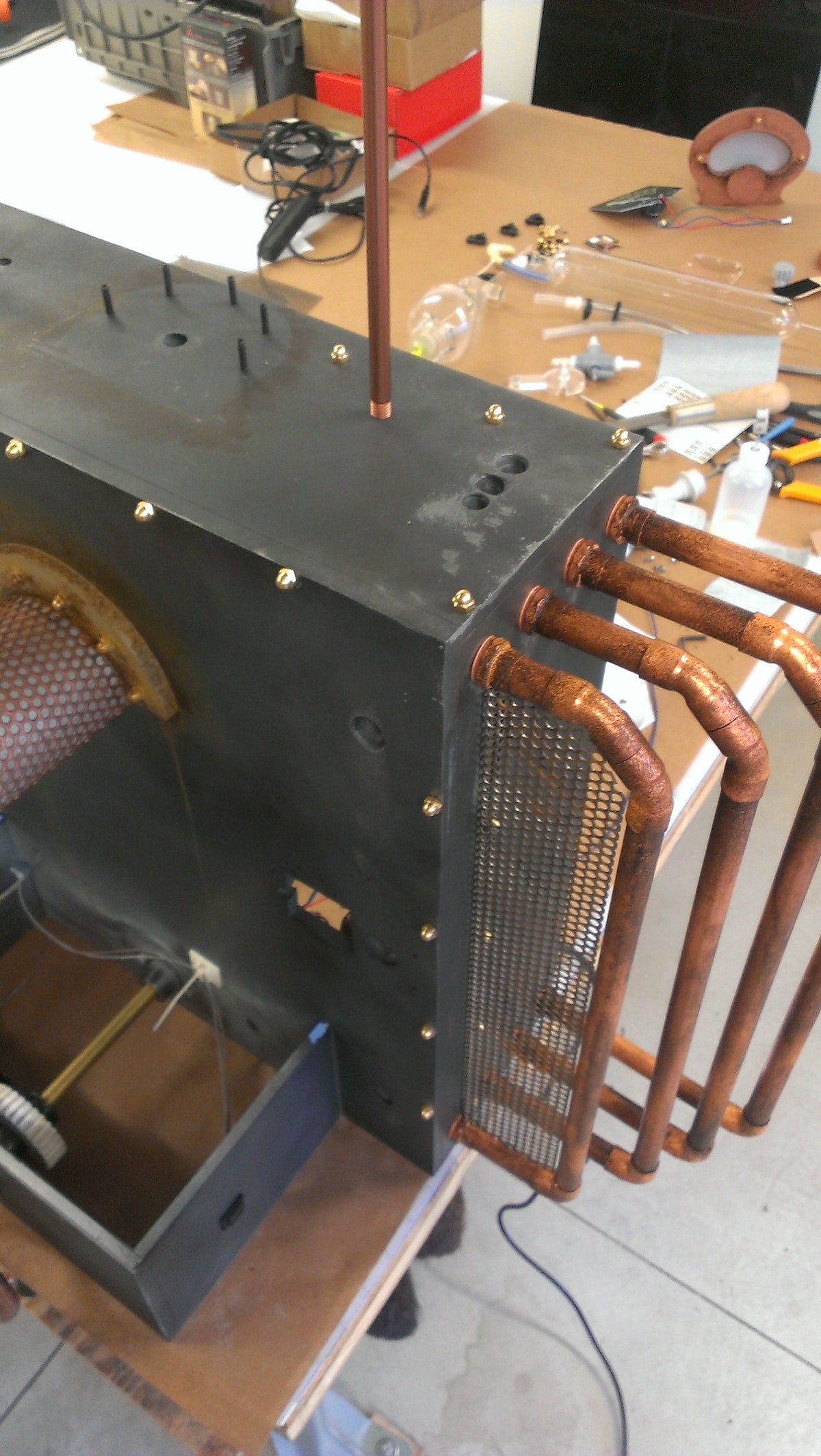
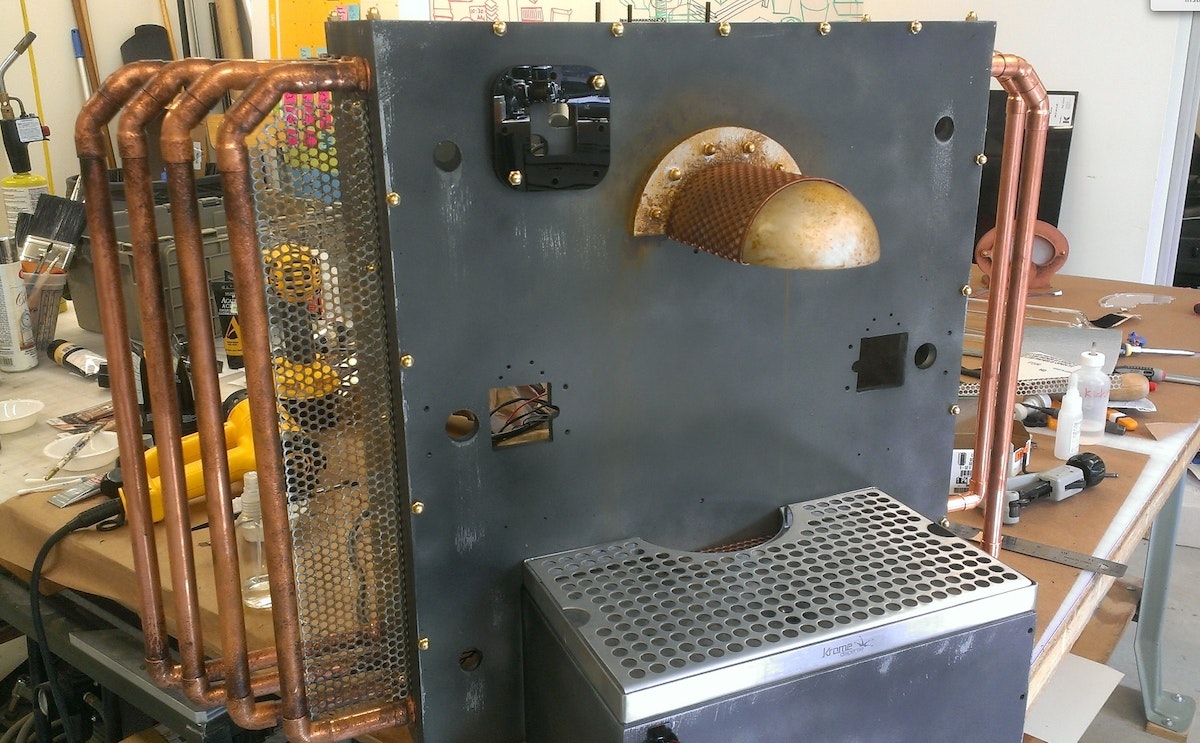
Once the whole machine was reassembled, we decided it should look a bit dirtier. To do this, we mixed different brown-toned acrylic paints with denatured alcohol. We brushed this onto key places like the corners of the motors so it looked like dirt had accumulated and it was streaked with rain (we wiped off the paint before it dried so the effect didn’t look too heavy handed). For sanitation purposes, we didn’t paint the drain tray or the stainless tubes that dispense the shandy.
What’s next
We think the Mix Master 2000’s pretty cool as-is, but there’s always room for improvement. One issue we’d like to address is foaming. The balloon we added on top of the beer vessel helped, but pouring a lot of shandies in succession caused major foam build up. Increasing the amount of back pressure in the vessel could improve this situation, so we’re experimenting with adjustable pressure-relief valves. Coupled with the relief valve, a low-pressure aquarium pump could help to push out the foam more quickly, avoiding a buildup.
While we’re using the Mix Master 2000 for shandies at the moment, it really could be used for any number of two-part drinks: Black & Tans, mixed drinks, or custom non-alcoholic concoctions are all ideas we’re toying around with. As beer geeks, we’re particularly keen to brew two similar beers, one with a bland base and another that has a lot of hops so we can all dial up the perfect hoppy pour.
Parts List
- Main housing — ?” ABS
- Ball valves — McMaster # 4757K52
- Valve gears — FDM
- Valve housing — FDM
- Crank — McMaster #6020K35
- Stepper motors — Lulzbot #817752011303
- Stepper drivers — Sparkfun #ROB-11699
- Arduino Mega
- Display — 4D systems 128x128 Sparkfun #LCD-11377
- Power supply — 12V 5A, 5V 12A
- Meter — salvaged autometer 16v range
- Glass vessels — found in shop
- Glass holders — FDM
- Meter housing — Laser cut acrylic
- Start switch — Sparkfun #COM-11310
We couldn’t have made the Mix Master 2000 without the help of Joe Graceffa’s graphic design skills, Aaron Ferber’s awesome lemonade-making abilities, and Momo Miyazaki's amazing video. This post was co-written with John Grimley.
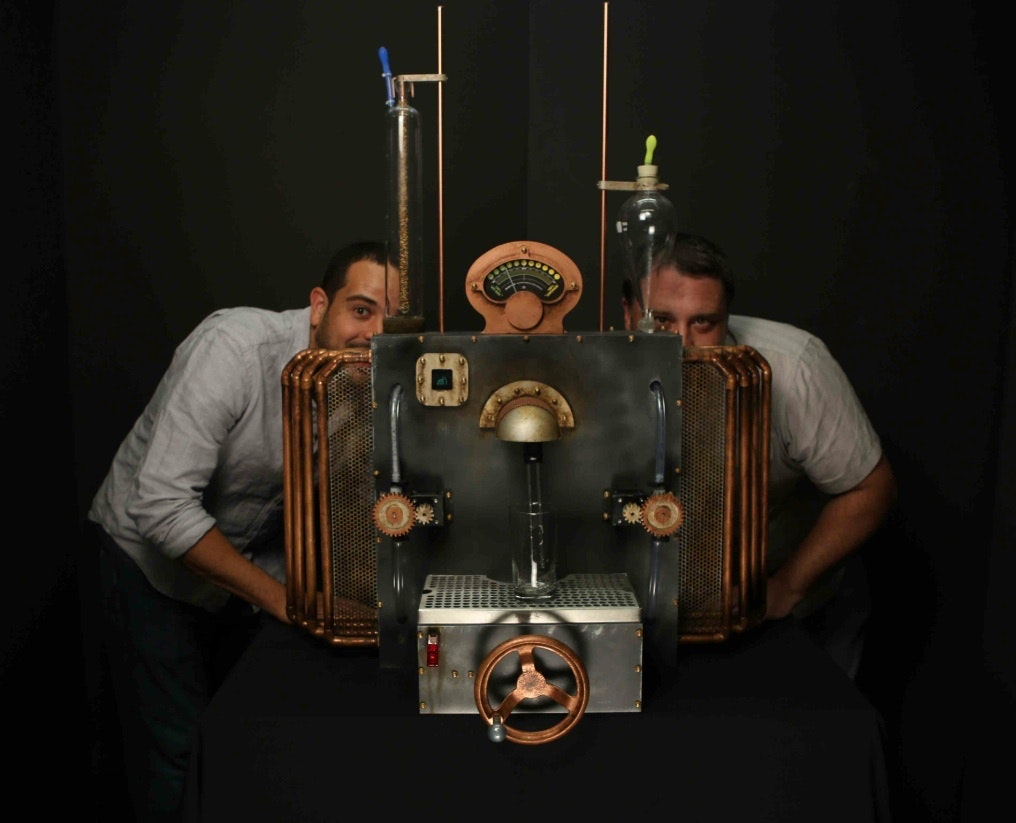
The creators of the Mix Master 2000, Chris Gold and John Grimley.
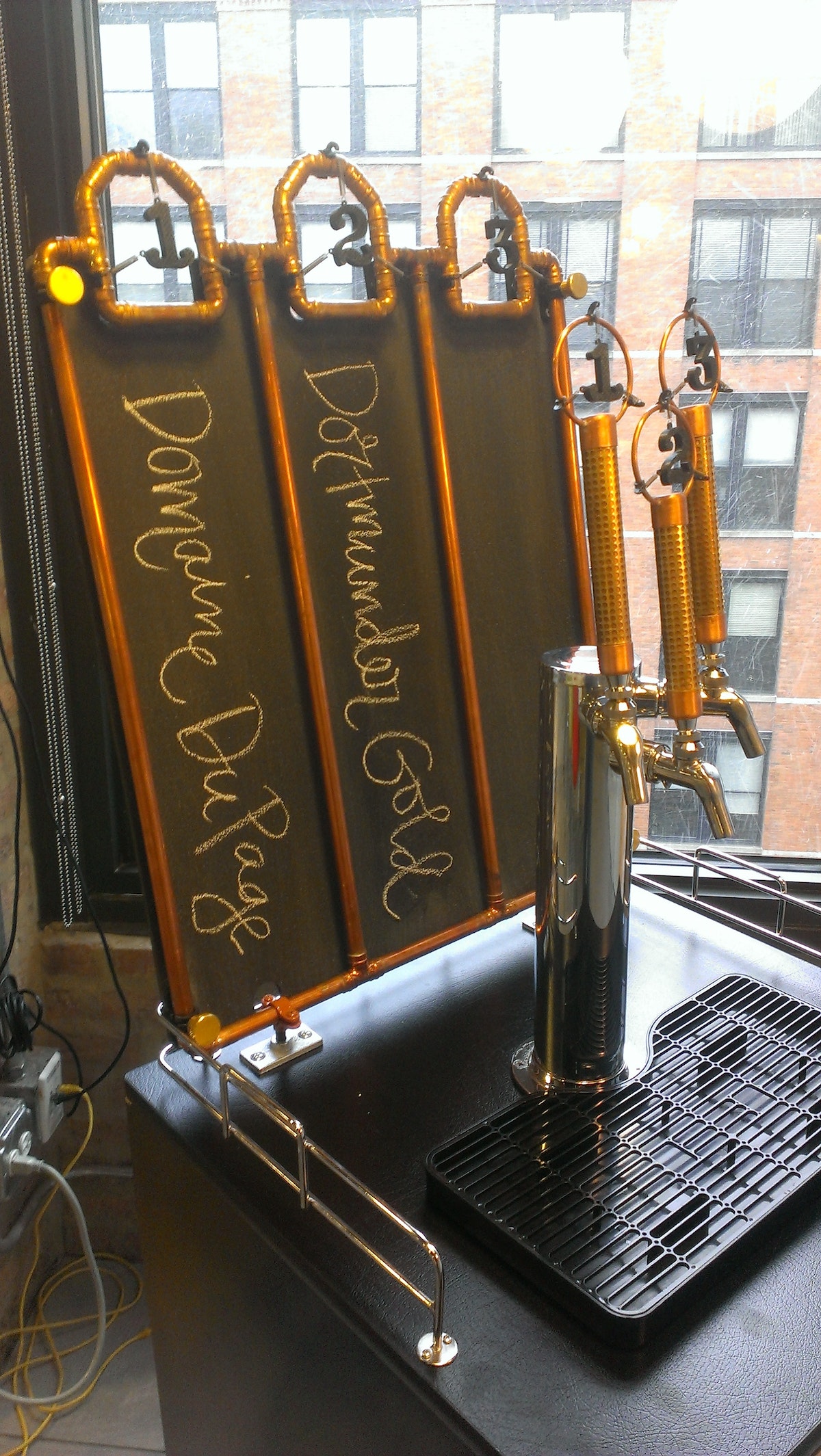
Here at IDEO Chicago, we like beer. A lot. And we don’t just love drinking the stuff, we like brewing it, too. Our ChIDEO Brew Crew started about two years ago and since that time, we’ve made more than 60 gallons, mostly for studio events like Rocktoberfest or St. Paddy’s Day, but sometimes just because it’s Tuesday and we feel like it. We even have a customized kegerator in our kitchen to showcase our drafts.

Tribute to Bill Moggridge: GRiD Laptop For Sharing Stories
Remembering Bill Moggridge through reanimating one of his iconic designs
Perhaps one of the most iconic objects Bill designed was the GRiD Compass, the world's first laptop computer. Bill's design was the original clamshell design that all current laptops have descended from. We wondered if we could use a GRiD as a way to collect stories about Bill from around the office.
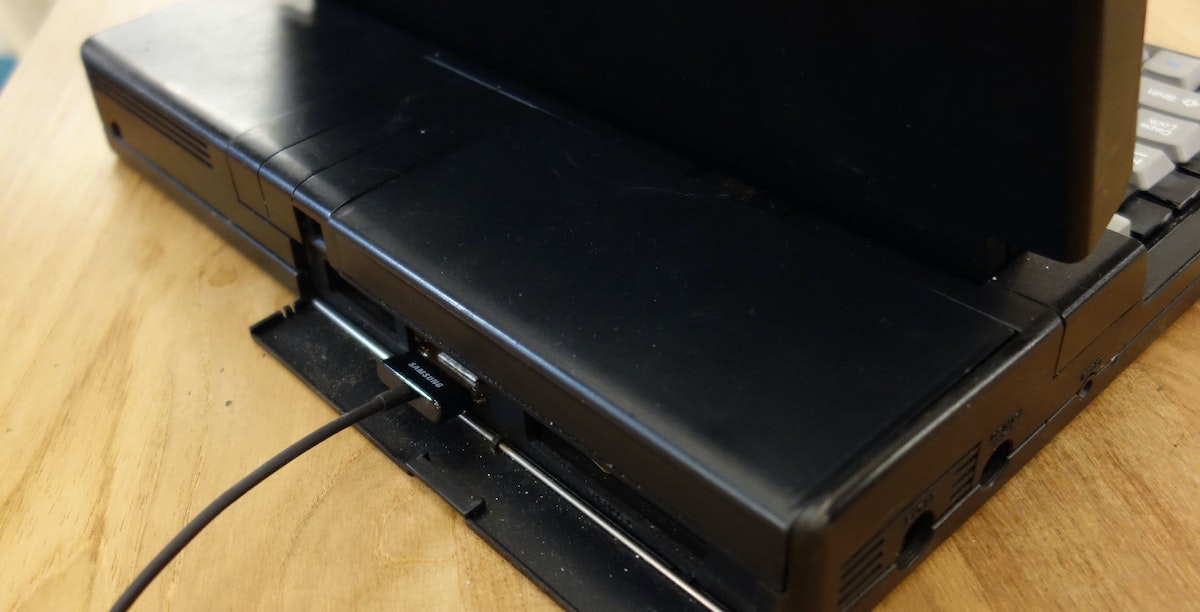
The result is this GRiD Laptop that has been modified to house a Galaxy Tab. It renders everything in orange and black similar to the original GRiD, boasts a working keyboard, and can be plugged in to charge at the base behind the original door that housed the ports.
We are using this laptop as a way to add content to billmoggridge.com which has been created to honor him by sharing our favorite moments, Moggridge-isms, photos, videos, songs, and more.
I hope this puts a smile on your face, just as Bill has done for so many others during his lifetime.
As per usual, I tried to document and share all the details of the build process for others to learn from. Click through for the full details of what went into this build:
Parts:
- Broken GRiD 1720 from Ebay
- Refurbished Samsung Galaxy Tab 8.9 w/ dock and keyboard
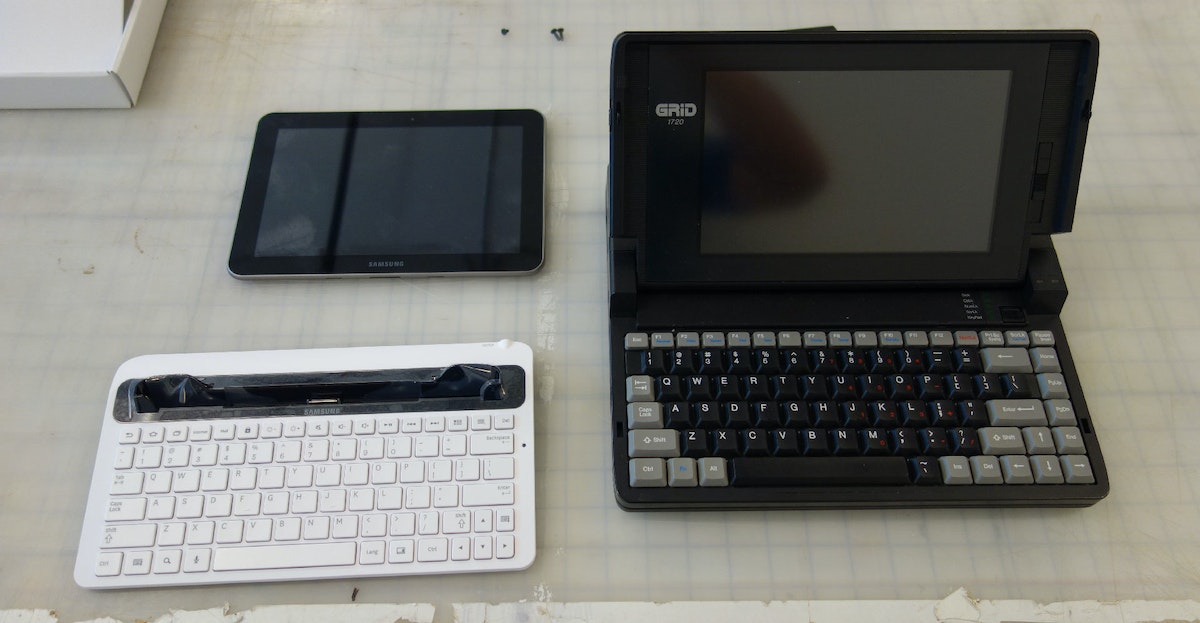
Before we start taking things apart, look at this! Things may not have changed as much as we think...
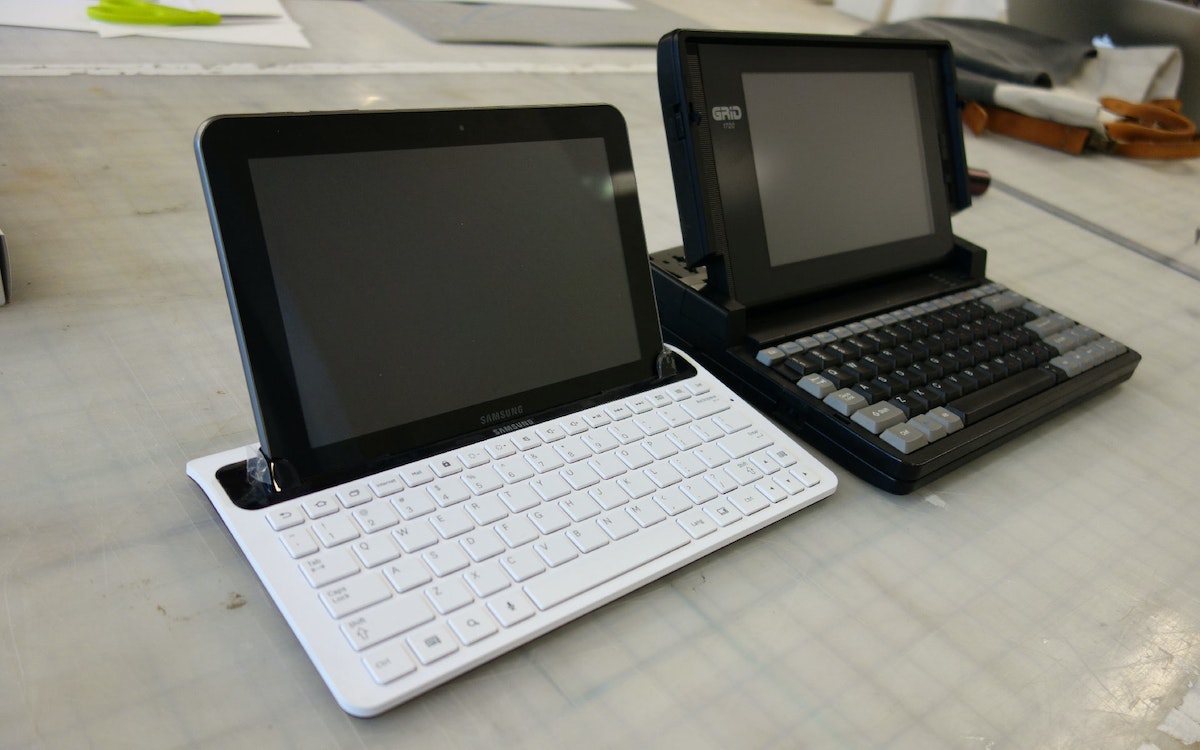
Taking apart the GRiD:
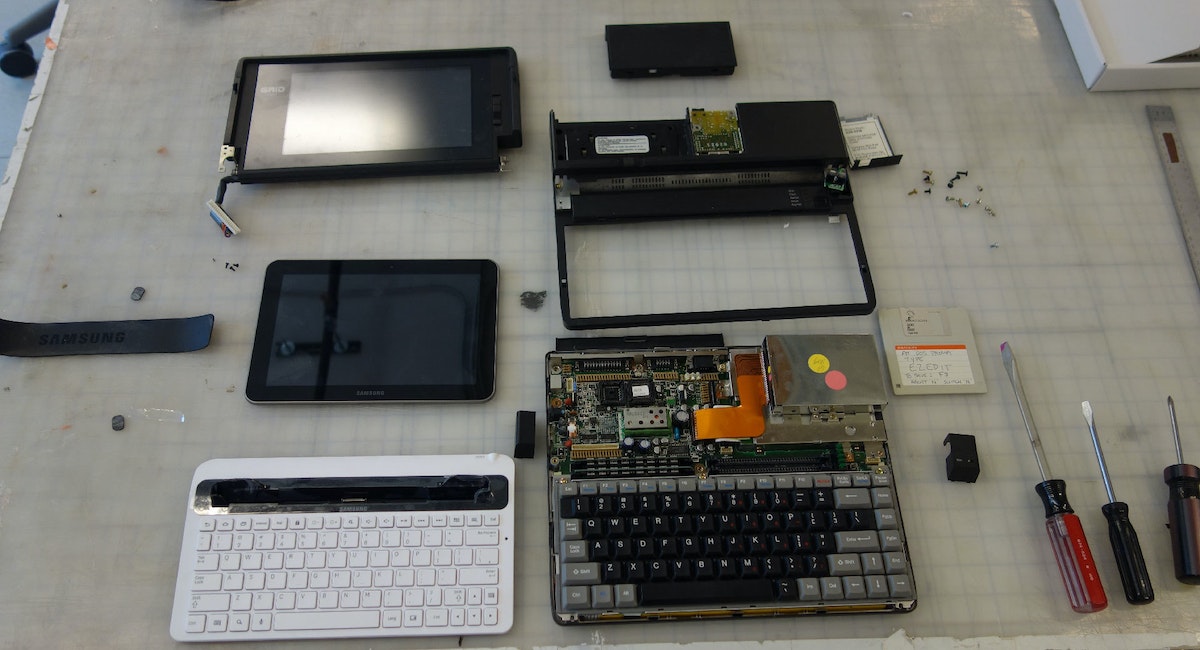
The Display
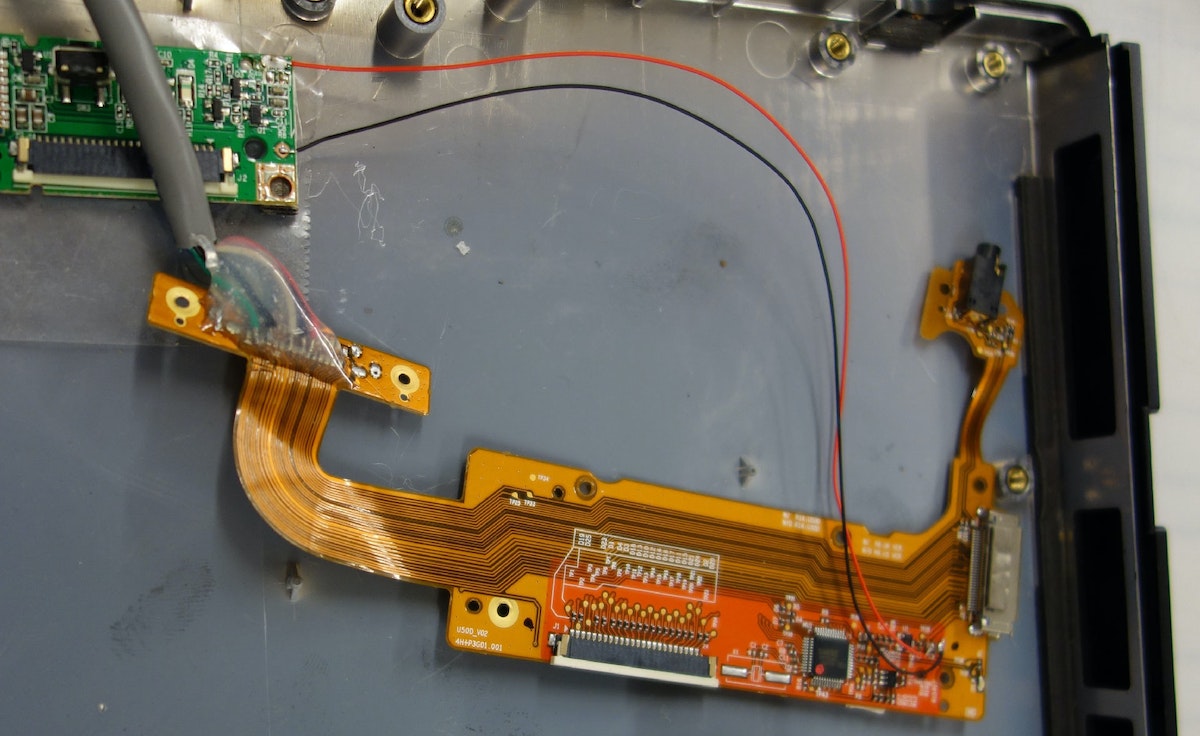
I wanted to have the charger on the base of the computer and not in the screen. For that we would need to make an extension cable that will work like the original cable that connected the screen. Luckily I have the dock and the keyboard dock to hack. I end up using both.
Here is the dock taken apart:

All we need is this part. This will connect to the bottom of the tablet:
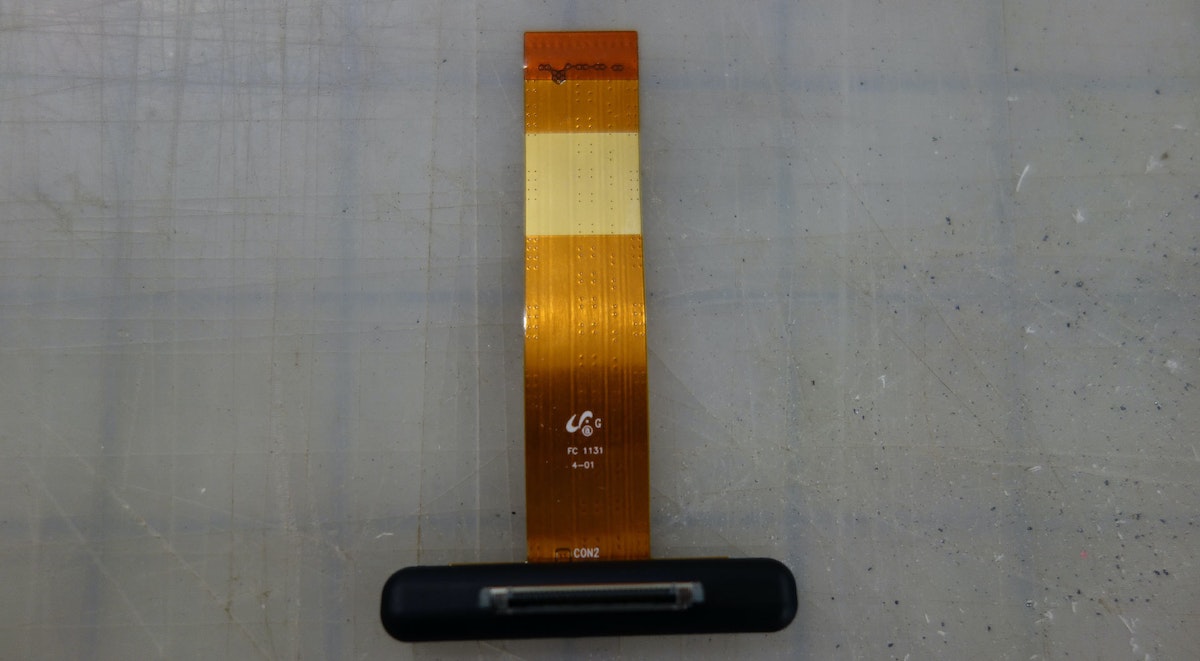
This is the part inside the keyboard dock. I use this as the port to glue into the base of the laptop:
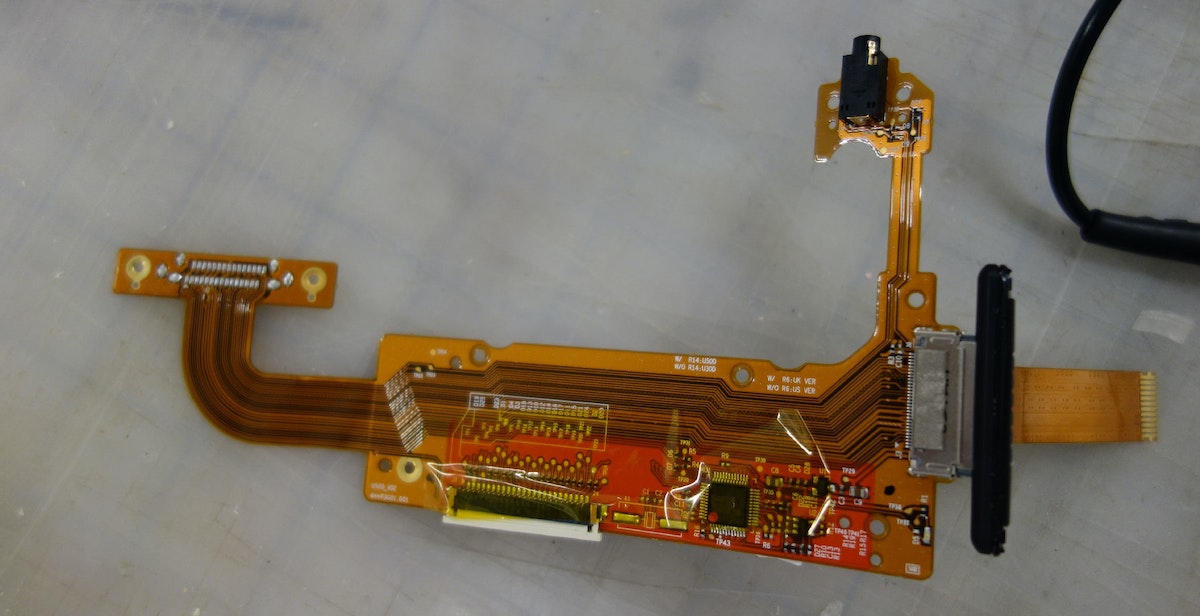
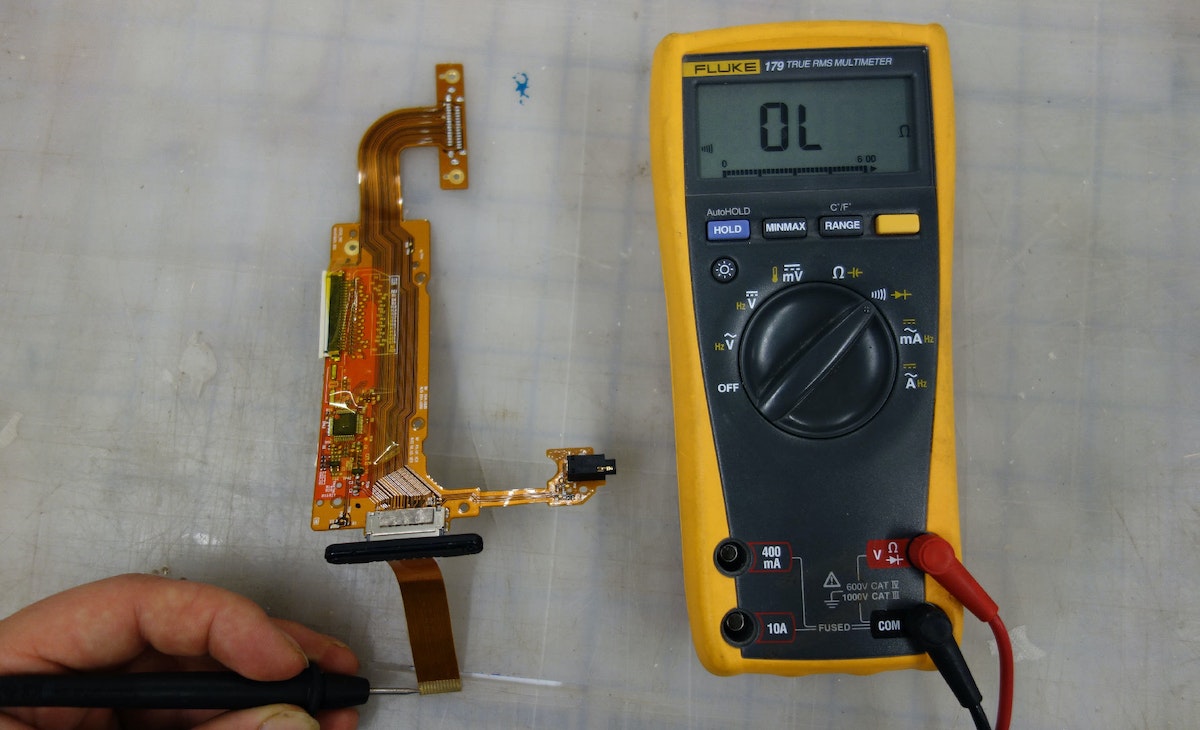
First I de-soldered the connector that originally would have plugged into the tablet. Then I connected the dock part to this keyboard part. Now I can use the multimeter in conductivity mode to probe the connections to learn which pad on the keyboard part will need to go to which pad on the dock part:
Then I (very carefully) soldered everything up with an ample length of cable to make my extension cable:
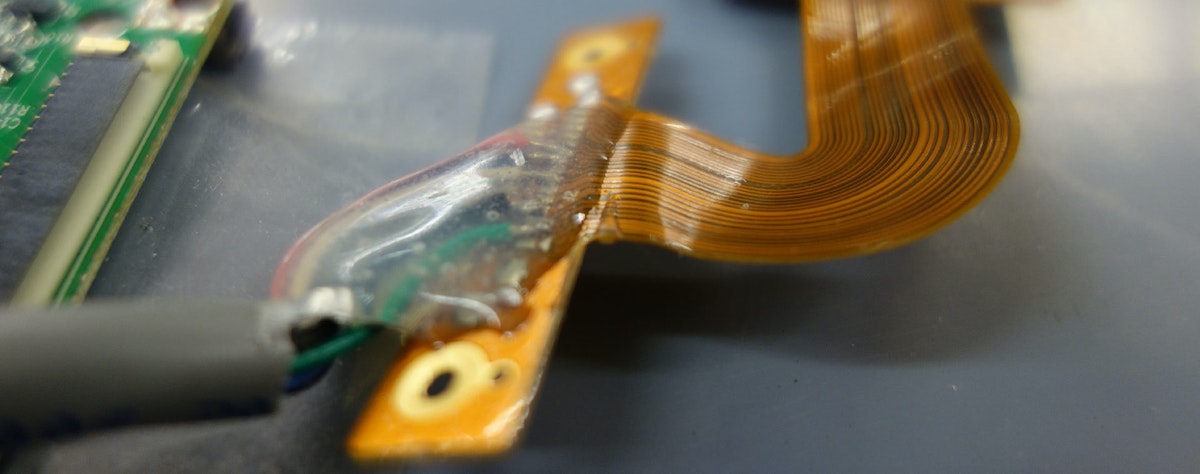
Once I verify the connections are sound, I blob on some 5 minute epoxy to lock everything up so it won't break later.
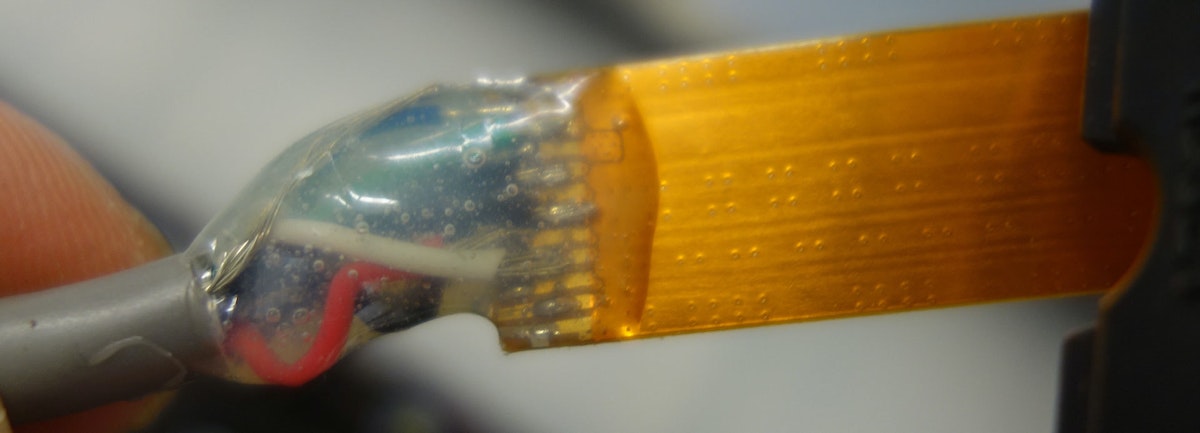

I couldn't have asked for better luck on fitting this in there! This is the bottom of the connector touching the base of the screen housing:

Lastly, there was no way to wake up the tablet once I put it in the housing, so I put a bolt in the lathe and turned a button that sits in the casing and allows you to press the button from the outside:
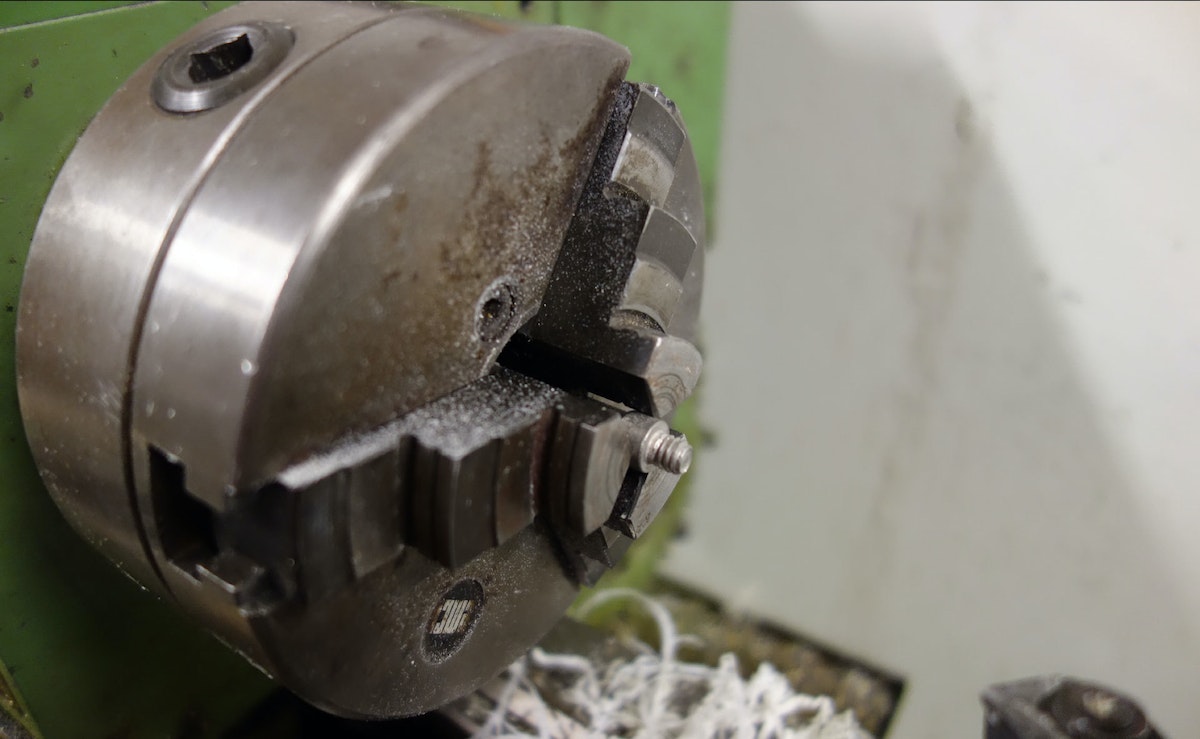
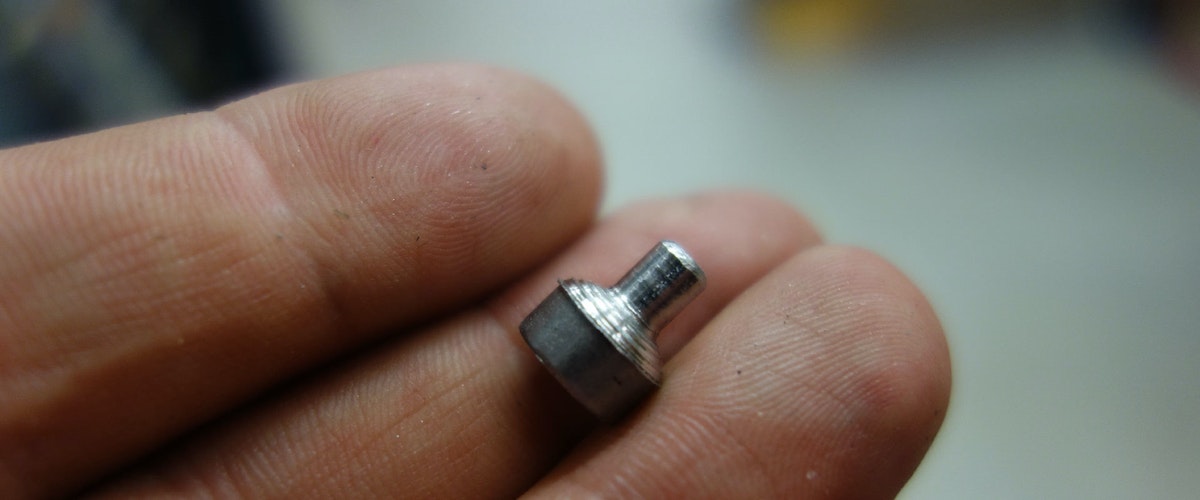
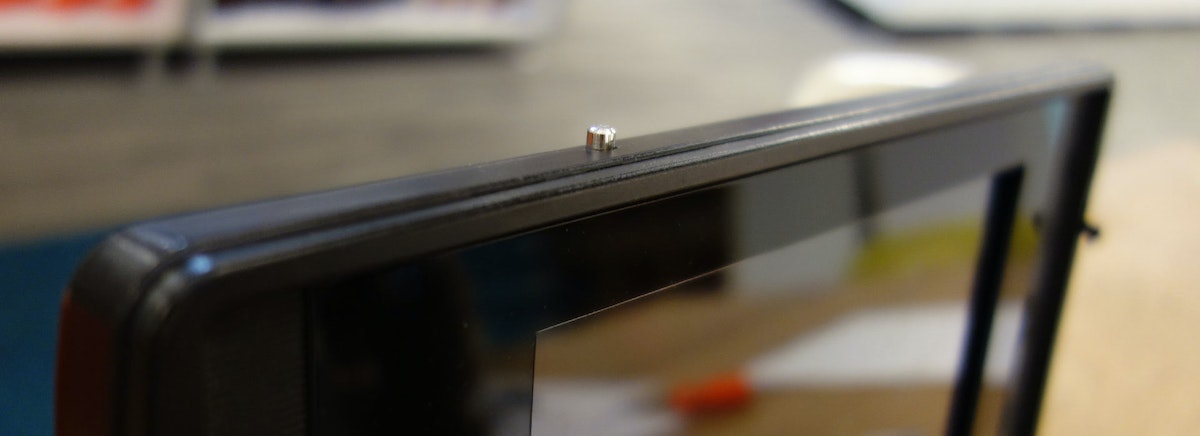
Lastly, I had to cut a hole in the display window so you can touch the screen of the tablet. I tried doing this with an x-acto and failed miserably. Luckily, our model-maker extraordinaire, John Grimley, came to the rescue and laser-cut / backpainted a replacement bezel. Thanks!
The Keyboard
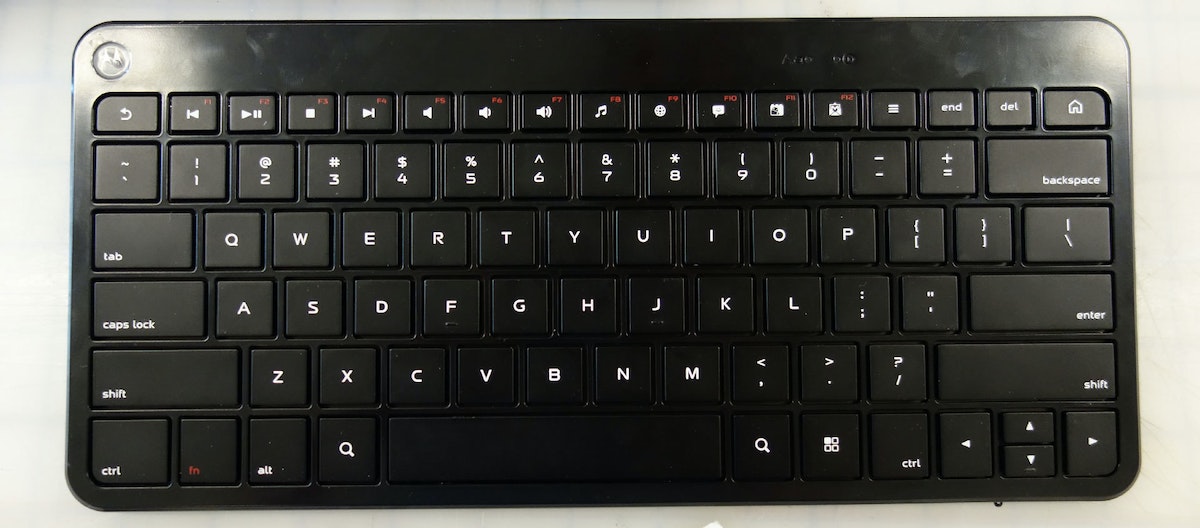
Now on to the keyboard. I used a bluetooth keyboard from Motorola. The Samsung one that came with the tablet was too small. I was pretty lucky to find one with almost the exact size of the original GRiD keyboard:
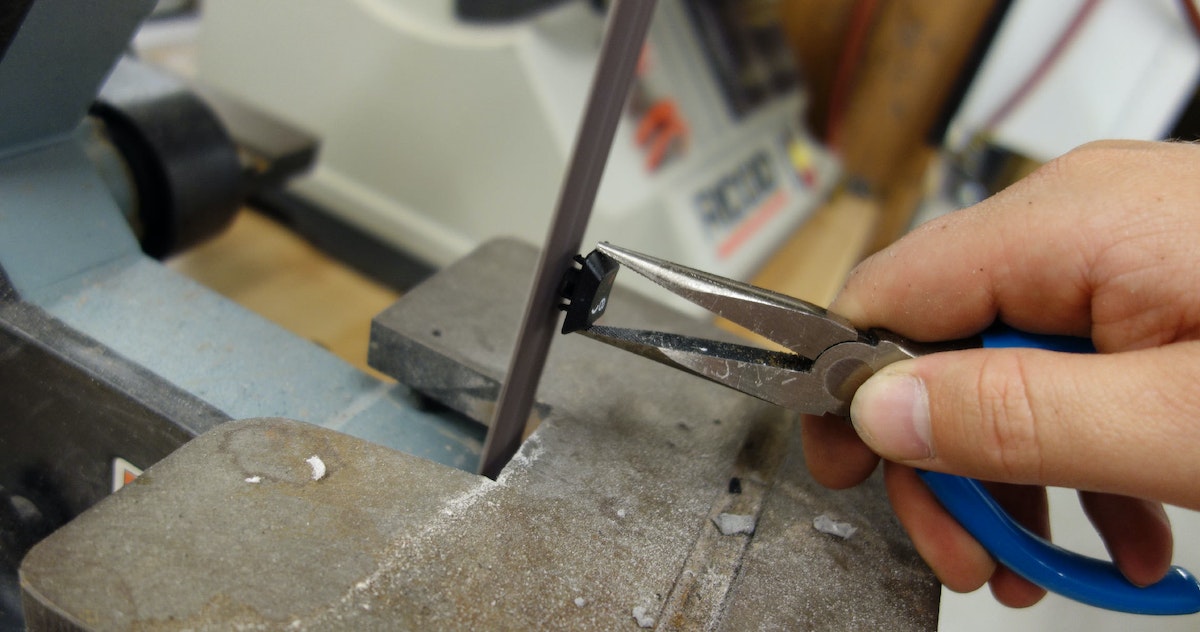
I took all the keys off the GRiD and sanded them down so I could glue them flush to the bluetooth keyboard:
I used hot glue, a steady hand, and a lot of patience:
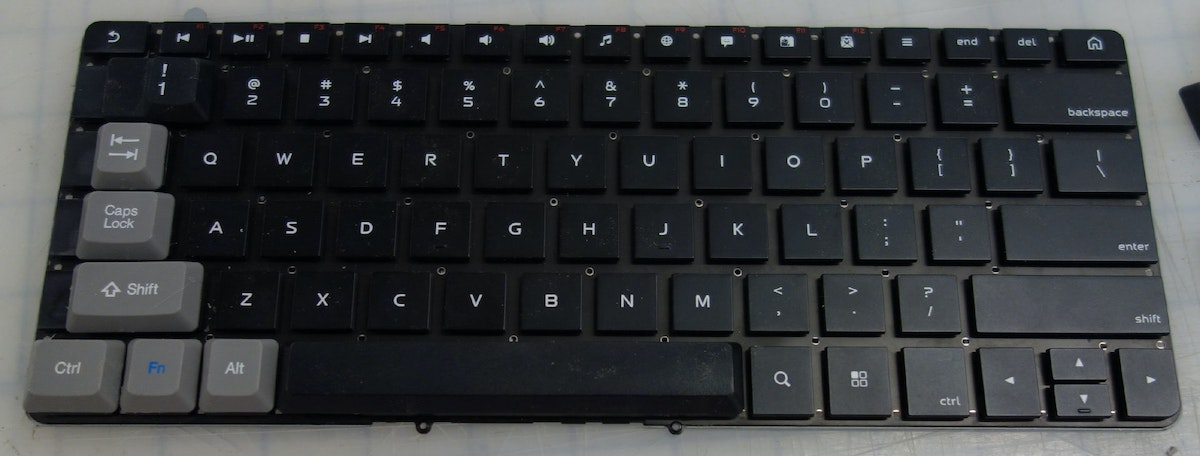
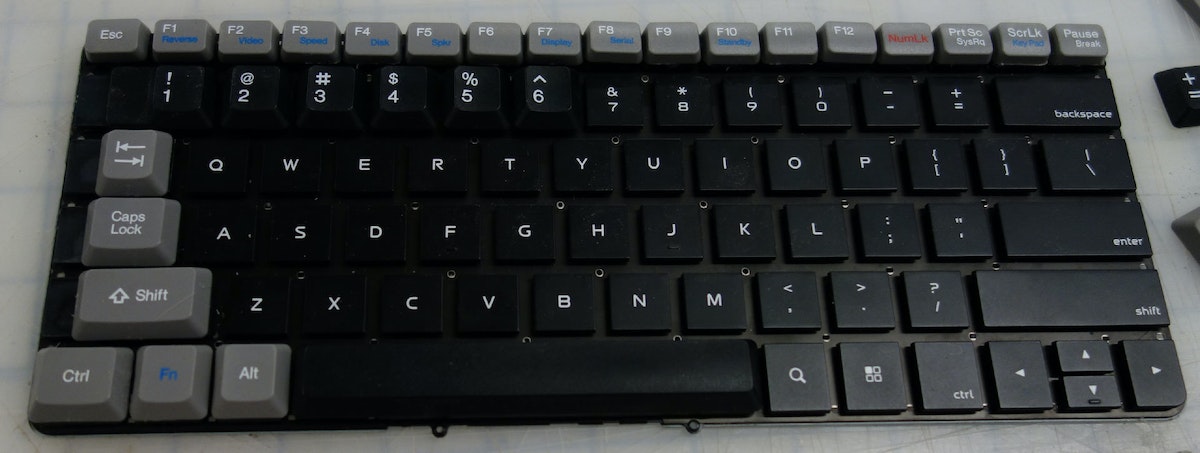
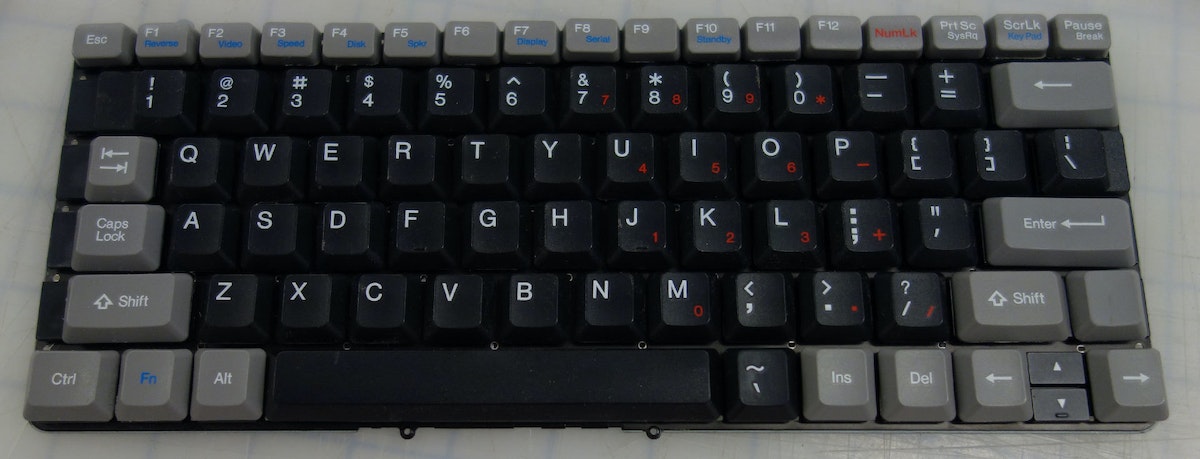
Now we have a proper keyboard, we need to wire it up. I wired the pairing button to the original power button of the GRiD because you have to press the pair button every time you power on. One reason I made that cable using the keyboard dock circuit board earlier is because the board breaks out power and ground which I can wire to power the bluetooth keyboard. This way there are no batteries to replace.
The Bluetooth Board:
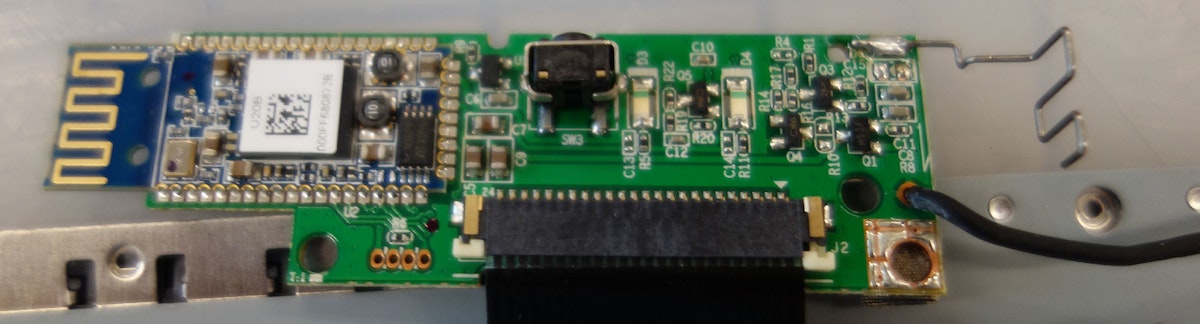
Wired onto the keyboard dock:
Now everything is wired together, so I just place the connector in the original slot for the parallel port:
The Software:
This was actually the most difficult part to figure out. I wanted to have the display be yellow-orange on black like the original GRiD. I started poking around on the Android XDA-developers forum to dig up information. I won't go through all the steps in detail, but after trying versions of Android Ice Cream Sandwich, Jelly Bean, Cyanogen Mod, etc. etc. I found that I had to re-install Android Honeycomb (which was on there in the first place!) and install Chainfire 3D:

This app calls itself “an intermediary OpenGL Driver“ so it sits in the middle and can mess with commands going to the GPU. This requires a rooted device. There's a guy on YouTube who does an awesome walkthrough on how to root a Galaxy Tab 8.9. If you are looking to do something similar.
Chainfire 3D has a “Night Mode“ that allows you to mess with which colors function and to what degree:
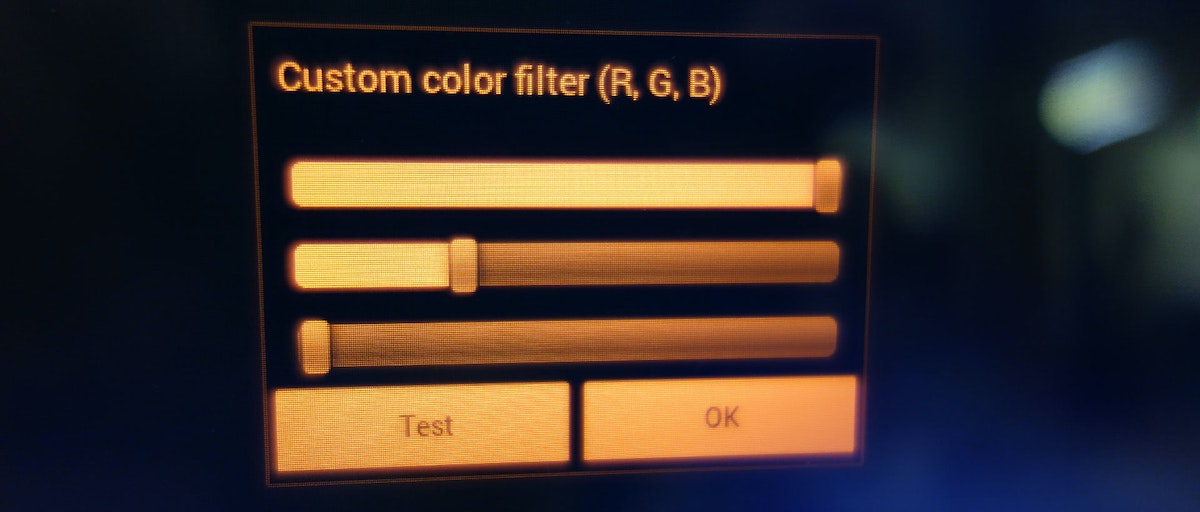
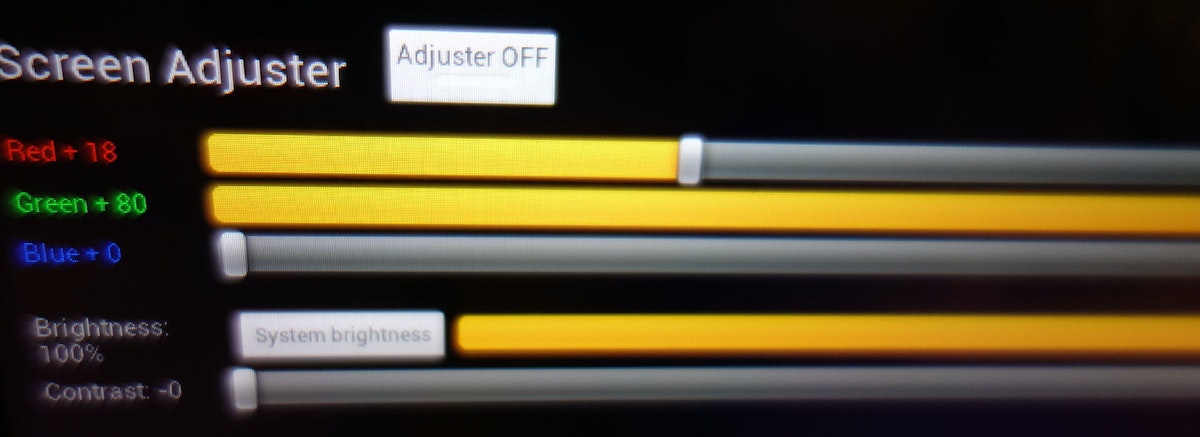
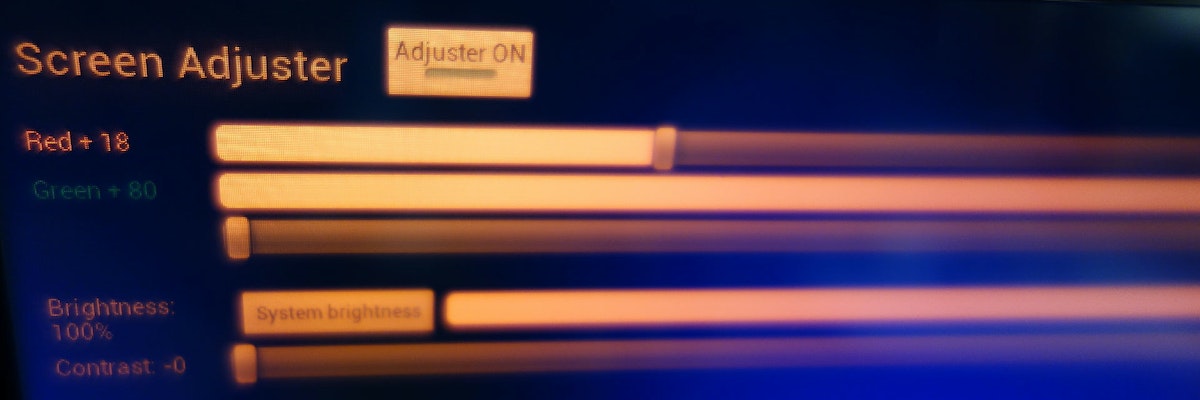
However, it still wasn't changing the color! It would change only during screen transitions when there was some sort GPU task happening. I decided to try some hacks to force the GPU to constantly be running letting Chainfire have the ability to intercept things. I had seen some other “screen tinting“ apps that on their own didn't accomplish what I wanted, but added a level of something going on so Chainfire could do it's job. The one I used is called “Screen Adjust.“
Before:
After!
The Website
While I was working on the GRiD, IDEOers Arjun Mehta and Katie Clark—along with several others including Lance Birtcil, Ben Booth, Francis Tseng, Ivy Hu, Danny Stillion, Tom Hardin and Tim Brown—were putting together the tribute website that the laptop was built to access: billmoggridge.com.
It's really beautifully done, so go check it out to see what kinds of fantastic stories have been shared.

With the passing of IDEO co-founder Bill Moggridge, we have been reflecting on the ways he has influenced our lives and made the world a better place. Bill has had an enormous impact on the field of interaction design and professed the importance of making interactions delightful.

Lindsey Turner
I’m passionate about building brands, products, and experiences that help organizations show up with meaning and momentum.
I help organizations cut through complexity by shaping how they show up, through brand strategy, identity, and storytelling.
Working at the intersection of brand and business, I bring an editorial eye and a bias toward making—turning ideas into tangible experiences that people can understand, trust, and believe in.
My work spans government, healthcare, financial services, media, and consumer goods, from launching Gen Z-focused ventures to building innovation labs and reimagining legacy brands. I relish moments of ambiguity and enjoy translating across teams, perspectives, and priorities to move ideas forward.
I started my career in editorial and digital design, shaping cross-platform experiences and identity systems in publishing and agency environments. That foundation still shapes how I work today: I’m detail-oriented, collaborative, and overreliant on the Oxford comma. I hold a BFA in Visual Communication from the School of the Art Institute of Chicago.

Rachel Young
My work helps organizations see who their products aren't working for—and build the will and the tools to do something about it
For 25 years, I've asked the same question: Who does this design exclude—and what are we going to do about it?
My work spans human-centered strategy, inclusive design, and qualitative research, with clients ranging from Microsoft, Google, and Verizon to the National Science Foundation, and San Francisco Unified School District.
Before IDEO, I taught elementary school in East Palo Alto and spent a decade doing design work with social service organizations—where I learned firsthand what it costs people when systems are built without them in mind.
I am currently writing User Error, a nonfiction book about digital access and the design decisions behind it. I live in Oakland, California.

Brian Pelsoh
I lead with craft, ensuring our work is creatively excellent: rooted in deep human insight and imagination, while also grounded in the realities of business and technology.
My expertise spans brand, communication, and product design across tech, education, the arts, and social impact.
I believe great work demands both high-level vision and obsessive attention to detail, and only happens through collaboration.
I bring an inclusive, hands-on approach and a deep understanding of business, which enables me to consistently deliver excellence while always asking why.
Before joining IDEO, I worked at the brand firms Pentagram and VSA Partners. I began my career as a designer, leading teams at the School of the Art Institute of Chicago and the Milwaukee Art Museum. I hold an MFA in graphic design from Maryland Institute College of Art and a BFA in communication design from the Milwaukee Institute of Art & Design, and have taught at some of the best design schools in the US.

Tony Wong
I am responsible for IDEO’s long-term success in China and working with clients to use design as a tool to enable growth.
I am responsible for IDEO’s long-term success in China and working with clients to use design as a tool to enable growth. Specifically, I have helped Chinese companies design holistic brand solutions through the development of their products, communication, services, and innovation teams, and I have helped multinationals expand their presence and influence in China.
I advise global leaders on developing China-led innovation and capabilities.
In over 15 years in IDEO Shanghai, I have worked on projects that use design to elevate the quality of the experience of healthcare products and services, streamline processes that increase productivity, create spaces and programs that promote and enable inclusive communities, and build next generation mobility solutions that are planet-positive.
Before joining IDEO, I worked at Philips Electronics and the Electrolux Group in Italy, the Netherlands, and Singapore on a number of breakthrough commercial products. I am a member of the Young President Organization in Shanghai.

Building a personal AI for the messiness of life: Sida Li
Most AI products today are built for work—a space with clear problems and established systems. One founder noticed a gap: personal life is messier, harder to systematize, and mostly left behind by the AI boom. So she built Cue, a personal AI that lives inside iMessage and group chats, to go where the other tools haven't.
In this episode, Becca Carroll, IDEO's Chief Strategy Officer, talks with Sida Li, co-founder and CEO of Shared Context Lab, about staying anchored to a human need while the technology around her keeps changing shape, why she treats her business model with the same rigor she'd bring to a product, and what it feels like to build a company at this particular, disorienting moment in AI.
The conversation also gets into how Sida makes design decisions: the language Cue uses to describe itself, the tradeoffs behind building inside iMessage instead of a new app, and a real story about a business idea that didn’t pan out.
This is the second in a two-part series profiling founders from IDEO's Startups-in-Residence program. The first conversation is with Johannes Seemann, founder of Sooner, on designing GenAI for the emotional side of money.

Designing GenAI for the emotional side of money: Johannes Seemann
Most personal financial tools are built to run the numbers and optimize towards a budget. While that works for some, most people experience money as a lived relationship that does not neatly fit into a spreadsheet. Johannes Seemann and Becca Carroll discuss why money is emotional before it is mathematical, and what a human-centered approach to building a generative AI financial product looks like in practice.

The curious leader's edge in uncertainty: Scott Shigeoka
Mina Seetharaman talks with Scott Shigeoka, author of Seek and Head of Curiosity Cultivation at the Eames Institute, about what distinguishes genuinely curious leadership from performative curiosity, how power dynamics shape curiosity, and why practicing curiosity can restore energy rather than drain it.

How constraints make us more creative: David Epstein
Mina Seetharaman talks with David Epstein, author of Inside the Box and Range, about why total freedom often produces average work, how leaders can design useful limits on purpose, and what organizations such as General Magic and Pixar reveal about the relationship between boundaries and creativity.
Looks like you might be in search of something very specific?
Or reset the filters above and try another angle.
Here’s some random inspiration

Podcasts about creative leadership

Articles about the power of prototyping
