
.svg)




Designing new products based on cultural beliefs
Helping a Chinese manufacturer become a part of healthy living.
Midea, one of China’s largest appliance manufacturers, wanted to identify growth opportunities in the domestic consumer market, while focusing on people’s cultural beliefs around health and well-being. During the course of the project, IDEO found that Midea could play a key role in building a healthier nation.
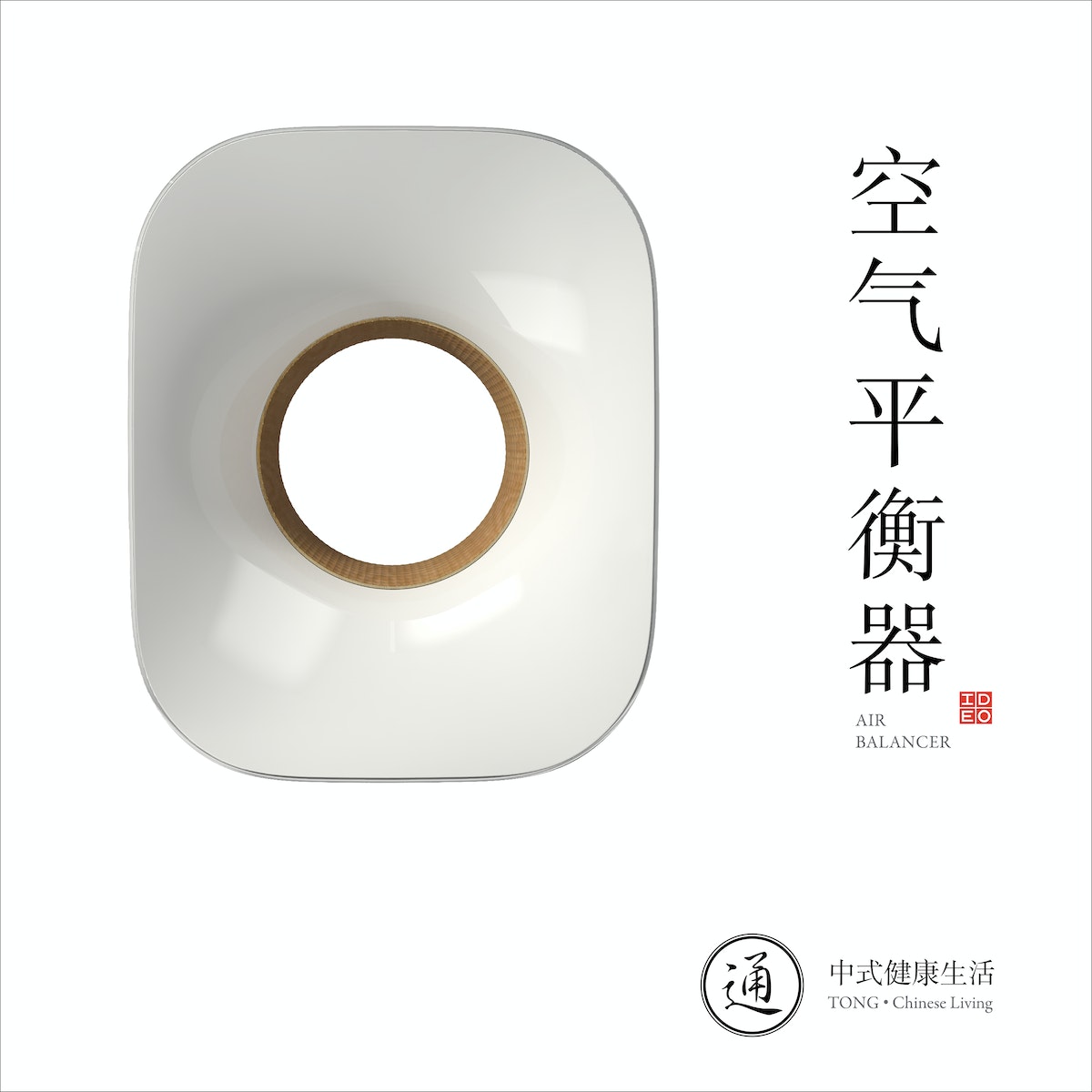
The team set out to design potential future products for Tong (“through, whole, and to understand”) that are built around the basic themes of eating, breathing, and being: an easy-to-use, hassle-free herbal tea dispenser, an air balancer that improves and balances the quality of air in the home, and a body-balancing mobile phone app that encourages users to rebalance their body condition where needed, through movements created with the Chinese philosophies of well-being in mind.
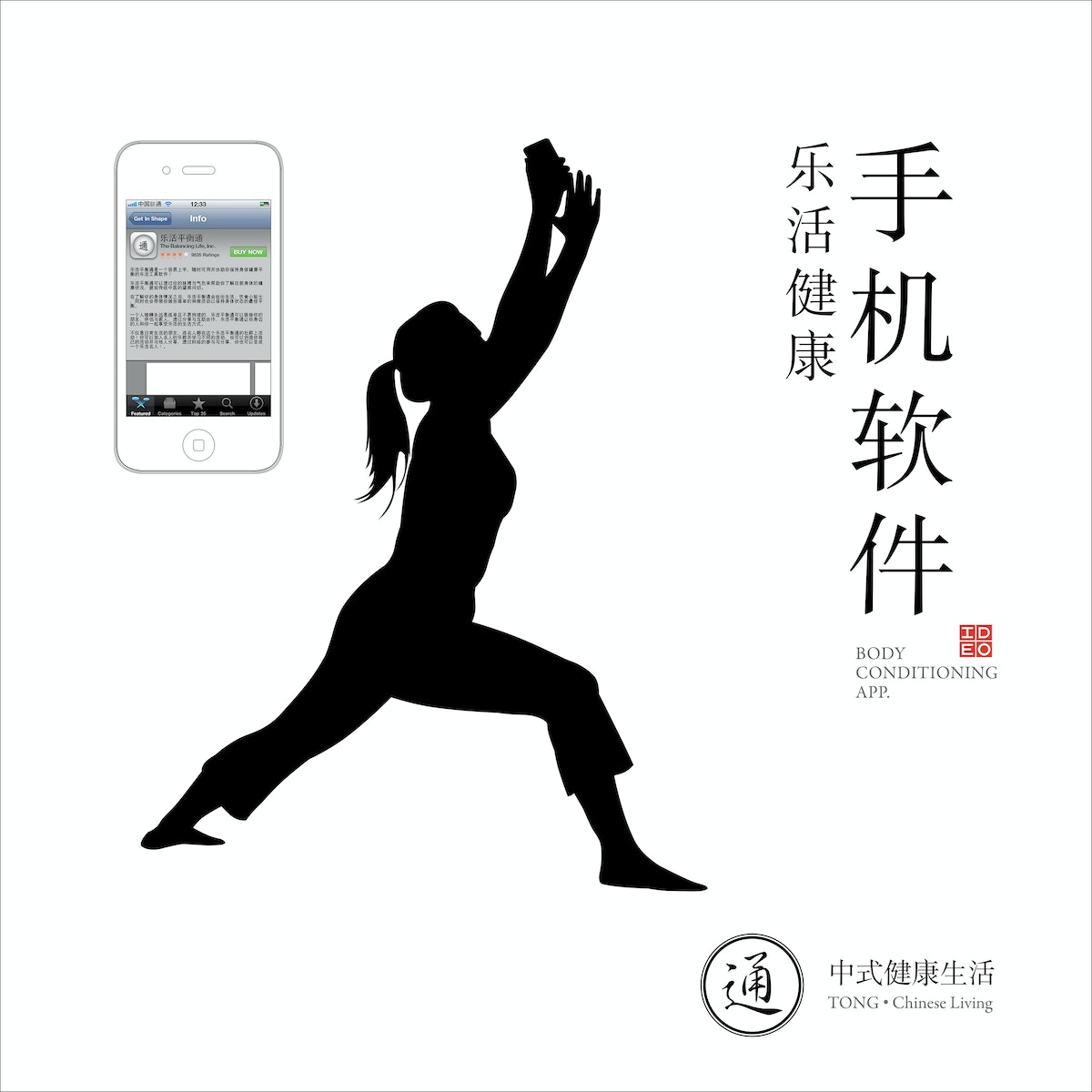
The Tong project was featured extensively in the press, and opened further conversations with Midea about creating new value and extending into new markets.
Customer-friendly utility bills
Improving how low-income customers manage their bills.
Put food on the table or keep the furnace running on a frigid day? It’s an unfortunate choice many low-income families in Flint, Michigan, face.
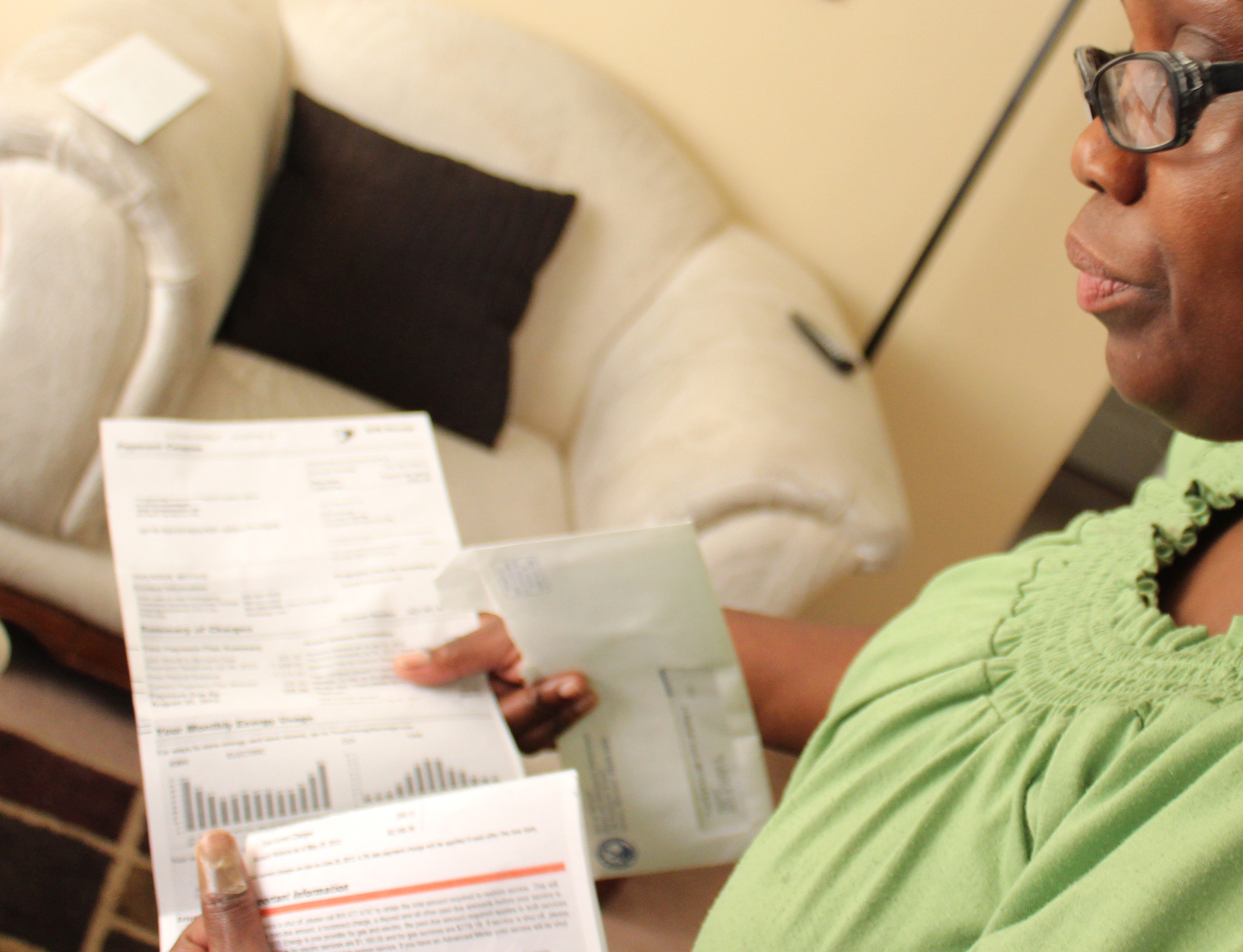
To help customers in Flint and other Michigan towns stay on top of their utility bills and better understand the relationship between their energy consumption and the resulting costs, Consumers Energy partnered with IDEO and utility assistance provider The Heat and Warmth Fund (THAW) to create an innovative pilot billing program called Clear Control in late 2013.
The pilot was designed with three major human-centered changes to the traditional utility experience:
- Instead of monthly bills, participants received two bills per month. Shorter billing periods allowed for smaller, more frequent payments, helping customers match available funds with their ability to pay.
- Daily text updates on energy usage and bill amounts kept consumption top of mind.
- Consumers Energy offered personalized, in-home audits to help customers make low-cost, high-impact changes to their energy bills.
A year later, the results of the pilot are energizing. Clear Control participants accumulated no new debt, while the control group owed $300; pilot customers used 20 percent less electricity, reducing their bills by $200 per year; and 95 percent of participants paid their bills in full and on time, compared with 35 percent in the control group. The utility company simultaneously benefited by avoiding arrearages, late-payment fees, and shutoffs. Consumers plans to incorporate Clear Control lessons into its overall energy assistance program design and development moving forward.
"It’s no longer ‘me’ against ‘them’—now it’s ‘us,’" said one Clear Control participant.
Creating the first usable mouse
IDEO designs the original mouse for Apple.
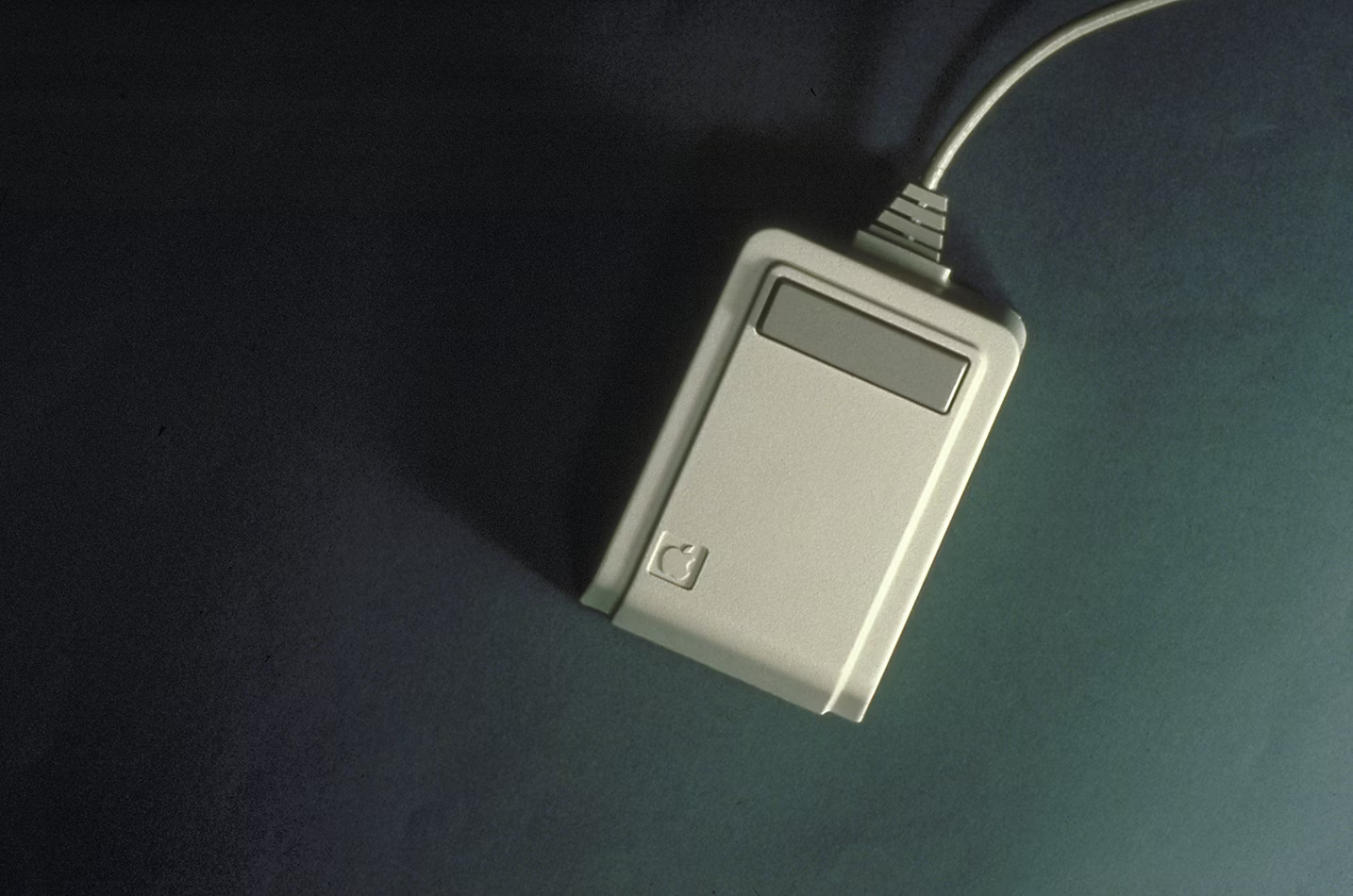
In 1980, Apple asked IDEO to develop a mouse for their radical new computer, the Lisa. Previous attempts at mouse design, by Douglas Englebart and Xerox PARC, yielded results that were too expensive and hard to make. The Apple mouse needed to be more reliable and less than 10 percent of the cost of the earlier versions.
To start, the design team created a cheaper, much-improved mechanism that would operate the mouse, and found that a complex, plastic "ribcage" would hold the pieces together. The team similarly tested and refined the mouse’s other key components, from the audible and tactile click of the button to the rubberized coating on the ball. A record turntable spun for days, logging “mouse miles” to check the reliability of the electromechanical assembly.
The resulting mouse proved mechanically and economically sound and was changed only slightly when adapted for use with the first Macintosh computer. The basic mechanism design is used in virtually all mechanical mouses produced to date.
Building a new venture to restore trust in China’s food system
Launching a new restaurant and retail venture that connects food from seed to table.
Food is the heart of most cultures. In China, one of the oldest cultures in the world, food is central to family gatherings and celebrations. It’s what binds people, a tangible way of showing love and respect. But in recent years, the Chinese food industry has suffered from concerns around safety.
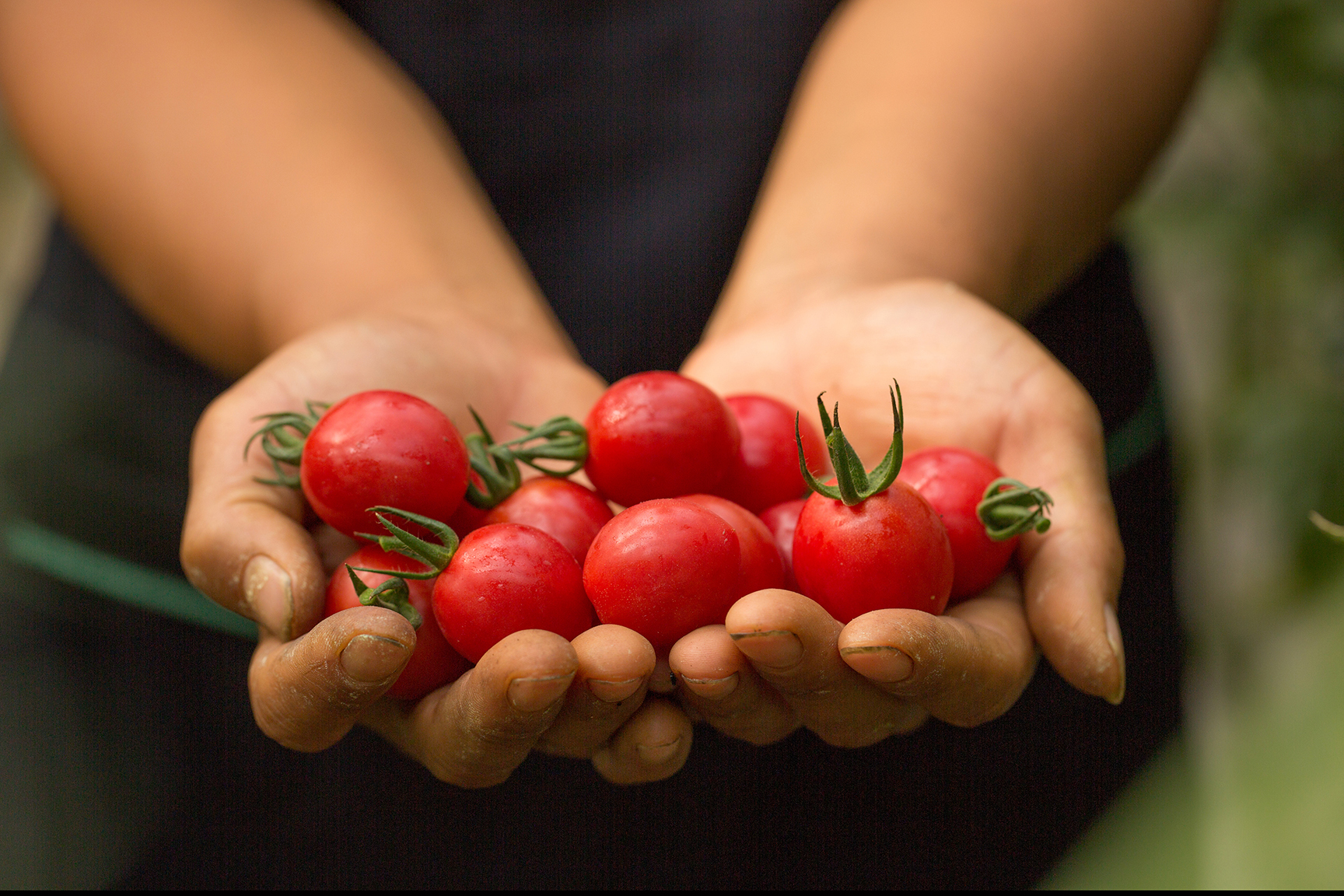
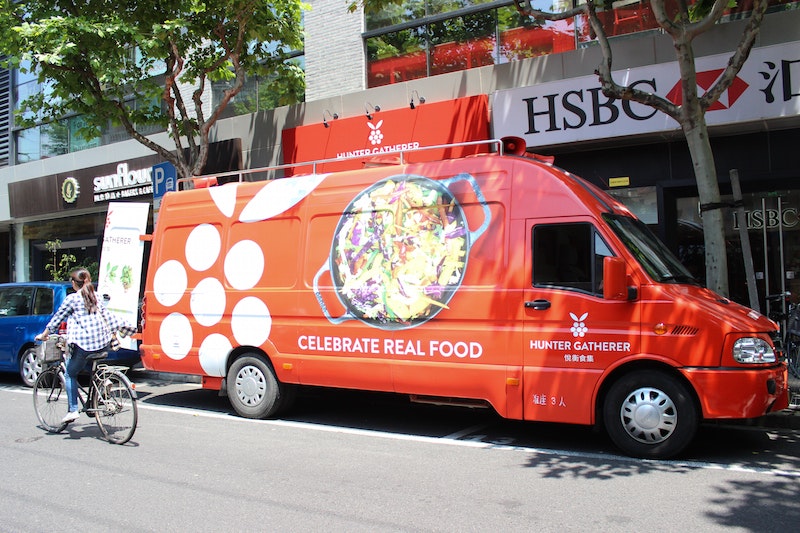
Two siblings, Harn and Anmao Sun, set out on an ambitious venture: to create a trusted source of food in China and, by setting an example, to instigate a movement around conscious farming practices. The American-born entrepreneurs launched Hunter Gatherer, a restaurant and retail food space built around a transparent supply chain, from farm to table to grocery shelves. The venture is based on growing and serving what they call real food: The ingredients are chemical-free and come from known and trusted sources—food they’d eat themselves. The purpose of the venture is simple: to serve people real food that is their right.
Having studied and worked in the US, Harn and Anmao grew accustomed to browsing farmers markets on Saturday mornings or picking up a burrito at Chipotle. But when they returned to China, they were unsure about the safety of the food they were eating.
“In China, you wouldn’t go to a food stand, because you’d be concerned about the ingredients,” Anmao said. “You can’t take the safety for granted.”
Hunter Gatherer’s very existence challenges bedrock assumptions about how food is produced in China. A long and depressing list of scandals—milk contaminated with melamine, pork produced from diseased pigs, used cooking oil repackaged and sold as new—has rocked the public trust.
“In China, agriculture is going through a huge change,” Anmao said. “In the US, agriculture operations are regulated. Farmers’ practices are regulated. If they use pesticides, there are limits because these farmers understand that once a certain threshold is hit, additional pesticides will not yield more crops. But in China, pesticide use came about 30 years after the US and Europe, and because of a lack of full understanding, farmers in China incorrectly operate under the assumption that more pesticides means more crop yields. Also, with over 250 million farmers in China, it becomes immensely difficult to properly regulate everyone.”
New Ventures
Harn and Anmao wanted to restore trust in the simple act of eating in China, and they came to IDEO to build a scalable business based on that vision. This was essentially a startup, a shared commitment between IDEO and Hunter Gatherer.
“I’ve lived in Shanghai for the past seven years, and as a relatively active and health-conscious person, I’ve had to invest quite a bit of time in finding food that I trust,” said Charles Hayes, managing director of IDEO Shanghai. “That investment has been both in the time it takes to research the sources of ingredients but also a literal investment in paying a high price for imported food just for that extra peace of mind.”
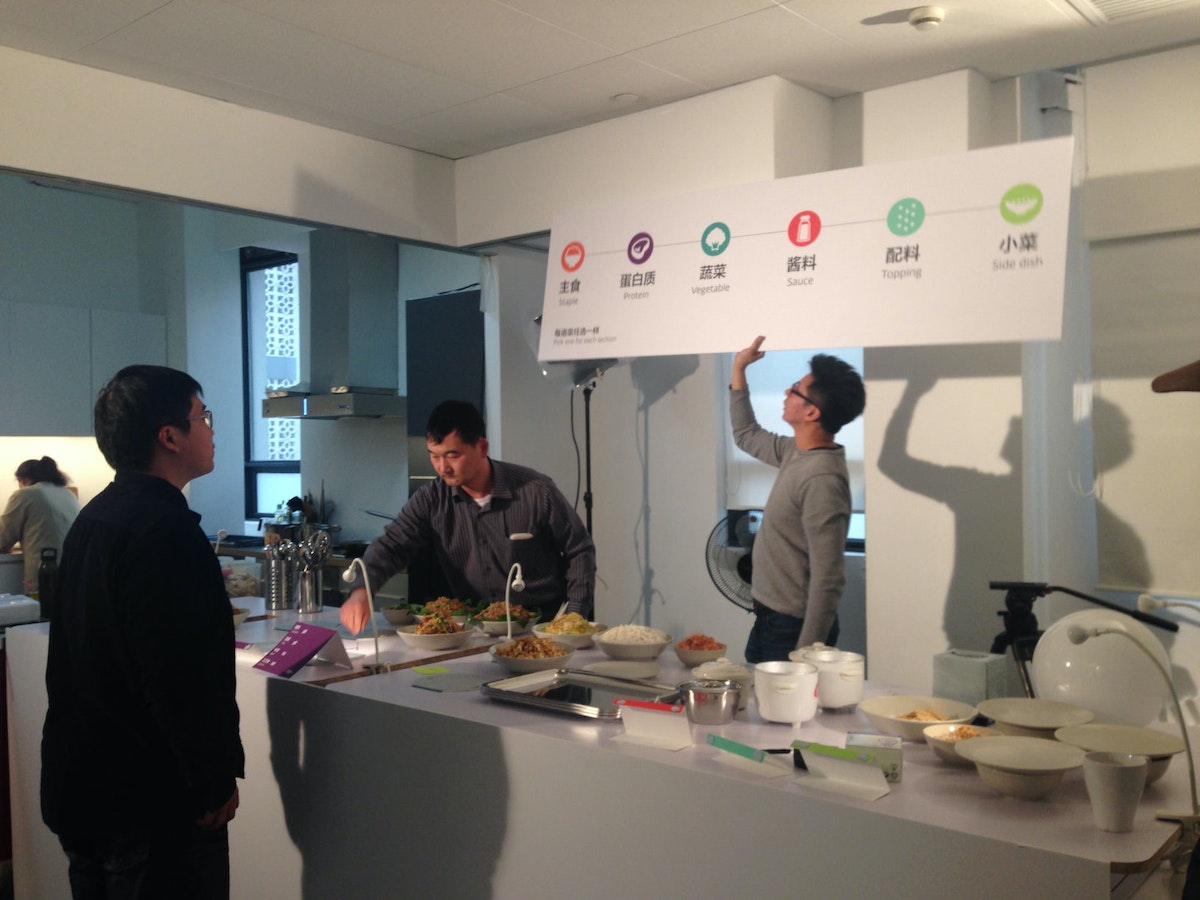
Anmao and Harn took up residence in the IDEO Shanghai offices to incubate their business. Together with IDEO designers, they tested packaging, cooked countless meals, and found ways to introduce unfamiliar ingredients to Chinese consumers. They discussed different concepts of lunch and dinner, and how notions of freshness in Chinese culture might affect cold-storage systems. In IDEO’s prototyping kitchen, the teams tested all manner of different foods, flavors, colors, mixes, and price points, and they brought consumers in to try them out. IDEO designers, along with the founding team, also worked on the brand and positioning of what would eventually become the Hunter Gatherer enterprise—its location, human resources, and marketing strategies.
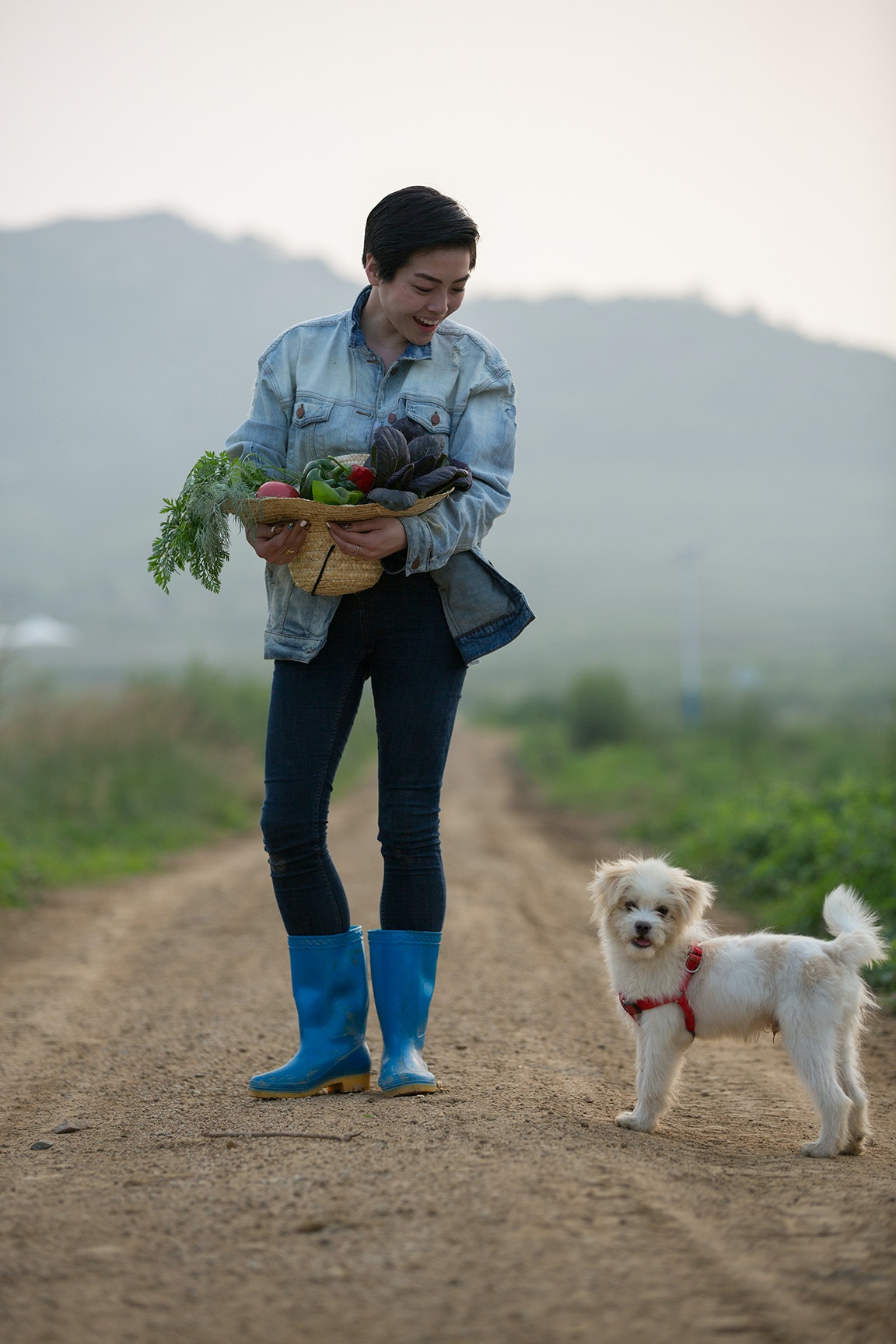
As the restaurant concept came together, finding the right food sources had to be addressed. Traditional agriculture couldn’t be trusted; organic certifications were available on the black market, and safety protocols around chemical use were nonexistent. Anmao and Harn decided to invest in their own farms. They met with farmers, asked questions about their methods, and walked in the fields to see for themselves. Eventually they settled on two plots of land outside Shanghai and began developing more than 80 different crops to be used in the restaurant.
From Seed to Table
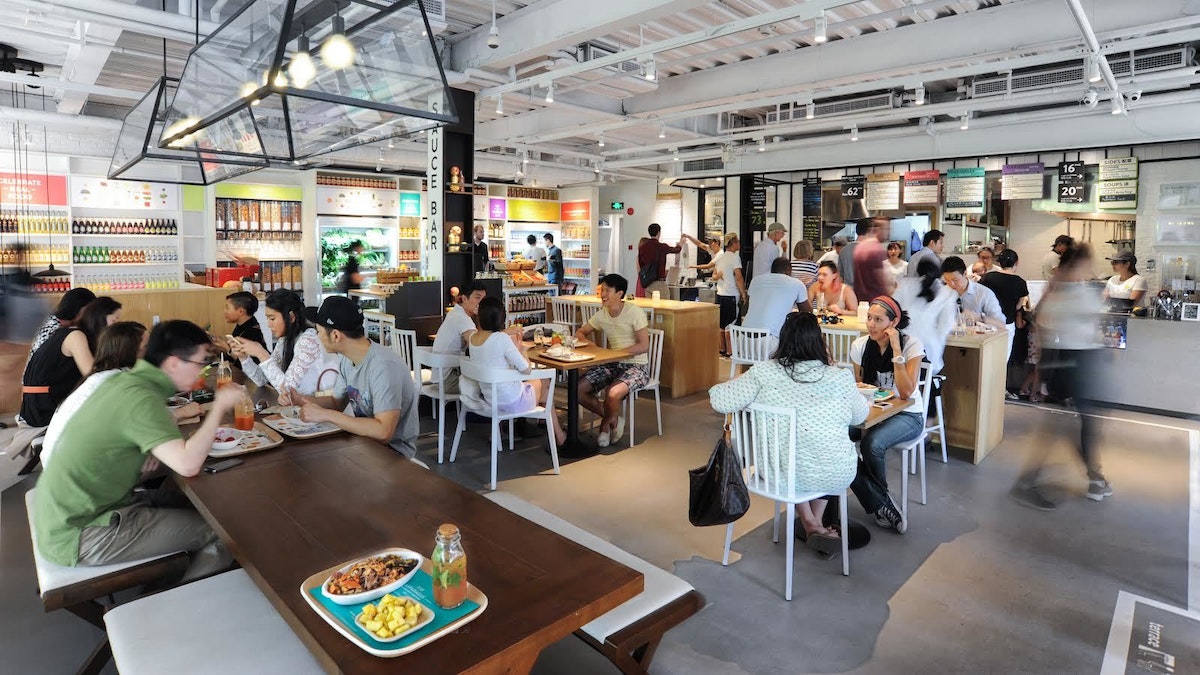
When it came time to find the right space for the first location, Anmao and Harn discovered an open, airy storefront on Anfu Road in Shanghai’s tree-lined former French Concession area. They designed and built a retail space and kitchen, and along with IDEO designers, they trained the staff and organized workflows. The staff set the tables with Mason jars filled with flowers, hung photographs of the farmers who grew the food, and put up a sign that showcases the percentage of vegetables coming directly from the Hunter Gatherer farms, already more than 70 percent in less than a year after opening.
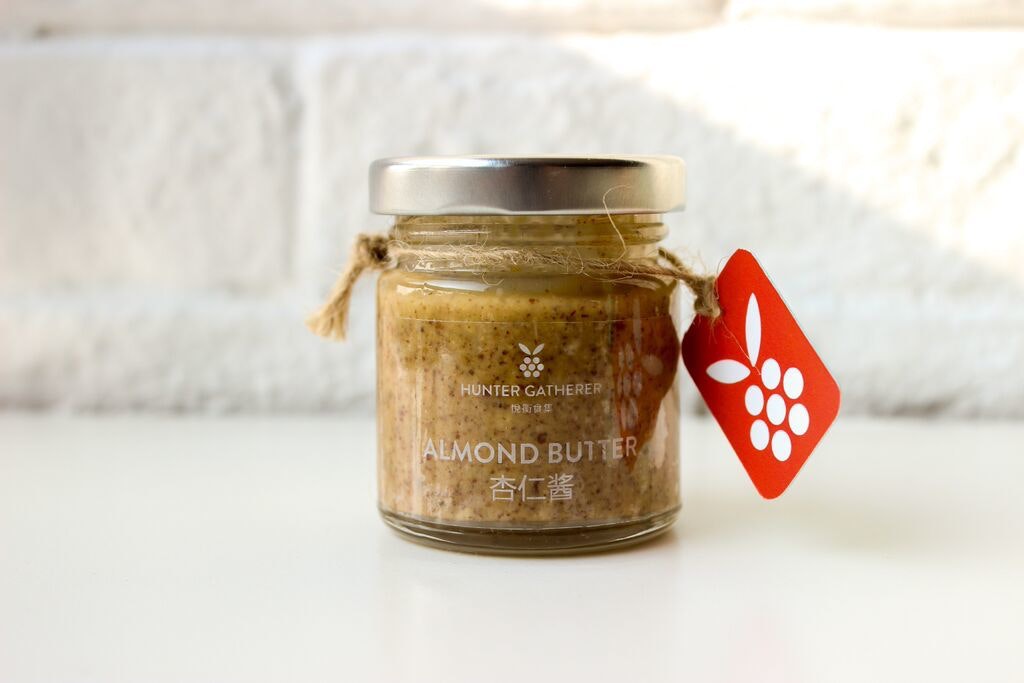
Customers can shop for fresh vegetables, locally sourced and imported canned and jarred goods, bins of cereal, freshly made smoothies, artisan sauces, and exotic chocolates. Upstairs, they can feast on delicious dishes in the homey restaurant.
Reviews have been glowing. One customer raved about the machine that grinds fresh nuts. Another loved the open space, the “good vibes,” and the refreshing cucumber water. Young people go there on dates, and families return for the delicious menu variety.
The convivial space has blossomed into more than just a restaurant and grocery store. It’s become a gathering place of sorts, both for the community and for partners who share the same vision. Farmers and food purveyors are invited to showcase their products at seasonal events and to mingle with customers and share recipes and stories.
“Hunter Gatherer has come to symbolize a kind of lifestyle the Chinese people have been looking for,” said Eugene Lin, an IDEO business designer. “A place they can enjoy hanging out with friends, as well as a movement and mission they can stand behind.”
A Digital Future
This is just the beginning of the venture. The plan is to open 40 more locations throughout China. But the vision for Hunter Gatherer’s growth is bigger than brick-and-mortar restaurants—where the business will truly scale is in the digital space. Eventually, the plan is to launch a Hunter Gatherer online grocery store from which anyone can buy food grown from trusted sources.
“We have to create trust with the consumer. It’s the most difficult and most valuable thing to do in China, especially with food,” Anmao said. “Our brick-and-mortar locations will establish that increased trust. Then we can go online and grow the idea to the rest of the country.”
Will Hunter Gatherer have a hand in changing the way that the world’s most populous nation thinks about food? Its principles are already spreading, from neighboring farmers adopting more sustainable planting methods, to a growing market for products like wine.
But the true sign of success will be almost invisible—the moment when an increase in demand will result in safe food for everyone and when real food becomes commonplace.
The Kitchen Designer Who Helped Women Get Out of the Kitchen
Ever heard of Margarete Schütte-Lihotzky? Her Frankfurt Kitchen changed women's work
Designers often have the biggest impact when they reimagine the relationship we have with everyday utilities, like those in the kitchen. Decisions as straightforward as the height of a stool can change the fabric of everyday life.
One great example is Austrian designer Margarete Schütte-Lihotzky, the woman who arguably had more impact on modern kitchen design than anyone in history. In celebration of International Women's Day and as an homage to my own grandmother, I wanted to tell her story.
The “fitted” kitchen
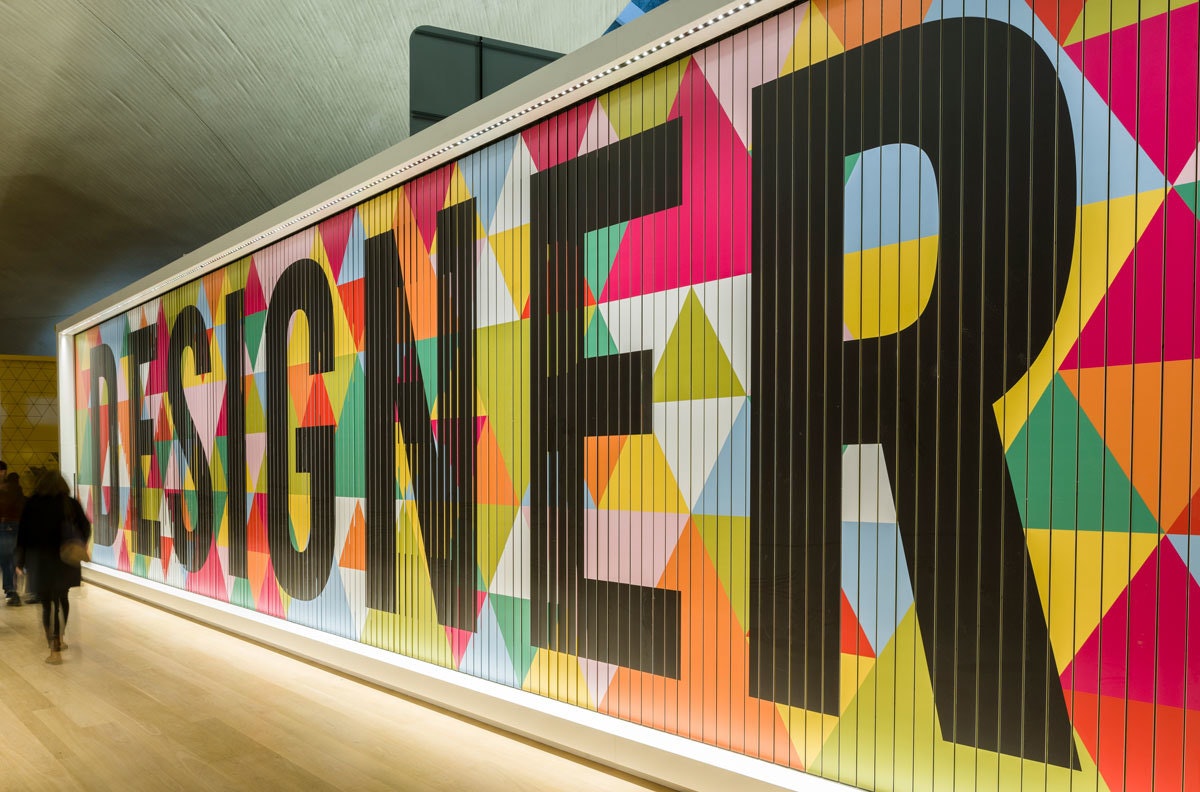
I discovered Schütte-Lihotzky on a recent visit to The Design Museum London, when I went to see the “Designer Maker User” exhibit. I'd never heard of her before, but she is credited with creating the first modern, efficient, "fitted" kitchen in 1926. A "fitted" space means that units are attached to a wall rather than free-floating. It was the first time someone thought to design for cooks instead of home builders.
Schütte-Lihotzky worked in the Municipal Building Department in Vienna, which controlled all aspects of housing, but as a newly-graduated architect, she had little experience with cooking. Instead of letting that naiveté hold her back, she embraced her beginner’s mindset and embarked on an early form of design research, interviewing and observing women in their homes and using film to conduct time-motion studies.
She found that women were spending their entire day preparing, cooking, and cleaning. This endurance activity started with trips to the local store, as fridges and storage units were not the norm and food would spoil within a day or so.
To add to the challenge, the stove, sink, and pantry were installed without any consideration for food prep workflow or the relationship between tasks, and work surfaces were installed at varying heights, putting strain on women’s bodies.
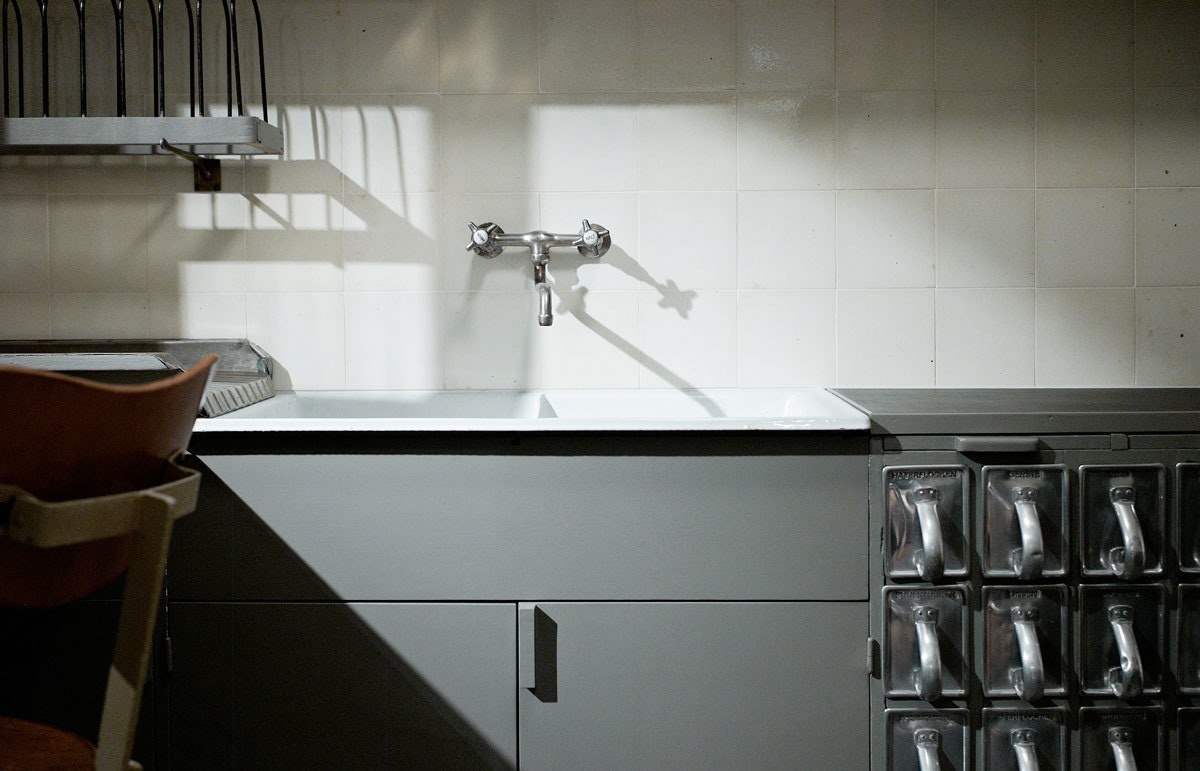
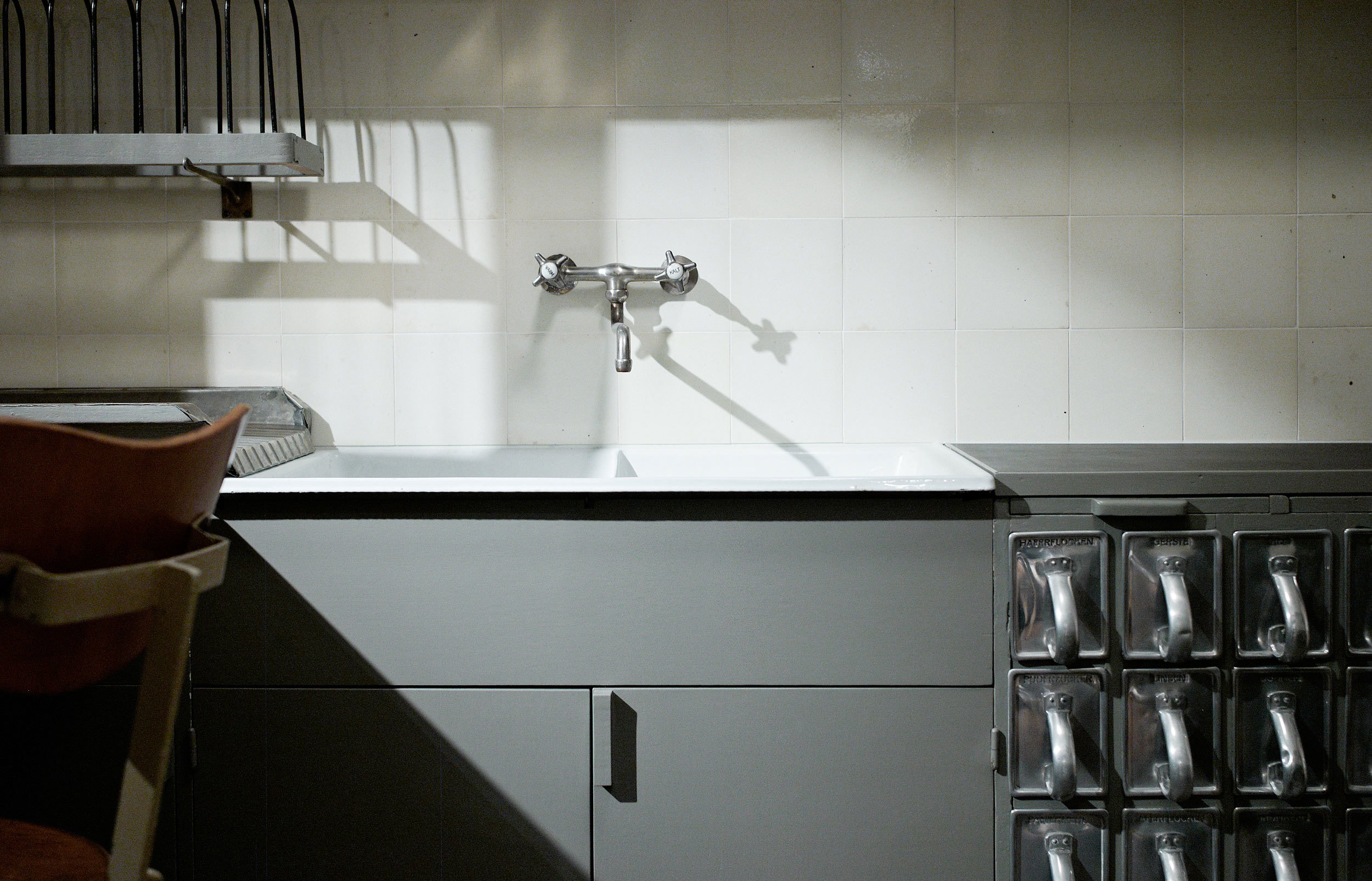
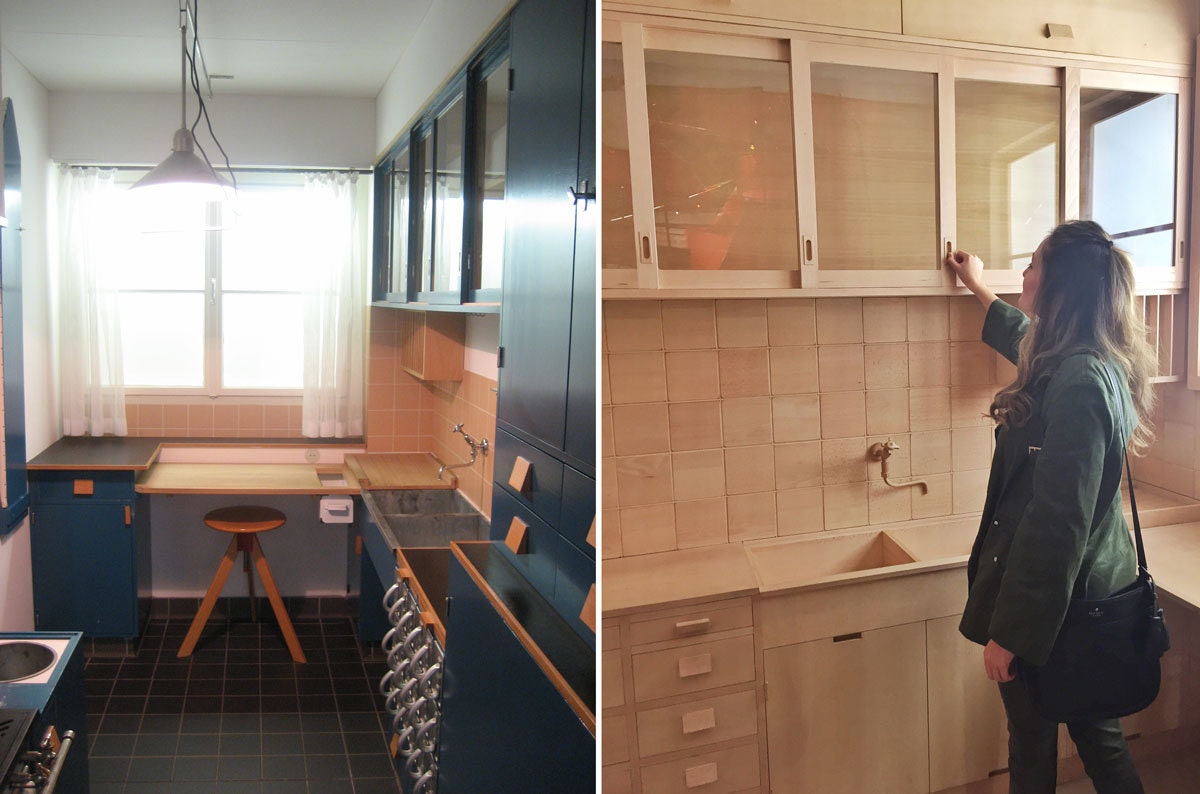
From her interactions with everyday cooks and the application of factory-line principles popularized by Henry Ford, Schütte-Lihotzky introduced her replicable, affordable, space-saving, and egalitarian “Frankfurt Kitchen,” named after the New Frankfurt initiative to address the city's shortage of public housing in the 1920s.
Each kitchen came with a swivel stool, a gas stove, built-in storage, a garbage drawer, and an ironing board. Schütte-Lihotzky used resilient materials like oak to repel critters from getting into perishables and installed aluminum storage bins for staples like sugar and flour. The main objective was to free up hours each day for women to devote to other pursuits.
Within a few years, 10,000 of Schütte-Lihotzky’s units were installed in apartment buildings across Frankfurt, and her design became the model for all subsequent Western kitchens. Her work reframed women’s relationship with cooking and set in motion a radical wave of change.
My grandmother, Ruth Kandel, who was born in Frankfurt just as Schütte-Lihotzky's work started getting acclaim, would often tell me about her upbringing—that her purpose in life was defined by “Kirche, Küche, Kinder” (church, kitchen, children.)
While she loved her husband and children dearly, she also dreamed of becoming a lawyer or a social worker and contributing to the world beyond her kitchen. I feel extremely blessed to have had women like Schütte-Lihotzky blaze the trail through design, freeing up my time so that I’m able to embody my grandmother’s desire to go forth and create.
Can the design of today’s food liberate us further?
Now that I’m at IDEO, I have the opportunity to carry Schütte-Lihotzky’s work forward. We partnered with IKEA to think about the future kitchen—how we might design it to be more efficient and use less energy while making it easier for home cooks to feel confident about preparing healthy food.
We also worked with a startup called INFARM to design modular, stackable units that use far less soil, water, and space to grow food at an optimal light and temperature. Because of the compact size of the units, you could install one in your own home kitchen, or stack them up to feed thousands of employees a day during winter months when produce typically has to be shipped in from far away. Good for cooks and good for the planet.
People used to say that a woman’s place was in the kitchen. Today, thanks to pioneers like Schütte-Lihotzky, a woman’s place is anywhere she wants to work.
As a designer who loves to cook, I’m intrigued by the way kitchen design has enabled me—and generations of women who came before me—to spend less time preparing and more time enjoying the food we make, so we can move on to other things.
How We Turned an Old Gas Station into a Community Hot Spot
Great design doesn't just happen in big cities
Small cities provide the character that comes from not having the world’s largest corporations on their hips. Communities are close-knit and form at a slower, more intimate pace. And cultural spaces in those locales are stronger for being able to bring people from diverse backgrounds together to have a dialogue that goes beyond a town hall meeting.
Designing a design community
After graduating from Florida State University and working professionally in Tallahassee, I started to realize that there were a lot of talented folks who were brought up in the community only to eventually light out for a larger zip code—taking their skills and passion with them. At the same time, I saw the community starting to rally around Domi Station, its growing co-working space and tech incubator,.
Wanting to pull those threads together, I quit my job at the large ad agency where I worked to form a creative collective called Foremost, which does international design work and supports local startups and events to help grow Tallahassee’s design community.
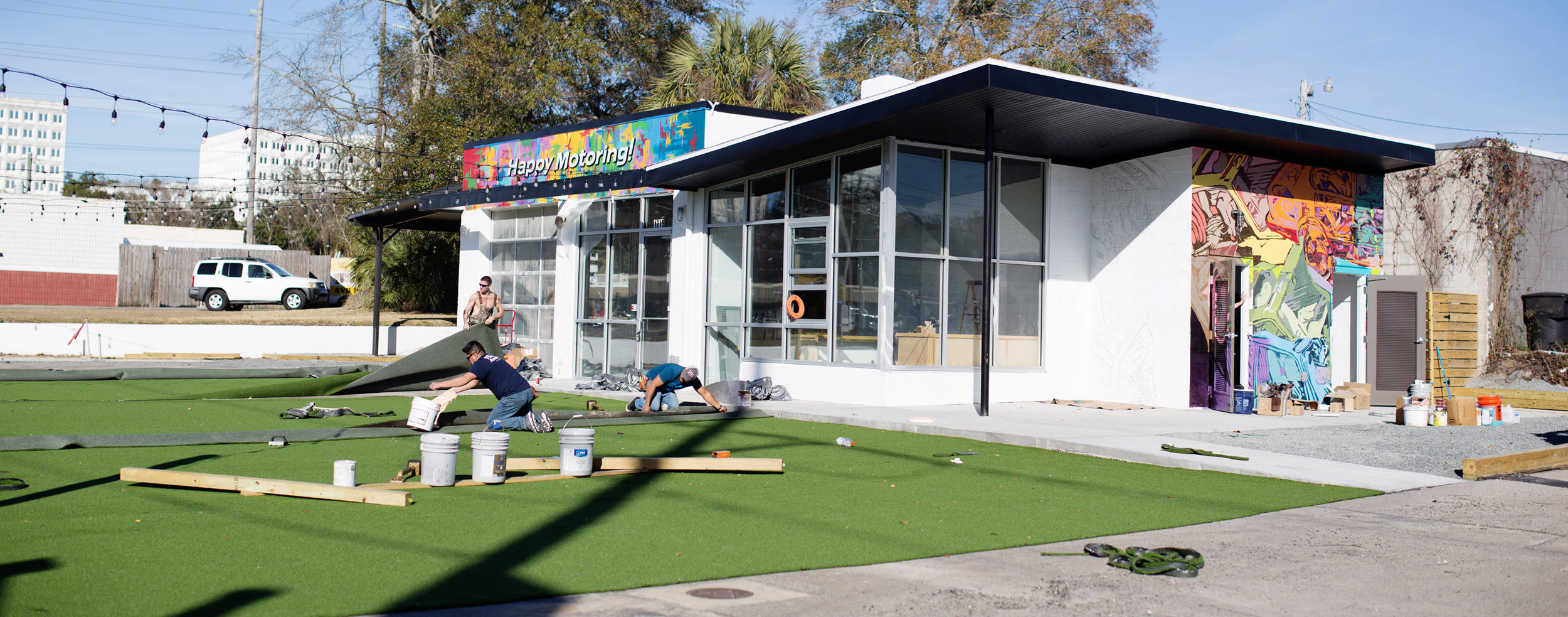
Today, when I’m not busy with my day job designing emerging technology at IDEO’s CoLab, I volunteer with Foremost. Our latest project, led locally by my business partners Jake Kiker, Lucas Lindsey, and Micah Widen, is a physical space created for the local community. We call it Happy Motoring.
Finding our station
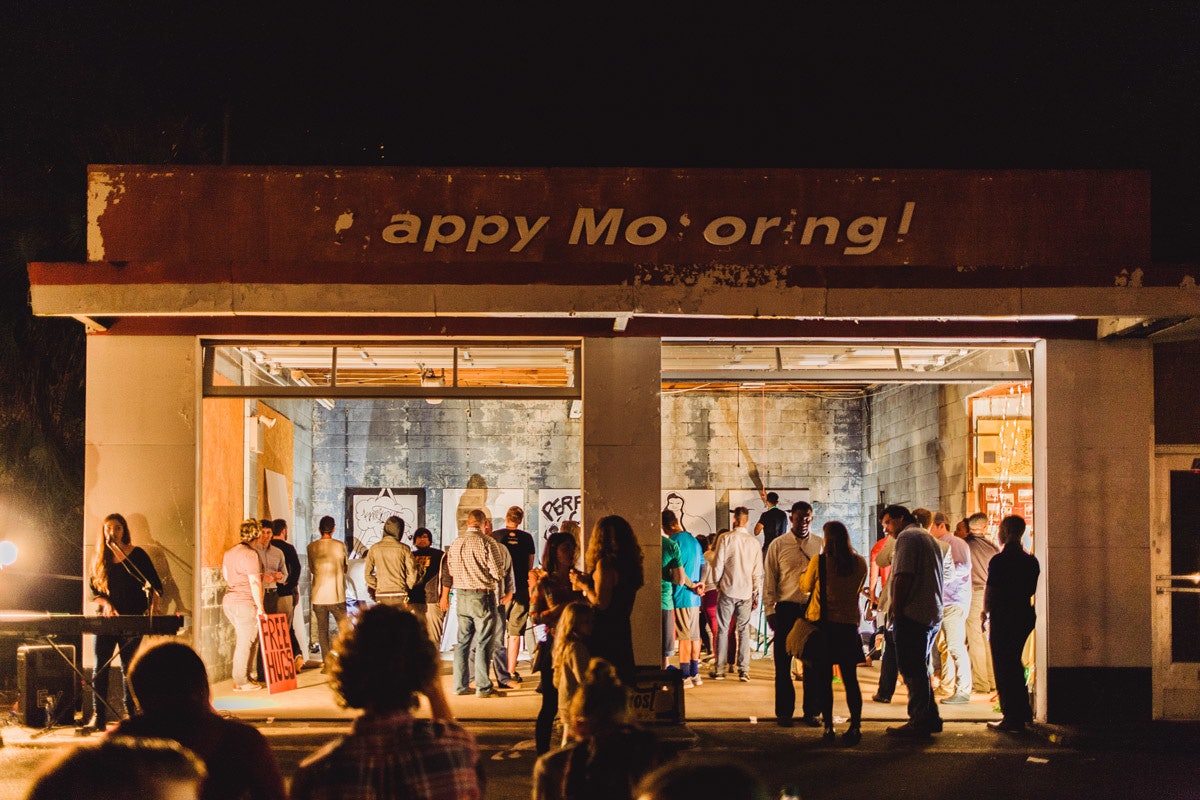
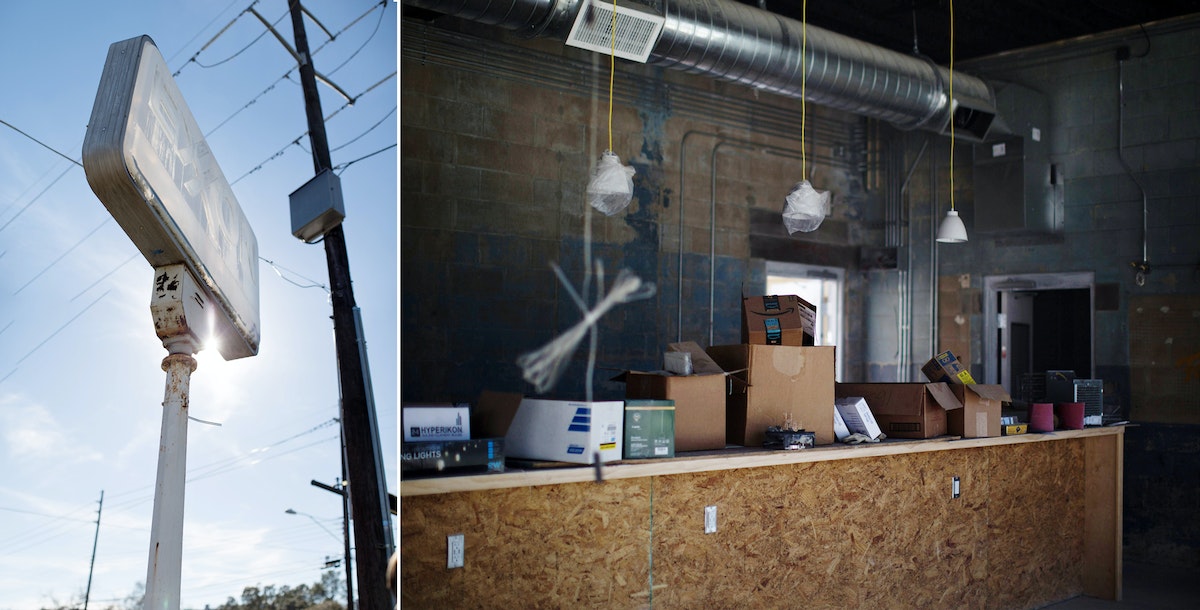
It all started with an abandoned Esso gas station on the Southside of Tallahassee. I was ecstatic when Foremost bought it in 2015 to create a community space. The mid-century design of the building was (and is) beautiful, something to be preserved, and we knew that creating something locals would get excited about meant bringing them in as co-creators.
So we organized an event where Southside inhabitants could tell us what they wanted, inviting our friends at Street Art Tallahassee to put together a pop-up gallery and Juniors Roasted Coffee to host a campfire that would bring people together.
A shared vision
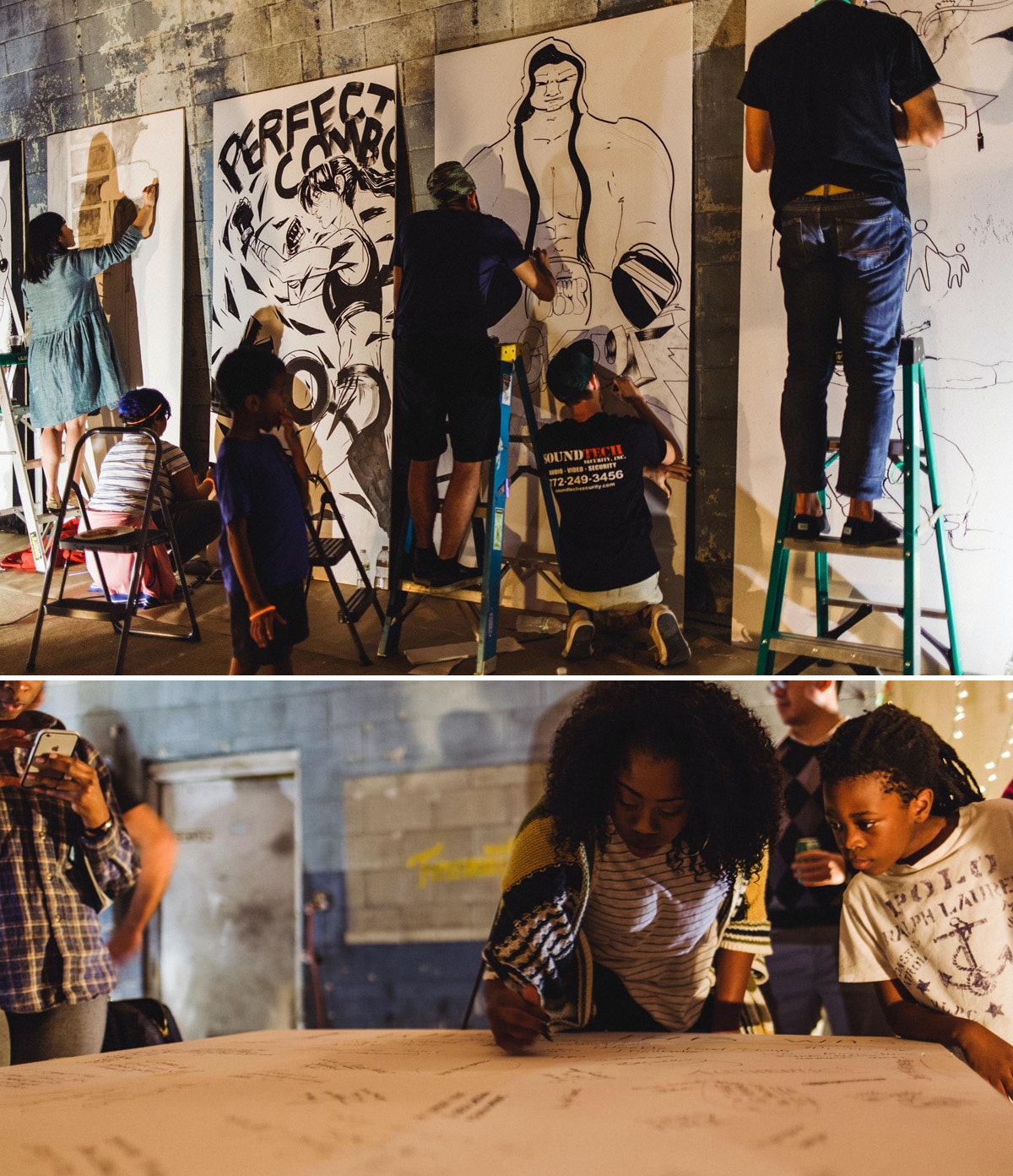
Part of what I wanted to do in creating Foremost was to show the city how many talented creatives live here. So, for the community event, I rallied five of the best young artists I knew in the illustration scene to battle it out in a Battle of the Boards (based on Ink Wars, an awesome event series put on every year in Georgia at Creative South.) The illustrators were each given an inspirational word and an hour and a half to fill an eight-foot board. The theme was "knockout."
We reserved two of the boards for the Southside community to write down their ideas—big, small, impossible, and plausible—about what the space might become.
Video by Conner Hill.
Building community comes from listening to diverse voices. Too often, we divide ourselves into bite-size neighborhoods or groups that lack a space for hearing each other out. We hope Happy Motoring will become that space—by giving everyone a chance to contribute, we’ll have all of the pieces we need to start building something local and real.
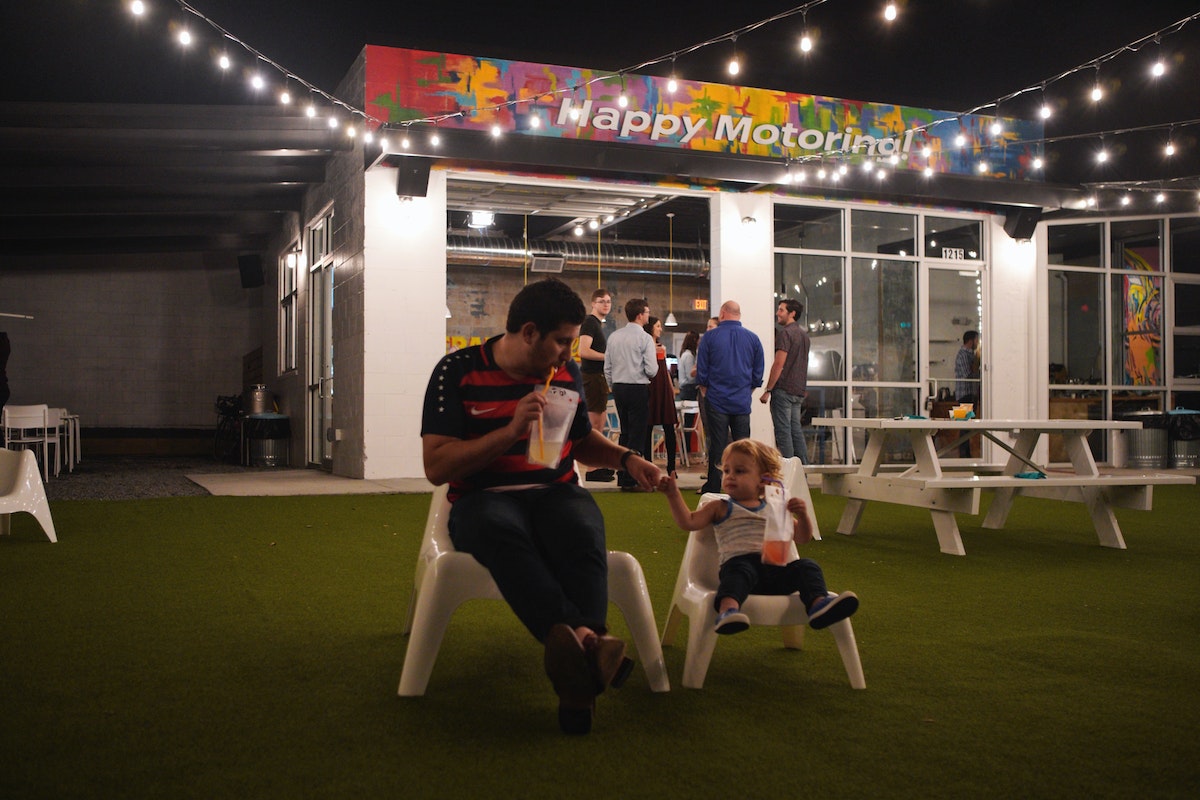
Want to do the same in your hood? It might be easier than you think. Organizations like the Knight Foundation fund grassroots urban innovation in cities. You can start small—create a meetup group, find someone with an empty lot and start a weekend market, or invite some food trucks and organize pop up events. Plant a community garden. Hold group bike rides. Whatever feels right to gain trust and start a dialogue in your hometown.
And if you’re interested in joining the next event in Tallahassee, be sure to follow our updates and join us for Happy Motoring Station’s official launch on March 8, 2018!
When you hear about “design hubs,” your mind may not instantly jump to Tallahassee. But small communities have just as much passion for design as larger metropolises—they just lack the resources to attract the same attention. Though I live in a big city now (Boston), I learned a lot about the importance of community from working and growing up in small towns in Florida.
A Cartography Nerd's Guide to Custom Map-Making
How to one designer used public data to create an interactive map of San Francisco tennis courts
Sure the game is fun (although neither of us is very good), but what interested us more were the distributed locations of the courts around the city. Spread out across the city like sprinkles on a hipster cupcake, these tennis courts would be a great new way to explore San Francisco. And it would keep us busy for at least the next couple of years of Saturdays.
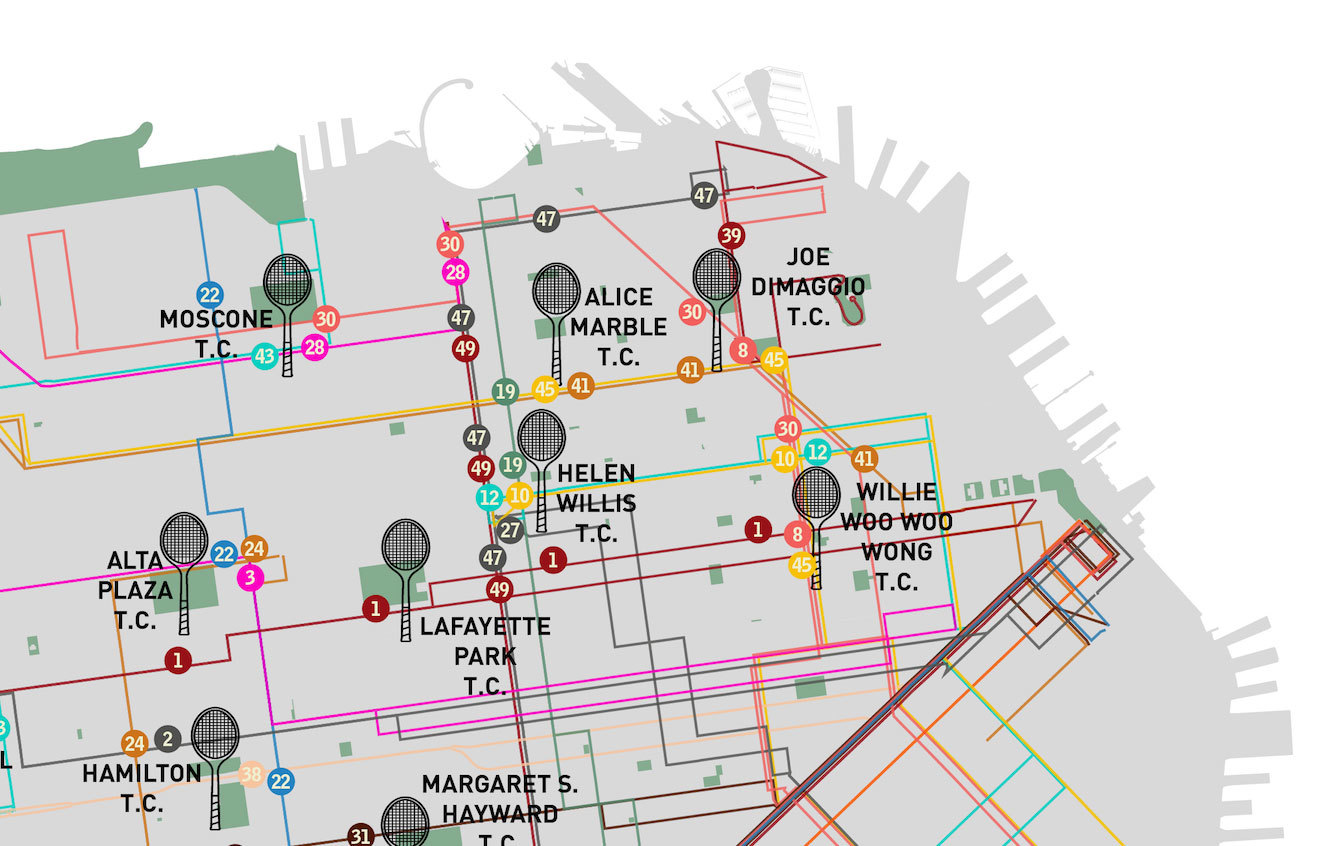
There was only one problem. I couldn’t find a decent tennis map of San Francisco. I wanted a map that was useful, of course, but also one that was well designed. So I decided to make one myself and give it to my wife as a birthday gift, with the goal of making it attractive enough that she would agree to hang it on our wall, but also useful enough that we would actually make it a centerpiece of our new Saturday hobby. And lastly, I wanted to visualize the MUNI bus routes to each court (since—oddly—riding the bus is another avocation that my wife enjoys).
My starting point was the only map I could find—a fantastically unattractive google map that shows the tennis courts of San Francisco in 2003 graphic design glory.
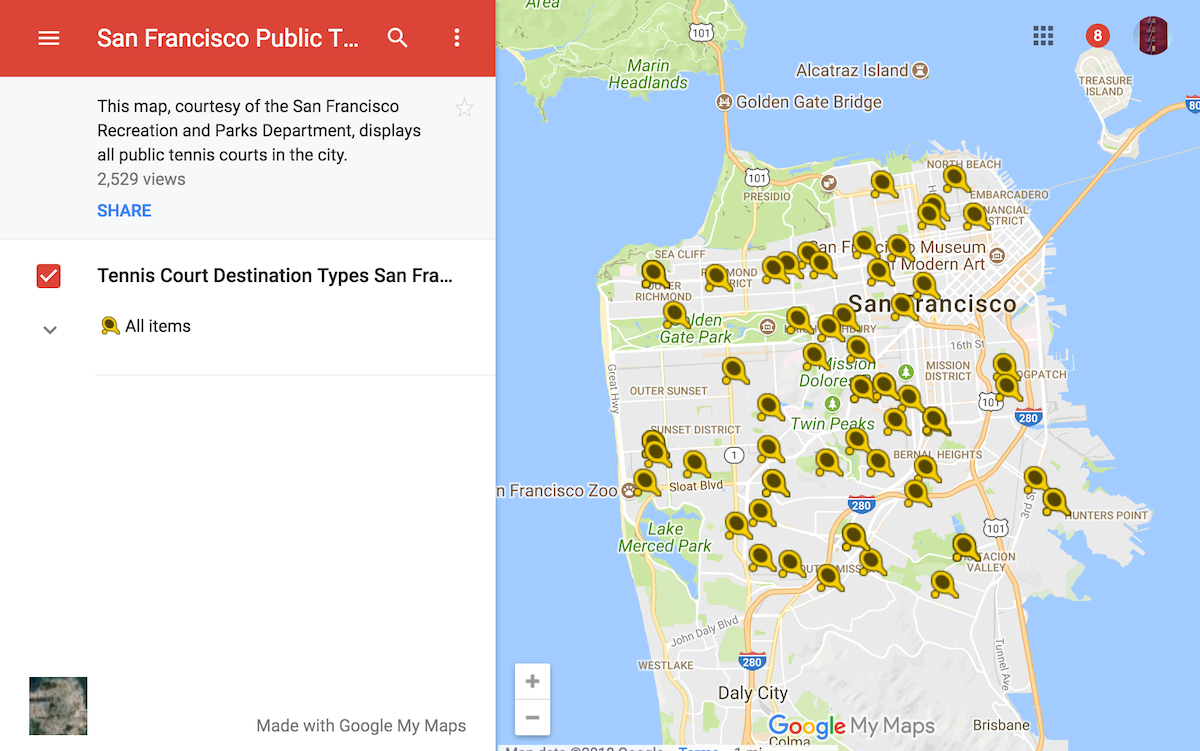
A tennis map of San Francisco in all its 2003 graphic design glory.
But this was a start! I downloaded it as a KML file. What’s a KML file? It stands for “Keyhole Markup Language” (I have no idea what this means), but what it does is important. With a KML file of the tennis courts, I could manipulate the data file in ArcGIS or QGIS, two enormously powerful pieces of cartography software. For anyone looking to get into amateur cartography, I strongly recommend GQIS. It works on a Mac (which ArcGIS doesn’t) and its cost (zero dollars!) outweighs its bugginess.
My next stop was DataSF.org, which has lots of great open source data, including maps of the city. What I was looking for here was something called a Shapefile, a geospatial data format that nerdy geographers use. I found one corresponding to San Francisco neighborhoods and another for San Francisco parks. Lastly, I found one for the MUNI bus routes of San Francisco.
Next it was off to QGIS to combine my various datasets into a single map.
First there were neighborhoods, then tennis courts, then parks, then bus lines.
With a couple of tweaks, I was able to label the tennis courts and isolate the MUNI bus lines according to route number, so that it looked less like a giant red spider web.
There are many a professional cartographer out there who would have kept playing in QGIS to make their map a bit prettier. But I’m a designer, and the sooner I’m able to get out out of QGIS and into the Adobe Creative Suite, the happier I feel (and the higher likelihood that the final design of the map will be something that someone is willing to hang on a wall). Luckily, QGIS has an option to export a file as an SVG file (a vector format that can be opened by Illustrator).
Post-export, the file looked like this.
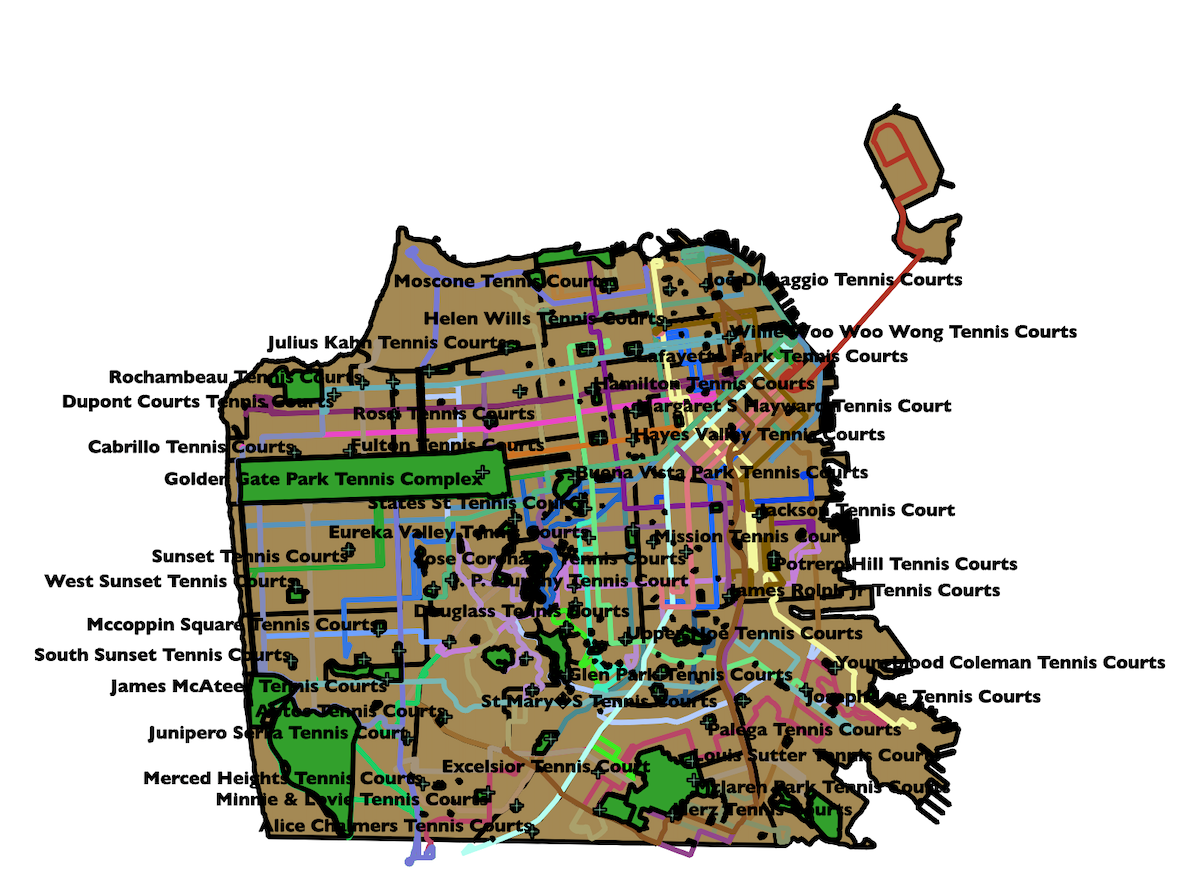
You wouldn't hang this baby on the wall?
Wait, what? Why does it look worse? Totally natural and easily fixable. I isolated each layer (parks, tennis courts, MUNI Lines, neighborhoods) and then got to work playing around with colors and stroke weight and other good stuff, all of it so much easier because I was working with a piece of software most designers are familiar with.
At some point during this process, my day job at IDEO led me to Amsterdam. While there, I was inspired by the fantastically-designed Dutch train maps and a pro tip from my graphic designer colleague (Anthony Stimola) that the Dutch font of choice is DIN. Back in front of my computer, I created a look and feel for the map inspired by my travels.
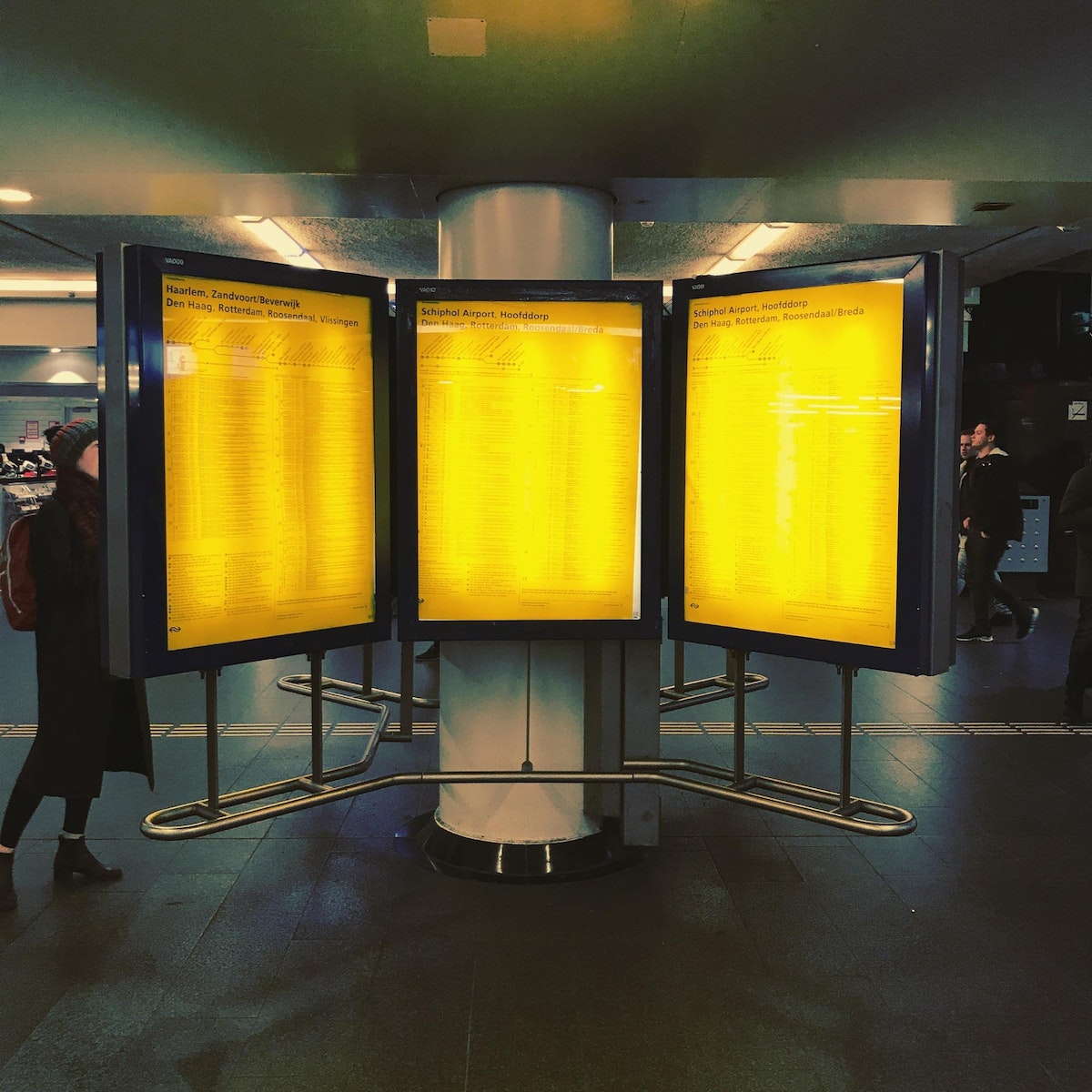
A trip to Amsterdam inspired the look and feel for the finished map.
Next up was the laborious process of determining which bus lines one could actually take to each tennis court. My approach was 100% analog, starting from the top of the alphabetical list of tennis courts (Alamo Square) and marching straight through to the end (Youngblood Coleman), noting all of the bus lines that had a stop within reasonable walking distance to a court. I discovered that Helen Wills court in North Beach takes the prize as most MUNI-accessible tennis court (it's served by nine bus lines!), while five tennis courts around the city are served only by a single bus line.
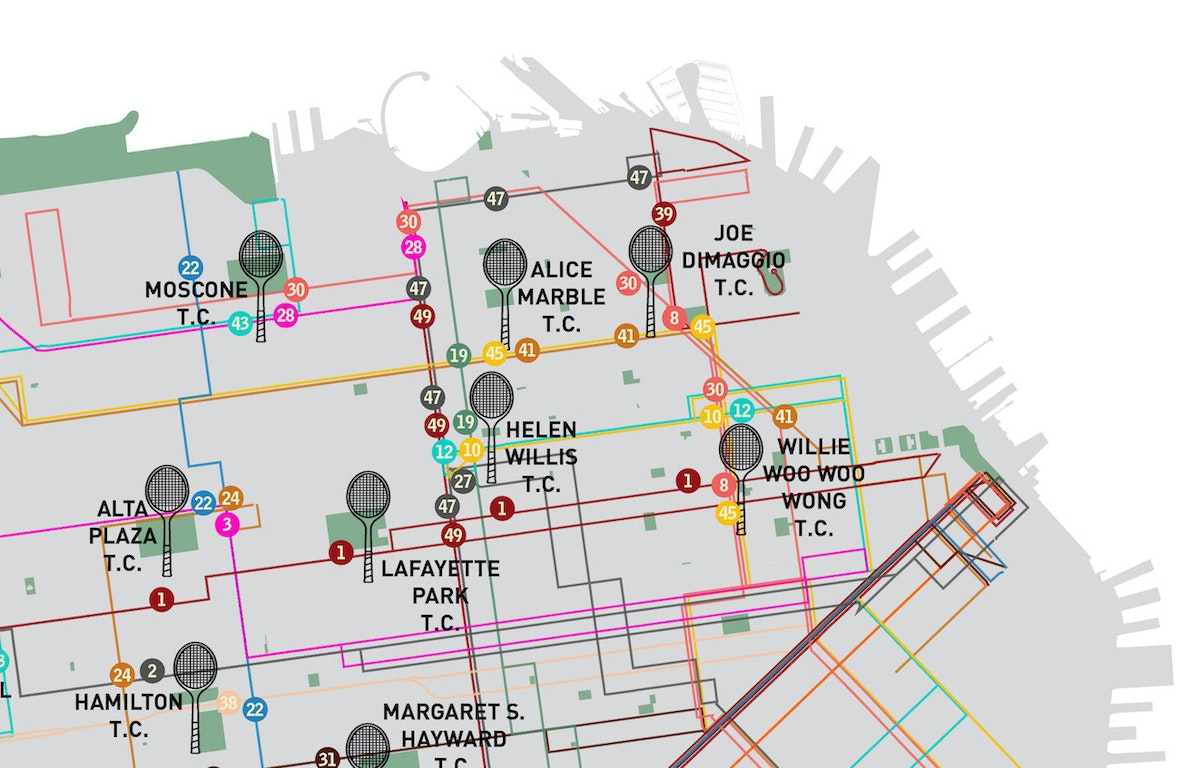
The painstaking work of manually matching tennis courts to nearby bus lines.
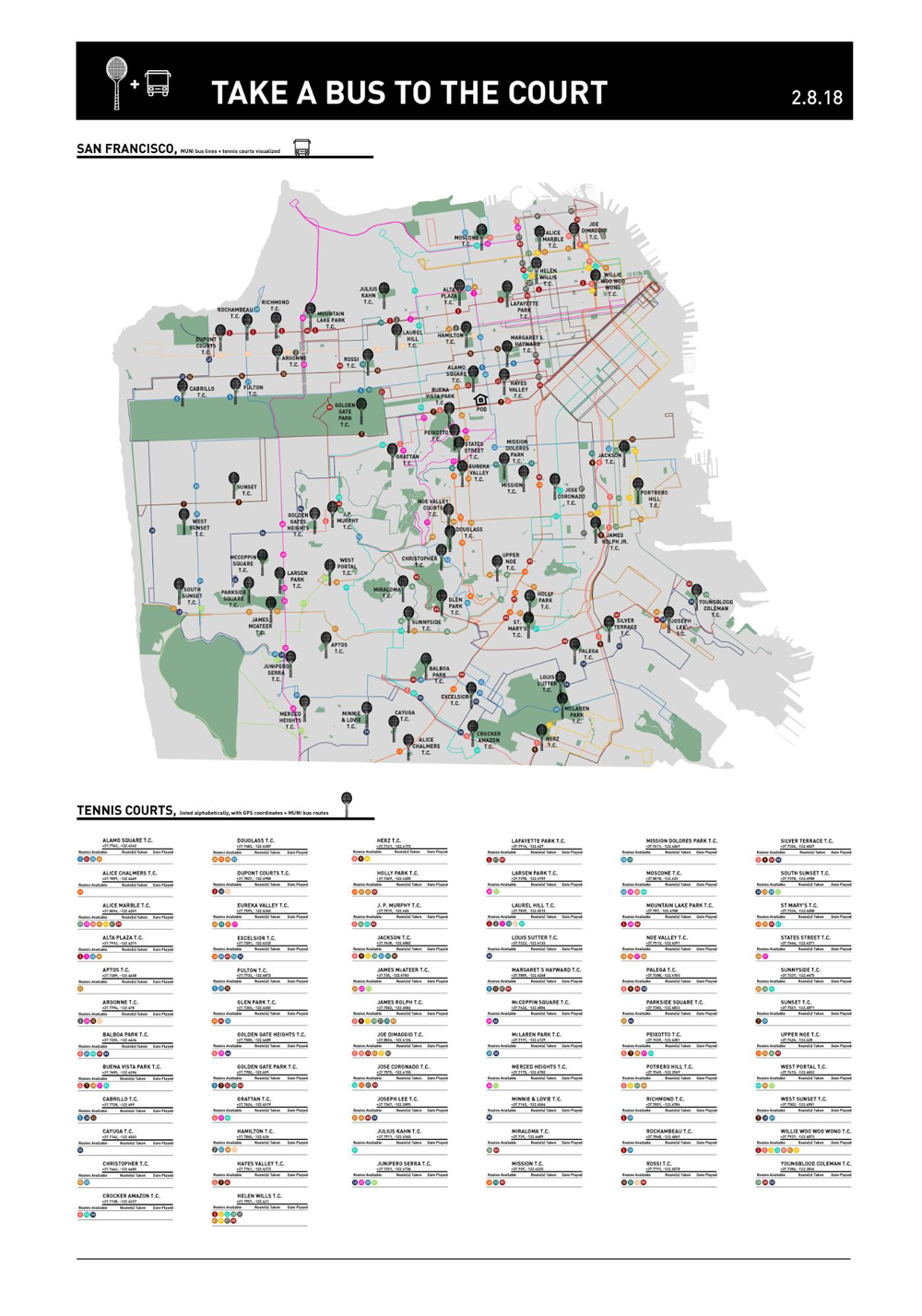
Lastly, I considered how this map would be used. Of course I was hoping that my wife (and others) would find it attractive enough to hang on a wall in full analog glory. But this is 2018, and in order to be useful, the map also needed some connection back to the digital world. I added GPS coordinates and a clickable URL link to a Google Maps location for each tennis court.

A detailed view of the court's location and the corresponding bus routes
That’s it! My wife was happy with her birthday gift, and agreed to hang it on our wall. This past weekend, we used our new map to find the McCoppin Square court in the Sunset neighborhood. A few minutes after we started playing, two women arrived. Unfortunately, they would need to wait until our 30 minute time limit had elapsed. Eager to play, they asked us if we knew of any other tennis courts in the area. In fact, we did. I texted her a PDF of my new map and off they went to a nearby court. Hooray for the power of a good map!
My wife and I are city people, and our only family car is a Vespa that is much too slow to cross any bridges. So most weekends, if it’s nice out, we’ll chart an urban hike through San Francisco, targeting a different neighborhood and a different park. This has kept us occupied for the last few years. But they don’t call it the 7x7 for nothing—San Francisco is actually a small city. So my wife and I have started to play tennis.
A Day in the Life of a Graphic Designer
Follow an IDEO designer through a day of research, prototyping, and inspiration
7:10 AM: A Reluctant Jog
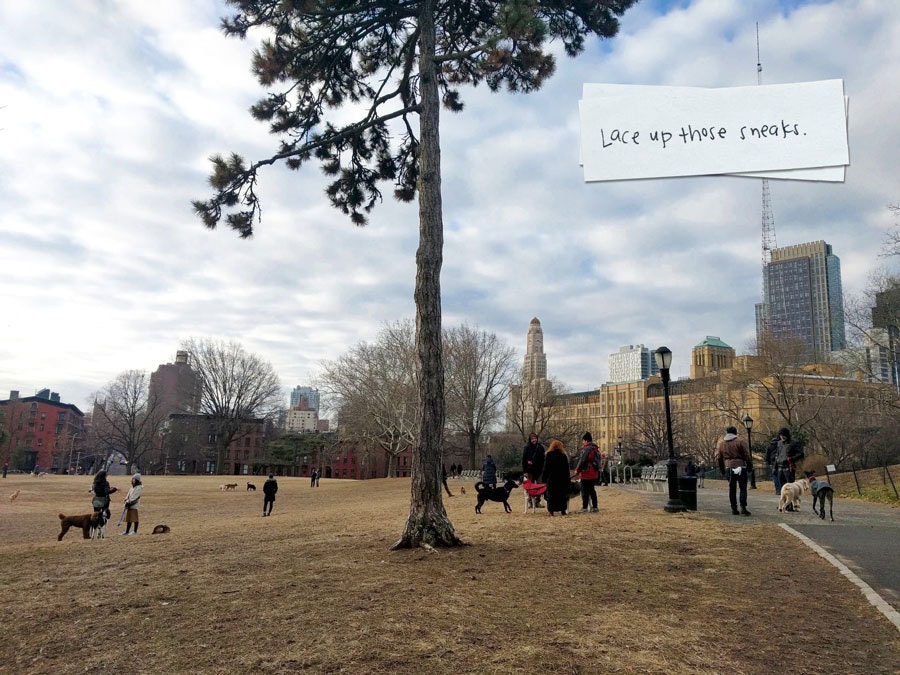
I run to Fort Greene Park, where I’m rewarded with a Seurat-like tableau of what seems like all the dogs in Brooklyn. I’m not a jogger, but I’m doing a six-week food-and-fitness challenge with coworkers. I'm grateful for the peer pressure, because it may be the only thing keeping me going.
7:45 AM: A Bristling Problem
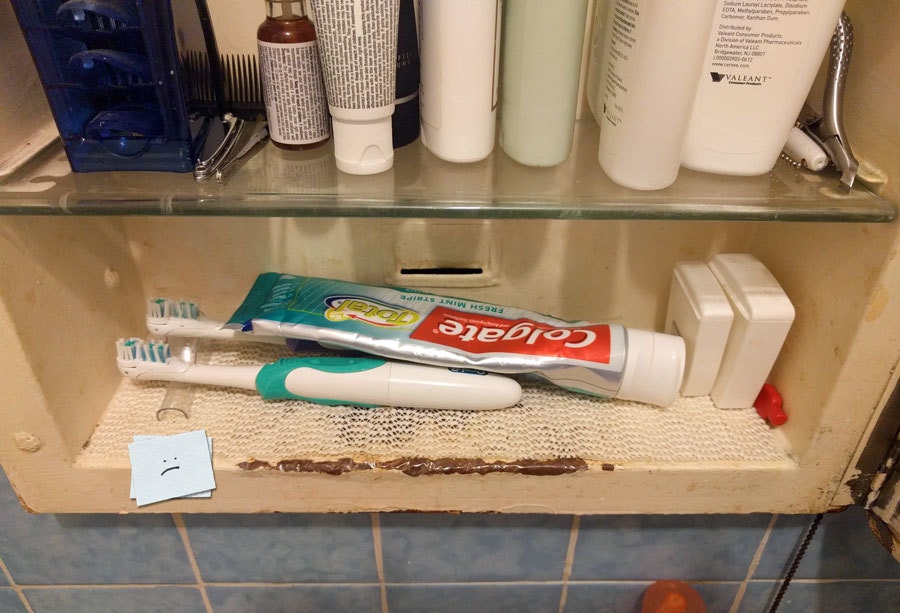
As I brush my teeth and stare into my rusty medicine cabinet, I decide it’s time do something about the crowding in there. Since the space is so small, I probably can’t find an off-the-shelf fix, but maybe I can come up with a bespoke solution.
8:35 AM: Swift Passage
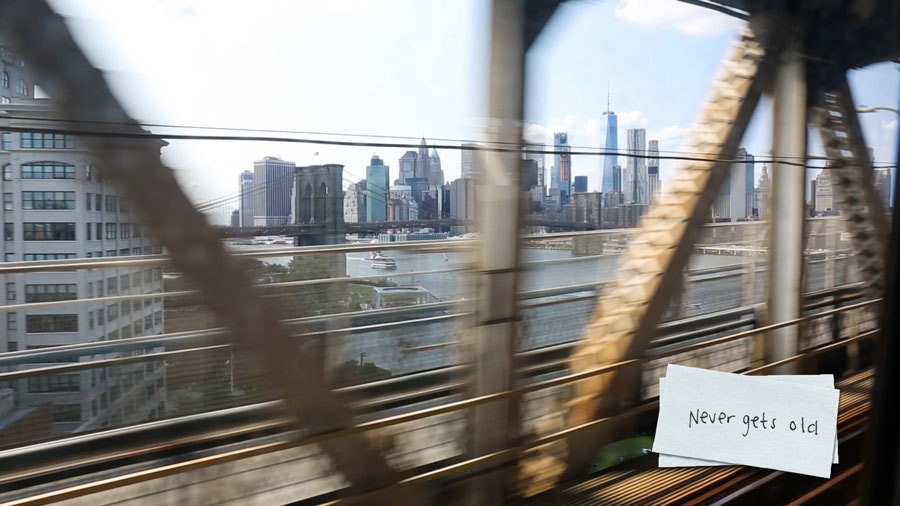
This sweeping view across the East River and the Manhattan skyline is my favorite part of the morning commute. It reminds me of the hope and excitement I felt when I first moved here 12 years ago. On the way, I steal some winter fashion ideas from my fellow commuters, noodle through a crossword on my phone, and listen to a podcast about the perils of multitasking.
9:10 AM: I Loaf This Place
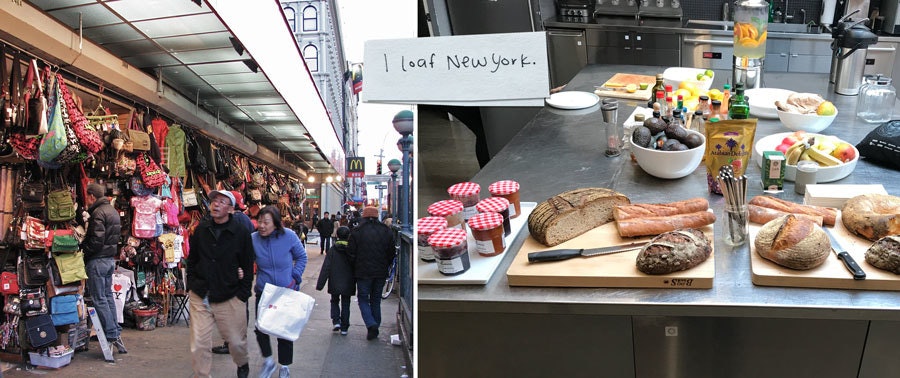
IDEO New York sits on an invigorating corner of the city where tourists, tchotchkes, and street food collide with colorful chaos. Upstairs in the studio, the best part of the week awaits: A selection of delicious, crusty bread and a variety of spreads. It’s Loaf Day! Bonus: Someone has scrawled on the kitchen chalkboard: “Might as well face it, you’re addicted to loaf.”
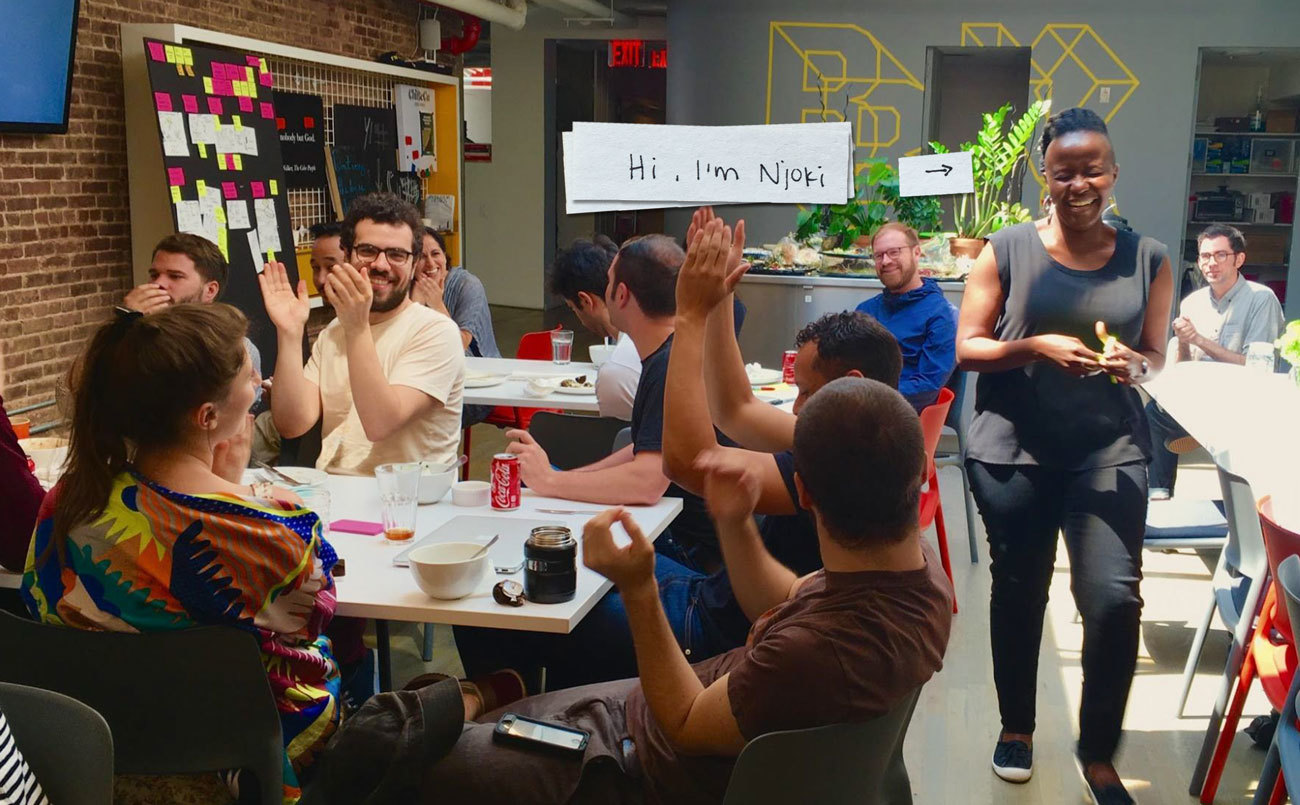
10:00 AM: Team Standup
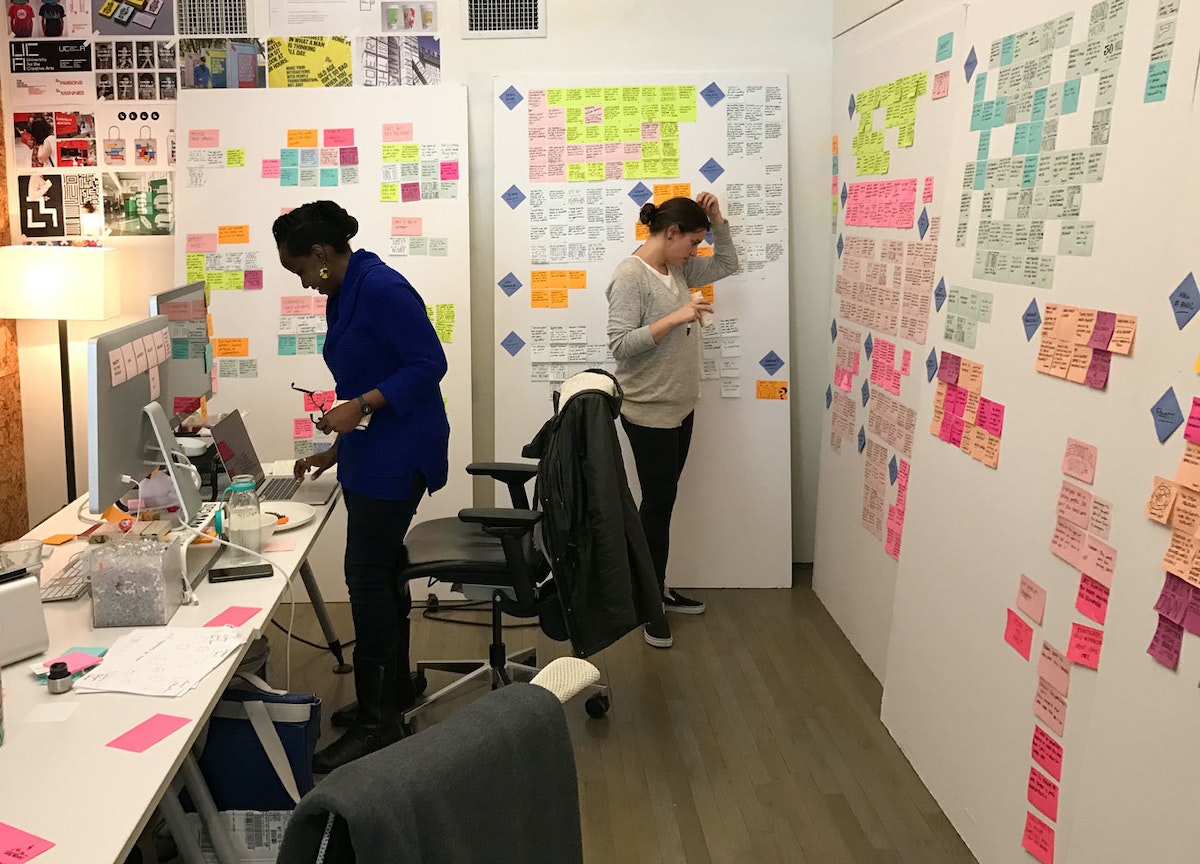
Our project is about investigating how cities and workplaces can support human potential and resilience. Today we’ve got a lot to do, including hosting some research participants in the afternoon. Deliberately coming together at the start of each day helps our team align and stay on track. In our project space, we take turns sharing our energy level on a scale of 1 to 10 and write a long punch list for the day.
10:30 AM: Download & Synthesis
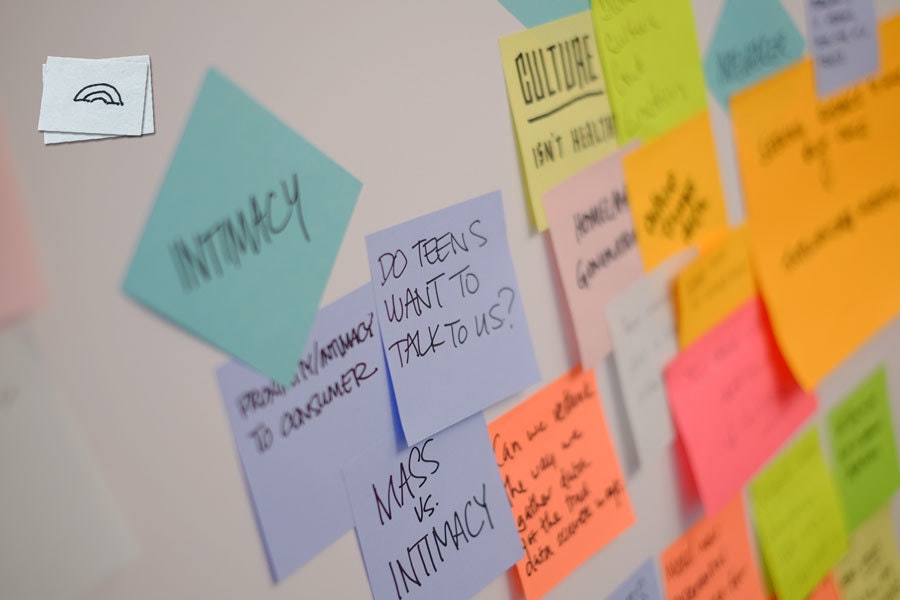
We’ve spent the last few days traveling for research and speaking to lots of people in the field. We transcribe the important things we’ve learned, filling Post-it notes and boards with quotes and observations. We start move things around into clusters, looking for patterns that will lead us to insights. One theme we're seeing is how hiring systems often overlook valuable skills that are hard to quantify, kicking qualified applicants out of the process early. “So much of the hiring process is gaming to get past the system,” reads one quote.
11:30 AM: Scrappy Prototyping
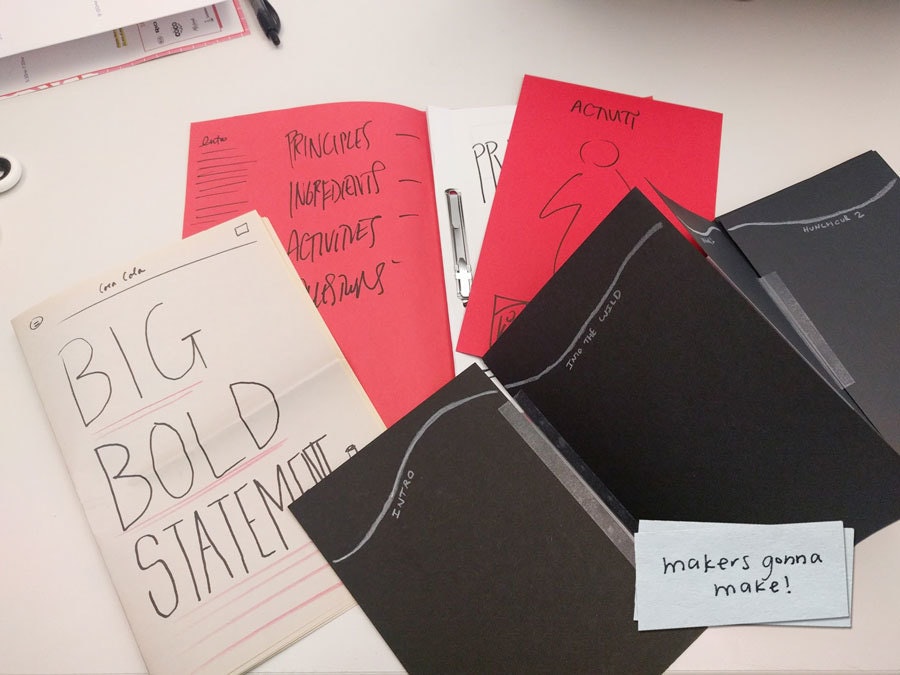
We take a break and head to the office makespace. We think we might want to make something printed, so we grab some construction paper and markers and each create some prototypes. Should we make a gallery walk of posters? A tabloid-size newspaper printed on pulp? Maybe a giant book with an accordion fold!
12:30 PM: Fun With Lasers
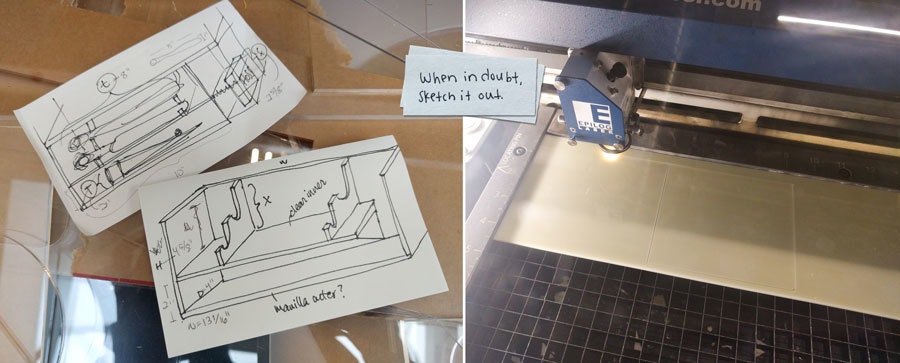
It's lunchtime and I can’t stop thinking about the toothbrush situation. I make some quick sketches of a slot-in shelf that would allow the toothbrushes and toothpaste to sit above the floor of the cabinet, still be easily accessible in the short vertical space, and cover up the unsightly rust. I transfer the specs to Adobe Illustrator, grab some spare acrylic, and fire up the laser cutter. A few minutes and a little glue later, I’ve got a prototype of a tiny shelf that I can take home and try out.
3:00 PM: Learning from Users
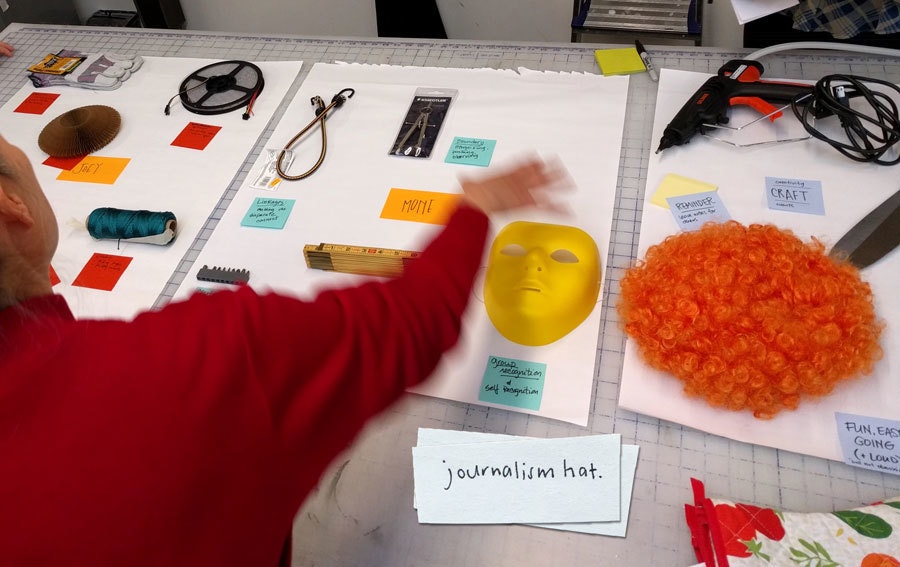
As part of our research, we’ve invited a few people into the studio to share how they think about themselves in relation to their jobs. We take them through a hands-on exercise, asking them to pick objects that represent the key attributes and skills they value in themselves. As they describe their collections, we begin to see a rich picture of their work-life experiences and connections.
4:30 PM: Moodmaking
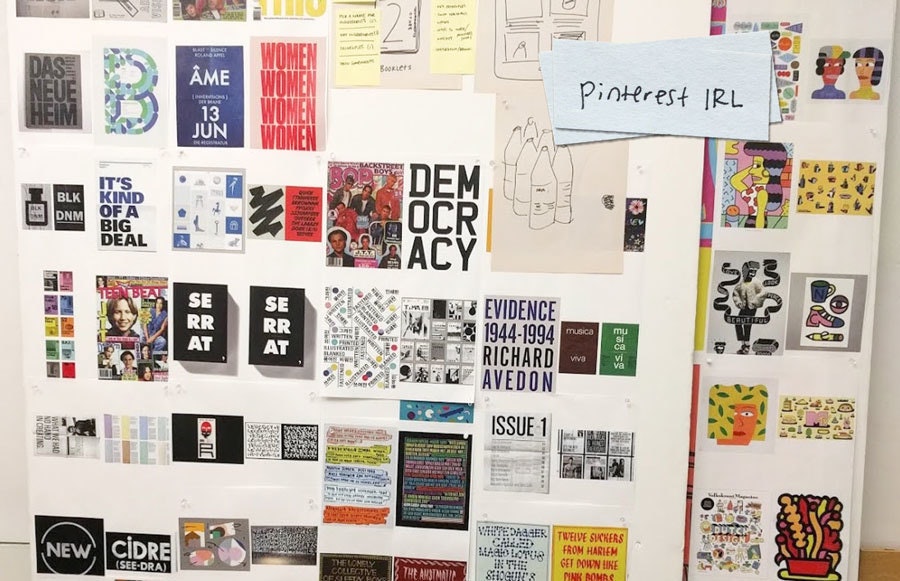
I gather visual inspiration for our deliverable. I troll design sites, look through books, and research brands and designers that have been on my radar recently. As I pin up images, I think about how the various elements of typography, color, photography, illustration, and scale could come together to create a unique look and feel for everything we’ll design for our client and the people they serve.
6:30 PM: A Melodic Exit
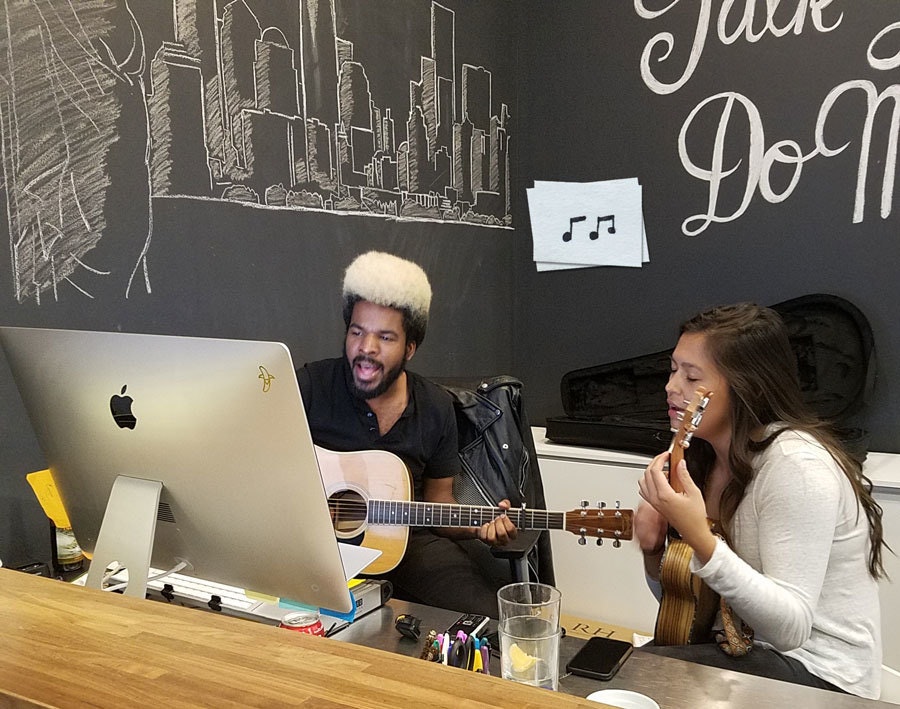
Time to head home. As he often does at the end of the day, Jared, our experience lead and sometime maestro, is slaying with some live guitar and singing. Today he’s accompanied by Kati on ukulele, and together they send us off down the elevator to the strains of "Wild Horses."
7:20 PM: Installation
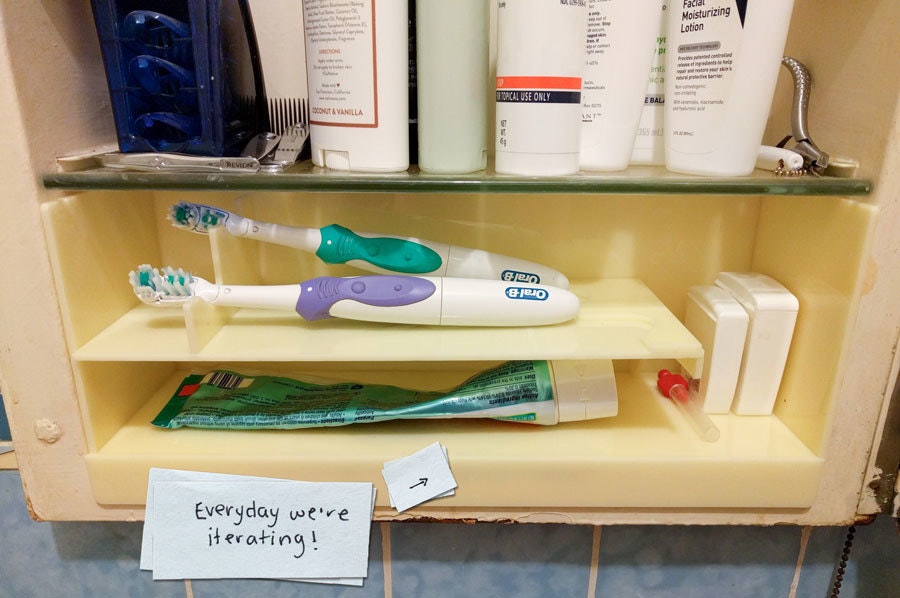
It’s in! The tiny shelf is a big improvement, but in practice it’s still a bit tough to reach the toothbrush in the back. Next iteration needs more simplicity and maybe some better color matching. It’s back to the sketchpad for tomorrow’s prototype.
When people ask me what I do for a living, what I really want to do is just show them. For me, graphic design is about finding the best way to bring ideas to life: posters, film, installation, animation, or even objects. So, a day at IDEO is following ideas wherever they may lead and getting distracted (I mean, inspired) along the way.

Lindsey Turner
I’m passionate about building brands, products, and experiences that help organizations show up with meaning and momentum.
I help organizations cut through complexity by shaping how they show up, through brand strategy, identity, and storytelling.
Working at the intersection of brand and business, I bring an editorial eye and a bias toward making—turning ideas into tangible experiences that people can understand, trust, and believe in.
My work spans government, healthcare, financial services, media, and consumer goods, from launching Gen Z-focused ventures to building innovation labs and reimagining legacy brands. I relish moments of ambiguity and enjoy translating across teams, perspectives, and priorities to move ideas forward.
I started my career in editorial and digital design, shaping cross-platform experiences and identity systems in publishing and agency environments. That foundation still shapes how I work today: I’m detail-oriented, collaborative, and overreliant on the Oxford comma. I hold a BFA in Visual Communication from the School of the Art Institute of Chicago.

Rachel Young
My work helps organizations see who their products aren't working for—and build the will and the tools to do something about it
For 25 years, I've asked the same question: Who does this design exclude—and what are we going to do about it?
My work spans human-centered strategy, inclusive design, and qualitative research, with clients ranging from Microsoft, Google, and Verizon to the National Science Foundation, and San Francisco Unified School District.
Before IDEO, I taught elementary school in East Palo Alto and spent a decade doing design work with social service organizations—where I learned firsthand what it costs people when systems are built without them in mind.
I am currently writing User Error, a nonfiction book about digital access and the design decisions behind it. I live in Oakland, California.

Brian Pelsoh
I lead with craft, ensuring our work is creatively excellent: rooted in deep human insight and imagination, while also grounded in the realities of business and technology.
My expertise spans brand, communication, and product design across tech, education, the arts, and social impact.
I believe great work demands both high-level vision and obsessive attention to detail, and only happens through collaboration.
I bring an inclusive, hands-on approach and a deep understanding of business, which enables me to consistently deliver excellence while always asking why.
Before joining IDEO, I worked at the brand firms Pentagram and VSA Partners. I began my career as a designer, leading teams at the School of the Art Institute of Chicago and the Milwaukee Art Museum. I hold an MFA in graphic design from Maryland Institute College of Art and a BFA in communication design from the Milwaukee Institute of Art & Design, and have taught at some of the best design schools in the US.

Tony Wong
I am responsible for IDEO’s long-term success in China and working with clients to use design as a tool to enable growth.
I am responsible for IDEO’s long-term success in China and working with clients to use design as a tool to enable growth. Specifically, I have helped Chinese companies design holistic brand solutions through the development of their products, communication, services, and innovation teams, and I have helped multinationals expand their presence and influence in China.
I advise global leaders on developing China-led innovation and capabilities.
In over 15 years in IDEO Shanghai, I have worked on projects that use design to elevate the quality of the experience of healthcare products and services, streamline processes that increase productivity, create spaces and programs that promote and enable inclusive communities, and build next generation mobility solutions that are planet-positive.
Before joining IDEO, I worked at Philips Electronics and the Electrolux Group in Italy, the Netherlands, and Singapore on a number of breakthrough commercial products. I am a member of the Young President Organization in Shanghai.

Building a personal AI for the messiness of life: Sida Li
Most AI products today are built for work—a space with clear problems and established systems. One founder noticed a gap: personal life is messier, harder to systematize, and mostly left behind by the AI boom. So she built Cue, a personal AI that lives inside iMessage and group chats, to go where the other tools haven't.
In this episode, Becca Carroll, IDEO's Chief Strategy Officer, talks with Sida Li, co-founder and CEO of Shared Context Lab, about staying anchored to a human need while the technology around her keeps changing shape, why she treats her business model with the same rigor she'd bring to a product, and what it feels like to build a company at this particular, disorienting moment in AI.
The conversation also gets into how Sida makes design decisions: the language Cue uses to describe itself, the tradeoffs behind building inside iMessage instead of a new app, and a real story about a business idea that didn’t pan out.
This is the second in a two-part series profiling founders from IDEO's Startups-in-Residence program. The first conversation is with Johannes Seemann, founder of Sooner, on designing GenAI for the emotional side of money.

Designing GenAI for the emotional side of money: Johannes Seemann
Most personal financial tools are built to run the numbers and optimize towards a budget. While that works for some, most people experience money as a lived relationship that does not neatly fit into a spreadsheet. Johannes Seemann and Becca Carroll discuss why money is emotional before it is mathematical, and what a human-centered approach to building a generative AI financial product looks like in practice.

The curious leader's edge in uncertainty: Scott Shigeoka
Mina Seetharaman talks with Scott Shigeoka, author of Seek and Head of Curiosity Cultivation at the Eames Institute, about what distinguishes genuinely curious leadership from performative curiosity, how power dynamics shape curiosity, and why practicing curiosity can restore energy rather than drain it.

How constraints make us more creative: David Epstein
Mina Seetharaman talks with David Epstein, author of Inside the Box and Range, about why total freedom often produces average work, how leaders can design useful limits on purpose, and what organizations such as General Magic and Pixar reveal about the relationship between boundaries and creativity.
Looks like you might be in search of something very specific?
Or reset the filters above and try another angle.
Here’s some random inspiration

Podcasts about creative leadership

Articles about the power of prototyping
