
.svg)



Designing new products based on cultural beliefs
Helping a Chinese manufacturer become a part of healthy living.
Midea, one of China’s largest appliance manufacturers, wanted to identify growth opportunities in the domestic consumer market, while focusing on people’s cultural beliefs around health and well-being. During the course of the project, IDEO found that Midea could play a key role in building a healthier nation.
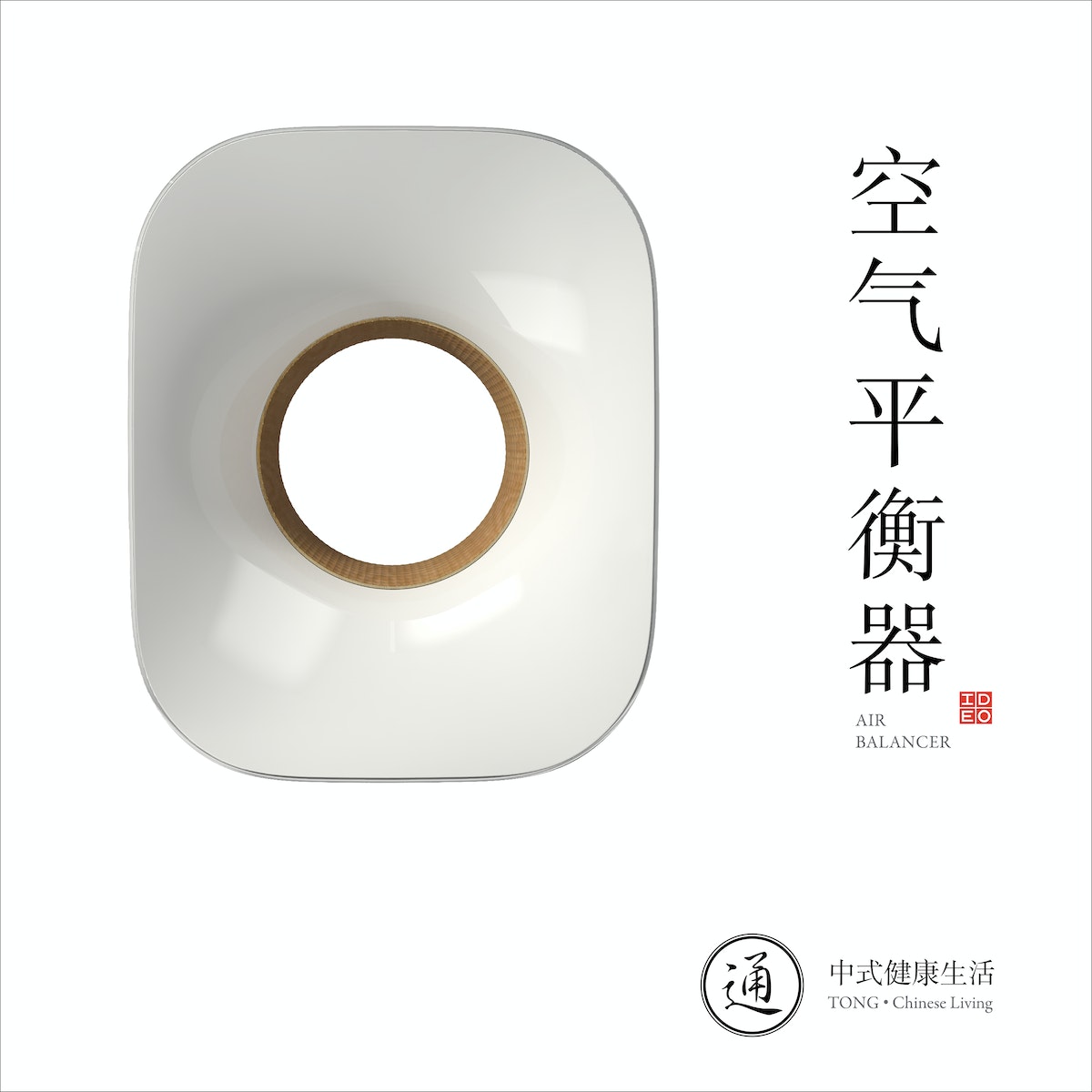
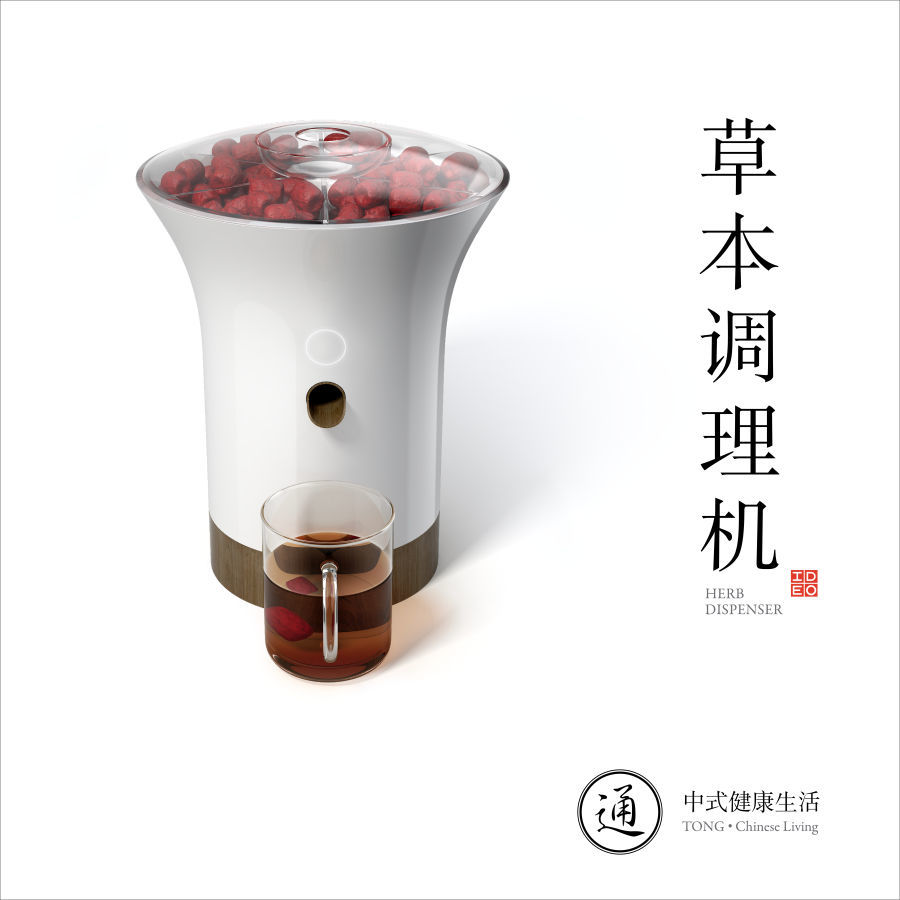
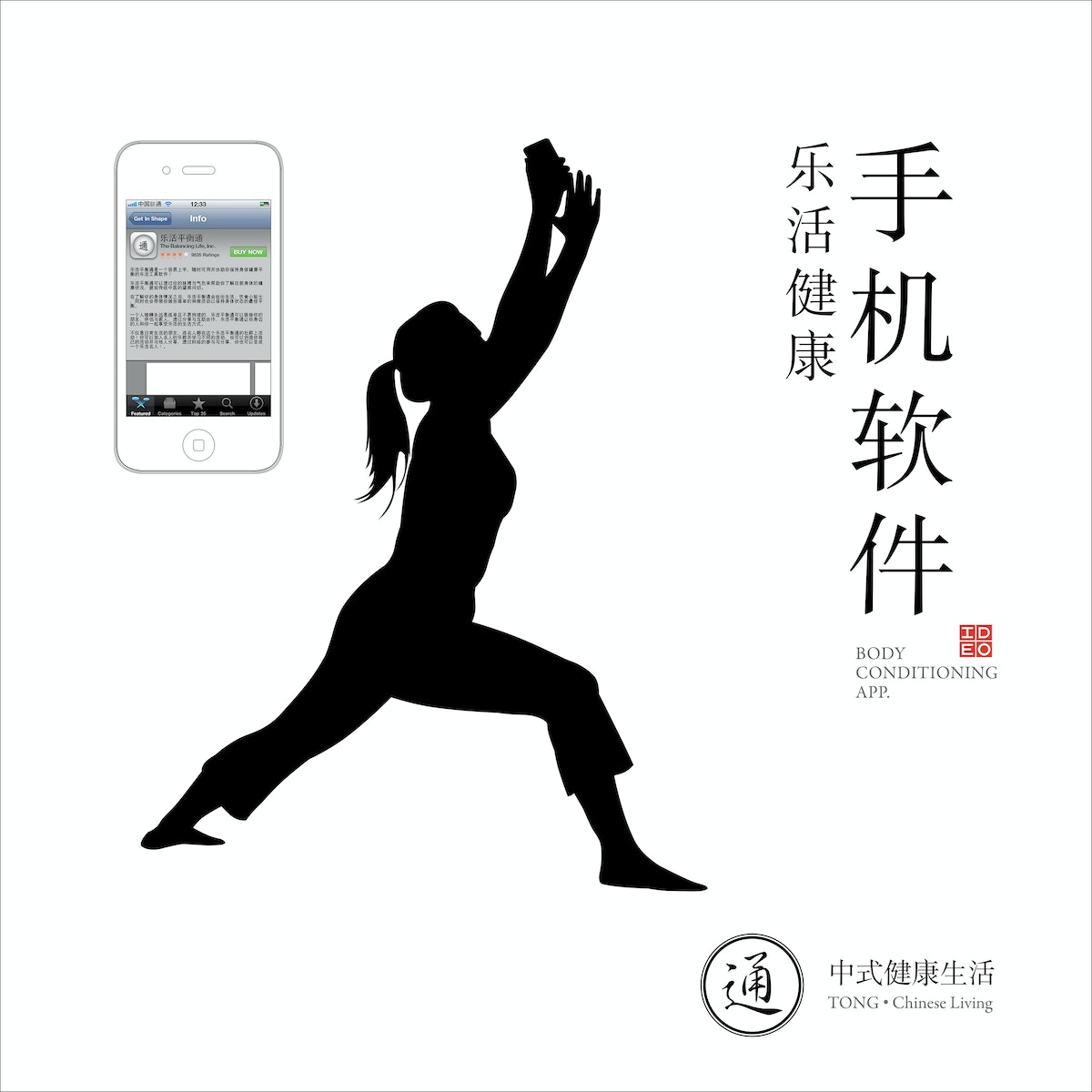
The team set out to design potential future products for Tong (“through, whole, and to understand”) that are built around the basic themes of eating, breathing, and being: an easy-to-use, hassle-free herbal tea dispenser, an air balancer that improves and balances the quality of air in the home, and a body-balancing mobile phone app that encourages users to rebalance their body condition where needed, through movements created with the Chinese philosophies of well-being in mind.
The Tong project was featured extensively in the press, and opened further conversations with Midea about creating new value and extending into new markets.
Customer-friendly utility bills
Improving how low-income customers manage their bills.
Put food on the table or keep the furnace running on a frigid day? It’s an unfortunate choice many low-income families in Flint, Michigan, face.
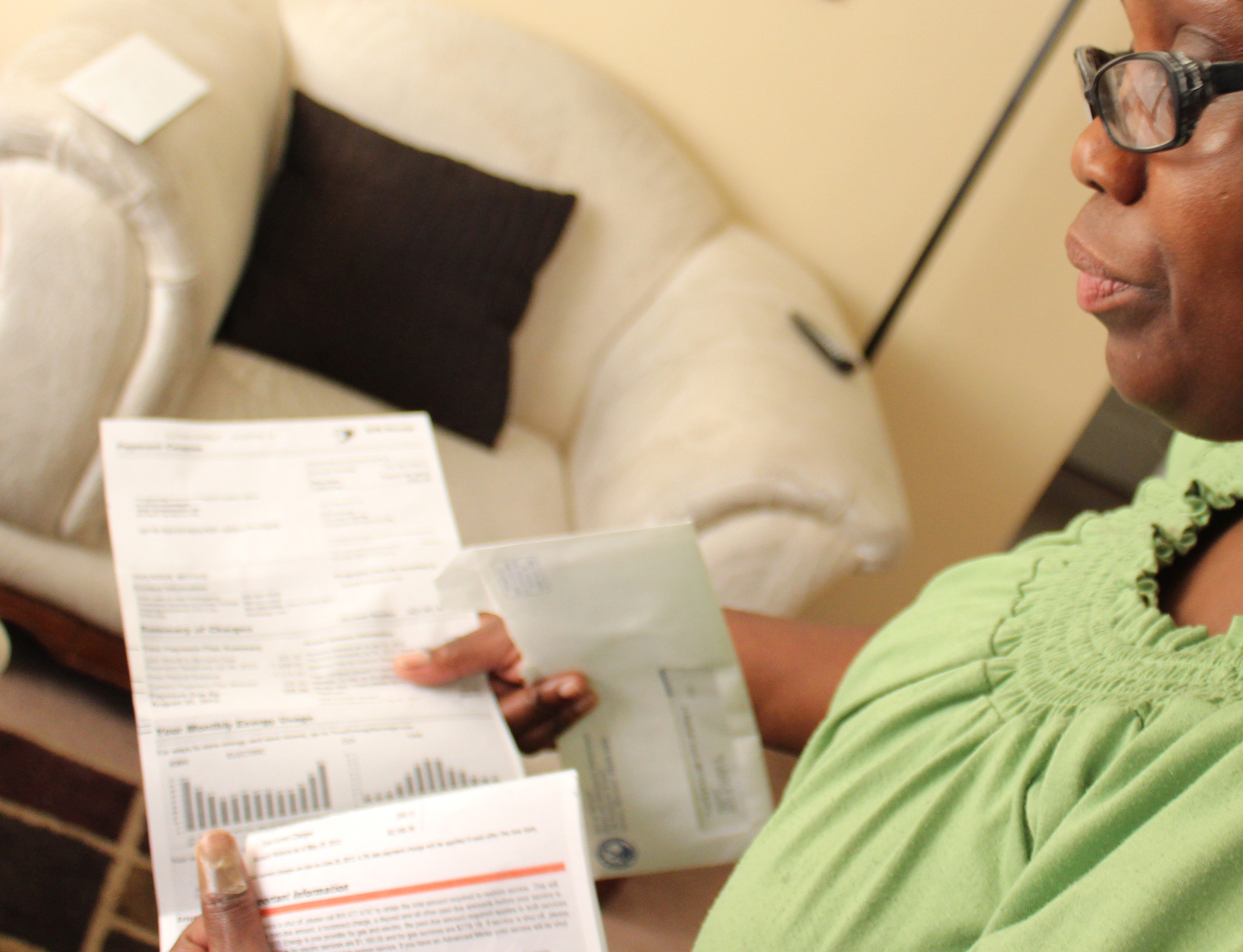
To help customers in Flint and other Michigan towns stay on top of their utility bills and better understand the relationship between their energy consumption and the resulting costs, Consumers Energy partnered with IDEO and utility assistance provider The Heat and Warmth Fund (THAW) to create an innovative pilot billing program called Clear Control in late 2013.
The pilot was designed with three major human-centered changes to the traditional utility experience:
- Instead of monthly bills, participants received two bills per month. Shorter billing periods allowed for smaller, more frequent payments, helping customers match available funds with their ability to pay.
- Daily text updates on energy usage and bill amounts kept consumption top of mind.
- Consumers Energy offered personalized, in-home audits to help customers make low-cost, high-impact changes to their energy bills.
A year later, the results of the pilot are energizing. Clear Control participants accumulated no new debt, while the control group owed $300; pilot customers used 20 percent less electricity, reducing their bills by $200 per year; and 95 percent of participants paid their bills in full and on time, compared with 35 percent in the control group. The utility company simultaneously benefited by avoiding arrearages, late-payment fees, and shutoffs. Consumers plans to incorporate Clear Control lessons into its overall energy assistance program design and development moving forward.
"It’s no longer ‘me’ against ‘them’—now it’s ‘us,’" said one Clear Control participant.
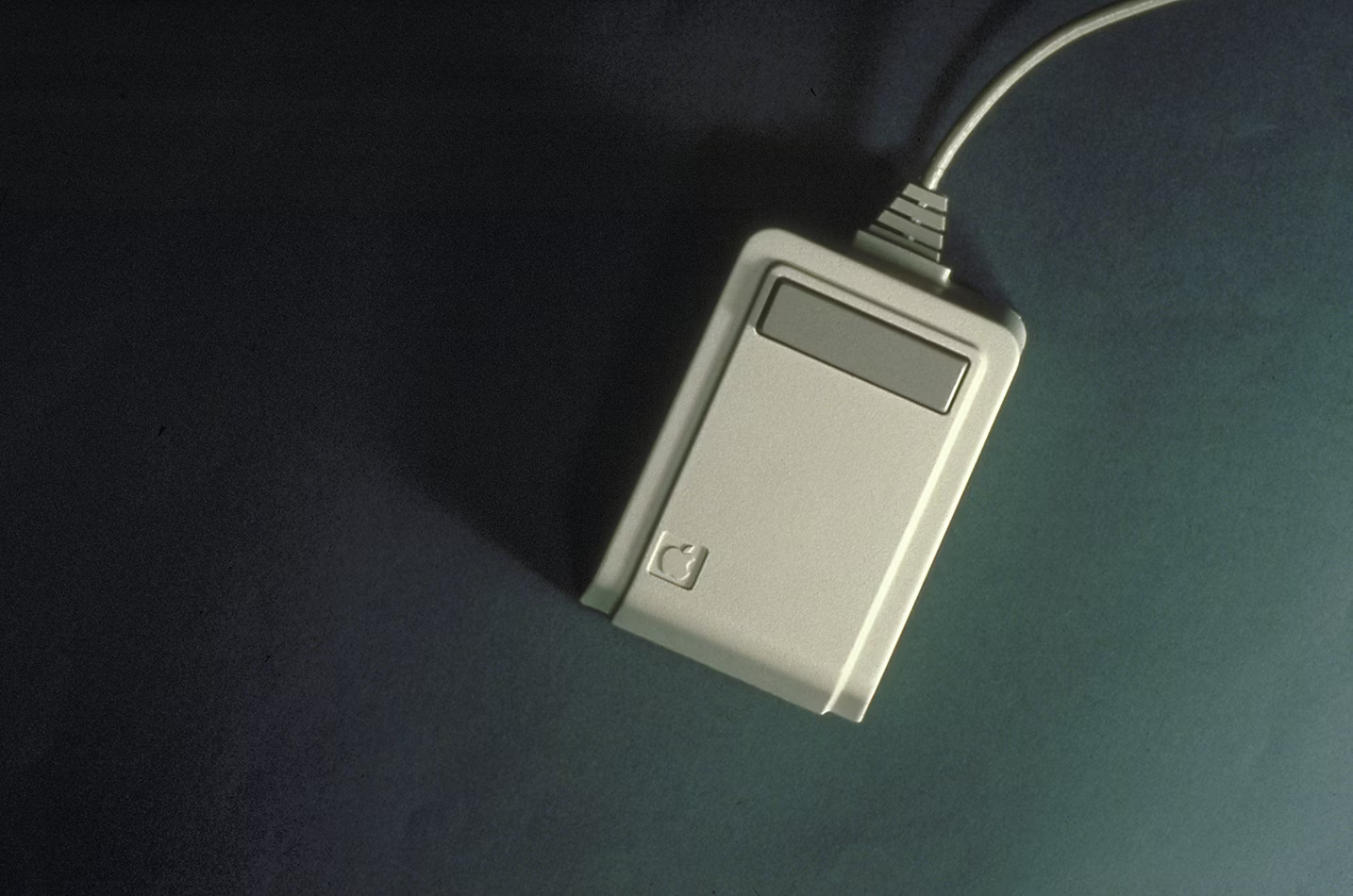
Creating the first usable mouse
IDEO designs the original mouse for Apple.
In 1980, Apple asked IDEO to develop a mouse for their radical new computer, the Lisa. Previous attempts at mouse design, by Douglas Englebart and Xerox PARC, yielded results that were too expensive and hard to make. The Apple mouse needed to be more reliable and less than 10 percent of the cost of the earlier versions.
To start, the design team created a cheaper, much-improved mechanism that would operate the mouse, and found that a complex, plastic "ribcage" would hold the pieces together. The team similarly tested and refined the mouse’s other key components, from the audible and tactile click of the button to the rubberized coating on the ball. A record turntable spun for days, logging “mouse miles” to check the reliability of the electromechanical assembly.
The resulting mouse proved mechanically and economically sound and was changed only slightly when adapted for use with the first Macintosh computer. The basic mechanism design is used in virtually all mechanical mouses produced to date.
Building a new venture to restore trust in China’s food system
Launching a new restaurant and retail venture that connects food from seed to table.
Food is the heart of most cultures. In China, one of the oldest cultures in the world, food is central to family gatherings and celebrations. It’s what binds people, a tangible way of showing love and respect. But in recent years, the Chinese food industry has suffered from concerns around safety.
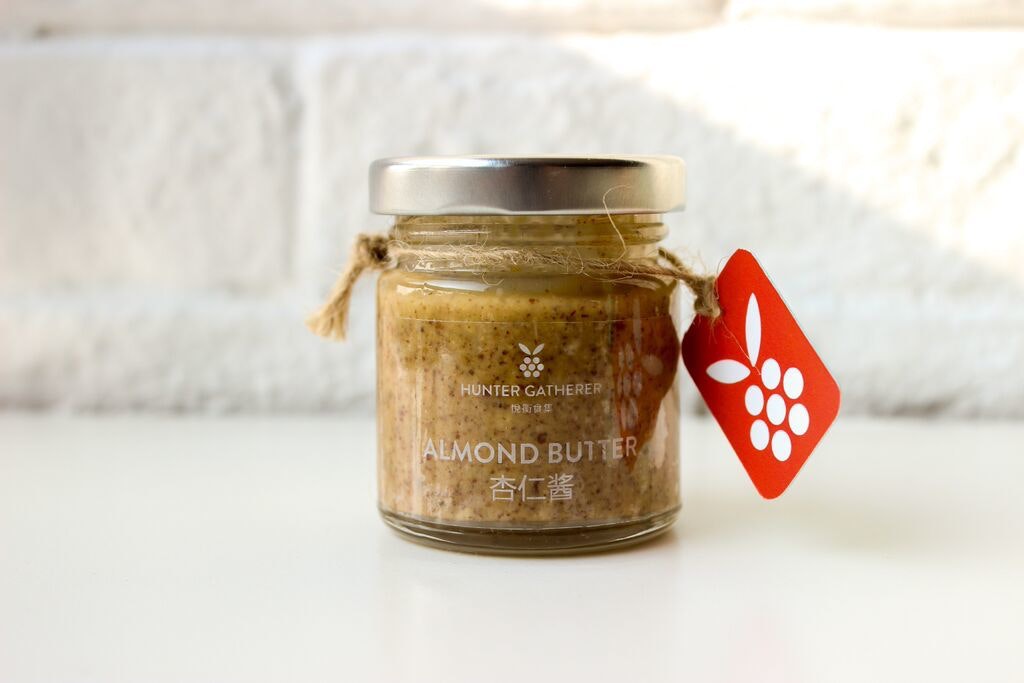
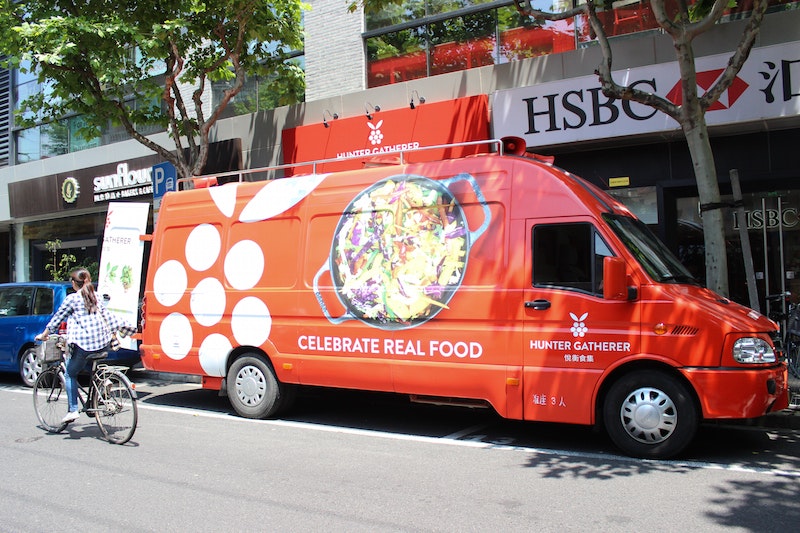
Two siblings, Harn and Anmao Sun, set out on an ambitious venture: to create a trusted source of food in China and, by setting an example, to instigate a movement around conscious farming practices. The American-born entrepreneurs launched Hunter Gatherer, a restaurant and retail food space built around a transparent supply chain, from farm to table to grocery shelves. The venture is based on growing and serving what they call real food: The ingredients are chemical-free and come from known and trusted sources—food they’d eat themselves. The purpose of the venture is simple: to serve people real food that is their right.
Having studied and worked in the US, Harn and Anmao grew accustomed to browsing farmers markets on Saturday mornings or picking up a burrito at Chipotle. But when they returned to China, they were unsure about the safety of the food they were eating.
“In China, you wouldn’t go to a food stand, because you’d be concerned about the ingredients,” Anmao said. “You can’t take the safety for granted.”
Hunter Gatherer’s very existence challenges bedrock assumptions about how food is produced in China. A long and depressing list of scandals—milk contaminated with melamine, pork produced from diseased pigs, used cooking oil repackaged and sold as new—has rocked the public trust.
“In China, agriculture is going through a huge change,” Anmao said. “In the US, agriculture operations are regulated. Farmers’ practices are regulated. If they use pesticides, there are limits because these farmers understand that once a certain threshold is hit, additional pesticides will not yield more crops. But in China, pesticide use came about 30 years after the US and Europe, and because of a lack of full understanding, farmers in China incorrectly operate under the assumption that more pesticides means more crop yields. Also, with over 250 million farmers in China, it becomes immensely difficult to properly regulate everyone.”
New Ventures
Harn and Anmao wanted to restore trust in the simple act of eating in China, and they came to IDEO to build a scalable business based on that vision. This was essentially a startup, a shared commitment between IDEO and Hunter Gatherer.
“I’ve lived in Shanghai for the past seven years, and as a relatively active and health-conscious person, I’ve had to invest quite a bit of time in finding food that I trust,” said Charles Hayes, managing director of IDEO Shanghai. “That investment has been both in the time it takes to research the sources of ingredients but also a literal investment in paying a high price for imported food just for that extra peace of mind.”
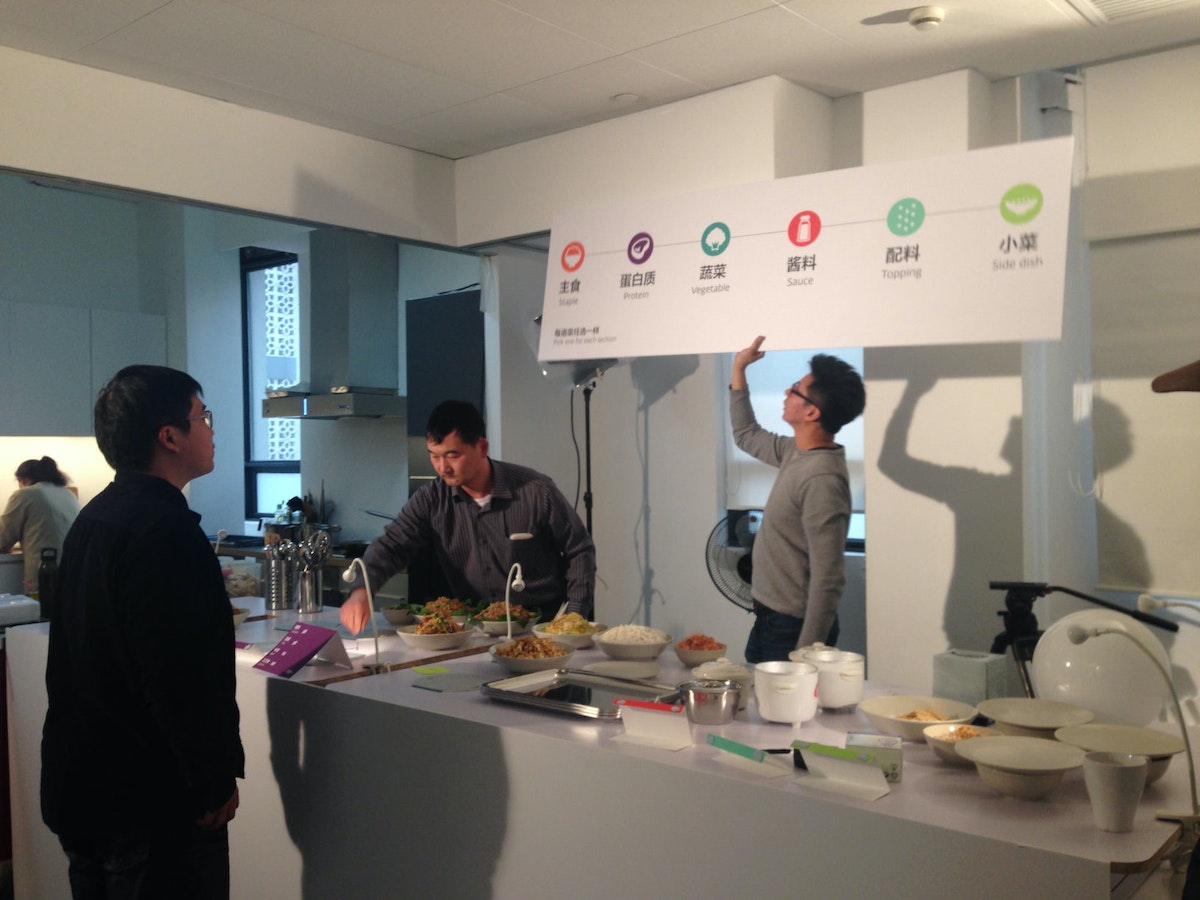
Anmao and Harn took up residence in the IDEO Shanghai offices to incubate their business. Together with IDEO designers, they tested packaging, cooked countless meals, and found ways to introduce unfamiliar ingredients to Chinese consumers. They discussed different concepts of lunch and dinner, and how notions of freshness in Chinese culture might affect cold-storage systems. In IDEO’s prototyping kitchen, the teams tested all manner of different foods, flavors, colors, mixes, and price points, and they brought consumers in to try them out. IDEO designers, along with the founding team, also worked on the brand and positioning of what would eventually become the Hunter Gatherer enterprise—its location, human resources, and marketing strategies.
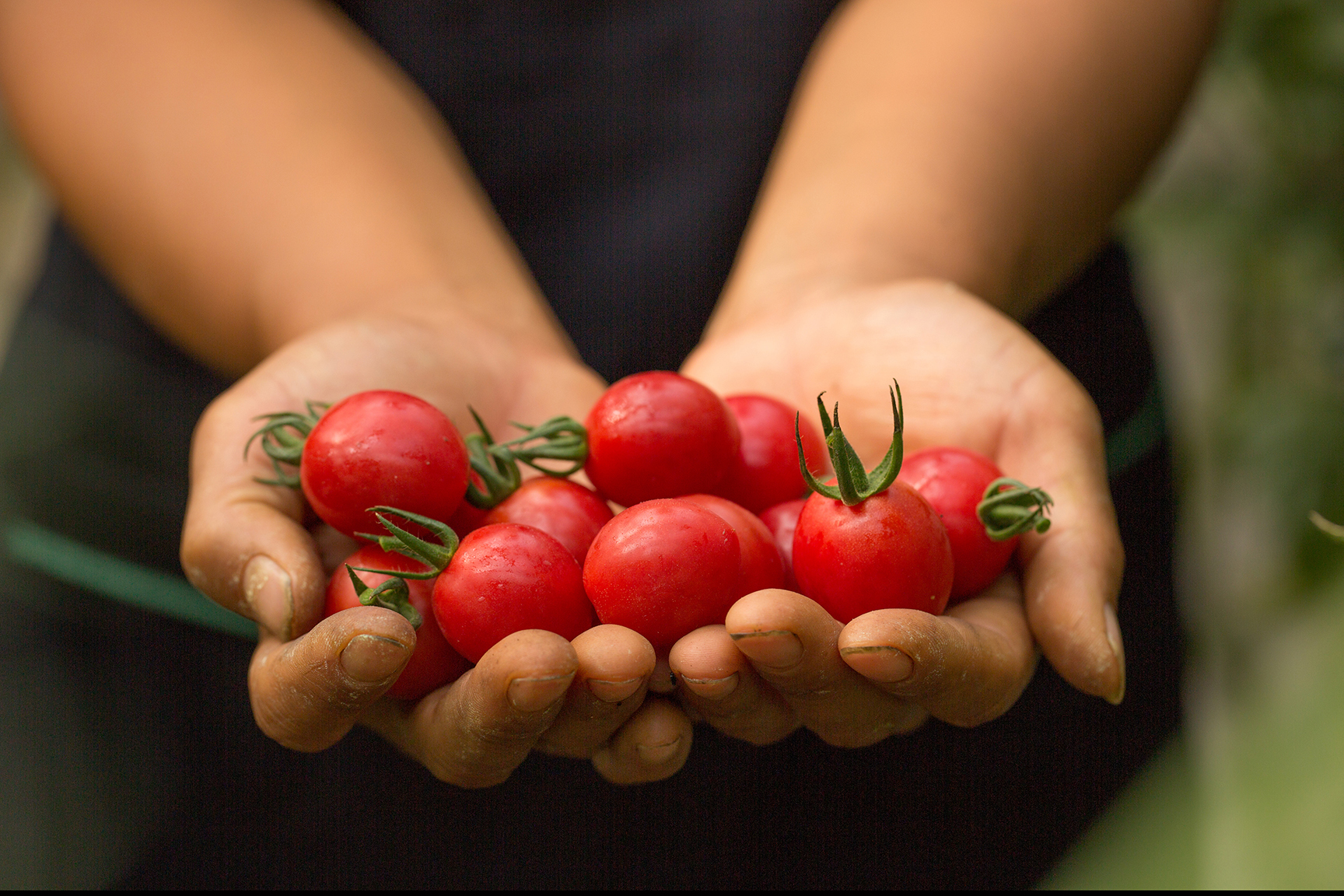
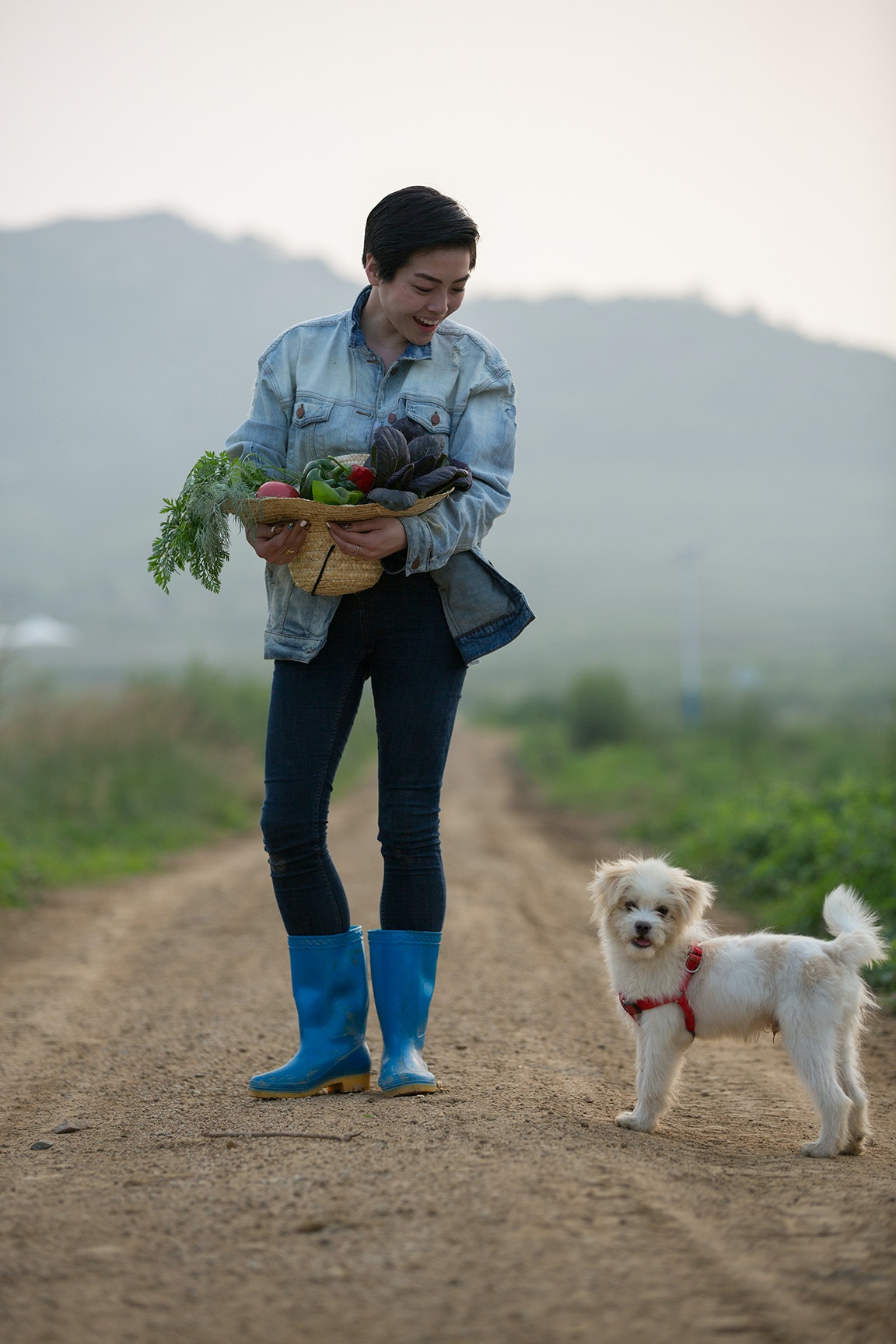
As the restaurant concept came together, finding the right food sources had to be addressed. Traditional agriculture couldn’t be trusted; organic certifications were available on the black market, and safety protocols around chemical use were nonexistent. Anmao and Harn decided to invest in their own farms. They met with farmers, asked questions about their methods, and walked in the fields to see for themselves. Eventually they settled on two plots of land outside Shanghai and began developing more than 80 different crops to be used in the restaurant.
From Seed to Table
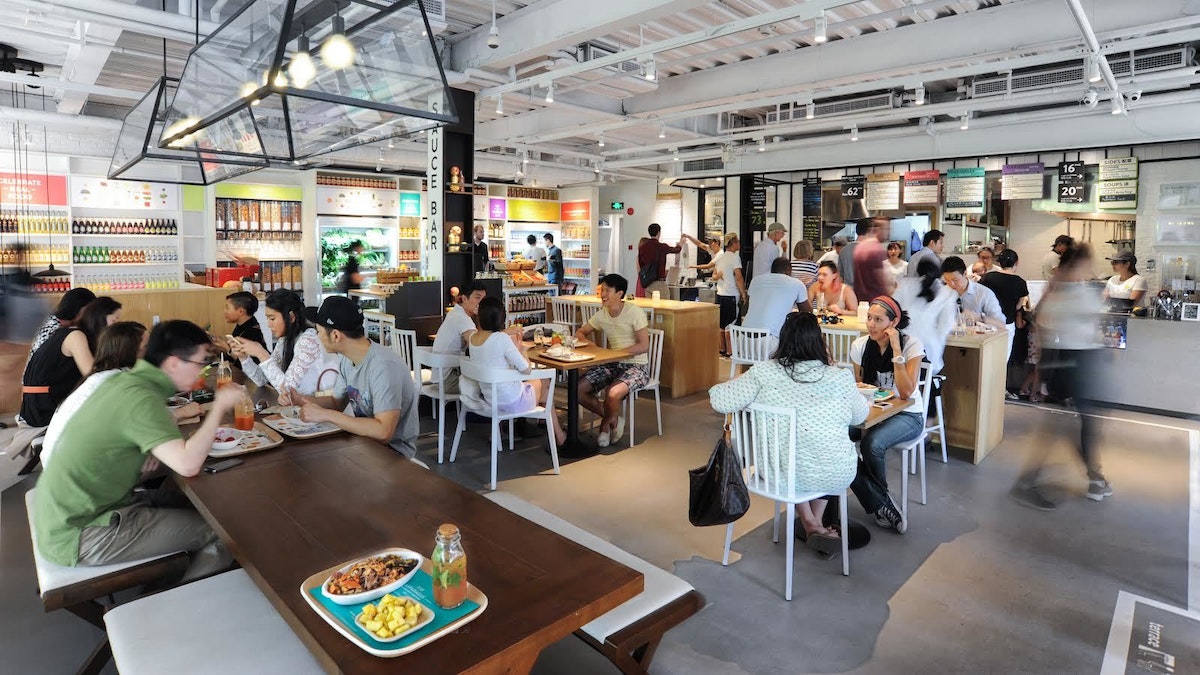
When it came time to find the right space for the first location, Anmao and Harn discovered an open, airy storefront on Anfu Road in Shanghai’s tree-lined former French Concession area. They designed and built a retail space and kitchen, and along with IDEO designers, they trained the staff and organized workflows. The staff set the tables with Mason jars filled with flowers, hung photographs of the farmers who grew the food, and put up a sign that showcases the percentage of vegetables coming directly from the Hunter Gatherer farms, already more than 70 percent in less than a year after opening.
Customers can shop for fresh vegetables, locally sourced and imported canned and jarred goods, bins of cereal, freshly made smoothies, artisan sauces, and exotic chocolates. Upstairs, they can feast on delicious dishes in the homey restaurant.
Reviews have been glowing. One customer raved about the machine that grinds fresh nuts. Another loved the open space, the “good vibes,” and the refreshing cucumber water. Young people go there on dates, and families return for the delicious menu variety.
The convivial space has blossomed into more than just a restaurant and grocery store. It’s become a gathering place of sorts, both for the community and for partners who share the same vision. Farmers and food purveyors are invited to showcase their products at seasonal events and to mingle with customers and share recipes and stories.
“Hunter Gatherer has come to symbolize a kind of lifestyle the Chinese people have been looking for,” said Eugene Lin, an IDEO business designer. “A place they can enjoy hanging out with friends, as well as a movement and mission they can stand behind.”
A Digital Future
This is just the beginning of the venture. The plan is to open 40 more locations throughout China. But the vision for Hunter Gatherer’s growth is bigger than brick-and-mortar restaurants—where the business will truly scale is in the digital space. Eventually, the plan is to launch a Hunter Gatherer online grocery store from which anyone can buy food grown from trusted sources.
“We have to create trust with the consumer. It’s the most difficult and most valuable thing to do in China, especially with food,” Anmao said. “Our brick-and-mortar locations will establish that increased trust. Then we can go online and grow the idea to the rest of the country.”
Will Hunter Gatherer have a hand in changing the way that the world’s most populous nation thinks about food? Its principles are already spreading, from neighboring farmers adopting more sustainable planting methods, to a growing market for products like wine.
But the true sign of success will be almost invisible—the moment when an increase in demand will result in safe food for everyone and when real food becomes commonplace.
Why You Should Get to Know Your Creative Alter Ego
How one designer's aha! moment helped him discover his bold signature style
Having already used acrylics, oil paints, graphite, and finally moving on to digital art, there was not much left to experiment with to broaden my artistic arsenal.
Or so I thought.
It was 25th of September, 2016, when my artistic alter ego was born. During that period of my life, I was searching for a way forward, having just returned from university without a job. I spent most of my time ideating and planning my next move.
That afternoon, I sat down to take a break and illustrate my state of mind. I started what was meant to be a 20-minute drawing session with a 0.5mm fine liner. That pen, plus an old notebook that I had used back in university, became my weapon of creativity.
When I was done, I had a character that I named “the relentless dreamer”—a tiny figure with a peculiar helmet that shielded his wandering heart from reality as he knew it, granting him the ability to see far beyond the clutches of a life he deemed to be limited. This tiny figure reminds me that it is crucial to be idealistic, ambitious, and forever creative.
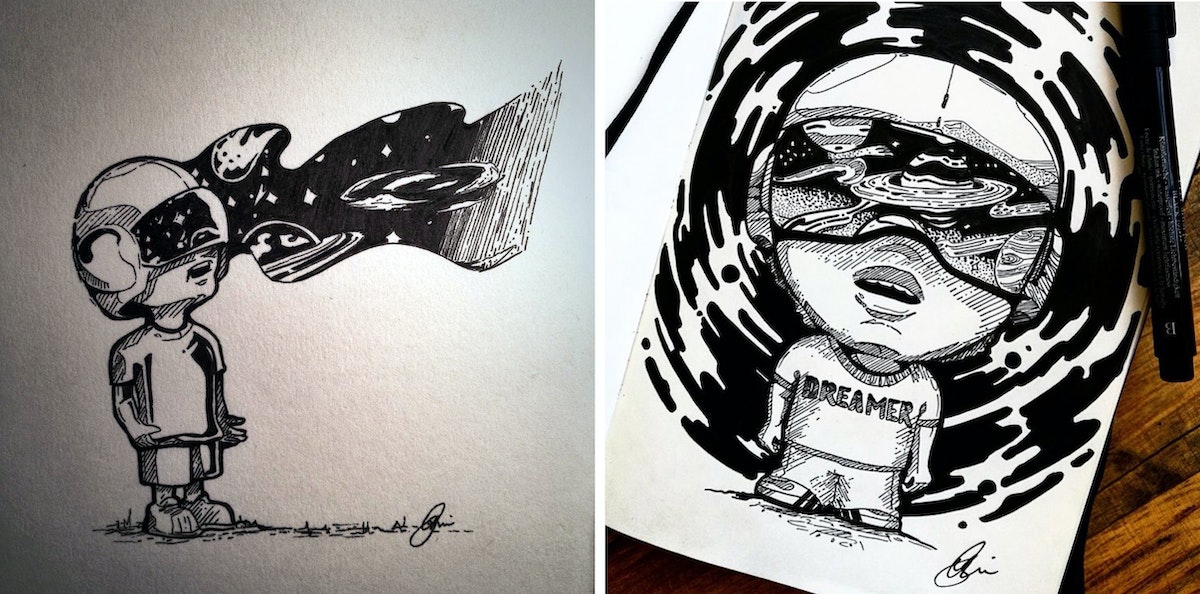
Drawing this character gave me an emotional release unlike anything I had experienced before through art. Though I was often plagued with a sense of anxiety around what my drawings would mean or stand for, this time, I felt weightless.
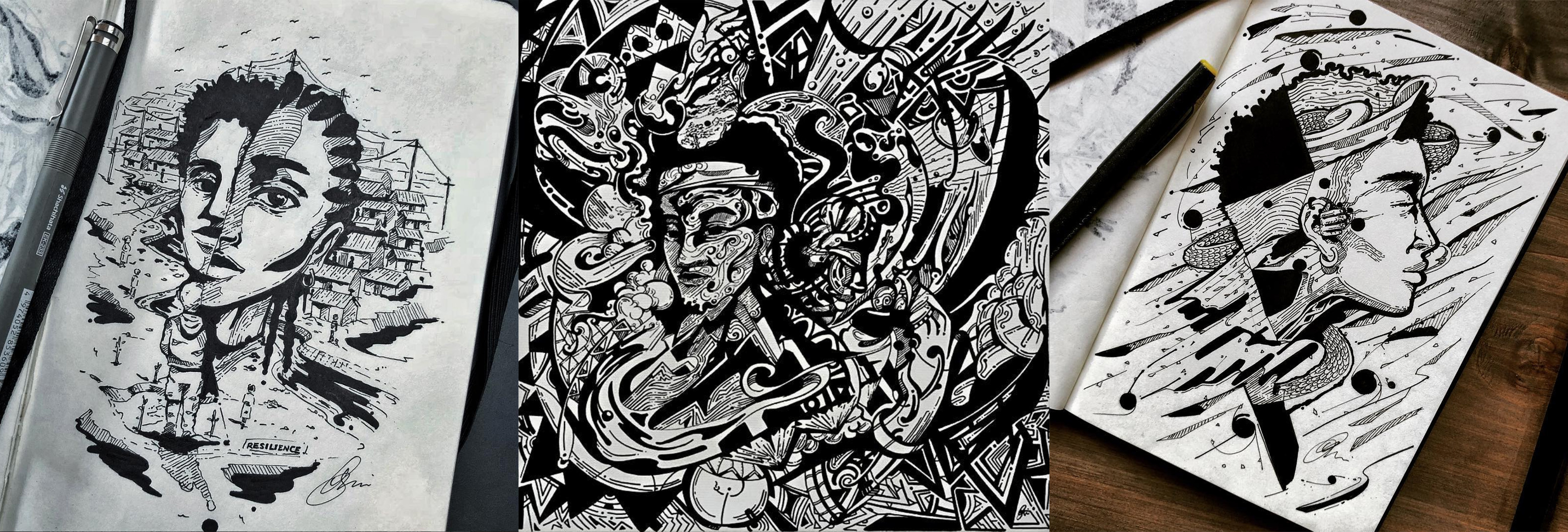
I began focusing on these black and white ink drawings, and the experience was cathartic. Each one entwined with the stories that brought them to life. Even though most of the figures I drew were imaginary, I was taking my life and experiences and expressing them through my illustration. I would envision part of the figure in my mind and let the rest appear.
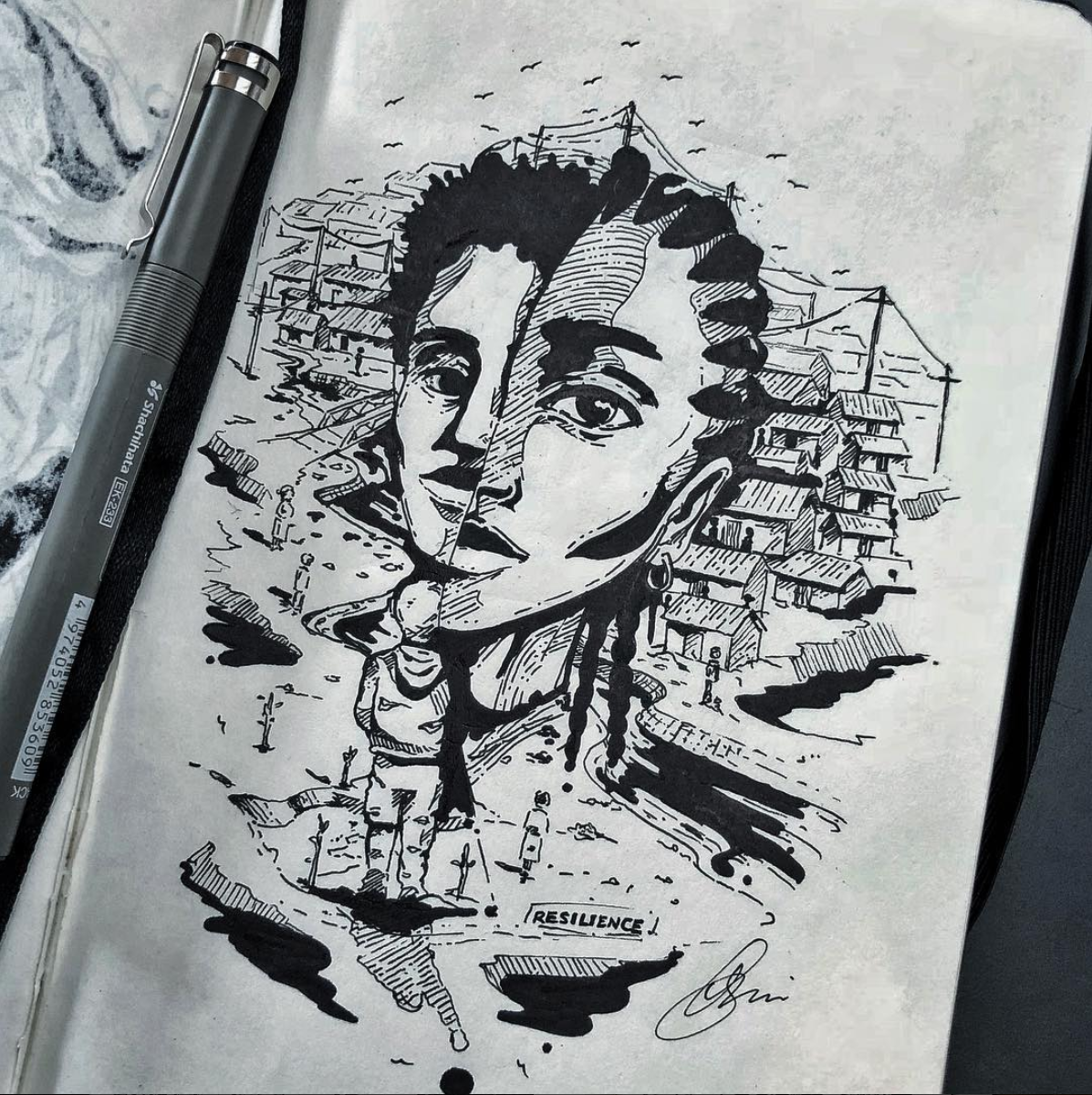
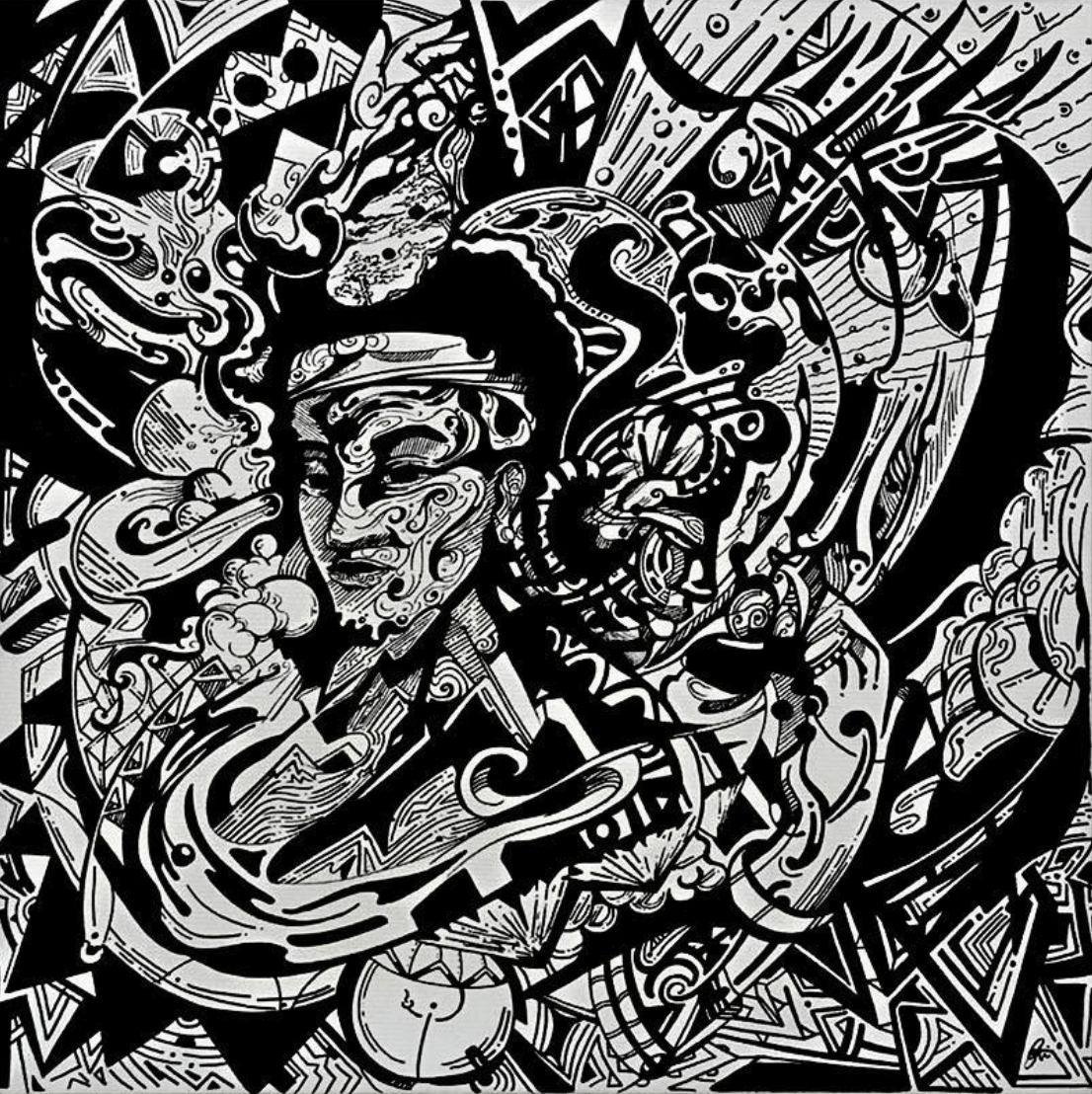
My intention was for viewers to move their eyes constantly as they looked for meaning in the drawing or simply made out the shapes.
Some of my work is dark, some full of mystery—a mystery I hoped that others would try solve as they navigate the intricacies of the line work.
Amidst all the visual chaos, there was one constant: A human element. The figures would serve as my connection to the pieces, and I hoped they would resonate with the audience, too.
These days, you will probably find me seated in the corner of a cafe with a fine liner pen. To many, I am just an artist, ardently sketching away. But what I’m actually doing is getting a little dose of sanity, as I move the images in my mind onto the pages of my book.
And in that very moment, I am dreaming… relentlessly.
Want to see what other IDEOers are drawing and doodling? Take a peek inside more designers' notebooks.
Two years ago, after spending most of my life mimicking artwork that appealed to me, I assumed that I had reached my artistic peak. I had been drawing since 1999. I still enjoyed working on portraits and surrealist compositions, but creatively, I felt stuck. After starting university, my product design work proved to be quite fulfilling, but my personal work was feeling uninspired.
Build Your Creative Confidence: Speed Dating
Creativity thrives amidst free-flowing social discourse. To get a roomful of strangers to innovate, you may want to begin by breaking down some social barriers.
Creativity Challenge # 6: Warm up a group
Creativity thrives amidst free-flowing social discourse. To get a roomful of strangers to innovate, you may want to begin by breaking down some social barriers. When this exercise is done right, the room will be abuzz with chatter and laughter, and participants will be more open to what comes next.
Tool: Speed Dating
Participants: Pairs in groups of any size
Time: 15-20 minutes total, 3 minutes per round
Supplies: Paper printed with a set of questions for each participant. Several different sets of questions will be needed to accommodate the entire group.
Instructions
Step 1: Give each person a list of open-ended questions. Several different sets of questions should be spread throughout tables in the room so that people aren’t continually being asked the same questions.
Examples of possible questions:
- How would your closest family members describe you?
- If you had a million Euros to spend in a way that benefits humanity, what would you do?
- What do you wish your parents had told you?
- What was a live performance or show you really loved, and why?
Step 2: Ask each person in the room to pair up with someone they don’t know very well or have never met. This may involve getting up and moving seats.
Step 3: Have one person in each pair ask a question from the list. Allow three minutes for the other person to answer.
Step 4: Have each pair switch roles and repeat, asking a different question on the list
Step 5: Tell everyone to find a new partner and repeat the process for a couple more rounds.
Tips from the field
You want to keep people moving to create a well-orchestrated round-robin. Be proactive about timekeeping. Assign someone to be a facilitator or timekeeper. To add a little fun, use a buzzer or gong to announce that time is up.
Depending on the nature of the working session that will follow the Speed Dating exercise, you can tailor some of the open-ended questions to be inspirational and loosely related to your topic. For example, if the objective of the meeting is to discuss the future of workspace for the organization, one of the prompts may be, “Describe an inspiring space you have worked in.”
Give a little thought to the type of questions you use. Meaning-of-life questions and superlative questions (the most, the best, the worst) can cause people to stall out or draw a blank. The whole purpose is interaction. So if your question stumps your partner for even a handful of seconds, it’s not quite right. Try the questions out on someone before you use them in a group setting.
If your group might be uncomfortable with an activity that includes the word “dating” in the title, call it Speed Meeting—which we have found works with Nobel laureates.
This post was taken from Chapter 7 of Creative Confidence. Purchase the book for more on how to use creativity to solve problems, or view more from this series of creative exercises on the IDEO blog.
Everyone is creative. This belief runs through everything we do at IDEO, and in 2013, it led my brother David and me to write a book that would help others—even those who don’t think of themselves as “creative types”—to unleash their creative potential. Creative Confidence has inspired thousands of people to adopt a creative mindset and apply it to the diverse real-world challenges they face. In this series, we’ll share some exercises from the book that can help you approach your challenges from a new perspective.
3 Ways Design Can Help Tackle 2019's Big Challenges
IDEO leaders share forecasts on prospective trends in design and tech
1. Design for human capabilities
We are in an uncomfortable place at the moment. Technology has connected us all more than ever, but we are feeling less substantive connection with one another. Human interaction has been reduced to lowest common denominators. Unhappy people click more. Now technology is starting to displace us. In the next few years, deep learning-based AI will take over human activities, from driving to medical diagnosis. The discomfort is increasing as society faces mass redundancy, increased inequality and a crisis of meaning. We can all feel it coming. Design can help.
The amazing thing about good design is that it looks at ambiguity and disruption and sees fertile ground. There is huge opportunity when we focus on things that humans are uniquely equipped to do—empathy, creativity, care, love.
If we do it right, we can conceive and shape new roles for humans in a layer on top of the efficiencies that machines can achieve. We can use those uniquely human traits to re-find and enhance community and depth in our relationships with each other. We can go from Artificial Intelligence to Augmented Intelligence.
—David Webster, Partner, IDEO Palo Alto

2. Design for emotional wellness
The uncertain state of the world is having clear consequences for individual health. You see it in the headlines everyday: Kids paralyzed by anxiety. Suicides by gun. Addiction to opioids. We live in the most technologically connected times, yet our rates of loneliness are increasing. If you dig deep, the common root is an absence of emotional and mental well-being.
I’m not talking about the well-being that’s branded through luxury experiences, like wellness retreats. I’m talking about what Maslow missed at the very bottom of his hierarchy: that sense of inner well-being that is absolutely necessary for our survival as humans.
What’s exciting about our moment now is that science has surfaced the myriad ways we can cultivate emotional and mental well-being—all of which are new channels for design.
Designing ways to get better sleep is also a way of designing for resilience to stress and better ability to manage our emotions. Tackling loneliness and designing for meaningful social connection is also a way of designing for a stronger immune system and brain protection. (Conversely, enabling chronic loneliness is as bad as smoking 15 cigarettes a day.) Designing ways to help people find their sense of purpose and meaning in life is an incredibly powerful way to design for healthier mind and bodies.
More and more, designers will realize their superpowers. Doctors and nurses are key players in facilitating wellness, but let's not forget that designers can be healers, too.
—Ann Kim, Portfolio Director, IDEO Cambridge
[This portion was also featured in Fast Company.]

3. Design for circularity
While it's easy these days to lament the state of the environment and the need for change, there's some hope to be found in the increased momentum towards a more circular economy. Collaborations between industry and design have yielded smart, feasible ideas for redirecting waste streams and reconnecting key stakeholders.
Businesses are investigating new product and packaging design that enables materials to be used again and again; they're asking how to leverage logistics in more efficient ways; and they're conceiving of new ownership models that could extend the lifecycle of the products they make.
The next questions on the horizon revolve around the economic systems that need to be in place to support these circular innovations. For example, we can design buildings so that they can be deconstructed—a circular engineering idea—but the cost of labor makes that reality prohibitive. In 2019, it's time for more applied circularity, leveraging emerging technology, organizational design, human insights, and social networks to create the conditions for the circular economy to take hold.
—Lauren Yarmuth, Portfolio Director, IDEO New York
With 2018 fading into the distance, we're looking with hopeful eyes toward what the next year may bring. Our ongoing projects and client work help us hold up a mirror to reflect on what’s been happening and make informed predictions about what’s to come. Here are a few forecasts from IDEO leaders on prospective trends in design and tech.
Don’t Wait for a Crisis to Change Your Business
Strange as it sounds, the main challenge for some people today is that their business isn’t in crisis
If you know what we’re talking about, you could well be one of the world’s frustrated changemakers. You can see that change is essential, but you’re struggling to light the spark because your business’s indicators are all annoyingly positive. If this is you, what can you do? Should you hope for—or, even, engineer—a crisis?
This was one of the questions a group of business transformation leaders took on recently, at our Make Change Happen event in Munich, Germany.
“It would be a lie to say that a good crisis or a good disruption doesn’t help,” said Roman Lentz, Chief Digital Transformation Officer at global building materials firm Heidelberg Cement. “Because if you honestly look at organizations that change the fastest, they’re the ones with their backs most strongly against the wall… And frankly, that’s my challenge, because we’re not in crisis. We’re producing healthy margins. We’re not seeing cement being disrupted any time soon.”
Sandra Schiller, Head of Product Management for Valves and Automation at Georg Fischer Piping Systems, agreed. A crisis, Schiller noted, “can force through faster changes.”
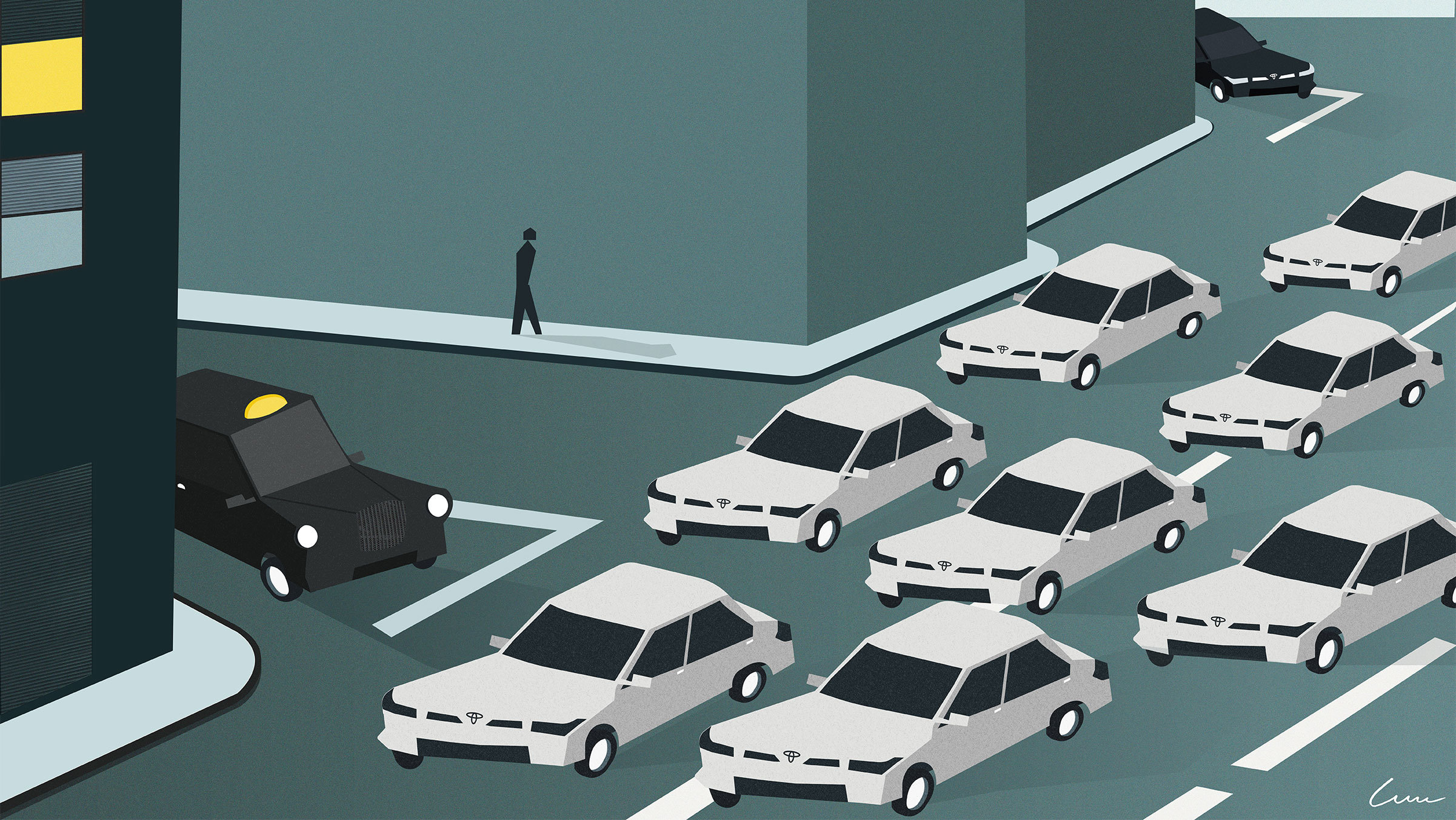
But this doesn’t mean you should wait for a crisis, as London’s black taxis discovered, a few years too late.
“Black taxis were untouchable,” said Ben Terrett, CEO of Public Digital, a firm that partners with IDEO and specializes in digital transformation. “So untouchable that some of their services and ways of operating were protected by regulation. They have special parking spaces in London, special streets only they can go down… certain roads only they can pick up from.”
But then wave after wave of digital disruption flooded in as they sat behind the wheel, watching their dominion ebb away. First, GPS meant that the traditional cab drivers’ knowledge of London’s labyrinthine streets was no longer the golden ticket it had once been.
Then Uber arrived, and its bookable, predictable, low-cost rides started to eat into the black taxi business. So how did London’s cabbies respond?
“Their defense has ended up being reputation,” said Terrett. “That’s basically their only defense: ‘But we’re the black cabs!’”
Turns out customers weren’t as attached to the reputation of London’s cabs as cabbies were—and they couldn’t compete with the convenience and cost-cutting of on-demand services. Now the London Taxi Drivers Association (LTDA) wants to sue Uber for the earnings its 25,000 members lost in the first five years they were operating in the city. The LTDA estimates that cabbies lost £10,000 each per year, and has been taking legal advice to sue for £1.25 billion.

It didn’t have to come to this.
“What’s interesting is that people have been trying to help them—by building services on top of their service,” said James Higgs, Executive Director for Digital Transformation at IDEO London.
In 2011, the year before Uber launched in London—Hailo, now MyTaxi, tried to bring the predictability of a booking app to the black cabs.
“Taxi drivers didn’t even want that,” Higgs said. “They would charge you an outrageous minimum fare… they even resisted companies trying to help them deliver a better service!”
We don’t want to pick on London’s iconic cabs and their drivers. They’re not even employees of a centralized company that one could point a finger at—they’re self-employed. But we think there are lessons here for us all.
“The black cabs are a good analogy for a lot of businesses,” said Terrett. “I can see lots of industrial-era companies who, when digital organizations go after their market, their defense is ‘well, we’re us, we’re the number one brand in this market.’ That’s no longer a good enough defense.”
Here are three key takeaways for businesses looking to inoculate themselves for potential disruption:
1. Don’t wait for a crisis
Just as you shouldn’t wish for a crisis to happen, so you shouldn’t wait for a crisis to happen before you change.
“It’s really nice if you start in a safe environment in order to secure your future business,” says Georg Fischer’s Schiller. “It’s not about securing your business tomorrow, it’s about the business for the next few years. And as we are a 200-year-old company, we really would like to be around for another 200 years: And so we have to start working now.”
2. There’s an Uber for your industry, too
The leaders of large industrial companies like Heidelberg Cement and Georg Fischer are investing in digital transformation programs now—because, while there may be no Uber for cement or pipes or any of their other product lines yet, there’s probably an entrepreneur somewhere pitching an idea that sounds something like that to an investor right now.
And because, however unlikely it might seem to some today, it’s certain that digital transformation—defined by Tom Loosemore, a partner at Public Digital, as “applying the culture, practices, processes, and technologies of the internet era to respond to people’s raised expectations”—is going to disrupt every industry, including the one you work in.
3. Digital is your friend
Instead of thinking of digital disruption as a threat—you’re better off picturing it as a friend.
OK, so it’s a friend who needs a lot of hand holding at first. But as long as you’re prepared to invest the time and approach it from a human-centered point of view, digital transformation will make many things a whole lot better. It will increase your productivity, your pace of innovation, your rate of learning, and your customers’ expectations—and it’ll help you deliver on them.
When Georg Fischer’s design teams, for instance, began creating digital prototypes, so they learned new, more flexible, agile ways of working. And they started producing a new, digitally-enabled ‘smart part’ that alerts machine operators to problems in the system, so their customers now have more control over operations.
So, don’t sit by the curbside, your legacy engine idling, as you wait—hope even—for a crisis to come. Instead of clinging to what is, use digital to prepare for what might be. Welcome change in now, from a position of safety, and maybe you can secure your business’s long-term future—and save a cool £1.25 billion.
Strange as it sounds, the main challenge for some people today is that their business isn’t in crisis. No blockchain or platform or AI startup is threatening to disrupt their market—yet.

Lindsey Turner
I’m passionate about building brands, products, and experiences that help organizations show up with meaning and momentum.
I help organizations cut through complexity by shaping how they show up, through brand strategy, identity, and storytelling.
Working at the intersection of brand and business, I bring an editorial eye and a bias toward making—turning ideas into tangible experiences that people can understand, trust, and believe in.
My work spans government, healthcare, financial services, media, and consumer goods, from launching Gen Z-focused ventures to building innovation labs and reimagining legacy brands. I relish moments of ambiguity and enjoy translating across teams, perspectives, and priorities to move ideas forward.
I started my career in editorial and digital design, shaping cross-platform experiences and identity systems in publishing and agency environments. That foundation still shapes how I work today: I’m detail-oriented, collaborative, and overreliant on the Oxford comma. I hold a BFA in Visual Communication from the School of the Art Institute of Chicago.

Rachel Young
My work helps organizations see who their products aren't working for—and build the will and the tools to do something about it
For 25 years, I've asked the same question: Who does this design exclude—and what are we going to do about it?
My work spans human-centered strategy, inclusive design, and qualitative research, with clients ranging from Microsoft, Google, and Verizon to the National Science Foundation, and San Francisco Unified School District.
Before IDEO, I taught elementary school in East Palo Alto and spent a decade doing design work with social service organizations—where I learned firsthand what it costs people when systems are built without them in mind.
I am currently writing User Error, a nonfiction book about digital access and the design decisions behind it. I live in Oakland, California.

Brian Pelsoh
I lead with craft, ensuring our work is creatively excellent: rooted in deep human insight and imagination, while also grounded in the realities of business and technology.
My expertise spans brand, communication, and product design across tech, education, the arts, and social impact.
I believe great work demands both high-level vision and obsessive attention to detail, and only happens through collaboration.
I bring an inclusive, hands-on approach and a deep understanding of business, which enables me to consistently deliver excellence while always asking why.
Before joining IDEO, I worked at the brand firms Pentagram and VSA Partners. I began my career as a designer, leading teams at the School of the Art Institute of Chicago and the Milwaukee Art Museum. I hold an MFA in graphic design from Maryland Institute College of Art and a BFA in communication design from the Milwaukee Institute of Art & Design, and have taught at some of the best design schools in the US.

Tony Wong
I am responsible for IDEO’s long-term success in China and working with clients to use design as a tool to enable growth.
I am responsible for IDEO’s long-term success in China and working with clients to use design as a tool to enable growth. Specifically, I have helped Chinese companies design holistic brand solutions through the development of their products, communication, services, and innovation teams, and I have helped multinationals expand their presence and influence in China.
I advise global leaders on developing China-led innovation and capabilities.
In over 15 years in IDEO Shanghai, I have worked on projects that use design to elevate the quality of the experience of healthcare products and services, streamline processes that increase productivity, create spaces and programs that promote and enable inclusive communities, and build next generation mobility solutions that are planet-positive.
Before joining IDEO, I worked at Philips Electronics and the Electrolux Group in Italy, the Netherlands, and Singapore on a number of breakthrough commercial products. I am a member of the Young President Organization in Shanghai.

Building a personal AI for the messiness of life: Sida Li
Most AI products today are built for work—a space with clear problems and established systems. One founder noticed a gap: personal life is messier, harder to systematize, and mostly left behind by the AI boom. So she built Cue, a personal AI that lives inside iMessage and group chats, to go where the other tools haven't.
In this episode, Becca Carroll, IDEO's Chief Strategy Officer, talks with Sida Li, co-founder and CEO of Shared Context Lab, about staying anchored to a human need while the technology around her keeps changing shape, why she treats her business model with the same rigor she'd bring to a product, and what it feels like to build a company at this particular, disorienting moment in AI.
The conversation also gets into how Sida makes design decisions: the language Cue uses to describe itself, the tradeoffs behind building inside iMessage instead of a new app, and a real story about a business idea that didn’t pan out.
This is the second in a two-part series profiling founders from IDEO's Startups-in-Residence program. The first conversation is with Johannes Seemann, founder of Sooner, on designing GenAI for the emotional side of money.

Designing GenAI for the emotional side of money: Johannes Seemann
Most personal financial tools are built to run the numbers and optimize towards a budget. While that works for some, most people experience money as a lived relationship that does not neatly fit into a spreadsheet. Johannes Seemann and Becca Carroll discuss why money is emotional before it is mathematical, and what a human-centered approach to building a generative AI financial product looks like in practice.

The curious leader's edge in uncertainty: Scott Shigeoka
Mina Seetharaman talks with Scott Shigeoka, author of Seek and Head of Curiosity Cultivation at the Eames Institute, about what distinguishes genuinely curious leadership from performative curiosity, how power dynamics shape curiosity, and why practicing curiosity can restore energy rather than drain it.

How constraints make us more creative: David Epstein
Mina Seetharaman talks with David Epstein, author of Inside the Box and Range, about why total freedom often produces average work, how leaders can design useful limits on purpose, and what organizations such as General Magic and Pixar reveal about the relationship between boundaries and creativity.
Looks like you might be in search of something very specific?
Or reset the filters above and try another angle.
Here’s some random inspiration

Podcasts about creative leadership

Articles about the power of prototyping
