
.svg)



New digital ways to pay
A flexible, functional form of payment.
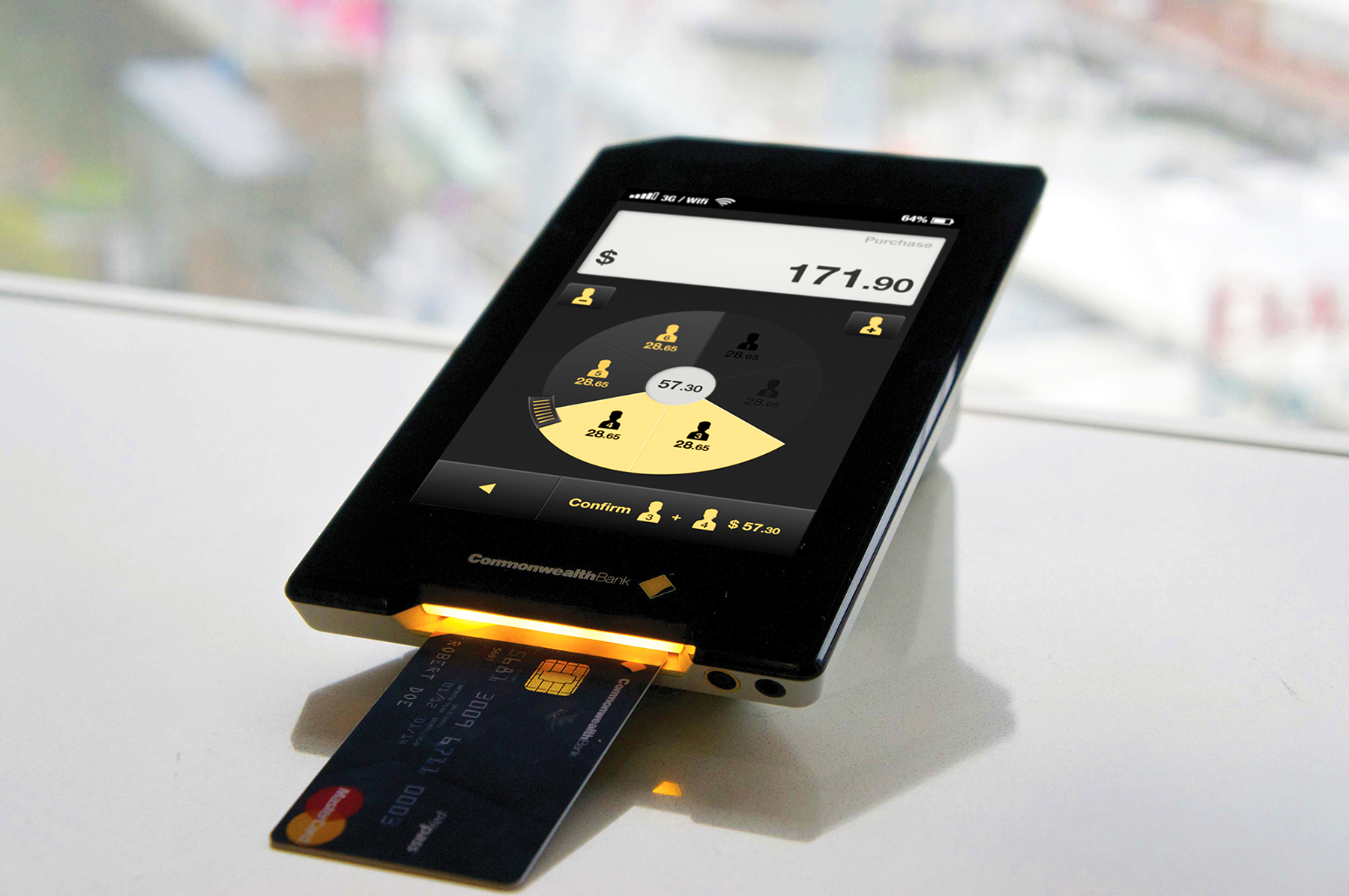
Commonwealth Bank of Australia was interested in helping customers and businesses build close connections. They believed the way to do this would be by creating richer interactions around different forms of payment. The bank approached IDEO to explore these opportunities, and the result is a new retail business platform—Pi—and a portable payment device—Albert.
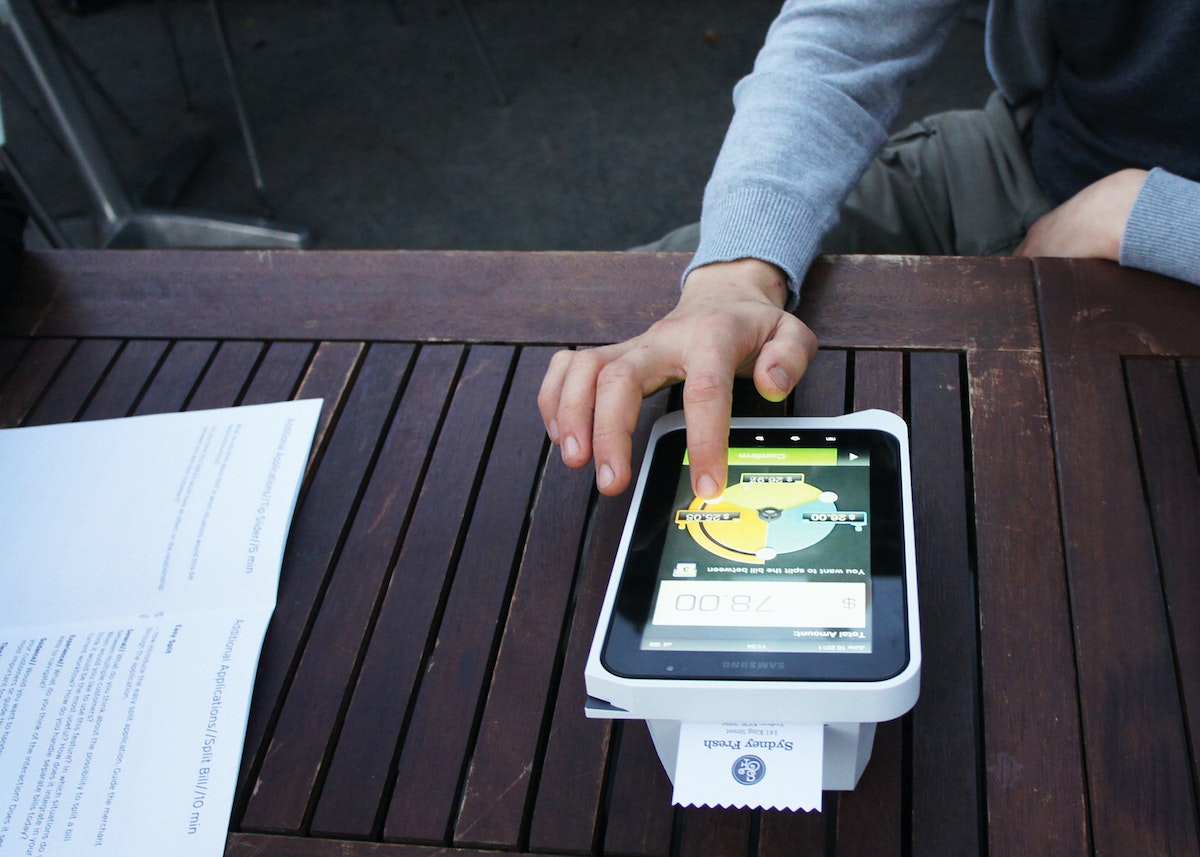
Pi brings a new level of flexibility, functionality, and customization to the face-to-face interaction between a cashier and a customer, improving everything from the process of splitting the bill in a restaurant to helping a guest find more personalized experiences at a hotel.
Insights
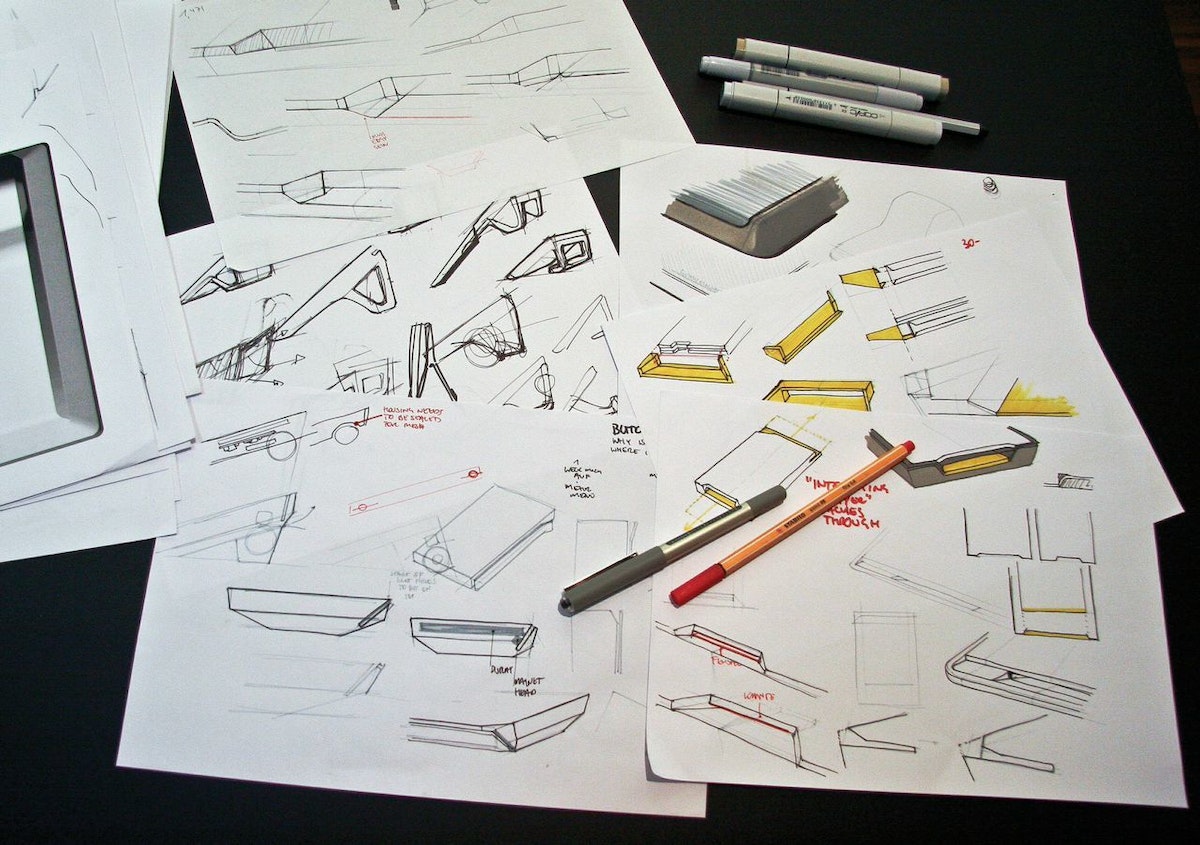
In the team’s research in Australia, the UK, and Germany, they found a few key insights that informed the design. First, they saw that an ideal platform should support the full spectrum of human behaviors around payment. Second, platforms can add value by improving the relationships among banks, merchants, and customers. And third, the payment experience should be customized to fit a specific setting, working one way in a luxury boutique and another in a gas station.
IDEO, CBA, and Wincor Nixdorf worked together closely to steward the design of Pi And Albert through product development and implementation, and to gather feedback from merchants during rapid, iterative cycles.
Results
The platform is flexible enough to benefit organizations of all sizes: Larger merchants can incorporate Pi as part of their existing network, while smaller merchants can grow their business using powerful business tools. And customers of all kinds can easily access a variety of payment methods and helpful applications.
Albert offers a large touchscreen that’s intuitive to use, the safety of virtually encrypted PIN entry, and a variety of ways to access data connections. A large battery provides power when retailers are on the go, and a modular housing means that Albert can be used in all kinds of situations. The device is built to handle current card payment methods but can also adapt to how cards might be accepted in the future, and even eliminates the need to swivel a screen from cashier to customer during the payment process.
Making health insurance enrollment easy
Designing a digital platform prototype for Californians to sign up for health insurance.
Forty million Americans became newly eligible for health coverage when the Patient Protection and Affordable Care Act (ACA) was fully implemented in 2014. Some enrolled in health insurance for the first time, while others were able to get better access to affordable health coverage.
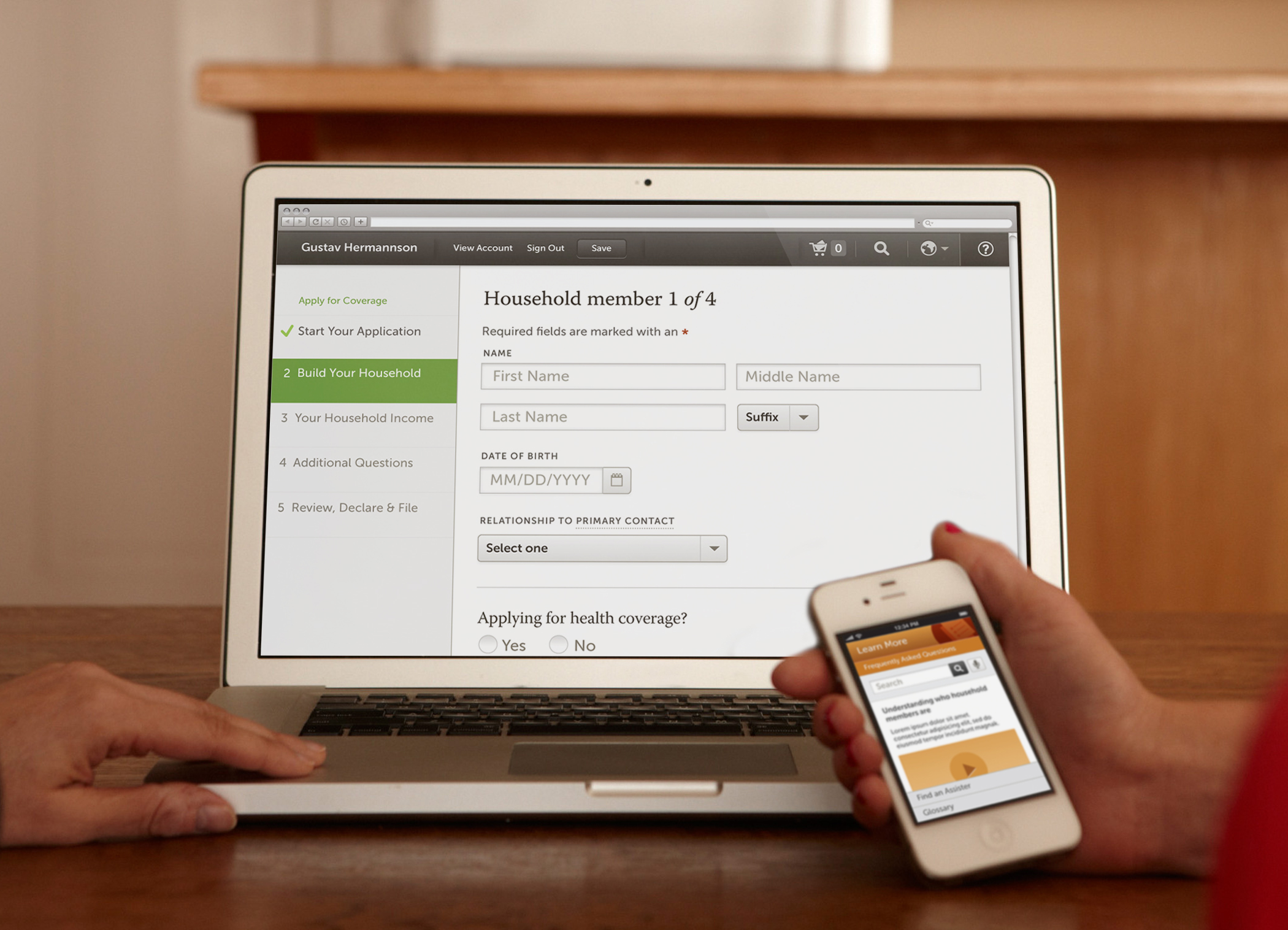
In preparation for the millions of applications, states were required to develop ways for people to sign up for health insurance online for plans that were operated by state and federal governments under the ACA. To help public and private agencies to meet the requirements, a coalition of nine national and state-based foundations, led by the California Health Care Foundation (CHCF) developed a digital enrollment prototype, and hired IDEO to lead the consumer research and design effort.
After a yearlong collaborative process, the resulting 300-page design manual and design reference prototype illustrates a customizable approach to public and private health insurance enrollment.
The flexible set of design standards developed for Enroll UX 2014 aims to make online health insurance enrollment simple, intuitive, and easy to navigate at scale.
Inspiring scientists in their research
Encouraging experts from different fields to collaborate on big ideas.
To encourage PhD candidates to think differently about how they tackle tough science problems, the University of California, San Francisco (UCSF) and IDEO embarked on a fruitful collaboration.
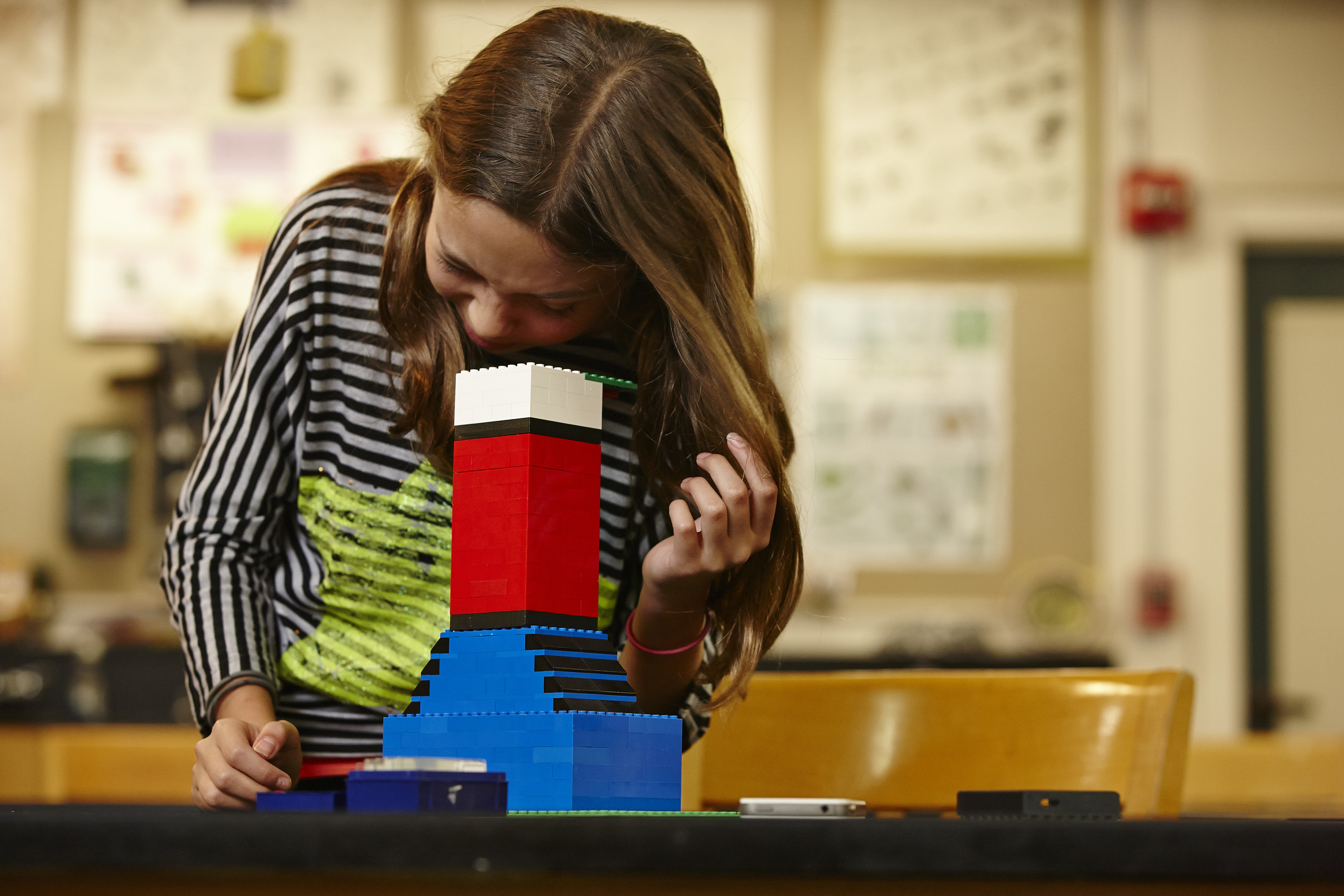
Three PhD candidates were tasked with the following challenge: Cultivate new audiences and uses for a microscope. Drawing inspiration from cell phone microscope CellScope, the trio arrived at a prototype that was less reliant on technology and easily disassembled and reassembled. How? By using the most basic building blocks: Legos.
Made of custom 3-D-printed parts and standard toy building blocks, the LegoScope, which functions as a microscope, can easily snap pieces in and out to hold different components. Both the device and the team-based process are now being used in various other campus projects to change how researchers think about conducting and advancing scientific research.
“The best work in the future is going to be done by teams of people with very different expertise, who know different things and think about things in different ways, who come together to focus on one big problem,” said Keith Yamamoto, vice chancellor of research at UCSF, who led the initiative.
Helping a tech product find its footing
A wearable device that measures concentration and focus gets a brand reboot.
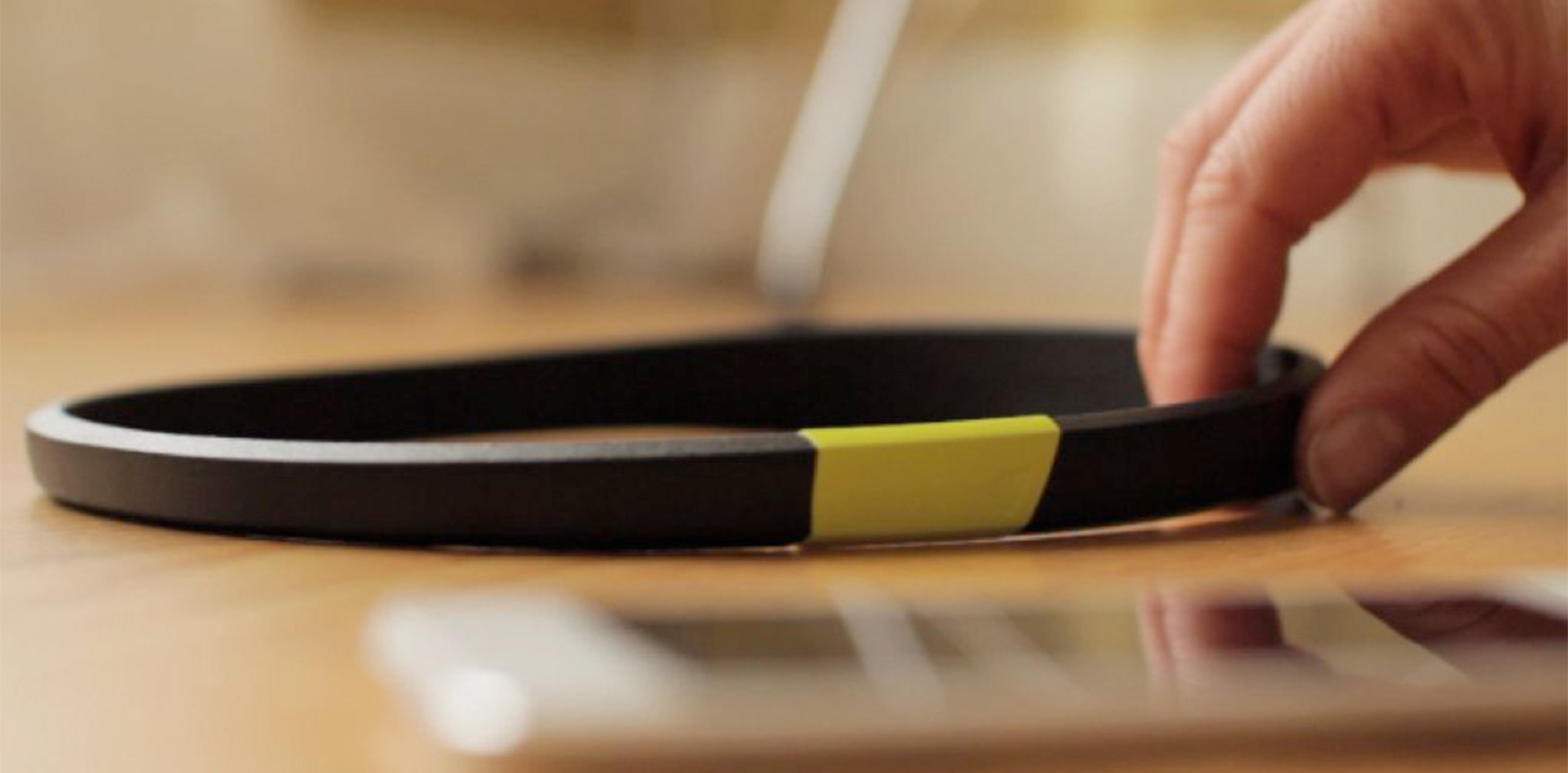
Arye Barnehama and Laura Michelle Berman wanted to take their invention—a headband that measures brain wave activity, focus, and concentration—to the next level. As a part of IDEO’s startup-in-residence program, Barnehama and Berman collaborated with IDEO on the product’s rebranding, hoping to refine and emphasize the product’s promise: When people improve their focus, they feel more mindful, confident, and productive.
With IDEO’s help, the company changed its name from Axio to Melon, delineated their brand, refined its product, developed its user experience, and prepared a Kickstarter campaign that garnered considerable press coverage. The new name, Melon, reflected the friendly, scalable character of the company. The name also suggested the intent of the product—using neuroscience data to inform a personal activity.
To distinguish Melon as a standout in the crowded quantified-self category, IDEO designers made the logo a faceted orb that references the gear-shifting mind, with “Melon” written in a distinctive font born from that same logo. The team went with fruit colors—cantaloupe, honeydew, watermelon—to evoke the sweet, refreshing experience the Melon headband promises.
Together, the Melon and IDEO teams also developed an app that shows increases in concentration after performing certain tasks and features a game in which you “fold” origami through mental focus to hone concentration.
Melon’s new brand strategy and UI set it apart from your typical fitness tracker, engaging the user in an elegant, joyful, and customized experience with every interaction.
Melon: a headband and mobile app to help you measure focus.
The Room That'll Make You More Creative
Hint: There's a throne
How did it all begin, you ask?
Long-time IDEOer Alan Ratliff was using the loo in Santa Cruz a few years back and took note of the graffiti on stall walls. He was struck by how openly and honestly strangers could share their most heartfelt feelings—in a public space. Combining this insight with the pause for thought that often strikes while seated on the throne, we thought we'd try inviting the same behavior on our own walls.
And how have people at IDEO responded?
Though the wait has admittedly increased, which brings no one joy, designing the bathroom as a place to intentionally linger and gin up ideas has become a point of pride.
Curious to learn more about how we nurture a culture of creativity? We tell the whole bathroom story, and many more, in Leading for Creativity, a new course taught by Tim Brown at IDEOU.com.

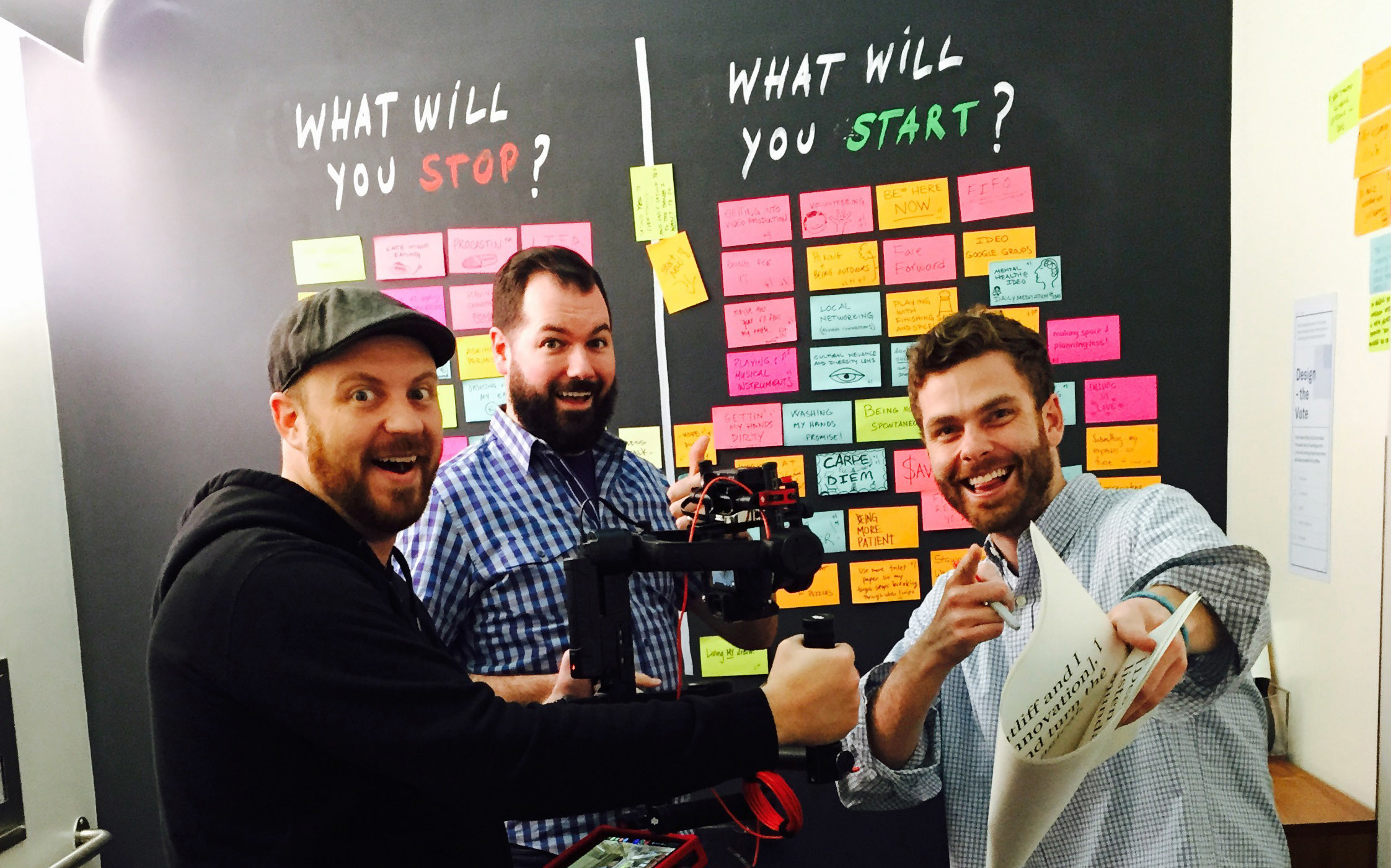
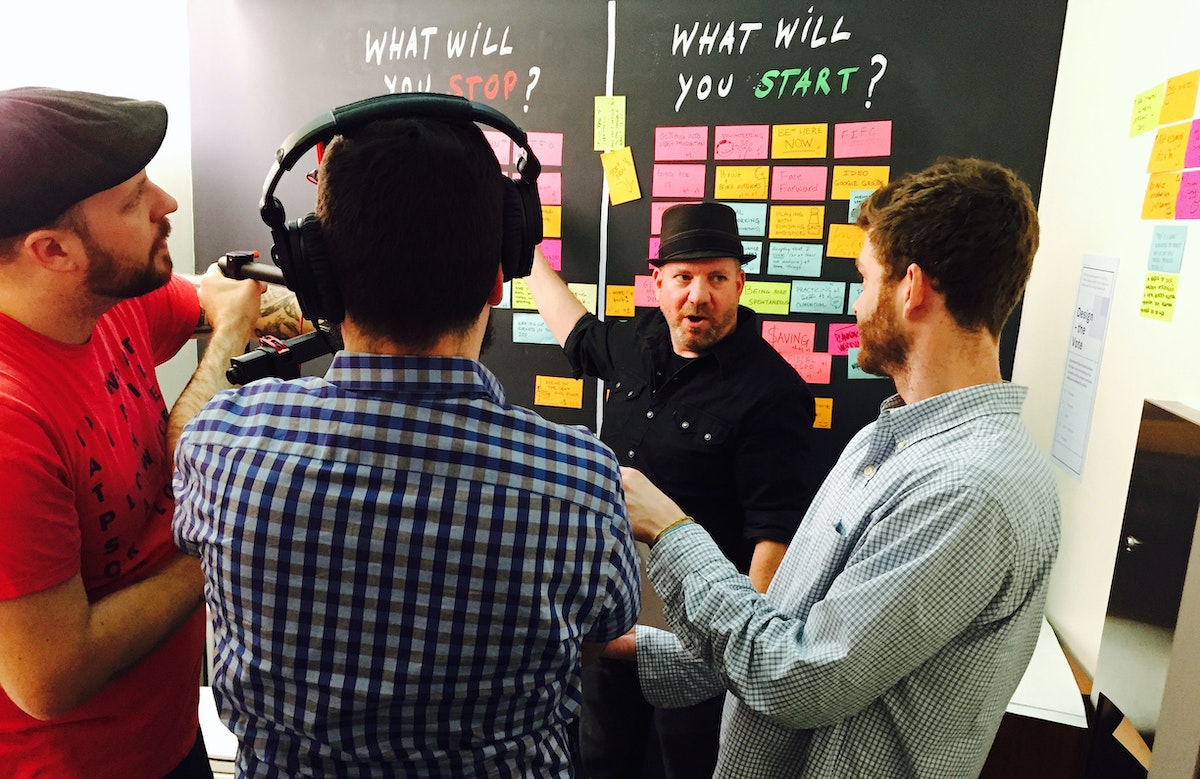
There's one stop we always make on our office tour: the john. Walls blackened by chalkboard-paint, every month presents a new opportunity to pose a controversial question and weigh in with controversial answers. Indeed, our bathroom has become one of the most—forgive us—productive places on the premises.
Take a Sonic Shower
Some mornings, we sit in a conference room together and just listen to music
Unless I’m at a gig or a concert, it’s rare that I listen to music in the presence of other people. There’s background music, sure, but that feels different—I’m not really listening. Here in New York, there’s always live music on subway platforms, but we don’t listen by choice (and while it’s often great, it can also grate).
Listening to music with others need not be limited to experiences of live music, though. Deliberately listening to recorded music with other people can be a magical experience. That’s especially true if you’re hearing it in a context that's a little unexpected, such as a conference room.
It’s a luxury to be in the same space as others and not need to talk—to just be present.
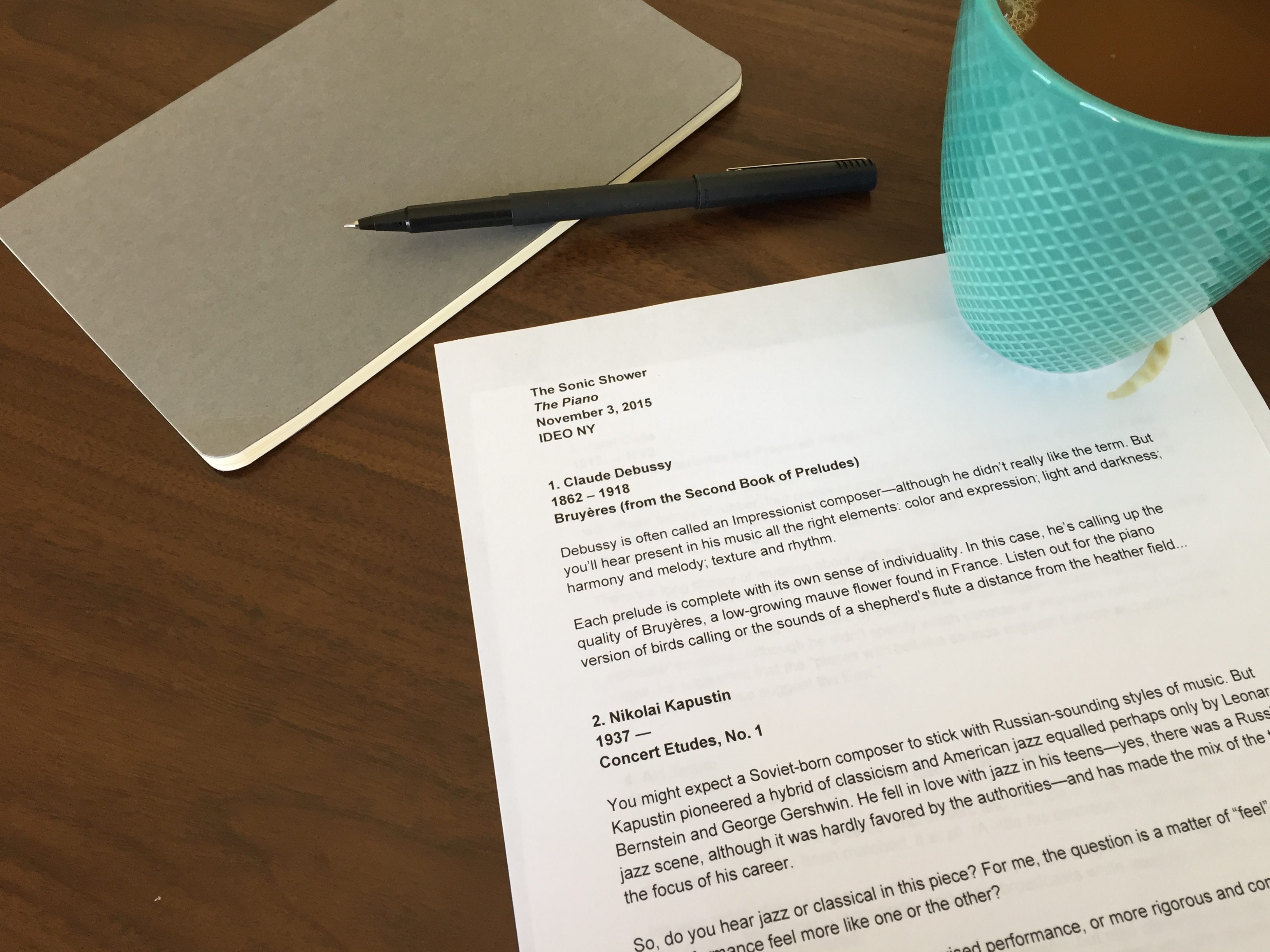
In our New York studio, we’ve been gathering for a series of shared listening sessions, called the Sonic Shower. It’s a really simple format:
• every month or so
• we spend 15 minutes
• first thing in the morning
• listening to 3 to 5 pieces of recorded music
• from around the world
• that are selected and ordered around a theme
• and played on speakers in a room
• while people listen over coffee
• and glance at light program notes, if they so choose
Three things we like about the Sonic Shower
1. IT SUPPORTS OUR COMMUNITY
It’s just a lovely thing to start the day with music. And it’s lovely to be in the company of colleagues without the pressures of drumming up conversation. Listening together creates a delicate, light experience of community that works for everyone, even if you don’t feel much like chatting first thing in the morning.
2. IT’S A SOURCE OF INSPIRATION
At IDEO, it’s our job to seek inspiration wherever we can find it. It fuels great design by keeping our teams engaged. We’re great at hunting down visual inspiration in art, type, and digital experiments. But it’s easy to forget to open our ears up in the same way—to expose our brains and hearts to sounds we’ve never encountered before. Music is sonic storytelling—it opens up imaginative doors that we’d be crazy not to go through. Each Sonic Shower is a mix of songs that are somewhat easy (or familiar) and somewhat challenging (or likely different to what you might normally hear).
3. IT ENGENDERS GRATITUDE
In so much of our work, we’re interrogating experiences—figuring out what underpins them and picking out aspects that we can replicate or evolve. But during a Sonic Shower we just listen to the music. We don’t feel an obligation to discuss it or derive meaning from it there and then. It’s a luxury to be in the same space as others and not need to talk—to just be present. And, while it does help our work, we don’t treat the Sonic Shower like work. That gives us permission to receive the music as a precious gift. And gratitude feels good.

Sample a Sonic Shower
Here’s what we listened to at a winter-themed session in December. You can find the music on Spotify here.
Hvild (2009) by Hugi Gudmundsson
Now based in Denmark, Gudmundsson is one of the bright lights of contemporary Icelandic composition. A few years ago, in a neat nod to IDEO, he was awarded one of the country’s most prestigious arts prizes: the Optimism Award.
Hvild means "rest." It was written for a friend’s funeral and includes text about carrying water over a mountain...
Snow (1954) by Irving Berlin; performed by Rosemary Clooney and The Mellomen
This is one of the stand-out songs from Bing Crosby’s White Christmas. The movie version features the four leads—Clooney, Crosby, Danny Kaye, and Vera-Ellen—singing the song together on a train. As you do.
Der Leiermann (1828) music by Franz Schubert; poem by Wilhelm Müller; performed by Jonas Kaufmann (tenor) and Helmut Deutsch (piano)
This is the final song of Winterreise (Winter Journey), Schubert’s monumental song cycle for voice and piano. Grab a whisky and listen to the whole thing sometime—it’s an intimate, crystalline marvel.
Der Leiermann translates as "The Hurdy-Gurdy Man." The hurdy-gurdy is an instrument where, to produce notes, you crank a handle that turns a greased wheel against its strings. Here’s the text of the song:
Behind the village stands a hurdy-gurdy man, cranking his instrument with frozen fingers. His begging bowl is always empty; no one listens to his music, and the dogs growl at him. But his playing never stops. “Strange old man. Shall I come with you? Will you play your hurdy-gurdy to accompany my songs?”
The piano does so much more than simply accompany the voice. Elsewhere in the cycle, it becomes a powerful storm, the rush of water beneath ice, a creaking weathervane, and much more. Listen for how, in this song, it conjures up the sparse drone of the hurdy-gurdy.
Winter Darkness (2014) performed by Nils Økland (Hardanger fiddle) and Georg Buljo (voice)
The Hardanger fiddle is a traditional stringed instrument from Norway. Contemporary players such as Økland have coaxed the fiddle into modern music, working with collaborators near and far.
Buljo has done much the same with joik (pronounced ‘yoyk’), one of the oldest vocal traditions in Europe. A joik is both a style and a song form, deeply rooted in the Sami culture of Sweden, Norway, and northern Finland.
All that said, this is a pretty traditional piece—but modern, close recording lets us hear every crack in Buljo’s voice and every bow across the strings.
Does it sound like "winter darkness" to you?
It’s never been easier to share music with each other: Here’s a link, there’s a playlist, and off you go. At the same time, my experience of music has become more and more private, more and more mediated by headphones.
5 Ways to Design a Great Effing Meeting
Hint: Confiscate the phones
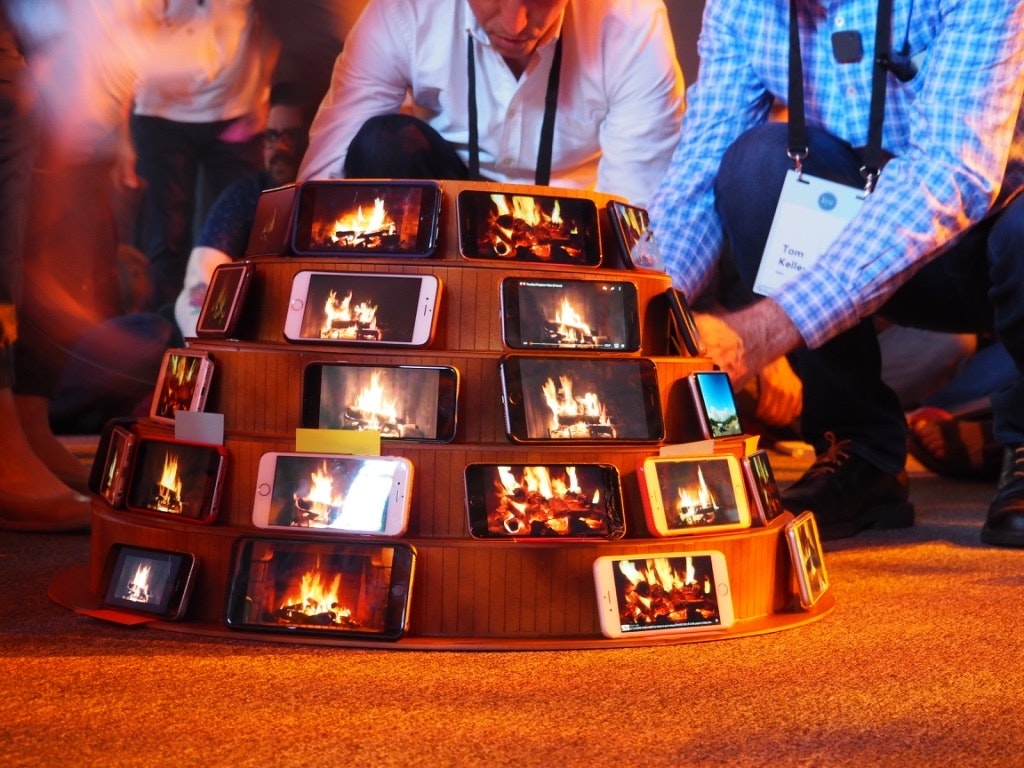
We thought about the physical context: If looking at a screen put viewers into a mode of judgment, what environment might lead them into a state of openness and wonder? After a few false starts—and ruling out marijuana—we settled on a campfire. Everyone has experienced the magnetism of a flickering flame and its power to open you up to a good story.
Burning wood was going to be a challenge indoors. But then another part of our talk occurred to us, in which we identify iPhone addiction as a scourge that prevents people from engaging in creative daydreaming. What if we took away the audience's phones and used them to stoke up the flames rather than dowse them?
Here’s how the experience played out. We gathered everyone in a conventional classroom setting and ran them through a calendar review exercise (“Look at your last week and count the hours of creative imagination”). Then we shared some recent brain science studies that point to the power of daydreaming to cultivate creativity. Diving deep into the intricacies of neuroanatomy, we could tell we were losing people.
Just before everyone fell asleep, we herded them through a back door to another part of the building. Here, in dimmed light, we had each person load a YouTube video of a campfire and set it on top of a foam-core structure made by our designers in the Chicago office. Soon we had a raging digital bonfire of iPhones, with additional sound effects from having our audience gently crinkle Post-It notes in their hands.
No campfire would be complete without taking turns strumming a guitar and telling stories of things we’d done to rediscover our creativity, so that's exactly what we did. The previously restless audience sat on the floor, gazing at the virtual fire, curious and relaxed.
Look at your last week's calendar and count the hours of creative imagination.
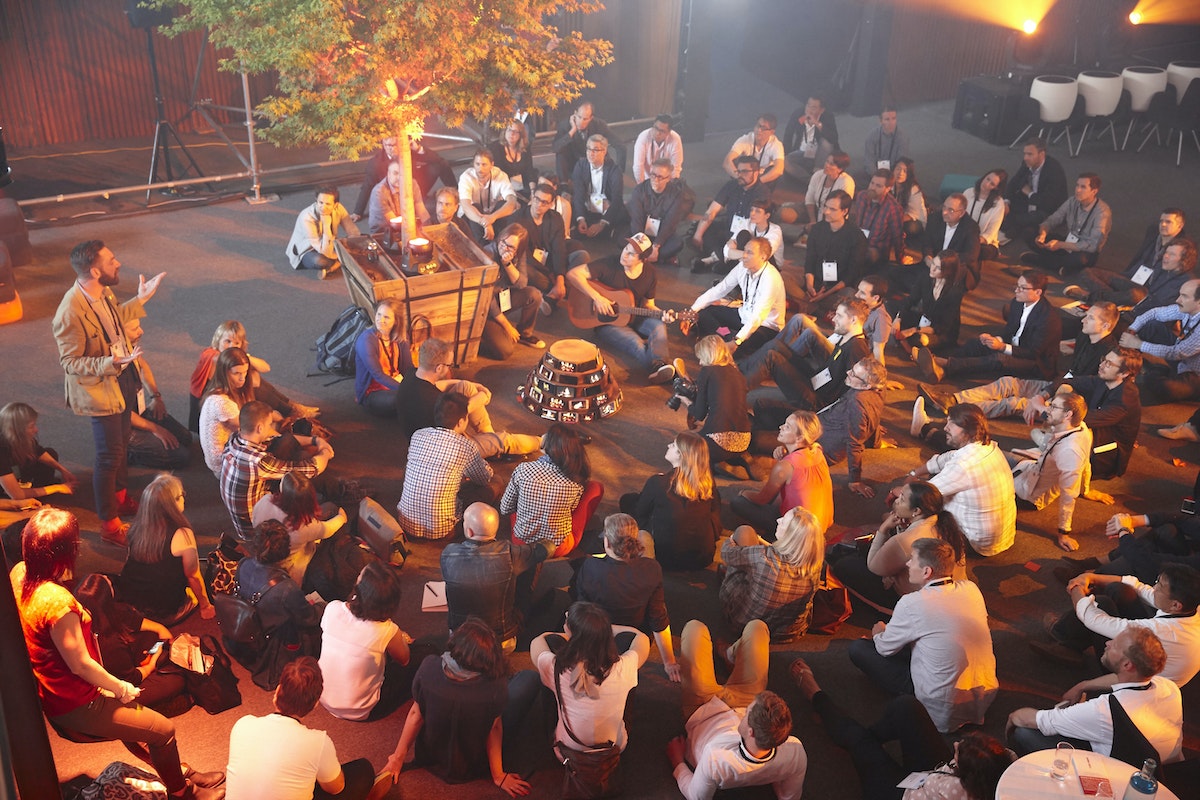
We turned the floor over to the attendees. What strategies did they use in their own practice?
One colleague shared a story of hanging a lamp above his desk to serve as a beacon. When the lamp was on, it let others in the studio know he was available to talk. Another shared her technique of running away from distractions—literally, on foot—until her head was clear. A third announced he would try to change his mindset by drawing for a few minutes each morning when he got out of bed. As the session ended, we asked everyone to write down something they would try in the future to spark their own creativity. Commitments were made and notes were tossed into “flames” as attendees drifted away, dreaming of a new way to work.
In sum, here are 5 ways to design a non-boring meeting:
- Start conventionally, then lead attendees to an unknown frontier
- Confiscate phones
- Commit to a gimmick so they don't complain that you've taken their phones
- Play music
- Ask people to share personal stories
*Only one iPhone was lost during the making of this session… but seriously, who took it?
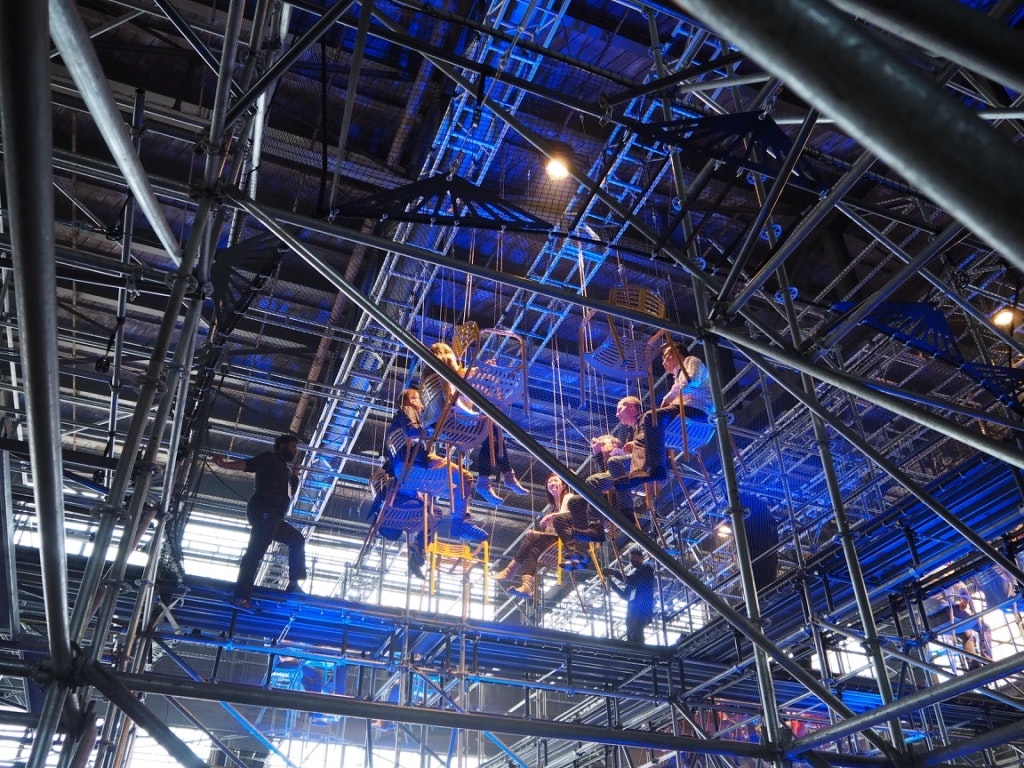
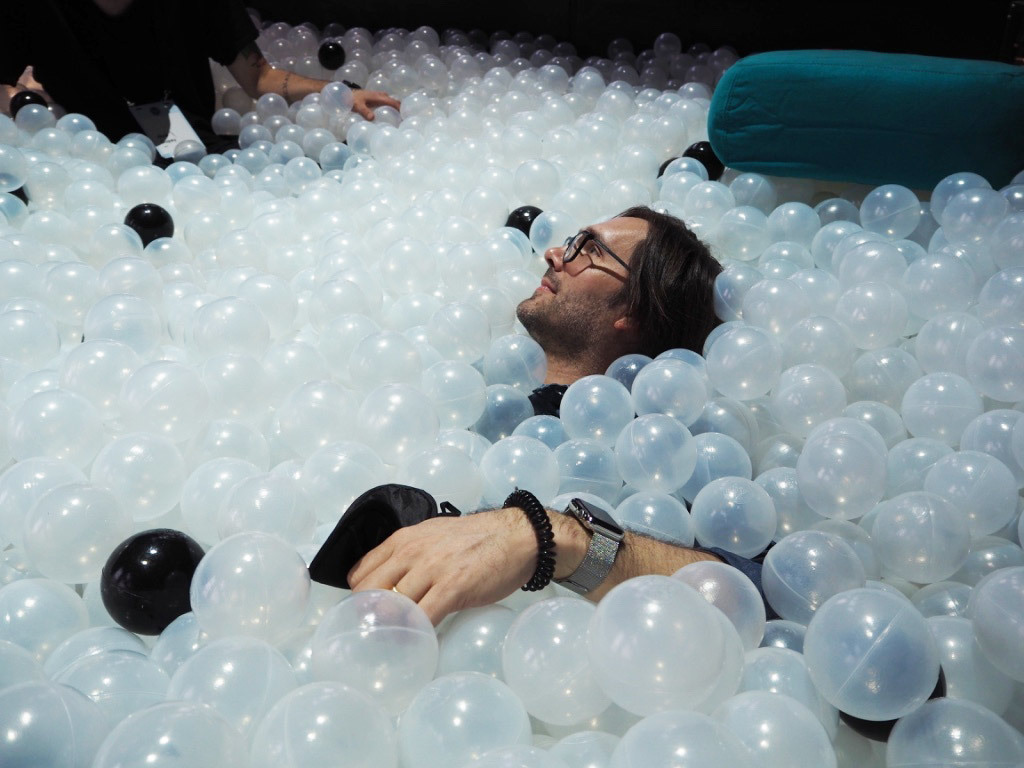
Our quest: to invent an un-boring meeting. My colleague Michael Hendrix (above, immersed in one experiment—a bubble-bath-based brainstorm) and I were preparing a conference session about the importance of putting yourself in a creative mindset. But the way we were delivering it—two dudes standing at the front of a room with a PowerPoint deck—was about as inspiring as the DMV. We needed the audience to experience the thing we wanted to teach.
Why VR Will Revolutionize How We Do Research
Using immersive video as an empathy builder
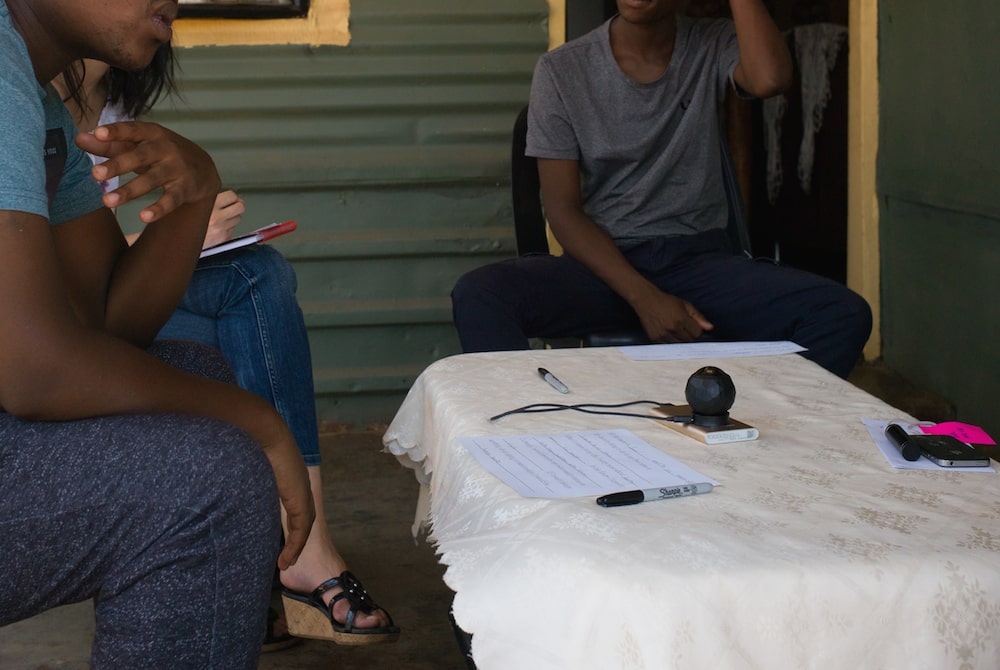
Last November, three IDEOers and I set off to South Africa for a project focused on women's health. With so many others back in Cambridge eager to stay involved, we wanted to create a way to share our experiences from 8,000 miles away.
So we transformed our project room back at IDEO into an immersive, womb-like experiential space. Inside: a single chair and VR viewer. Every day over the course of the trip, we sent virtual reality videos that teleported our colleagues from Cambridge to our happenings in the field.
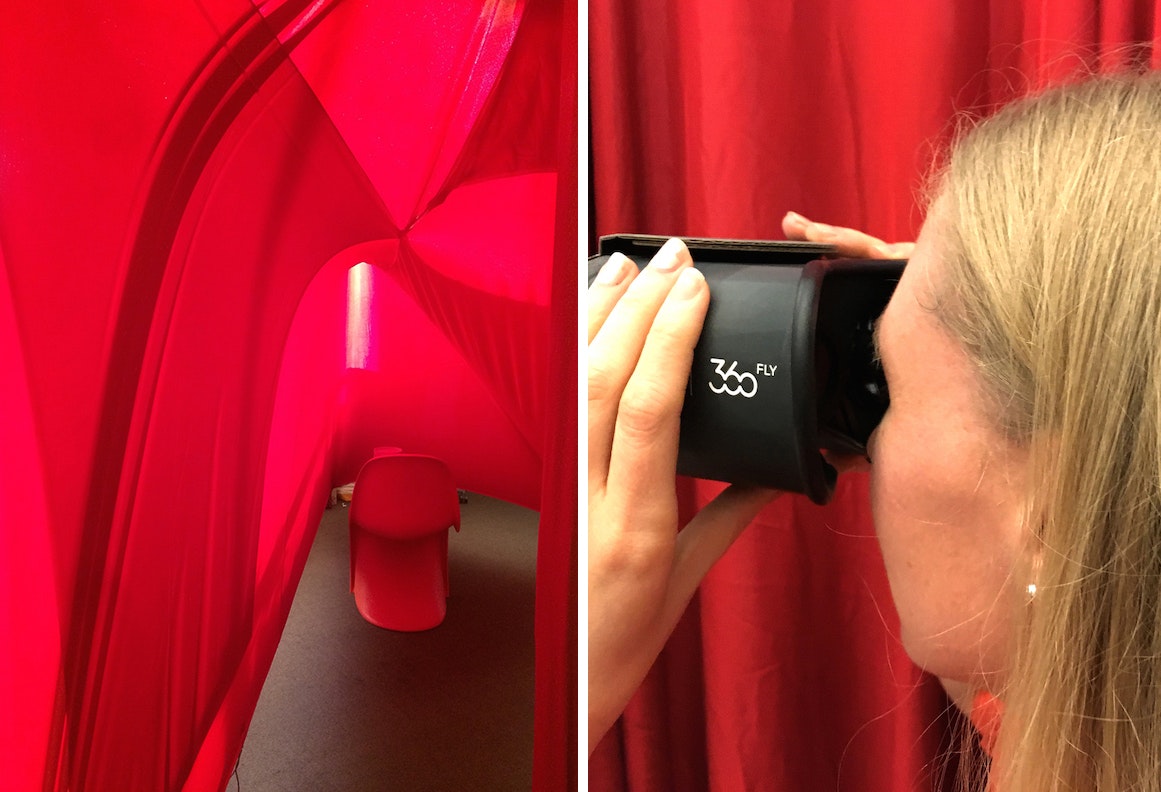
From this experiment, we got a glimpse into the impressive potential of this technology to radically change our industry. Here are five reasons to consider using VR for your next design research adventure:
1. Being invisible is super powerful
The VR camera we used was pocket-sized—hardly intrusive. Its 360-degree lens also breaks users’ mental model of a camera, no longer conveying that it's staring at them, or you, or anything, really. It puts participants at ease as it quickly fades into the background.
2. You can capture background noise
Our research environments are rich and beautifully complex. But during a typical interview, we're so focused on what the participant is saying or what question we’re going to ask next, it’s hard to take it all in, and much gets lost in translation when recounting the details later on. VR gives you a way to capture the background environment, and lets you elegantly weave it into the full narrative.
3. You gain empathy from those far away
The IDEOers back home felt like they were a part of the experience—as if they were with us, in the moment, and not just hearing the story secondhand. They said the videos felt active and immersive, allowing their senses to be fully engaged. Photos and traditional video are useful, but it’s just not the same.
4. You’ll be part of the scene (like it or not).
Filming in 360 degrees means there are no degrees to hide in! And while some may argue that this is more an obstacle than a benefit, to me, it feels more honest. It captures the reality that our research is not a one-sided investigation but rather a two-way conversation and collaborative experience.
5. You’ll want to watch it again. And again.
With VR, each viewing opportunity is unique. The viewer decides where to look and what little detail to pay attention to. It’s like getting to relive a moment in a thousand different ways, without ever getting called out for staring at anyone or anything. Even more compelling: Because the experience feels so vividly real, one is left with an almost visceral sense of nostalgia that’s powerful and addictive.
I'm excited to see how design researchers continue to experiment with VR. Will we embed insights directly into the video? Will research participants be able to "walk" into virtual environments we create? The possibilities are limitless, so strap on your seatbelt (and headset).
Thanks to my project team: Ann Kim, Lauren Kim, and Greg Wolos
Today, everyone’s buzzing about virtual reality and its potential to revolutionize the gaming, news, and film industries. But there’s one application that you rarely hear about: research.

Lindsey Turner
I’m passionate about building brands, products, and experiences that help organizations show up with meaning and momentum.
I help organizations cut through complexity by shaping how they show up, through brand strategy, identity, and storytelling.
Working at the intersection of brand and business, I bring an editorial eye and a bias toward making—turning ideas into tangible experiences that people can understand, trust, and believe in.
My work spans government, healthcare, financial services, media, and consumer goods, from launching Gen Z-focused ventures to building innovation labs and reimagining legacy brands. I relish moments of ambiguity and enjoy translating across teams, perspectives, and priorities to move ideas forward.
I started my career in editorial and digital design, shaping cross-platform experiences and identity systems in publishing and agency environments. That foundation still shapes how I work today: I’m detail-oriented, collaborative, and overreliant on the Oxford comma. I hold a BFA in Visual Communication from the School of the Art Institute of Chicago.

Rachel Young
My work helps organizations see who their products aren't working for—and build the will and the tools to do something about it
For 25 years, I've asked the same question: Who does this design exclude—and what are we going to do about it?
My work spans human-centered strategy, inclusive design, and qualitative research, with clients ranging from Microsoft, Google, and Verizon to the National Science Foundation, and San Francisco Unified School District.
Before IDEO, I taught elementary school in East Palo Alto and spent a decade doing design work with social service organizations—where I learned firsthand what it costs people when systems are built without them in mind.
I am currently writing User Error, a nonfiction book about digital access and the design decisions behind it. I live in Oakland, California.

Brian Pelsoh
I lead with craft, ensuring our work is creatively excellent: rooted in deep human insight and imagination, while also grounded in the realities of business and technology.
My expertise spans brand, communication, and product design across tech, education, the arts, and social impact.
I believe great work demands both high-level vision and obsessive attention to detail, and only happens through collaboration.
I bring an inclusive, hands-on approach and a deep understanding of business, which enables me to consistently deliver excellence while always asking why.
Before joining IDEO, I worked at the brand firms Pentagram and VSA Partners. I began my career as a designer, leading teams at the School of the Art Institute of Chicago and the Milwaukee Art Museum. I hold an MFA in graphic design from Maryland Institute College of Art and a BFA in communication design from the Milwaukee Institute of Art & Design, and have taught at some of the best design schools in the US.

Tony Wong
I am responsible for IDEO’s long-term success in China and working with clients to use design as a tool to enable growth.
I am responsible for IDEO’s long-term success in China and working with clients to use design as a tool to enable growth. Specifically, I have helped Chinese companies design holistic brand solutions through the development of their products, communication, services, and innovation teams, and I have helped multinationals expand their presence and influence in China.
I advise global leaders on developing China-led innovation and capabilities.
In over 15 years in IDEO Shanghai, I have worked on projects that use design to elevate the quality of the experience of healthcare products and services, streamline processes that increase productivity, create spaces and programs that promote and enable inclusive communities, and build next generation mobility solutions that are planet-positive.
Before joining IDEO, I worked at Philips Electronics and the Electrolux Group in Italy, the Netherlands, and Singapore on a number of breakthrough commercial products. I am a member of the Young President Organization in Shanghai.

Building a personal AI for the messiness of life: Sida Li
Most AI products today are built for work—a space with clear problems and established systems. One founder noticed a gap: personal life is messier, harder to systematize, and mostly left behind by the AI boom. So she built Cue, a personal AI that lives inside iMessage and group chats, to go where the other tools haven't.
In this episode, Becca Carroll, IDEO's Chief Strategy Officer, talks with Sida Li, co-founder and CEO of Shared Context Lab, about staying anchored to a human need while the technology around her keeps changing shape, why she treats her business model with the same rigor she'd bring to a product, and what it feels like to build a company at this particular, disorienting moment in AI.
The conversation also gets into how Sida makes design decisions: the language Cue uses to describe itself, the tradeoffs behind building inside iMessage instead of a new app, and a real story about a business idea that didn’t pan out.
This is the second in a two-part series profiling founders from IDEO's Startups-in-Residence program. The first conversation is with Johannes Seemann, founder of Sooner, on designing GenAI for the emotional side of money.

Designing GenAI for the emotional side of money: Johannes Seemann
Most personal financial tools are built to run the numbers and optimize towards a budget. While that works for some, most people experience money as a lived relationship that does not neatly fit into a spreadsheet. Johannes Seemann and Becca Carroll discuss why money is emotional before it is mathematical, and what a human-centered approach to building a generative AI financial product looks like in practice.

The curious leader's edge in uncertainty: Scott Shigeoka
Mina Seetharaman talks with Scott Shigeoka, author of Seek and Head of Curiosity Cultivation at the Eames Institute, about what distinguishes genuinely curious leadership from performative curiosity, how power dynamics shape curiosity, and why practicing curiosity can restore energy rather than drain it.

How constraints make us more creative: David Epstein
Mina Seetharaman talks with David Epstein, author of Inside the Box and Range, about why total freedom often produces average work, how leaders can design useful limits on purpose, and what organizations such as General Magic and Pixar reveal about the relationship between boundaries and creativity.
Looks like you might be in search of something very specific?
Or reset the filters above and try another angle.
Here’s some random inspiration

Podcasts about creative leadership

Articles about the power of prototyping
