
.svg)



Reintroducing The Lawrence Hall of Science
A lively new brand reenergizes a STEM learning institution.
Named after Ernest O. Lawrence, UC Berkeley’s first Nobel Laureate, The Lawrence Hall of Science’s wide-ranging products, services, and tools developed organically over half a century. To begin to make sense of the breadth and depth of its offerings, IDEO asked leadership and staff to surface the myriad activities, audiences, and relationships with external partners, enabling the group to visualize—and make sense of—the totality of The Lawrence brand.
During in-depth research with parents and kids, educators, and experts, IDEO discovered that each of these audiences had distinct mindsets. Parents and kids engaged with The Lawrence to explore, have fun, and dive deeper into a specific topic. Educators utilized it for professional learning opportunities and to discover new, exciting classroom tools. While experts, including UC Berkeley faculty, STEM educators across the US, and funders, viewed the center as a resource for best-in-class STEM education research. The mindsets highlighted The Lawrence’s unique capabilities, but the complexity also created some opportunity areas, including ways to use storytelling to create emotional resonance around The Lawrence’s core values and how to design a unified narrative to connect the dots across audiences and offers.
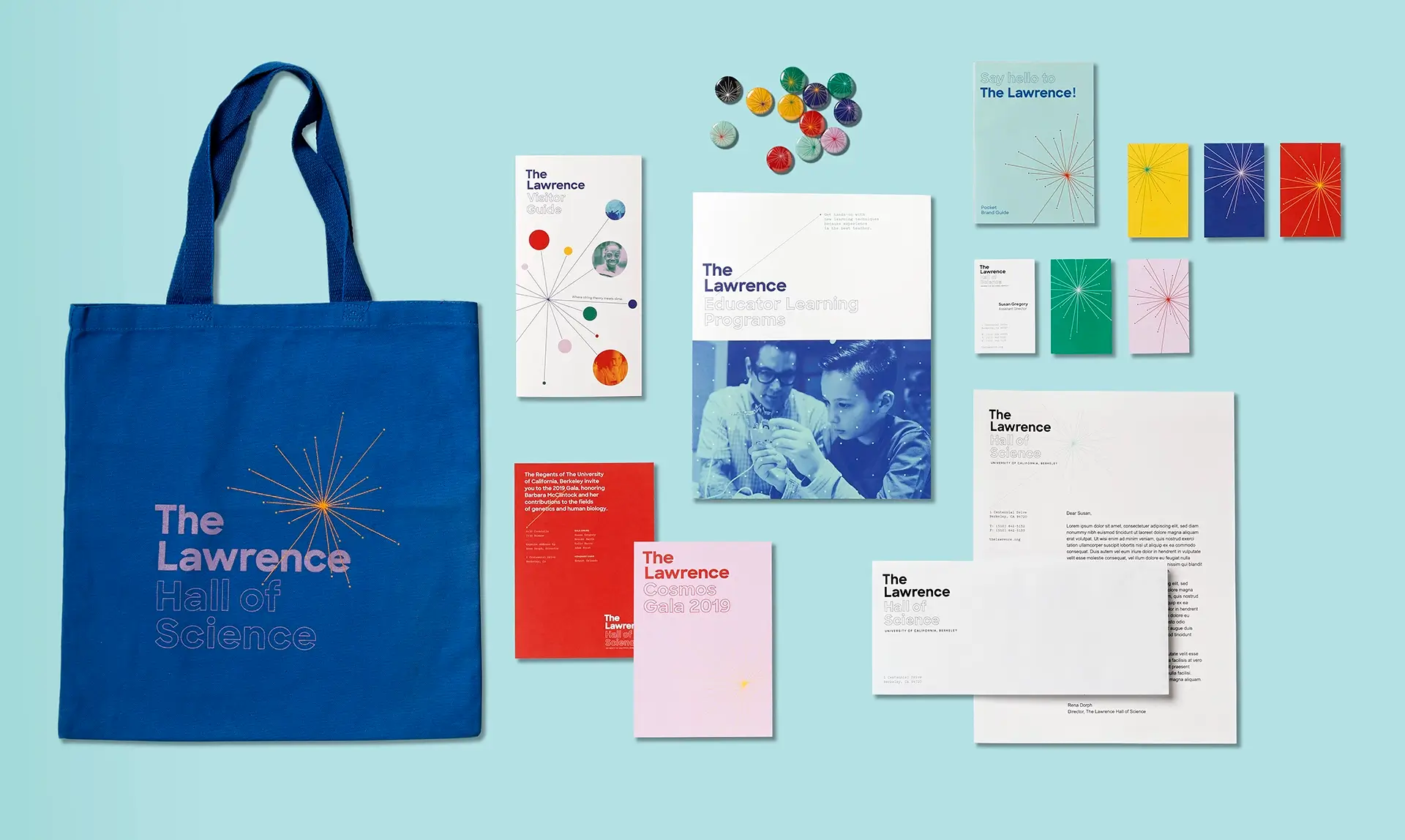
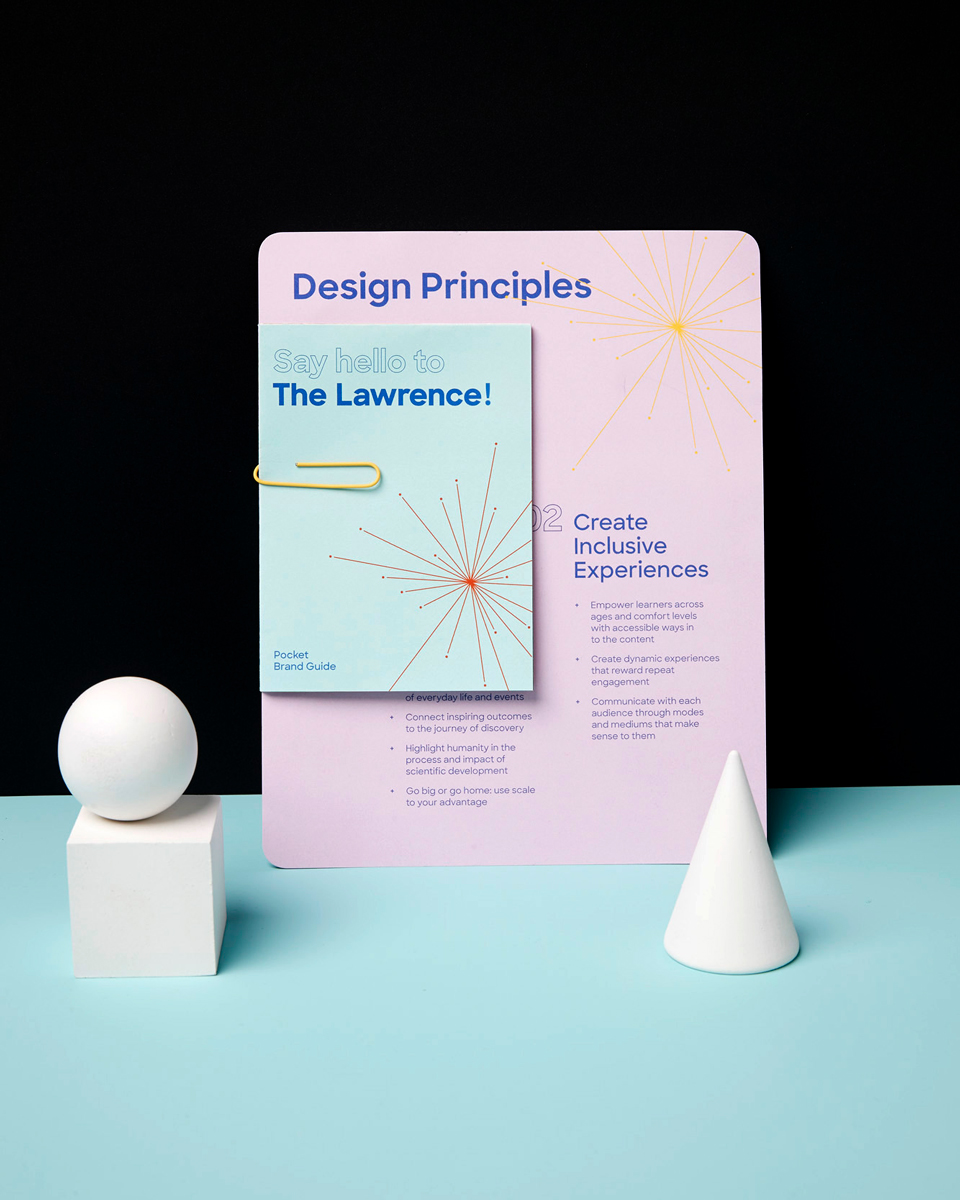
Building on its strengths as an institution and the identified opportunity areas, IDEO created a modern, vibrant, and flexible brand that strategically and visually unites all of The Lawrence’s offerings, working across digital and physical media. Grounded by a grid system, the updated brand identity is simultaneously rigorous and fun, featuring a bright color palette and signature retro-cool super-nova mark. Different offerings are bundled together based on different audience needs, preventing confusion and easing navigation. Even the name of the science museum, The Lawrence Hall of Science, was updated to a more contemporary and approachable, The Lawrence, inspired by The Met.
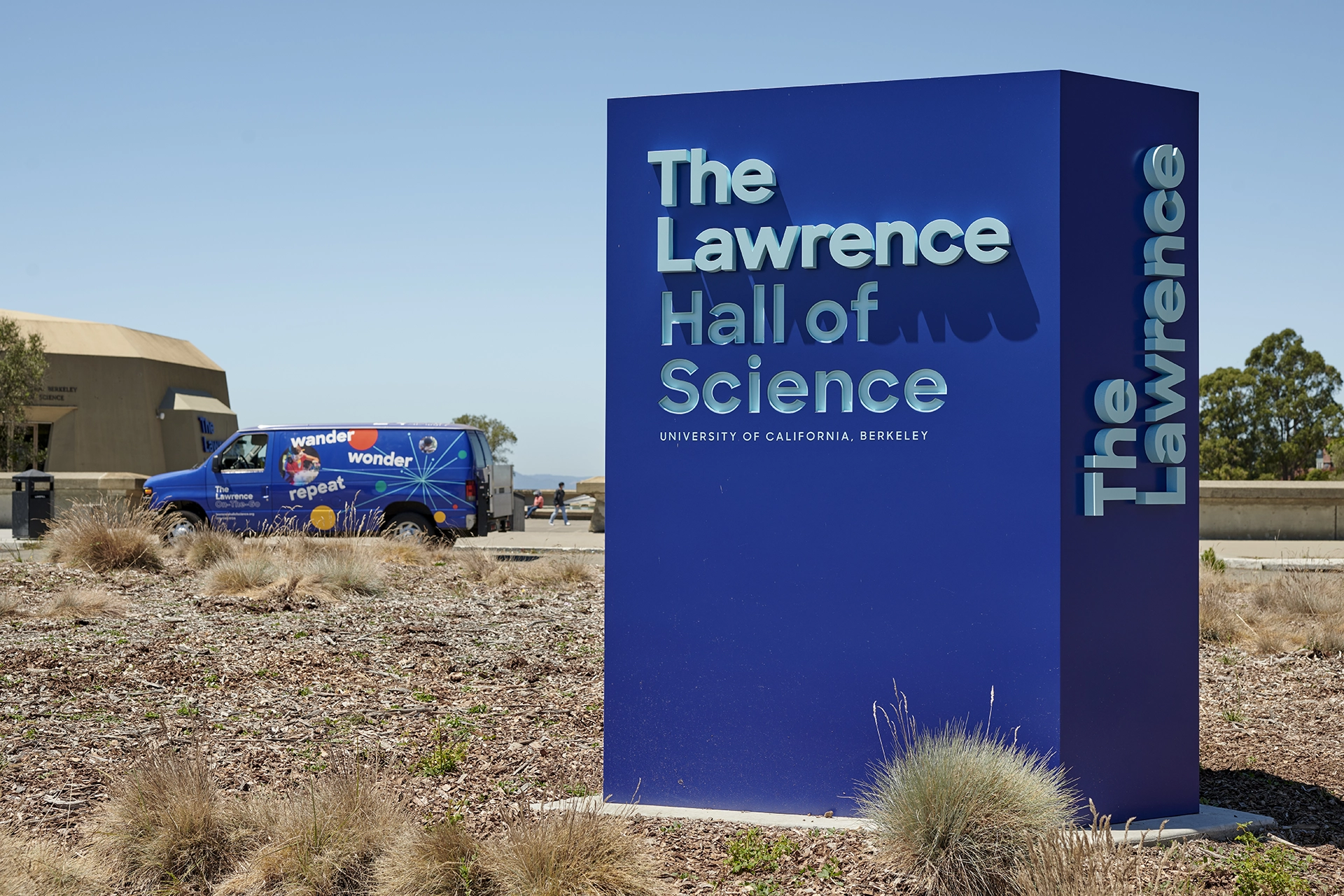
The Lawrence unveiled its new brand with much fanfare in late 2018 as part of its year-long 50th anniversary celebrations. Visitors can see the updated identity across all public-facing elements, including The Lawrence’s website, curriculum and educator materials, letterhead, collateral, and exhibition and wayfinding signage. The redesigned brand has been credited with bolstering the popularity of the science center among families and schools and causing ticket sales to return to—and exceed—pre-pandemic levels. Internally, the rebranding effort has helped generate excitement and energy across departments, helping solidify a collective future strategy and vision for its next 50 years.

The Lawrence Hall of Science’s diverse offerings had grown extensively over the decades, creating a confusing and disjointed experience for its various audiences. On the eve of its 50th anniversary, Lawrence leadership sought a brand refresh to better connect with its target audiences and differentiate itself in the STEM education ecosystem.
Over $6M in new funding
raised to transform and modernize The Lawrence, thanks to IDEO's rebranding effort

Reinventing classic British pubs and inns
Greene King’s upscale Everly Hotels Collection combines modern comfort with local impact.
When Greene King approached IDEO in early 2022, it was (and still is) one of the UK’s leading hospitality brands, with over 2,600 pubs, restaurants, and hotels. At that time, consumers in the UK and other parts of the world were beginning to rediscover the joys of travel after years of pandemic lockdowns. Greene King’s newly formed Venture Hotels Team wanted to understand how guest expectations had shifted during Covid-19 and how a new customer-centric hotel brand and signature service experience might meet—or exceed—their expectations.
To get inspired, the IDEO team interviewed a range of travelers of different ages and backgrounds, met with hospitality and luxury experts, and conducted immersion visits, including visiting high-end hotels. The research revealed modern travelers want unique hotel experiences that cater to their curiosity, support local communities, and are environmentally sustainable. Luxury, which once meant “exclusive,” was now about enabling one-of-a-kind cultural experiences. Today’s travelers value inclusivity, accessibility, and well-being; they want to feel welcome, do things at their own pace and have thoughtfully curated options to choose from. They also expect hospitality practices to be ethical and sustainable, contributing to the welfare of local communities and the planet.
Building off this research, IDEO crafted a new entry proposition for Greene King’s new Everly Hotels Collection called “The Discover Collection,” which leverages the best parts of a classic British pub and inn—bespoke historic locations full of character, culture, and stories—while offering guests a modern experience from pre-arrival to departure, all grounded in supporting the communities they are in.
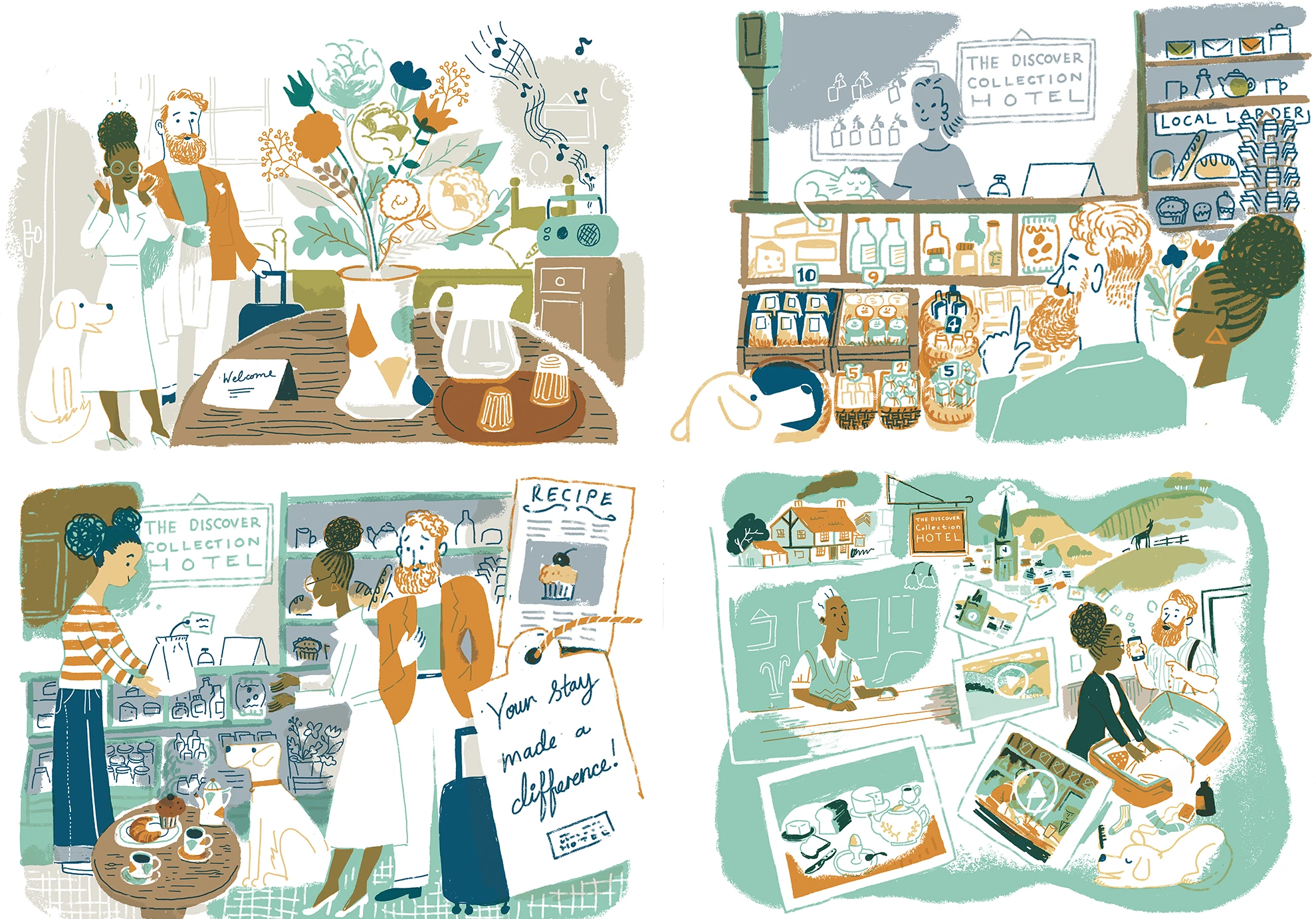
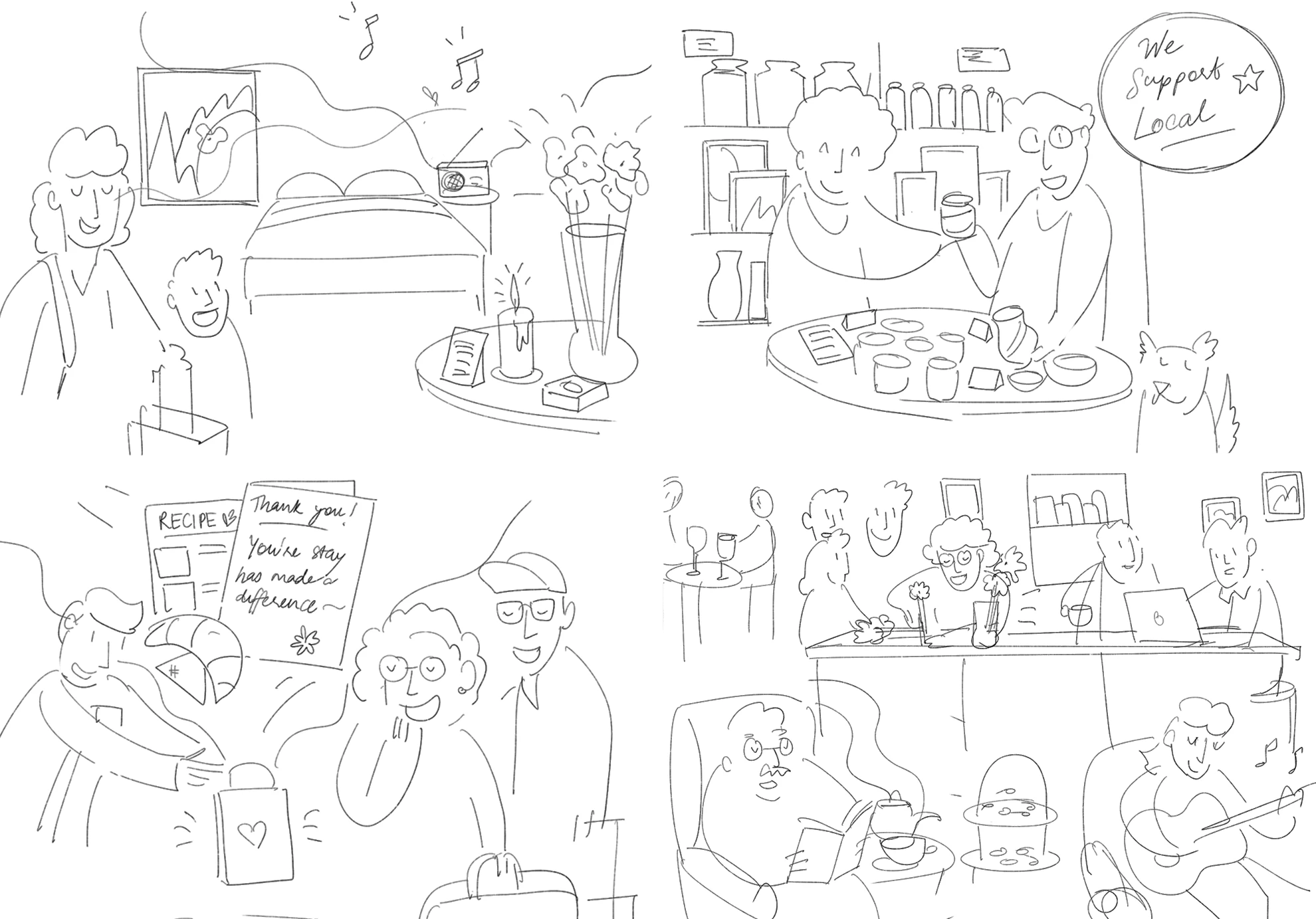
Signature moments include a warm welcome during check-in, as well as staff recommendations and local maps highlighting neighborhood gems. During their stay, guests enjoy expansive seasonal food menus, as well as a beverage menu that includes a wide variety of locally brewed, distilled, and crafted drinks by local suppliers. Rooms feature a smuggler's treasure chest with a surprise treat. Art and books from local talent are on display throughout the hotel, and local experts lead activities and events. Guests tangibly experience Greene King’s commitment to sustainability through its use of local materials, produce, talent, and partnerships, all designed to support the surrounding community. Upon departure, guests receive a personalized postcard.

In addition to the hotel experience moments, IDEO delivered branding recommendations for The Everly Hotels Collection, including visual identity and tone of voice that provide a cohesive look and feel for the collection of hotels while simultaneously showcasing each property's unique character. This was all packaged as an experience playbook, with design principles and briefs to help guide implementation decision-making across Greene King’s marketing, digital, interior design, and food and beverage teams.
A few months after the project ended, Greene King launched The Everly Hotels Collection. Its pilot hotel, The White Horses in Rottingdean, East Sussex, opened within the year. The new brand and guest experience strengthened bonds with Greene King’s loyal customers and first-time guests, ensuring the brand's relevance and appeal in a competitive market. More hotels are planned in the future in other scenic UK locations.
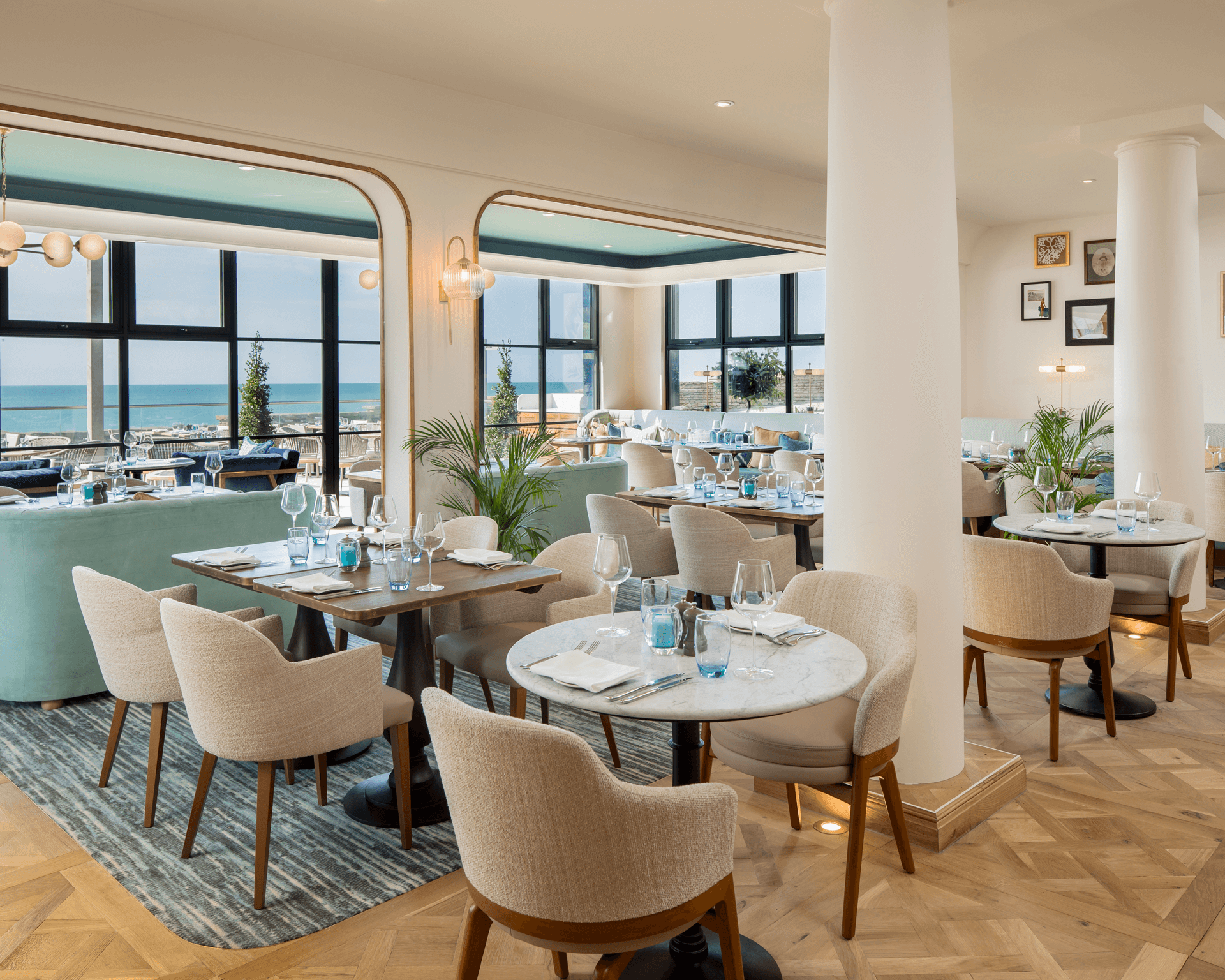

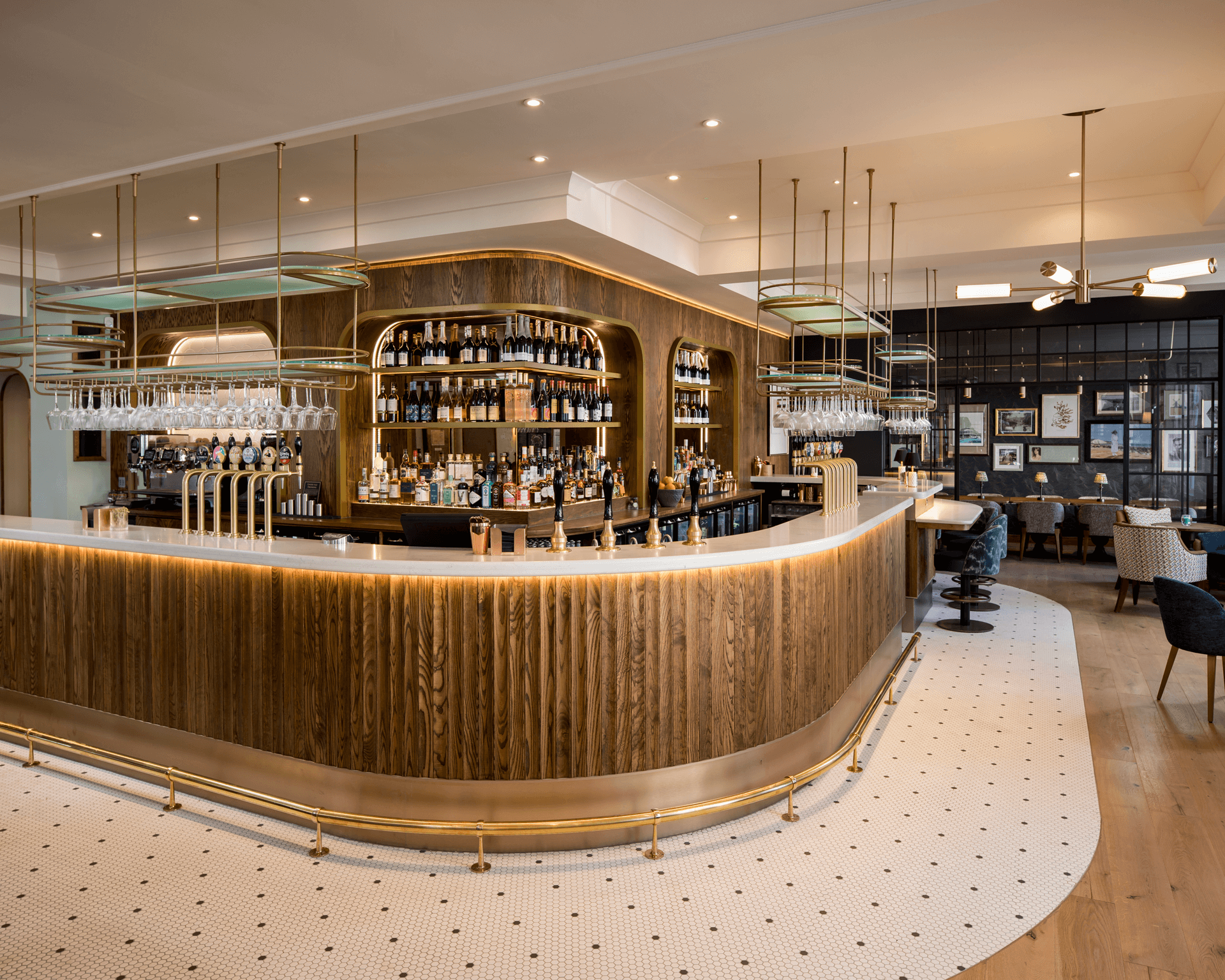
Greene King wanted guests to have a consistent brand experience while maintaining the storied charm that makes each property unique.
2 years
from concept to the launch of Greene King’s boutique Everly Hotels Collection
1 pilot hotel
The White Horses opened in Rottingdean in 2024
A new paradigm in data storage
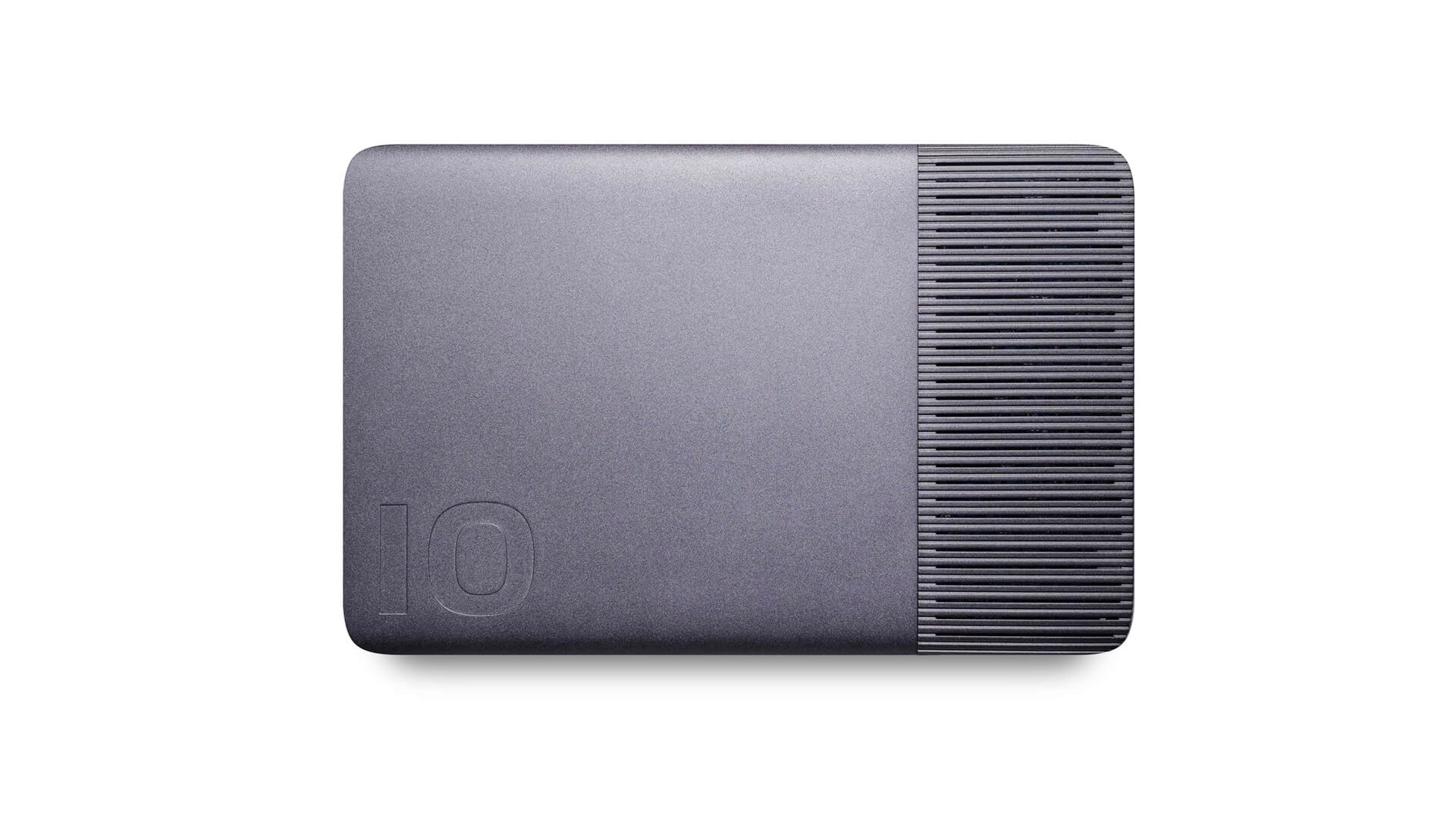
Designing the iodyne Pro Data and Pro Mini hard drives.
The hard drive space is full of companies competing over technology and performance. But iodyne wanted to add another layer, focusing on user needs and product aesthetics to better position the company to meet the values of a broader audience and create compelling new entrants into this crowded market.
Together, IDEO and iodyne jumped into in-depth discovery research to learn more about the needs of their end users. The team sat down with photographers, videographers, and digital imaging technicians, asking questions about their file management systems, how they used hard drives in the field, and how they stored them for transport and at home. They also headed to the source, visiting studios and home office set-ups to understand the full range of potential use cases.
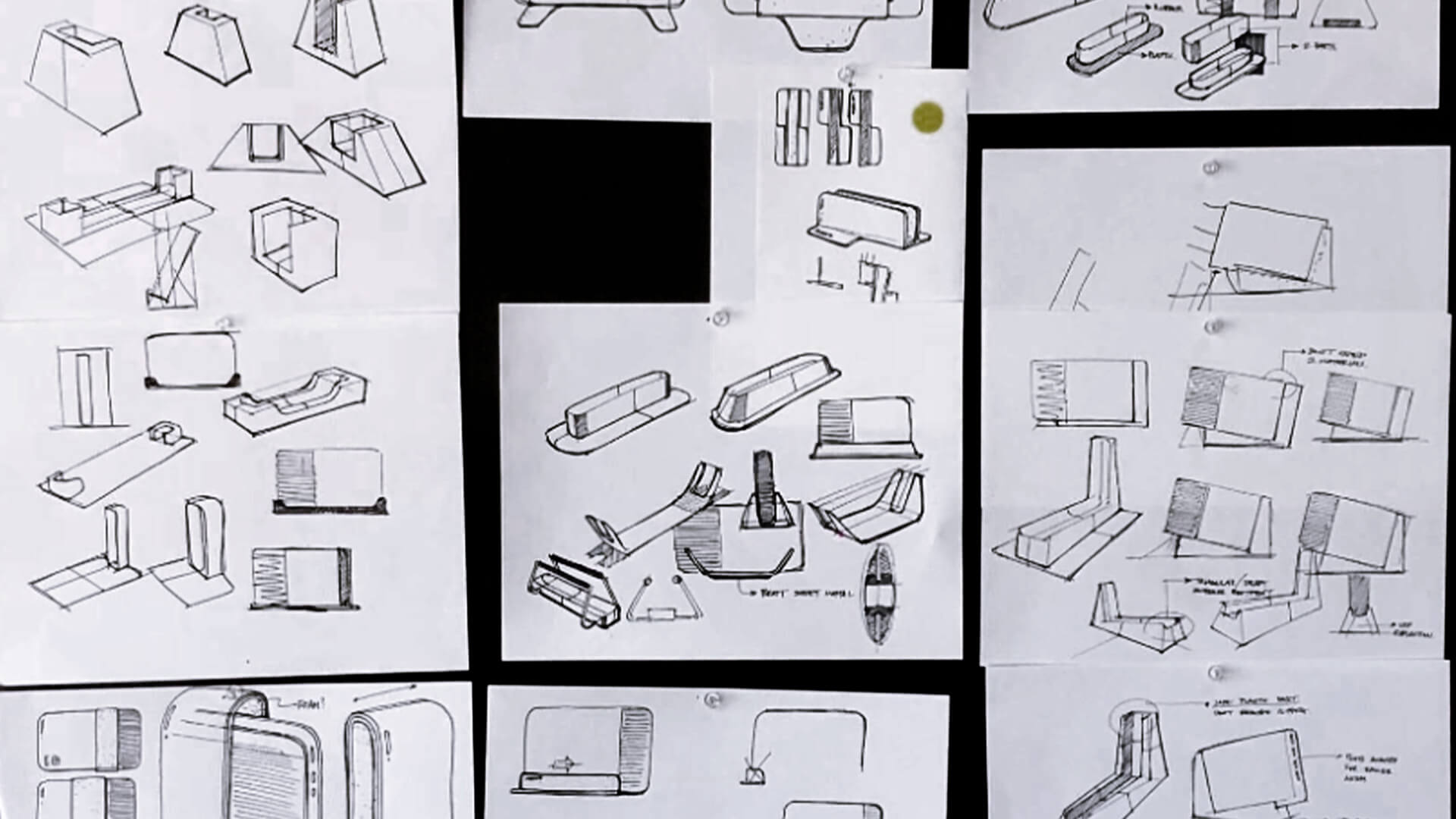
A few big discoveries leaped out. No one had a single storage solution to rely on. Users constantly transferred data from different hard drives designed for different purposes (in the field versus at home), accumulating hundreds of old hard drives over time. Traditional hard drives also don’t allow multiple users to work off them simultaneously or come with software systems that help keep projects and tasks organized, protected, and sharable. Meanwhile, the ever-shrinking size and weight of laptops—and people’s willingness to take them everywhere—set a new benchmark for portability, one that iodyne could lean into.
With these and other insights in hand, the team brought unrivaled performance and aesthetics together to create a far superior user experience. IDEO and iodyne developed Pro Data’s engineering architecture, collaborating on thermal performance analysis, material choice, inspection of sample parts, and even packaging design. By combining integrated venting, multiple laptop-quality fans, smart power management, and 20 thermal sensors, the team was able to minimize cooling fan loads and reduce noise and power consumption. A single, centralized, and consolidated storage space makes sharing data among teammates easy, too—up to four computers can connect to the Pro Data at the same time and access the same files. The redesigned Pro Data creates new value for consumers in a highly mobile, secure package that can go from desktop to backpack and back again.
The iodyne Pro Data hard drive launched in 2021 to overwhelmingly positive reviews. Storage Review wrote “Nothing else comes close to this level of performance in a package this size,” while Jemery Boros of StarGate Studios said “I don’t think I could have done the shoot without Pro Data. It was easy to use, fast, and kept all of our data safe on the other side of the world.” The drives have since been used in the making of major motion pictures from F1 to A Complete Unknown.
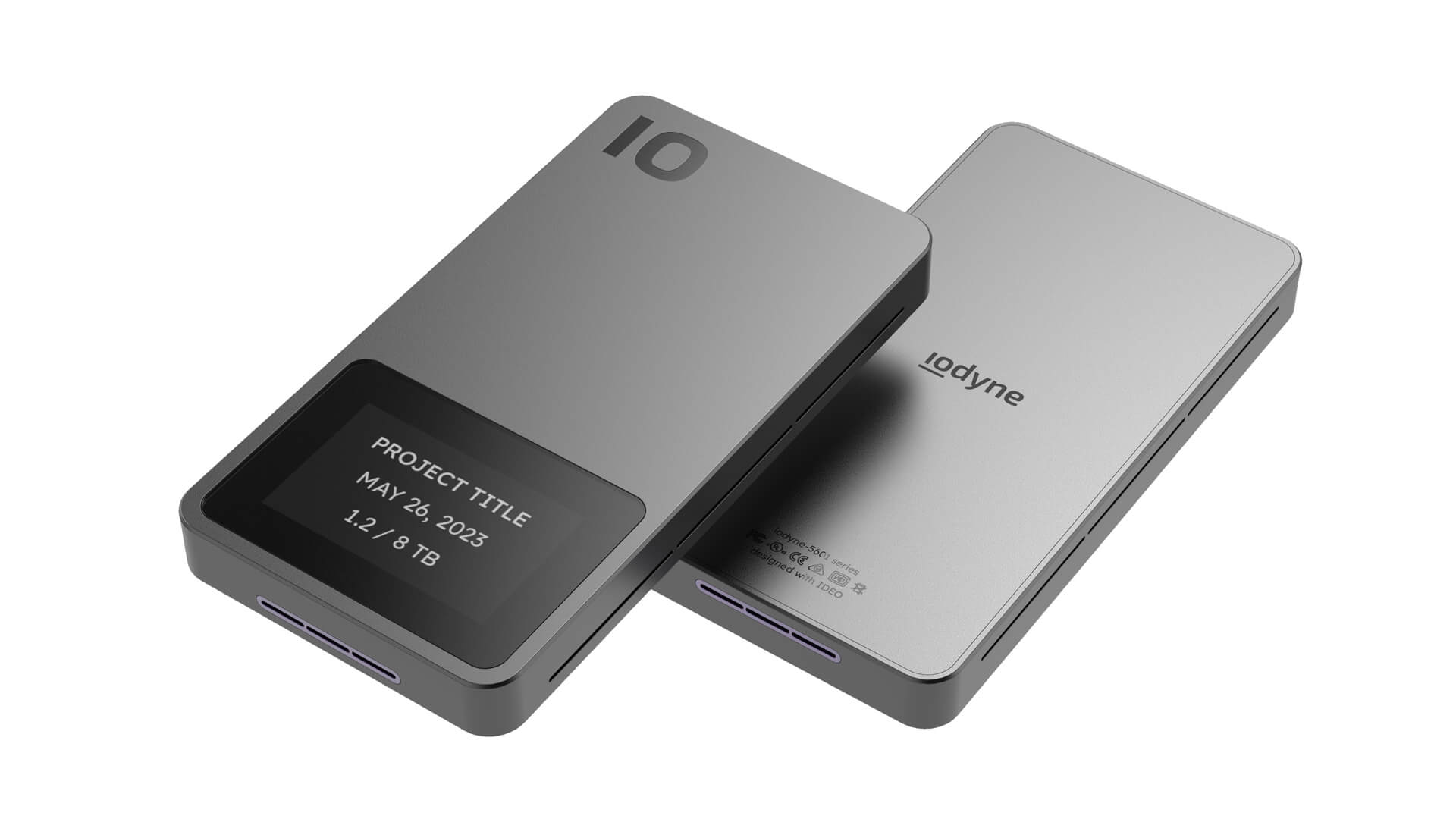
Spurred by Pro Data’s success, iodyne decided to create a second product with IDEO, a Pro Mini that could provide the same cutting-edge performance and sleek design but scaled down to fit the needs of customers who required less storage capacity in an even more portable package. Pairing Pro phone-quality industrial design with a unique internal solid-state cooling architecture that imposed key constraints on airflow was critical.
IDEO worked with iodyne to create the Pro Mini’s internal layout and collaborated with an emerging engineering company to incorporate novel solid-state cooling technology, positioning the vents to maximize airflow and optimizing how users physically interact with the device. The team also addressed users’ durability concerns, advising iodyne on part selection as samples came in from vendors. The new Pro Mini is set to ship in the second half of 2025.
Hard drives are essential tools of the trade for people with large troves of media to store and transfer, like photographers and videographers. But beyond rolls of masking tape and label makers, there isn’t an easy way to see what’s on each drive without literally going through them one by one.
Traditional hard drives generate a lot of heat and need fans to cool them, making them bulky, loud, and slowing transfer speeds.
Many external hard drives are treated like commodities. They’re designed for mass production rather than for durability and aesthetics.
2 cutting-edge hard drives
to market in 3 years
Introducing LA’s mental health crisis first responders
Helping a kinder, safer emergency support arrive first on the scene.
LACDMH is the nation’s largest public mental health department, serving over 10 million people. The agency provides critical support for the most vulnerable, including staffing a toll-free, 24/7 Help Line. Since late 2024, more than 70 Field Intervention Teams—comprised of mental health clinicians (social workers, psychologists, licensed psychiatric technicians, and registered nurses) and community health workers (trained peers or community members with lived experience)—have been dispatched around the county to help de-escalate mental health crises quickly, compassionately, and without force.
Because those experiencing a crisis are often too disoriented, confused, or otherwise unable to seek help for themselves, IDEO’s communication strategy targeted reaching “trusted messengers”—parents, spouses, siblings, and friends of people who have a mood or personality disorder like schizophrenia or bipolar disorder. The campaign aimed to define mental health crises, help people understand what to expect when they call, build trust in FITs, and divert mental health crisis calls away from 911.
To understand what drives these specially trained mental health professionals to do this type of work—and what sparks trusted messengers to call for help—IDEO met and interviewed former clients and loved ones who had reached out to the county for support during a mental health crisis. The team also interviewed multiple FIT staff to learn more about how they approach clients and families.
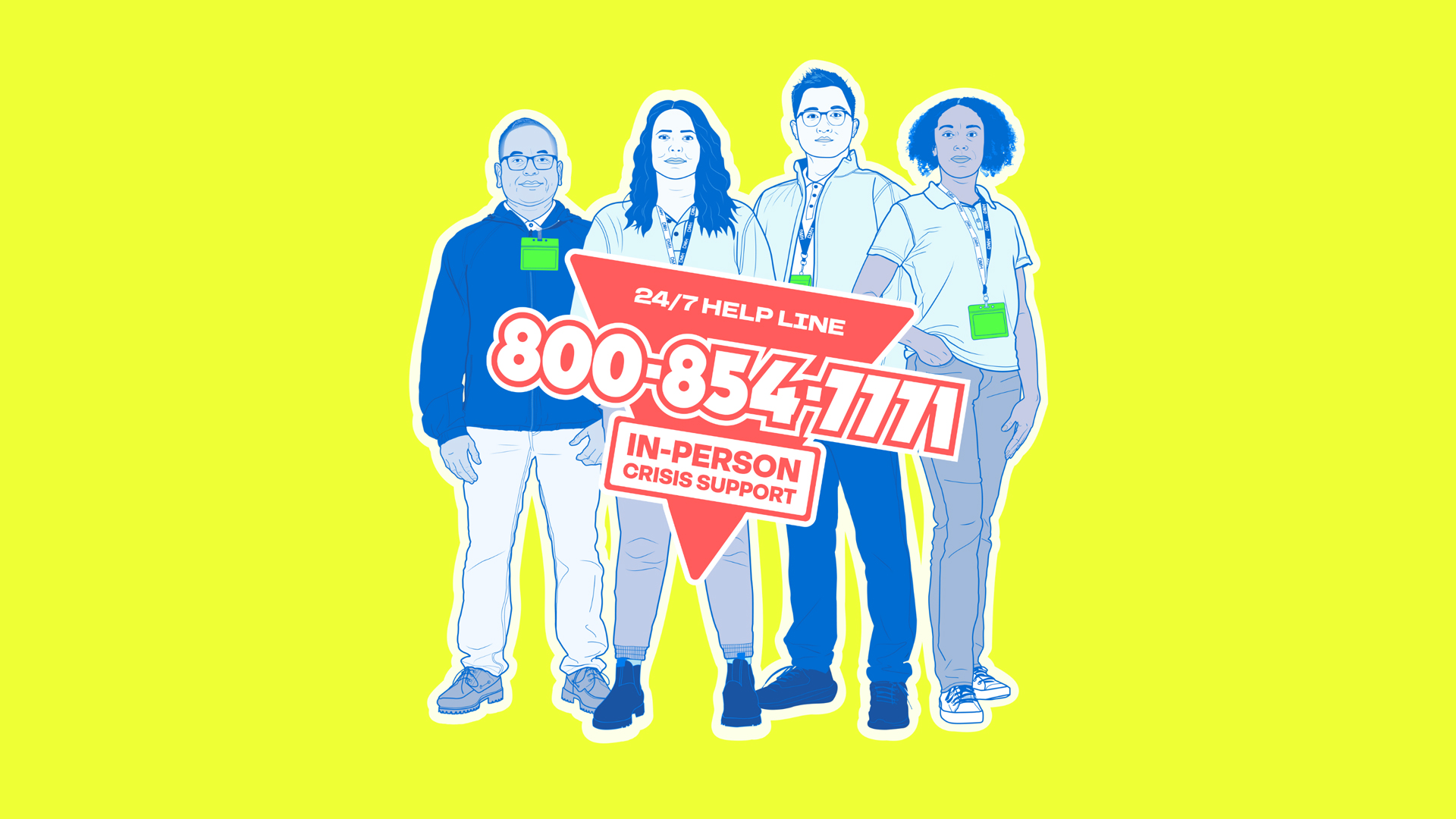
The research inspired the communication strategy’s central idea: position FIT members as real-life superheroes and first responders. By associating FITs with that term, the campaign changes the narrative and communicates their compassion and expertise to those in crisis. Custom illustrated portraits feature actual FIT staff in strong, action-figure-style poses, while a bright, eye-catching color palette and clear, direct language convey confidence and inspire trust.
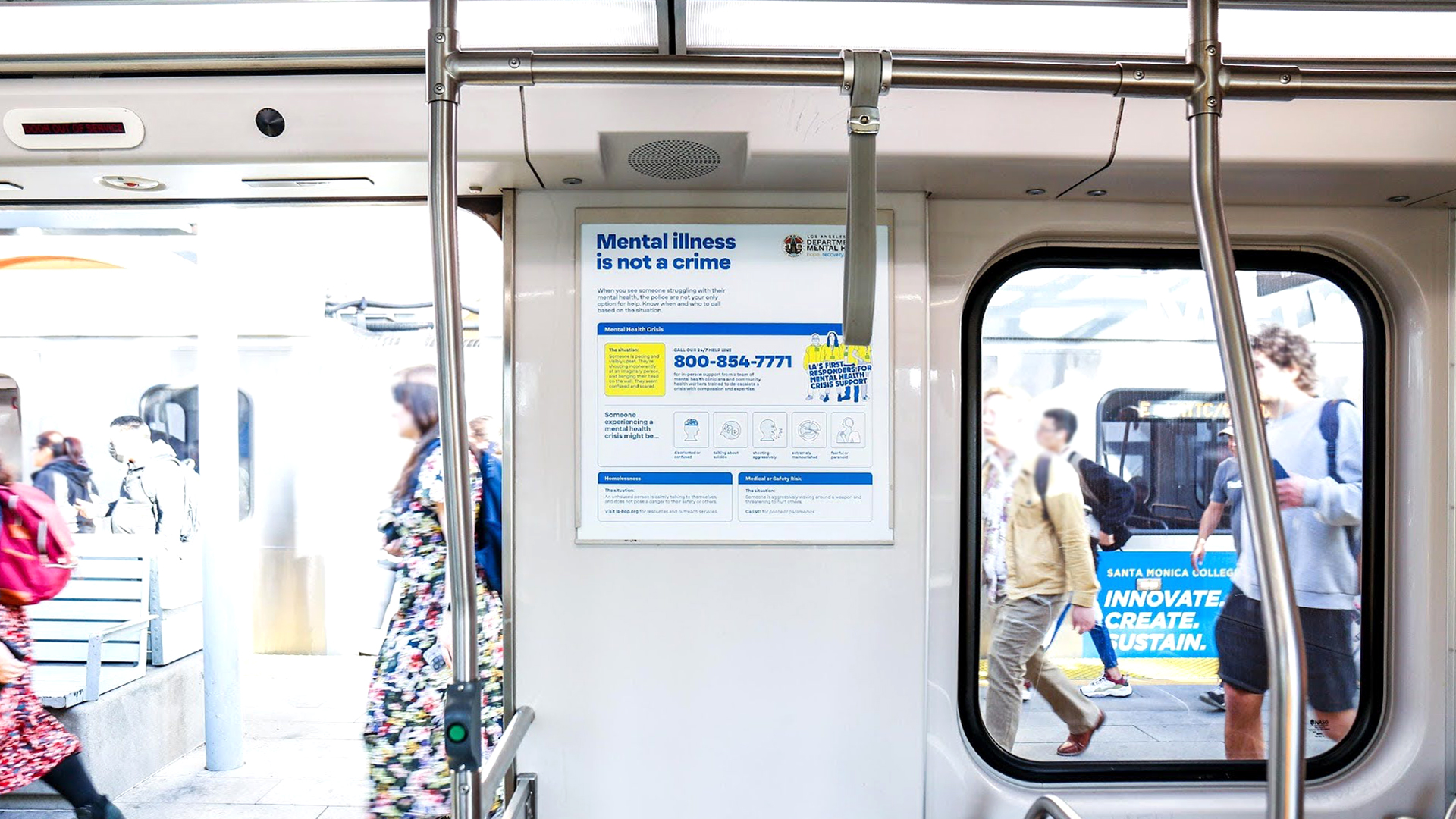
The team explored their initial design directions in a series of focus groups with LA residents, trusted messengers, and county and mental health workers to better understand the impact of the potential messaging and visuals. The research uncovered the importance of clarity, even in an inherently emotional situation. The IDEO team discovered that transparency—and real personal stories—would be the key to building public trust in ACR.
Between March and June of 2025, the robust awareness campaign will run across LA County in a number of languages on city buses, in Metro stations, on social media, streaming TV, radio, and more. An updated landing page on LACDMH’s website includes in-depth information and educational videos about mental health crises, as well as heartfelt testimonials from staff and former clients who have been helped by the service.
LA County Department of Mental Health created an innovative new program to provide urgent, compassionate care to Angelenos experiencing a mental health crisis but needed help driving awareness of its service across the region.
Calling 911 is an entrenched behavior in an emergency. However, dispatching police officers who are not trained in mental health can make a bad situation worse. In 2022, 39 percent of people shot by LA police officers were in the midst of a mental health crisis.
172 million impressions
delivered via digital and physical ads across LA
50% increase
in calls to the ACR helpline, year-over-year, attributed to IDEO’s awareness messaging
24%
of Angelenos now name LACDMH as the first to call in a mental health crisis, leapfrogging 911 or the police, which slipped 14.3 points

Why Designers Need to Start Thinking About Blockchain
Bringing human-centeredness to a technology that is going to radically alter how we live, work, and play
Blockchain is a relatively new technology that will soon replace the underlying structure for a lot of the applications and services we use today, including systems for managing our finances, tracking our health, and determining how we connect, transact, and communicate with each other.
So, while it’s tempting to write off blockchains as something to leave to the coders, the potential human impact is too big to ignore. There will be user experiences, communications, and other completely new elements that will need to be carefully designed.
At IDEO CoLab, we explore the potential of emerging technologies like artificial intelligence and the Distributed Web by building prototypes in quarterly sprints. A crucial part of our mission is considering human-centered values in the process of building for the future—creating things the world actually needs, not just more technology.
Here are three reasons why designers need to start thinking about blockchain technology today:

1. It’s bigger than just cryptocurrency
Many people are familiar with cryptocurrencies like Bitcoin and Ethereum. (And for those who aren’t, here’s a quick video that explains the basics.) Blockchain is the technology that forms the underlying structure for these digital currencies, and gives them the unique qualities that make them different from conventional lucre like the US Dollar. That structure includes the ability to exchange funds directly with anybody, anywhere in the world, without the need for an intermediary like PayPal, Visa, or Citibank.
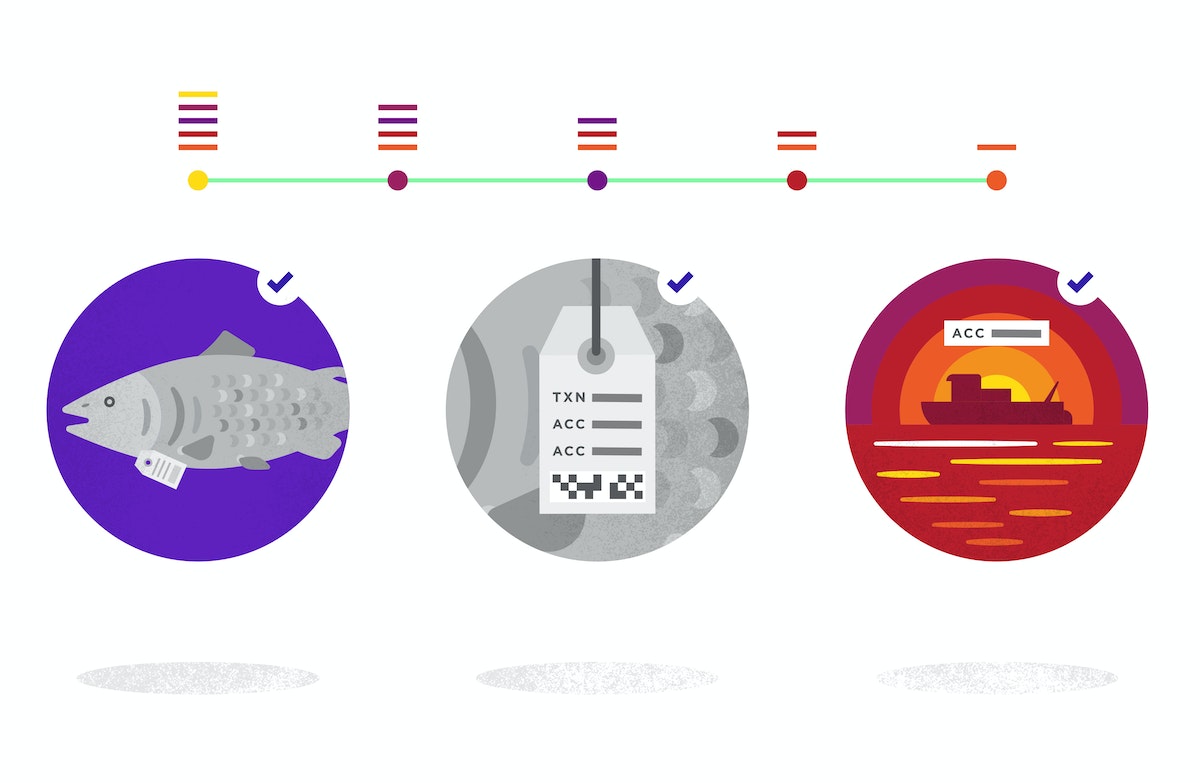
But what most people don’t understand yet is that blockchain technology is about so much more than digital coins. At its essence, a blockchain is a new type of digital ledger which records information in a publicly-verified, traceable way across a decentralized network of devices. What this means is information for, say, an app isn’t just stored on a privately-owned server somewhere—it’s stored across multiple devices that communicate with each other to verify user activity, rather than referencing one central authority, like a Wells Fargo or Google.
Blockchains offer a new way of tracking information, and their applications are broad. Not only are they expected to pervade the financial industry, they’re also being integrated into global shipping, parts tracking, digital identity, healthcare, and other systems. In fact, it’s hard to think of an industry that relies on technology that wouldn’t benefit from using a blockchain.
With a potential to reach millions—even billions!—of people, designers need to start thinking about how they can use their skills to improve the user experience for all of the products and services that will be built on top of this new infrastructure.
2. It will change how humans interact with one another
Blockchain isn’t just a technology, it’s also a state of mind. Well, okay, that might just be the Californian in me talking, but all exaggeration and hype aside, blockchains are going to have a big impact on our culture too.
We’ll come to expect new things from our relationships with other people and parties, based on how blockchains manage our digital interactions. Mirroring the open, accessible code structure, people will expect the companies they do business with are open and accessible as well.
Consumers will demand more information about the goods and services they purchase. Companies will be held to a higher standard of data security.
Trust will become perhaps the most important design element in any system.
Imagine a world where all interactions are more egalitarian, transparent, and traceable—what would that look like? How might we design for this new world view?
(Check out this talk from CoLab’s Gavin McDermott to learn more about the 10 key landmarks of the decentralized web movement.)

3. Technology needs design more than ever
Our world is changing at lightspeed. As new technologies and tools are released daily, it’s easy to get caught up in the rapid pace without stopping to think about the human impact of what we’re creating.
We have a tendency to think of code and algorithms as neutral tools, but they’re not. Technology is neither good nor bad, it's how we apply it that matters. Everything we create has a human imprint on it—our assumptions, hopes, and fears are built into the systems we design (the bias in algorithms has been getting a lot of ink lately).
That’s why, moving forward, we’re going to need a group of people that advocate for the human experience—and human rights—as we develop these technologies. Especially right now, as emerging technologies like blockchain begin to take form, it’s important for designers to have a voice in that process from the very beginning.
How do you envision the designer's role evolving alongside blockchain developers? Let us know on Twitter or Instagram #blockchaindesign
Looking for ways to get started designing for blockchains? Check out this list of quick prototyping tools for emerging technologies from IDEO CoLab.
Blockchain. You’ve heard the word. Perhaps you’ve invested in a digital currency or two. But do you really know what the technology is and why it matters? It all sounds deeply technical—and it is. But it's important to understand this new tool, as it will have a big impact on our lives—radically altering how we live, work, and play.
How to Hack a Furby
Turns out, with some small modifications, you can do more than teach the creatures English
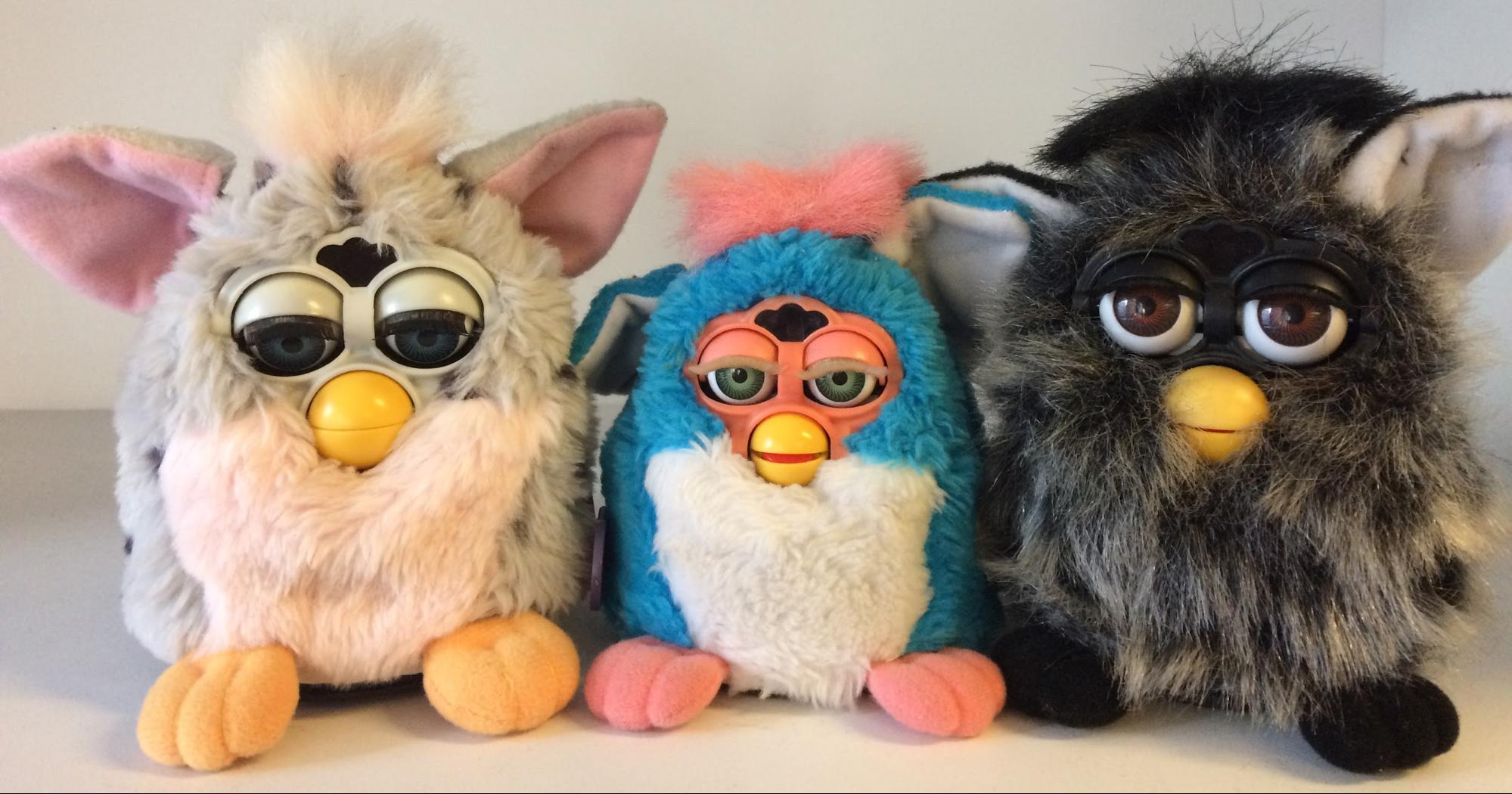
We were joking about how Aaron's last name is pretty similar to Furby, the interactive Gremlin look-a-like toy from the late 90s. Someone suggested it would be funny if we modified a Furby so that instead of speaking Furbish (I think that's what people call the language Furbys speak?), it would repeat phrases in Aaron's voice. At first, it was just a joke, but then I mentioned I had a couple Furbys at home I'd been meaning to hack…
What’s a Furby?
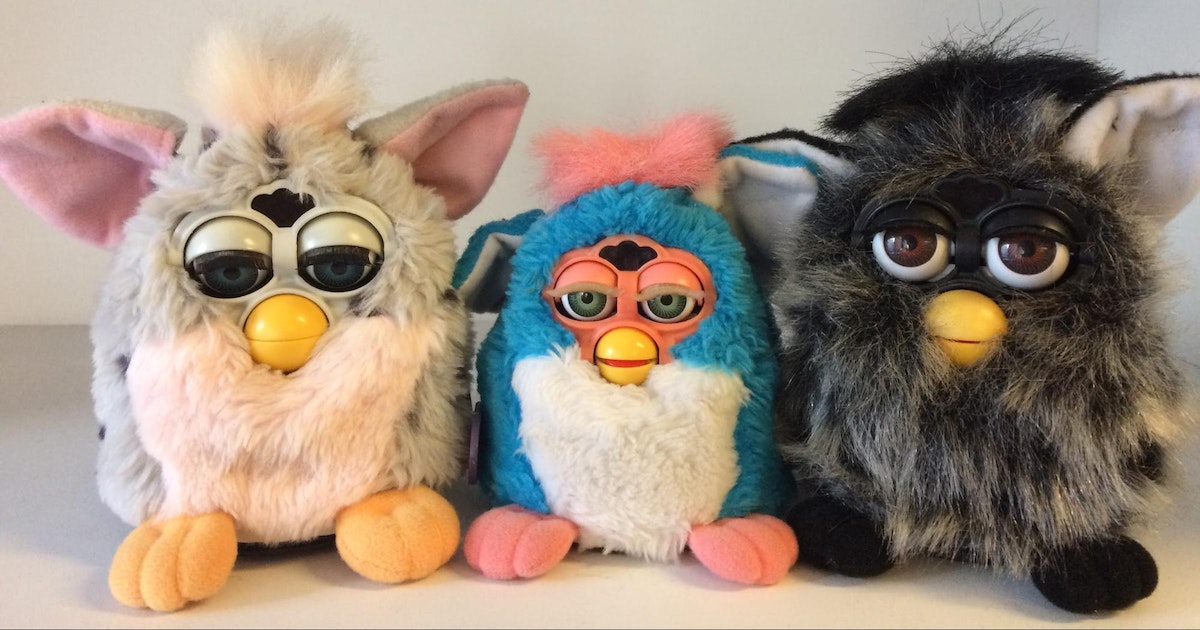
For the unfamiliar, Furby was a coveted toy when it hit the market in 1998. Seriously. More than 40 million of the hamster-esque creature were sold in its first three years of production. Kids fell in love with it because of its child-like nature and the fact that it required feeding, nurturing, and constant attention. It also only spoke Furbish out of the box, developing an English vocabulary over time as kids talked to it.
Because the Furby was one of the first widely-marketed toy robots, it also appealed to the hacking community. In the early years, there were some news stories about whether the microphone inside Furby was listening in on private conversations, but thankfully, Furby does not use the microphone to record audio. Because of the ruckus over the microphone, there is a wealth of information on the internet about how to properly deconstruct a Furby, and how the Furby's insides function.
How I did it
The first step was to take Furby apart. Unfortunately, due to Furby's realistic personality, the process of deconstructing the Furby felt more like field dressing an animal. I had to delicately skin the toy so that I would be able to resurrect it later.
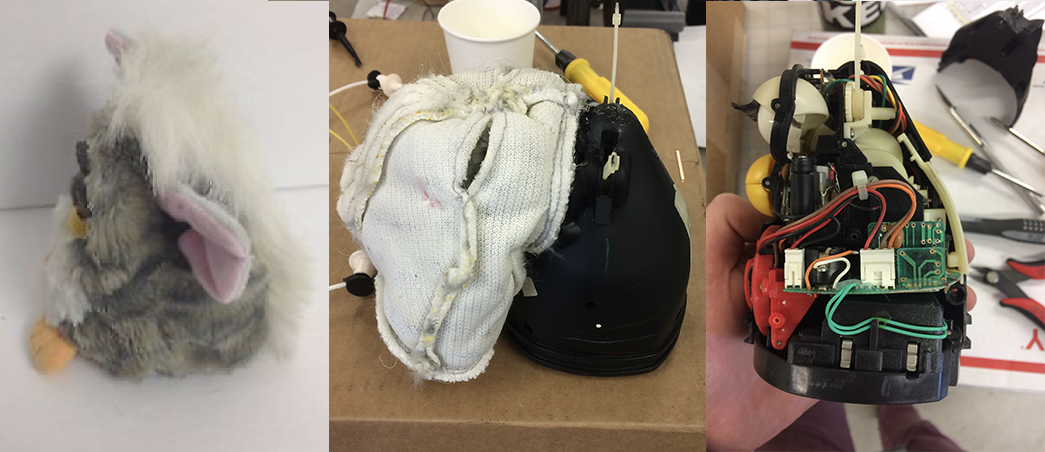
Once the Furby was dissembled I put together a vice to clamp down its skeleton; it almost looked like I was torturing it until it would talk...and in a way, I kind of was. With the Furby in place, I was able to access its inner circuitry and check out its voice box. After some initial probing, I turned back to the internet again and was able to find a full schematic of Furby’s insides, which meant I no longer had to guess and check what each part was used for and how they were connected. I could also disconnect the voice box.
After some reading, I decided that the best option for triggering voice playback would be to use the motors. Furby always moves and talks at the same time, so any time the motors are working, he should be talking. If I used any of its switches (belly, mouth/tongue, gyroscope, etc.) as an audio trigger, I would miss Furby’s unprovoked audio actions, the ones it does without user input. (Sometimes the Furby will start singing or fall asleep on its own.) Those actions are triggered internally, and I didn't have the time or resources to begin understanding how a Furby's brain works.
To build the the audio playback, I used a circuit board I created a few years ago that's a variation of Adafruit's wav/ogg audio fx board. My audio playback board is very similar, but it also includes the necessary circuitry for charging a connected lithium-ion battery. With this addition (and a voltage booster), I was able to power the Furby from a rechargeable source, rather than four AA batteries.
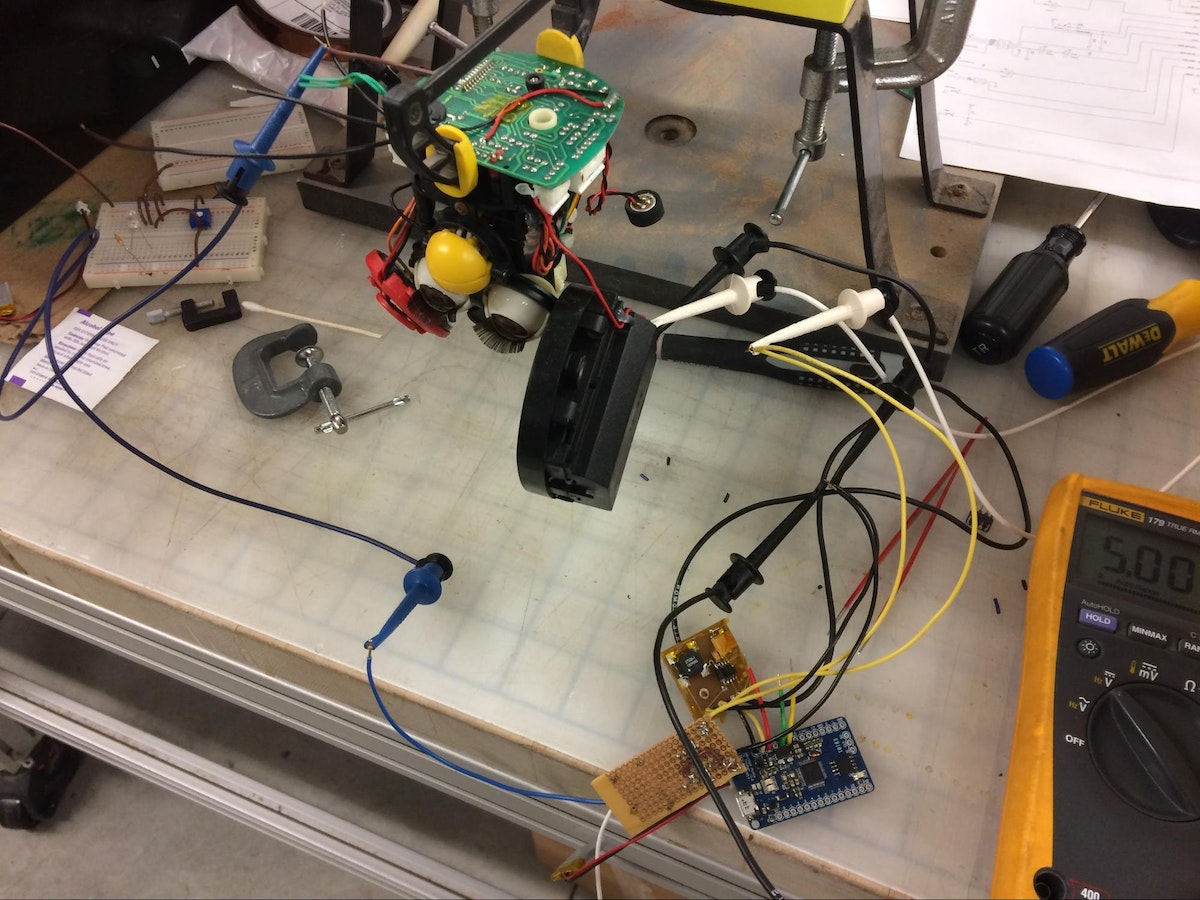
Now that most of the individual pieces were developed, it was time to play Dr. Frankenstein and connect the parts together to give Franken-Furby life.
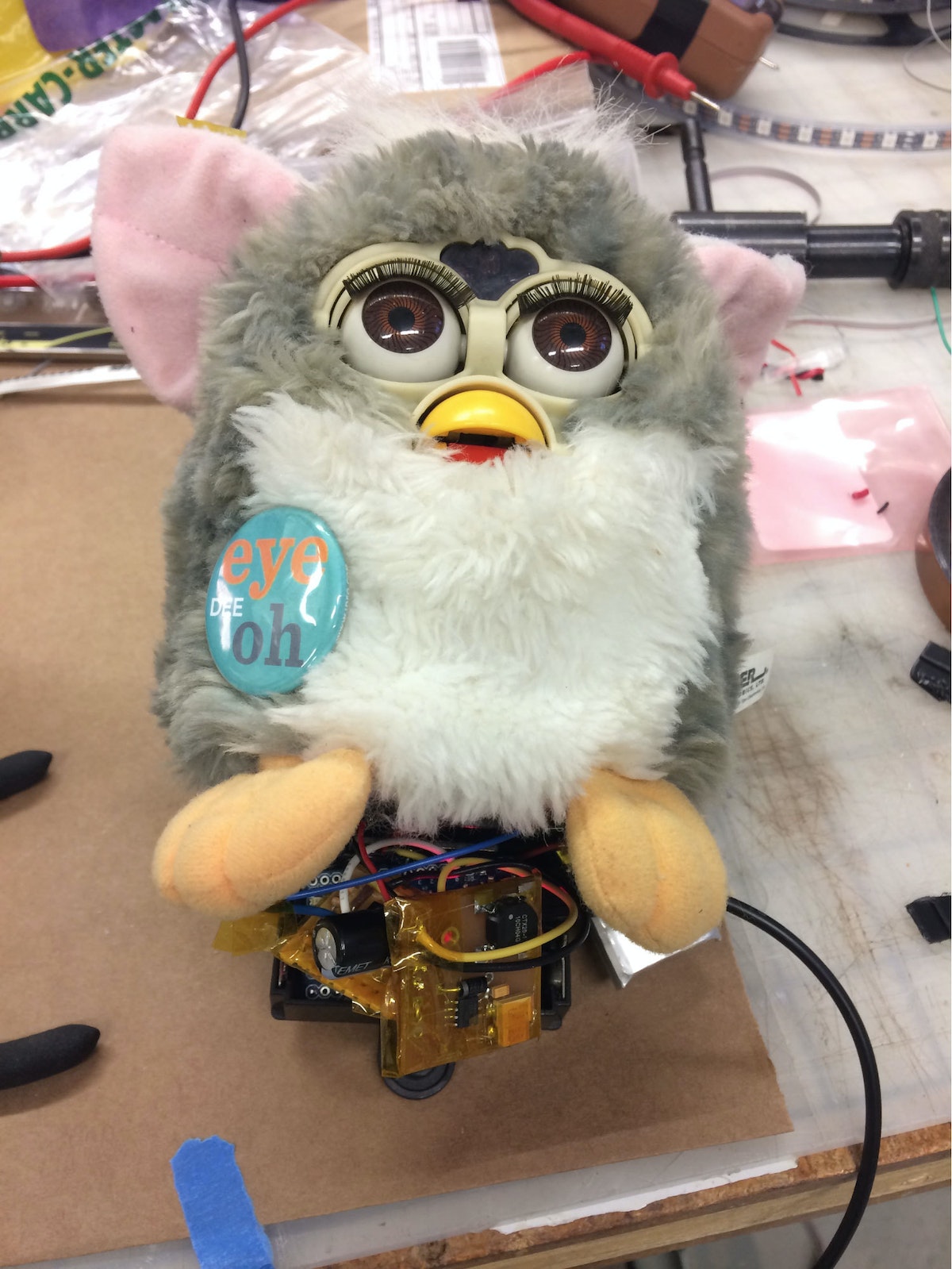
I used the newly vacant battery holder space to store the Furby’s new guts...err circuitry. This was an ideal location because there were already holes to run new wiring up to the Furby’s body. I added a wire to break out the motor trigger line for monitoring. I was able to monitor the motor with a basic analog comparator (LM311), and use the output to trigger audio playback. I then amplified the audio output with a class D amp, before connecting to the Furby’s speaker with two more wires.
Last, but not least, I added a few clips of Aaron speaking at various events to the audio playback board. We may or may not have have played around with loading some more inappropriate vocals (i.e. creepy laughing and other Halloween-themed sounds) first for kicks, but things got a little too creepy, so that didn’t last long.
The result
We presented the Franken-Furby to Aaron at his goodbye party, and it was a hit! Unfortunately, because it was a goodbye gift, it's no longer possible to work on that Furby anymore. But I’m game to hack more Furbys. My next goal is to create a new version, perhaps integrating all the circuitry onto a single circuit board, and hopefully dig a little deeper into understanding how Furbys operate.
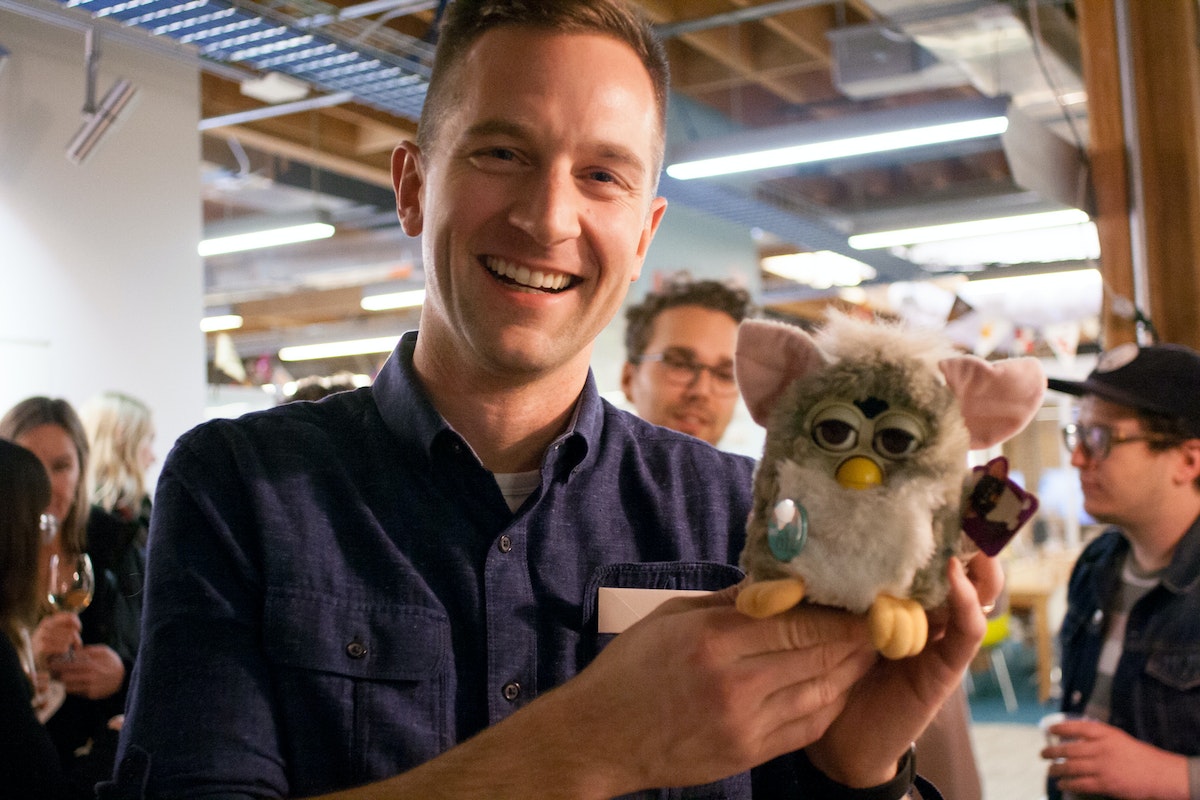
Our Chicago office has a tradition of giving silly but relevant goodbye gifts to departing colleagues. The goal is to make their exit a little more light-hearted for everyone, as well as give our erstwhile colleagues a sort of inside joke to take with them. When a friend and colleague of mine, Aaron Ferber, was leaving to pursue another passion in St. Louis, we started ginning up ideas for his send-off.

8 Exciting Design Research Trends
It's less what you learn, and more how you learn it
Thankfully, we have smarter tech tools than ever to help us spin through these cycles at a sprint. In a recent Quora Session hosted by IDEO U, we reached out to the entire IDEO community to ask what design research technology and other trends they're excited about. Here’s what we heard:
1. Going rogue
Influenced by Jan Chipchase and The Field Study Handbook, the “pop-up studio” model for doing design research in challenging, less-explored environments is finding success. Chipchase describes a pop-up studio as “a live/work space optimized for teams working toward a shared goal ... highly suited to international research, design, and innovation projects that require speedy immersion.” He talks more about the pop-up studio model in this Co.Design piece (and excerpt from The Field Study Handbook), “How To Do Great Design Research Anywhere On Earth.”
2. Smart sensors
Though some smart sensors are still in the early stages, looking at how sensors (from FitBits to smart moodmetric rings) can help inform our understanding of users' experiences. Projects like MIT's Dermal Abyss look into a future of smart, sensing tattoos.
3. Changes in data + privacy
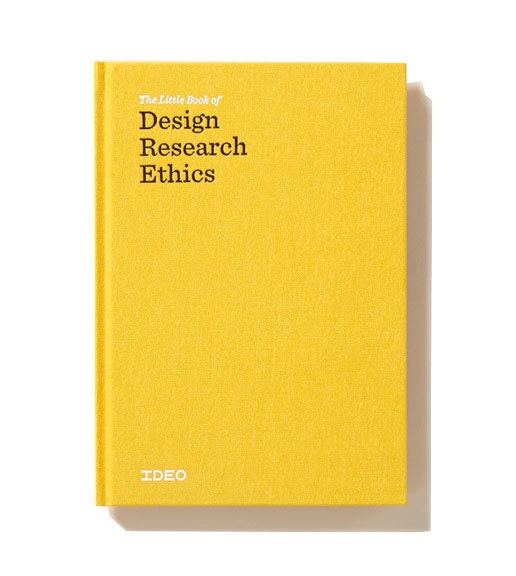
With the General Data Protection Regulation (GDRP) taking effect in May 2018, design researchers in the EU and beyond will have to address changes to data privacy in a human-centered way, both in how we design our research, and in terms of how we explain it to participants. Understanding what that looks like in practice is important, so we published a little yellow book of Design Research Ethics.
4. Testing concepts in virtual + mixed reality
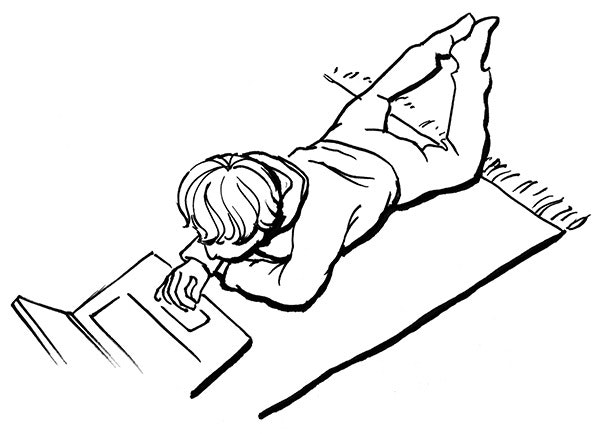
Augmented Reality (AR) and Virtual Reality (VR) are uniquely experiential and portable, allowing you to visualize complex ideas and measure user engagement in new ways. You can fully immerse users in an experience, get their reaction, and help them co-design (or redesign) an environment or experience on the spot using mixed reality prototypes. And now ARkits allow you to fully transplant a VR experiment with optical calibration—which allows you to retain the spatial boundaries and physics of a VR-created space anywhere on your phone. It’s pretty incredible.
5. Working alongside data science + machine learning
Most of us at IDEO predict that data science will complement and enhance a deeper understanding of qualitative research. By expanding our reach into data science, we’ll be able to understand how our designs are being used during live prototyping and piloting. Rather than relying exclusively on self-reported behaviors and stories, we’ll be able to collect actual interaction data.
But perhaps more interestingly, we’ll also be well-positioned to understand, both qualitatively and quantitatively, how a new artifact is causing a ripple in the ecosystem in which it was placed. As we strive to create disproportionate impact in the world, we’ll now have insight into what’s successful, and what’s impeding success. By introducing new areas of expertise into design research—legal design, policy design, infrastructure design, organizational design, behavioral economics, urban planning, macroeconomics, and more—we can begin to shift some of the fundamental underpinnings that can cause negative and adverse outcomes at individual, group, organizational, and societal levels.
6. Neuroscience x design research
One of our design researchers who studied cognitive neuroscience notes that there is a major connection between the brain and design—and a lot that we still don't know about that connection. This Quartz article discusses how neuroscience can help us create more effective human-centered cities. “Technology has now reached the stage where we can translate decades of neuroscience and psychological research from the lab into the city,” says neuroscientist Dr. Hugo Spiers of University College London. Now when we test prototypes, we can measure behavior, cognition, emotional reactions, physiological markers, and brain activity. Here are a couple more articles on the subject, from Forbes and The Leading Strand.
7. Digital forensics x design research
As technology becomes more ingrained in our daily lives, understanding how we live our digital lives—and the digital trail we leave as we go—will help unlock insights into new behavior.
8. Ethics in the age of artificial intelligence
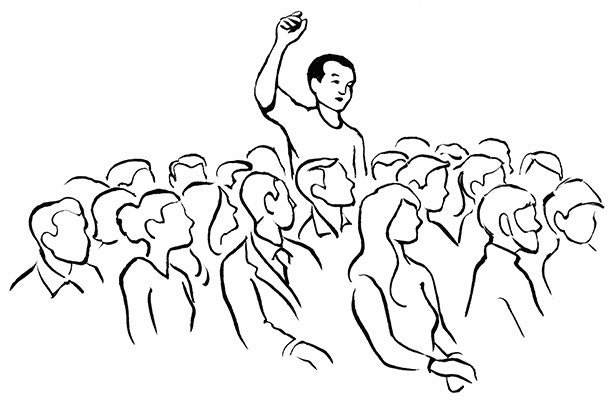
Artificial Intelligence (AI) changes interaction and design in a way that's dynamic and incredibly complex. Because of its scale, adoption speed, and widespread human impact, it's important that someone raise a hand and ask the question, "Even though we can create this, should we?" Not all AI models are transparent and design researchers will increasingly become the voice in the room questioning its development. This isn't any different than what we do now, but it's more important in the age of AI.
This content originally appeared in a Quora Session hosted by IDEO on November 1, 2017. Special thanks to Ovetta Sampson, Dan Perkel, Michael Chapman, Samantha Miller, Rebecca Wint, Alana Murao, Mike Peng, Geoff Schwarten, Erin Bogar, Saige Perry, and Katie Clark for their contributions!
Understanding the human challenge we're designing for is as much about inspiration as it is about information. Design research now happens in quick loops—gathering insights, building rapid prototypes, and getting feedback—rather than in a long and rigorous discovery phase.
Designing the Siris and Alexas of the World
We shape our devices, and thereafter our devices shape us *with apologies Marshall McLuhan
We have become accustomed to relating to these interfaces, and increasingly they are able to relate to us—taking in the world around them, talking to their users, and even inferring our emotions from how our faces change shape. I call this layer an Affective User Interface (AUI), a term borrowed from the field of Affective Computing.
Affective Computing is a field of computer science that develops technology that we might consider intelligent and emotionally aware. These new interfaces present a slew of opportunities and challenges, because as Dr. Cynthia Breazeal of the MIT Media Lab points out in her book Designing Sociable Robots, when a technology “behaves in a socially competent manner” our evolutionary hardwiring causes us to interact with it as if it were human.
And once we enter into that relationship, the personas we design for these bots affect our behavior, too. I’ve heard many people say that unassertive bots often bring out the worst in kids. When there are no social checks on rudeness—bots don’t tattle, after all—children tend to be more blunt, and can even become abusive.
That lack of assertiveness also affects adults. Reporter Leah Fessler researched how female-gendered bots respond to sexual harassment. It turns out that the assistants’ permissive personas can reinforce some disturbing stereotypes about women, and allow the user free reign to degrade them at will.
If bots can have a gender, I started to wonder whether they might also have a cultural or even racial identity. Considering the fact that these products allow us to choose between various accents, it would seem that designers have created nationalities for our bots.
I'm certainly not the first person to surface these issues. This New York Times piece by AI Now's Kate Crawford about "Artificial Intelligence’s White Guy Problem" comes to mind. And there are many people here at IDEO who are thinking through what it means to be inclusive human-centered designers as we work on Augmented Intelligence projects.
To explore this further, I decided to conduct an experiment to surface the personality of these bots by interviewing them.
The key was to ask soft questions: Where are you from? How old are you? Do you have any kids? What do you look like? Even, Tell me a story.
These interactions were not actionable queries, and thus triggered purely conversational responses that revealed the “personality” that the bots’ creators had designed.
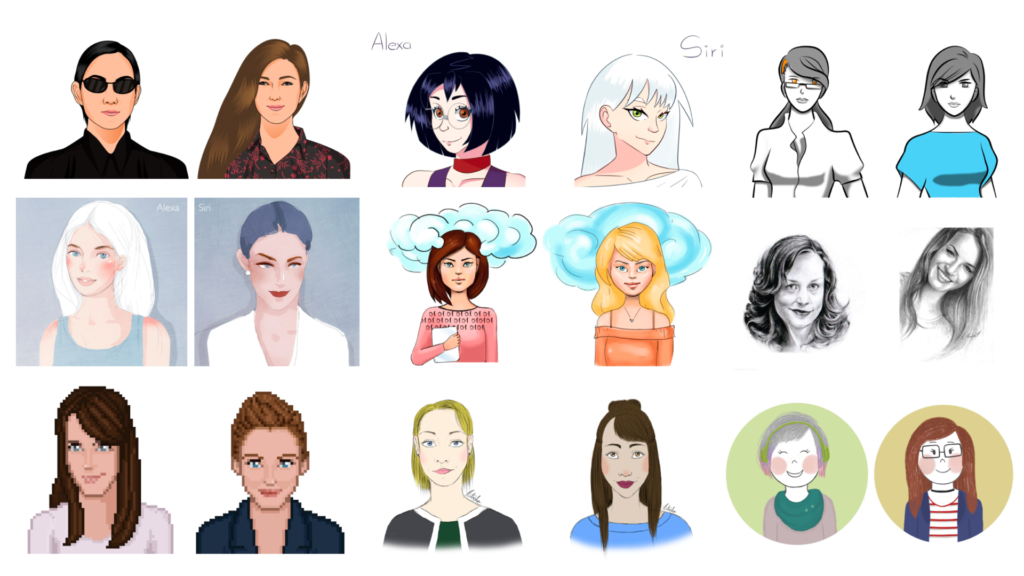
I recorded a video interview with each voice assistant and handed these over to a number of illustrators commissioned via the social gig site Fiverr. While a few of the artists had previous exposure to the bots, I was able to source English-speaking international artists in markets where Alexa and/or Siri were not available. Countries of origin included Indonesia, Pakistan, Ukraine, Venezuela, the Philippines, and the U.S. For many of them, my videos were their first meaningful exposure.
Here are the images that came back:
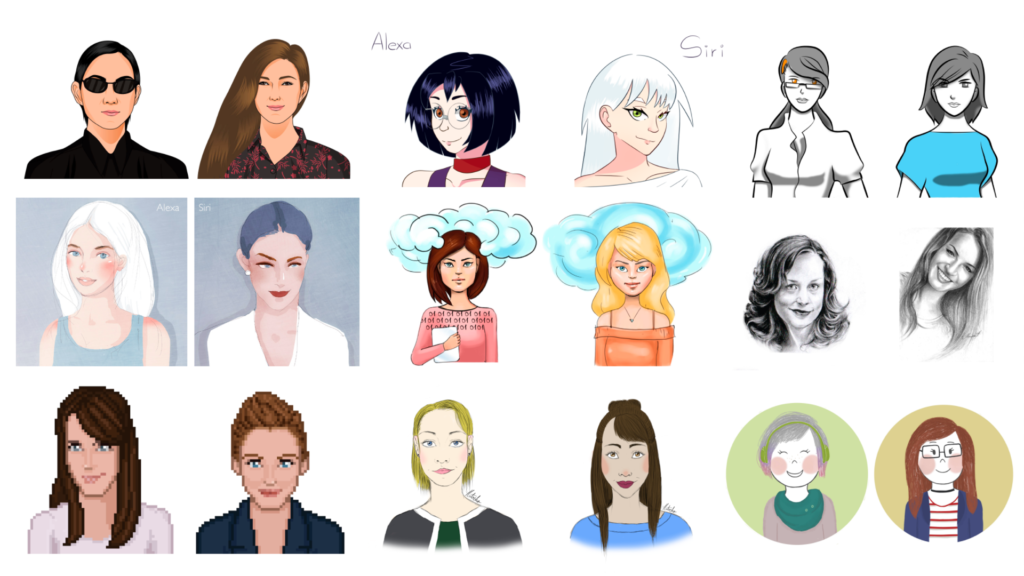
Drawings representing Alexa and Siri based on video interviews I'd done by illustrators who had little to no previous exposure to the assistants.
Gender came through clearly, but I would also argue that none of the illustrations depict a person of color. Whether they were intentionally designed that way is not the issue. If users perceive the bots this way, what kind of cultural pressures are they carrying into the home?
It’s something I think about a lot as a first-generation American who has worked in and around tech throughout my career. On my father’s side, I’m the second U.S.-born family member, and on my mom’s side, I’m the first. I grew up in a diverse community, and the tapestry of cultures I experienced was simply normal, everyday life.
I was aware of code-switching pretty early on; many of my friends and family had their normal voice and their “professional” voice, and they chose which to use in different environments.
Looking back, I first learned about it when my mom gave a wedding speech.
My brother was shocked; he didn’t recognize the voice that he heard. I had to explain to him this was my mother’s work voice. Code switching isn’t inherently bad—we all do it to some degree—but if we’re to design Affective User Interfaces that are truly human-centered, then we must consider that for some, the switch requires more effort.
Inclusivity is not just an issue at the bleeding edge of tech. We’re seeing a growing body of evidence that those who speak outside of mainstream vernaculars have a harder time being properly recognized by affective systems.
This represents an accessibility challenge, but one that is resultant from a cultural rather than physical challenge. In a tech industry that is known to be monocultural, we must take steps to ensure our affective systems are not just designed to be useful to their creators, but inclusive of the full spectrum of people their products will serve.
Because ultimately what’s at stake is trust. Studies have shown that when brands lose trust, they lose customers.
As designers, it’s our job to expand the usability of our affective devices to ensure they serve the rich tapestry of people, cultures, and vernaculars they will encounter.
Beyond being good design, it’s good for business, because in our affective future the products that win will be the ones that users trust.
Behind every interface, there's a designer. More like a team of them. And those designers have a lot to consider: What should Siri sound like? What kinds of things will people ask Alexa to do? How will users expect the Kuri robot to respond when they crack a joke?

Lindsey Turner
I’m passionate about building brands, products, and experiences that help organizations show up with meaning and momentum.
I help organizations cut through complexity by shaping how they show up, through brand strategy, identity, and storytelling.
Working at the intersection of brand and business, I bring an editorial eye and a bias toward making—turning ideas into tangible experiences that people can understand, trust, and believe in.
My work spans government, healthcare, financial services, media, and consumer goods, from launching Gen Z-focused ventures to building innovation labs and reimagining legacy brands. I relish moments of ambiguity and enjoy translating across teams, perspectives, and priorities to move ideas forward.
I started my career in editorial and digital design, shaping cross-platform experiences and identity systems in publishing and agency environments. That foundation still shapes how I work today: I’m detail-oriented, collaborative, and overreliant on the Oxford comma. I hold a BFA in Visual Communication from the School of the Art Institute of Chicago.

Rachel Young
My work helps organizations see who their products aren't working for—and build the will and the tools to do something about it
For 25 years, I've asked the same question: Who does this design exclude—and what are we going to do about it?
My work spans human-centered strategy, inclusive design, and qualitative research, with clients ranging from Microsoft, Google, and Verizon to the National Science Foundation, and San Francisco Unified School District.
Before IDEO, I taught elementary school in East Palo Alto and spent a decade doing design work with social service organizations—where I learned firsthand what it costs people when systems are built without them in mind.
I am currently writing User Error, a nonfiction book about digital access and the design decisions behind it. I live in Oakland, California.

Brian Pelsoh
I lead with craft, ensuring our work is creatively excellent: rooted in deep human insight and imagination, while also grounded in the realities of business and technology.
My expertise spans brand, communication, and product design across tech, education, the arts, and social impact.
I believe great work demands both high-level vision and obsessive attention to detail, and only happens through collaboration.
I bring an inclusive, hands-on approach and a deep understanding of business, which enables me to consistently deliver excellence while always asking why.
Before joining IDEO, I worked at the brand firms Pentagram and VSA Partners. I began my career as a designer, leading teams at the School of the Art Institute of Chicago and the Milwaukee Art Museum. I hold an MFA in graphic design from Maryland Institute College of Art and a BFA in communication design from the Milwaukee Institute of Art & Design, and have taught at some of the best design schools in the US.

Tony Wong
I am responsible for IDEO’s long-term success in China and working with clients to use design as a tool to enable growth.
I am responsible for IDEO’s long-term success in China and working with clients to use design as a tool to enable growth. Specifically, I have helped Chinese companies design holistic brand solutions through the development of their products, communication, services, and innovation teams, and I have helped multinationals expand their presence and influence in China.
I advise global leaders on developing China-led innovation and capabilities.
In over 15 years in IDEO Shanghai, I have worked on projects that use design to elevate the quality of the experience of healthcare products and services, streamline processes that increase productivity, create spaces and programs that promote and enable inclusive communities, and build next generation mobility solutions that are planet-positive.
Before joining IDEO, I worked at Philips Electronics and the Electrolux Group in Italy, the Netherlands, and Singapore on a number of breakthrough commercial products. I am a member of the Young President Organization in Shanghai.

Building a personal AI for the messiness of life: Sida Li
Most AI products today are built for work—a space with clear problems and established systems. One founder noticed a gap: personal life is messier, harder to systematize, and mostly left behind by the AI boom. So she built Cue, a personal AI that lives inside iMessage and group chats, to go where the other tools haven't.
In this episode, Becca Carroll, IDEO's Chief Strategy Officer, talks with Sida Li, co-founder and CEO of Shared Context Lab, about staying anchored to a human need while the technology around her keeps changing shape, why she treats her business model with the same rigor she'd bring to a product, and what it feels like to build a company at this particular, disorienting moment in AI.
The conversation also gets into how Sida makes design decisions: the language Cue uses to describe itself, the tradeoffs behind building inside iMessage instead of a new app, and a real story about a business idea that didn’t pan out.
This is the second in a two-part series profiling founders from IDEO's Startups-in-Residence program. The first conversation is with Johannes Seemann, founder of Sooner, on designing GenAI for the emotional side of money.

Designing GenAI for the emotional side of money: Johannes Seemann
Most personal financial tools are built to run the numbers and optimize towards a budget. While that works for some, most people experience money as a lived relationship that does not neatly fit into a spreadsheet. Johannes Seemann and Becca Carroll discuss why money is emotional before it is mathematical, and what a human-centered approach to building a generative AI financial product looks like in practice.

The curious leader's edge in uncertainty: Scott Shigeoka
Mina Seetharaman talks with Scott Shigeoka, author of Seek and Head of Curiosity Cultivation at the Eames Institute, about what distinguishes genuinely curious leadership from performative curiosity, how power dynamics shape curiosity, and why practicing curiosity can restore energy rather than drain it.

How constraints make us more creative: David Epstein
Mina Seetharaman talks with David Epstein, author of Inside the Box and Range, about why total freedom often produces average work, how leaders can design useful limits on purpose, and what organizations such as General Magic and Pixar reveal about the relationship between boundaries and creativity.
Looks like you might be in search of something very specific?
Or reset the filters above and try another angle.
Here’s some random inspiration

Podcasts about creative leadership

Articles about the power of prototyping
