
.svg)



Reintroducing The Lawrence Hall of Science
A lively new brand reenergizes a STEM learning institution.
Named after Ernest O. Lawrence, UC Berkeley’s first Nobel Laureate, The Lawrence Hall of Science’s wide-ranging products, services, and tools developed organically over half a century. To begin to make sense of the breadth and depth of its offerings, IDEO asked leadership and staff to surface the myriad activities, audiences, and relationships with external partners, enabling the group to visualize—and make sense of—the totality of The Lawrence brand.
During in-depth research with parents and kids, educators, and experts, IDEO discovered that each of these audiences had distinct mindsets. Parents and kids engaged with The Lawrence to explore, have fun, and dive deeper into a specific topic. Educators utilized it for professional learning opportunities and to discover new, exciting classroom tools. While experts, including UC Berkeley faculty, STEM educators across the US, and funders, viewed the center as a resource for best-in-class STEM education research. The mindsets highlighted The Lawrence’s unique capabilities, but the complexity also created some opportunity areas, including ways to use storytelling to create emotional resonance around The Lawrence’s core values and how to design a unified narrative to connect the dots across audiences and offers.
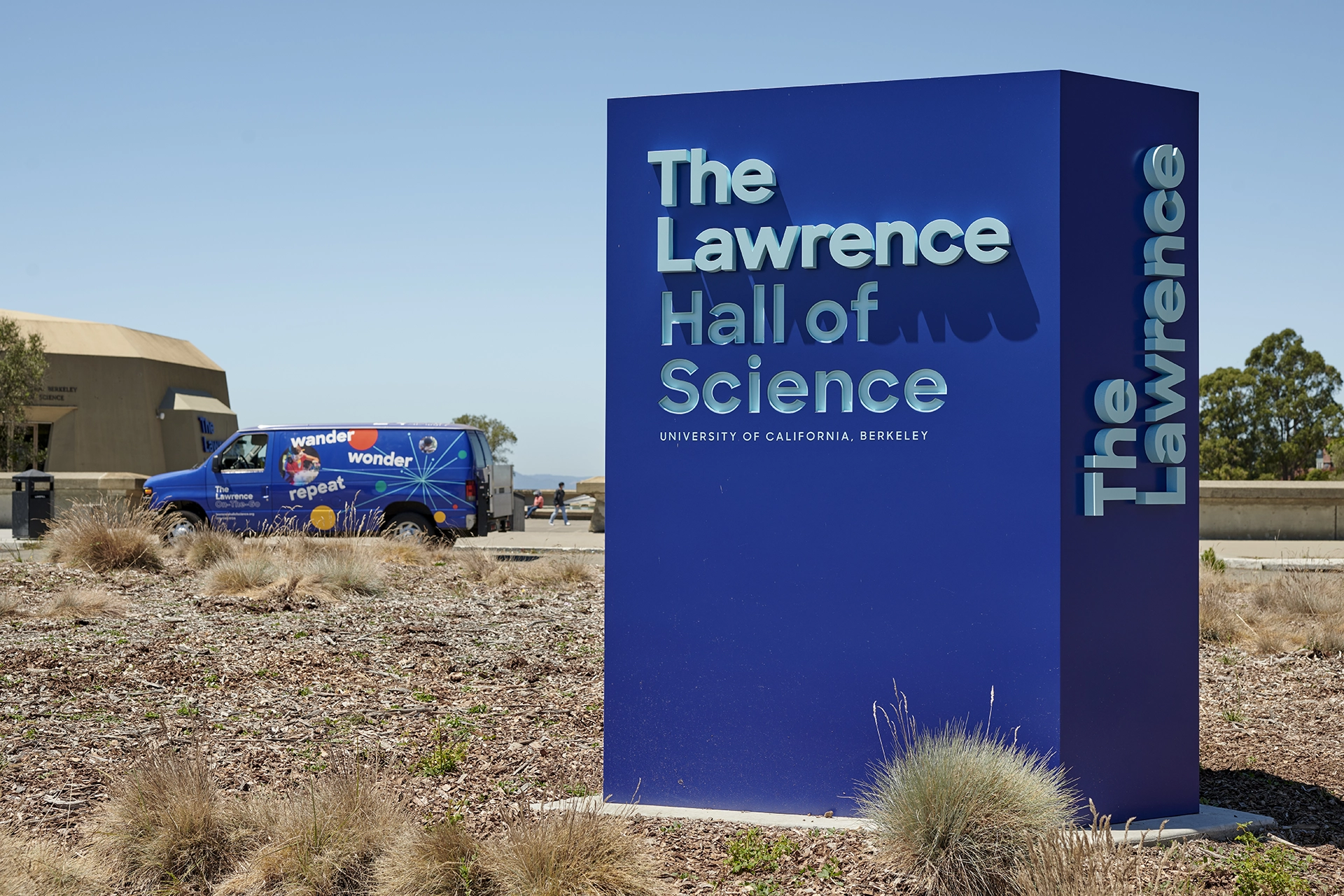
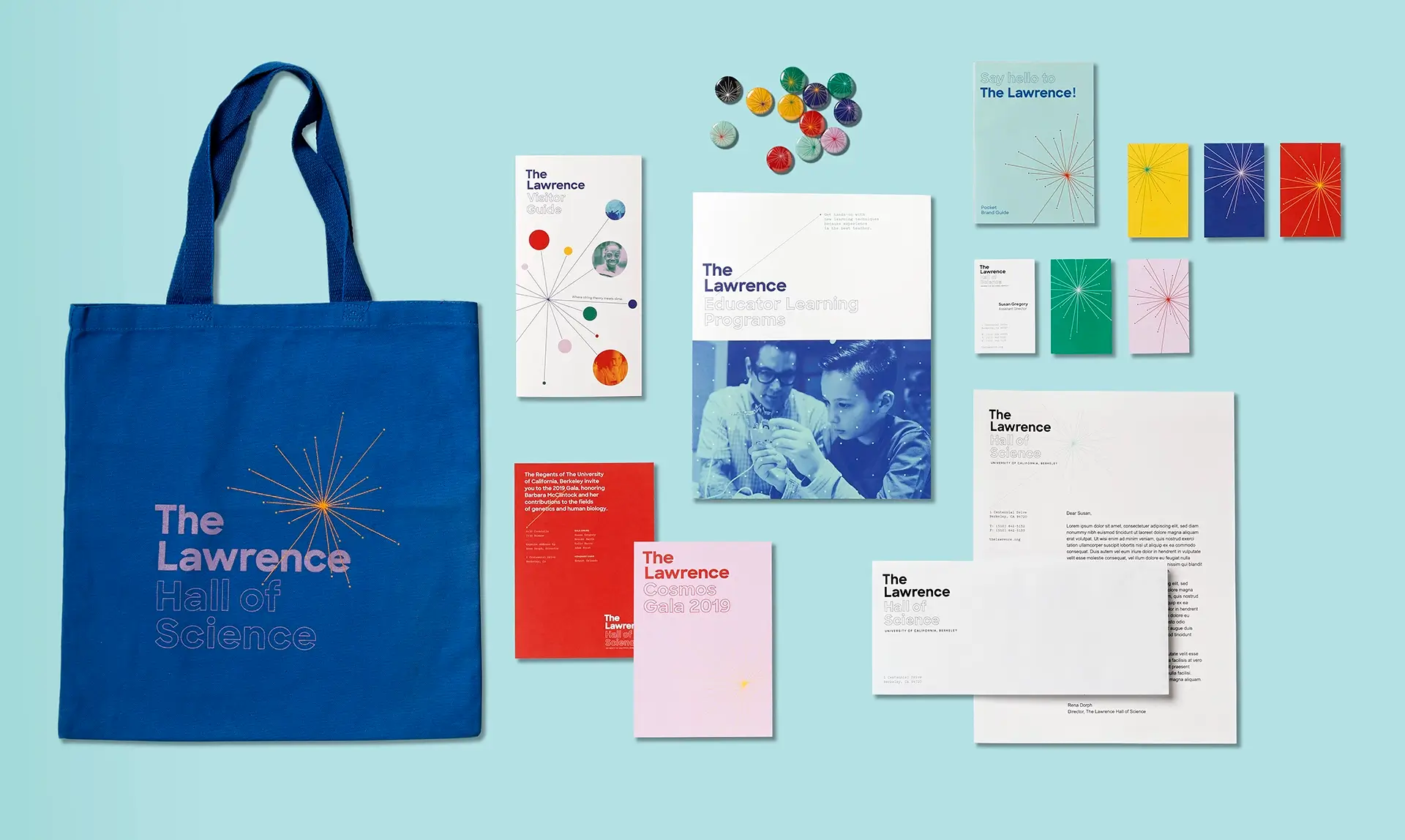
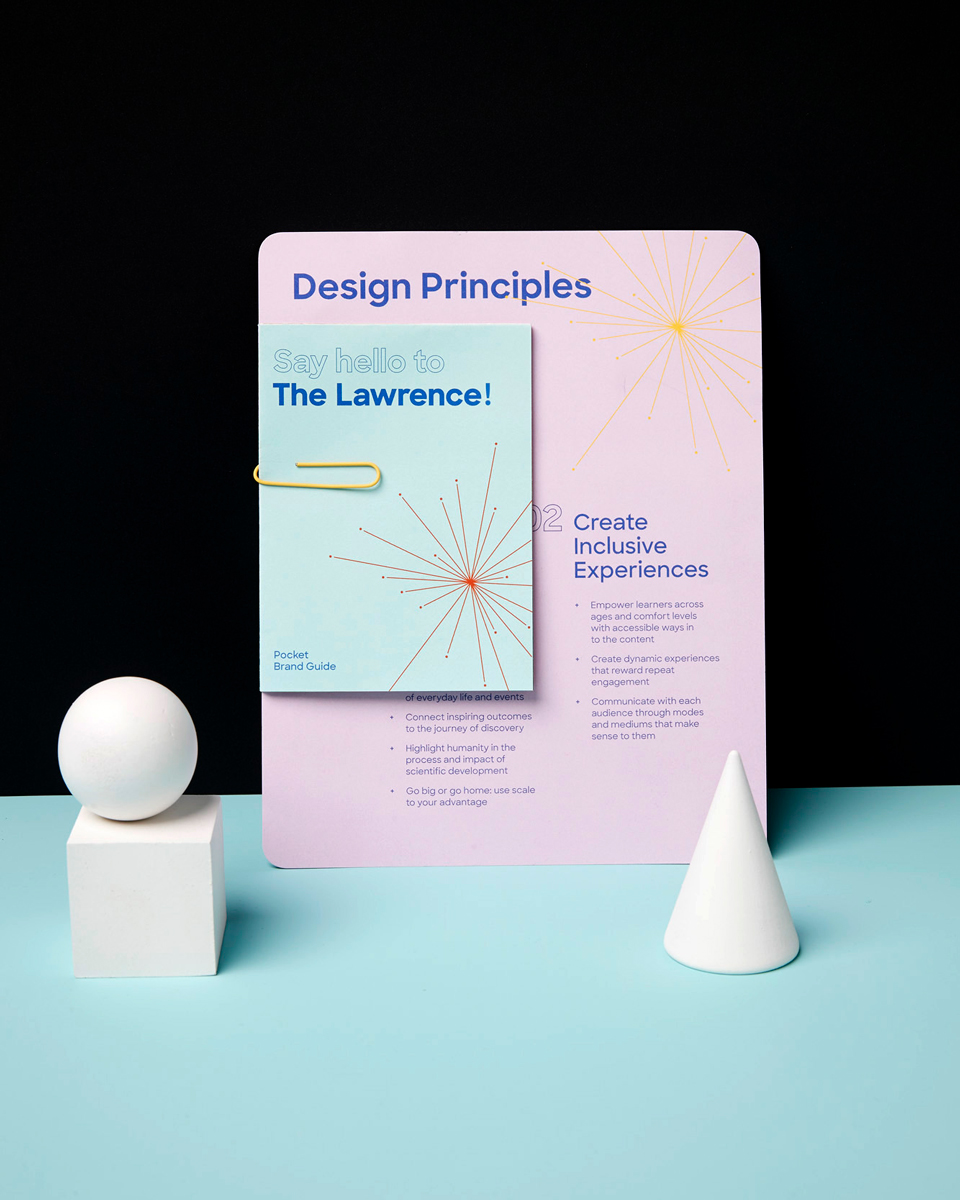
Building on its strengths as an institution and the identified opportunity areas, IDEO created a modern, vibrant, and flexible brand that strategically and visually unites all of The Lawrence’s offerings, working across digital and physical media. Grounded by a grid system, the updated brand identity is simultaneously rigorous and fun, featuring a bright color palette and signature retro-cool super-nova mark. Different offerings are bundled together based on different audience needs, preventing confusion and easing navigation. Even the name of the science museum, The Lawrence Hall of Science, was updated to a more contemporary and approachable, The Lawrence, inspired by The Met.
The Lawrence unveiled its new brand with much fanfare in late 2018 as part of its year-long 50th anniversary celebrations. Visitors can see the updated identity across all public-facing elements, including The Lawrence’s website, curriculum and educator materials, letterhead, collateral, and exhibition and wayfinding signage. The redesigned brand has been credited with bolstering the popularity of the science center among families and schools and causing ticket sales to return to—and exceed—pre-pandemic levels. Internally, the rebranding effort has helped generate excitement and energy across departments, helping solidify a collective future strategy and vision for its next 50 years.

The Lawrence Hall of Science’s diverse offerings had grown extensively over the decades, creating a confusing and disjointed experience for its various audiences. On the eve of its 50th anniversary, Lawrence leadership sought a brand refresh to better connect with its target audiences and differentiate itself in the STEM education ecosystem.
Over $6M in new funding
raised to transform and modernize The Lawrence, thanks to IDEO's rebranding effort
Reinventing classic British pubs and inns
Greene King’s upscale Everly Hotels Collection combines modern comfort with local impact.
When Greene King approached IDEO in early 2022, it was (and still is) one of the UK’s leading hospitality brands, with over 2,600 pubs, restaurants, and hotels. At that time, consumers in the UK and other parts of the world were beginning to rediscover the joys of travel after years of pandemic lockdowns. Greene King’s newly formed Venture Hotels Team wanted to understand how guest expectations had shifted during Covid-19 and how a new customer-centric hotel brand and signature service experience might meet—or exceed—their expectations.
To get inspired, the IDEO team interviewed a range of travelers of different ages and backgrounds, met with hospitality and luxury experts, and conducted immersion visits, including visiting high-end hotels. The research revealed modern travelers want unique hotel experiences that cater to their curiosity, support local communities, and are environmentally sustainable. Luxury, which once meant “exclusive,” was now about enabling one-of-a-kind cultural experiences. Today’s travelers value inclusivity, accessibility, and well-being; they want to feel welcome, do things at their own pace and have thoughtfully curated options to choose from. They also expect hospitality practices to be ethical and sustainable, contributing to the welfare of local communities and the planet.
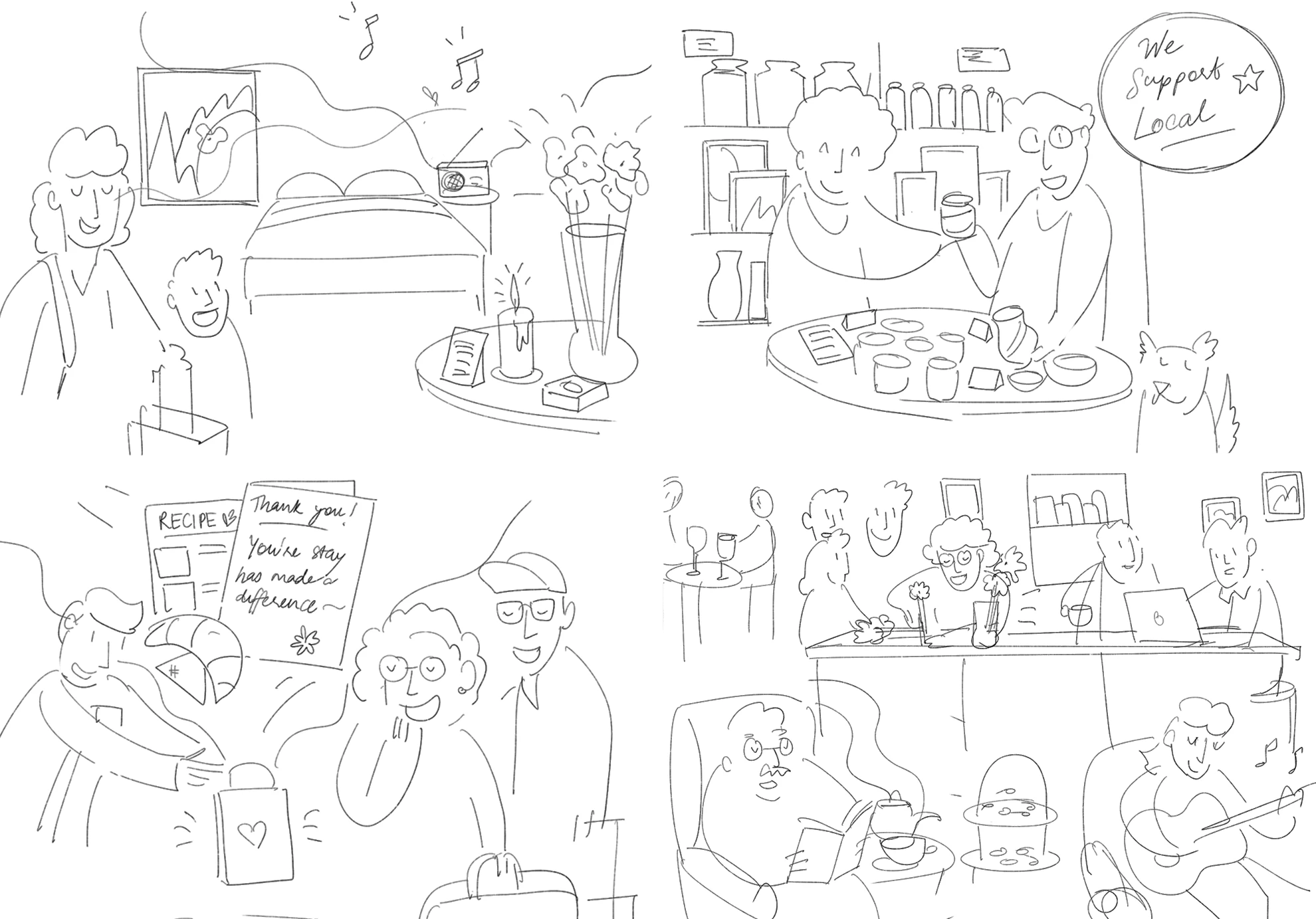
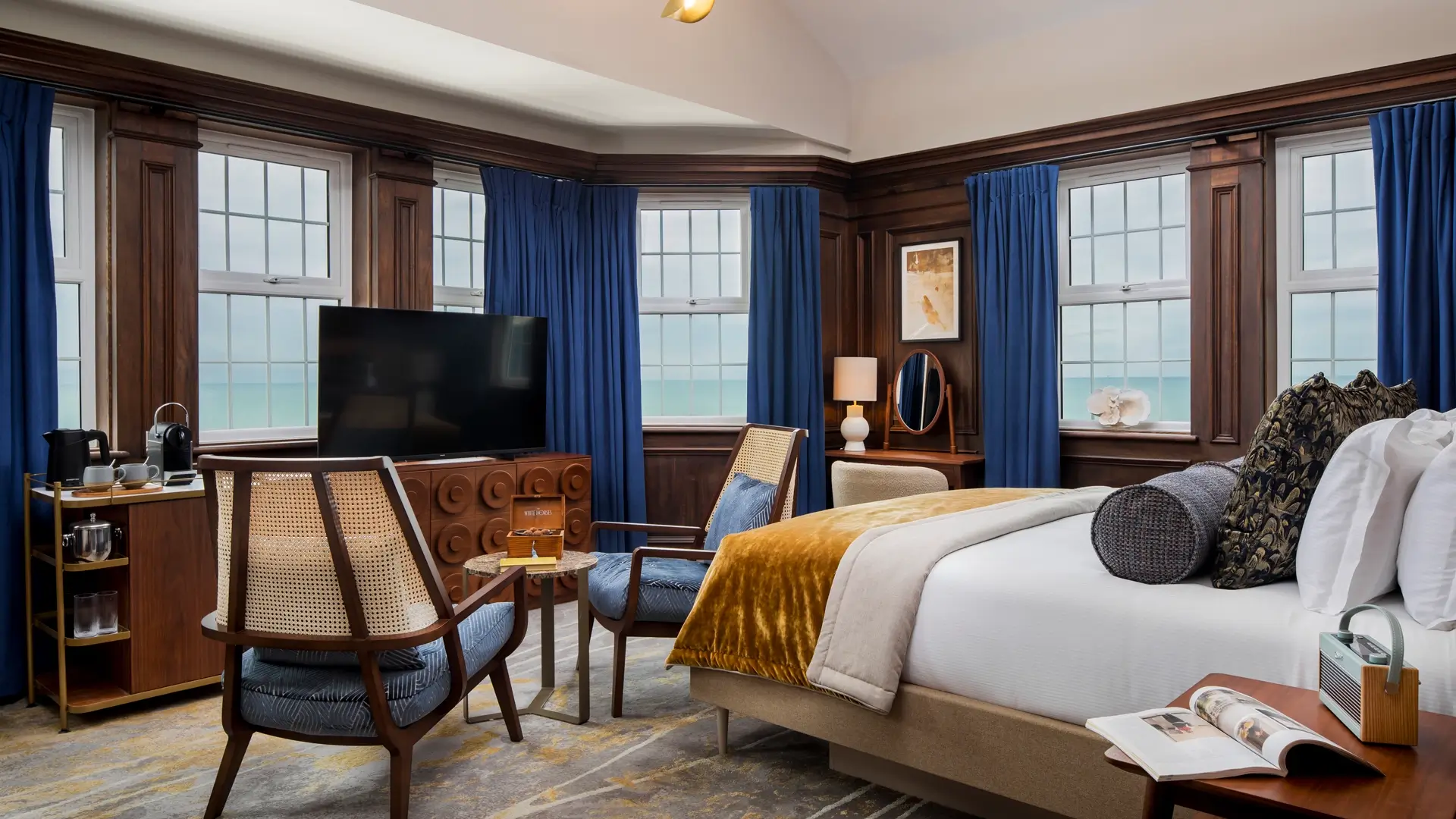
Building off this research, IDEO crafted a new entry proposition for Greene King’s new Everly Hotels Collection called “The Discover Collection,” which leverages the best parts of a classic British pub and inn—bespoke historic locations full of character, culture, and stories—while offering guests a modern experience from pre-arrival to departure, all grounded in supporting the communities they are in.
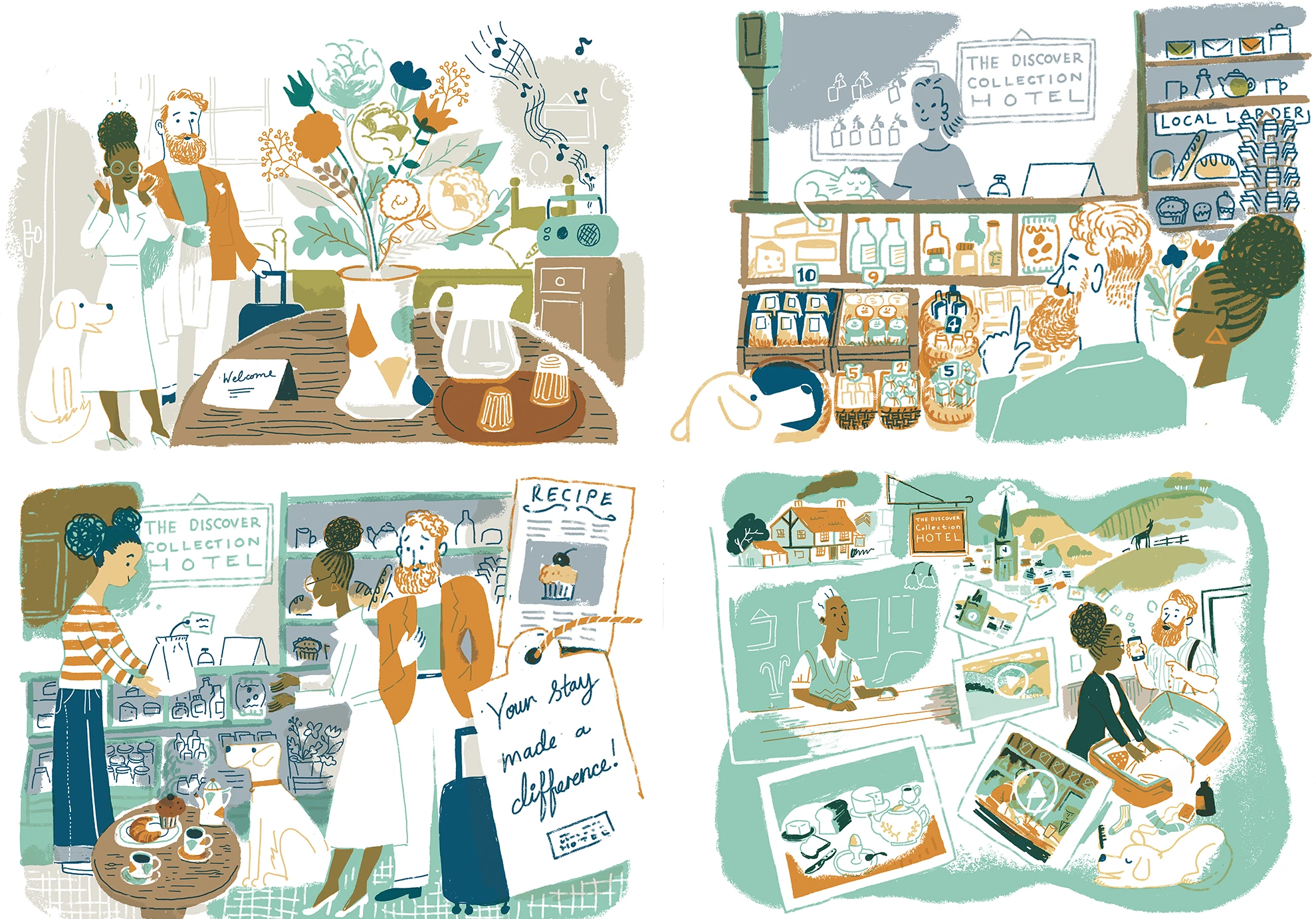
Signature moments include a warm welcome during check-in, as well as staff recommendations and local maps highlighting neighborhood gems. During their stay, guests enjoy expansive seasonal food menus, as well as a beverage menu that includes a wide variety of locally brewed, distilled, and crafted drinks by local suppliers. Rooms feature a smuggler's treasure chest with a surprise treat. Art and books from local talent are on display throughout the hotel, and local experts lead activities and events. Guests tangibly experience Greene King’s commitment to sustainability through its use of local materials, produce, talent, and partnerships, all designed to support the surrounding community. Upon departure, guests receive a personalized postcard.

In addition to the hotel experience moments, IDEO delivered branding recommendations for The Everly Hotels Collection, including visual identity and tone of voice that provide a cohesive look and feel for the collection of hotels while simultaneously showcasing each property's unique character. This was all packaged as an experience playbook, with design principles and briefs to help guide implementation decision-making across Greene King’s marketing, digital, interior design, and food and beverage teams.
A few months after the project ended, Greene King launched The Everly Hotels Collection. Its pilot hotel, The White Horses in Rottingdean, East Sussex, opened within the year. The new brand and guest experience strengthened bonds with Greene King’s loyal customers and first-time guests, ensuring the brand's relevance and appeal in a competitive market. More hotels are planned in the future in other scenic UK locations.
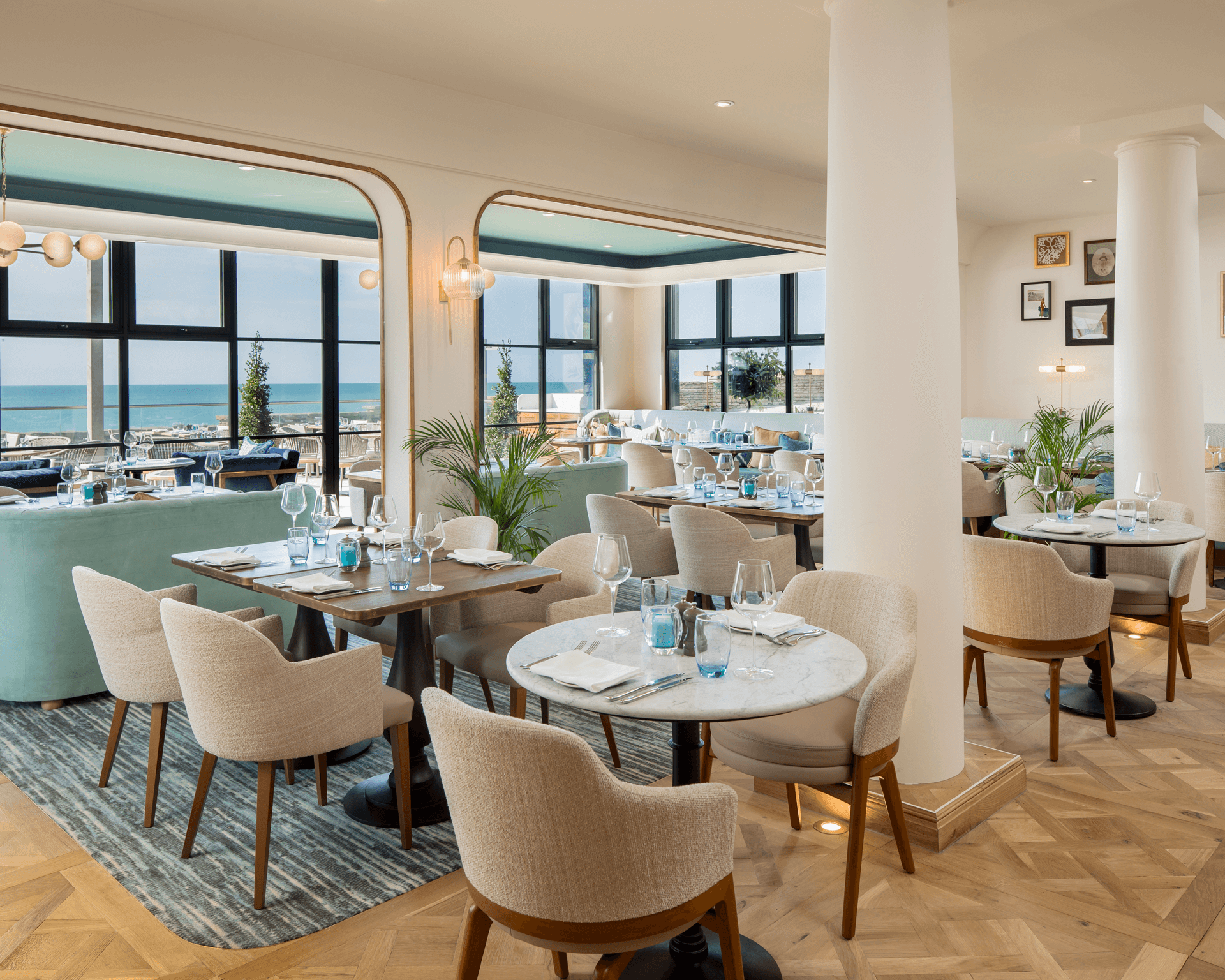
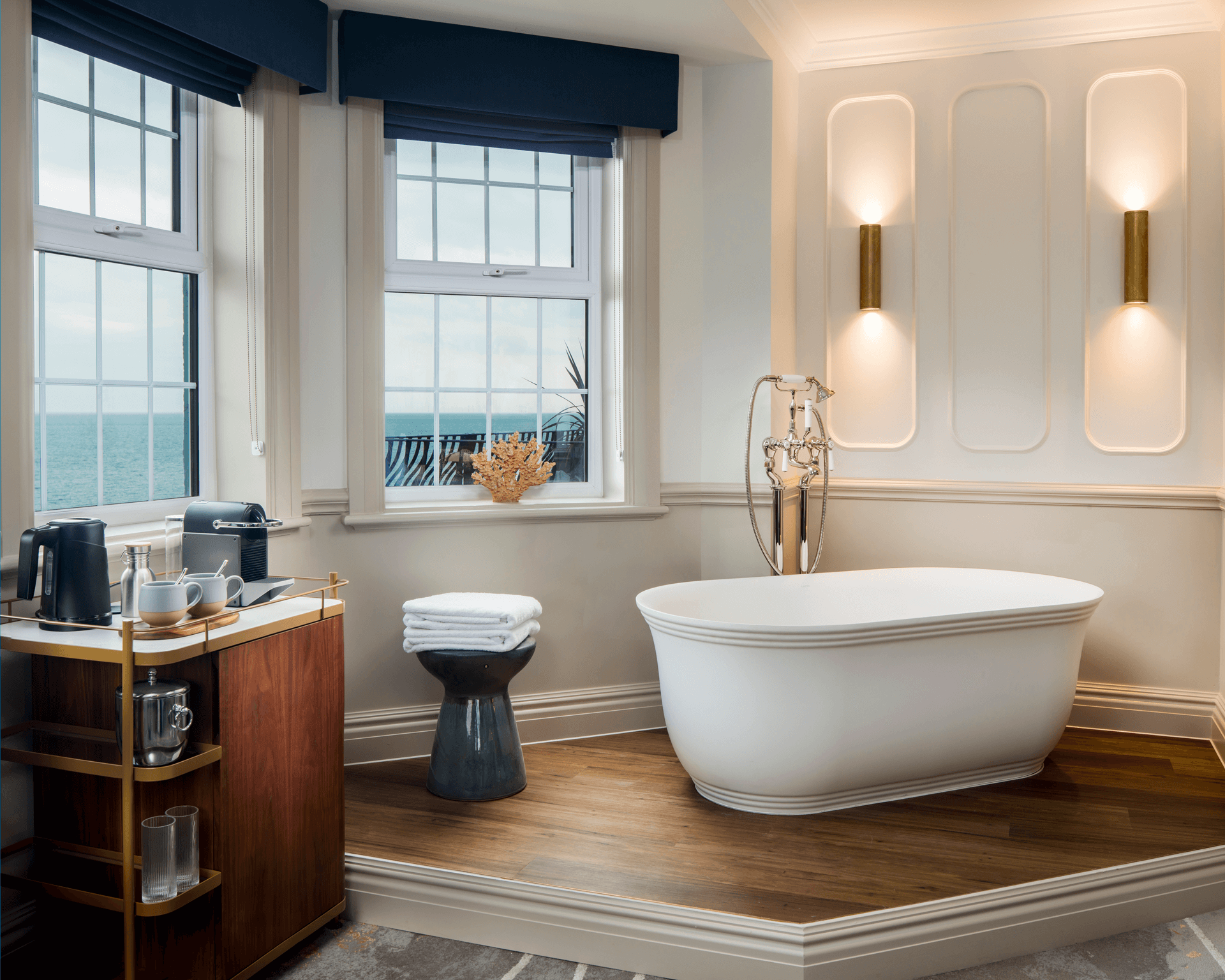
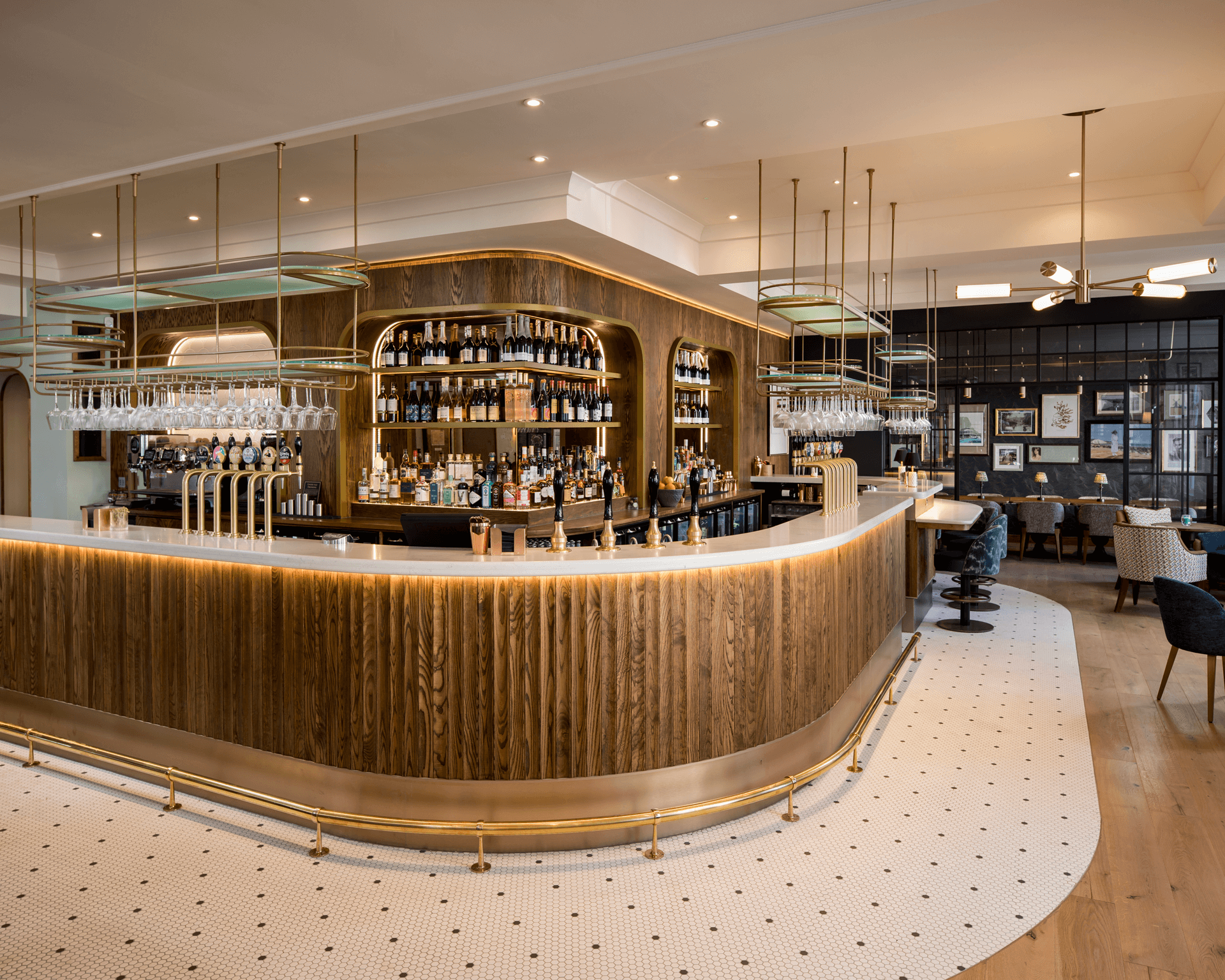
Greene King wanted guests to have a consistent brand experience while maintaining the storied charm that makes each property unique.
2 years
from concept to the launch of Greene King’s boutique Everly Hotels Collection
1 pilot hotel
The White Horses opened in Rottingdean in 2024
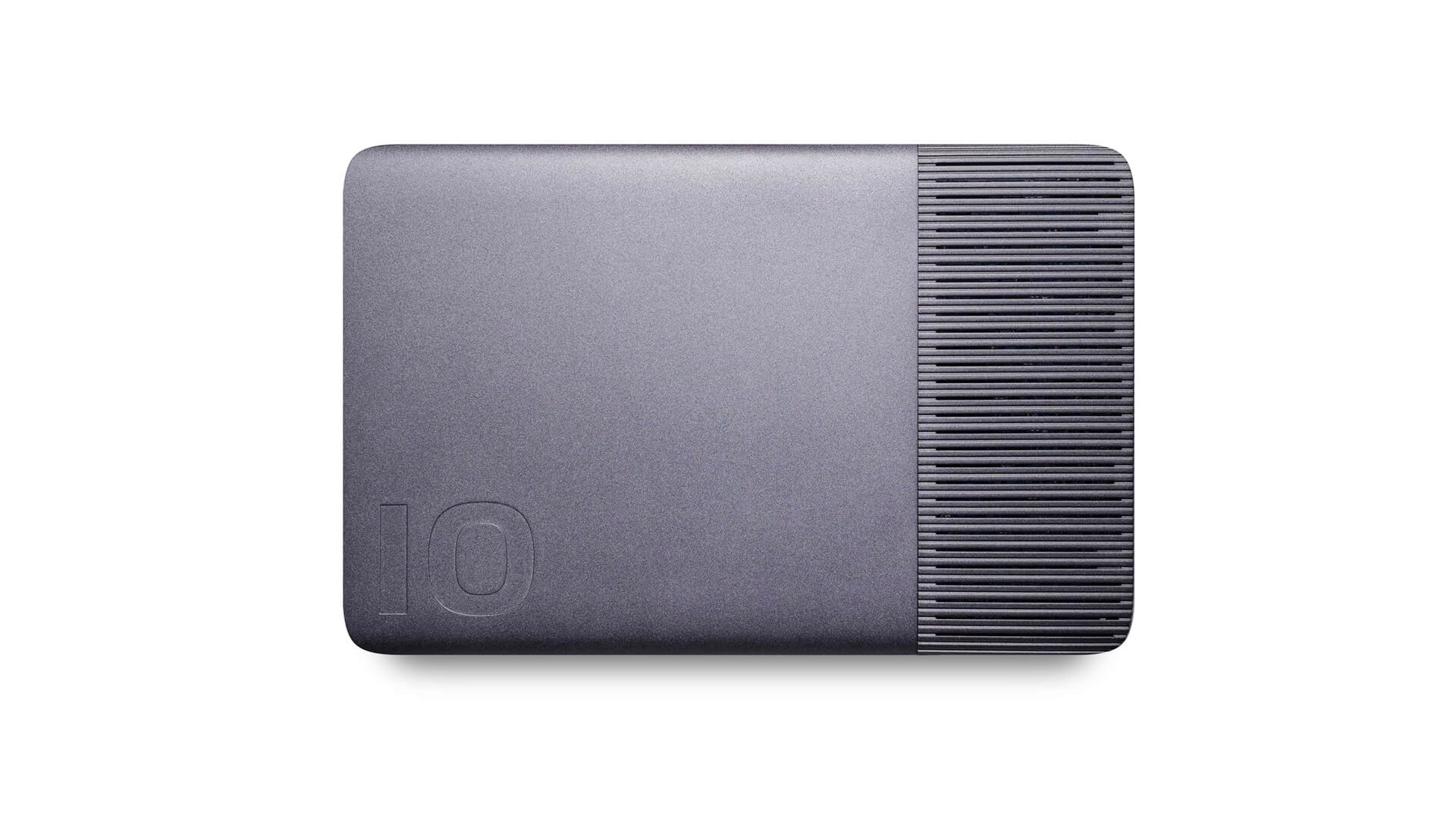
A new paradigm in data storage
Designing the iodyne Pro Data and Pro Mini hard drives.
The hard drive space is full of companies competing over technology and performance. But iodyne wanted to add another layer, focusing on user needs and product aesthetics to better position the company to meet the values of a broader audience and create compelling new entrants into this crowded market.
Together, IDEO and iodyne jumped into in-depth discovery research to learn more about the needs of their end users. The team sat down with photographers, videographers, and digital imaging technicians, asking questions about their file management systems, how they used hard drives in the field, and how they stored them for transport and at home. They also headed to the source, visiting studios and home office set-ups to understand the full range of potential use cases.
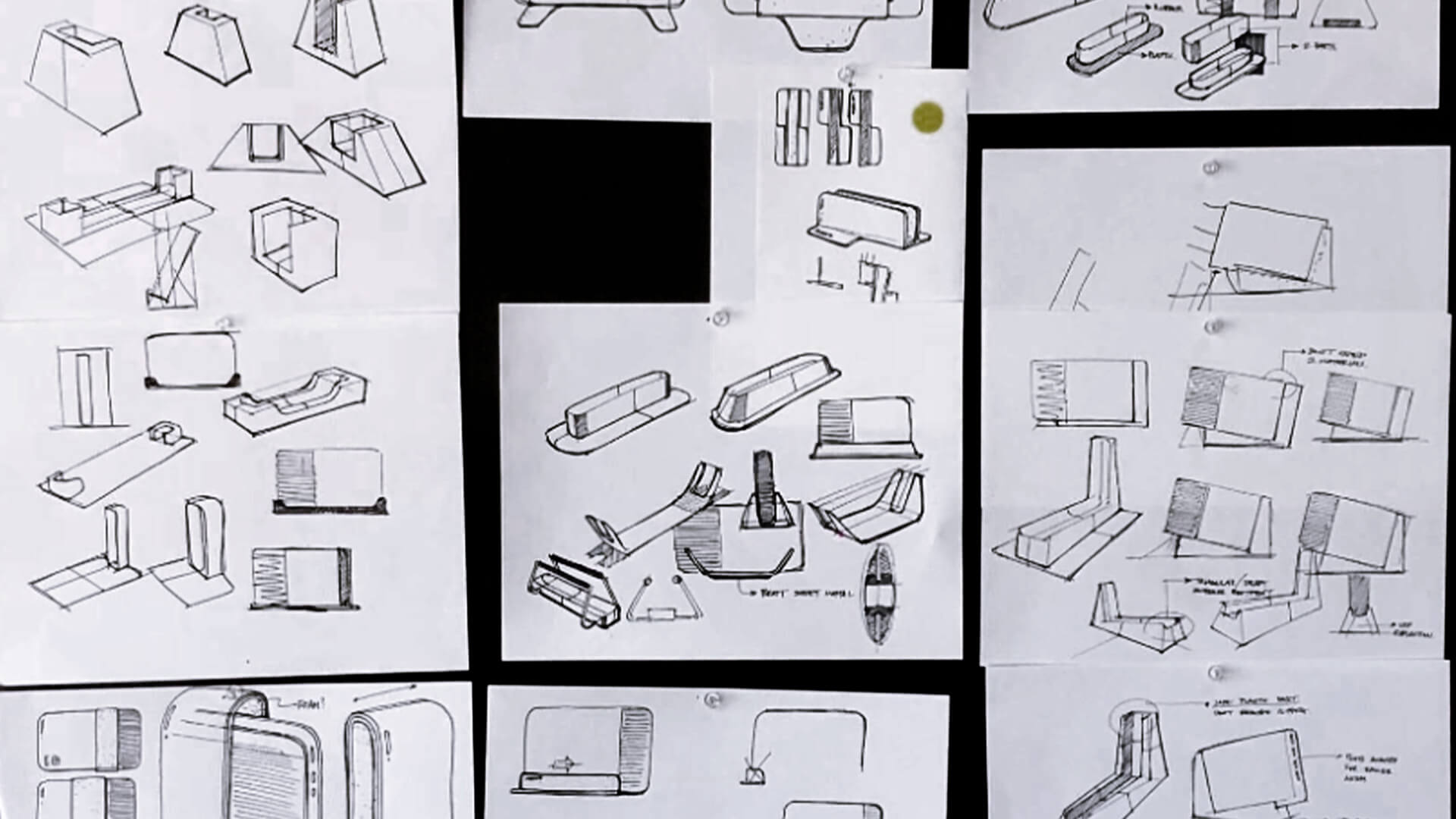
A few big discoveries leaped out. No one had a single storage solution to rely on. Users constantly transferred data from different hard drives designed for different purposes (in the field versus at home), accumulating hundreds of old hard drives over time. Traditional hard drives also don’t allow multiple users to work off them simultaneously or come with software systems that help keep projects and tasks organized, protected, and sharable. Meanwhile, the ever-shrinking size and weight of laptops—and people’s willingness to take them everywhere—set a new benchmark for portability, one that iodyne could lean into.
With these and other insights in hand, the team brought unrivaled performance and aesthetics together to create a far superior user experience. IDEO and iodyne developed Pro Data’s engineering architecture, collaborating on thermal performance analysis, material choice, inspection of sample parts, and even packaging design. By combining integrated venting, multiple laptop-quality fans, smart power management, and 20 thermal sensors, the team was able to minimize cooling fan loads and reduce noise and power consumption. A single, centralized, and consolidated storage space makes sharing data among teammates easy, too—up to four computers can connect to the Pro Data at the same time and access the same files. The redesigned Pro Data creates new value for consumers in a highly mobile, secure package that can go from desktop to backpack and back again.
The iodyne Pro Data hard drive launched in 2021 to overwhelmingly positive reviews. Storage Review wrote “Nothing else comes close to this level of performance in a package this size,” while Jemery Boros of StarGate Studios said “I don’t think I could have done the shoot without Pro Data. It was easy to use, fast, and kept all of our data safe on the other side of the world.” The drives have since been used in the making of major motion pictures from F1 to A Complete Unknown.
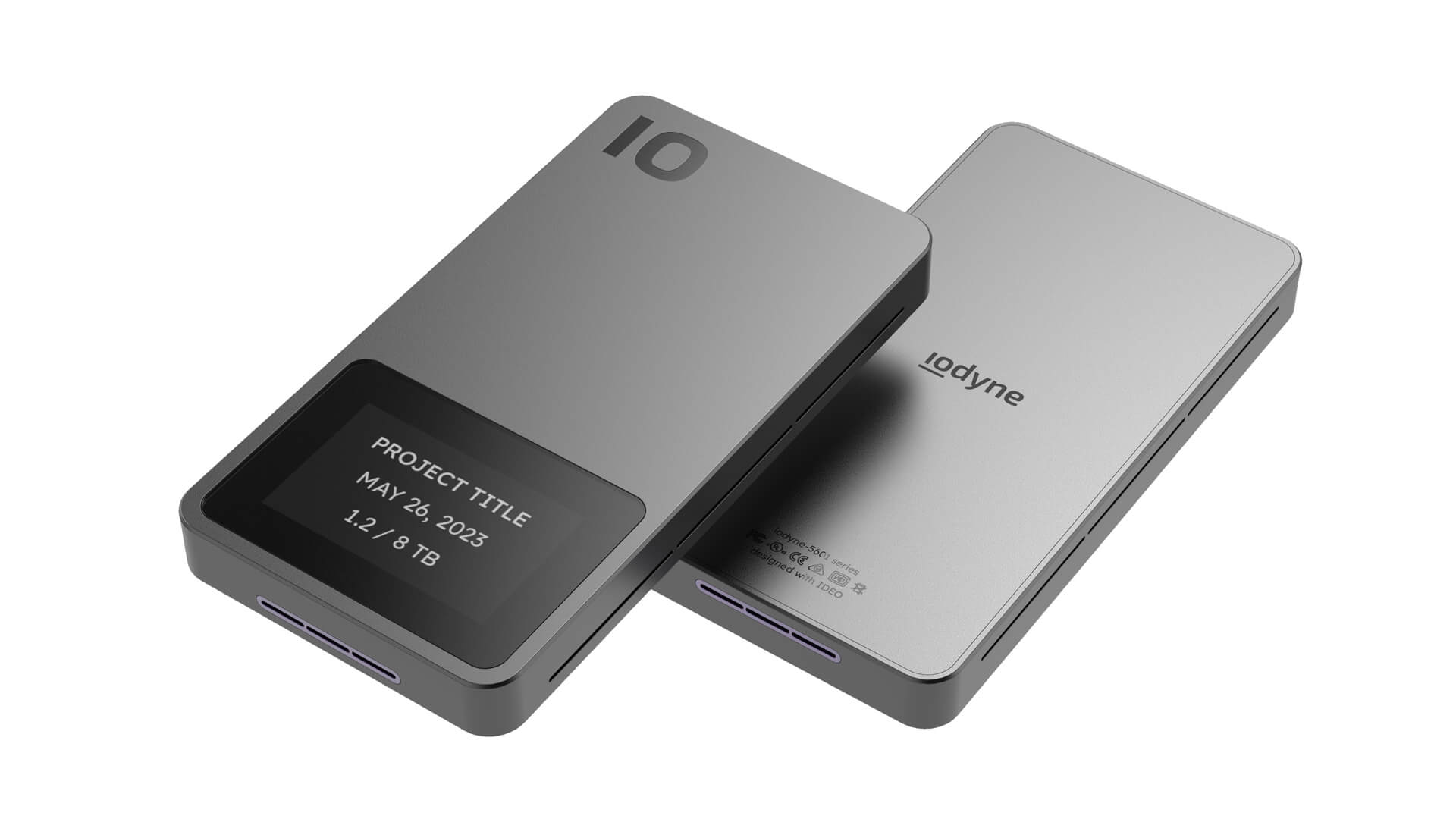
Spurred by Pro Data’s success, iodyne decided to create a second product with IDEO, a Pro Mini that could provide the same cutting-edge performance and sleek design but scaled down to fit the needs of customers who required less storage capacity in an even more portable package. Pairing Pro phone-quality industrial design with a unique internal solid-state cooling architecture that imposed key constraints on airflow was critical.
IDEO worked with iodyne to create the Pro Mini’s internal layout and collaborated with an emerging engineering company to incorporate novel solid-state cooling technology, positioning the vents to maximize airflow and optimizing how users physically interact with the device. The team also addressed users’ durability concerns, advising iodyne on part selection as samples came in from vendors. The new Pro Mini is set to ship in the second half of 2025.
Hard drives are essential tools of the trade for people with large troves of media to store and transfer, like photographers and videographers. But beyond rolls of masking tape and label makers, there isn’t an easy way to see what’s on each drive without literally going through them one by one.
Traditional hard drives generate a lot of heat and need fans to cool them, making them bulky, loud, and slowing transfer speeds.
Many external hard drives are treated like commodities. They’re designed for mass production rather than for durability and aesthetics.
2 cutting-edge hard drives
to market in 3 years
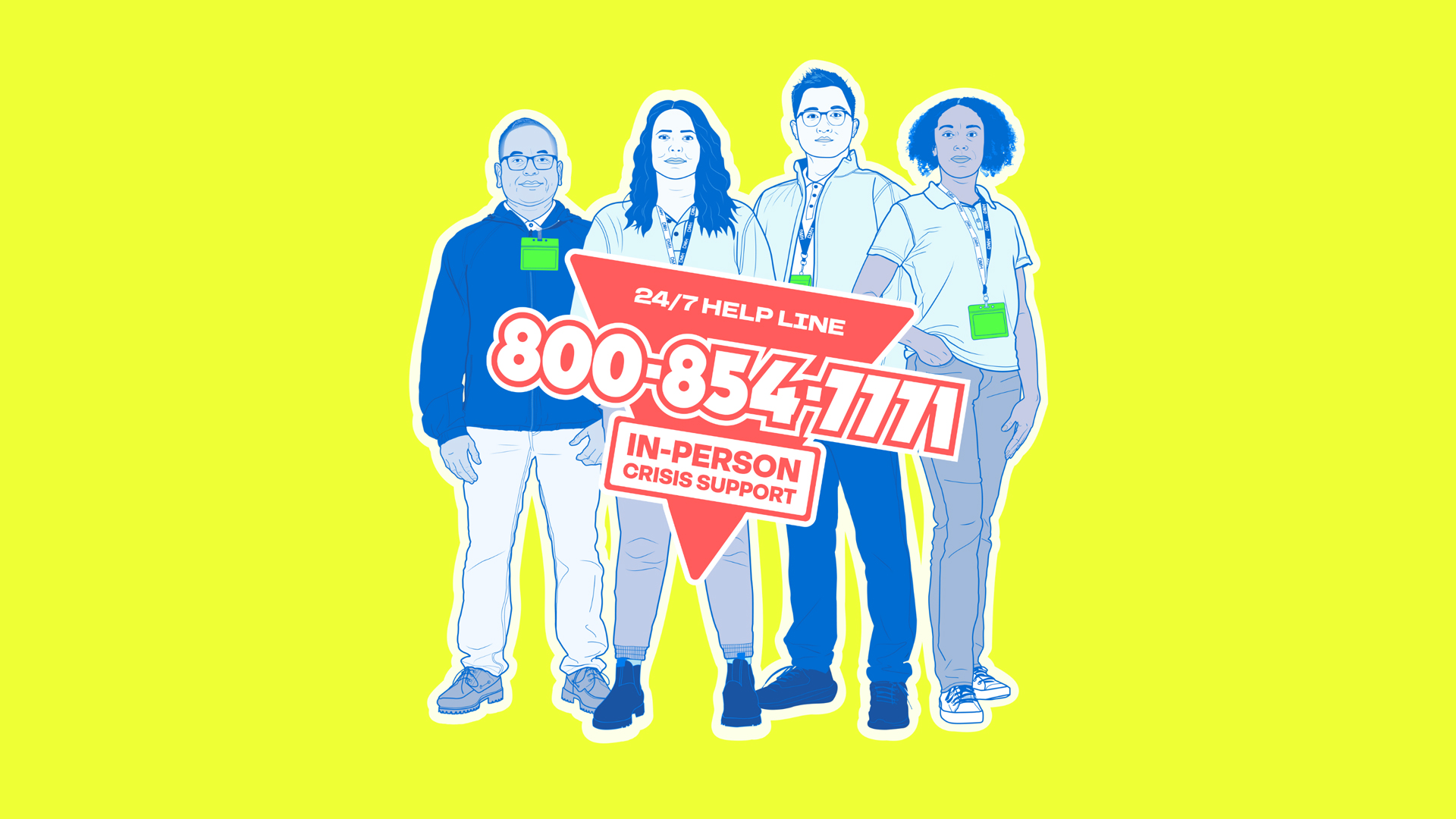
Introducing LA’s mental health crisis first responders
Helping a kinder, safer emergency support arrive first on the scene.
LACDMH is the nation’s largest public mental health department, serving over 10 million people. The agency provides critical support for the most vulnerable, including staffing a toll-free, 24/7 Help Line. Since late 2024, more than 70 Field Intervention Teams—comprised of mental health clinicians (social workers, psychologists, licensed psychiatric technicians, and registered nurses) and community health workers (trained peers or community members with lived experience)—have been dispatched around the county to help de-escalate mental health crises quickly, compassionately, and without force.
Because those experiencing a crisis are often too disoriented, confused, or otherwise unable to seek help for themselves, IDEO’s communication strategy targeted reaching “trusted messengers”—parents, spouses, siblings, and friends of people who have a mood or personality disorder like schizophrenia or bipolar disorder. The campaign aimed to define mental health crises, help people understand what to expect when they call, build trust in FITs, and divert mental health crisis calls away from 911.
To understand what drives these specially trained mental health professionals to do this type of work—and what sparks trusted messengers to call for help—IDEO met and interviewed former clients and loved ones who had reached out to the county for support during a mental health crisis. The team also interviewed multiple FIT staff to learn more about how they approach clients and families.
The research inspired the communication strategy’s central idea: position FIT members as real-life superheroes and first responders. By associating FITs with that term, the campaign changes the narrative and communicates their compassion and expertise to those in crisis. Custom illustrated portraits feature actual FIT staff in strong, action-figure-style poses, while a bright, eye-catching color palette and clear, direct language convey confidence and inspire trust.
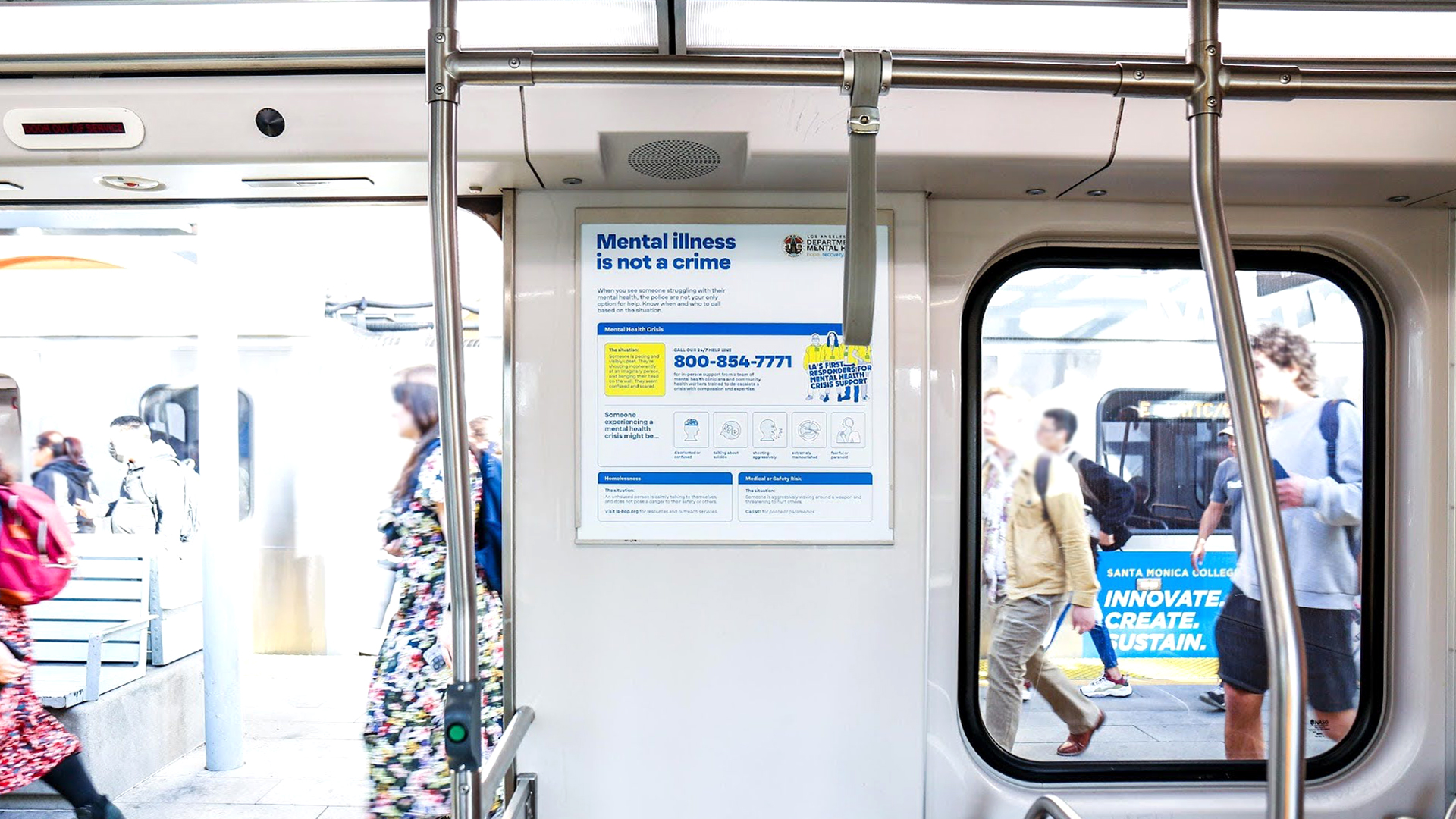
The team explored their initial design directions in a series of focus groups with LA residents, trusted messengers, and county and mental health workers to better understand the impact of the potential messaging and visuals. The research uncovered the importance of clarity, even in an inherently emotional situation. The IDEO team discovered that transparency—and real personal stories—would be the key to building public trust in ACR.
Between March and June of 2025, the robust awareness campaign will run across LA County in a number of languages on city buses, in Metro stations, on social media, streaming TV, radio, and more. An updated landing page on LACDMH’s website includes in-depth information and educational videos about mental health crises, as well as heartfelt testimonials from staff and former clients who have been helped by the service.
LA County Department of Mental Health created an innovative new program to provide urgent, compassionate care to Angelenos experiencing a mental health crisis but needed help driving awareness of its service across the region.
Calling 911 is an entrenched behavior in an emergency. However, dispatching police officers who are not trained in mental health can make a bad situation worse. In 2022, 39 percent of people shot by LA police officers were in the midst of a mental health crisis.
172 million impressions
delivered via digital and physical ads across LA
50% increase
in calls to the ACR helpline, year-over-year, attributed to IDEO’s awareness messaging
24%
of Angelenos now name LACDMH as the first to call in a mental health crisis, leapfrogging 911 or the police, which slipped 14.3 points
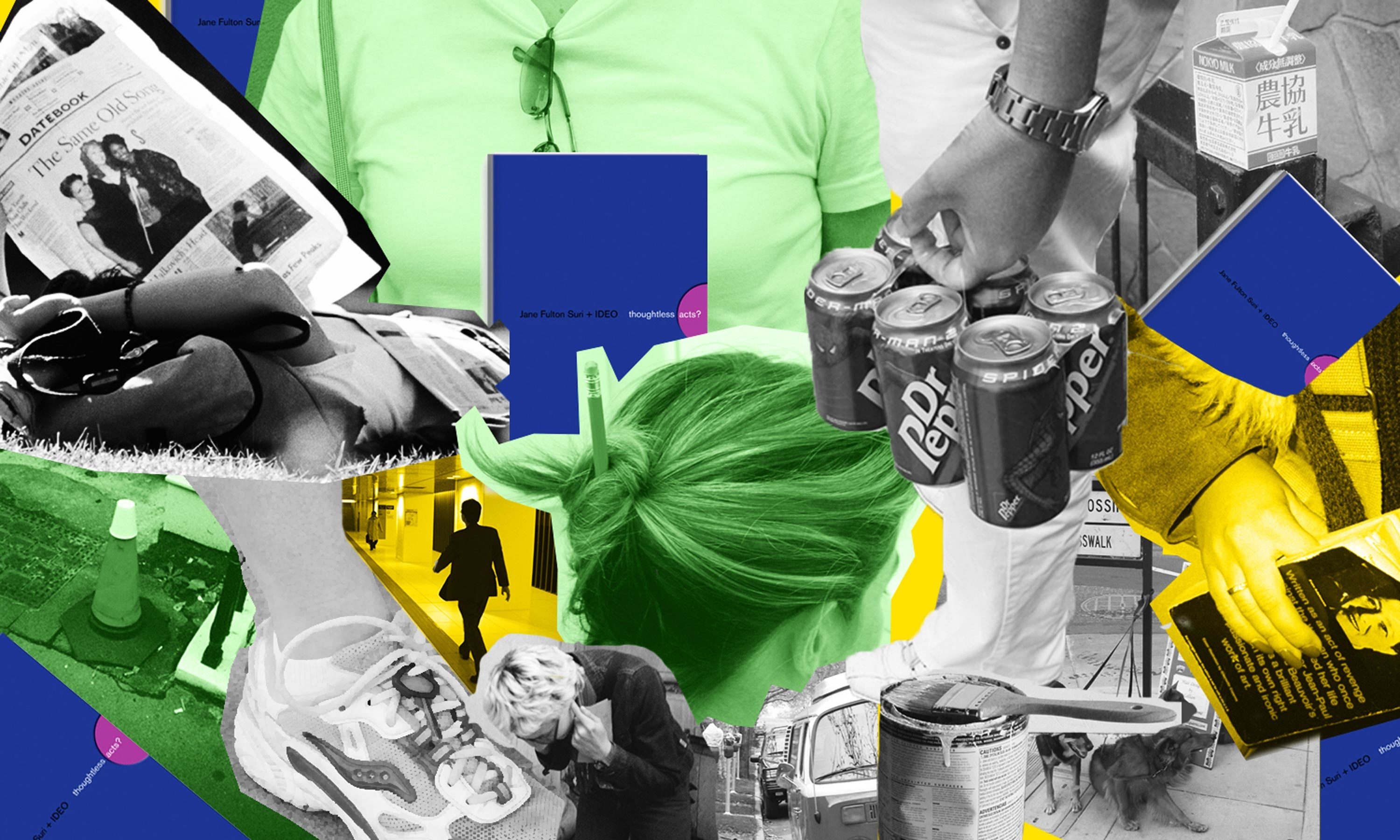
Thoughtless Acts: Save For Tomorrow
The intuitive ways we adapt and react to things in our environments
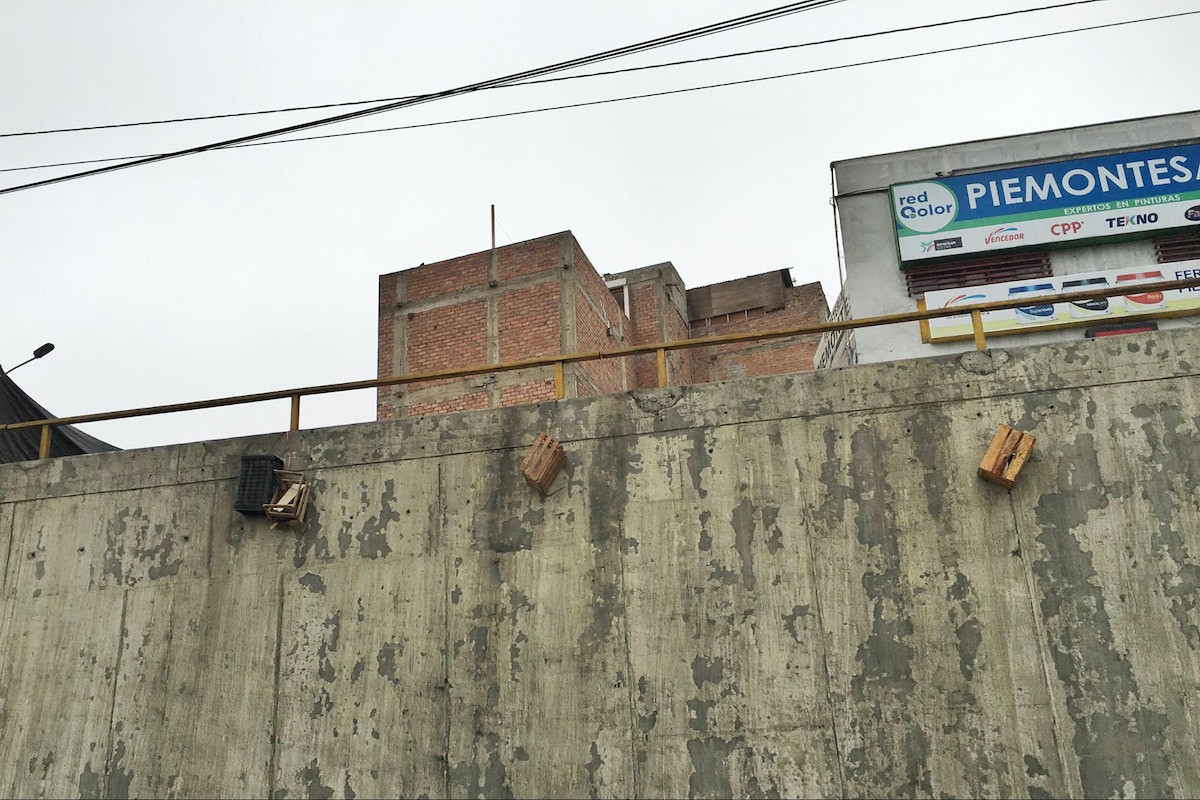
In Lima, Peru, people who give out free newspapers or sell water and snacks on the on-ramps to the highway use these little wooden crates to sit on or put products on. To avoid carrying the crates home every night, they tie a rope between the box and the railing, then drop it over the edge overnight. This keeps them from getting cleared or taken because they're virtually invisible from the other side. The crates aren't that valuable, but it's probably a hassle for vendors to carry them around or find new ones every day.
Human-centered design requires us to observe human behavior with beginner's eyes, so that we can spot the innate ways people interact with the world around them. We call these intuitive and unconscious reactions thoughtless acts, and IDEO designers collect photos of them to inspire the invention of new products, services, and experiences.
What's the Last Sound You'll Ever Hear?
Bringing new design to the way we die
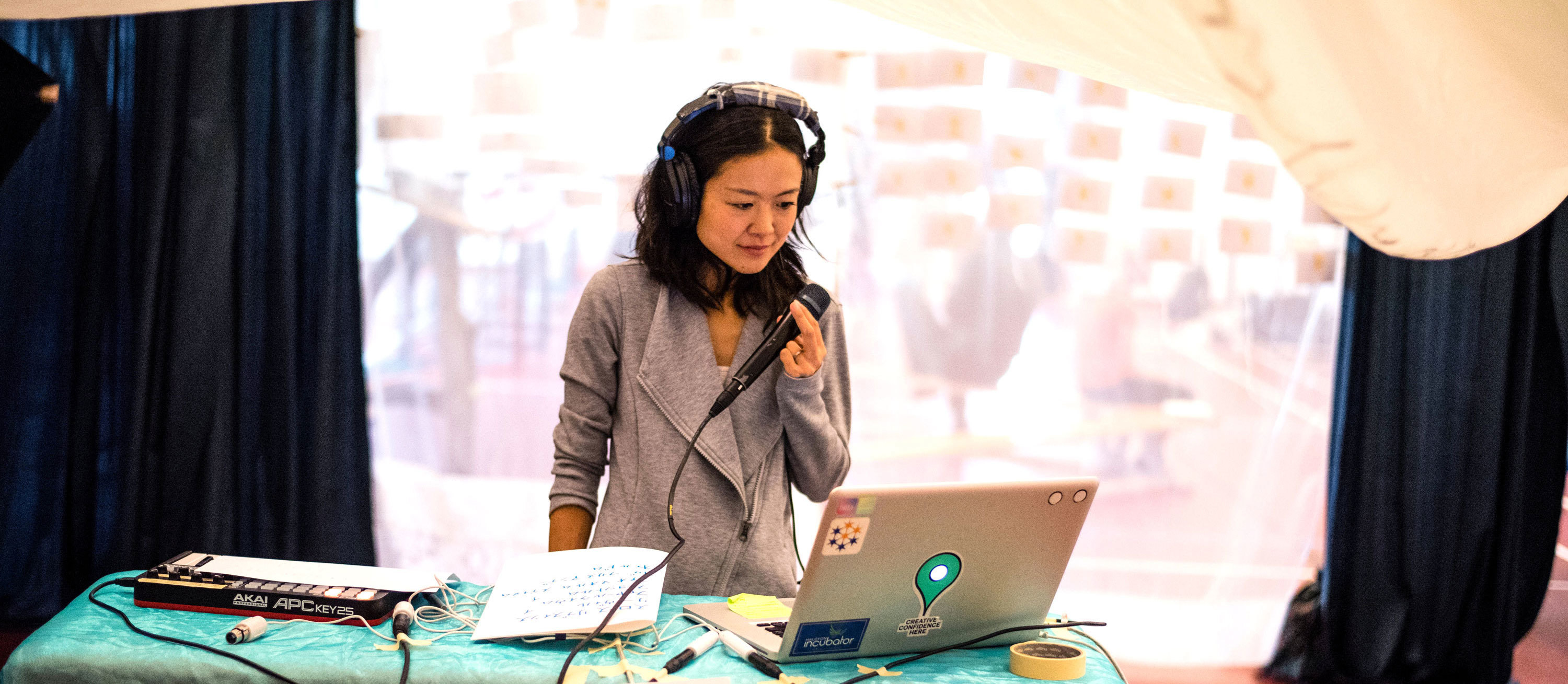
Bringing new design to the way we die—what we see, touch, feel, and hear—is an idea with a strong tailwind. Advocates like BJ Miller, who was profiled in the New York Times this week, are spreading the message that we can do better for people who are dying if we pay close attention to human needs.
Sen, who gives Miller a nod in her video (see below), felt this firsthand when she was hospitalized for an illness. As a musician who started playing the piano when she was 3, Sen found the sounds of the emergency room traumatizing, and left committed to do something to save others from having the same experience.
We became instant fans of Sen’s work when she submitted it to our OpenIDEO challenge on end-of-life care, and gave a talk during Re: Imagine, a subsequent citywide conversation about death. We caught up with her in Washington D.C., where she’s a fellow at the Halcyon Incubator, a program that supports social entrepreneurs, and asked how she’s planning to bring beautiful sound to the people who need them most.
IDEO: WHY IS MUSIC SO IMPORTANT AT THE END OF LIFE?
I would say sound is important at the end of life, which includes, but is not limited to, music. For instance, a lot of people mention nature sounds as something they want to hear at the end of life; other examples are voices of loved ones, laughter, etc. You can hear people's responses here.
Sound is important because some people say hearing is the last sense to go when we die. I believe it has a profound effect on our sense of dignity, not just for the person dying, but also for those around them.
IDEO: HAVE YOU SEEN EXAMPLES OF THIS?
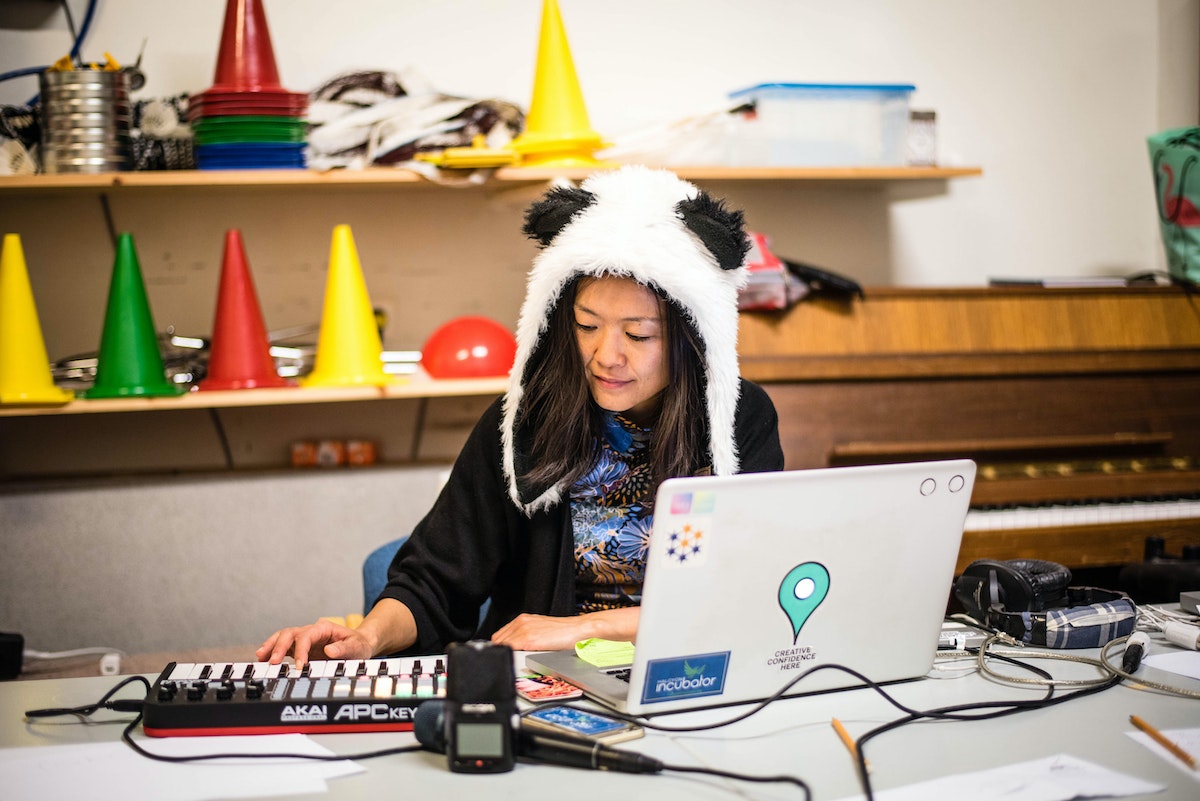
Morgan, a palliative care nurse in NY, got in touch with me after she saw the idea on OpenIDEO. She said that her team started to play a song moments before a patient's death to liberate them from the ventilator, with the expectation that they would die in the next few moments. The question inspired her to use her own iPhone to play music for the patients. One cancer patient she became very close with shared his favorite music, and she played that for him. People’s preferences are different, so it’s tough to find something that’s universal. It’s very awkward to say, “I’m assuming you’re going to die soon, what kind of music do you like?” I got the impression that it was helping her team and the family members as much as the patient. You can’t interview the patient after they’ve passed away—“how was your dying experience?”—but you can talk to the family and the nurses. I heard from cancer nurses at Sibley that when a cure is not possible, they are empowered to heal in other ways—do something seemingly simple that makes a big impact.
A couple of people mentioned that they played music when their grandparents passed away. “I had a sense that she could hear the music or my voice even though she couldn’t react to me,” or “I have faith that she could hear me.” It’s a story that we create for ourselves, but, as those who are left behind, feeling that we have made a positive impact gives us a sense of peace.
IDEO: ARE YOU PILOTING SEN SOUND IN HOSPITALS?
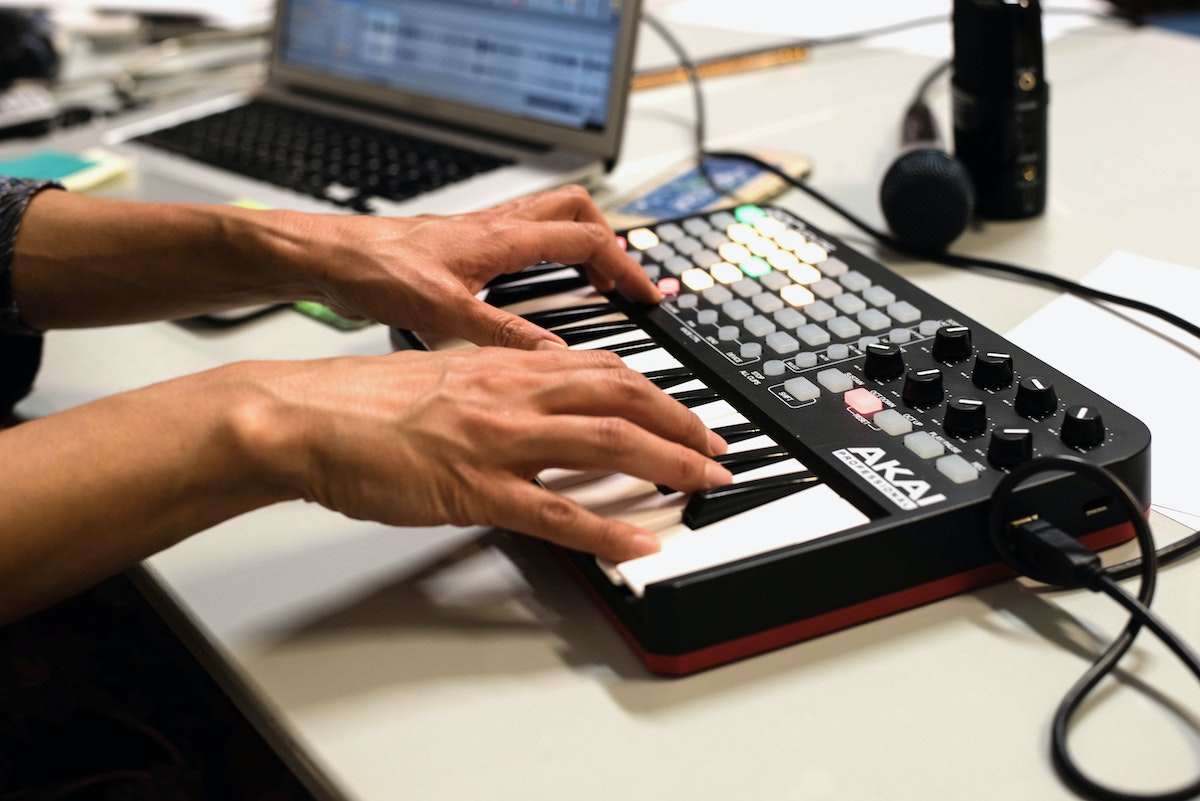
Yes, we are already working with Sibley Innovation Hub (part of Johns Hopkins Medicine)—though not necessarily focused on "end of life"—to test our ideas to transform the sound experience for patients.
As for the "end of life" sound—for now it's an art/conceptual project. I record the voices of people sharing stories of the sound they wish to hear at the end of life, to raise awareness on the importance of sound.
I also believe that it is a way to build resiliency in the community, by allowing us to approach the taboo subject with a somewhat light-hearted, playful way. It's dreadful to imagine death itself, but by imagining the sound, it's somewhat more approachable.
I would love to continue exploring ways to implement the idea with hospice and palliative care centers, and we are in conversation with a couple of facilities. I have done this as an artist and will always continue to do that, but I’m at the point where I’m transitioning to trying to inspire a team to do this.
It’s going to take time: Any medical conference you go to is about winning the fight [against death]. But this is a project to build resiliency in the community. There’s no wrong answer. If a young person says to me “I don’t like to think about how I’m going to die,” that’s okay. But I want to help people build a sense of community, to create music or sound or jam with the person with the same illness but not the same geographical location—connecting people who really need it through music and art.
For more about Yoko's work check out her piece in the OpenIDEO End of Life story collection.
Humans really like the sound of the ocean. We like it so much, the lapping of waves top the list of last sounds we wish to hear before we die. That’s one thing you’ll learn from Yoko K. Sen, an ambient electronic musician whose project, Sen Sound, aims to transform what we hear at the end of life, replacing shrill alarm bells and bleeping machines of the hospital with a soothingly oceanic sonic environment.
Creative New Year's Resolutions
After the ball drops and the champagne is gone, we have 365 days ahead of us to be more creative people
I have three. Instead of writing in a journal, I want to summarize each day in a creative drawing. I also plan to listen to more podcasts. And, whenever someone asks me, "How are you?", I will try to never to say "good," and instead use a more descriptive adjective.
—Katie Kirsch
I really want to work on being in the moment—which means putting down the phone, and being delighted by who and what is around me.
—Amy Bonsall
My creative resolution: Write, draw, or create more physical letters and postcards for friends and family (at least one per month!). And use more of the Airpost service that we helped design out of IDEO Tokyo!
—Mike Peng
I have two. One, to be more aware of what contexts and situations work in favor of my creativity. And two, to inspire others around me to be creative.
—Michaël Harboun
I plan to sew a new outfit and wear it, turn my photos into different series and make a portfolio website, and to read a Poem-A-Day.
—Rebecca Lee
I'm going to try to dedicate the first hour after waking up exclusively to creative pursuits, rather than looking at email, social media, or cat videos. This will require getting up early every day, so fingers crossed.
—Neil Stevenson
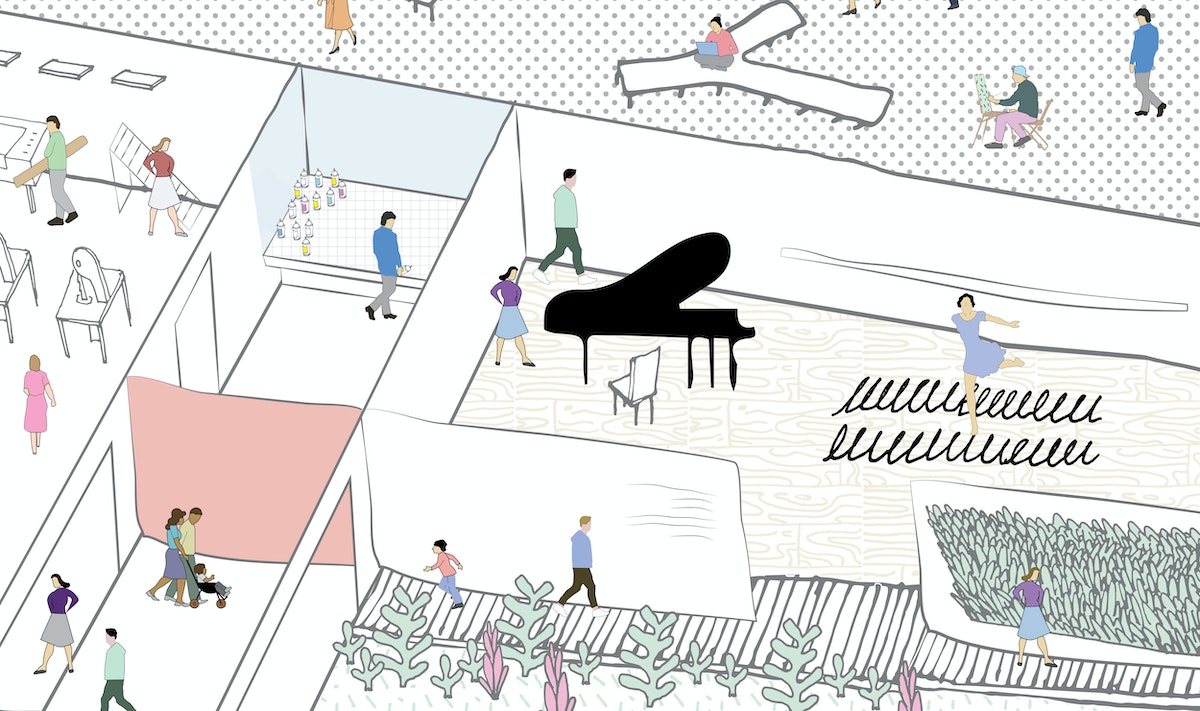
My resolution is inspired by Julia Cameron's morning pages. But since my practice is choreographic (I'm a dancer/choreographer outside of IDEO), I'm resolving to create a movement phrase everyday. I’m not sure yet what the dance equivalent to three pages of writing is, but I'll figure it out.
—Eileen Farrell
Slackline (or highline in this case) is both a new habit and skill. I find that balancing on a line is a powerful way of coming to terms with fear and a kind of forced meditation, counterintuitively creating fear and calm at the same time.
—Jonah Houston
I want to learn to lathe wooden baseball bats. I'm looking to make an art piece to show in a gallery.
—Samuel Bertain
I plan to find a living space that inspires me to do good work; to sign up for a class so I can make arts around other people and osmose creative energy (and hopefully give back too?); and to be more intentional about my passwords (I don't have a method to my madness, it's just madness).
—Momo Miyazaki
I am pushing my modern calligraphy for 2017. I did a class this year and for Christmas have ordered books and more pens. I am hoping to also try out brush lettering. I follow Seb Lester on Instagram and he makes it look so easy... even though it’s not.
—Bobbie Brightman
I will download and use the Headspace app.
—John Ravitch
I want to channel Charlie Rose and learn how to host better video interviews on Creative Confidence. I also want to rock climb more.
—Suzanne Howard
In 2016, I did the 100 day project, which got me going on weaving and watercoloring. In 2017, I want to create my first large-scale tapestry. Who knows if it'll happen... we'll see!
—Emma Scripps
I want to to start writing again. I used to write a lot, both for fun and as a freelance advice columnist, but have gotten away from it in recent years. Doesn't matter to me if this manifests in jokes, stories, reflections, whatever—so long as pen meets paper and my brain is flexed regularly.
—Adam Moulter
I want to do at least one thing each week to celebrate the ubiquitous creativity in New York City. It can be a concert, a class, or just a walk around a new neighborhood to explore the graffiti and architecture. I moved here a year ago and have so much more to explore!
—Shauna Carey
I want to say "I don't know" more, so I learn something.
—David Good
Illustrations by Matt Avallone.
After the ball drops and the champagne is gone, we have 365 days ahead of us to be more creative people, with new and better habits, mindsets, and skills. Seeking inspiration? Here are some of IDEO designers’ resolutions for 2017.
12 Documentaries That Will Spark Your Creativity
IDEO designers nominate the documentaries they find most inspiring
1. Waste Land
“A social documentary framed around art. Brazilian artist Vik Muniz spent a couple of years at the world’s biggest landfill, and created art with the people whose job it was to pick through the garbage. This is an inspiring example of how you can take waste and transform it into something beautiful and meaningful.”
Waste Land Trailer
2. Iris
“Iris is a fearless and fiercely creative 95 year-old fashion icon and businesswoman. The film highlights her life, her creative pursuits, and her lust for a life drenched in accessories. She has inspired my take on interior design and fashion—there are no rules and if you love it, it works.”
Iris Trailer
3. Sky Ladder: The Art of Cai Guo-Qiang
“Famed for The Ninth Wave, an installation commenting on China’s environmental policies, Chinese artist Cai Guo-Qiang works with everything from taxidermy to fireworks. Sky Ladder documents Cai Guo-Qiang’s biggest dream yet: to build a ladder to connect the earth to the universe.”
Sky Ladder Trailer
4. Alive Inside
“Memory is inherently creative. Every time we reflect and look back, we use creativity to reimagine our past life experiences. But what happens when we lose our ability to remember? This film shows us the power of music, creativity, and imagination to bring back the memories of those who have been living without them.”
Alive Inside Trailer
5. Herb and Dorothy
“A charming look at a mailman and a librarian—Herb and Dorothy Vogel—in New York City who love (absolutely love) art. The Vogels live frugally, and over the years have filled their small, one-bedroom apartment with one of the most important collections of minimalist and conceptual art. Not only did they buy the art, they also built relationships—in many cases close friendships—with the artists. The documentary chronicles their lives as collectors—we see how they see, we see how they remember each work of art, and we hear from the many artists inspired by the Vogels' deep appreciation. You can't help but smile watching these two gallery hop or huddle in their tiny kitchen packed with art.”
Herb and Dorothy Trailer
6. Jiro Dreams of Sushi
“A lovely documentary about the spirit of the shokunin (craftsman) and the inscrutable Jiro. It’s inspiring to see the amount of time and effort that can go into the creation of great sushi. This movie is good for anyone who loves food, travel, and culture, and is also a great reminder of the power of craft.”
Jiro Dreams of Sushi Trailer
7. Eames, the Architect and the Painter
“The documentary illuminates how Ray and Charles Eames fused craft and thinking in their design process. It also chronicles the transformation of their work from furniture and products to ideas and communication, as they tackled larger and larger problems. There are many parallels with how IDEO's work has evolved over the years as we have honed our craft.”
Eames, the Architect and the Painter
8. American Movie
“Wisconsinite Mark Borchardt has dreams of making the ultimate psychological horror film on a micro budget. American Movie is an all-access look at his gritty and creative attempt to make his lofty dream a reality. It's a uniquely human documentary that's inspiring and entertaining for anyone who's ever been consumed by creative confidence.”
American Movie Trailer
9. Sans Soleil
“Sans Soleil is a genre-bending documentary about the limits of memory and how it affects history and current events. Chris Marker invites us into the scaffolding of his grand design, provoking us out of circumspect craft. “Frankly, have you ever heard of anything more stupid than to say to people…not to look at the camera?” Age has only increased its relevance.”
Sans Soleil Trailer
10. Bill Cunningham New York
“Way before Instagram, Bill Cunningham was the original street style photographer. This documentary paints a portrait of Bill and his quietly-obsessive creative pursuit that spanned half a century. Watch this this film to be inspired by this great human being's purity of passion and commitment to his craft.”
Bill Cunningham New York Trailer
11. Rivers and Tides: Andy Goldsworthy Working with Time
"This 2001 documentary follows Andy Goldsworthy as he makes art with nature, painstakingly assembling leaves, sticks, rocks, or blocks of ice to create beautiful, ephemeral sculptures. Not only is this the most calming movie you can imagine, it is also inspiring. It reminds me that there are opportunities all around us to create meaning and beauty, if we only have the vision and the persistence to make them real."
Rivers and Tides Trailer
12. A Ballerina's Tale
"Dance, to me, is a grossly under-appreciated art form. It takes a great deal of trying, failing, and perseverance. It's strikingly similar to the world of design in many ways. I love this documentary because it tells the story of Misty Copeland, a black ballerina. There's a lot of history there, as black dancers were often overlooked (and still are) for not having the "typical" ballet body. It makes her rise to the top of this extremely selective world that much more powerful and inspiring."
A Ballerina's Tale Trailer
Thanks to Sally Clark, Piper Loyd, Maura Cass, Chris Hill, Brett Brownell, and Mark Del Lima. Illustrations by Matt Avallone.
We all know that going out into the world and witnessing other peoples' lives is a powerful source of inspiration. But what about when you don't have time to get out in the field? Sometimes a documentary is the next best thing. We asked IDEO designers to nominate the documentaries that they find most inspiring.

Lindsey Turner
I’m passionate about building brands, products, and experiences that help organizations show up with meaning and momentum.
I help organizations cut through complexity by shaping how they show up, through brand strategy, identity, and storytelling.
Working at the intersection of brand and business, I bring an editorial eye and a bias toward making—turning ideas into tangible experiences that people can understand, trust, and believe in.
My work spans government, healthcare, financial services, media, and consumer goods, from launching Gen Z-focused ventures to building innovation labs and reimagining legacy brands. I relish moments of ambiguity and enjoy translating across teams, perspectives, and priorities to move ideas forward.
I started my career in editorial and digital design, shaping cross-platform experiences and identity systems in publishing and agency environments. That foundation still shapes how I work today: I’m detail-oriented, collaborative, and overreliant on the Oxford comma. I hold a BFA in Visual Communication from the School of the Art Institute of Chicago.

Rachel Young
My work helps organizations see who their products aren't working for—and build the will and the tools to do something about it
For 25 years, I've asked the same question: Who does this design exclude—and what are we going to do about it?
My work spans human-centered strategy, inclusive design, and qualitative research, with clients ranging from Microsoft, Google, and Verizon to the National Science Foundation, and San Francisco Unified School District.
Before IDEO, I taught elementary school in East Palo Alto and spent a decade doing design work with social service organizations—where I learned firsthand what it costs people when systems are built without them in mind.
I am currently writing User Error, a nonfiction book about digital access and the design decisions behind it. I live in Oakland, California.

Brian Pelsoh
I lead with craft, ensuring our work is creatively excellent: rooted in deep human insight and imagination, while also grounded in the realities of business and technology.
My expertise spans brand, communication, and product design across tech, education, the arts, and social impact.
I believe great work demands both high-level vision and obsessive attention to detail, and only happens through collaboration.
I bring an inclusive, hands-on approach and a deep understanding of business, which enables me to consistently deliver excellence while always asking why.
Before joining IDEO, I worked at the brand firms Pentagram and VSA Partners. I began my career as a designer, leading teams at the School of the Art Institute of Chicago and the Milwaukee Art Museum. I hold an MFA in graphic design from Maryland Institute College of Art and a BFA in communication design from the Milwaukee Institute of Art & Design, and have taught at some of the best design schools in the US.

Tony Wong
I am responsible for IDEO’s long-term success in China and working with clients to use design as a tool to enable growth.
I am responsible for IDEO’s long-term success in China and working with clients to use design as a tool to enable growth. Specifically, I have helped Chinese companies design holistic brand solutions through the development of their products, communication, services, and innovation teams, and I have helped multinationals expand their presence and influence in China.
I advise global leaders on developing China-led innovation and capabilities.
In over 15 years in IDEO Shanghai, I have worked on projects that use design to elevate the quality of the experience of healthcare products and services, streamline processes that increase productivity, create spaces and programs that promote and enable inclusive communities, and build next generation mobility solutions that are planet-positive.
Before joining IDEO, I worked at Philips Electronics and the Electrolux Group in Italy, the Netherlands, and Singapore on a number of breakthrough commercial products. I am a member of the Young President Organization in Shanghai.

Building a personal AI for the messiness of life: Sida Li
Most AI products today are built for work—a space with clear problems and established systems. One founder noticed a gap: personal life is messier, harder to systematize, and mostly left behind by the AI boom. So she built Cue, a personal AI that lives inside iMessage and group chats, to go where the other tools haven't.
In this episode, Becca Carroll, IDEO's Chief Strategy Officer, talks with Sida Li, co-founder and CEO of Shared Context Lab, about staying anchored to a human need while the technology around her keeps changing shape, why she treats her business model with the same rigor she'd bring to a product, and what it feels like to build a company at this particular, disorienting moment in AI.
The conversation also gets into how Sida makes design decisions: the language Cue uses to describe itself, the tradeoffs behind building inside iMessage instead of a new app, and a real story about a business idea that didn’t pan out.
This is the second in a two-part series profiling founders from IDEO's Startups-in-Residence program. The first conversation is with Johannes Seemann, founder of Sooner, on designing GenAI for the emotional side of money.

Designing GenAI for the emotional side of money: Johannes Seemann
Most personal financial tools are built to run the numbers and optimize towards a budget. While that works for some, most people experience money as a lived relationship that does not neatly fit into a spreadsheet. Johannes Seemann and Becca Carroll discuss why money is emotional before it is mathematical, and what a human-centered approach to building a generative AI financial product looks like in practice.

The curious leader's edge in uncertainty: Scott Shigeoka
Mina Seetharaman talks with Scott Shigeoka, author of Seek and Head of Curiosity Cultivation at the Eames Institute, about what distinguishes genuinely curious leadership from performative curiosity, how power dynamics shape curiosity, and why practicing curiosity can restore energy rather than drain it.

How constraints make us more creative: David Epstein
Mina Seetharaman talks with David Epstein, author of Inside the Box and Range, about why total freedom often produces average work, how leaders can design useful limits on purpose, and what organizations such as General Magic and Pixar reveal about the relationship between boundaries and creativity.
Looks like you might be in search of something very specific?
Or reset the filters above and try another angle.
Here’s some random inspiration

Podcasts about creative leadership

Articles about the power of prototyping
