
.svg)



A design partnership that changed electronics
An influential and award-winning long-term collaboration between Samsung and IDEO.
Since the early 1990s, Samsung and IDEO have shared a history of influential and award-winning collaboration. Together, the two companies have worked on more than 50 projects, the offerings created by this partnership spanning a broad spectrum, from a series of conceptual multimedia devices to industry-changing monitors, TVs, laptops, mobile phones and interfaces, computer peripherals, and mobile platform strategies. But beyond the design of products brought to their global market, the Samsung/IDEO partnership used the human-centered design approach to produce the innovation that ended up transforming the electronics giant’s entire business.
After years of being an industry fast-follower, Samsung approached IDEO with the idea of an immersive cultural exchange. Samsung designers, marketers, and strategists came to Palo Alto and set up a studio near IDEO to learn everything they could from the US consumer market and IDEO’s design approach. Together, the teams began to design groundbreaking electronics products, while using design thinking to look at the entire business through a new lens. By putting users at the center of the process, and beginning to understand their needs and emerging behaviors, Samsung found it could not only satisfy existing customers, but also begin to anticipate market shifts. This tipping point led Samsung to evolve into a market leader.
Samsung and IDEO created a design powerhouse, following a journey from designing products to services to experiences, interactions, and innovation that moved Samsung away from consumer electronics toward an even bigger market of back-end services and interactive and systems-based services.
Culturally, the partnership with IDEO has helped Samsung adopt new ways to integrate internal teams, a human-centered design approach and iterative prototyping, and the methodologies to merge technology and design to create a leading-edge consumer line and brand. As evidence of Samsung’s rise to being one of the world’s largest design-driven companies, the company has more than doubled its internal design teams since 2000, according to the article “Samsung Design” in BusinessWeek Online.
Some of the projects include:
LCD Computer monitors
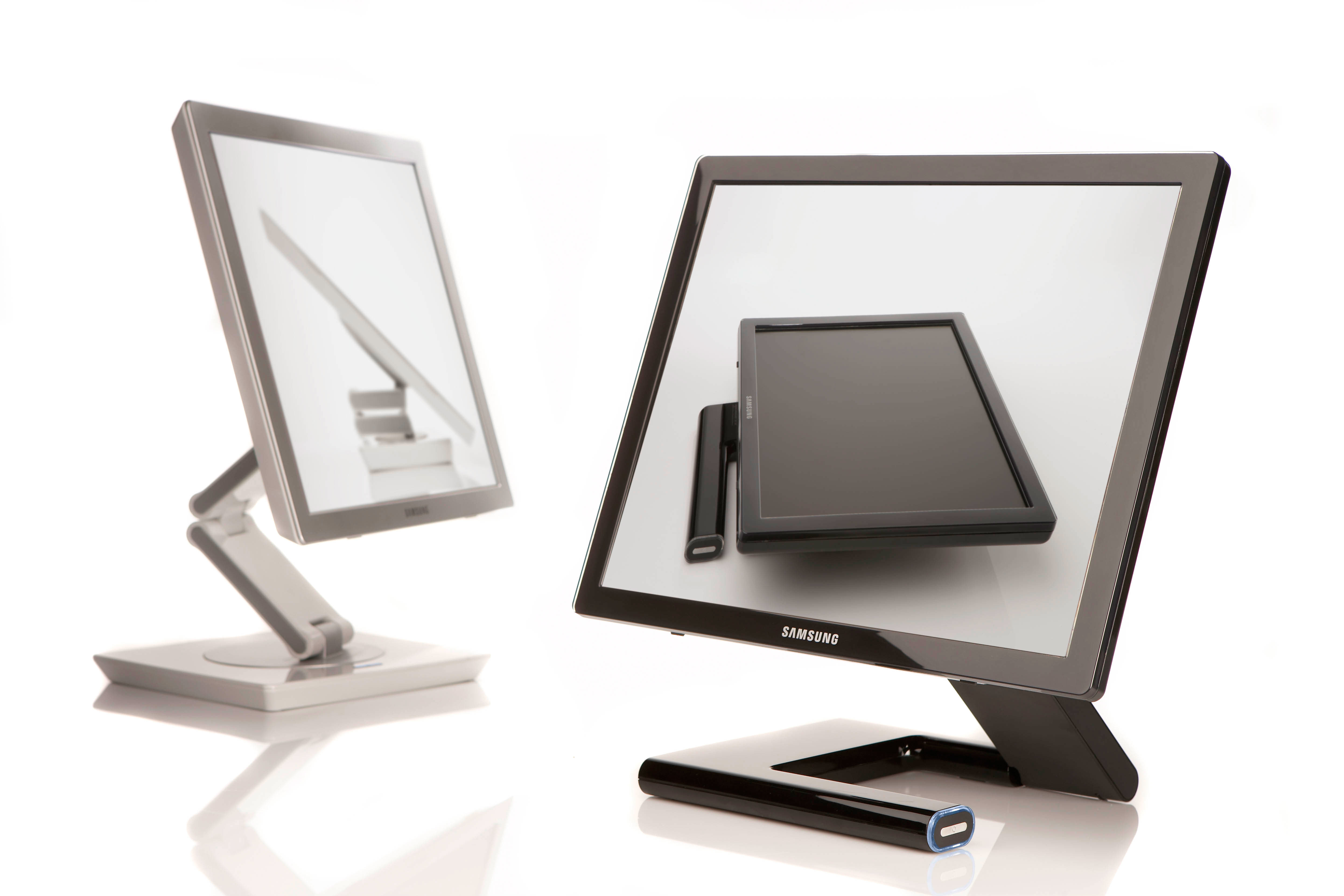
Samsung and IDEO created the industry-standard 970P and 971P monitors, featuring clean surfaces, contrasting textures, and a simple design for a premium look and feel. Designed with IDEO founder Mike Nuttall, they won both the 2009 iF Award and a 2007 IDEA Gold award.
Brand awareness for Samsung Memory
Wanting to raise awareness about Samsung Memory’s products that enhance the performance of electronic devices, IDEO and Samsung designed a humorous campaign that highlighted consumers’ need for Samsung Memory.
SimpleMedia and TotalMedia home entertainment concepts
IDEO and Samsung designed two concepts: SimpleMedia combined a computer, television, DVD, fax, and telephone; TotalMedia featured an adjustable screen and LCD projector combination. Although neither was ever produced, they were honored with design awards from ID Magazine and BusinessWeek, respectively.
SyncMaster 400TFT Flat Panel Display
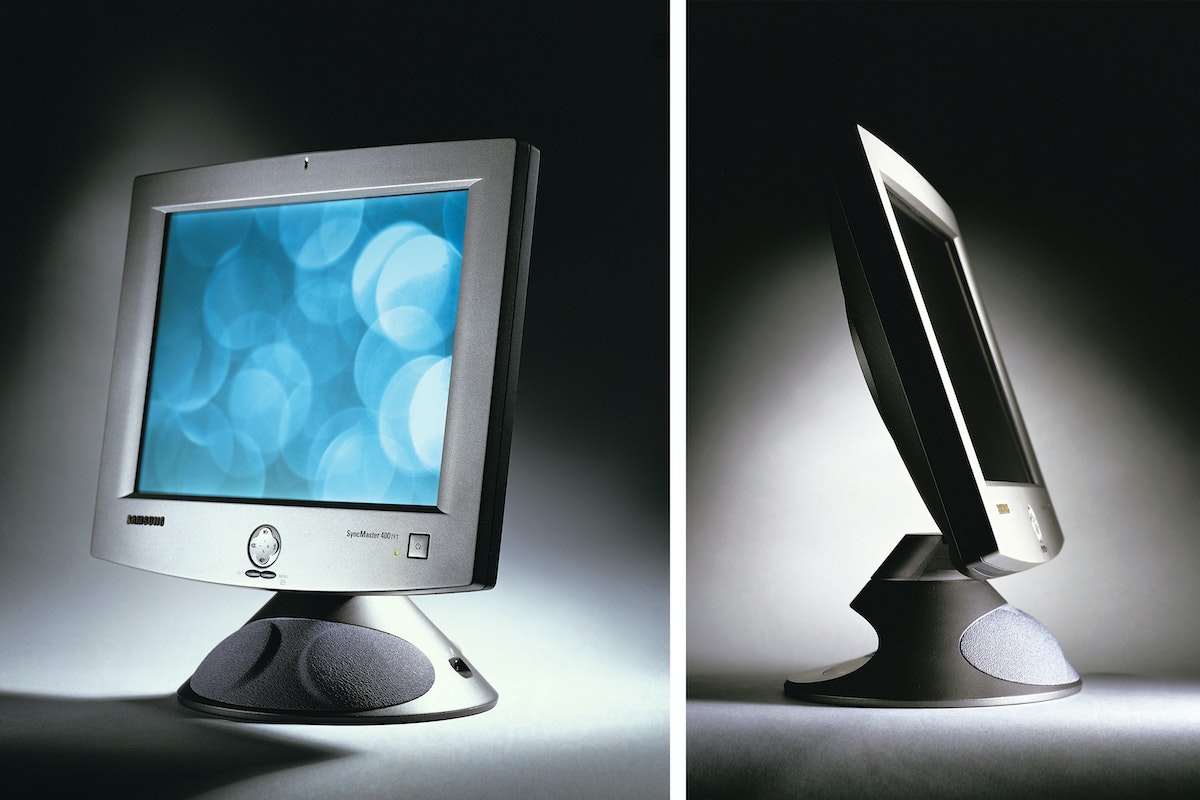
Samsung and IDEO designed the SyncMaster LCD flatscreen multimedia monitor to be thin and elegant, and it garnered several design awards in Korea, Germany, and the U.S. The British magazine T3 called it “the sexiest monitor we’ve ever seen.”
Designing a brand to scale big
A small, handmade line of granola lands on tables across the country.
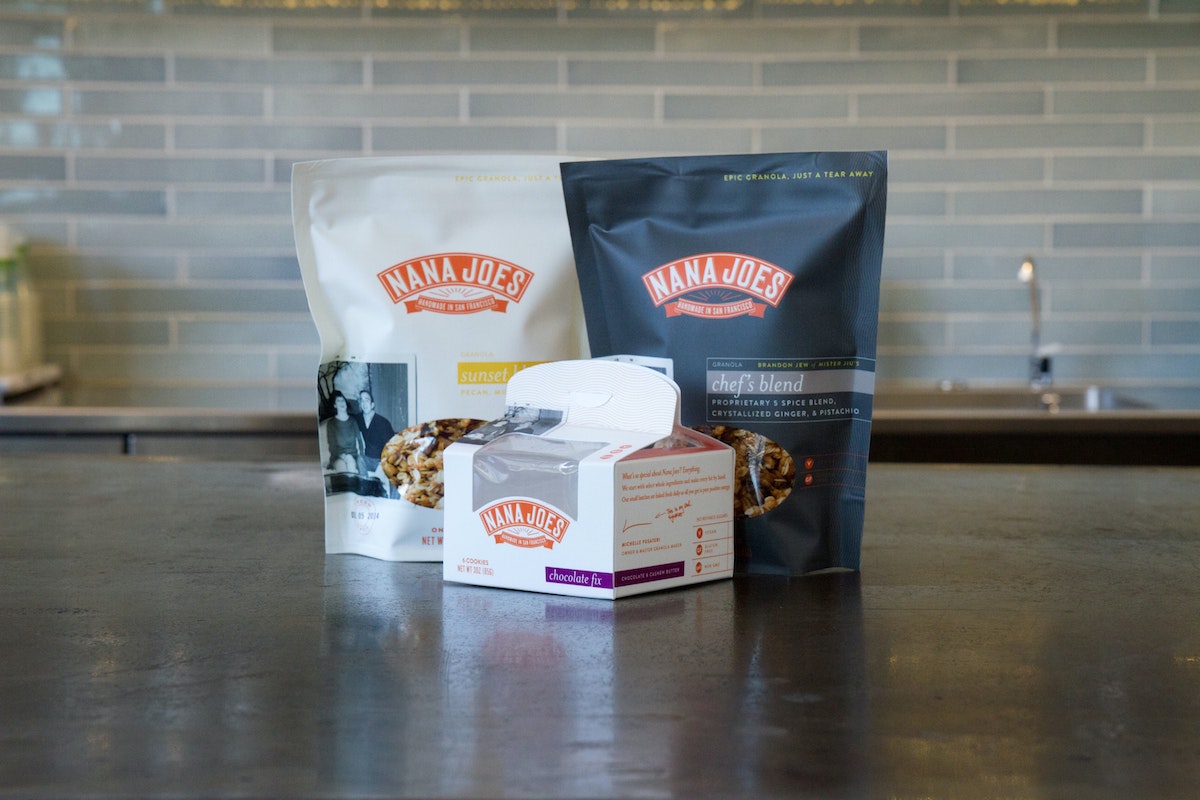
Nana Joes, a beloved San Francisco granola company, was born from an avid surfer’s desire to bring healthy breakfast back to the kitchen table. Embracing the philosophy that good food is about wholesome ingredients prepared with care, the startup took pride in carefully scraping each vanilla bean by hand and soon gained a devoted following at farmers markets around the Bay Area.
As Nana Joes’ reputation grew beyond the hills of San Francisco, the company asked IDEO to explore how to take a small company and scale the brand for national distribution, while keeping its heart and handcrafted ethos at its core.
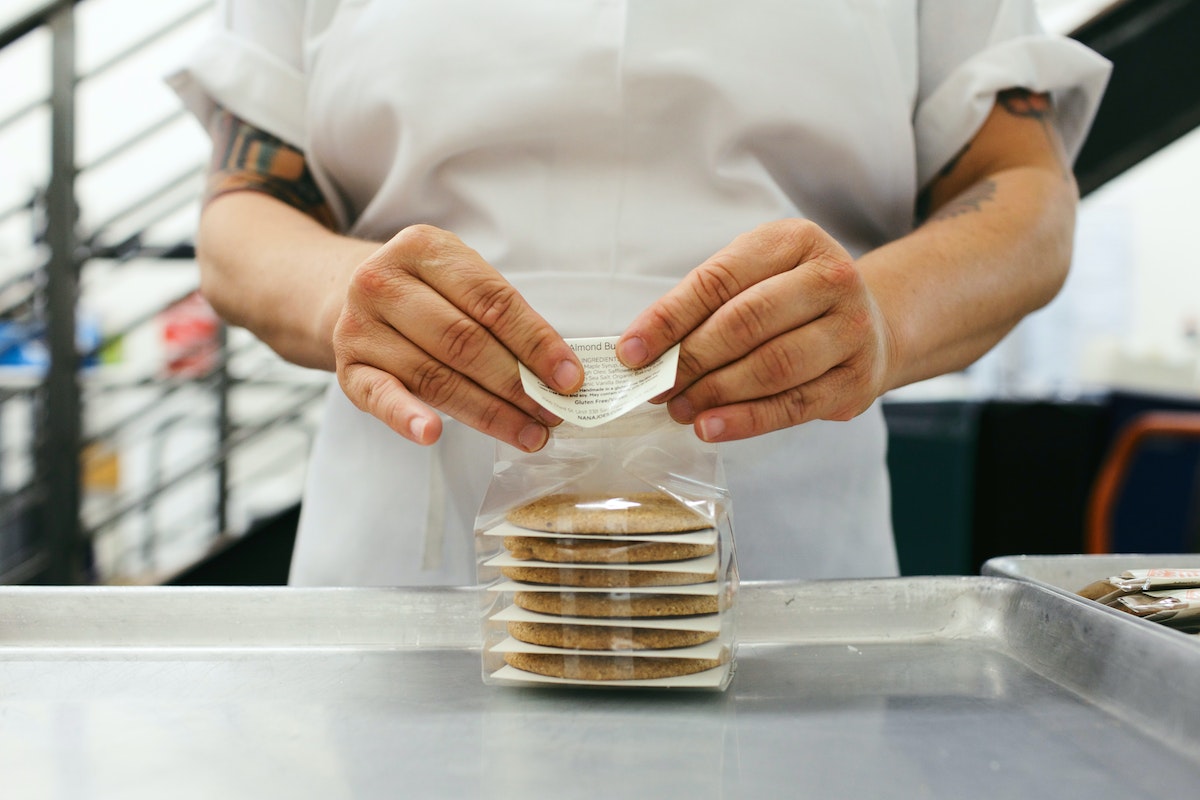
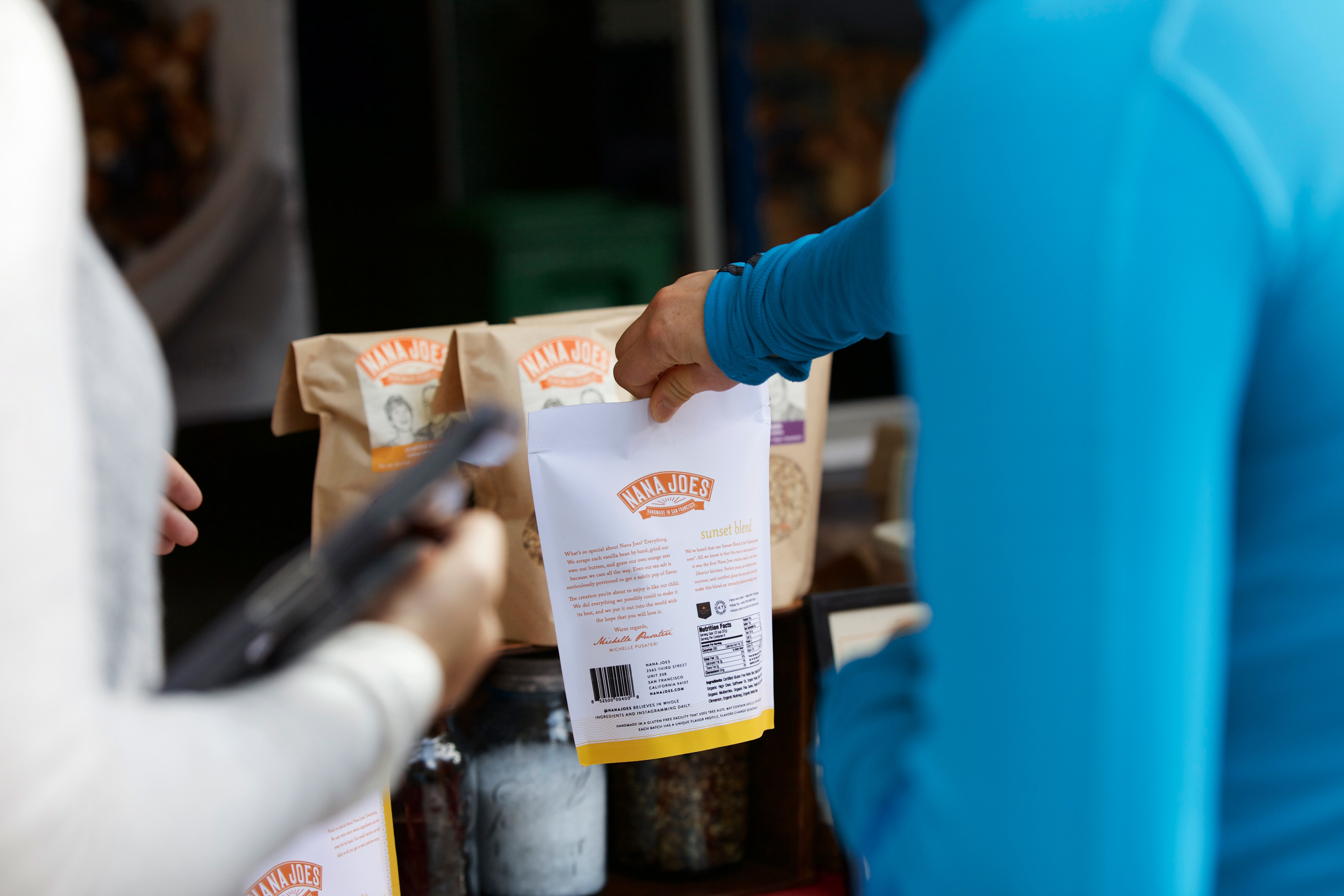
A team of IDEO designers set out to position Nana Joes for growth by developing a brand identity and packaging system that would resonate with customers and reduce operational complexity. The entire team went on factory tours and met with packaging suppliers to identify solutions that would be easily manufactured en masse, but still retain the familiar handcrafted feel. With mock-up packaging in hand, they hit local farmers markets to conduct live in-market prototyping with both loyal and new customers and met with retail buyers to get their real-time reactions to how the brand and packaging stood out on shelves.
The final deliverables included new branding and packaging for the entire line of granola, granola bars, and cookie products, as well as a guide for Nana Joes to operationalize the rollout by 2016.
How a legacy phone book company reinvented itself
An Australian directories company transitioned from makers of the first phone book to digital services and beyond.
The legacy company that produced the first phone book in Australia more than 130 years ago—and the disruptive change it represented—became directories company Sensis. As Sensis made the transition from a print directory to a digital service in recent years, the company came to IDEO to foster a startup mindset.
Together, Sensis and IDEO identified four ways for Sensis to become more agile: Focus on the company’s core skills, revitalize the product development process, develop insights about Sensis’ global competitors, and strengthen connections to current and potential customers.
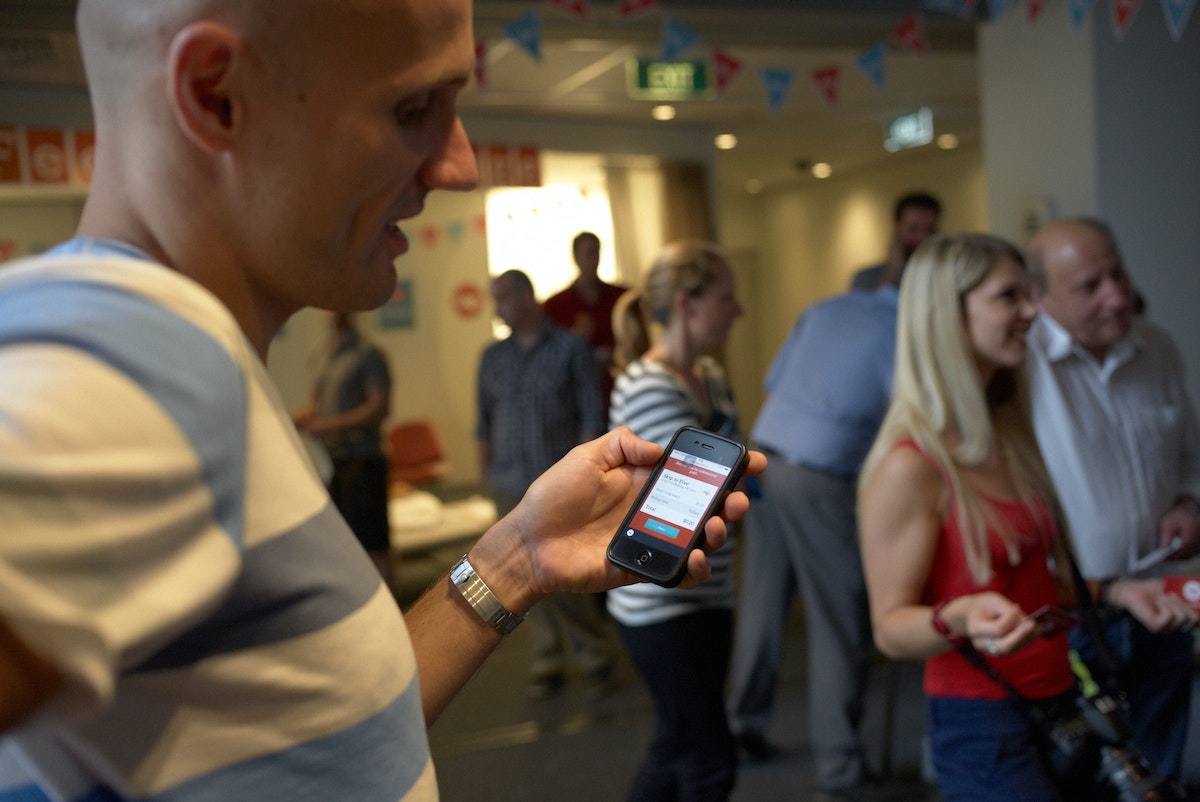
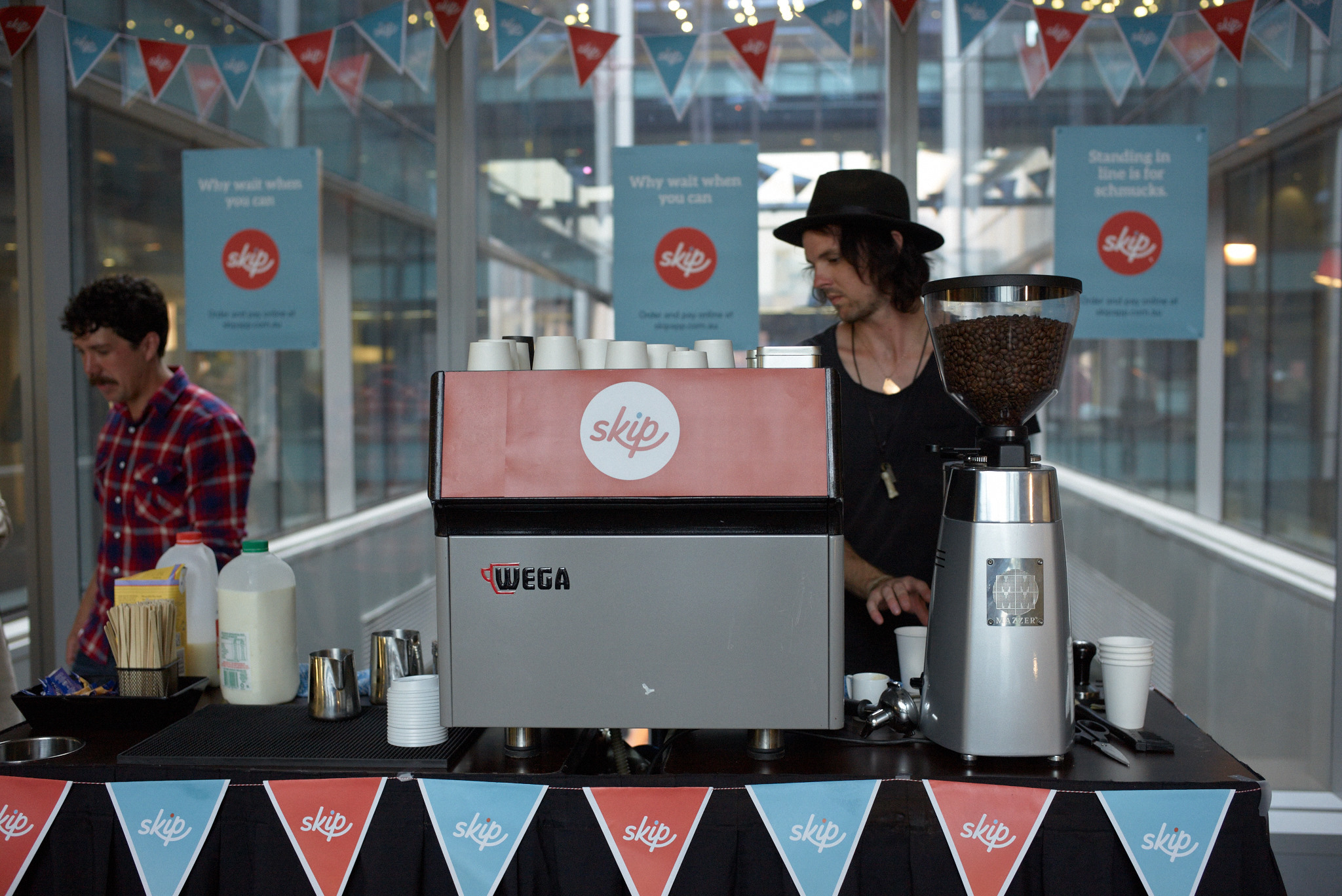
After prototyping more than 65 ideas, the team decided on an app, Skip, with which a customer connects remotely to her favorite café right from her phone, sends her order, and schedules a time to pick it up. Then she breezes past the line when she arrives at the café.
To understand how this app might work in the real world, the team fanned out across Melbourne, talked directly with café owners and their customers, gathering data, and watching behavior, then launched the live app just 10 weeks after developing the first prototype.
Watch: Team members from Sensis and IDEO share their experiences.
A real-time data service for food industry workers
Using design thinking to pivot from food-discovery app to food-data provider.
Fueled by a mission to “help everyone love what they eat,” the Chicago-based food-tech startup Food Genius created a consumer-facing mobile app that used a complex algorithm to track more than 16 million restaurant menu items and classify consumers’ dining-out behaviors.
After the year-old startup became part of IDEO’s Startup in Residence program in Chicago, the company changed its focus from consumers to the food industry.
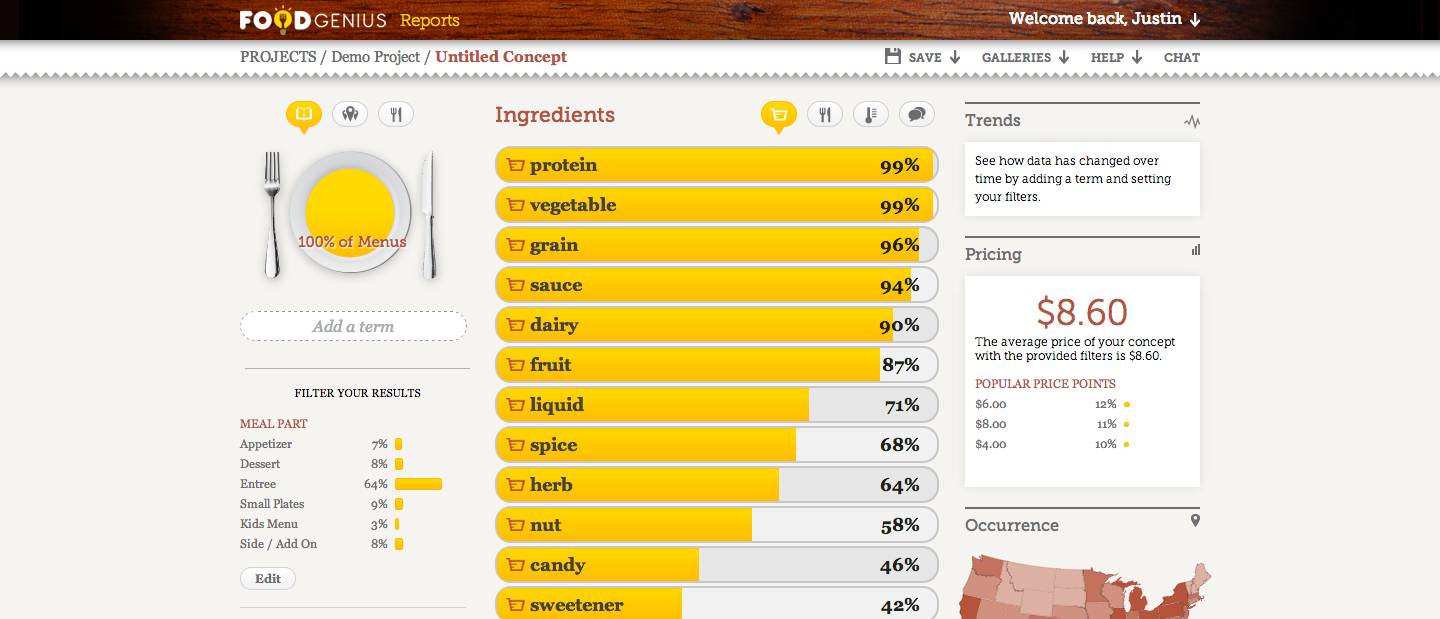
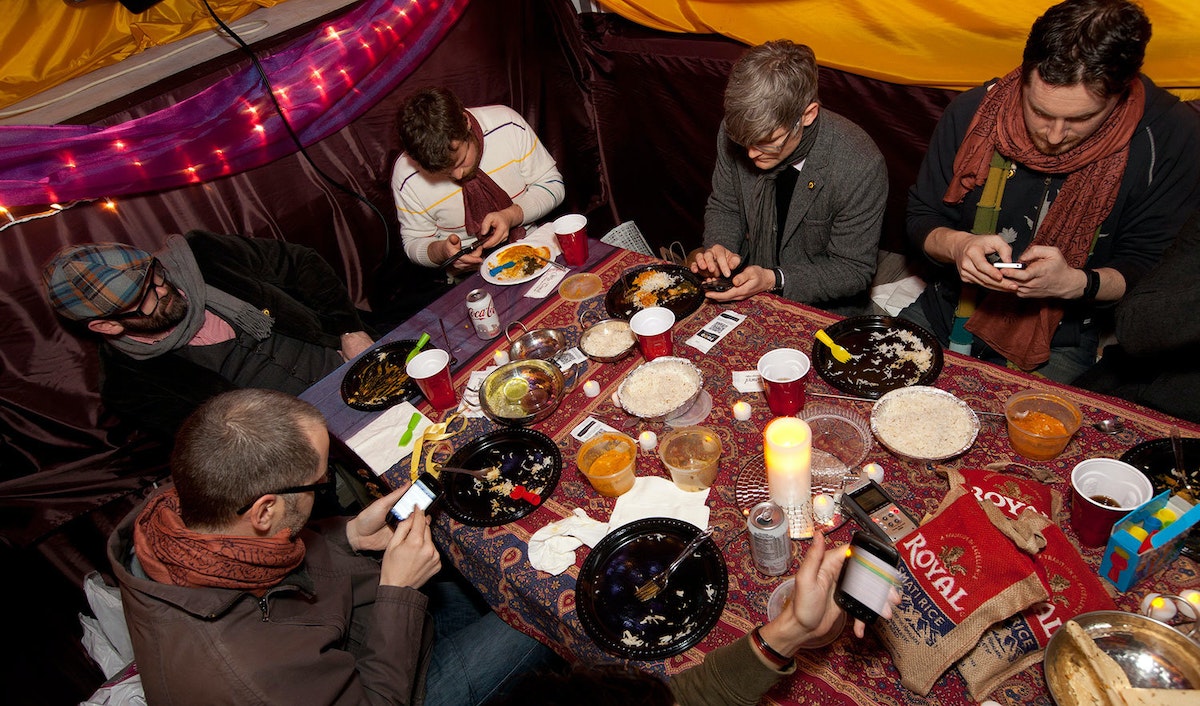
To build their food industry-focused platform, the designers collaborated on a number of business and technological development strategies, product road-mapping, and a prototype viral marketing experience called Curry Crawl to test the usability of the new API.
In April 2016, Food Genius was acquired by US Foods. "What was really striking about US Foods is that they take a very analytics-driven approach to their business," said Justin Massa, founder and former CEO of Food Genius. "They bought the technology knowing it's going to be able to do great stuff."

Looking for Love in All the Places
Why I stalk lovers and put their pictures on Instagram
Two years, two photography classes, and a few countries later, I did a deep clean of my hard drive. Between filing away evidence of big parties in tiny apartments and hundreds of nearly identical photos of elephants, I realized that I had taken a lot of pictures of couples. Not five or 10, but closer to 100. And not of people that I knew, but of complete strangers.
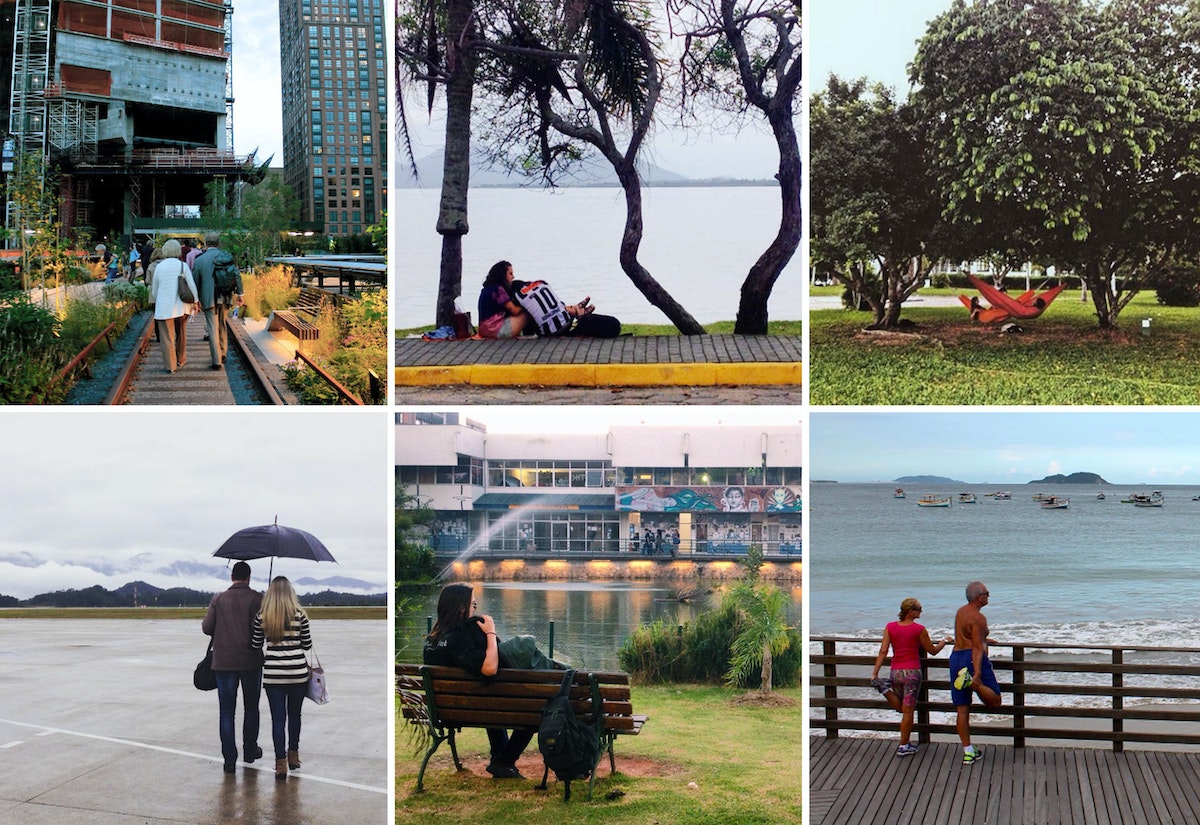
On their own, these photos could have been easily overlooked amidst thousands of snapshots of friends and family, but seeing them all together gave me a rush of giddiness and warmth. So, I set out to gather more and began posting the shots on Instagram.
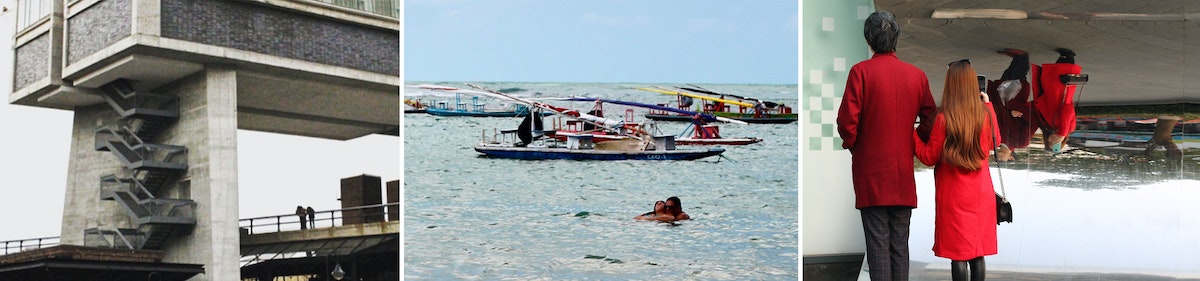
As soon as I launched the account, publicly declaring my habit, I found more and more moments of tenderness in everyday life. I shot from a distance to maintain a layer of anonymity and focus on the transfer of emotion rather than the individuals themselves. My intent wasn’t to get the story behind the shot, but simply to collect these unprovoked and unpolished moments. And as I collected, my definition of public displays of affection expanded to include heads on shoulders, joint selfies, synchronous footsteps—even the imagined closeness of two people standing in proximity to one another. I've found love on street corners, in subway cars, and at national monuments. Instead of walking around with my head down, I was discovering tiny moments of joy in the world.
And the more I found, the more I felt like at any given moment, anywhere in the world, hundreds of people are holding hands, or touching arms, or leaning in to each other. The act of looking for love led to finding it, which led to actually feeling it.
Head to @lookingforloveblog for your fix.
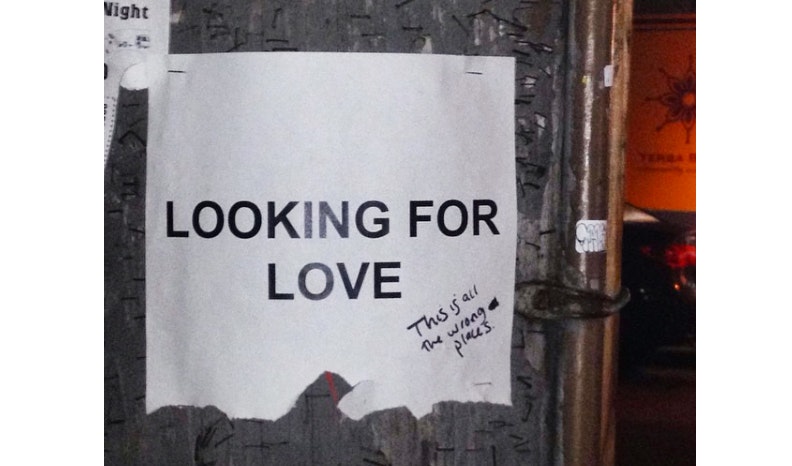
A few years ago, I spotted a tear-off paper flyer stapled to a telephone pole that read LOOKING FOR LOVE. Every tab had been pulled.
Welcoming Bots to the Design Team
How automation helped us dig into our data (and add magic to our prototypes)
However, more data means more time spent managing data. So about four months ago, I pulled together this little helper, an automated assistant that I coded to save our design team a little time. We even gave it a little personality to make living with it more fun.
The bots
The inspiration for this bot came from our Chicago team, which was working to develop a health monitoring app for smartphones and watches, and wanted to include a prototype messaging system. Rather than spending time coding a system that would automate responses, they hooked up the Slack interface to a service that would send and receive text messages. The result was a system that allowed a non-technical design researcher to send targeted messages directly from Slack, freeing up the developers to work on the next challenge.
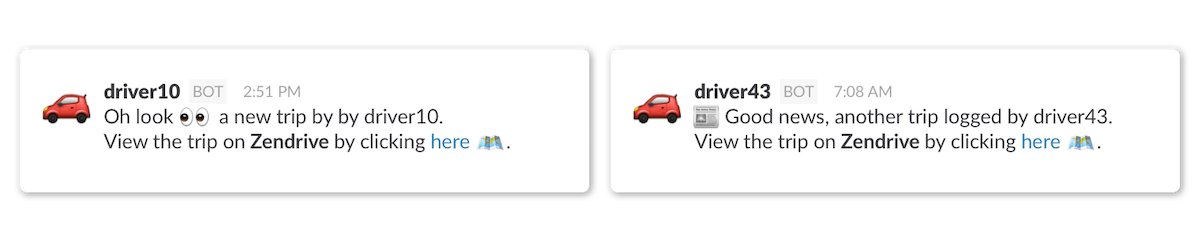
Meanwhile, in London, we were tracking the daily travel of more than 40 people. During the course of the project, we recorded more than 160,000km of driving, so we built a bot to help us keep tabs on our fleet. Each time a journey was complete, the bot would post a note into a special channel, allowing the whole team to see the activity without having to log in to a separate system. The bot also helpfully included a direct link to a separate dashboard, in case anyone wanted to dig deeper into the data.
The tech stacks
Chicago's bot was part of a loop that connected each of the participants’ smartwatches directly to a design researcher:
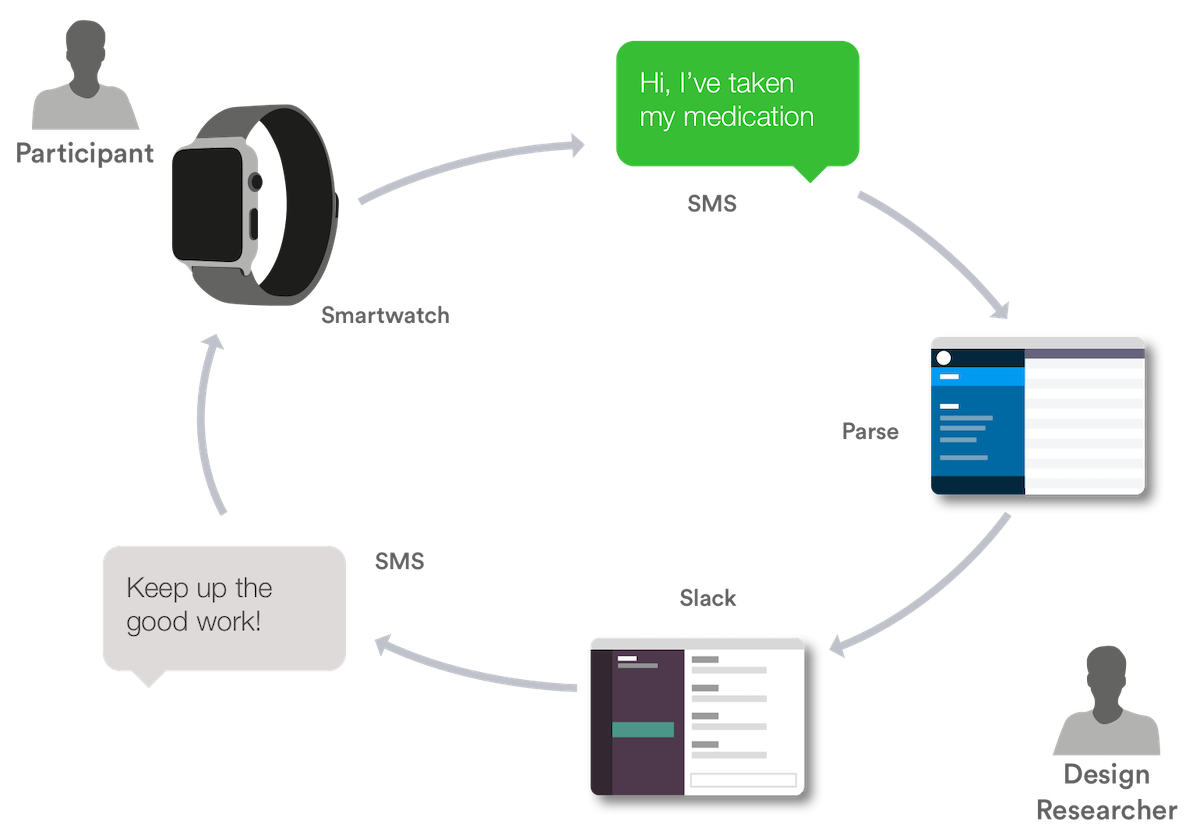
Each day, participants would log their activities using Siri’s voice-to-text feature. Siri then transcribed the voice message, and the text was sent to the database, where it was time stamped and stored. From there, a copy was sent to Slack, where each participant showed up as a team member in the chat interface.Then the whole stack reversed, allowing any member of the team to send a message to the participant. Each day, the design researcher simply had to send a normal Slack message and it appeared on the participant’s smartwatch.
We found their workaround really inspiring, so when we started our travel behavior project, we looked for similar ways to save time.
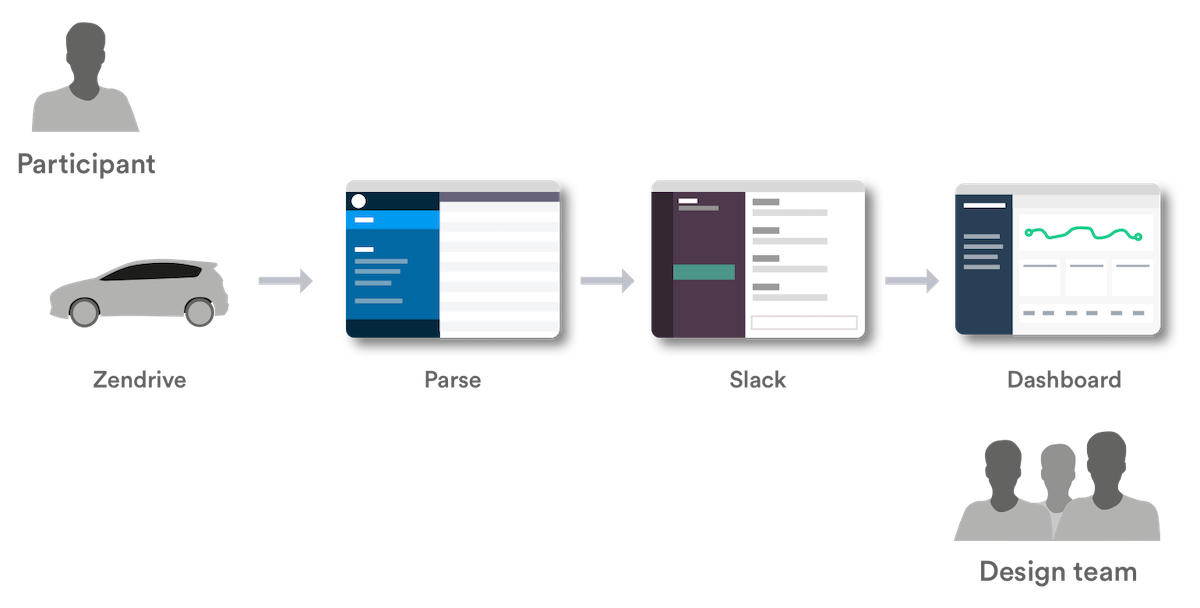
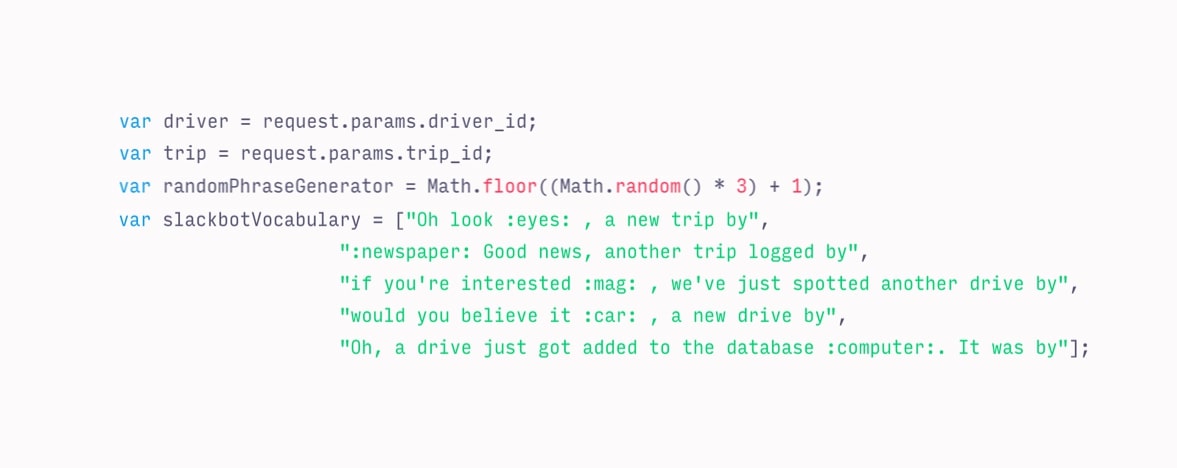
To start, we opted to store each trip in Parse. Once a drive was complete and recorded, we used Parse's Cloud Code functionality to send a message to Slack using the Incoming Webhook integration. The result was a message from the slackbot each time a drive finished. Cloud Code allowed us to format the message with a link back to the data, so it was easy for researchers to click to learn more about each trip. We could format the message however we wanted, so we gave the bot a small bank of phrases to use to add a little personality. We also gave it a few emoji so that it would fit in with the Slack communication style.

These messages popped up in a specific channel. Our team could choose to listen in, or mute it. Over the course of the project, it became a useful reminder that there were real people behind these driving patterns.
What we learned
The Chicago bot showed us that we don’t always need a technical person to manipulate complex systems. Not only did our bot save us time, we were also able to add a little magic to the prototype, which gave our participants a better experience. It also gave all parties—the design team, the client, and a technology partner—a better sense of what was going on, and a quicker way to jump into the data. We’re constantly working to find better ways to collaborate with our clients, and small touches like these make it easier to act on our research. Perhaps the most revealing thing about our adoption of these tools was how quickly we assimilated them into our teams. The new tool went from novel to normal surprisingly quickly.
The future
While adding intelligence to the bots seems like an obvious next step, it could be a dangerous move to outsource too much of our process. After all, we’re here to learn. I'd rather have a legion of simple "toolbots" shaving time off repetitive tasks than software that makes decisions for us, which could cause us to miss valuable insights. Our goal is to empower our teams, not to replace them.
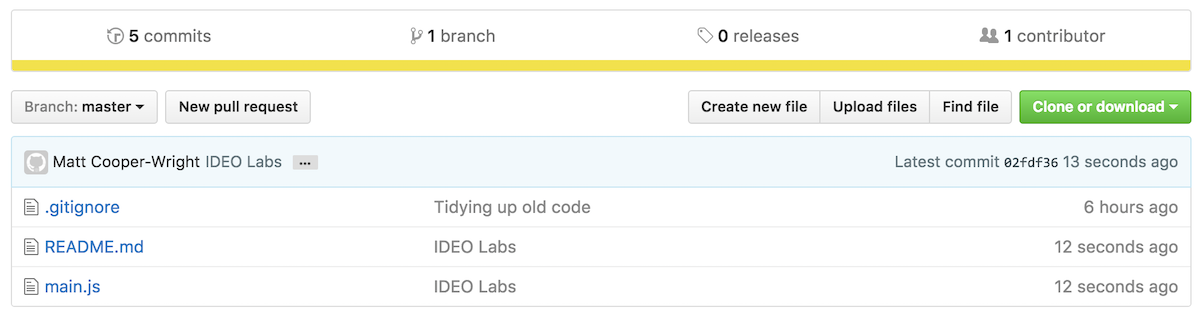
See the London Bot on GitHub here.
Special thanks to Ben Syverson for his help on this post.
We’re always looking for smart ways to learn more in less time. This mentality has led our researchers to push the boundaries of the data we can record in our research process. Alongside the qualitative data we gather from interviews, we also pull together behavioral data collected over longer time periods. We might record someone’s steps per day, or the route they take to work, in order to find insights into the patterns of everyday.
The One Sport the Olympics Should Include
Our intern is bringing it to Rio
A self-proclaimed “sports guy,” Marc first tried archery at 12. By 18, he was a competitive archer, training 4-6 hours a day and traveling across Spain to shoot arrows alongside the country's best bowmen and women, including members of the current Olympic archery team in Rio, Miguel Alvariño, J. I. Rodriguez, and Antonio Fernandez. (Although the modest interaction designer is quick to shun any comparisons.)
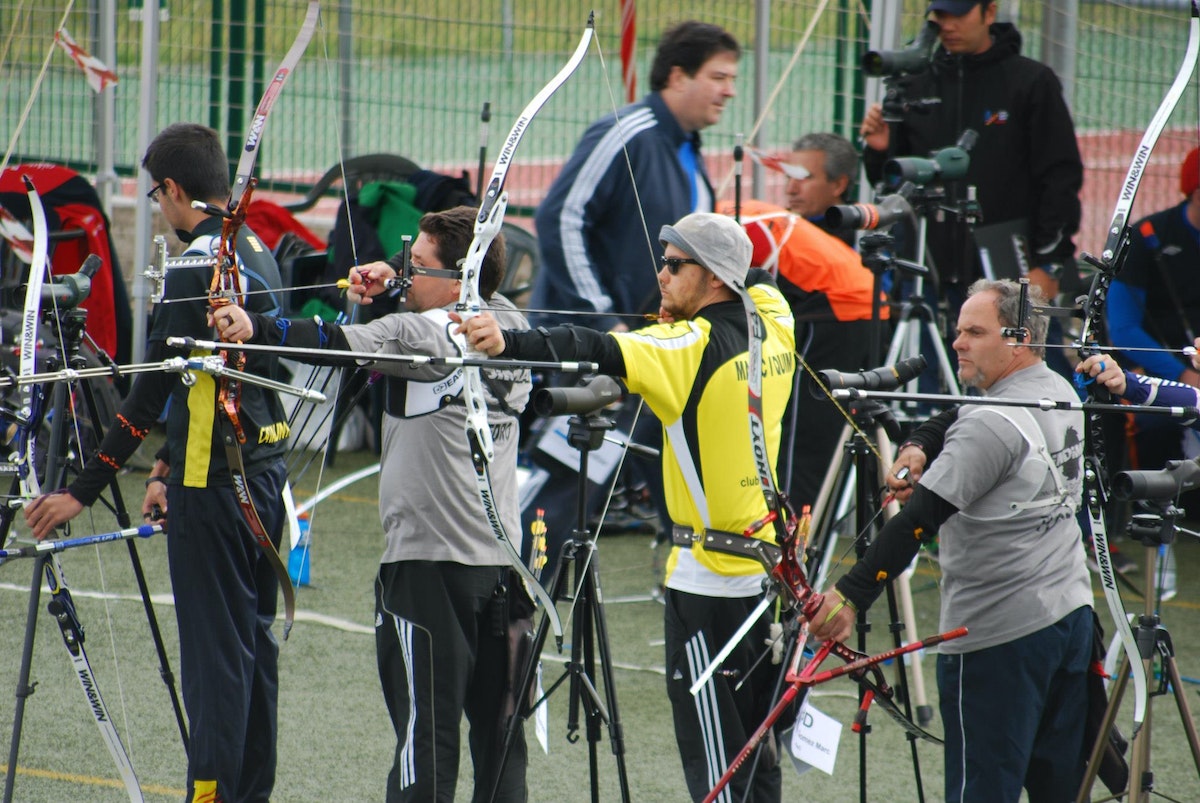
Marc left his custom-made, Olympic-grade bow at home when he relocated to IDEO Chicago for a 7-month internship, but he cheers on his country’s team remotely every night, binge-watching Spanish videos of the day’s competitions on his home laptop thanks to some clever, scrappy, and—ahem—ingenious online “workarounds.”
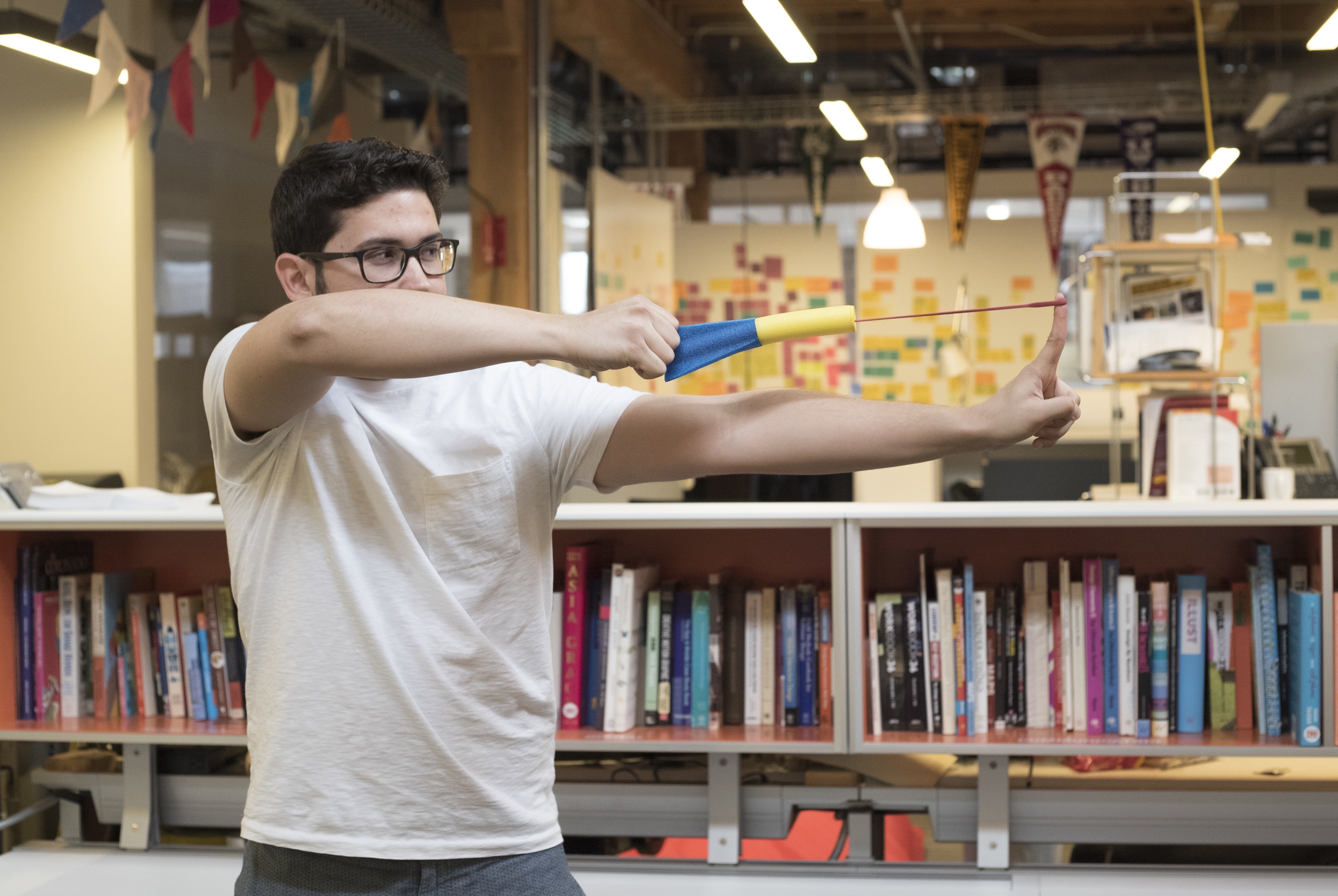
While firing arrows at a bullseye 70M away might be a thing of the past, archery taught Marc many lessons he pulls out of his quiver as a designer today: honing your technique, being honest about your strengths and weaknesses, staying open to new ideas and strategies, and improvising in the moment. Lessons that also apply to successfully launching a Finger Blaster to nab a coveted banana 10 yards away.
WATCH: The ever-hungry intern takes aim at a midday snack. Video by Sophie Feng.
But, then again, if this design thing doesn't work out, there's always Tokyo 2020!
Marc Exposito was born for the Olympics. Literally. The Barcelona native arrived into the world during the heyday of the city’s 1992 Summer Olympic Games.
The Beautiful Future of Living Technology
Designer Natsai Audrey explores our bio-factured future
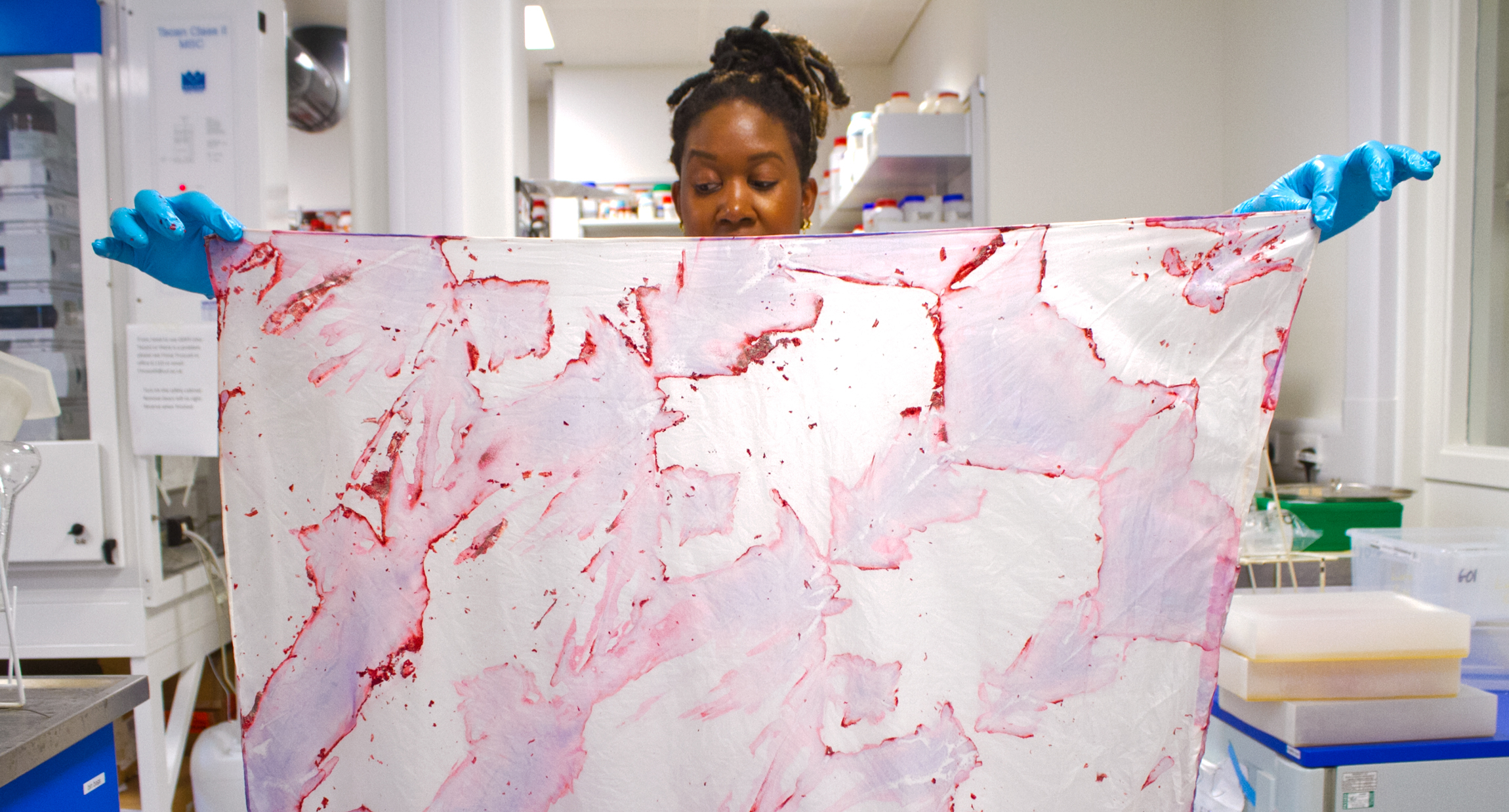
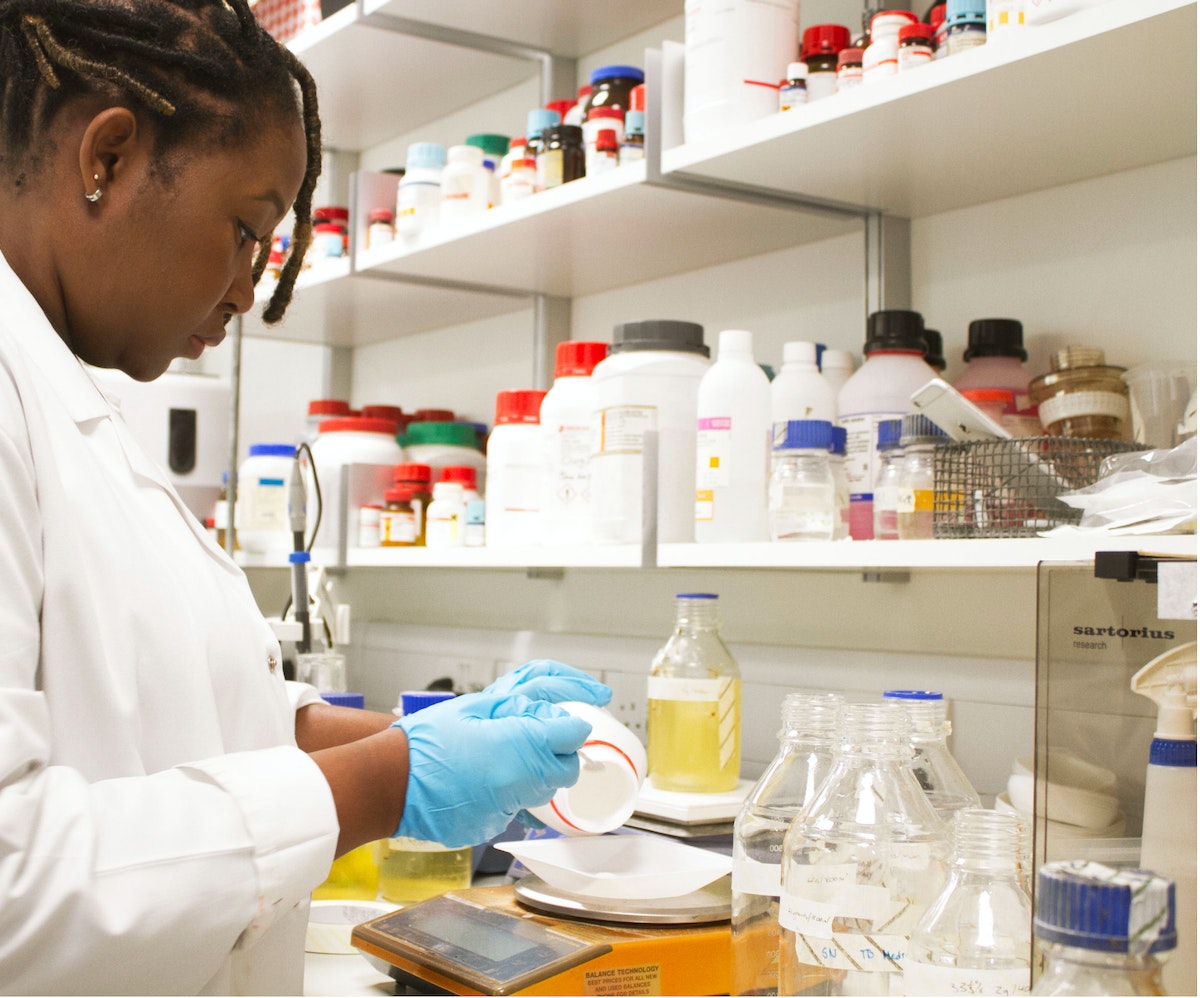
Zimbabwe-born Natsai studied architecture at Edinburgh University, then at Central St. Martin’s Material Futures course. There she learned about synthetic biology, and met Dr. John Ward, a professor from UCL’s microbial molecular biology lab. He became a supporter of her scarf project, called Fold.
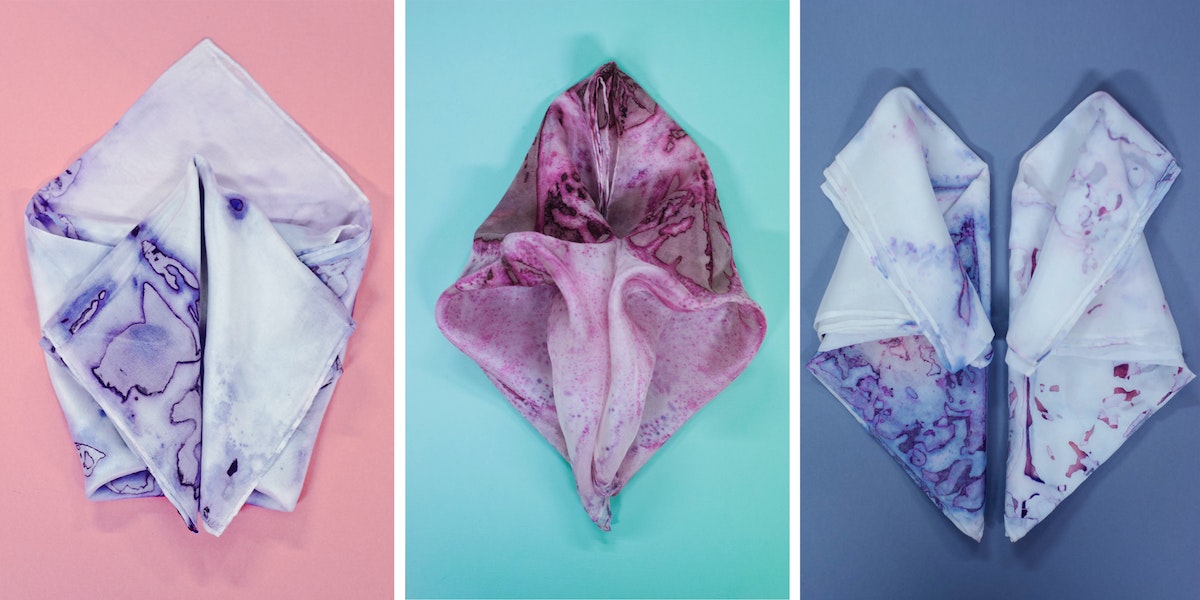
Natsai is at the forefront of an emerging field, biodesign, that aims to tackle the climate change problems caused by textiles and farming. Fueled by advances like the gene editing technique CRISPR, which is making designing with DNA simpler and cheaper, scientists and designers are looking to harnessing nature itself to ‘biofacture’ everything from leather, to meat, to medicine.
Companies like Bolt Threads are spinning synthetic spider silk, while Modern Meadow is growing meat in labs. Meanwhile Autodesk is creating design tools for the field—think AutoCAD for DNA.
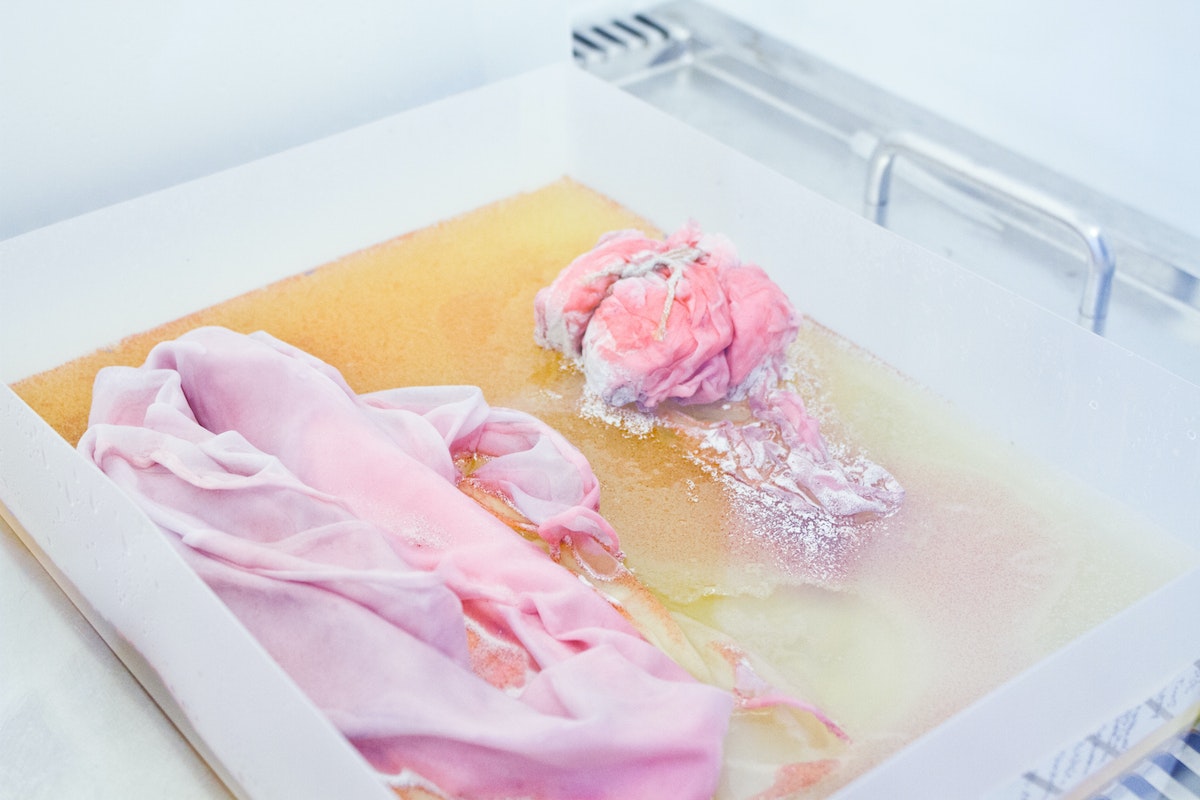
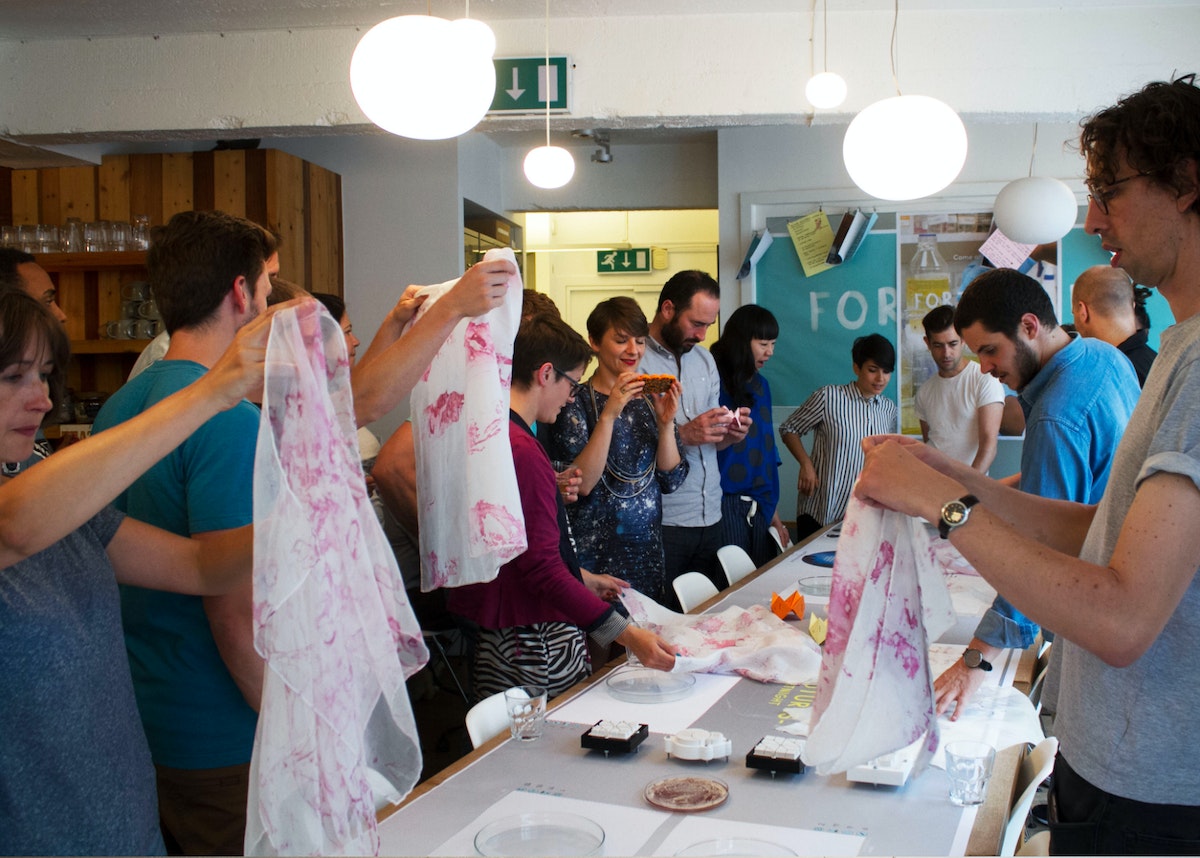
Natsai joined IDEO’s London studio as part of our two week-long Fortnight residency, collaborated with the community here, and shared the resulting scarves. As part of her final presentation, she brought to life the potential of biodesign with a series of five tweets. Here, she explains the speculative future they’re framed in. It is a future in which synthetic biology is shaping brands, products, businesses, and people’s behavior.
Future Craft
“Hyper-specialized hybrid technologies signal the rise of the niche maker. #DIYbio #biomakerspace”
Natsai: I’m really interested in the dialogue between craft and technology. This tweet depicts my own reality: my craft is so specialized that I have to design the tools to create it, and I also have had to learn how to maintain the life that co-creates it, without any precedents to learn from. Imagine a world where our materials are alive or derived from living systems. Every maker will intimately know the biochemistry of their chosen species, and will find new ways of transforming those organisms’ behaviors into truly unique products and processes. We’ll be using other living systems and even amalgamating layers of digital technology to biofabricate.
Service Design
“Who owns your wardrobe? #panasonic4nike”
Natsai: I had a conversation with a colleague about how one might go about democratizing the production of ‘bio-factured’ products. At the time I was thinking about how to streamline the process for scaling up this technology, but he challenged me to think about new models of distribution that tap into DIY culture. Ultimately, his question was: if you can grow your own textiles, then who owns your wardrobe? The hashtag #Panasonic4Nike points towards a future that sees unlikely stakeholders coming together to offer true innovations in designing the products we use, as well as the services and hardware that enable us to do this in a personalized way.
Convergence
“Digitized biology has democratized the creation of complex biological consumer products. #autodesk #synbio #AI #IOT”
Natsai: I understand that not only do I work with a pigment-producing bacteria, but that medium is also a biological sensor. Producing pigment signals a crucial stage in the bacteria’s life cycle. This made me ask: how could we harness living sensors and build them into our everyday environments? The notion of technology convergence is definitely something I see happening further into the future. Wearable technology, household electronics and the Internet of Things, in my view, will expand and come together to create mutually-beneficial ecosystems of bacteria and digital technology.
Metabolic Materiality
“Biofacturing process & biological characteristics of an organism now define a brand’s identity and its business model. #bottomupprimacy #IP”
Working in a fashion context, I am hyper aware of how a brand’s identity communicates. The product itself needs to hold true to the values of the brand. This is the part that gets tricky working with a living technology: at some point I relinquish control to my bacterial colonies to finish the garments—conceptually speaking, I provide the structural parameters. The lack of control is a challenge and an opportunity to design interventions that end up in line with the brand identity. Creativity therefore becomes crucial, to push the aesthetics and craft processes in the development of each garment. Although it’s true of any industry, fashion is a particularly interesting space to consider a business model based on that uniqueness. Even before we think about synthetic biology as a way of manufacturing, designers can and should push innovation beyond a simple “genetically-modified organism 1 fixes problem A.”
Beyond Monoculture
“Happy Kombucha shares rally as merger with Kvadrat announced. #symbioticventures #closedloopsystem”
This really looks at future business models and ecosystems of information and skill exchange. Happy Kombucha actually exists and it’s my go-to for food and beverage bacterial cultures in the UK. They mainly sell starters and toolkits for brewing your own kombucha, kefir water and kefir milk. This tweet is a little tongue-in-cheek: it imagines that their business strategy has evolved to sell the SCOBYs (the symbiotic colony of bacteria and yeast that ferments tea, to make kombucha) as fabrics, leading to a merger with major textile manufacturing brand Kvadrat. It also speaks of the current and future reality of the trade of living organisms.
IDEO Fortnight with Natsai Audrey Chieza from Alexandra Whiting on Vimeo.
Vivid pinks, blues, greens and yellows form beautiful, organic abstract shapes on Natsai Audrey’s delicate silk scarves. But they’re not drawn by her, or silkscreened in a print studio. Instead, the shapes are the life and death of streptomyces bacteria writ colorful on silk, folded into a petri dish, in a lab.

Lindsey Turner
I’m passionate about building brands, products, and experiences that help organizations show up with meaning and momentum.
I help organizations cut through complexity by shaping how they show up, through brand strategy, identity, and storytelling.
Working at the intersection of brand and business, I bring an editorial eye and a bias toward making—turning ideas into tangible experiences that people can understand, trust, and believe in.
My work spans government, healthcare, financial services, media, and consumer goods, from launching Gen Z-focused ventures to building innovation labs and reimagining legacy brands. I relish moments of ambiguity and enjoy translating across teams, perspectives, and priorities to move ideas forward.
I started my career in editorial and digital design, shaping cross-platform experiences and identity systems in publishing and agency environments. That foundation still shapes how I work today: I’m detail-oriented, collaborative, and overreliant on the Oxford comma. I hold a BFA in Visual Communication from the School of the Art Institute of Chicago.

Rachel Young
My work helps organizations see who their products aren't working for—and build the will and the tools to do something about it
For 25 years, I've asked the same question: Who does this design exclude—and what are we going to do about it?
My work spans human-centered strategy, inclusive design, and qualitative research, with clients ranging from Microsoft, Google, and Verizon to the National Science Foundation, and San Francisco Unified School District.
Before IDEO, I taught elementary school in East Palo Alto and spent a decade doing design work with social service organizations—where I learned firsthand what it costs people when systems are built without them in mind.
I am currently writing User Error, a nonfiction book about digital access and the design decisions behind it. I live in Oakland, California.

Brian Pelsoh
I lead with craft, ensuring our work is creatively excellent: rooted in deep human insight and imagination, while also grounded in the realities of business and technology.
My expertise spans brand, communication, and product design across tech, education, the arts, and social impact.
I believe great work demands both high-level vision and obsessive attention to detail, and only happens through collaboration.
I bring an inclusive, hands-on approach and a deep understanding of business, which enables me to consistently deliver excellence while always asking why.
Before joining IDEO, I worked at the brand firms Pentagram and VSA Partners. I began my career as a designer, leading teams at the School of the Art Institute of Chicago and the Milwaukee Art Museum. I hold an MFA in graphic design from Maryland Institute College of Art and a BFA in communication design from the Milwaukee Institute of Art & Design, and have taught at some of the best design schools in the US.

Tony Wong
I am responsible for IDEO’s long-term success in China and working with clients to use design as a tool to enable growth.
I am responsible for IDEO’s long-term success in China and working with clients to use design as a tool to enable growth. Specifically, I have helped Chinese companies design holistic brand solutions through the development of their products, communication, services, and innovation teams, and I have helped multinationals expand their presence and influence in China.
I advise global leaders on developing China-led innovation and capabilities.
In over 15 years in IDEO Shanghai, I have worked on projects that use design to elevate the quality of the experience of healthcare products and services, streamline processes that increase productivity, create spaces and programs that promote and enable inclusive communities, and build next generation mobility solutions that are planet-positive.
Before joining IDEO, I worked at Philips Electronics and the Electrolux Group in Italy, the Netherlands, and Singapore on a number of breakthrough commercial products. I am a member of the Young President Organization in Shanghai.

Building a personal AI for the messiness of life: Sida Li
Most AI products today are built for work—a space with clear problems and established systems. One founder noticed a gap: personal life is messier, harder to systematize, and mostly left behind by the AI boom. So she built Cue, a personal AI that lives inside iMessage and group chats, to go where the other tools haven't.
In this episode, Becca Carroll, IDEO's Chief Strategy Officer, talks with Sida Li, co-founder and CEO of Shared Context Lab, about staying anchored to a human need while the technology around her keeps changing shape, why she treats her business model with the same rigor she'd bring to a product, and what it feels like to build a company at this particular, disorienting moment in AI.
The conversation also gets into how Sida makes design decisions: the language Cue uses to describe itself, the tradeoffs behind building inside iMessage instead of a new app, and a real story about a business idea that didn’t pan out.
This is the second in a two-part series profiling founders from IDEO's Startups-in-Residence program. The first conversation is with Johannes Seemann, founder of Sooner, on designing GenAI for the emotional side of money.

Designing GenAI for the emotional side of money: Johannes Seemann
Most personal financial tools are built to run the numbers and optimize towards a budget. While that works for some, most people experience money as a lived relationship that does not neatly fit into a spreadsheet. Johannes Seemann and Becca Carroll discuss why money is emotional before it is mathematical, and what a human-centered approach to building a generative AI financial product looks like in practice.

The curious leader's edge in uncertainty: Scott Shigeoka
Mina Seetharaman talks with Scott Shigeoka, author of Seek and Head of Curiosity Cultivation at the Eames Institute, about what distinguishes genuinely curious leadership from performative curiosity, how power dynamics shape curiosity, and why practicing curiosity can restore energy rather than drain it.

How constraints make us more creative: David Epstein
Mina Seetharaman talks with David Epstein, author of Inside the Box and Range, about why total freedom often produces average work, how leaders can design useful limits on purpose, and what organizations such as General Magic and Pixar reveal about the relationship between boundaries and creativity.
Looks like you might be in search of something very specific?
Or reset the filters above and try another angle.
Here’s some random inspiration

Podcasts about creative leadership

Articles about the power of prototyping
