
.svg)


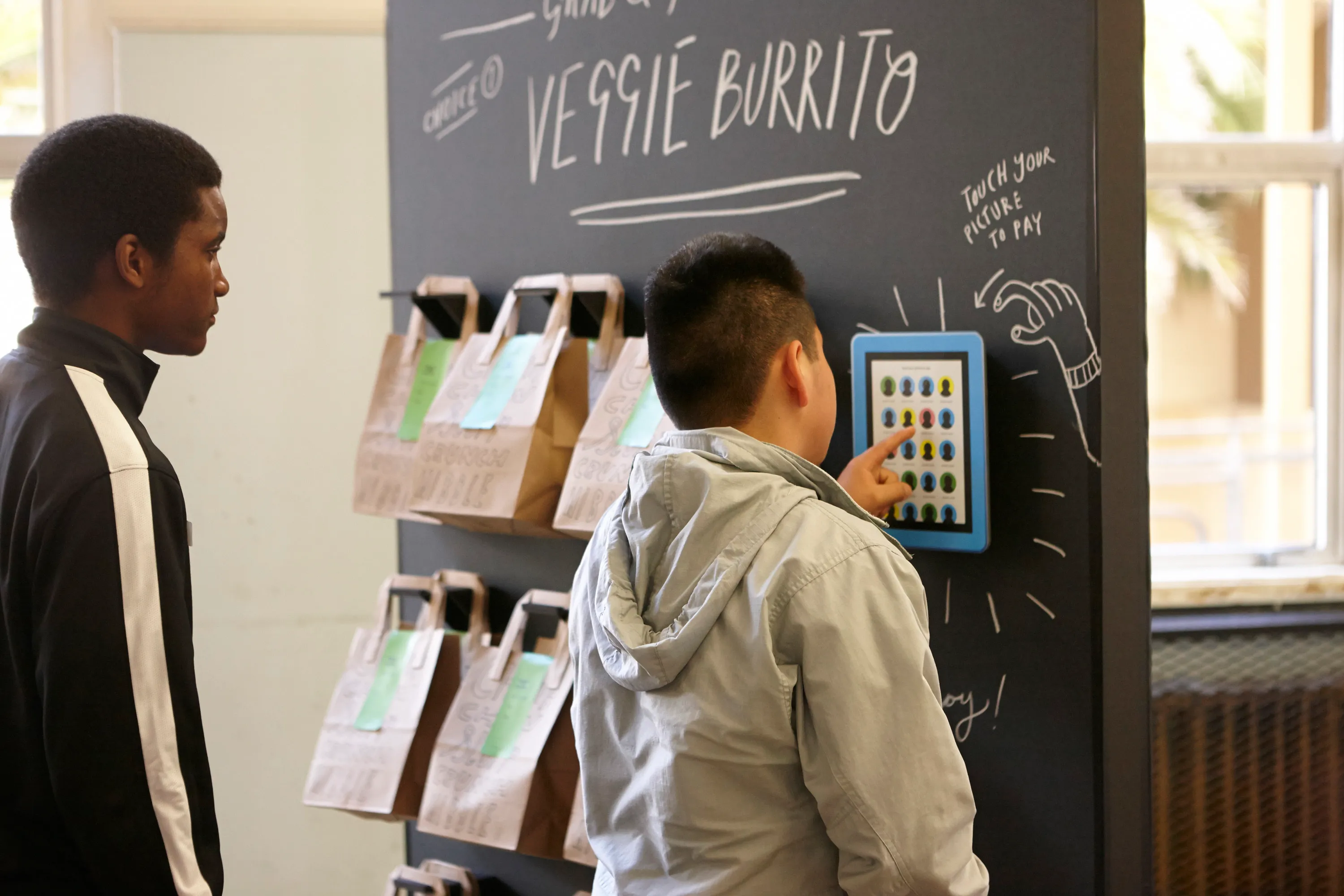

A student-centered cafeteria experience
Reimagining the food system in a large district.
To bring students healthy food at school, San Francisco Unified School District had already hired Revolution Foods, a caterer that serves some of the highest-nutrition meals in the nation. But when the lunch bell rang, 72 percent of those who could afford lunch weren’t showing up; students didn’t want to wait in the long lines or rush to finish, so they headed off-campus to eat.
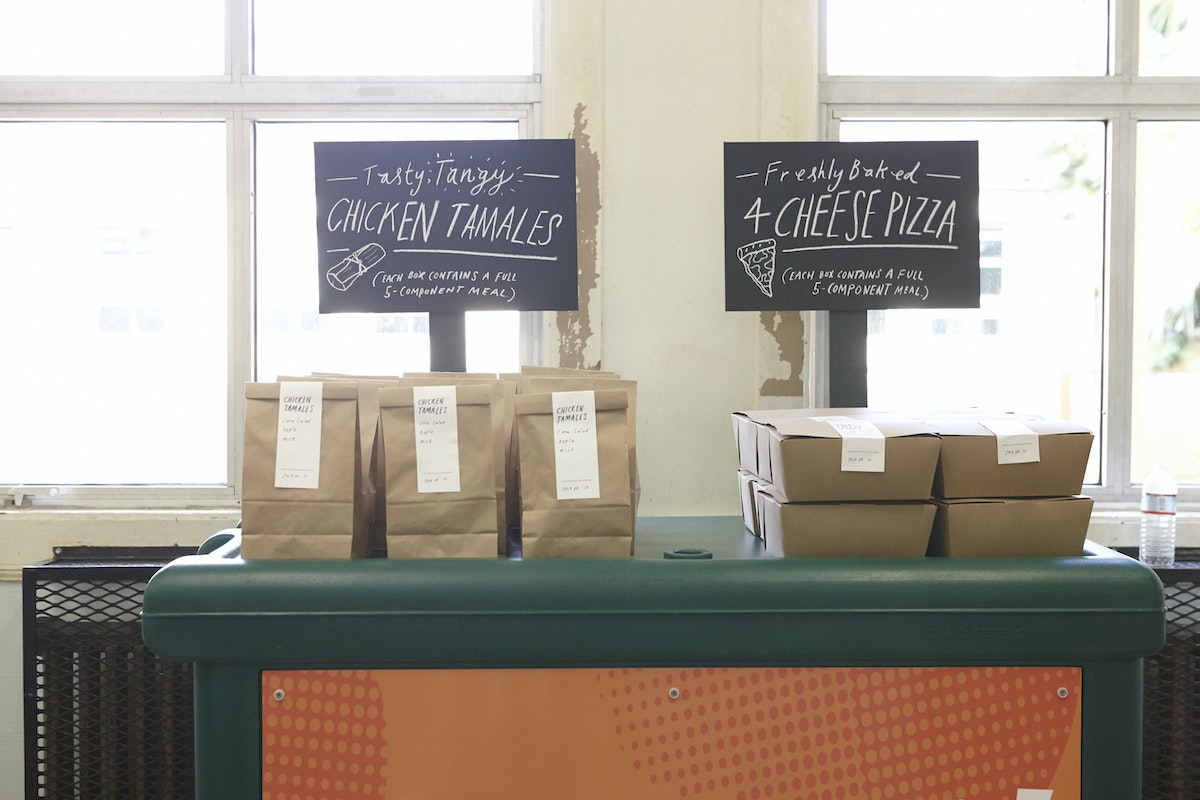
Working alongside more than 1,300 students, parents, union leaders, nutrition staff, board commissioners, principals, teachers, and community groups, IDEO and SFUSD redesigned school lunch. Together, they developed recommendations for three age-appropriate dining experiences, from communal eating to student-designed spaces to new technology platforms, and worked to develop a robust business model.
In September 2013, the San Francisco Unified School Board expressed unanimous enthusiasm for IDEO’s work, clearing the path for this new vision of student-centered lunch to take root.
You can learn more about the cafeteria, and hear firsthand from the students, in this immersive, interactive story.
Redesigning where we work and learn
An evolving relationship between Steelcase and IDEO that positions the company as a leader in shaping our work environment.
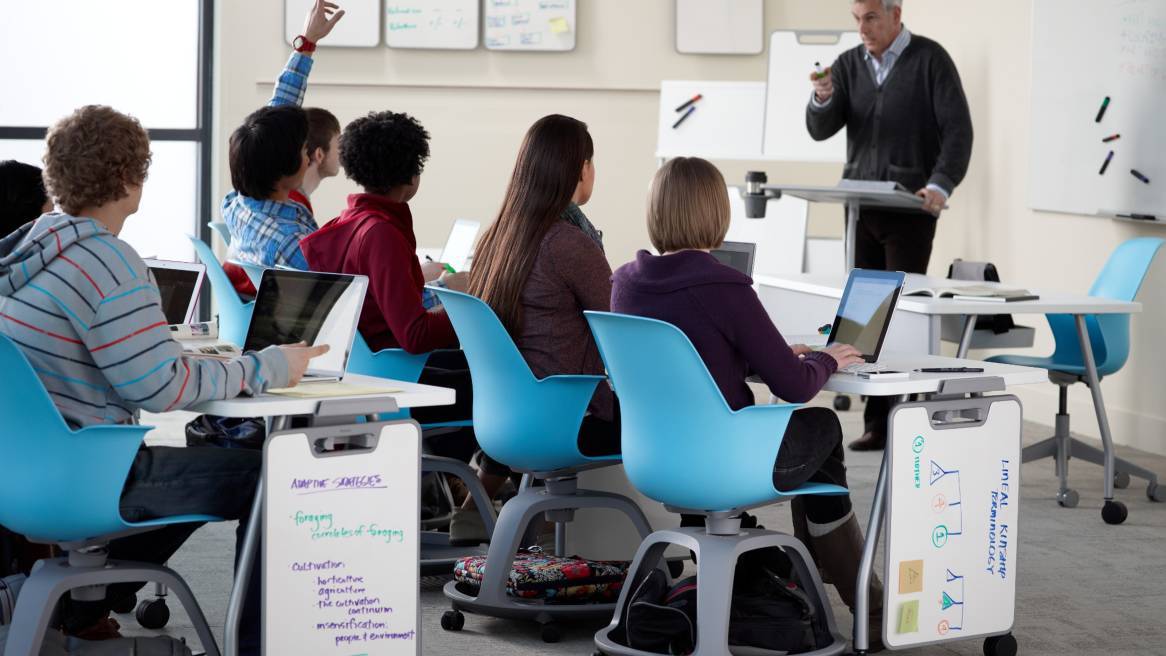
Steelcase and IDEO have been collaborating for more than 25 years. The relationship has influenced furniture design across a range of environments, from work spaces to hospitals to schools, and has resulted in numerous design awards for iconic pieces like the Node Chair for classrooms and the innovative modern office chair Leap WorkLounge.
At the heart of the relationship lie trust and a spirit of collaboration, said IDEO founder David Kelley, allowing the space for innovation. “It has to be the collaboration between our inherent innovation capabilities and their extraordinary internal knowledge about the market and what they do best,” Kelley said. The way IDEO began working with Steelcase decades ago has influenced the way they continue to work today, involved in all areas of the business, from design and engineering to strategy and marketing.
The first collaboration in 1989 was for a new Steelcase division called Details, and featured desktop products to go along with its already successful line of office furniture. From the beginning, IDEO founder David Kelley and a group of designers were involved in helping Steelcase with decision-making on every level of the new division, from product strategy to hiring and everything in between. The particular blend of strategy, design, and engineering used to help Details become successful actually became the prototype project for the future IDEO, and is the blueprint for how IDEO works today.
What followed were a series of projects in which Steelcase and IDEO explored moving away from the traditional office cubicle toward furniture that was more architectural and open. More than 10 years ago, Steelcase noticed that the way people worked was changing from static work in offices to more fluid environments that were technology-enabled with laptops and mobile phones. This insight led to two collaborations, Room Wizard and media:scape, design efforts that captured this changing landscape by extending intelligent work to be supported by digital products, not just physical ones.
Jim Hackett, former CEO of Steelcase, said that an early brainstorming exercise in IDEO’s Palo Alto studio made him realize the power of a human-centered design approach. “They asked me to come to Palo Alto for a brainstorming exercise, so I went through the literal exercise that IDEO was having clients do at the time,” Hackett said. “As I was cutting foam core on the floor of one of the studios, I was thinking: I would never work the same way again after doing this. Not just designers should work like this, but anybody who is a knowledge worker should work like this.”
The collaboration’s many successes had a profound impact on Steelcase, and on Hackett personally: “I’m so humbled, I can’t even express it. I can’t tell you how many waves of joy come over me when I’m at IDEO. It’s just an extraordinary part of my life.”
Over the years, the two companies have been in nearly daily communication, a practice that has informed the work of both. While Hackett brought Steelcase’s perspective of corporate boardrooms and running a global company, Kelley and IDEO were working in the most innovative place in the world, saturated in design. Both companies agree that neither would be the same today without the experience gleaned from the other.
Some of the projects include:
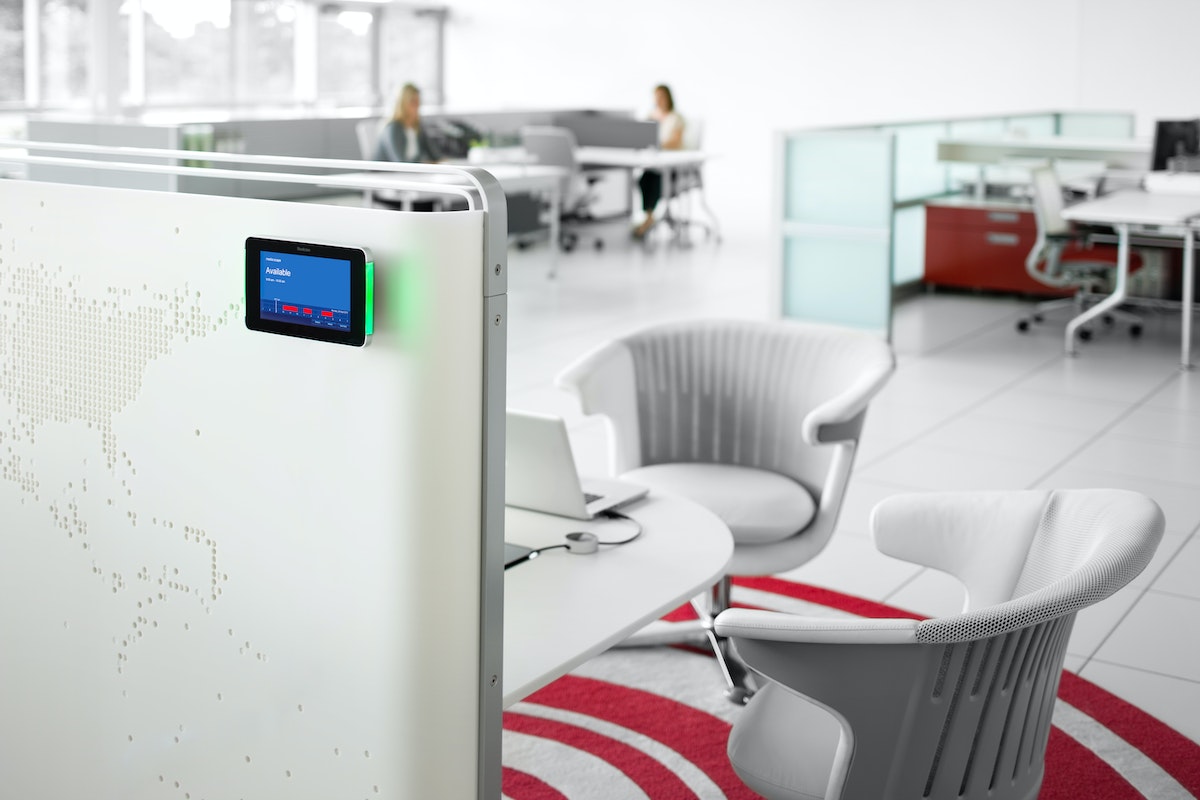
RoomWizard
Aiming to connect the convenience of digital technology to physical spaces, the teams designed RoomWizard, a web-accessible touch-screen display that provides the real-time status of shared meeting rooms, simplifying the process of reserving and managing those spaces.
Leap WorkLounge and Ottoman
Building on their earlier work on the Leap Chair, the teams created a work chair with the comfort and style of a classic club chair, a luxury Leap Chair that takes work away from the desk.
i2i Chair
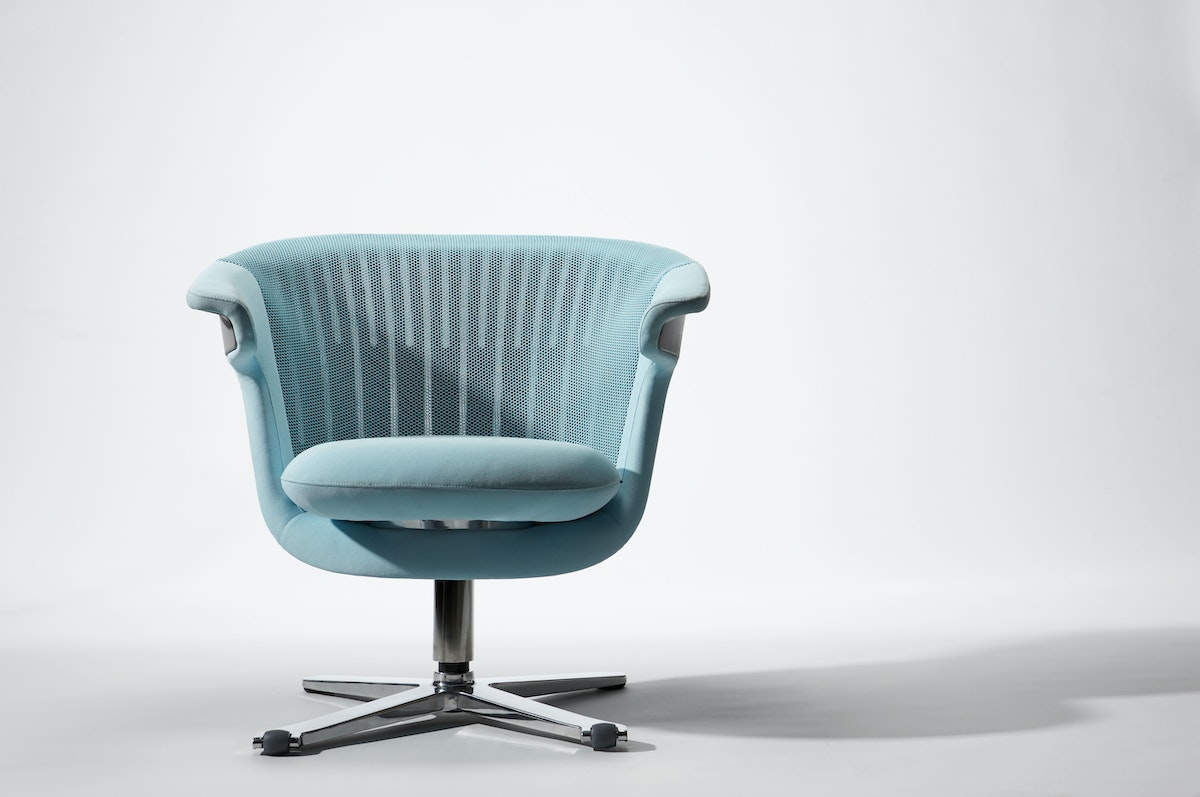
In researching the needs of a growing number of collaborative settings, Steelcase identified an opportunity to combine task and lounge seating. Named for the collaboration it enables, the i2i chair supports a variety of postures, including sideways, reclining, perching, and leaning. Winner of the Spark Gold Award, 2010, and the IDEA Silver Award, 2009.
Amia Chair
Steelcase and IDEO designed a task chair with modern ergonomic capabilities that accommodated a wide range of body types at a lower price point. Winner of the IDEA Bronze Award from IDSA and BusinessWeek, 2009.
media:scape
Steelcase asked IDEO to help evaluate and design a “walk up and connect” experience that merged furniture and technology to help teams access and share information. Designed to look light, open, and inviting, media:scape used a pedestal table with cleverly embedded hardware and interactive technology to foster group work. Winner of the IDEA Bronze award for Office & Productivity, 2011.
Node Chair
IDEO collaborated with Steelcase to design a platform for improving the classroom experience. The final product, dubbed the Node chair, has received praise for promoting student collaboration, allowing educators to reconfigure classrooms to fit different teaching styles, and enabling institutions to save money by making spaces more flexible and accommodating for varied uses. Winner of five design awards.
Watch: A love letter to Node.

Planned Parenthood's new way forward
Designing innovative, patient-centered experiences for a healthcare pioneer.
A great healthcare experience shouldn’t be a luxury. It should be available to everyone, regardless of who they are, where they live, or what they need.
Planned Parenthood health centers have opened their doors to every woman and man for 100 years with this core conviction, offering services ranging from pap tests, cancer screenings, and breast exams to contraception, treatment for sexually transmitted infections, counseling, and education.
As the healthcare landscape continues to shift, Planned Parenthood is evolving to lead the progress. For the past year, the organization worked side by side with IDEO to rethink and prototype a patient and employee experience that elevates individuals and their health and well-being.
Together, the teams designed a number of patient and employee interactions and corresponding prototypes that address different patient needs: education, personalization, connection, and support for any decision.
Concepts in Development
These concepts are being rolled out across health centers around the country:
Welcoming Waiting Areas
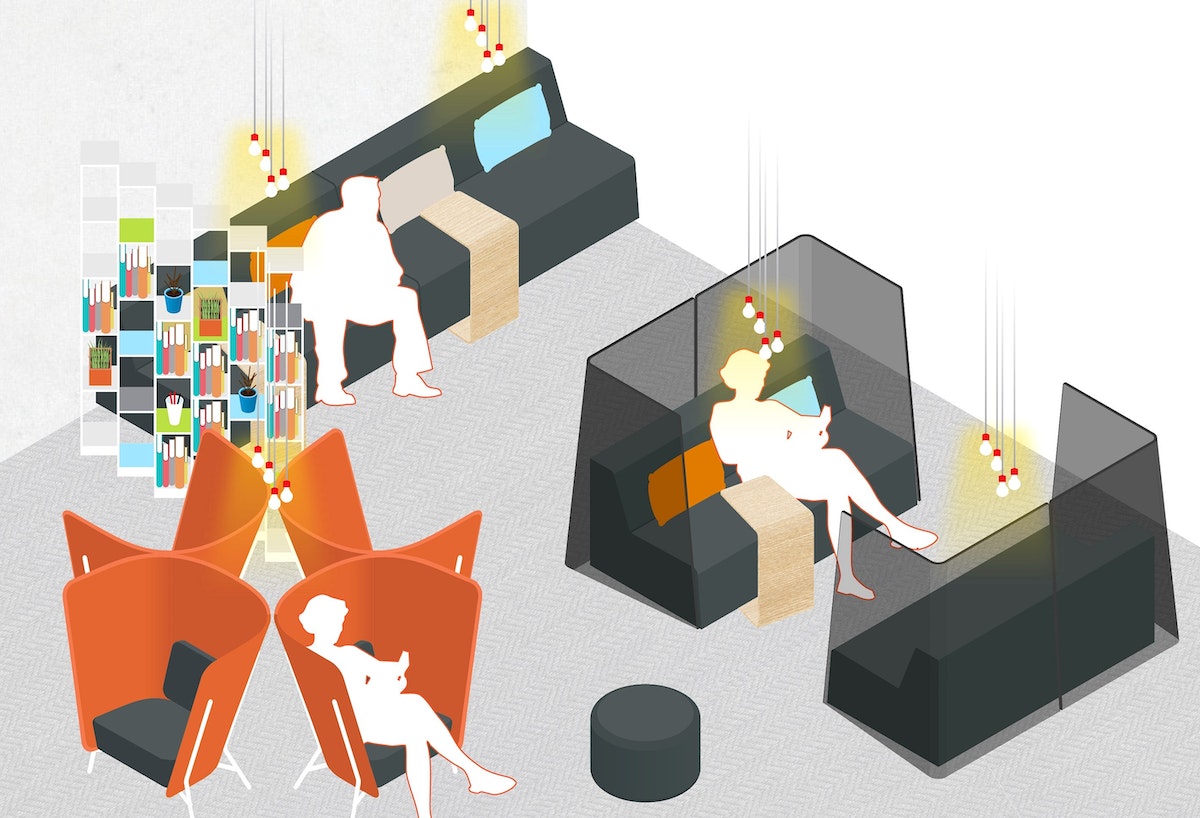
To help set the right tone for patients from the time they enter the door, the teams designed waiting rooms that offer different types of environments for different needs. The Hub is an area that transforms the passive waiting room experience to a greeting area that’s staffed by knowledgeable guides who help orient patients, and quiet nesting spaces for reflection and privacy. Patients can spend time with friends and family in a social, kid-friendly common area, and those who want to get involved to support Planned Parenthood’s mission can learn about health and advocacy information. This modular design toolkit can adapt to the individual buildings, budgets, and community needs of any existing Planned Parenthood health center.
Restorative Recovery Rooms
For women who are recovering from surgical procedures, small thoughtful details have a magnified positive impact. Redesigned recovery rooms have been separated into semi-private spaces, accommodating loved ones who want to join patients after a procedure. Soothing colors and soft, warm fabrics create a comforting environment, and service gestures including cards with words of support and encouragement from staff reinforce Planned Parenthood’s promise. A take-home kit provides clear information about what to expect during recovery and recommendations for follow-up care.
Unifying Employees
Because the heart of Planned Parenthood is its dedicated employees, we developed and launched an engagement and training program that provides staff with the tools and support they need to do their best work. In This Together, an employee engagement training, prepares staff to work with a vastly diverse community, reduce stigma around health choices, and empower patients to take control of their care. It’s based on a clearly defined set of workplace values and service standards, common goals that help employees across the global organization work together to provide top-notch experiences at every location.
Vision for the Future
These concepts are in varying stages of development, with plans to launch coming soon.
Patient-Physician Tool and Educational App
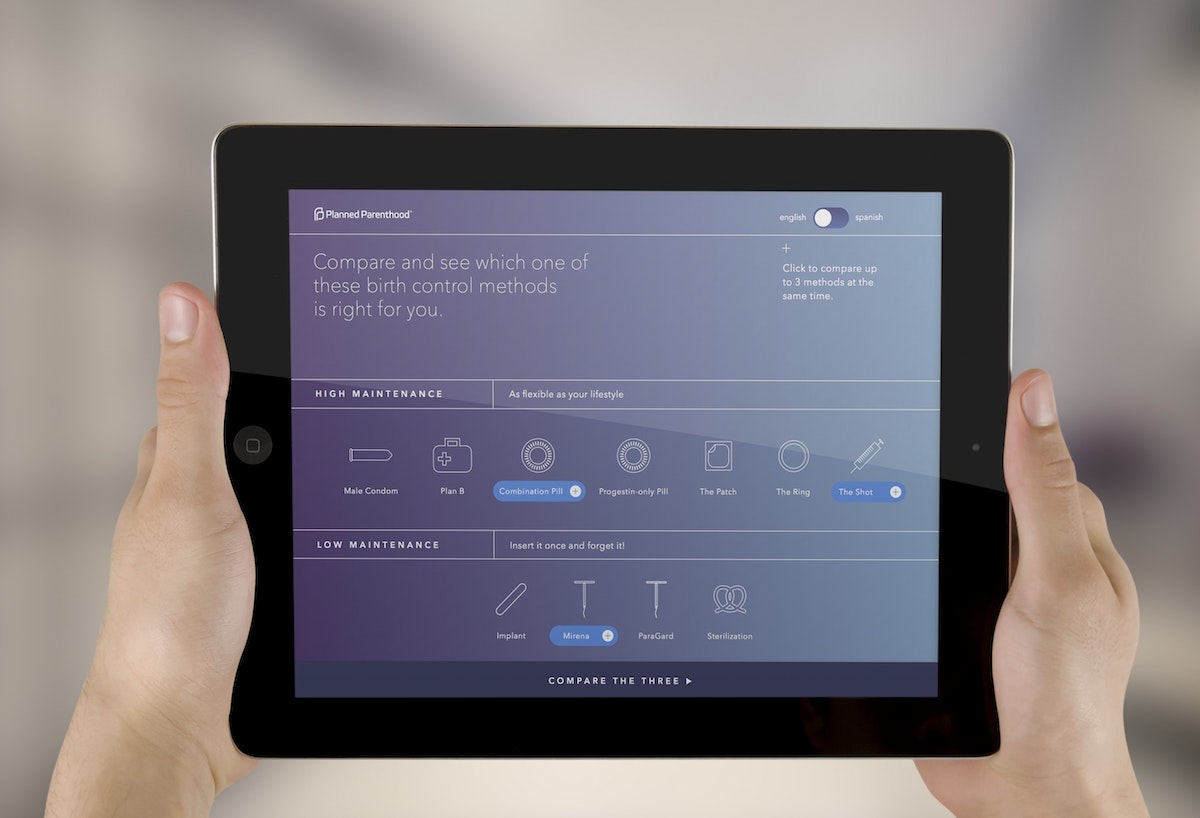
Visit Companion is a prototype for a suite of digital tools that help patients learn about their reproductive health choices and create personalized plans with their clinicians. While they wait, or anytime before a visit, patients can learn the answers to common questions related to their appointment and see side-by-side comparisons of their care options. The app uses familiar language and symbols to describe symptoms and side effects, and it provides a record of what was discussed during the visit as well as reminders for follow-up appointments.
Simplified Medical Forms
For the 2 million-plus patients who visit Planned Parenthood health centers, there’s an opportunity to make appointments more convenient and straightforward. Currently in prototyping stages, Friendly Forms is an easy-to-understand, interactive digital questionnaire written in simple, conversational language that was designed by replicating how Planned Parenthood clinicians speak to their patients. The forms adapt as patients answer questions, giving only the prompts that are relevant. Patients will be able to complete Friendly Forms any time before their appointment, so it’s easier to complete the forms accurately.
Holistic Women’s Health Care
Women who rely on Planned Parenthood for their sexual and reproductive healthcare can benefit from having trusted clinicians guide their care throughout their lifetime. Through the Well Woman Plus program, Planned Parenthood will connect women to trusted providers for care beyond physical exams and birth control consultation. Clinicians will use interactive digital and physical tools to map out lifelong health care milestones and help patients think proactively about their future, from family planning to preventive screenings.
To learn more, go to PlannedParenthoodExperience.org.
Find out more about Planned Parenthood's approach to creativity in this Q&A with executive vice president and chief brand officer Dawn Laguens.
Launching an innovation lab to benefit Peruvians
Catalyzing rapid growth and transformation within a broad portfolio of businesses, including retail ventures, healthcare services, insurance, and banking.
La Victoria Lab (LVL) is a group of designers, anthropologists, architects, and entrepreneurs working on improving the lives of the Peruvian middle class. Founded in 2014, LVL is the Innovation Lab of Intercorp, an economic group of 35 companies spanning banks, malls, cinemas, schools, health care clinics, and more. Intercorp was founded by Carlos Rodríguez-Pastor, one of Peru’s most successful entrepreneurs, employs more than 90,000 people, and accounts for almost 4 percent of the country’s gross domestic product.
Peru is one of South America’s fastest growing economies, with a healthy 6 percent year-on-year growth from 2007 to 2017, on average. That rising economic tide, along with government policy, has created extraordinary social mobility: Between 2005 and 2017, the share of poverty fell from 55% to 22%, of a population of 32 million.
Know The Customer
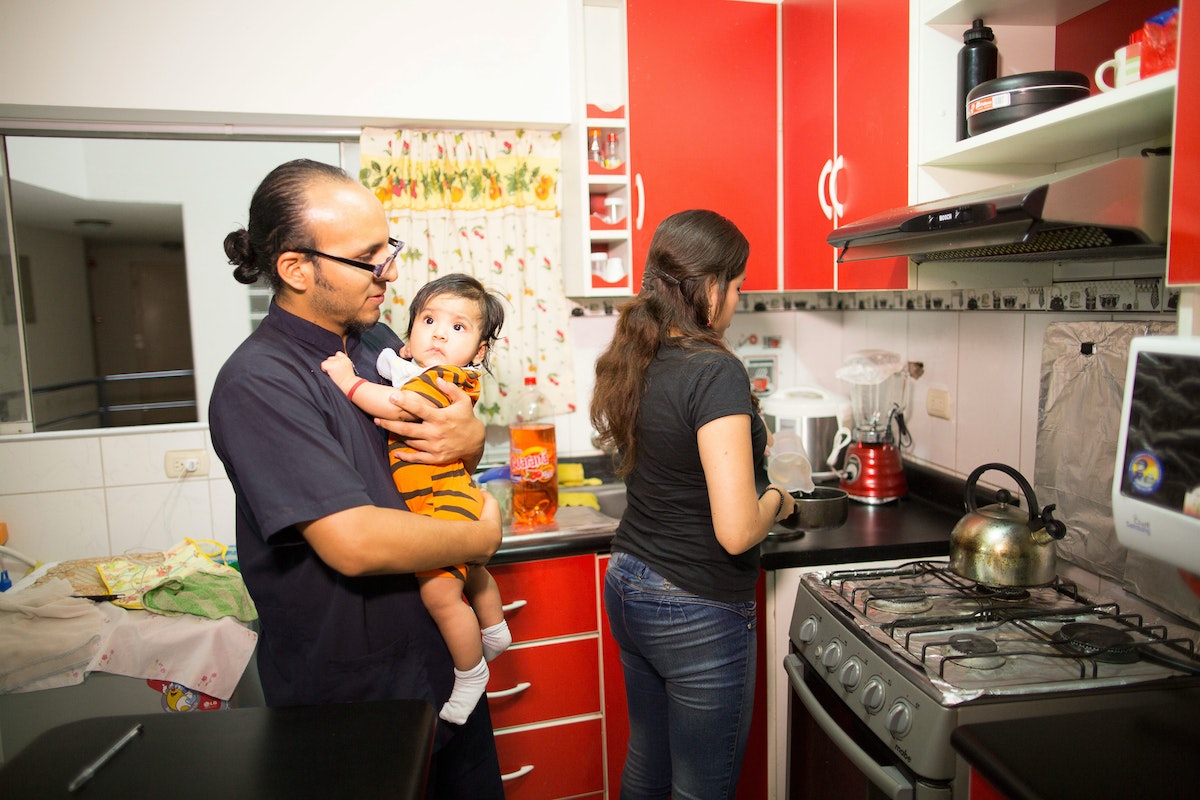
As Peruvians’ lives have improved, the new middle class's needs and aspirations have changed: They’re entrepreneurial, expect great services, and want the best for their children. That challenge and opportunity led Rodríguez-Pastor to enlist IDEO to bring our empathic approach to the construction of Innova Schools, a new school system, and to redesign Interbank's customer experience"
Success in these two projects bred ambition. Intercorp, Rodríguez-Pastor realized, needed to build two capabilities: a deep, bedrock understanding of the new middle class, and an innovation capability with which his companies could create new products, services, and experiences. “I want a little IDEO,” Rodriguez-Pastor said, and the germ of LVL took root.
A Lab Takes Shape
In early 2014, as contractors broke ground on the Lab, its founders set about hiring an eclectic team from across the globe and undertook their first project: to deeply understand the needs, desires, hopes, and dreams of the emerging middle class.
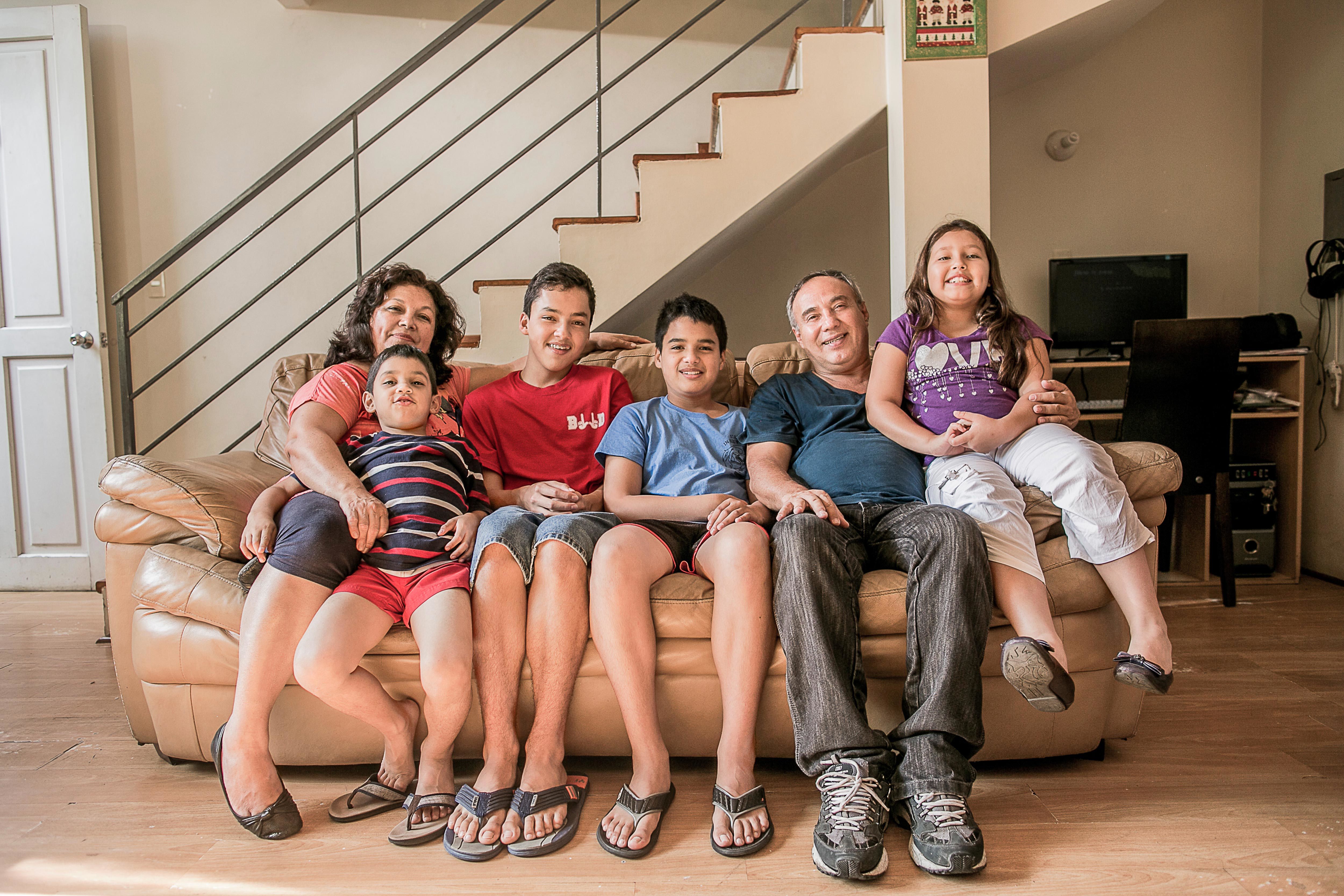
Three months of ethnographic research was followed by three months of bringing their insights to life. LVL’s team surrounded themselves with mementos of people’s lives: toys, products, ads, as well as video interviews with families, to help Intercorp’s executives literally step into the lives of their prospective customers.

Solutions and Skills
Powered by those insights, La Victoria Lab has brought human-centered problem-solving to a variety of Intercorp’s companies, including new retail ventures, and improving the cinema-going and banking experience.
In 2015, the Lab began scaling its efforts to build innovation capabilities across all of the portfolio companies by using IDEO’s innovation readiness assessment, Creative Difference. Each company received a report of their strengths and improvement areas, and as a result, LVL facilitated workshops and community groups focused on building essential capabilities.
"Creative Difference is the first tool that has allowed my team and the organization to have a precise picture of where we are in the spectrum of doing truly innovative work. Now, we can identify our strengths and areas of improvement, we can develop work plans and actions based on data, and can start to really dig deep into innovation,” says Aurelia Alvarado, Director of Innovation, Innova Schools.
La Victoria Lab’s experiments are catalyzed by Intercorp’s scale, reach, and national ambition. Innova Schools, for example, is now Peru’s biggest private school network (read more about Innova here). And Interbank’s new retail experience rolled out to more than 180 branches nationally.
As LVL matures, its focus is changing, says Hernan Carranza, Chief Innovation Officer, Intercorp. “There's a transition taking place at La Victoria Lab, from a studio undertaking typical design projects, to a platform for impact-led journeys that start at pipeline discovery, defining key performance indicators, all the way to implementation and stewardship."
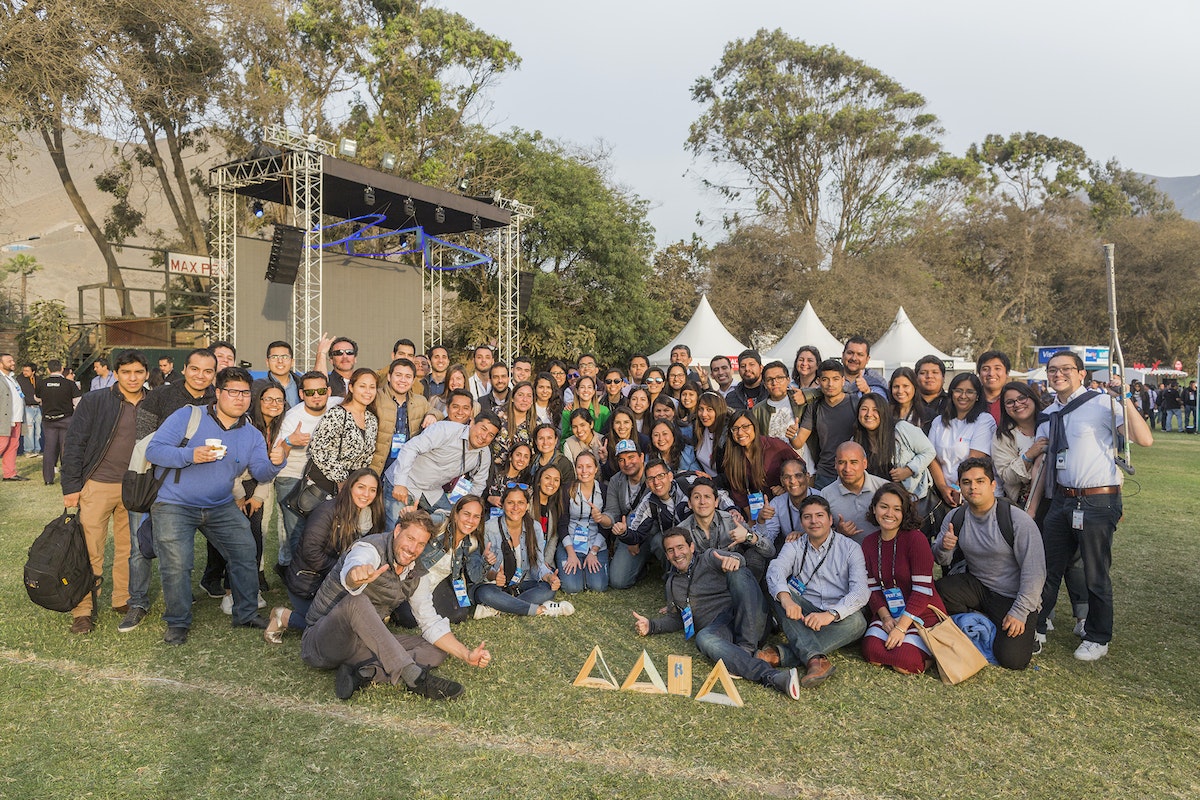
Just as important as the projects it delivers is the wider intent of LVL. The aim is for IDEO’s role within La Victoria Lab to wane, as Intercorp’s waxes, and the company’s internal Innovation capability and culture strengthen. LVL’s ventures range from mindset-changing initiatives, such as curating Peru's largest innovation festival, to deeply transformative endeavors targeted at reinventing the core value propositions of Intercorp's insurance, drugstores, and medical services. It envisions massive cross-organizational transformation.
“Innovation,” said Rodríguez-Pastor, “is too important to be outsourced.”
Keep up to date with the latest projects from La Victoria Lab: lavictoria.pe
"For the latest developments on our work with Intercorp, head to "The Possibilities Business: An Oral History of Organization Transformation"
Billions of users are still coming online.
Here’s how to design for them.
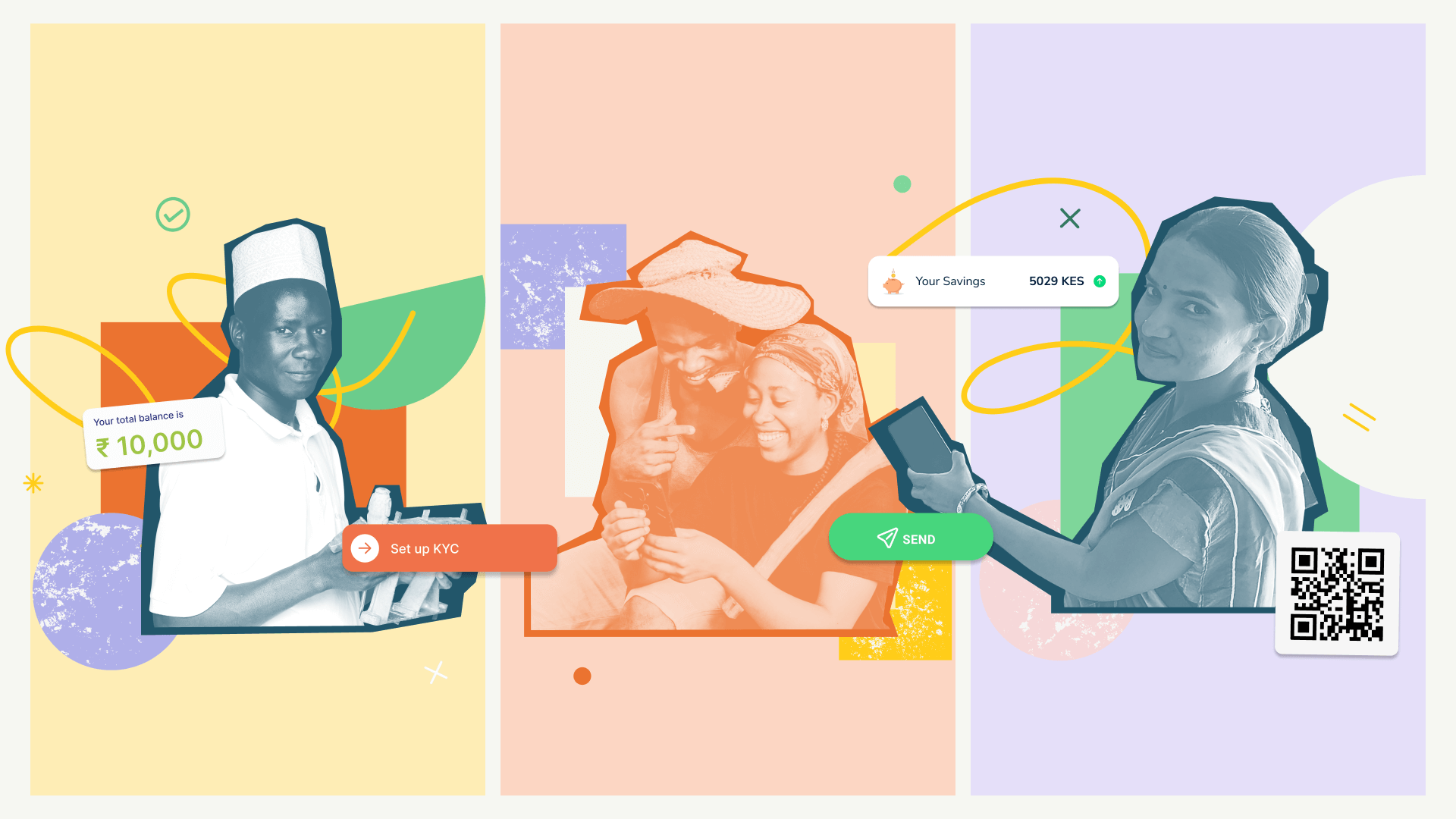
Every week, she makes a hefty interest payment to her suppliers without knowing how much of that loan she still has to pay off. She tried using smartphones to allow customers to pay her via QR code, but her uncertainty about the process and a few cases of fraud scared her off. Like many aspiring to a more prosperous future for their families, Swati dreams of expanding her shop and opening a factory. But due to limited formal banking history and lack of confidence navigating digital financial services, people in Swati’s position find their options limited.
And her story is the story of a billion others living in emerging markets.
Every week, around the world, millions come online for the first time. Of all the experiences these new users face, financial services are among the most complex and high-risk.
Pulling hard-earned wages out from under the mattress and putting them into an abstract financial app or virtual wallet is a daunting task for the 1.4 billion unbanked adults globally at the last mile of financial access. Mobile phones and data connectivity are reaching more of the poorest people, but a lack of digital financial confidence continues to hold them back.
“Last mile” refers to physically remote communities as well as traditionally excluded users who lack access to the digital economy, due to lack of internet and formal bank accounts. There’s a lot that can go wrong in trying to adapt services to reach and serve people at the last mile. To solve for the needs of last-mile users like Swati, who make up about 30 percent of adults around the world, we need to redesign our financial services to be not just accessible but also inclusive, valuable, and equitable for everyone.
But building for everyone means more than just airlifting in products that have worked in the West. Here are some key factors in designing products that help build financial confidence for everyone.

PLAIN LANGUAGE, NOT PERCENTAGES
In India, rural women often struggle with formal banking. Yet, the same women deftly manage family resources to ensure there’s money for weekly expenses as well as future goals. Ask one of these women how, and she might say, “I earn 50 Rupees for every 1,000 Rupees I put in my savings group. By the end of the year I’ll have enough to buy a TV.” Banking terms have never been in their vocabulary, but they’re experts of their finances in concrete terms.
Financial communication at the last mile needs to work differently, building on intuitive mental models people are used to, rather than expecting them to adopt new ones.
In Pakistan, the startup Finja offers credit in the plainest language possible: It shows credit terms in absolute numbers and the lending rate as a fee. Knowing some are skeptical, the startup offers a calculator to try out different terms. Finja illustrates how small shifts can make a complex financial product more aligned with people’s mental models and easier to trust: In its first year, 25,000 merchants signed up for Finja’s app, which served 16 million customers.

TYPE SHORTCUTS
For new digital users, smartphones can be intimidating: Screens are small, text is tough to read, and on-screen keyboards are hard to use. The fear of a typo in a financial transaction can stop them in their tracks.
Last-mile users have a range of textual and digital literacy, and products need to offer multiple ways for users to engage, based on their comfort and capability.
NOW, a digital-first bank in UAE, breaks the text-only interaction model for its low-income users who send money back home to their families, by offering data input via voice, 11 in-app languages, and photos of receipts, reducing time and errors, to help users send remittances confidently and securely.

HANDS-ON HELP
Many last-mile users need help using their accounts. Assistance often comes in the form of agents—local merchants who provide services from banks, startups, and other organizations. These agents also provide strategic guidance as trusted proxies to formal financial services.
Yet, most financial apps are designed for one user and one device only. What happens when a user needs to share their password with their agent because they forget their PIN? Or when a husband needs to review a financial decision with his wife? We need to design high-tech with high-touch moments of human support to truly include last-mile users.
In India, Haqdarshak made hands-on help a core feature. Knowing many were already sharing passwords and handing over their phones to strangers just to access emergency relief, Haqdarshak introduced a secure network of agents. They explain government benefits, run eligibility screenings, and help people make informed decisions. These agents opened up access to government benefits to millions of people through a hands-on, assisted experience, where a single-user experience would have failed.

BUILT-IN PAUSES
For last mile-users, speed can be the enemy of comprehension. App performance is often measured in the fewest taps in the fewest seconds to complete a task—making it easy to lose money or sign up for a product a user isn’t ready for.
For users with limited income, one wrong move can feel like a slip on a tightrope. Financial products need to give users moments of pause that help them regain balance when things start to feel shaky, and safety nets when a misstep does occur.
bKash and FiMoney are proving that slower is better. Their apps use “swipe to confirm” and “press and hold” to give users more control as they confirm a big financial decision. A few extra fractions of a second greatly increase a user’s sense of control in a new financial experience. For bKash, designing for financial confidence helped it grow into one of the largest mobile-money operators in the world, with 70 million users.

NO DARK PATTERNS
In Deceptive Patterns, Harry Brignull identifies the “dark patterns” that interlace today’s digital products, sometimes leading users to decisions they never meant to make.
Products with dark patterns can harm vulnerable users even when they are built with good intentions overall. Offering multiple credit options to unbanked people, for example, can land them in a vicious credit cycle that they are unable to maintain. But thoughtful design can help users explore the benefits and risks of new financial options, make informed decisions, and slowly build their financial capacity.
In Uganda, the startup Opareta has created a responsible loan-ladder model: It makes the first loan small in size, rewards payments made on-time (or early), and enables users who demonstrate responsible behavior to apply for bigger loans. Opareta embeds education along the way and helps customers understand the why behind each credit decision. This prevents users from taking on too much risk and Opareta from over-leveraging. Opareta trades short-term gains for long-term relationships with customers and paves the way for building financial literacy and confidence, one step at a time.
Connecting last-mile users to digital financial services takes many hands, so we put together a Financial Confidence Playbook to help any organization design products for this demographic. As for Swati, with the help of her local bank agent, and the right financial tools, she was able to double her sales and set up food stalls. She even bought her own phone, which she now uses with confidence. Actualizing her dream of a better future for her family no longer feels out of reach.
Reprinted with permission from Fast Co.
In a small town in India, Swati runs a popcorn and peanuts kiosk. She doesn’t trust banks, so she saves cash and buys supplies on credit.
A legal and ethical framework for gen AI
Paving the way for experimentation that aligns with our values.
“She” was supposed to serve as a 24-hour counselor for people dealing with eating disorders. Instead, psychologists and activists found Tessa was offering dieting tips.
In the me-first race to adopt AI and push new products out into the world, there are headlines everywhere that freak us out. Some 1,400 leading technologists are imploring companies in this technology arms race to pause. Sam Altman, CEO of ChatGPT maker OpenAI, has recommended the formation of a global consortium on the level of the International Atomic Energy Agency (IAEA) to avoid the catastrophic outcomes that could result from the misuse of AI.
All of us are wondering what our future is going to look like, and companies aren’t quite sure where to draw ethical and legal lines around how to use these very new technologies in their own operations and offerings. (Some organizations have placed an all out ban on them.) The decisions we make today will shape our world and have reverberating impacts for generations to come.
At IDEO, we know that tools aren’t inherently good or bad—it’s about how they are designed. Our designers have been using these tools for years, and our clients are already experimenting with them. Instead of distancing ourselves from AI, we knew we needed to set clear guidelines, to pave the way for experimentation that aligns with our values. Rather than waiting for our future with AI to be imposed upon us, we’re choosing to intentionally design it.
This isn’t new for us. For more than a decade, IDEO has integrated data science into our design process. Early on, we created the AI Ethics Cards as a foundational element of how we practice algorithmic and product design when it comes to AI systems. And through initiatives intended to help us become more inclusive, equitable, and responsible, like our Inclusive Design Collective and a workshop to break down the potential unintended consequences of our work (the psychological and human rights impact, for example), we work to help designers think through the ethical considerations of choices we make and artifacts we create.
With the proliferation of generative AI, it was time to create more tools to guide our exploration. We dove into design research to understand how generative AI was showing up in our work and how we might make it both legally compliant and caring—built for healthy individuals, healthy relationships, and healthy communities.
Knowing that the rules are yet to be written for much of the legal precedent in this domain, we relied heavily on our technologists and the Inclusive Design Collective for recommendations. Their research informed this set of considerations, which also anticipate potential future legislation.
Next, we did a go/no go exercise, vetting the most popular tools to decide which types of data can or cannot be used, for what reason, and at which stage of our design process. And finally, we made sure that our guidelines included everyone at IDEO, from early adopters to those who are opposed to using generative AI at all. Here’s where we landed:
Download a free PDF of the Gen AI Legal & Ethical Framework cards here.

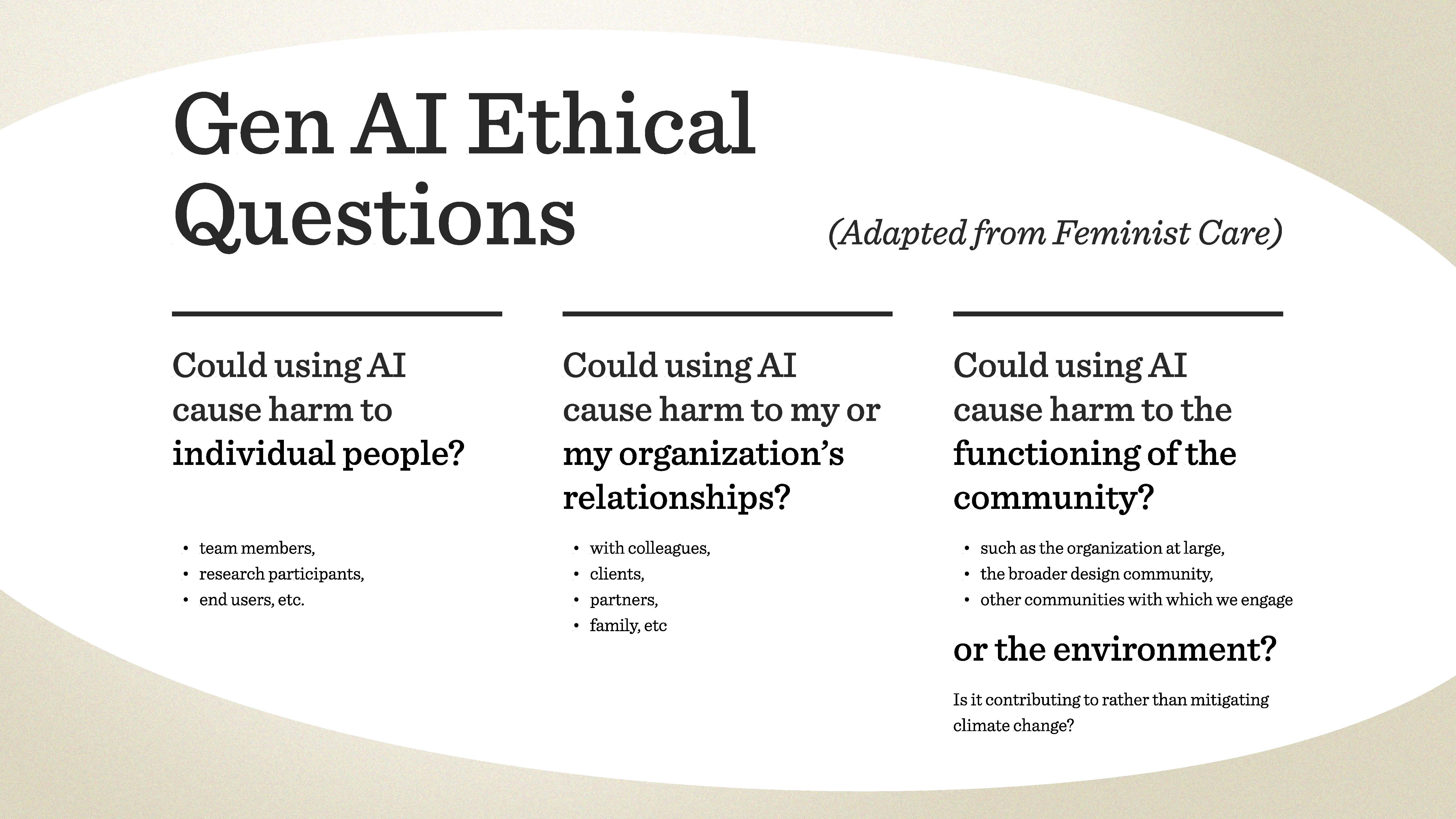
To make this line of questioning even more tangible, we offered some common ethical watchouts, and some ways that designers can offset negative effects.
For example:
Ethical Concern:
Images or content produced by AI might be mistakenly taken as factual or truthful and consequently cause unintended harm.
Mitigate with:
- Give credit when you are using AI-generated content, and put the prompt next to the artifact where appropriate.
- Validate factual information through a third-party source.
Guidelines for this rapidly-evolving technology are not a set-and-forget kind of exercise—they represent a snapshot in time. Likewise, it’s not possible to cover every scenario. We plan to regularly revisit and revise.
With these guidelines in place, we dug into the documentation of generative AI offerings from multiple companies. And to further mitigate risk, IDEO built its own “AI playground” tool to access a version of ChatGPT that complies with our policies and launched it to everyone in the firm—unleashing a tidal wave of AI-powered design that we’re using ourselves and bringing to clients.
Interested in testing out some of these tools and frameworks? We’d love to talk: ai@ideo.com
Download a free PDF of the Gen AI Legal & Ethical Framework cards here.
Thank you to: Esha Reddy, Evan Burton, Zoey Zhu, Graham Gardner, Jeremy Sallin, Jenna Fizel, Nohemy Stella, Tom Antony, Jeremy Chen, Alireza Karduni, Ilene Palacios, Kate Schnippering, and Bo Peng for your contributions to the guidelines.
The information provided in this article and on our toolkit cards does not, and is not intended to, constitute legal advice; instead, all information, content, and materials available on this site are for general informational purposes only. Information provided may not constitute the most up-to-date legal or other information. Readers should contact their attorney to obtain advice with respect to any particular legal matter. All liability with respect to actions taken or not taken based on the contents of this article are hereby expressly disclaimed. The posted content is provided "as is;" no representations are made that the content is error-free.
In June, the National Eating Disorders Association decided to shut down an AI-powered chatbot called Tessa.
Is it time to reimagine the C-suite?
The current structure for leading companies may no longer be sustainable.
Reprinted from the SHRM Executive Network’s People + Strategy journal.
Derek Robson, our CEO, and Tim Brown, our Chair, believe that the fundamental role of leadership teams has changed.
The fundamental role of the C-suite has changed. In the past, the leadership team's job was to keep the existing machine humming, optimizing for efficiency and profitability. But now the challenge goes beyond delivering business results to driving transformation—in effect, building a new machine that will thrive in the future and, ideally, the present.
And the demands placed on most senior leaders of organizations have grown exponentially. Not only are they required to be constantly reinventing the company, but they must also navigate the growing expectations of employees, investors, and other stakeholders who believe that corporations and their leaders should play a larger role addressing broader issues in society that historically fell outside the purview of business. And the demands these leaders face will only increase given that relentless disruption and uncertainty are now facts of life.
Who can live up to this superhuman job description? It's time to start contemplating a mindset shift and possible reimagining of how the C-suite operates. We see four fundamental shifts that can help executives teams evolve.
How might we shift from answers to questions?
It used to be that chief executives were expected to have all the answers to any question, as if they were Athena, the goddess of wisdom. But in our conversations with CEOs over the last few years, many share the opinion that the primary role of chief executives has to shift to being constantly curious rather than all-knowing.
In a sense, the CEO needs to move from being chief executive officer to chief inquiry officer. The ability to ask the right questions is arguably more important for the CEO than having the right answers. That's because questions provide long-term focus for companies, whereas the right answer in one context can quickly become the wrong answer amid shifting contexts.
That then raises the question of whether one person can realistically be expected to be able to have all the knowledge, expertise, and insight required to explore new territory and create those questions. The answer to that is almost certainly no, and that creates a bit of a dilemma for the CEO.
Where do they get the help to be constantly curious? It may be too much to expect that support from their direct reports, given that their primary responsibility is to execute the strategies that emerge from those questions. The board may not be much help, either. Boards, for the most part, are not expert enough. They have an important role to play, and maybe some board members can play that role. But it's not something that boards are generally set up to do. They are governance mechanisms more than knowledge-seeking mechanisms.
One possible solution for providing more support to CEOs is for them to have a small set of peer advisors around them to help them figure out what the right questions are. For this to work, the CEO would need to be able to treat that group as true peers. And they not be on the payroll of the organization, so that the CEO doesn't have to also worry about the motivations of employees who might be looking to be promoted.
In most of their day-to-day interactions, CEOs have to be concerned about side agendas and ulterior motives. And for this advisory group to work, it would have to have a singular goal of helping the CEO think through challenges and questions, in the same way that U.S. presidents have assembled "brain trusts" to offer guidance on issues. The goal for the group would be to provide a series of perspectives on a problem, rather than trying to provide the answer, and help the CEO build their confidence and courage for navigating uncertainty.

How might we create more fluidity in executive roles?
This question underscores a fundamental tension in the role of the CEO and other members of the C-suite. At a time when people expect more of their CEO and their leaders—authenticity, humanity, inclusivity, greater visibility, constant communication—these senior executives also need more time away from the office to simply think, to calm the noise and figure out what questions they should be asking but aren't. And there's no way to do that other than being either intensely disciplined about it or by sharing the load. That thinking time is crucial, even if it is just to step back and ask yourself whether you are making progress on the big goals that you've articulated for the organization.
In theory, the responsibilities of leadership in organizations should be shared and spread across the other executives. One challenge there, as we mentioned earlier, is that the C-suite is primarily focused on executing the strategy, rather than contemplating new strategies.
In addition, those roles themselves are facing their own existential crisis. Not only are the responsibilities of each traditional role expanding rapidly with the complexity of the world, but we are seeing more C-suite leaders wearing multiple "chief" hats.
For example, many chief human resources officers are now also responsible for real estate, given that the future-of-work policies they are devising have enormous implications for their requirements for office space. As if that weren't enough, they are also taking on responsibility for communications—both internal and external—since it makes sense for them to be aligning corporate messaging with efforts to recruit and retain employees.
As new issues come up, responsibility for handling them will likely fall on the shoulders of the existing leadership team. But this model isn't set in stone, and it should be revisited.
We can look for lessons on fluidity from outside the world of business. Some years ago, we worked with the government of Dubai to create new ministries—including establishing the Ministry of Possibilities—and merge existing ones to address the evolving challenges and issues that society faces. Should businesses start to think the same way? Should we start to imagine C-suite leadership roles that are more agile and can be continuously restructured to deal with the challenges of the moment while also considering the future?
What's the strategy? Does the organizational structure match it? In many cases, it doesn't. You kind of drift away one degree every year, and suddenly you're a long, long way away from delivering against what you've set out for your shareholders and for the company itself.
How might we balance performance with regeneration?
As we contemplate the future of C-suite roles, another question arises: Can we structure the jobs so they aren't so reliant on people who have a tremendous amount of stamina and energy, or those who have the capacity to work constantly?
It's almost as if a requirement for the job now is to be able to score well in the equivalent of an NFL "combine," where potential draft picks are tested in various speed, skill, and agility drills. To sign up for these C-suite jobs requires a certain amount of internal drive but also pure physical endurance.
Is it possible to imagine doing this job without requiring that level of relentless physical and mental effort? Sports are often used in useful ways as a metaphor for business, but there is a key difference between the two. In sports, you don't spend all your time just playing the game. You spend a lot of time training. And the same is true for other pursuits like dance and music—you are practicing most of the time and performing for a relatively small amount of time. But in the workplace, we don't have that concept, and so we assume that leaders can both practice and perform at the same time all the time. And if you really want elite performers, that may not be humanly possible.
We may be expecting simply too much out of human beings to have them be practicing and performing to extremely high levels for thousands of hours a year. So, what can be done about that?
Organizations have to spread the load so leaders can regenerate some of the time and perform some of the time. But businesspeople are not very intentional about how we regenerate today. We are quite intentional about it in the world of sports, where there is a whole science around what it takes for an athlete to regenerate both physically and mentally. Could we be intentional in the same way in the world of business, rather than having leaders run so hard all the time that they're not giving themselves time to recover?
There are no easy answers to these questions, but they need to be asked now, before the C-suite becomes unsustainable. Rather than worshipping at the altar of the CEO, organizations need a more collaborative approach as we look to the future. Ultimately, the goal would be to create more of a collective leadership body, rather than relying on one person, the CEO, or their direct reports.
Reprinted with permission from SHRM, ©2023. All rights reserved.
Given the growing demands on leadership teams, particularly the CEO, the current structure for leading companies may no longer be sustainable.
Reimagining space travel: The magic in the mundane
Once, Frederik Pohl, famed science fiction author, left us pondering a nugget of wisdom: A good science fiction story should be able to predict not the automobile but the traffic jam.
When we're dreaming up futures, we often overlook the very human challenges that such futures might present. But we need to remember, it's us people living there, muddling through the everyday problems that future tech will inevitably toss our way.
This holds true even when our future is projected into outer space.
In October 2021, a rocket engineer from the Japan Aerospace Exploration Agency (JAXA) joined IDEO Tokyo for a month-long "cross-border study program”. This resulted in exploring the intriguing intersection of human-centered design and space exploration. The question at hand: what would space travel feel like when it's no longer just for astronauts but for the rest of us?
This posed a unique challenge: to reimagine space travel with a human touch, crafting an enjoyable experience for everyone, regardless of their physical abilities or cultural backgrounds.
Crafting the Future User Journey
At IDEO, we value creating new experiences by empathizing with users. But with space travel, we're dealing with a unique situation—the user may still be beyond our reach.
To envision the future of space travel in the most comprehensive manner, we leaned into expert interviews. These dialogues with specialists in various fields provided invaluable insights for designing future experiences and services.
We discovered from spacecraft engineers the mental and physical challenges astronauts face. An Experience Designer from IDEO's PlayLab further provided tips on how to craft experiences that preemptively mitigate discomfort.
What dawned on us was that space travel isn't just about the Overview Effect. It starts way before hitting the 'Book Now' button and lasts way after you're back on Mother Earth.
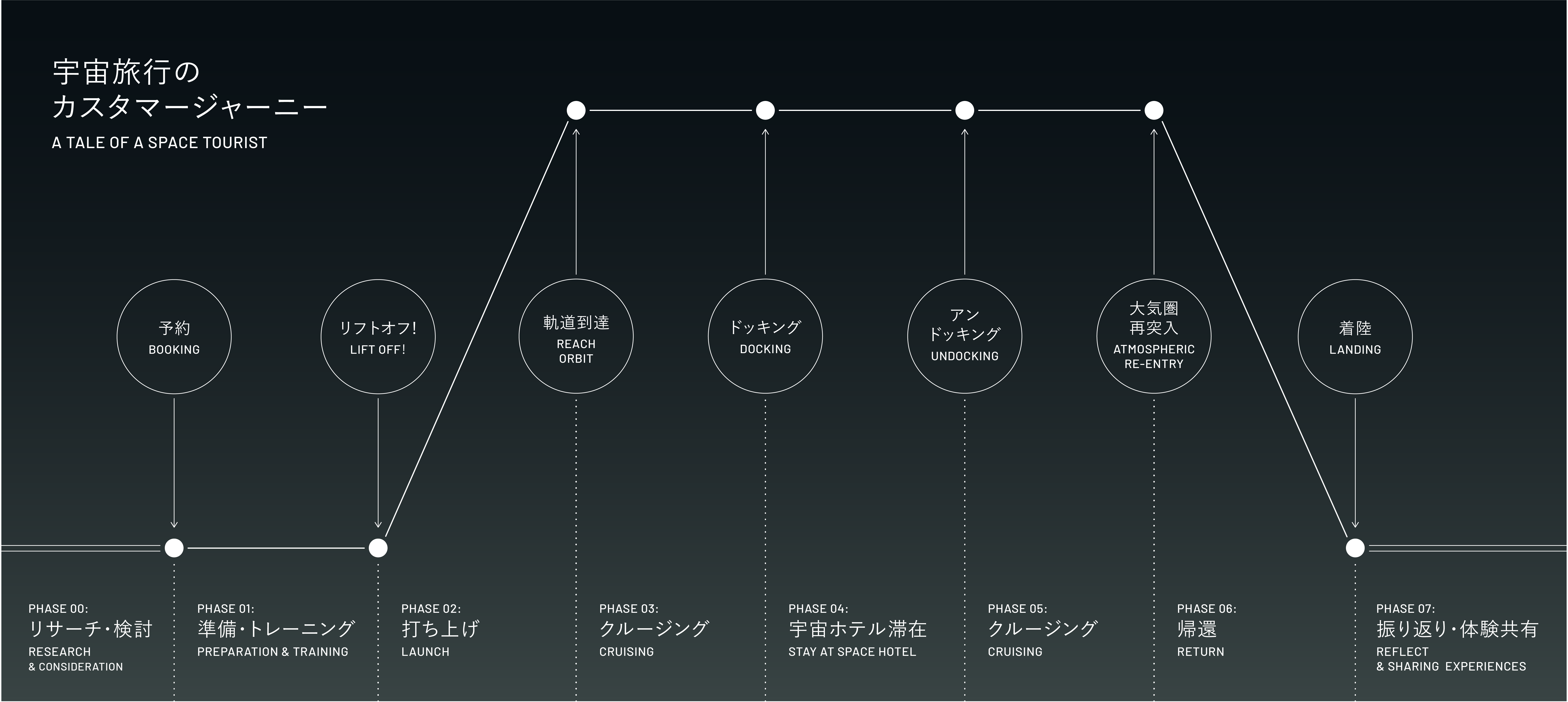
Experiencing the Future
In our quest to enhance empathy, we devised a method to immerse ourselves in the user's world, to get under their skin and understand their experiences more intuitively. At IDEO, we call this the Empathy Exercise. As Bill Moggridge, one of the founders of IDEO and a product designer, succinctly put it, "The only way to experience an experience is to experience it." So, we thought, why not bring a taste of space right here on Earth? Thus, our makeshift 'space camp' was born, where we mimicked the space traveler's journey under as-real-as-it-gets conditions.
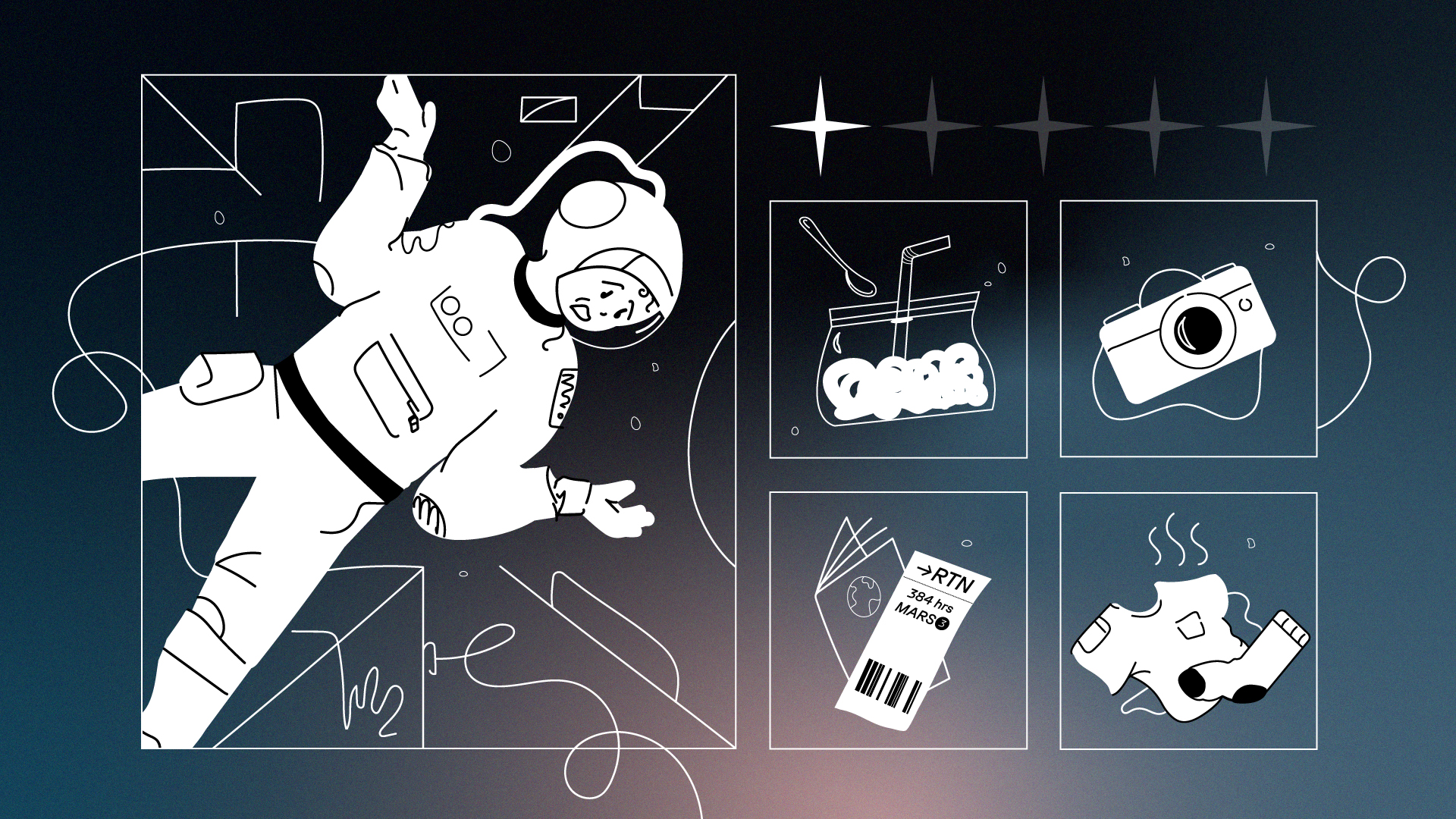
Our space camp menu? Only freeze-dried food to be rehydrated with hot water, akin to space cuisine. We rationed water, limiting each participant to 3.5L per day for cooking, drinking, and freshening up—just like on the International Space Station.
We even simulated the trials of toilet use in space. You see, in a spaceship, you've got to don diapers or use a wall-mounted toilet while other passengers are just a step away. During the camp, we used portable toilets for urination. For the other, ahem, business, we had a two-person arrangement in a private room: one person turns a blind eye while the other does their thing.


While it may sound like a game at first, spending a whole day under these restrictions opened our eyes to various insights. For instance, the novelty of freeze-dried meals wore off after the first few bites. Eating straight from the package or ziplock bag was not only visually uninspiring but also cumbersome. So, we started getting creative with the packaging from the second meal onwards to make the food more palatable.
The bathroom experience was another big takeaway. In our daily grind, the loo is a private space, a welcome escape from the hustle and bustle. But in a cramped spaceship with no privacy, it's quite the stress-fest to hurry up to spare the waiting person and to keep any, well, olfactory offenses at bay.
Writing a 'One-Star Review' for Future Experiences
Our research revealed a number of human-centric problems hidden in space travel. To share these findings, we created a fictional news program from the future, featuring 'one-star reviews' penned by space travelers.
These fictional viral tweets aren't just complaints, but a launchpad for designing more enticing space travel experiences. By forecasting the everyday snags of a future where space travel is as common as a trip to Hawaii, we're one step closer to engineering a genuinely otherworldly experience.
Creating the Design Principles for the Future
Once challenges were identified, the impulse to dive straight into problem-solving was strong. However, at IDEO, we use 'Design Principles' to maintain our focus on the user's perspective.
For instance, our experience designer highlighted the need for psychological safety within a spaceship. Building trustful relationships is crucial for everyone to fully engage in the experience during space travel, where varied groups share a confined space.
We also learned from former astronaut Naoko Yamazaki about the value of fostering creativity. Space, free from gravity and conventional rules, allows for the redesign of norms. Rather than preparing all experiences in advance, we found that leaving room for travelers to create their own unique enjoyment might lead to more memorable journeys.
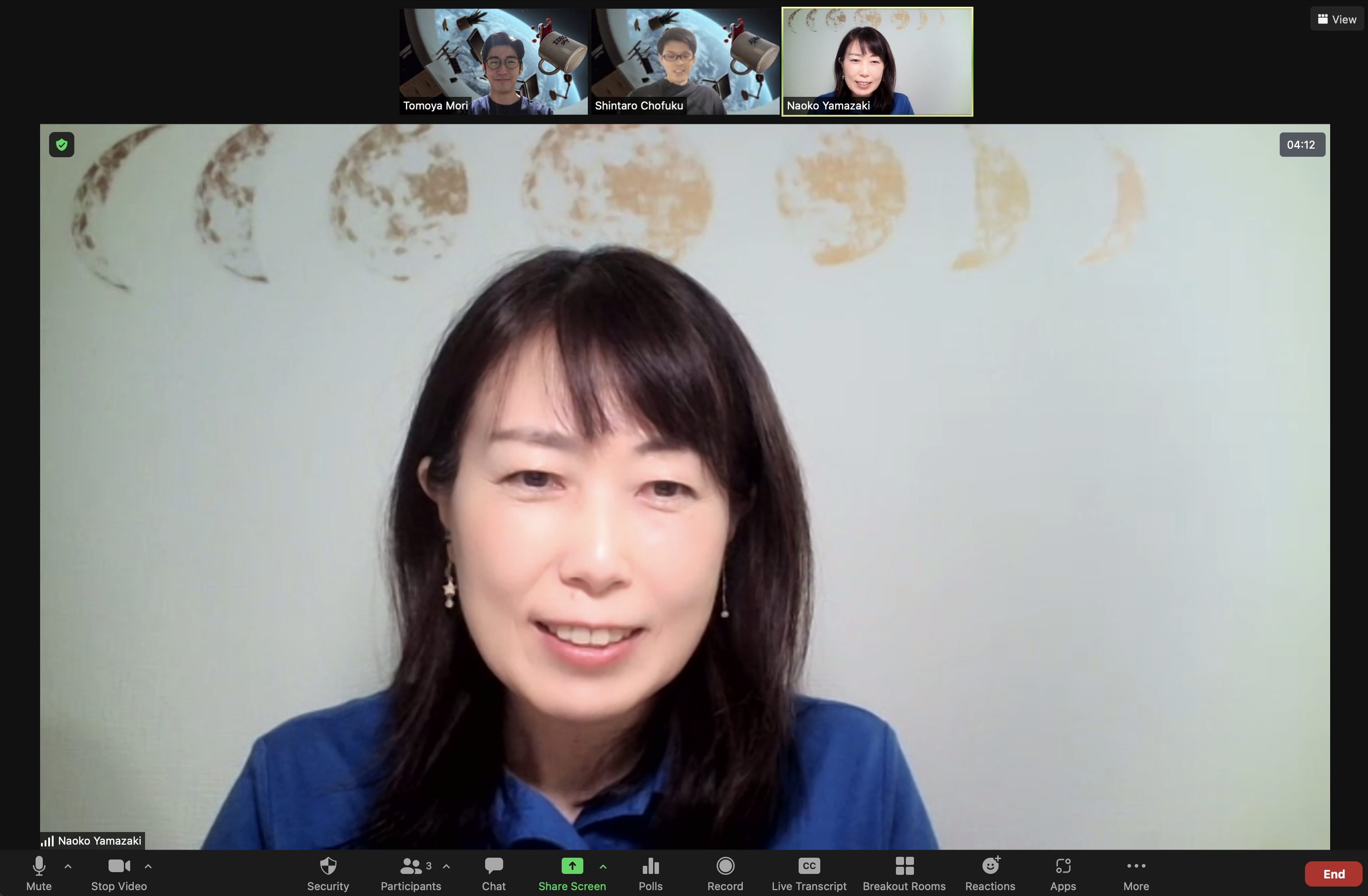
Ultimately, we crafted five core design principles, each considering various perspectives from physical fitness preparations for the journey to designing an inclusive spacecraft interior. As we begin to design concrete concepts, these principles serve as our compass, enabling us to continually envision a future of space travel that is fundamentally human-centric.
In these uncertain times, we must remember the people are always at the heart of our evolving narrative. As we dream, our focus should extend beyond technology to include the everyday challenges it brings along.
With a touch of creativity and a playful mindset, let's 'experience' this future together. The secret to a brighter tomorrow might well be hidden in the most mundane problems.
Learn more about the project at spacetravel.ideo.com. (Japanese Only)
Once, Frederik Pohl, famed science fiction author, left us pondering a nugget of wisdom: A good science fiction story should be able to predict not the automobile but the traffic jam.

Lindsey Turner
I’m passionate about building brands, products, and experiences that help organizations show up with meaning and momentum.
I help organizations cut through complexity by shaping how they show up, through brand strategy, identity, and storytelling.
Working at the intersection of brand and business, I bring an editorial eye and a bias toward making—turning ideas into tangible experiences that people can understand, trust, and believe in.
My work spans government, healthcare, financial services, media, and consumer goods, from launching Gen Z-focused ventures to building innovation labs and reimagining legacy brands. I relish moments of ambiguity and enjoy translating across teams, perspectives, and priorities to move ideas forward.
I started my career in editorial and digital design, shaping cross-platform experiences and identity systems in publishing and agency environments. That foundation still shapes how I work today: I’m detail-oriented, collaborative, and overreliant on the Oxford comma. I hold a BFA in Visual Communication from the School of the Art Institute of Chicago.

Rachel Young
My work helps organizations see who their products aren't working for—and build the will and the tools to do something about it
For 25 years, I've asked the same question: Who does this design exclude—and what are we going to do about it?
My work spans human-centered strategy, inclusive design, and qualitative research, with clients ranging from Microsoft, Google, and Verizon to the National Science Foundation, and San Francisco Unified School District.
Before IDEO, I taught elementary school in East Palo Alto and spent a decade doing design work with social service organizations—where I learned firsthand what it costs people when systems are built without them in mind.
I am currently writing User Error, a nonfiction book about digital access and the design decisions behind it. I live in Oakland, California.

Brian Pelsoh
I lead with craft, ensuring our work is creatively excellent: rooted in deep human insight and imagination, while also grounded in the realities of business and technology.
My expertise spans brand, communication, and product design across tech, education, the arts, and social impact.
I believe great work demands both high-level vision and obsessive attention to detail, and only happens through collaboration.
I bring an inclusive, hands-on approach and a deep understanding of business, which enables me to consistently deliver excellence while always asking why.
Before joining IDEO, I worked at the brand firms Pentagram and VSA Partners. I began my career as a designer, leading teams at the School of the Art Institute of Chicago and the Milwaukee Art Museum. I hold an MFA in graphic design from Maryland Institute College of Art and a BFA in communication design from the Milwaukee Institute of Art & Design, and have taught at some of the best design schools in the US.

Tony Wong
I am responsible for IDEO’s long-term success in China and working with clients to use design as a tool to enable growth.
I am responsible for IDEO’s long-term success in China and working with clients to use design as a tool to enable growth. Specifically, I have helped Chinese companies design holistic brand solutions through the development of their products, communication, services, and innovation teams, and I have helped multinationals expand their presence and influence in China.
I advise global leaders on developing China-led innovation and capabilities.
In over 15 years in IDEO Shanghai, I have worked on projects that use design to elevate the quality of the experience of healthcare products and services, streamline processes that increase productivity, create spaces and programs that promote and enable inclusive communities, and build next generation mobility solutions that are planet-positive.
Before joining IDEO, I worked at Philips Electronics and the Electrolux Group in Italy, the Netherlands, and Singapore on a number of breakthrough commercial products. I am a member of the Young President Organization in Shanghai.

Building a personal AI for the messiness of life: Sida Li
Most AI products today are built for work—a space with clear problems and established systems. One founder noticed a gap: personal life is messier, harder to systematize, and mostly left behind by the AI boom. So she built Cue, a personal AI that lives inside iMessage and group chats, to go where the other tools haven't.
In this episode, Becca Carroll, IDEO's Chief Strategy Officer, talks with Sida Li, co-founder and CEO of Shared Context Lab, about staying anchored to a human need while the technology around her keeps changing shape, why she treats her business model with the same rigor she'd bring to a product, and what it feels like to build a company at this particular, disorienting moment in AI.
The conversation also gets into how Sida makes design decisions: the language Cue uses to describe itself, the tradeoffs behind building inside iMessage instead of a new app, and a real story about a business idea that didn’t pan out.
This is the second in a two-part series profiling founders from IDEO's Startups-in-Residence program. The first conversation is with Johannes Seemann, founder of Sooner, on designing GenAI for the emotional side of money.

Designing GenAI for the emotional side of money: Johannes Seemann
Most personal financial tools are built to run the numbers and optimize towards a budget. While that works for some, most people experience money as a lived relationship that does not neatly fit into a spreadsheet. Johannes Seemann and Becca Carroll discuss why money is emotional before it is mathematical, and what a human-centered approach to building a generative AI financial product looks like in practice.

The curious leader's edge in uncertainty: Scott Shigeoka
Mina Seetharaman talks with Scott Shigeoka, author of Seek and Head of Curiosity Cultivation at the Eames Institute, about what distinguishes genuinely curious leadership from performative curiosity, how power dynamics shape curiosity, and why practicing curiosity can restore energy rather than drain it.

How constraints make us more creative: David Epstein
Mina Seetharaman talks with David Epstein, author of Inside the Box and Range, about why total freedom often produces average work, how leaders can design useful limits on purpose, and what organizations such as General Magic and Pixar reveal about the relationship between boundaries and creativity.
Looks like you might be in search of something very specific?
Or reset the filters above and try another angle.
Here’s some random inspiration

Podcasts about creative leadership

Articles about the power of prototyping
