
.svg)



Mattress designs that led to a cultural transformation
How the world’s largest mattress manufacturers transitioned from operations-centered to customer-centered.
Sealy and IDEO first collaborated in 2008, to rethink the design of its Stearns & Foster line. For years, Sealy, the largest mattress manufacturer in the world, had taken the standard industry approach to selling mattresses and watched market share and sales flatten; it knew something had to change. Stearns & Foster evolved from a single product design into a keystone for transforming the organization.
IDEO helped Sealy use actionable consumer insights to develop a scalable design methodology and new brand principles, which it applied to product design, operational and manufacturing decision-making processes, and sales and marketing strategy. This “brand-to-product” framework was subsequently used for three separate and consecutive product launches—Stearns & Foster, Embody, and Posturepedic—resulting in an overhaul of 85 percent of Sealy’s mattress portfolio.

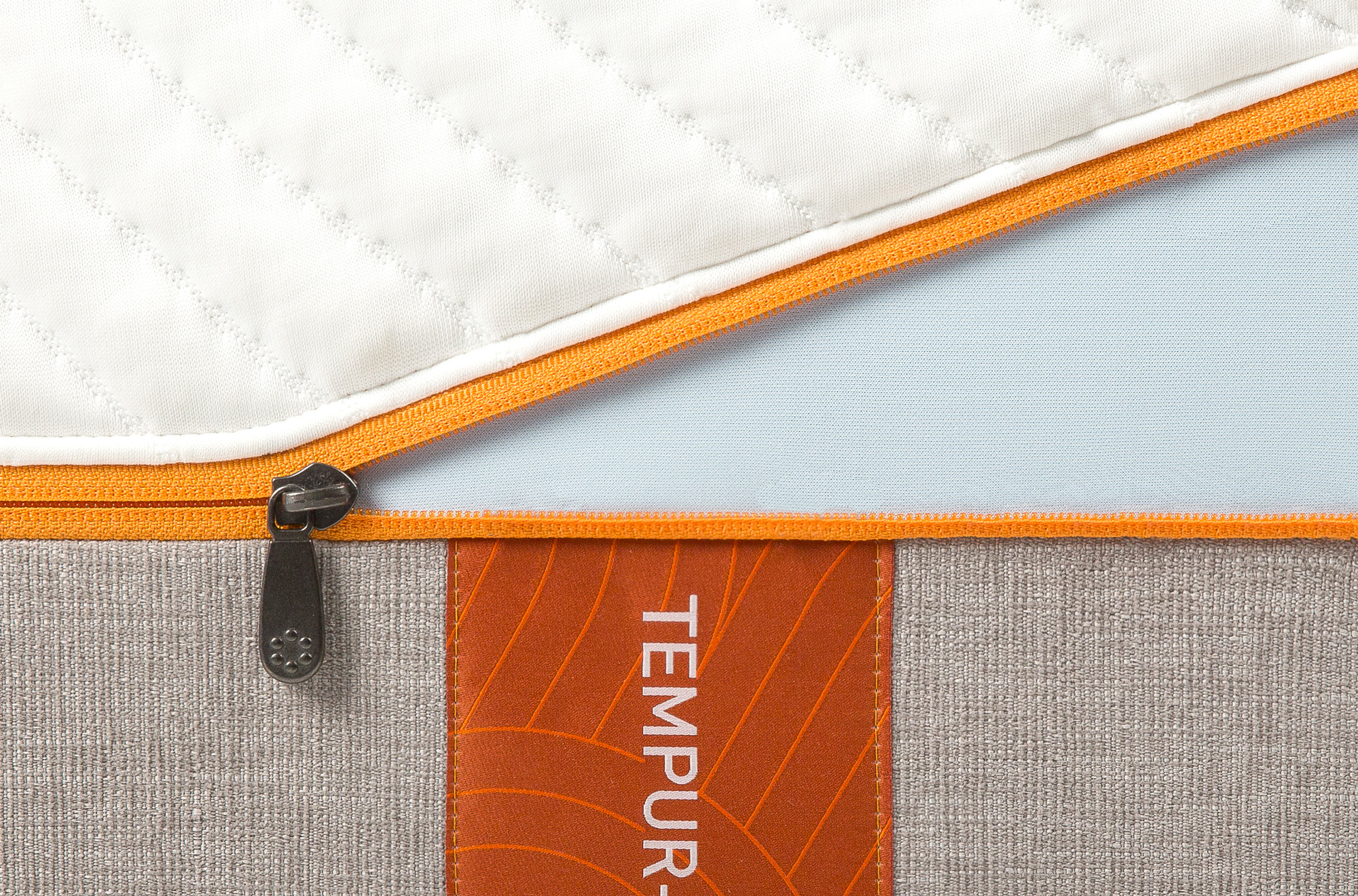
Tempur-Pedic was already working with IDEO on a new mattress design when it acquired Sealy in 2013. It was also interested in how design thinking and human-centered design could improve its business. Once solely focused on the technological elements of designing a mattress, together with IDEO, Tempur-Pedic redesigned the outer shells of its mattresses to reflect the quality on the inside. This design change led to the company to look at new ways to infuse design into their products.
“The initial project was to design the mattress,” said Thomas Overthun, associate partner and design director at IDEO. “But the second project was to create a whole design language from the mattress out to what it meant for any other product, from pillows to blankets and other accessories. It eventually became bigger than just the mattress.”
Working on the Tempur-Pedic/Sealy relationship has been gratifying, said IDEO partner and design director Michael Hendrix, because although home goods can be thought of as simply products, nothing could be further from the truth. IDEO and Tempur-Pedic/Sealy changed the course of the mattress company's business through the transformative power of designing where, and ultimately how, people sleep. And in the process, the organization itself changed as well, moving siloed departments to cross-functional teams, with the brand division central to their cooperation, which led to consistent and aligned decisions across the board.

Some of the projects include:
Stearns & Foster Luxury Mattress
Sealy teamed up with IDEO to develop a design language for Stearns & Foster mattresses that would reestablish what the brand stood for. Through redefining brand principles and rounds of prototypes that focused on evocative details, the new Stearns and Foster mattress was the highest rated in Sealy’s portfolio since it started keeping records, and initial retailer orders were three times what management projected.
Next-Generation Posturepedic
An icon in the mattress industry was brought into the 21st century by developing a new product that delivered on the long-running promise of the brand. Together, IDEO and Sealy designed a product that focused on holistic back health. In its earnings report, the company said US bedding sales for the quarter were up 10.6 percent, to $253.4 million, a figure driven by the new product line’s introduction. According to Sealy’s Q3 earnings report, the Posturepedic launch represented the largest and fastest rollout in the company’s history.
Embody by Sealy
The project began by defining the market opportunities for all-foam beds, and ended with the modern, streamlined Embody mattress as well as a simplified design language, free of industry jargon, to help retailers talk about the mattress to customers. “Sealy collaborated with IDEO to create an approachable and attractive mattress that delivers the simple, healthy rest consumers want with a selling story they can easily understand,” said Jodi Allen, Sealy’s Chief Marketing Officer.
Tempur-Pedic Sleep System
Best known for the revolutionary, NASA-proven Tempur material inside its mattresses, Tempur wanted to transform the exterior of its mattresses to match the caliber of innovation inside. Together with IDEO, Tempur created a new sleep system, including an easily removable and washable fabric mattress cover. “Tempur-Pedic was born of innovation, but we were never a design-driven company until we worked with IDEO,” said Patrice Varni, senior vice president of brand marketing, Tempur Sealy North America, LLC. “Seeing consumer need in a new way through IDEO’s eyes has transformed us. Our product design, our creative psyche, our brand are all fundamentally changed by this sharper focus. This collaboration has given us all a renewed sense of pride.”

Designing the future of urban farming
Helping a Berlin startup strengthen its offer of vertical farming products and services.
The challenge of how we’ll feed the exploding world population in the future—in a sustainable, cost-effective, and environmentally friendly way—is seeding an agricultural revolution in Europe.
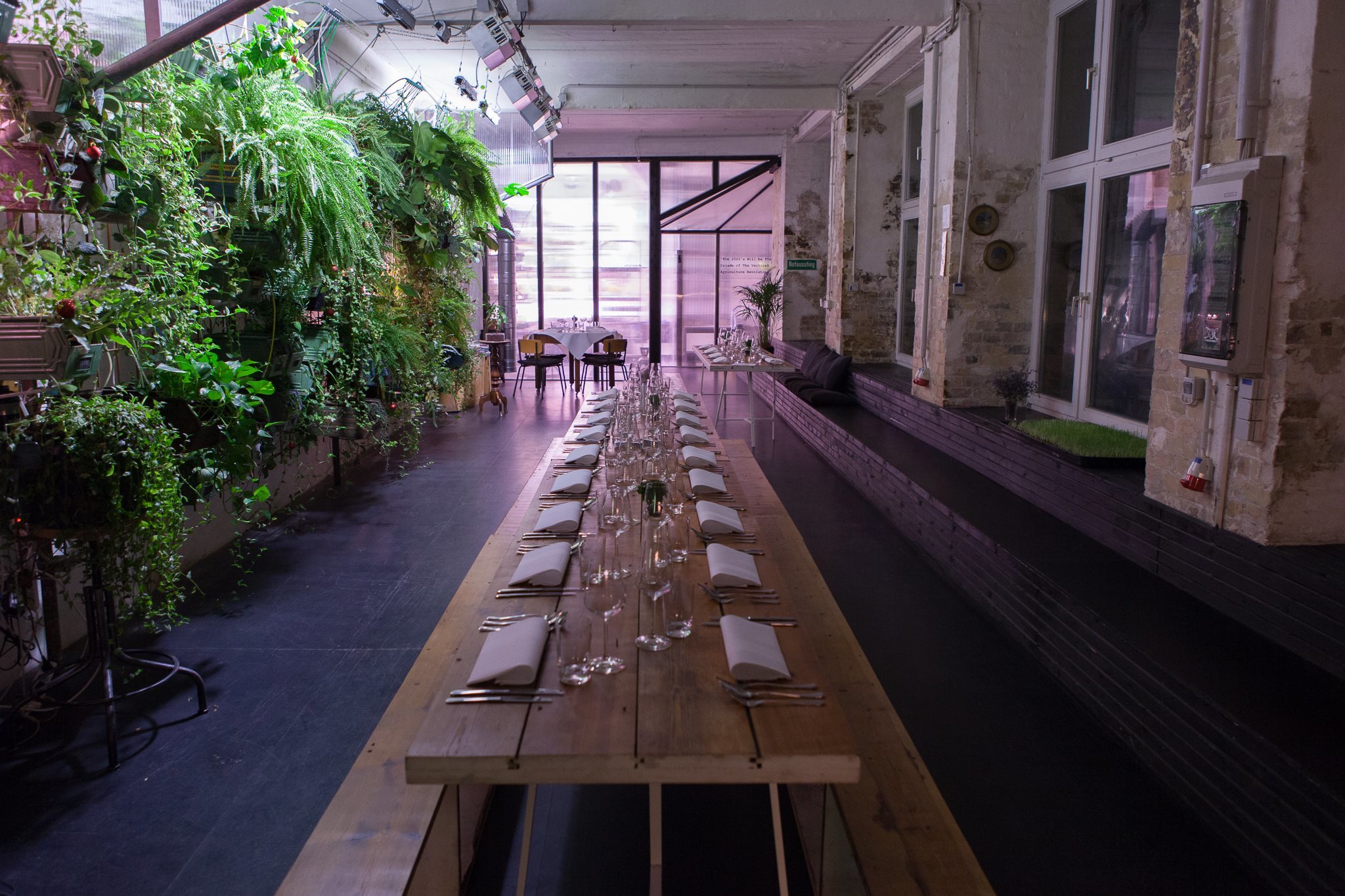
In 2012, INFARM founders Erez, Guy Galonska, and Osnat Michaeli found that vertical farms could be a solution to urban self-sufficiency. These farms could allow people to grow vegetables and herbs in small spaces, with no soil and far less water.
An approach that’s captured the imagination of futurists for decades, vertical farming involves growing vegetables and herbs in stacked units or inclined surfaces, within which moisture, light, temperature, and nutrients are monitored, and controlled.
After creating their first vertical farming experiment in their apartment in Berlin, the founders brought together plant scientists and industrial designers to explore and develop vertical farming’s potential.
Since then, the startup has created custom growing systems for clients including Airbnb, Mercedes-Benz, and Weber. Most recently, INFARM installed a vertical farm growing herbs and vegetables at the Berlin branch of German supermarket chain Metro, the fourth-largest retail chain in the world, to sell to the public. It’s been profiled in Wired Germany, Süddeutsche Zeitung, The Guardian, and Zeit.

INFARM collaborated with IDEO to further explore their B2B offer, including concepts for the industrial design of the stackable, modular, climate-controlled units; the interaction design of an accompanying app to monitor and control the units, and its business model.
Urban farmers will sign up for “farming as a service,” comprising the units themselves, as well as a monthly subscription for seeds, cartridges filled with nutrients, and a pH regulator. Because they’re stackable, the modules can be scaled to suit anyone from a home grower to a restaurant chef or supermarket owner. And Erez claims a 1 square meter growing tray can yield four to six mature plants every day, 365 days a year, doubling that of state-of-the-art hydroponic greenhouses.
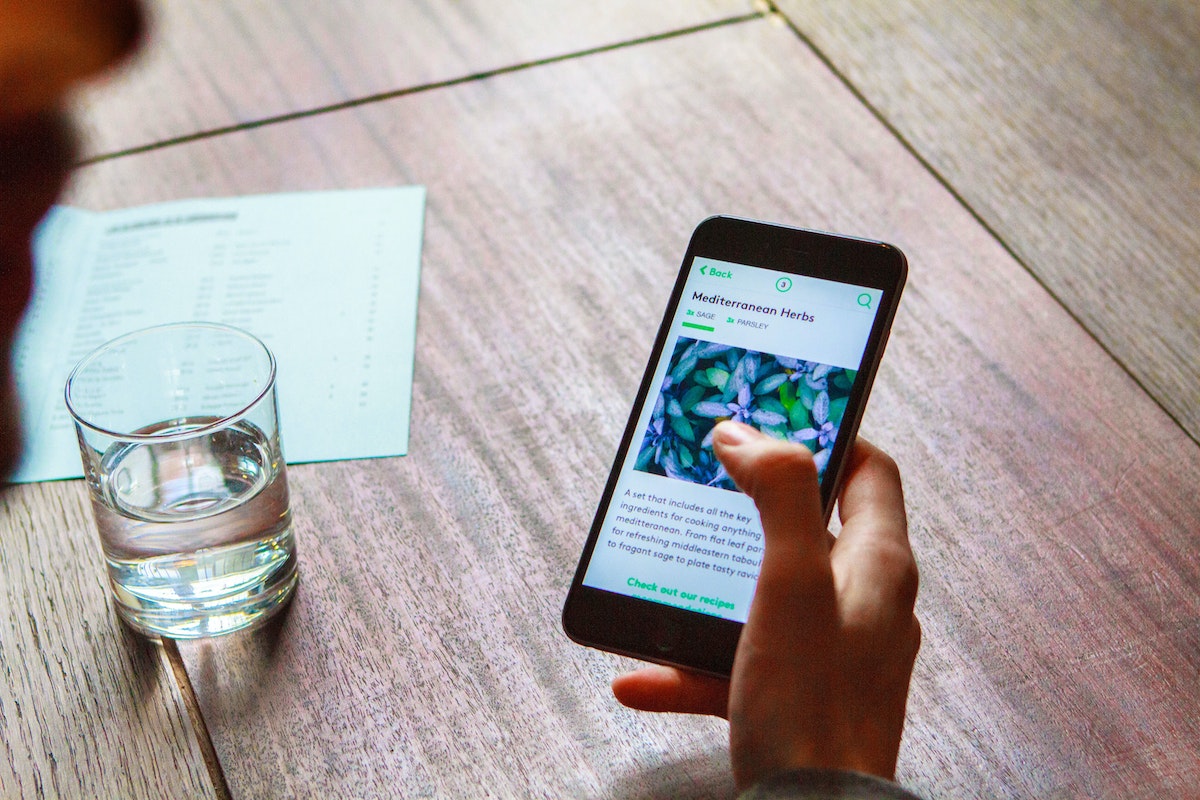
As well as remotely regulating each unit’s climate, the app will educate growers about new vegetables and herbs, selling packs of complementary seeds, with suggested recipes for them, and cooking instructions. Aiming to promote biodiversity, the firm will sell rare-breed and heirloom seeds too.
The startup has funding from the EU’s European Pioneers fund, and is now looking to secure investment to accelerate software development and ramp up their hardware production capabilities. Quite literally, it's growing its business.

Bringing beloved children's characters to a new platform
Sesame Street iPhone apps for Sesame Workshop.
Sesame Workshop is the nonprofit educational group that revolutionized children’s television with the launch of the landmark Sesame Street program in 1969. The show, which has since become a household name, is now watched in more than 150 countries worldwide. The Workshop also creates educational content for new media platforms, and partnered with IDEO to design a line of Sesame Street–themed apps for Apple’s iPhone. The Elmo Calls app, which functions as a utility app for parents and as an entertaining behavioral-development app for kids, is now one of the Top 100 paid iPhone apps in the iTunes store.
The collaboration began with a mutual desire to bring the show’s beloved characters to the iPhone platform—and to do so using a human-centered design approach. Child-development experts, educators, toy and interaction designers, and even the Sesame Street puppeteers weighed in on the design decisions. The team also worked closely with families throughout the project—from initial concepts to early prototyping to the final development—in order to stay focused on how children actually use the iPhone for play. The games were designed accordingly. For example, the team omitted menus from the Sesame Street apps to keep the experiences simple, playful, and fun for a young child. And each game features exclusive new Sesame Street videos, allowing players to enjoy “lean back” moments along with interactive ones.
The resulting iPhone applications let children engage with the favorite Sesame Street characters in a whole new way. Kids touch, shake, swipe, and tilt their way through original games featuring Elmo, Grover, Bert, Rosita, and the Count.

The titles, all of which are available from iTunes, include:
- Elmo Calls: Engages 2- to 5-year-olds in listening-skills practice and active participation during everyday situations.
- Elmo’s Monster Maker: Allows kids to create unique monster friends that dance and play with Elmo.
- Sesame Street Video Maker: Lets kids star in their own music videos, mashing recordings of themselves with popular Sesame music videos and adding their own stamps and special effects.
- Sesame Street Makes Music: Helps kids explore an array of instruments as they contribute to new renditions of classic preschool tunes with their Sesame friends.
Nurturing a creative culture
How writing a book about our shared values helped articulate what it means to be successful at IDEO.
How do you know when you’re successful in your work? You can check off a list of technical skills and expertise you bring to the table. You can use a career development rubric to make sure you’re hitting the right goals. But often, it’s your behaviors—the intangibles that are the most difficult to articulate—that make the most impact. Things like your ability to stay optimistic or your willingness to adapt when there’s no roadmap.
Because of the nature of our work at IDEO, these intangibles are a big part of what defines the experience of working at the company. So in 2012, a global team of designers from our U.S., Europe, and Asia offices came together to codify these values and behaviors as part of a larger effort to evolve IDEO’s career development platform. More often than not, when IDEOers hit road bumps in their career, it was not about what they were doing, but how they were doing it.
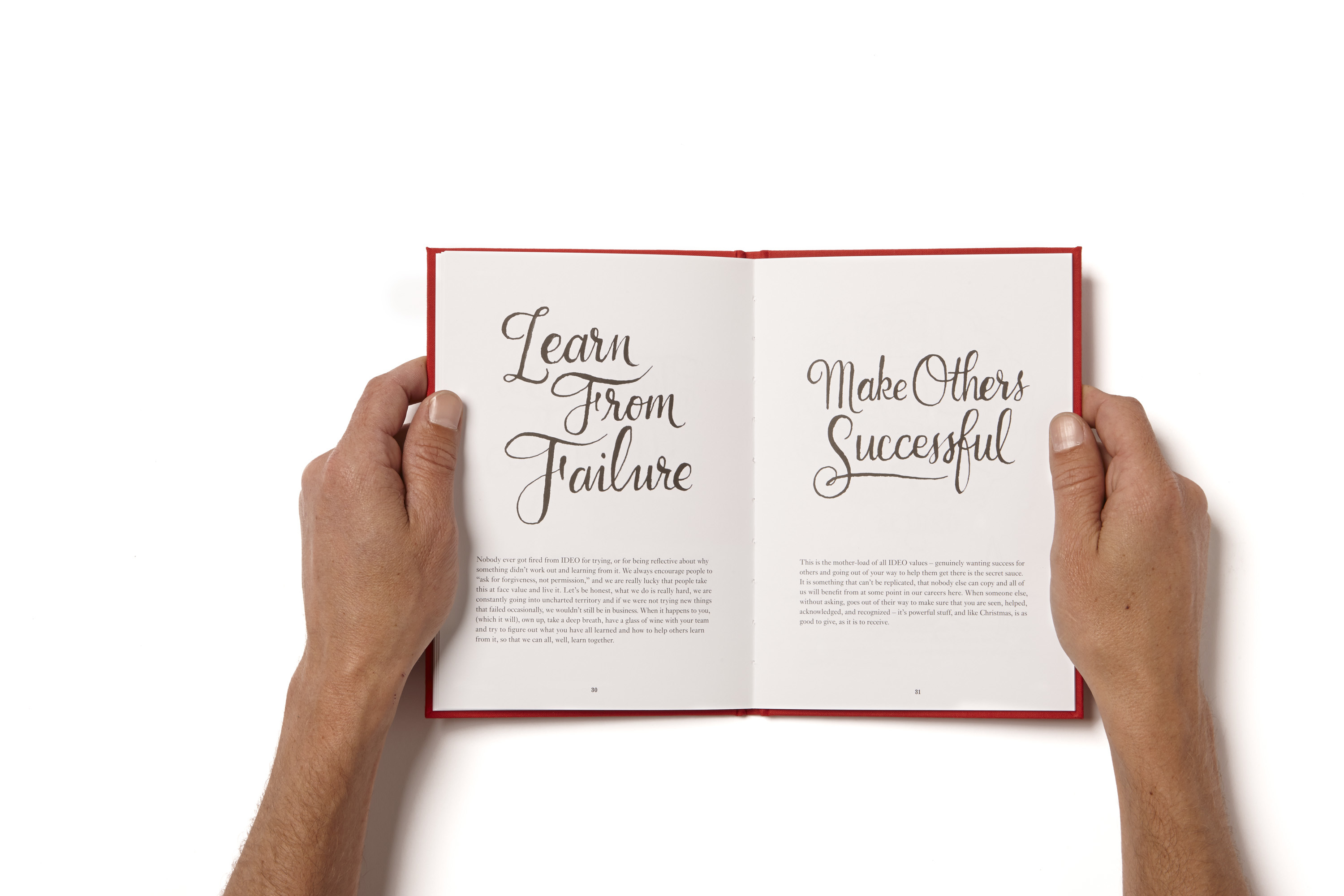
The team agreed that, in addition to identifying the technical requirements needed to progress through one’s career, it was just as crucial to give IDEOers the tools they need to navigate the complex culture. So they captured the values they believed were foundational to the culture and most strongly shared across the IDEO community, and put them to paper in The Little Book of IDEO. The title is meant to reflect its purpose for readers—a handbook that’s compact, useful, and free of any corporate jargon.

For IDEO-ers, this red cloth-bound guide provides a shared lexicon around both the hard and soft skills we need to succeed. It describes things like why IDEO is so loosely structured, where it comes from, and where it’s headed.
Most importantly, the book identifies the organization’s seven core values. These are by design specific, actionable, and integral to the kind of work we do and the environment in which we do it, going beyond common sense and general ethical practice. The intention: to foster meaningful conversations within the community about life at IDEO, and how to achieve success along the way. With each succinct expression comes a deeper explanation of why it matters, and how it shapes our experience at IDEO.
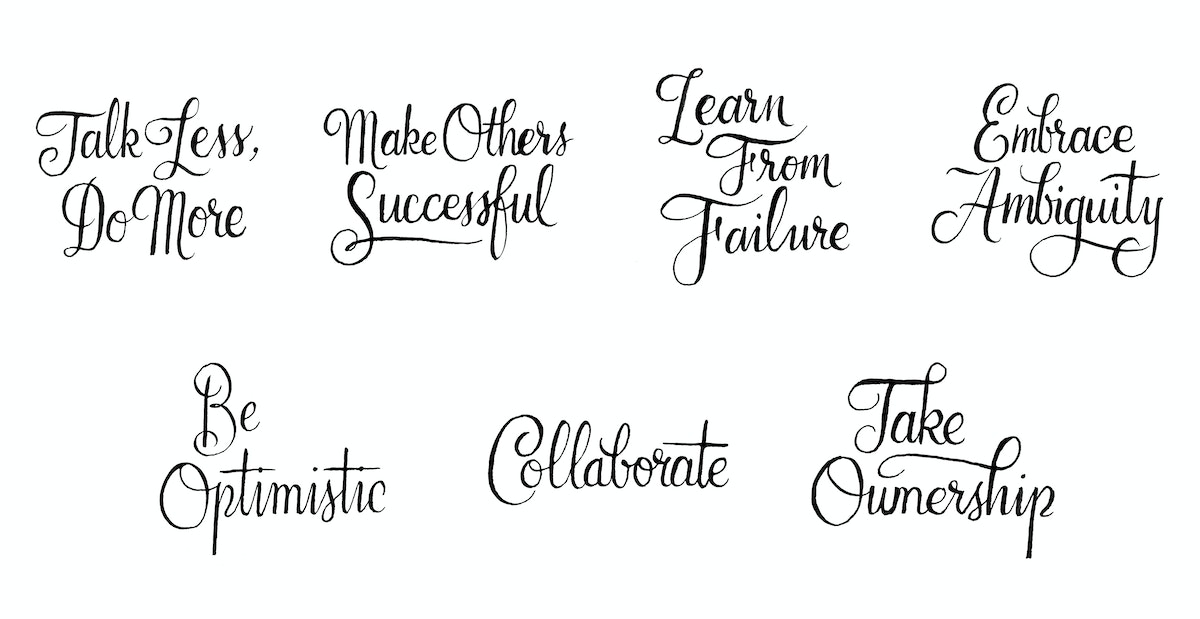
Over the years, the book has been roundly embraced by the IDEO community as an honest articulation of who we are, as opposed to what we aspire to be, and what we appreciate most about working together. When IDEOers first got their hands on it, a movement took shape to create videos that bring each of the core values to life. To depict the value of "Embracing Ambiguity," for example, New York-based designers built a makeshift cardboard rowboat, and while simulating a storm, navigated their way through uncharted territory with teamwork and optimism. San Francisco produced a Jacques Cousteau inspired look at the lifestyle and behaviors of designers in their natural collaborative habitat.
Through the process of making the videos, IDEOers came together to reflect on each of the values, talking through what resonated and what didn’t. It gave them a sense of ownership, and a platform through which to share their interpretations.
A Global Conversation
IDEO has a global presence—offices in two countries in Europe, two countries in Asia, and multiple locations across the U.S. As an organization that embraces a human-centered culture, it felt important to learn if the values resonated with the IDEO community in all of these locations, especially in a country like China, whose working culture is so different from the west. We saw the authenticity and resonance of the values as essential for attracting, motivating, and retaining local talent.
So how did The Little Book of IDEO land in Shanghai? Exploring this question would illuminate insights into how our own clients are often challenged to keep their company culture resonant within the global landscape.
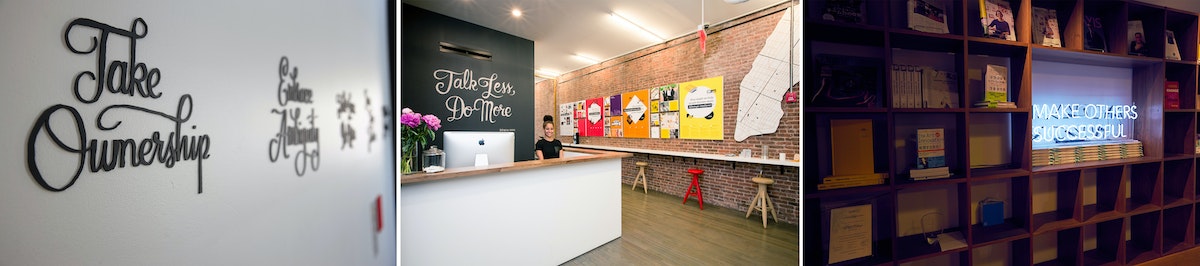
A team of IDEOers in our Shanghai office took on the challenge of exploring the meaning behind each of the values. They were surprised with what they discovered—that despite the firm’s Western origins, locals felt largely connected to the values. It even helped to further solidify their identity as a community, even if it may have been in tension with local working culture, because it was rooted in a set of shared beliefs.
In some instances, the Shanghai team built on the existing values in order to refine the meaning for the local context. For example, the core value "Be Optimistic" rings true, but could sound naive when translated directly to Chinese, implying "rose-tinted glasses.” So in the Mandarin edition, an extra phrase was added to convey the measuredness we mean when we talk about optimism at IDEO. The lesson here: The treatment of something as fundamental and nuanced as our values requires authenticity and emotional connection, and therefore more of a transcreation process than straight translation.
Lasting Power
As an organization, we are designed to be flexible. This means we’re always changing—even when it comes to how we are structured—so that we can respond to the kinds of challenges that clients come to us for. In the midst of our constant evolution, The Little Book of IDEO is as resonant today as it was when it was published.
What Does a Data Scientist Do at a Design Company?
At IDEO, data scientists don't just code up solutions—they design them
For my latest project I worked with a healthcare company to improve doctor decision-making during a medical procedure. In addition to usual data scientist tasks, I spent a lot of time with the team trying to understand the way physicians currently work. Here’s a peek behind the scenes:
7:30 AM: Podcast time

This morning I’m off to meet my team at a hospital for field research. On my way, I’m listening to a podcast called “The Impact” that explains the consequences that laws and regulations have on people’s lives. There are a few episodes that relate to data and medical outcomes, so it’s serving as inspiration for my current project.
8:00 AM: Field research
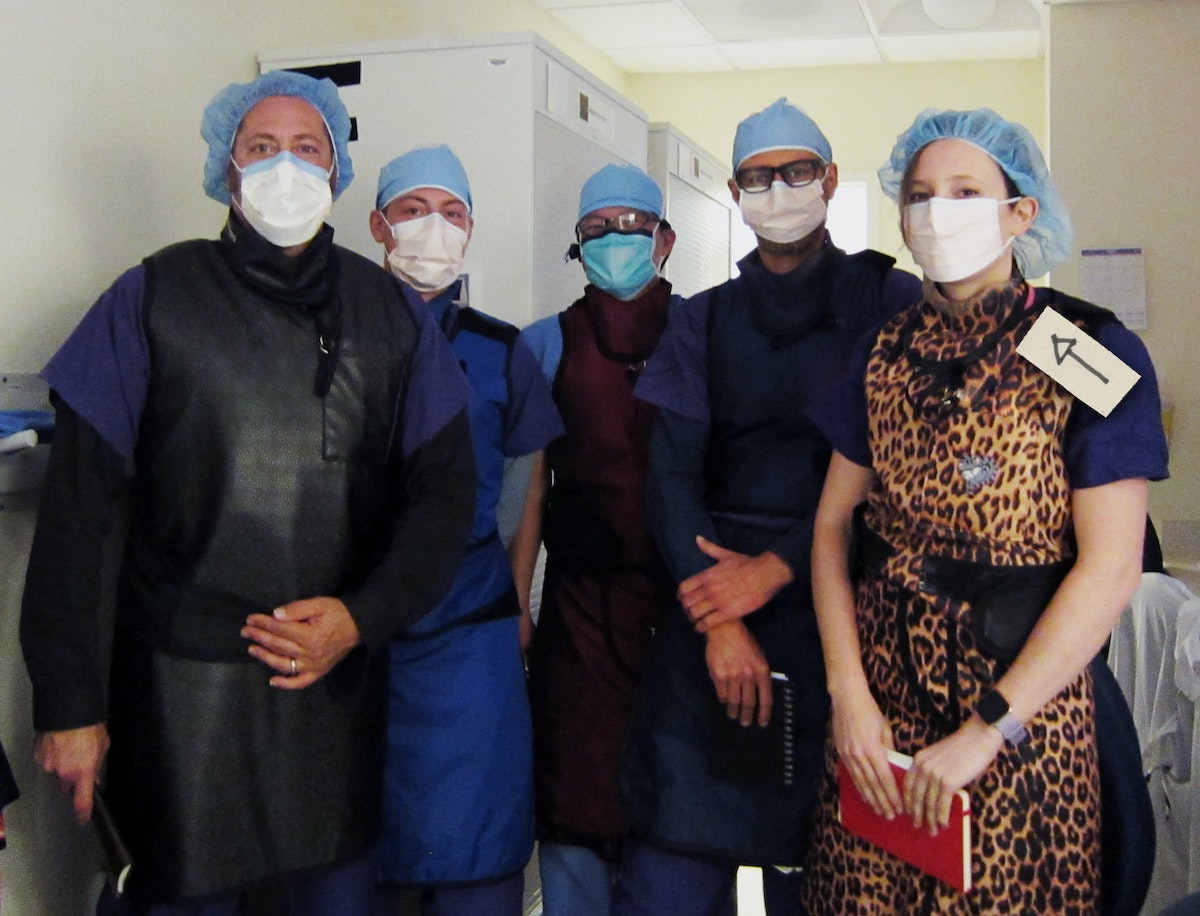
At the hospital, we talk to doctors, nurses, and medical techs and observe them in action. Listening and observing helps us understand the needs of the people we’re designing for. We’re thinking about optimizing decision-making for doctors, which could involve a lot of things, ranging from information and data display to AI assistance. I watch for clues about how this works, and how potential data sources might get recorded.
11:00 AM: Data science group meeting
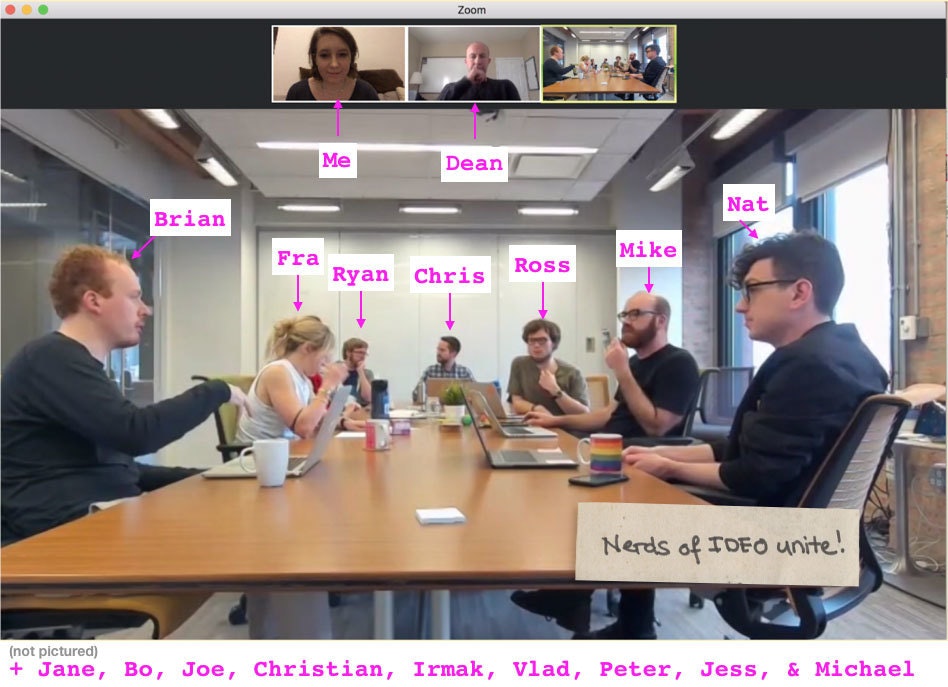
My home base is Chicago, but I’m stationed in Palo Alto for my current project. Luckily, I can still keep up with what the rest of the data scientists at IDEO are doing through a weekly video call that we can all dial into. We help each other troubleshoot problems we’ve encountered in our projects, share new methods we’ve learned, and talk about personal projects we’re pursuing. This week, one of the other data scientists is telling us about a website he’s making that allows his parents to see where he is (but not his exact location). We have a separate meeting on Friday mornings for those of us in Palo Alto specifically. I like both meetings because they help me keep up to date with how our data science practice is evolving, since it’s the newest design discipline at IDEO
12:00 PM: Lunch break
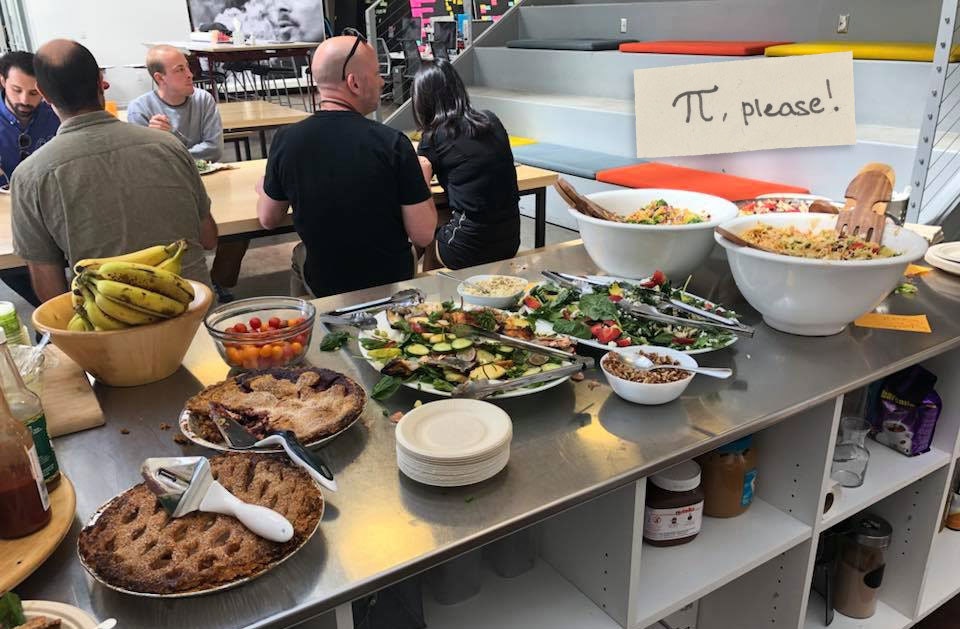
After a morning of research, I grab lunch at the studio. Today is a special treat—lunch has been provided for us. Everyone sits in the kitchen or our outside patio to eat, so it’s a great opportunity to meet other coworkers and hear about the interesting design challenges they’re working on. I like to sit with designers from IDEO’s PlayLab. They’re usually working on designing cool new toys, and have lots of interesting side projects. Many of them (and others in the PA studio) worked on this Burning Man installation, for example.
1:30 PM: Synthesis with the team
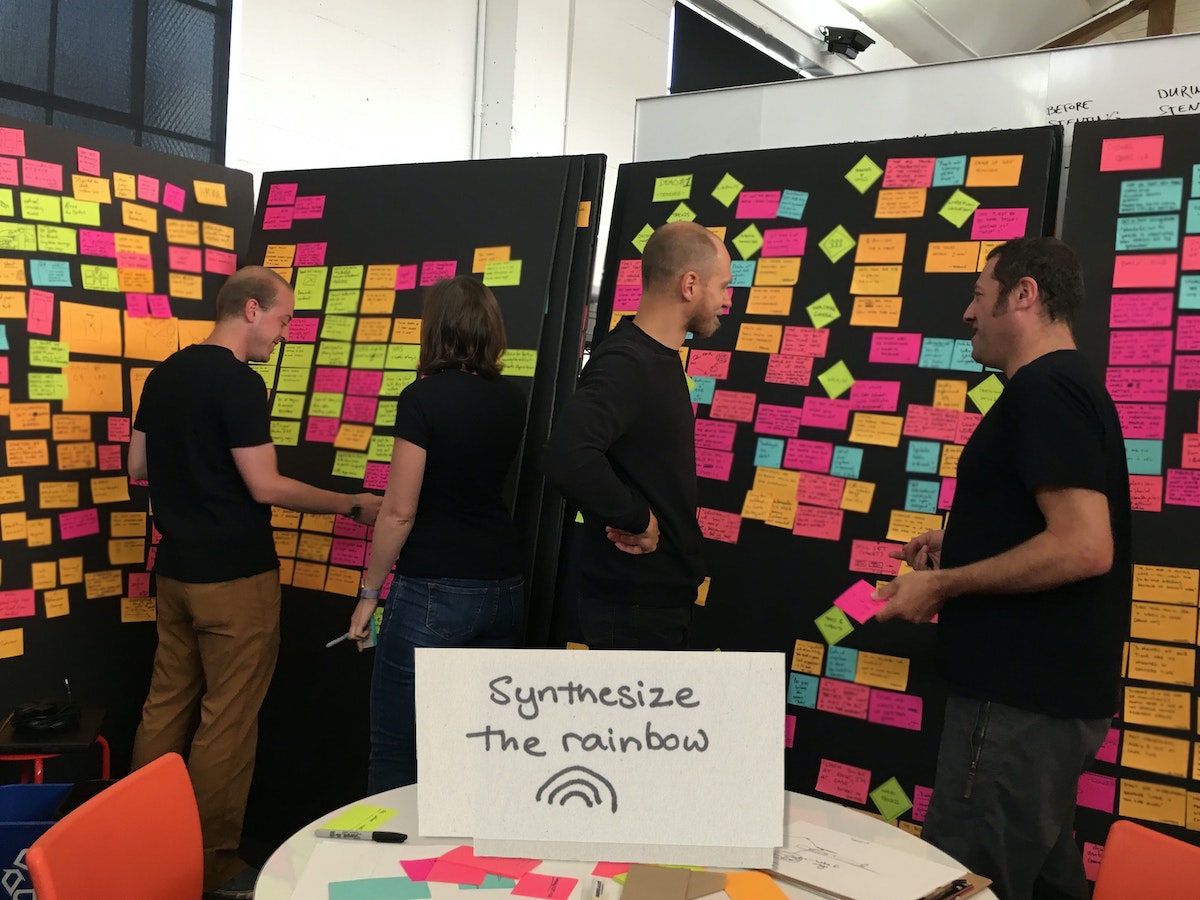
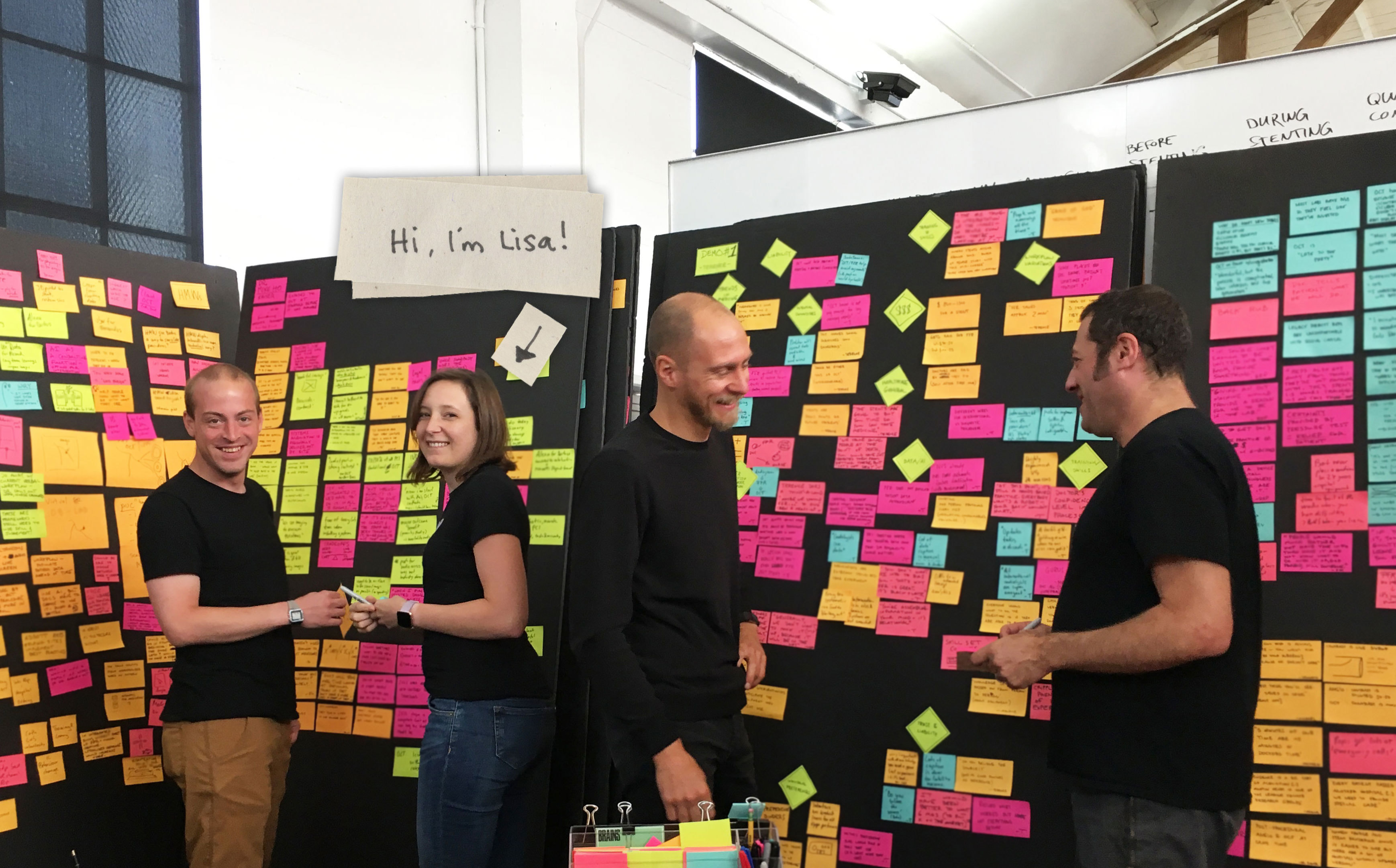
The team comes together to download and synthesize what we learned through our research observations. We transcribe things we saw and heard on Post-it notes, and cluster them so we can spot patterns. We’re seeing themes about the consequences of delays in decision-making during the procedure, and the effects of training on team efficiency. As we start to develop concepts based on the pain points we’ve discovered, I suggest that something like a personalized training program could increase team efficiency by helping people skill up faster.
3:30 PM: Digging into some data
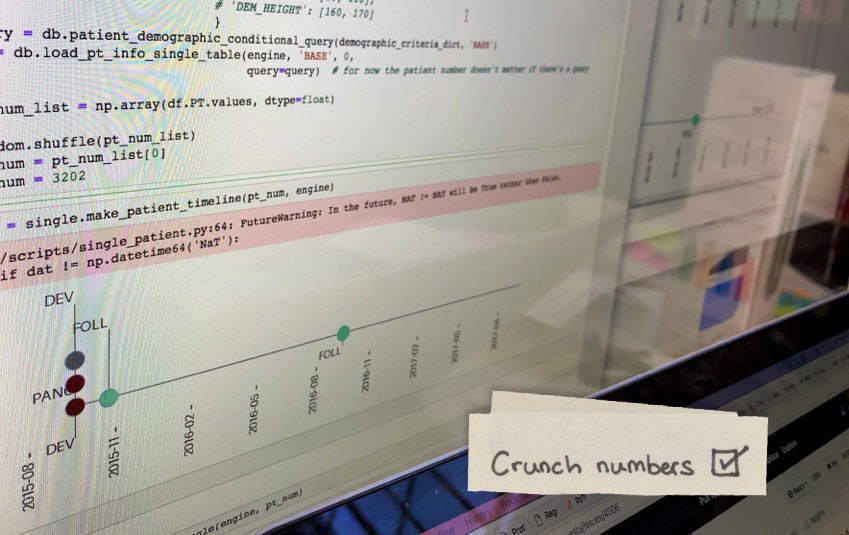
Our client has provided us with some data from a clinical trial related to the medical procedure we’re studying. Today I’m combing through the dataset to find insights that will inform our design process. I use the knowledge I’ve gained from interviews and field research to inform what would be useful or desirable from a human point of view. Later in the project, I’ll use this data to create a prototype that demonstrates how we can help doctors assess risk during the procedure.
6:00 PM: Hosting a women in Machine Learning and Data Science meetup
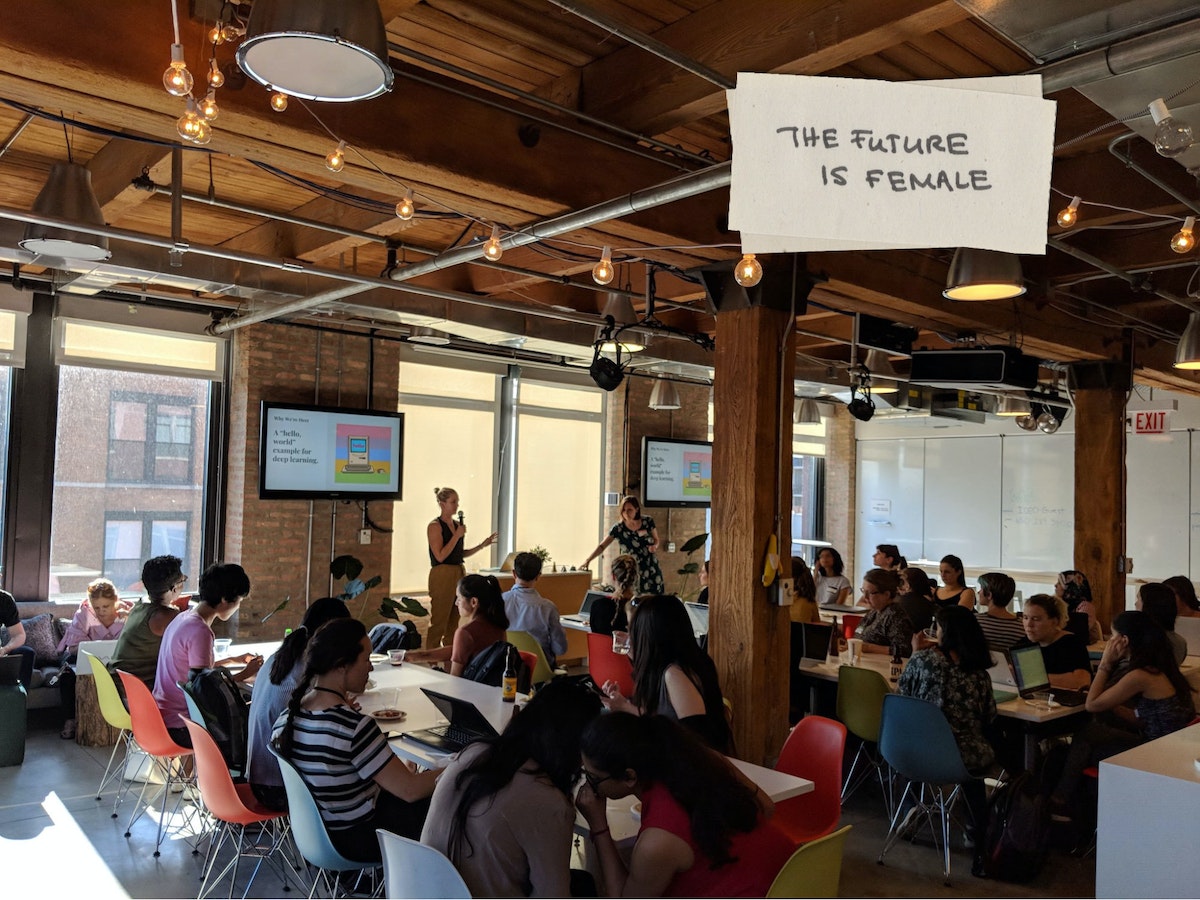
Tonight I’m hosting a meetup for the Women in Machine Learning and Data Science group about the basics of deep learning with my coworker and fellow data scientist Jane Zanzig. More than 40 women have come to learn and do a hands-on demo. I love working at a company that supports building the women in data science community because one of my personal passions is working to increase the number of women and other underrepresented groups in STEM and design.
9:00 PM: Good night, Jackie
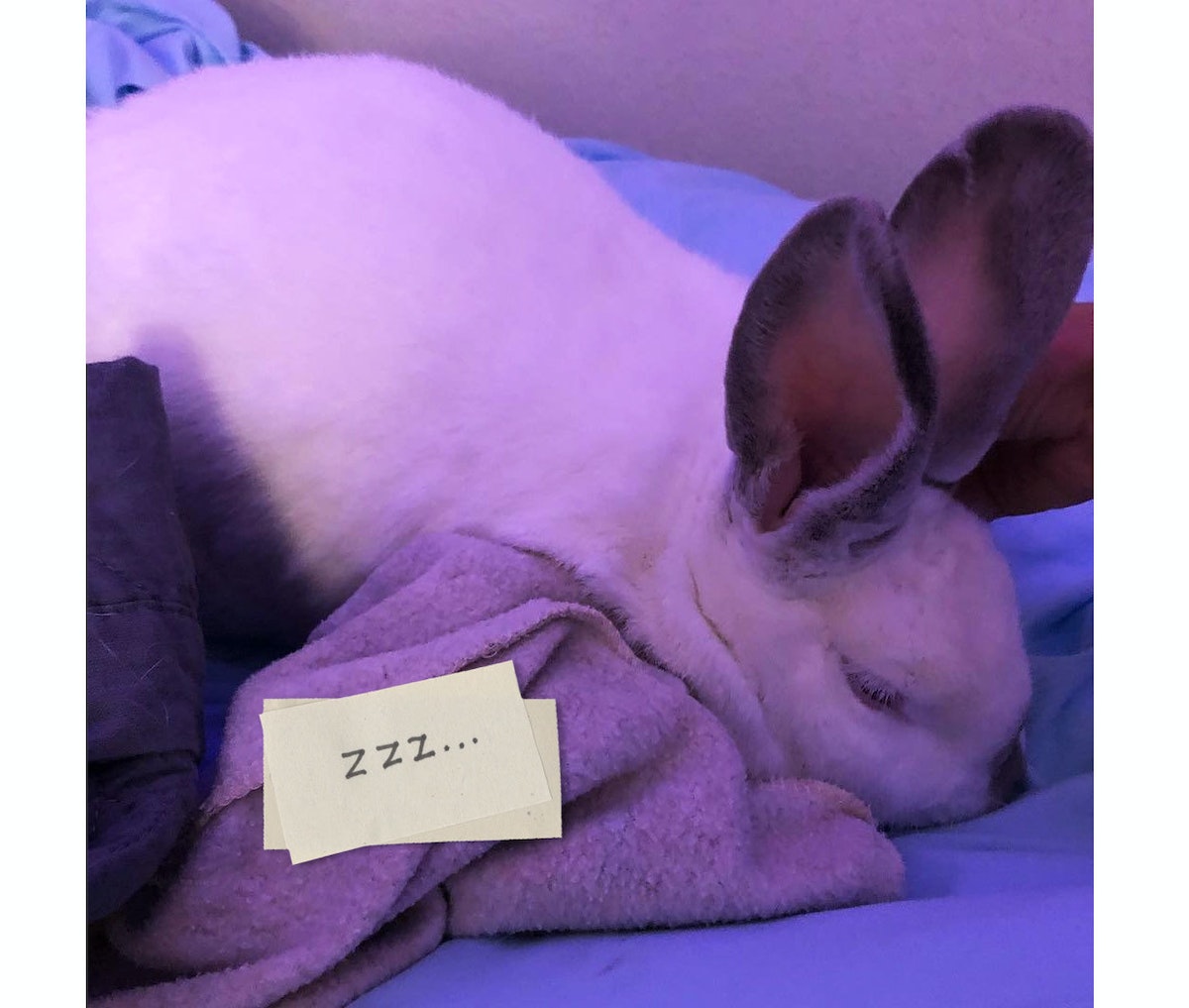
Every night before I go to bed, I make sure I hang out with my pet rabbit Jackie. I brought her from Chicago to Palo Alto with me, so we wouldn’t be apart while I worked on this project. I think she’s been enjoying living in California, and I’ve even taken her to visit the IDEO Palo Alto studio.
When people ask me what I do for a living, I say, “I use data to design products and services to improve people’s lives.” Working as a designer and data scientist involves not only coding up solutions, but understanding what people need in the first place.
Build Your Creative Confidence: I Like, I Wish
To practice creative confidence on a team, members need to feel free to experiment, even during early efforts when results will be far from perfect. For that experimentation to translate into learning, however, at some point you need feedback in order to identify weaknesses and make adjustments the next time.
Creativity Challenge #5: Encourage and accept constructive feedback
To practice creative confidence on a team, members need to feel free to experiment, even during early efforts when results will be far from perfect. For that experimentation to translate into learning, however, at some point you need feedback in order to identify weaknesses and make adjustments the next time. We all instinctively know that constructive critique is essential. And yet it can be hard to listen to and absorb feedback without letting our egos and defensiveness distract us from what may be a valuable message.
We have found the tool “I like, I wish” immensely useful in introducing constructive critique into the innovation process. This framework can be used in a small group to review concepts or in a large group to receive feedback about a class or workshop experience. Feedback starts with honest praise, in the form of positive sentences that begin with the phrase, “I like...” Suggestions for improvement then begin with “I wish...”
Tool: I Like, I Wish
Participants: Groups of any size
Time: 10 to 30 minutes
Supplies: A means of recording feedback. For example, in a large group we frequently keep an open Word document and type up notes in real time. In a smaller setting, Post-its or index cards will work.
Instructions
Step 1: Set the tone for a constructive conversation and explain the I like, I wish method. For example, “I am interested in hearing about how this workshop experience has been for you. Please express feedback in the form of I like, I wish. You might say, ‘I like that we have started on time every morning. I wish we had 30 minutes to every afternoon to stretch our legs.’” We have found it helpful to model good feedback by demonstrating “I like, I wish” in action.
Step 2: The participants take turns expressing I like/I wish statements, while the facilitator records their statements. For example, if you are reviewing a work-in-progress for a new personal finance software tool, you might offer support such as “I like that you have incorporated five different ways for customers to view their current financial status.” After describing other pluses, you might then say something like “I wish we could make the website easier for first-time users to navigate” or “I wish we could help people examine their financial situation from the long-term perspective of years, not the short-term perspective of months.”
Make sure people receiving feedback just listen. This is not a time to defend decisions or challenge the critique. Ask everyone to listen and accept it as a well-meaning offer of help. You can ask for clarification and engage in further discussion at a later time.
Step 3: Stop when participants run out of things to say in both the “I like” and “I wish” categories.
Tips from the field
You may want to gather just the “I like” comments first, and then ask for the “I wish” statements. In other groups, it may make sense to let the give-and-take of statements flow organically. Feel free to play with the format.
“I like, I wish” signals that what you are stating is your opinion—it’s not an absolute. Instead of pointing fingers, you are offering your view or perspective. The goal is to move the listener away from a defensive posture so that they can more objectively consider alternative ideas and take them to heart, when appropriate. We all naturally tend to become invested in our own ideas, and seek to defend them. But in a creative culture, candid feedback that is sensitively conveyed is a sign that colleagues care enough to speak up. The message can be delivered quite clearly, without resorting to the negative language of “That will never work” or “We tried that before and it failed.”
This post was taken from Chapter 7 of Creative Confidence. Purchase the book for more on how to use creativity to solve problems.
Everyone is creative. This belief runs through everything we do at IDEO, and in 2013, it led my brother David and me to write a book that would help others—even those who don’t think of themselves as “creative types”—to unleash their creative potential. Creative Confidence has inspired thousands of people to adopt a creative mindset and apply it to the diverse real-world challenges they face. In this series, we’ll share some exercises from the book that can help you approach your challenges from a new perspective.

This Artist Paints Women Supporting Women—Literally and Figuratively
Laura Berger's dreamy, ethereal work shows women of all colors, shapes, and sizes
In one sentence, who are you?
I'm living in Chicago, trying to be a good person, trying to keep growing, currently working as an artist.

What do you do? How did you learn it?
I'm a visual artist. I mostly paint right now, but I do some freelance design work as well. I did some scene painting in college, but other than that I'm self-taught. I've been learning about painting through trying things and making a lot of work and also a lot of mistakes.

3 favorite possessions?
Art from my travels, a sculpture that was my dad's, and my bathtub.
What does a typical work session look like?
Honestly, most days it looks like sitting in a chair in a room by myself and painting for 12-plus hours while listening to various things—too much NPR, podcasts, music, silence. I usually take a couple of breaks. Lunch, maybe a beverage run or a walk. One yoga break around 8pm—that's become essential for me. Sometimes I draw, or I have to package things in boxes or order boxes or answer emails—stuff like that.
How do you get over creative block?
If I can, I walk away from life and travel. If I can't, a break from all creative work is a good step. Time in nature helps, or I often get new ideas that pop up during times when I'm able to turn off my thinking brain—like driving long distances, meditating, walking, taking a shower, dreaming, etc.
What was the last item on your to do list?
Answer interviews! And before that: vote. And before that: Finish design for laser cut wall hanging.

How do you see the world in 2078?
We are all so many beautiful colors and we have free healthcare and college and the old white men running the show are gone so all of the guns are also gone, and we've collectively gotten over being addicted to the internet and our devices and working way too much, plus marijuana is legal everywhere and we're all smoking it so we're all way more laid back and calm and hugging each other a lot. We have four-day work weeks and use land-line phones and record players, but we also can fly to Japan in 2 hours. It's going to be great.
What’s your number one bucket list item?
Own a tiny beach hut somewhere warm and abroad where I can escape the winters, be in nature, and paint and volunteer and meet people.
No matter where you run into her work—whether it's a larger-than-life painting on the side of the Ace Hotel or an animated GIF popping up in your Instagram feed—Laura Berger's art immediately transports you to another world. A world of soft curves, clean lines, and warm colors. A world where women of all shapes, sizes, colors, and hairstyles, literally and figuratively lift each other up. This world of abstract dreamscapes and female camaraderie has been like a salve for me in recent years. Laura shared a peek into her life as a self-taught artist, and reminded me (as she always does) that we are all so many beautiful colors.
Meet the Inventor Who Helps Bring Kids’ Wildest Ideas to Life
Ladybug umbrella? Sure! A hat that shoots bubbles? Check!
Then one day, a tutor showed us Dominic’s piggyback seat. After class I jumped onto his blog and found his sick bag beard. Amongst my fits of laughter, I knew that everything would be okay. Here was someone using the full extent of their imagination and in doing so giving the rest of us permission to do the same.
Since then, Dominic has used his unique perspective to create a whole bunch of wonderful things—from a gallery made for dogs to Little Inventors, a global program designed to encourage creative thinking in children. It’s reached more than 15,000 kids in China alone.
And this is what I love most about Dominic’s work: It’s accessible to anyone. Thinkers like Dominic remind us how important it is to use our imaginations, to be weird, to take ourselves less seriously—and that everyone is capable of having ingenious ideas. You can imagine how excited I was to actually get to talk to the guy.
In one sentence, who are you?
I’m Dominic, born in Sunderland, living in London.
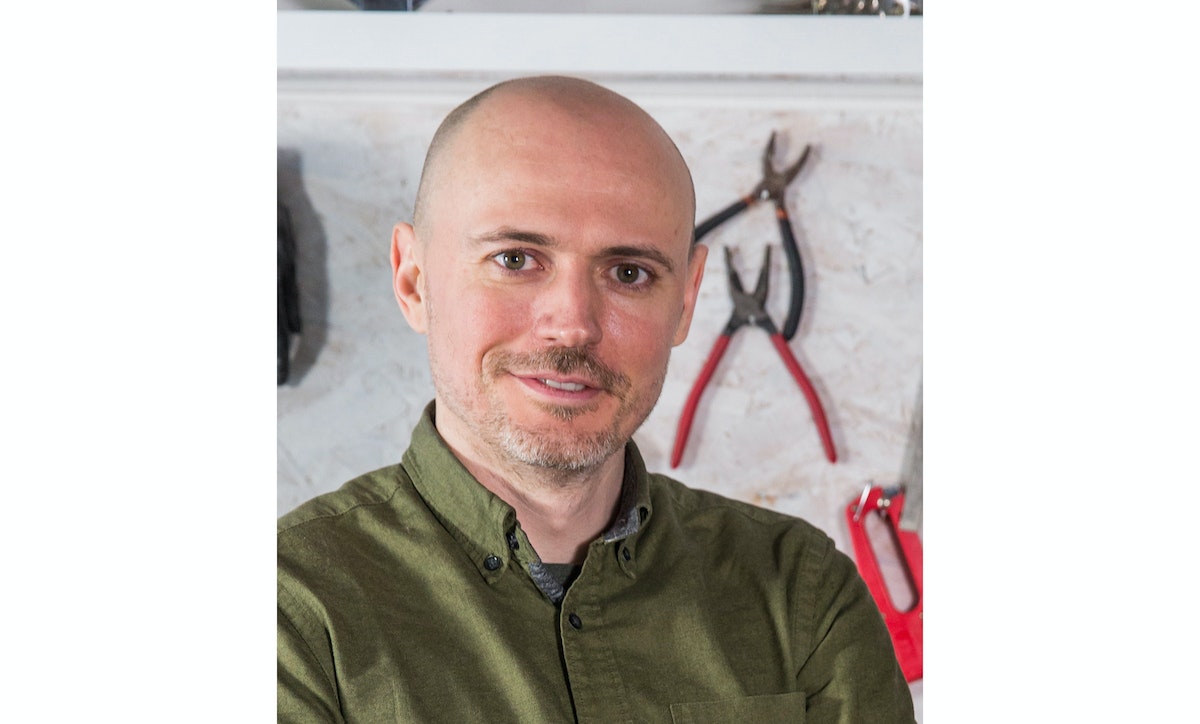
What do you do? How did you learn it?
I think up ideas I find interesting, then make them real—or just draw them and show them to people. I did lots of education in design BA, Pgrad, MA then when I ran out I just kept doing the same thing but by myself.
What have you poured your heart and soul into lately?
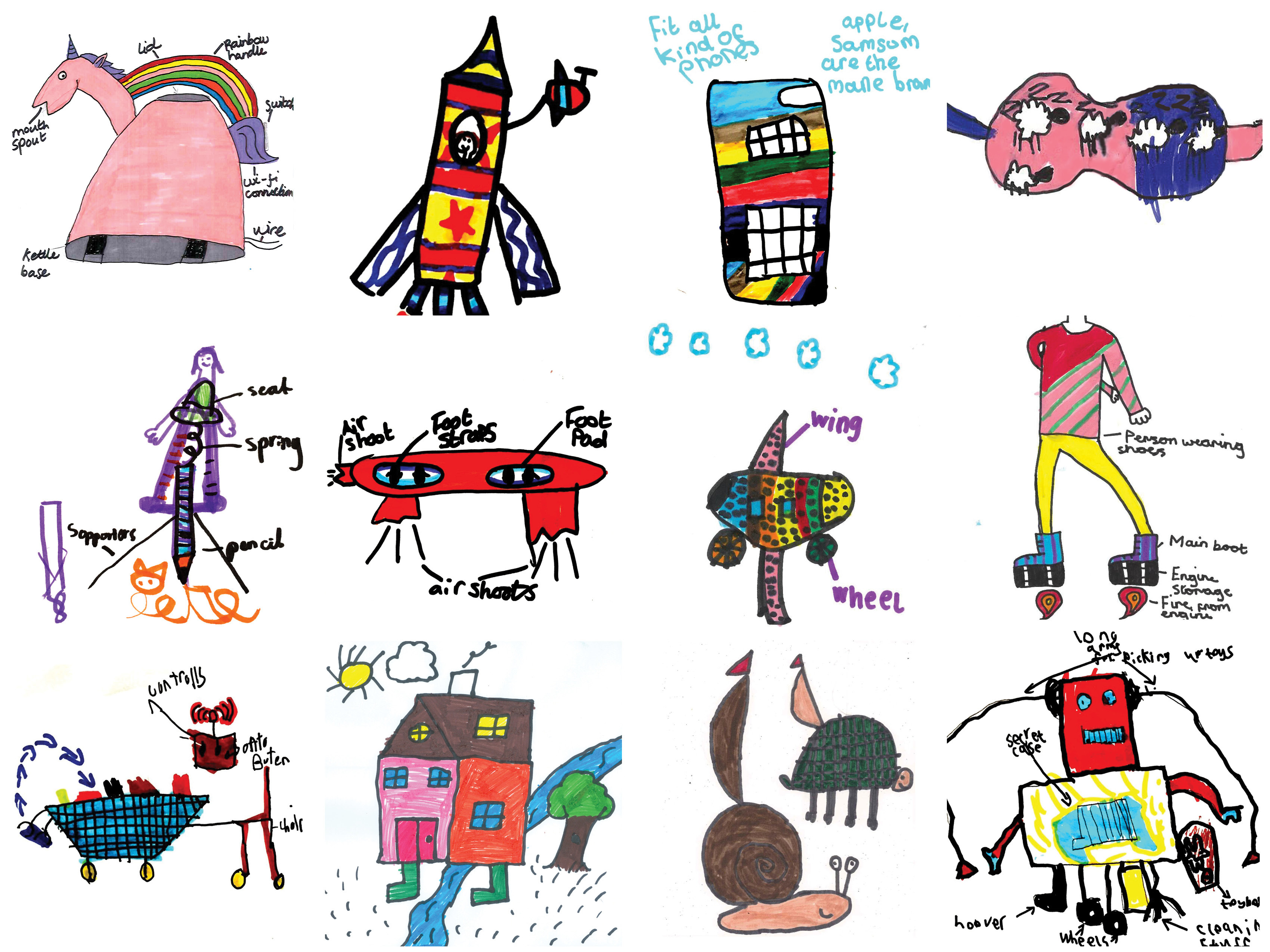
I made something called Little Inventors, which encourages children to gain a lifelong passion for creative and inventive thinking. It's also is a project that inspires adults to think more creatively. We ask children to think up and draw their invention ideas, bonkers or practical, then ask local makers and manufacturers to make them into a real thing for exhibition.
I won a commission in Sunderland to do a project that used creativity that engaged the local community. I proposed this idea and the results went viral. I started receiving emails from around the world asking me to do the same project in their country, so I decided to start it as an ongoing project called Little Inventors. The V&A Museum in London took 5 objects from the first project into their permanent collection—and next year, the best invention idea for life in space will be shown on the International Space Station.
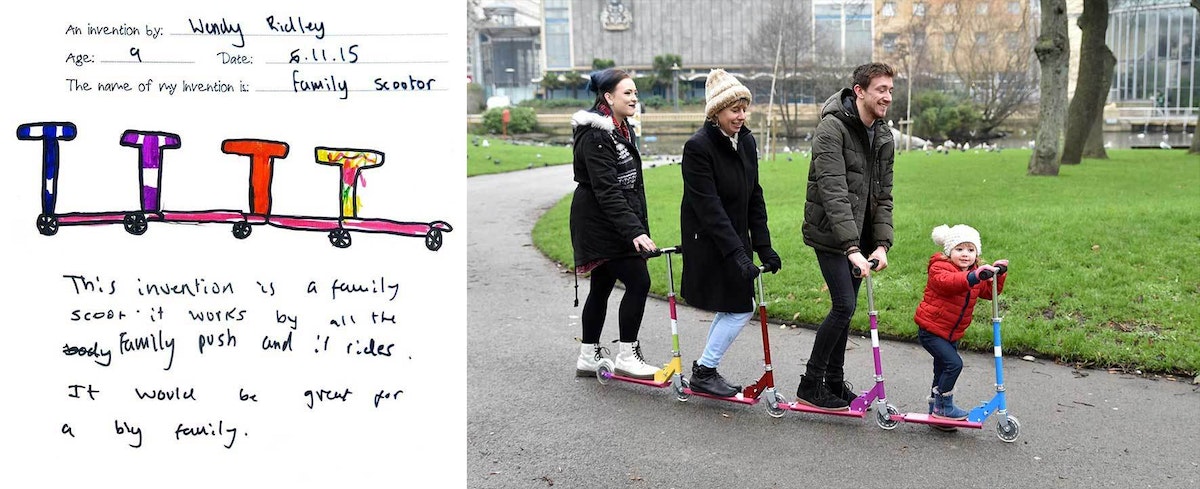
What does a typical work session look like?
In general, I have no set day. My day looks like my desk, a bit messy and random. We do design the idea generating sessions for Little Inventors, though, and for those, we aim to create an atmosphere where creative thoughts come easier. Usually we will create a fun atmosphere and show surprising and inventive examples of creativity to start the thinking process.
We then present some knowledge and understanding on the particular subject the challenge is focussing on. We have different methods of focussing the children's minds on the task at hand and getting the children to discuss their thoughts and ideas as a group. Then we ask the children to draw their own ideas and answer questions onto a sheet we have designed to create a sketched design of their idea. We now have over 7000 children's ideas on the website from around the world. It is interesting to see how creative children in different countries are. The makers tell us that they feel more inspired and are pushed into areas that stretch their skills.
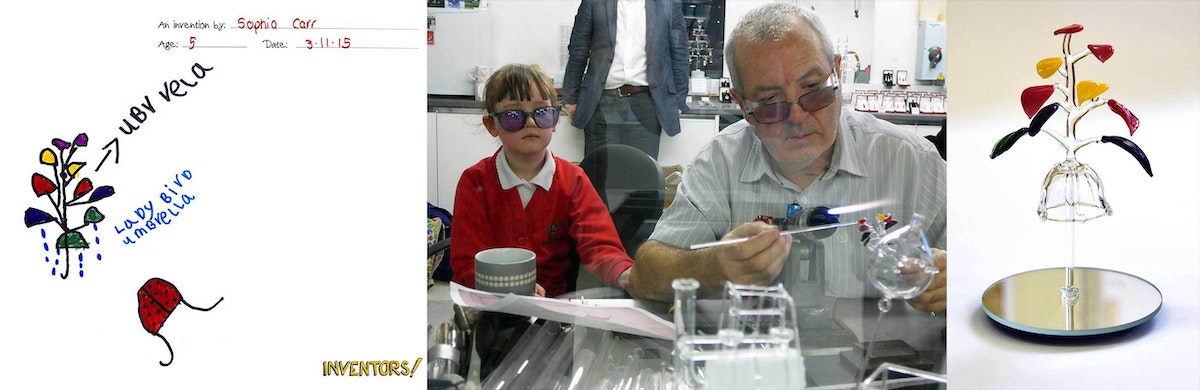
How do you get over a creative block?
I try to get my head out of the track it is stuck on. Change the music, change the mood, do something else. Then I push myself to keep writing or doodling thoughts on the subject. It can be hard mental work sometimes. Eventually I break through to the other side where the nice ideas have been hiding.
What was the last item on your to do list?
I don't have an order of doing things. I should make more lists, as they can help you get a bit of satisfaction at the end of the day rather than thinking, What did I actually do today? I'm jealous of bricklayers: At the end of each day, they can look back and see what they have achieved.
What are your 3 favorite possessions?
A pen, paper, and a Branston pickle.
How do you see the world in 2078?
China and India will be a lot more influential on world culture, technology, and politics. We still won't have hoverboards. People will still want to be happier, make more friends, be more attractive. Some will do that in a computer-generated virtual world. The more technology becomes part of our lives, the more we will desire real world experiences.
What's your number one bucket list item?
Contribute something positive to the pile.
Who are you creative crushin' on lately?
I'm thinking musicians are the one's I admire most. Write your song, play the instrument and sing it. I'm jealous of them. Currently, it’s Neil Young
I still remember the first time I saw Dominic Wilcox’s work, the collection of really weird and clever creations on his blog, Variations on Normal. I was a few years into university, so my body was still 95% hope and ambition. At the same time, I was slowly realizing that I wasn’t, in fact, the center of the universe. It was a confusing time.

Lindsey Turner
I’m passionate about building brands, products, and experiences that help organizations show up with meaning and momentum.
I help organizations cut through complexity by shaping how they show up, through brand strategy, identity, and storytelling.
Working at the intersection of brand and business, I bring an editorial eye and a bias toward making—turning ideas into tangible experiences that people can understand, trust, and believe in.
My work spans government, healthcare, financial services, media, and consumer goods, from launching Gen Z-focused ventures to building innovation labs and reimagining legacy brands. I relish moments of ambiguity and enjoy translating across teams, perspectives, and priorities to move ideas forward.
I started my career in editorial and digital design, shaping cross-platform experiences and identity systems in publishing and agency environments. That foundation still shapes how I work today: I’m detail-oriented, collaborative, and overreliant on the Oxford comma. I hold a BFA in Visual Communication from the School of the Art Institute of Chicago.

Rachel Young
My work helps organizations see who their products aren't working for—and build the will and the tools to do something about it
For 25 years, I've asked the same question: Who does this design exclude—and what are we going to do about it?
My work spans human-centered strategy, inclusive design, and qualitative research, with clients ranging from Microsoft, Google, and Verizon to the National Science Foundation, and San Francisco Unified School District.
Before IDEO, I taught elementary school in East Palo Alto and spent a decade doing design work with social service organizations—where I learned firsthand what it costs people when systems are built without them in mind.
I am currently writing User Error, a nonfiction book about digital access and the design decisions behind it. I live in Oakland, California.

Brian Pelsoh
I lead with craft, ensuring our work is creatively excellent: rooted in deep human insight and imagination, while also grounded in the realities of business and technology.
My expertise spans brand, communication, and product design across tech, education, the arts, and social impact.
I believe great work demands both high-level vision and obsessive attention to detail, and only happens through collaboration.
I bring an inclusive, hands-on approach and a deep understanding of business, which enables me to consistently deliver excellence while always asking why.
Before joining IDEO, I worked at the brand firms Pentagram and VSA Partners. I began my career as a designer, leading teams at the School of the Art Institute of Chicago and the Milwaukee Art Museum. I hold an MFA in graphic design from Maryland Institute College of Art and a BFA in communication design from the Milwaukee Institute of Art & Design, and have taught at some of the best design schools in the US.

Tony Wong
I am responsible for IDEO’s long-term success in China and working with clients to use design as a tool to enable growth.
I am responsible for IDEO’s long-term success in China and working with clients to use design as a tool to enable growth. Specifically, I have helped Chinese companies design holistic brand solutions through the development of their products, communication, services, and innovation teams, and I have helped multinationals expand their presence and influence in China.
I advise global leaders on developing China-led innovation and capabilities.
In over 15 years in IDEO Shanghai, I have worked on projects that use design to elevate the quality of the experience of healthcare products and services, streamline processes that increase productivity, create spaces and programs that promote and enable inclusive communities, and build next generation mobility solutions that are planet-positive.
Before joining IDEO, I worked at Philips Electronics and the Electrolux Group in Italy, the Netherlands, and Singapore on a number of breakthrough commercial products. I am a member of the Young President Organization in Shanghai.

Building a personal AI for the messiness of life: Sida Li
Most AI products today are built for work—a space with clear problems and established systems. One founder noticed a gap: personal life is messier, harder to systematize, and mostly left behind by the AI boom. So she built Cue, a personal AI that lives inside iMessage and group chats, to go where the other tools haven't.
In this episode, Becca Carroll, IDEO's Chief Strategy Officer, talks with Sida Li, co-founder and CEO of Shared Context Lab, about staying anchored to a human need while the technology around her keeps changing shape, why she treats her business model with the same rigor she'd bring to a product, and what it feels like to build a company at this particular, disorienting moment in AI.
The conversation also gets into how Sida makes design decisions: the language Cue uses to describe itself, the tradeoffs behind building inside iMessage instead of a new app, and a real story about a business idea that didn’t pan out.
This is the second in a two-part series profiling founders from IDEO's Startups-in-Residence program. The first conversation is with Johannes Seemann, founder of Sooner, on designing GenAI for the emotional side of money.

Designing GenAI for the emotional side of money: Johannes Seemann
Most personal financial tools are built to run the numbers and optimize towards a budget. While that works for some, most people experience money as a lived relationship that does not neatly fit into a spreadsheet. Johannes Seemann and Becca Carroll discuss why money is emotional before it is mathematical, and what a human-centered approach to building a generative AI financial product looks like in practice.

The curious leader's edge in uncertainty: Scott Shigeoka
Mina Seetharaman talks with Scott Shigeoka, author of Seek and Head of Curiosity Cultivation at the Eames Institute, about what distinguishes genuinely curious leadership from performative curiosity, how power dynamics shape curiosity, and why practicing curiosity can restore energy rather than drain it.

How constraints make us more creative: David Epstein
Mina Seetharaman talks with David Epstein, author of Inside the Box and Range, about why total freedom often produces average work, how leaders can design useful limits on purpose, and what organizations such as General Magic and Pixar reveal about the relationship between boundaries and creativity.
Looks like you might be in search of something very specific?
Or reset the filters above and try another angle.
Here’s some random inspiration

Podcasts about creative leadership

Articles about the power of prototyping
