
.svg)



Using data to connect global teams
Helping a multinational company connect staff members across locations and identify new areas for growth.
In 2017, IDEO acquired longtime partner Datascope and integrated the company’s data scientists and engineers. Datascope team members aren’t just passionate data scientists; they’re human-centered designers who happen to work with data, as illustrated by successful collaborations like this one:
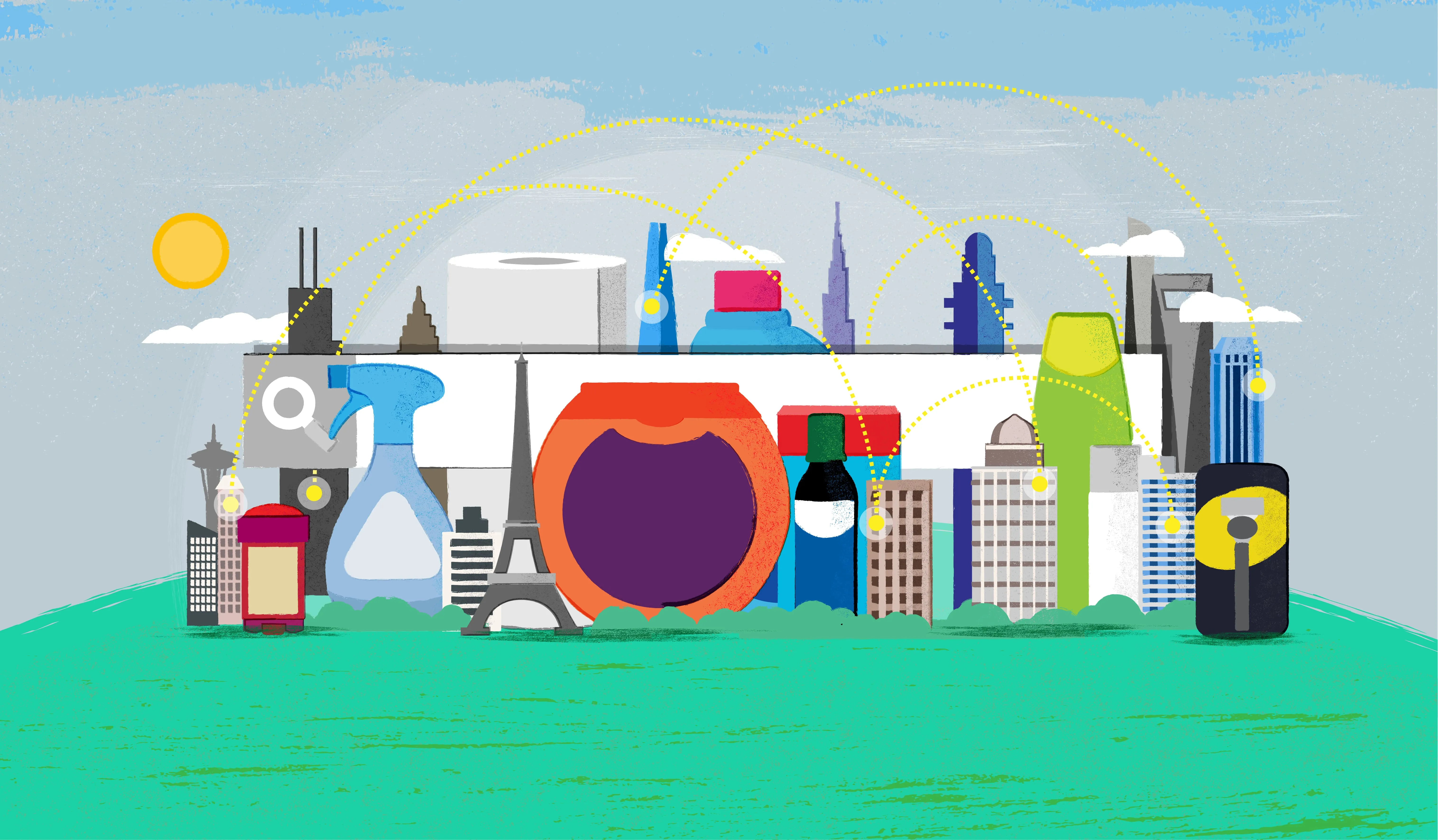
If Procter and Gamble (P&G) were a city, it would be the size of Boulder, Colorado. The company employs more than 100,000 people in 70 countries. Its research and development team is made up of more than 20,000 specialists working across locations, languages, and areas of expertise, from cleaning chemicals to paper products to over-the-counter medications.
P&G approached Datascope to help the company connect these researchers to one another and the rest of the organization. In working with P&G leaders, Datascope found that the company needed a better way to access and leverage employee expertise. Managers routinely got requests from researchers looking to work with others in their subject areas, but didn’t know how to identify the right partners or set them up for fruitful collaboration.
Datascope gathered internal data, including unstructured research data on the scientists’ interests and who they partner with most often. The team used that information to develop two new systems that bridge the gap for P&G researchers and managers. The first is an internal search engine that lets managers quickly find and connect the right experts across P&G offices worldwide. The second is a data visualization tool that highlights subject areas ripe for more collaboration among experts and research teams, who may already be asking similar questions. This intelligent tool can surface relevant, timely information managers need to connect their teams.
P&G already had a practice of collecting information for product research, but it wasn’t until Datascope came on the scene that the company took advantage of large, multi-layered data sets and made them more intelligent, so leaders could expand P&G’s expertise through new global partnerships.

Crunching customer data to deliver better smartphones
Helping a big tech firm turn mountains of customer feedback into product improvements in real time.
In 2017, IDEO acquired longtime partner Datascope and integrated the company’s data scientists and engineers. Datascope team members aren’t just passionate data scientists; they’re human-centered designers who happen to work with data, as illustrated by successful collaborations like this one:
The second a smartphone debuts, buyers, bloggers, and journalists begin writing comments and reviews—and users start troubleshooting. Motorola Mobility wanted to tap into this river of data, but didn’t have the right tools to collect and respond to it.
Motorola’s design, engineering, and service teams hoped to identify product problems early, address them quickly through customer support, and ultimately fix them in future releases.
So Datascope built a custom engine that aggregates and analyzes feedback from hundreds of millions of phrases and internet references, drawn from consumer sites, user forums, news coverage, social media feeds, and product reviews. The tool parses key, product-specific information and routes it to the right Motorola teams: hardware, software, connectivity, and interface design, to name a few.
The analytics and visualization engine not only studies product performance in real time, but it also uses algorithms to gauge customers’ emotional reactions: Do they like the phone or hate it? Do they have complaints? Are they recommending it to friends?
Datascope’s tool translates all this data into simplified to-dos that are sent to the correct service and repair staff before user issues can mar a product launch or even the company’s reputation. And as engineers discover more about how a phone performs in the real world, they learn how to avoid making similar mistakes in the future.
The tool proved valuable as soon as it launched in 2012: When Motorola released the RAZR M smartphone, customers had a hard time figuring out how to use wifi and voice features at the same time and lodged complaints online. The engine recognized the pattern of complaints and alerted Motorola's customer support team, which was able to post responses with clear instructions in every relevant forum, turning a potential customer satisfaction problem into a positive interaction.
Motorola continued to use the engine to address issues in later releases of the RAZR M. The advance warning made engineers’ lives easier, while better handsets and software made for a more seamless customer experience. Improvements were also evident in the RAZR M’s well-reviewed next generation, the RAZR MAXX.
Based on the tool’s success, Motorola used it to improve the company’s supply chain and product development process. And beginning in 2014, with the Moto 360 smartwatch, Datascope’s analytics engine has been used to gauge performance and public sentiment not just for new smartphones, but for Motorola Mobility’s entire line of products.

Rethinking baby food packaging
Collaborating with Plum to create a new, wholesome experience for new parents and babies.
For most parents, ensuring their child’s proper nourishment is a top priority. But that’s not always easy, especially for parents on the go. Plum Organics, an organic baby food company, set out to solve that problem by providing families with pureed fruits and veggies in pouches, making it easy for them to feed their babies. Plum approached IDEO for help designing a non-pouch package that could showcase the vibrancy of the ingredients within.
By conducting research and in-person interviews with families, Plum set out to ensure that the new product was both desirable and functional for parents and their babies. By joining families in their homes, IDEO was able to gather essential insights that helped inform prototypes and the final design, like the fact that nothing can replace the feeling of making an intimate connection with a child through spoon feeding; that baby food is often wasted if a parent can’t remember how long a product has been in the fridge; that families struggle with how to spoon-feed their children on the go without making a mess, and that both parents and retailers were concerned that baby food jars don’t stack securely on shelves.
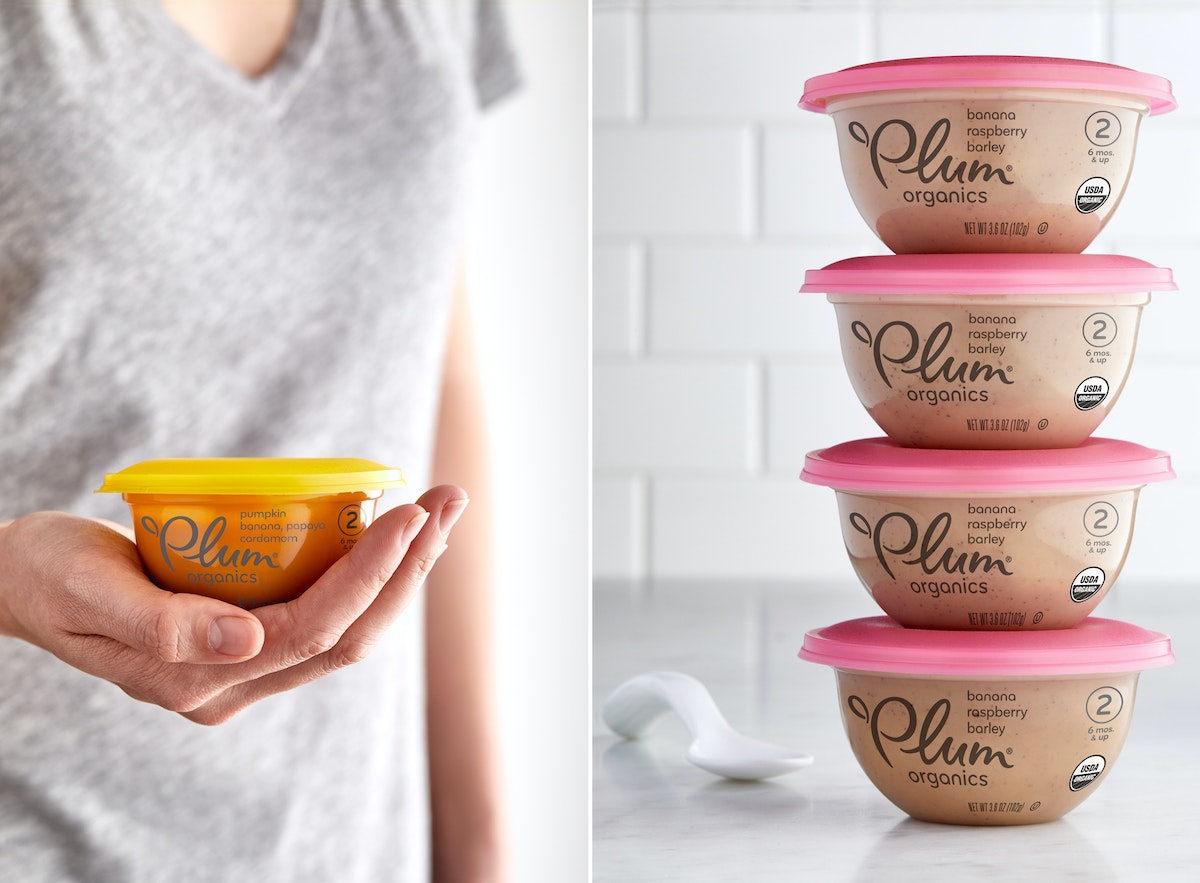
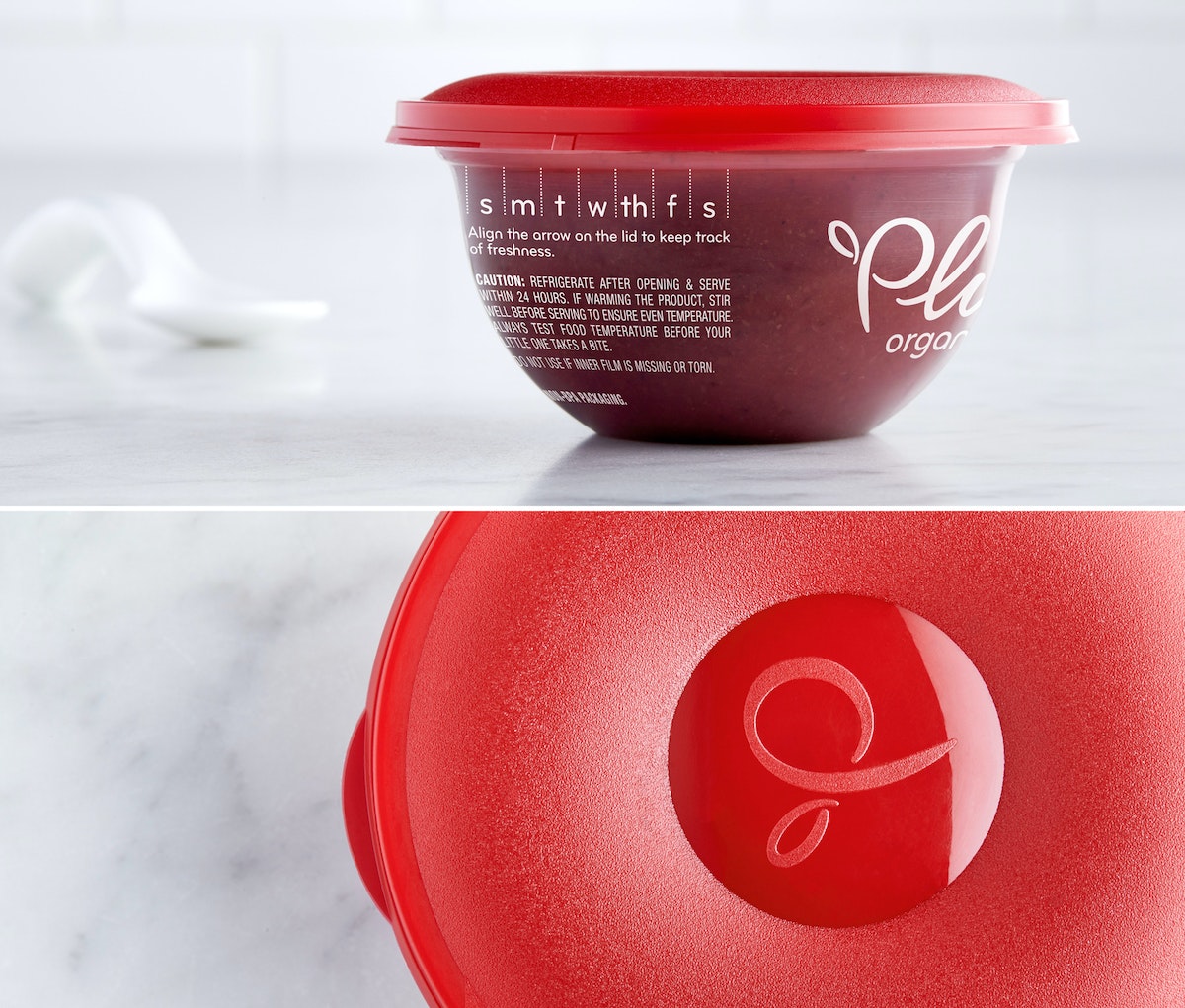
With those insights in mind, the team designed a transparent bowl that allows consumers to see the natural color of Plum’s vibrant, organic food. A resealable lid makes it easy for parents to store food between feedings, and the container includes a feature that allows them to track the day that they opened the pack to ensure that they don’t end up throwing away perfectly good food. Lastly, the new package is easily and safely stackable and includes a divot in the lid for parents to rest a spoon on, making for a much cleaner and more sanitary feeding experience.
Baby Bowls for Plum are now available at retailers nationwide and are a natural evolution for the brand, helping Plum continue to provide high-quality, organic baby food for consumers and their children, even if they’re eating on the go.

Transforming the way you learn about your DNA with a genomics startup
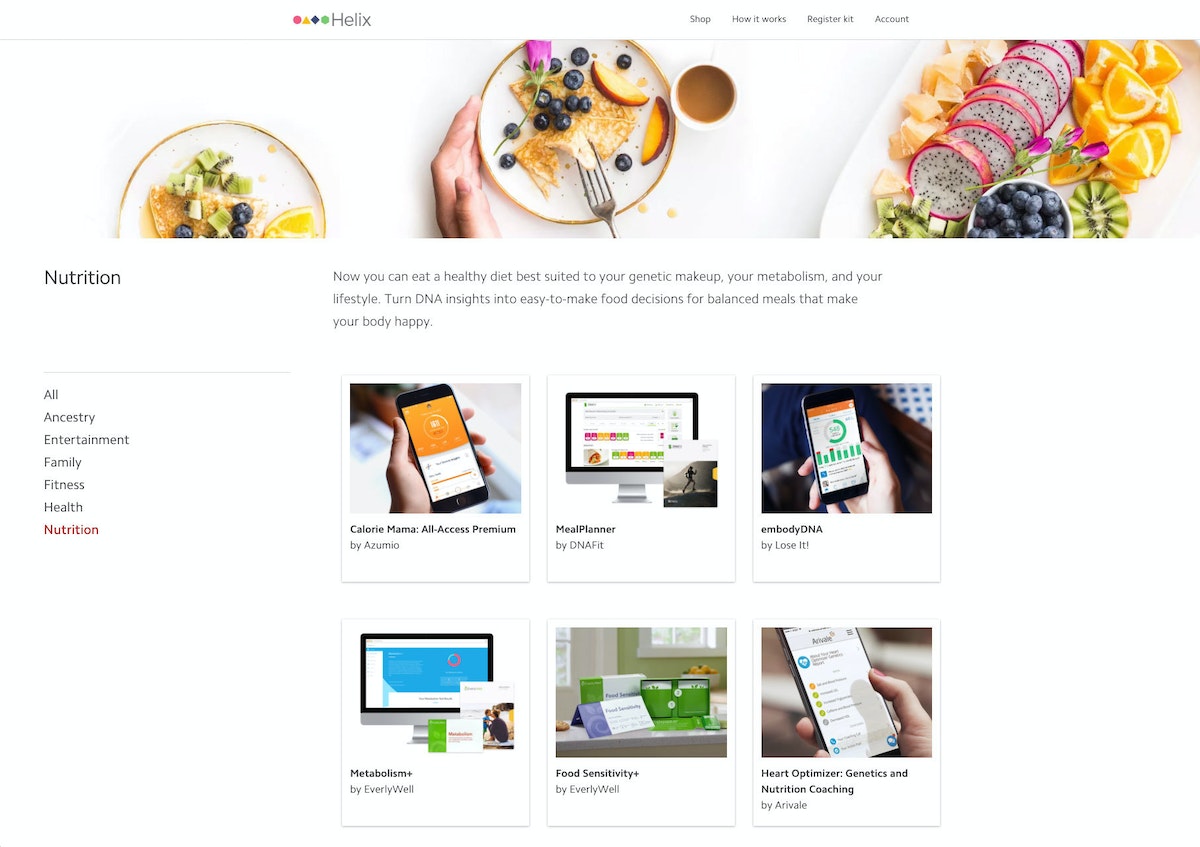
Helping people harness their genetic information by launching the first store for products powered by DNA.
Accessing our genetic code is as easy as spitting in a tube, but how can we benefit from all that DNA data? IDEO surveyed more than 1,000 Americans about the gene sequencing services they want. "Give me things I can act on,” one respondent said. “Give me advice, action plans, apps, and tools. Information is just air until I can put it to use." As it turns out, tools that can translate our genetic information into better life choices—to improve our health, chart our family history, or even find an effective exercise routine—are hard to come by.
Inspired to organize and apply the wealth of genetic data in all of us, Helix envisioned the first online platform for products that offer insights based on a person’s unique DNA sequence. The startup’s founders approached IDEO to help them get to launch by identifying their future market segments and designing their brand and product offering.
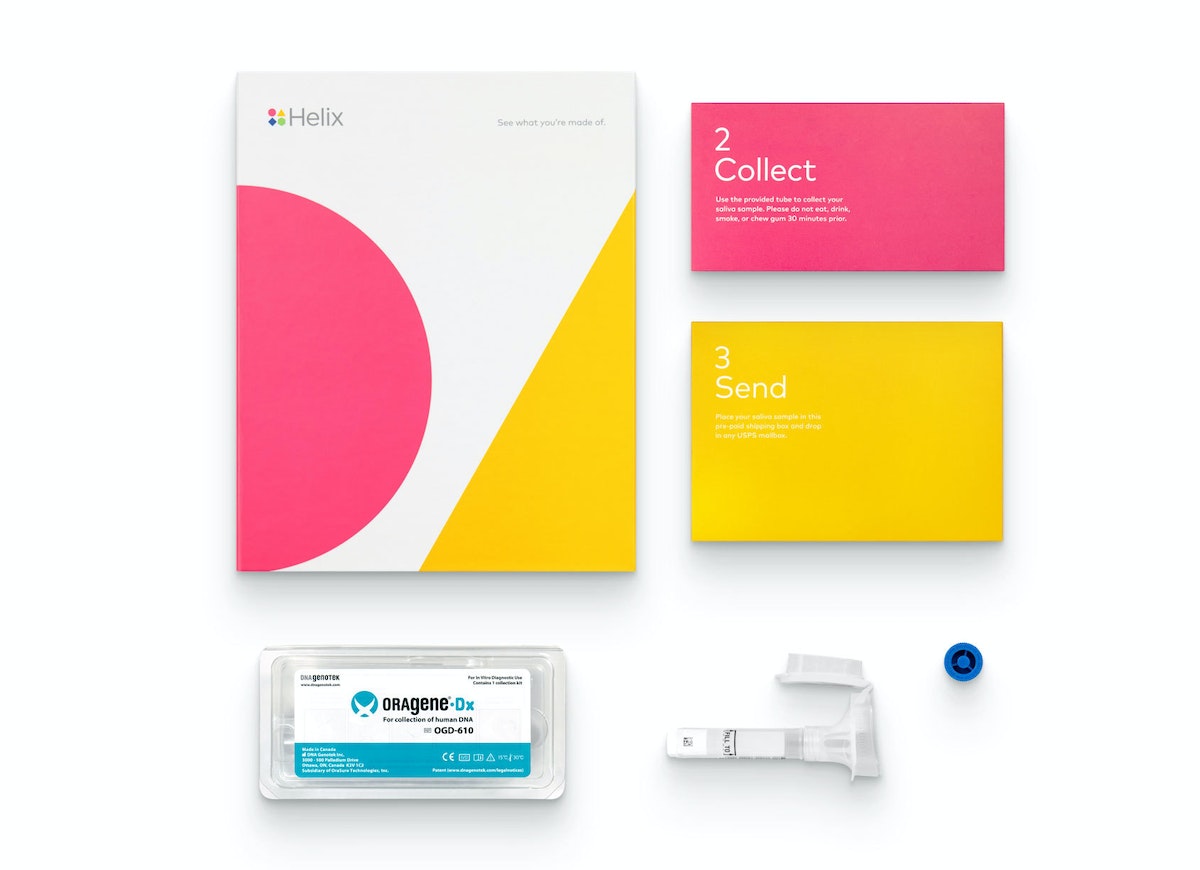
Helix sequences all 22,000 of your genes from one saliva sample—sent in a mail-in kit—and hosts a marketplace of products developed by trusted brands and innovative developers that explore your health, ancestry, entertainment, family, fitness, and nutrition. Similar to the Apple app store, Helix lets you pay individually for the products you want and is a platform for developers to launch new offerings over time. After you've provided a DNA sample once, every product in the Helix store is made available to you on-demand. So, as new products are launched and new discoveries are made in the field of genomics, the data from your original sample is all you’ll need to keep exploring your personal genetic insights.
IDEO engaged a range of users, including early adopters of at-home genetic tests and “quantified self” enthusiasts, and surveyed potential Helix customers across the country. That qualitative and quantitative research validated Helix’s “app store” business model and provided key insights into the products people were most interested in.
Through the partnership, Helix uncovered what users need most from a genomics company:
- to prioritize the accuracy and privacy of DNA test results
- to encourage a sense of discovery and exploration of our genes
- to celebrate each individual’s unique qualities
A team of ethnographers, data scientists, and designers at IDEO helped direct the startup’s brand approach (including its name, Helix) and crafted a blueprint for how the company connects with customers and presents its product. The Helix store launched in July 2017.
Our DNA used to be a mystery—something we guessed at by observing our parents. Now, easy access to our genetic code—and the tools to truly understand it—arrives on our doorstep.

The power of rigorous futures
How envisioning tomorrow creates opportunities for today.
Now let’s say some massive global event comes along and disrupts everything, everywhere, all at once. (Not hard to imagine, is it?)
That’s what leaders at Imaginable Futures faced in 2020. The actions it took in that moment put it ahead of the curve as a new world emerged. The impact was concrete and meaningful, with Imaginable Future’s work inspiring others to fund more than a million dollars’ worth of related initiatives and educational moonshots.
For 40 years, IDEO has helped the world’s leading organizations make the future, sometimes with startling prescience. Our work in strategic futuring has been informed and inspired by our client partnerships, but also by generations of futuring practitioners, to whom we’re indebted.
Now imagine that you're the CEO of a company navigating an uncertain future. Perhaps you already are. You might know your customers today, but you can’t see who they'll be in a decade, or what they’ll need by then. Current industry norms might no longer apply. Today’s buzzy trends will be long forgotten.
How do you make your future?
1. Your vision should be an inspiring anchor, not an empty gesture
Strategy is action: it’s not about what you say; it’s entirely about what you choose and then do. The future presents seemingly limitless choices for a leader—more the further out you look. Possible futures must be narrowed to probable futures, and from there to preferred futures. And that’s what effective visions of the future bring to life.
A great vision is inspiring and suffused with imagination. But it also enables leaders to focus on the right choices, in service of where they want to go, and to make such choices with confidence.
Not long ago, the CEO of one of the world’s leading consumer electronics companies asked, “If we could do anything in the next five years, what would it be?” Partnering closely with their team, IDEO developed seven visions of the future they could touch today, each of them optimistic, and each of them grounded in rigorous research.
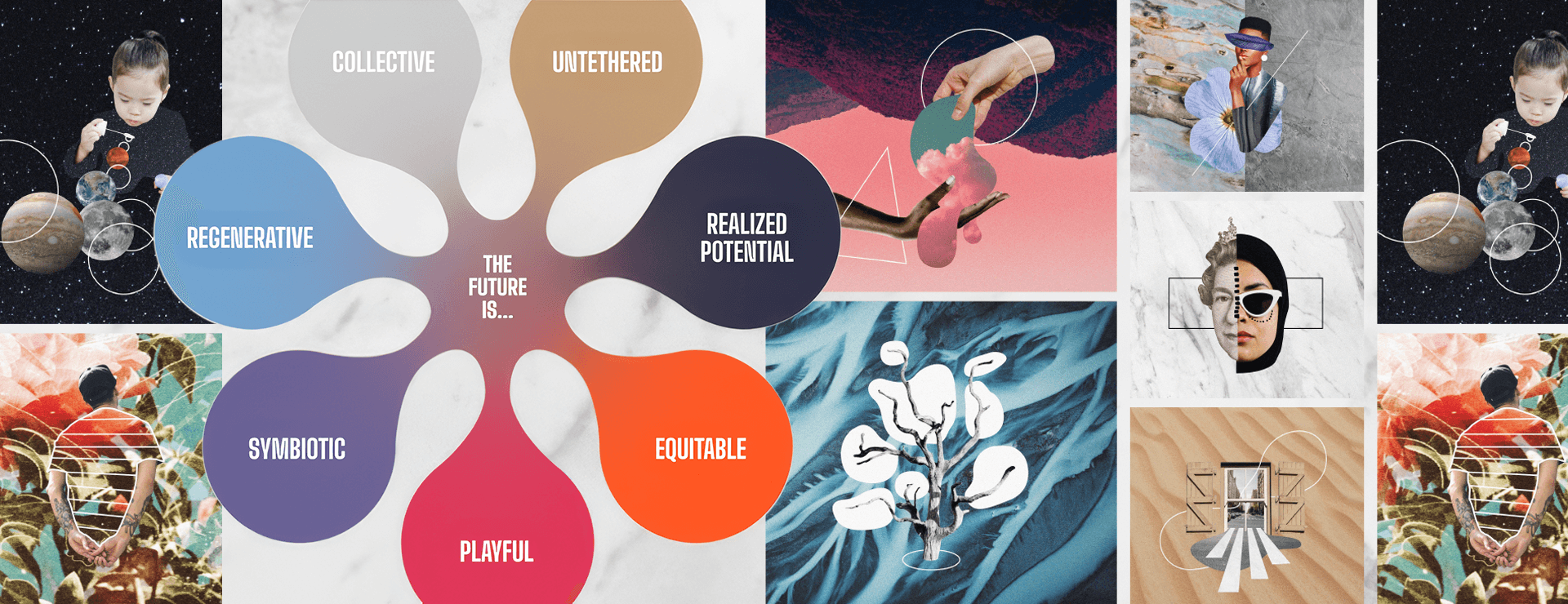
Each of these future worlds provoked ways the company might respond to it: hundreds of ideas and concepts it could potentially bring to its future customers. The CEO chose three to take forward, and you might have even seen a Superbowl ad about one of them.
In another project, we also helped a global athletics brand take a jog in the future by creating a series of immersive "day in the life” stories, complete with billboards for fictional versions of major sporting events.

Creating tangible objects, stories, and experiences that invite you directly into the future is one of the ways we blend imagination and rigor in our work: It makes real the effect of intangible forces, and helps people grasp and distill what's most critical for their own work.
All of that helps move organizations to action.
2. Leap beyond the distraction of today's disputes
Infinite futures are possible, but not all are likely. Even fewer are desirable. And more often than not, the best futures—the ways we want things to turn out—can only happen as a result of deep collaboration: People need to agree on what matters, and then work toward it.
But getting aligned is hard work. In many organizations, team members are distributed across the world or engaged in work that defies simple distillation or storytelling, so getting on the same page can feel like an insurmountable obstacle. People have different goals and are accountable for different things. Over time, conversations can surface stark differences of opinion. Before long, you’re stuck.
Strategic futuring is helpful here, too. Creating future visions together before deeper strategy work begins is a way to discover what’s desirable and magnetic for everyone.
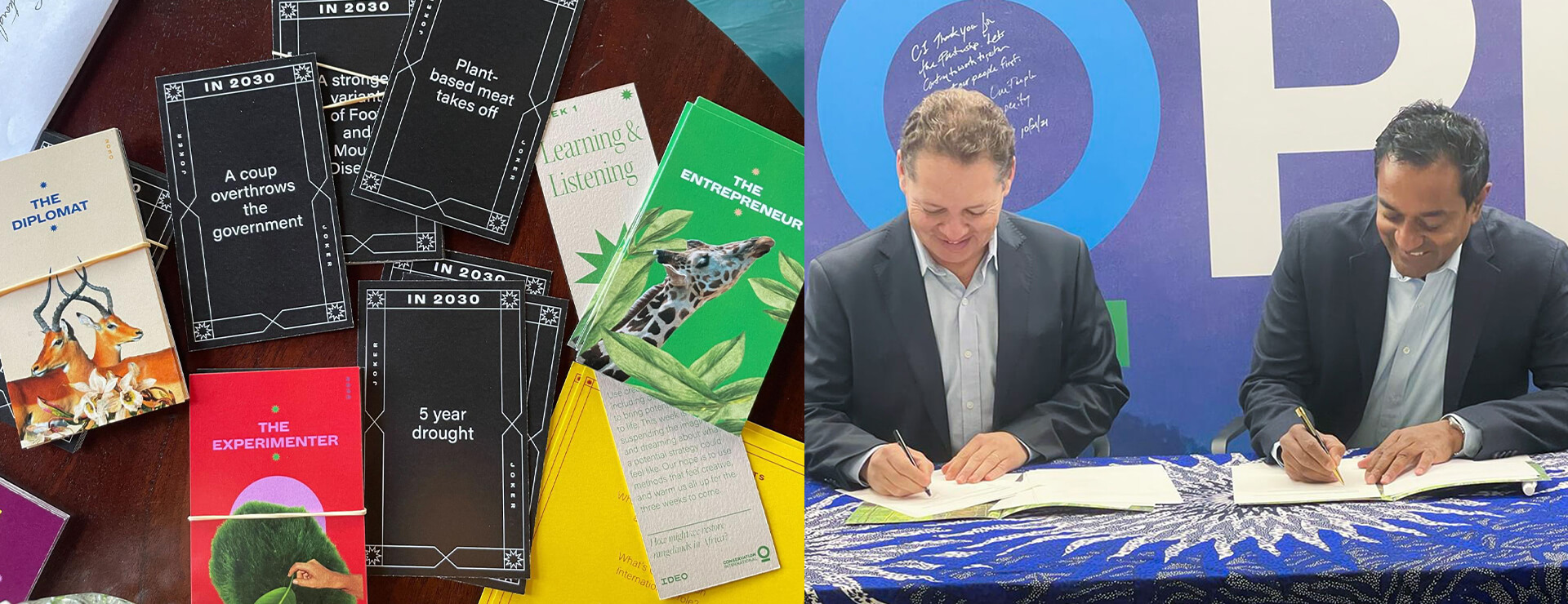
For example, to unlock a new scale of impact, the global environmental non-profit Conservation International (CI) needed a strategy that could unite its country offices on the African continent. Each had its own priorities, norms, goals, and personalities—a huge source of strength for the organization, but a barrier to scale. To create space for a new approach, CI jumped decades years into the future. Partnering with IDEO, CI experts and teams developed a set of short stories set in the year 2050, exploring future possibilities in sequestration research, satellite monitoring technologies, and more.
That futuring work created a shared language, goal, and frame of reference for the country offices. And the work accelerated the subsequent strategic decision-making and investment. The resulting goal? To expand the protection of grasslands, savannah, and scrublands in a transboundary area across six African countries. It's an effort that's now scaling Conservation International's successful Herding for Health model as a mechanism for partner-driven community climate resilience, targeting the protection of at least 10 million hectares by 2030 in partnership with a continent-wide NGO.
3. Remember: No business or organization is an island
To thrive in the future, organizations must also think about all the forces beyond their control—from climate events or cultural changes (both seen and unseen) to the deployment of emerging technologies. And they must even consider the potential effects of forces seemingly unrelated to their line of business. Because they might just matter.
That’s a lot to take in; making sense of it all can feel impossible. And a giant research document might just make it feel worse. Here again, strategic futuring offers a way forward. Rigorous speculation, informed by signals and data, picks out what’s most relevant from the noise—even if it’s unexpected. Distilling that informed speculation into imagined scenarios, and then into concrete experiences, can move leaders to reflect with urgency and clarity, and make choices with confidence.
At IDEO, we sustain an ongoing signal scanning practice, taking notice of what’s shifting across industries and cultures. We blend that informed sense of what’s coming with our client partners’ insights and data to build a rich tapestry of foresight. And then we employ all the crafts of design—from engineering and environments to software development and storytelling—to give life to the visions of the future that result.
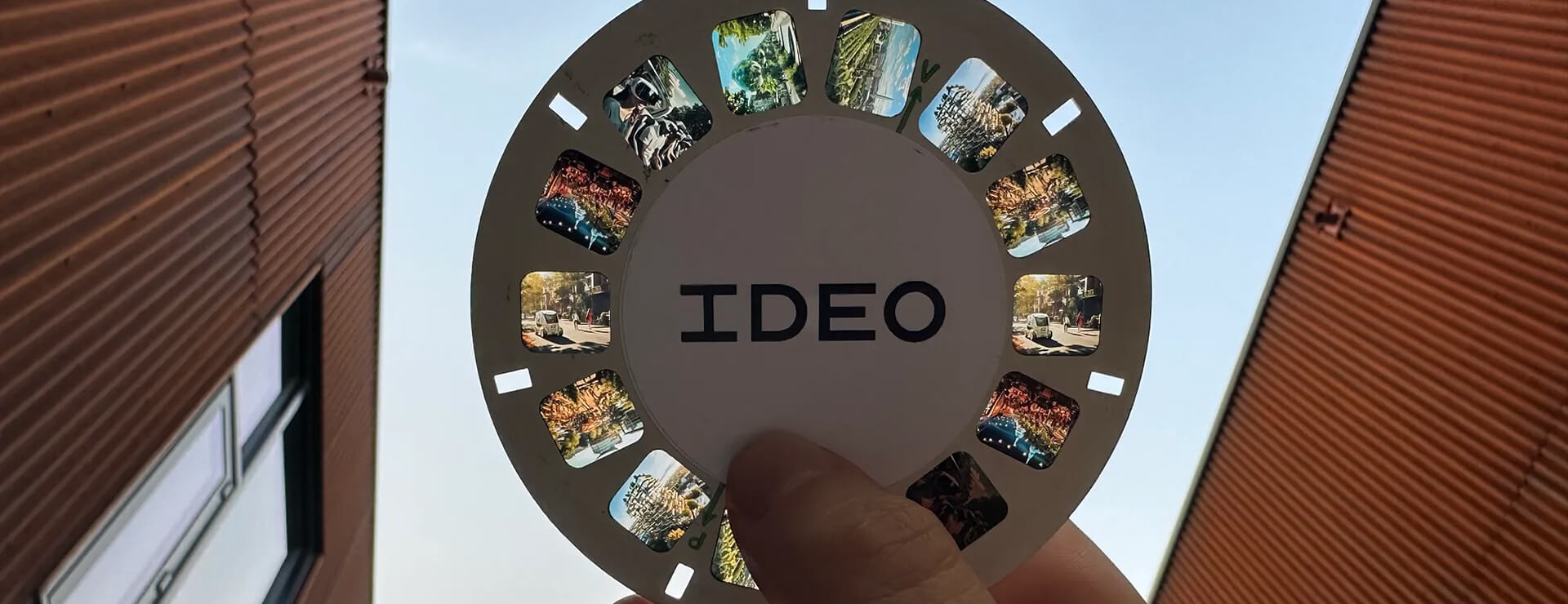
When people step into a wide-angle view of what might be coming, they see what’s possible and discover new motivations to act. We used an AI-enabled process we developed to create a pocket viewfinder for D.C. residents to help them visualize the future of their city while standing in their own neighborhood.
Games can take that kind of immersion a level deeper. Recently IDEO helped global enterprise software company Sage investigate how the company might support businesses working to achieve net zero emissions. We designed a choose-your-own adventure story that asked people to play characters navigating business demands in a climate-impacted 2030; it generated empathy for future users, which led to support for the launch of the pioneering Sage Earth platform.
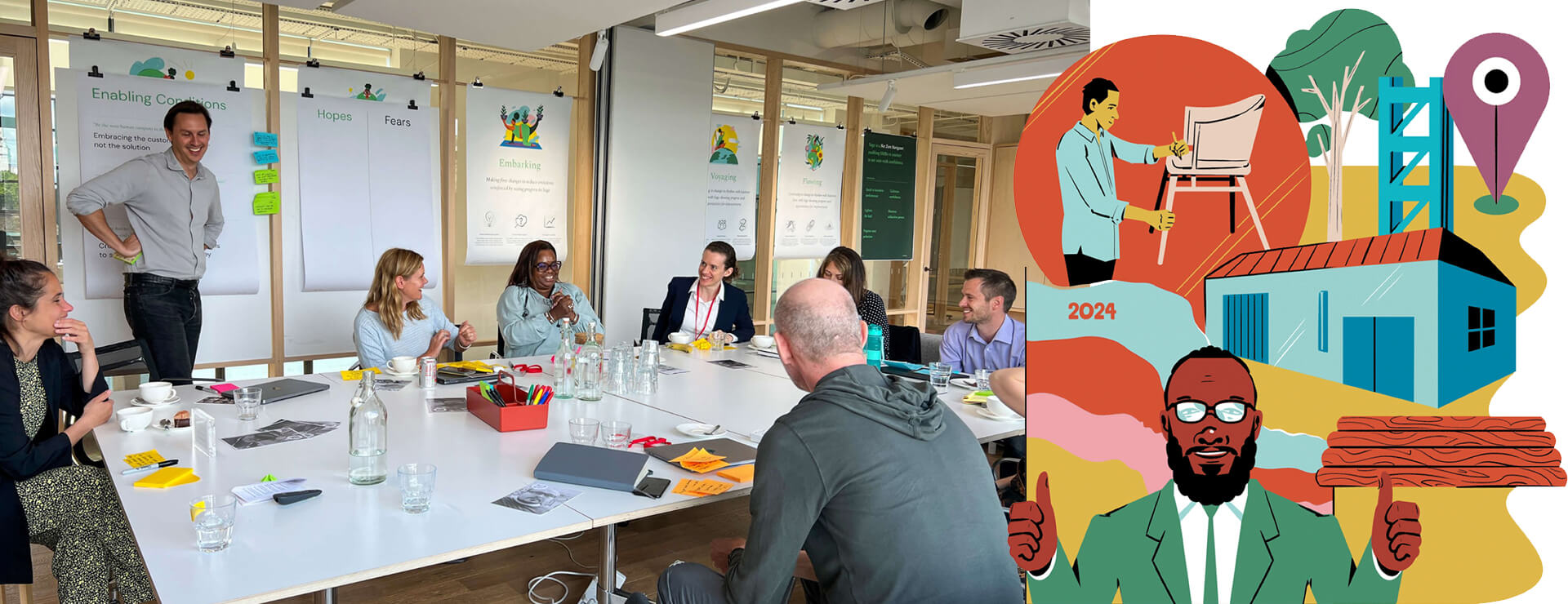
Sometimes, the outputs of strategic futuring work are entirely physical and can take over whole spaces. At the Ellen MacArthur Foundation’s 2023 circular economy summit, we staged a home from the year 2050 populated with the personal items and detritus that might shape our daily lives if access to natural resources were to change, and if environmental regulations were to evolve as a result.
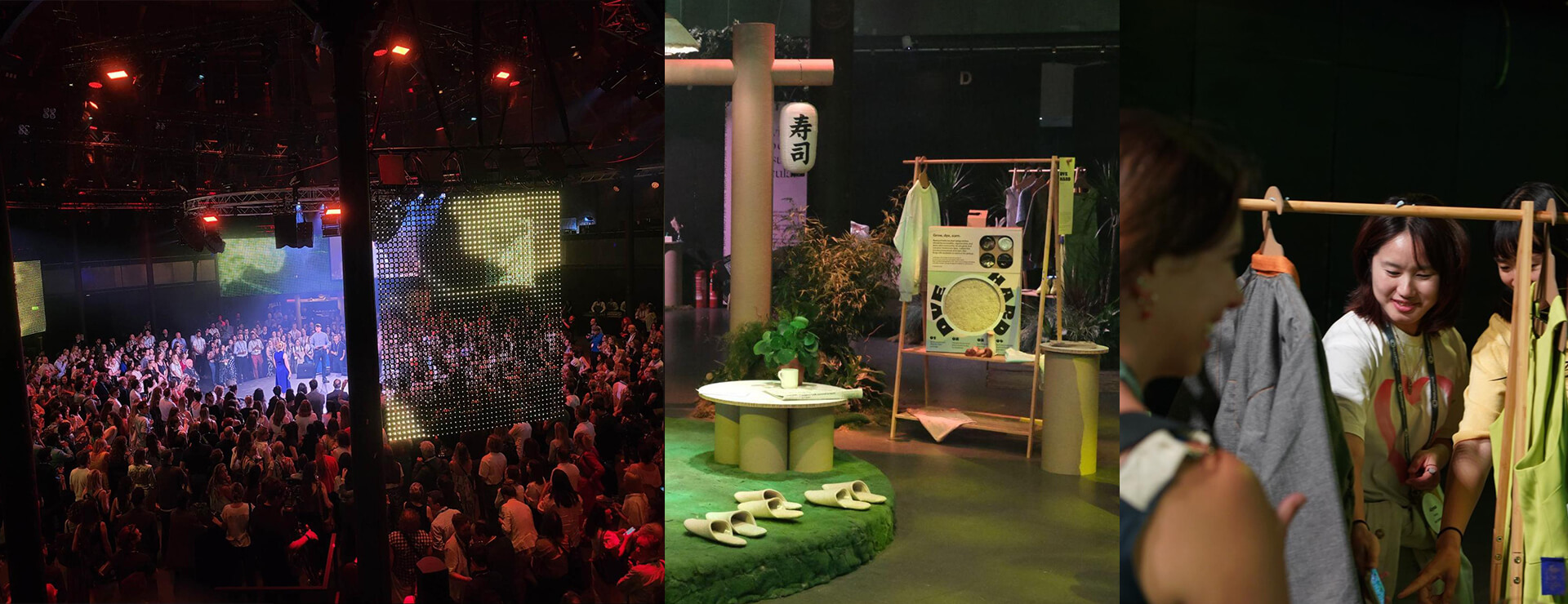
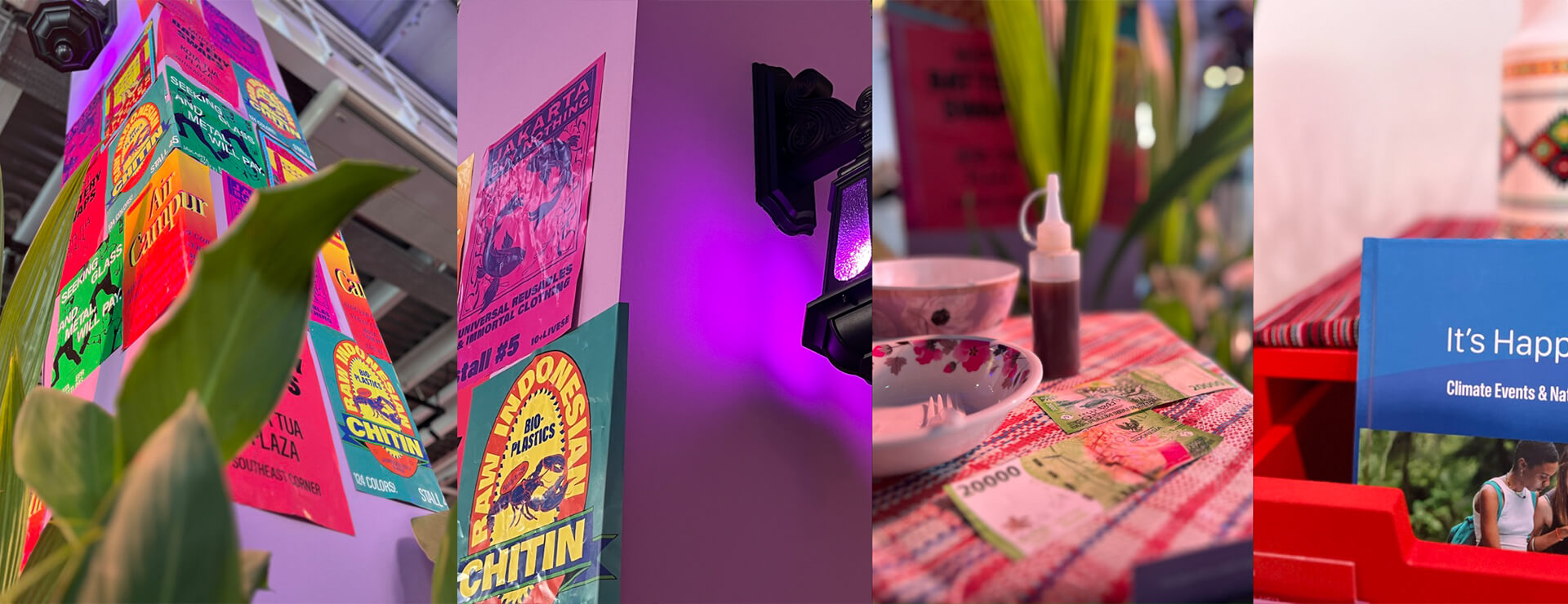
And at COP28 in Dubai, we built three distinct worlds from our collective climate future, traversing continents and culture, economic realities, and societal roles. We invited people to step directly into these futures—into spaces suspended deliberately between reality and possibility.
Do you want to make your future?
Strategic futuring is a powerful tool for solving significant, far-reaching business challenges.
You may be a leader striving to distill many levers of change affecting your organization. You may be part of a team that needs to find positive, energized alignment around what to do to set up your next era of growth.
Or you might be a leader determined to understand how your business may be transformed by forces far beyond your influence.
Wherever you are today, strategic futuring can help you make your own tomorrow.
Let’s say your job is to transform the entire landscape of learning and education. For the world.

Designing for a sense of purpose
Four principles for creating better jobs.
In that room, we built an "Idea Catcher" wall, where employees could use Post-its to share ideas, questions, and answers with each other and with management.
We knew from previous studies that tough calls have a negative impact on employees for hours afterwards, and that constant monitoring can make call centers tricky places to work. But still, this Post-it showed up on the wall: “There’s positives in each call we take!” The energy that this space created showed us how involving agents in designing their jobs was a meaningful way to learn and grow.
Many of us spend much of our lives at work. We want it to be good and meaningful. But too often, workers don’t have the agency or satisfaction for that to be true. As work is increasingly monitored and automated, it’s critical that we design technology and tools to support workers' well being and sense of purpose. Over the years, we’ve pulled what we’ve learned from various projects into a set of four principles for designing good jobs.

1. Use new tools to encourage a sense of purpose
Involving employees in creating the tools for their own work provides an opening for them to act on their own values, and reflect on what they like (or don’t like) about their jobs. During the mortgage project, our design team worked with call center agents and homeowners to understand both the “front stage” and the “back stage” of service delivery. For the agents, being able to make a personal connection with the caller was important to their sense of agency—their perception of their own capacity for making change and being creative at work. With that in mind, we prototyped a customer dashboard with a scripted conversation, along with customized cards that prompted agents to infuse their own words and experience into the interaction. Inspired by Brian Eno’s Oblique Strategies, the cards included questions like: “What’s the best advice you’ve ever gotten from someone else on your team?” and “Who is your role model? How would they handle the next call?” The prototypes addressed the tension between scripting and creativity, without burdening agents with additional oversight. Agents appreciated that the prompts recognized and supported their expertise and passion to engage with customers in a professional but personal way.

2. Design for values and emotions
Autonomy and creativity are foundational to high job satisfaction. Technologies like customer dashboards, time and task tracking, and software systems shape how we spend our time at work, what tasks we get to do and how, and fundamentally alter how we feel about and experience work. By designing for people’s values and emotions, new tools and systems have the potential to make work better. But that wasn’t the case when we first started working with a cruise line.
Employees (and also potential customers) thought that booking a vacation felt difficult, and compared the repetitive experience to the movie Groundhog Day. They constantly took their own notes, because the system didn't always log their entries, and had to search online to answer questions about their own services. To fix their frustration, the design team created a new dashboard that aggregated the information they were missing or currently keeping track of with pen and paper. By eliminating redundancy and cognitive load, the dashboard also made agents feel confident and informed—in their own eyes, as well as customers’. This marked a stark contrast to the earlier phase of work, in which agents had to look up the latest products and offerings on the company’s website, which gave them no more specialized knowledge than the customers calling in, deflating their image of themselves as confident service professionals.
The agents’ managers had a different problem: They hated using this tool on a desktop. They preferred to walk around and coach agents face-to-face. It was actually one of their favorite parts of the job. So, the designers moved the tool to a tablet, in order to preserve it.

3. Keep the work ecosystem in mind
Work is a true ecosystem; no worker or technology functions in isolation. Bonnie Nardi and Vicki O'Day, social scientists formerly at AT&T Labs and Xerox PARC, define an information ecology as “a system of people, practices, values, and technologies in a particular local environment.” It’s extremely effective for thinking through how technology can’t be implemented in a vacuum. Instead, technology should be deployed in service of individual and group goals. In the mortgage project, we were also responsible for creating a brand new role that combined service and sales. Since sales roles were mainly based on commission, and service roles on efficiency-based metrics, there was not a lot to incentivize collaboration and a new approach to homeowner relationships. Because agents had a sense of fulfillment that came from growth and financial success based on their personal skills and charisma, which was baked into the compensation structure, it was important that they be comfortable with new metrics and incentives. So, the team designed the new role to encourage long-term customer relationships by increasing base pay and the weight of customer experience metrics, along with more typical efficiency measures like length and volume of calls.

4. Co-create with employees to build trust
Trust is foundational to ethical research and successful design. By working side-by-side with employees to co-create their roles and the impact of technology on their day-to-day work, companies can model openness during times of change. In a project to redesign the patient experience for a new hospital building, the design team identified a key technology in need of innovation: appointment and medication scheduling software. Making custom medications accurately and on time in a hospital environment is crucial, because a small mistake can be fatal, and delays can be painful.
At the time, medications could only be processed in the order in which they were received—not by the level of urgency. For pharmacists, being able to process medications to fit patients’ schedules would improve workflow and ease stress. For patients, it would mean more visibility into upcoming care, and less pressure on families to keep track of medications. The lack of information between departments forced family members to play the role of mediator, communicating vital information in terms they weren’t familiar with. Pharmacists were motivated to provide the best care, but the siloed operating systems that governed appointment and medication schedules created a disconnect. So, the designers created a software refresh that would provide visibility into patients’ schedules, making the pharmacists’ relationship to the software more mutual and rewarding. They no longer felt they were missing the information they needed to do their jobs well. The ability to have a more holistic view into a treatment and current state of health also allowed them to better connect with the patients, one of the most meaningful parts of their job.
Designing for job satisfaction isn’t just a nice to have; not only is it the right thing to do, it leads to increased performance and lower attrition, and employees that are better able to deliver high-quality services to customers.
Rethinking roles, or how new technologies might affect jobs at your company? Get in touch to hear how IDEO can help.
A few years ago, when I was working on a project to help a mortgage company improve the work experience at its call centers, we created a living-room-like space we called "The Oasis," a live prototype of a space to take a break and reflect between calls.

When AI enters the group chat
Setting a foundation of trust in AI-enabled social experiences.
These are also the kinds of spaces where AI is appearing in the form of new tools and personal assistants. But having AI show up on platforms Gen Z considers safe spaces can be problematic.
In the first phase of our research testing the edges of AI products with a group of Gen Zs, they laid out three principles to help guide us in our designs: Skip the engineered reality; elevate human intuition and empathy; and build in transparency. This time around, we made those principles tangible, by prototyping various expressions of AI personal assistants, and asking our Gen Z partners to test them out in the context of their own lives.
We were also testing a hypothesis of our own, based on our work with this cohort: For users to feel they have the freedom to play and engage with AI, we first need to design a strong foundation of psychological safety. We believe that’s key to unlocking social AI experiences that Gen Z will truly want to use.
Prototyping Road Trips
Because we’re working with Gen Zs, we created a prototype to help with a real part of their lives—planning a weekend trip with their friends in a group chat. In one version, an AI personality acted as a concierge, pulling together activities and itineraries in a way that was transparent and obvious to everyone in the group. In the other, the AI personality acted as an agent, operating in the background on the user’s behalf, hidden from the group’s view. The agent still pulled travel details together, but only one user could see them. It could also provide advice beyond logistical support—like how to tactfully respond to a friend if there’s a disagreement about which activities to prioritize.
When our Gen Z participants interacted with the Concierge and Agent, they were excited by the idea that AI can unlock more joyful social experiences, but they also voiced deep concerns about privacy, safety, and consent. Our participants reported that AI feels much more invasive than other technologies—more powerful, and with a greater ability to cause harm.
“Having your whole schedule, characteristics, how you live your life—that being stored and potentially sold is a lot more damaging and scary than simply what you’re searching or sites you’re visiting, which is what we experience today,” one high school student said.
Taking a bigger leap
We took these insights back to our team, and worked together to weave them into prototypes of new tools for Gen Z group chats. But we wanted to move past incremental change. AI enables new possibilities that haven’t existed before, so it’s important that we take bigger leaps. Instead of creating a souped-up version of the prototype we’d already made with our Concierge and Agent, we brought together perspectives from across IDEO—game designers, toy inventors, play experts, Gen Zs, researchers, and a magician—to imagine and build visions for totally new experiences.
Together, we came up with a concept called AI Playground, a discrete space contained within the group chat that helps make clear what information the AI can see and what its capabilities are. We also made AI Playground opt-in only; no one would see it by default.
What does that look like? Imagine, you’re planning a weekend trip with your friends, and you can conjure your AI assistant into the group chat for a specific task— like generating a curated playlist or building a dynamic itinerary, unique to your friends and to this particular outing. Because there is a clear boundary between the Playground and the group chat, users don’t have to worry that their AI assistant can access everything that they say—it’s up to them what they choose to share. And because all users had to opt-in to join the space, they can feel more comfortable playing around and being themselves—generating GIFs to share an inside joke, creating music to match their mood, and more. Our goal was to enhance their play and increase their agency without intruding on their personal conversations.

A Safe Space to Play
AI Playground is an example of an alternative way we could integrate AI personal assistants in group use cases, one that sets the conditions for trust and play. As we learned in our research with Gen Zs, their friendship and relationship development is a key part of who they are, and they are highly sensitive to technologies that interfere with these bonds. By building safer AI experiences across all spaces and domains, we can unlock a better AI-enabled future for everyone. For more windows into AI prototyping focused on mental health, and how AI might revolutionize the ways Gen Z is preparing for their careers, subscribe to the IDEO newsletter.
Parts of the images in this article were created/altered using generative AI.
Many of Gen Z’s friendships and much of their relationship development happens online—on social media, online gaming platforms, and in community spaces and group chats.
Values-led prototyping for next-Gen creative AI
Playful methods for designing emotionally-resonant AI experiences.
If you missed the first installment of our Gen Z + Gen AI prototyping series, you can catch up here.
“I could see myself starting up a business someday,” one high-school senior told us. “So say I wanted to make visuals, or ads for that—I'll want to have an AI guide me through the creative process.”
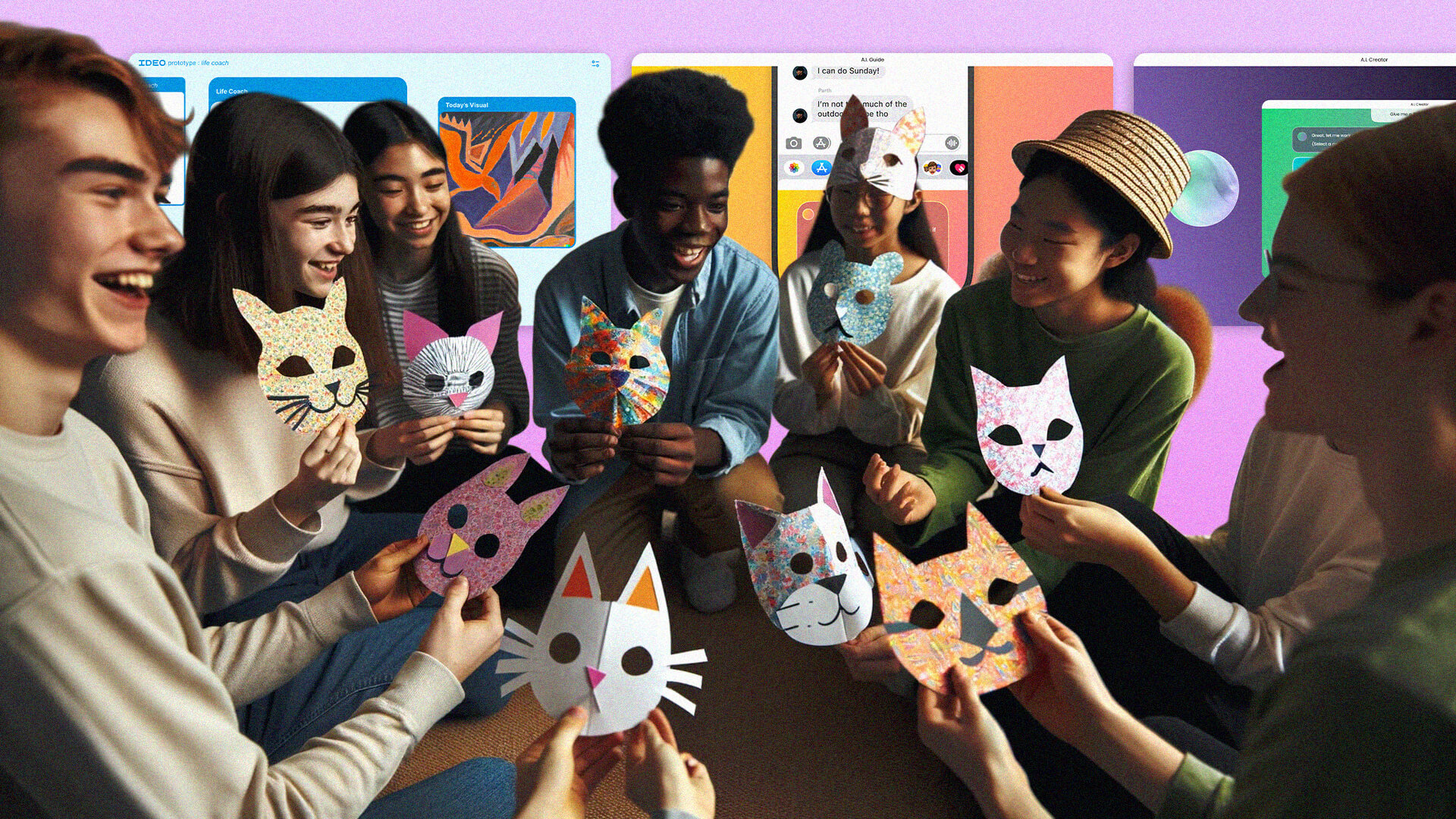
To find out what that really means in practice, we prototyped a set of creative AI tools and asked a cohort of young people between 13 and 24 to test them in their own work and lives.
AI Creator vs. AI Collaborator
We built two contrasting prototype experiences to test the breadth of roles, capabilities, and personalities that a creative AI might have. On one end of this spectrum, we have an AI that is designed around speed and efficiency. Its interface is meant to feel highly-optimized to get you the best, most suitable output possible in minimal time.
On the other end, we created a hyper-collaborative creative partner more focused on helping you express your own unique style. This AI can not only create content, but share inspiration—helping Gen Zs discover new styles, see what’s trending, narrow down likes and dislikes, and gain insight into their own personal tastes.
We then customized our prototypes to fit each participant’s life context.

Exploring the values behind our designs
In testing our range of prototypes, we found that no AI creative tool will work for everyone in every moment. Gen Zs have a wide spectrum of values when it comes to what they want from creative tools—some value speed and efficiency, while others value deeper collaboration and personal expression, and their values may fluctuate as they go from one context to another.
For quick, everyday creative needs—efficiency is key.
We heard from Gen Zs whose lives are extremely busy—from managing social media for multiple school groups to starting and running their own businesses, and keeping up with school, family, and social circles. There isn’t always a lot of time or energy left over for lengthy creative processes. "Social media doesn't feel meaningful to me, only the end goal,” a college freshman told us. “So I love that this AI can help me reach that end goal faster.”
To design for users like this one, the challenge lies in getting to a satisfying creative output faster, in minimum time. The distance between prompt and output should be short, and UX should offer visual templates and clear parameters that help people to create quickly in a well-defined style.
For creators, aspiring professionals, and artists, AI should show up as a more nuanced collaborator—offering tools for inspiration, personal expression, and a greater depth of creative control.
On the flip side, we heard from Gen Zs who aspire to create original and expressive work. "I think the ability to re-edit to make it have a more human touch and connection makes it a good tool. I want a good combination of AI and human—in graphic design at least,” Cole, one of our Gen Z collaborators, told us.
For Gen Zs who value craft and personal expression, the distance between prompt and output needs to be longer. Future collaborative AI interfaces will need to allow for more rounds of feedback, create more opportunities for humans to give direction, and be capable of working with multi-modal inputs—such as reference images, sketches, font files, CAD files, and more. These more collaborative AI experiences should still offer tools for humans to create and customize by hand. The challenge here is not to replace human craft and creativity, but to design interfaces that help AI augment our creativity to deliver output nuanced enough to match the richness of personal expression that Gen Zs want, alongside tools for them to add their unique vibe by hand, too.
An AI-enabled creative future
So what does all this mean for the future of AI? AI experiences themselves should continuously work to establish user intent, and to understand what good means in different moments—does a user need a quick solution, or a creative partner? As a rule, designers should offer multiple options for how their AI shows up in terms of tone, role, capabilities, and suggestions to users, and put in the work to continually listen, discover, and elevate the most relevant options for their audience.
Creativity is just one of the many spaces where we are listening, discovering, and experimenting with how to prototype future AI experiences; we are also exploring how AI should show up in education, mental health, work, social media, and more. Stay tuned for our next piece, which dives into how Gen Z feels about AI personal assistants entering the group chat.
Parts of the images in this article were created/altered using generative AI.
When we first started exploring the possibilities of creative AI products with a group of Gen Zs, they were clear about what they want: tools that scaffold the creative process, lower the barriers to entry, and connect creative communities.

Lindsey Turner
I’m passionate about building brands, products, and experiences that help organizations show up with meaning and momentum.
I help organizations cut through complexity by shaping how they show up, through brand strategy, identity, and storytelling.
Working at the intersection of brand and business, I bring an editorial eye and a bias toward making—turning ideas into tangible experiences that people can understand, trust, and believe in.
My work spans government, healthcare, financial services, media, and consumer goods, from launching Gen Z-focused ventures to building innovation labs and reimagining legacy brands. I relish moments of ambiguity and enjoy translating across teams, perspectives, and priorities to move ideas forward.
I started my career in editorial and digital design, shaping cross-platform experiences and identity systems in publishing and agency environments. That foundation still shapes how I work today: I’m detail-oriented, collaborative, and overreliant on the Oxford comma. I hold a BFA in Visual Communication from the School of the Art Institute of Chicago.

Rachel Young
My work helps organizations see who their products aren't working for—and build the will and the tools to do something about it
For 25 years, I've asked the same question: Who does this design exclude—and what are we going to do about it?
My work spans human-centered strategy, inclusive design, and qualitative research, with clients ranging from Microsoft, Google, and Verizon to the National Science Foundation, and San Francisco Unified School District.
Before IDEO, I taught elementary school in East Palo Alto and spent a decade doing design work with social service organizations—where I learned firsthand what it costs people when systems are built without them in mind.
I am currently writing User Error, a nonfiction book about digital access and the design decisions behind it. I live in Oakland, California.

Brian Pelsoh
I lead with craft, ensuring our work is creatively excellent: rooted in deep human insight and imagination, while also grounded in the realities of business and technology.
My expertise spans brand, communication, and product design across tech, education, the arts, and social impact.
I believe great work demands both high-level vision and obsessive attention to detail, and only happens through collaboration.
I bring an inclusive, hands-on approach and a deep understanding of business, which enables me to consistently deliver excellence while always asking why.
Before joining IDEO, I worked at the brand firms Pentagram and VSA Partners. I began my career as a designer, leading teams at the School of the Art Institute of Chicago and the Milwaukee Art Museum. I hold an MFA in graphic design from Maryland Institute College of Art and a BFA in communication design from the Milwaukee Institute of Art & Design, and have taught at some of the best design schools in the US.

Tony Wong
I am responsible for IDEO’s long-term success in China and working with clients to use design as a tool to enable growth.
I am responsible for IDEO’s long-term success in China and working with clients to use design as a tool to enable growth. Specifically, I have helped Chinese companies design holistic brand solutions through the development of their products, communication, services, and innovation teams, and I have helped multinationals expand their presence and influence in China.
I advise global leaders on developing China-led innovation and capabilities.
In over 15 years in IDEO Shanghai, I have worked on projects that use design to elevate the quality of the experience of healthcare products and services, streamline processes that increase productivity, create spaces and programs that promote and enable inclusive communities, and build next generation mobility solutions that are planet-positive.
Before joining IDEO, I worked at Philips Electronics and the Electrolux Group in Italy, the Netherlands, and Singapore on a number of breakthrough commercial products. I am a member of the Young President Organization in Shanghai.

Building a personal AI for the messiness of life: Sida Li
Most AI products today are built for work—a space with clear problems and established systems. One founder noticed a gap: personal life is messier, harder to systematize, and mostly left behind by the AI boom. So she built Cue, a personal AI that lives inside iMessage and group chats, to go where the other tools haven't.
In this episode, Becca Carroll, IDEO's Chief Strategy Officer, talks with Sida Li, co-founder and CEO of Shared Context Lab, about staying anchored to a human need while the technology around her keeps changing shape, why she treats her business model with the same rigor she'd bring to a product, and what it feels like to build a company at this particular, disorienting moment in AI.
The conversation also gets into how Sida makes design decisions: the language Cue uses to describe itself, the tradeoffs behind building inside iMessage instead of a new app, and a real story about a business idea that didn’t pan out.
This is the second in a two-part series profiling founders from IDEO's Startups-in-Residence program. The first conversation is with Johannes Seemann, founder of Sooner, on designing GenAI for the emotional side of money.

Designing GenAI for the emotional side of money: Johannes Seemann
Most personal financial tools are built to run the numbers and optimize towards a budget. While that works for some, most people experience money as a lived relationship that does not neatly fit into a spreadsheet. Johannes Seemann and Becca Carroll discuss why money is emotional before it is mathematical, and what a human-centered approach to building a generative AI financial product looks like in practice.

The curious leader's edge in uncertainty: Scott Shigeoka
Mina Seetharaman talks with Scott Shigeoka, author of Seek and Head of Curiosity Cultivation at the Eames Institute, about what distinguishes genuinely curious leadership from performative curiosity, how power dynamics shape curiosity, and why practicing curiosity can restore energy rather than drain it.

How constraints make us more creative: David Epstein
Mina Seetharaman talks with David Epstein, author of Inside the Box and Range, about why total freedom often produces average work, how leaders can design useful limits on purpose, and what organizations such as General Magic and Pixar reveal about the relationship between boundaries and creativity.
Looks like you might be in search of something very specific?
Or reset the filters above and try another angle.
Here’s some random inspiration

Podcasts about creative leadership

Articles about the power of prototyping
