
.svg)




Using data to connect global teams
Helping a multinational company connect staff members across locations and identify new areas for growth.
In 2017, IDEO acquired longtime partner Datascope and integrated the company’s data scientists and engineers. Datascope team members aren’t just passionate data scientists; they’re human-centered designers who happen to work with data, as illustrated by successful collaborations like this one:
If Procter and Gamble (P&G) were a city, it would be the size of Boulder, Colorado. The company employs more than 100,000 people in 70 countries. Its research and development team is made up of more than 20,000 specialists working across locations, languages, and areas of expertise, from cleaning chemicals to paper products to over-the-counter medications.
P&G approached Datascope to help the company connect these researchers to one another and the rest of the organization. In working with P&G leaders, Datascope found that the company needed a better way to access and leverage employee expertise. Managers routinely got requests from researchers looking to work with others in their subject areas, but didn’t know how to identify the right partners or set them up for fruitful collaboration.
Datascope gathered internal data, including unstructured research data on the scientists’ interests and who they partner with most often. The team used that information to develop two new systems that bridge the gap for P&G researchers and managers. The first is an internal search engine that lets managers quickly find and connect the right experts across P&G offices worldwide. The second is a data visualization tool that highlights subject areas ripe for more collaboration among experts and research teams, who may already be asking similar questions. This intelligent tool can surface relevant, timely information managers need to connect their teams.
P&G already had a practice of collecting information for product research, but it wasn’t until Datascope came on the scene that the company took advantage of large, multi-layered data sets and made them more intelligent, so leaders could expand P&G’s expertise through new global partnerships.

Crunching customer data to deliver better smartphones
Helping a big tech firm turn mountains of customer feedback into product improvements in real time.
In 2017, IDEO acquired longtime partner Datascope and integrated the company’s data scientists and engineers. Datascope team members aren’t just passionate data scientists; they’re human-centered designers who happen to work with data, as illustrated by successful collaborations like this one:
The second a smartphone debuts, buyers, bloggers, and journalists begin writing comments and reviews—and users start troubleshooting. Motorola Mobility wanted to tap into this river of data, but didn’t have the right tools to collect and respond to it.
Motorola’s design, engineering, and service teams hoped to identify product problems early, address them quickly through customer support, and ultimately fix them in future releases.
So Datascope built a custom engine that aggregates and analyzes feedback from hundreds of millions of phrases and internet references, drawn from consumer sites, user forums, news coverage, social media feeds, and product reviews. The tool parses key, product-specific information and routes it to the right Motorola teams: hardware, software, connectivity, and interface design, to name a few.
The analytics and visualization engine not only studies product performance in real time, but it also uses algorithms to gauge customers’ emotional reactions: Do they like the phone or hate it? Do they have complaints? Are they recommending it to friends?
Datascope’s tool translates all this data into simplified to-dos that are sent to the correct service and repair staff before user issues can mar a product launch or even the company’s reputation. And as engineers discover more about how a phone performs in the real world, they learn how to avoid making similar mistakes in the future.
The tool proved valuable as soon as it launched in 2012: When Motorola released the RAZR M smartphone, customers had a hard time figuring out how to use wifi and voice features at the same time and lodged complaints online. The engine recognized the pattern of complaints and alerted Motorola's customer support team, which was able to post responses with clear instructions in every relevant forum, turning a potential customer satisfaction problem into a positive interaction.
Motorola continued to use the engine to address issues in later releases of the RAZR M. The advance warning made engineers’ lives easier, while better handsets and software made for a more seamless customer experience. Improvements were also evident in the RAZR M’s well-reviewed next generation, the RAZR MAXX.
Based on the tool’s success, Motorola used it to improve the company’s supply chain and product development process. And beginning in 2014, with the Moto 360 smartwatch, Datascope’s analytics engine has been used to gauge performance and public sentiment not just for new smartphones, but for Motorola Mobility’s entire line of products.

Rethinking baby food packaging
Collaborating with Plum to create a new, wholesome experience for new parents and babies.
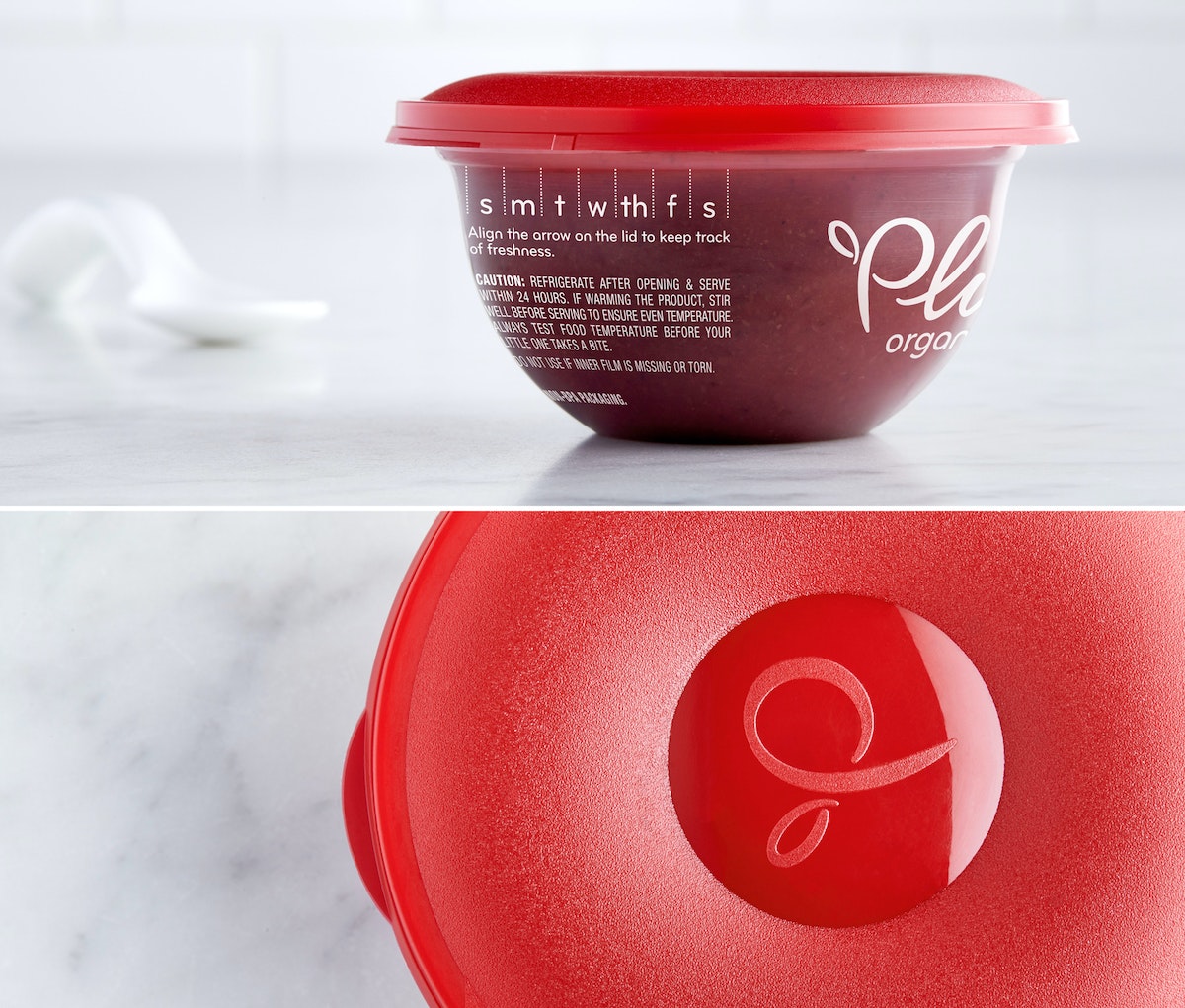
For most parents, ensuring their child’s proper nourishment is a top priority. But that’s not always easy, especially for parents on the go. Plum Organics, an organic baby food company, set out to solve that problem by providing families with pureed fruits and veggies in pouches, making it easy for them to feed their babies. Plum approached IDEO for help designing a non-pouch package that could showcase the vibrancy of the ingredients within.
By conducting research and in-person interviews with families, Plum set out to ensure that the new product was both desirable and functional for parents and their babies. By joining families in their homes, IDEO was able to gather essential insights that helped inform prototypes and the final design, like the fact that nothing can replace the feeling of making an intimate connection with a child through spoon feeding; that baby food is often wasted if a parent can’t remember how long a product has been in the fridge; that families struggle with how to spoon-feed their children on the go without making a mess, and that both parents and retailers were concerned that baby food jars don’t stack securely on shelves.

With those insights in mind, the team designed a transparent bowl that allows consumers to see the natural color of Plum’s vibrant, organic food. A resealable lid makes it easy for parents to store food between feedings, and the container includes a feature that allows them to track the day that they opened the pack to ensure that they don’t end up throwing away perfectly good food. Lastly, the new package is easily and safely stackable and includes a divot in the lid for parents to rest a spoon on, making for a much cleaner and more sanitary feeding experience.
Baby Bowls for Plum are now available at retailers nationwide and are a natural evolution for the brand, helping Plum continue to provide high-quality, organic baby food for consumers and their children, even if they’re eating on the go.

Transforming the way you learn about your DNA with a genomics startup
Helping people harness their genetic information by launching the first store for products powered by DNA.
Accessing our genetic code is as easy as spitting in a tube, but how can we benefit from all that DNA data? IDEO surveyed more than 1,000 Americans about the gene sequencing services they want. "Give me things I can act on,” one respondent said. “Give me advice, action plans, apps, and tools. Information is just air until I can put it to use." As it turns out, tools that can translate our genetic information into better life choices—to improve our health, chart our family history, or even find an effective exercise routine—are hard to come by.
Inspired to organize and apply the wealth of genetic data in all of us, Helix envisioned the first online platform for products that offer insights based on a person’s unique DNA sequence. The startup’s founders approached IDEO to help them get to launch by identifying their future market segments and designing their brand and product offering.
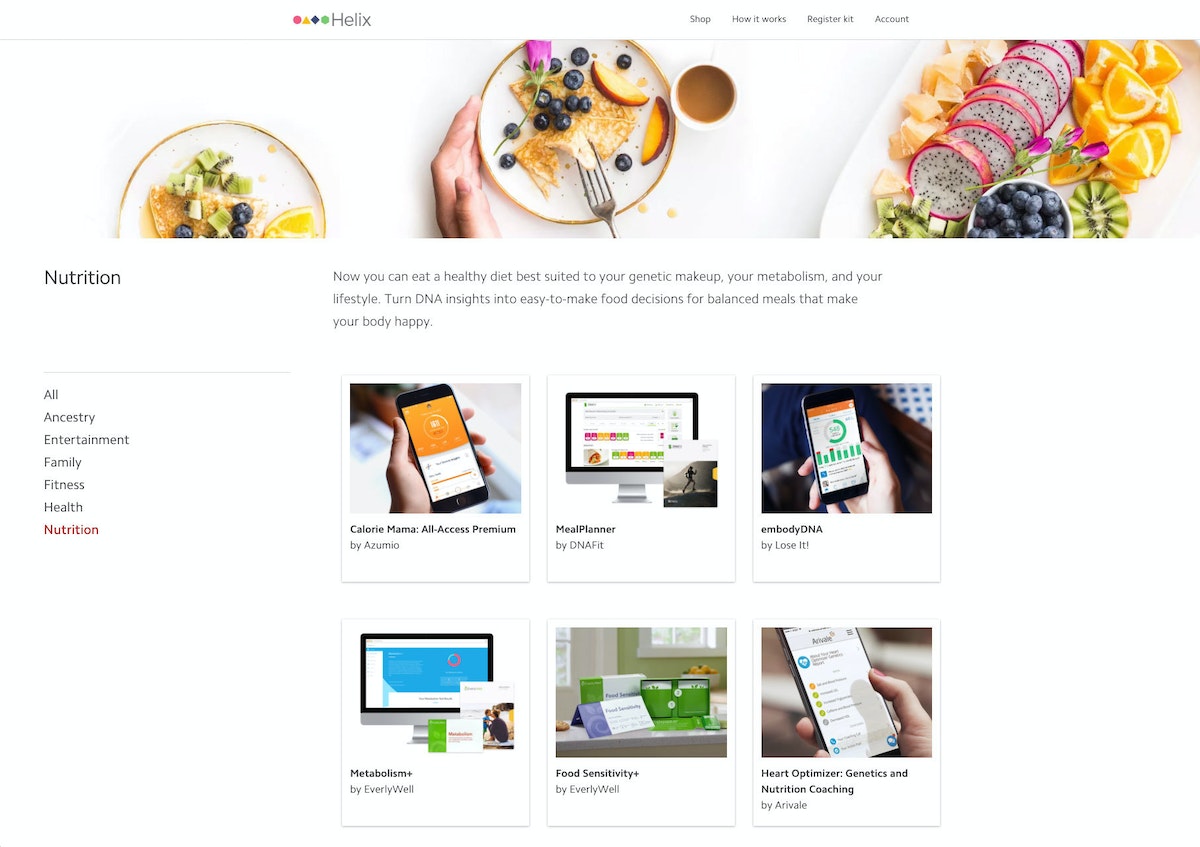
Helix sequences all 22,000 of your genes from one saliva sample—sent in a mail-in kit—and hosts a marketplace of products developed by trusted brands and innovative developers that explore your health, ancestry, entertainment, family, fitness, and nutrition. Similar to the Apple app store, Helix lets you pay individually for the products you want and is a platform for developers to launch new offerings over time. After you've provided a DNA sample once, every product in the Helix store is made available to you on-demand. So, as new products are launched and new discoveries are made in the field of genomics, the data from your original sample is all you’ll need to keep exploring your personal genetic insights.
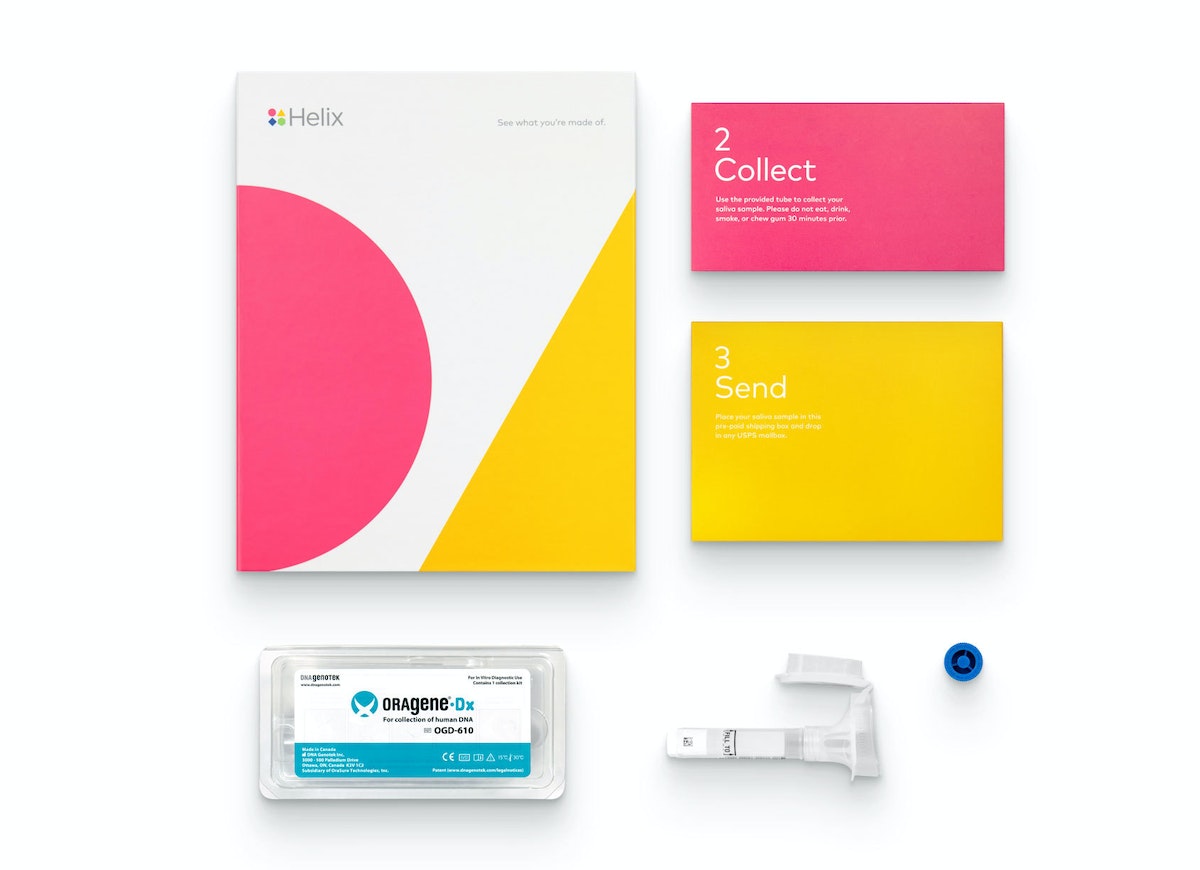
IDEO engaged a range of users, including early adopters of at-home genetic tests and “quantified self” enthusiasts, and surveyed potential Helix customers across the country. That qualitative and quantitative research validated Helix’s “app store” business model and provided key insights into the products people were most interested in.
Through the partnership, Helix uncovered what users need most from a genomics company:
- to prioritize the accuracy and privacy of DNA test results
- to encourage a sense of discovery and exploration of our genes
- to celebrate each individual’s unique qualities
A team of ethnographers, data scientists, and designers at IDEO helped direct the startup’s brand approach (including its name, Helix) and crafted a blueprint for how the company connects with customers and presents its product. The Helix store launched in July 2017.
Our DNA used to be a mystery—something we guessed at by observing our parents. Now, easy access to our genetic code—and the tools to truly understand it—arrives on our doorstep.

Designer’s Playlist #1
A few things IDEO NY's Loren Flaherty can't stop thinking about
Name: Loren Flaherty
Location: New York
Role at IDEO: Senior Communication Designer, which means I work collaboratively with project teams, helping them visually tell the story of the project. Through compelling visual narratives, I move from complex business challenges to strategic solutions.
Joined IDEO: 2014
Instagram: @lorenipsum
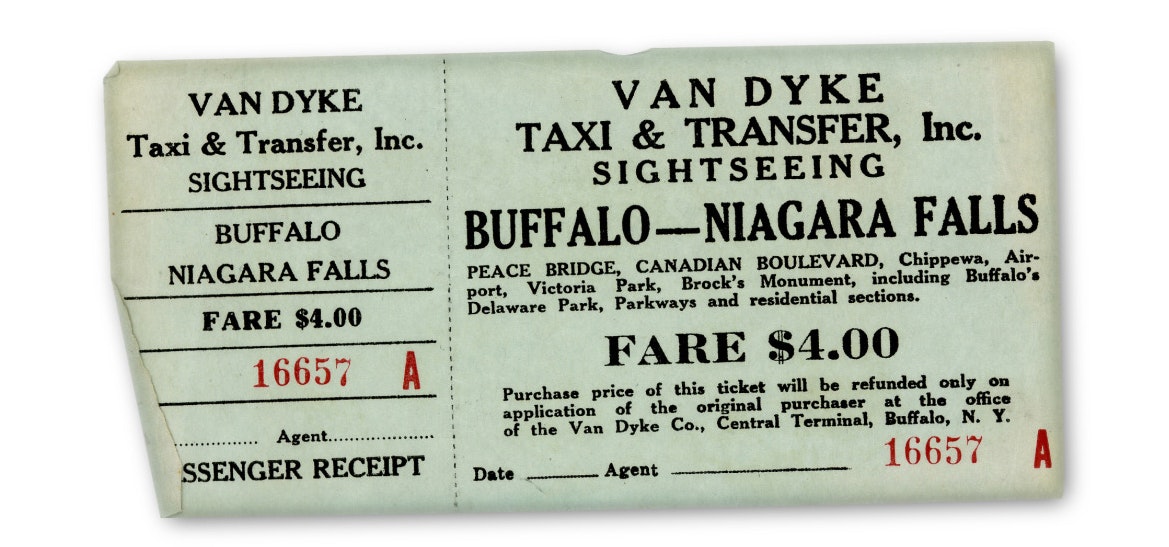
Titillating Fact: I have an obsession with finding numbers and keep a blog called A Number Of to record them. I started the blog in 2009. I find most of the numbers myself, although friends that know about it give me numbers that they find. A couple rules: Numbers must be dominant on the piece that's found, and the piece has to be smaller than 8.5 by 11. I especially like finding pieces when I travel.
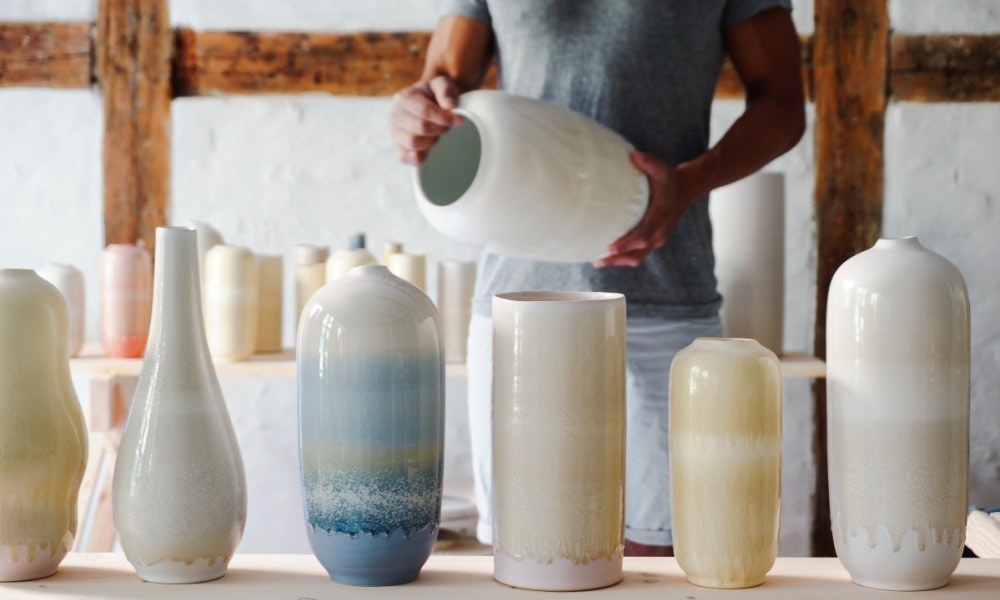
1. Tortus Copenhagen
As a result of doing pottery for a couple years, I try to keep my eye out for inspiring ceramicists. I recently found the work of Eric Landon and Karin Blach Nielsen of Tortus Copenhagen on Instagram. I love the depth and gradient of the glazes on the large curved forms.
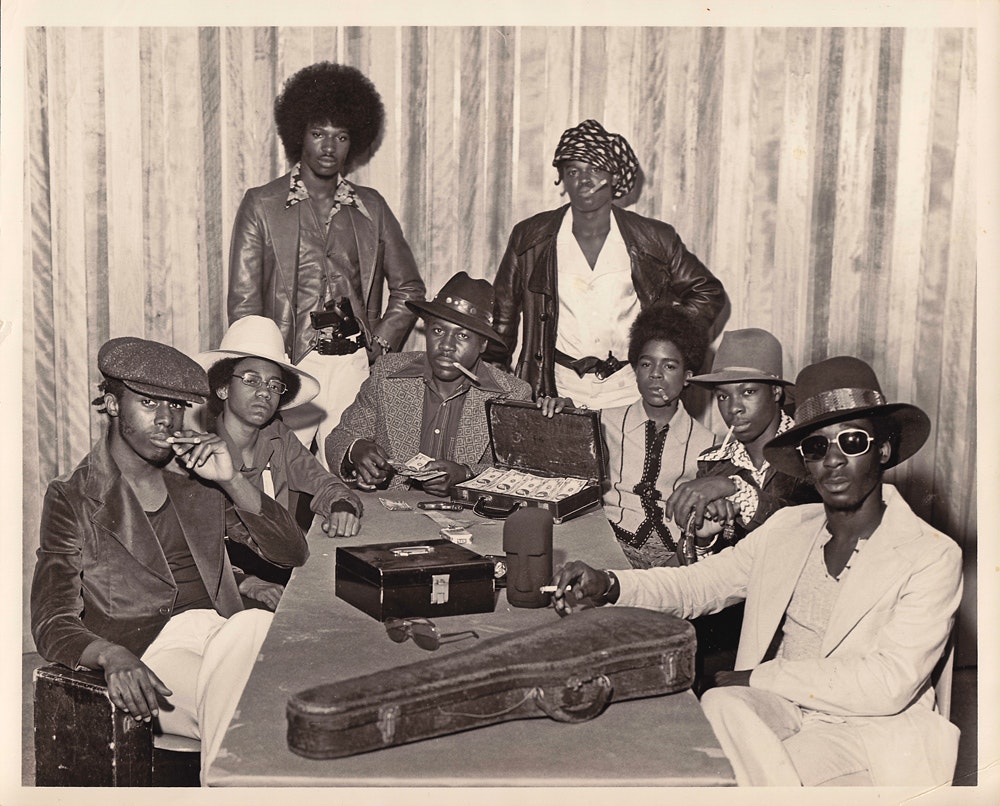
2. Numero Group
I spend a lot of time listening to music while working. I found this label when I lived in Chicago. The label finds otherwise unreleased, dusty, forgotten-about tracks and re-releases them. If you like soul music, check out their Eccentric Soul Series. They have a couple sample playlists on Spotify.
3. Photofit: Self-Portraits
This is an older project but I just re-found it. Fourteen people were asked to create self-portraits using a police Photofit kit from the 1970s, without referring to a photograph or mirror.

In this series, we ask IDEO designers to share the stuff they're digging right now—tools, books, music, sites, people, places—so you, too, can drink from the fount of inspiration bubbling up here. This week's guest star: This week's guest star: Loren Flaherty.

Yes, We Too Have a Podcast
IDEO Europe’s first podcast, How Might We, digs into how technology is changing intimacy
In our first episode, Berlin-based digital design director Anne Pascual sat down with London's senior editor Ed White to talk about how technology is changing intimacy, and what that means for designers.
We set out to speak to some people designing at the edges of intimacy, to better understand both sides.
We spoke to Pia, the founder of a "paid dating" app called OhLaLa, to talk about mobile, expanding choices, and the ever more complicated boundaries of the modern mating game.
We chatted to the founder of OffTime, an app designed to help you get offline and focus on meaningful, real-world moments with your family and friends.
Technology needs to support us in our efforts to reconnect with others, to find intimacy instead of what most of the technology is doing, which is just exploiting our weaknesses.
OFFTIME, MICHAEL DETTBARN.

Lastly, we caught up with Internet activist Zara about how technology both empowers vulnerable people and minority groups. But while people can find comfort online, they’re also increasingly exposed to the dangers of sharing their data.
What will the next episode bring? The future of work, the circular economy, ageing? Let us know what you think: IDEOEurope@ideo.com.
We're always connected, but are we actually connecting? Billions of mobile phones and Tinder hookups later, many feel increasingly lonely, overloaded, and disenfranchised. IDEO Europe’s first podcast, How Might We, digs into how technology is changing intimacy.
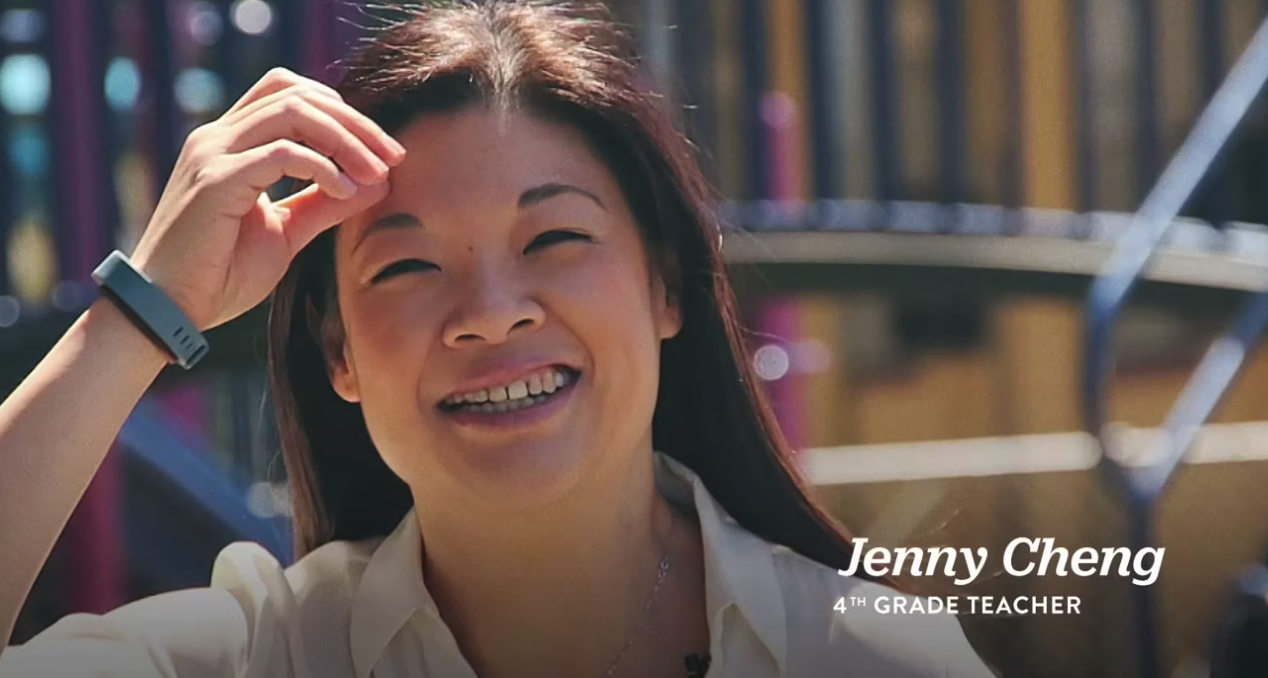
The Teachers Guild: Creating New Solutions for Students and Schools
The Teachers Guild is a professional community that activates teachers’ creativity to solve the biggest challenges in education today. While learning and doing design thinking, teachers build their creative muscles and connect to diverse partner organizations that are committed to bringing their solutions to life.
The Teachers Guild is a professional community that activates teachers’ creativity to solve the biggest challenges in education today. While learning and doing design thinking, teachers build their creative muscles and connect to diverse partner organizations that are committed to bringing their solutions to life. It’s an initiative run by a team of educators and designers from IDEO’s Design for Learning Studio and PLUSSED at Riverdale Country School.
Learn more about the Teachers Guild here.
WATCH: Welcome to the Teachers Guild!
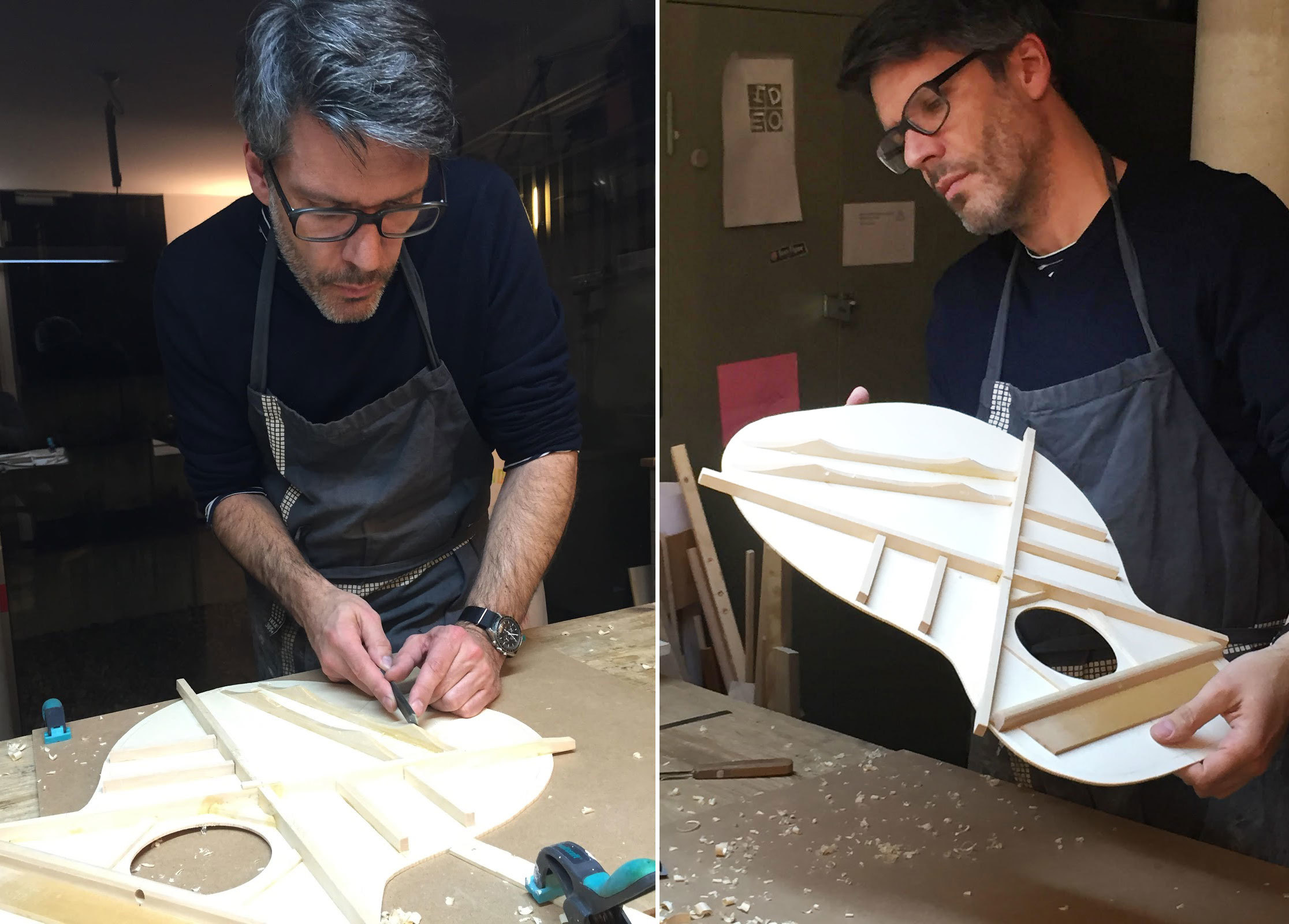
Make a Guitar (at the Office)
Leif Huff shares tips for crafting the perfect axe
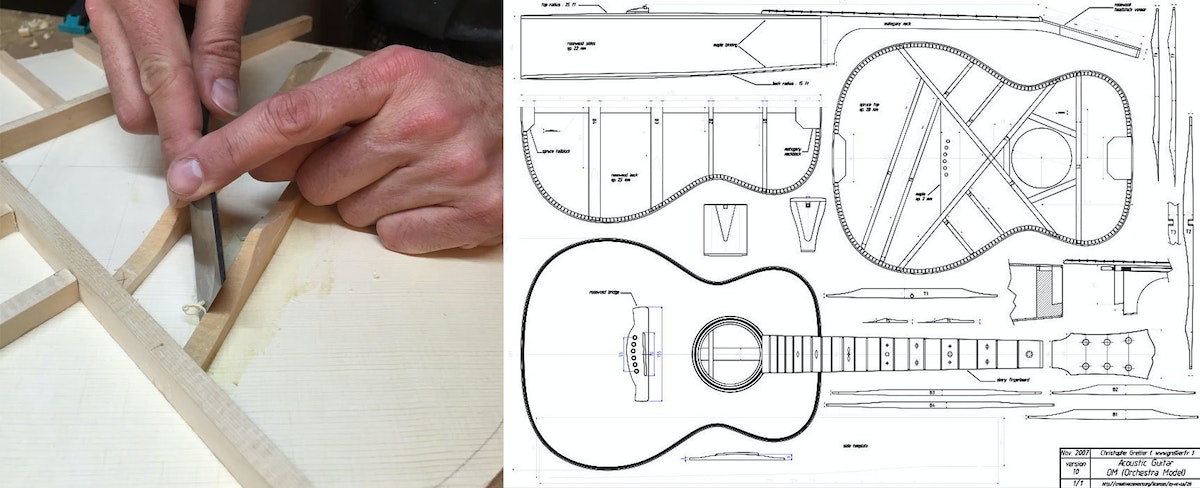
Two years ago, I ordered wood, frets, a few parts, and a couple of guidebooks. After watching hours of instructional YouTube videos, I built a mold and got going.
I’m entirely self-taught. I learned mainly by doing, common sense, and from my experience building models as a product designer. There’s a violin maker next to our office who helped me understand old techniques like hot-bending wood, working with hot hide glue, and using and sharpening wood hand tools.
I’ve finished two guitars, and I’m working on a new one now. I do all of my work on them in our IDEO Munich workshop. The first took about 140 hours to make, over six months. The second one took less time. (A professional builder takes about 40 to 60 hours, for reference.) You can’t rush it and there’s not much room for iteration—it has to be right the first time. I sign the inside of each soundboard so people know where and when it was built, in case someone takes them apart after I’m gone.
I build off a 1930s plan by CF Martin, a German who emigrated to the US in the late 1800s and founded the famous Martin Guitar Company. He invented the American steel-string guitar. The model is called OM (Orchestra Model). It was the biggest guitar made at the time, and was for playing in orchestras and, of course, without amplification. I find its shape beautiful, and it has a fine voice. It’s still built today. It has passed the test of time, I guess.
My latest build is European: a gypsy jazz guitar like one played by famous jazz guitar inventor Django Reinhardt. Created by an Italian guitarist named Maccaferri, it was produced by Selmer, Paris, from the 1930s to the late 1940s. I love that genre, and this guitar has a unique sound.
With the shift to a management position, I’m turning my design skills more towards consulting and away from product design. I miss the focussed work that goes deep, spending time on one project, and having a tangible result after hours of work.
Guitar making gives me all of that. It is extremely rewarding. The result of your work becomes increasingly evident, and at the end you can make music on your own creation, while other guitarists can enjoy what you’ve built. It is an exercise in learning, prototyping, craft, and design.
Guitars have been a love affair of mine since childhood. I was surrounded by music at home: My father plays guitar and taught me to play my first chords. Since I am an avid tinkerer, craftsman, and maker, it was a logical step to build them myself.

Lindsey Turner
I’m passionate about building brands, products, and experiences that help organizations show up with meaning and momentum.
I help organizations cut through complexity by shaping how they show up, through brand strategy, identity, and storytelling.
Working at the intersection of brand and business, I bring an editorial eye and a bias toward making—turning ideas into tangible experiences that people can understand, trust, and believe in.
My work spans government, healthcare, financial services, media, and consumer goods, from launching Gen Z-focused ventures to building innovation labs and reimagining legacy brands. I relish moments of ambiguity and enjoy translating across teams, perspectives, and priorities to move ideas forward.
I started my career in editorial and digital design, shaping cross-platform experiences and identity systems in publishing and agency environments. That foundation still shapes how I work today: I’m detail-oriented, collaborative, and overreliant on the Oxford comma. I hold a BFA in Visual Communication from the School of the Art Institute of Chicago.

Rachel Young
My work helps organizations see who their products aren't working for—and build the will and the tools to do something about it
For 25 years, I've asked the same question: Who does this design exclude—and what are we going to do about it?
My work spans human-centered strategy, inclusive design, and qualitative research, with clients ranging from Microsoft, Google, and Verizon to the National Science Foundation, and San Francisco Unified School District.
Before IDEO, I taught elementary school in East Palo Alto and spent a decade doing design work with social service organizations—where I learned firsthand what it costs people when systems are built without them in mind.
I am currently writing User Error, a nonfiction book about digital access and the design decisions behind it. I live in Oakland, California.

Brian Pelsoh
I lead with craft, ensuring our work is creatively excellent: rooted in deep human insight and imagination, while also grounded in the realities of business and technology.
My expertise spans brand, communication, and product design across tech, education, the arts, and social impact.
I believe great work demands both high-level vision and obsessive attention to detail, and only happens through collaboration.
I bring an inclusive, hands-on approach and a deep understanding of business, which enables me to consistently deliver excellence while always asking why.
Before joining IDEO, I worked at the brand firms Pentagram and VSA Partners. I began my career as a designer, leading teams at the School of the Art Institute of Chicago and the Milwaukee Art Museum. I hold an MFA in graphic design from Maryland Institute College of Art and a BFA in communication design from the Milwaukee Institute of Art & Design, and have taught at some of the best design schools in the US.

Tony Wong
I am responsible for IDEO’s long-term success in China and working with clients to use design as a tool to enable growth.
I am responsible for IDEO’s long-term success in China and working with clients to use design as a tool to enable growth. Specifically, I have helped Chinese companies design holistic brand solutions through the development of their products, communication, services, and innovation teams, and I have helped multinationals expand their presence and influence in China.
I advise global leaders on developing China-led innovation and capabilities.
In over 15 years in IDEO Shanghai, I have worked on projects that use design to elevate the quality of the experience of healthcare products and services, streamline processes that increase productivity, create spaces and programs that promote and enable inclusive communities, and build next generation mobility solutions that are planet-positive.
Before joining IDEO, I worked at Philips Electronics and the Electrolux Group in Italy, the Netherlands, and Singapore on a number of breakthrough commercial products. I am a member of the Young President Organization in Shanghai.

Building a personal AI for the messiness of life: Sida Li
Most AI products today are built for work—a space with clear problems and established systems. One founder noticed a gap: personal life is messier, harder to systematize, and mostly left behind by the AI boom. So she built Cue, a personal AI that lives inside iMessage and group chats, to go where the other tools haven't.
In this episode, Becca Carroll, IDEO's Chief Strategy Officer, talks with Sida Li, co-founder and CEO of Shared Context Lab, about staying anchored to a human need while the technology around her keeps changing shape, why she treats her business model with the same rigor she'd bring to a product, and what it feels like to build a company at this particular, disorienting moment in AI.
The conversation also gets into how Sida makes design decisions: the language Cue uses to describe itself, the tradeoffs behind building inside iMessage instead of a new app, and a real story about a business idea that didn’t pan out.
This is the second in a two-part series profiling founders from IDEO's Startups-in-Residence program. The first conversation is with Johannes Seemann, founder of Sooner, on designing GenAI for the emotional side of money.

Designing GenAI for the emotional side of money: Johannes Seemann
Most personal financial tools are built to run the numbers and optimize towards a budget. While that works for some, most people experience money as a lived relationship that does not neatly fit into a spreadsheet. Johannes Seemann and Becca Carroll discuss why money is emotional before it is mathematical, and what a human-centered approach to building a generative AI financial product looks like in practice.

The curious leader's edge in uncertainty: Scott Shigeoka
Mina Seetharaman talks with Scott Shigeoka, author of Seek and Head of Curiosity Cultivation at the Eames Institute, about what distinguishes genuinely curious leadership from performative curiosity, how power dynamics shape curiosity, and why practicing curiosity can restore energy rather than drain it.

How constraints make us more creative: David Epstein
Mina Seetharaman talks with David Epstein, author of Inside the Box and Range, about why total freedom often produces average work, how leaders can design useful limits on purpose, and what organizations such as General Magic and Pixar reveal about the relationship between boundaries and creativity.
Looks like you might be in search of something very specific?
Or reset the filters above and try another angle.
Here’s some random inspiration

Podcasts about creative leadership

Articles about the power of prototyping
