
.svg)




Helping a startup design video games to build kids’ emotional strength
A one-month sprint to develop new products—and a new way of working.
For 6-year-old Dave Jr., a long line at Disneyland triggered a massive meltdown. His parents were concerned and a little embarrassed, but not surprised; Dave Jr. struggled to keep his emotions in check.
Hoping to help, Dave Jr.'s uncle, entrepreneur Craig Lund, joined forces with researchers at Harvard Medical School and Boston Children’s Hospital, along with a video game designer who had worked on Quick Hit and NBA 2K. Together, they set out to design something that could teach coping skills to kids like Dave Jr. who need to manage “big emotions,” as well as children suffering from anxiety, ADHD, and other behavior issues, which are on the rise.
Their collaboration resulted in a video game called Mightier and a startup called Neuromotion Labs—a 10-person team of psychologists, game designers, and engineers who embedded at IDEO Cambridge for a one-month sprint to improve the game and get ready for launch.
To play Neuromotion's game, kids are first taught simple, calming breathing exercises. During gameplay, kids wear heart-rate monitors on a wrist or arm that detect spikes caused by stress or anger; as their heart rates go up, the game's difficulty increases. Kids have opportunities to pause and try deep breathing to counter the ramped up challenge. As it turns out, "gamifying" restraint builds strong incentives for kids to take charge of their emotions—they have to if they want to win.
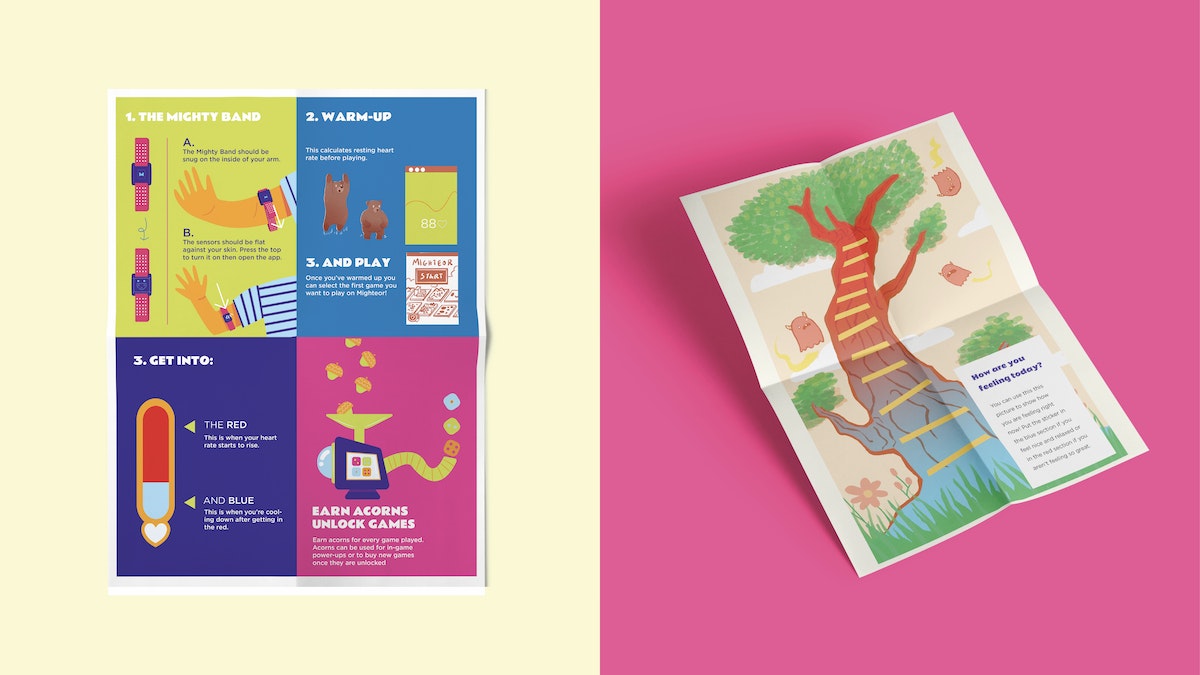
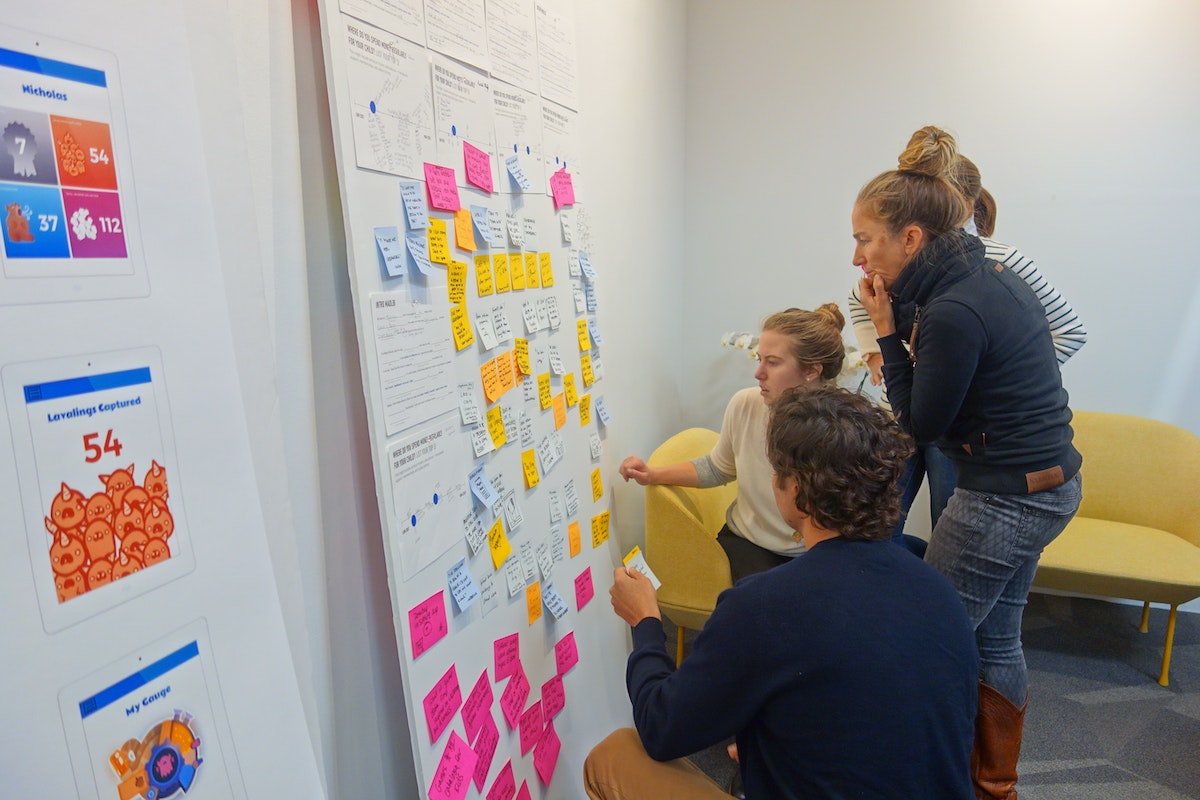
Already activated around boosting mental and emotional health, IDEO's design team worked side-by-side with Neuromotion to study how parents and children experience Mightier. From home visits to group interviews to a summer camp-style design session with kid players, live feedback fueled the next iteration of the gaming platform and better product-market fit.
IDEO helped Neuromotion hone the visual design and mechanics of Mightier and expand it's suite of games. The team observed that the Mightier program was more successful the more involved parents of players became, which revealed a need for additional resources for adults. So they created new supports, including a more detailed orientation and a personalized coaching service for parents staffed by trained therapists.
But can a video game actually help kids cope? Early peer-reviewed studies showed that playing Mightier reduced outbursts by 62 percent, oppositional behaviors by 40 percent, and parental stress by 19 percent. After 12 weeks of using Mightier, a survey of kids and parents showed that 96 percent of parents saw positive behavior changes in their children, while 92 percent of kids learned new coping skills.
Shortly after the design sprint, Neuromotion secured its next round of funding and officially launched Mightier’s array of “bioresponsive games.” The games have already been played more than a million times, and Neuromotion has measured more than a 100 million heartbeats. Mightier games are helping kids and families across the country.
What about Dave Jr.? Recently, his sister told Lund she "accidentally" bumped Dave Jr.’s bike off a pier and into the ocean. She was expecting an outburst of anger, but after eight months of playing Mightier, Dave Jr. stayed cool. His uncle couldn’t be prouder.
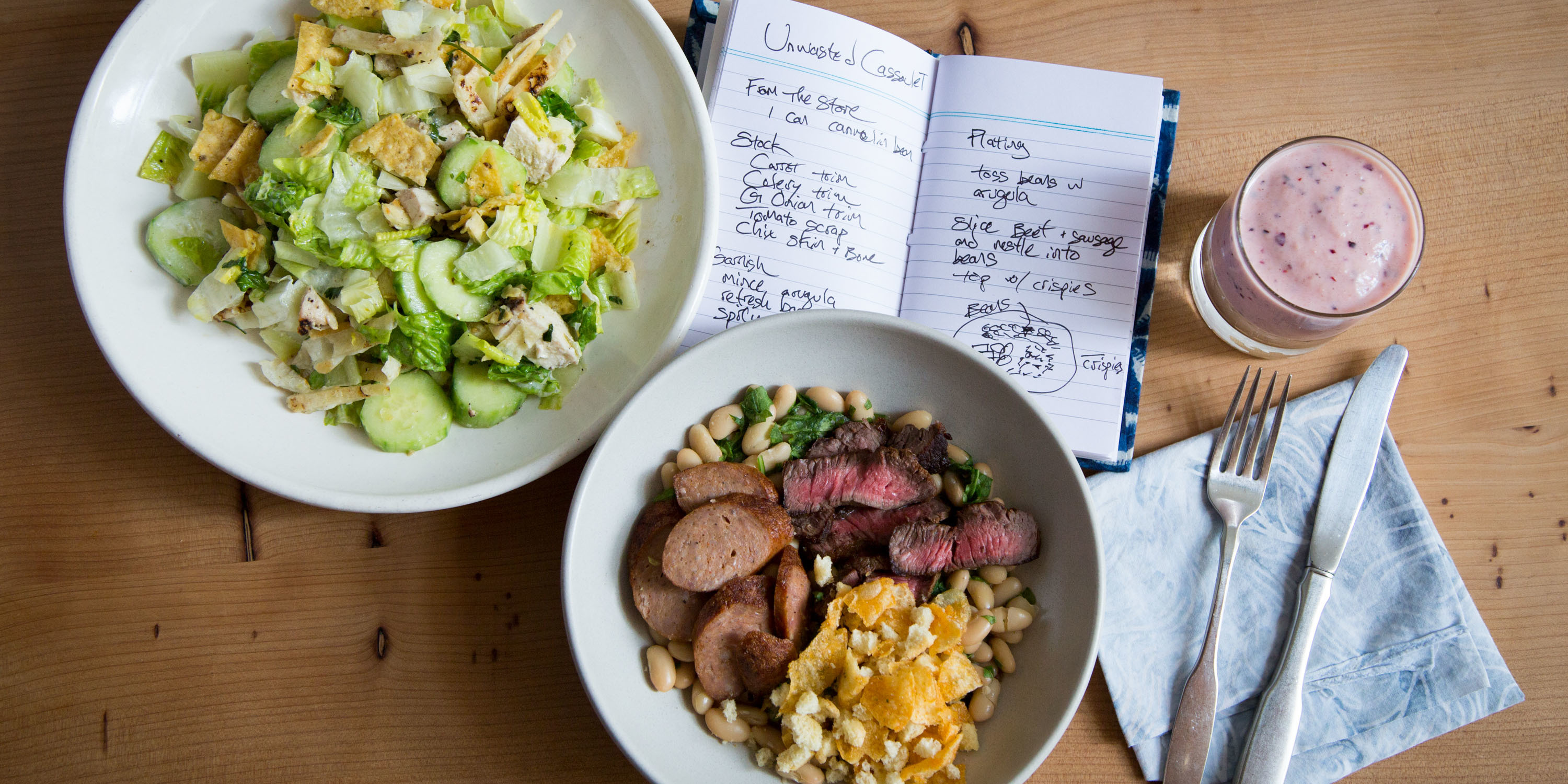
Designing waste out of the food system
IDEO partnered with hotels, food banks, foundations, and entrepreneurs to combat food waste.
Many of us have let vegetables wither in the crisper drawer, or thrown out a child’s half-eaten restaurant meal, but the sheer scale of food waste around the globe is hard to grasp. According to the United Nations, about a third of the food the world produces every year—1.3 billion tons—is lost during production or tossed by consumers, with North Americans throwing out the most food per capita. The average American wastes enough food each month to feed another person for 19 days.
IDEO received a series of grants from The Rockefeller Foundation to find solutions, given the power of IDEO’s human-centered design approach to address systemic challenges. Through a number of projects with The Rockefeller Foundation and other organizations, IDEO designers from across the U.S. devised novel ways to tackle food waste.
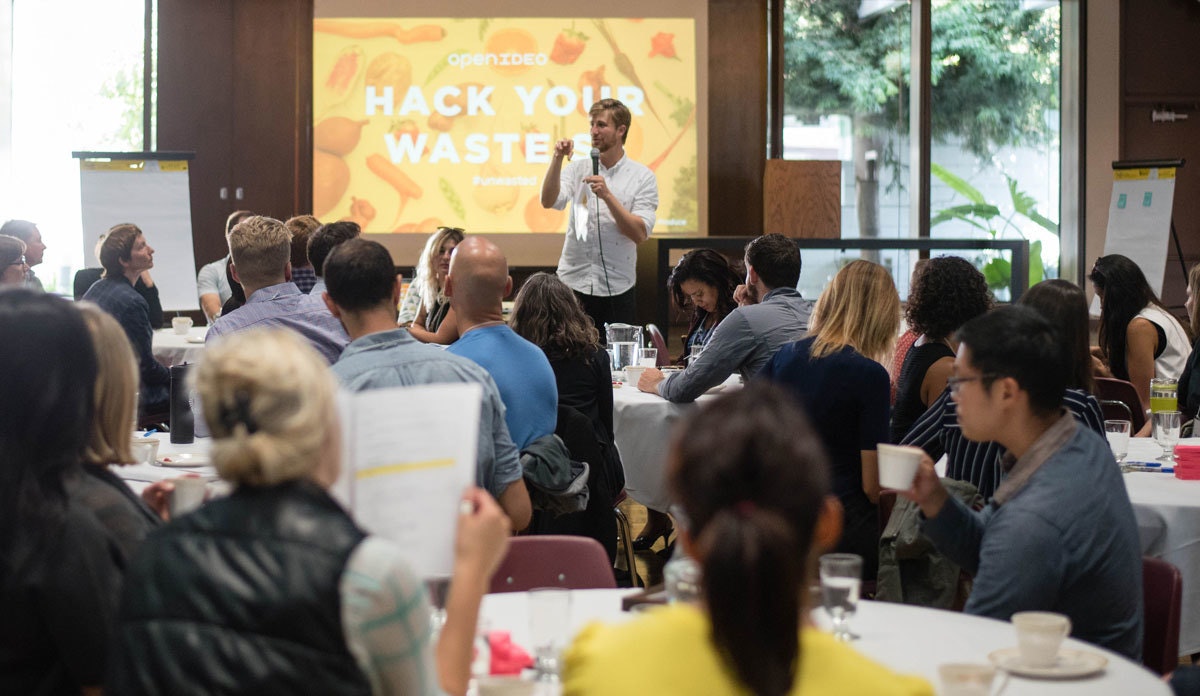
For IDEO’s first initiative, designers tapped into the enthusiasm of the broader creative community, in partnership with The Rockefeller Foundation, the City of San Francisco’s Department of Environment, the Closed Loop Foundation, ReFED, and other groups. In the summer of 2016, OpenIDEO—IDEO’s open innovation practice—launched the Food Waste Challenge, asking how people might curtail waste by rethinking our relationship with food. Between June and October, more than 20,000 people from 113 countries took part in the challenge, tracking their personal waste and brainstorming solutions.

Challenge participants submitted more than 450 ideas. A team of food industry experts helped select the 12 top proposals, which included software to help people buy food collectively from wholesalers and a service that delivers extra meals from corporate events to those in need. Ultimately, the Closed Loop Foundation chose to award Full Cycle Bioplastics a $50,000 grant to scale up its idea to convert inedible food and paper waste into a fully compostable alternative to oil-based plastic.
At the conclusion of the Food Waste Challenge, OpenIDEO launched the Food Waste Alliance, a platform for participants and experts to stay engaged with the most promising ideas and innovators. The alliance helped entrepreneurs share resources, prototype new concepts, secure funding, hire staff, and form partnerships. OpenIDEO invited hundreds to join the alliance, and 92 percent of members told IDEO they made progress in their work as a result. One member company, RISE, received funding from another participant who discovered RISE through the alliance. This investment let RISE prototype its concept for milling spent grain from beer brewing into flour for baked goods and ultimately join the prestigious Food-X accelerator.
The Rockefeller Foundation also supported IDEO’s work with City Harvest, a New York organization that collects 160,000 pounds of unused food each day and delivers it to soup kitchens and food pantries. City Harvest wanted to understand the habits of local families who visit food banks in an effort to ensure all the food the group distributes gets eaten. To get a peek into these families’ kitchens, in January 2017, IDEO researchers conducted observations and interviews across New York City’s five boroughs. Pantry customers cooked for the researchers, giving them an inside look at how the families engaged with the food they had available and what food meant to each of them: tradition, stability, even adventure. Based on insights from pantry visitors, IDEO made recommendations for City Harvest, including community-run cooking classes and a way for families to request specific foods or reserve pick-up times by text message. IDEO also created three video vignettes to help build even greater empathy between City Harvest and the people it serves.
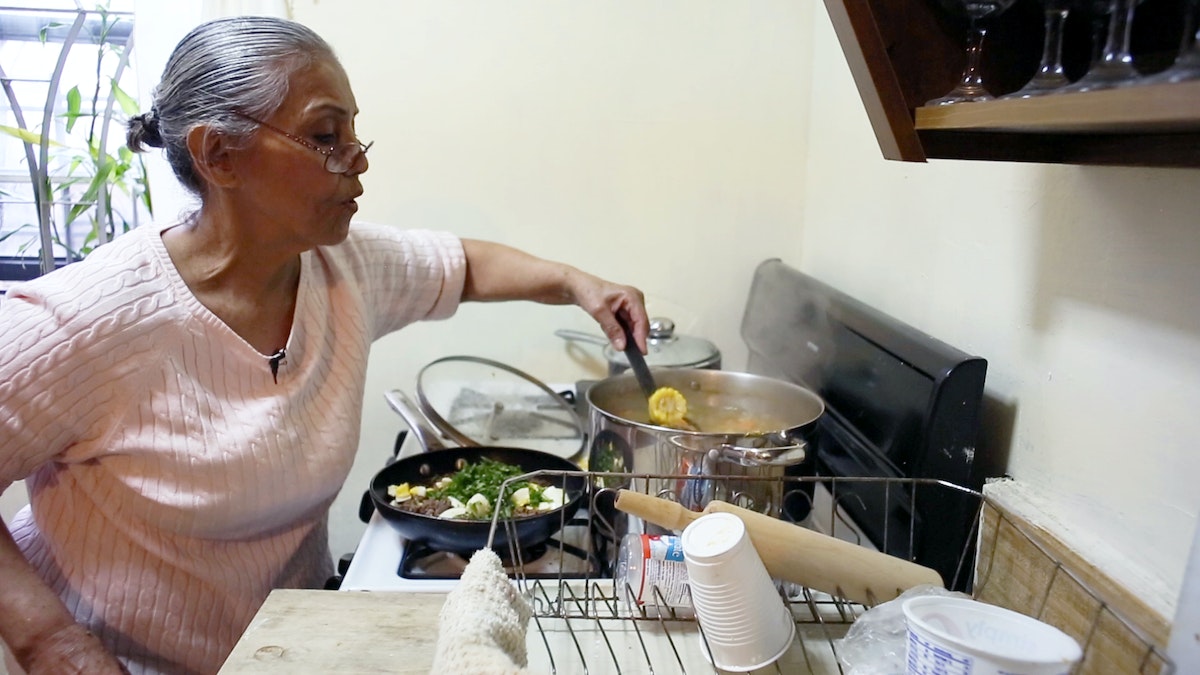
In spring 2017, capping IDEO’s work with The Rockefeller Foundation, the organizations teamed up with World Wildlife Fund and Hyatt hotels in Florida, New York, and New Jersey to rethink all-you-can-eat buffets. IDEO studied diners and staff at Hyatt buffets and found that employees—from event planners to kitchen staff—each add a cushion of extra food to cover their bases, while guests overfill their plates to avoid missing out. In the end, diners eat just half the food organizers serve, while the rest goes to waste. This and other data-driven insights gleaned about diners’ habits led to subtle substitutions, including smaller plates of meats and cheeses that can be ordered from servers and individual pastries rather than whole cakes. These alternatives have not only built on Hyatt’s existing food waste management strategies, but have also helped reduce buffet costs at Hyatt Regency Orlando and continued to receive support from guests.
The problem of food waste is too enormous to ignore. Wasted food means squandered resources, lost money, and ultimately, hungry people—more than 15 million in the United States alone. Designers and innovators from coast to coast have helped find solutions to the crisis that fulfill a variety of needs, from preserving produce sent to food pantries to keeping plastic packaging out of the oceans. The Rockefeller Foundation and other IDEO partners are leveraging powerful design techniques to pave the way for a waste-free future.
Launching a bootcamp for data scientists
Designing a rigorous program that prepares students for a career in the data-driven economy.
In 2017, IDEO acquired longtime partner Datascope and integrated the company’s data scientists and engineers. Datascope team members aren’t just passionate data scientists; they’re human-centered designers who happen to work with data, as illustrated by successful collaborations like this one:
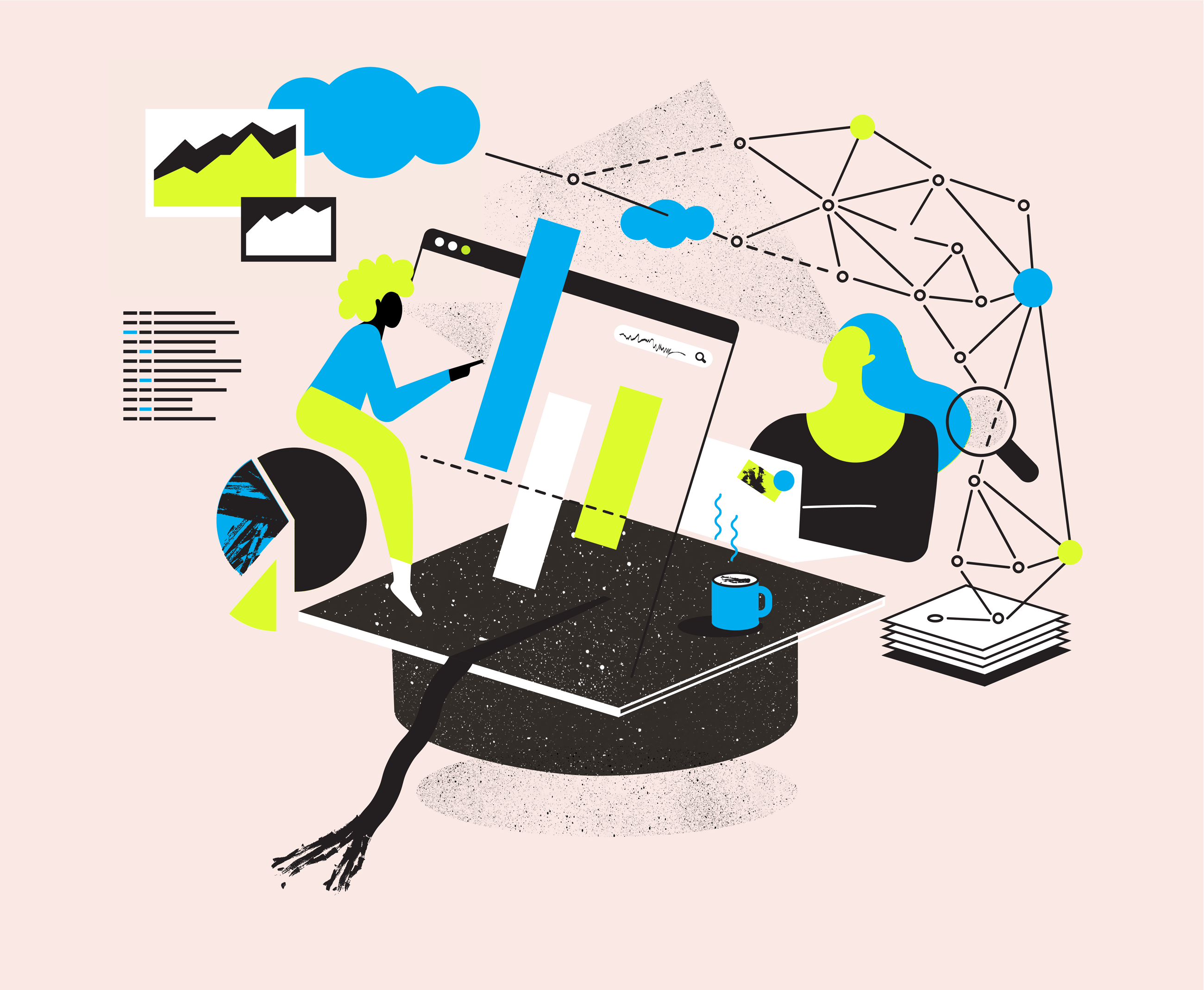
In today’s job market, there’s no such thing as being "done" with your education. This is particularly true in the fields of data science, machine learning, and AI, where significant advances are made on a monthly basis. To meet this need for more in-depth training, Metis—part of Kaplan—wanted to create a comprehensive data science program for students from all backgrounds. Metis asked Datascope to design the curriculum from scratch, drawing on the company’s deep expertise in the field.
Datascope spoke with practitioners across industries to identify the key skill sets that make them successful: a grasp of design; fluency with data management, coding, and algorithms; and effective communication with coworkers and the wider world. The team crafted a 12-week bootcamp that develops these specific abilities.
In order to prepare students for the work world, the bootcamp is structured less like a class and more like a company, where students are “hired” as data scientists—with projects to complete—starting on day one.
Students collaborate on group projects and presentations in a way that mirrors real workflows, and practice pair programming to learn from one another. Using techniques drawn from design, students are invited to refine their project briefs and continually reevaluate their approach.
Instead of a final exam, at the end of the course, students tackle five real-world, open-ended data science projects inspired by Datascope’s client work. One project involves using data from subway turnstiles to detect patterns in the volume of street traffic; another asks students to use data they scrape from the web to predict a movie’s box office profits using regression analysis.
After students complete the bootcamp, they receive an additional three months of career support, from mock interviews to site visits with potential employers. In addition to designing the curriculum, Datascope taught the first three student cohorts and helped Metis build its teaching team as it expanded the program from New York to San Francisco, Chicago, and Seattle. Metis now offers online courses, evening classes, and corporate trainings in data science.
If you’re going to take a data science bootcamp, it’s best to take one designed by data scientists.

Designing the Levi’s Commuter Trucker Jacket with Jacquard by Google
When Google teamed up with Levi’s to craft a jacket with technology woven in, the company turned to IDEO to help make the experience of wearing the garment feel seamless, intuitive, and familiar.
You’re whizzing along on your bike, en route to a new restaurant for a client meeting. You reach an unfamiliar intersection; which way to go now?
Instead of dismounting and digging for a phone, you brush your hand along your jacket sleeve for directions, then double-tap the denim to re-start your music. Without taking your eyes off the road, you’ve taken care of the problem.
This intuitive interface for connected apparel began with Levi's, makers of durable workwear for 140 years, and Google, creators of forward-looking technology, which joined forces to fashion the first item of clothing with touch-sensitive, copper-core threads woven directly into the fabric. Once it was established that the first connected garment from the partnership would be a jacket within Levi’s Commuter line, with interaction on the sleeve, Google worked with IDEO, leaders in designing for human needs, to develop the gesture language of the jacket and industrial design of the technology within.
This is the first connected garment that helps us break free from devices. It seamlessly incorporates Jacquard by Google technology to perform digital tasks, such as navigation, communication, and music playing with a few swipes or taps on the sleeve.
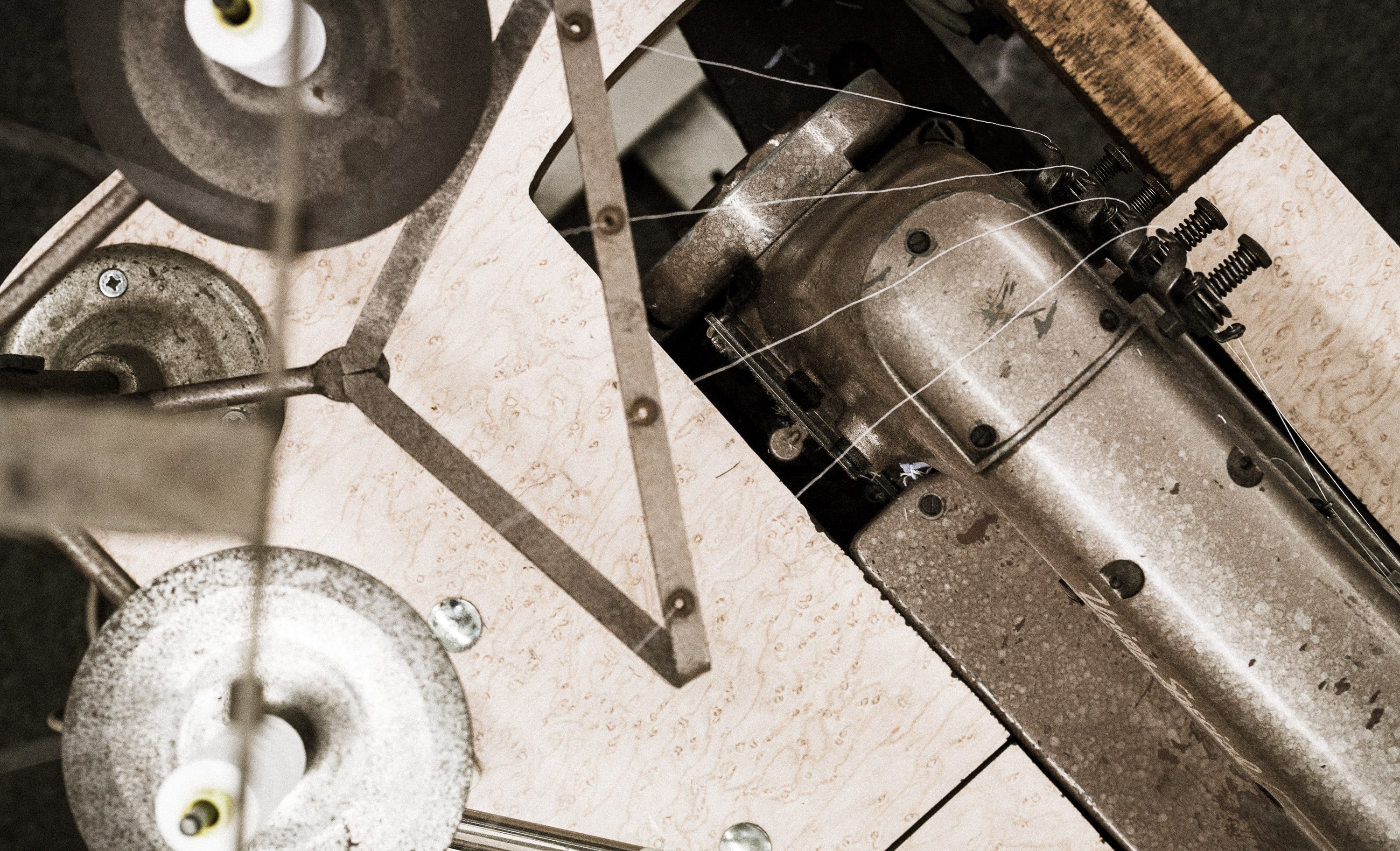
Jacquard by Google—a platform that makes it possible to integrate touch and gesture interactivity into fabrics using conductive yarn and standard, industrial looms—was inspired by a curious twist of history. The Jacquard loom, invented in France in 1804, used punch cards to automate the process of weaving complex patterns into fabric. In the 1940s and ’50s, engineers employed a similar punch-card technique to program the first computers.
IDEO spent time on the project early on, collaborating with Google engineers and Levi’s clothiers on the jacket’s development, helping craft an experience that would make the intelligent threads intuitive to wearers.
Working alongside Google and Levi’s, IDEO’s work included:
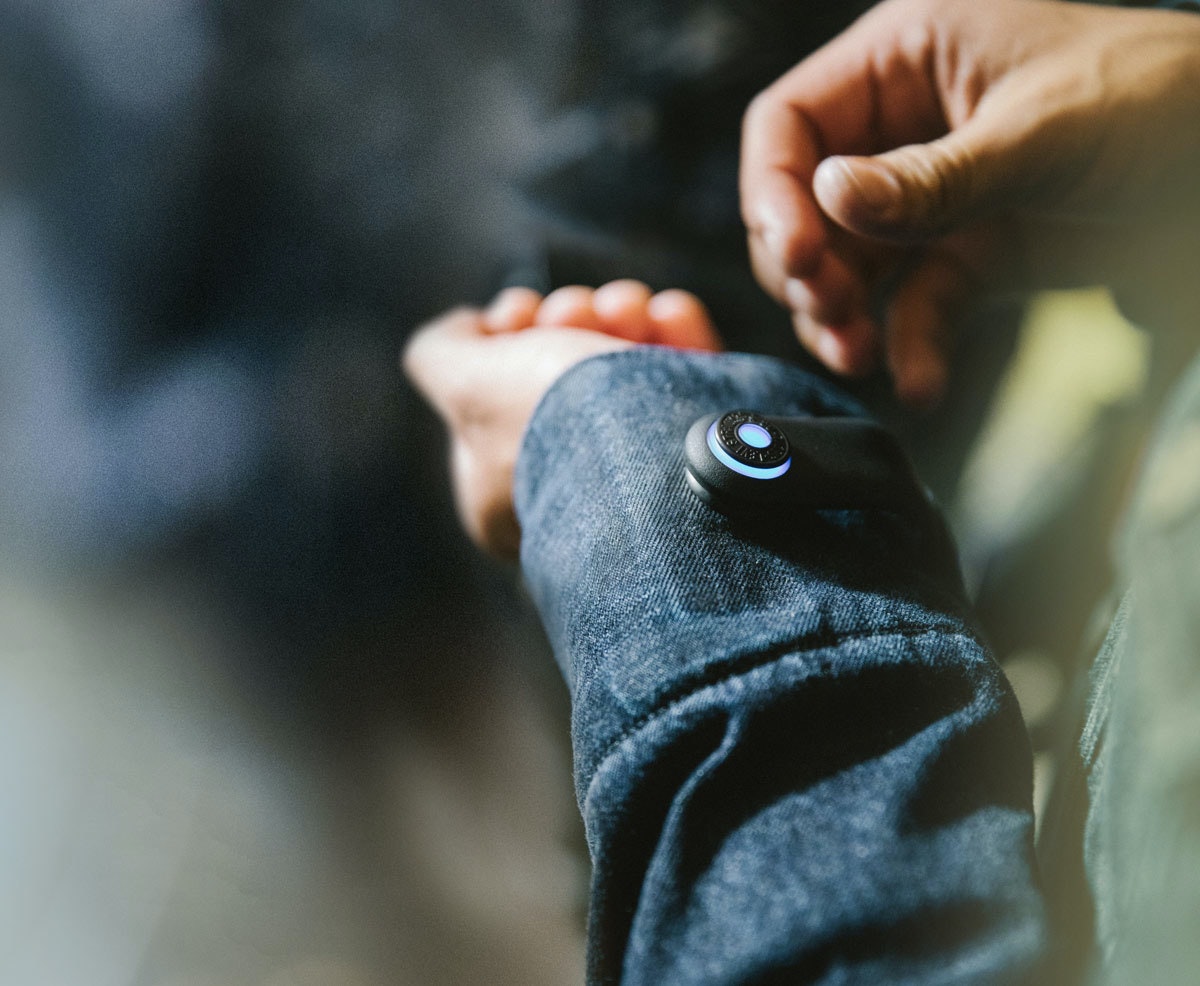
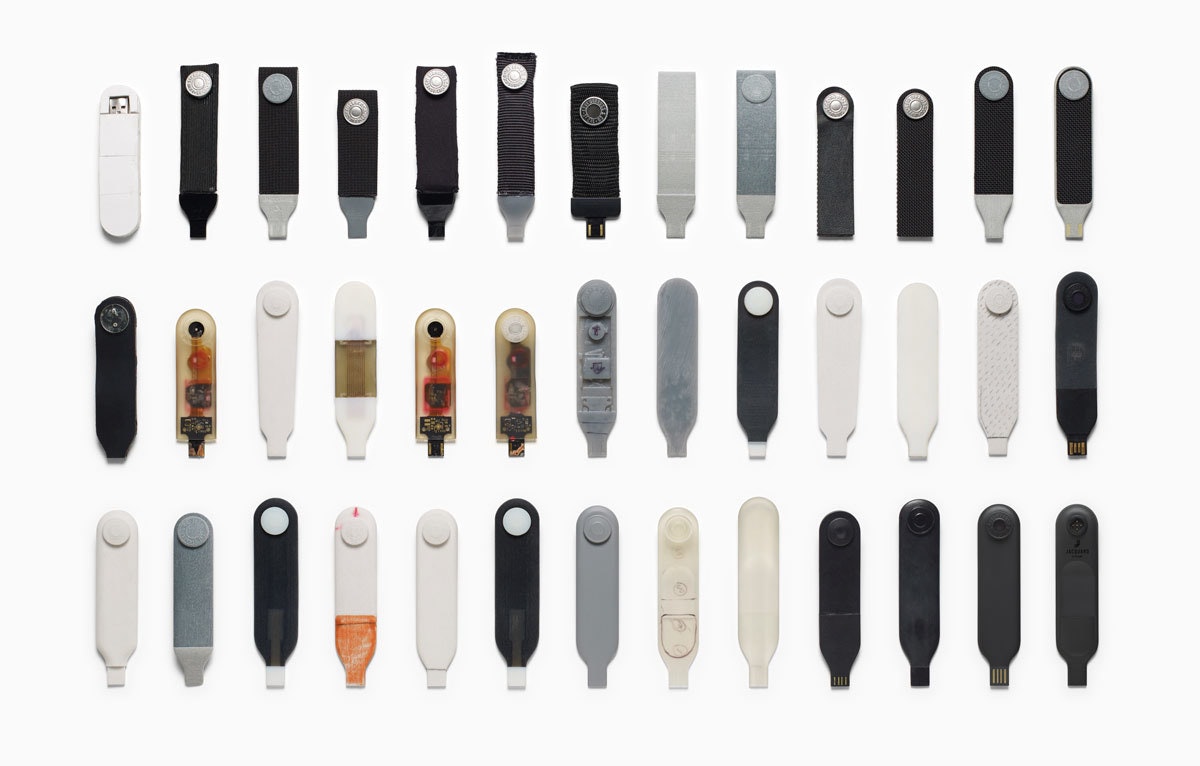
- The industrial design of the electronics integrated into the snap tag and connector (the tag snaps onto the jacket’s cuff and connects to your phone via Bluetooth)
- A vocabulary of gestures on the cuff of the jacket that lets you interact with the jacket’s technology
- Early exploration of the basic design philosophy and conceptual design for the interaction model of a corresponding smartphone app that ties it all together (works with both iOS and Android phones)

The IDEO team’s first task was to validate what commuters of all stripes wanted from the garment, in addition to the work Levi’s did in researching with its consumers. In interviews, group exercises, and wear tests with urban cyclists and other workers on the go, the team learned that cyclists needed a way to stay connected, while still living in the moment. That meant being able to answer calls, hear text messages, get the next direction, and control their music without using a screen.
Levi’s, Google, and IDEO developed a language of movement for Jacquard-enabled fabric that feels familiar and human and builds on the ways people would naturally interact with a garment (a whole-hand brush along the sleeve, as opposed to a one-finger tap on a touch screen, for instance).
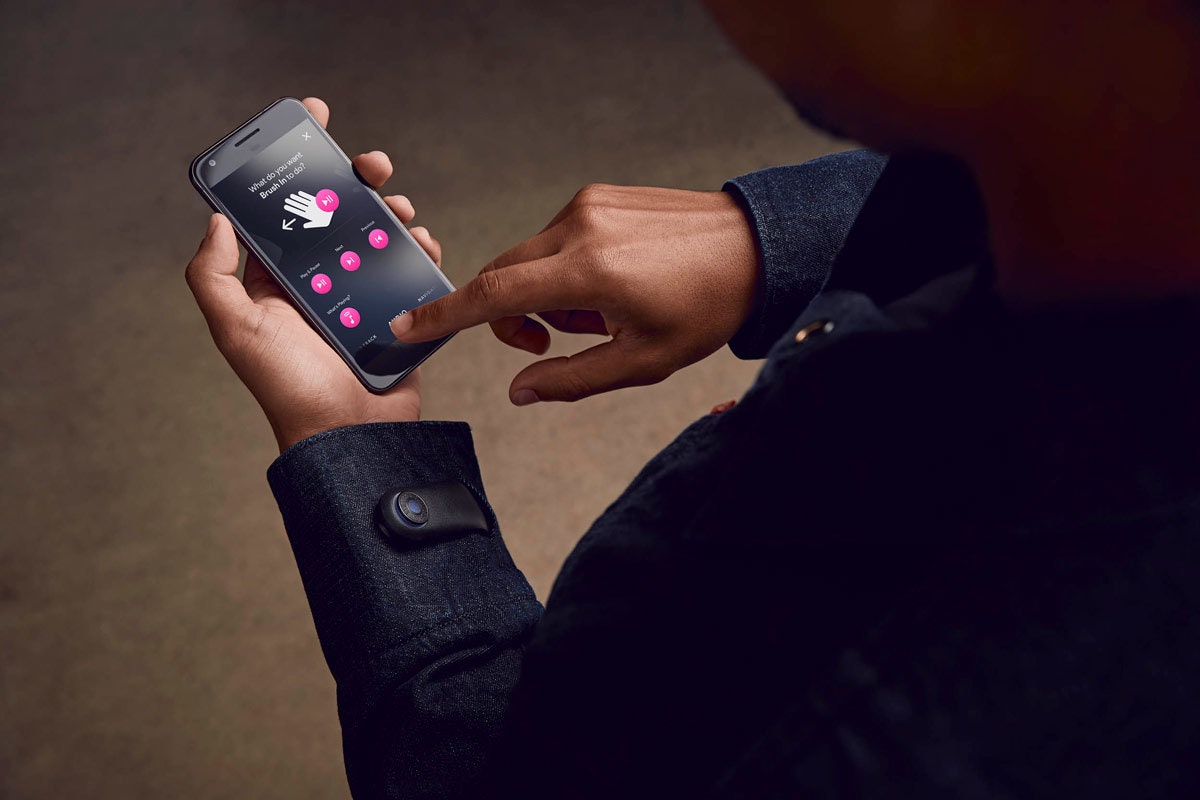
Then came the design and engineering of the snap tag on the jacket’s cuff, which gently notifies you of calls, texts, and other jacket interactions with light and vibration feedback. The flexible, lightweight strap incorporates the look and feel of a Levi’s jean button, while housing advanced electronics that capture touch data. The tag is removable, charges via USB connection, and works in conjunction with a mobile app that lets you configure settings for the garment, set notifications, and customize gestures and interactions.
The Levi’s Commuter Jacket with Jacquard by Google changes the game because it’s simply that—a jacket—with technology that adds new utility and value, allowing us to wear our everyday interactions on our sleeves.
The Levi’s Commuter Trucker Jacket with Jacquard by Google hit stores in October 2017.
IDEO and Google have a long history of collaboration. Learn more about our work on Google Bloks here.
This Menswear Maker Works out of a 19th-Century London Workshop
A hidden, rain-damp shop houses S.E.H Kelly’s obsessively detailed clothing line
In one sentence, who are you?
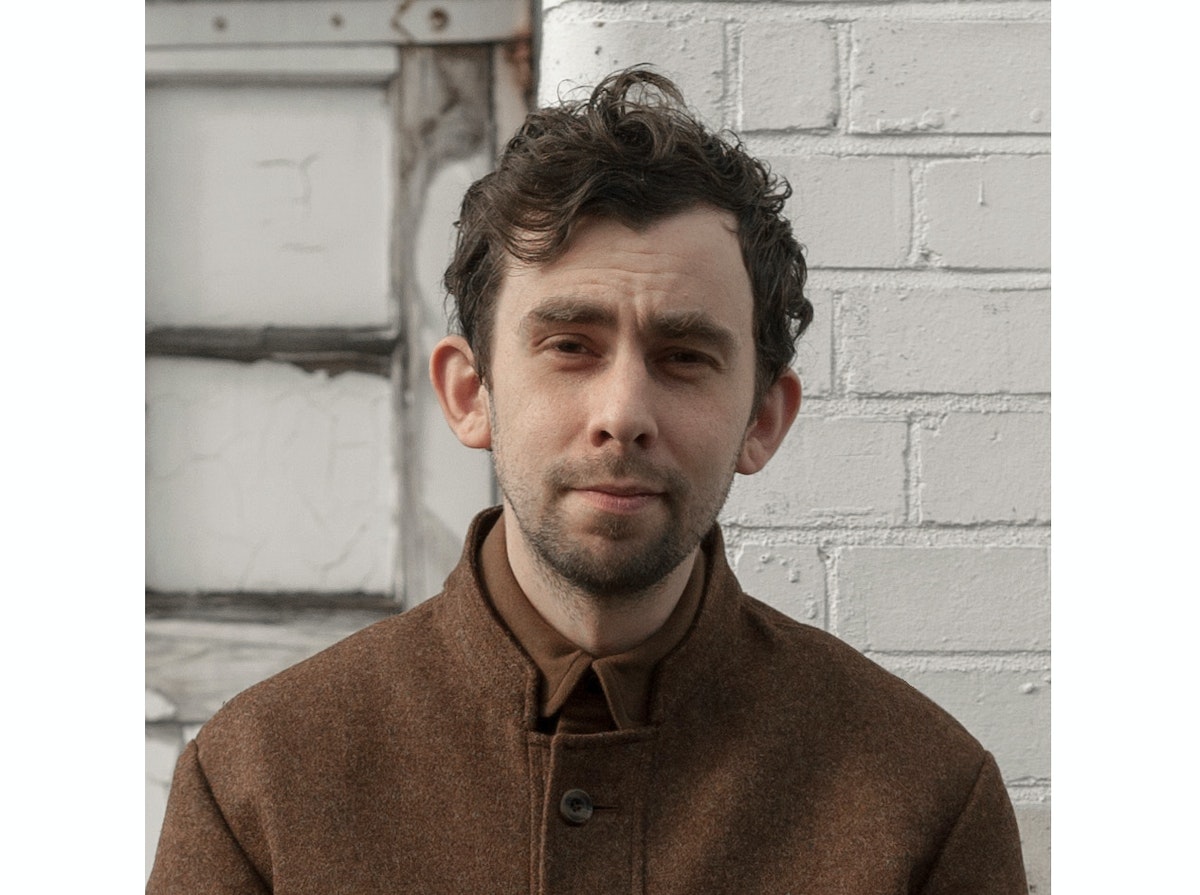
I am Paul, and I run S.E.H Kelly, which is a menswear company based in London.
What do you do? How did you learn it?
We make clothes for men, every aspect of which—the cloth, the buttons, the buckles—is made by suppliers from around the British Isles. There are two of us at the company, and the other one, Sara, learned the trade in a tailoring house on London's Savile Row. I have a background in retail and design and other things, and together we cover most bases.
3 favorite possessions?
I don't really cherish possessions. I like my watch, which was a Christmas present, and—well, my bag is very much appreciated, being as it carries half my life without much complaint. My third favourite possession eludes me, sorry.
What does a typical work session look like?
Wake up, reply to emails, get train to workshop, pick up things, get train to a factory, drop off things, reply to emails, run around chasing up problems with cloth or patterns or making, eat, reply to emails, wrap and pack orders, print order documentation, walk to post office to send orders, walk back to factory, tie up loose ends, tidy up, get train home, eat, update or fix website, reply to emails, bed. Oh—and fit in some design if chance permits.
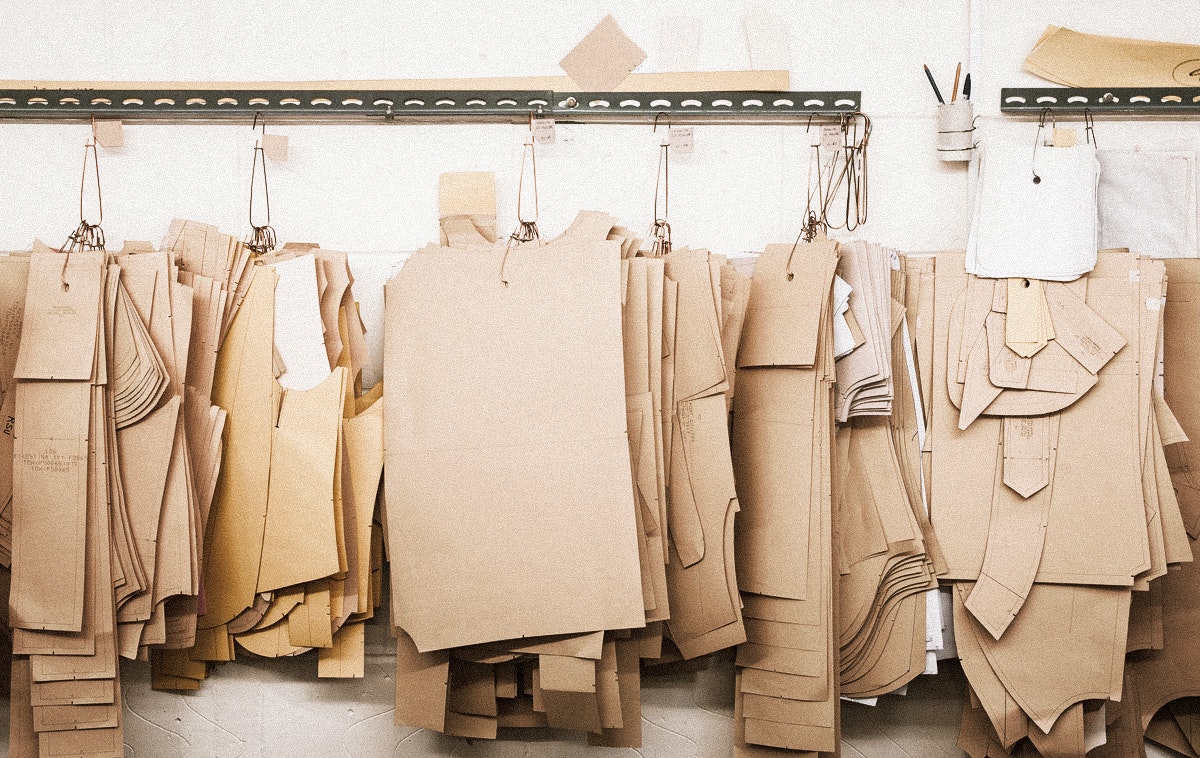
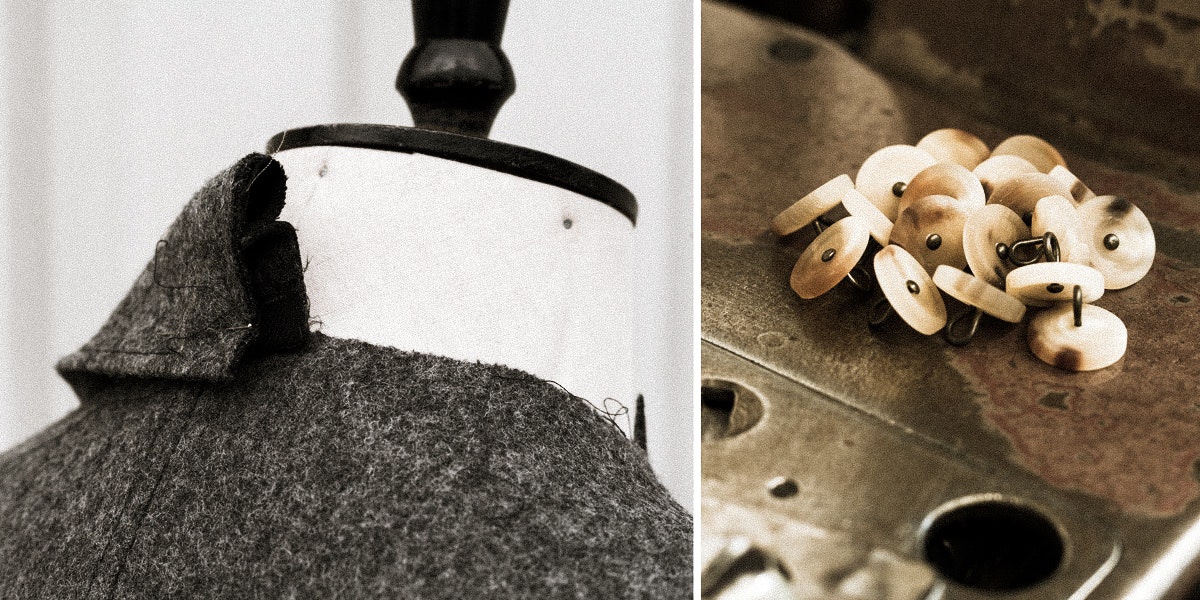
The workshop is our headquarters, and is first in a row of very small workers' units built at the end of the 1800s. It has a downstairs where we hang a selection of our garments and store various components such as buckles and horn buttons; and an upstairs, where we use a makeshift office and undertake the various more moribund duties of running a business.
It is a good little space—although rather dark—and is difficult to locate even when you're standing nearby. Visitors often remark, "Not easy to find, are you?" which I take as a compliment, since I've always enjoyed visiting places which are off the beaten track, or require some effort to discover. Always more fun, I think, and exciting, and hopefully brings a tinge more interest and character than a typical shopfront.

How do you get over creative block?
I don't force anything. If I struggle for a solution—be it a design solution or some written words—I leave it alone and do something else. I find the best ideas are those that at least appear to come naturally, even if they're the result of days or weeks of subconscious thinking.
What was the last item on your to do list?
"Remove collar from shirt for man in Norway."

How do you see the world in 2078?
Much more convergence of culture facilitated with cheaper travel, cheaper and more widely available communication technology, and hopefully much more mutual appreciation of one another rather than squabbling.
What’s your number one bucket list item?
Be absolutely, fully, and entirely satisfied, without caveat or "to-do," with every piece of our collection.
Who are you creative crushin’ on lately?
The game developer Ojiro Fumoto.
Shopping online often feels like work. To find one shirt, you have to slog through dozens of pages of boring photos of boring people wearing boring clothes. This isn't true of S.E.H Kelly. A visit online feels like a tour through their hidden, rain-damp workshop—from photos of button jars and bolts of cloth to the quirky ways that they describe their proper attire. I absolutely adore it. For this installment of Creative Crushes, S.E.H Kelly founder Paul Vincent shared some details about his label and design process.

5 Ways Mindfulness Can Make You a Better Designer
Incorporating mindfulness into the design process can help you feel more grounded and be more creative
I’m not alone in turning to mindfulness during the design process. Here’s how my colleagues and I use mindfulness to move from overwhelmed to optimistic, even during the toughest projects.
1. Adopt a beginner's mindset
When you're approaching a new design challenge, it’s easy to bring your biases and baggage to the table. But this is the moment to stay open: The root of creativity is embracing the millions of possibilities at your fingertips.
The “beginner's mindset” is a Buddhist principle we practice at IDEO. It means starting fresh, assuming nothing, and living the question. We see a lack of deep expertise in a new topic as an opportunity to get creative. Anyone can adopt a beginner’s mindset—all that’s required is openness and receptivity.

2. Practice radical acceptance
When I first learned about acceptance, it seemed to me it was just another word for complacency. As if to say, “That’s the way things are! Why bother trying to change them?” But on closer reflection, I realized that accepting the world as it is today requires a willingness to sit with uncomfortable truths and to see problems from all angles before jumping in to solve them.
By accepting a situation, you’re able to design a better approach from a place of non-resistance. At IDEO, we have a bias toward action: We make lots of tangible designs as a way of imagining the future. But action can be so much more impactful when it’s grounded in reality and driven by clear intentions.
3. Drop your ego
Mindfulness teaches us that the ego—the part of us that demands to be “right”—is not our true self. Our true self is found in the in-between moments when we’re able to just be—the times when we take in what’s around us, quiet our minds, and open ourselves up to feedback from the people we’re designing for.
One way we try to drop our egos at IDEO is by creating “sacrificial concepts”— prototypes that we design but ultimately cast aside in service of learning. Critiquing a sacrificial concept is an invitation for people to share their reactions without hurting anyone else’s feelings.
I sometimes suffer from the “disease to please,” wanting people to like everything I’ve made. But as I’ve leaned into mindfulness, I’ve realized that my ego can slow me down, and I've learned how to set it aside.
4. Listen deeply
Have you ever noticed during a conversation that the person you’re talking to is mimicking your posture? If you put your hands on the table, so do they; if you sit up straight, they follow suit. In conversation, people are often looking for an opening to make their next point, rather than paying attention to what’s being said. But if you focus on your own replies, you miss out on the words, tone, and body language of the people around you.
In The Power of Now, Eckhart Tolle says that when you practice judgement-free listening, you’re giving another person the power of your presence. At IDEO, every project starts with listening. Our human-centered, interdisciplinary design approach means that the whole team learns empathy skills and joins in the design research process. Listening elevates the voices of the people we’re designing for and ensures that their dreams and worries are our starting point.

5. Meditate in order to create
One of the biggest misconceptions about creativity is that creative people always wake up feeling compelled to create. The truth is that this compulsion is often blocked by insecurities or external pressures. In The Untethered Soul, Michael Singer describes these as “samskaras,” or energy blockages, which can be cleared by acknowledging them and focusing on your breathing. Tolle suggests that when you want to be creative, you should go back and forth between breathing and the task at hand every few minutes. Only when you’re clear-headed can you make.
At IDEO, we have a meditation group that meets every day, and any designer is welcome to be in the presence of others and connect inward. This ritual, and the support of the wider IDEO community, are wonderful reminders that everyone still has room to learn and improve.
By making mindfulness a regular part of my design practice, I’ve not only become a better designer, but hopefully a kinder, more patient, and more empathetic person. It’s been a journey well worth taking.
Illustrations by Cassandra Fountaine
When I start to feel overwhelmed at work, with too much information to take in and too little time to process it all, I rely on mindfulness. Dr. Jon Kabat-Zinn, one of the fathers of modern mindfulness, describes the practice as “paying attention on purpose, in the present moment, and non-judgmentally.” It’s all about tuning into your sense of inner calm so you can be a better conduit for new insights and solutions.
Design your very own non-partisan voting guide
One IDEO alum’s plan to to increase voter engagement
A San Franciscan, Jimmy worried that California’s blue state status might make residents apathetic about voting, even though there were important state and local issues on the ballot that were hardly being covered. “Luckily, there was a proposition requiring porn stars to wear condoms,” he says. “I felt I could help make the local ballot a little more interesting.”
Jimmy created a site called ballot.fyi, an online voter guide dedicated to explaining the issues in a nonpartisan way. To his surprise, it reached 125,000 people in 24 hours, and a million over the course of the election.
For the last year, he and his cofounder Yvonne Leow have been working on the next iteration, By The Bay. Thanks to a grant from the Knight Foundation, they’re helping inform younger voters. “We’re committed to turning residents into citizens by educating them on local issues and elections,” he says.
We chatted with Jimmy about how he and Yvonne designed the guide, what he’s working on for November, and how you can replicate the process.
1. Your guide looks a lot different from the boring, I mean, um, more basic, civic materials we’re used to seeing. What can design bring to a voter guide?
By putting design first, and pairing it with a casual voice, we’re hoping we can make topics like legislation engaging. As consumers, we expect a user experience to have thought behind it, but that’s not something we’re used to seeing in voter guides. We want to make this information digestible, first by making the guide as beautiful and usable as possible, and second by using approachable language.
We assume the reader is smart, but isn’t yet familiar with all the wonky terms in politics, like general obligation bond. Other guides tell you how to vote. We want people to understand what they’re voting on and make their own decision.
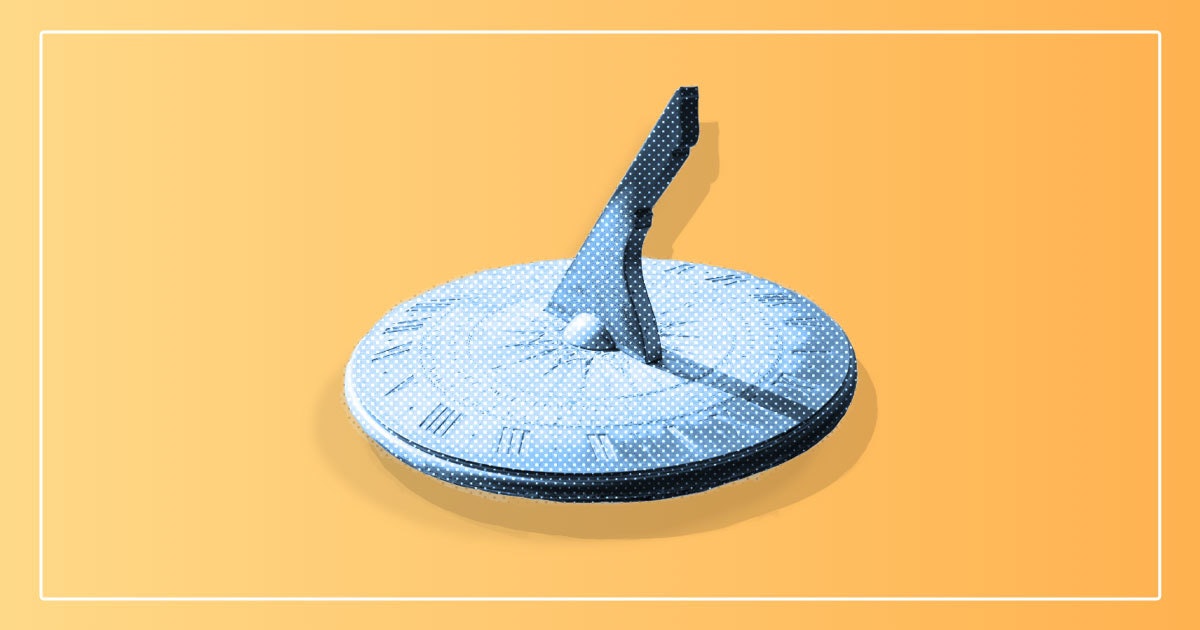
Proposition 7: Makes permanent daylight savings, meaning we don't change the clock twice a year.
2. What was your process, and how did you avoid partisanship?
Like any good journalist, we’re first focused on understanding as much as possible, from as many sides as possible. This means reading all relevant materials and talking to people in the orbit of each issue.
Local issues are less polarizing and ideological than national politics, so avoiding bias is easier than you might think. After we’ve done all the research, my cofounder and I are often more conflicted on where we stand on the issues personally.
We design the information to make it easy to process. If it makes sense to visualize something, we’ll create a graphic rather than explaining it with words. After I published ballot.fyi and it blew up, I received many emails suggesting corrections. As stressful as it was, I took it as an opportunity to debate the sender and absorb their knowledge and perspective.
3. What did you want to give voters in your community that wasn't already out there?
In the past, I’ve left a voting booth feeling ashamed that I was sometimes guessing on how to vote. I consider myself well-educated, but I needed to be a better educated citizen. I suspect a lot of people feel that way.
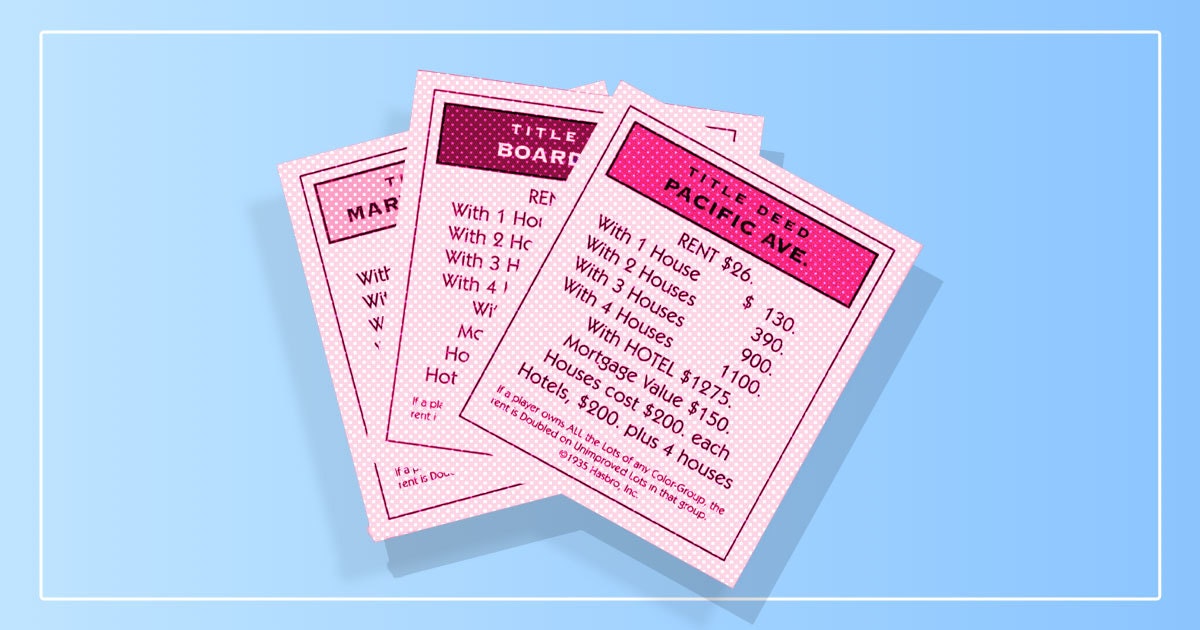
Proposition 10: Perhaps one of the most consequential initiatives, it would allow cities to enact rent control laws again. There's a huge fight from all sides about whether this is a good idea.
4. What design constraints did you need to think about?
Brevity is our primary constraint, but we also do our best to make everything mobile-friendly, because 60 percent of people will visit our site on their phone. Even if they don’t read through an entire explainer, we write our content so that people can understand both sides within a few sentences.
Above all else, we design for the busy professional, who is educated and well-intentioned, but may not have time to fully research everything themselves. We try to get to the point as quickly as possible, make navigation as easy as possible, and have fun with the content.
We picture our users as three personas: One is the diligent voter who spends hours on their absentee ballot well before election day rolls around. Another is the voter who knows they have to vote on Tuesday, so they’re going to spend some time looking into it the weekend before. Then there’s the oh-shit voter who, on election day, doesn’t want to feel stupid and researches as much as they can at work, then runs to the polls right before they close.
We actually see the most traffic the day before the election and the day of the election.
5. What was the hardest part about building it, and how long did it take? (San Francisco is a wacky place with a lot to vote on, so I would imagine a while?)
The hardest part of ballot.fyi was maintaining accurate and up-to-date information. It was just me, and it’s all manual, so I was debating people via email, researching as much as I could, and trying to wordsmith it all to be as succinct and understandable as possible.
Ballot.fyi took about three months, from concept to election day—roughly a month of design, a month of coding and design, and a month of maintenance and advertising. Knowing 20,000-30,000 people were seeing my site every day made October 2016 the most stressful and exhilarating month of my life.

Proposition 12: Mandates a minimum square footage for animals sold for meat, but there's a clause in there that makes all eggs in California cage-free (like literally, not just in minimum size) by 2022.
6. What advice would you give people in other communities about creating their own voter guide?
I’d recommend using whatever tool/medium you’re most comfortable using. You don’t have to build a whole website.
We've seen people create voter guides with Google Slides or Sheets, or simply put together a blog on Squarespace. I've also seen long FB posts, or PDFs shared around social media. The week before the election, people will be looking for the information, and different formats find different audiences. I have yet to see someone make a comprehensive and compelling YouTube series—I’d love to see that.
My best advice: Focus on a specific part of the ballot, and do it well. Don’t worry about reaching a wide audience. Write it for the people you know: your close friends, coworkers, or club soccer team. Research your way to nonpartisanship. In terms of resources, Ballotpedia is dense but can be a good starting place. When in doubt, you can also call your city hall or state government and request information. Having friends that can translate legalese is also useful.
7. What kind of feedback have you received, and what are you planning for the general election in November?
Most of our feedback is positive. I think most people want to get more involved in local politics and understand more, but people are busy and other things take priority.
For November, we’re interviewing the Supervisor candidates in San Francisco and posting the videos. We’re hoping it’s an easy way for residents to quickly get a sense of who’s running and what they stand for. We’re also beefing up a feature we released in June—the ability to take notes on our webpages and then share that with your friends via a private link. We’ve noticed that people rely on their friends to vote, and friends typically have one or two people who are their go-to political person. We want to empower those individuals and compile the research and summarize for them, so they can simply add their commentary and recommendations. By The Bay does not give recommendations, but we encourage individuals to—it helps get the vote out.
As the 2016 election approached, and the vitriol around the presidential race grew, IDEO alum and engineer Jimmy Chion wanted to do something to keep voters engaged.
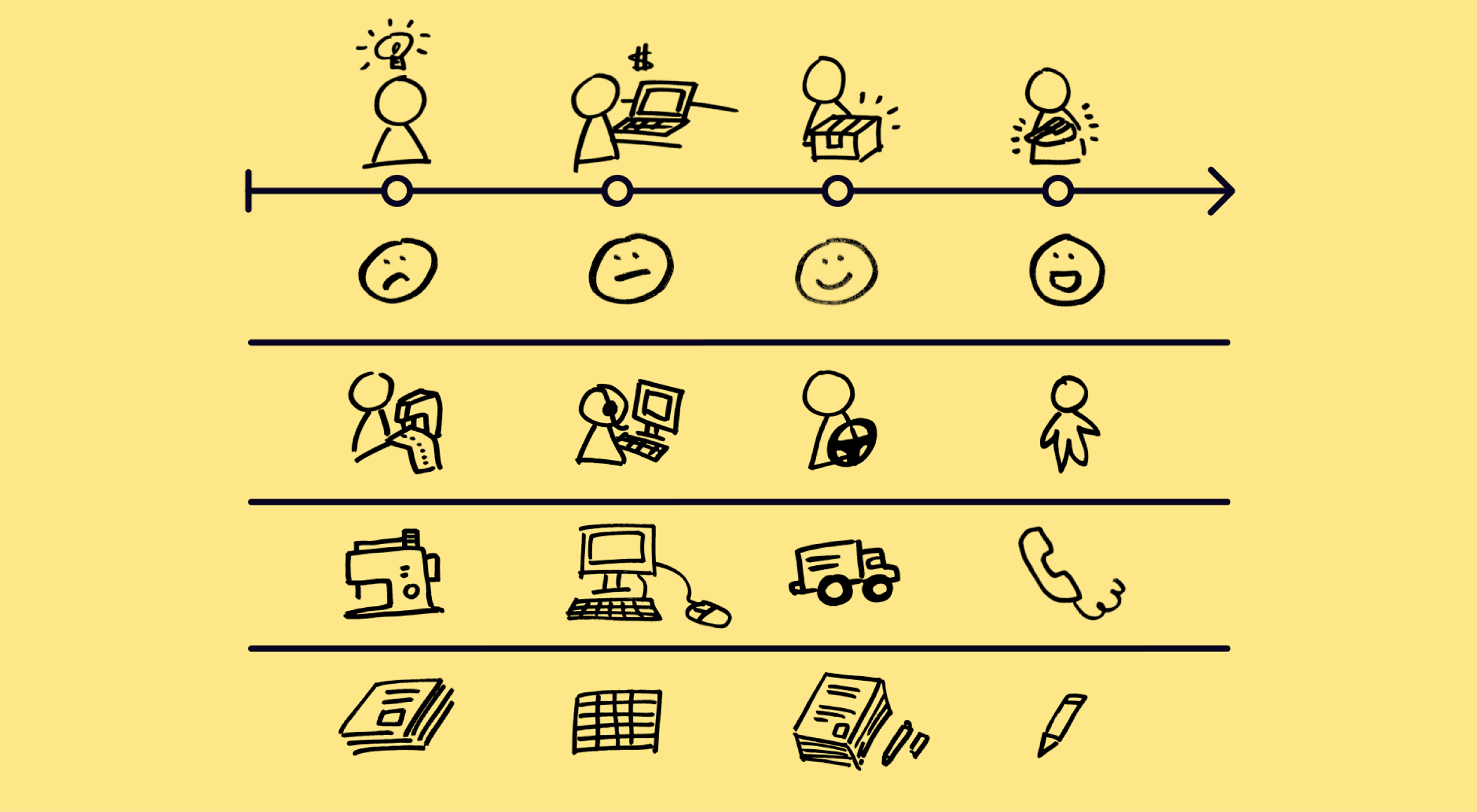
3 tips to help you prototype a service
Prototyping is an integral part of design, but what does the process look like for experiences and human interactions?
A prototype of a physical product is easy to imagine, but the process of leaving the hospital after giving birth, or having a new kind of conversation between a traveler and a flight attendant, is not easily built out of cardboard and foam core.
In my years at IDEO—and at companies like LeapFrog and Virgin Entertainment Group—I’ve seen service prototypes come in many shapes and sizes, but I’ve found the most successful ones are based on real customer needs and co-created with the people responsible for delivering the service. Whether you’re building storyboards and sketches, simulated interactions, or mocked-up physical spaces, these three tips should give you a little inspiration to help you create your own.
1. Design only the details that matter
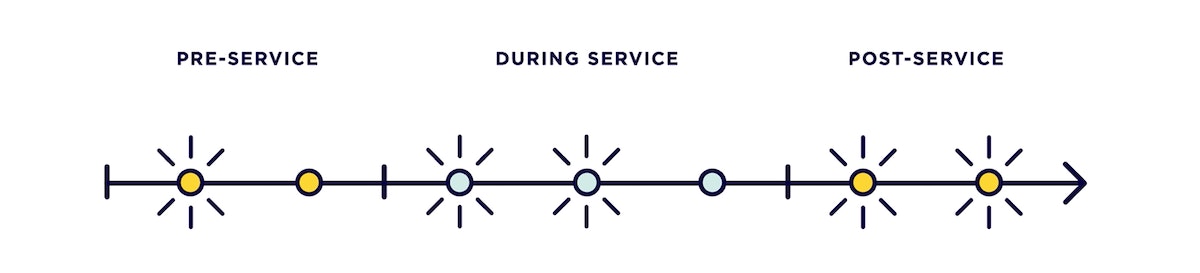
Keep in mind that with any prototype—service design included—you’re looking to spend a little (effort and money) to learn a lot. This is especially relevant in service prototypes, which can change over time, and often involve components like people, space, and physical and digital objects. Figure out what elements of your service are necessary to show potential users what their experience would actually feel like, and eliminate the rest. For instance, if you want people to feel welcomed to an experience, you might spend more time designing the human-to-human interactions, and less time figuring out the design of the space where the interactions take place. If you want people to feel efficiently handled during a check-in moment, you might spend more time designing the digital interface for the process, and less time designing the artifacts and documents that are sprinkled throughout.
In a project with Kaiser, we created a visual checklist that nurses could use to help parents understand all the steps that needed to happen before they could take their babies home. To make sure that the new tool wouldn’t add to parents’ confusion, we hung paper prototypes in some rooms, and had nurses mark the number of calls they got from each patient. It turned out, parents who had a prototype had 60 percent fewer questions than parents who didn’t. And we were able to pick up all those insights without even worrying about what the space looked like—just a simple prototype.
2. Factor in the before and after
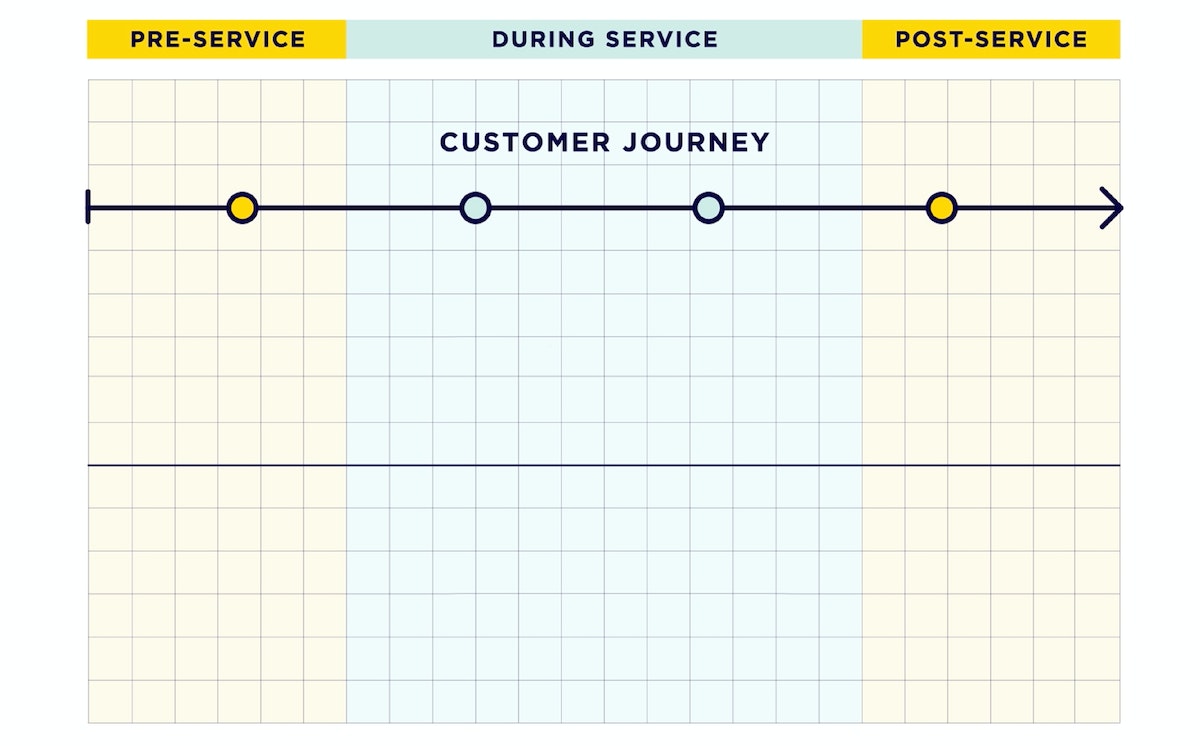
When designing a service moment, consider the user experience not just during the moment, but also before and after. Think about a simple moment, for example checking into a hotel. What happens before? Are guests arriving travel weary and jetlagged? Are they coming to celebrate their honeymoon? As a service provider, it’s important to remember that you’re not the only thing on the user’s mind, they’re processing this moment along with everything else going on in their day. After check in, could they easily find their room and was it clean? Were they able to quickly transition into desired activities whether to celebrate, get pampered, and relax, or get to an event like a conference?
In a project with the hotel chain Crowne Plaza, our goal was to design a lobby space that would work for all business travelers. We created a concept that would include spaces for heads-down time, places for group work, a grab-and-go menu of healthy items, and a staff member who could help with business needs. To test it, we set up a network of sensors and cameras to track traffic flow through the different spaces, and which were used most, and when. With these metrics, and interview answers from guests before and after seeing the prototypes, we were able to gauge how well we were meeting traveler needs at every stage of their journey.
3. Involve users and employees
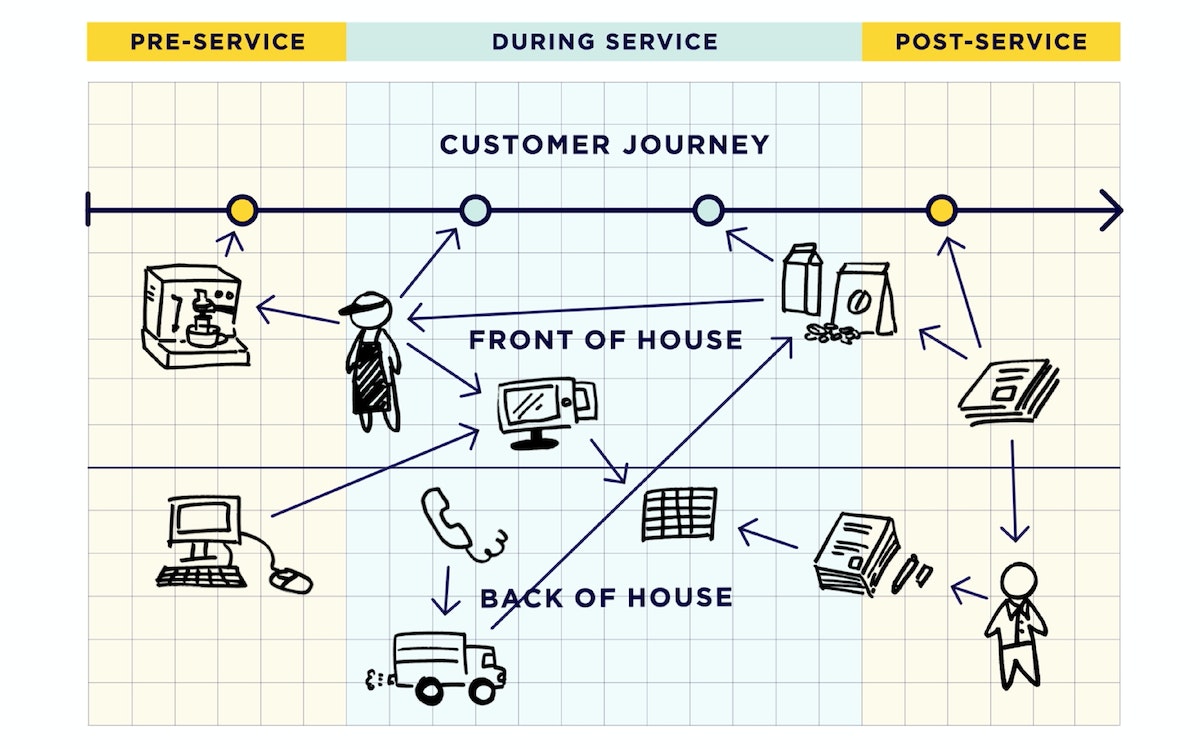
Prototyping helps us pick apart our assumptions, see where we’ve made progress, and where we’ve failed. Designing services is a process that must be done collaboratively, particularly with those who are ultimately responsible for delivering the service to customers. That ensures that you have the right experience and depth to inform new ideas. And it helps you get crucial buy-in when you’re promoting the future vision of your service.
So who should you invite to create and test your prototypes? Think about employees, end users, even people moving around behind the scenes, and figure out how they should show up in your prototypes. Do you need a real nurse chatting with a real patient? An actual bellman who can try out a new check in process with a million-miler business traveler? What about the executive who is ultimately in charge of the project?
In a project with Lufthansa, we were looking to redesign business class to keep up with modern travelers. Once we homed in on the experience we wanted to create, we built a 1:1 scale mockup of a plane with some foam core and business class seats, then invited real travelers and crew to test it out. Not only could they report on the experience from both sides, execs could check out the experience, too, and sign off on our new ideas.
The best advice for service design prototyping, though, is the same as any other kind of design work: Do it early, do it often, and keep iterating toward the right solution.
Prototyping is an integral part of design, but when it comes to experiences and human interaction, it can be hard to figure out exactly how to do it.

Lindsey Turner
I’m passionate about building brands, products, and experiences that help organizations show up with meaning and momentum.
I help organizations cut through complexity by shaping how they show up, through brand strategy, identity, and storytelling.
Working at the intersection of brand and business, I bring an editorial eye and a bias toward making—turning ideas into tangible experiences that people can understand, trust, and believe in.
My work spans government, healthcare, financial services, media, and consumer goods, from launching Gen Z-focused ventures to building innovation labs and reimagining legacy brands. I relish moments of ambiguity and enjoy translating across teams, perspectives, and priorities to move ideas forward.
I started my career in editorial and digital design, shaping cross-platform experiences and identity systems in publishing and agency environments. That foundation still shapes how I work today: I’m detail-oriented, collaborative, and overreliant on the Oxford comma. I hold a BFA in Visual Communication from the School of the Art Institute of Chicago.

Rachel Young
My work helps organizations see who their products aren't working for—and build the will and the tools to do something about it
For 25 years, I've asked the same question: Who does this design exclude—and what are we going to do about it?
My work spans human-centered strategy, inclusive design, and qualitative research, with clients ranging from Microsoft, Google, and Verizon to the National Science Foundation, and San Francisco Unified School District.
Before IDEO, I taught elementary school in East Palo Alto and spent a decade doing design work with social service organizations—where I learned firsthand what it costs people when systems are built without them in mind.
I am currently writing User Error, a nonfiction book about digital access and the design decisions behind it. I live in Oakland, California.

Brian Pelsoh
I lead with craft, ensuring our work is creatively excellent: rooted in deep human insight and imagination, while also grounded in the realities of business and technology.
My expertise spans brand, communication, and product design across tech, education, the arts, and social impact.
I believe great work demands both high-level vision and obsessive attention to detail, and only happens through collaboration.
I bring an inclusive, hands-on approach and a deep understanding of business, which enables me to consistently deliver excellence while always asking why.
Before joining IDEO, I worked at the brand firms Pentagram and VSA Partners. I began my career as a designer, leading teams at the School of the Art Institute of Chicago and the Milwaukee Art Museum. I hold an MFA in graphic design from Maryland Institute College of Art and a BFA in communication design from the Milwaukee Institute of Art & Design, and have taught at some of the best design schools in the US.

Tony Wong
I am responsible for IDEO’s long-term success in China and working with clients to use design as a tool to enable growth.
I am responsible for IDEO’s long-term success in China and working with clients to use design as a tool to enable growth. Specifically, I have helped Chinese companies design holistic brand solutions through the development of their products, communication, services, and innovation teams, and I have helped multinationals expand their presence and influence in China.
I advise global leaders on developing China-led innovation and capabilities.
In over 15 years in IDEO Shanghai, I have worked on projects that use design to elevate the quality of the experience of healthcare products and services, streamline processes that increase productivity, create spaces and programs that promote and enable inclusive communities, and build next generation mobility solutions that are planet-positive.
Before joining IDEO, I worked at Philips Electronics and the Electrolux Group in Italy, the Netherlands, and Singapore on a number of breakthrough commercial products. I am a member of the Young President Organization in Shanghai.

Building a personal AI for the messiness of life: Sida Li
Most AI products today are built for work—a space with clear problems and established systems. One founder noticed a gap: personal life is messier, harder to systematize, and mostly left behind by the AI boom. So she built Cue, a personal AI that lives inside iMessage and group chats, to go where the other tools haven't.
In this episode, Becca Carroll, IDEO's Chief Strategy Officer, talks with Sida Li, co-founder and CEO of Shared Context Lab, about staying anchored to a human need while the technology around her keeps changing shape, why she treats her business model with the same rigor she'd bring to a product, and what it feels like to build a company at this particular, disorienting moment in AI.
The conversation also gets into how Sida makes design decisions: the language Cue uses to describe itself, the tradeoffs behind building inside iMessage instead of a new app, and a real story about a business idea that didn’t pan out.
This is the second in a two-part series profiling founders from IDEO's Startups-in-Residence program. The first conversation is with Johannes Seemann, founder of Sooner, on designing GenAI for the emotional side of money.

Designing GenAI for the emotional side of money: Johannes Seemann
Most personal financial tools are built to run the numbers and optimize towards a budget. While that works for some, most people experience money as a lived relationship that does not neatly fit into a spreadsheet. Johannes Seemann and Becca Carroll discuss why money is emotional before it is mathematical, and what a human-centered approach to building a generative AI financial product looks like in practice.

The curious leader's edge in uncertainty: Scott Shigeoka
Mina Seetharaman talks with Scott Shigeoka, author of Seek and Head of Curiosity Cultivation at the Eames Institute, about what distinguishes genuinely curious leadership from performative curiosity, how power dynamics shape curiosity, and why practicing curiosity can restore energy rather than drain it.

How constraints make us more creative: David Epstein
Mina Seetharaman talks with David Epstein, author of Inside the Box and Range, about why total freedom often produces average work, how leaders can design useful limits on purpose, and what organizations such as General Magic and Pixar reveal about the relationship between boundaries and creativity.
Looks like you might be in search of something very specific?
Or reset the filters above and try another angle.
Here’s some random inspiration

Podcasts about creative leadership

Articles about the power of prototyping
